
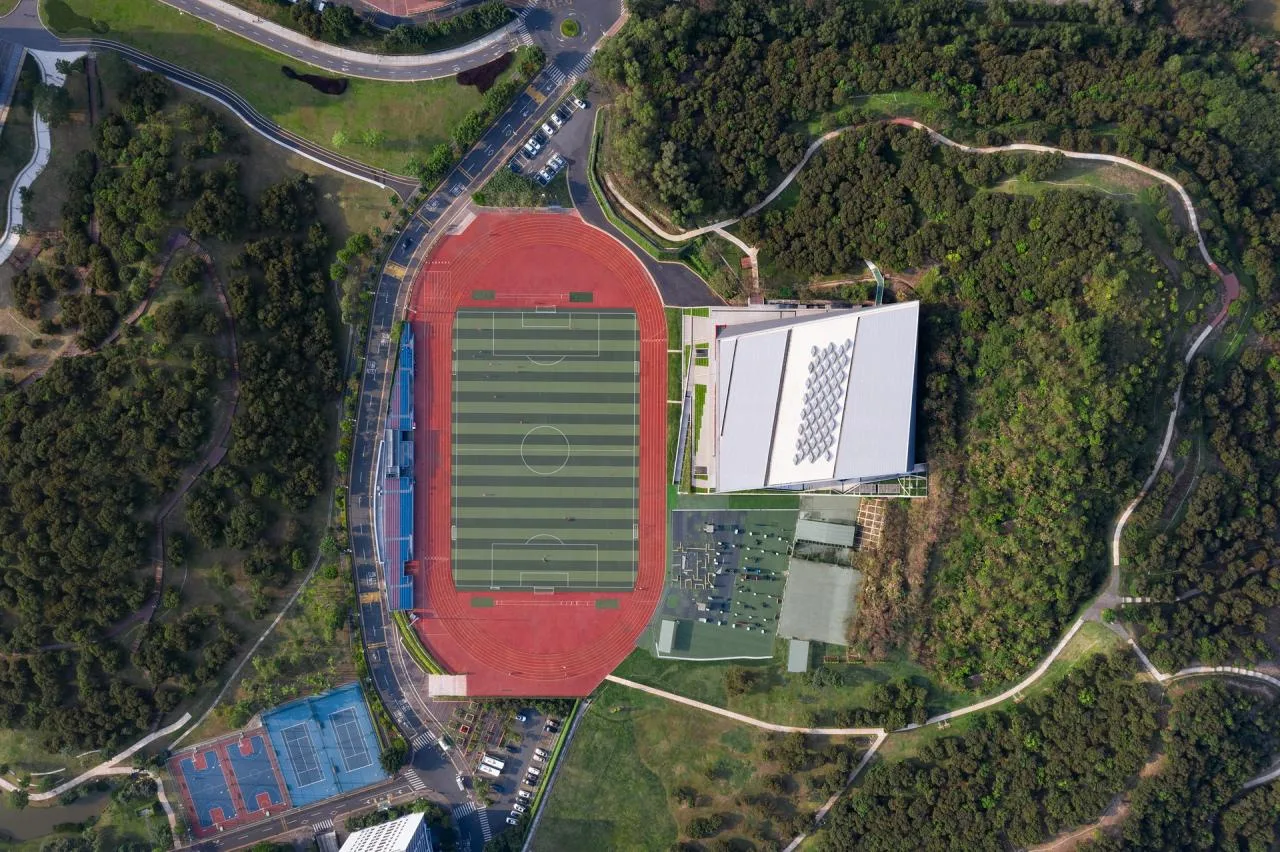
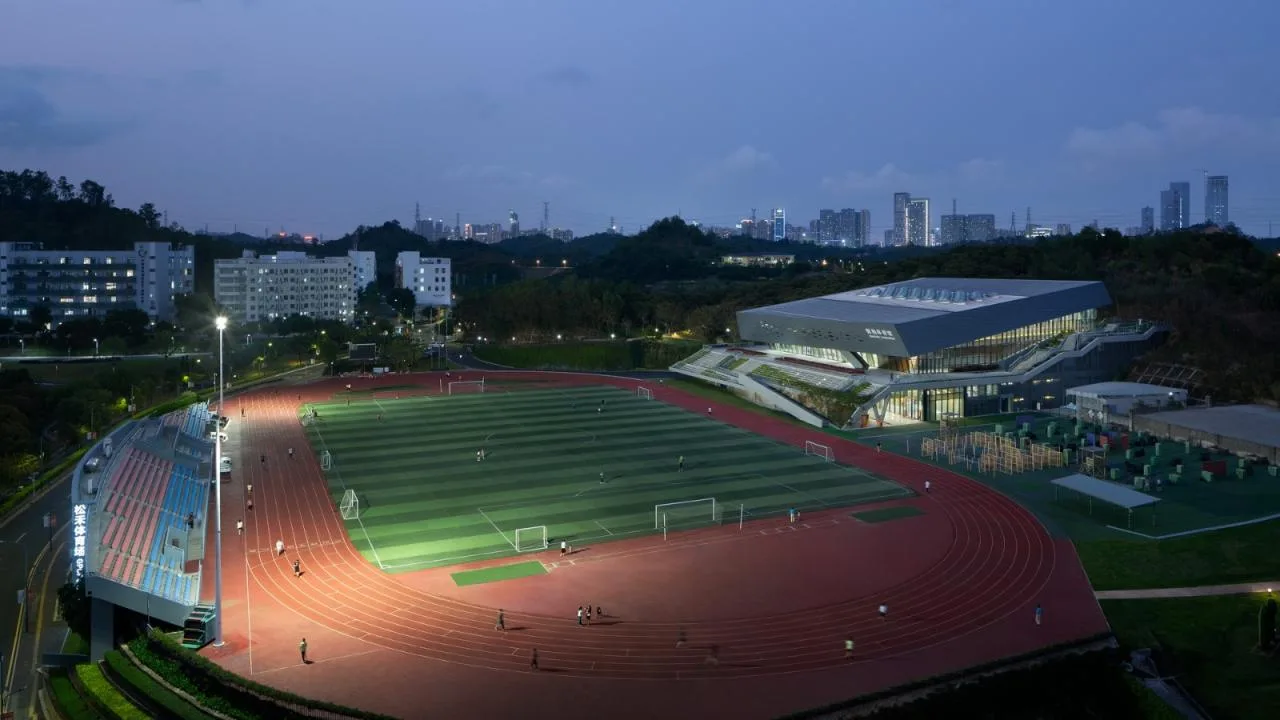
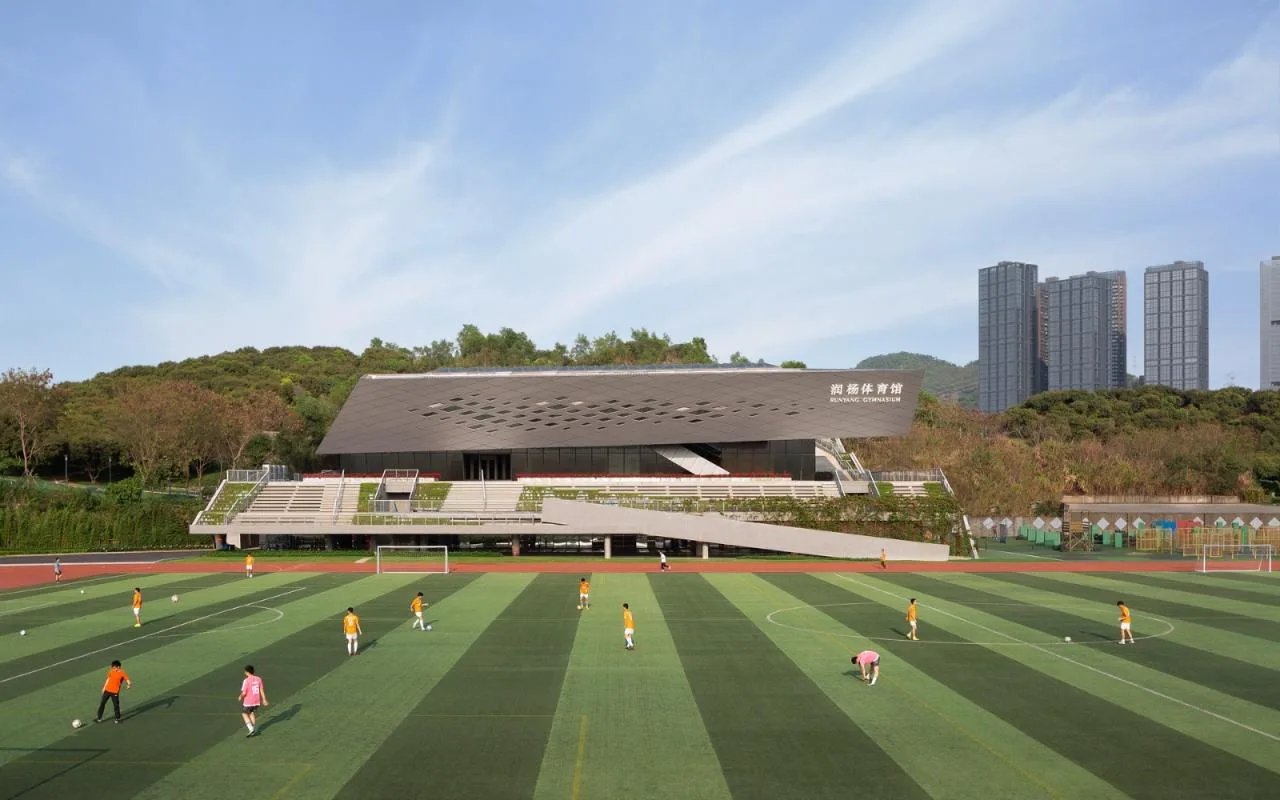
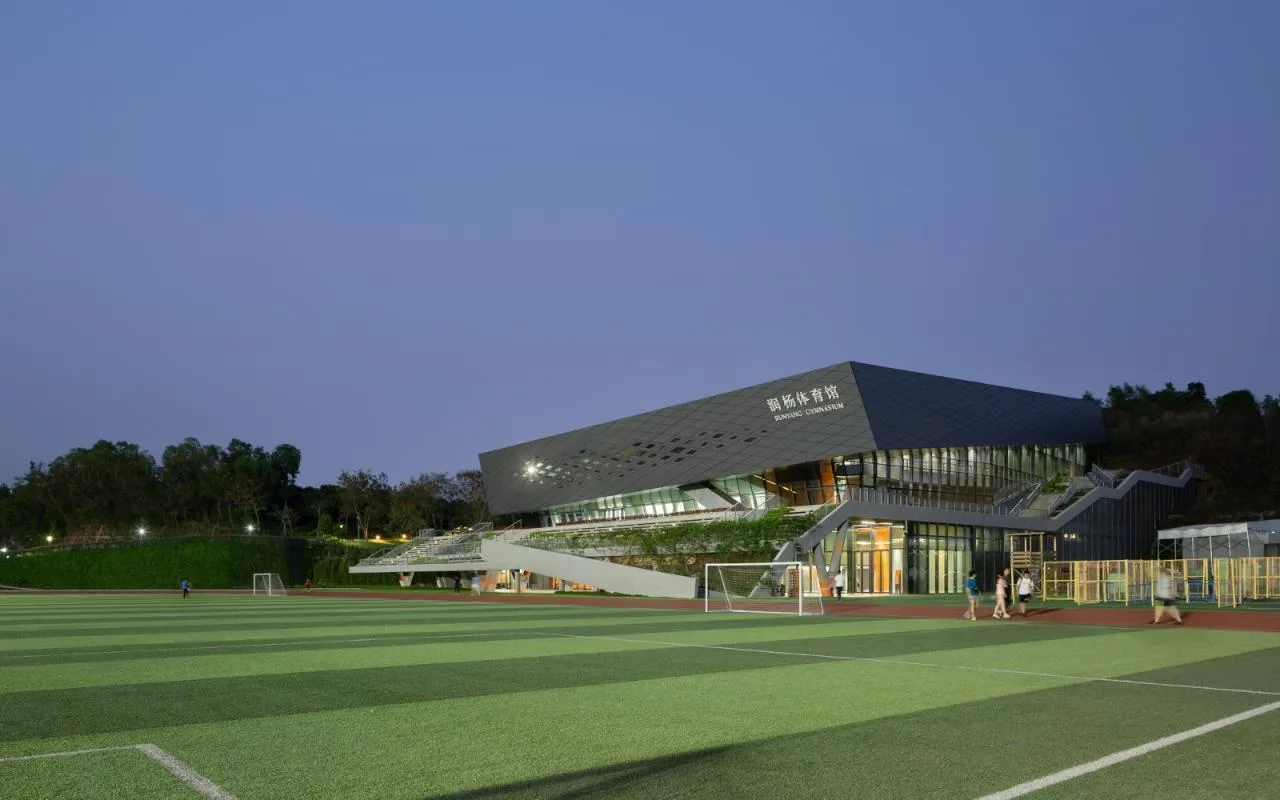
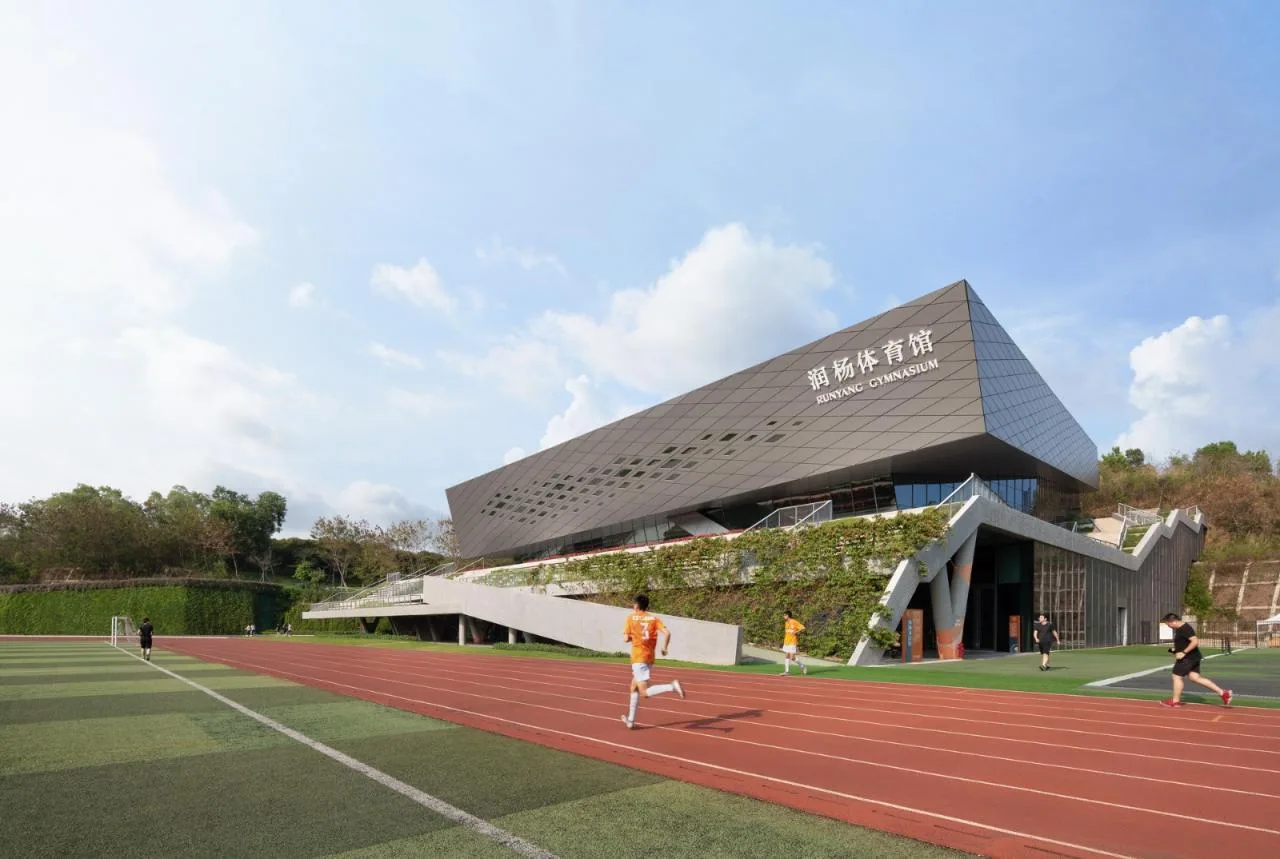
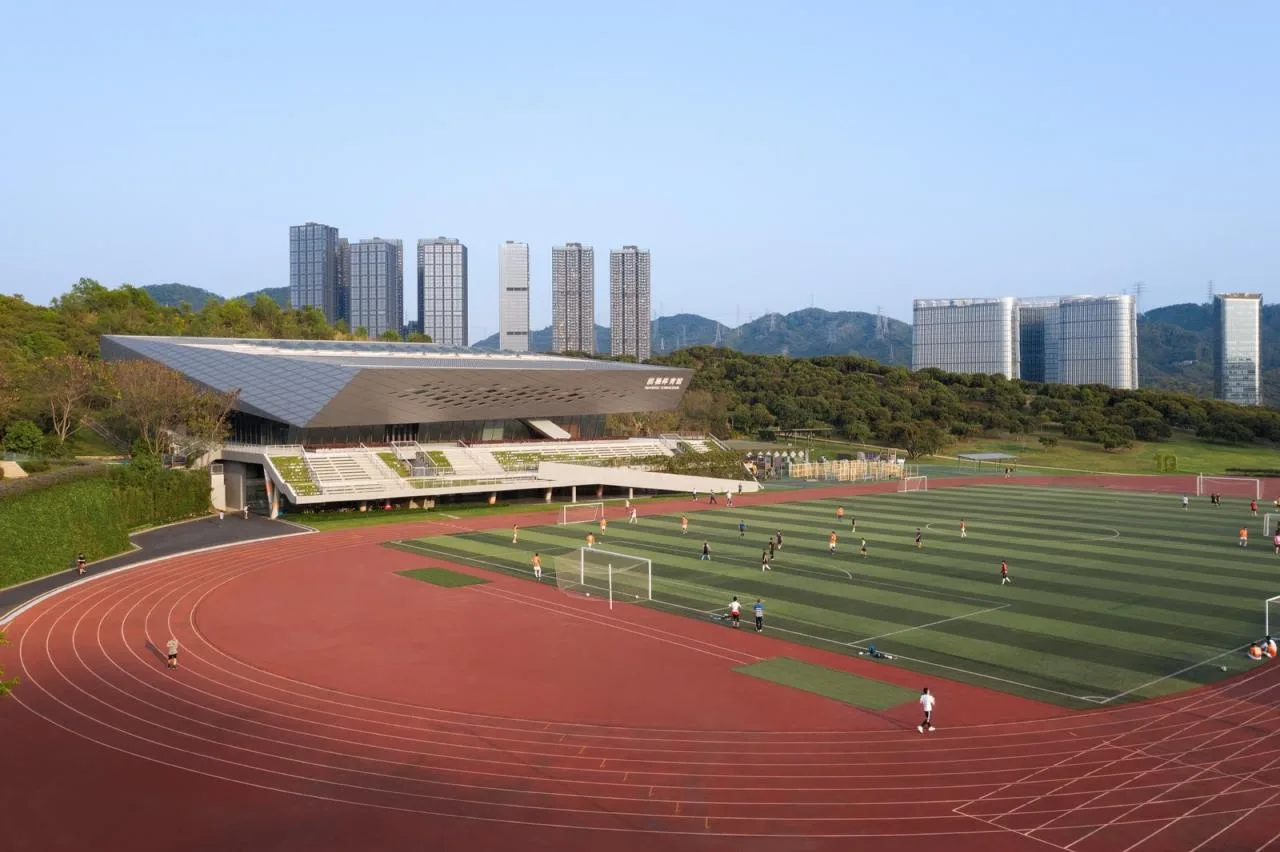
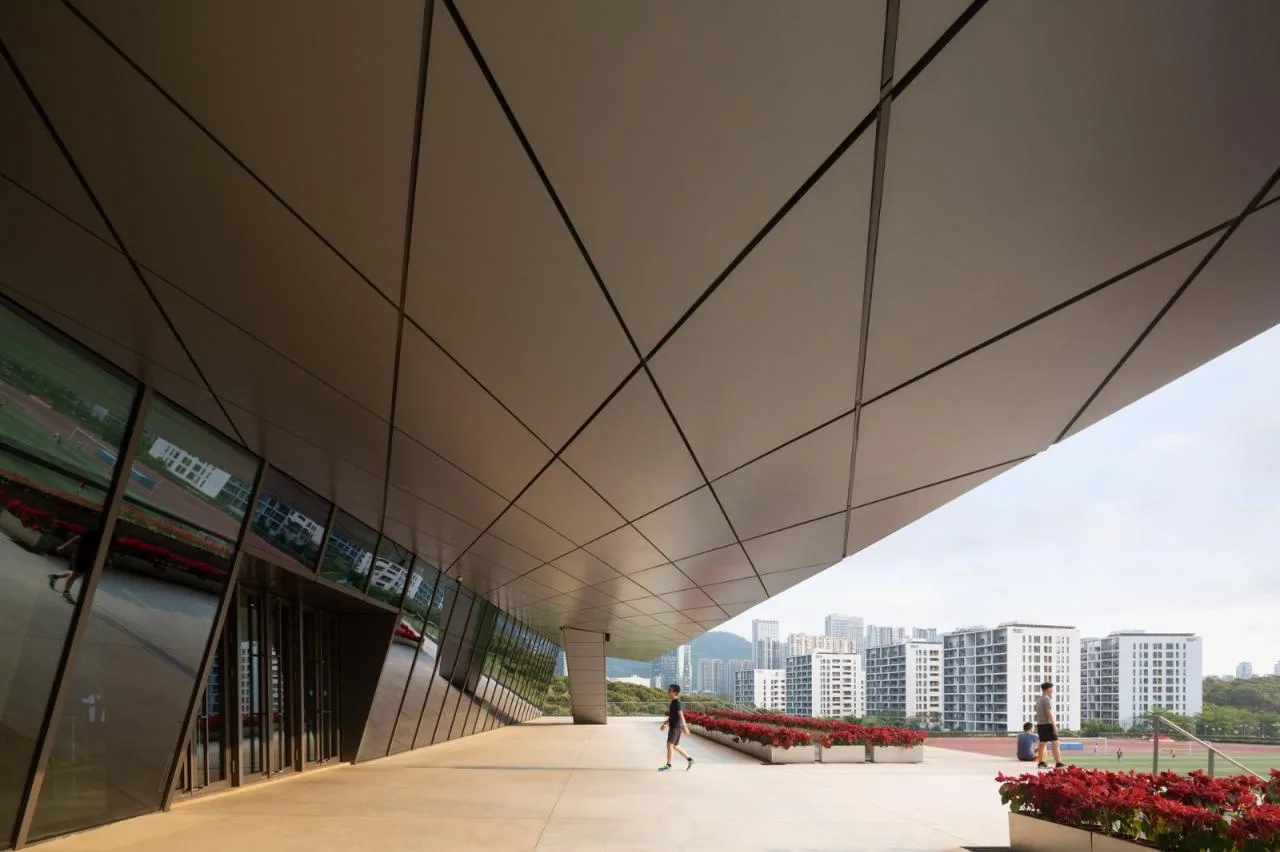
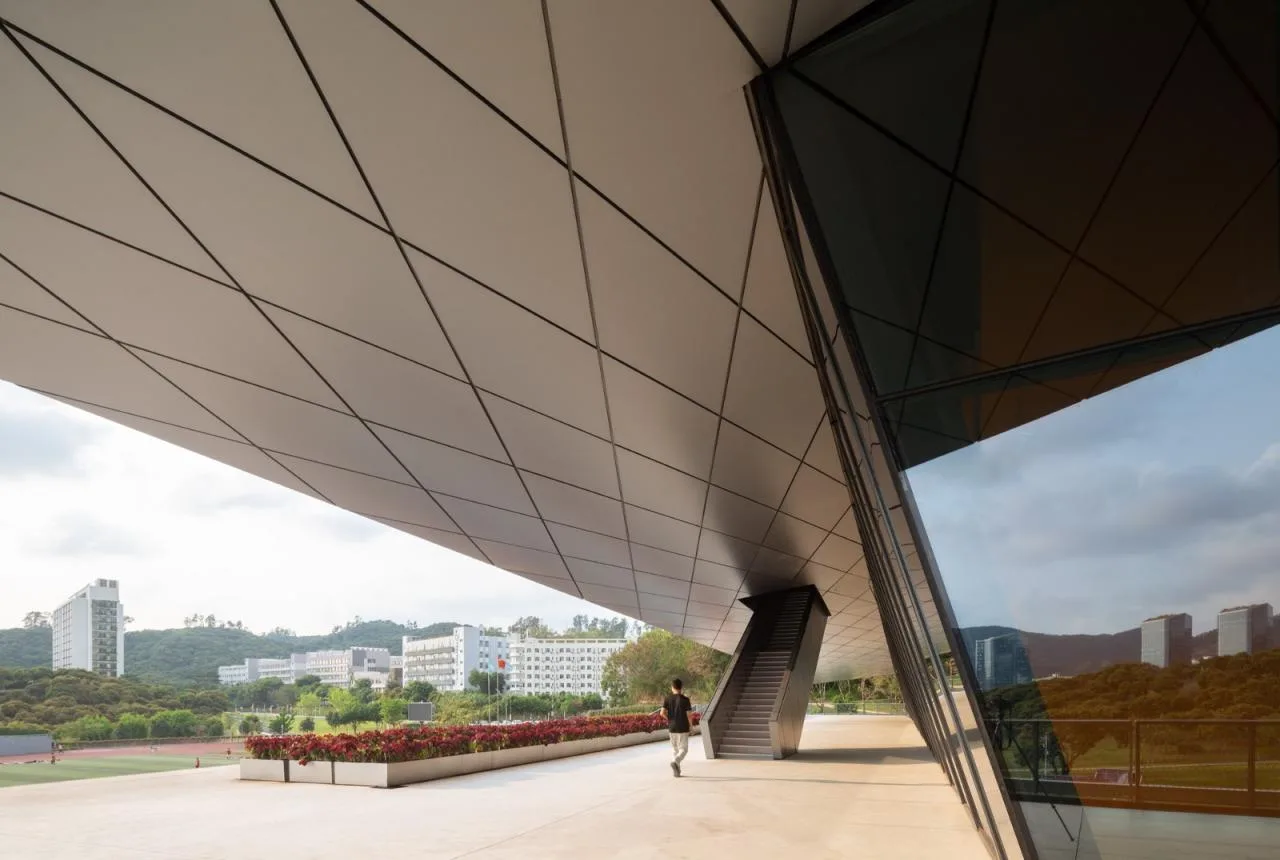
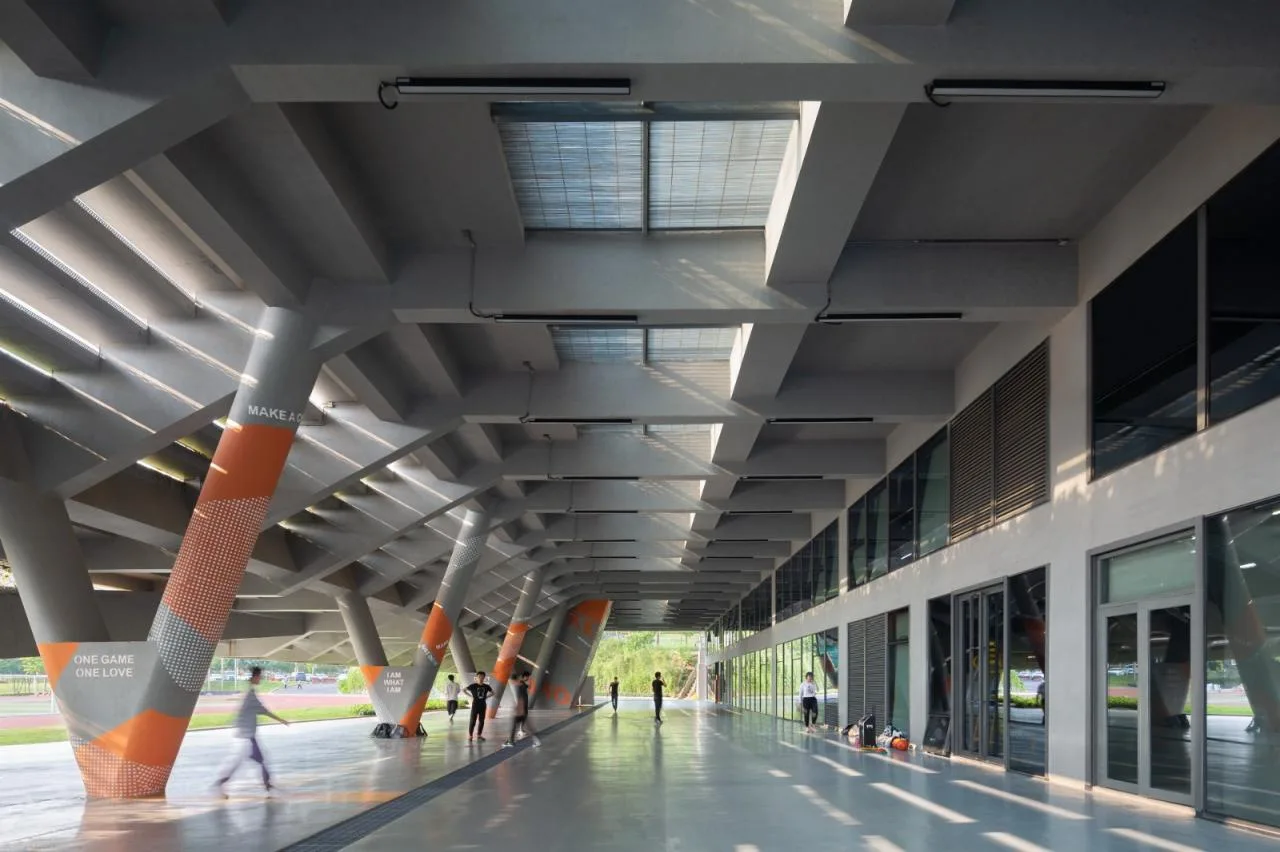
The South University of Science and Technology Gymnasium is nestled against the hillside, extending horizontally along the terrain. Its expansive roof cascades over a massive rock formation, seemingly suspended in mid-air, and stretches westward with a broad eave that provides shade to combat the region’s hot climate. Viewed from the playground, the roof appears low and asymmetrical, emphasizing a sense of dynamic movement.
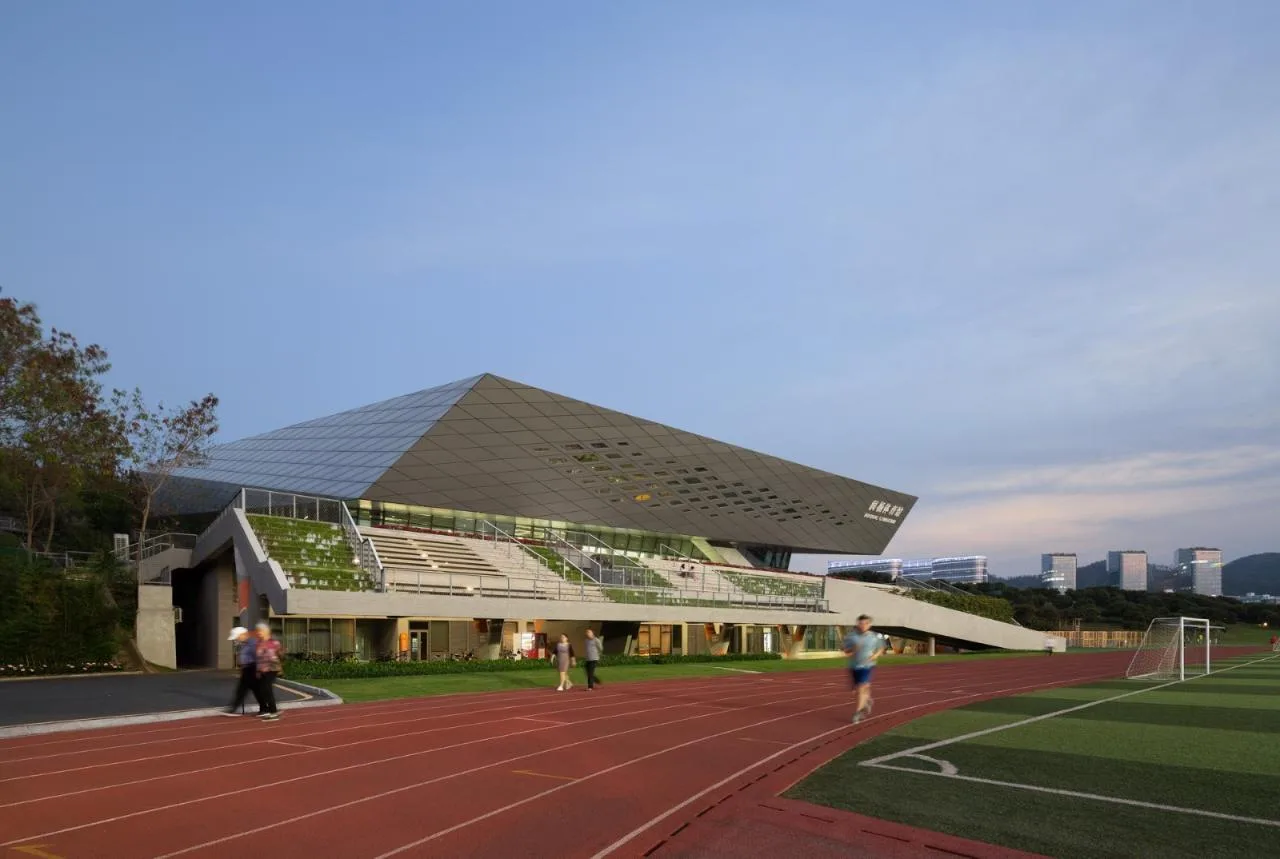
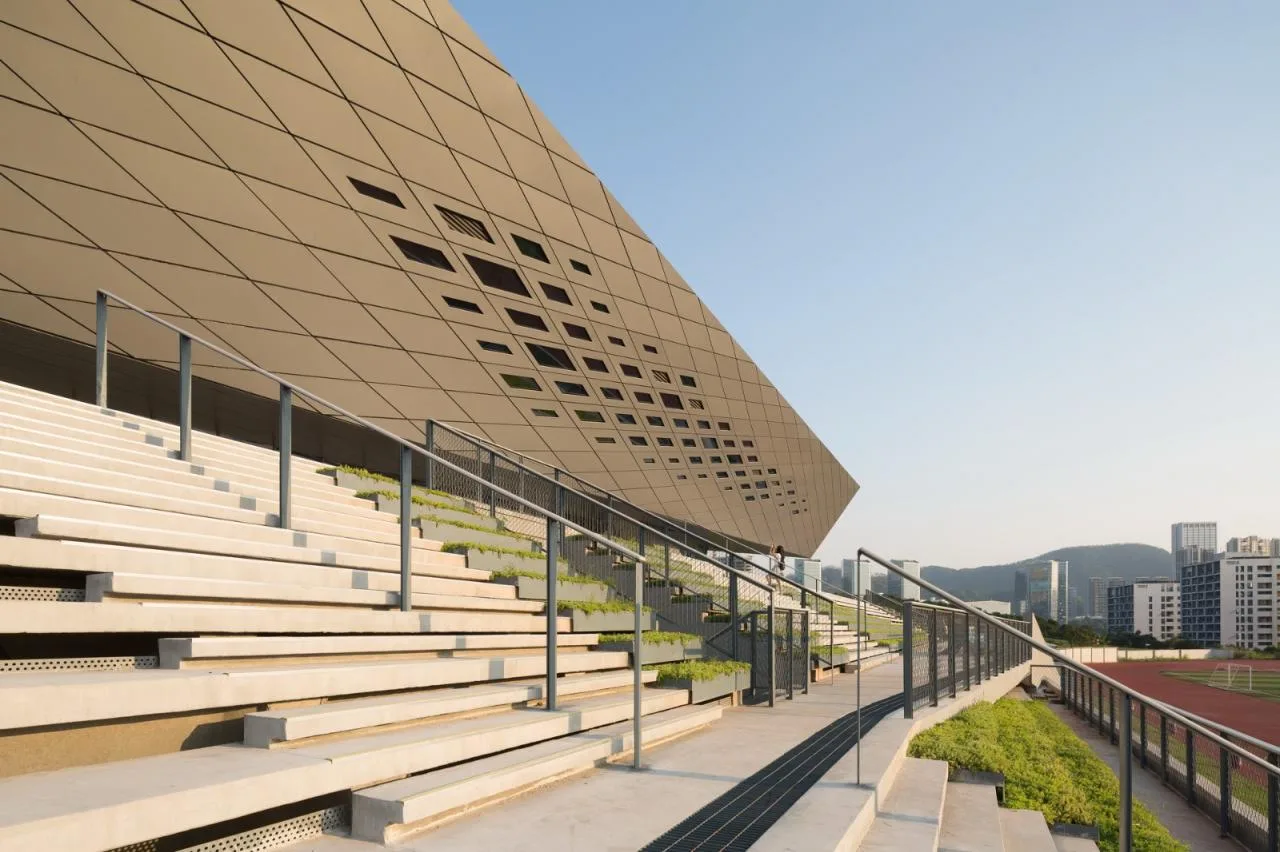
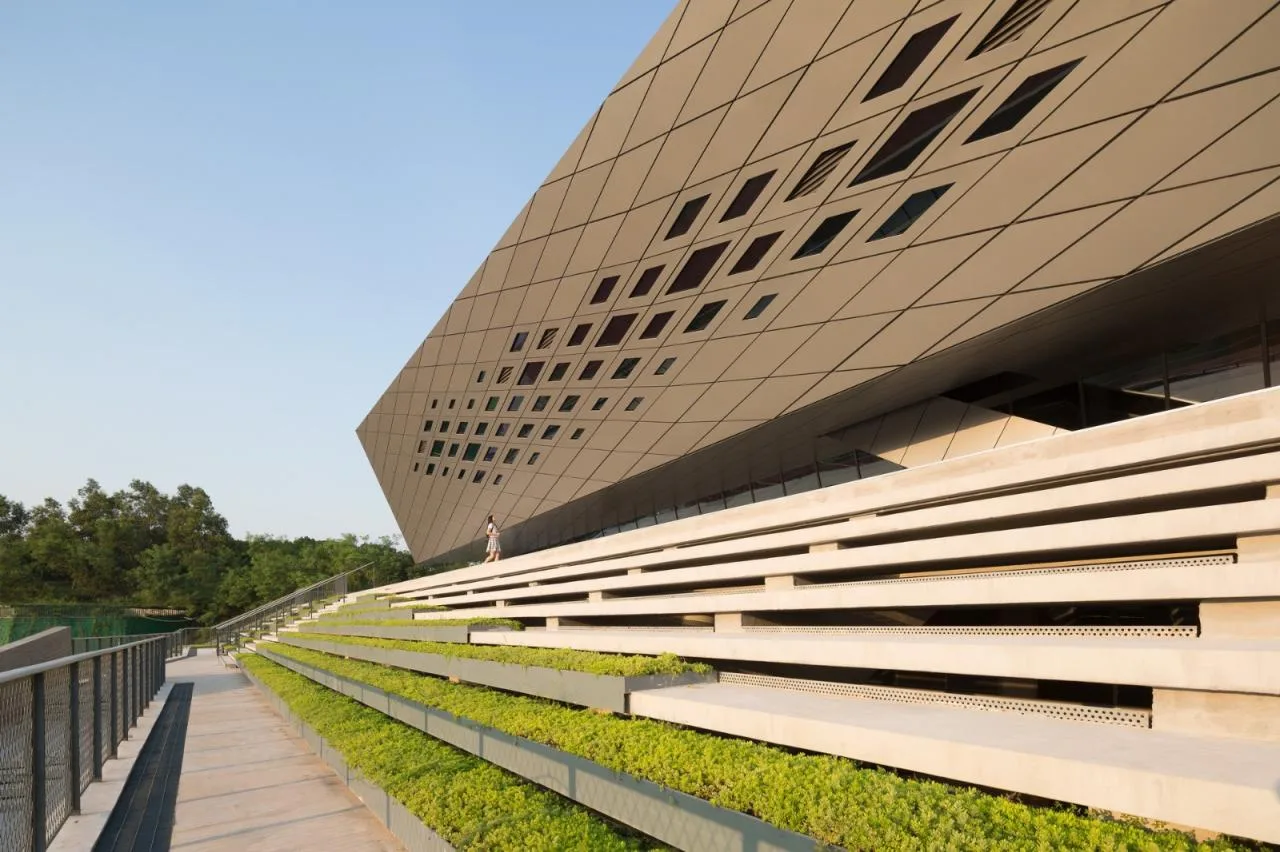
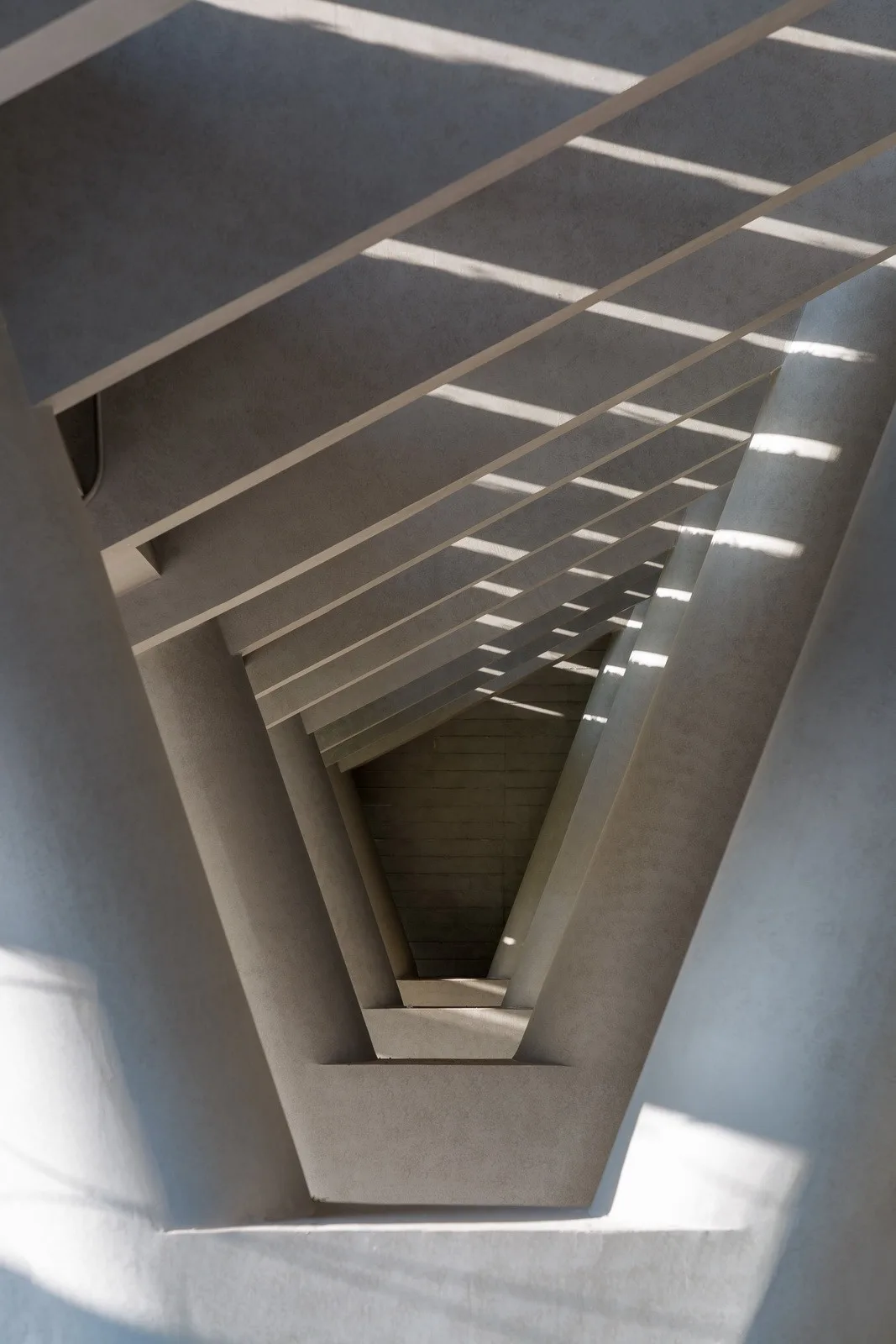
The wide steps that lead down to the playground double as seating stands and form the foundation of the sports hall, supported by a distinctive V-shaped concrete structure. The central section of the steps remains open and transparent, allowing ample natural light to filter through, creating an informal sports area. This design seamlessly integrates the sports hall with the outdoor playing field, blending indoor and outdoor spaces into a unified whole.
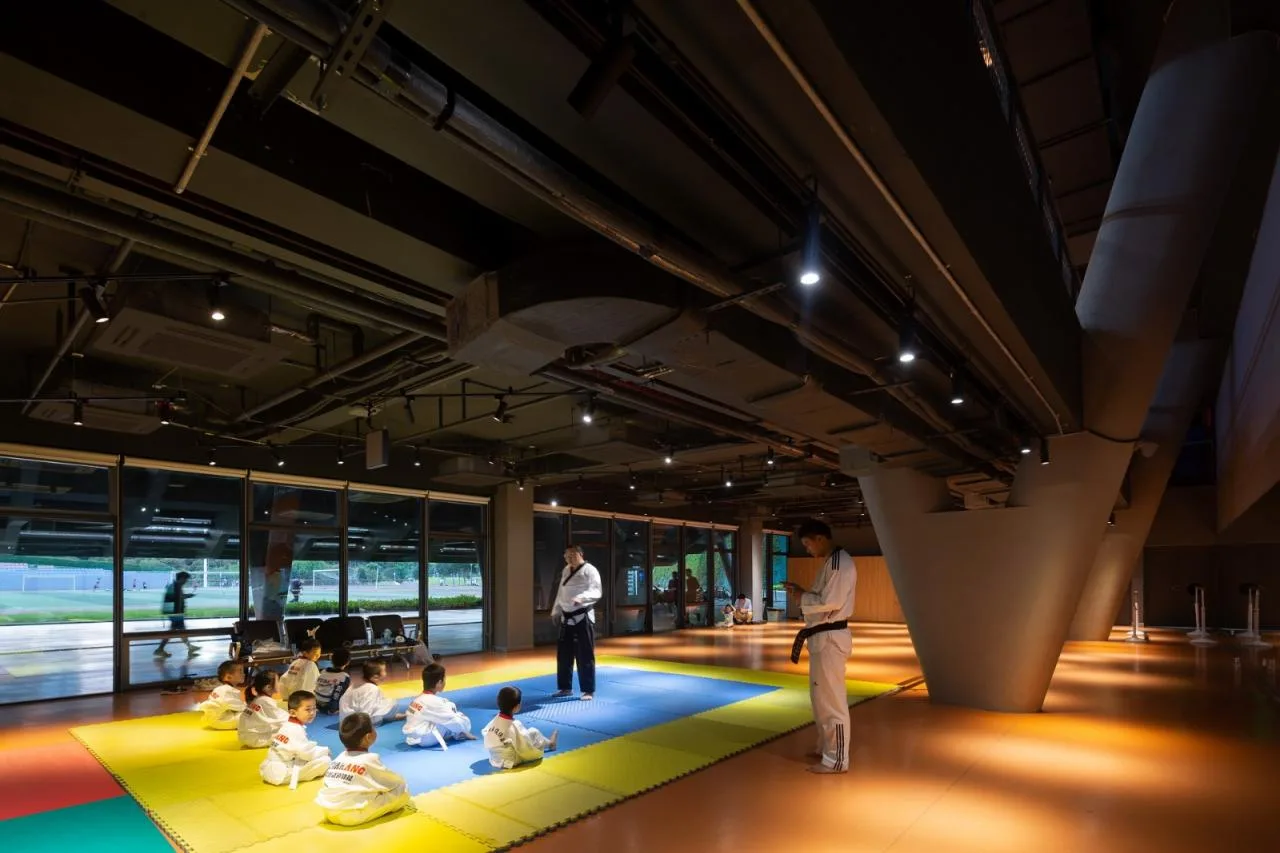
Modern sports venues serve more than just organized competitive events; they are adaptable environments encouraging diverse forms of physical activity. With increased focus on national fitness, traditional enclosed gyms have lost some of their appeal. Architects now strive to create versatile indoor-outdoor sports complexes that accommodate a range of athletic pursuits. The South University of Science and Technology Sports Center, thoughtfully built along the mountain, exemplifies this approach.
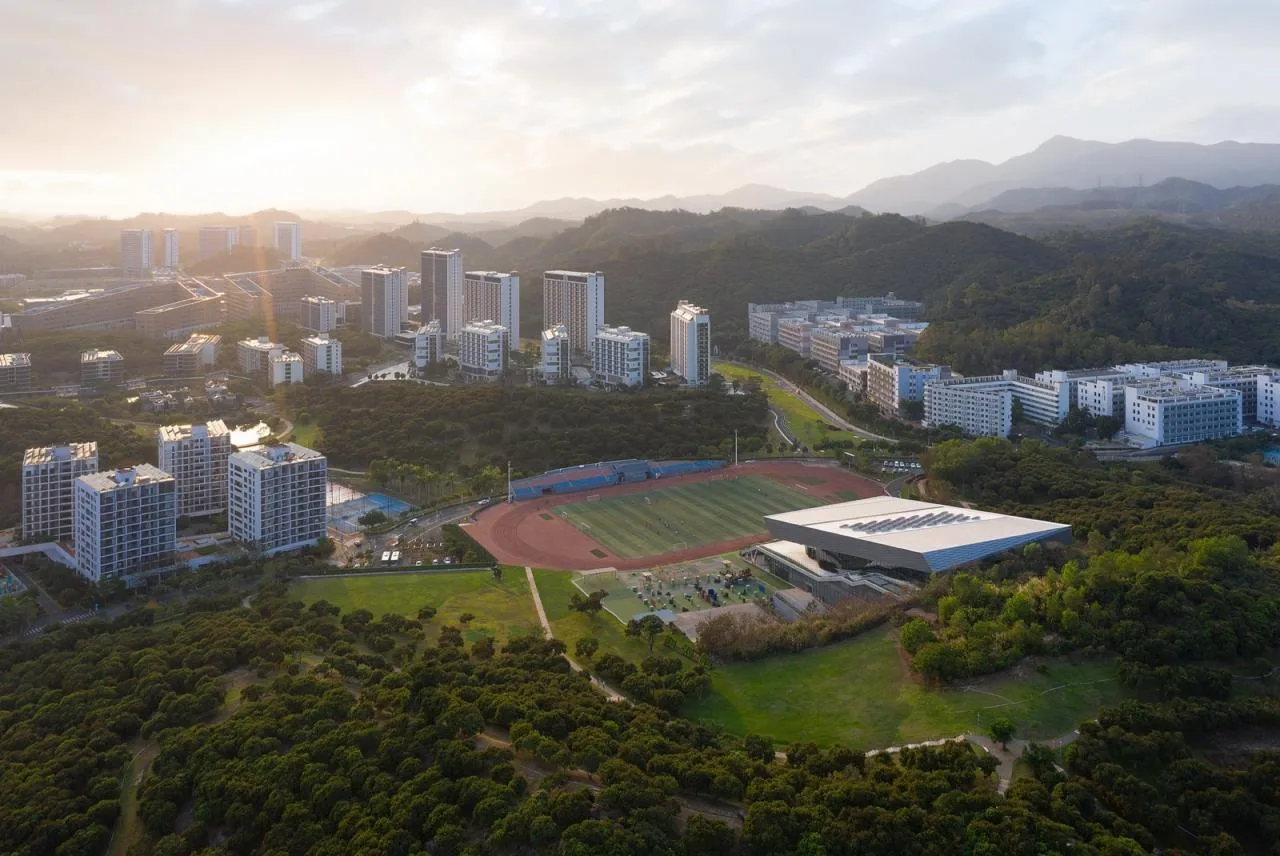
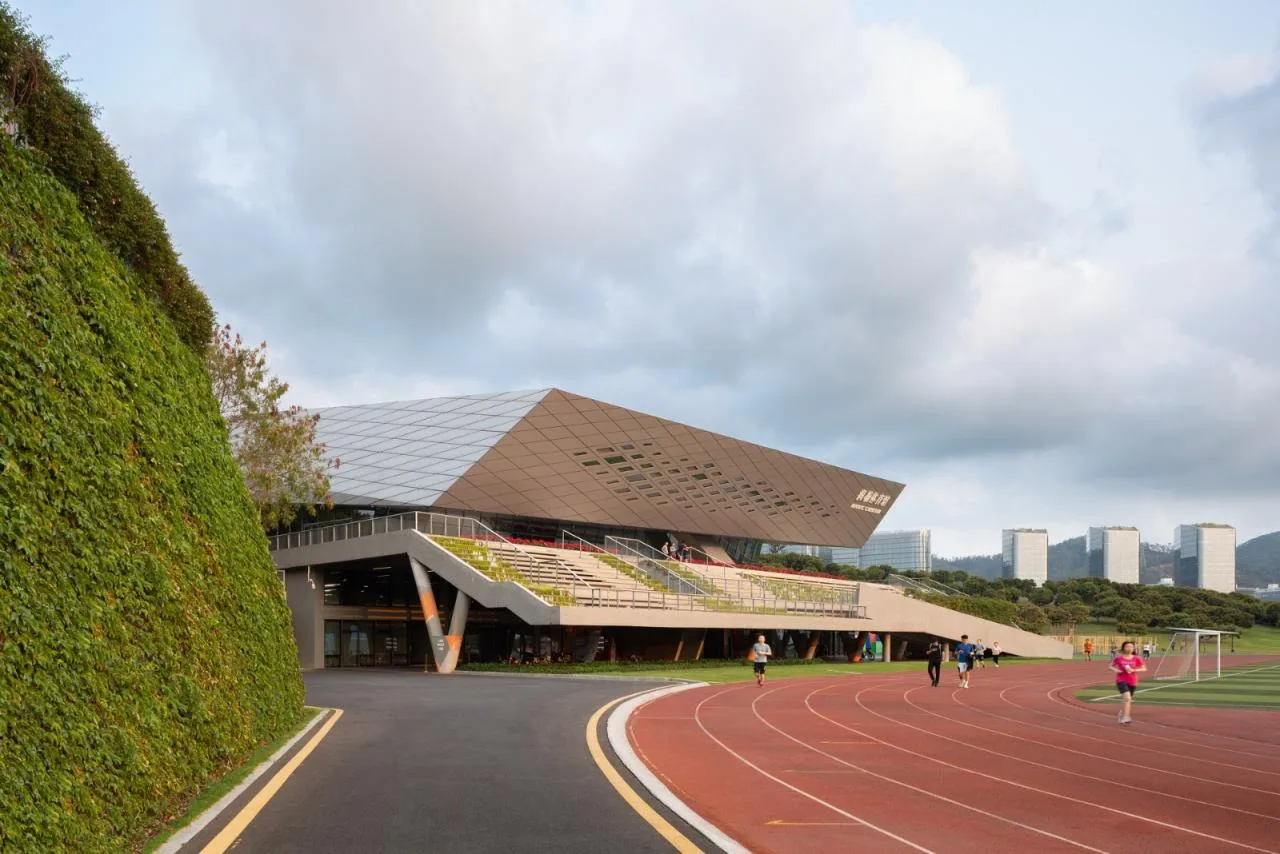
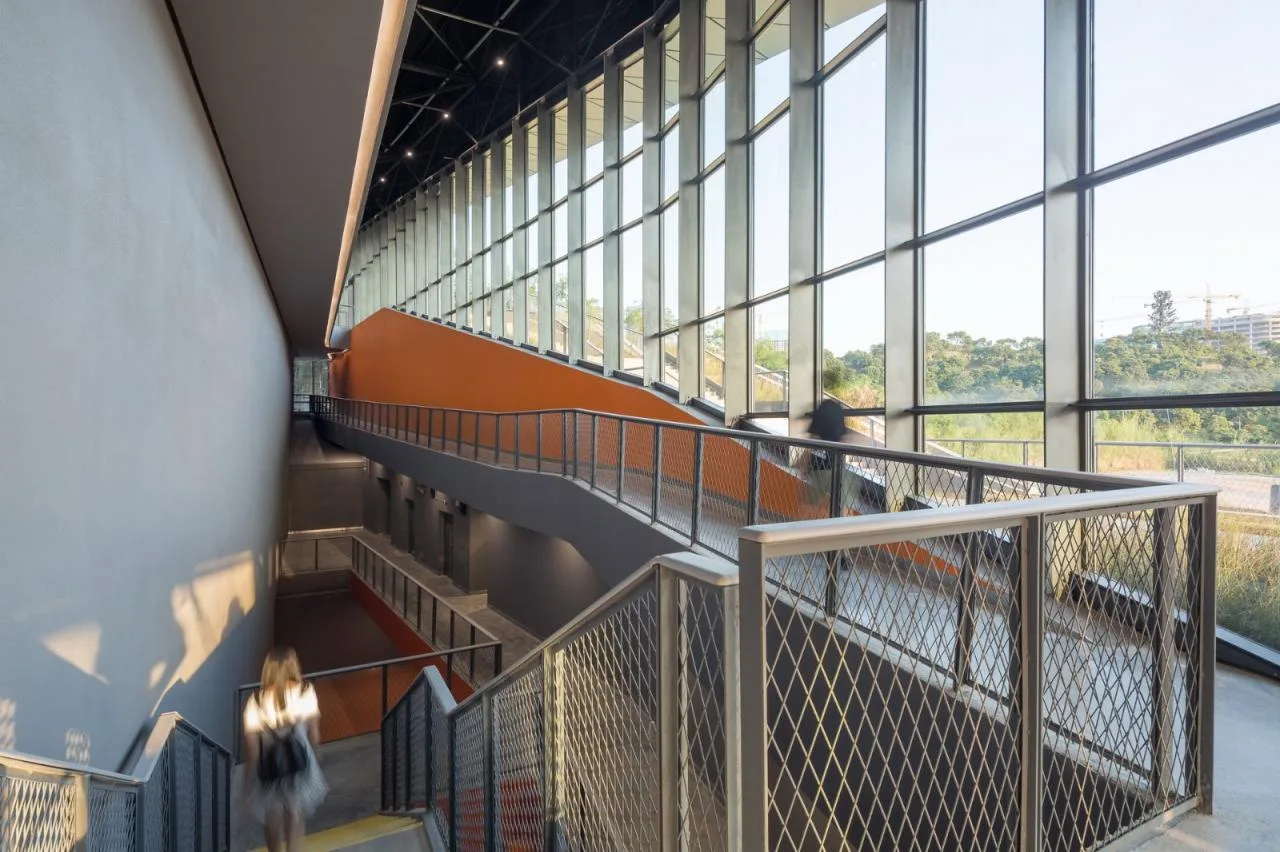
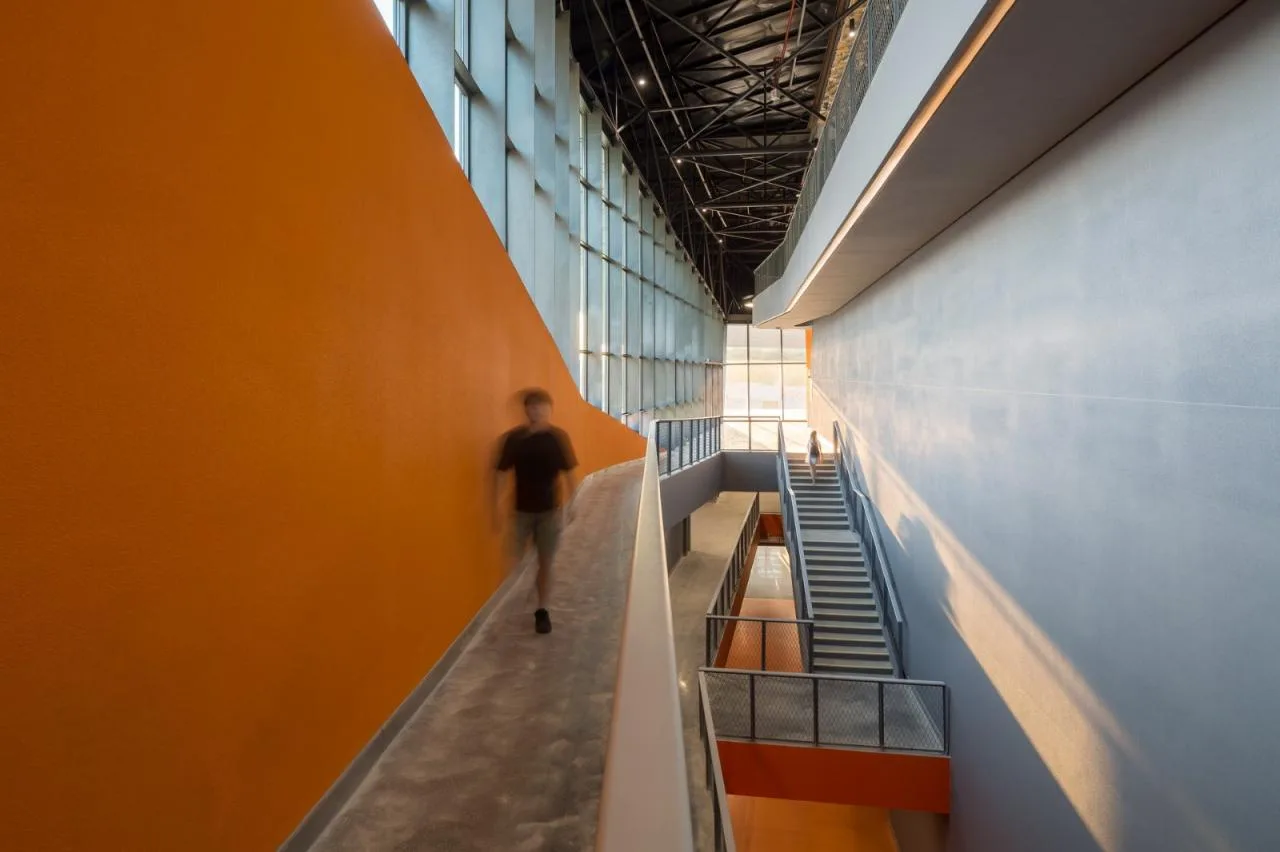
To minimize impact on the original mountain and its vegetation, the design adapts to the natural terrain, breaking down the building’s massive volume into smaller, integrated components. Inspired by the surrounding environment, the architects introduced multi-level activity platforms, ramps, suspension bridges, and hiking trails to connect indoor and outdoor spaces at various elevations, forming open running routes.
Existing terraces on the site were repurposed as stadium seating, creating non-traditional sports venues that, together with the mountain landscape, form an expansive, flexible sports space system. This approach challenges the conventional limitations of enclosed sports facilities.
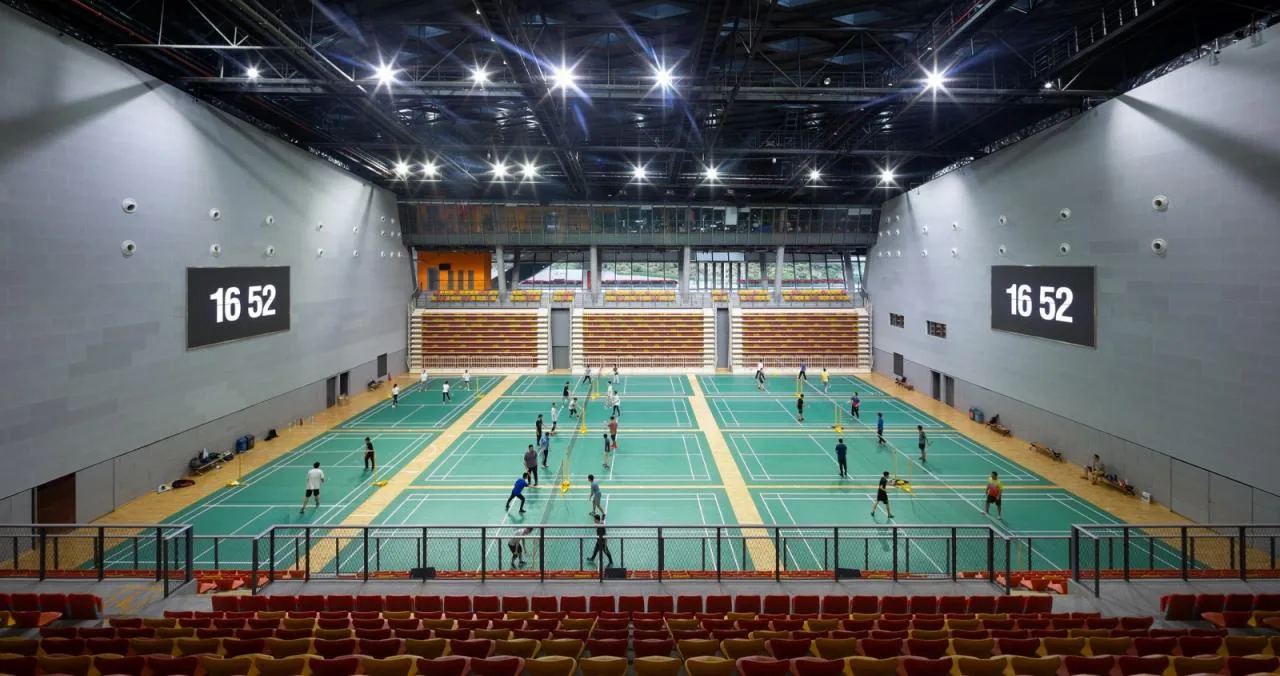
The main structure features a concrete frame with a steel roof that spans the large central stadium area. From this core, a series of open sports spaces unfold progressively. Students can run along the landscaped terraces, ascending from the outdoor track and field to a 4.2-meter-high platform that offers views of outdoor athletic events. Continuing upward, they reach the audience entrance at 7.2 meters elevation, where they enter the indoor main stadium for competitive events.
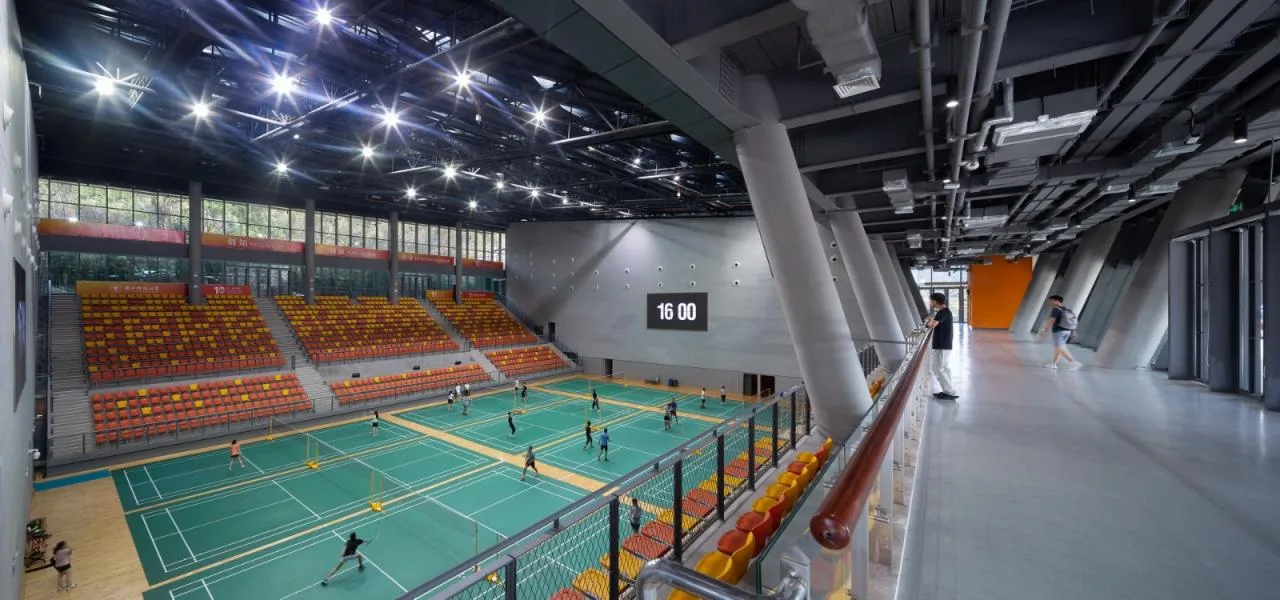
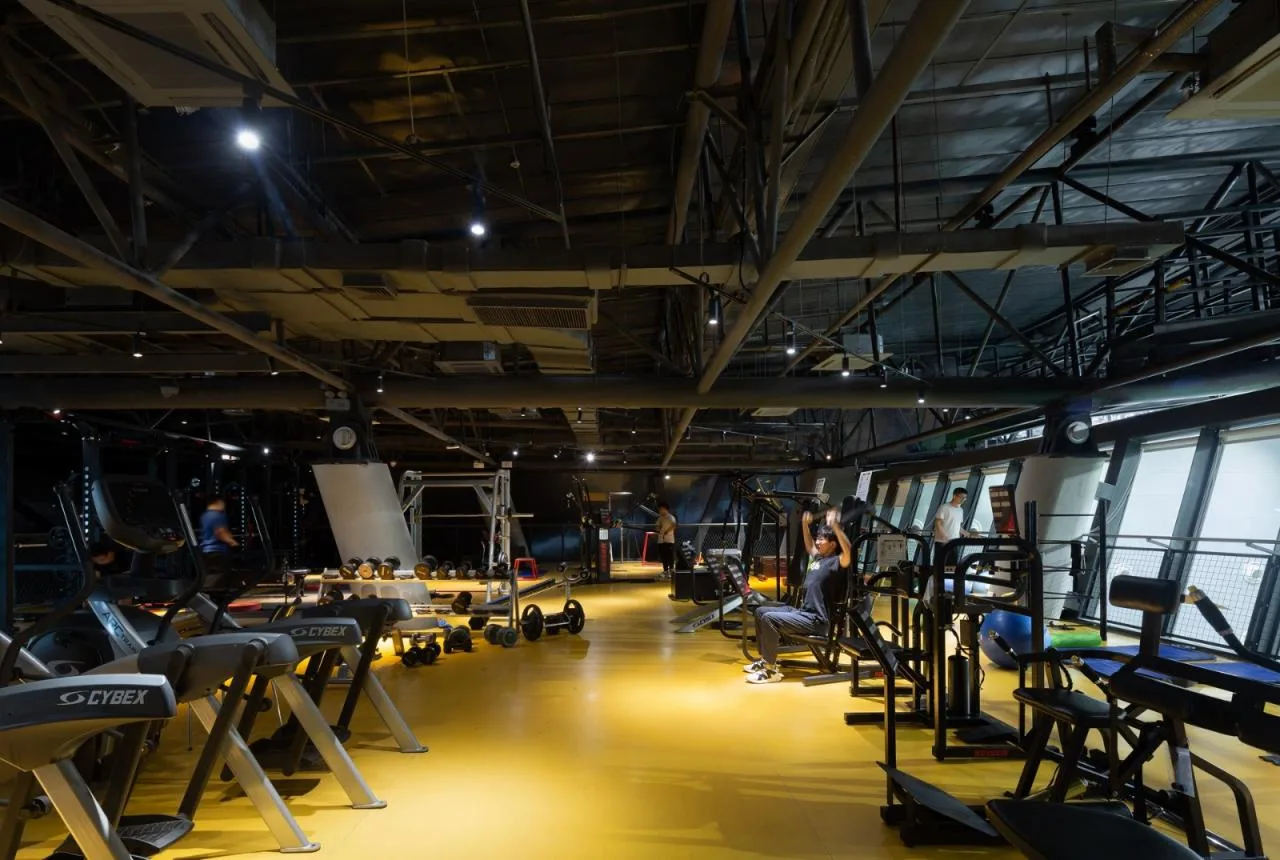
The main stadium spans 44 meters from north to south and features transparent sides, welcoming natural mountain views and offering varied sports experiences. At 12.8 meters elevation lies the aerial gym, encased in a cross steel truss structure suspended diagonally above the arena. This unique space allows spectators to work out while watching games, fostering interaction between different sports venues.
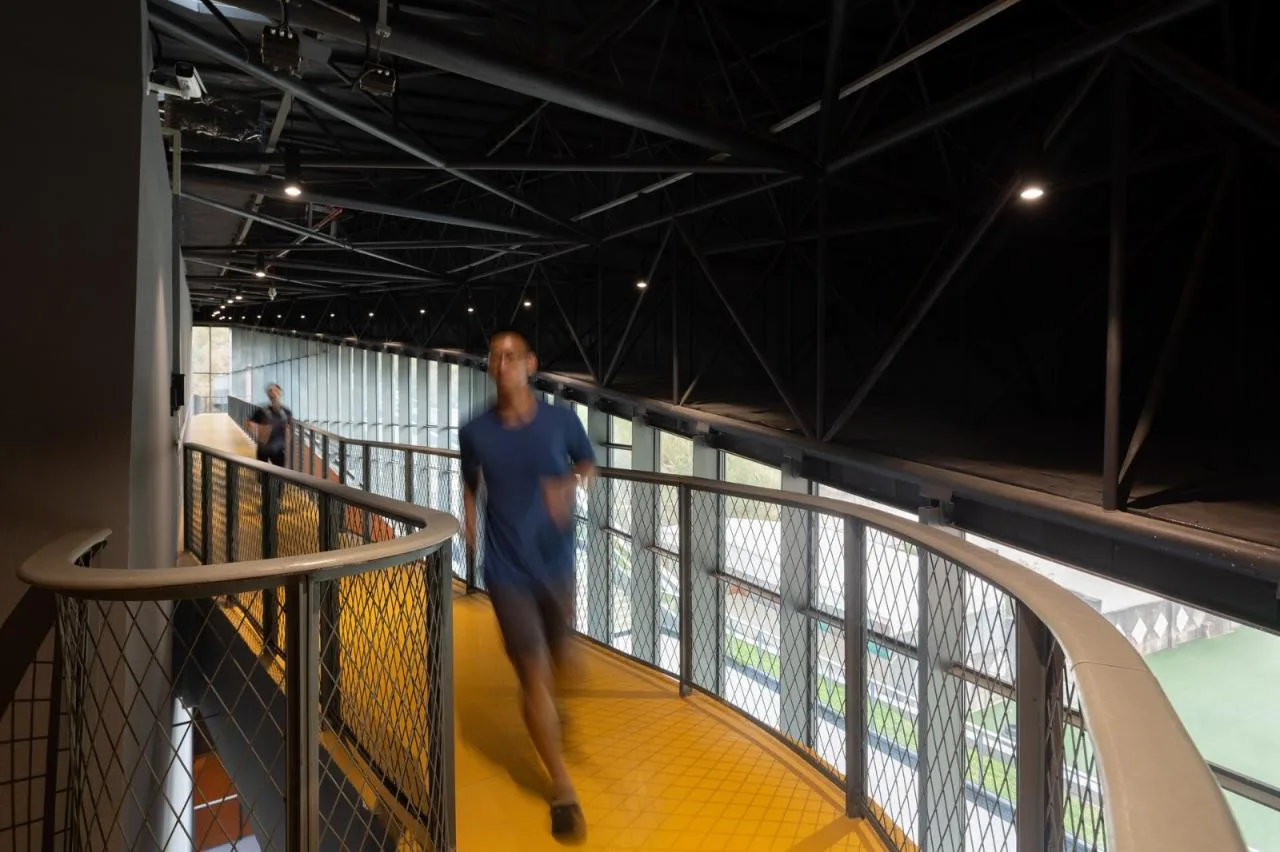
Encircling the main stadium is a 150-meter aerial circular track that connects to the gym and lounge areas. This pathway constantly weaves between the stadium and relaxation zones, inviting visitors to explore the space dynamically and enjoy a novel jogging experience. For those wishing to extend their exercise, the track leads to an outdoor climbing exit, linking to mountain jogging trails or landscape staircases, ultimately creating a closed loop for continuous fitness activity.
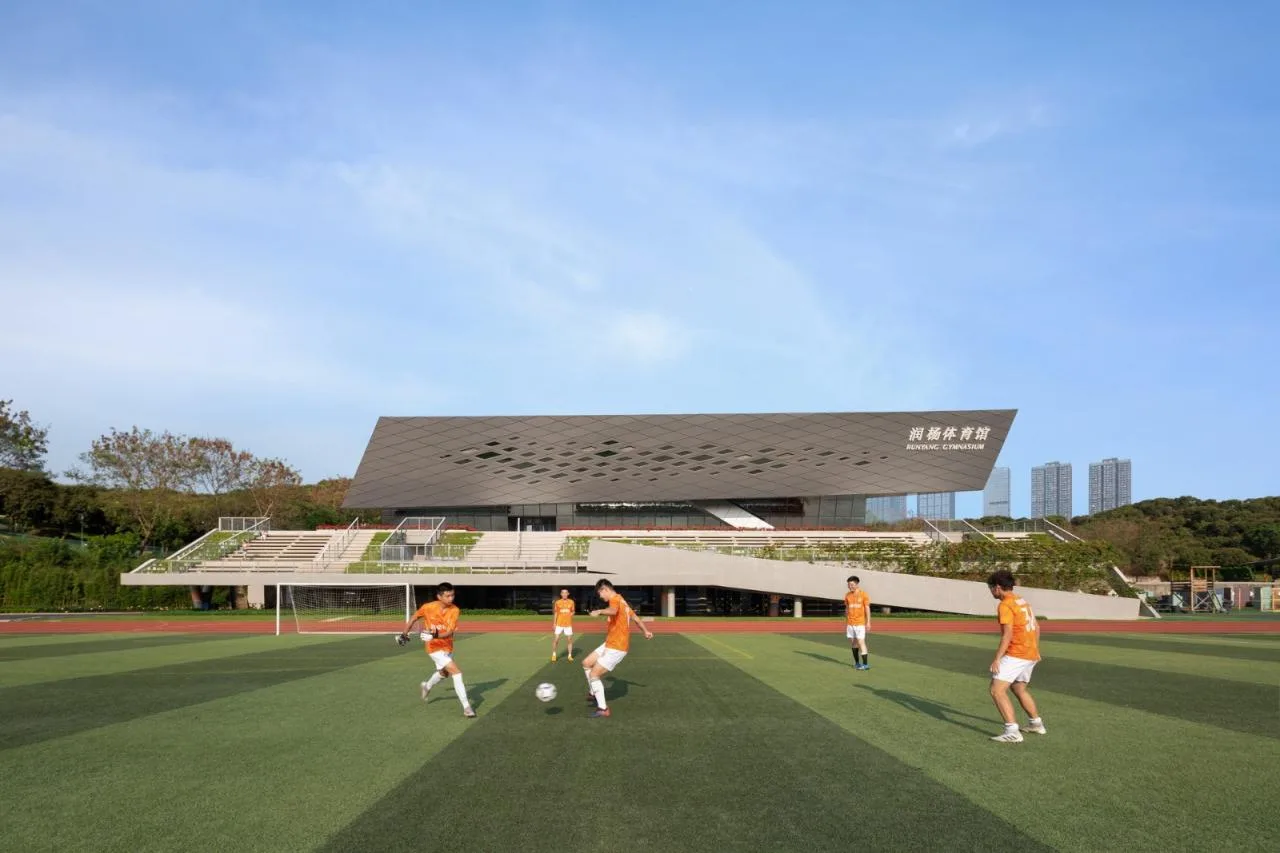
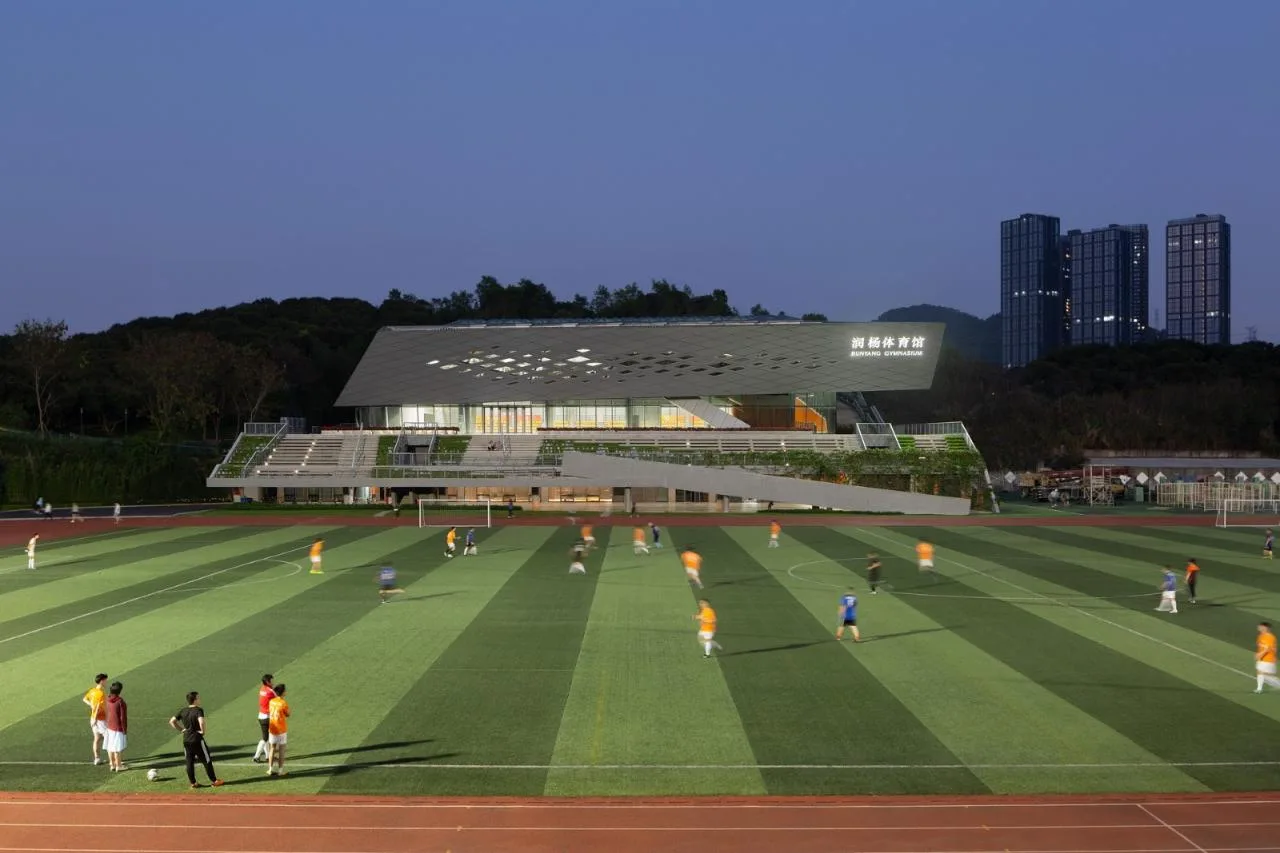
This expansive sports space challenges traditional notions of athletic venues, encouraging a variety of uses beyond formal competition. It invites students to engage actively in fitness and social activities, blurring the boundaries between sports and leisure. The design explores new possibilities for multifunctional, interactive environments that nurture community and physical well-being.
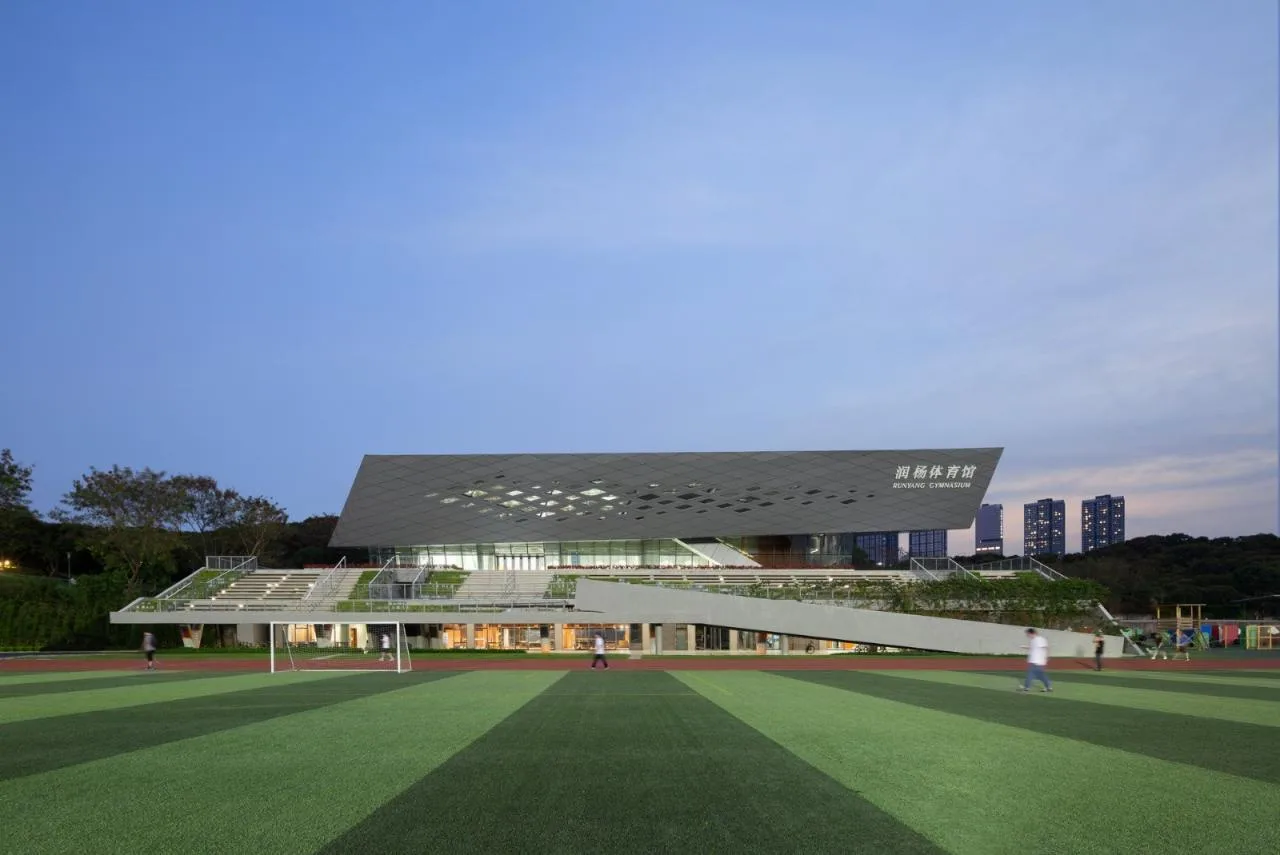
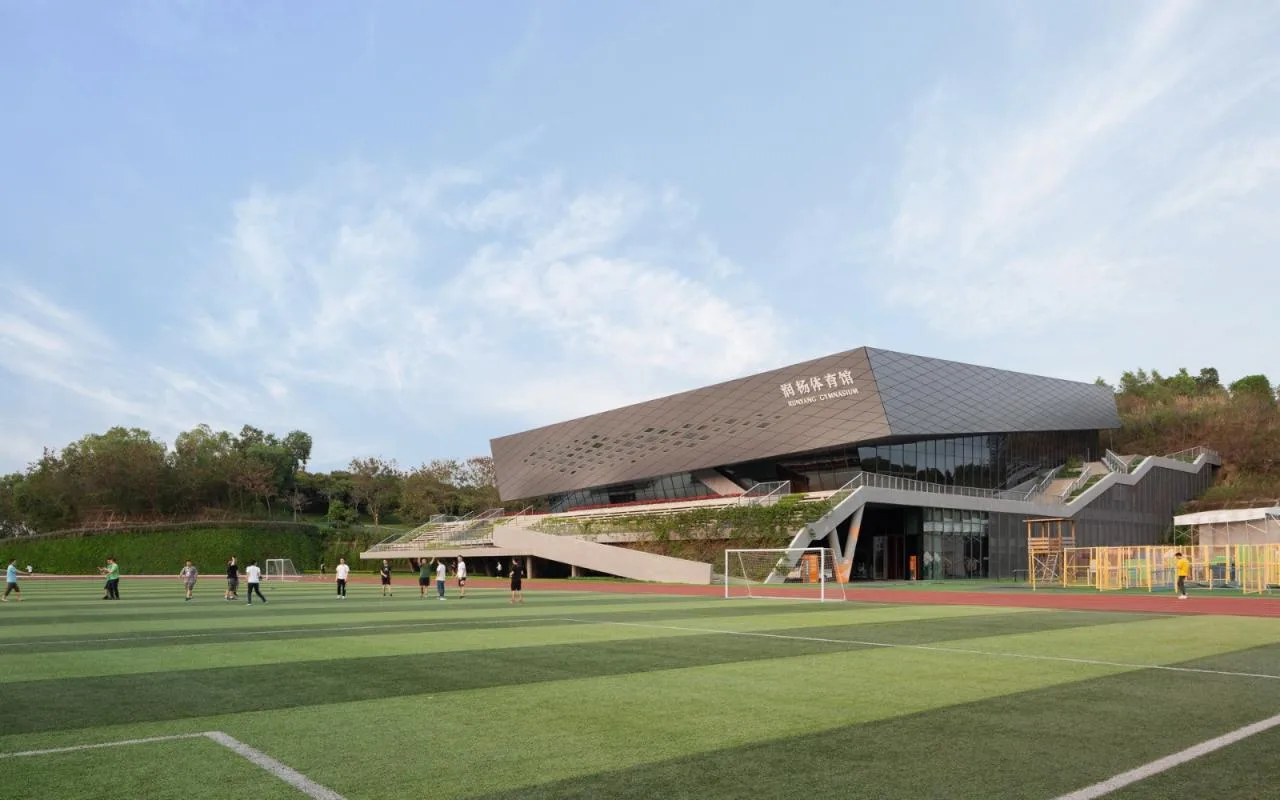
Project Drawings
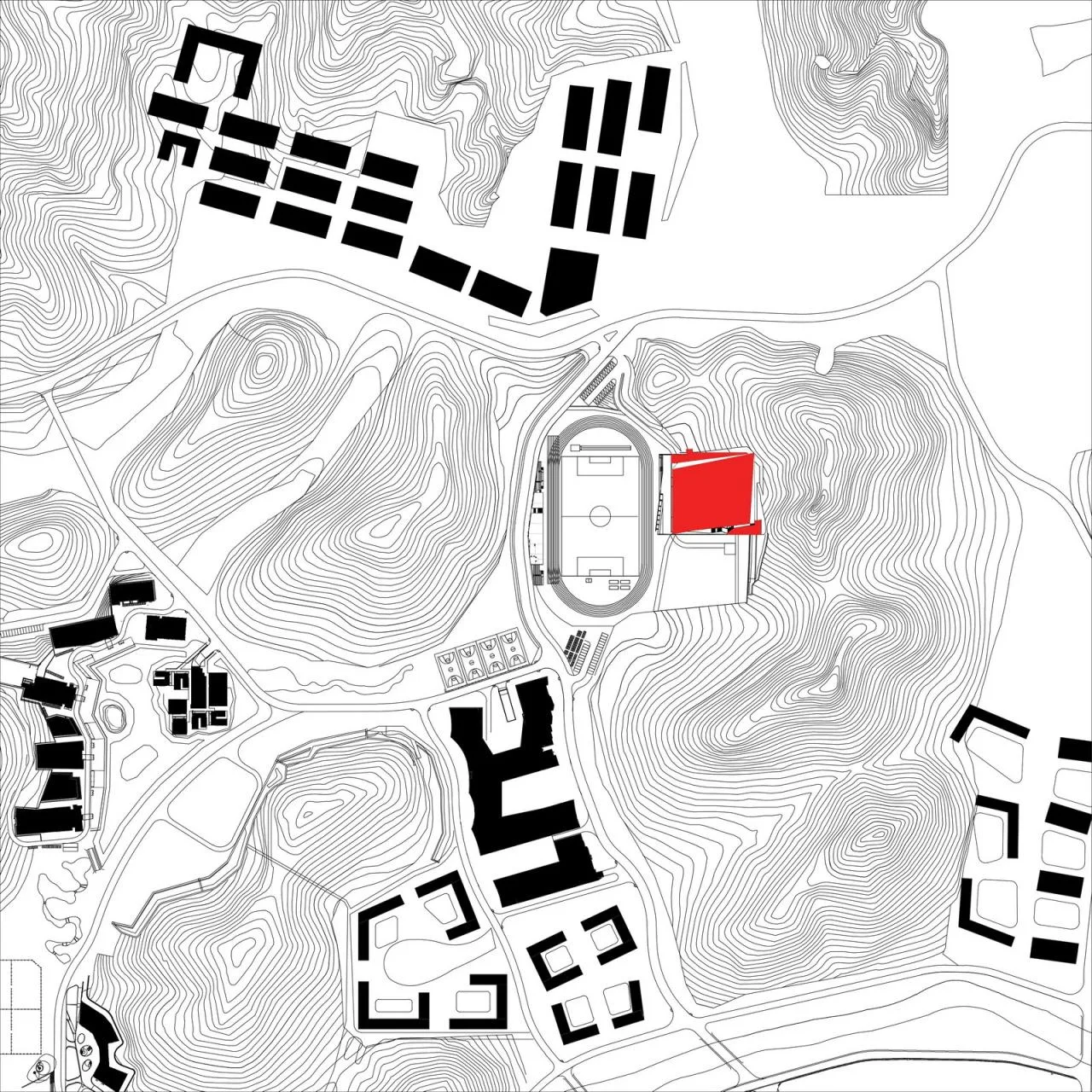
△ Location Map
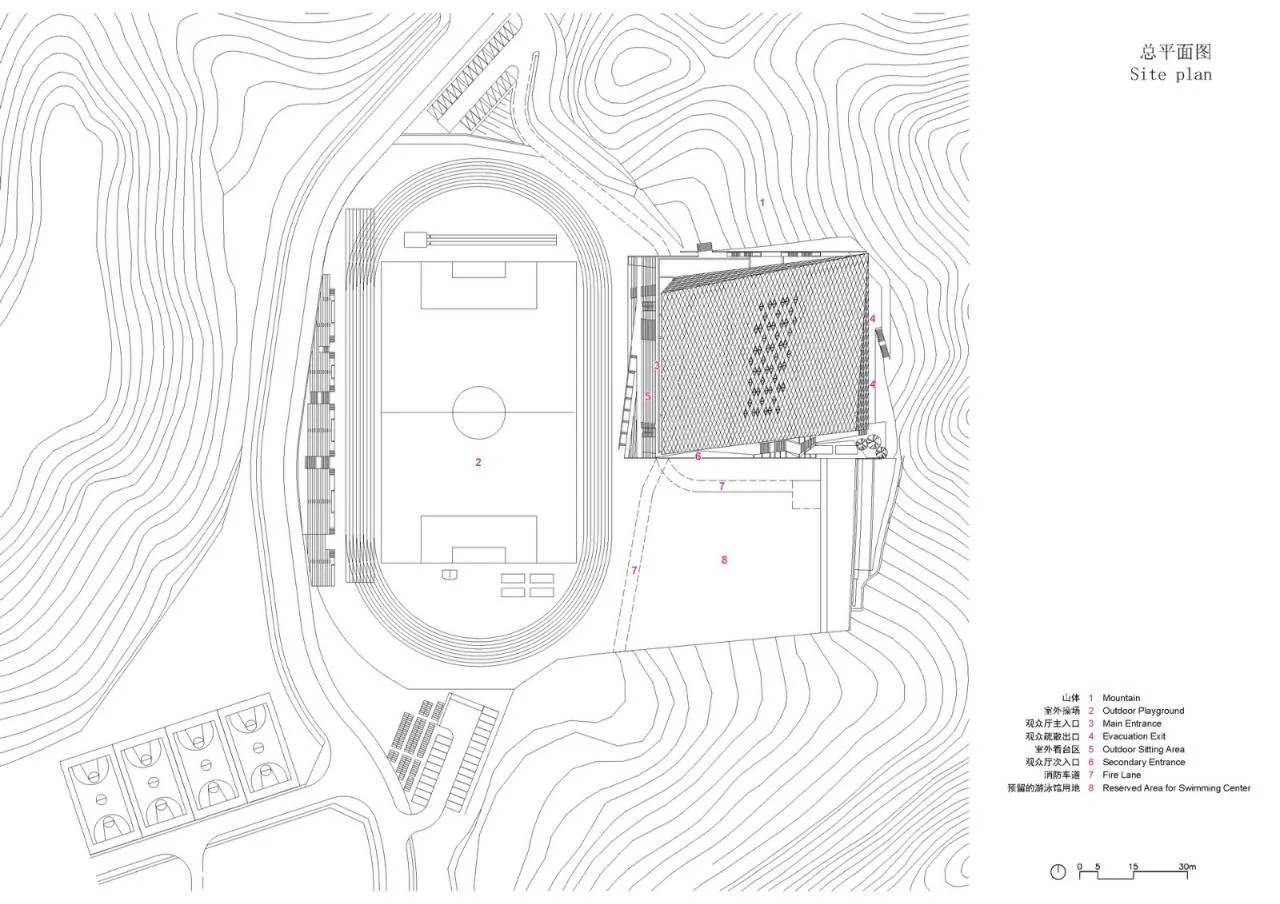
△ General Layout Plan
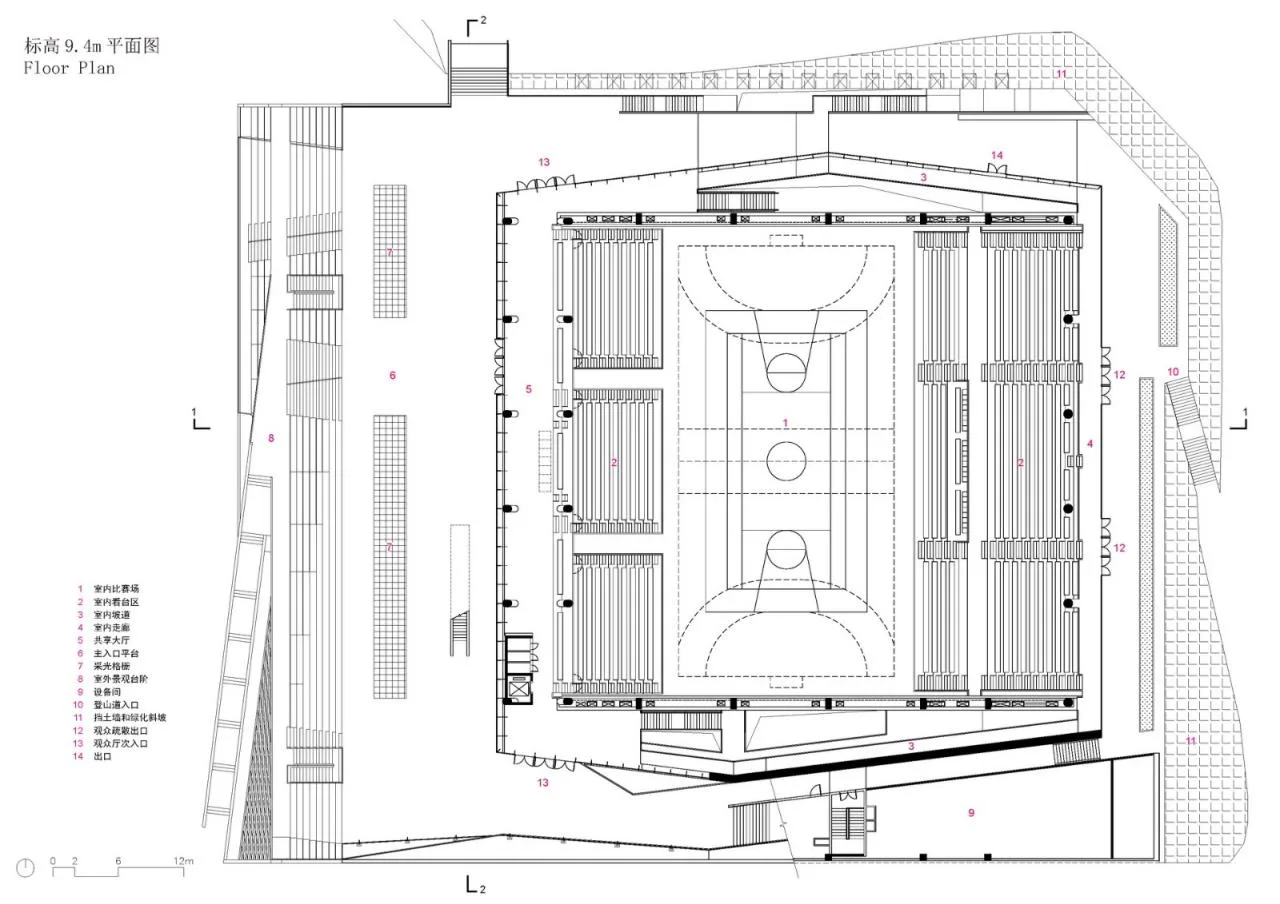
△ Plan View
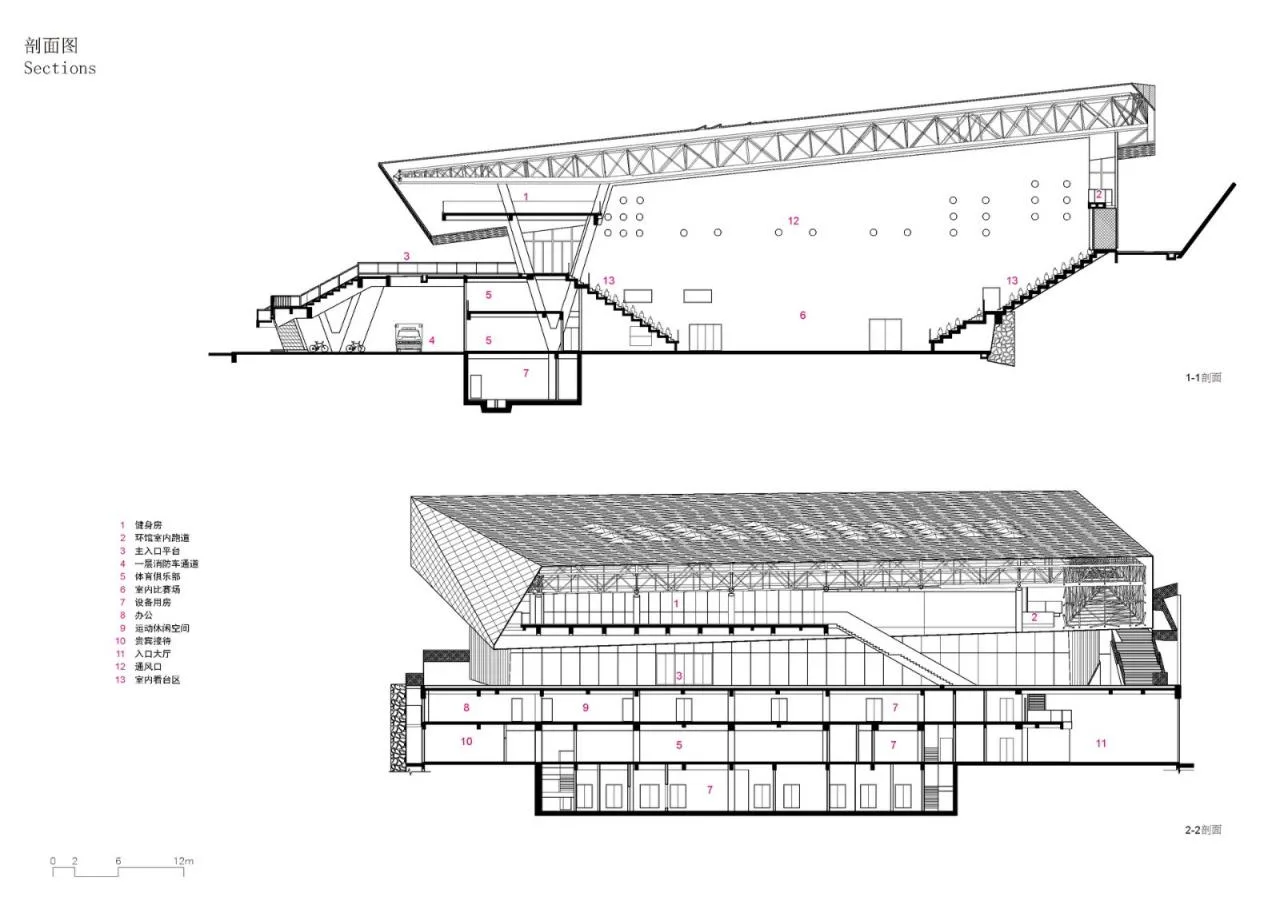
△ Section Diagram
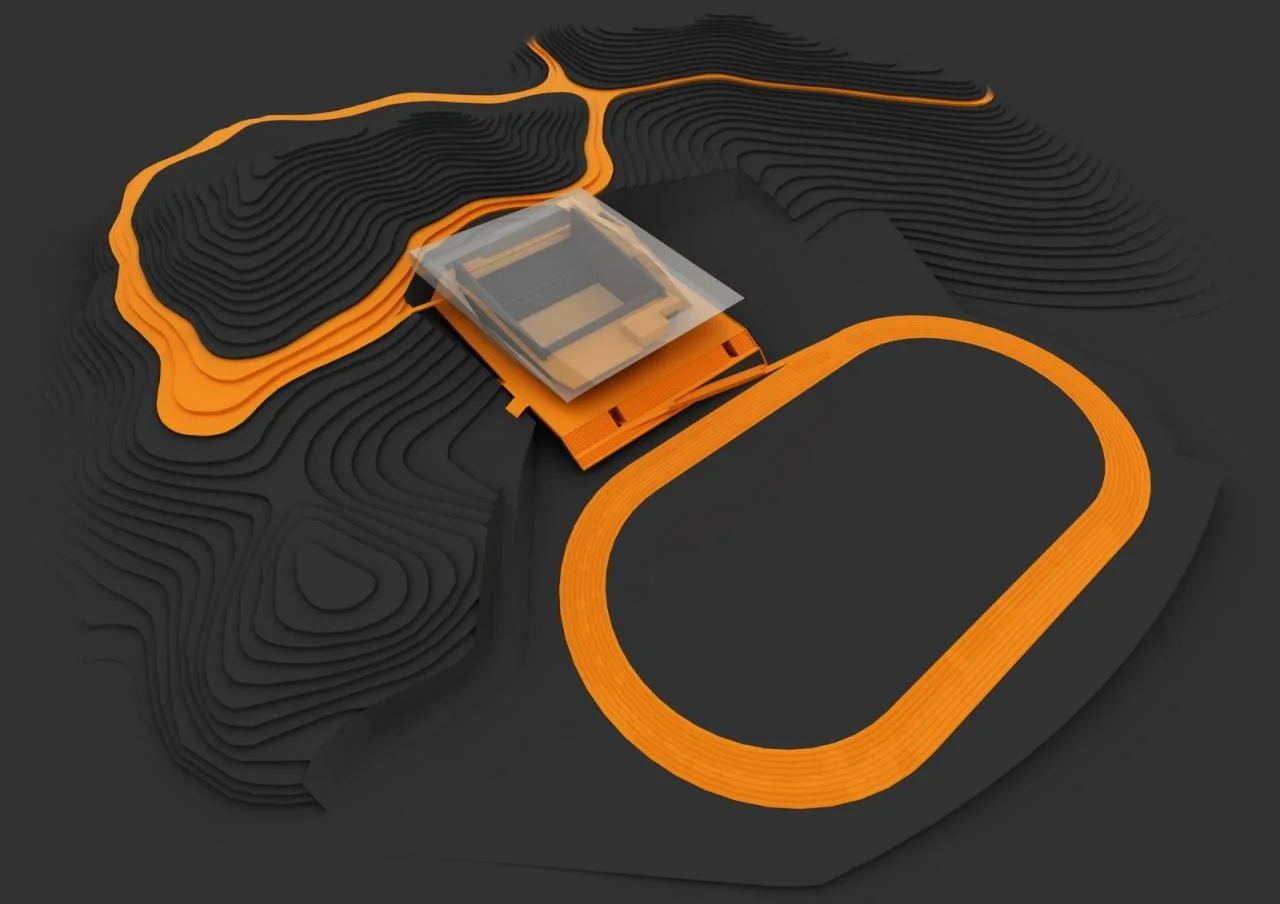
△ Concept Diagram
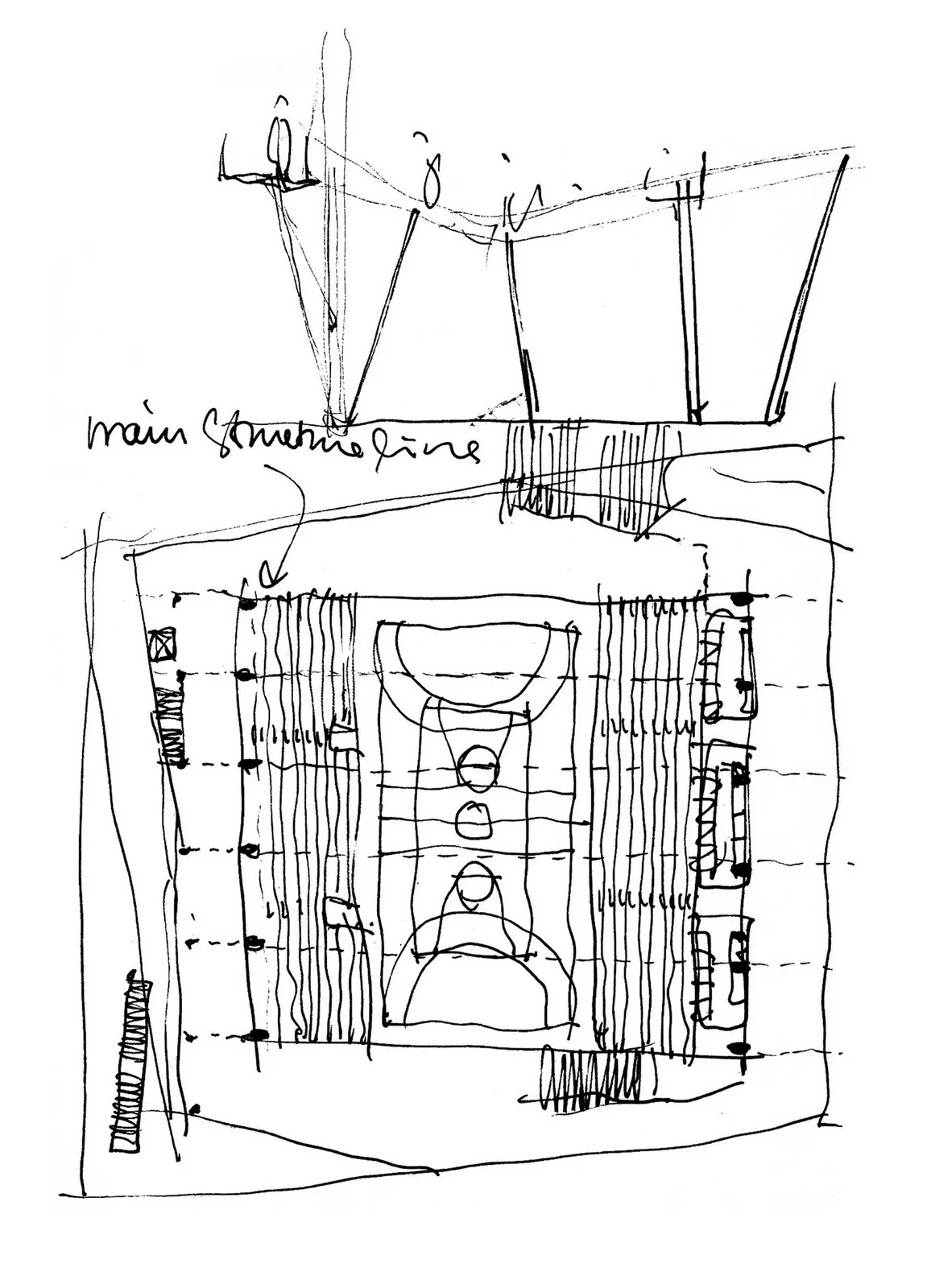
△ Hand-drawn Drawing by Meng Yan
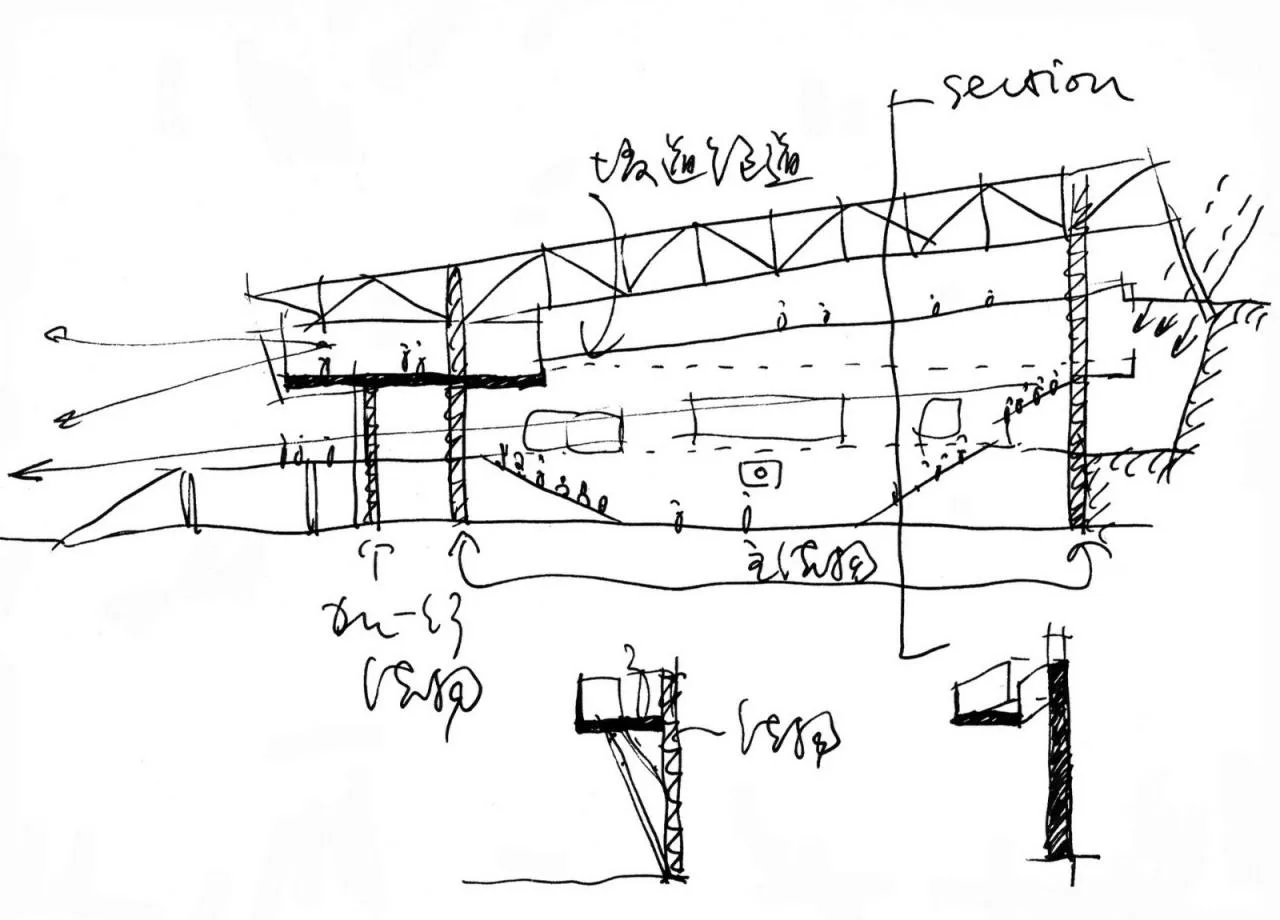
△ Hand-drawn Drawing by Meng Yan
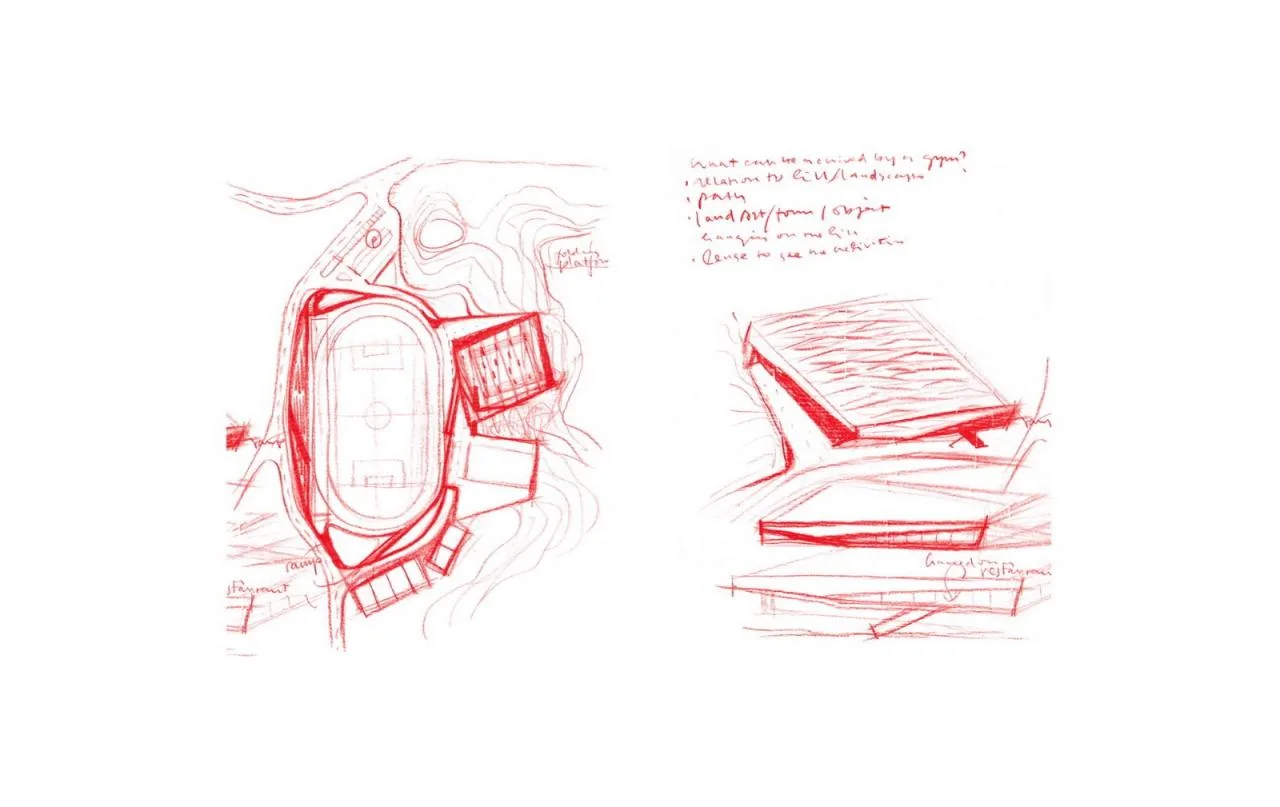
Project Information
Construction Units: Southern University of Science and Technology, Shenzhen Construction and Engineering Bureau
Design: URBANUS Urban Practice (www.urbanus.com.cn)
Project Location: Southern University of Science and Technology, Xili Town, Nanshan District, Shenzhen
Design Period: 2010–2016
Construction Period: 2016–2019
Land Area: 7,000 square meters
Building Area: 9,735 square meters
Lead Architect: Meng Yan















Must log in before commenting!
Sign Up