
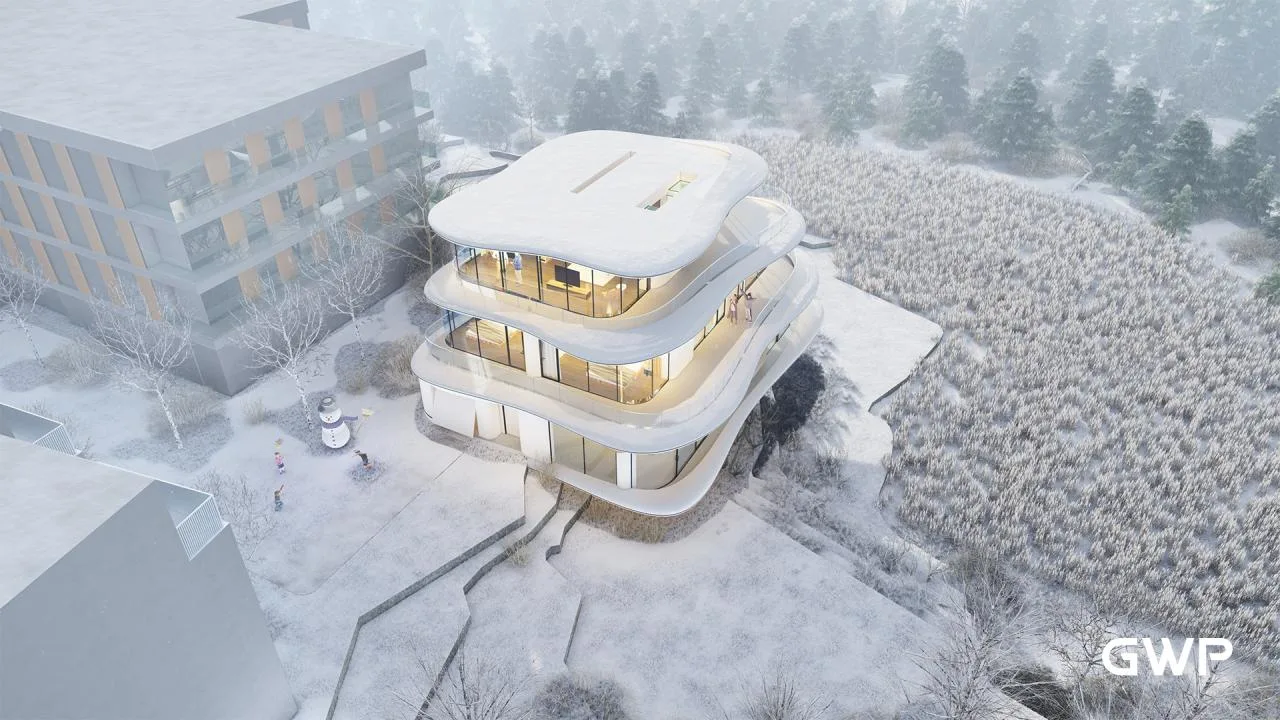
As we enter the era of the experience economy and aesthetic enhancement, consumers’ demand for quality and their desire to reconnect with nature have become key drivers in product development across industries. The design of the Hokkaido Hot Spring Resort Hotel in Japan embodies the timeless beauty of architecture through minimalism, emphasizing purity and simplicity as central themes of life.
This project not only reflects people’s hope for a better future in the post-pandemic world but also showcases the GWP team’s commitment to delivering international, high-quality design grounded in innovation and practical implementation. It highlights the vibrant vitality of Eastern cultural heritage on the global stage.” – GWP Team
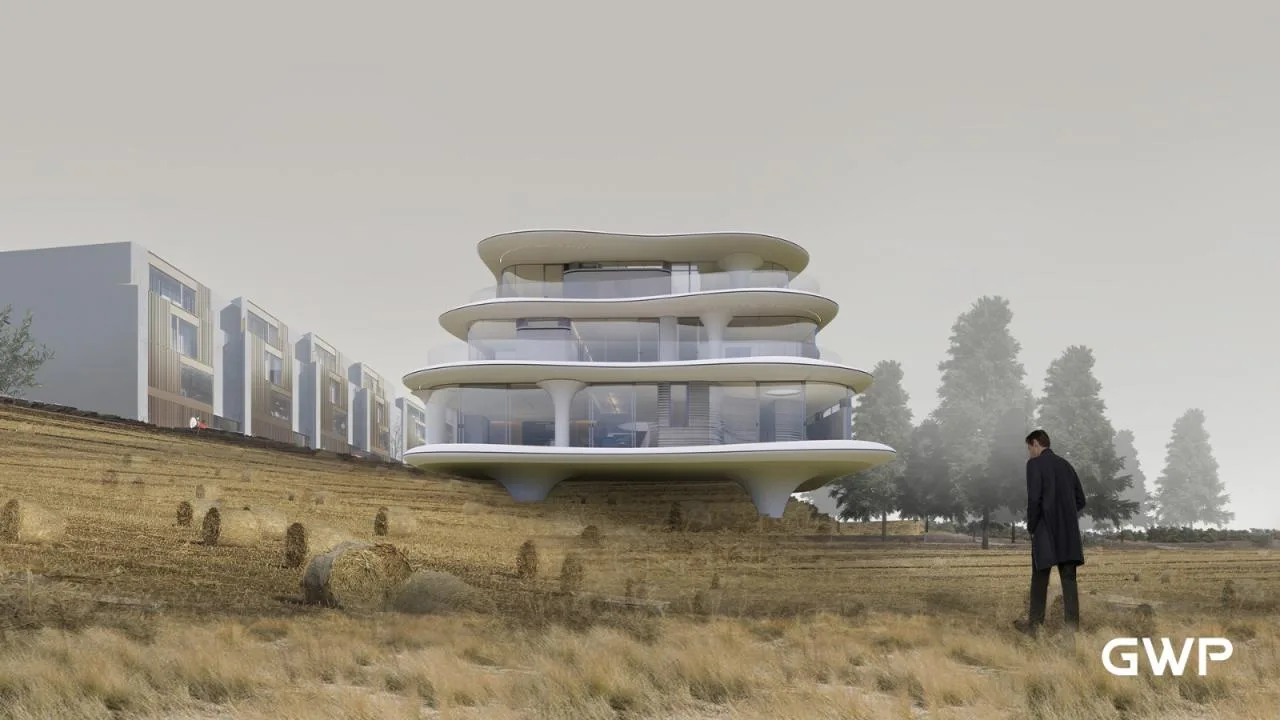
Located in Hokkaido, a region where nature and urban life coexist harmoniously, the area celebrates the growth of all living things through its pristine natural beauty. Hokkaido’s charm is expressed through its summer flowers, autumn leaves, and winter snowscapes, attracting visitors worldwide.
The Hokkaido Hot Spring Resort Hotel, designed by GWP, is situated in Niseko, a town renowned for its ski tourism. Bookings report over 300 vacation hotels available here, posing a unique challenge: how to create a world-class landmark resort that deeply understands nature, city, and people, while working within limited development quotas. This was the central focus for GWP throughout their research and design phases, aiming to elevate the project’s visibility in a competitive environment.
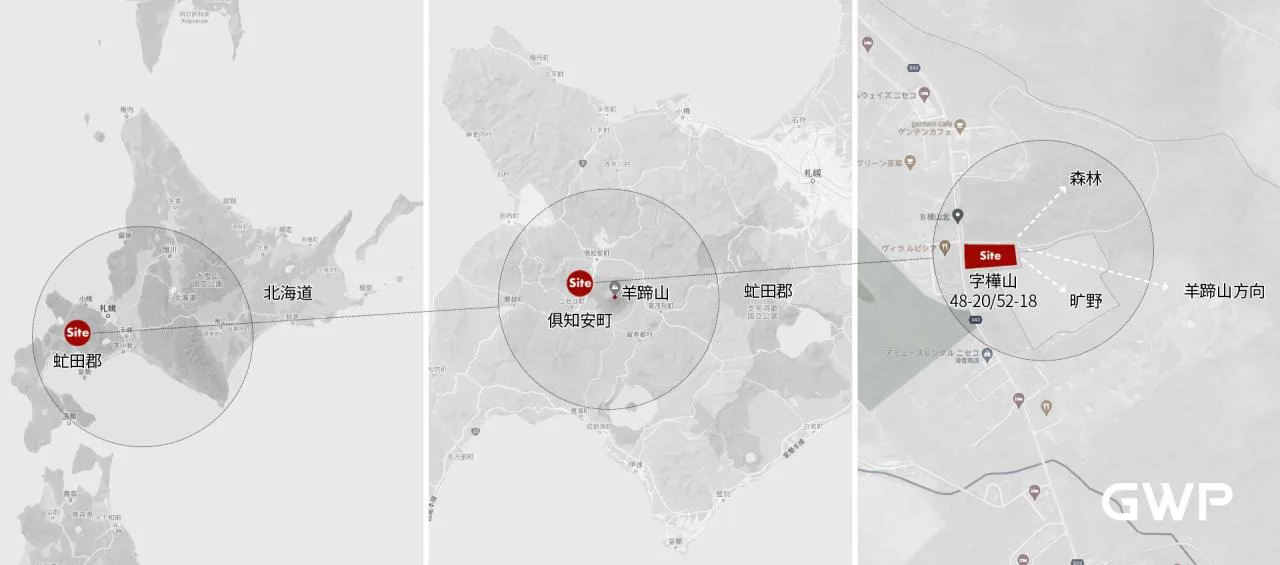
△ Project location map
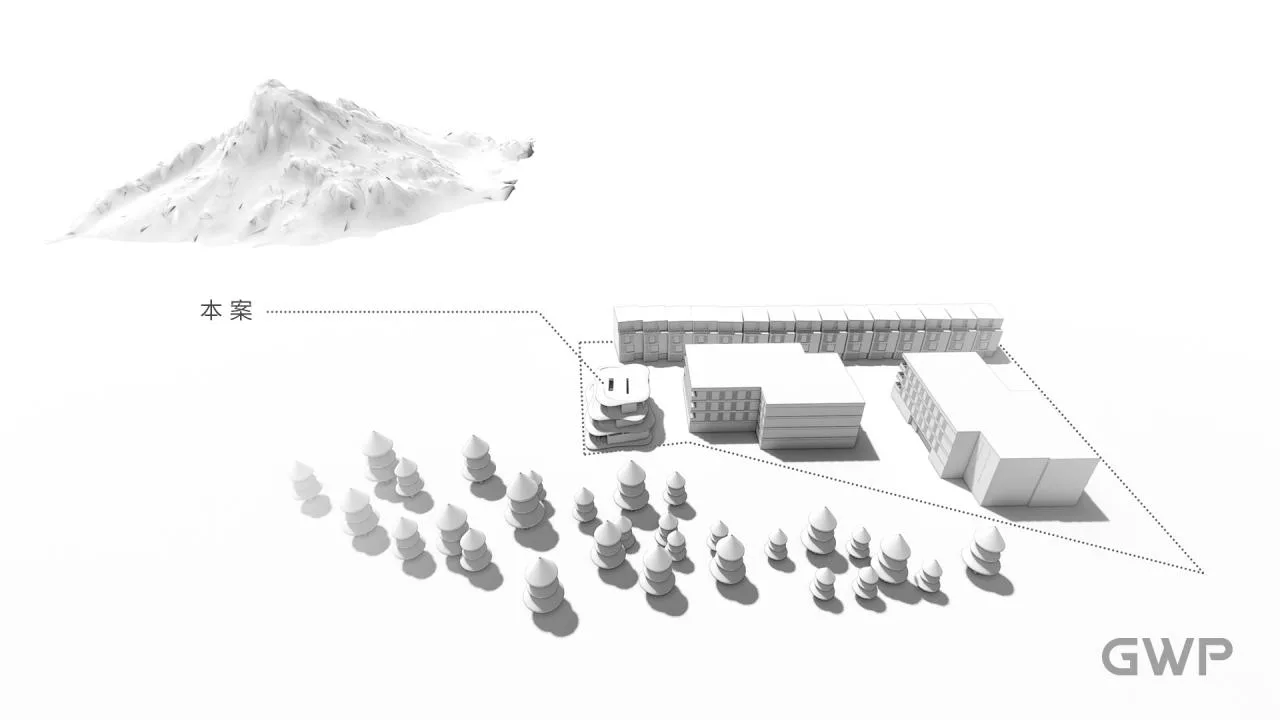
△ Site analysis
Elegance inspired by nature
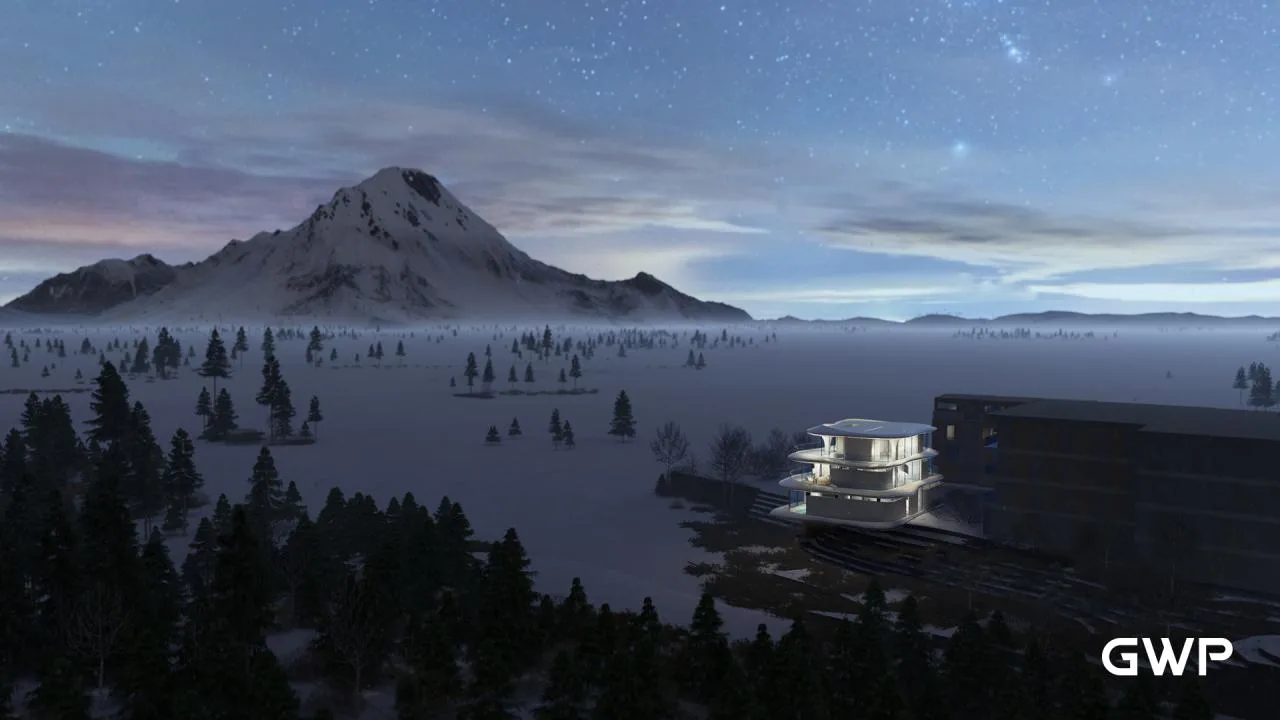
From the Hokkaido Hot Spring Resort Hotel, gazing northward, your view passes over a vast wilderness, culminating in snow-capped mountains. At sunrise, these peaks appear like a shy maiden unveiling herself from a veil of clouds and mist — a breathtaking moment unique to the dawn.
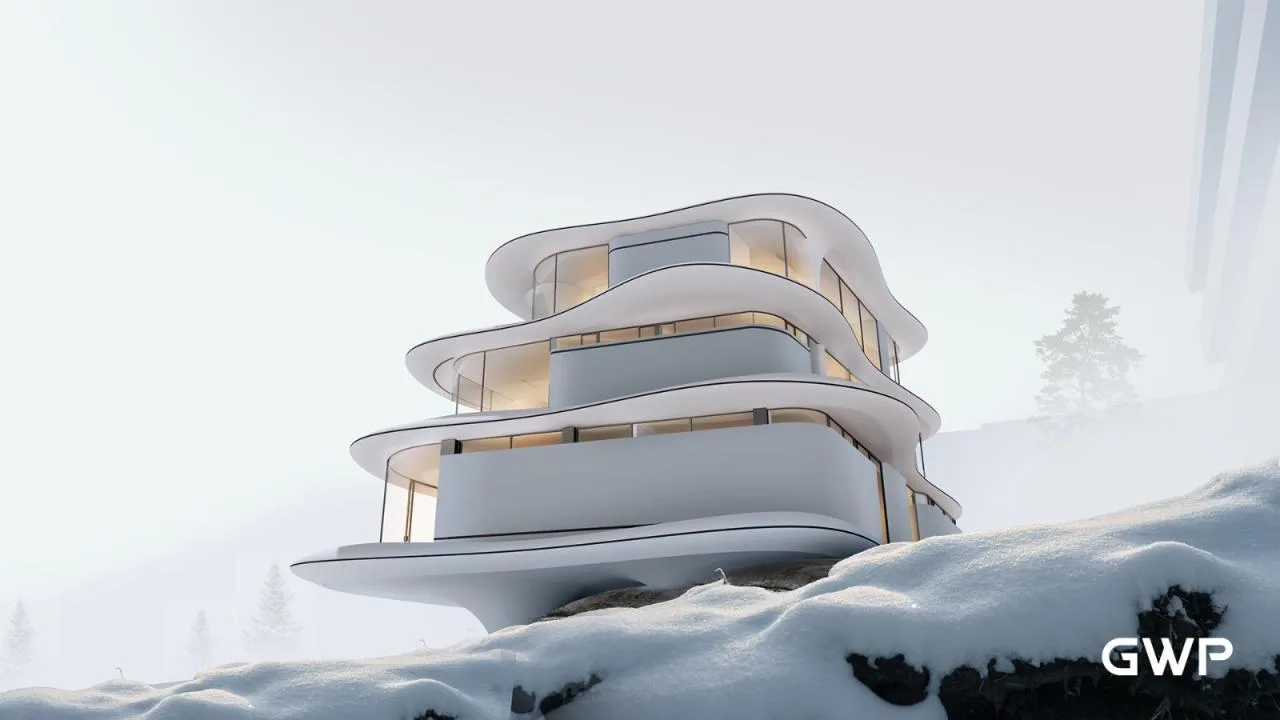
GWP draws design inspiration from this elegant interplay of light and shadow on the mountains. Using flowing, curved lines that mimic clouds and water, the building’s dynamic form breaks through the misty landscape, creating a visual impression of living amidst clouds and mountains. This renders the hotel an artistic landmark within the cultural and tourism town.

△ Architectural form refinement
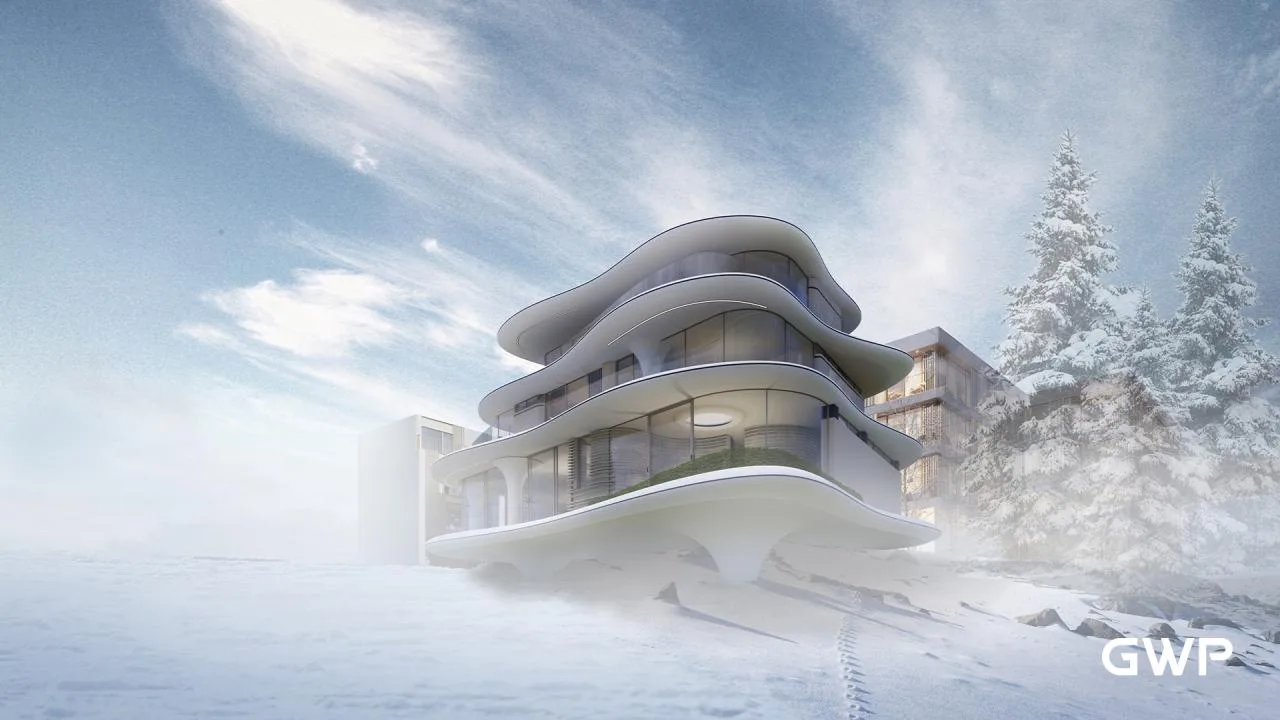
Warmth through a sincere understanding of humanity
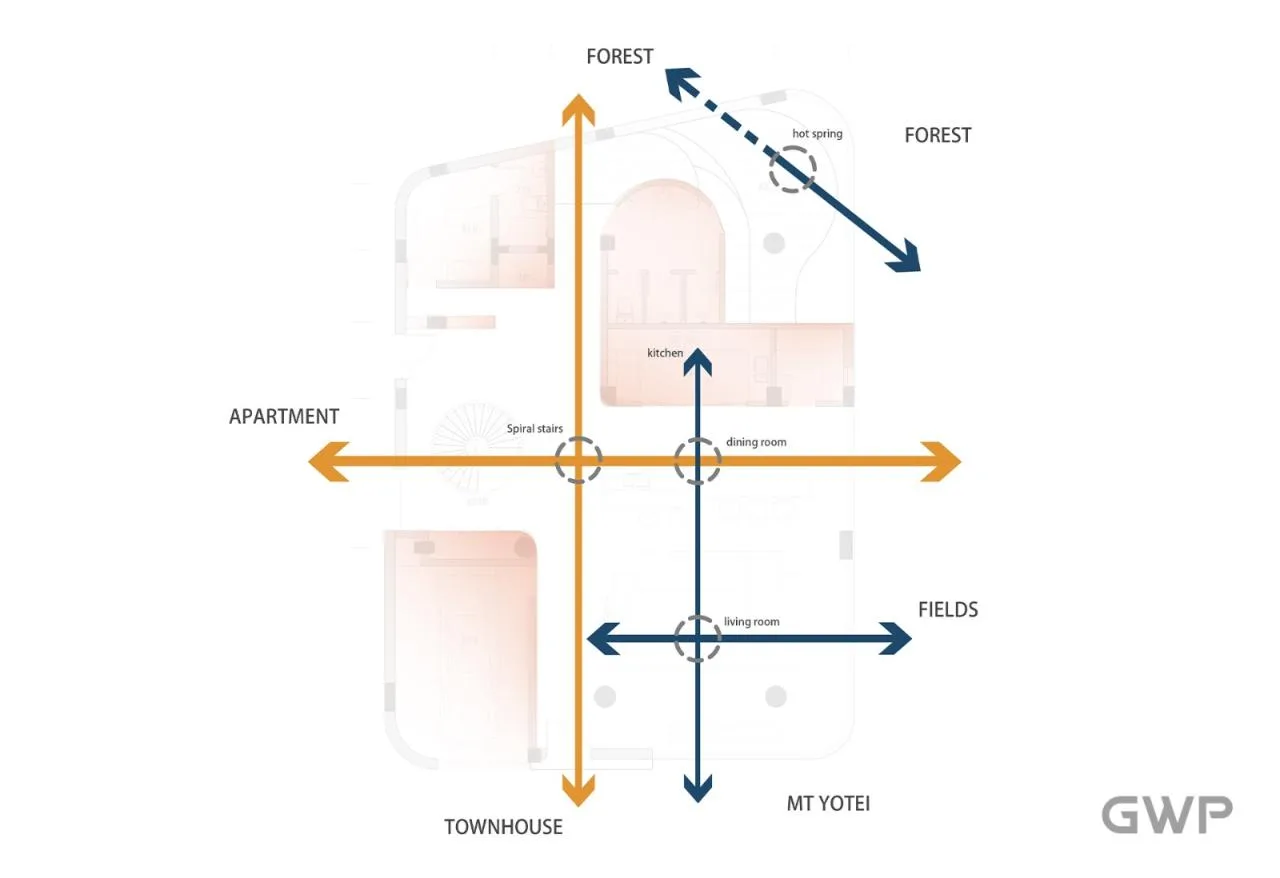
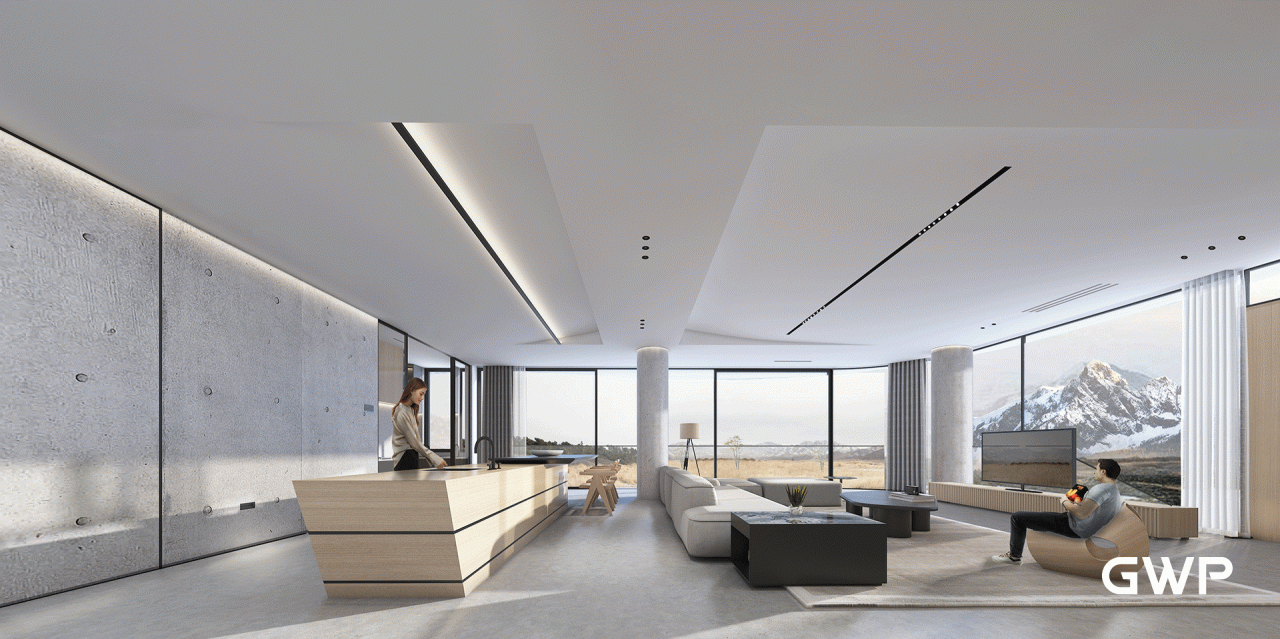
The hotel’s layout emphasizes seamless functional flow with minimalist fluidity, balancing open spatial scales and quiet zones. The first floor features open shared spaces — living, dining, and hot spring areas — connected by fluid circulation routes. Expansive French windows frame views of distant snow mountains from every vantage point.
On the second floor, three private suites are linked by an intimate open leisure space. The third floor, more secluded, offers a private retreat where opening the bedroom door reveals a spectacular landscape, creating a sudden and striking visual experience.
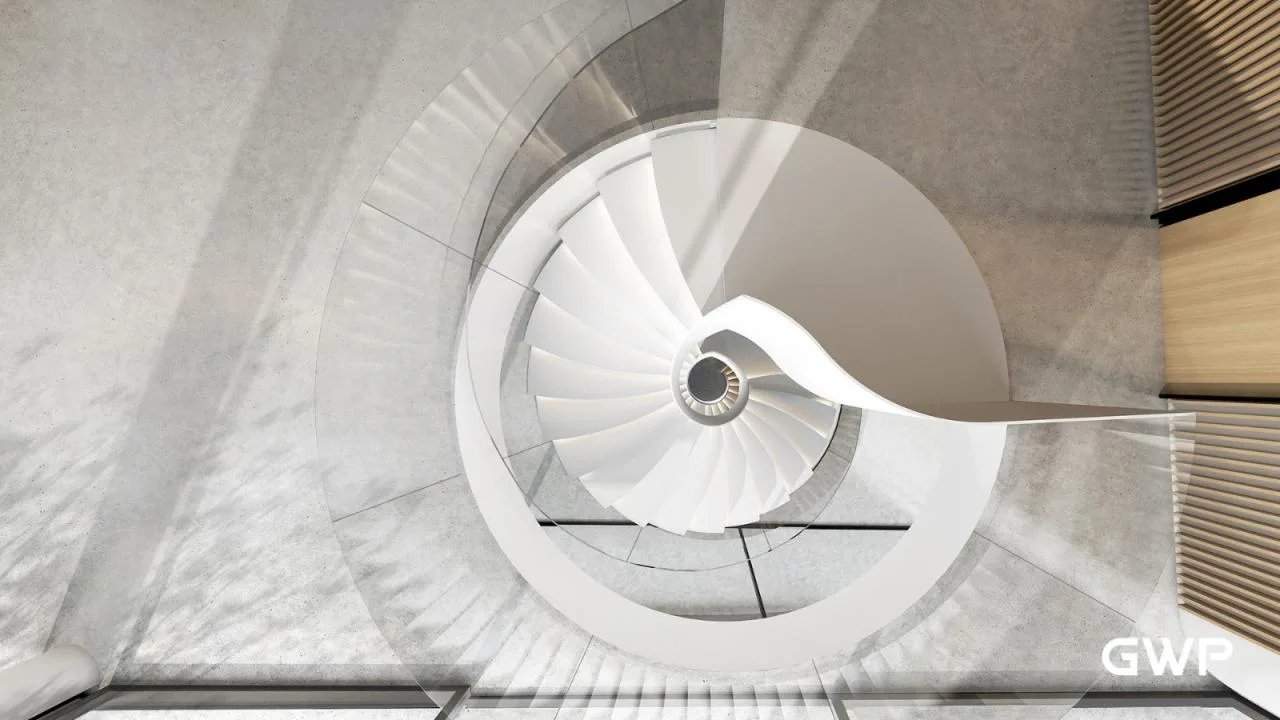
A sculptural spiral staircase elegantly connects all floors. Its clean white curves foster a modern, refined atmosphere, elevating the transition from open communal spaces to private sanctuaries into a meaningful ritual.
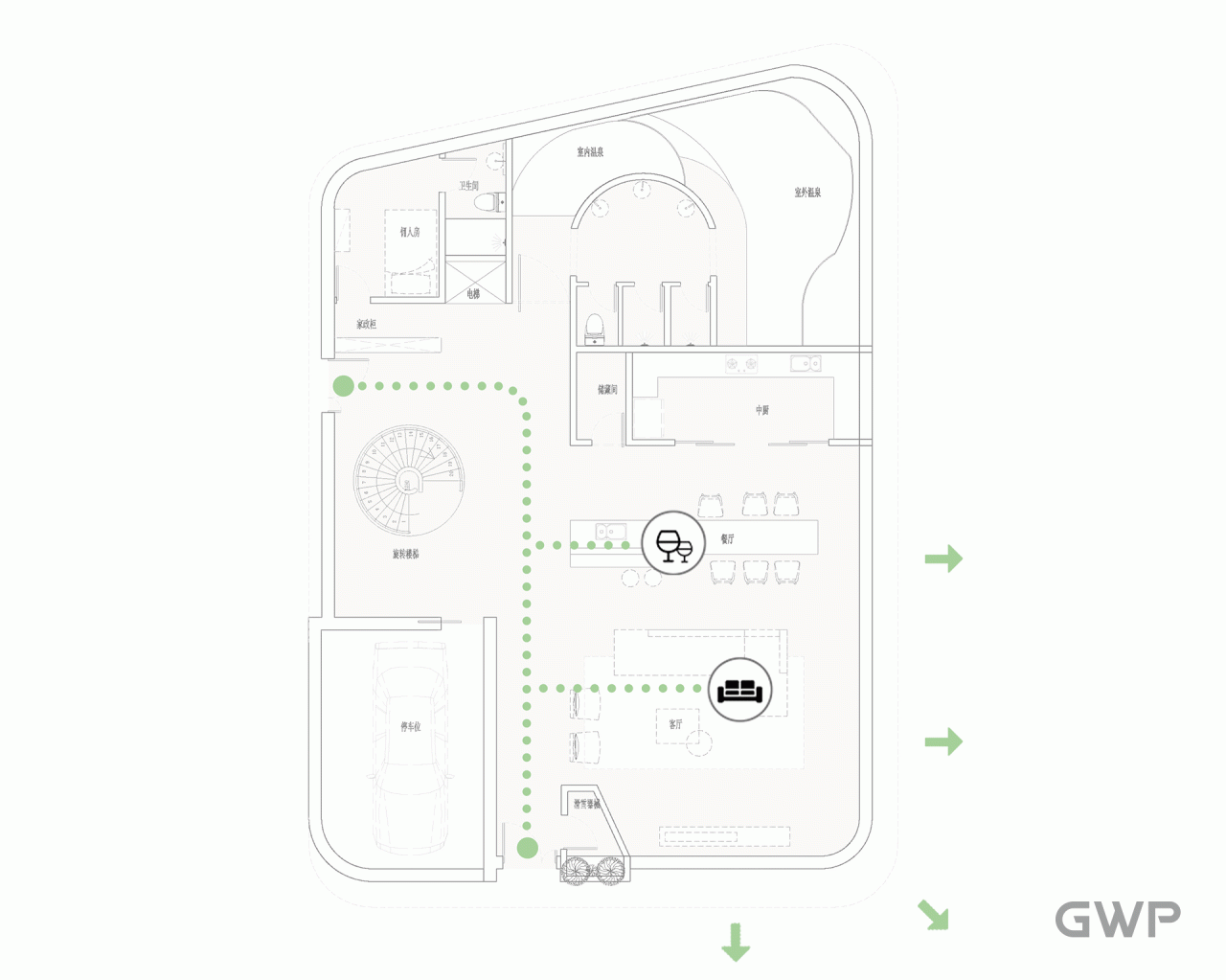
△ Flow line analysis diagram
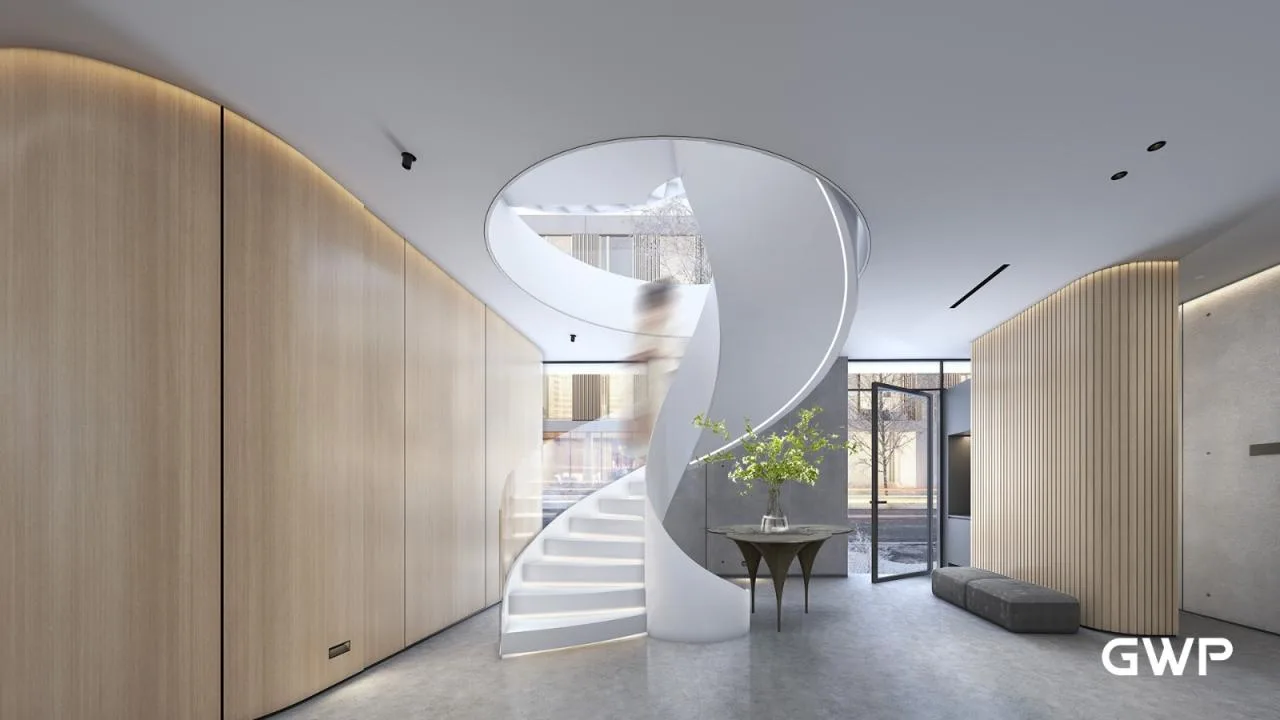
Materiality enhancing poetic living experiences
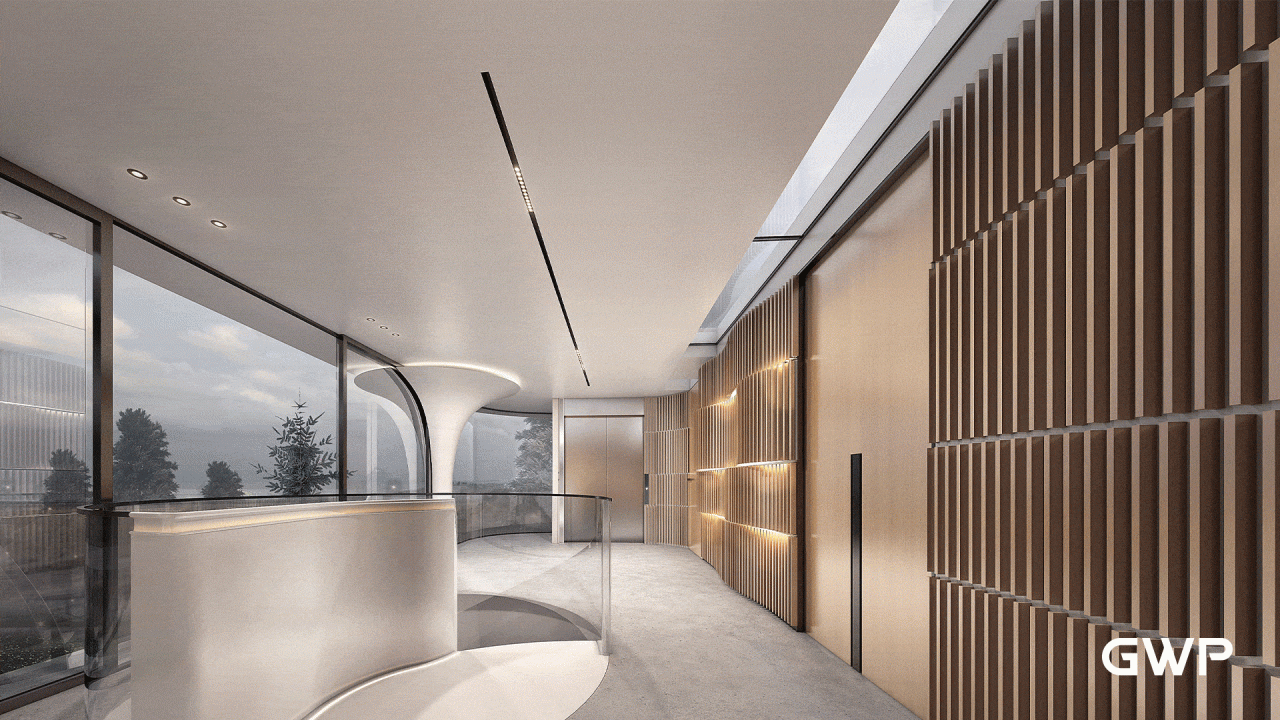
Interior design continues the building’s soft, rounded exterior lines, creating a dynamic flow through simple, smooth forms. Natural wood-colored veneer and plain concrete serve as the core palette, evoking a calm and simplistic atmosphere grounded in natural textures.
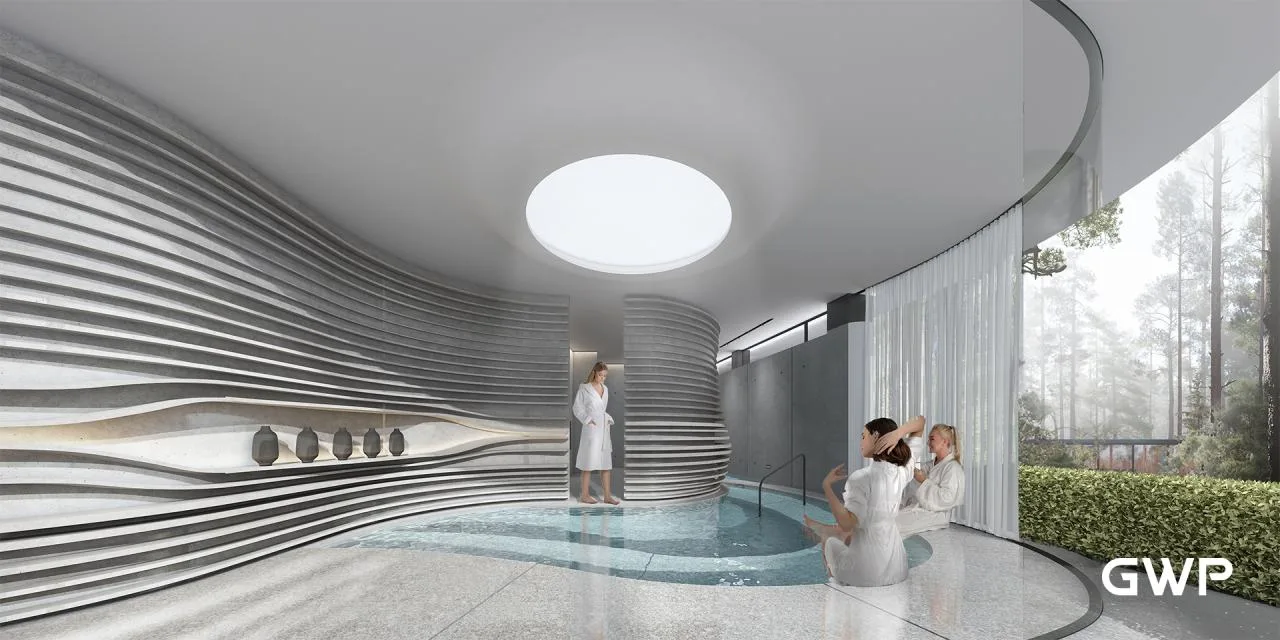
The hot spring area draws inspiration from natural caves, employing concrete and granite with horizontal wave-like lines that celebrate rustic ecological enjoyment. Electroplated glass windows open the view to the outside, allowing natural light to gently illuminate the space by day.
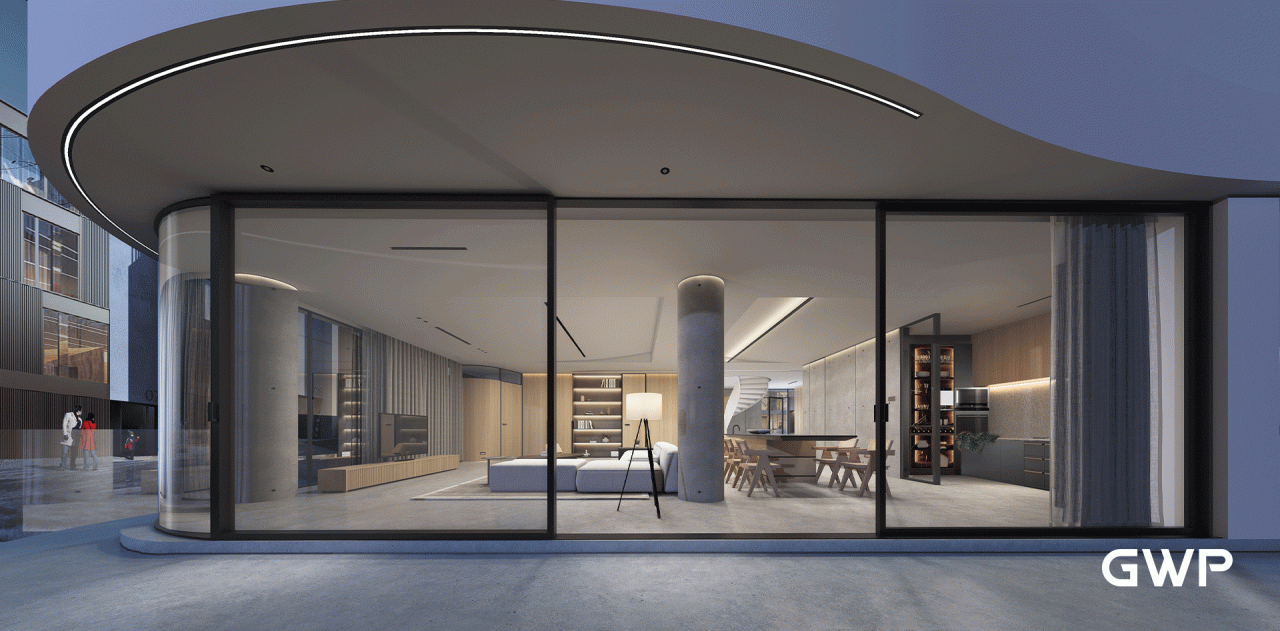
At night, warm lighting fills the wood-toned interiors, creating a peaceful ambiance where guests can relax and find a poetic moment of tranquility.
Balancing privacy with panoramic views in the hot spring area
Because the project is nestled within a dense community of villas and apartments, addressing the tension between users’ desire for privacy and the opportunity to enjoy expansive views was crucial.
The hot spring area is positioned on the project’s northeast side, featuring a secluded space with an open kitchen that offers a 270° panoramic view of the snowy mountains and surrounding forest. On the sloped terrain, landscaping stones and walls strategically block direct sightlines, allowing guests to hear natural sounds without being seen.
Combined with sliding French windows, this design creates an immersive experience where guests feel at one with nature, balancing openness and enclosure.
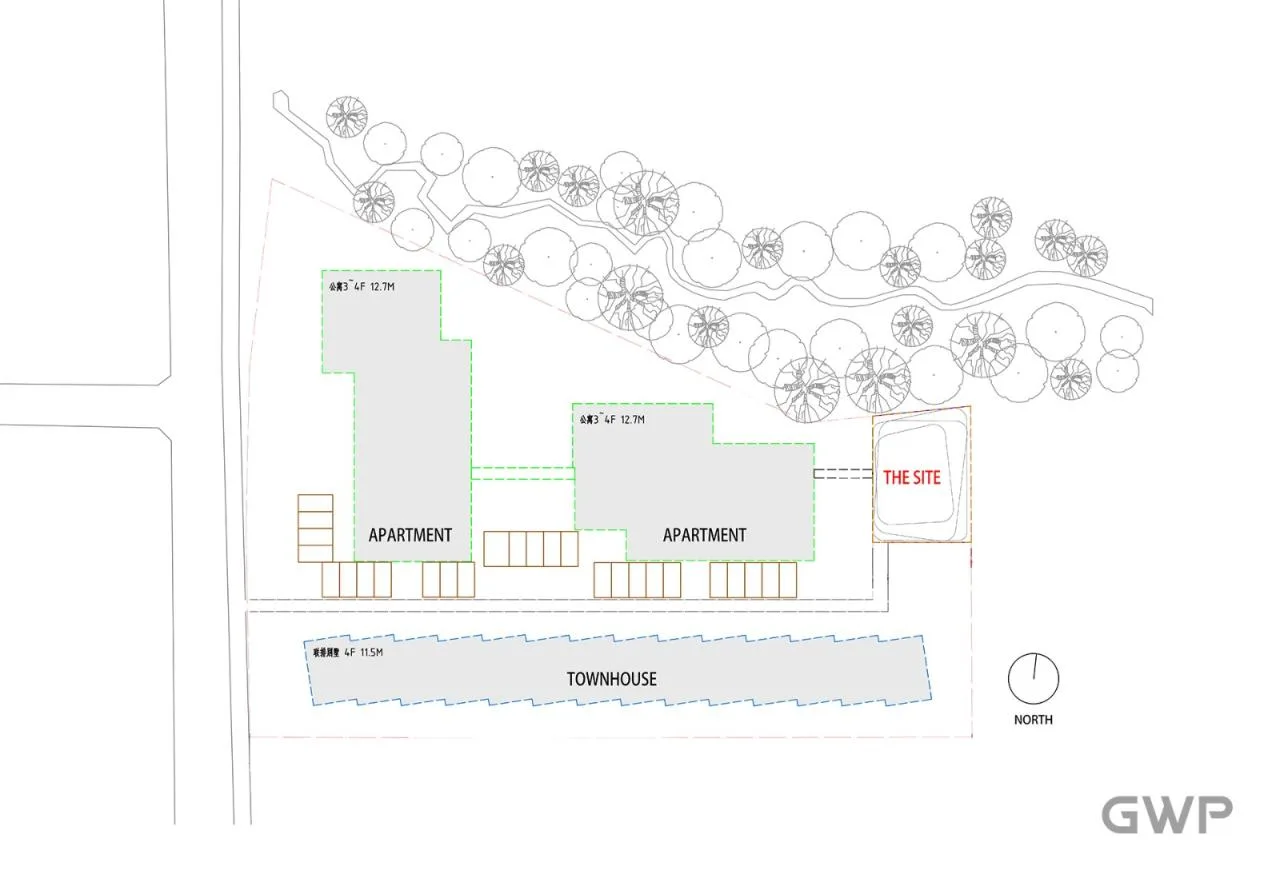
△ Position analysis
△ Visual transparency
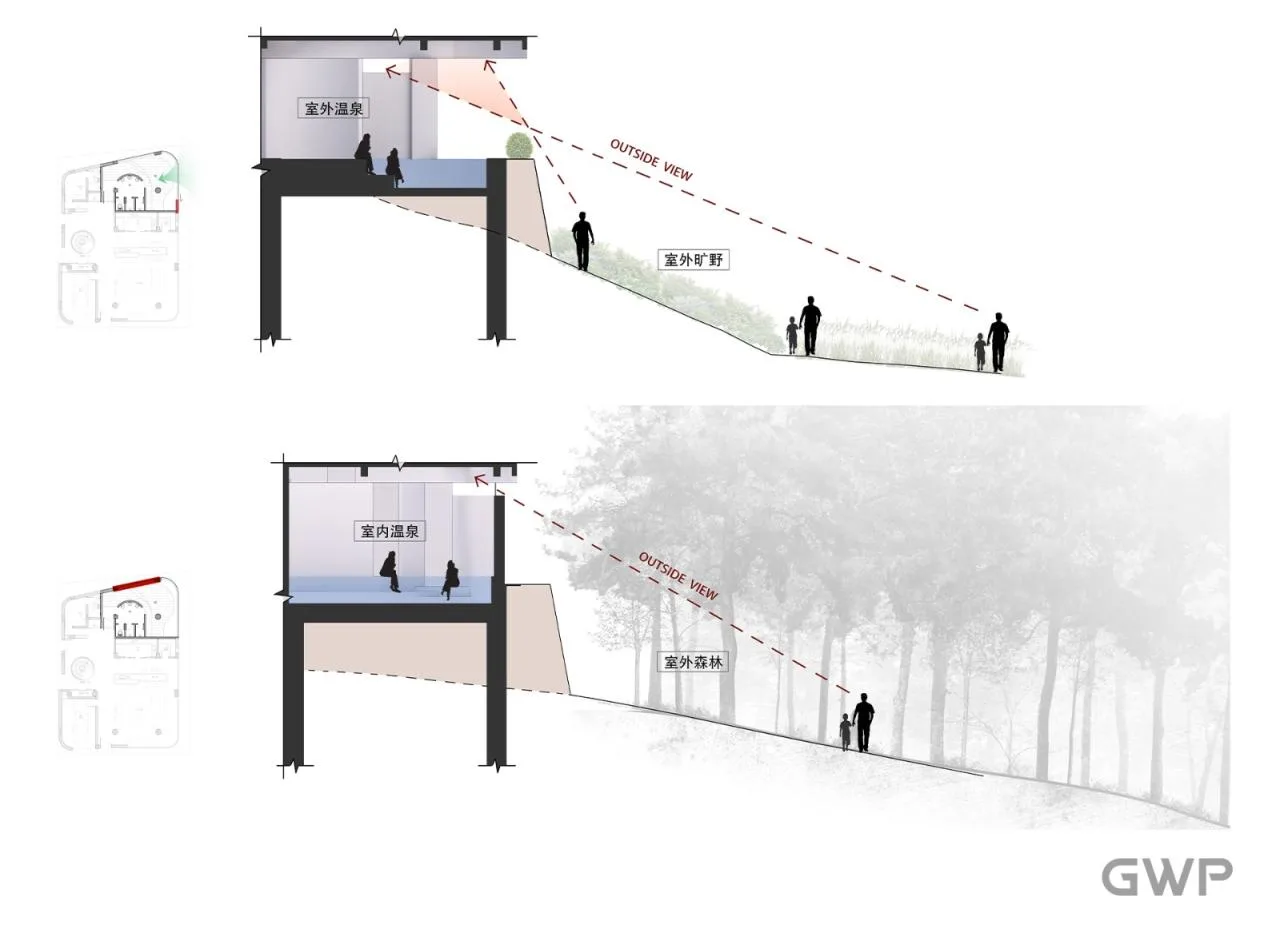
△ Privacy considerations for hot springs
Wisdom and agility through the pursuit of quality
The light and floating sensation
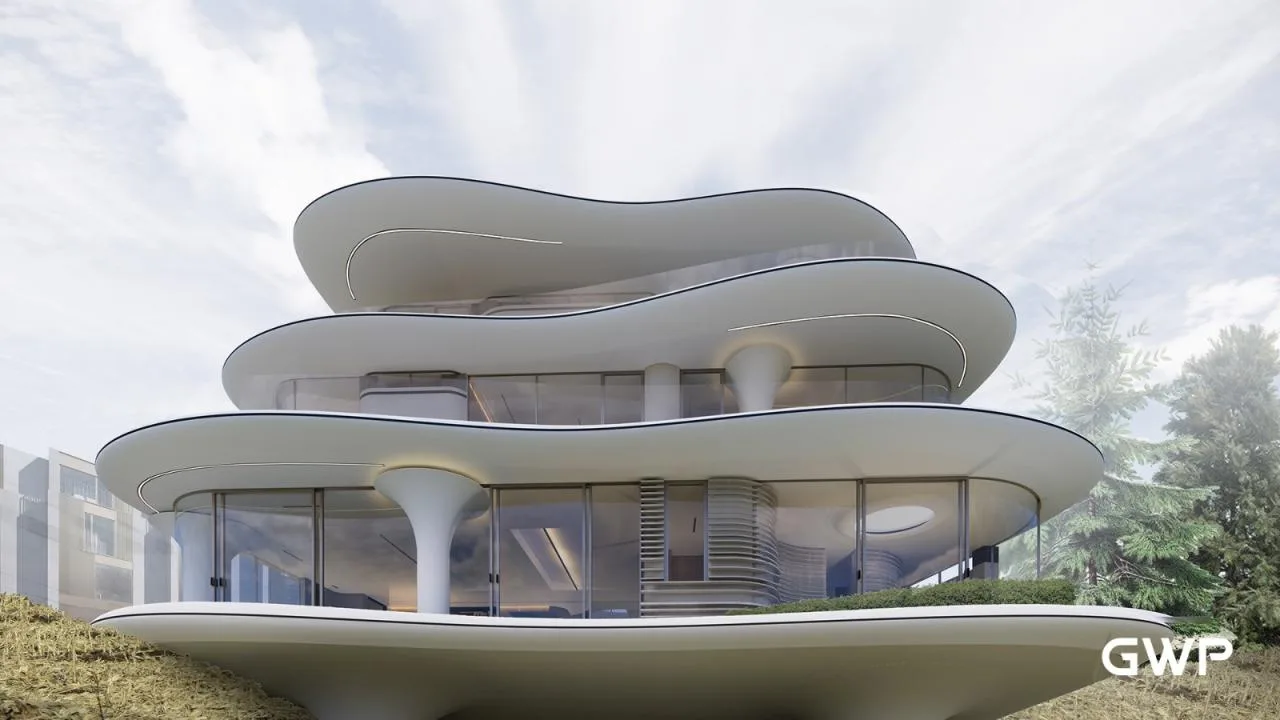
The building’s exterior design fully embodies the team’s pursuit of a “light floating sensation.” The façade is softened with inclined panels made from GRC material, creating a dynamic flow that blends the building with clouds and mist under changing light.
Spacious balconies add volume while ensuring a comfortable outdoor experience. The combination of GRC panels and floor-to-ceiling glass balances solidity and transparency, giving the structure a delicate, ethereal quality that highlights exquisite craftsmanship.
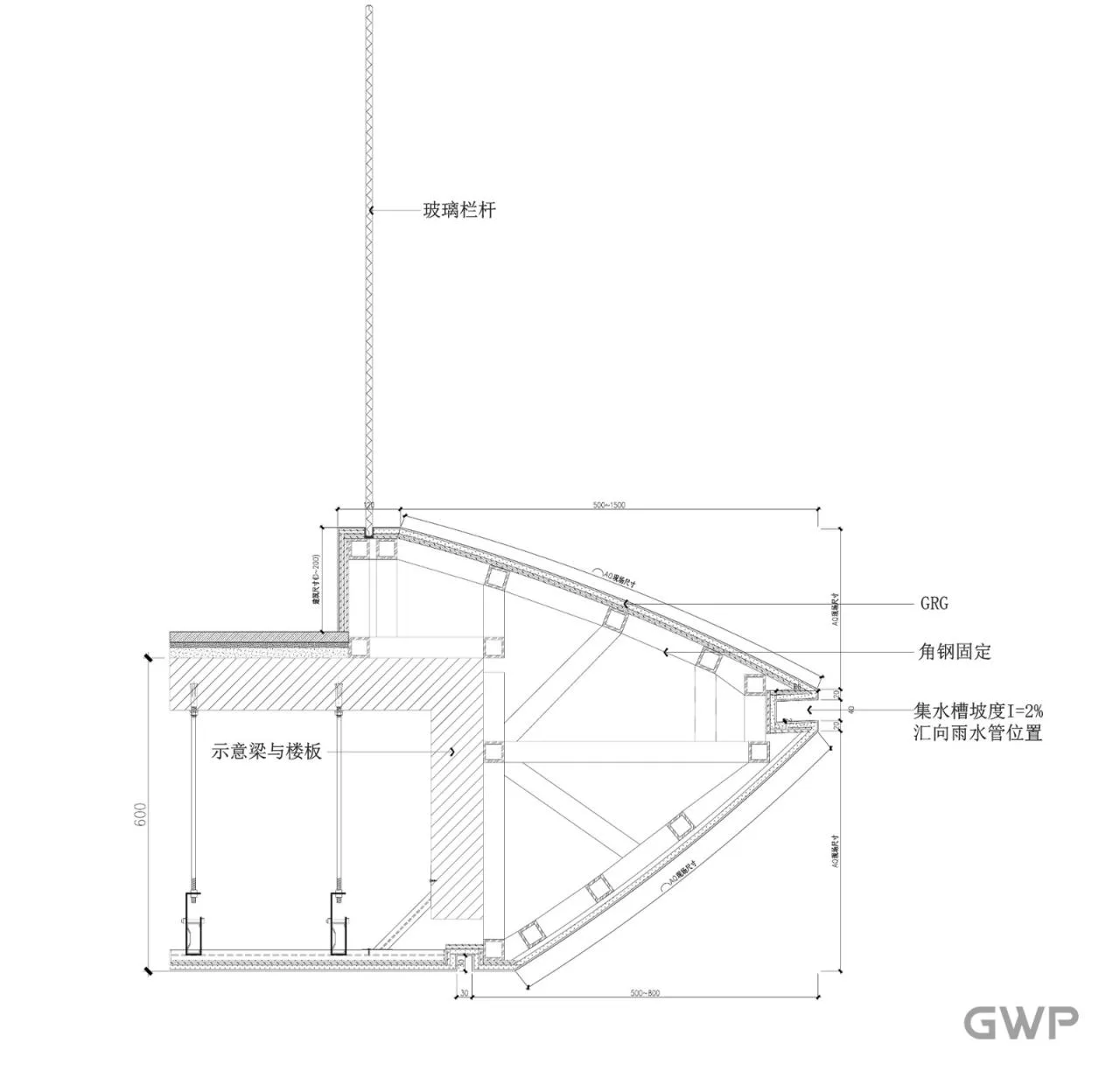
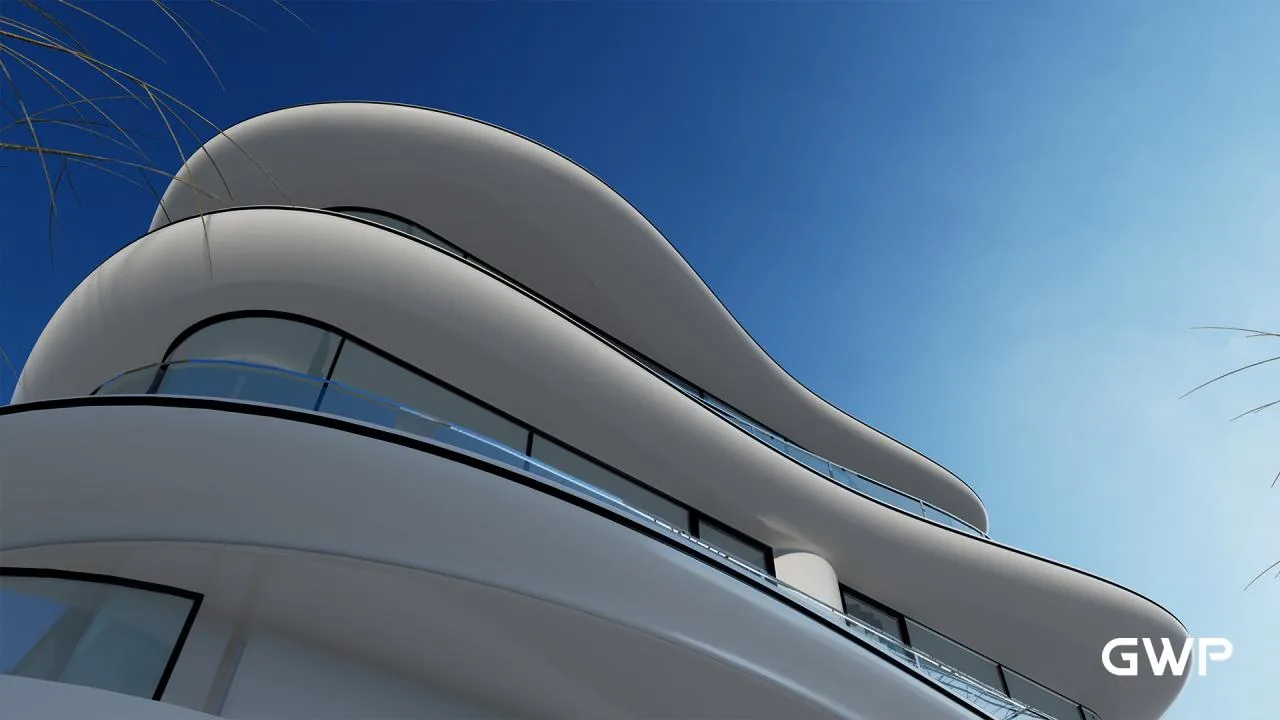
Seamless column removal and spatial continuity indoors
The light floating concept continues inside, where transparency and fluid spatial organization prevail. Structural columns are strategically placed to avoid disrupting open shared spaces. Because columns do not align vertically across floors, some fall onto beams.
Through precise structural calculations and functional planning, GWP collaborated with structural experts at RBS to strengthen beams, increase thickness, and raise building height. Load-bearing elements are cleverly concealed within walls, cabinetry, or positioned externally, preserving expansive, unobstructed interiors.
Remaining columns are treated as artistic sculptures, crafted from matching materials to blend seamlessly with the building’s aesthetic, creating a natural and elegant disappearance.
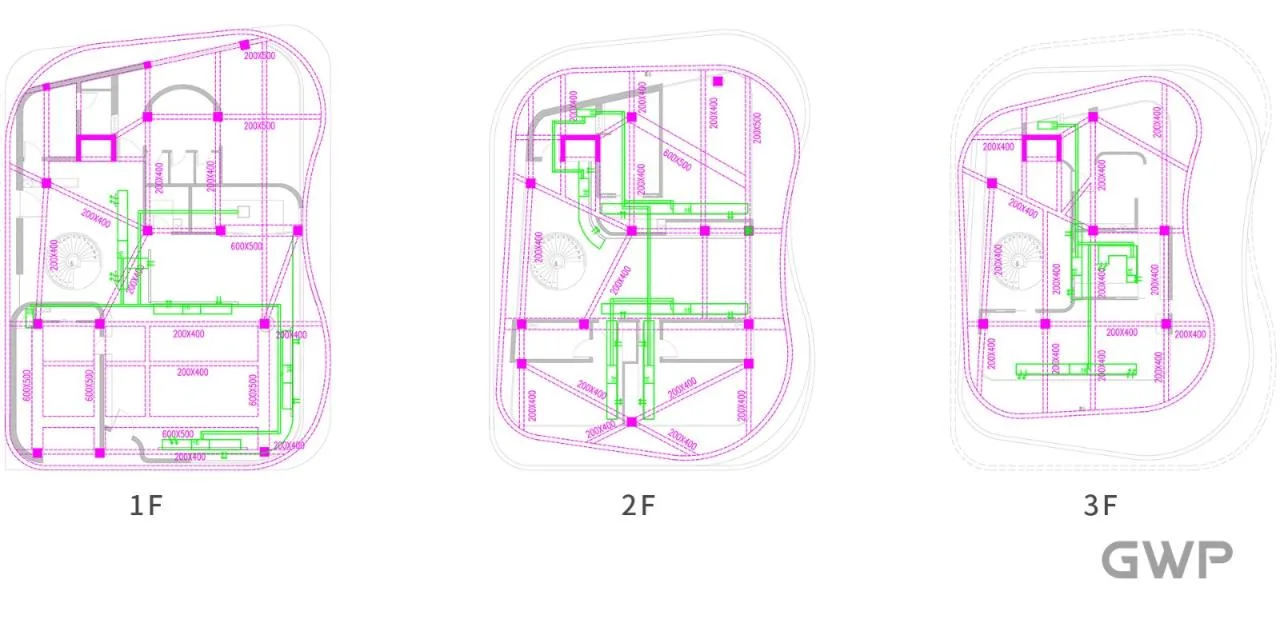
△ Structural layout diagram
Green energy conservation and natural integration
Aligned with the philosophy of harmonious coexistence with the environment, the GWP team emphasizes the use of natural ventilation and daylighting to reduce reliance on energy-intensive systems such as artificial lighting.
Materials are primarily natural and eco-friendly, radiating warmth inspired by nature. Concrete walls provide thermal comfort, keeping interiors warm in winter and cool in summer, while avoiding unnecessary decoration to preserve simplicity.
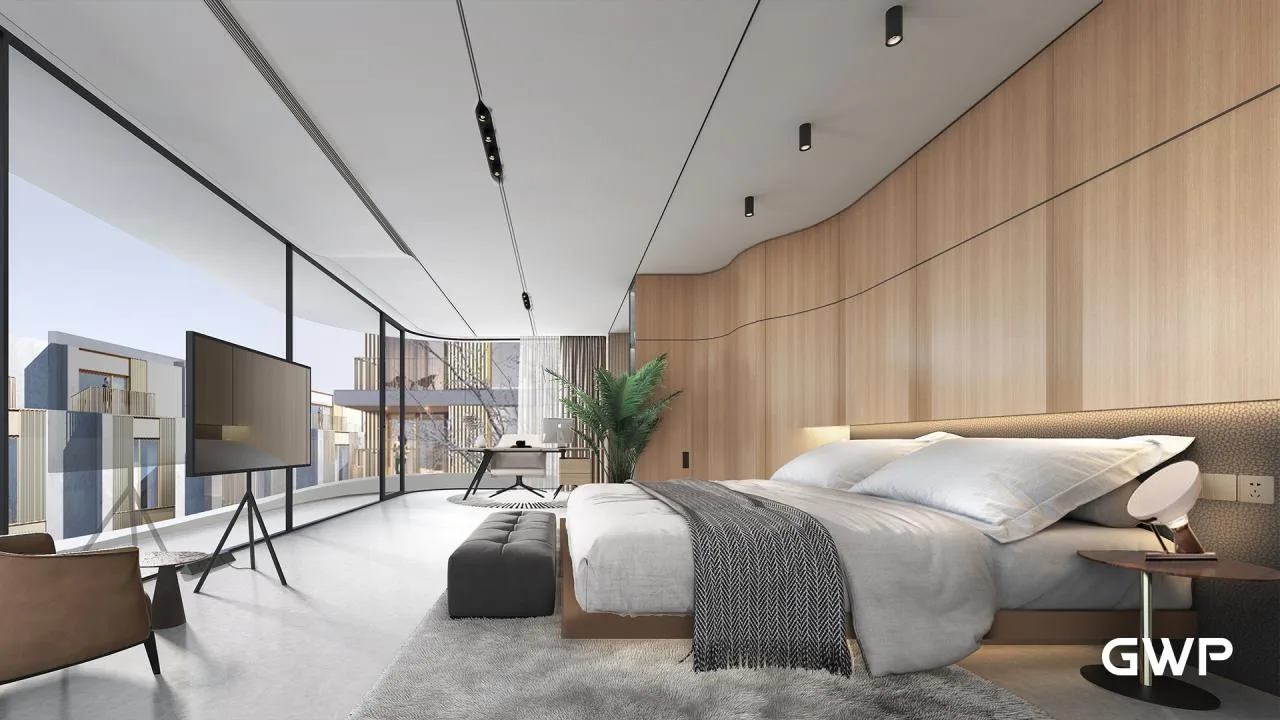
Returning to simplicity represents a pursuit of freedom and tranquility in life. The design of the Hokkaido Hot Spring Resort Hotel begins with a sincere understanding of human nature, crafting an influential and timeless aesthetic work defined by purity and simplicity. Guests here can enjoy their stay in the most natural state, creating lasting memories with every encounter.
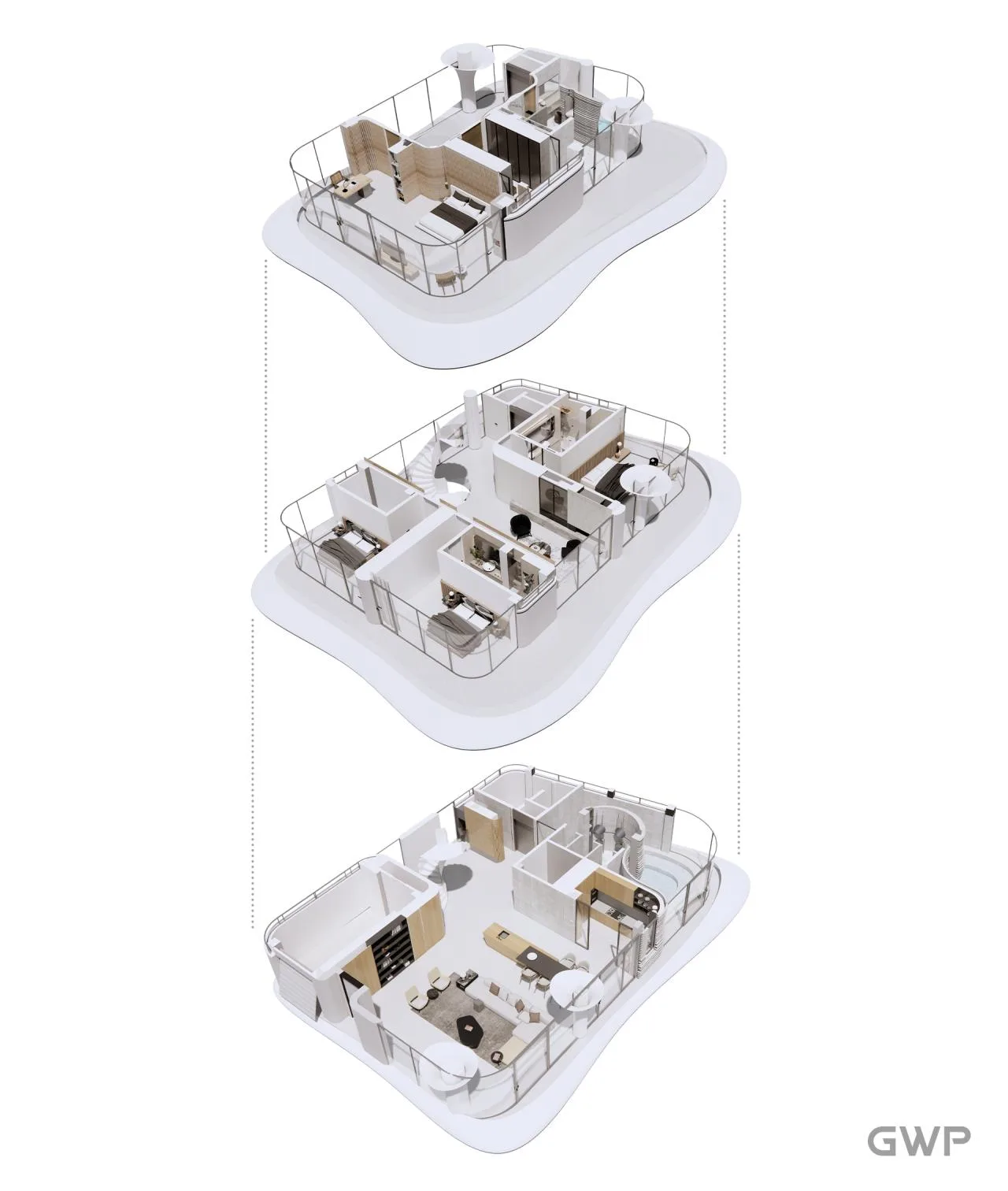
△ Axis measurement analysis diagram
Project drawings
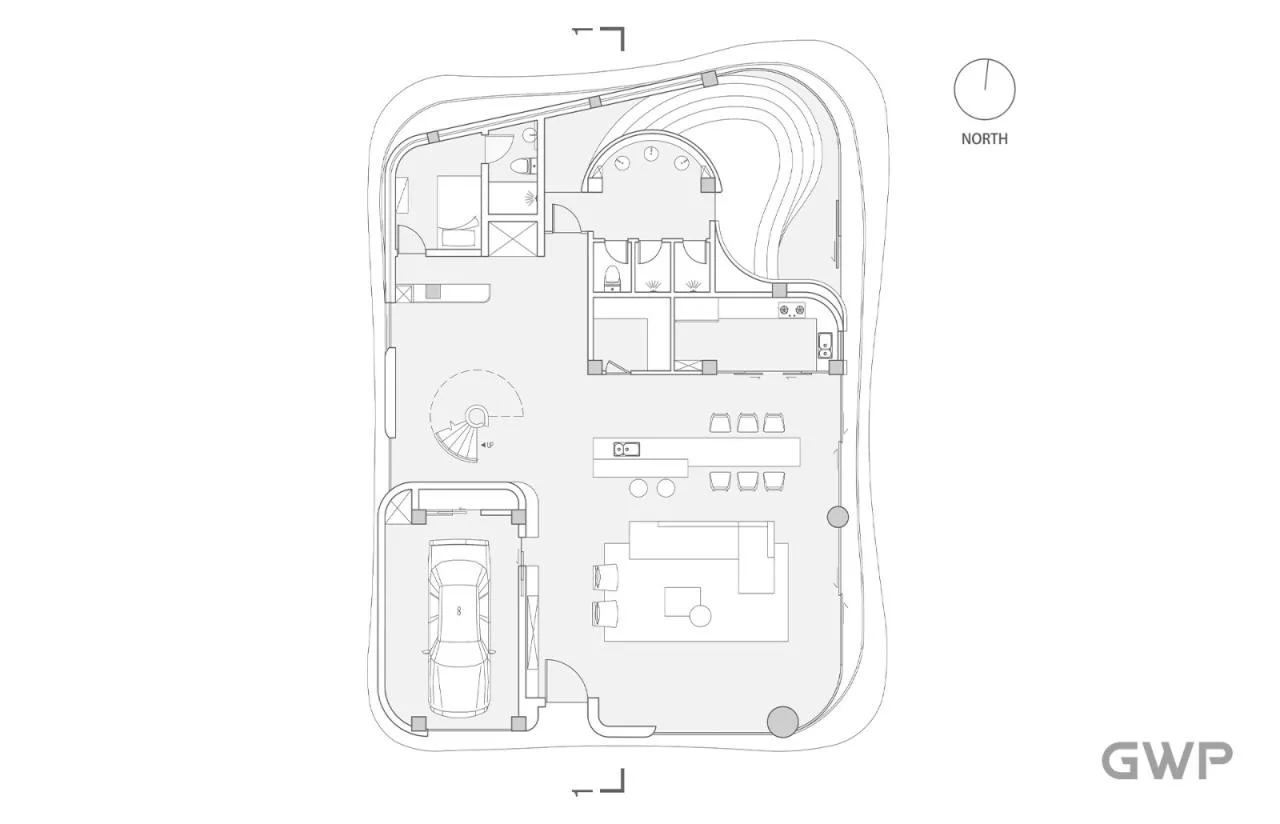
△ First floor plan
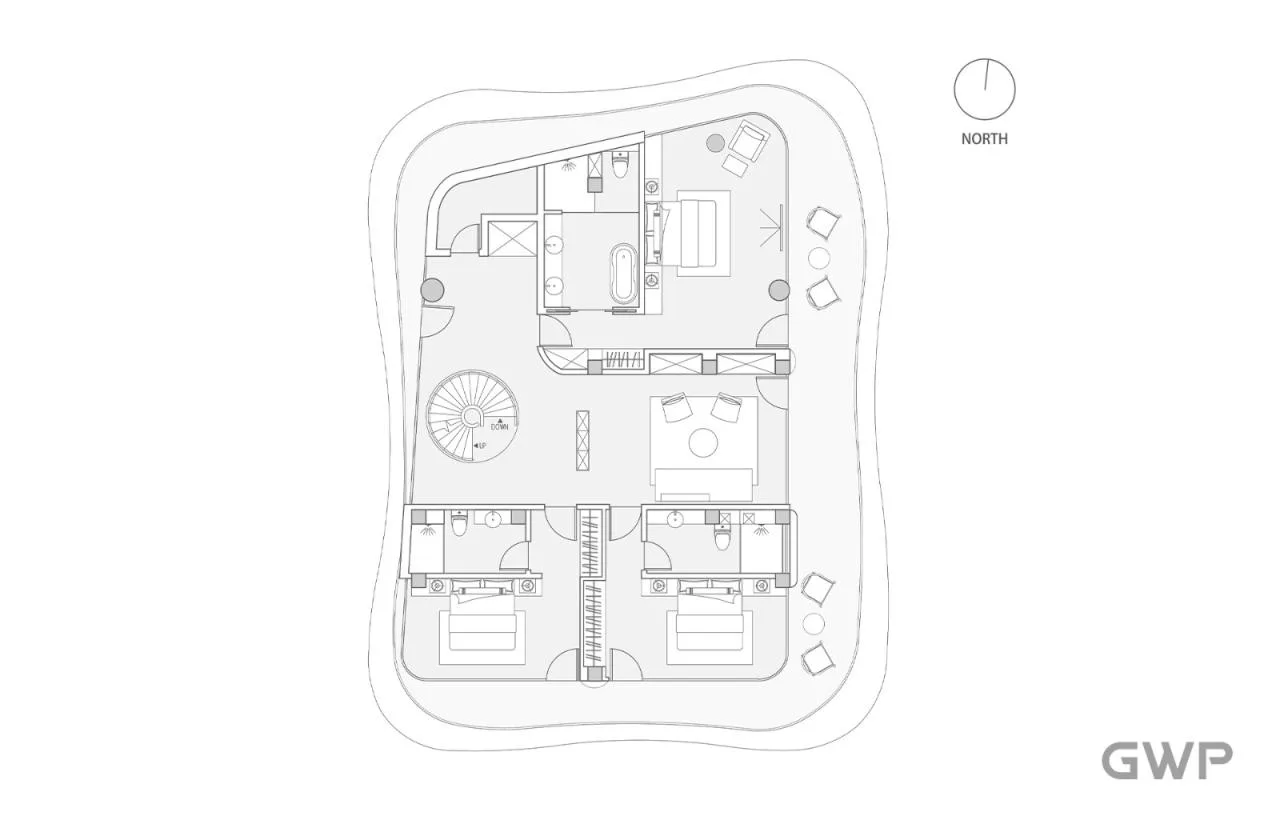
△ Second floor plan
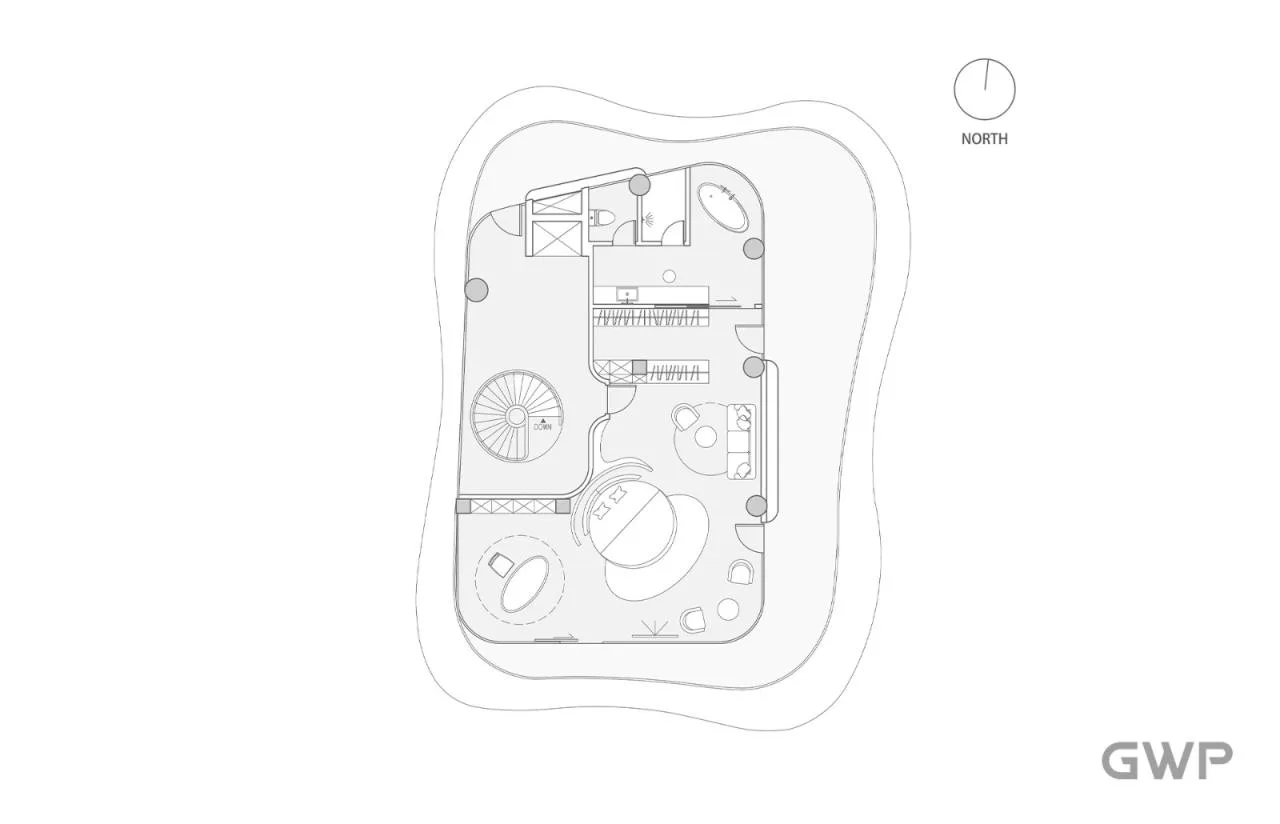
△ Third floor plan
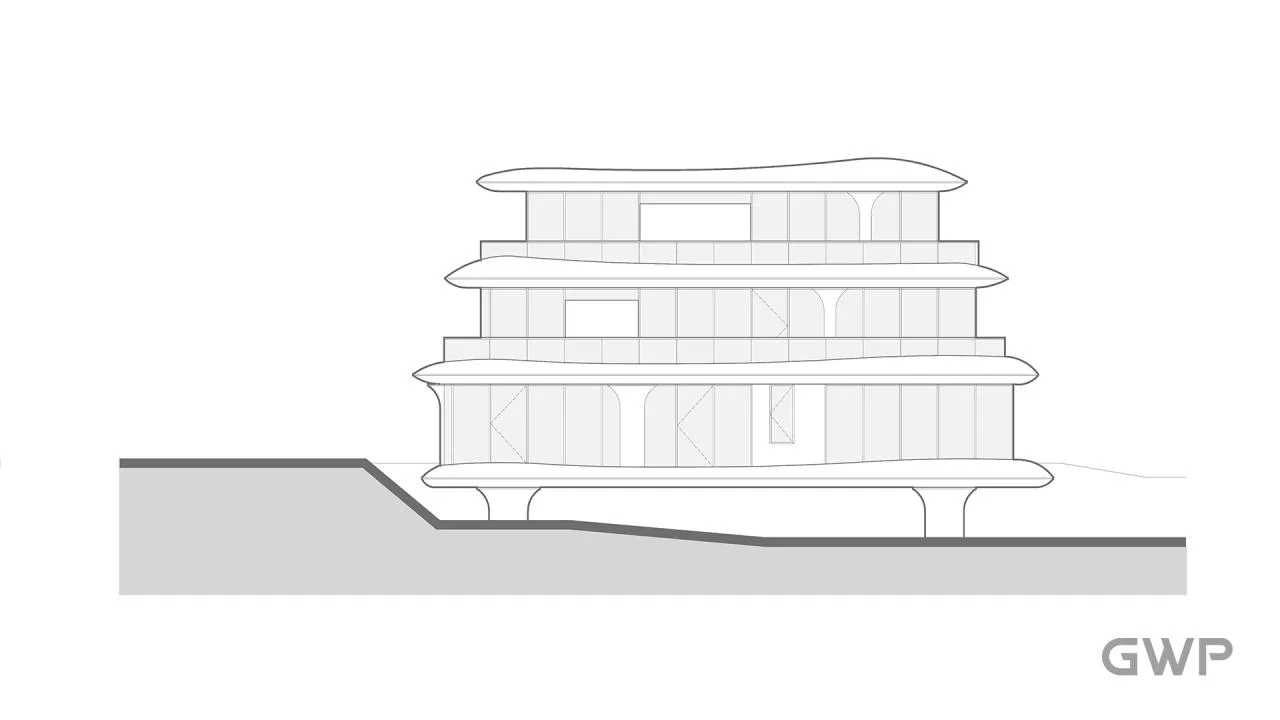
△ East elevation
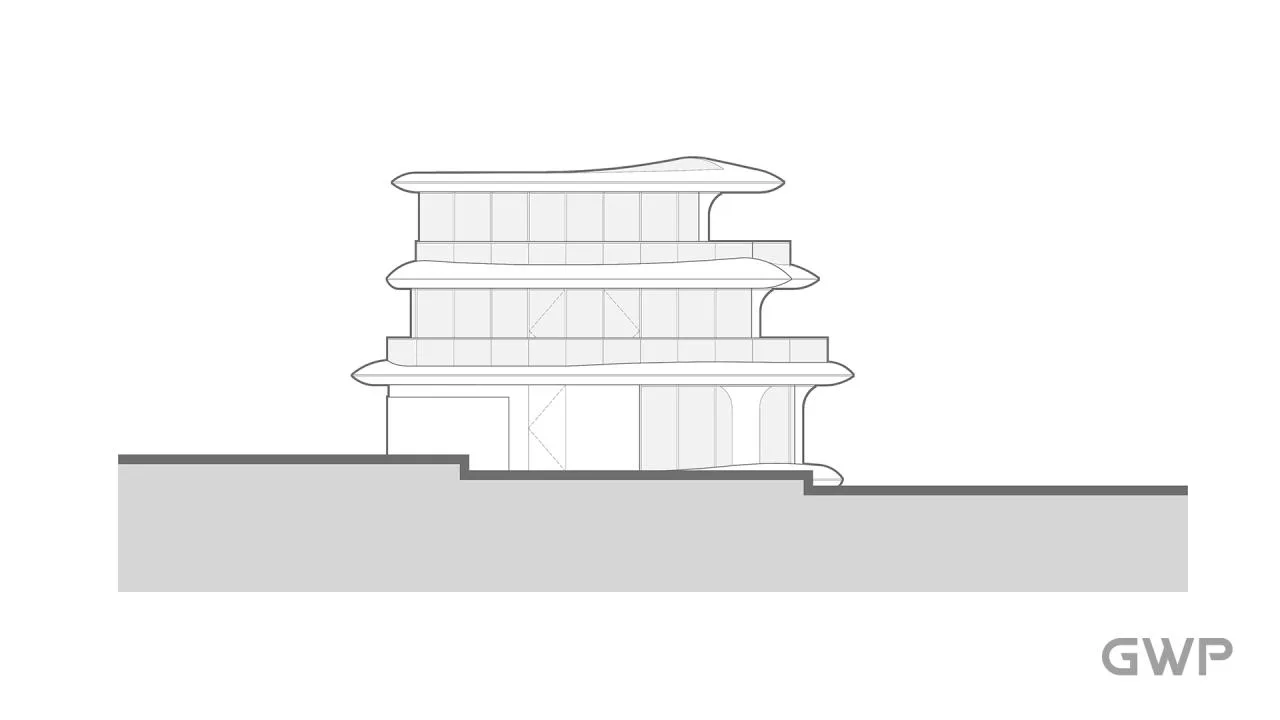
△ South elevation
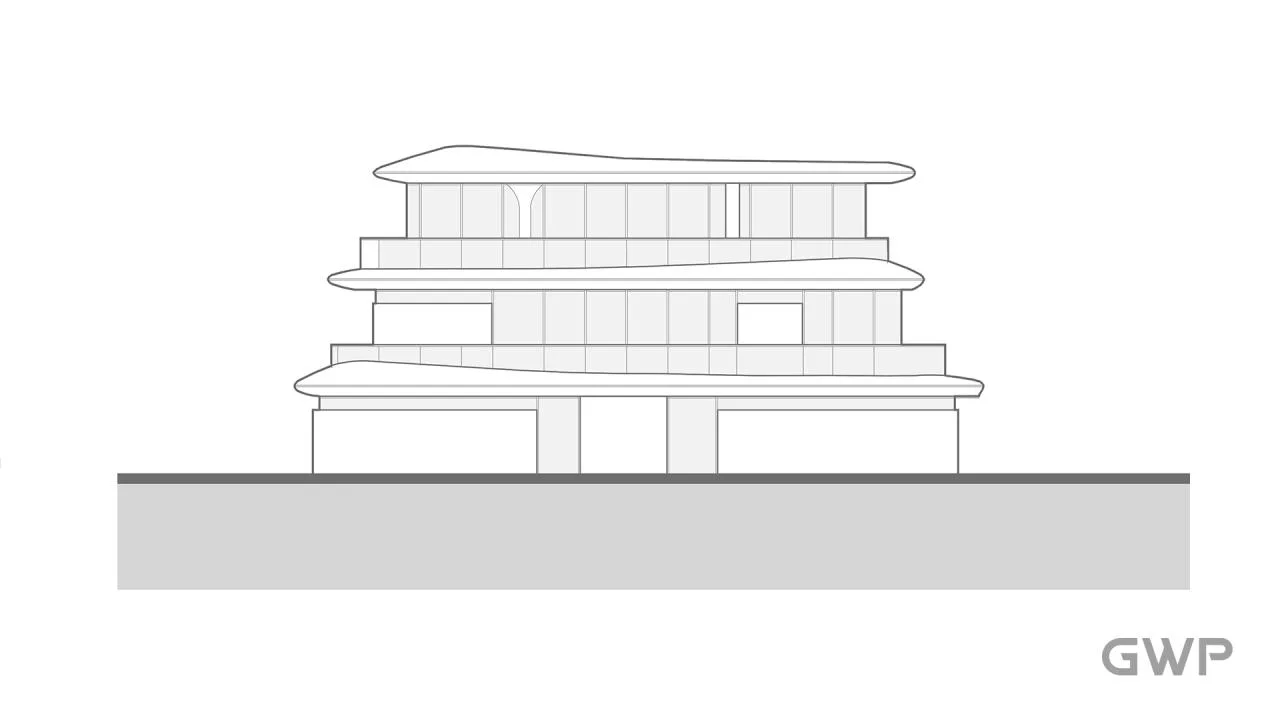
△ West elevation
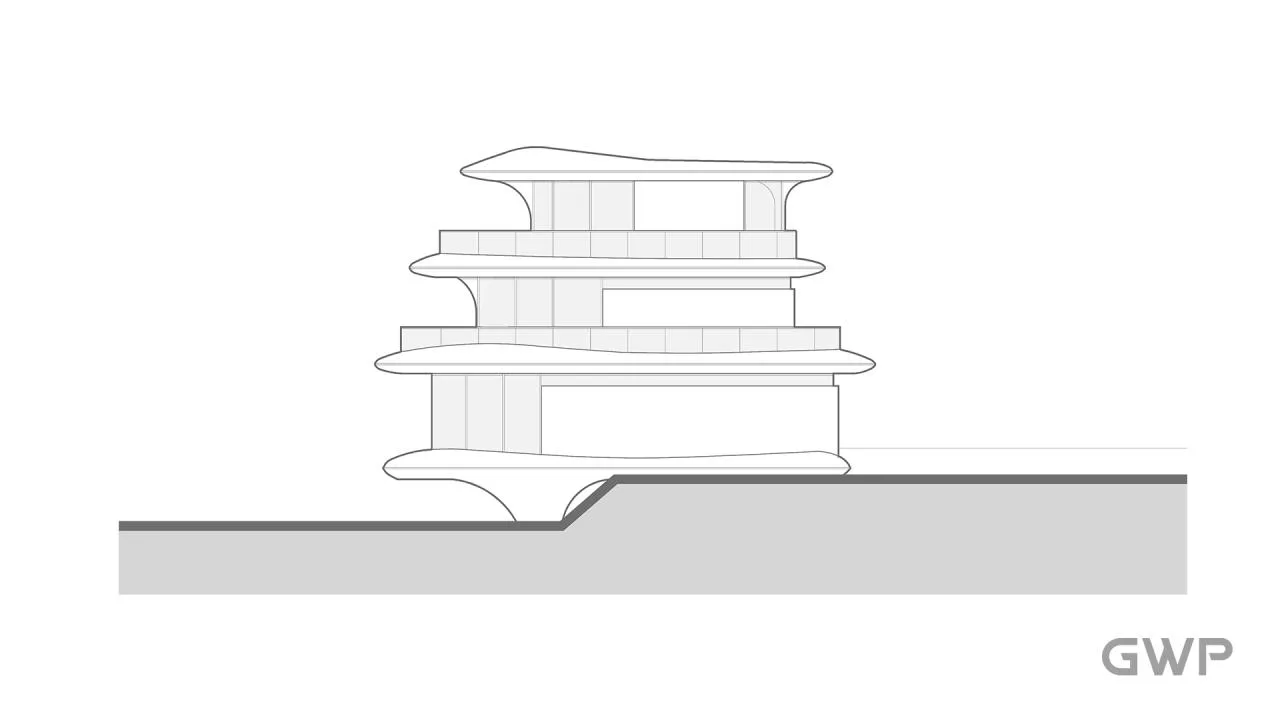
△ North elevation
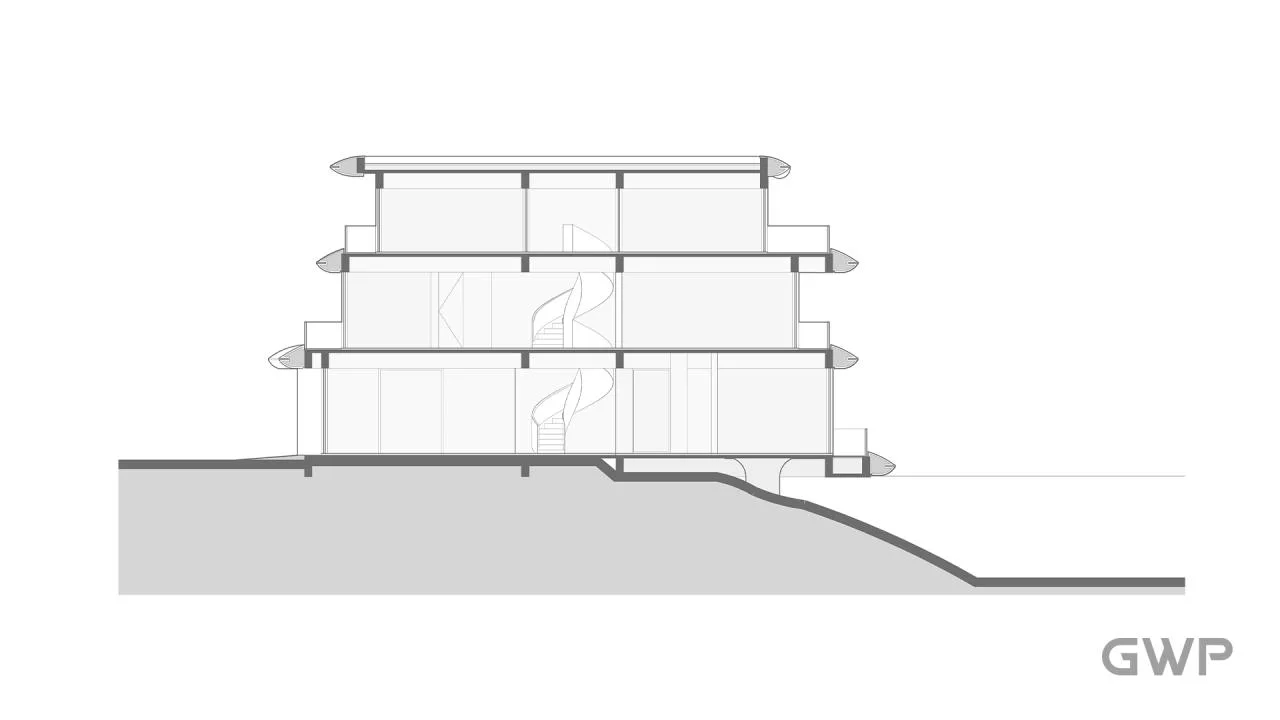
△ Section 1-1
Project Information
Location: Hokkaido, Japan
Building area: 600 square meters
Site area: 13,000 square meters
Design year: 2021
Scope: Architectural and interior design
Project phase: Detailed design
Expected completion: November 2022
Design team: GWP Architects
About GWP Yuanshang Architecture
Founded in Boston, USA, GWP Yuanshang Architecture has established regional headquarters and overseas branches in Guangzhou and Hong Kong, China. The firm engages in global research and practical projects, integrating urban planning and architectural design with an international perspective and professional expertise.
Guided by the “Global Smart Alliance” concept, GWP gathers diverse talents and strives to balance creativity with practicality, enhancing project value through multidimensional thinking. Their portfolio spans super high-rise headquarters, commercial complexes, public landmarks, ecological cultural tourism, cultural centers, and premium residences, earning over 100 prestigious design awards worldwide.
The GWP team excels in understanding client and project needs, leading design with research and empowering implementation through technology. Their core team comprises graduates from renowned institutions such as Harvard, University of California, National University of Singapore, University of London, South China University of Technology, and Southeast University. With experienced consultants, design directors, senior designers, and engineers, and a strong technical chief engineer team, GWP ensures innovative design and efficient, high-quality execution throughout each project.
Business inquiries: gwpbusiness@gwp-architects.com
Careers: gwphr@gwp-architects.com
Media contacts: media@gwp-architects.com

www.gwp-architects.com













Must log in before commenting!
Sign Up