
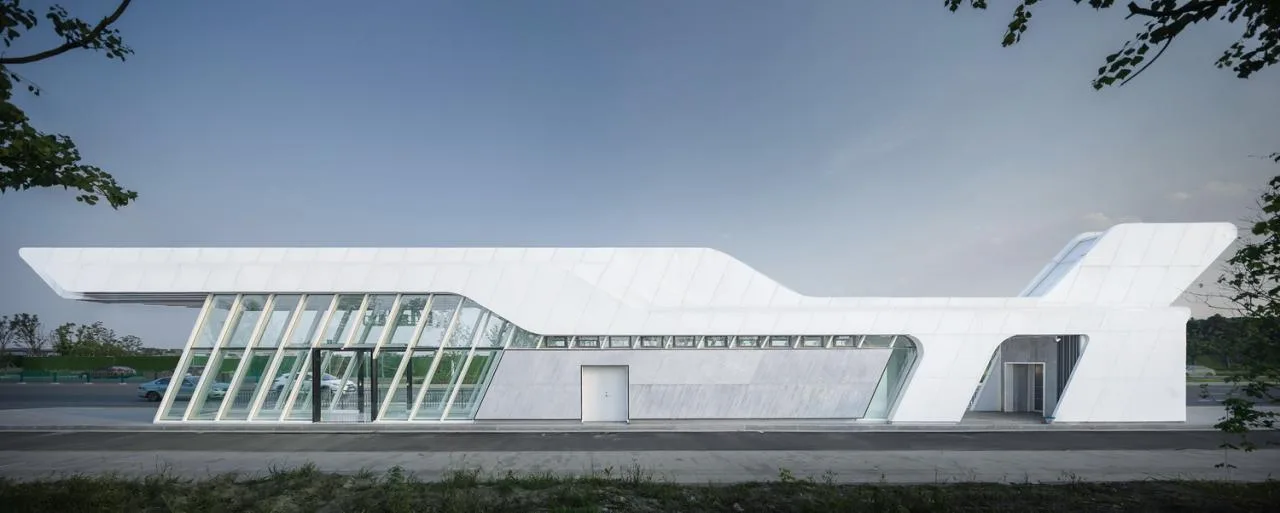
The Concept Behind High-Speed Rail “Flying By”
Cities prosper because of transportation, and transportation thrives because of cities. The completion of Zhangjiagang High-Speed Railway Station has spurred the development of Suzhou High-Speed Railway New City. This, in turn, has become a hub for multiple transportation modes in the region. The two bus stops featured here serve as ripples caused by a stone thrown into the new high-speed rail city. Looking ahead, more accessible bus stops within walking distance will connect to rail transit, driving coordinated urban development.
As we enter the era of transportation architecture hubs, these facilities are evolving beyond basic public services. The project’s owners envision bus stops that not only prioritize passenger experience and efficiency but also reflect local identity and support everyday life.
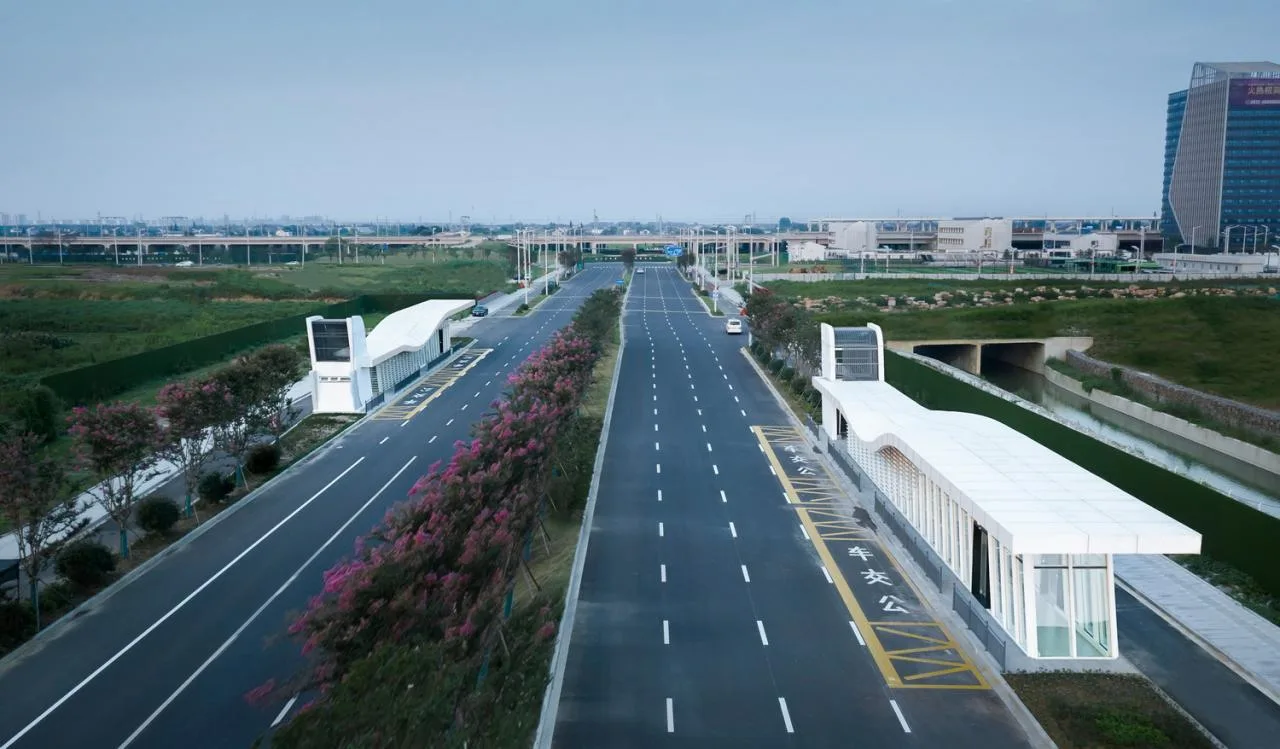
△ Two-way bus stop serving south and north directions
Making Waiting More Engaging
Bus stops are among the most common urban infrastructures, yet waiting for buses is often dull and monotonous. Few realize that waiting can be a diverse, even enjoyable experience. This project explores the concept of “waiting” by creating multifunctional spaces through a composite model called “waiting+N,” designed to enrich how people experience waiting.
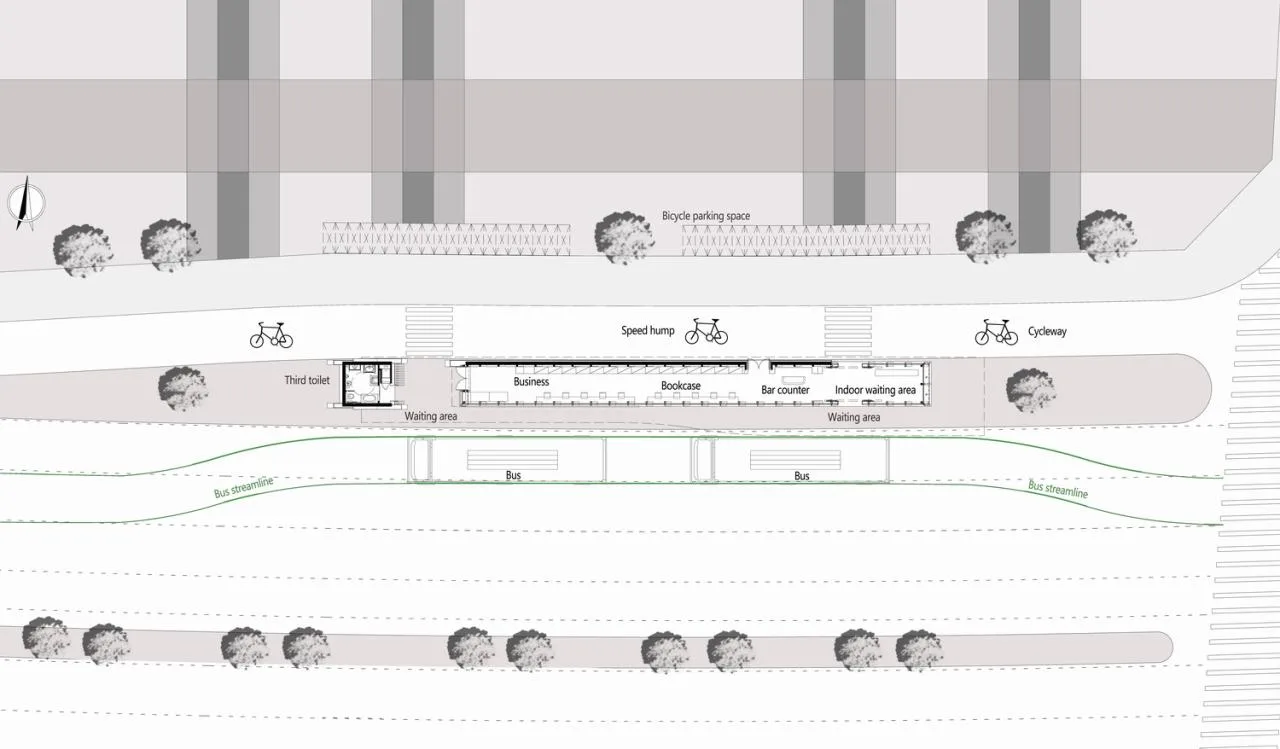
The “waiting+N” composite space at the Beijing Road bus stop
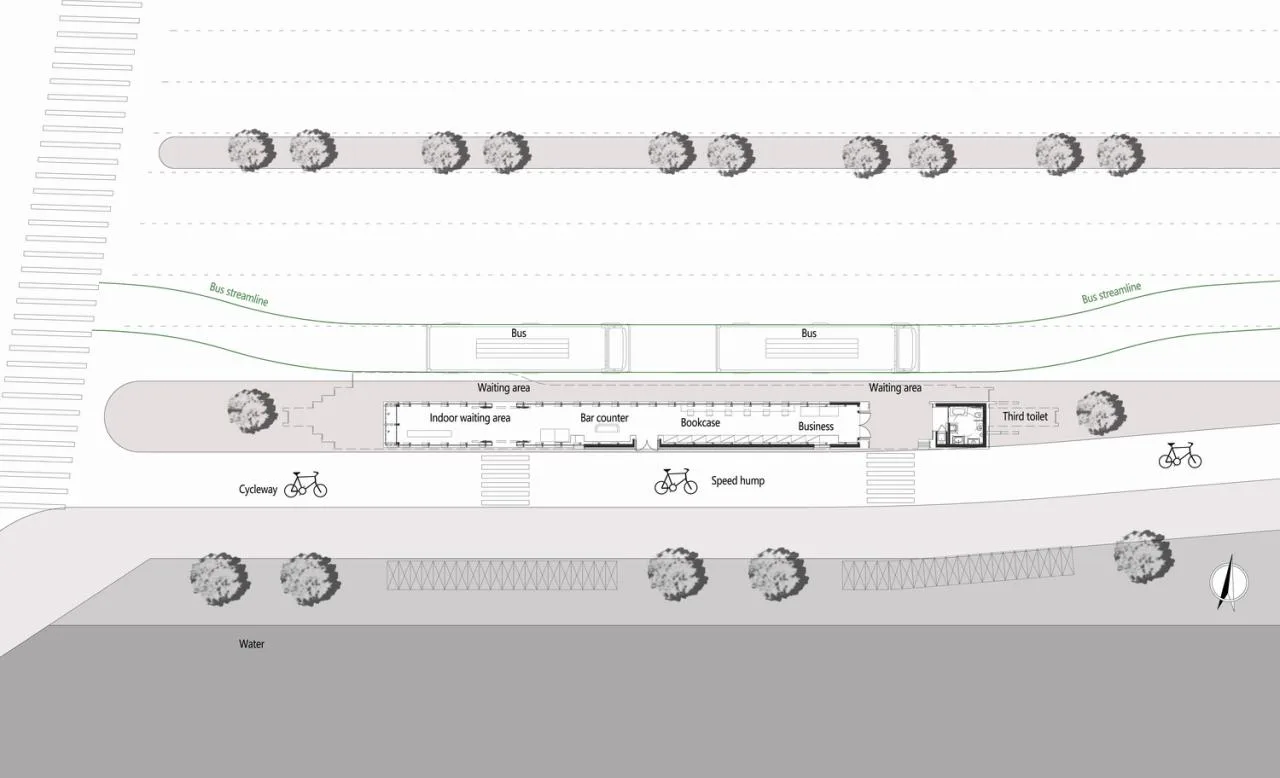
The “waiting+N” composite space at Renmin Road bus stop
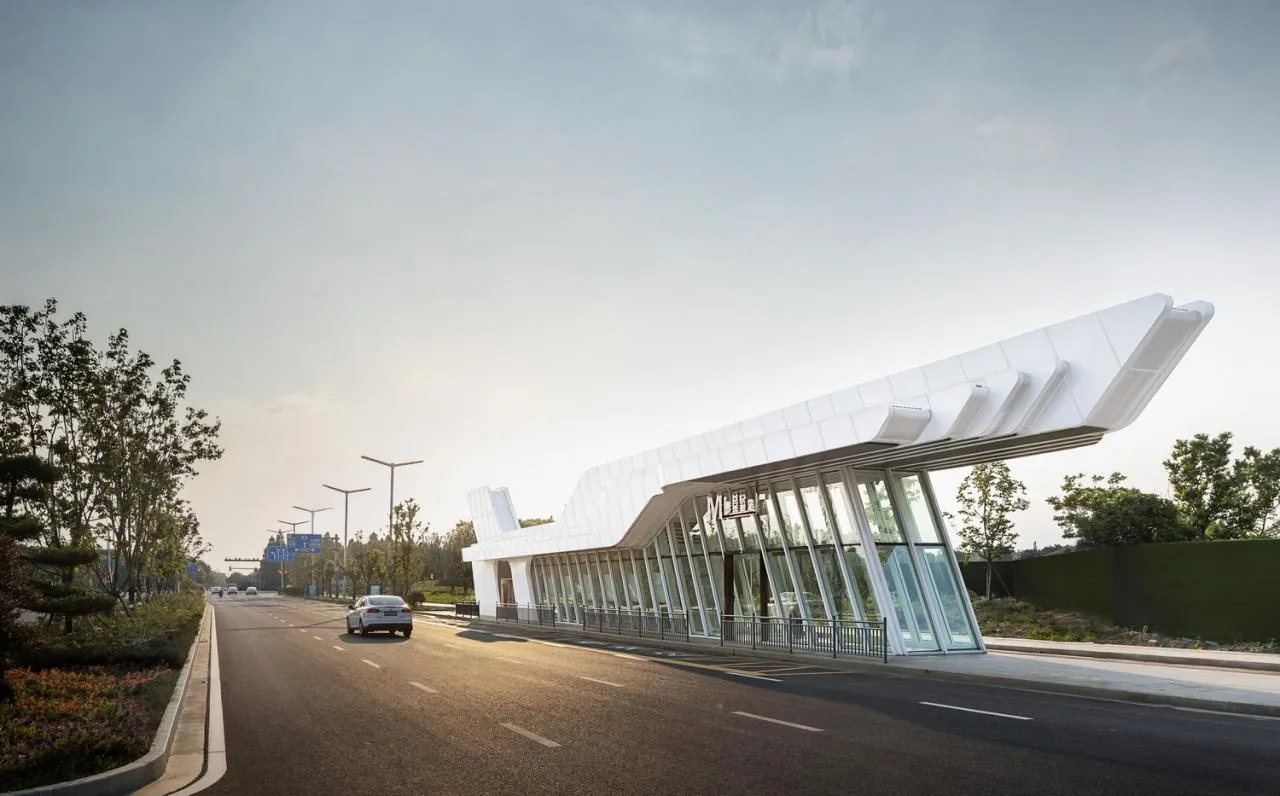
△ Bus stop bathed in sunset light
When selecting the “N” functions for these bus stops, the design team focused on the entire high-speed rail new city area, viewing micro neighborhood centers as the basic research units. By filling functional gaps in these micro centers and integrating them with the fundamental waiting function, the bus stops become platforms that support various activities such as interaction, consultation, hygiene, and rest. This “acupuncture” approach aims to energize micro neighborhood centers with multifunctional spaces throughout the new city and beyond.
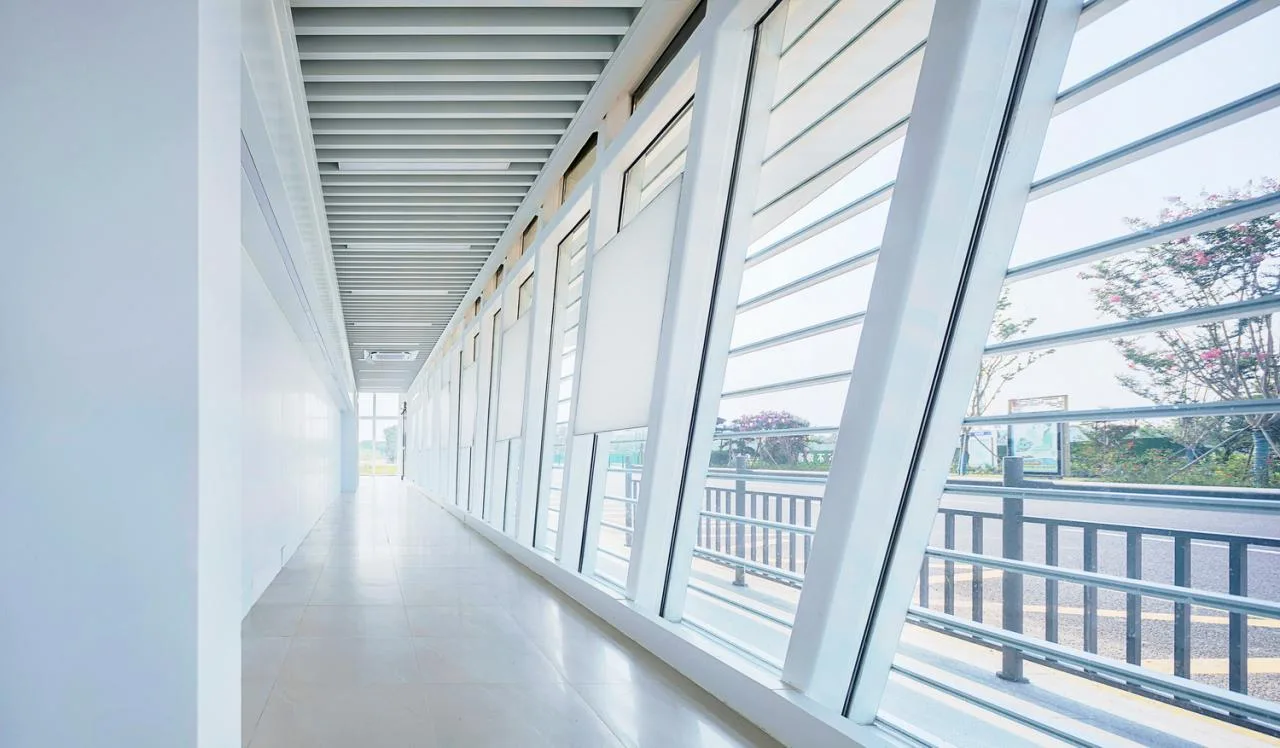
Indoor bus stop design
Enhancing Comfort While Waiting
From the undulating roof to the protruding eaves and multi-zone outdoor waiting areas, every detail of the bus stop design reflects thoughtful human-centric care. The undulating roof is scaled to accommodate crowds and buses comfortably. Protruding eaves shield passengers from the harsh summer sun while allowing warm winter sunlight to filter indoors. Multi-zone outdoor waiting spaces prevent passengers from missing their buses while engaging in other activities.
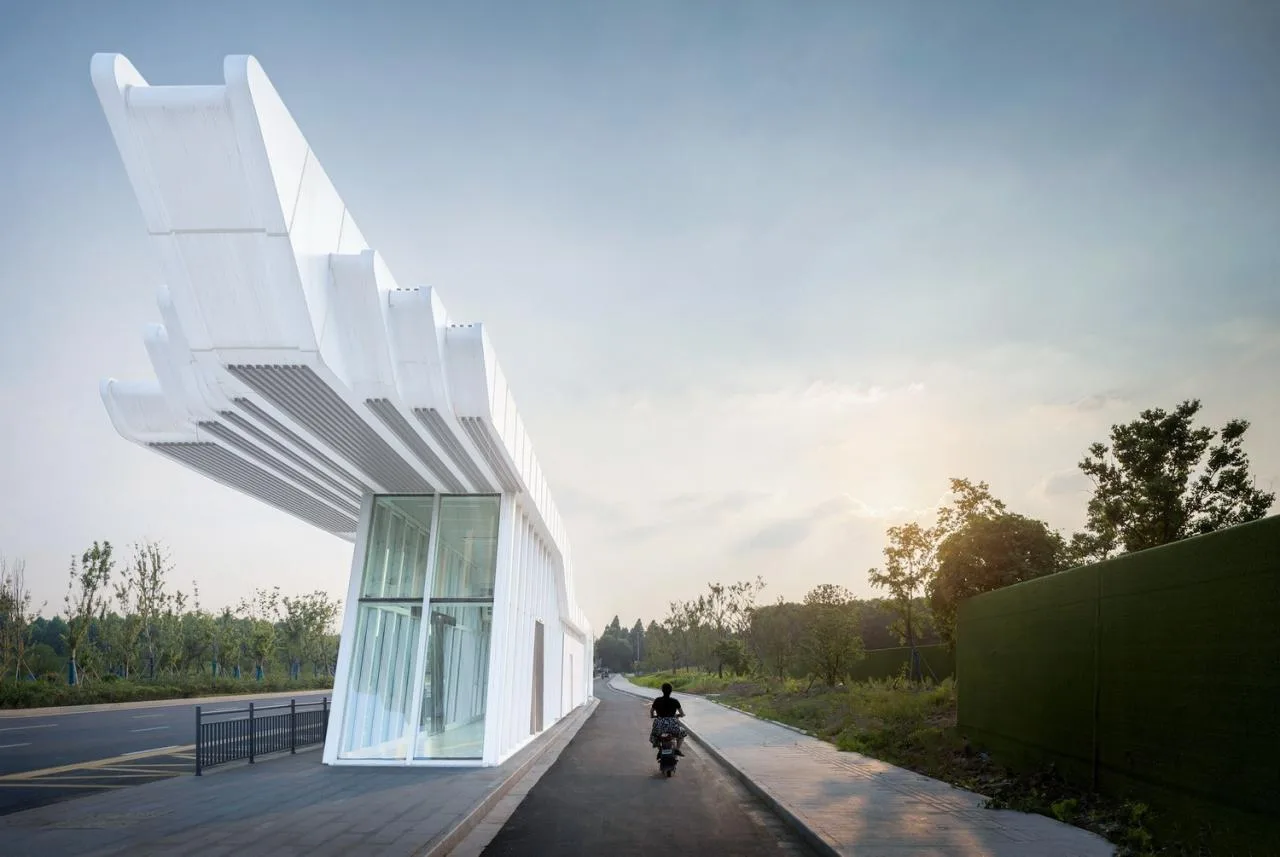
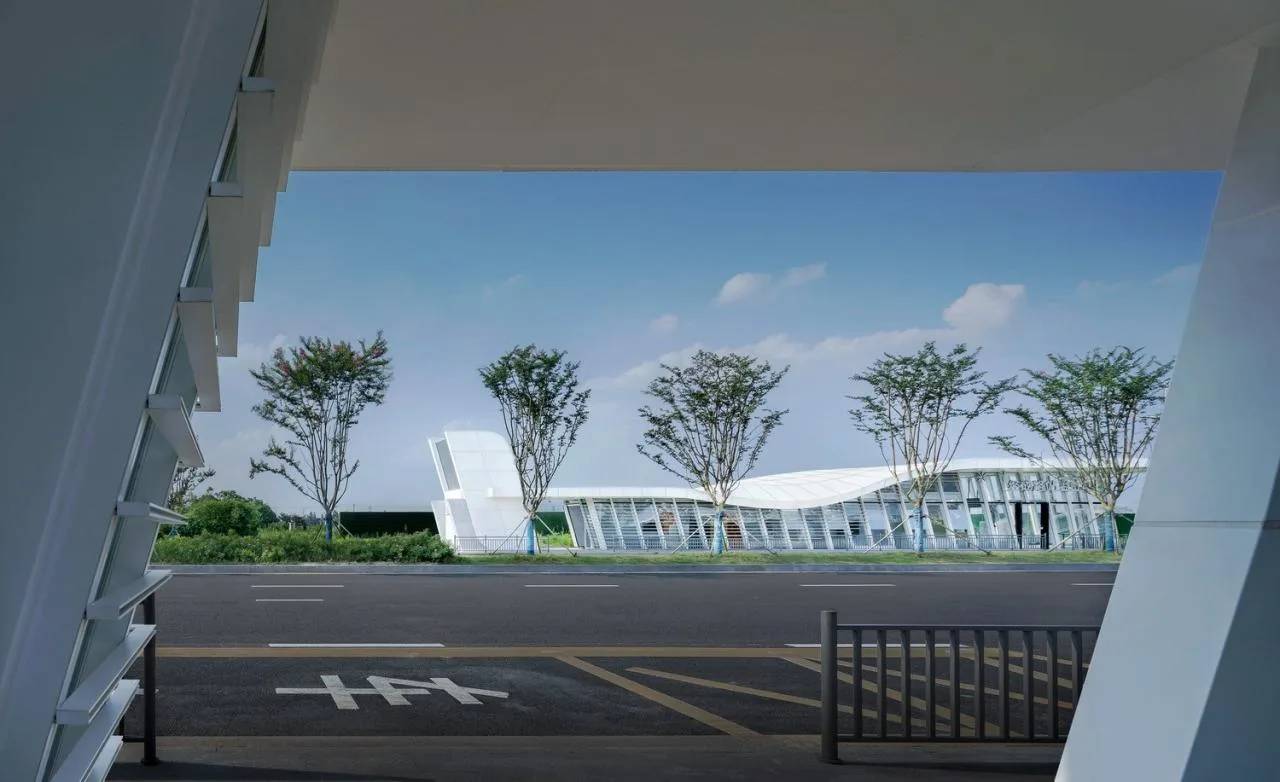
Multi-zone outdoor waiting area design
Accelerating the Platform Experience
In terms of architectural style, the station design harmonizes with its surroundings, embracing the high-speed rail concept as its core theme. This concept is expressed through architectural elements that are simple, fluid, dynamic, and highly recognizable. The façade, featuring white aluminum panels combined with diagonal metal supports, creates a distinctive image that embodies the essence of the high-speed rail new city and serves as a landmark. This design narrative allows passengers to feel the sensation of movement—like being on a speeding train—whether viewing the station from afar or standing still.
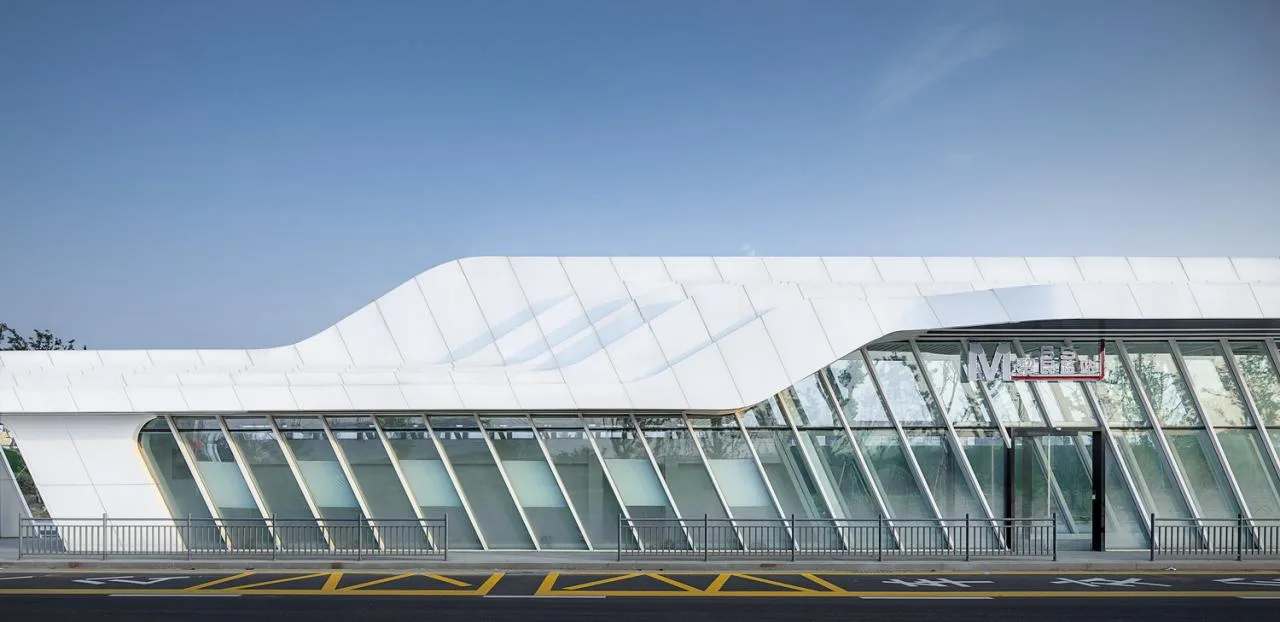
White aluminum panels combined with diagonal metal braces
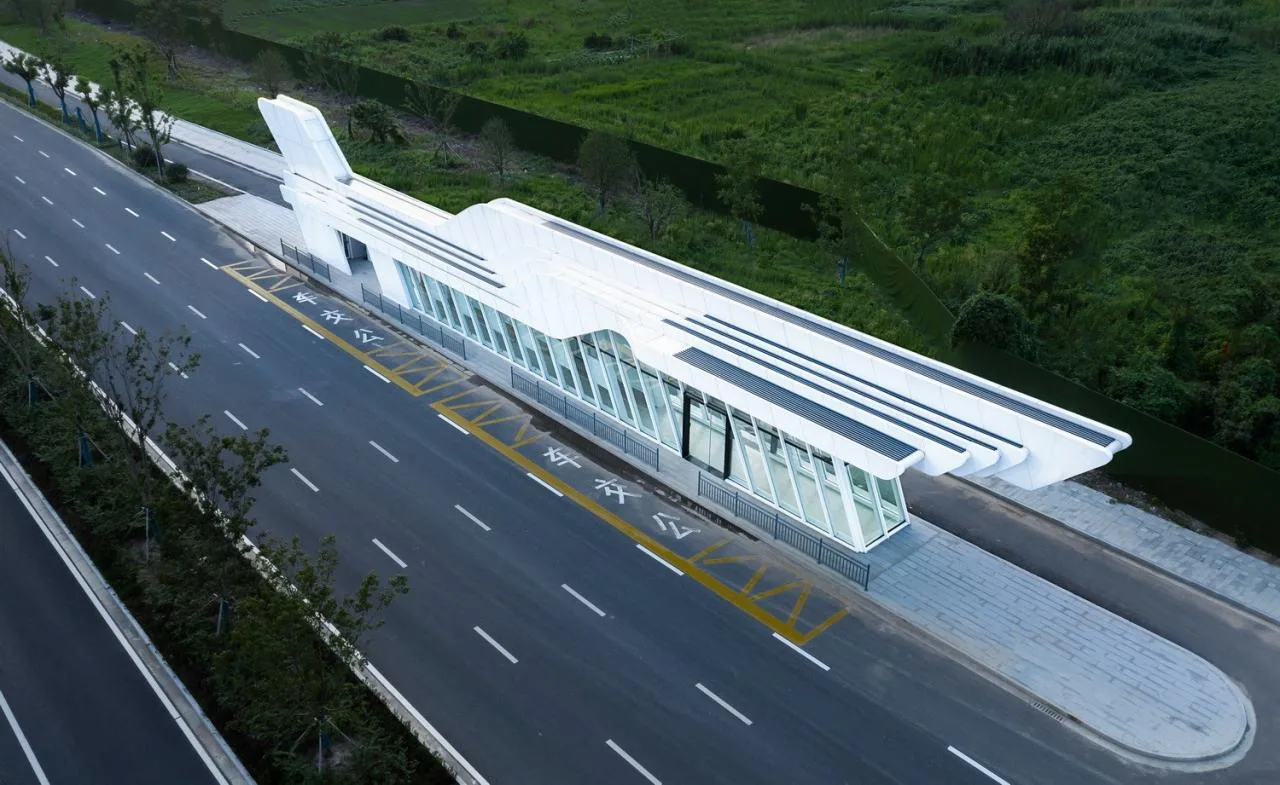
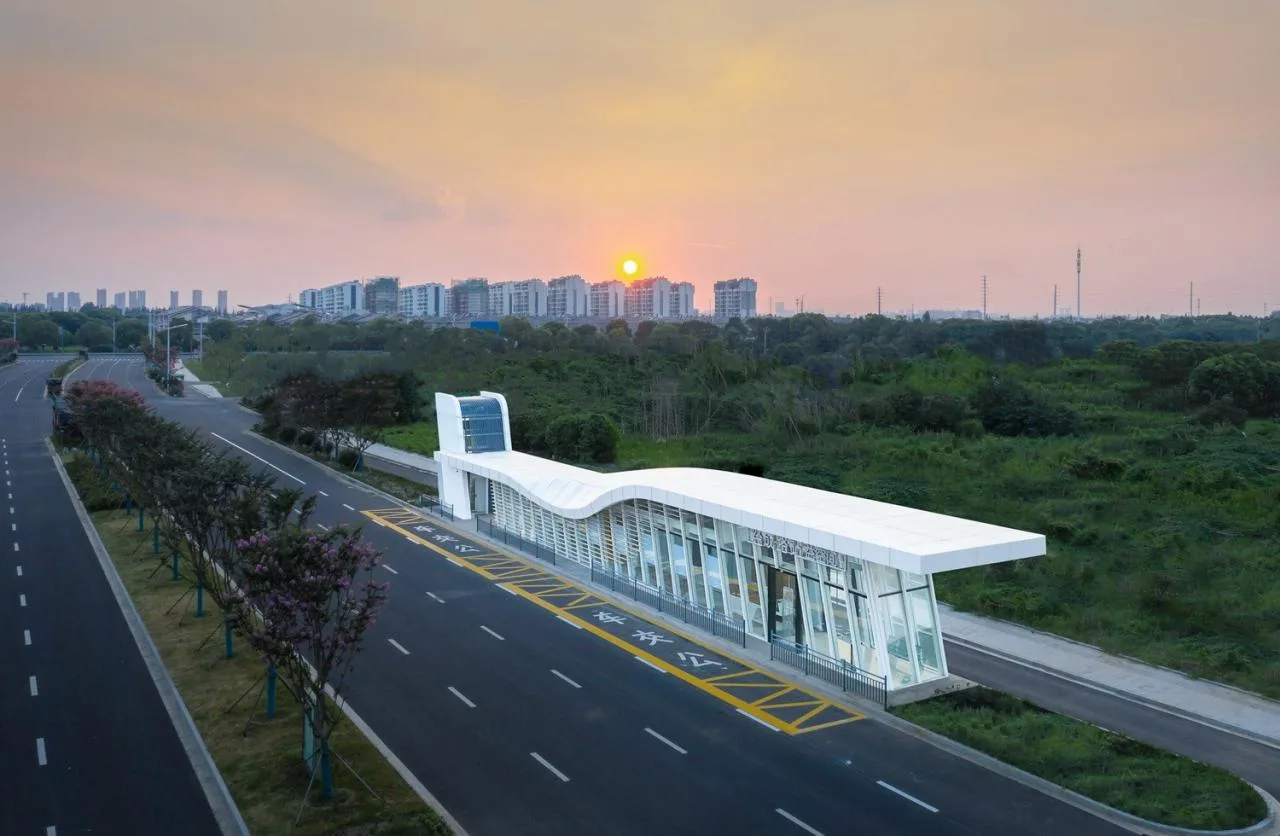
△ Beijing Road Bus Stop © Qin Wei
Our goal is to ease the frustration often associated with waiting for public transportation through thoughtful architectural design. We aim to provide everyone with a personal space to relax and enjoy leisure while guiding the creation of efficient, safe, comfortable, and human-centered public transit environments.
Project Drawings
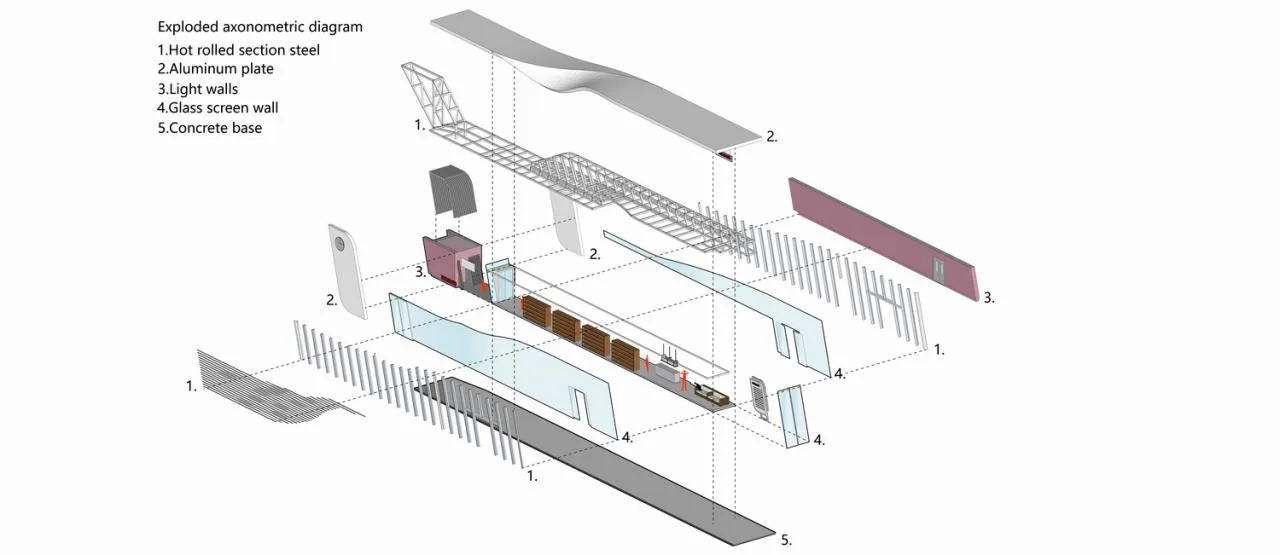
Exploded view of Beijing Road bus stop
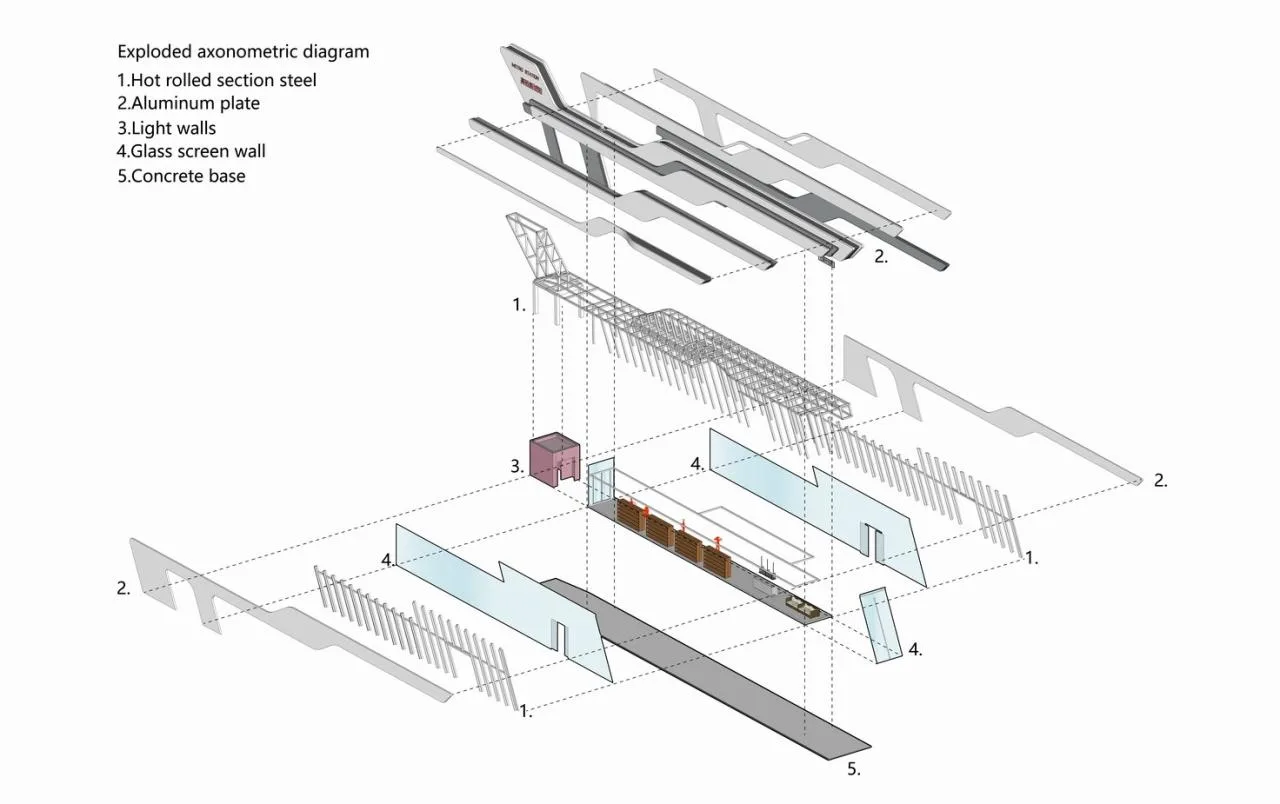
Exploded view of Renmin Road bus stop
Project Details
Project Name: Zhangjiagang High-Speed Railway New City Bus Stop
Location: Zhangjiagang High-Speed Railway Station
Owner: Zhangjiagang High-Tech Zone Management Committee (Tangqiao Town Government)
Construction Unit: Zhangjiagang High-Speed Rail Investment Co., Ltd.
Building Area: 200 square meters
Building Height: 4 meters
Construction Year: 2021
Design Firm: Zhongheng Design Group Co., Ltd.
Lead Architect: Liu Yang
Design Team: Xue Jinhai, Lan Feng, Liu Yang, Yang Yue, Ye Tianyun, Qian Yun, Yang Lulei, Huang Guosheng, Wang Junhao, Wang Xiang, Yang Yuan, Zhang Hao, Ge Shaohua, Lixin, Yin Jiyan, He Jingxiong
Photographer: Qin Wei
Author: Tang Lanke















Must log in before commenting!
Sign Up