
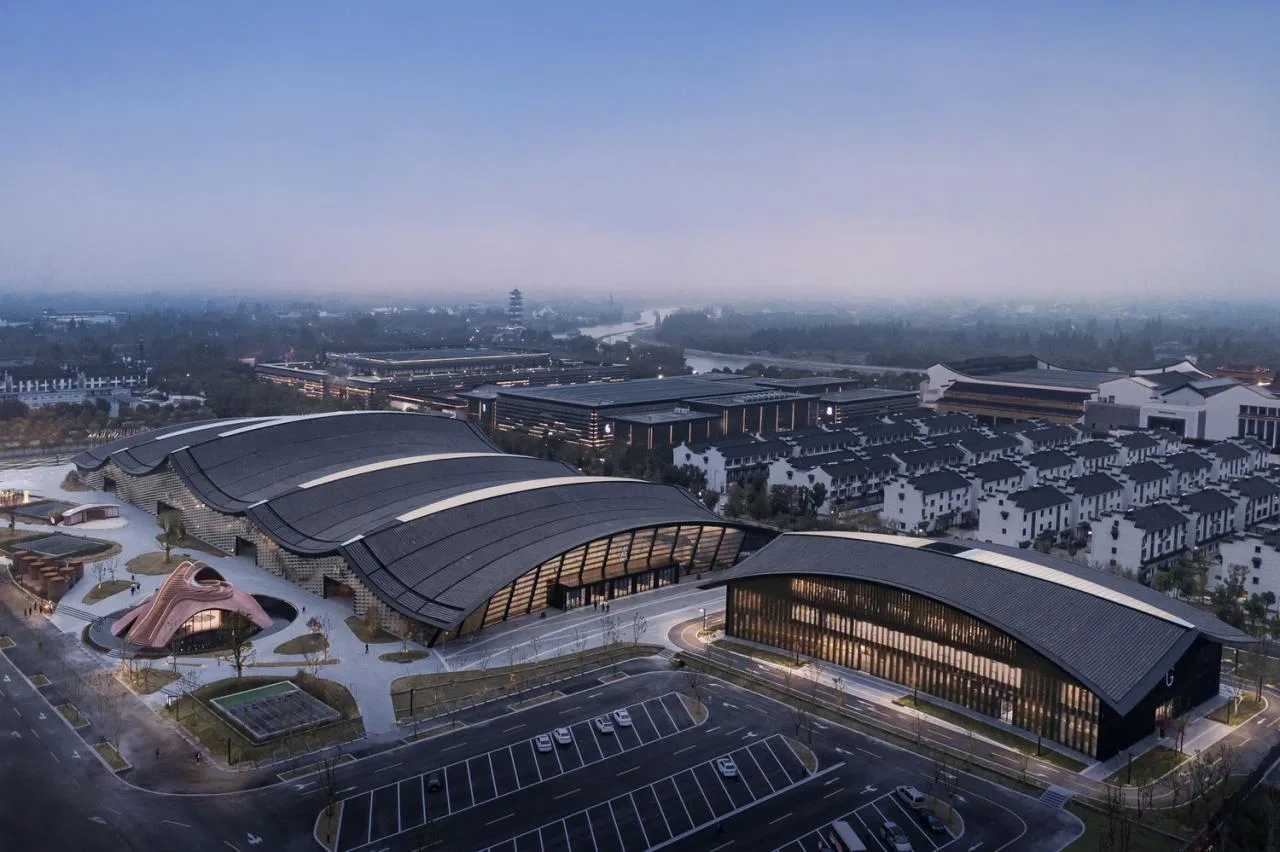
We wandered along the winding paths of the charming ancient town of Wuzhen. Jiangnan remains true to its essence—a water town steeped in history, a stage where the life of bygone Jiangnan unfolds. If the Wuzhen Internet Conference represents the surreal content of this era infused into the Jiangnan water town, then the new architectural space stands as the platform for human activities in the post-humanistic age. Internet and digitalization have transformed not only metropolitan lifestyles, such as Shanghai’s, but also redefined the very character of Jiangnan.
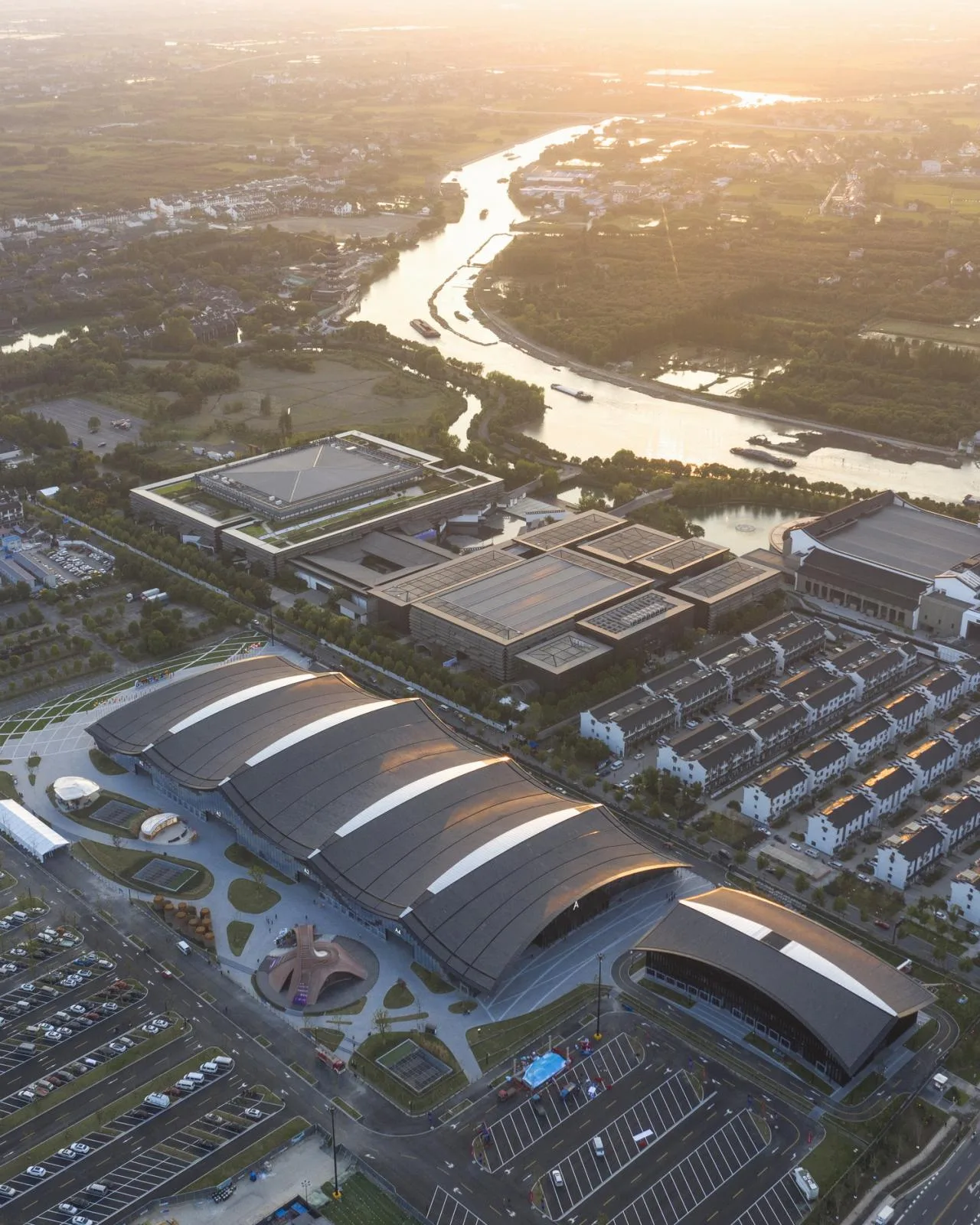
By 2018, Wuzhen had successfully hosted five World Internet Conferences. This ancient town, thriving for a millennium, has been invigorated by technology and large-scale exhibitions, attracting related industries to converge. The hyperobject complex space is emerging as a new architectural language, reflecting the vast super-scale spaces created by the online and offline exchanges of the Internet economy.
The entire complex borders the Xizha Ancient Architecture Complex within Wuzhen. Amid ongoing urbanization, historic and modern buildings intertwine, and land use remains relatively open, creating a rich diversity in the area.
The project site lies in the northwest corner of Wuzhen’s core town area, surrounded by farmhouses, tourism developments, and the completed Phase I exhibition hall. The new venue’s layout needed to ensure smooth integration with existing spaces and functions, while also enabling the construction of an intelligent, modern conference and exhibition center. This will serve as the core area for the Summit’s future release of leading Internet technologies.
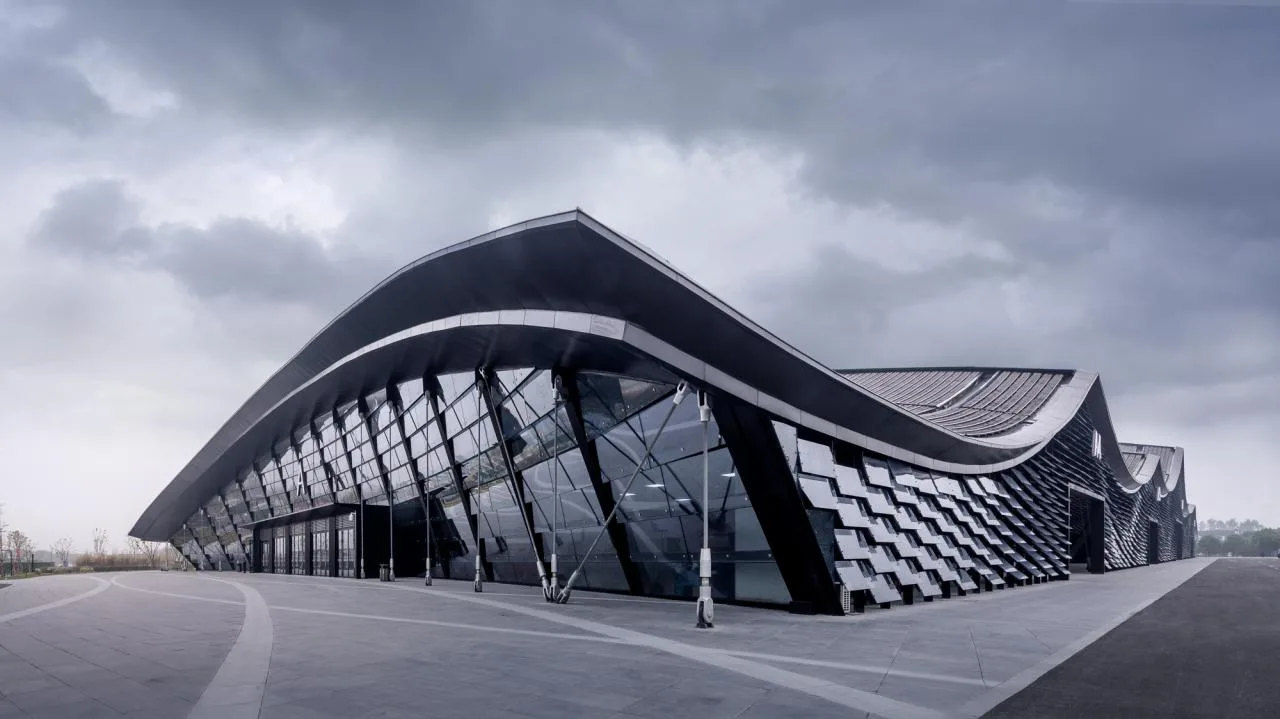
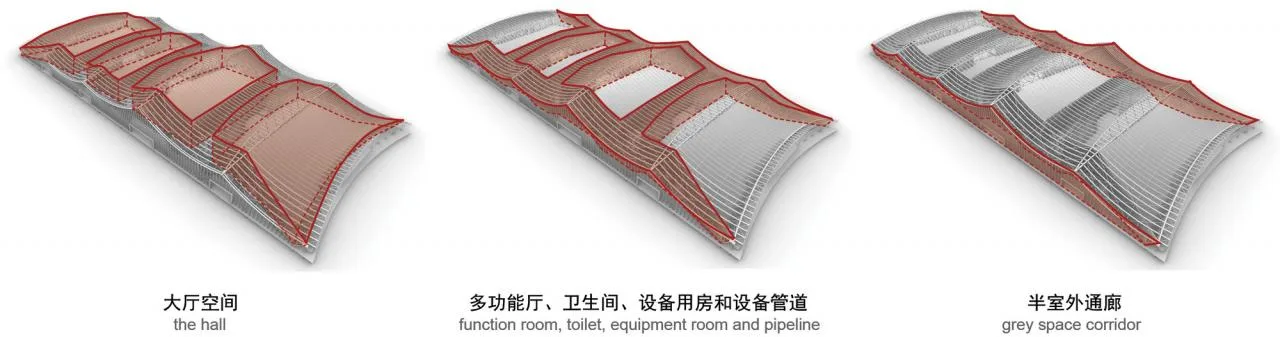
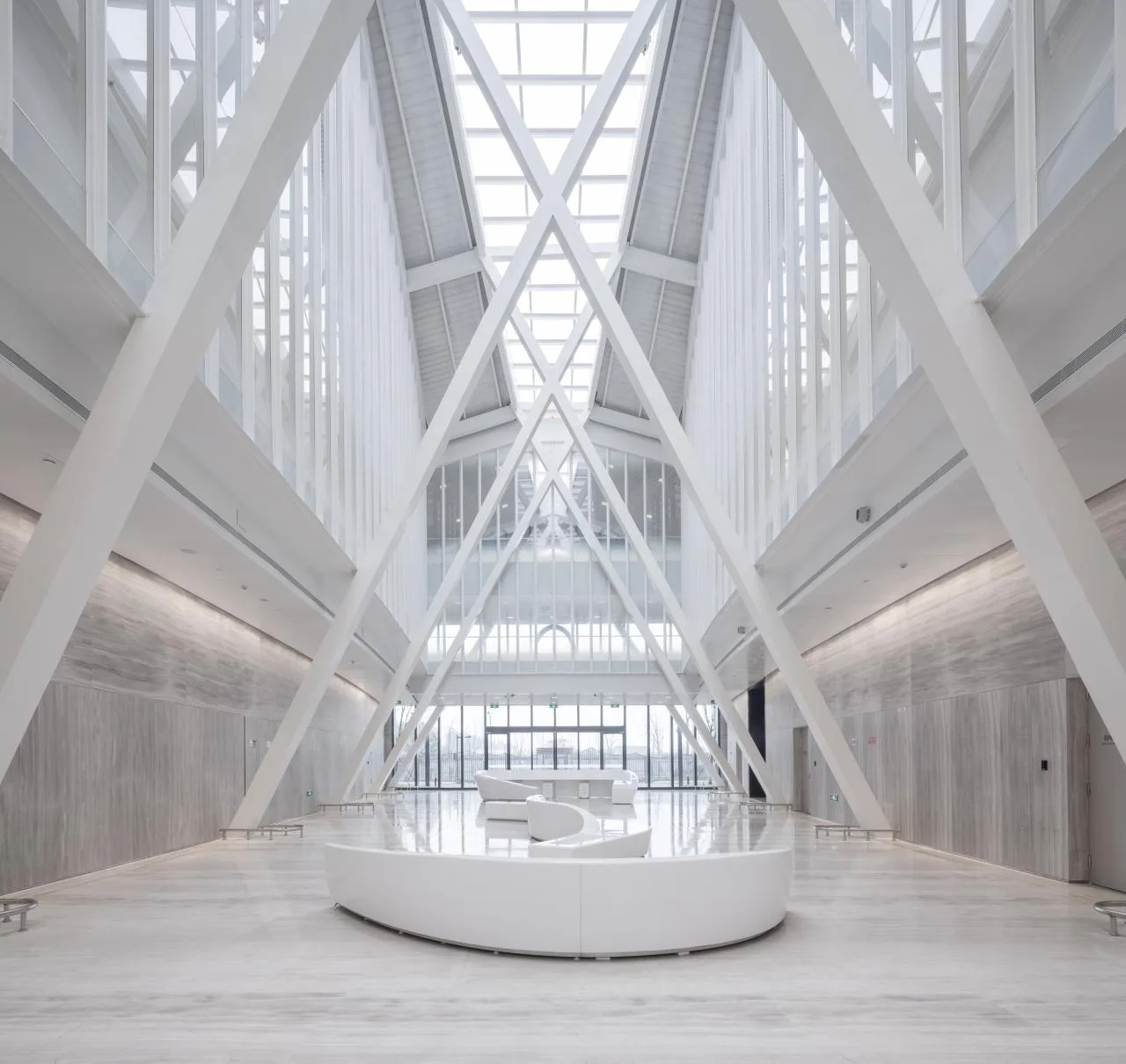
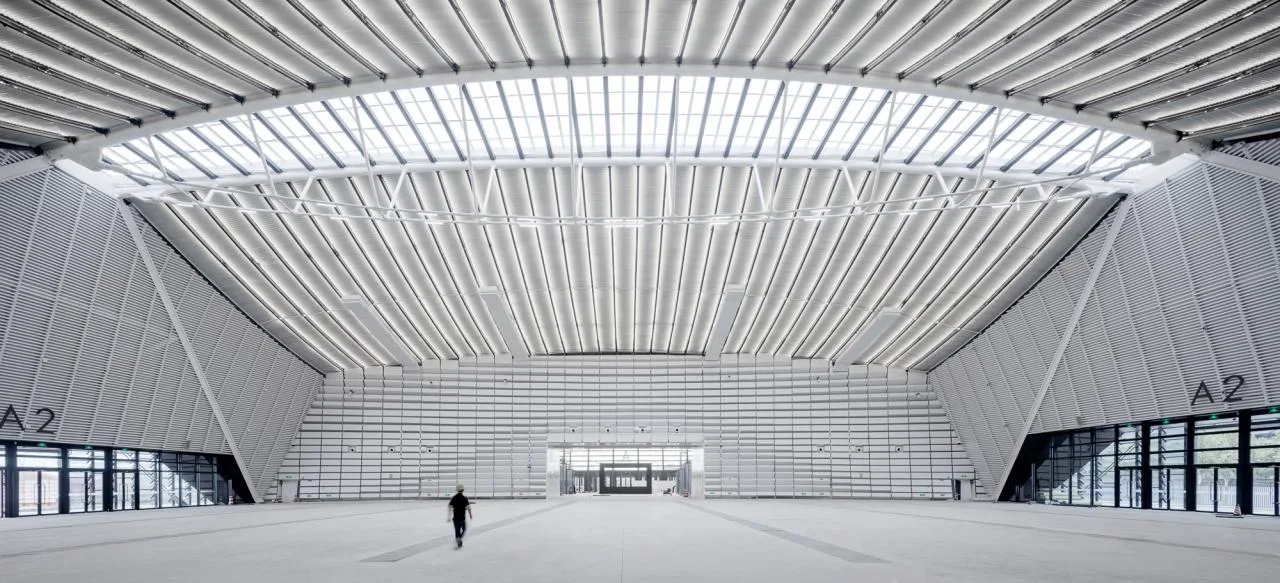
The exhibition hall is composed of four connected spaces arranged from south to north, designed to accommodate the functional needs of Internet conferences and future diverse events. These halls can be opened sequentially for large exhibitions or independently for smaller-scale activities. Each hall features varying ceiling heights—medium, high, and low—to enhance spatial experience and flexibility. The main chord beam runs centrally, supporting an arched structure to meet spatial demands, while an open string beam at the top introduces natural daylight, enhancing the overall quality of the space.
Many successful examples exist of using gravity to create suspended chain roofs. Structurally, suspended roofs using cables or steel strips consume less steel, but their flexible systems complicate construction and roof treatment, hindering rapid project delivery. Therefore, semi-rigid systems have become the preferred approach.
Innovatively, we proposed a “suspension chain beam” structural form to connect the main tension string beams. Inspired by suspension structures that maximize steel performance through tension, this system differs by replacing steel cables with I-beams, enabling pre-shaping of materials. We optimized 230 suspension chain beams into circular arc segments with consistent radii, significantly simplifying fabrication and reducing error potential.
The ridge stringed beams combined with inter-span suspended chain beams enable a 90 by 200-meter column-free space, as originally envisioned. Although functional adjustments later divided the space into four adjacent exhibition areas, prompting scrutiny of the structural system’s necessity, a comprehensive comparison showed that the suspension chain system still offers advantages over a portal steel frame system in terms of cost, efficiency, and ease of construction, warranting its retention.
To ensure rapid construction of the entire exhibition hall, a dynamic modulus system and fully prefabricated assembly methods were applied to the building’s envelope. The upper structure was rationalized into mathematical logic through components including eight A-columns, four chord beams, two edge arc beams, and 230 suspension chain beams, streamlining the prefabrication process.
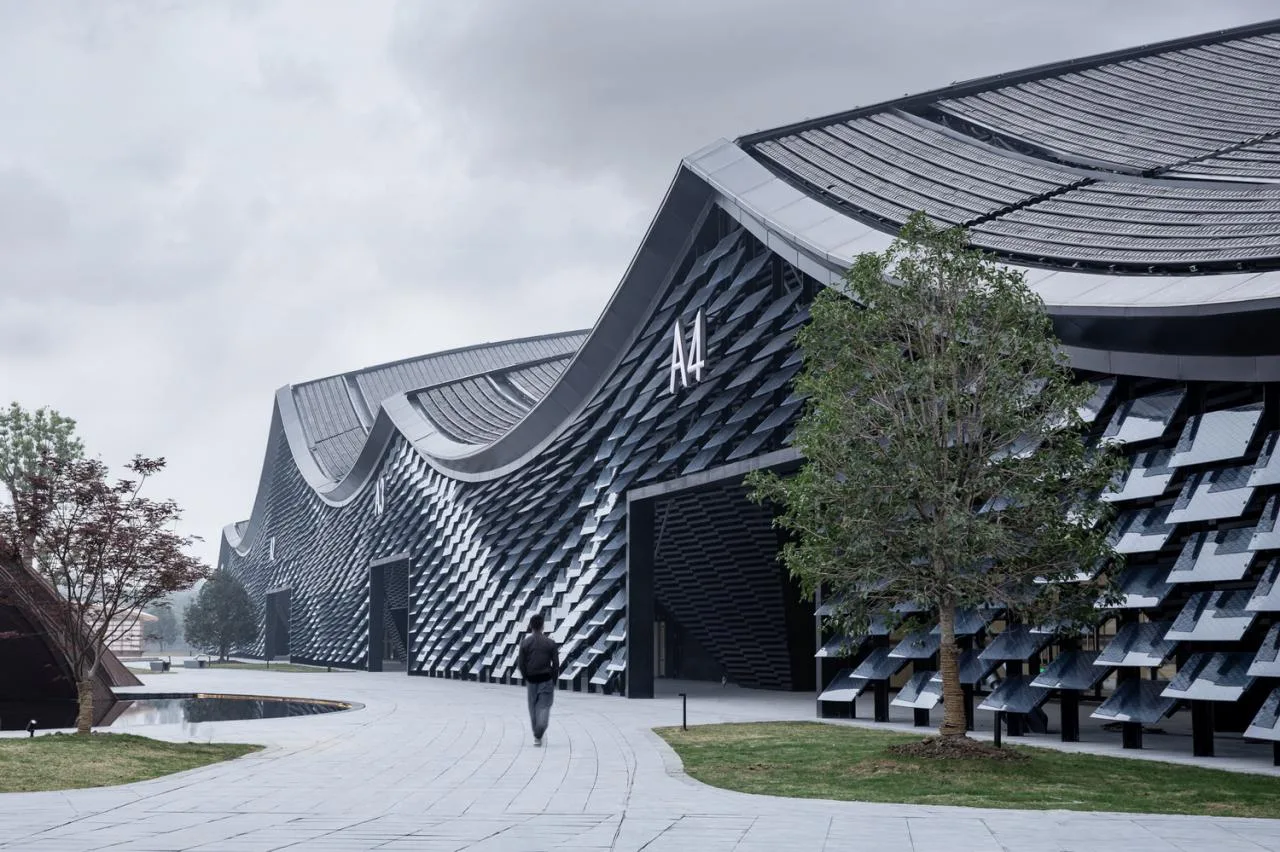
Covering over 20,000 square meters with approximately 700,000 tiles, on-site roofing would be impractical within the project timeframe. The design innovatively adopted a semi-prefabricated approach, transforming traditional wet tile laying into prefabricated installation units. Every 18 tiles were assembled into an installation unit on the ground, enabling each unit to be mounted on the roof in just five minutes, dramatically improving efficiency.
The eastern facade of the exhibition hall connects a linear park inspired by Eastern aesthetics, linking the four exhibition halls. Much like Jiangnan’s water towns and gardens, the scenery shifts with every step, reflecting a harmonious relationship between humans and nature.
In today’s digital and Internet-driven era, architects emphasize the seamless integration of contemporary spirit with construction culture. While spatial experience and artistic ambiance profoundly influence architecture, the digitization of construction techniques is reshaping architectural paradigms. This evolution drives attention toward material innovation and intelligent construction technologies, transforming architectural form, process, aesthetics, and experience.
The four exhibition halls—Water Pavilion, Moon Pavilion, Red Pavilion, and Cloud Pavilion—collectively create a poetic landscape of “Water, Moon, Red, Clouds” in Eastern aesthetics, while serving as a testing ground for construction robot experiments. As the world’s largest experimental project for robotic construction, this development balances environmental and spatial atmosphere design with the functional demands of robotic production processes.
Water Pavilion
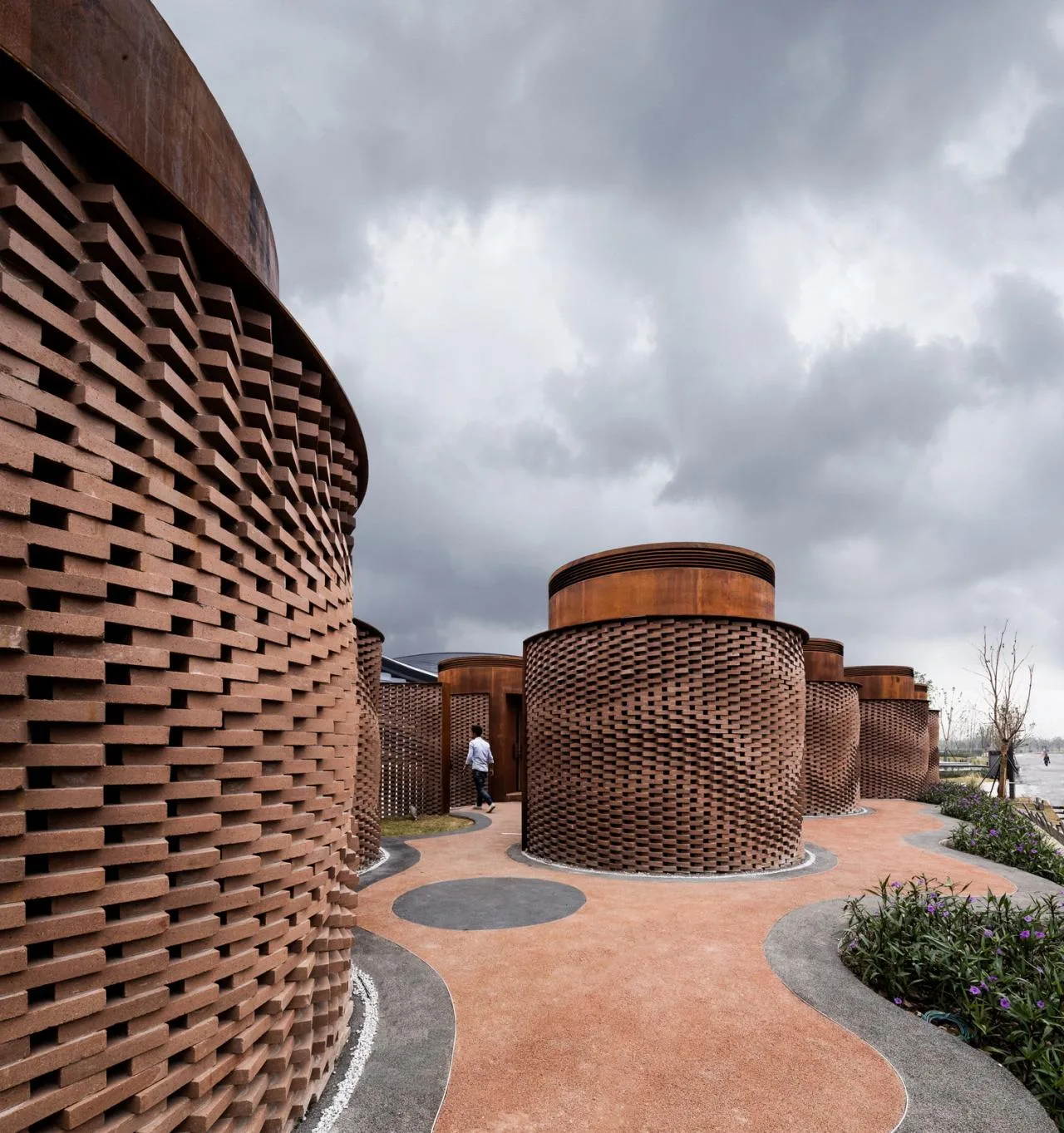
Situated on the east side of the main venue, the Water Pavilion is constructed from red bricks and functions as a park service station through intelligent robotic brick construction. Architecturally, its high-curvature, multi-textured brick walls symbolize “water,” earning it the name Water Pavilion.
The design employs staggered curved walls to segment the site, forming flowing and enclosed spaces that showcase novel material forms. The red brick walls feature rhythmic textures created by parametric adjustments, enriched by dappled sunlight and shadow. Modular stainless steel cylindrical units are embedded within the curved walls to accommodate various functions—sales, inquiries, resting, and washing—serving as both visual decoration and enhancing spatial openness.
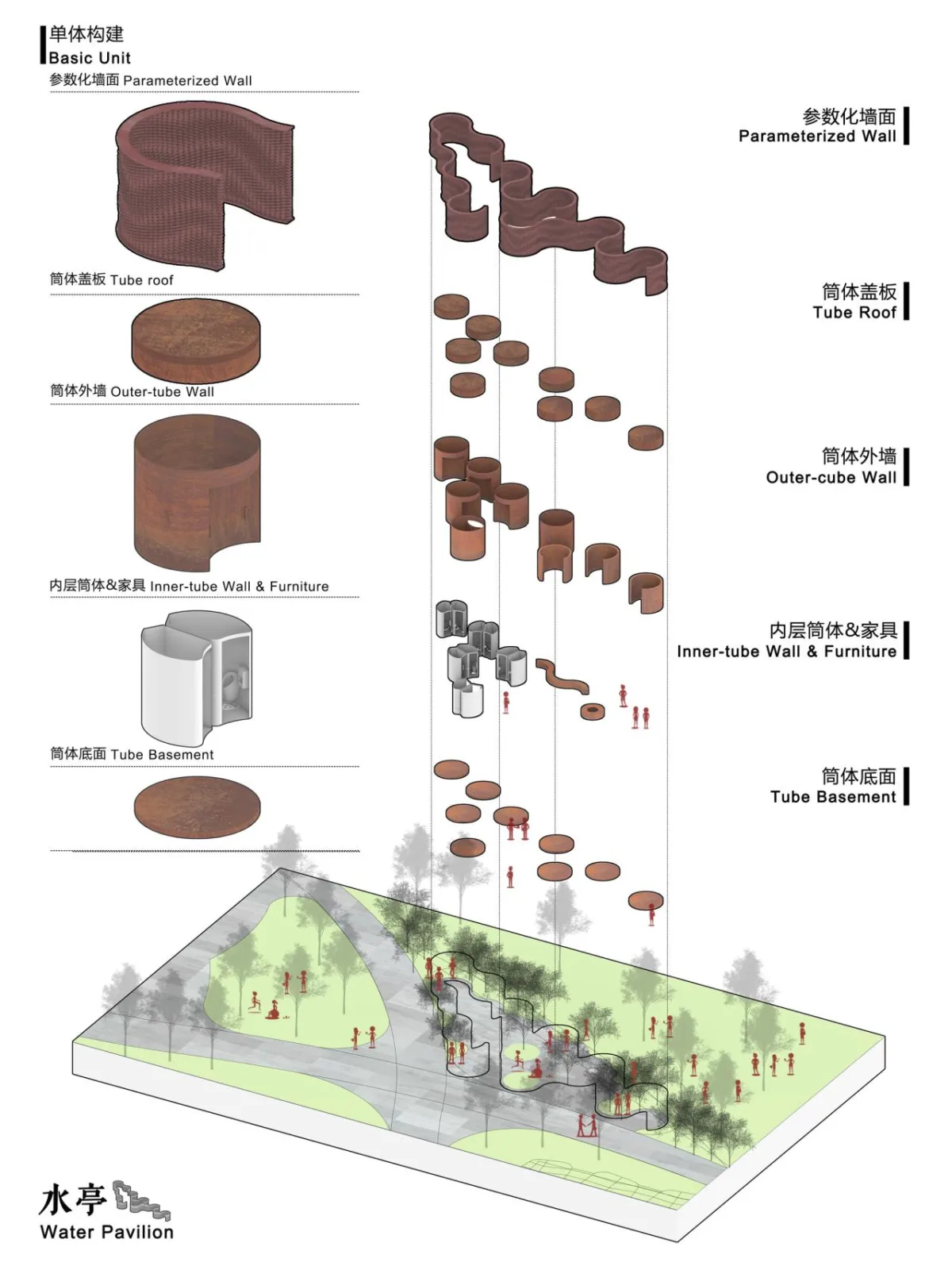
All brick walls were prefabricated in bulk and automatically laid by robots onsite. This approach ensured efficient and rapid construction within one week, achieving precise masonry of complex curved wall shapes. The Water Pavilion covers 52 square meters with a 190 square meter site. During construction, Yizao Technology applied machine learning to monitor mortar quality, enabling closed-loop control for consistent results. After prefabrication, walls were lifted and assembled, forming an integrated process of offsite fabrication and onsite assembly.
Moon Pavilion
The Moon Pavilion’s shape is formed by the intersection of three circles. When its two doors open, it embraces the venue, symbolizing the “clear moon.” The pavilion features display cabinets showcasing colorful souvenirs. When closed, a circular seating area beneath the eaves offers a public resting spot, embodying the “moon shade.” This dual posture highlights the pavilion’s strong public character and its connection to the venue.
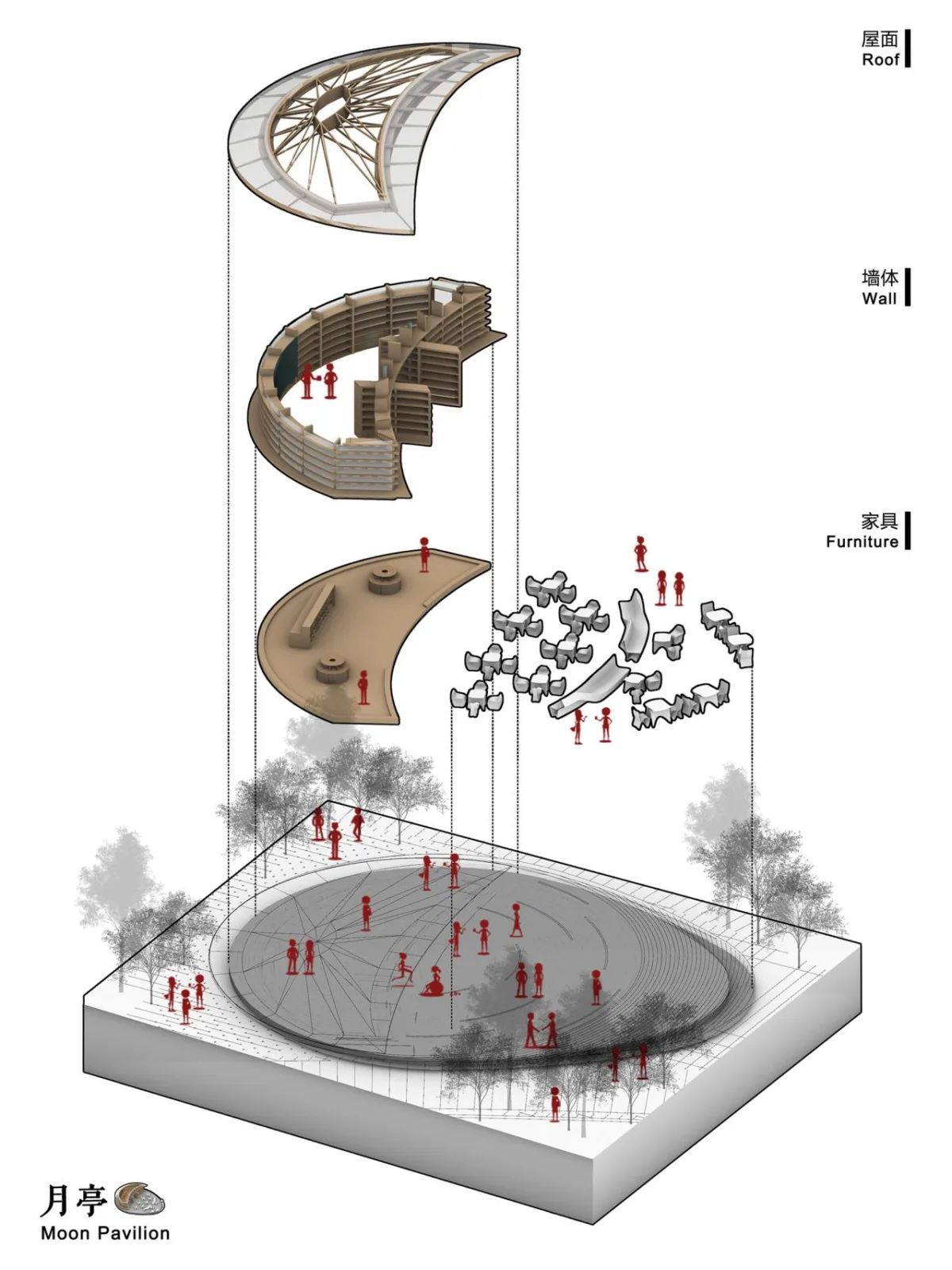
Constructed using robotic wood fabrication technology, the Moon Pavilion’s geometric components achieved precise milling through a half-moon shape-finding process. This ensured an exact fit between nonlinear surfaces and wooden units. The polycarbonate roof introduces ample sunlight, complemented by LED strips that diffuse light at night, creating a luminous, moon-like glow. Covering 98 square meters on a 239 square meter site, the pavilion’s construction was digitally simulated and quickly assembled from prefabricated parts. It’s also designed for disassembly and reuse.
Red Pavilion
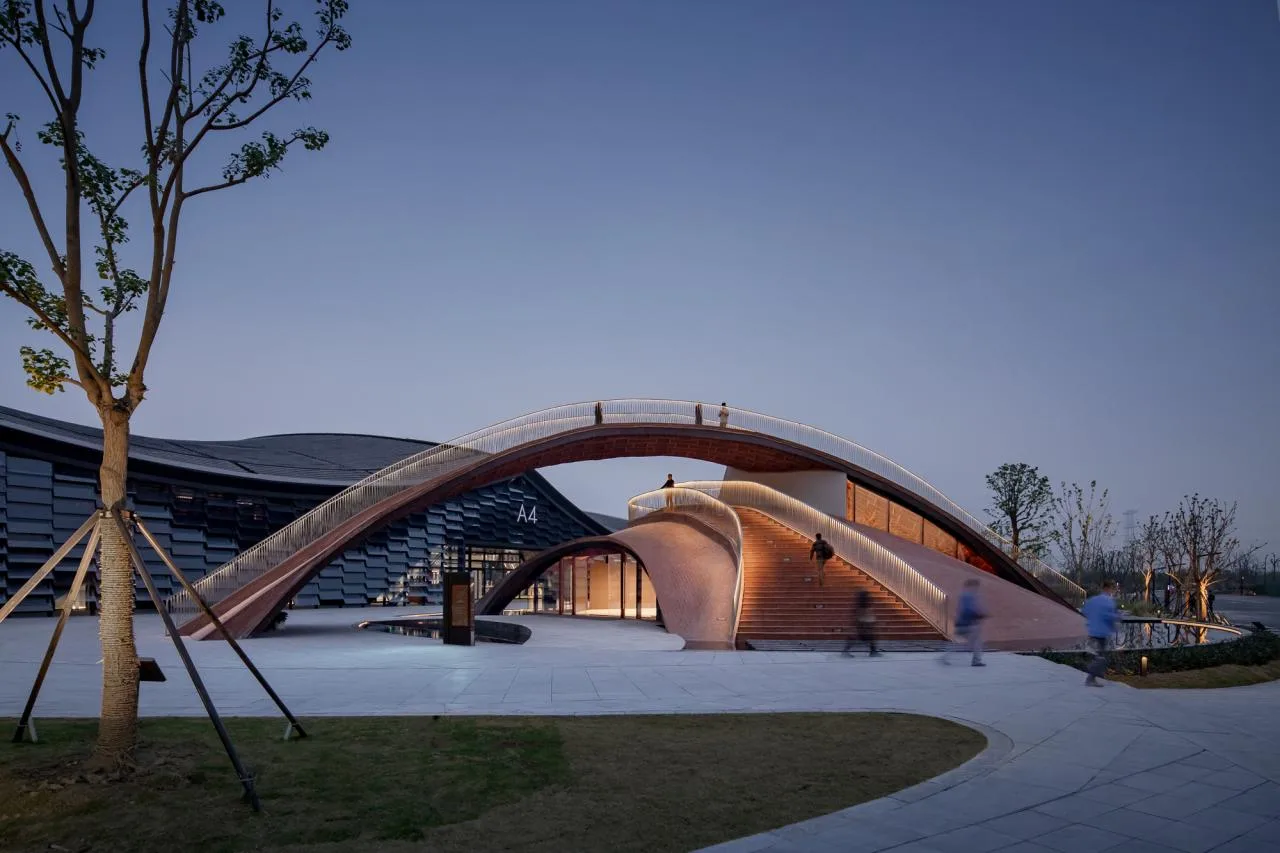
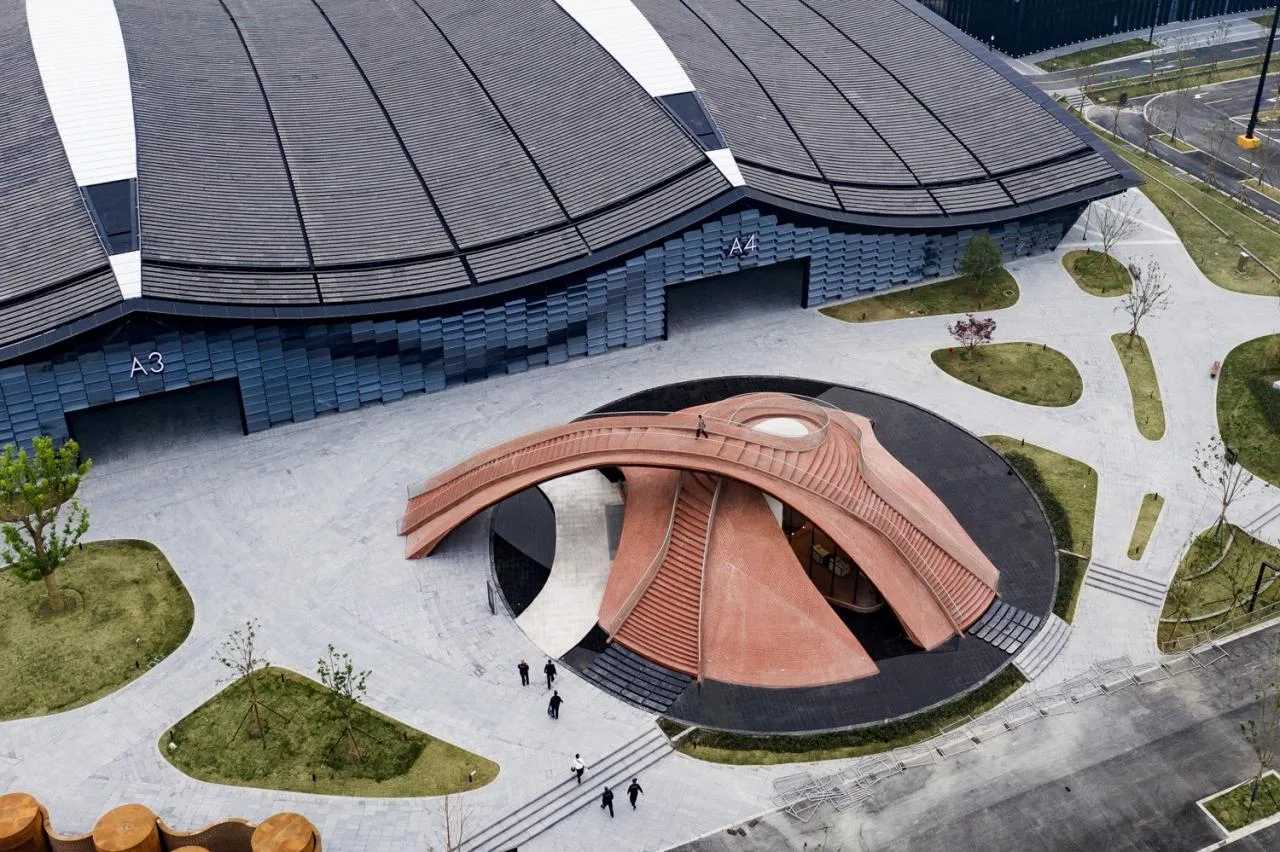
The Red Pavilion complements the main pavilion’s flowing roofline and serves as a primary node along the “Light of the Internet” Expo Center’s landscape avenue. It also highlights the “intelligent construction” theme along Internet Avenue. Unlike Wuzhen’s traditional green bricks, this pavilion uses classic Chinese red bricks. Its curved arch shell symbolizes a “rainbow,” echoing the main venue’s undulating roof and representing the conference’s pivotal role in the digital connectivity era.
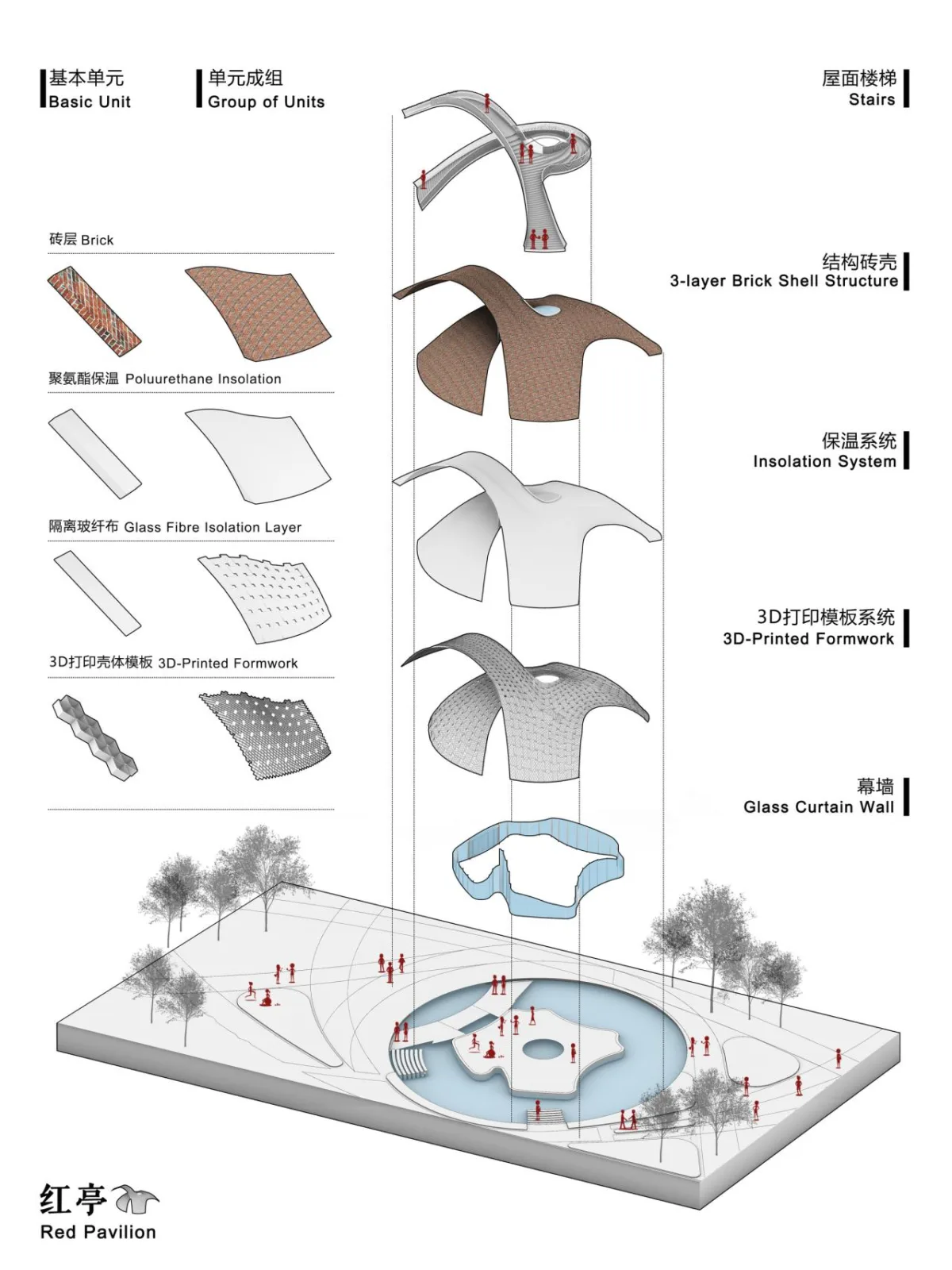
The Red Pavilion spans 273 square meters on a 487 square meter site. Its design begins with traditional brick arch shell techniques, enhanced by advanced digital algorithms to craft an ultra-thin shell form. The structure spans up to 40 meters with only 0.15 meters thickness. Serving as a scenic lookout point along the landscape’s main flow, the pavilion introduced cutting-edge robotic 3D printing for its construction. Robotic prefabricated units formed structural templates, enabling rapid, efficient, and precise assembly. This approach overcame traditional brick shell construction challenges like slow progress and material waste.
Cloud Pavilion (Yunting)
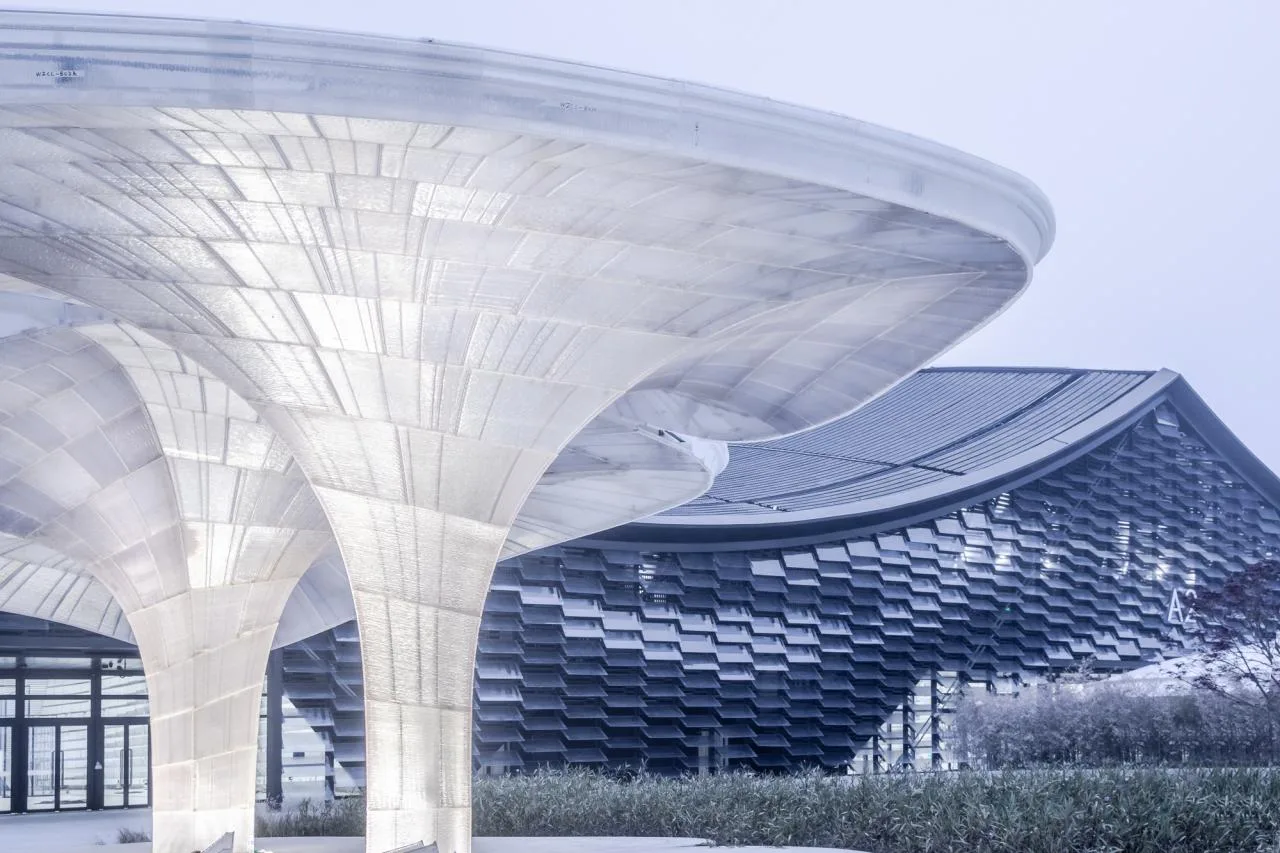
The Cloud Pavilion measures approximately 20 meters long, 15 meters wide, and 6 meters high, composed of 3D-printed modified plastic components produced by construction robots. Internally, it is divided into three volumes: an indoor café and two semi-outdoor rest platforms, forming three umbrella-shaped structures. Covering 139 square meters, it was assembled using prefabricated methods. The pavilion consists of over 400 unique printed parts, prefabricated by four 3D printing robots in two weeks, and transported to the Wuzhen Internet Conference site for assembly. Robot positioning technology facilitated on-site assembly, integrating factory customization with intelligent robotic construction to revolutionize material-based intelligent production.
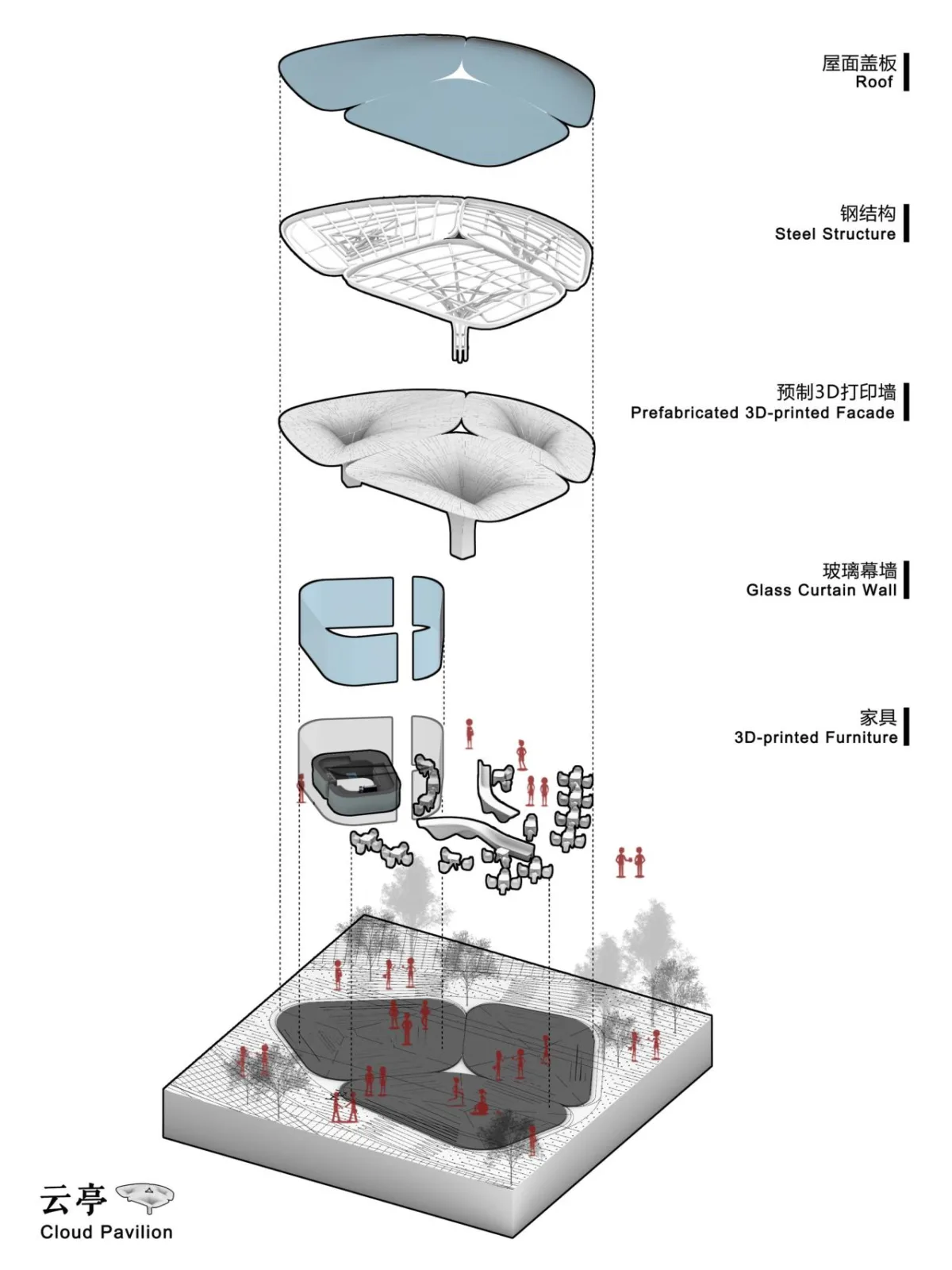
The phrase “Visiting the sights and enjoying the four pavilions and four views” captures our humanistic respect for Wuzhen’s water town. “Human-machine co-construction, Water Moon Red Cloud” represents our dedicated experimentation and practice of integrating this entire project into the digital era.
Project Drawings
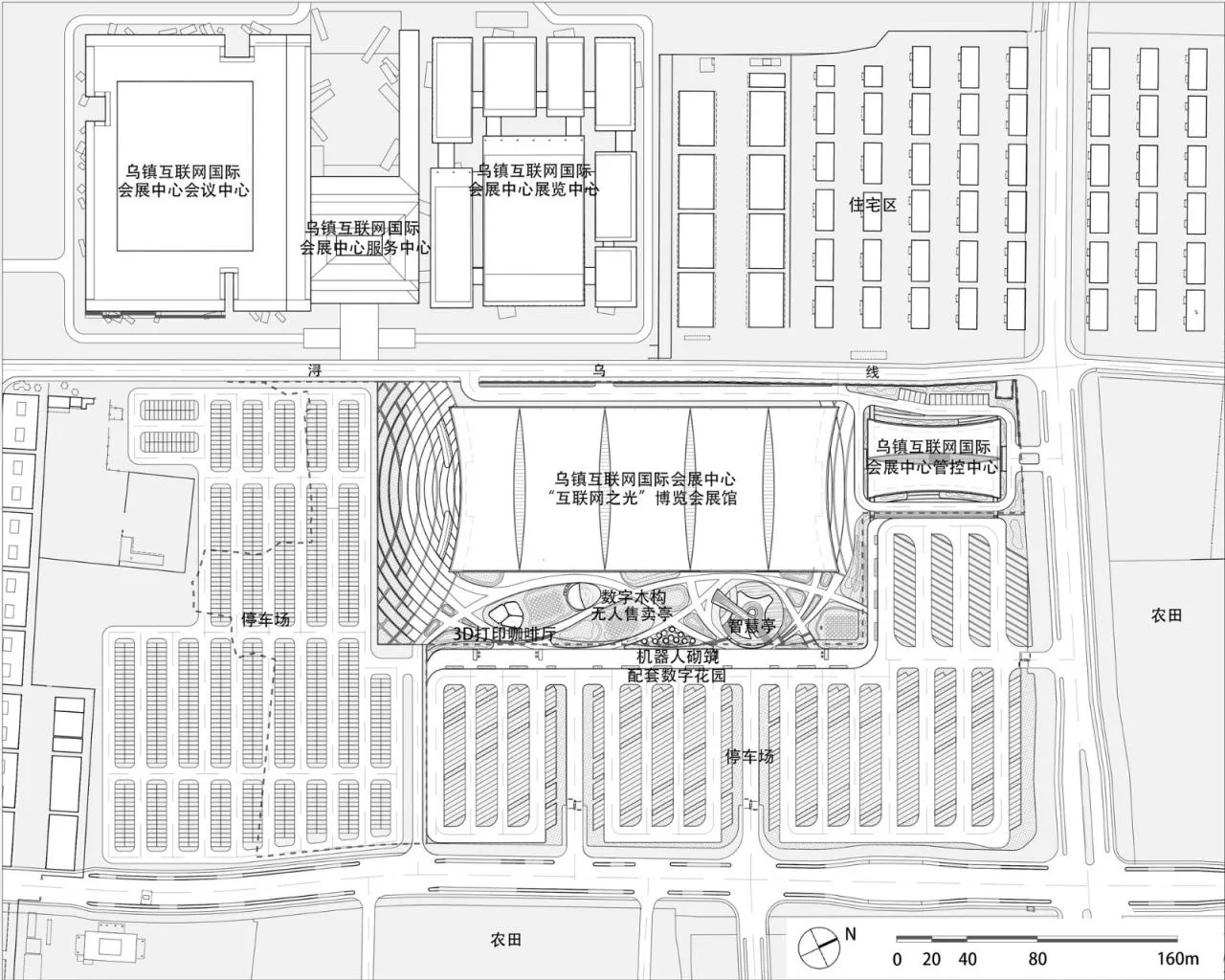
△ General Layout Plan
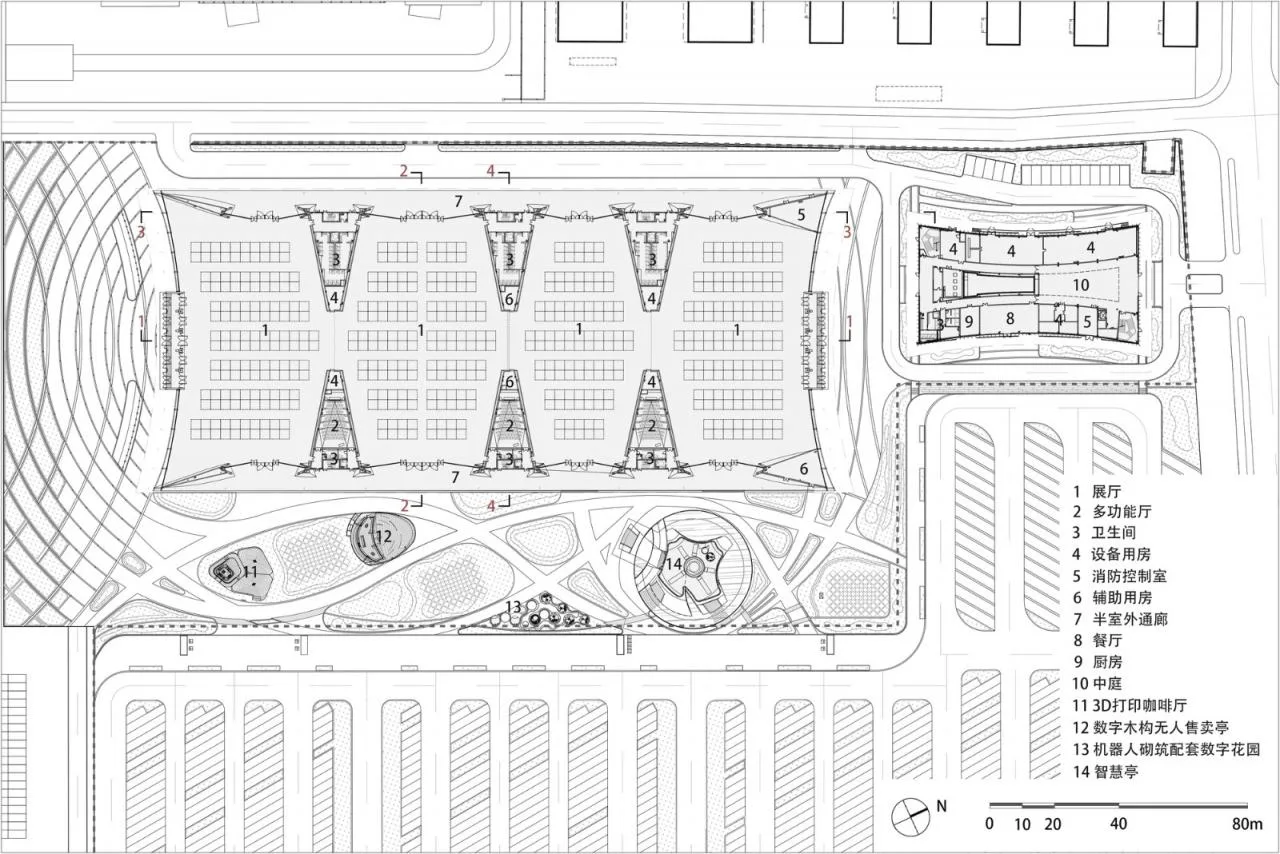
△ First Floor Plan
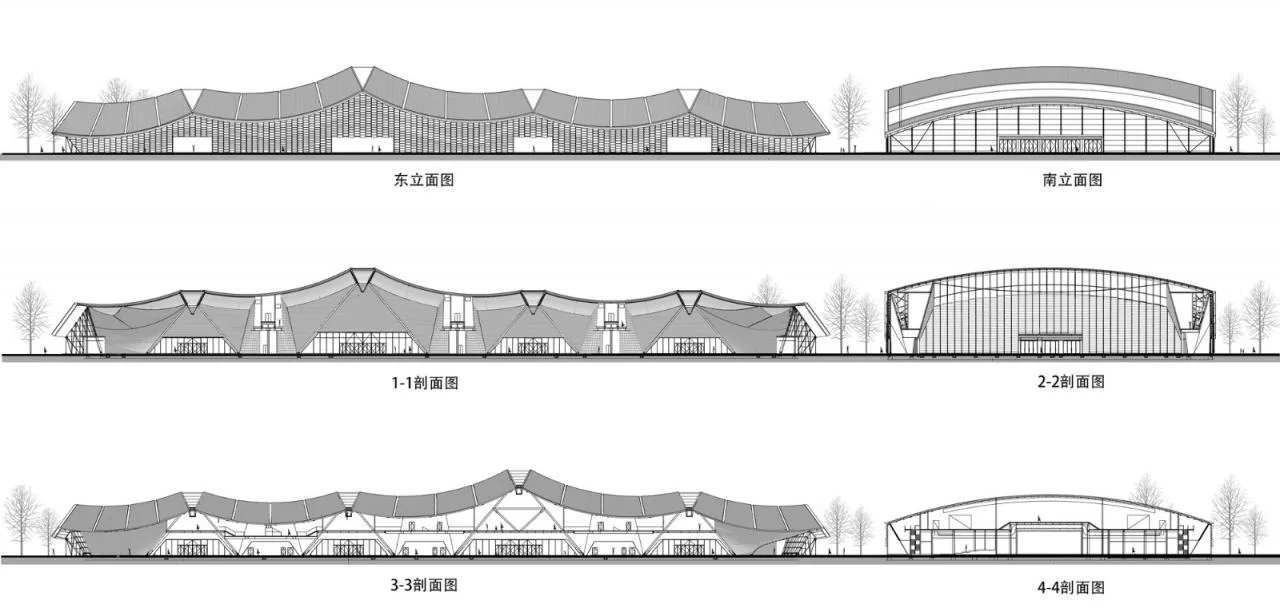
△ Section Diagram
Project Information
Architect: Shanghai Chuangmeng International Architectural Design, Shanghai Yizao Building Intelligent Engineering Co., Ltd
Area: 562 square meters
Project Year: 2019
Photographers: Shiran Architecture, Tian Fangfang
Principal Architect: Yuan Feng
Digital Construction Project Leader: Zhang Wen
Project Architect (Exhibition Hall): Han Li
Design and Digital Fabrication: Shanghai Yizao Building Intelligent Engineering Co., Ltd
Red Pavilion Research Team: Philippe Block, Philip F. Yuan, Xiang Wang, Kam-Ming Mark Tam, Gene Ting-Chun Kao, Zain Karsan, Dalma Foldesi, Hyerin Lee, Jung In Seo, Anna Vasileiou, Youyuan Luo, Chun Pong So, Xiao Zhang, Liming Zhang, Hua Chai
Architectural Design Team (Exhibition Pavilion): Wang Xiang, Luo Youyuan, Gao Weizhe, Han Li, Kong Xiangping, Su Junbang, Zhang Xiao, Pu Jingda, Li Yuying, Wang Yating
Structure: Zhang Zhun, Huang Tao, Wang Rui
Structural Consultant: Hezuo Structural Architecture Research Institute
Landscape Design: Urban Green Innovation IUG
Lighting Design: Rui International Lighting Design RDI Lighting
Architectural Design Team (Exhibition Hall): Kong Xiangping, Huang Jinyu, Gu Huajian, Chen Hao, Zhang Haobo, Li Yuying, Building, Tao Xi, Jin Jinqiao
Interior Design Team (Exhibition Hall): He Fuzi, Wang Ju, Wang Yifei, Wang Tuomeng, Liu Luwen, Tang Jingyan, Cui Mengmeng, Jiang Haiyan
Mechanical and Electrical (Exhibition Hall): Wang Yong, Wei Dawei, Zhang Qing, Chen Zhengwen, Yu Xiao, Chen Jiandong
Landscape (Exhibition Hall): Dong Nannan, Wei Weixuan, Ye Jun
Lighting (Exhibition Hall): Hu Guojian, Qiang Hongbo, Wang Zhenjiang, Wu Xiaohua, Ge Tingting
Green Energy Conservation (Exhibition Hall): Shanghai Shungu Construction Engineering Technology Co., Ltd
Survey Unit (Exhibition Hall): Zhejiang Dadi Geotechnical Survey Co., Ltd
Supervision Unit (Exhibition Hall): Zhejiang Engineering Construction Management Co., Ltd
Interior Design Team (Exhibition Pavilion): Liu Luwen, Wang Ju, Tang Jingyan, Cui Mengmeng, Li Yuanyuan
Electromechanical (Exhibition Pavilion): Wei Dawei, Chen Jiandong, Wang Yong, Zhang Qing
Digital Fabrication: Shanghai Yizao Building Intelligent Engineering Co., Ltd
Signage System: Fanpu Brand Design Consultant (Shanghai) Co., Ltd
Façade Consultant for Exhibition Halls: Zhejiang Wulin Building Decoration Group Co., Ltd
Exhibition Halls Contractor: Yadu Construction Group Co., Ltd














Must log in before commenting!
Sign Up