
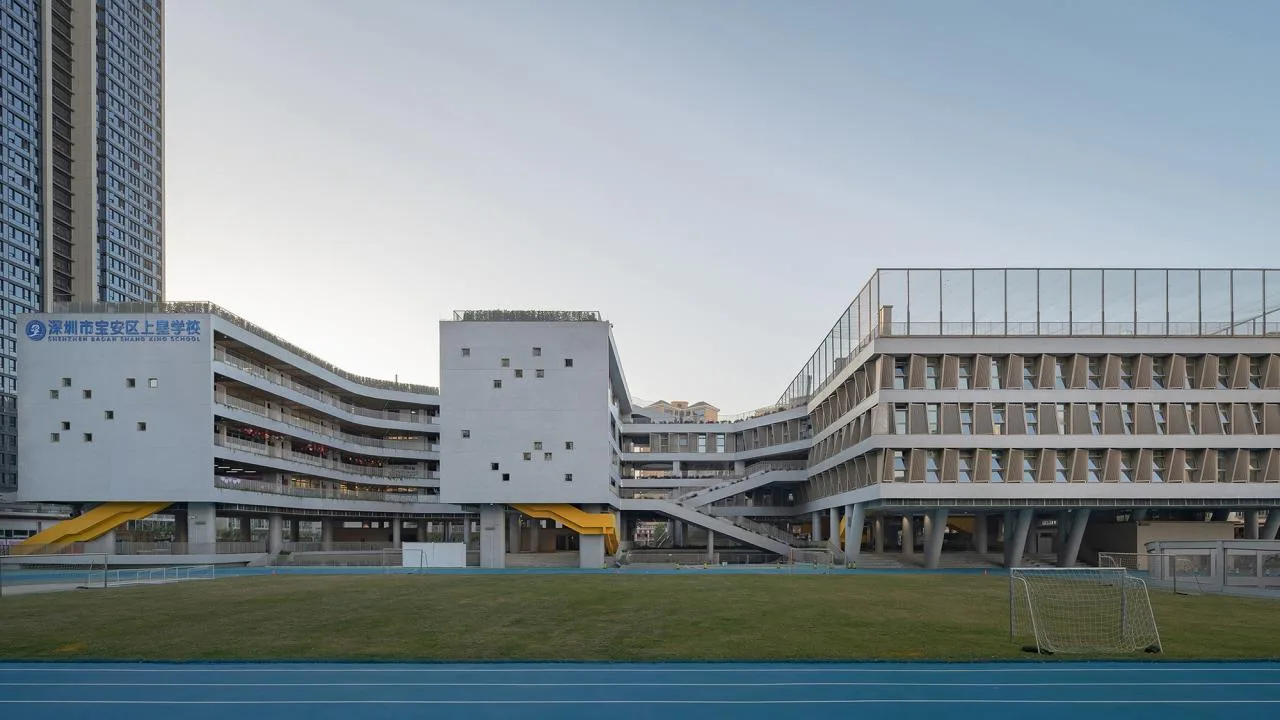
Shenzhen, a rapidly developing young city over the past 40 years, faces significant challenges including limited available land for construction and an increasing demand for educational resources due to its growing population. These factors have intensified the scarcity of educational land, making high-density campuses a current focus in urban planning.
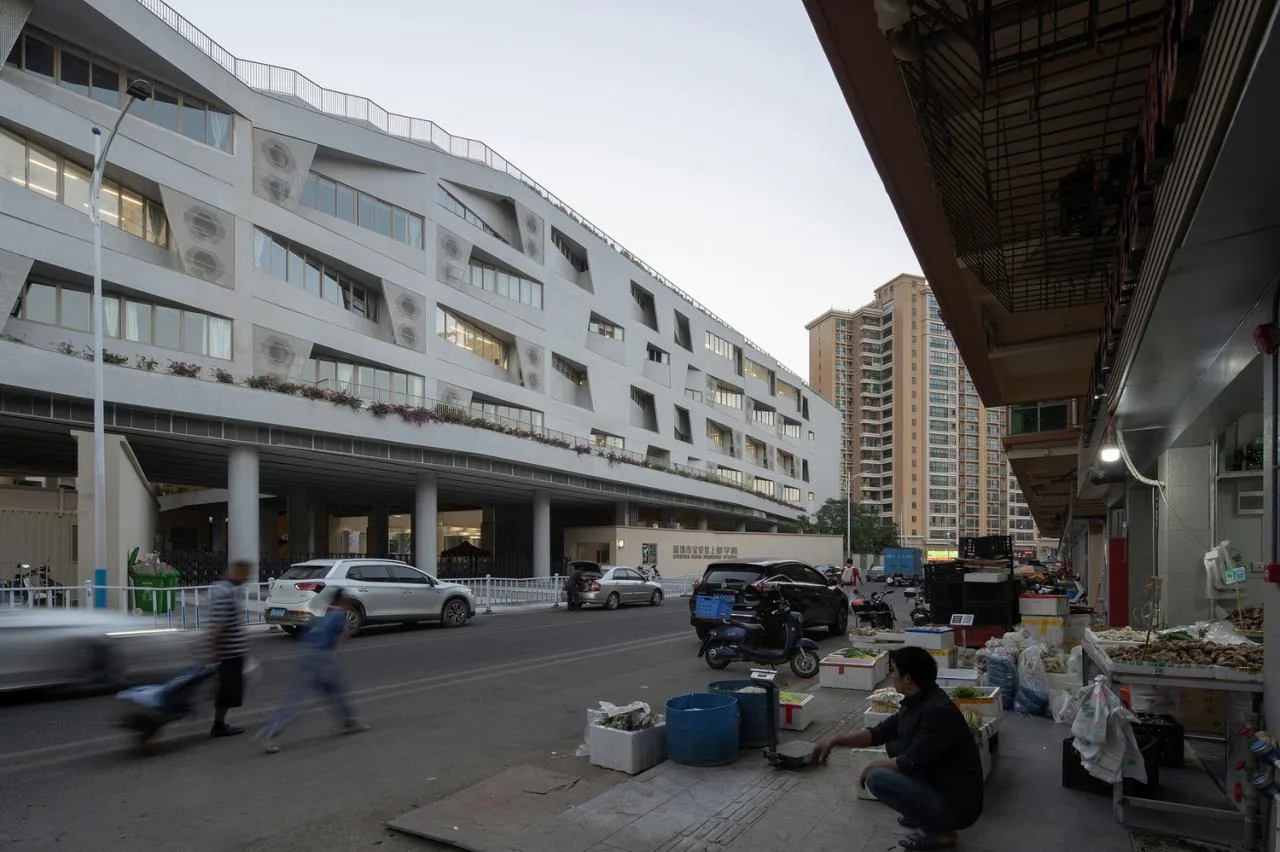
Located in Xinqiao Street, Bao’an District, Shenzhen, Shangxing School occupies a land area of 21,171.6 square meters. The project underwent expansion from the originally planned 36-class nine-year school to 48 classes, resulting in a total construction area of 48,269 square meters and a plot ratio of 1.79. The site is constrained by several external conditions: it is shaped like a knife handle; the west side must retreat from the river channel’s red line; an existing road crosses the land’s northern boundary; the noisy agricultural wholesale market on the north side makes it unsuitable as the main ceremonial entrance; and high-rise residential buildings to the south affect sunlight exposure. These limitations posed significant design challenges.
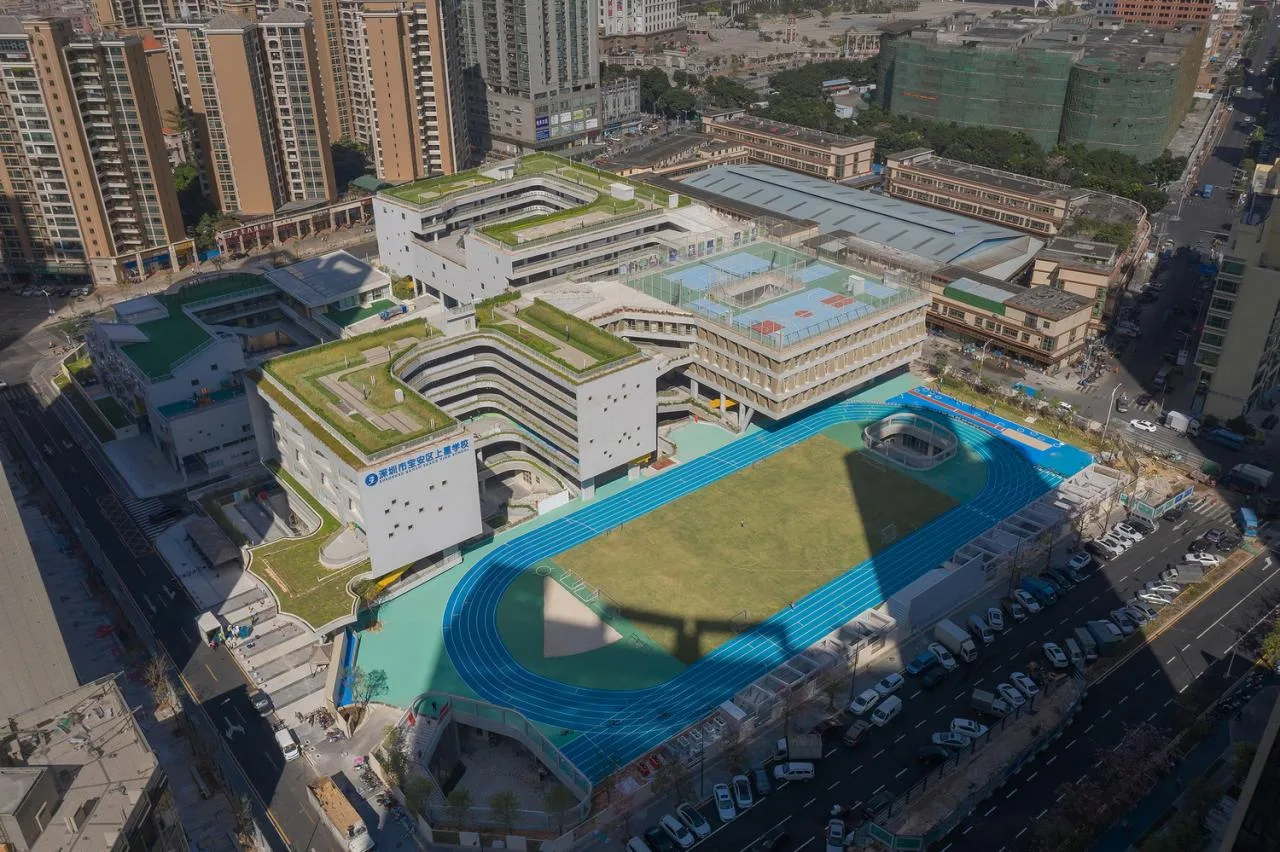
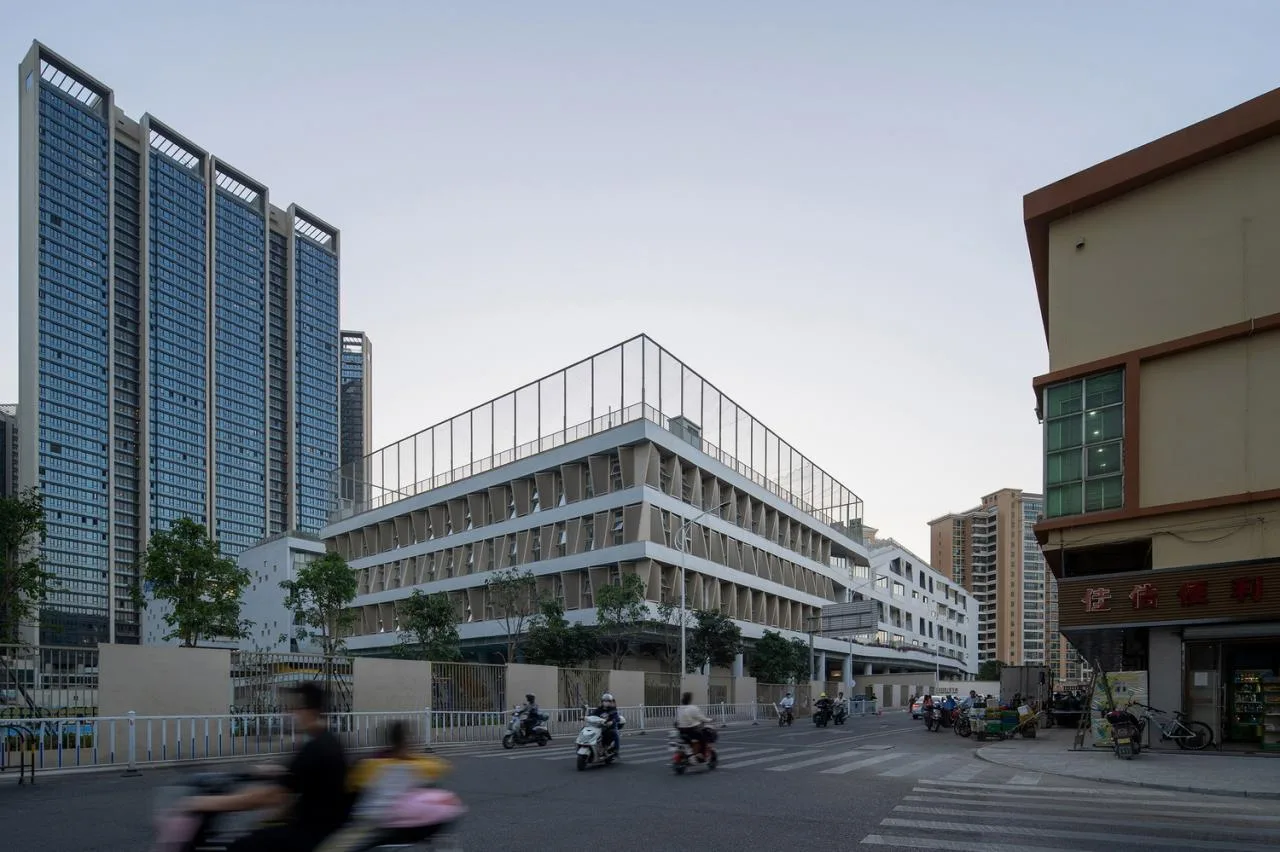
The organizational strategy for this nine-year school addresses the unique zoning needs driven by land scarcity. Given the significant differences in age, physical development, and curriculum between middle and primary school students, clear separation is essential to avoid interference between teaching areas. The design divides the school into five functional groups: the primary school section, junior high section, arts and sports center, comprehensive service center, and faculty dormitory. The primary and junior high school departments connect via the comprehensive service center, sharing it along with the underground arts and sports center, while the dormitory is independently managed to avoid disrupting teaching areas. This spatial design balances separation and integration, meeting the zoning needs of a nine-year school and supporting flexible future uses such as school sharing and time-sharing arrangements.
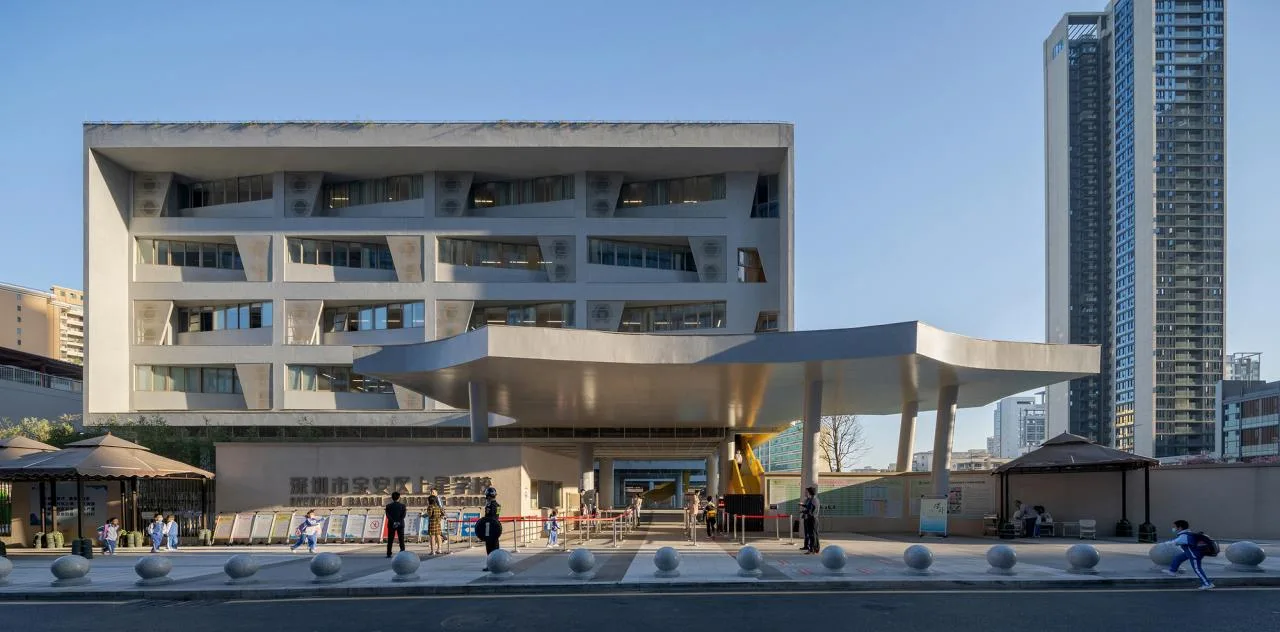
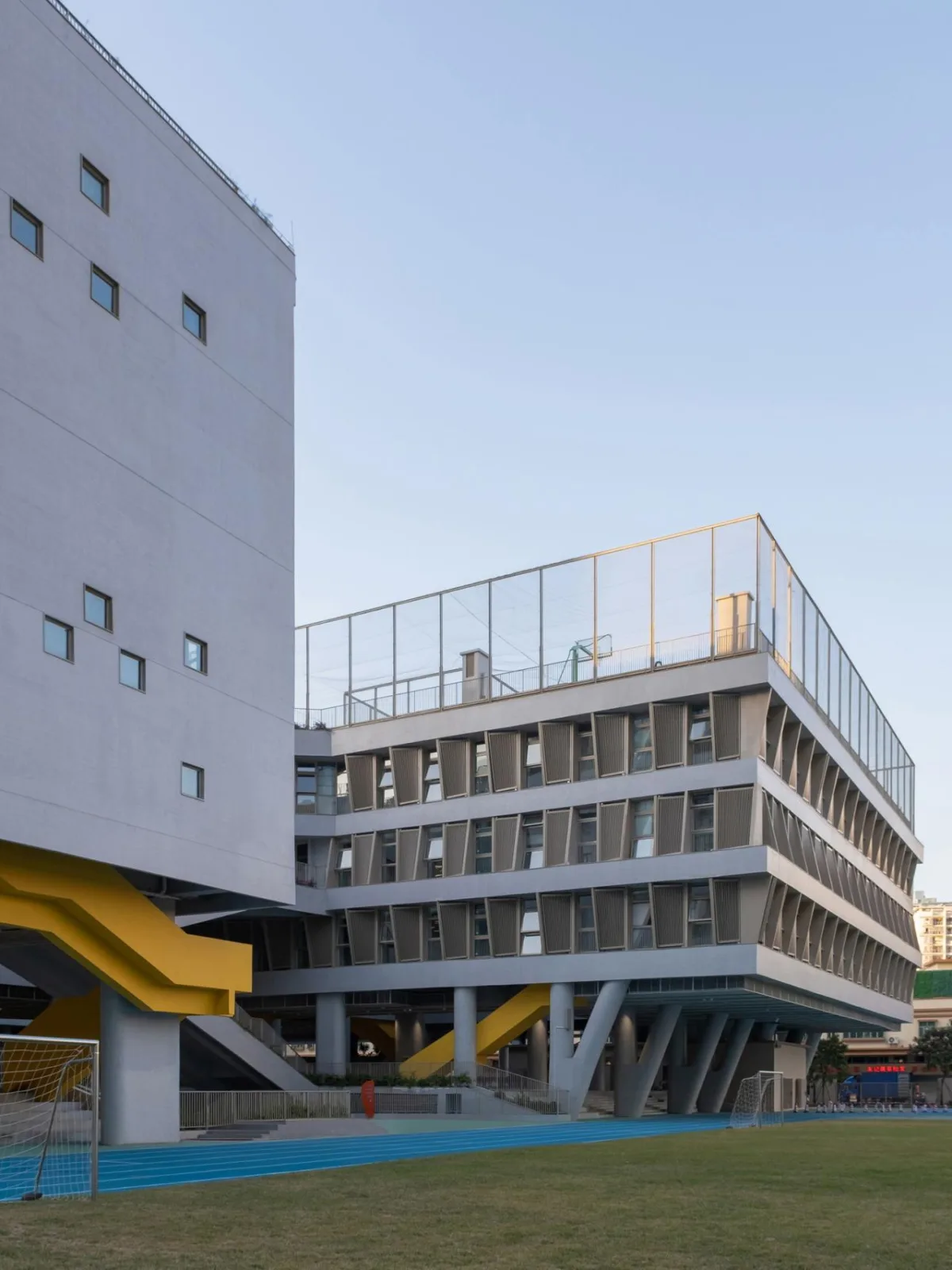
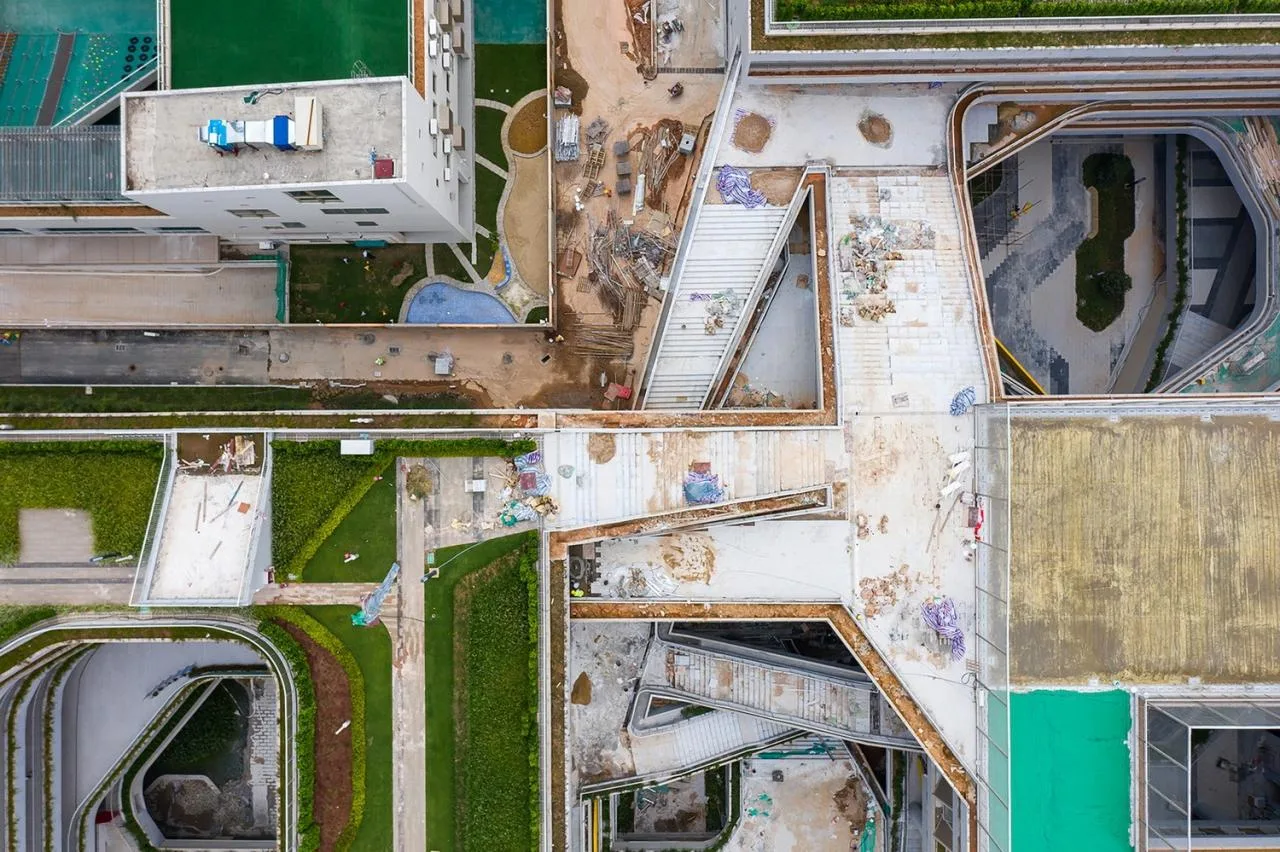
Maximizing the number of sports fields is not simply a matter of expanding building footprint in a high-density campus; it requires effectively combining spaces of various sizes and functions. The ongoing campus expansion and innovative teaching models demand more sports venues, raising the complexity of design while the available land shrinks. Traditional layouts that place sports fields flat on the ground are no longer viable. Therefore, we focused on utilizing the rooftop as an additional “ground” level.
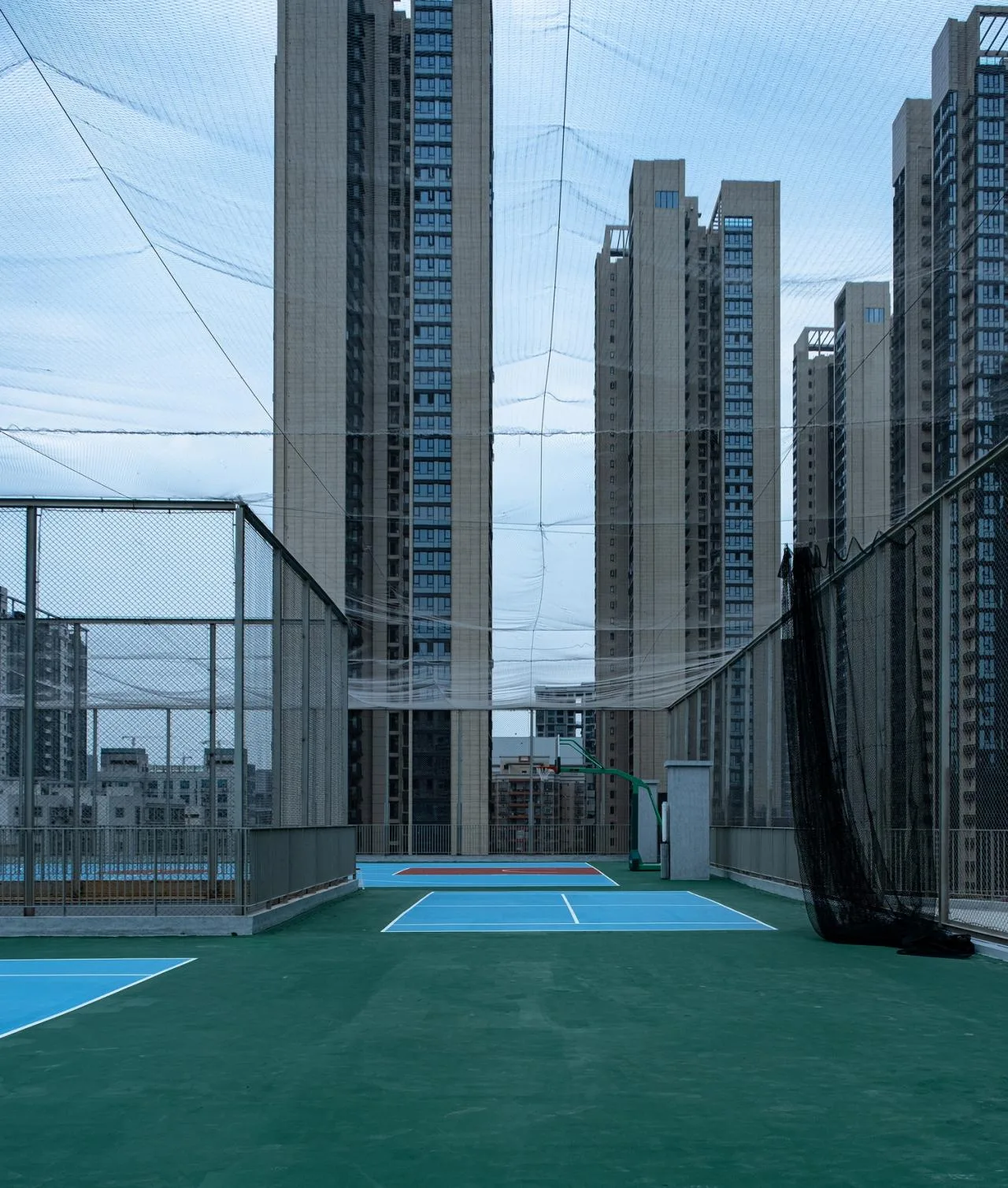
To address the size and noise concerns of rooftop sports fields, we placed the sports field atop the comprehensive service center, which also houses the dormitory. The dormitory design features inner corridors with overhanging roofs on both sides, providing a large floor area that reduces noise impact on teaching zones. The building is suspended 3 to 9 meters on the east side, partially overlapping the playground in the overall site plan. This arrangement satisfies the requirement for a 250-meter playground on the first floor while maximizing floor space on the upper levels.
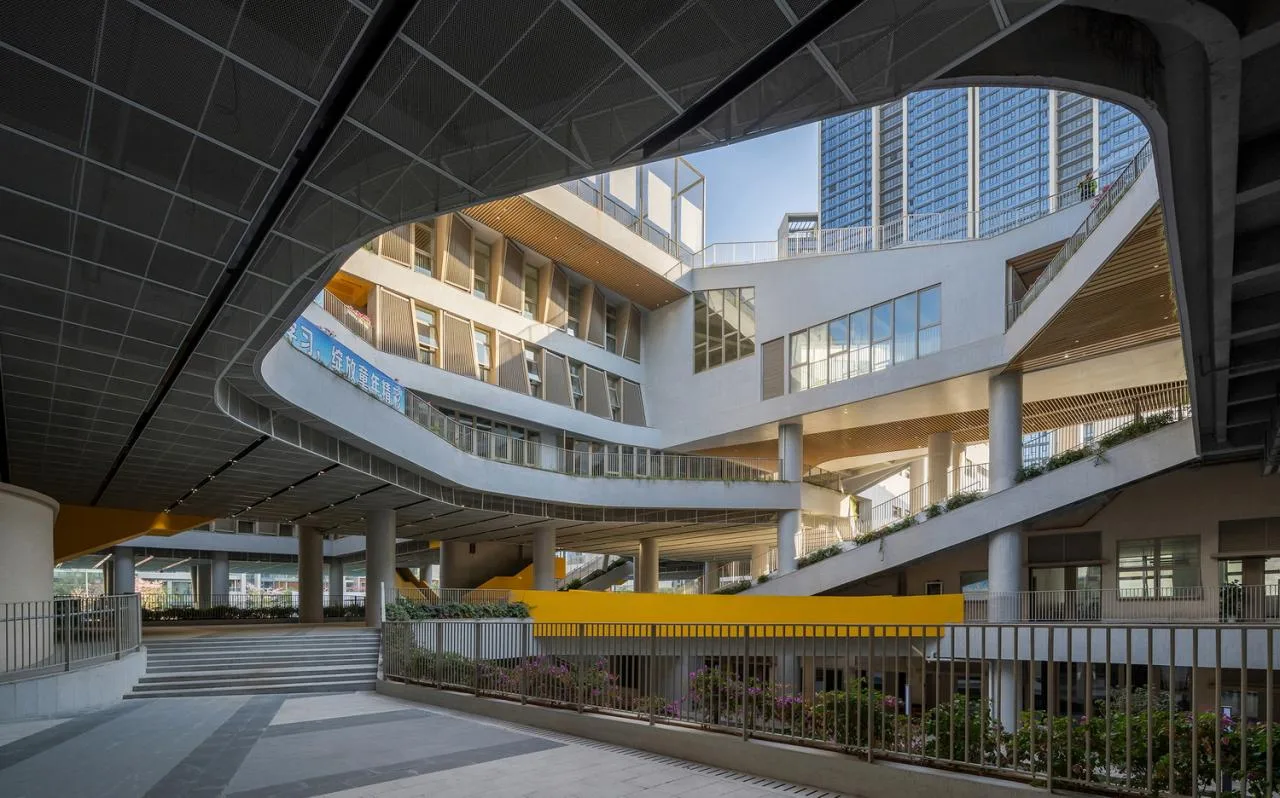
Multi-level, Accessible, Daily Activity Spaces
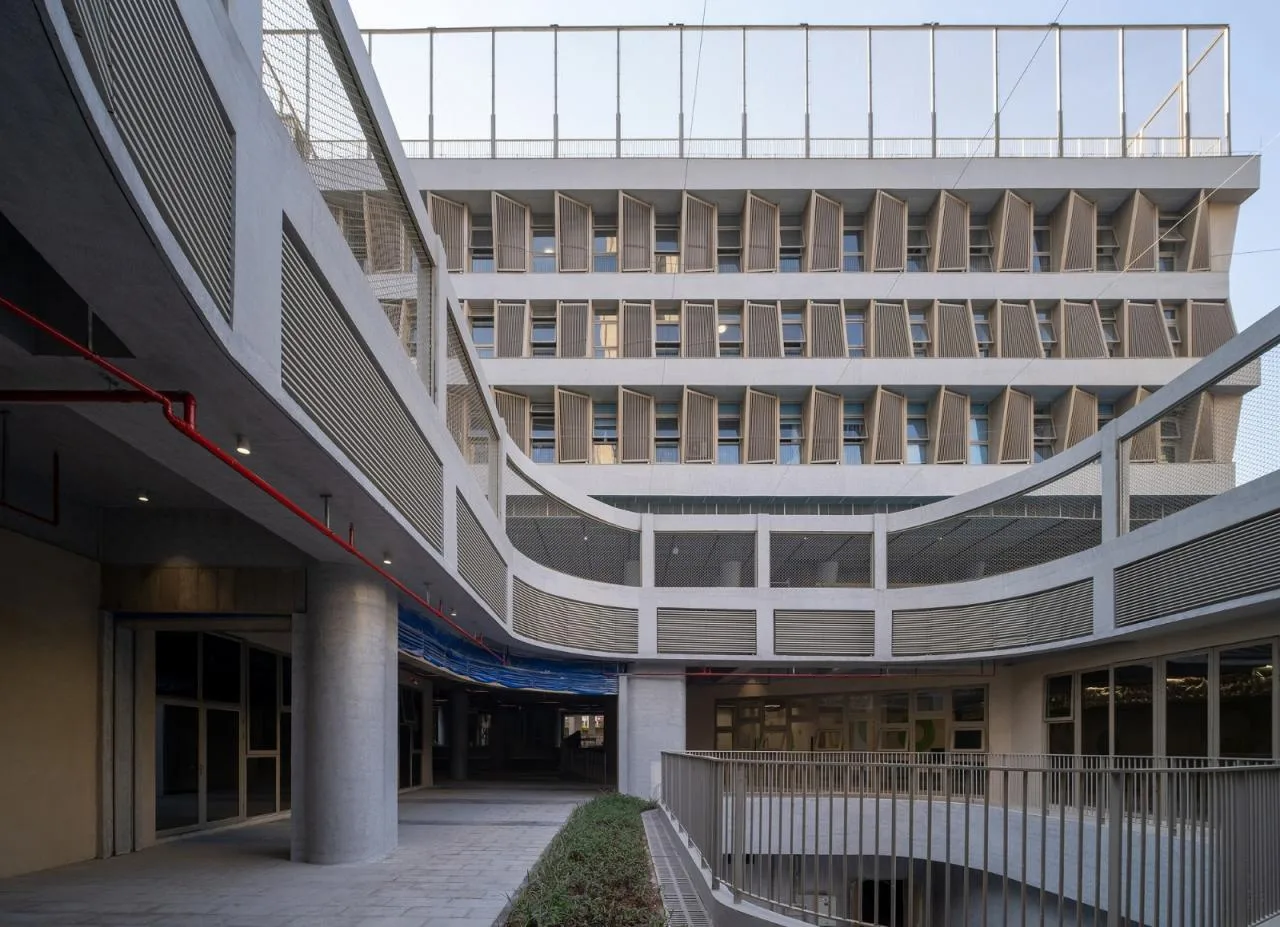
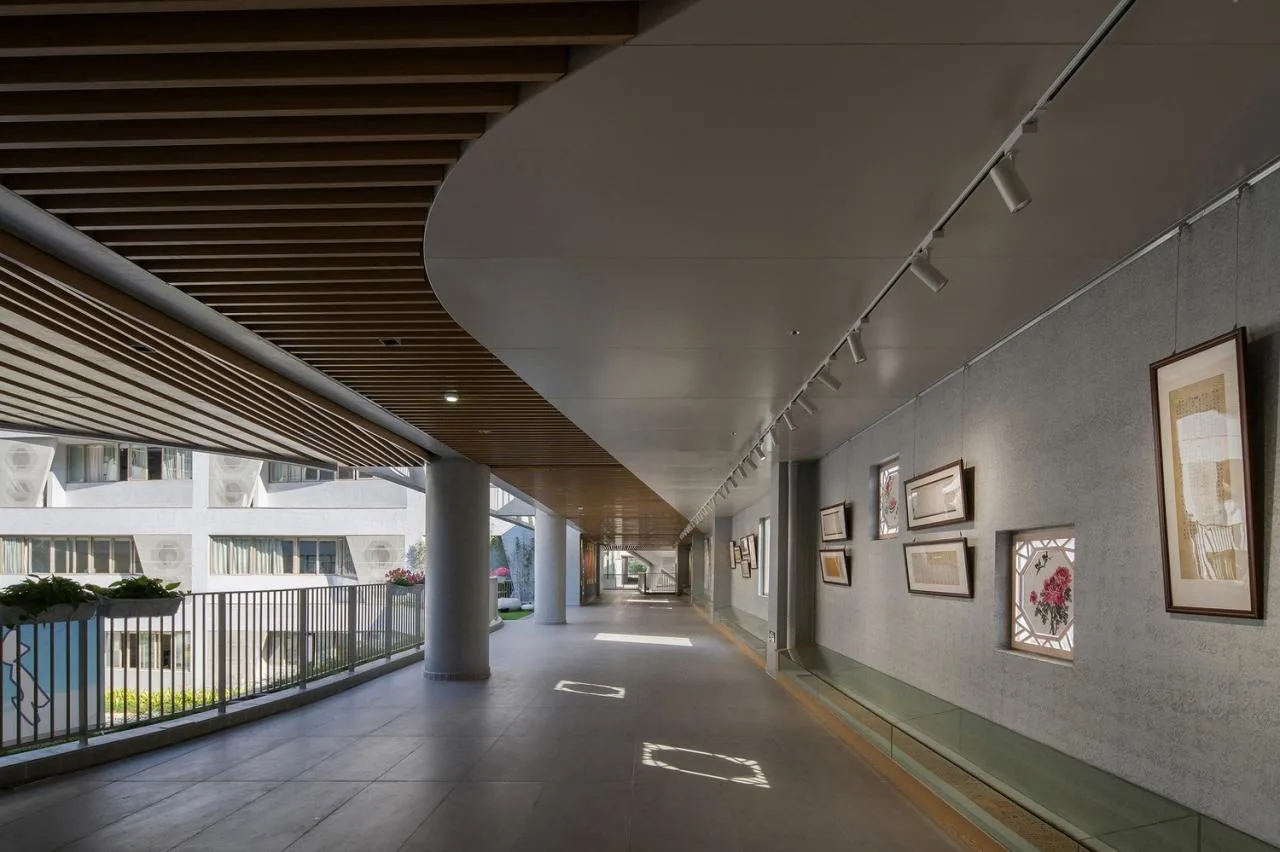
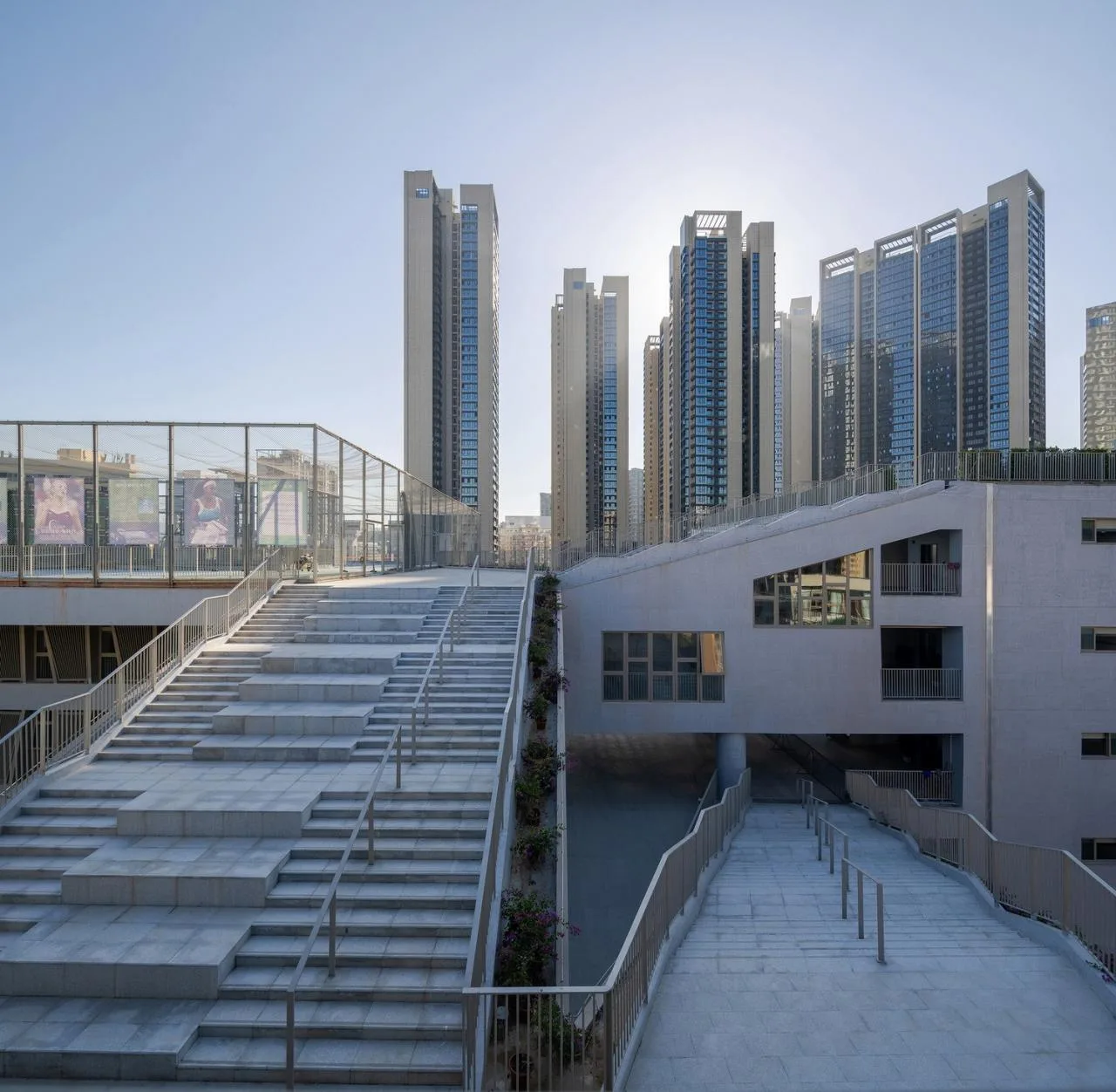
By expanding traditional corridors into larger platforms, we created a multi-level activity platform system. These spaces offer students nearby outdoor rest areas during breaks and serve as flexible venues for interactive teaching. Additionally, the roof of the semi-underground sheltered playground on the building’s west side naturally forms a large activity platform for lower elementary grades.
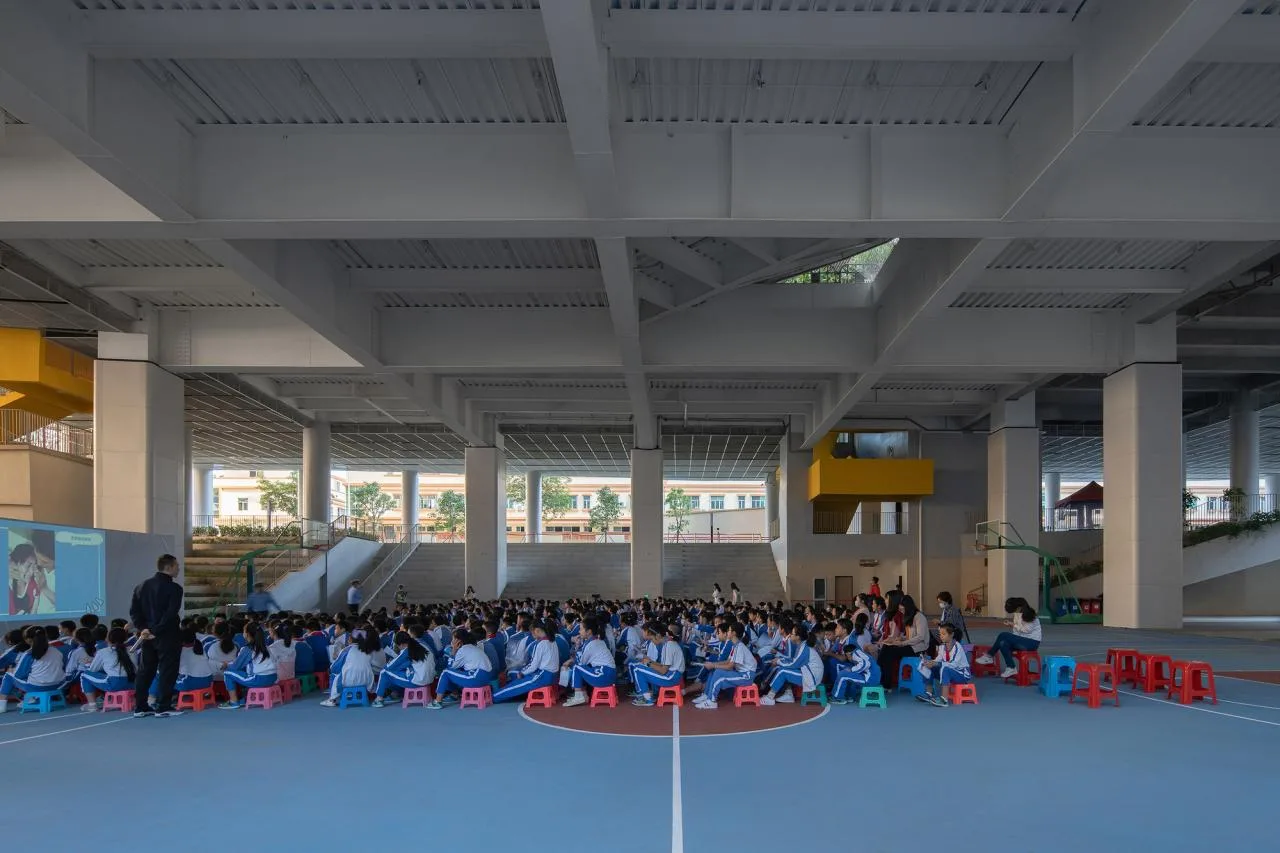
The elevated first floors float above the site, responding to the urban environment below and providing sheltered activity spaces. To balance large-scale openness with a warm atmosphere, small structures 3-4 meters tall were placed within the 6.3-meter-high elevated layer, creating a child-friendly environment within the expansive framework.
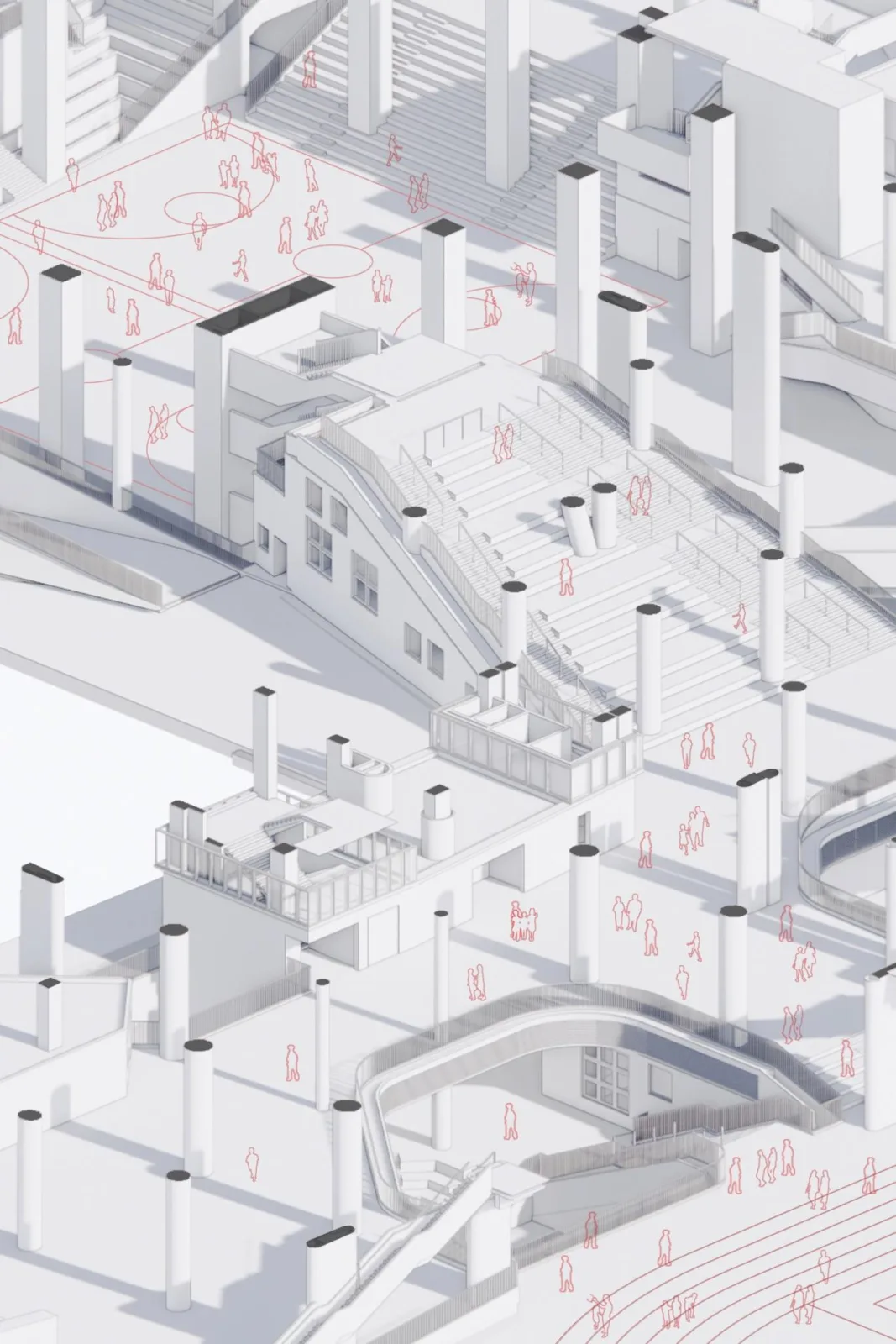
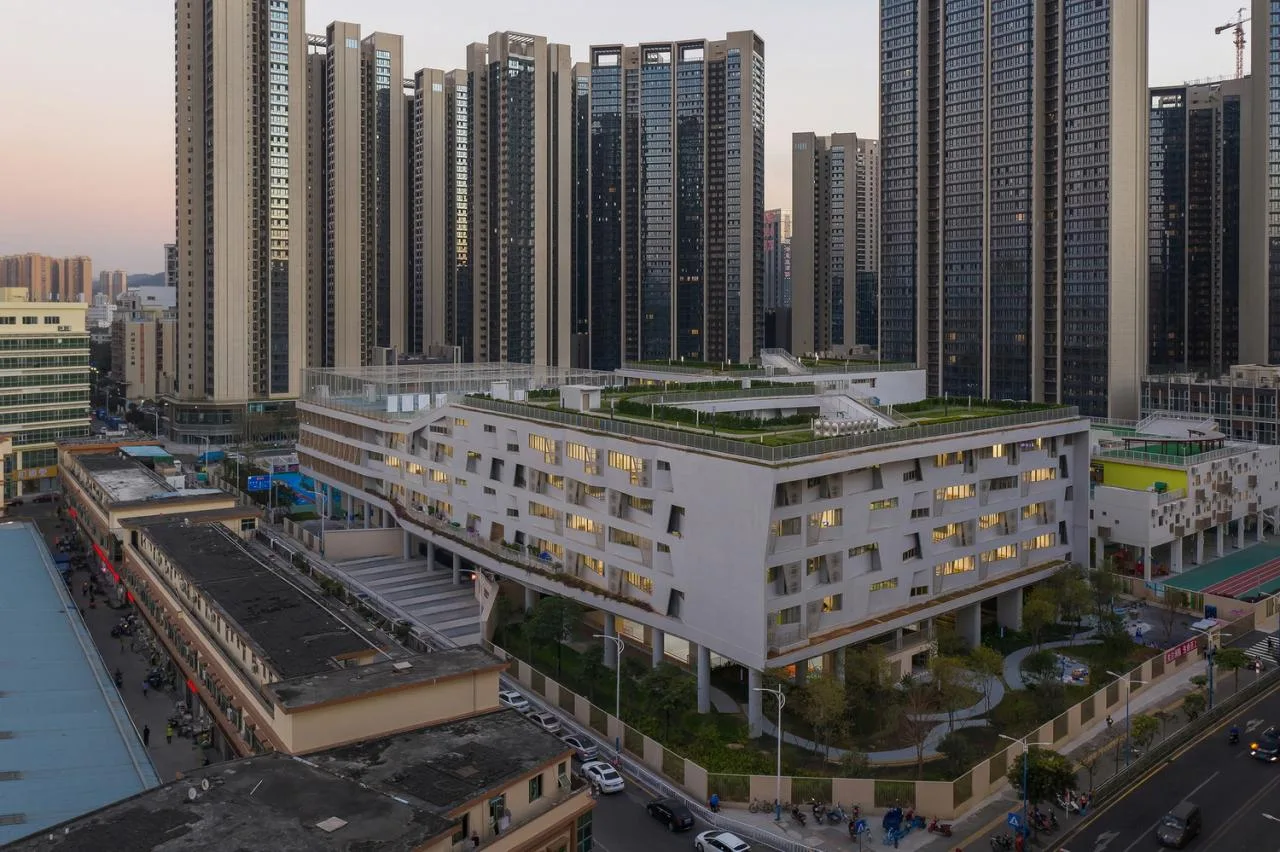
The client, valuing a porous spatial structure, insisted on placing the playground at ground level so it remains visible from the street — a demonstration of urban sharing consciousness. This contrasts with the then-popular approach of lifting playgrounds. Achieving this required efficiently organizing approximately 15,000 square meters of underground space while complying with lighting, ventilation, and fire safety standards.
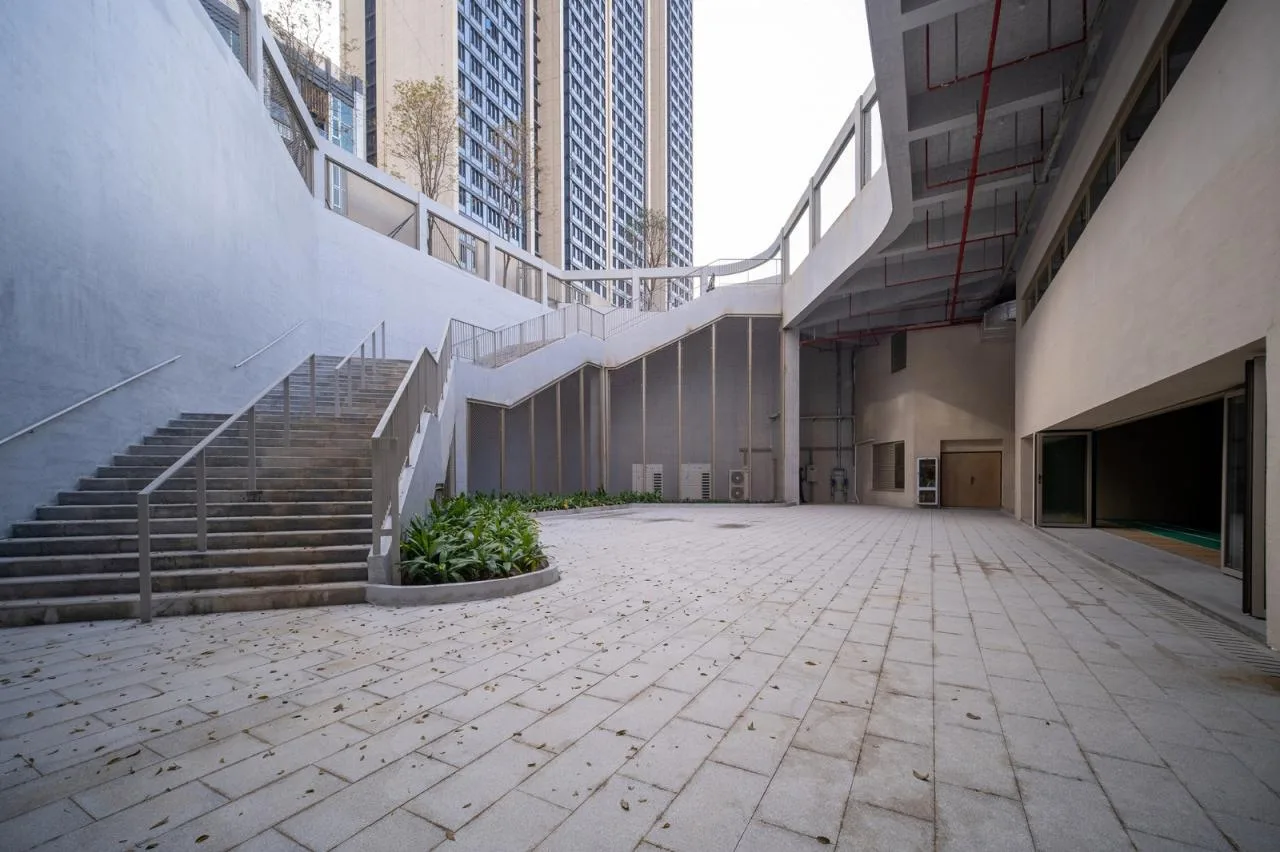
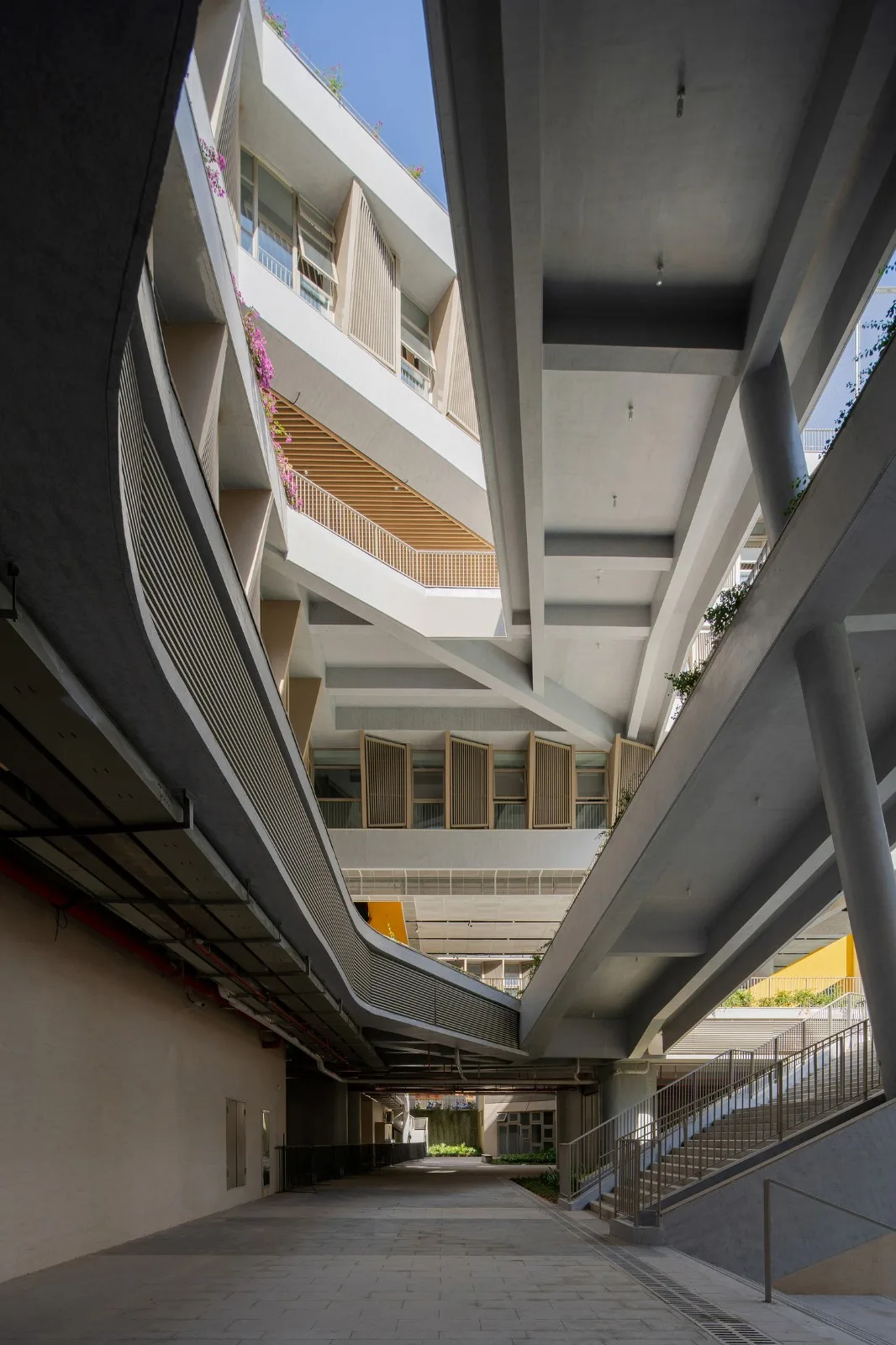
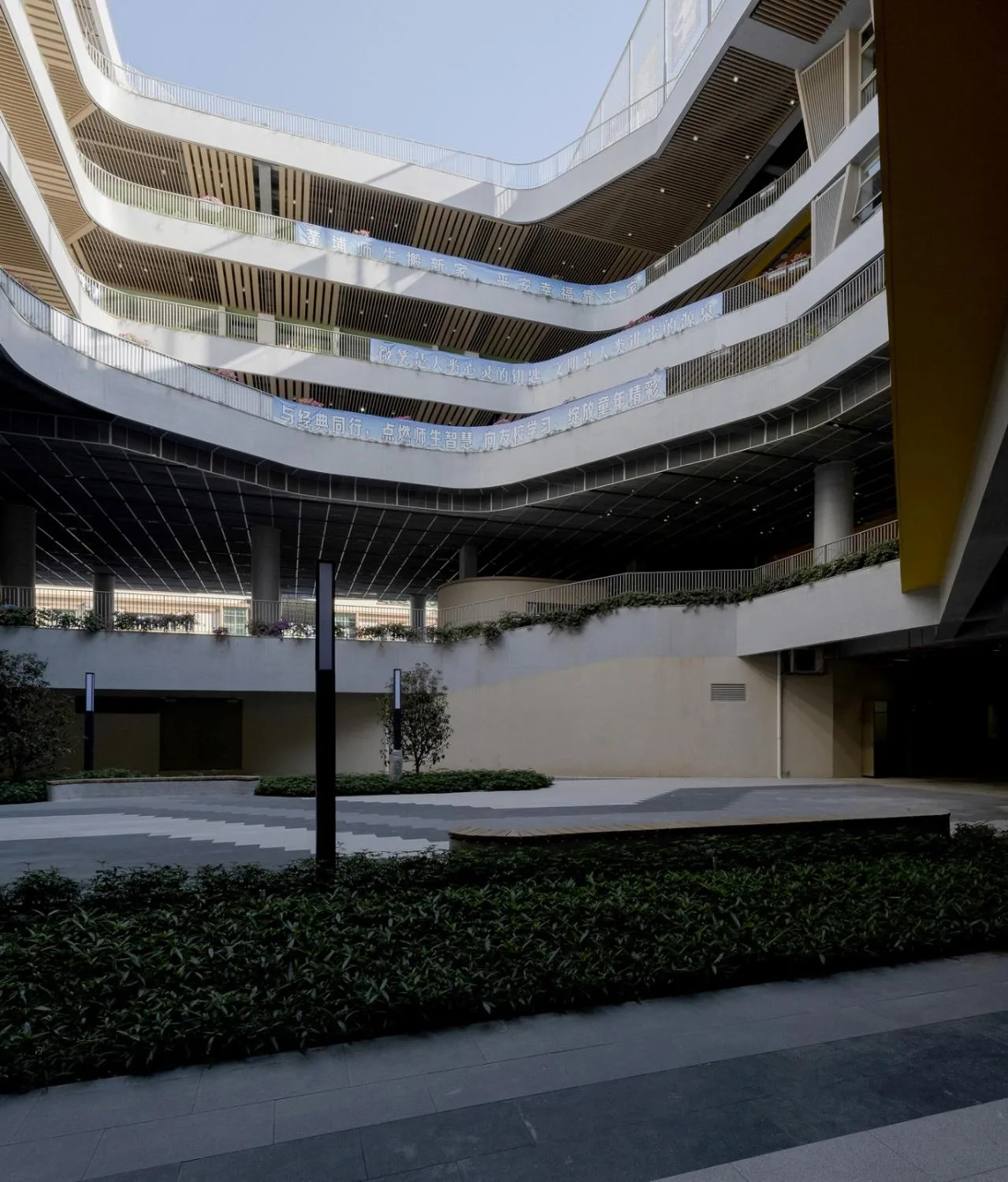
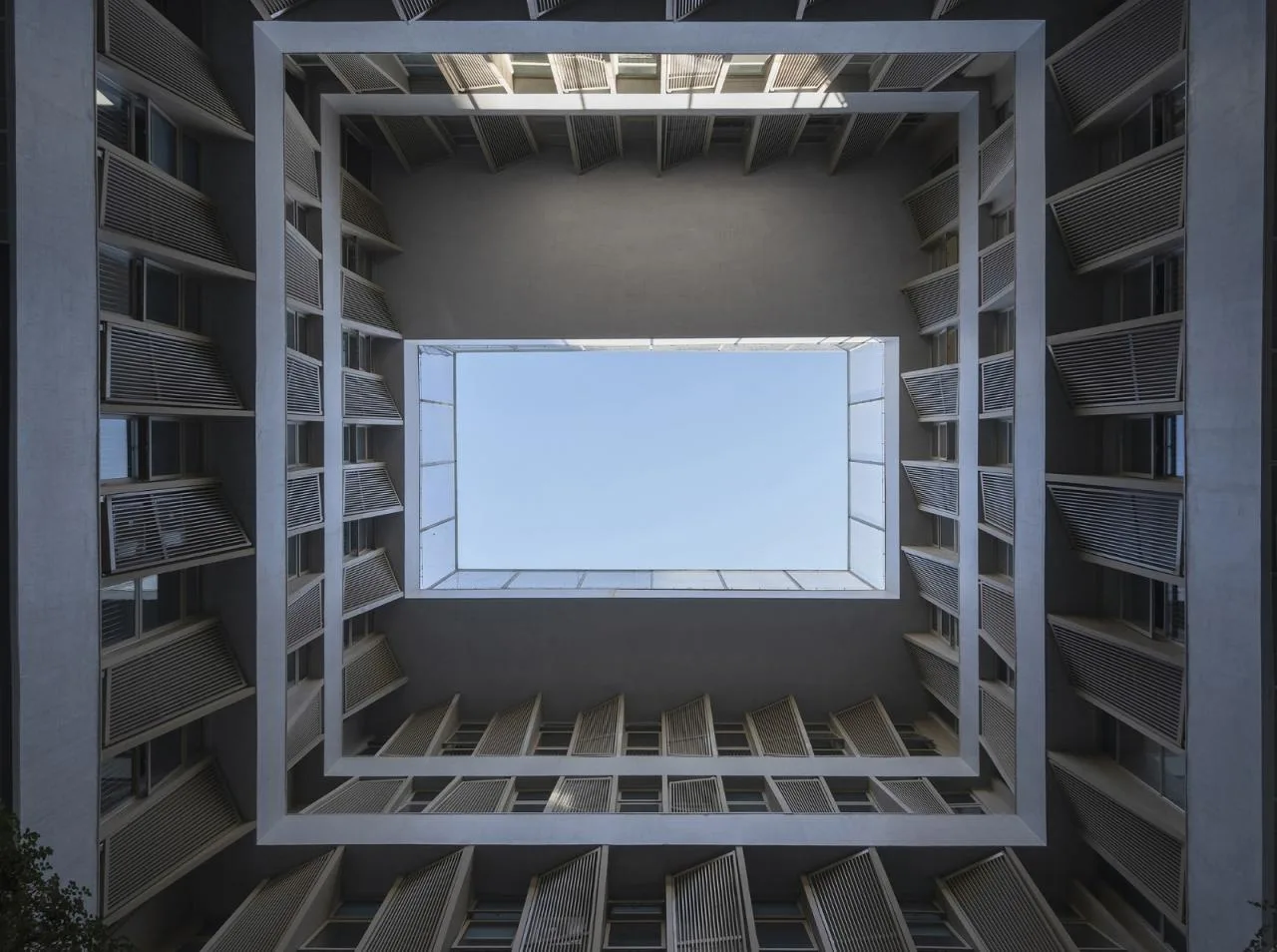
We employed a porous spatial design that allows light and air to permeate horizontally and vertically through overhead structures, courtyards, and light wells. This approach suits Shenzhen’s southern climate and provides safe evacuation routes for emergencies. Consequently, these underground spaces maintain a quality comparable to above-ground areas.

Odyssey System
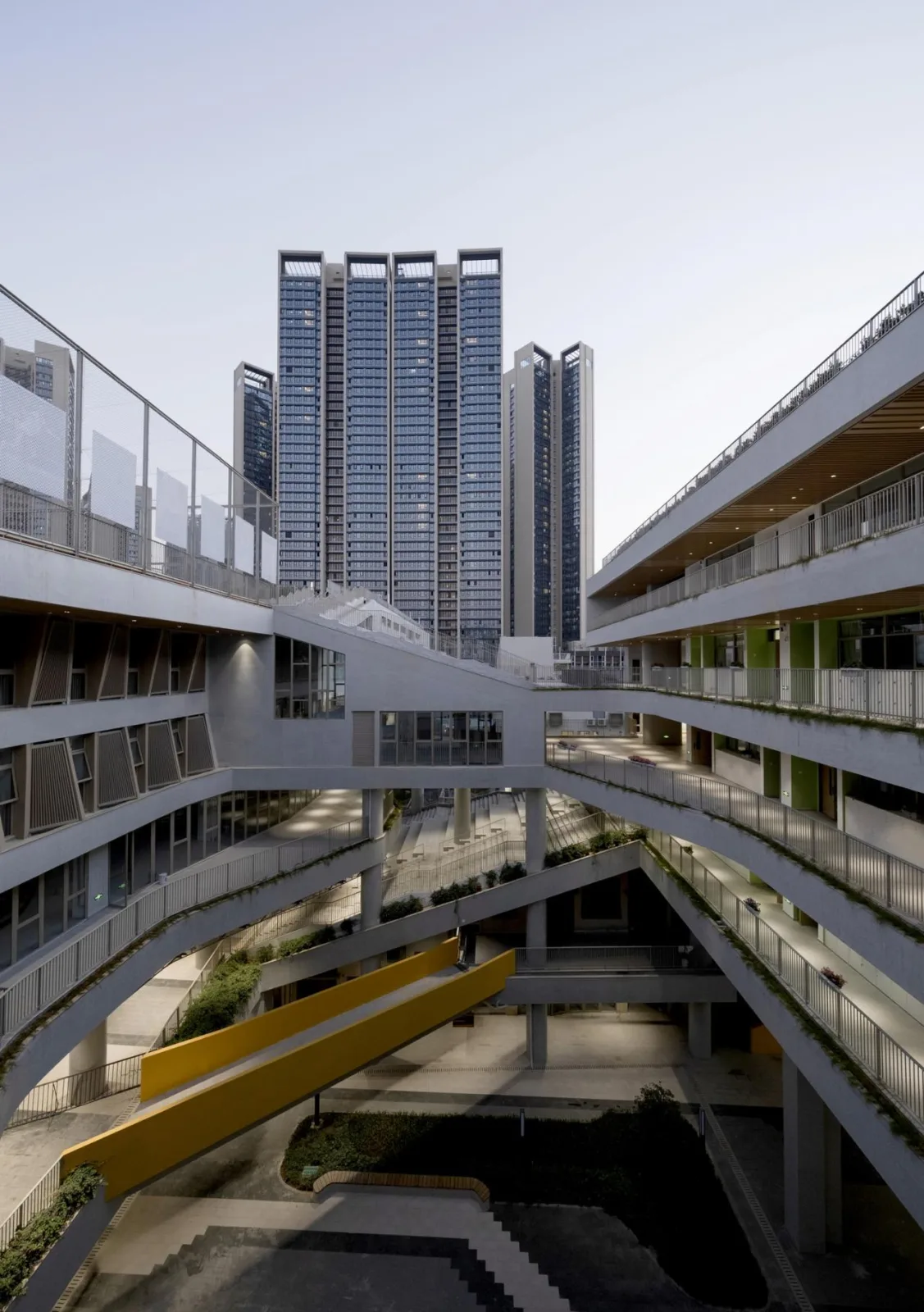
As an innovative circulation system, the Odyssey System introduces a heterogeneous element into the otherwise conventional transportation network. It not only facilitates connections between public functions but also creates a new spatial atmosphere, inspiring new paths and giving the campus a dynamic roaming experience.
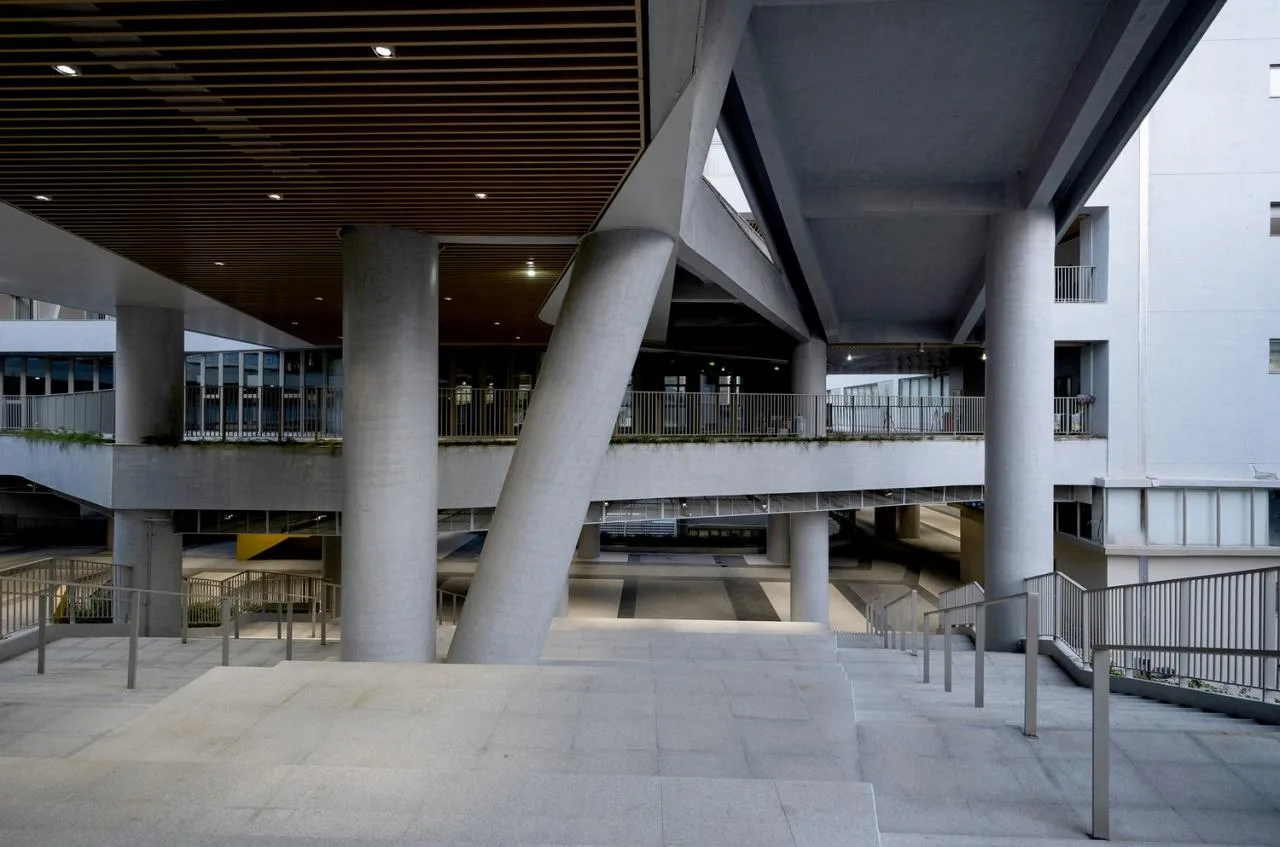
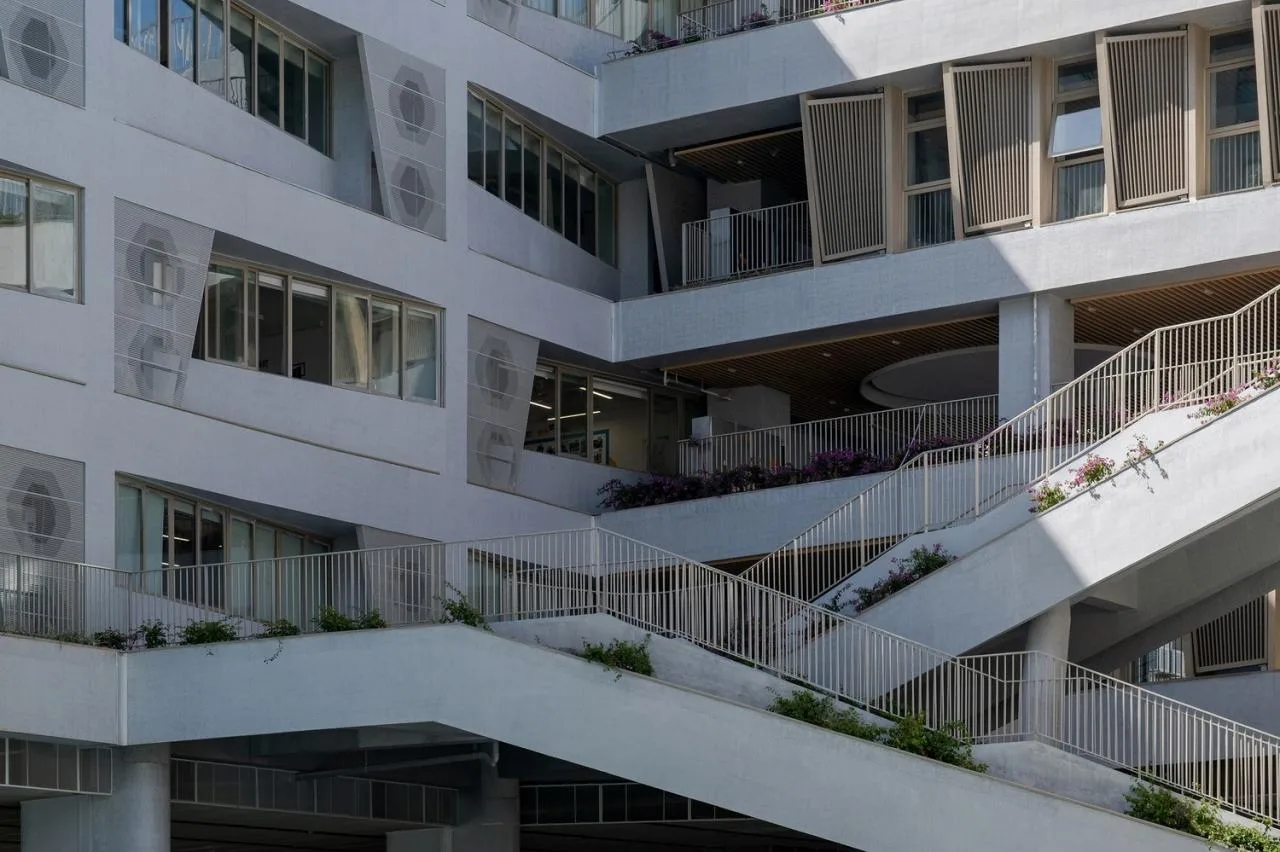
Centered geometrically on the ground-level comprehensive service center, this continuous outdoor path is established via enlarged outdoor stairs, rooftops, and covered walkways. It connects vibrant areas across multiple elevations—including the cafeteria, playground, library, rooftop stadium, and rooftop garden—from the basement to the fifth floor.
“Blank Space”
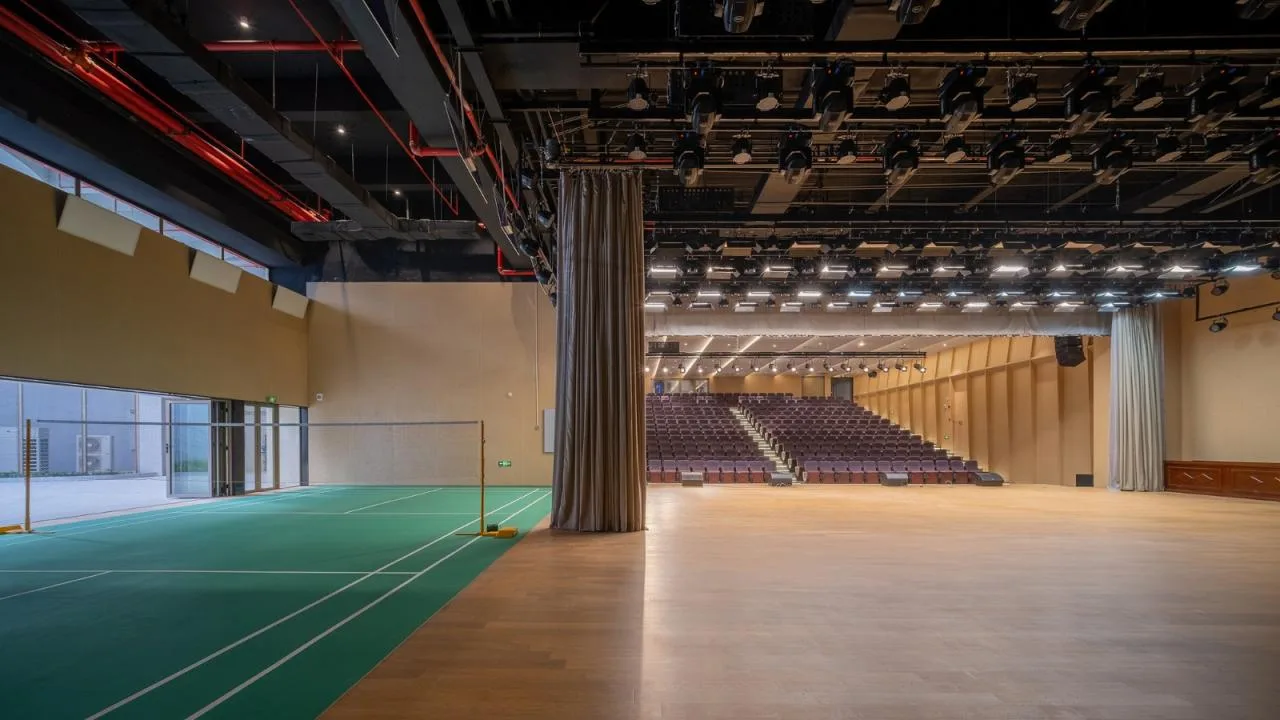
The multifunctional spaces within the school continuously evolve to meet changing needs. Designers provide flexible areas that allow for future adaptation and enable users to participate actively in enhancing campus functions. These spaces serve multiple purposes: corridors and galleries; grand staircases and rest platforms; outdoor classrooms and dance areas; side stages for auditoriums and badminton courts. After the school opened, these “blank spaces” quietly transformed into versatile, meaningful places.
Conclusion: Shangxing School exemplifies a comprehensive design strategy. As Shenzhen continues to develop, similar or even higher-density campuses will become the norm. Various architectural techniques can achieve high plot ratio buildings, but our core focus remains on building quality—using architecture as a medium to enhance the personal experience of users.
Project Drawings
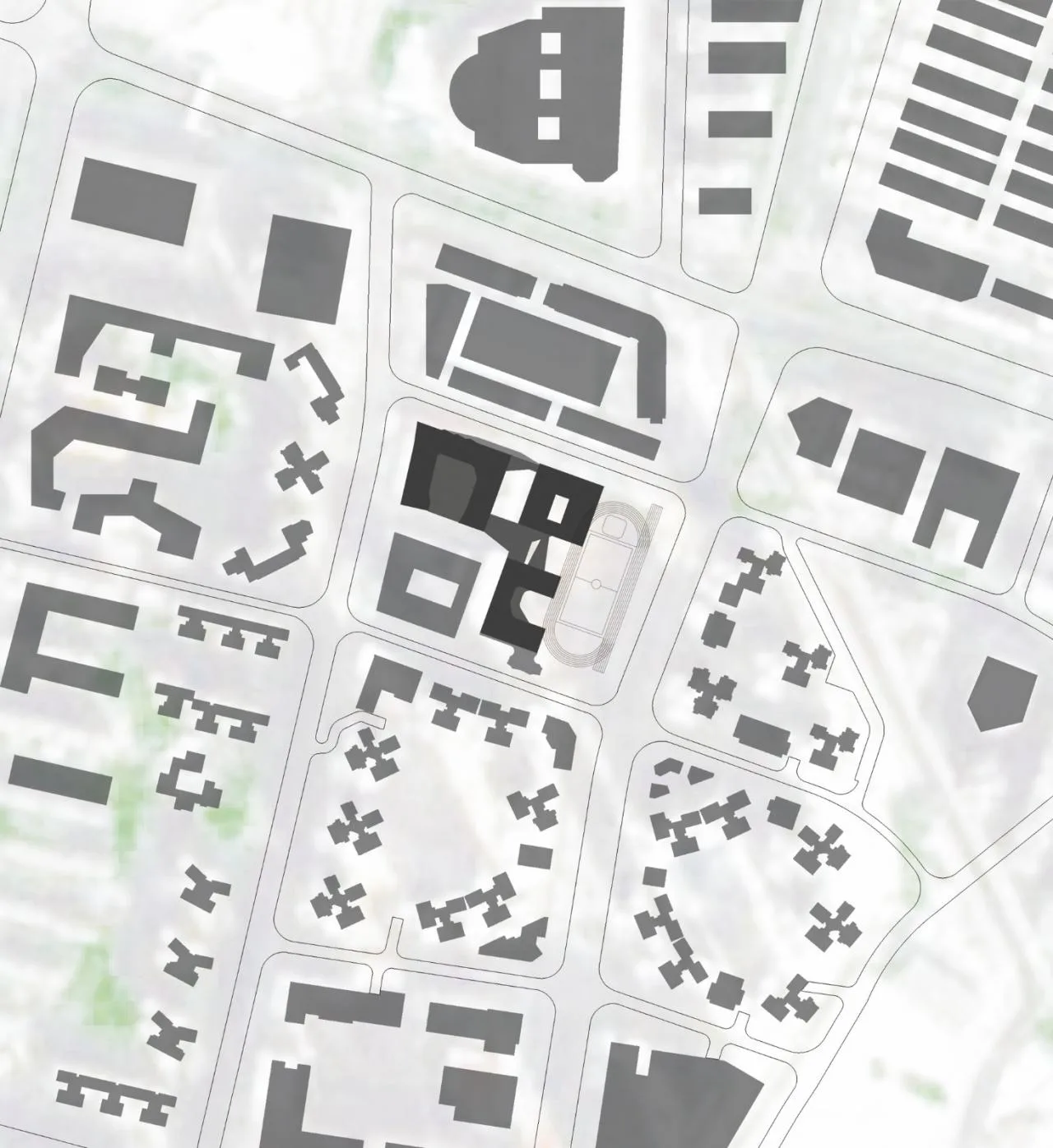
△ Block General Plan
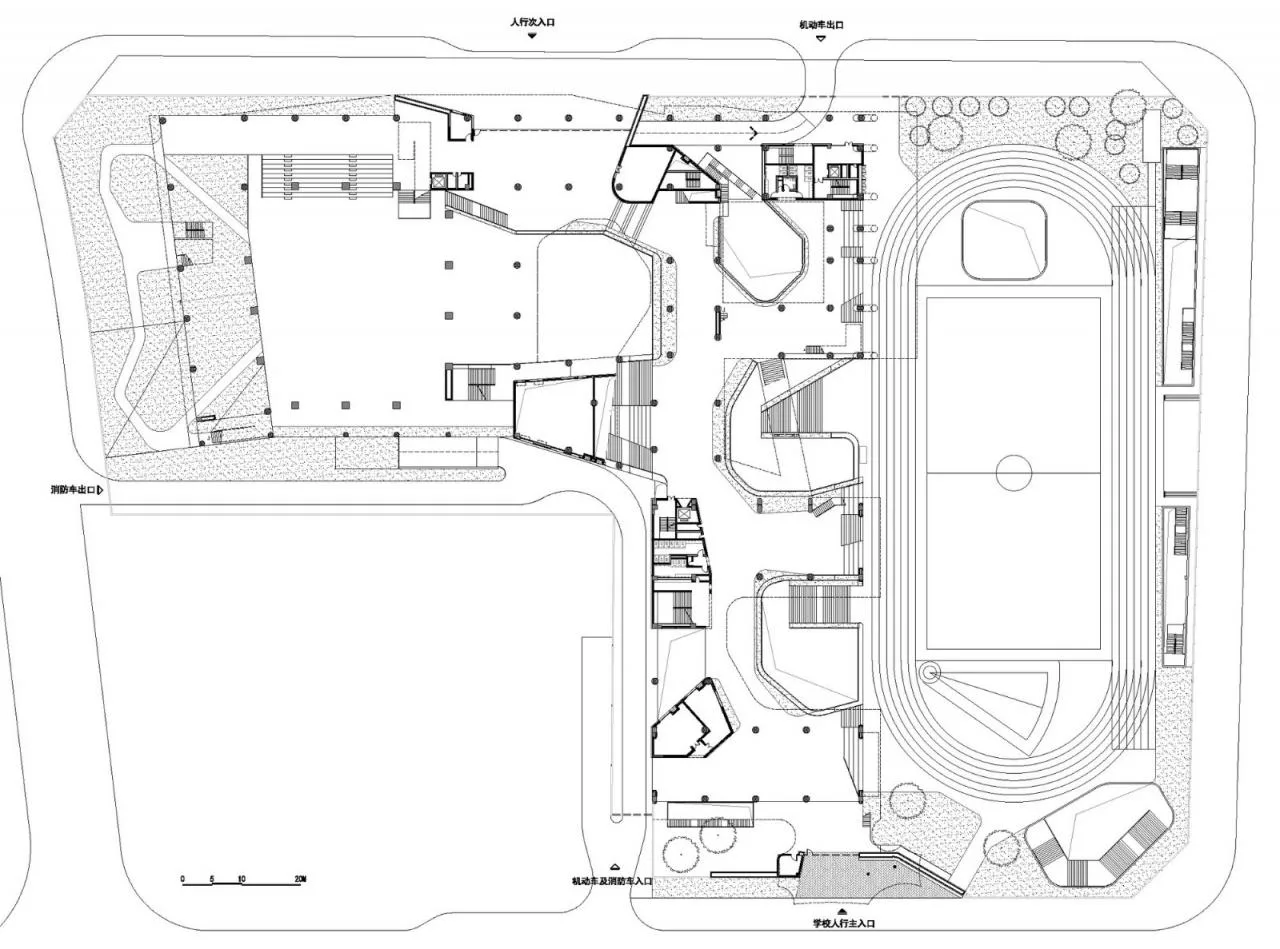
△ First Floor Plan
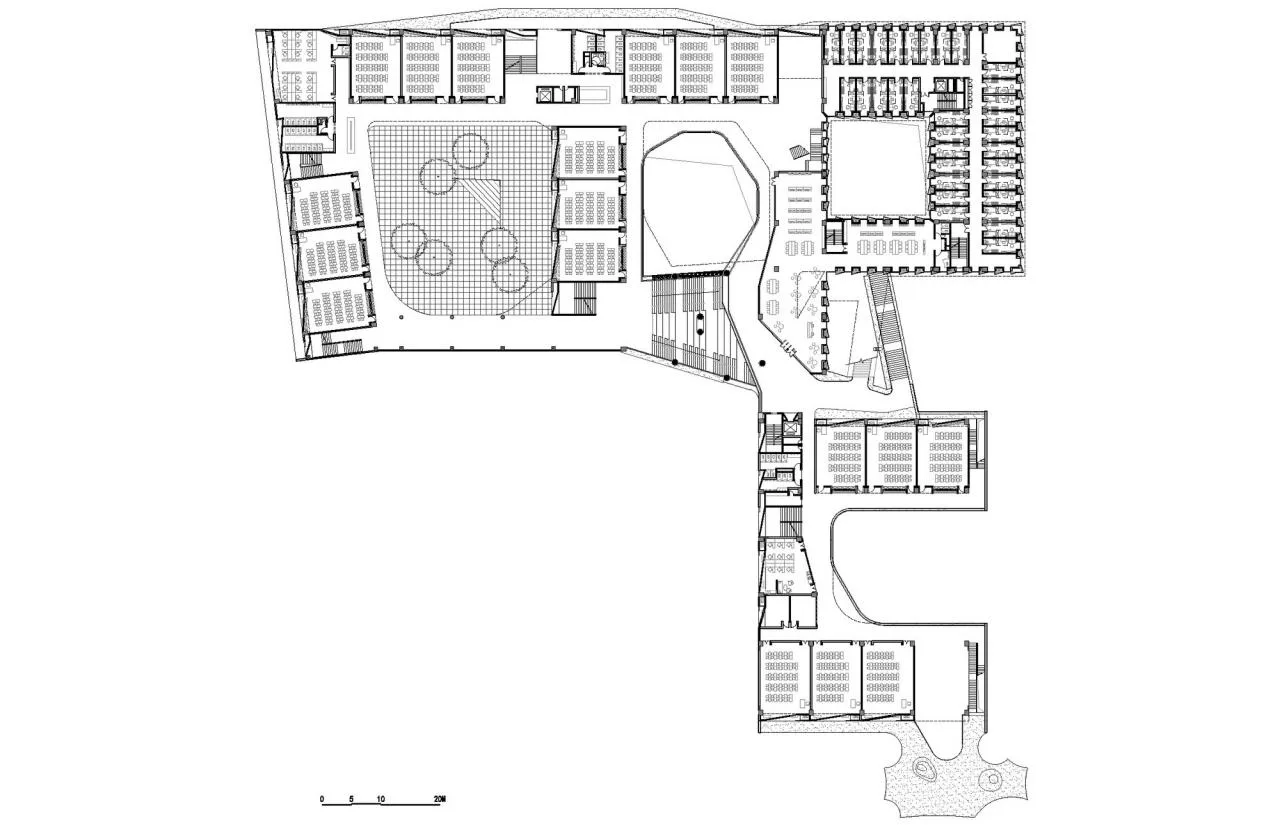
△ Second Floor Plan
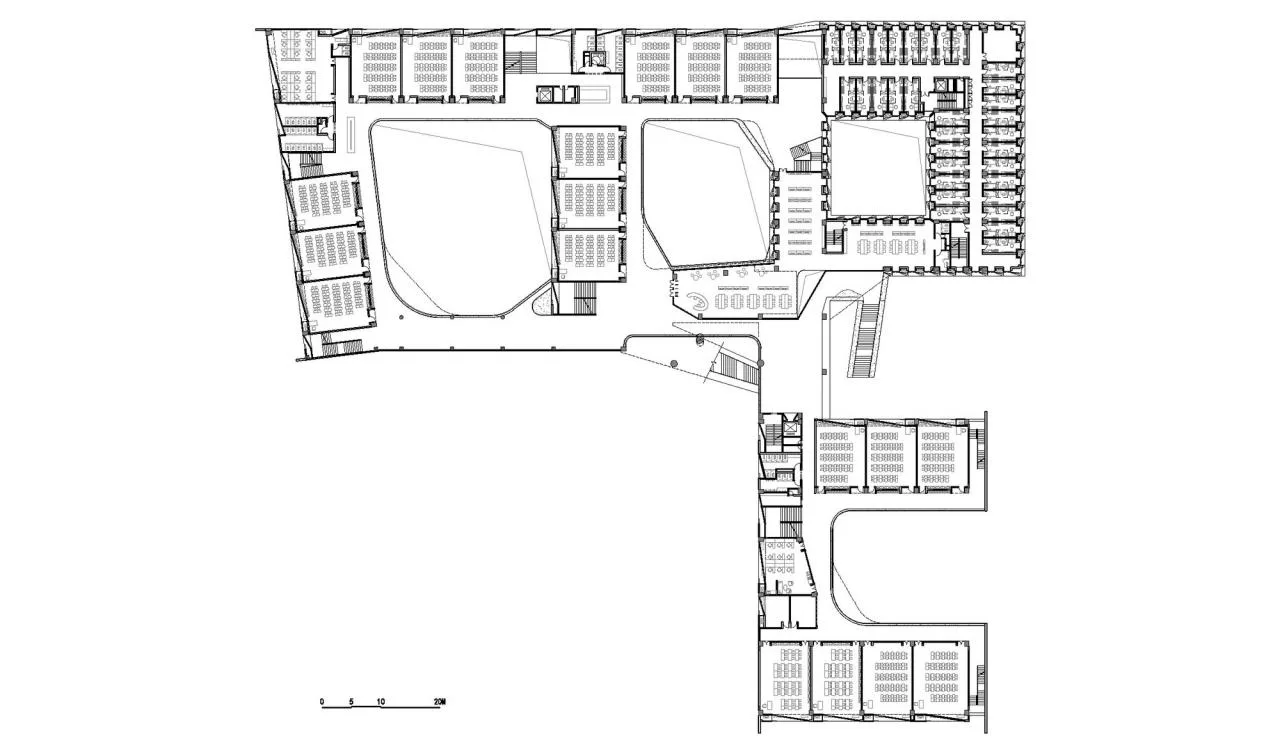
△ Third Floor Plan
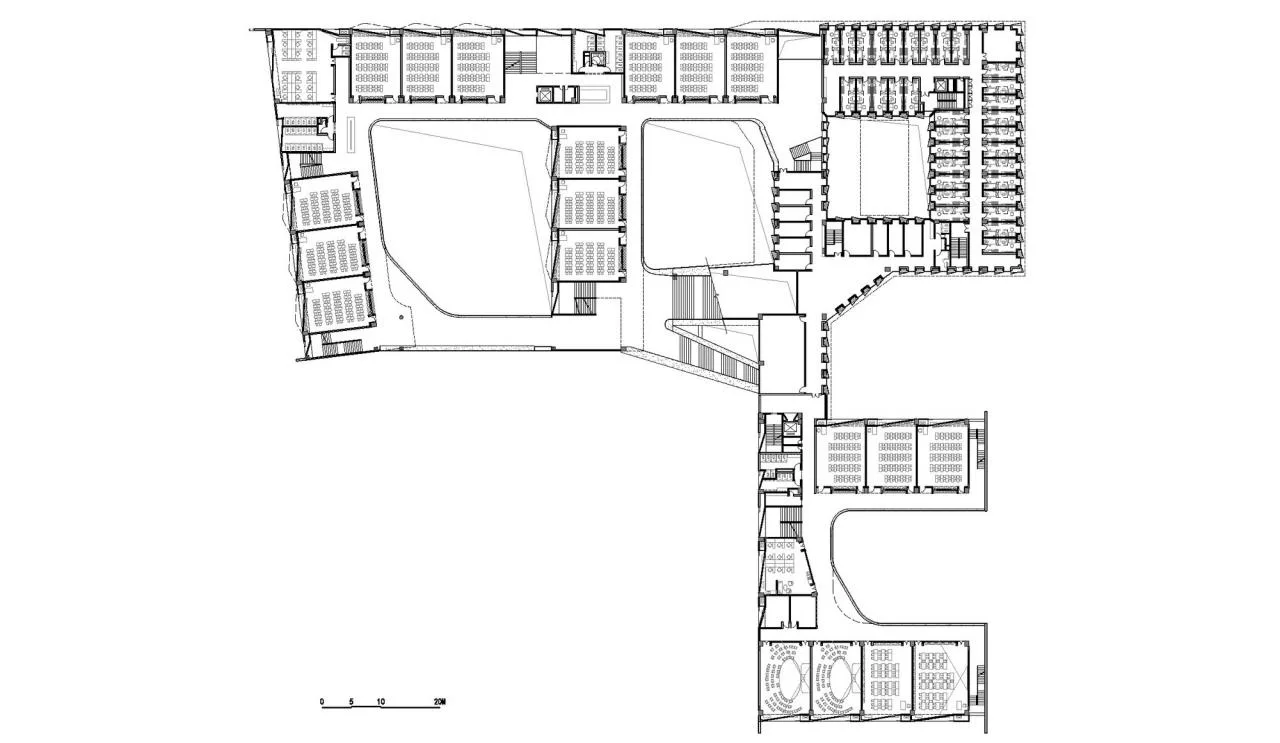
△ Fourth Floor Plan
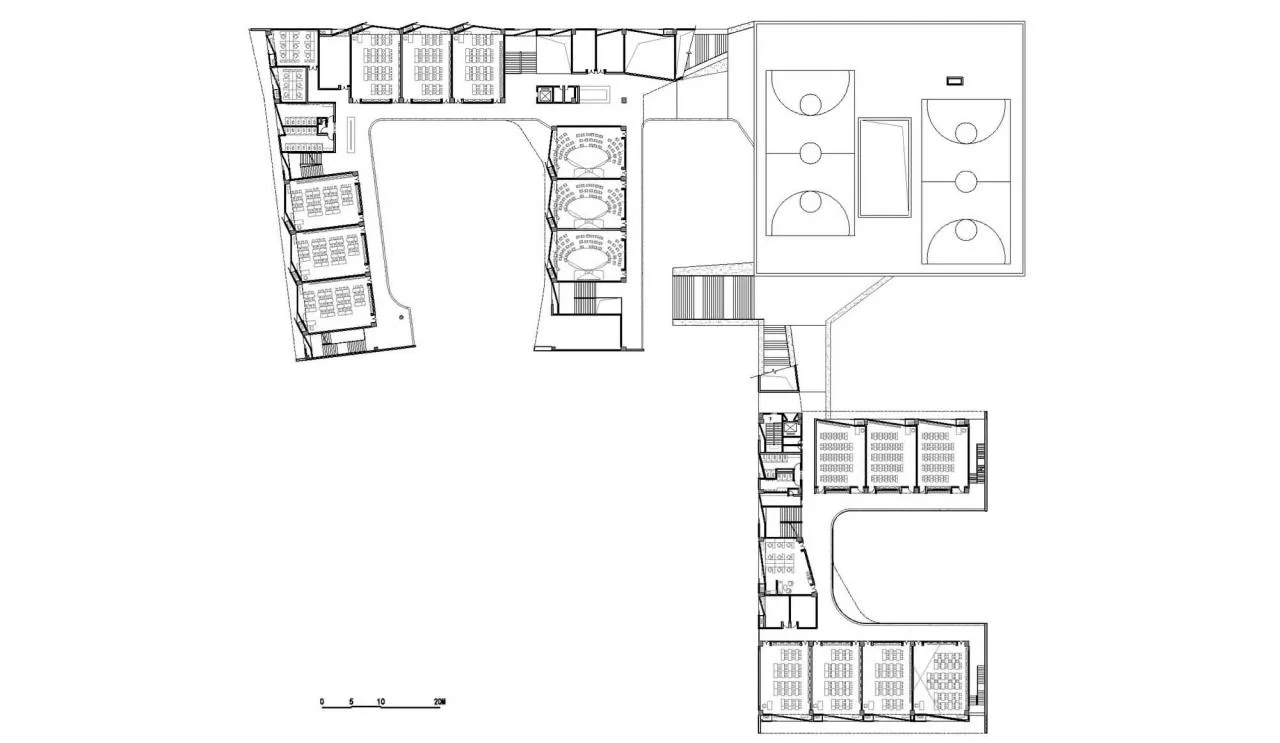
△ Fifth Floor Plan
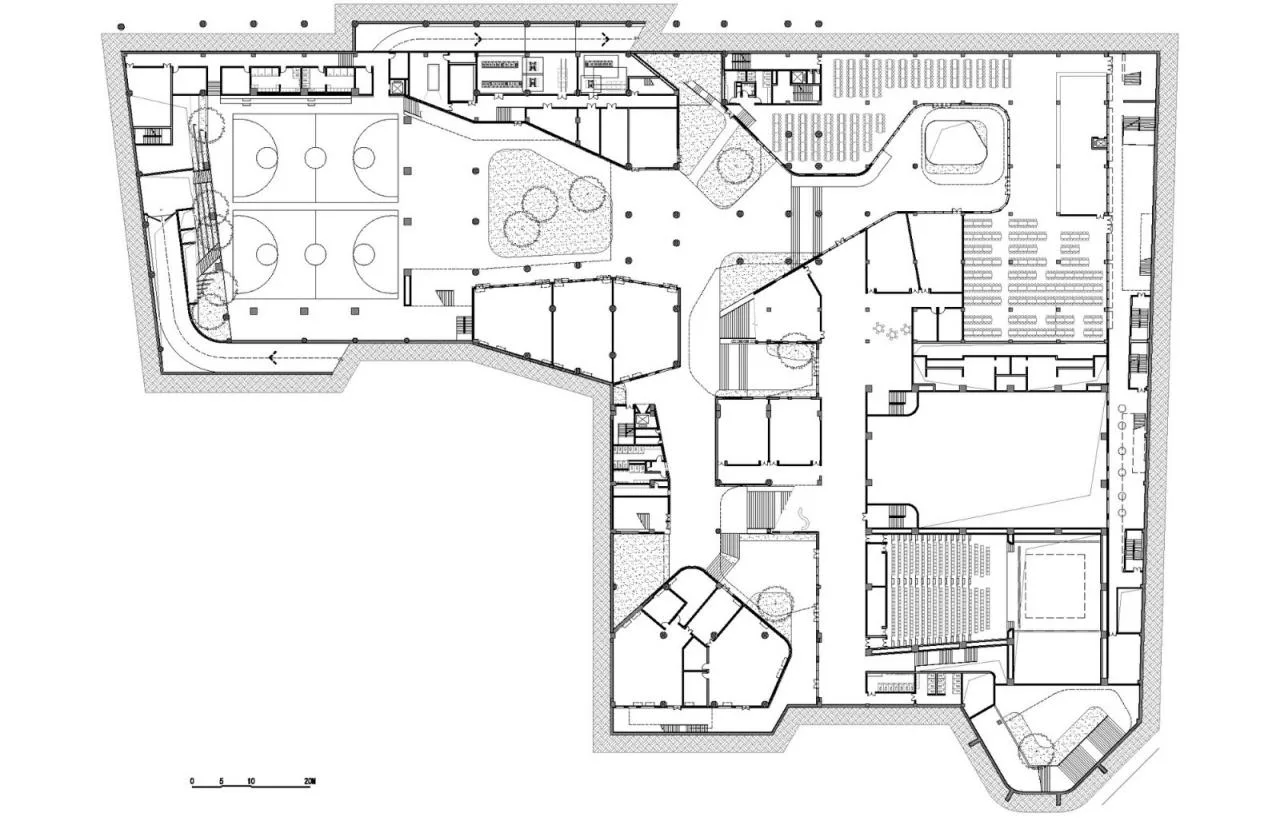
△ Negative Floor Plan
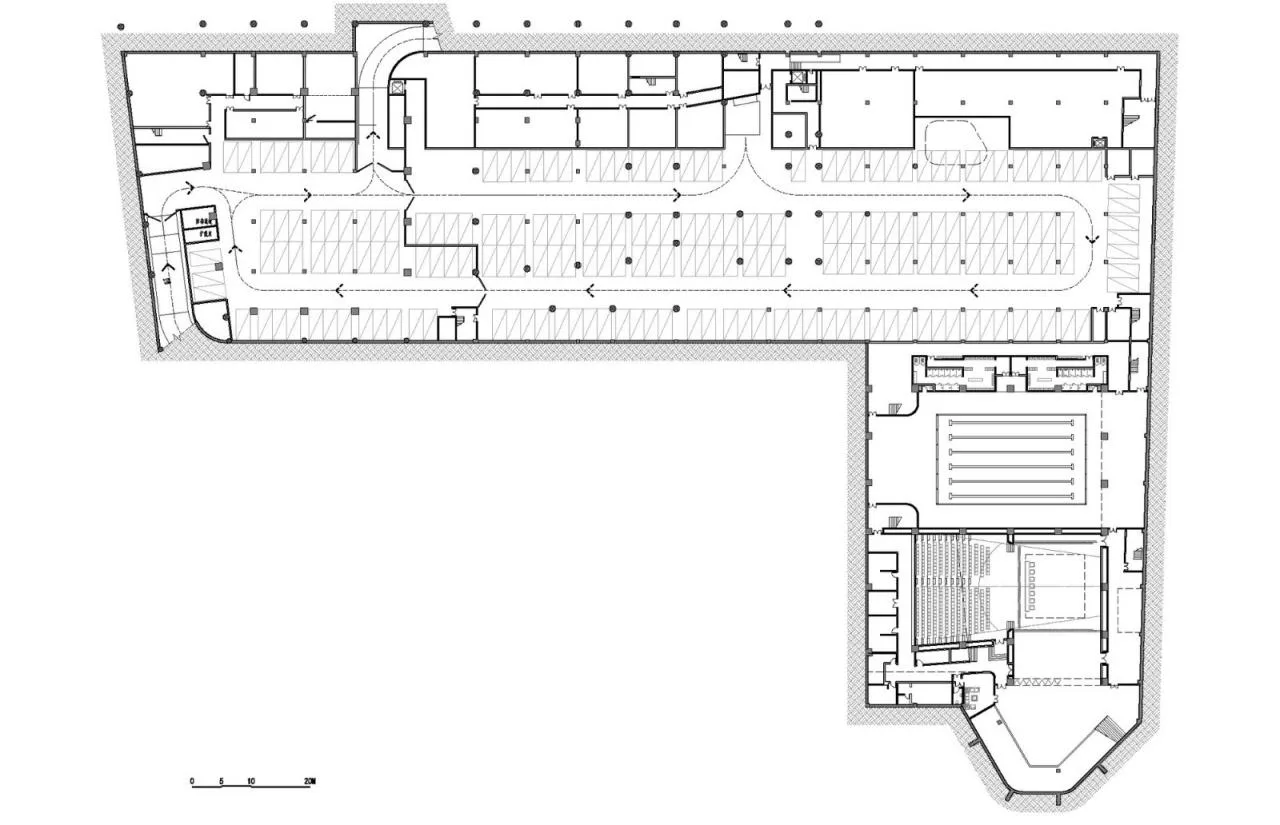
△ Negative Second Floor Plan
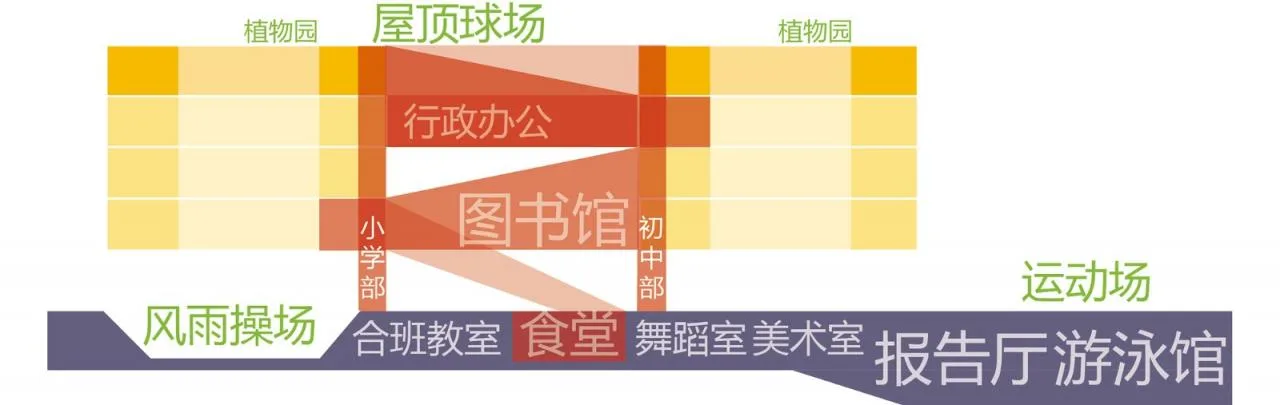
△ Conceptual Profile Diagram
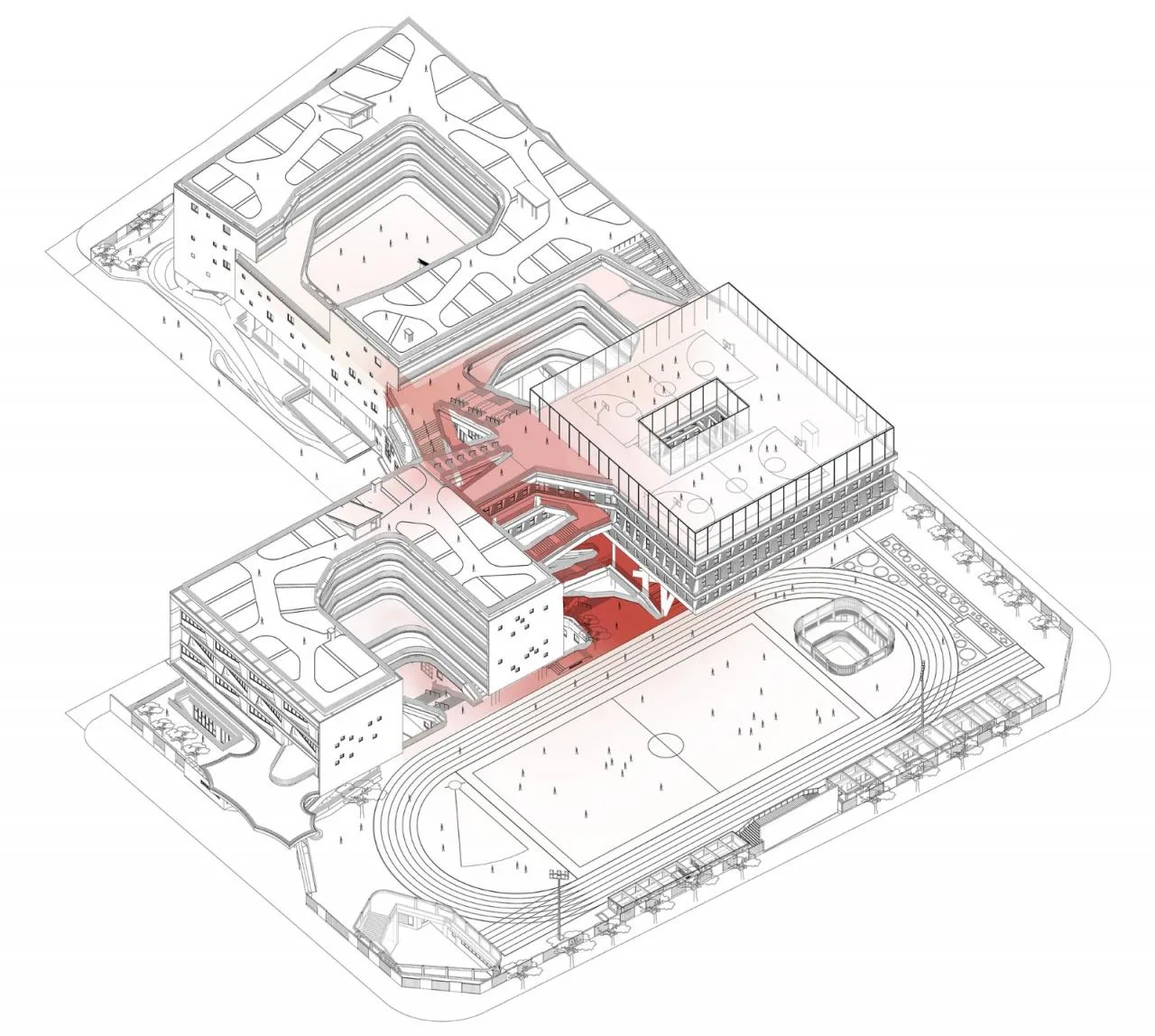
△ School Garden Tour Map
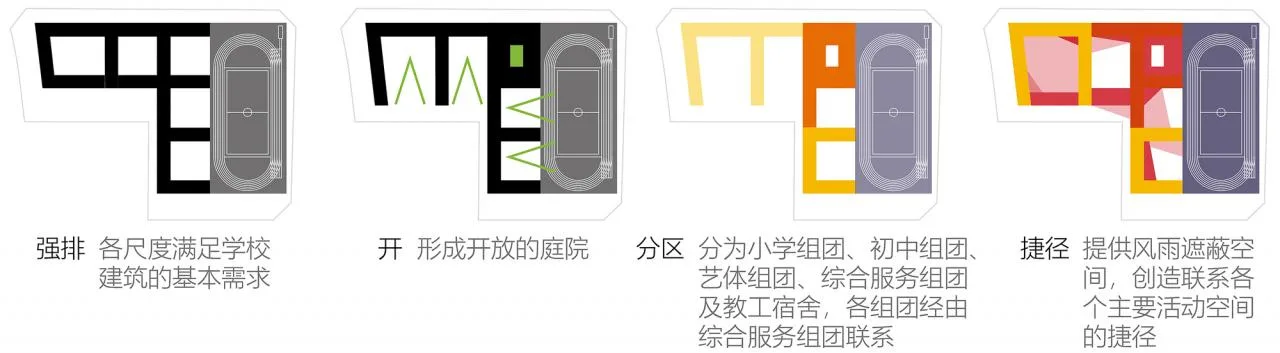
△ Design Generated Diagram
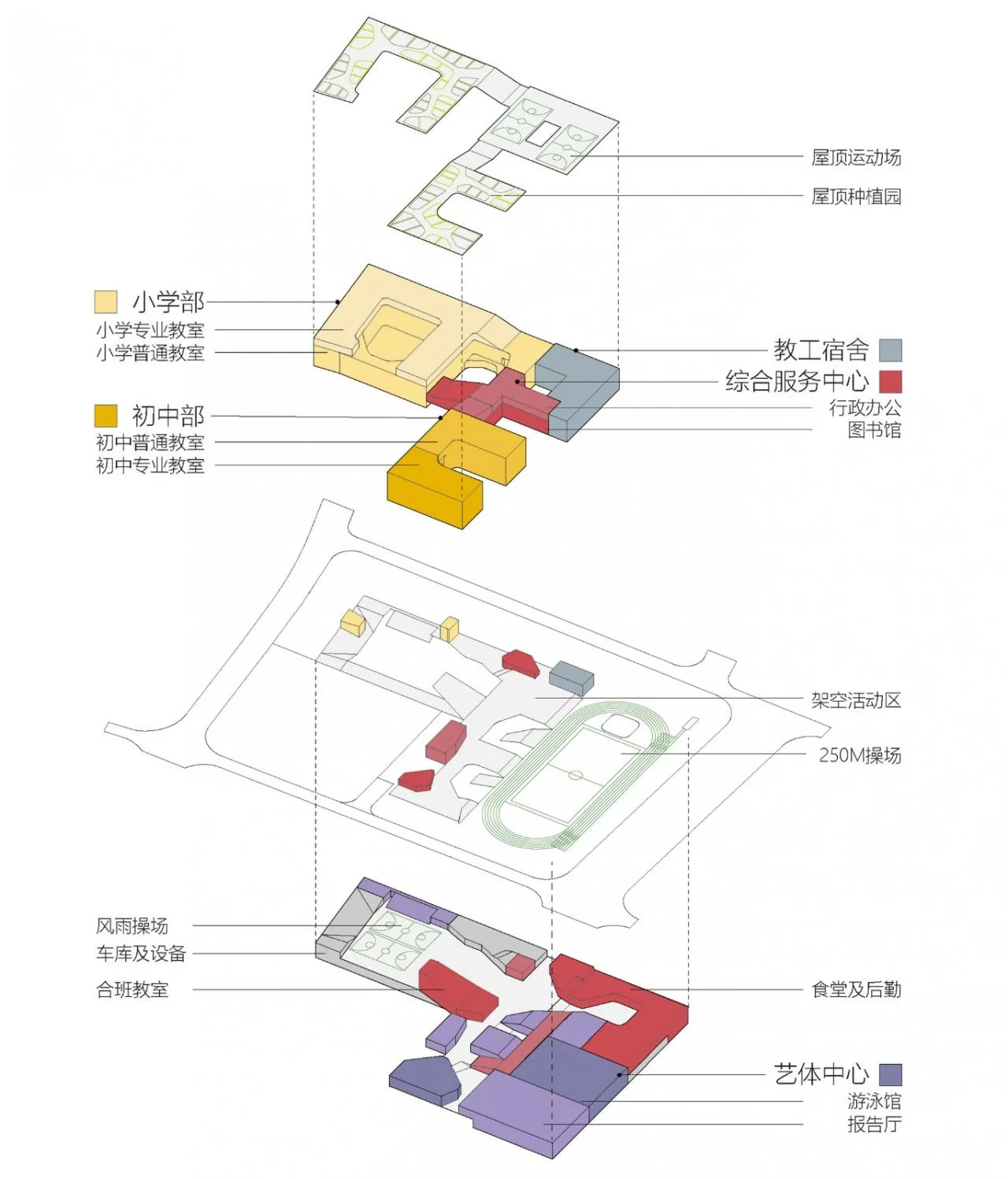
△ Function Analysis Diagram
Project Information
Architectural Design: 5TH Architects
Area: 48,269 m²
Project Year: 2020
Photographers: Zhang Chao, Zhiyi Huang
Manufacturers: Dongguan Beihang Curved Engineering Glass Co., Ltd., Walter Environmental Protection Coating Co., Ltd., Shenzhen Fenghe Tongchuang Engineering Co., Ltd.
Principal Architects: Huang Zhiyi, Zhang Zhen
Design Team: Li Ying, Ouyang Yi, Wu Ruihao, Lu Hongmian, Lin Yi, Liu Yanran, Peng Yuchen, Zhang Jing, Rong Yurui, Xu Xizhi, Zhang Shengyuan, Mount Huangshan, Zhang Shouliang, Xiang Xiaoyu
Principal: Education Bureau of Bao’an District, Shenzhen
Structural Engineering: Zhubo Design Co., Ltd
Landscape Design: Shenzhen Benmo Du Landscape Design Co., Ltd
Construction Party: Shenzhen Vanke Urban Construction Management Co., Ltd. (construction agency)
Location: Shenzhen, China















Must log in before commenting!
Sign Up