
Inspired by the films of Kubrick, two young entrepreneurs set out to create a unique specialty bar and coffee shop in downtown Shanghai—KoRoVa. The name pays homage to the iconic Clockwork Orange movies, reflecting their vision for a niche cultural identity and distinctive stance.
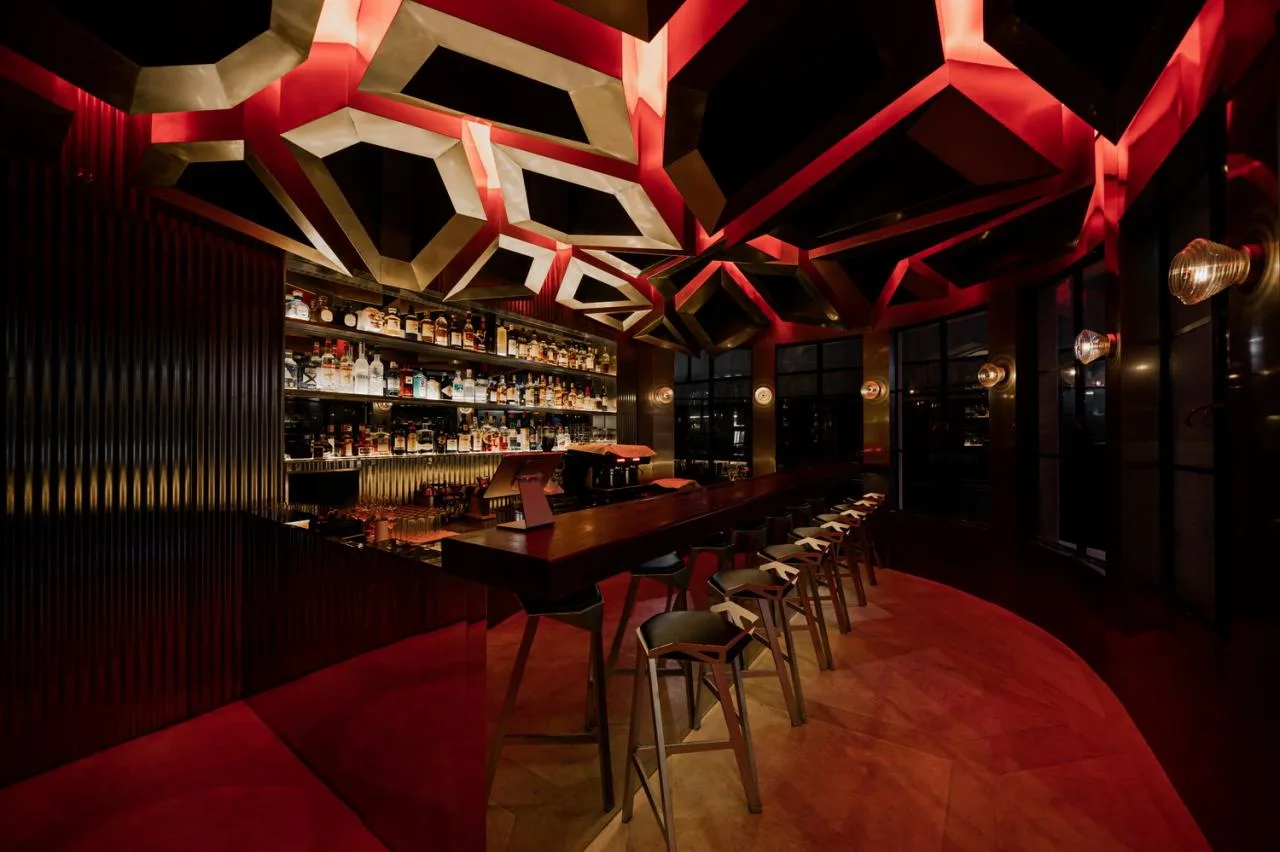
Tribute to 1960s cinema with a futuristic bar counter design
Rather than a simple replication, the design pays a thoughtful tribute. Drawing inspiration from the film’s three narrative segments, the space is divided into corresponding zones with distinct personalities and functions. The goal is to create an emotional environment grounded in logic and reality.
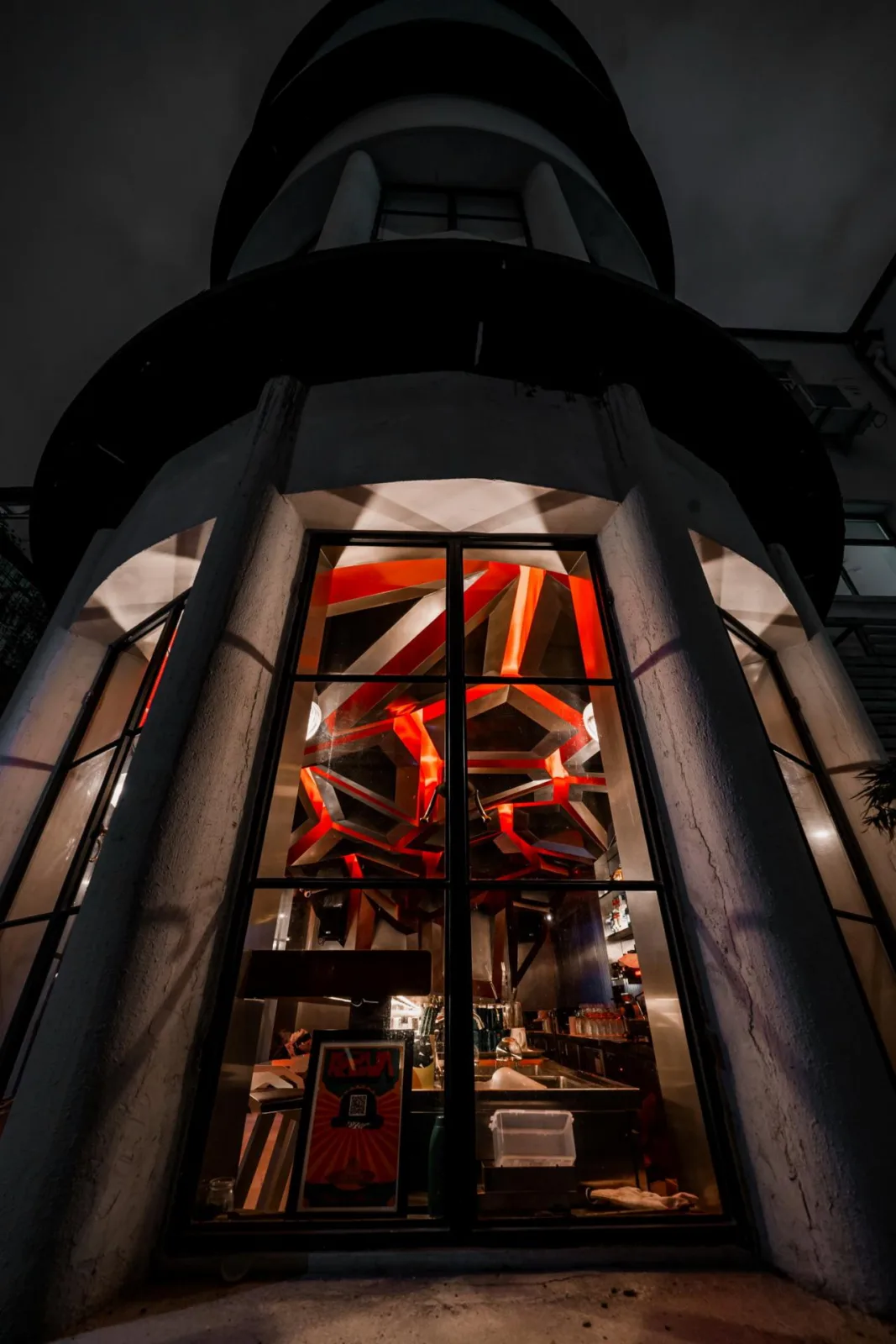
The slightly exaggerated interior structure breathes new life into Shanghai’s historic architecture.
Primordial
After a night of releasing our energy, feeling a bit tired and restless, we step out of the car and head to Corona Milk Bar for a drink before calling it a night.
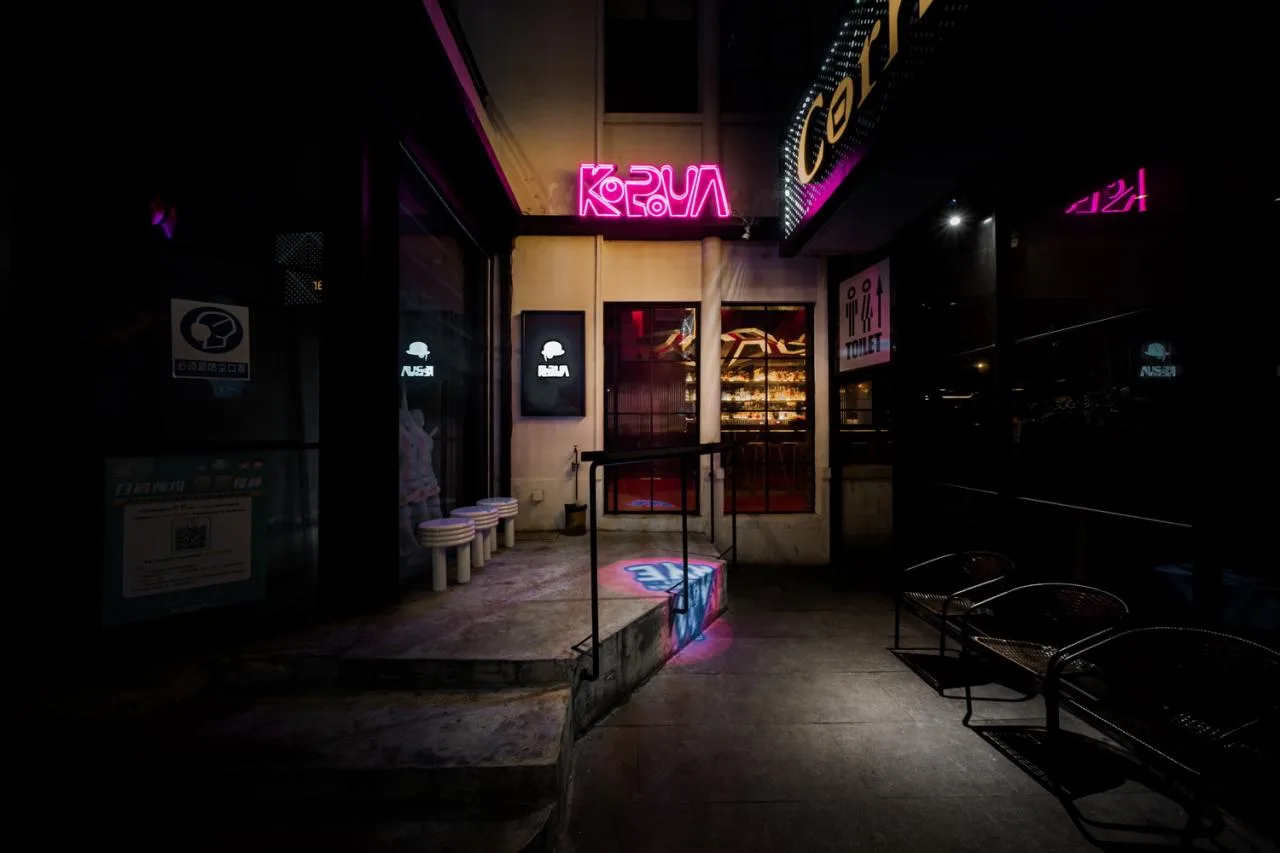
Entrance perspective
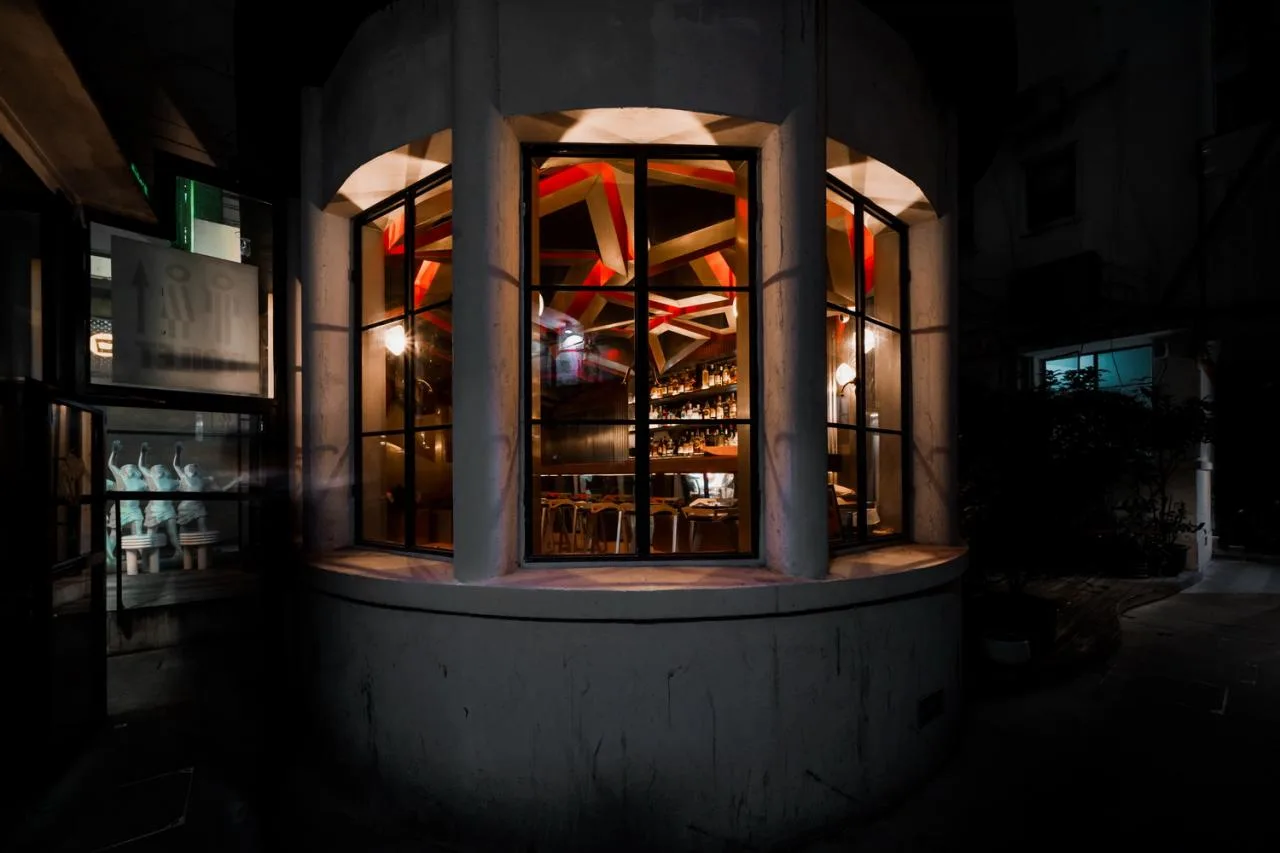
The transparent spatial design invites passersby inside.
Silver-toned stainless steel plates and corrugated panels envelop the walls, while complex polygonal structures hang from above, exuding sharp, aggressive, and even dangerous characteristics. Light filters through the polygonal gaps, sometimes pure and bright, other times elusive and unpredictable, creating boundaries that both define and blur the space. It evokes imagery of a bird forged from a precious heavenly stone or a mysterious wine flowing inside a spaceship.
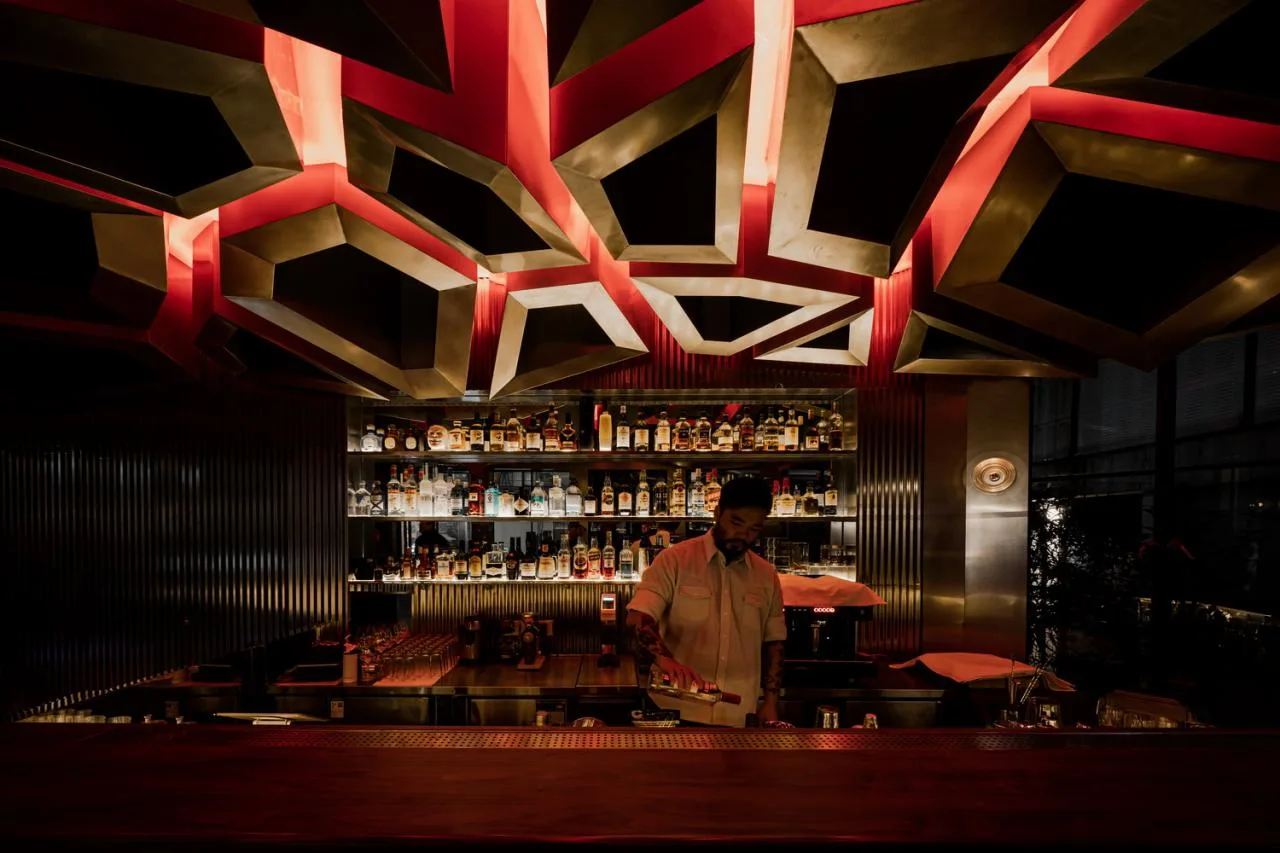
The geometric shapes above the bar counter are denser and more enveloping.
In contrast to the dynamic ceiling, the warm brown wooden bar floats calmly in the center, revealing its quiet and inviting nature. Resembling the wooden facade of an old shop, the wine rack is concealed behind removable corrugated panels. At night, these panels lift like a veil, revealing the wines in soft, dim light—flowing, flickering, dancing, and weaving throughout the space.
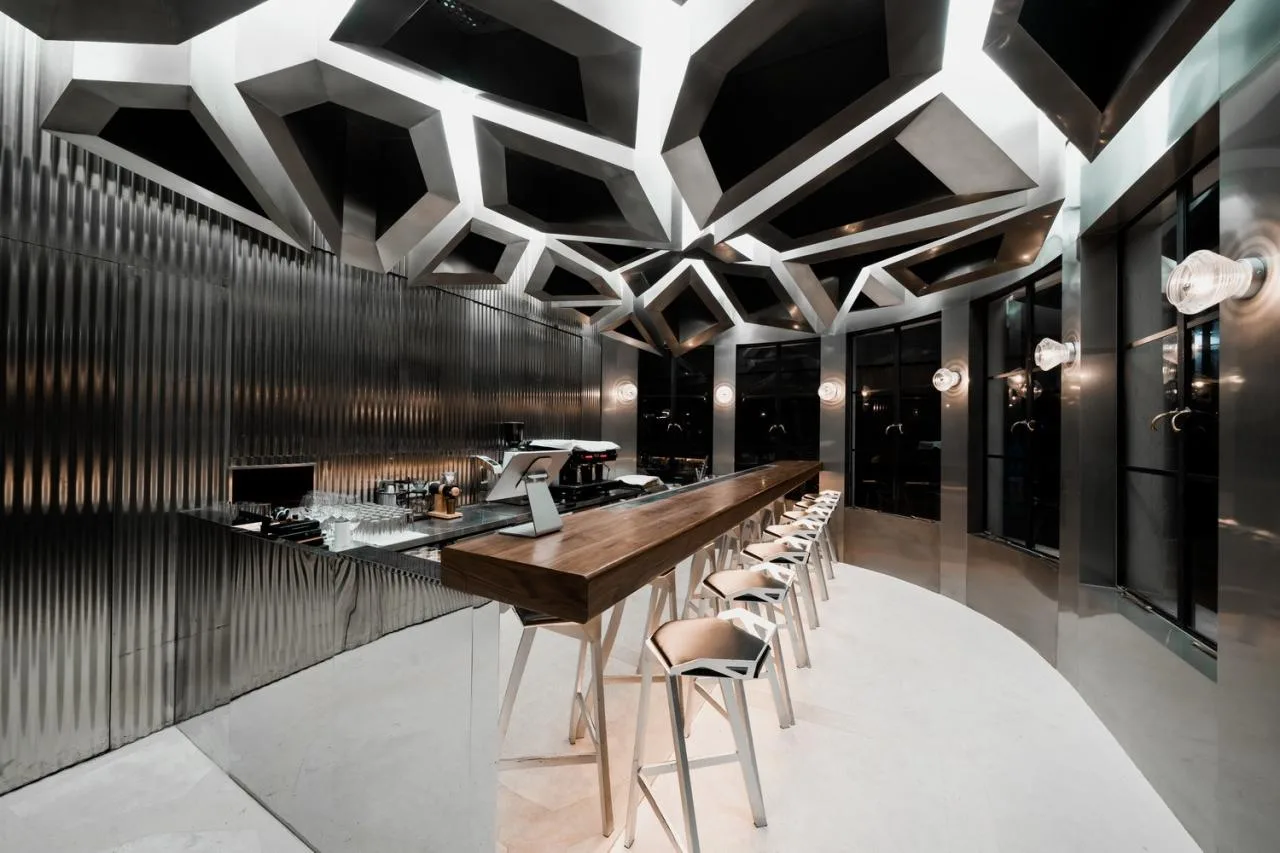
Daytime coffee mode
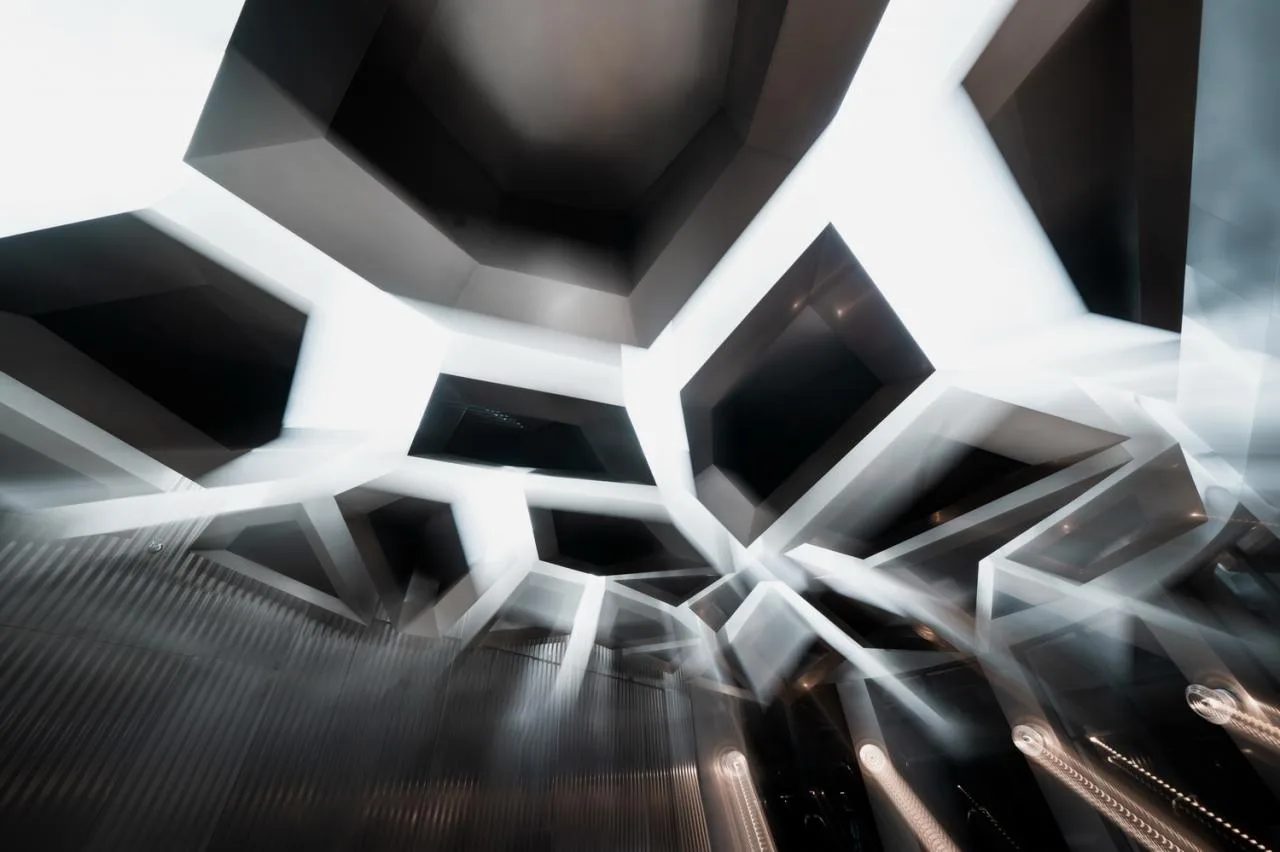
Daytime lighting
Transformation
Kindness is a choice; when one loses that choice, they cease to be human.
Behind an unassuming door hidden in the wall, the interior narrows into a dim, black space. As the door closes, the mood shifts from radical energy to silent gloom. This moment feels suppressed, uneasy, yet strangely relieving—because everything outside no longer concerns this place.

The logical framework formed by the triangle of virtue and labor.
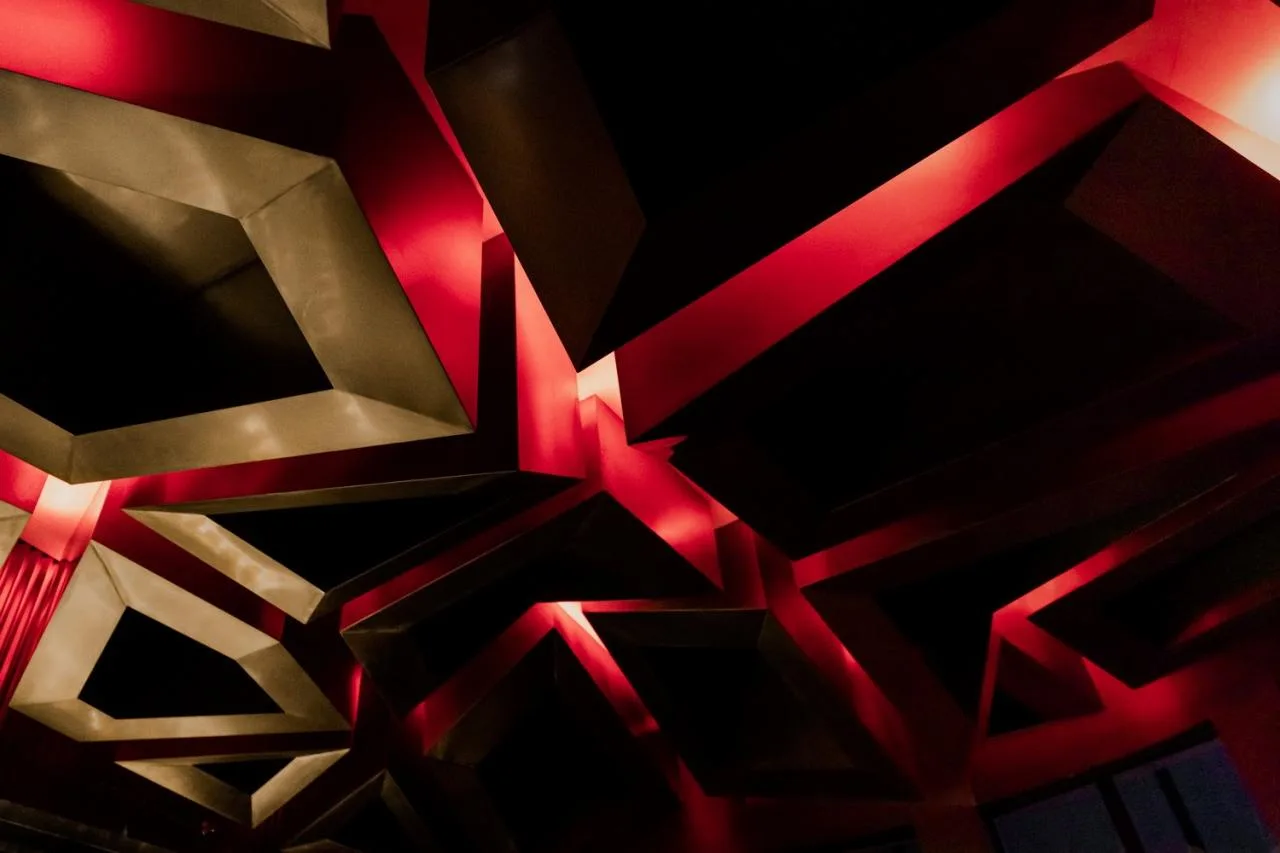
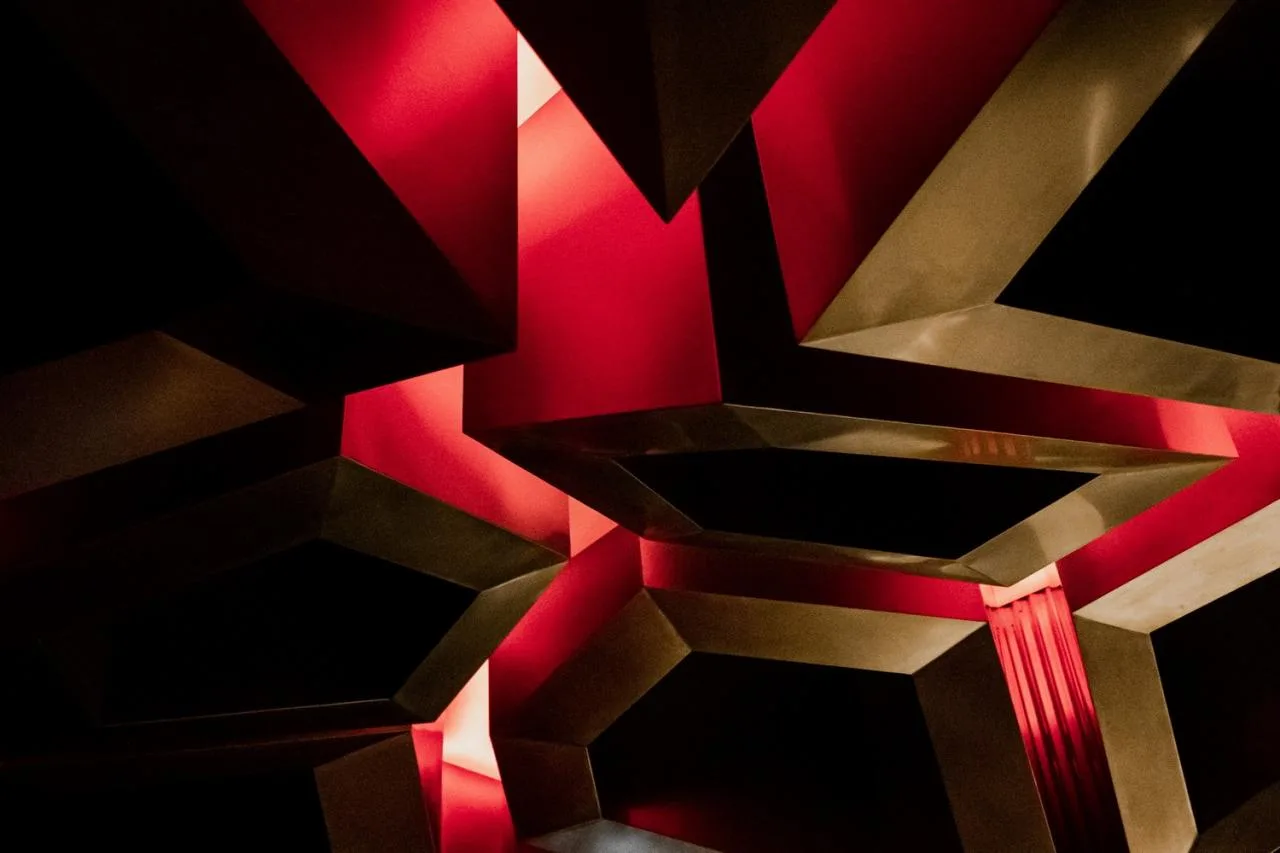
Stainless steel geometric forms with light filtering through the gaps
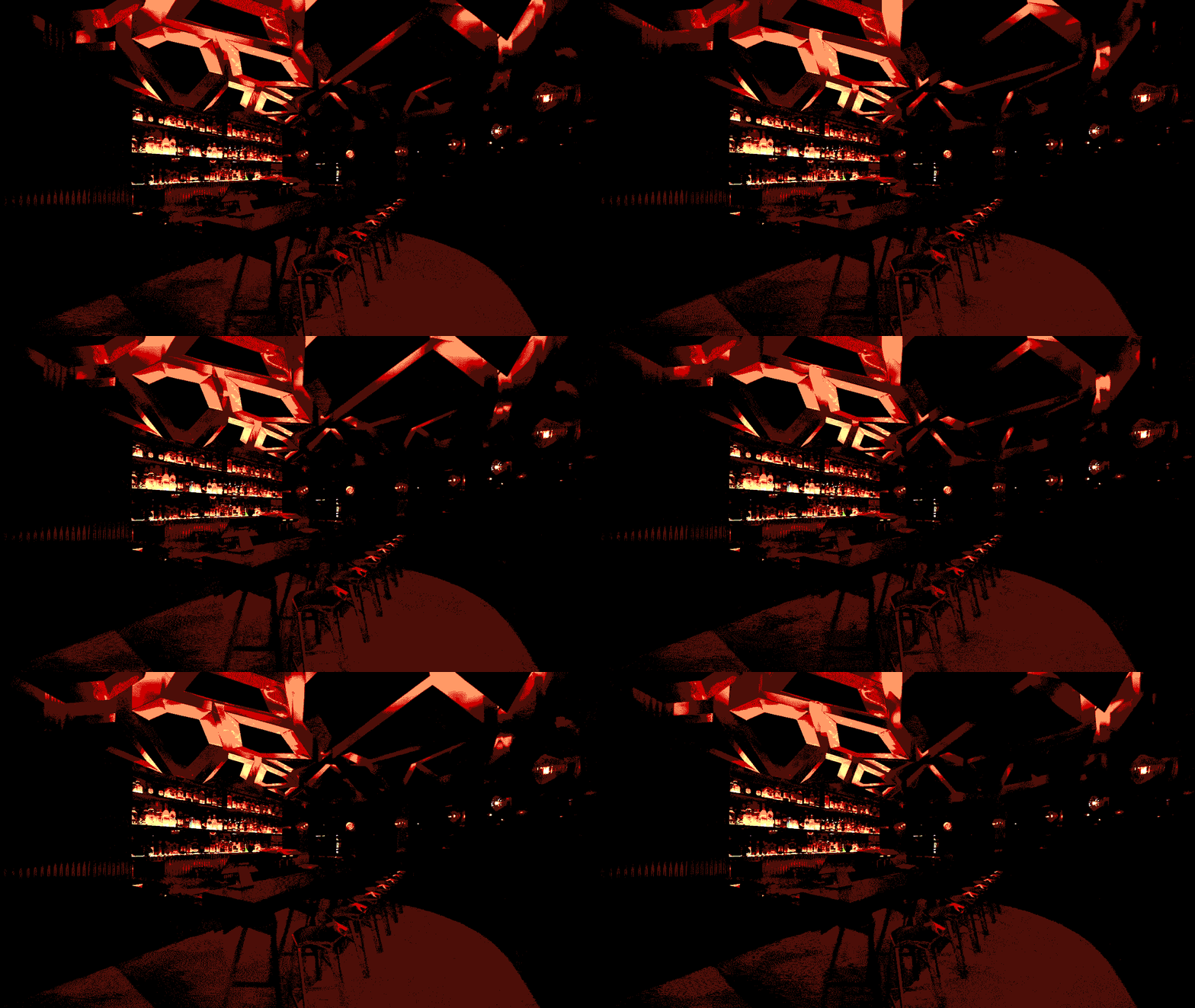
Dynamic lighting effects
Regression
Without a home or money, where can I turn? I cry out for myself, for home—what I truly long for is a place to belong.
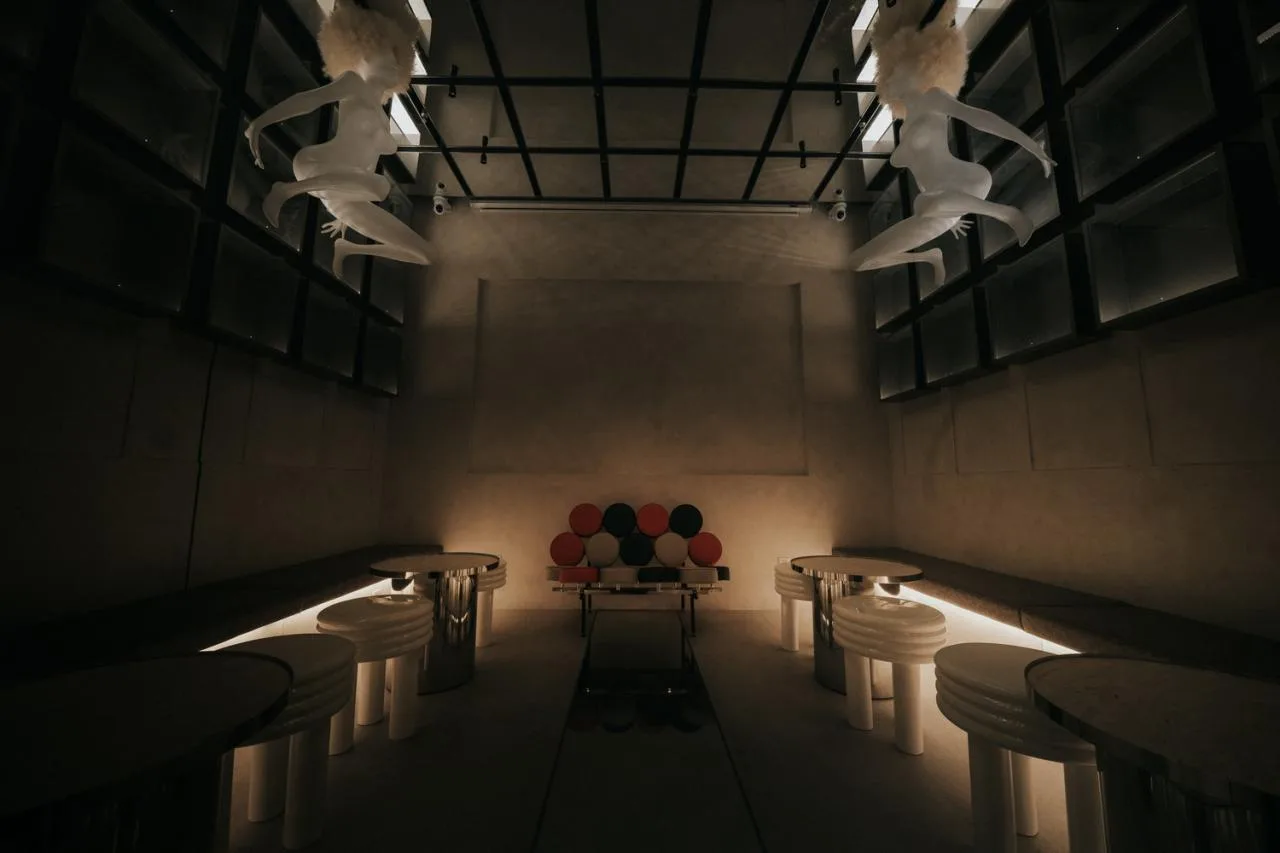
The adjustable lighting and suspension system allows for versatile transformations of the space.
A dull appearance is never the norm. Beyond the door, guided by warm light, lies an open, symmetrical room. The floors and walls bear warm beige tones, while square mirrors adorn the ceiling. This block-shaped architectural language extends from ceiling to walls, repeating in orderly niches.
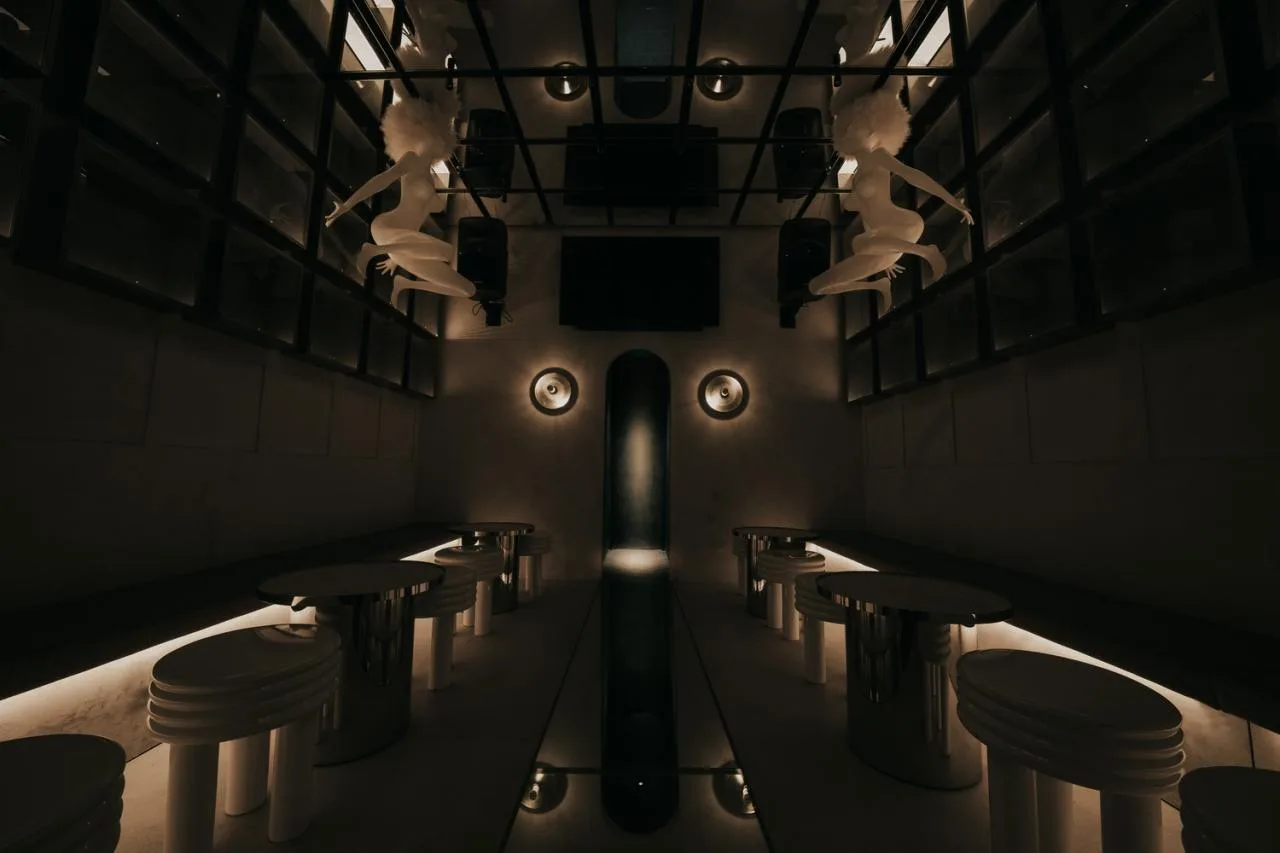
Center perspective view
This space exudes a warm, homely atmosphere, accented by vintage tones from the 1970s and 1980s, including furniture and sculptures. It serves as a tribute to the past and a simple emotional return.
Between the ceiling panels, adjustable spotlights and hanging rails are installed. When paintings are removed and lights dim, the space transforms into a cozy, quiet booth area. Here, guests chat and drink surrounded by art and music, as if returning home.
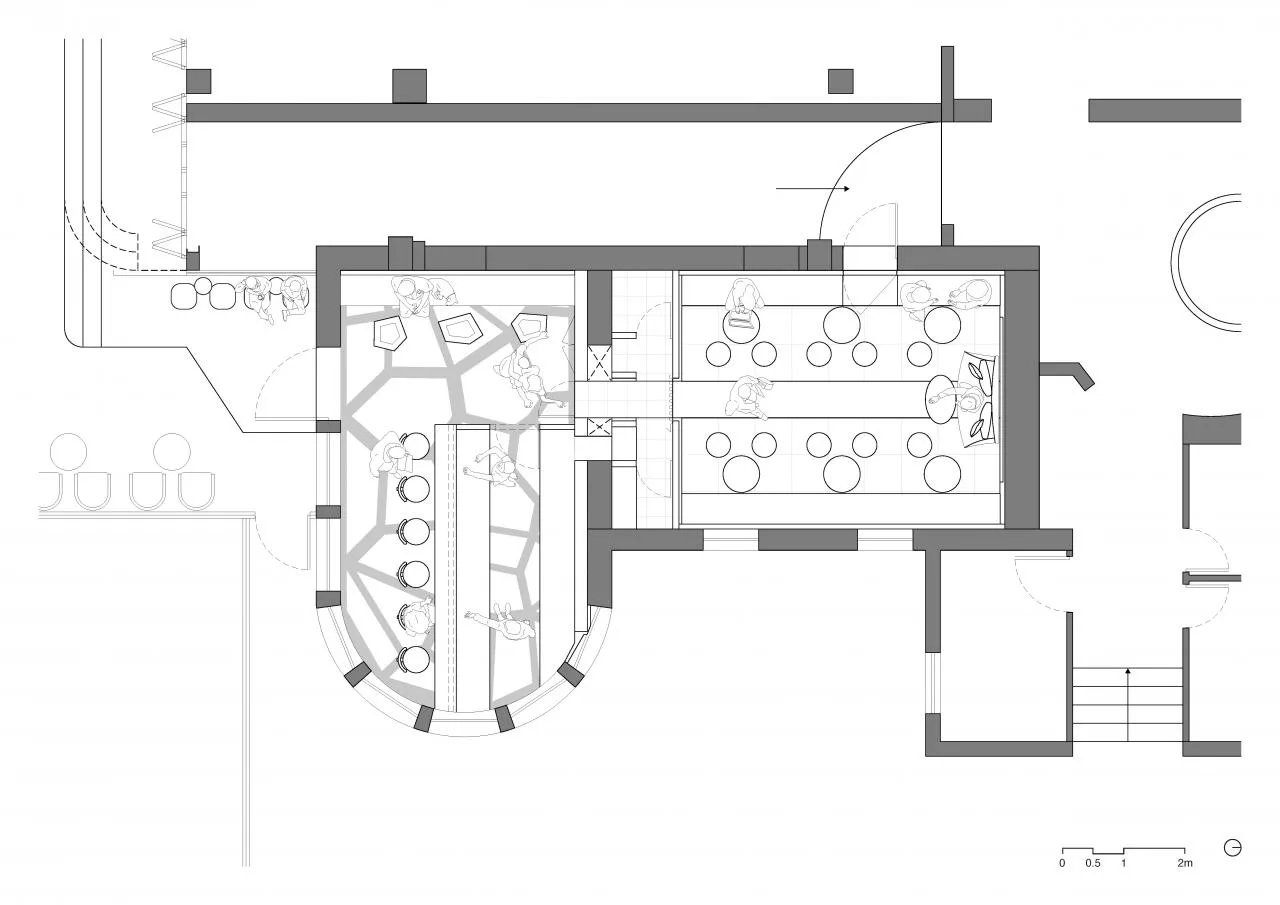
Plan view
Project Information
Design Company: Low State Architecture
Design Team: Ding Yangyang, Gu Tao
Location: United Valley Collection Society, No. 462 Changle Road, Shanghai, China
Building Area: 60 square meters
Completion: August 2021
Photography: Dai Changyi
Construction: Shanghai Suji Decoration Engineering Co., Ltd
Lighting Consultant: Shanghai Jimi Intelligent Technology Co., Ltd
Furniture: Becomehome














Must log in before commenting!
Sign Up