
Wooden House Town is situated on an island in the western sea of Mount Lu, southwest of Jiujiang, Jiangxi. This project was designed by the Shanghai Pingjie Architectural Design Firm. The area was formerly part of the Xiu River, one of Jiangxi’s five major water systems. Between the 1950s and 1970s, the West Sea Dam, known as Asia’s largest dam, was constructed here, resulting in a unique island formation within the lake: clusters of forests seemingly floating on the water. Our vision for the island is to create a community of small wooden houses nestled within the jungle.
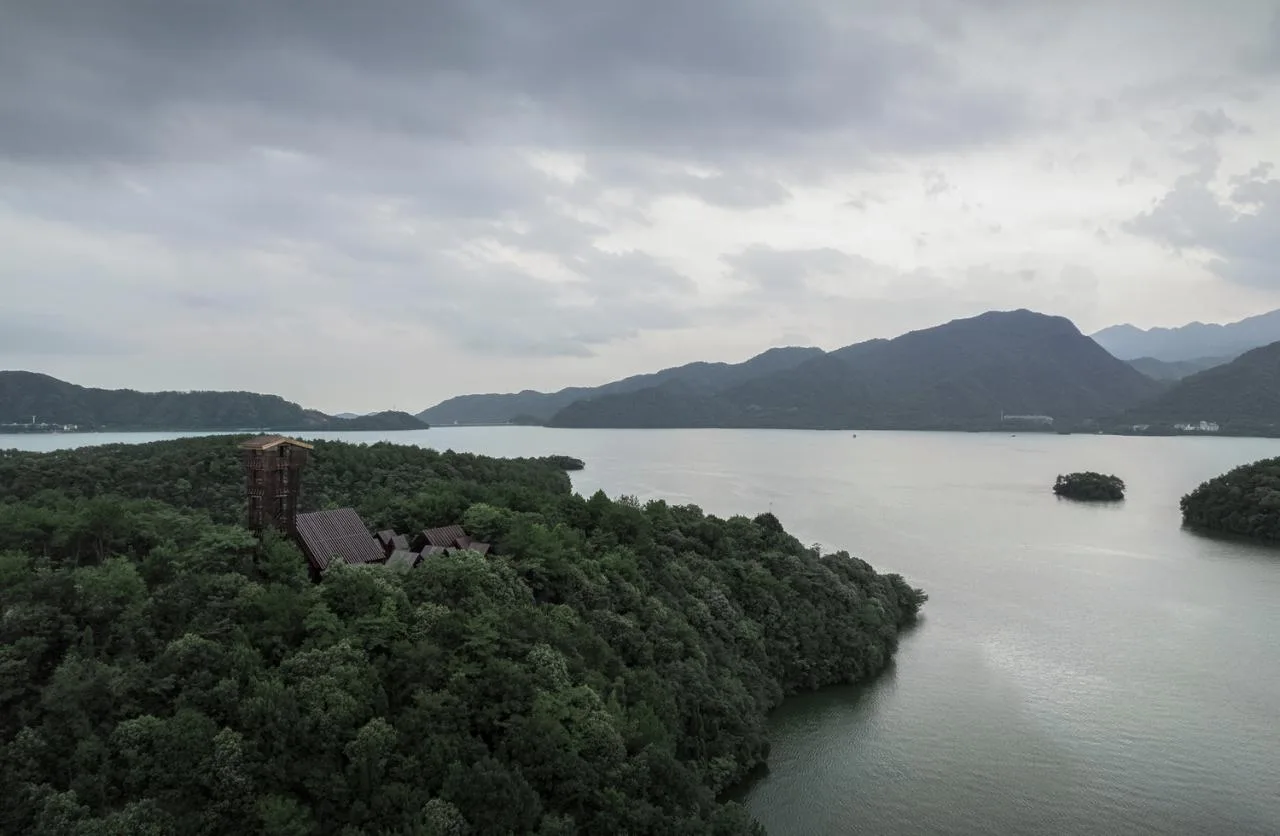
Overall bird’s-eye view of the area © Xu Yingda, Huang Di
The design features a 24-meter-high observation tower, a multifunctional hall, and 19 prefabricated wooden forest houses.
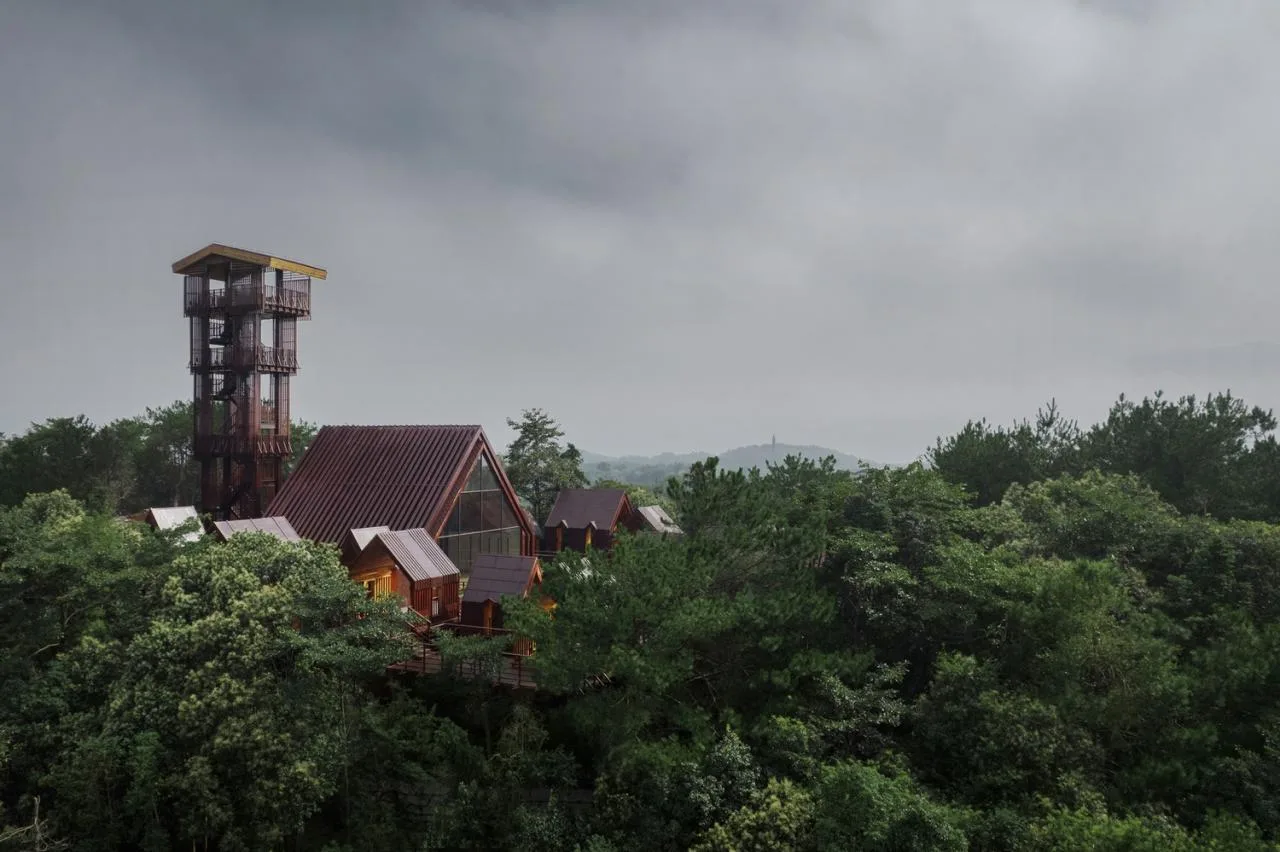
Half bird’s-eye view of Project A © Xu Yingda, Huang Di
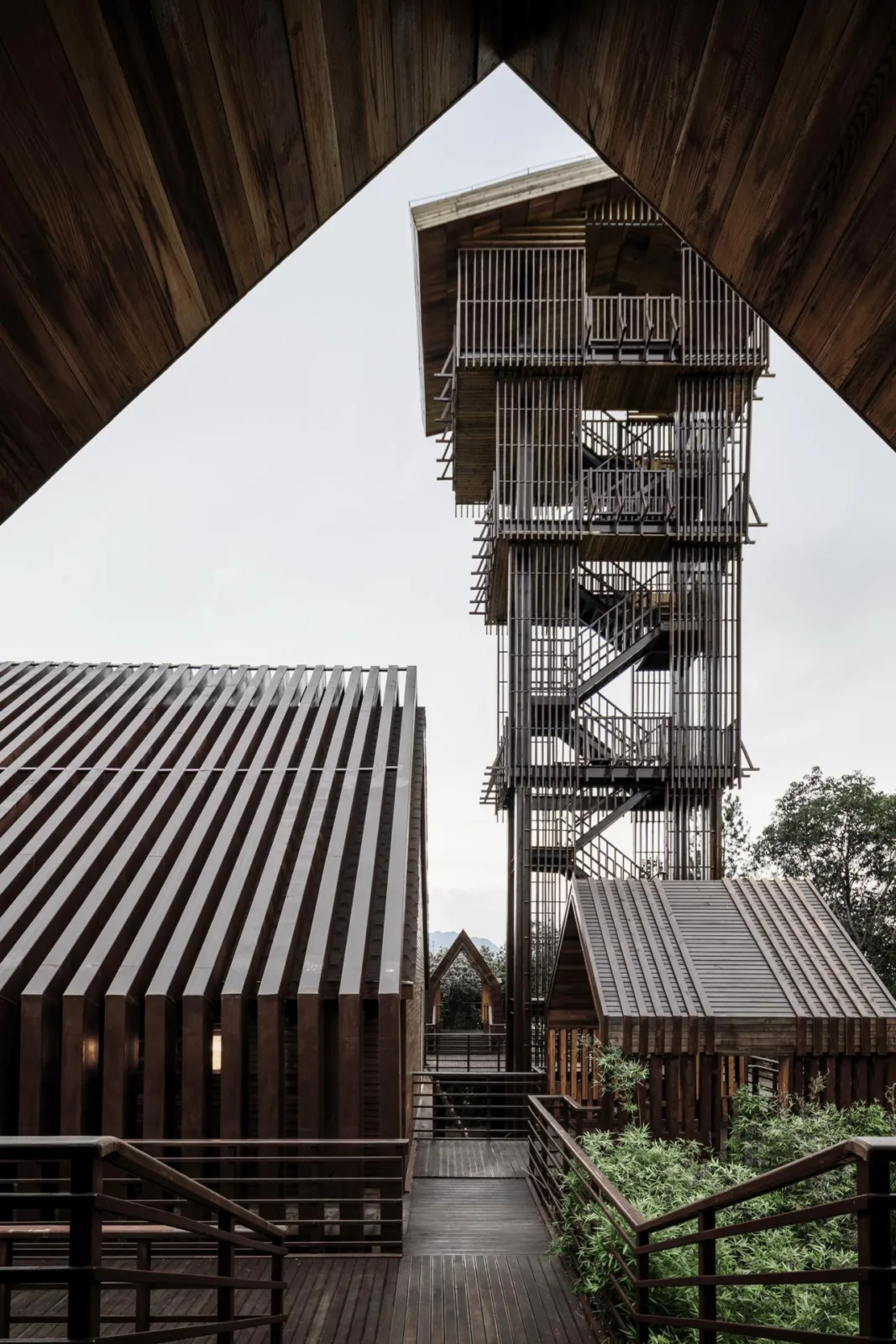
△ Observation Tower and Multifunctional Hall Architecture © Xu Yingda, Huang Di
Harmony with Nature
The core concept behind this project is the seamless integration between the buildings and the lush cork oak forest that covers the island. To enhance the island’s environment, the new structures were constructed by dismantling the old buildings. Breaking down the buildings into smaller components allowed for easier transport and assembly of the prefabricated wooden houses on the island.
The wooden houses are elevated on independent foundations, which allows the ground to be restored and repaired underneath. Demolition waste was reused on site as much as possible, forming the foundation of the multifunctional hall.
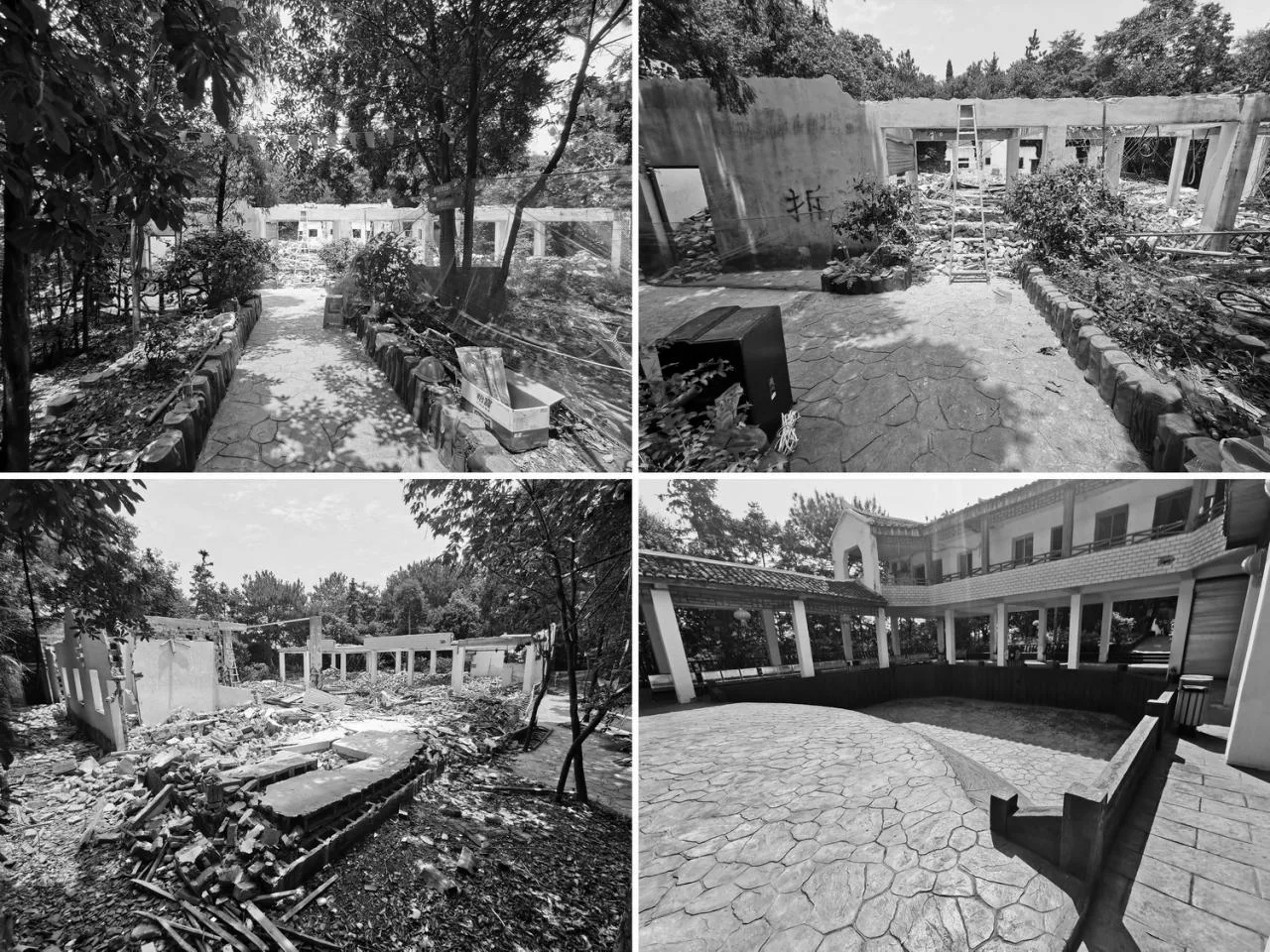
△ Original old buildings before demolition
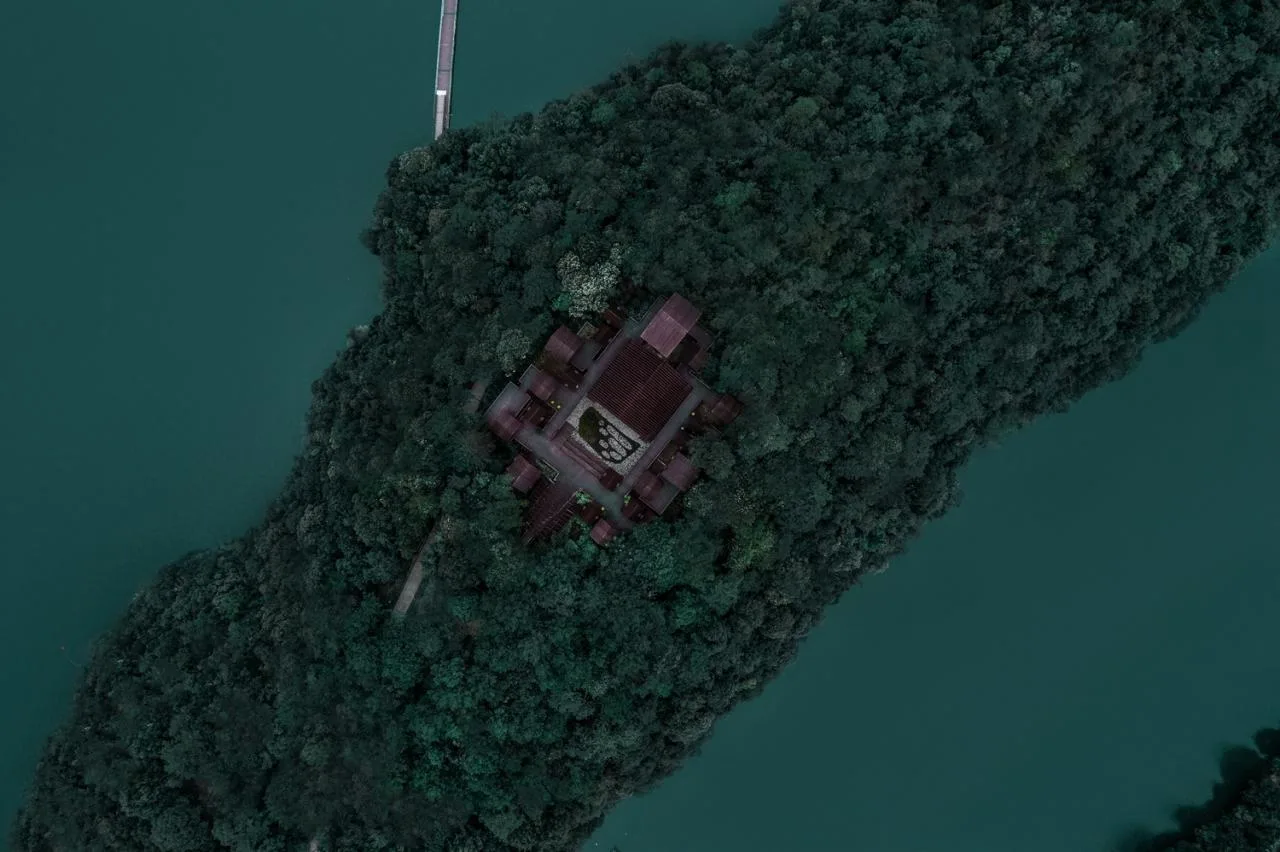
△ Island, Jungle, Cabin © Xu Yingda, Huang Di
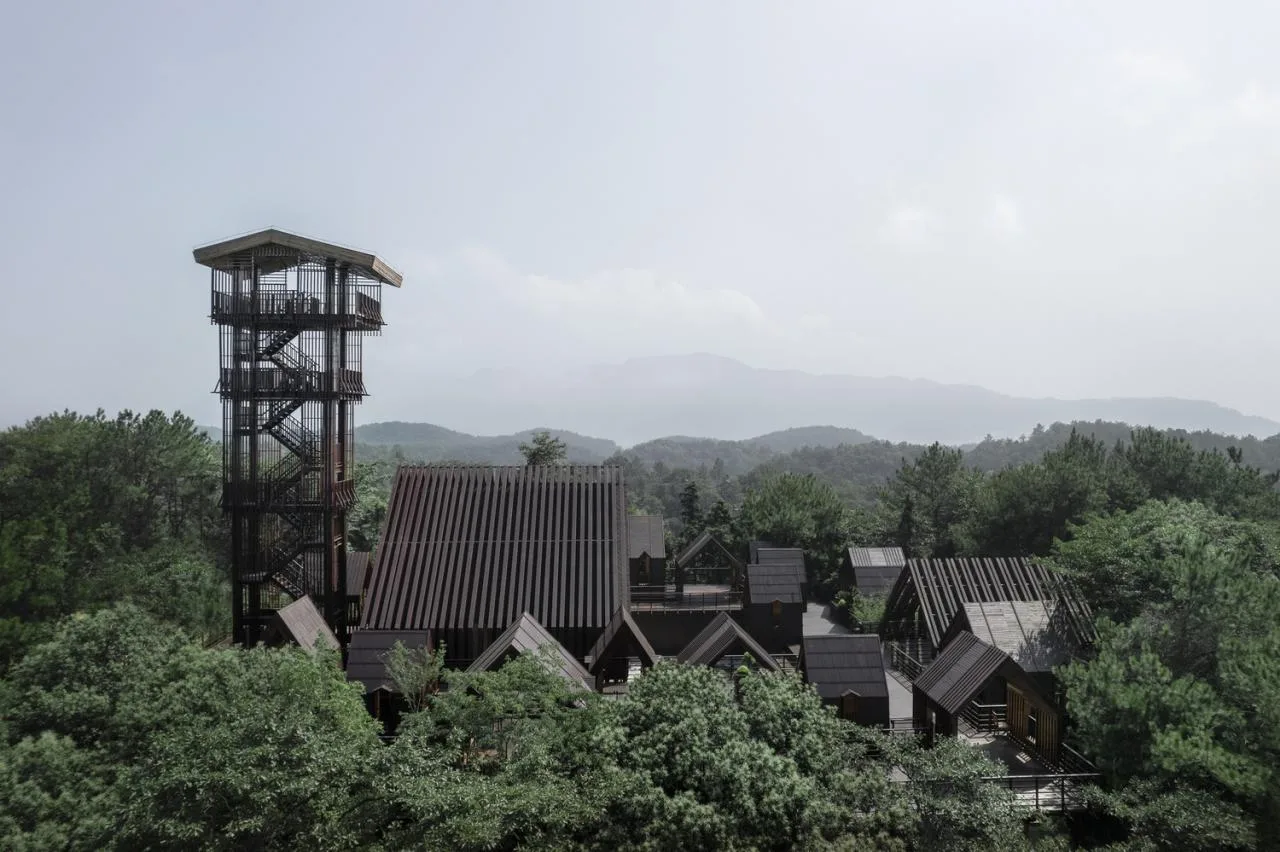
Half bird’s-eye view of Project B © Xu Yingda, Huang Di
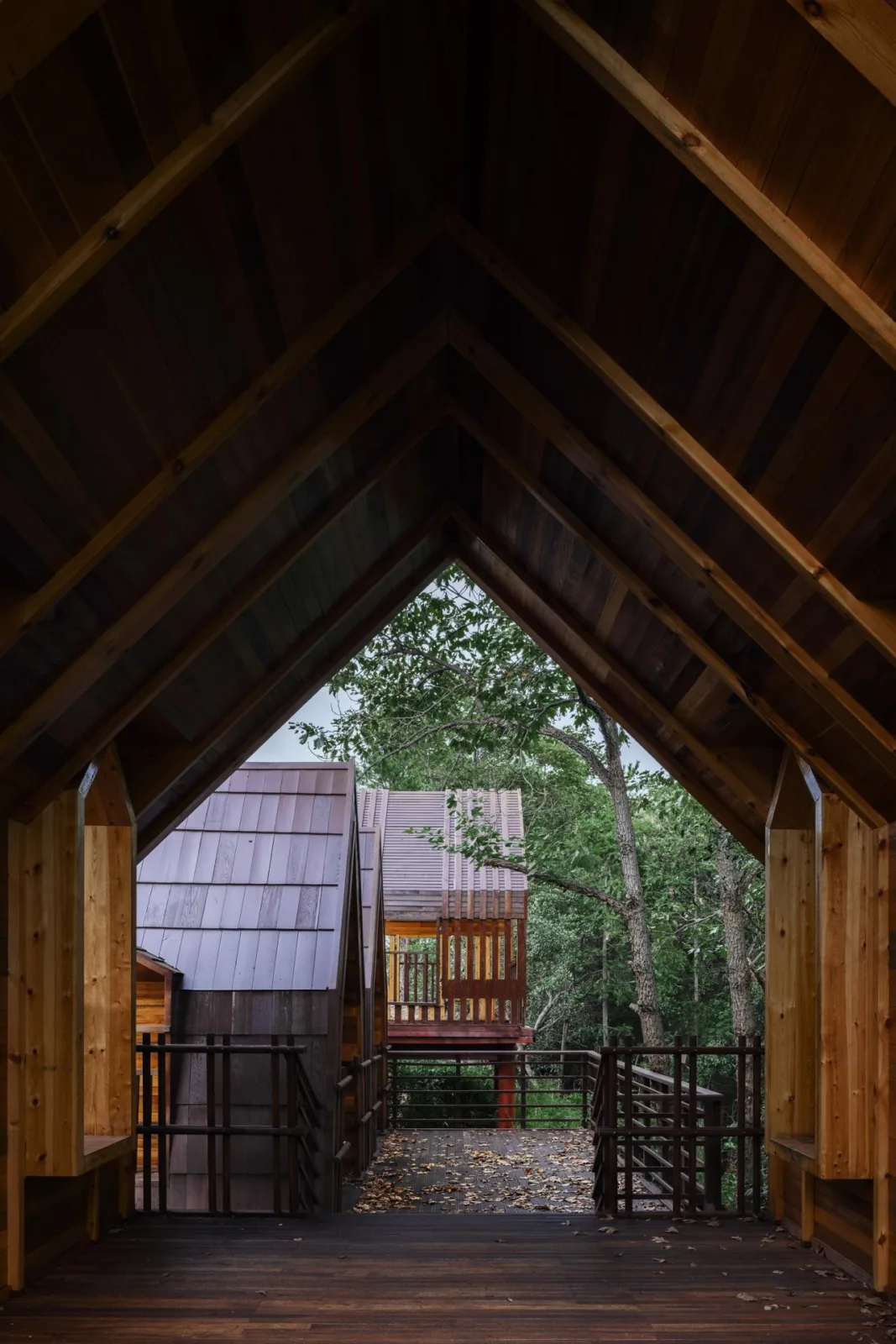
Prefabricated wooden cabin © Xu Yingda, Huang Di
The master plan was largely shaped by the site and its natural surroundings rather than purely by architectural decisions. The existing trees defined the building boundaries. We established a system of core spaces with surrounding expanded edges, based on the old building’s core and the new building’s central axis. The rest of the structures fill in the gaps within the vegetation, creating a harmonious blend.
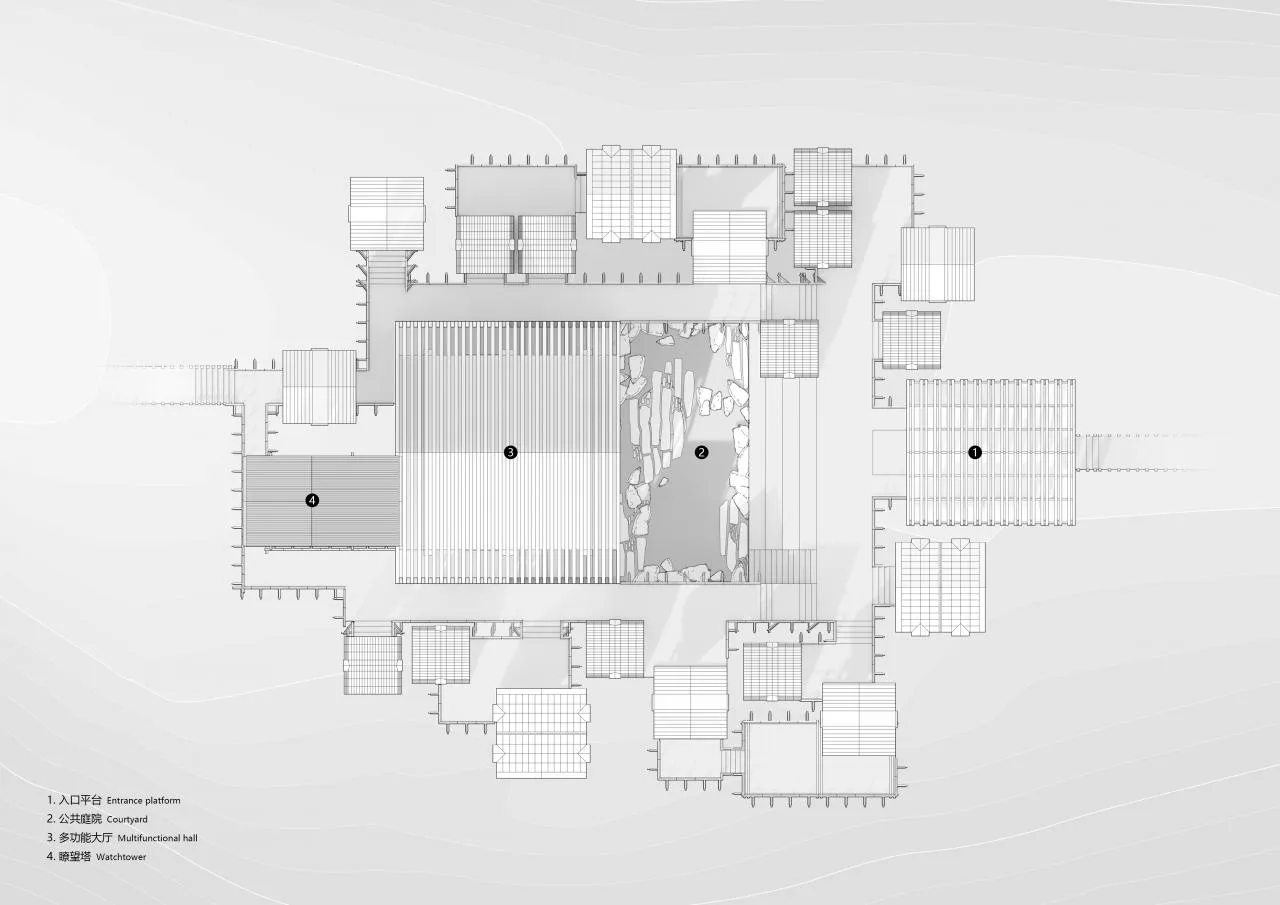
△ General layout plan
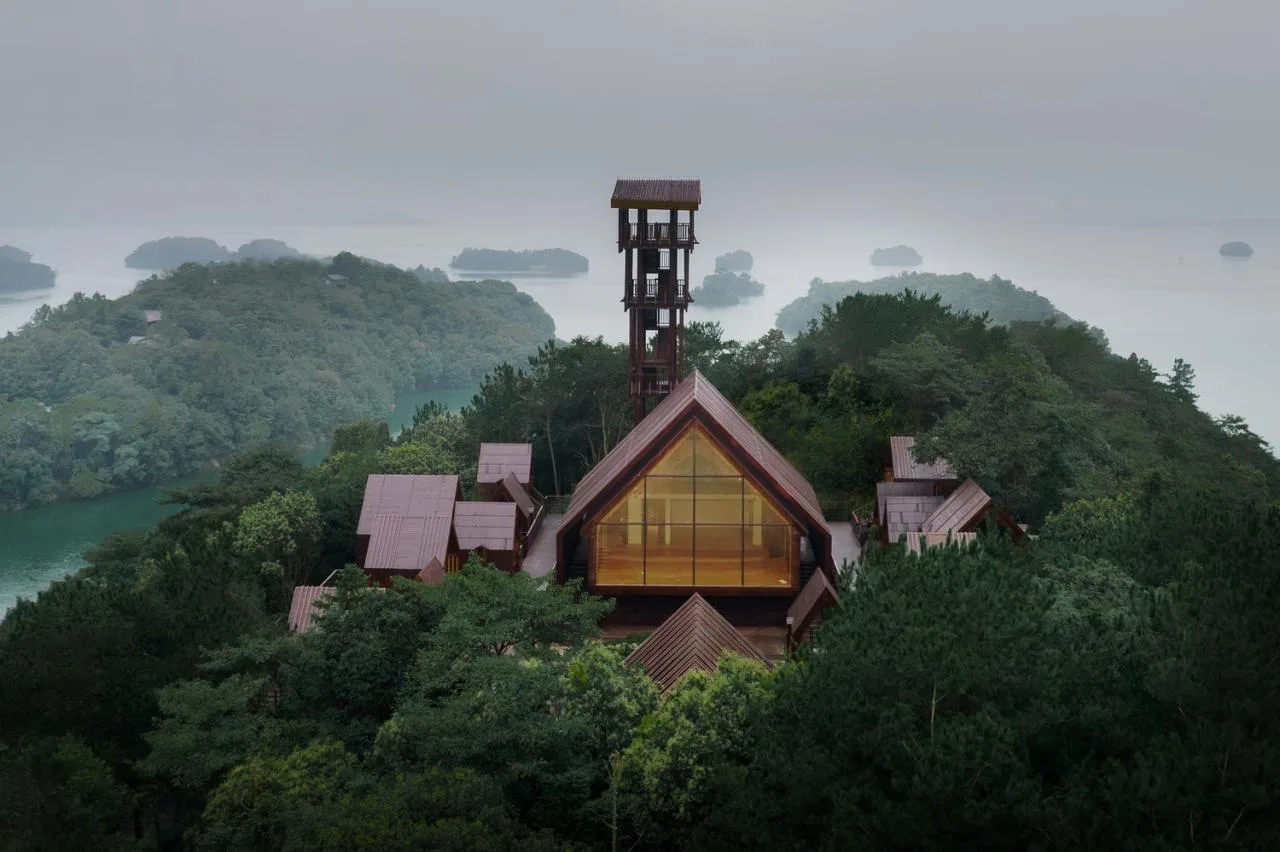
Wooden house communities weaving through natural vegetation gaps © Xu Yingda, Huang Di
Instead of imposing rigid rules, this project embraces adaptability and spontaneity to reflect the wildness of the jungle.
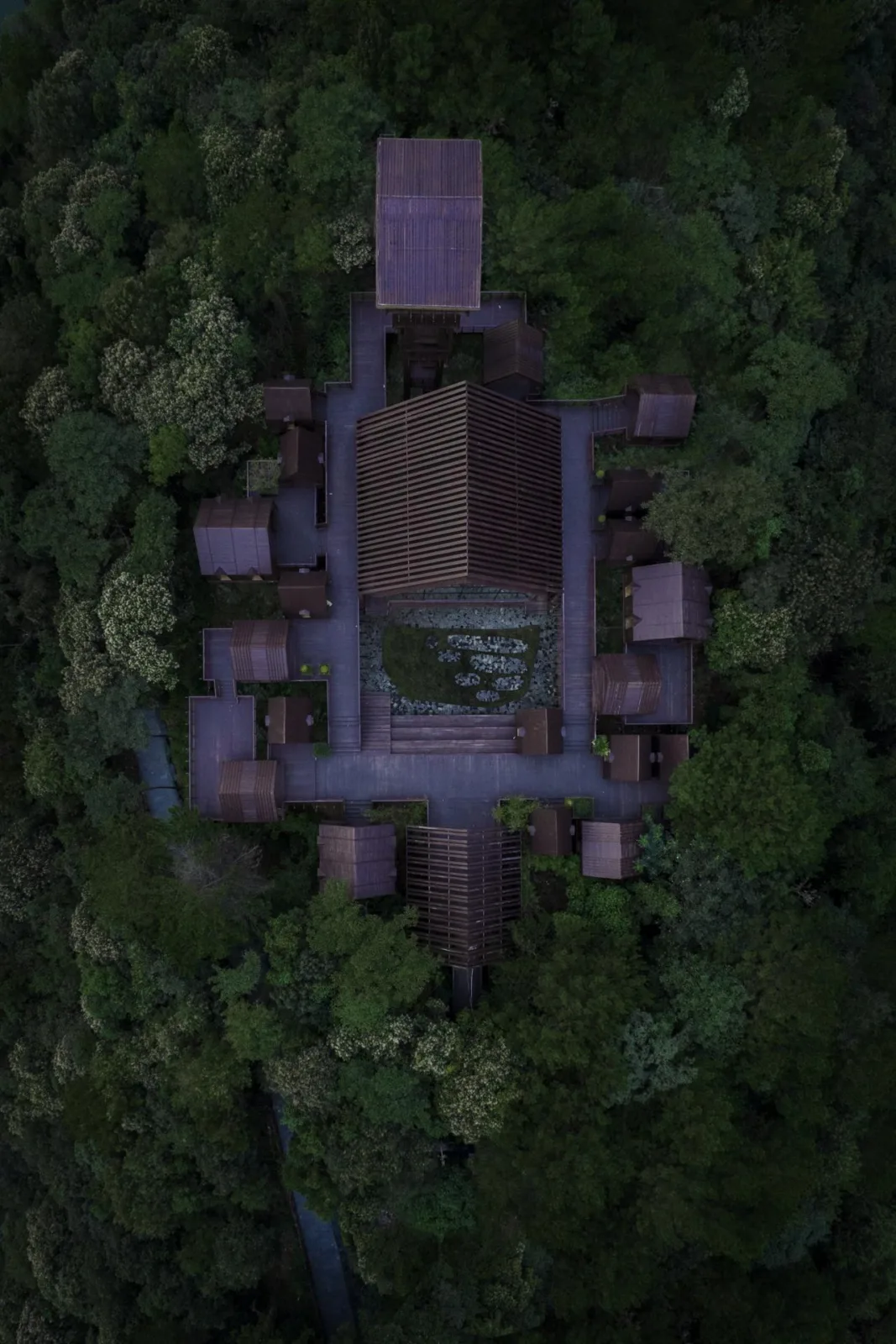
Nature reclaiming the space © Xu Yingda, Huang Di
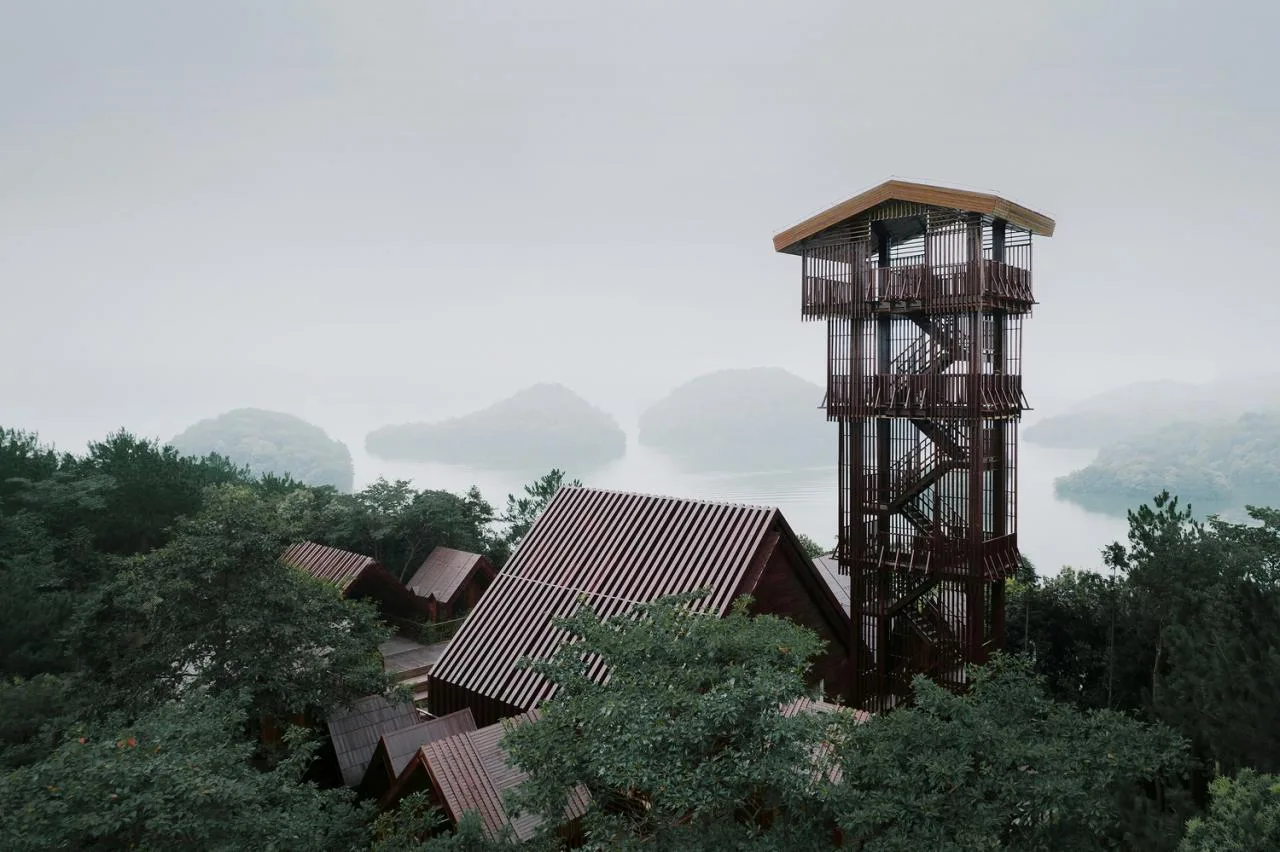
Morning mist slowly fading © Xu Yingda, Huang Di
Thanks to the natural setting and design approach, the architecture breathes with its surroundings. Three types of small wooden cabin modules are integrated into the site, with platforms staggered to adapt to the terrain. The orientation and openings of the wooden houses were carefully planned so that each frames views of the others.
The primary building material is Hongxue pine treated for insect resistance and anti-corrosion, preserving its original wood texture. The intention was not to create pristine, new buildings, but rather to foster an intimate dialogue between materials and the environment, as if they had coexisted for years.
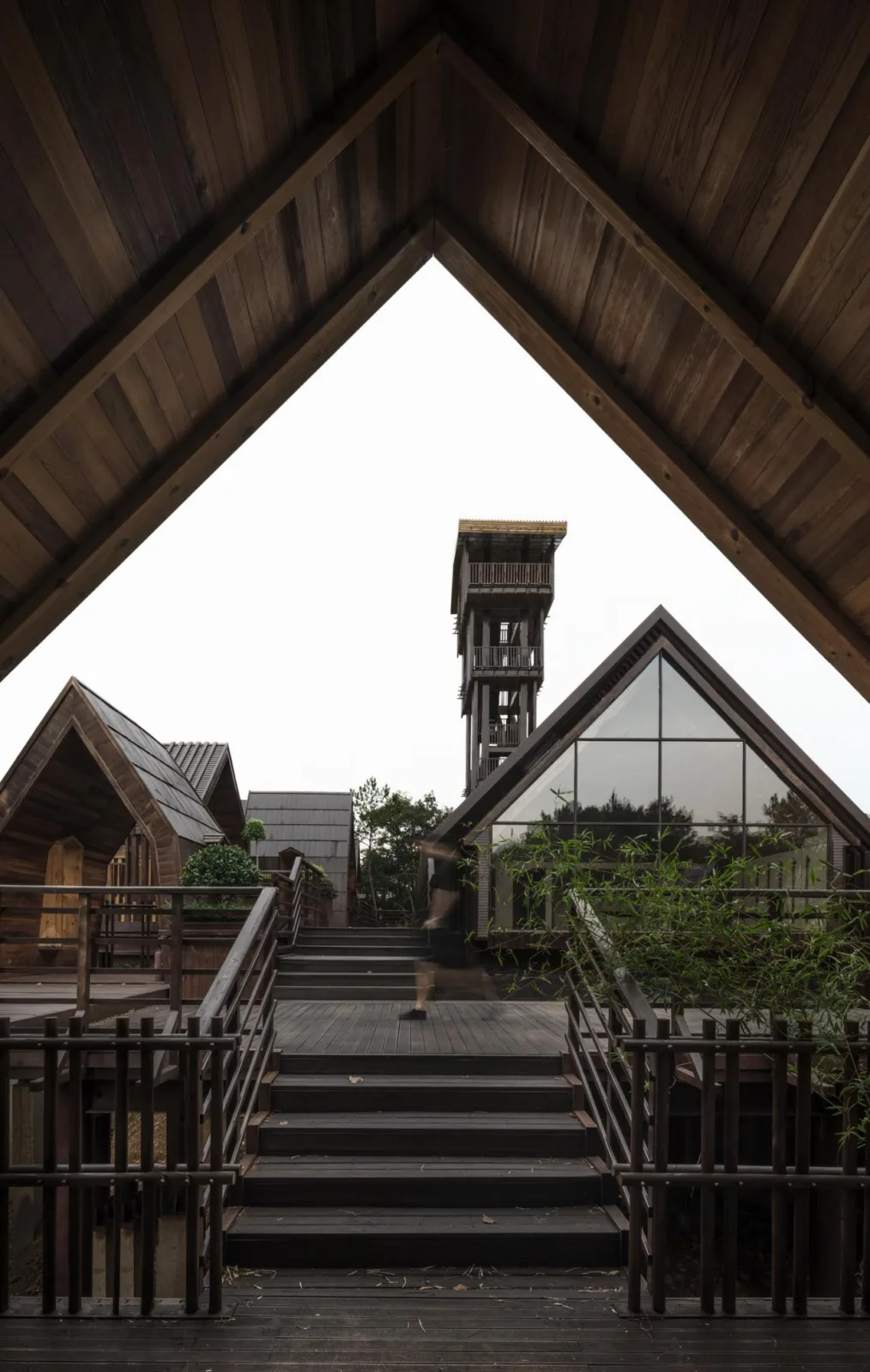
Rich contextual relationships between buildings © Xu Yingda, Huang Di
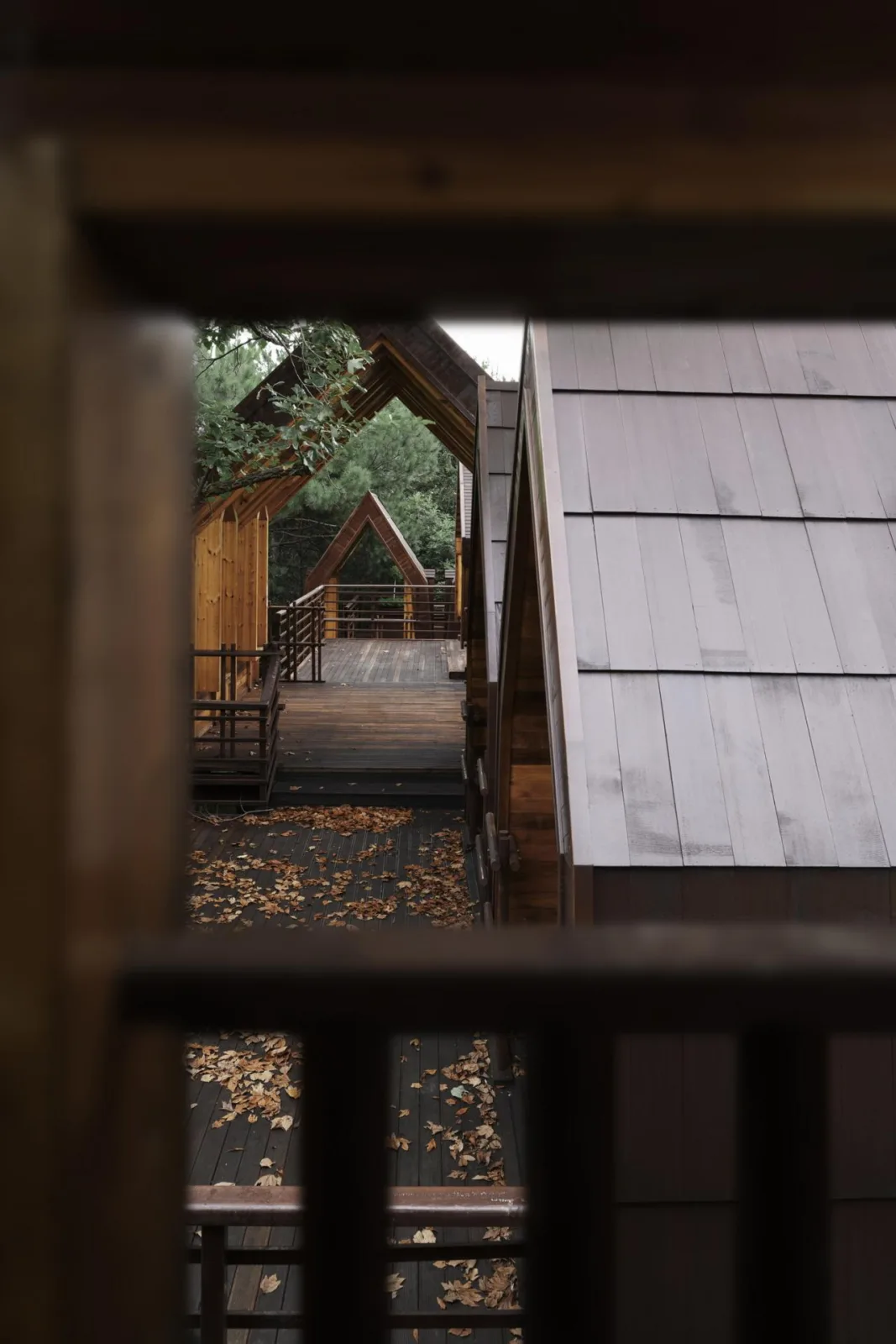
△ Rich contextual relationships between buildings B © Xu Yingda, Huang Di
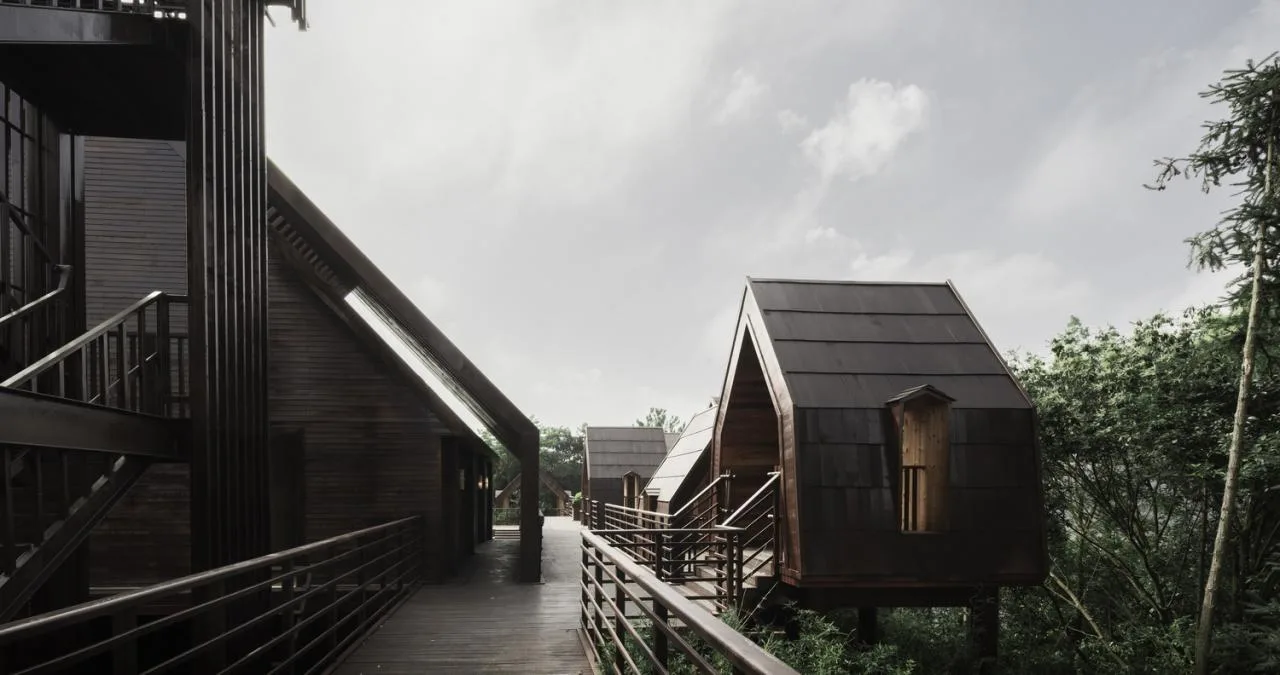
Walking along platforms and corridors © Xu Yingda, Huang Di
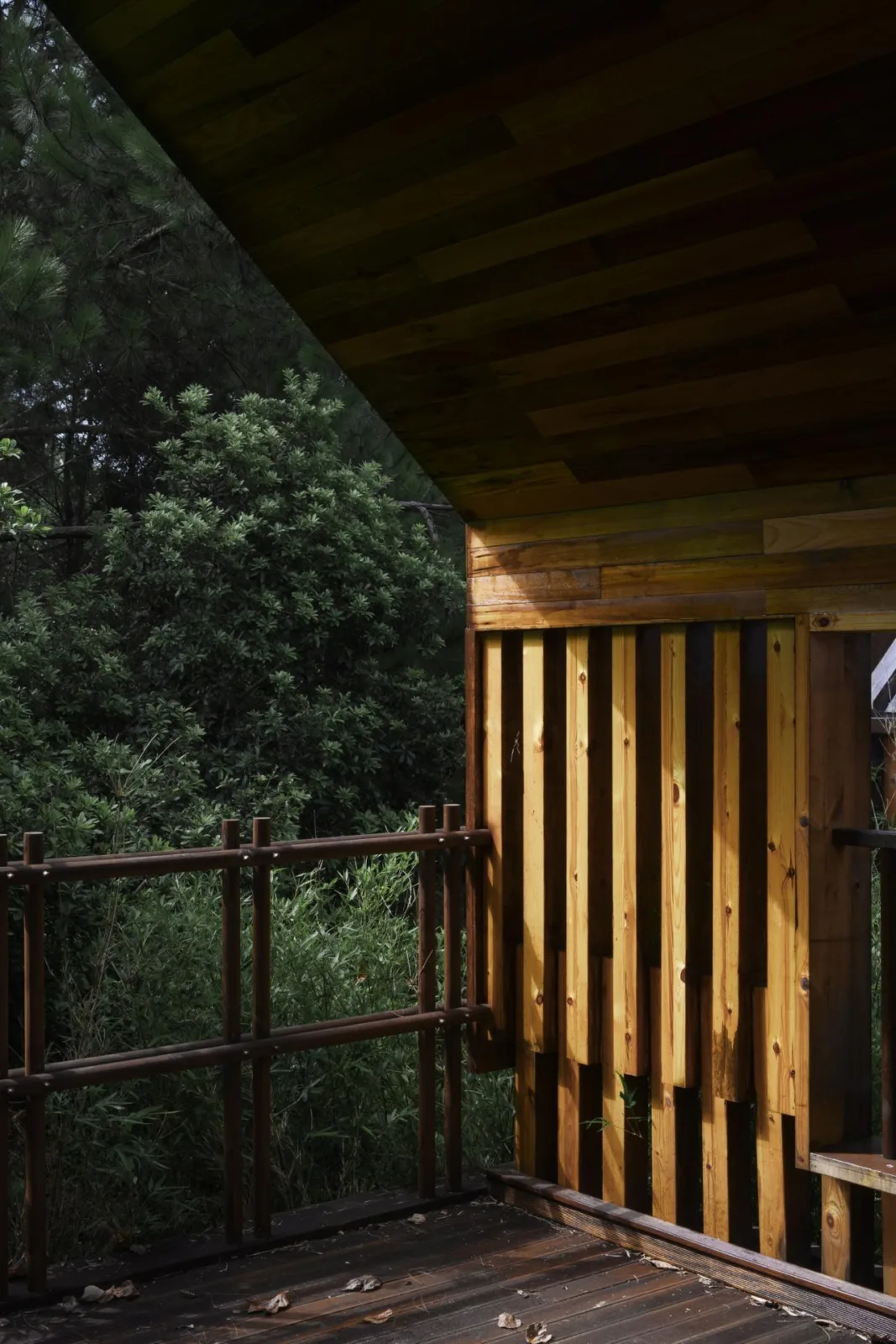
△ Red cedar wood wall surface © Xu Yingda, Huang Di
Adaptability and an Unfinished Vision
At the project’s outset, the specific functions and potential business models for the space were not yet defined. Thus, while the space itself forms a landscape system, the client emphasized the need for future adaptability and extensibility.
We explored and outlined possible uses and formats that could be integrated, guiding the design of the wooden house types.
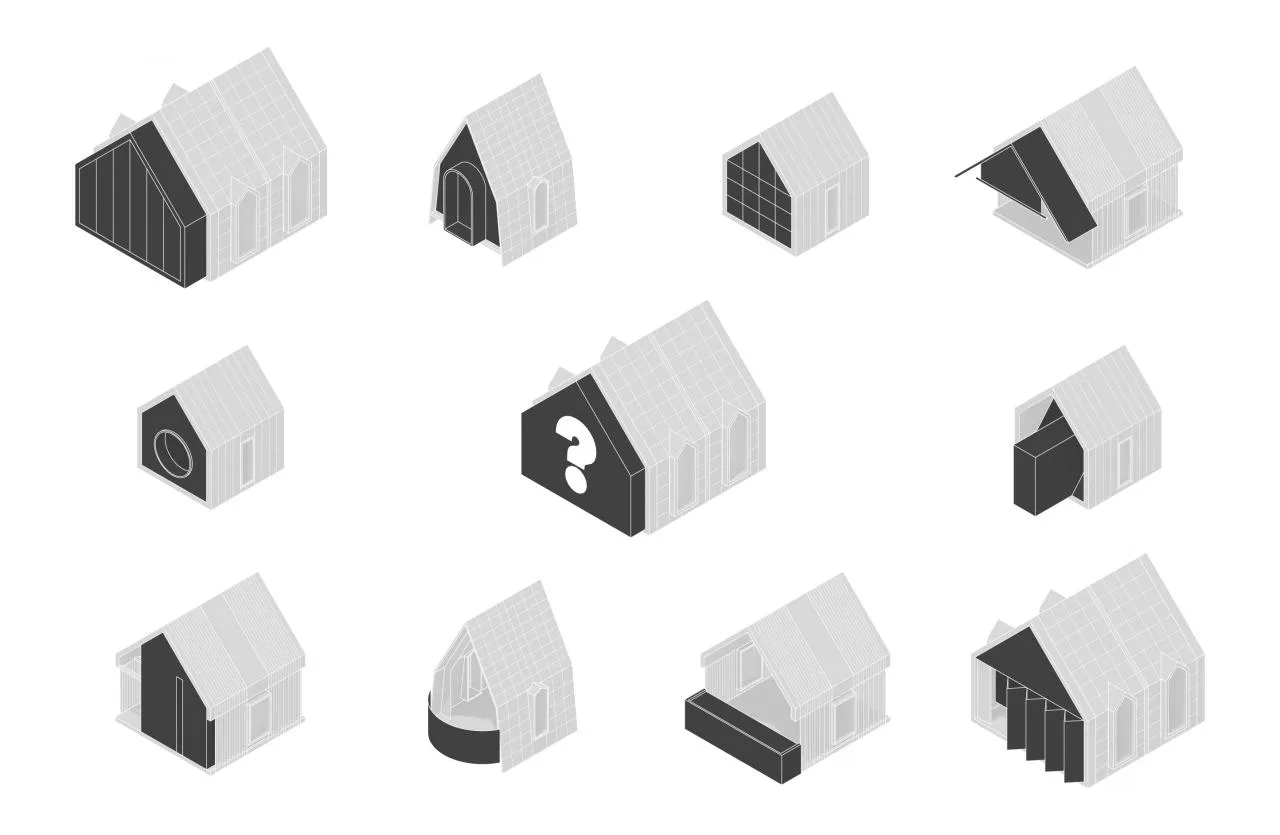
Exploring potential future spatial functions
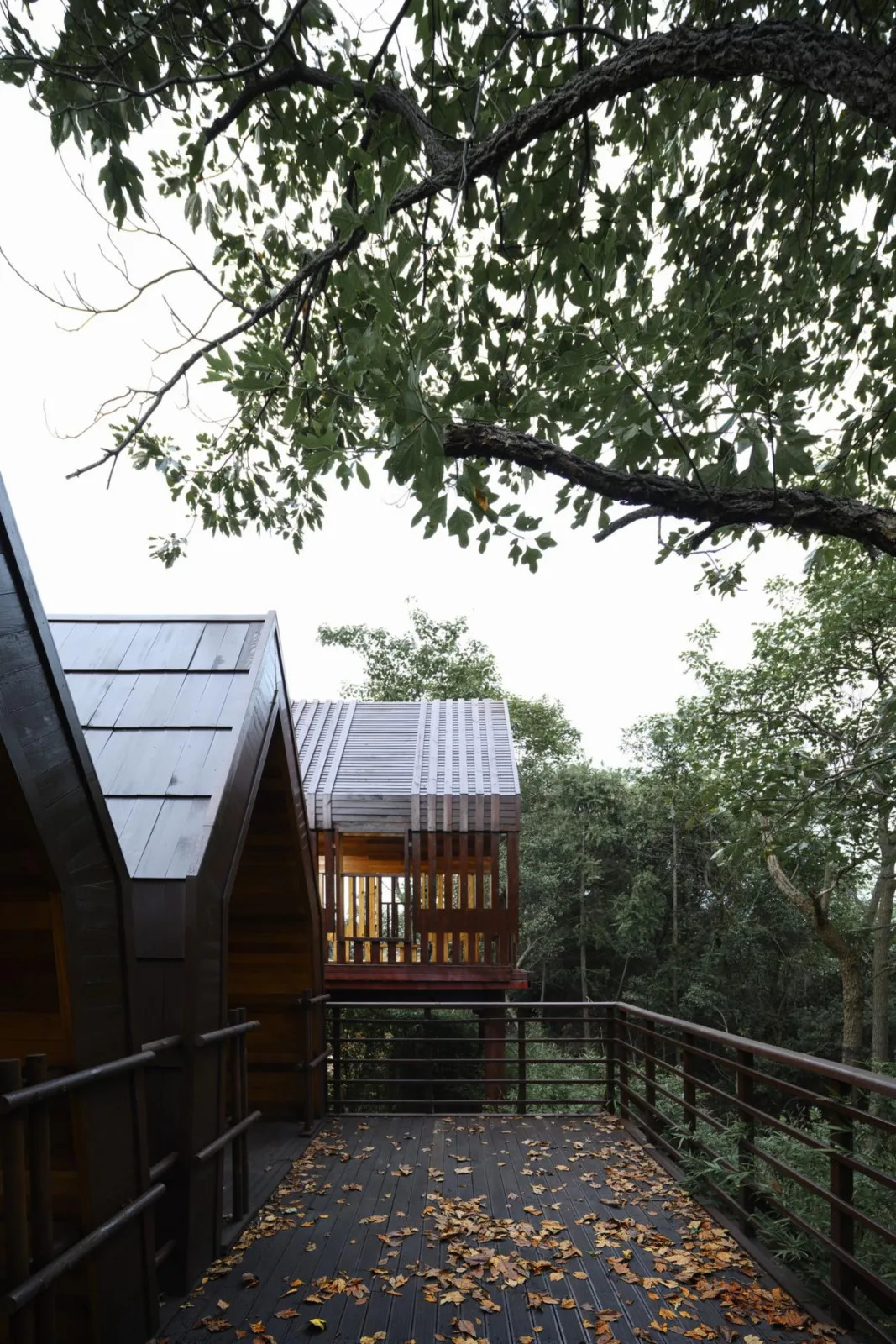
Fallen leaves scattered across the platform © Xu Yingda, Huang Di
Reflecting future possibilities, the three wooden house types showcased in the design vary in structure, scale, and openness. Their “hollow” design creates space and structural capacity for additional functions to be developed later.
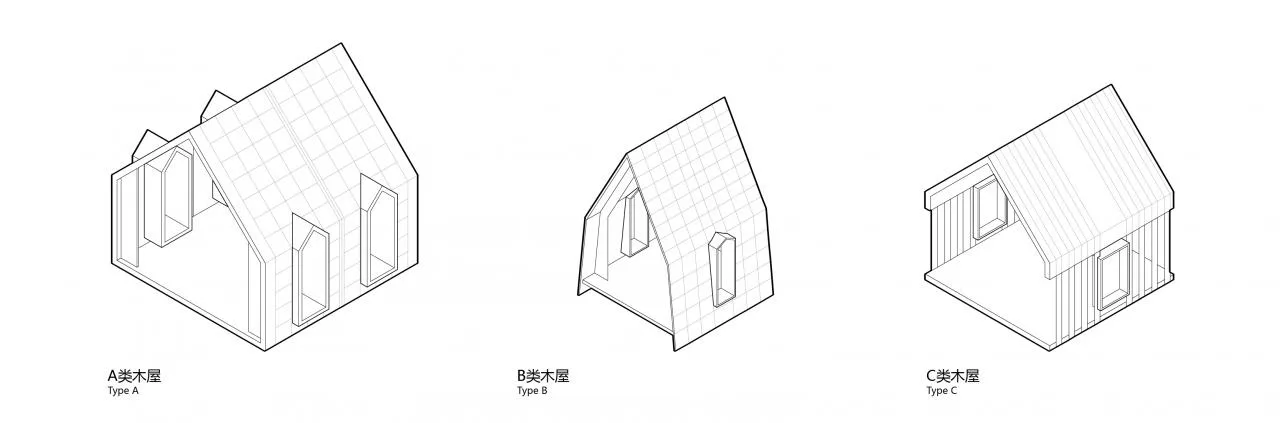
Three types of wooden houses
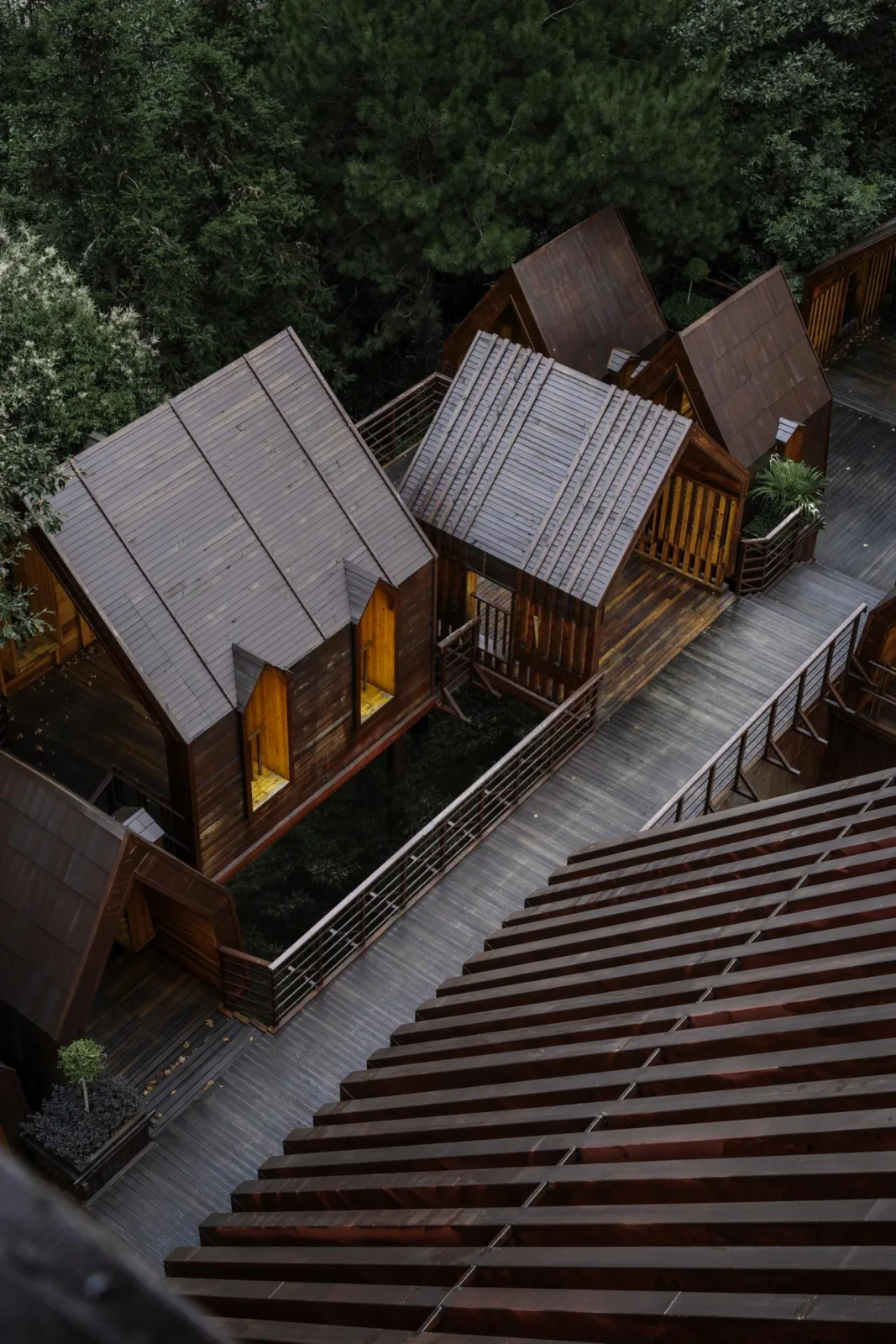
△ Combination of different wooden house types © Xu Yingda, Huang Di
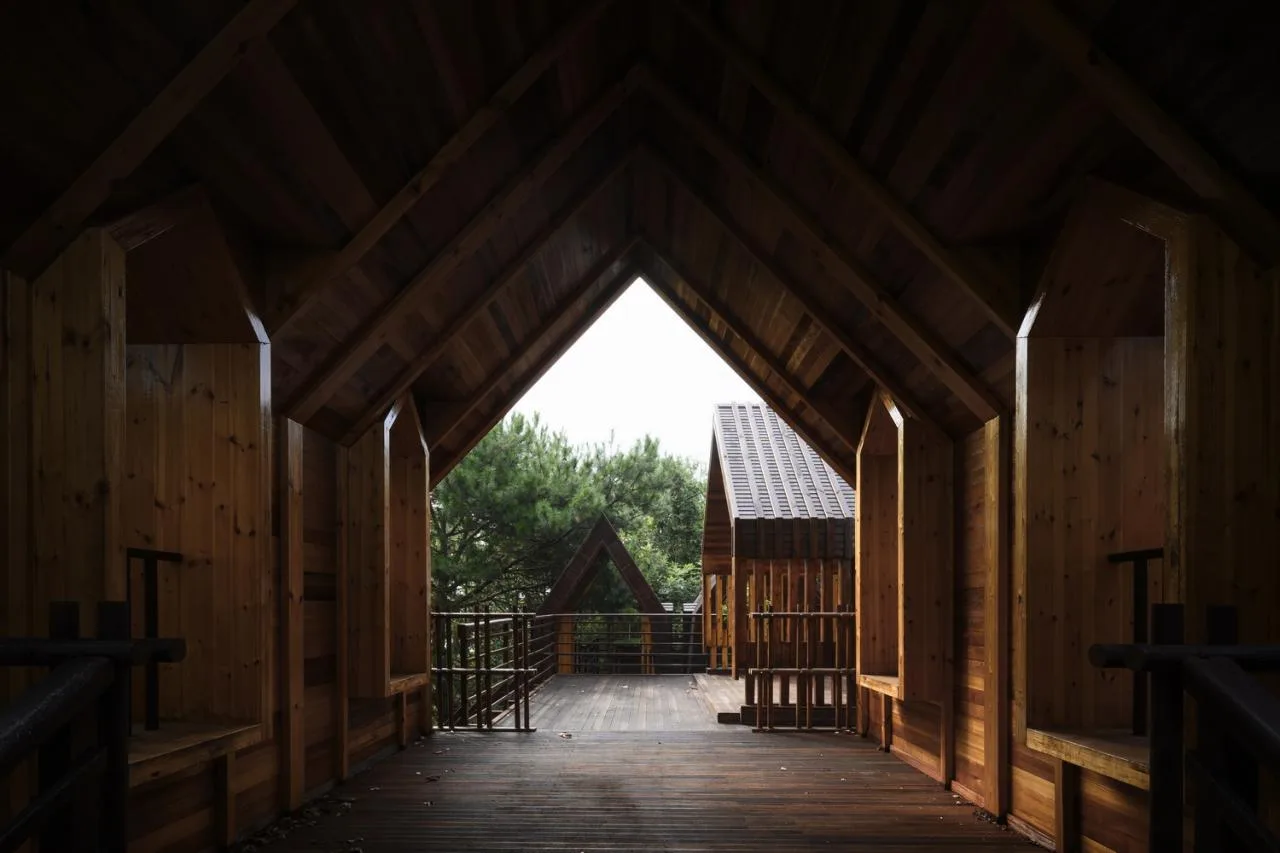
The “hollow” wooden house serves as a space for walking and resting, facilitating future functional enhancements © Xu Yingda, Huang Di
The multifunctional hall, positioned along the central axis of the “small town,” is an enlarged version of a wooden house. It acts as a guide for future extensions of the three wooden house modules and is the only building within the town offering indoor functions.
Under the vibrant canopy of flowers, trees, and tiles, it evokes a subtle ceremonial atmosphere.
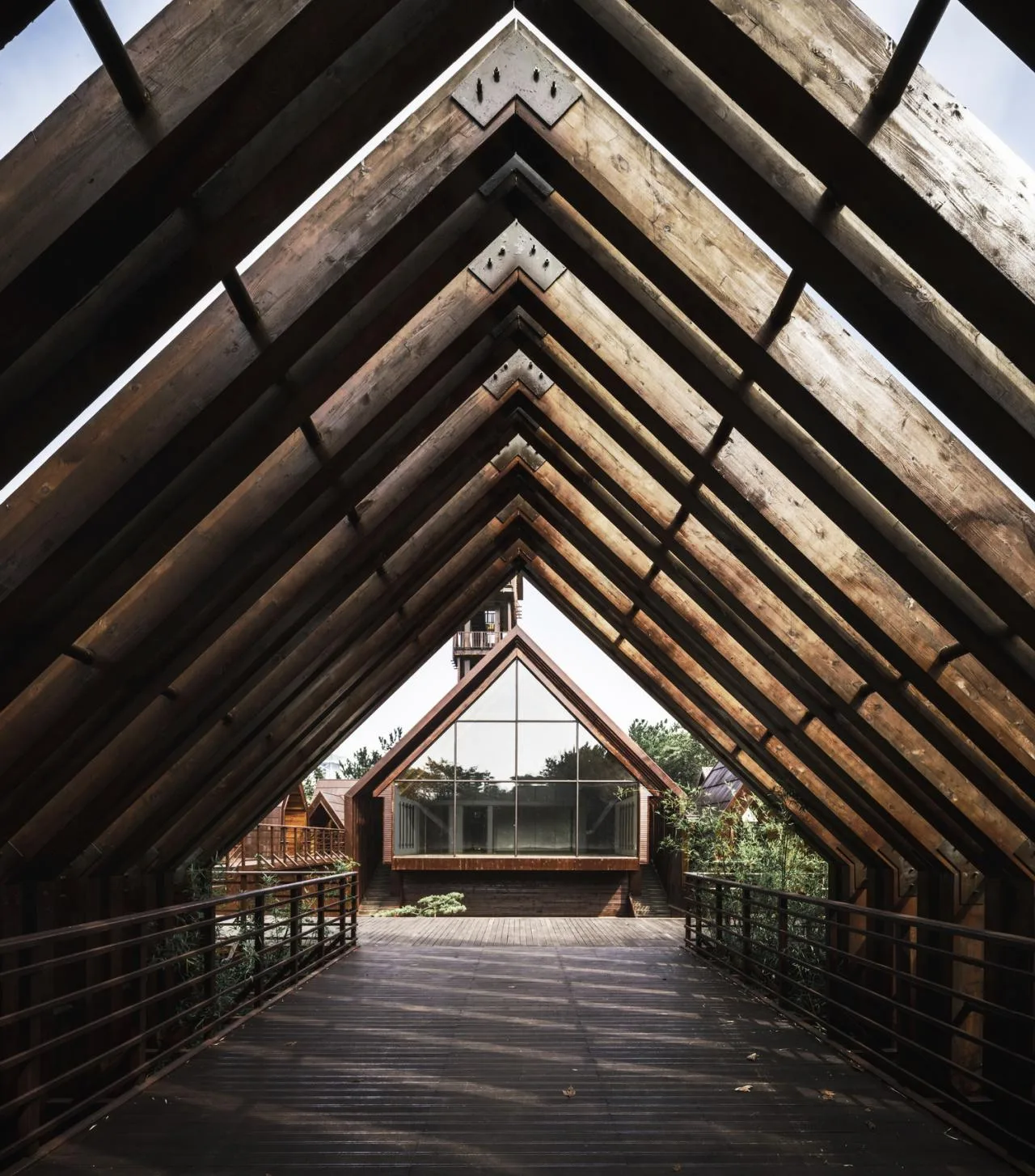
Multifunctional hall along the central axis © Xu Yingda, Huang Di
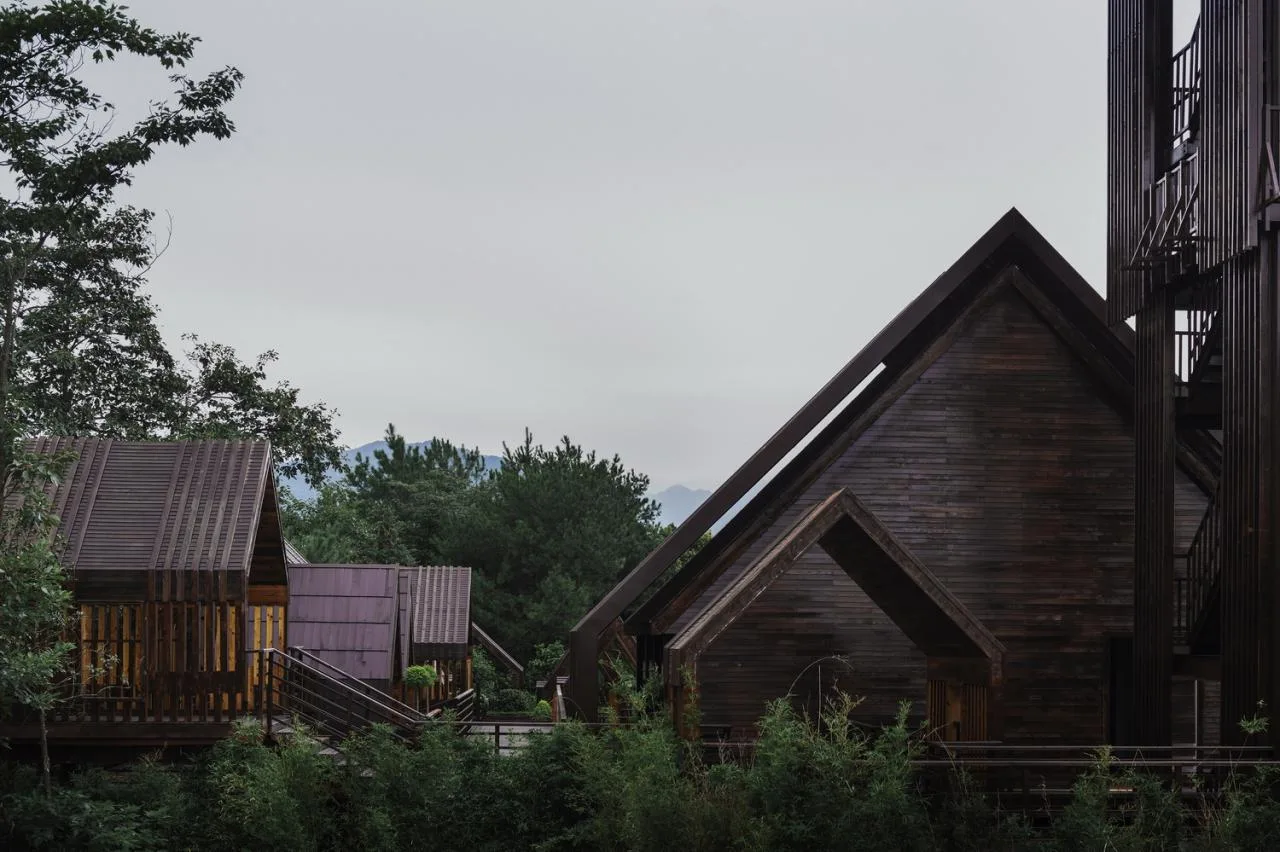
△ Northward view of the multifunctional hall © Xu Yingda, Huang Di
Inside, glass walls offer views across the central landscaped courtyard and public steps, aligning visually with the southern entrance platform. The courtyard accommodates gatherings and circulation, linking indoor and outdoor spaces on multiple levels through the hall, steps, ring corridor, and observation tower during events.
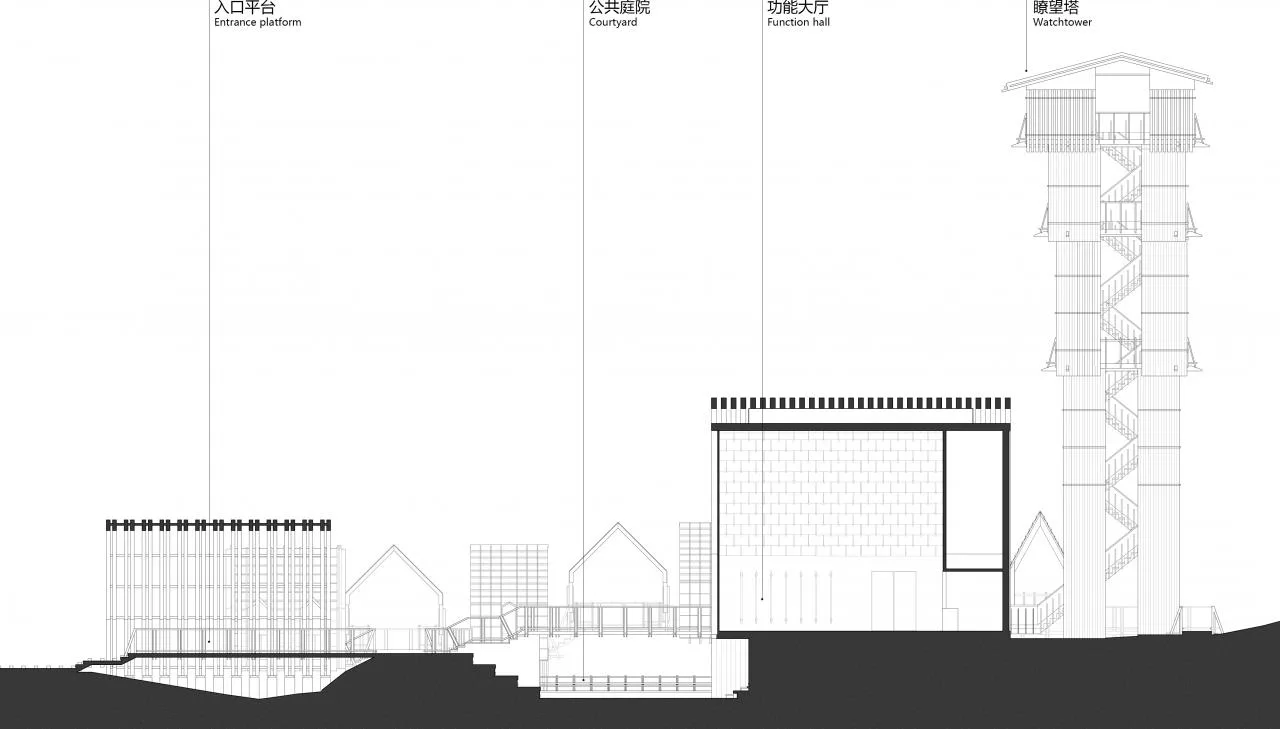
△ Section diagram
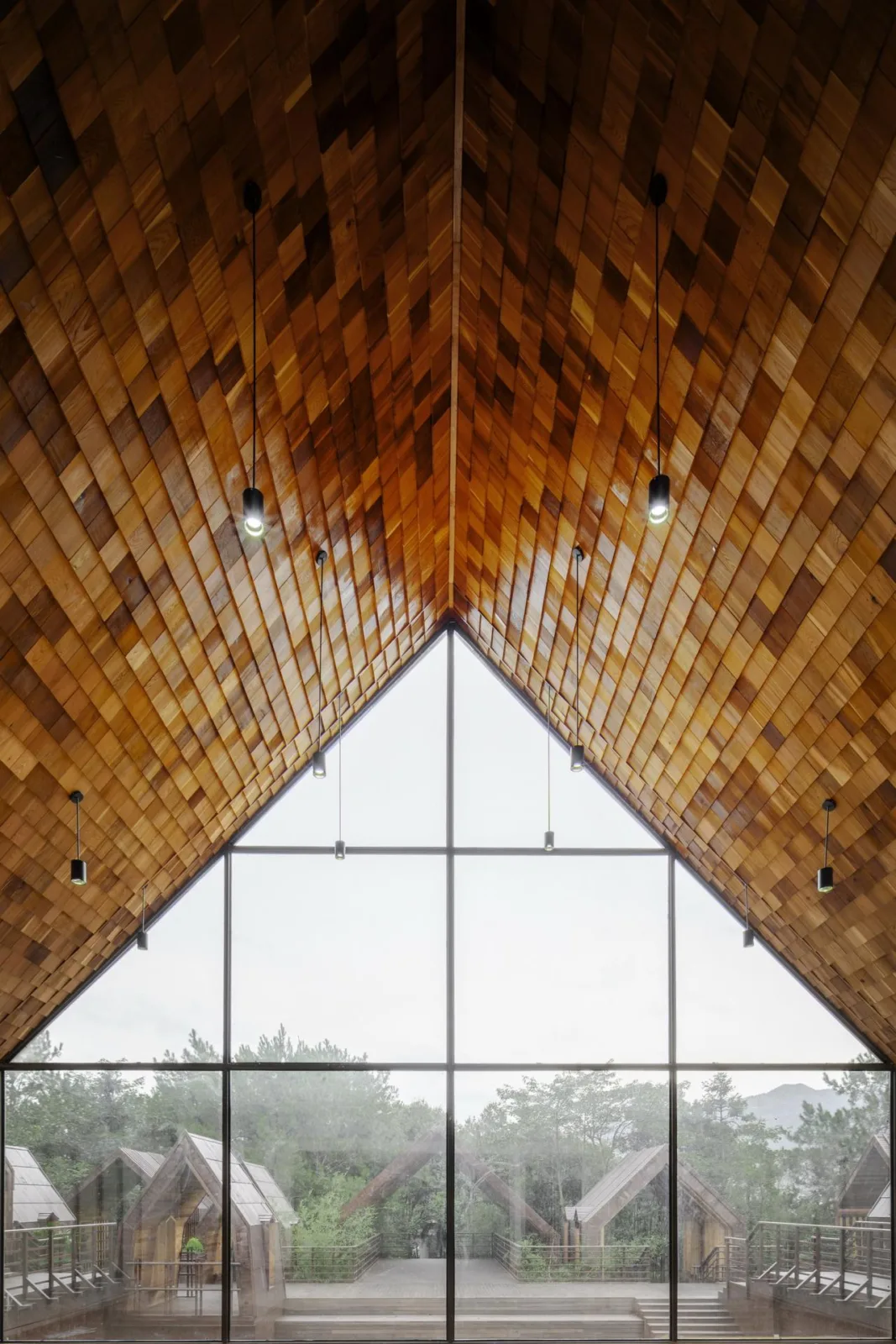
View towards the vestibule from the multifunctional hall © Xu Yingda, Huang Di
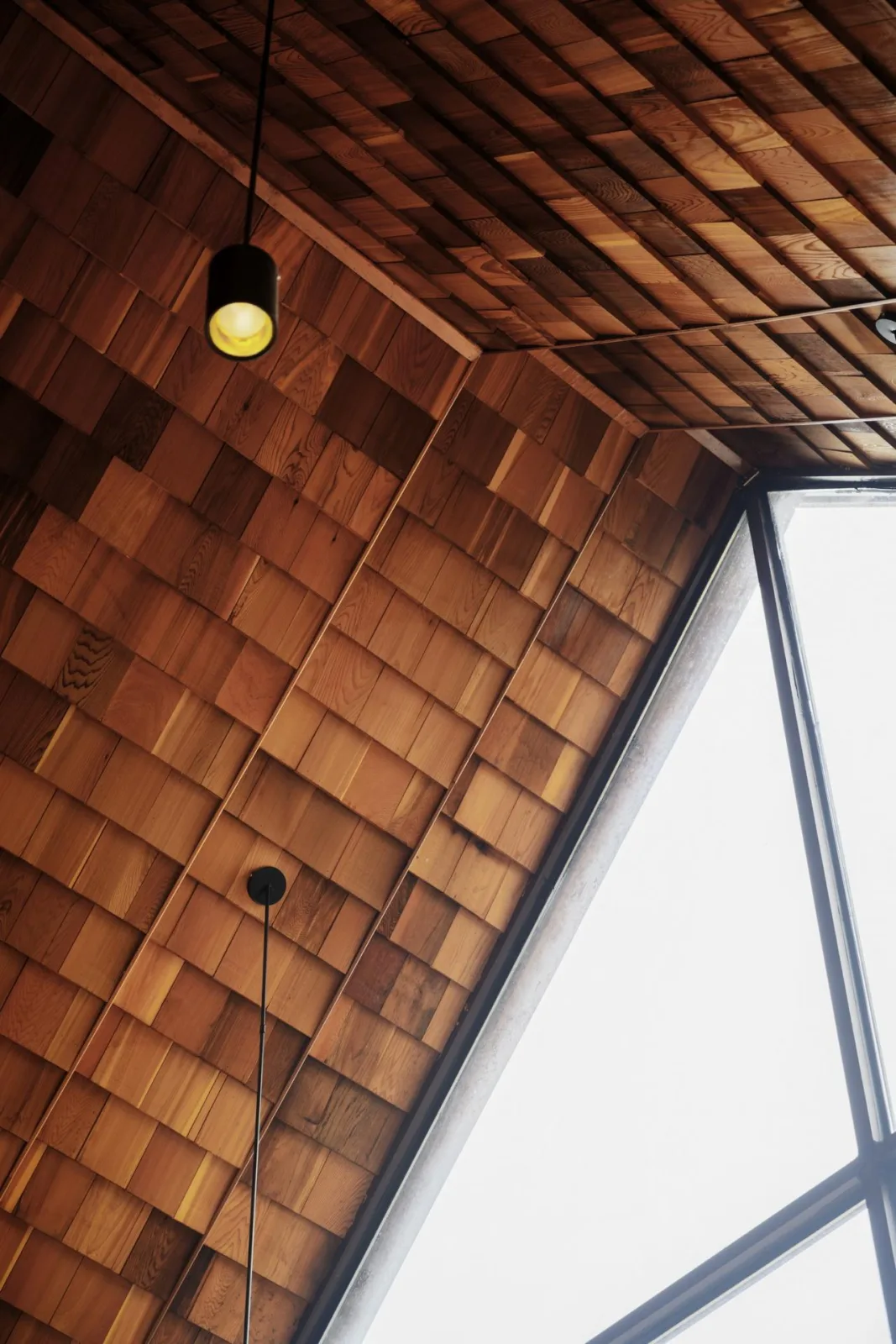
Details of wooden tiles © Xu Yingda, Huang Di
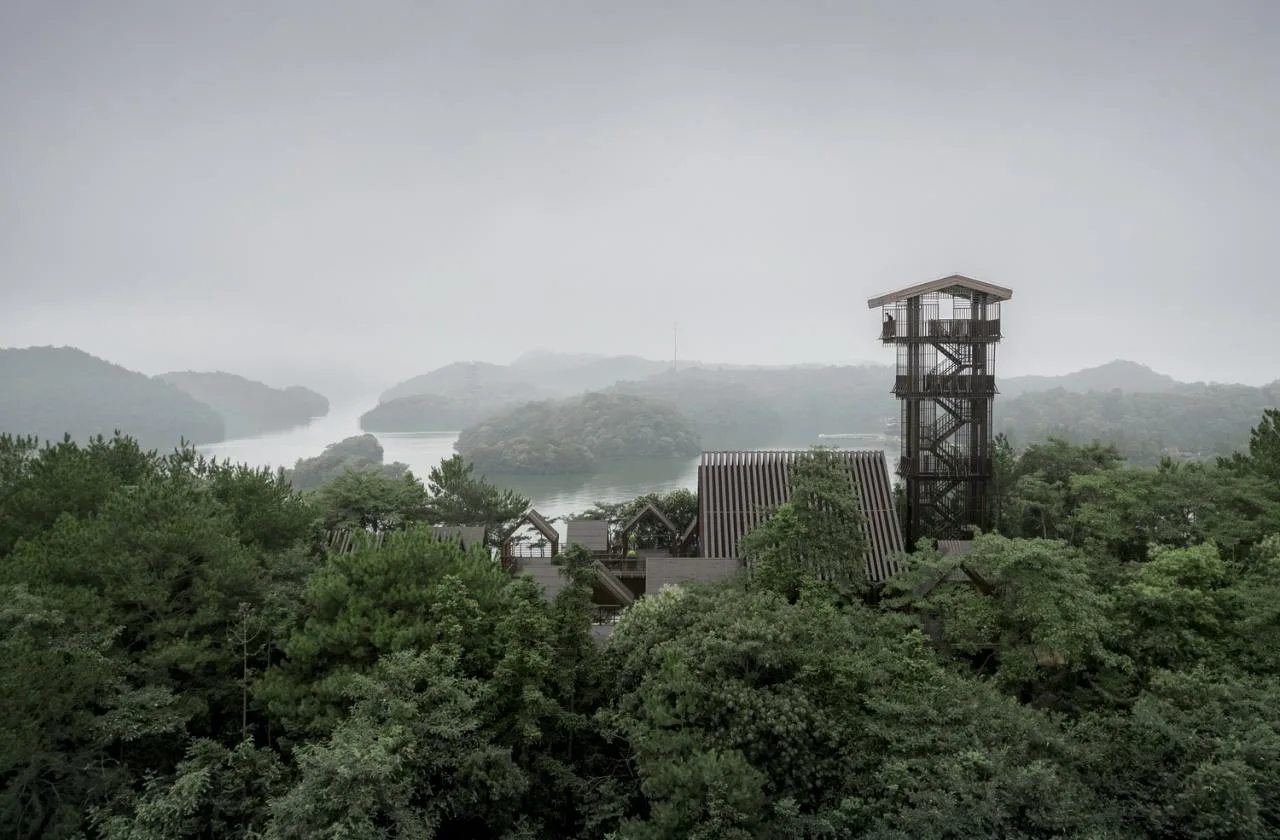
The steel observation tower is the island’s highest point, featuring a broad top that tapers downward. It provides panoramic views of the entire lake area.
Its anti-corrosion wooden grid facade is designed to reduce wind resistance and offers varying degrees of transparency from different viewpoints. From boats on the lake, the tall towers rising through the jungle appear faint and mysterious. During sunrise and sunset, sunlight filters through the gaps in the grille, creating a captivating effect.
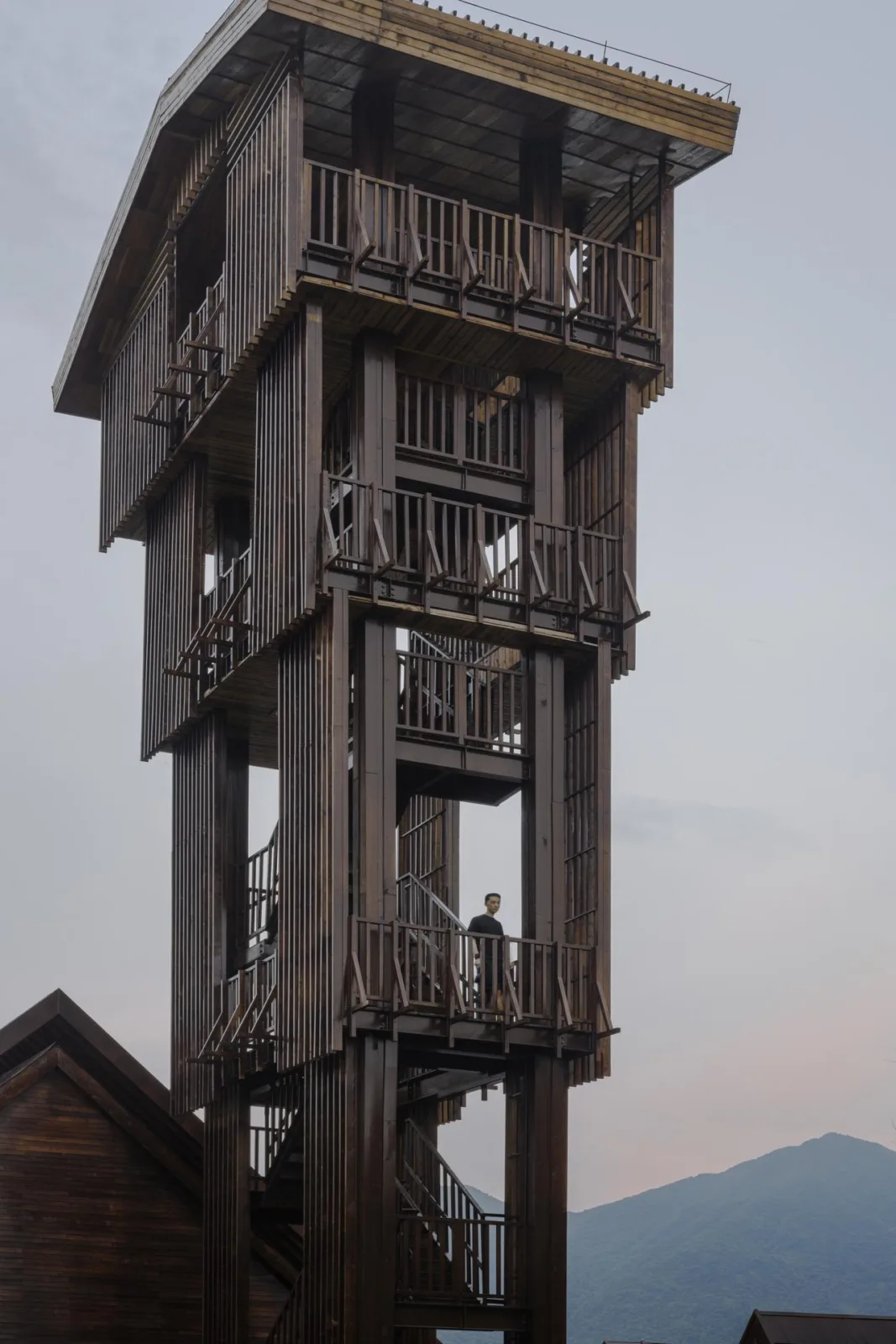
The watchtower standing tall on the island © Xu Yingda, Huang Di
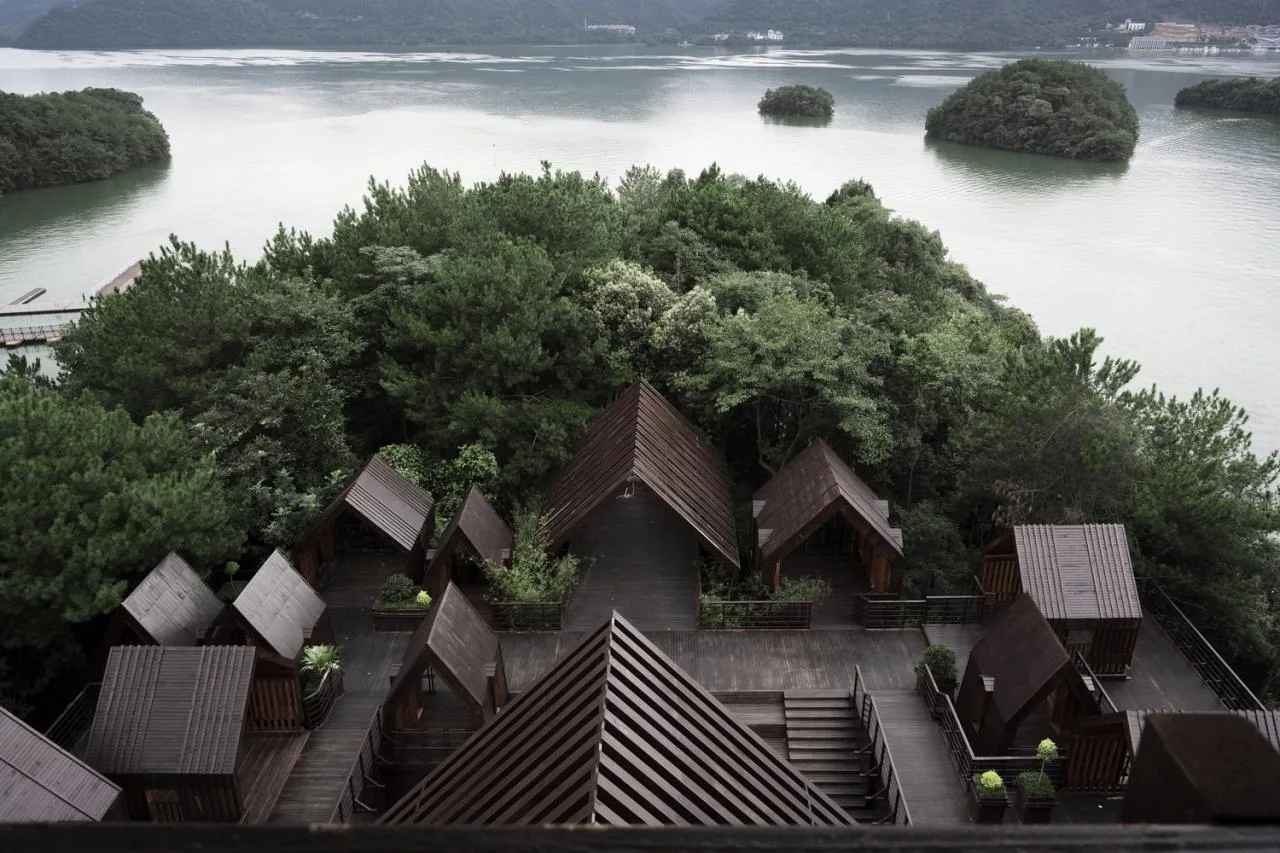
View of Wooden Town from the watchtower © Xu Yingda, Huang Di
△ The facade shows varying transparency from different perspectives © Xu Yingda, Huang Di
The unique location of this project sparks curiosity about its future. We envision many possible features and events: tent campsites, homestays, drone obstacle races, hot air balloons, nature classrooms, yoga sessions, and outdoor expansion activities. The space itself holds endless possibilities.
Or perhaps, no one will intervene, allowing the plants to grow wild and gradually reclaim the space, turning it back into a hidden sanctuary.
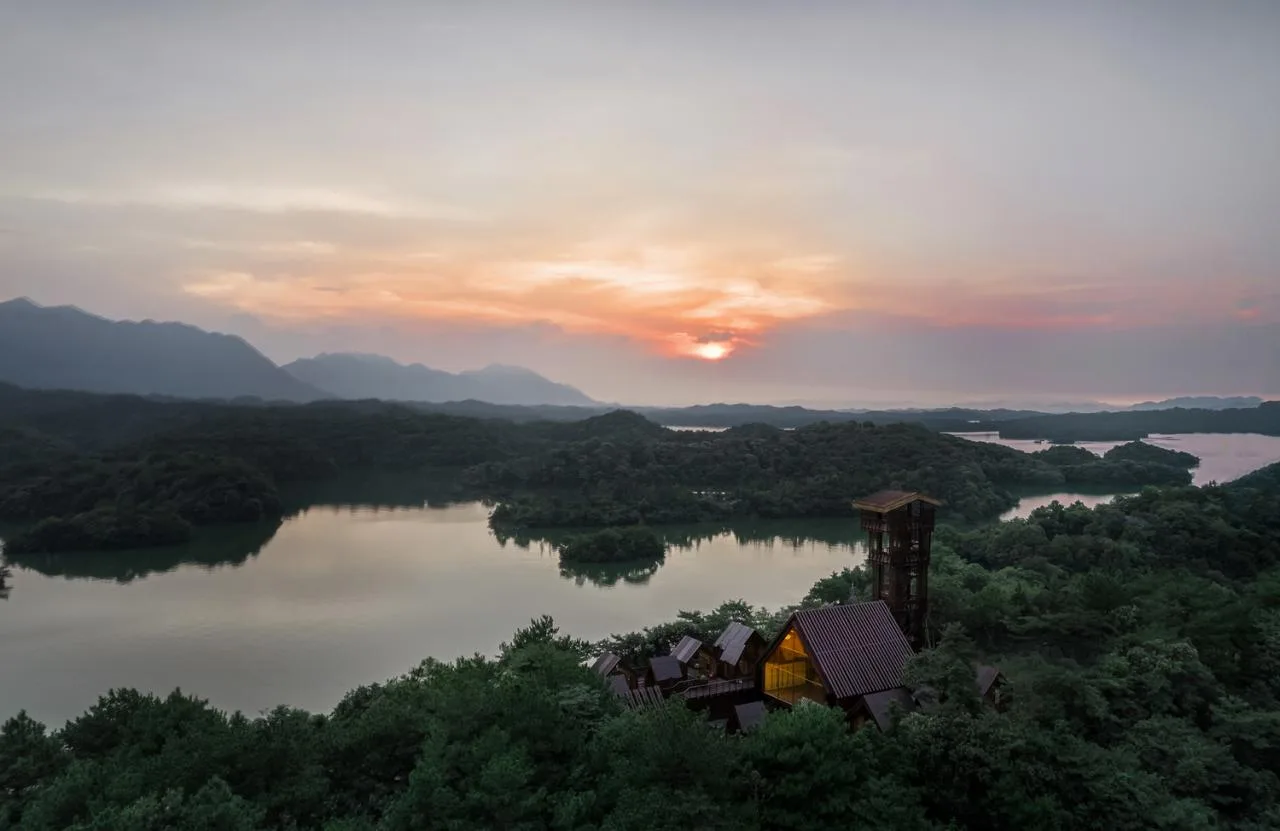
Lights gradually illuminating under the sunset © Xu Yingda, Huang Di
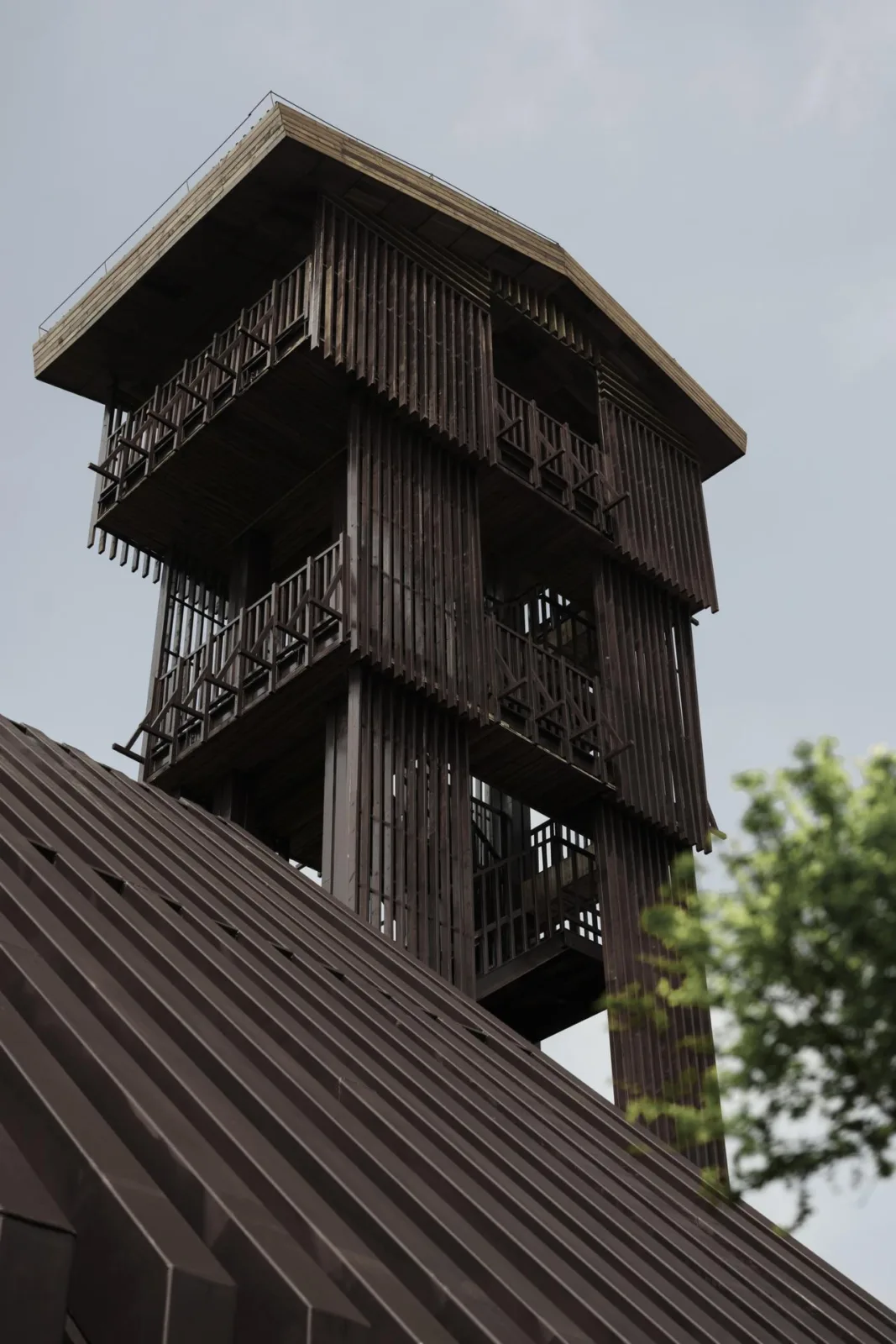
The observation tower rising above the rooftops © Xu Yingda, Huang Di
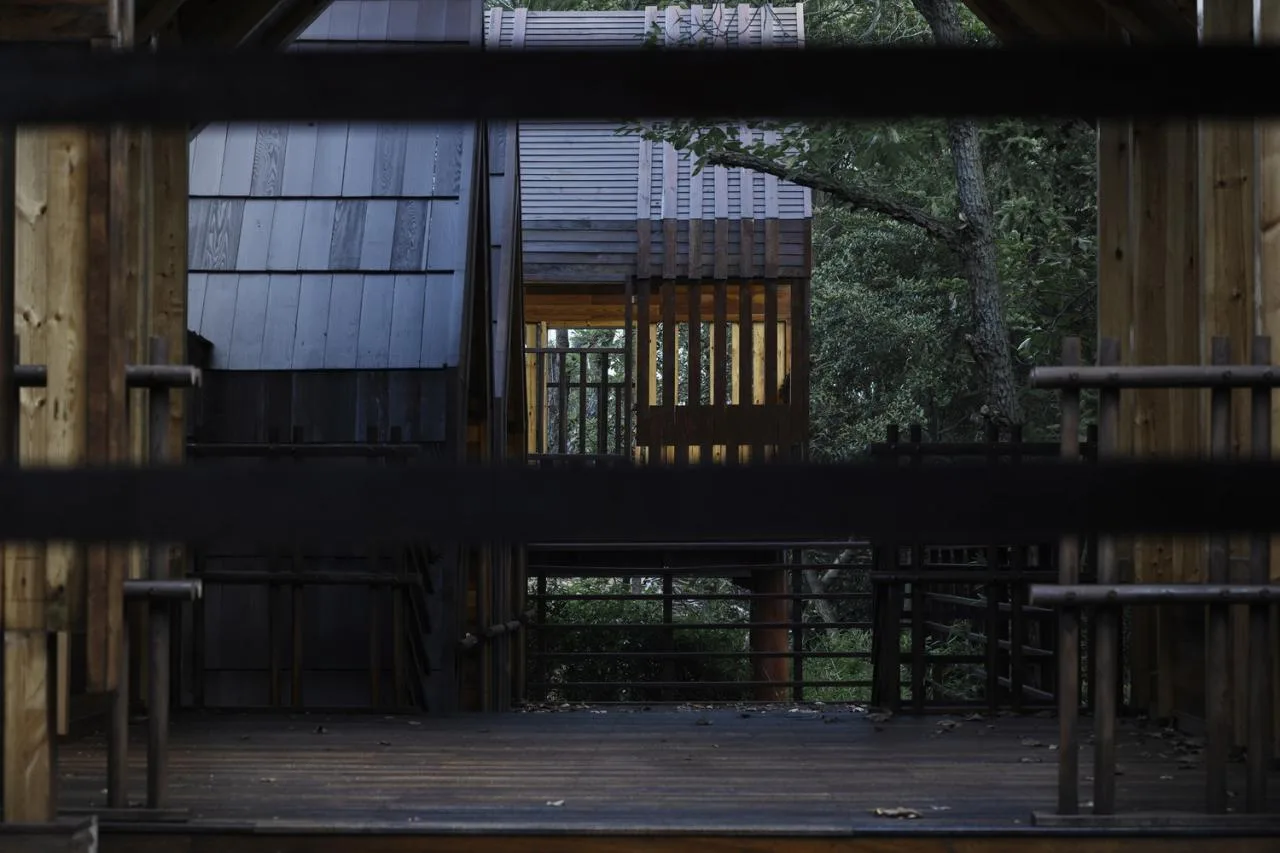
△ Jungle and wooden houses © Xu Yingda, Huang Di
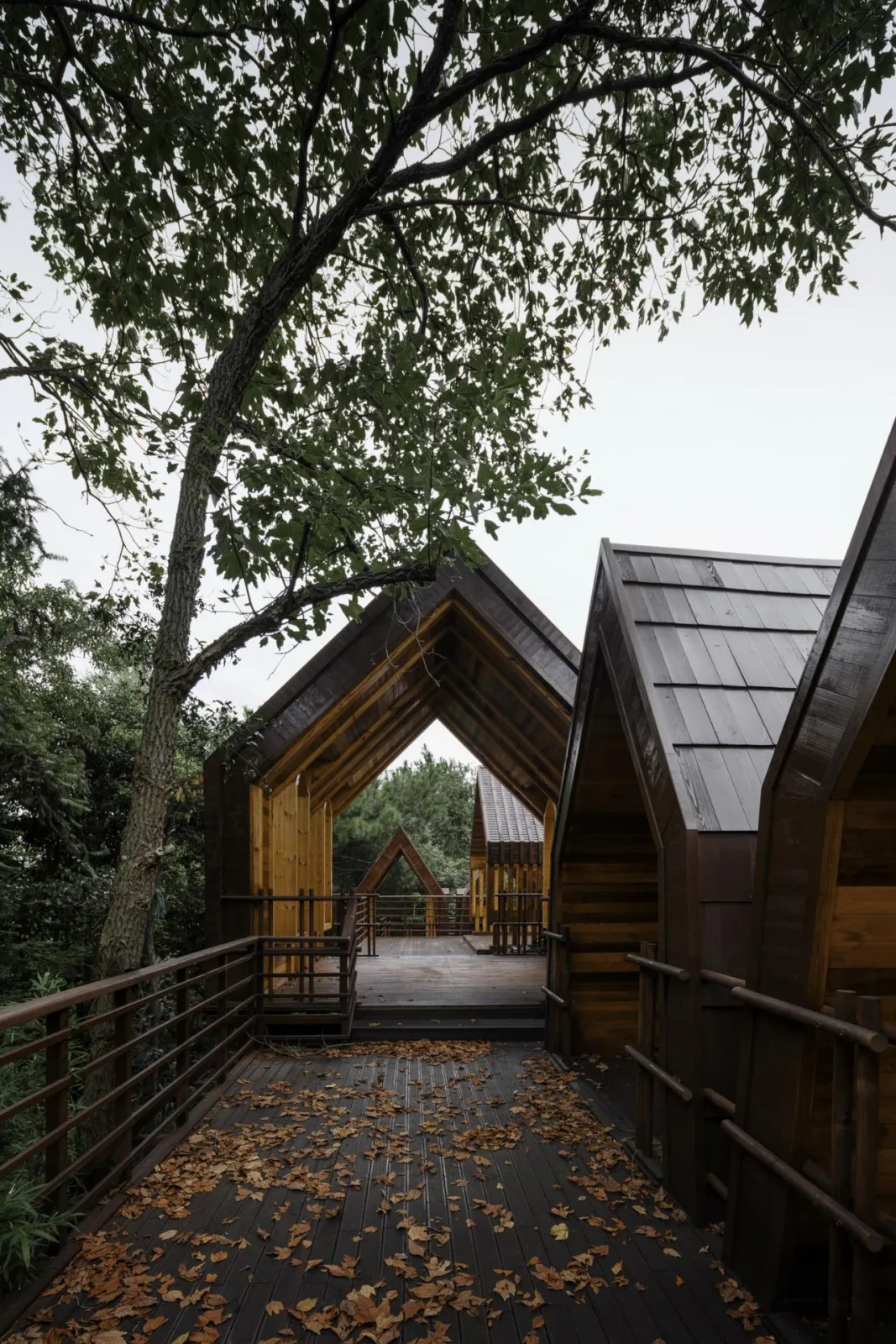
The platform gently transitions between the wooden houses and the jungle © Xu Yingda, Huang Di
Project Information
Project Name: Wooden House Town: Island, Jungle, Small Wooden House
Designer: Shanghai Pingjie Architectural Design Firm
Completion Date: May 2021
Chief Creative Designer: Huang Di
Design Team: Huang Di, Xu Meng, Xiao Mingfeng, Liang Baolei, Sun Ying, Ding Min, Jiang Ying, Deng Wuxinzi, Xiao Xiangdong
Project Location: Jiujiang, Jiangxi
Photography Credits: Xu Yingda, Huang Di
Partners: Xi’an Donglue Intelligent Industry, Suzhou Remake Design
Building Area: 1,198 square meters















Must log in before commenting!
Sign Up