
Project Origin
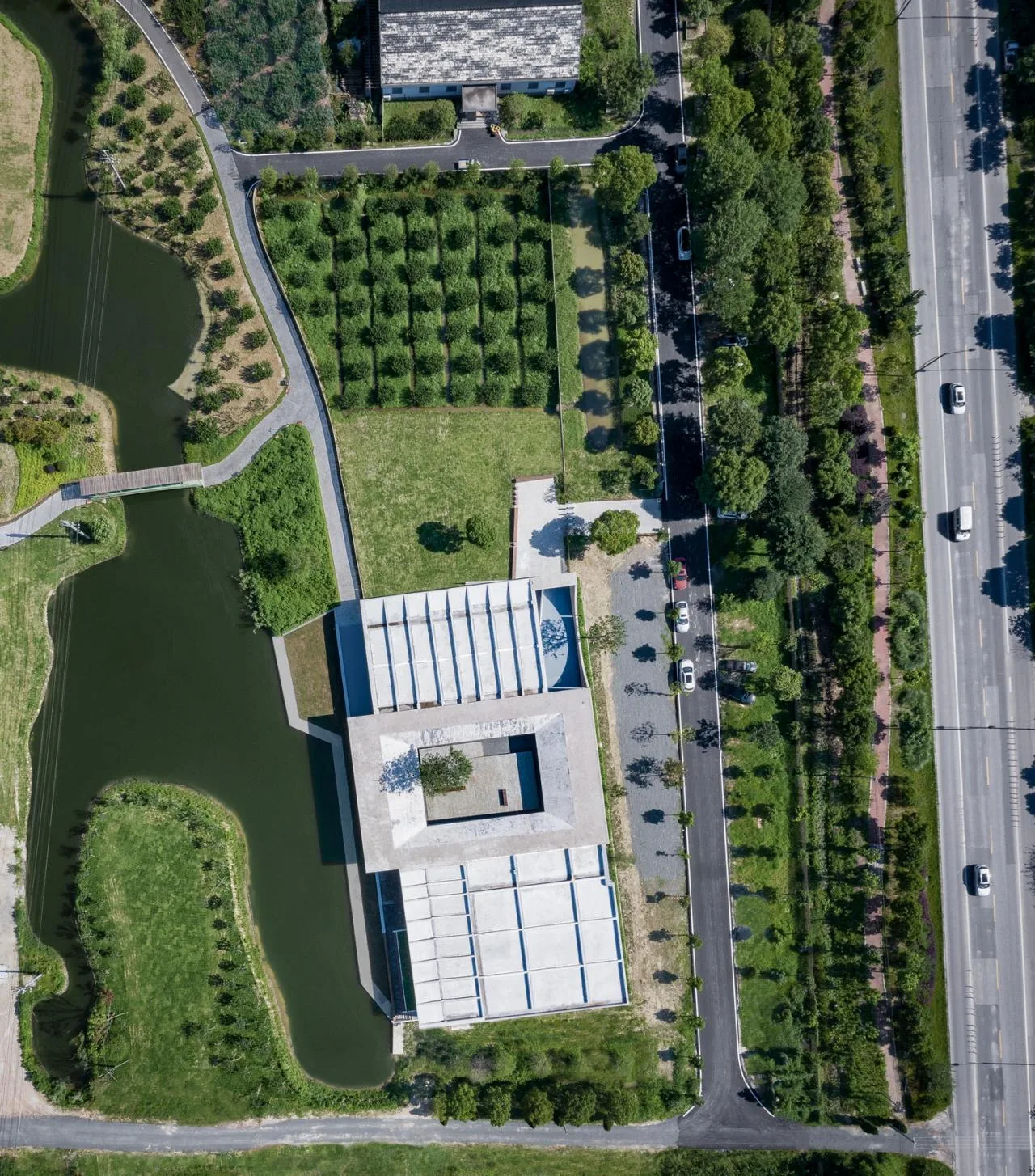
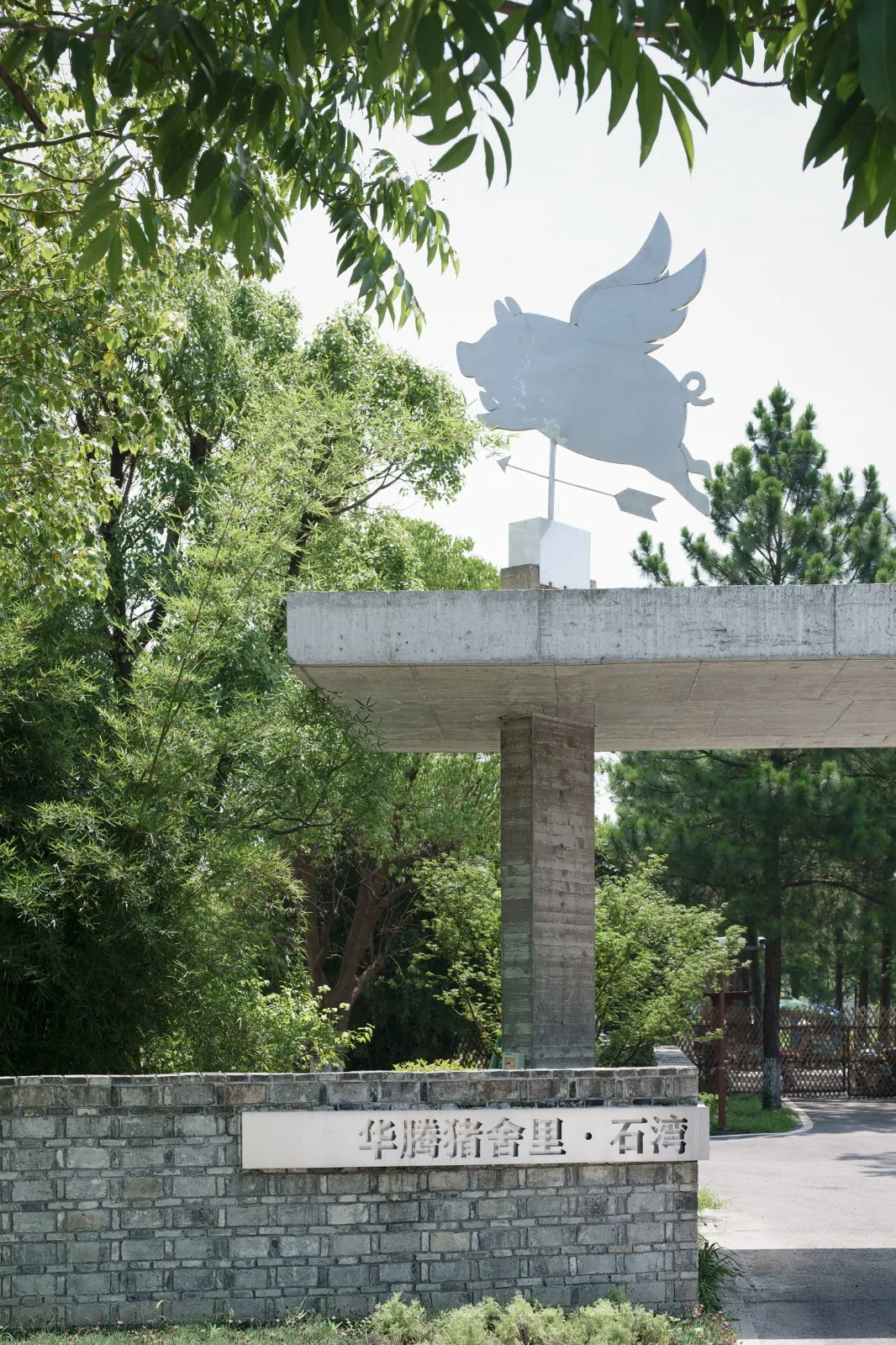
In early 2019, the firm “Actually Architecture” was commissioned by Huateng Animal Husbandry to design the exhibition hall for the “Shiwan Pig House,” located within an agricultural and breeding-themed tourism park in Shimen Town, an ancient town south of Wuzhen. From the initial planning phase, the aim was to preserve the park’s natural atmosphere as much as possible. Approaching the site from the southwest corner, visitors encounter a plum grove and open grassland enclosed by bamboo fences, setting a tranquil, rustic tone. This natural setting inspired the design direction for the exhibition hall to embody a simple, raw aesthetic that harmonizes with its environment.
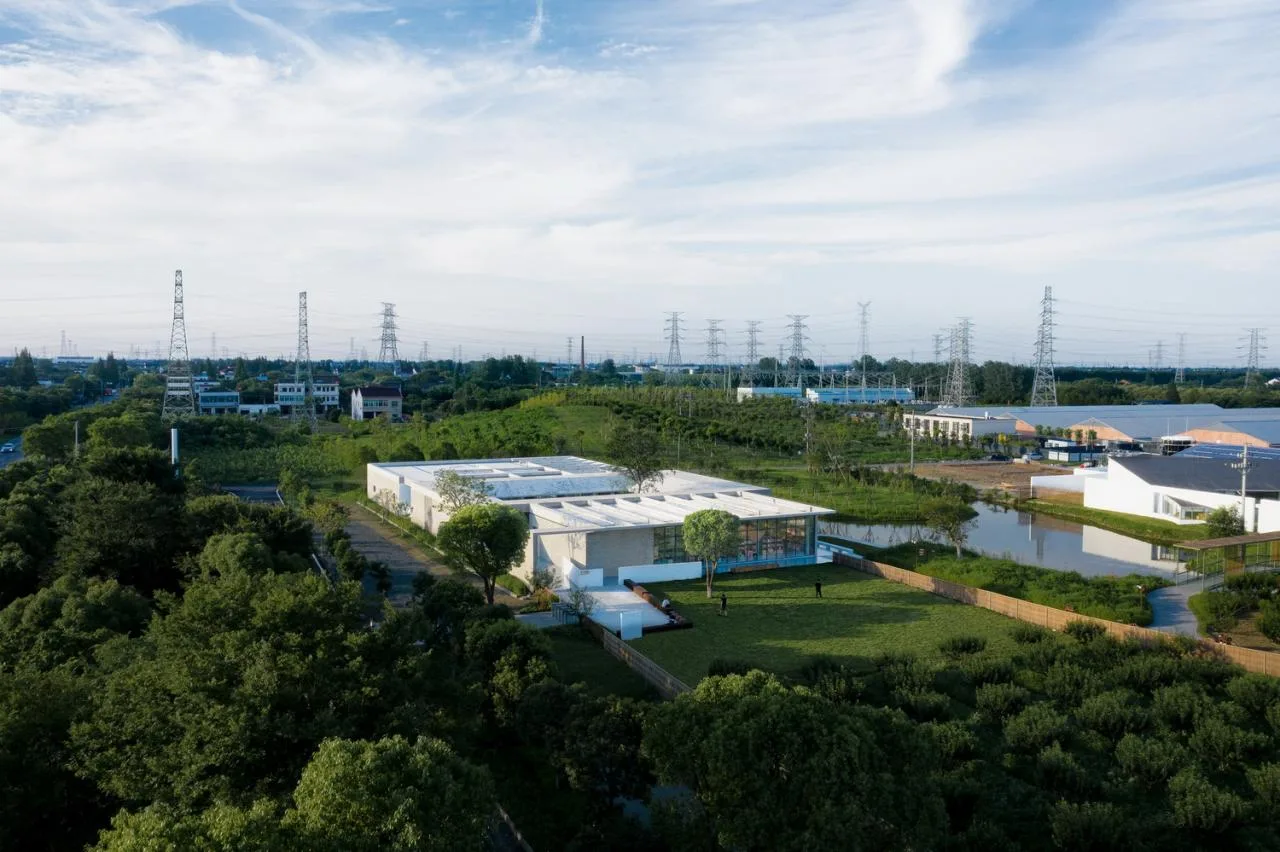
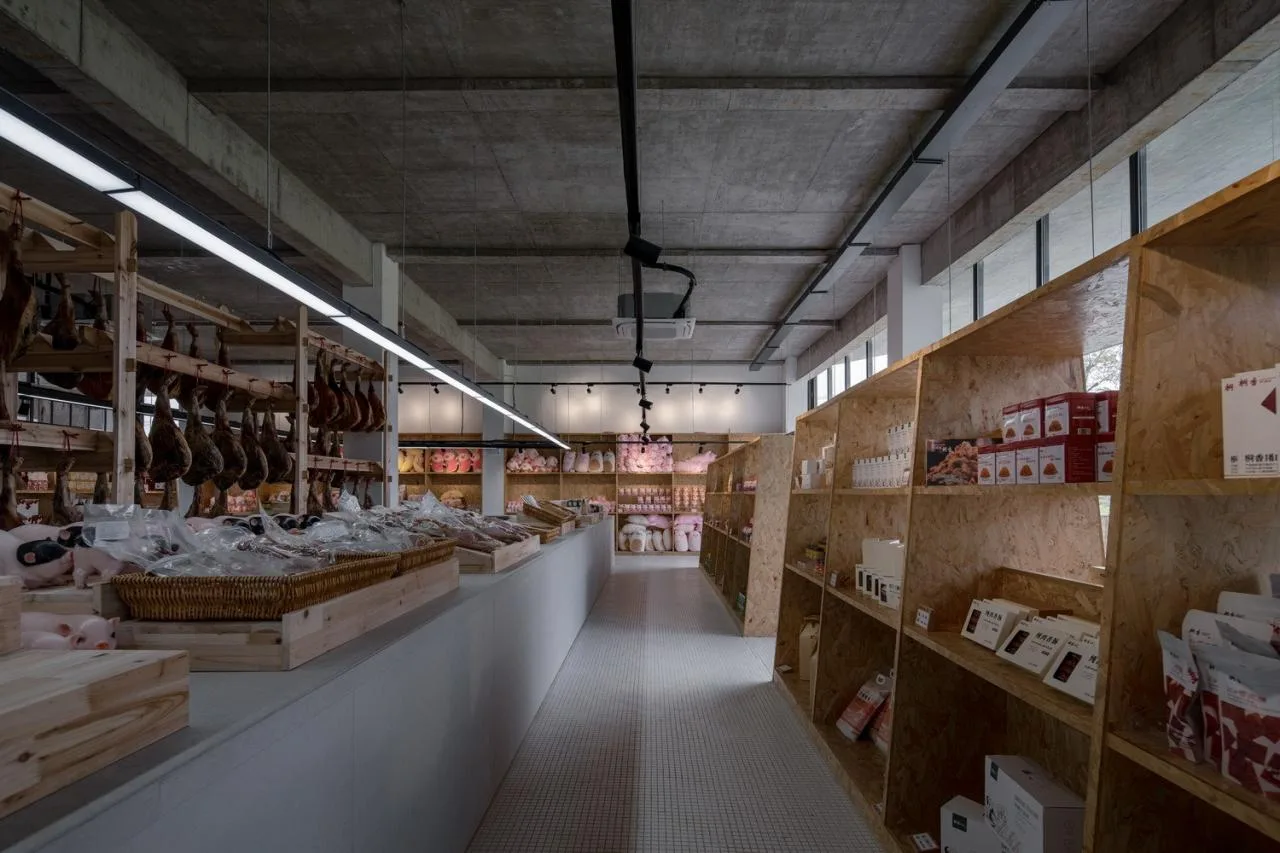
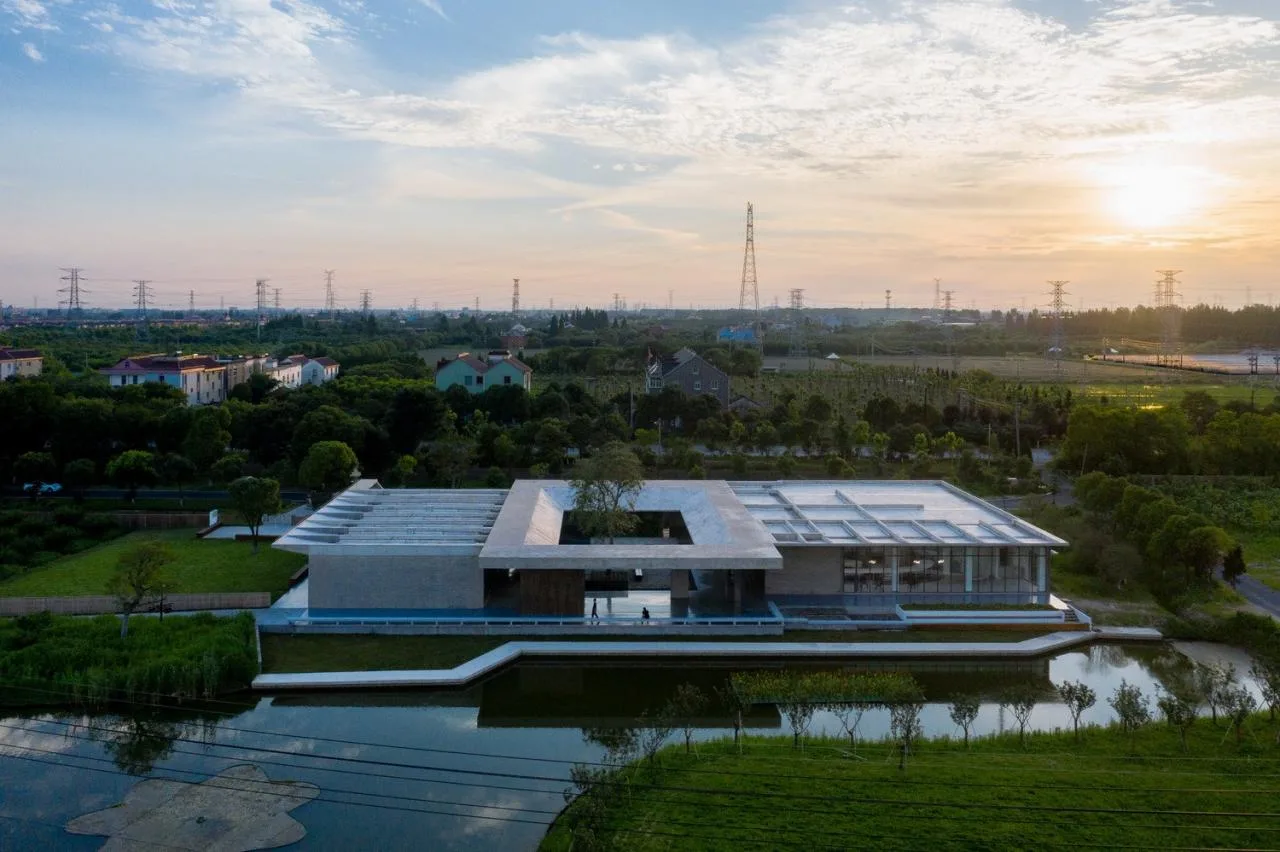
The exhibition hall is situated on the park’s western edge, adjacent to the main entrance. It lies west of the municipal road and east of the park’s internal landscape and water features, facing the organic restaurant across the lake. The building’s layout consists of two wings and a central courtyard, with visitors entering from south to north. The sequence includes a souvenir shop, courtyard, and exhibition hall, carefully designed to foster subtle visual and sensory connections between the courtyards and the surrounding natural landscape from the outset.
First Entry: The “Moon Wall”
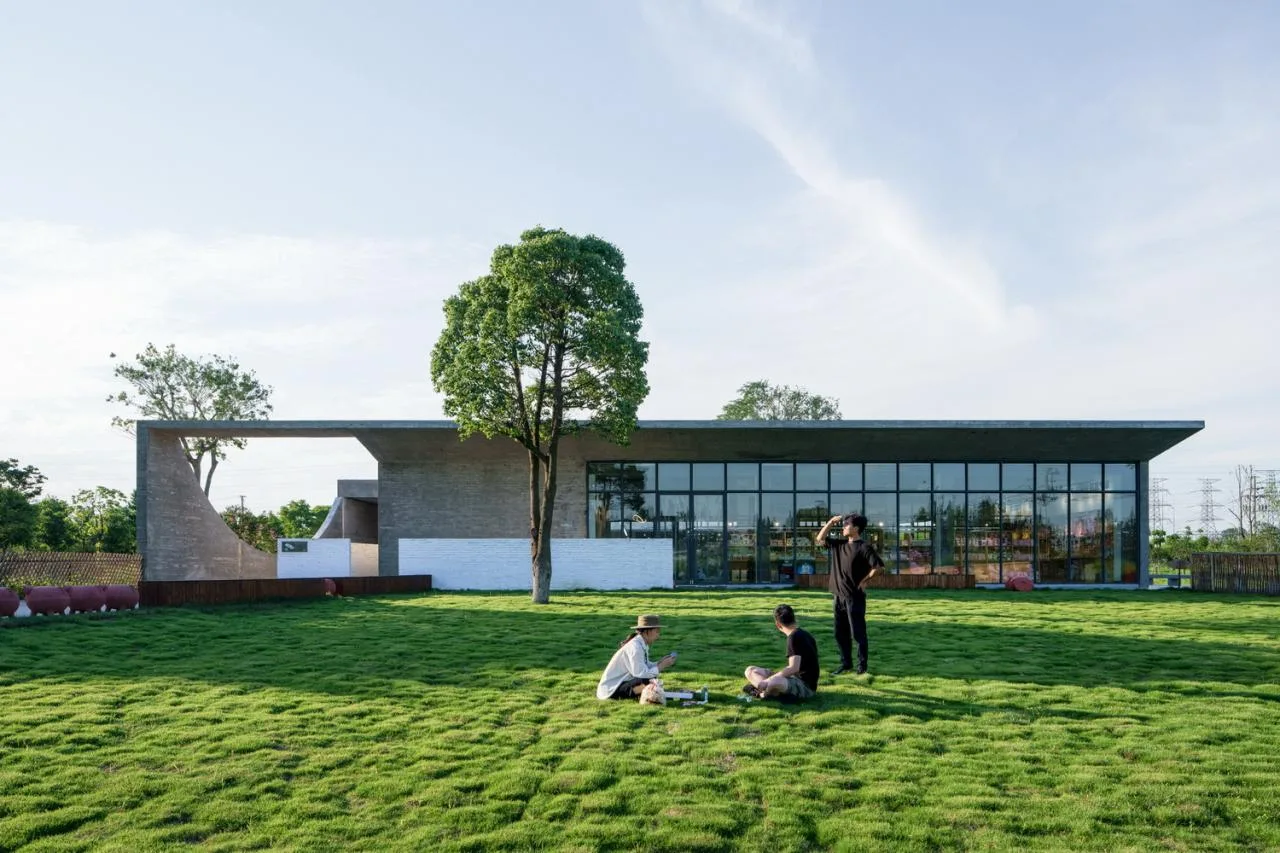
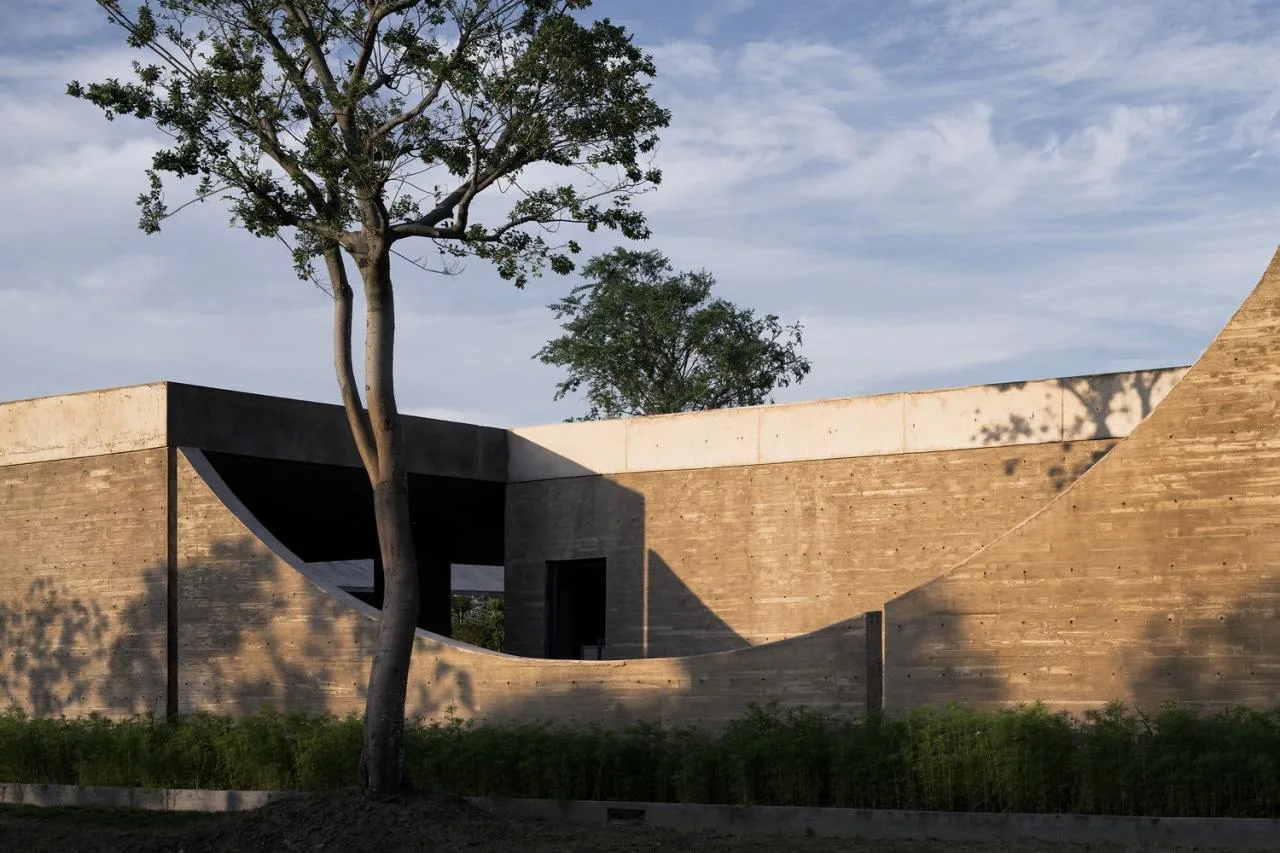
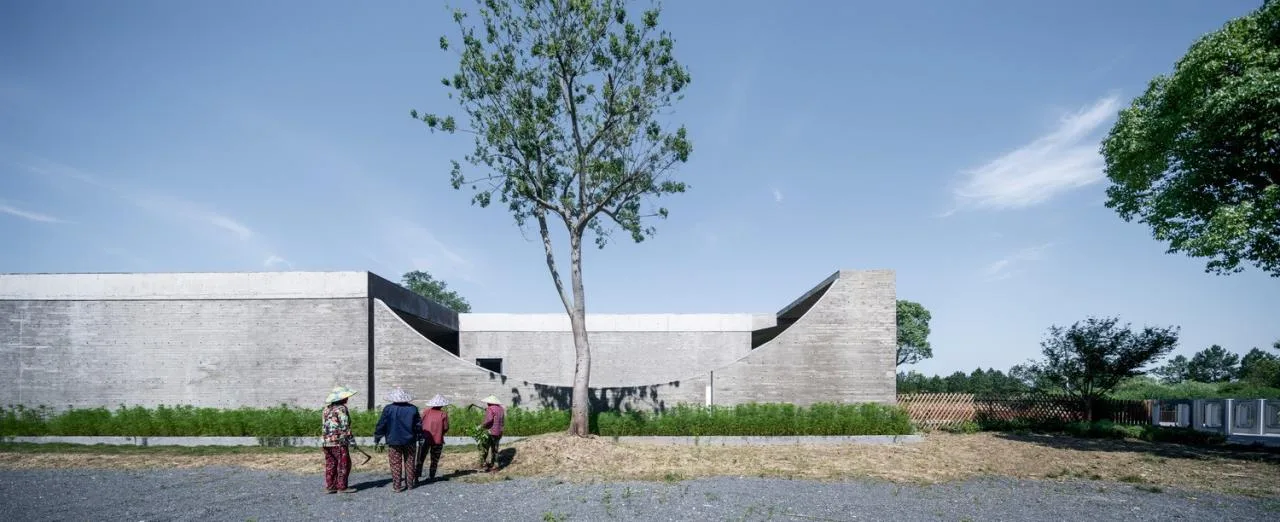
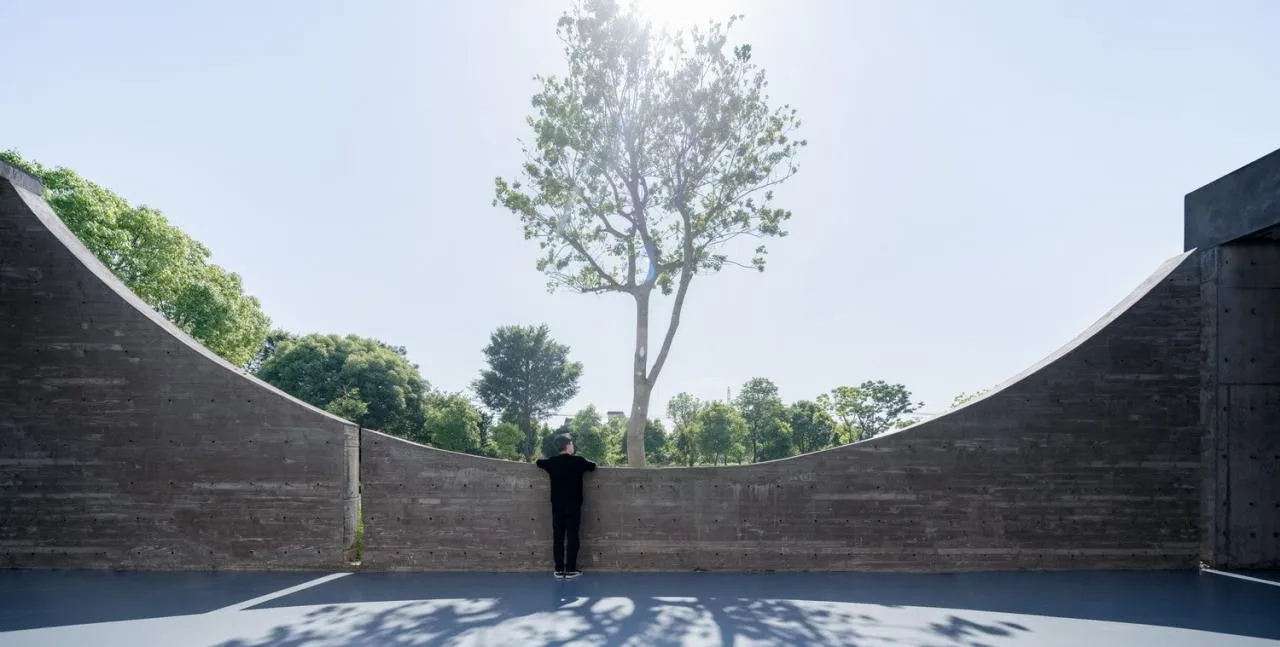
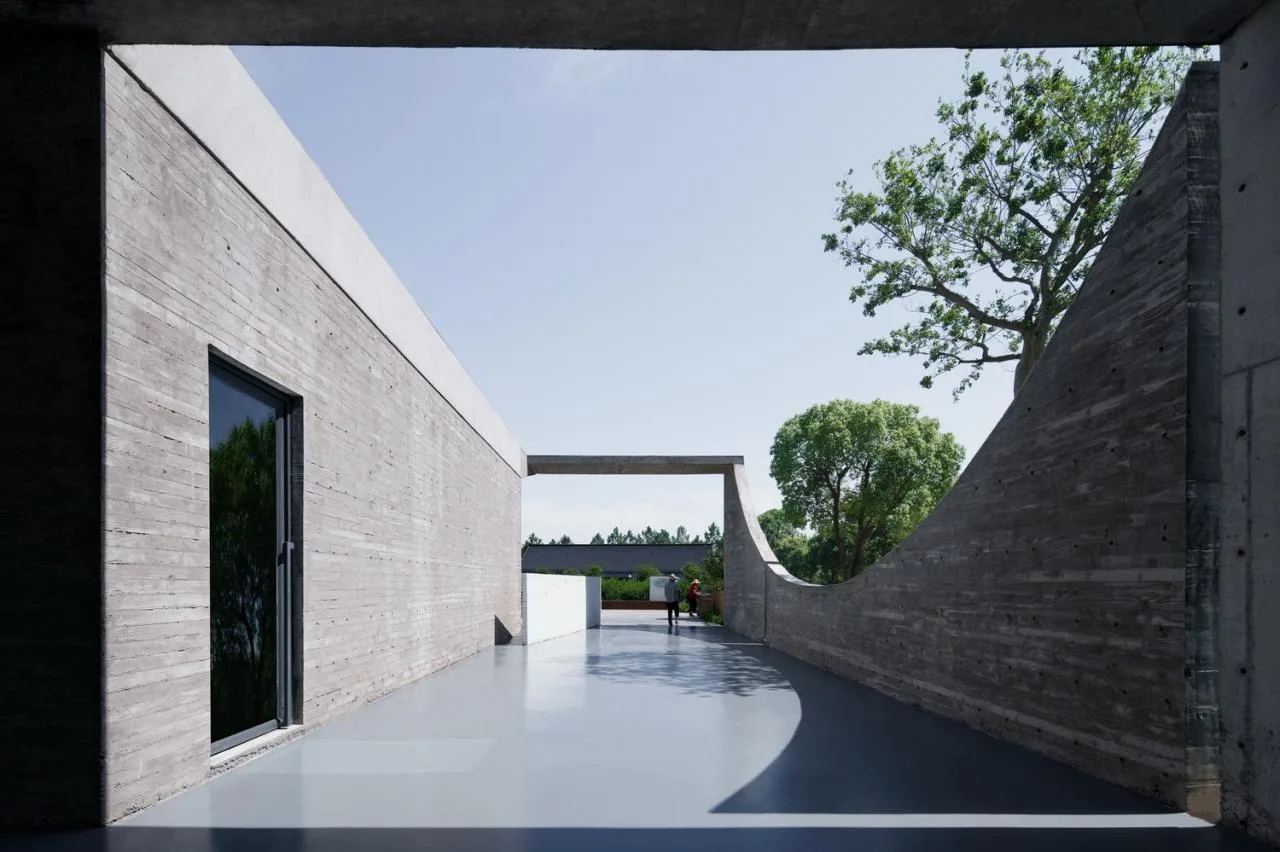
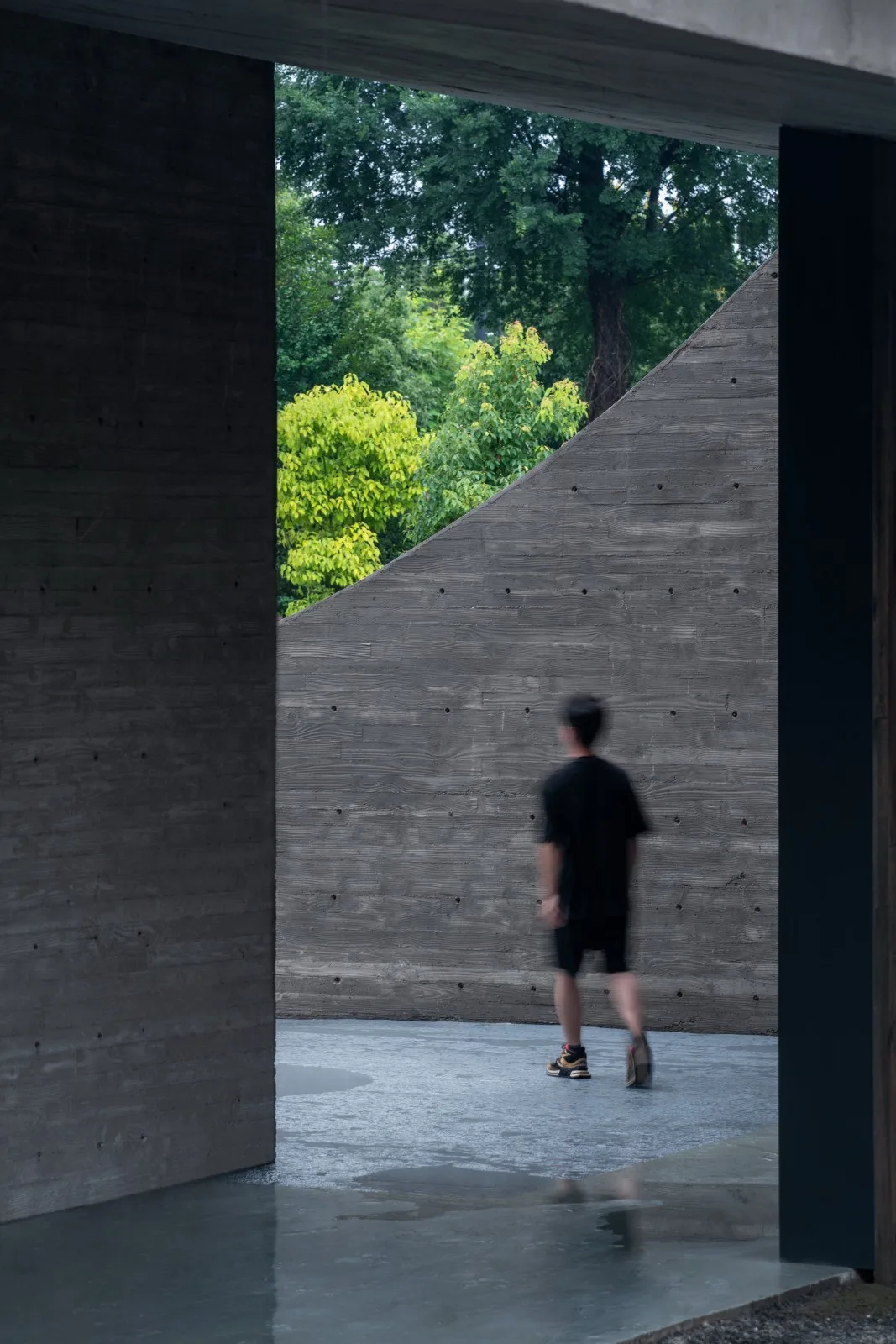
At the main building’s entrance, an emphasized architectural feature—a curved “moon wall”—creates a dramatic gateway. This large opening offers a view from the external park’s parking area, hinting at the flow of visitors entering the hall. As people pass through, the moon wall frames the sky in their line of sight, serving as a transitional space that integrates nature seamlessly with the architectural experience.
Second Entry: Yushu Courtyard
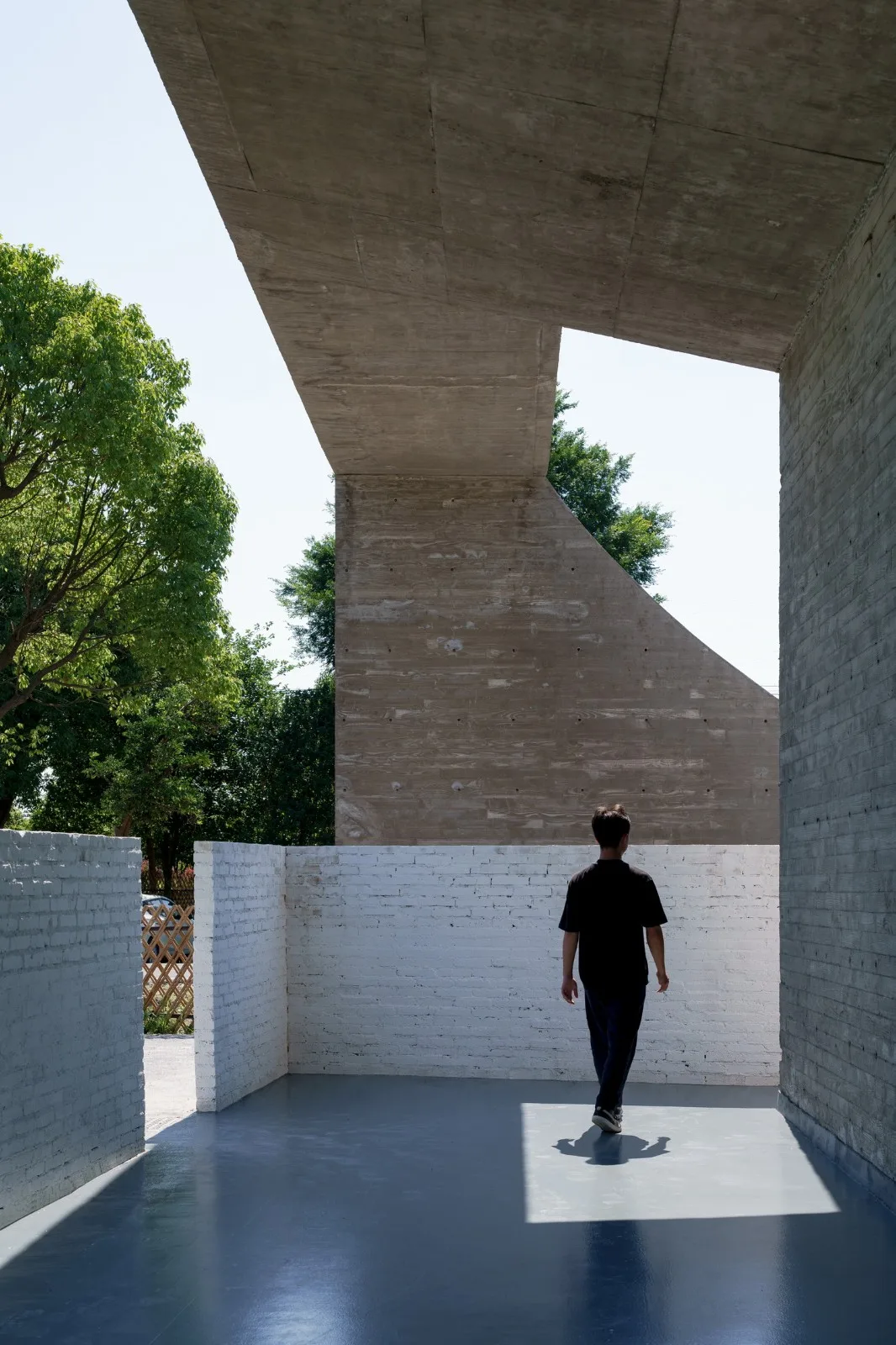
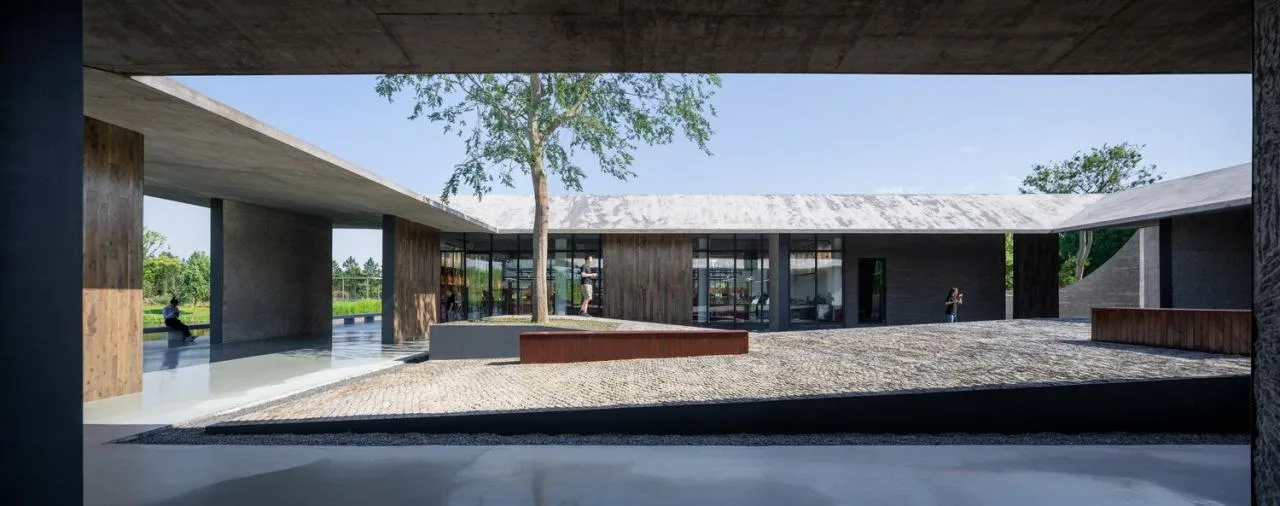
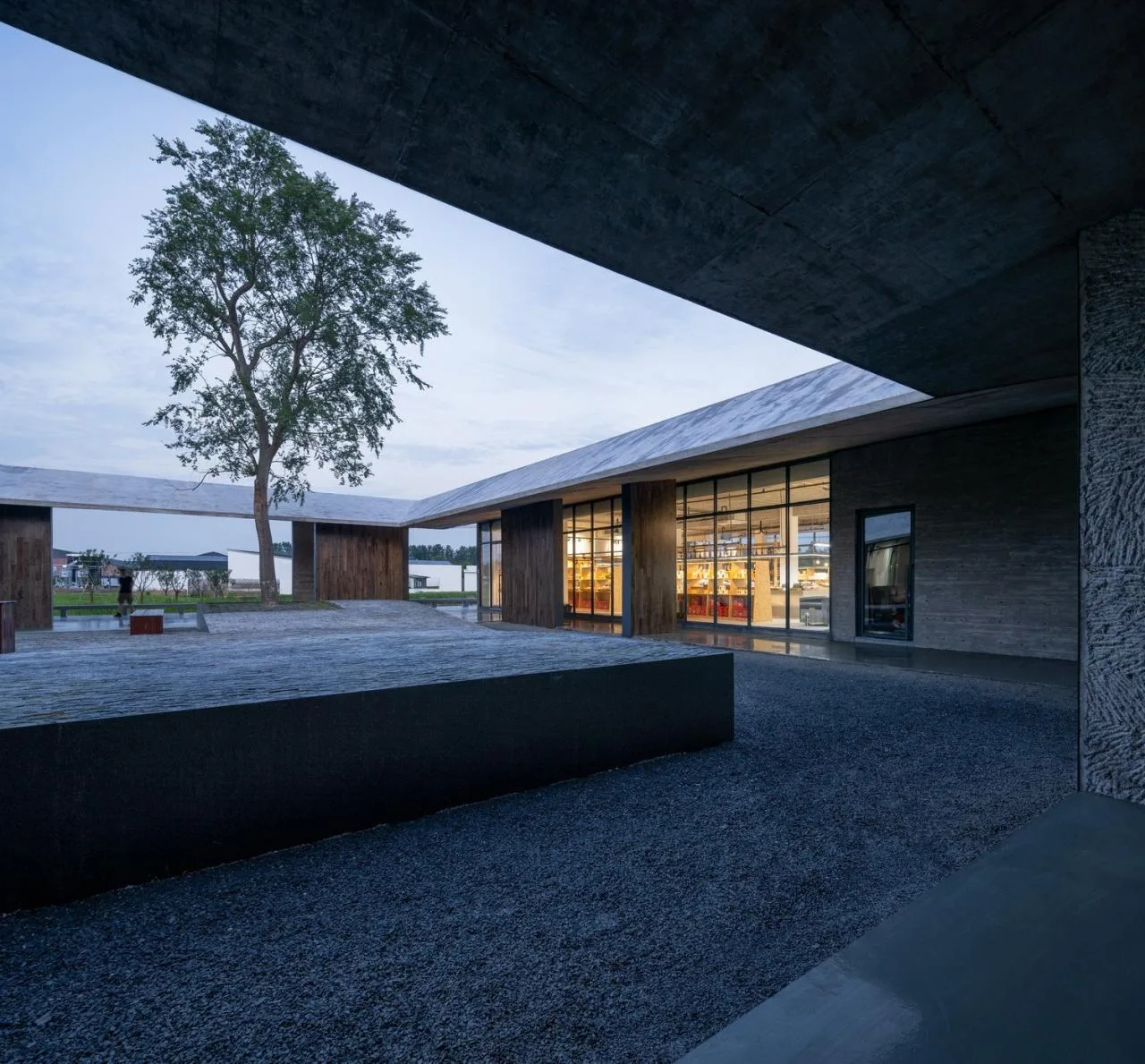
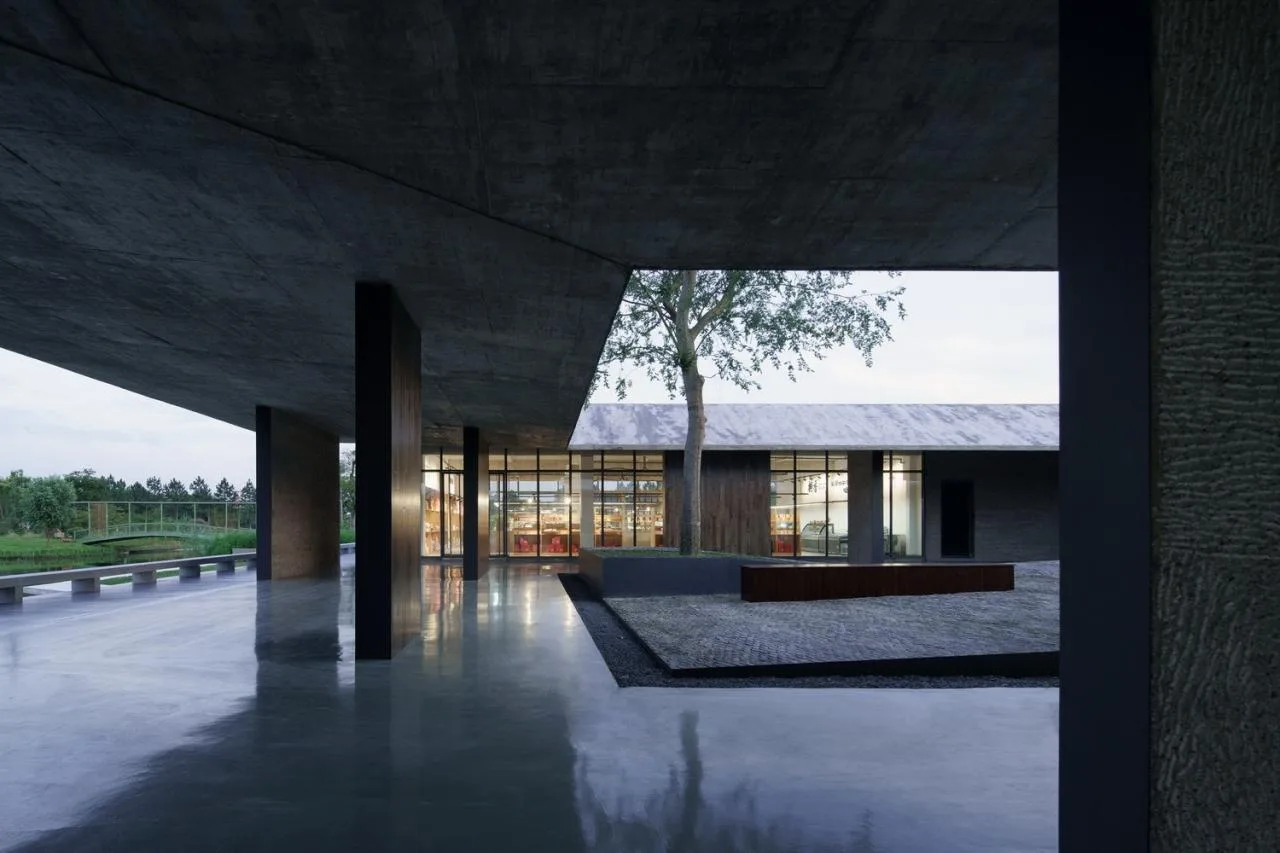
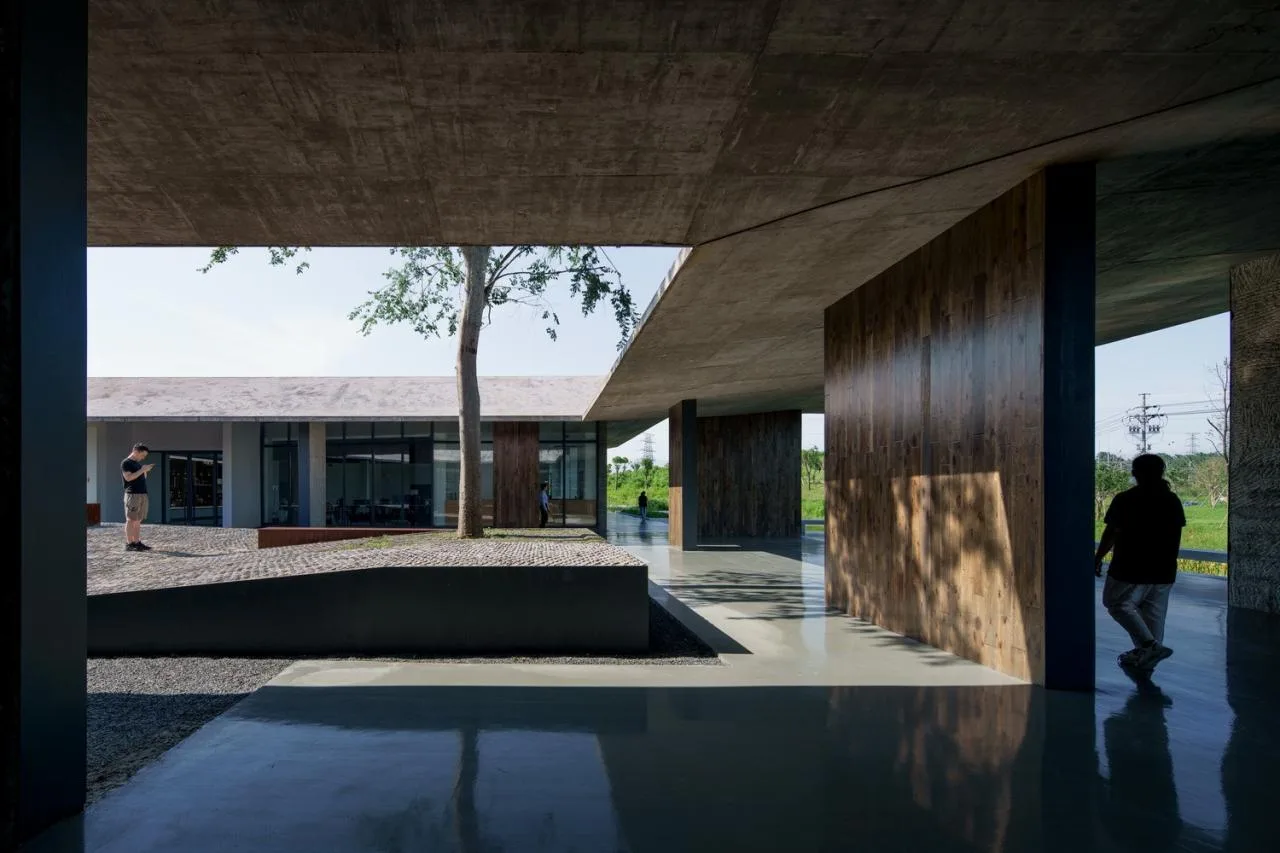
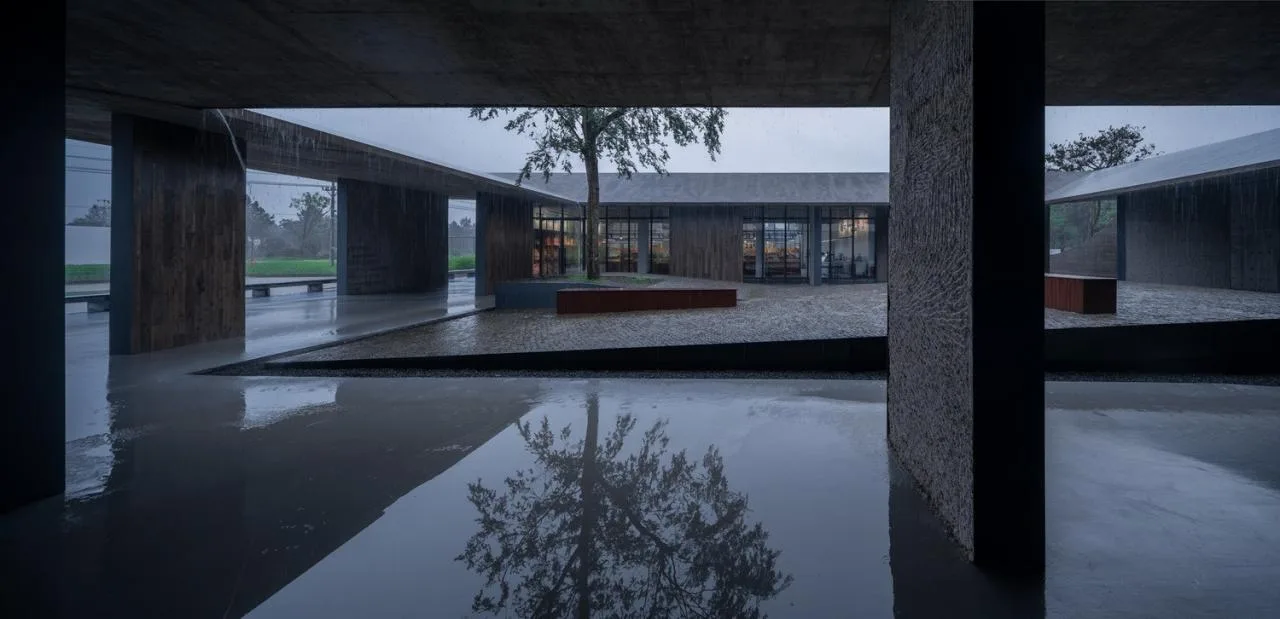
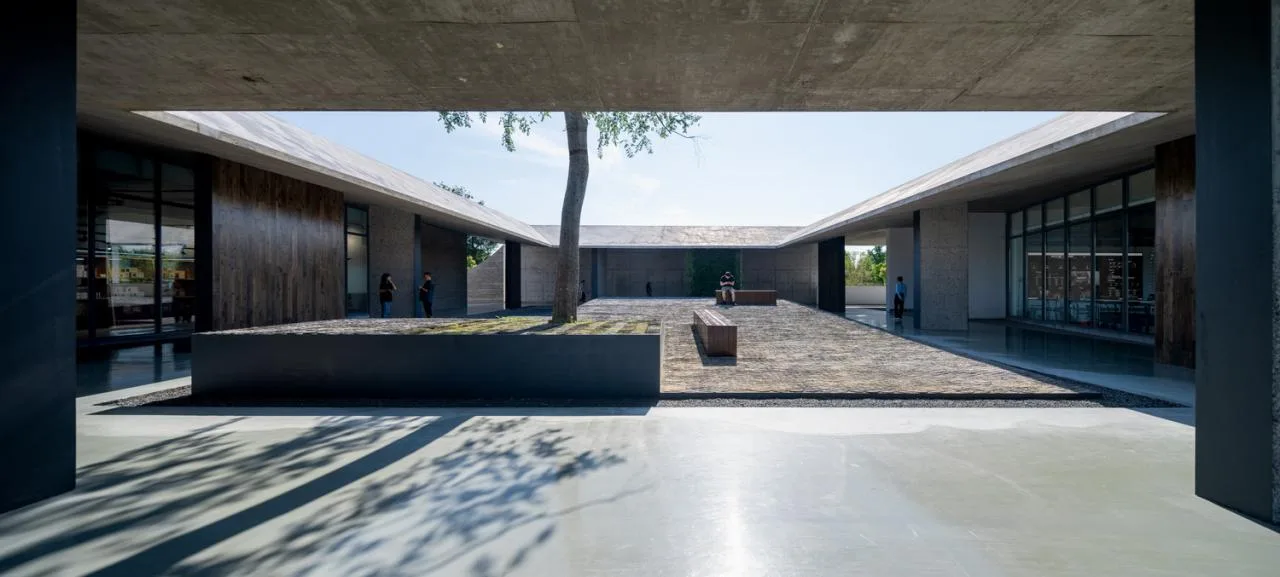
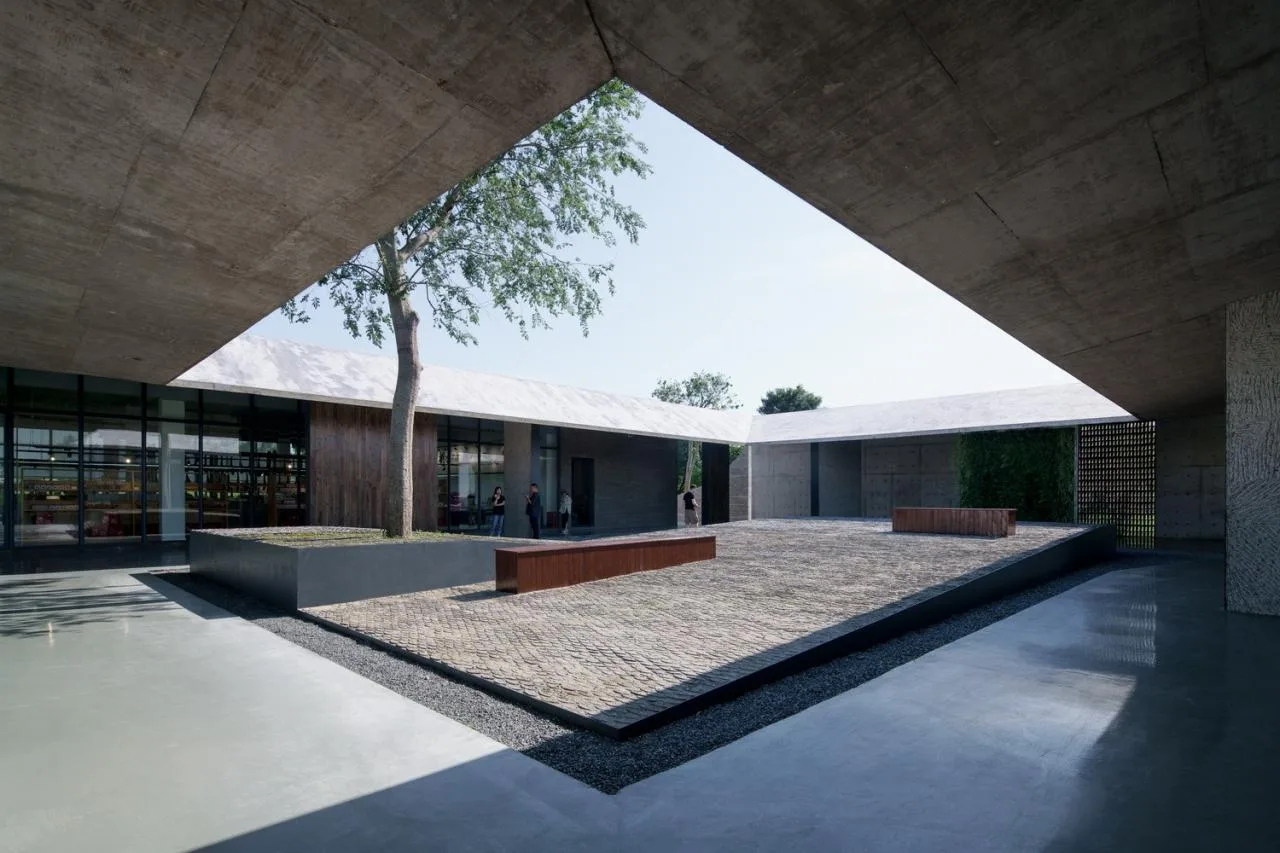
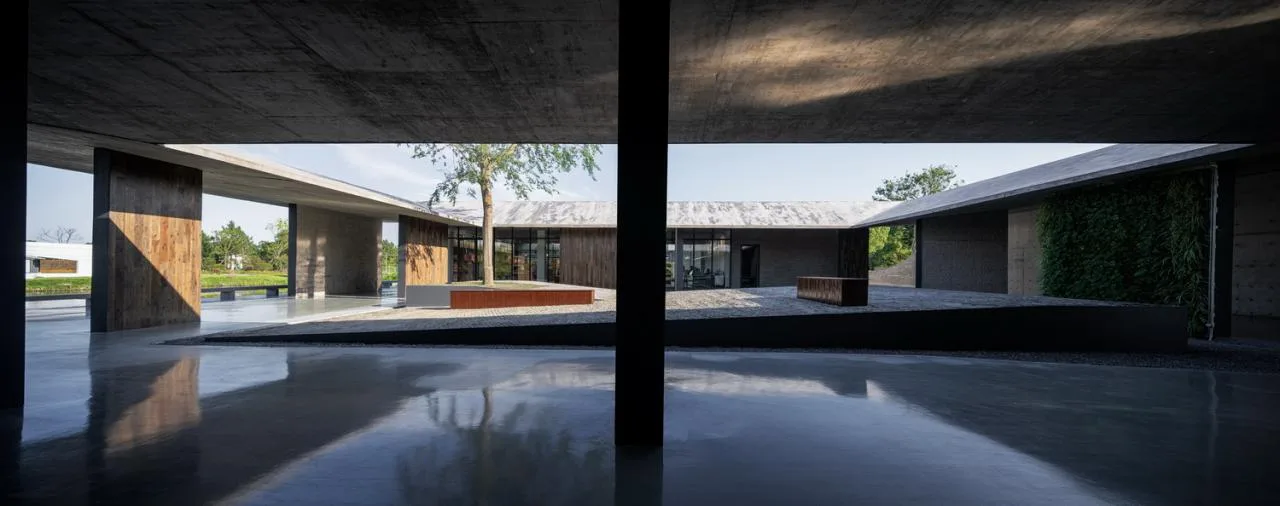
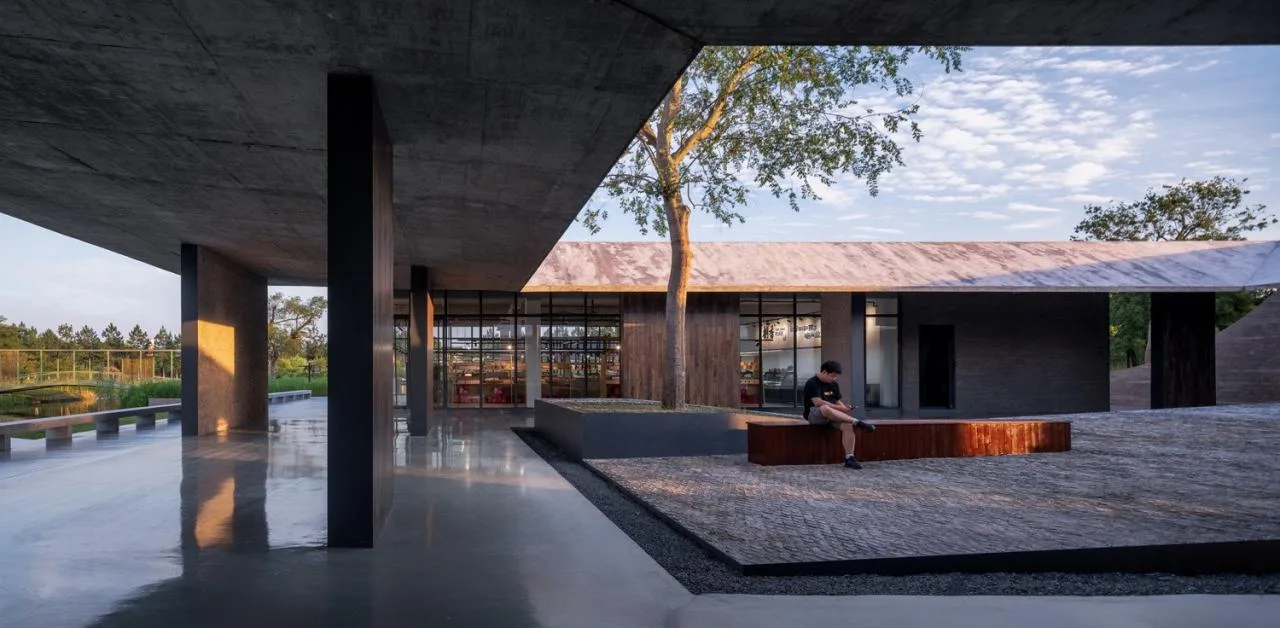
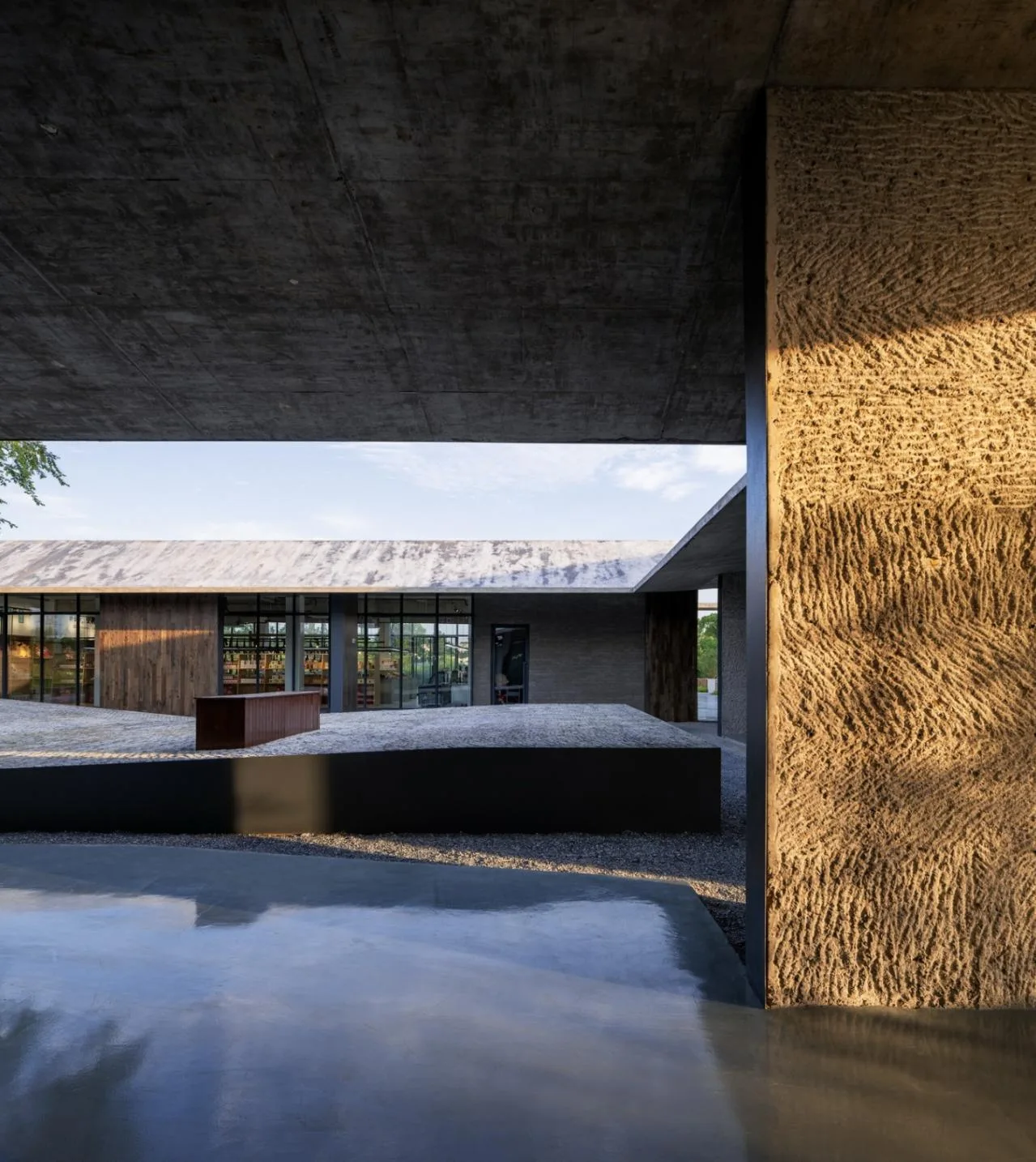
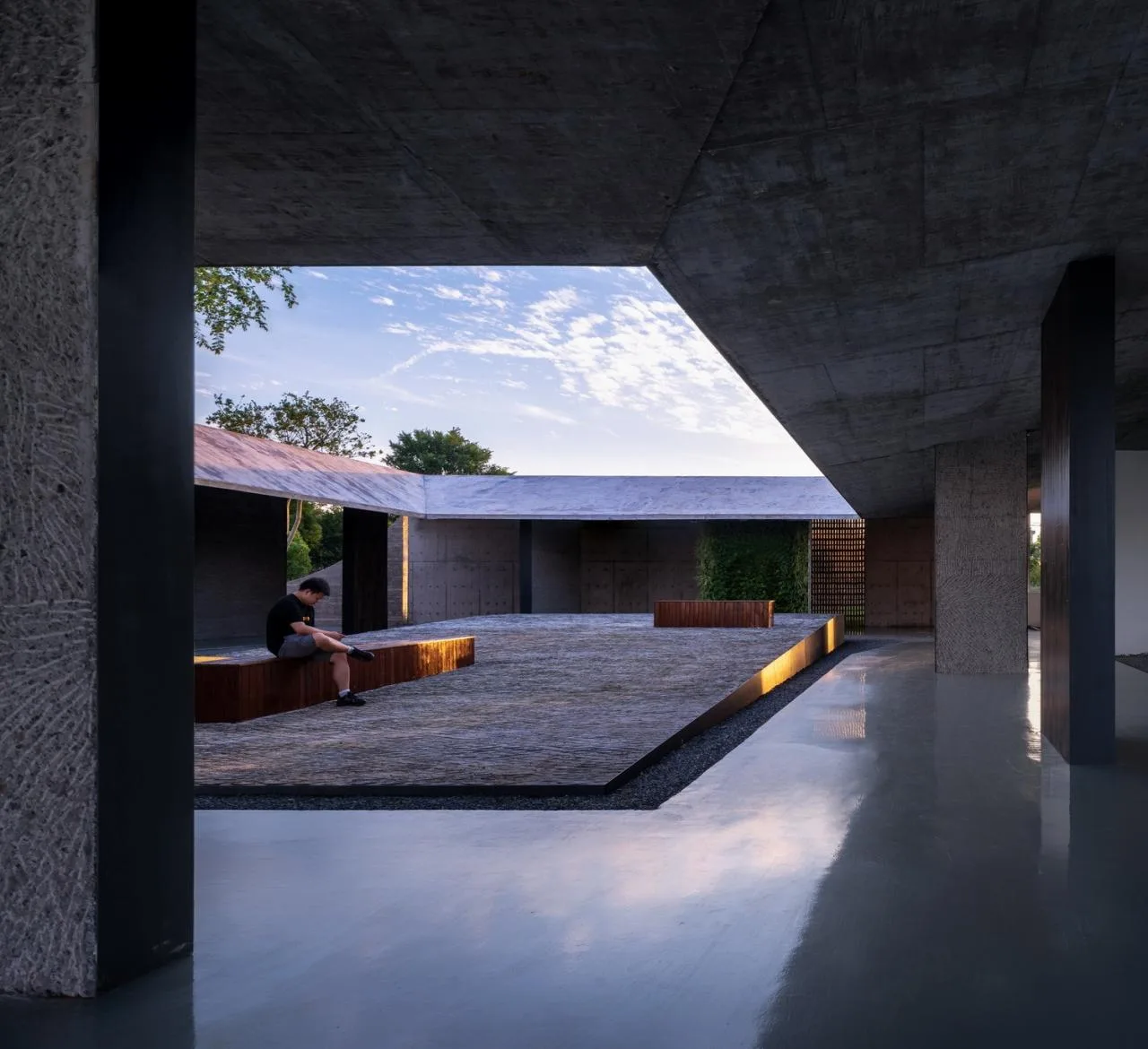
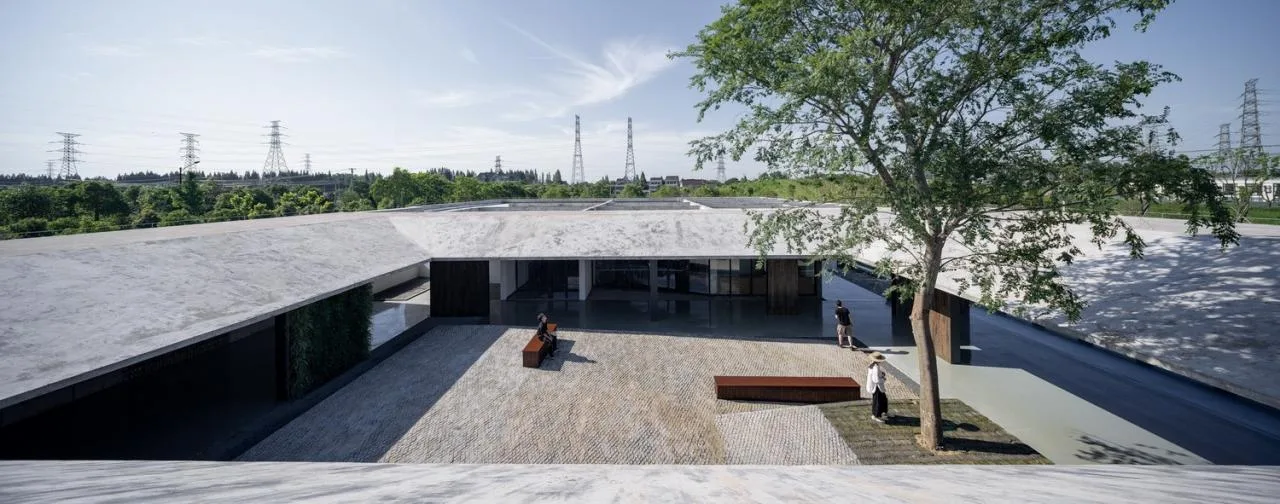
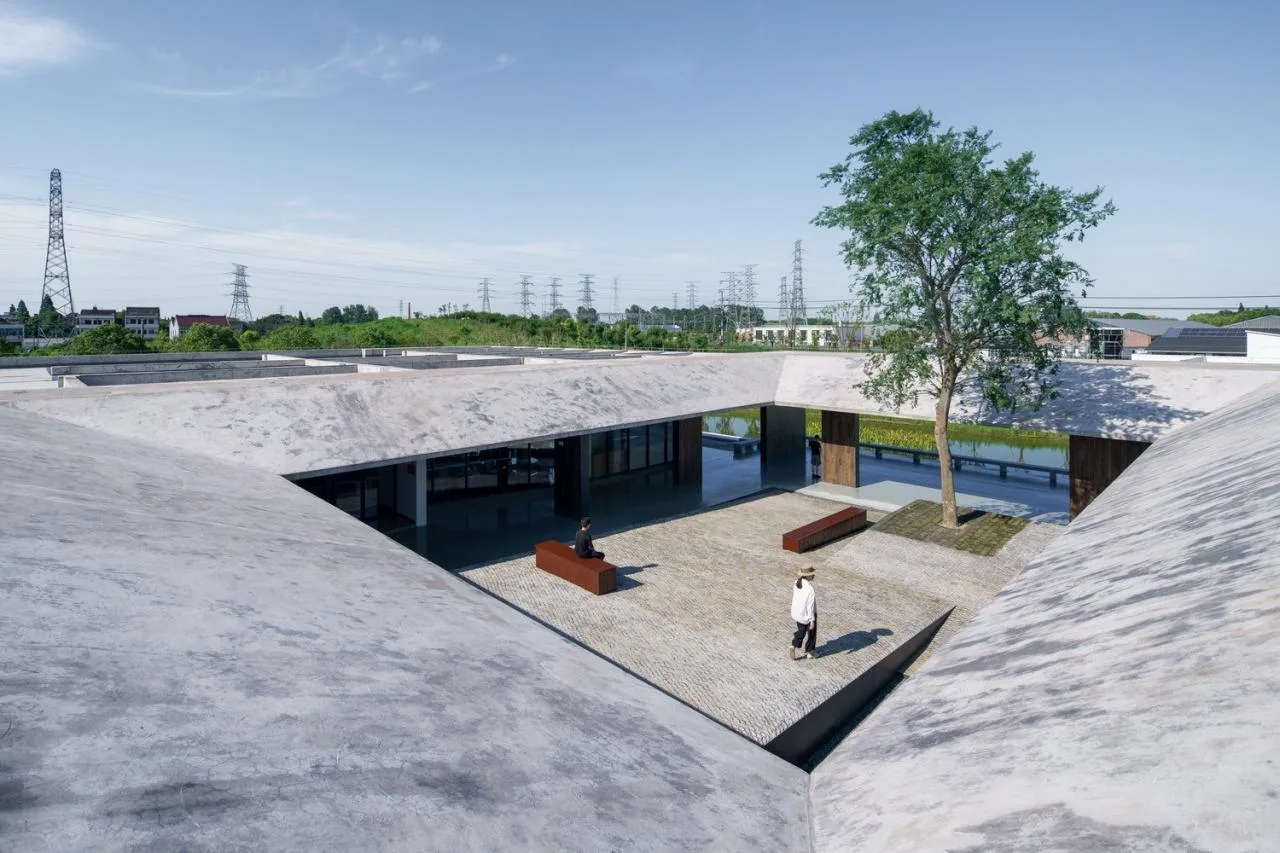
The building’s central courtyard, named “Four Waters Returning Hall,” is enclosed by the souvenir shop and exhibition hall on the north and south sides, along with a western wall. At its heart stands a large elm tree, carefully selected from the park’s early plantings. The courtyard opens toward the lake on its east side, where a load-bearing wall frames the lakeshore scenery like a traditional Chinese scroll. This design visually extends the space eastward, creating a layered sequence of corridor, courtyard, corridor, and lake.
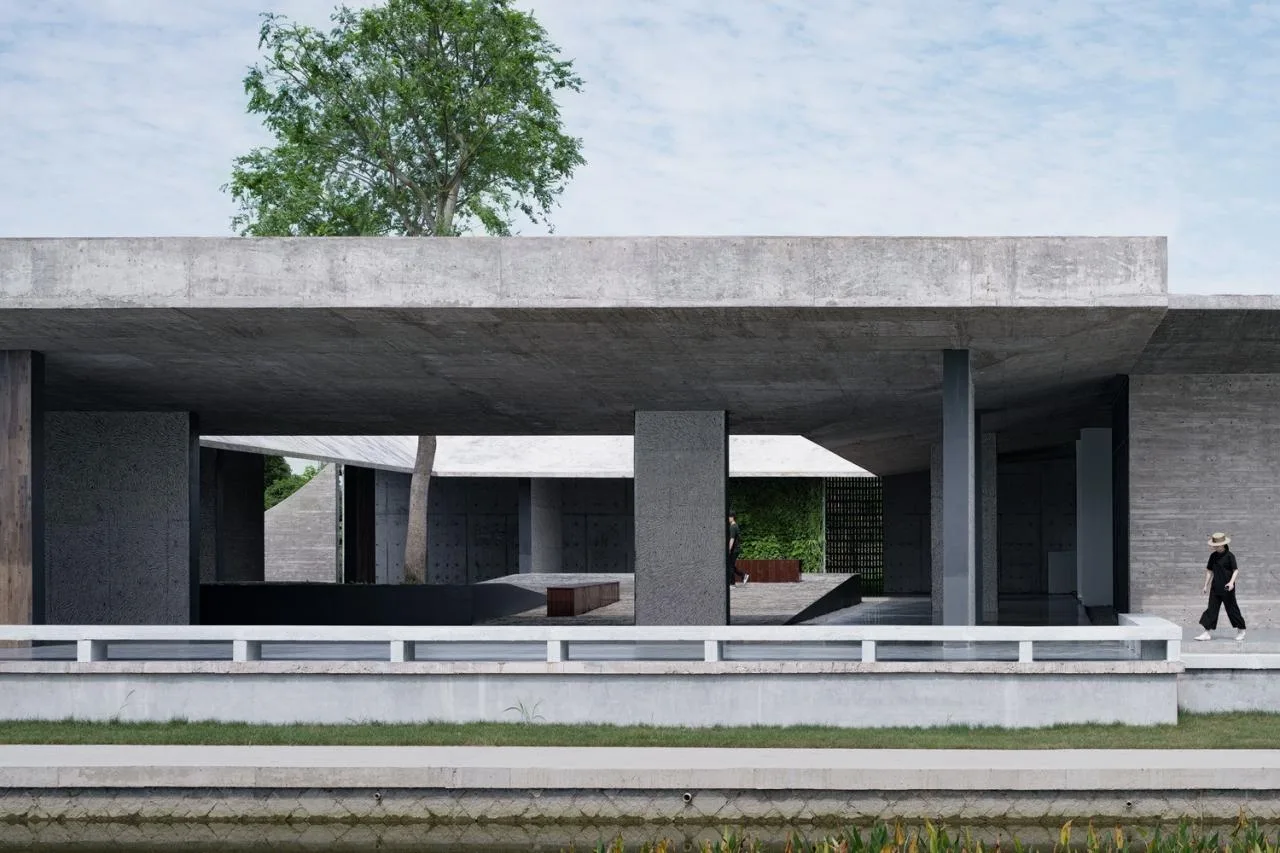
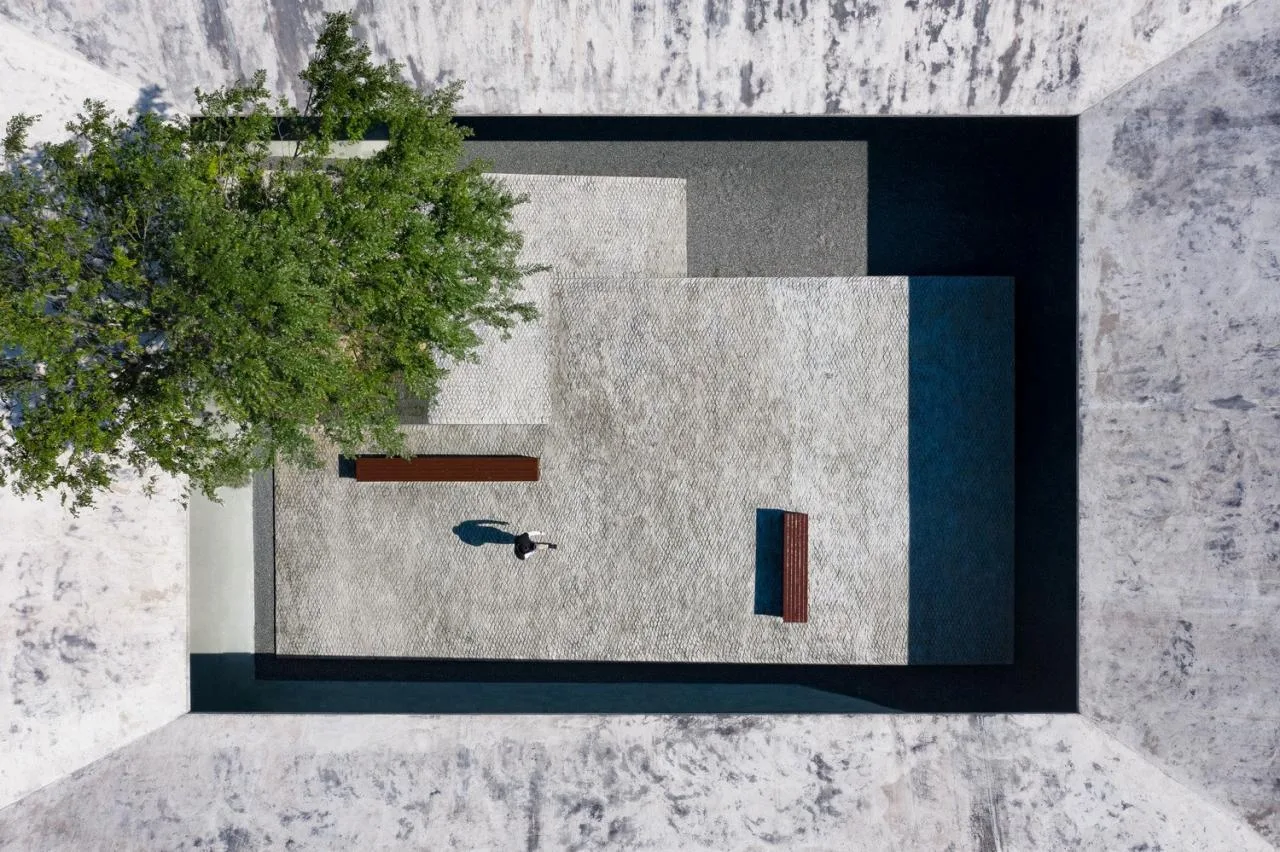
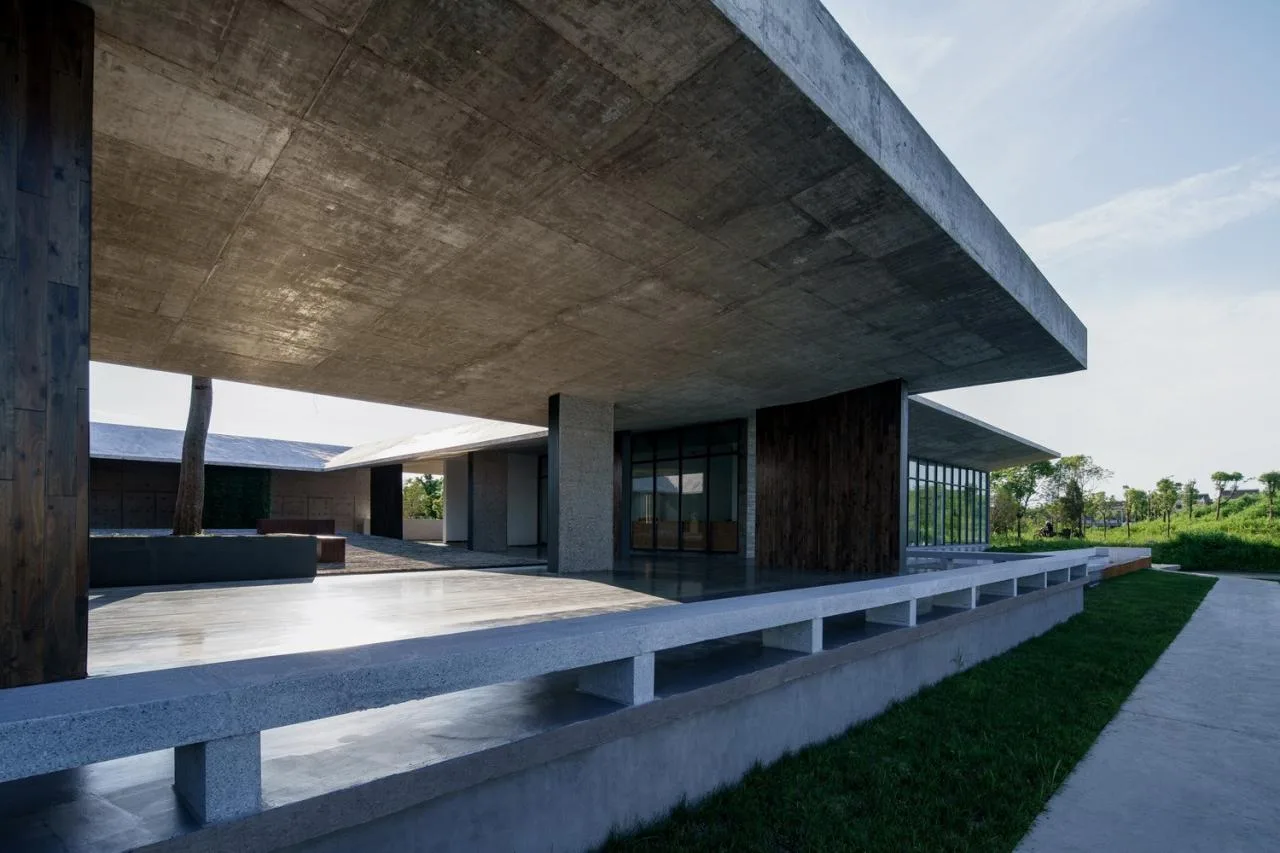
The courtyard’s four sloping roofs descend toward the center where they converge. They are constructed with a double-layer hollow concrete structure, tapering from 80 cm thick on the outer edges to just 10 cm at the center. The deep eaves create a sheltered, intimate atmosphere where wind, light, and rain are gathered, crafting a peaceful sanctuary. The courtyard floor features two sets of stacked tiles that slope and intersect, complementing a rising landscape terrace around the elm tree. This design brings together the elements of heaven, earth, humanity, and architecture, embodying the spiritual essence of the elm courtyard. The building exists in harmony with nature, elevated by this transcendent relationship.
Third Entry: Lakeside
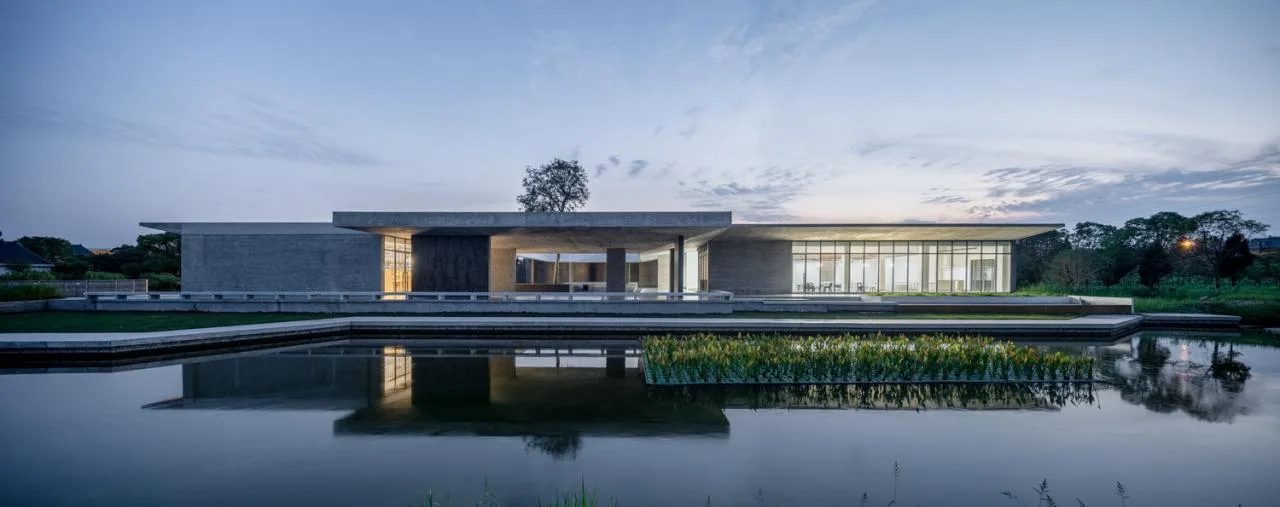
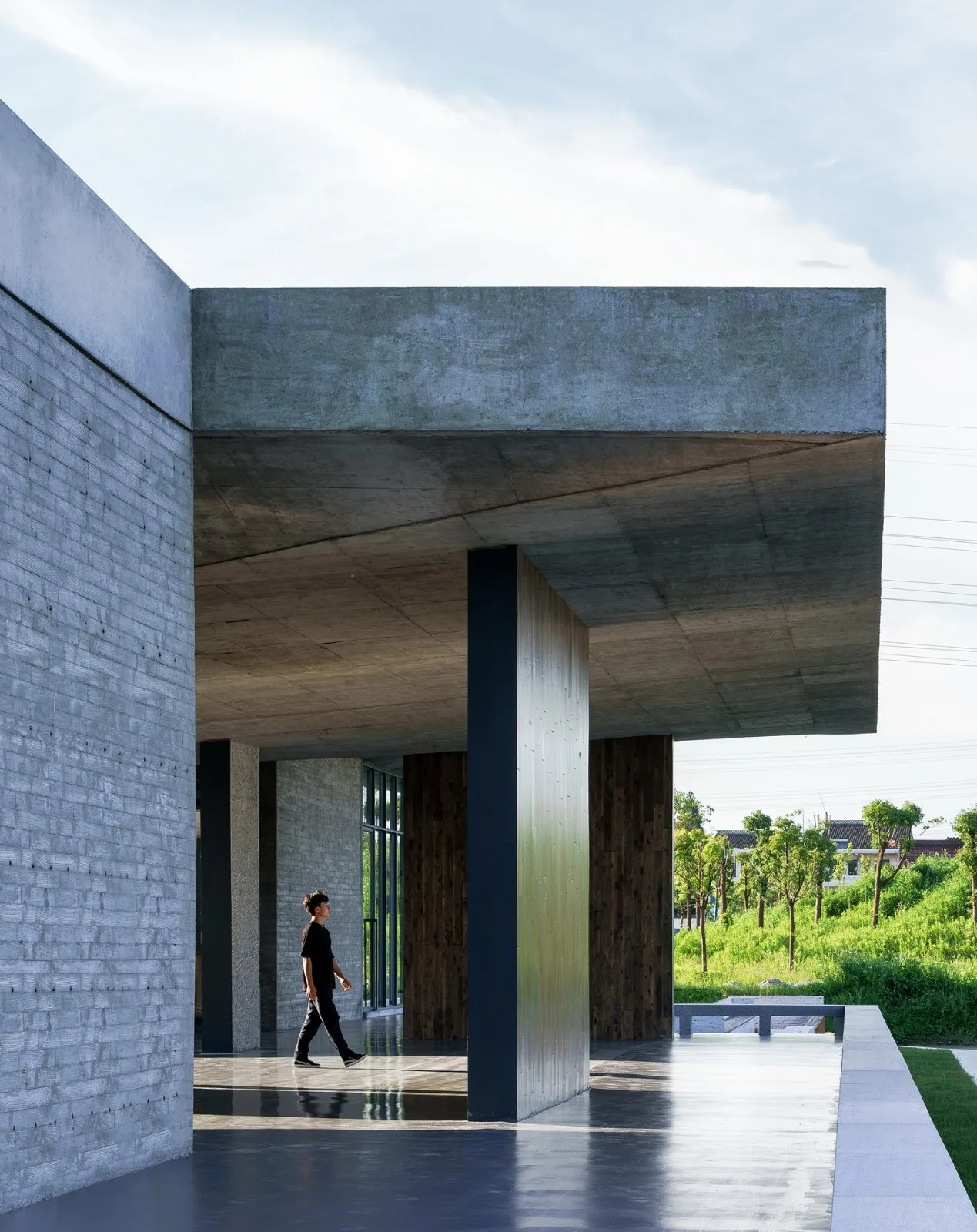
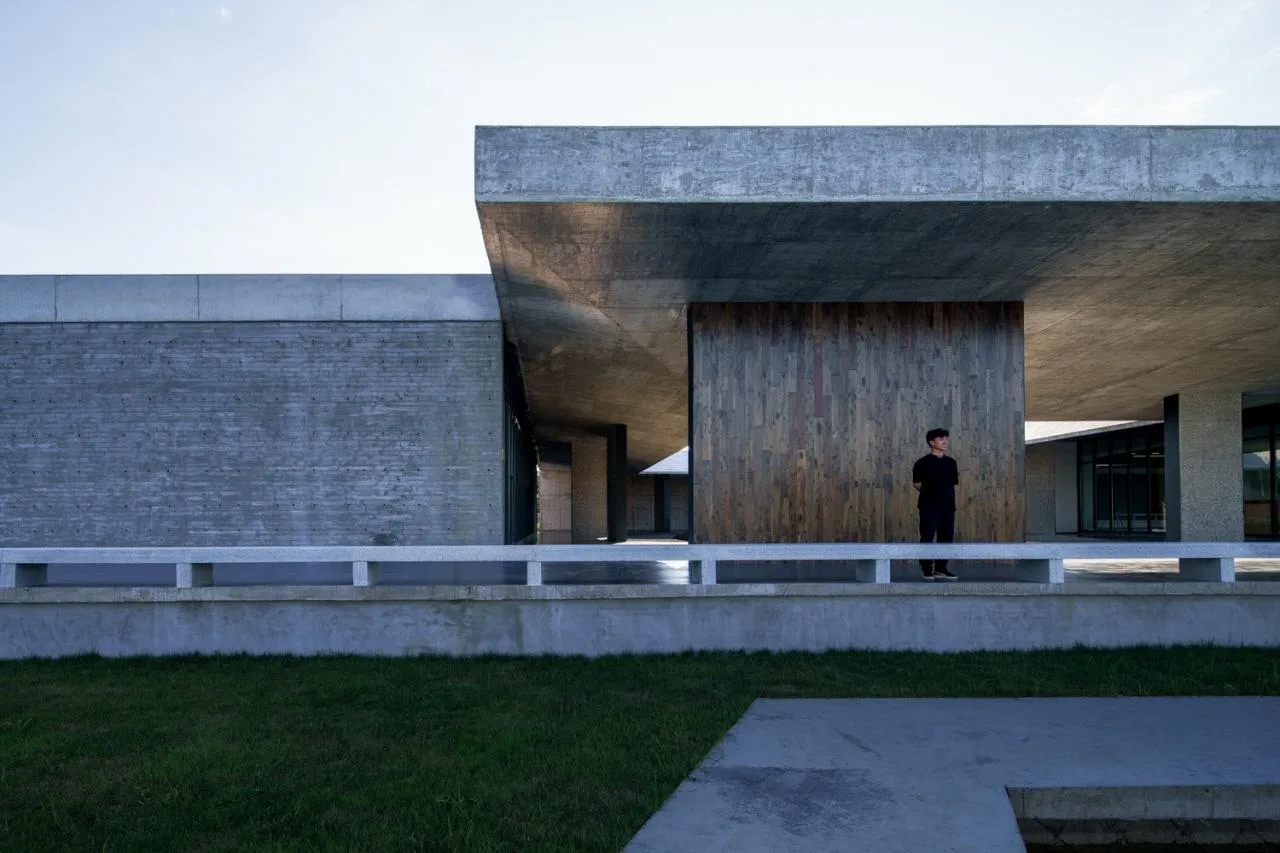
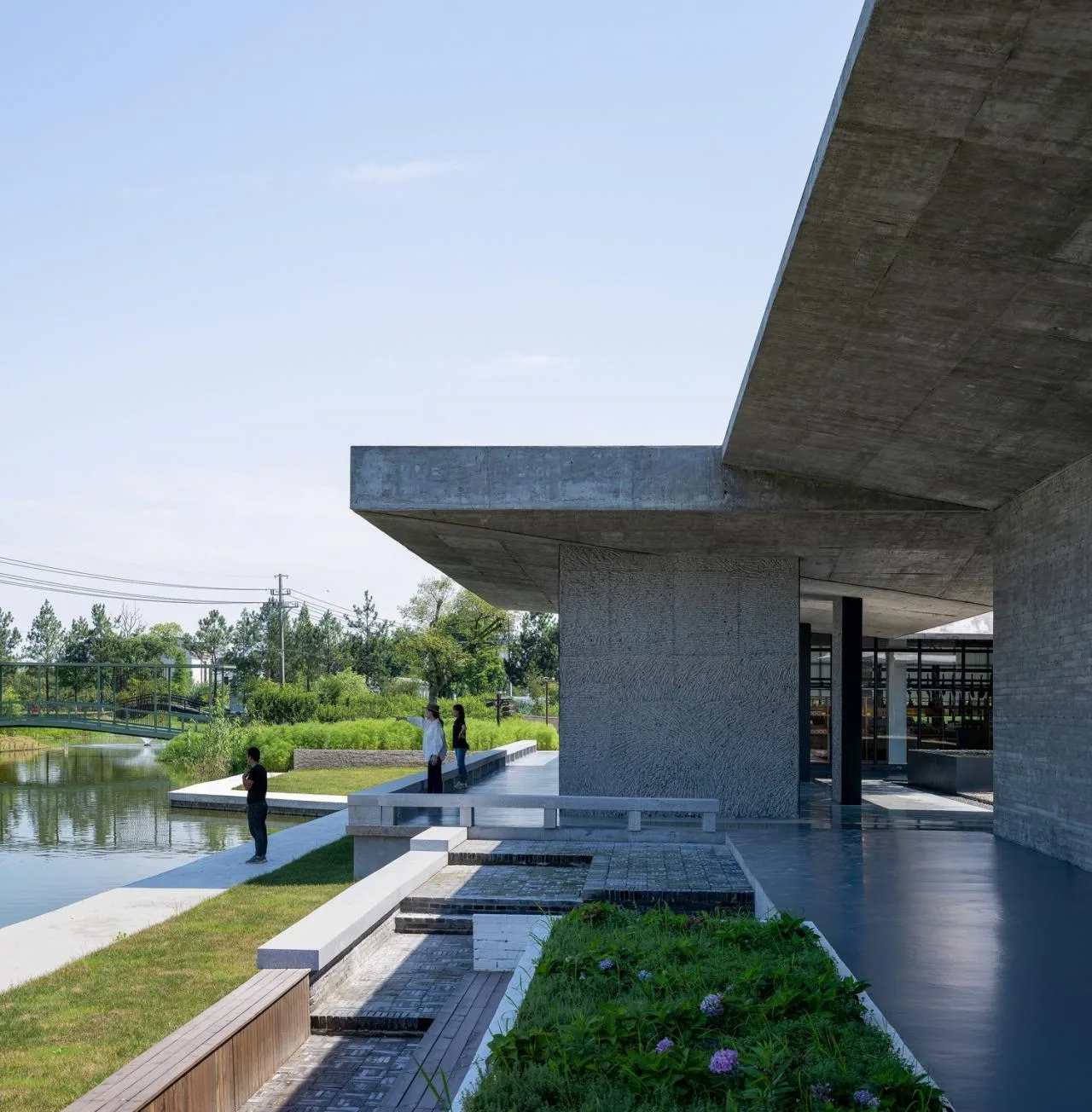
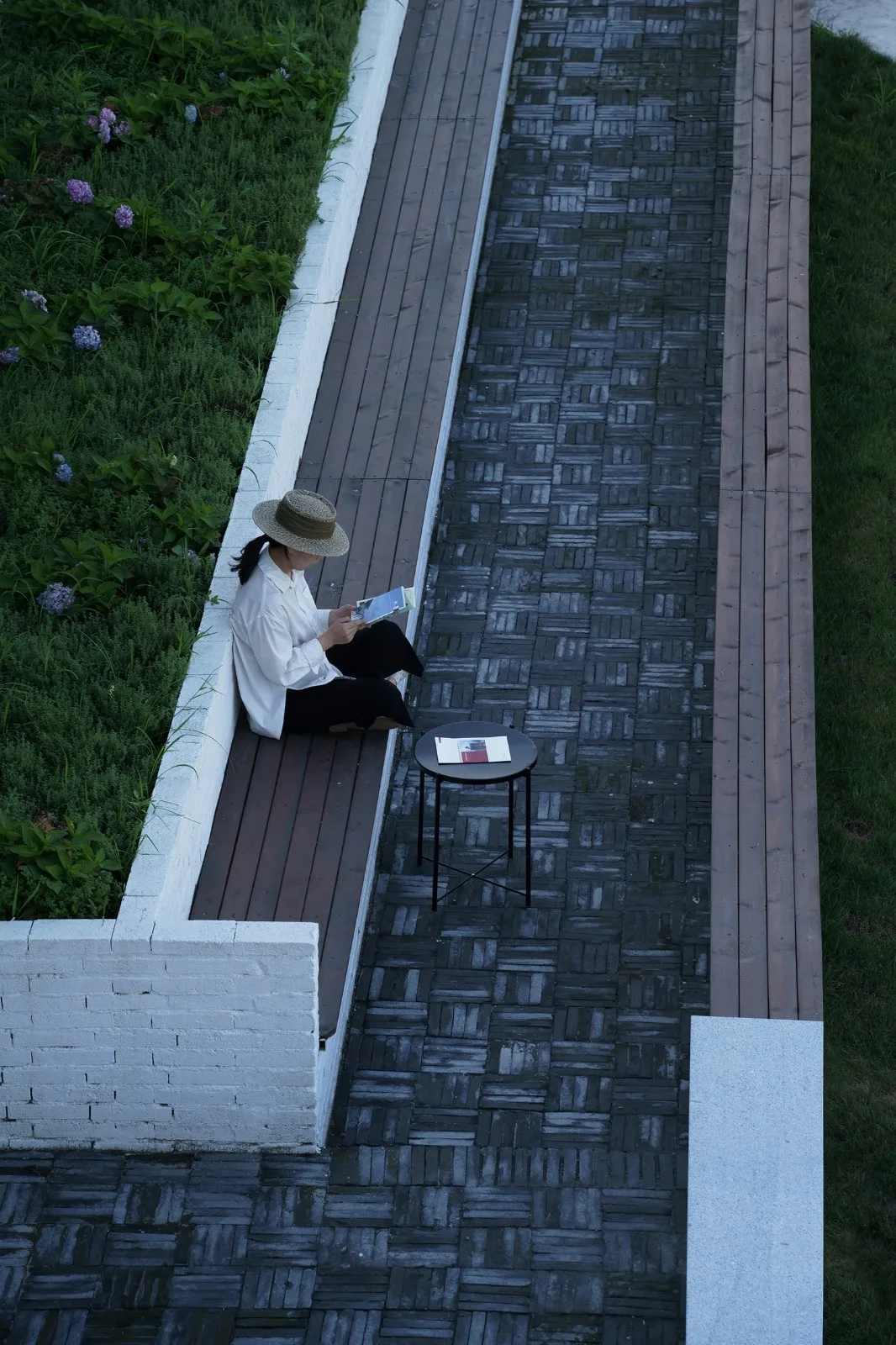
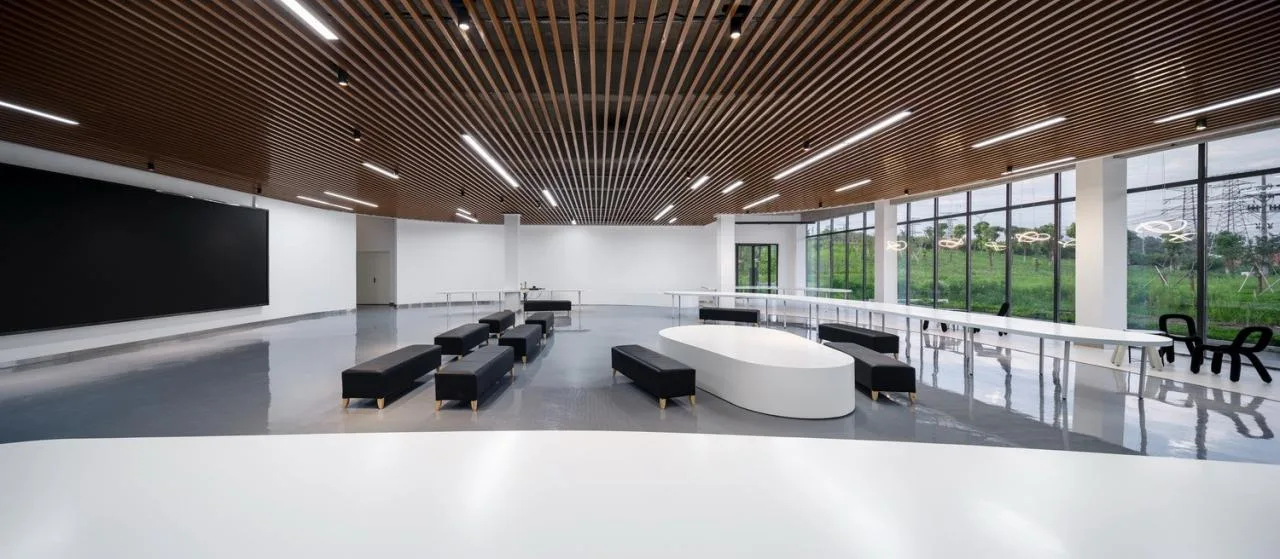
The northern section houses the exhibition space, featuring transparent curtain walls facing southeast toward Yushu Courtyard and east toward the lake. Inside, custom curved long tables and chairs complement the design. Adjacent to the exhibition hall’s east side lies a gray space and a riverbank. This riverbank serves as the building’s final destination, featuring a sunken platform at water level. The stacked green brick platform smoothly bridges the height difference between the building and the water, signaling a shift in spatial character. A wooden bench backed by a flower bed “growing” from the platform provides a peaceful spot for rest and reflection.
Conclusion
The spatial experience unfolds through a sequence of opening, concealing, entering, compressing, pausing, turning, connecting, distancing, and reopening. This progression fully engages the senses, creating rich interactions between visitors, architecture, and the surrounding landscape. The design seamlessly integrates the building with its environment through a series of interlinked spatial fragments.
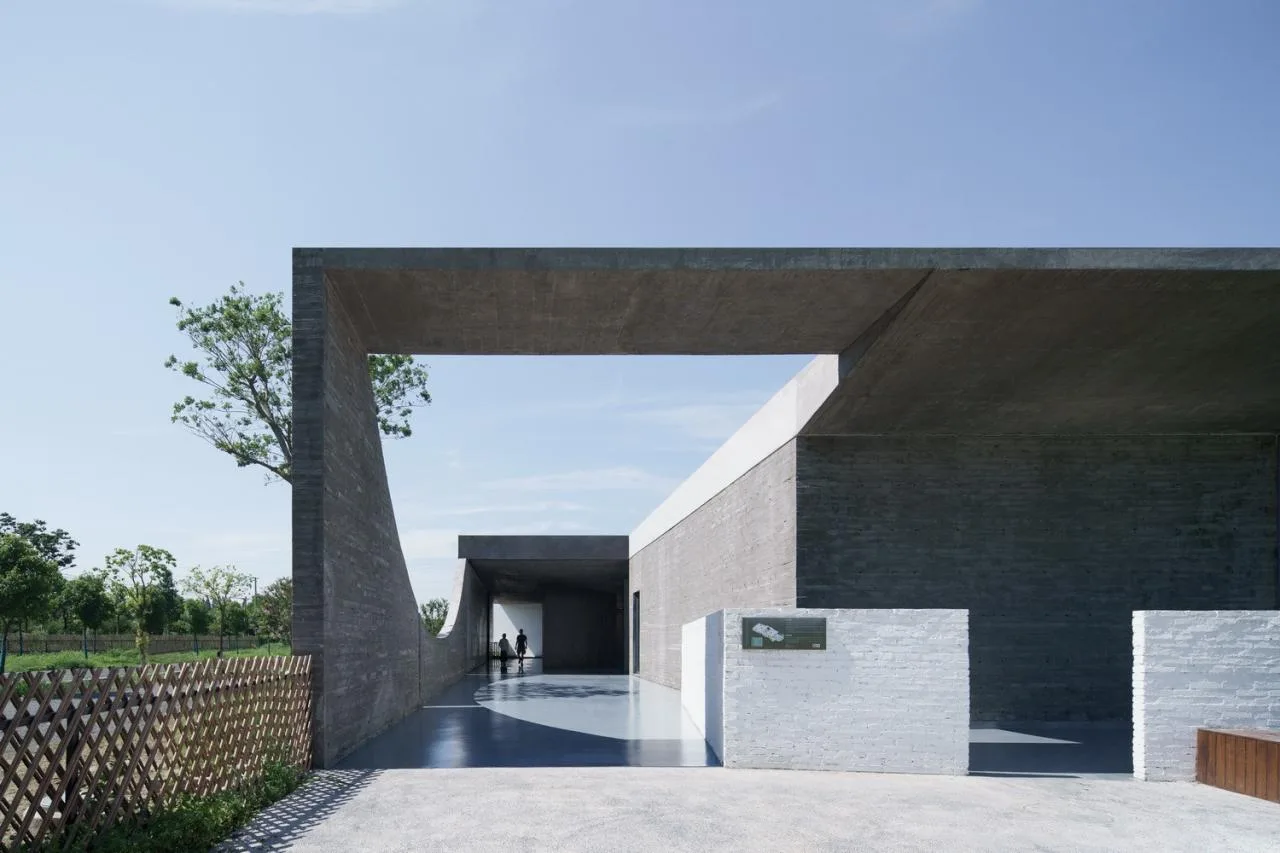
The exhibition hall is a blend of solid and void, echoing the relationship found in traditional rubbings. The two main building volumes frame the central courtyard and interact with the three gray spaces at the entrances, simultaneously separate and unified. The use of common materials—reinforced concrete, steel, glass, tiles, green bricks, and wood—achieves a balance between the spatial experience and cost-efficiency.
Project Drawings
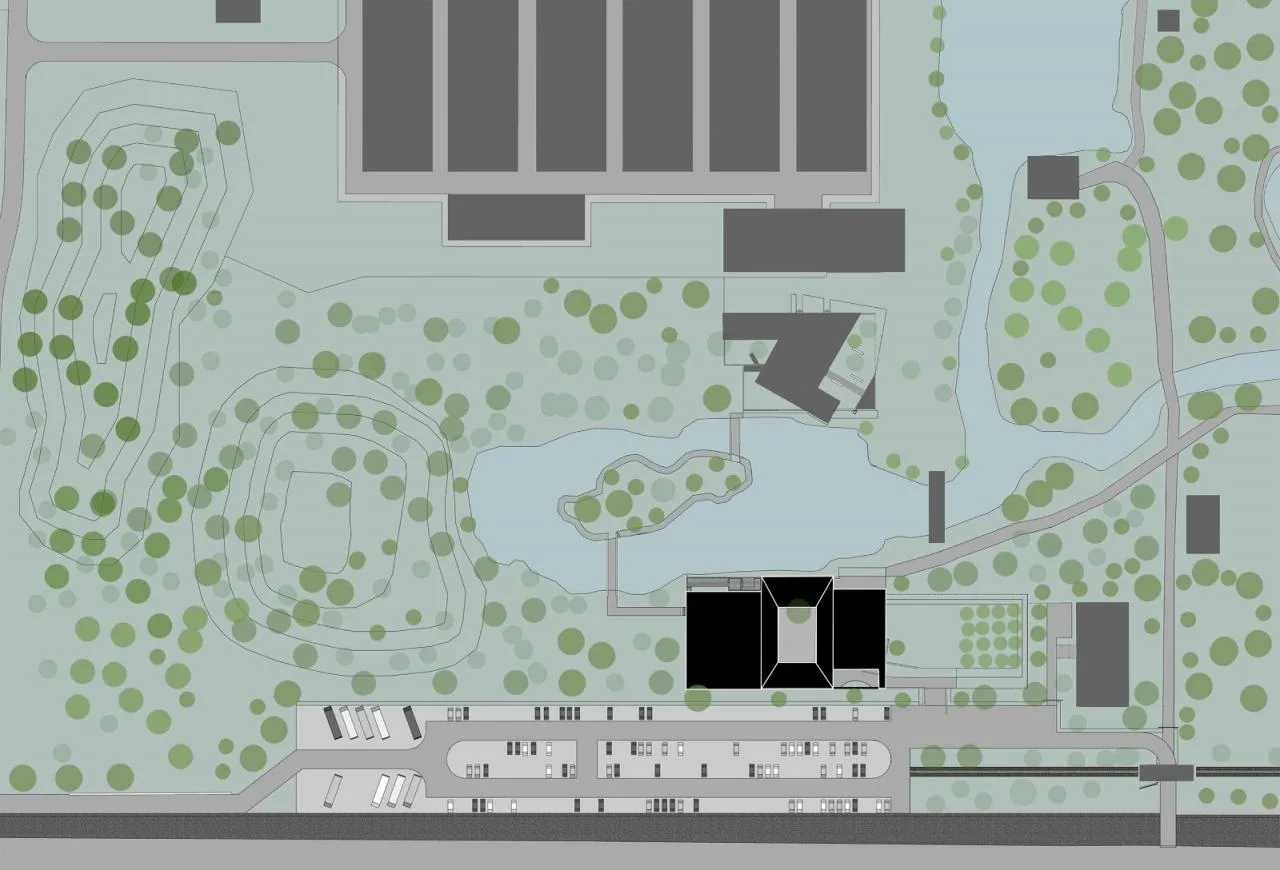
△ General Layout Plan © Actually Architecture
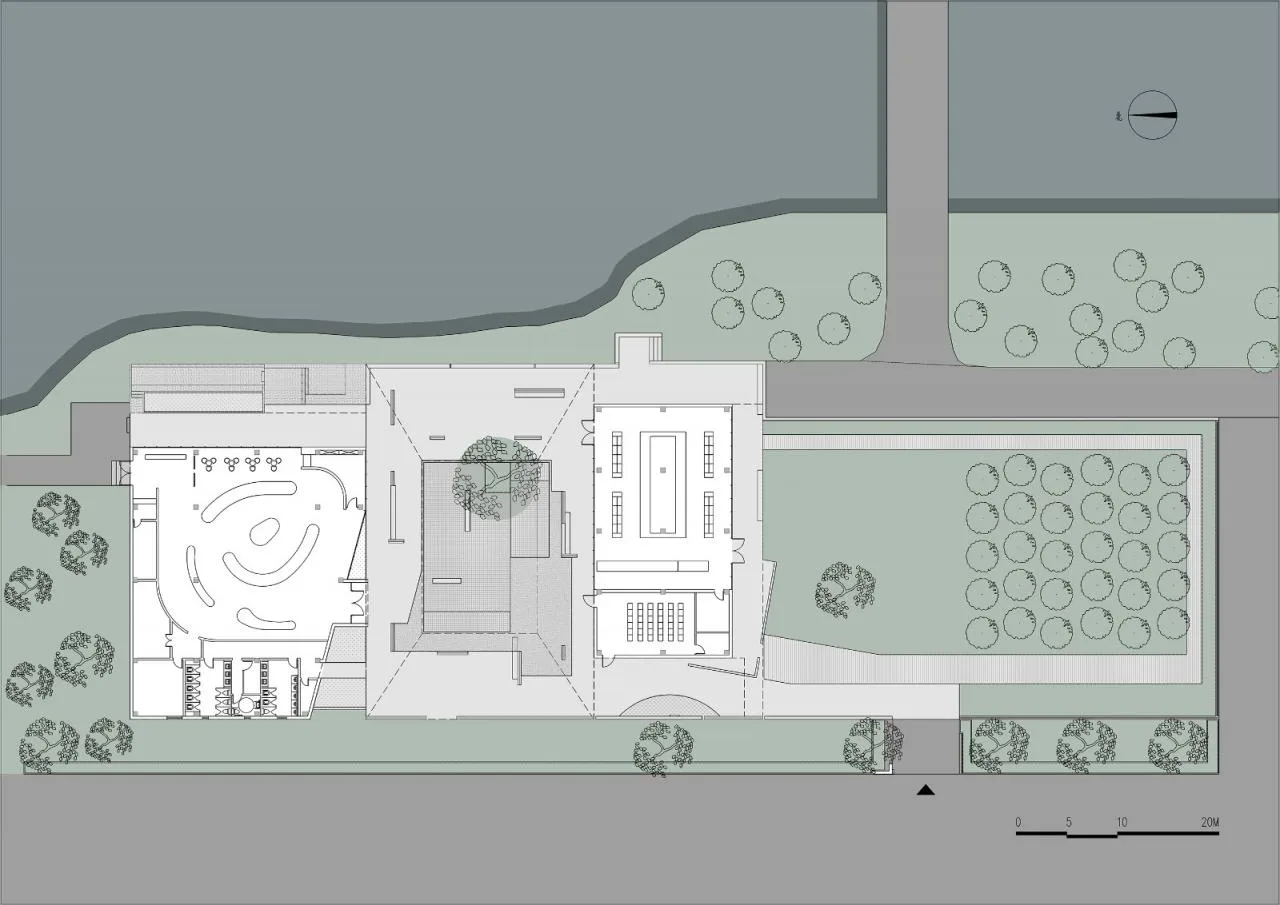
△ First Floor Plan © Actually Architecture
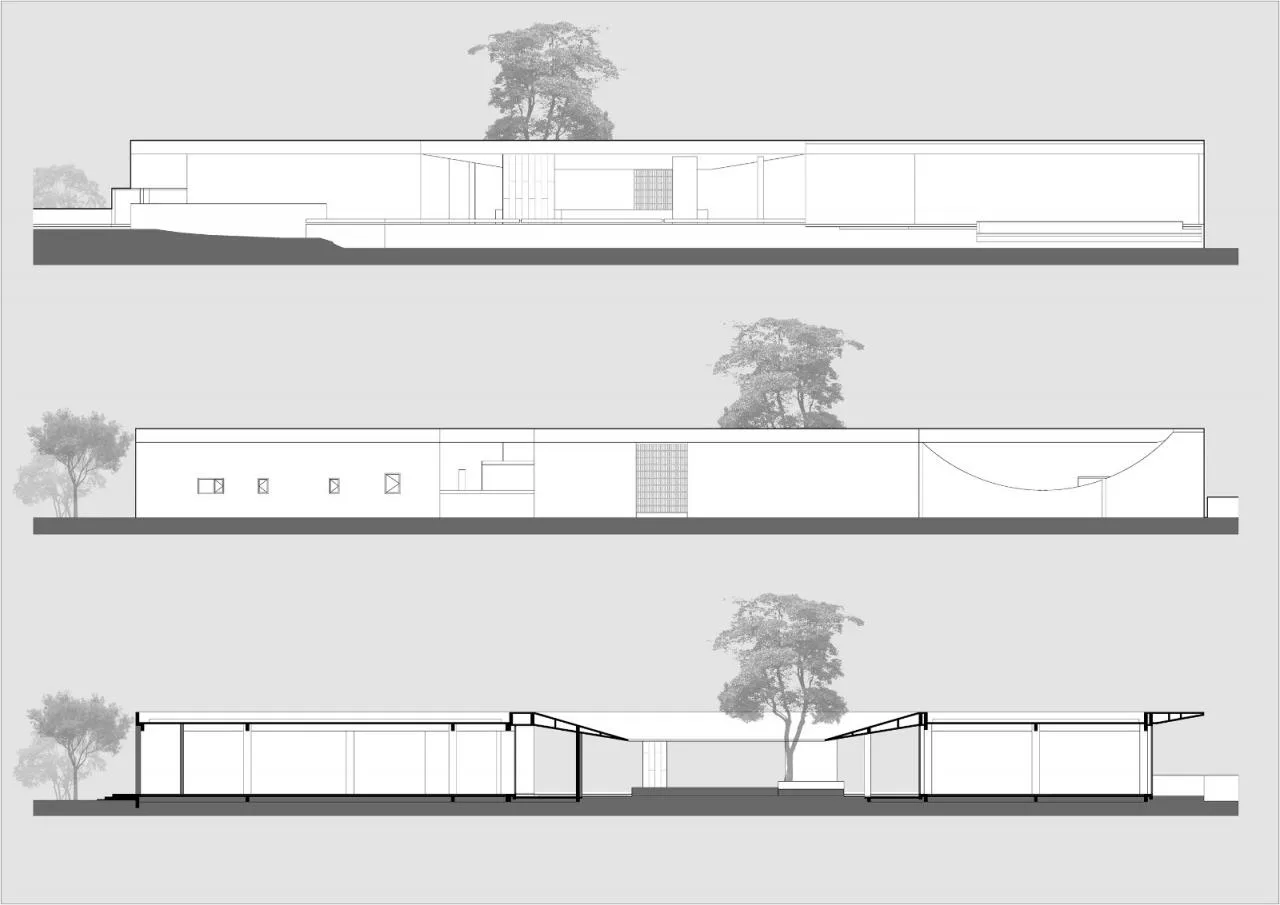
△ Elevation and Section Drawings © Actually Architecture
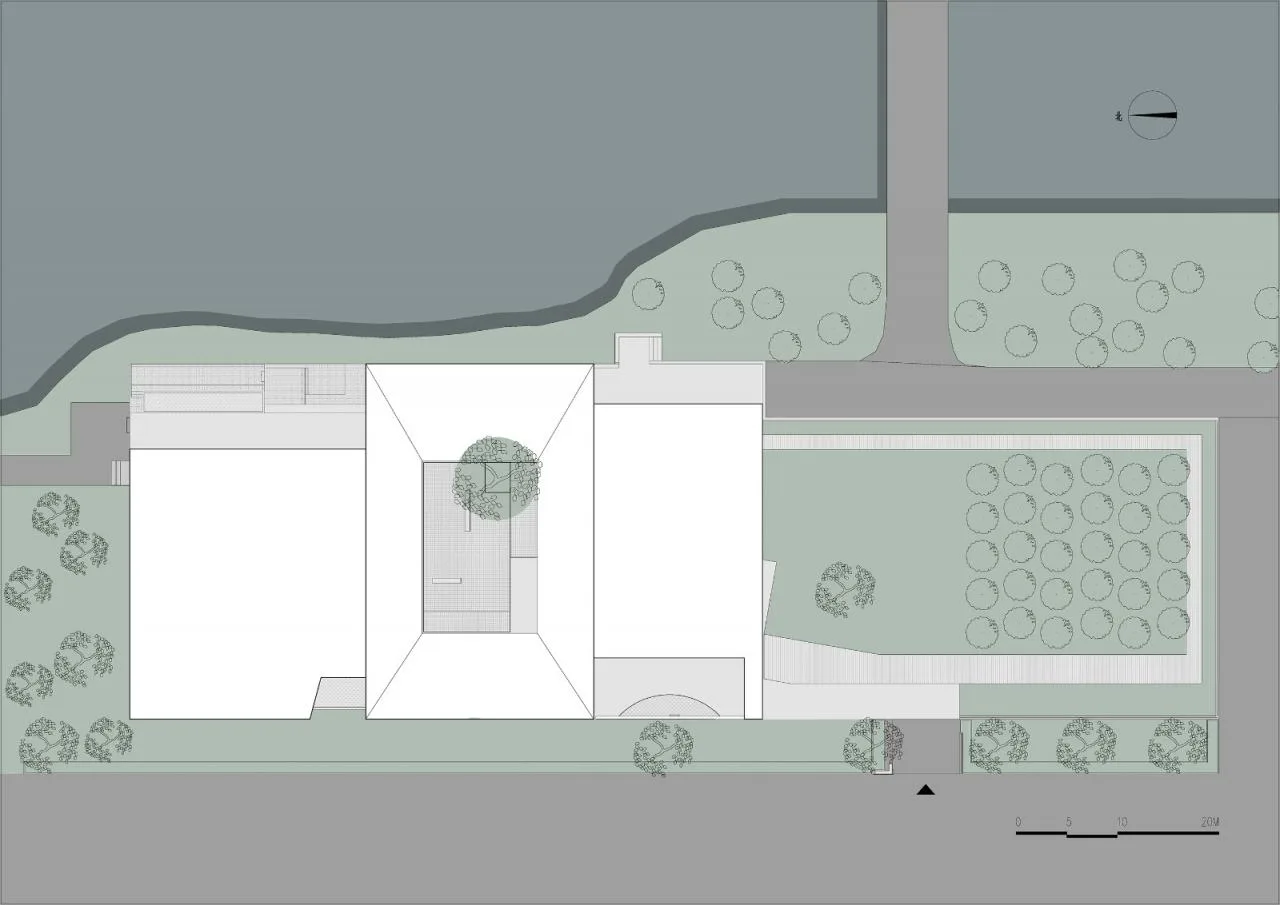
△ Roof Plan © Actually Architecture
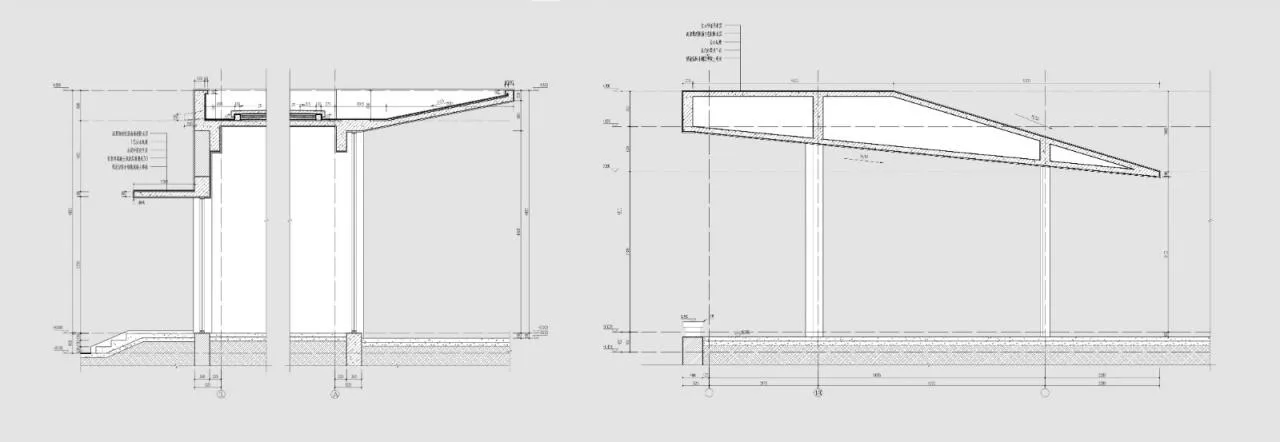
△ Wall Node Diagram © Actually Architecture
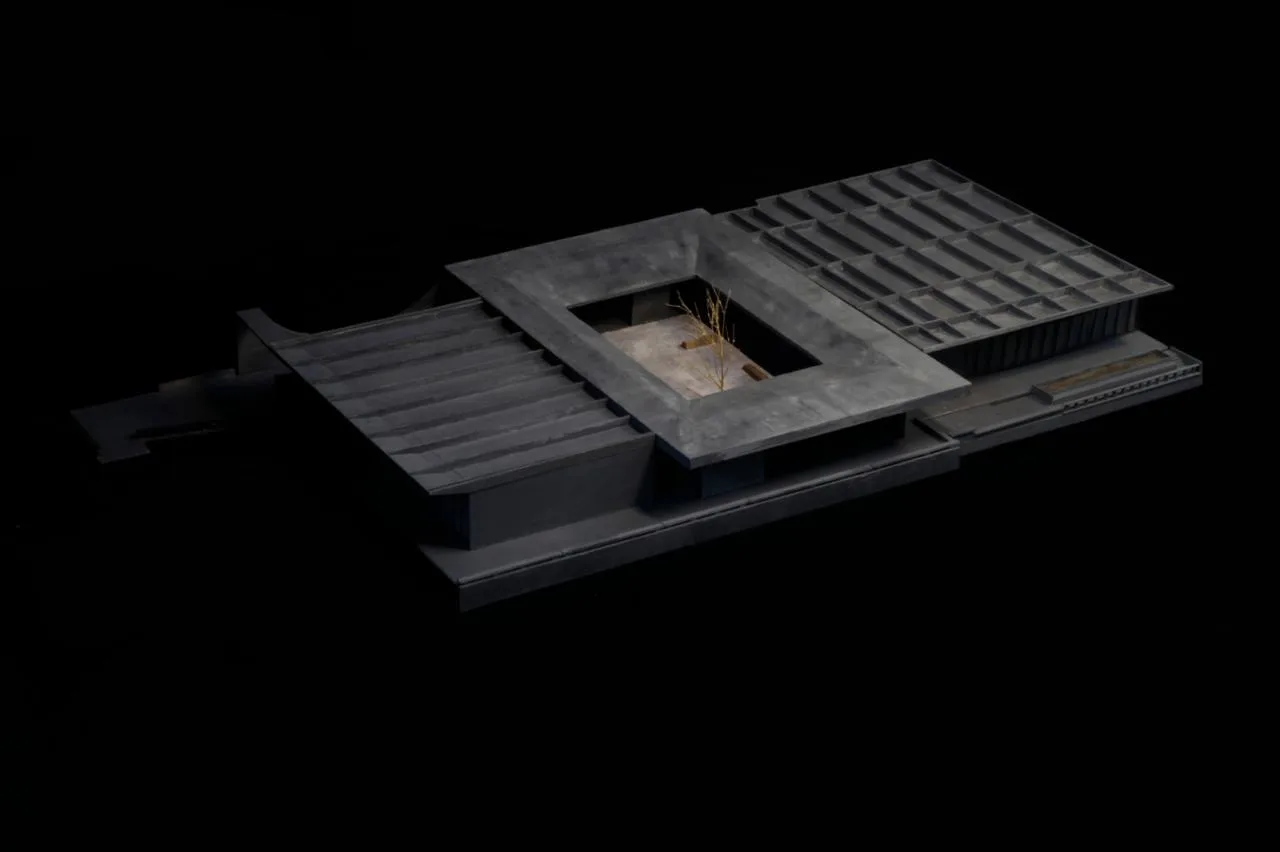
△ Overall Exhibition Hall © Actually Architecture
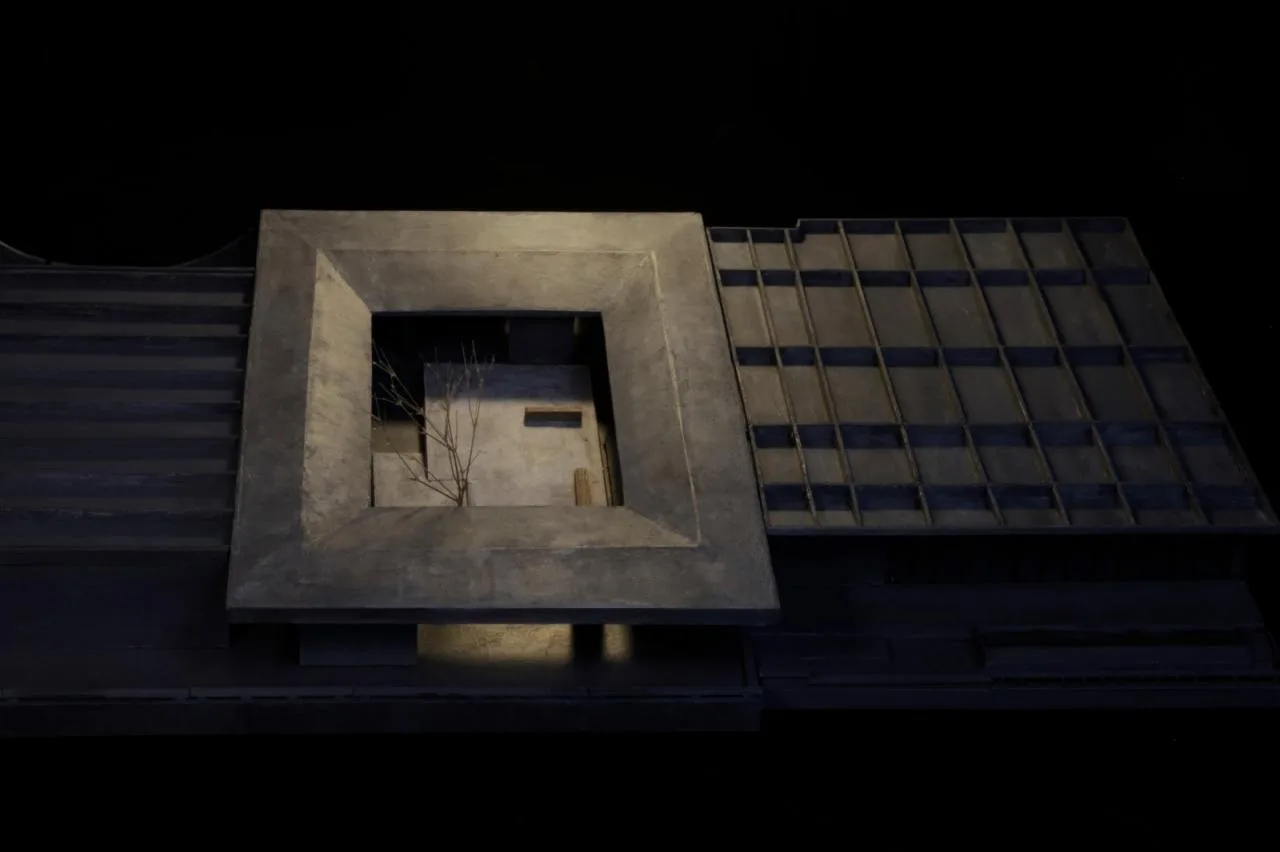
△ Exhibition Hall Details © Actually Architecture
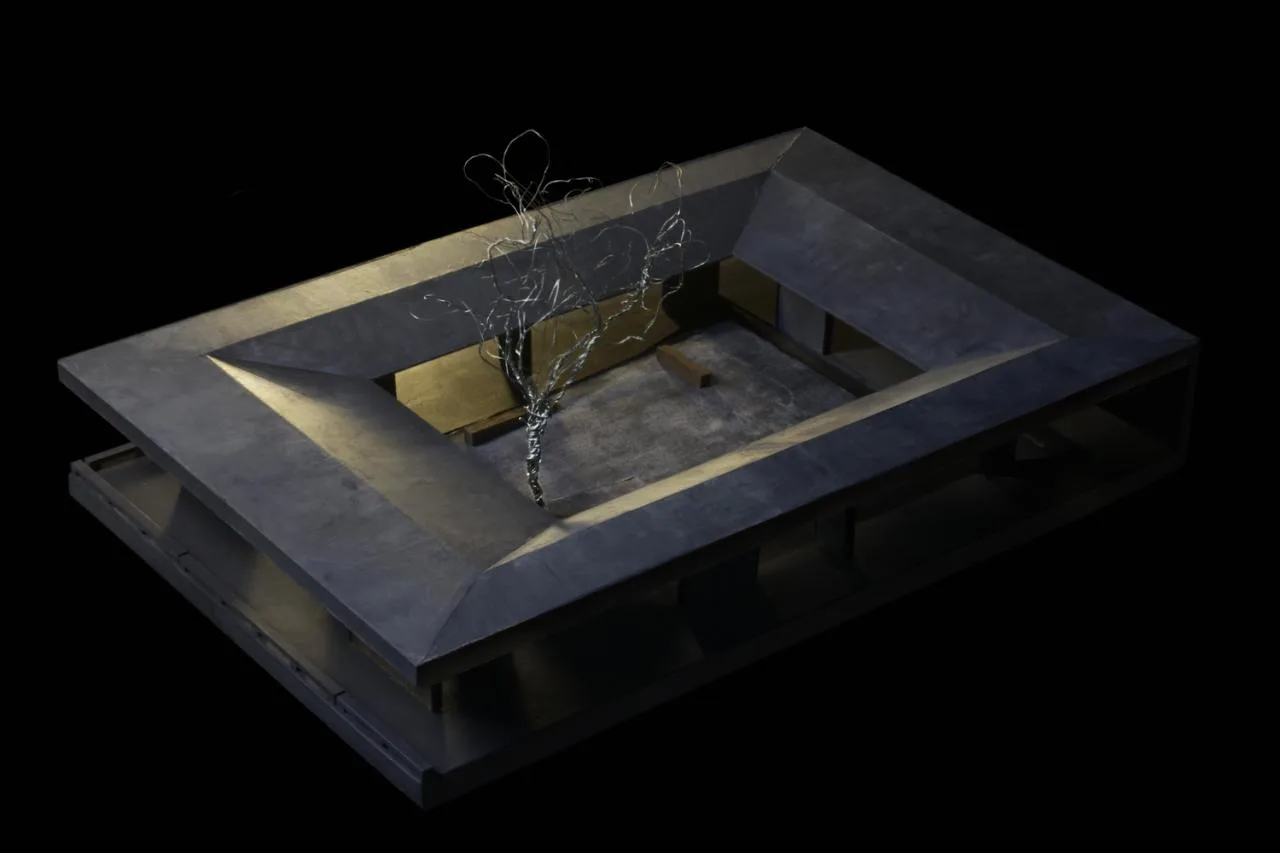
△ Yushu Courtyard Model © Actually Architecture
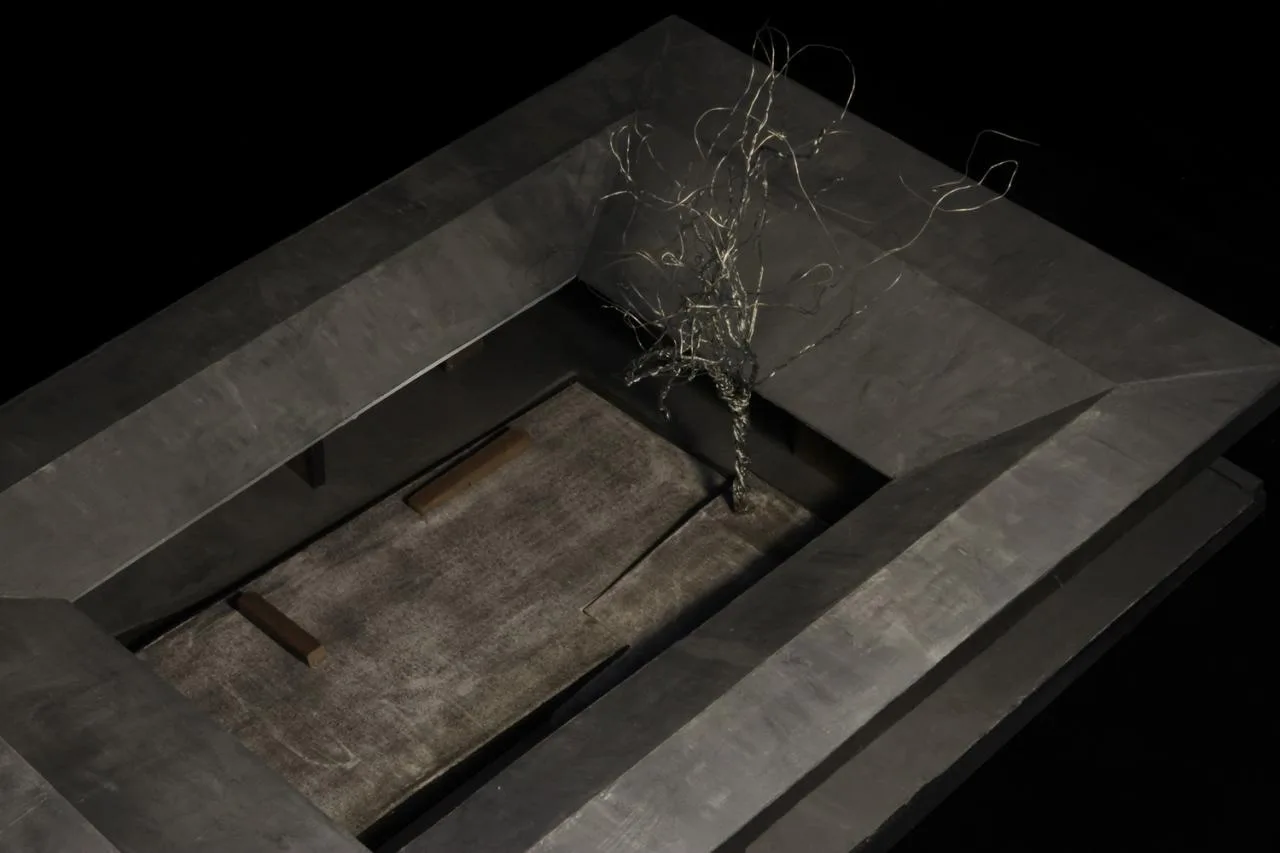
Partial Model of Yushu Courtyard © Actually Architecture
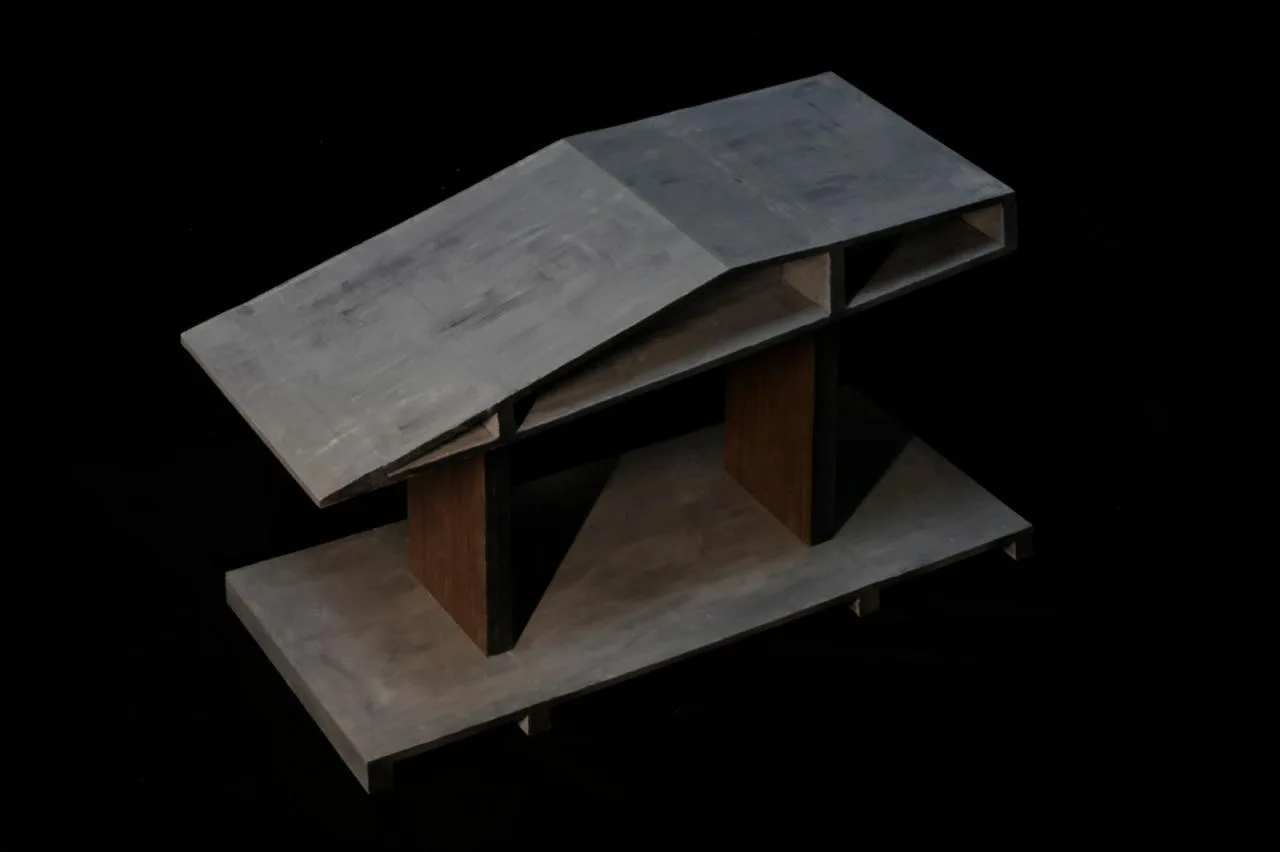
△ Local Roof Model © Actually Architecture
Project Information
Project Name: Exhibition Hall of Shiwan Zhushe Li Architectural Firm
Location: Hangzhou, Zhejiang Province, China
Year Completed: 2021
Building Area: 1,200 square meters
Address: Shufeng Village, Shimen Town, Tongxiang City, Zhejiang Province
Lead Architect: Li Shiqi
Design Team: Li Shiqi, Jin Lei, Ai Mengjiang, Lan Xu, Tan Hui (Intern), Xu Haoyu (Intern), Ma Ziheng (Intern)
Client: Zhejiang Huateng Animal Husbandry
Structural Design: Actually Architecture + Tongxiang Urban and Rural Planning and Design Institute
Landscape Design: Actually Architecture
Interior Design: Actually Architecture
Construction: Zhejiang Circular Construction Co., Ltd
Photography: Wu Qingshan















Must log in before commenting!
Sign Up