
Our goal is to create a uniquely captivating concrete product.
Concrete has been a fundamental building material for thousands of years, continuously pushed to new limits by countless architects. Its versatility is immense.
Under the hands of different architects, concrete reveals a spectrum of colors and textures. Modern concrete has advanced significantly, innovating in several directions.
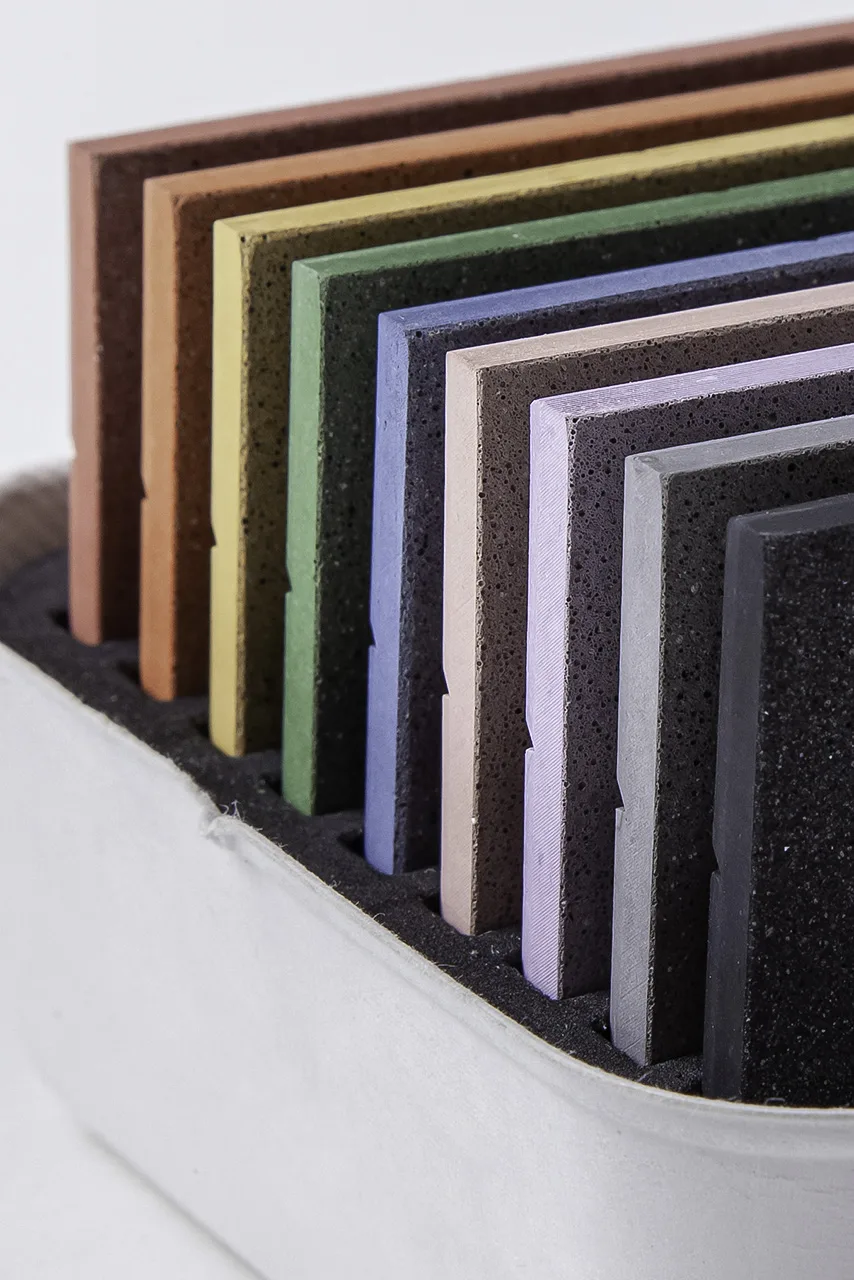
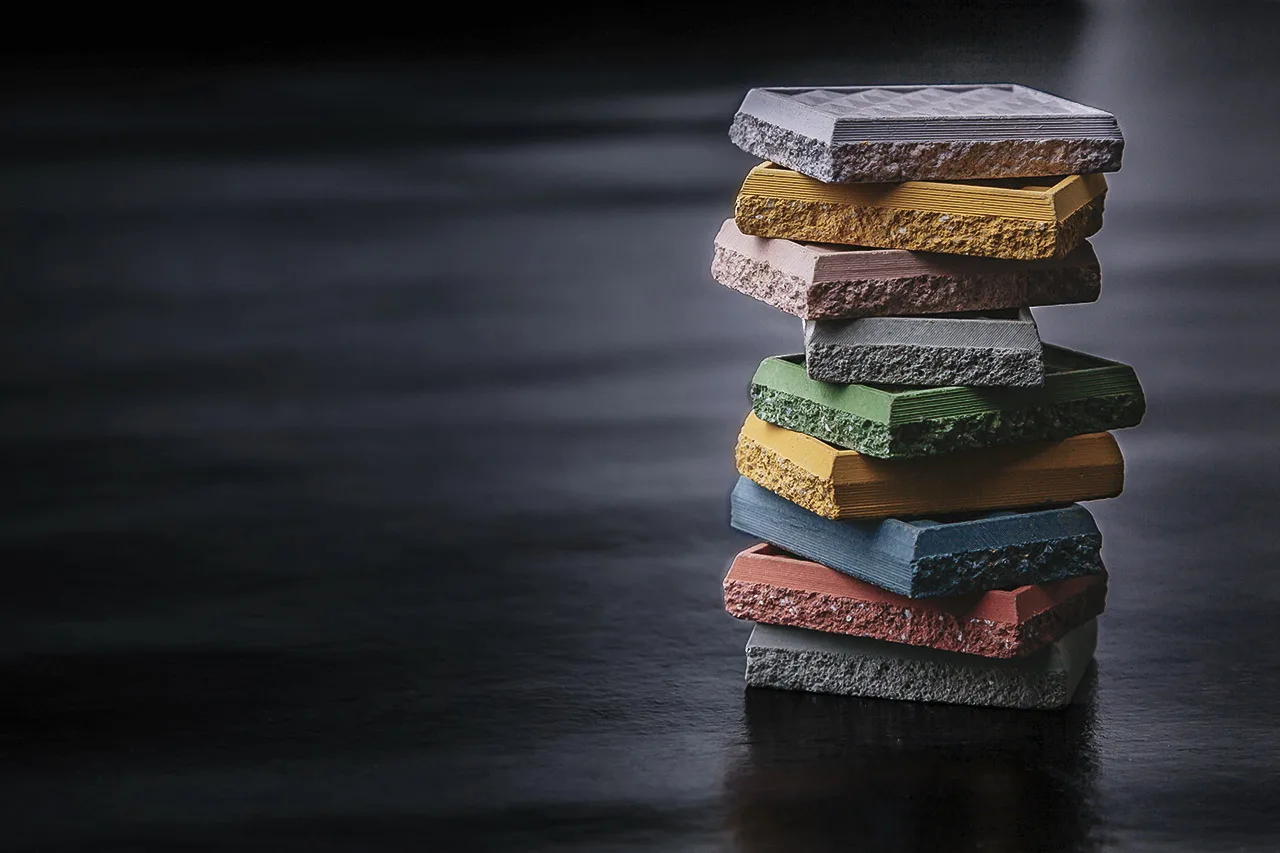
Regarding color, concrete is no longer confined to just gray tones. It can be tinted in shades ranging from white and black to red, orange, yellow, green, blue, purple, as well as macaron and Morandi palettes, all achievable through specialized concrete color matching.
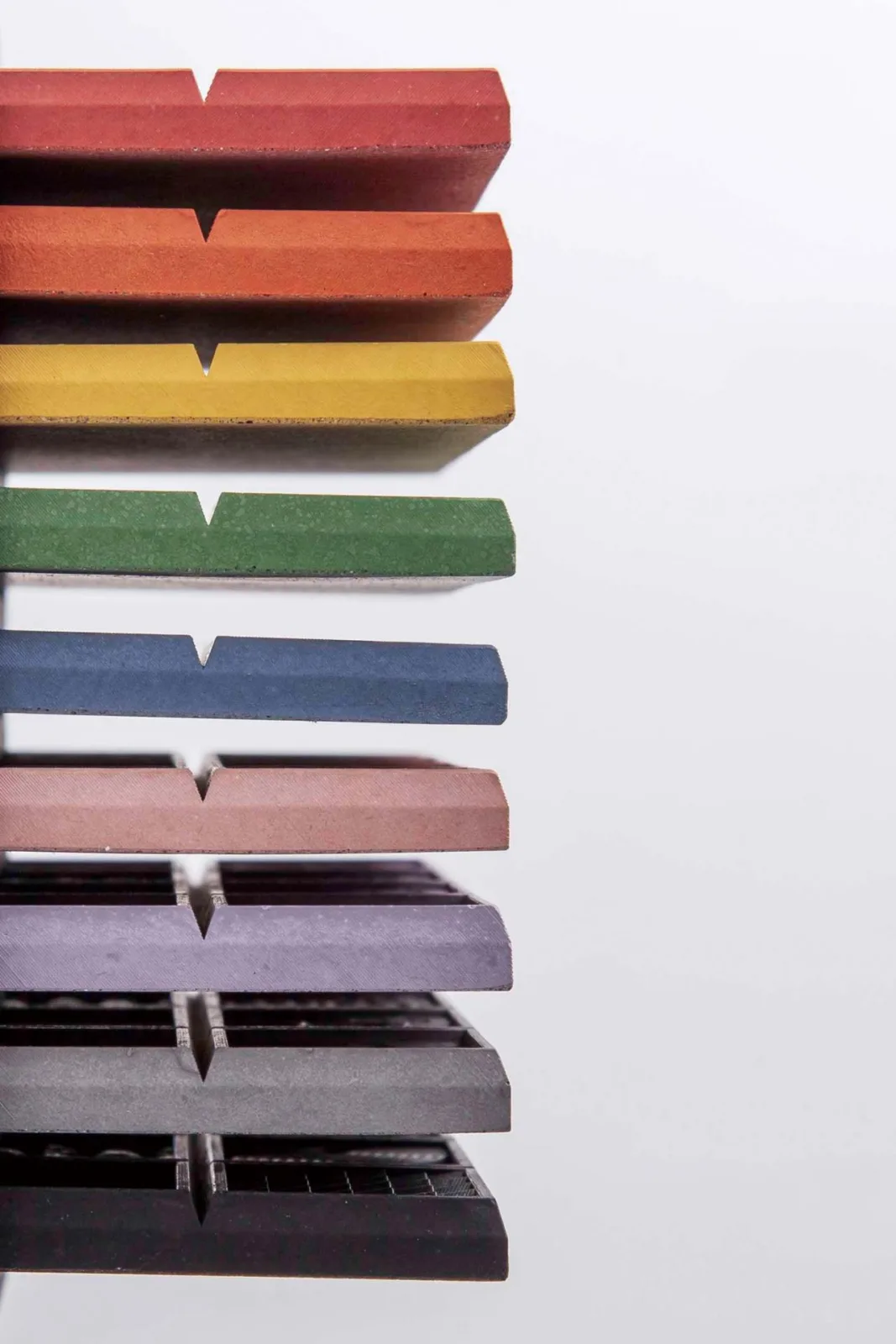
© True True
In terms of density, concrete is no longer just a heavy artificial stone. Lightweight concrete slabs can have densities as low as 0.6-0.9 g/cm³, which is only about one-third the density of traditional concrete slabs. This makes it easier for workers to build concrete bricks on tall walls, and large slabs can even be carried by a single person.
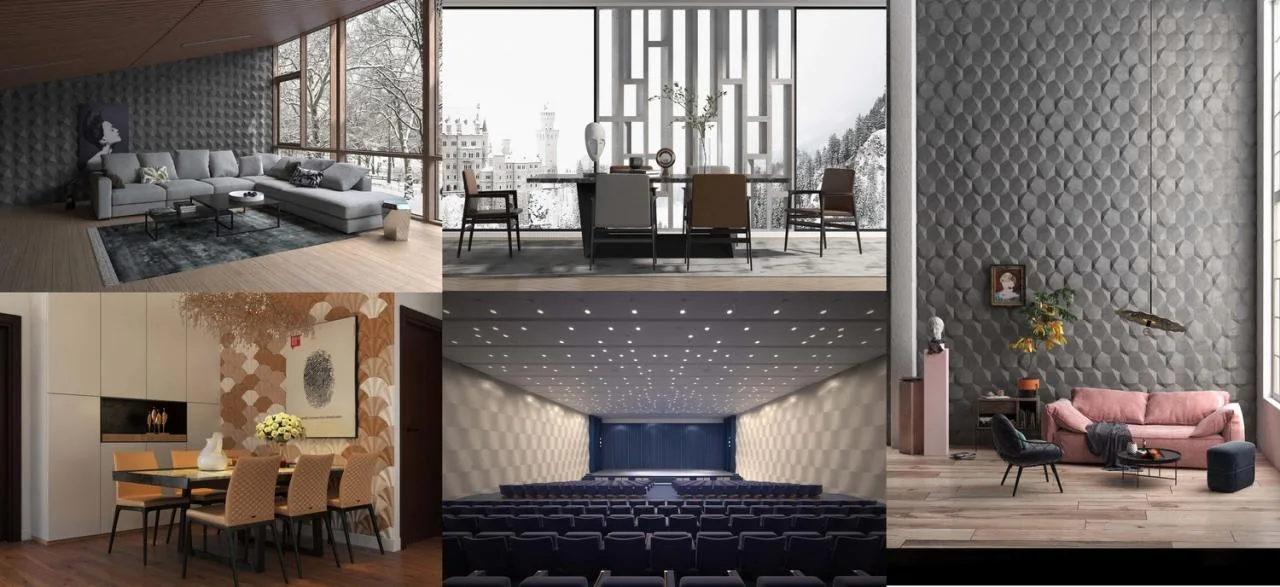
With 3D modeling, the era of flat materials is fading. Three-dimensional interior finishes are gaining popularity, as efficient production and practicality are no longer the only considerations. The tactile and visual textures of materials have become important decorative elements, driving the rise of 3D concrete applications.
Our Inspiration
Typical sample boxes usually just arrange and combine different material blocks in a straightforward manner, which often feels dull and uninspiring. We aimed to break away from traditional building material templates by rejecting monotonous, unengaging, and non-interactive designs. Instead, we wanted to provide users with a fresh experience engaging multiple senses—visual, tactile, and even auditory—redefining how building material samples are presented.
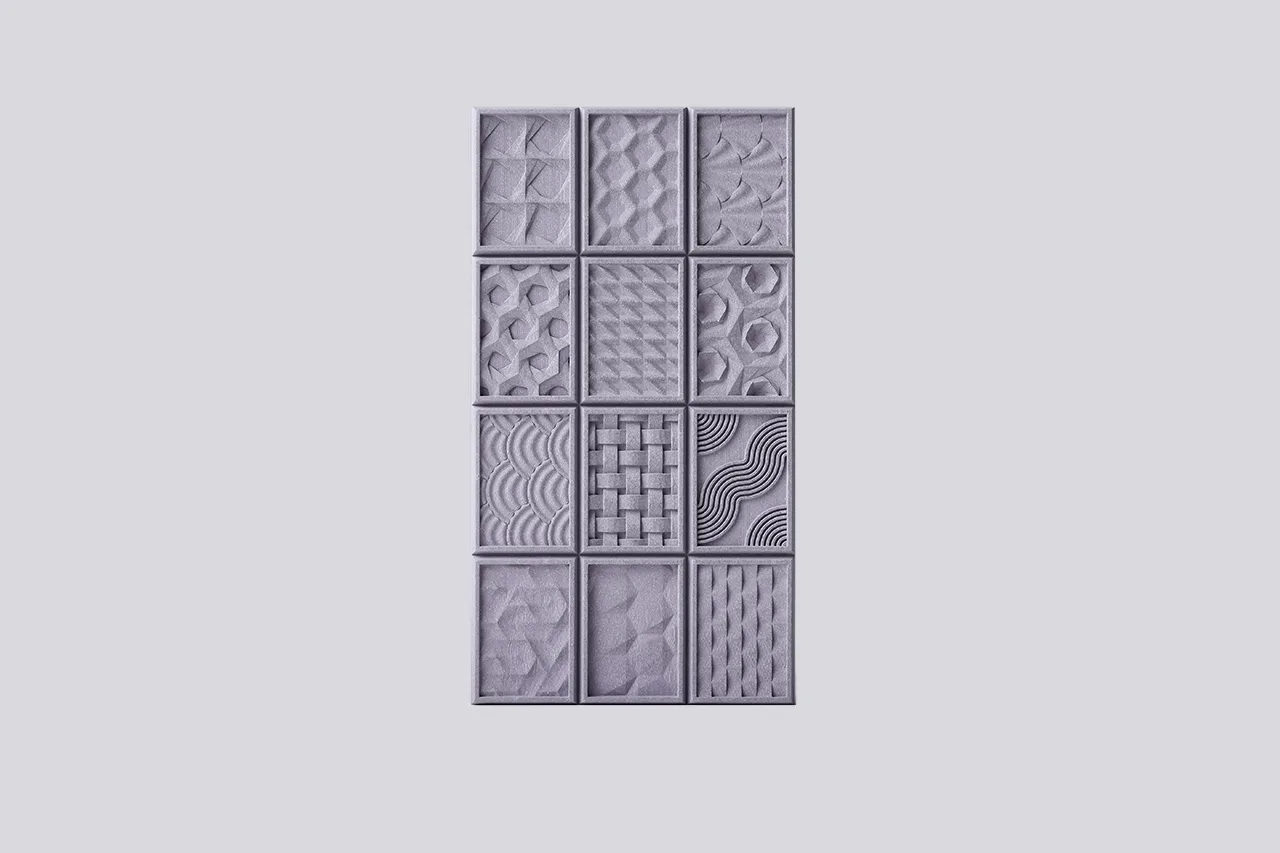
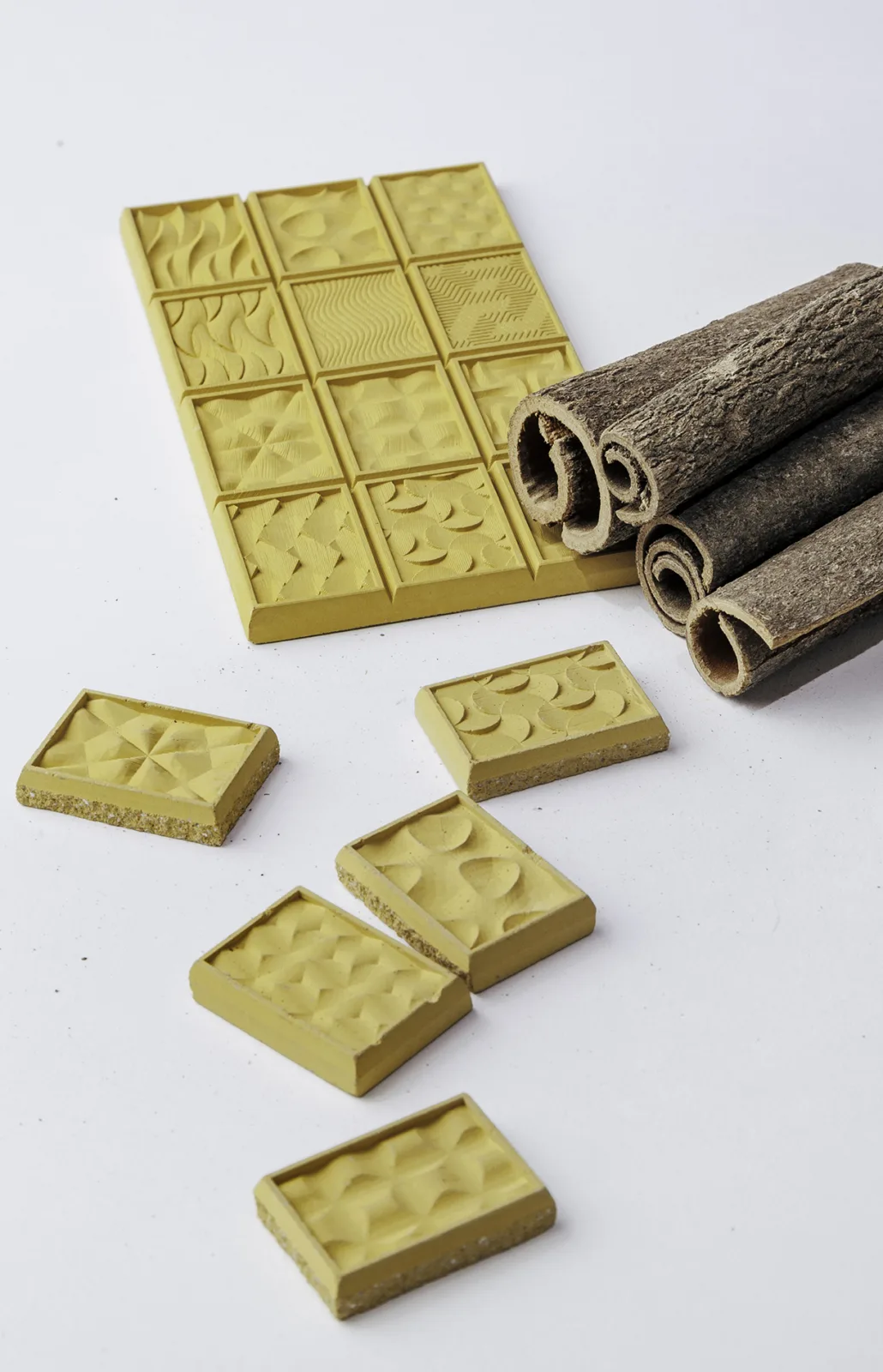
During our creative process, we came across a chocolate design by Daisuke Sato called Chocolate Texturebar. This chocolate is divided into twelve compartments, each with a unique texture—stripes, dots, zigzags, grids, waves, and more. These patterns are intricately arranged, and as people taste the chocolate with varying textures, they discover new flavors beyond traditional chocolate, offering an enjoyable exploration visually and through taste.
Concrete and chocolate share two key similarities. Firstly, both are formed using molds, allowing for a wide variety of shapes. Secondly, chocolate can be combined with different ingredients like matcha, hazelnuts, and milk to create diverse colors, textures, and flavors. Similarly, concrete can be mixed and customized. Inspired by Sato’s design, we fused the characteristics of concrete with this concept to create a new product: “Taste Concrete.”
© True True
Visual Appeal
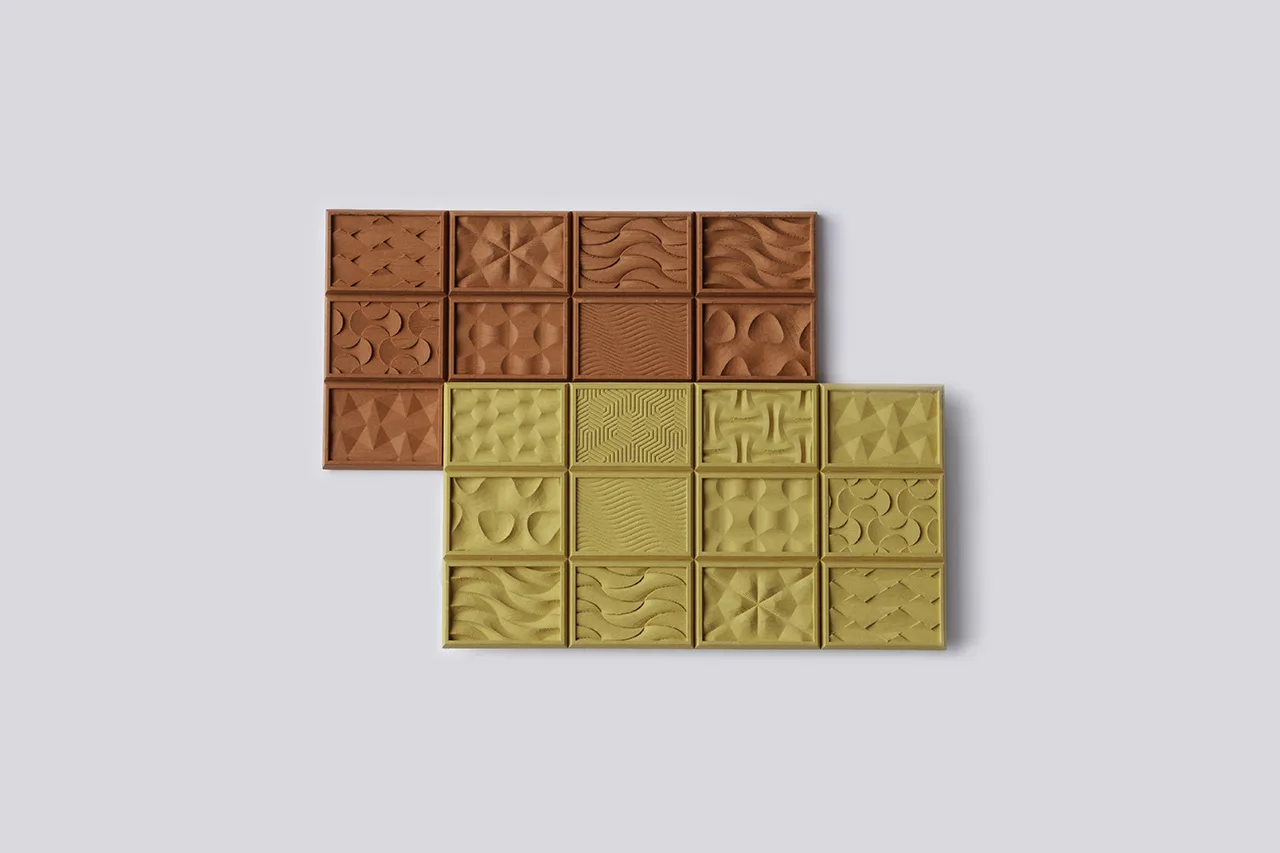
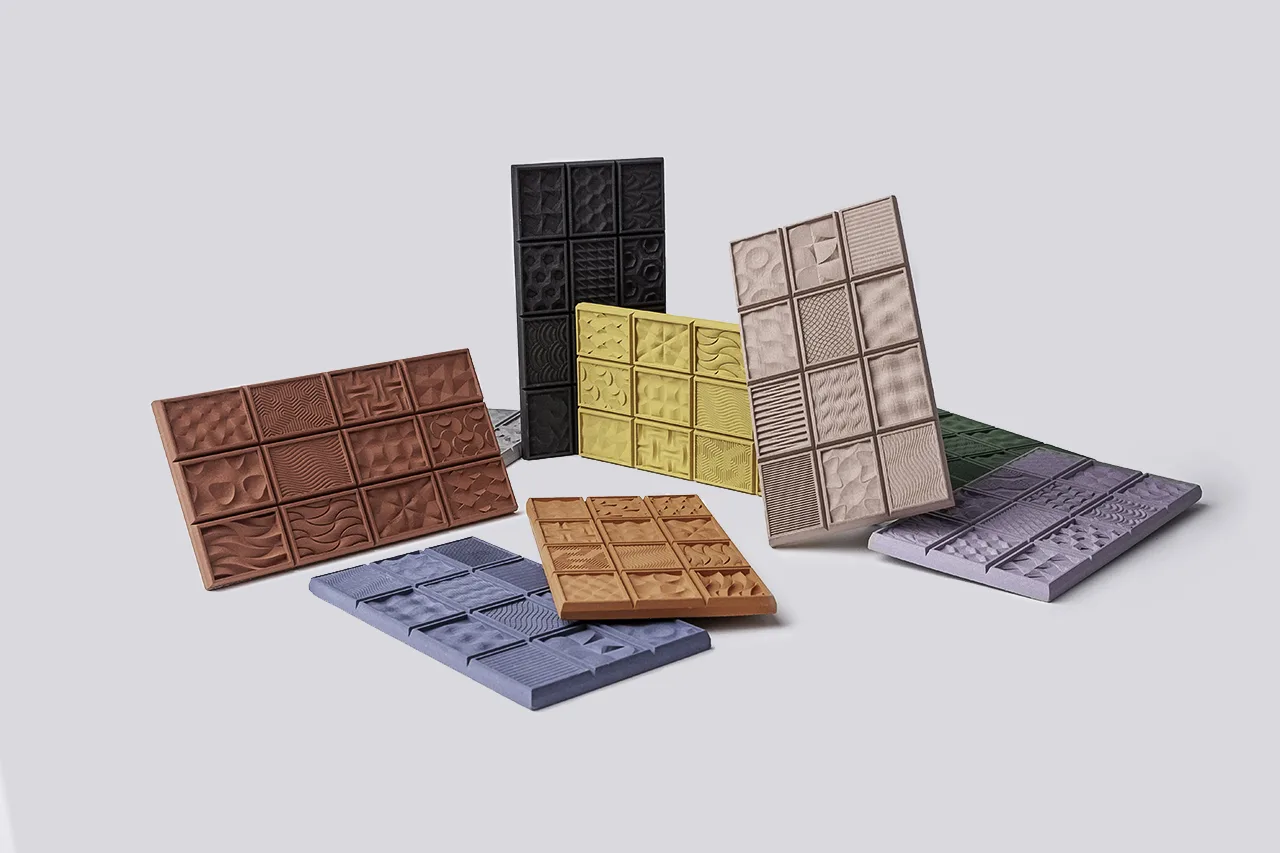
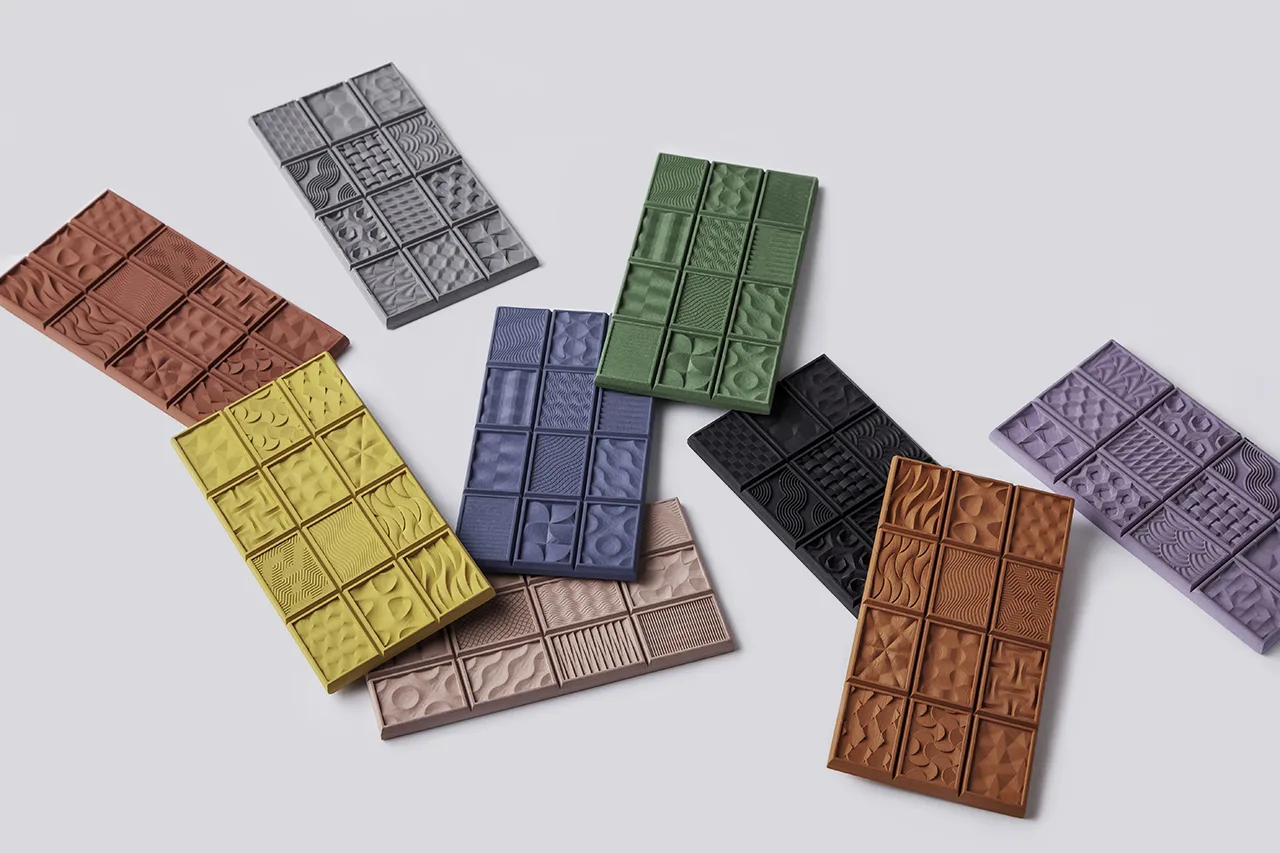
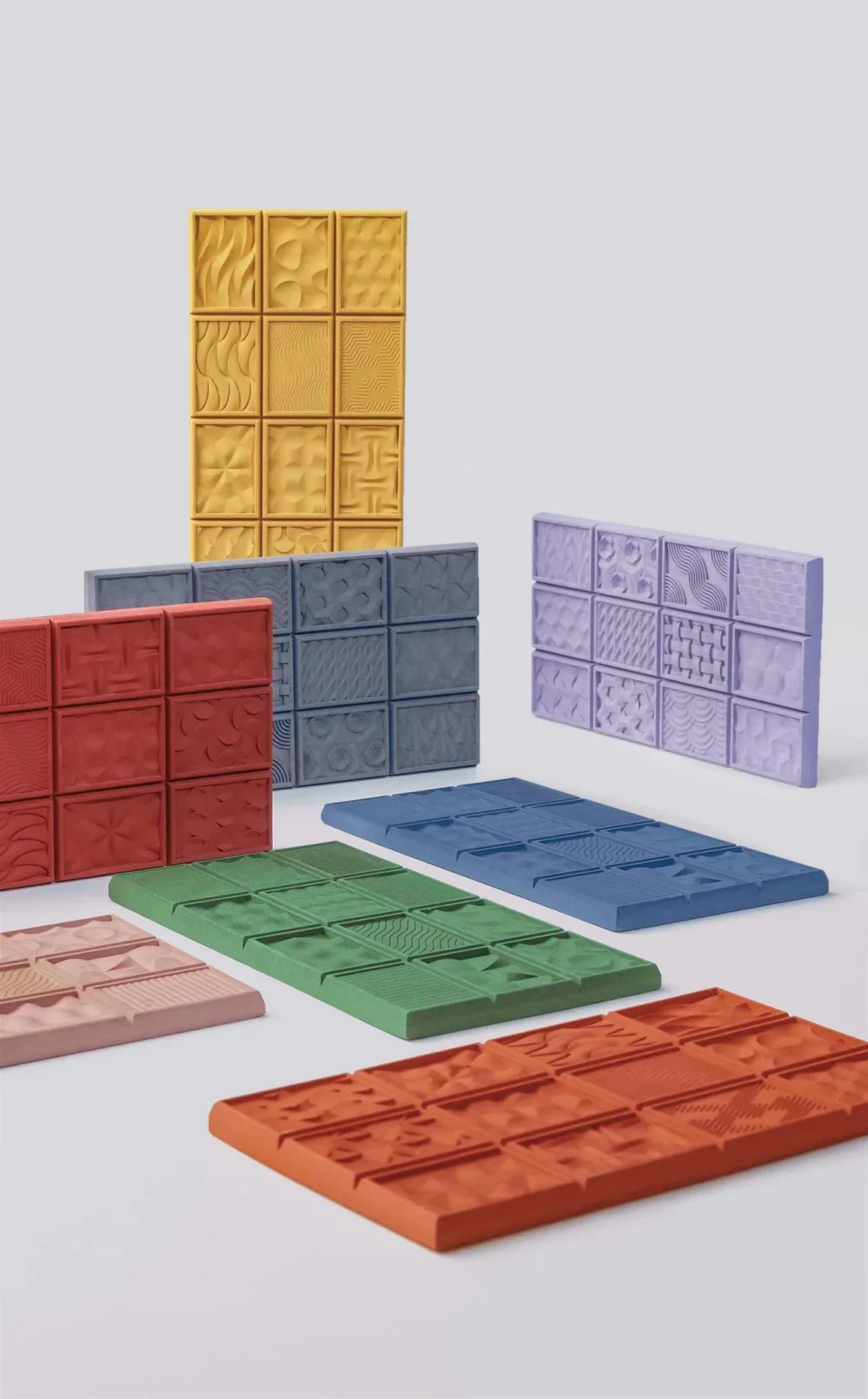
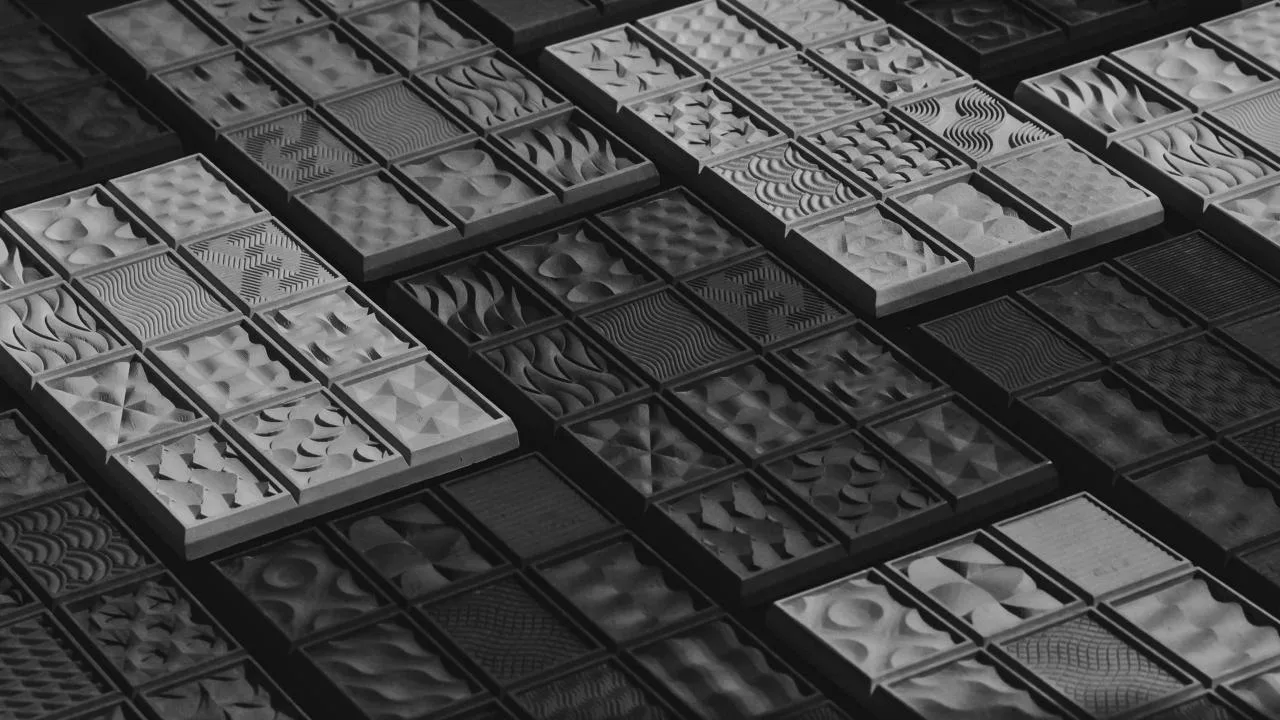
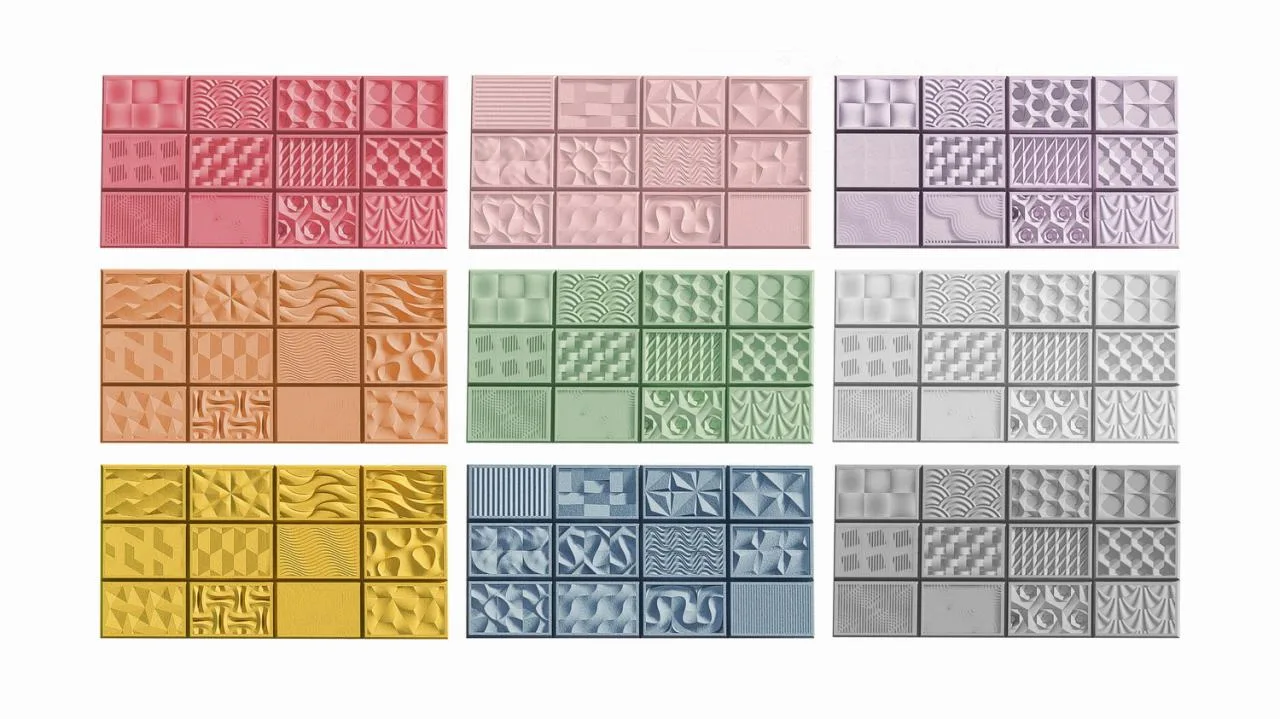
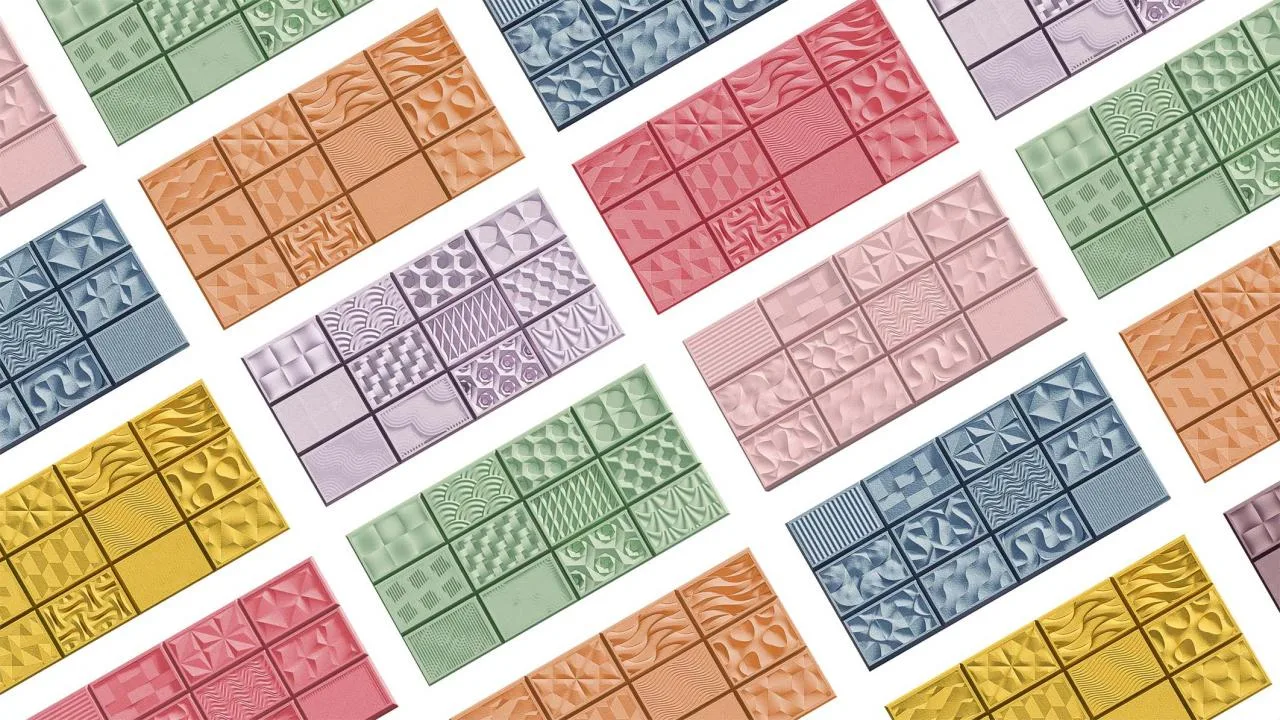
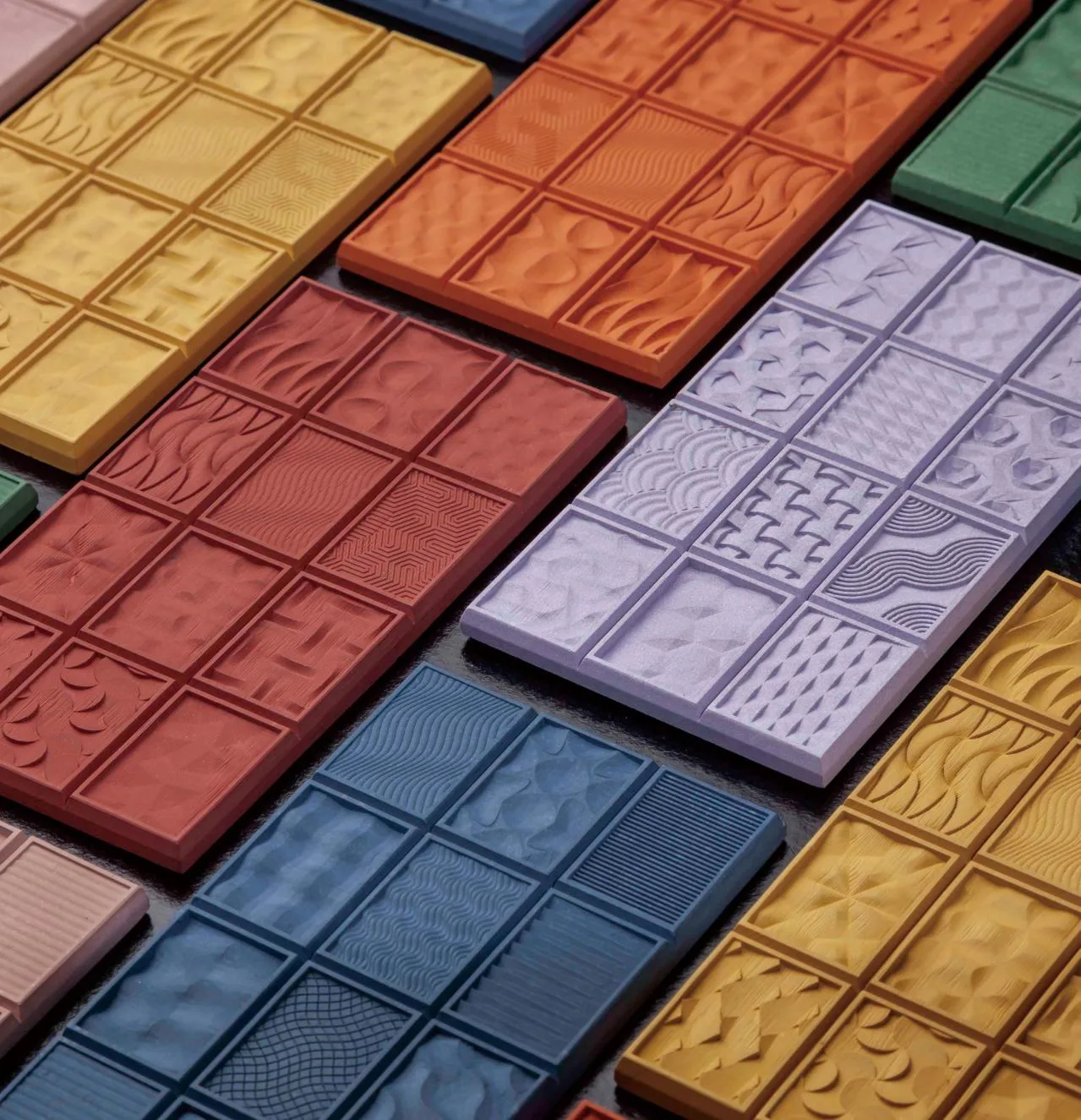
When you take the “Flavor Concrete” out of the box and hold it, it genuinely feels like food. The product is as thin and thick as typical chocolate bars, divided into twelve individual grids, each with distinct three-dimensional shapes. The delicate surface textures make it easy to mistake for carefully crafted chocolate, and the varied colors evoke dessert-like associations.
© True True
© True True
© True True
© True True
© True True
Auditory Experience
Gently tapping the “chocolate” surface produces a crisp, pleasant sound, which enhances the auditory experience and adds a multisensory layer of enjoyment and sophistication to the product.
Tactile Qualities
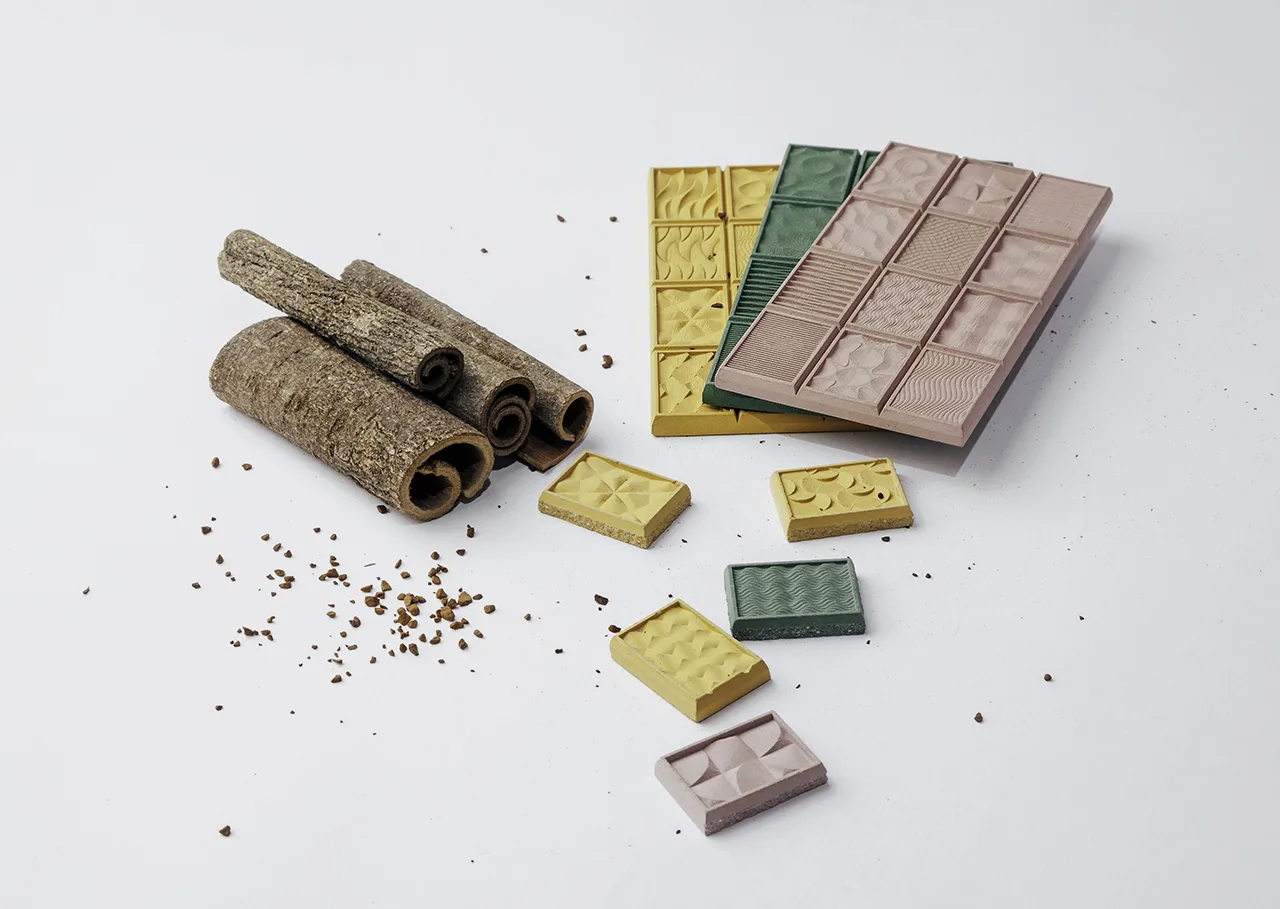
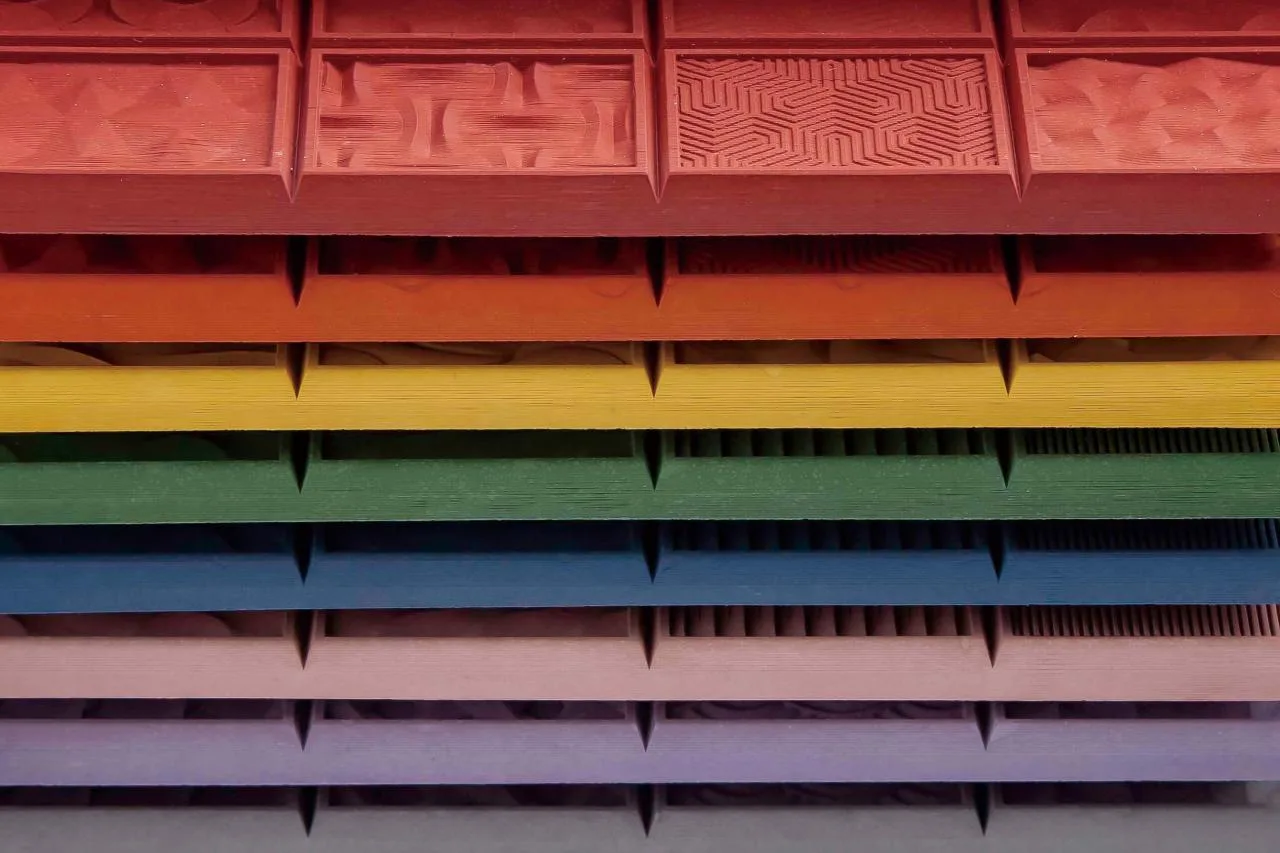
Each concrete piece, much like chocolate, can be broken off individually. The crisp texture bridges the sensory gap between concrete samples and chocolate desserts, creating a playful transition.
© True True
© True True
Beyond Chocolate Design
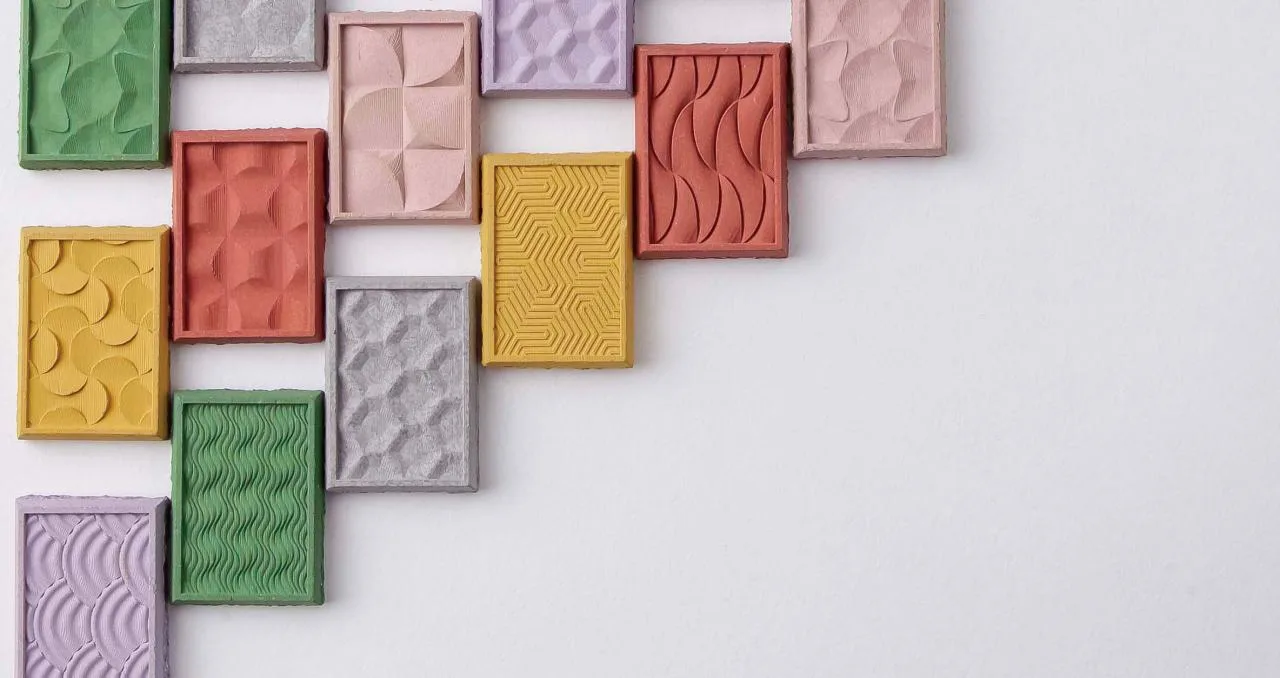
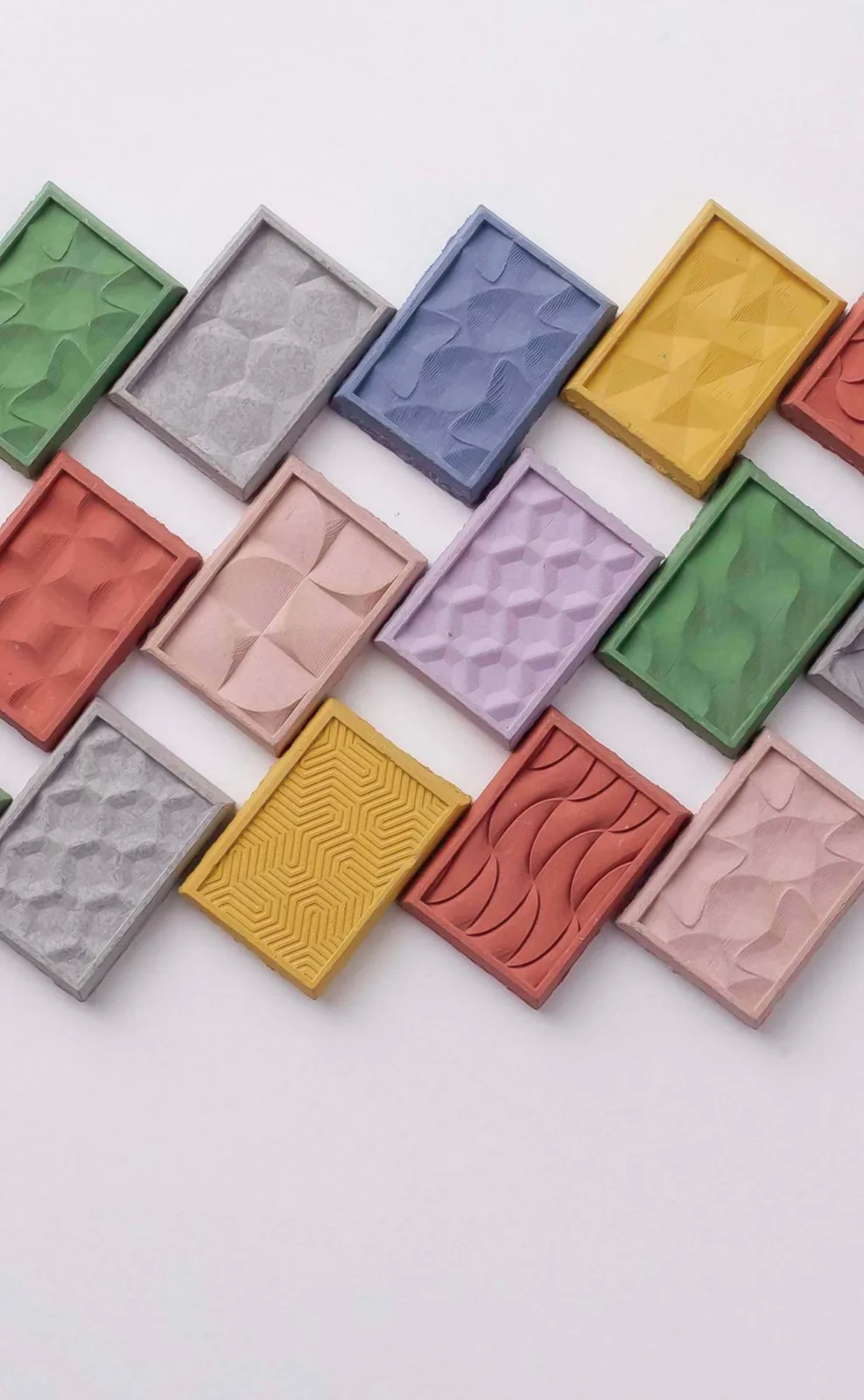
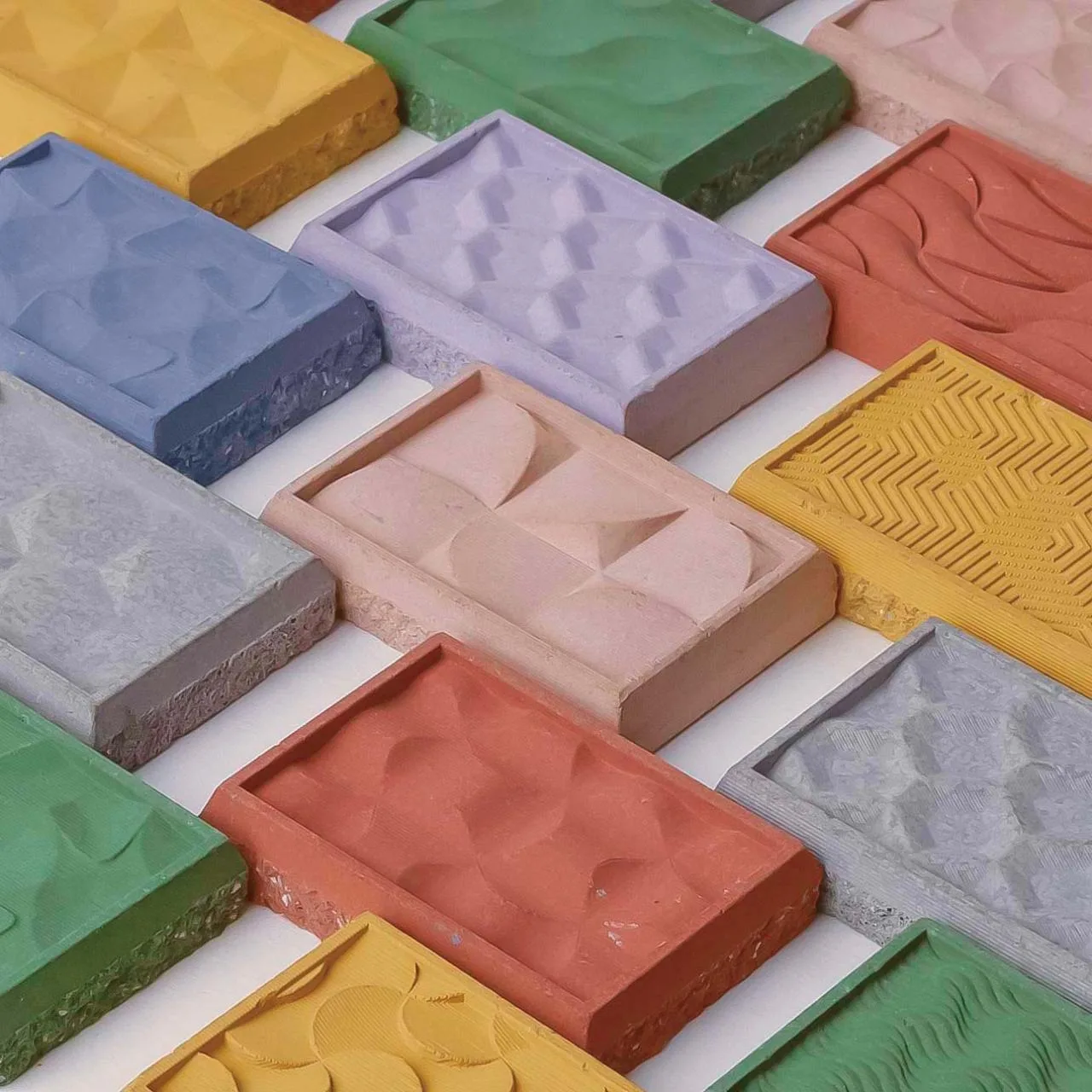
While the Taste Concrete pieces resemble chocolate visually, the design goes deeper. We meticulously developed 36 types of concrete bricks, each serving practical purposes for both exterior and interior building walls.
The three-dimensional patterns vary in contour, combination, and arrangement, segmented and reassembled across three styles with 36 chocolate-like grids.
© True True
© True True
© True True
© True True
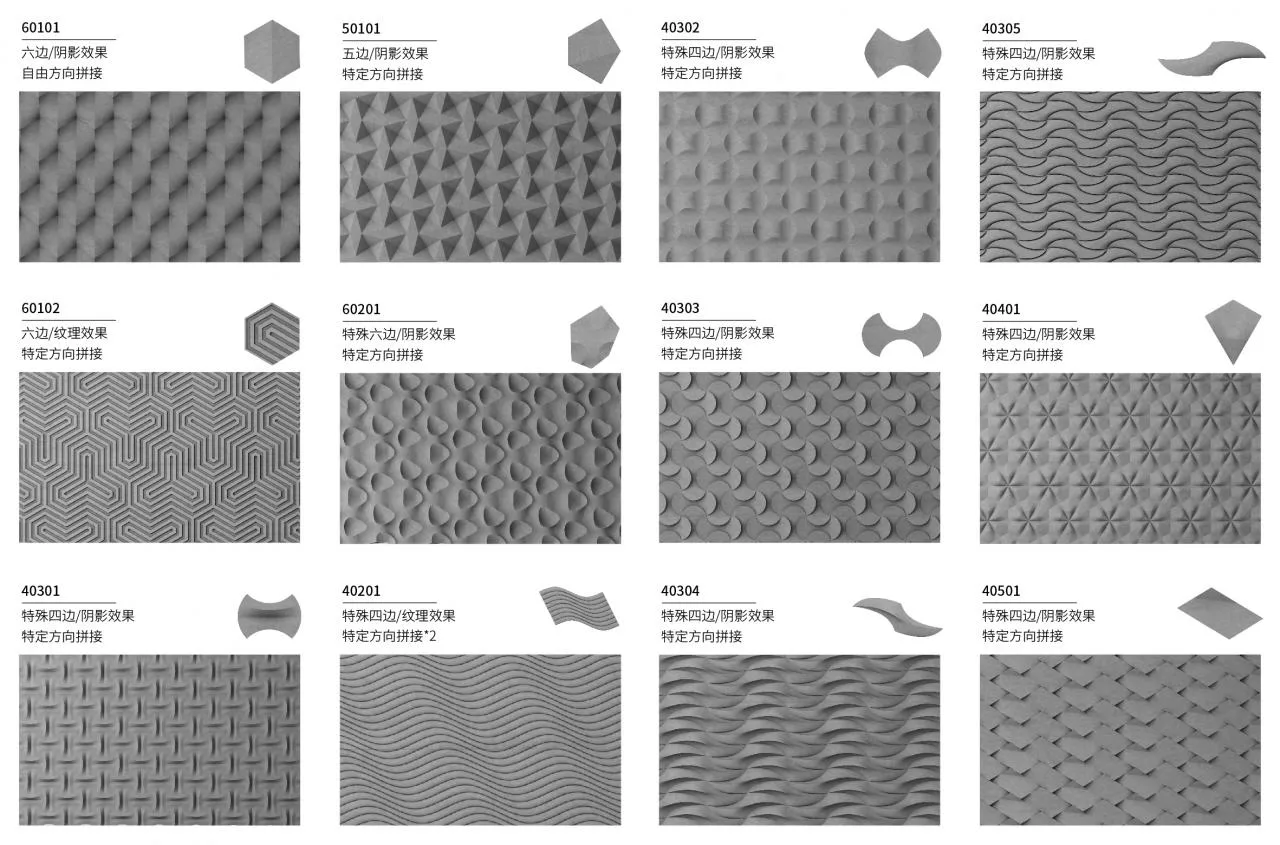
Just like brick walls, concrete bricks must fit tightly when laid across a surface. We extracted dense splicing shapes such as triangles, squares, hexagons, and irregular quadrilaterals. Each geometric shape offers different ways to be arranged, and even the same shape can be spliced in various methods. This complexity allows the same design to display distinct three-dimensional texture effects through diverse combinations.
We have thoroughly cataloged the individual and combined states of all 36 brick types, assigning each a number reflecting its basic geometric properties. This design library can be expanded continuously, offering designers the flexibility to select existing bricks or create new designs tailored to their needs.
© True True
© Made it
© Made it
The 36 textures are distributed across three types of “Flavor Concrete,” each available in nine colors: red, orange, yellow, green, blue, purple, pink, gray, and black. These nine colors highlight concrete’s impressive color expression capabilities.
© Zaome
© Zaome
© True True
© True True
Packaging and Versions
The sample box comes in two versions based on density: the conventional concrete “STRONG” version with a density of 2.1-2.4 g/cm³, and the lightweight concrete “LIGHT-C” version with a density of 0.9-1.2 g/cm³.
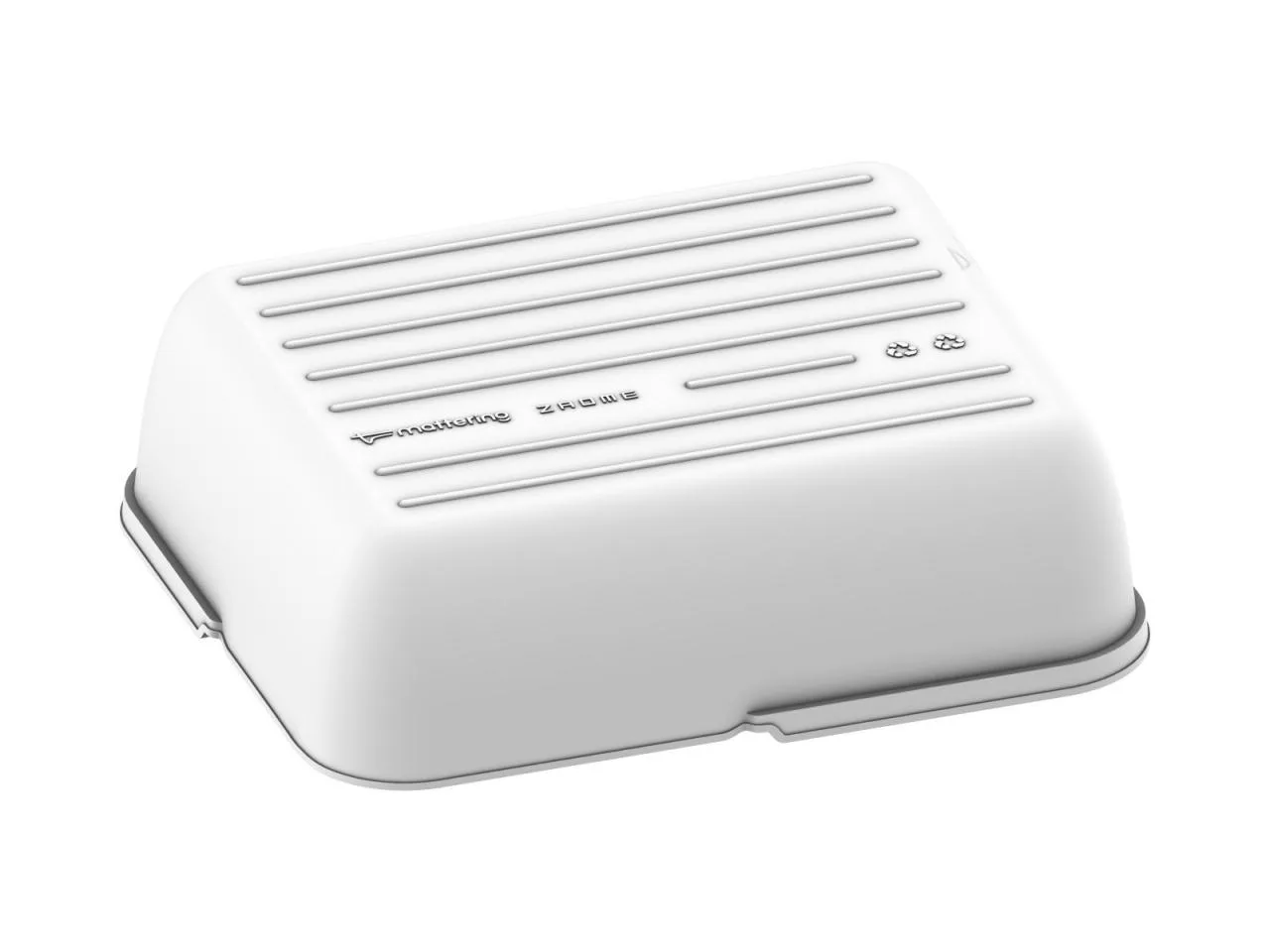
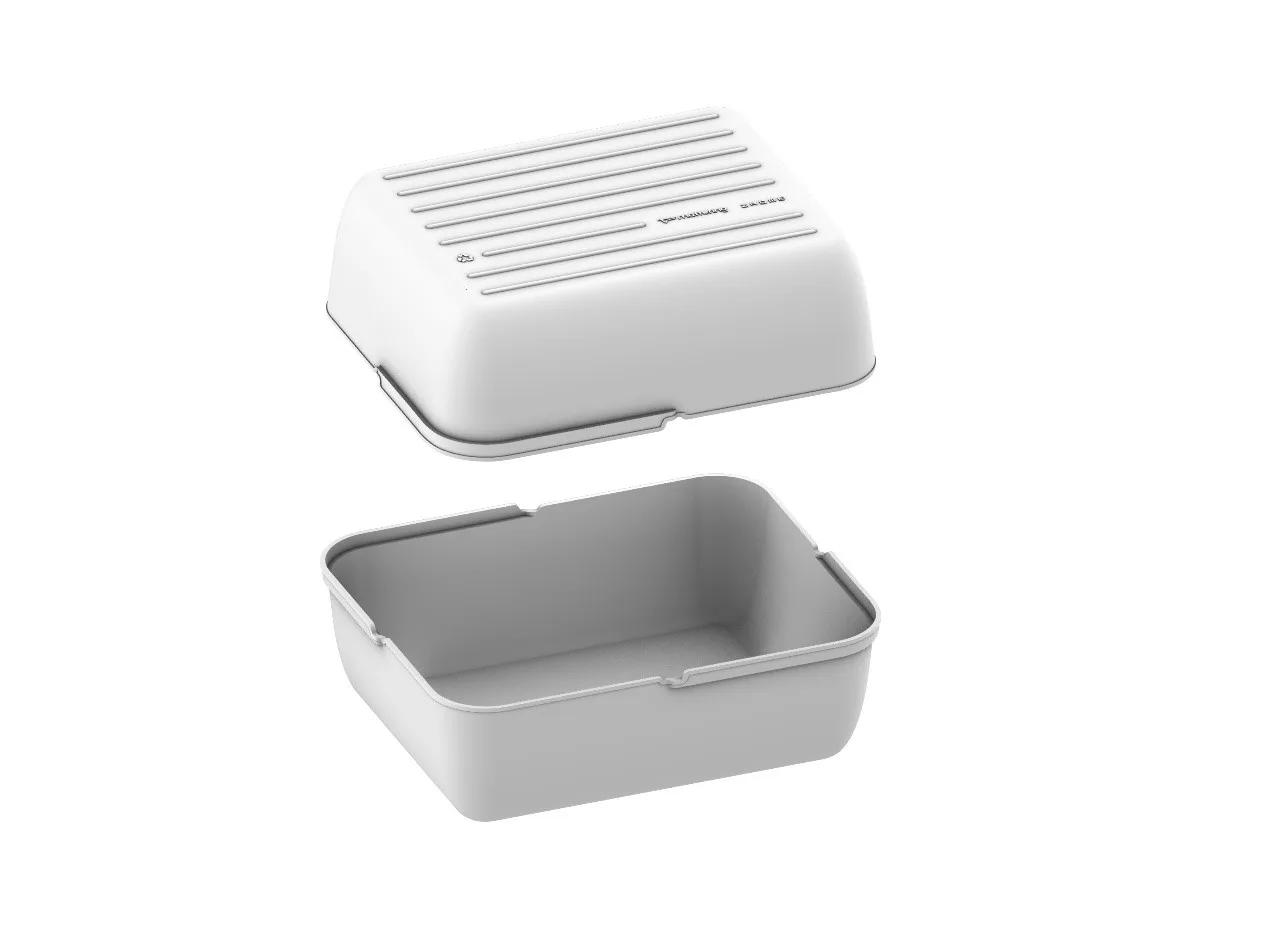
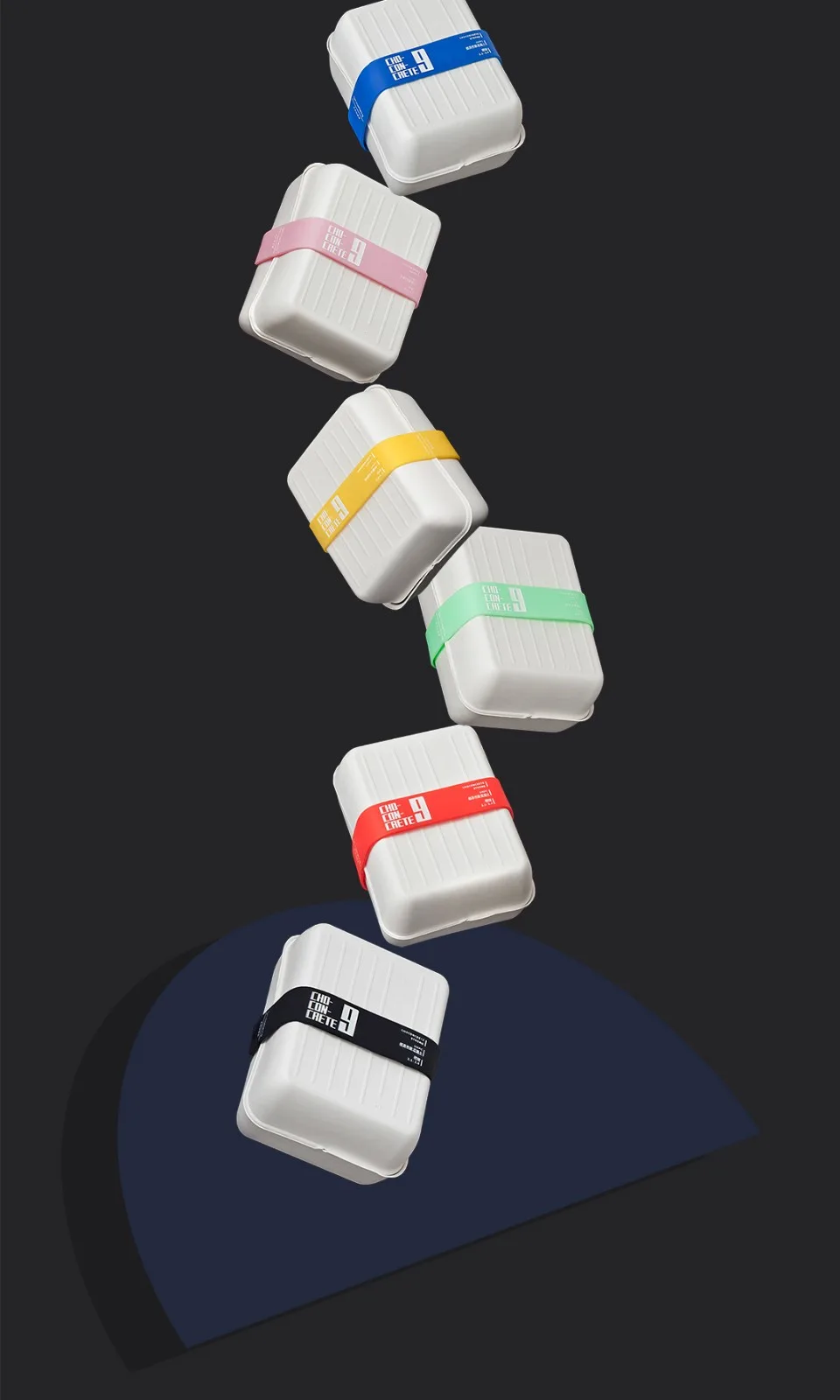
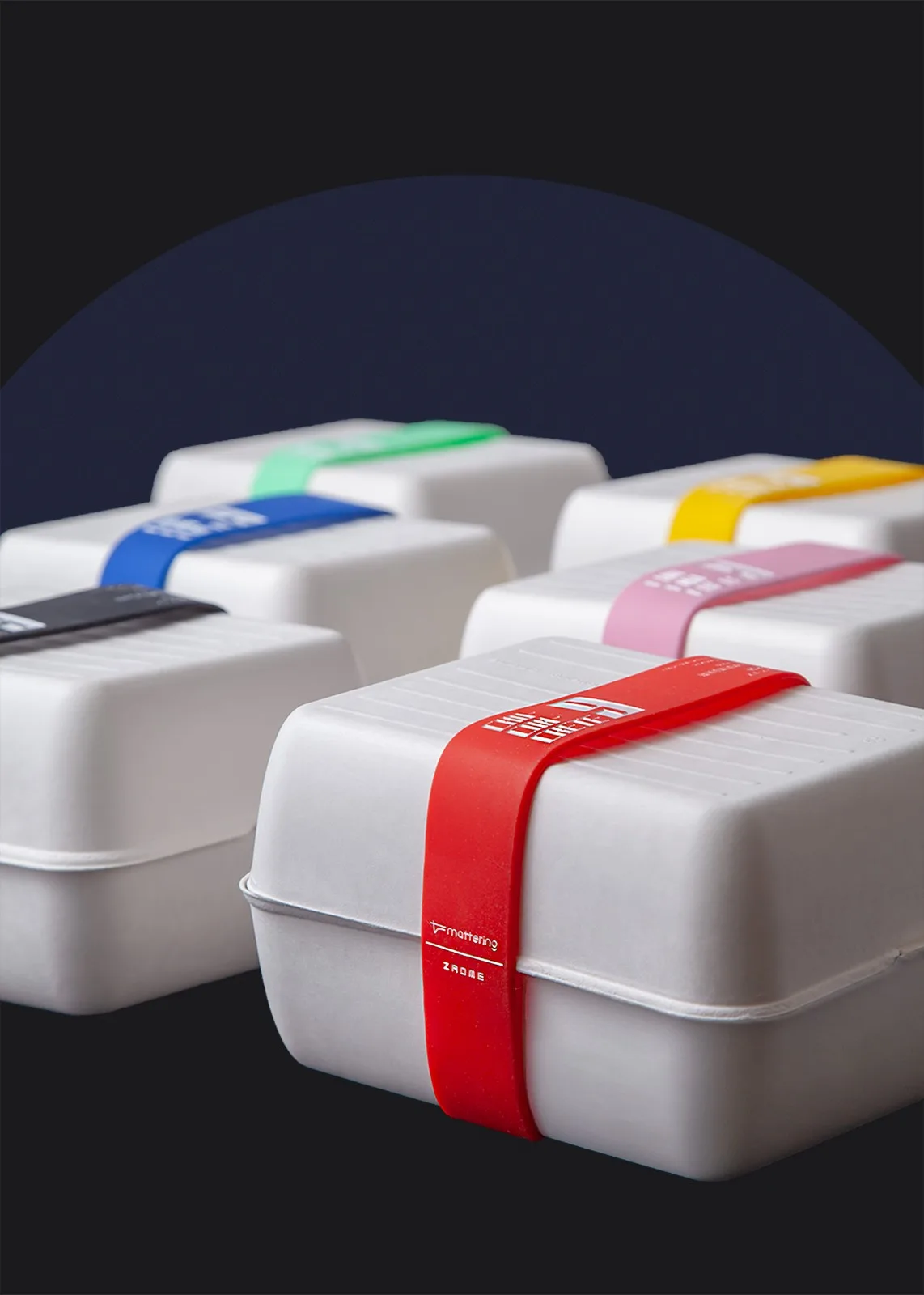
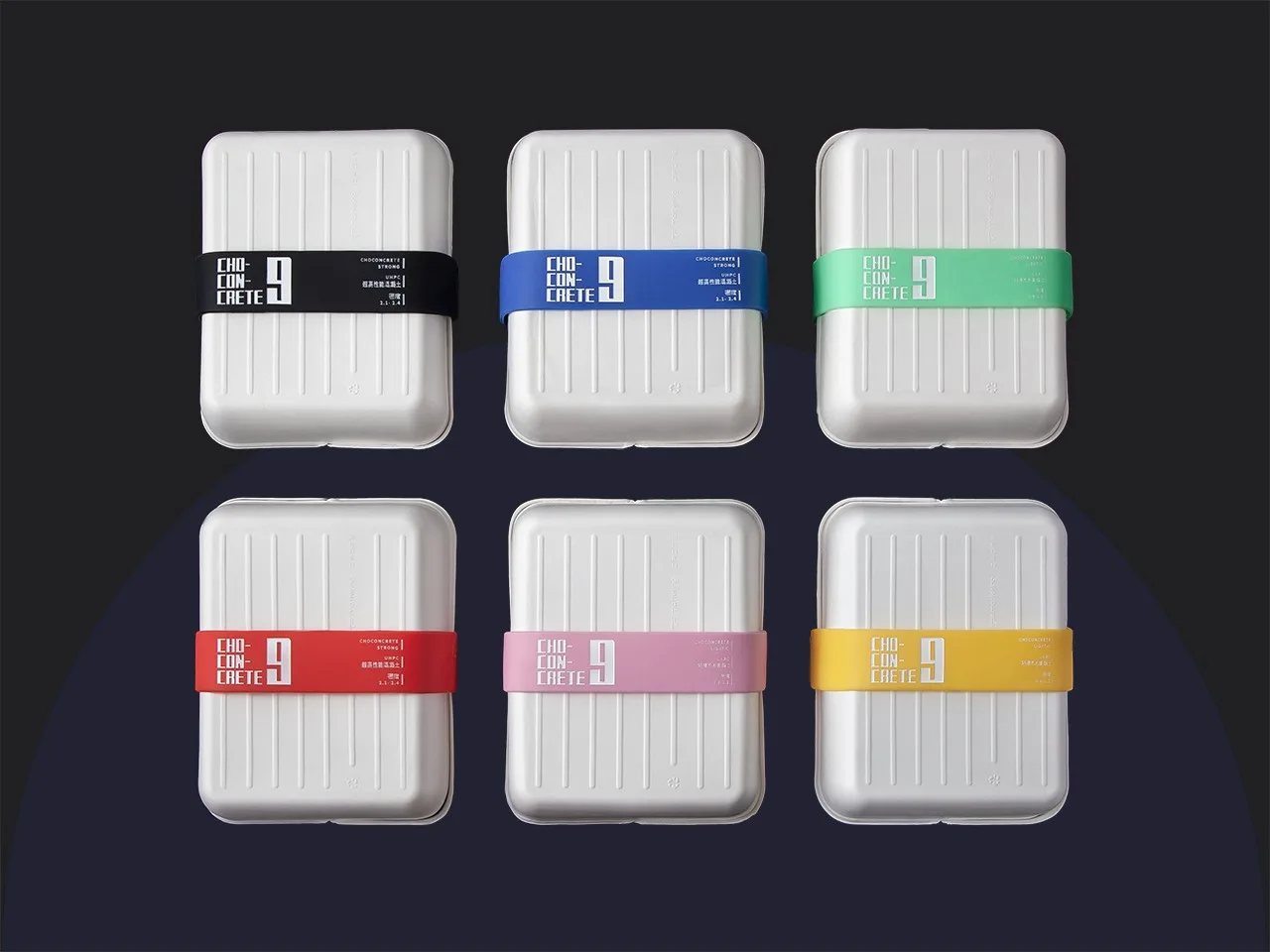
We also carefully designed the packaging, inspired by a travel case, with fashionable stripes conveying style while embracing environmental sustainability.
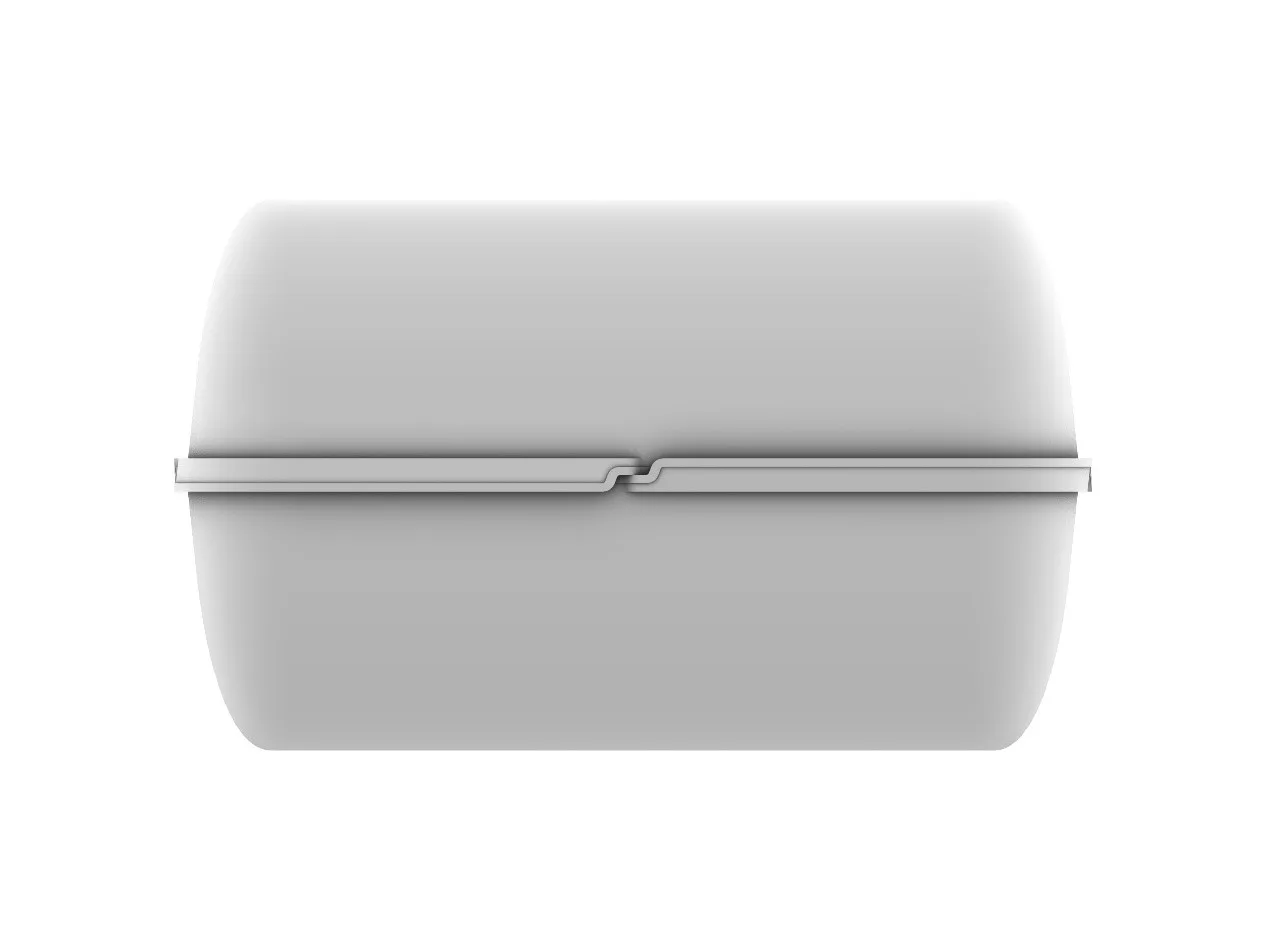
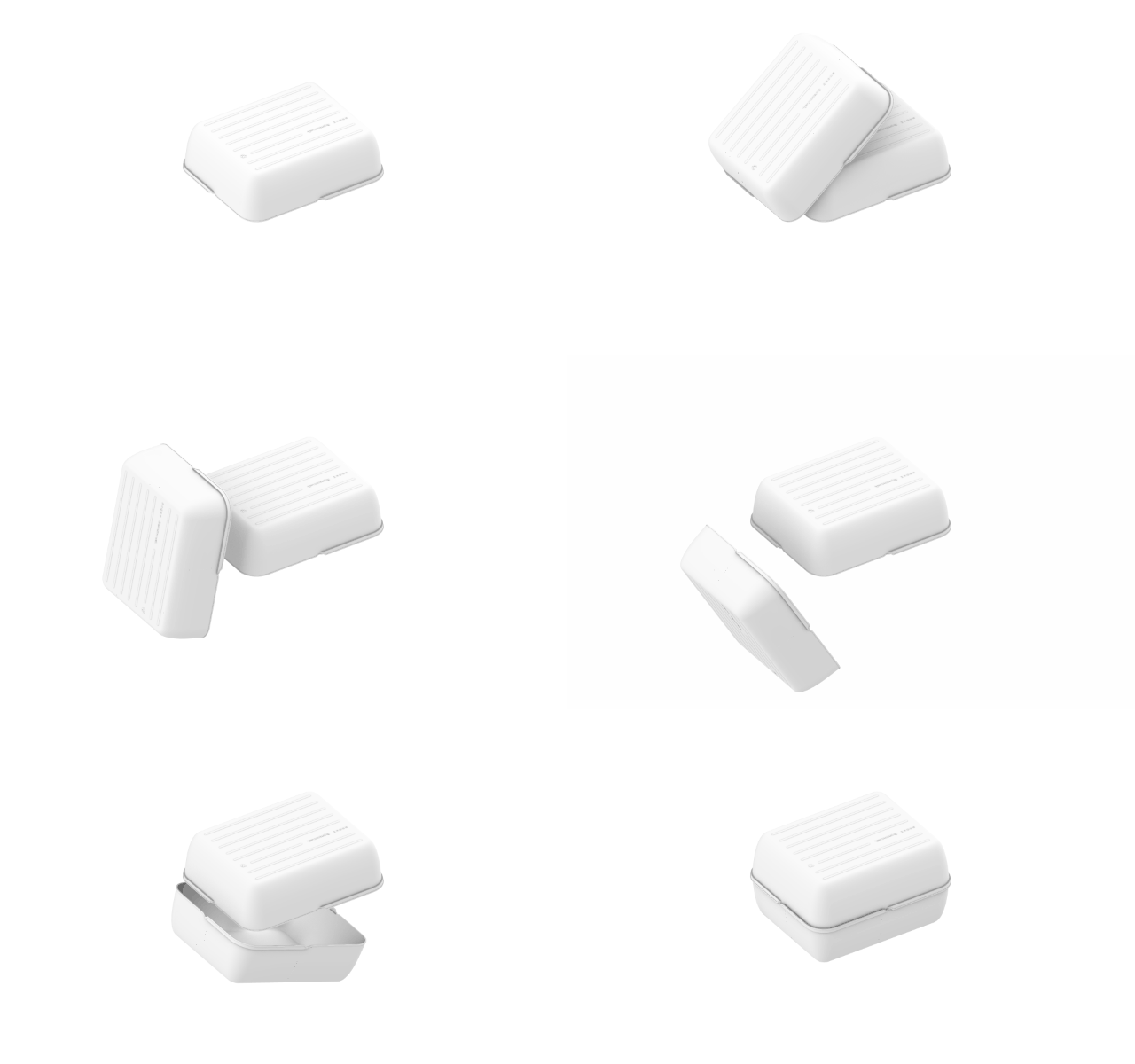
The packaging is made from biodegradable pulp, which is renewable and eco-friendly. Additionally, the base and top lid share the same shape, allowing a half box with five sides to be fastened to itself, forming a complete box base and lid.
© Zaome
© Zaome
© Zaome
If customers own multiple boxes, even if some packaging is damaged over time, the remaining bases and lids can be interlocked to form new boxes, extending their lifespan.
© Zaome
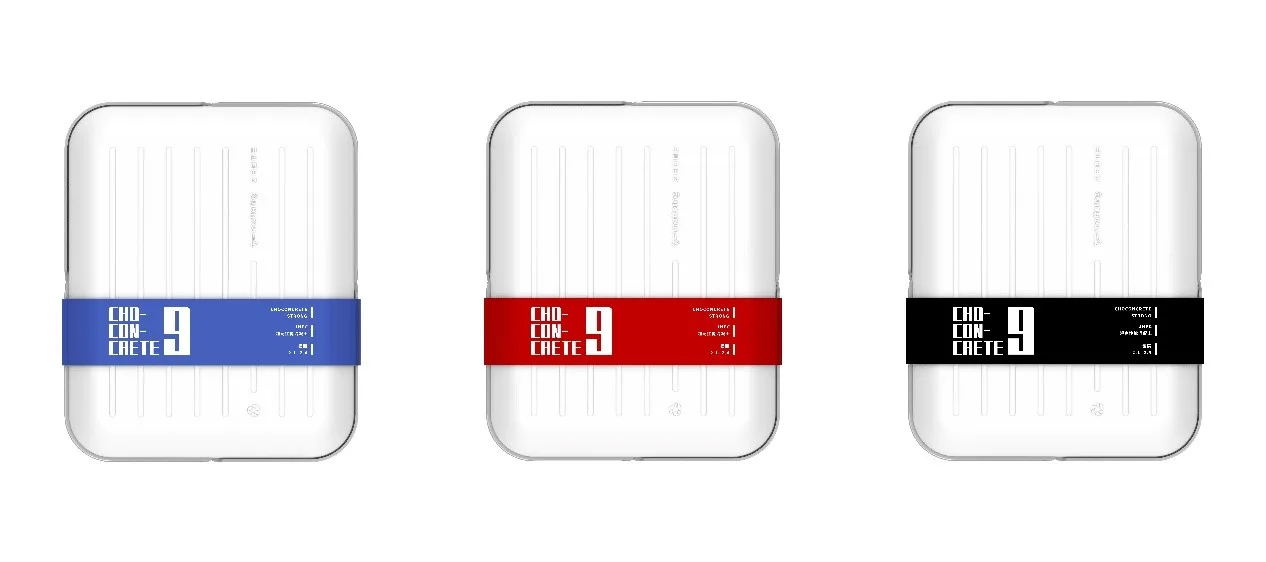
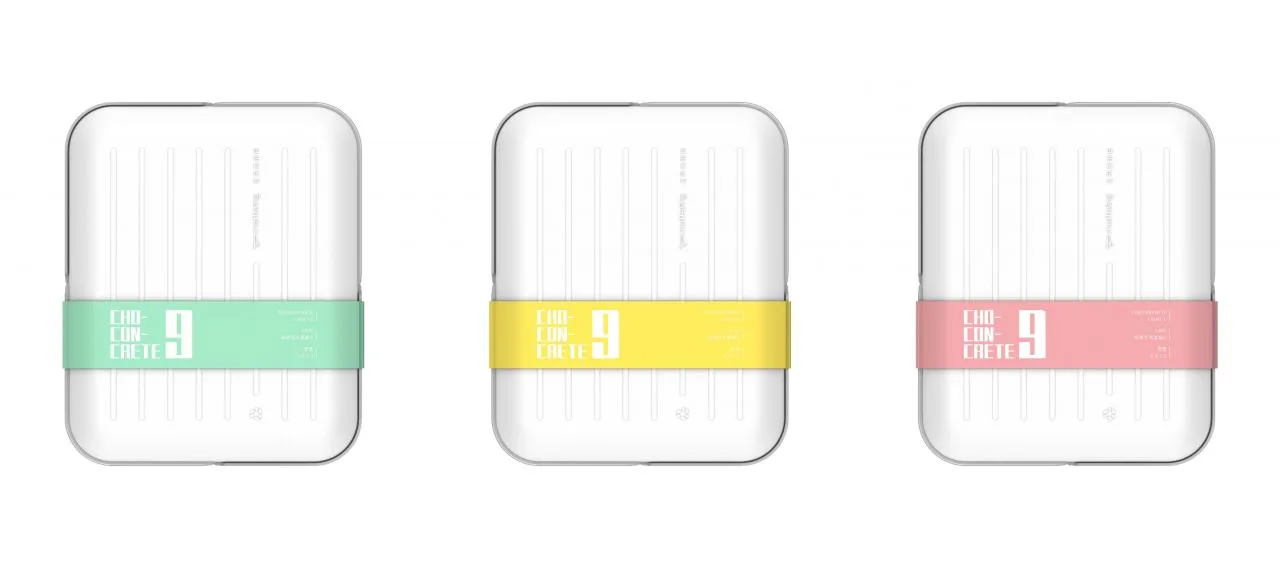
We also designed silicone bands to complement the packaging. The STRONG version uses blue, red, and black bands, while the LIGHT-C version features green, yellow, and pink bands. These colors correspond to different brightness levels and visual identities. The bold and trendy silicone wristbands add an extra layer of design and texture to the box.
© Zaome
© Zaome
© True True
© True True
© True True
Final Thoughts
The “Taste Concrete” sample box serves as a material sample for clients.
For us, however, it is a creative and experiential work where each piece of “chocolate” features a unique pattern, produces a satisfying crisp sound, and brings a knowing smile when broken.
Product Information:
Name: Flavored Concrete / CHOCONCRETE
Samples: 3 styles, 9 samples, each containing 12 grids
Versions: STRONG (silicone wristbands in blue, red, black) / LIGHT-C (silicone wristbands in green, yellow, pink)
Density: STRONG 2.1-2.4 g/cm³ / LIGHT-C 0.9-1.2 g/cm³
Colors: Red, Orange, Yellow, Green, Blue, Purple, Pink, Grey, Black
Packaging: Recyclable pulp box
Brand: Material Elements
Design Team: Made
Chief Creative Designers: Xiao Zeheng, Zhou Zhengda Lei
Main Visual: @ pono pono
Copywriting: Xiao Zeheng LUNA
Translation: Zhang Xinyi












Must log in before commenting!
Sign Up