
Zhang Yuniang
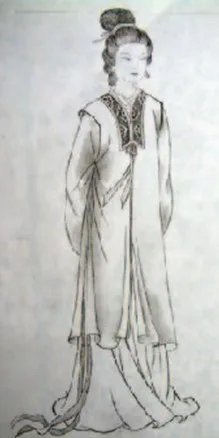
Zhang Yuniang (1250-1276), also known as Ruoqiong and Yizhen Jushi, was a native of Songyang, Zhejiang, and hailed from an official family. She was highly skilled in calligraphy and painting, with a particular talent for poetry. During her time, she was often compared to Ban Zhao of the Han Dynasty. Later generations honored her as one of the “Four Great Female Poets of the Song Dynasty,” alongside Li Qingzhao, Zhu Shuzhen, and Wu Shuji. Zhang Yuniang’s legacy includes two volumes of the “Lanxue Collection,” which remain preserved today.
Parrot Tomb
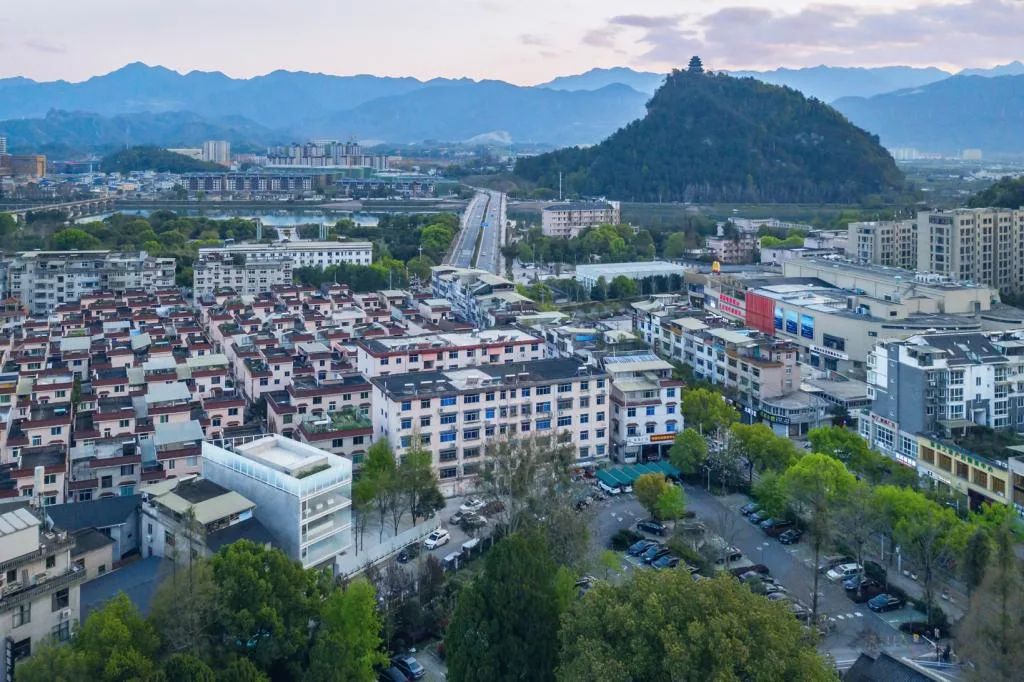
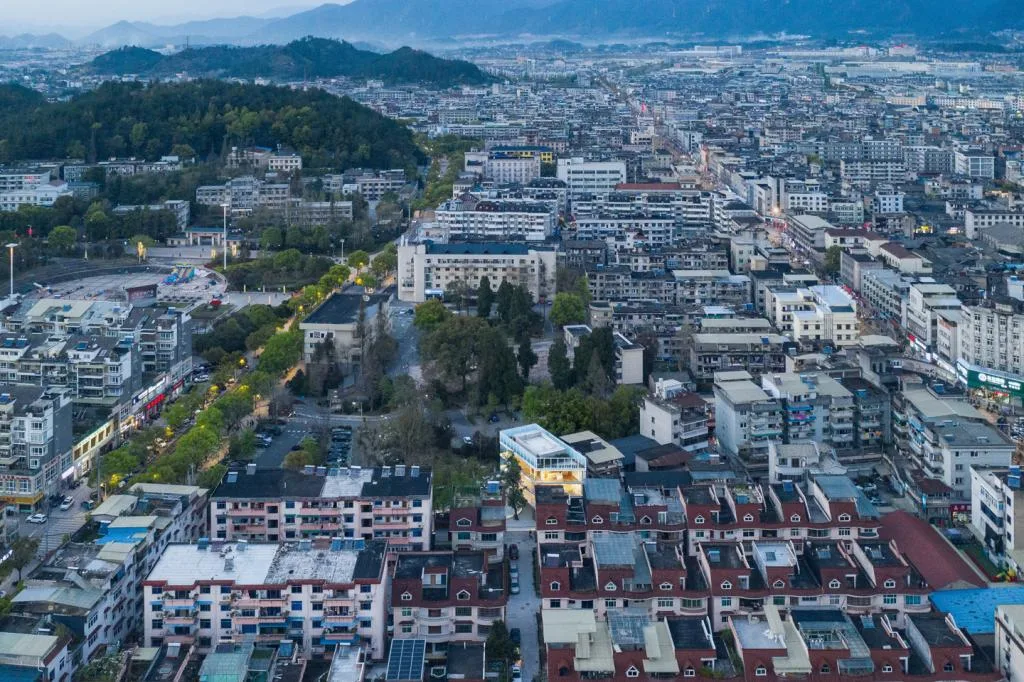
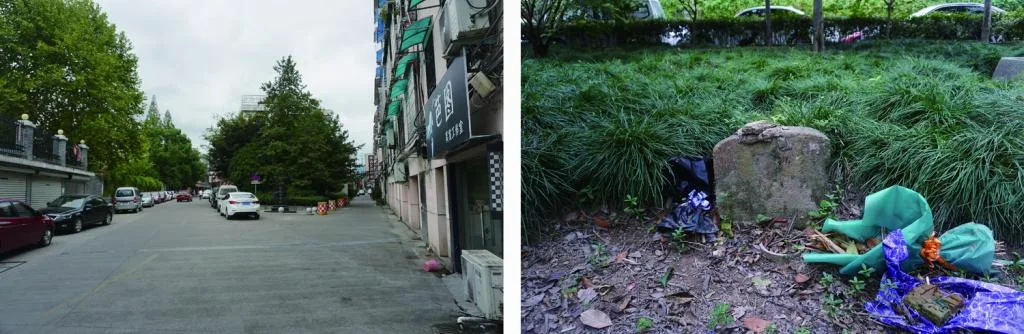
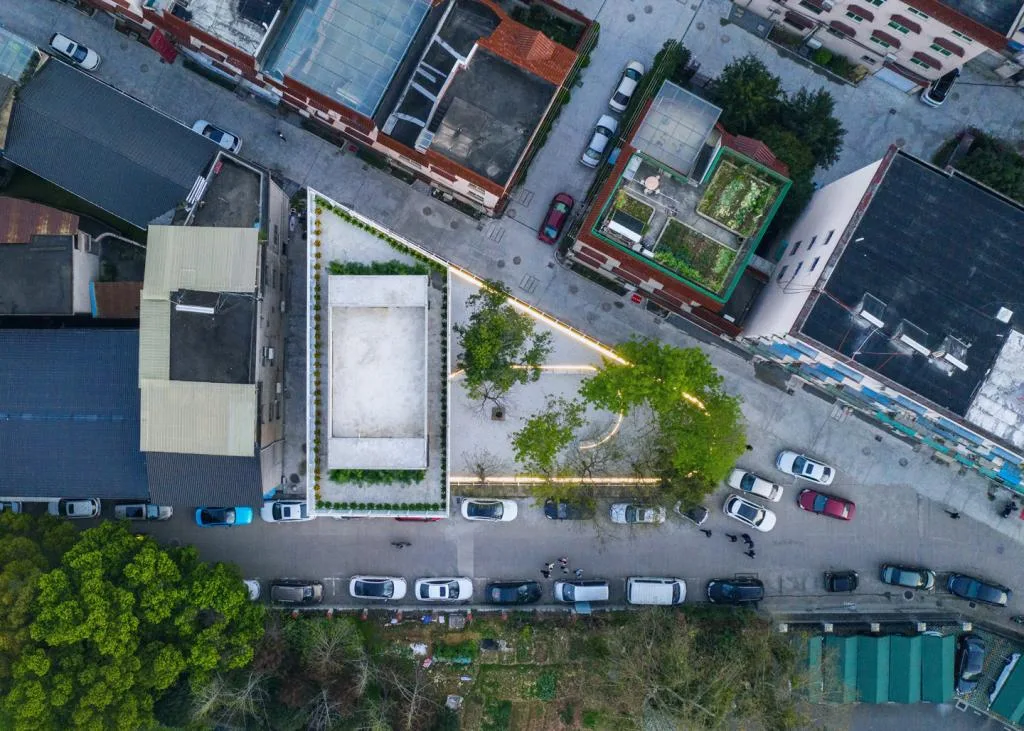
Located at Guantang Road, Xiping Street, Songyang County, the site was once covered by an ancient maple forest. Today, it stands at the intersection of two roads within the county city. The triangular area is enclosed by simple fencing for protection. Beneath several tall maple trees, wild grass grows alongside an ancient well known as the Lanxue Spring Well. A low, modest, strip-shaped tombstone marks the only remaining site in the county associated with Zhang Yuniang — the Parrot Tomb.
Poetry and Prose Museum
The Songyang Poetry and Prose Museum is situated at this site, integrating the preservation of the Parrot Tomb to revive the local historical context and heritage of poetry.
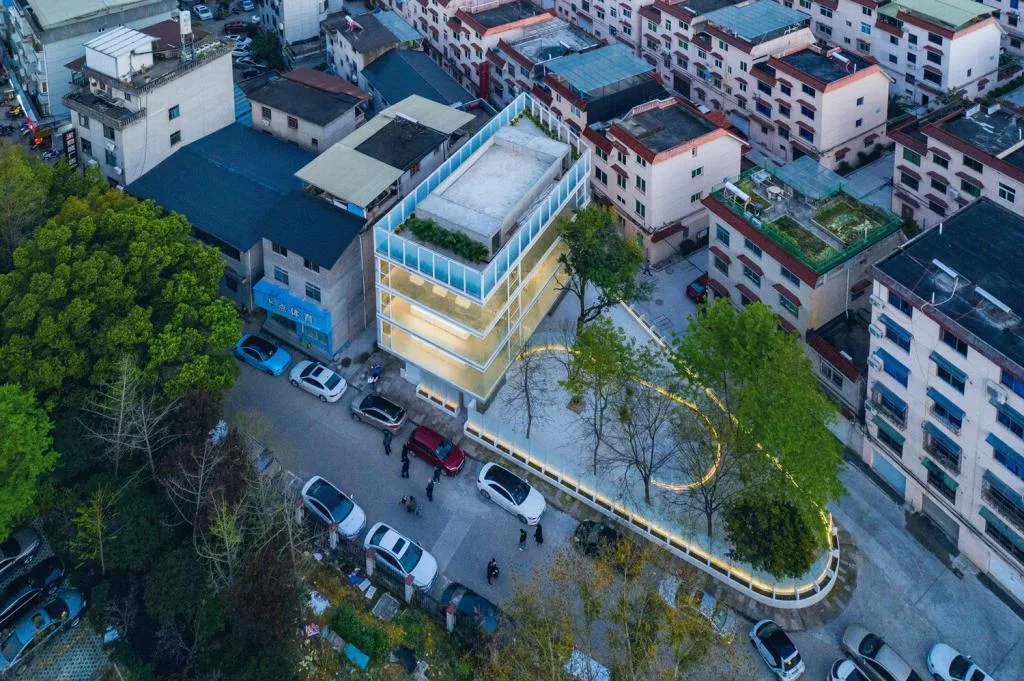
The site has been designed as a memorial garden, preserving the original ruins and mature trees. The main challenge was to reconcile the fragmented edges of the site, which lie between busy urban roads and significant historical and cultural landmarks. To address this, walls define the boundaries, creating a distinct space that separates the garden from the urban surroundings.
From the main entrance on the north side, the wall extends inward, weaving through the tree locations to form a spiraling path. This path gradually guides visitors into the shaded ruins at the center of the site. The path’s varying width helps regulate visitor movement, easing the transition from the bustling city streets into a tranquil memorial space.
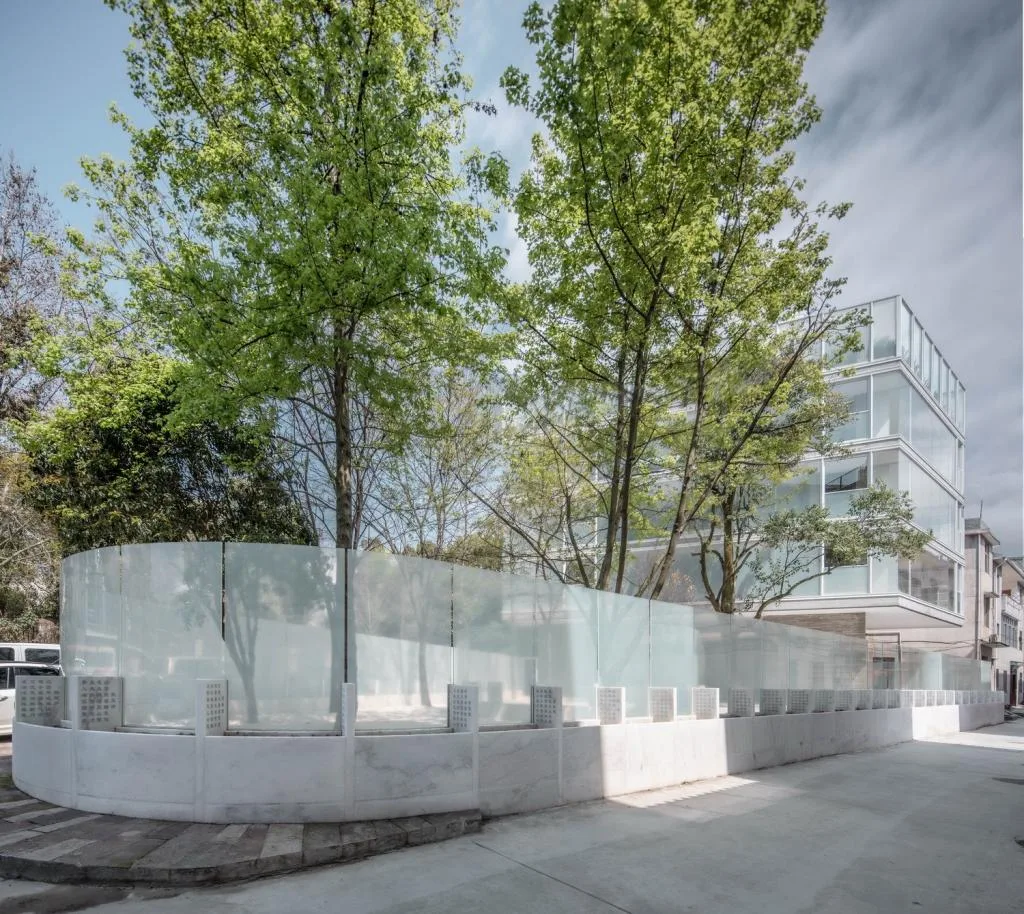
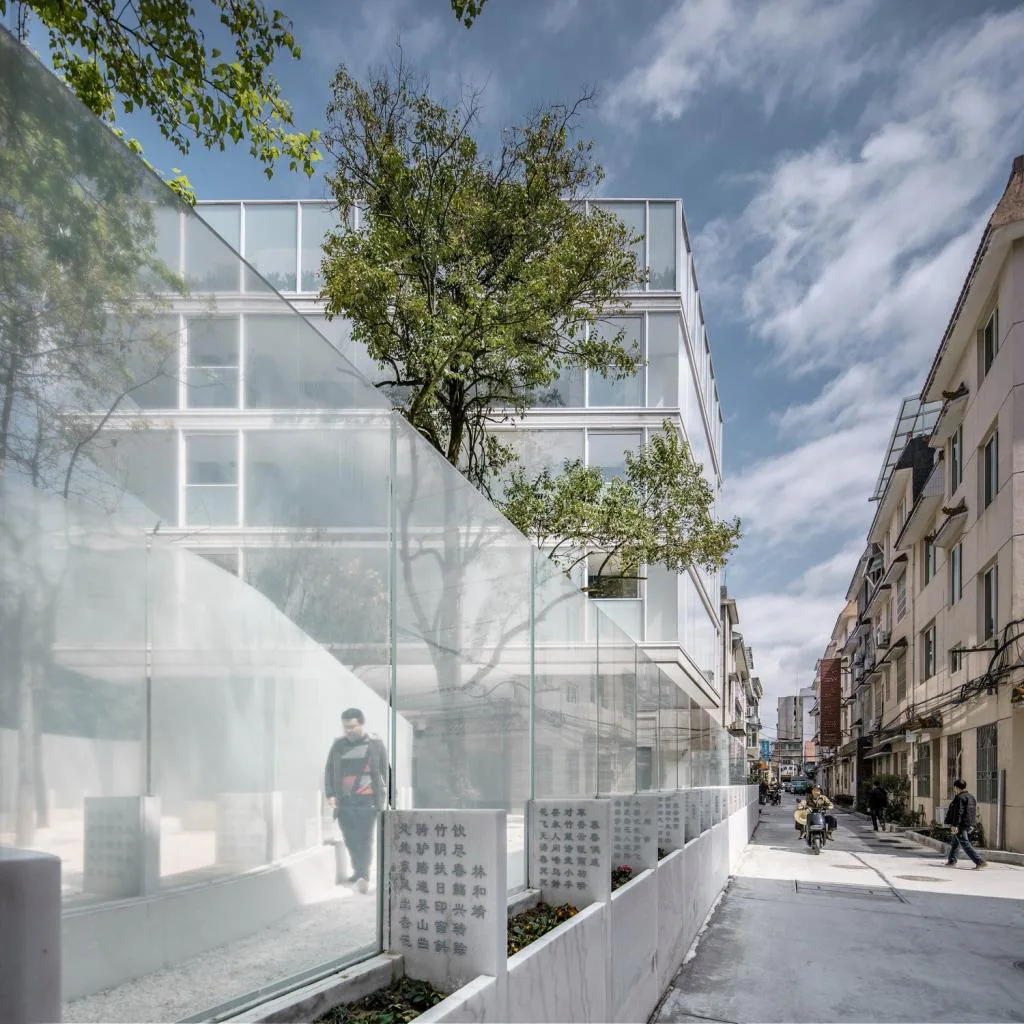
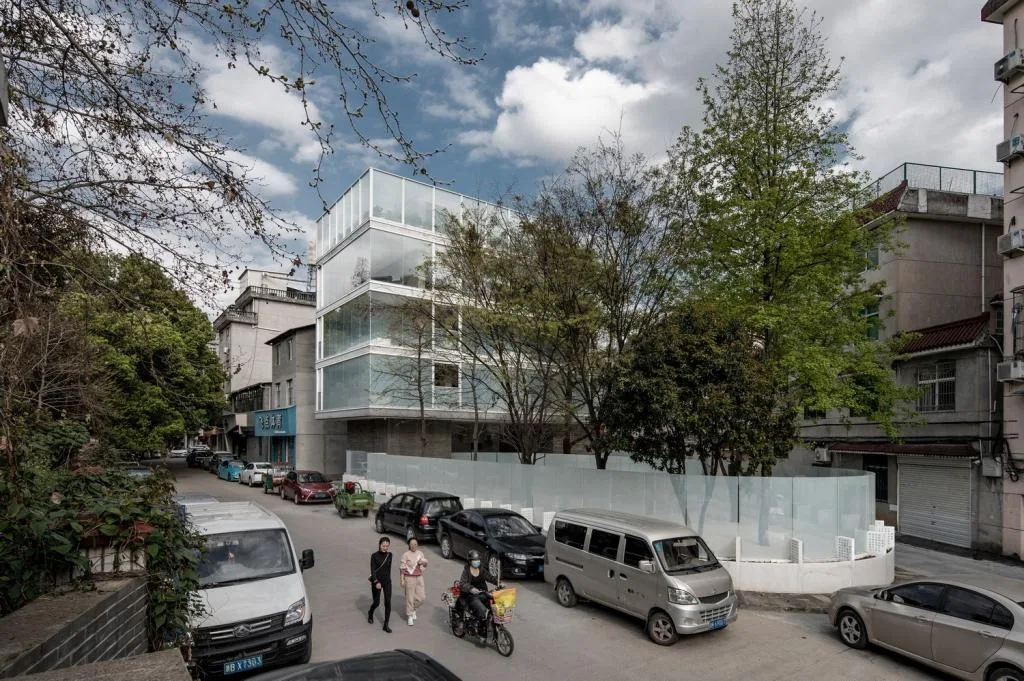
The fencing around the garden features varying degrees of transparency, designed to complement the flow of the path. Near the entrance, the transparent walls allow views of the street and passing crowds, while a curved wall on the right blocks views to create a sense of enclosure.
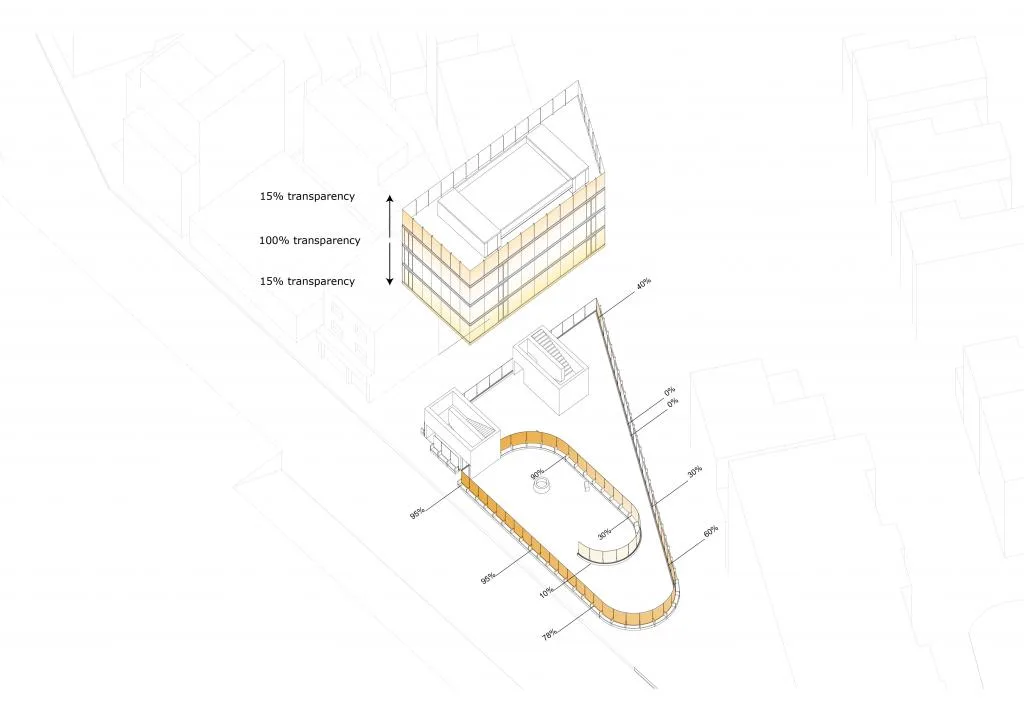
As visitors progress, a tall maple tree marks the way forward; the walls’ transparency gradually shifts, blurring the street view and revealing the interior ruins. The narrowing path also signals a change in atmosphere, guiding visitors deeper into the memorial space.
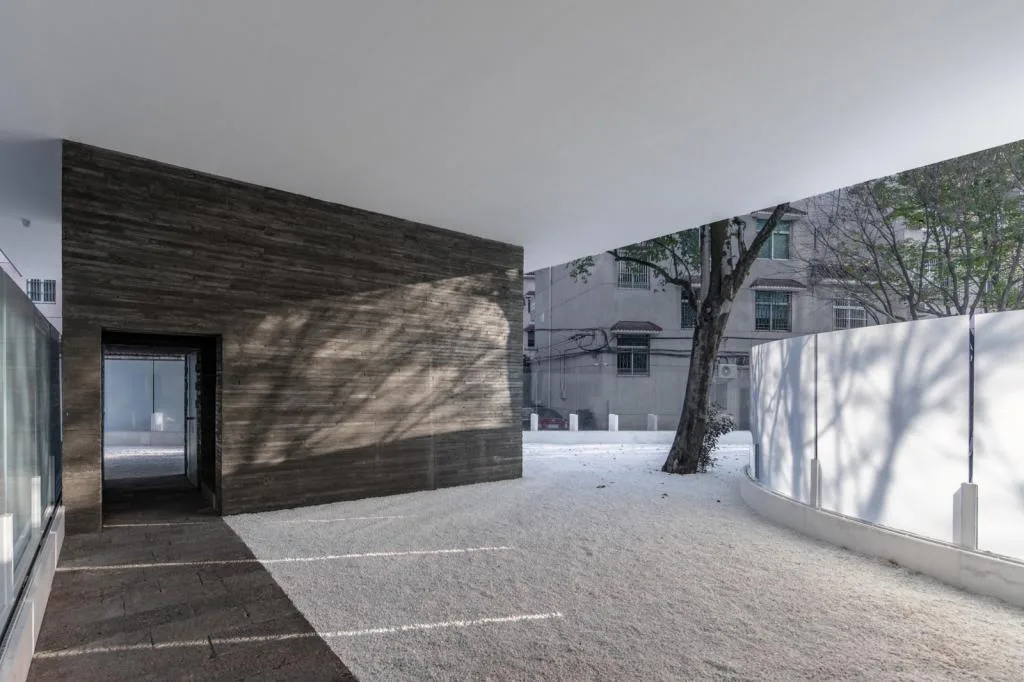
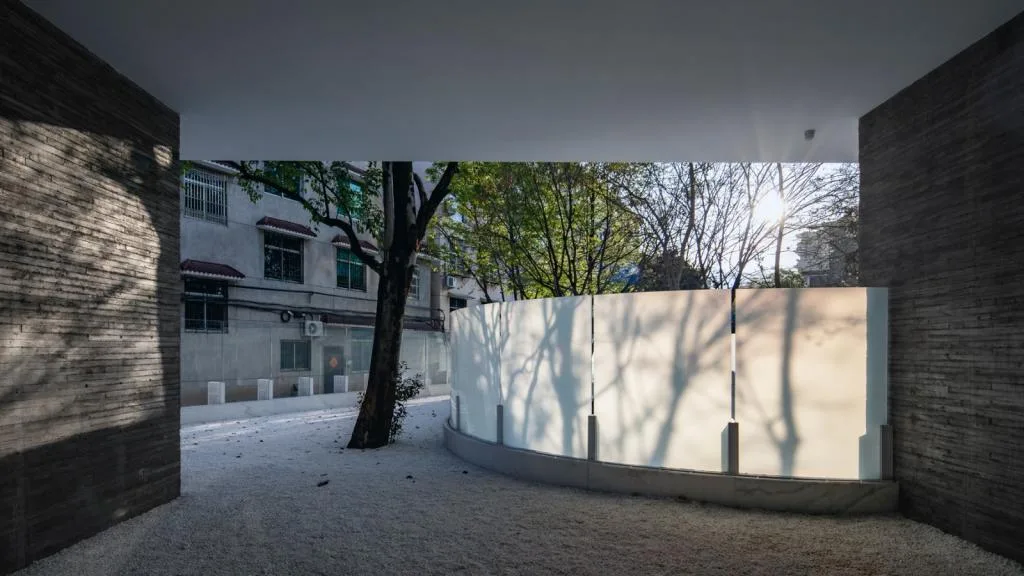
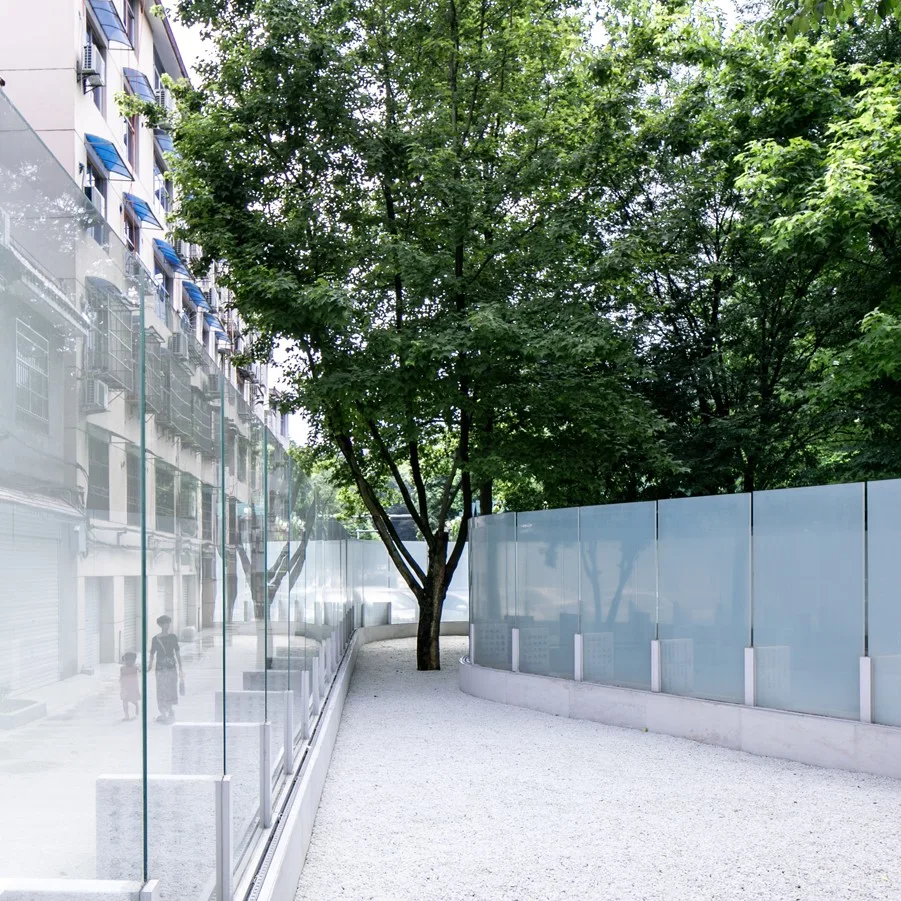
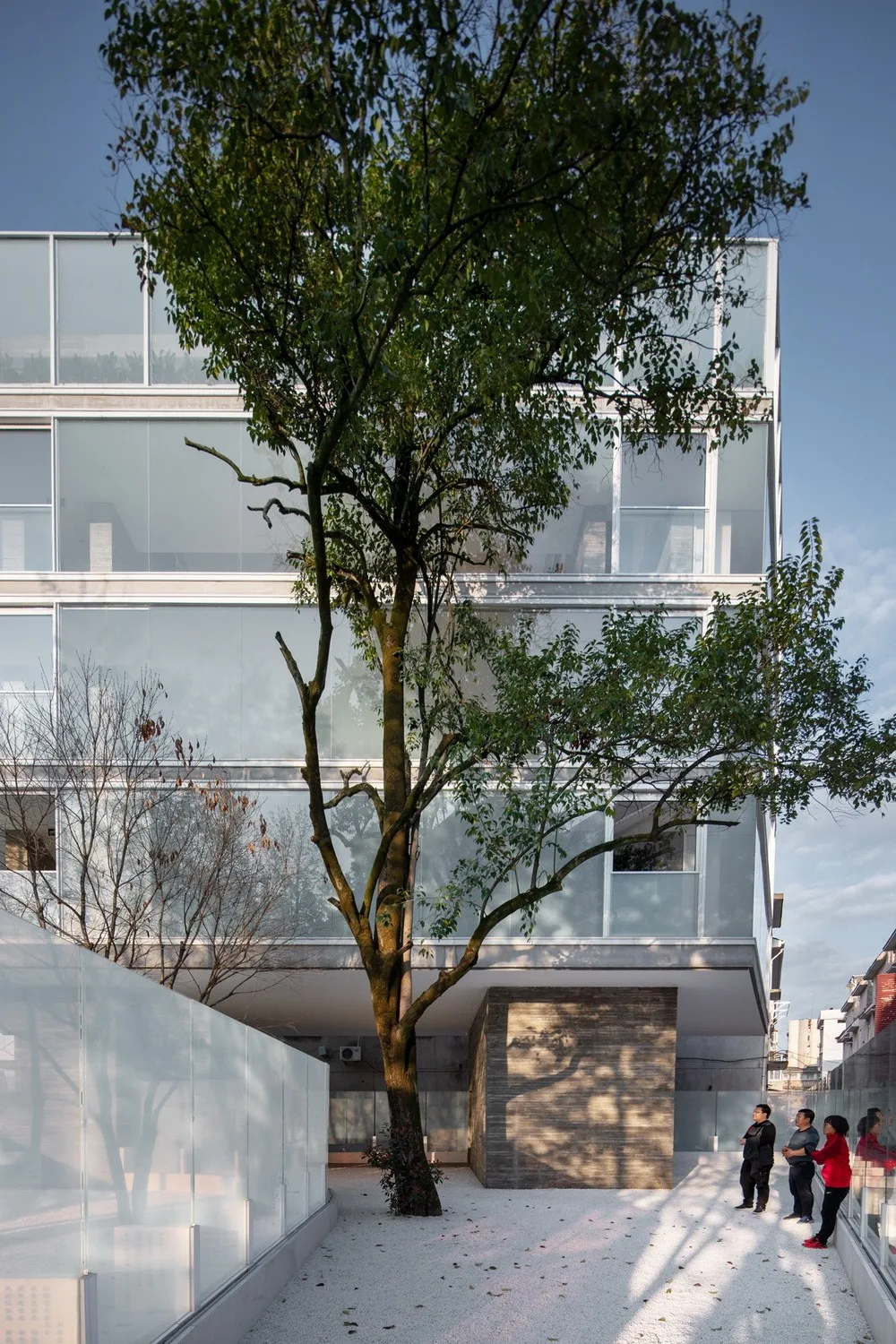
At the end of the triangular site, beneath a cluster of maple trees, the space opens up, blocking views outward while providing a panoramic view of the interior ruins.
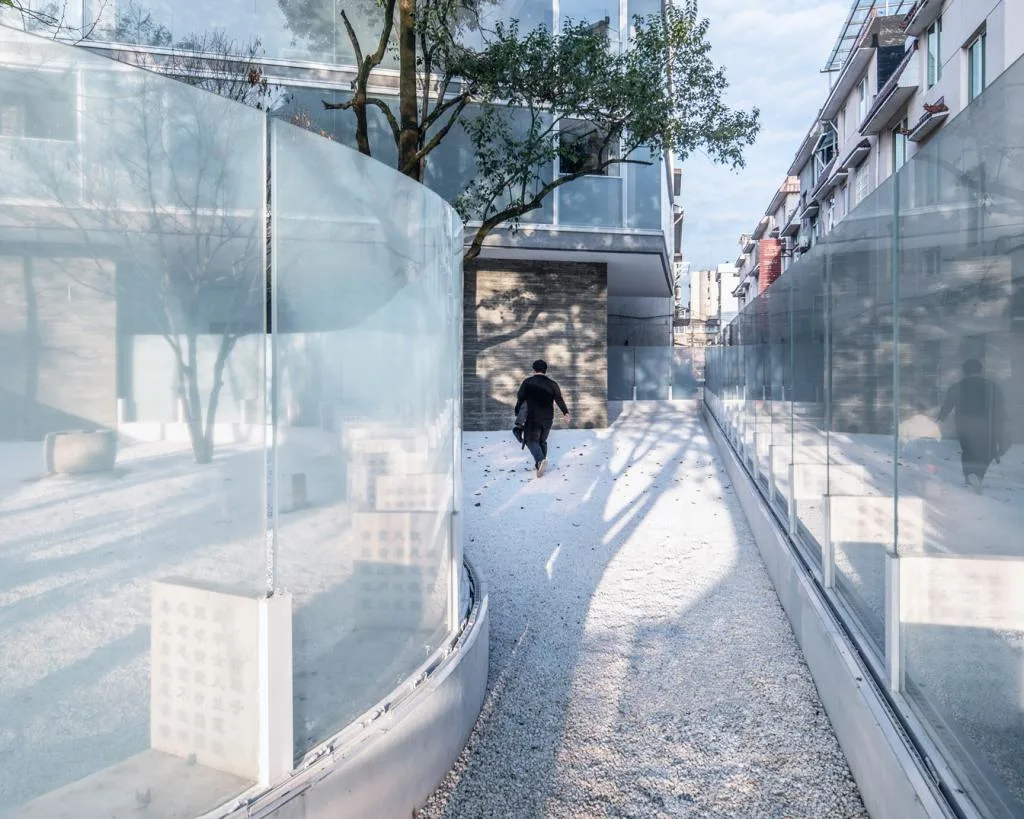
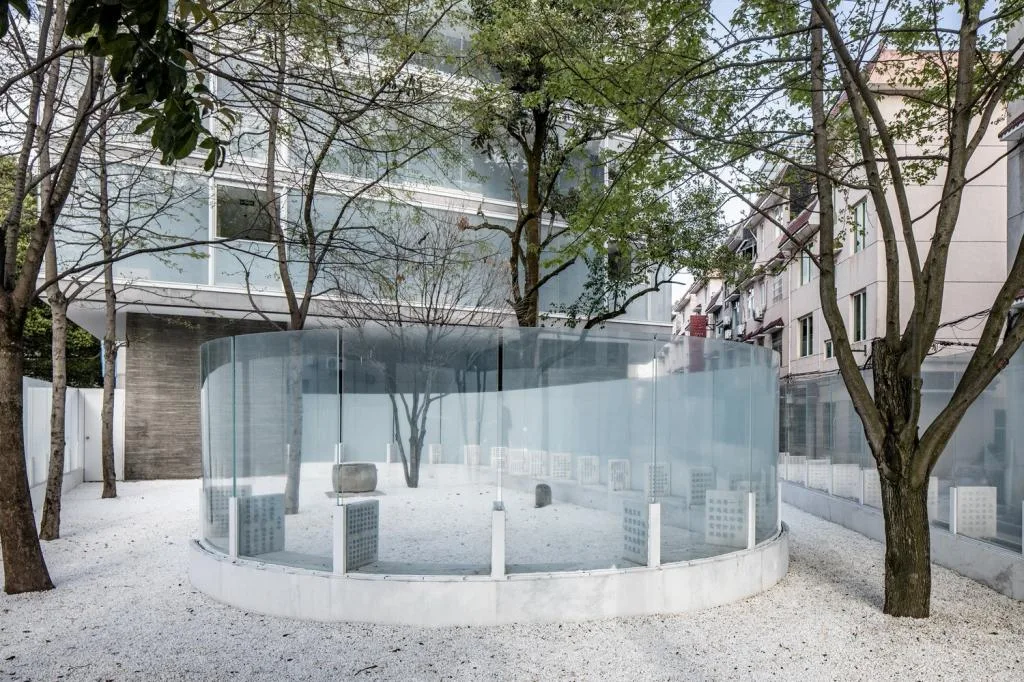
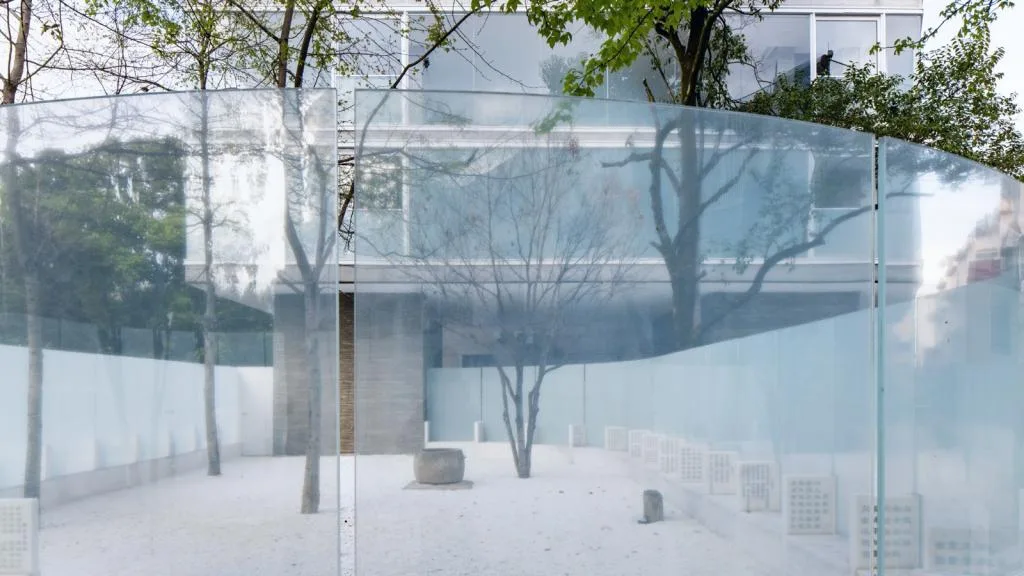
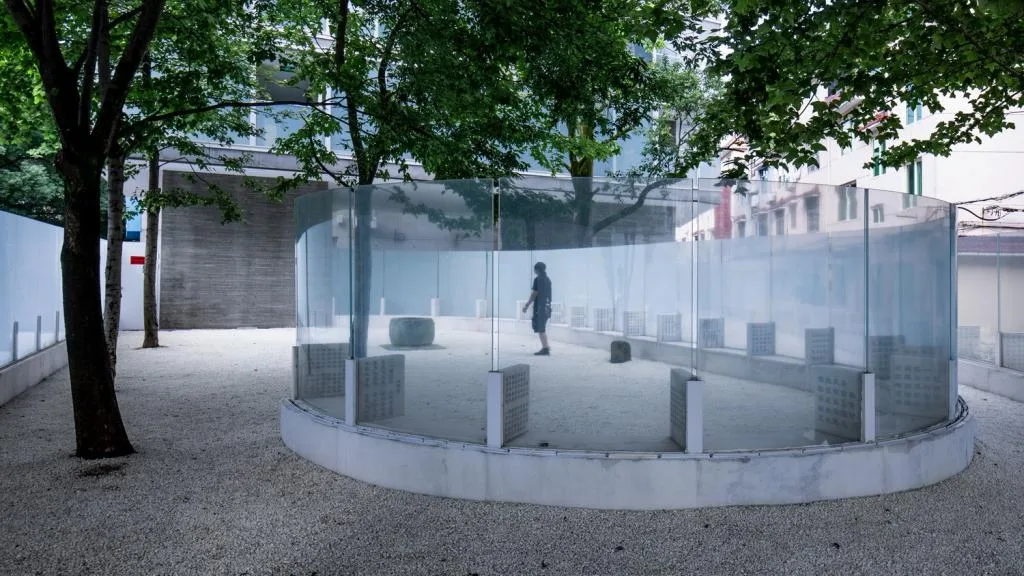
After passing the transparent curved wall, visitors reach the path’s endpoint, where the ancient well and Parrot Tomb ruins lie beside the trees. Multiple layers of transparent walls surround the space, completely blocking views of the city and enclosing a contemplative memorial area.
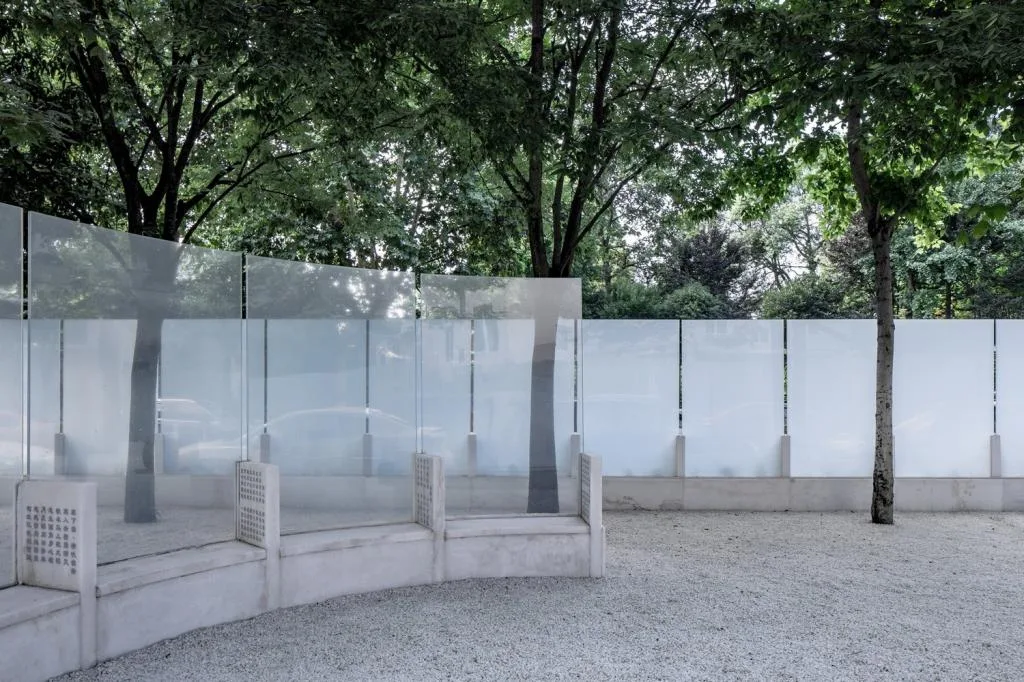
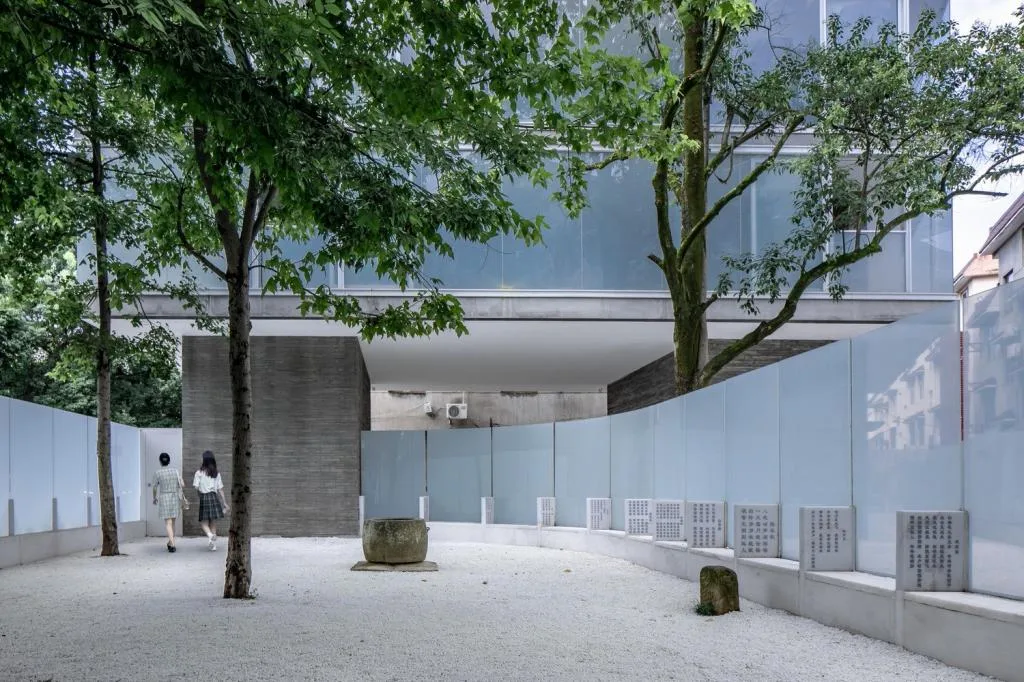
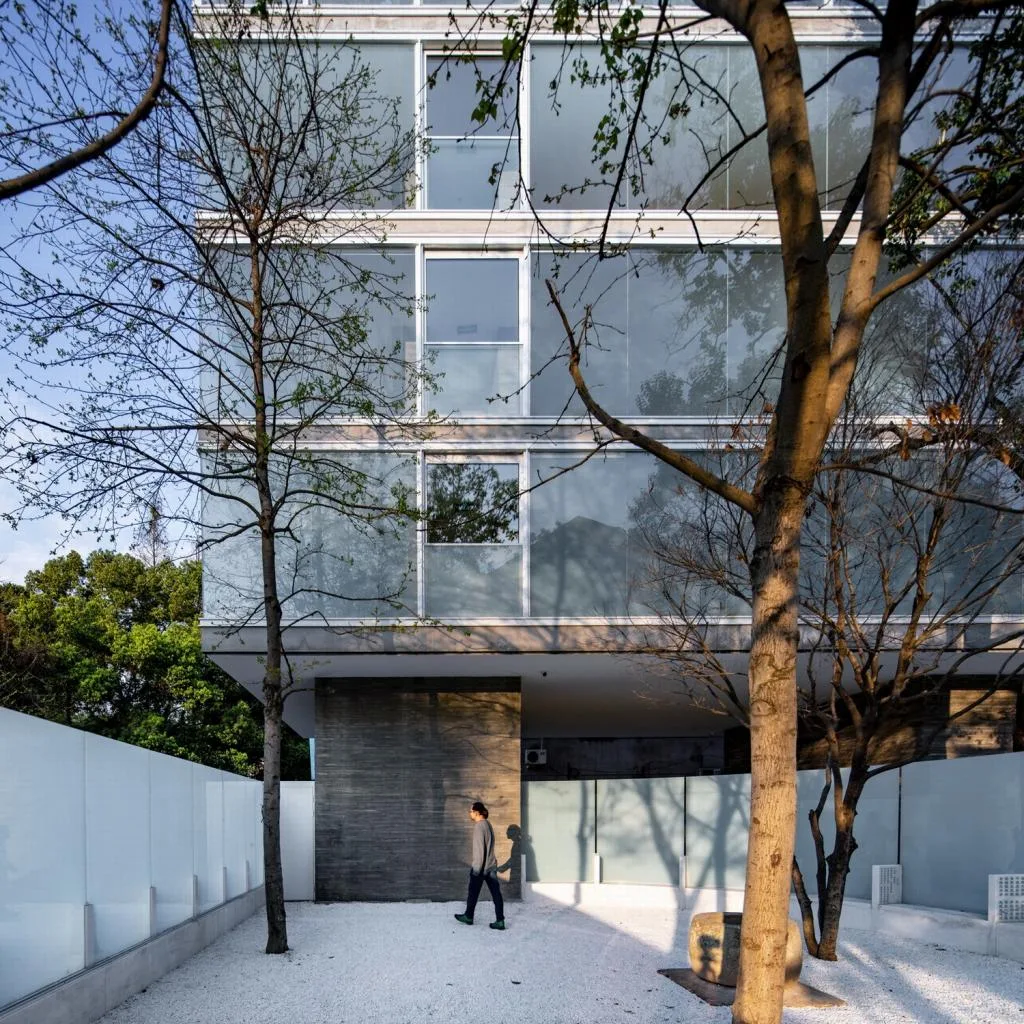
The white stone base of the fence doubles as a planter to buffer the street noise outside and as seating within the garden, adapting to the subtle height differences around the site. Vertical stone slabs engraved with poetry resemble opened book pages, intuitively presenting Zhang Yuniang’s poetry and prose. The white sandstone floor and pedestal blend seamlessly, creating a distinct interface that separates the memorial garden from the city and highlights the commemorative atmosphere.
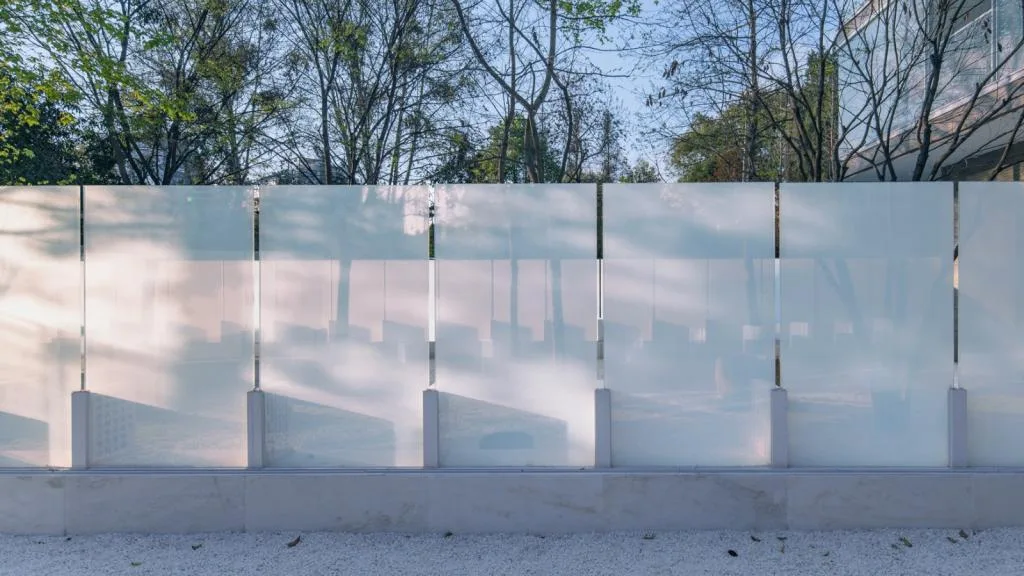
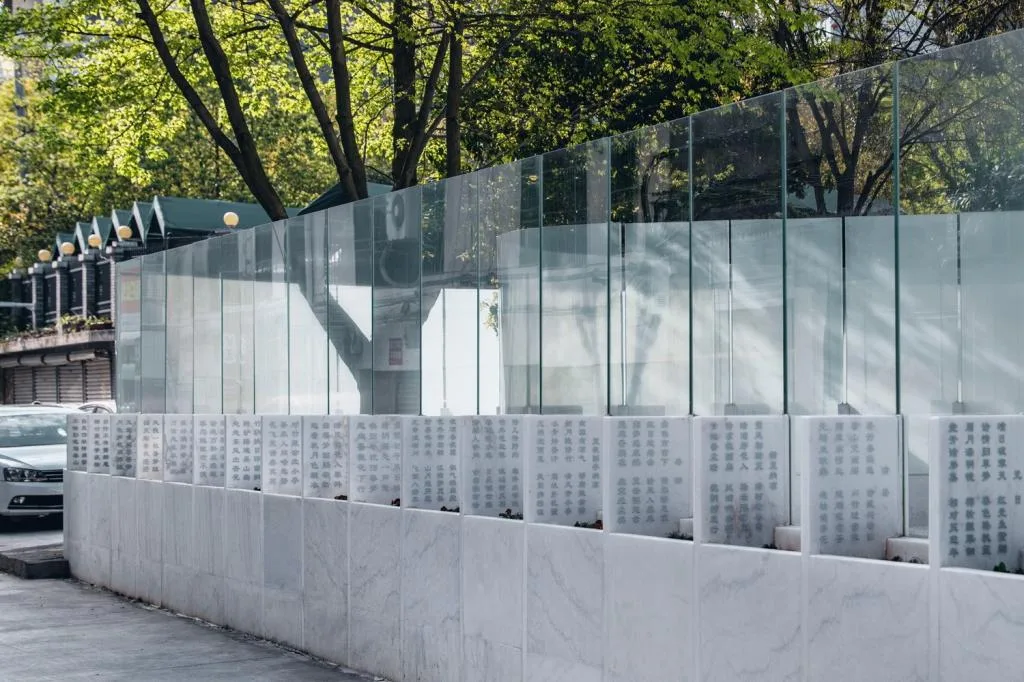
As a memorial garden on the city’s edge, this design reconstructs a dramatic spatial order around the site’s trees and cultural relics through landscape architecture and visual transformation, offering a stage-like spatial experience.
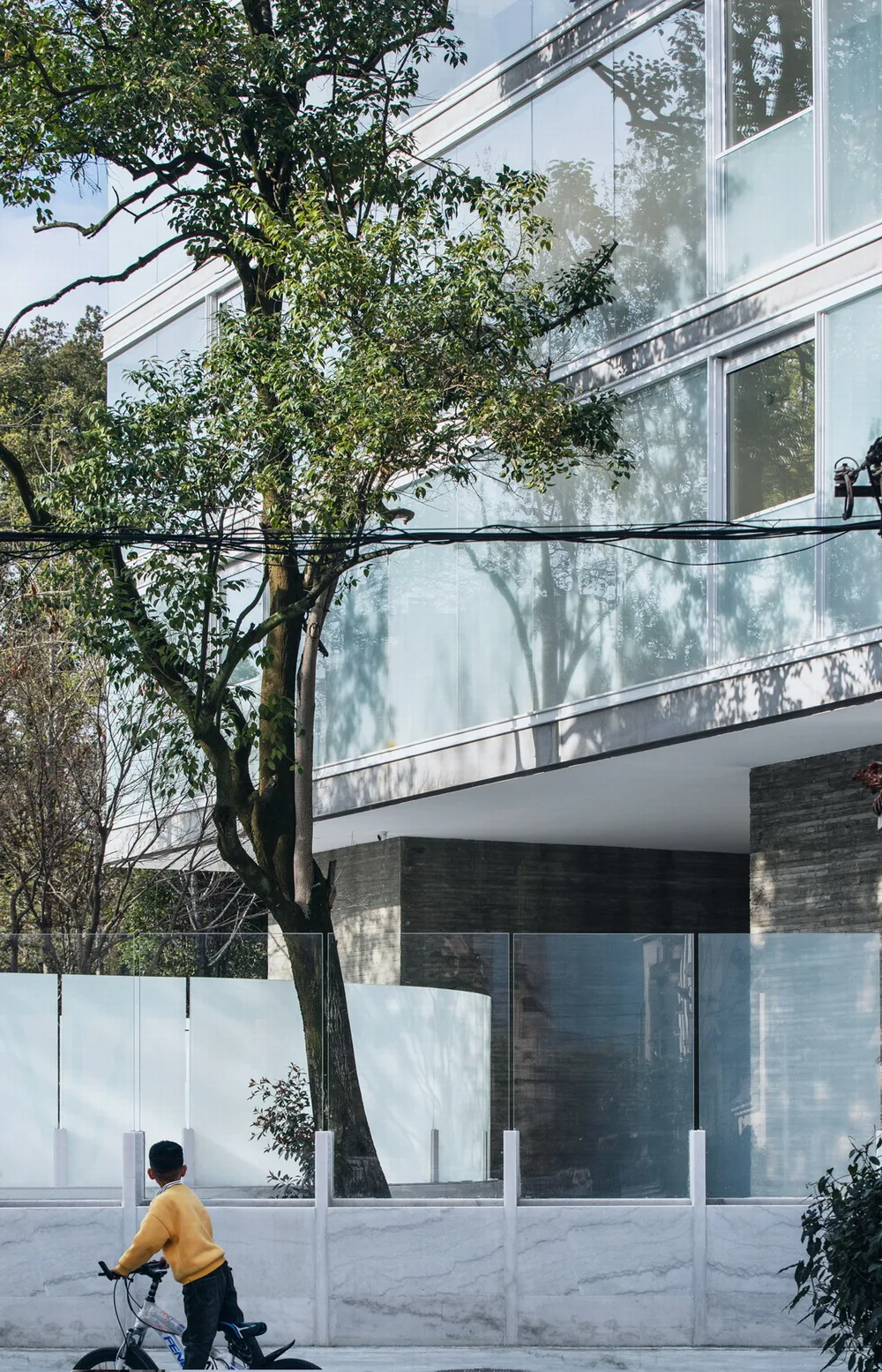
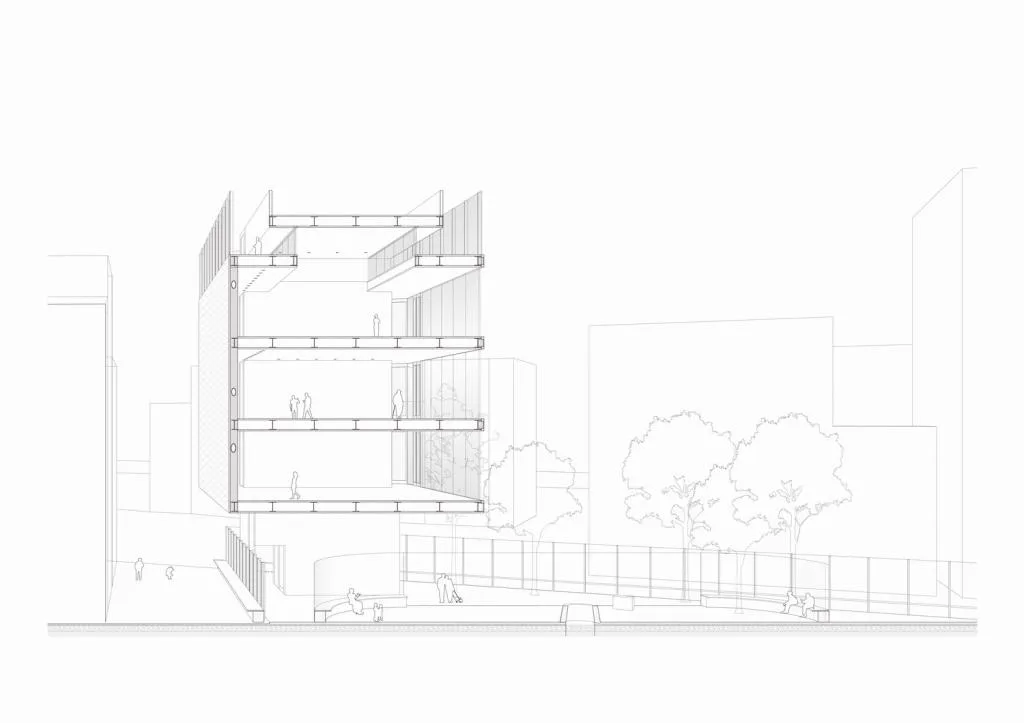
One of the project’s challenges is that the Poetry and Prose Museum’s architecture must stay within the boundaries of the original residential buildings on the site. The compact volume needs to accommodate exhibition spaces and seminar offices while complying with fire safety and other public cultural building regulations.
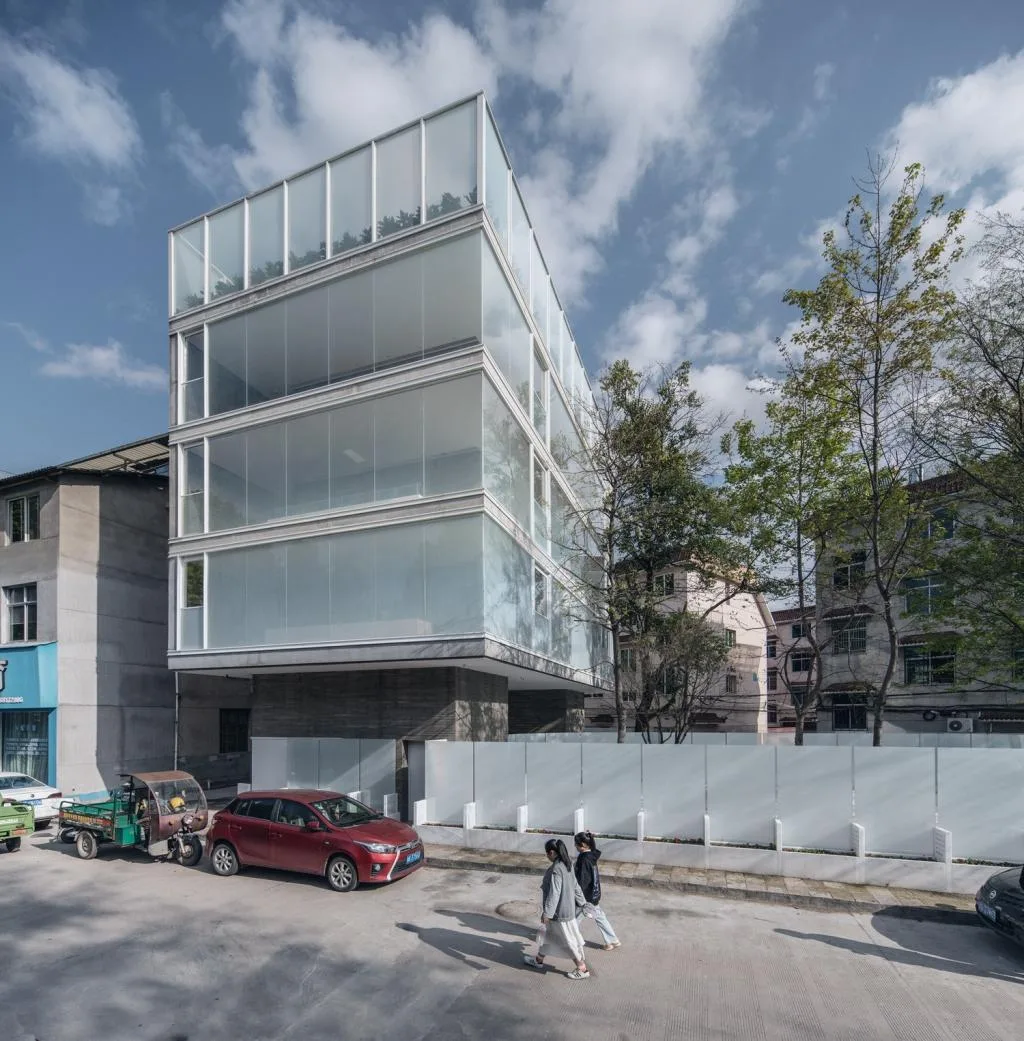
Following the original construction boundary, the museum is elevated off the ground, which expands the memorial garden below and complements the ground-level garden, creating vertical and horizontal spatial extensions. The two evacuation staircases serve as the structural core, separating different spatial levels on each floor plan. The east-facing wall is designed as a solid surface, respecting the neighbor’s request; this wall also functions as an outdoor green climbing wall and an indoor display surface. The other three sides feature glass walls that allow natural light and open views of the city.
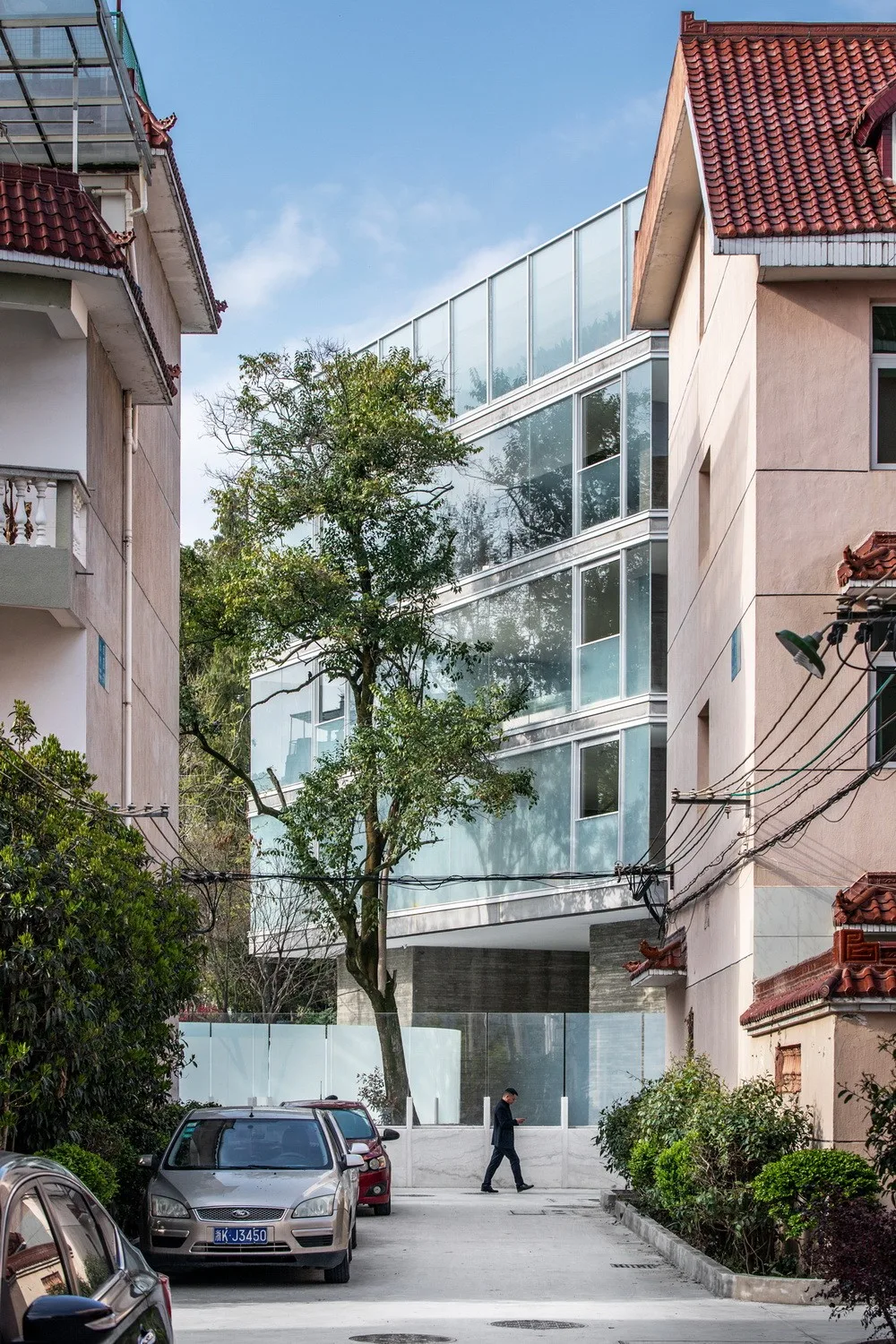
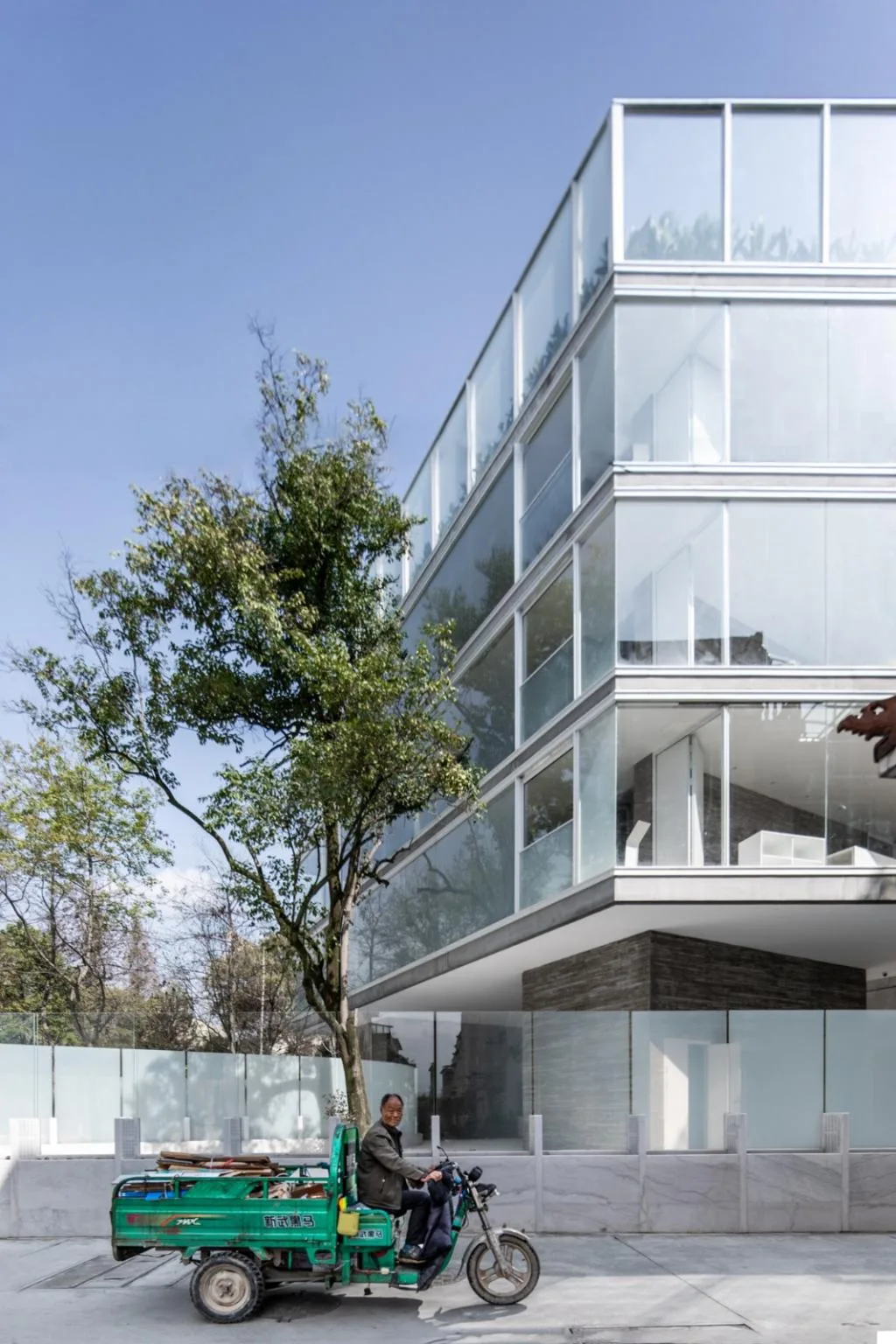
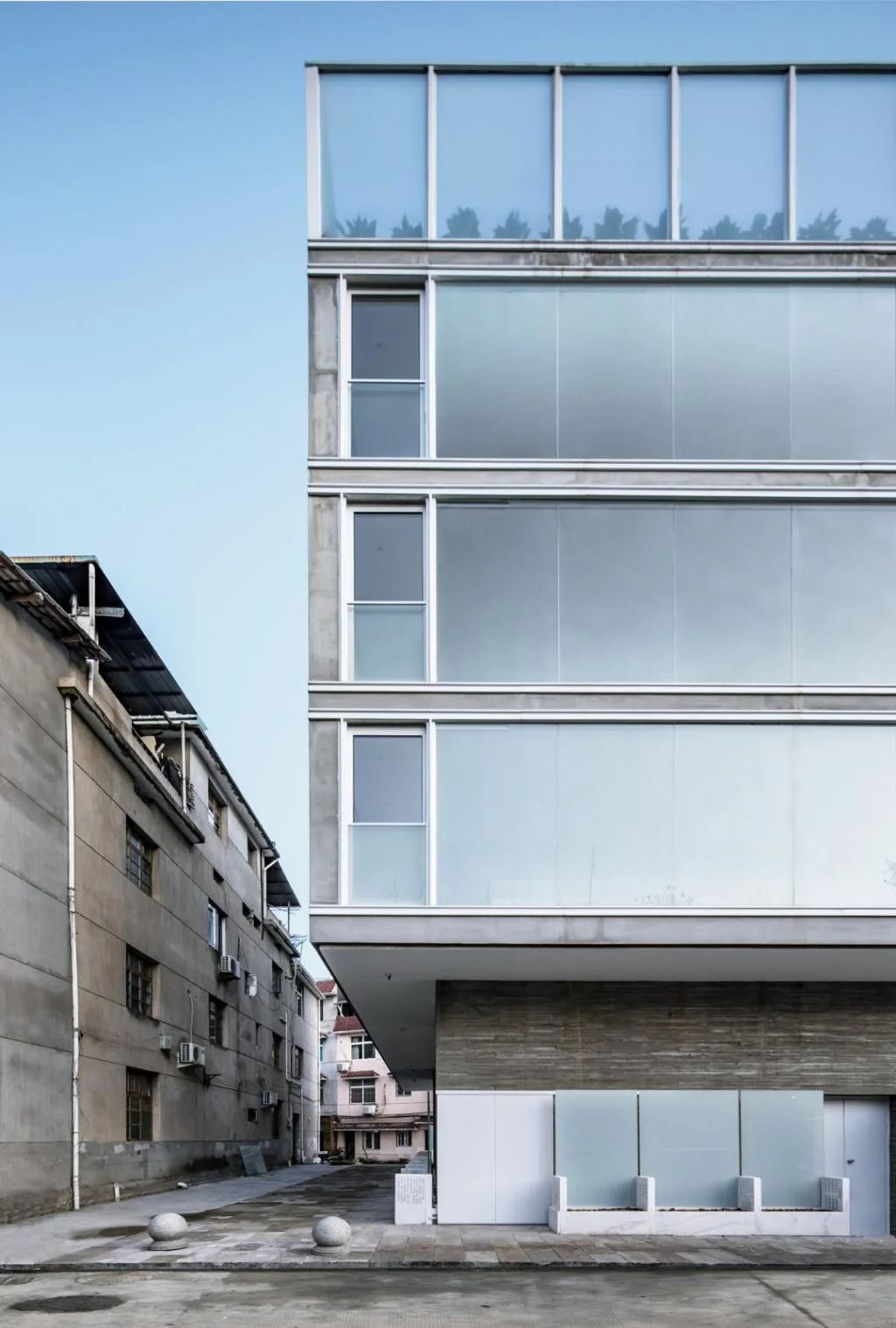
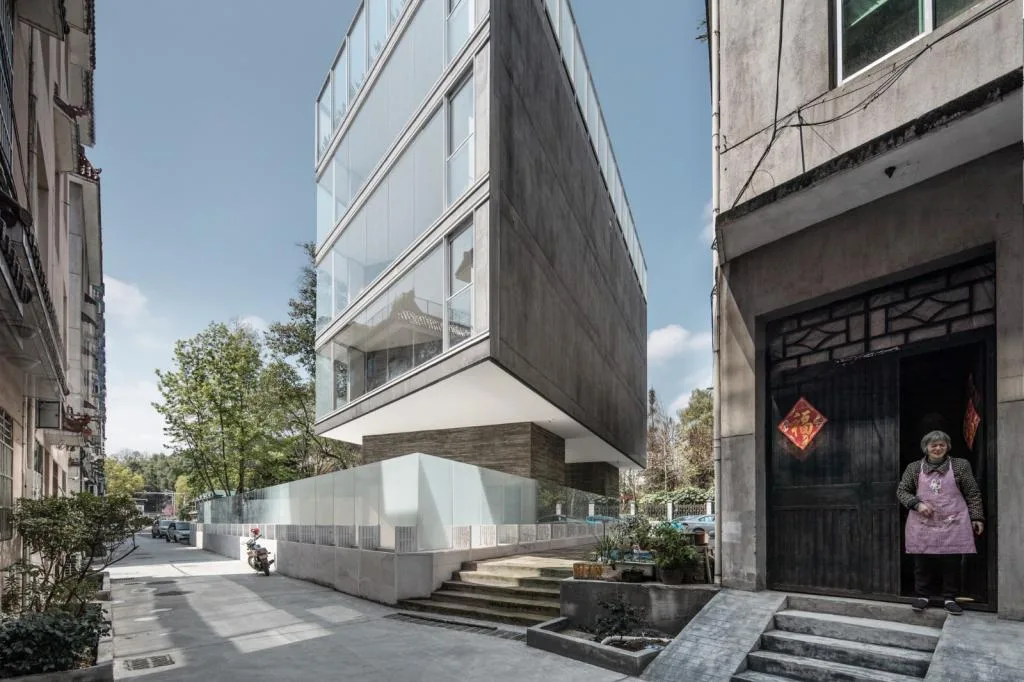
The building’s glass facade continues the memorial garden’s transparent gradient, creating a subtle filter between the interior space and the urban street views. It also provides a soft backdrop for the projection of tree canopies at sunset.
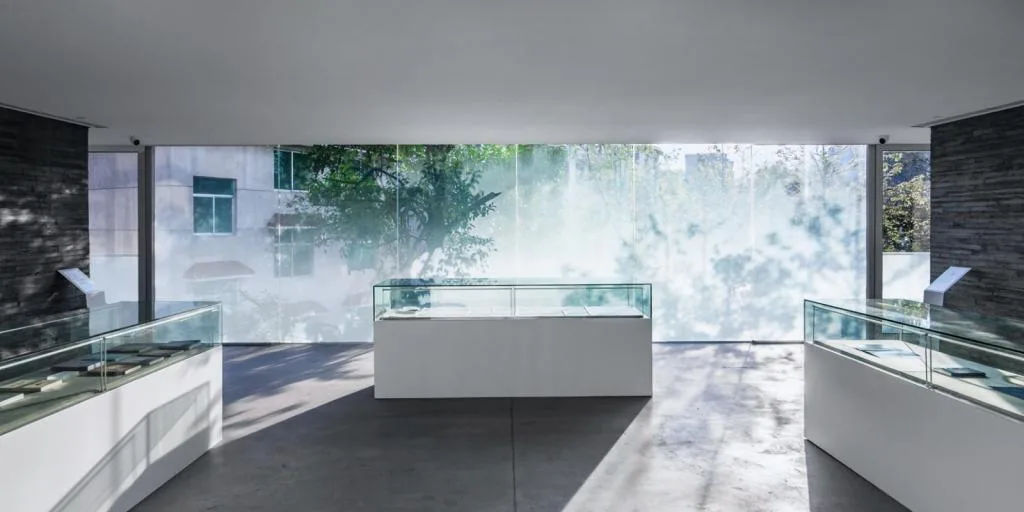
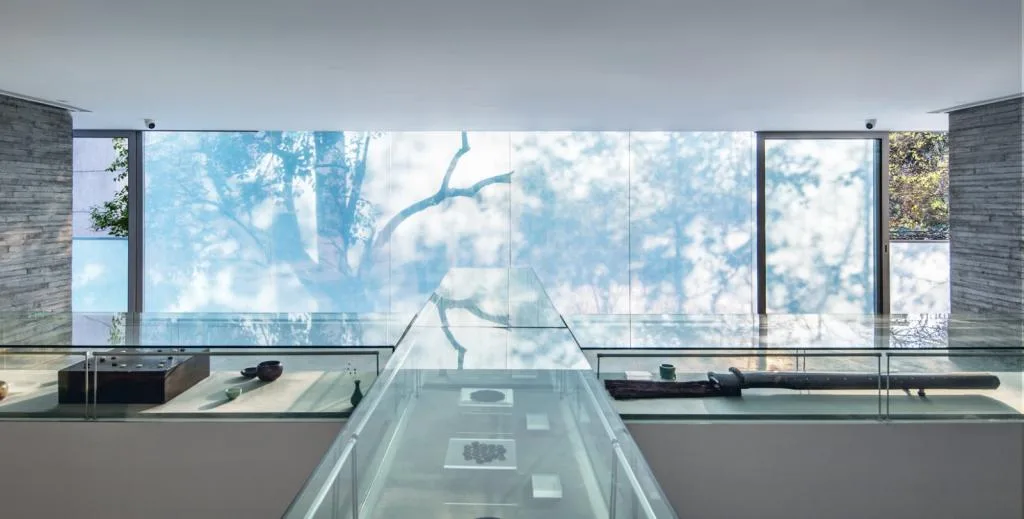
Inside, the exhibition showcases the tragic and anxious experiences of female poets during the turbulent final years of the Song Dynasty, highlighting their patriotism and deep concern for the country and its people. Looking out over the memorial garden through the windows, the white sandy ground serves as a canvas, while the ruins of Zhang Yuniang’s Parrot Tomb lie quietly beneath the tree shade, evoking the memories and echoes of this ancient city across time and space.
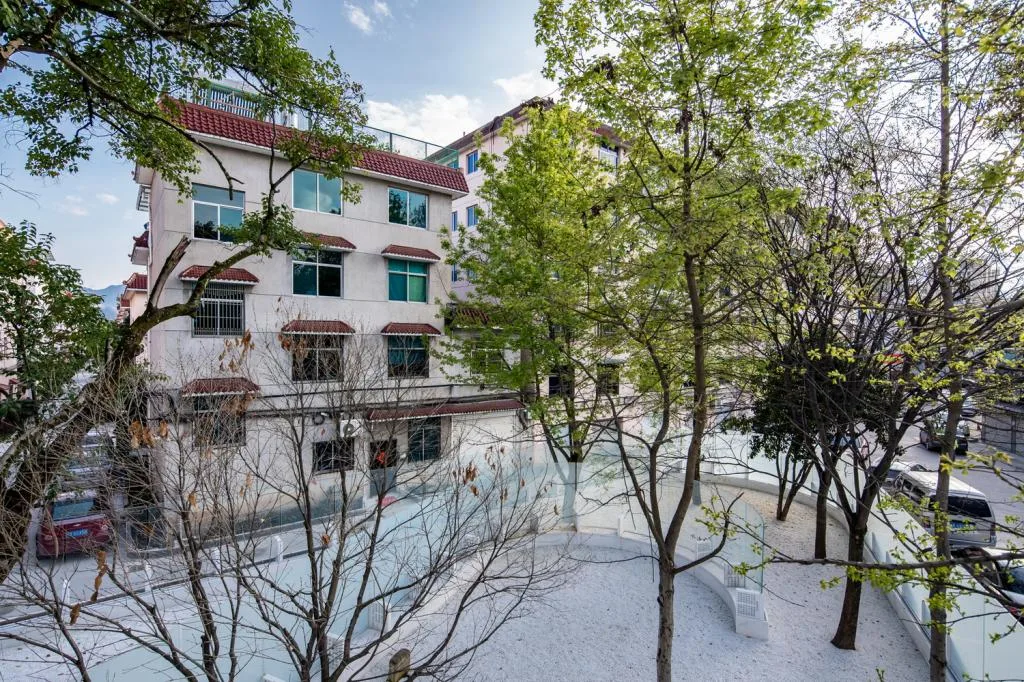
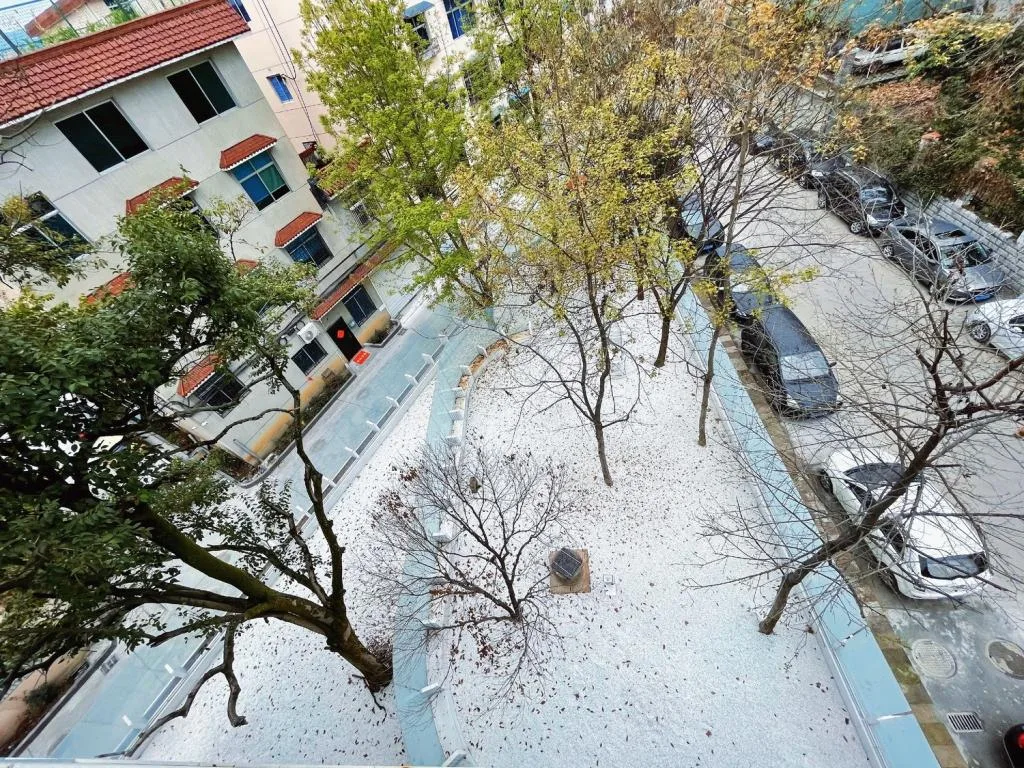
Upon completion, the Poetry and Prose Museum will be managed by the local Lanxue Poetry Society in Songyang. This project represents Songyang’s ongoing effort to apply “architectural acupuncture and moxibustion” in its urban fabric. By introducing small-scale cultural buildings, it revitalizes neglected cultural contexts within the city, activates overlooked urban corners, restores the cultural richness of the millennium-old Songyang city, and provides a vibrant space for cultural activities within the community.
Project Drawings
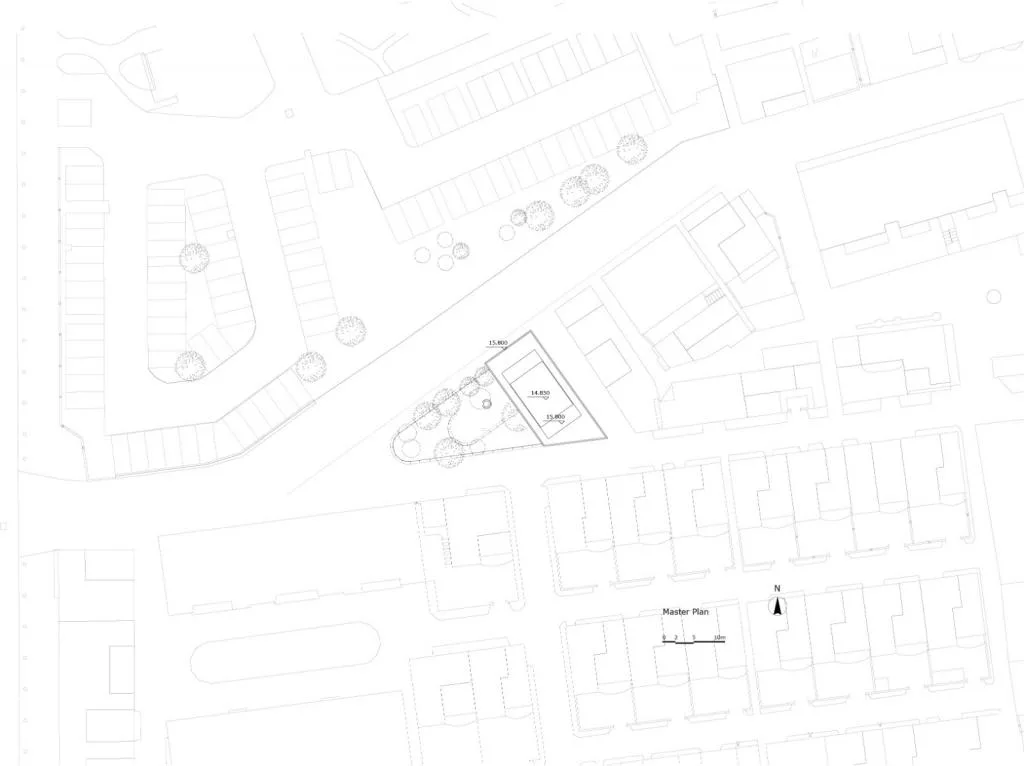
△ Location Map
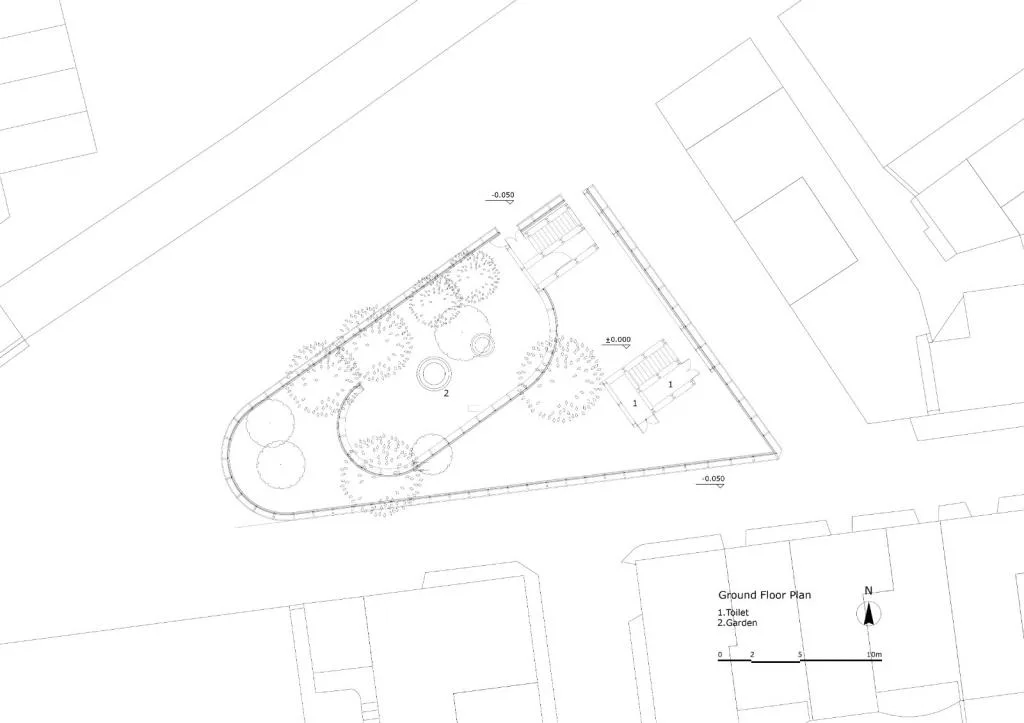
△ First Floor Plan
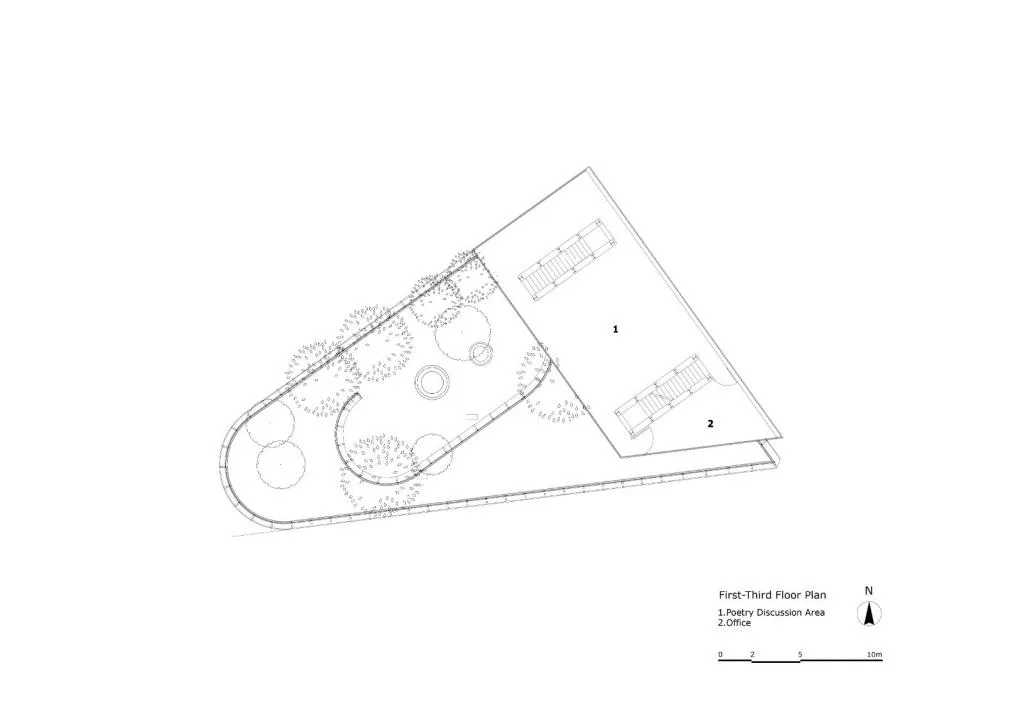
△ Plans for the Second to Fourth Floors
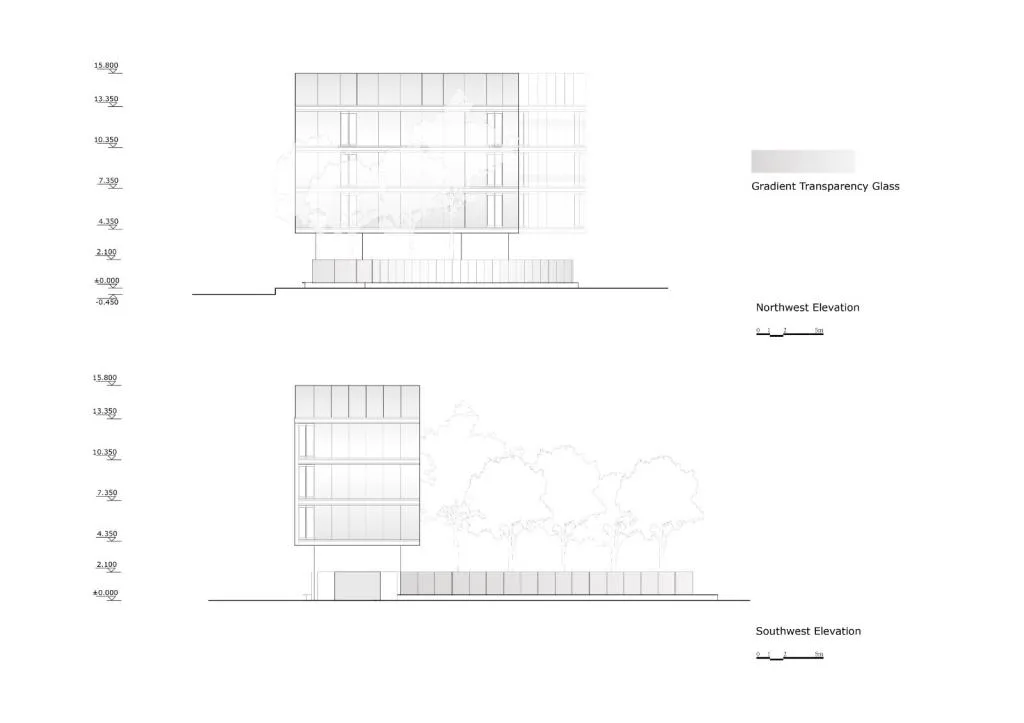
△ Elevation Drawing
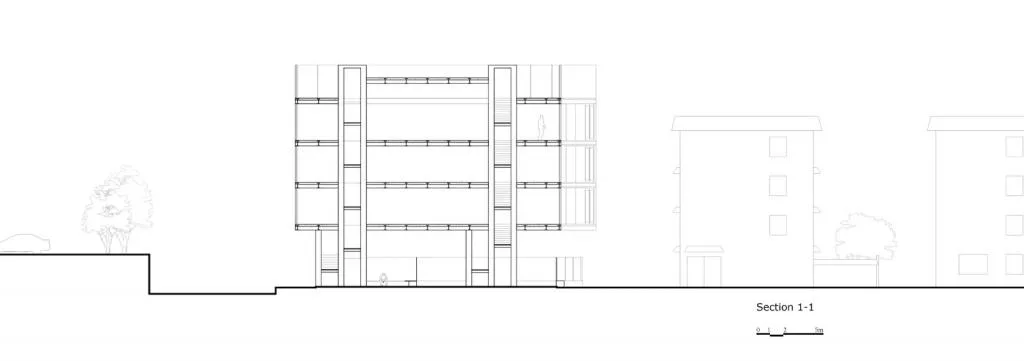
△ Section Diagram
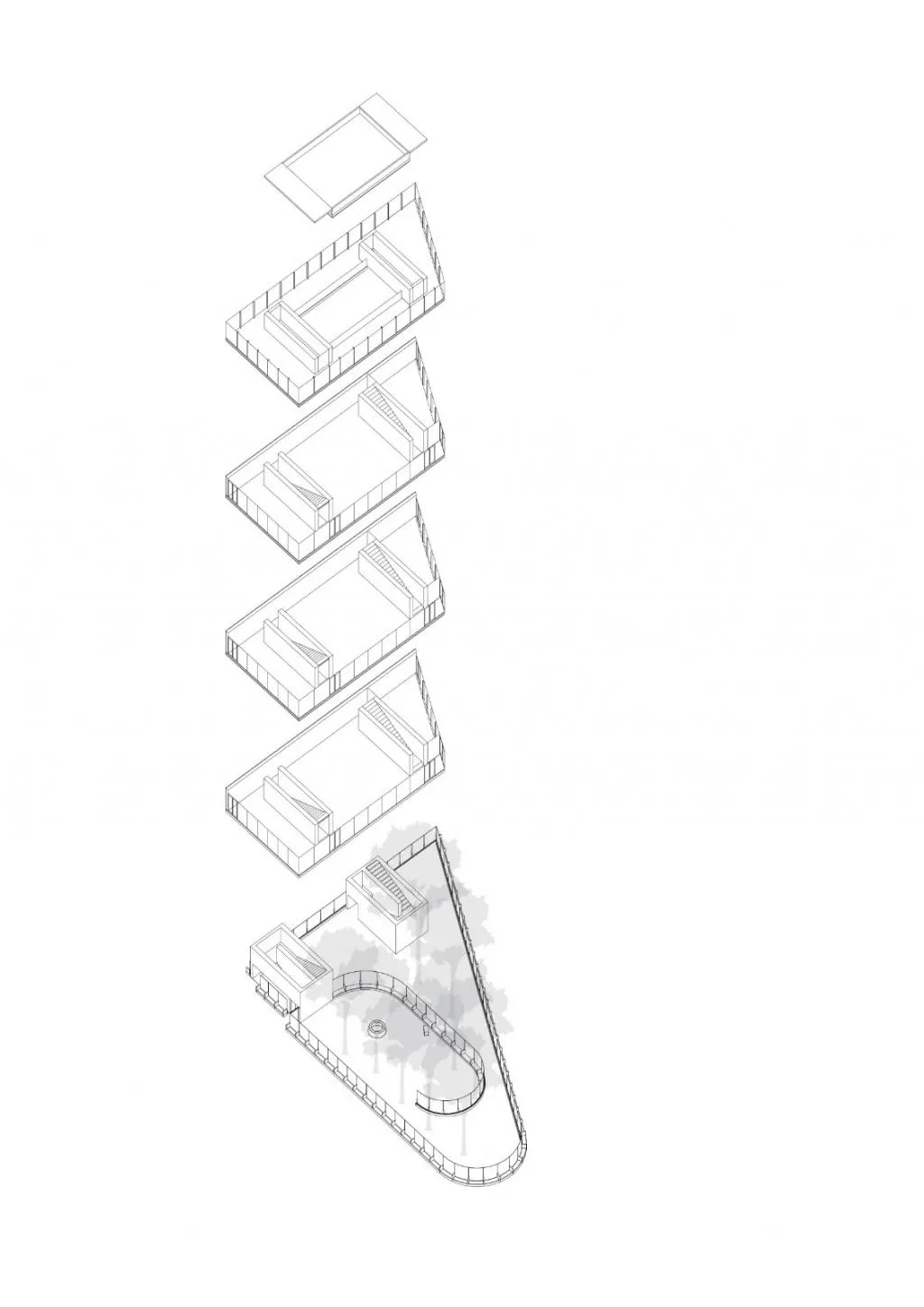
△ Structural Schematic Diagram
Project Overview
Project Name: Songyang Poetry and Prose Museum
Location: East side of the middle section of Huancheng West Road, Songyang County, Lishui City, Zhejiang Province
Function: Cultural Facility
Client: Songyang County Museum
Design Team: Xu Tiantian / DnA_Design and Architecture
Lighting Design: Zhang Xin Studio, School of Architecture, Tsinghua University
Structural System: Steel frame with shear wall structure
Design Period: September 2017 to December 2017
Construction Period: February 2019 to February 2021
Land Area: 534 square meters
Building Area: 628.72 square meters
Photography: Wang Ziling















Must log in before commenting!
Sign Up