
A Living Space that Blends Indoor and Outdoor Living
The Mantian Painting Township · Huashengbang Ideal Village project is situated in Dongbantou Village, Heshan Town, centered around the natural clusters of Huashengqiao and Nanshengbang. The local government has partnered with Xiangban Culture and Tourism Group, leveraging cultural landmarks such as the Fengzikai Mausoleum and the Escaping Pier, alongside natural resources like Huashengqiao Village, preserved industrial plants, and an agricultural base. The goal is to develop an ideal village featuring boutique waterfront homestays, art restaurants, Huasheng Academy, rural art museums, and waterfront tea bars. By integrating the surrounding water systems and farmland, upgrading infrastructure, and enhancing the environment along the pathways, this project aims to create a beautiful rural complex that serves as a model for future development.
Taking advantage of the Huashengbang Ideal Village project, Heshan Town actively pursues the integration of agriculture with tourism and culture, transforming rural areas into thriving industries, economies, and lifestyles. This vision will shape the future rural community of Jiaxing City, with the construction of Yuanshe Hezhou as one of the first initiatives.
△ Project video © y.ad studio
Location of the Project Area
Dongbantou Village, part of Heshan Town in Tongxiang City, enjoys convenient access to major cities including Shanghai, Hangzhou, Suzhou, and Ningbo. It is roughly a two-hour drive from Shanghai and about forty minutes from Hangzhou, offering excellent regional connectivity.
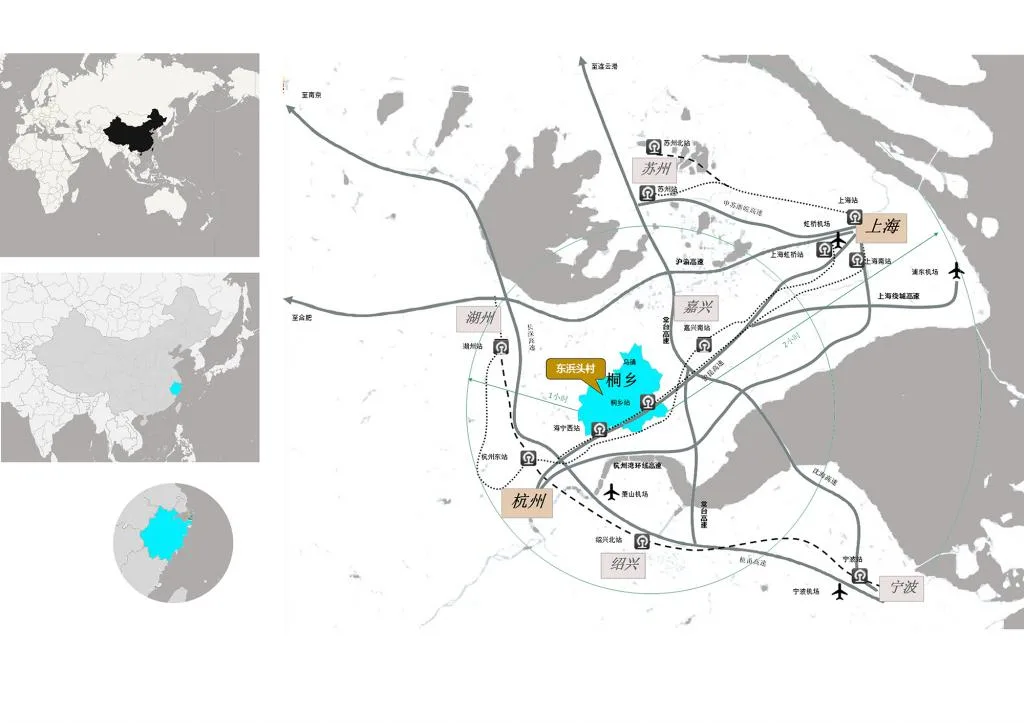
△ Regional location © y.ad studio
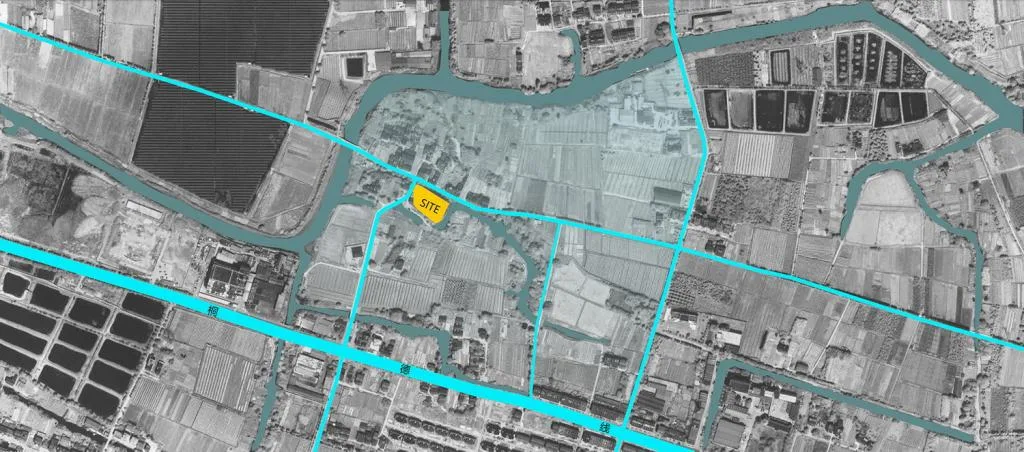
△ Project Area © y.ad studio
Rooted in Regional and Cultural Elements
This project is located near renowned Jiangnan water towns like Wuzhen and Nanxun.
When thinking of Tongxiang, water towns and ancient streets immediately come to mind—docks, small bridges, flowing waters, and narrow lanes—largely due to Wuzhen’s fame. Additionally, the cultural influence of Muxin and Feng Zikai’s comics is deeply connected to this area.
Notably, the project site itself holds strong ties to Mr. Feng Zikai, who was born and spent his later years in Dongbantou Village. The village is home to Huasheng Bridge, the escape dock from which Mr. Feng fled during the Anti-Japanese War in 1934, and his tomb.
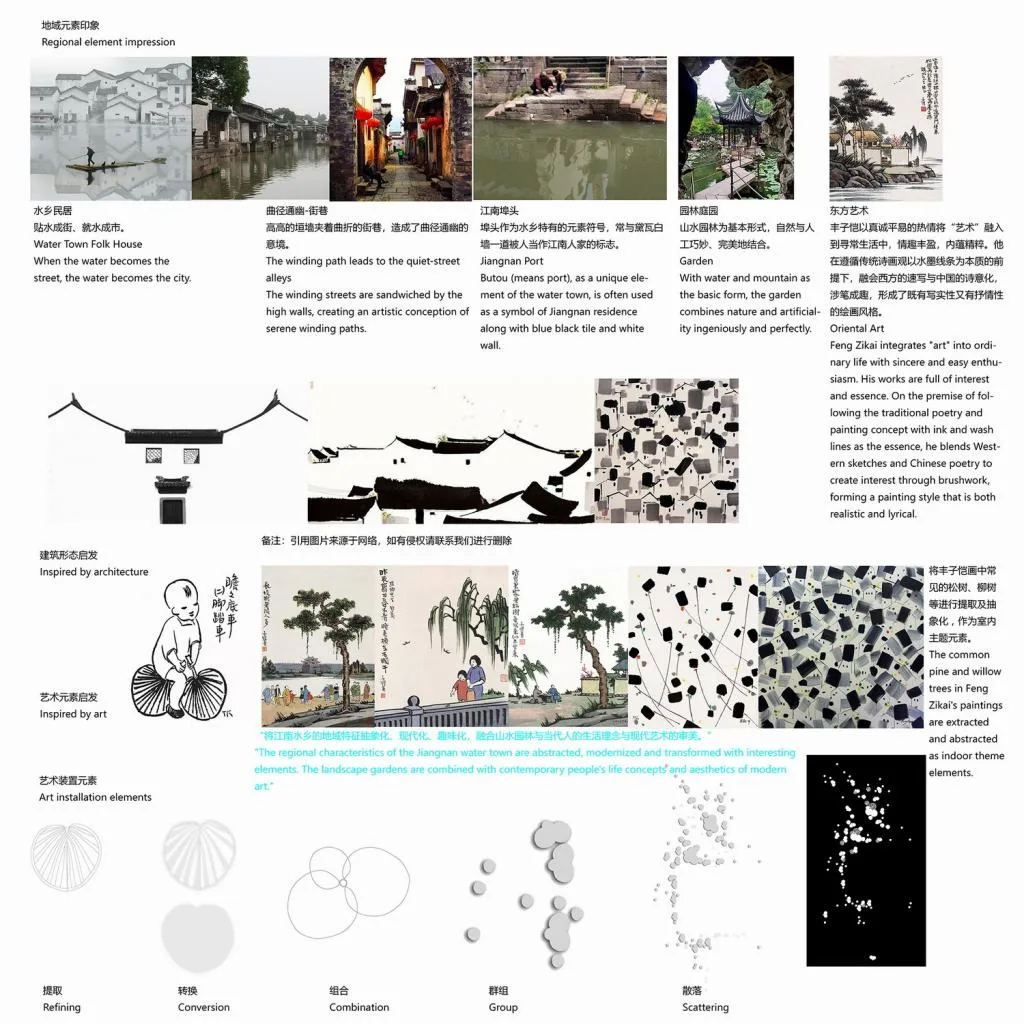
Analysis and Inspiration from Regional and Cultural Features © y.ad studio (Image sourced from the internet)
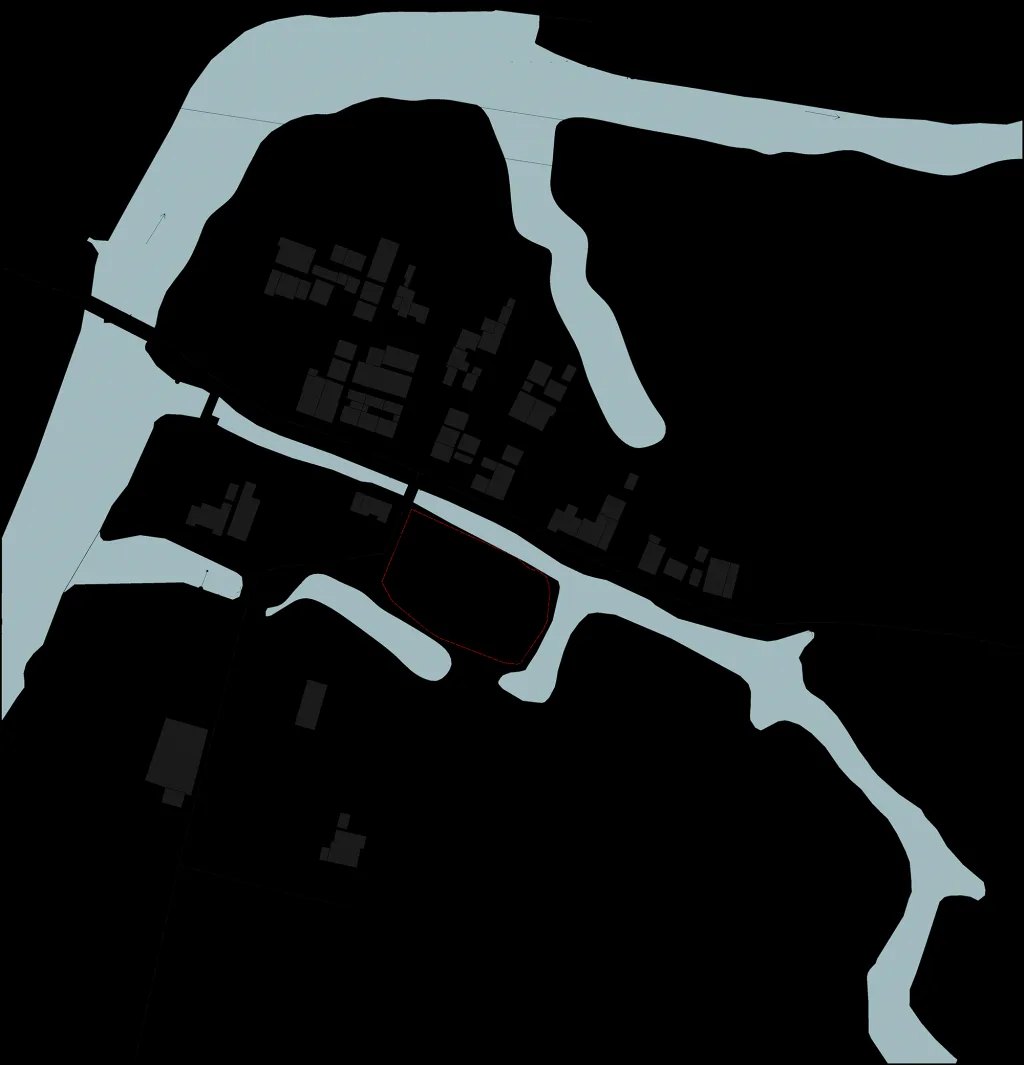
△ Original village texture © y.ad studio
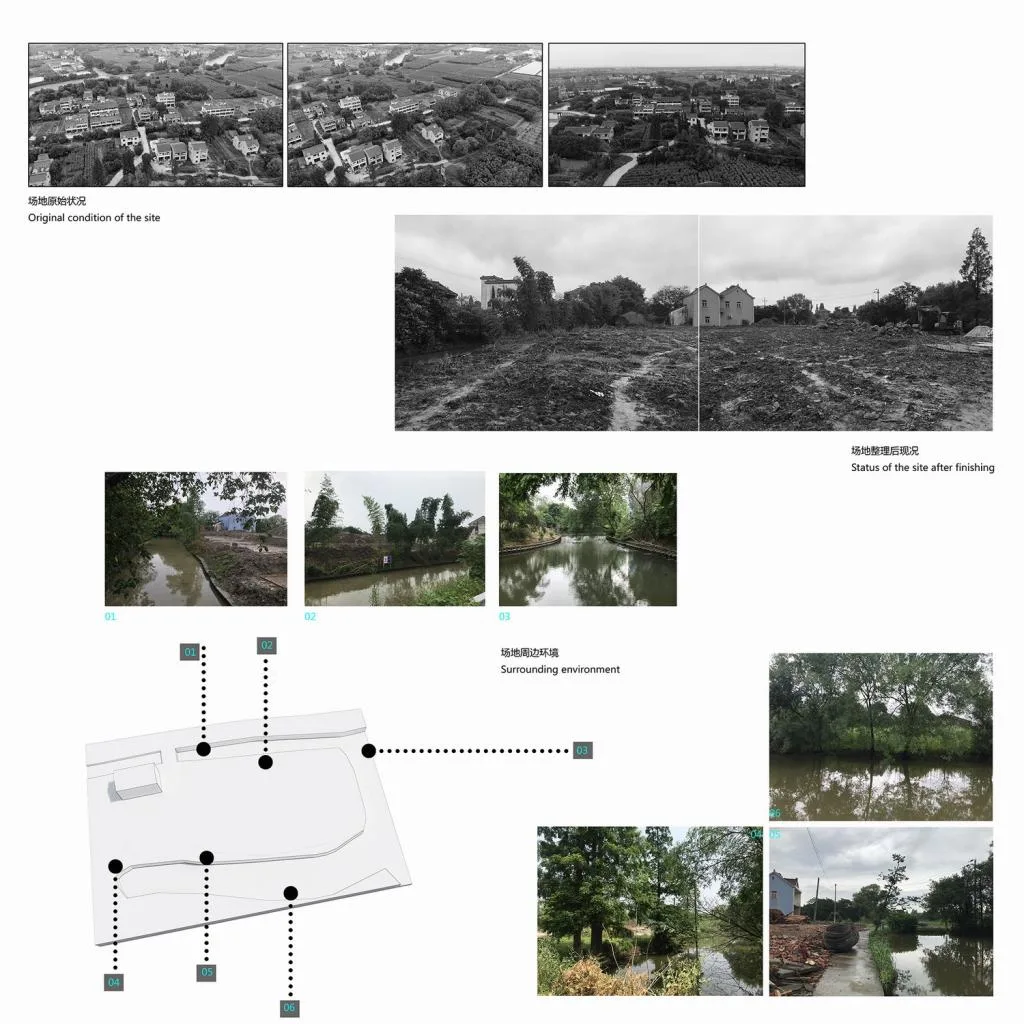
△ Current site conditions © y.ad studio
Expanding the Concept of an Ideal Living Space
At the start of the design process, the client requested a small area with low density, spacious usability, independence, and a villa-like feel. Consequently, the layout design focused on creating villa-style living spaces that emphasize area, density, comfort, and multifunctionality. After thorough deliberation, several core principles were established to craft a unique living experience:
- Each unit is a standalone space of approximately 80-100 square meters, spanning two levels.
- Indoor and outdoor spaces alternate seamlessly to enhance the living experience.
- The design incorporates poetic and picturesque elements, integrating nature to create spaces that are visually engaging, practical, and comfortable to live in.
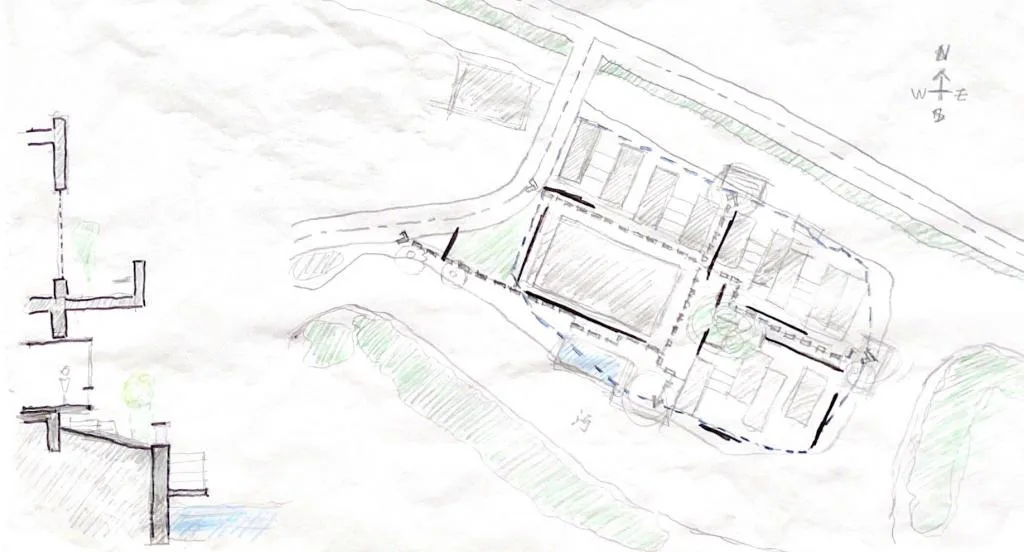
△ Concept sketch © y.ad studio
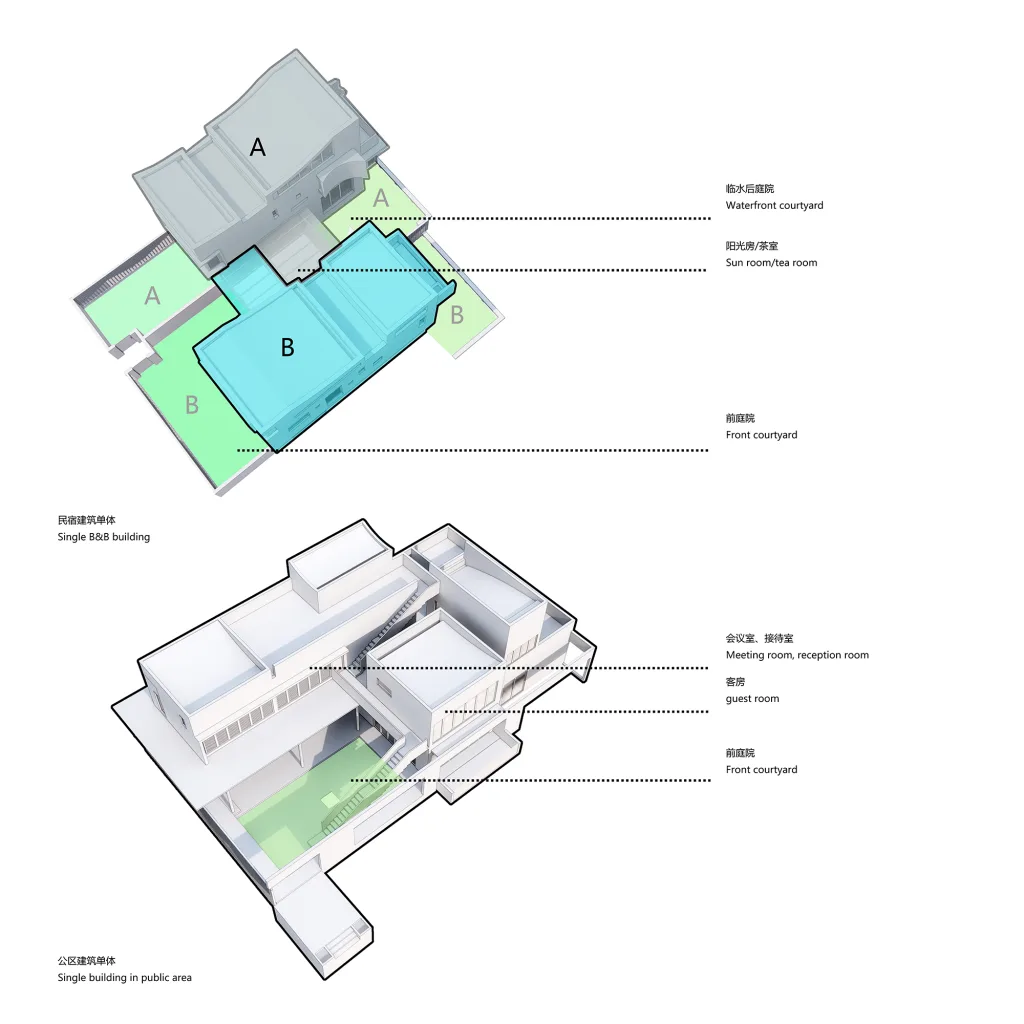
△ Single building analysis diagram © y.ad studio
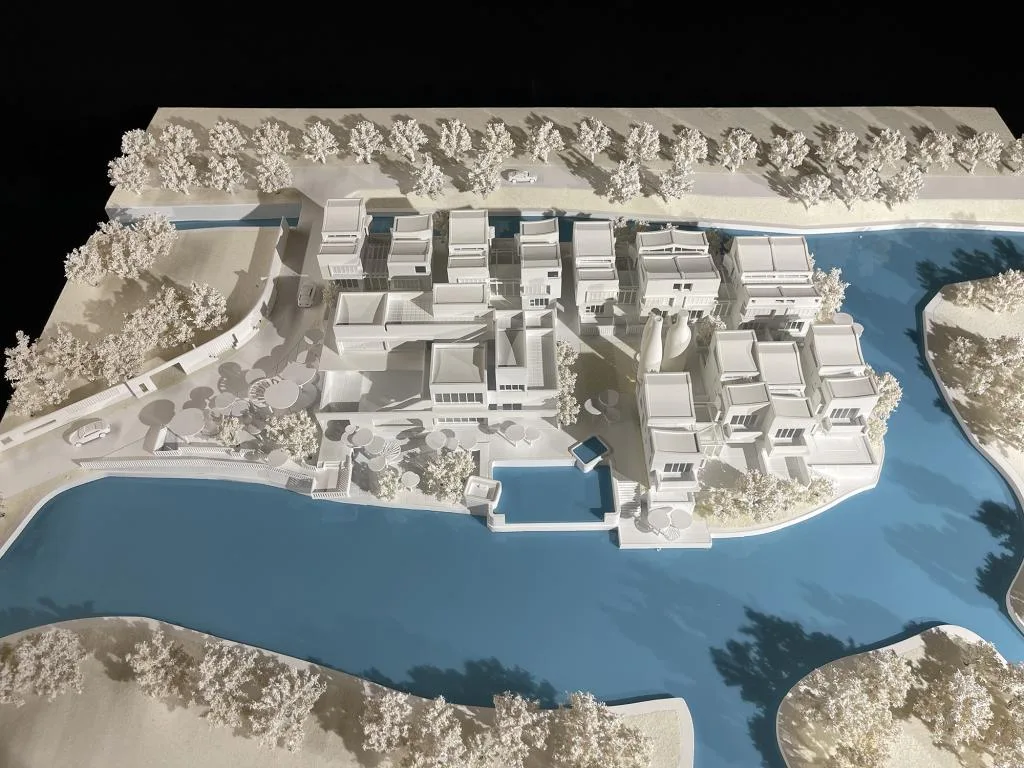
△ Architectural model © y.ad studio
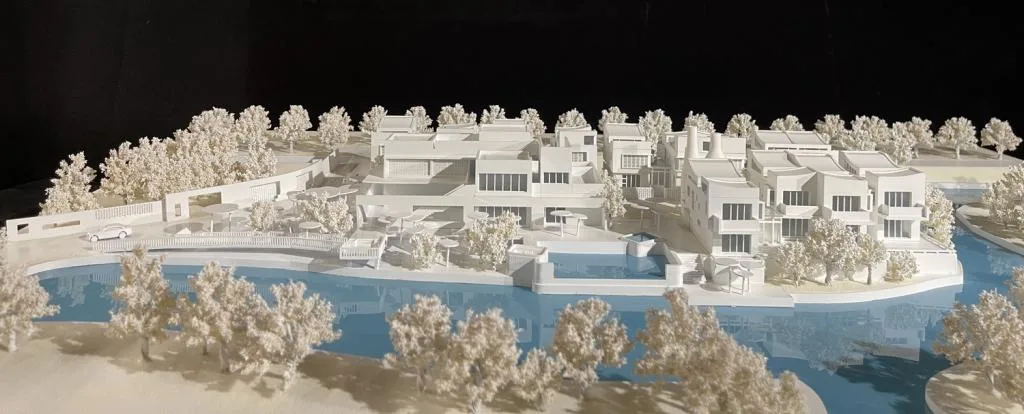
△ Architectural model © y.ad studio
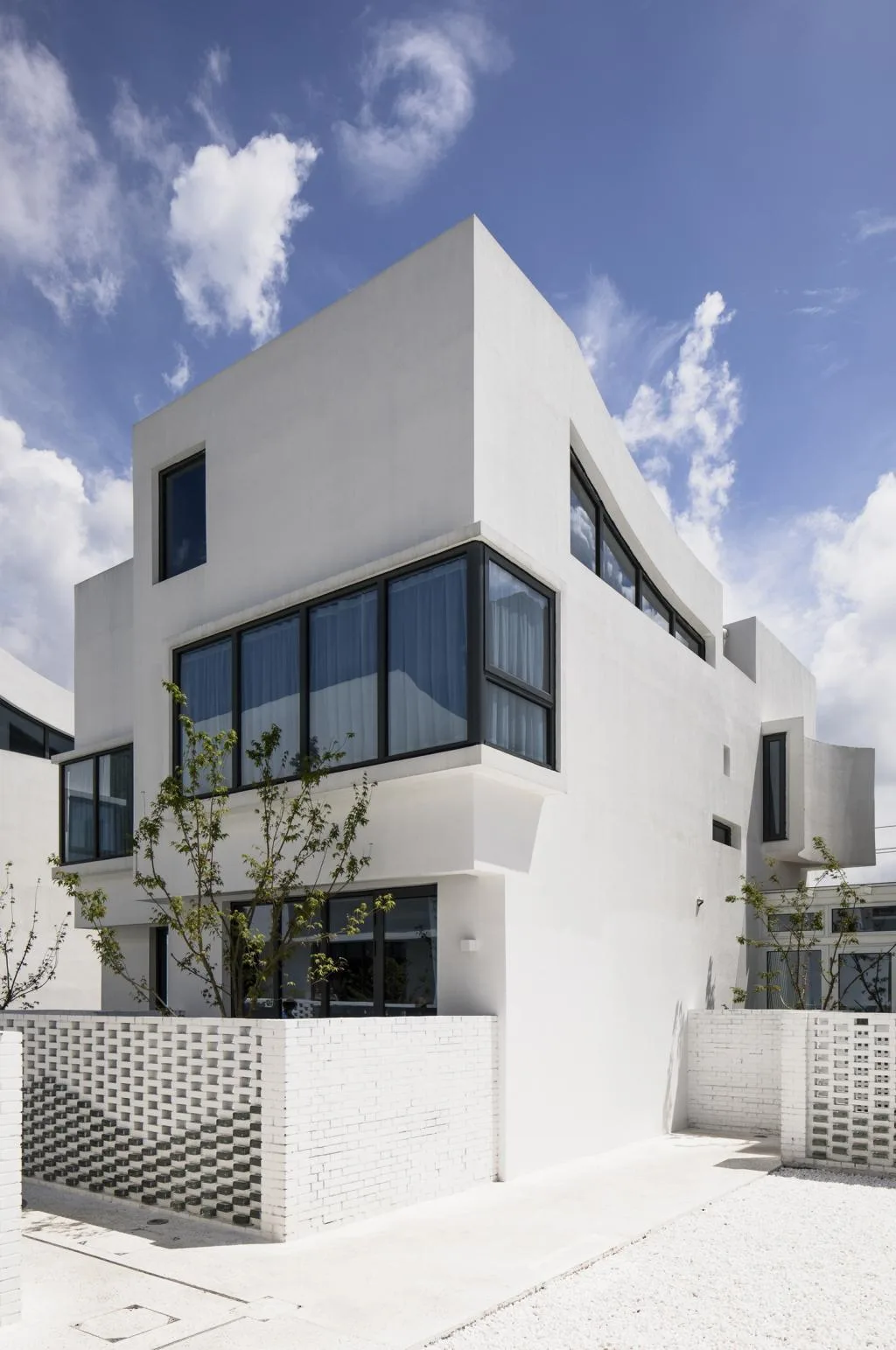
△ Exterior facade of homestay building © Peter Dixie / Lotan Architectural Photography
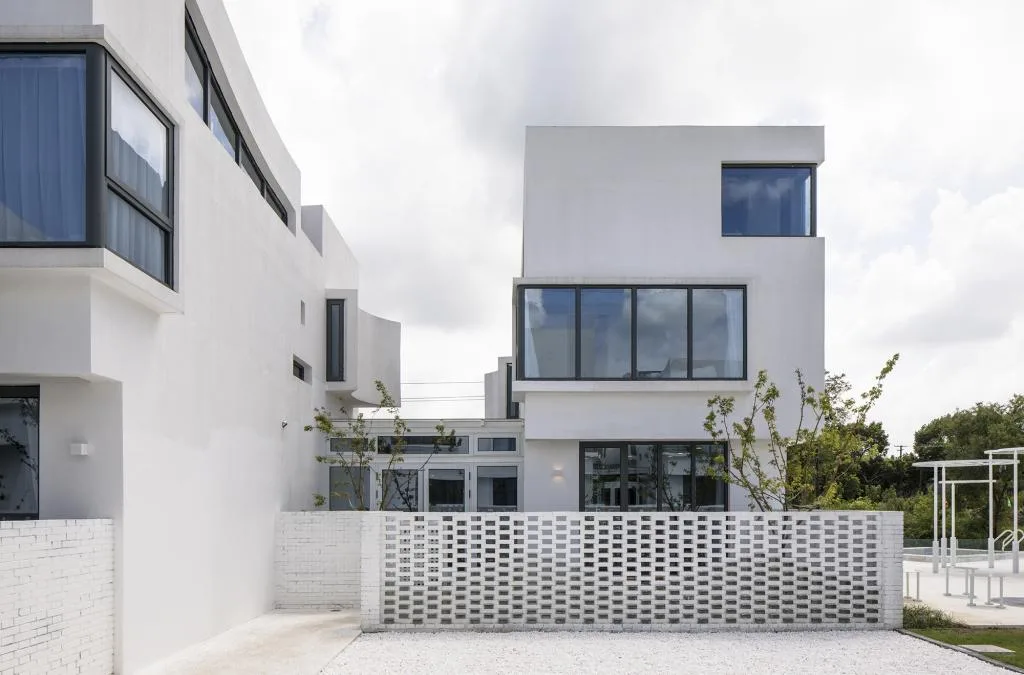
△ Exterior facade of homestay © Peter Dixie / Lotan Architectural Photography
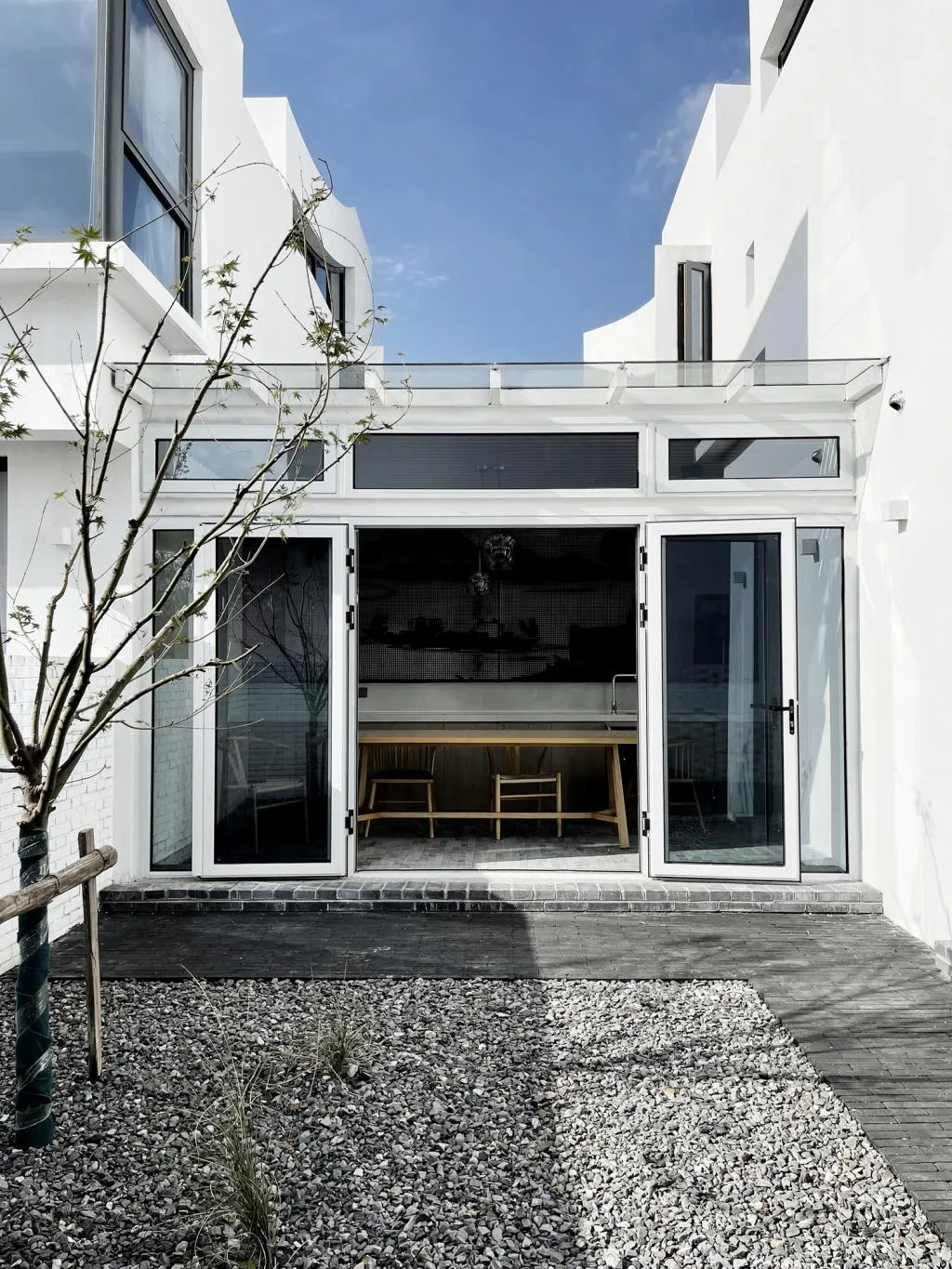
△ Facade of the Sunshine Room at the homestay © Yan Yang
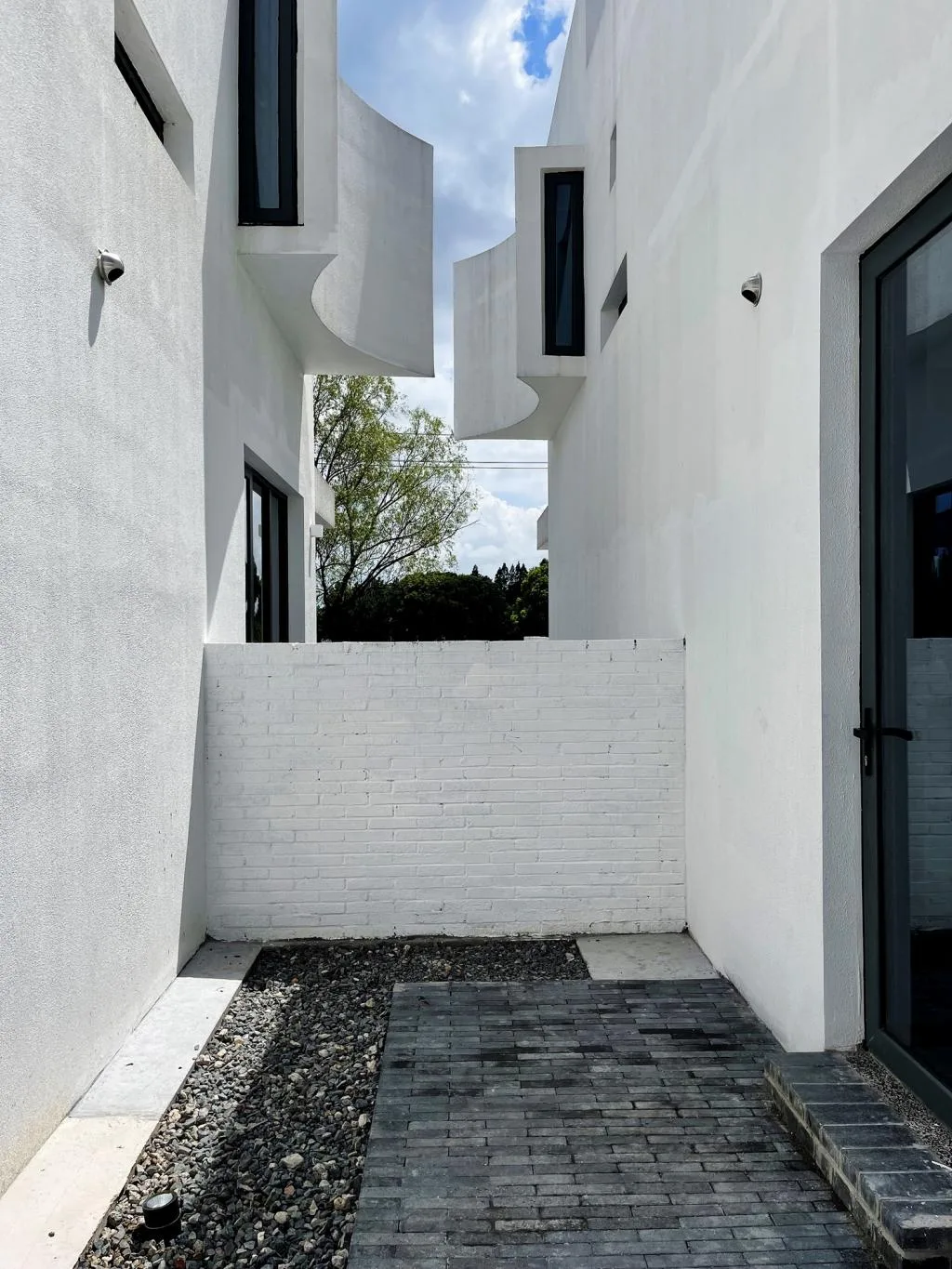
△ Exterior facade of homestay © Yan Yang
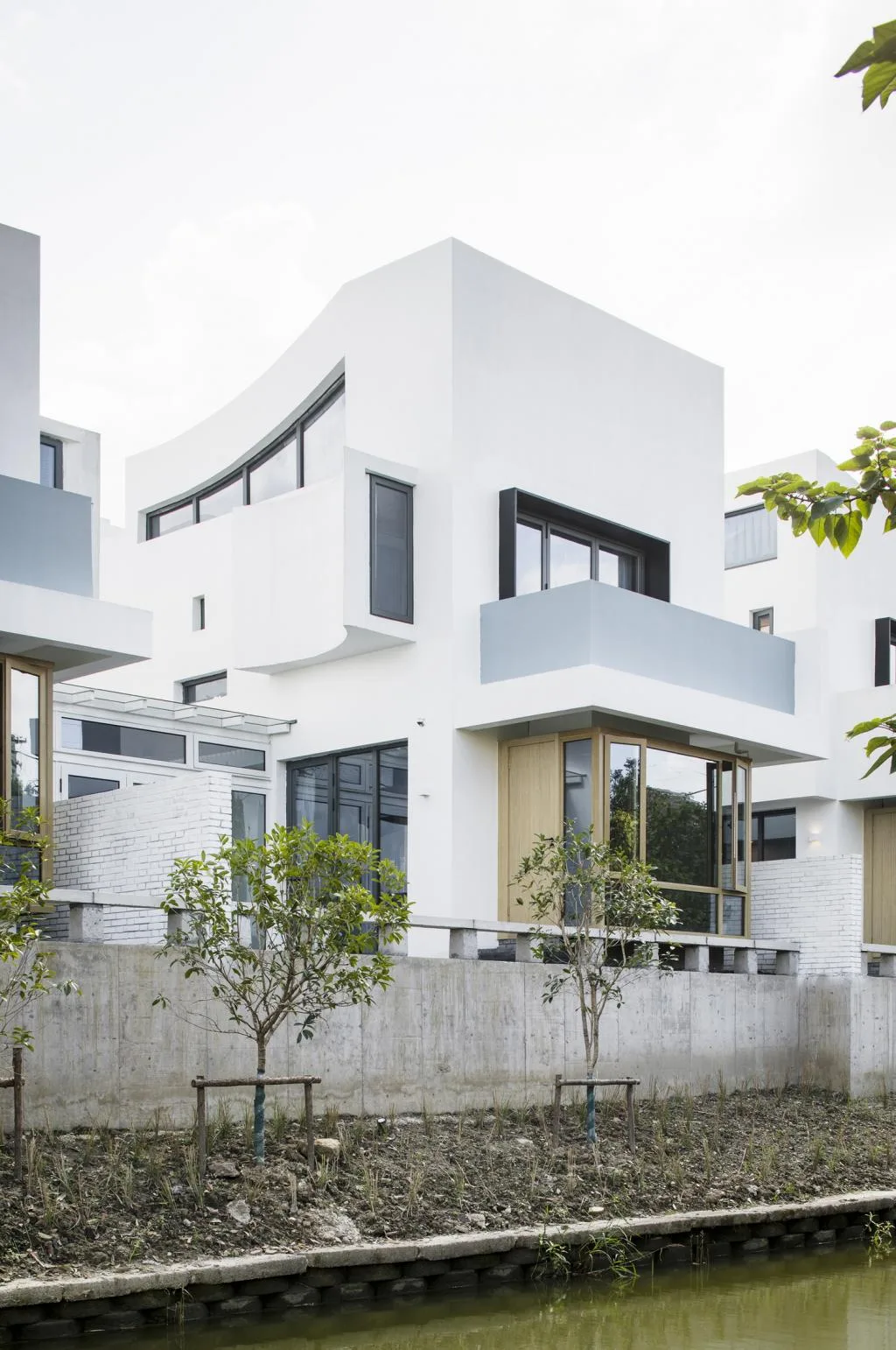
△ Exterior facade of homestay © Peter Dixie / Lotan Architectural Photography
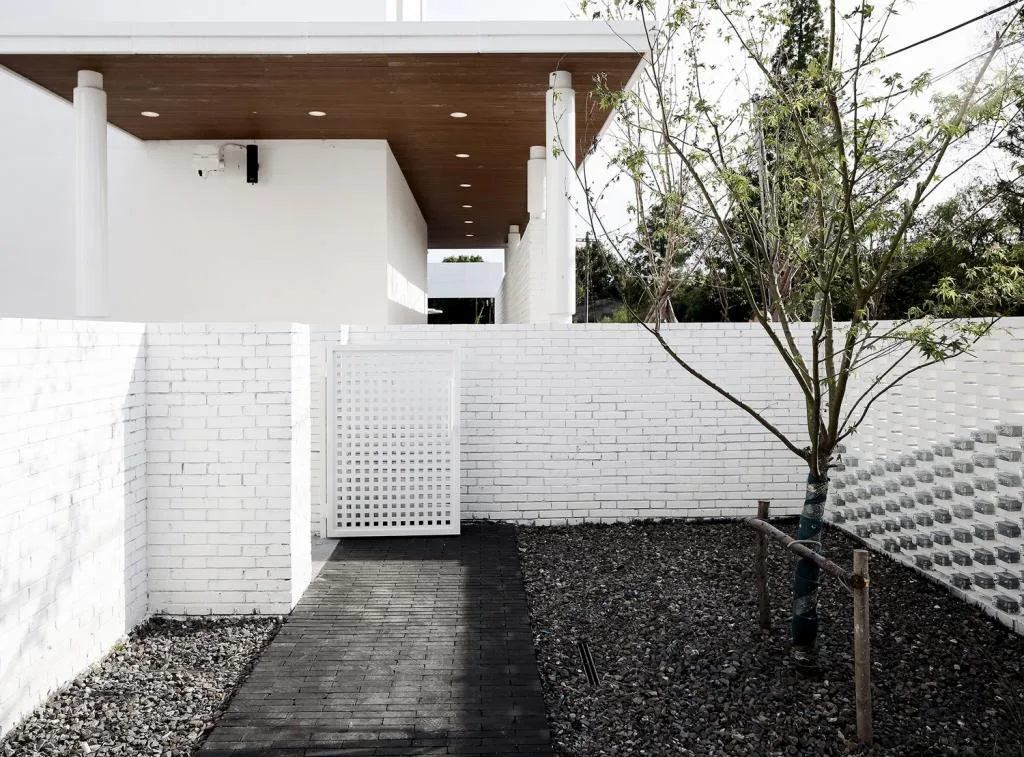
△ Courtyard inside the homestay © Yan Yang
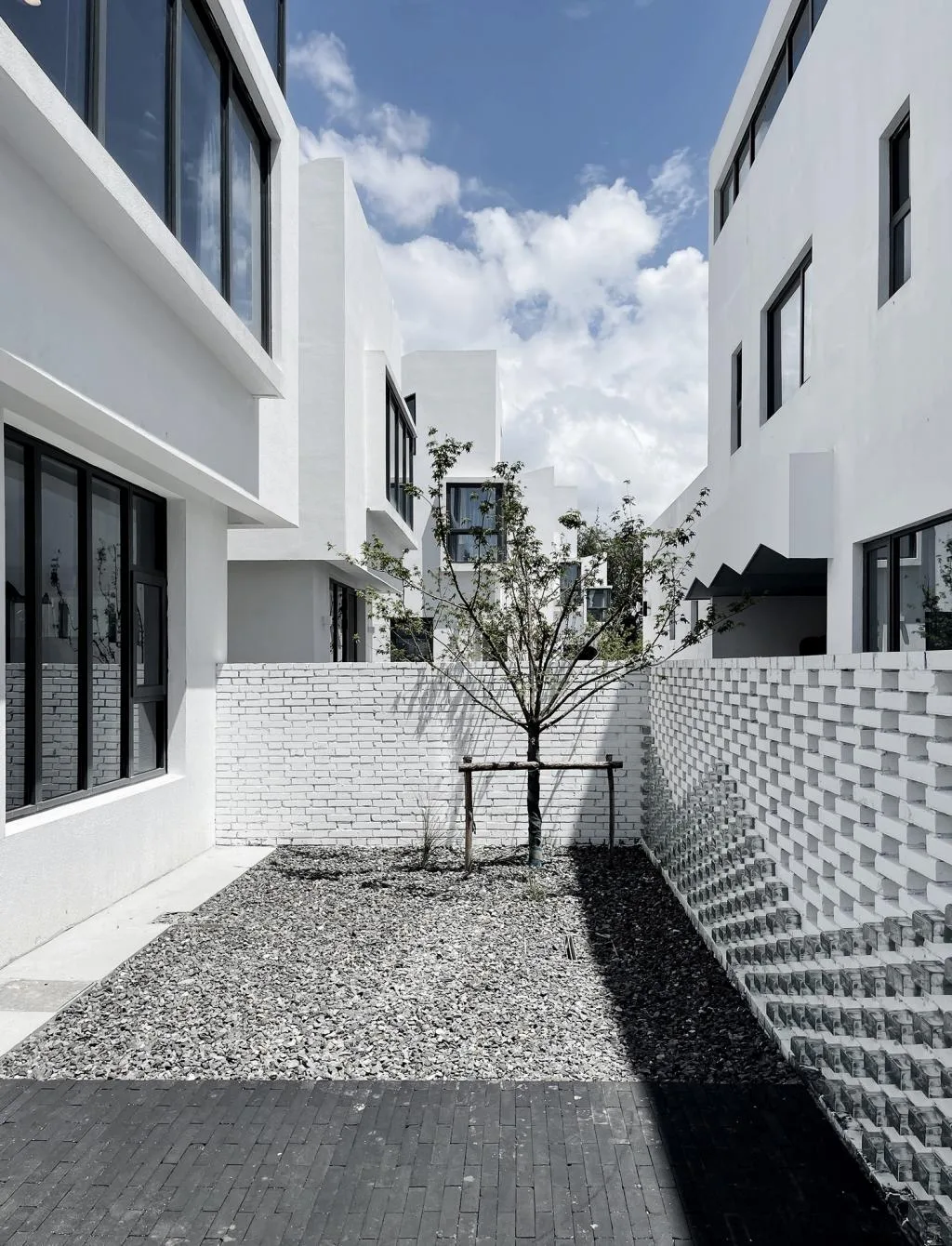
△ Courtyard inside the homestay © Yan Yang
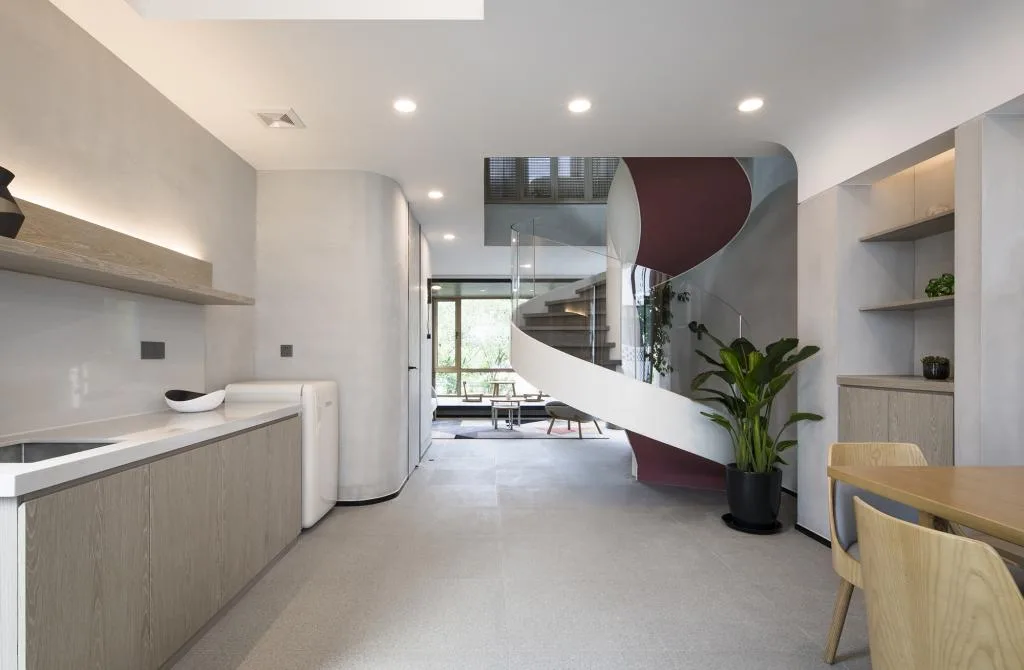
△ Ground floor interior of the homestay © Peter Dixie / Lotan Architectural Photography
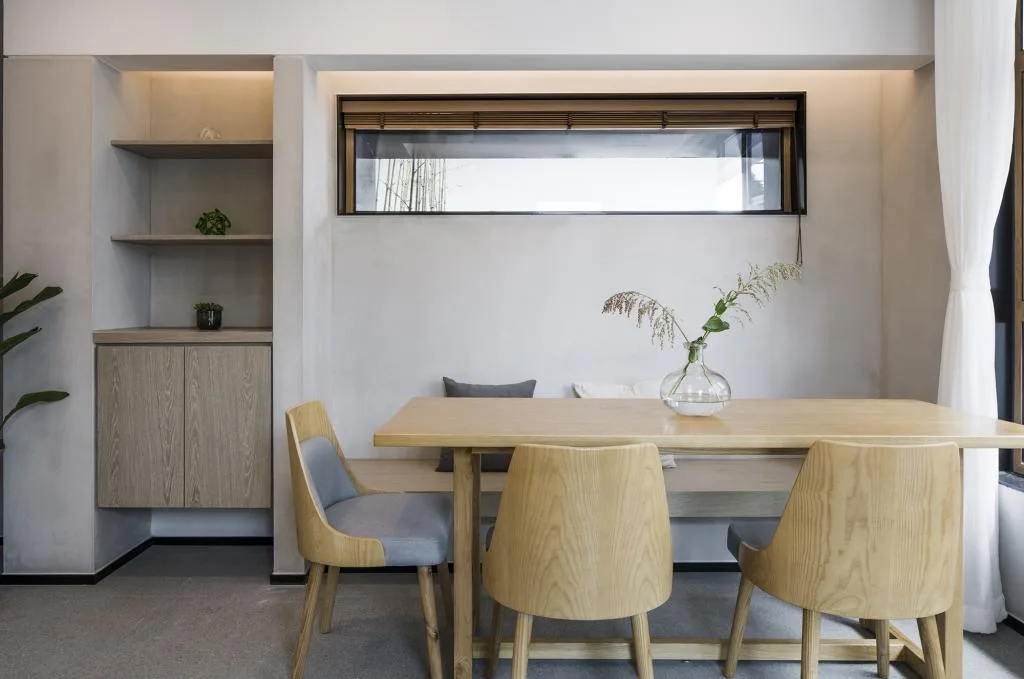
Indoor restaurant on the first floor of the homestay © Peter Dixie / Lotan Architectural Photography
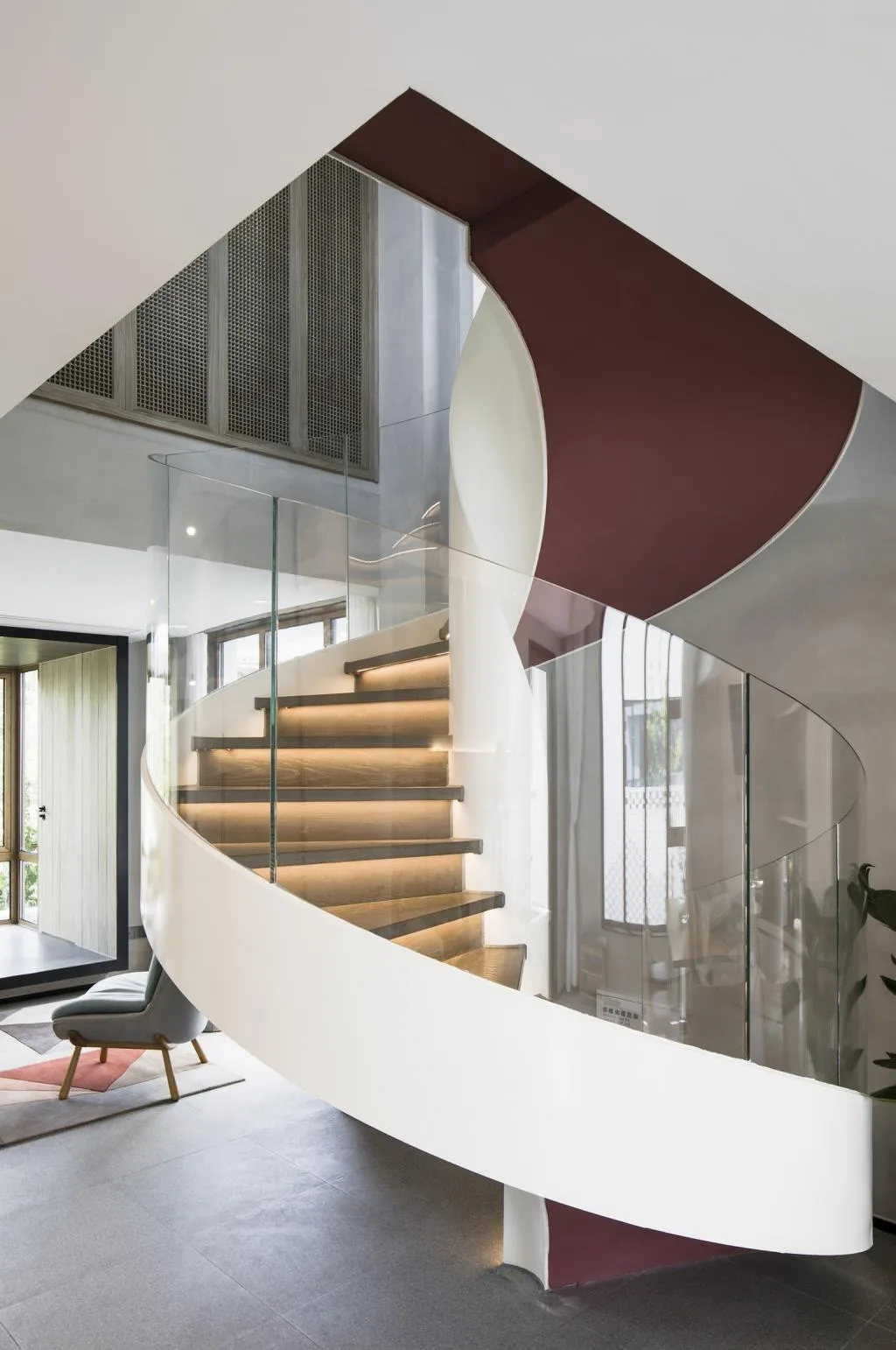
△ Homestay staircase © Peter Dixie / Lotan Architectural Photography
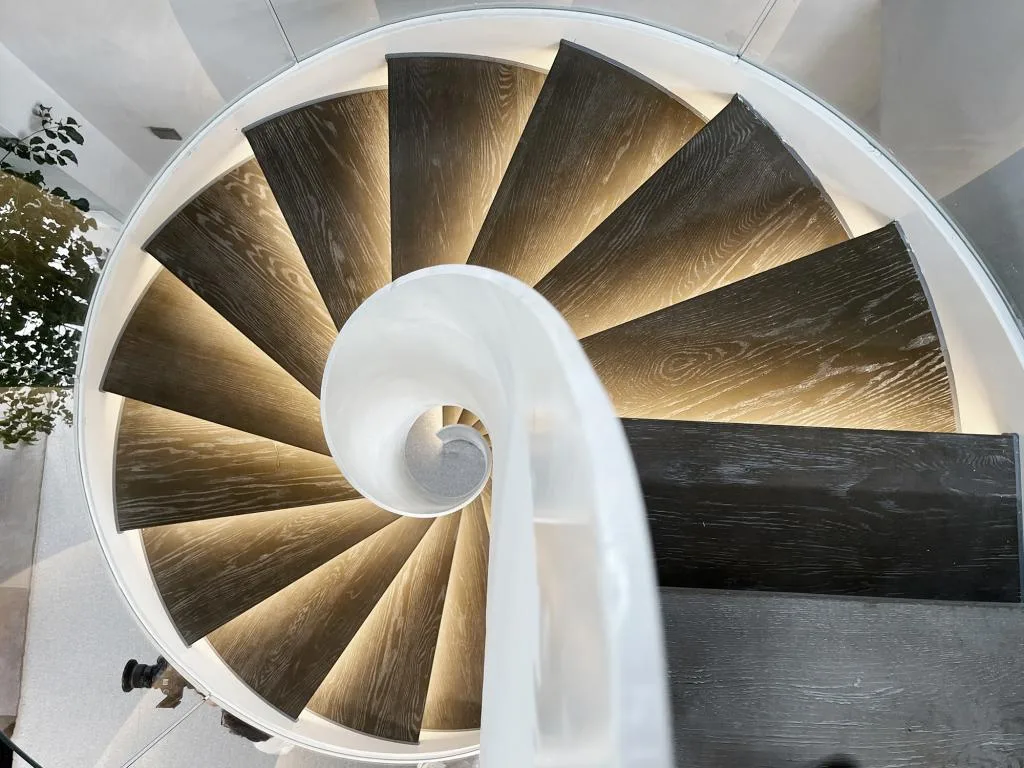
△ Homestay staircase © Yan Yang
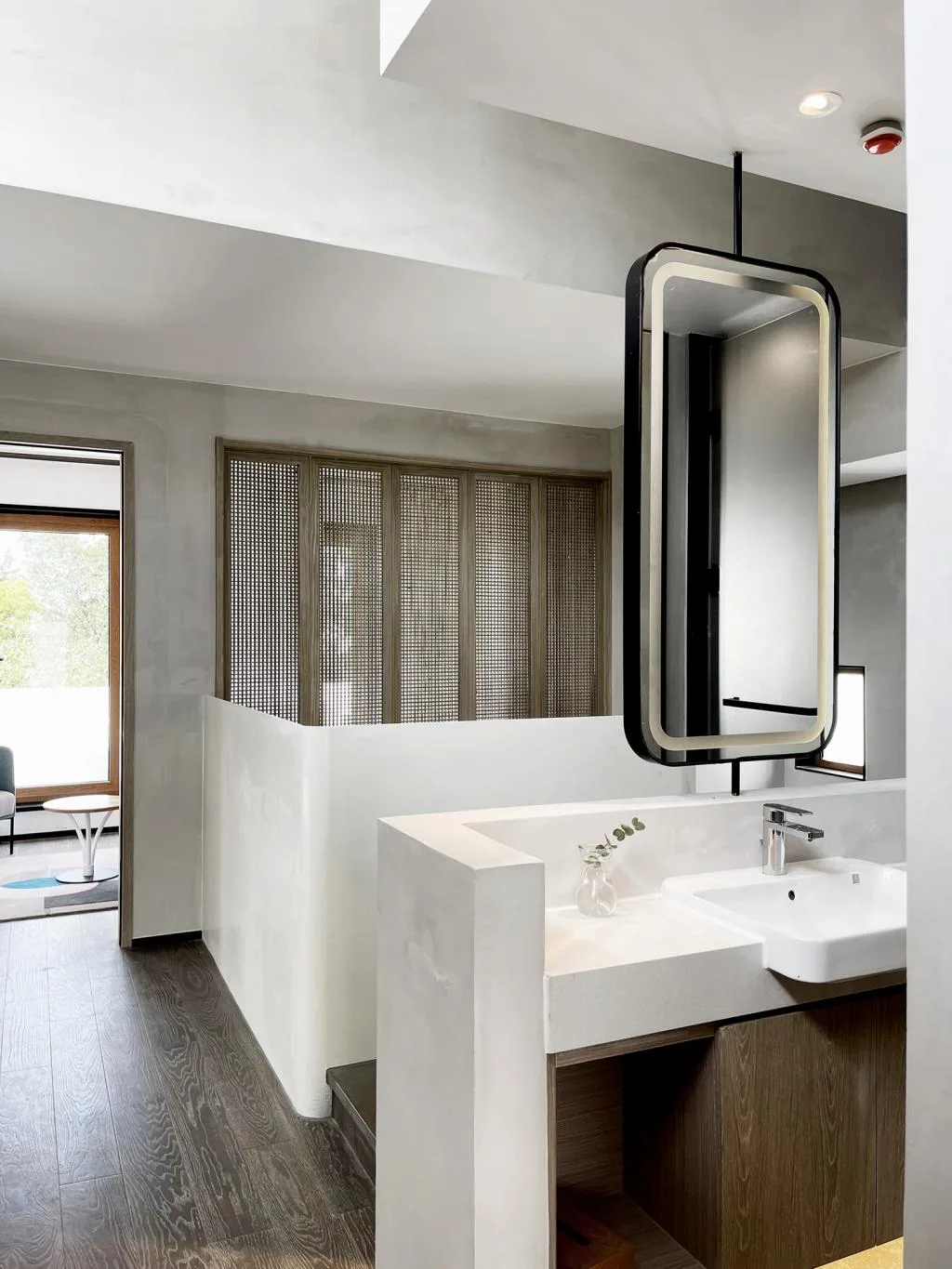
△ Staircase on the second floor of the homestay © Yan Yang
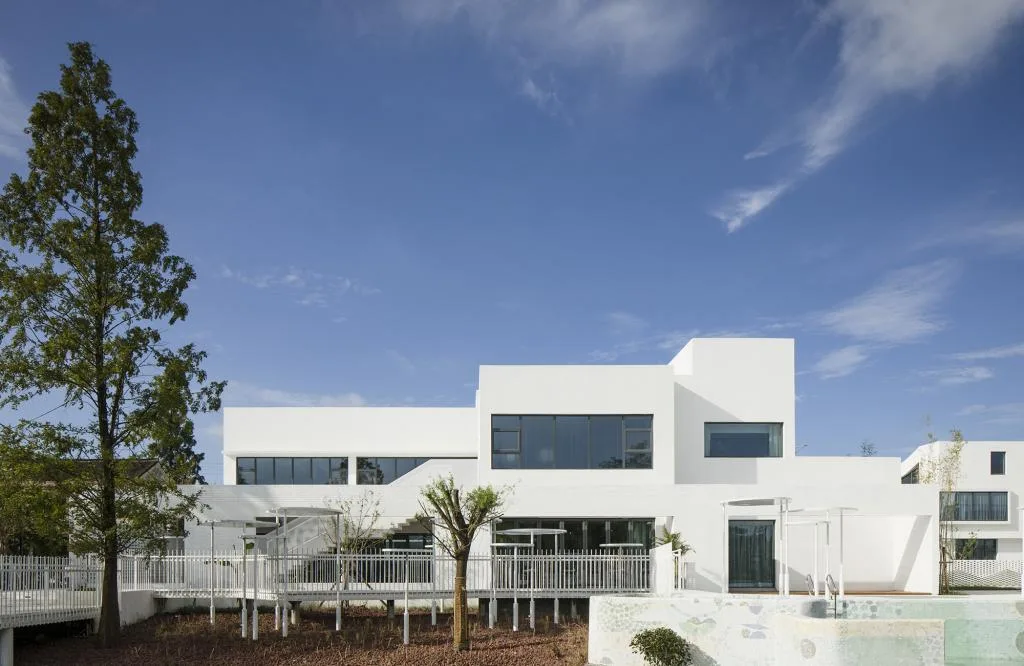
△ Facade of public buildings © Peter Dixie / Lotan Architectural Photography
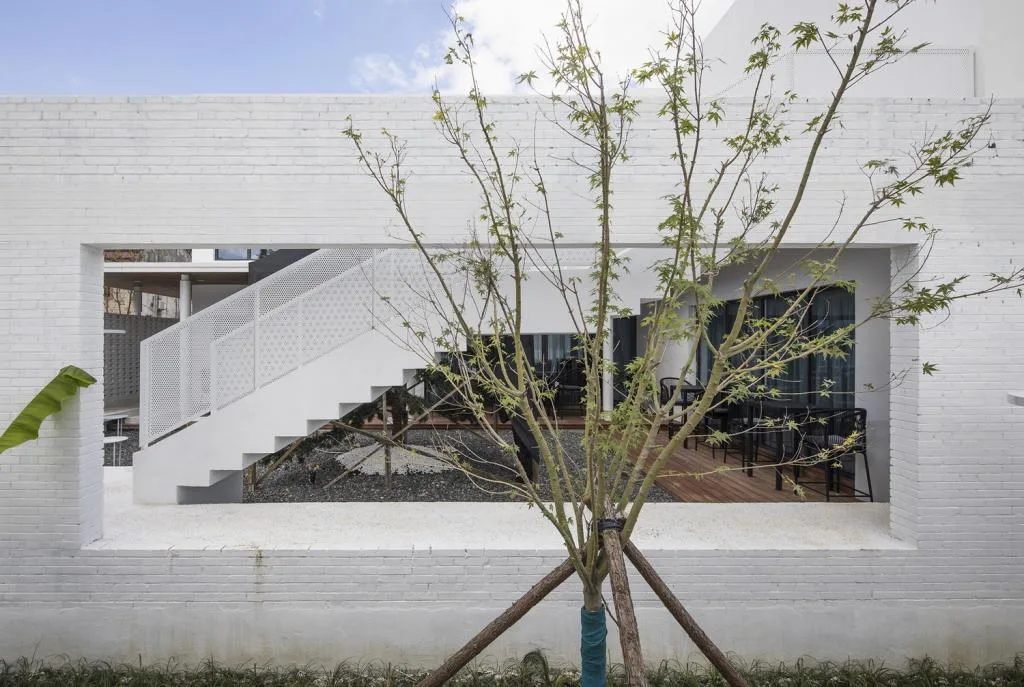
△ Facade of public buildings © Peter Dixie / Lotan Architectural Photography
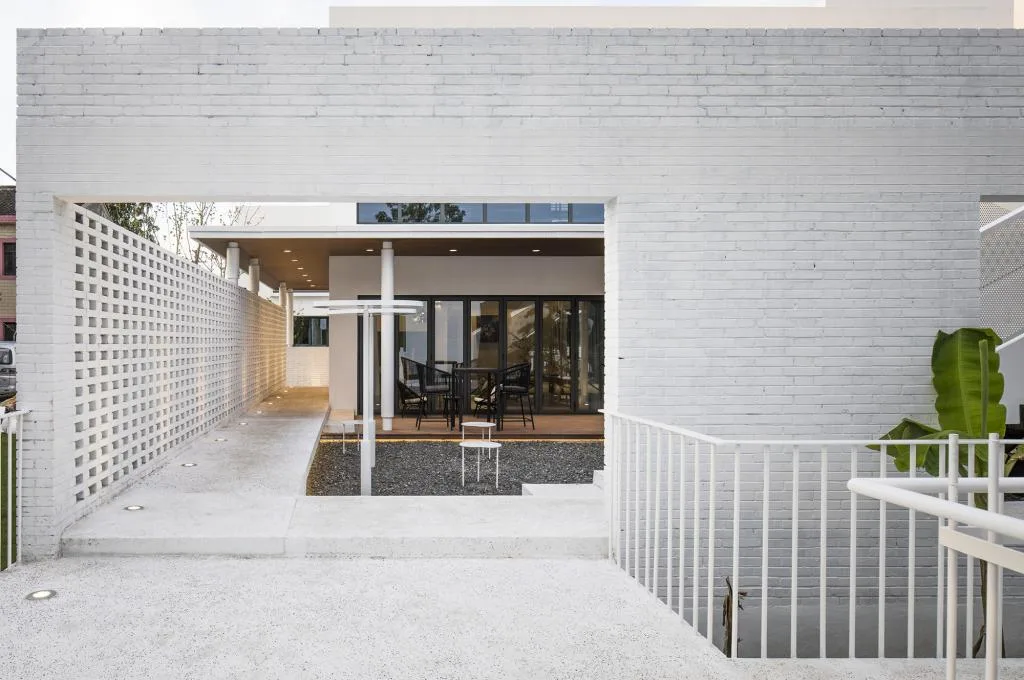
△ Facade of public buildings © Peter Dixie / Lotan Architectural Photography
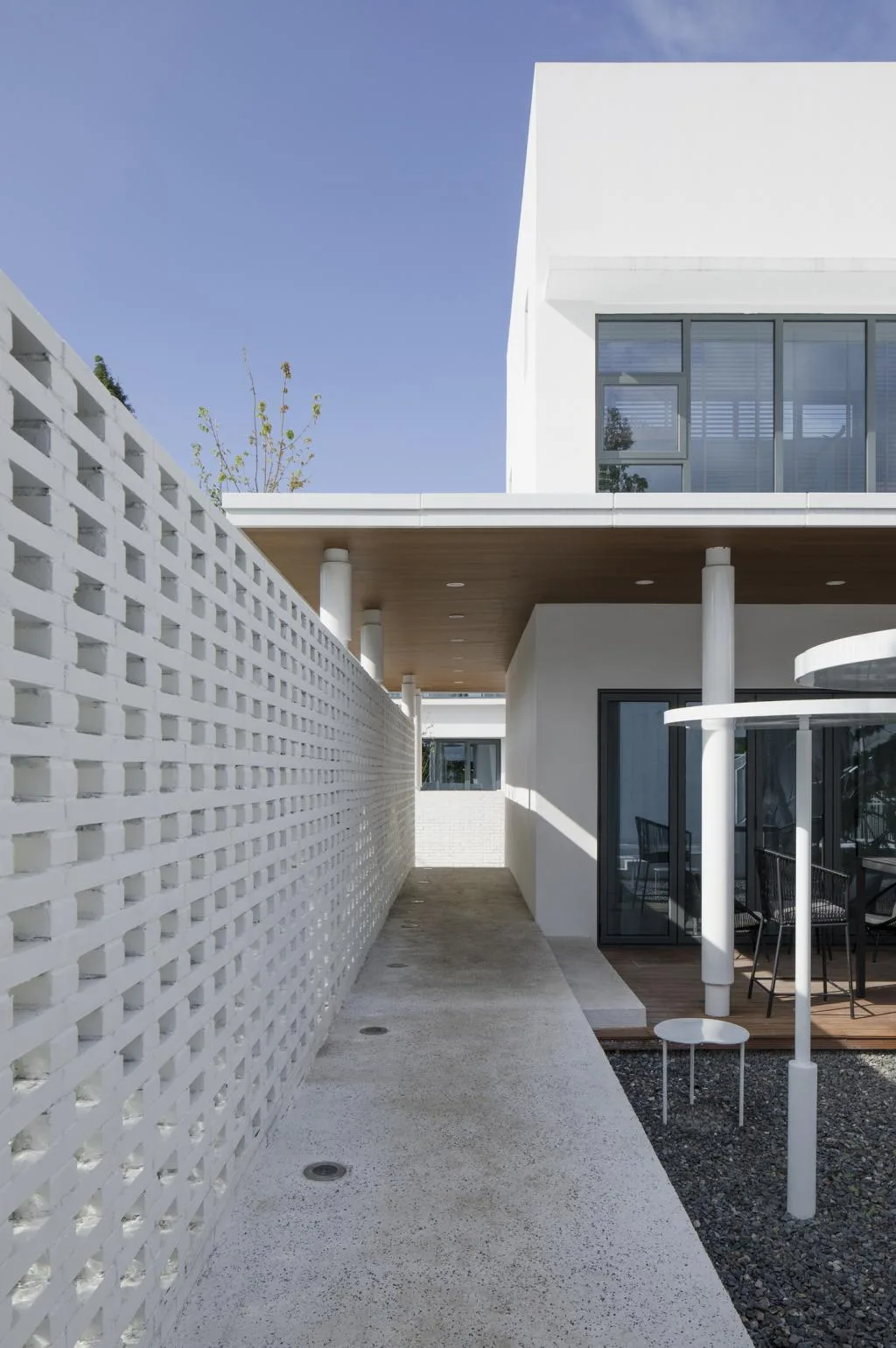
△ Corridor within public area © Peter Dixie / Lotan Architectural Photography
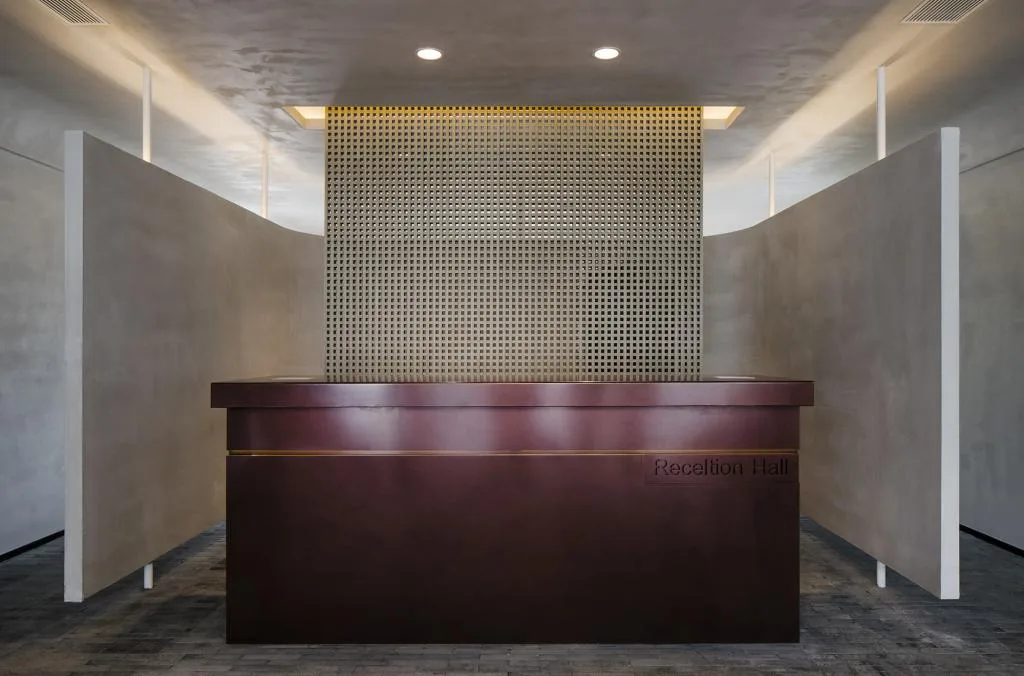
△ Public reception desk © Peter Dixie / Lotan Architectural Photography
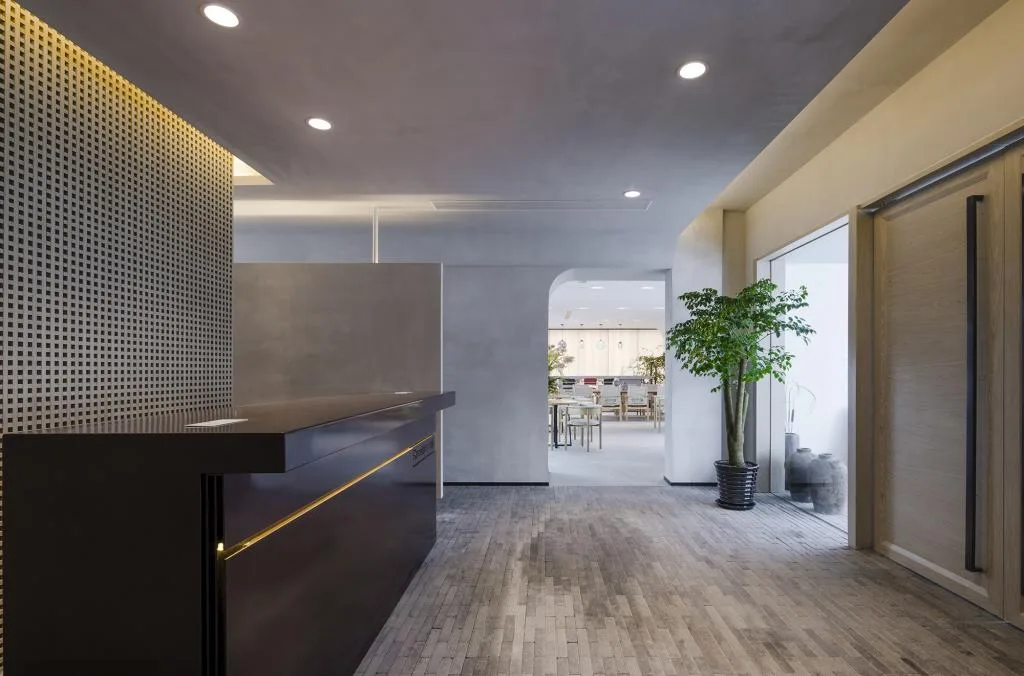
△ Public area lobby © Peter Dixie / Lotan Architectural Photography
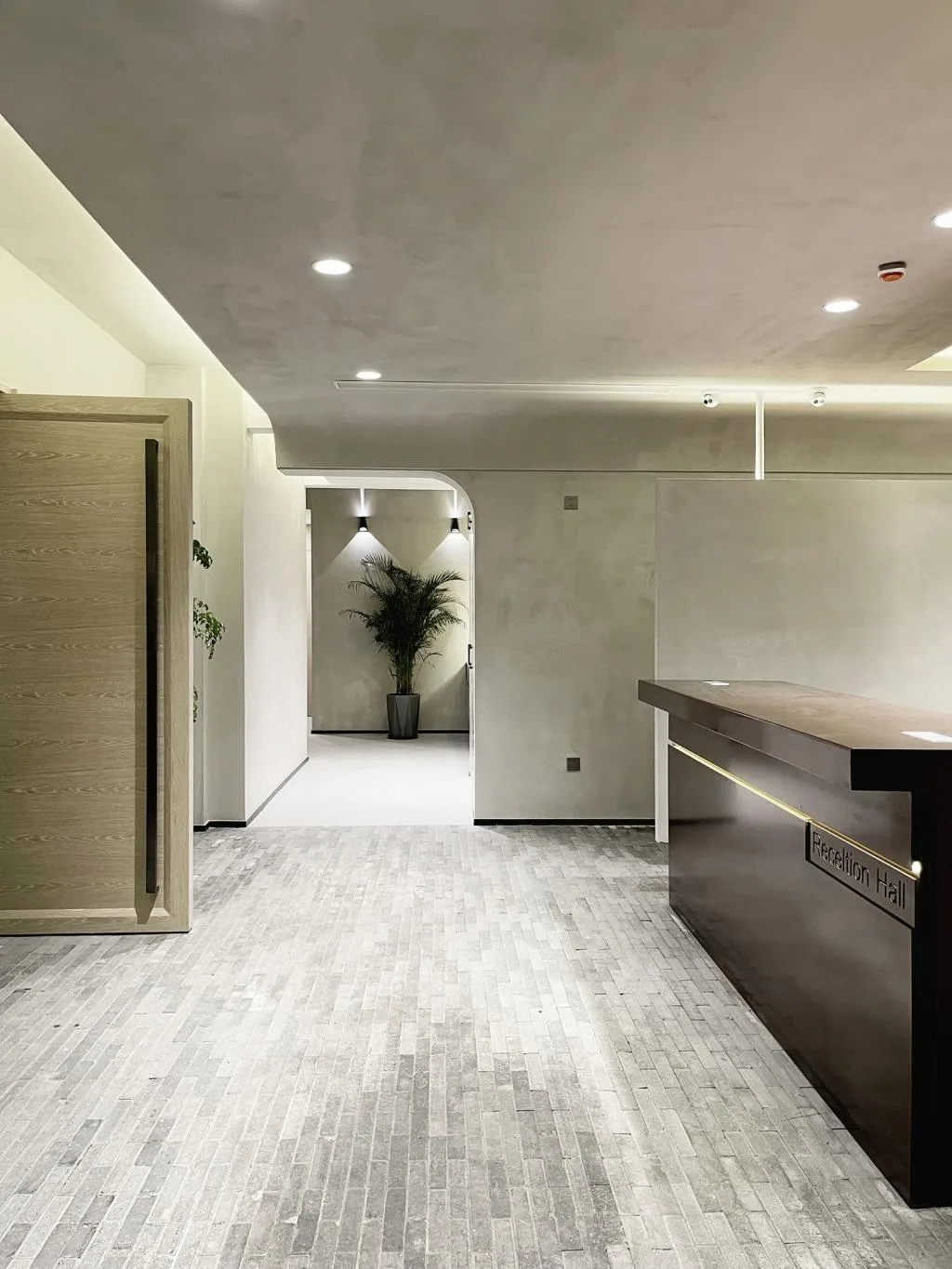
△ Public area lobby © Yan Yang
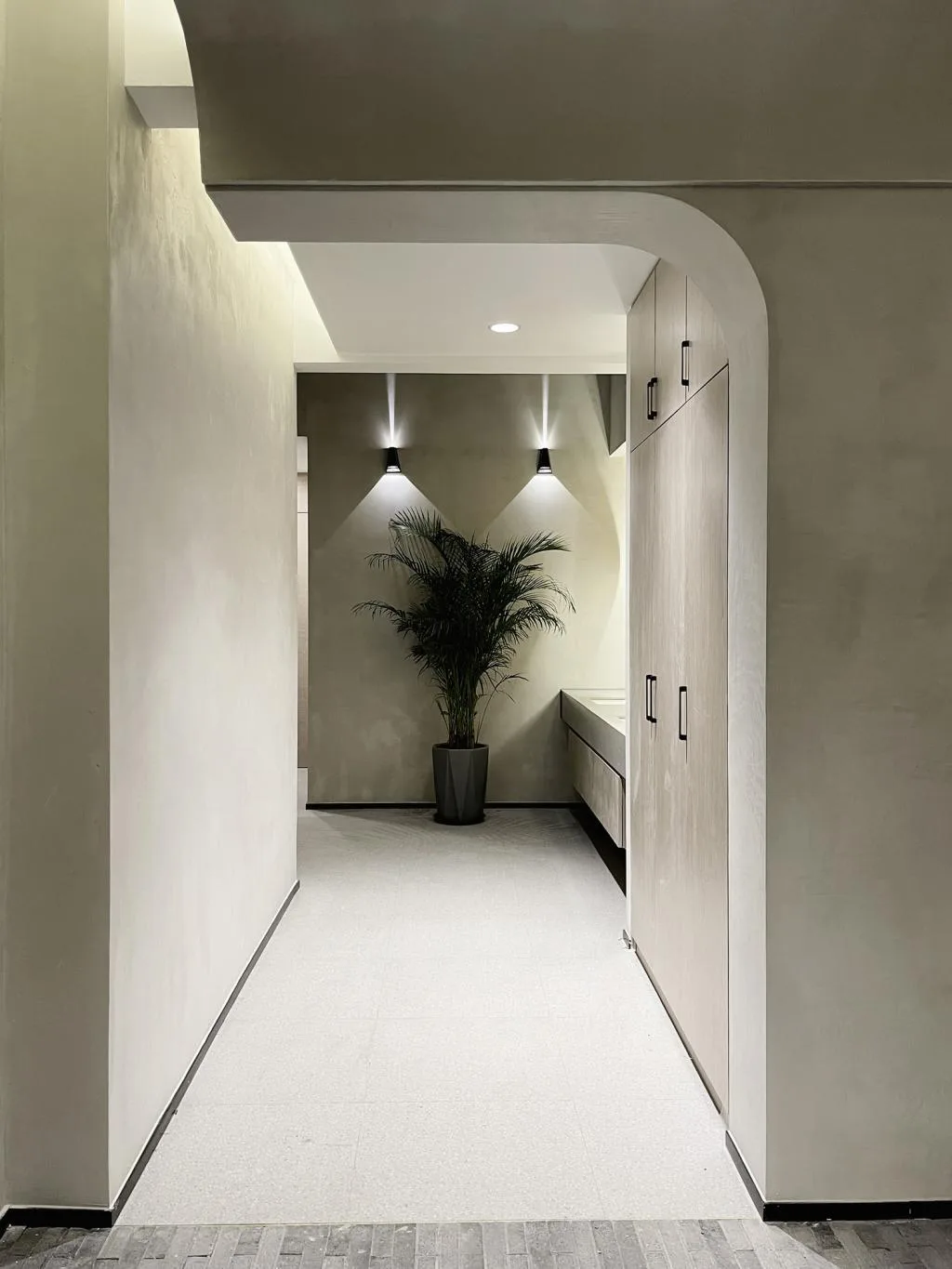
△ Public restroom aisle © Yan Yang
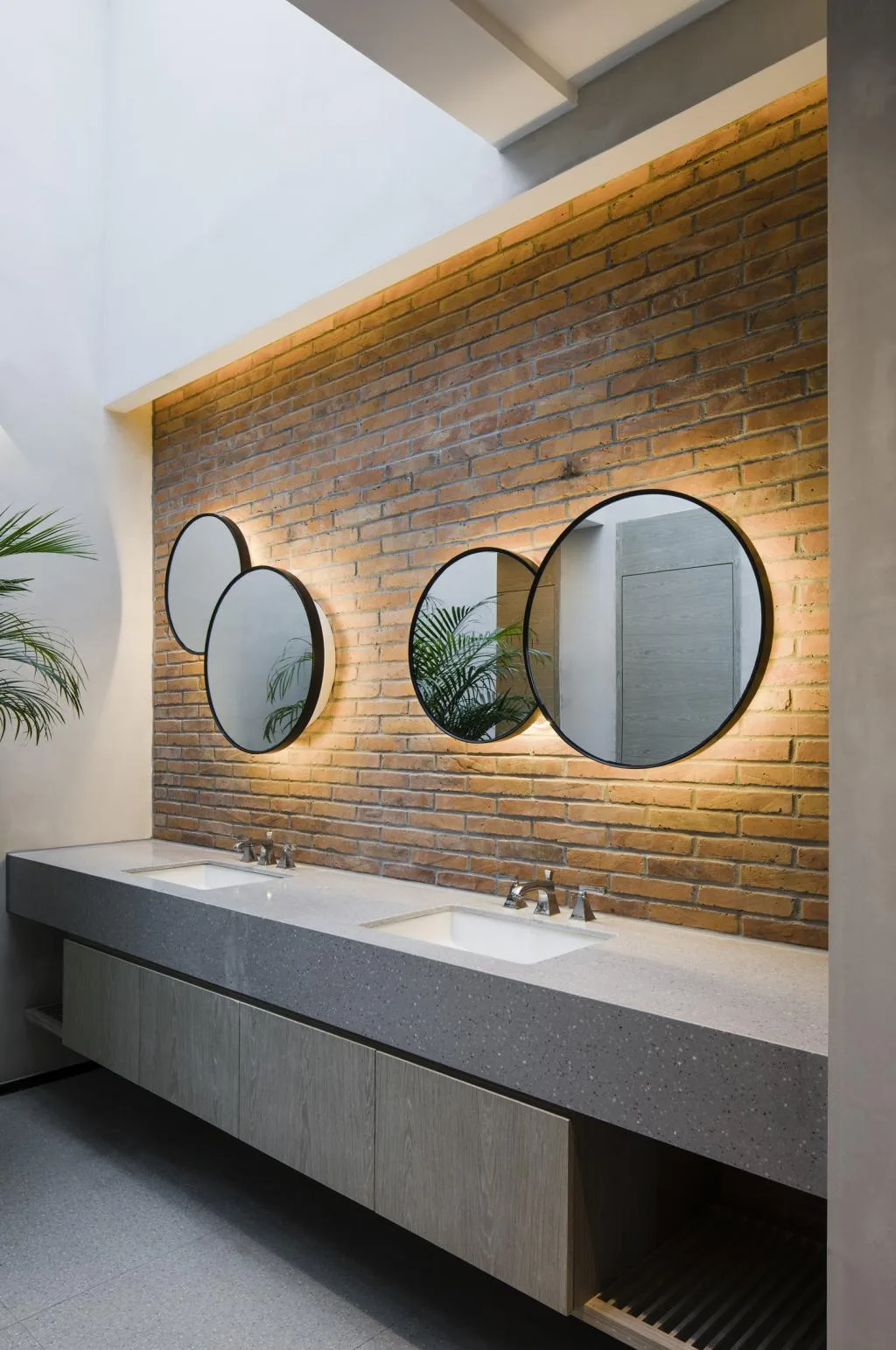
△ Public restroom © Peter Dixie / Lotan Architectural Photography
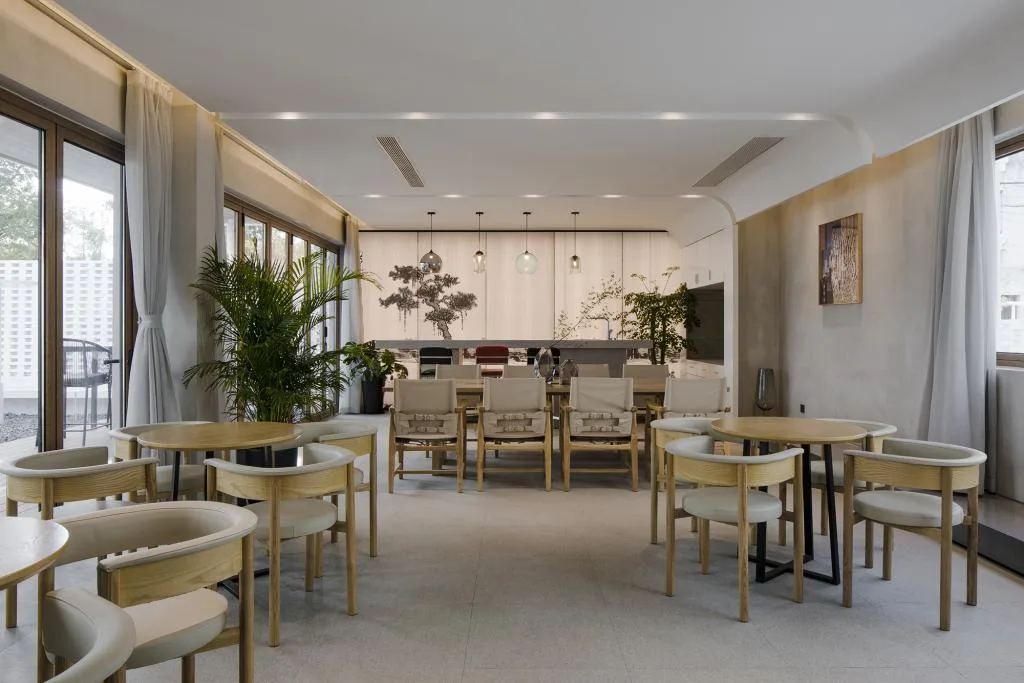
△ Public coffee area & water bar © Peter Dixie / Lotan Architectural Photography
Interpreting Jiangnan Water Town Dwellings for Modern Life and Aesthetics
The design approach focuses primarily on:
1. Preserving the water town lifestyle by the water
Site adjustments were made to connect the north and east rivers with a southern pond, creating a peninsula surrounded by water on three sides, while preserving the original large trees. Functional buildings were placed away from trees and oriented around the water, maintaining the natural vegetation. Three public waterfront and kayaking platforms were added, reminiscent of traditional Jiangnan wharfs.
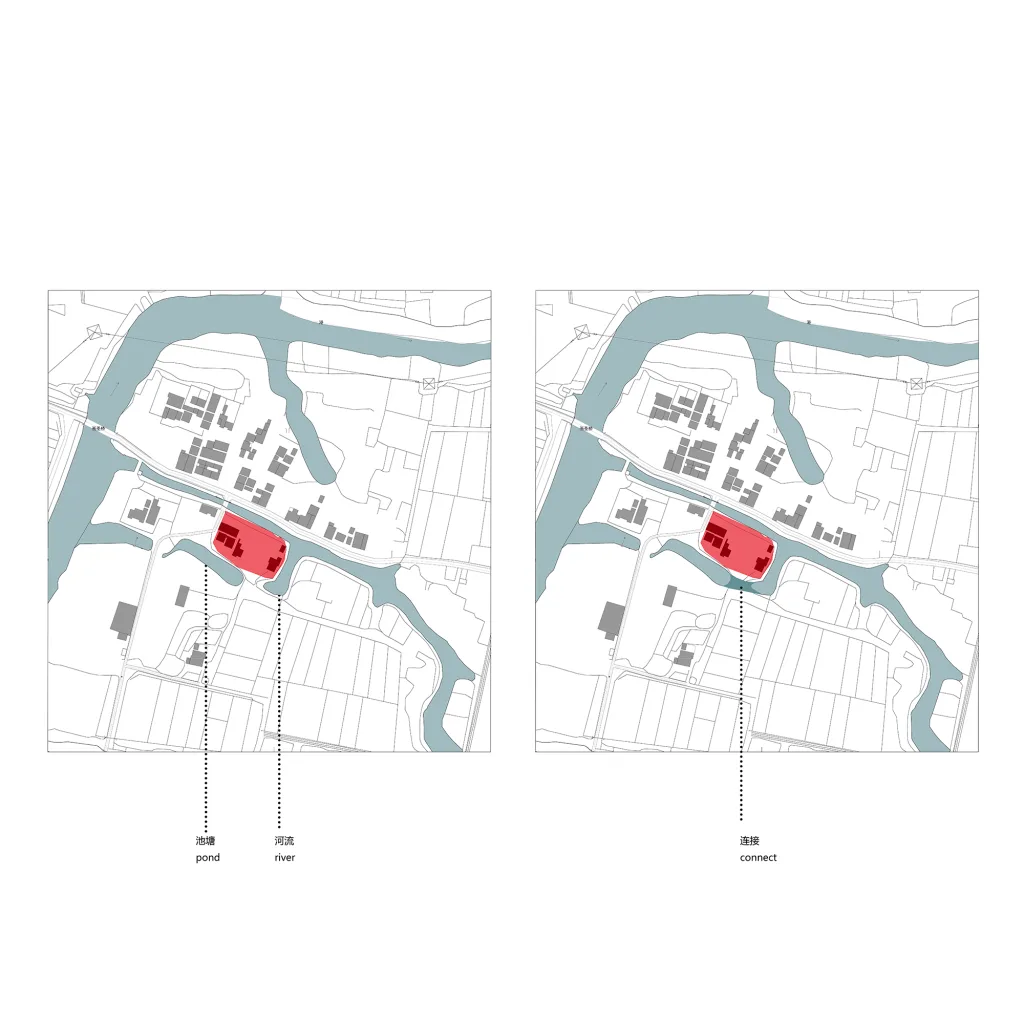
△ Site consolidation analysis © y.ad studio
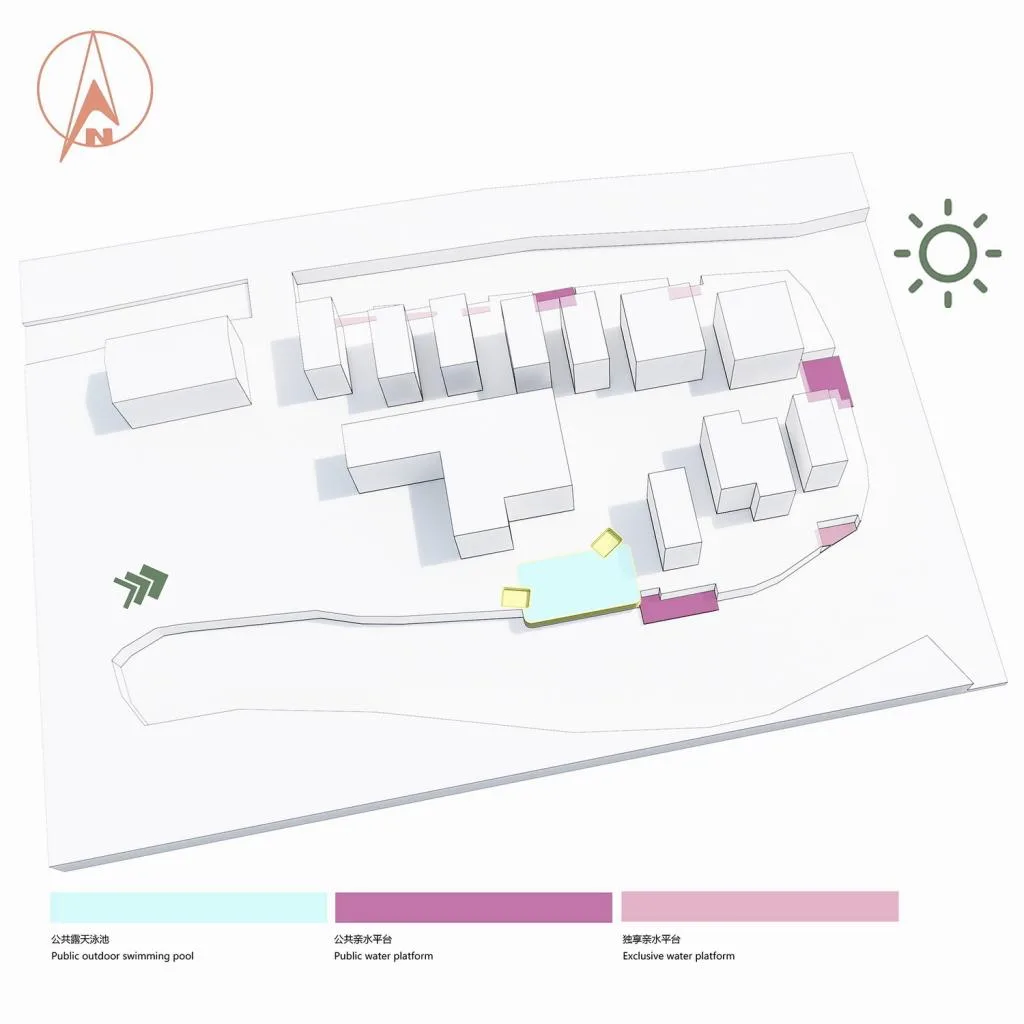
△ Distribution of waterfront platforms © y.ad studio
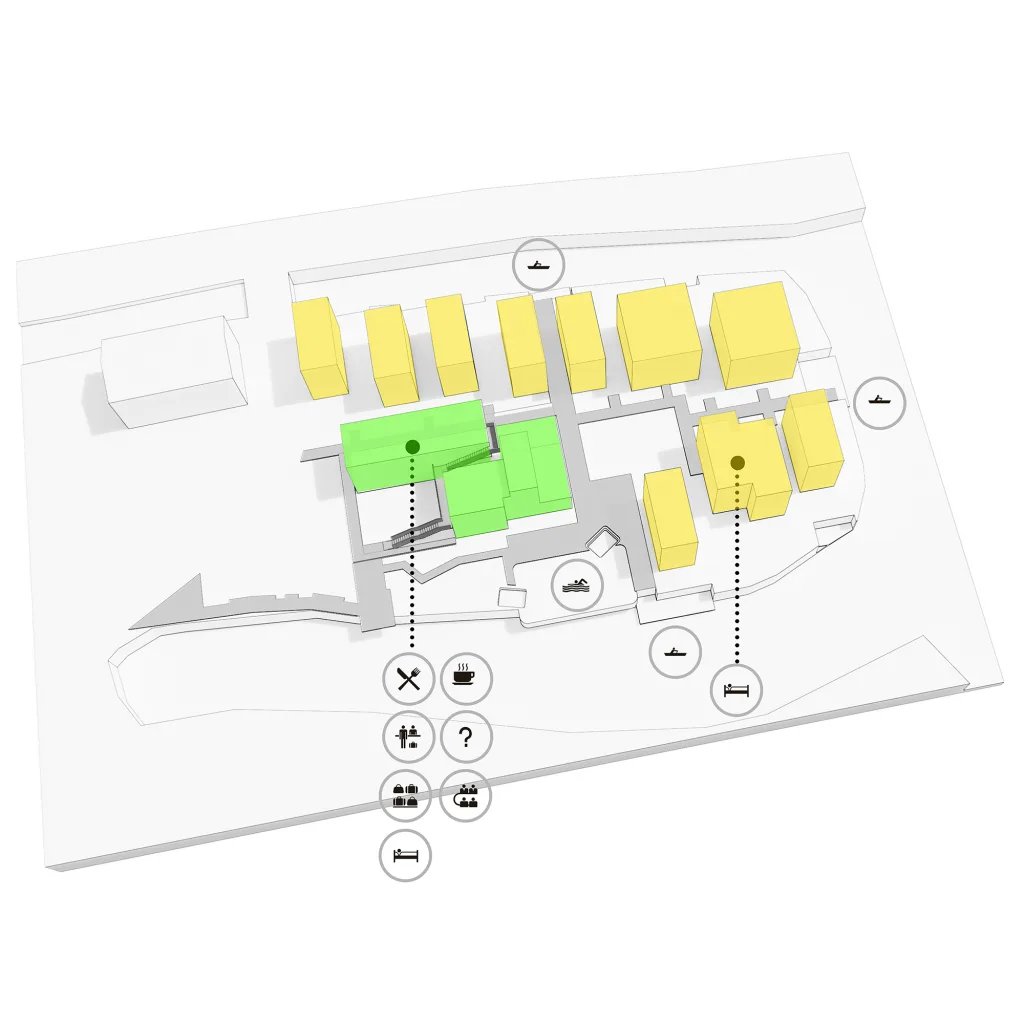
△ Functional distribution analysis © y.ad studio
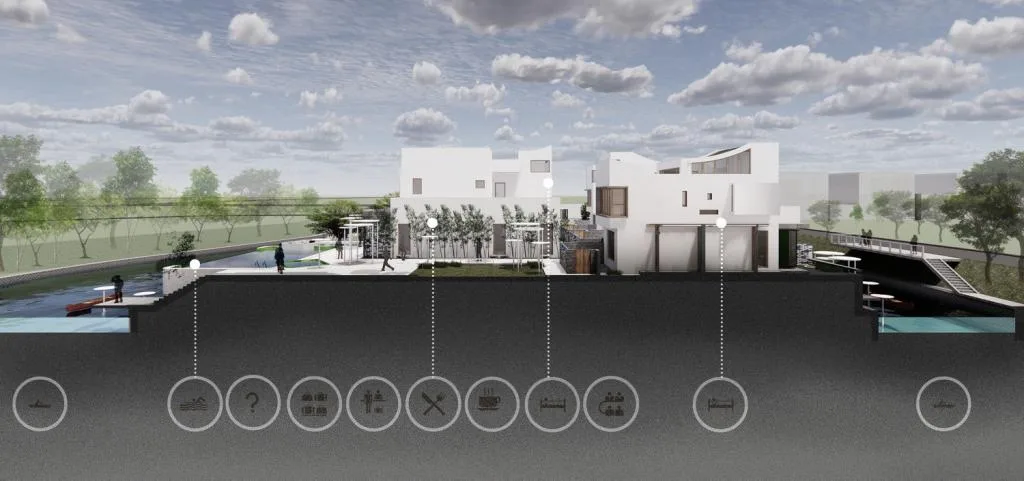
△ Profile analysis © y.ad studio
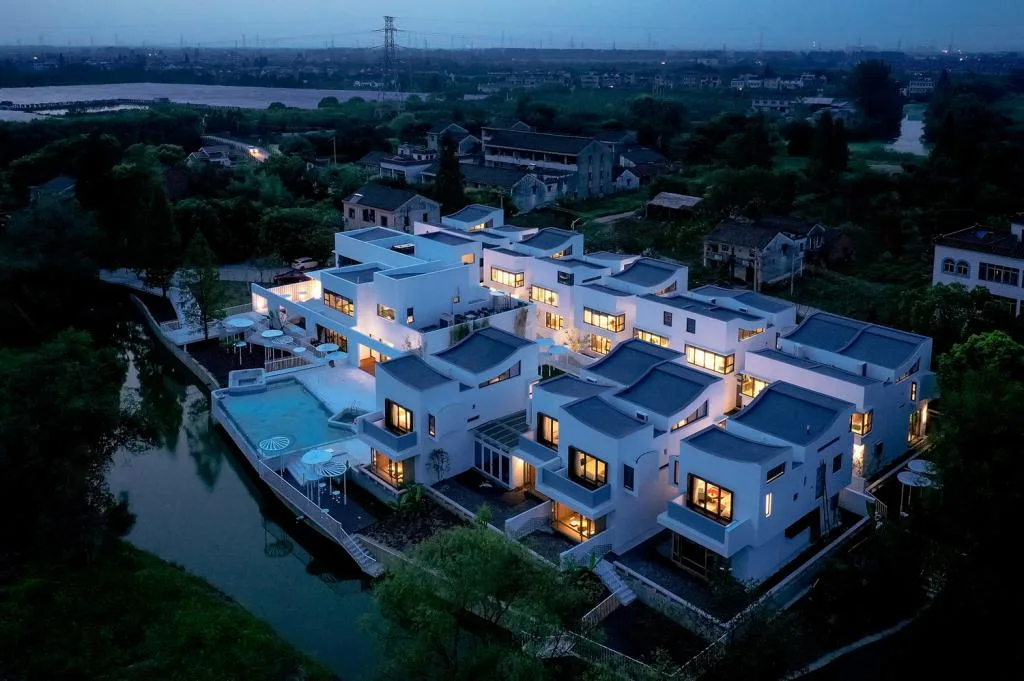
△ Night aerial view © Yan Yang
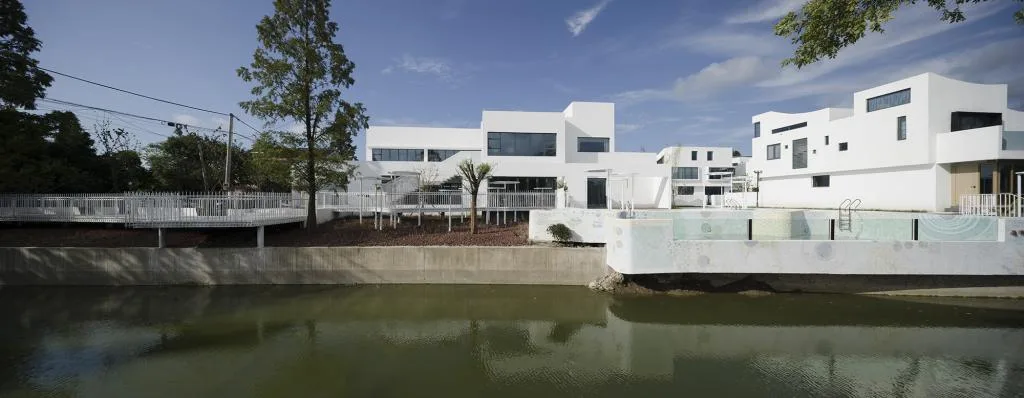
△ South facade of Jianquan District © Peter Dixie / Lotan Architectural Photography
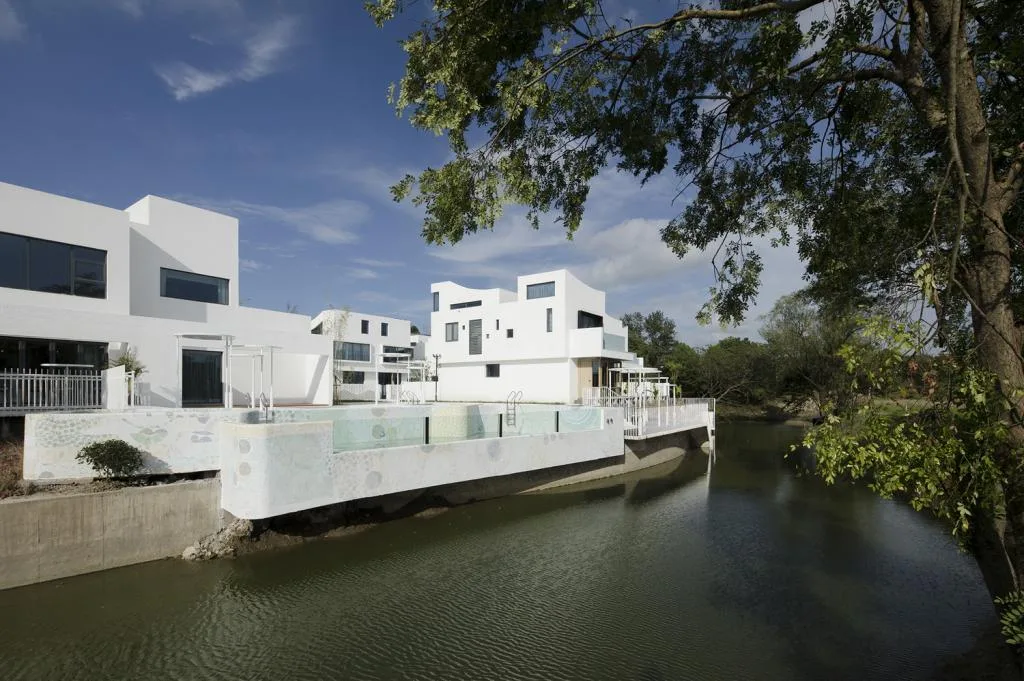
△ South facade of entire area © Peter Dixie / Lotan Architectural Photography
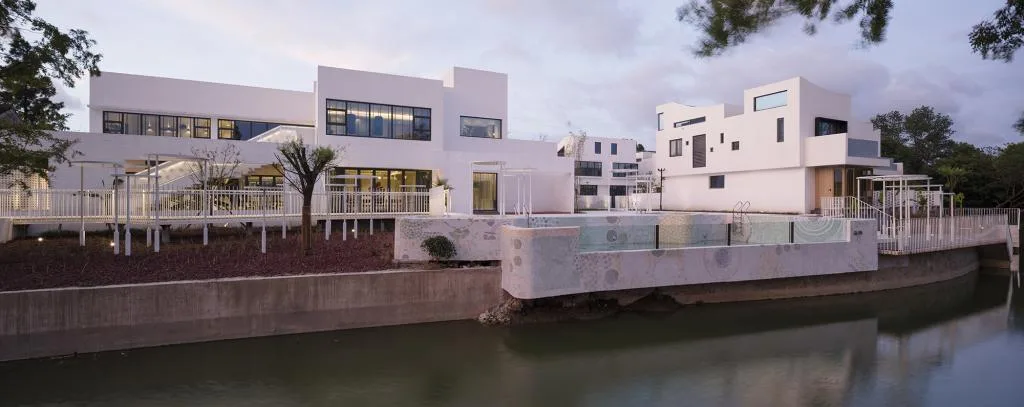
△ Evening view of south facade © Peter Dixie / Lotan Architectural Photography
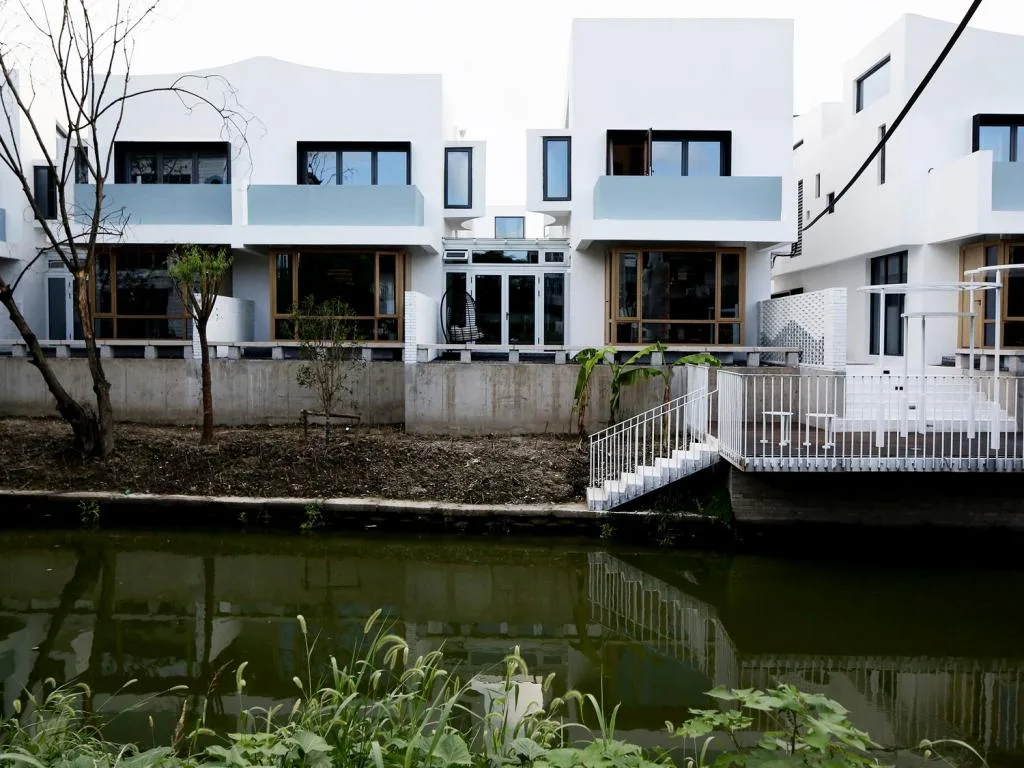
△ Public hydrophilic platform © Yan Yang
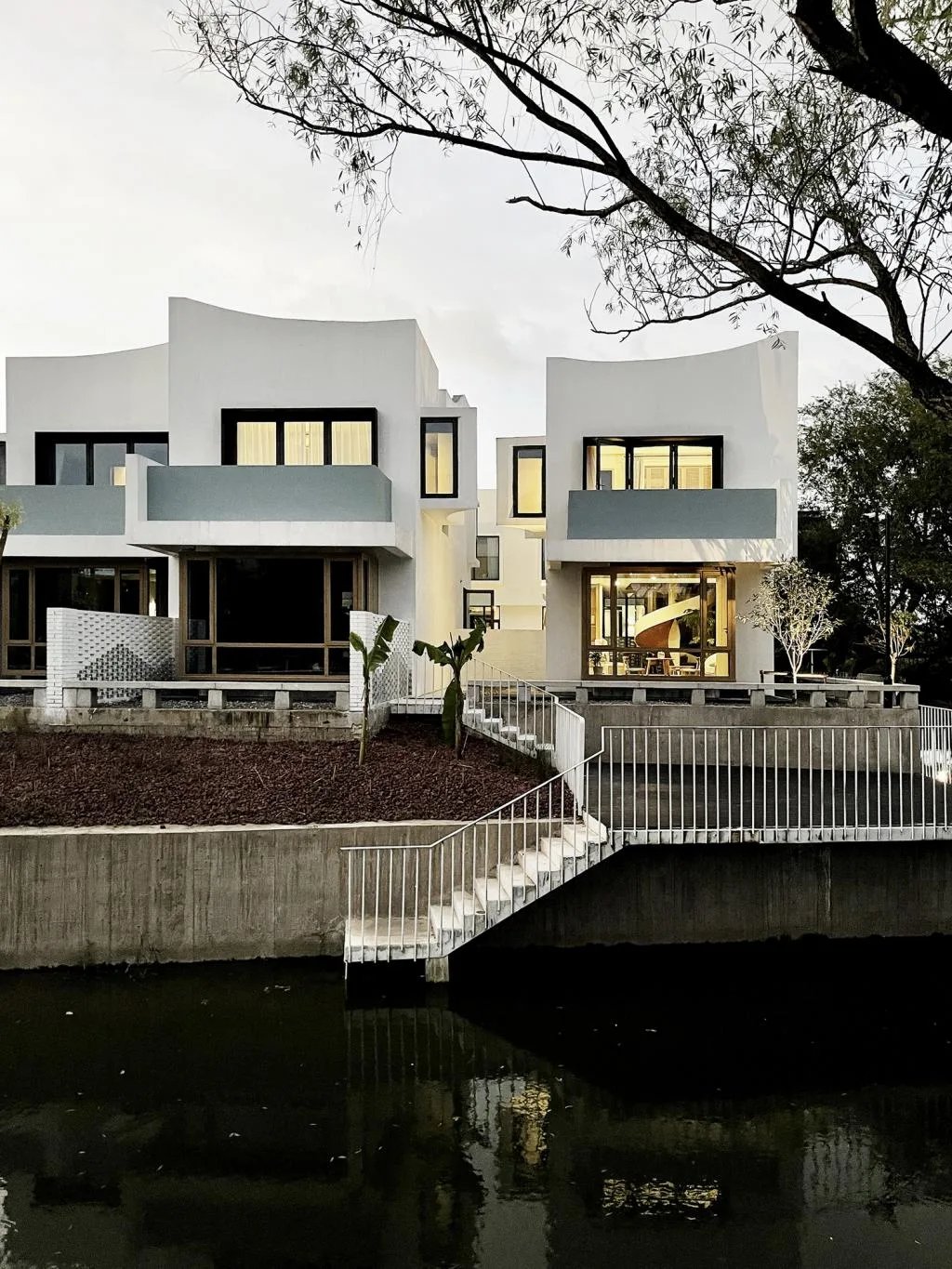
Exclusive hydrophilic platform © Yan Yang
2. Drawing Inspiration from Comics
Due to site limitations, integrating landscape thoughtfully was a key concern. Initially, a garden intervention was planned, but the limited space risked feeling cramped and overdone. Artificial landscaping could also increase maintenance costs and create unwanted spaces. Instead, the design opts for simplicity—leaving open spaces, reducing investment, returning to a natural and everyday atmosphere, and incorporating art.
Using minimal design techniques, natural materials, and wild planting on a large scale, the design includes roads within the landscaped area, creating a cohesive internal and external spatial experience. Artistic themes inspired by Mr. Feng Zikai’s paintings were infused throughout the site, evolving into landscape elements, art installations, and interior spaces.
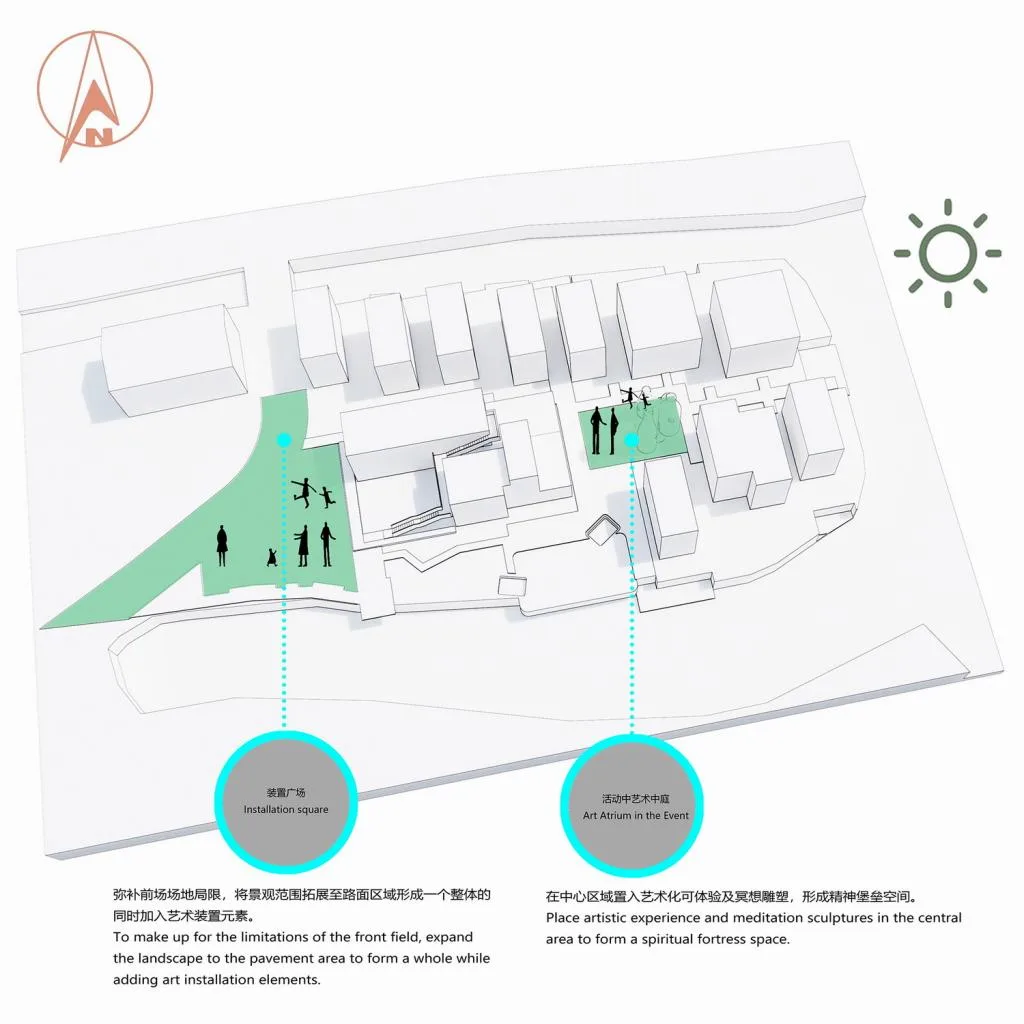
△ Square distribution map © y.ad studio
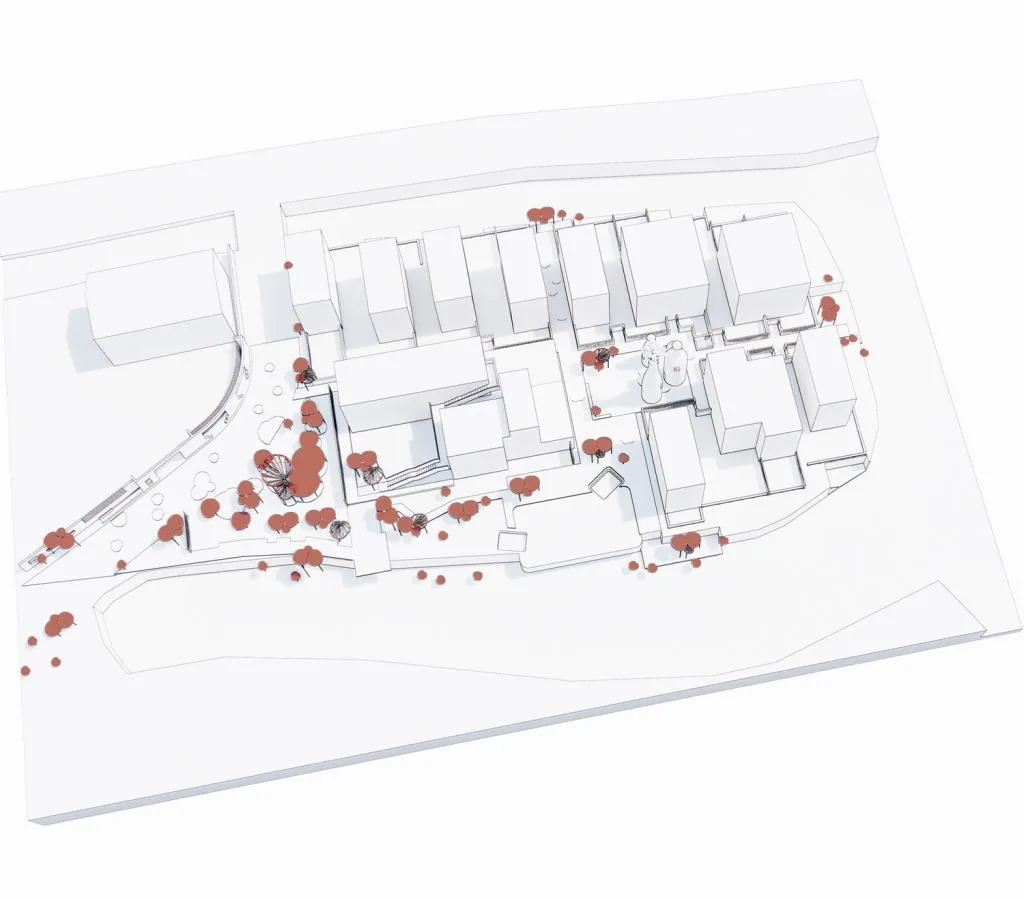
△ Art installation distribution map © y.ad studio
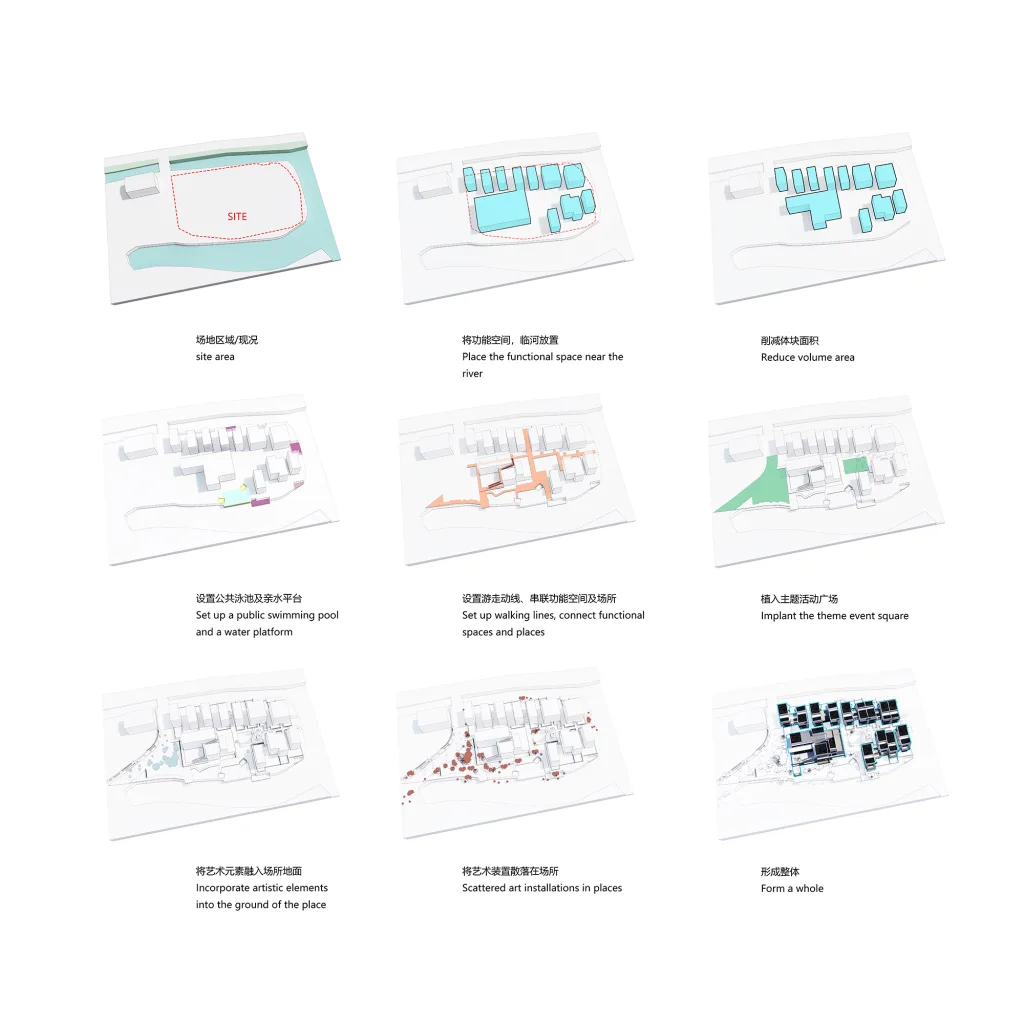
△ Overall spatial generation analysis © y.ad studio
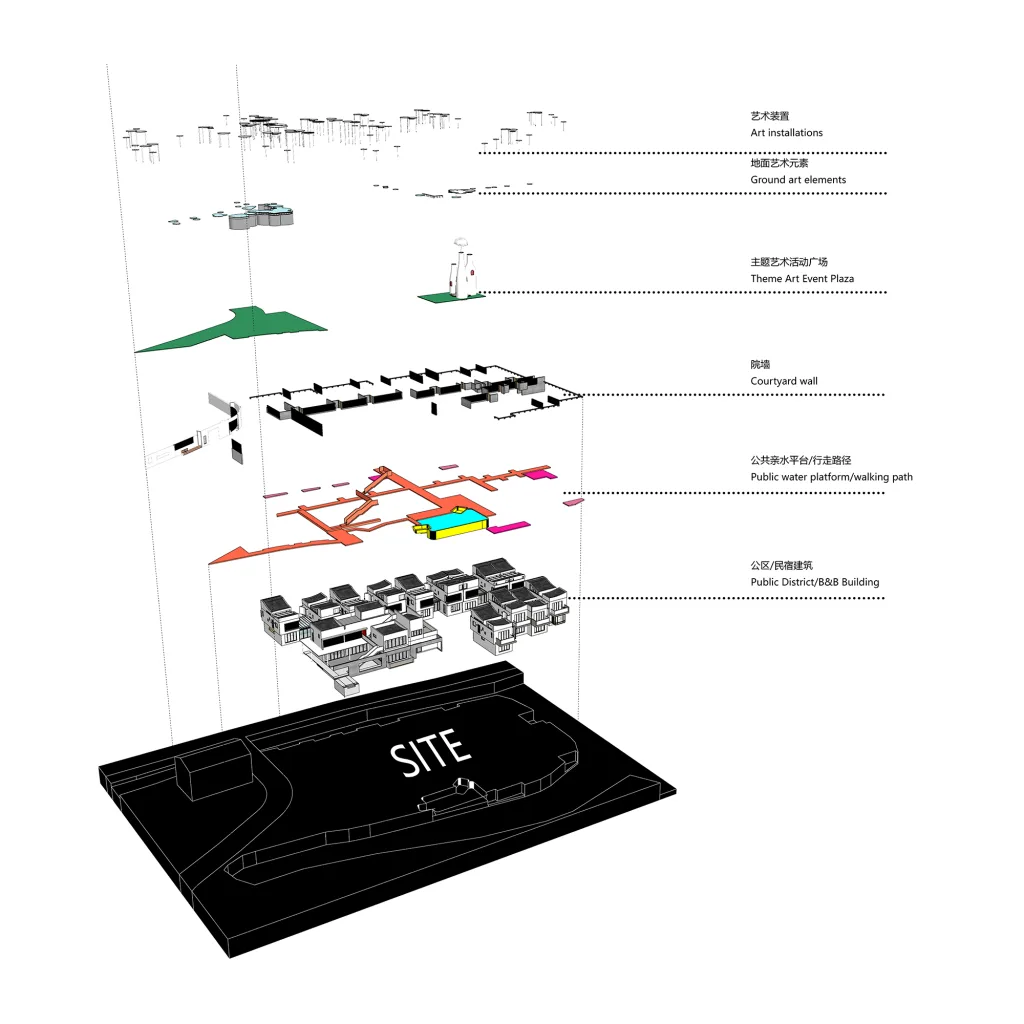
△ Analysis chart © y.ad studio
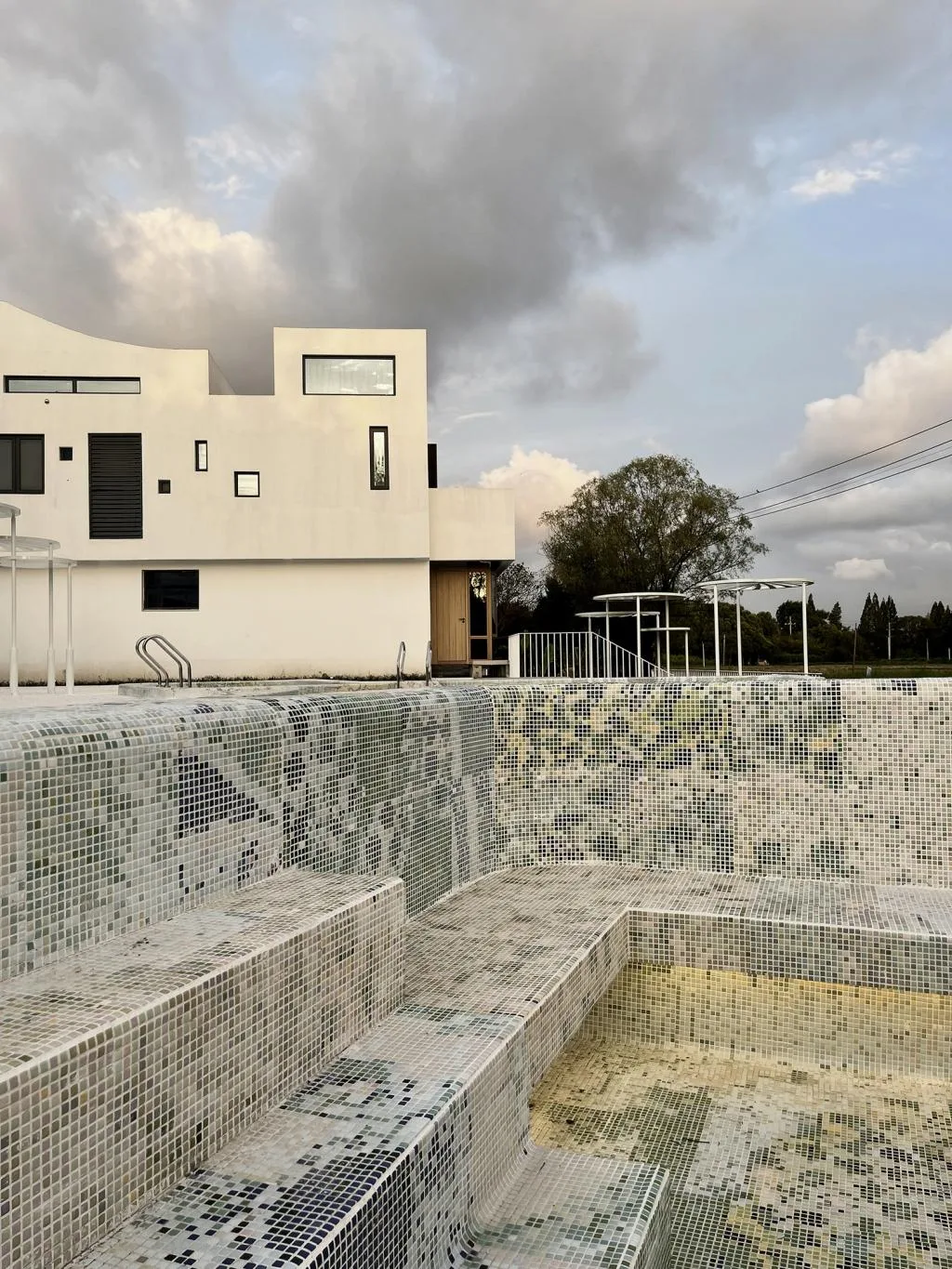
△ Art pool © Yan Yang
Project Drawings
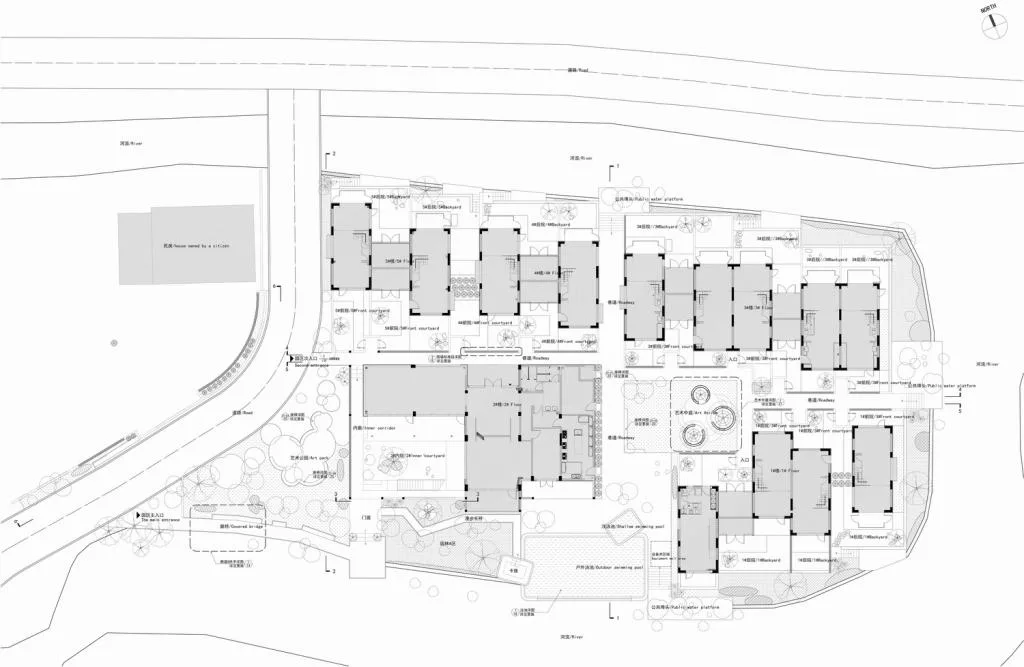
△ Overall plan © y.ad studio
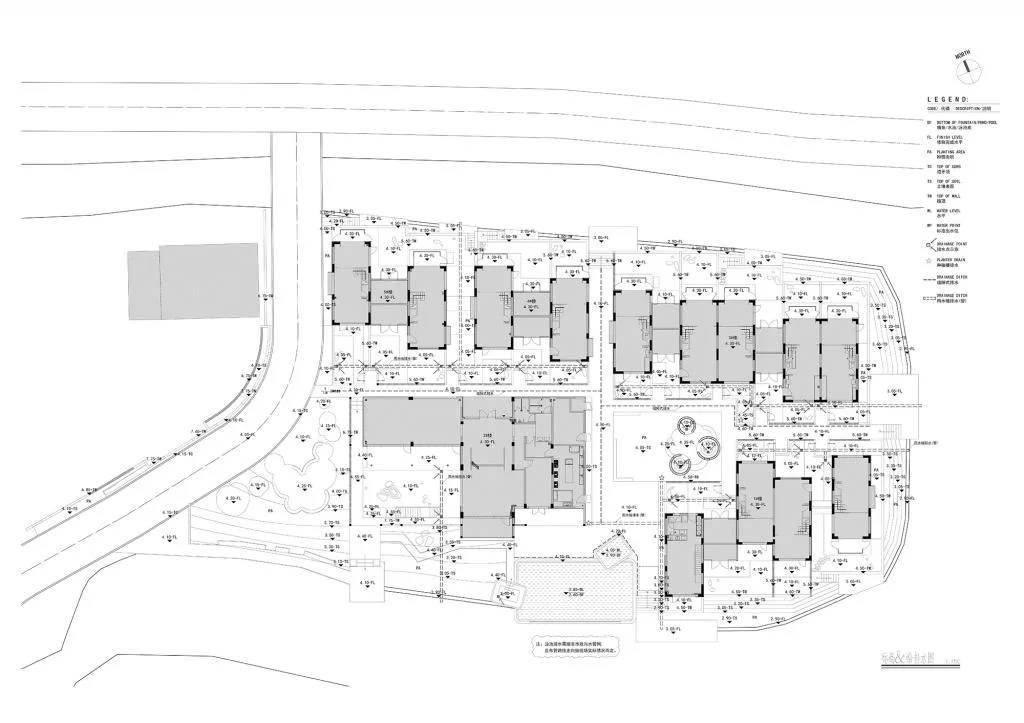
Vertical plan view © y.ad studio
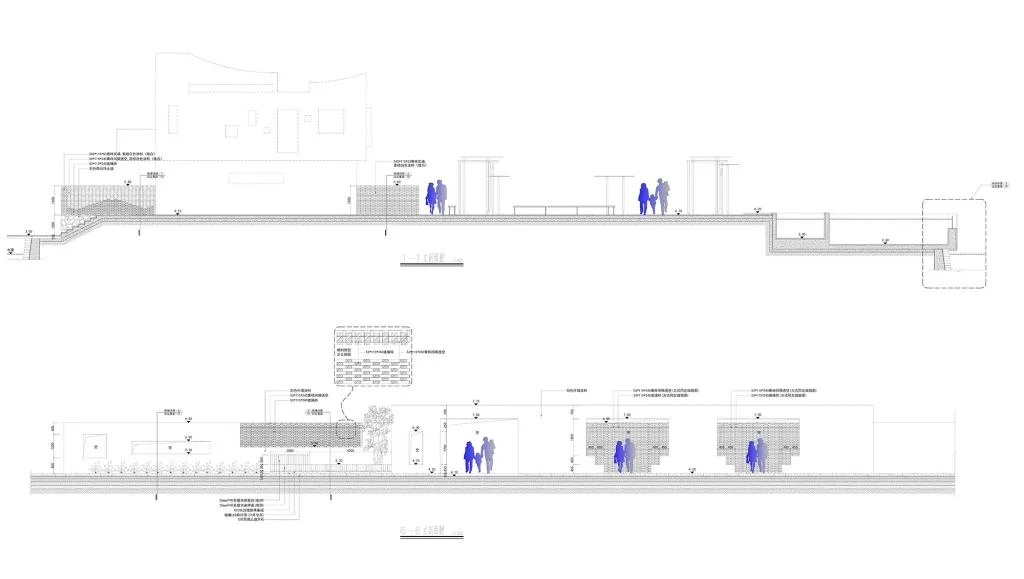
△ Sectional elevation of the entire area © y.ad studio
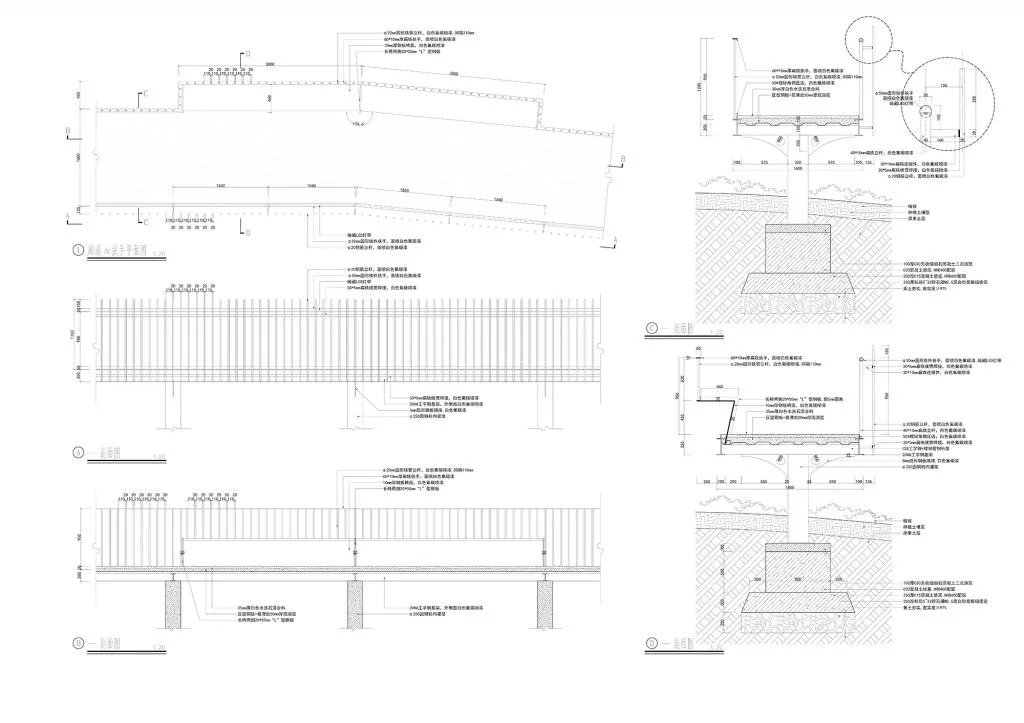
△ Node details © y.ad studio
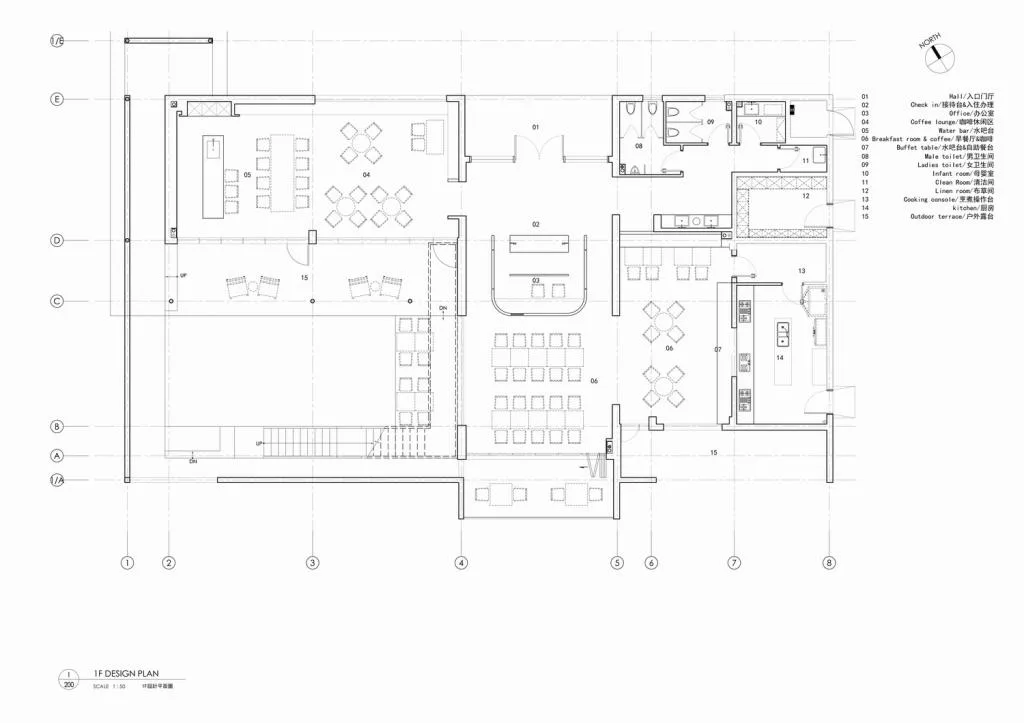
△ First floor plan of the public area © y.ad studio
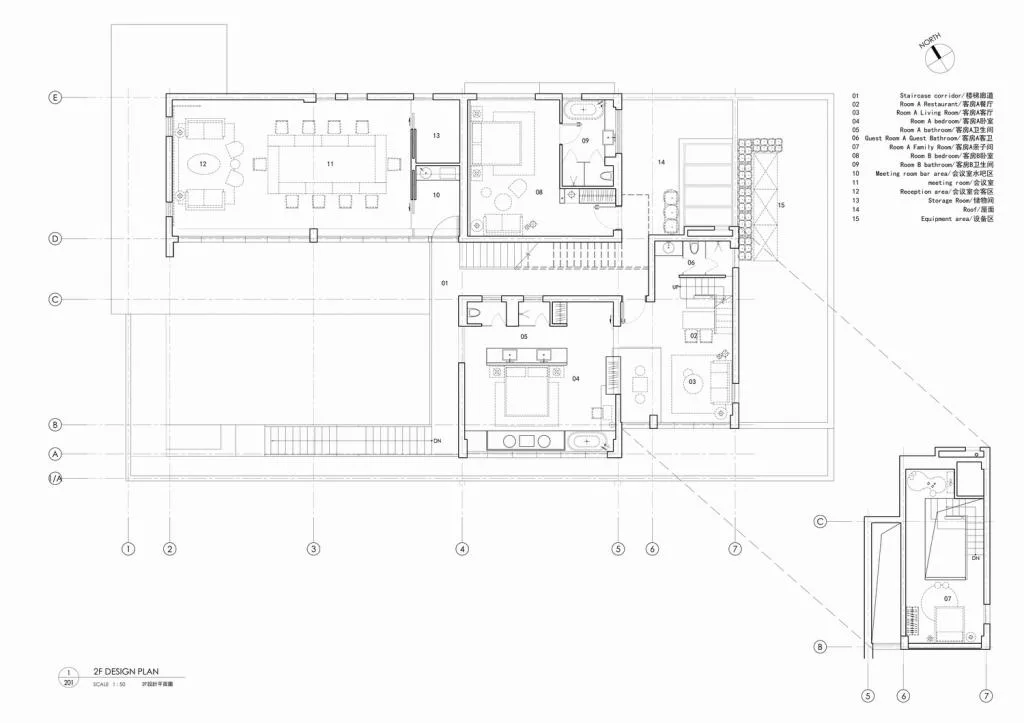
△ Second floor plan of the public area © y.ad studio
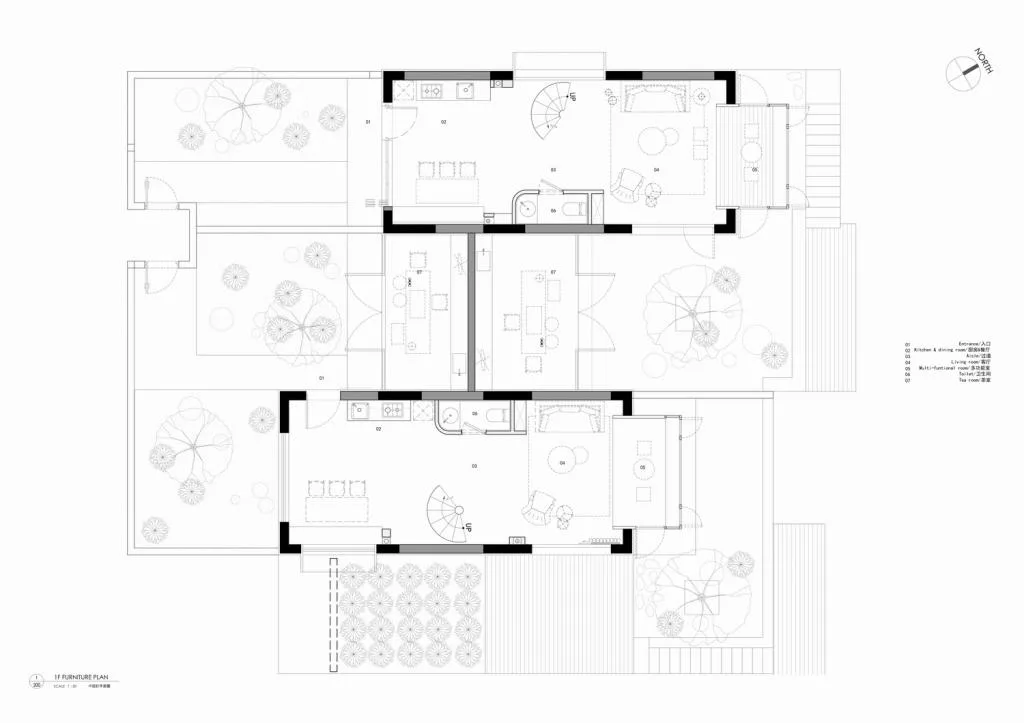
△ First floor plan of the homestay © y.ad studio
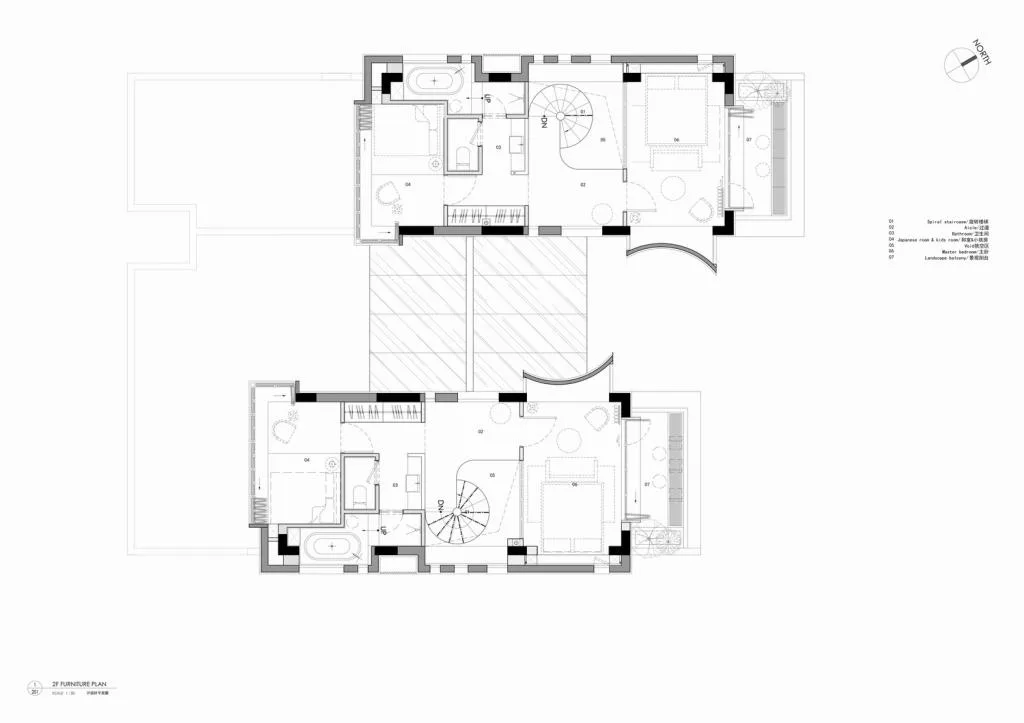
△ Second floor plan of the homestay © y.ad studio
Project Information
Project Name: Tongxiang Mantian Painting Township · Ideal Village Yuanshe · Hezhou
Construction Unit: Dongbantou Stock Economic Cooperative, Heshan Town, Tongxiang City
Design Commission: Xiangban Cultural Tourism
Architecture, Landscape, Interior Design: y.ad studio | Shanghai Yan Yang Architectural Design Studio (www.sh-yad.com)
Structural Design: Huo Zhenzhong
Architectural Design Institute: Shanghai Times Architectural Design Institute
Construction Unit: Shanghai Jingyu Landscape Construction Development Co., Ltd.
Project Team: Yan Yang, Wu Kejia, Yan Yu, Hu Hongmei
Building Area: 1,901.68 square meters
Main Materials: Washed stone, exterior wall coating, bamboo steel, cement texture paint, mosaic, water-polished stone bricks, wood veneer
Design Period: December 2019 to October 2020
Construction Period: October 2020 to August 2021
Photography Credits: Peter Dixie (UK) / Lotan Architectural Photography, Yan Yang
Video Production: Shanghai Yan Yang Architectural Design Studio
y.ad studio
Established in 2017, Shanghai Yan Yang Architectural Design Studio focuses on urban renewal, commercial transformation, cultural and tourism real estate, comprehensive parks, hospitality, rural construction, and related design research. The studio continuously engages in self-learning, reflection, and innovation through design practice, spanning interiors, architecture, landscapes, planning, and product design. By breaking boundaries and exploring new challenges, they aim to strengthen the relationship between design, ideas, and space, achieving better integration and sustainability among construction, environment, and people.















Must log in before commenting!
Sign Up