
△ © Existence of buildings
Research Rooted in Children’s Needs
For too long, architecture and spaces designed for children have been based solely on adult perspectives. We tend to design with adults’ assumptions in mind, rarely questioning the true needs of children.
We overlooked asking children directly: “What do you really need?”
△ © Existence of buildings
Between late 2016 and 2018, Groundwork was commissioned by the Hong Kong Architectural Services Department to study the future of public children’s play spaces in Hong Kong and develop design policies and guidelines accordingly.
Over 18 months, the team conducted extensive field research, data recording and analysis, and reviewed relevant local and international standards. We adopted a “participatory design” and “strategic questioning” approach—gathering feedback, suggestions, and needs from a diverse group of stakeholders through interviews, Q&A sessions, and organized activities.
Stakeholders included government officials, community workers, park managers, child psychologists, teachers, parents, and most importantly, children themselves.
Through this study, we interacted with over 500 children, gaining authentic insights into their thoughts and spatial needs:
- Children easily make friends, enjoy socializing, and are naturally cooperative.
- They prefer natural materials and environments over brightly colored buildings and spaces.
- Children love adventure and challenges but instinctively protect themselves from real danger.
- Spaces that stimulate imagination encourage enthusiasm and creativity.
- Sometimes, children also need space and time to be alone and play independently.
- They have an innate affection for nature—light and shadow, wind and rain, sand, and the outdoors.
△ © Zeng Tianpei
Design Philosophy
Kindergarten marks a child’s first experience joining a social community and becoming part of society. Here, children begin learning how to interact with others, embrace discipline and etiquette, develop a sense of community, and start to truly understand themselves.
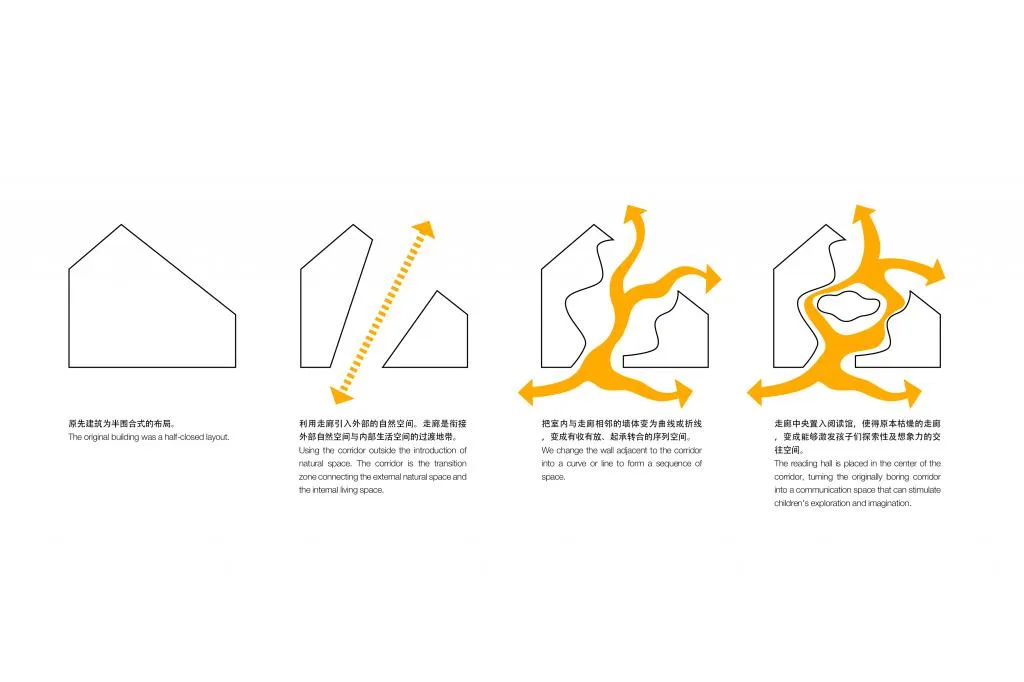
△ Analysis chart
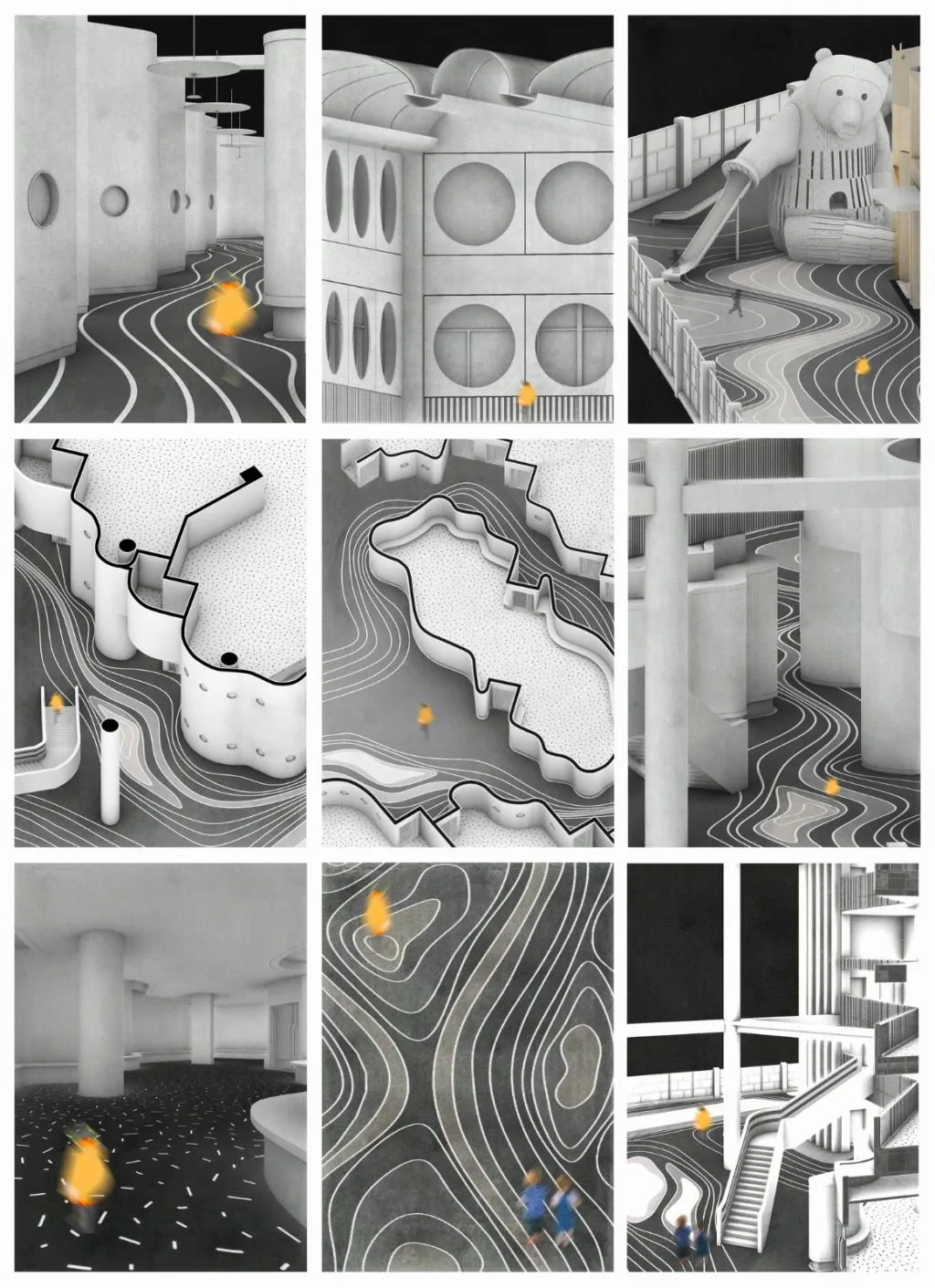
△ Analysis chart
A Natural, Warm, Yet Dignified Atmosphere
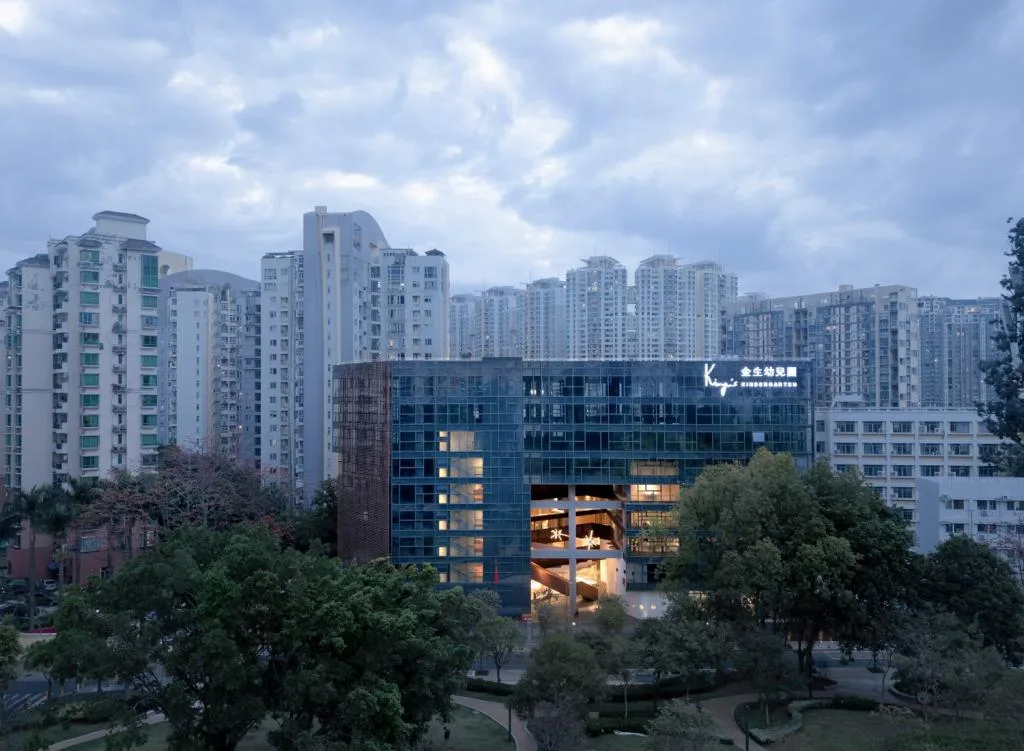
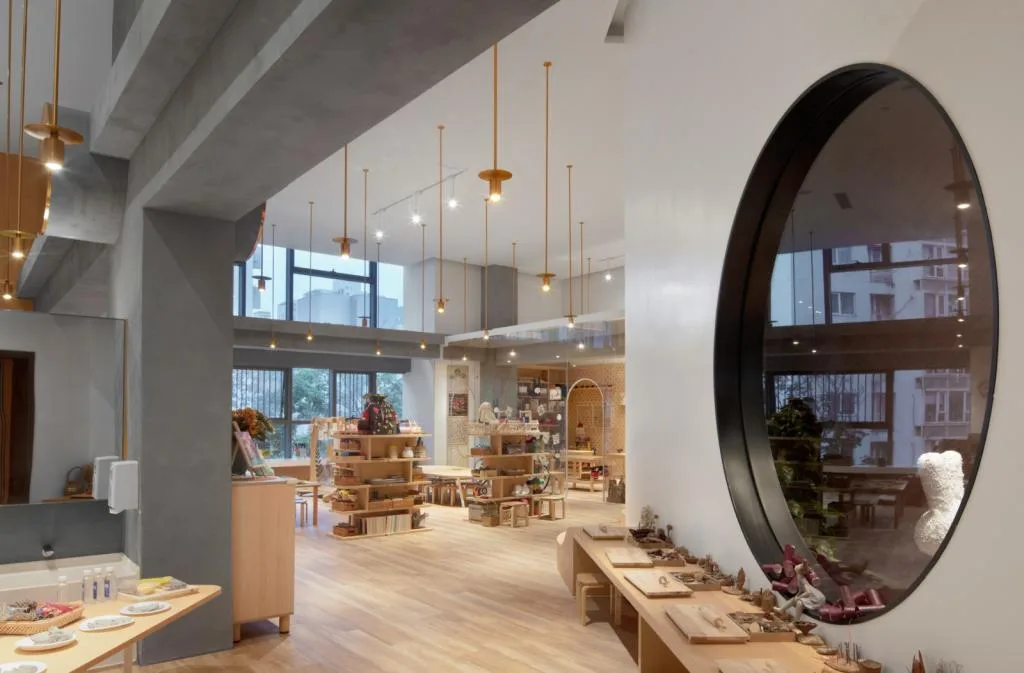
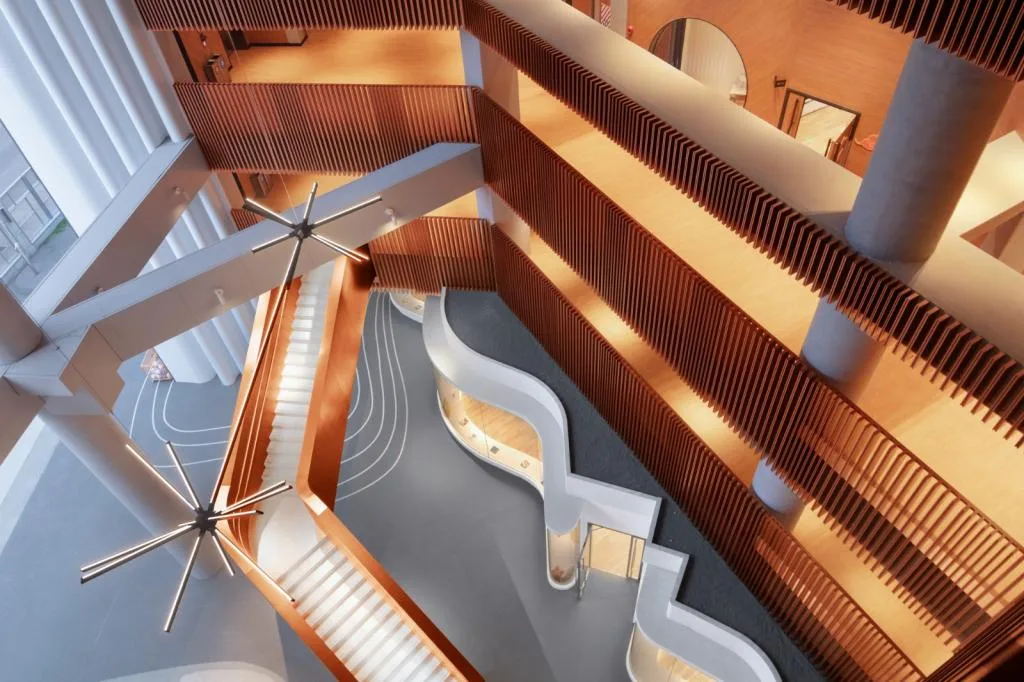
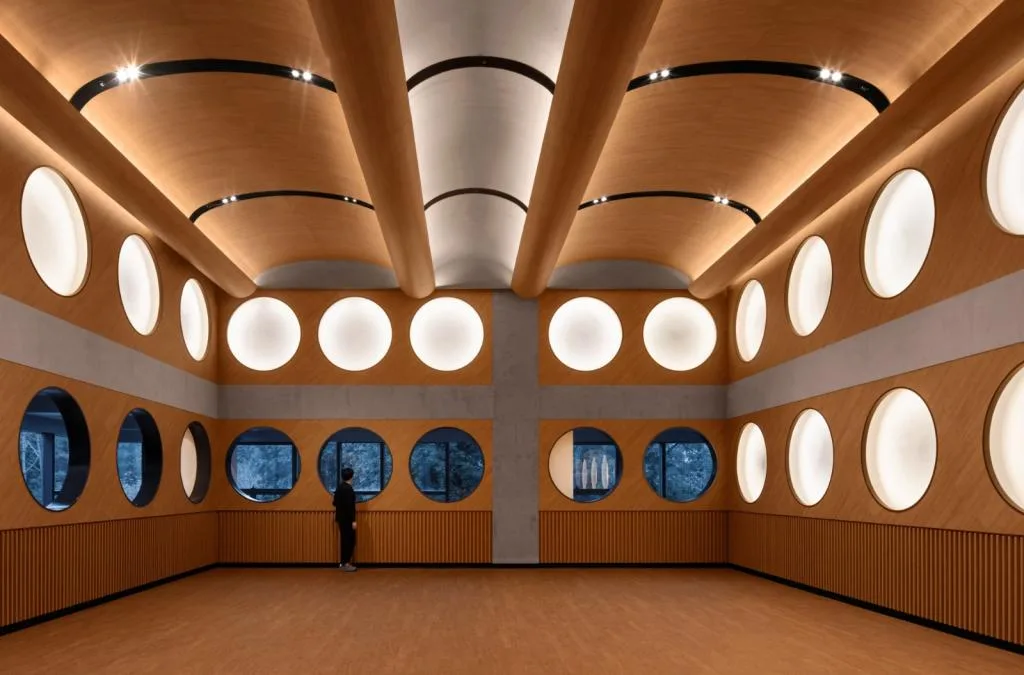
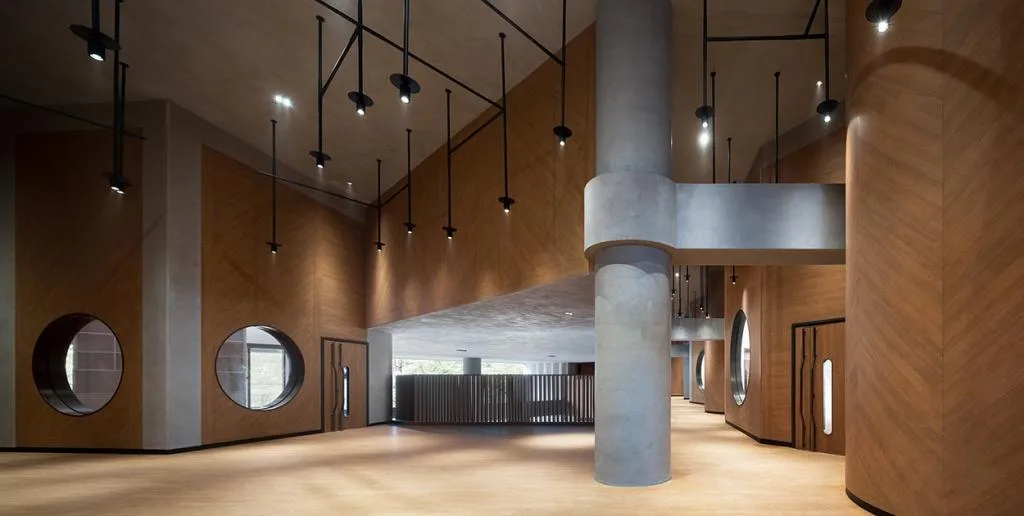
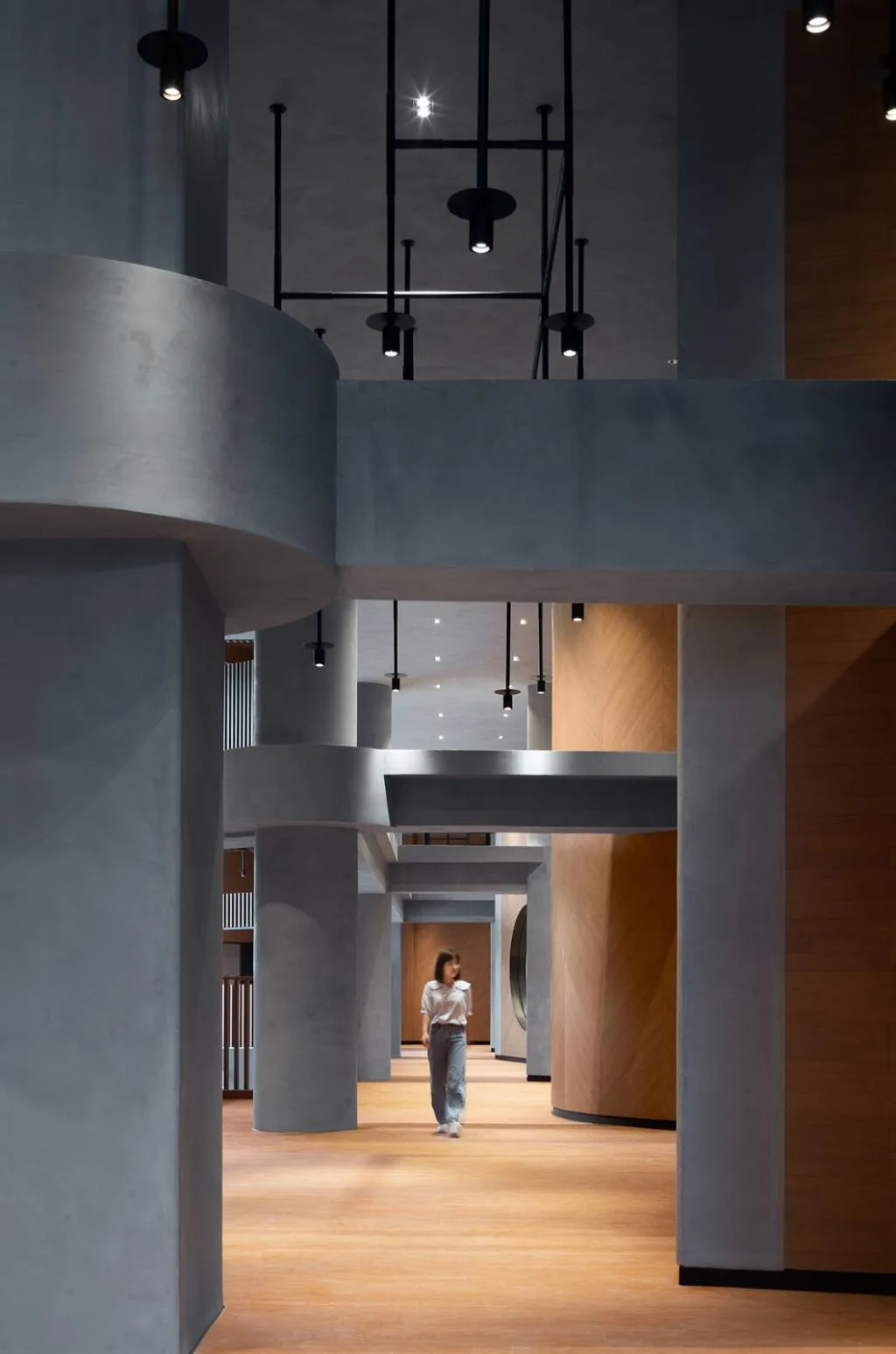
Children have a natural affinity for nature. The building’s semi-enclosed layout faces a welcoming park landscape and receives ample sunlight. Wood is the primary material used for walls and floors, extending the natural ambiance throughout the space.
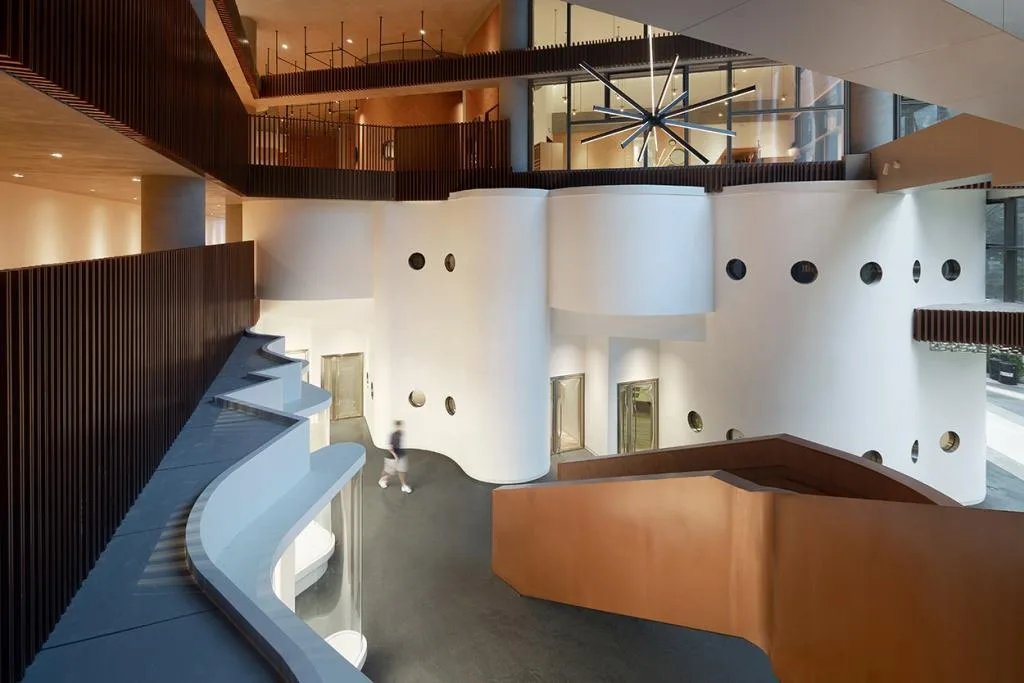
Instead of layering many materials and colors, the design relies on the natural tones of concrete and wood as a foundation, creating a calm, orderly environment enriched with light and shadow. This warm yet solemn atmosphere helps soothe children’s minds and fosters respect and wonder for their surroundings.
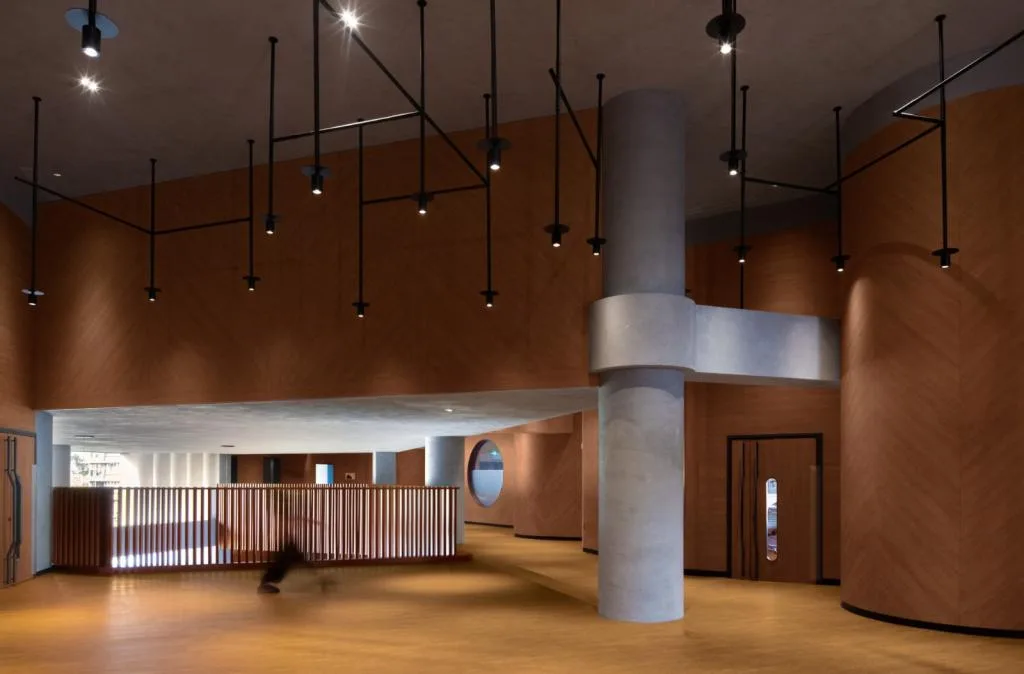
△ © Existence of buildings
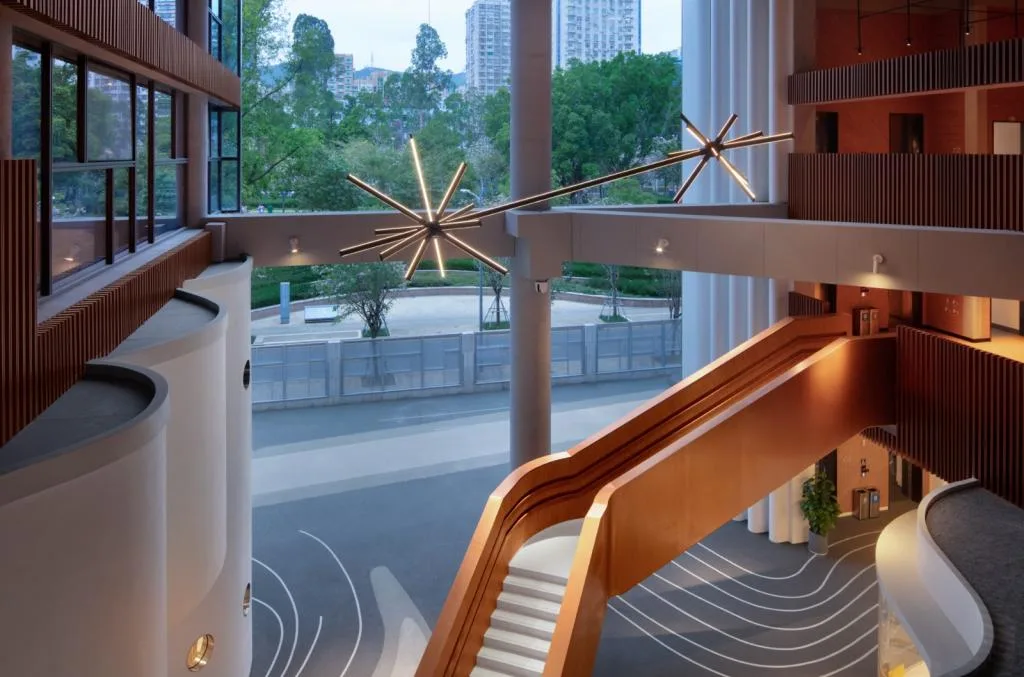
△ © Existence of buildings
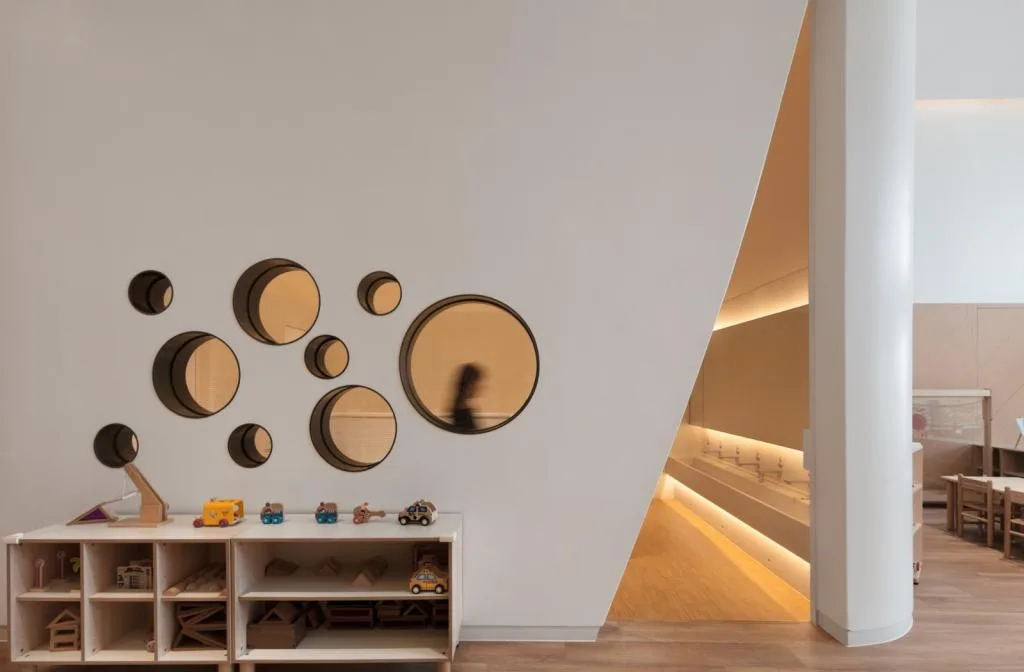
△ © Existence of buildings
Dynamic Light and Shadow
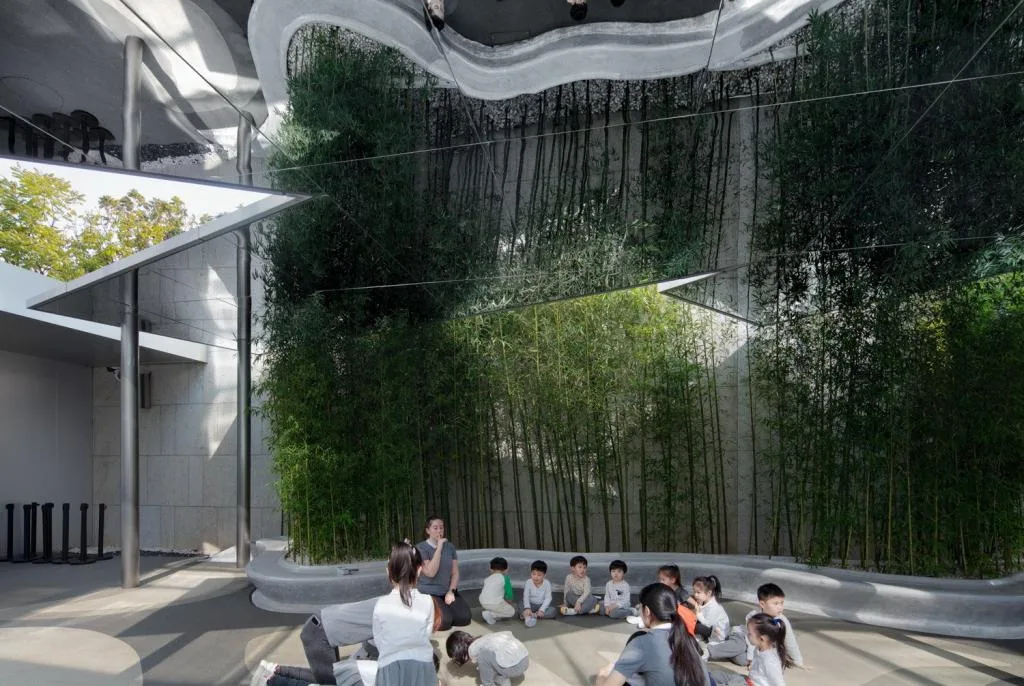
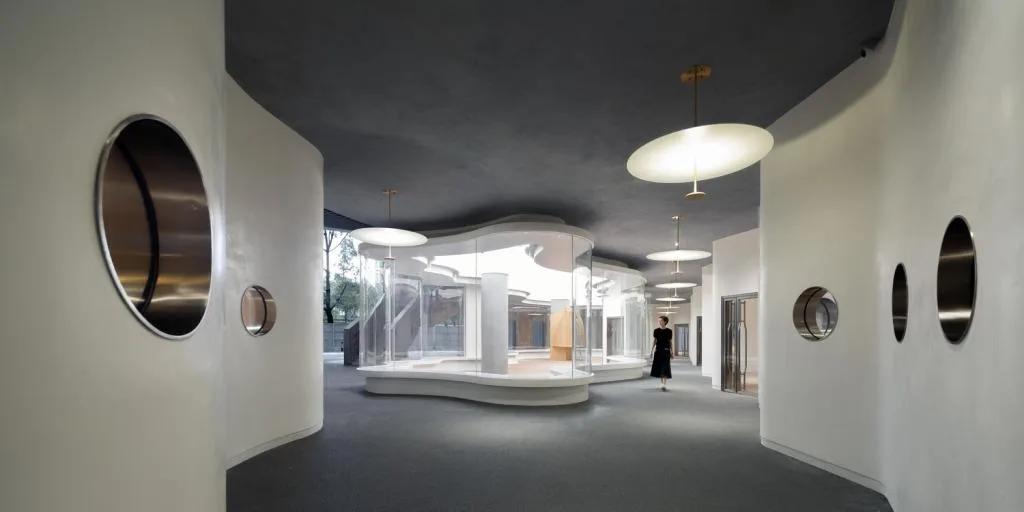
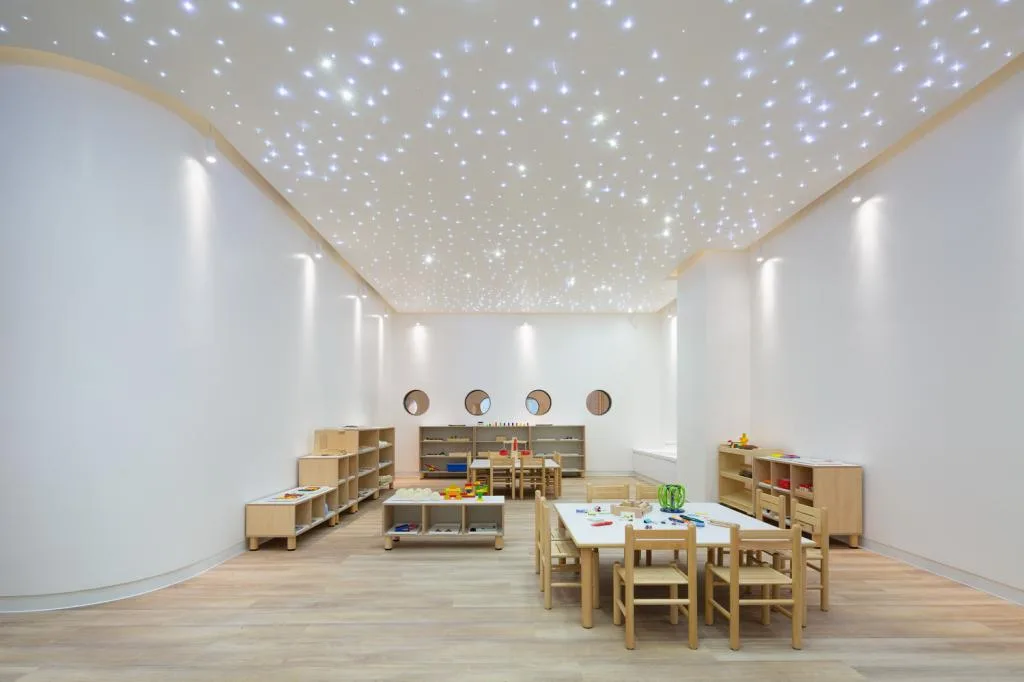
Light and shadow transform spaces over time, adding layers and richness. Children delight in playing with light. Beyond natural light, we incorporated reflective materials such as mirror steel, aluminum plates, and stainless steel in select indoor and outdoor areas. These elements create unpredictable reflections and playful effects, enriching the children’s experience and sparking their imagination.
△ © Existence of buildings
△ © Existence of buildings
△ © Existence of buildings
More Than a Kindergarten—An Amusement Park for Kids
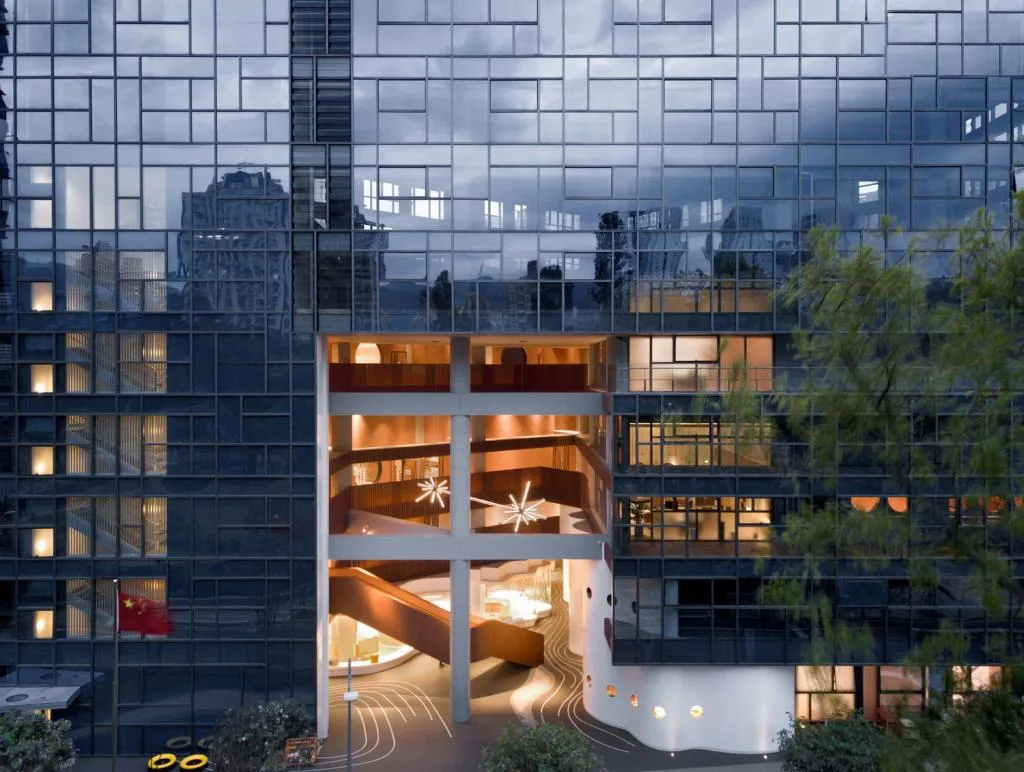
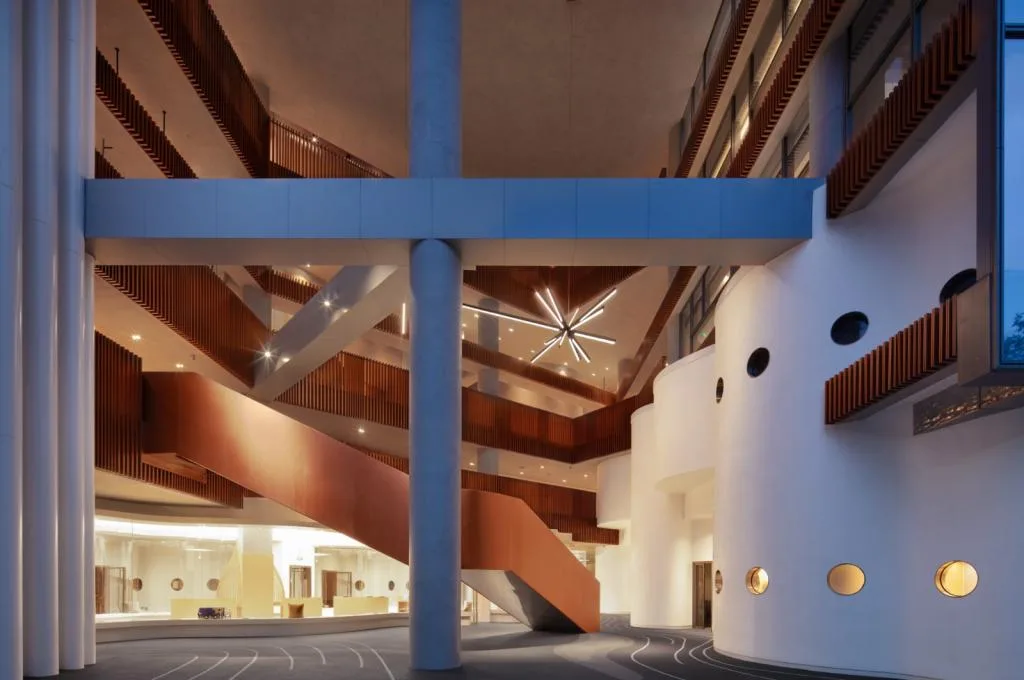
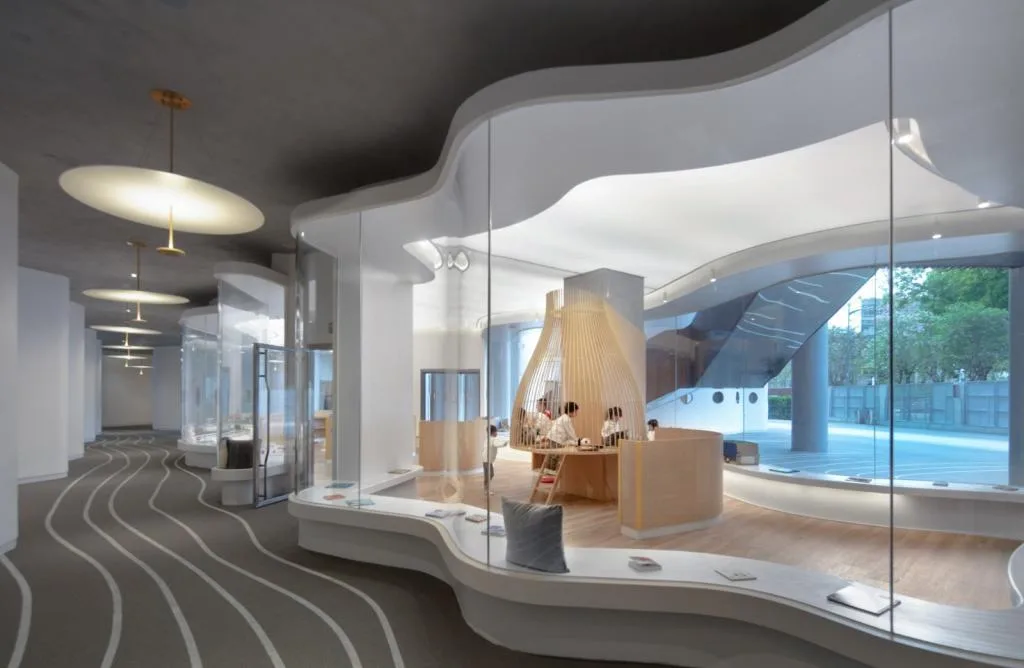
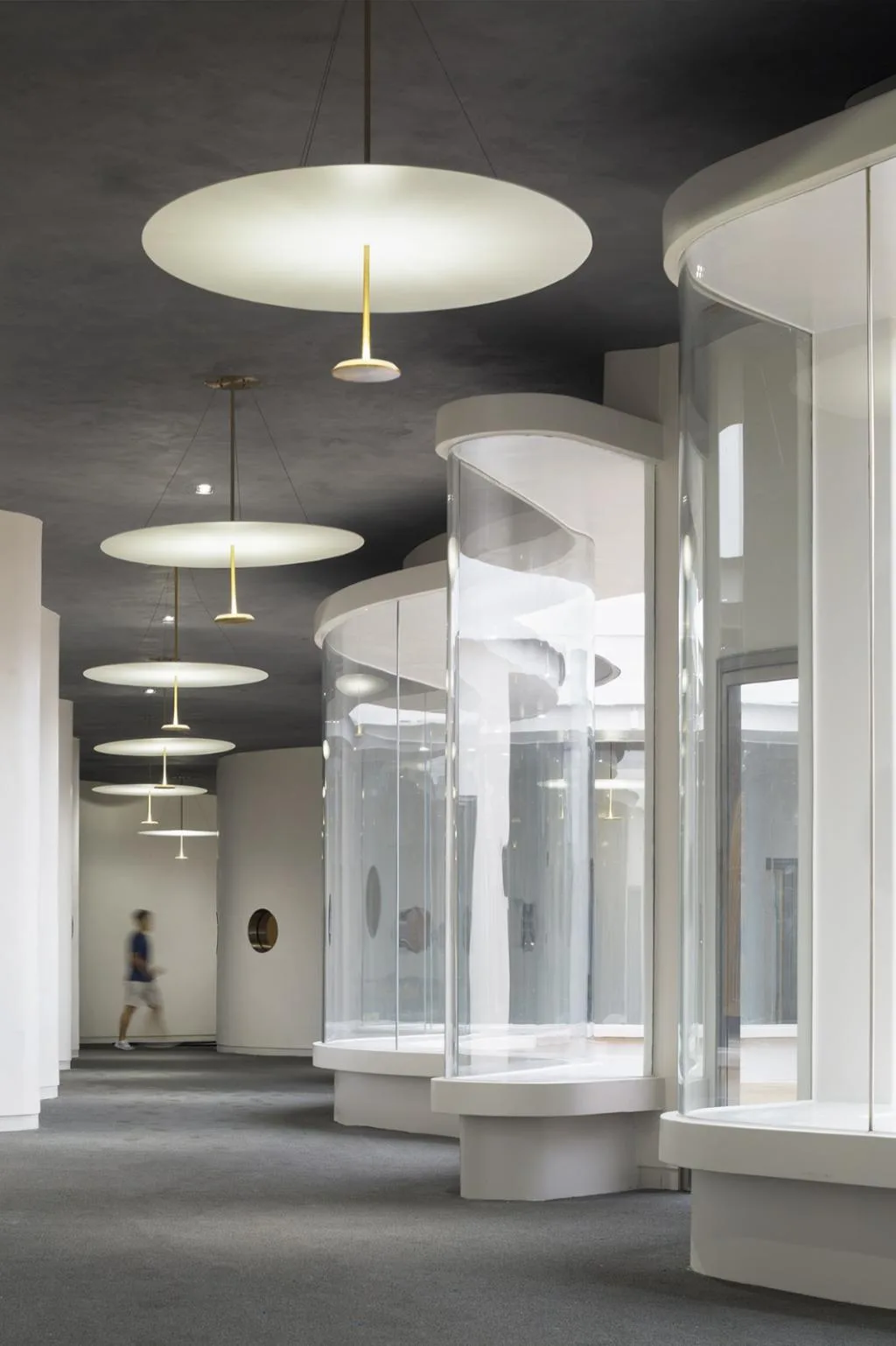
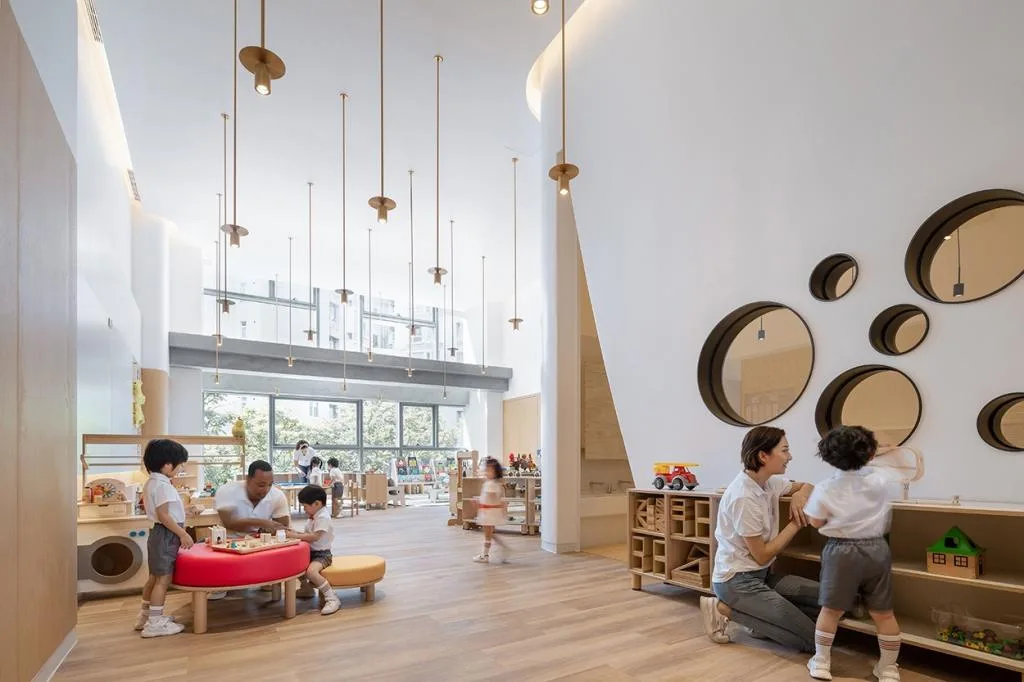
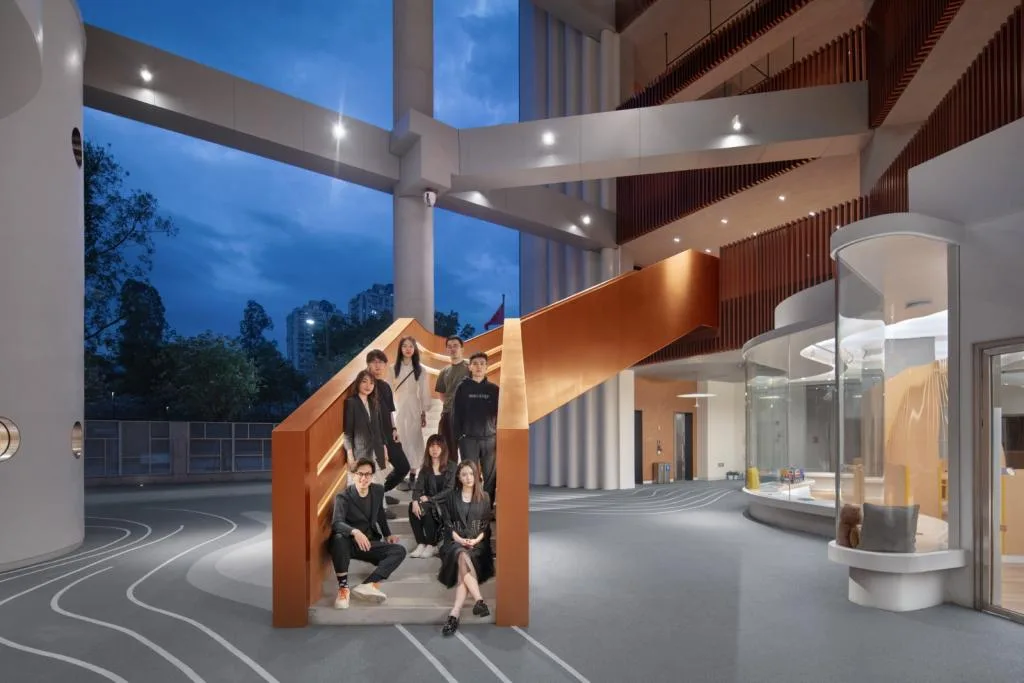
While maintaining a structured and educational environment, the kindergarten embraces children’s natural love for play. Limited by space, the design blurs indoor and outdoor boundaries on the first floor, merging the corridor with the outdoor activity area.
Children wander through this ever-changing “amusement park” featuring slides, sand pits, climbing nets, small hills for climbing and crawling, and curved walls perfect for hide-and-seek. The series of small circular windows along the curved wall evoke the feeling of being inside a giant ship’s cabin, embarking on a voyage through the undulating “waves” of the ground.
△ © Existence of buildings
△ © Existence of buildings
△ © Existence of buildings
Our Mission
Architecture shapes space, and space holds emotions, preferences, desires, and memories. As architects designing this kindergarten’s spaces and landscapes, we see our role as helping the children who will live here begin a beautiful and engaging life journey.
△ © Zeng Tianpei
△ © Zeng Tianpei
Ruan Wentao, partner of Groundwork Yuan Xinjian City, and Manfred Yuen introduced the concept of “architecture as a fish tank” during TED talks.
In today’s society, visual impact is often overemphasized, leading many designers to focus on exaggerated forms and appearances. But if architecture is a fish tank, the tank itself is tangible, and people live inside like fish. What truly matters is the water—the intangible environment inside.
This “water” represents the often overlooked senses of touch, hearing, smell, and taste; the comfort and pleasure of being in a space; real experiences and emotions; and the events and memories that unfold within it.
△ © Zeng Tianpei
△ © Zeng Tianpei
Our hope is that Jinsheng Kindergarten becomes a nurturing environment—like the water inside the fish tank—that respects children’s nature and preferences, allowing them to grow freely and naturally.
△ © Zeng Tianpei
△ © Zeng Tianpei
△ © Existence of buildings
△ © Existence of buildings
△ © Existence of buildings
Project Drawings
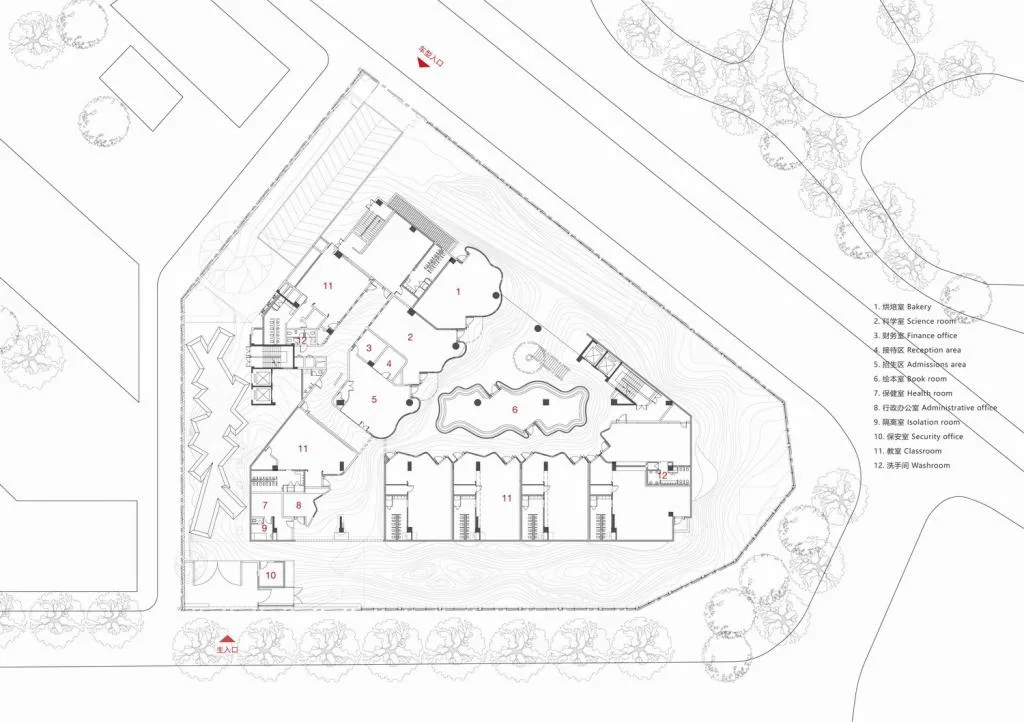
△ First floor plan
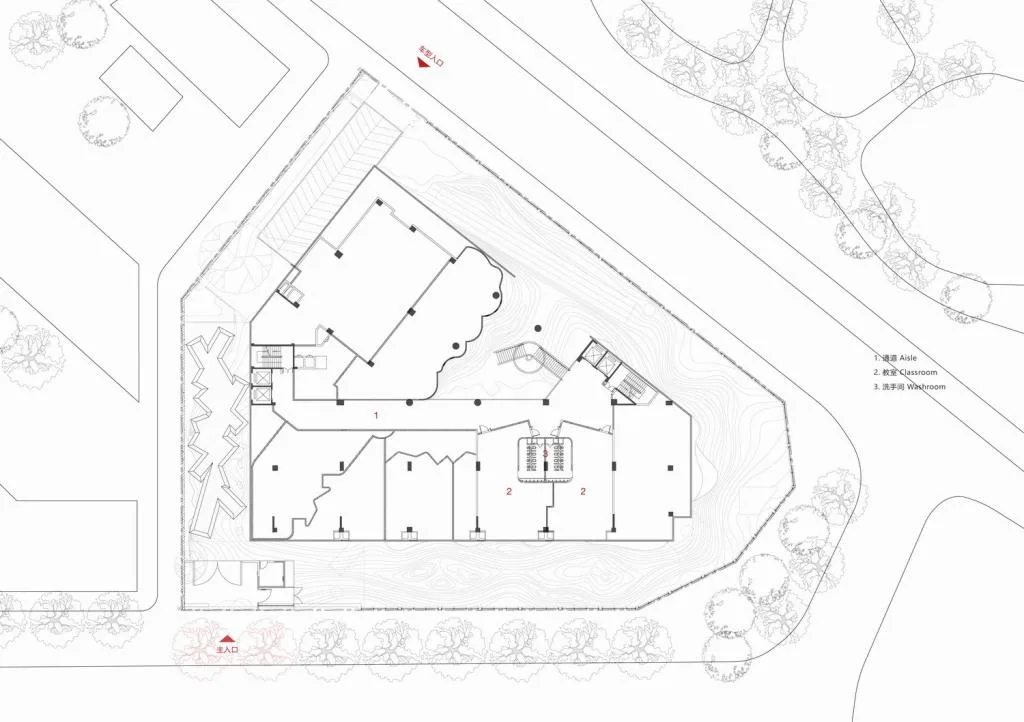
△ Second floor plan
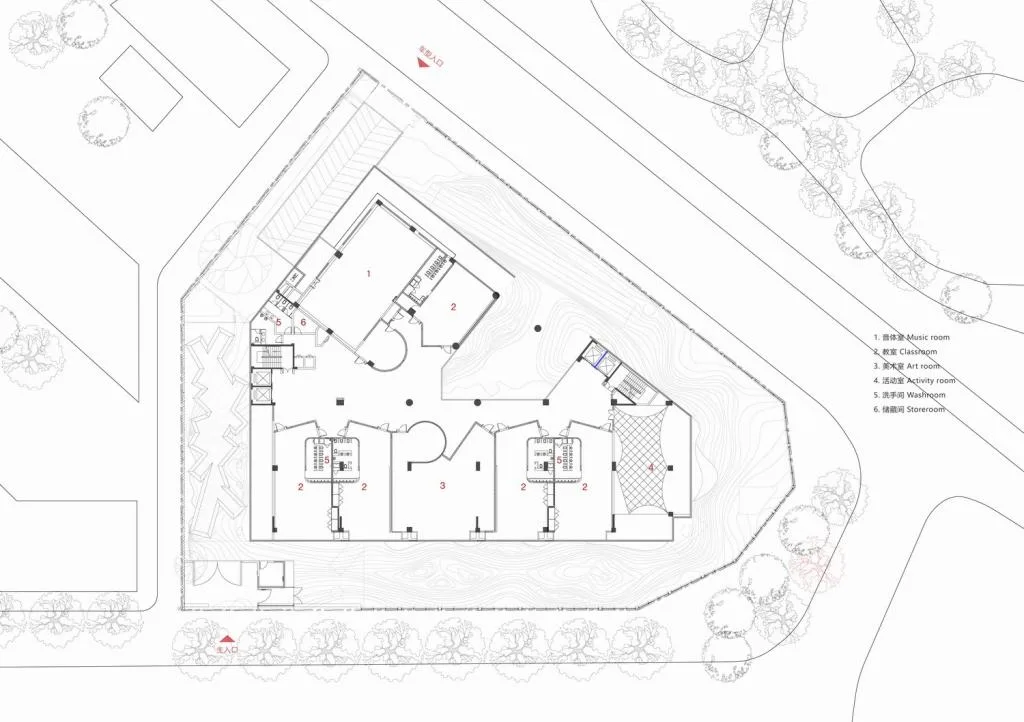
△ Third floor plan
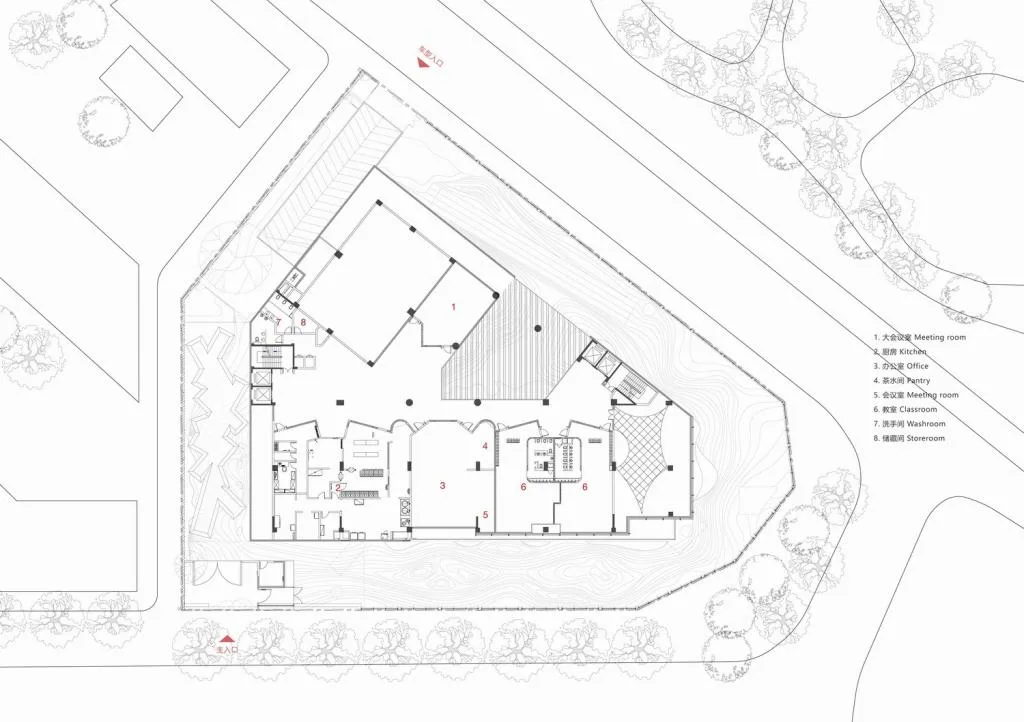
△ Fourth floor plan
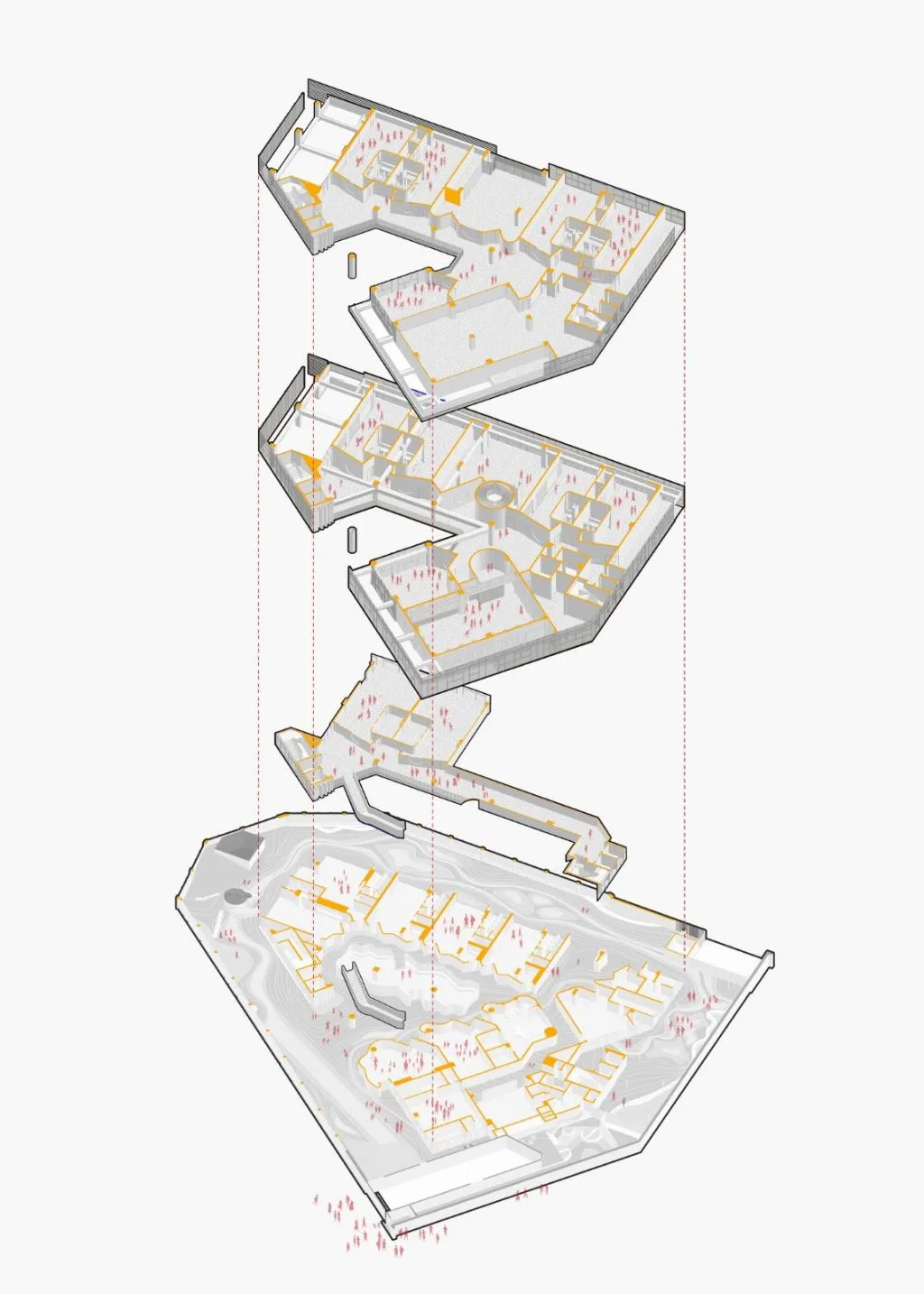
△ Exploded diagram
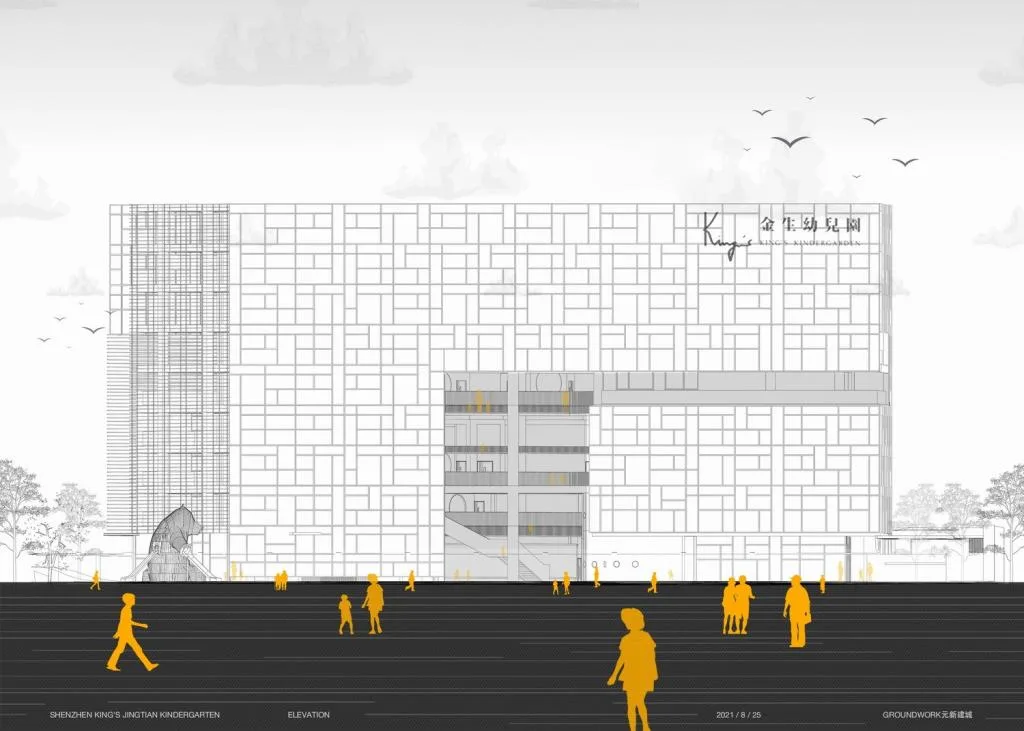
△ Elevation drawing
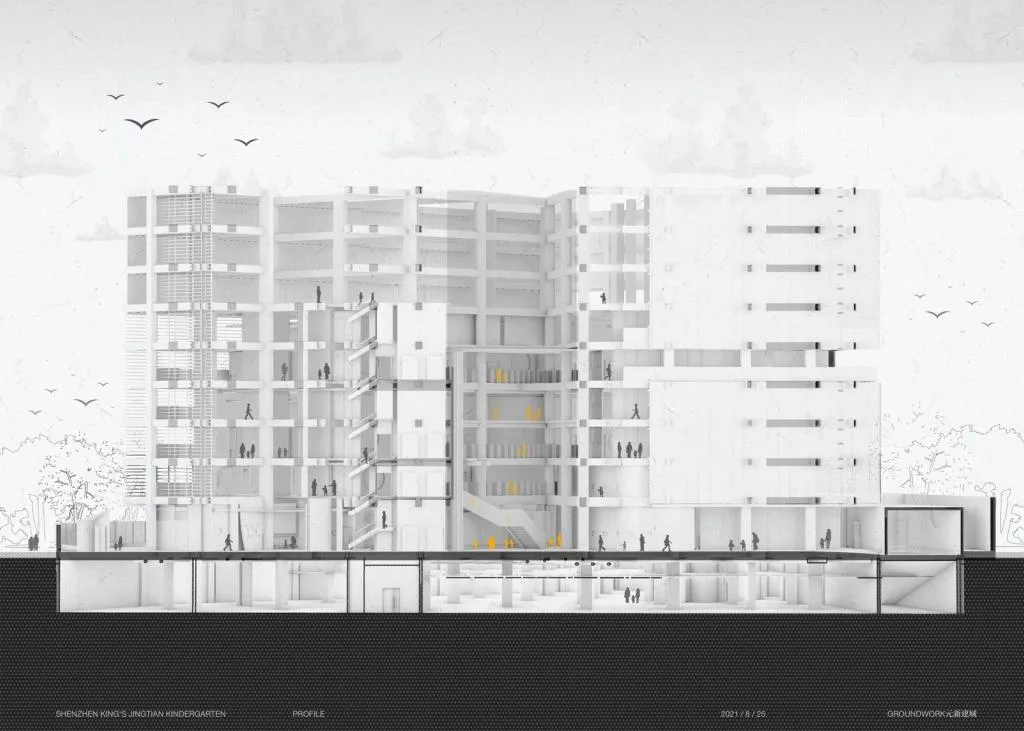
△ Section diagram
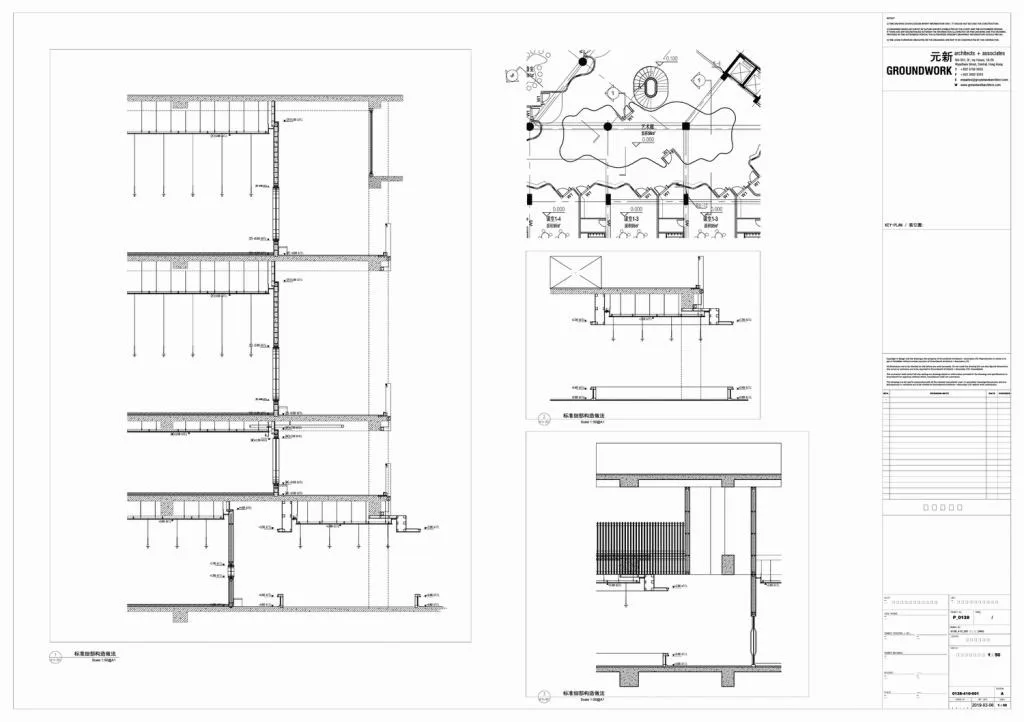
△ Detailed drawing
Project Information
Project Name: KING’S KINDERGARTEN Kindergarten
Client: Jinsheng Education Group
Interior/Landscape/Brand Design: Groundwork Yuan Xinjian City
Architectural/Structural Design: Shenzhen Cube Architectural Design Consulting Co., Ltd
Building Area: Approximately 5,000 square meters
Project Completion: August 2020
Main Creators and Design Team: Liang Xiao, Zuo Zhina, Bao Jing, Liu Zhenyu, Ruan Wentao
Construction Party: Jinsheng Education Group
Project Address: Jinsheng Kindergarten, No.7 Jingtian North Fifth Street, Futian District, Shenzhen
Photography Credits: Arch est Exists in Architecture, Zeng Tianpei, Bao Jing
Contact Email: communication@groundworkarchitect.com
Instagram: groundwork_architects
Website: www.groundworkarchitect.com
Official Account: GROUNDWORK Yuan Xinjian City















Must log in before commenting!
Sign Up