
The Suzhou High-Tech Development Zone has consistently led the way in urban development. Through a competitive bidding process, BAU was selected to design a school complex in the area, which includes a kindergarten with 24 classrooms and a primary school with 48 classrooms.
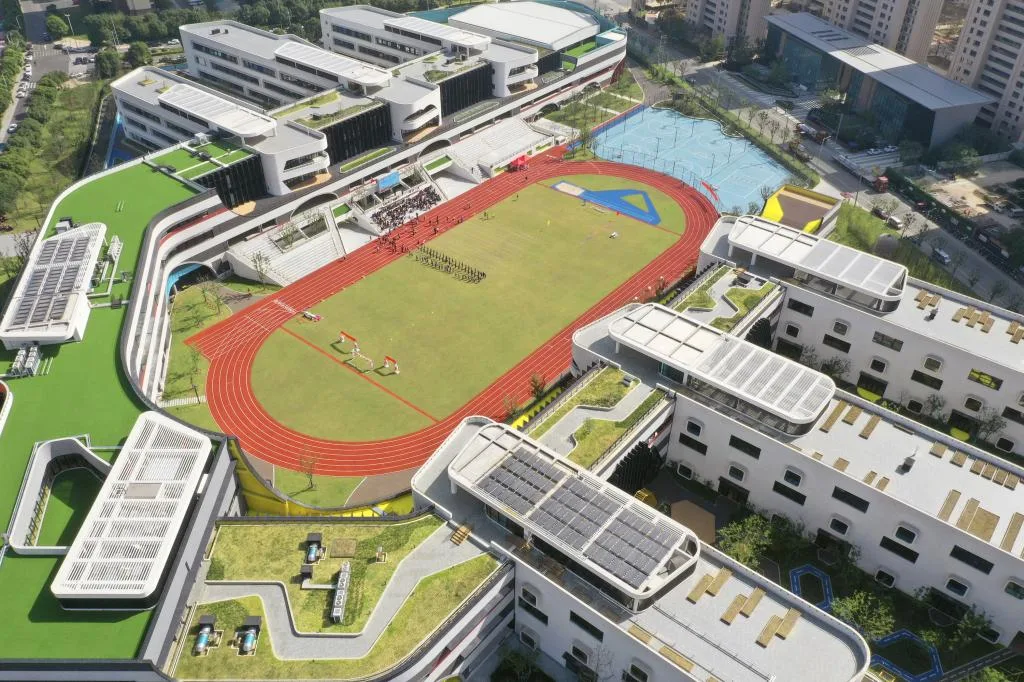
Classroom and Central Space
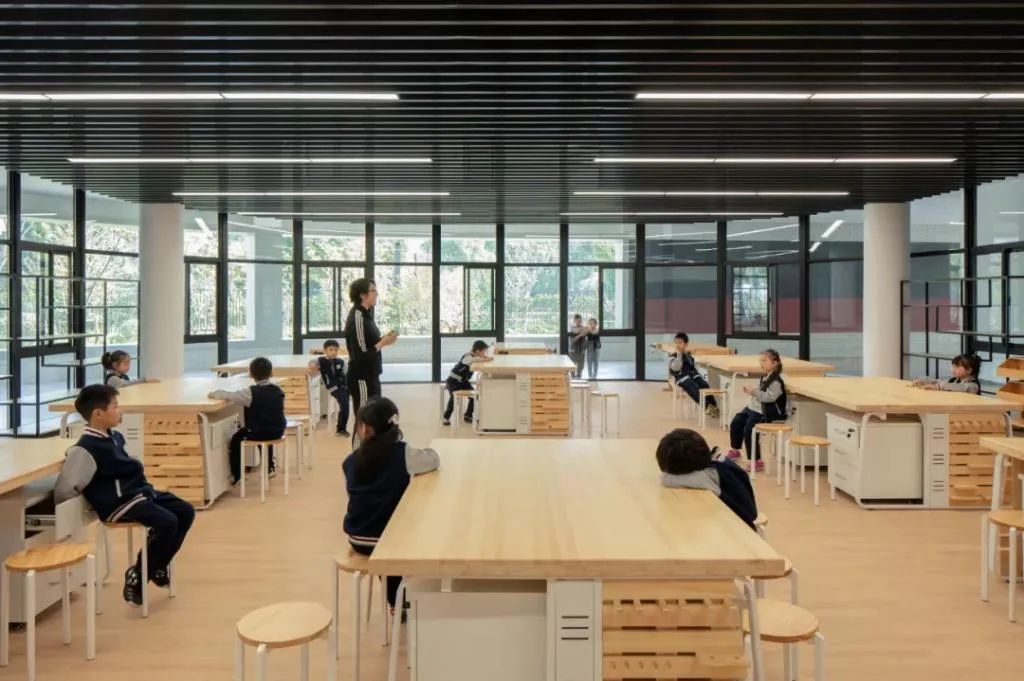
The design explores interactive, collaborative, curious, and student-centered teaching environments aligned with advanced educational models. The contemporary school architecture aims to blur the lines between formal classroom teaching and informal learning in adjacent small meeting rooms.
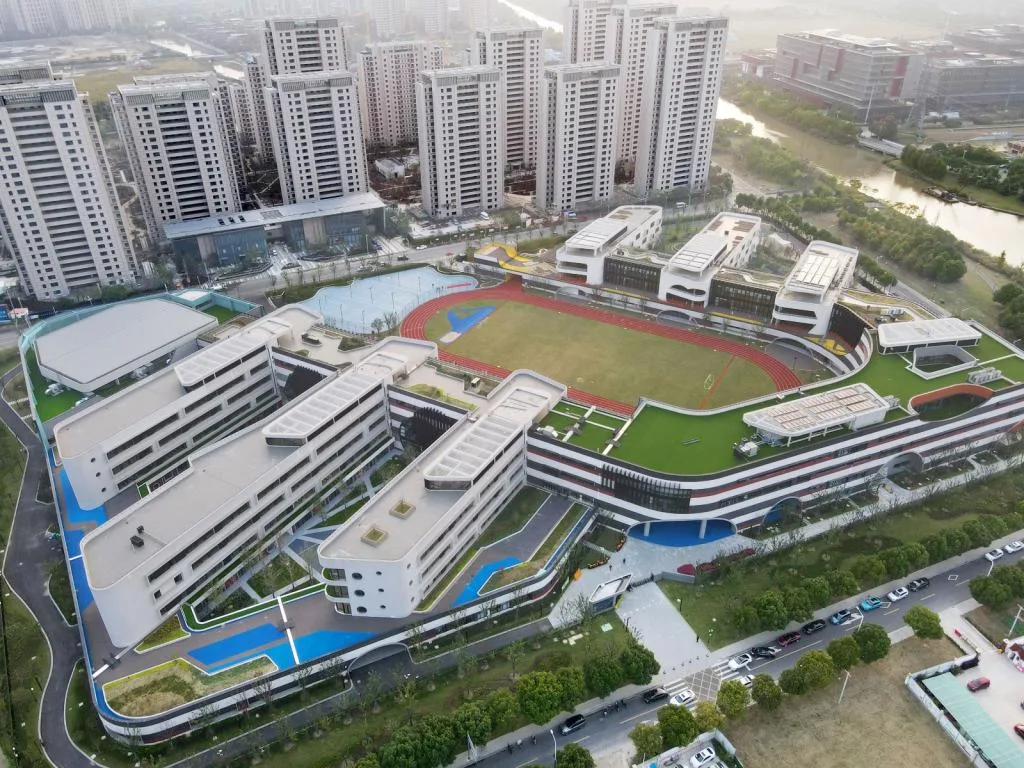
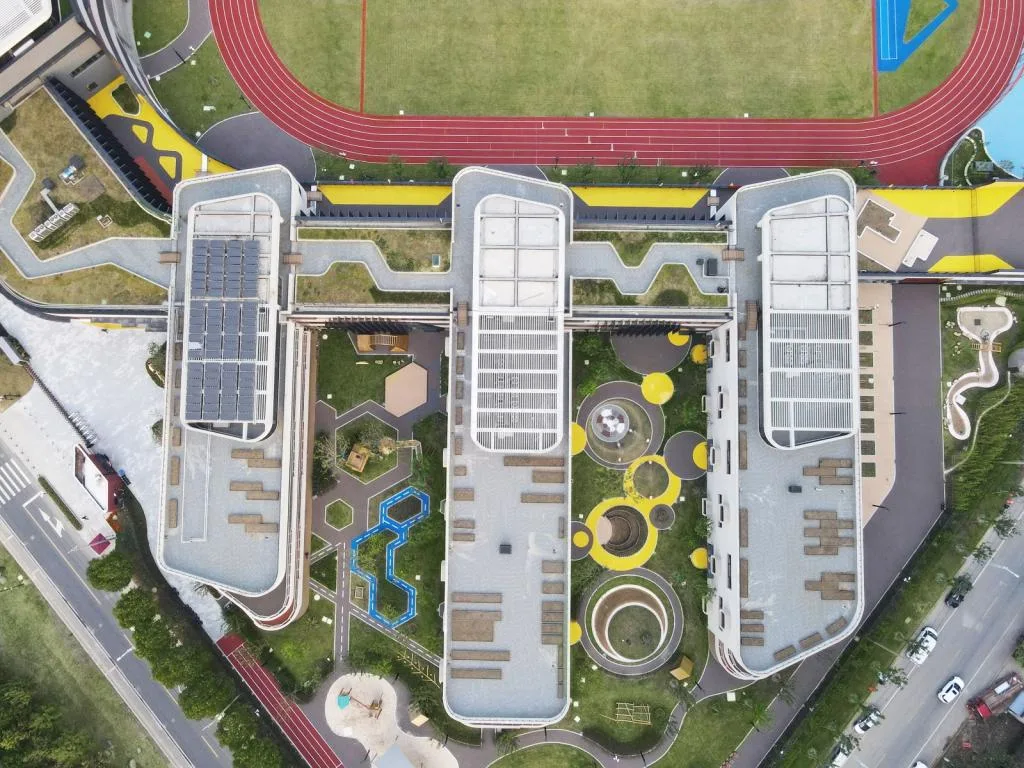
Through thoughtful spatial design, informal learning spaces can support informal teaching, and vice versa. This educational approach transforms the entire school into an environment where teaching and learning are seamlessly integrated.
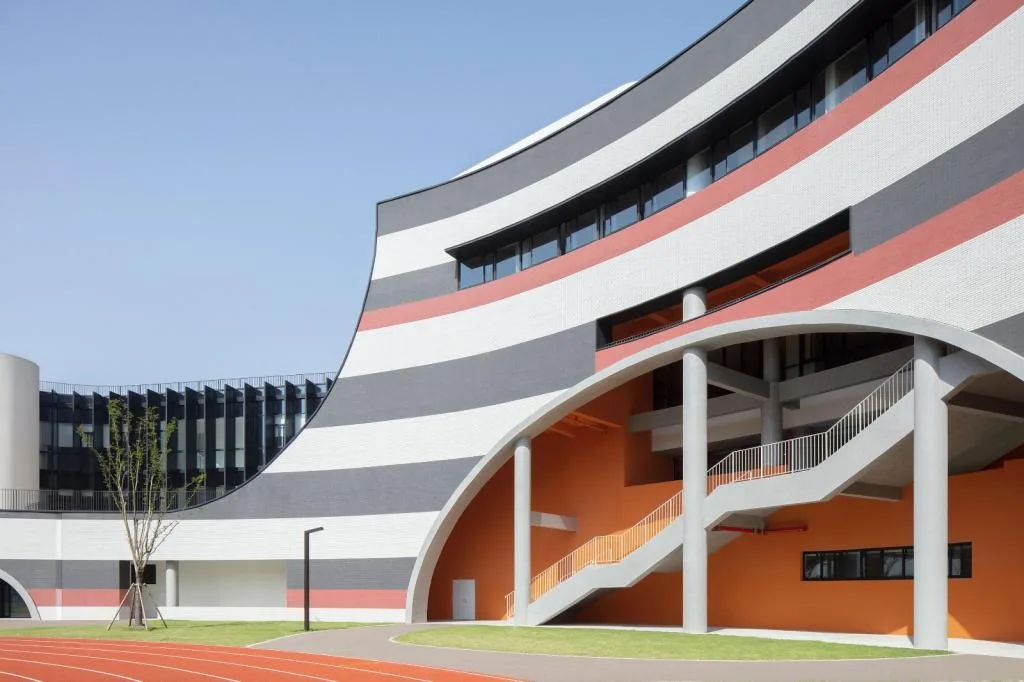
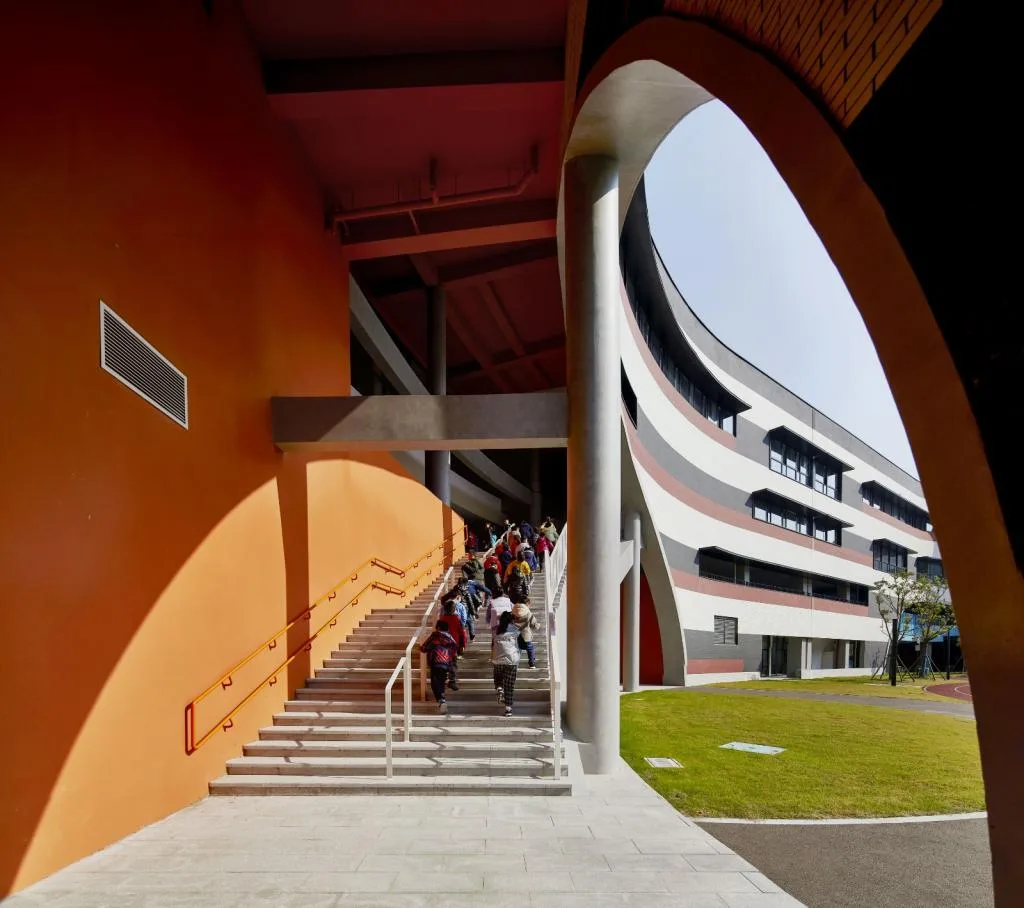
Compact Venue with Versatile Functions
Previous BAU school projects featured architecture as a graphic set within an open space. This project, comprising both elementary and kindergarten facilities on a smaller site, reverses that concept: the open space becomes a graphic element within the building’s context—evoking the spirit of iconic Roman spaces like the Colosseum or Piazza Navona, rather than American suburban models such as Leviton or Oak Park.
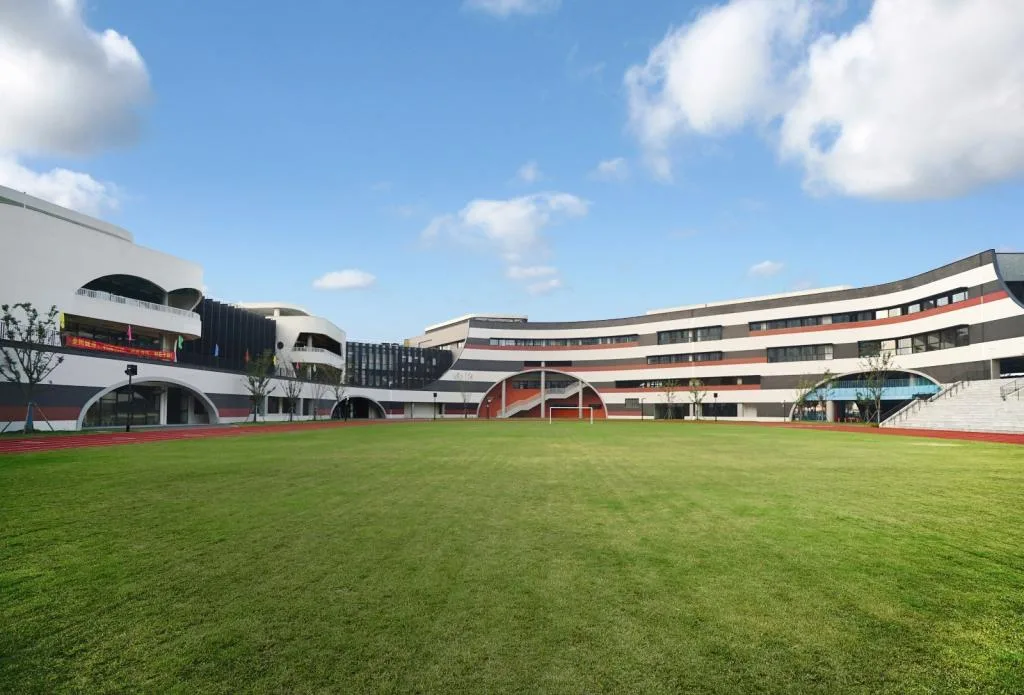
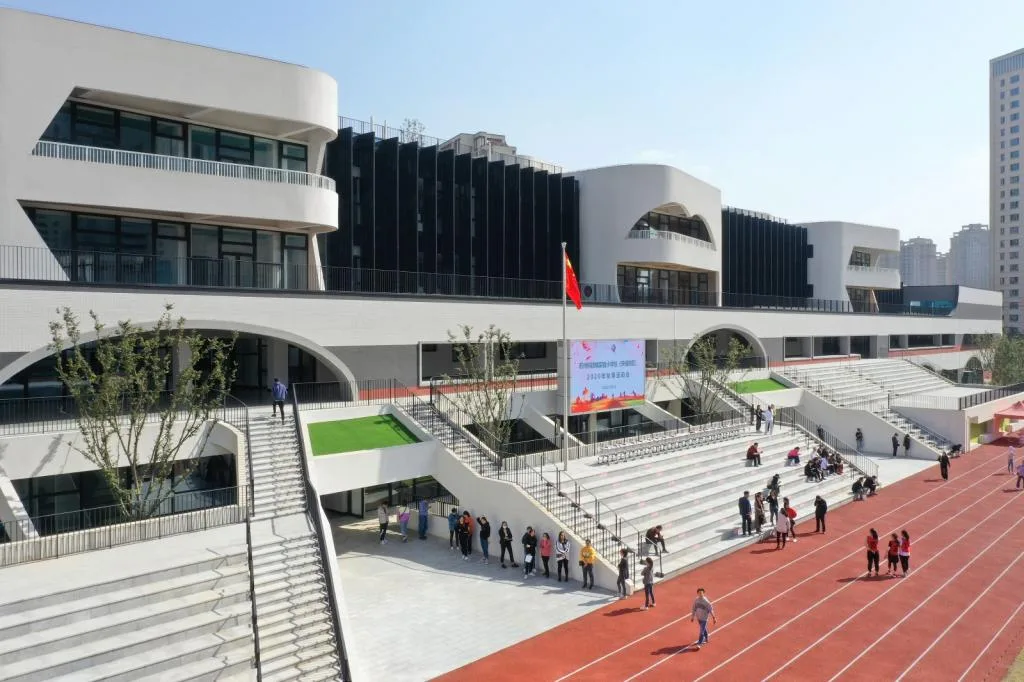
Informal Teaching and Learning Spaces
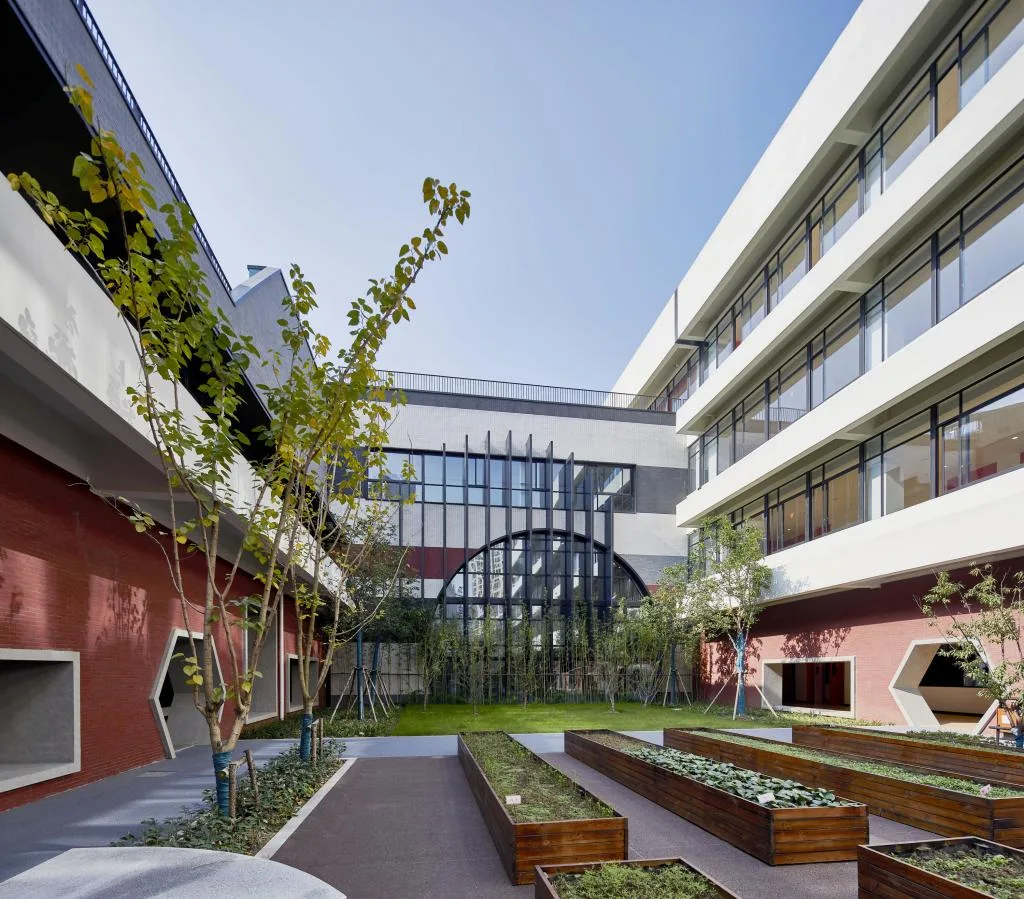
The site functions as a platform from which various outdoor spaces emerge: a sports field, a playground for kindergarten children, a courtyard for the primary school, entrances for both schools, and a green buffer between the school and the sidewalk.
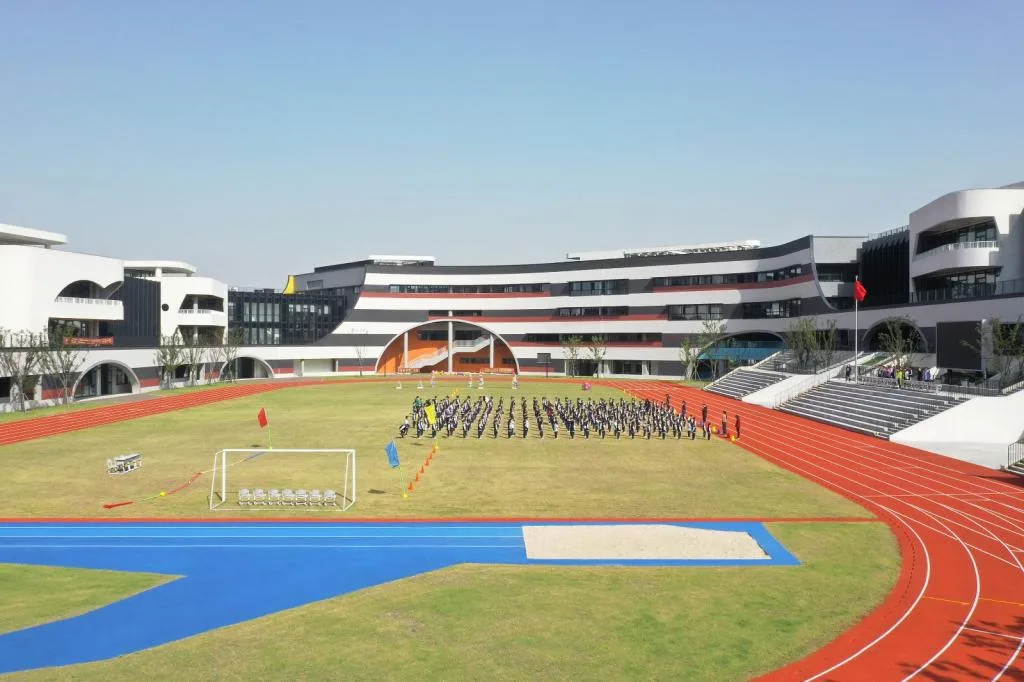
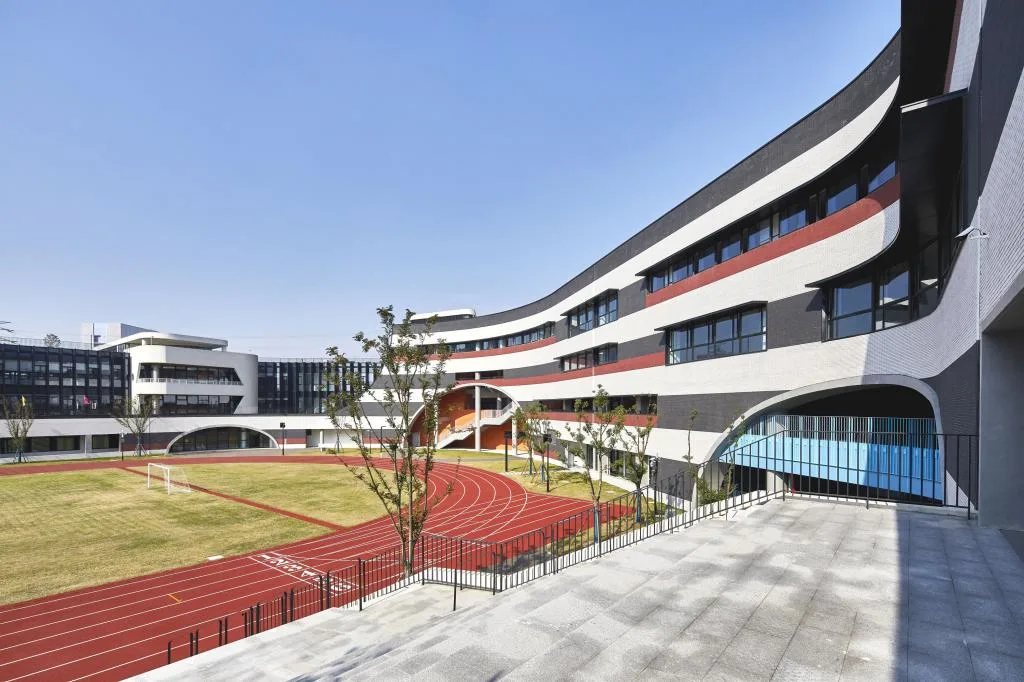
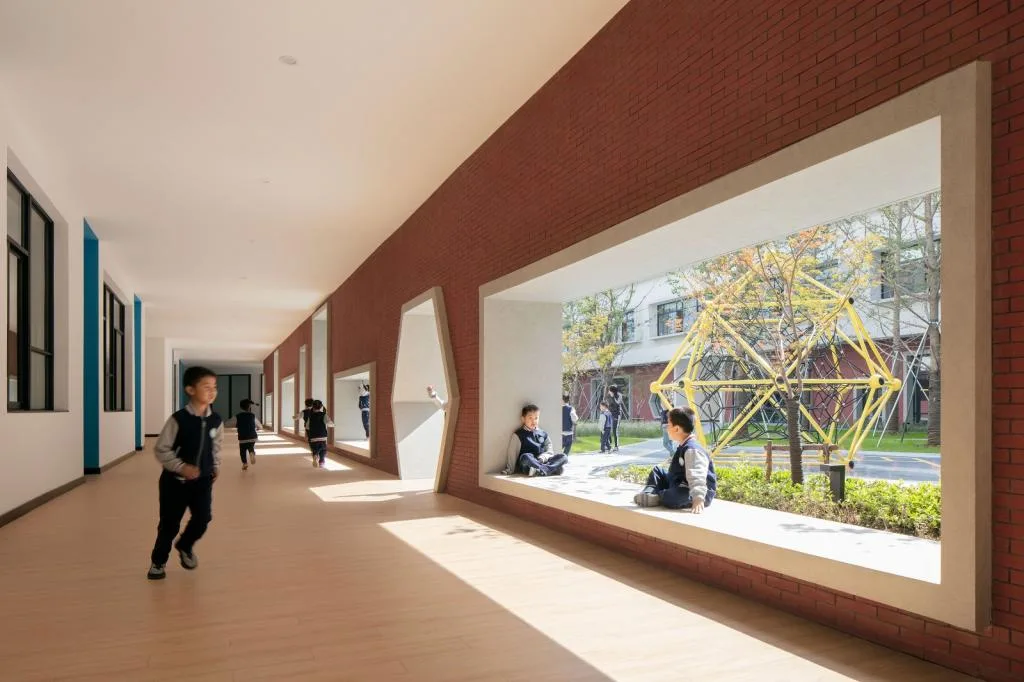
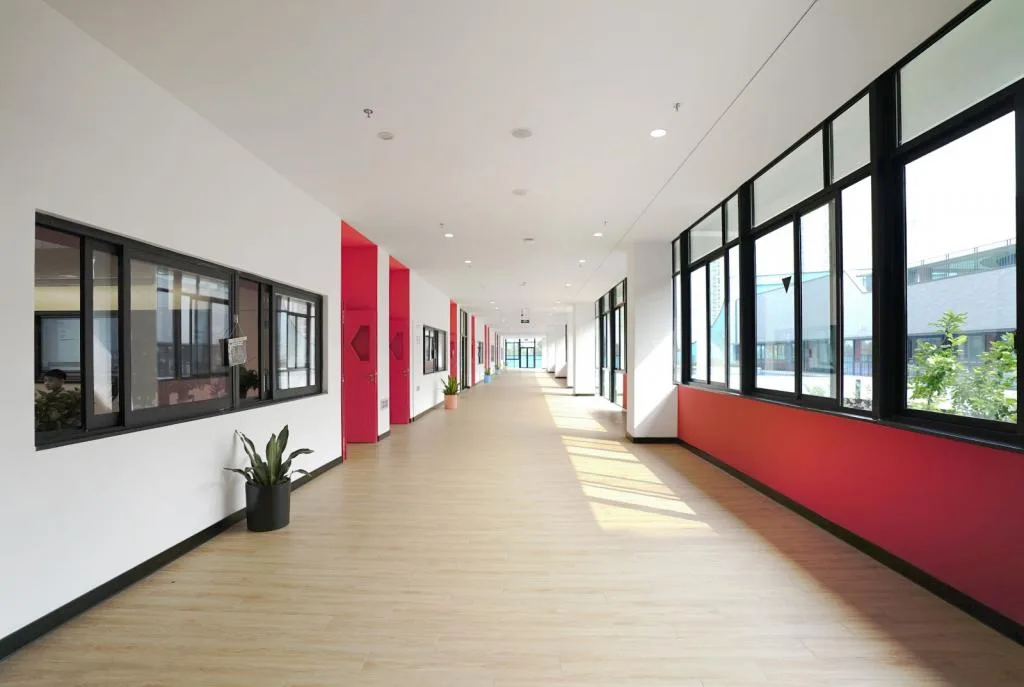
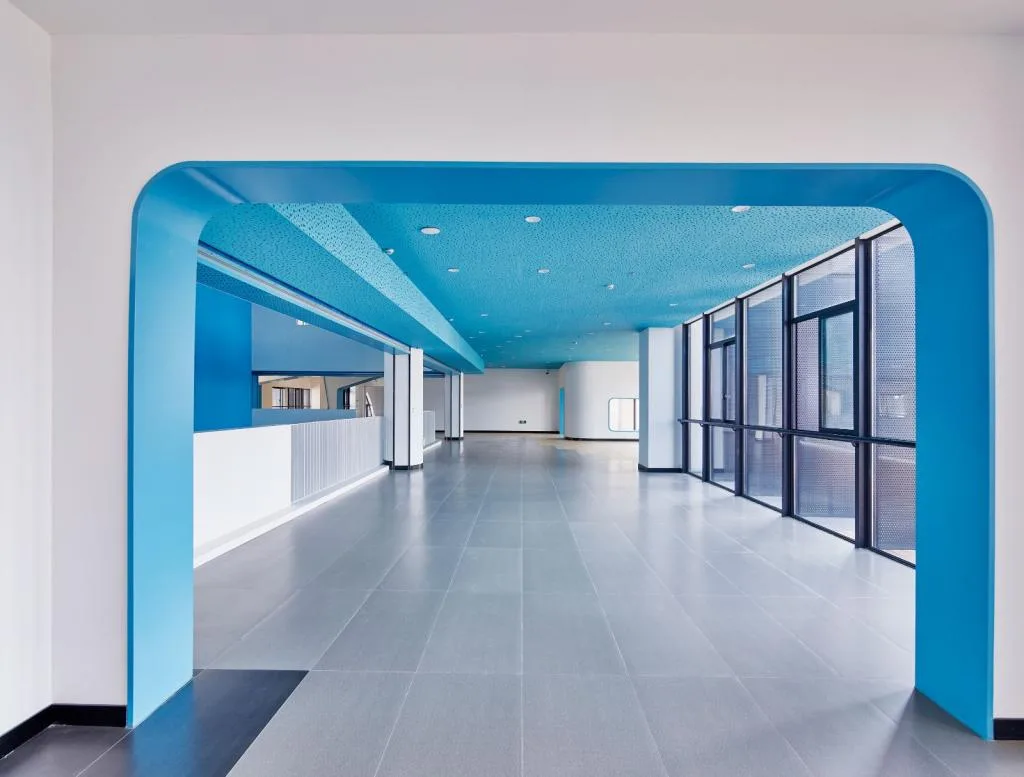
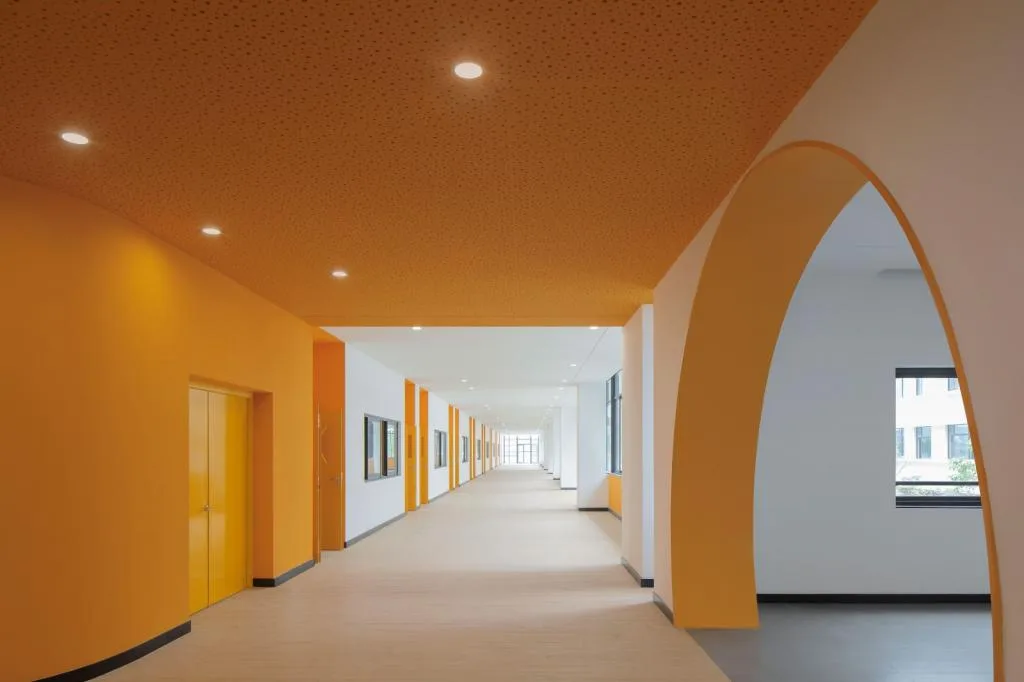
The beams framing the open spaces house an innovative network where traditional school corridors have been transformed into loose, open areas that encourage informal teaching and learning. These wide corridors also create semi-enclosed spaces suitable for exhibitions and large group activities.
Formal Teaching and Learning Spaces
The structural beams converge in a sunburst pattern, supporting improved classrooms and spanning the curved beams throughout the space.
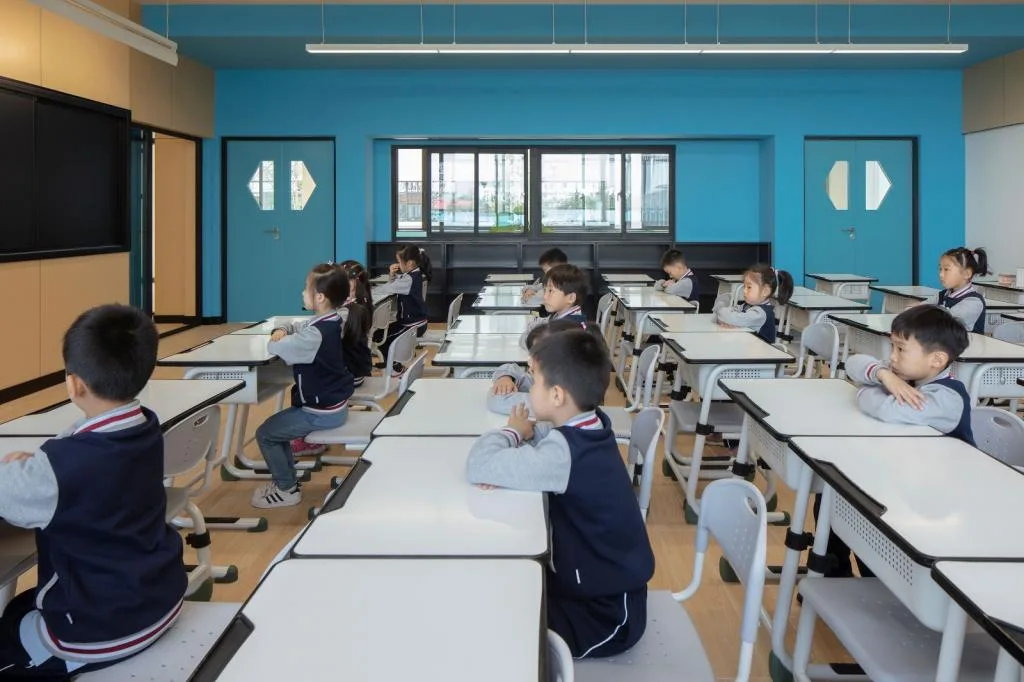
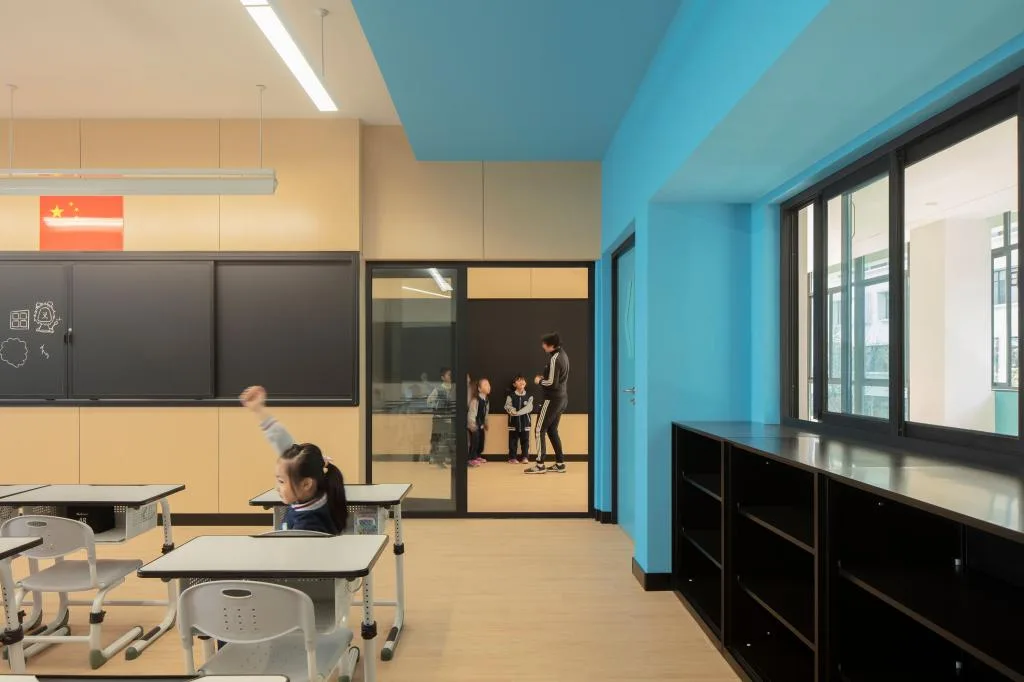
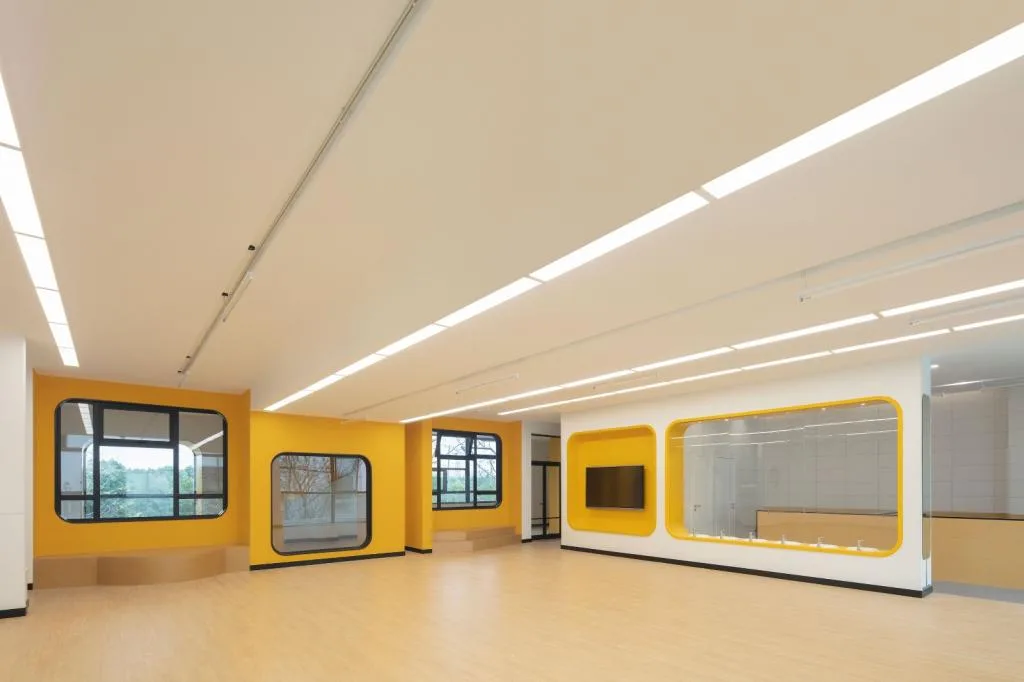
Between every two traditional classrooms, there is a conference room enclosed with glass walls. This design allows smaller student groups to collaborate quietly without disrupting the main classroom and keeps the teacher within easy reach.
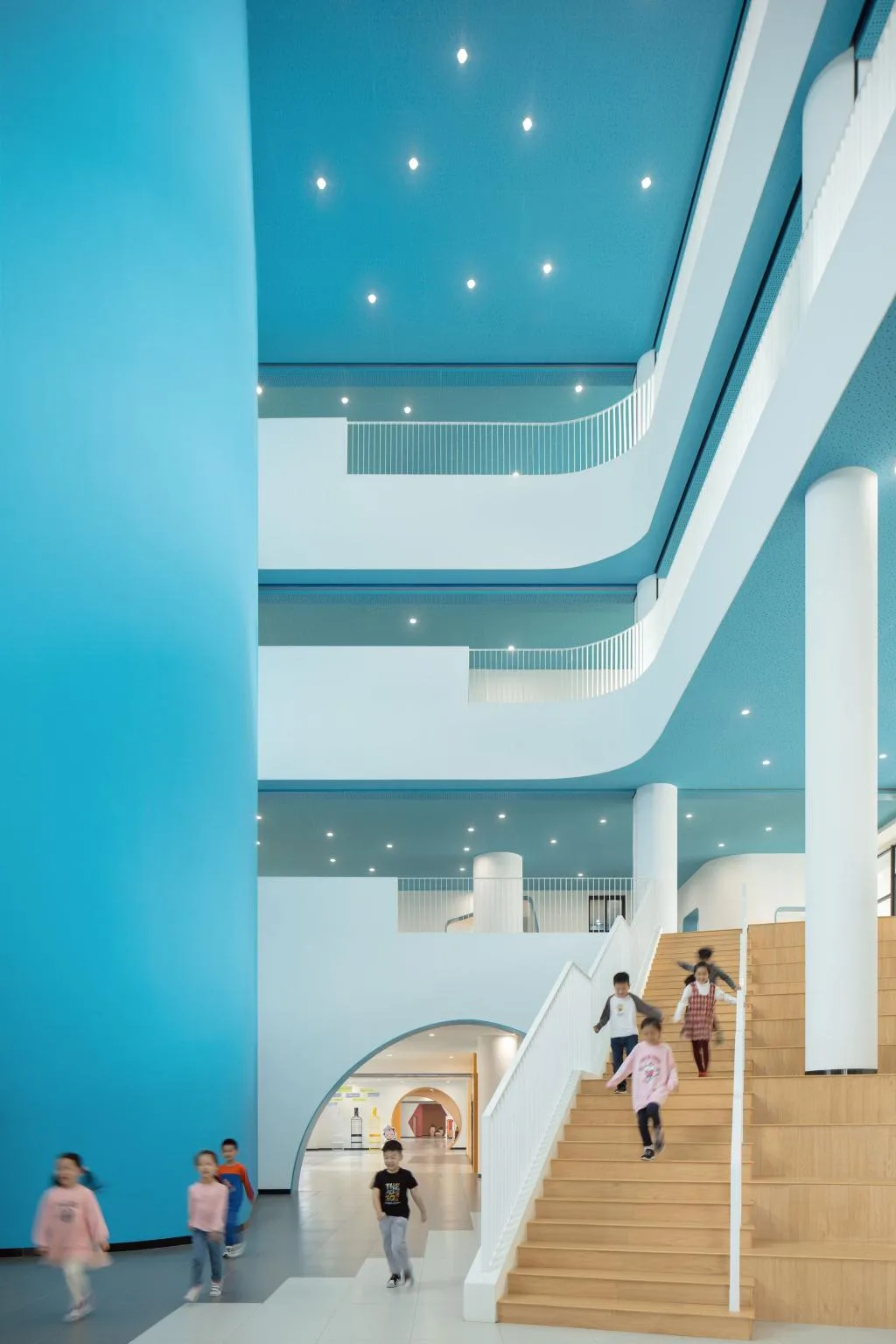
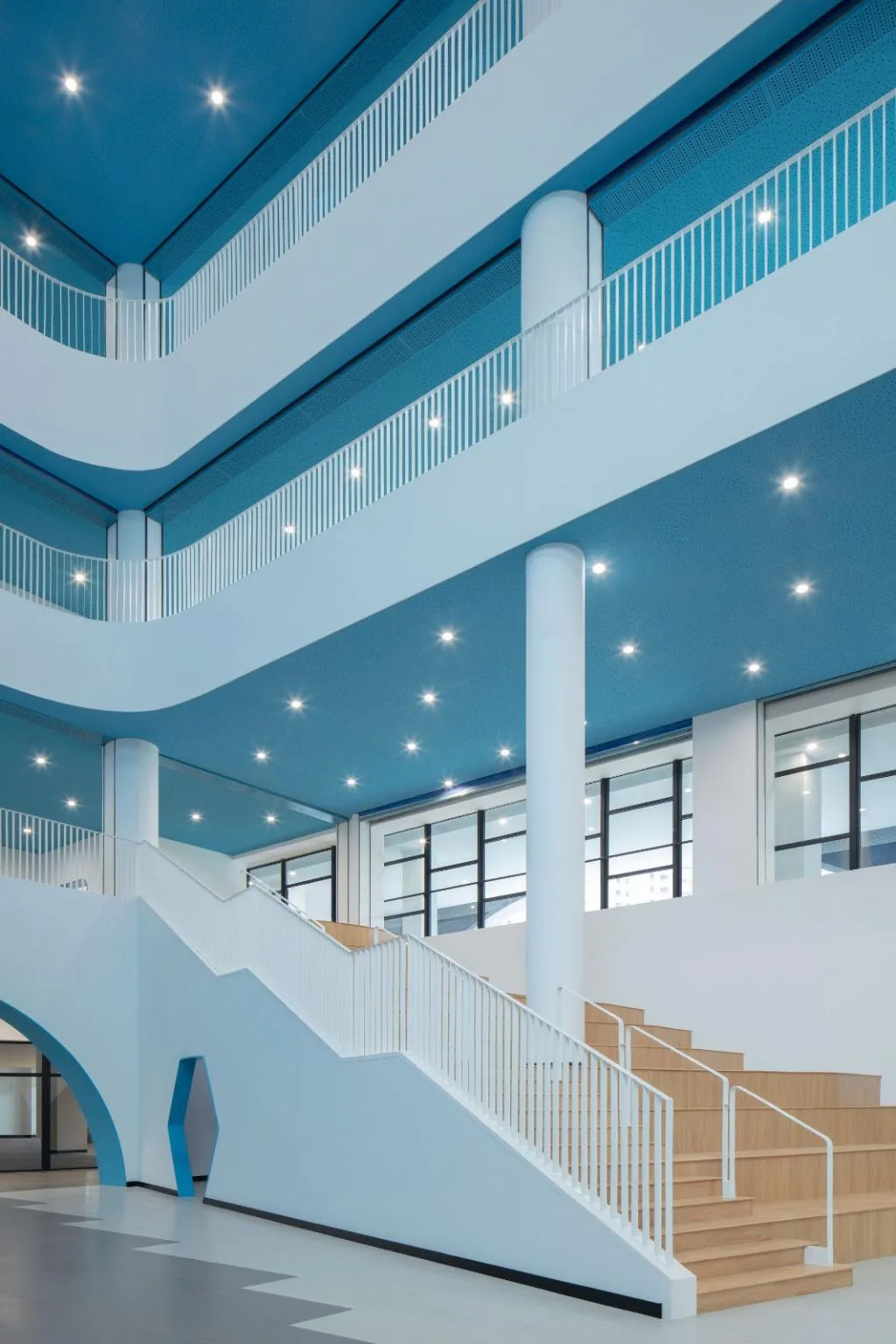
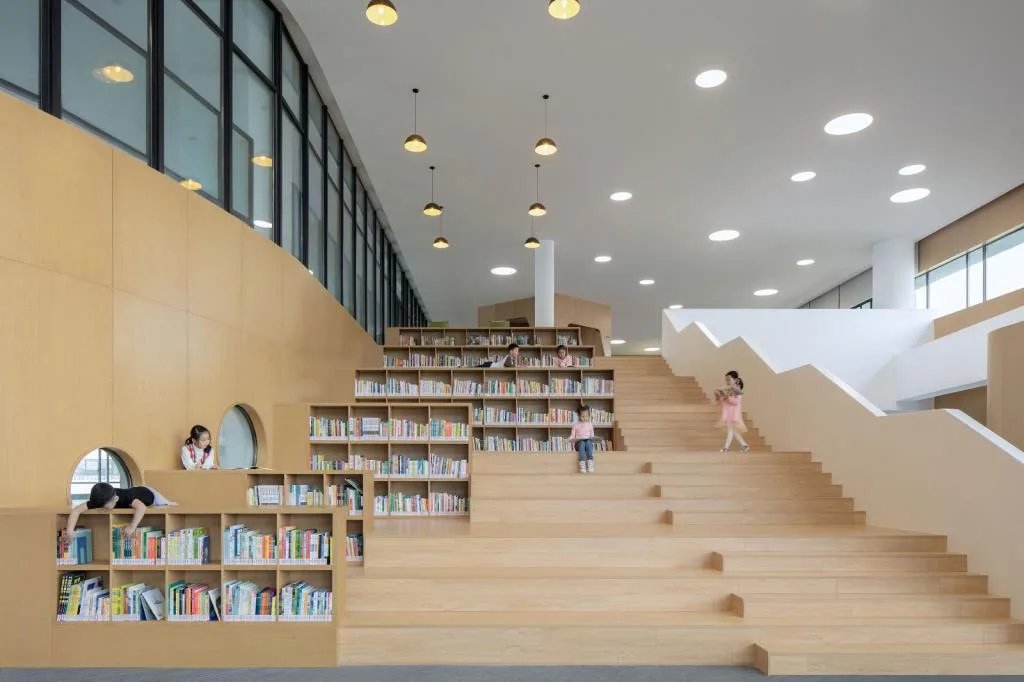
The distinction between informal and formal areas is clearly articulated through spatial layout, form, and material choices.
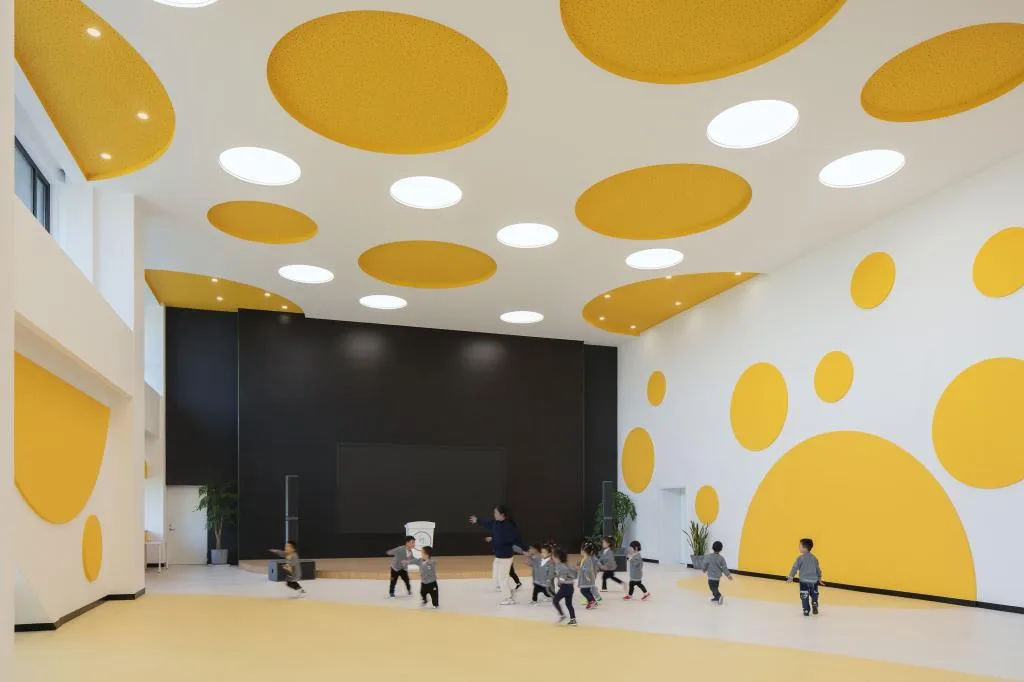
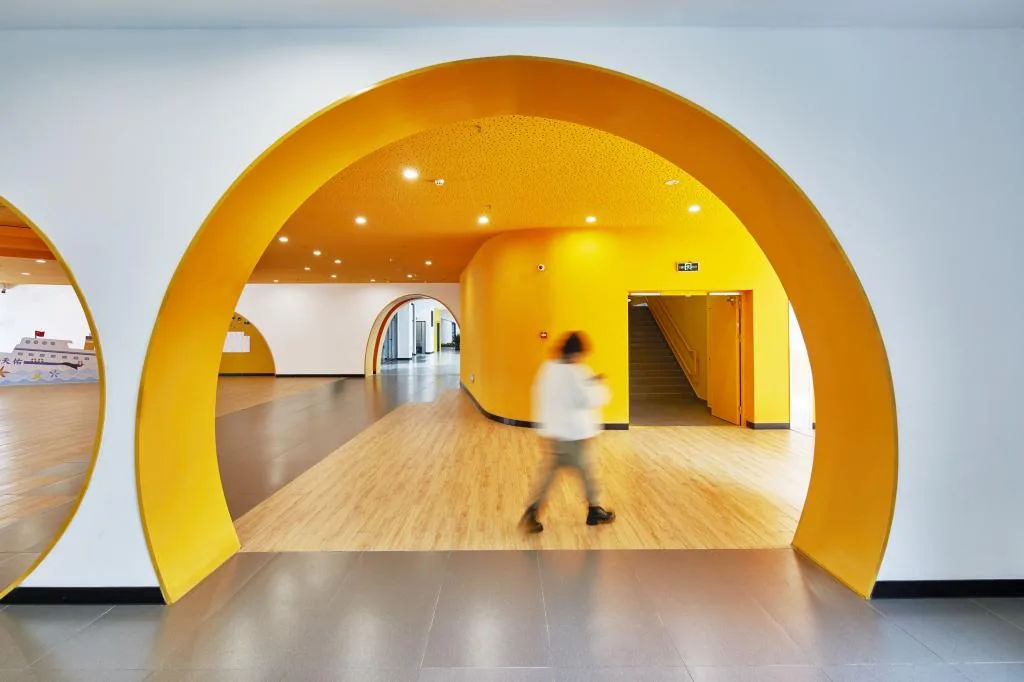
Location, Imagery, and Abstract Art
This project collaborates with Chinese classical garden expert Craig Easton to integrate art and play into the learning environment through various creative means such as framing, scaling, movement, wrapping, stacking, and layering. It also incorporates common local geometric shapes to enrich the spatial experience.
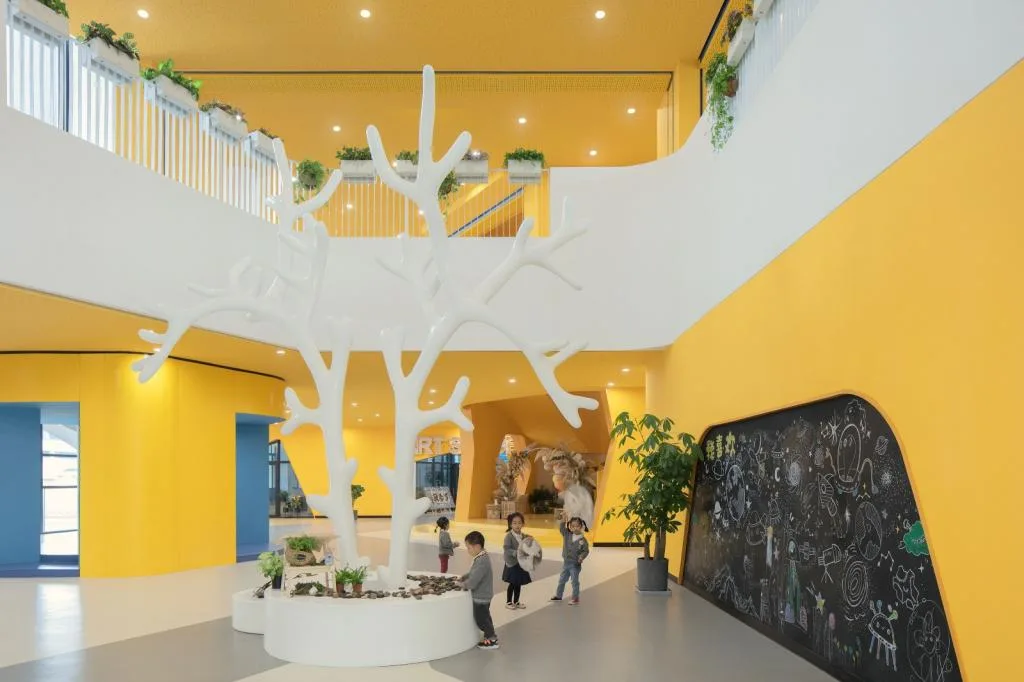
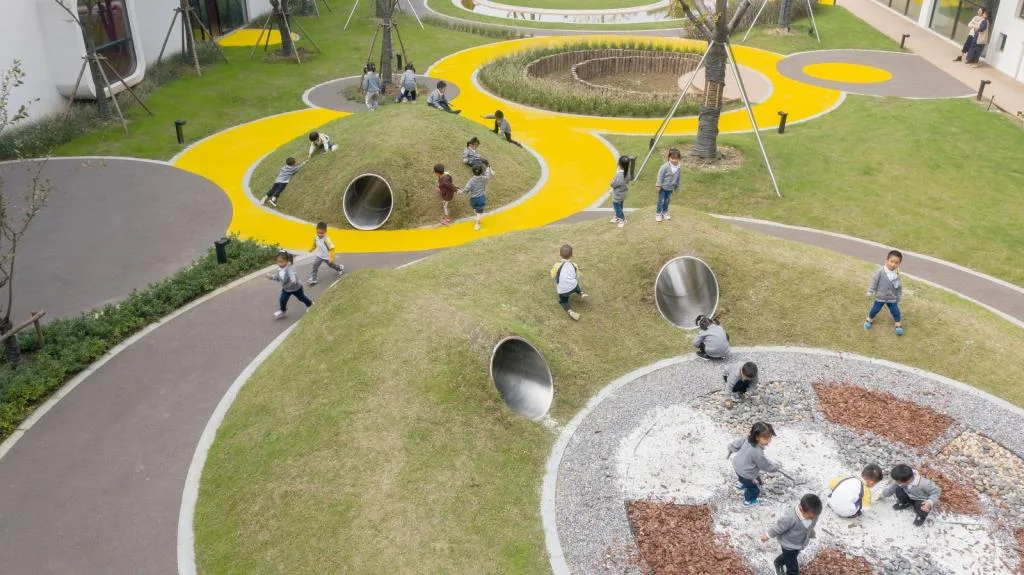
Kindergarten: The Children’s Garden
The term “kindergarten” originates from German, meaning “children’s garden.” This concept is brought to life through five themed gardens, each offering unique experiences:
- Lenovo Garden: Inspires imagination and creative play.
- Functional Garden: Encourages physical activity through jumping, climbing, swinging, and sliding.
- Natural Garden: Cultivates awareness of nature with activities like digging, planting, tapping, and weaving among bamboo groves.
- Labor Garden: Teaches farming, household chores, and management skills.
- Sensory Garden: Engages all senses by experiencing flowers’ fragrance, tasting grass scents, feeling water flow, listening to sounds, and touching natural elements.
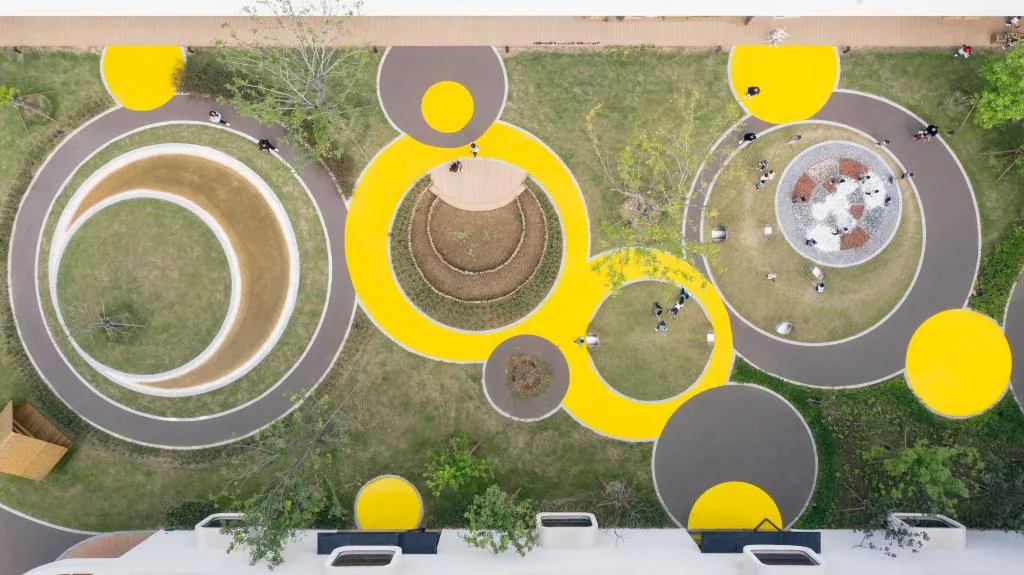
Past, Present, and Future
This project demonstrates how ancient spatial patterns can harmoniously coexist with modern educational theories to create contemporary teaching and learning environments for future generations.
Project Drawings
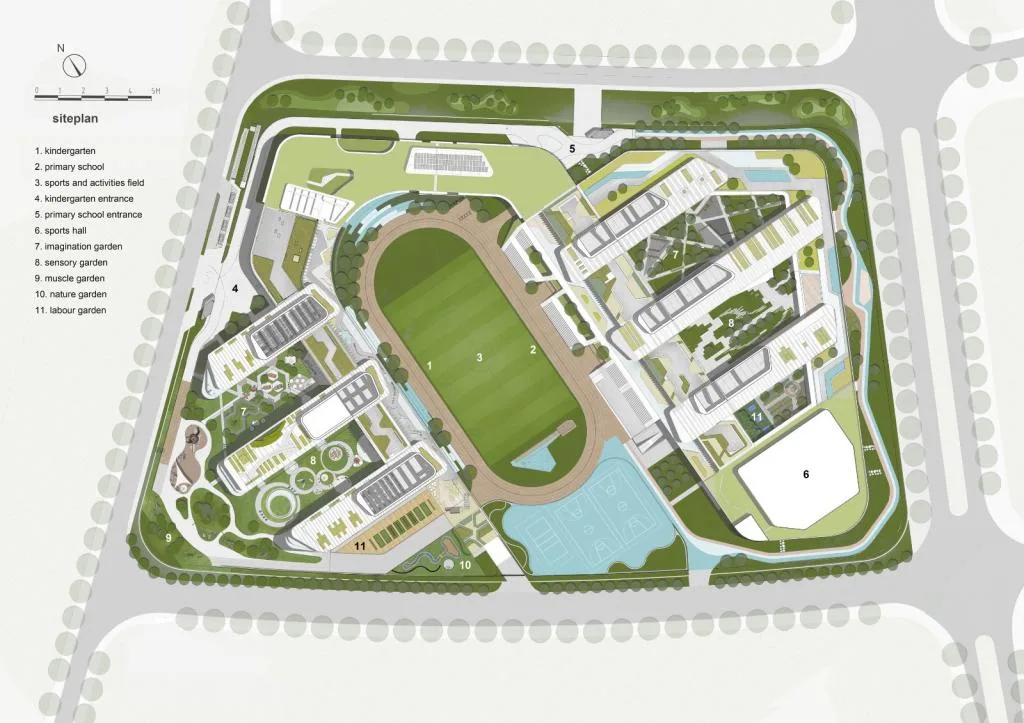
△ General Layout Plan
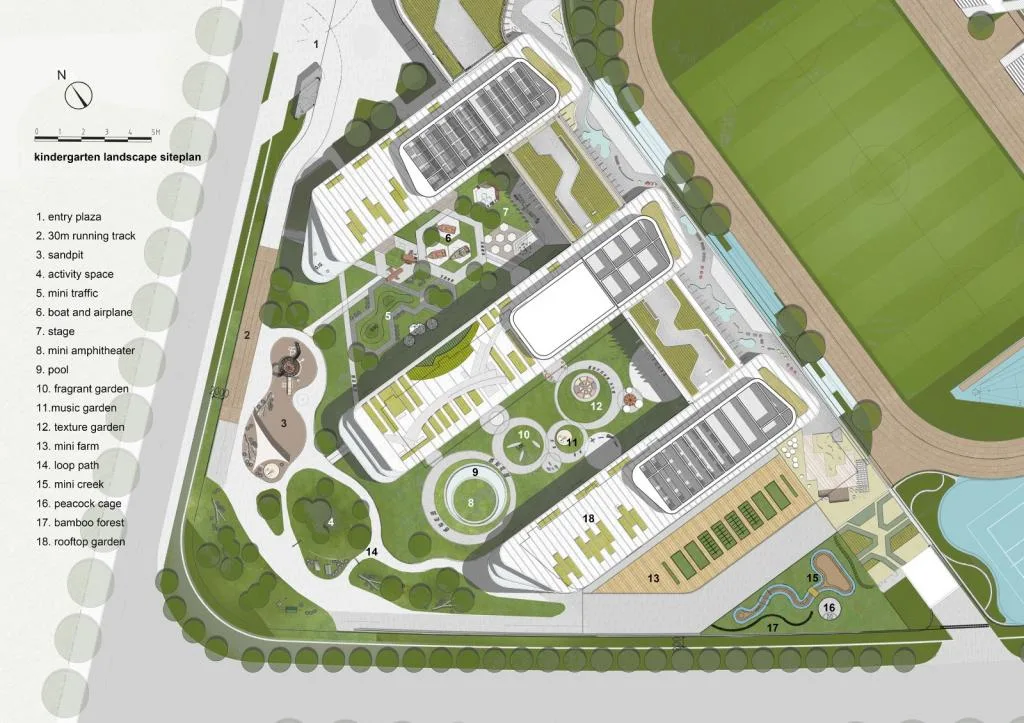
△ Landscape Plan
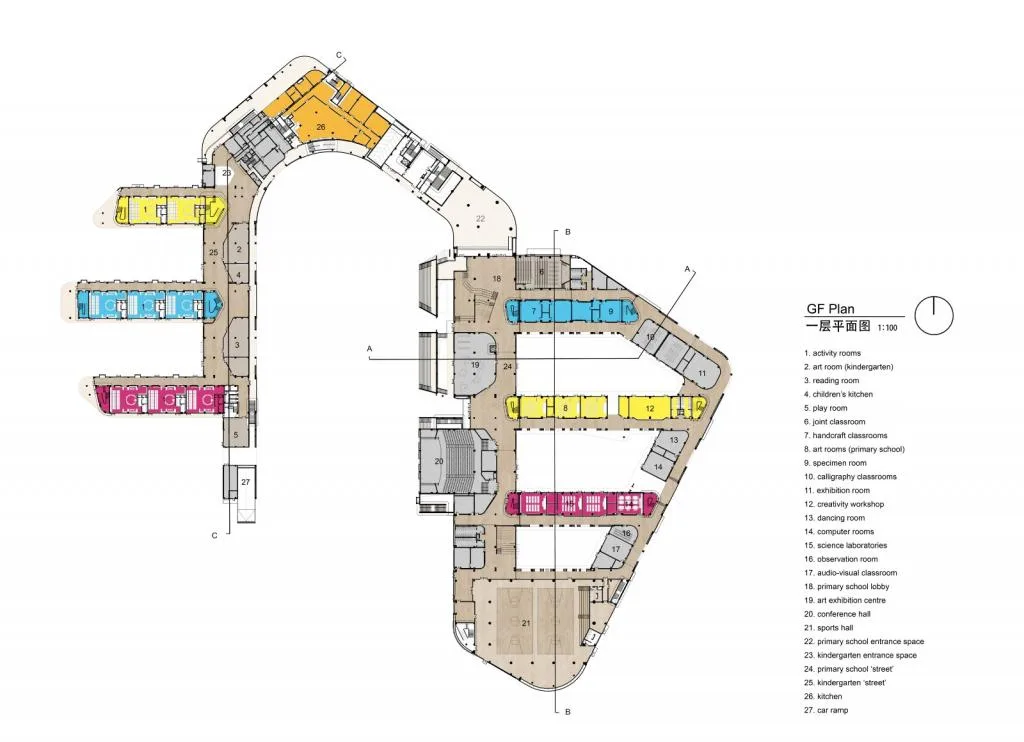
△ First Floor Plan
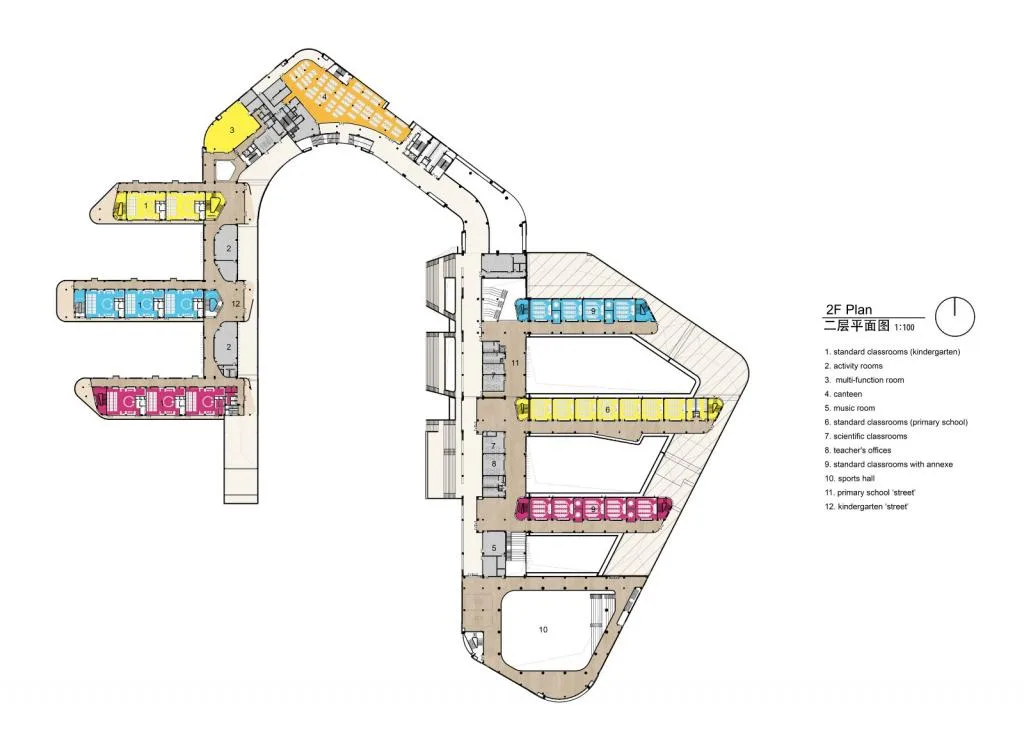
△ Second Floor Plan
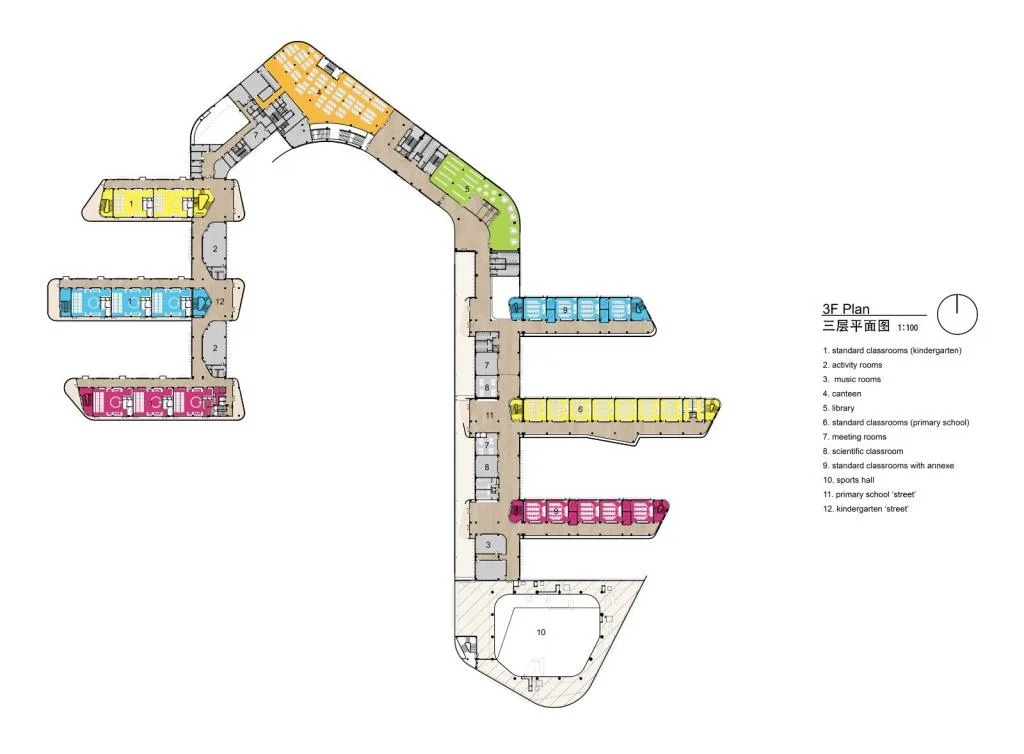
△ Third Floor Plan
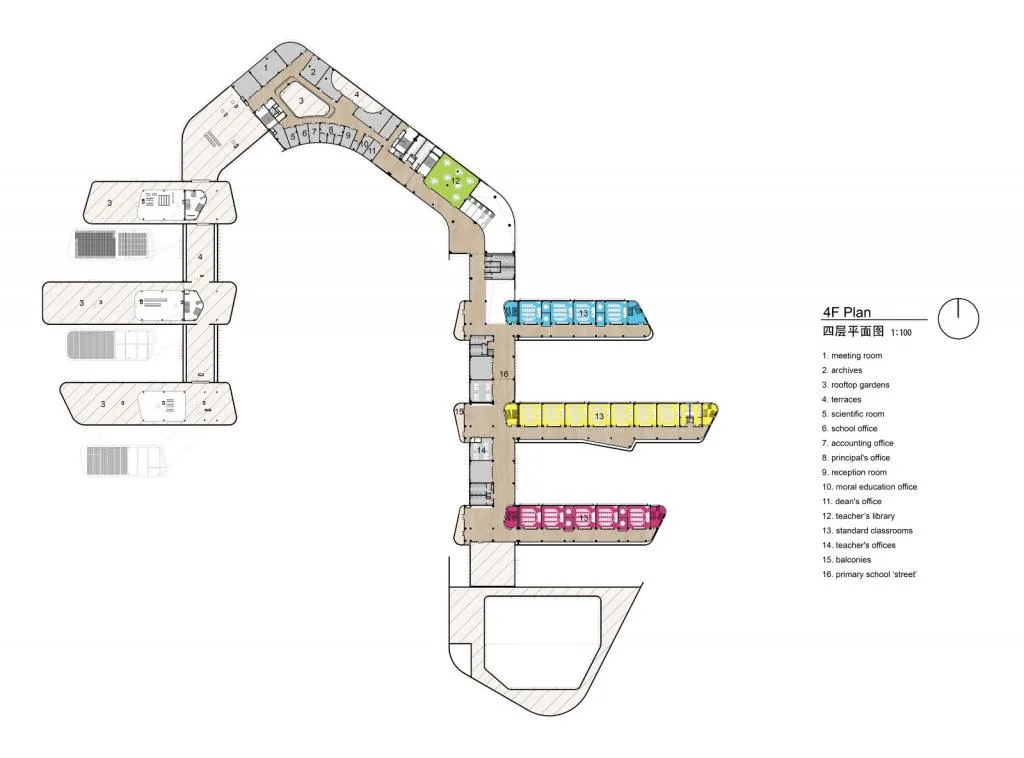
△ Fourth Floor Plan
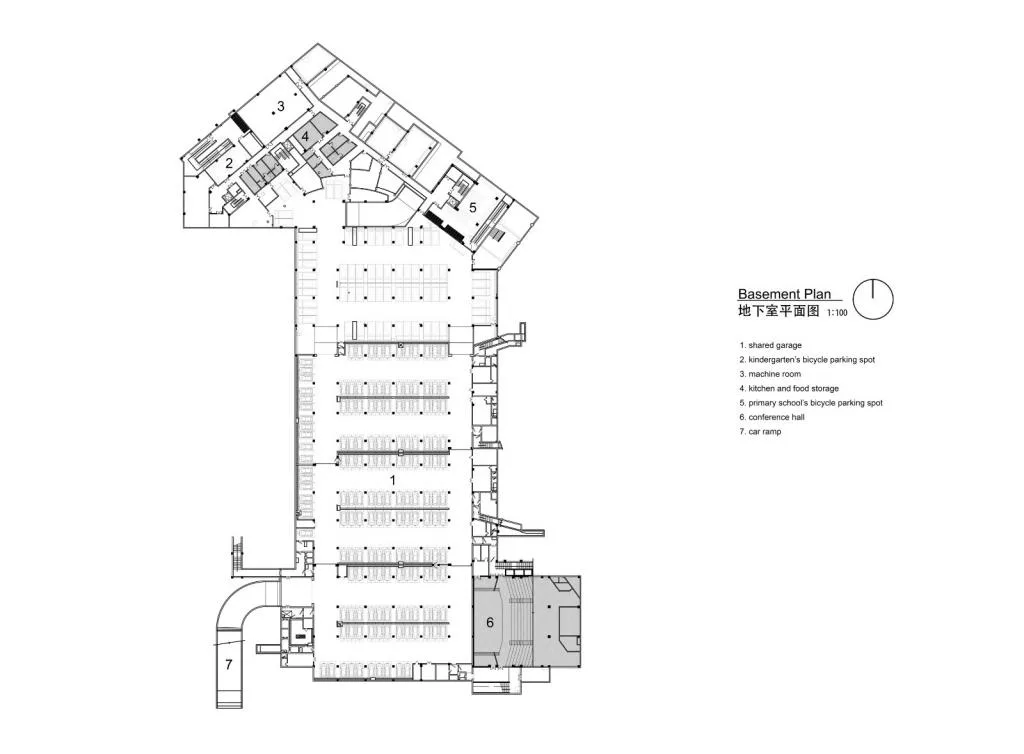
△ Basement Plan
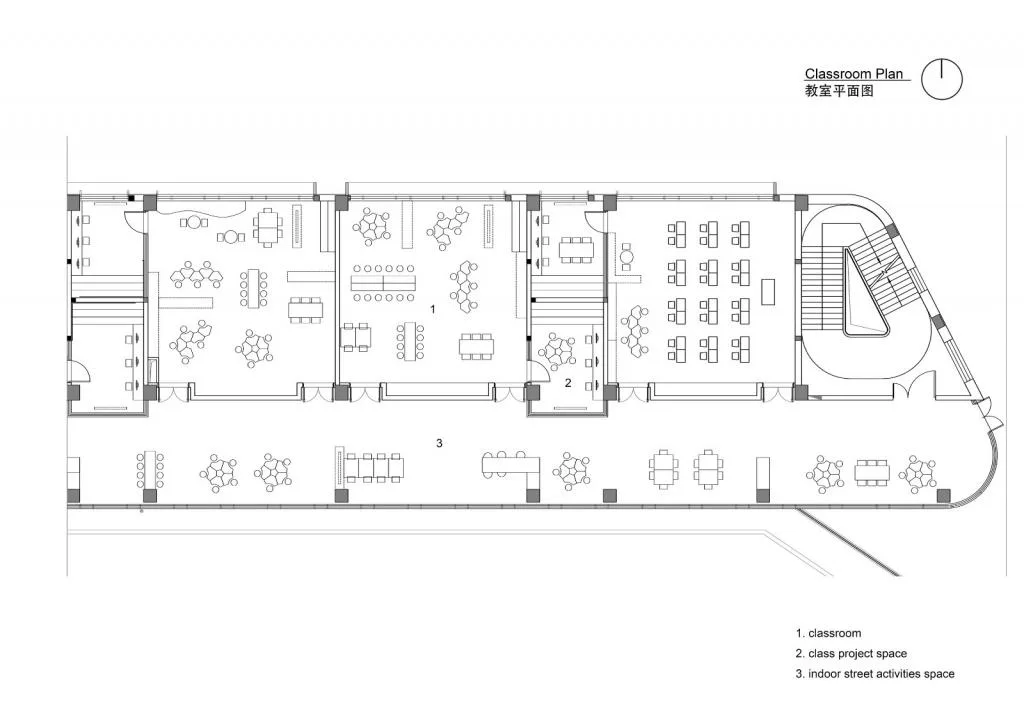
△ Classroom Floor Plan
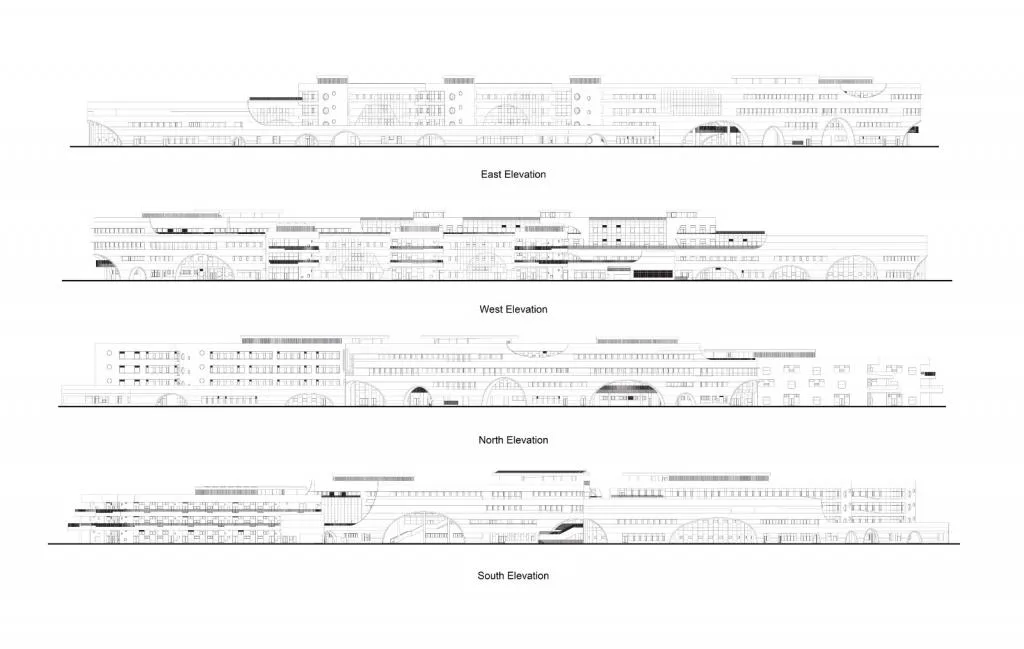
△ Elevation Drawing
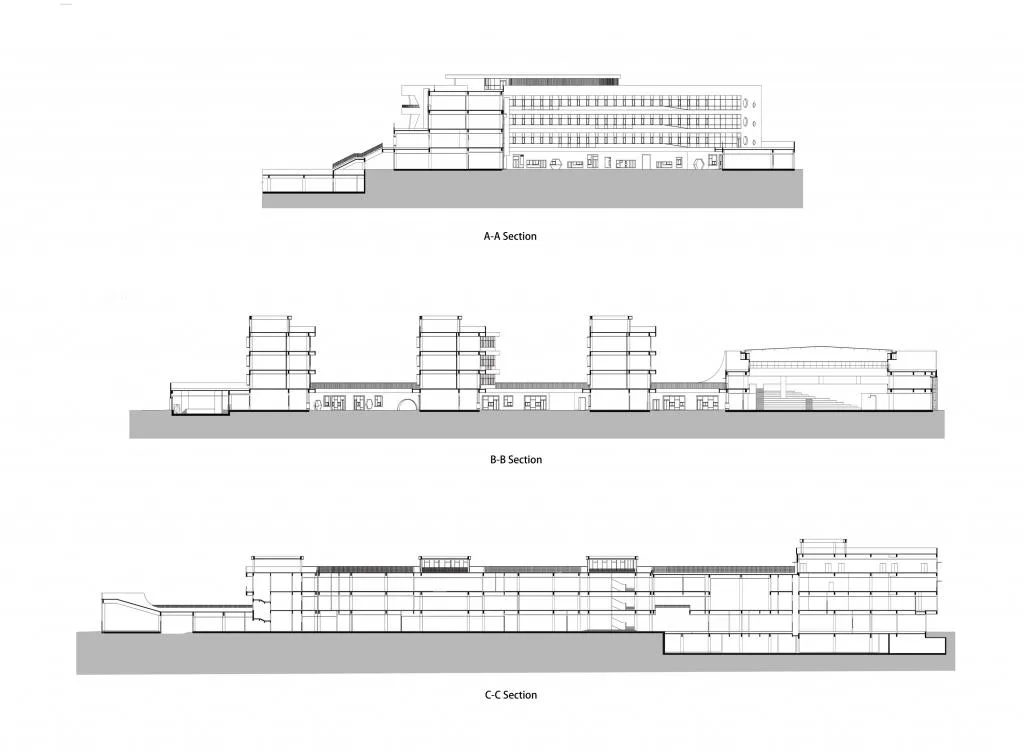
△ Section Diagram
Project Information
Project Status: Completed in 2020
Location: Suzhou, Jiangsu Province, Suzhou New District
Design Period: 2017-2020
Client: Suzhou Science and Technology City Social Service Center
Site Area: 55,891 square meters
Building Area: 67,735.95 square meters
Construction Investment: RMB 400 million
Project Type: Education
Functions:
Kindergarten: 24 classrooms, multipurpose hall, music classroom, reading room, art classroom, baby kitchen
Primary School: 48 classrooms for grades one to six, multifunctional theater, tiered classroom, exhibition hall, library, art classroom, computer classroom, calligraphy classroom, music classroom, dance classroom, handicraft classroom, science laboratory, broadcasting classroom, cafeteria, sports activity center, and more
BAU Project Team Members:
Project Creator: James Brearley
Architecture: Steve Whitford, Rowley Francisco Garcia Sung, Pablo Jimenez Fernandez, Tang Binbin, Li Zheng, Jiang Yujia, Li Xufeng, Lu Penghong, Rong Yu, Wu Chong, Wang Hongbin, Wang Shuangdiao, Shen Yangyang, Zhang Jiemin, Craig Easton (Art Director)
Landscape: Huang Fang, Guo Liexia, Xiong Juan, Pan Guo, Shi Zhengting, Wang Zeyuan, Gu Zhuocheng, Wu Xiaojian, Zhong Yi, Zhang Xinxin, Zhu Qizhen, Pan Linlu
Interior Design: Zou Yuhai, Wang Mingdong, Guo Yuejiao, Zheng Jiamin, Chen Xianwei
Construction Contractor: Nantong Sijian Group Co., Ltd.
Collaborative Design Institute: Suzhou University of Science and Technology Design and Research Institute Co., Ltd.
Materials: Concrete, stone, glass, ceramic tiles
Photography: Summer Solstice, Shuhe Dera
Camera Operator: Summer Solstice















Must log in before commenting!
Sign Up