
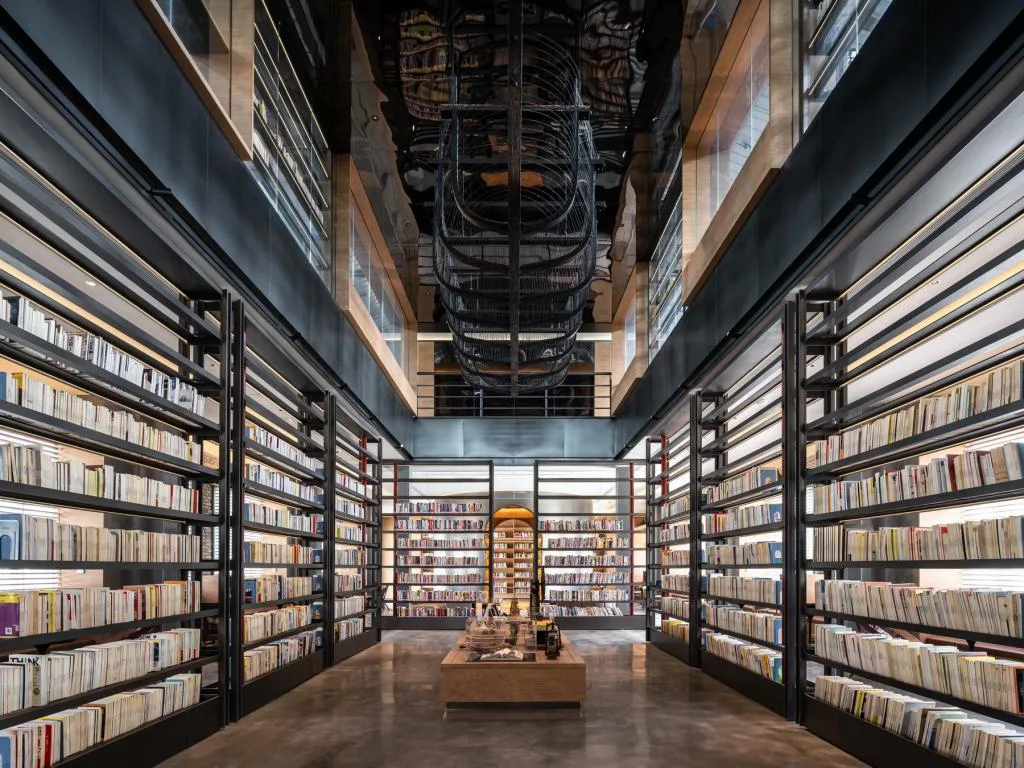
In today’s world, urban images demand a deeper connection to memory and culture. Fuzhou, a city rich in modern Chinese history, has its cultural identity intricately linked to “ship administration.”
The Ship Administration Bookstore serves as both a creative and cultural hub for Fuzhou Mawei’s ship administration heritage. This space, through thoughtful design, offers a comprehensive cultural experience—it is not merely a bookstore but also a spiritual sanctuary.
— Hu Zhile, Founder & Design Director of Wanjing Design
Historically, Fuzhou, located in Fujian Province, has been celebrated for its centuries-old shipbuilding expertise. With a maritime tradition spanning thousands of years, it is recognized as the birthplace of Chinese shipbuilding culture. In 1866, Zuo Zongtang established China’s first naval academy, the Mawei Shipbuilding School, making Mawei the cradle of the modern Chinese navy and the heart of shipbuilding culture.
Today, the Shipbuilding Bookstore, situated on the original site of the Mawei Shipbuilding School, revives the century-old spirit of “shipbuilding and talent” through its “cabin and bookstore” concept. It adopts a fresh metaphor to preserve and express shipbuilding heritage, weaving its cultural essence into everyday life.
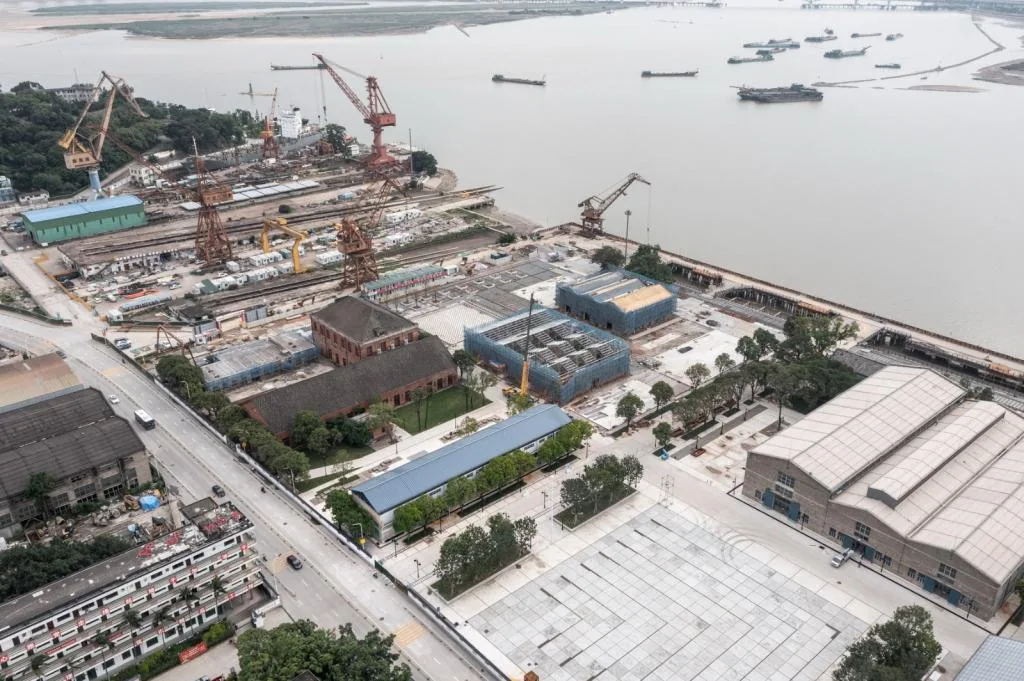
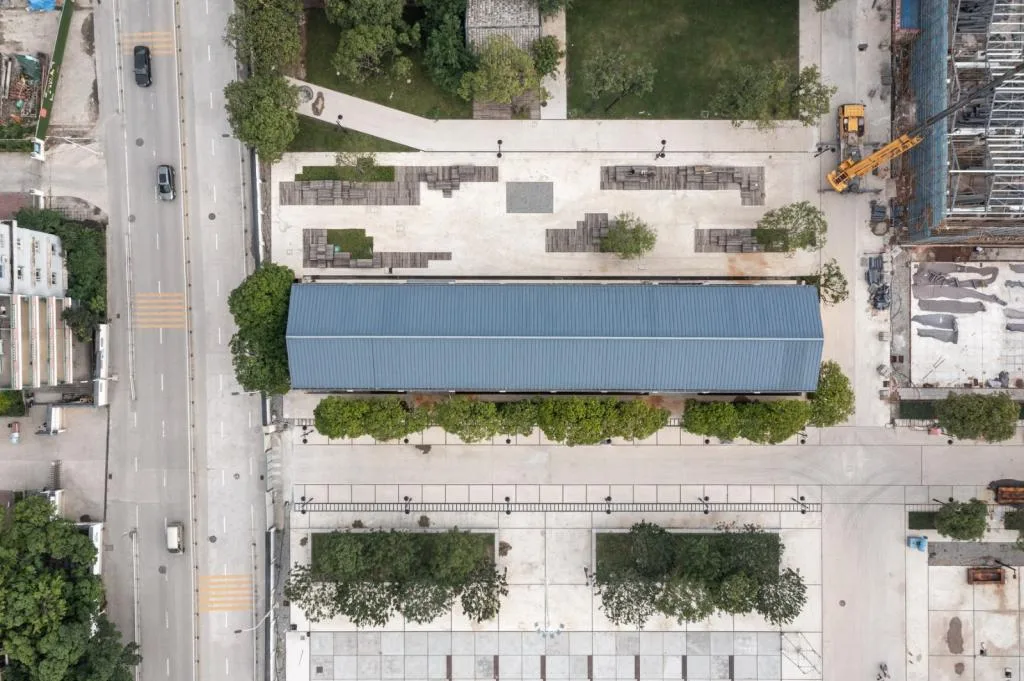
△ Ship Administration Bookstore – Aerial View
Located within Chuanzheng Culture Square in Mawei District, Fuzhou, the Chuanzheng Bookstore occupies a former shipyard warehouse. As a cultural landmark, it integrates multiple functions including the promotion, education, and academic research of shipbuilding culture.
The design reflects on history through the theme of “shipbuilding” while embracing the future through “books.” It abstracts shipbuilding concepts into a contemporary indoor environment and explores innovative methods of cultural dissemination by combining library services with immersive experiences.
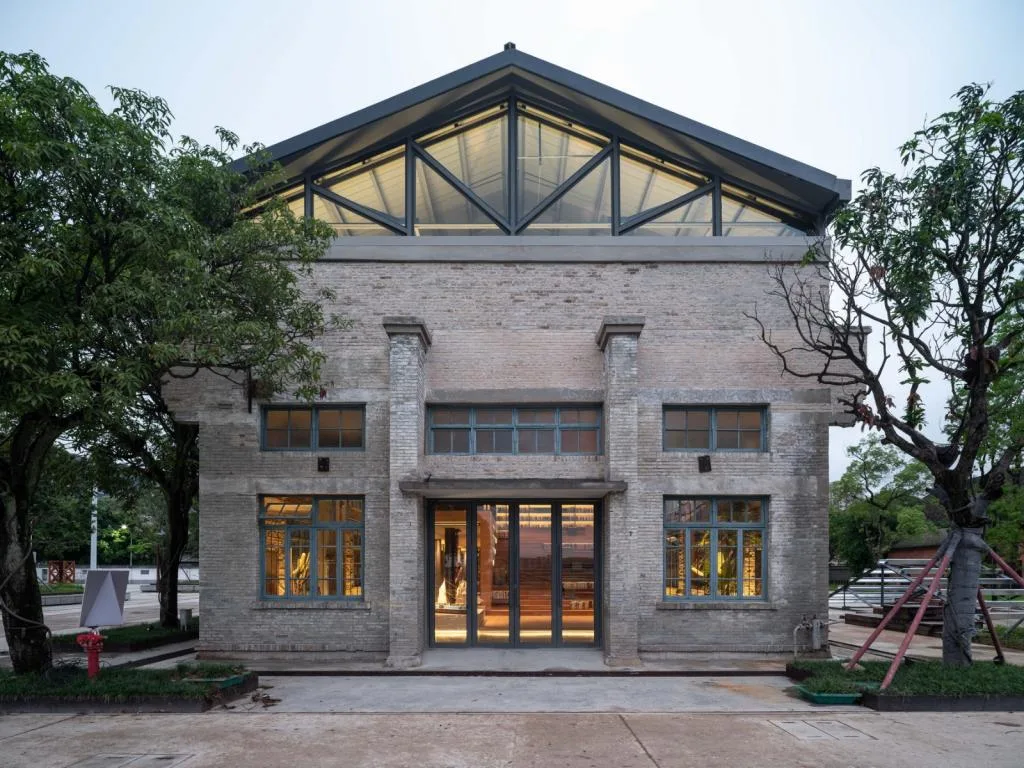
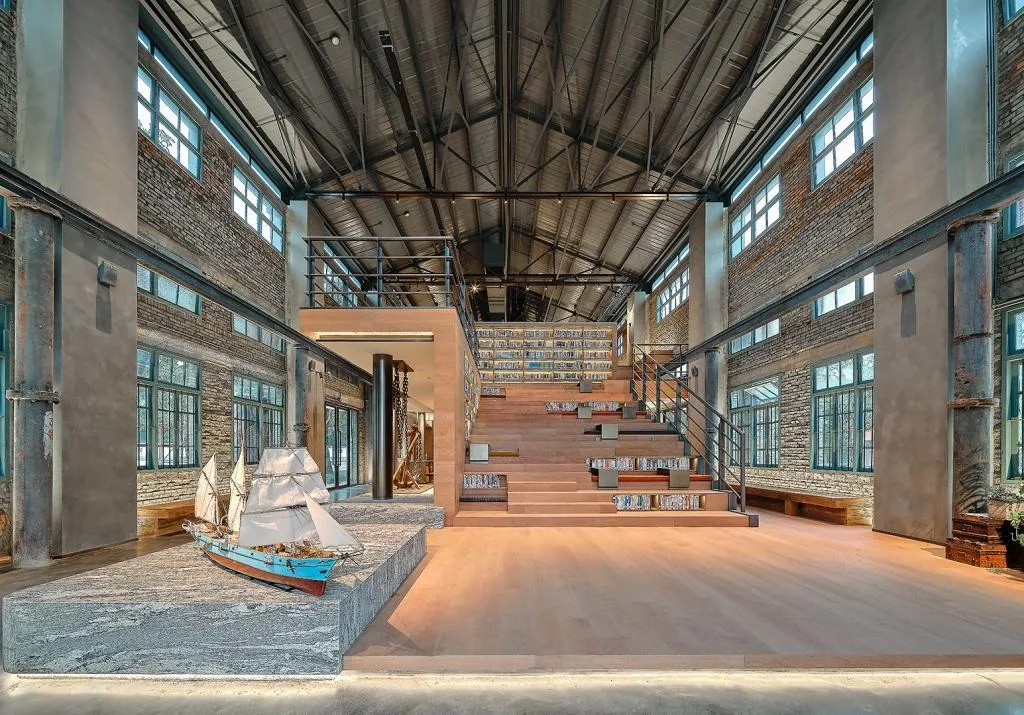
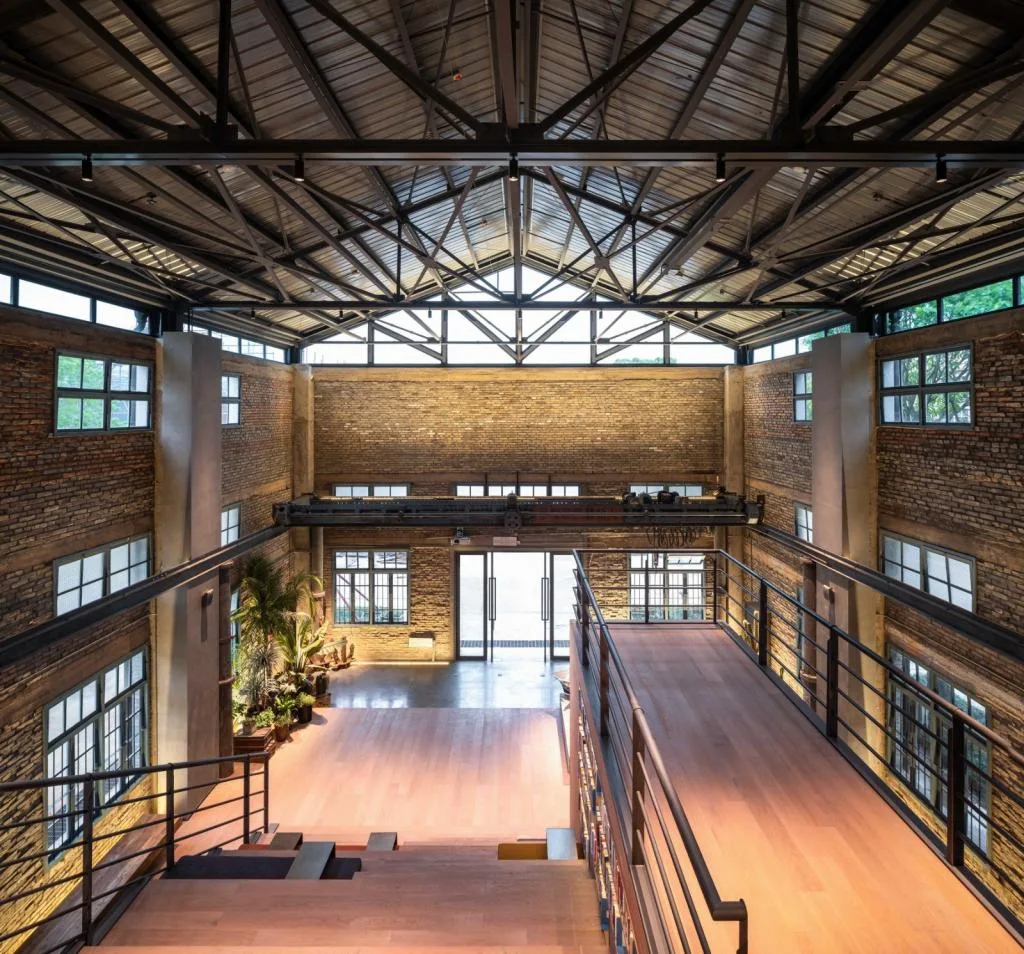
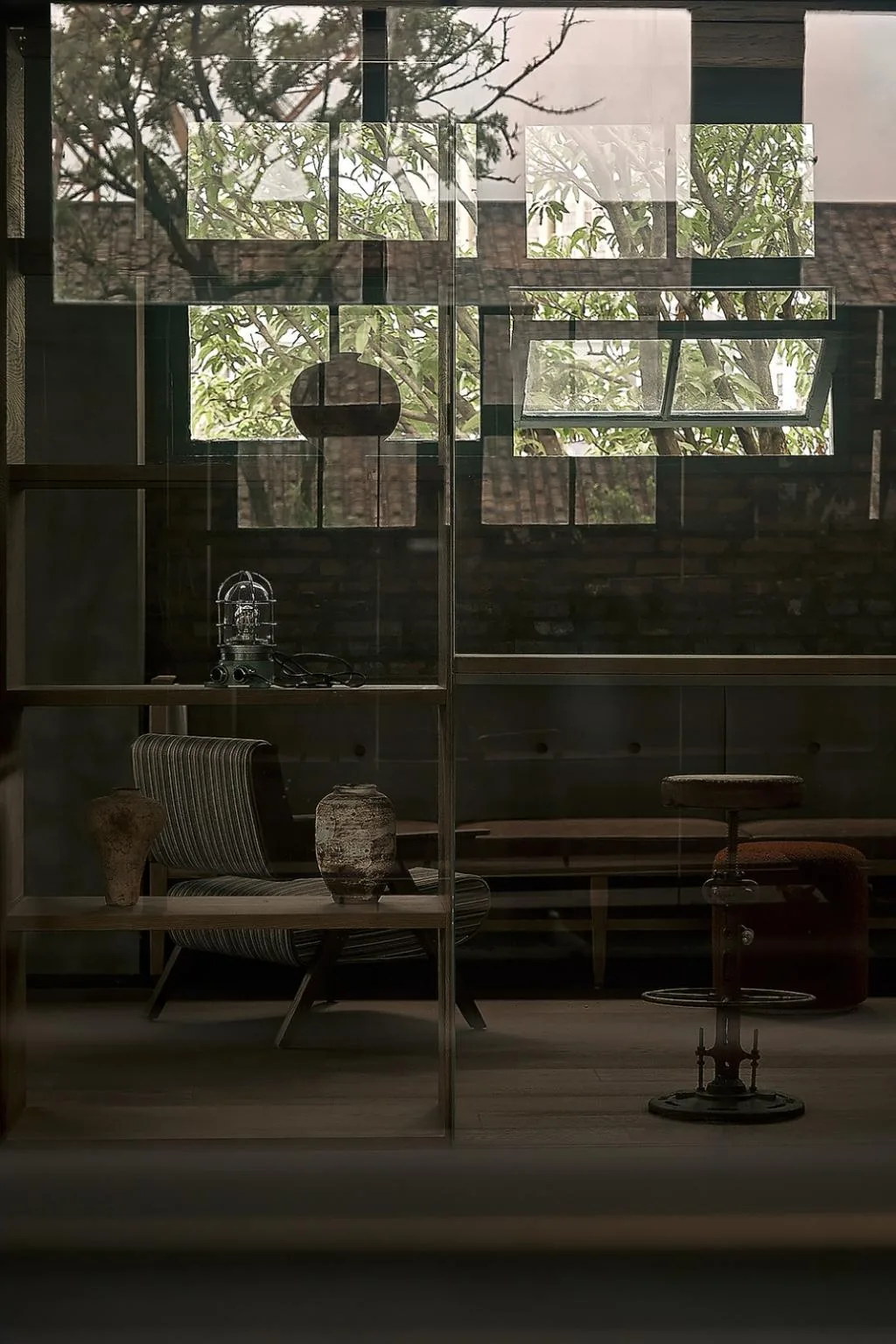
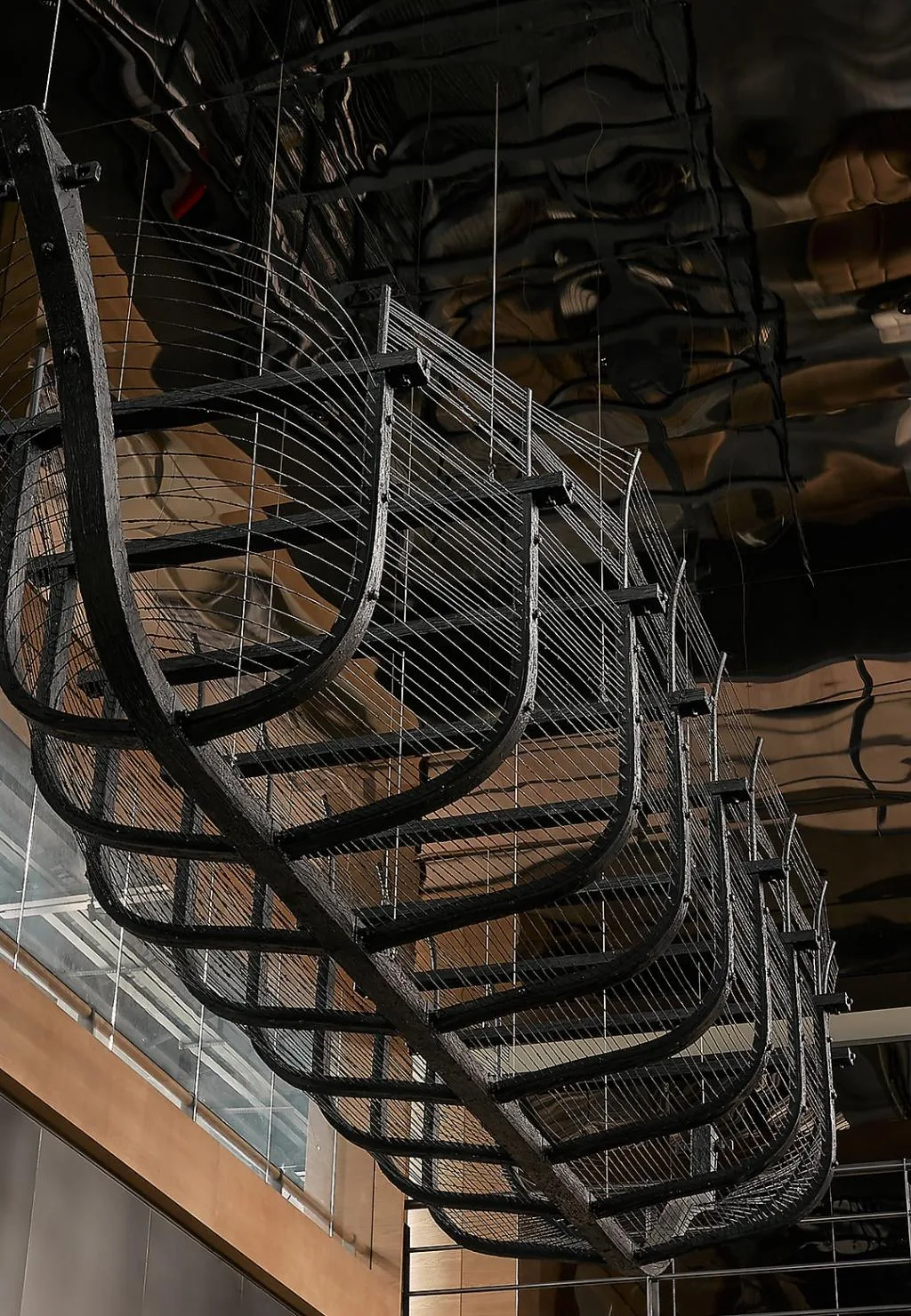
△ Shipbuilding Bookstore – Entrance and Interior View
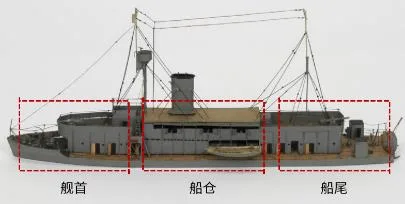
The design embodies the essence of a “ship,” imagining the bookstore as an ark navigating the cultural waves. The traditional spatial layout of a ship inspires a rich and varied interior: the bow, cabin, and stern are abstracted into distinct indoor zones. Iconic ship elements like open decks and semi-enclosed cabins are reimagined in a modern style aboard this ark.
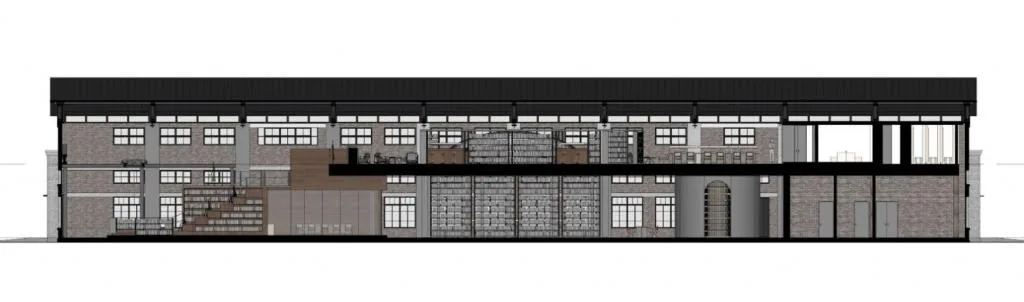
△ Indoor Sectional View
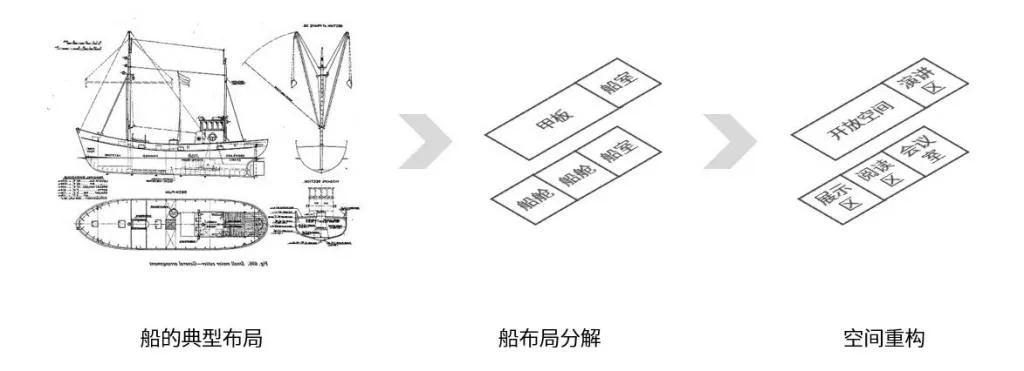
△ Functional Analysis Diagram
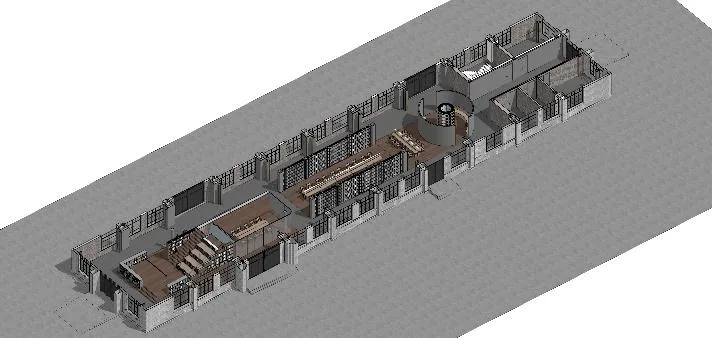
△ Axonometric View – First Floor
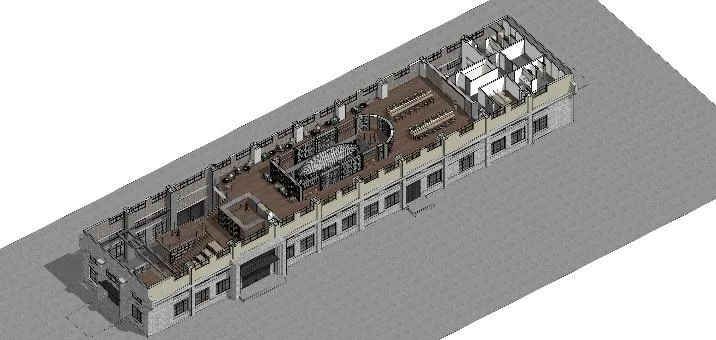
△ Axonometric View – Second Floor
Wave and Deck
The renovation transformed the bookstore from a single-story layout into a two-story space featuring a mezzanine, linked by a grand staircase located at the ark’s bow.
The first floor functions as a reading and exhibition area, focusing on books as cultural waves that guide visitors into the vast ocean of knowledge. The second floor serves as a leisure and activity zone, designed as an open deck that invites visitors to step aboard the ship’s bow, pause, and reflect. This large staircase connects both levels seamlessly and transforms the bow into a stepped gathering space, enriching the interior’s functionality.
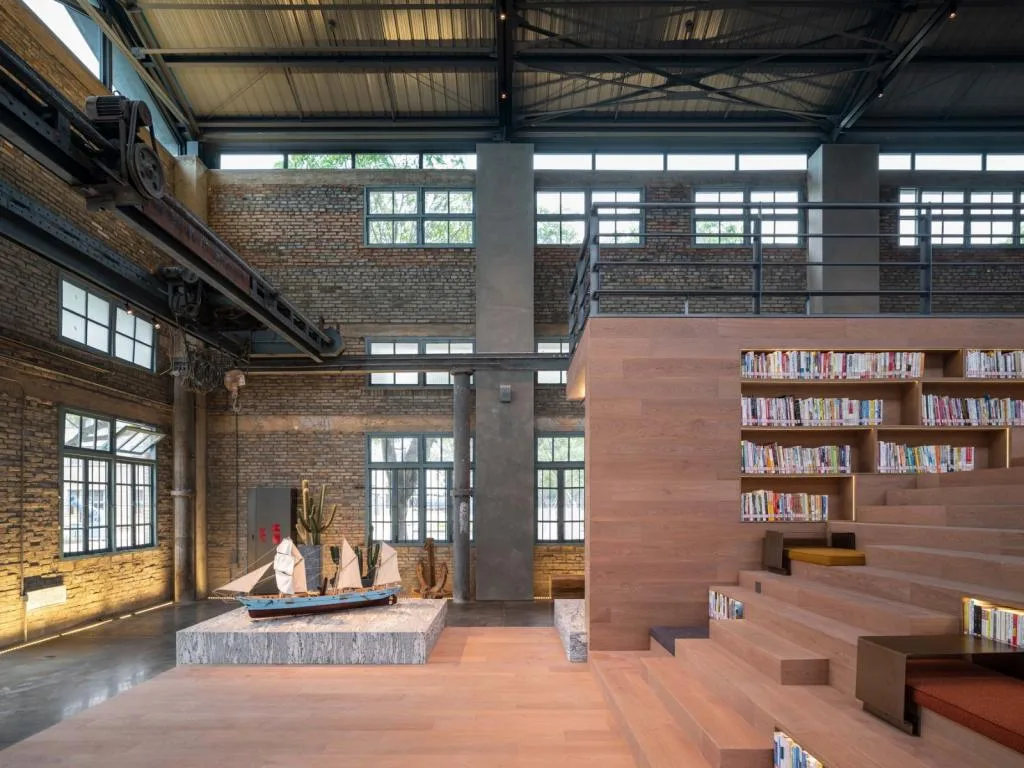
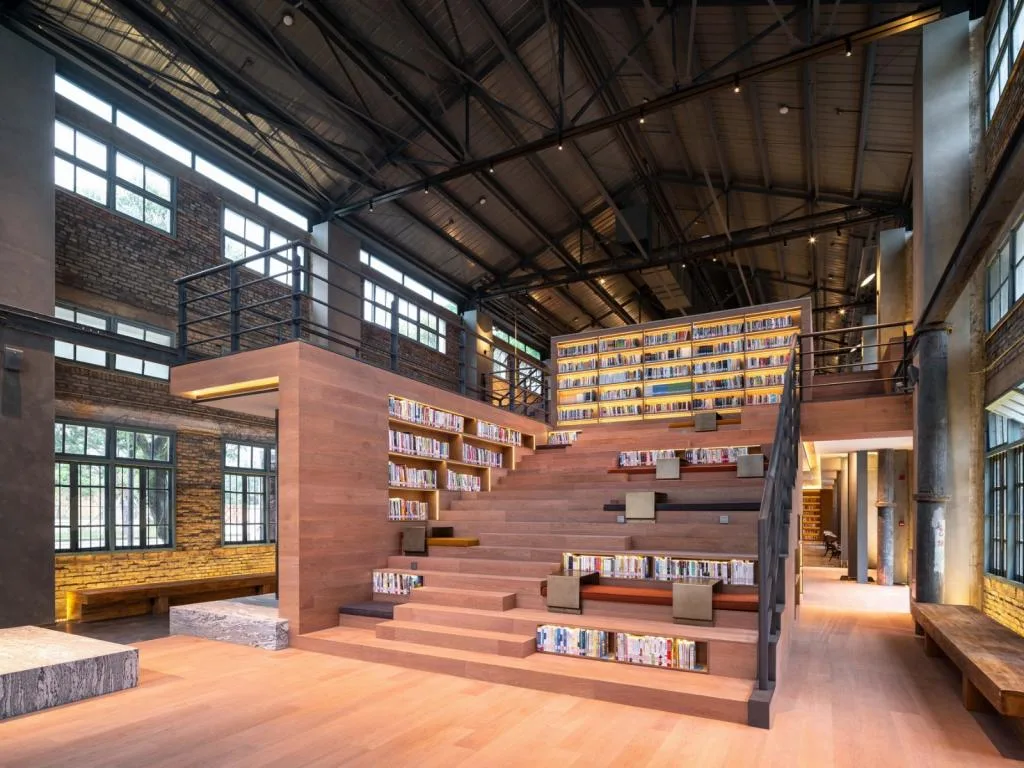
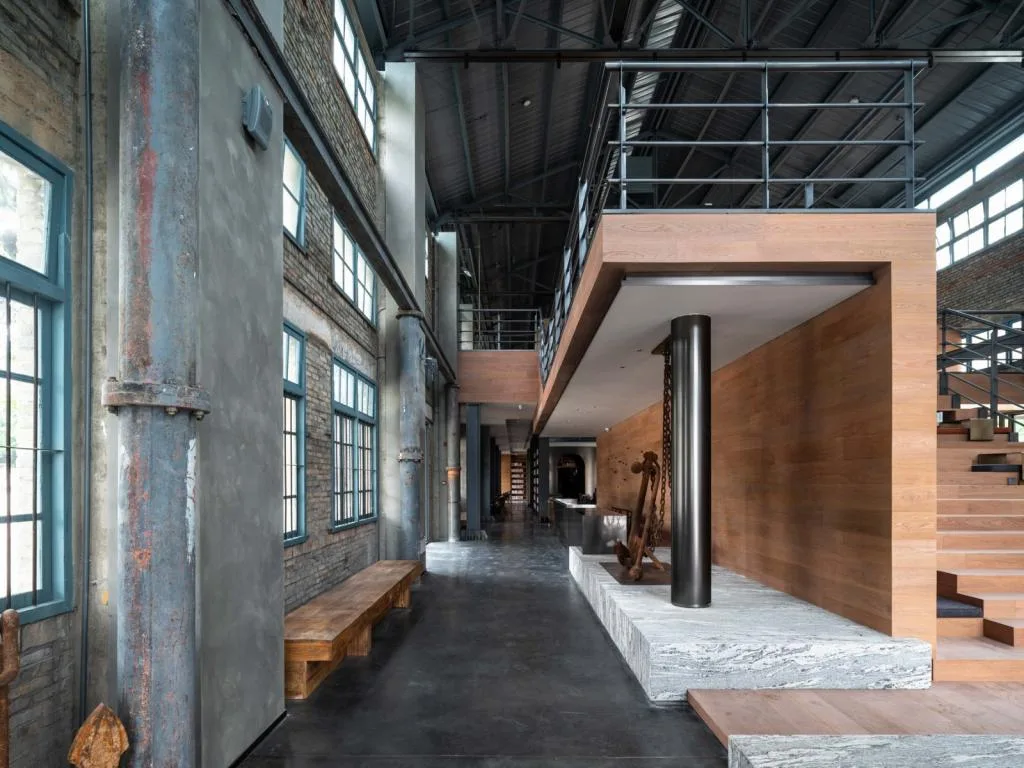
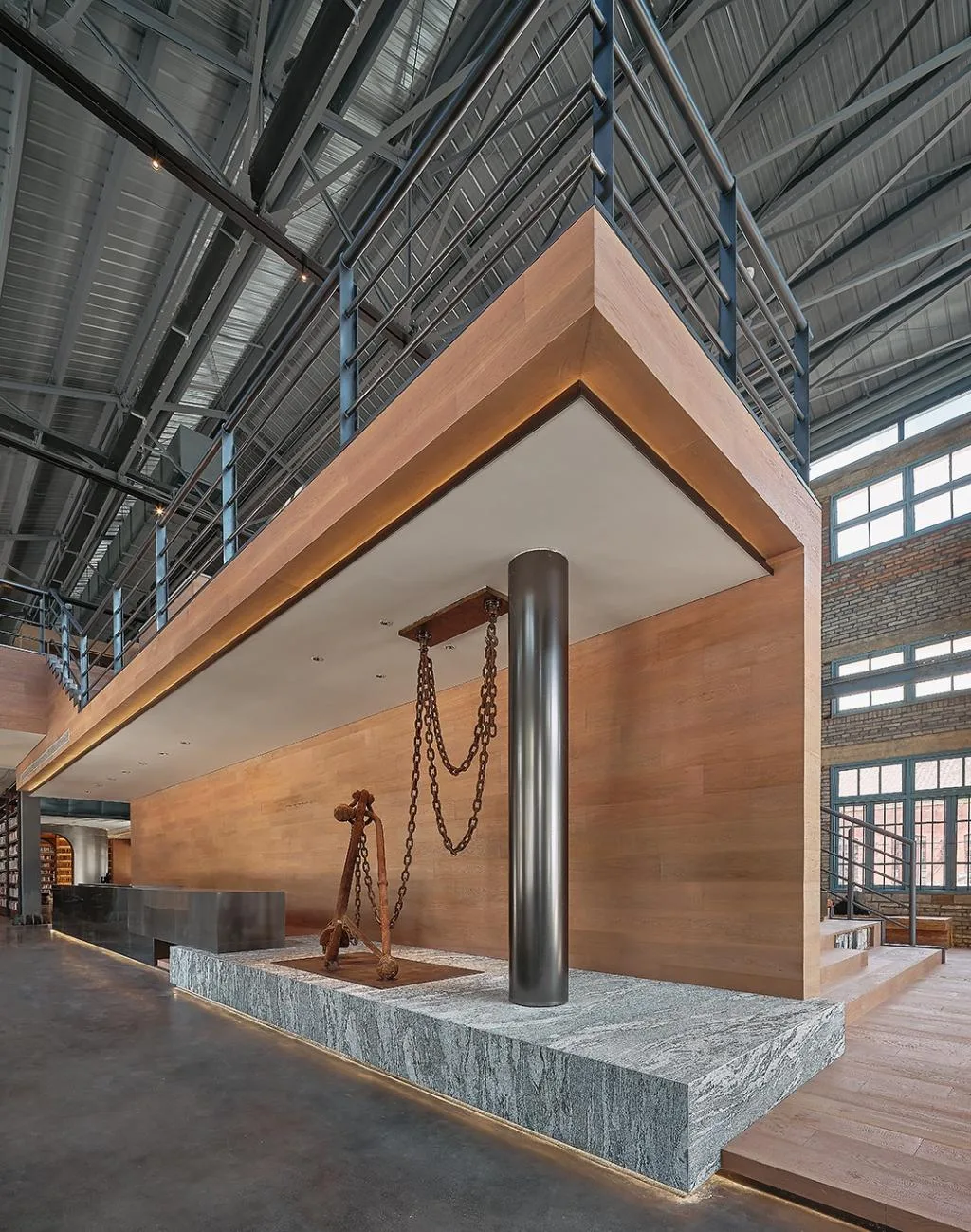
A grand staircase connects the two levels.
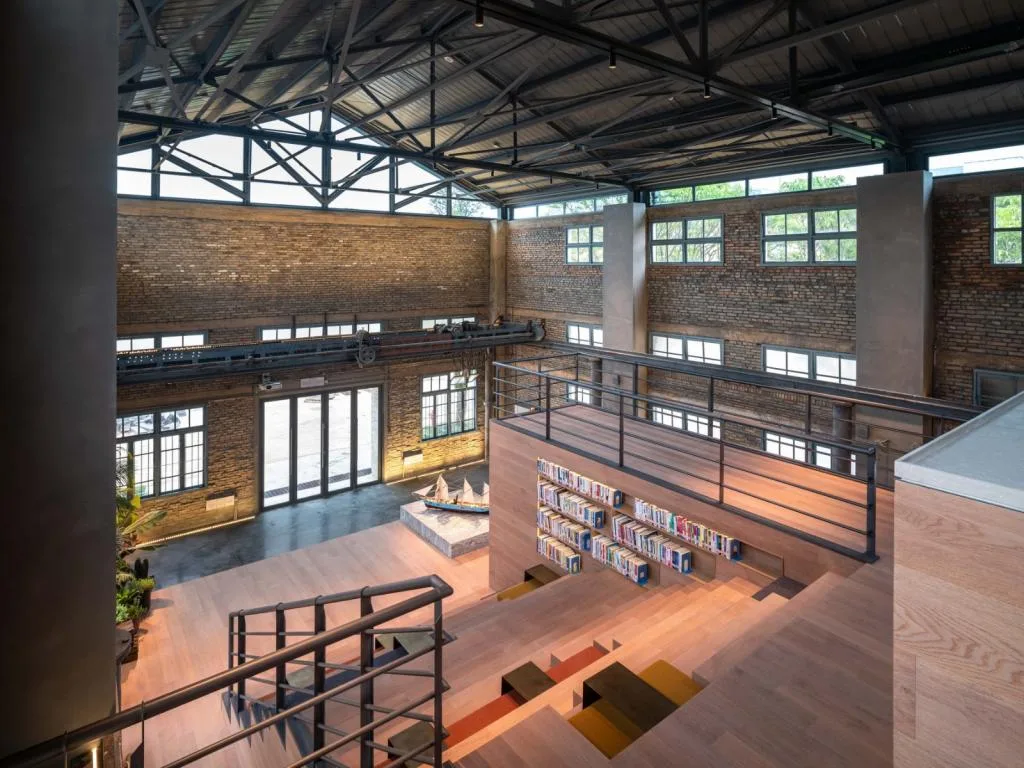
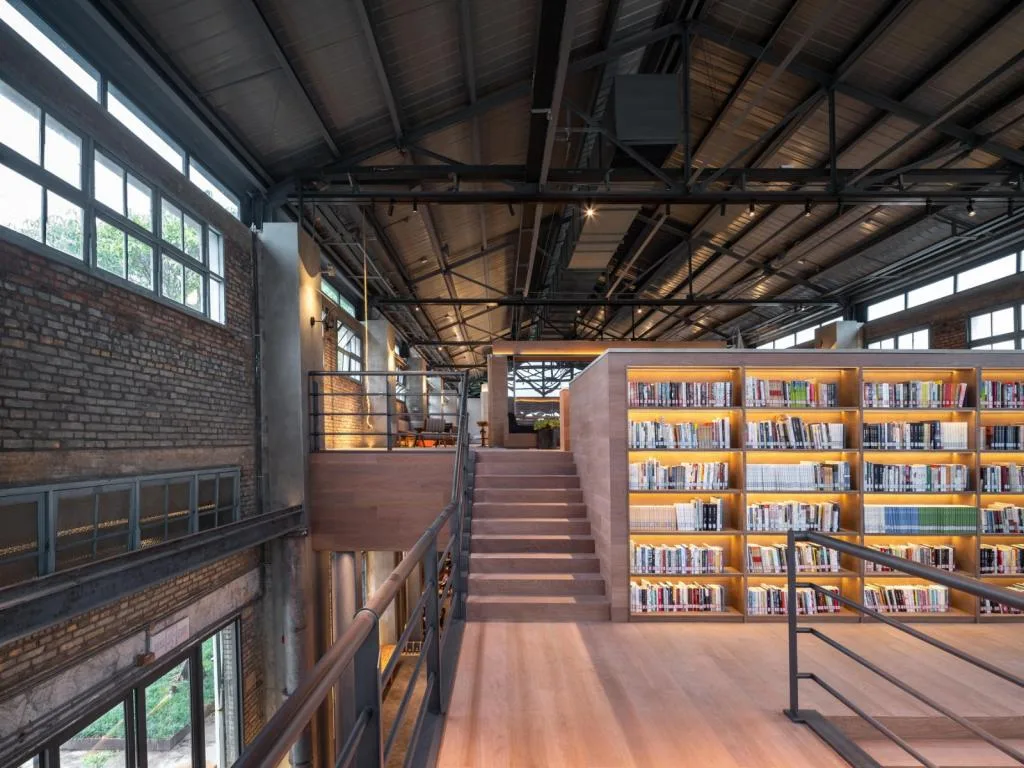
△ Deck space on the second floor
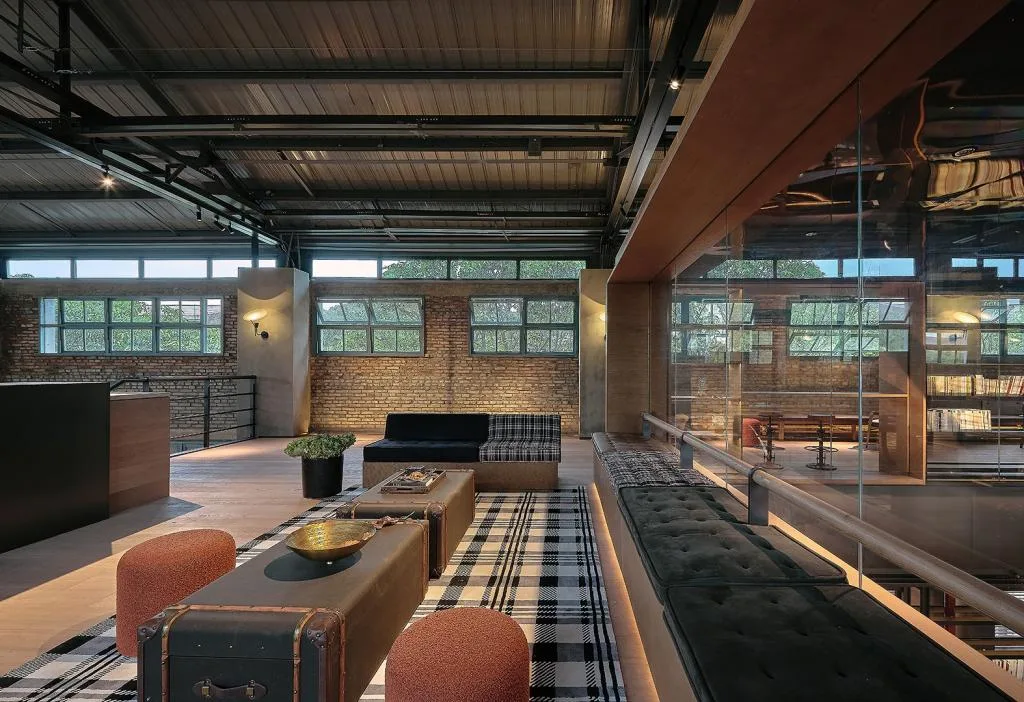
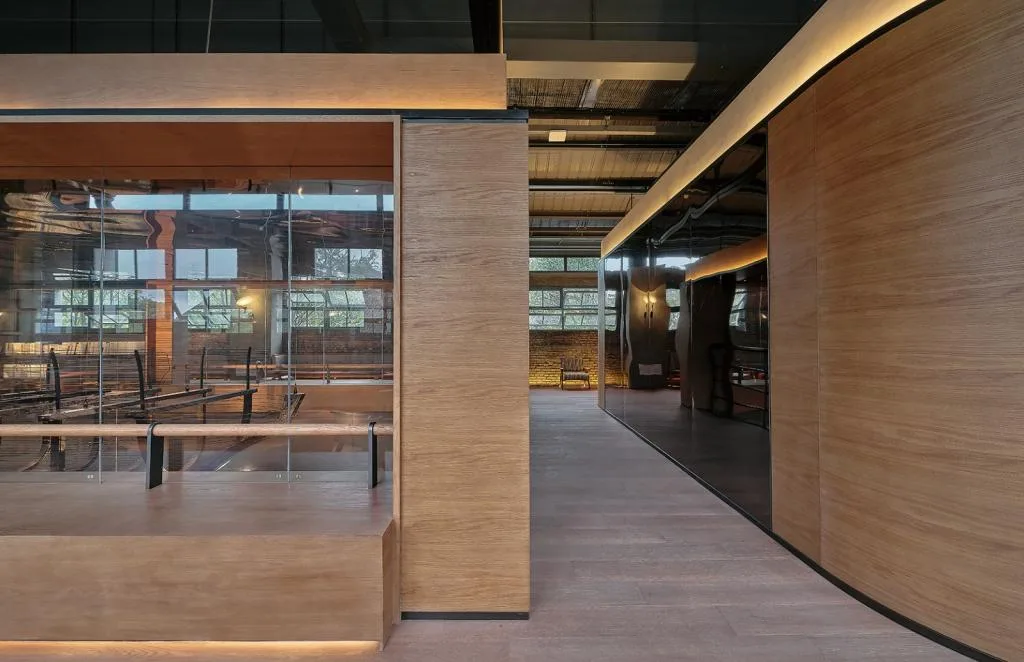
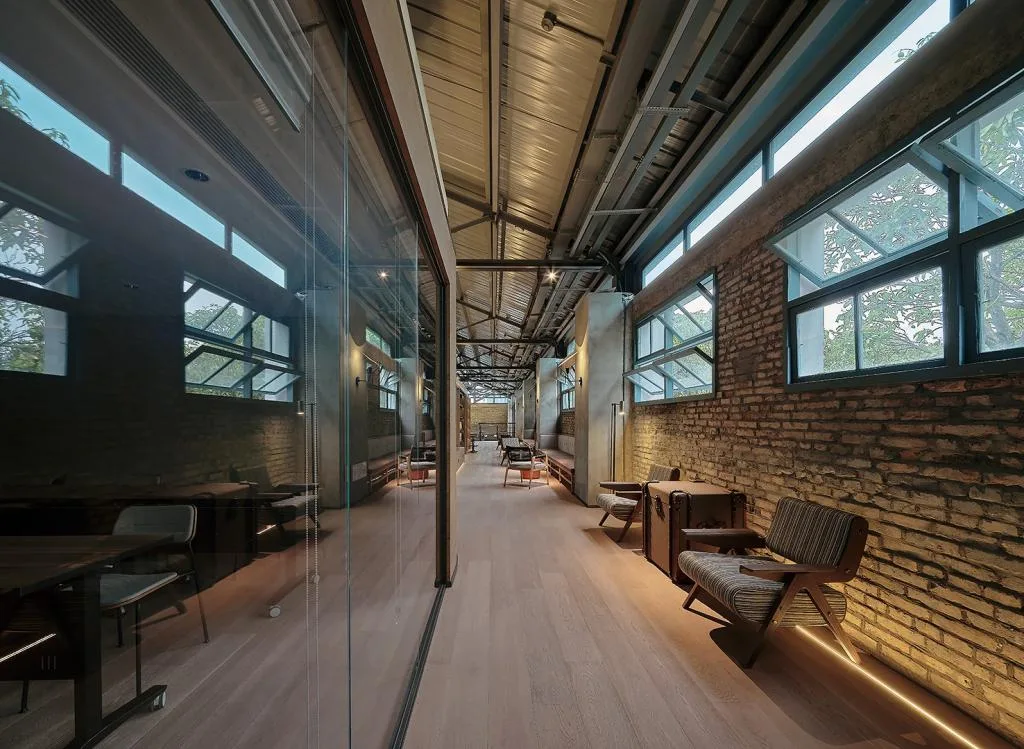
Rest area and activity space on the second floor.
The Spiritual Cabin
The central courtyard of the ark forms the heart of the bookstore. Designed as a “cabin,” this space serves as a spiritual retreat, inviting visitors to immerse themselves in reflection.
Under the atrium, movable bookshelves allow for a flexible layout, creating a multifunctional library that supports various activities such as reading and exhibitions. Suspended above the courtyard is a large ship skeleton, symbolizing the rich history of shipbuilding. The black reflective ceiling mirrors the scene below like water, creating a timeless atmosphere where space and time seem to converge.
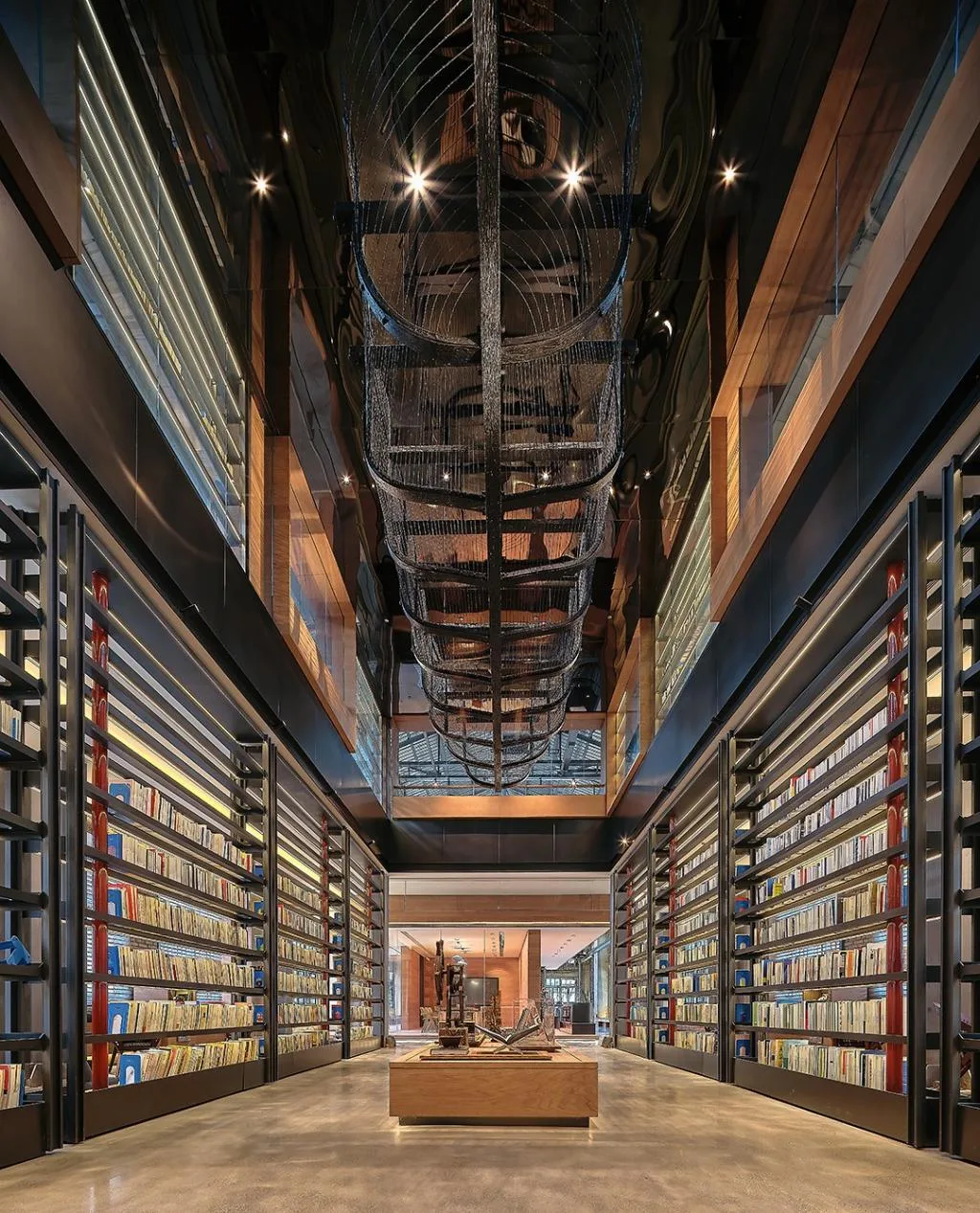
△ Courtyard – Spiritual Cabin
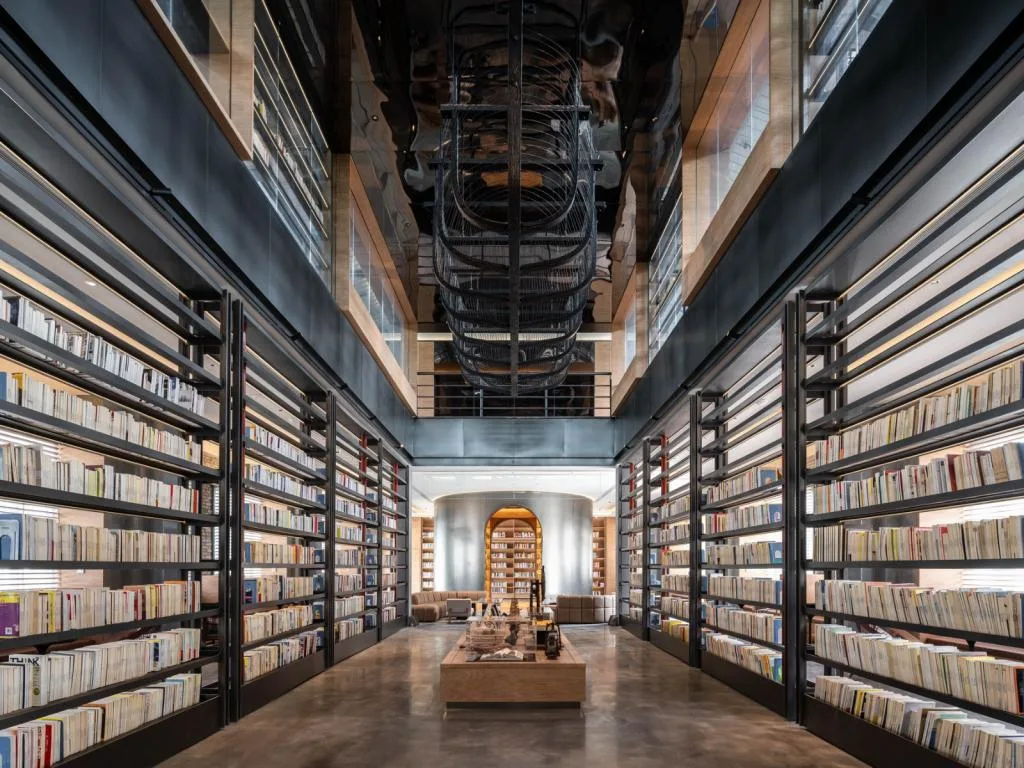
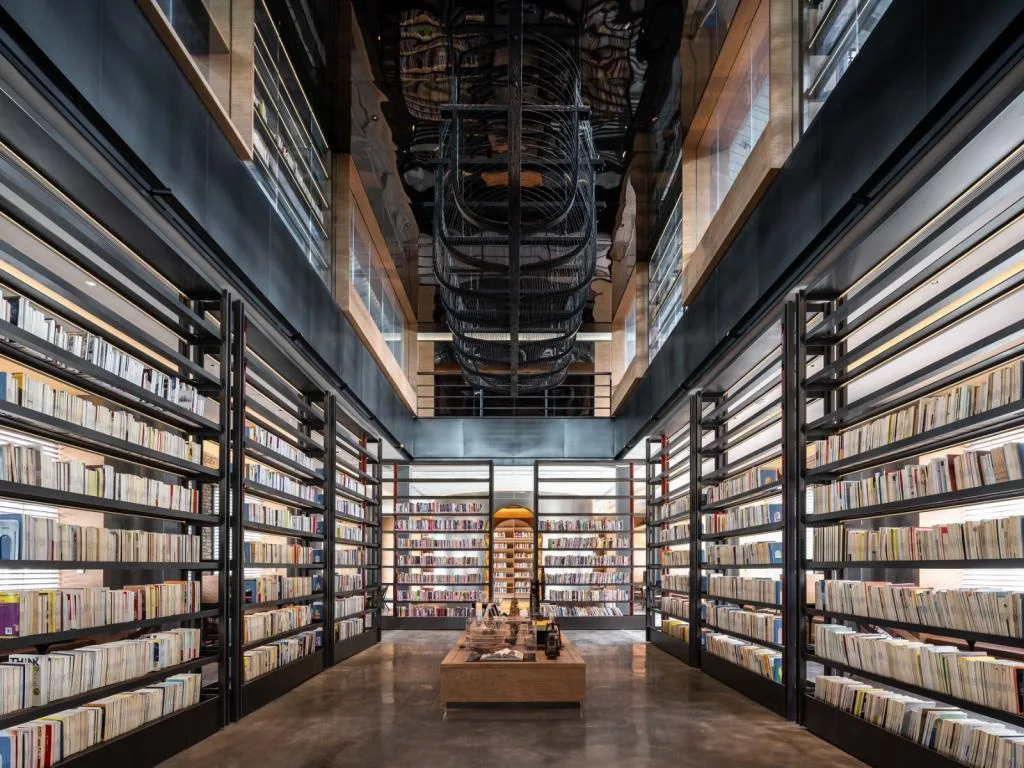
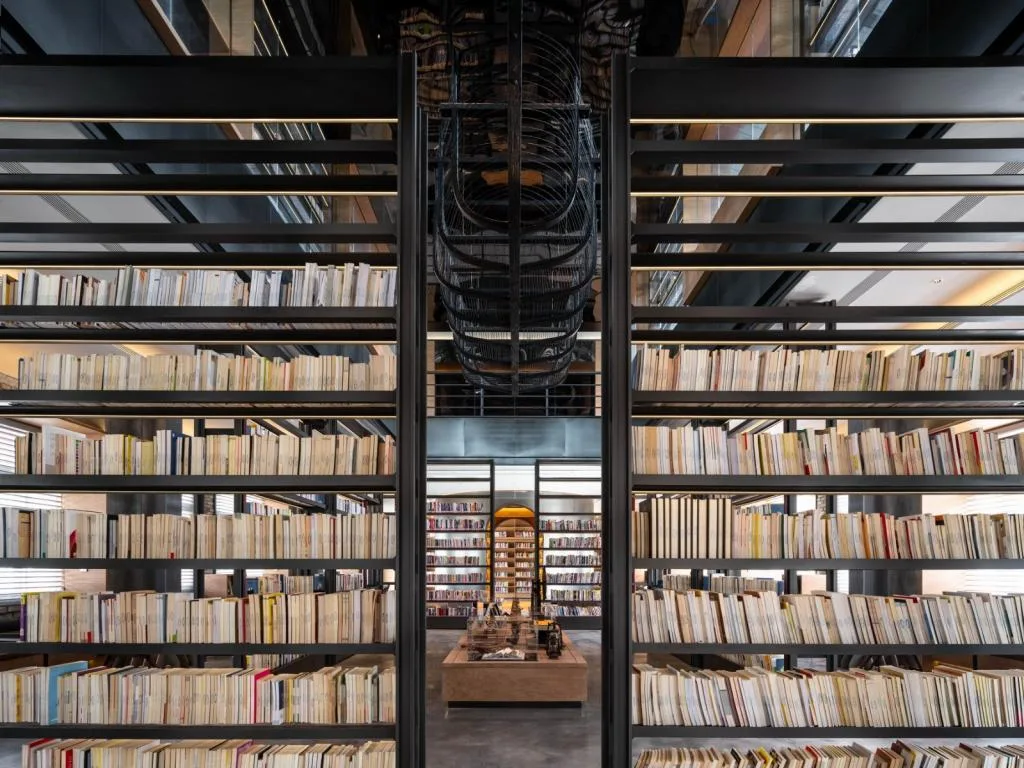
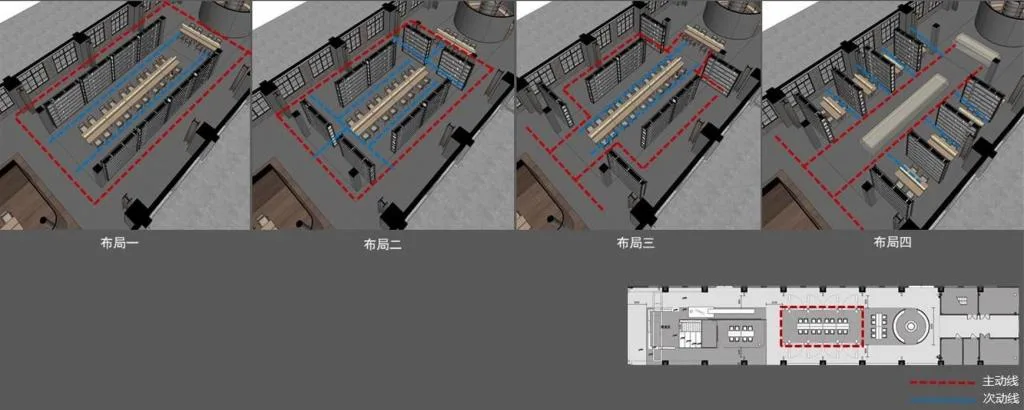
A versatile, composite library space.
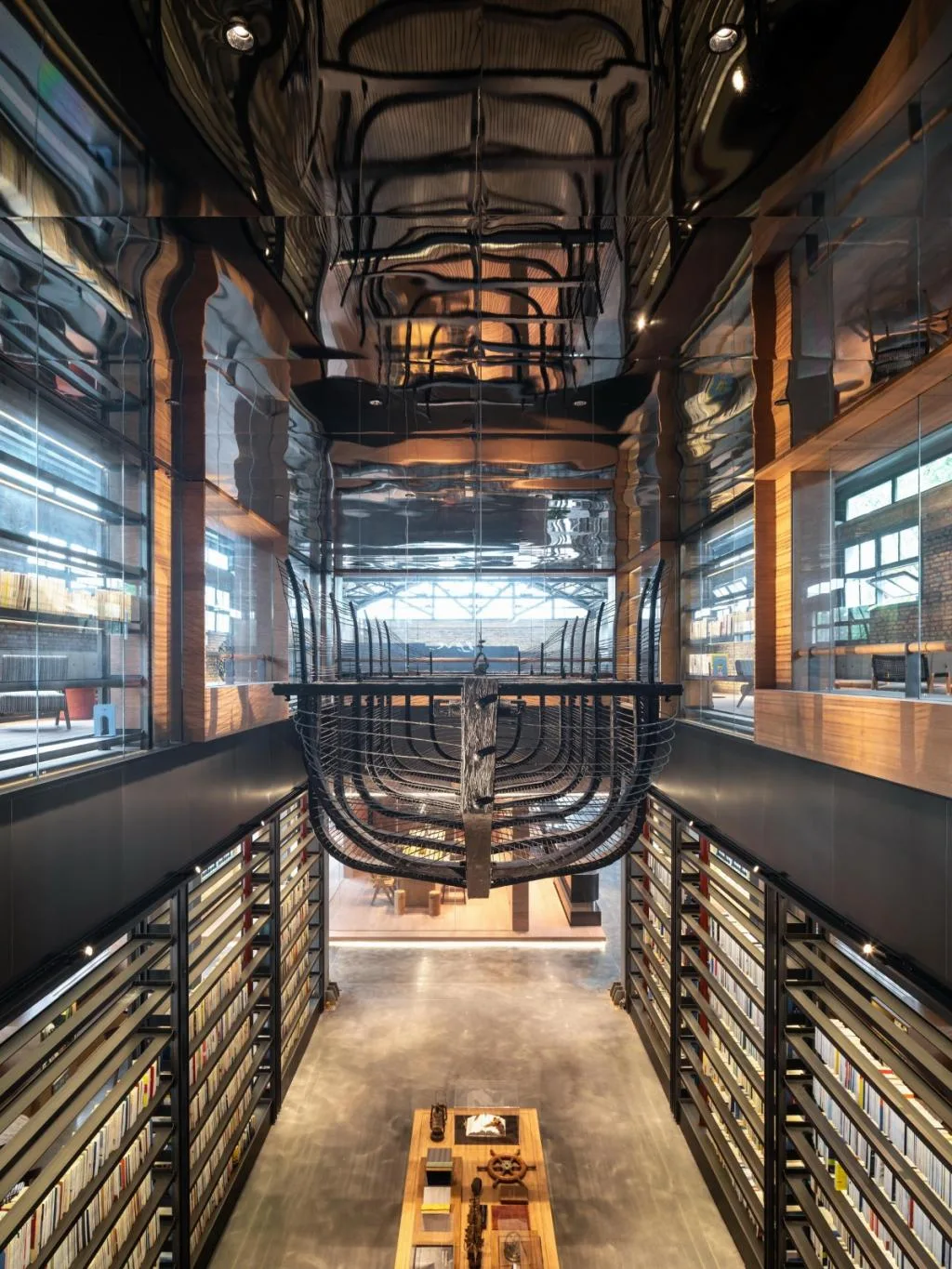
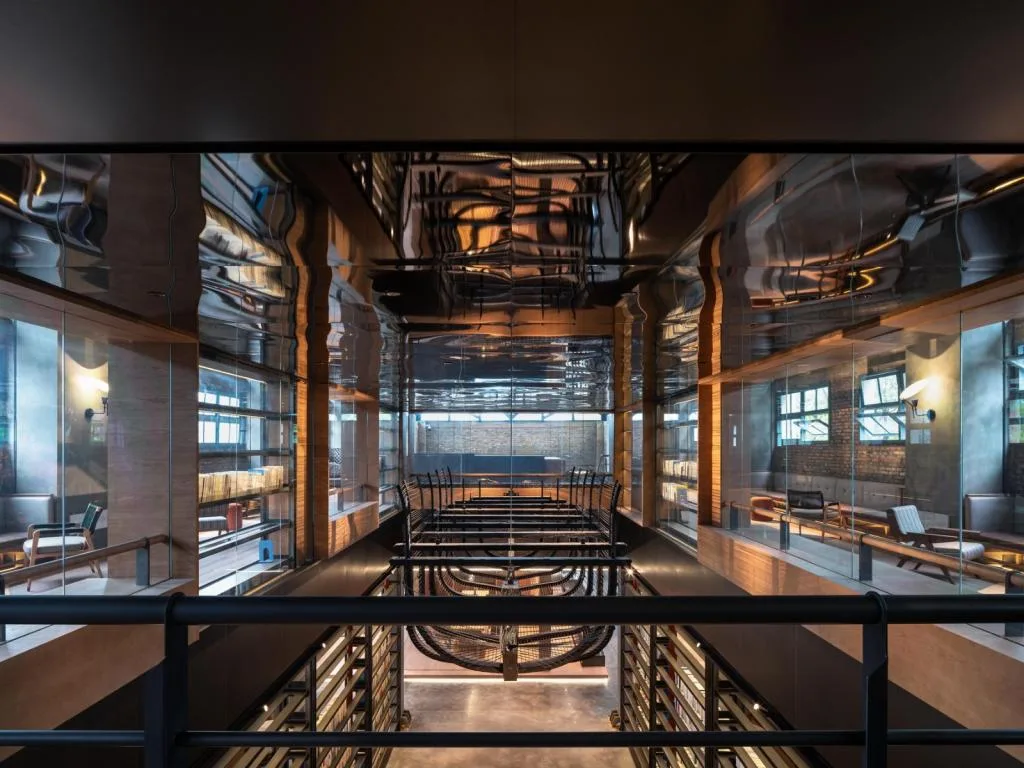
Design integrates a sense of time and space.
The Reading Room
The stern of the ark features another distinct cabin-like space. This circular reading area echoes the enclosed cabins found on ships, offering a quiet, private retreat within the bookstore.
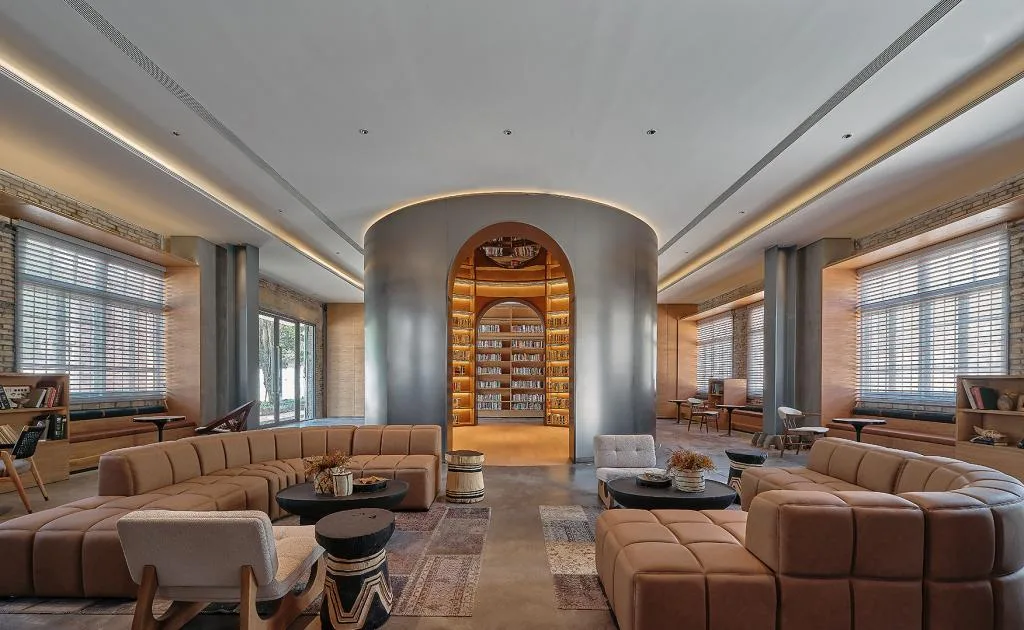
△ Circular Reading Space
Ship Elements
Beyond abstract spatial references to ships, the design incorporates actual shipbuilding components as decorative features, enriching the environment with maritime symbolism.
Elements such as railings, steel ladders, and cargo boxes are recreated using modern techniques. This blend of new materials and design language with the historical context creates a dynamic contrast that spans the bookstore’s cultural timeline. These details infuse the spirit of shipbuilding culture into every corner of the space.
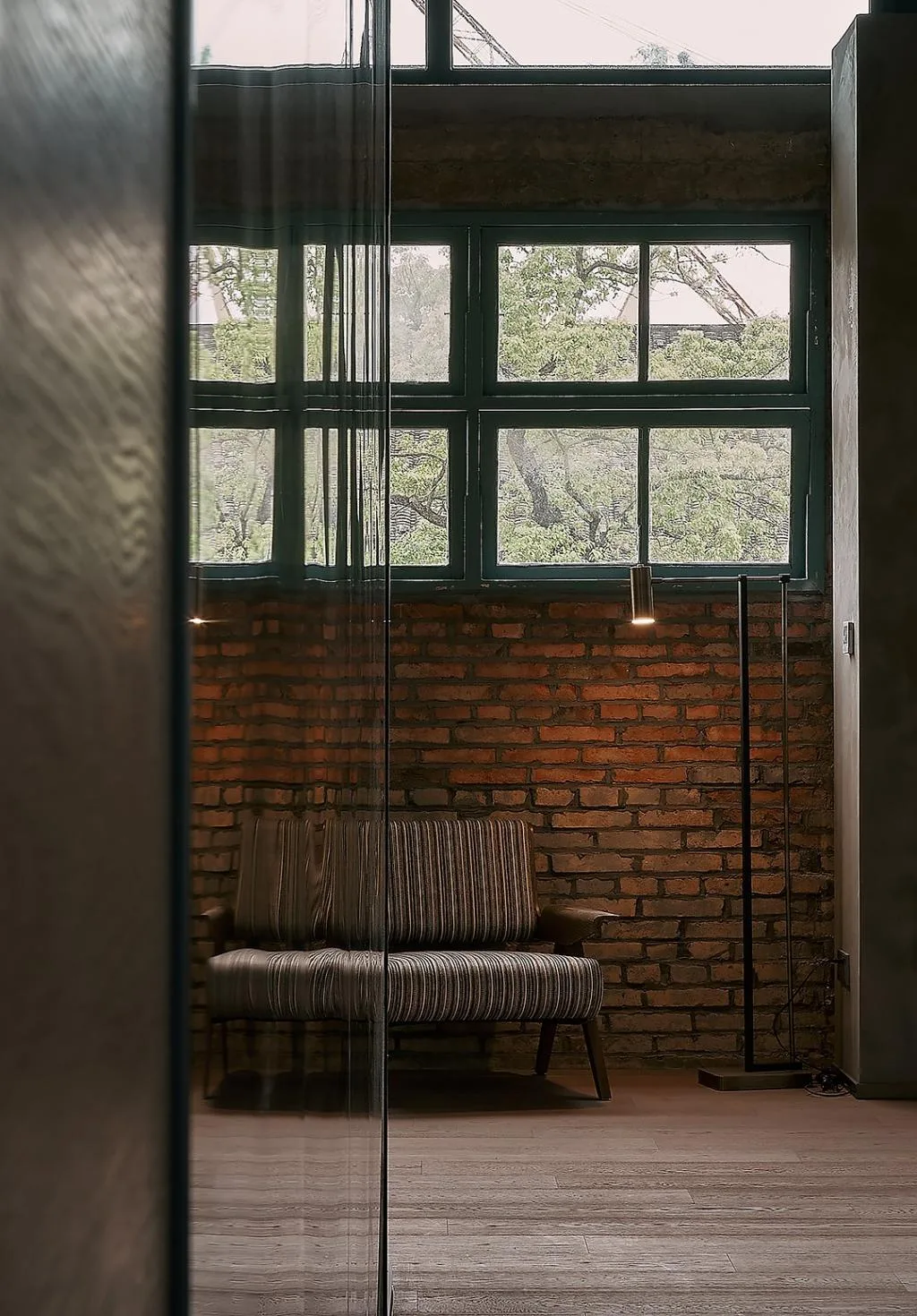
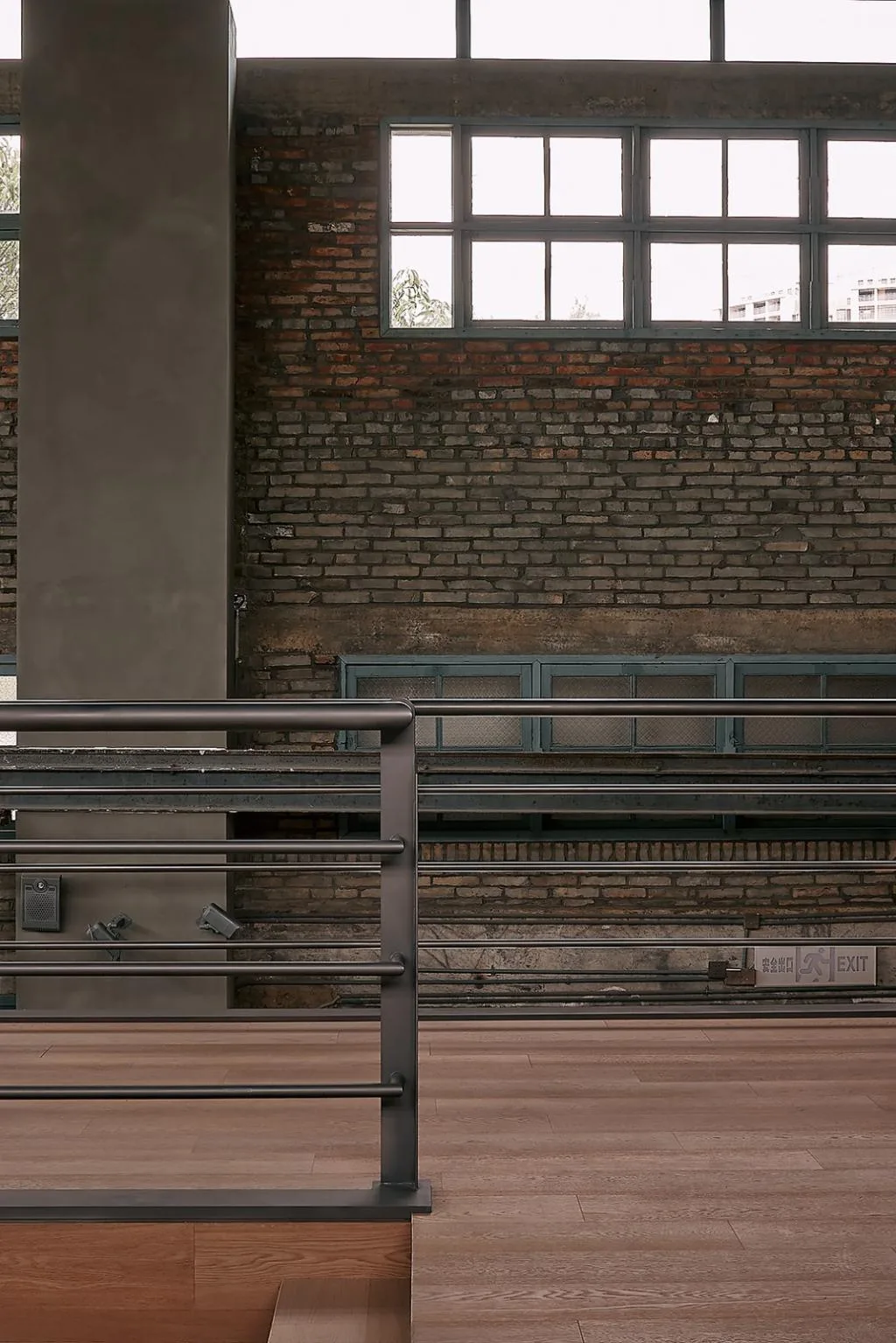
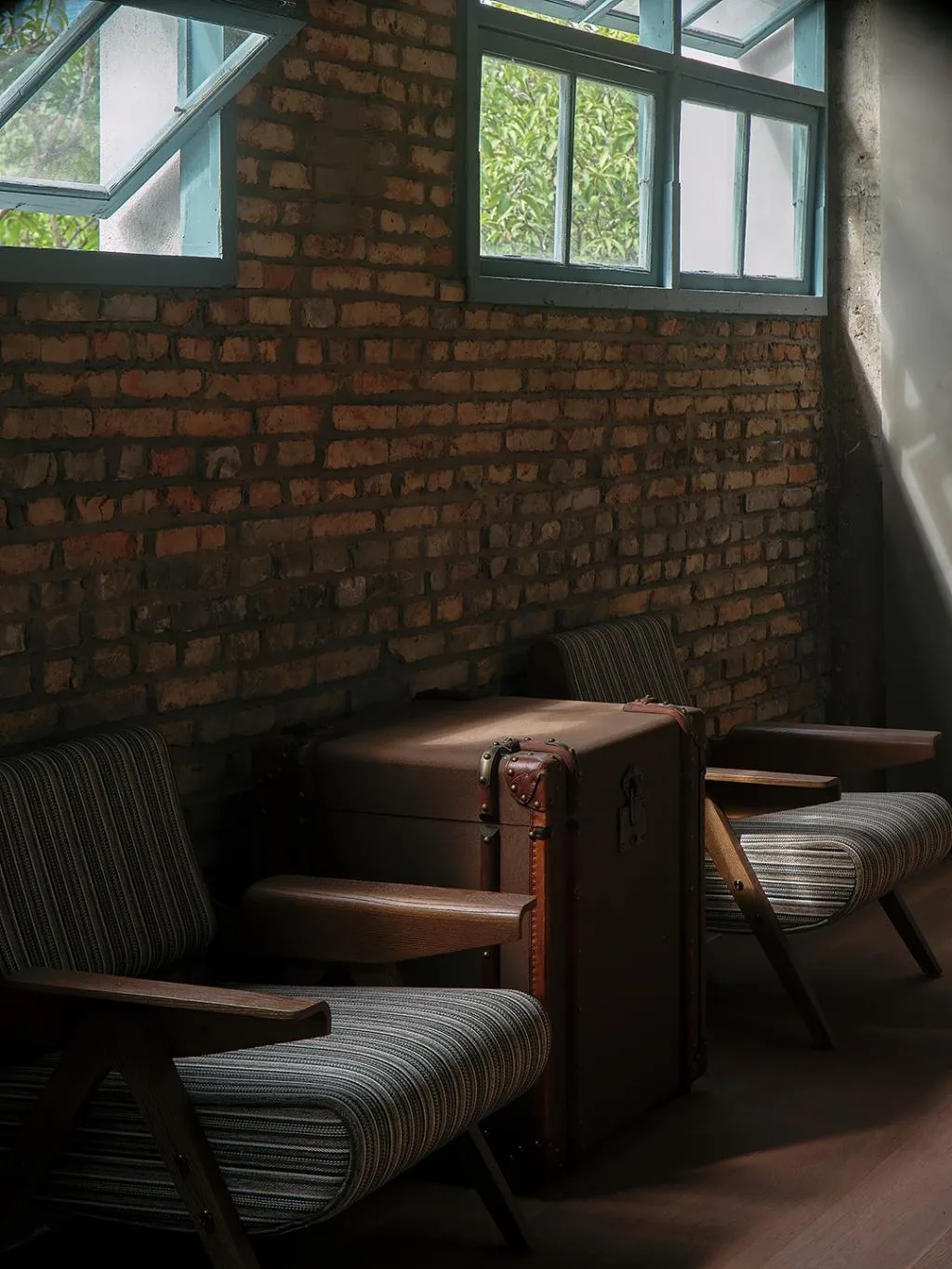
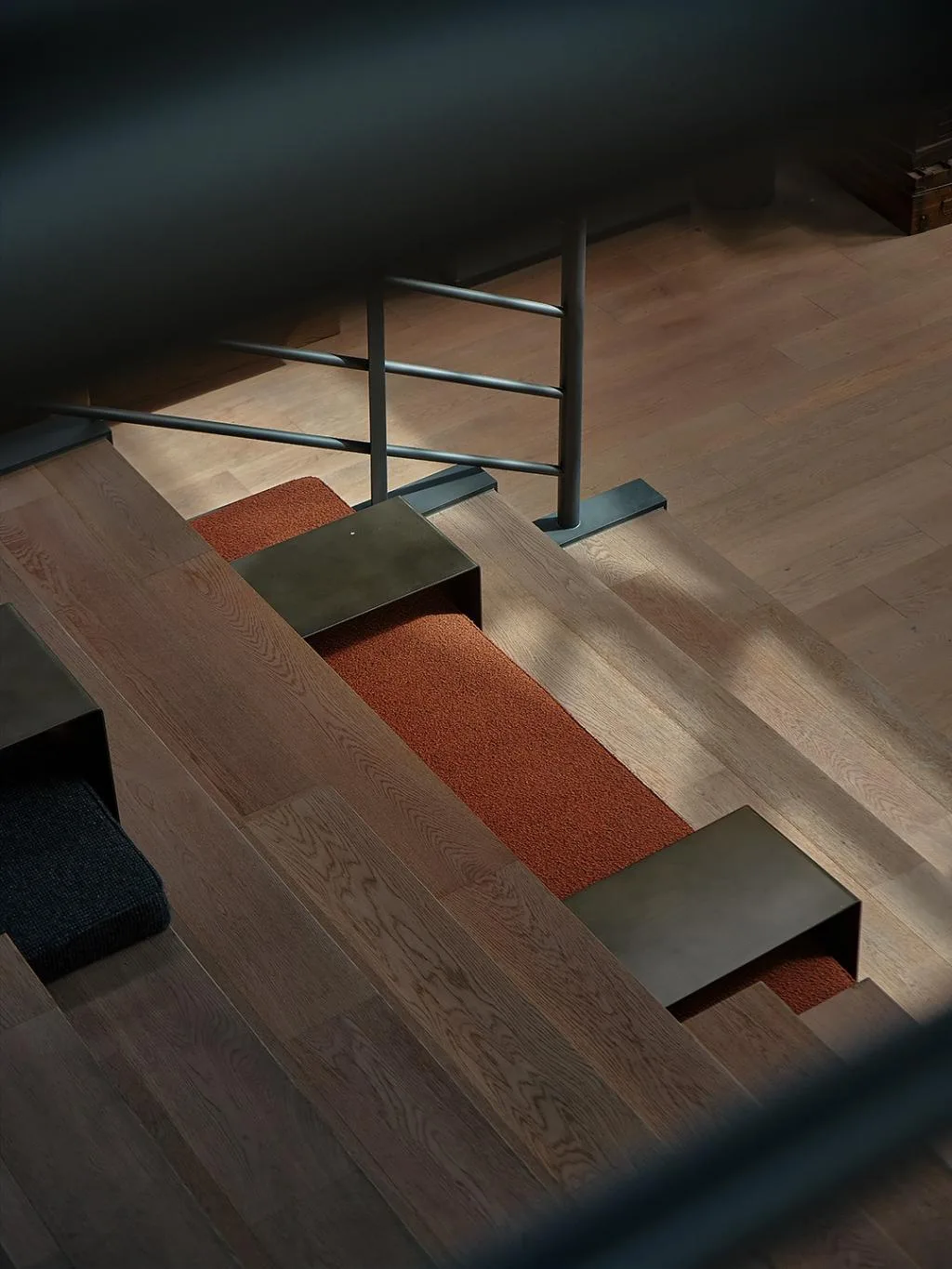
△ Shipbuilding Bookstore – Design Details
Project Information
Project Name: Mawei Shipyard
Location: Mawei District, Fuzhou City
Completion Year: 2021
Project Type: Mixed-use Space Renovation
Area: 1,200 square meters
Owner: Sunshine City Group
Owner Representatives: Zhang Wei, Xiong Qingxing, Yuan Jianrong
Design Firm: WJ STUDIO, Wanjing Design
Lead Designer: Hu Zhile
Design Team: Xu Yeyou, Su Xuebai, Zhang Yonghui
Lighting Design: Fang Fang, Yi Zonghui
Interior Decoration: Shenzhen Brumeng Interior Design Co., Ltd.
Photography: Tian Fangfang, Zhang Xi
Video: Zhang Xi
















Must log in before commenting!
Sign Up