
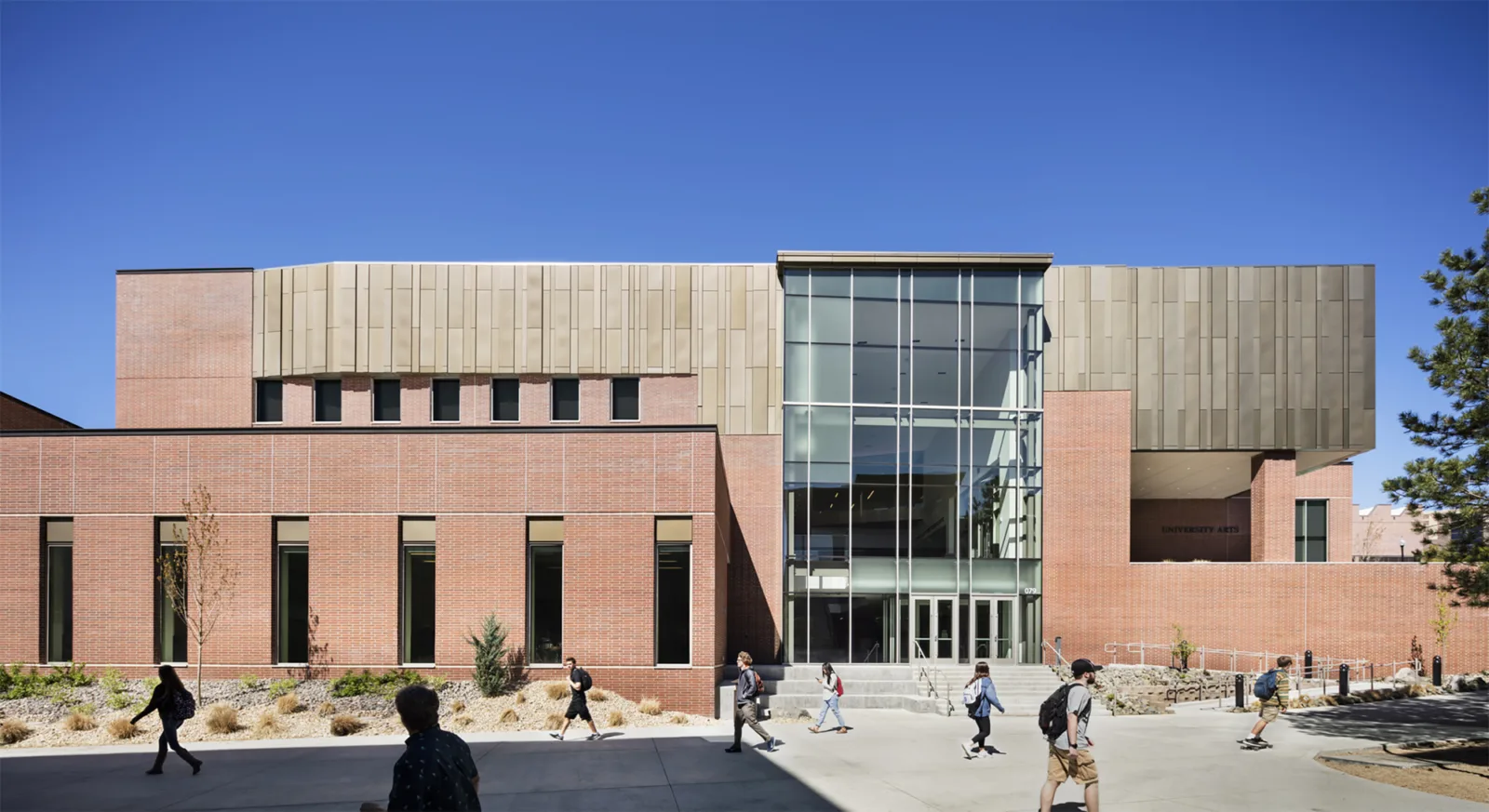
The College of Arts at the University of Nevada, Reno, serves as a vibrant hub for the arts on the main campus. It houses the departments of fine arts, music, drama, and dance. The original church art complex, designed by the acclaimed modernist architect Richard Neutra, opened in 1962 and has since been a cherished part of the campus’s thriving artistic environment.
Located centrally on campus, this complex welcomes students, faculty, and community members alike, offering access to world-class performances and major exhibitions.
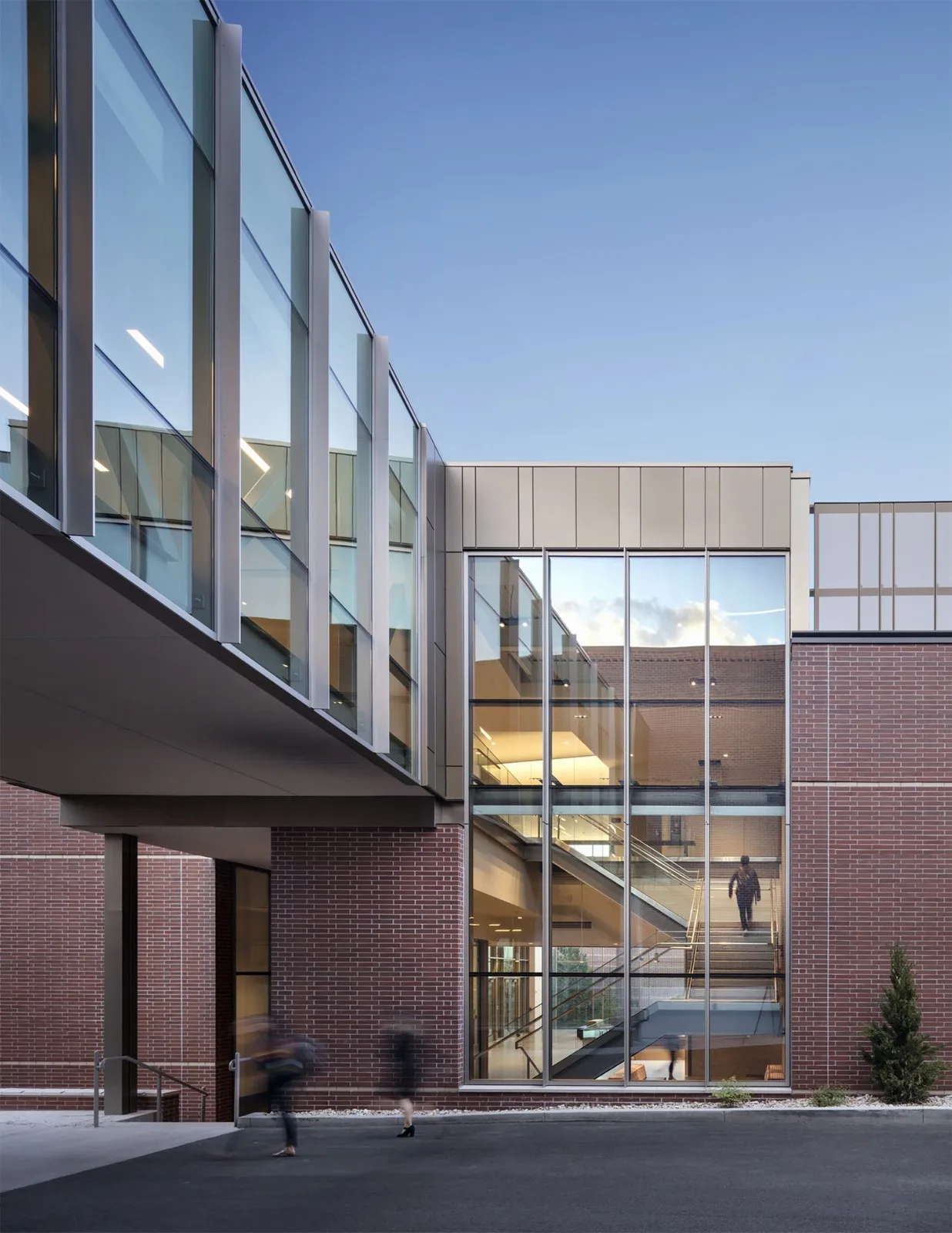
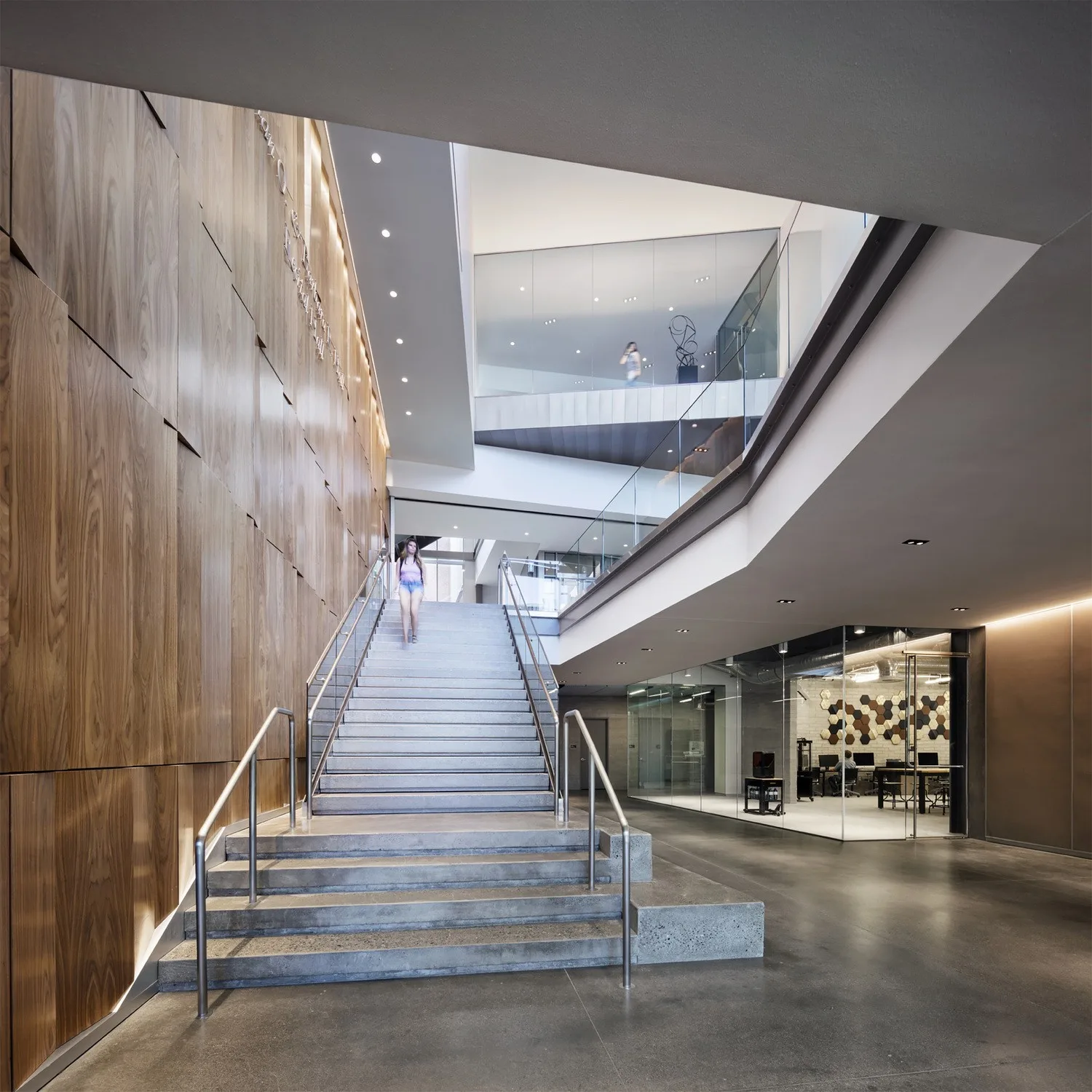
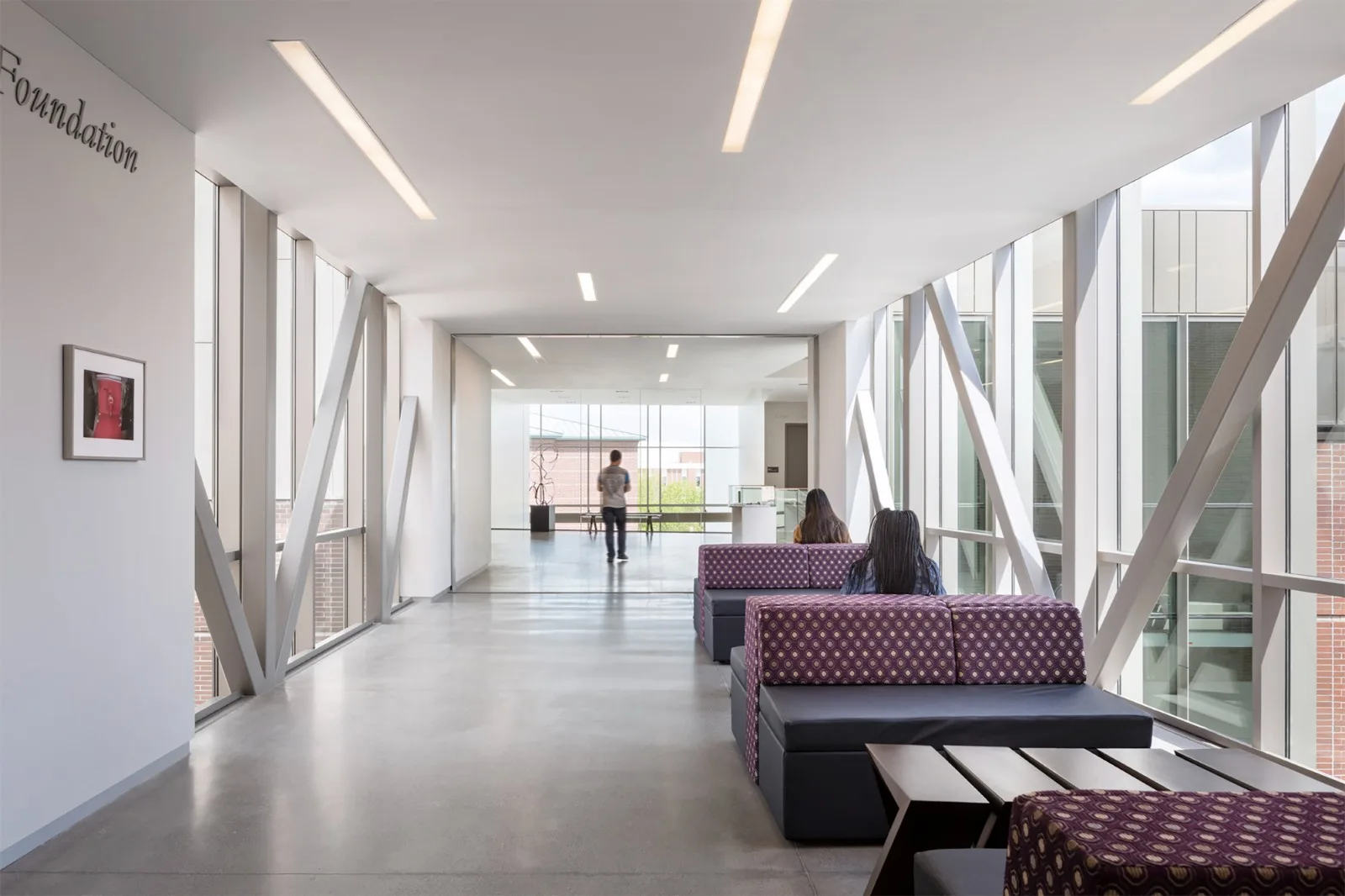
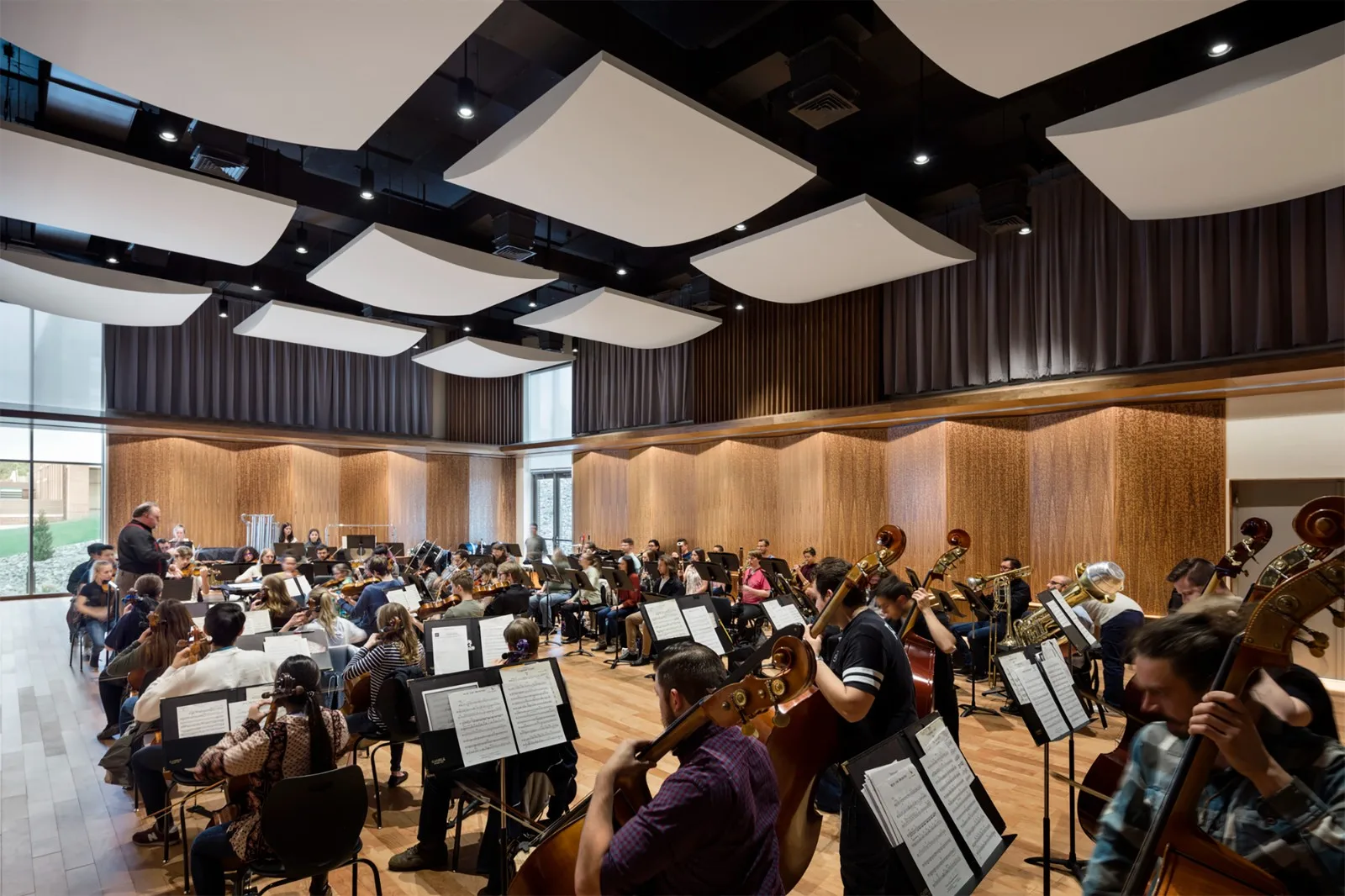
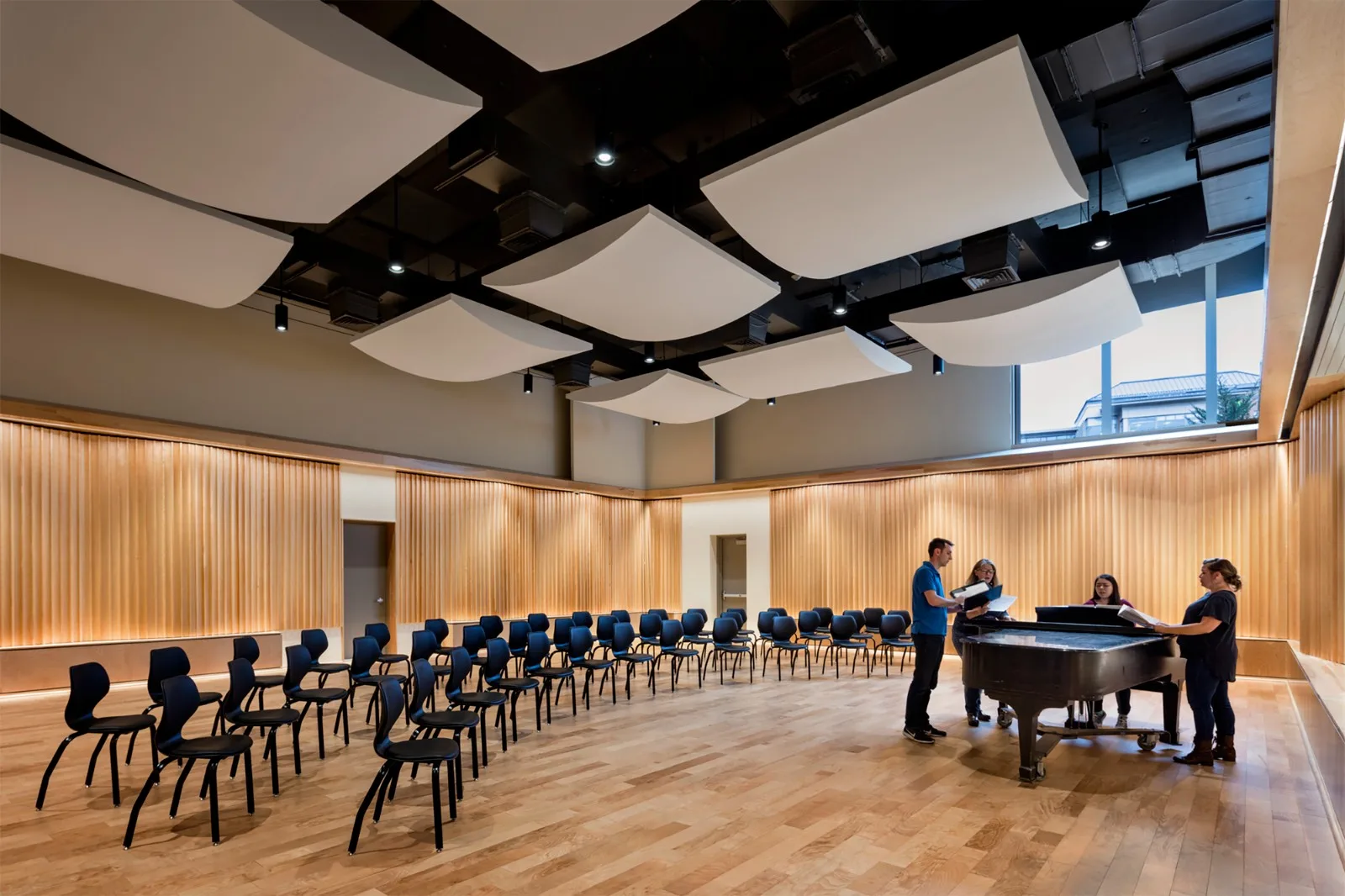
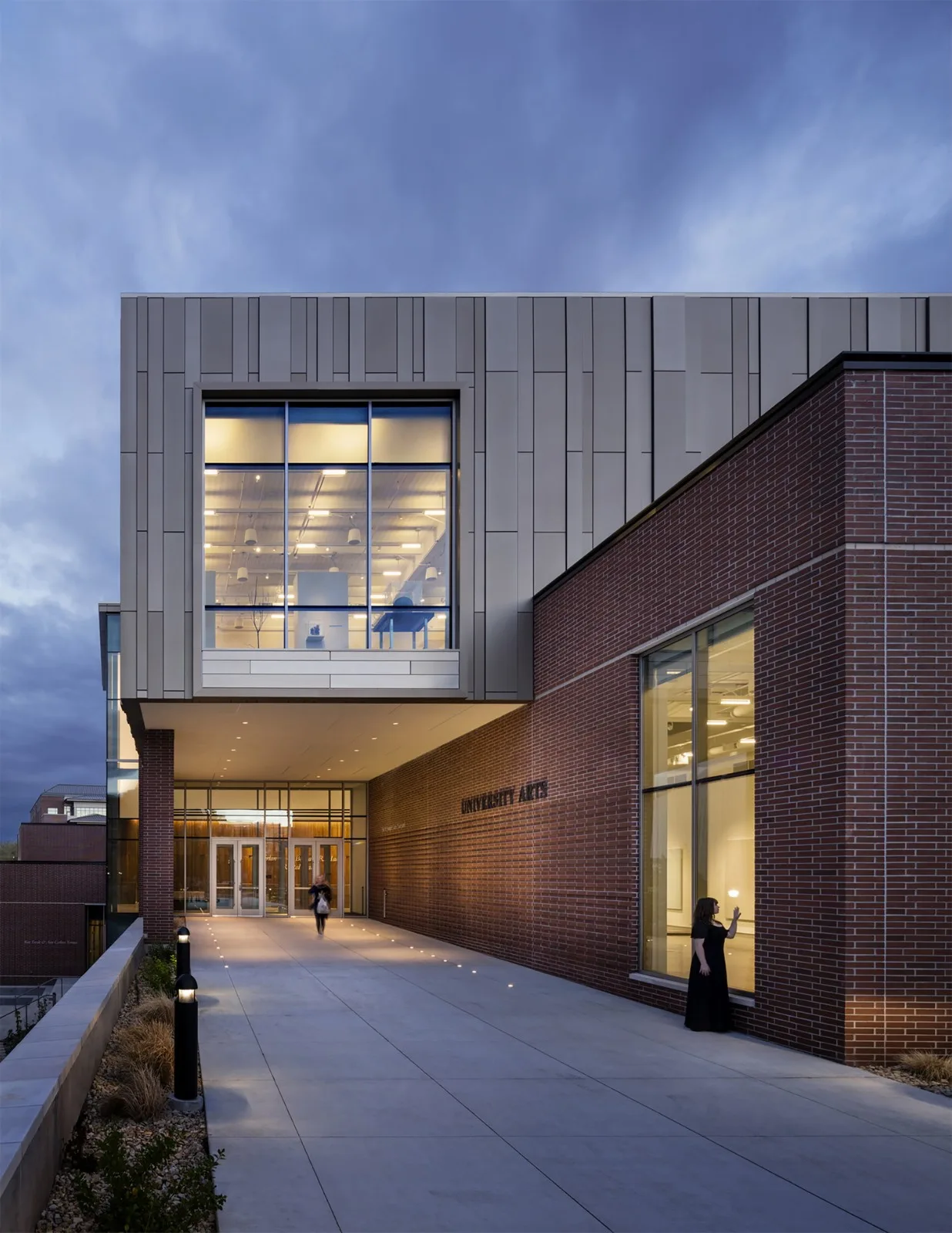
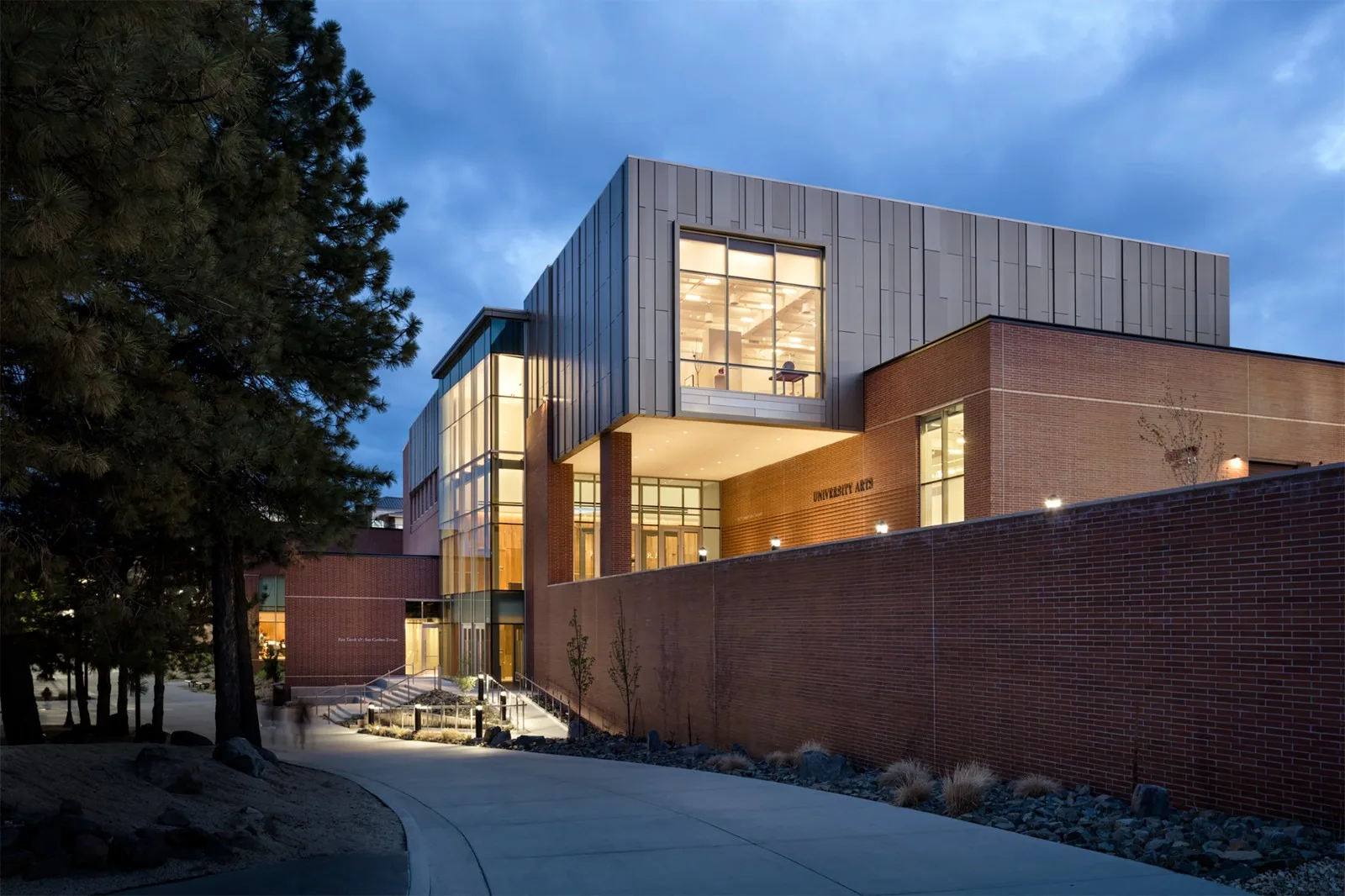
The new art center features a 287-seat performance hall, an art museum, fabrication labs, an electroacoustic composition studio, rehearsal rooms, music practice spaces, faculty offices, and recording studios. The design thoughtfully integrates the site’s natural terrain, creating a lively outdoor plaza that connects seamlessly with campus walkways and preserves a large grassy hill—the last remnant of the university’s original football field.
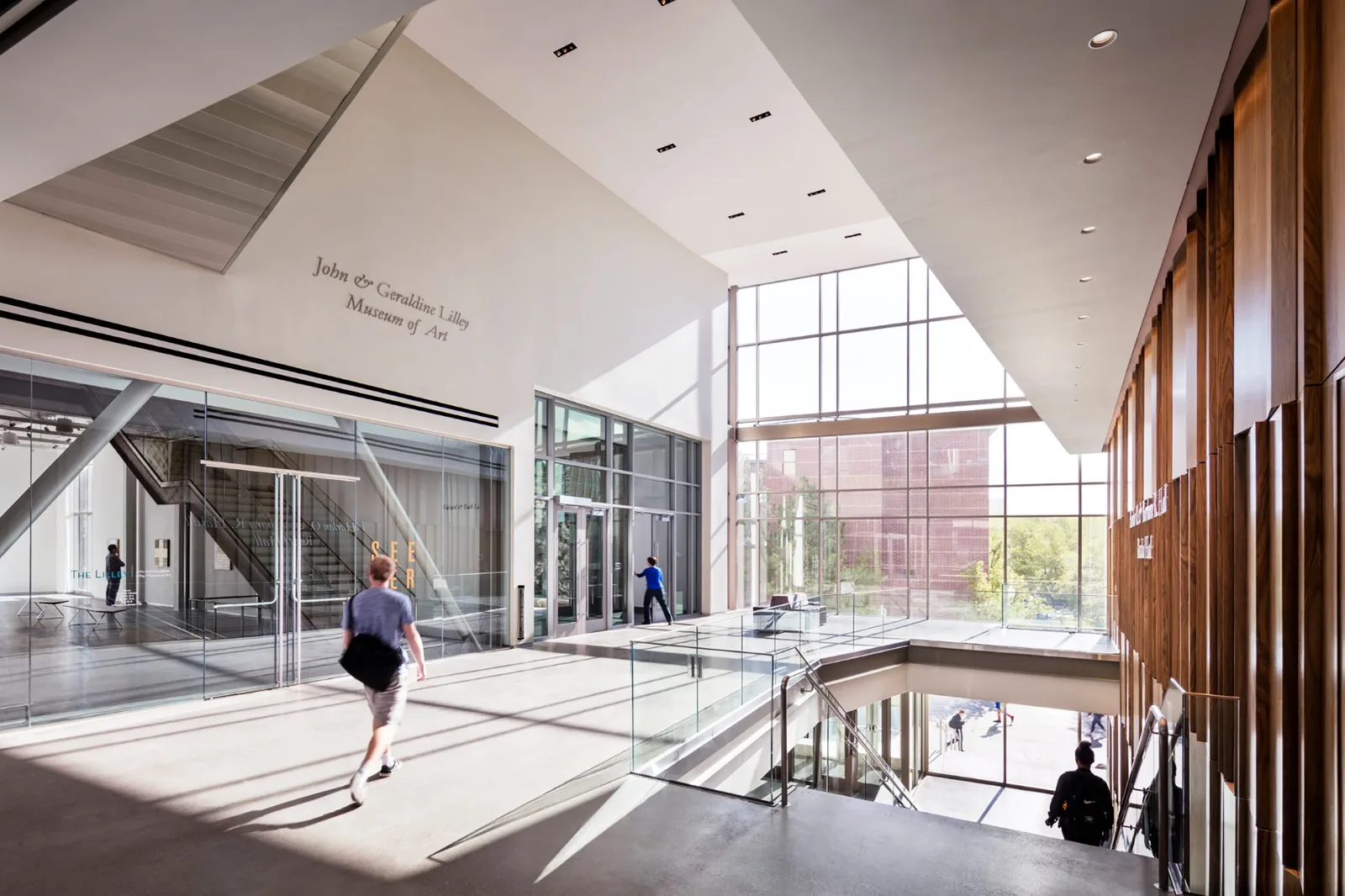
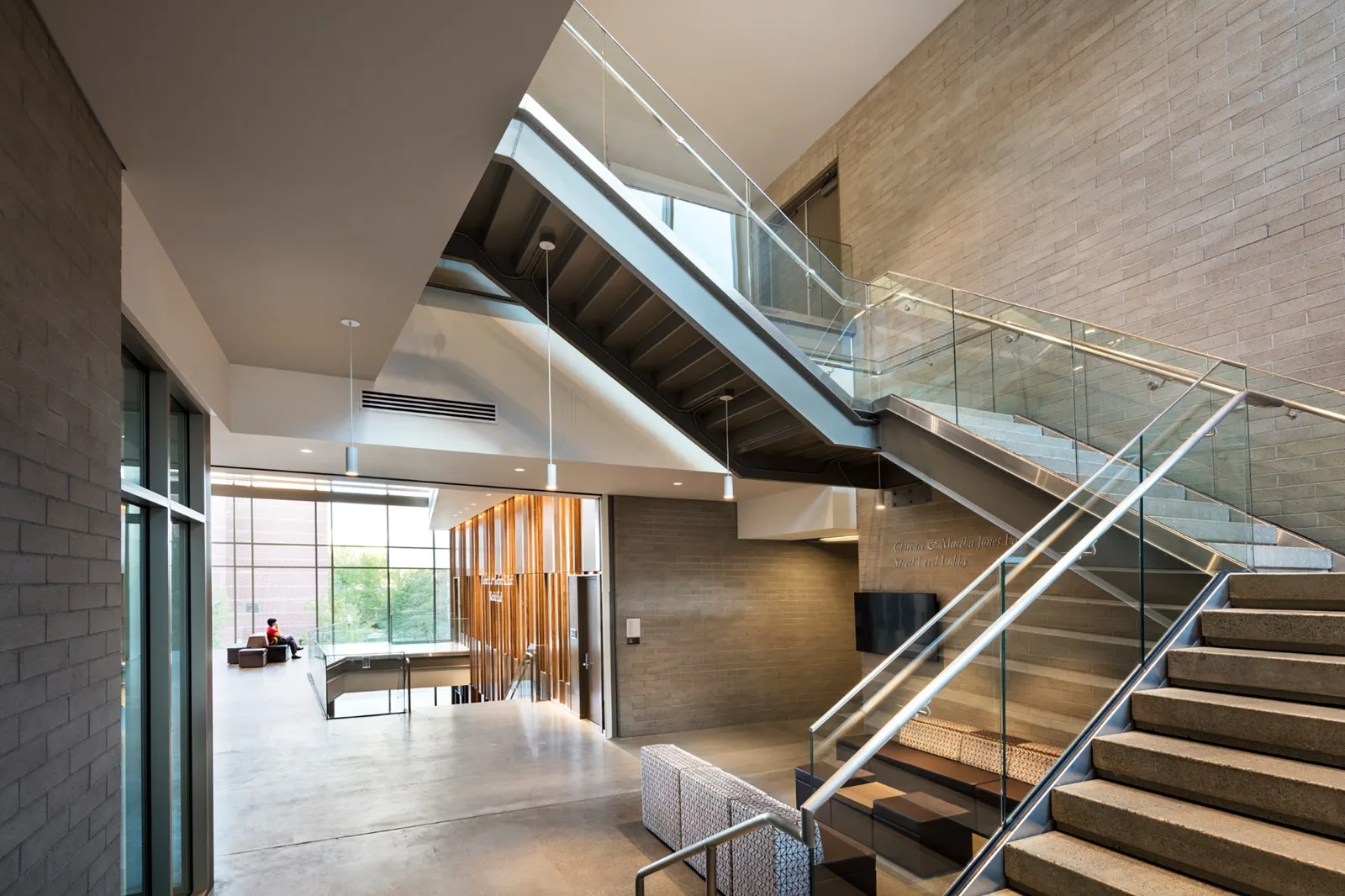
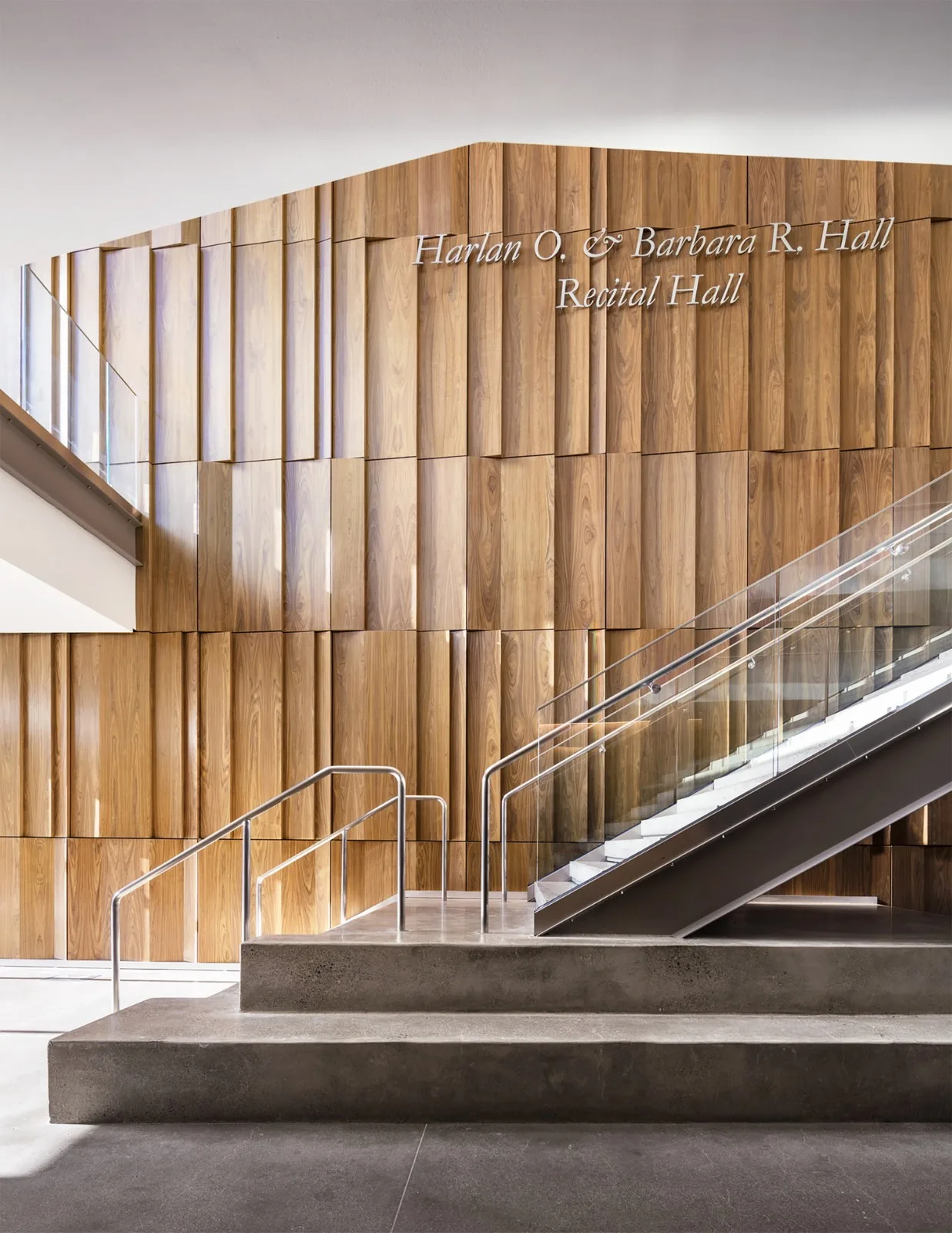
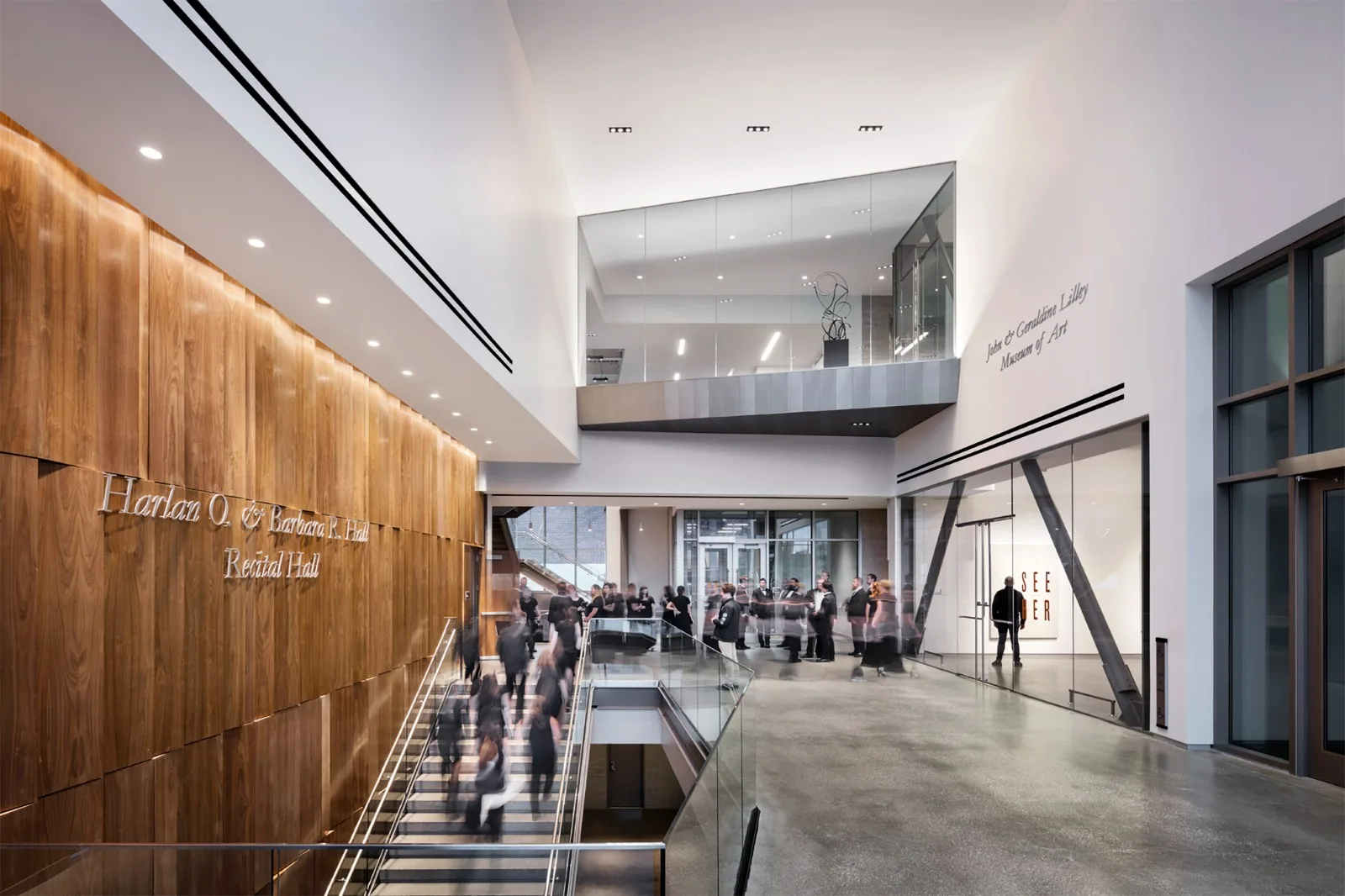
Upon entering, visitors are greeted by a multi-story atrium that links the plaza, street, and a second-floor covered bridge. This central space serves as a dynamic venue for performances, exhibitions, and educational activities.
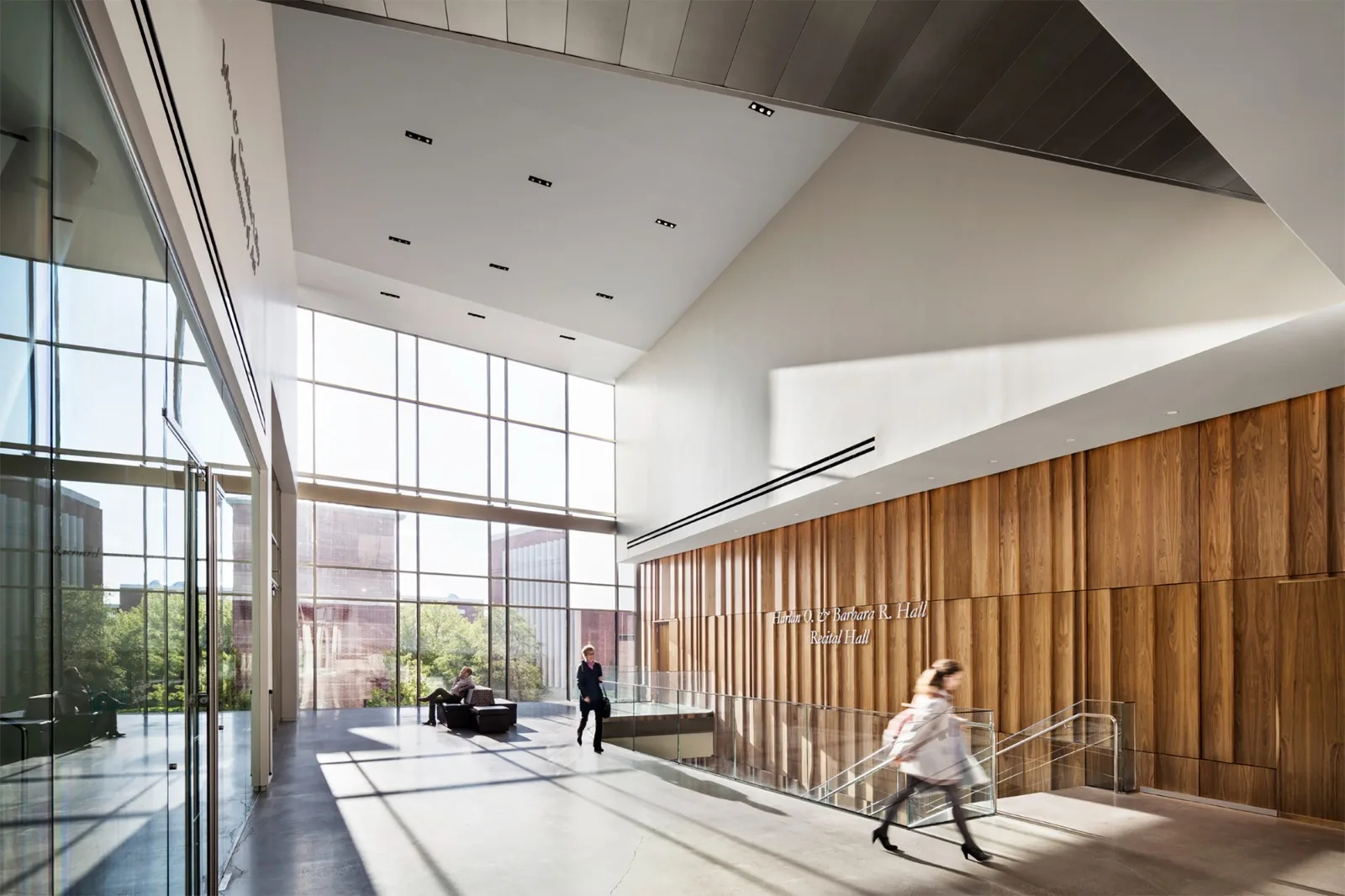
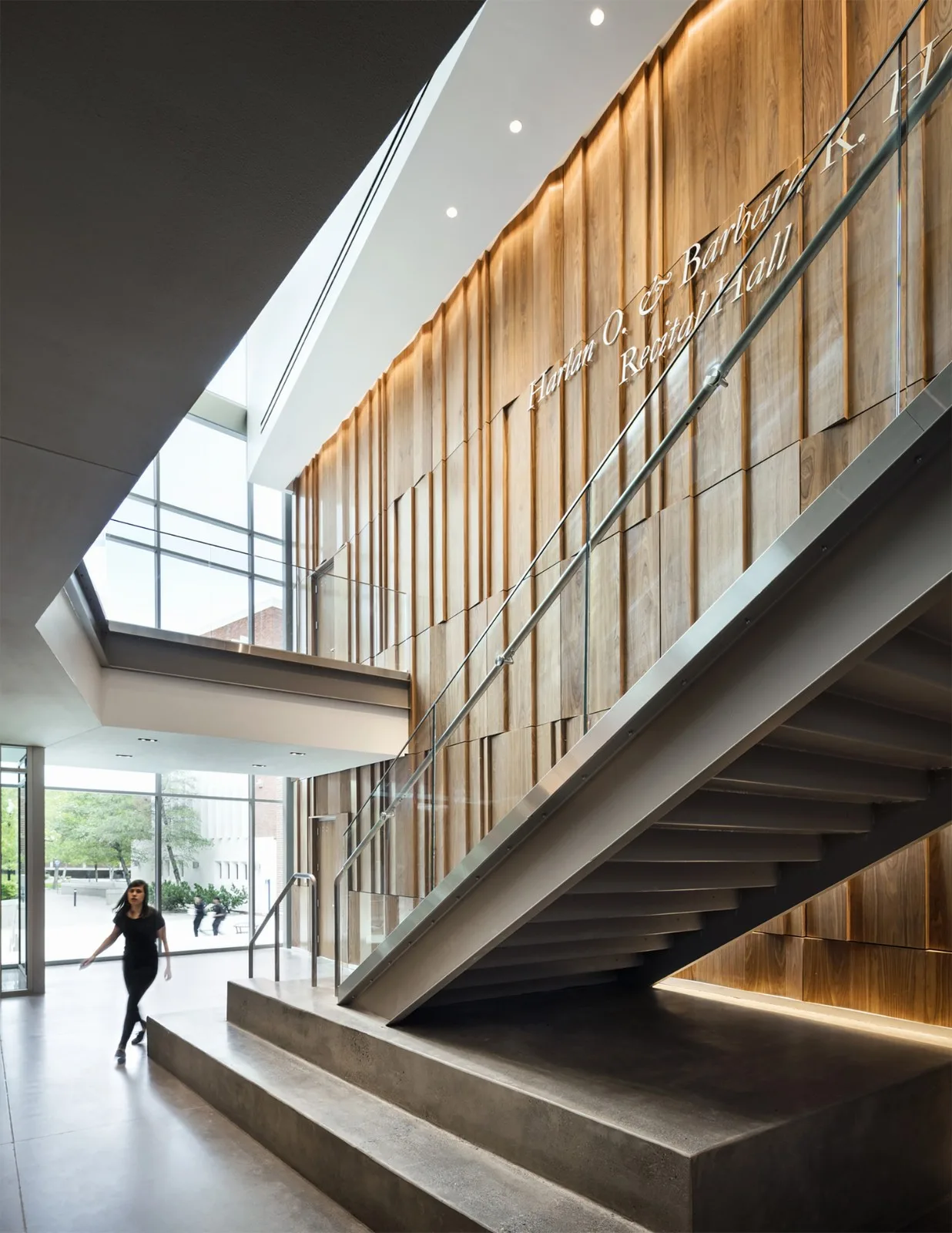
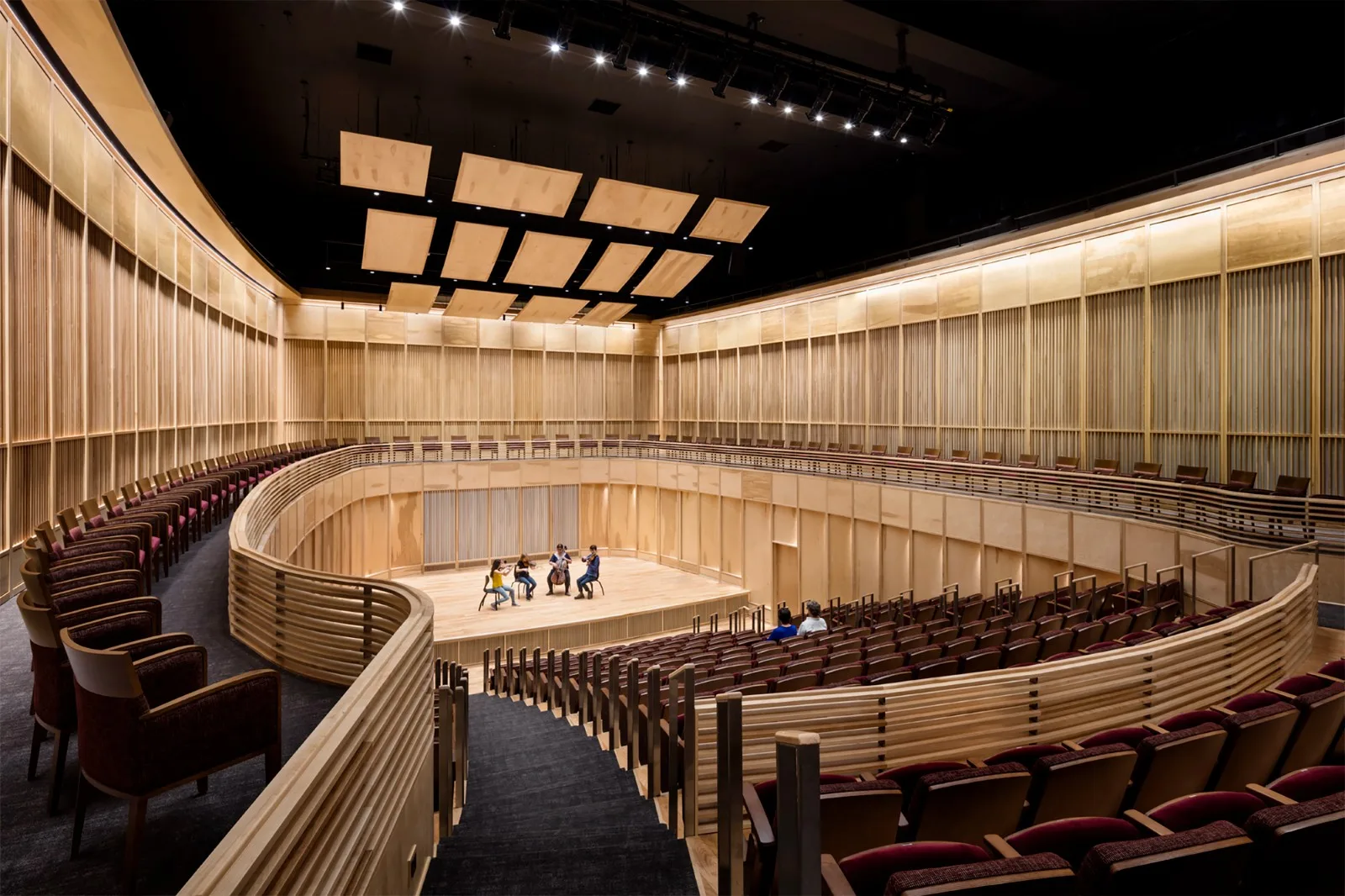
The concert hall’s seating arrangement enhances acoustics and offers flexibility for teaching purposes. Wooden lower walls scatter sound effectively, reflecting it evenly throughout the space, while higher side walls conceal adjustable acoustic curtains and diffusion panels. This design allows the room’s reverberation time to be tailored for various performances without compromising the warm aesthetic of the wood finishes.
The surround platform within the hall offers audiences unique vantage points and enables students to observe musicians’ movements and conductors’ cues up close.
The electroacoustic composition laboratory (EAC lab) is Nevada’s first of its kind. It features an eight-channel sound system with eight speakers positioned around the room, capable of operating collectively or independently. This setup maximizes composers’ creative freedom and musical expressiveness.
Equipped with advanced technology and infrastructure, the lab supports various digital music composition and playback methods, fostering interdisciplinary collaboration among musicians, video media students, visual artists, and engineers.
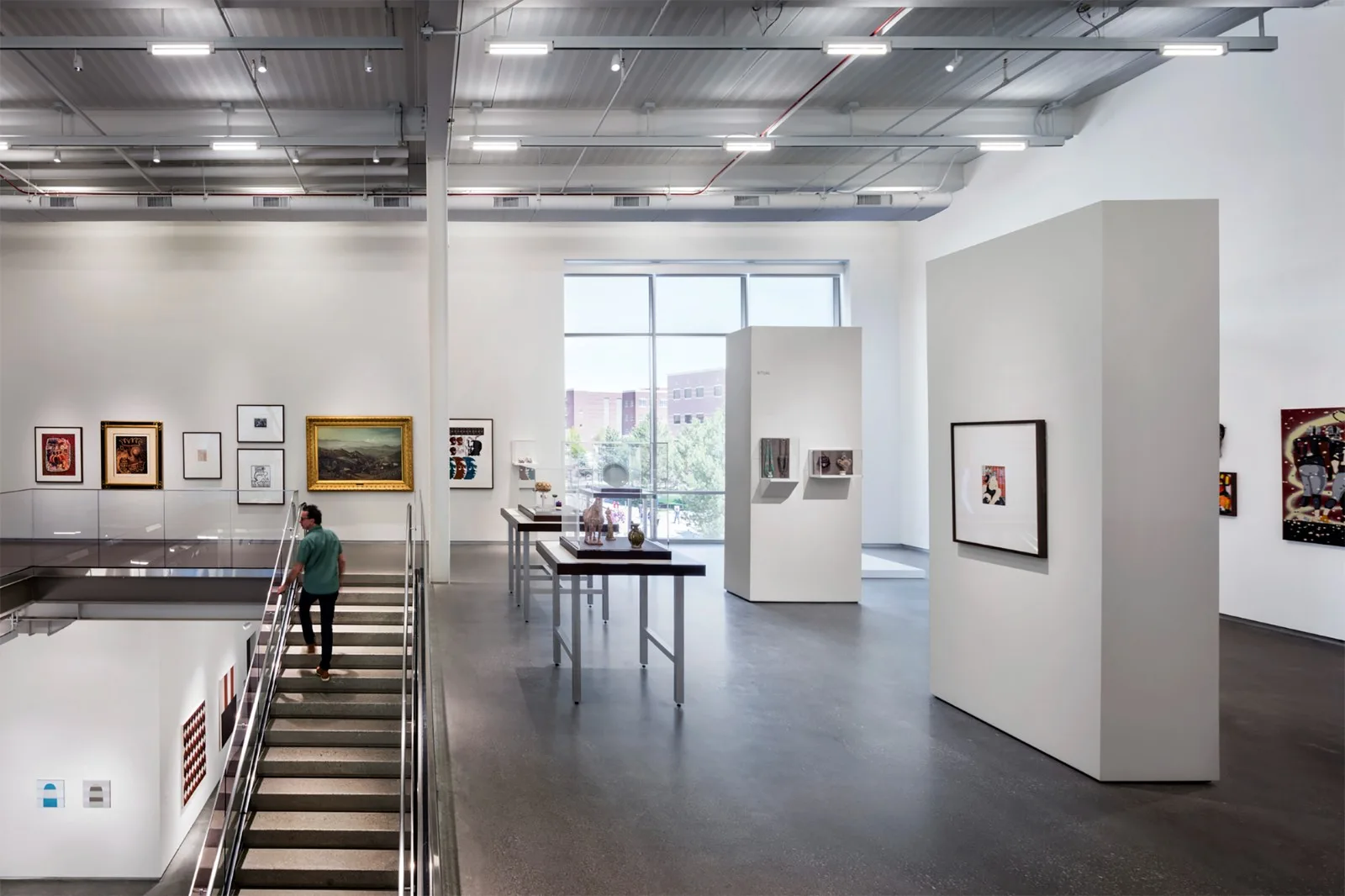
The Lilley Art Museum offers a rich artistic environment backed by professional security systems. It houses numerous large-scale artworks, antiques, climate-sensitive pieces, and priceless items, significantly enhancing the university’s ability to borrow art from private collectors and other museums.
Serving as an extension of the main lobby, the museum allows visitors attending music performances to simultaneously appreciate visual art. At night, the north-facing window acts like a beacon, illuminating the museum’s collection and symbolizing the harmonious relationship between the building and the artworks.
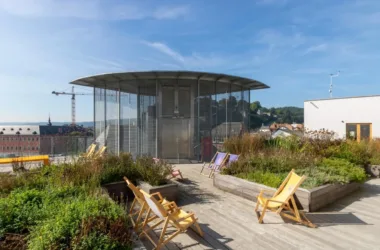
The design emphasizes sustainability by adapting to the local climate and maximizing natural light. These strategies have resulted in a 30% energy savings, achieved through energy-efficient fresh air systems, LED lighting, drought-tolerant landscaping, and a cooling roof system that minimizes the urban heat island effect.
Project Drawings
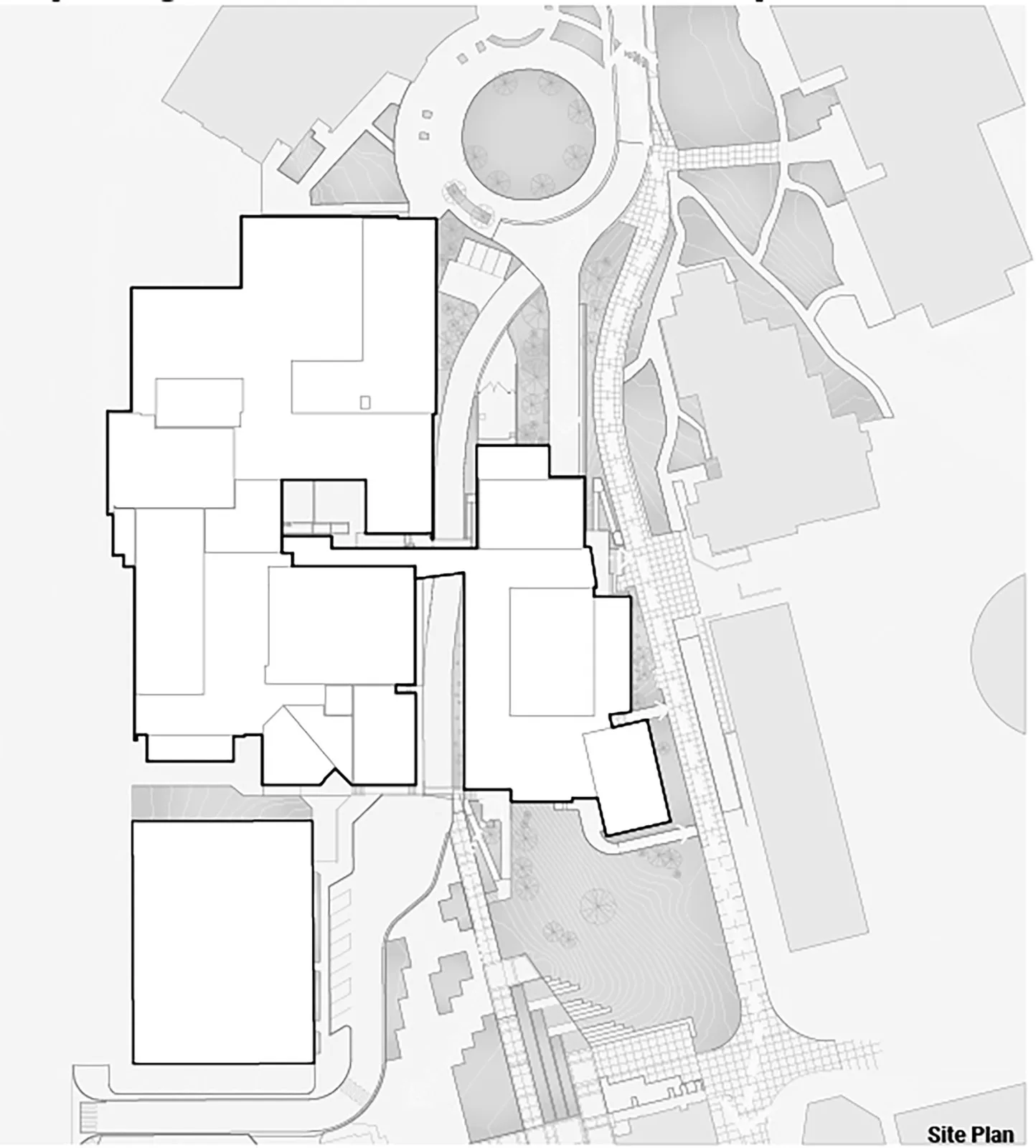
△ General Layout Plan
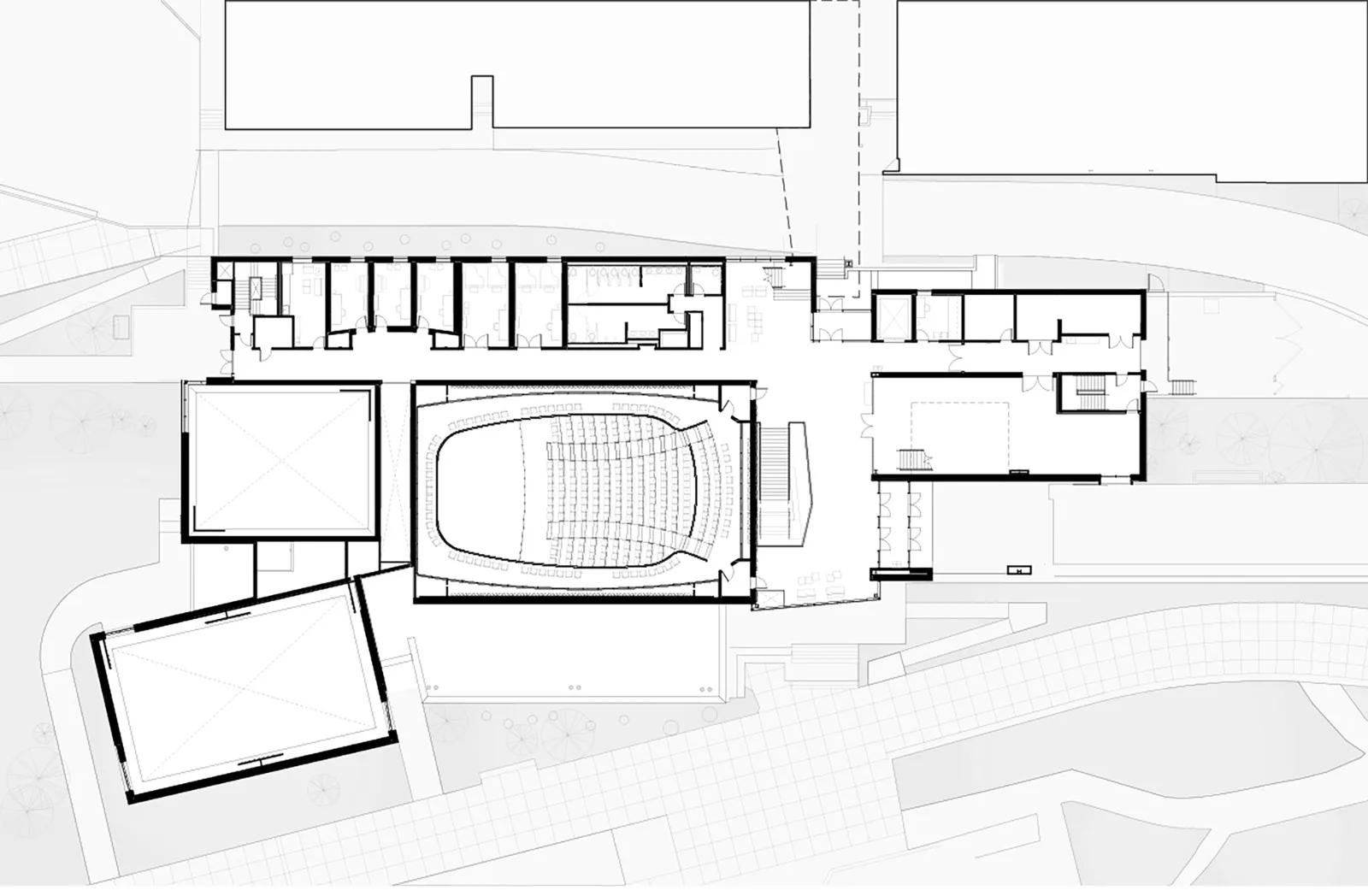
△ First Floor Plan
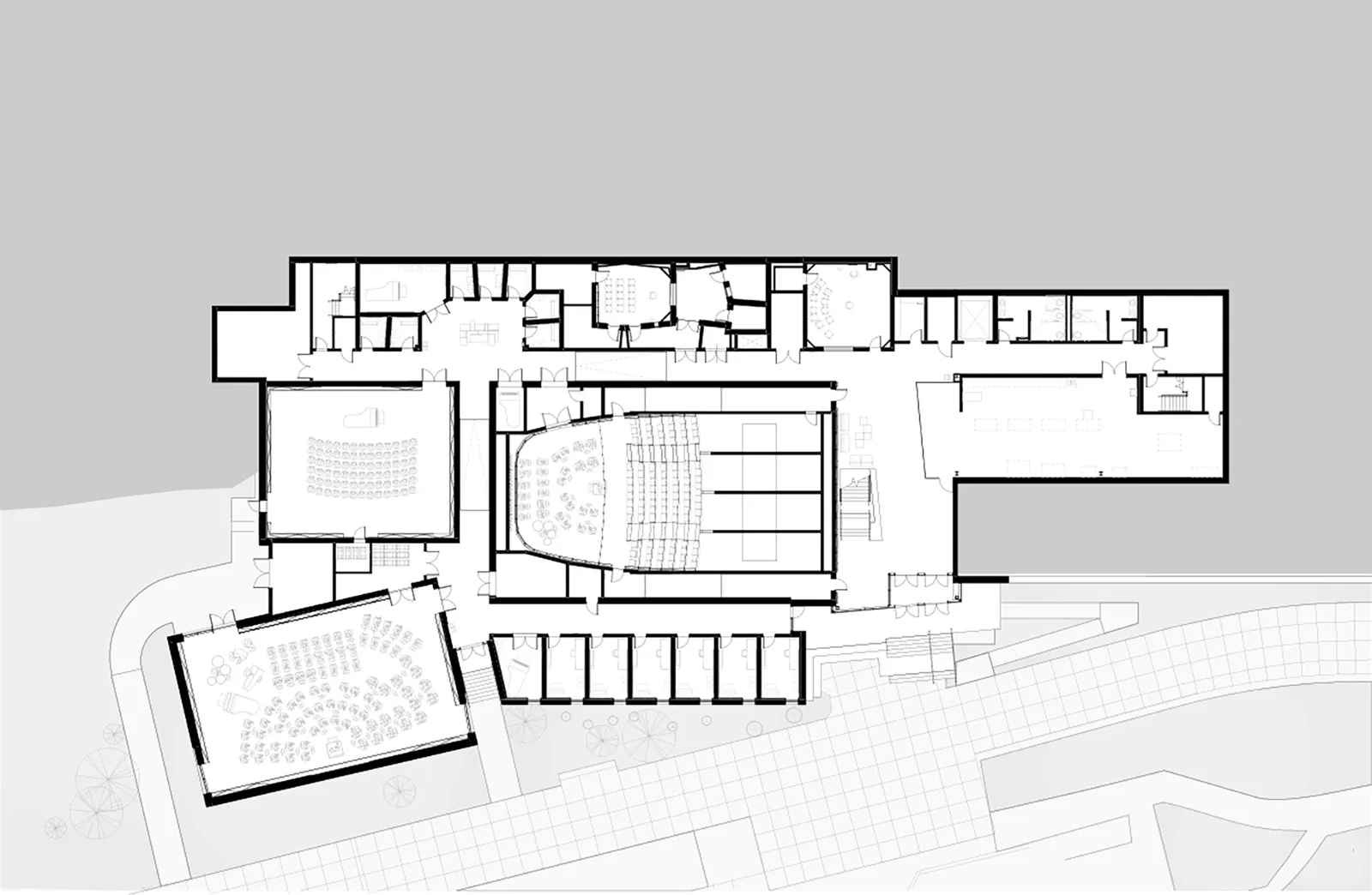
△ Second Floor Plan
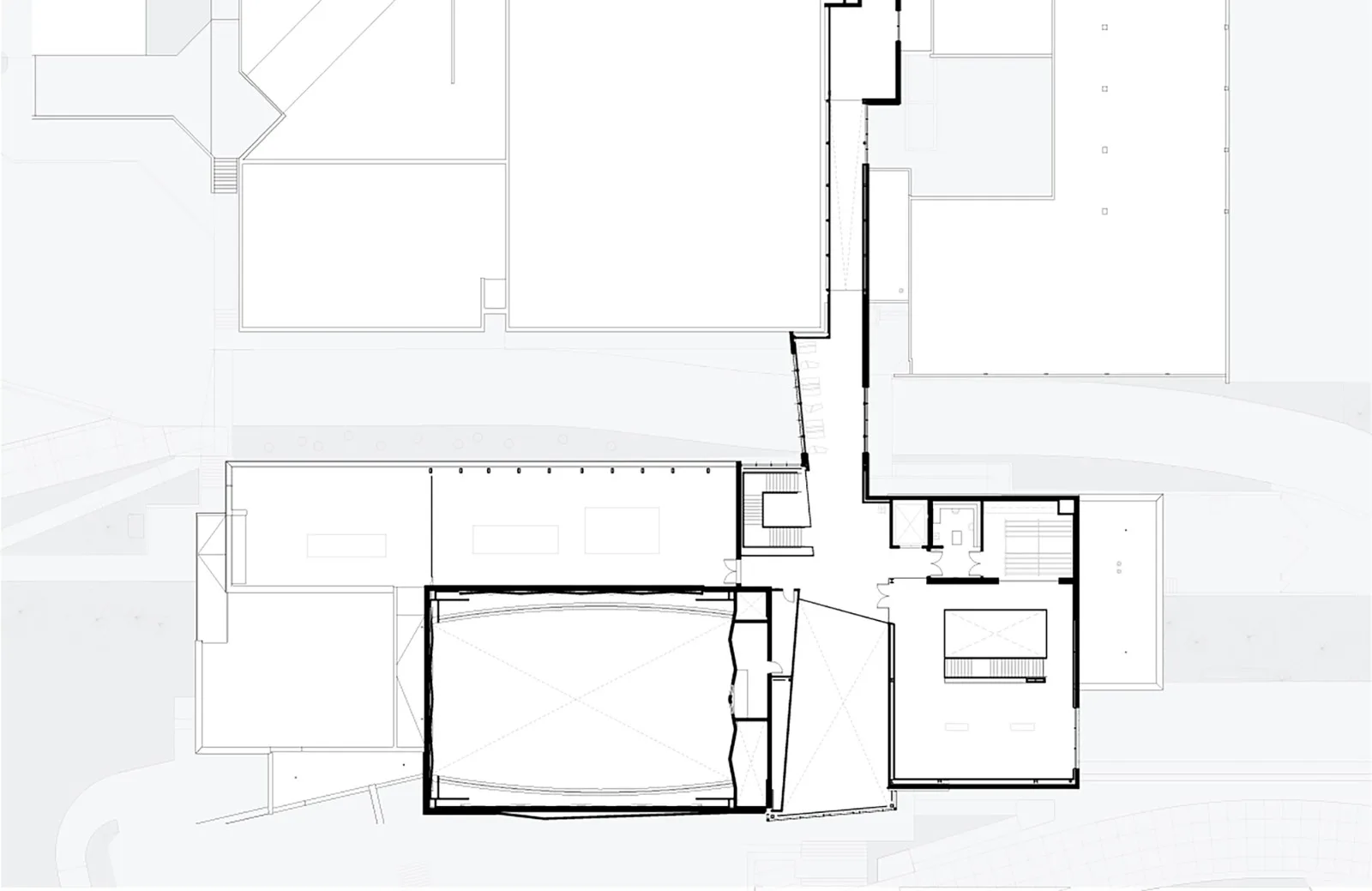
△ Third Floor Plan
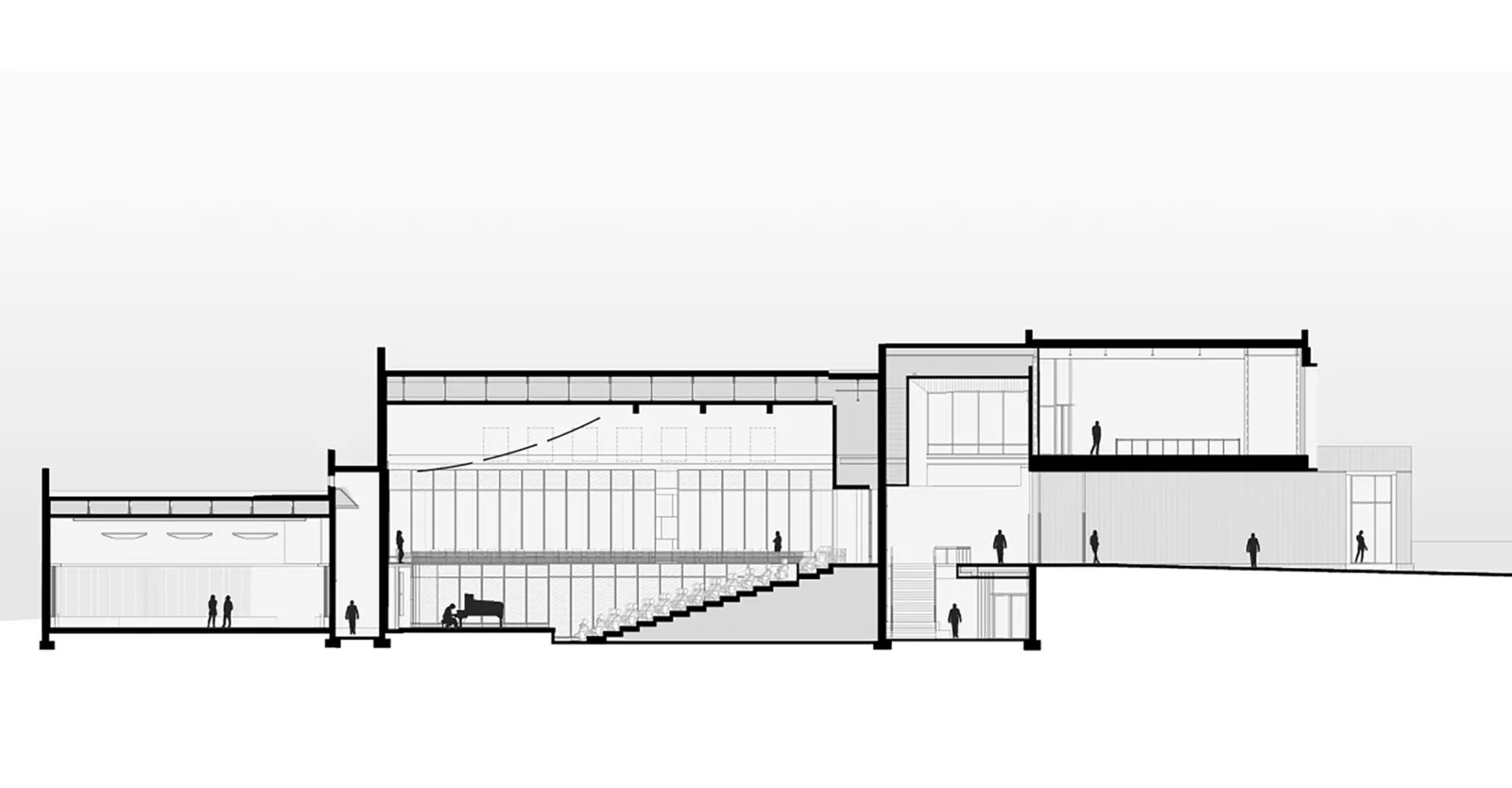
△ Section Diagram
Project Information
Architectural Design: DLR Group
Area: 42,525 ft²
Project Year: 2019
Photographer: Scott Frances
Manufacturers: Arcadia Inc., Armstrong Flooring, B & C Cabinets and Millwork, Basalite Concrete Products, Dri-Design, Guardian Glass, RPG Acoustical Systems, Series Seating
Lead Architect: Dennis Bree, DLR Group
Project Architect: Dan Karas, AIA
Architect: Adam Strauss
Acoustic Engineer: Jonathan Hopkins
Lighting Designer: Yosuke Hiraiwa
Electrical Engineer: Radames Cocco, PE
Location: Reno, United States












Must log in before commenting!
Sign Up