
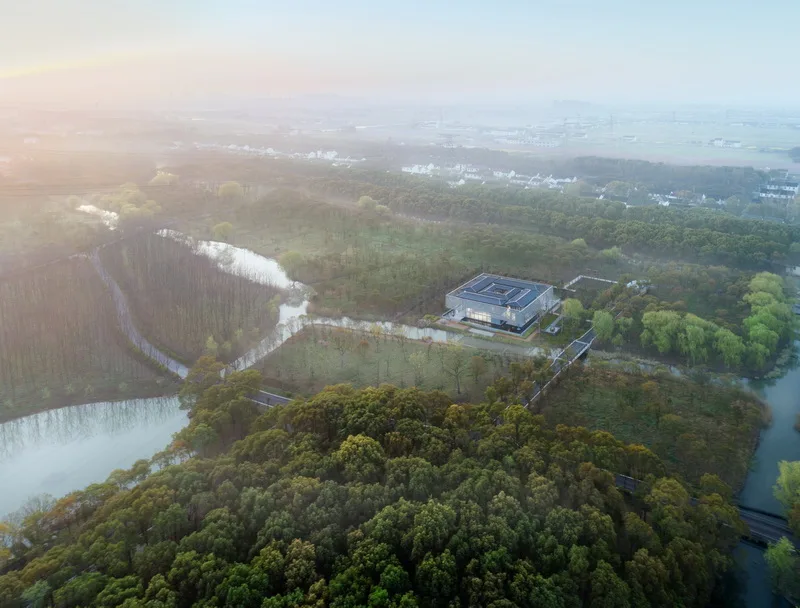
Aerial View Photography by Liang Shan
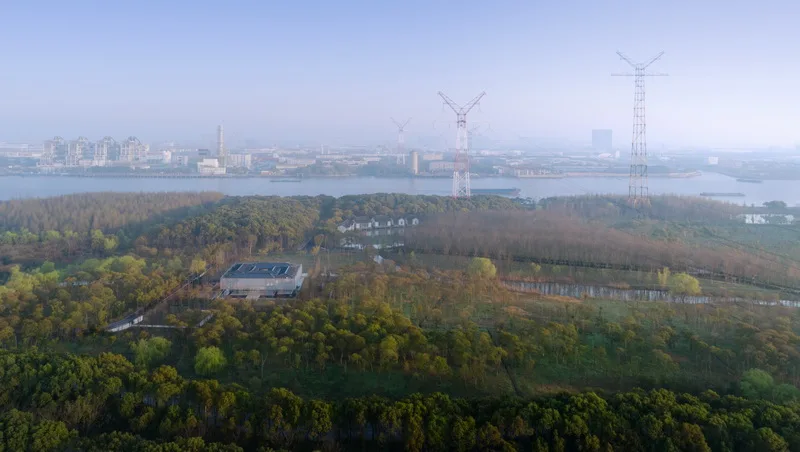
Aerial View Photography by Liang Shan
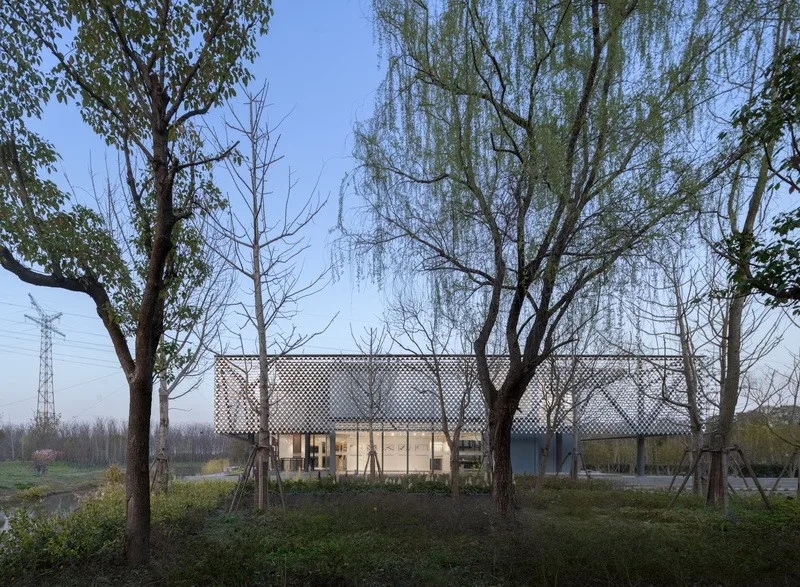
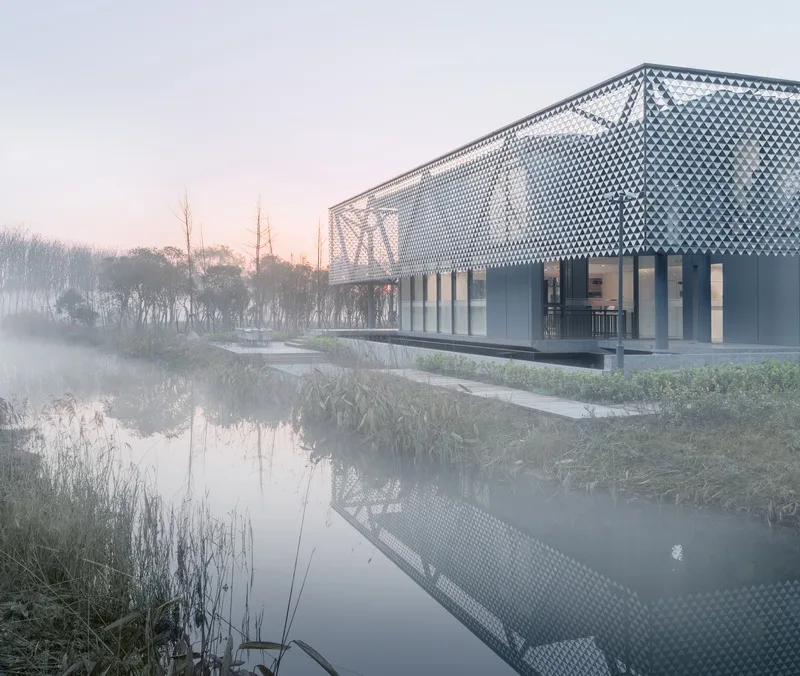
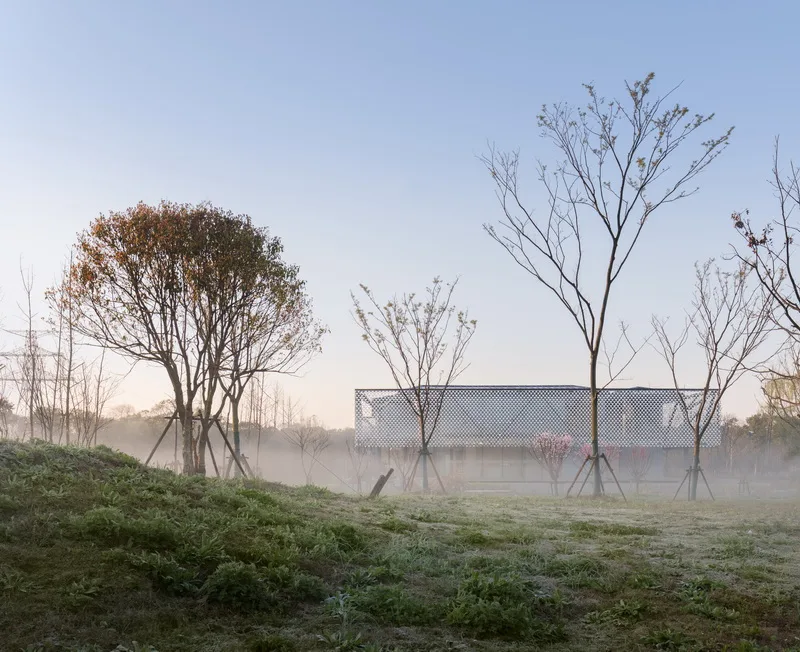
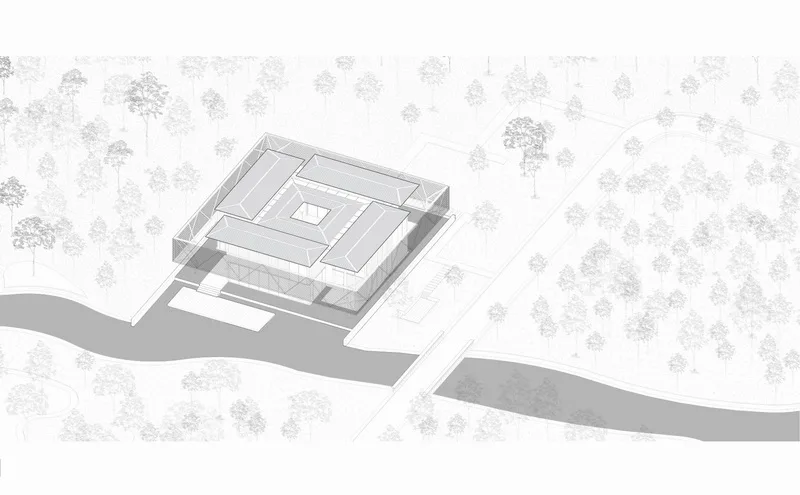
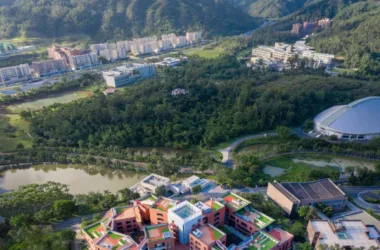
In recent years, the trend of enterprises moving to rural areas has become a significant aspect of rural revitalization in Fengxian District. Serving as a rural base for corporate headquarters of publicly listed companies, the UK Science Center stands as an innovative example of this development model. Situated within a conservation forest on the south bank of the Huangpu River in Fengxian District, the original site featured a five-bay, two-story gable building constructed in the 1990s. Due to years of neglect, it had fallen out of use. The site, known as Baichuan, is connected to the river, with tributaries of the Pujiang River running along its north and west sides, surrounded by lush forests.
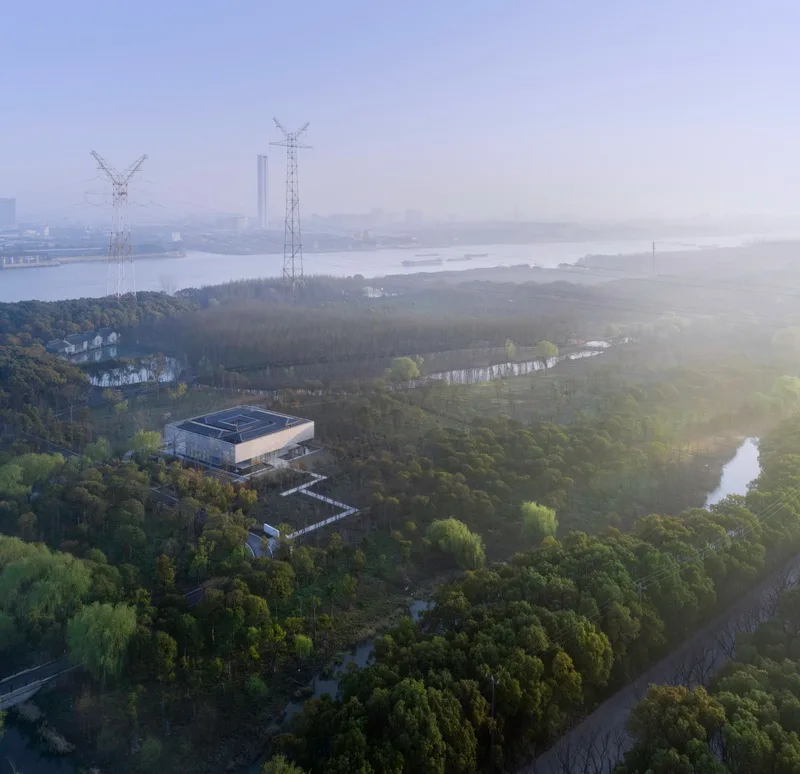
Aerial View Photography by Liang Shan
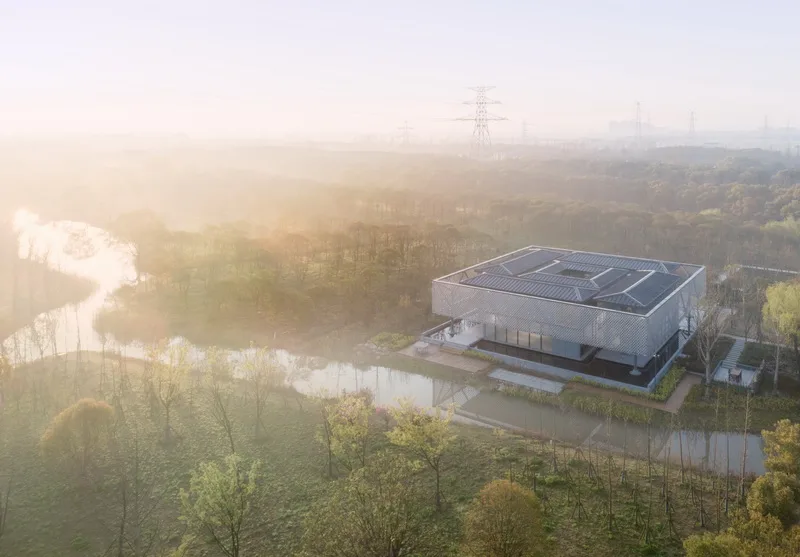
Aerial View Photography by Liang Shan
Yingke Recycling is a high-tech manufacturer specializing in plastic recycling. It integrates plastic recycling with fashion and consumer goods through a circular industrial chain, producing eco-friendly cultural and creative products such as painting and photo frames. The client commissioned us to design a small headquarters on the original site to serve as a showcase for Yingke Regeneration’s corporate culture and as a venue for high-level meetings.
Exterior View Photography by Liang Shan
Exterior View Photography by Liang Shan
Exterior View Photography by Liang Shan
Exterior View Photography by Liang Shan
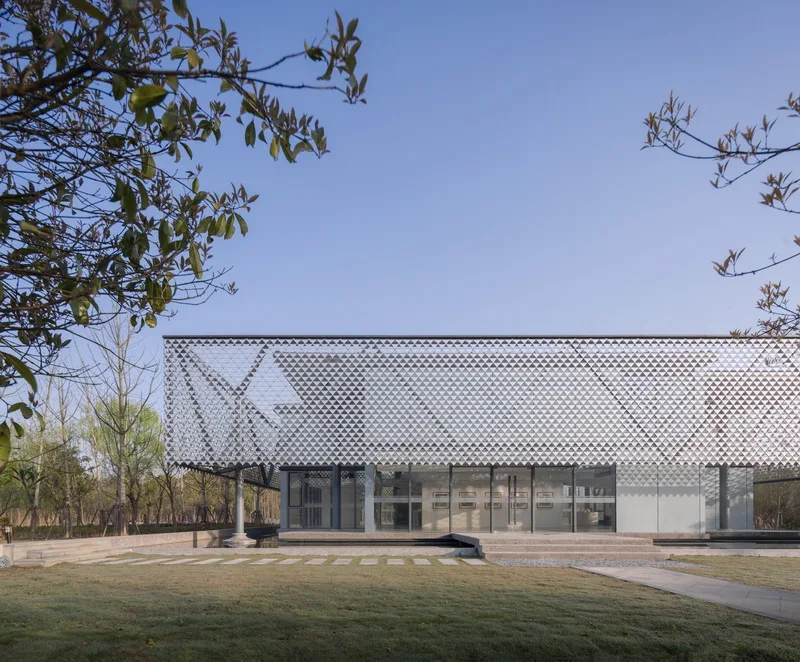
Exterior View Photography by Liang Shan
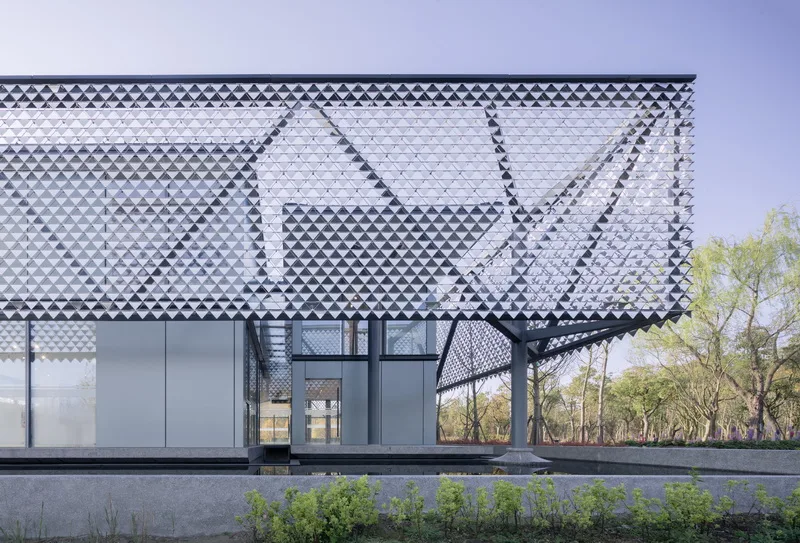
Exterior View Photography by Liang Shan
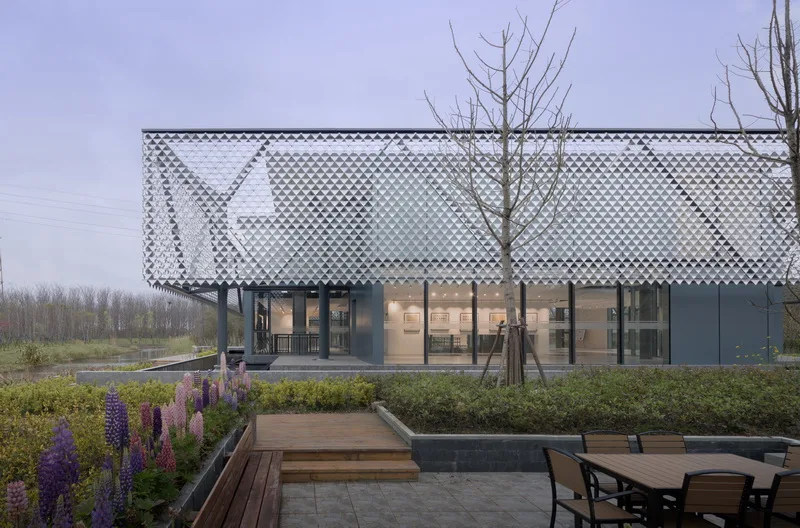
Exterior View Photography by Liang Shan
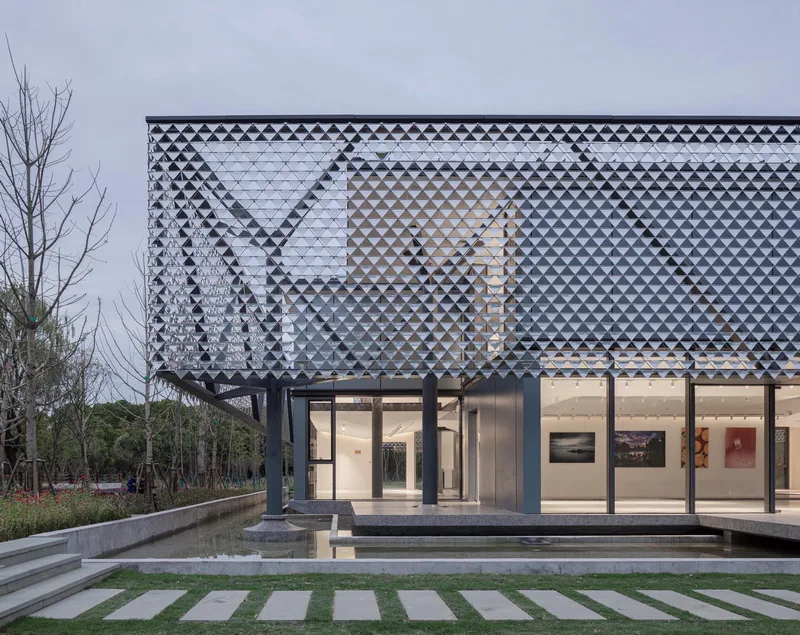
Exterior View Photography by SU Shengliang
The design concept draws from the local fusion of two key elements: traditional residential architecture and corporate culture. First, we reshaped the shoreline of the northern tributary and purified the river water before channeling it into the site. This created a water collection base for the entire building and enabled the construction of a new courtyard above it.
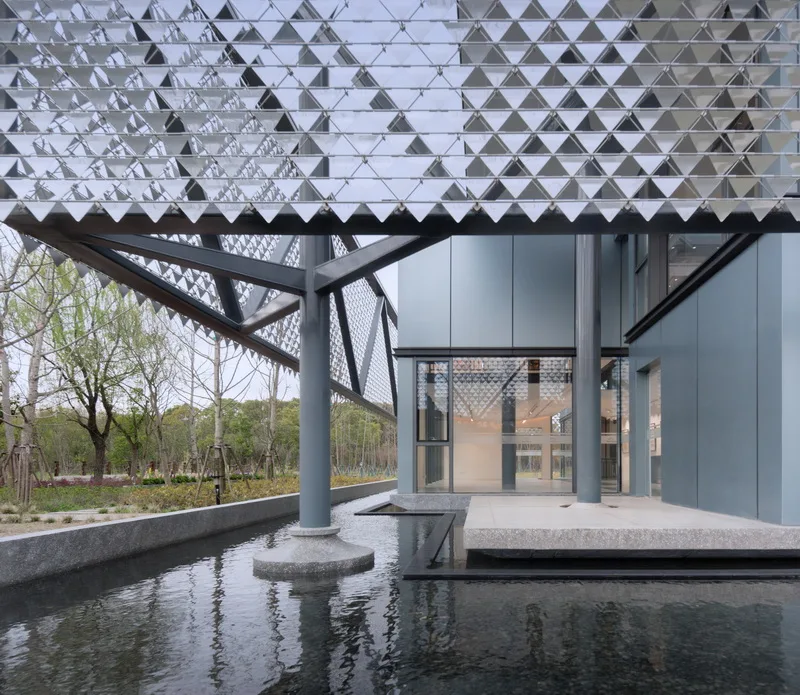
△ Water Platform and Kinetic Skin Photography by Liang Shan
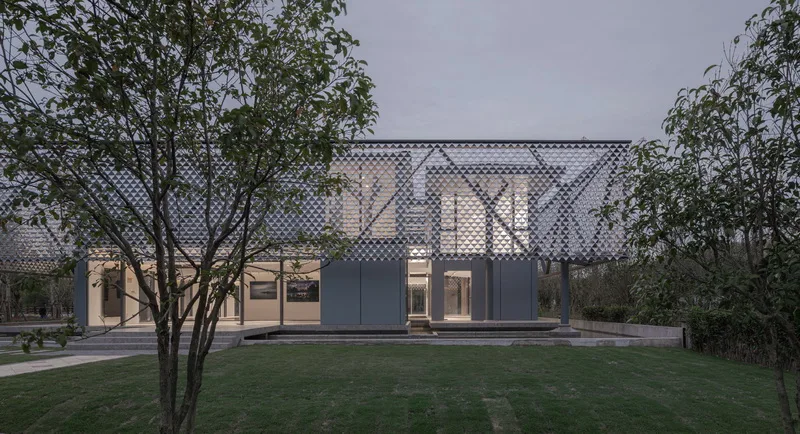
Exterior View Photography by SU Shengliang
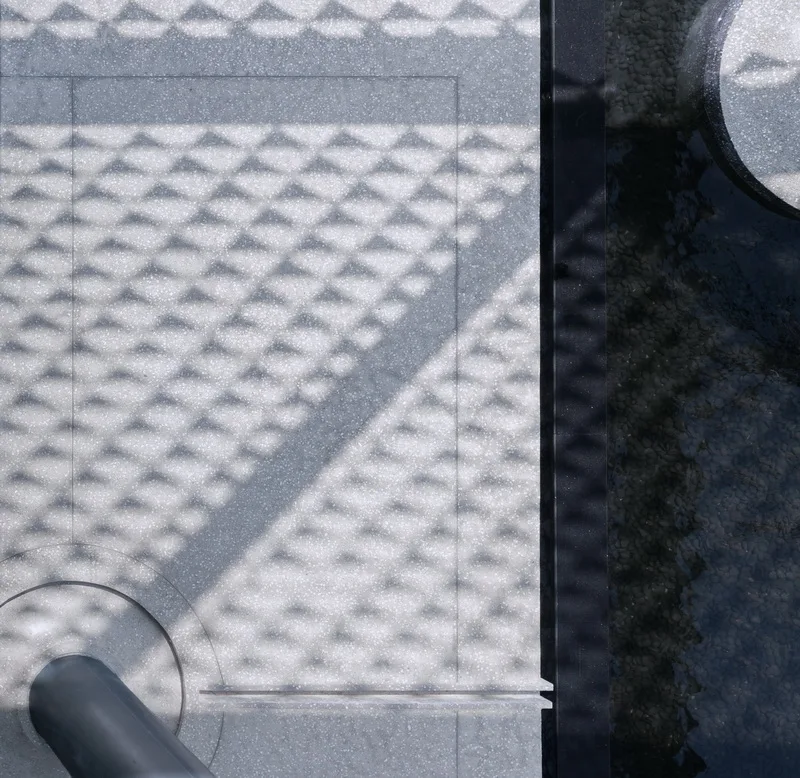
Plinth and Shadow Photography by Liang Shan
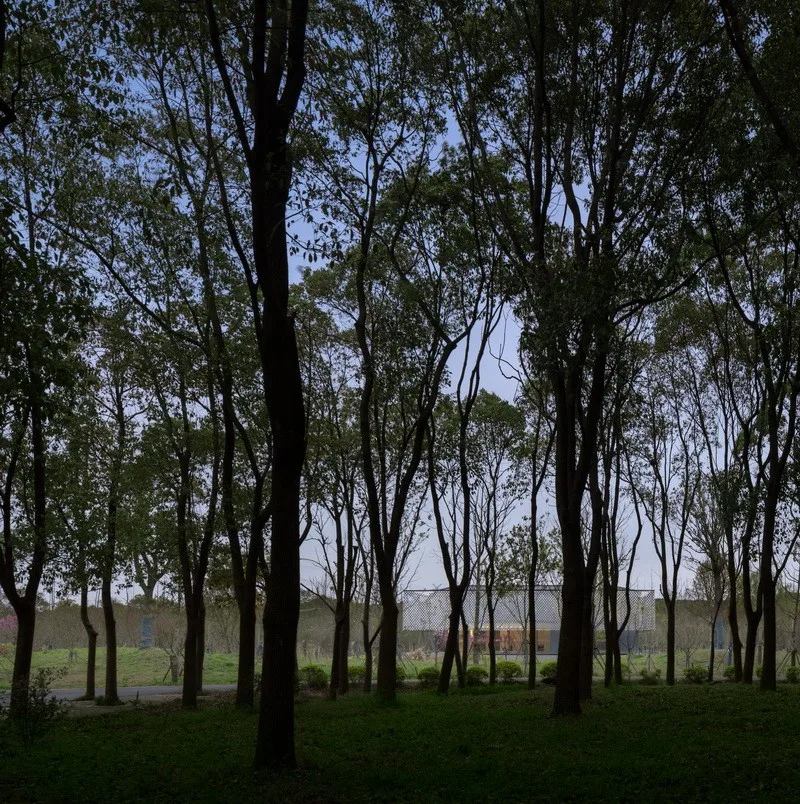
△ Groove and Building Photography by Liang Shan
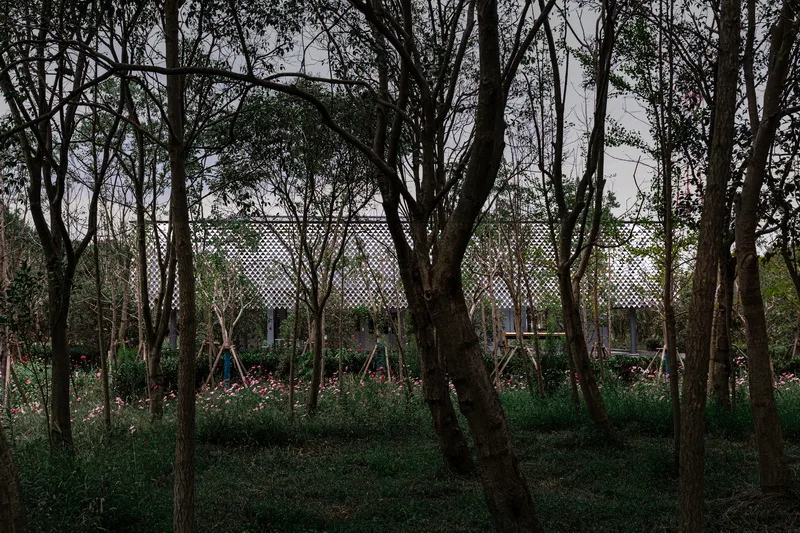
△ Groove and Building Photography by SU Shengliang
The traditional architectural form typical of Fengxian rural areas is the twisted circle house, a courtyard surrounded by four single-story buildings with double-sloped roofs, popular in Shanghai since the Qing Dynasty. Unlike northern courtyard houses, this design features a central “wall door room” or corridor as the entrance, enclosing the courtyard entirely with four-sided buildings, eaves, and corridors. Our new courtyard also adopts four building units enclosing the atrium, continuing this spatial tradition while injecting new vitality through structural spatial organization.
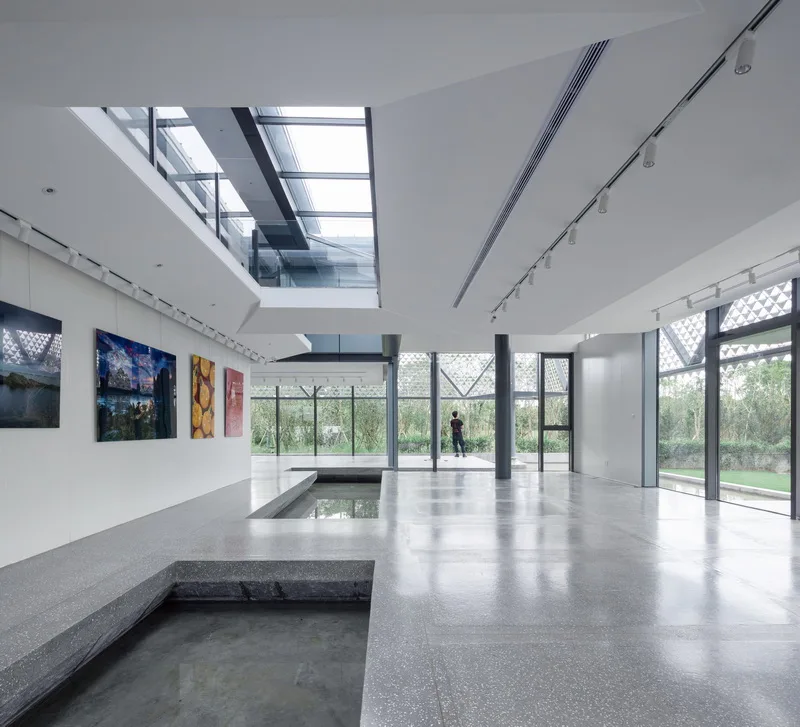
△ Gallery Photography: SU Shengliang
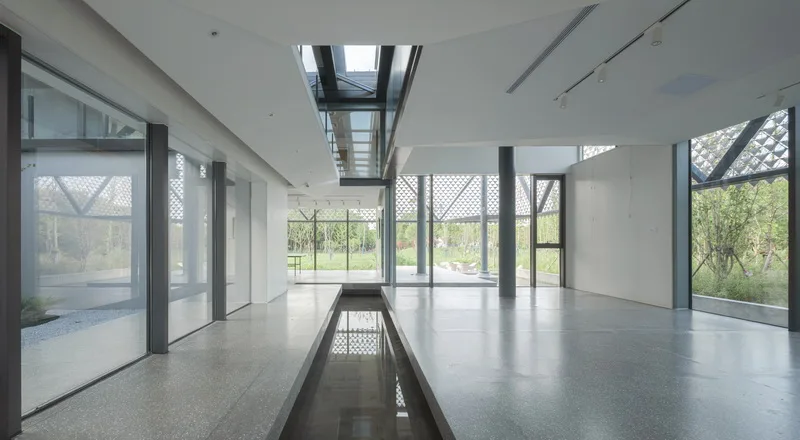
△ Gallery Photography: SU Shengliang
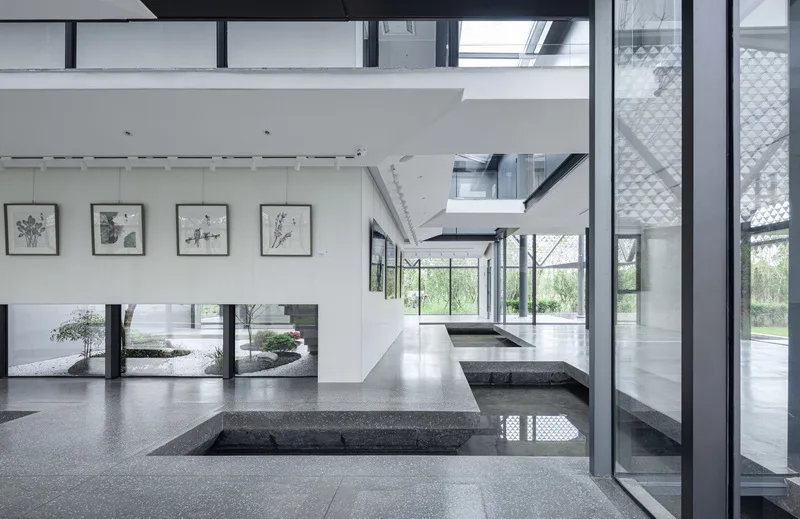
△ Gallery and Central Courtyard Photography by SU Shengliang
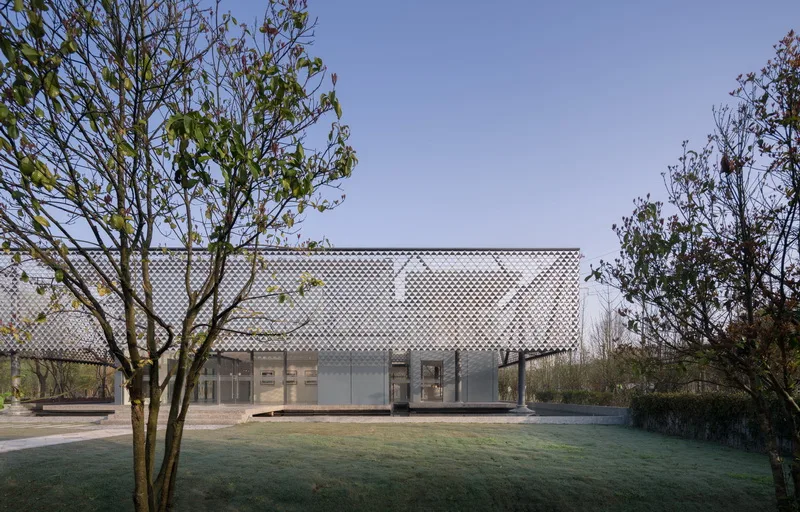
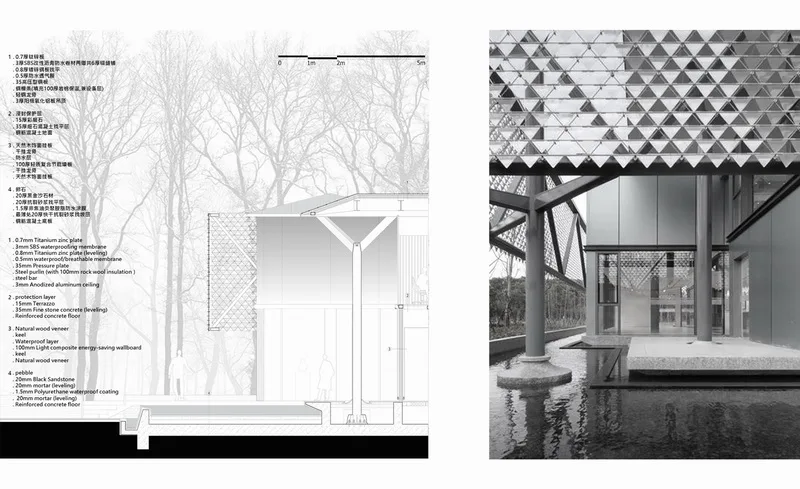
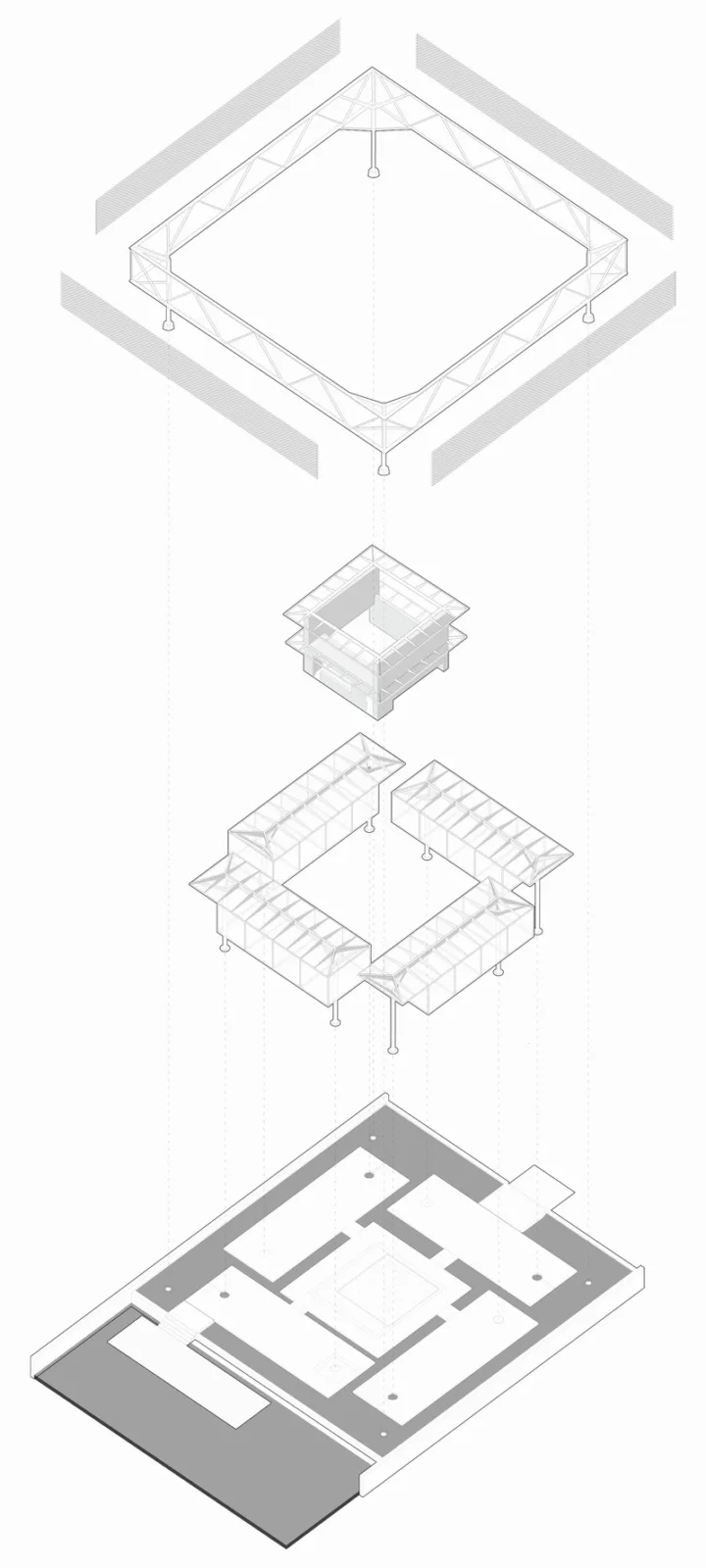
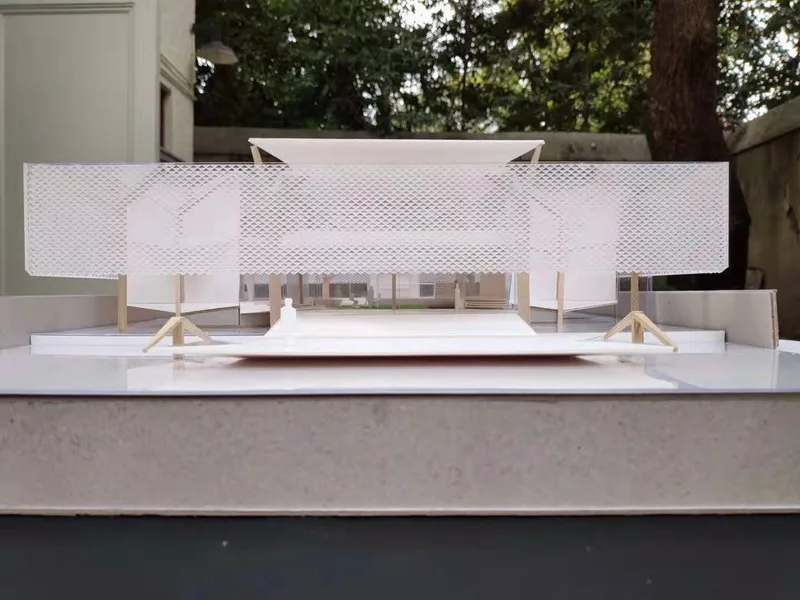
The courtyard consists of a semi-transparent outer wall, four unit cells arranged in the middle circle, and an inner courtyard. Four corner columns extend outward like branches, supporting four cable mesh trusses connecting to the outer ring. Triangular wind blades are suspended on the surface, crafted from chamfered and rolled mirror aluminum oxide leaves that shimmer gently in the breeze.
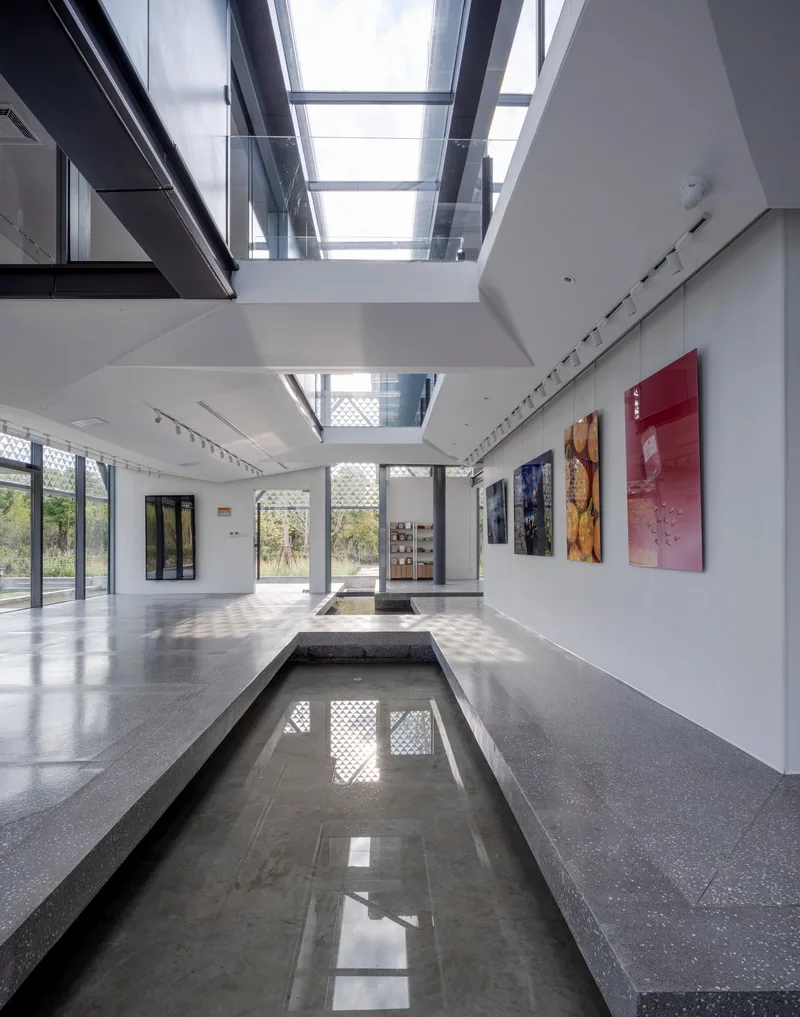
Gallery and Water Photography by SU Shengliang
This wind-driven curtain wall not only channels natural wind into the courtyard but also reflects the surrounding forest and sky, creating a semi-hidden courtyard effect. The central unit cells are placed on four platforms arranged like a windmill—four ships docked end to end at the water’s edge. Each unit cell is supported by tree branch-shaped columns and double beams at the roof ends, then suspended from the second-floor slab by downward-hanging columns. This suspension creates an open ground floor suitable for public functions such as exhibitions and gatherings.
The asymmetrical outer wall allows the two columns of each unit cell to be presented differently: one inside the elevated indoor space, integrated with vertical transport like stairs and lifts; the other outdoors, forming an artificial tree within the central courtyard.
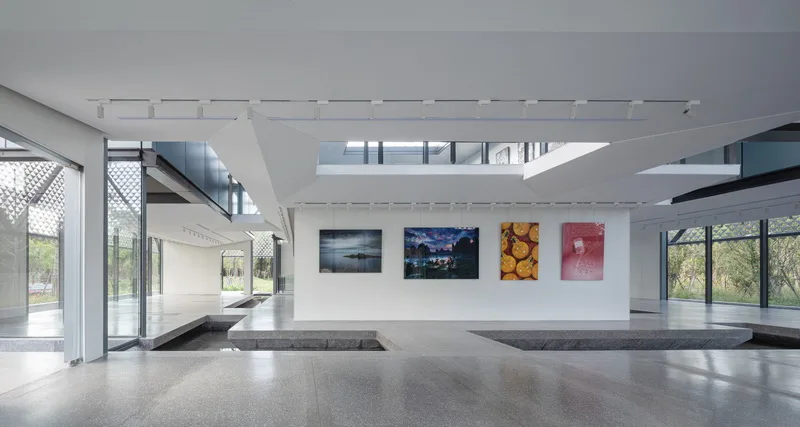
△ Gallery Photography: SU Shengliang
Approximately 75% of the first-floor exterior walls of each unit are made of floor-to-ceiling glass to enhance transparency. The second floor offers more privacy, accommodating offices and meeting rooms. The inner courtyard walls consist of two concrete walls aligned north-south on the first floor and two walls aligned east-west on the second floor, overlapping vertically. This arrangement forms a circular corridor around the courtyard enclosed by the walls.
This interlocking shear wall system supports dual circular corridors—an outer corridor and staircase facing the central courtyard, and an inner corridor facing the individual unit. It also provides lateral stability to the four units outside the outer ring through connecting bridges. Vertical infrastructure such as utility pipelines is housed in auxiliary spaces around the walls, ensuring clean and uniform indoor spaces.
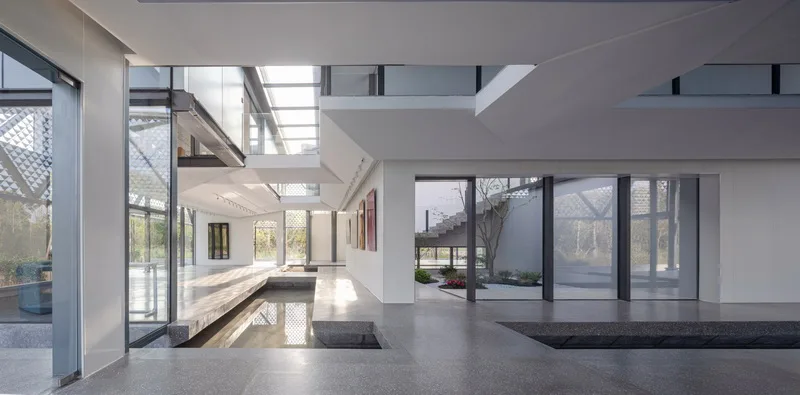
△ Gallery Photography: SU Shengliang
Through careful organization of structure and materials, the design establishes permeability between the outer, middle, and inner rings. Raised courtyard walls invite visitors, large glass panels between units incorporate the surrounding scenery, open ground floors allow flowing water and breeze, and skylights between the inner and outer circles introduce natural light. This seamless flow from outside to inside enables people in the courtyard to enjoy the breeze, water, and daylight across three spatial layers, evoking the feeling of being in an artificial grove.
Simultaneously, the exhibits, exchange activities, and the courtyard itself subtly promote Yingke’s corporate culture of regeneration and circular economy through the central small courtyard and the wind-powered curtain wall on the outer ring.
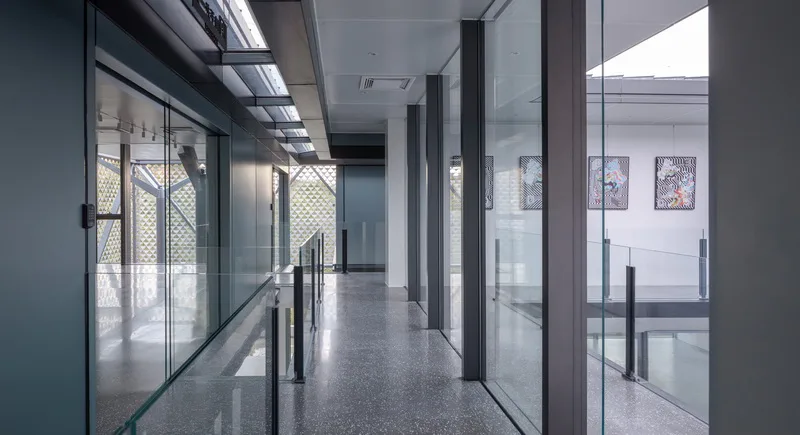
△ 2nd Floor Corridor Photography by SU Shengliang
Heyuan, the traditional form of architectural settlements in the Jiangnan region, embodies rich cultural heritage and wisdom of life. We believe that integrating contemporary technology and functionality can breathe new meaning into this continually evolving courtyard form.
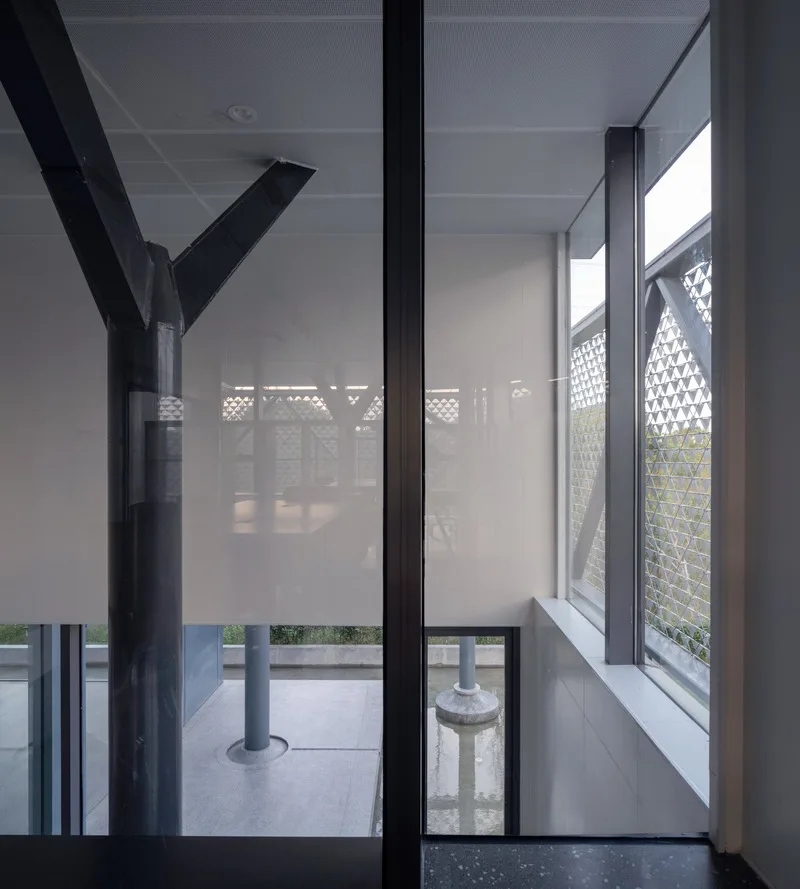
△ Small Courtyard Photography by SU Shengliang
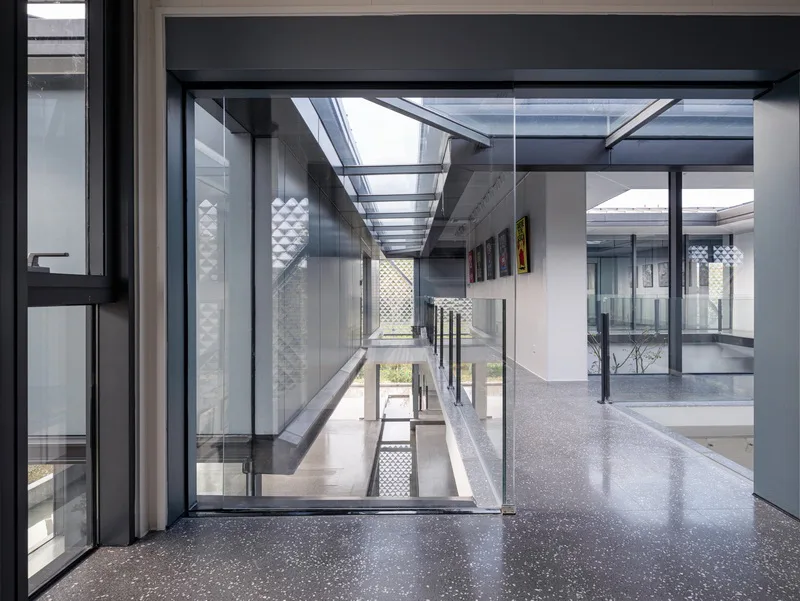
△ 2nd Floor Corridor Photography by SU Shengliang
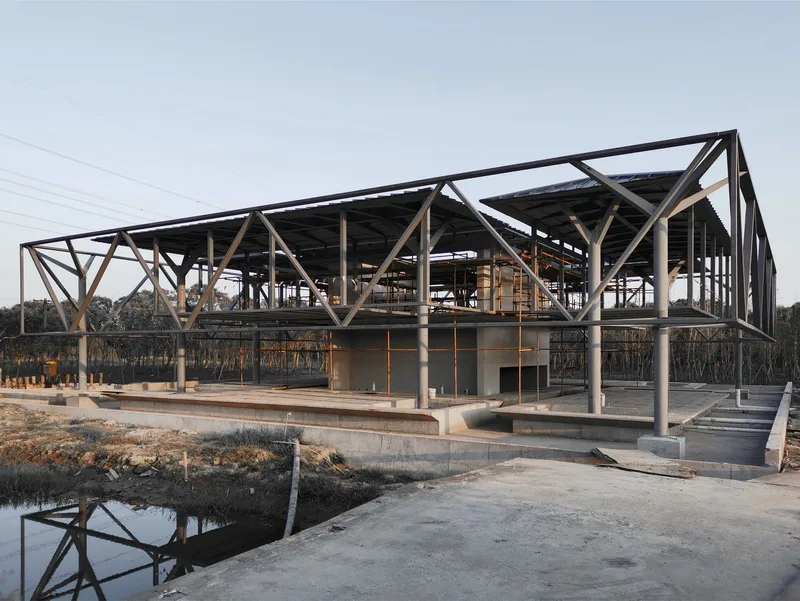
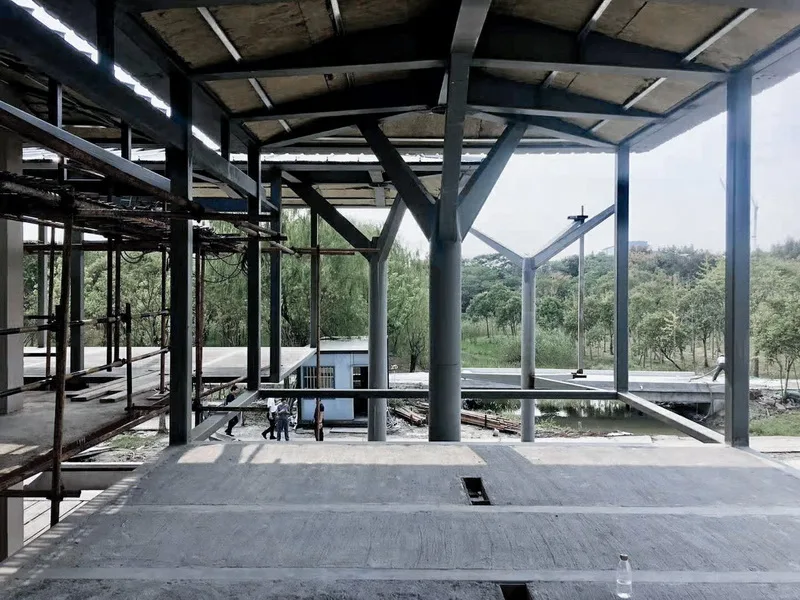
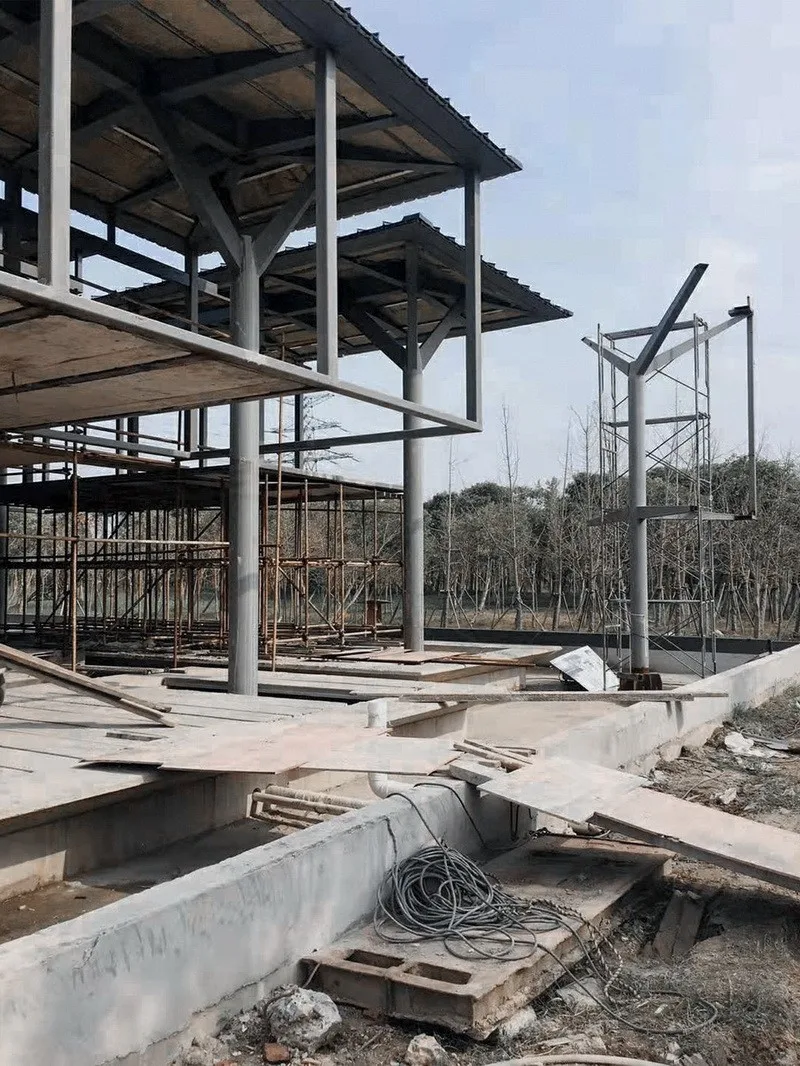
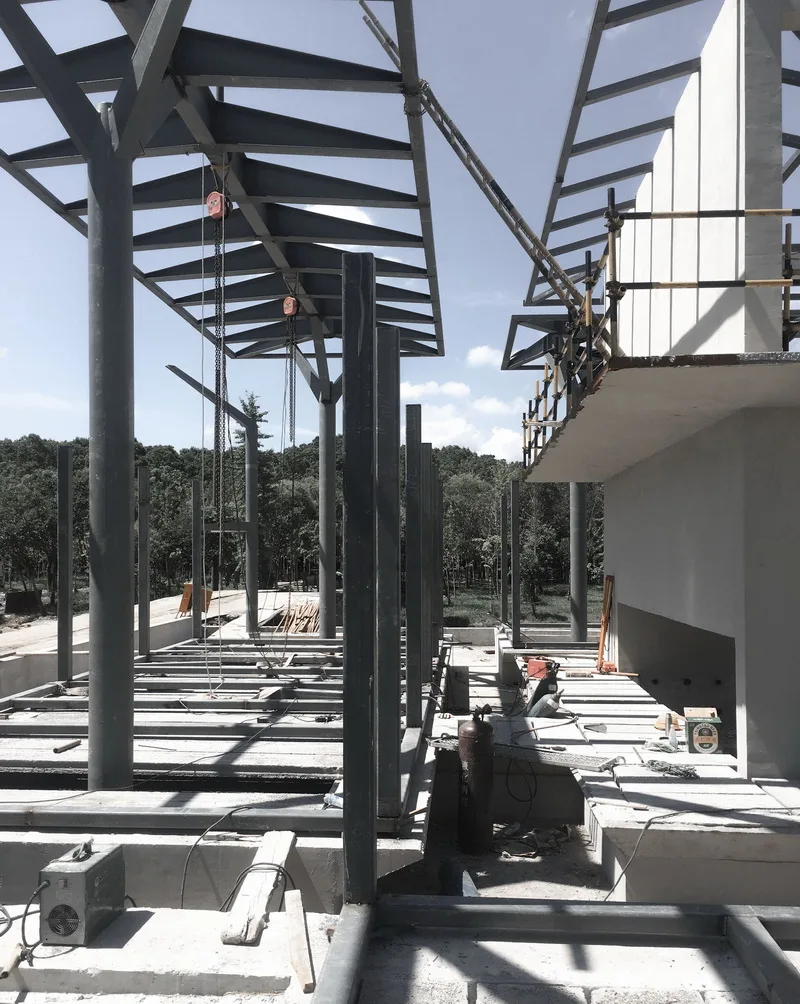
△ Construction Process
Technical Drawing
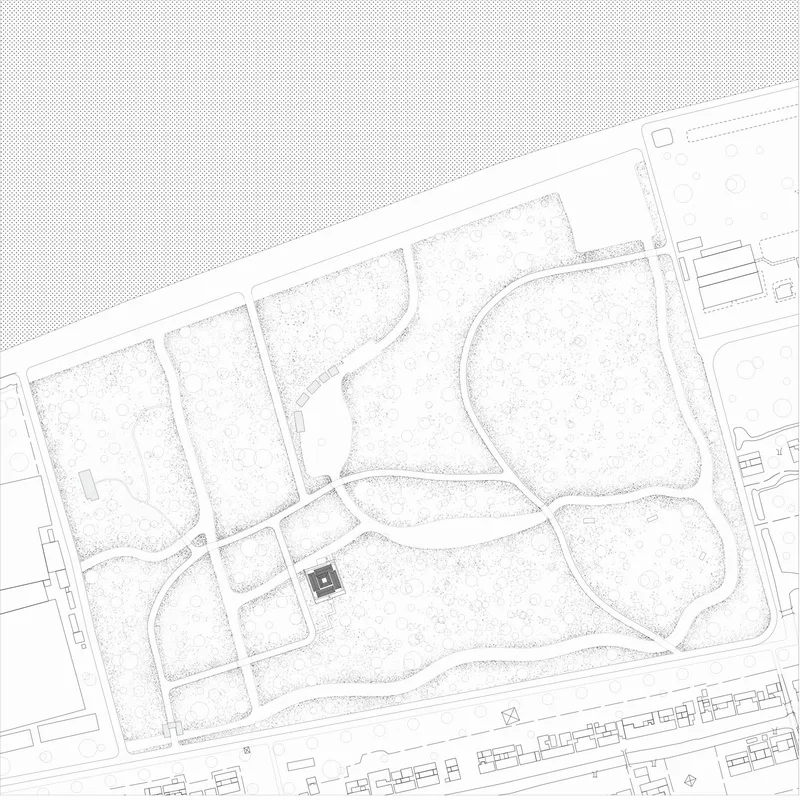
△ General Layout Plan
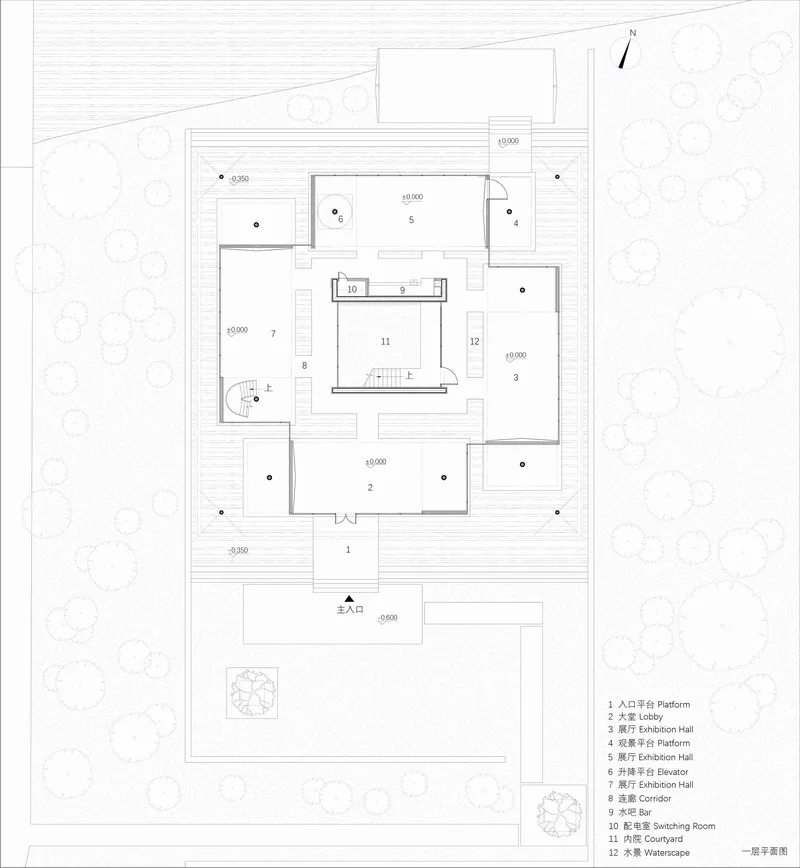
△ First Floor Plan
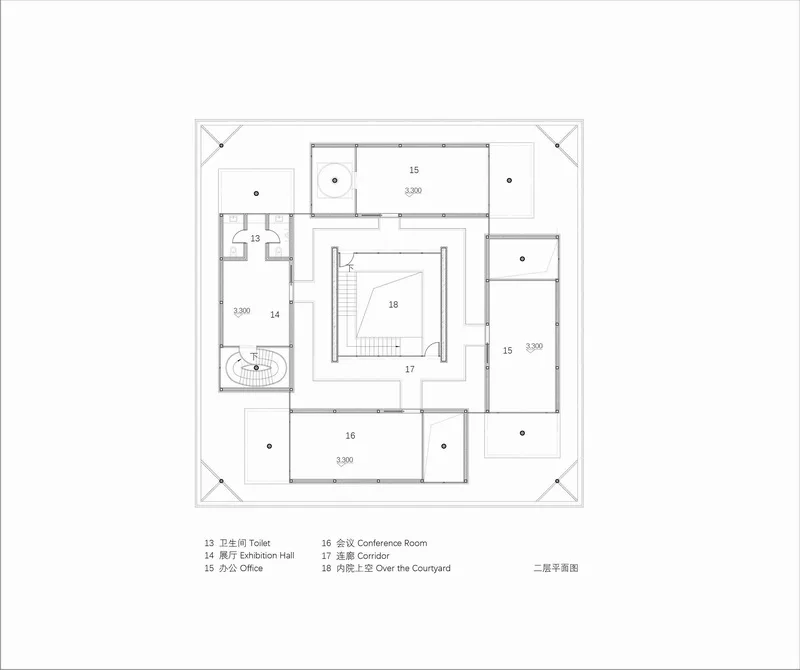
△ Second Floor Plan
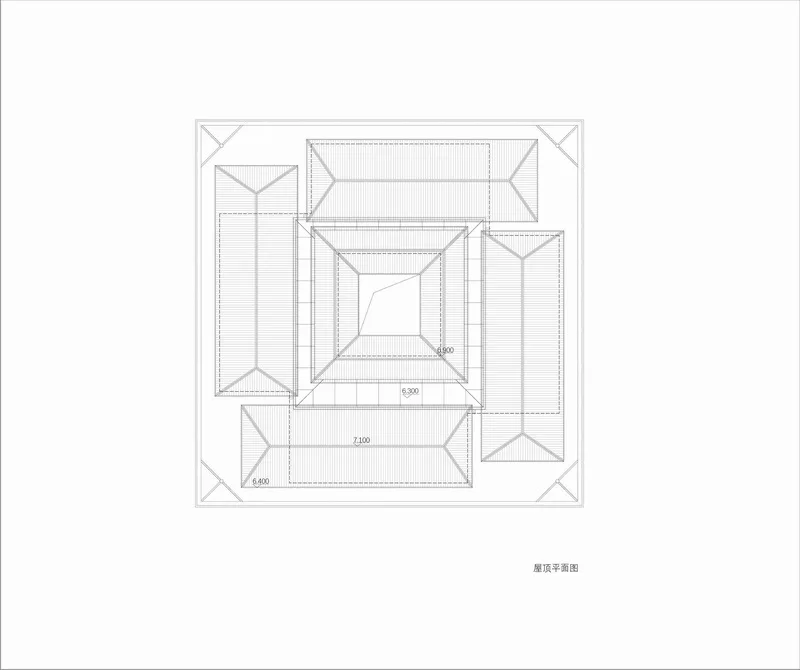
△ Roof Plan
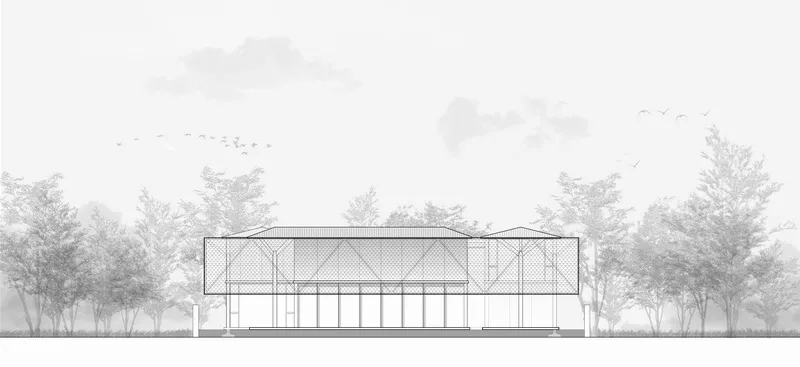
△ Elevation Drawing
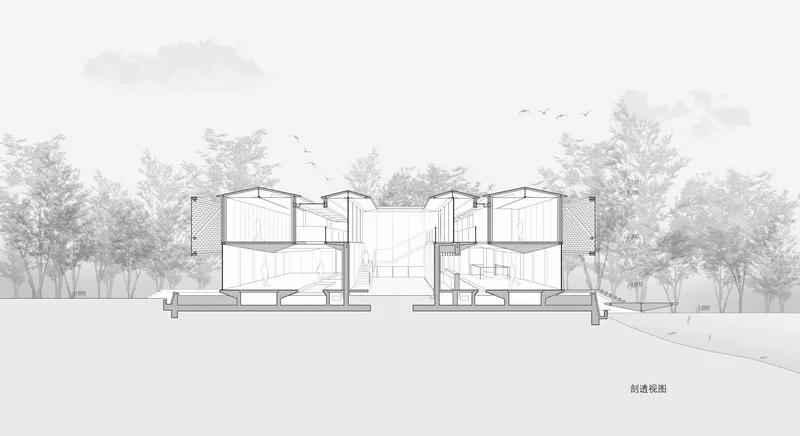
△ Sectional Perspective View
Project Information
Design Unit: Landscape Architecture Office + Production Architecture Firm Doarchi
Location: Yuli Village, Zhuangxing Town, Fengxian District, Shanghai
Functions: Exhibition, Office, Conference
Building Area: 686 m²
Design & Construction: 2020–2021
Lead Architects: Zhu Xiaofeng, Ding Penghua
Design Team: Lu Yao, Tang Jiajia, Du Xue, Liu Zhiyuan, Liang Jiaquan
Owner: Shanghai Hangzhou Bay Economic and Technological Development Co., Ltd
Structural Consultants: Miao Jianbo, Chen Tong
Curtain Wall Consultant: Shanghai Huayi Curtain Wall System Engineering Co., Ltd
Structural System: Y-shaped steel column beam suspension structure
Building Materials: Aluminum oxide wind curtain wall, granite slabs, green-gray aluminum panels, ultra-white hollow Low-E glass, dark gray aluminum-magnesium-manganese vertical edge interlocking roof system
Photographers: Su Shengliang, Liang Shan















Must log in before commenting!
Sign Up