
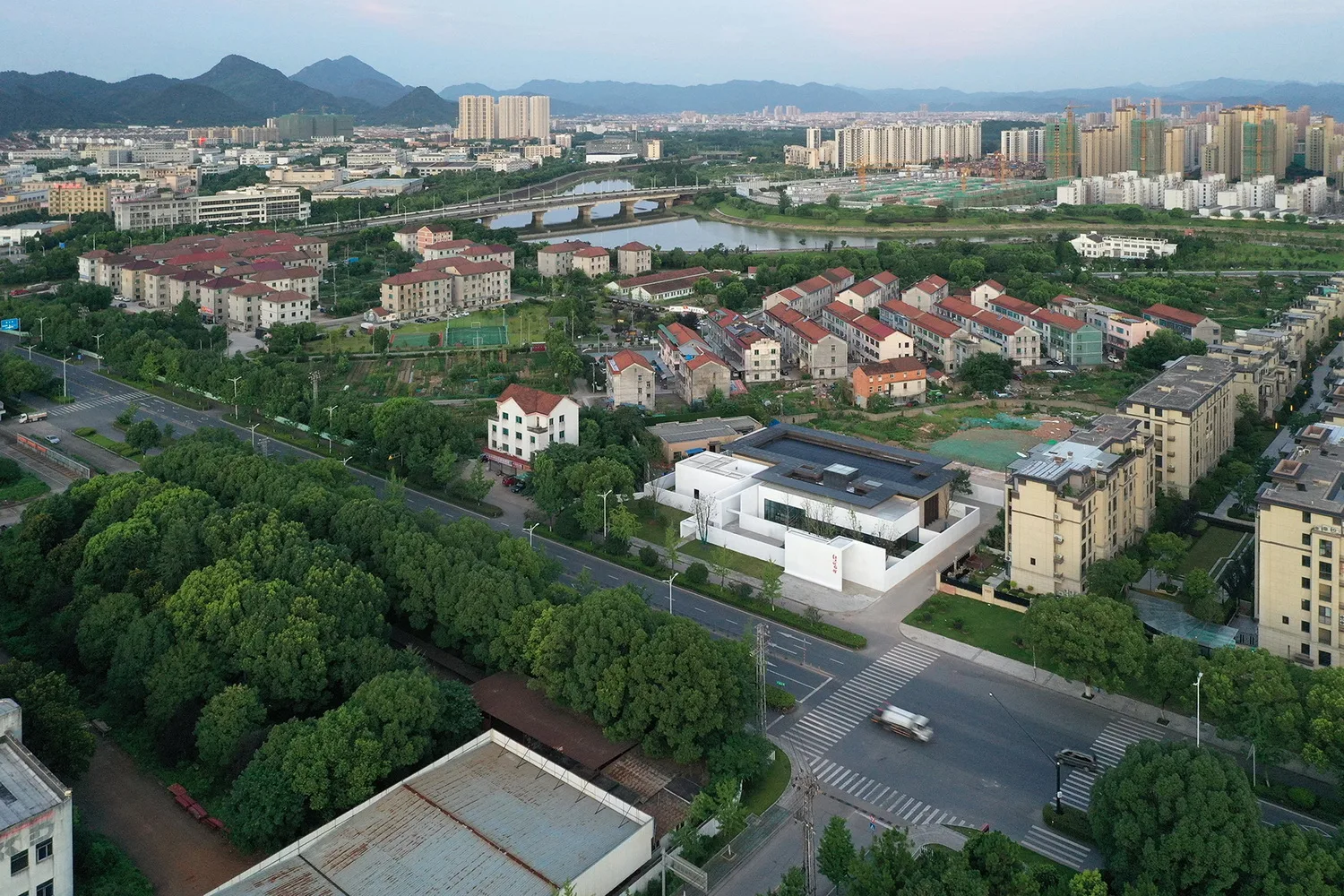
△ Aerial view © Wu Zhuoying
The project is situated on Taozhu Street in Zhuji, Zhejiang. Originally a sales office for Xiangsheng Real Estate, the building was acquired by the local government in 2020 and repurposed as a memory center.
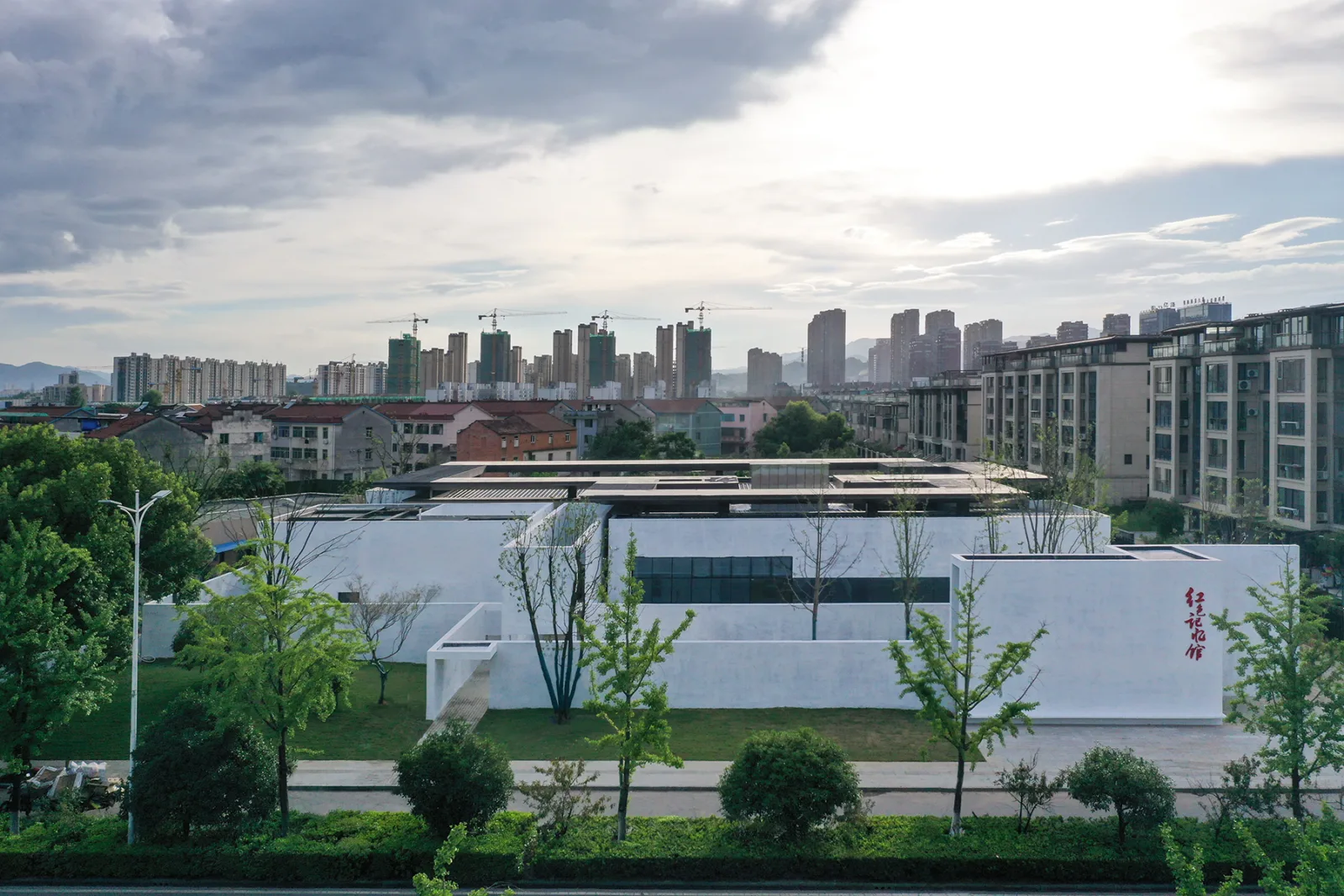
△ Jincun during development package © Wu Zhuoying
The original irregular land plot was not expanded in the land transfer approval. The renovation’s red line is constrained within a rectangular area inside the existing fence, and a 15-meter public space must be maintained on the east side.
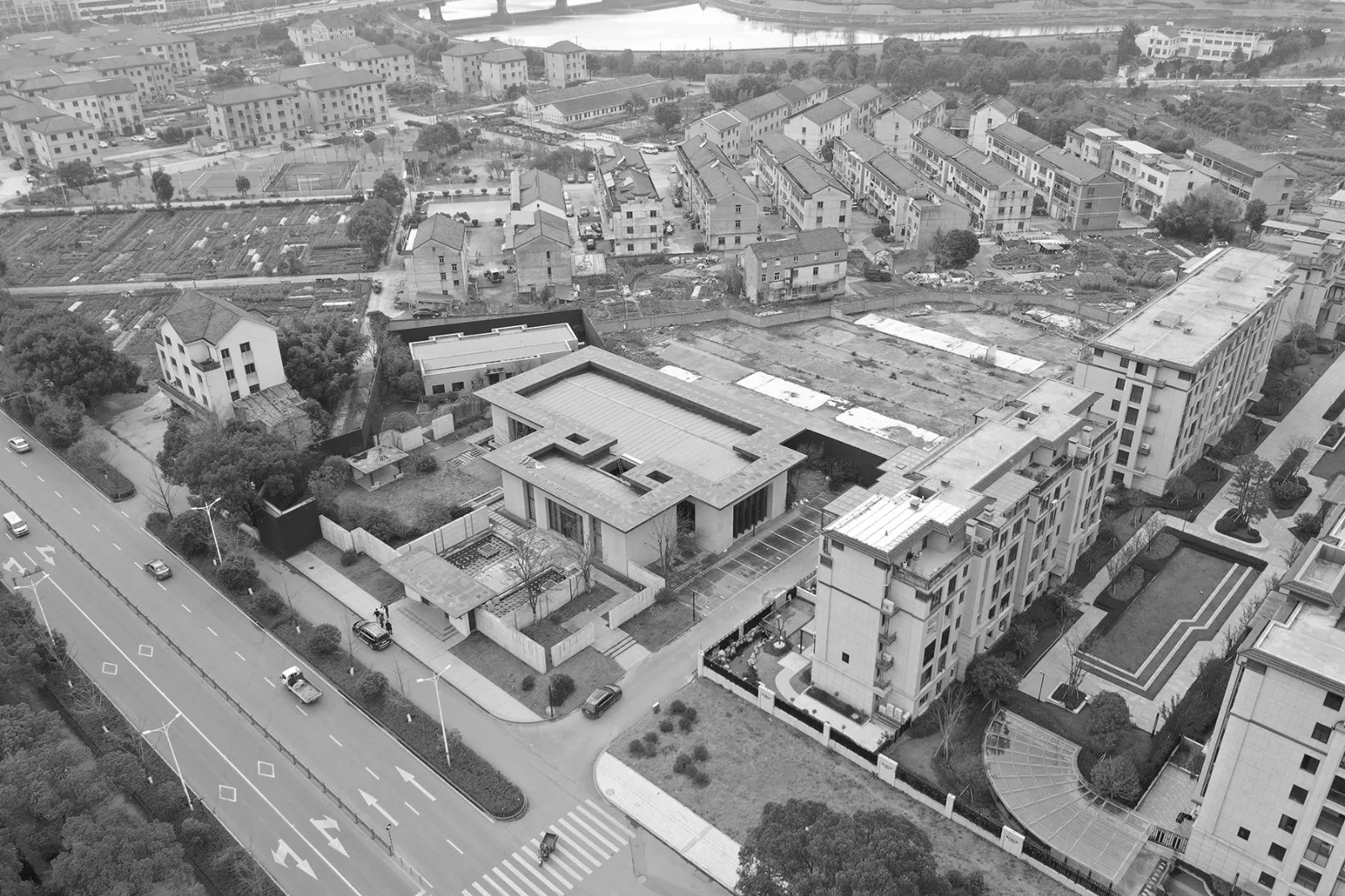
△ Aerial view of the site © Wu Zhuoying
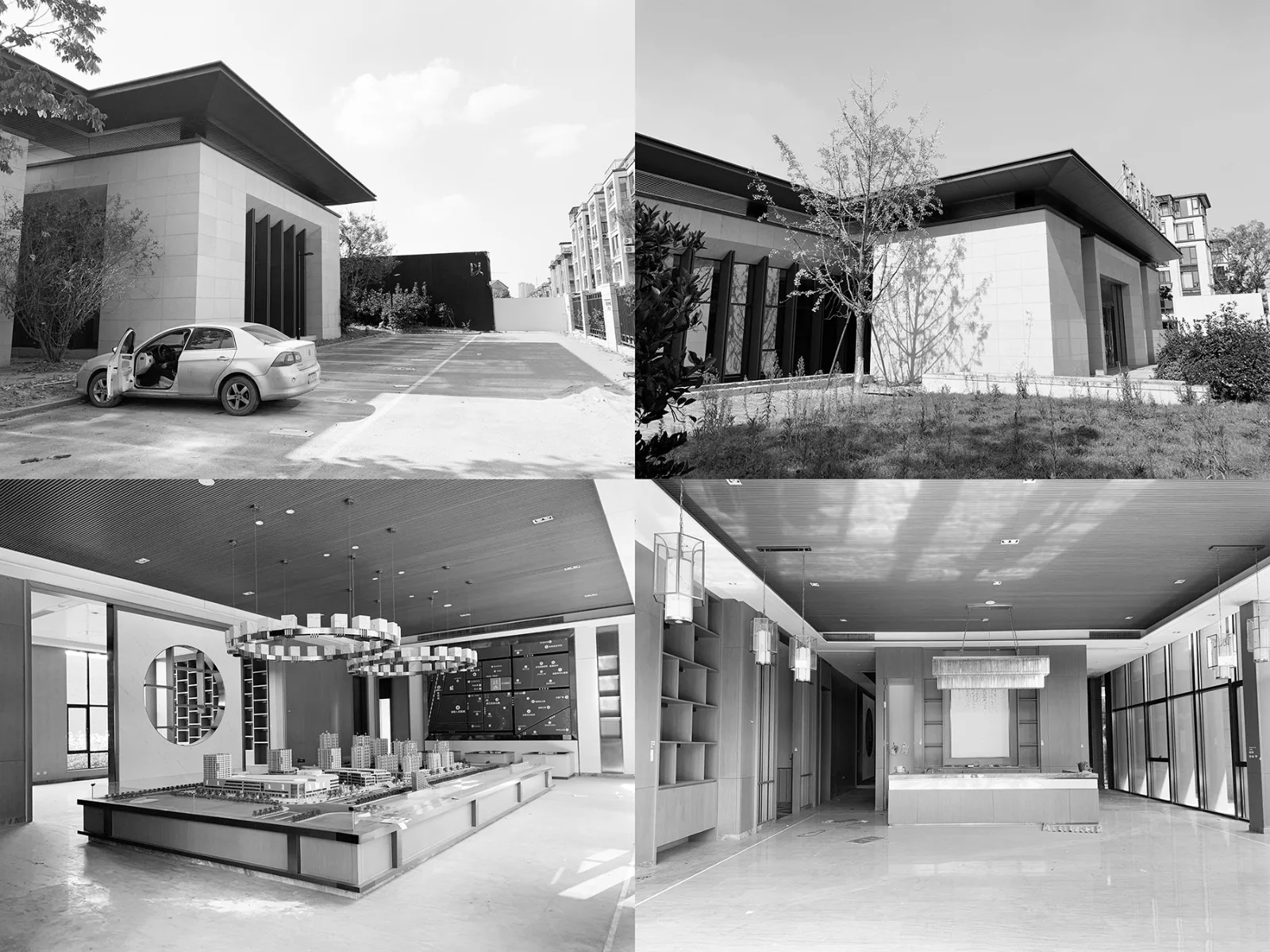
△ Original sales office © Wu Zhuoying
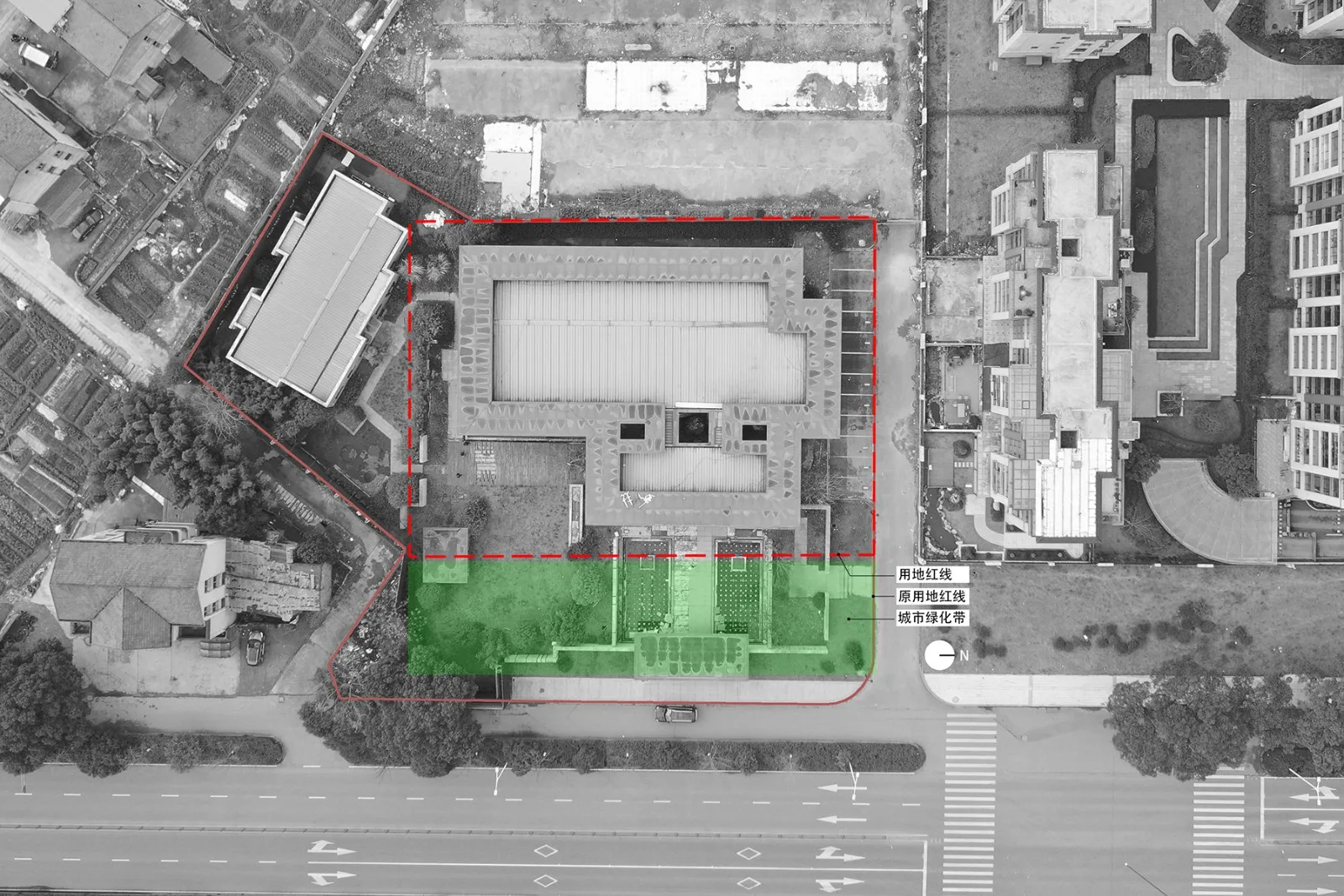
△ Red line boundary © Wu Zhuoying
Within this limited construction area, two new volumes were added: a management office and a public restroom.
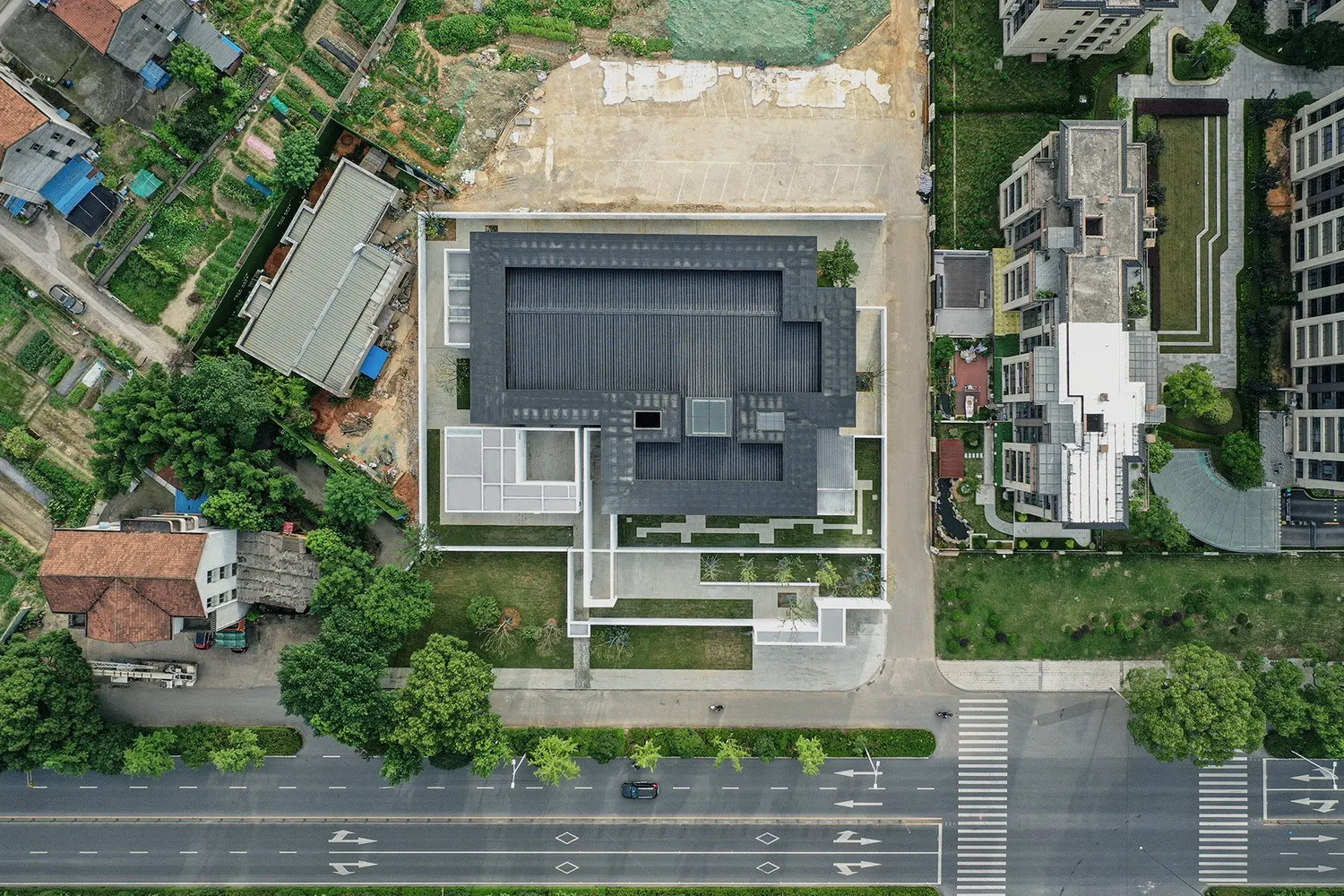
△ Top view after renovation © Wu Zhuoying
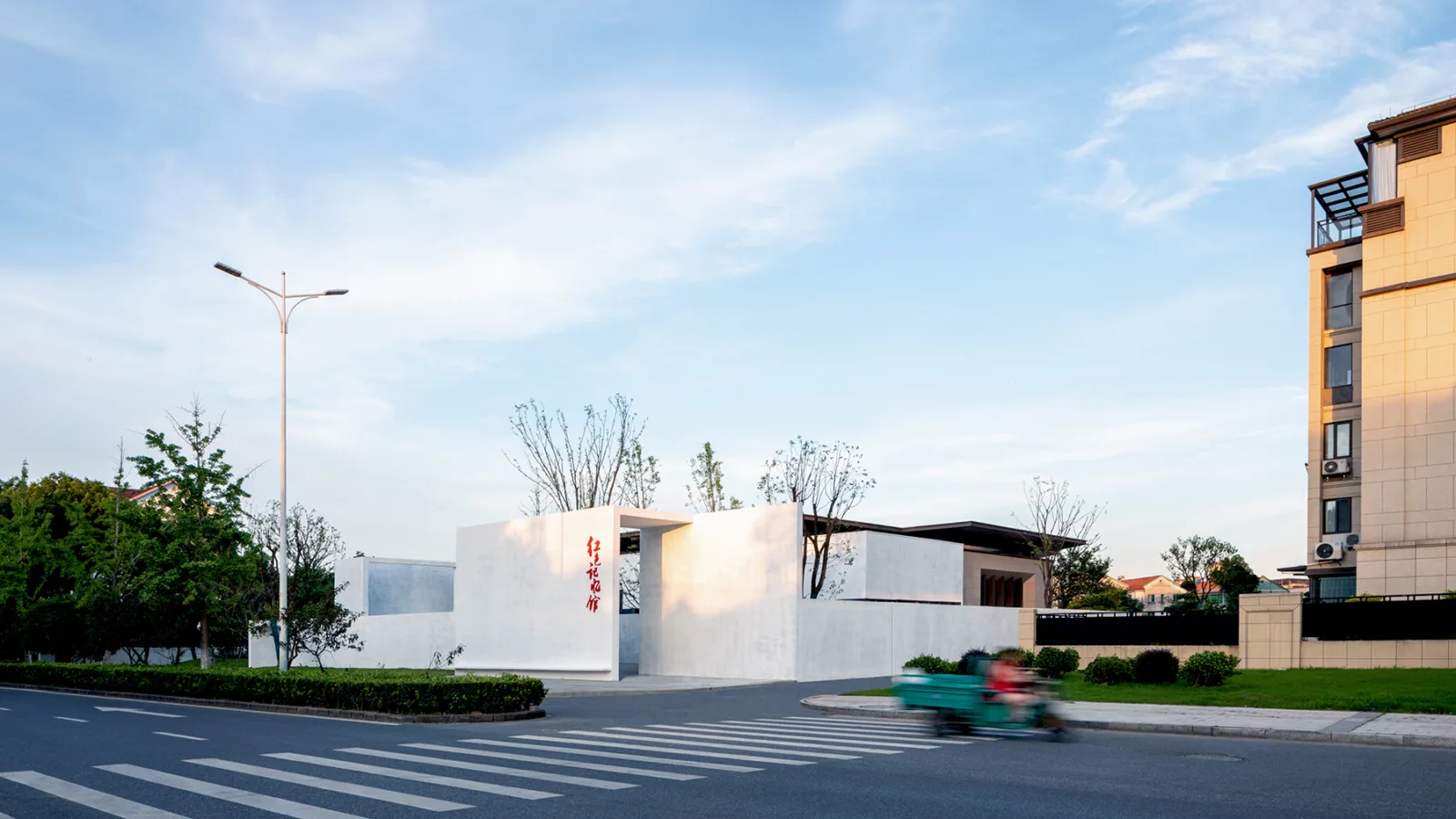
△ Street corner in the early morning © Wu Zhuoying
Mr. Qiu Zhefeng, lead planner of the Red Memory Museum, emphasized during the early stages that “the red memory should be traced back to the local land’s history.” Zhuji, a typical water town in Jiangnan, is characterized by courtyards as its spatial prototype.
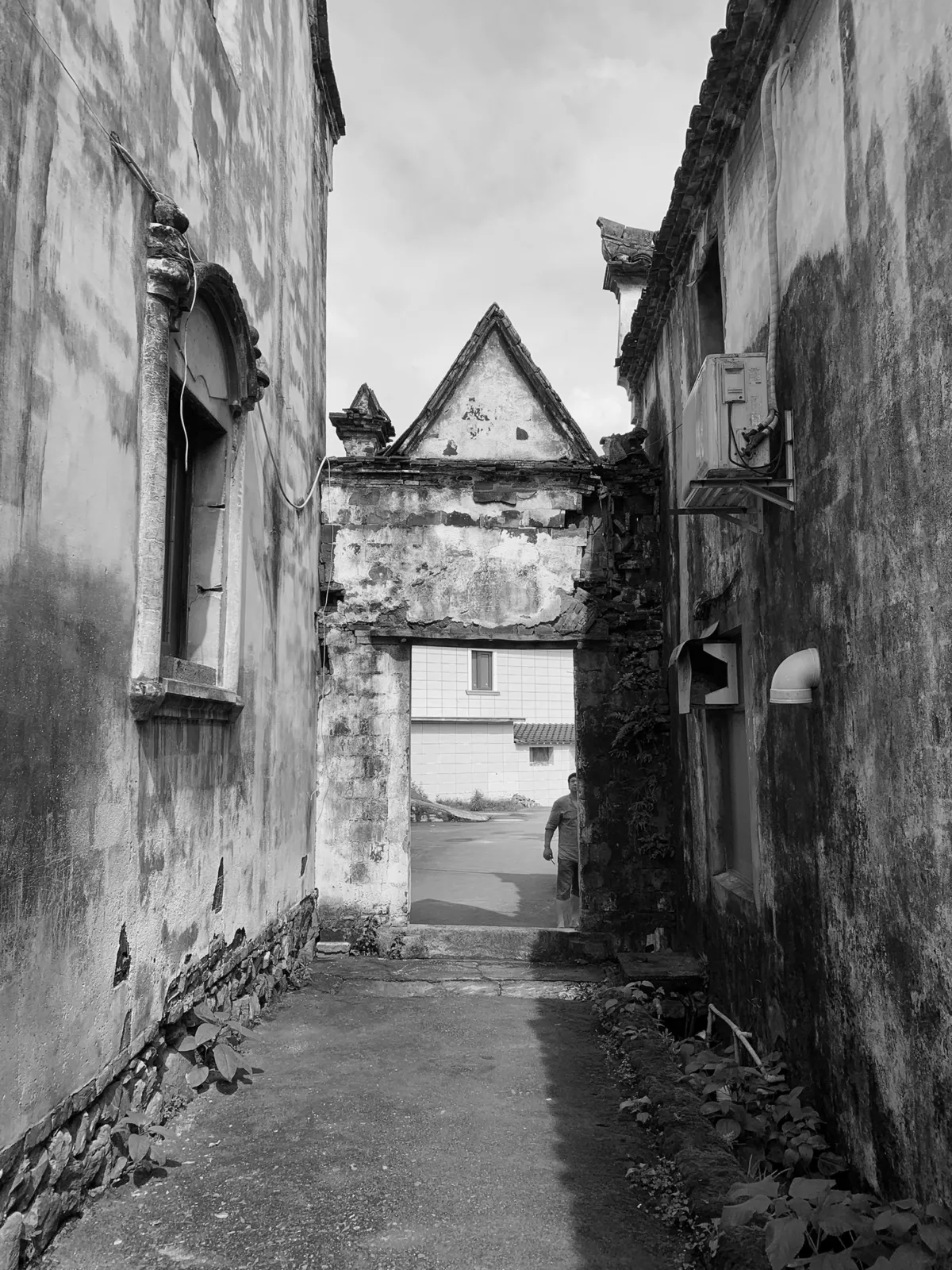
The courtyard of Zhuji Ancient Village © Dai Chenjun
The design concept of “interwoven courtyards” is employed to evoke the experience of walking through village streets and alleys from the city streets, finally arriving back at a home courtyard, capturing visitors’ emotions and perceptions through the interlacing of longitudinal and latitudinal courtyard spaces.
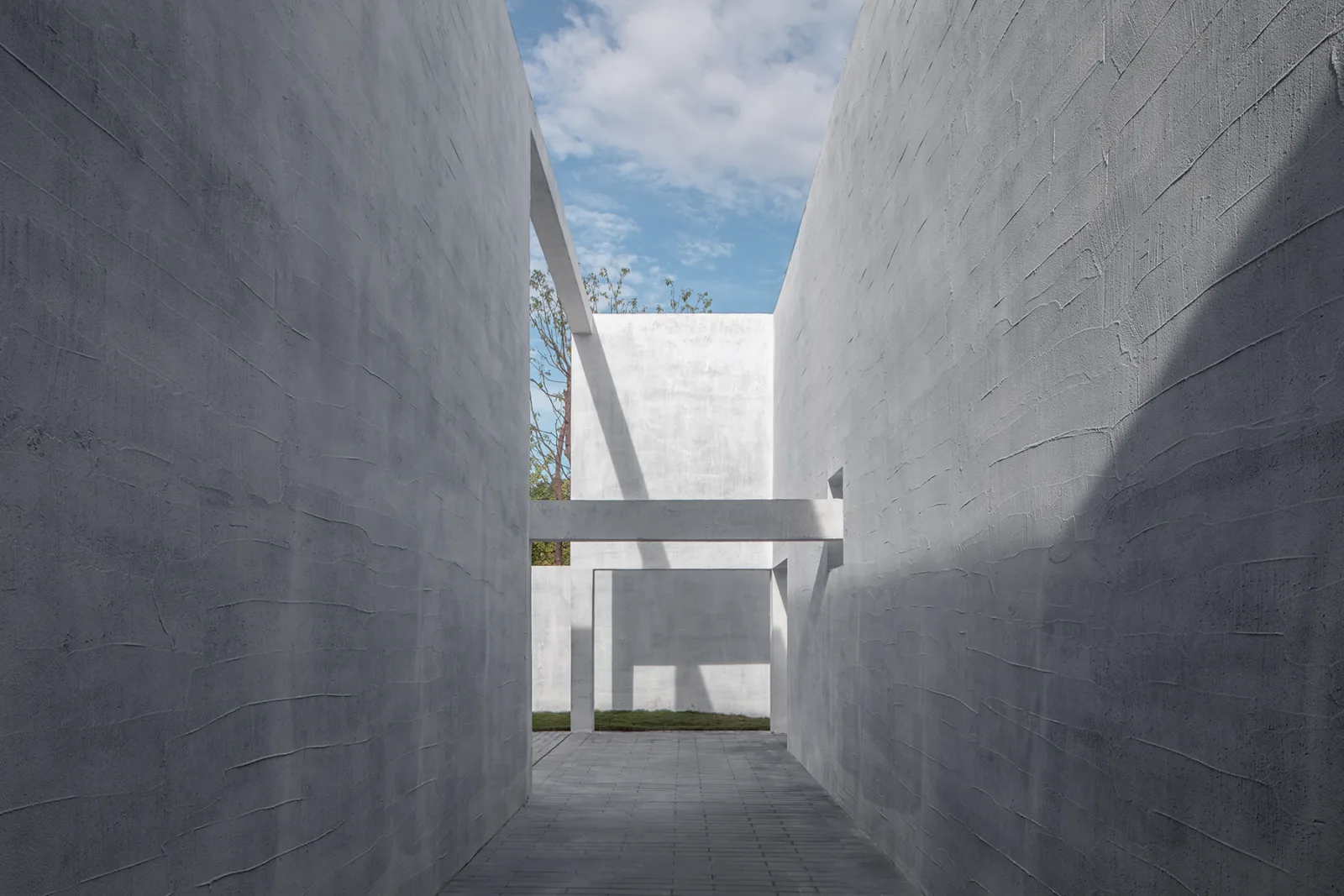
The courtyard of the Memory Museum © Wu Zhuoying
The layered courtyards unfold from the city streets, inviting citizens into the venue through various spatial experiences. Once inside the inner courtyard, visitors are guided through outdoor courtyards of varying proportions, scales, and orientations, leading eventually to the exhibition hall.
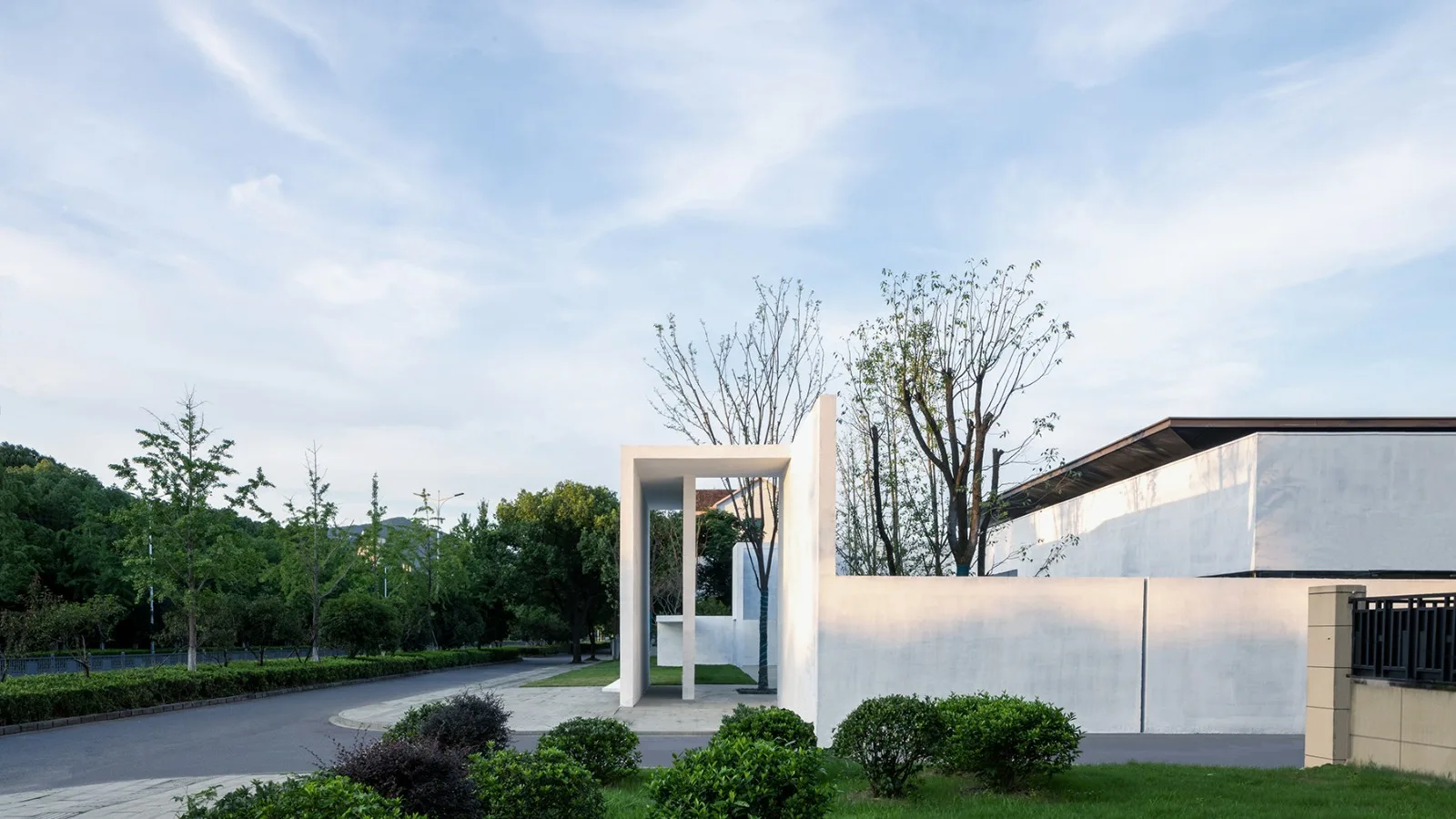
The relationship between the main northeast entrance and the street © Wu Zhuoying
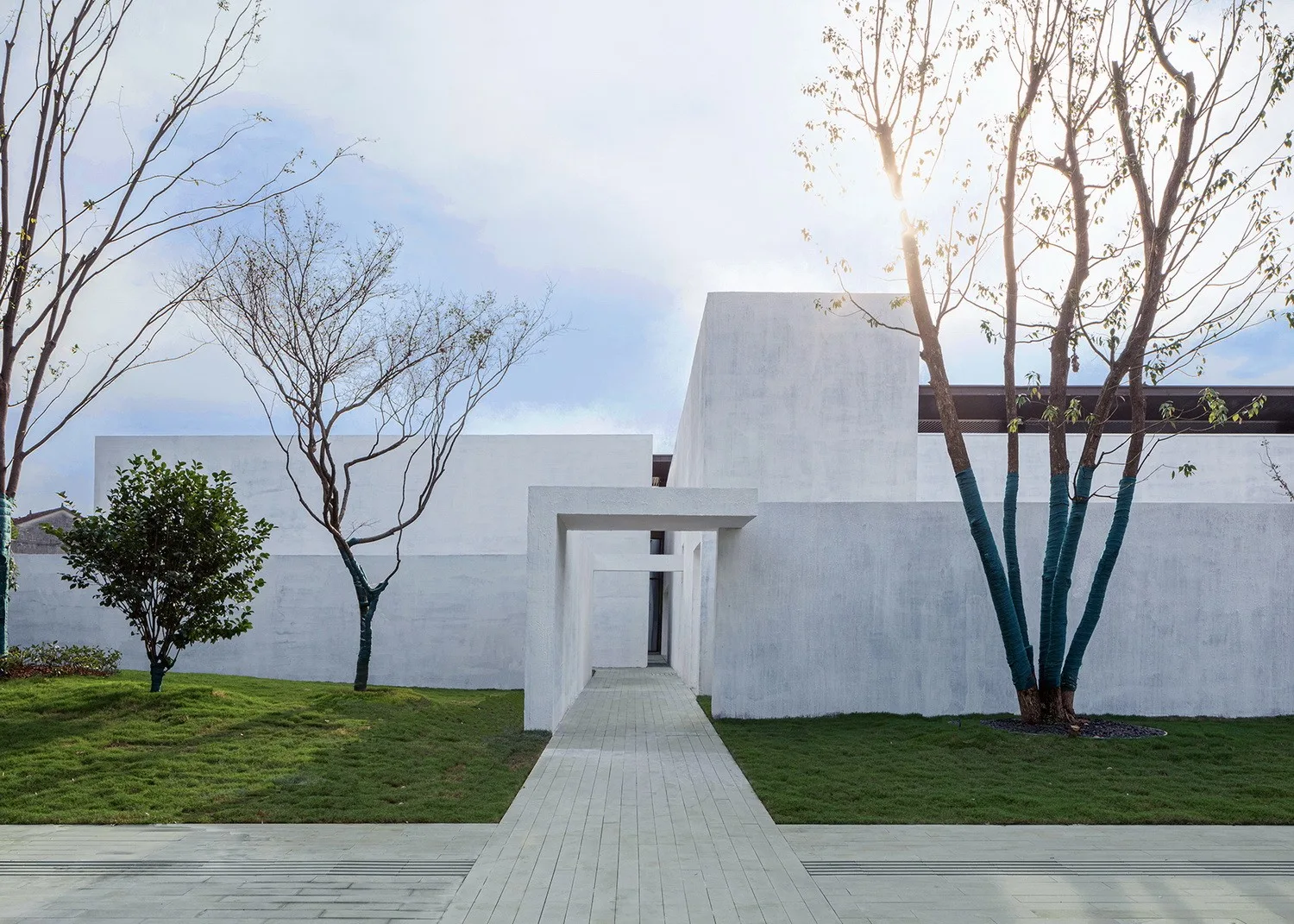
The relationship between the southeast entrance and the building volume © Wu Zhuoying
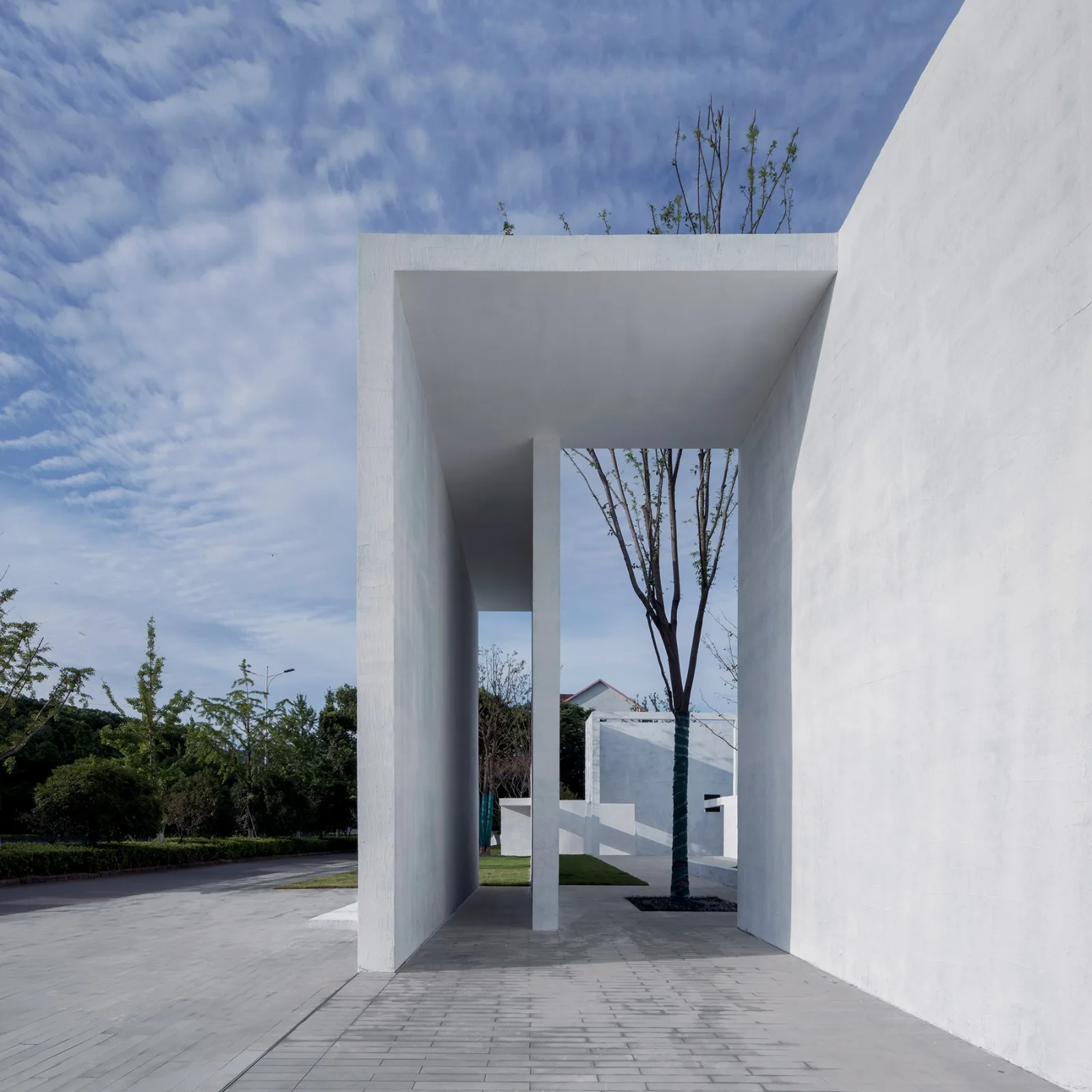
△ Entering the courtyard from the main entrance © Wu Zhuoying
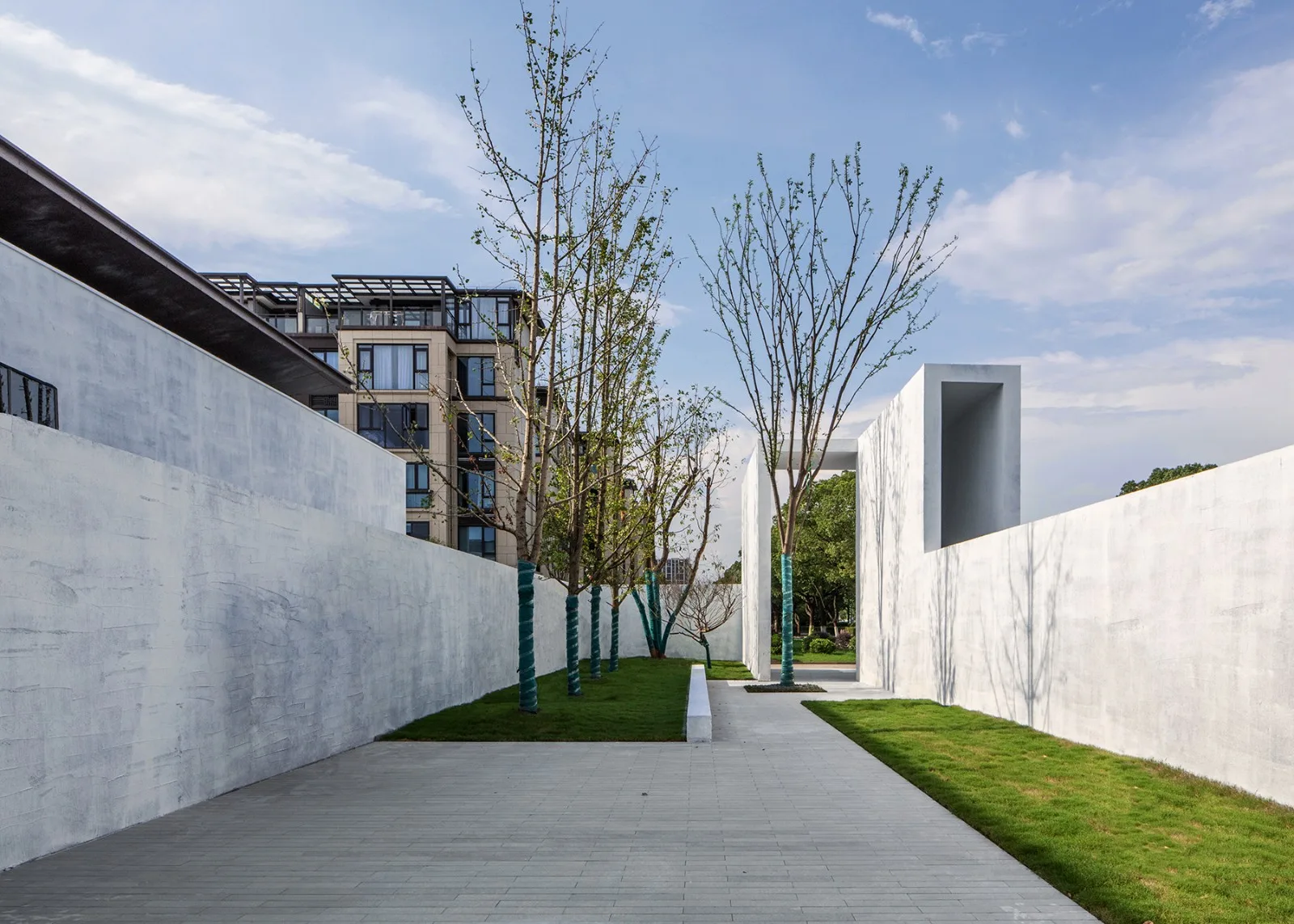
Looking back at the street from the inner courtyard © Wu Zhuoying
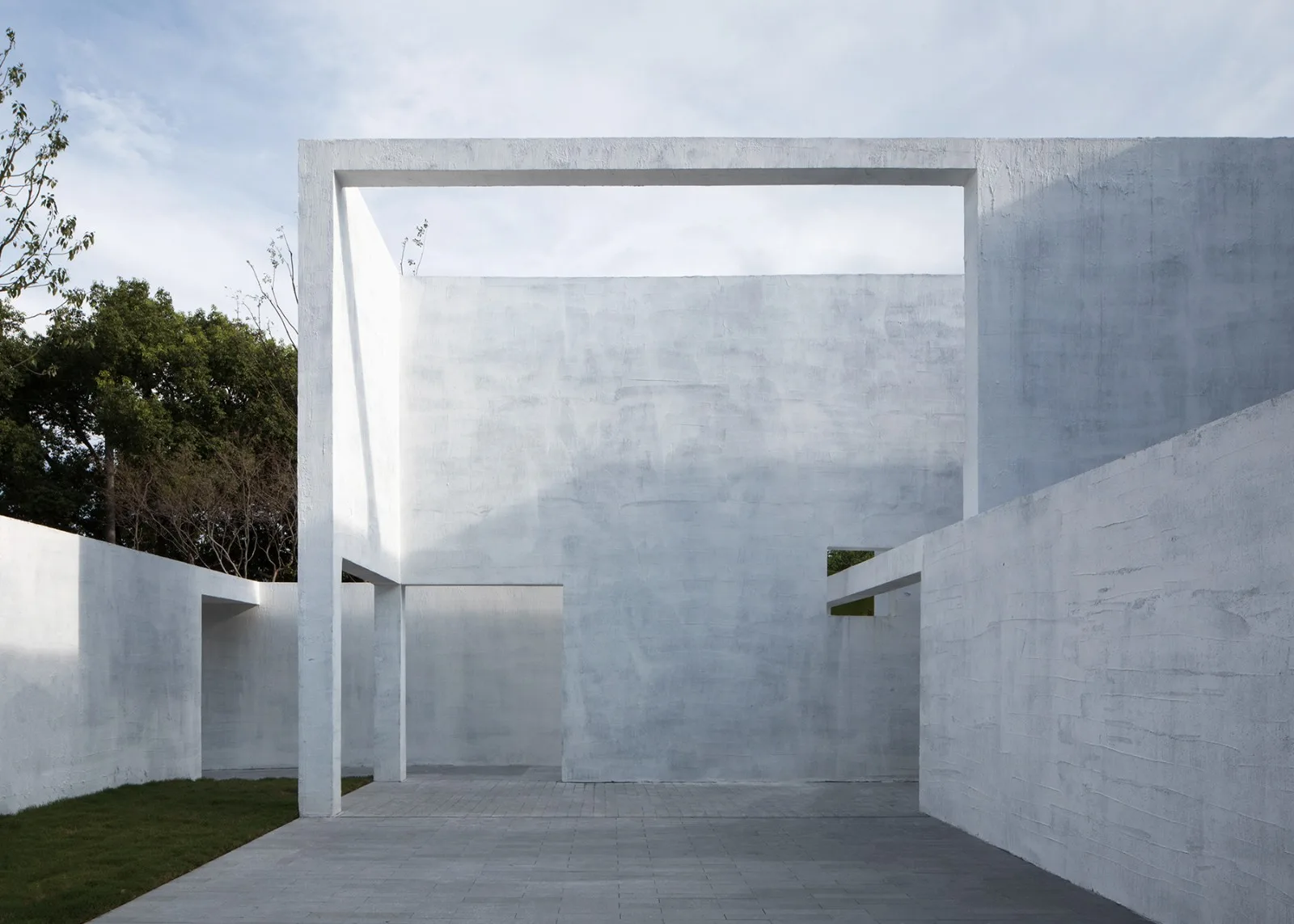
Two interconnected courtyards at different levels © Wu Zhuoying
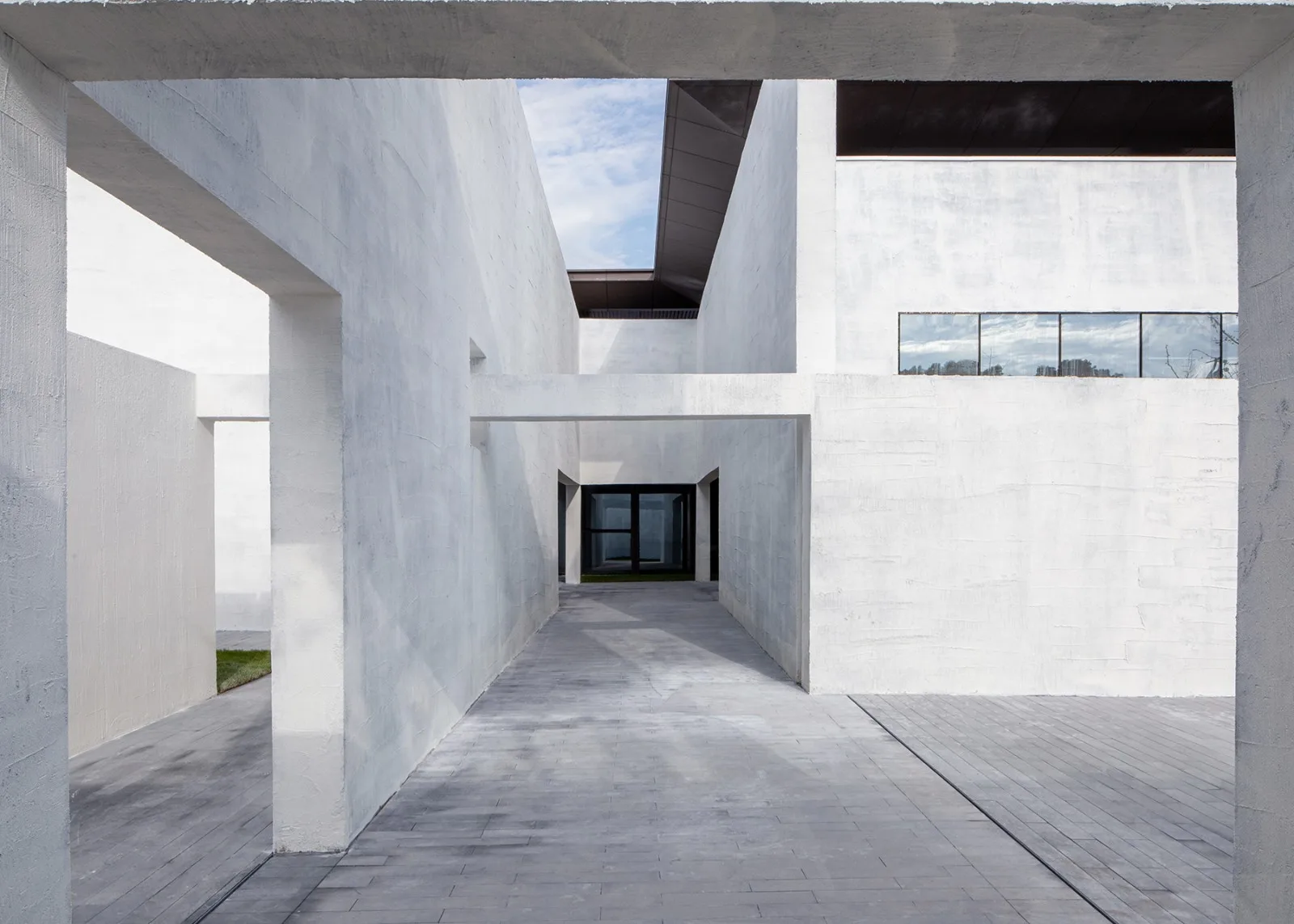
View towards the exhibition hall from the inner courtyard © Wu Zhuoying
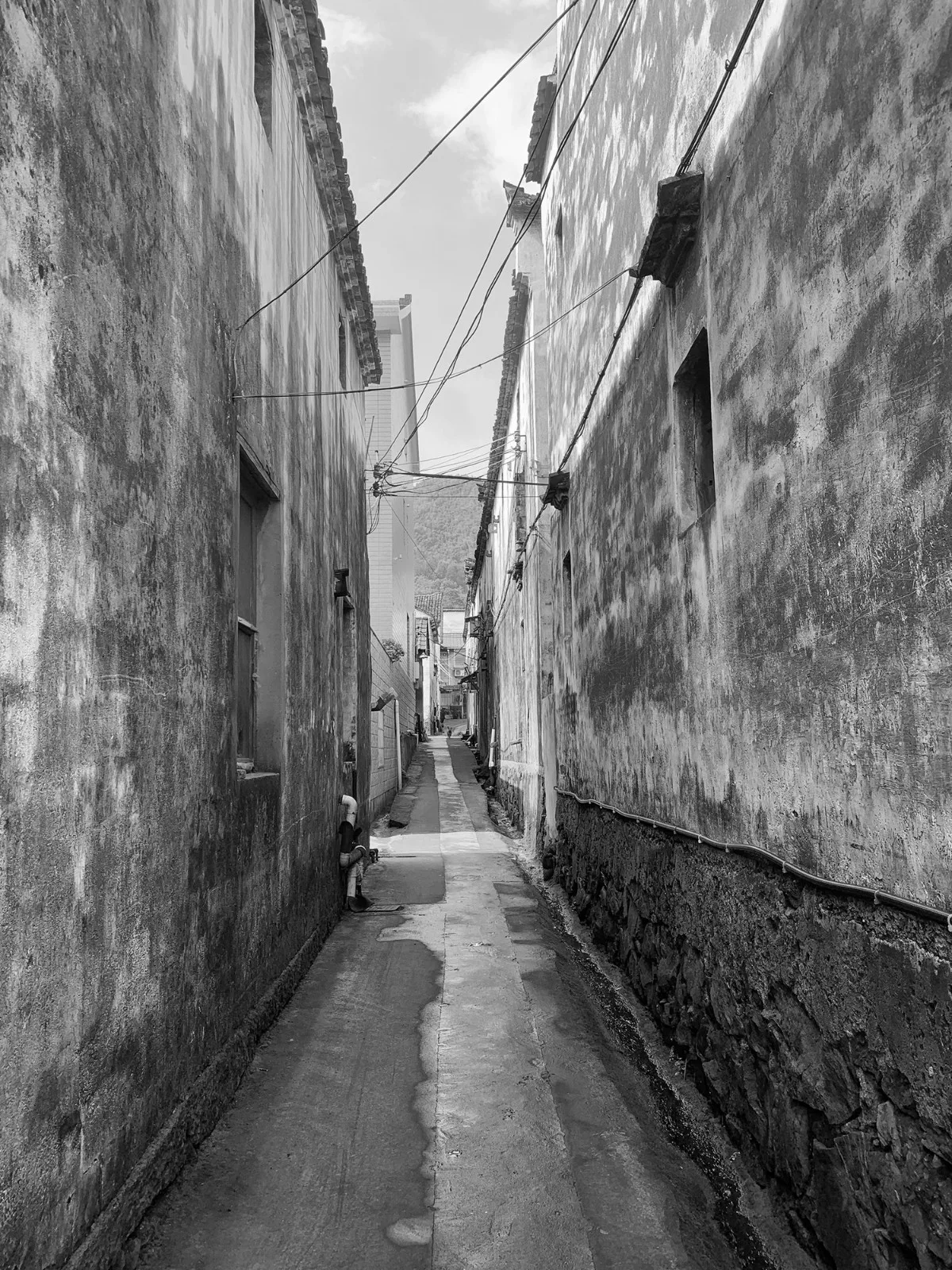
The alleyway spaces typical of Jiangnan villages © Dai Chenjun
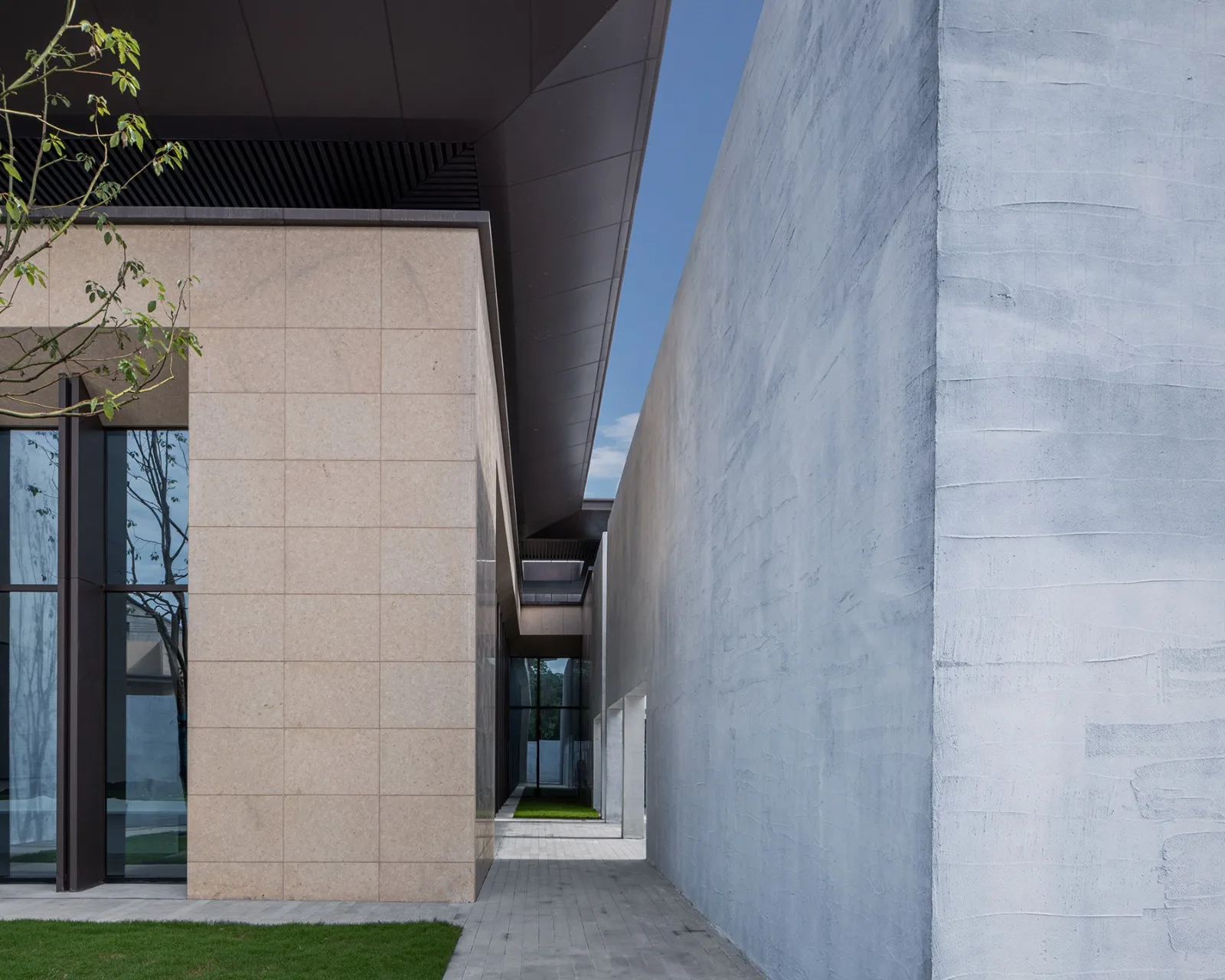
The space between the new volume and the original building © Wu Zhuoying
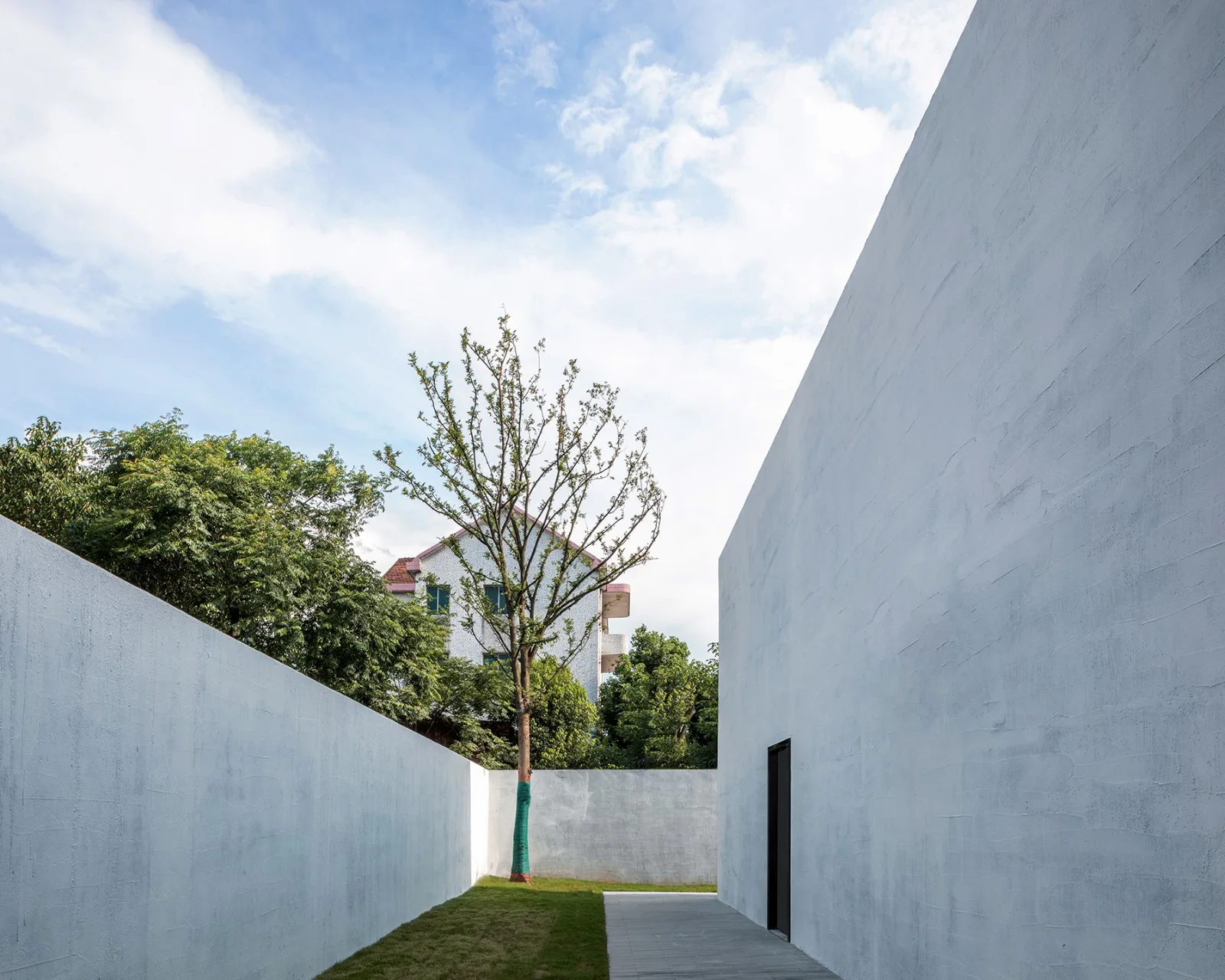
The space between the solid volume and courtyard wall © Wu Zhuoying
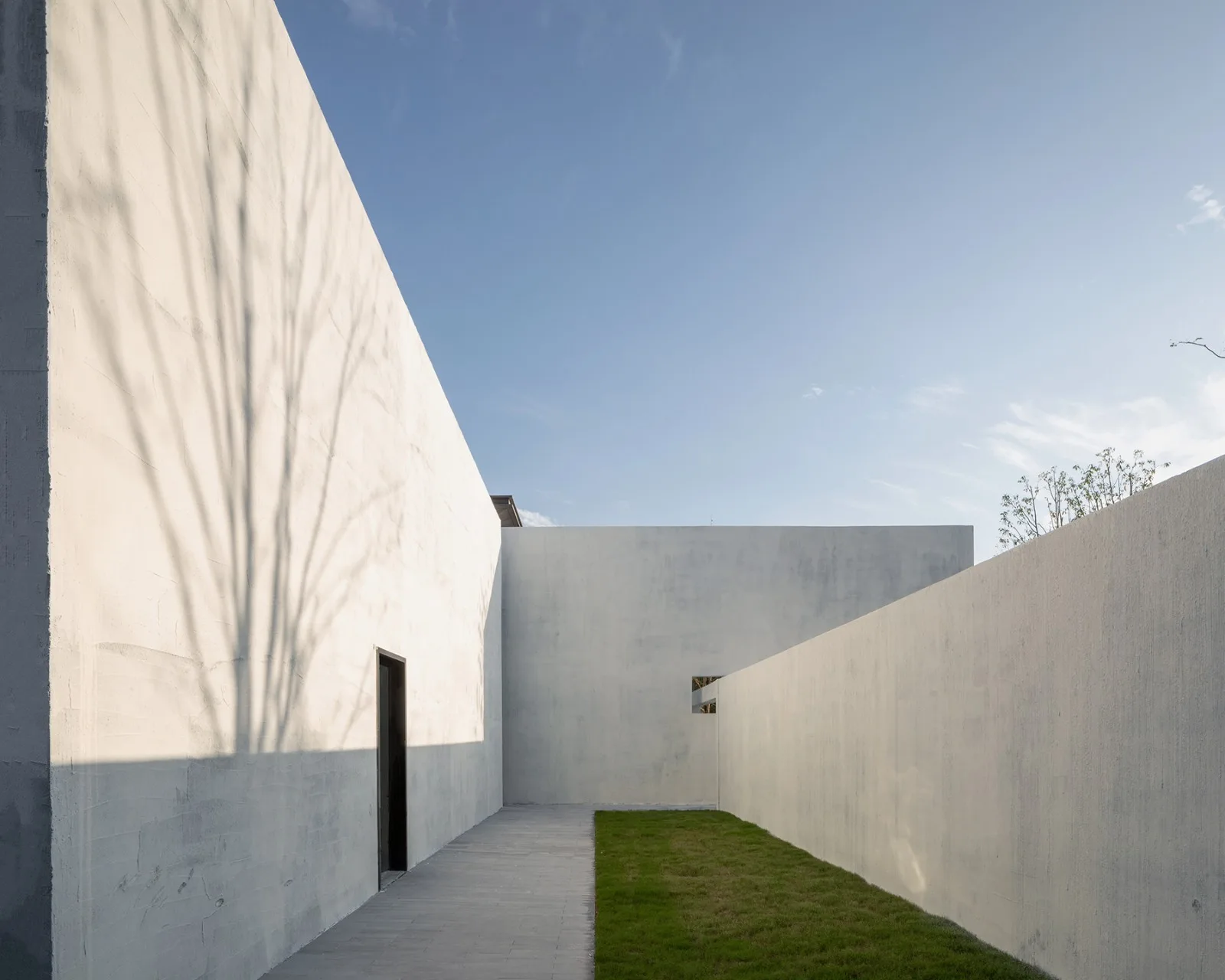
The space between the solid volume and courtyard wall © Wu Zhuoying
Inside the exhibition hall, multiple exhibition spaces of varying sizes gradually unfold in layers. Natural light filters in from above, the sides, and distant openings, creating an interplay of light and shadow that enhances spatial tension throughout the diagonal spaces.
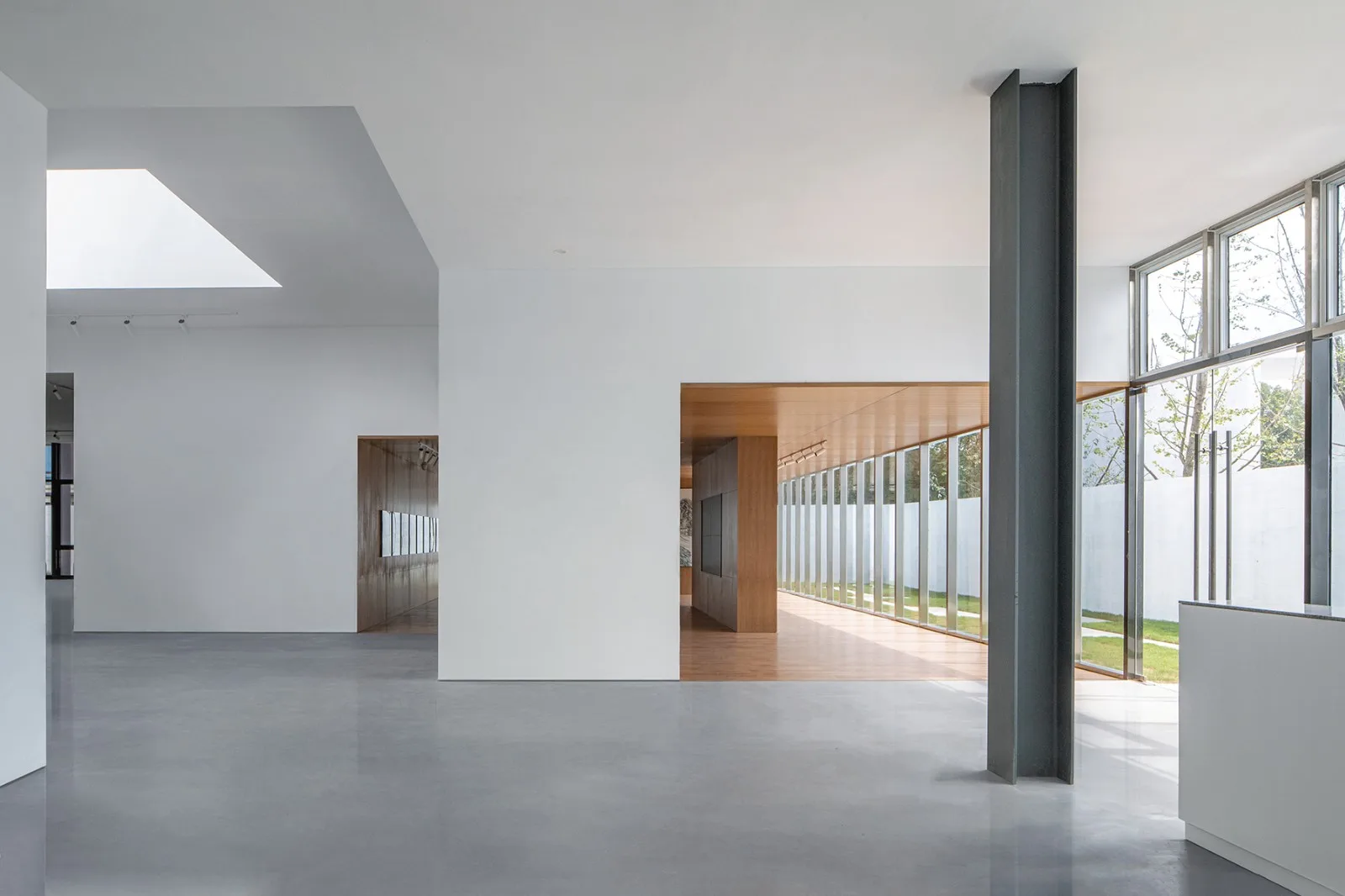
△ Main entrance hall of the exhibition hall © Wu Zhuoying
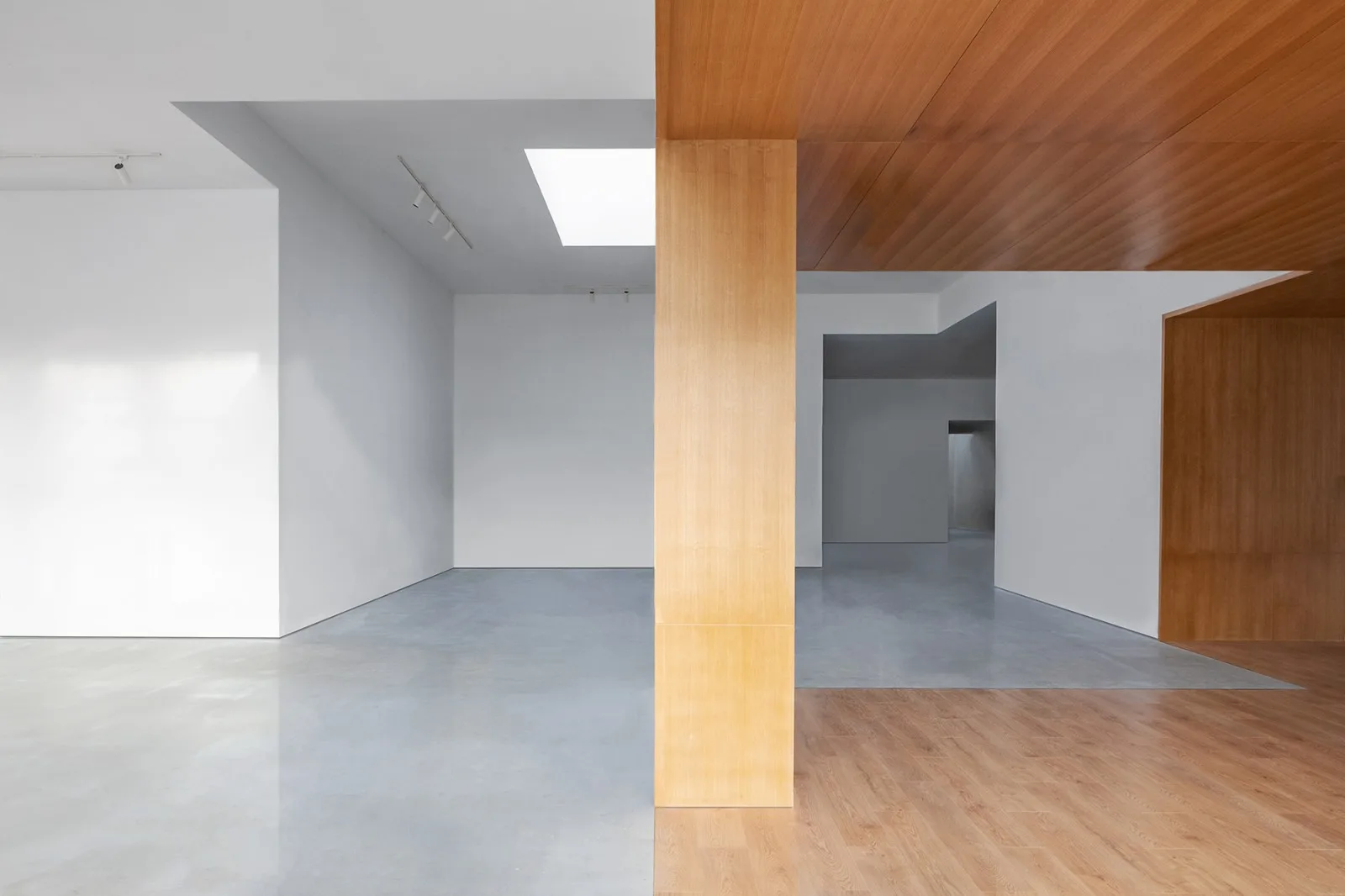
△ View of the Red Memory Exhibition Hall from the Urban Development Exhibition Hall © Wu Zhuoying
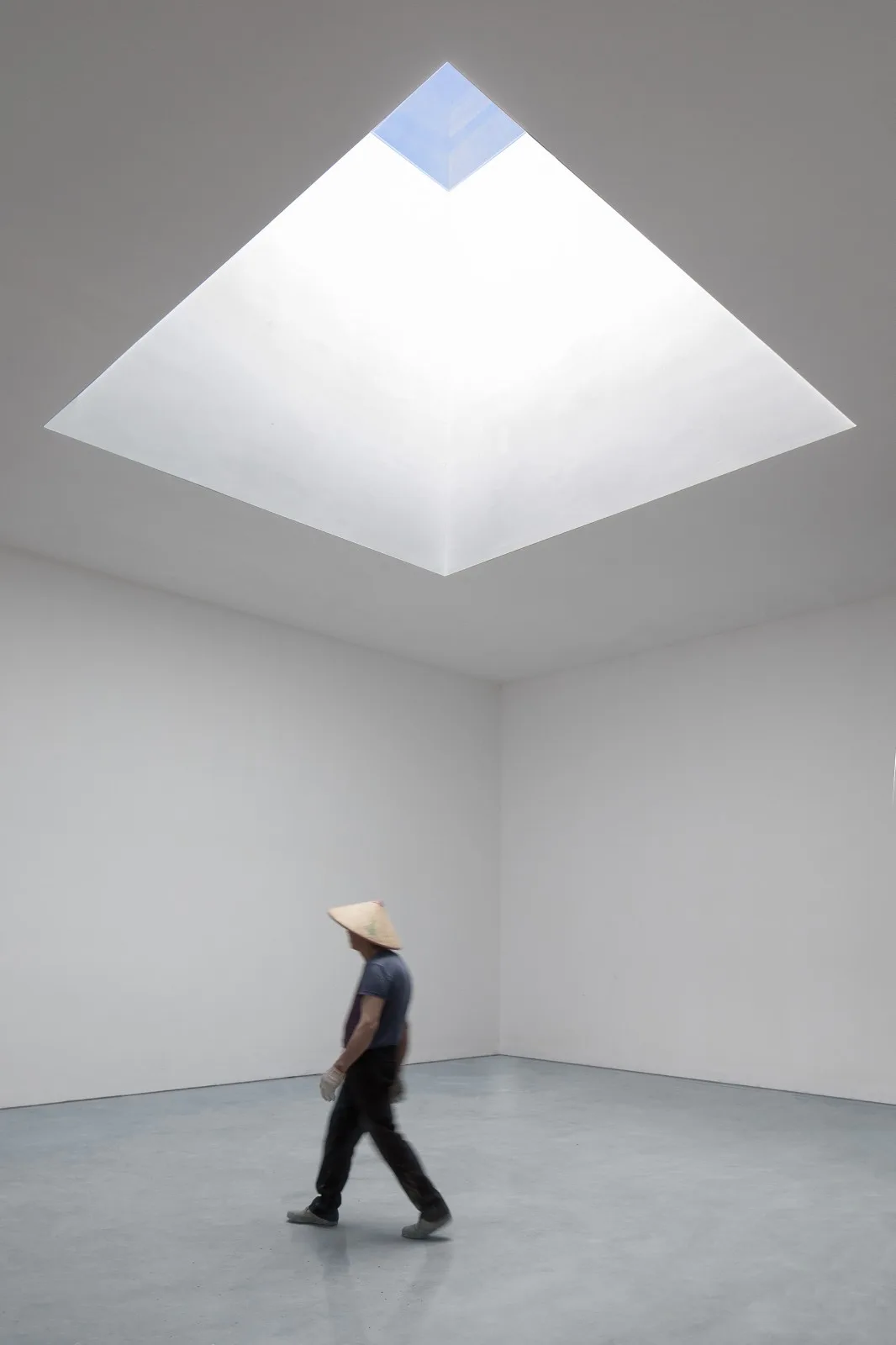
Workers walking through the exhibition hall © Wu Zhuoying
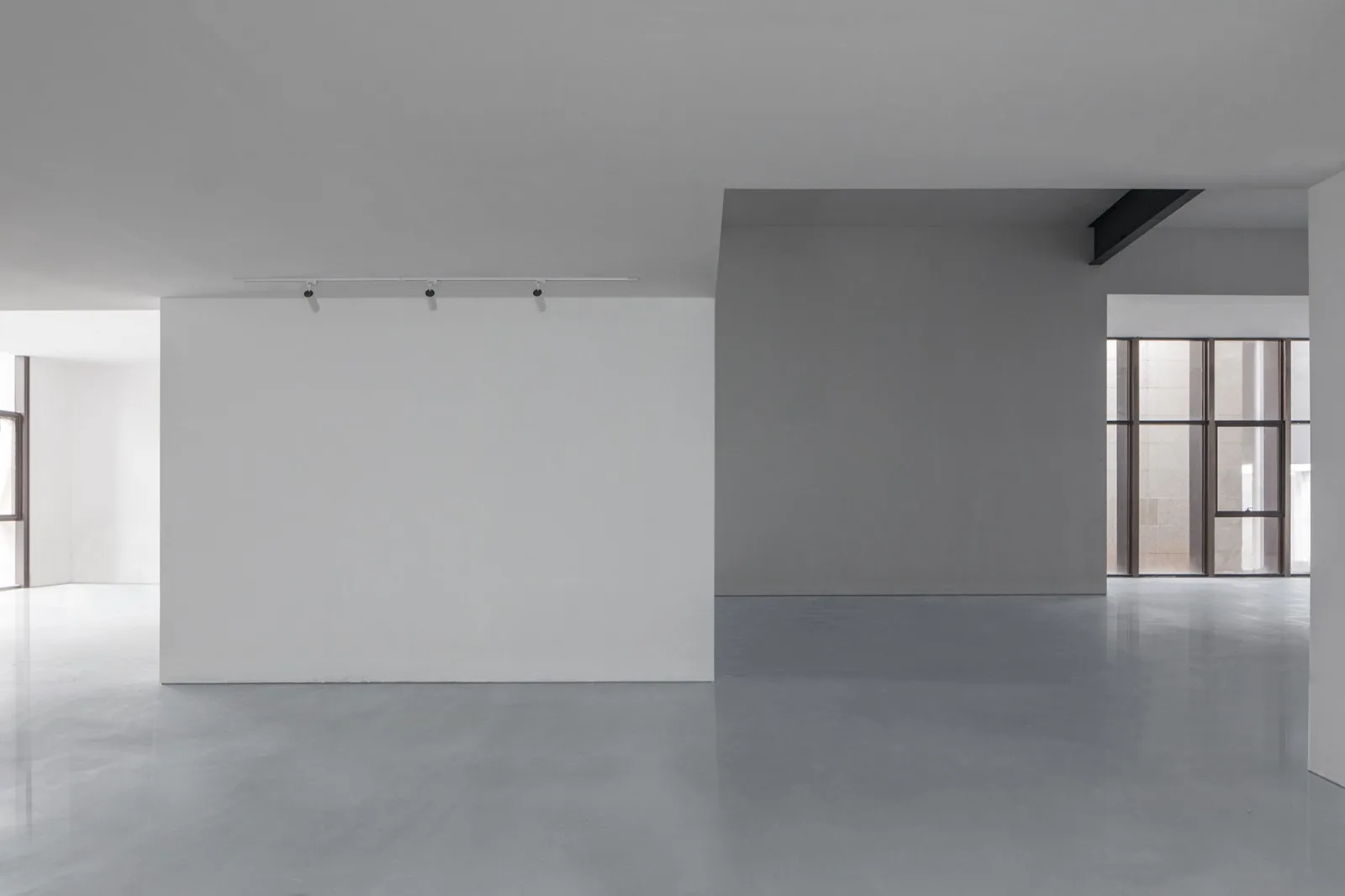
The connection between indoor exhibition spaces and outdoor areas © Wu Zhuoying
Upon exiting the indoor exhibits, visitors first arrive at a serene and introspective square courtyard, a place designed for emotional release and inner reflection.
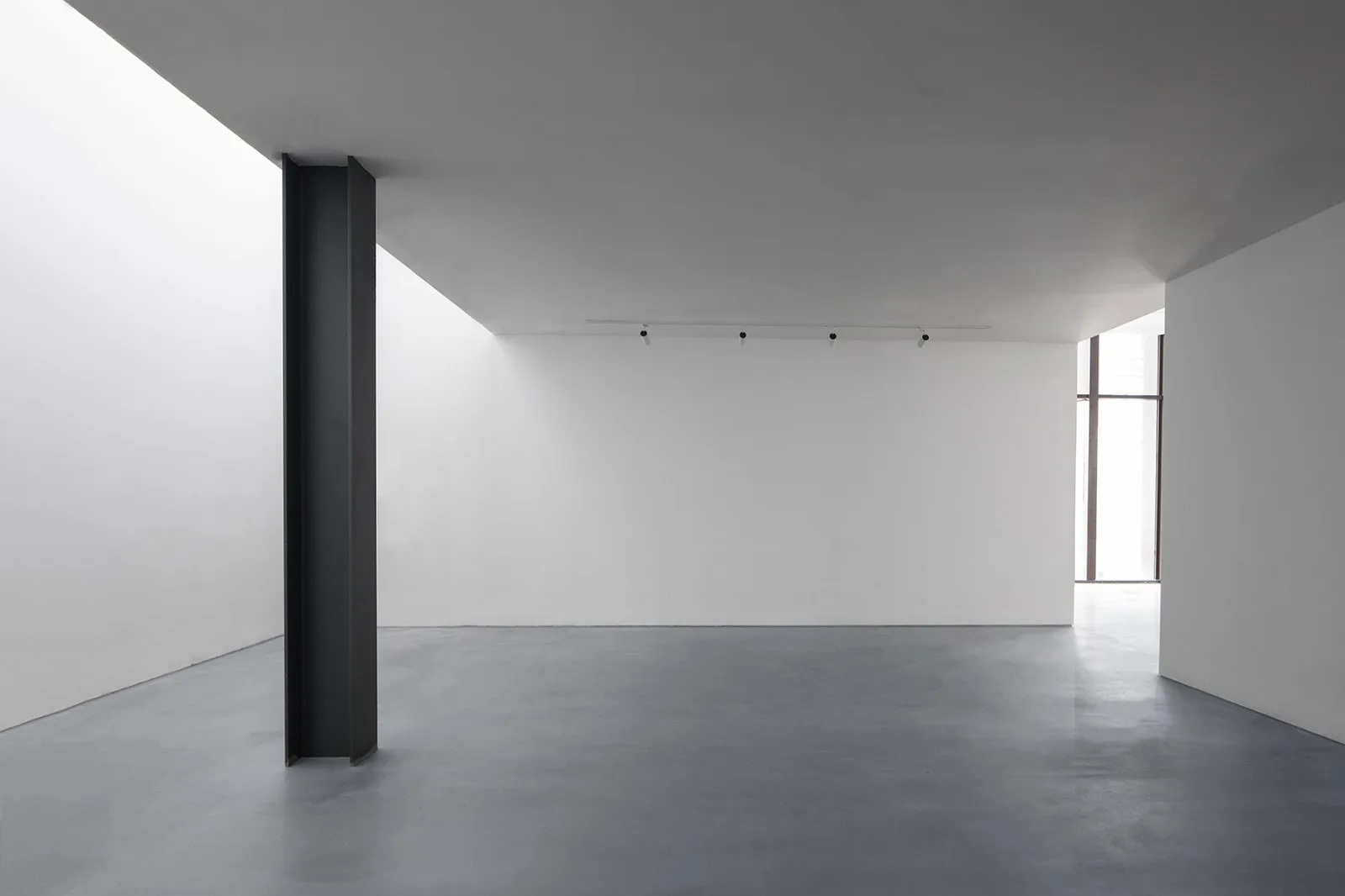
Top and side lighting in the courtyard © Wu Zhuoying
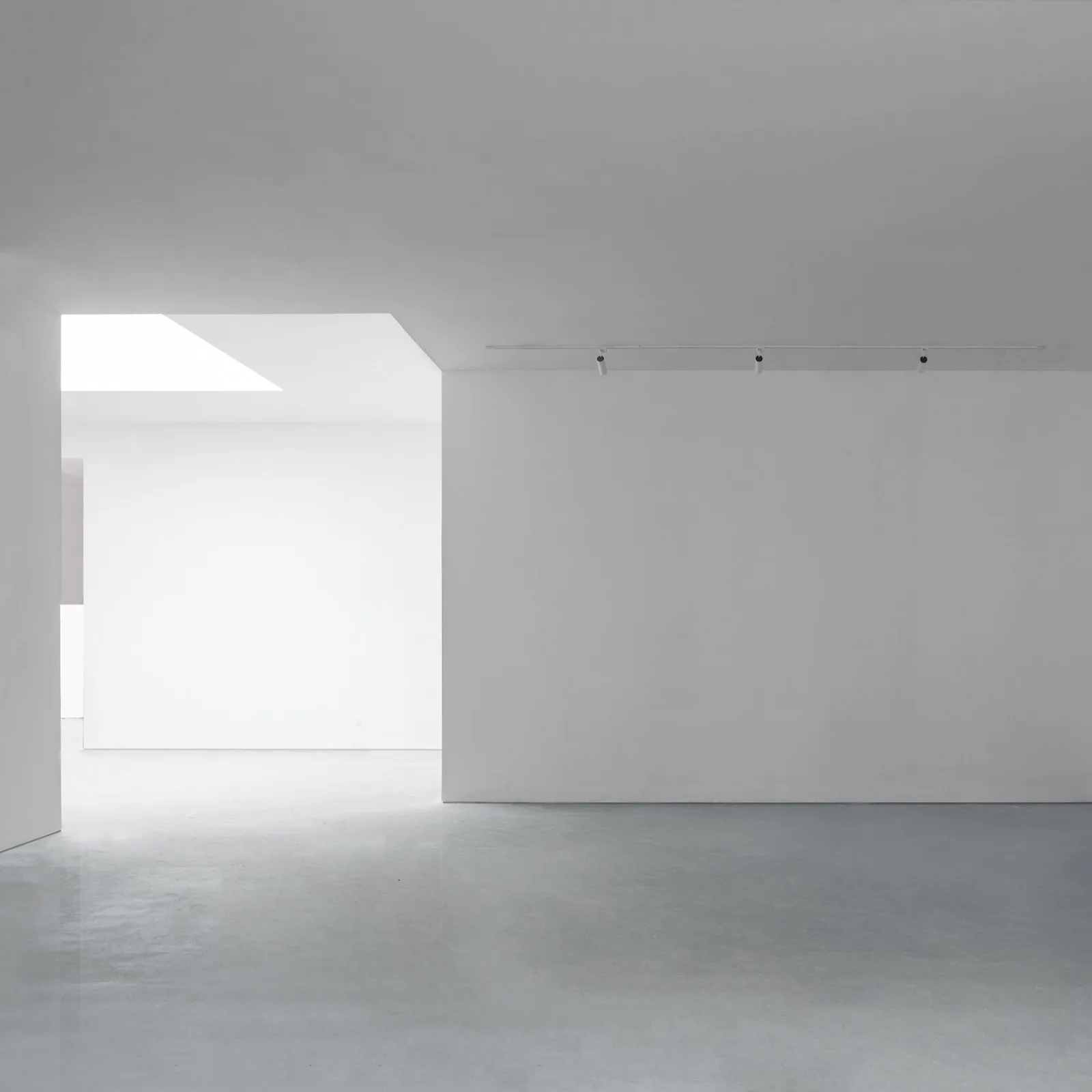
△ Diagonal space © Wu Zhuoying
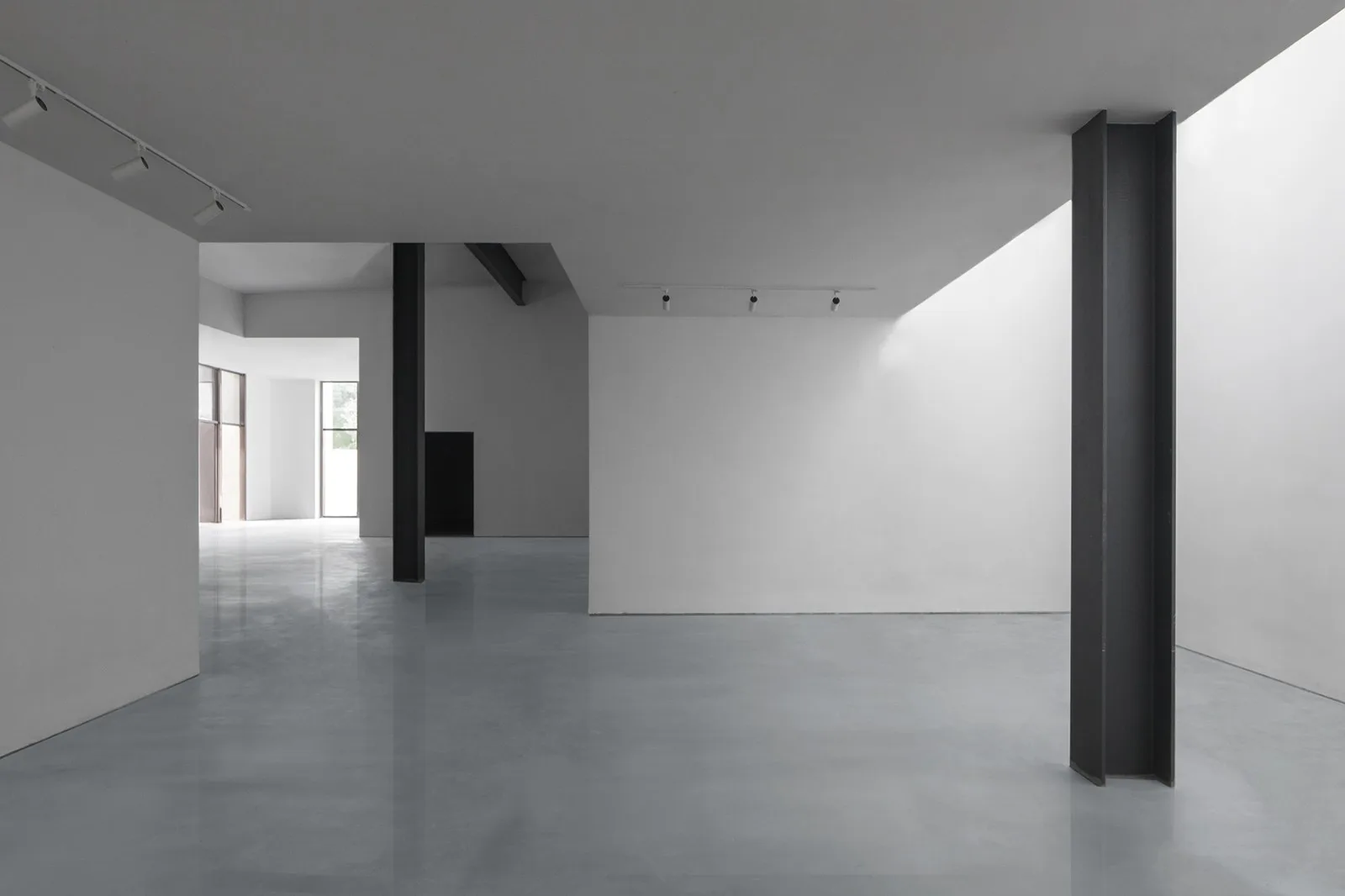
Reserved steel columns © Wu Zhuoying
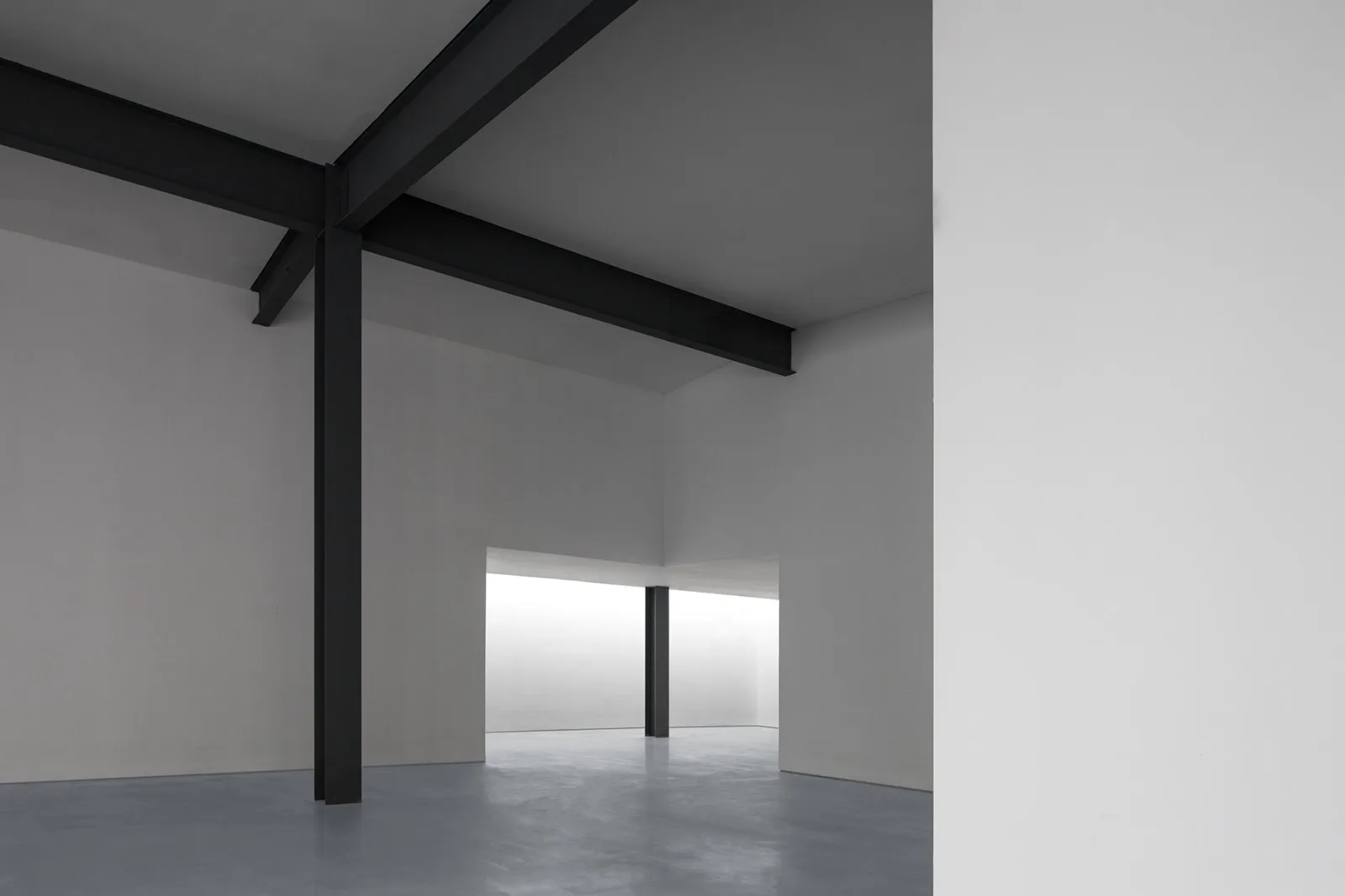
Reserved structure and top lighting © Wu Zhuoying
The design aims to reduce the commercial feel of the original building without completely erasing it. To achieve this, strategies such as covering, exposing, breaking, standing, separating, and pulling were used to establish a dialogue between the new and old structures.
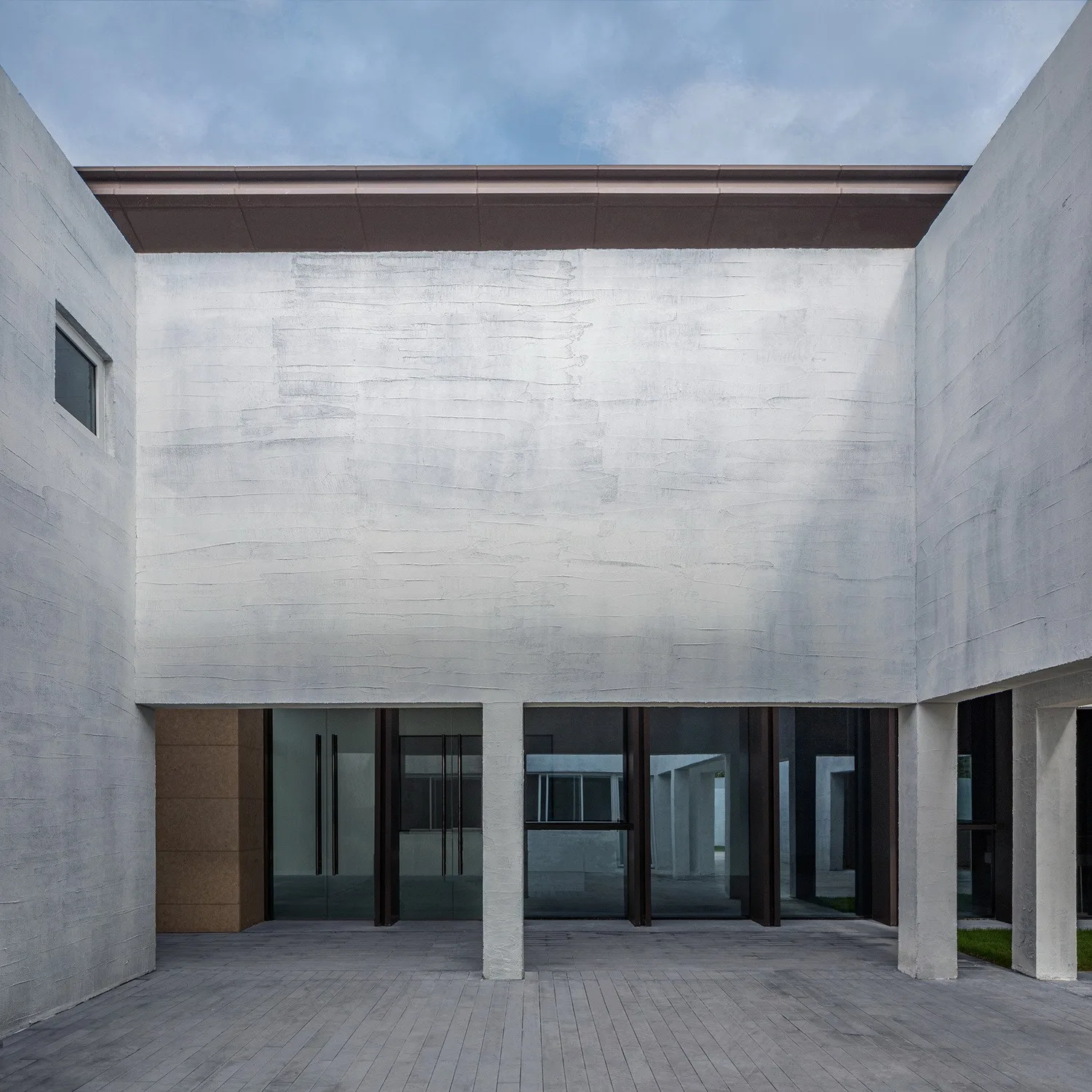
△ View of the exhibition hall from the courtyard © Wu Zhuoying
△ Joint Hospital © Wu Zhuoying
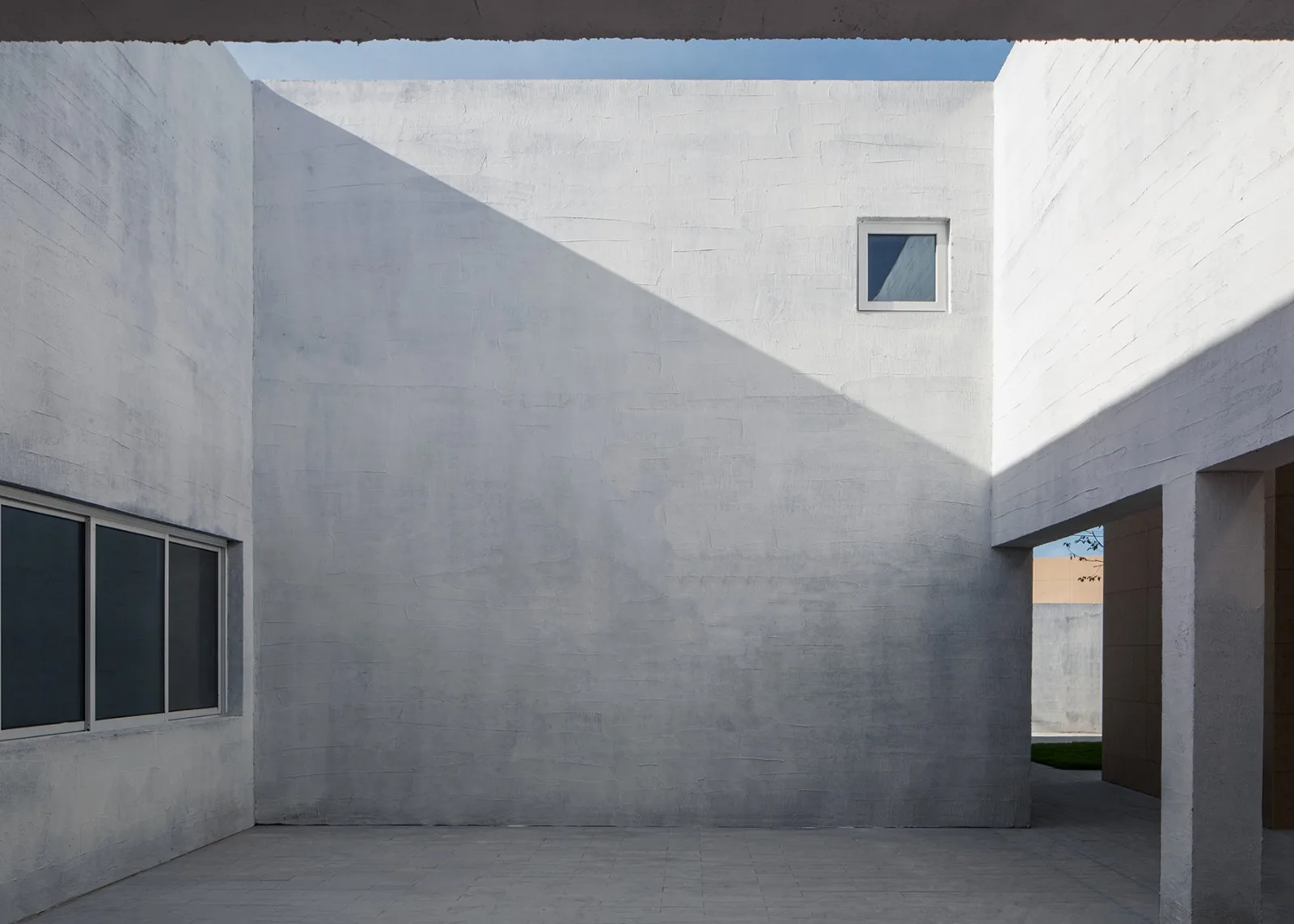
△ Light court where courtyard walls obscure the original building © Wu Zhuoying
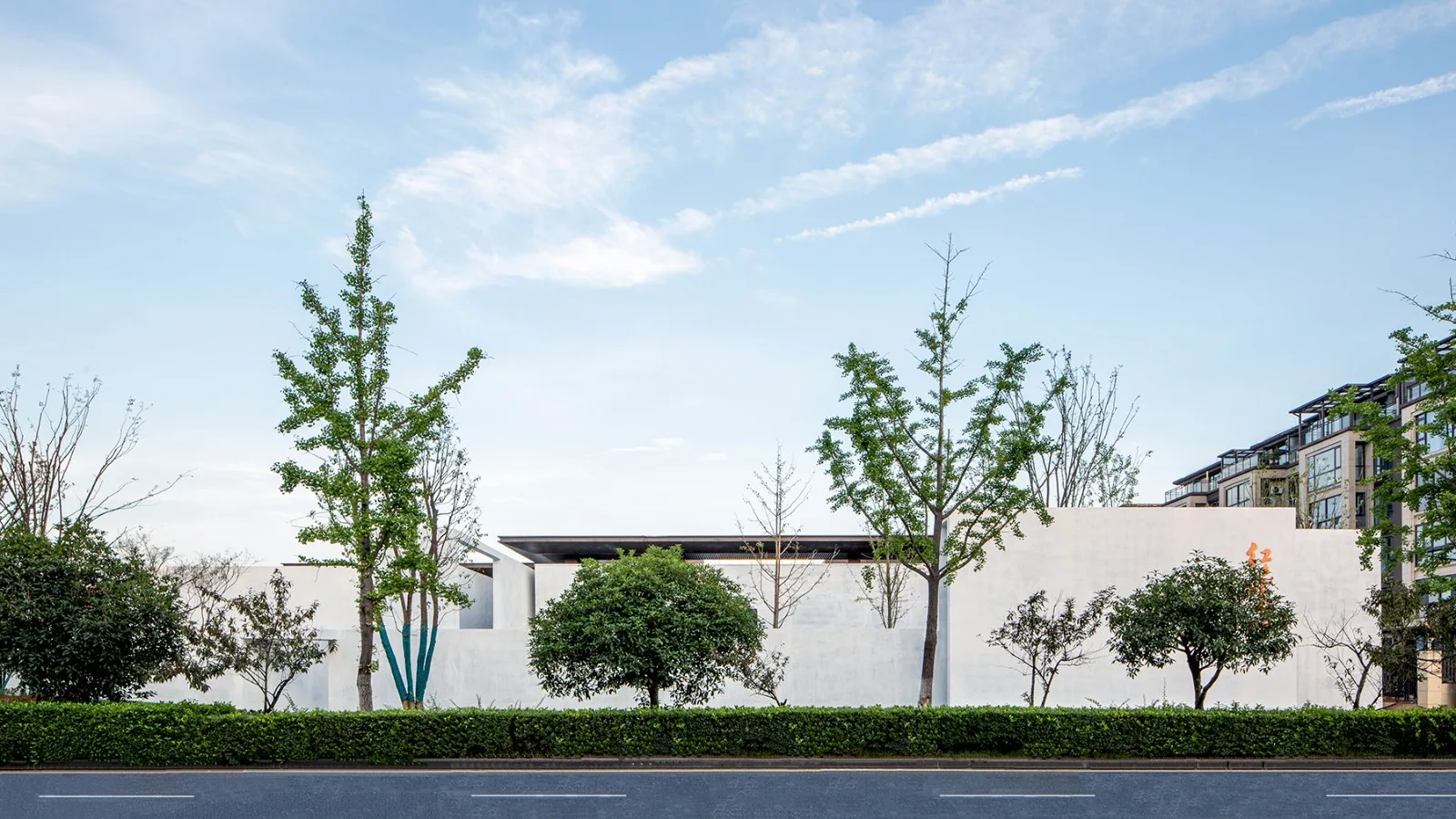
Along Huancheng West Road, courtyard walls conceal the original buildings © Wu Zhuoying
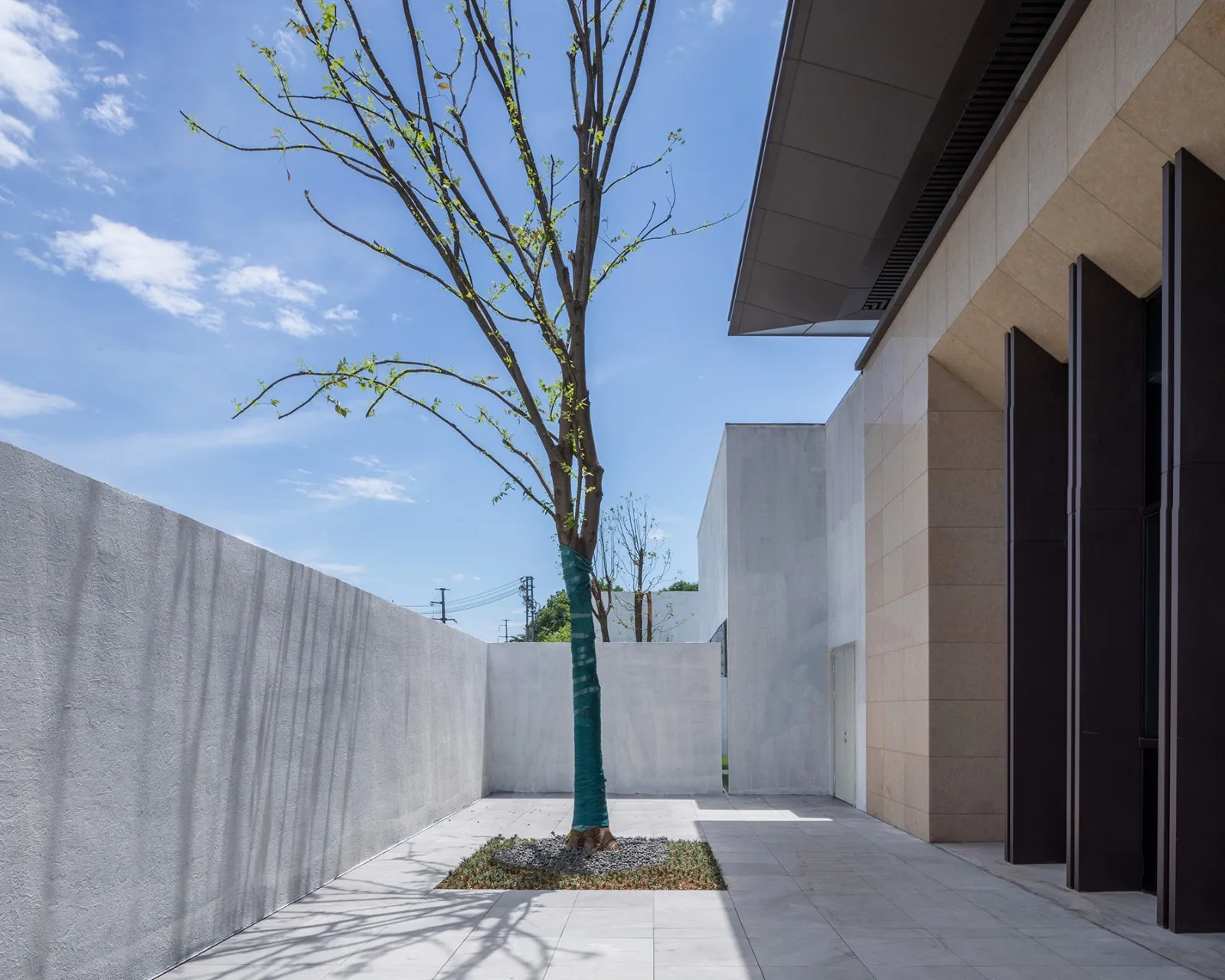
△ North courtyard revealing the original building © Wu Zhuoying
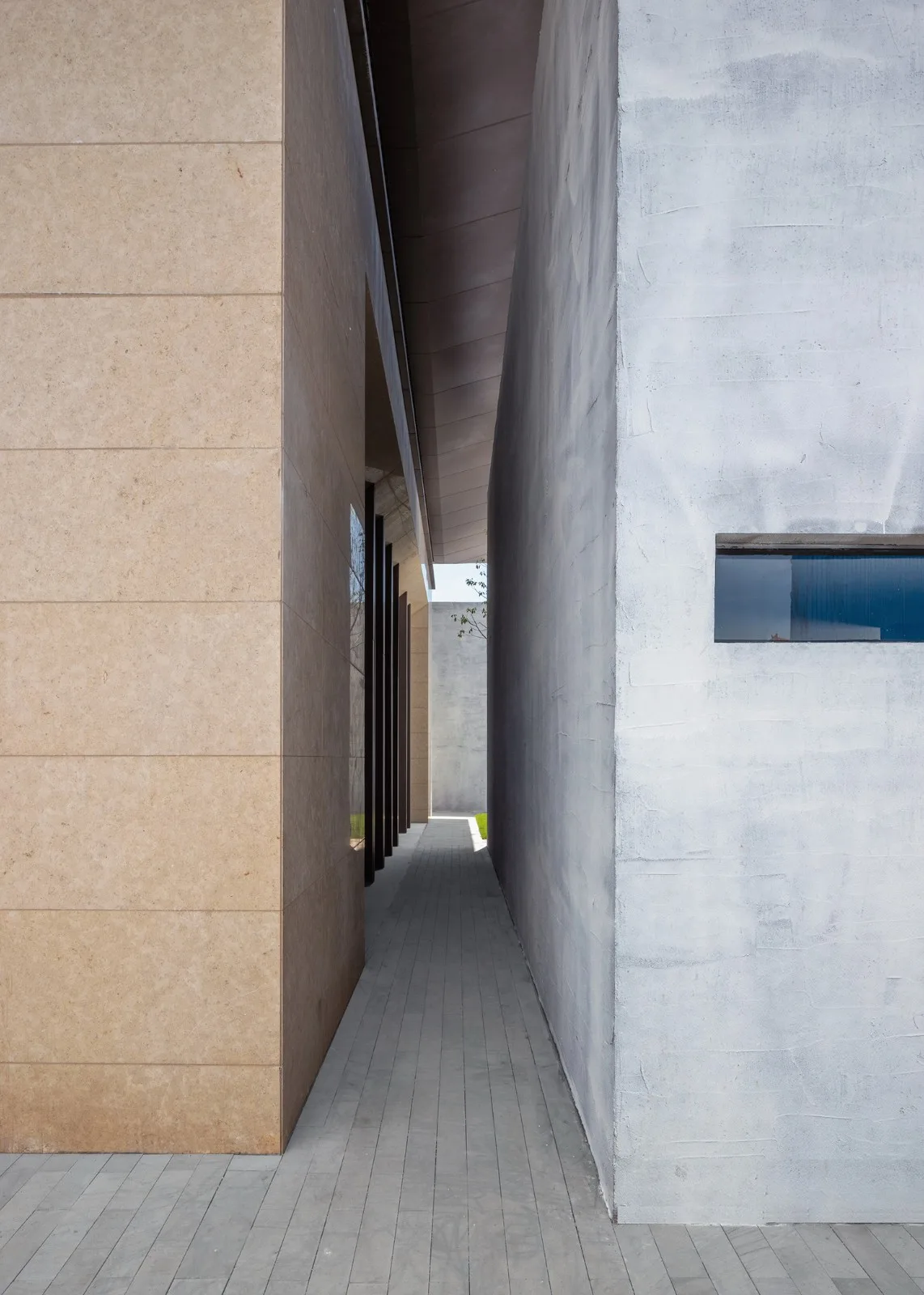
△ Coexistence of old and new structures © Wu Zhuoying
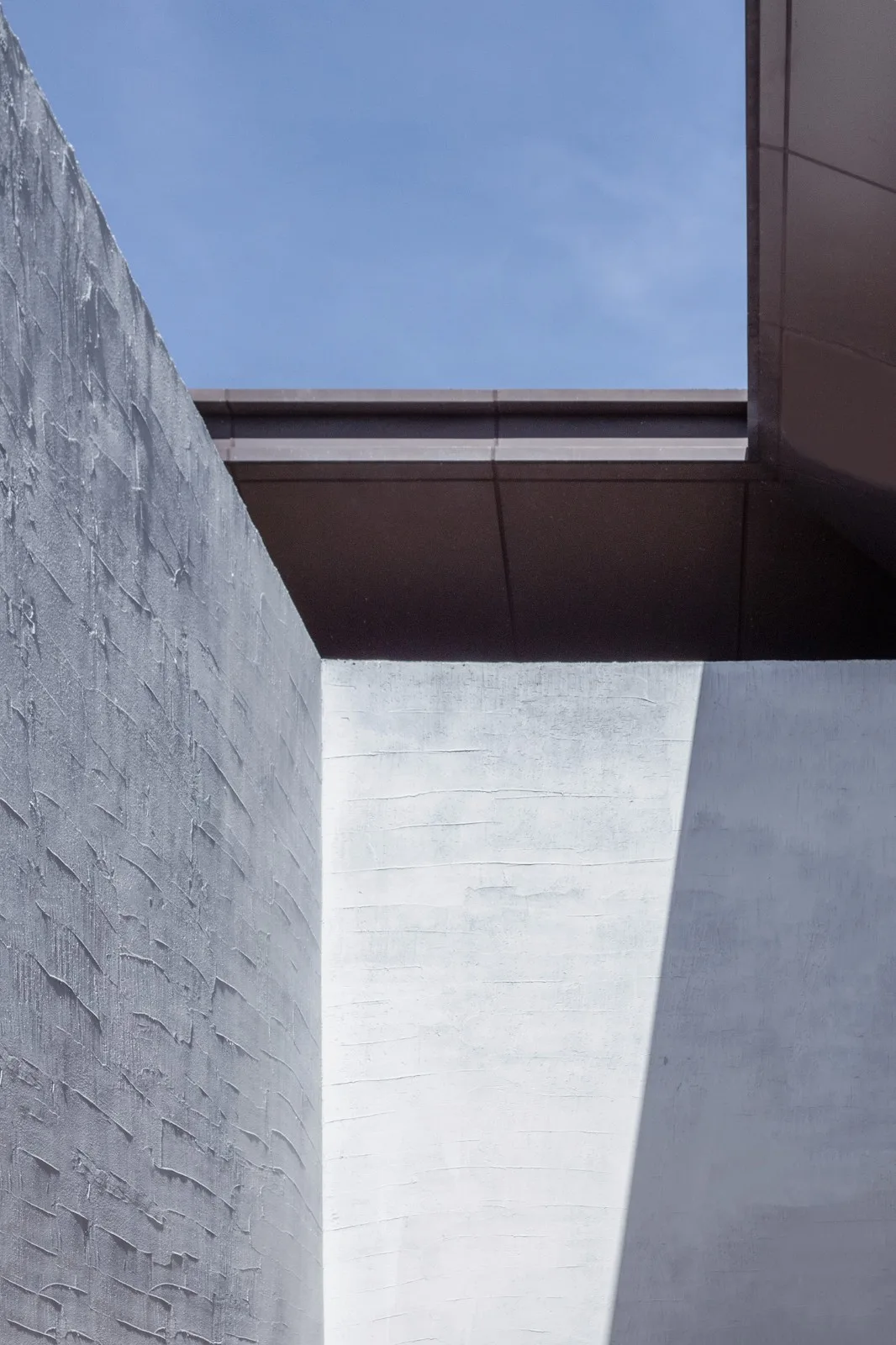
The traditional white and gray exterior walls of Jiangnan’s old houses set the tone for the village’s aesthetic. The renovation uses dark gray art paint as the base, overlaid with sprayed white paint mixed with topcoat. The uneven absorption results in a textured gray-white finish, reminiscent of Jiangnan’s traditional walls.
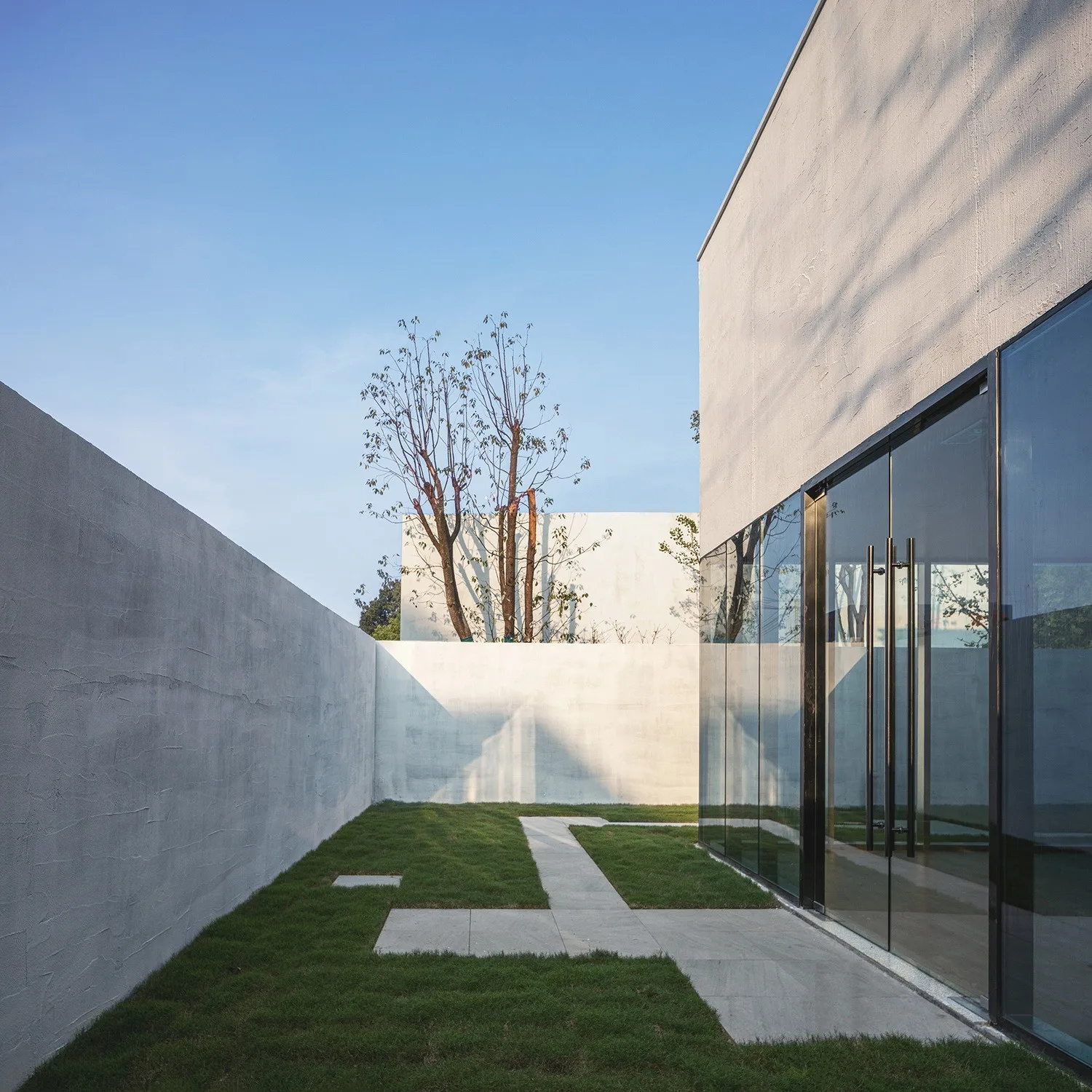
△ View of the entrance courtyard wall from the north courtyard © Wu Zhuoying
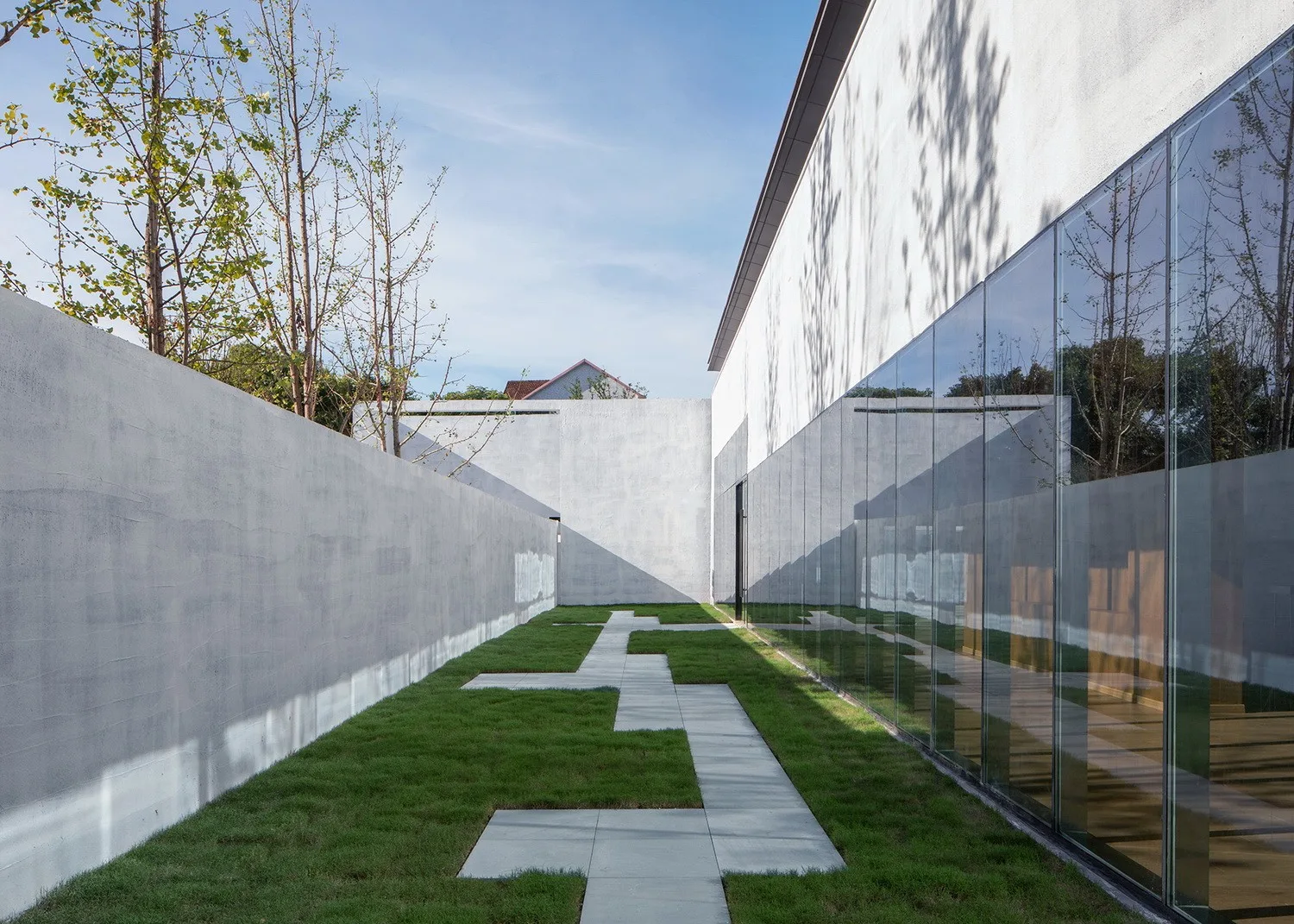
△ East courtyard view toward the entrance courtyard wall © Wu Zhuoying
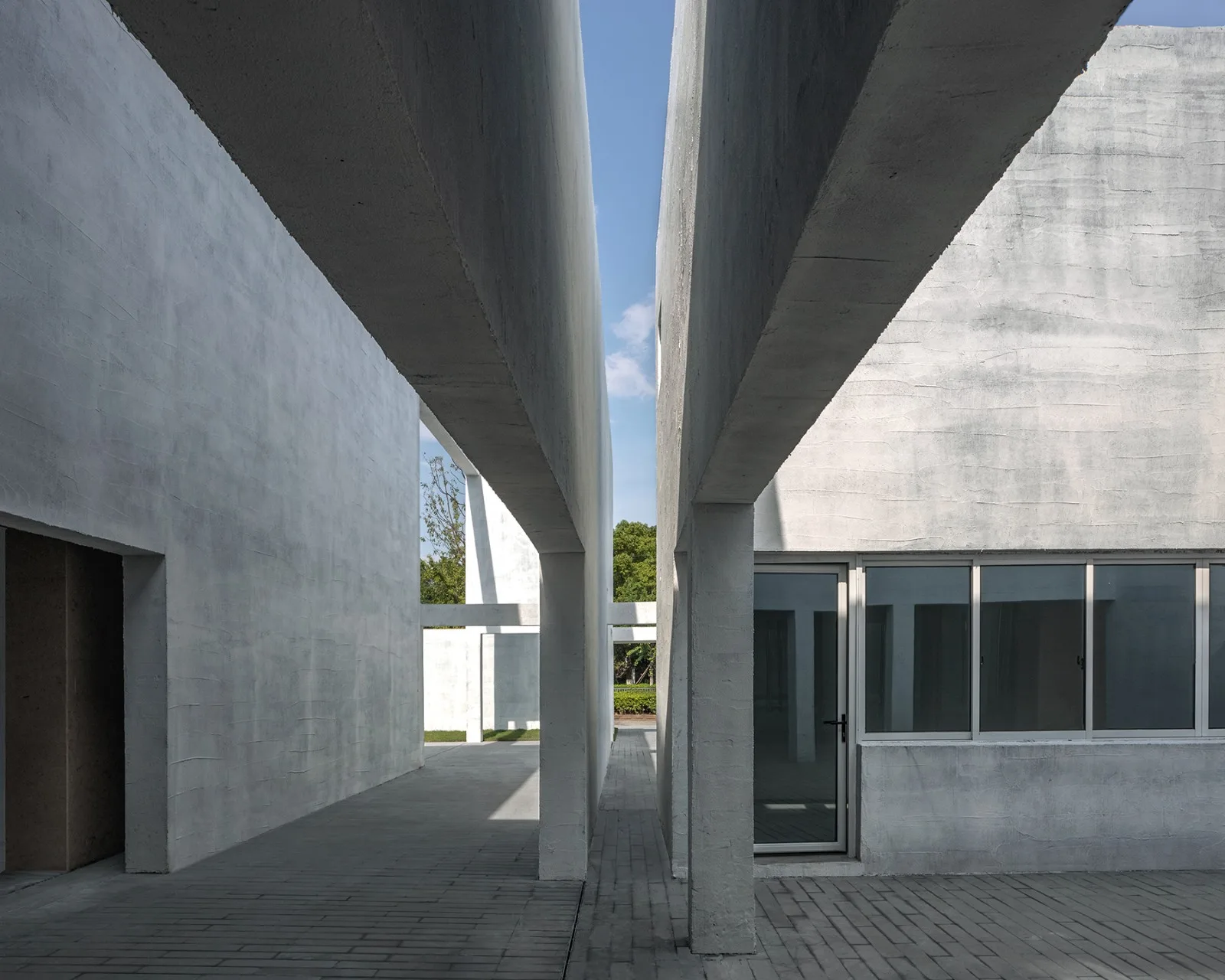
Separation between newly constructed volumes © Wu Zhuoying
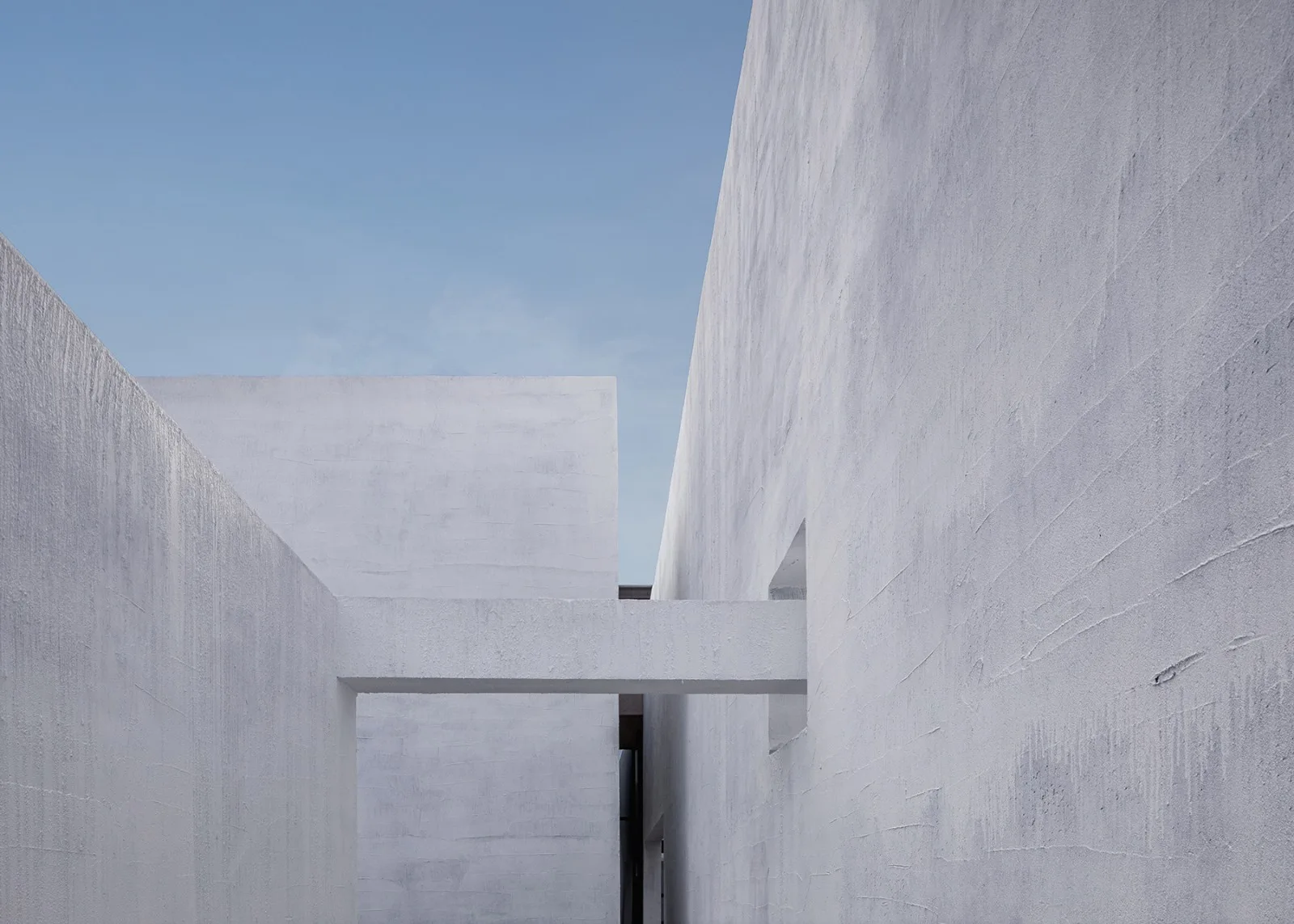
△ Tie detail © Wu Zhuoying
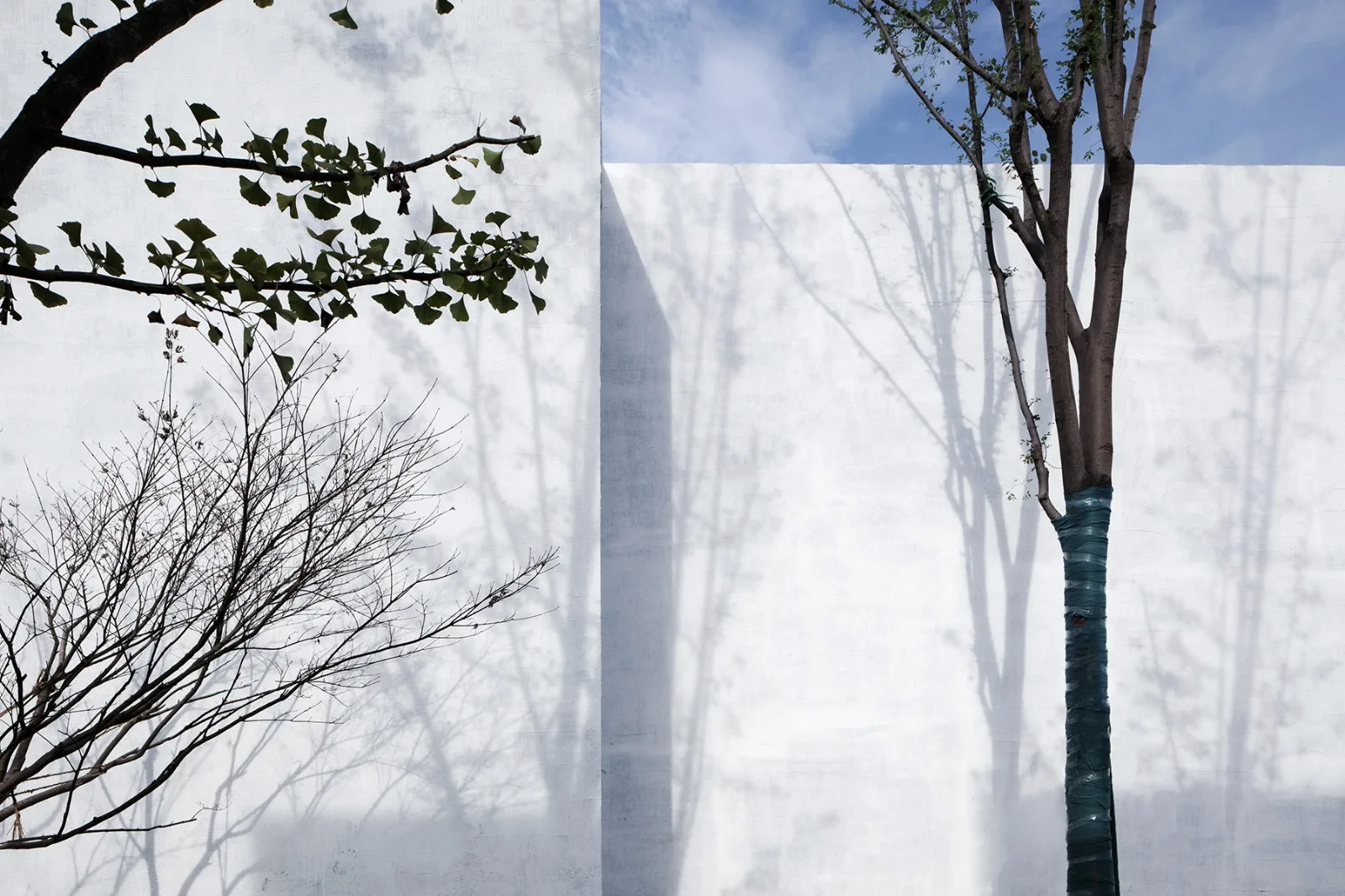
△ Exterior wall texture © Wu Zhuoying
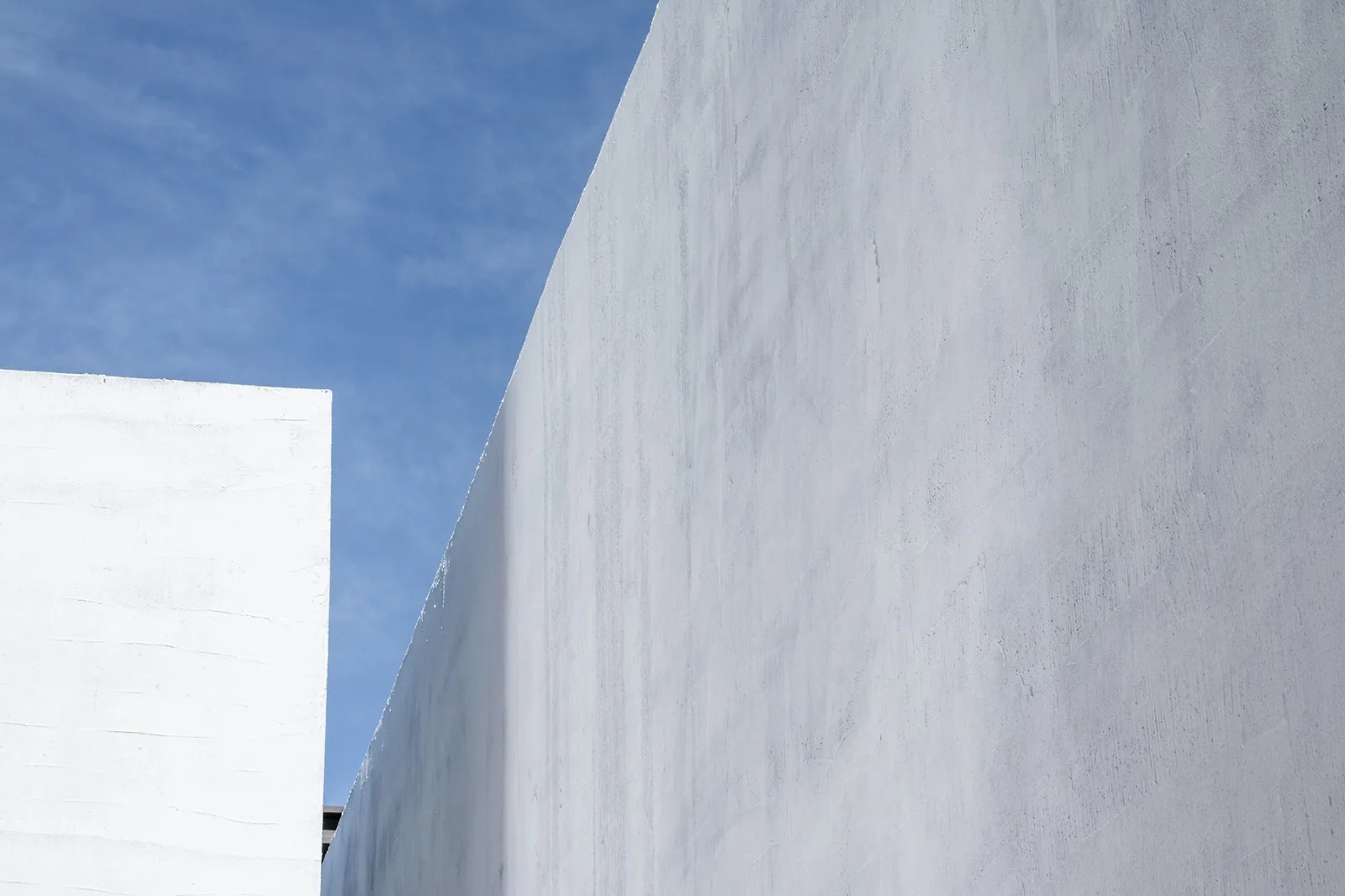
△ Exterior wall texture © Wu Zhuoying
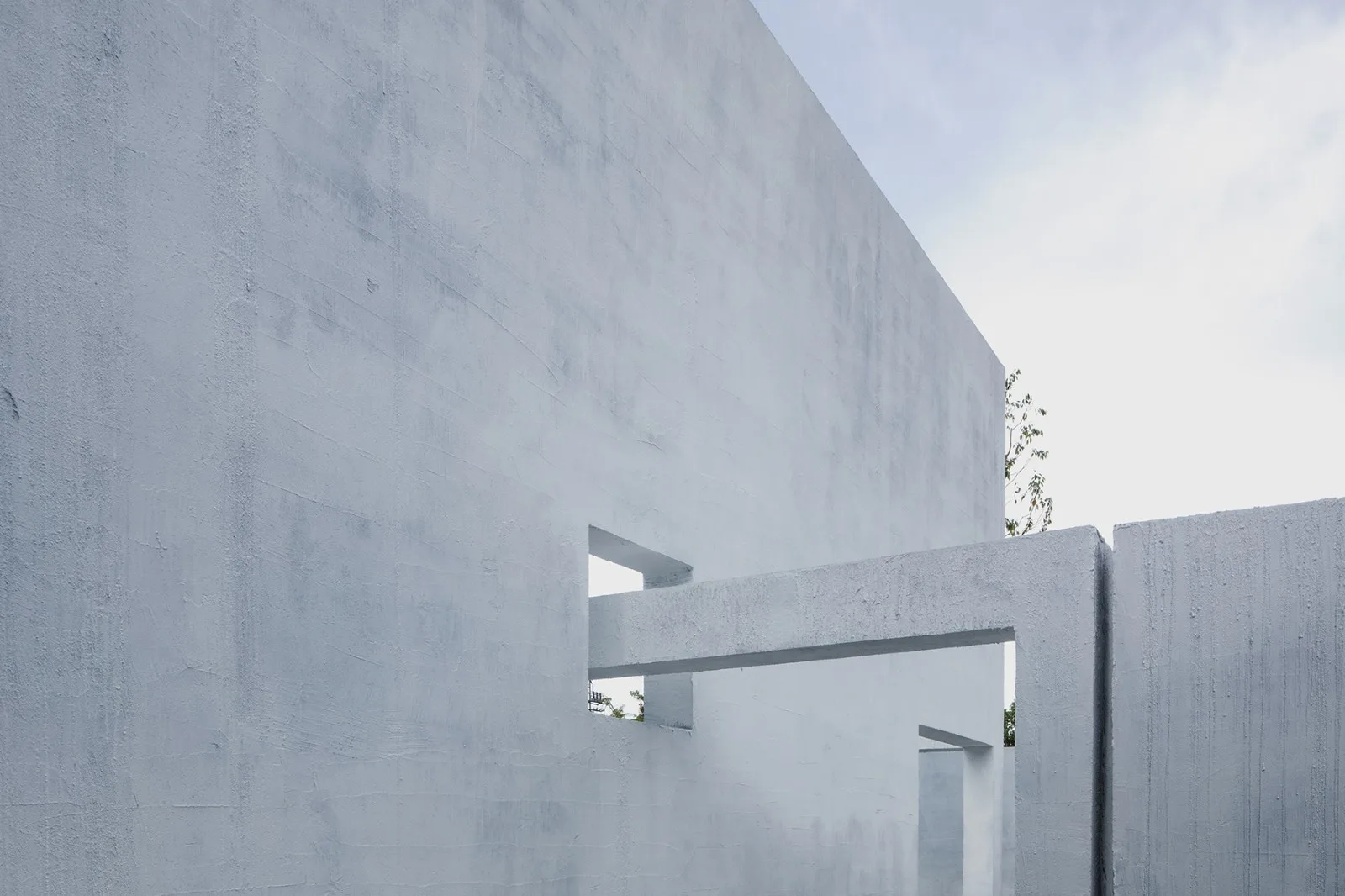
△ Exterior wall texture © Wu Zhuoying
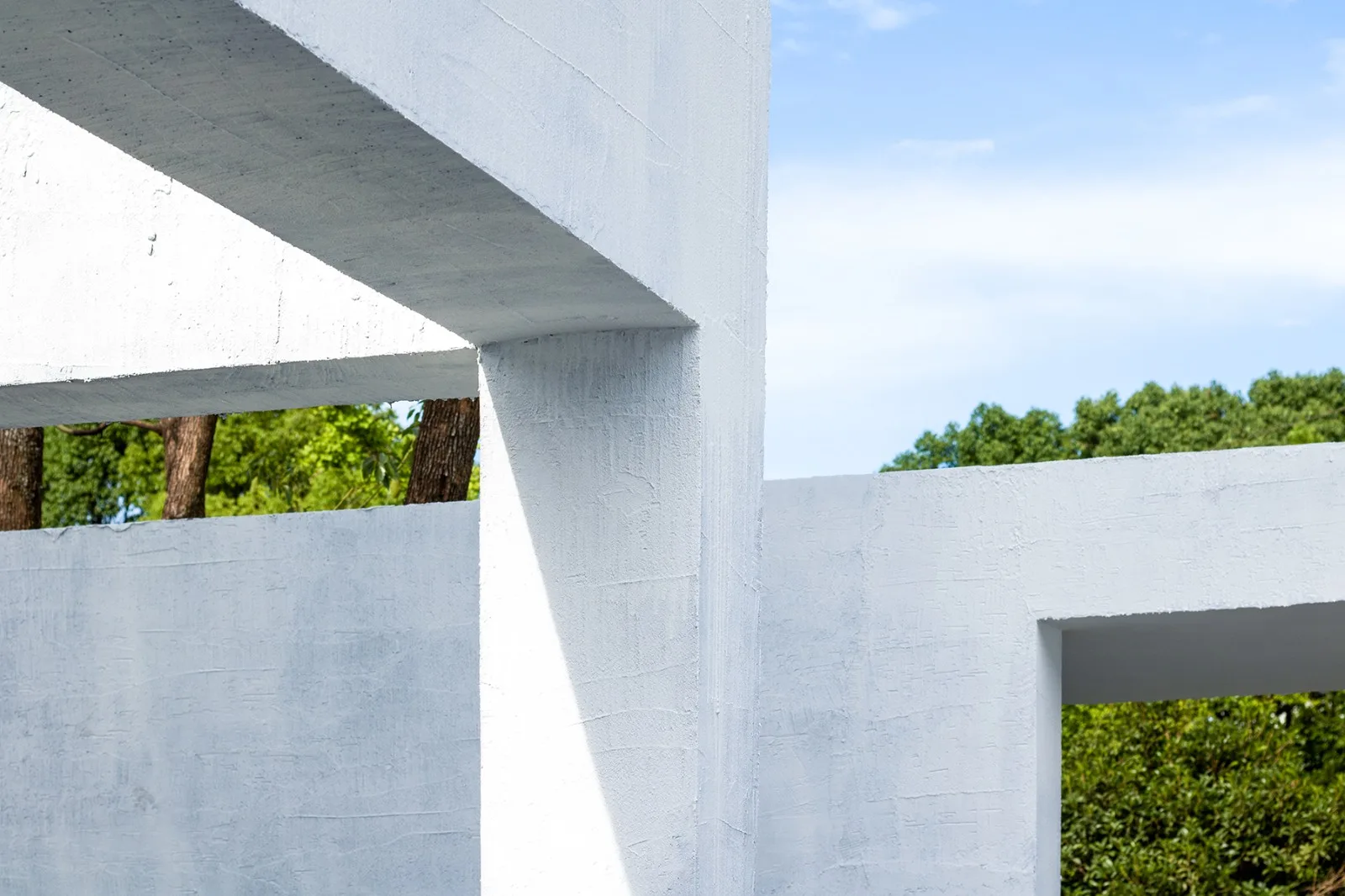
△ Exterior wall texture © Wu Zhuoying
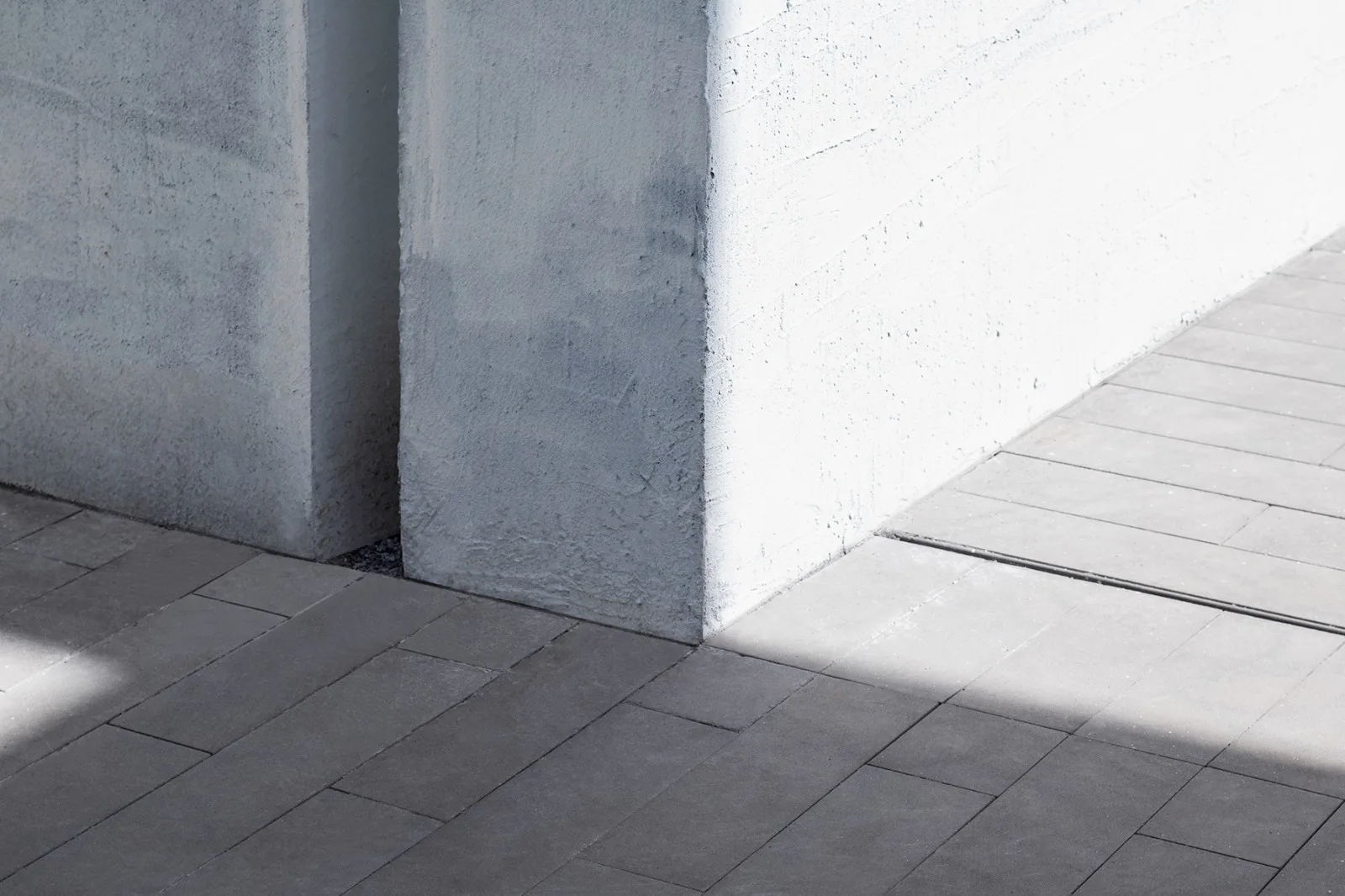
△ Intersection node between wall and ground © Wu Zhuoying
Project Drawings
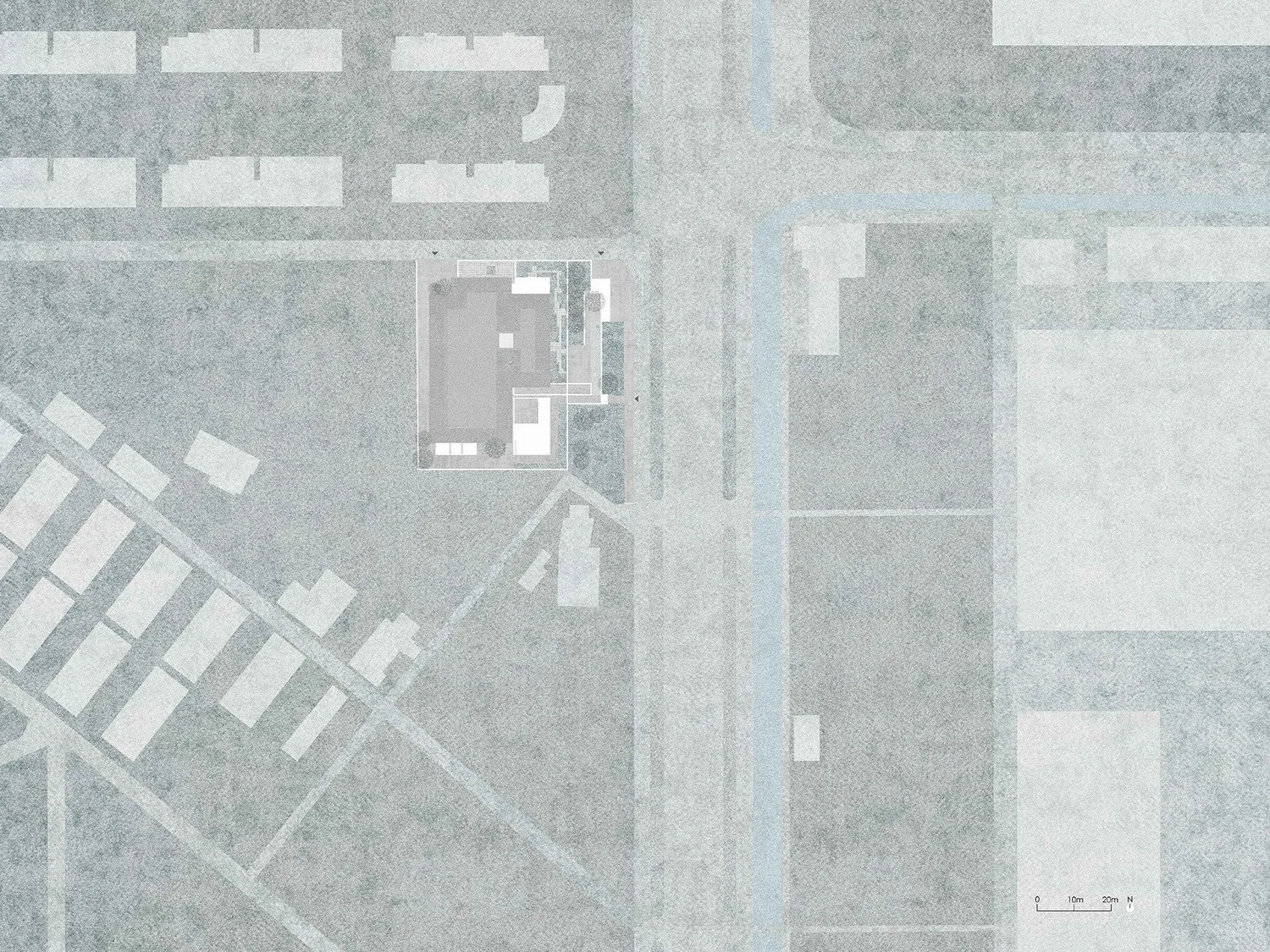
△ General layout plan
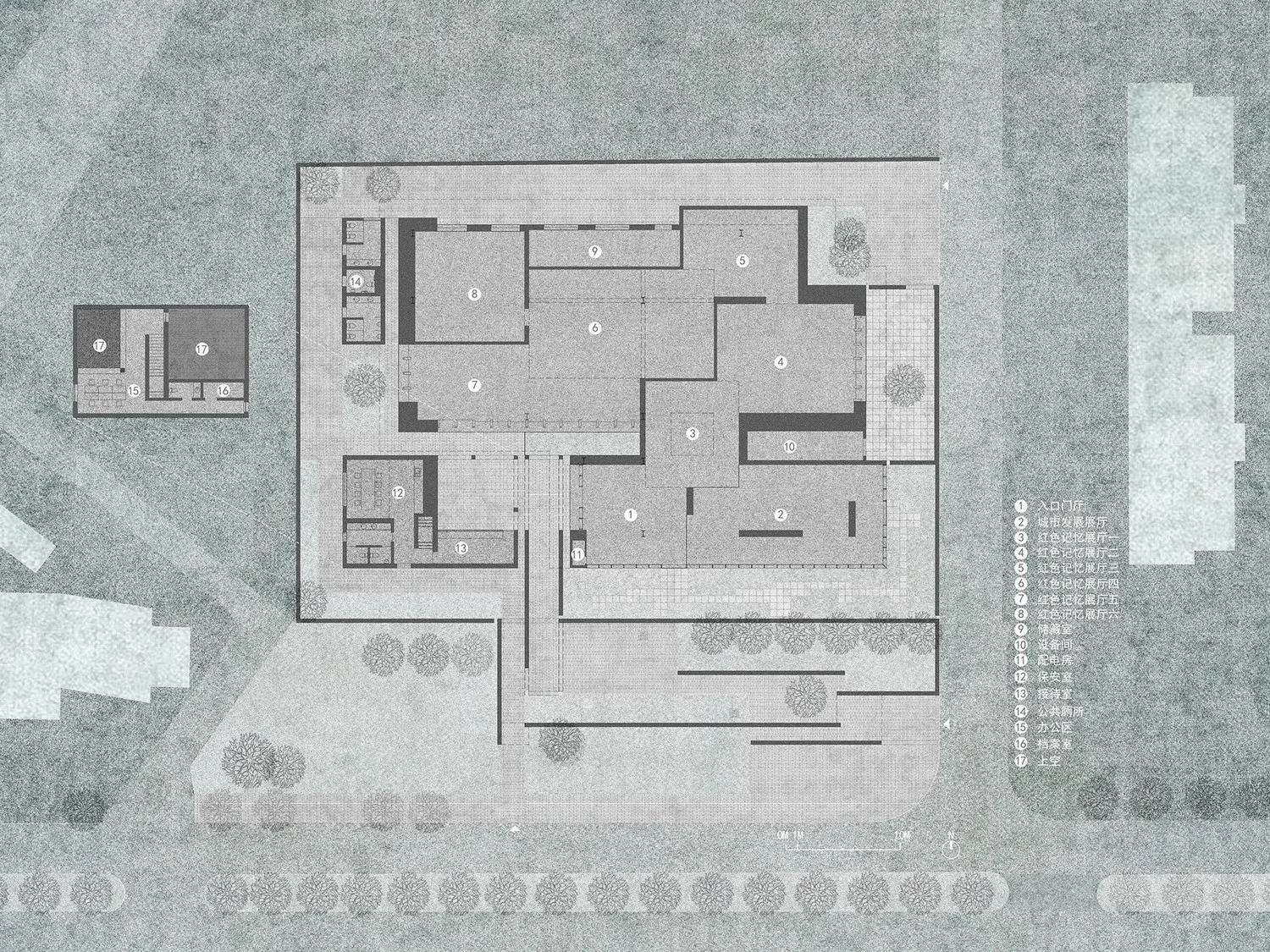
△ First floor plan
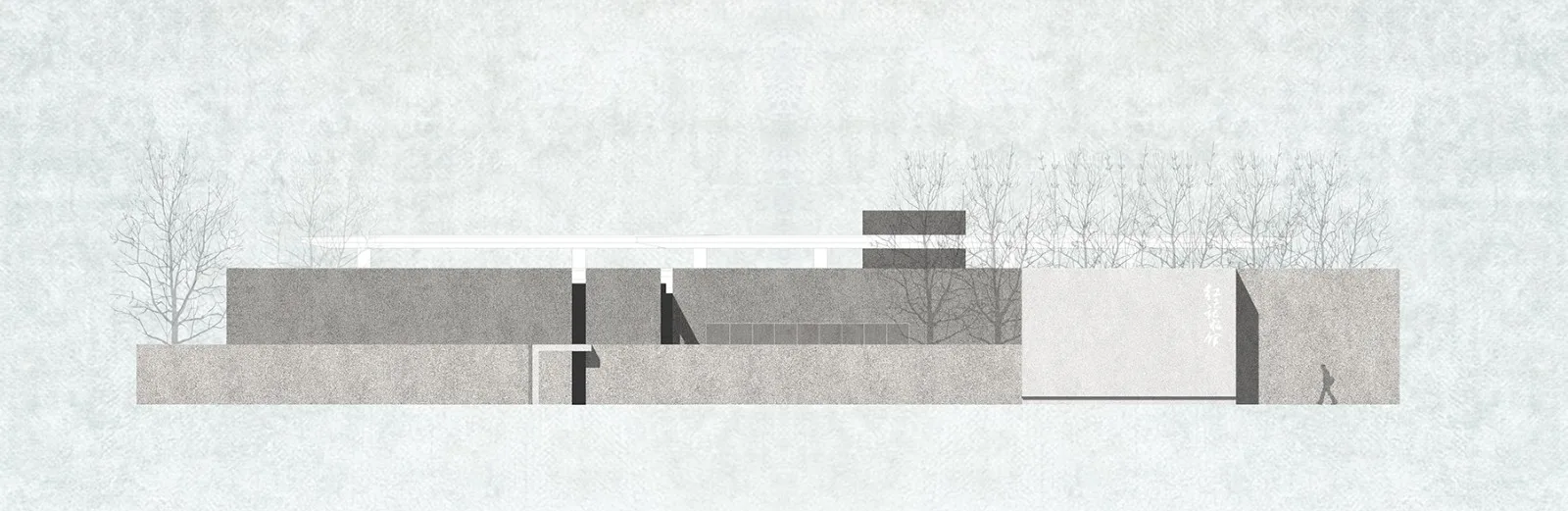
△ East facade
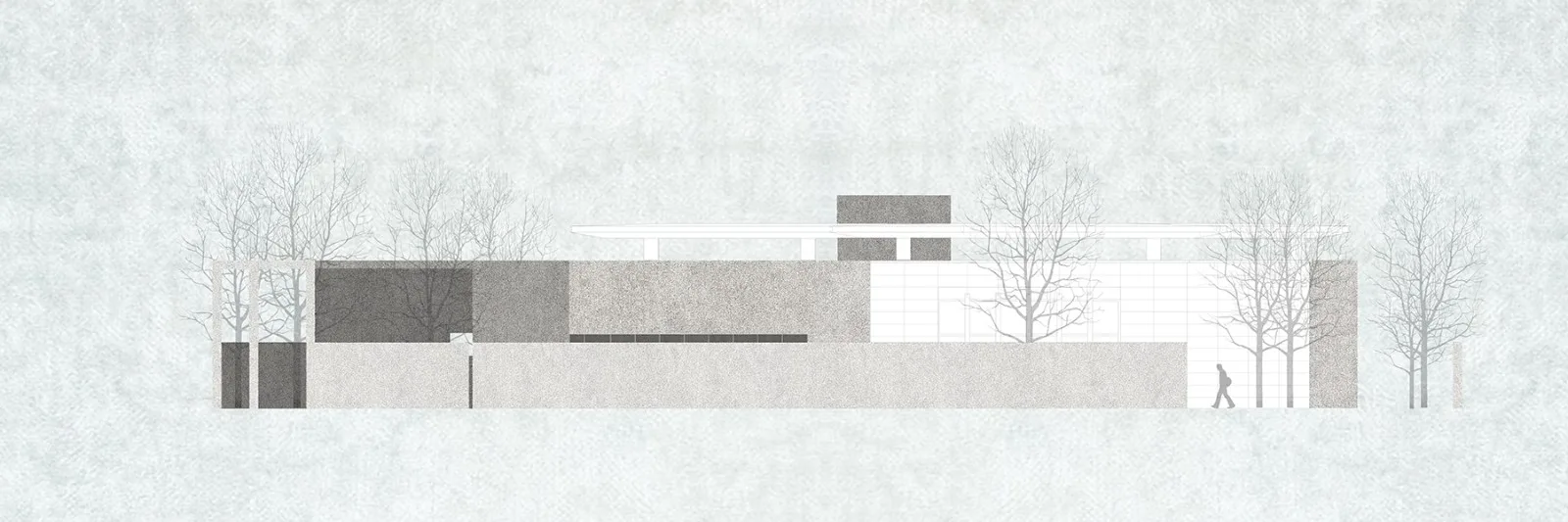
△ North facade
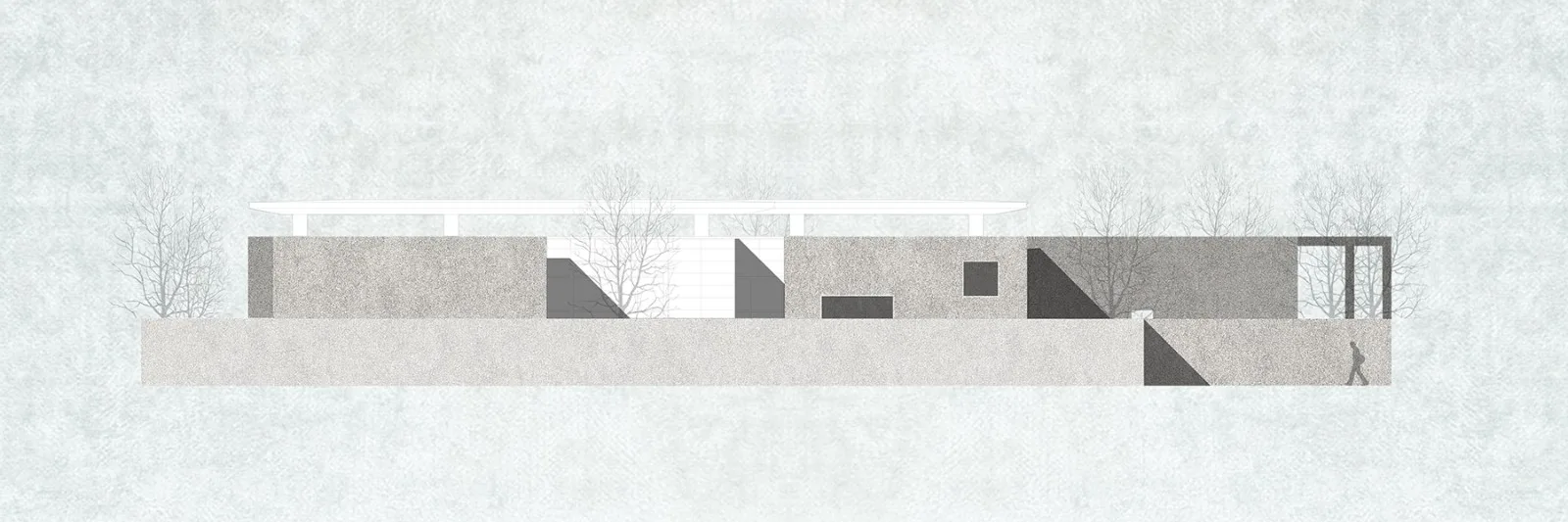
△ South facade
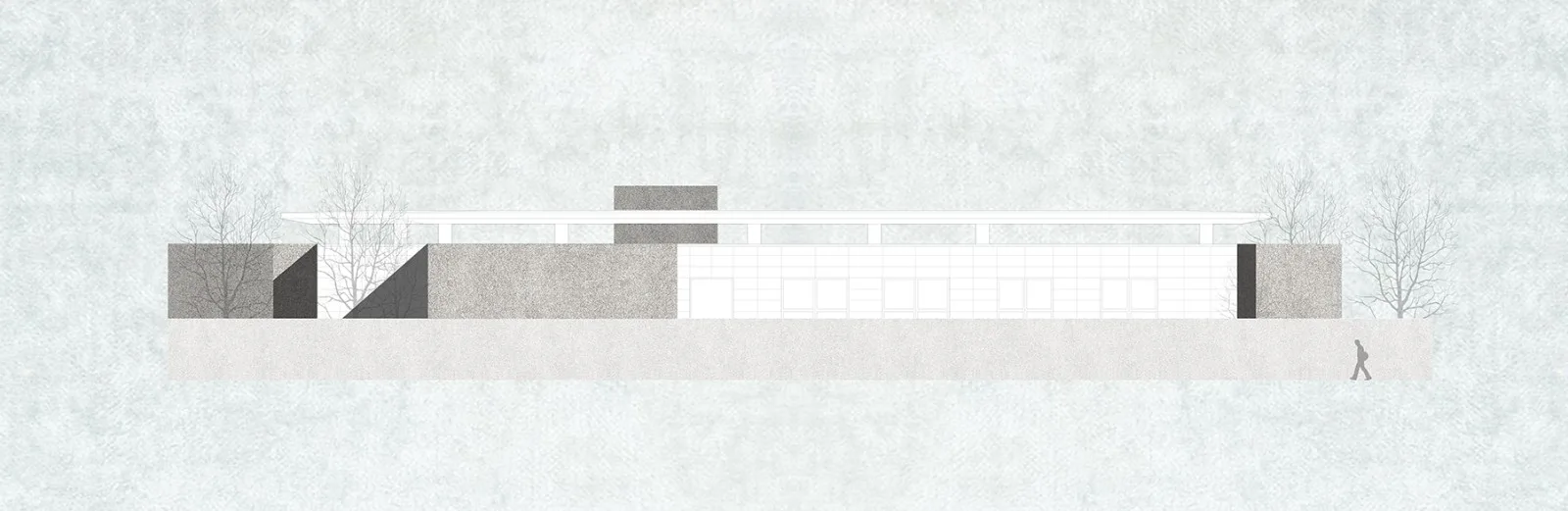
△ West facade
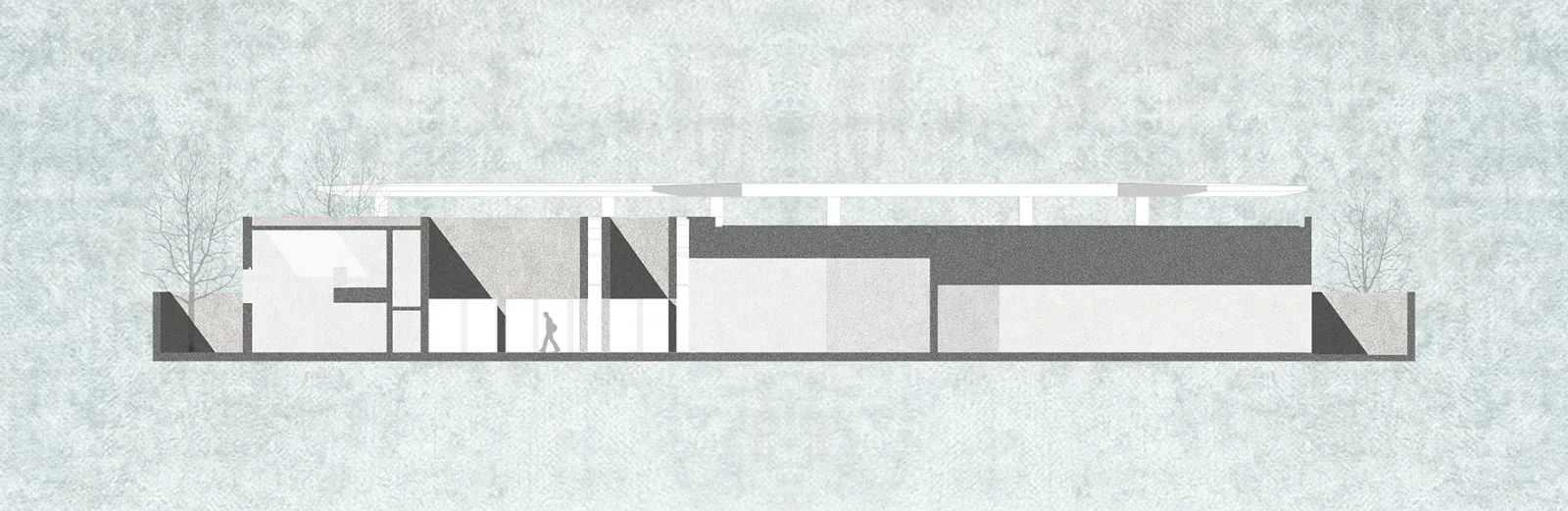
△ Section 1
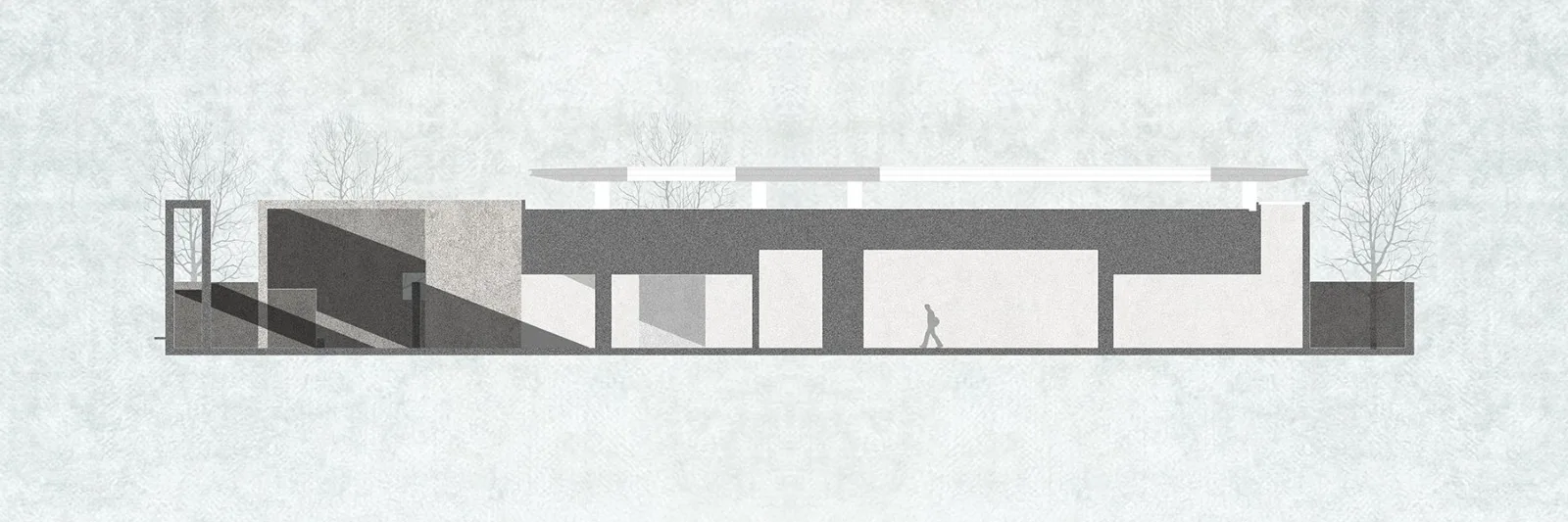
△ Section 2
Tile paving details
Project Information
Project Name: Taozhu Red Memory Museum
Location: Taozhu Street, Zhuji City, Shaoxing City, Zhejiang Province
Design Year: 2021
Construction Year: 2021
Design Firm: One Studio
Lead Architect: Dai Chenjun
Design Team: Wu Zhuoying
Scope of Design: Architecture, interior, landscape concept design, partial construction drawings, construction quality control
Building Area: 1,238 square meters, including a main exhibition hall of 982 square meters
Planning and Curation: Ideal Town
Planning and Curation Leaders: Qiu Zhefeng, Liu Xiu
Construction Drawing Design Firm: Tongchuang Engineering Design Co., Ltd
Construction Drawing Manager: Song Wenchao
Construction Contractor: Zhejiang Hongkun Construction Group Co., Ltd
Photographer: Wu Zhuoying
Main Materials: Art paint (Spanish Longfor), bluestone (Shunhui ceramics), wood veneer, self-leveling materials














Must log in before commenting!
Sign Up