
The village project located in the suburbs of Beijing addresses the critical issues of indigenous population decline and rural depopulation in China. Its primary goal is to enhance living comfort and achieve energy self-sufficiency through sustainable green transformations. Additionally, the project introduces innovative mixed-use formats to facilitate functional transformation and promote rural revitalization.
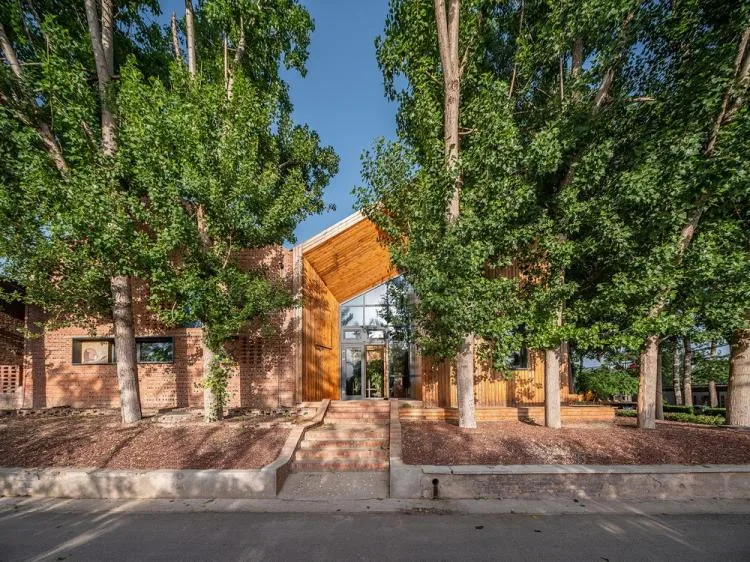
△ Main entrance © Creating a culture of mind
The project’s main focus is to explore the technical feasibility of prefabricated near zero energy houses designed specifically for rural renovation. It addresses the rural environment and the challenges of a cold climate by applying passive house technologies to minimize energy consumption. Combined with various solar energy utilization methods, the project achieves near zero energy building standards. Tianyou Lingshe is the first nearly zero energy building in China constructed in compliance with the national “Technical Standards for Near Zero Energy Buildings” and has been awarded an official evaluation label.
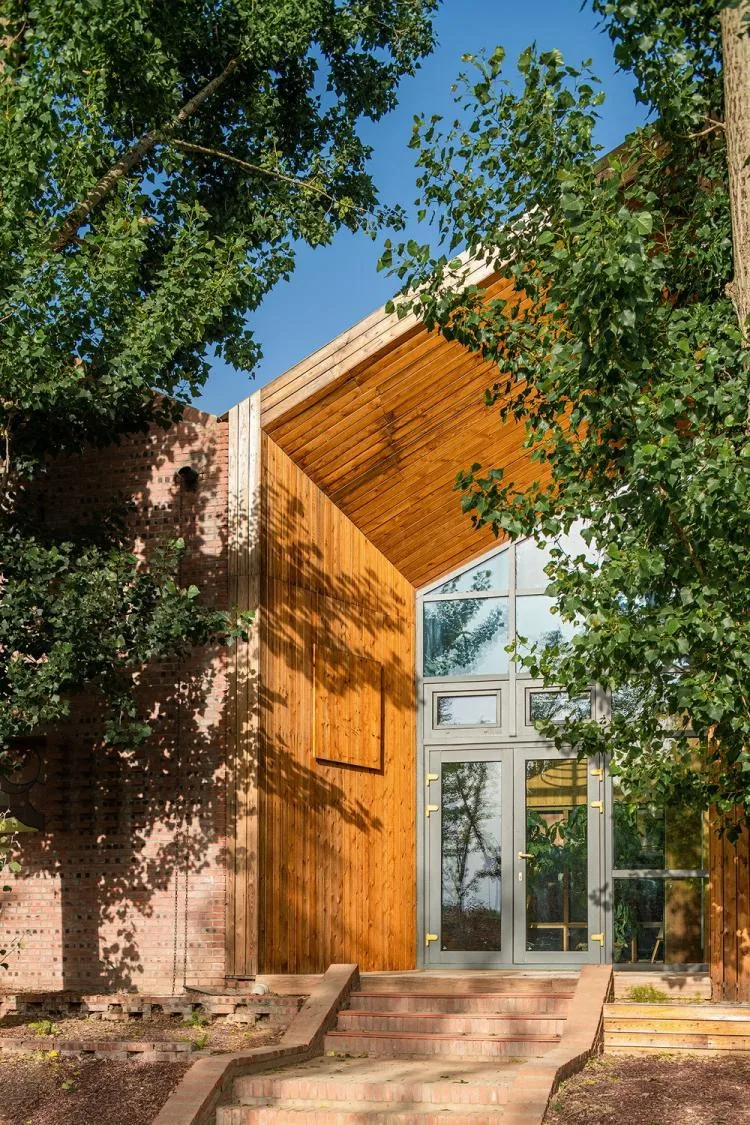
△ Main entrance © Creating a culture of mind
Near zero energy buildings (nZEB) are designed to minimize energy demand through passive design principles, maximize system efficiency with active technologies, and fully integrate renewable energy sources. These buildings reduce energy consumption by over 50% compared to national standards and include ultra-low energy buildings, near zero energy buildings, and zero energy buildings.
1. Process – Combining Ultra-Low Energy Consumption with Modular Assembly
The building is adapted to a near zero energy spatial system featuring a single-story courtyard layout. This courtyard divides the structure into three simple sections, with airtight units connected by passive solar rooms and stairwell wind towers. These elements enhance heat retention in winter and facilitate natural ventilation during transitional seasons.
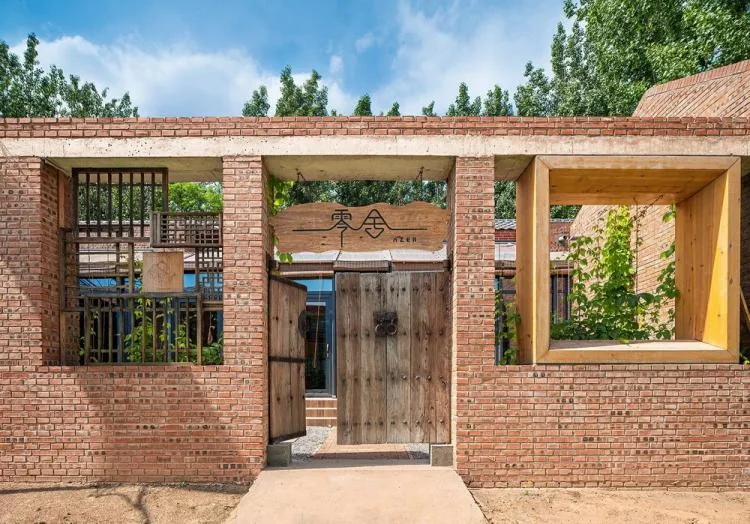
△ Side door entrance © Creating a culture of mind
The architecture employs a cost-effective prefabricated residential module using a composite system of light steel framing and OSB boards. Two types of insulation materials are applied internally and externally to ensure optimal thermal performance and airtightness. Each module is fully completed—from structure to interior finishes—in the factory, then assembled on-site to form a fully functional residential unit consisting of three modules.
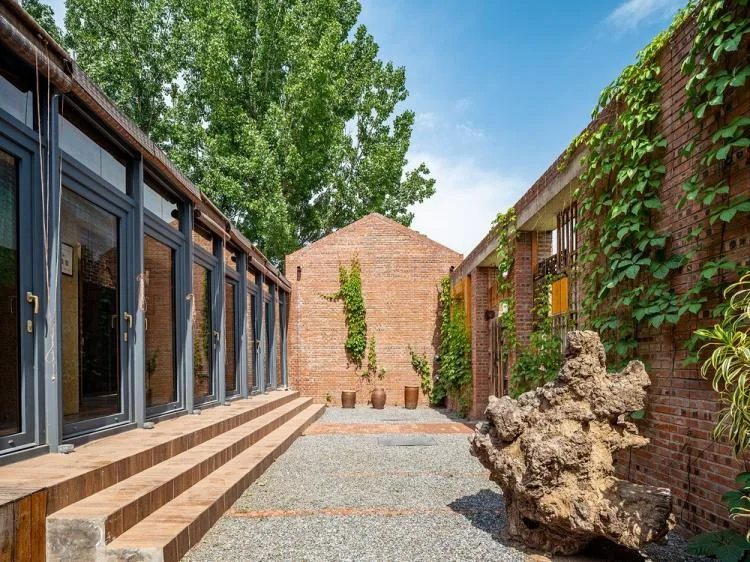
Passive solar house on the south side of the building © Creating a culture of mind
The building achieves near zero energy consumption during operation, significantly reducing energy use and carbon emissions related to air conditioning, heating, and lighting. During construction, locally sourced materials and labor minimize carbon emissions from transportation and building activities. These carbon reduction strategies result in an annual reduction of approximately 7.6 tons of carbon emissions.
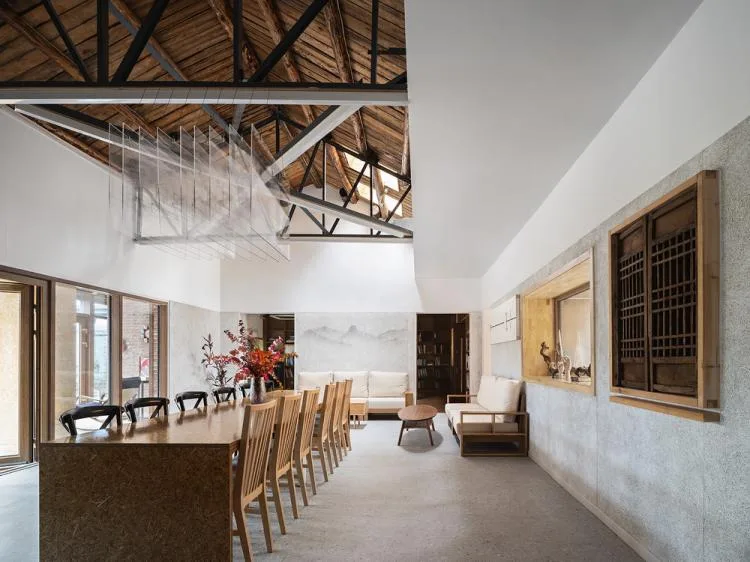
Indoor space featuring brick and wood structure © Creating a culture of mind
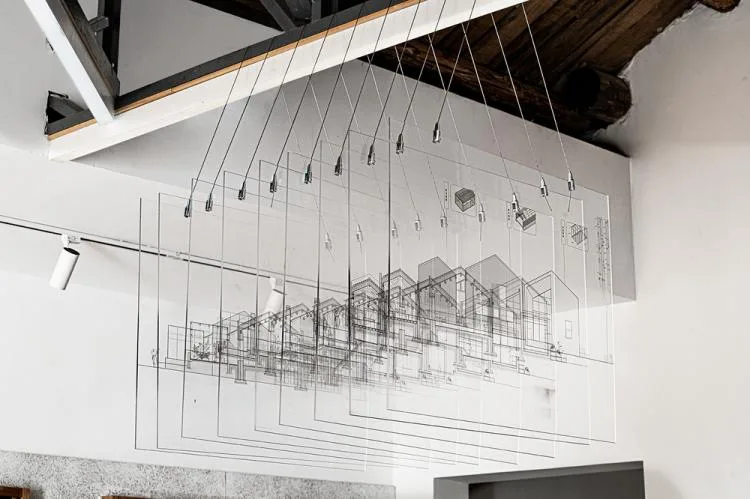
△ Art installation © Creating a culture of mind
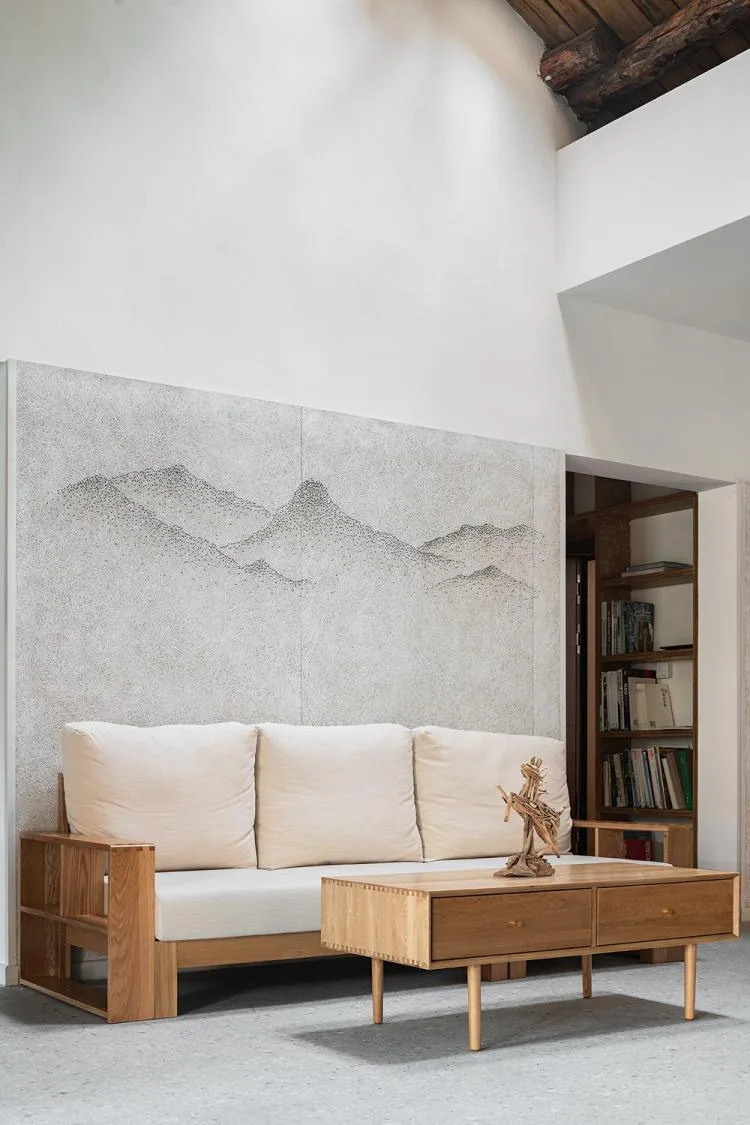
Indoor space with brick and wood structure © Creating a culture of mind
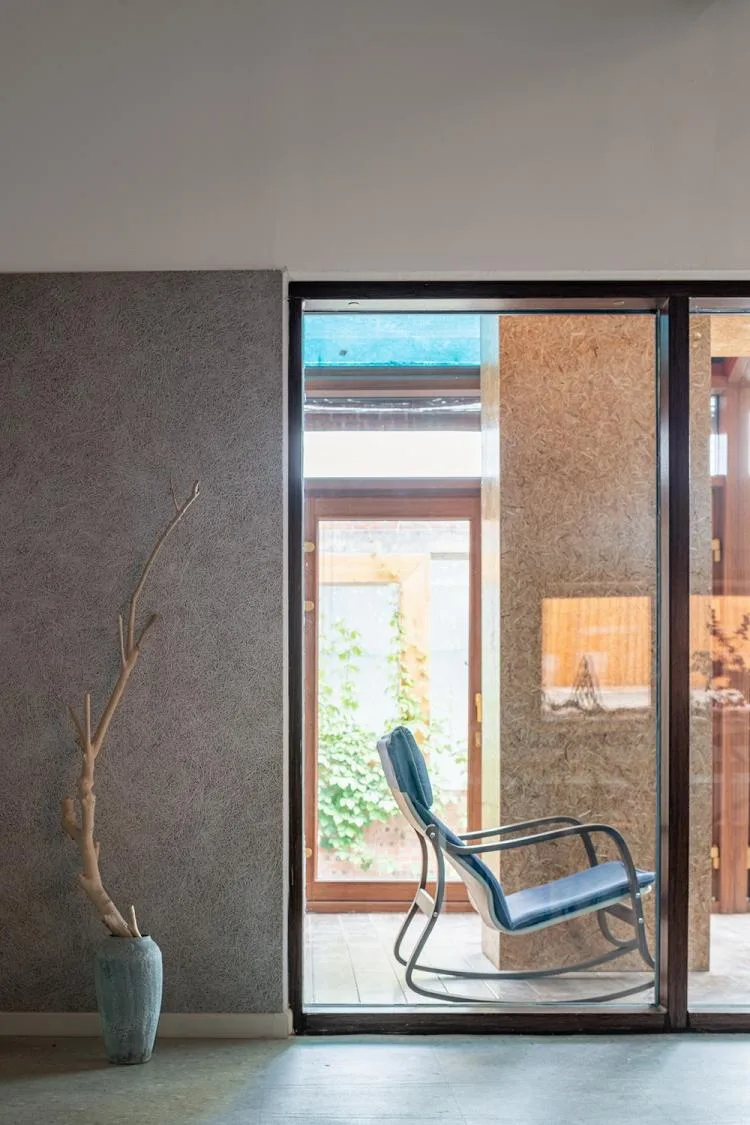
△ Local materials and craftsmanship © Creating a culture of mind
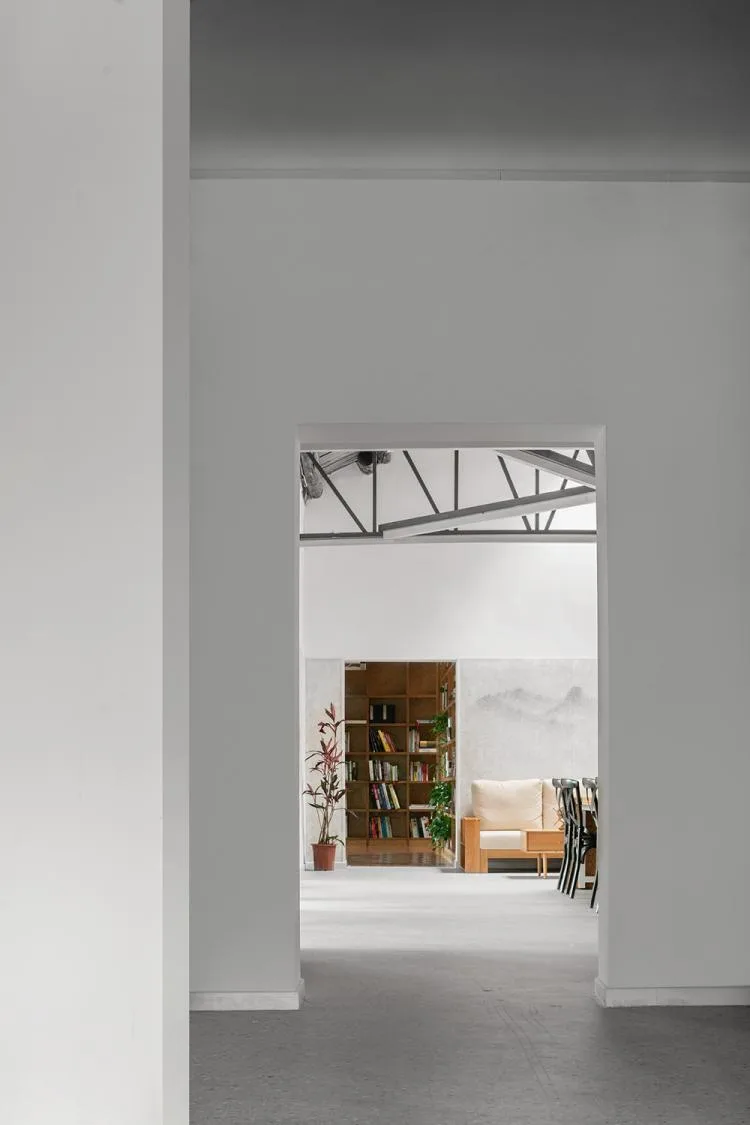
△ Local materials and craftsmanship © Creating a culture of mind
The Zero House serves multiple functions, including exhibition, office, library, conference, and residential spaces, making it a hub for rural makers and low-carbon exhibitions. The spatial layout retains the traditional two-courtyard arrangement, with solar rooms, stairwells, and wind towers acting as both connecting elements and climate buffers.
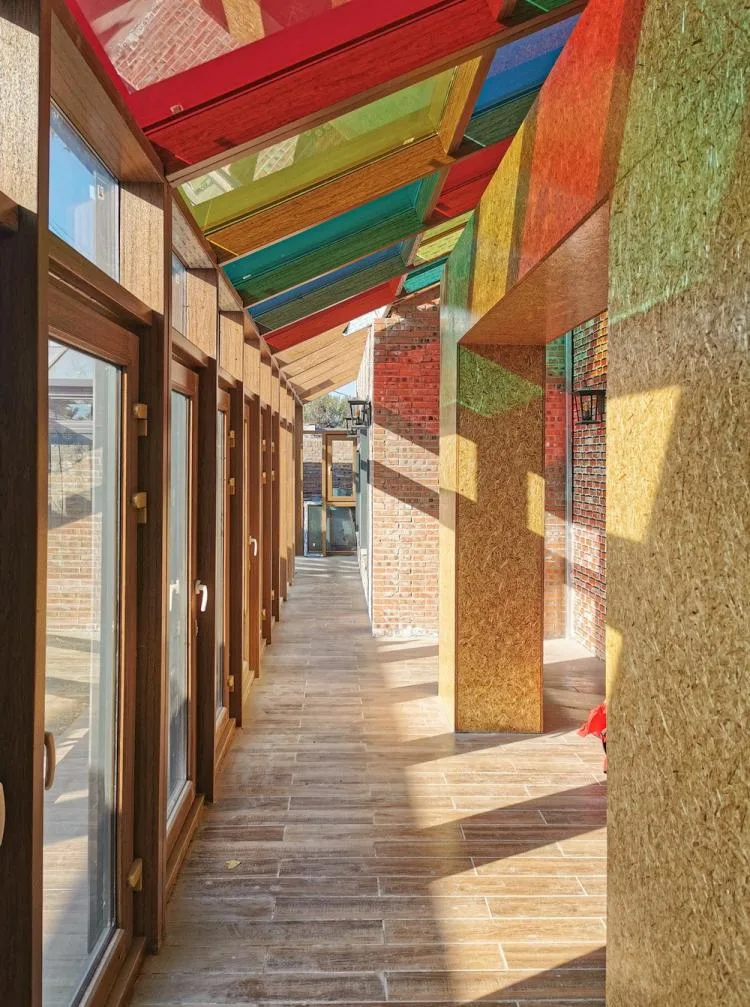
Sunlight filters through the colored thin-film photovoltaic roof, casting colorful patterns on the sunroom walls © Ren Jun
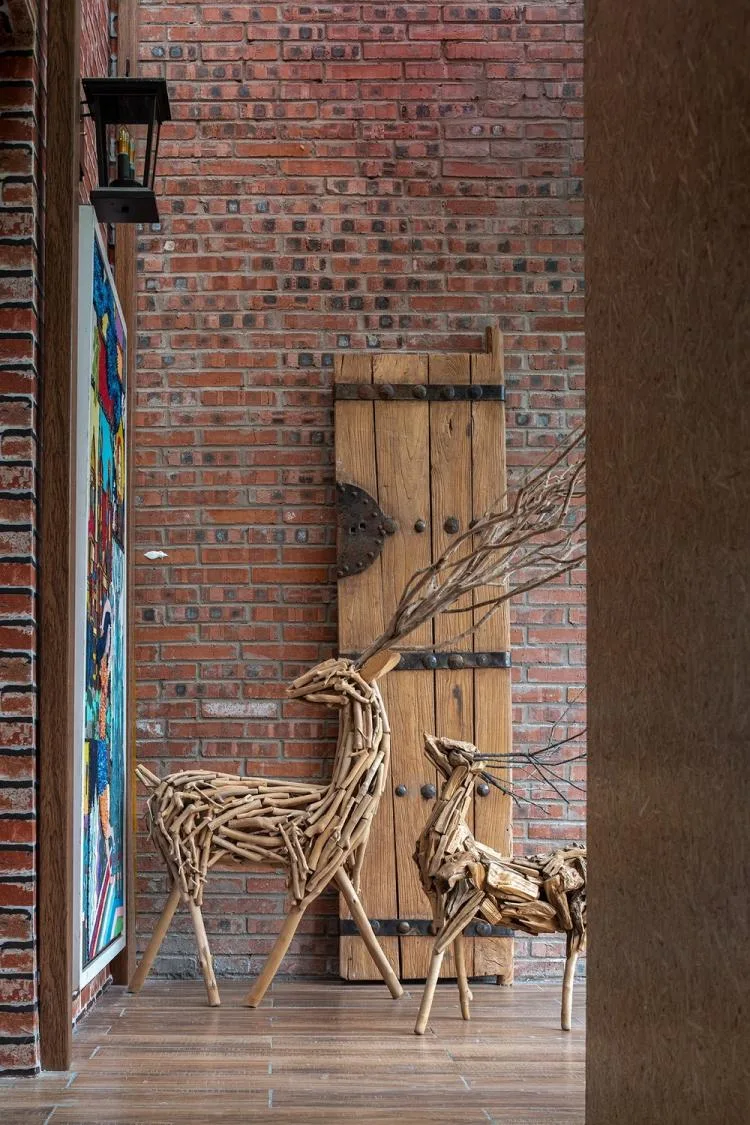
△ Local charm © Creating a culture of mind
Tianyou Lingshe utilizes renewable energy sources, featuring a traditional double-sloped roof equipped with amorphous silicon solar photovoltaic tiles. This design provides natural electricity and heat conversion, reducing energy consumption for residential use. The roof creates a dynamic sparkling effect under sunlight, while the colored thin-film photovoltaic panels cast vibrant halos onto the sunroom walls, blending artistic ambiance with indoor space.
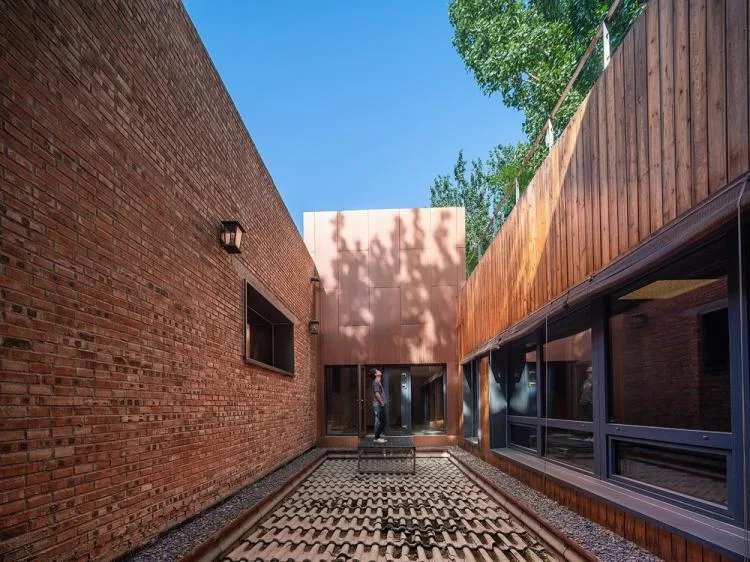
△ Central water institute with abandoned indigenous roof tiles at the pool bottom © Creating a culture of mind
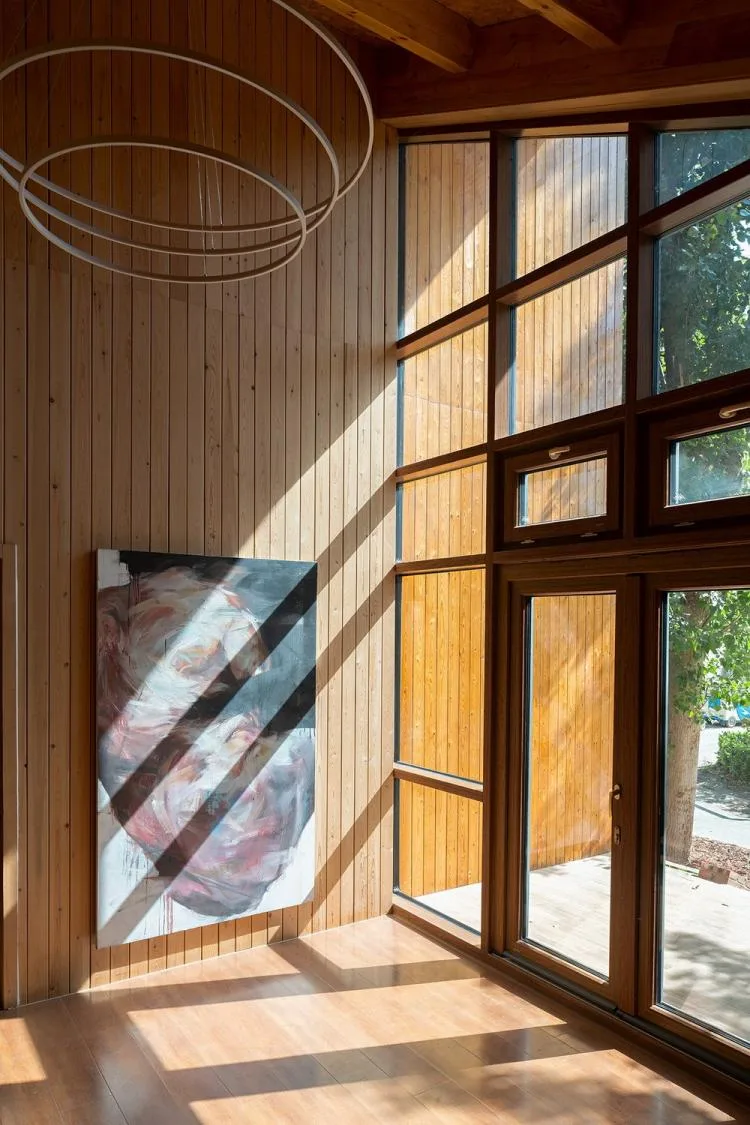
△ Local details © Creating a culture of mind
The courtyard and façade integrate advanced green technologies. The exhibition hall displays energy-saving and construction techniques for near zero energy rural houses, making the project a showcase for this sustainable model. The natural landscape harmoniously blends with traditional courtyard elements. Walking from the garden to the library, visitors experience misty air and sunlight filling every corner, encouraging relaxation and connection between exhibition and office spaces, as well as work and leisure, maximizing space utilization.
2. Planet – Carbon Neutral Buildings Minimizing Ecological Impact
The architecture maintains the traditional courtyard layout while designing distinct green-themed courtyards. Existing rural ecology and tall poplar trees on the east and north sides are preserved. A stepped forest vegetable garden is developed alongside the poplar trees and village green spaces. The three courtyards are defined with different ecological themes: a water courtyard, a solar courtyard, and a zero carbon garden made from repurposed waste. A greenhouse is established in the southern courtyard, cultivating a fish-vegetable symbiotic system using hydroponic vertical agriculture.
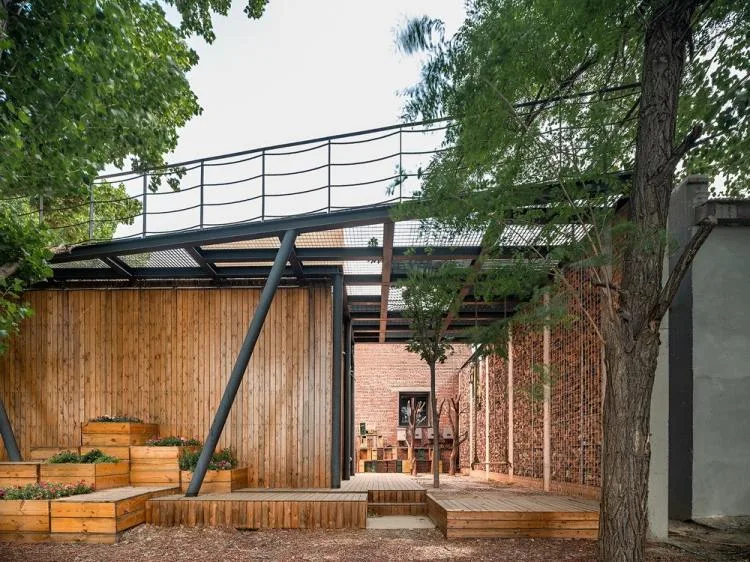
△ Zero Carbon Garden © Creating a culture of mind
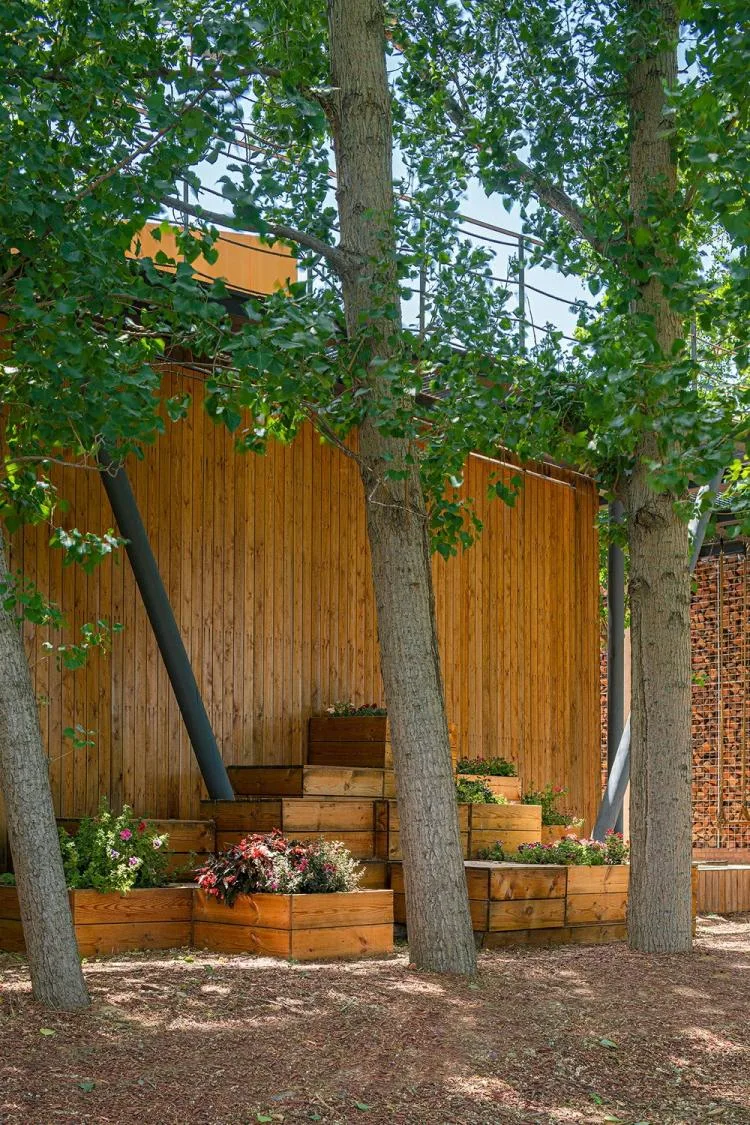
Modular one-meter vegetable garden © Creating a culture of mind
The project embraces the beauty of life by merging nature and art, embedding low-carbon lifestyles into the ecological landscape design. An integrated water system collects rainwater for natural irrigation of vegetable gardens. The zero carbon garden transforms waste materials into sustainable landscapes, enhanced by vegetation, embodying a truly green and low-carbon lifestyle from building to living.
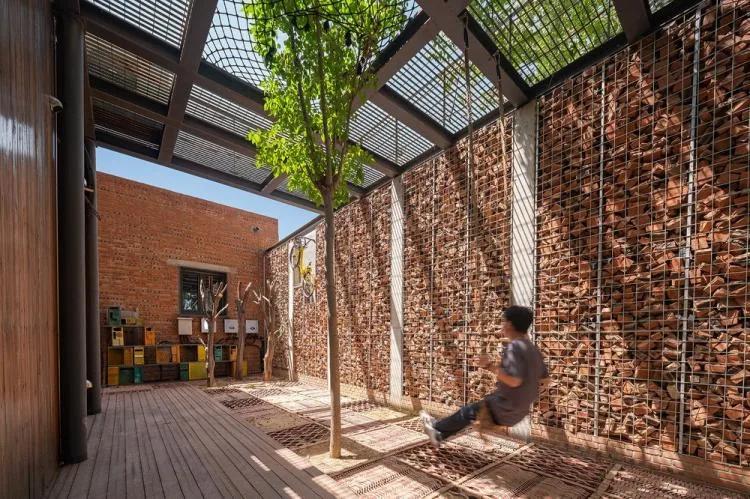
△ Zero Carbon Garden © Creating a culture of mind
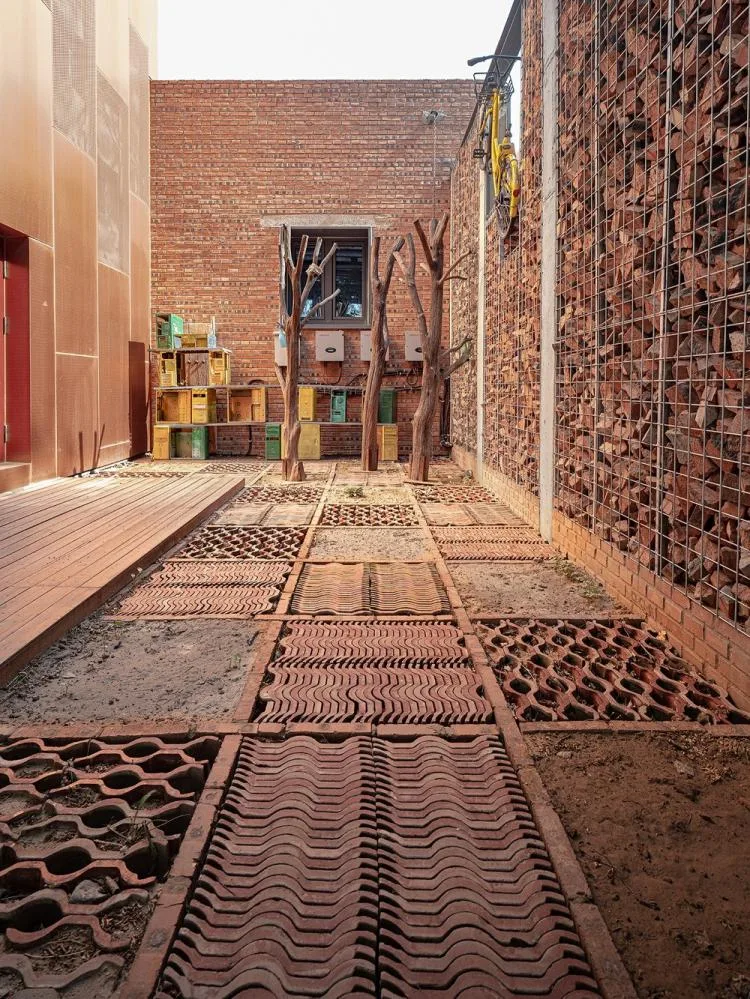
△ Zero Carbon Garden © Creating a culture of mind
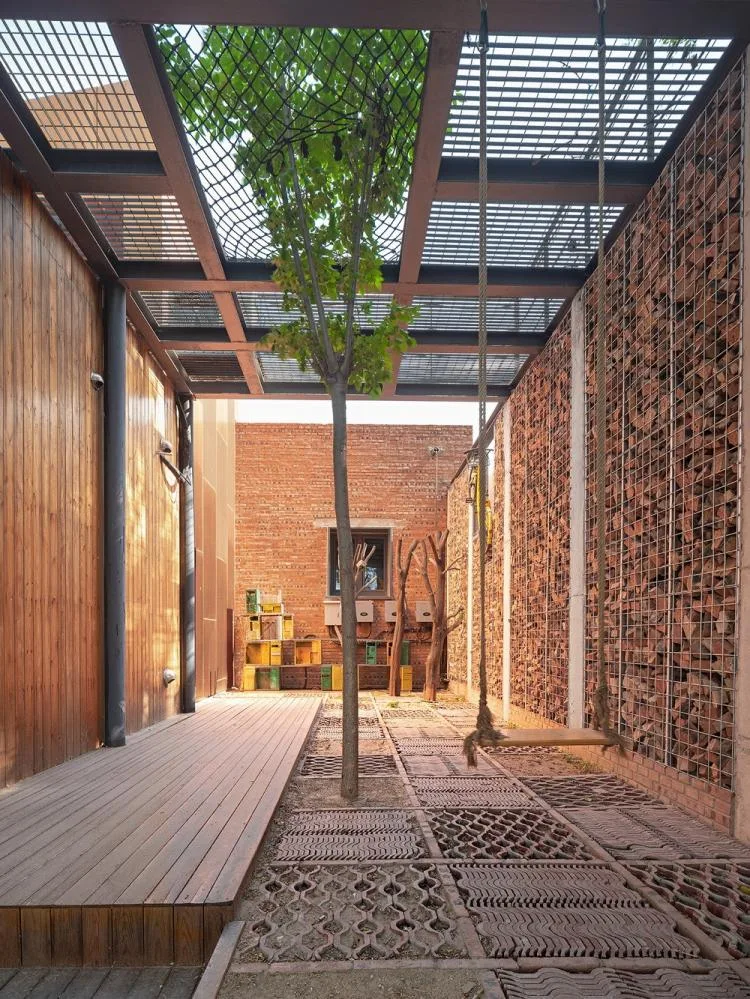
△ Zero Carbon Garden © Creating a culture of mind
Passive energy conservation begins with maximizing solar radiation use through a super-insulated enclosure, airtight design, and thermal bridge-free construction. This limits winter heating demand to below 150,000 units, resulting in a total energy consumption of 14.6 kWh/m² annually. Active systems combine solar photovoltaic tiles and colored thin-film photovoltaics to supply electricity, while solar water heating supports kitchens and bathrooms. The building’s annual energy consumption totals 5,938.46 kWh, while its production capacity reaches 7,130.70 kWh, achieving net zero energy consumption.
3. Play – Rural Architecture Reflecting Local Red Brick Culture and Regional Style
The building utilizes regional materials and a brick-wood structural system, experimenting with passive house designs using different enclosure systems such as brick-concrete, light wood, and modular assemblies. The red brick exterior walls form a sandwich insulation system complemented by a sloped roof with glazed tiles, preserving the traditional rural architectural aesthetic.
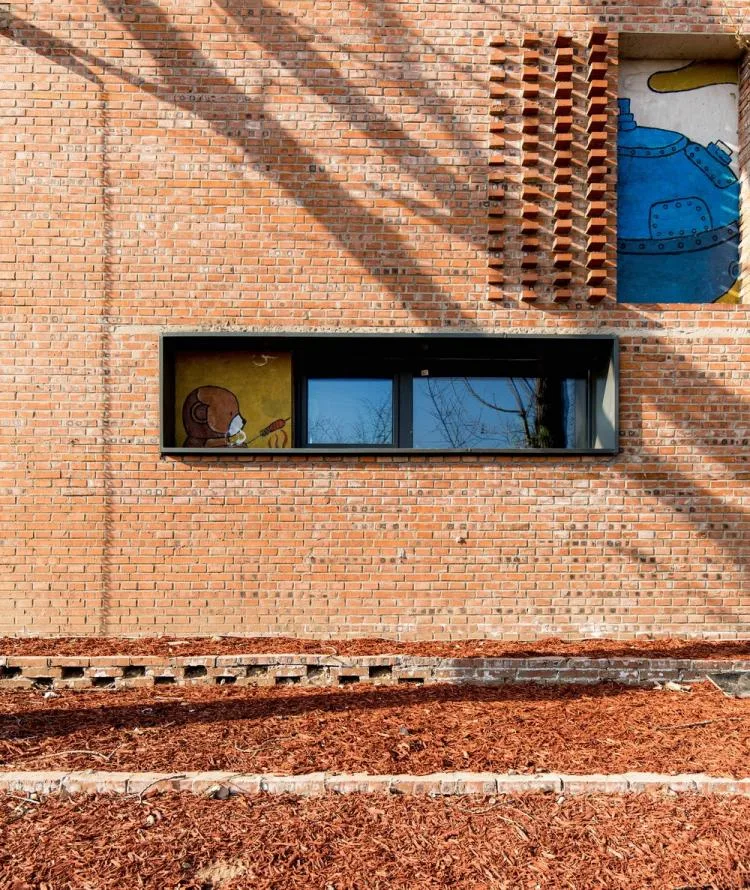
△ Sandwich insulation wall © He Zhihan
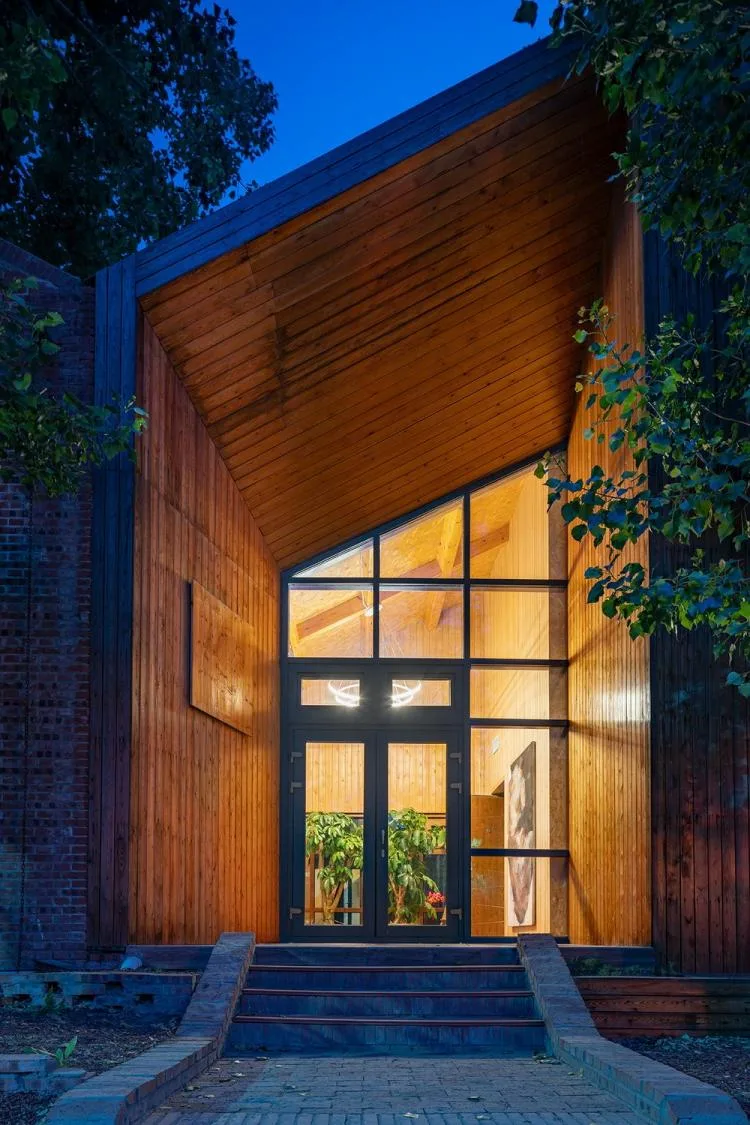
△ Night view © Creating a culture of mind
For carbon sequestration, the original building is surrounded by dense, tall poplar trees. Under the northern poplar forest, a modular vegetable garden covered with soil was established. Vertical greening is integrated into the courtyard, and the greenhouse flower room cultivates fish-vegetable symbiosis using vertical agriculture, enhancing carbon capture through these measures.
Technical Drawings
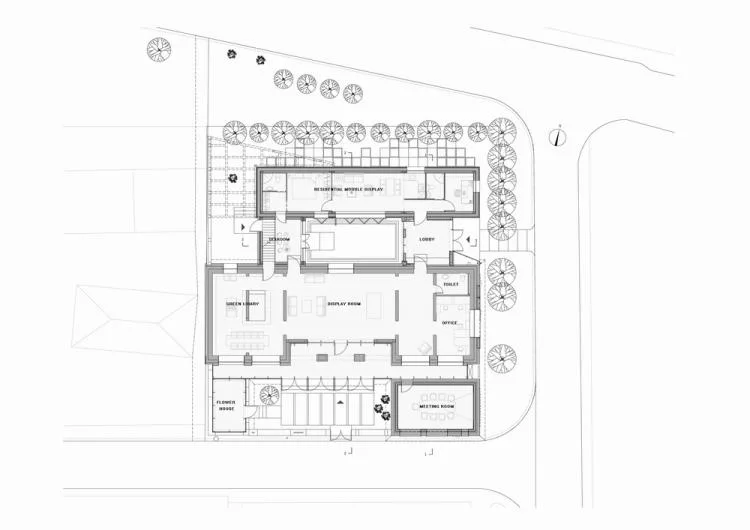
△ Plan view
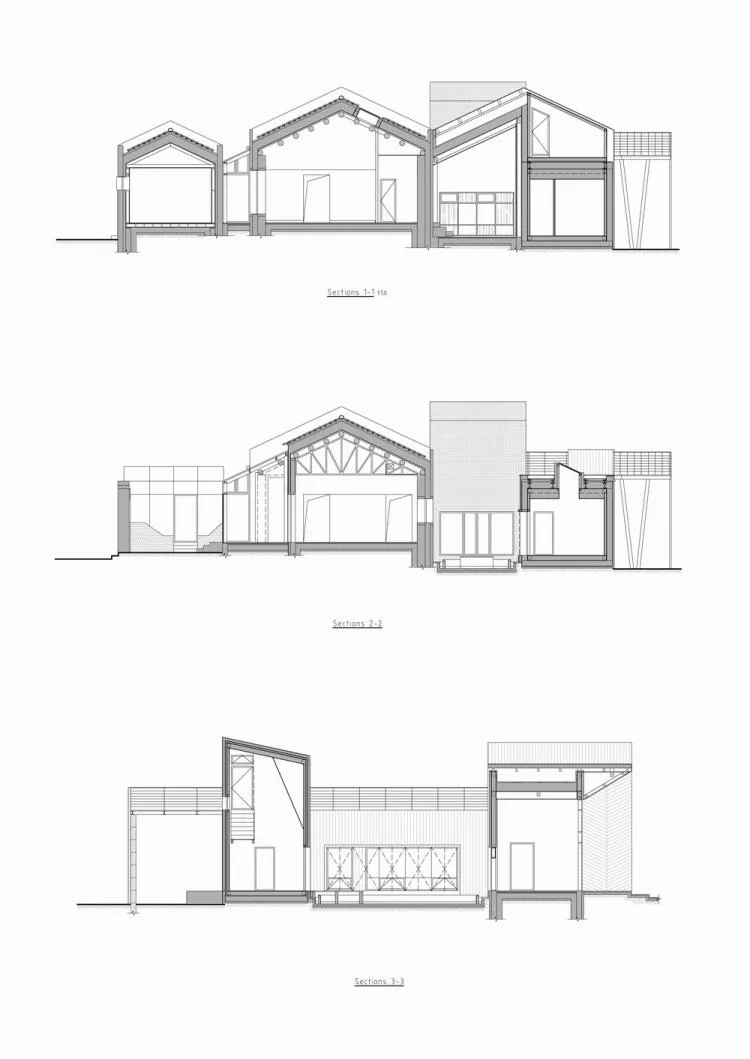
△ Section diagram
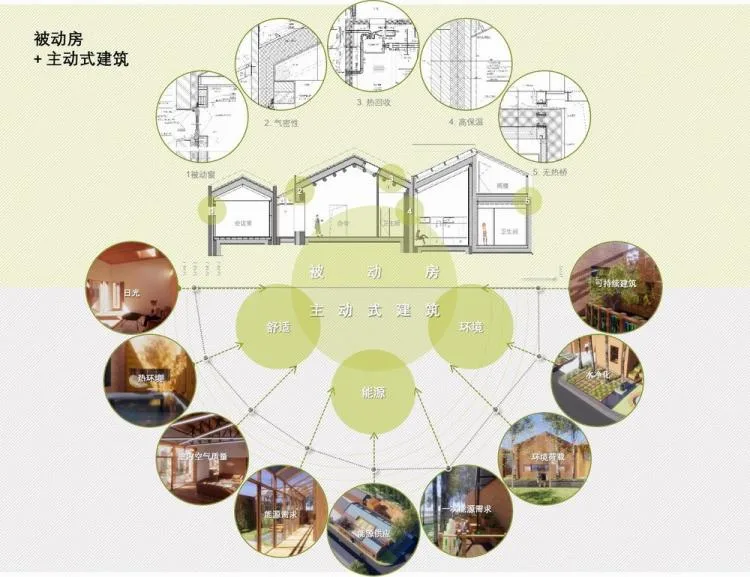
△ Near zero energy consumption + active building
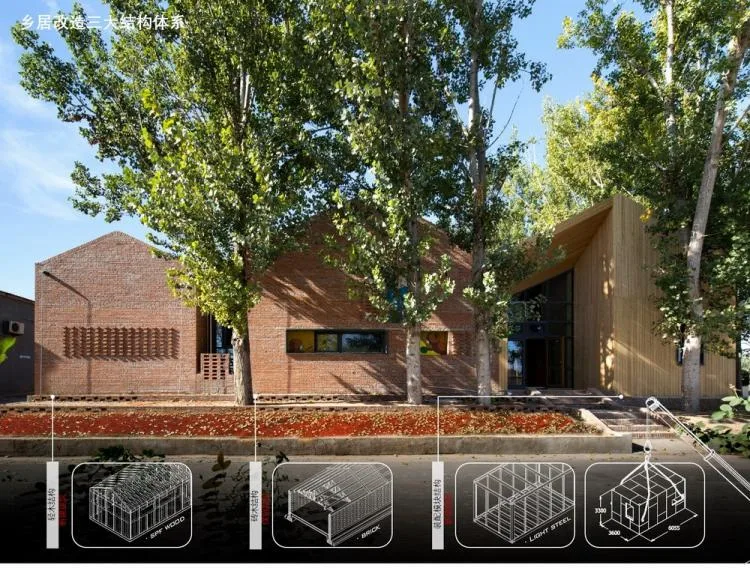
△ Three major structural systems
Project Information
Project Name: Tianyou · Zero House
Construction Unit: Tianyou Design Group
Project Type: Near zero energy rural residential renovation
Construction Scale: 400 square meters
Location: Daxing District, Beijing
Project Planning: Tianyou Design Group, School of Architecture, Tianjin University
Service Mode: EPC full-process management mode, providing integrated services from design and construction to operation.
Architects: Ren Jun, Guo Runbo, Di Yang, Jiang Nan
Structural Engineer: Yu Xuezeng
Equipment Engineers: Liu Bing, Han Shuai, Liu Wei
Project Management: Zhang Baojun, Lu Xiaotao, Hao Linchong, Xiao Rongyan
Construction Unit: North Guoxing
Construction Management: China Construction Sixth Engineering Bureau
Photographers: Heart Creating Culture, Ren Jun, He Zhihan
Tianyou Official Website: __AI_ST_URL_0__















Must log in before commenting!
Sign Up