
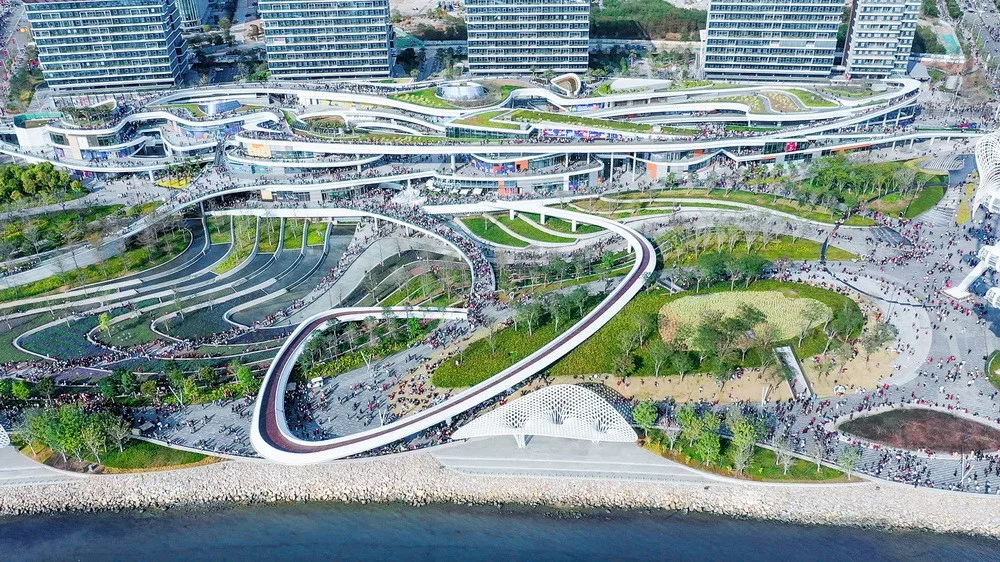
△ Aerial view of the commercial district and seaside park on the east bank © Tong Yanlong
The Shenzhen Bao’an Happy Harbor project, launched in phases since 2020, is a next-generation cultural, tourism, and commercial complex developed by OCT Group. The overall master planning and architectural design were led by Laguarda.Low Architects from the United States.
△ Project Video
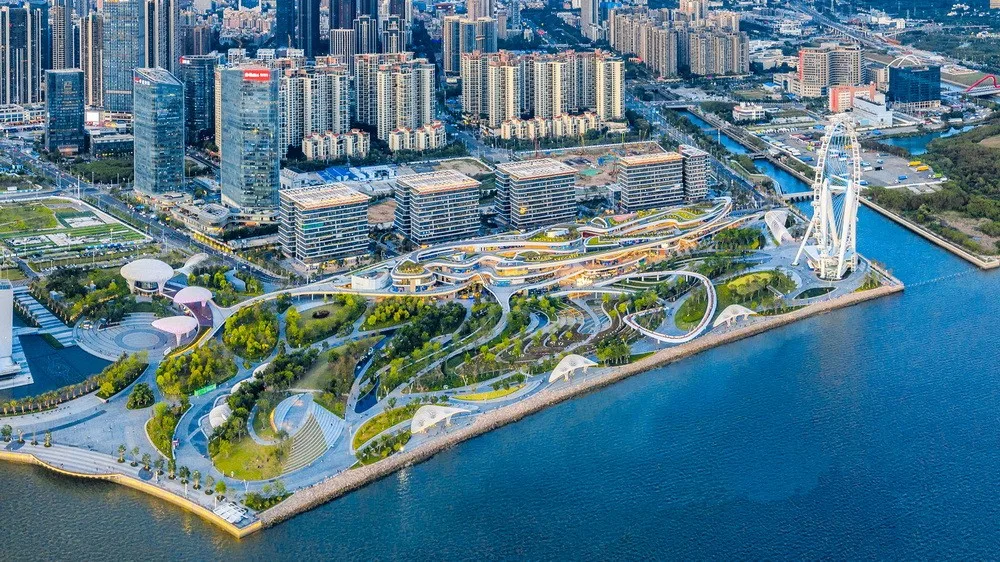
△ Aerial view of Joyful Harbor East Coast Commercial District, Seaside Park, Haifu No.1, and Bay Area Light Ferris Wheel © Tong Yanlong
Following the debut of the seaside cultural park, the east bank commercial district opened during the 2021 Spring Festival, offering visitors fresh experiences and services. The West Coast commercial district, located opposite the Performing Arts Center, is scheduled to open later this year. Once fully operational, the project will establish itself as a premier destination in Shenzhen, seamlessly blending culture, leisure, commerce, and tourism.
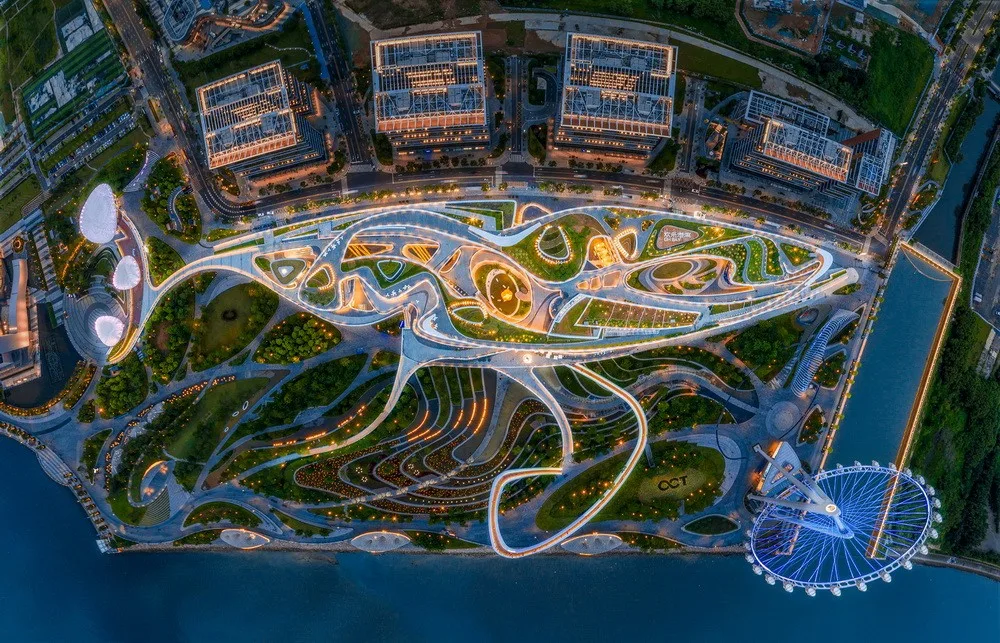
△ Joyful Harbor East Coast Commercial District, Seaside Park, Haifu No.1, Bay Area Light Ferris Wheel Aerial View © Tong Yanlong
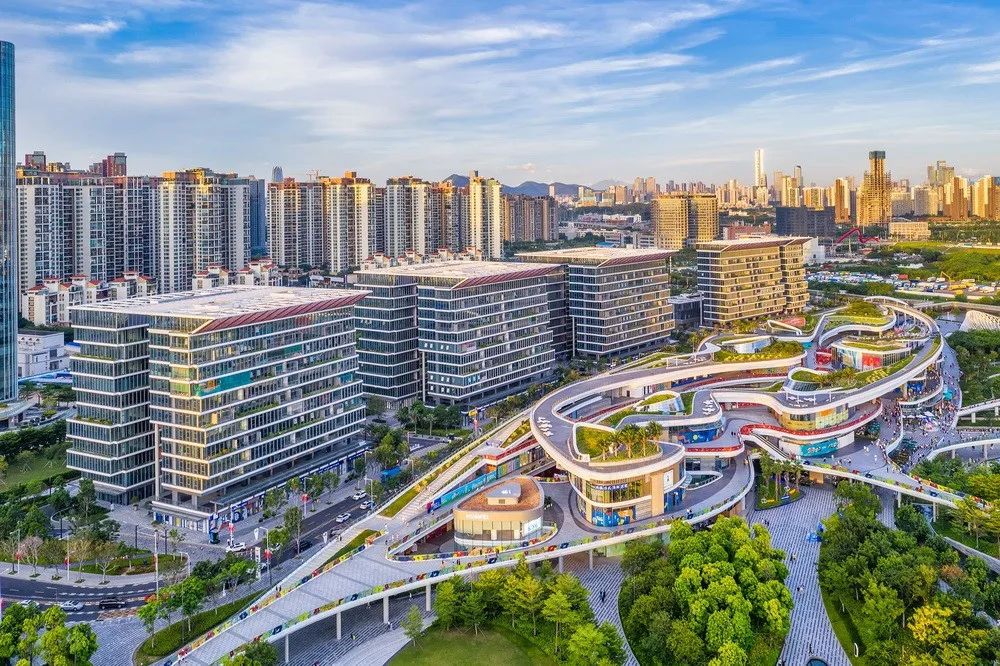
△ Happy Harbor Haifu No.1 and East Coast Commercial Block © Tong Yanlong
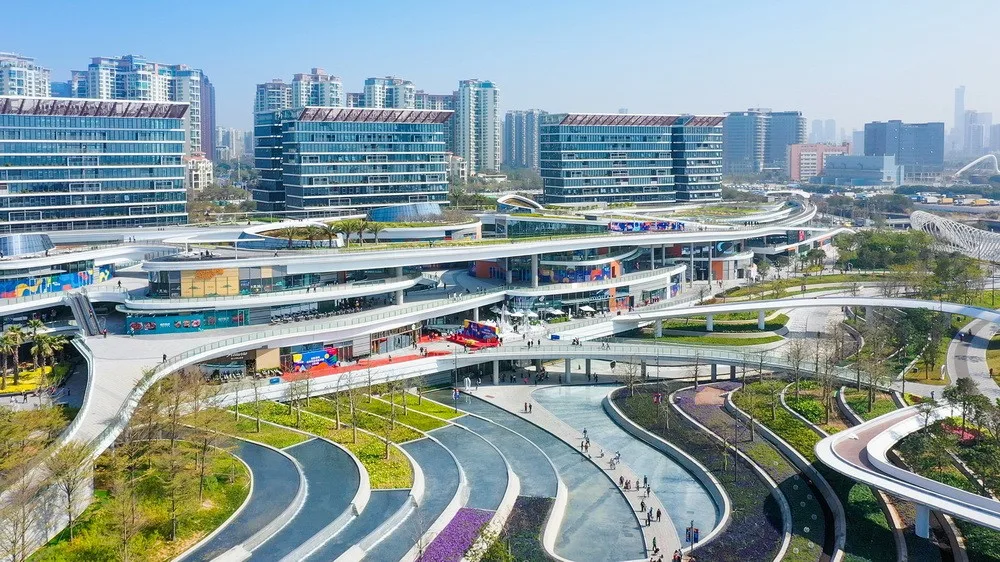
△ Aerial view of the commercial district on the east bank and Haifu No.1 © Tong Yanlong
The Happy Harbor project features expansive bay views, thoughtfully designed parks, high-caliber cultural and artistic facilities, distinctive landscape architecture, and open, transparent commercial and public spaces. It embodies Shenzhen’s spirit of development, innovation, vitality, and urban diversity.
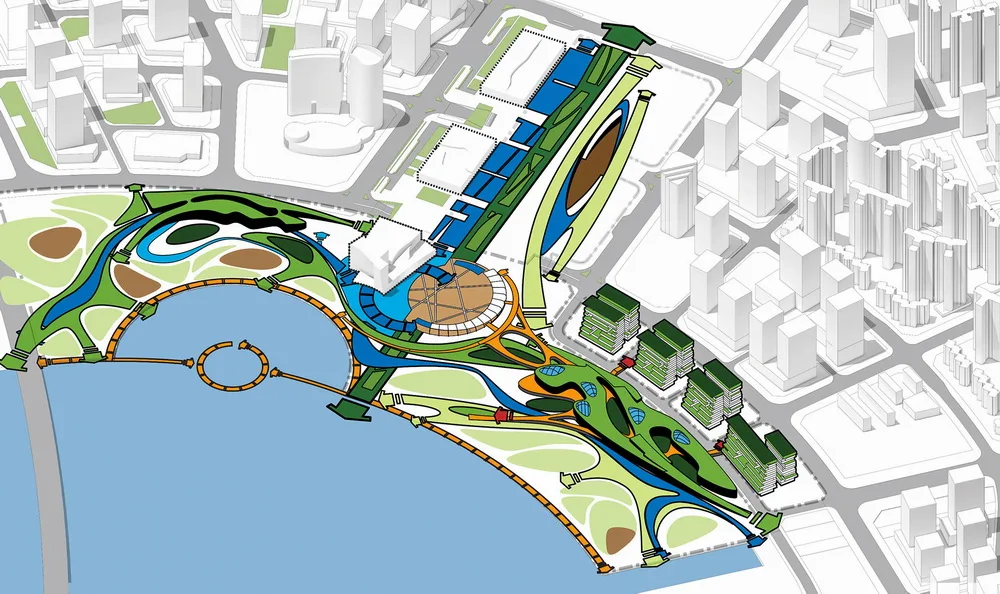
Conceptual map of Happy Harbor’s overall plan highlighting the central axis, the east and west bank commercial areas, and platform greenery © LLA
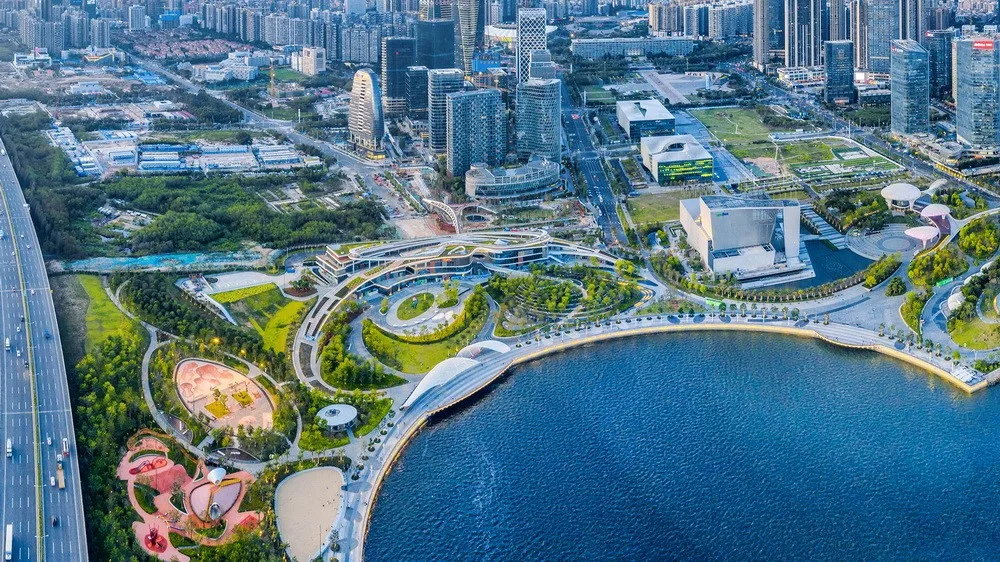
△ Bird’s-eye view of the commercial area, central square, and seaside park on the west bank of Happy Harbor © Tong Yanlong
Shenzhen plays a key role in the Greater Bay Area’s development strategy. Bao’an’s central district, benefiting from its strategic location, has emerged as a prime development hub. The bayfront area has become a focal point for growth. In this context, OCT Group envisioned several years ago the creation of Happy Harbor — a multifunctional complex at the intersection of Bao’an Central District’s central axis and the Binhai Rest Zone. This project represents Shenzhen’s innovative urban lifestyle of the future and reflects OCT’s new generation approach to cultural and tourism development.
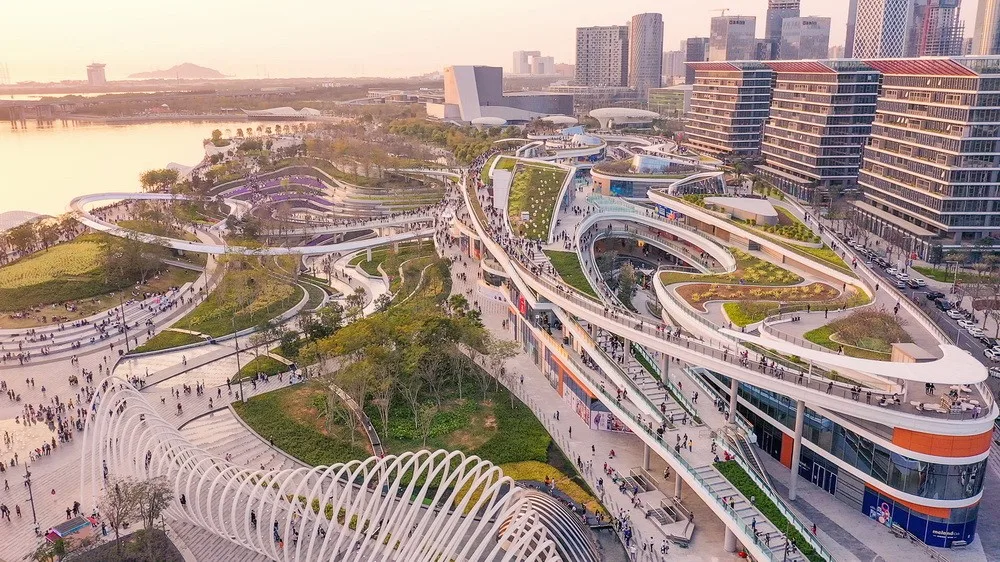
△ Aerial view of the commercial district and seaside park on the east bank © Tong Yanlong
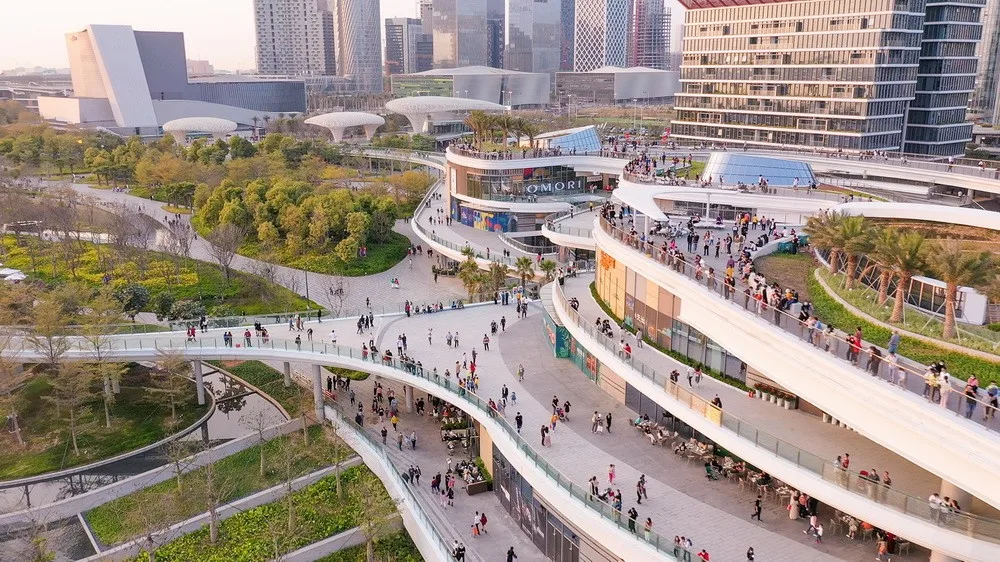
Bird’s-eye view of the connecting trail between the east bank commercial district and the seaside park © Tong Yanlong
Master Plan
Guided by this vision, LLA Architectural Design merged the natural ecological environment with dynamic urban spaces in their master planning and architectural design. The design organically integrates commercial, cultural, leisure, and residential activities, reinterpreting the traditional park concept by blending static green spaces with vibrant urban functions. This approach creates a sustainable ecosystem that harmonizes city life with nature, business with leisure, enhancing urban quality and project value.
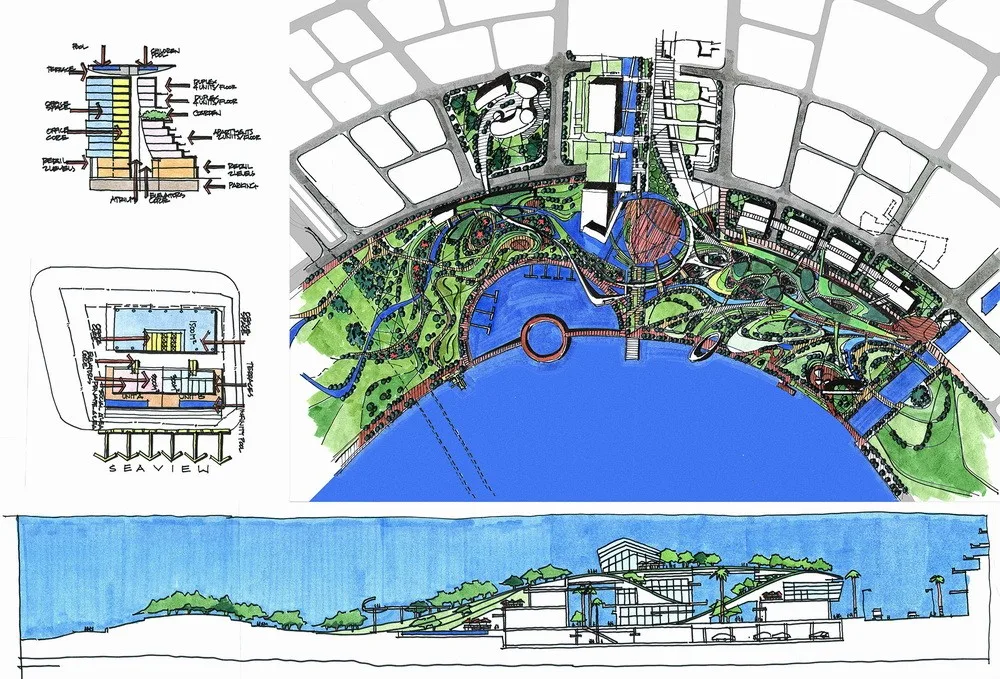
△ Planning manuscript for Happy Harbor © LLA
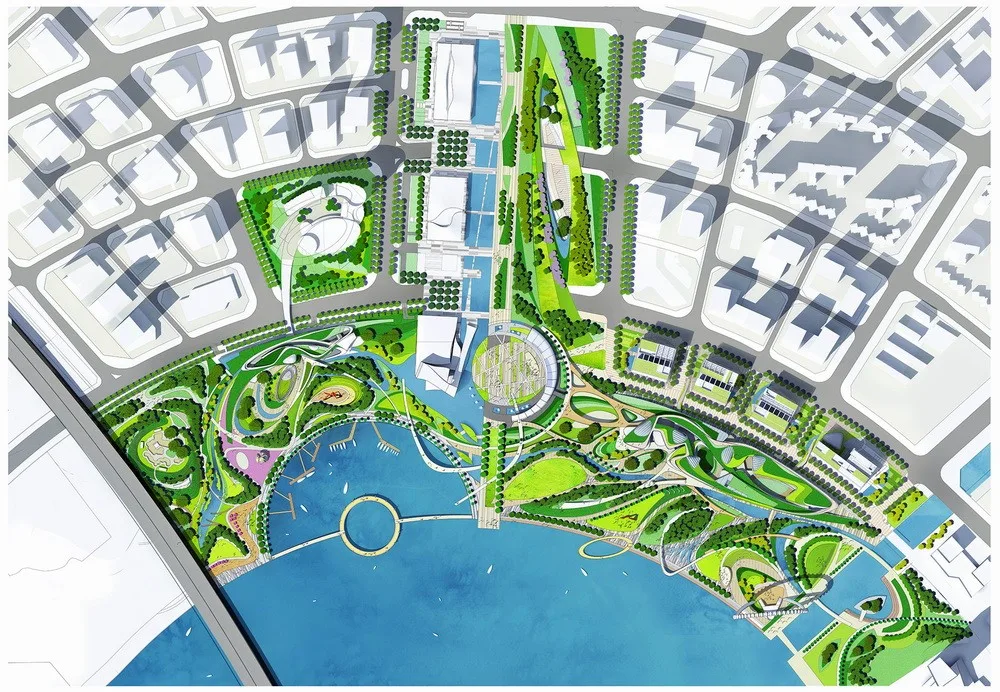
△ General plan of Happy Harbor © LLA
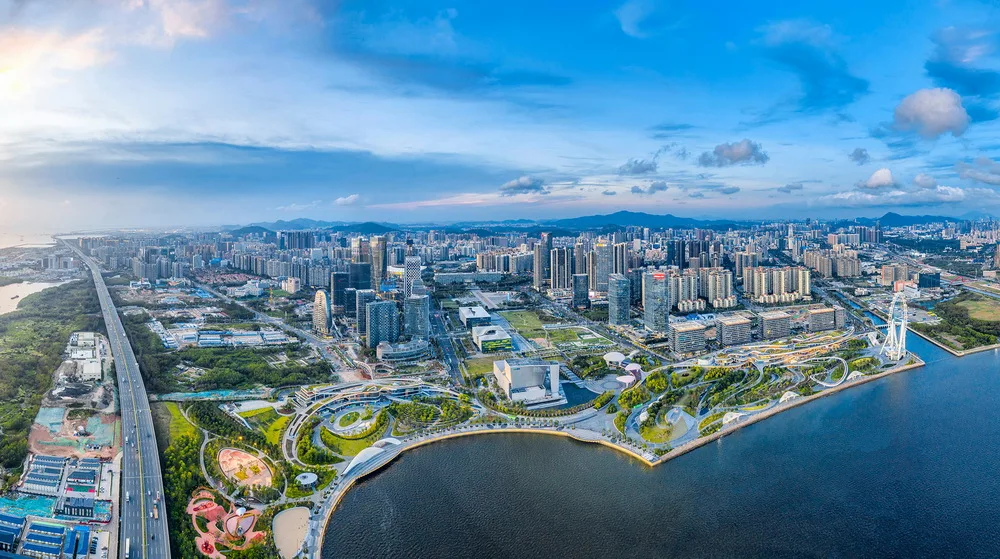
△ Overall bird’s-eye view of Happy Harbor © Tong Yanlong
Shenzhen Bao’an Happy Harbor comprises the East Coast and West Coast Commercial Districts, Seaside Cultural Park, Haifu No.1 Business District, and a Performing Arts Center. LLA’s comprehensive planning carefully integrates park visitor flow, landscape features, and public spaces with cultural, artistic, commercial, business, and transportation functions, creating a cohesive and complementary urban environment.
Following the master plan, LLA proceeded with architectural designs for the East and West Coast Commercial Districts, Haifu No.1 Business District, Tourist Reception Center, Ferris Wheel Reception Center, and the large-scale art installation “Cloud” located beside the central square.
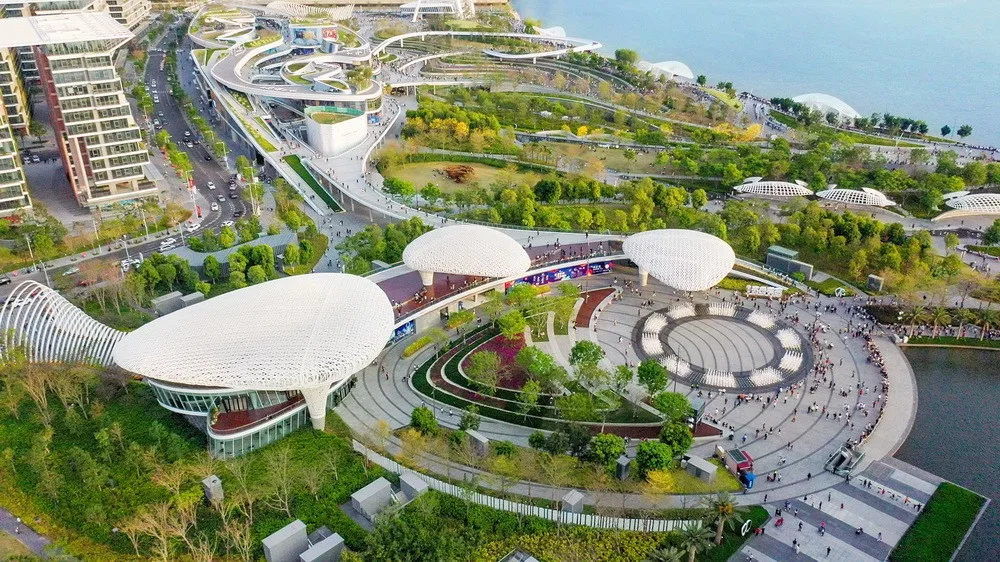
△ Central square and large art installation “Cloud” © Tong Yanlong
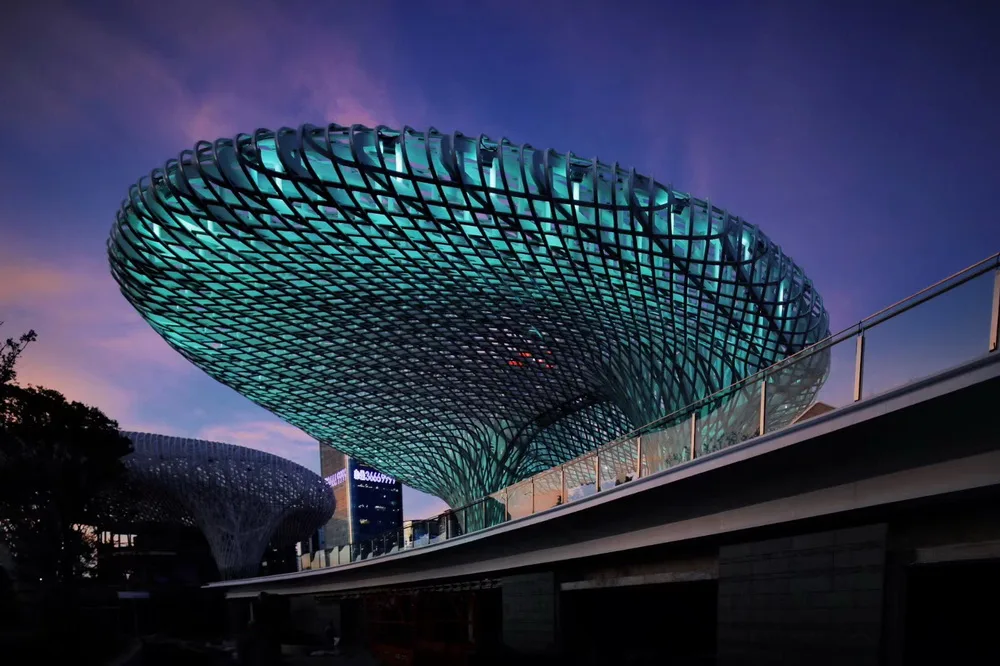
△ The large art installation “Cloud” in the central square © Shenzhen Qianjiahui Intelligent Engineering Co., Ltd
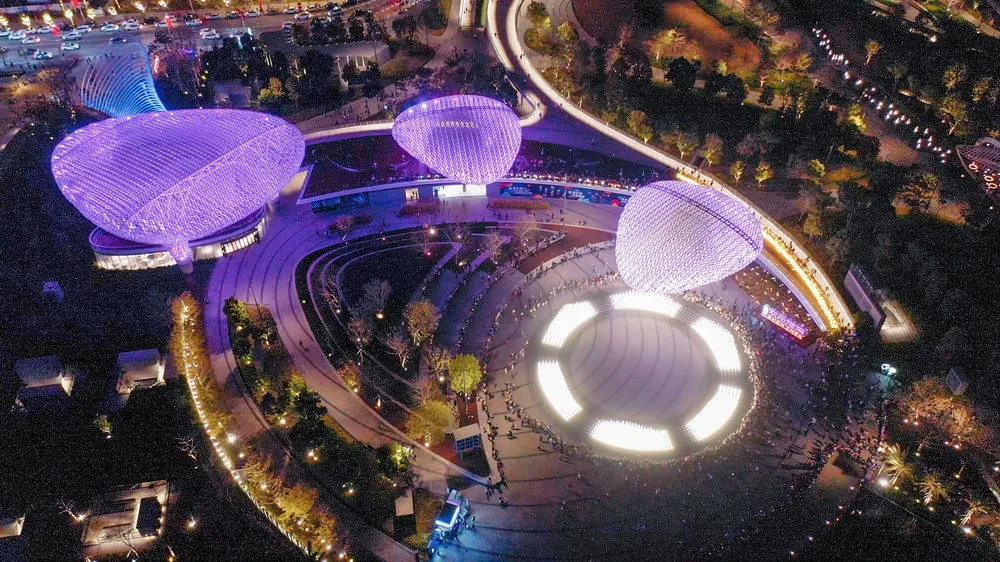
△ “Cloud” art installation and night fountain in the central square © Tong Yanlong
East Coast Commercial District
The East Bank Commercial District, opened in early 2021, spans 35,000 square meters. It connects the central entrance square to the west, the “Bay Area Light” Ferris wheel to the east, the Haifu No.1 business district to the north, and the park’s layered landscape to the south. Its sleek form, dynamic flow organization, diverse spatial circulation, and open views make it a standout destination and popular check-in spot. The district transcends traditional commercial functions, adding artistic, aesthetic, and experiential value to the entire project.
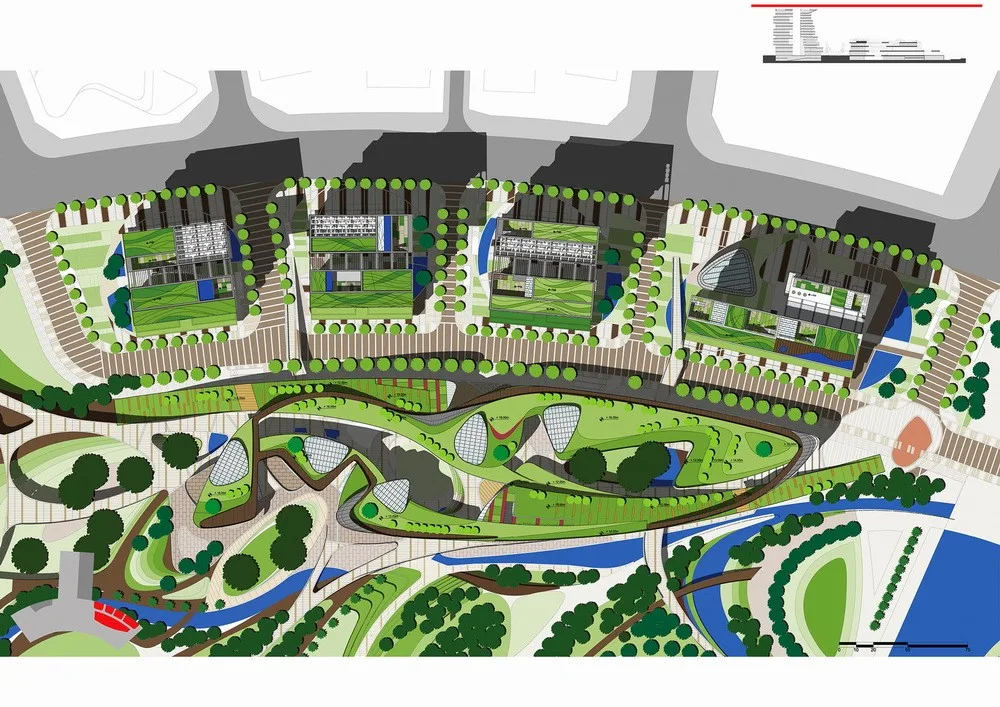
△ Floor plan of the East Coast Commercial Block and Haifu No.1 © LLA
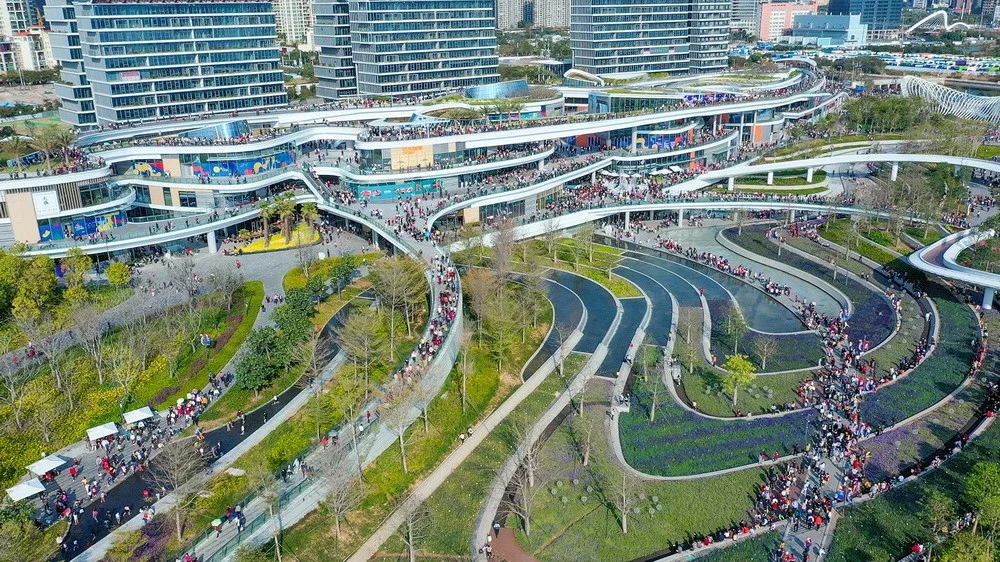
△ Aerial view of the east bank commercial district and seaside park © Tong Yanlong
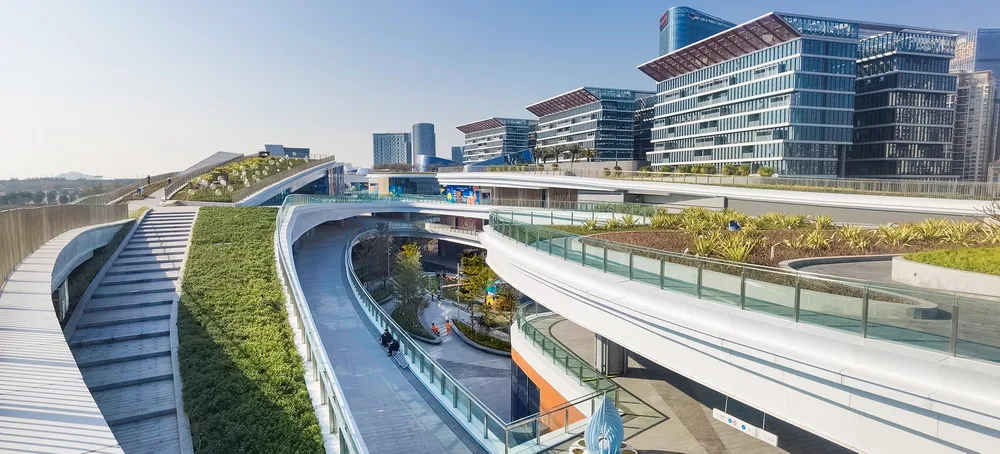
View of Haifu No.1 from the green roof of the East Coast Commercial District © OCT Overseas Chinese Town
Pedestrian ramps at both east and west ends offer visitors three-dimensional access from the seaside cultural park to various floors and rooftop gardens of the commercial district. The district’s circulation connects seamlessly with the park’s scenic paths. The southern extension of the east bank commercial district opens directly onto the ecological landscape park, showcasing a harmonious interaction between urban development and natural surroundings.
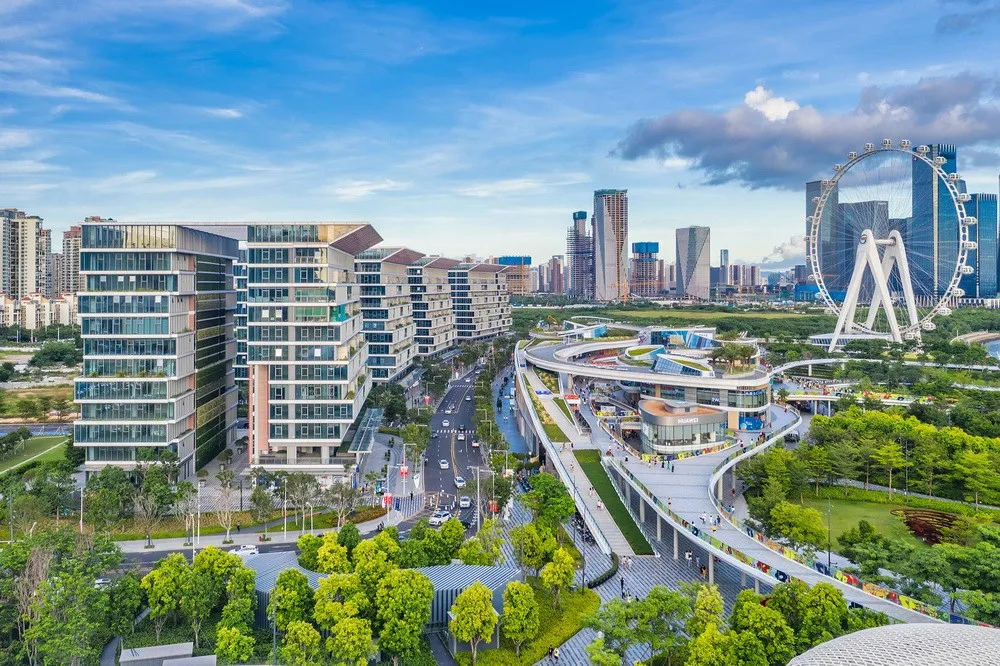
△ Happy Harbor Haifu No.1, East Coast Commercial District, Bay Area Light Ferris Wheel © Tong Yanlong
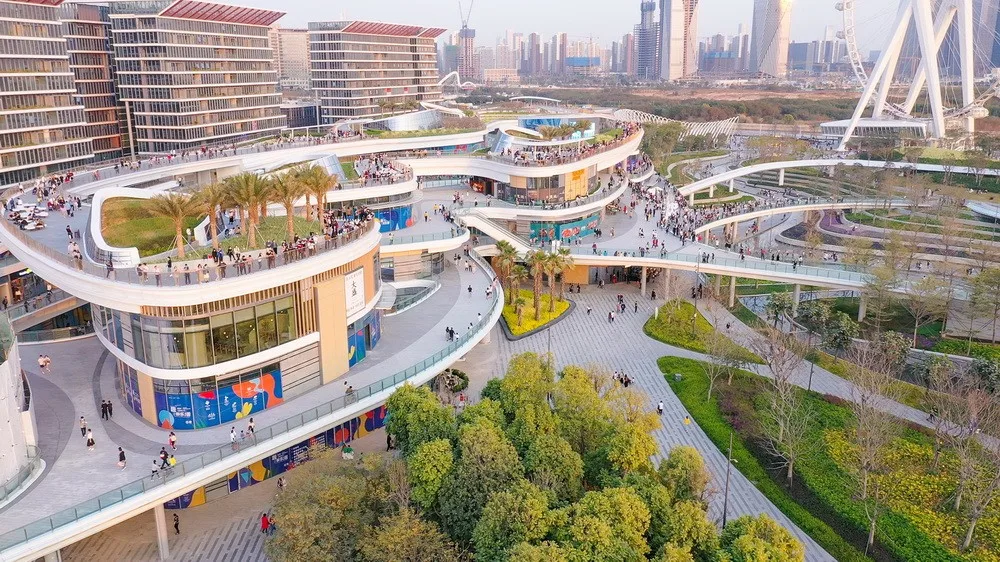
△ Aerial view of the connection between the east bank commercial district and the seaside park © Tong Yanlong
The east bank commercial district features two main above-ground floors, three partial floors, and one underground level. Its flowing traffic patterns, staggered platforms, and interlocking forms create vibrant and engaging experiences for visitors. The interplay between indoor and outdoor spaces offers diverse spatial sequences and sweeping views of the seaside park and Qianhai Bay. This unique fusion of architecture and nature, commerce and leisure, delivers an unprecedented experience.
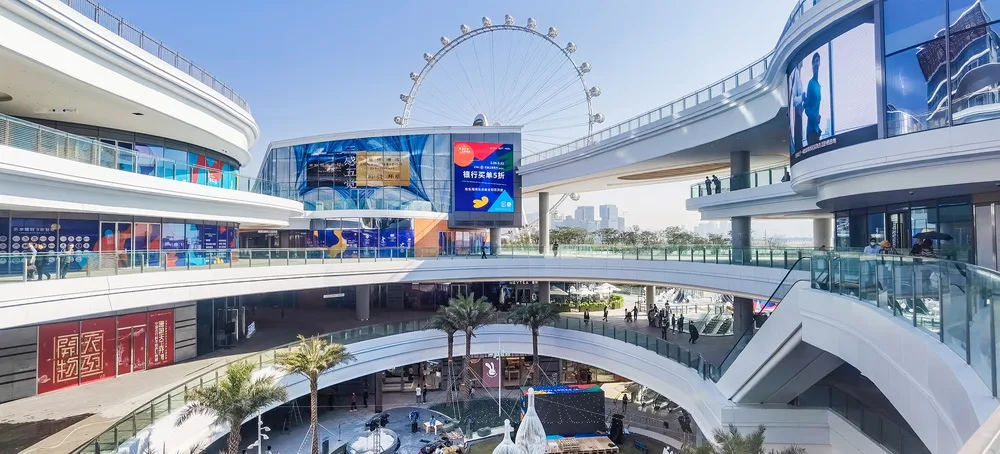
△ East Coast Commercial District © OCT Overseas Chinese Town
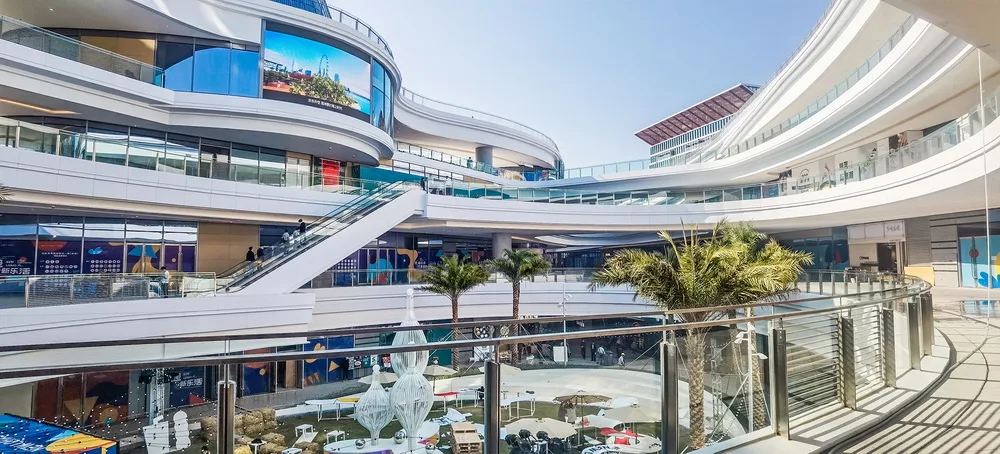
△ East Coast Commercial District © OCT Overseas Chinese Town
At the core of the underground commercial area lies a sunken plaza designed to host commercial events and celebrations. This space also serves as a vital connection between the northeast subway station’s underground commercial zone and the seaside park to the south.
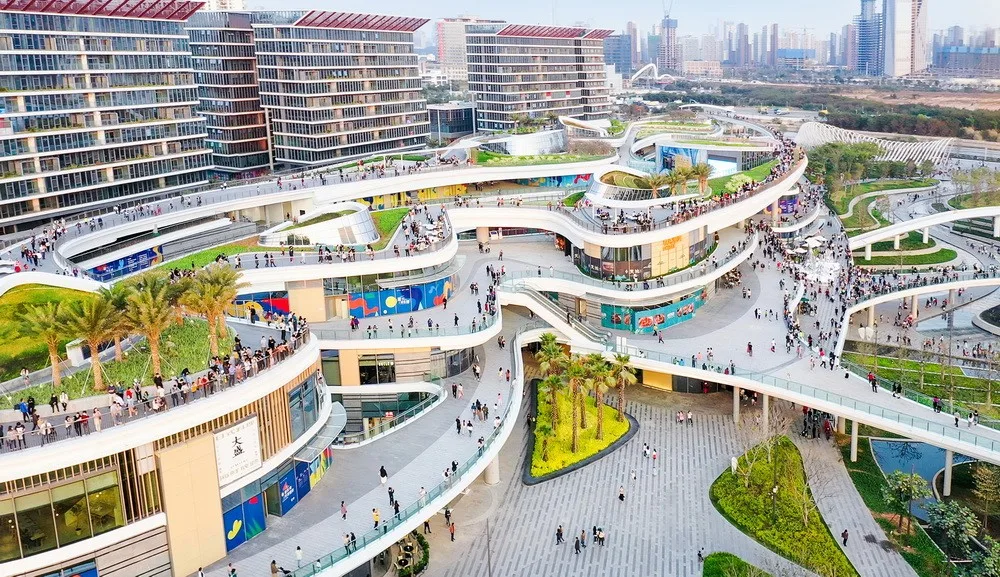
△ Aerial view of the east bank commercial district © Tong Yanlong
The commercial district’s gently undulating green roofs create a unique sky garden that complements the seaside park. Strolling across these roofs, visitors can enjoy panoramic park views and the adjacent bay area, while also offering close-up perspectives of Haifu No.1.
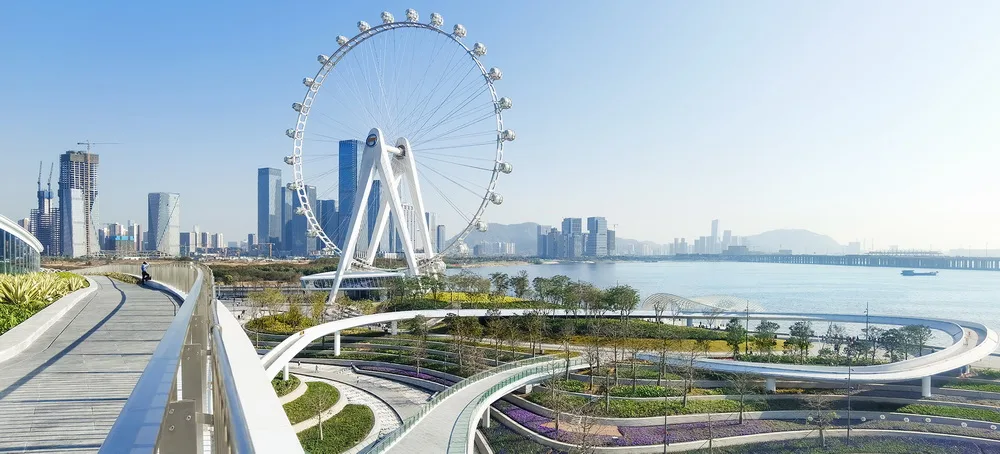
Views from the green roofs include the Bay Area Light Ferris wheel and the seaside cultural park trail © OCT Overseas Chinese Town
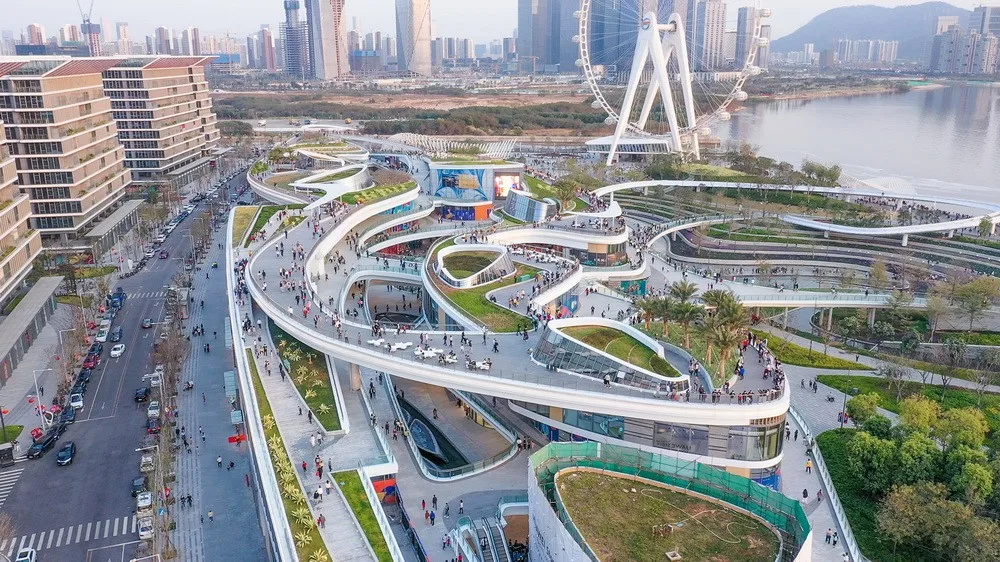
△ Aerial view of the East Coast commercial district, seaside park, and Bay Area Light Ferris wheel © Tong Yanlong
Green Ecological Features
A continuous green belt runs through the commercial blocks on both east and west banks, integrating water features and vegetation into the built environment. This landscaping, combined with awnings, balcony greenery, and eco-roofs, forms natural air ducts and cooling corridors that significantly reduce urban heat island effects. Skylights and courtyards maximize natural light, while solar energy systems provide renewable power. Building orientation enhances natural ventilation, supported by streamlined designs and vertical courtyards that optimize air circulation. High ceilings, operable windows, and energy-efficient fans further improve indoor airflow.
Haifu No.1
Facing the north side of the East Bank commercial district across the road, Haifu No.1 connects to major urban roads around Bao’an’s central area. Its underground commercial zone links directly to a subway station on one end and the East Bank commercial district on the other, ensuring convenient, multi-modal access.
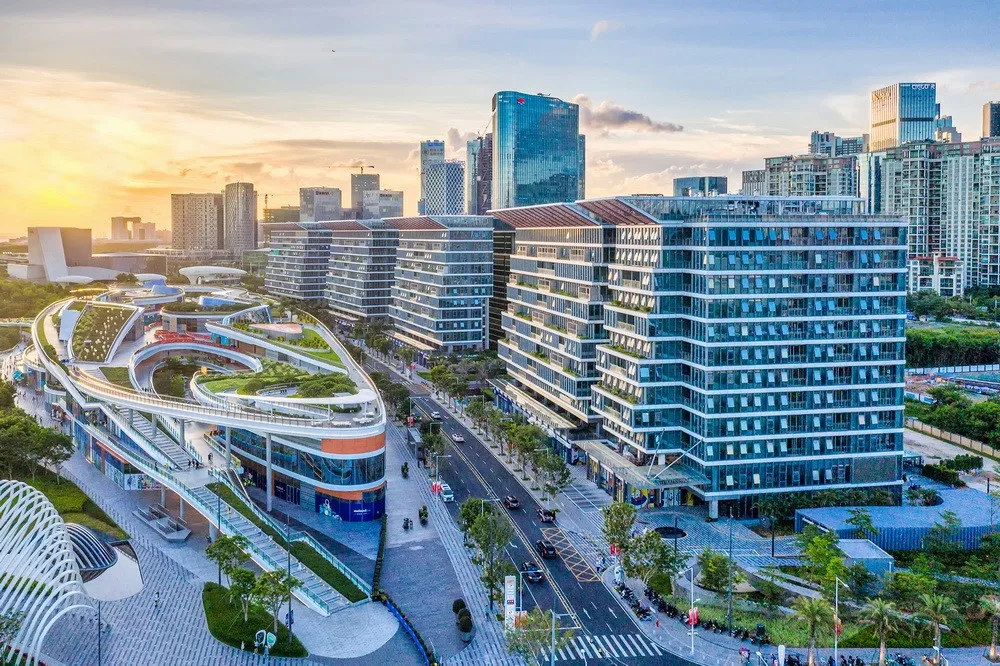
△ Happy Harbor Haifu No.1 and East Coast Commercial Block © Tong Yanlong
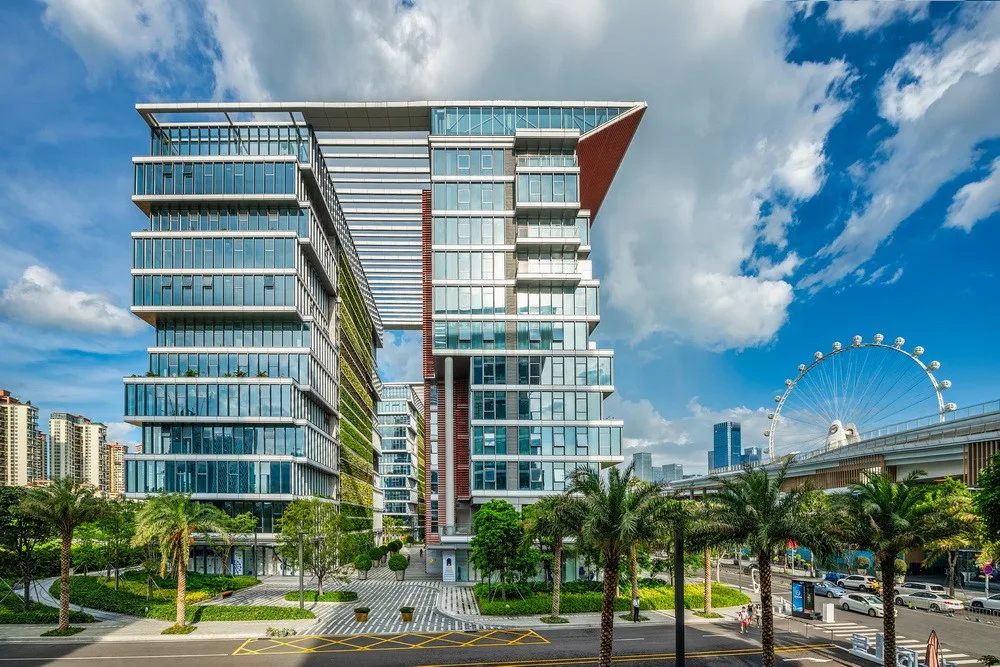
△ Happy Harbor Haifu No.1 © Tong Yanlong
Haifu No.1 comprises four sea-facing enterprise halls, three ecological headquarters buildings, one centralized commercial building, and one hotel. Its stepped architectural design features tiered setbacks that offer expansive views of Binhai Park and the Bay Area. Vertical greenery on the sky gardens and building facades enhances the environment, providing a healthy, eco-friendly workspace. The project has achieved LEED-ND Gold pre-certification, reflecting its commitment to sustainability and green building standards.
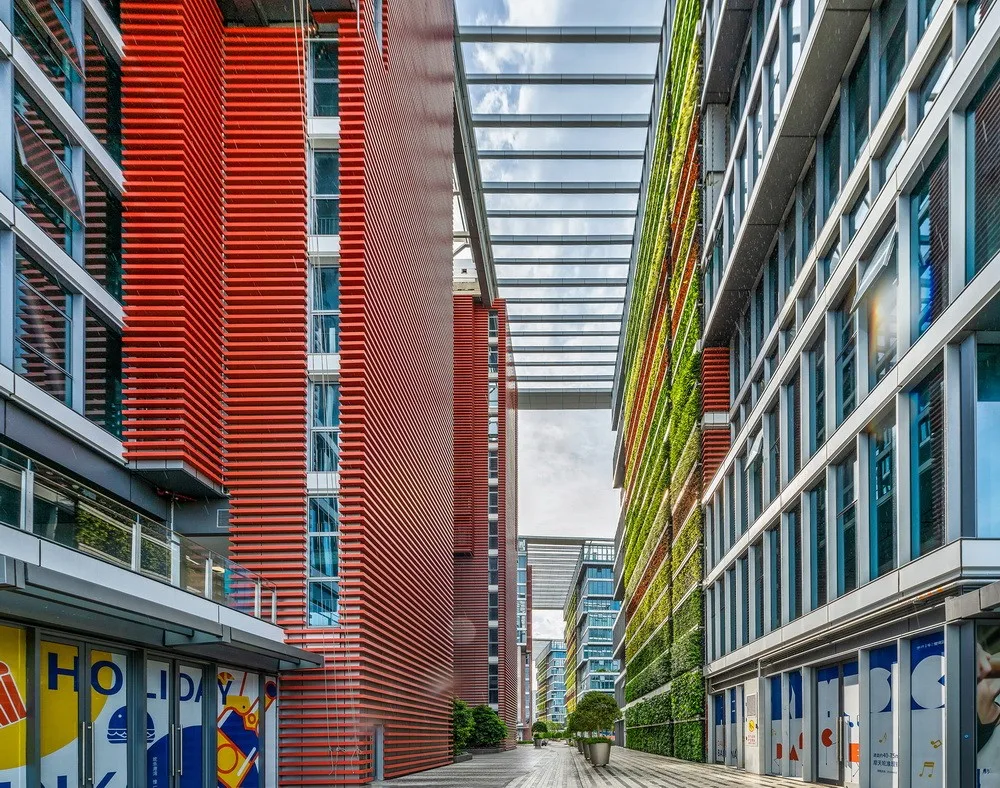
△ Greening wall of Haifu No.1, Happy Harbor © Tong Yanlong
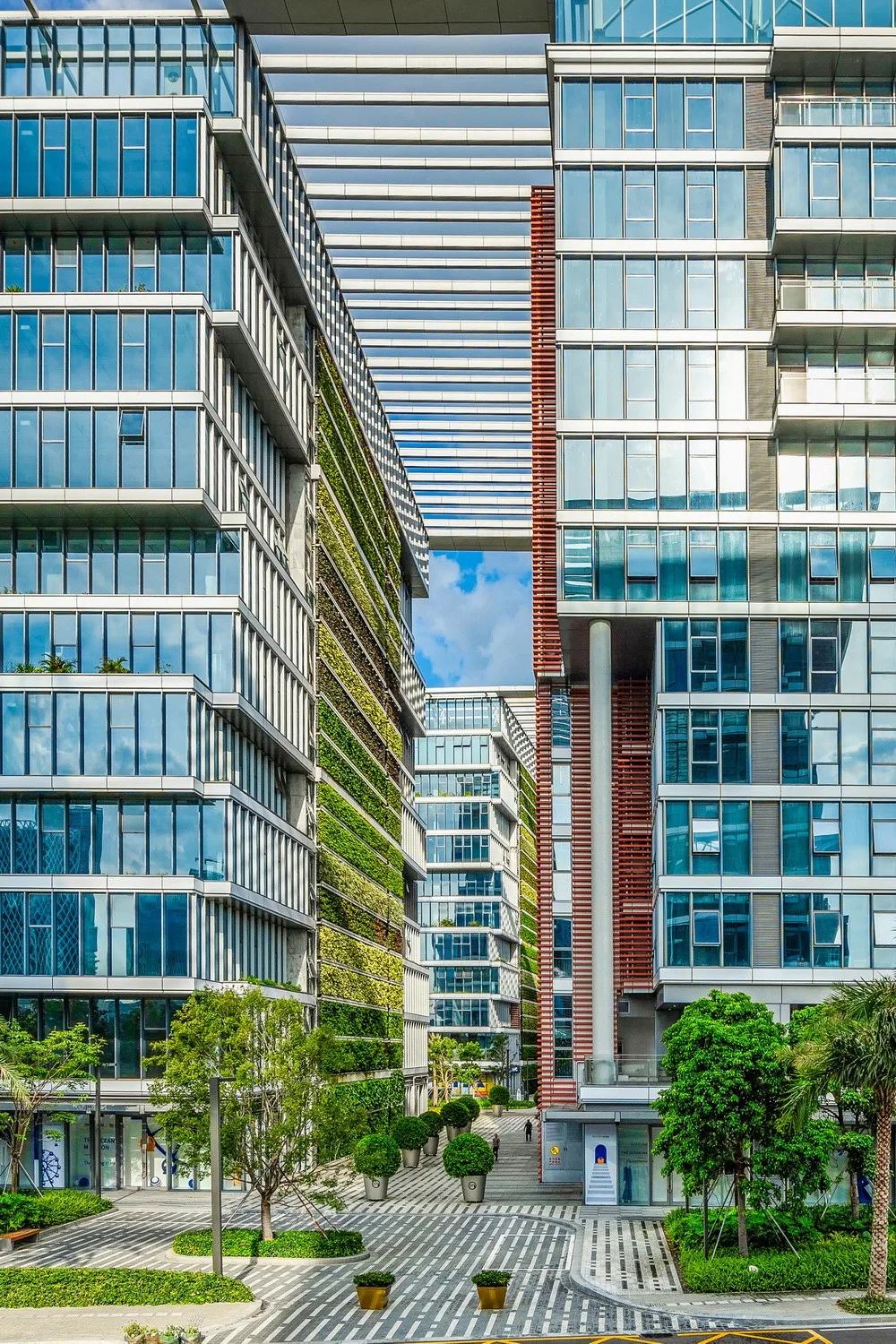
△ Greening wall of Haifu No.1, Happy Harbor © Tong Yanlong
Bao’an Happy Harbor creatively blends natural ecology with urban living, offering Shenzhen residents and visitors a fresh experience. It adds a radiant gem to Bao’an’s coastline, becoming a new landmark for Shenzhen and exemplifying the city’s leadership in national urban development.
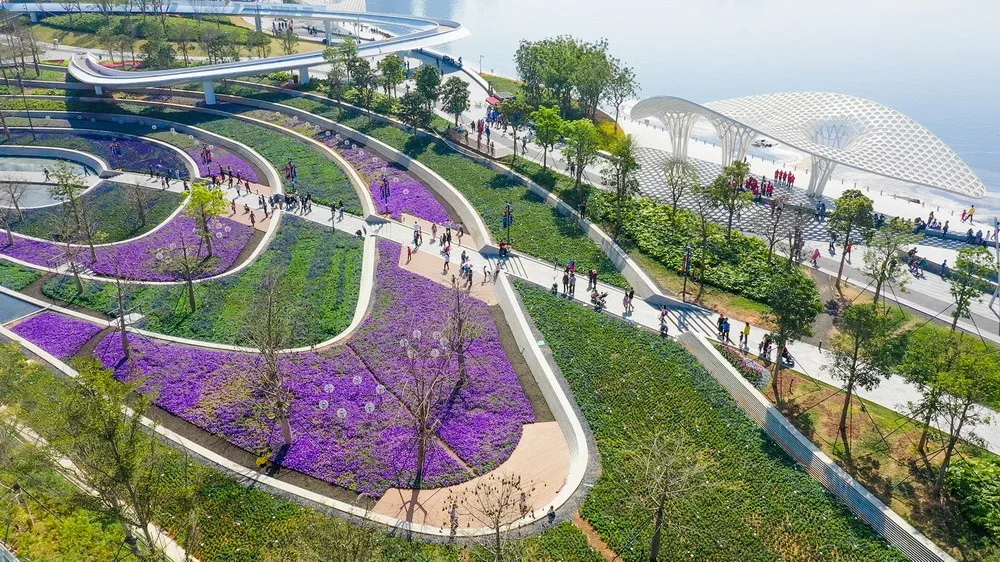
△ Seaside park landscape © Tong Yanlong
Project Information
Project Name: Architectural Design for the East Bank Cluster of Shenzhen Bao’an Happy Harbor
Owner: Overseas Chinese Town Group
Project Location: Intersection of Haitian Road and Baohua Road, Bao’an District, Shenzhen, Guangdong Province
Land Area: 43 hectares
Completion Timeline: Seaside Cultural Park opened August 2020
East Coast Commercial District opened February 2021
Overall project expected completion September 2021
Design Company: LLA Architectural Design Company / Laguarda.Low Architects (LLA)
LLA Design Scope: Master planning; East and West Bank Commercial Districts; Haifu No.1 and related park facilities including Tourist Reception Center, Entrance Plaza, Public Restrooms, Bus Station, and Ferris Wheel Ticket Hall
LLA Website: www.laguardalow.com
Project Website: __AI_S_TURL_0__
Key Personnel:
Project Chief Controller, Chief Planner, Chief Architect: Pablo Laguarda, FAIA, President
Senior Project Designer: Junkyeu Song, LEED AP, Vice President
Senior Project Manager: James Wu, President, China Regional Director
Senior Project Manager / Technical Controller: Jin Liang, AIA, Vice President
Project Managers: Chen Han, Xinzhi Pan, LEED AP
Project Coordination: Christina Wu
Main LLA Team Members: Jiteng Yang, Yiheng Yu, Insuk Shin, Sara Yarisolian, Yuchen Zhao, Zhaoyuan Gou
Photography: Tong Yanlong; some images provided by OCT Overseas Chinese Town Group
Landscape Design: SWA, AUBE, Oubo Design
Construction Drawing & Deepening Design: Huasen Architectural Design
Lighting Design: Langcheng Lighting Design Light Cibles















Must log in before commenting!
Sign Up