
Editor’s Note: This project is a teaching building located on the new campus of Northeastern University in Shenyang. Designed as a standalone structure by the Tsinghua University Design and Research Institute, it is based on campus planning developed by Kashima Design Company from Japan. Lead designer Zhuang Weimin aimed to explore the concept of “seeking change from the center” within the context of a rigorously symmetrical campus, with the goal of energizing both the interior and exterior spaces of the building.
Topic link: Special Academy · 52nd Collection of Domestic University Architecture — explore more outstanding examples of university architecture across China.
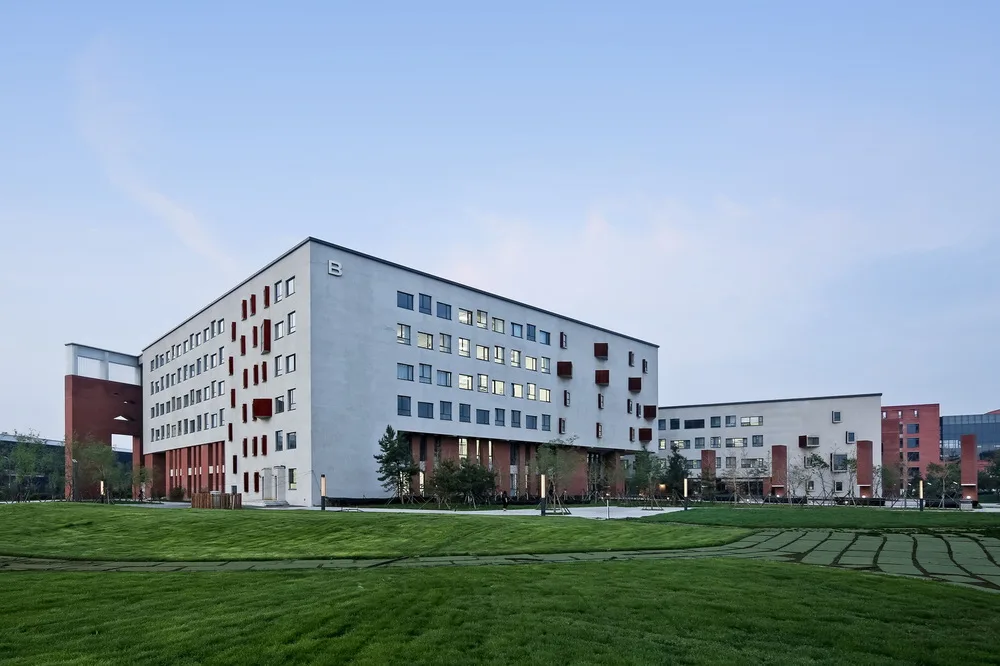
△ Overall Southwest Perspective © Su Shengliang
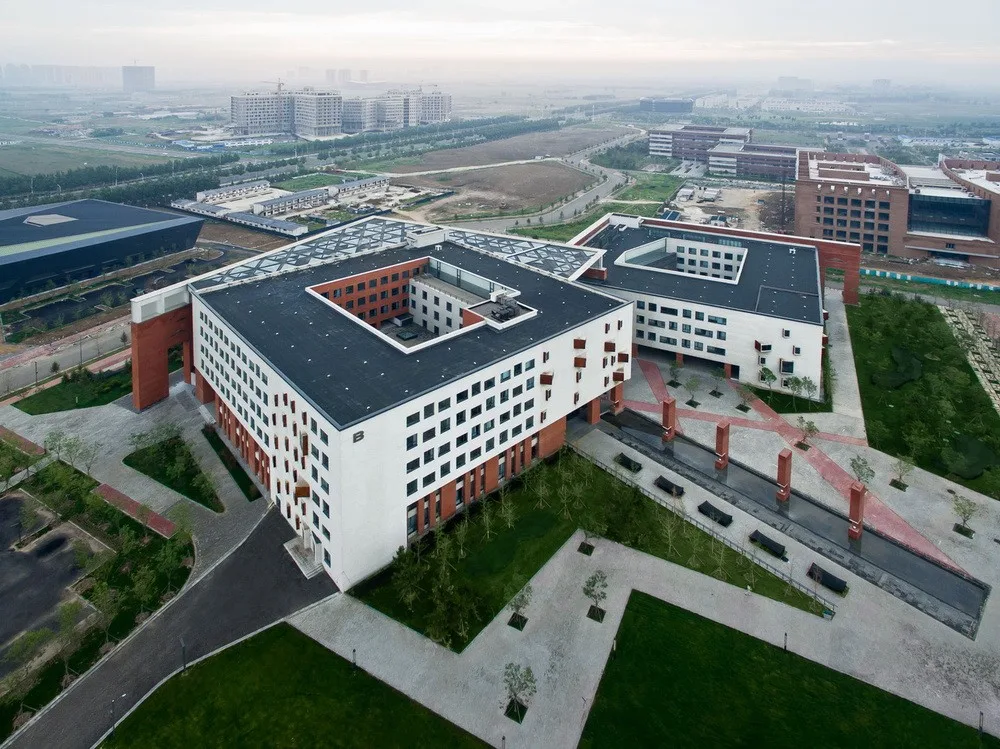
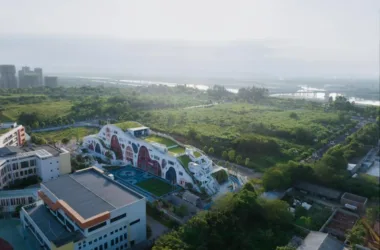
△ Aerial View © Su Shengliang
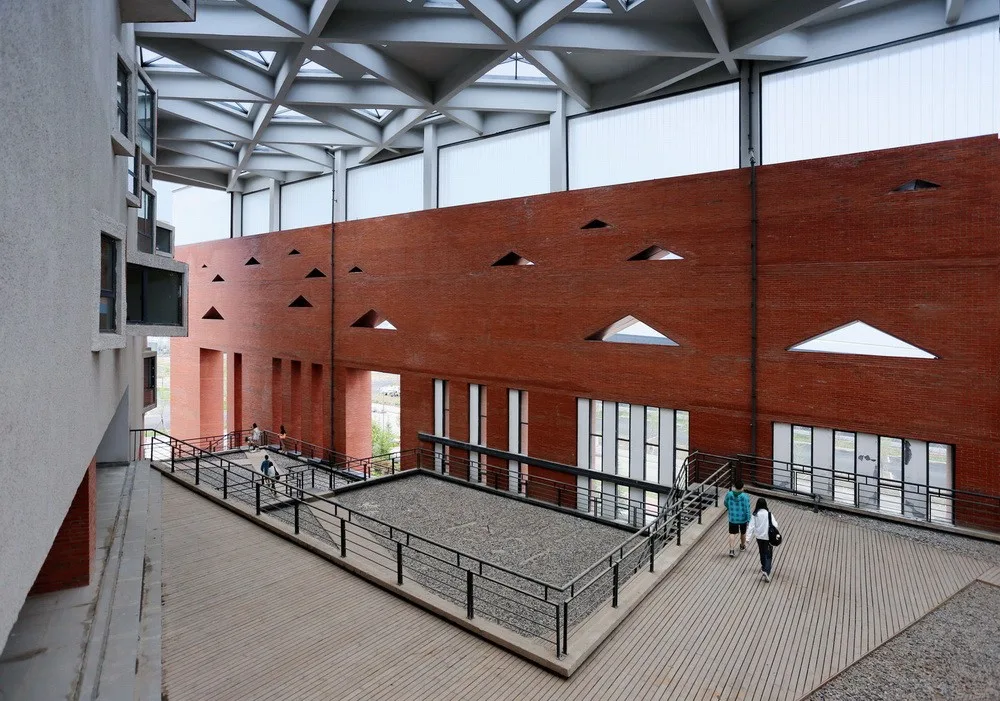
△ Platform © Su Shengliang
The building is situated in the Hunnan New Campus of Northeastern University in Shenyang and serves the School of Architecture, the School of Culture and Creativity, and the School of International Exchange. The campus layout, designed by Kashima Design Company from Japan, follows a strict axis-symmetrical plan.
As one of the four main college clusters in the campus center, this building adheres closely to the campus planning guidelines: each of the four clusters must form a zigzag shape consisting of three square courtyards. In the first phase, two courtyards near the central axis are built with four and six floors respectively. The facades facing the central axis and the main school entrance must align and utilize red brick materials to reflect the cultural heritage of the old campus.
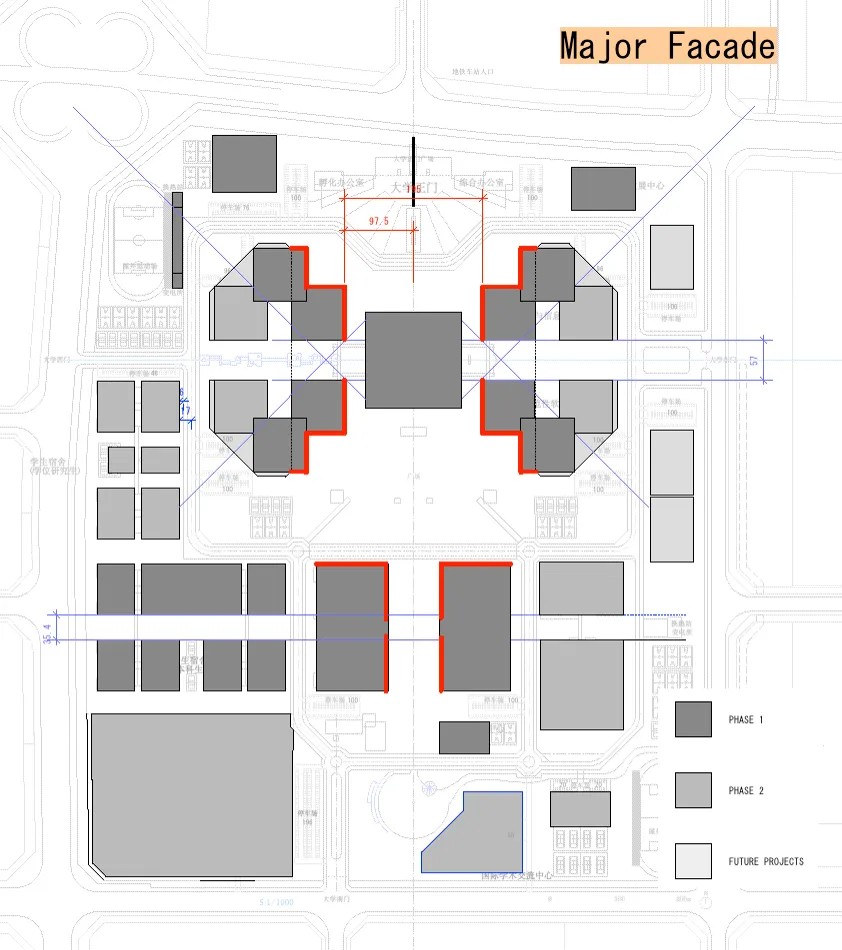
△ Campus Planning Main Facade Control Diagram
As a cultural and creative college, there is a particular need for an open and shared environment. Within the strict constraints of the campus plan, the challenge was how to “seek change from the center.”
Our design strategy is based on the concept of “dignified separation” — separating the rigorously controlled “surface” from the architectural form itself as an independent element. This separation introduces clear logic and opens opportunities for change: the “face” responds to the campus’s unified image, while the “body” is liberated, creating possibilities for an open and free environment.
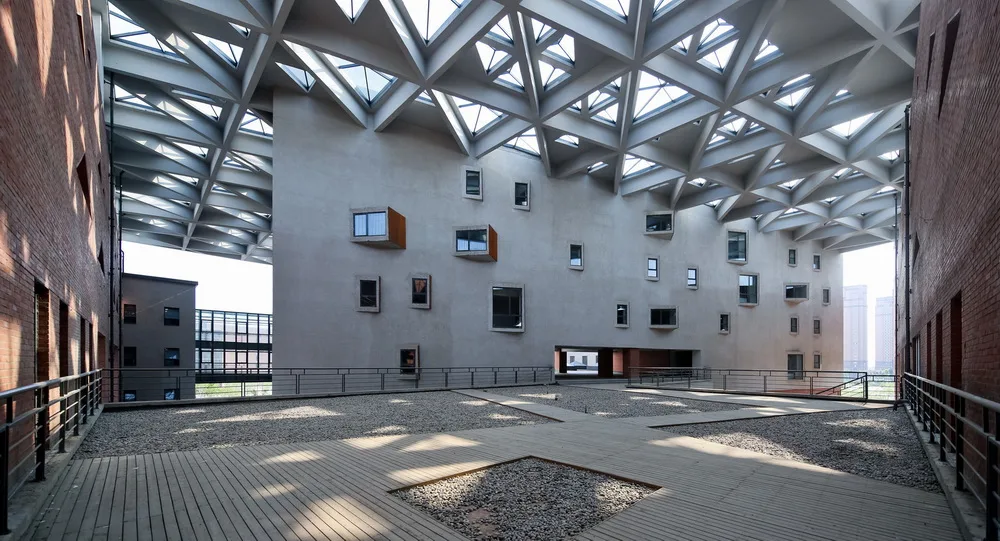
Top layer terrace © Su Shengliang
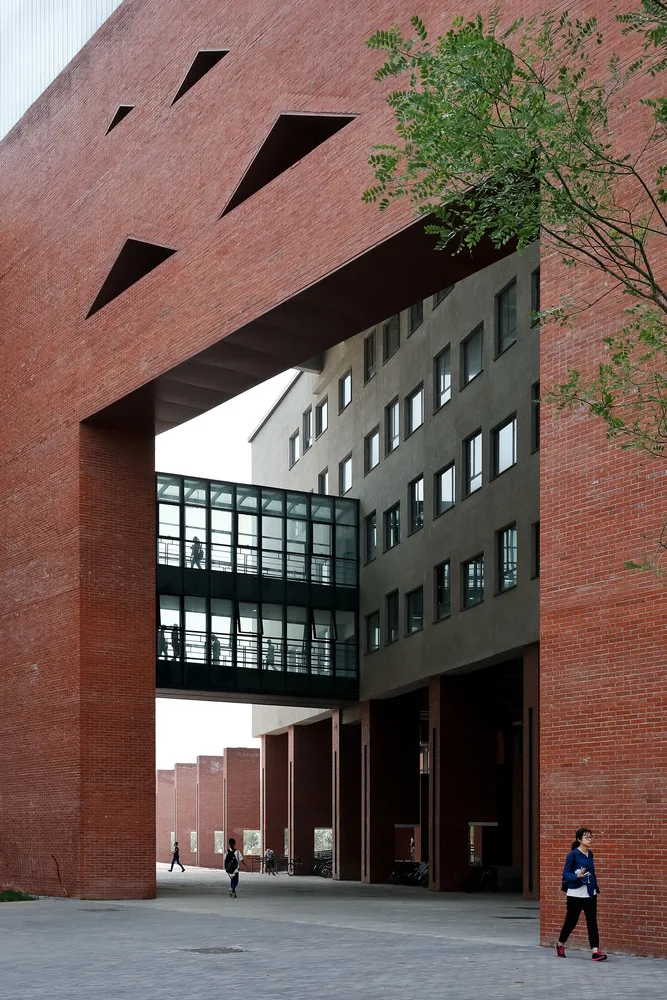
△ Walking Through the Corridor © Su Shengliang
After gaining autonomy, the northern square is twisted. This twist creates two interesting wedge-shaped gray spaces between the body and the surface. It also separates the two originally connected blocks in the plan, forming a passageway between them. This path serves as a vital design clue.
During the initial design phase, we analyzed campus pedestrian flow: a subway station will be located outside the main campus gate to the north, while the student dormitory area will be in the southwest corner. This will generate significant foot traffic between these points. Therefore, the building provides a shortcut, facilitating movement and encouraging cultural exchange and interaction within the college.
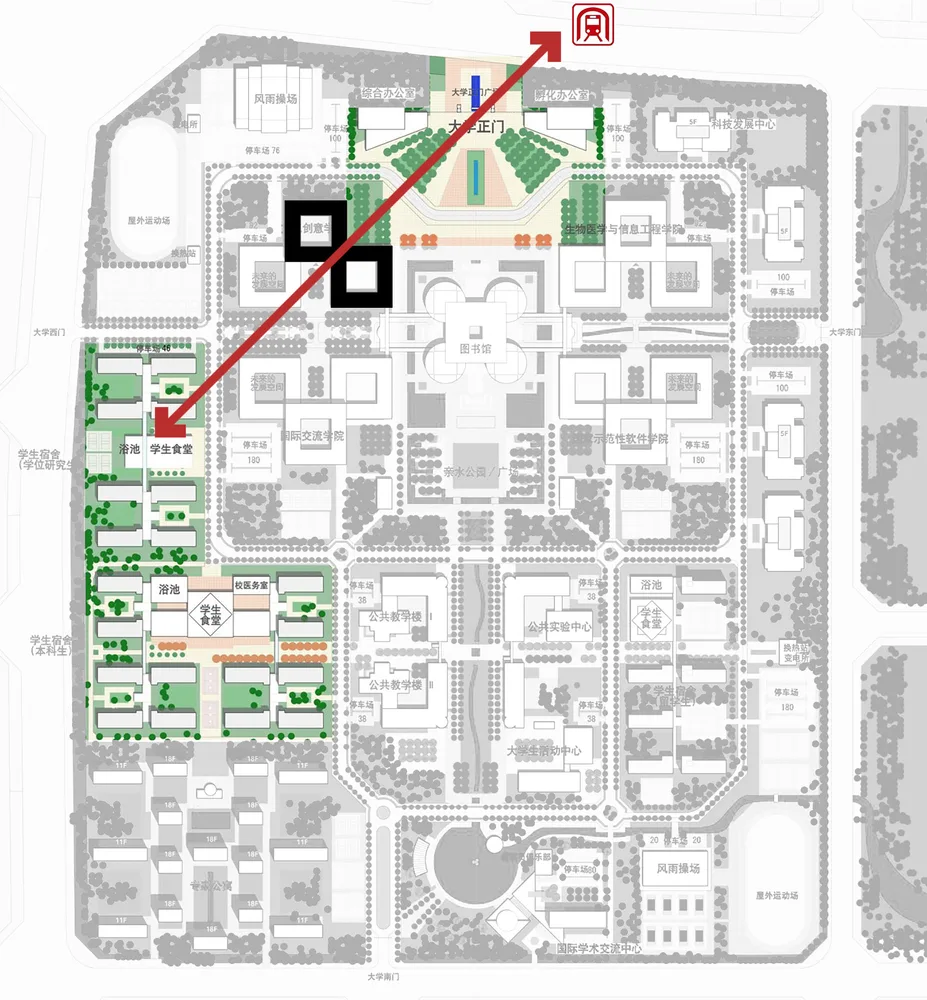
△ Campus Flow Analysis Diagram
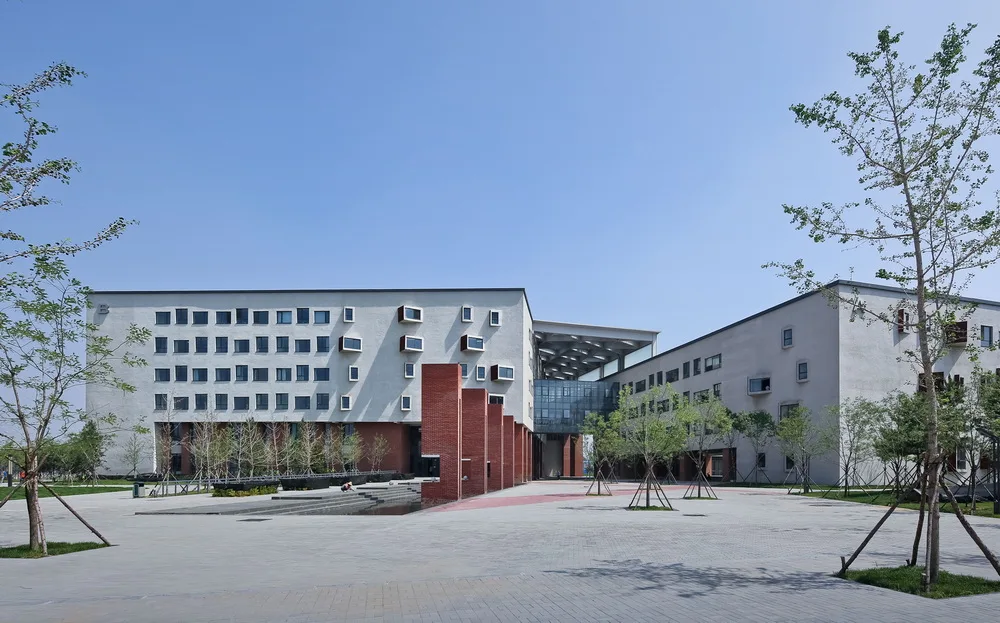
△ Overall South Perspective © Su Shengliang
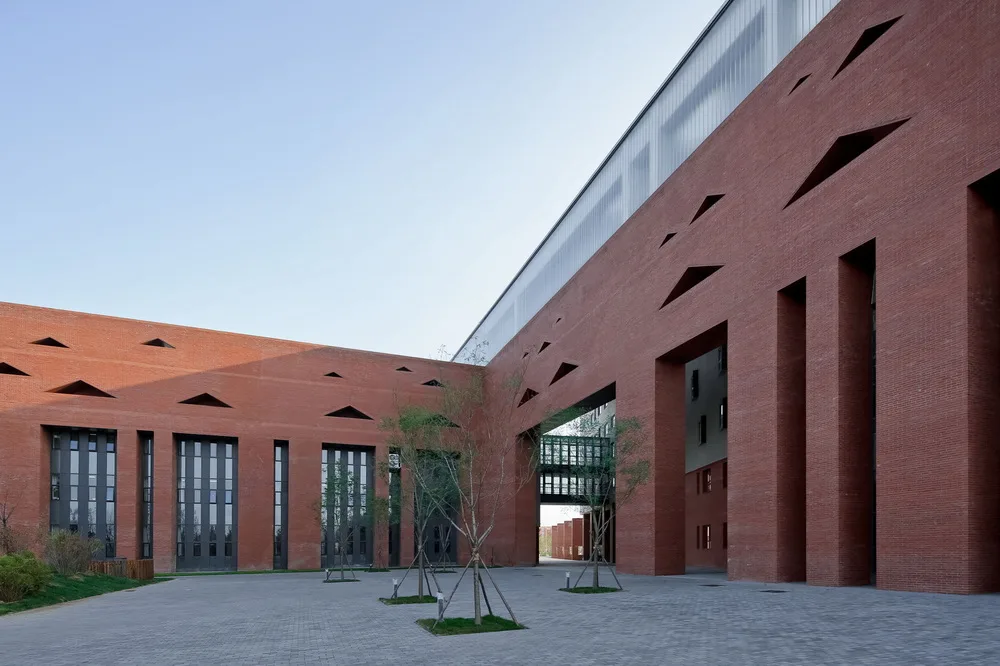
Northeast Perspective © Su Shengliang
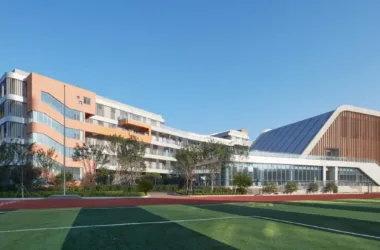
As a building located in a cold region, activating the outdoor spaces is a challenge. A roof with triangular skylights covers the wedge-shaped gray spaces, protecting from rain and snow while allowing ample natural light and shadow play.
One of these wedge-shaped gray spaces lies between two building blocks and forms part of the pedestrian path. The other, located on the north side, aligns perfectly with the three workshops of the School of Culture and Creativity. The roofs of these workshops stack to create a terrace, serving as an outdoor, multi-level exhibition space for faculty and student works.
Inside, the large auditorium is located on the ground floor of the six-floor courtyard, with an activity area raised to its rooftop. This design reduces the courtyard’s depth and increases sunlight penetration. The courtyard also connects to the highest terrace, forming a continuous path from the inner courtyard through the stacked terraces to the ground level, enhancing spatial vitality and accessibility.
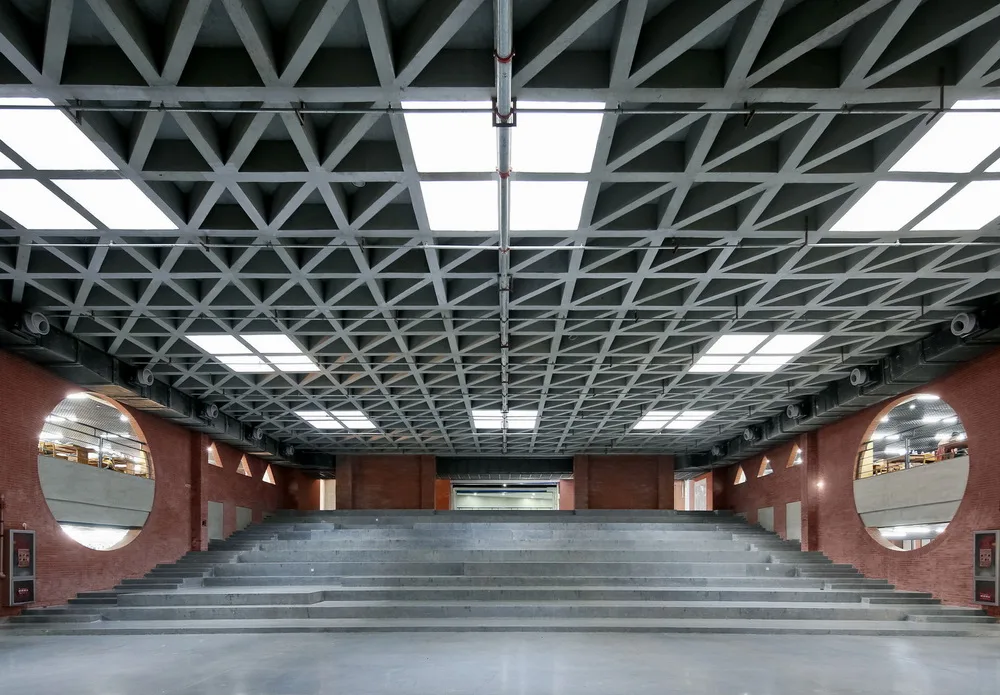
△ Grand Lecture Hall © Su Shengliang
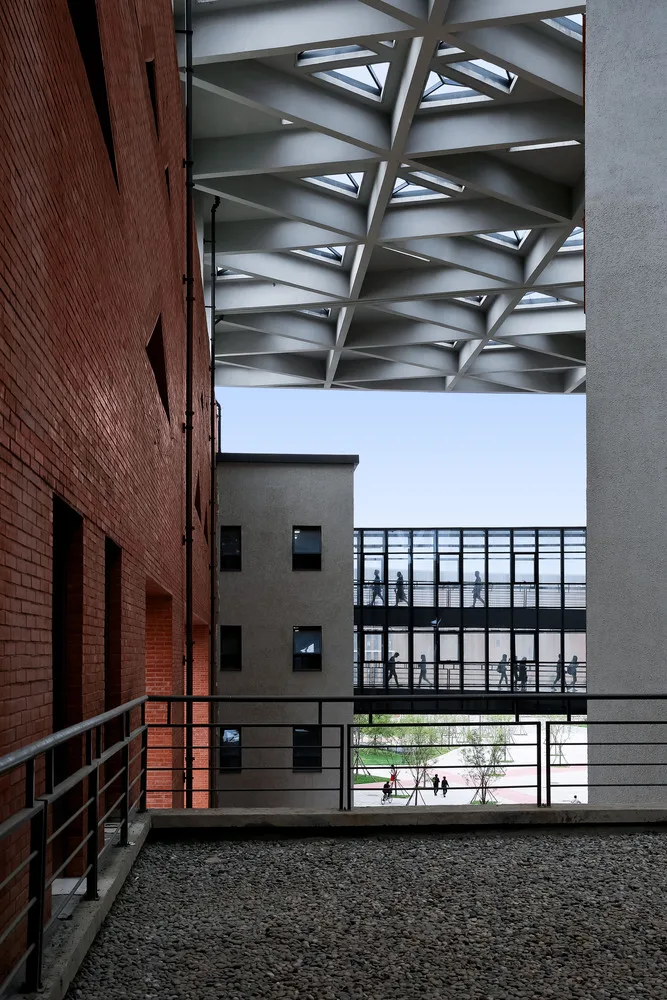
△ Terrace Gray Space View Corridor © Su Shengliang
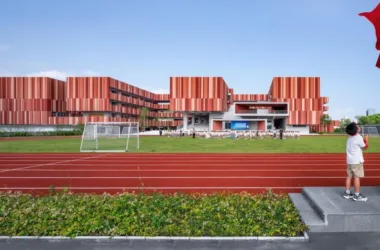
Regarding facade language and material choices, the design pursues innovation within a calm aesthetic. For the separated “face,” we simplified and abstracted the facade of the most iconic engineering building on the old campus. Positioned facing the main entrance square on the east side, it uses red brick materials per planning requirements, evoking emotional connections for faculty and students with the old campus.
The “body” facade’s base also employs red brick, creating a visual link with the separated “surface.” The remaining surfaces are coated with modern white paint and feature functional windows. Areas with lower lighting requirements incorporate lively triangular convex windows, which serve as resting areas and display points visible from the outside.
Our design aims to create an open building with accessible pathways that harmoniously integrates the rigid order of the campus while maintaining diversity and vibrancy.
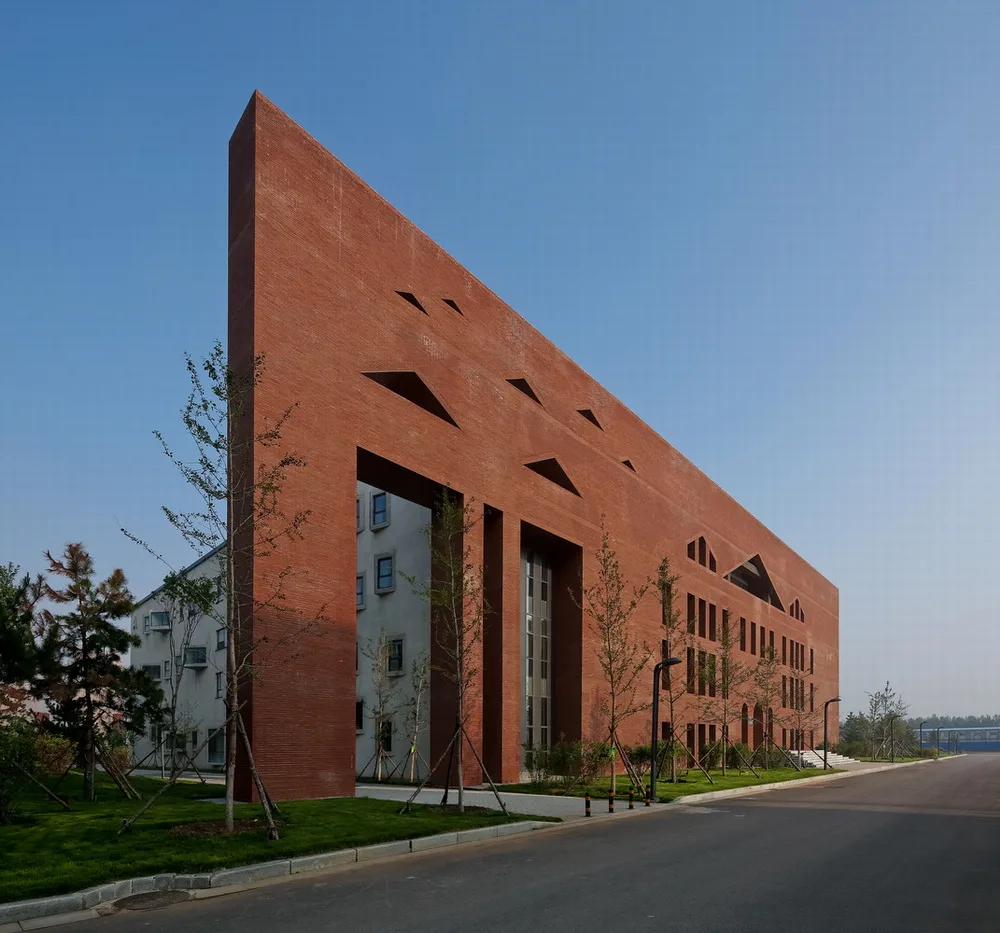
East Elevation Facing the Central Square © Su Shengliang
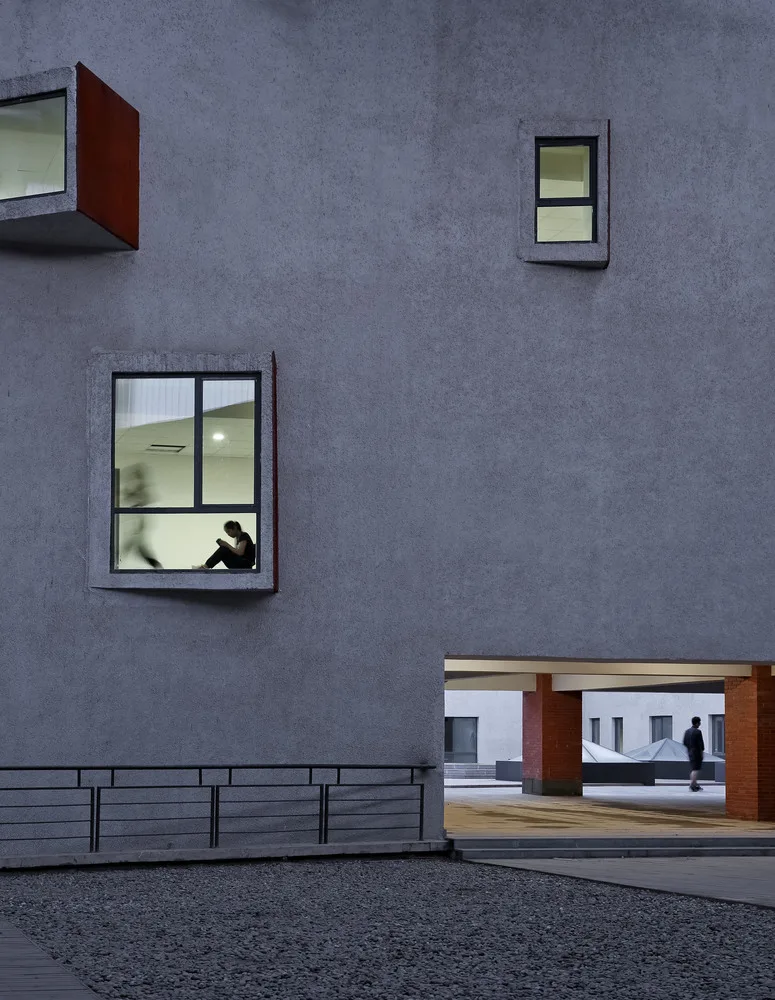
△ Convex Window Details © Su Shengliang
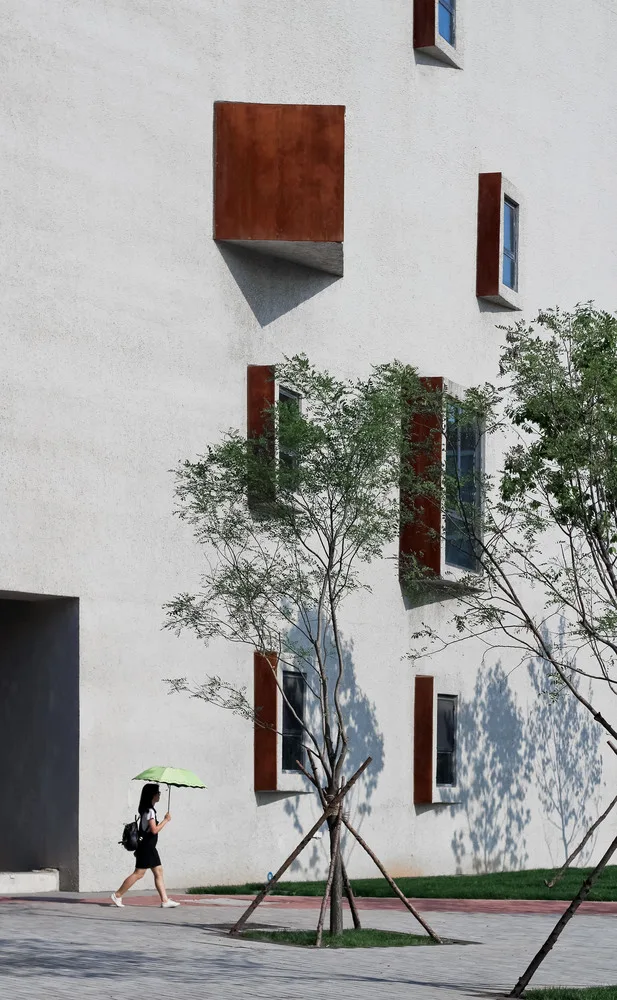
△ Convex Window Details © Su Shengliang
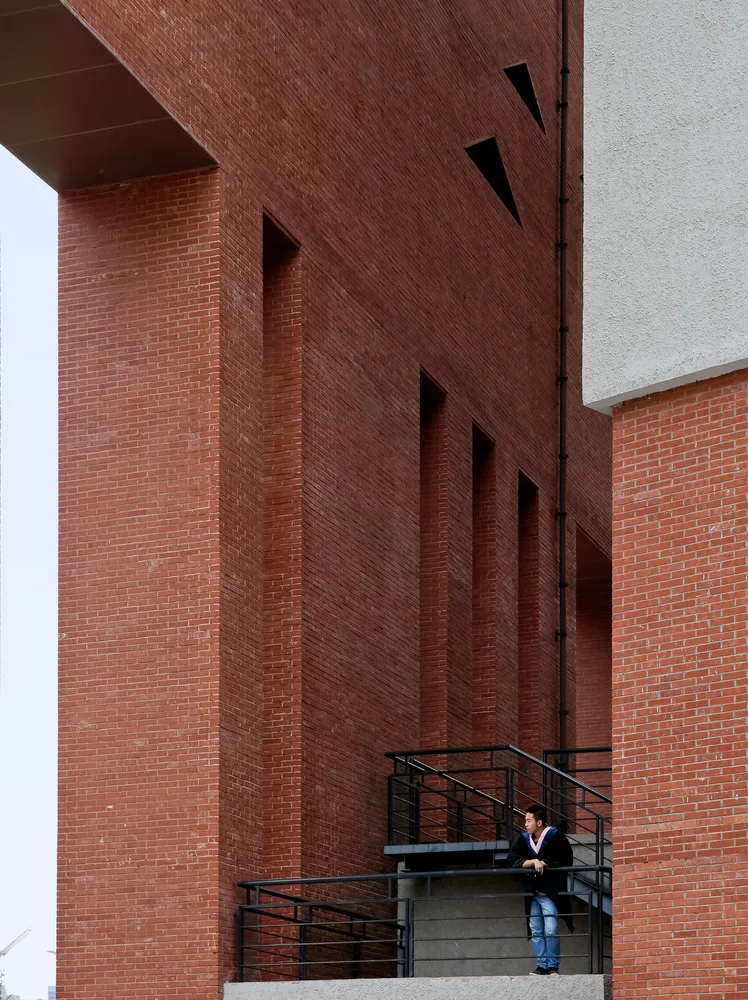
△ Terrace Staircase © Su Shengliang
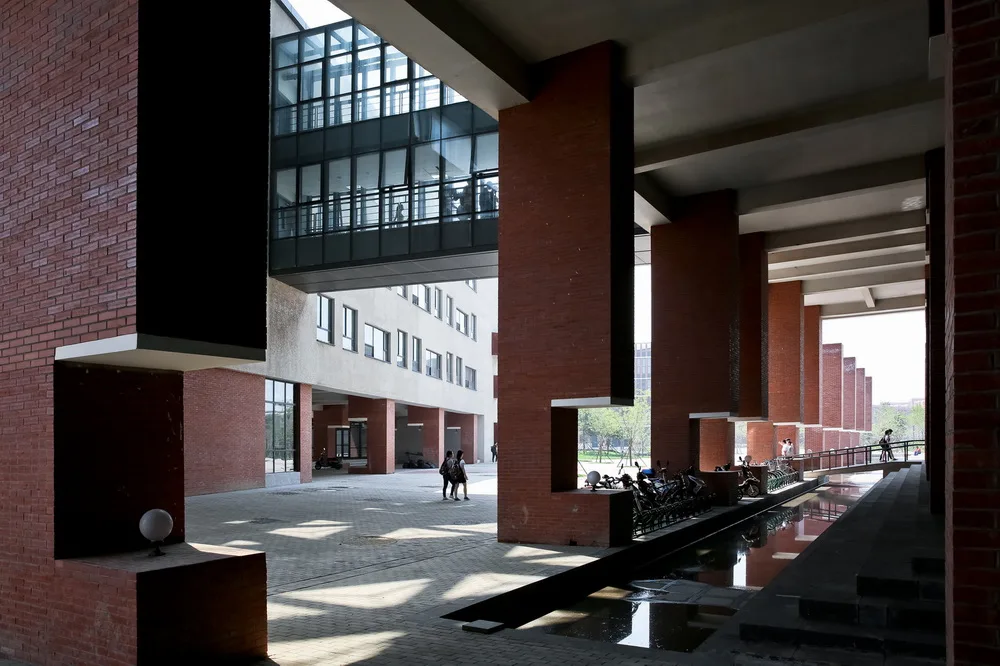
△ Walking Through the Corridor © Su Shengliang
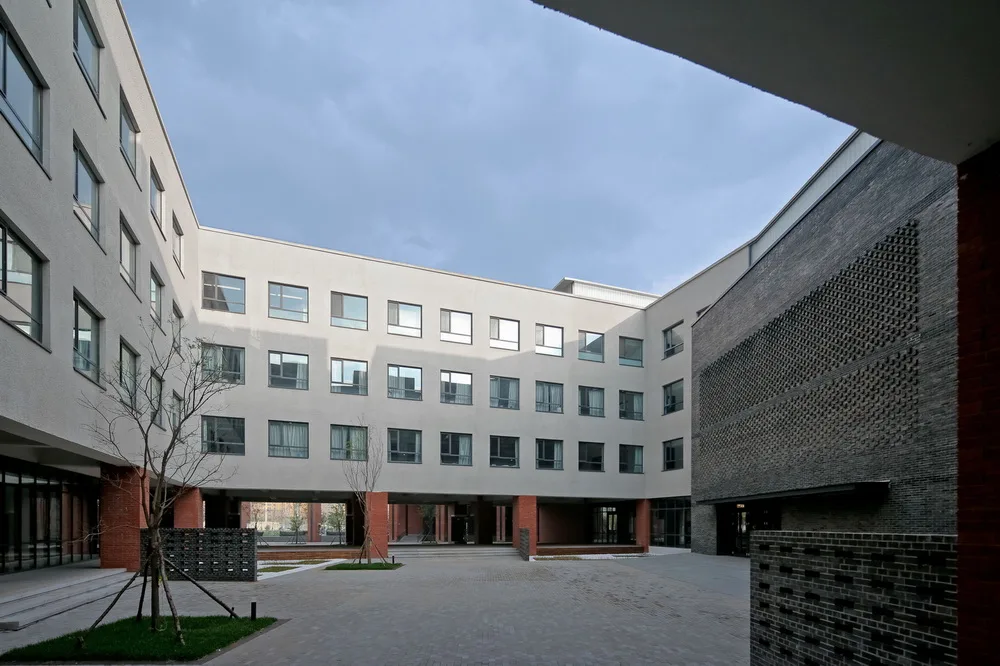
△ Courtyard Within the School of Architecture © Su Shengliang
Technical Drawings
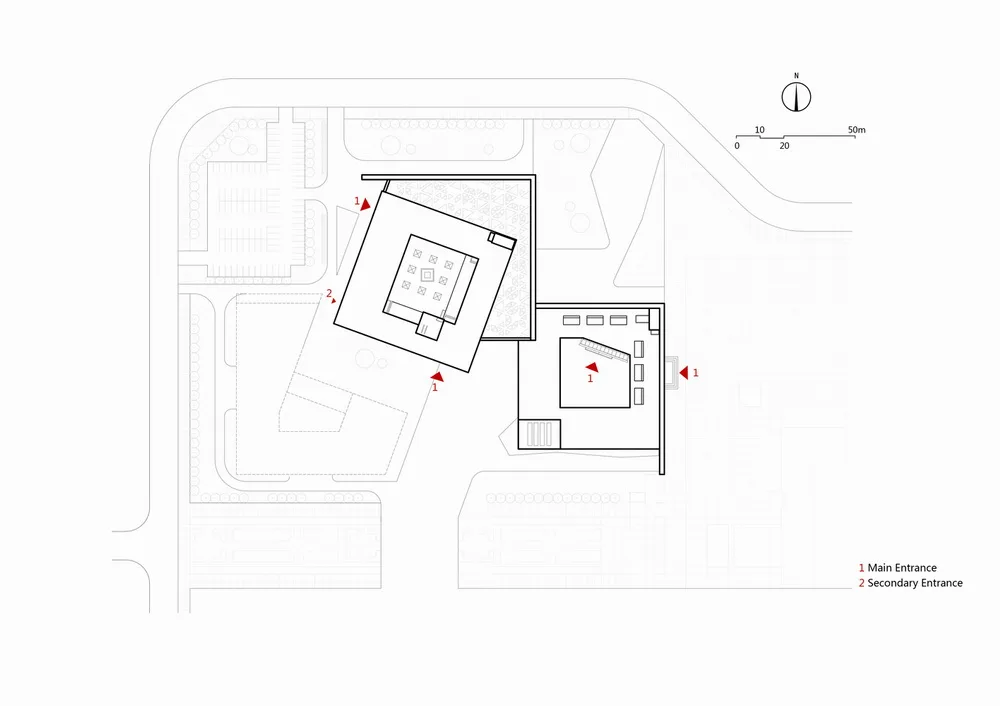
△ General Layout Plan
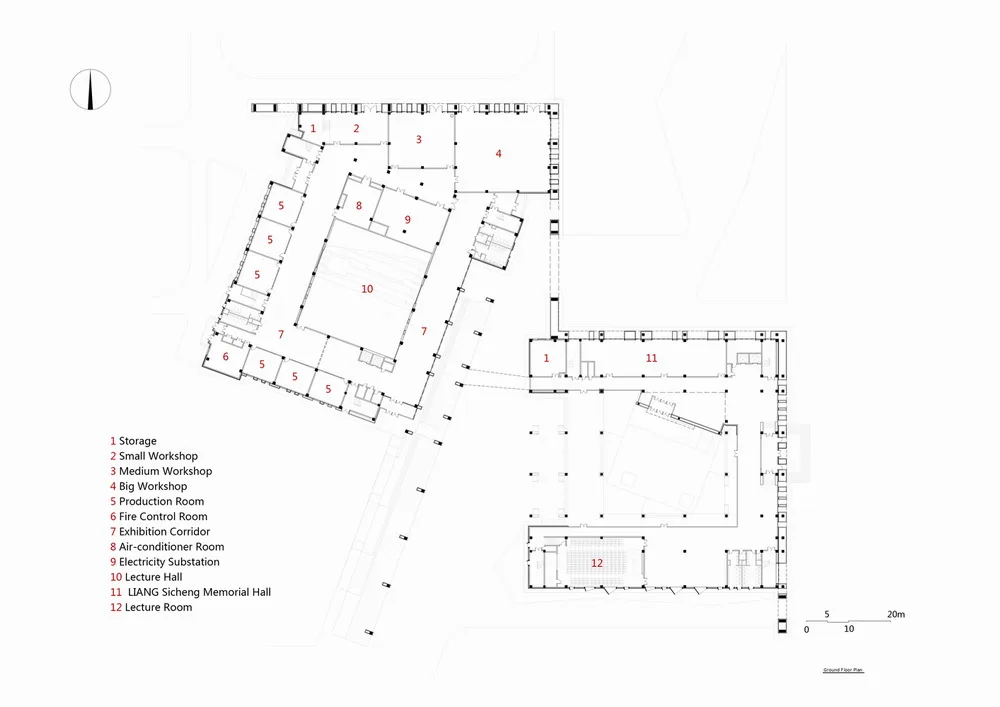
△ First Floor Plan
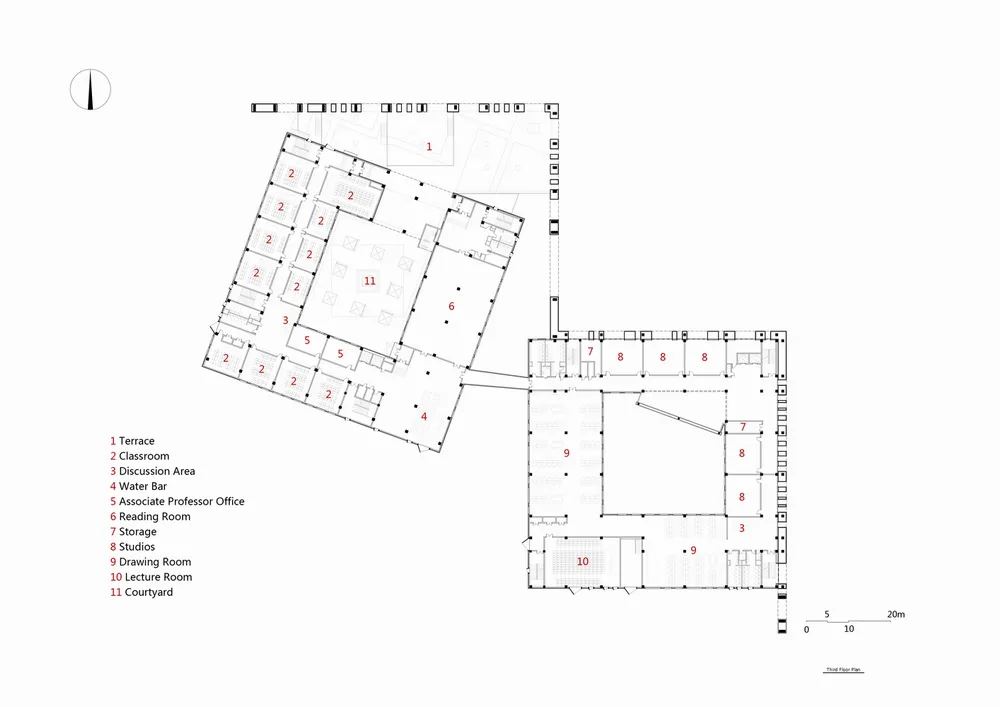
△ Third Floor Plan
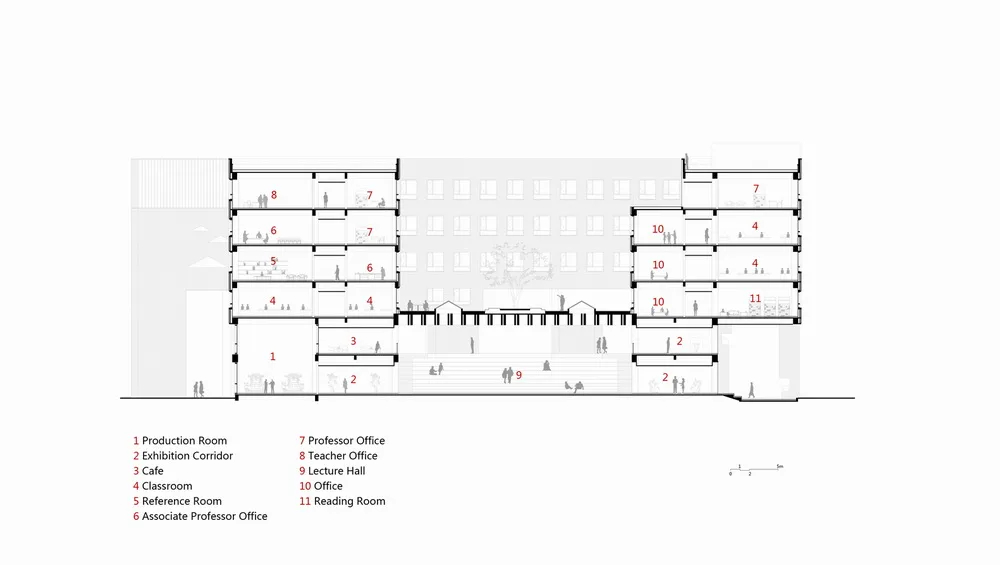
△ Section Diagram
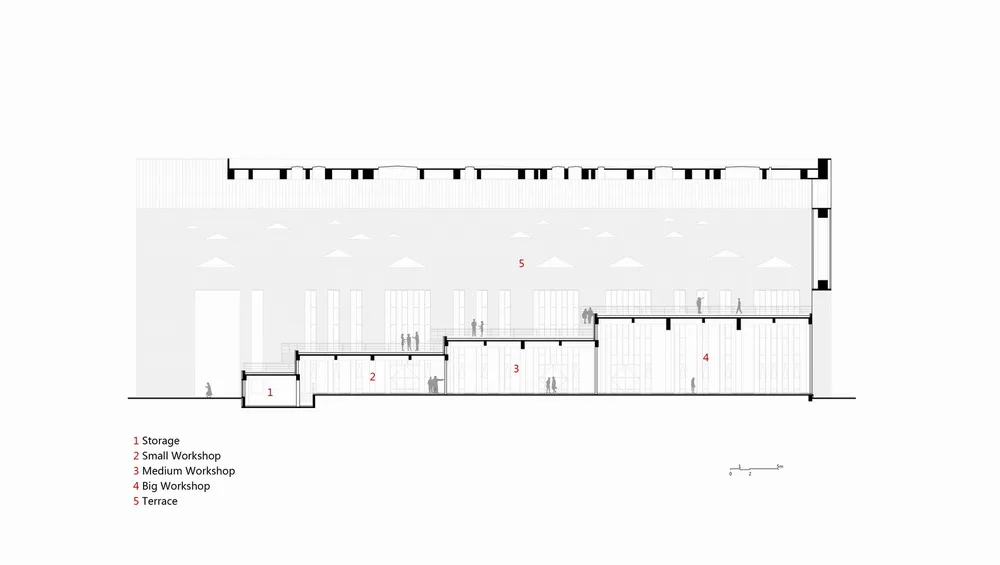
△ Section Diagram
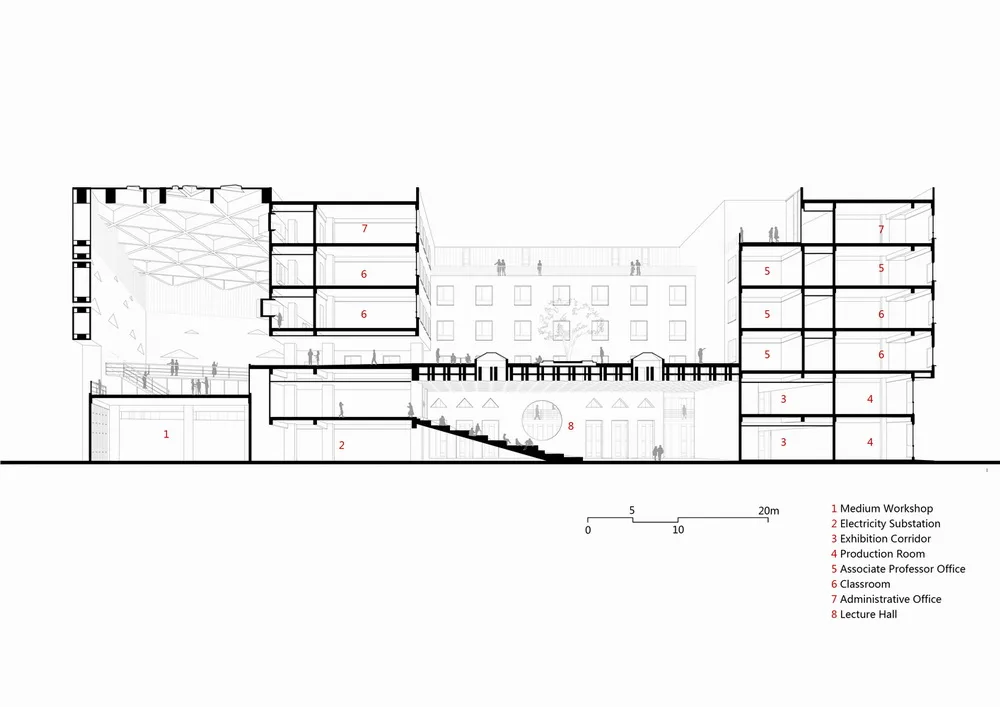
△ Sectional Perspective
Project Information
Architect: THAD – Tsinghua University Architectural Design and Research Institute
Location: Shenyang, China
Lead Architect: Zhuang Weimin
Design Team: Zhuang Weimin, Zhang Wei, Zhang Hong, Gong Jiazhen, Li Ruoxing, Chen Kan, Jie Zhijun, Li Binfei, Li Qingxiang, Xu Jinghui, Wang Yiyi, Liu Lihong, et al.
Building Area: 28,377 square meters
Project Year: 2015
Photographer: Su Shengliang












Must log in before commenting!
Sign Up