
Photography: CreatAR Images
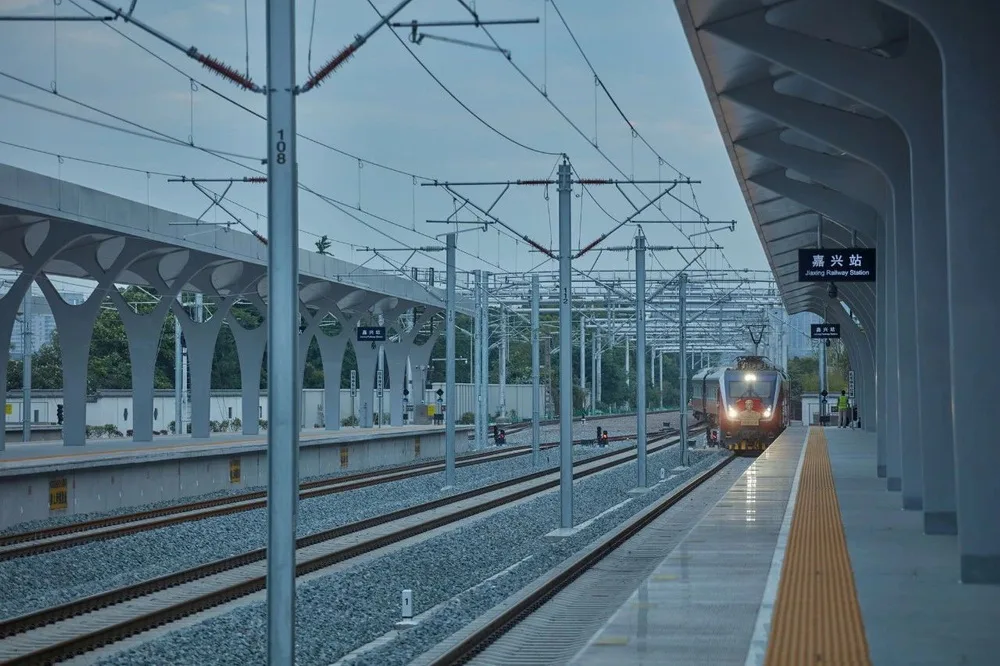
The “Railway Station in the Forest”—Jiaxing Railway Station—designed by MAD Architectural Firm, led by Ma Yansong, officially opened on June 25, 2021. This renovation and expansion project is a key milestone for Jiaxing, commemorating the 100th anniversary of the founding of the Communist Party of China. Construction began on June 23, 2020. The station features one ground floor and multiple underground levels, making it the first fully sunken railway station in China.
Located in Jiaxing City, Zhejiang Province, at the heart of Nanhu District—the city’s main urban and historic center—the station holds special historical significance. On August 3, 1921, representatives of the First National Congress of the Communist Party of China (CPC) arrived here via the Shanghai-Hangzhou Railway before boarding a cruise ship to South Lake, where the founding of the CPC was officially declared.
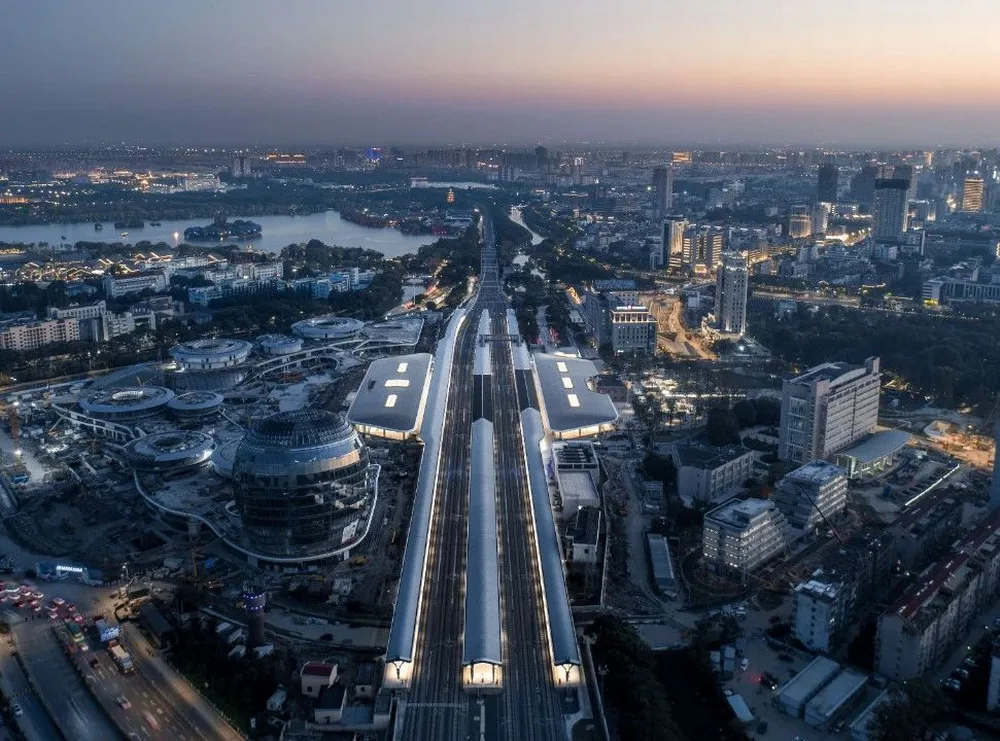
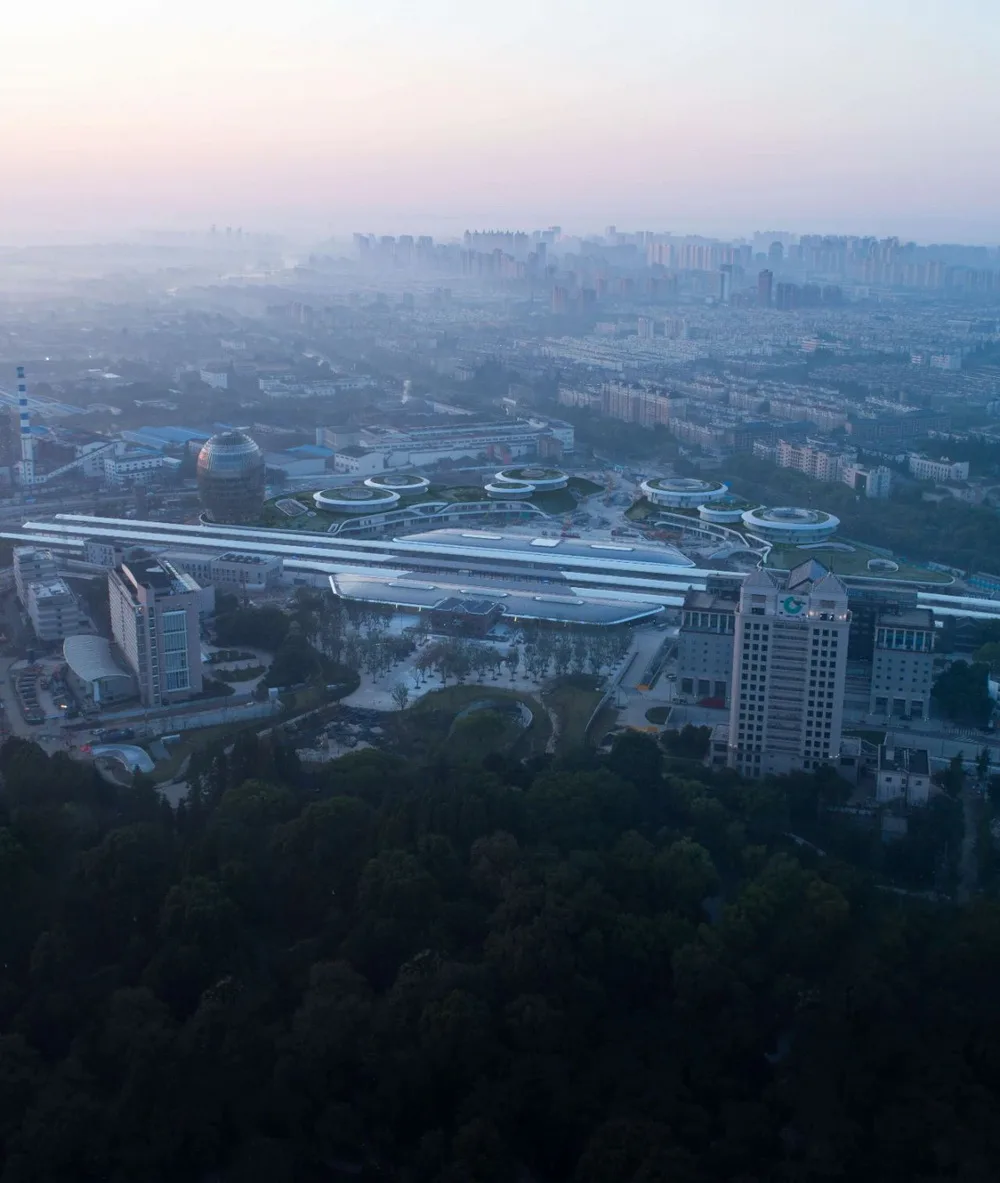
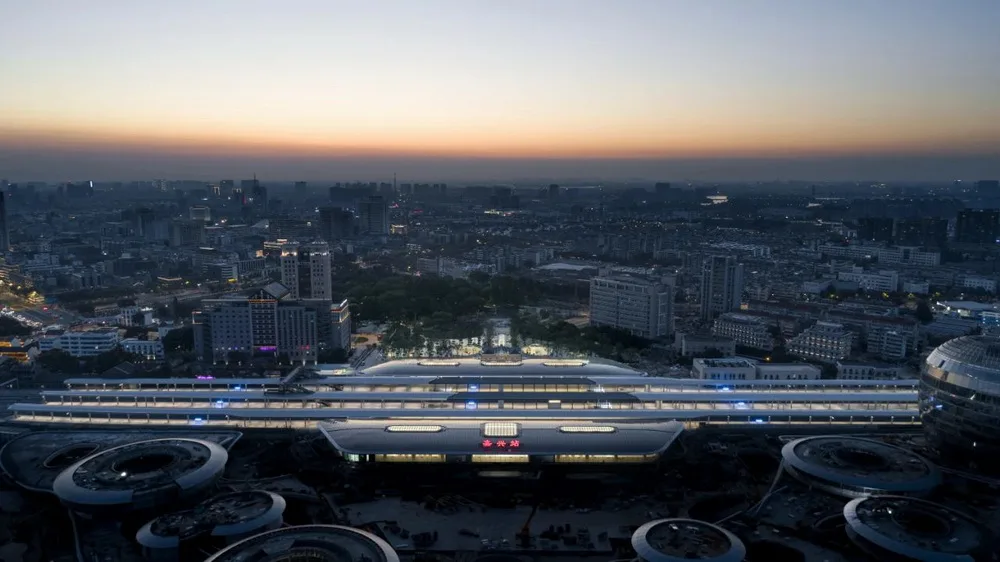
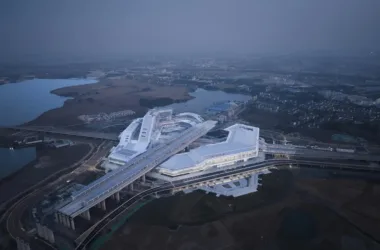
Aerial view of Jiaxing Railway Station and Nanhu City, photographed by CreatAR Images
The original Jiaxing Railway Station was built in 1995 with a station building area of just over 4,000 square meters. Over time, it became apparent that the waiting areas were insufficient, passenger facilities outdated, and many transportation challenges emerged. Like many city infrastructures, the station’s design isolated it from the daily lives of residents, resulting in poor connectivity and urban inefficiencies.
In 2019, Jiaxing launched an upgrade and renovation of the station and its surrounding areas to realize a vision of urban renewal: enhancing travel comfort, improving residents’ quality of life, and uplifting the city’s overall appearance. During the 2021 National People’s Congress and Chinese People’s Political Consultative Conference, Zhang Bing, Secretary of the Jiaxing Municipal Party Committee, emphasized, “We must enable people in Jiaxing to envision a beautiful and bright future for China.”
Photography: Aoguan Architectural Vision
Reflecting on the project’s vision and requirements, Ma Yansong remarked: “Jiaxing is a city of special significance. We need to rethink spatial patterns—not by pursuing grand monumental buildings, but by creating urban public spaces that integrate transportation, nature, and culture. Spaces where citizens want to gather, linger, and enjoy the beauty of life.”
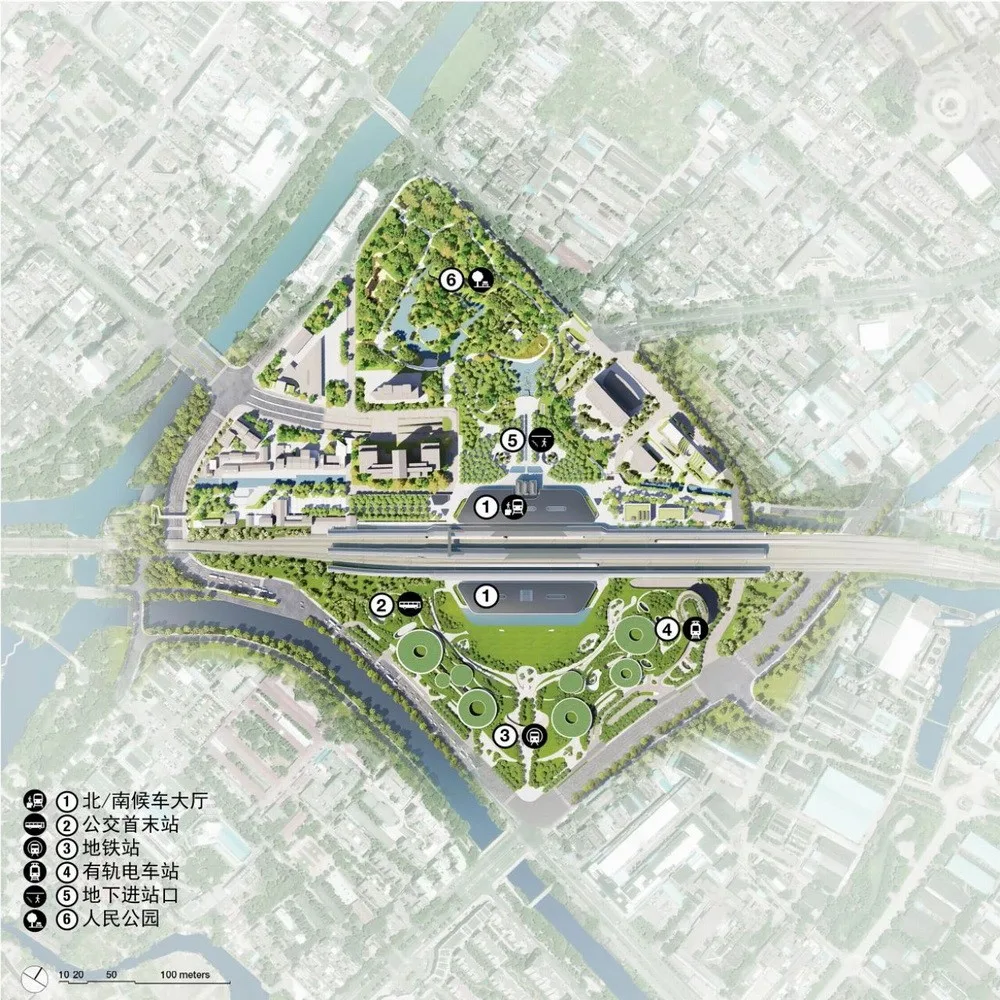
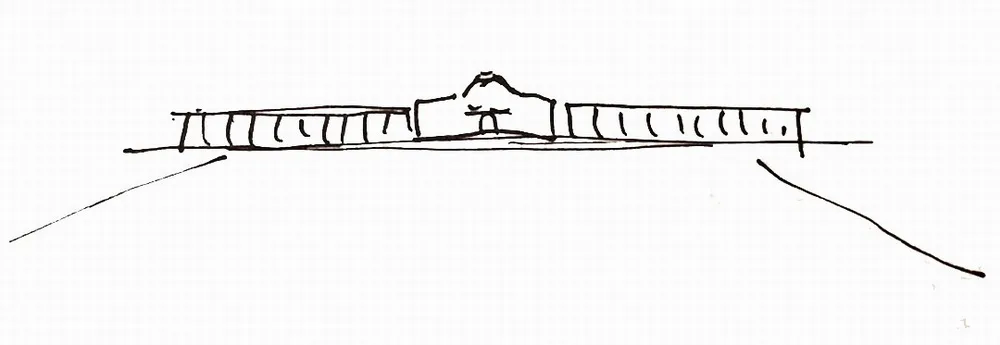
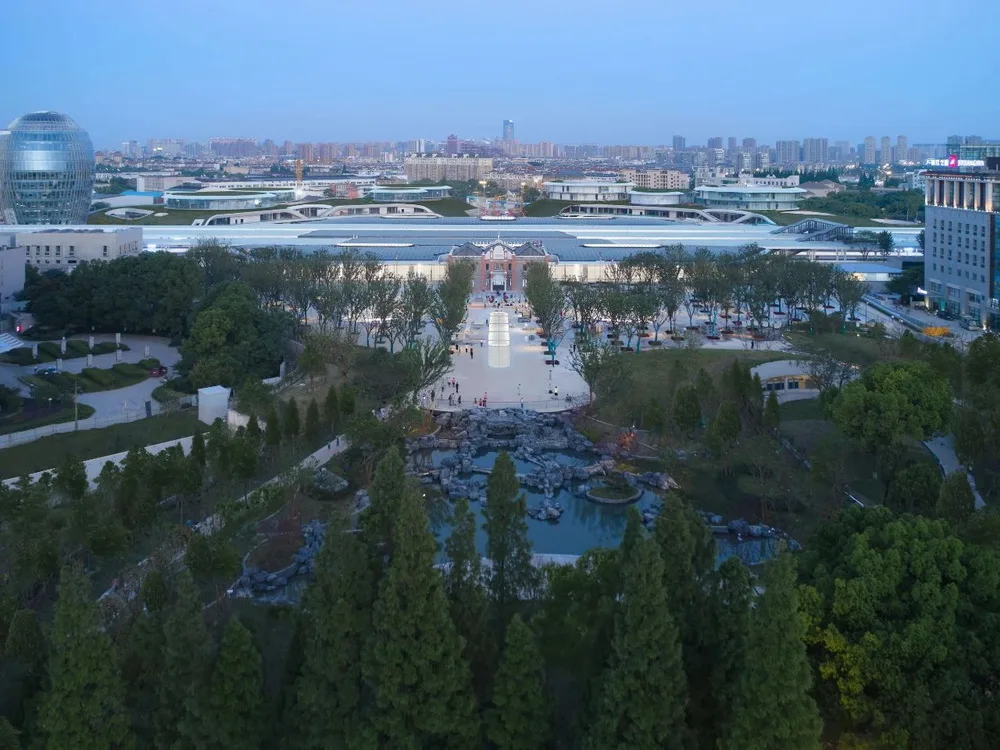
MAD’s design envisions Jiaxing Railway Station as a multidimensional “train station in the forest”—an urban public space that is open, green, and people-centered. The renovation extends the greenery of People’s Park into the station plaza, reconnecting nature with both citizens and passengers. The old station building is reconstructed based on historical records. A new station building introduces natural light, optimizing brightness, efficiency, and scale while breaking the traditional form of domestic transportation hubs.
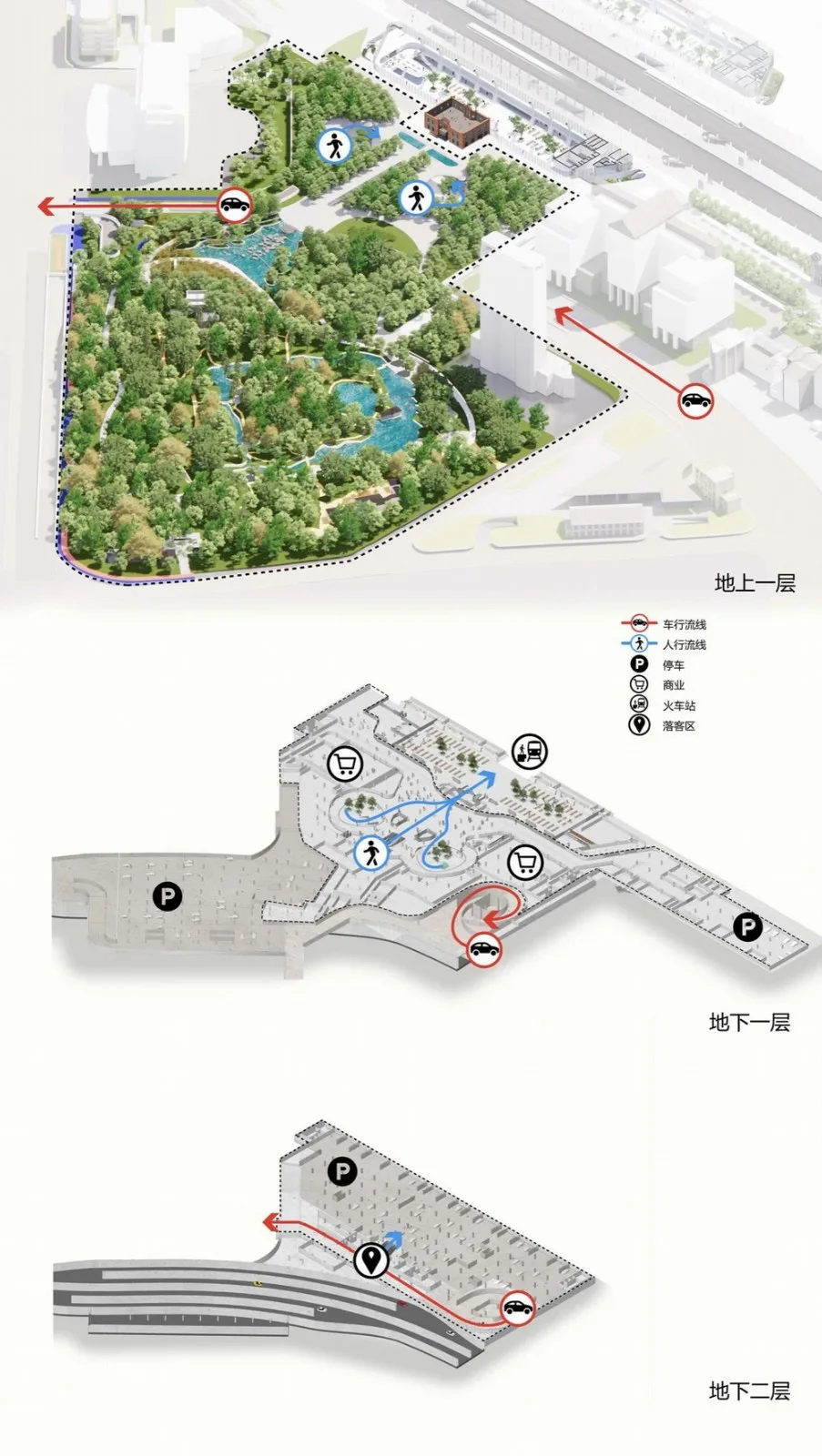
The main transportation and commercial functions are moved underground, while cultural spaces are added to the South Square. This integration of station and city improves operational efficiency and enriches the daily lives of residents with diverse urban experiences.
Photography: Aoguan Architectural Vision
Photography: CreatAR Images
Photography: Existence of Buildings
Renovation of People’s Park
People’s Park holds deep memories of old Jiaxing, featuring multiple ancient cultural buildings and numerous historic trees cherished by locals. This park renovation is a critical part of the entire railway station project.
MAD and collaborating design and construction teams have carefully preserved and restored People’s Park by removing boundary walls to create a borderless urban park, protecting all ancient trees, and restoring several key historic buildings. Additionally, pavilions and corridors were relocated, water systems dredged, lighting installed, and detailed landscaping created.
Extending People’s Park Greenery—China’s First “Railway Station in the Forest”
Previously, the old station was noisy and chaotic, with a fragmented connection between the station and People’s Park. MAD decided to move the busy transportation hub underground, allowing the park’s greenery to expand naturally over the 35.4-hectare area above ground.
Photography: Aoguan Architectural Vision
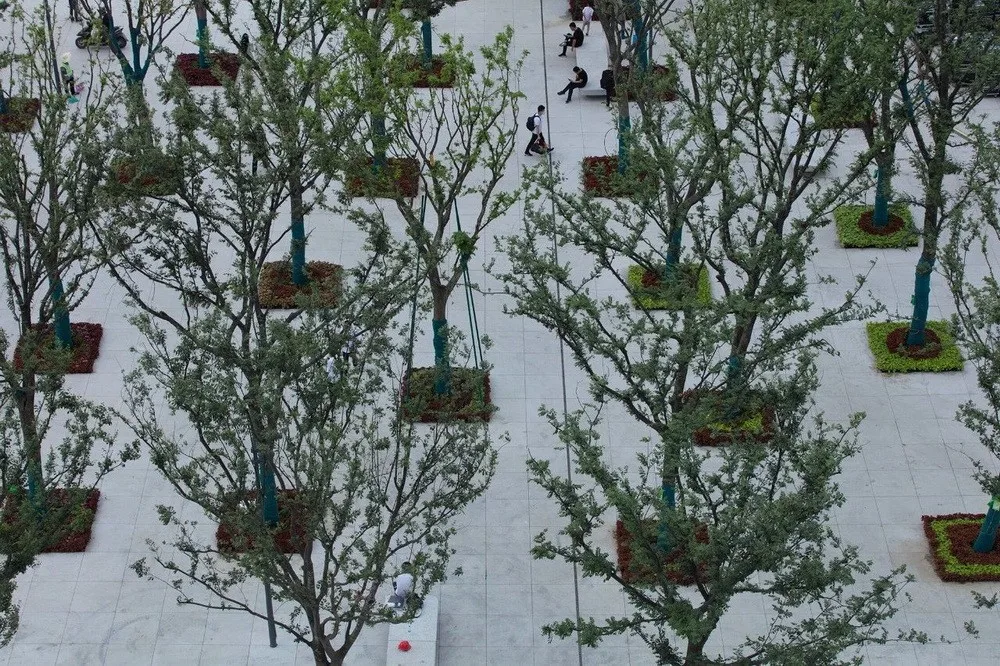
The renovation planted over 1,500 trees, including beech, camphor, osmanthus, maple, Chinese tallow, Chinese fir, and cherry blossom. A spiritual axis, centered on the old station building, is lined with beech trees that will eventually form a canopy covering the entire north square in front of the station.
Photography: Existence of Buildings
The original transportation hub—including buses, trams, subways, social vehicles, and service vehicles—has been relocated underground. These facilities are distributed across the north and south underground areas, linked to sunken urban roads to ensure convenient travel for citizens and tourists while supporting increased passenger and commercial demands.
Integrating Station and City—A Vision for the Future
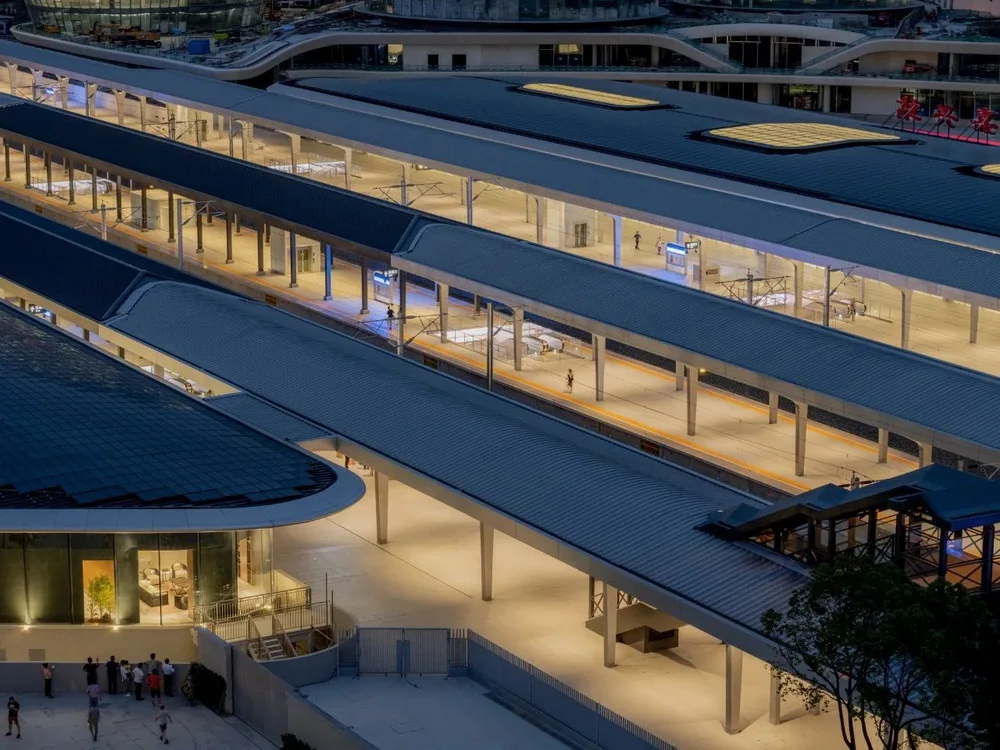
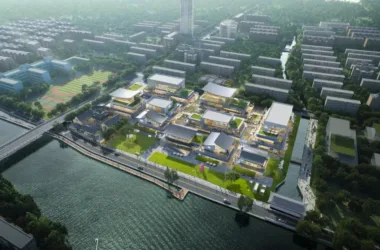
The Station Front Square, still under construction, resembles a rolling green hill. It consists of seven buildings hosting cultural, commercial, and hotel functions, surrounding a central lawn of about 1 hectare adjacent to the new station building. These buildings appear as floating emerald rings on the landscape, evoking a futuristic atmosphere.
The central lawn will serve as a vibrant venue for outdoor activities such as concerts, art festivals, and community markets, forming the main cultural and commercial public space of the Jiaxing Railway Station area.
Historical Station Building Reconstructed at 1:1 Scale
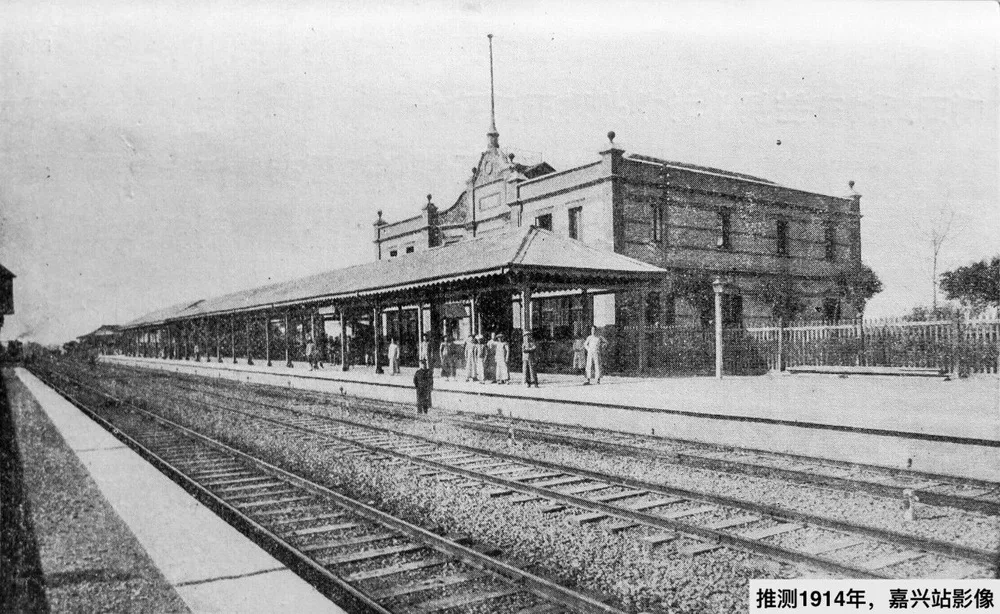
Jiaxing Railway Station was originally built in 1907 and opened in 1909, serving as a key transport hub on the Shanghai-Hangzhou line. In 1921, it witnessed the arrival of many Communist Party representatives for the First National Congress. However, the station was bombed by the Japanese army in 1937.
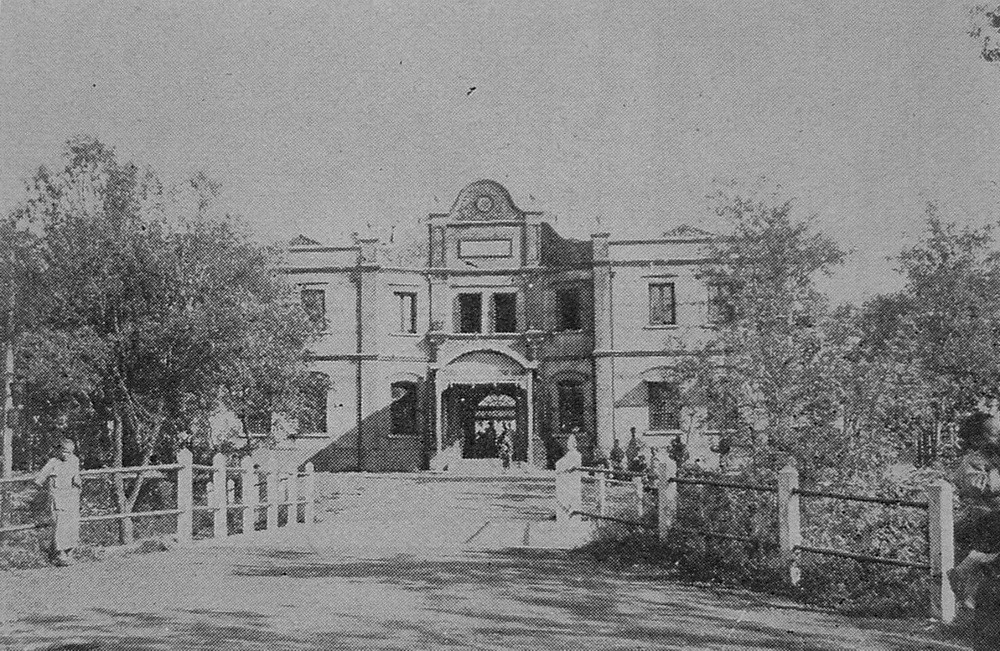
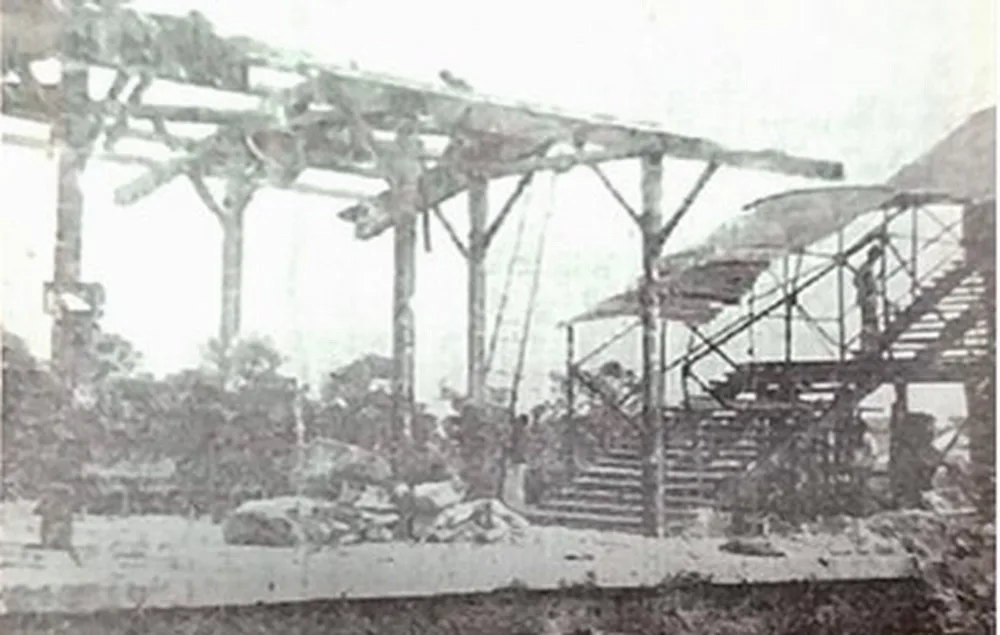
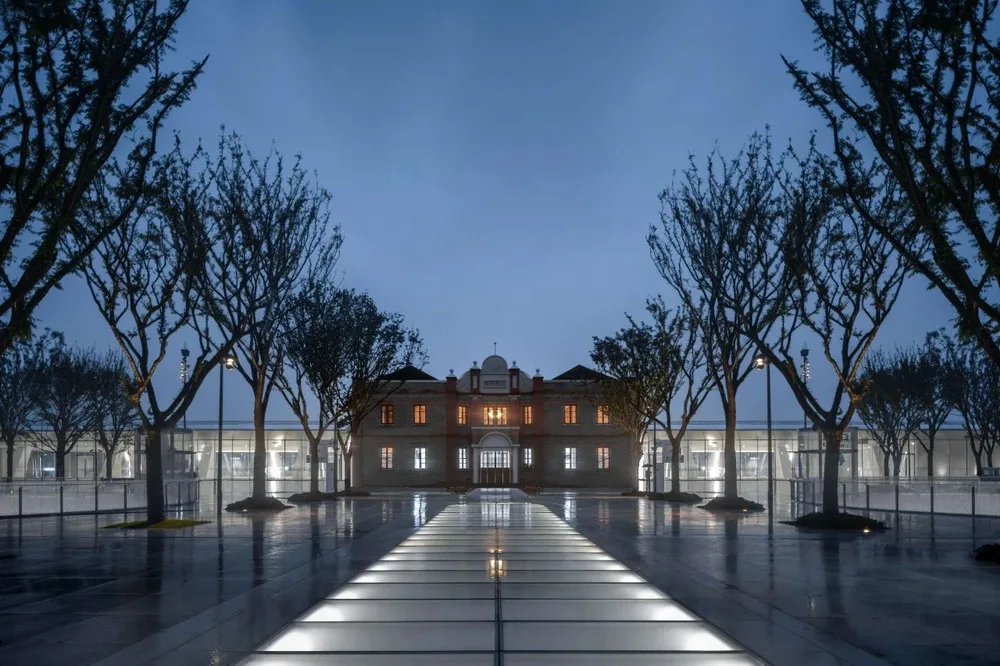
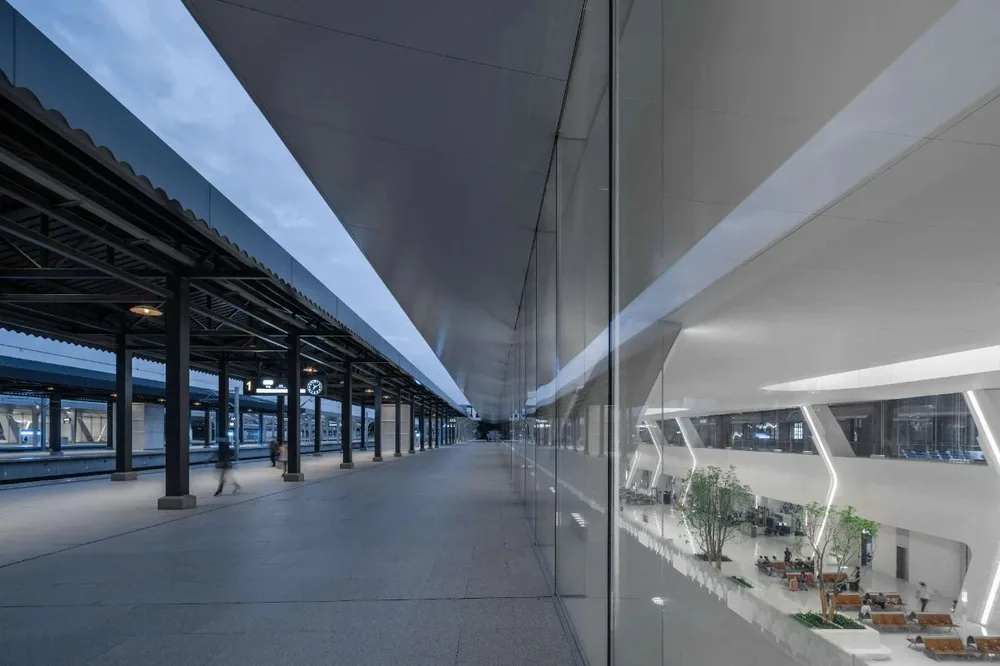
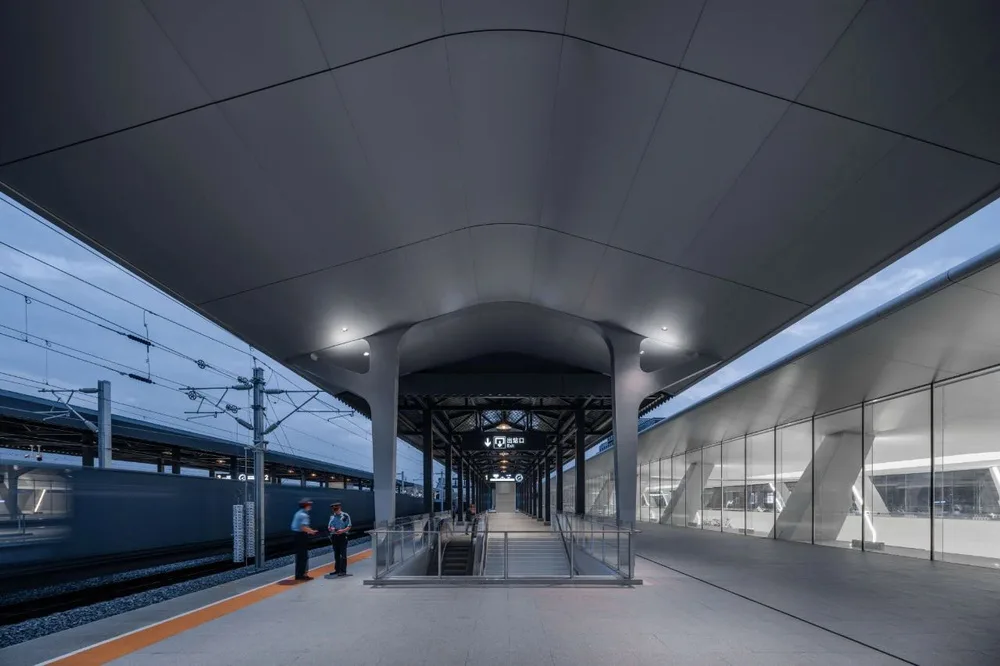
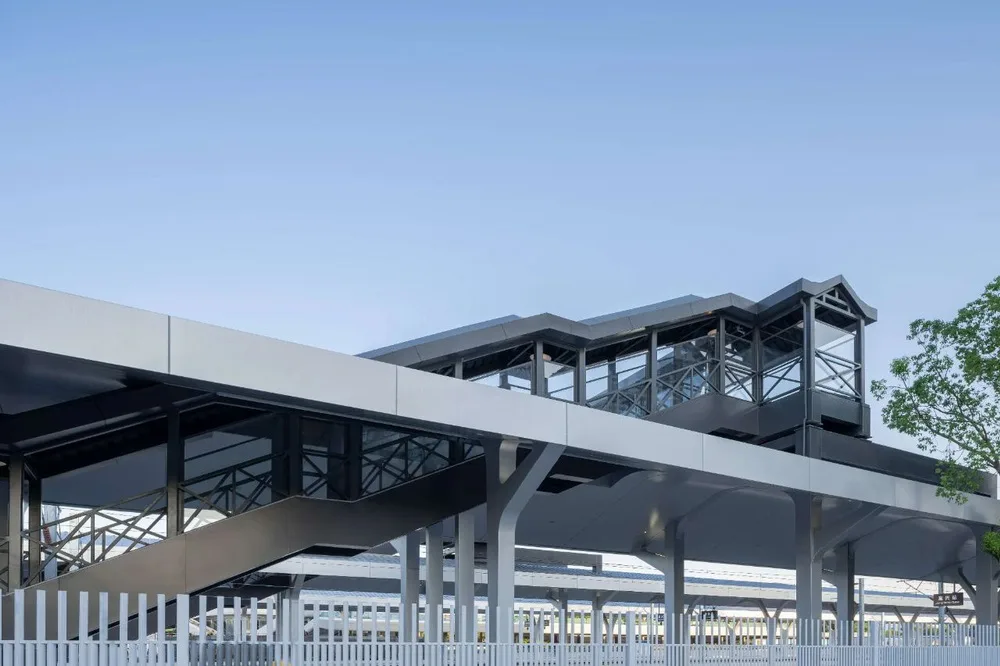
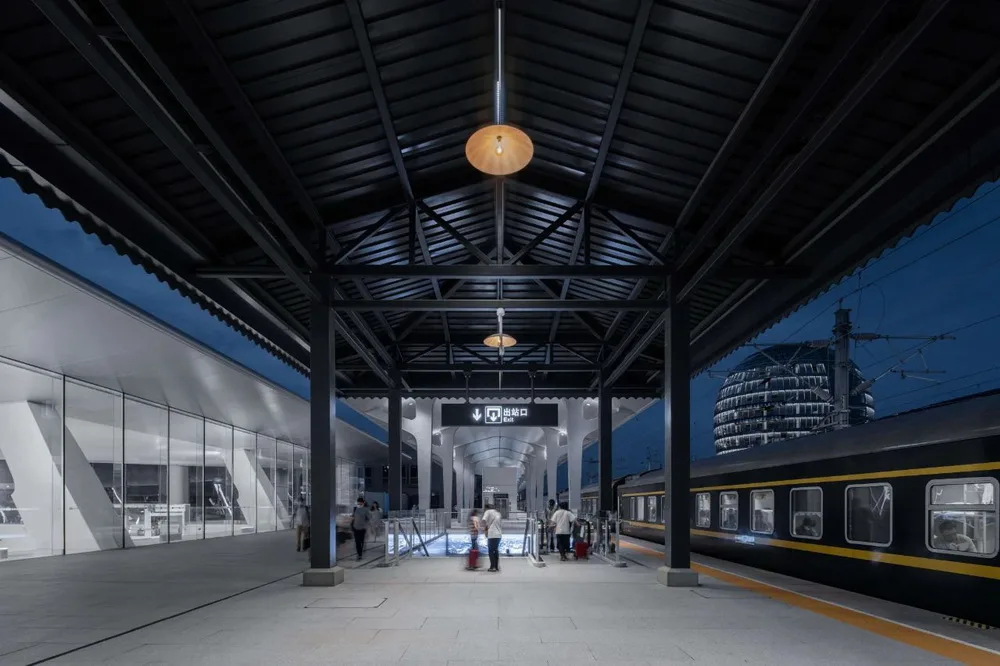
To honor this history and allow citizens to experience the city’s heritage, MAD decided to reconstruct the old station building at a 1:1 scale. The reconstruction includes faithfully recreated rain shelters and overpasses on the new platform, matching the historical appearance.
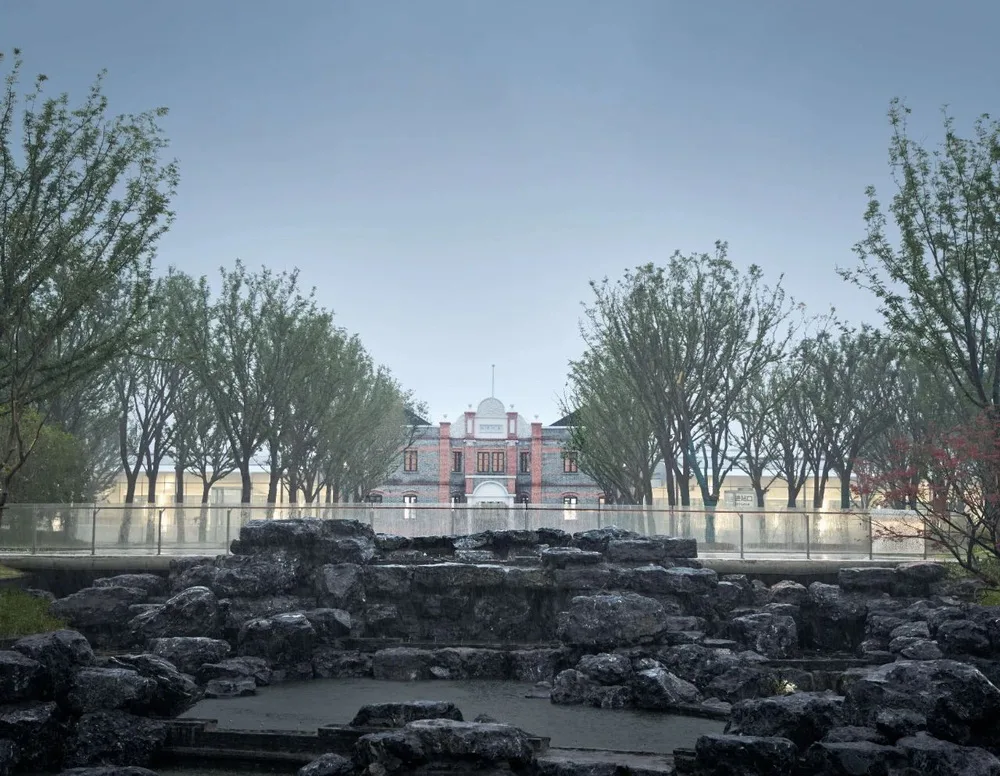
Photography: Aoguan Architectural Vision
MAD engaged experts, scholars, and consultants specializing in ancient architecture to analyze historical images and archival clues from the Jiaxing City Chronicle, ensuring accuracy in restoring the old station’s original appearance. The rebuilt station facade features blue bricks, with red brick columns, moldings, doors, and windows. Approximately 210,000 green and red bricks were made from Nanhu Lake mud and fired in local traditional brick kilns, preserving local craftsmanship.
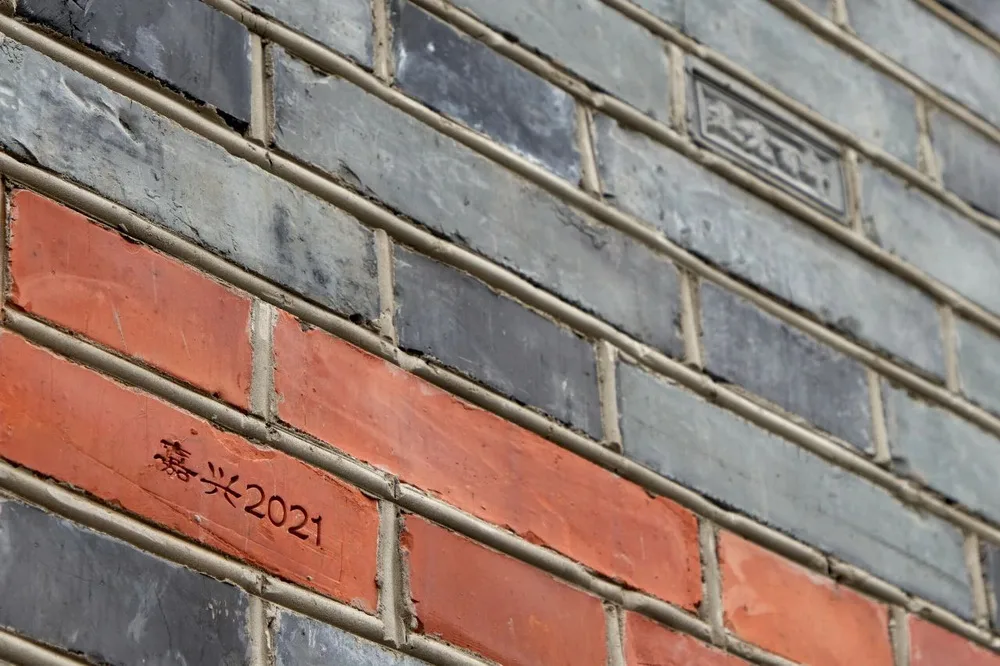
Photography: Aoguan Architectural Vision
Using track gauge and perspective principles, the relationship and dimensions between the canopy, overpass, platform, and station building were carefully derived. This allowed the faithful reproduction of the historic platform canopy and overpass.
Photography: CreatAR Images
Photography: Existence of Buildings
The reconstructed station building now serves as a cultural and historical exhibition hall rather than functioning as the main train station.
Breaking Tradition: China’s First Fully Sunken Station Building
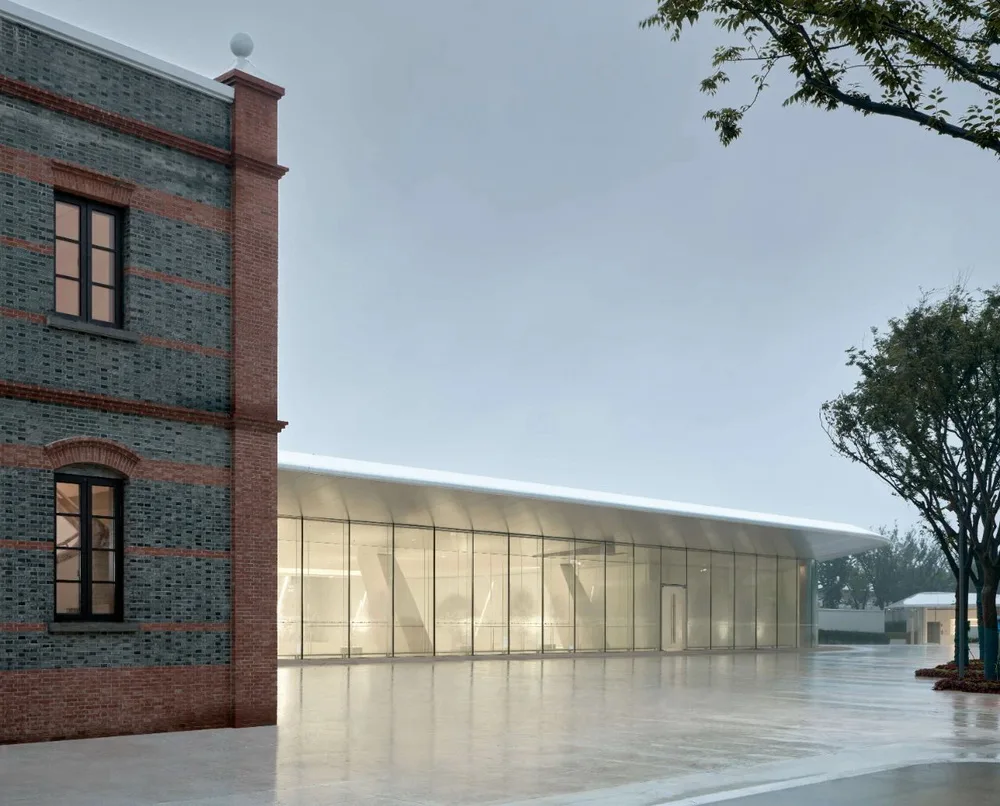
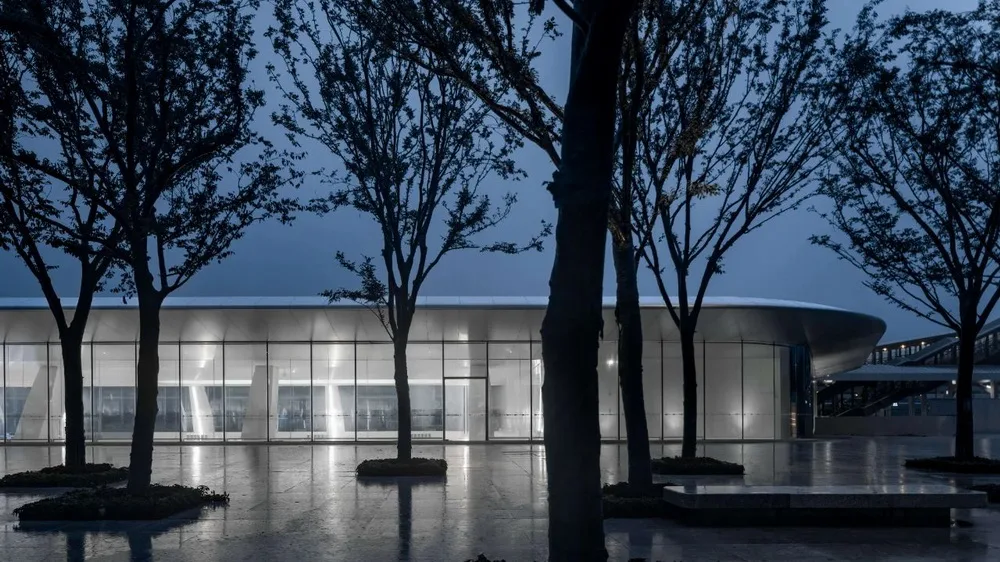
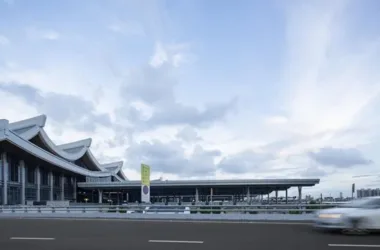
Next to the reconstructed historic building stands the new station, characterized by a “floating” metal roof. The entrance, exit, and waiting area are all located underground, with only a single “hidden” level above ground. This design respects the scale of the old station building and adopts a humble approach.
Photography: Aoguan Architectural Vision
Photography: CreatAR Images
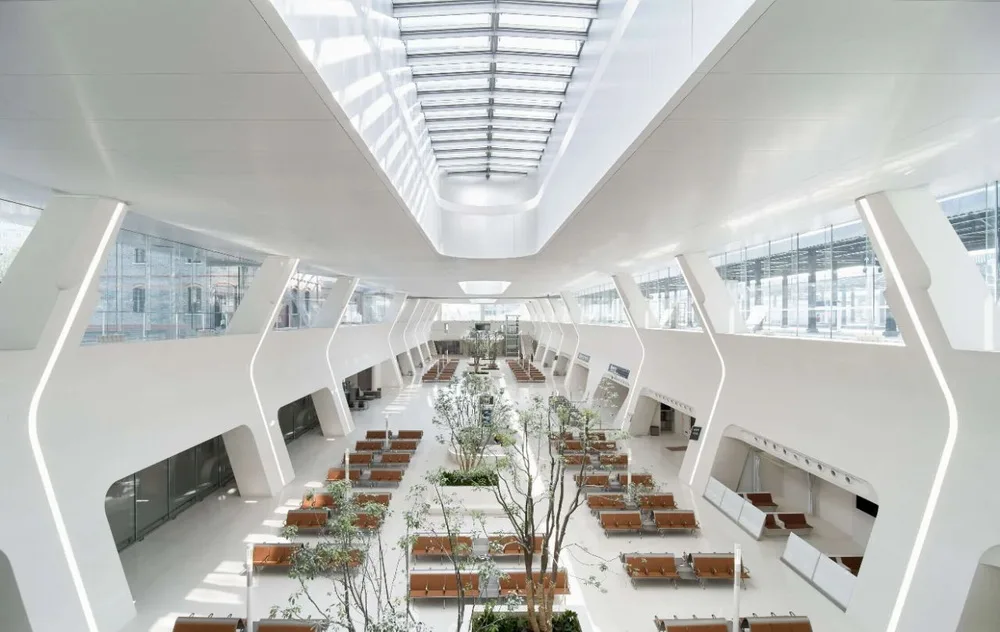
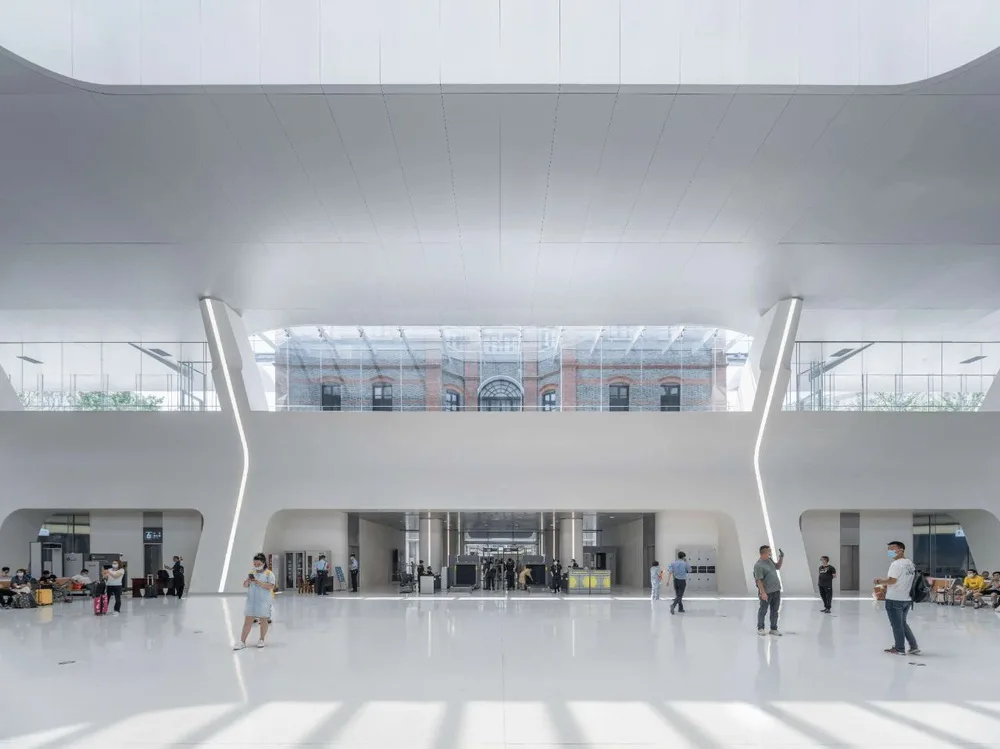
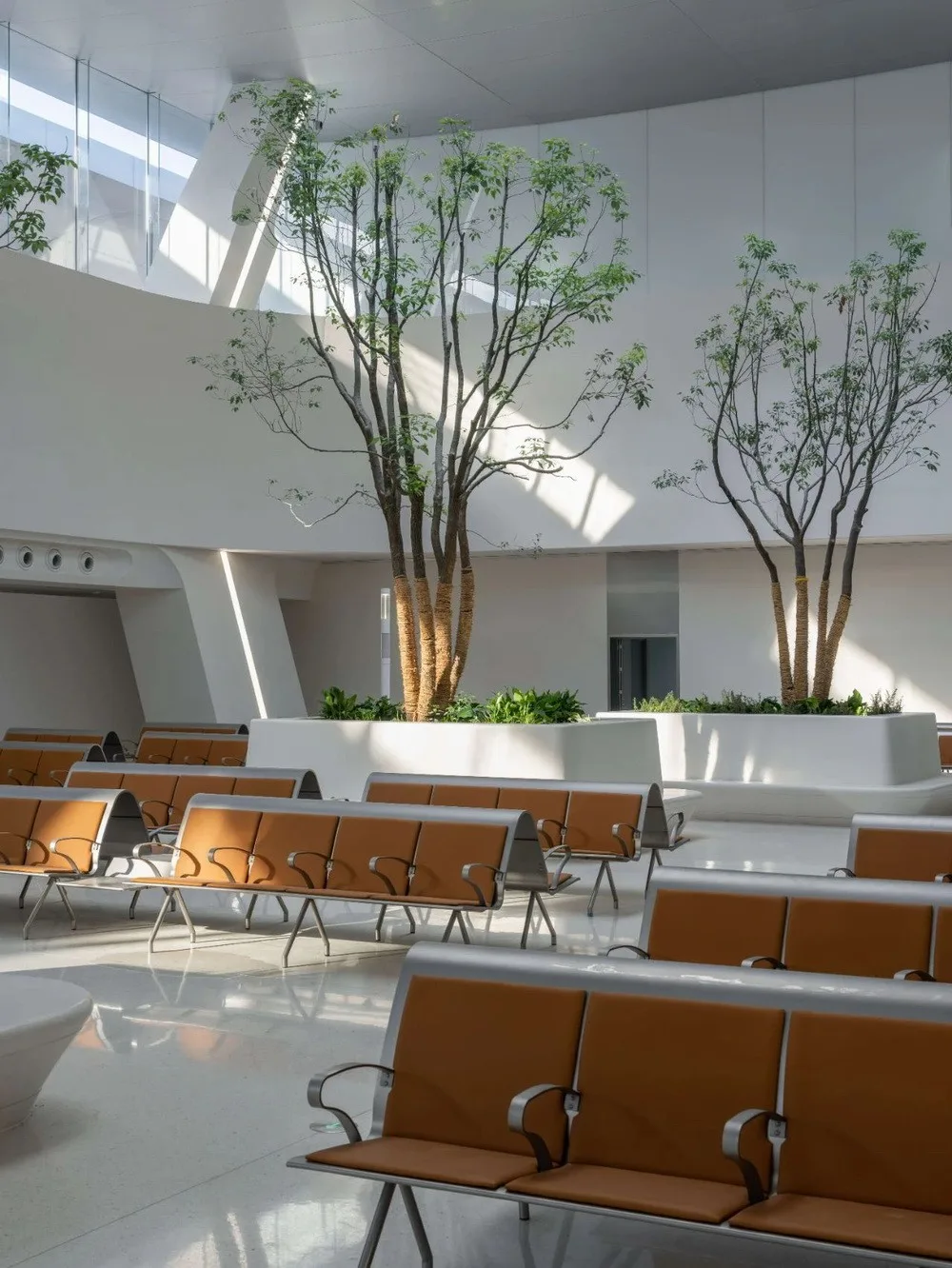
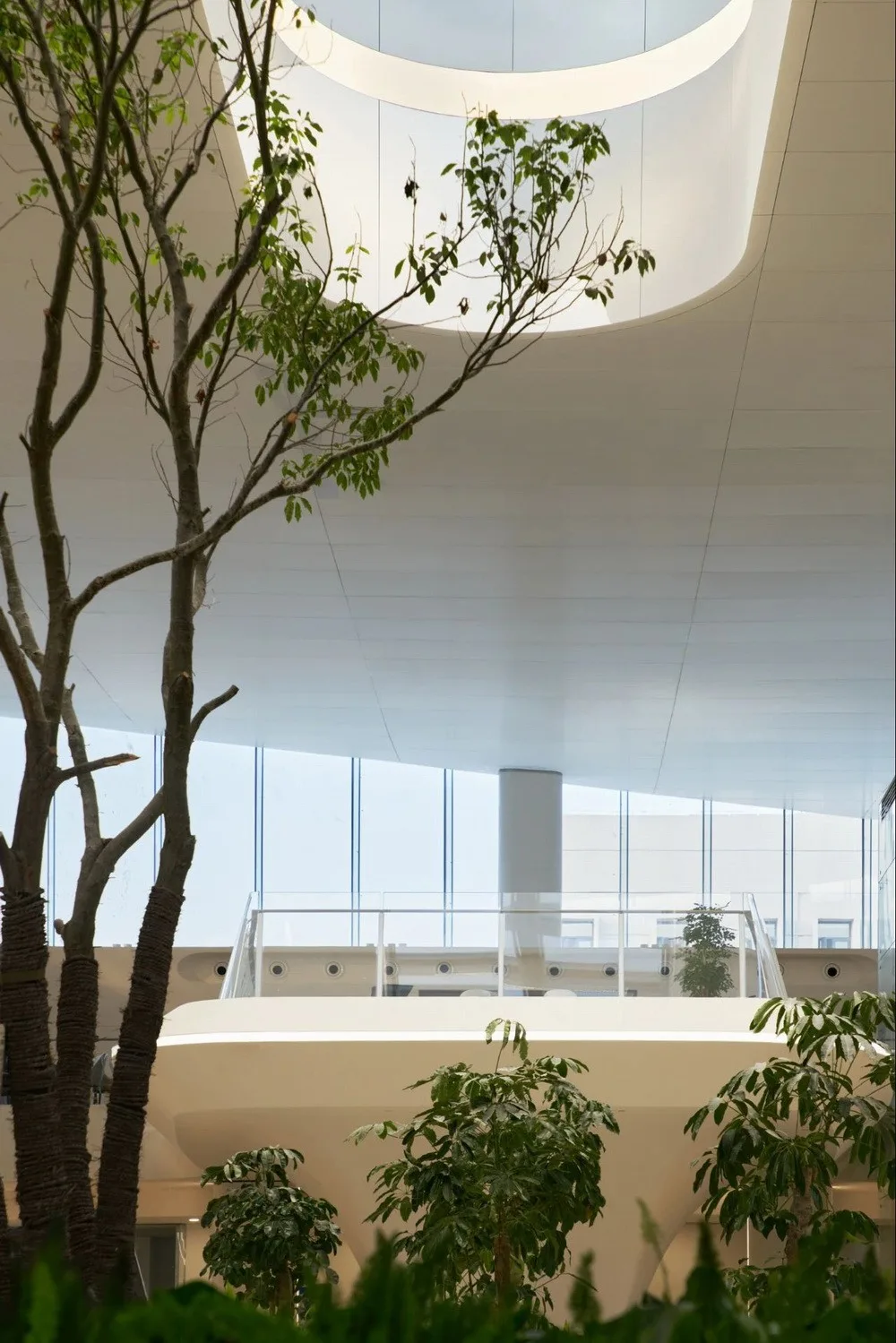
Natural light floods the underground waiting hall through numerous skylights and a glass curtain wall, creating an open and bright environment. Passengers can view the reconstructed historic station building above ground, preserving a century-old style. This juxtaposition of new and old enriches the spatial experience and narrative of time.
Photography: CreatAR Images
Photography: Aoguan Architectural Vision
The new station’s interior design breaks away from the typical standardization seen in domestic railway stations. It features a minimalist white aesthetic, with walls, ceilings, and tunnels clad in anodized aluminum honeycomb panels that absorb sound and reduce noise. Lighting is primarily floodlight-based with minimal visible fixtures. Exhaust outlets, public address systems, and lighting strips are seamlessly integrated into walls for a clean visual effect.
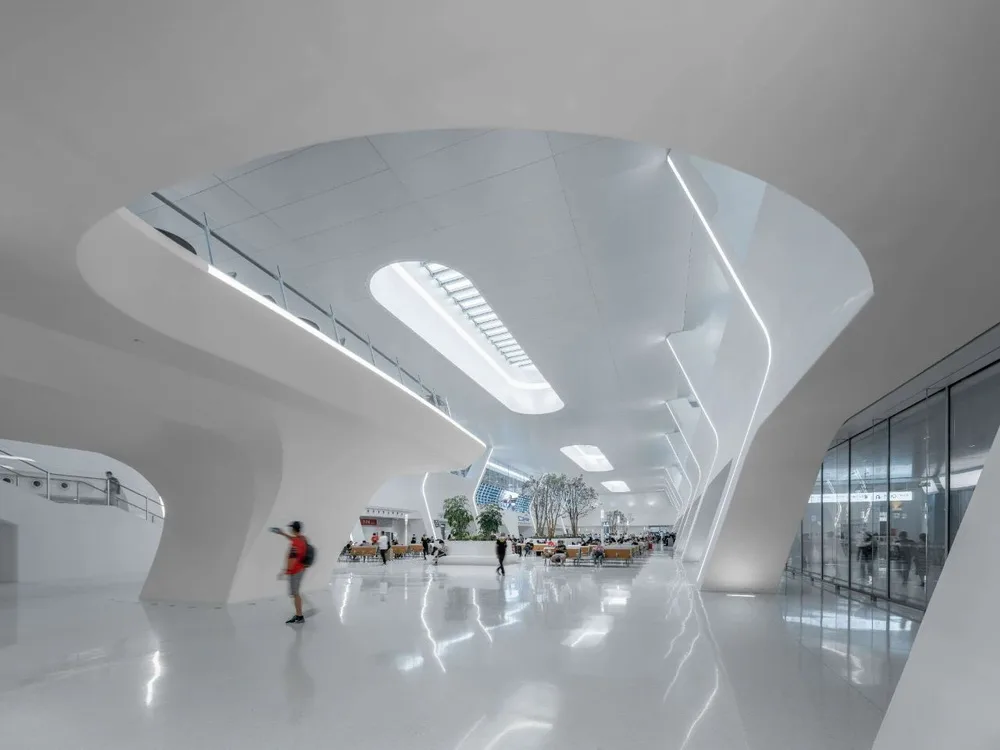
Photography: CreatAR Images
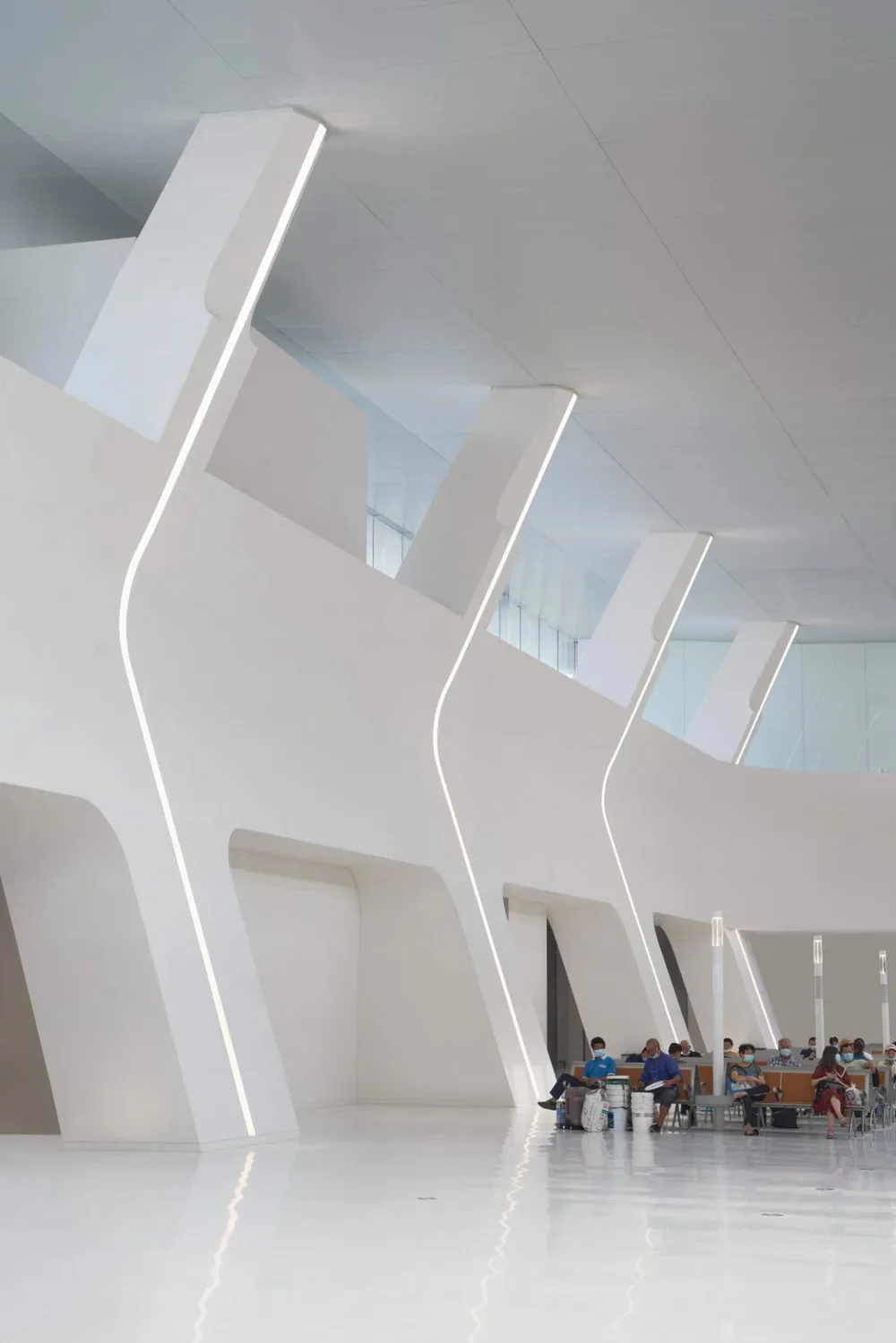
Photography: Aoguan Architectural Vision
The tunnel connecting the waiting hall to the platform is sleek, minimalist, and futuristic.
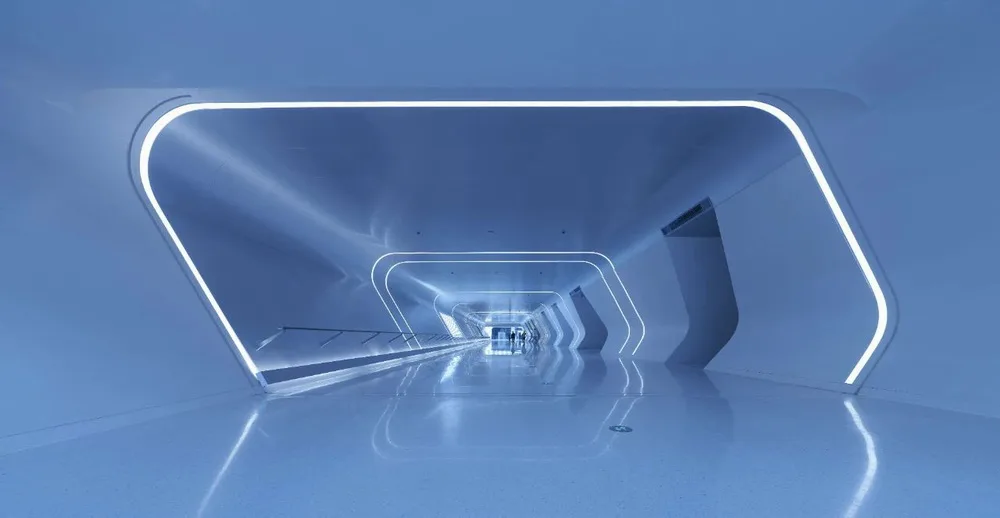
Photography: Aoguan Architectural Vision
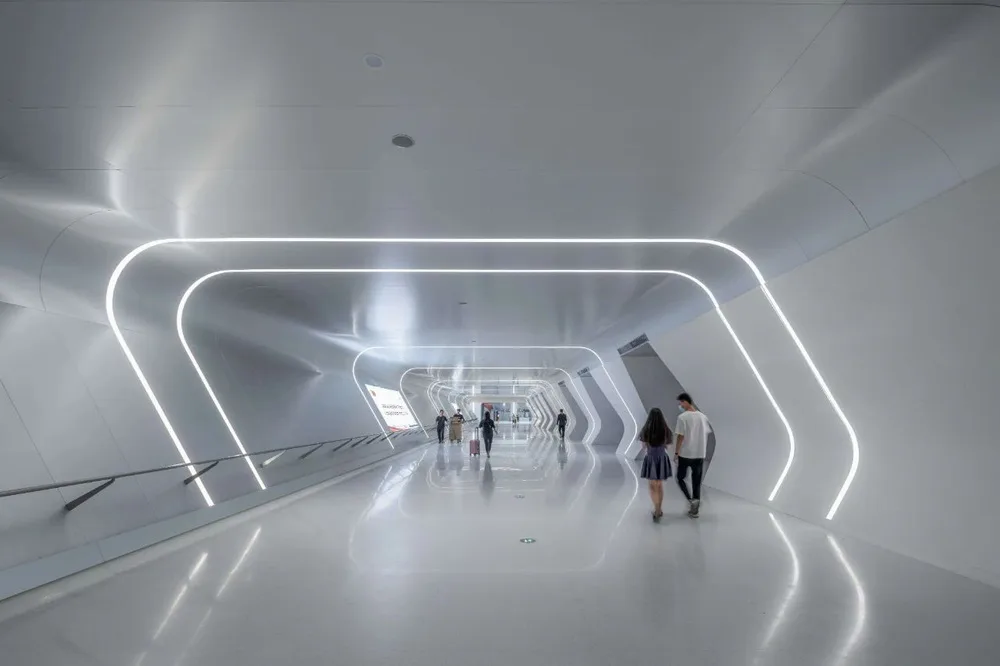
Photography: CreatAR Images
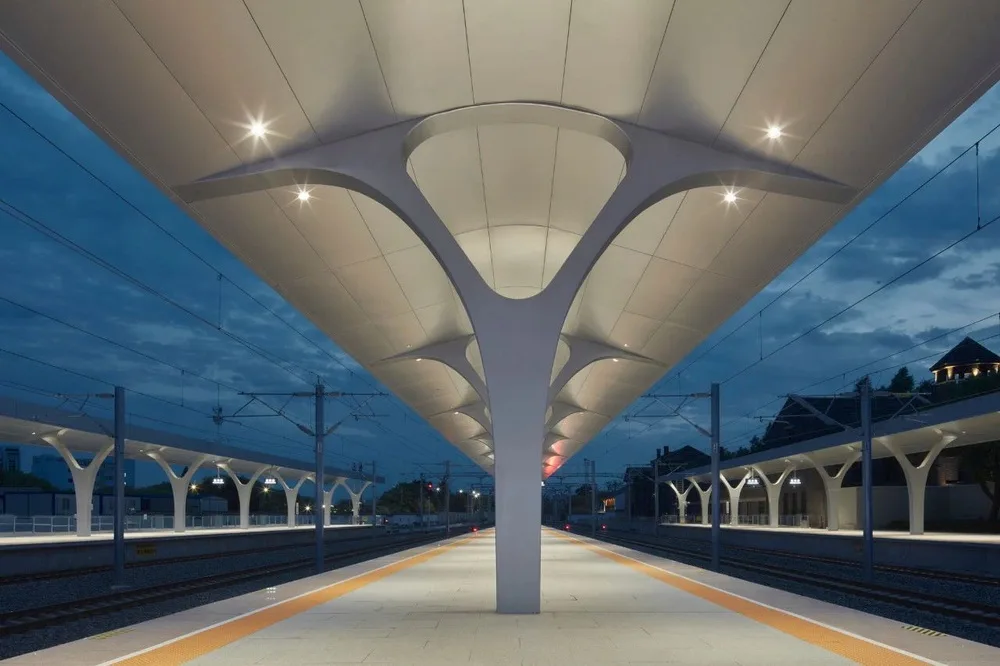
The new station roof is fully equipped with solar photovoltaic panels, expected to generate 1.1 million kilowatt-hours of electricity annually. This will reduce approximately 1,000 tons of carbon dioxide emissions each year.
Photography: CreatAR Images
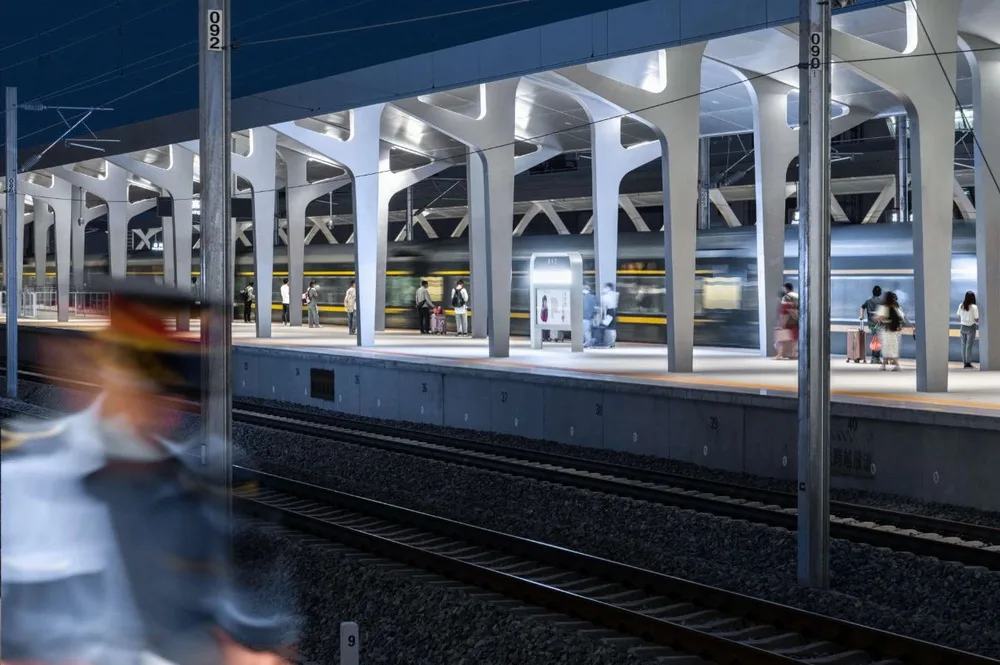
The renovated railway station now features 3 platforms and 6 tracks, up from the original 3 platforms and 5 tracks. There are two arrival and departure tracks on each of the up and down main lines. It is projected that by 2025, Jiaxing Railway Station will serve 5.28 million passengers annually, with a peak capacity of approximately 2,500 passengers per hour.
Photography: Existence of Buildings
The renovation of Jiaxing Railway Station offers a revolutionary model for urban development in Chinese cities. Moving beyond pure functionality, it transforms public infrastructure into high-quality cultural urban spaces, marking a significant milestone in the evolution of Chinese urbanism.
Photography: CreatAR Images
Project Information
- Project Name: Jiaxing Railway Station
- Location: Jiaxing, China
- Project Period: 2019–2021
- Type: Urban Renewal, Master Planning, Transportation Hub, Urban Complex
- Floor Area: 354,000 square meters
- Building Area: Approximately 330,000 square meters
- Lead Partners: Ma Yansong, Party Masses, Yokosuke Hayano
- Lead Vice Partners: Liu Huiying, Tiffany Dalhen
- Design Team: Yao Ran, Yu Lin, Cao Chen, Chen Nianhai, Cheng Xiangju, Reinier Simons, Fu Xiaoyi, Chen Wei, He Shunpeng, Li Zhengdong, Cao Xi, Zhang Kai, Li Xinyun, Kaushik Raghuraman, Deng Wei, Huang Zhiyu, Huai Wei, Sun Mingze, Dayie Wu, Hou Jinghui, Yin Jianfeng, Claudia Hertrich, Liu Zifan, Jie Qilin, Alan Rodriguez Carrillo, Qiang Si Hao
- Owner: Jiaxing Modern Service Industry Development Investment Group Co., Ltd. (Jiaxing Economic Construction Investment Co., Ltd.)
- Class A Design Institutes: Tongji University Architectural Design and Research Institute (Group) Co., Ltd., China Railway Fourth Survey and Design Institute Group Co., Ltd.
- Ancient Architecture Consultant: Shanghai Shuishi Architectural Planning and Design Co., Ltd. – Traditional Architecture Research Institute
- Landscape Consultant: Zhishe (Beijing) Landscape Planning and Design Co., Ltd.
- Lighting Consultant: Beijing Ningzhijing Lighting Design Co., Ltd.
- Identification Consultant: Beijing Dasi Advertising Co., Ltd.
- Interior Consultant: Shanghai Modern Architectural Decoration Environment Design and Research Institute Co., Ltd.
- Structural Consultant: Liya Structural Engineering Consulting (Shanghai) Co., Ltd.
- Curtain Wall Consultant: Alpha Architectural Design Consulting (Shanghai) Co., Ltd.
- Construction General Contractors: China Railway Construction Engineering Group Co., Ltd., China Railway Fourth Group Co., Ltd., China Construction Eighth Engineering Division Co., Ltd.












Must log in before commenting!
Sign Up