
This project is situated on the south side of Hongqi South Road, adjacent to Nancuiping Mountain Park in Tianjin’s Nankai District. Originally a nursing home, the design preserves the building’s historic appearance and character. Wang Junbao, founder of the Design Center of Dika Kindergarten, identified five key design elements to guide the project: futuristic, natural, artistic, educational, and embracing a focused worldview.
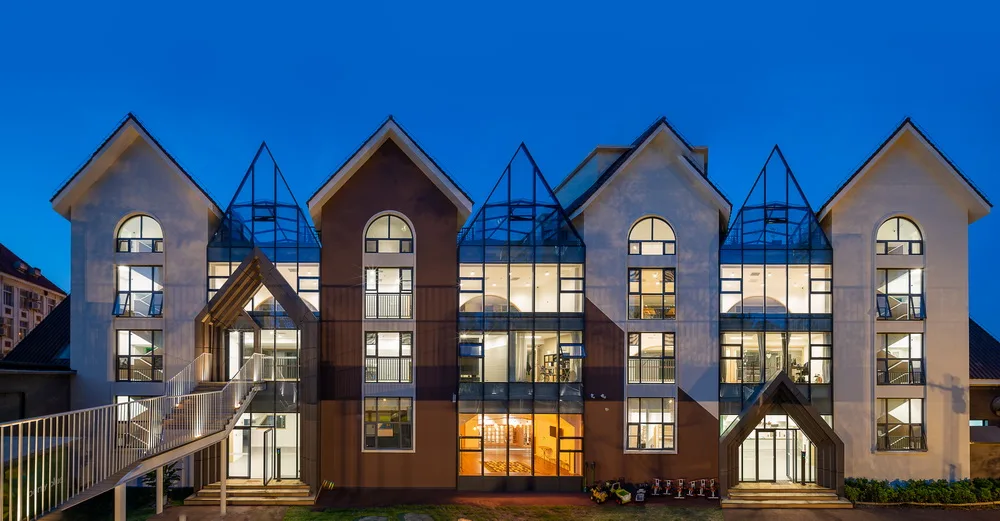
A Kindergarten Transformed from a Nursing Home
Our kindergarten embraces the concept of “forest education,” blending fresh and natural elements into the urban environment while preserving the rich, original natural surroundings. This approach fosters a harmonious coexistence between children and nature. Notably, the courtyard connects the sky and earth, prioritizing spatial experiences for children. The design supports comfort, safety, exploration, and sustainability by revitalizing nature within the space. Through spatial design, the essence of “forest education” is brought to life, making this kindergarten a distinctive urban landmark with a unique presence.
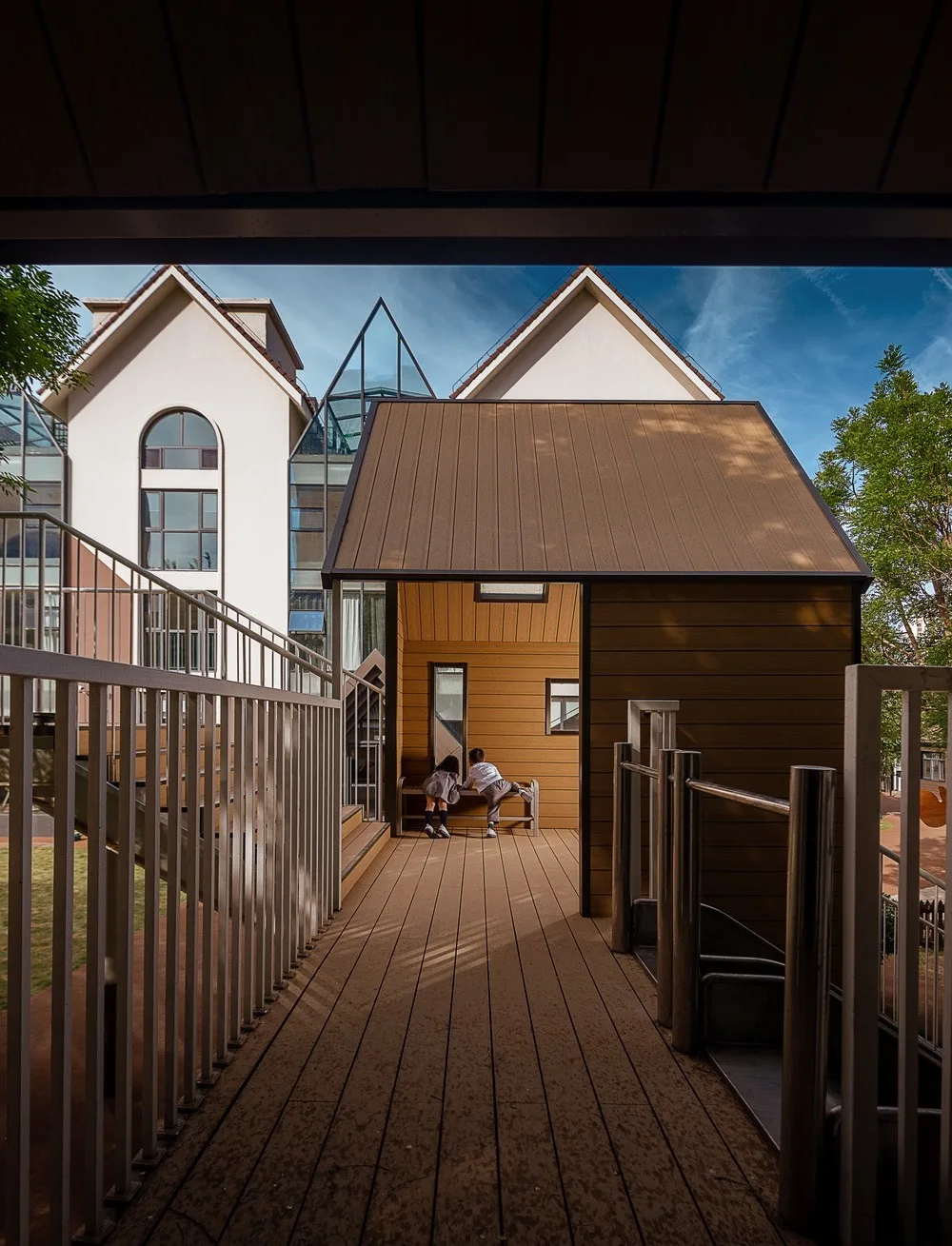
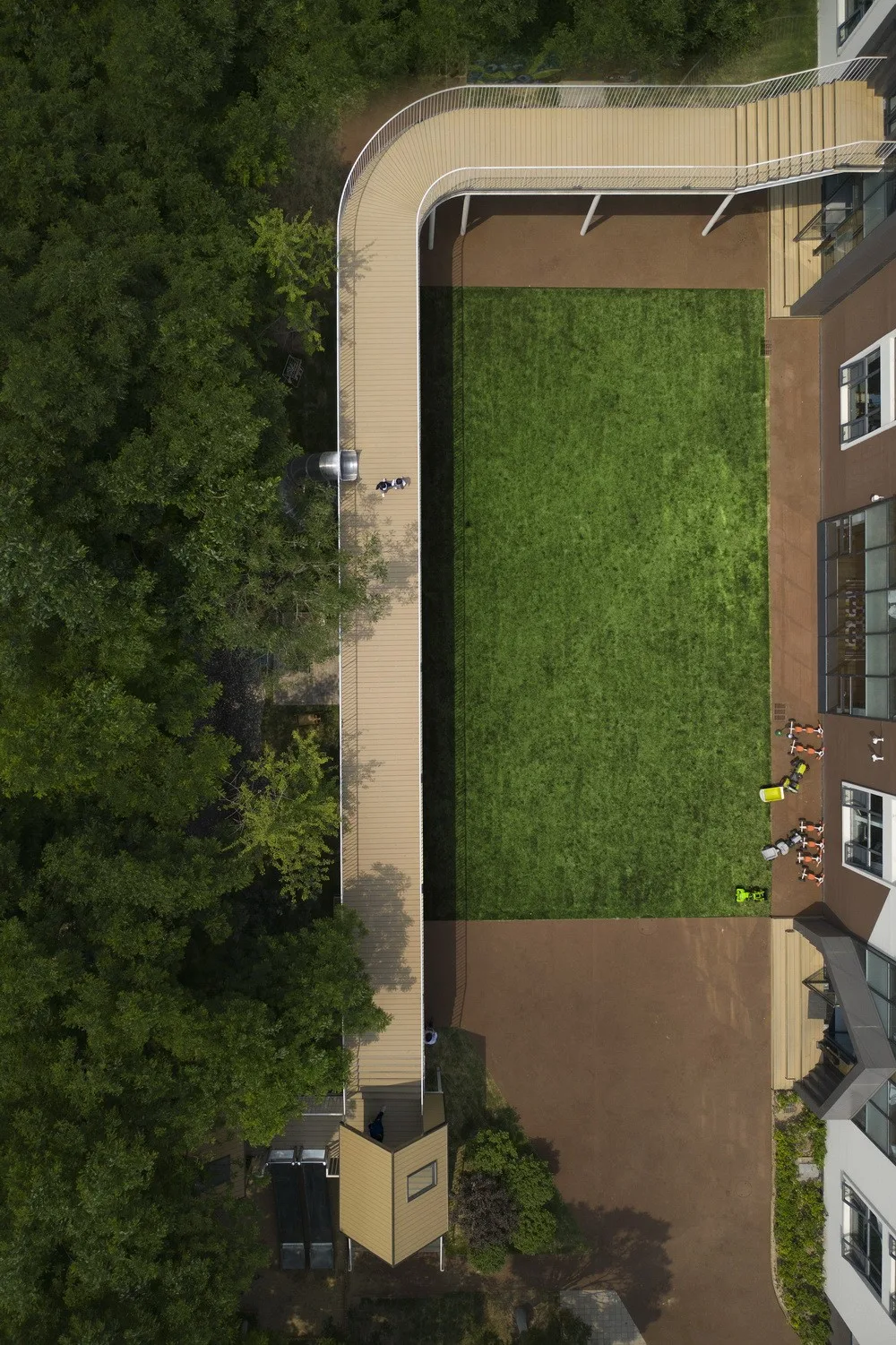
The Concept of “Urban Villages” for Free Exploration
Inspired by the site’s layout and the educational philosophy, we introduced the “village” concept. The goal is for the project to become an “urban village” where children can explore freely. The design maintains the main structure of the original building, drawing on its architectural style and facade elements, while incorporating new construction and restoration under a fresh vision.
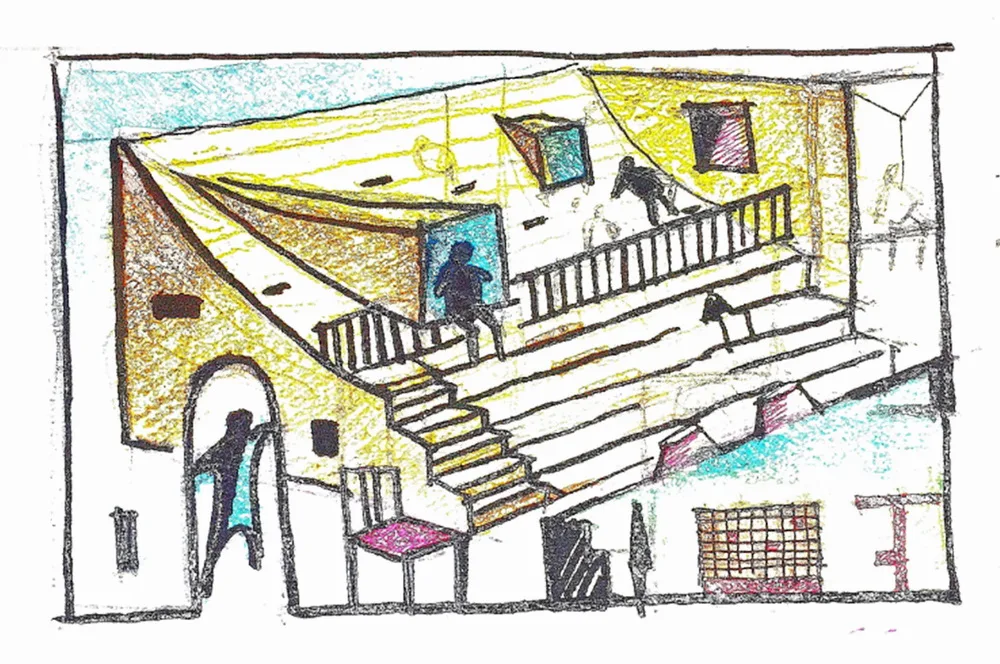
△ Design Sketch
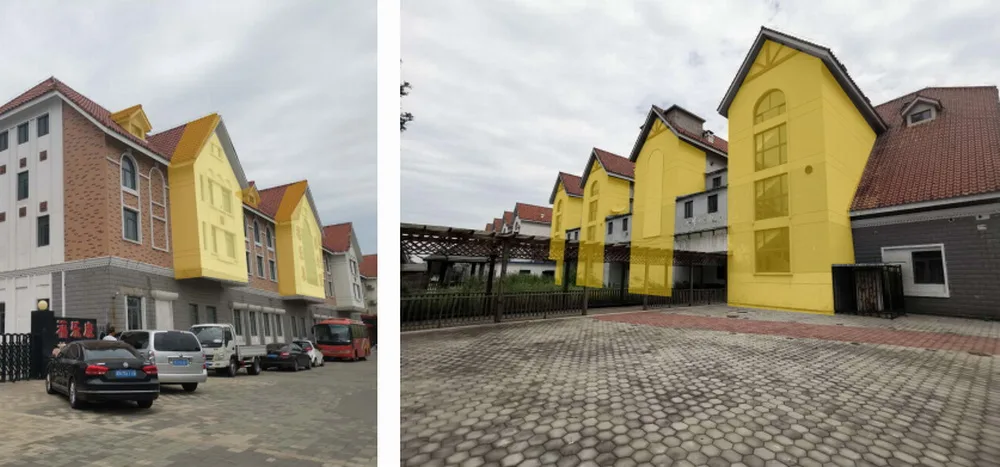
Origin of the Urban Village Concept
The small, home-like house forms resemble fairy tale forest huts. We transformed the space into a “large play tool” within the original building, offering rich environmental content. This supports the teaching philosophy of “learning through play,” “learning with enjoyment,” and “growing with joy,” while rebuilding the connection between children and nature, ultimately redefining the concept of “family.”
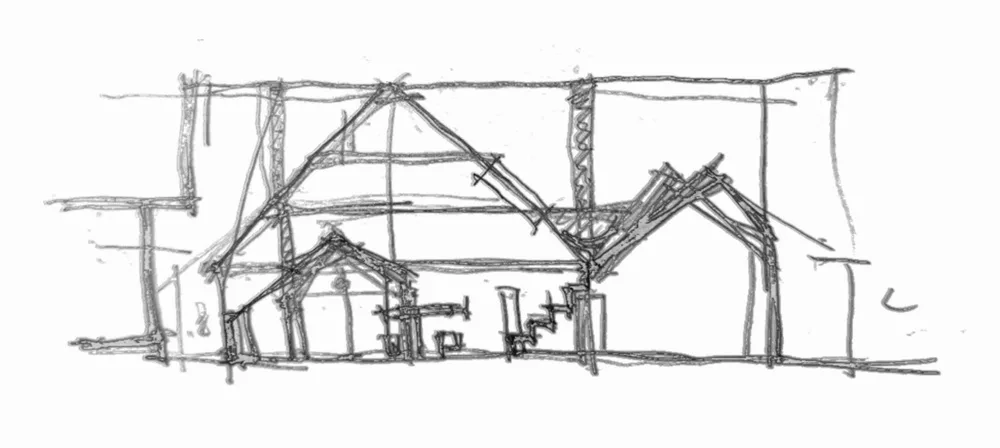
△ Design Manuscript
Project Requirements
Surrounded by aged residential buildings, the community lacks vitality. Transforming a nursing home into a kindergarten inspired by the spirit of “forest education” aimed to create a natural, nurturing environment. Our main challenge was to integrate the “old building” with “forest education” and foster a close relationship between children and nature.
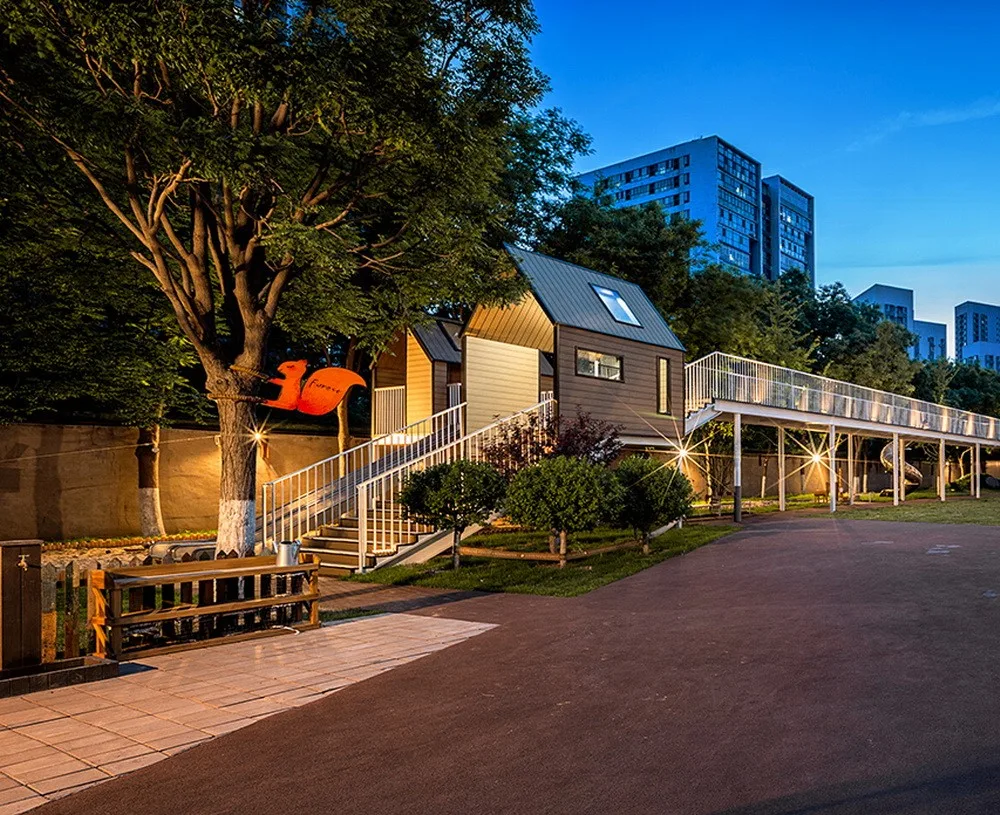
The design team, with educational experts, studied the physiological and psychological characteristics of children across different age groups, referencing both domestic and international research. After defining the school’s specific needs and strategies, our focus became guiding children to experience the authentic beauty of nature through this transformation.
Building Exterior
Under the night sky, the interplay between greenery and geometric architectural forms creates a subtle, unique atmosphere. Trees nurture the buildings, while the buildings protect the plants. This natural synergy creates a comfortable and inviting environment for children.
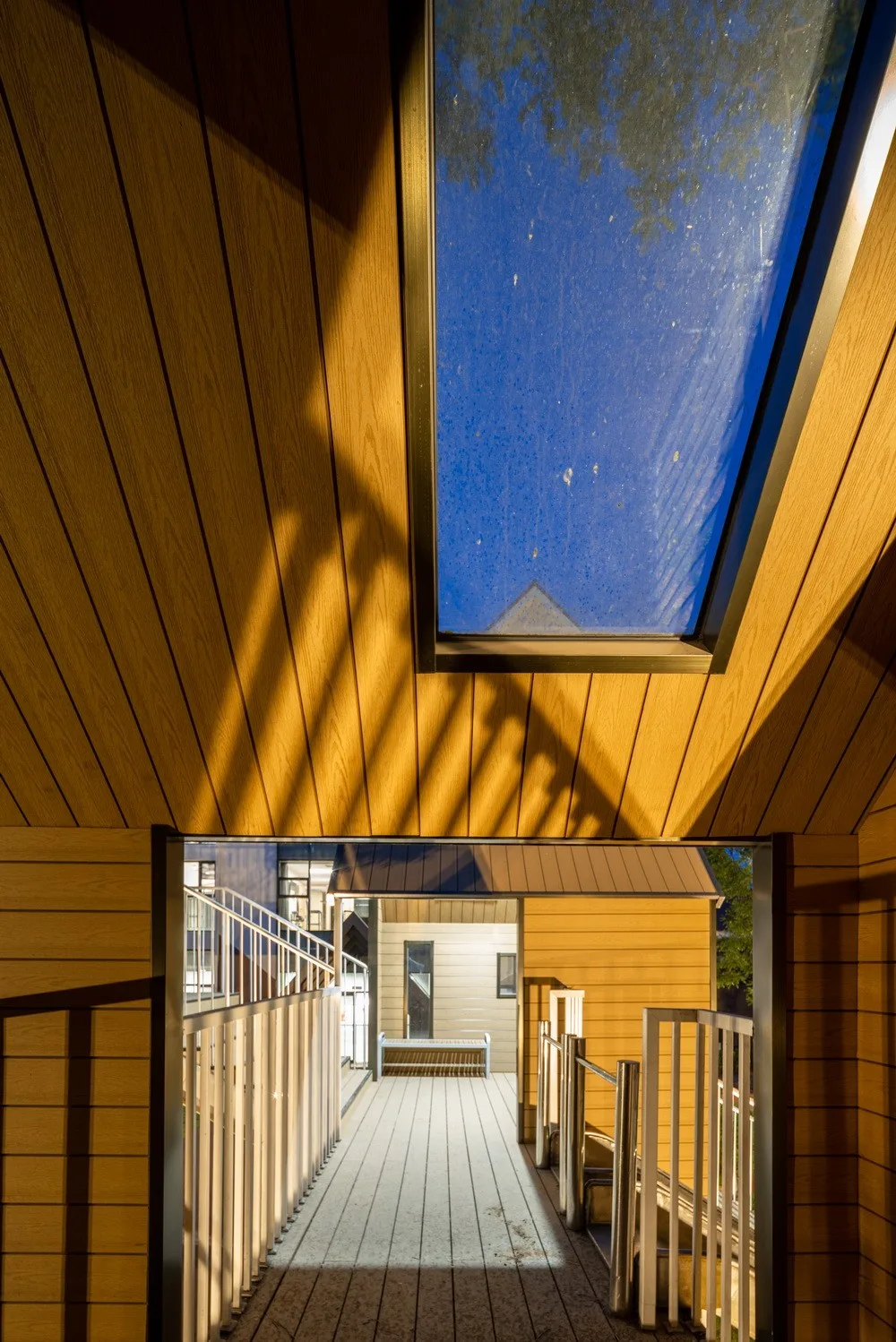
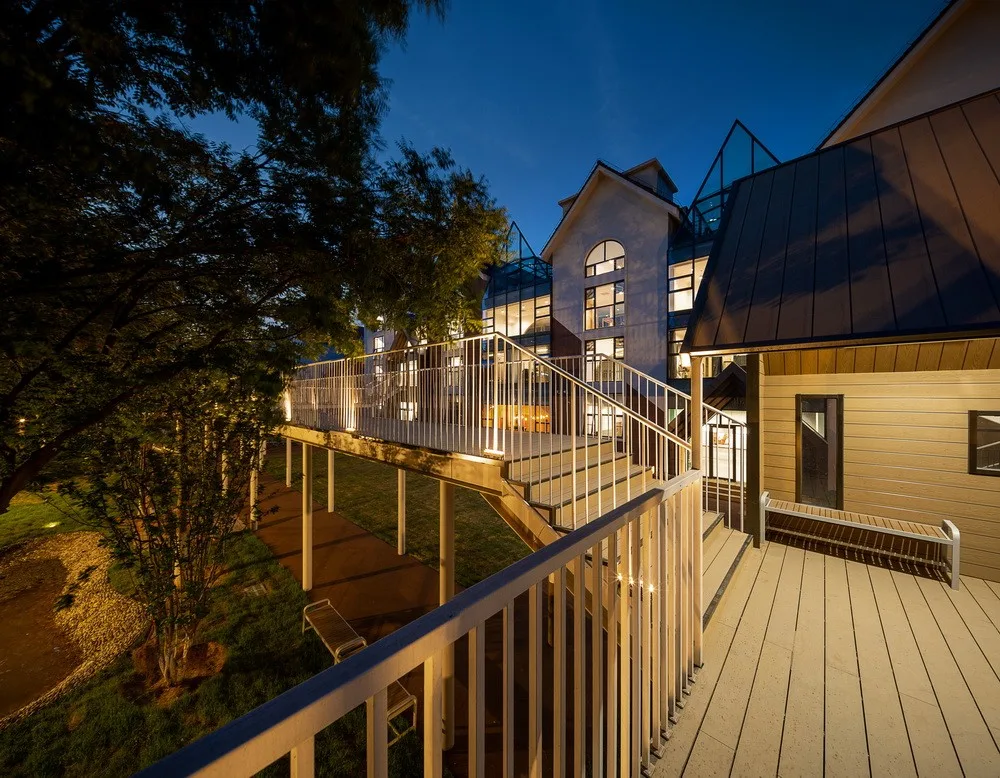
A Genuine Natural Environment
Like a serene paradise removed from urban noise, this space is home to joyful little explorers. Growing up in a natural teaching environment has become a shared goal in education. The design incorporates a “wilderness” aspect, closely connected to nature. Children regularly engage in outdoor nature education guided by teachers. The environment includes grasslands, shrubs, hills, climbing plants, fruit trees, mud pits, and irrigation systems. Different plants renew their energy daily, while children learn firsthand about the blue sky and tree growth, encouraging independent play, observation, and life experience accumulation.
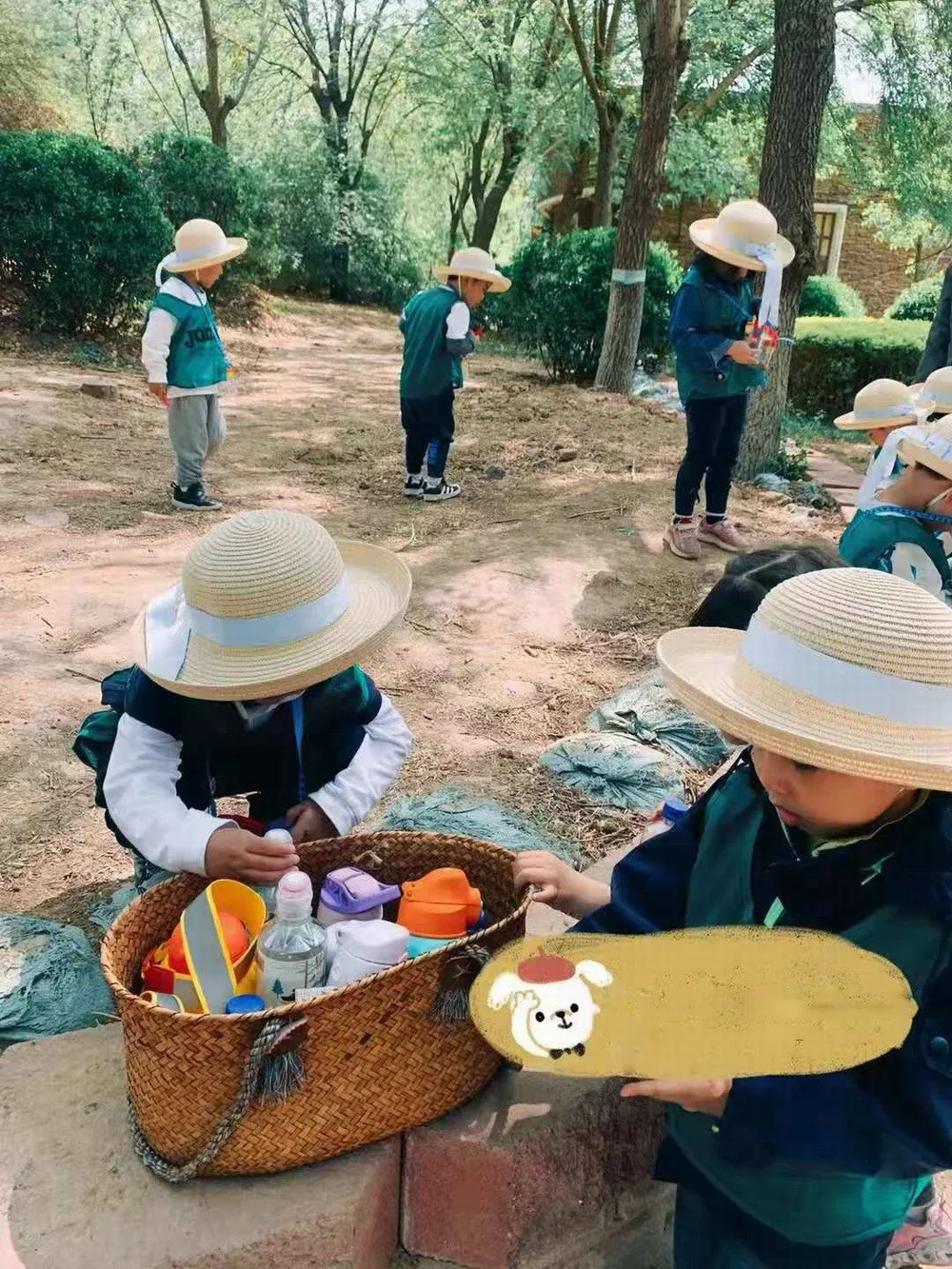
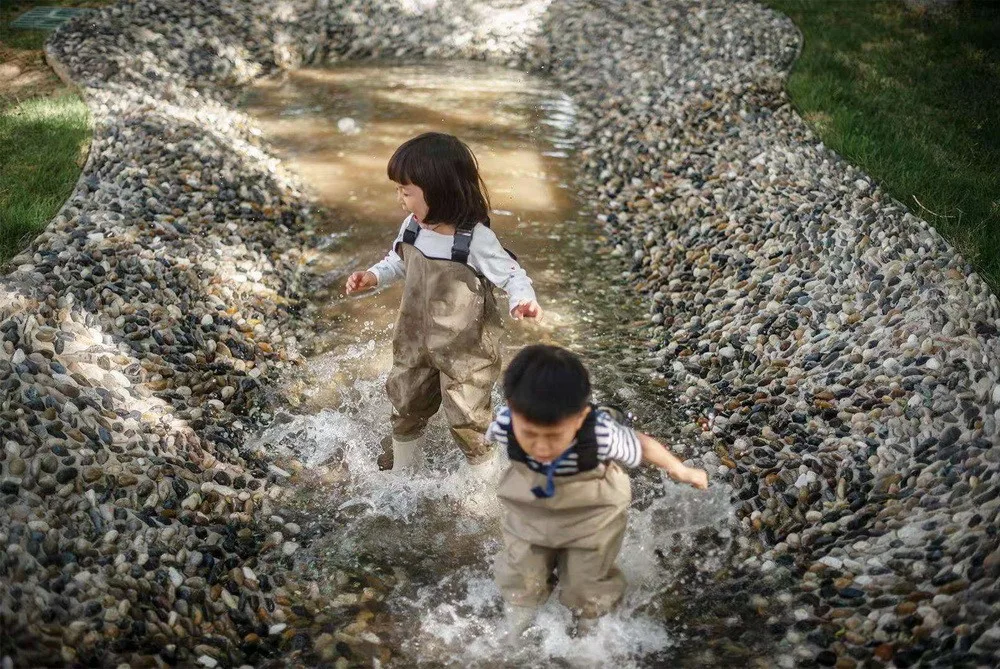
To strengthen the bond between children and nature, the design includes “environmental education” features to nurture ecological awareness and provide natural spaces and facilities for children.
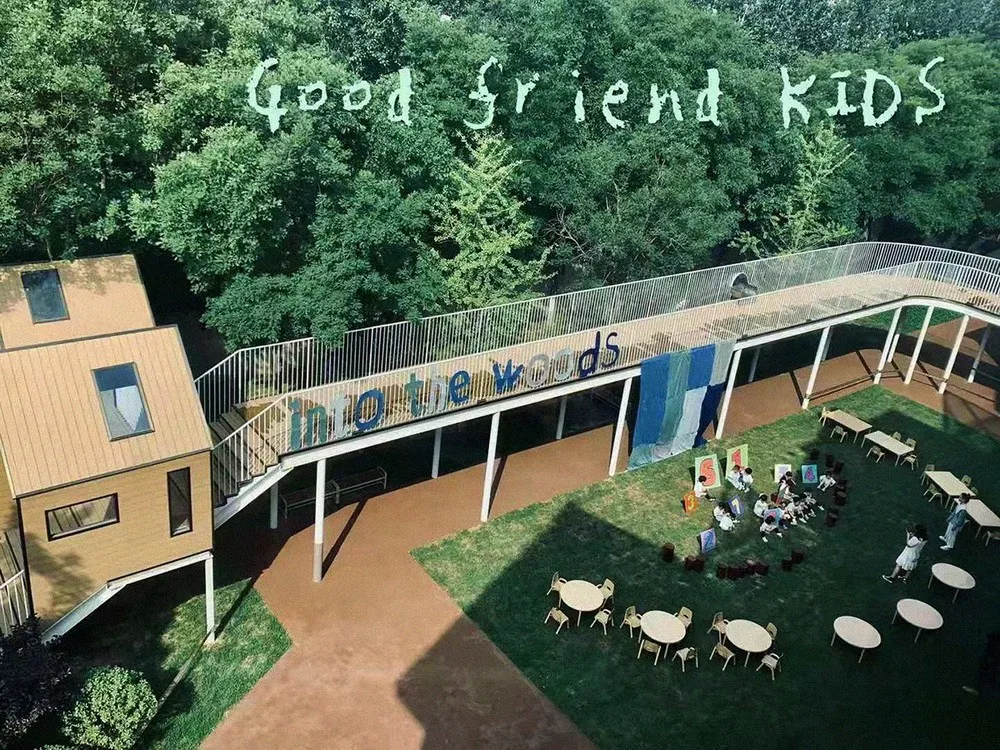
At the project’s outset, the kindergarten adopted an open teaching philosophy centered on “love and fun,” emphasizing three pillars: breathing – green nature; facing the future – exploratory spirit; and infinite possibilities – personality development. The aim is to raise children not in a greenhouse but in an environment where they can truly feel nature’s atmosphere and temperature.
The Open Teaching Concept of Love and Fun
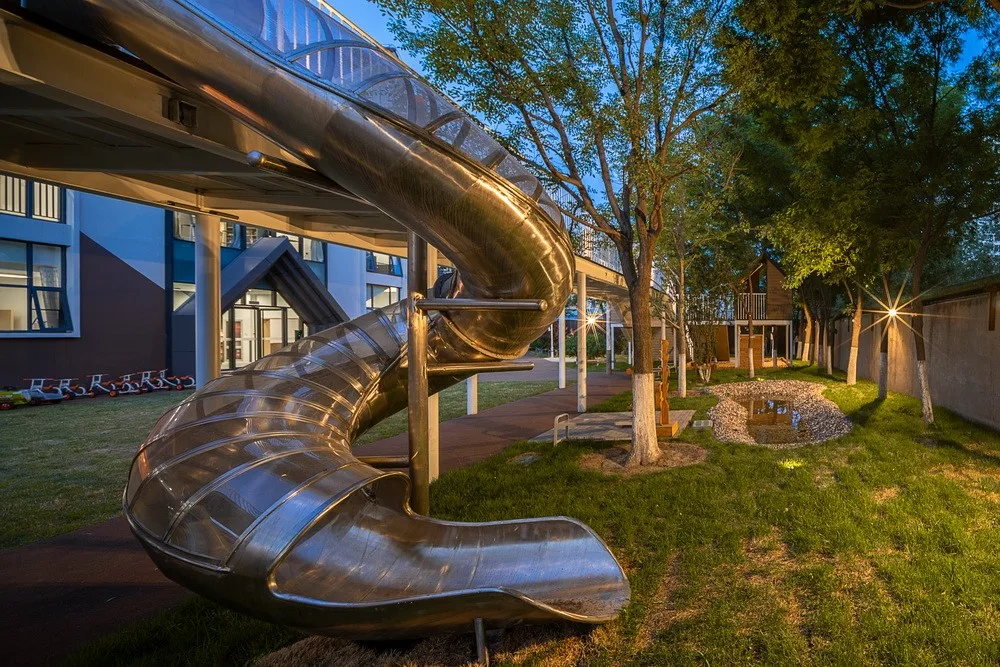
The campus environment is segmented into various corners where every flower, tree, and blade of grass acts as a natural learning prop. This provides ample outdoor space to support and promote forest education activities. Children engage in observation, communication, and play, while the flexible spatial design nurtures learning and growth, stimulating creativity and personality development.
Forest Playground – Tailored for Children’s Play
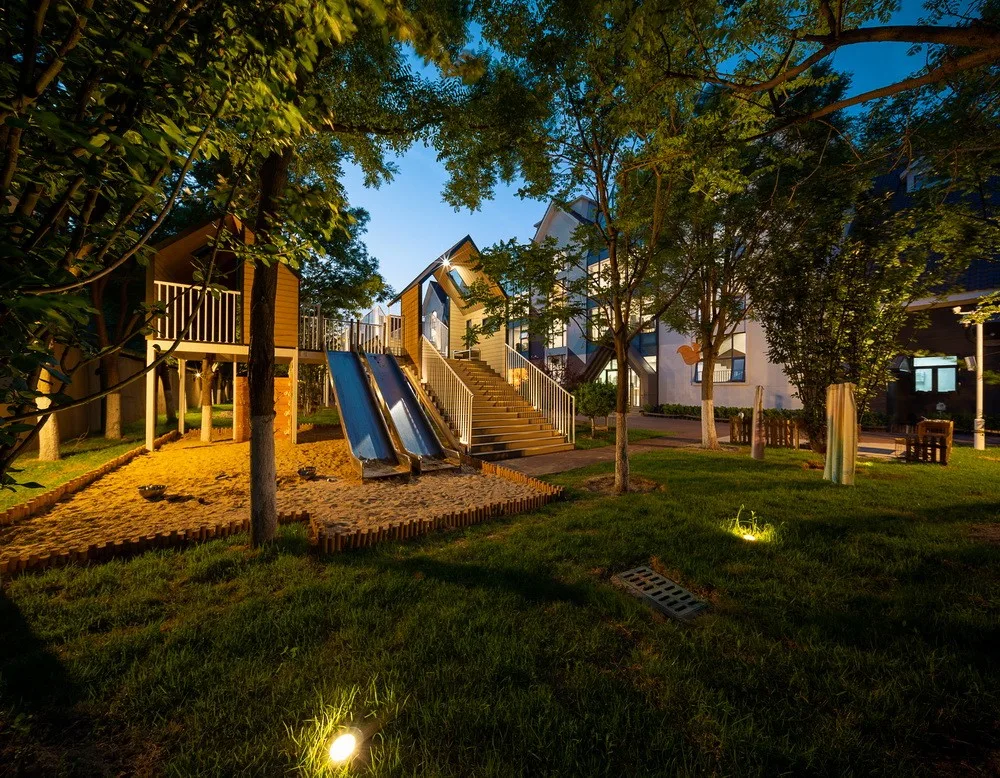
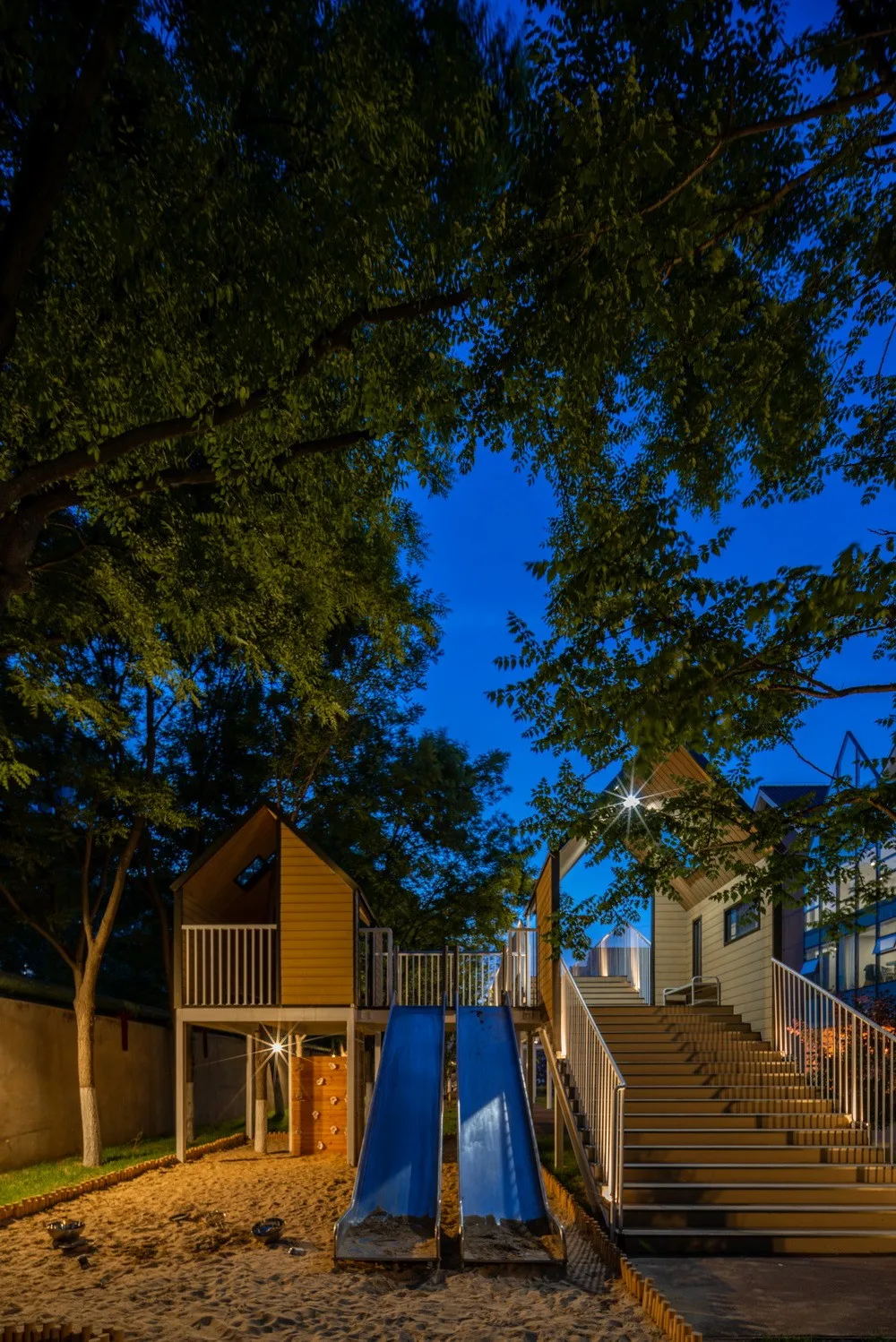
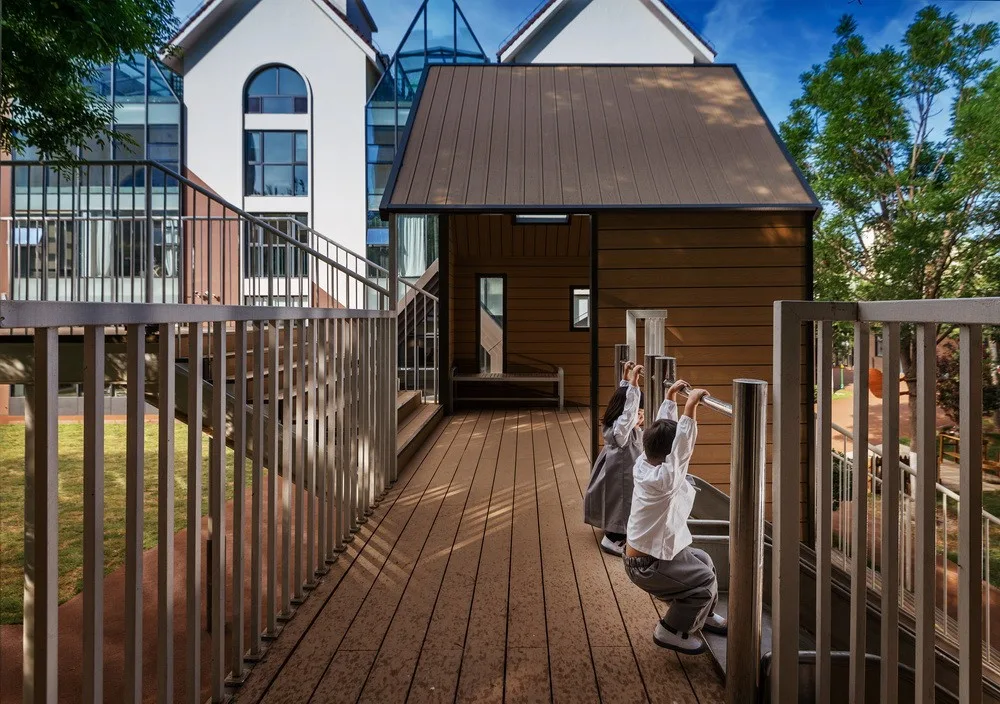
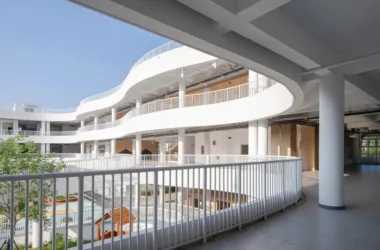
The triangular shape, derived from the initial house prototype, perfectly embodies the project’s character. Bridges, walkways, greenery, sandpits, and trees create a unique charm under the sunset. Breaking away from traditional corridor confinement, the design allows children to fully immerse themselves in the environment. Some building sections connect seamlessly to play areas via corridors, encouraging independent movement and satisfying children’s natural playfulness.
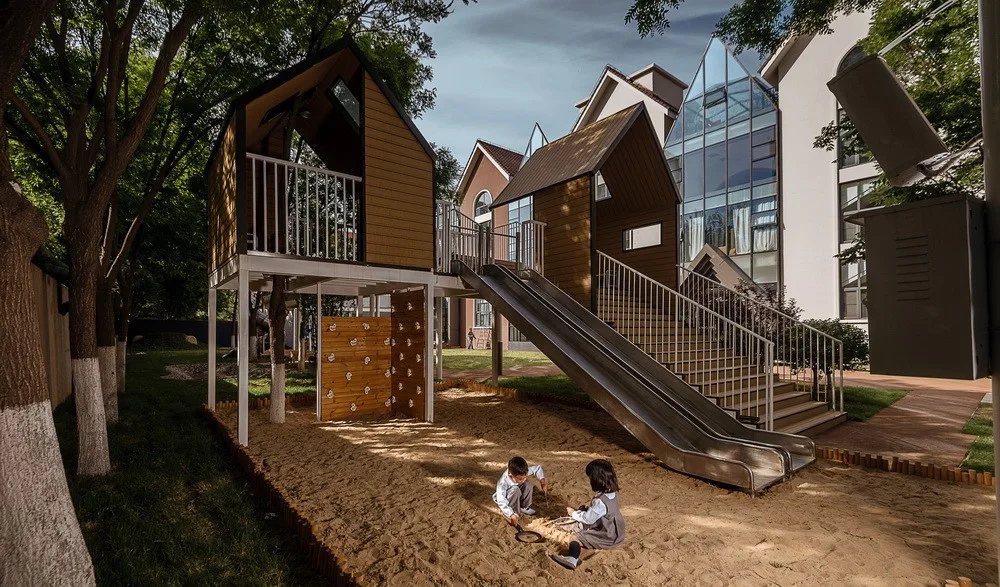
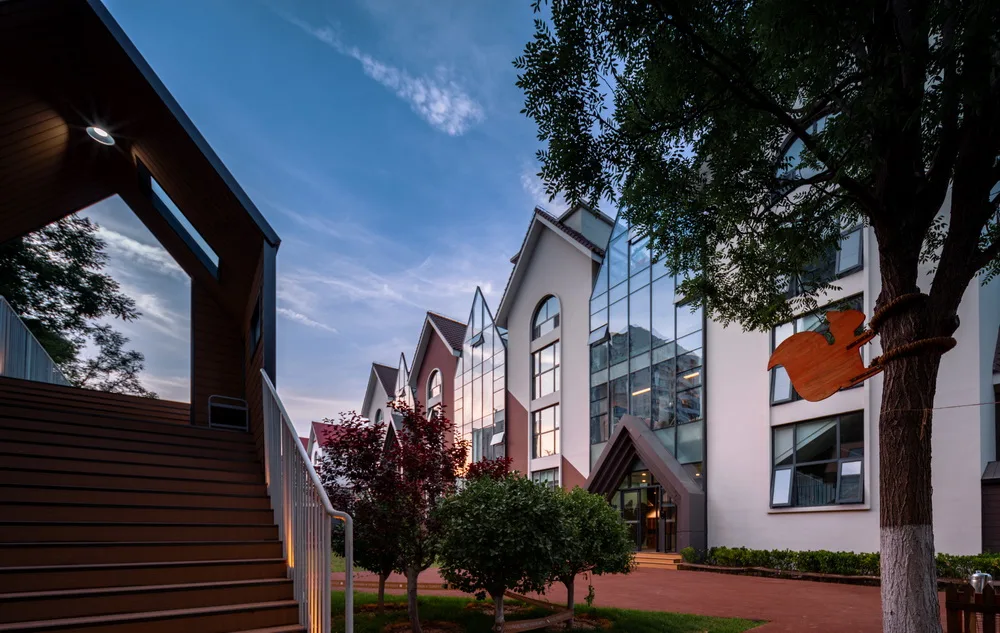
This space sparks curiosity and exploration in children. Prioritizing safety and health, the design crafts a vibrant environment where children can enjoy year-round activities, nurture innocence and fun, and experience nature’s most basic and unique landscapes.
Limitations and Opportunities
1. Height Limits: Utilizing existing and new steel beams, each floor’s height is carefully designed within the existing space to ensure sufficient clearance.
2. Fire Safety: Fire stairs are strategically placed near teacher areas, maintaining adequate distance and floor height from the exterior.
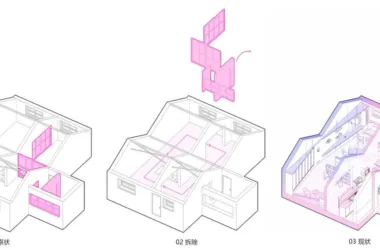
3. Lighting Constraints: Walls facing south, north, east, and west, along with skylights, were removed to maximize natural light. Sandwich areas on the east and west sides are positioned within the building’s inner ring to ensure ample glass area for daylight.
4. Area Restrictions: Mezzanines and additional floors were added to provide adequate classroom space.
5. Environmental Limitations: Due to adjacent building obstructions on the north and west, techniques like spatial setbacks and indirect lighting increase illumination in shaded areas.
6. Functional Flexibility: Spaces are designed for multifunctional use.
7. Cost Constraints: The design emphasizes simplicity, realism, and natural elements focused on functionality. Form follows function, with interiors shaped by architecture, and a contrasting interior design approach to maintain low costs.
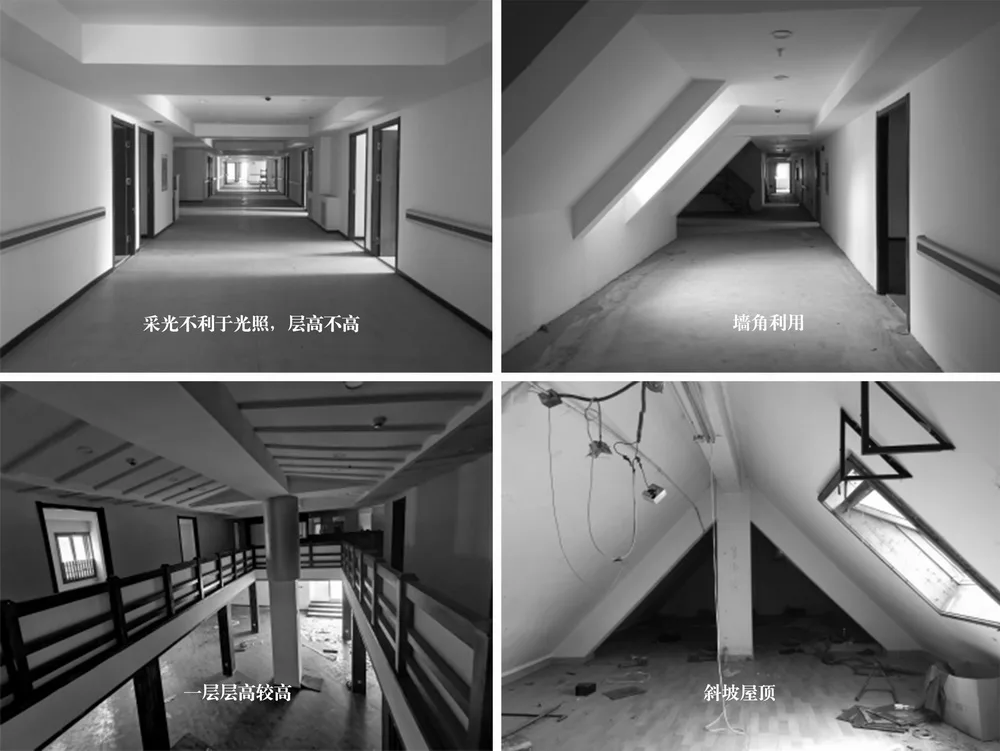
△ Original Challenges
Indoor Space Renovation
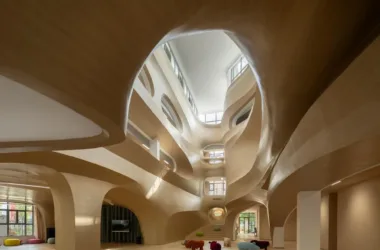
By reimagining the design language, the designers aimed to transcend conventional spatial regularity. They leveraged the building’s inclined structure and natural lighting to introduce daylight into interiors naturally. Curved walls soften boundaries between zones, creating visual interest through interplay of light, shadow, materials, and collective architecture. Warm wood tones cultivate a calming atmosphere, offering children a comforting and imaginative space. Gentle sunlight and home-like warmth provide reassurance and inspire creativity.
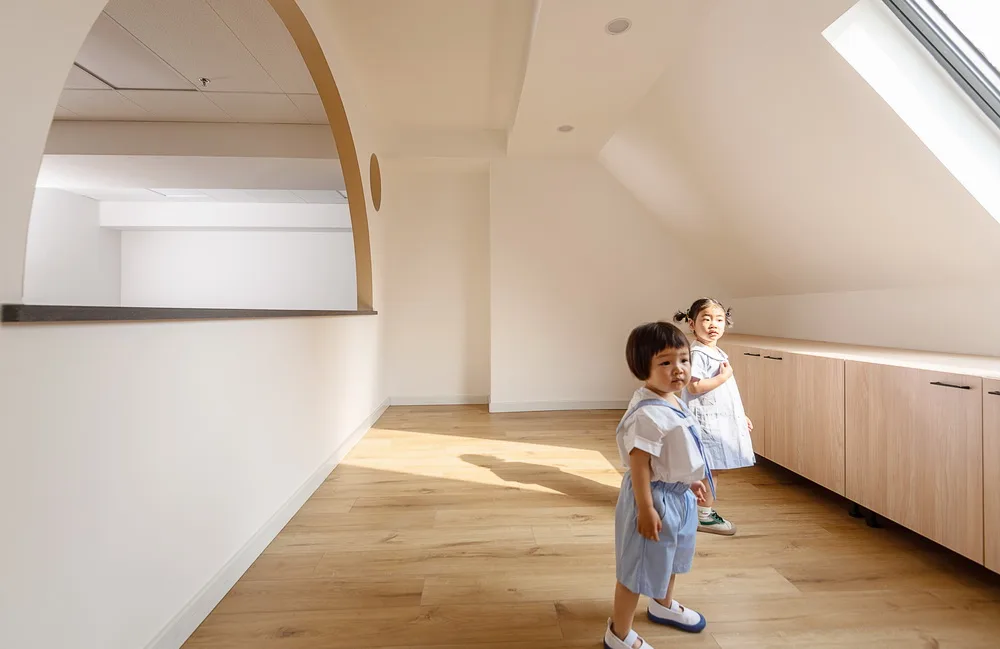
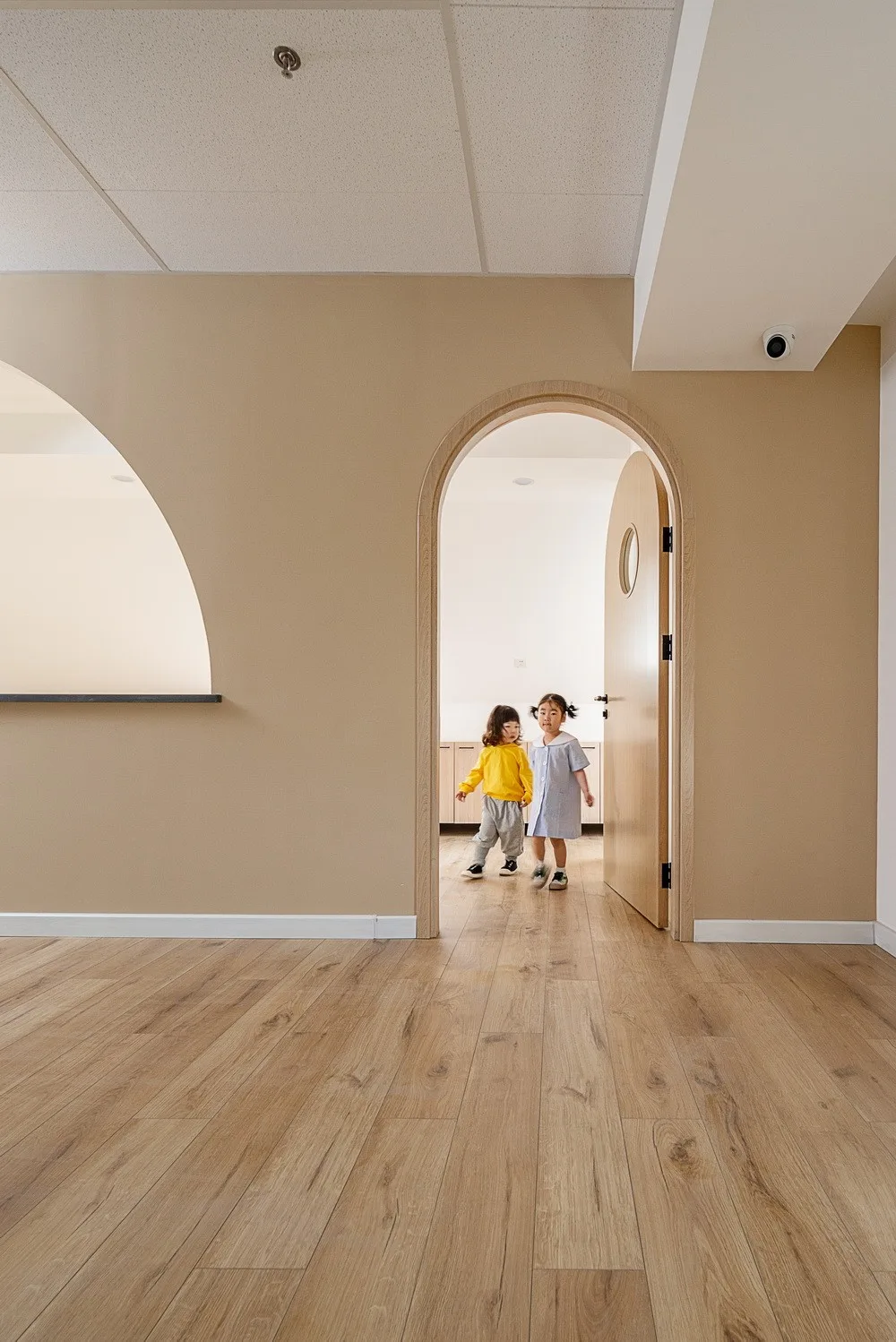
Light leaves its trace silently throughout the day. This project employs diverse spatial dimensions to inspire children’s thinking and growth. Natural light diffuses through windows, filling the space with brightness.
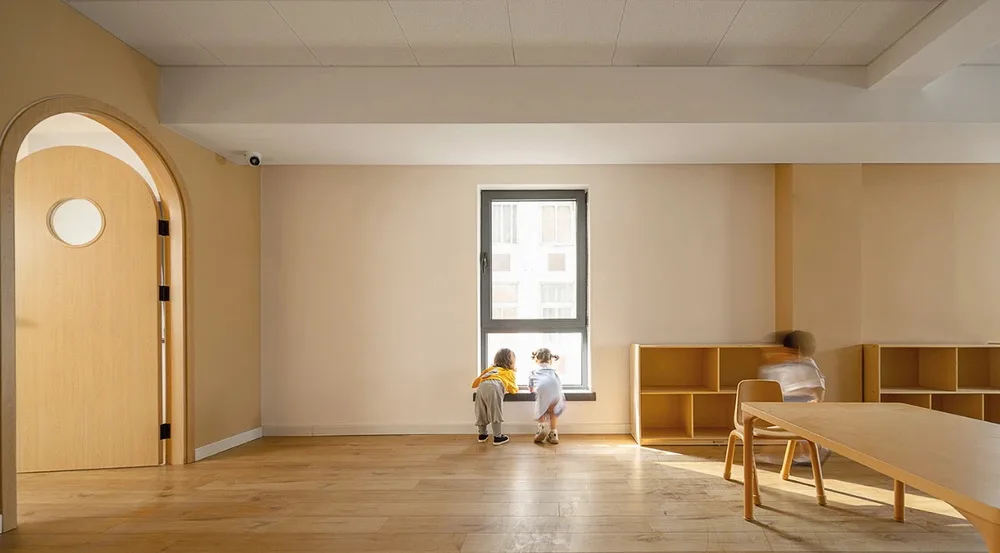
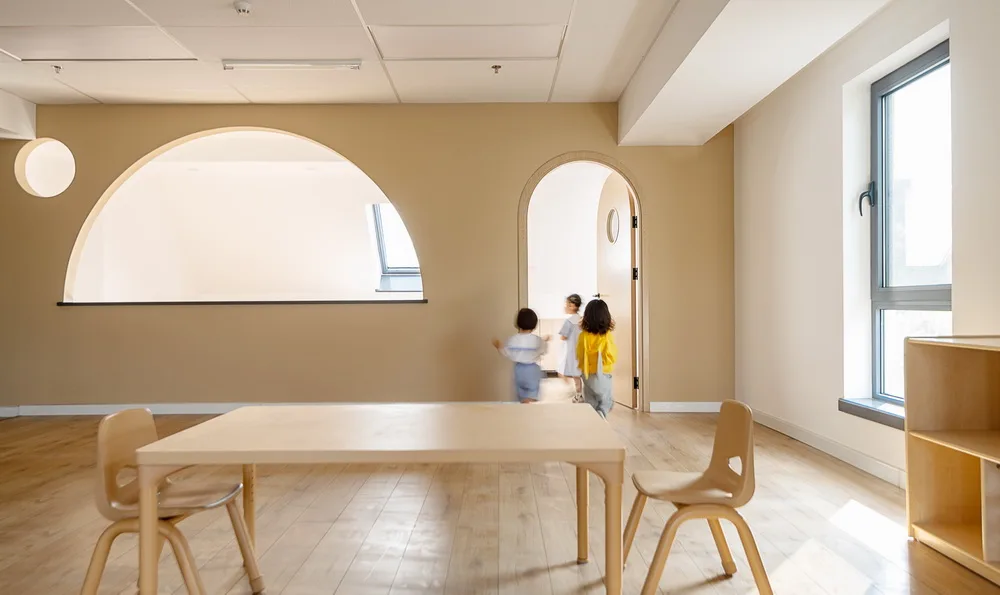
Prioritizing children’s physical and mental health, the layout divides the original space into two parts: classrooms at the front to maximize sunlight, and an expanded open area at the back to increase air flow and natural light. Geometry and curves reshape the space into zones that encourage natural exploration and emotional development.
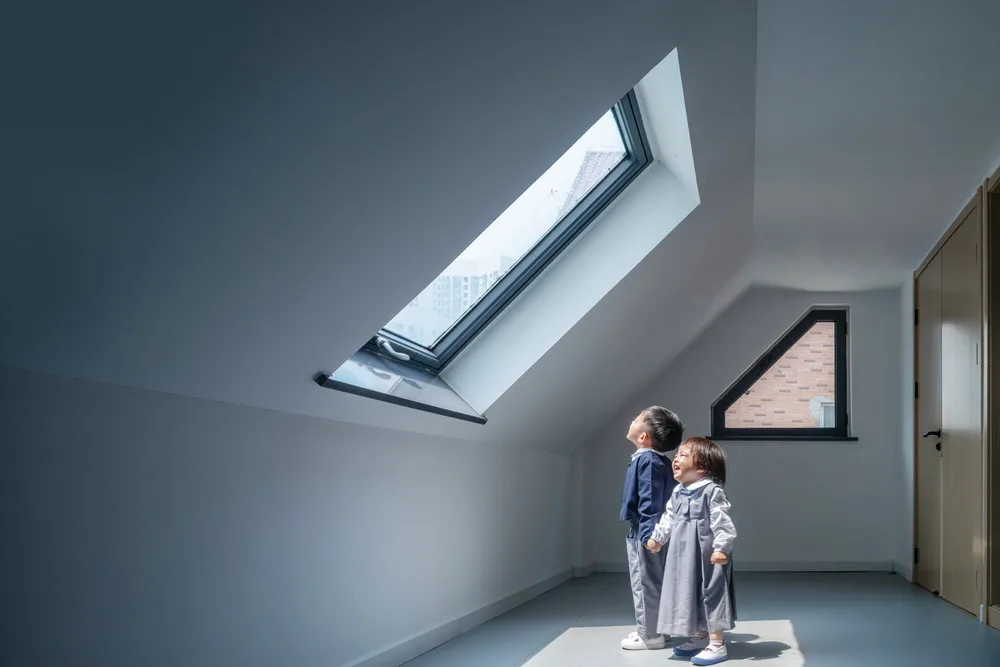
Family-Style Atmosphere
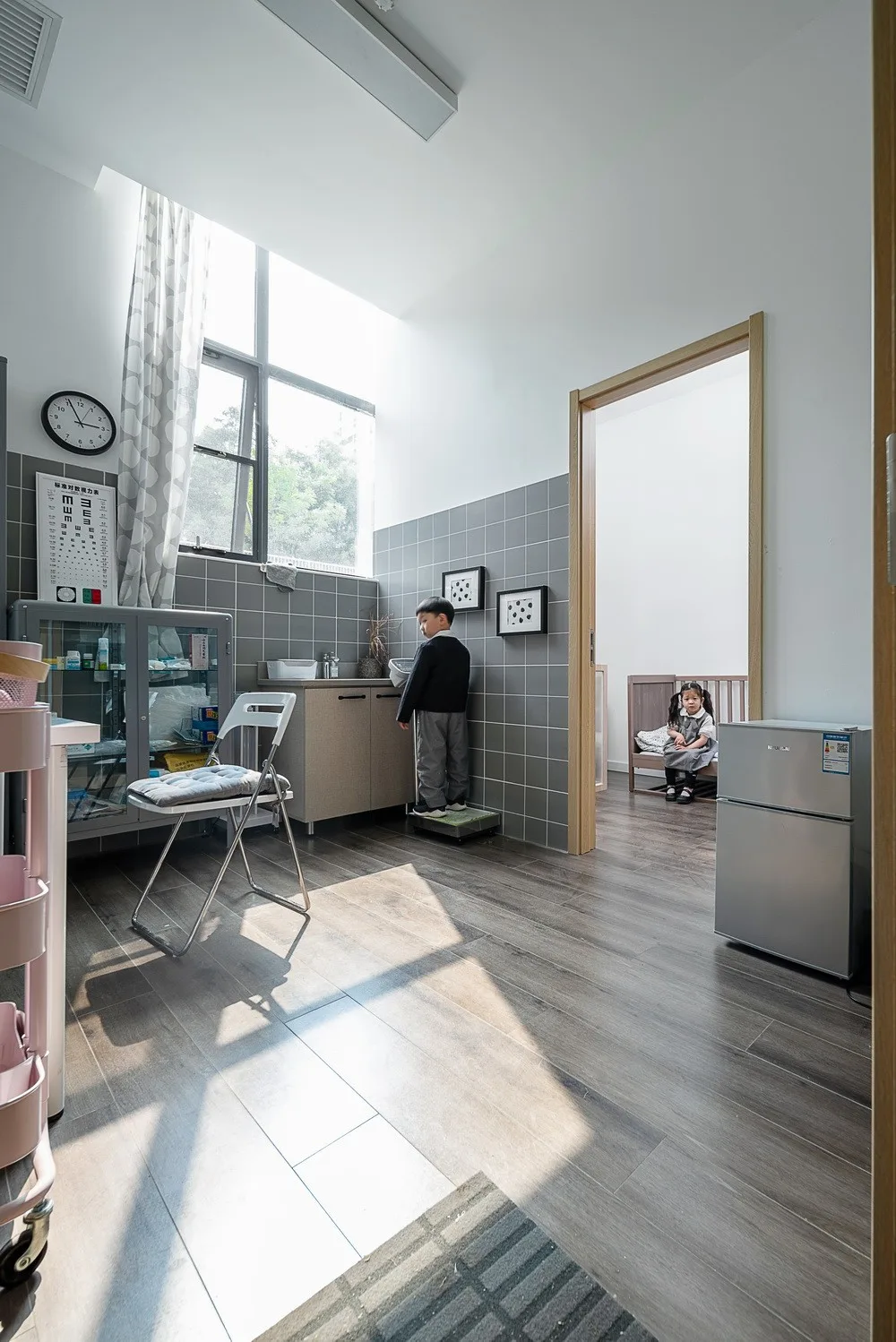
Safety is paramount in kindergarten design. To prevent children from injuring themselves on sharp edges, curved spaces were integrated throughout. Doors, windows, and structural walls combine straight and curved lines, significantly softening spatial edges.
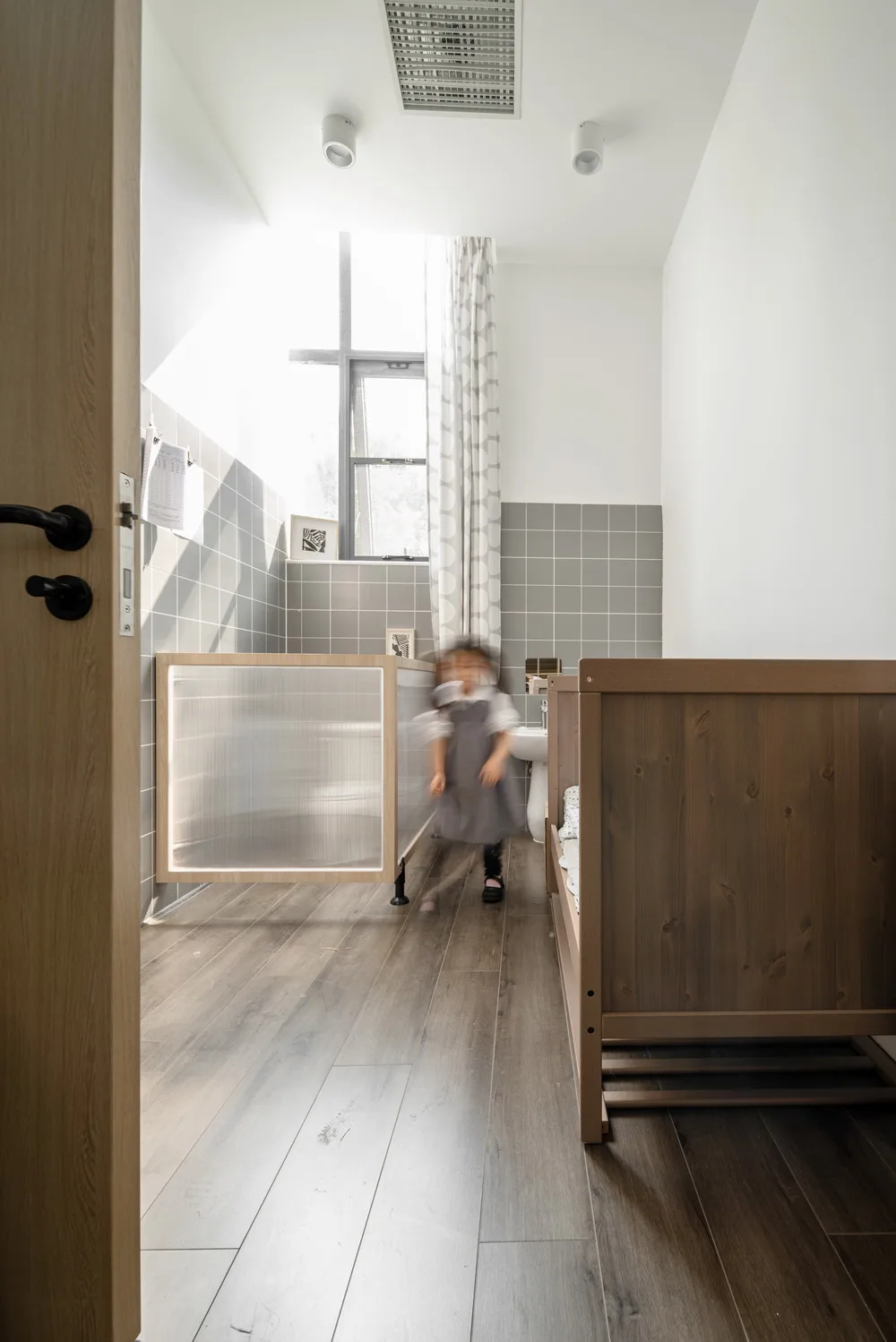
Wooden doors, windows, and furniture, complemented by wall surfaces that work with natural light, create a warm and harmonious family atmosphere. This design fosters a feeling of clarity and purity, balancing spatial geometry with fluidity.
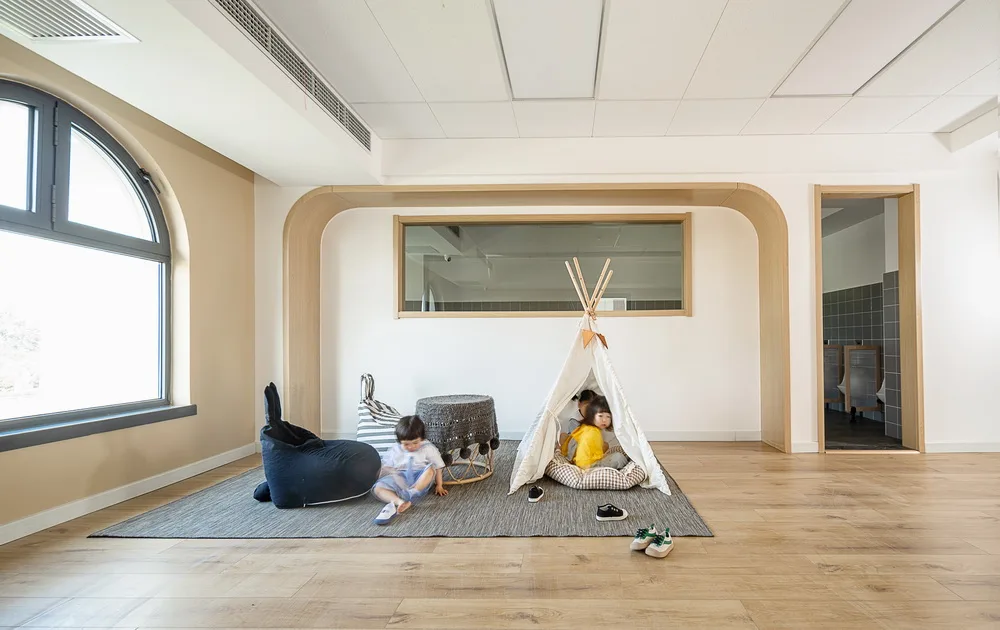
The color palette focuses on natural wood tones and sophisticated grays, employing a simple, warm, and powerful design language that conveys sustainable environmental values while offering comfort suited to children’s scale and learning needs.
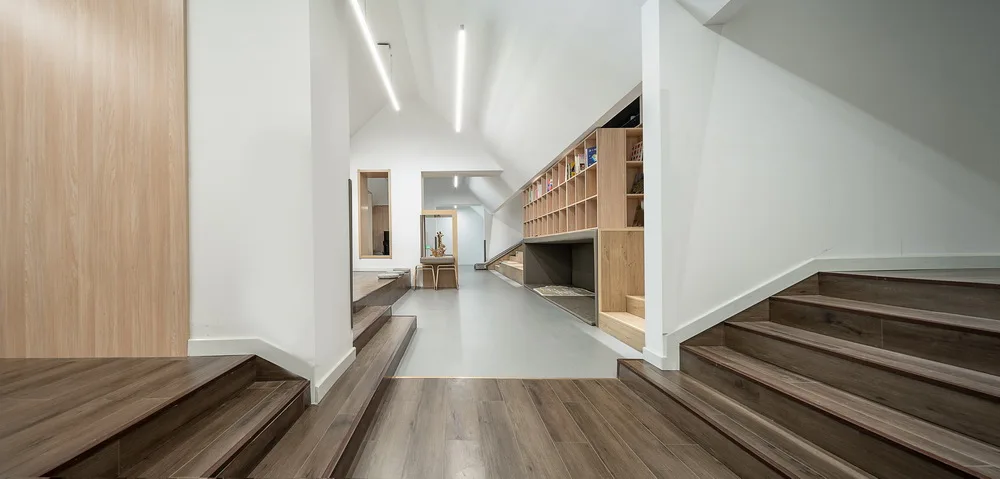
Regarding details, the designer selected child-friendly materials and customized furniture sizes to fit children of different ages. All power outlets and switches are placed at heights inaccessible to children, meeting storage needs and aligning with the project’s spatial characteristics.
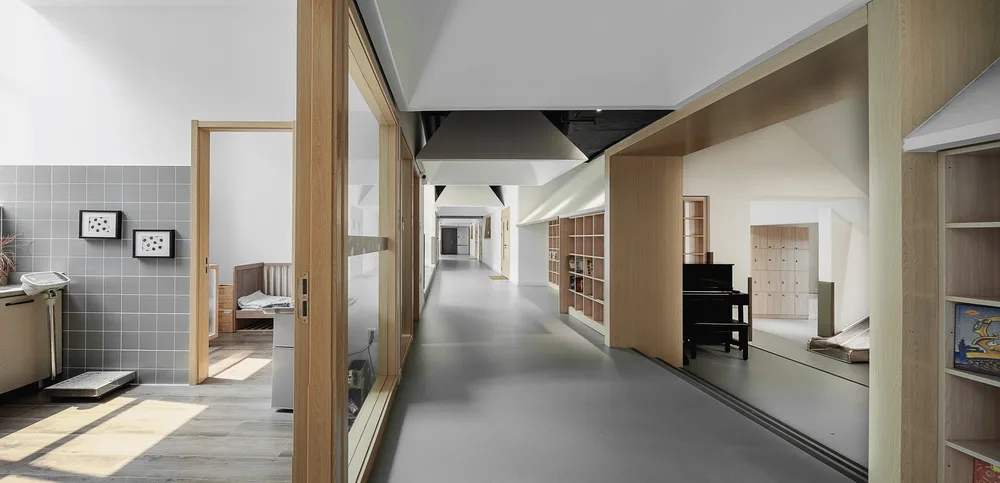
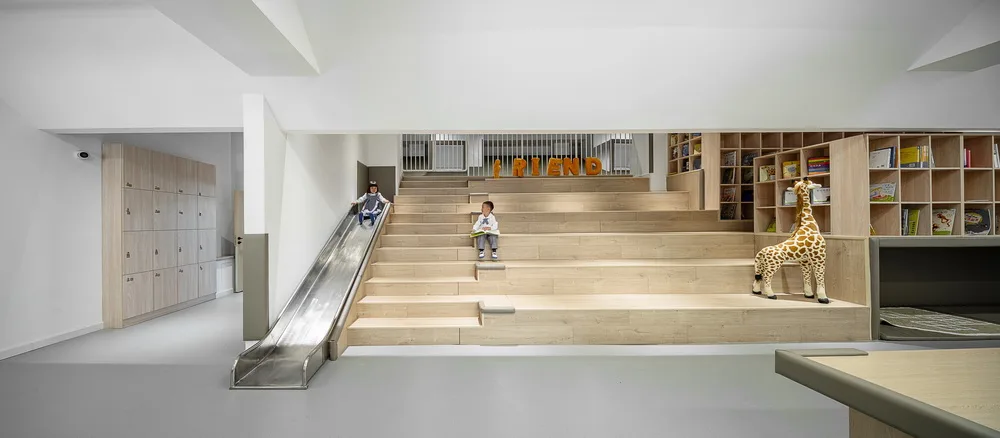
Reading Area
The children’s library is designed for flexible use, connecting different classrooms seamlessly. A large slide at the entrance draws attention, inviting children to explore, discover, and create their own engaging spaces and vivid experiences without limitations. The overall space is simple yet detail-focused, carefully considering children’s feelings and safety while providing clear boundaries.
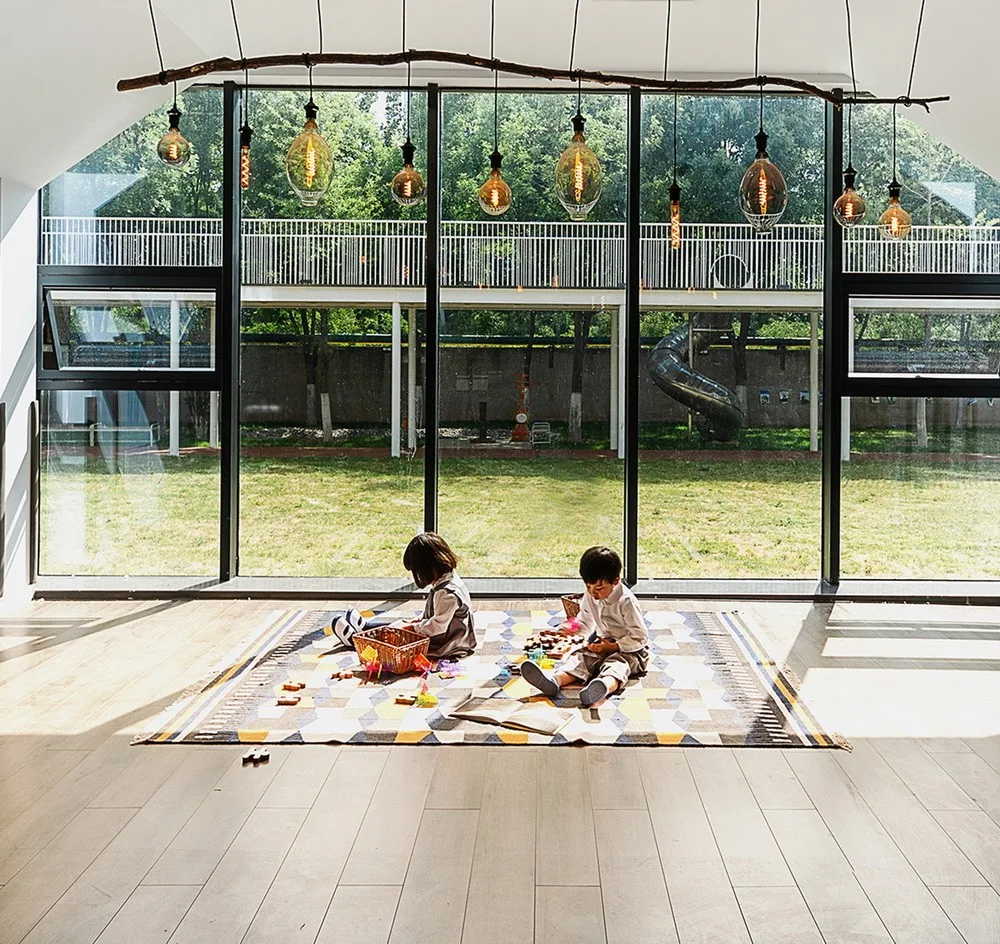
Large Glass Windows Bring in Abundant Natural Light
Floor-to-ceiling glass expanses make indoor spaces feel open and bright, connecting indoors with the outdoors. The absence of clear boundaries opens up endless possibilities, encouraging children to observe their surroundings closely and fuel their curiosity.
© DIKA
Technical Drawings
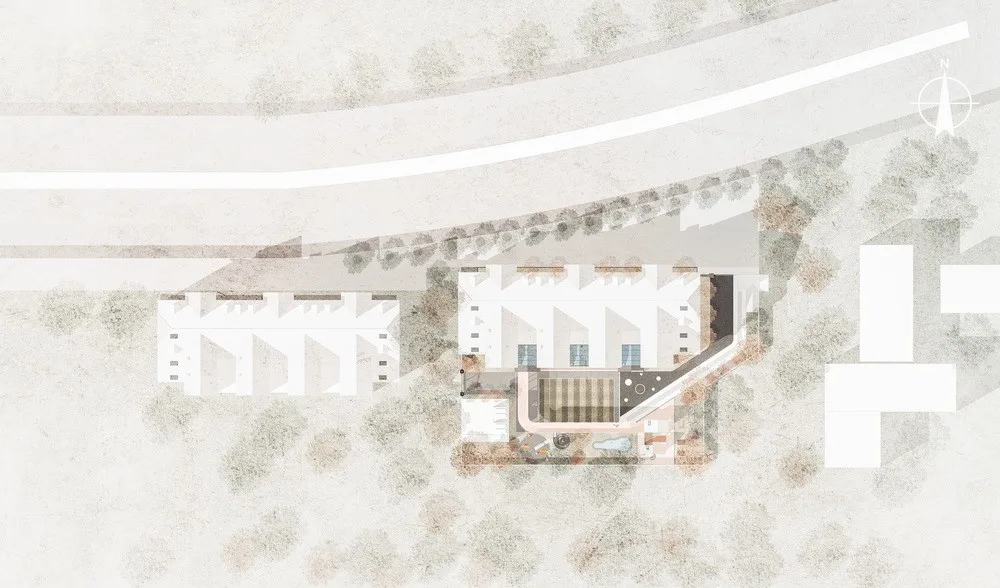
△ Plan View
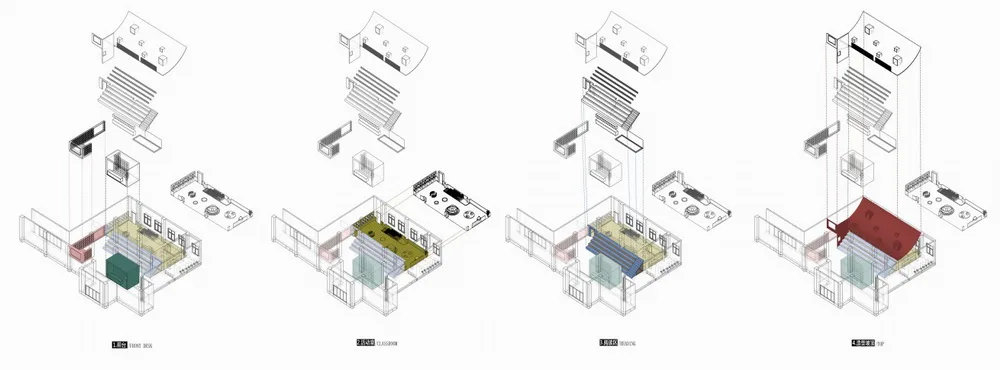
△ Axonometric Diagram
Project Information
Client: Tianjin Good Friend Forest Kindergarten
Location: Tianjin, China
Area: 4,000 square meters
Chief Designers: Yuji Ouchi, Jiabin Tian
Design Team: Wang Mudan, Mei Peiwen
Construction Drawing Development: Wang Peng, Li Qiang
Rendering Development: Li Qiang, Cui Yingnan, Tu Xueliang, Wang Dongping
Photographer: Wang Sixun
Videographer: Zhang Qi












Must log in before commenting!
Sign Up