
Constructing Buildings to Form Mountains, Retreating from Platforms to Shape the Landscape
The advent of the Internet era has revolutionized traditional economic development models. This transformation is rooted in networking, which increasingly connects markets and enterprises. Haier Group embraces this shift by completing its transformation based on a comprehensive understanding of the Internet age’s characteristics. In this context, concepts such as “interconnection,” “interaction,” and “sharing” serve as foundational inputs in designing the Haier International Plaza project.
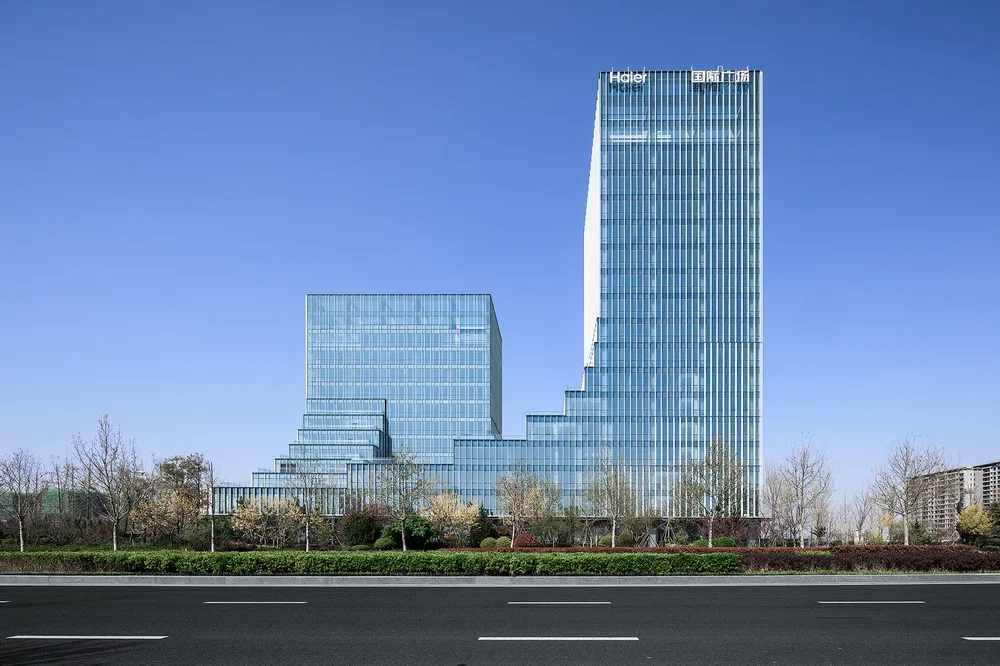
△ Daily urban road scenery © Xunmei Media
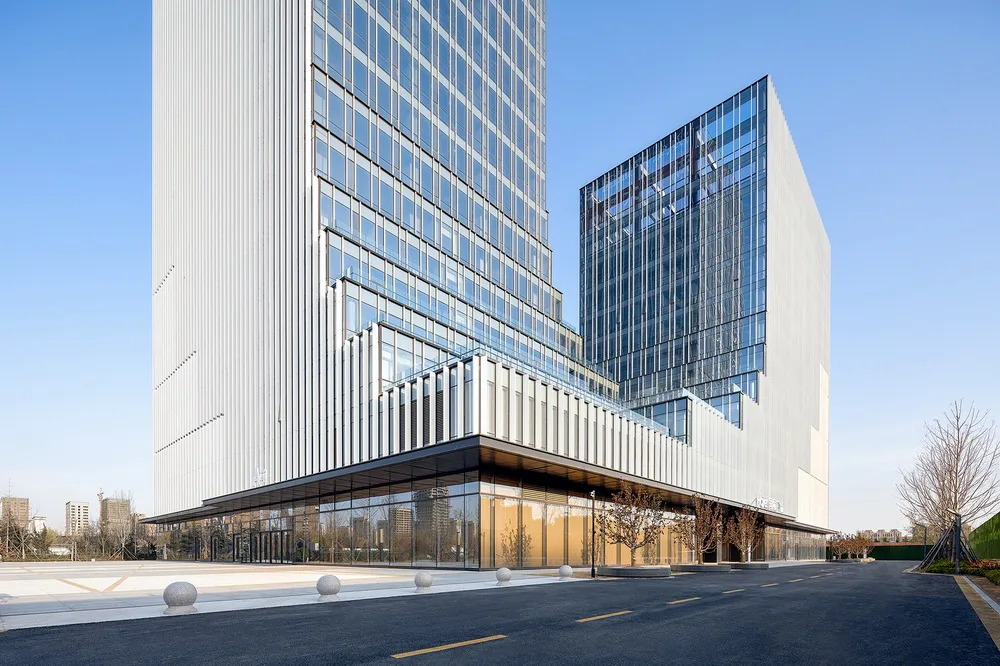
Comparison between virtual and real facades © Xunmei Media
Location
Jimo, a new district in Qingdao, holds great promise for future development. Haier International Plaza is situated in the Jimo Chuangzhi New Area, adjacent to the major urban roads Zhuangwu Road and Mingda Road. To the north, it borders the city’s public green open space. The challenge was to design a modern office building that is both iconic and meets Haier Group’s evolving development needs within the restricted height limits.
Besides creating a comfortable office and communication environment for users, the design also offers abundant outdoor activity spaces for the surrounding community.
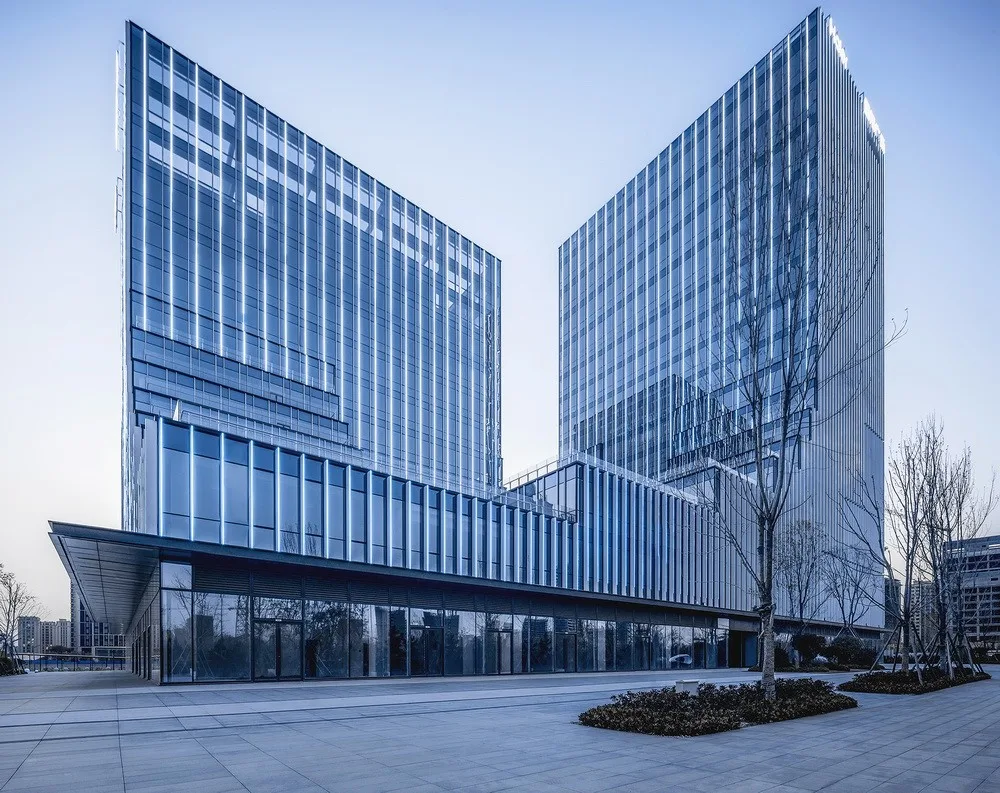
△ Architectural facade © Xunmei Media
Twin Towers Concept
The twin towers concept originates from urban design principles. The project is located on the spatial axis between the southeast corner of the Science and Technology Innovation Center and the northwest corner of the Water Park, marking a key gateway in the city. The visual corridor created between the twin towers highlights the urban spatial axis.
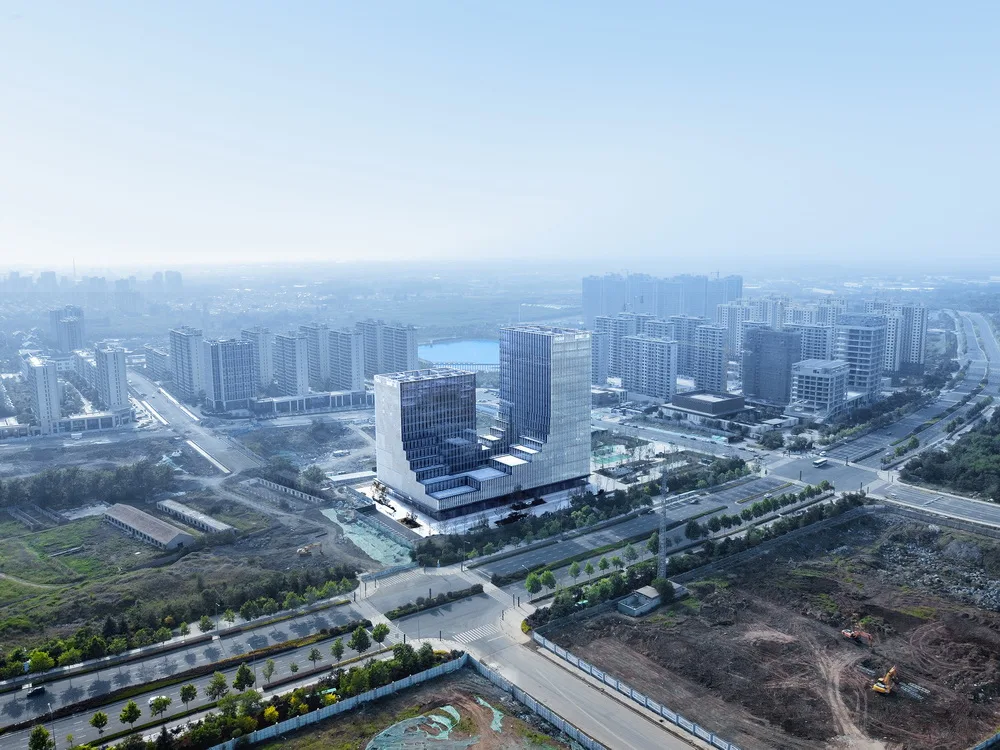
△ Visual corridor © DC ALLIANCE
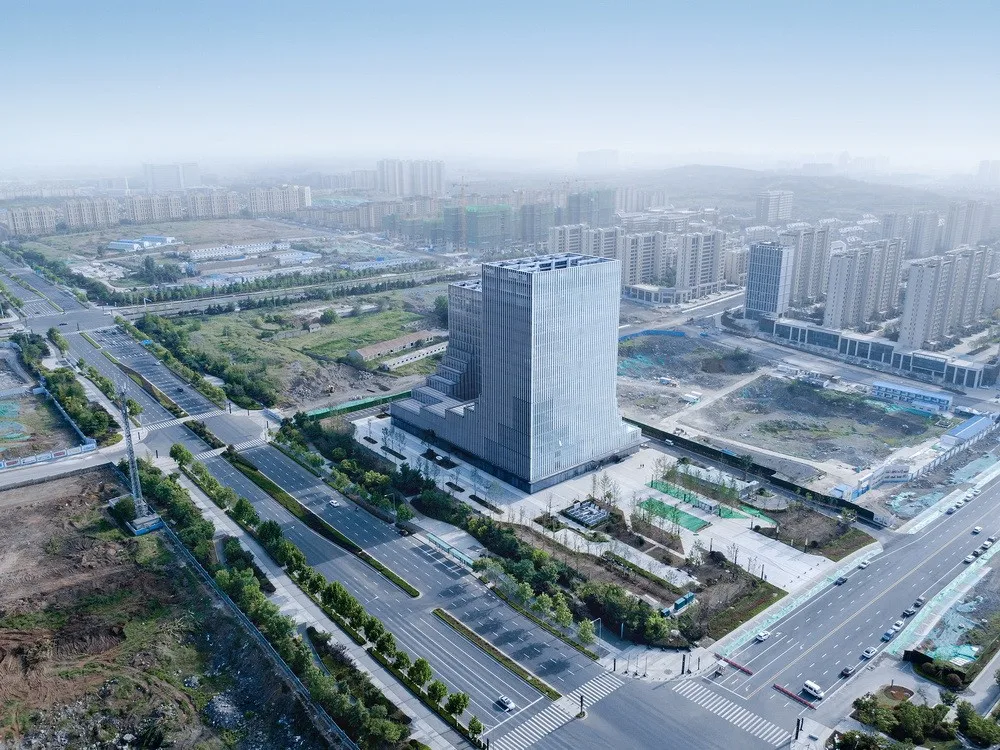
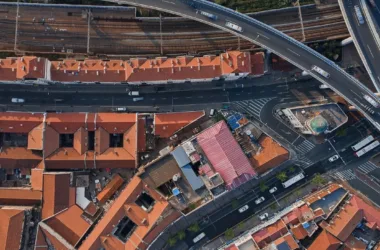
△ Bird’s-eye city view © DC ALLIANCE
The twin towers differ in volume, corresponding to varying urban road scales. The main tower, near Zhuangwu Road, is primarily leased out, maximizing views of the northern green space. The secondary tower, adjacent to Mingda Road to the south, serves mainly as a self-use building.
Designed to be separable yet interconnected, the two towers form a dynamic dialogue. Arranged staggered along the east-west axis, they minimize mutual shading and visibility interference while enhancing landscape views.
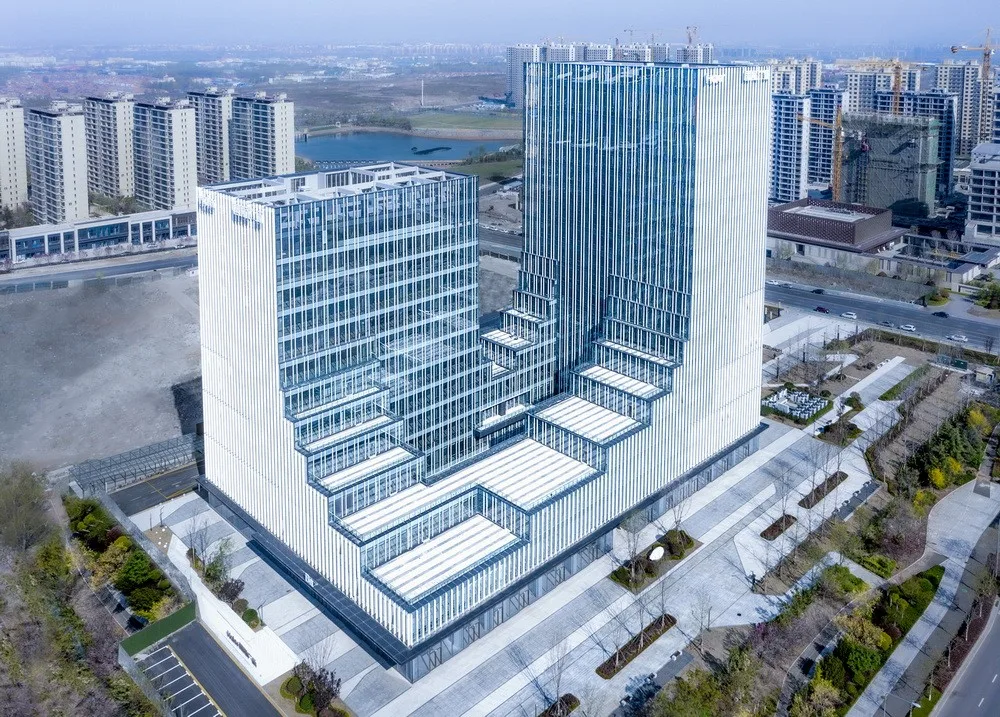
△ Relationship between twin towers © Xunmei Media
The podium plays a crucial role in architectural composition, managing how the towers meet the ground and relate to surrounding streets. Drawing inspiration from local hilly terrain, the towers ascend while retreating horizontally from three floors upwards, splitting into two independent volumes.
This strategy integrates shared, public, and open functional modules into a unified base, gradually separating into more private office spaces above.
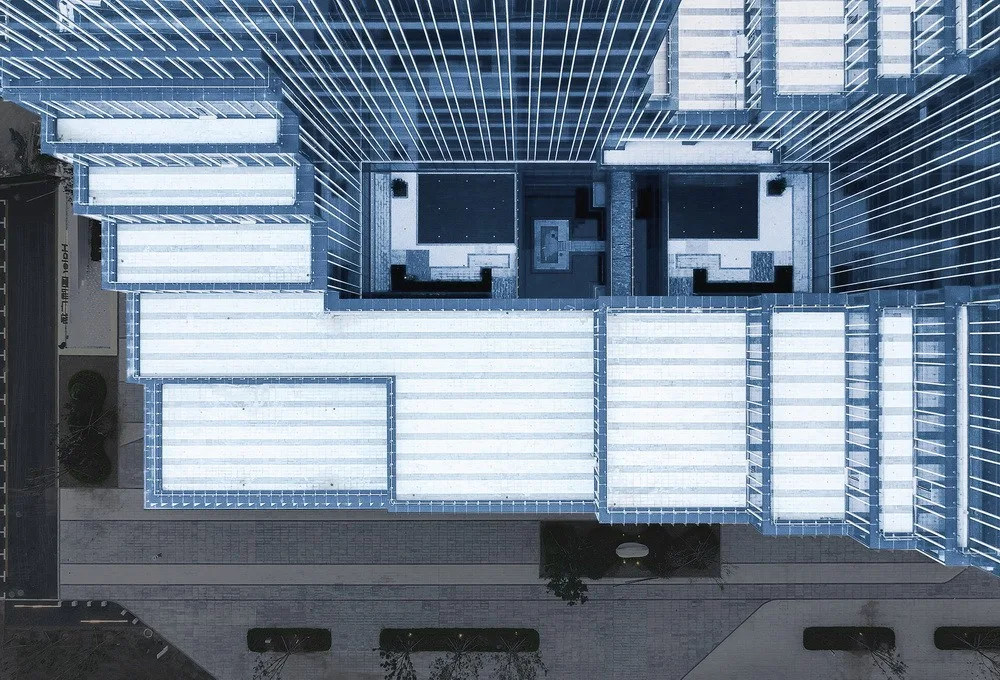
△ View of the central courtyard © DC ALLIANCE
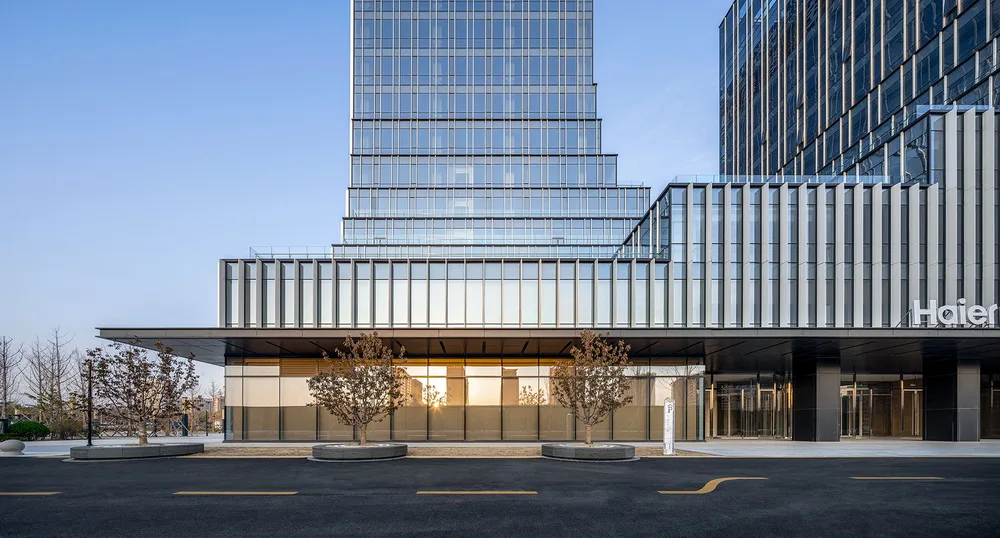
△ First-floor entrance © Xunmei Media
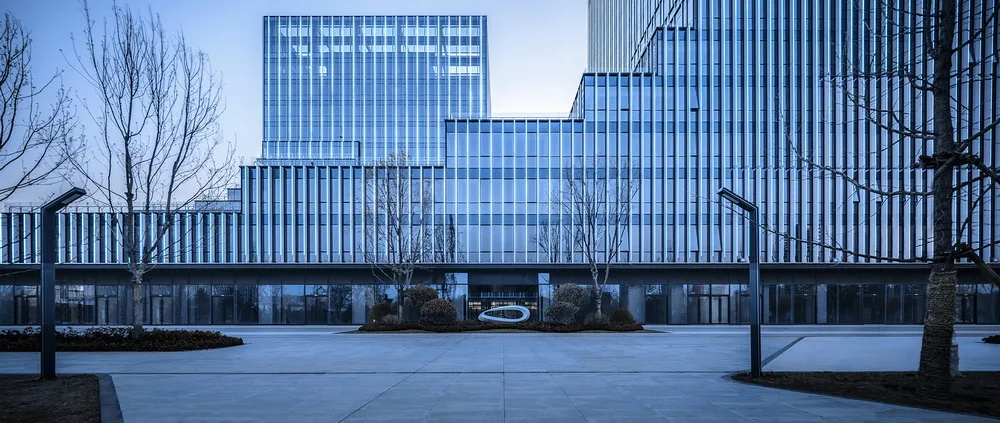
△ Gradual podium retreat © Xunmei Media
By softening the traditional podium concept, the design breaks from the conventional tower-base separation. Given height restrictions, a unified building volume strengthens the project’s identity.
The podium’s central section is recessed, expanding office spaces around an atrium. A sunken water courtyard allows natural sunlight to flood the interior, creating a natural, ecological, and comfortable workspace.
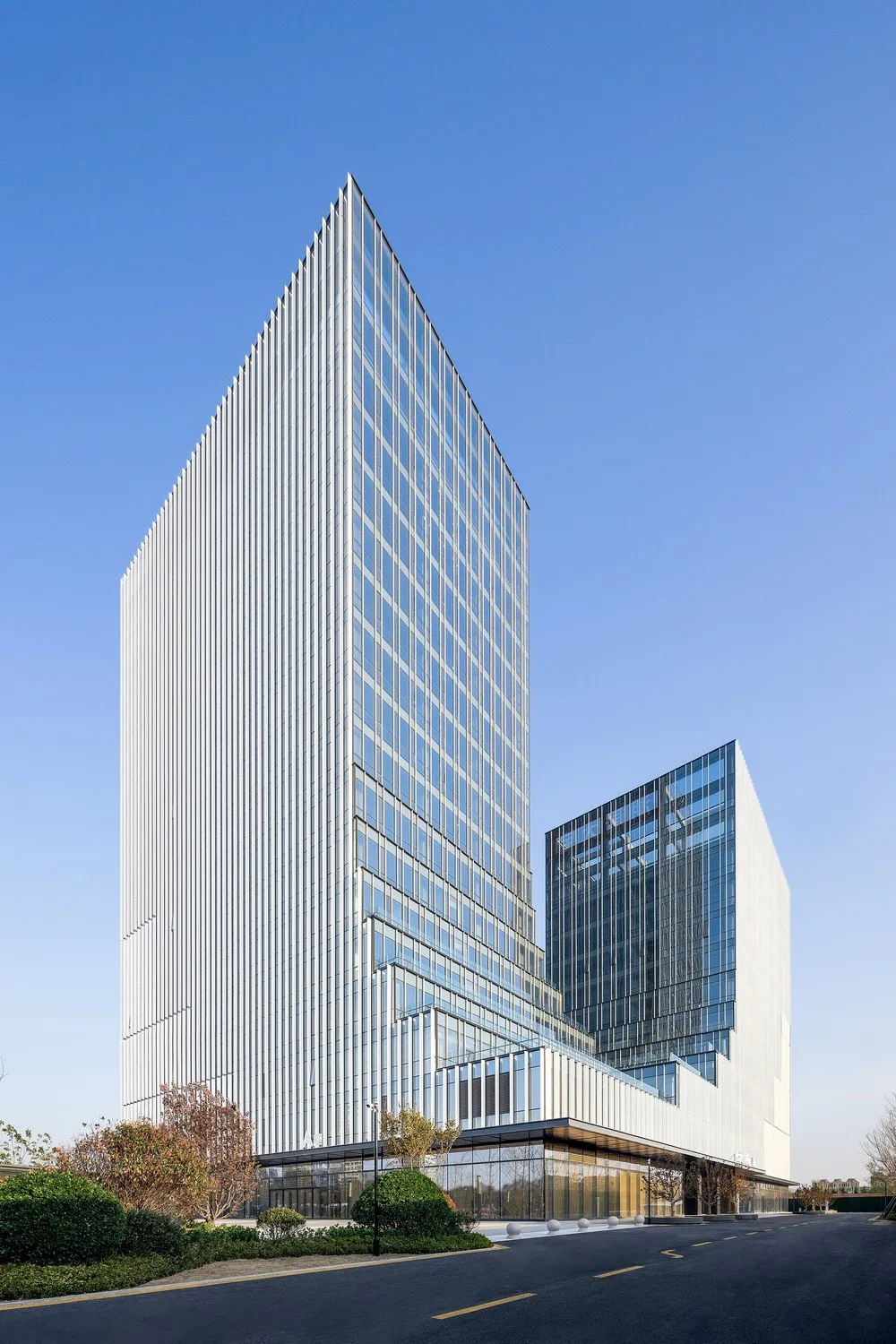
Pedestrian view at street corner © Xunmei Media
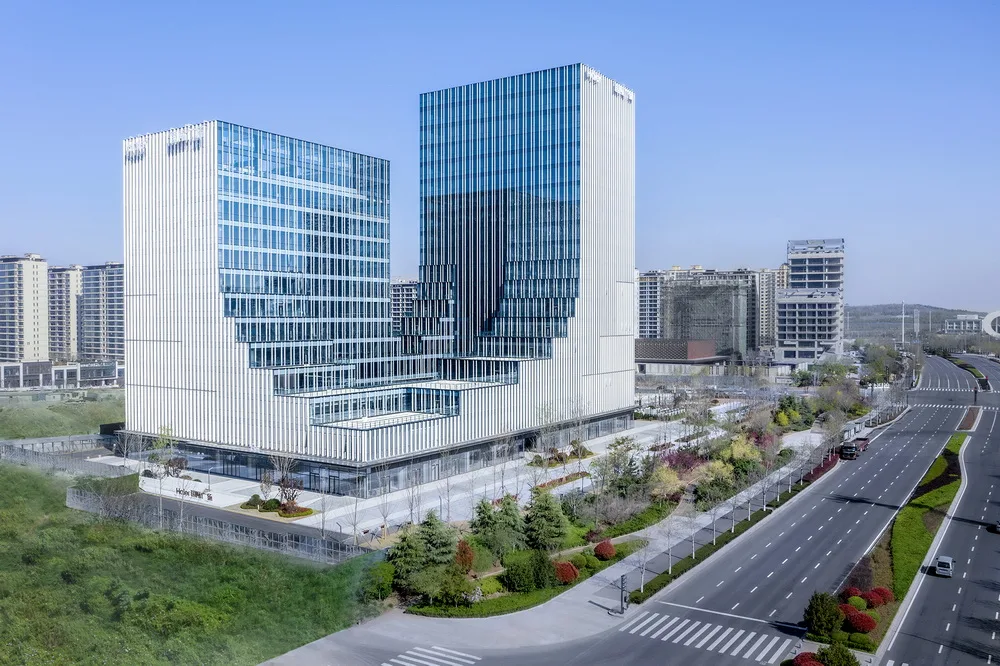
Overall bird’s-eye perspective © Xunmei Media
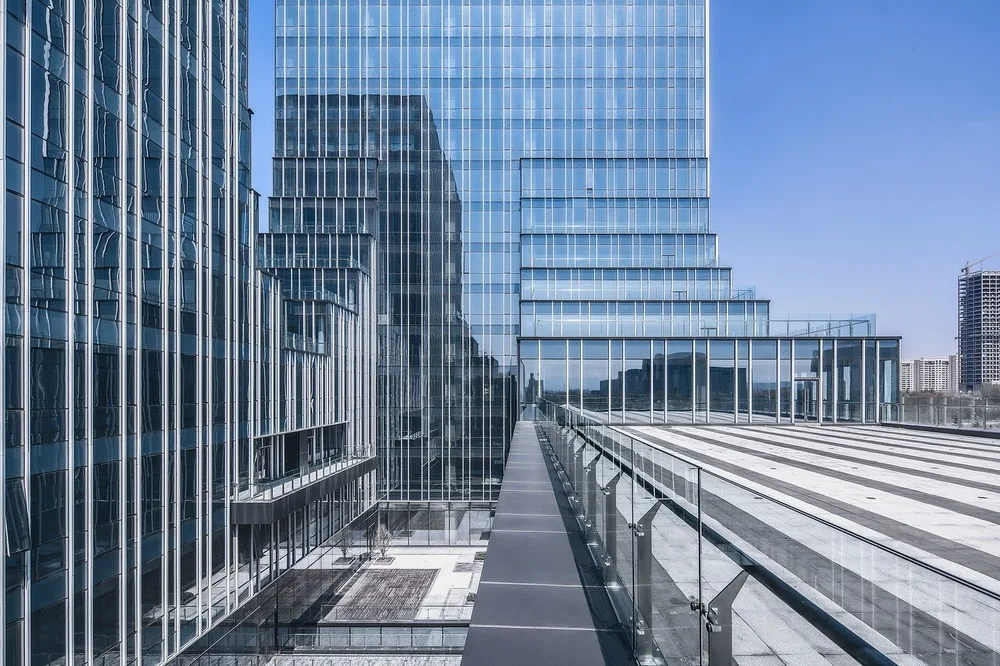
△ Terrace design © Xunmei Media
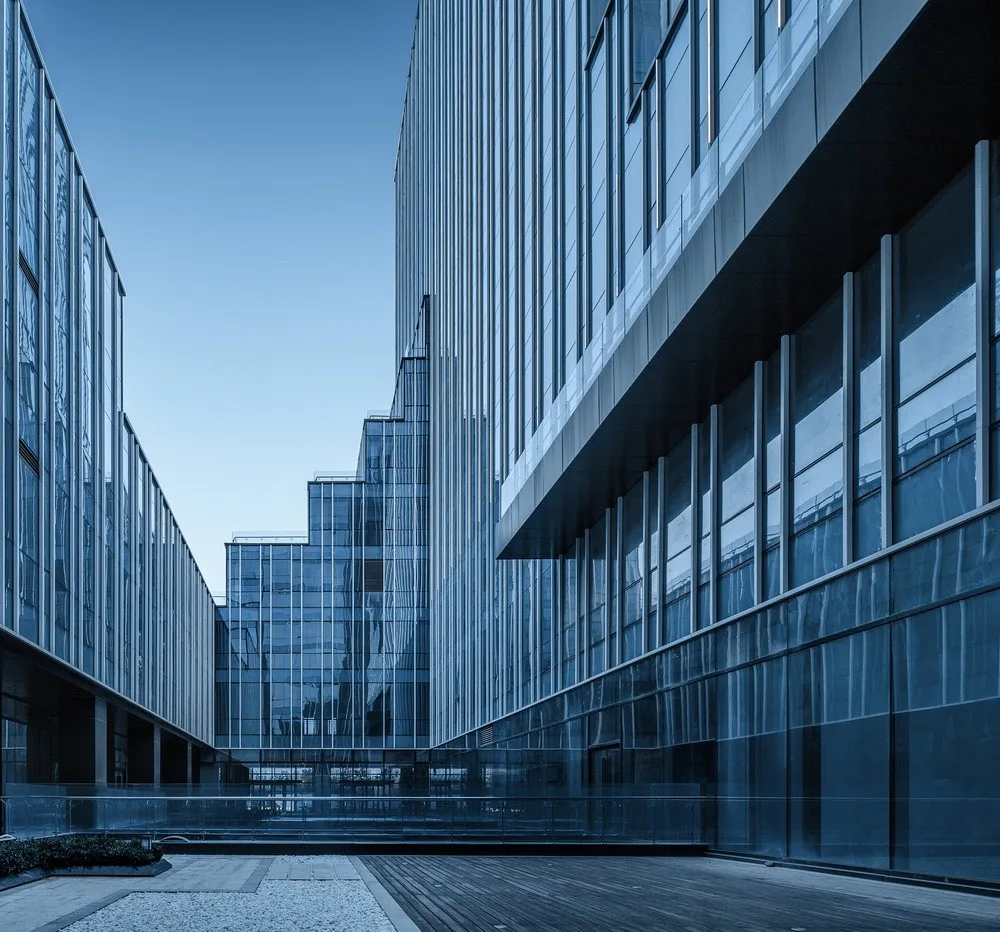
△ Interior view of central courtyard © DC ALLIANCE
Returning to Nature
In dense urban environments, the design aims to blur boundaries between office and life by incorporating terraces of various sizes through strategic setbacks. These terraces allow office users on different floors to enjoy natural environments, fostering communication and interaction.
This approach reflects the evolving spatial and formal needs of modern offices aligned with Haier’s development strategy.
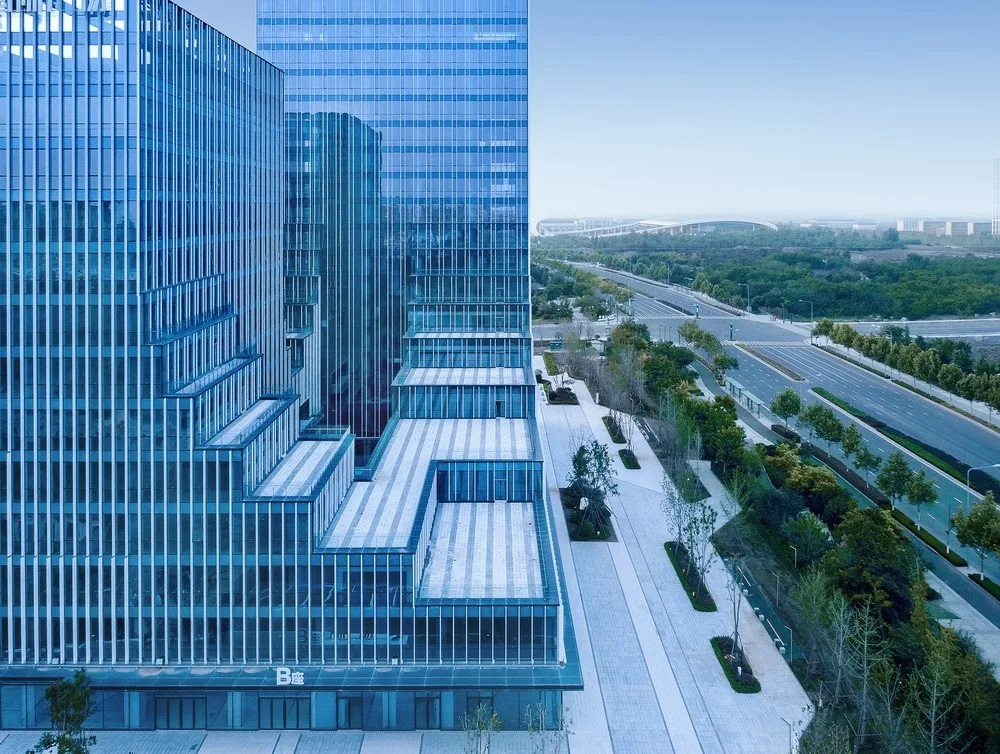
△ Varied terrace spaces and urban landscapes © DC ALLIANCE
The terraces activate the building’s fifth facade, injecting vitality and diversity into the cityscape. Additionally, the layered setbacks reduce the oppressive feeling often associated with large-scale high-rises at ground level.
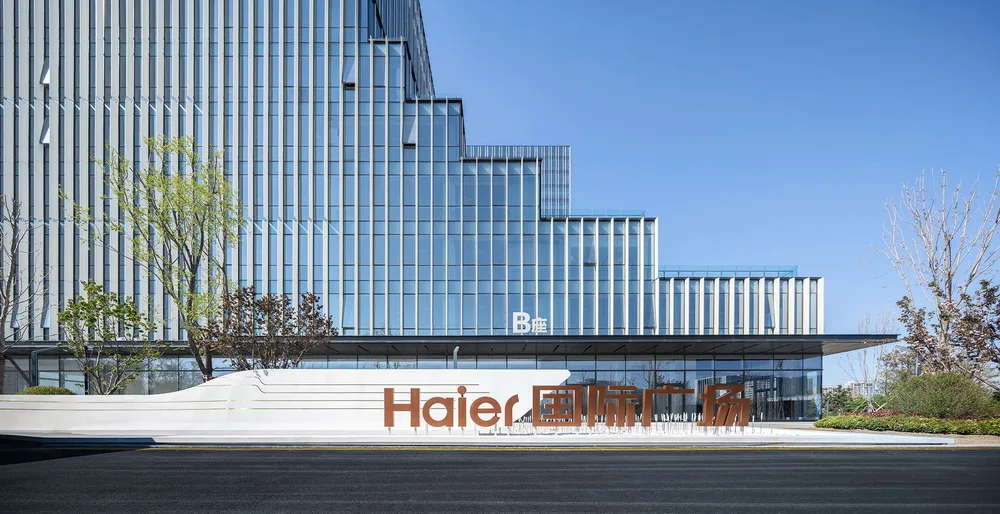
Dynamic skyline at main entrance © Xunmei Media
Solid and Void
The facade design carefully continues the theme of “upward growth,” wrapping the building in vertical grilles to emphasize height and volume.
The grille size and spacing vary along the urban-facing facade compared to the setback side. This contrast enhances the interplay between reality and illusion, creating distinct visual effects: a “surface”-oriented urban interface versus an “interior”-oriented landscape interface.
This design ensures unobstructed landscape views from office spaces while maintaining a cohesive and unified urban facade.
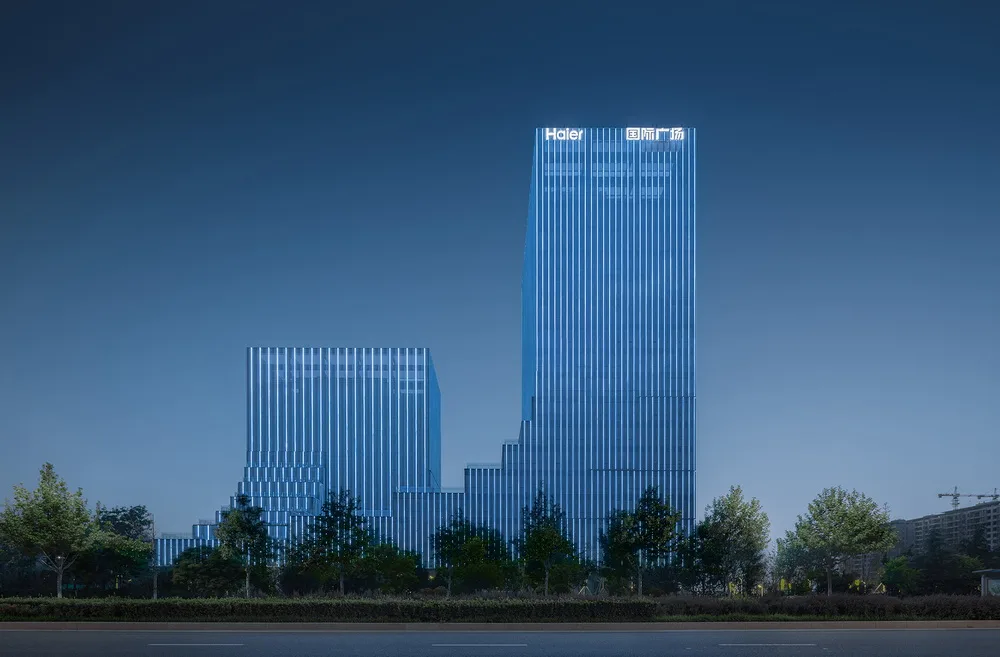
△ Night view of urban main roads © DC ALLIANCE
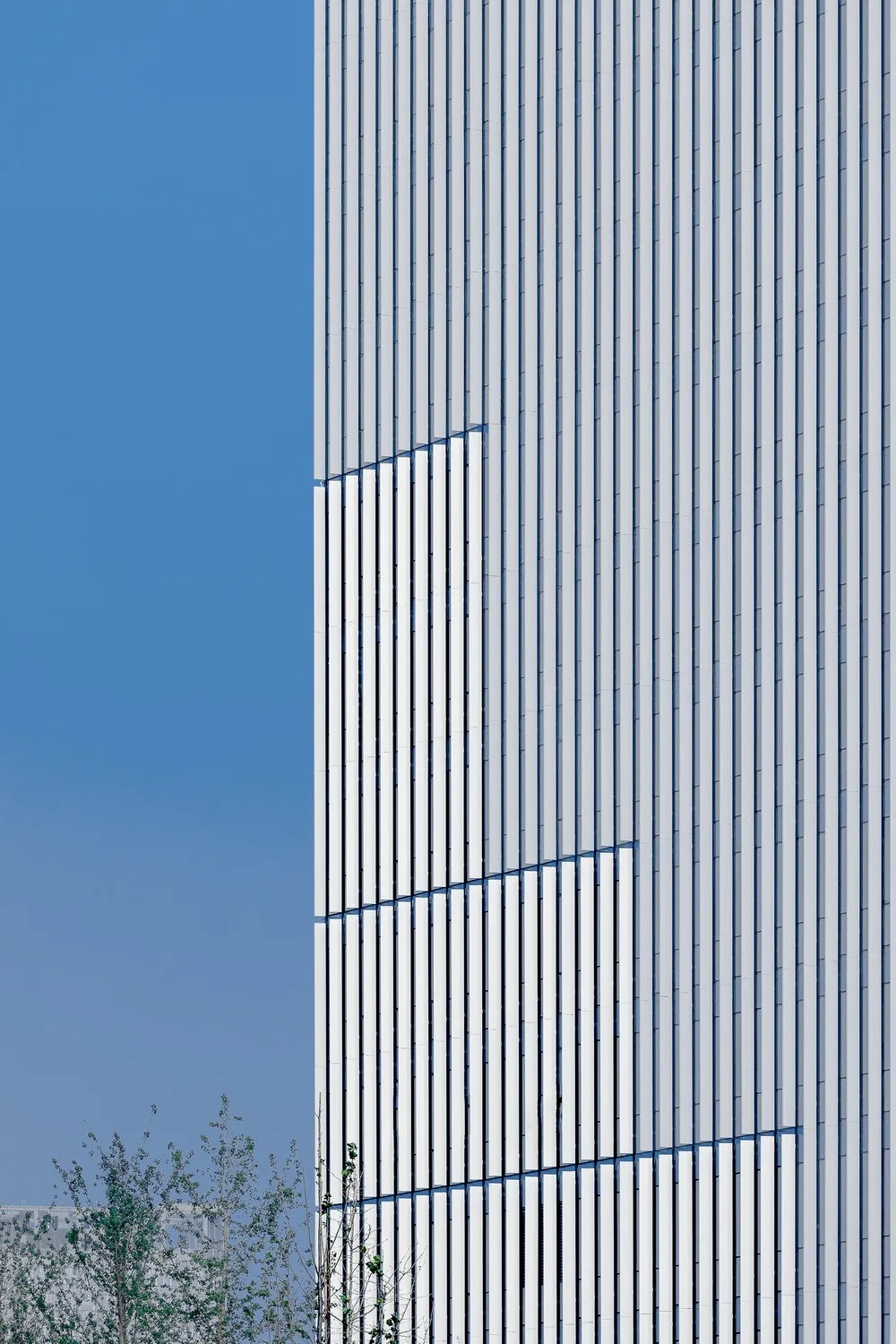
△ Facade grille details © DC ALLIANCE
The grilles at the corner base are angled deliberately to correct building proportions. Such attention to detail is essential in managing facade elements within simple geometric forms.
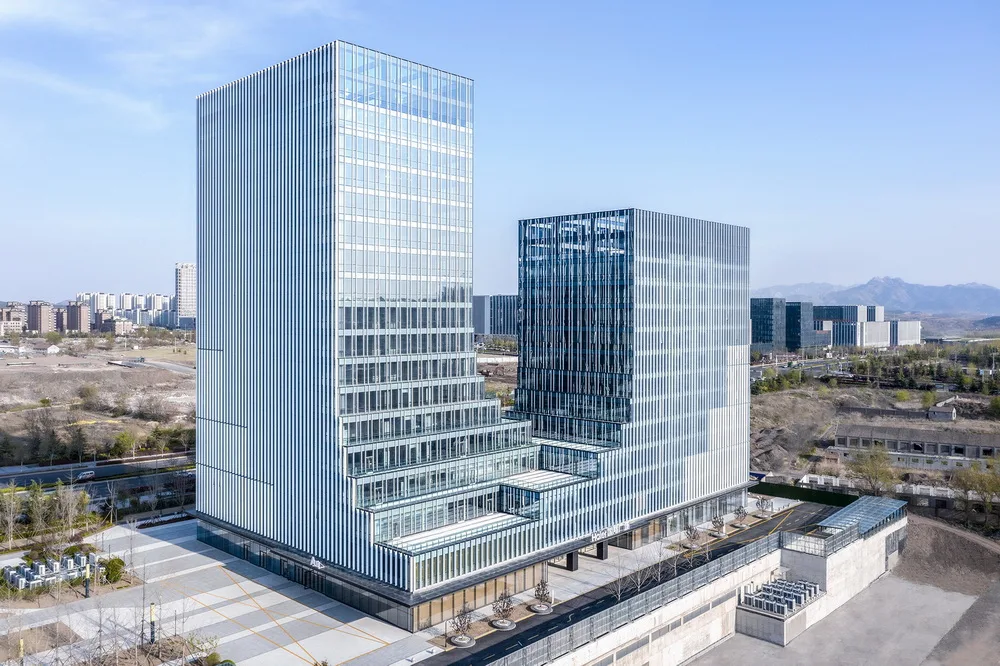
△ Corner grille treatment © Xunmei Media
The building opens its ground floor to the city with coffee shops, exhibition halls, and courtyards, while shared spaces such as entrance lobbies, restaurants, and lecture halls occupy the interior.
The functional “entity” and spatial “virtual body” intertwine within the volume, creating rich and diverse indoor environments.
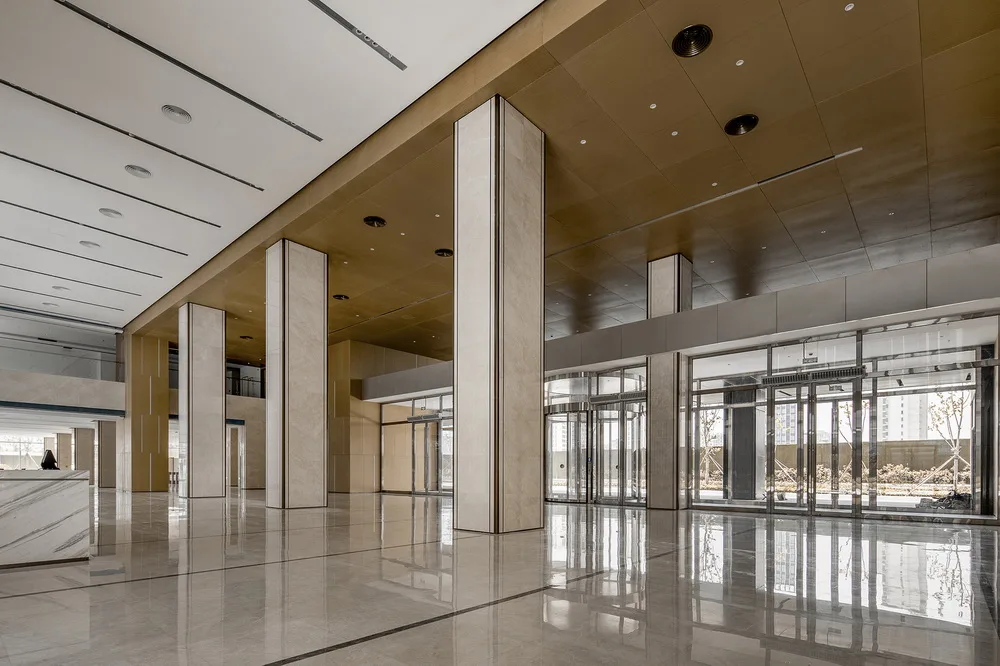
△ Entrance lobby © DC ALLIANCE
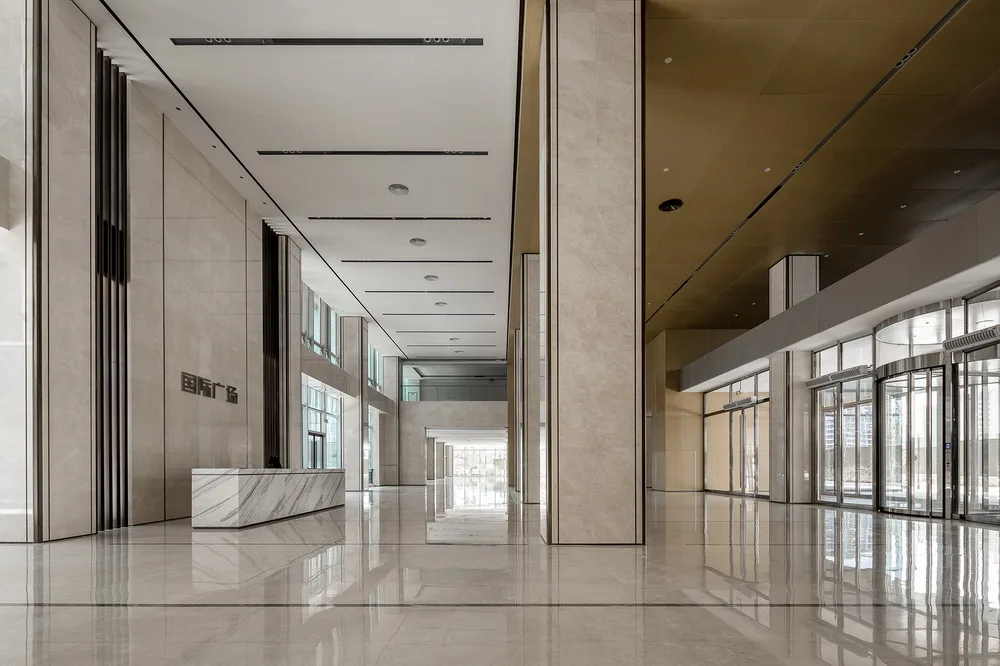
△ Entrance lobby © DC ALLIANCE
Technical Drawings
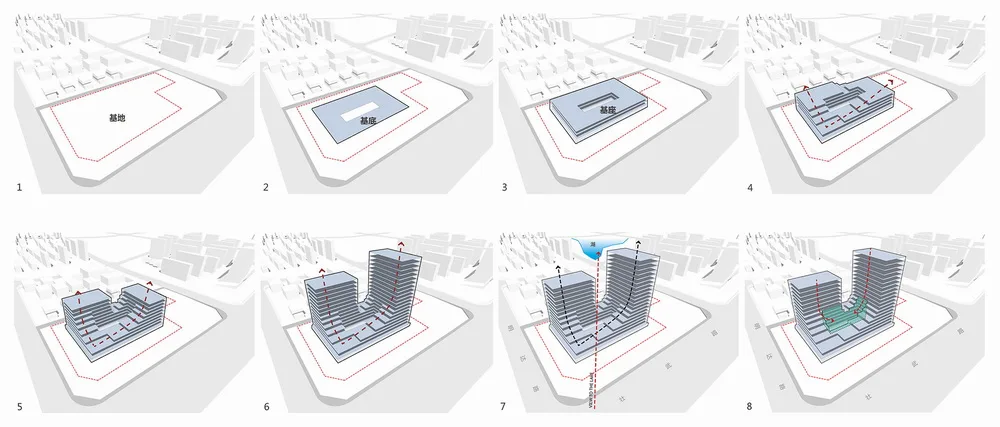
△ Block generation
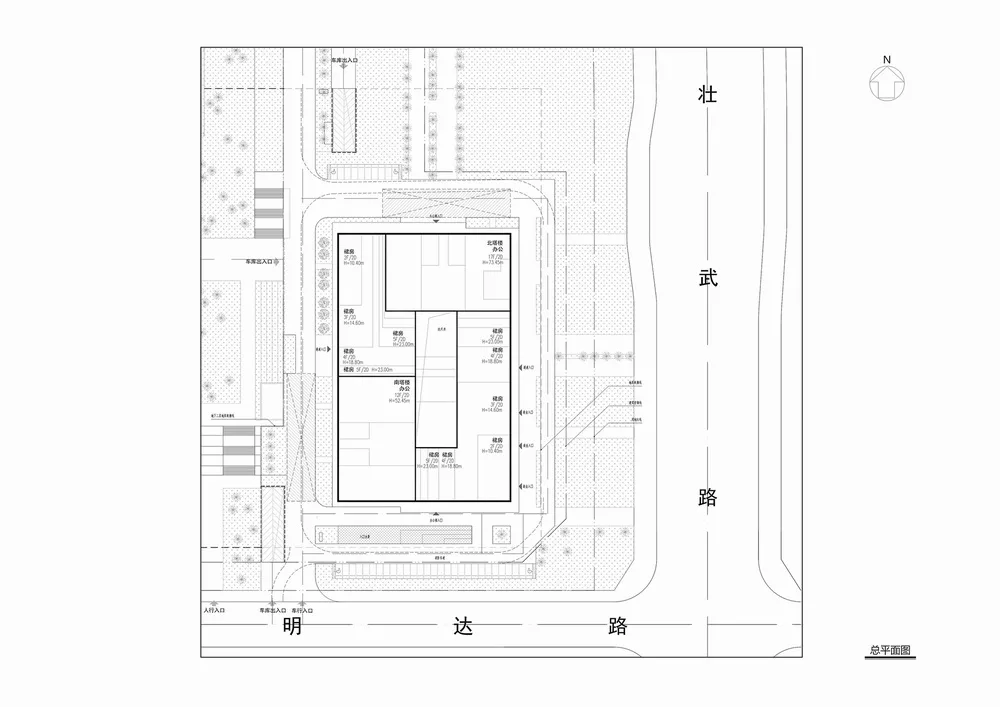
△ Overall site plan
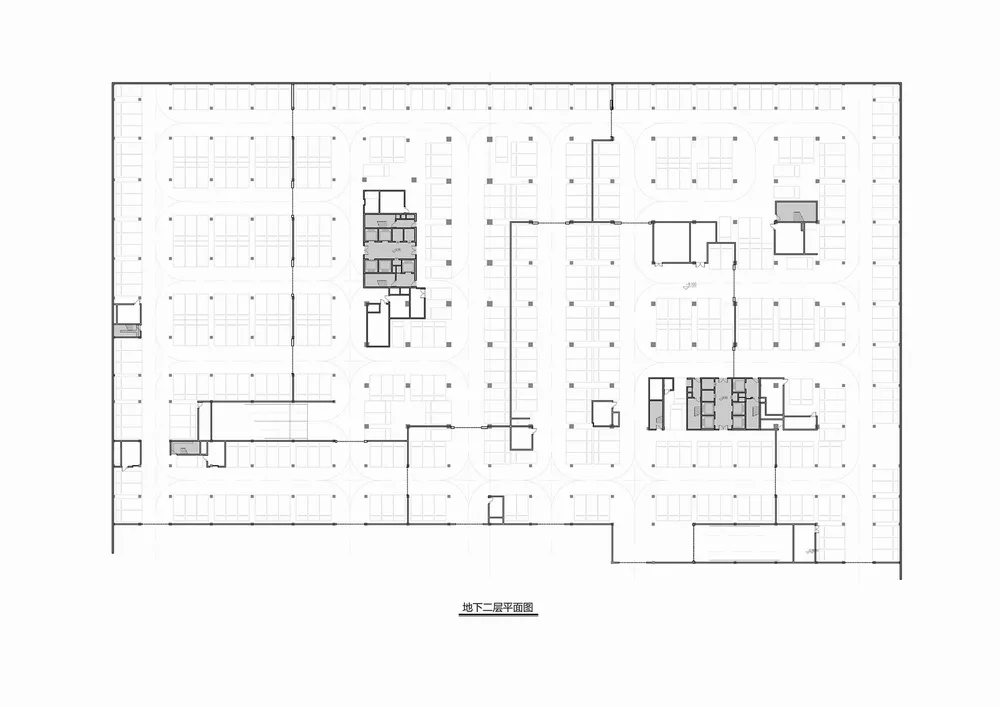
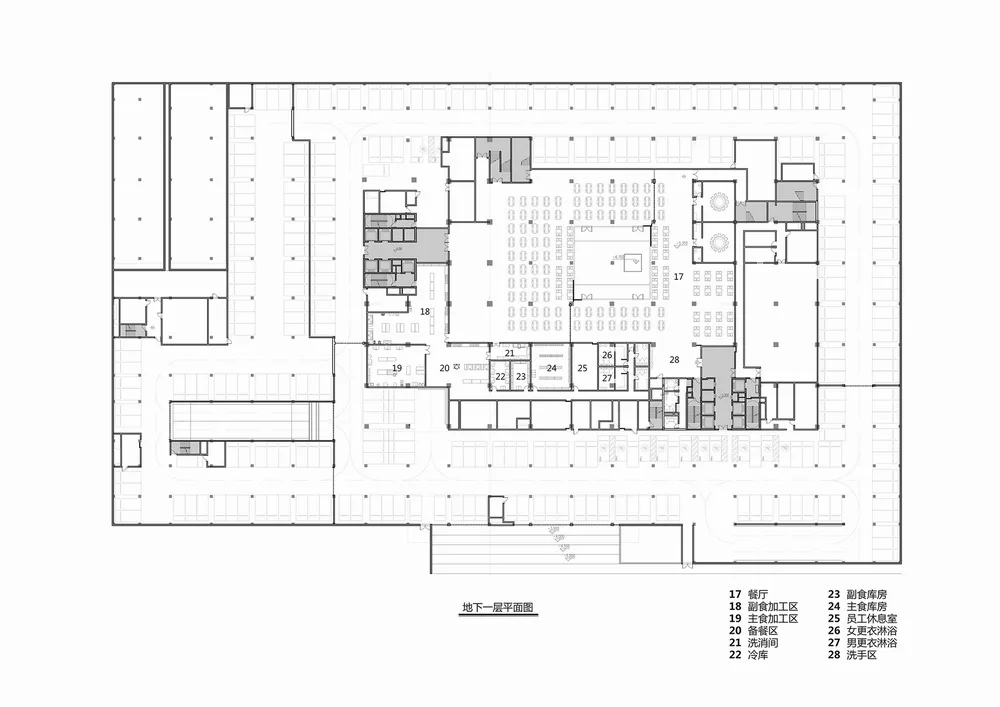
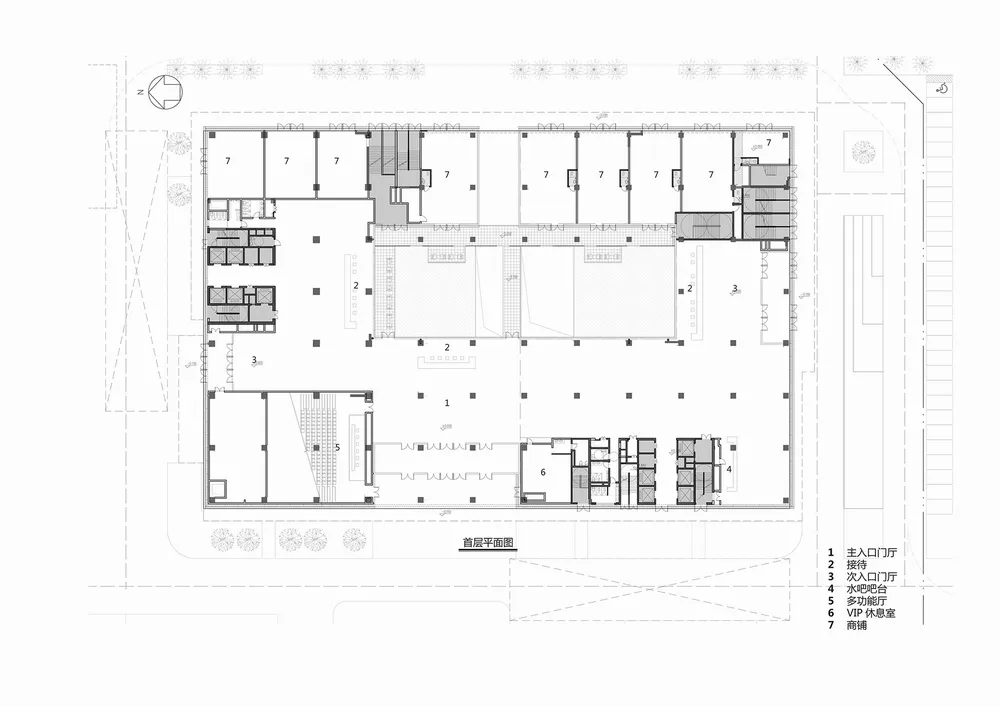
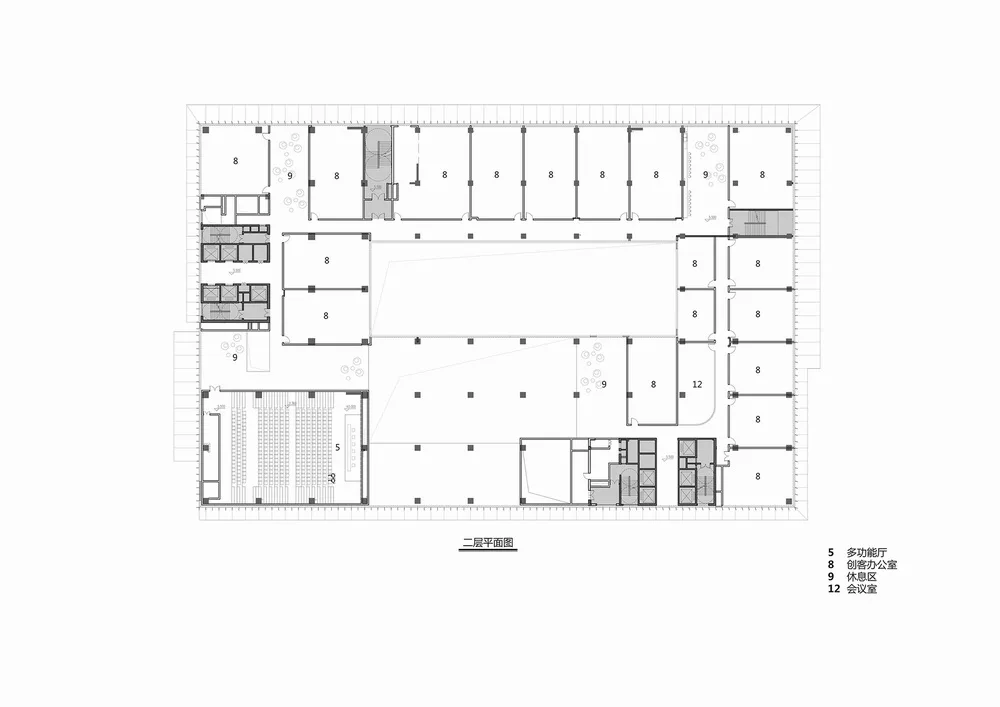
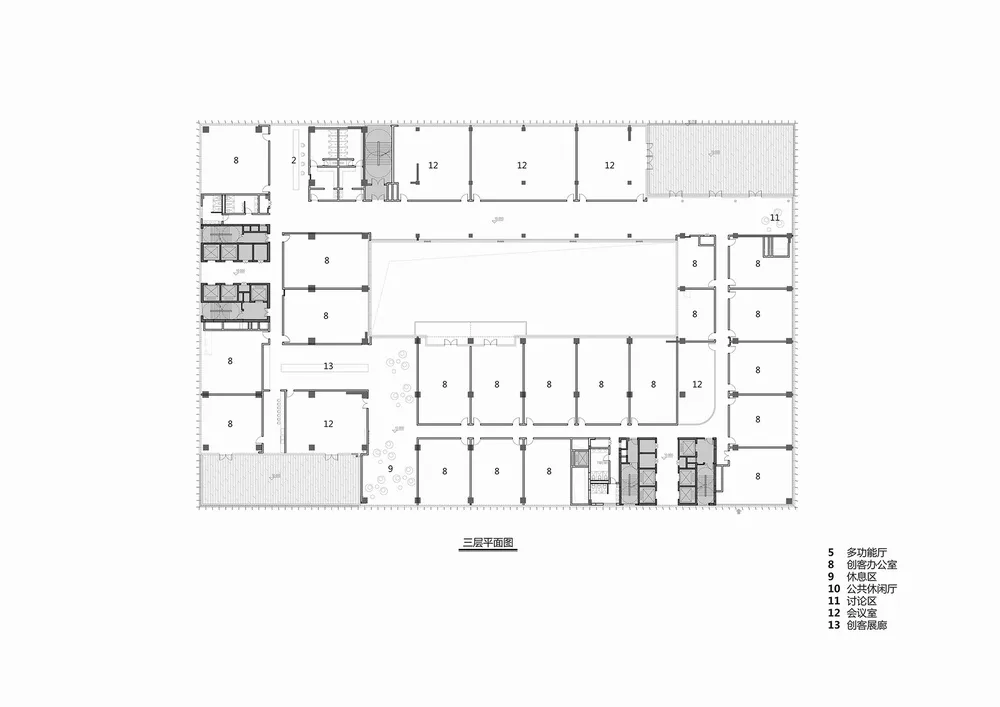
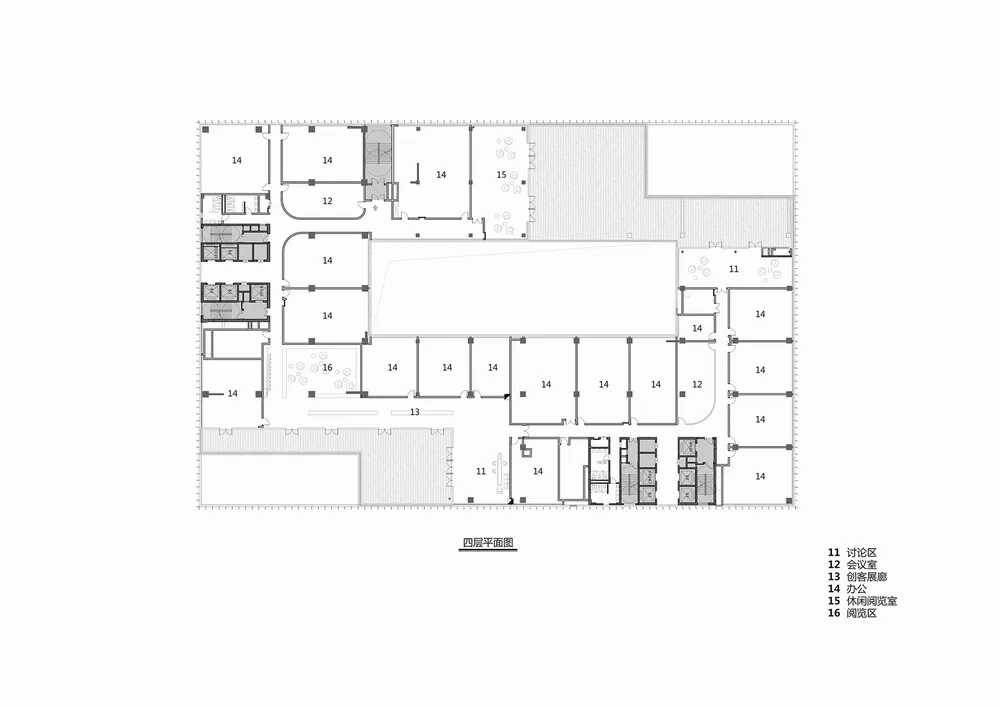
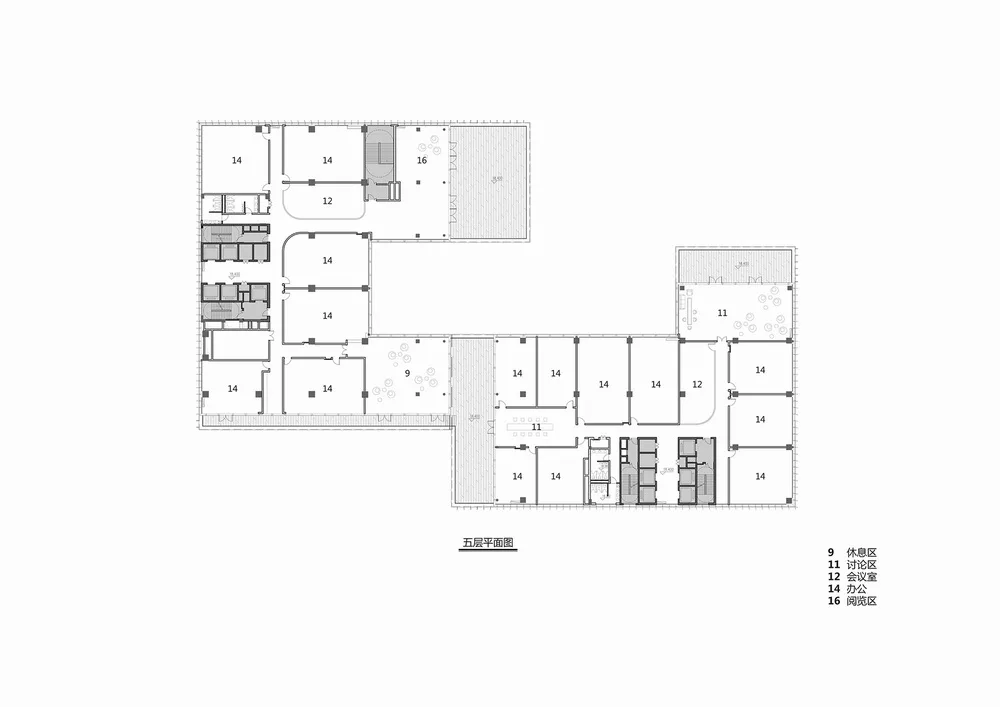
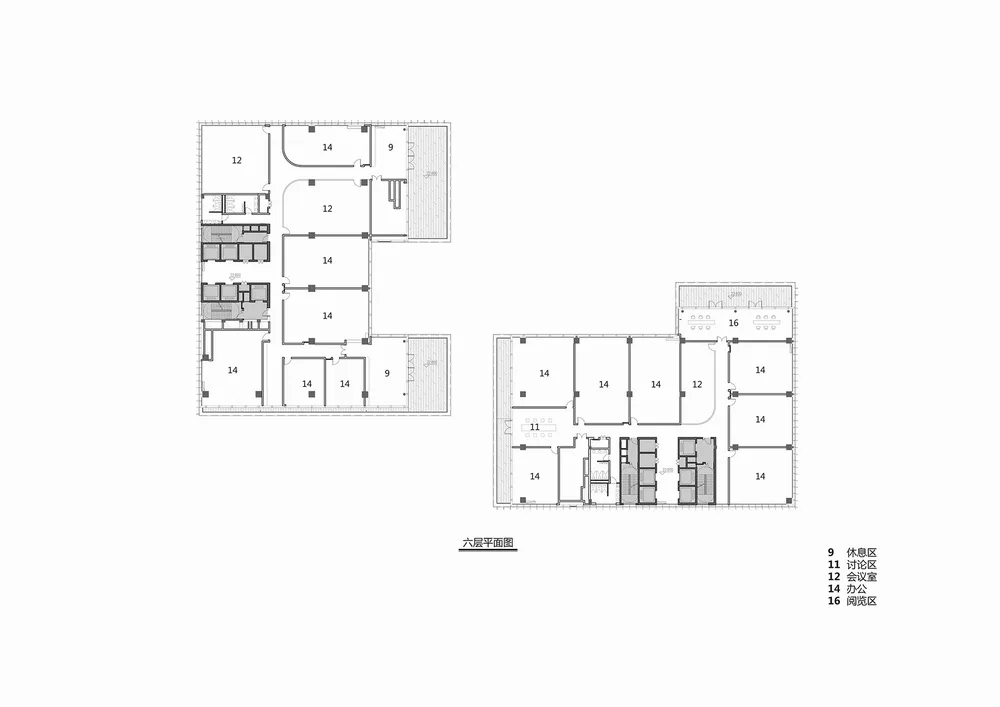
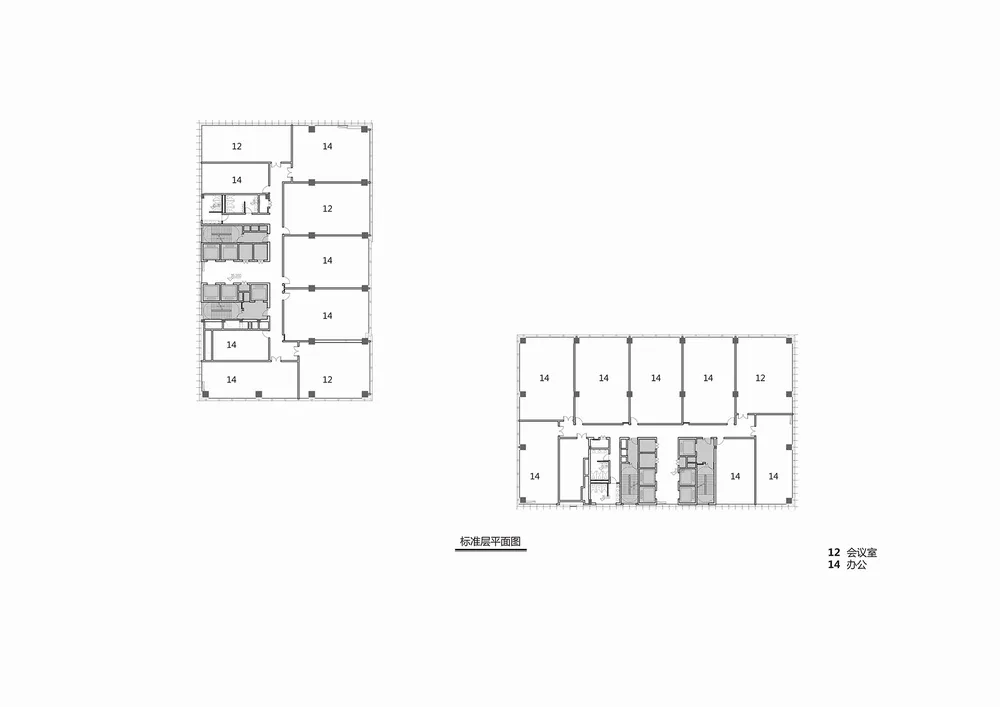
△ Plan view
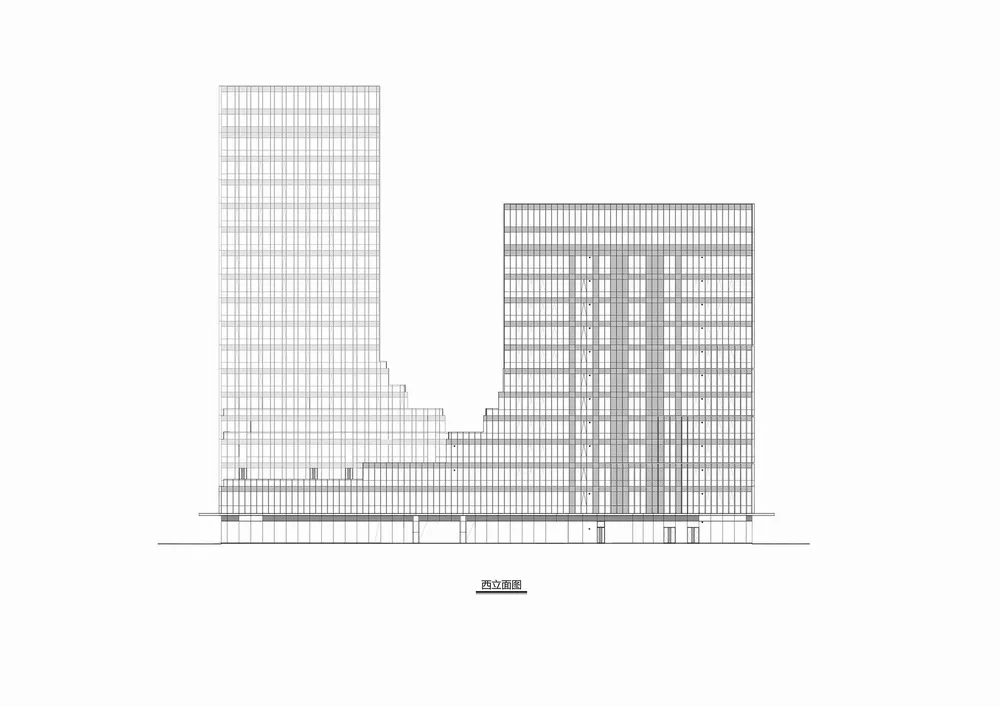
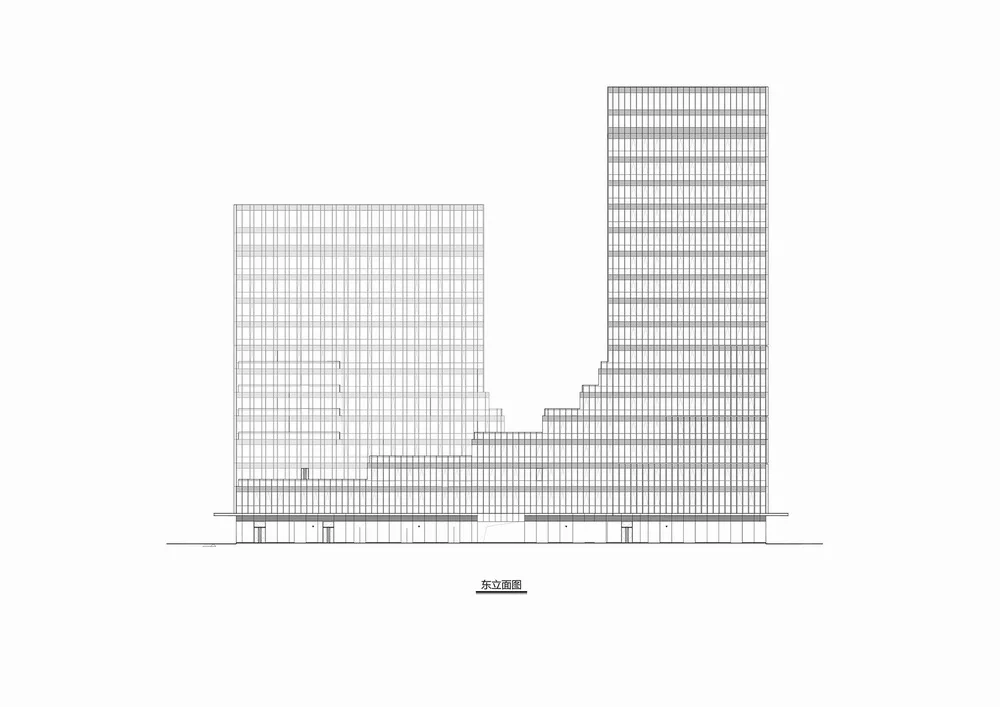
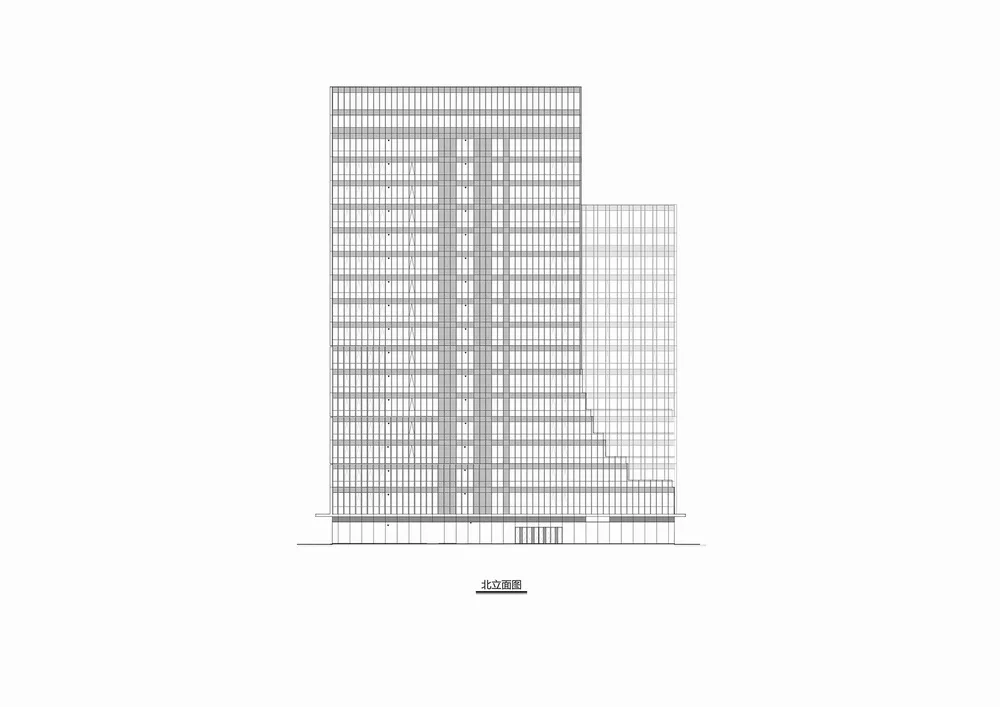
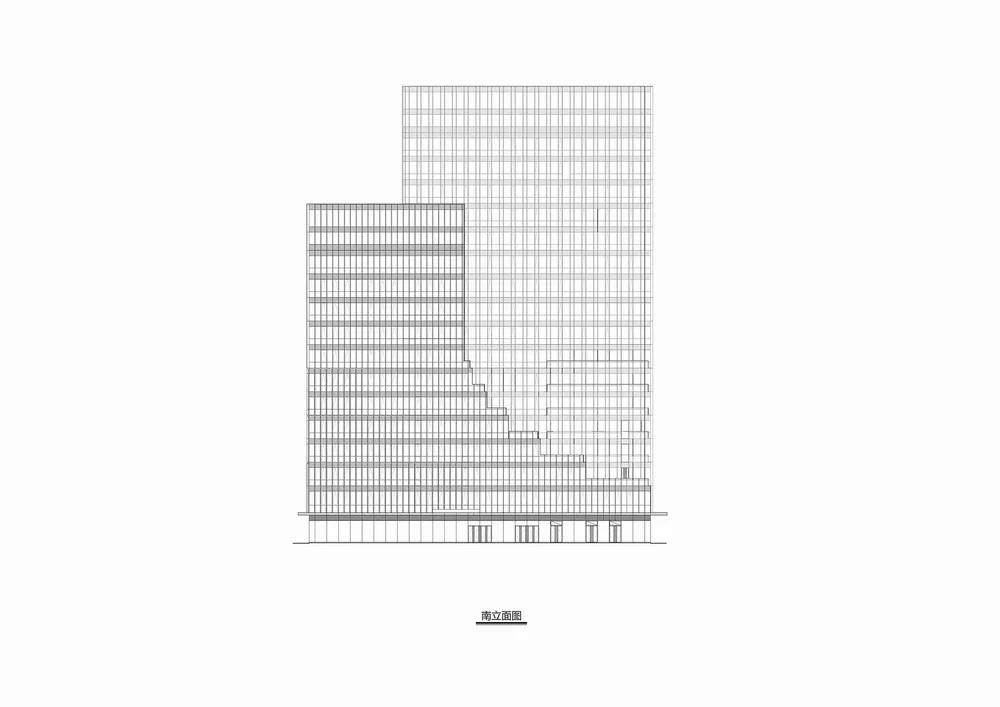
△ Elevation drawing
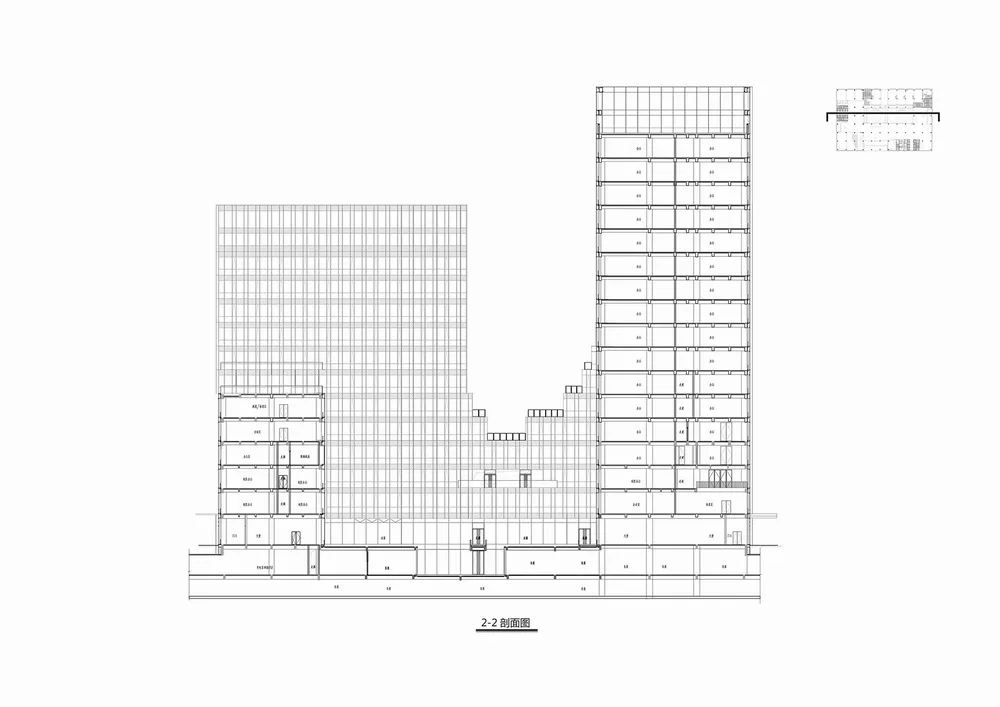
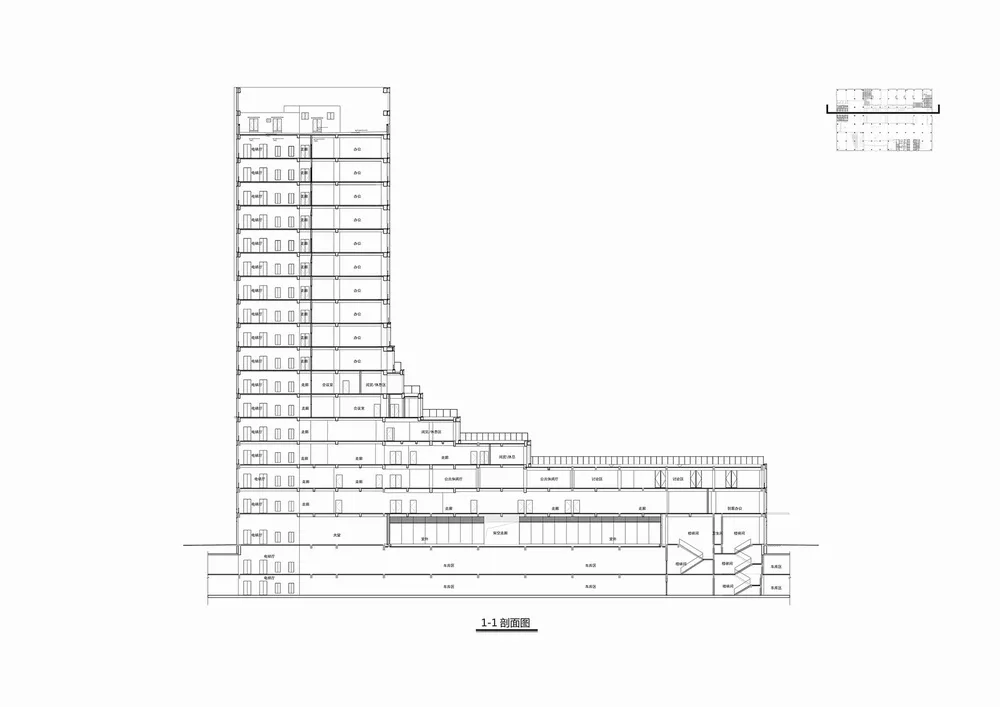
△ Section diagram
Project Information
Project Name: Haier International Plaza Phase I
Project Type: Architecture / Interior Design
Location: Zhuangwu Road, Jimo District, Qingdao City, Shandong Province
Design Firm: DC International C++ Design Research Center
Office Website: www.dccd.com.cn
Principal Architect: Dong Yi
Design Team: Dong Yi, Zhang Chunwei, Liu Wenwen
Owner: Haier Chengchuang
Project Status: Completed
Design Period: August 2017 – August 2020
Construction Period: August 2020 – November 2020
Land Area: 23,258 square meters (Phase I)
Building Area: 41,949.45 square meters
Photography: Xunmei Film and Television, DC International












Must log in before commenting!
Sign Up