
Austrian firm Delugan Meissl Associated Architects (DMAA) has completed the Taiyuan Botanical Garden complex in northern China. Situated on a former coal mine site in the Jinyuan District of Taiyuan City, the project features three dome-shaped greenhouses set along both the inner and outer edges of an artificial lake. The client aims to transform the area into a scenic park and museum.
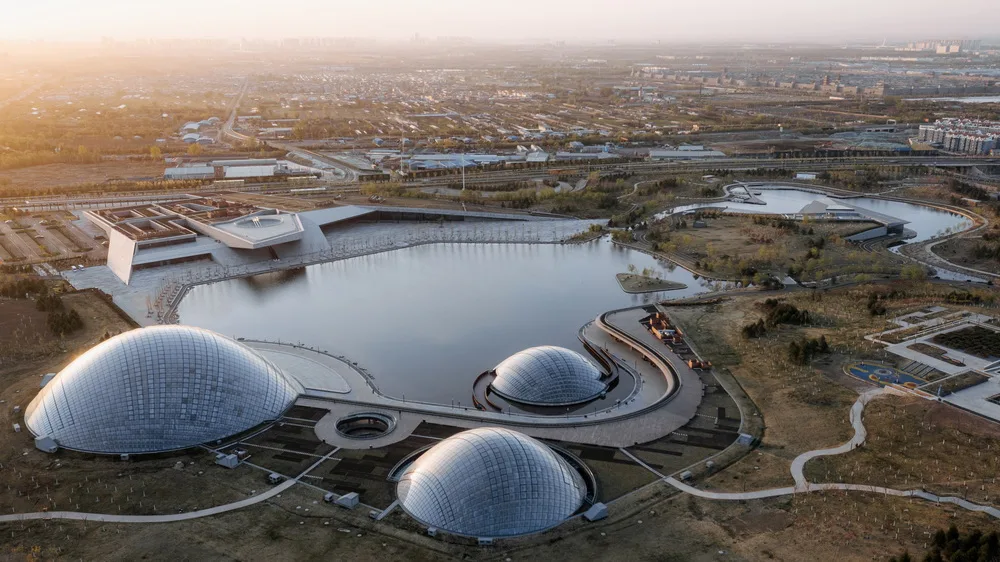
DMAA was commissioned to lead the development of the botanical garden, which includes designing artificial landscapes with hills, lakes, waterfalls, walking trails, and buildings.
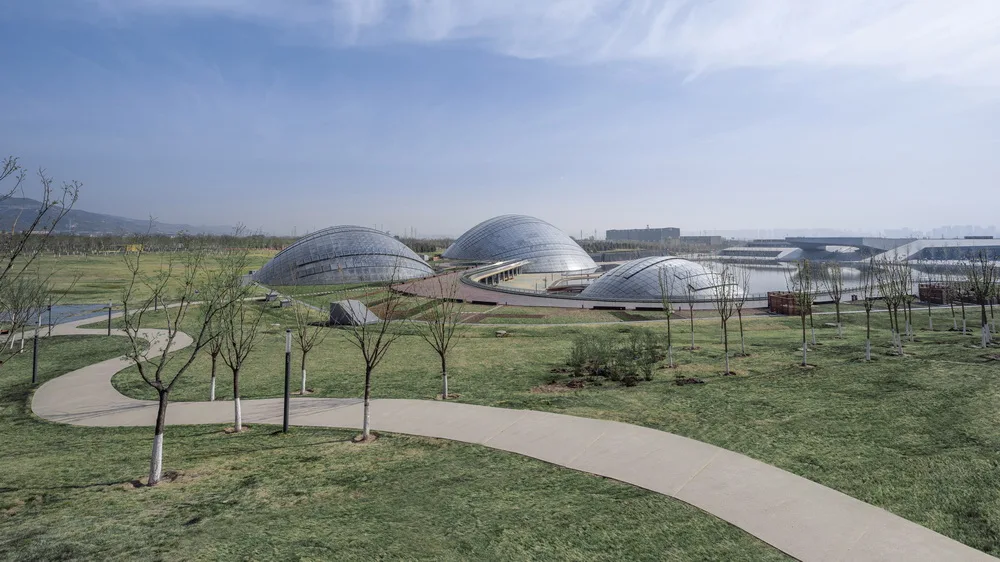
The centerpiece is a cluster of three dome-shaped greenhouses that create controlled climates suitable for plants from diverse regions. The garden also includes an entrance building housing a natural history museum, administrative offices, a restaurant, and a research center with a library and staff accommodations.
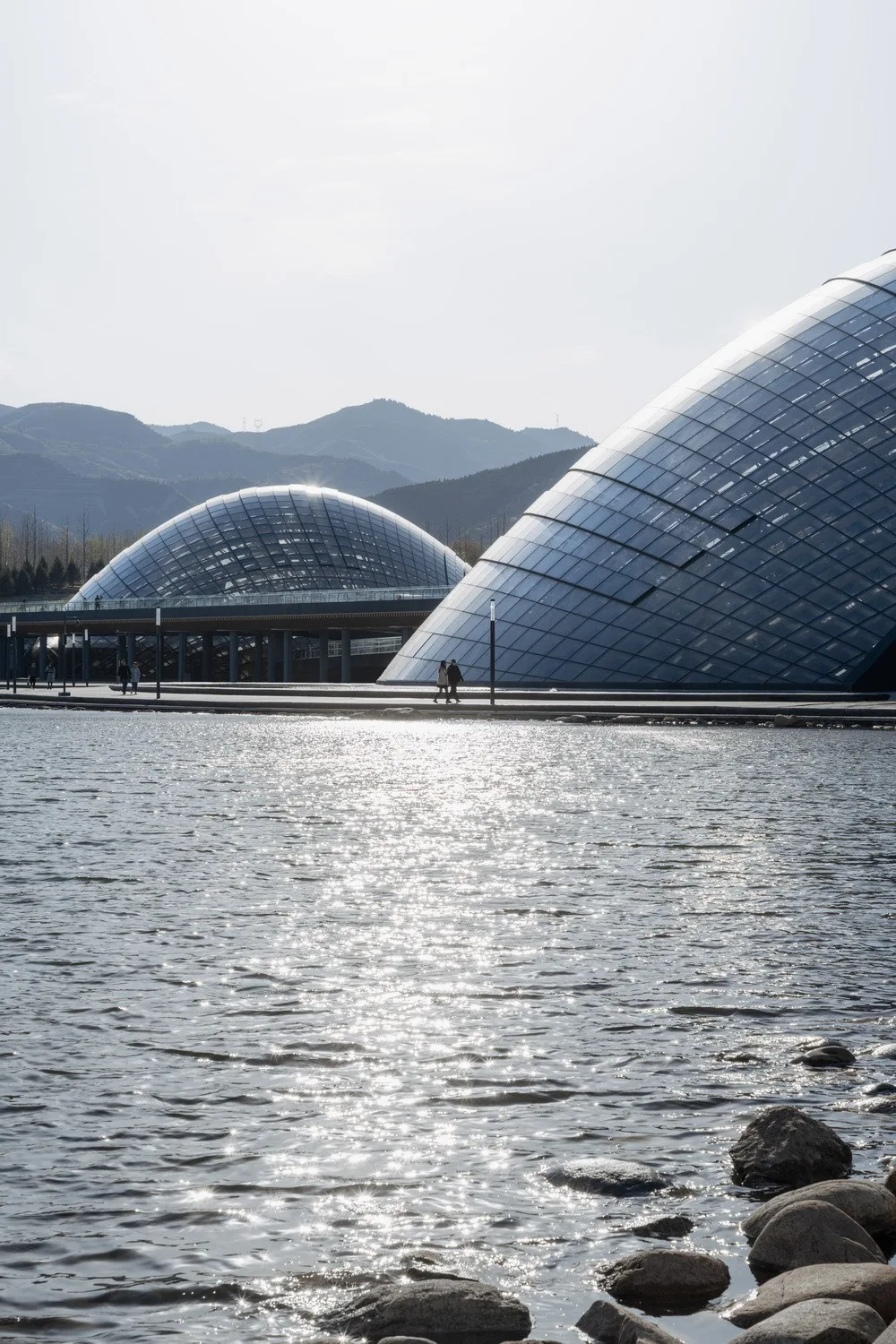
The greenhouse cluster is located near the park entrance and connected by a pedestrian walkway circling the lake.
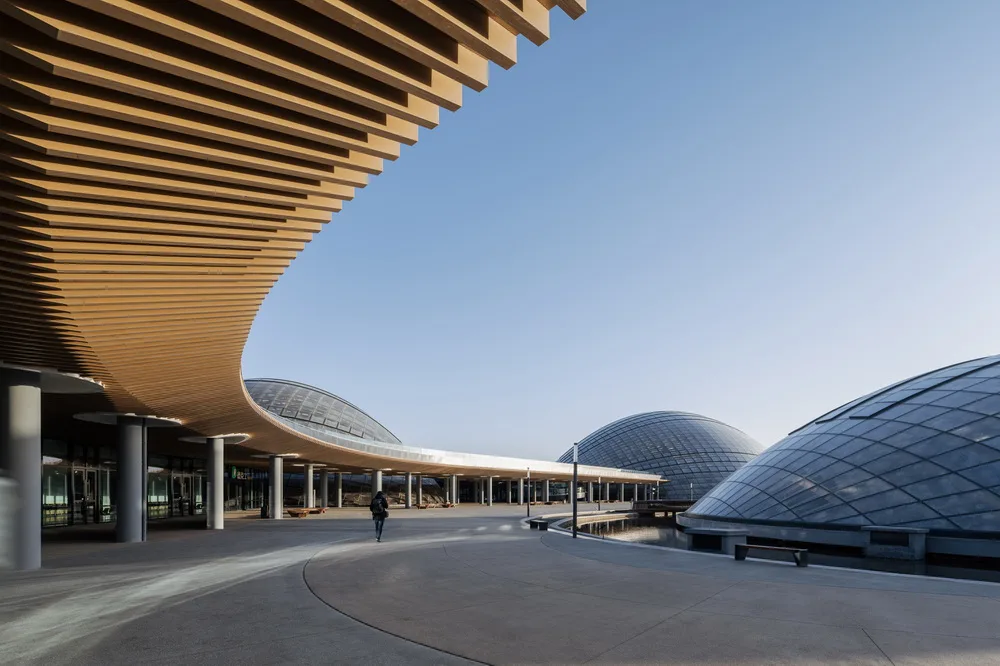
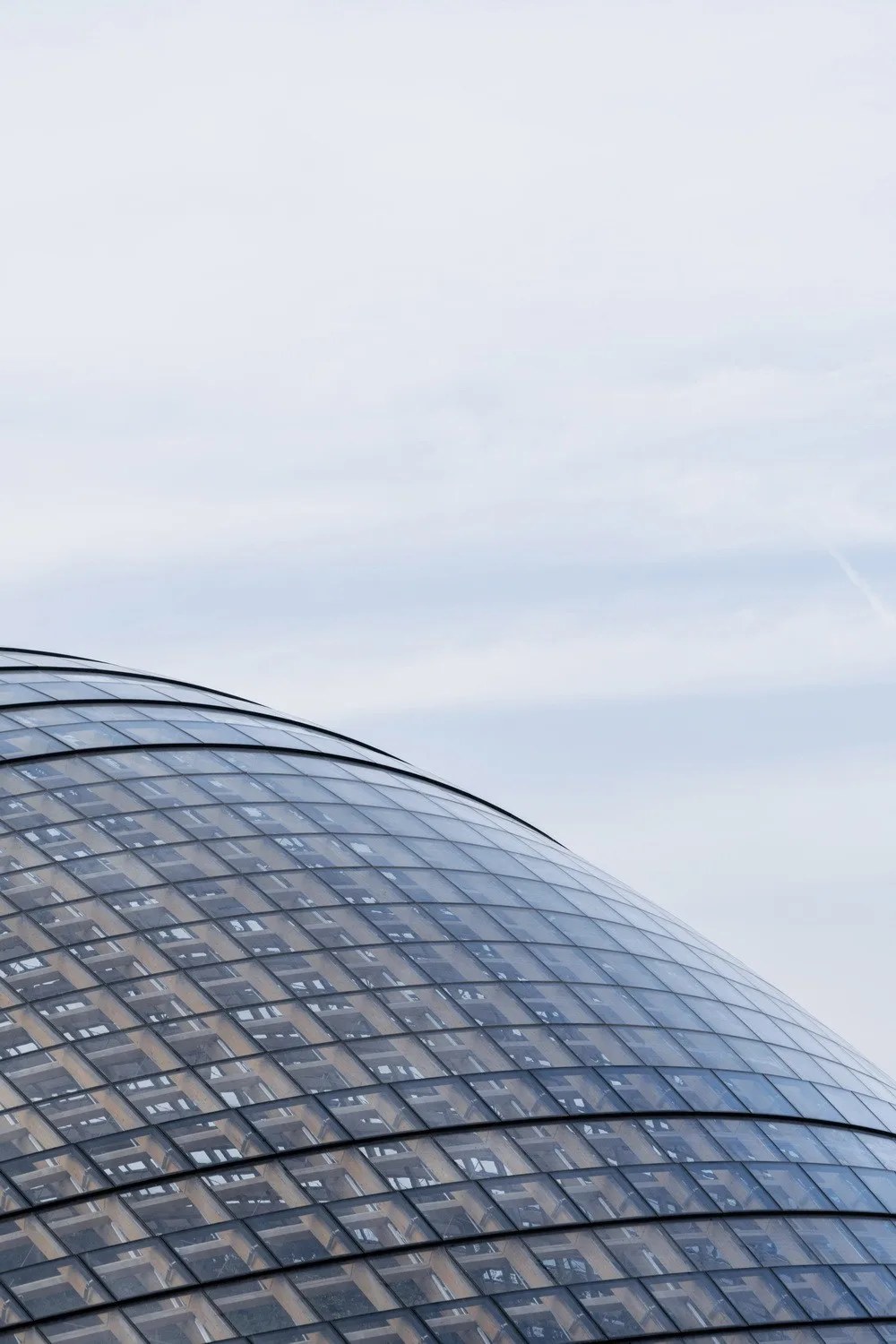
Each dome is constructed with hyperbolic laminated wooden beams arranged in two or three intersecting layers, creating a striking lattice structure.
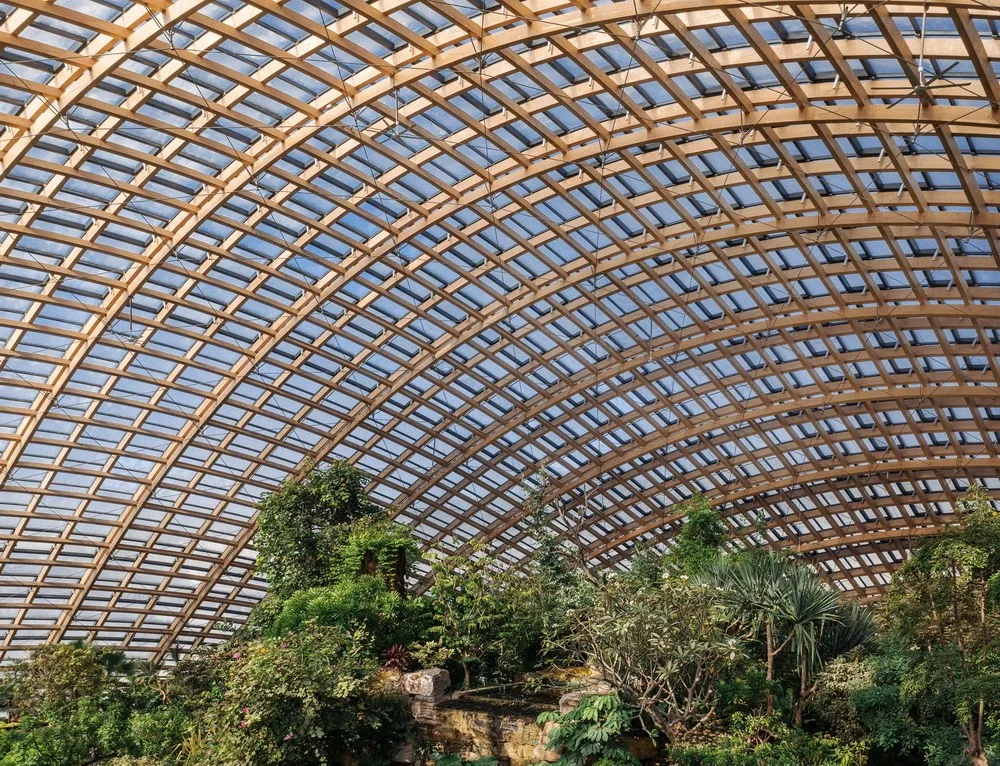
DMAA explains, “Constructing a greenhouse requires extensive technical expertise in energy design, thermal performance, structural integrity, glass technology, assembly, and logistics. The widest of the three domes spans over 90 meters, making it one of the largest wooden lattice structures worldwide.”
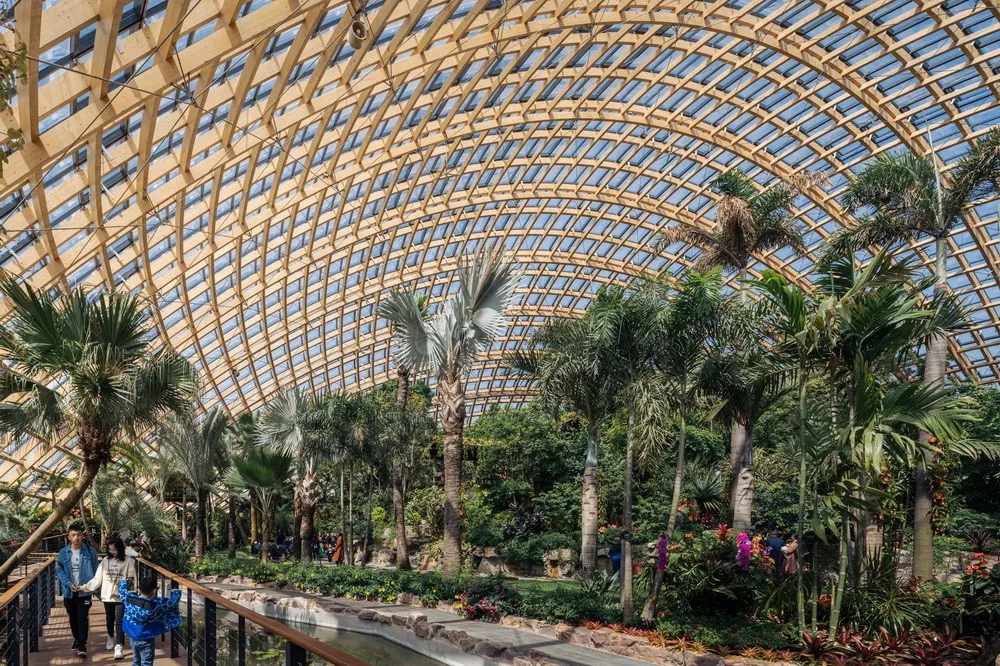
The largest dome houses a tropical garden, while the second dome recreates a desert environment.
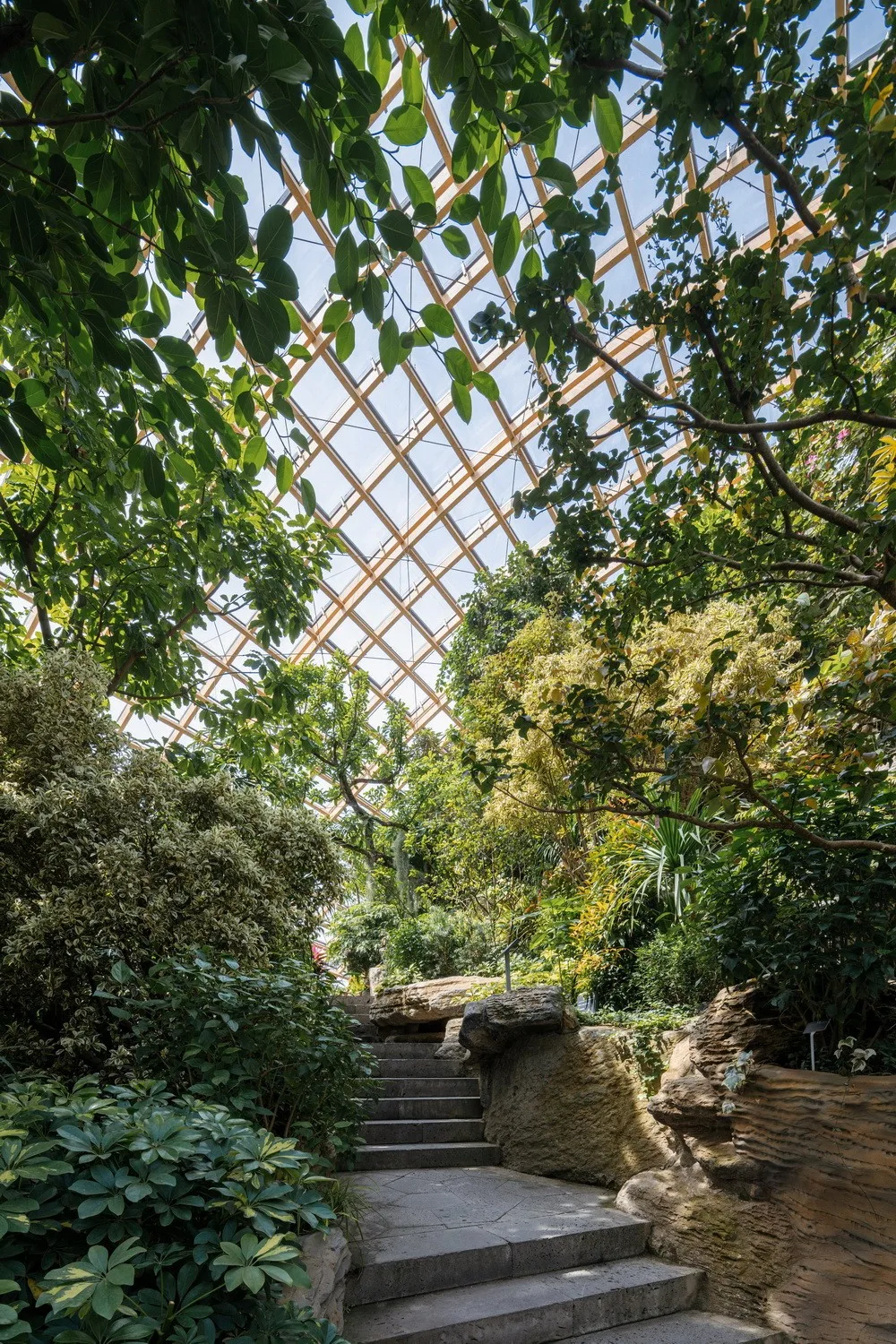
The smallest dome is situated on the lake surface and features an exhibition of aquatic plants. Oriented southward to maximize sunlight year-round, the wooden grid roof structure is denser on the north side and sparser on the south to optimize solar energy absorption.
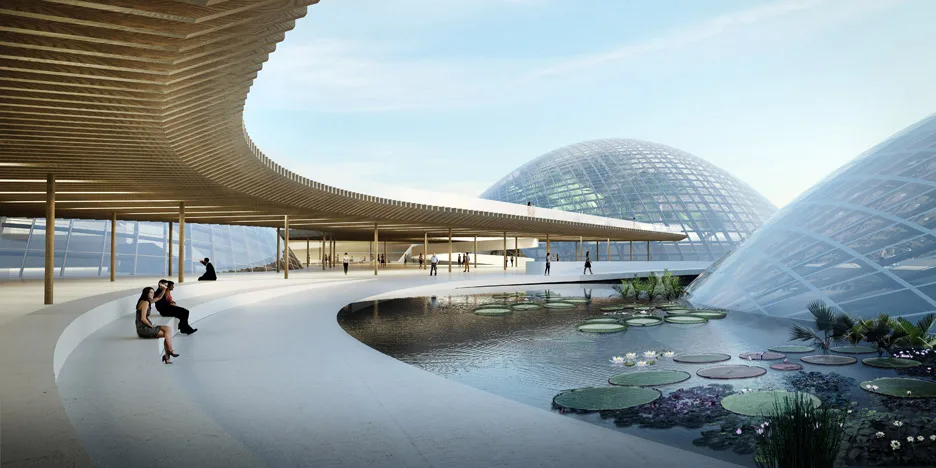
All three domes feature hyperbolic glass and operable windows to regulate the internal climate effectively.
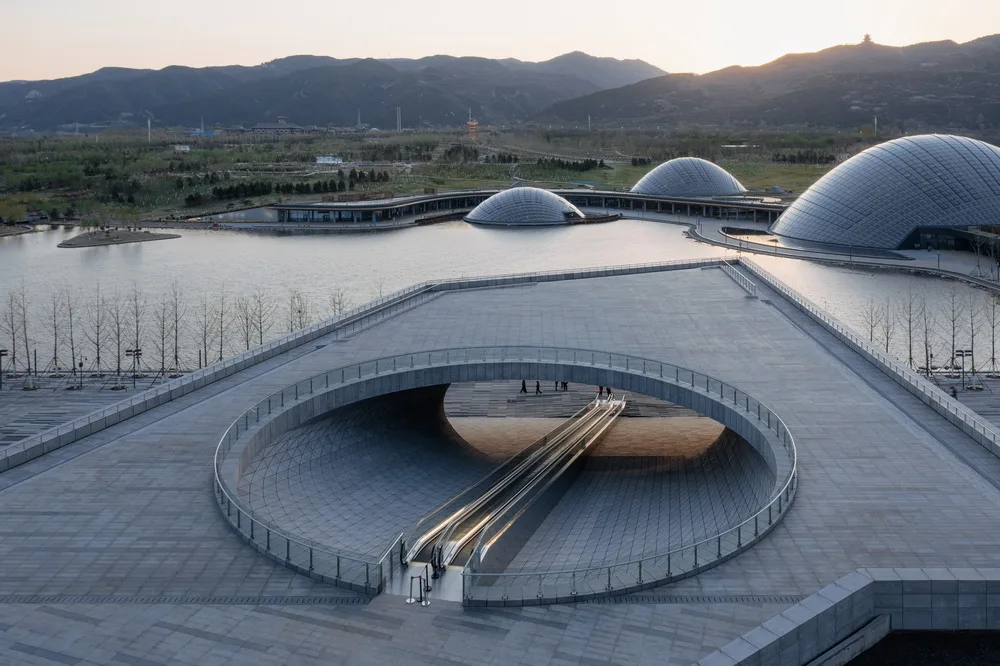
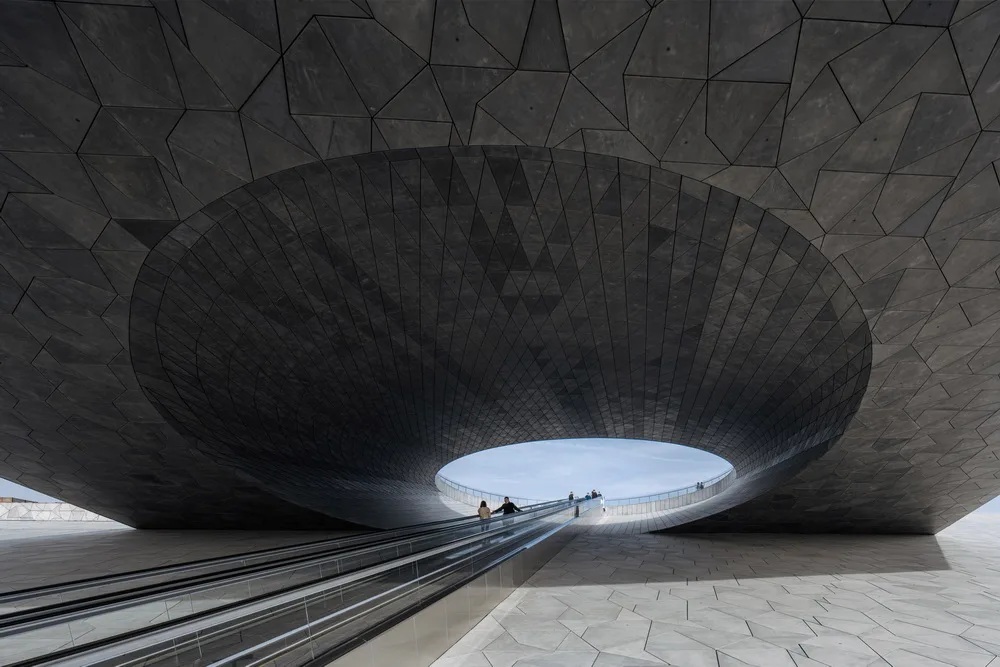
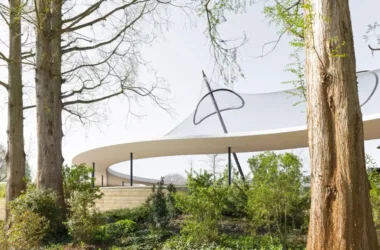
The entrance building, located near the main road, contains a lobby and reception area, a natural history museum, and other amenities. A pedestrian walkway with a transport belt passes through an opening in the cantilevered roof, leading visitors to a spacious terrace with panoramic views of the entire park.
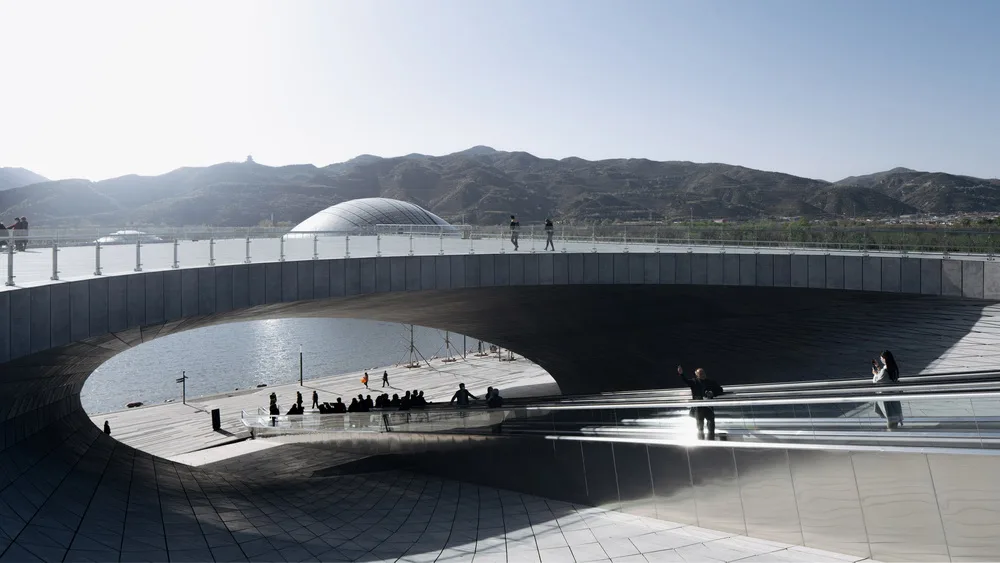
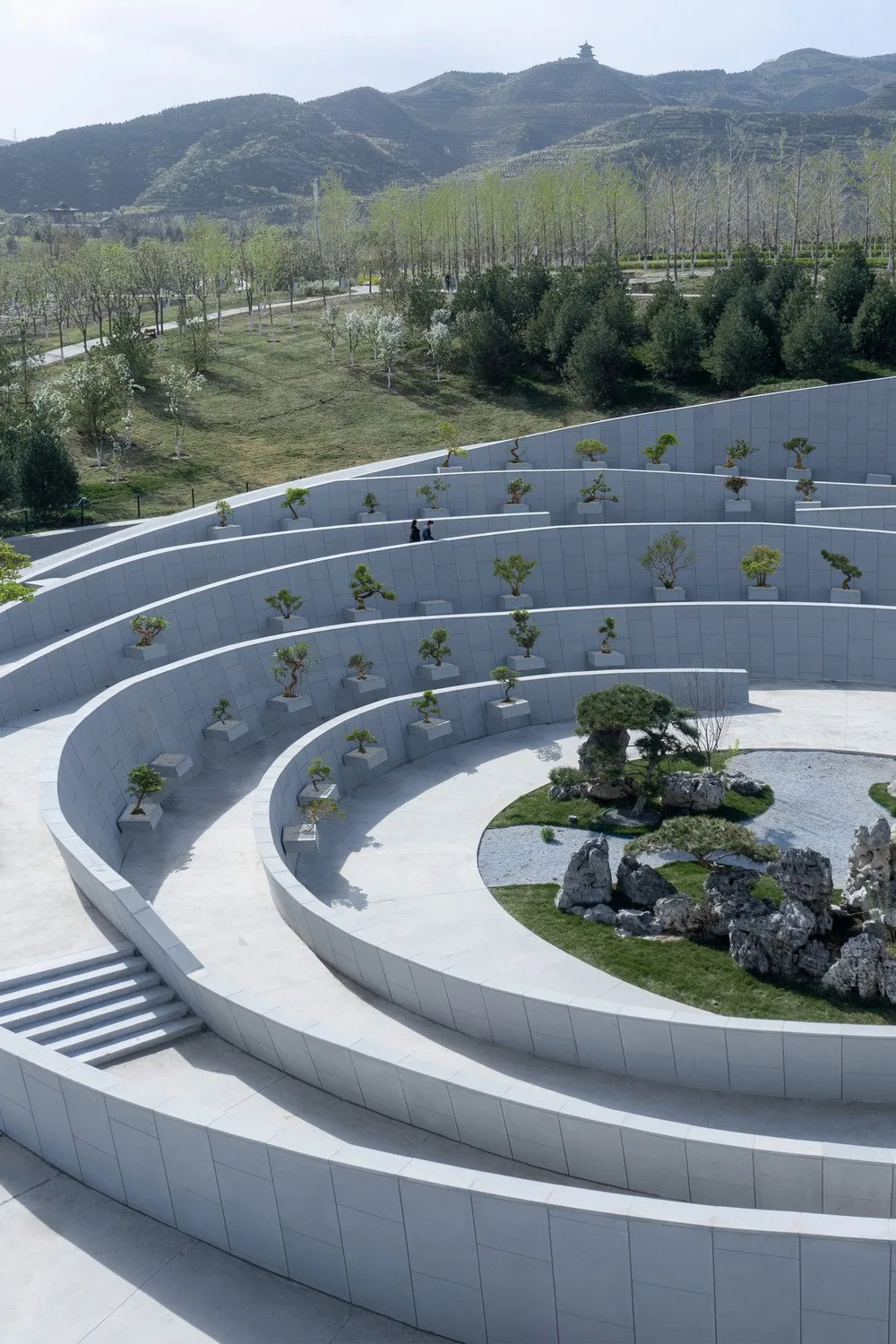
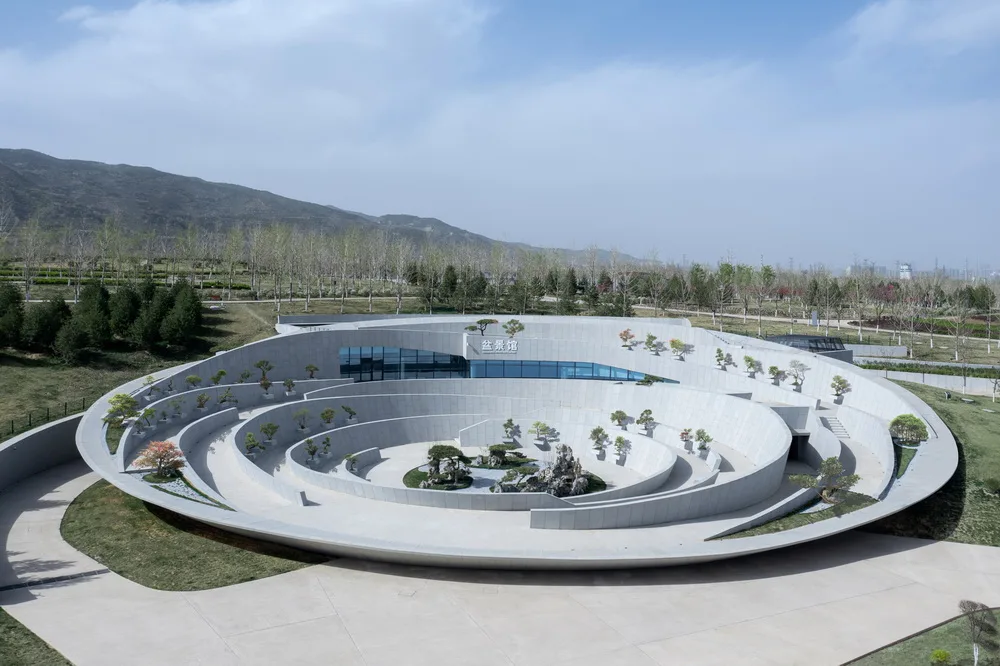
Elsewhere on the site, a bonsai museum is integrated into the landscape through concentric terraces connected by paths, ramps, and stairways.
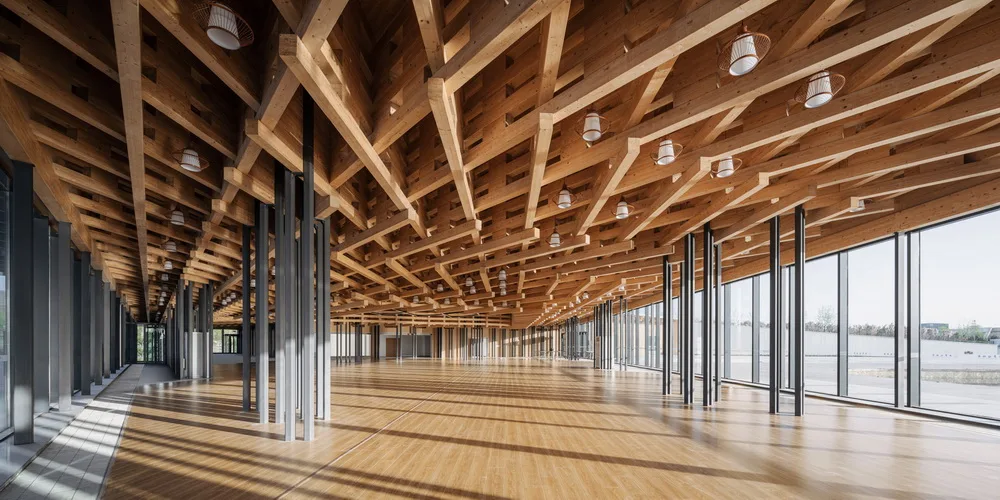
The restaurant and tea house are housed in a building on an island in the lake south of the entrance and greenhouses. Floor-to-ceiling windows line the open indoor space, offering views of the surrounding waterscape.
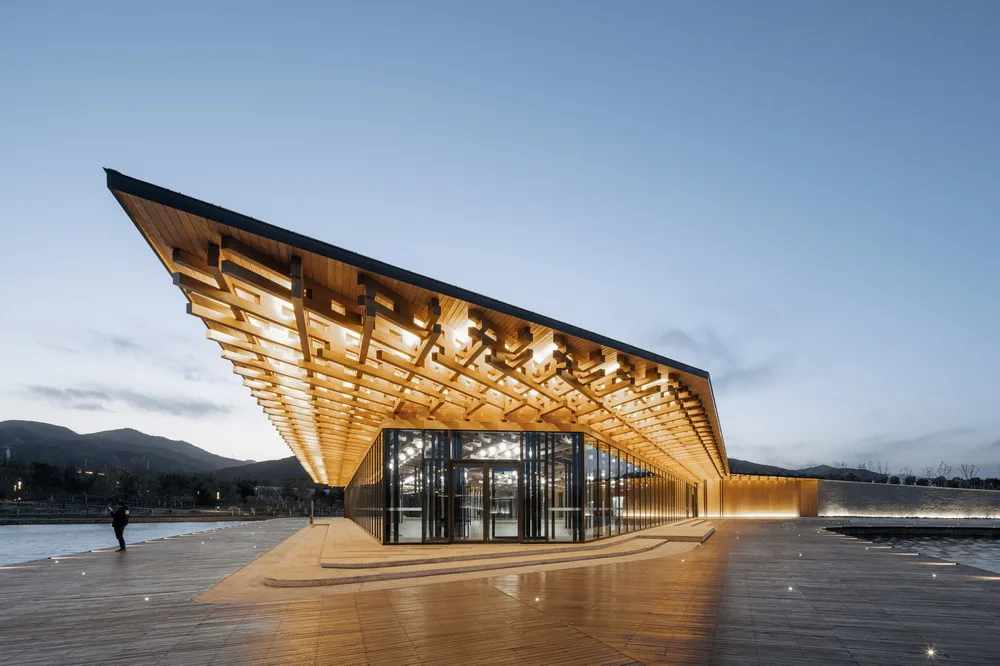
This building features a grid wood roof structure inspired by traditional Chinese temple architecture. Stacked wooden beams create intricate geometric patterns throughout the ceiling.
Technical Drawings
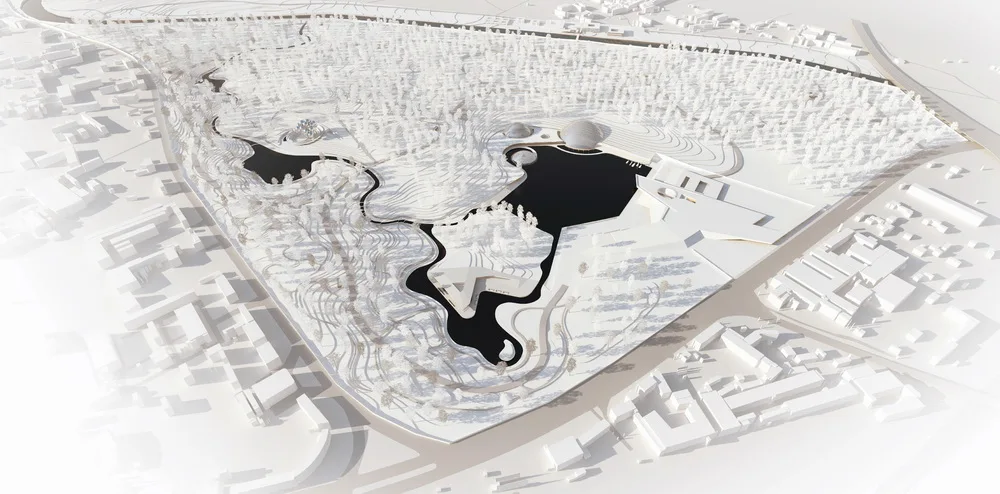
△ Site Model
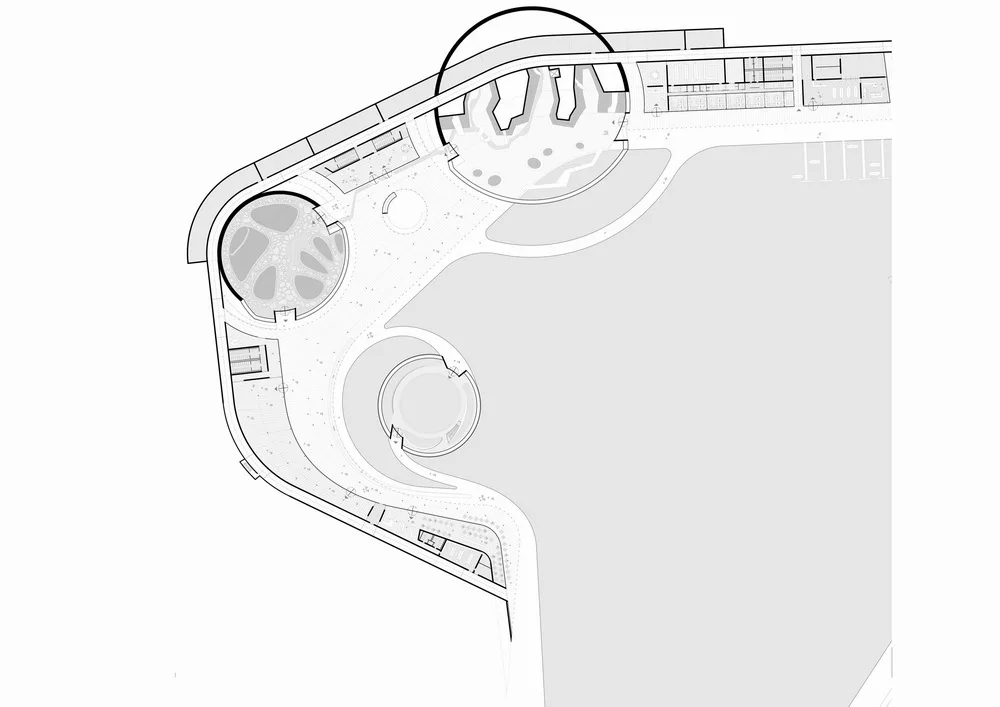
△ Greenhouse Plan

△ Bonsai Museum Floor Plan
Project Information
Architectural Design: Delugan Meissl
Partner: Yiju Ding
Structural Engineering: Bollinger+Grohmann Ingenieure
Wooden Structural Engineering: StructureCraft
Skin Design: Bollinger+Grohmann Ingenieure
HVACR Power: Cody Energy Design
Landscape Design: Valentien+Valentien Landscape Architects and City Planners
Photography: CreatAr












Must log in before commenting!
Sign Up