
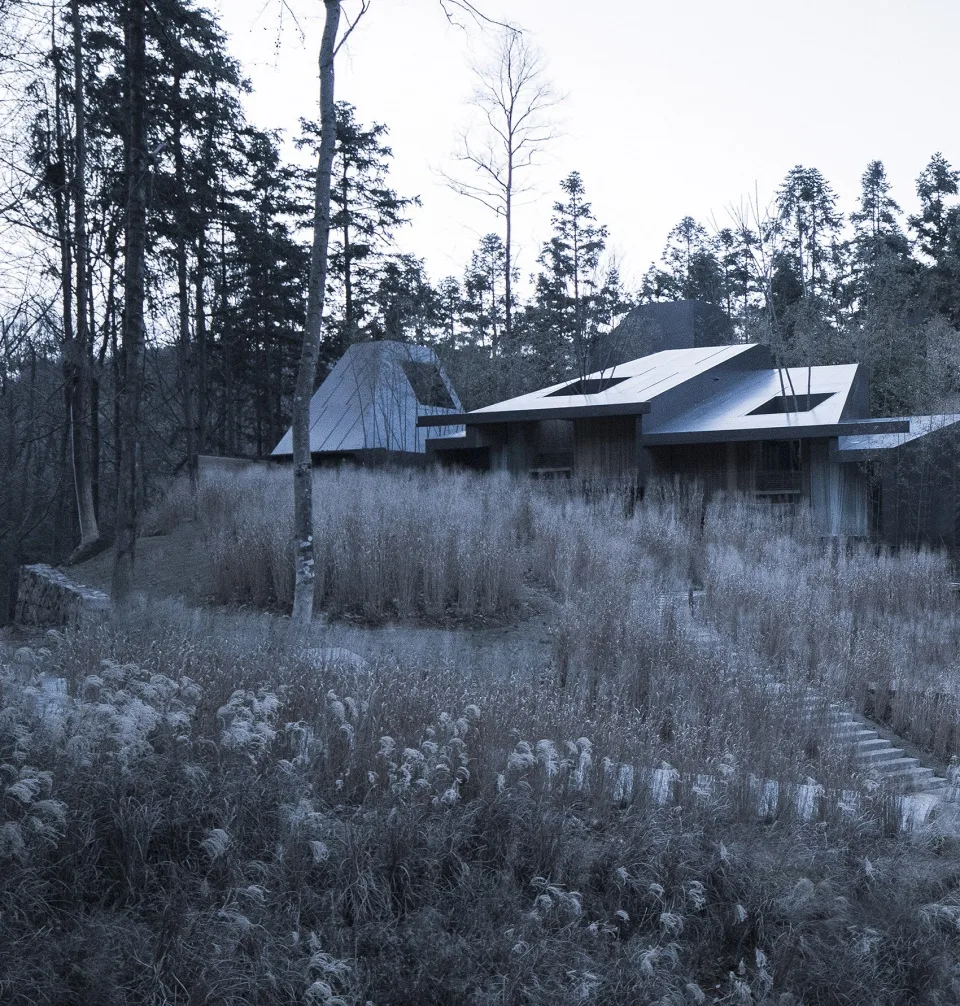
This leisure and vacation retreat is nestled in the mountains and forests on the outskirts of Hangzhou. The design process began with a deep consideration of the site’s unique environment. Our primary focus was to create a spatial installation that harmonizes with the forest, adapts seamlessly to the terrain, and integrates naturally into the surrounding landscape. The site’s distinct conditions shape the building’s unique character.
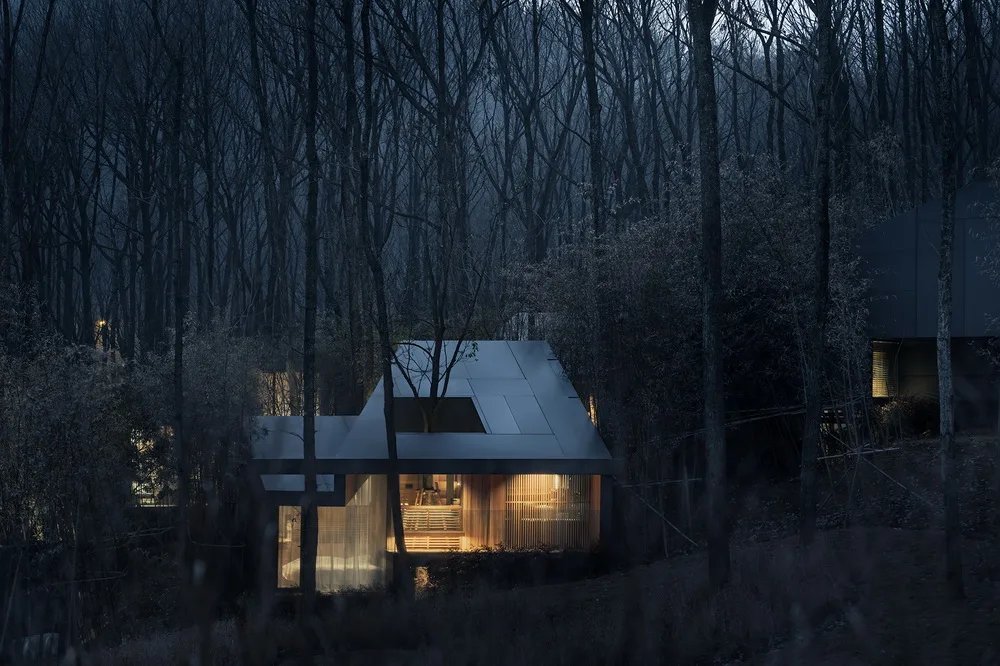
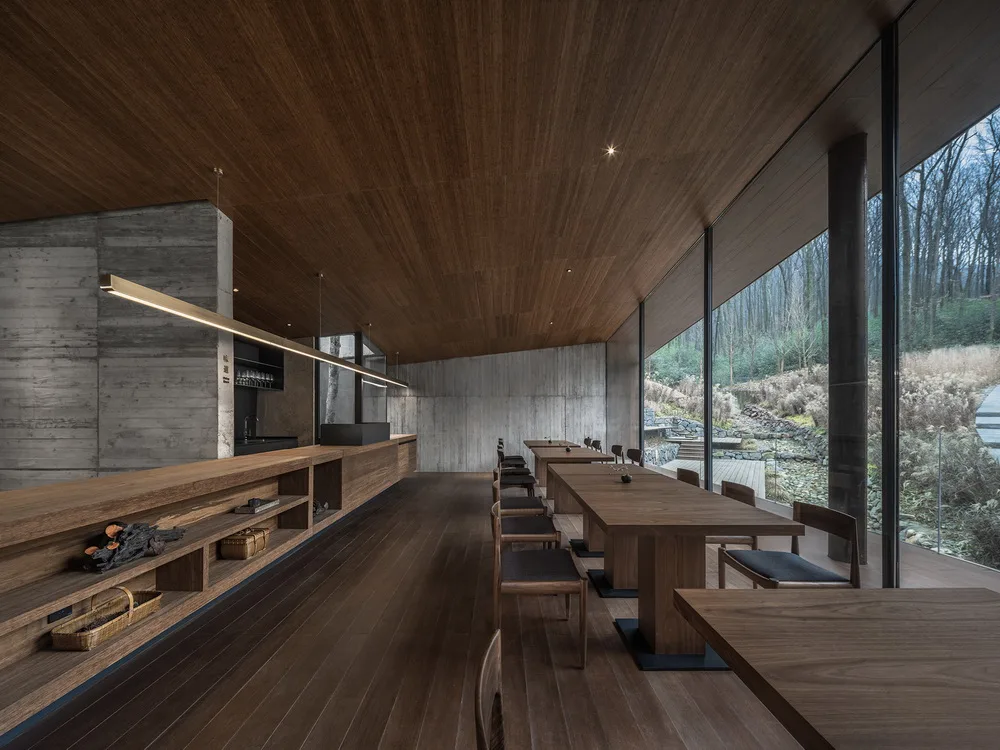
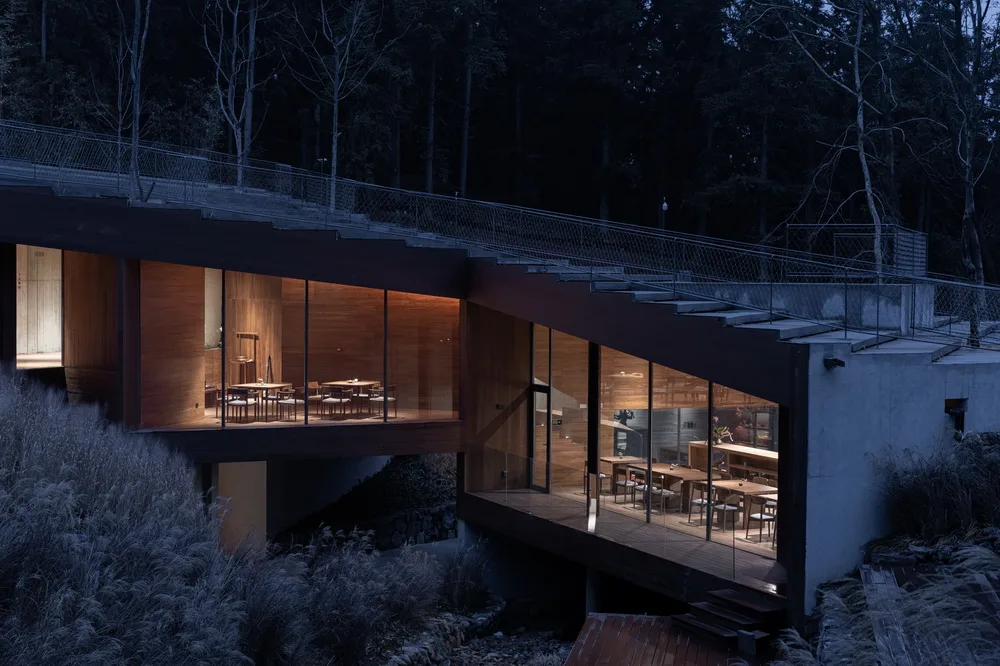
The site consists of two rectangular plots connected at the corners, separated by a narrow valley and creek less than three meters wide. The building’s butterfly-shaped design emerges from linking these two corners, using service spaces to bridge the two hillside areas while following the natural contour lines. Inside, functions are organized by varying ground levels.
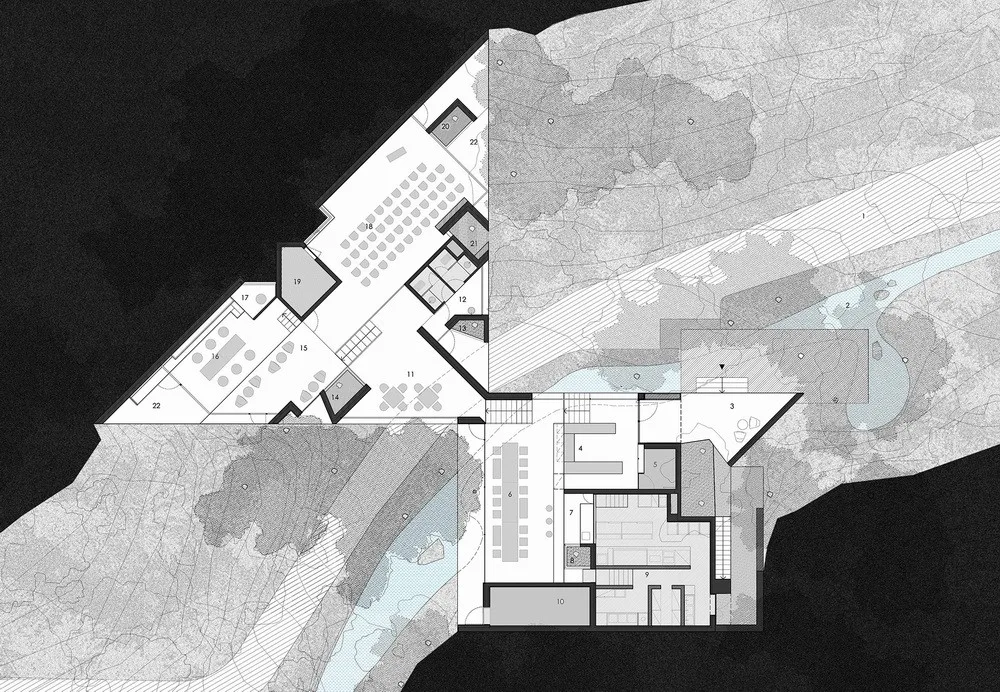
△ Public Area Plan
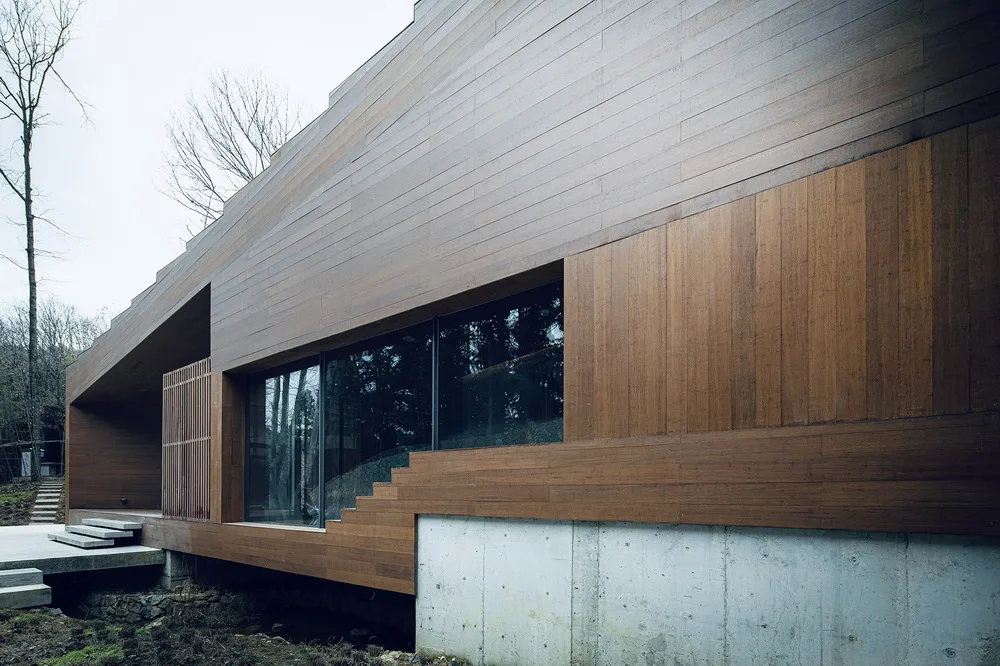
The butterfly form can also be seen as two V-shaped indentations with their longest sides cutting into the building’s interior, facing two distant valleys. This design invites the natural landscape inside and fosters a strong connection with nature. The other sides of the building are embedded into the mountain, allowing the elevated butterfly structure to preserve the stream and mountain paths beneath.
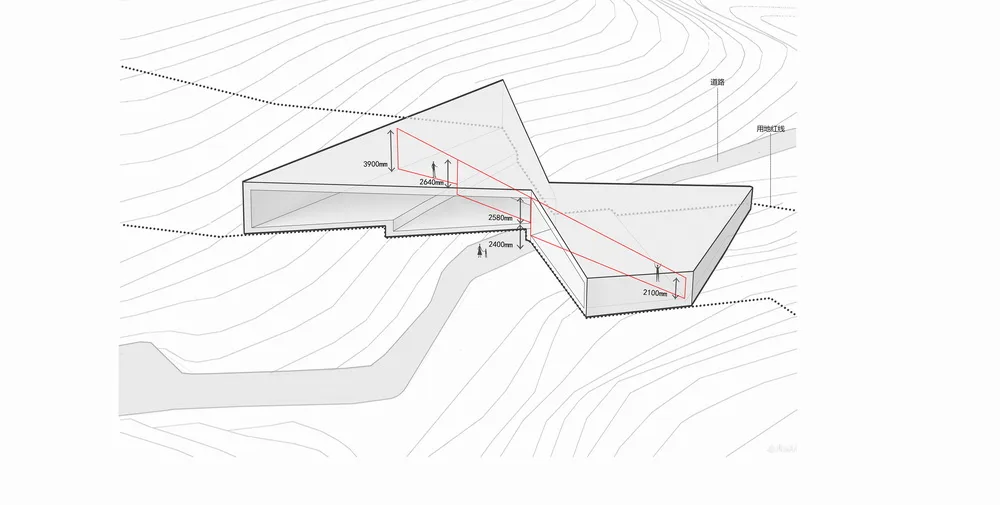
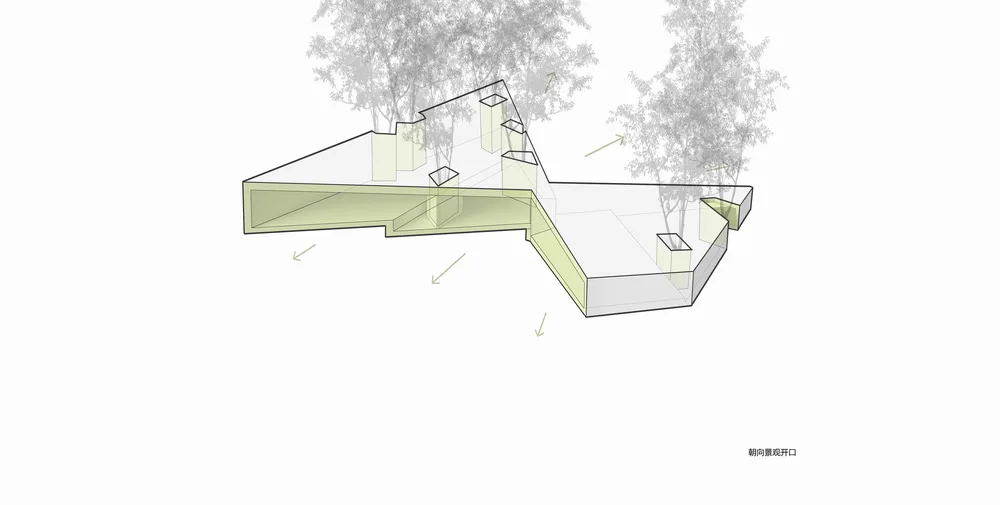
This schematic illustrates the layout of the public area block.
To preserve existing trees indoors, the vertical structure features a “column courtyard” design. This concept combines structural columns with “micro courtyards” that retain individual trees within the space. The roof is a stepped sloping design, doubling as a forest theater for small performances. The large, unified sloping roof creates a rhythmic indoor environment shaped by the changing ground elevations.
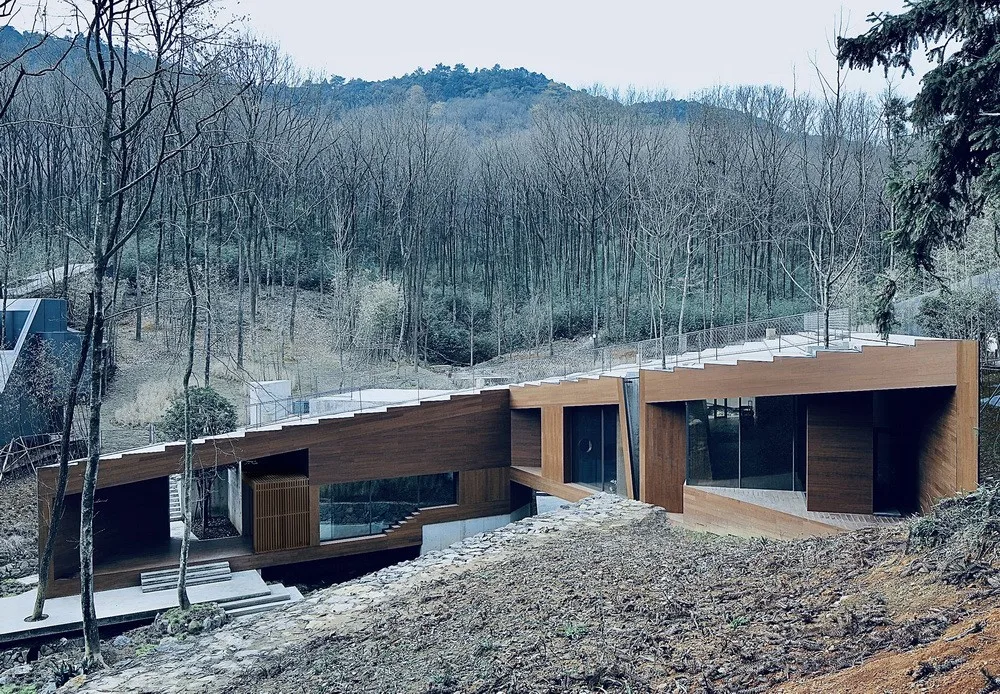
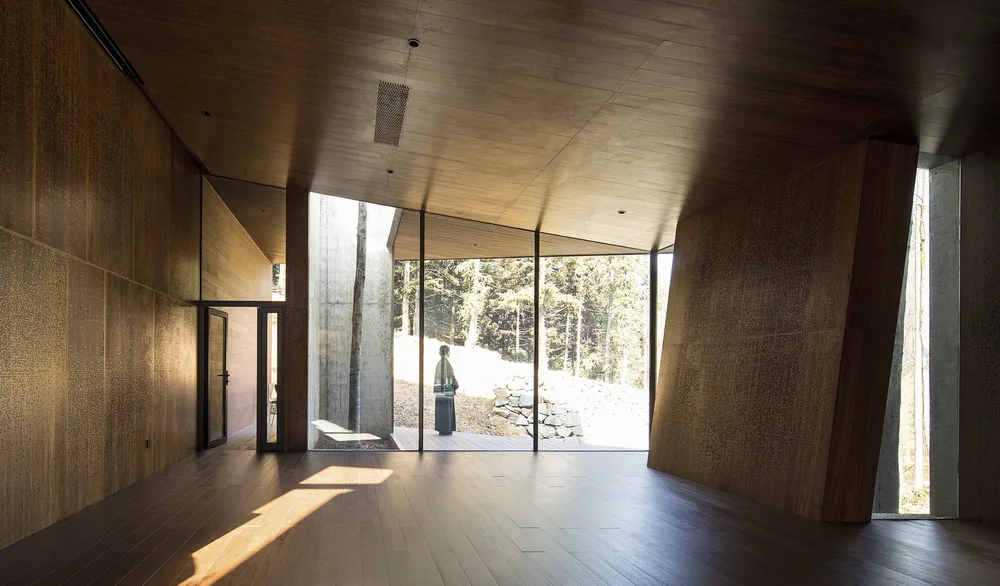
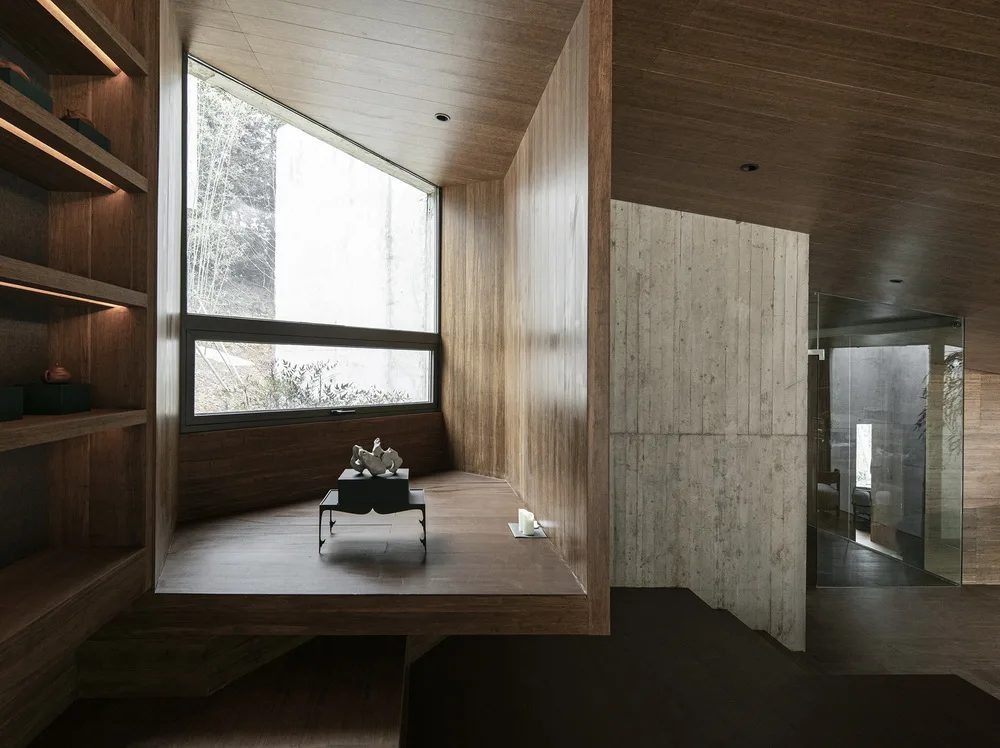
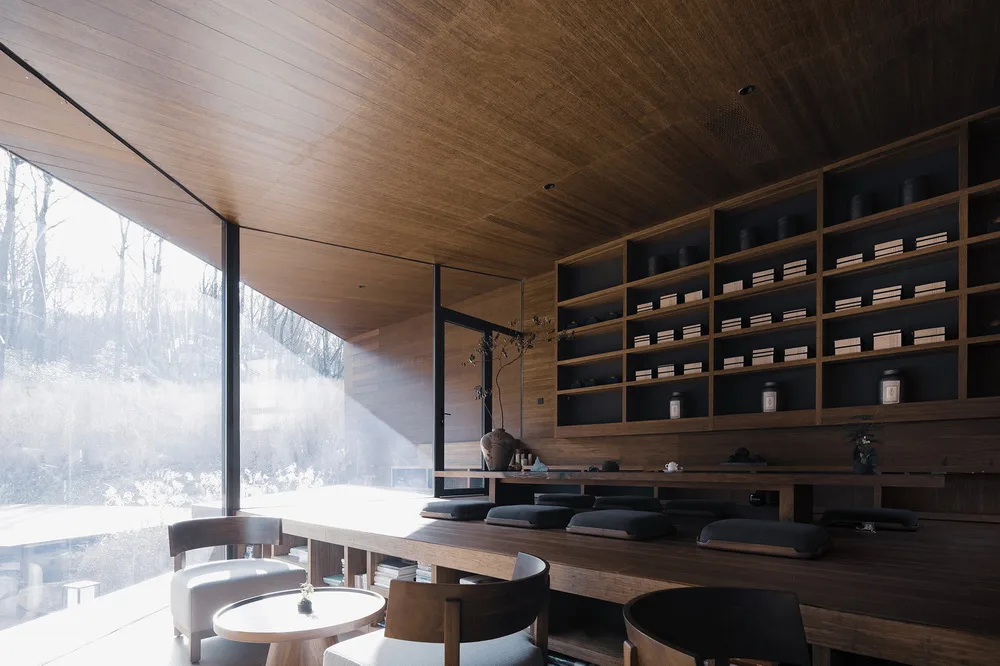
By creating this space, our goal is to offer visitors a place to unwind completely and experience deep relaxation. We aspire to present a world that feels different from the ordinary, one with a unique rhythm and atmosphere.
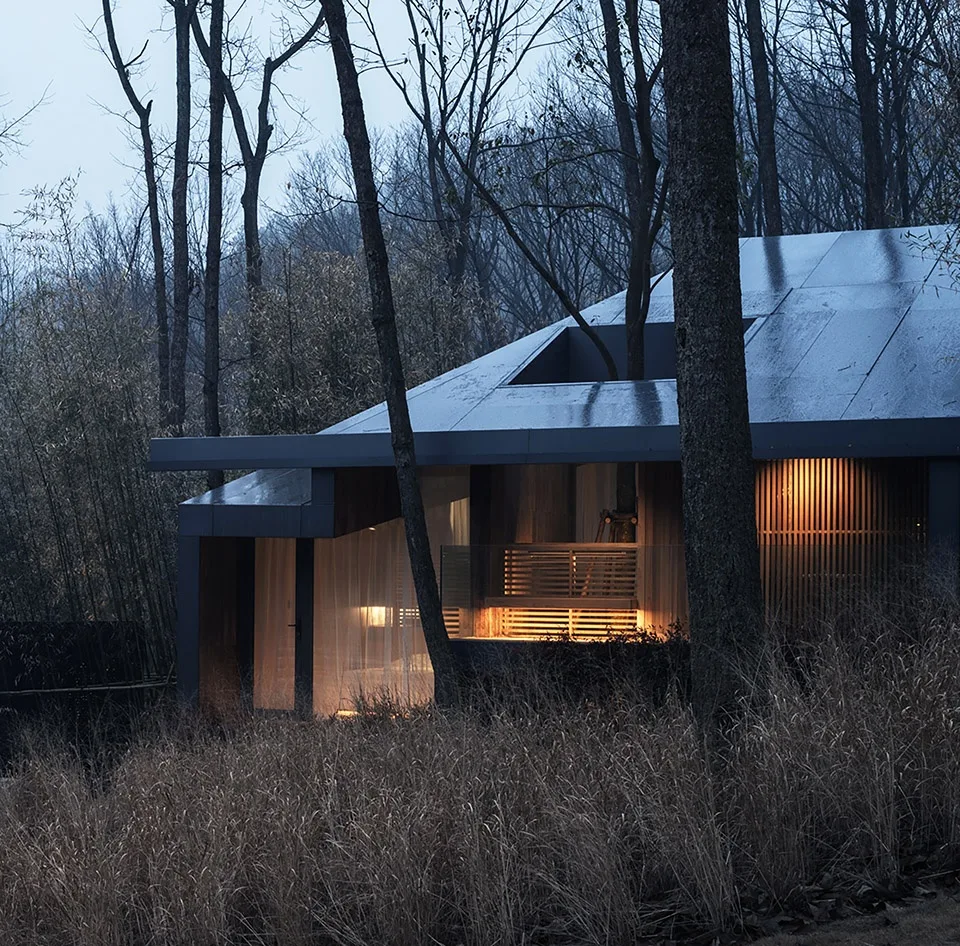
The aluminum shell cabins, ranging from 38 to 68 square meters, are deeply immersed in the mountains and forests, blending naturally into the environment. This architectural approach returns to the fundamental concept of shelter, addressing the basic need for protection from wind and rain. The weather-resistant aluminum shell endures harsh natural climates, creating a striking contrast against the surrounding landscape.
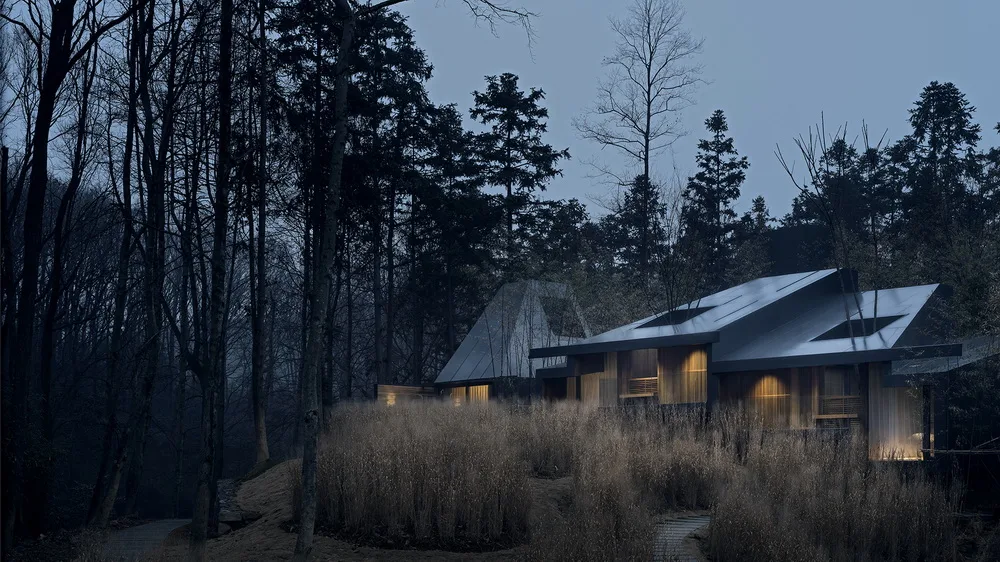
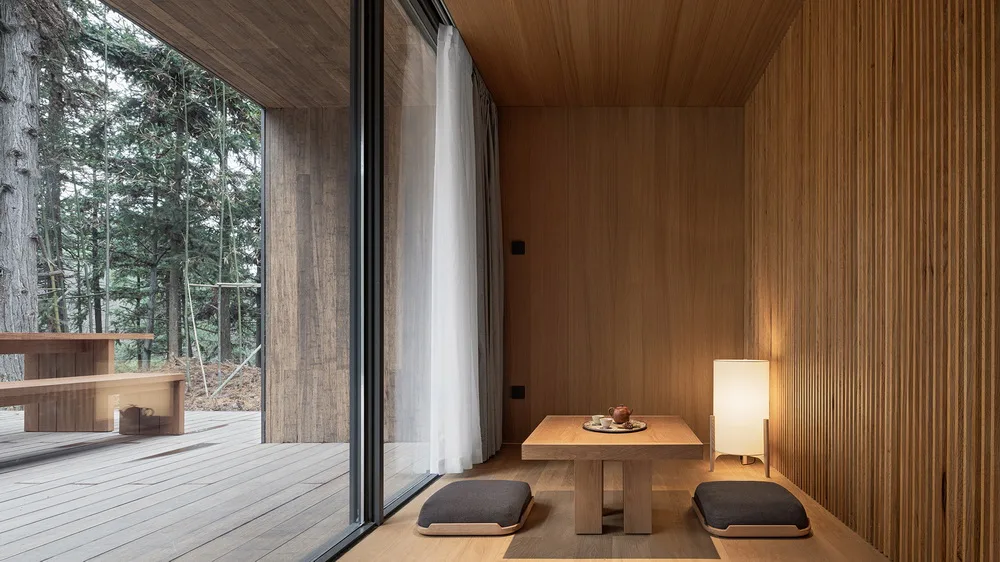
The cabin’s dimensions are carefully scaled to human proportions, with walls and roofs within easy reach. This intimate scale creates a sense of constant closeness to nature. The experience resembles that of a camping tent, designed to make occupants feel that nature is always just beyond the thin outer wall.
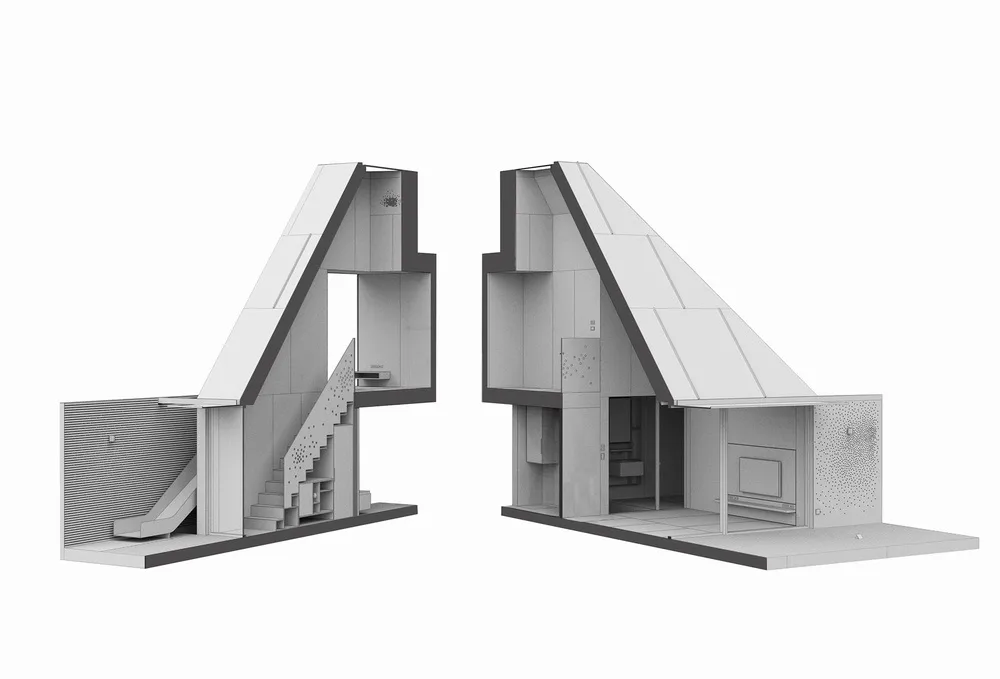
△ Section Model of Room 1
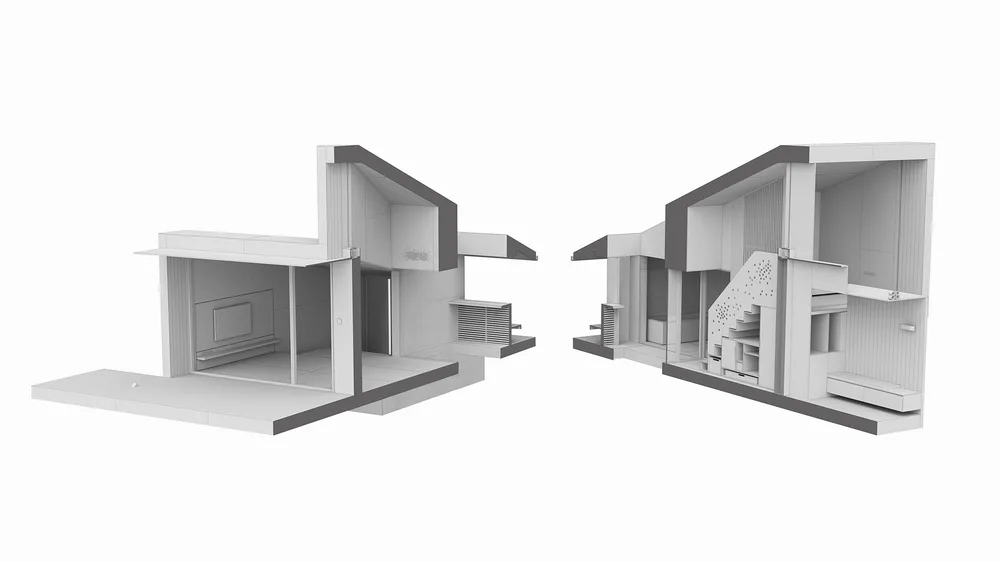
△ Section Model of Room 2
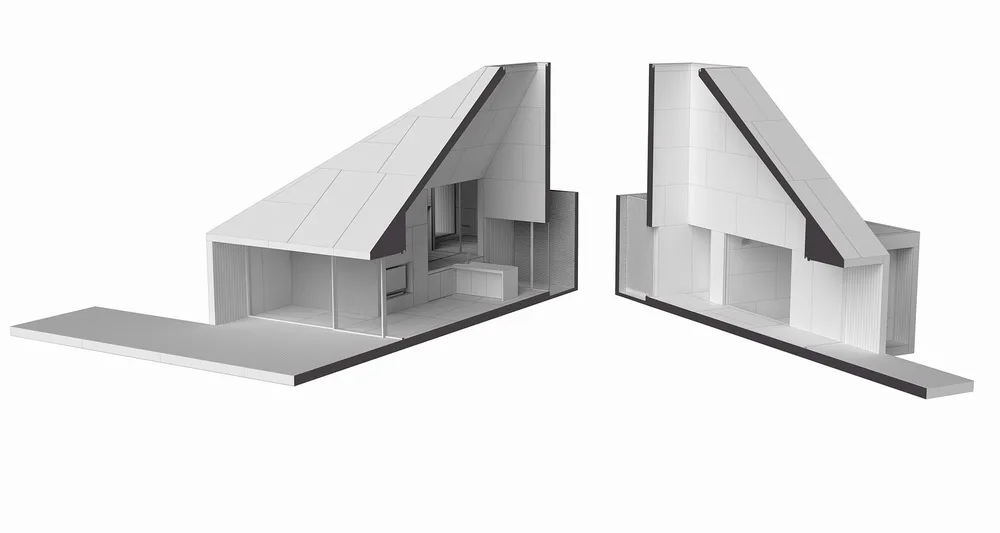
△ Section Model of Room 3
The extensive use of wood throughout the cabins provides a warm and cozy interior lining, creating a welcoming living atmosphere. This contrasts sharply with the rugged wilderness outside, enhancing occupants’ sensitivity to the surrounding natural beauty—whether delicate and gentle or wild and dramatic.
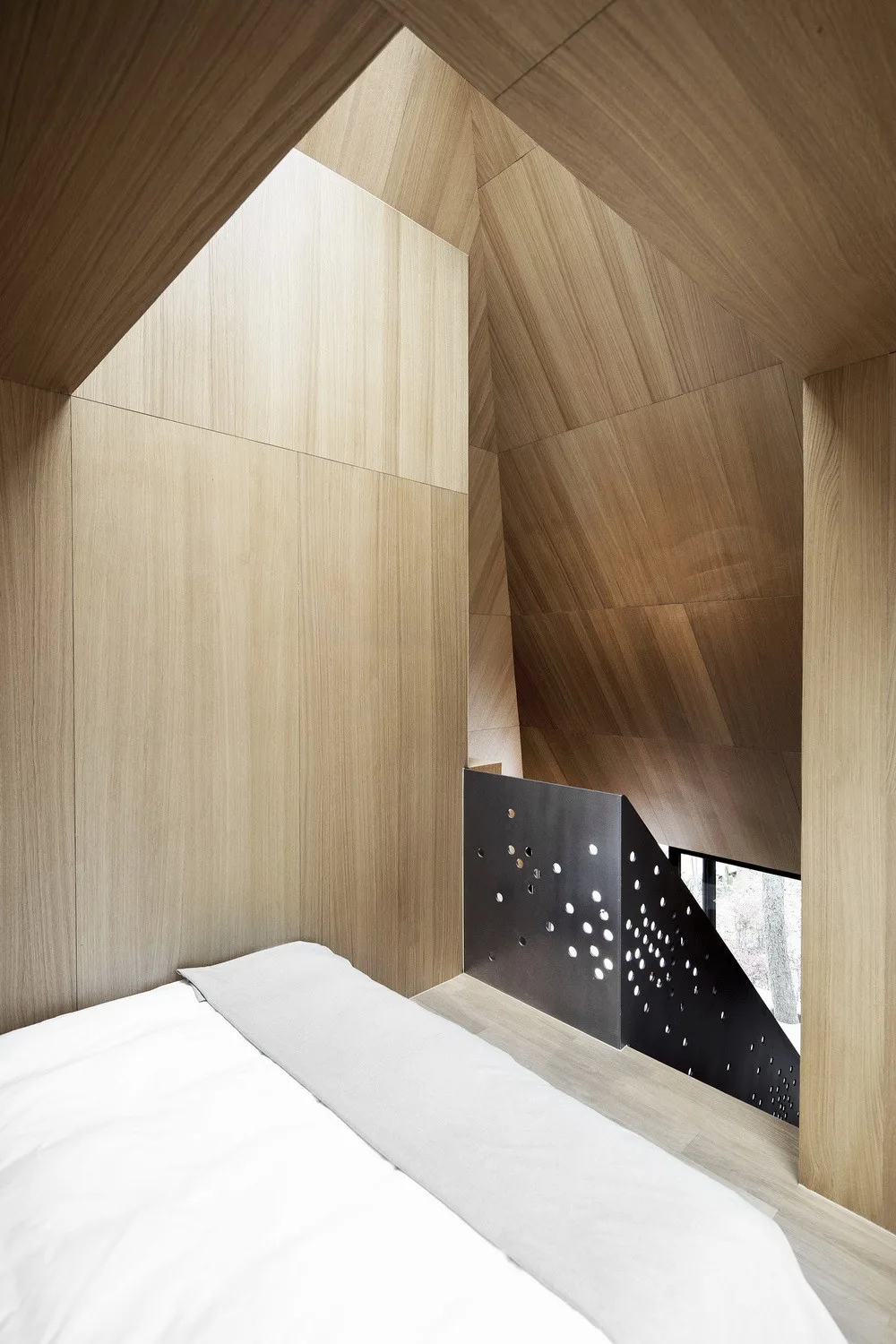
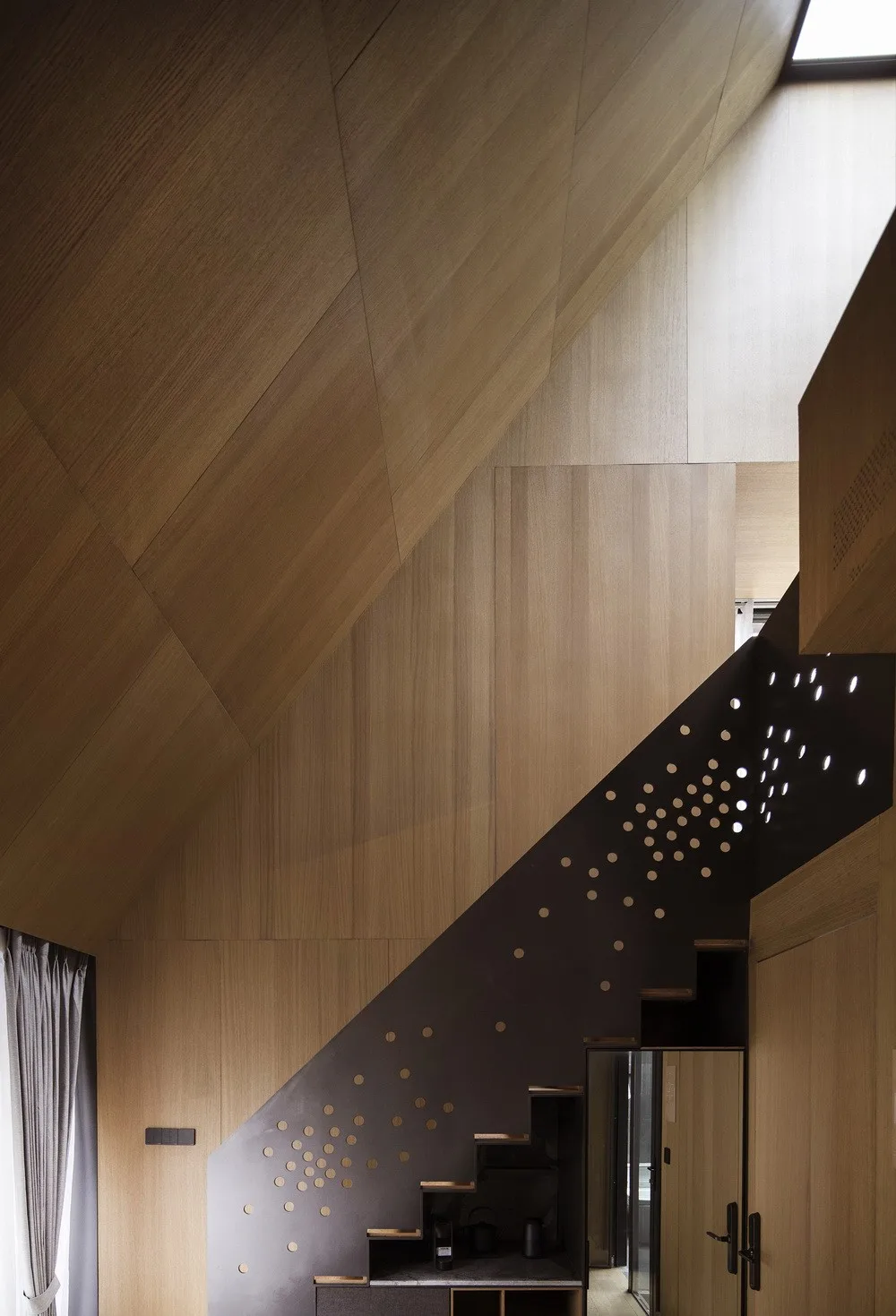
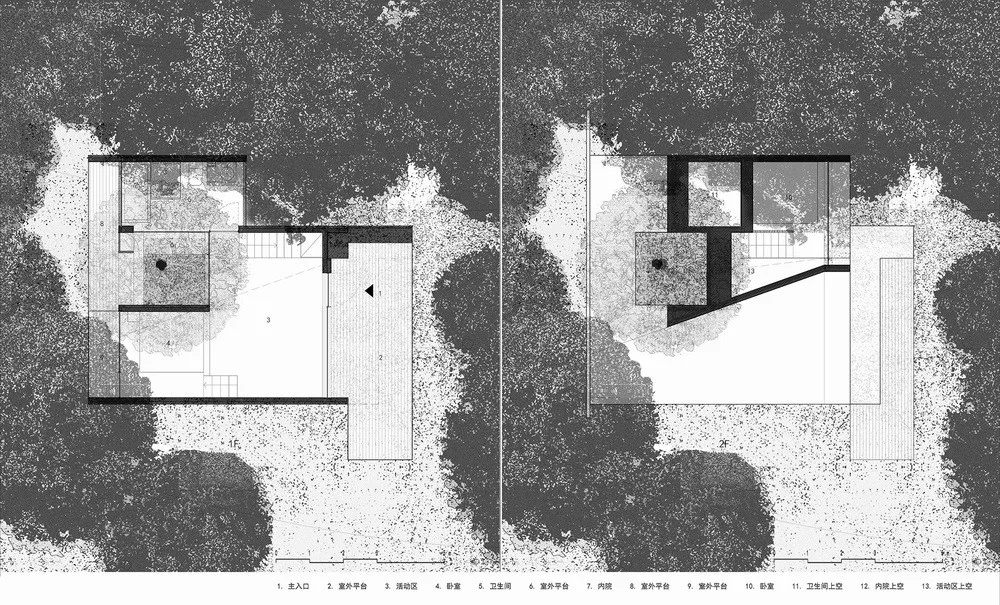
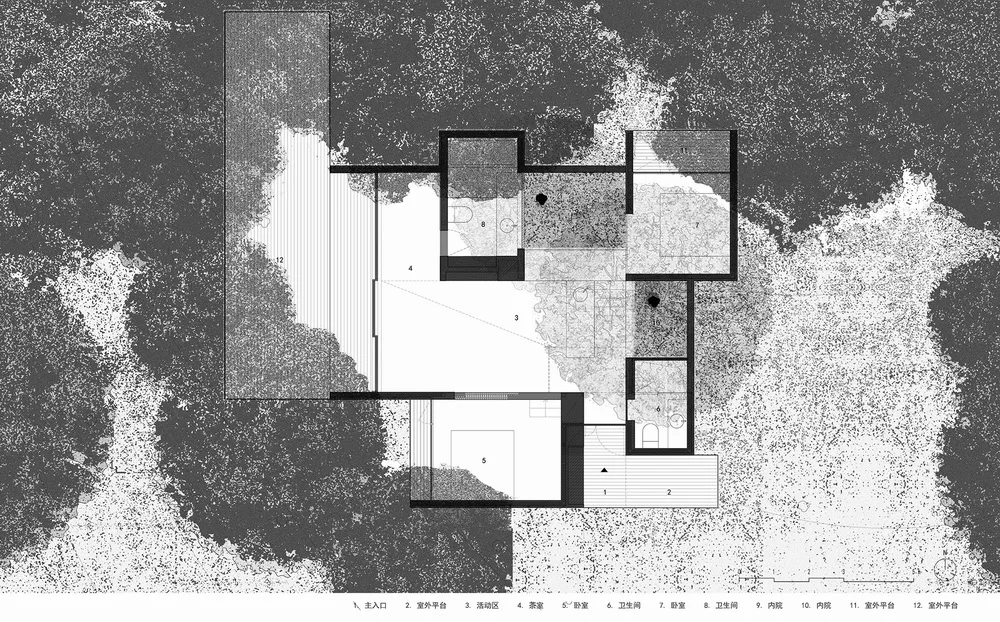
Each cabin preserves a native tree from the site, integrating it into the design as a courtyard. This tree-filled courtyard remains visible through glass walls, creating a unique reverse infiltration of nature into the building. It also offers a private natural view from the indoor bathroom.
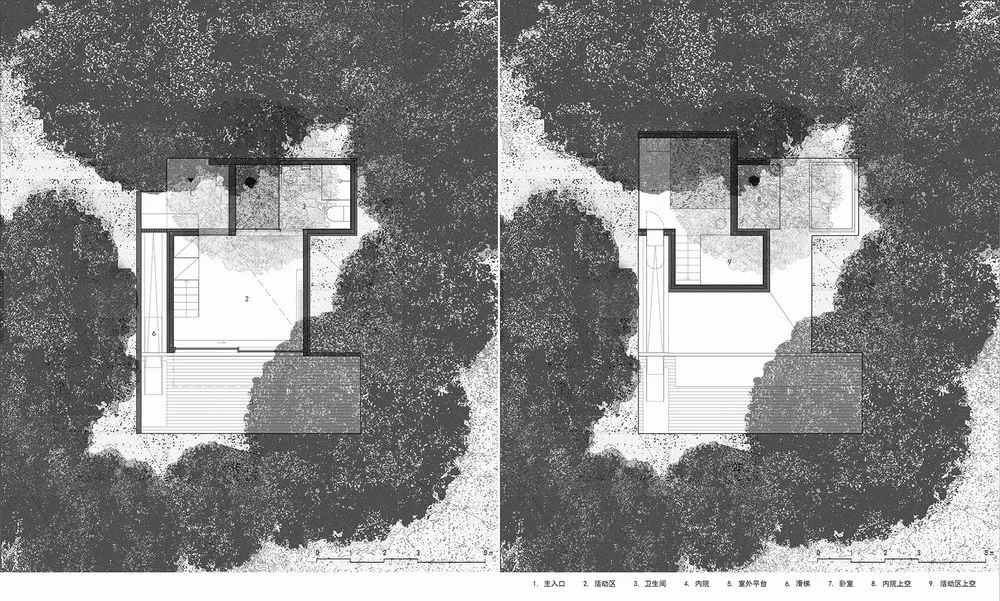
△ Room 1 Floor Plan
△ Room 2 Floor Plan
△ Room 3 Floor Plan
The indoor space is designed with varying floor levels to distinguish different living areas. Instead of walls, changes in height define functional zones, allowing for privacy while maintaining spatial richness. This approach is reflected in the building’s external form, which adapts to the mountain’s varying slopes.
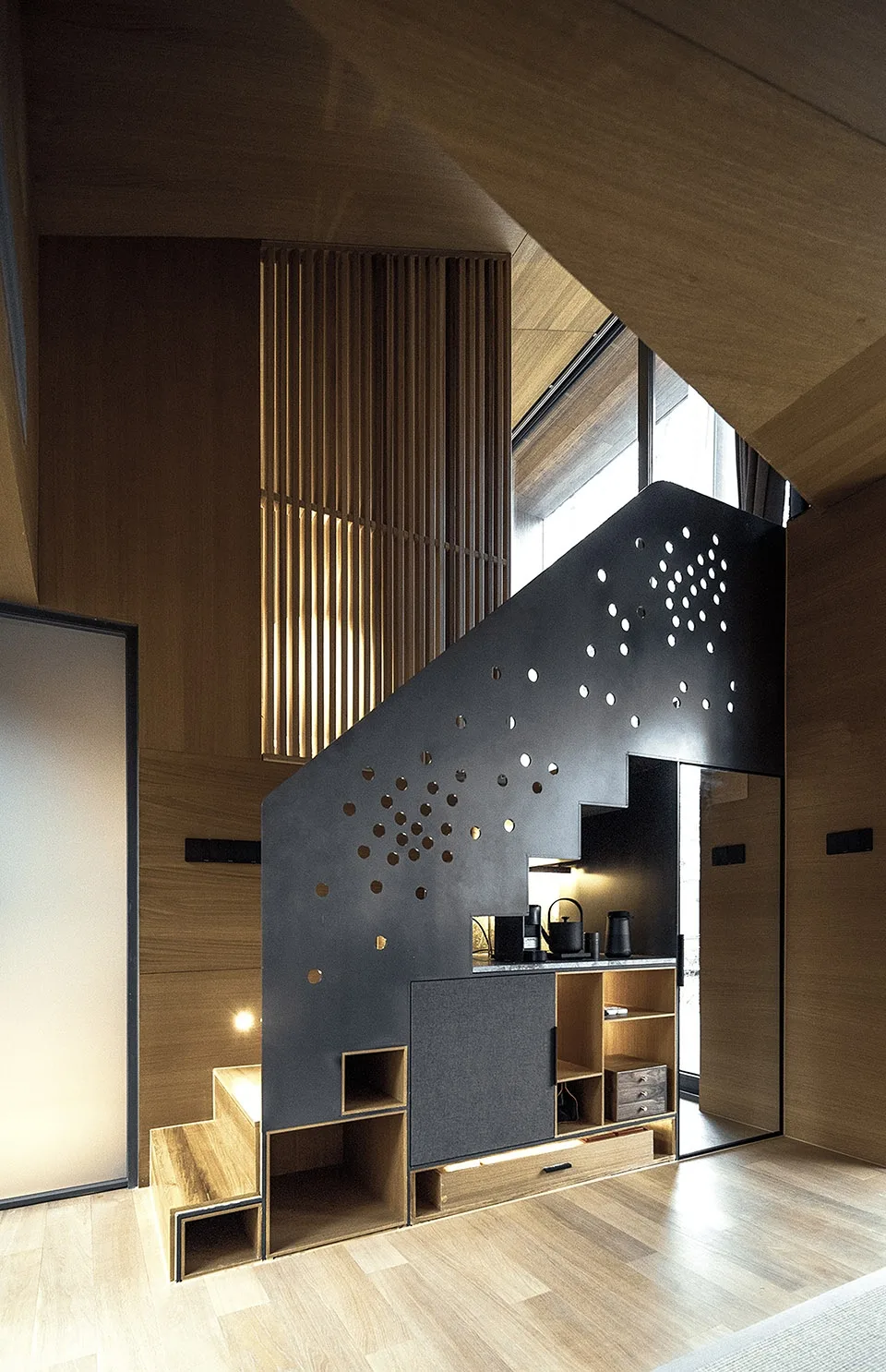
Each interior level features floor-to-ceiling glass facades, while the conical roof top includes skylights that offer views of the sky and tree canopy. This multi-directional viewing experience brings the surrounding landscape directly into the space, making nature the primary element of the building’s interior and creating a unique spatial tension. All design elements aim to enhance the sense of living closely connected with nature.
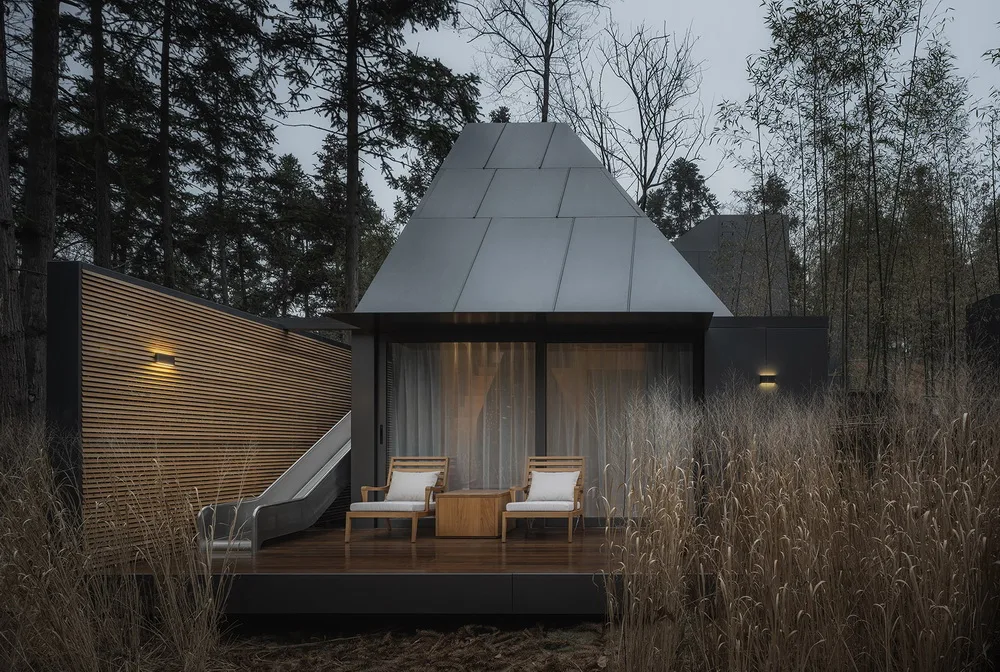
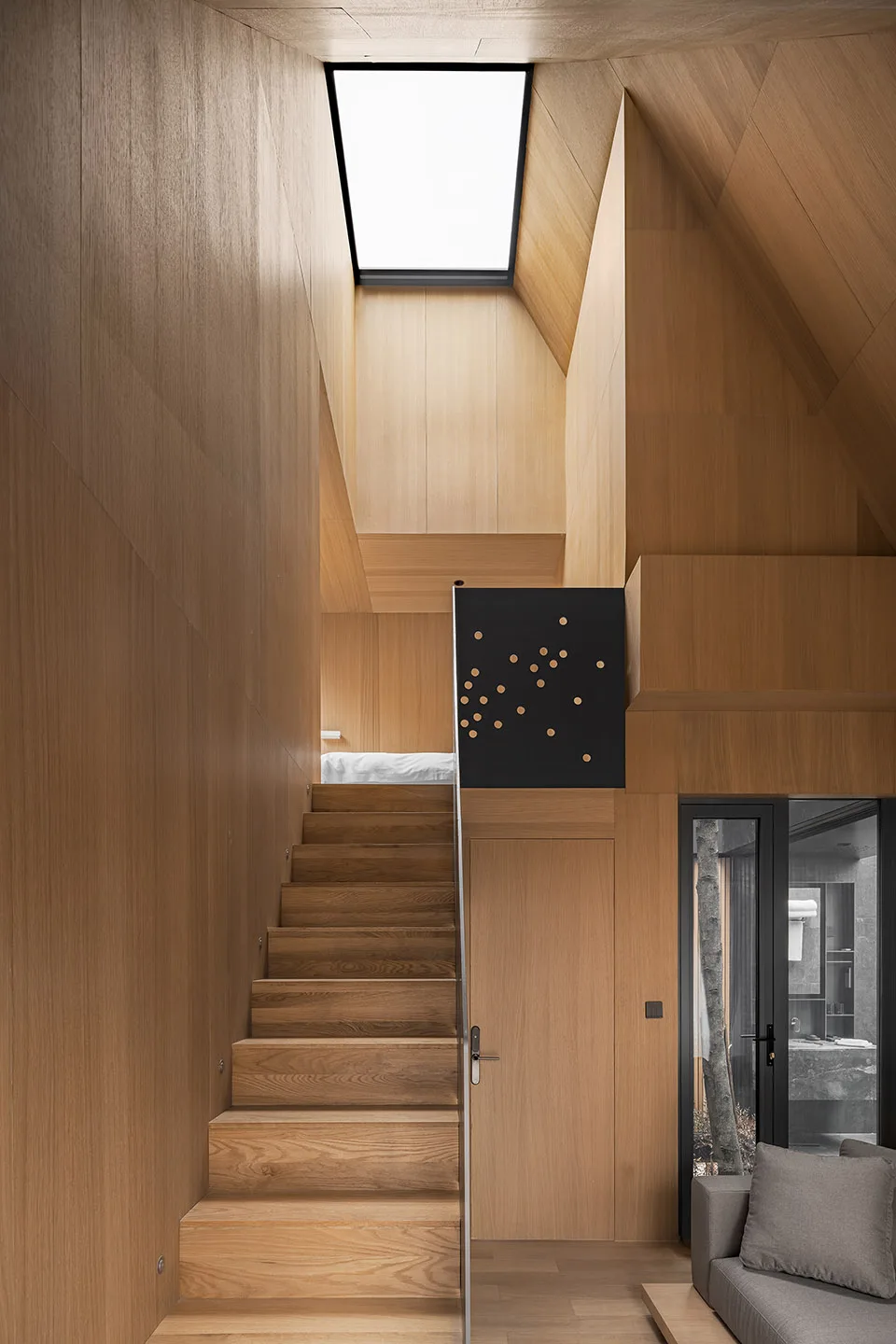
As a healing retreat, the project’s greatest value lies in its ability to integrate with nature, coexist harmoniously, rediscover the natural world, restore inner peace, and evoke feelings of freedom and tranquility.
Technical Drawings
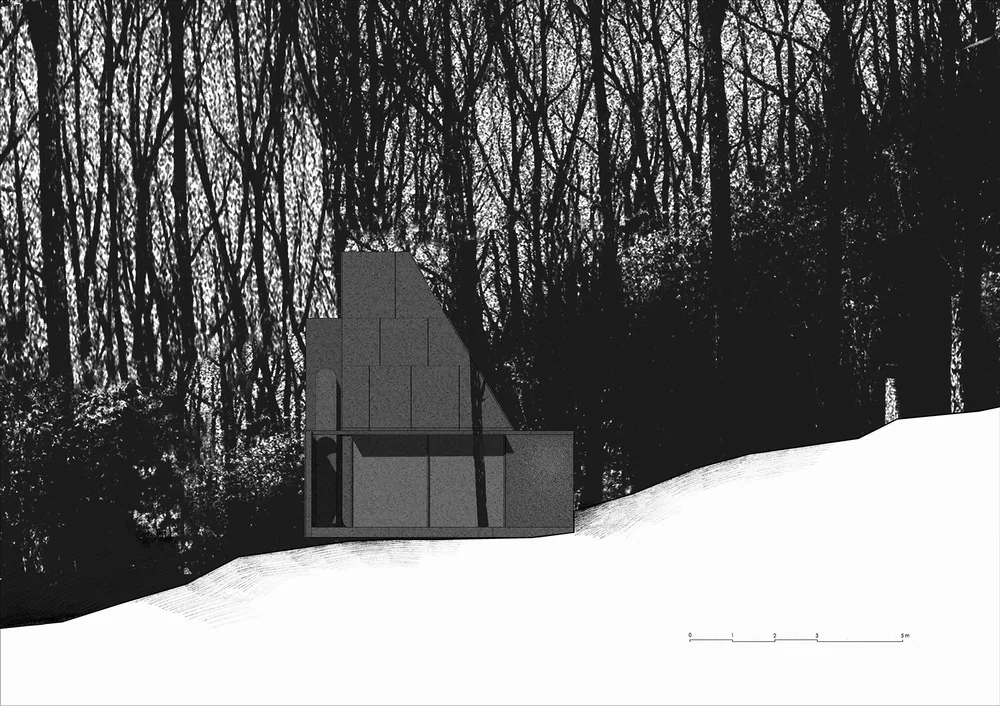
△ Front view of Room 1
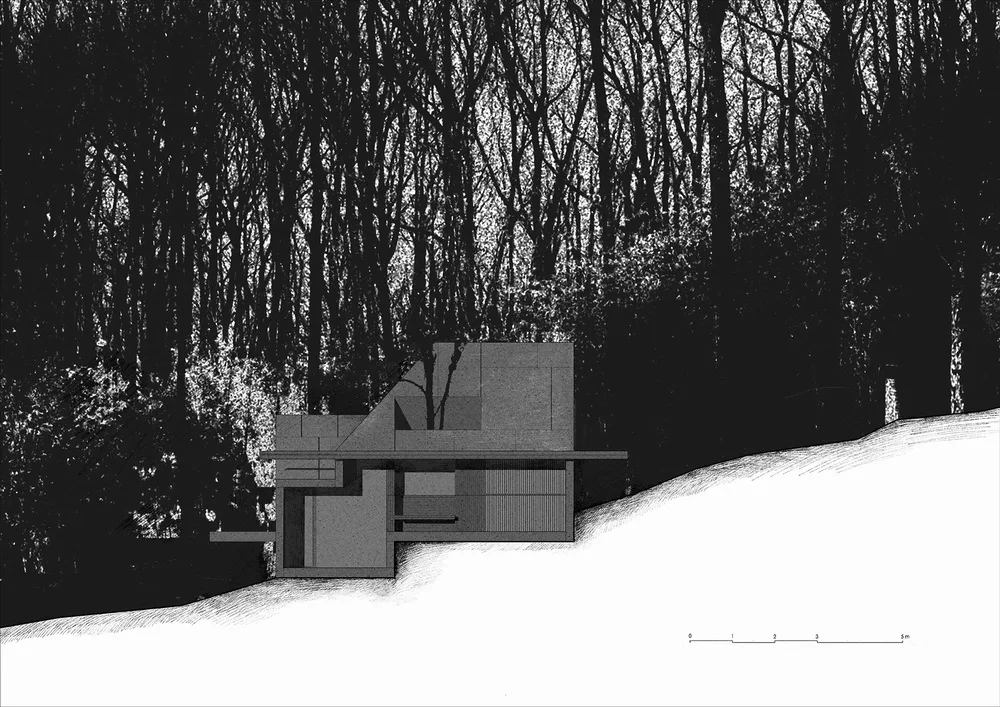
△ Front view of Room 2
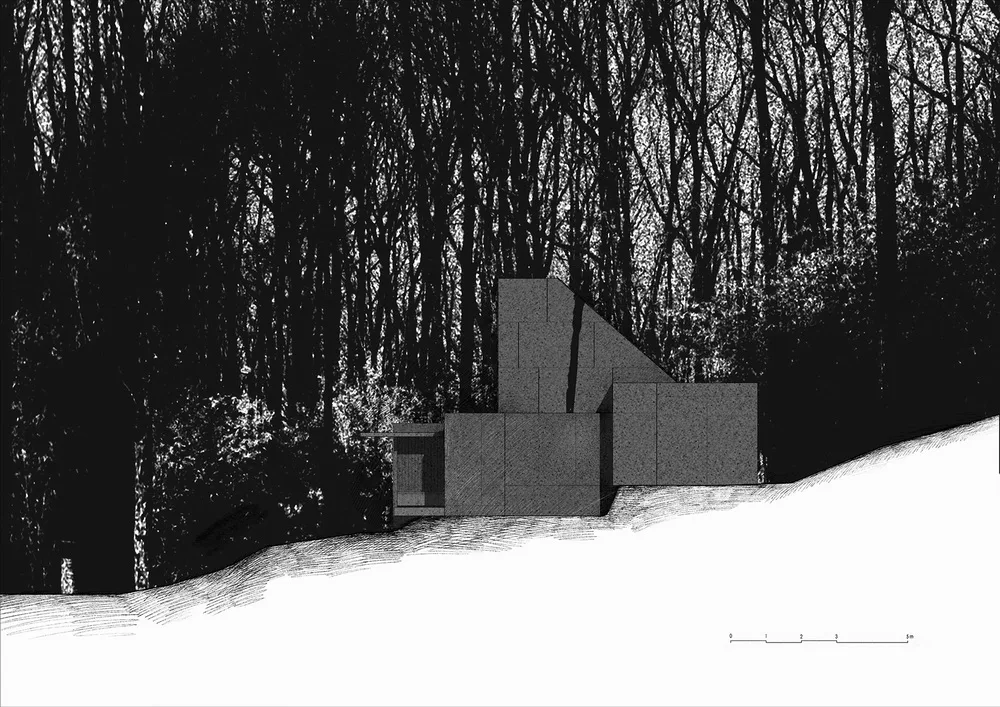
△ Front view of Room 3
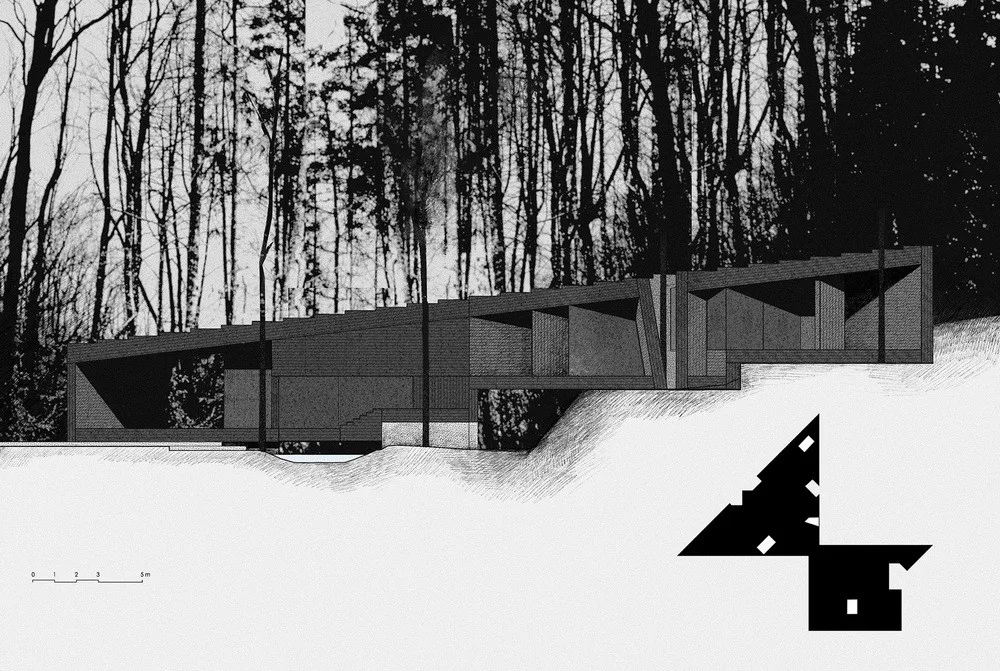
△ Front view of public area
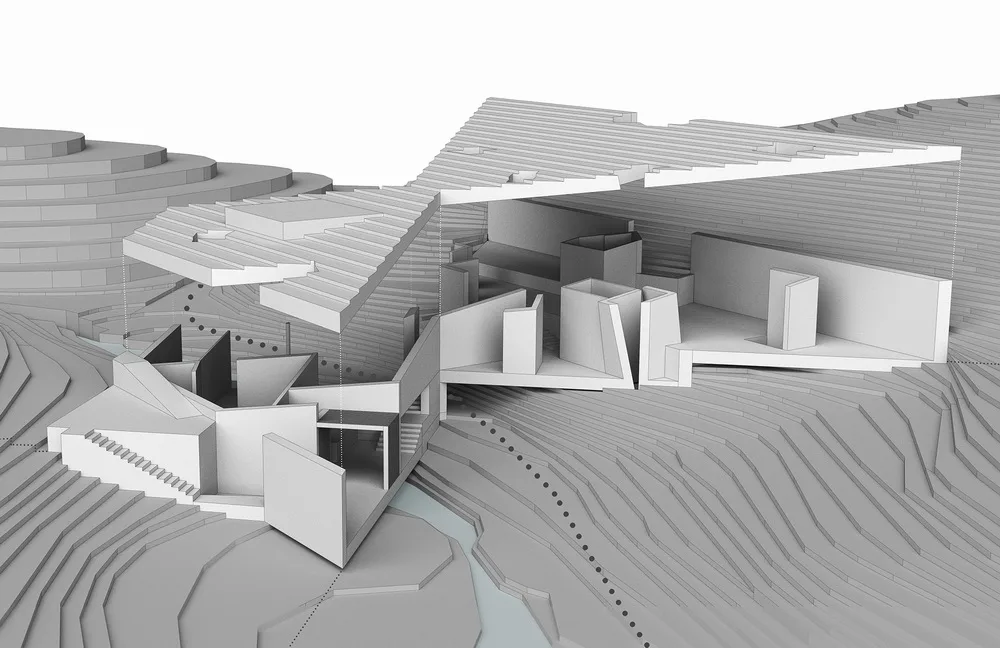
△ Public area model
Project Information
Not Ju Lin | Healing Resort Hotel
Location: Hangzhou City
Planned construction land area: 3,333 square meters
Building area: 1,240 square meters
Design scope: Planning, Architecture, Interior, Landscape
Project type: Hotel
Architect: Tao Lei
Additional Architects: Chen Zhen, Tao Ye, Duan Zhenqiang, Yuan Lina, Dai Yunyi, Shi Tong, Sun Lang
Interns: Wan Weimin, Sun Li, Cheng Zhu, Xiaozhuo
Partner: China Construction Technology Group Co., Ltd
Client: Zhejiang Fengma Niu Changle Cultural Tourism Co., Ltd
Photography: Ten Photography Studio / Tan Xiao + TAOA













Must log in before commenting!
Sign Up