
Penda China recently unveiled a new project titled the “Ten Mile Lianjiang Agricultural Science Popularization Building.” Rooted in biomimetic architecture, this design seamlessly blends ecological principles with elements of art, culture, and commerce. As the primary public structure within the core zone of Ten Mile Lianjiang, it is set to become a prominent humanistic architectural landmark in Zhuhai upon completion.
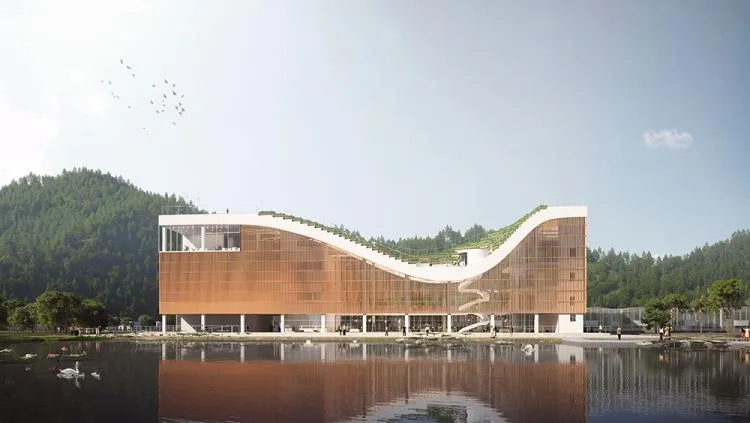
△ Building facade rendering
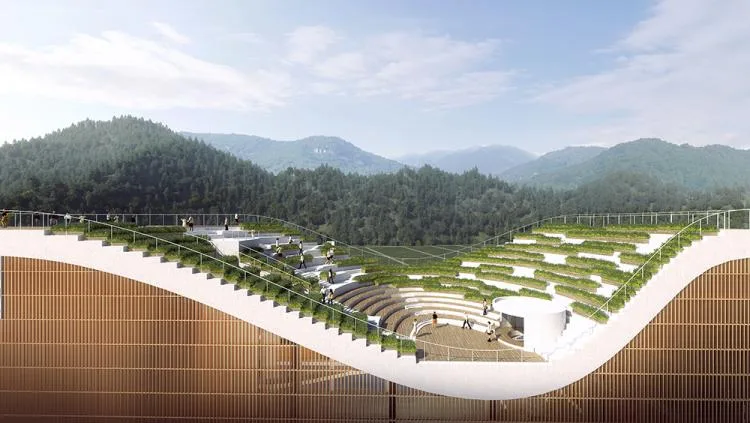
△ Roof design visualization
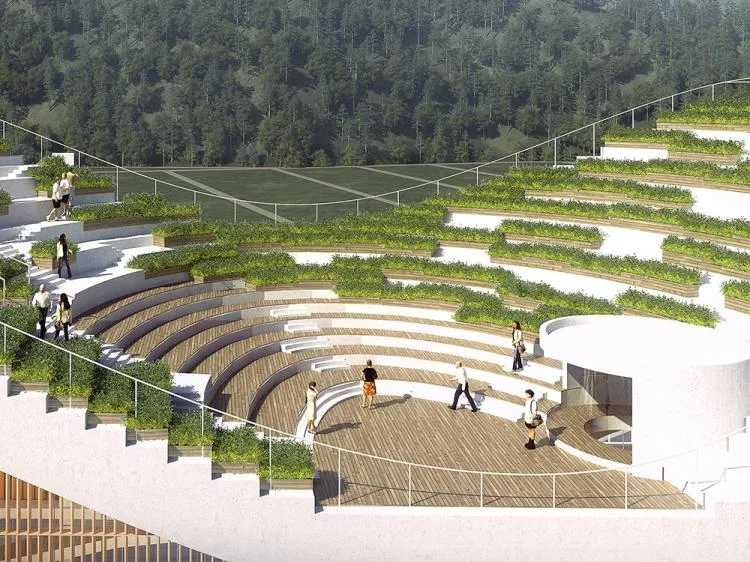
△ Detailed roof view
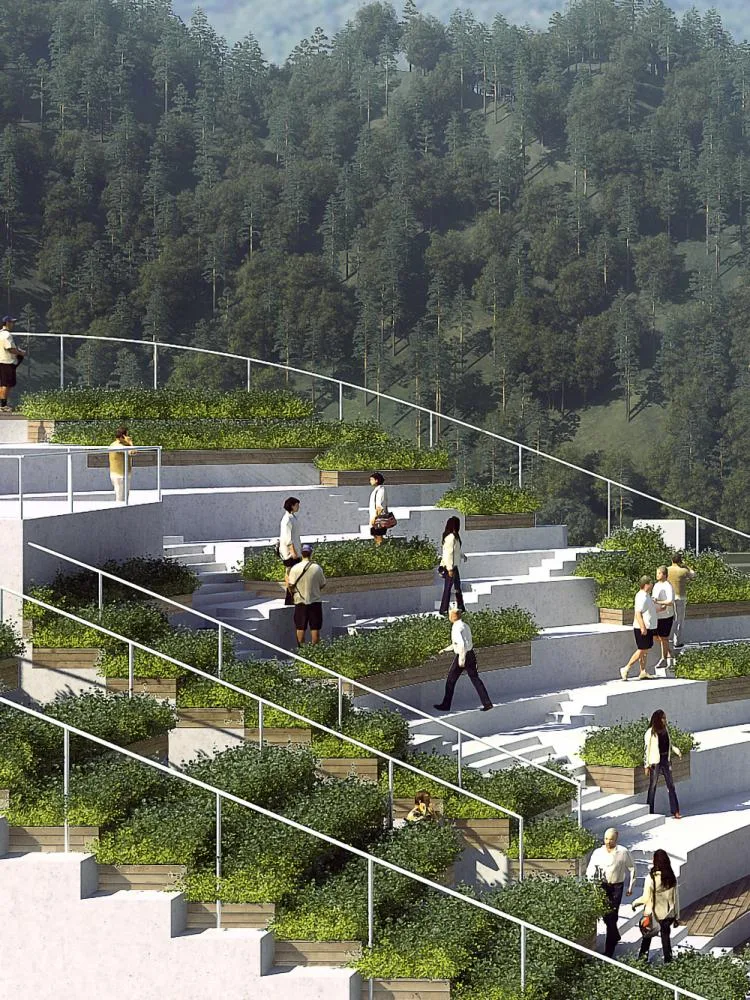
△ Close-up of roof details
Located in Lianzhou Town, Doumen District, Zhuhai City, Guangdong Province, the project sits on the west bank of the Pearl River, serving as a vital connection hub between Macau, Jiangmen, Zhongshan, and surrounding areas. As the initial development in Ten Mile Lianjiang Phase I, this agricultural science popularization building is designed to support a range of functions including science education, exhibitions, interactive experiences, and service amenities. It aims to establish a public cultural space that integrates showcasing, learning, hands-on engagement, and commerce.
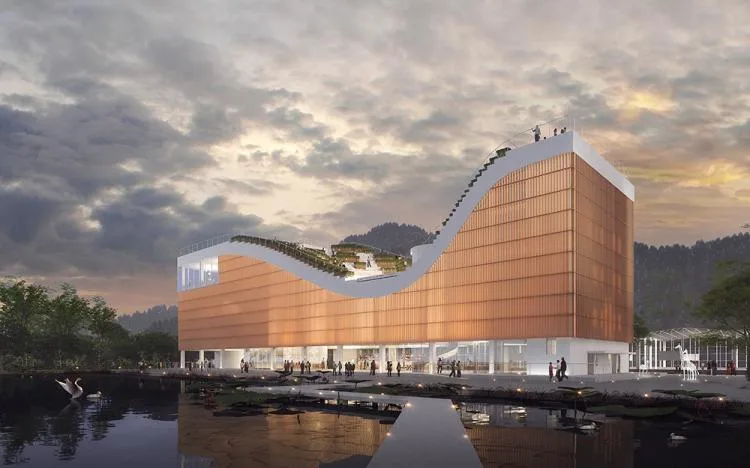
△ Nighttime facade illumination
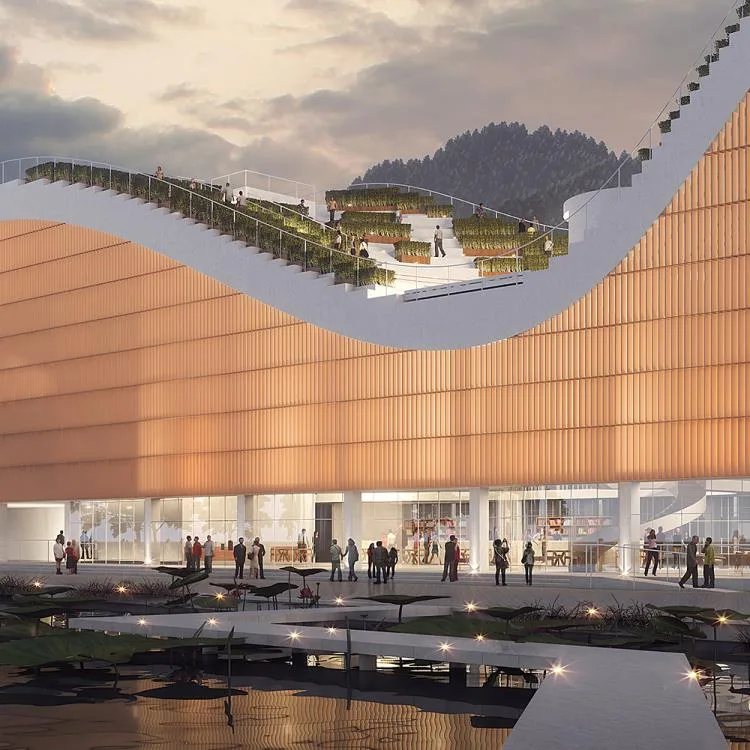
△ Entrance detail view
The building’s roof design is inspired by the lotus flower, not only in form but also in function. By day, the rooftop serves as an open-air theater and social space for rest and activities. By night, it transforms into a starry sky cinema. Surrounding the theater are various crops, extending the natural landscape into the built environment. This interaction between users and architecture heightens the immersive experience while fostering a harmonious relationship between nature, structure, and people.
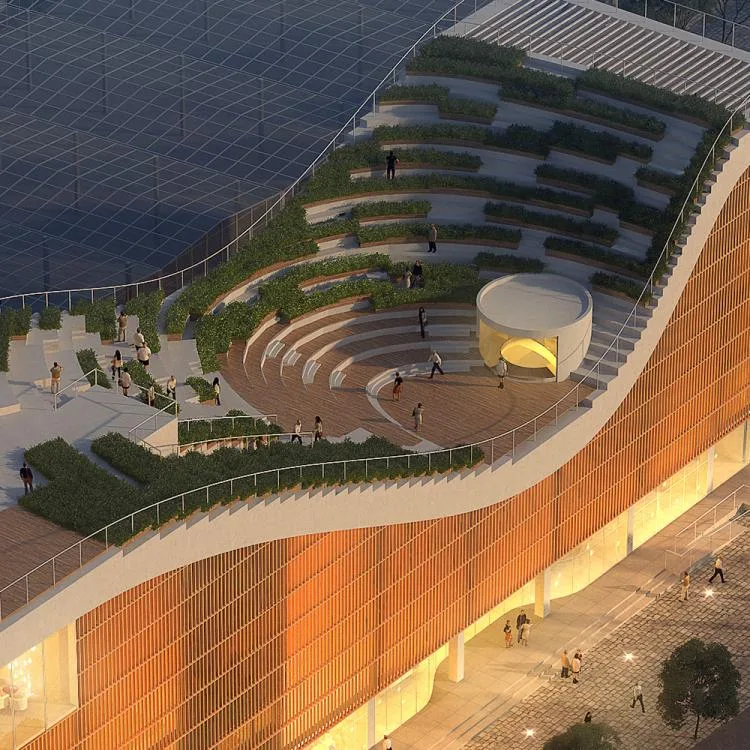
Partial view of rooftop theater
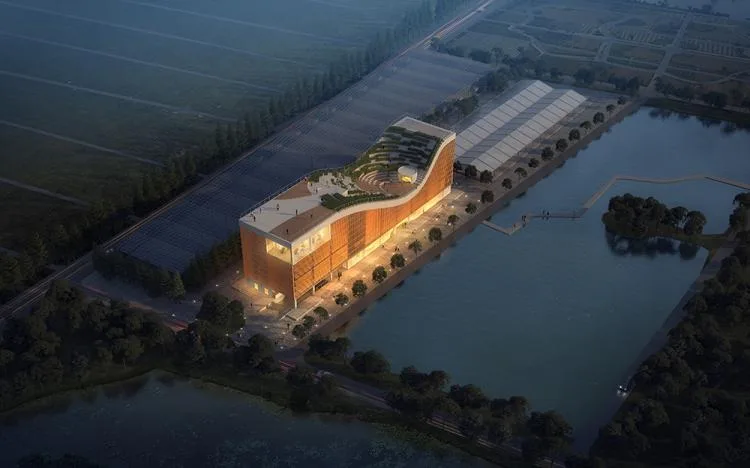
Bird’s-eye perspective of the building
The structure comprises four floors above ground and one underground level, reaching a height of 24 meters. It consists of two blocks positioned north and south, connected by a central hall. The design features anchor points on either side of the blocks, with a roof supported by a side-pull structure that creates an open, cantilevered hall. Inside, the building accommodates a variety of spaces, including cafés, bookstores, cultural and creative exhibitions, agricultural-themed displays, large event halls, and multifunctional rooms.
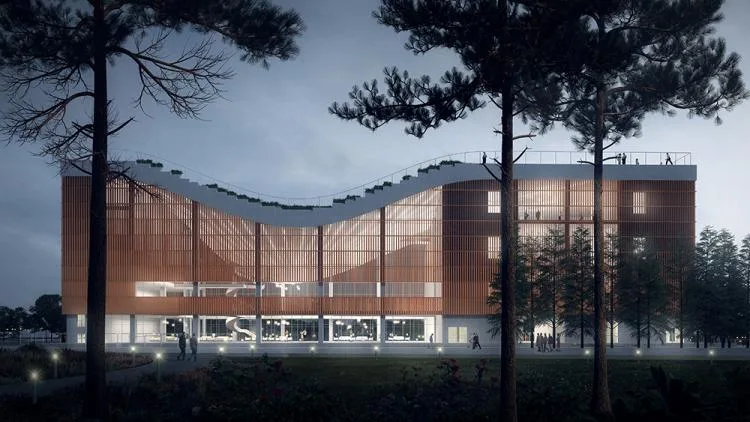
△ Night view of building facade
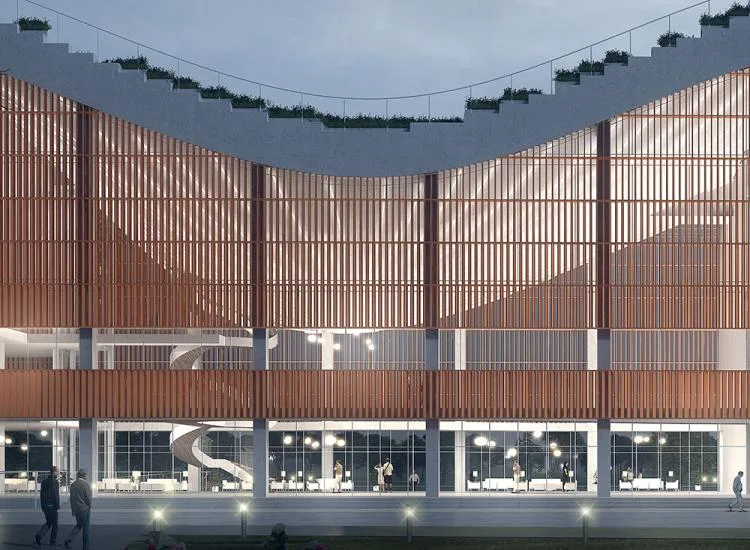
△ Detailed exterior facade
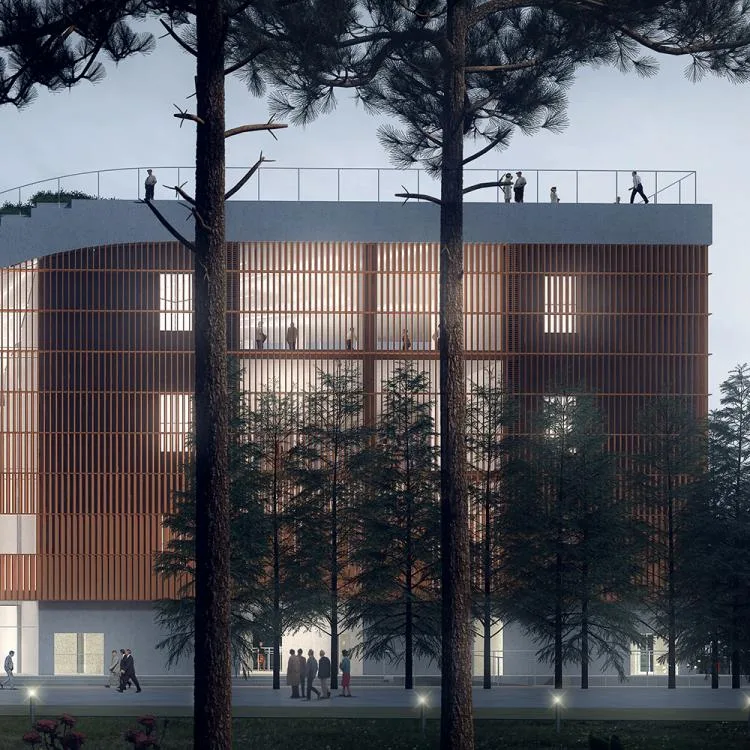
△ Exterior facade close-up
The building’s footprint is narrow and elongated along the north-south axis, with primary facades and light exposure on the east and west sides. The exterior utilizes louvered components for shading, digitally designed so that each louver has a unique angle. This design enhances natural lighting and views while reducing heat gain from western sunlight.
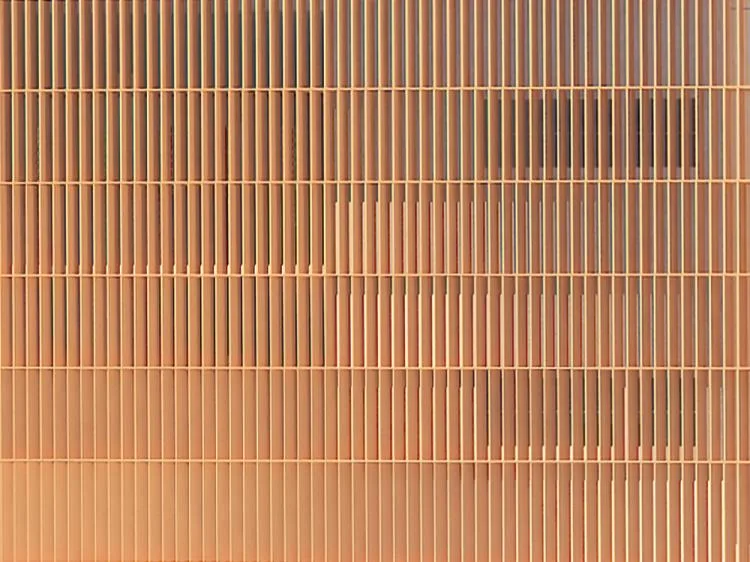
△ Facade detail view
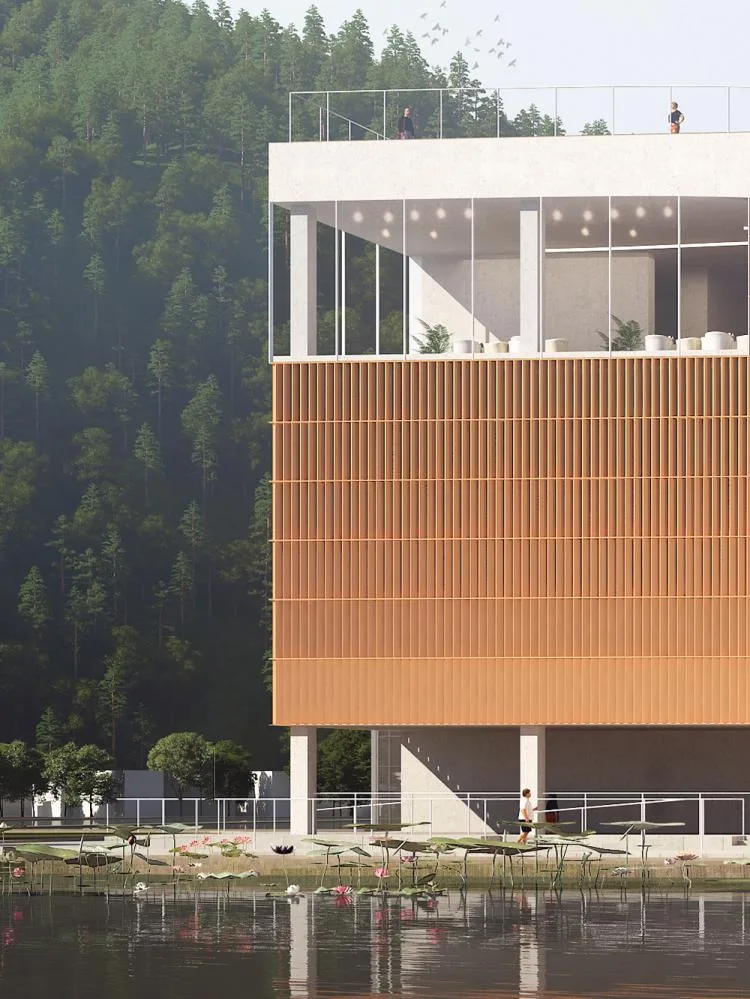
△ Close-up of louver system
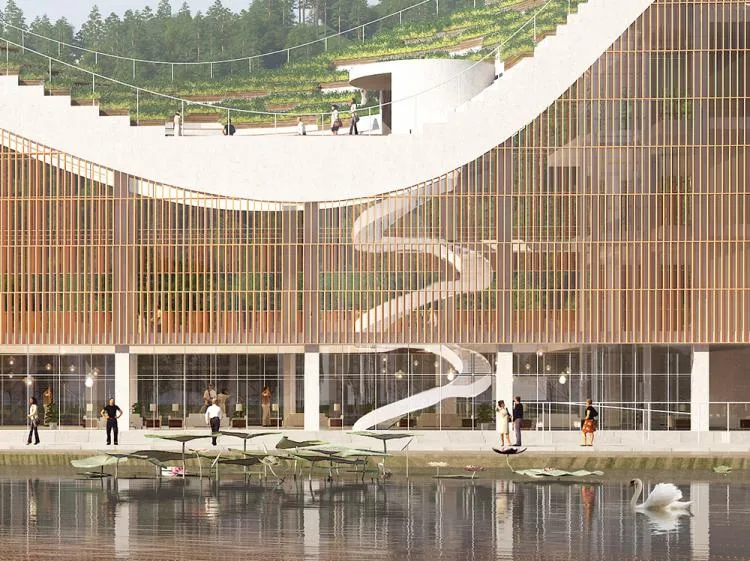
△ Entrance detail
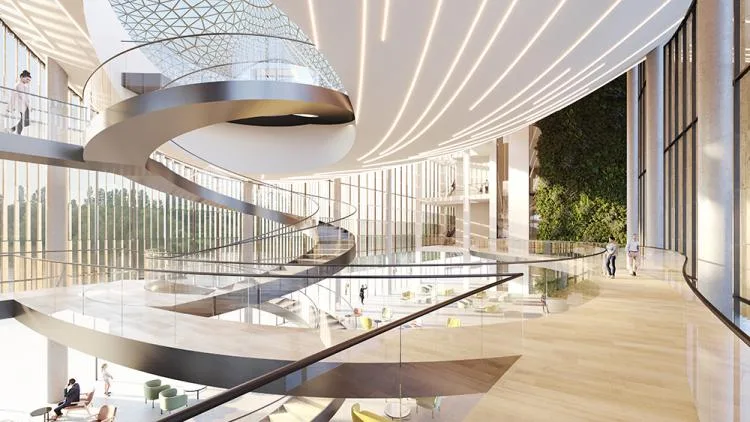
△ Interior spatial rendering
“Lotus” serves as the central theme and inspiration for the project, drawing from the lotus pond located on the northern side of the site. The building’s roof aligns with the natural skyline and is designed to maintain an optimal scale. The organic shape of the lotus leaf exemplifies biomimetic design, blending function and aesthetics flawlessly. The lotus leaf-shaped sunken area connects to a spiral staircase, creating dynamic spatial tension indoors. This roof form psychologically guides visitors to ascend the stairs, initiating their journey through the space.
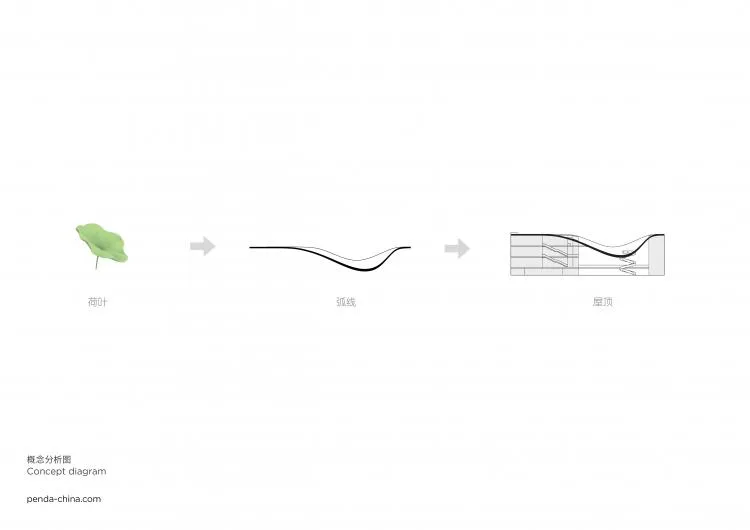
Concept analysis diagram
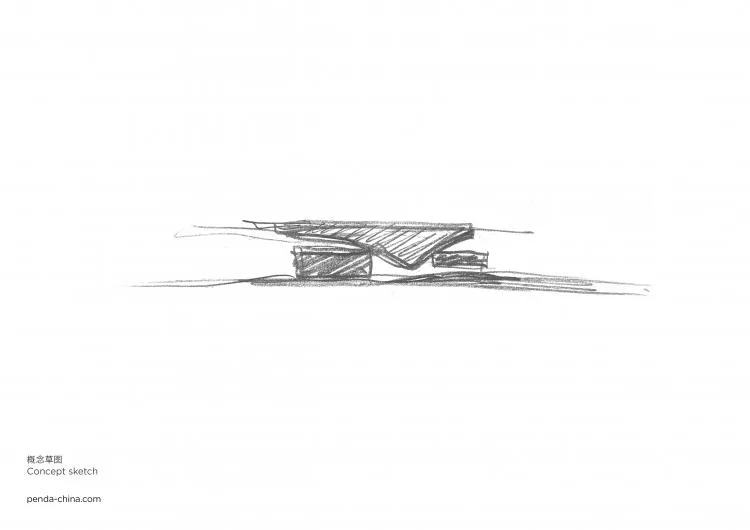
Concept sketch
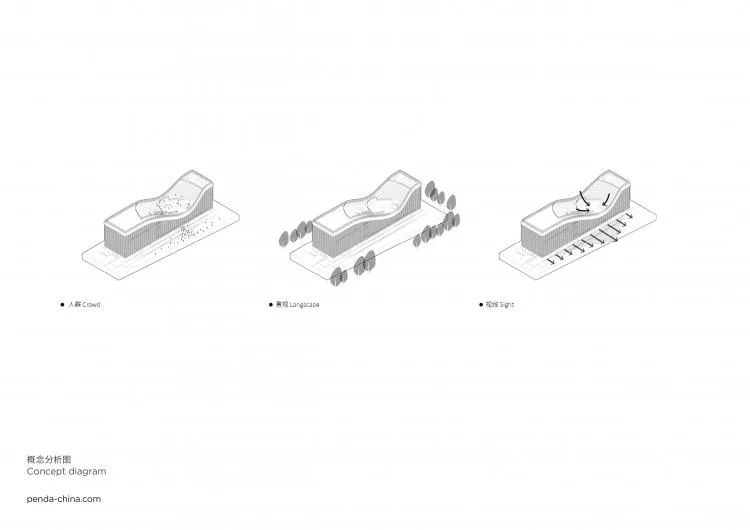
Concept analysis diagram
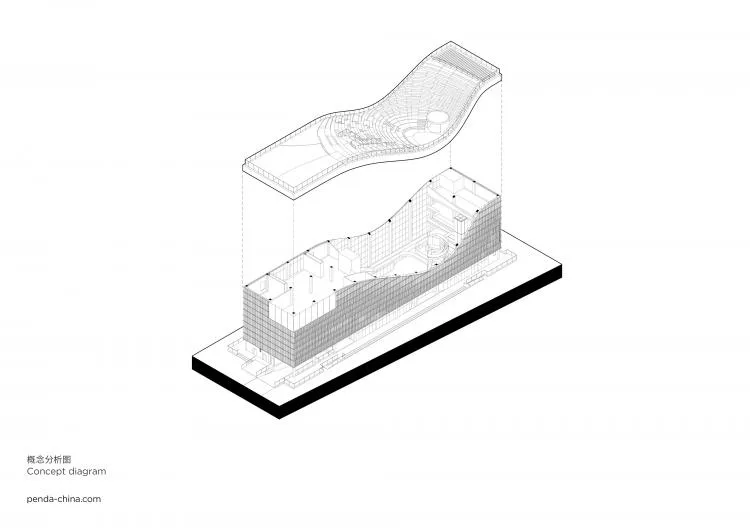
△ Axis side schematic diagram
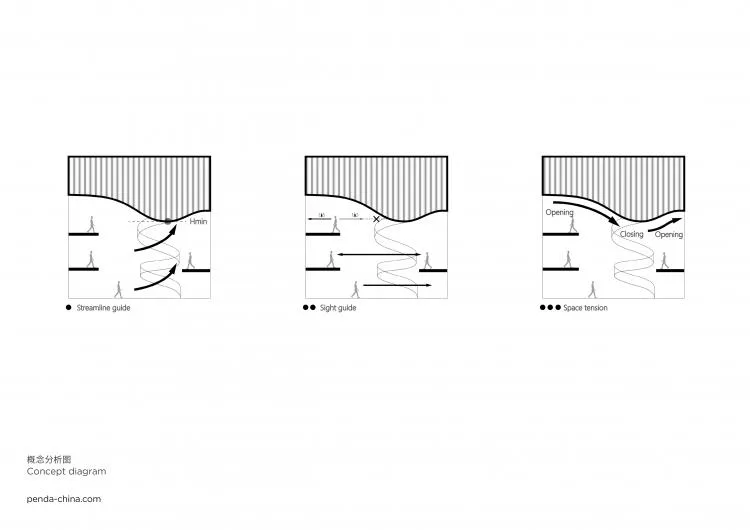
Concept analysis diagram
The visitor circulation path follows this sequence: entrance → spiral staircase → roof → exhibition hall → corridor → ground floor. This continuous loop ensures that visitors experience the full spatial dynamics of the interior.
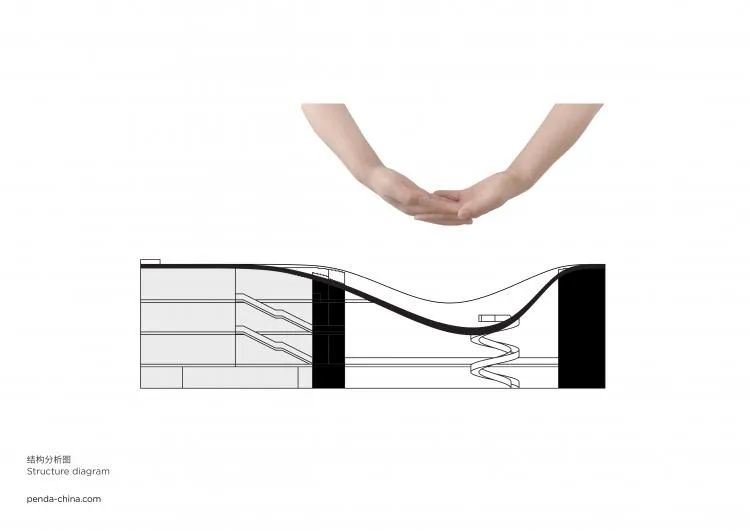
△ Structural analysis diagram
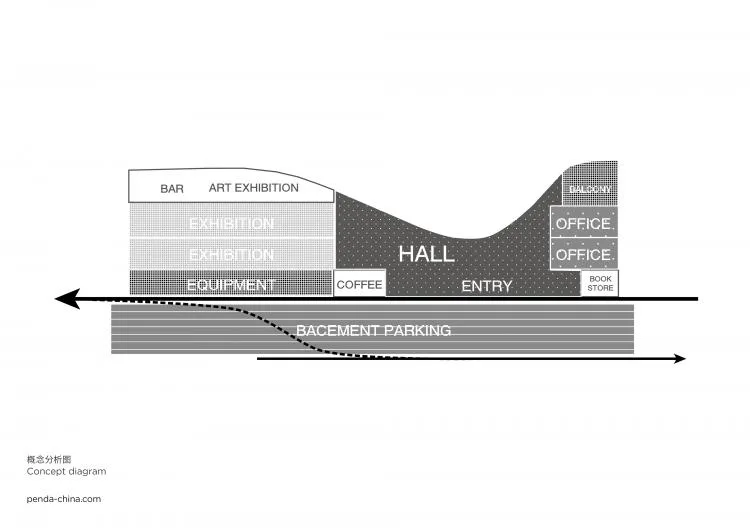
△ Functional zoning diagram
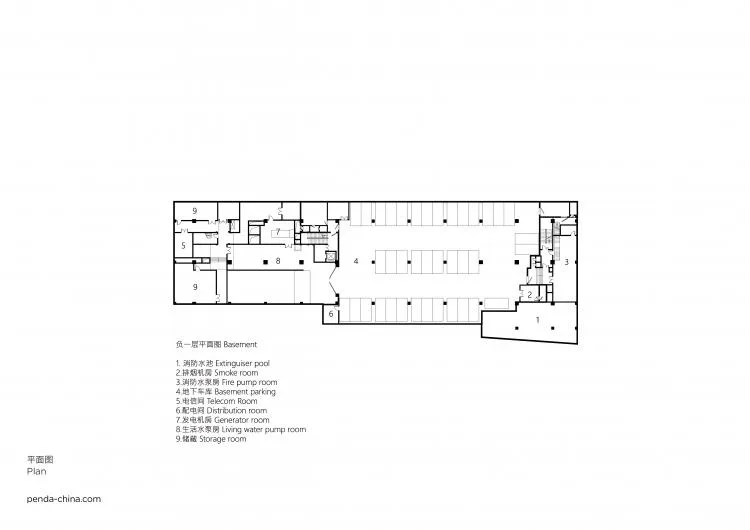
△ Basement floor plan
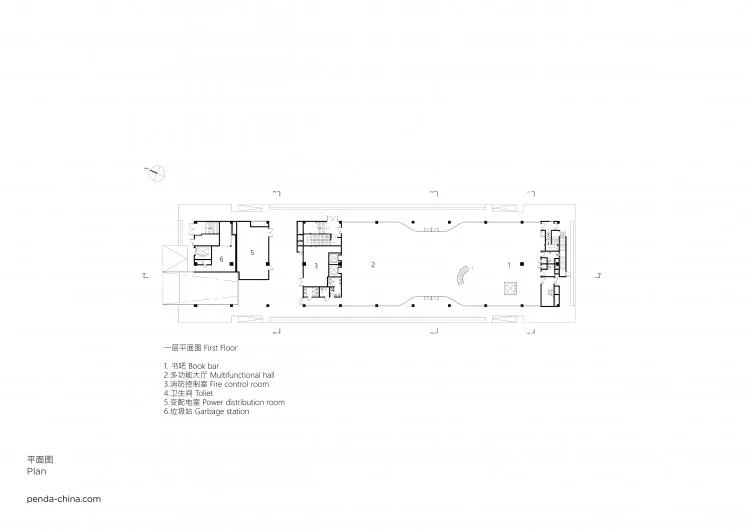
△ First floor plan
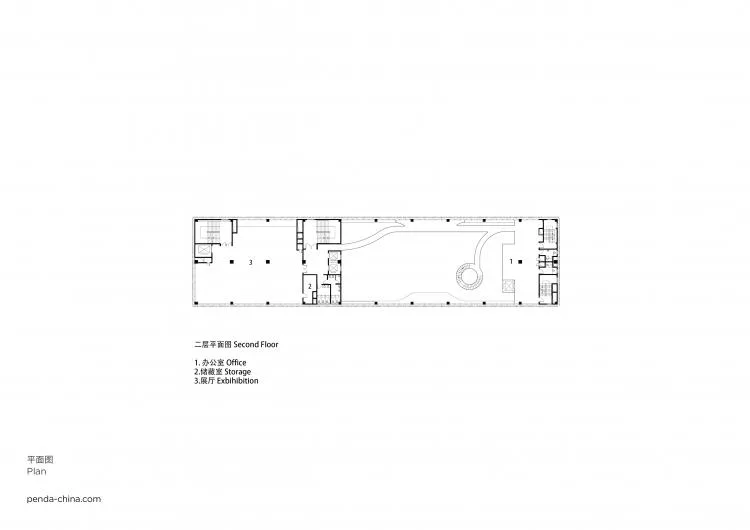
△ Second floor plan
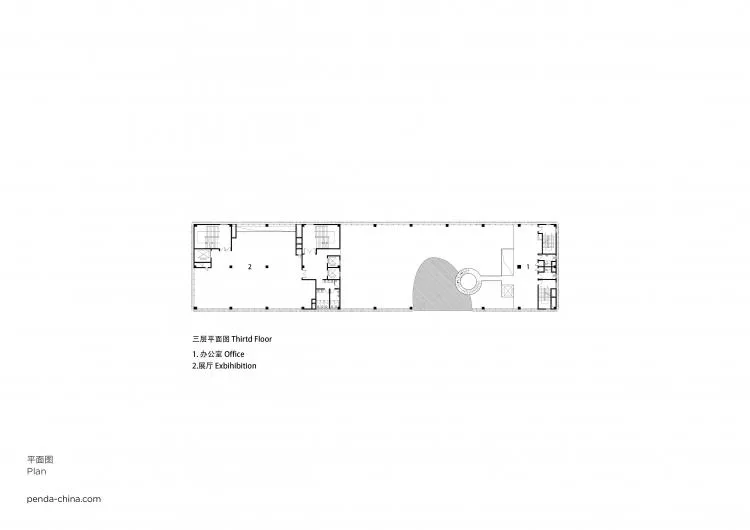
△ Third floor plan
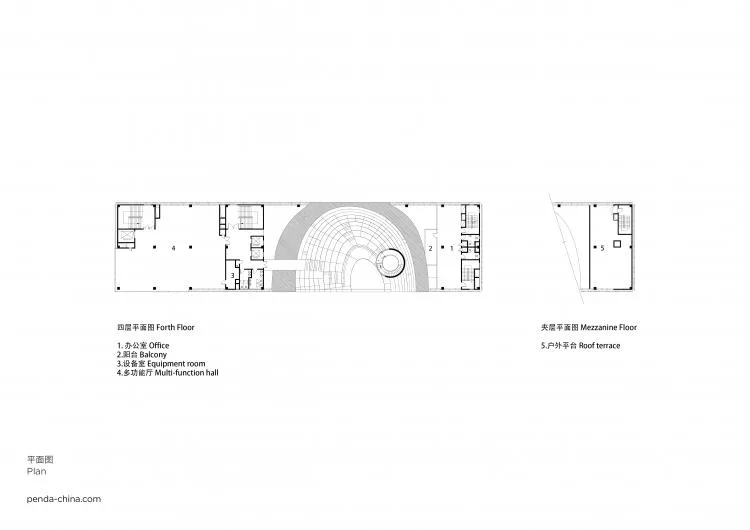
△ Fourth floor plan
Project Information
Project Name: Ten Mile Lianjiang Agricultural Science Popularization Building
Location: Guangdong Province, China
Scale: 6,722 square meters
Design Period: June – December 2020
Lead Designers: Sun Dayong, Wan Shuyan
Design Team: Penda China
Construction Drawing Team: Shenzhen Bowan Architectural Design Firm
Construction Year: 2022












Must log in before commenting!
Sign Up