
China’s strategic goals of carbon peak and carbon neutrality for the next 40 years are gradually shaping our daily lives. Achieving these targets involves profound and long-term economic transformation. To drive breakthroughs in green and low-carbon technologies, a diverse pool of talented professionals is essential.
Architecture plays a crucial role in urbanization and is a key avenue for achieving carbon neutrality. Reducing carbon emissions from buildings, advancing green and low-carbon industries, and supporting the realization of carbon peak and carbon neutrality are top priorities for the construction sector moving forward.
With China’s green building industry rapidly evolving, near zero energy buildings (nZEB) are emerging as the future trend in construction. Tianyou Design has over a decade of experience in green buildings, specializing in ultra-low energy consumption and low-carbon ecological structures. Their approach integrates design value led by architects, supported by near zero energy technologies and performance-based design methods, enabling innovative spatial design for near zero energy buildings.
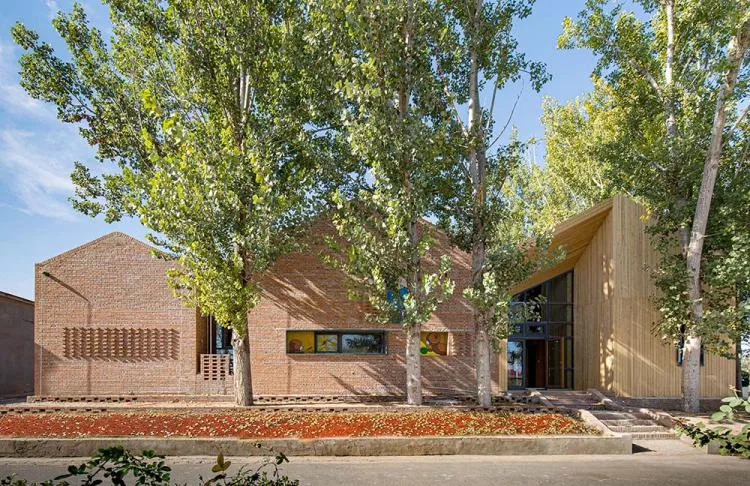
△ Tianyou · Zero House
Tianyou Lingshe is the first nearly zero energy building in China built according to the national “Technical Standards for Near Zero Energy Buildings” and has received official evaluation certification. It earned the Silver Award in the Sustainable Building category at the 2020 WAN World Architecture News Network Awards. Additionally, it serves as a demonstration project for the Beijing Municipal Science and Technology Commission’s “Green and Smart Rural Technology Integration and Demonstration” initiative.
The renovation of Tianyou Zero House aims to explore cost-effective methods for achieving near zero energy consumption in rural homes, preserving traditional architectural features while incorporating new functionalities to support rural revitalization.
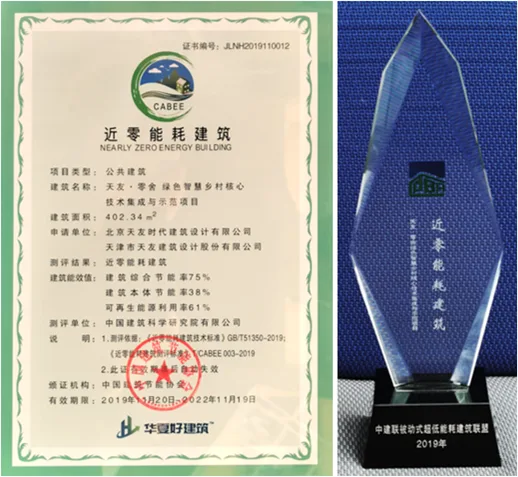
△ Near zero energy consumption evaluation label
Near zero energy buildings (nZEB) minimize energy demand through passive design, maximize system efficiency via active technologies, and fully utilize renewable energy sources. These buildings achieve energy consumption reductions of over 50% compared to national standards and include ultra-low energy buildings, near zero energy buildings, and zero energy buildings.
The Tianyou Lingshe project involves renovating a single-story rural residence. The original building had a large shape coefficient, which posed challenges for energy conservation. Performance-based design is fundamental in near zero energy building development. By optimizing performance, passive sunrooms, stairwells, and other transitional spaces were added to reduce the building’s form factor, while the envelope structure was upgraded to passive building standards to enhance insulation and energy efficiency.
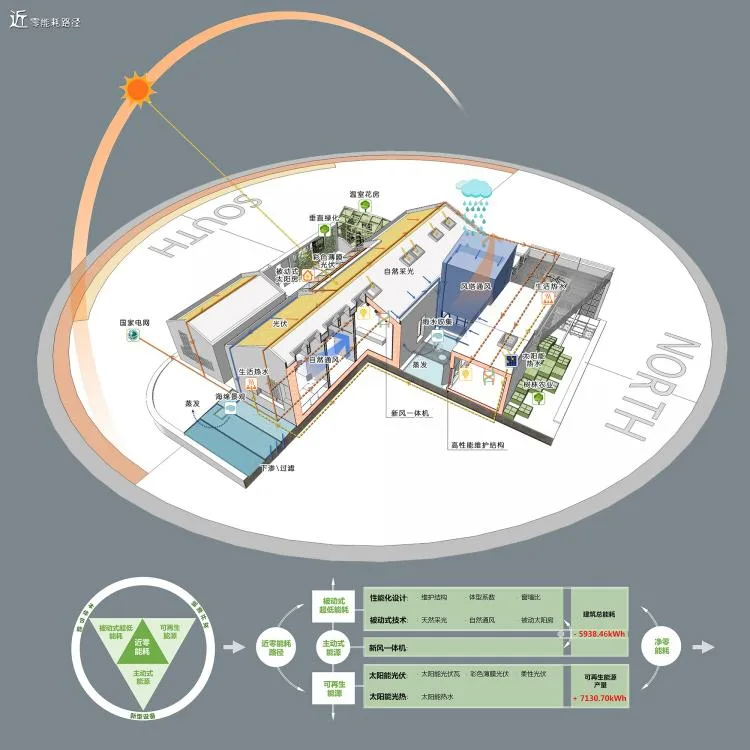
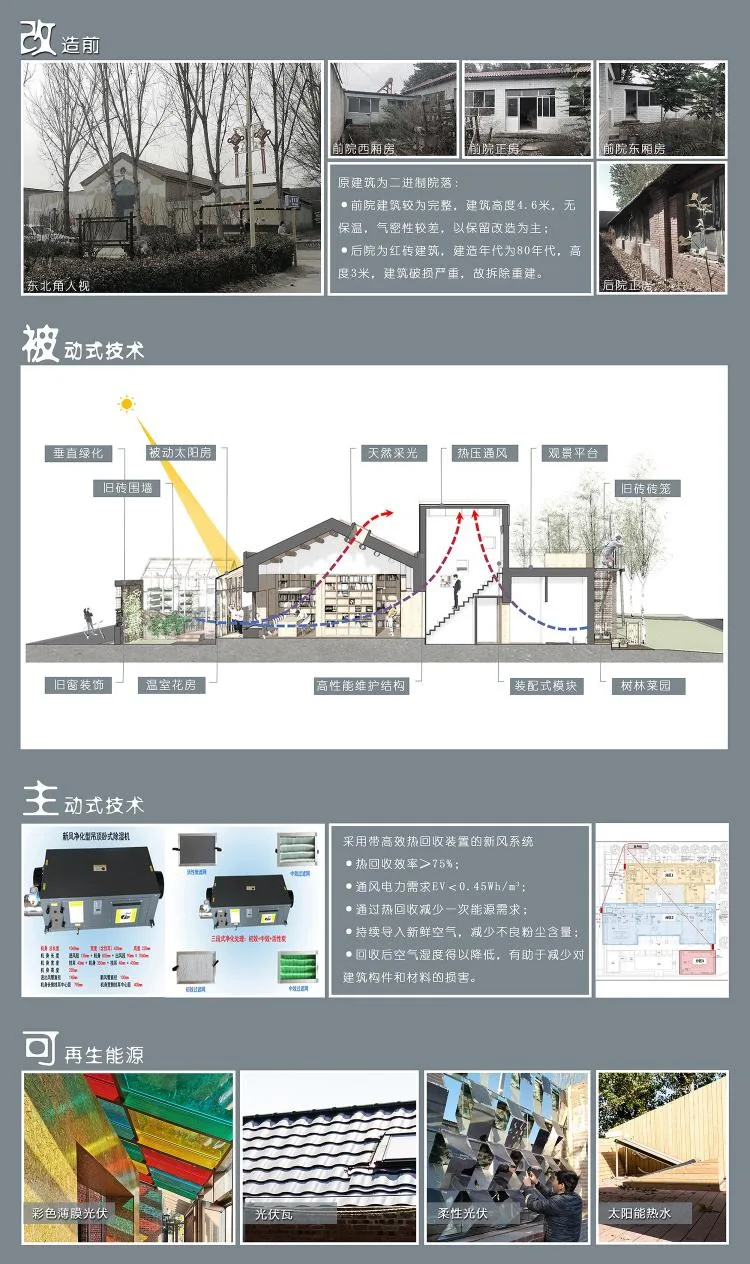
Path to Near Zero Energy Consumption
Focusing on sustainable rural development, “Zero House” explores technologies and models for low-cost, near zero energy consumption buildings by combining low-tech local construction methods with multi-mode prefabricated systems.
The building achieves a comprehensive energy-saving rate exceeding 80%, surpassing the ≥60% requirement for near zero energy buildings.
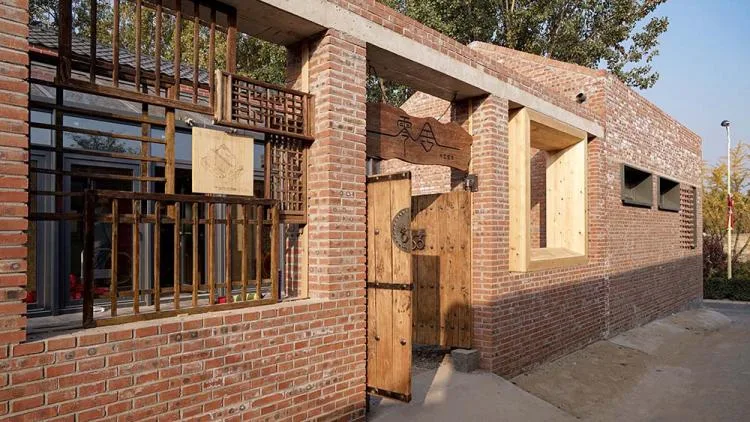
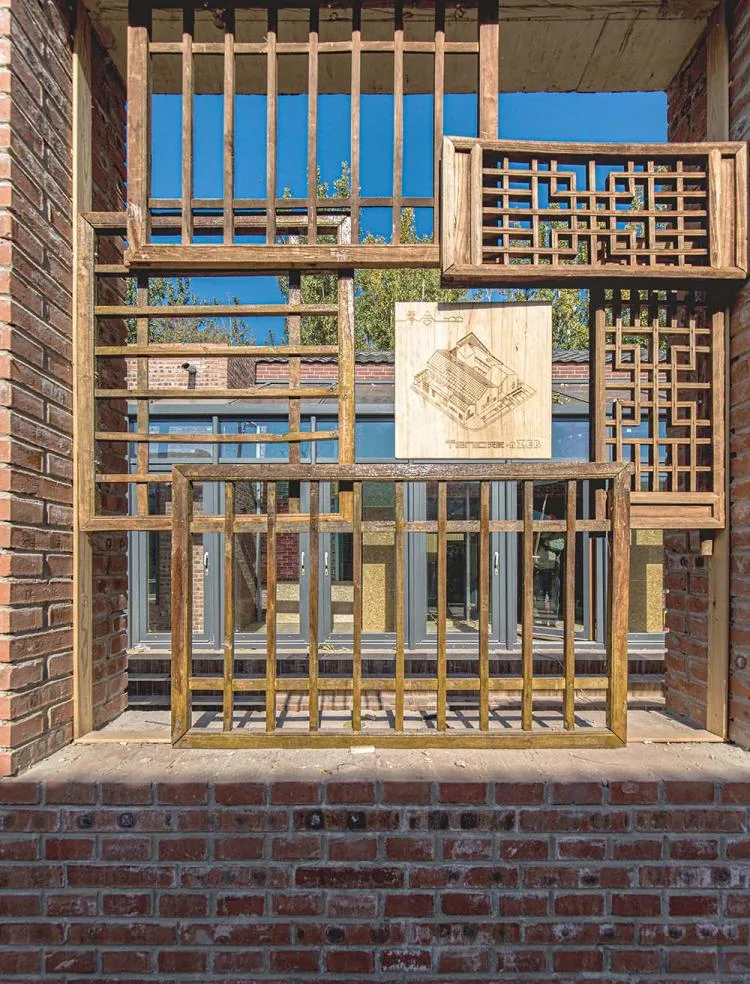
A logo was created using materials from the demolished old window on the fence.
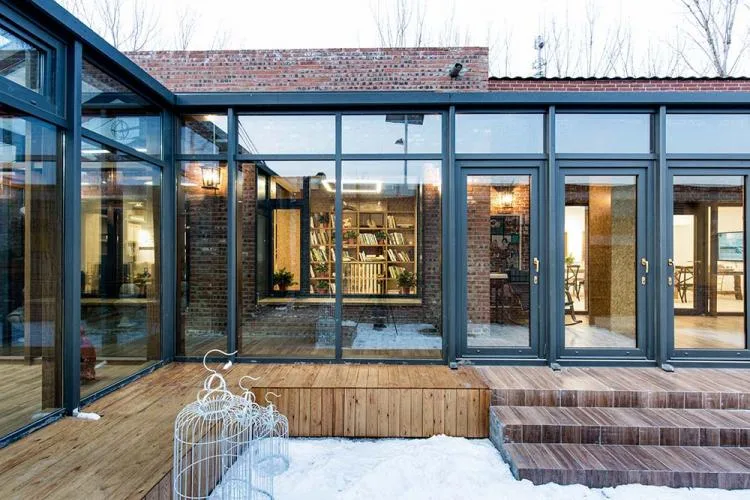
Passive solar house attached to the south side of the building.
Large skylights and wind towers provide ample natural lighting and ventilation indoors, creating a warm environment in winter and cool comfort in summer. The vibrant poplar trees cast dappled light through the skylights, blending architecture with nature.
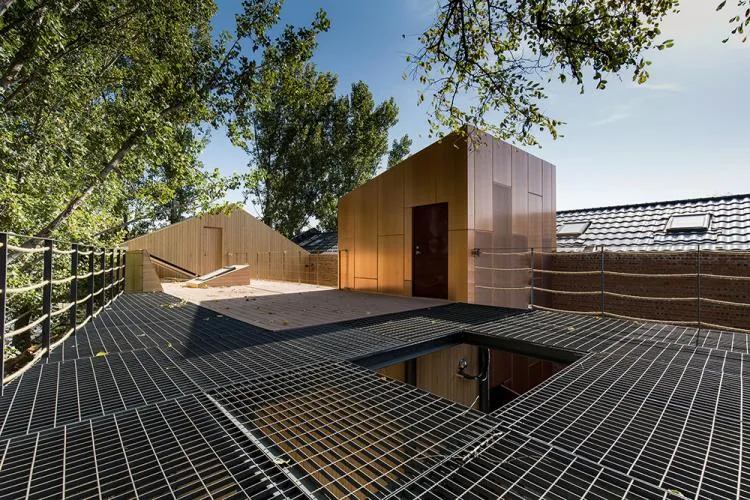
△ Breathable roof and stairwell wind tower
Tianyou Lingshe utilizes renewable energy sources, featuring a traditional double-sloped roof equipped with amorphous silicon solar photovoltaic tiles. This design not only generates electricity and heat naturally, reducing energy consumption for later residential use, but also creates a dynamic visual effect as sunlight reflects off the sparkling tiles.
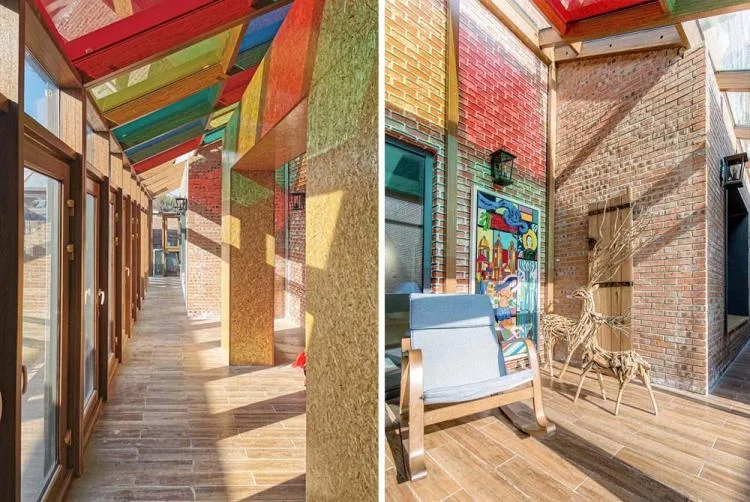
Sunlight filtered through the colored thin-film photovoltaic roof casts colorful halos onto the sunroom walls, infusing the indoor space with an artistic ambiance.
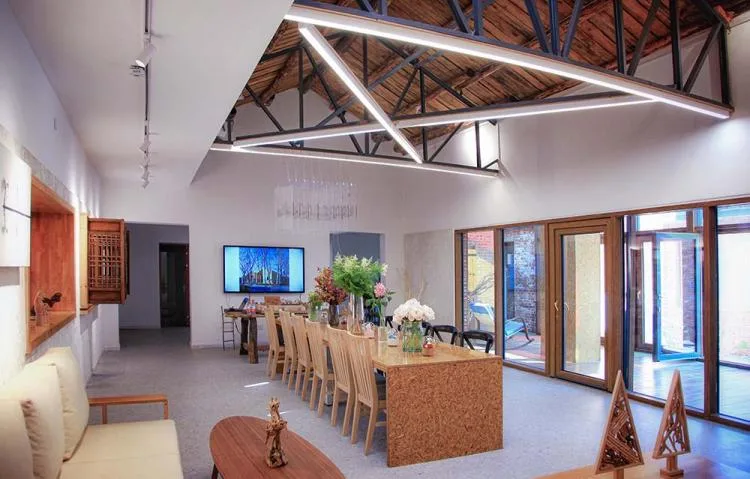
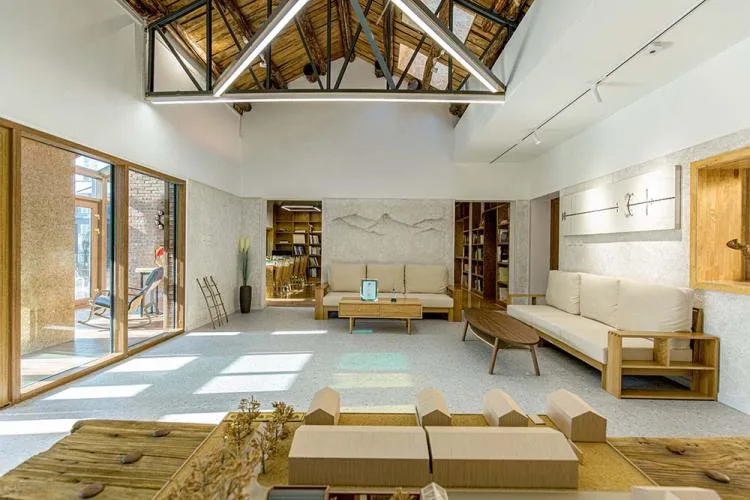
Natural landscape is harmoniously integrated with traditional courtyards. Moving from the garden to the library, soft sunlight and mist fill every corner, offering a place to relax both body and mind. The design connects exhibition and office spaces, blending work and leisure to maximize space utilization.
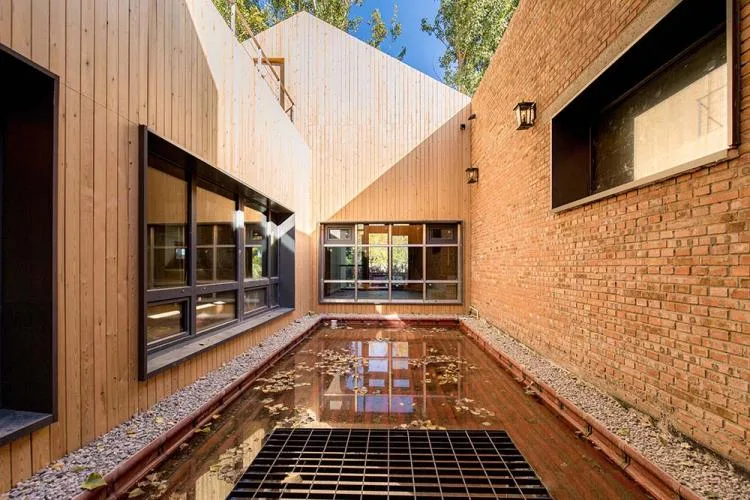
The central water courtyard features original roof tiles repurposed as the pool’s base.
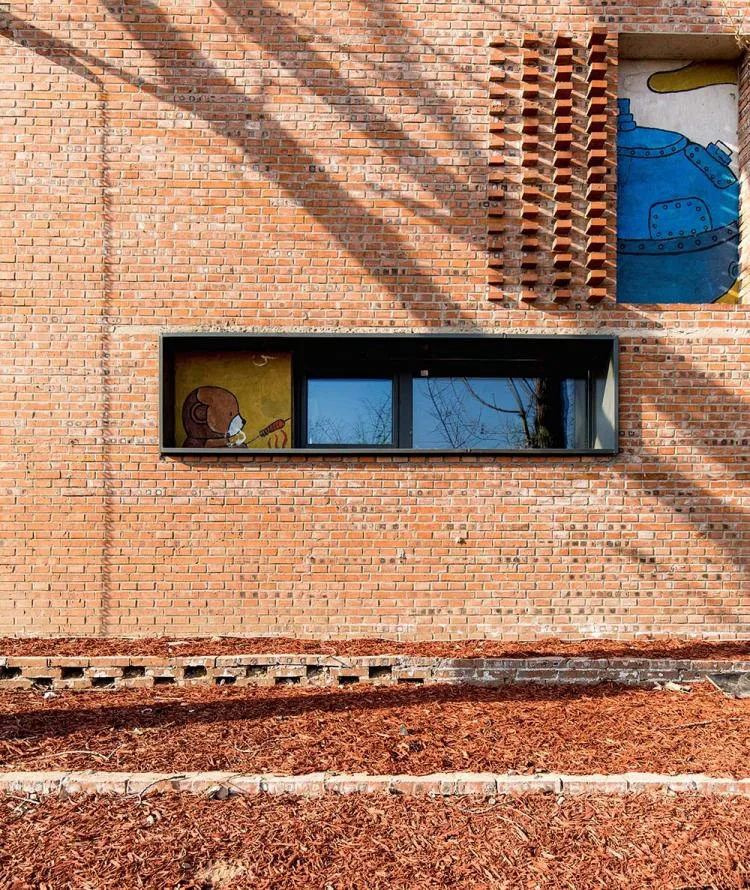
Exterior view of sandwich insulation wall
The beauty of life lies in the fusion of nature and art, embedding a low-carbon lifestyle into ecological landscape design. An integrated water system collects rainwater and repurposes it as natural irrigation for vegetable gardens.
Zero carbon gardens transform waste materials into green landscapes, complemented by vegetation, truly embodying a sustainable, low-carbon way of living from building to daily life.
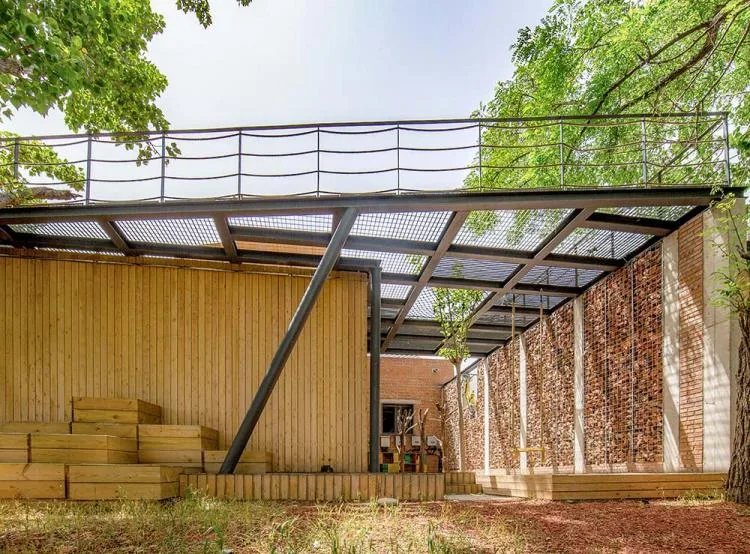
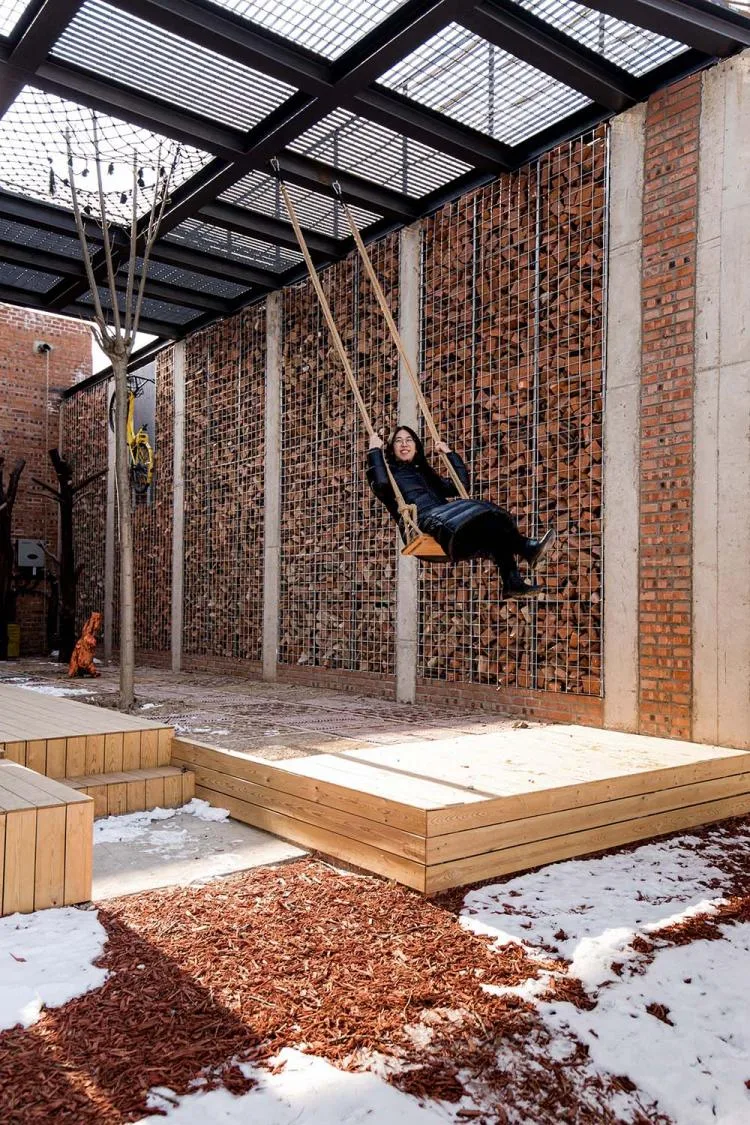
△ Zero Carbon Garden
The interplay of rustic red bricks and simple wooden structures creates a distinctive charm reminiscent of the old city. By integrating art into spatial landscapes, the design connects people to local culture and history, conveying cultural energy through art and space. Tianyou Lingshe offers unique warmth and protection to this village.
Tianyou · Zero House will be open for free nationwide starting May 6, 2021!
Project Information
Construction Unit: Tianyou Design Group
Project Type: Near zero energy rural residential renovation
Construction Area: 400 square meters
Location: Daxing District, Beijing
Project Planning: Tianyou Design Group, School of Architecture, Tianjin University
Service Model: EPC full-process management, providing integrated services from design and construction to operation
Architects: Ren Jun, Guo Runbo, Di Yang, Jiang Nan
Structural Engineer: Yu Xuezeng
Equipment Engineers: Liu Bing, Han Shuai, Liu Wei
Project Management: Zhang Baojun, Lu Xiaotao, Hao Linchong, Xiao Rongyan
Photographers: He Zhihan, Ren Jun
Construction Unit: Northern Guoxing
Construction Management: China Construction Sixth Engineering Division Corp., Ltd












Must log in before commenting!
Sign Up