
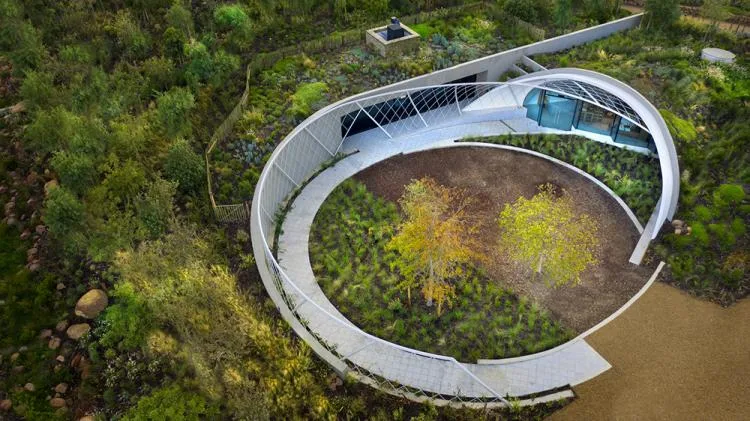
The innovative collaboration between London-based architectural firm Steyn Studio and Square One Landscape Design’s South African office seamlessly integrates architecture with landscape design. The garden envelops the new building and extends into the surrounding landscape through intricate woven grid structures. This design responds to the Breedekloof Valley, rich in the cultural heritage of South Africa’s Western Cape province. Inspiration is drawn from the San people, the valley’s original inhabitants, and the Dutch settlers who later arrived.
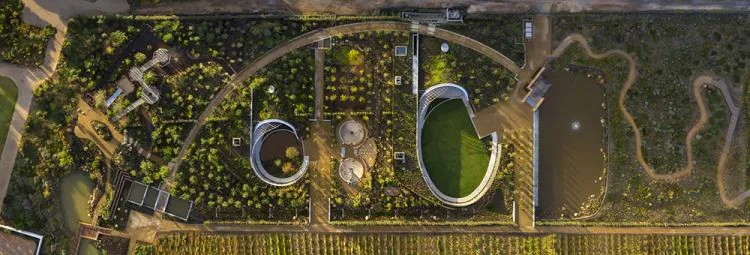
The client’s brief included developing a garden, a small restaurant called “Die Spens” (meaning food storage room), and a gift shop named “Winkel.” These features complement each other within the intimate setting of Bosjes Estate’s valley, offering visitors a unique experience as they explore the area between the estate’s two main attractions: the iconic Bosjes Church and the estate residences. A key requirement was that the new development should not disrupt the visual connection between these landmarks.
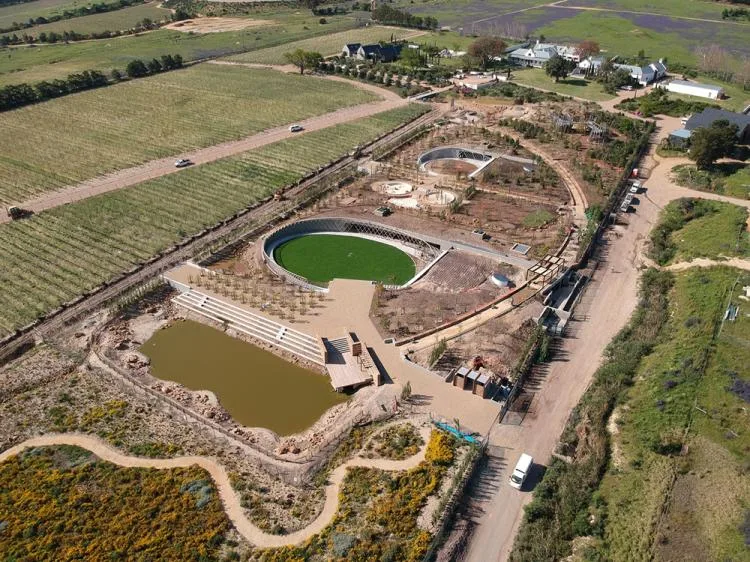
The newly designed garden serves as a conceptual microcosm of the broader Breedekloof Valley landscape, emphasizing agricultural themes. This artificial garden cultivates the land while offering engaging recreational facilities, encouraging interaction between children, adults, nature, and the built environment. The design fosters diverse ecosystems by integrating wetlands, natural water treatment systems, forest habitats, and restored vegetation.
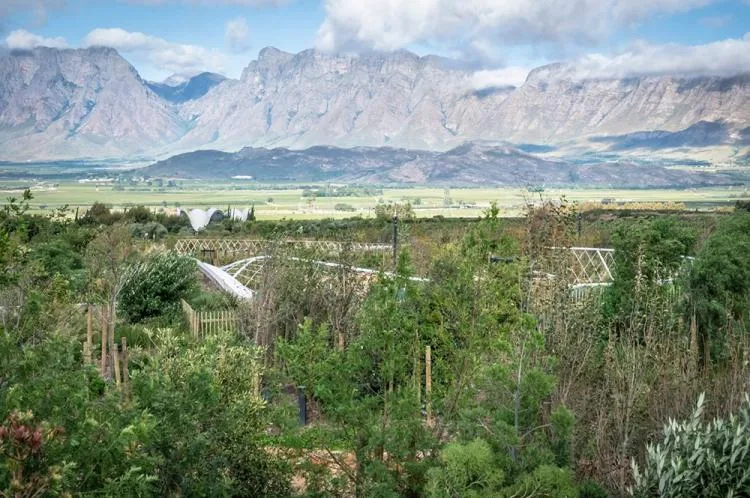
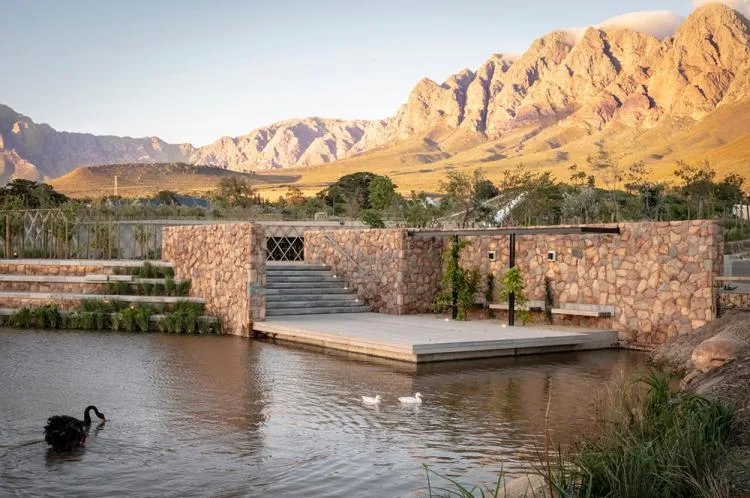
The overall design respects the historic estate and chapel, visually enhancing their relationship alongside the surrounding vineyards and mountainous backdrop. It achieves balance by integrating new vegetation and visitor pathways without competing with the estate’s existing architectural character. The buildings feature low profiles, allowing vegetation to strengthen the established landscape axis and contribute distinctive landscape elements. Tree windbreaks connect harmoniously with the adjacent rural scenery.
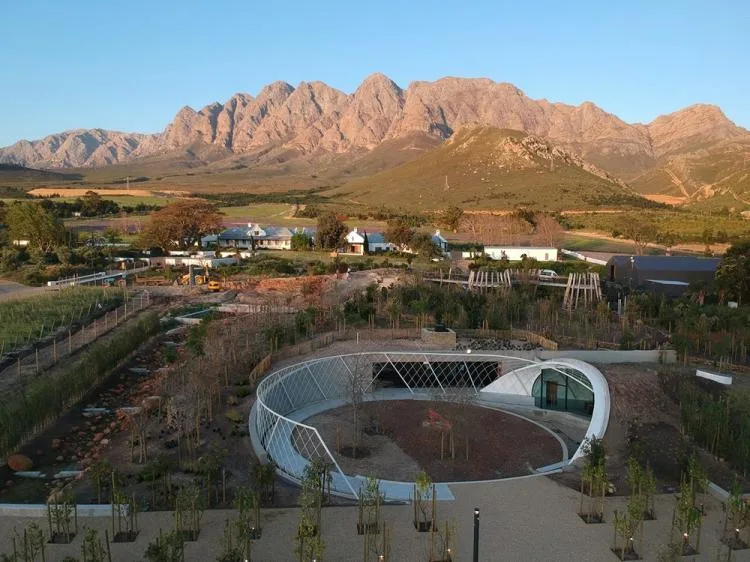
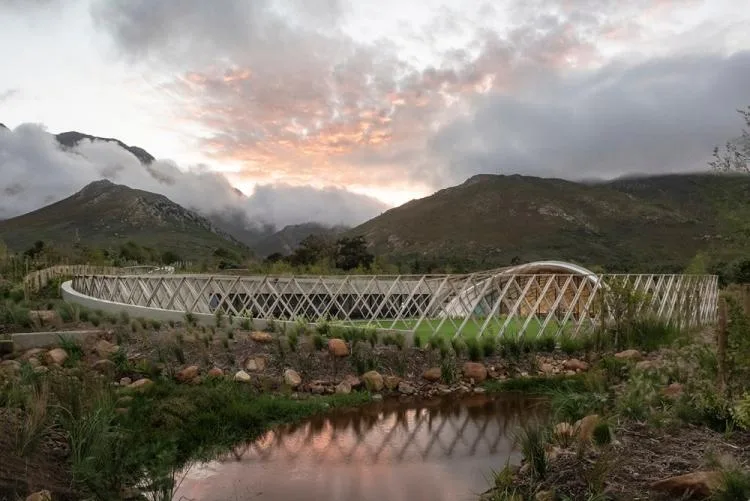
To minimize the visual impact of the approximately 750-square-meter building, it was designed as two separate units during early planning, which also enhances the visitor experience. Steyn Studio worked closely with Square One to position the buildings as landscape landmarks and as key elements influencing the garden design. From the project’s outset, integrating landscape and architecture was a core objective.
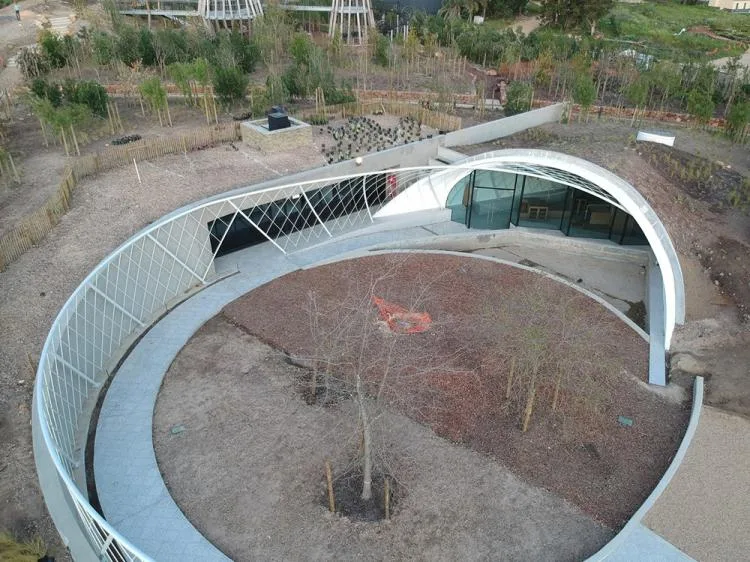
The gardens are distributed across three sloping terraces, connected by a gently curving path leading visitors through the site. Both structures are partially embedded into the slopes, with roofs covered in soil and planted with native grasses and succulents. This approach allows the buildings to blend seamlessly into the landscape while preserving views of the surrounding mountains.
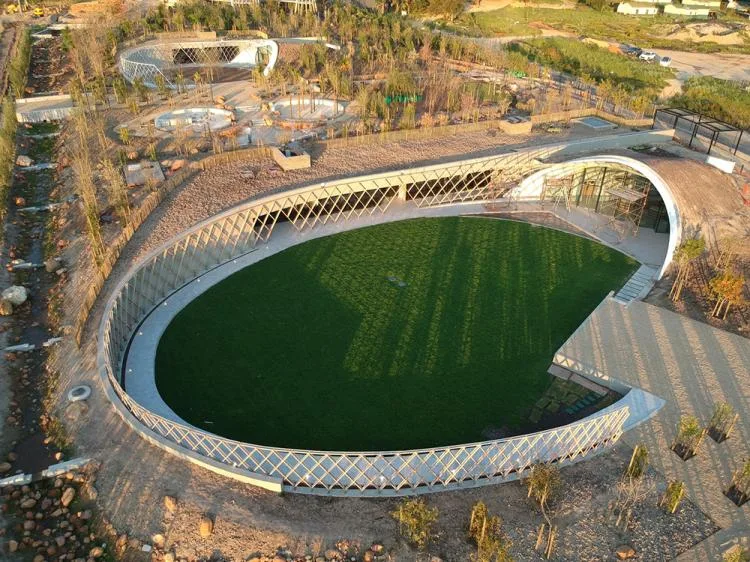
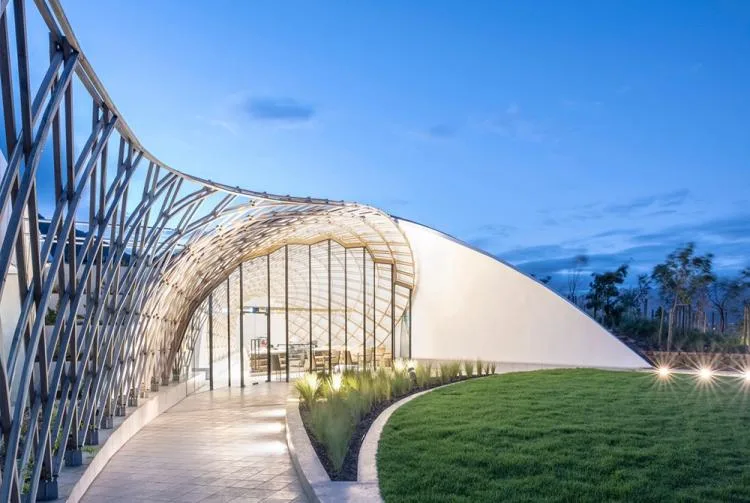
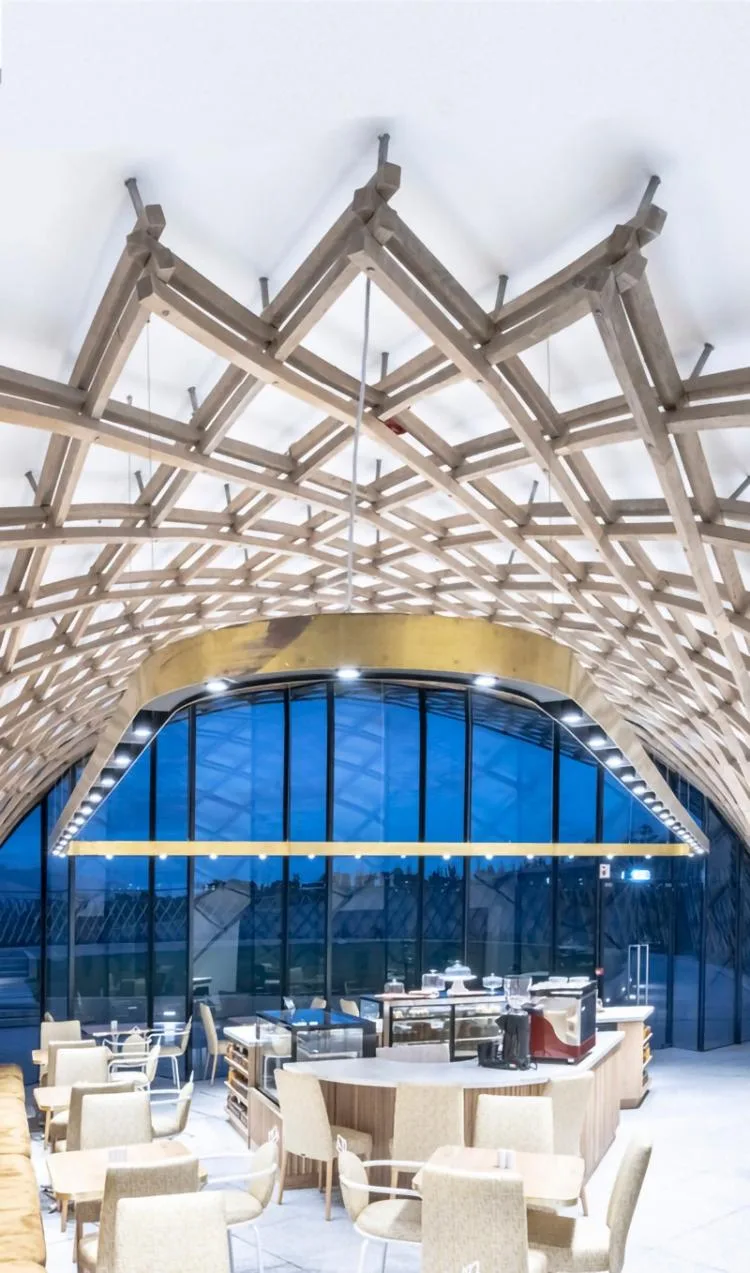
The café’s simple architectural form draws inspiration from the San people’s traditional “Matjieshuis” cottage and the Dutch settlers’ “KapHuis” homes, reflecting a blend of these two cultures. The Matjieshuis is a portable, curved wooden frame covered with woven mats, historically used by the San pastoralists during seasonal livestock migrations. The KapHuis features A-shaped trusses with thatched roofs and lower internal heights. Both styles are rooted in the area’s historical landscape and harmonize with the surroundings.
The new building’s hilly form echoes the shape of the nearby hills, further integrating it into the landscape.
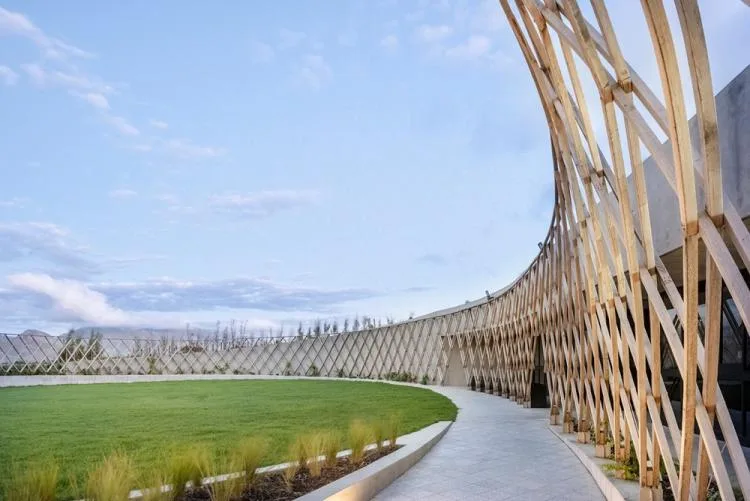
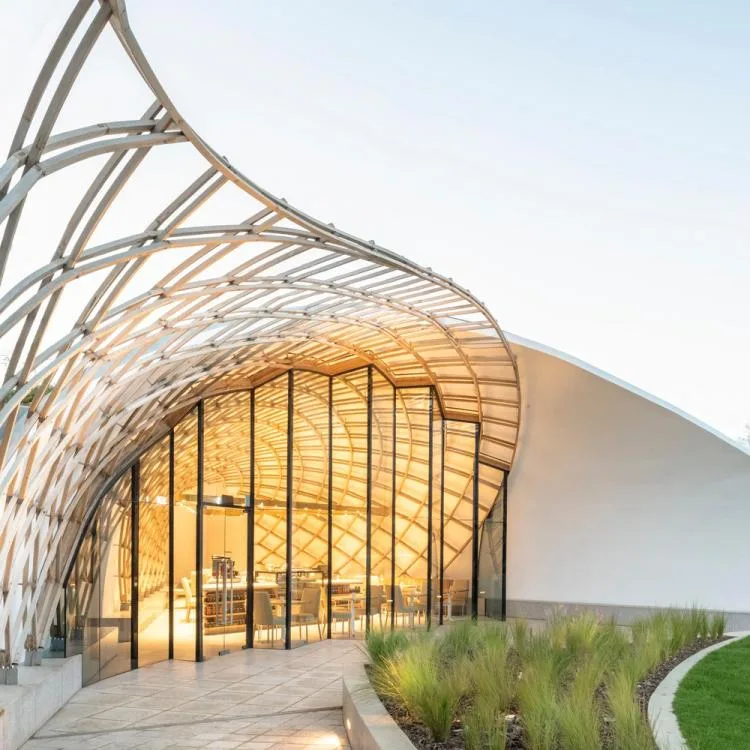
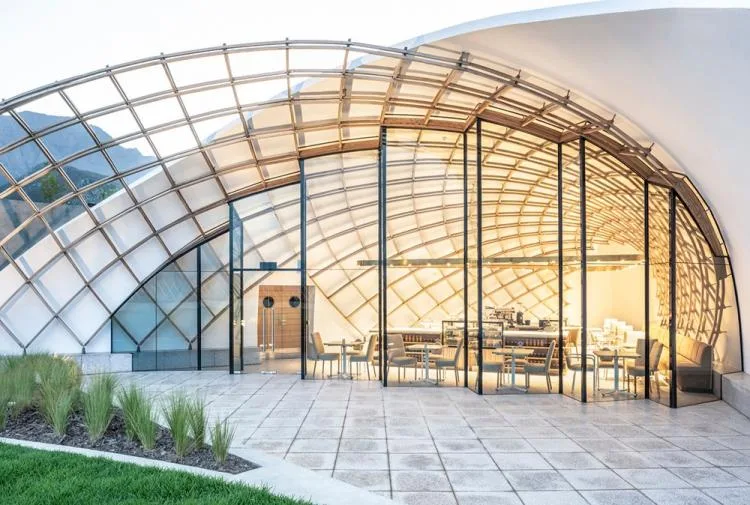
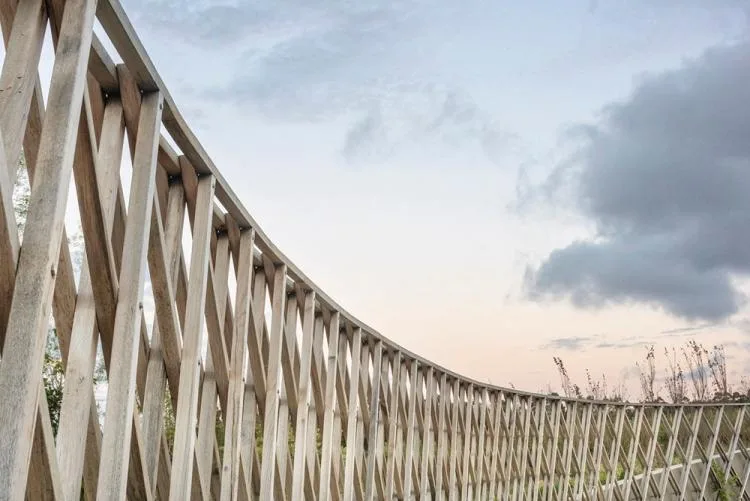
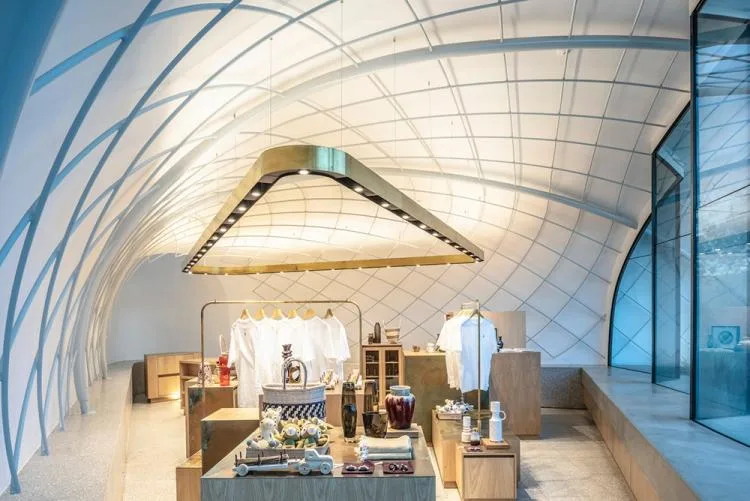
The intricate curved oak grid structure pays homage to the San people’s small houses and serves as the visual centerpiece. It welcomes visitors inside and forms the walls of the café, restaurant, and gift shop through its twisting shapes. The garden continues on the building’s roof, creating a carpet-like effect. This grid pattern extends into the surrounding garden, where over a dozen climbing plants thrive.
The front of the conical house is partially sunken to reduce its perceived mass, while the rear of the functional building is entirely underground. To maintain continuity between the interior and exterior grid pattern, the glass windows feature serrated arrangements that echo the lattice and provide vertical support.
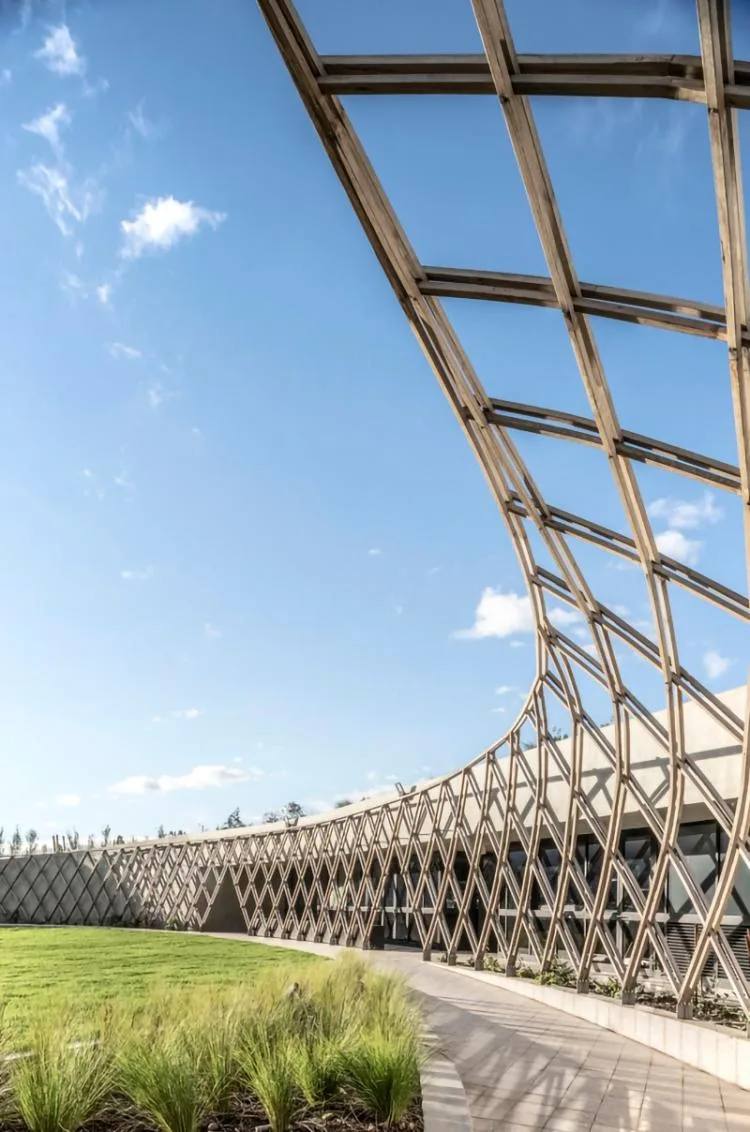
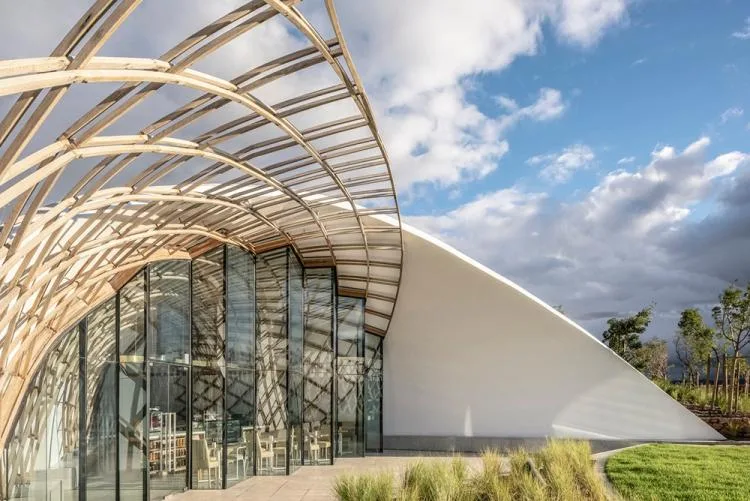
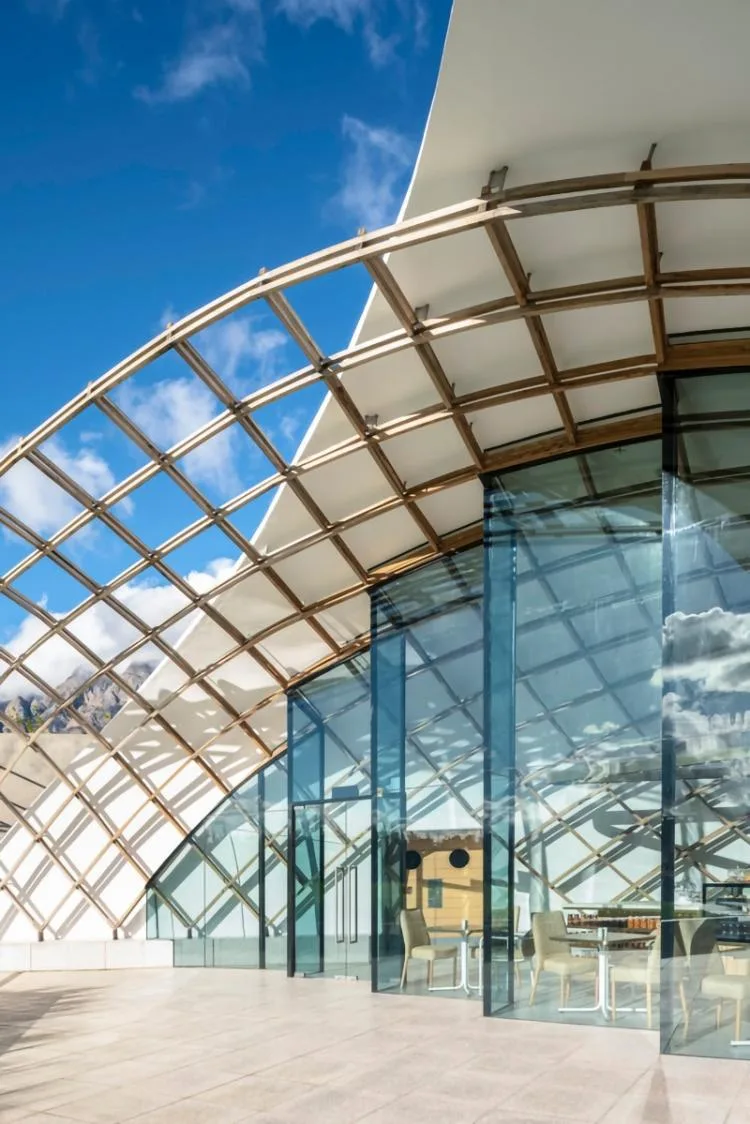
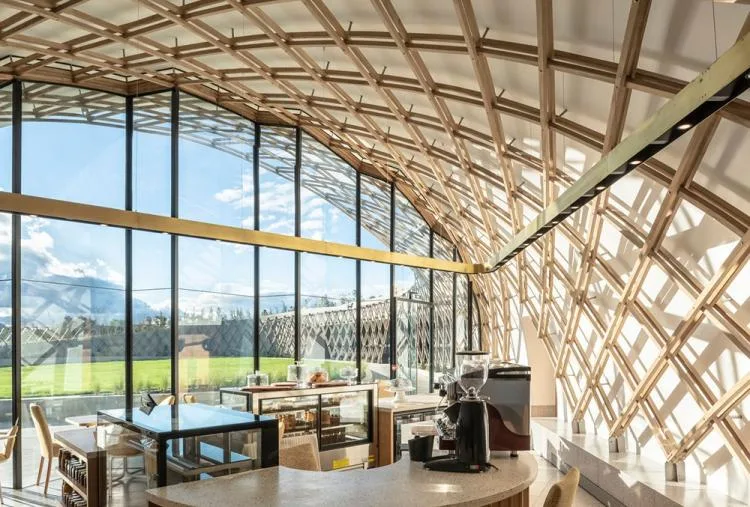
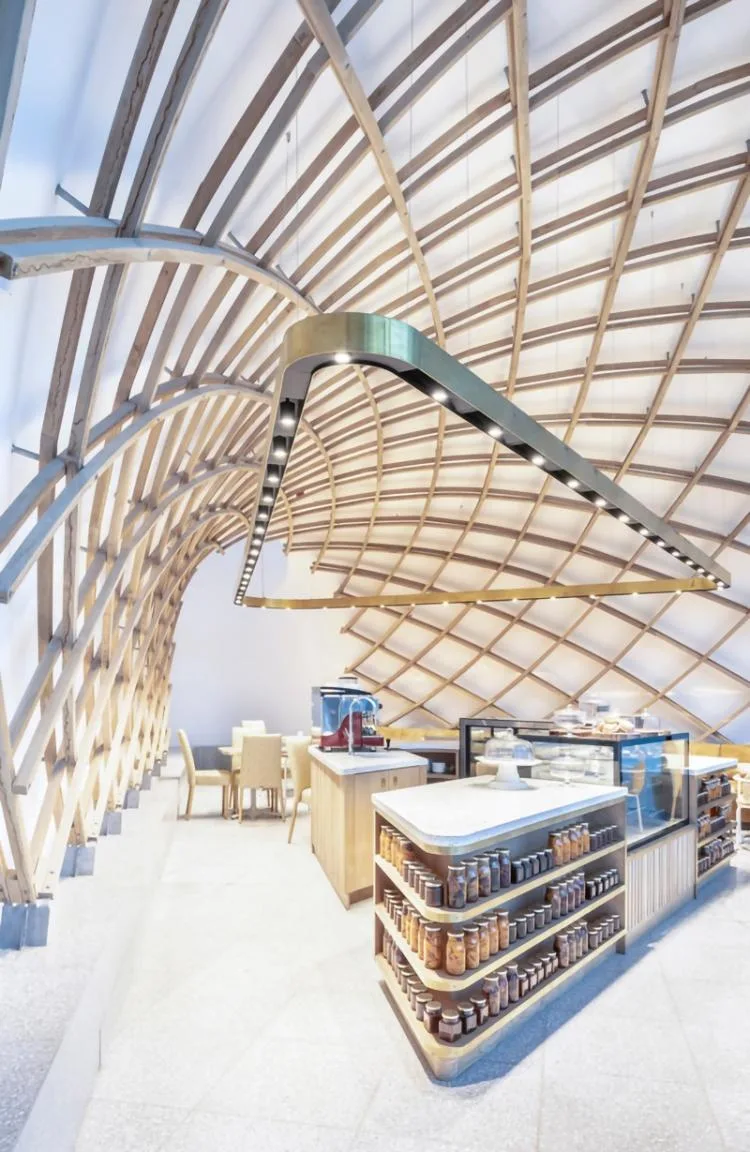
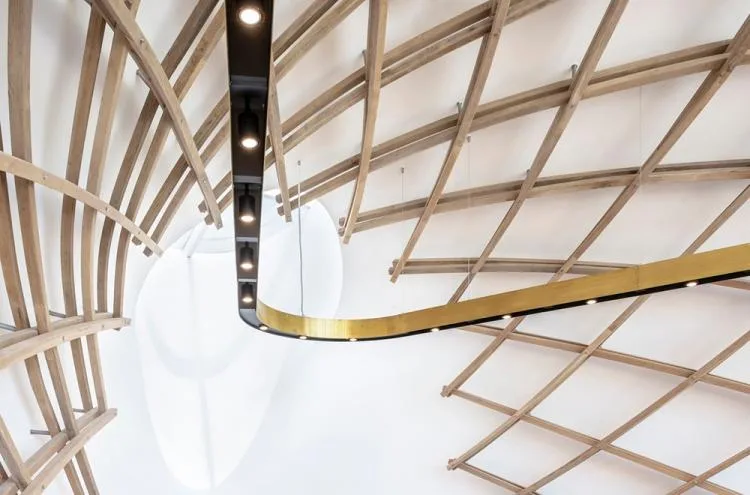
The architectural design embraces simple, natural materials. The underground building components blend with the mountain backdrop and are constructed from uncured concrete. The thin concrete shell arches are painted white, inspired by traditional Cape Dutch landscape decorations. Nearby, the small church features gray terrazzo flooring and pathways. After extensive research by Arup, oak was chosen as the ideal wood for the lattice structures due to its durability and flexibility.
Technical Drawings
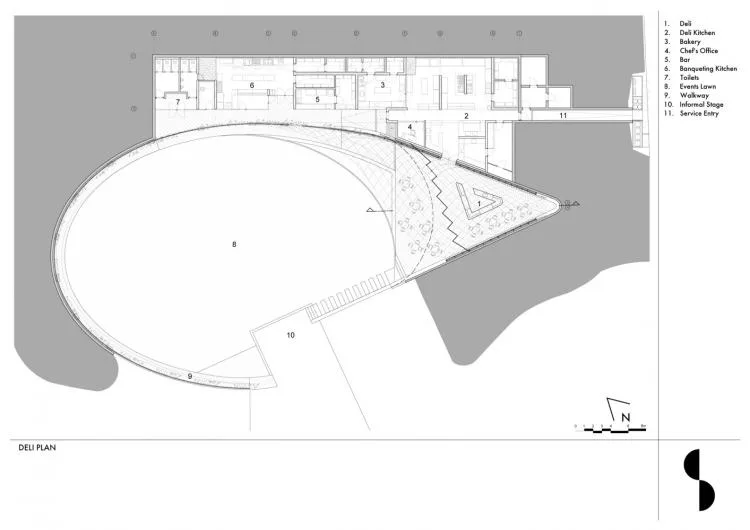
△ First floor plan of the coffee shop
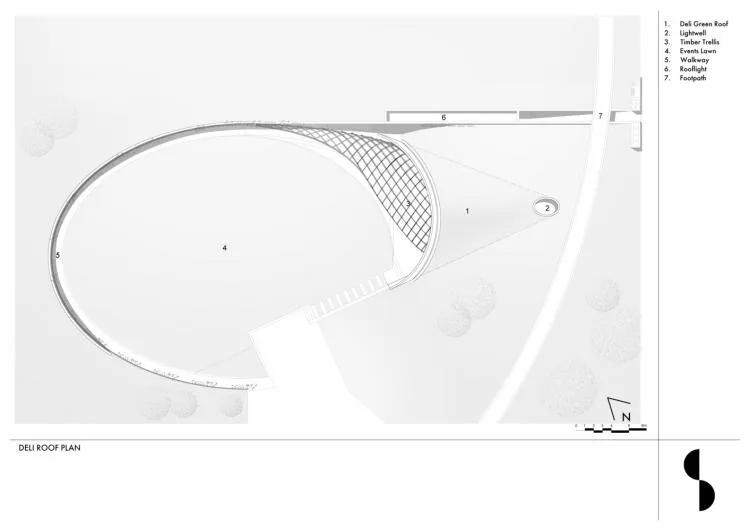
△ Coffee Shop Roof Plan
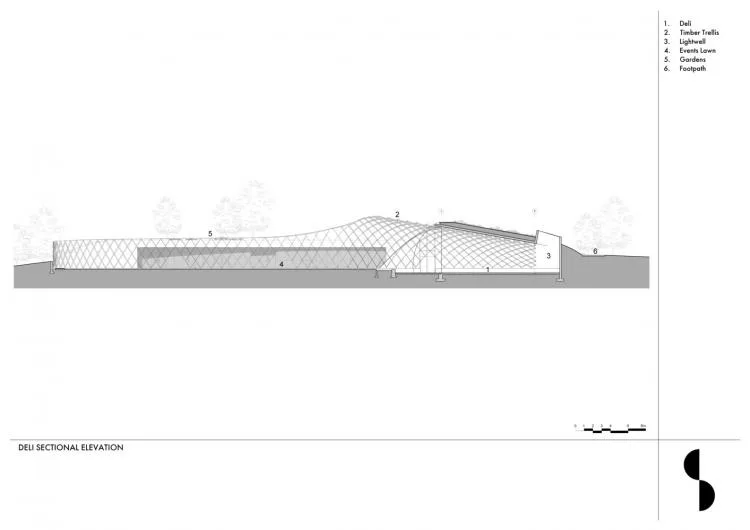
△ Coffee Shop Sectional View
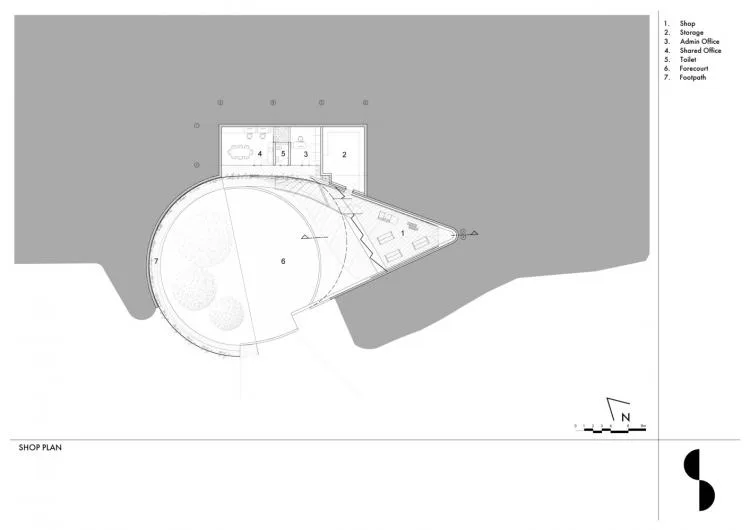
△ First floor plan of the gift shop
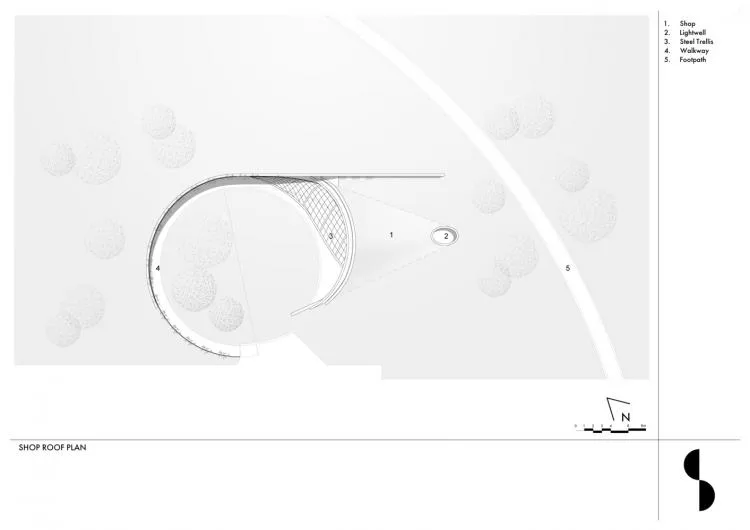
△ Gift Shop Roof Plan
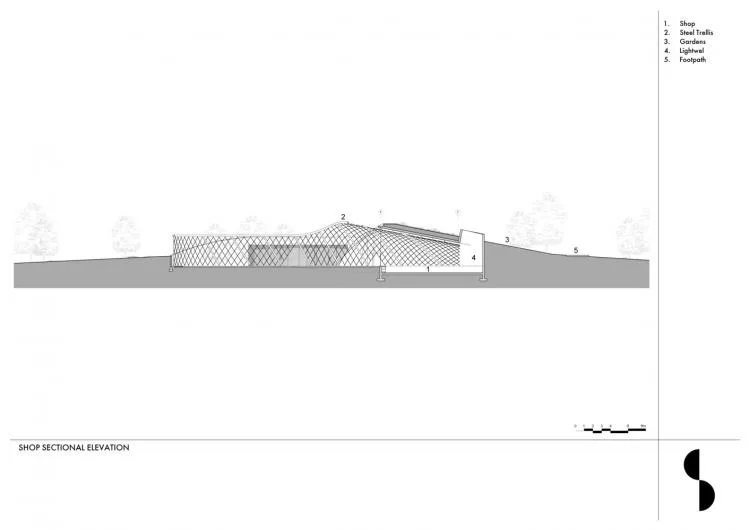
△ Sectional elevation of the gift shop
Project Information
Project Type: Restaurant
Location: Worcester, South Africa
Architectural Design: Meyer & Associates Architects, Square One Landscape Architects, Steyn Studio
Area: 750 m²
Year: 2020
Photographers: David Dook, David Southwood
Design Team: Steyn Studio
Project Architects: Meyer & Associates Architects Urban Designers
Project Team: Coetzee Steyn, Tiaan Meyer, Callum Semple, Wayne Hattingh
Landscape Design: Square One Landscape Architects
Furniture Design: Liam Mooney Studio
Structural Engineer: Henry Fagan & Partners












Must log in before commenting!
Sign Up