
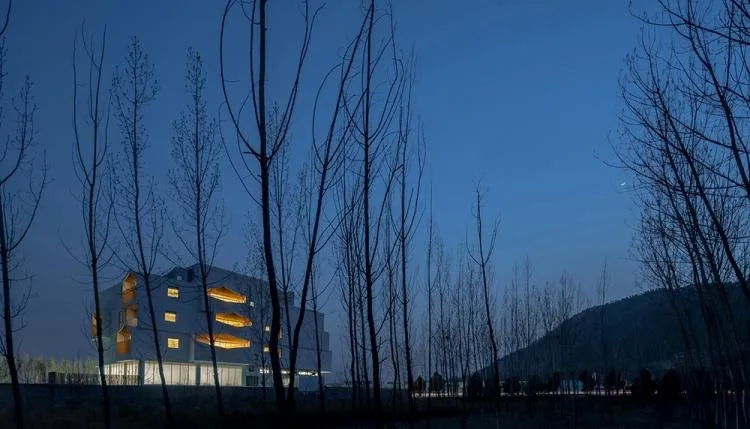
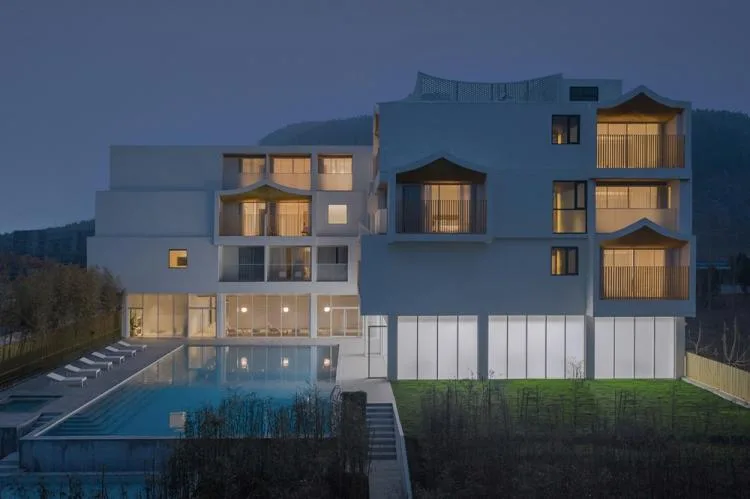
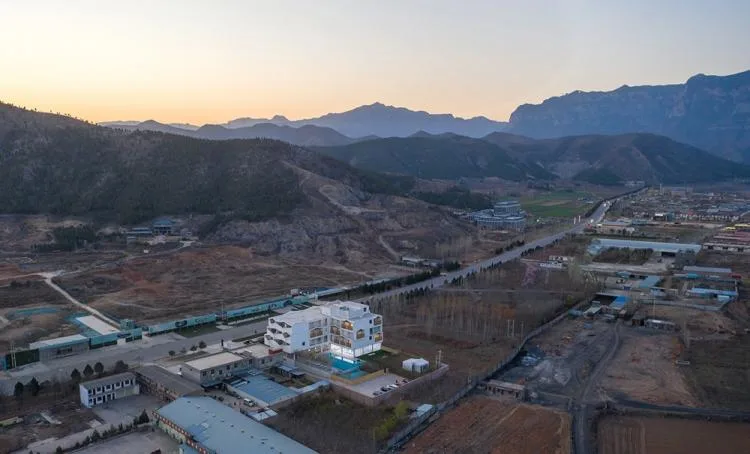
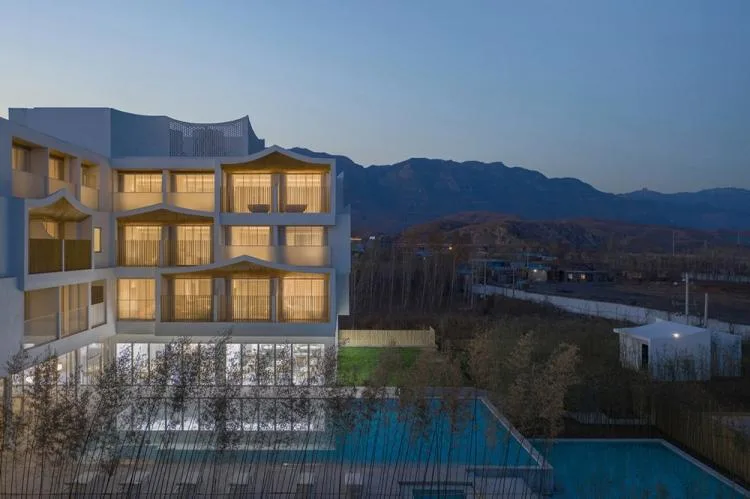
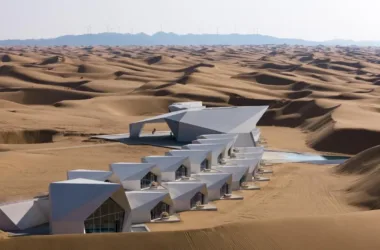
The Sky Garden Hotel is situated near the scenic Yuntai Mountain area, surrounded by industrial land, abandoned residential buildings, and dilapidated houses in a chaotic and confined setting—posing a significant challenge for a scenic hotel. Fortunately, the site still offers views of Yuntai Mountain.
The hotel comprises 48 uniquely designed rooms, a standalone restaurant, a banquet hall, a swimming pool, an underground garage, and reserved space for a second phase of development. The project faced multiple challenges: how to capitalize on the site’s advantages while mitigating its drawbacks, accommodate complex and varied functions, and craft a unique, high-quality spatial experience, all within tight constraints of space, budget, and time.
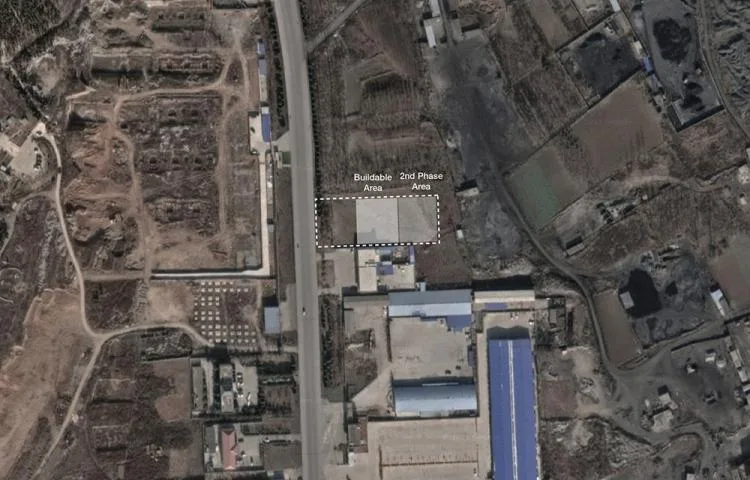
△ Project location
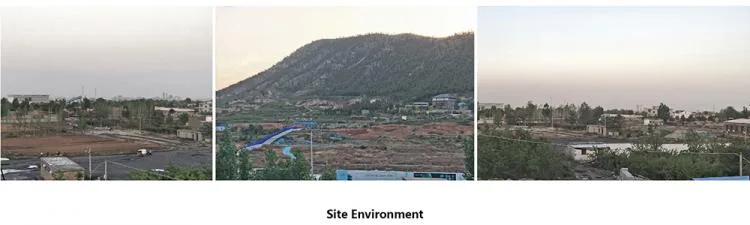
△ Site environment
Typically, hotels and guesthouses feature rooms arranged in outward-facing square grids to maximize views of the surrounding landscape. As a result, the overall hotel structure often appears as stacked square grids. This “outward-facing square grid” has become a conventional spatial model in contemporary hotel design.
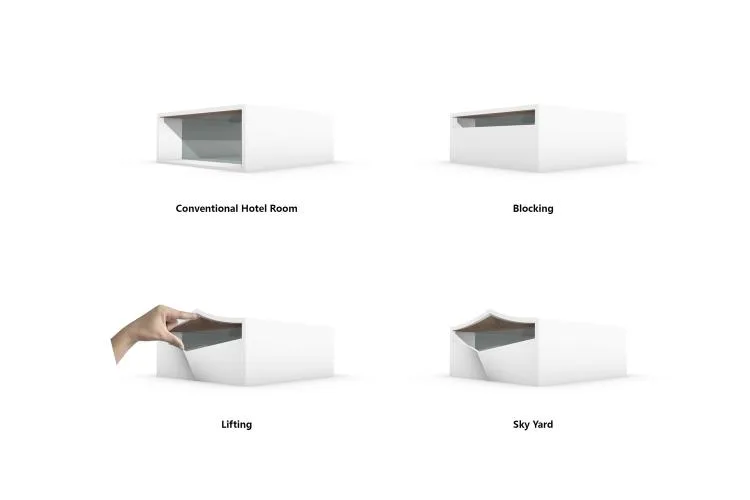
△ Analysis diagram
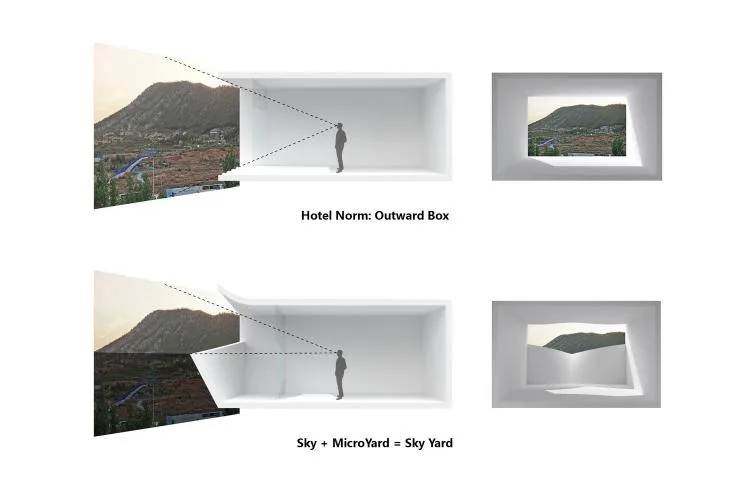
△ Analysis diagram
We revisited the core concept of the “guest experience in the room” and challenged this traditional paradigm. Instead of the usual layout, the design:
- Blocks the portion of the room below the sightline completely.
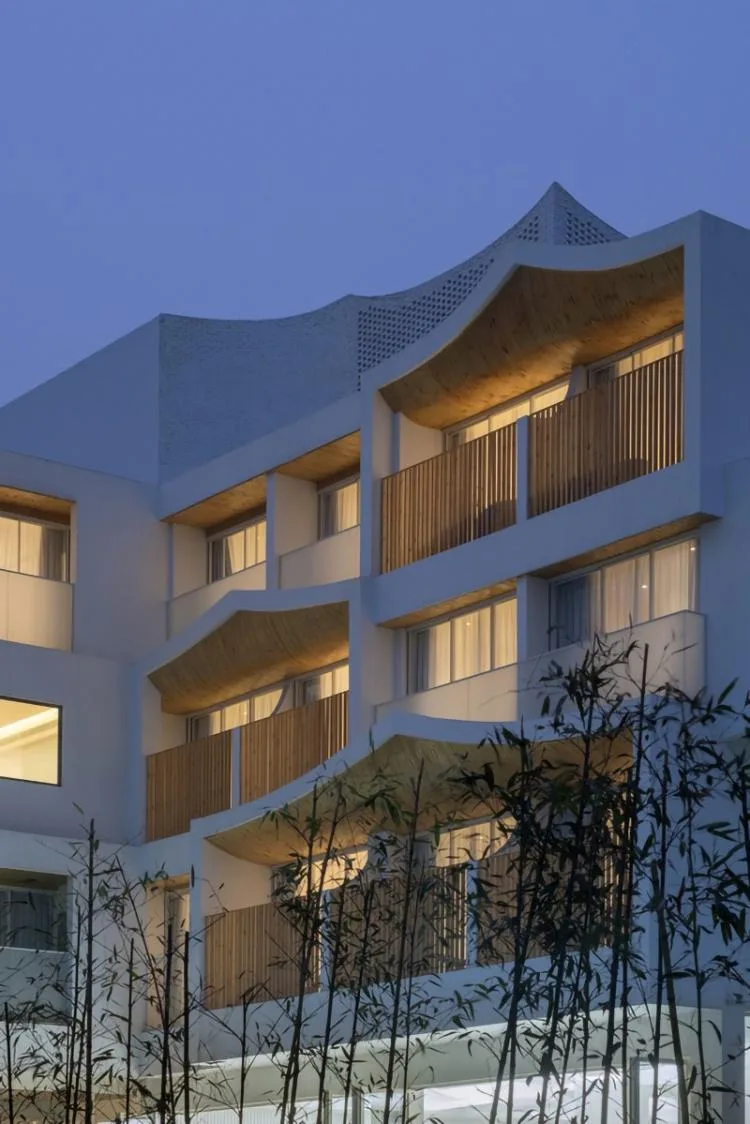
- Lifts the opening above the sightline to invite more sunlight, sky, and mountain views.
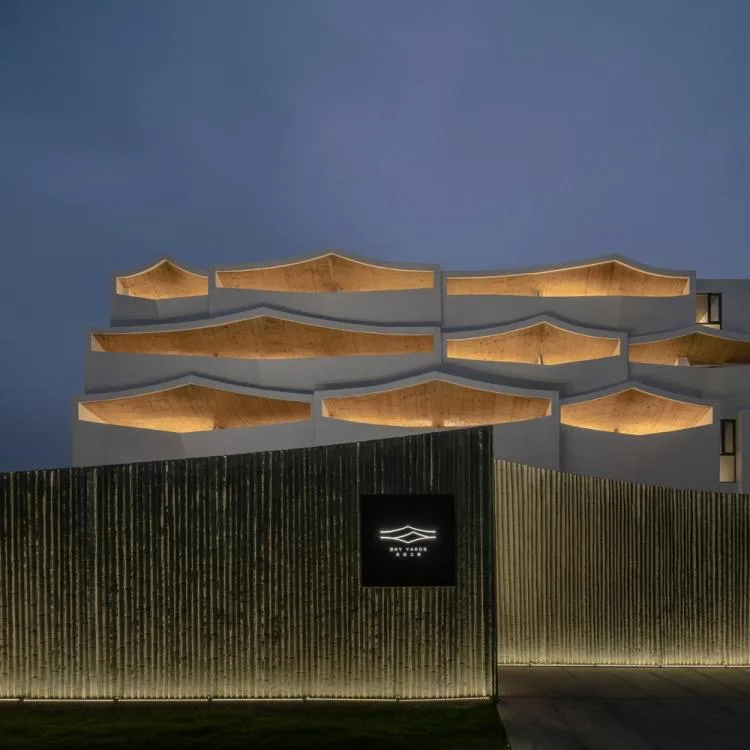
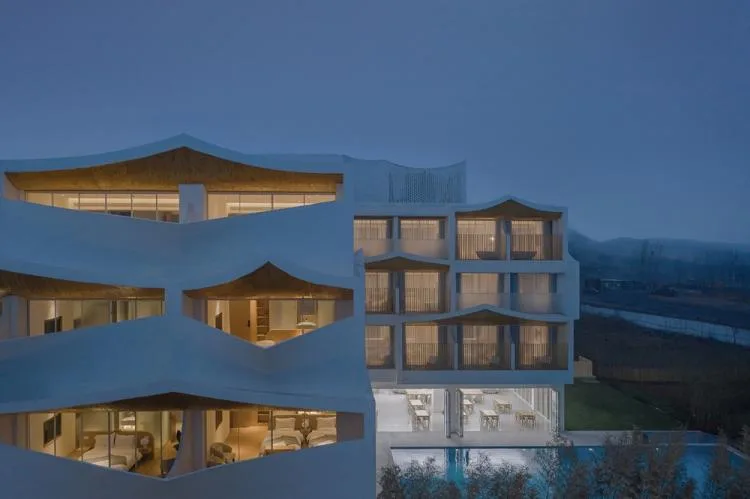
- Uses floor-to-ceiling glass sliding doors to blur the boundary between indoors and outdoors, creating a private miniature courtyard.
The interior and courtyard visually connect, drawing guests’ attention toward an unfolding view like a scroll. From sunrise to sunset, sunlight interacting with curved walls produces dynamic light and shadow effects from various angles.
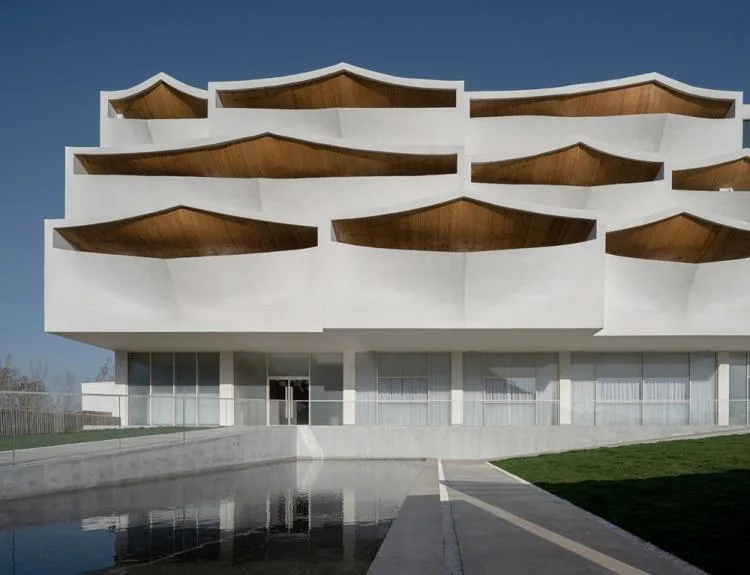
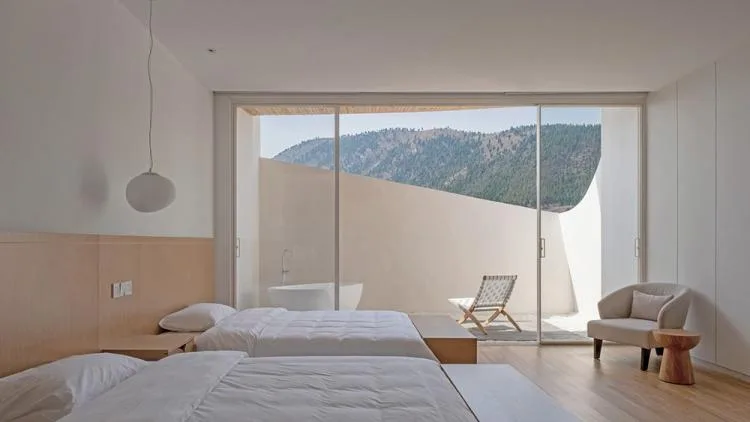
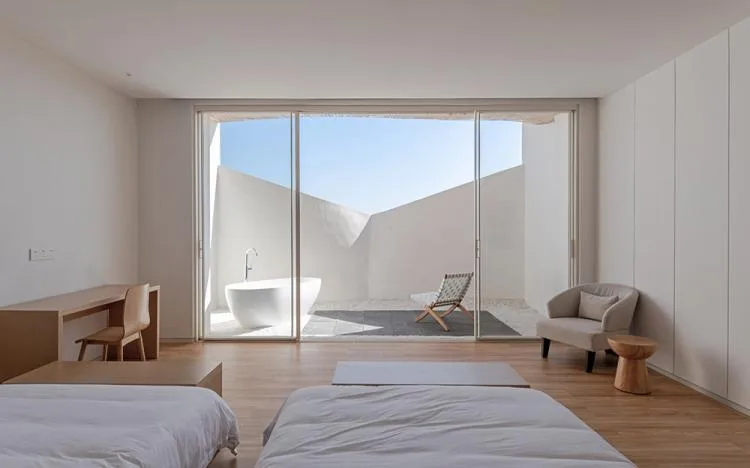
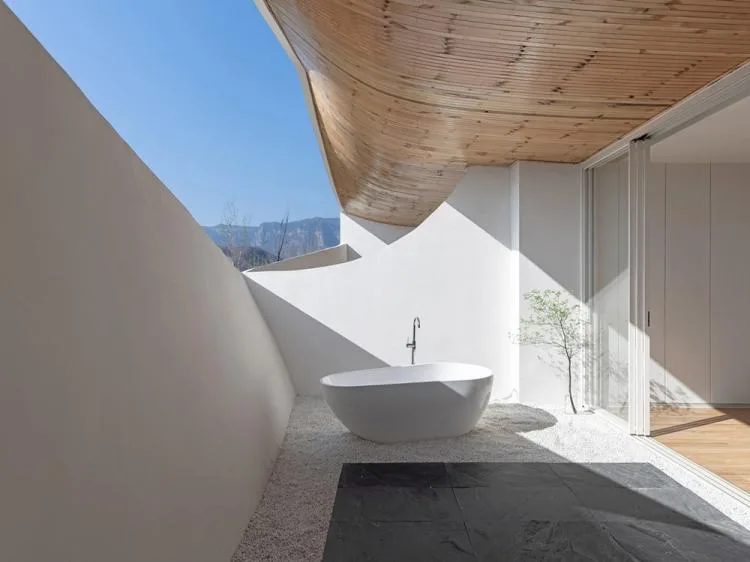
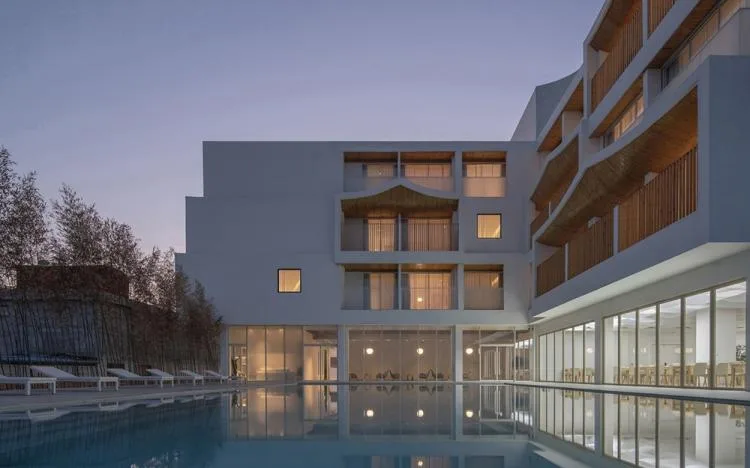
The courtyard floor in front of the building is elevated, forming an abstract mountain shape that echoes the distant real Yuntai Mountain. Raising the first floor by half a level also efficiently resolves the complex flow of pedestrian and vehicle traffic, while balancing the site’s earthwork.
From inside the first floor, large transparent windows framed by frosted glass highlight the vestibule and distant mountains, creating a captivating framed view that borrows from the surrounding scenery.
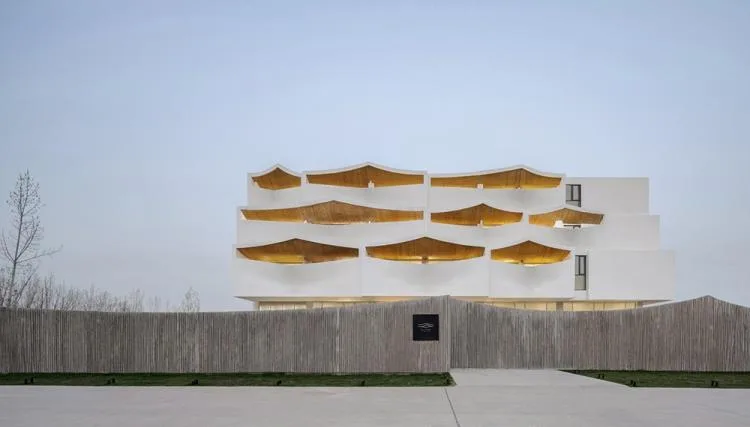
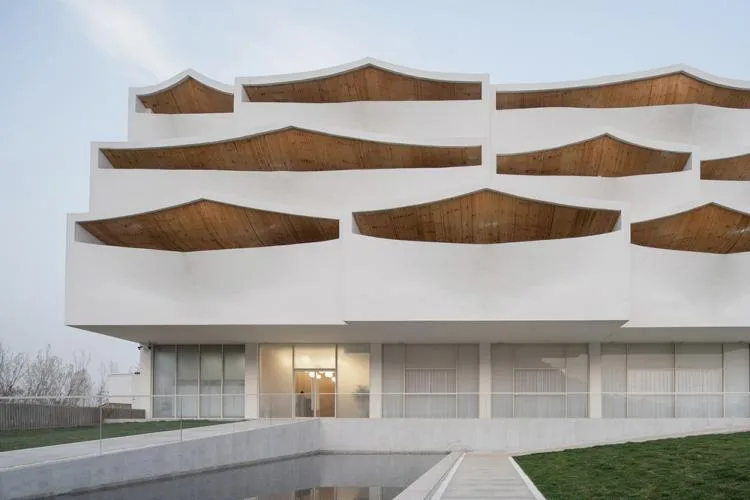
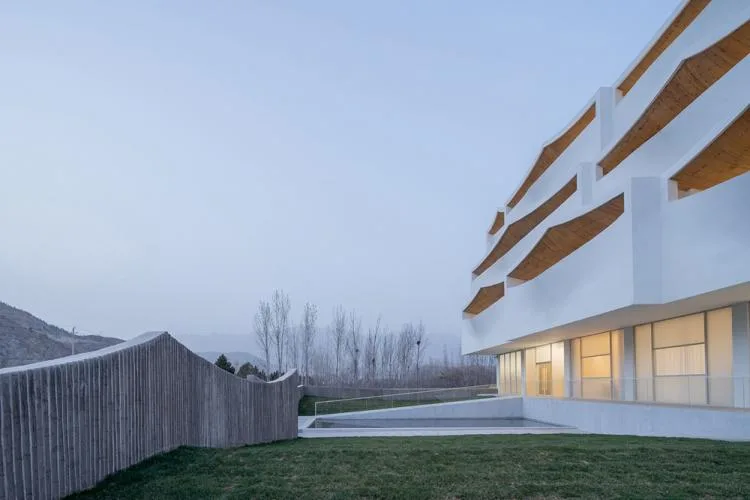
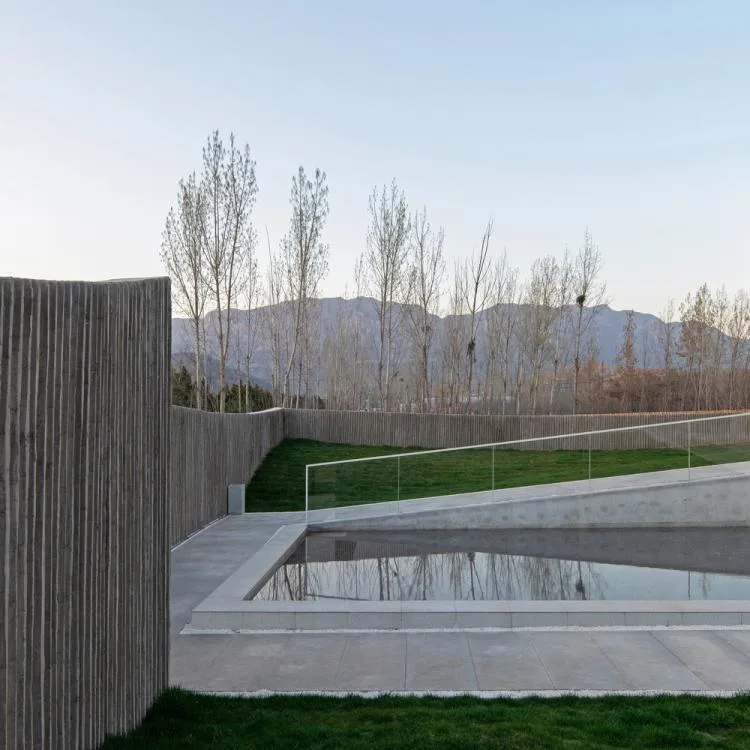
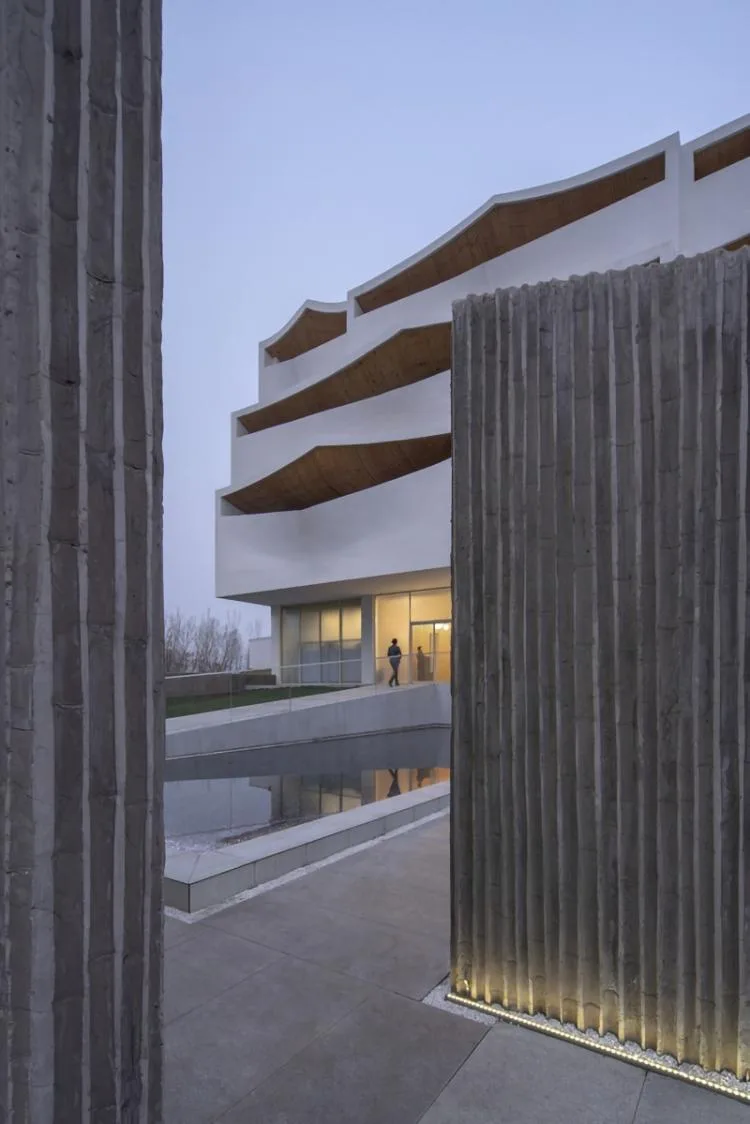
The concept of “lifting” is applied throughout the hotel. In the public area on the first floor, a semi-curved continuous space appears to rise from the wall, serving as the main circulation pathway for guests. On the guestroom floors, walls are lifted to form room number signs. Even details like the restaurant’s guide table and the drawer handles in the rooms are designed with this “lifting” technique.
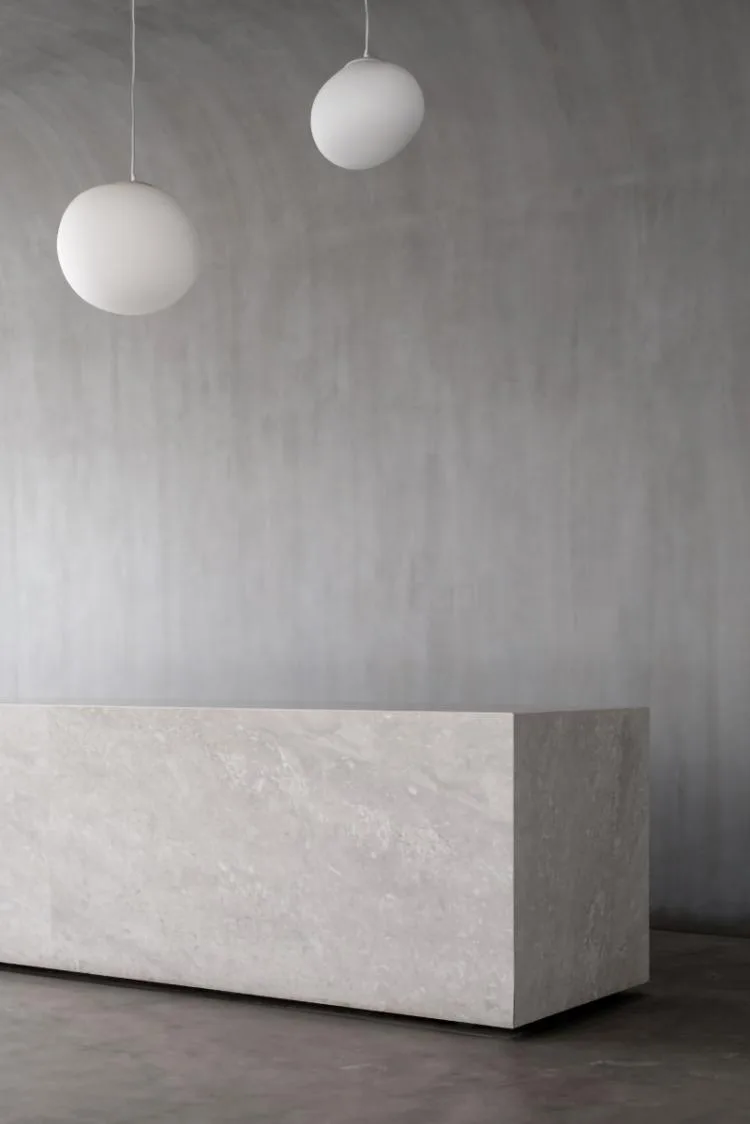
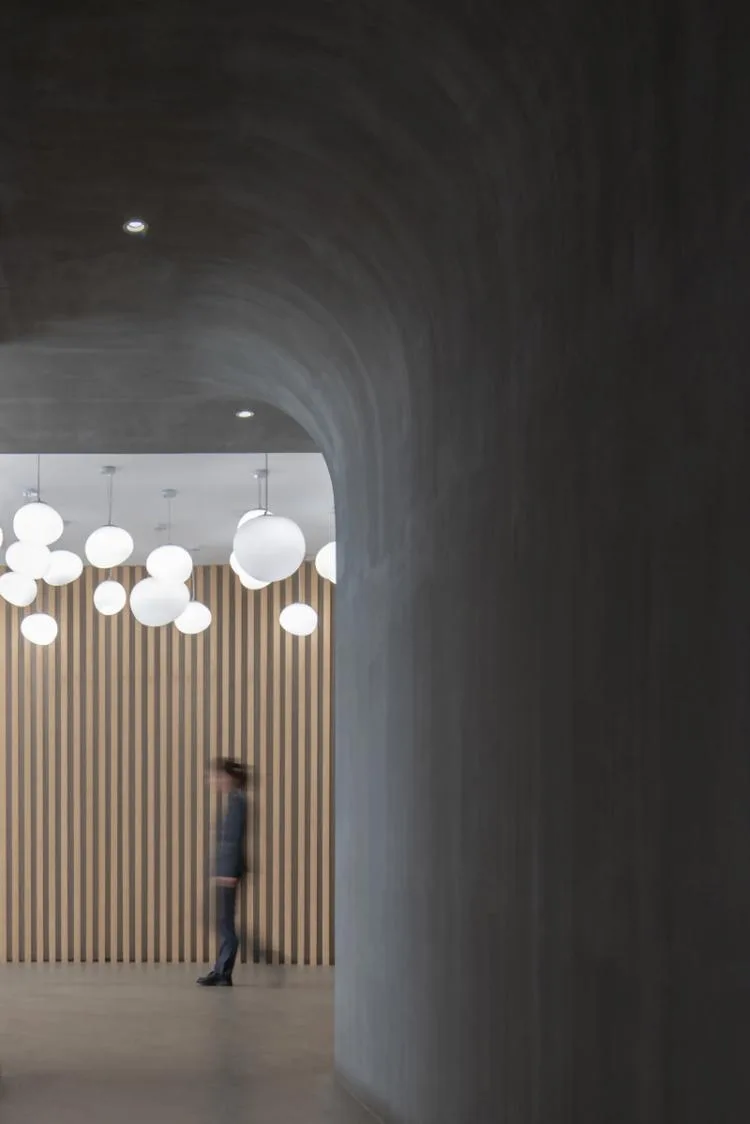
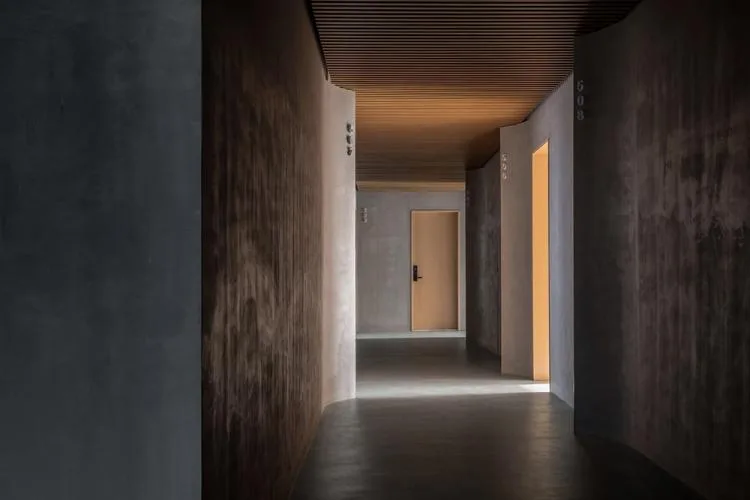
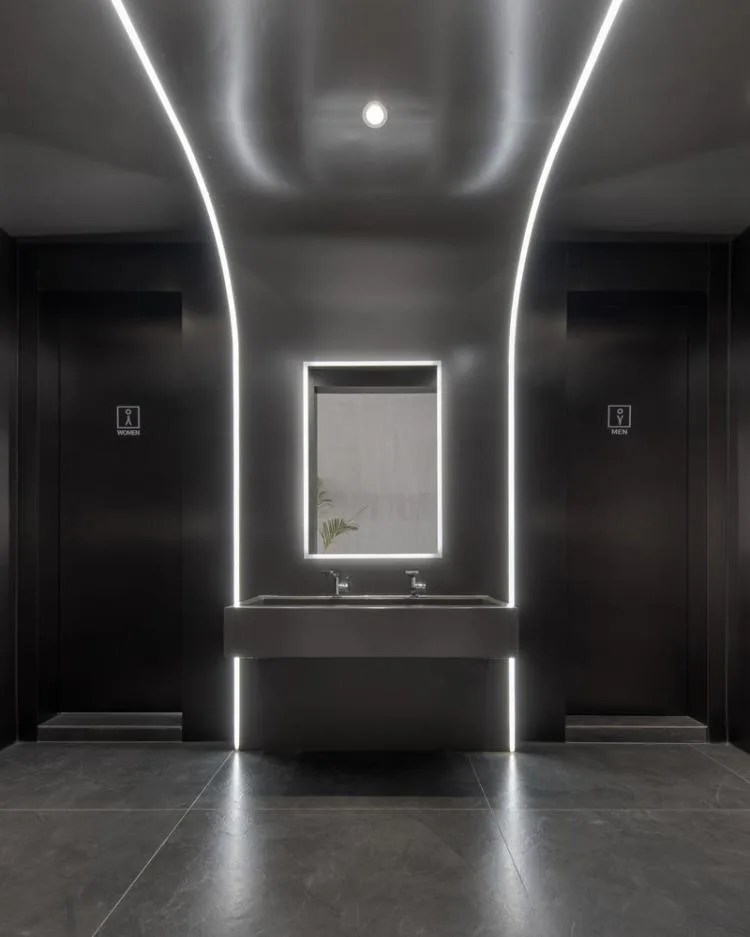
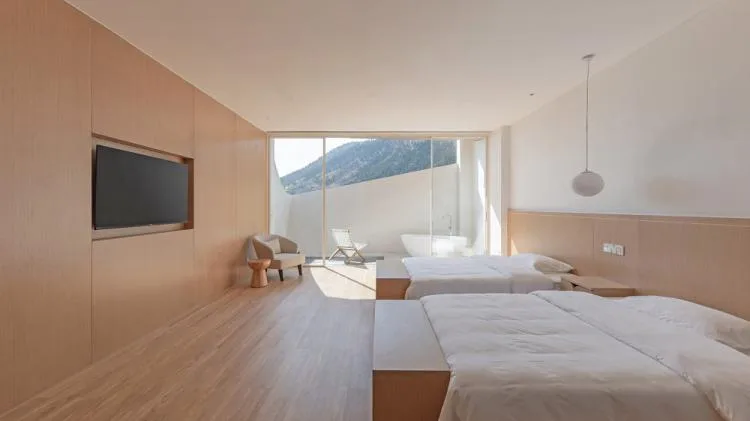
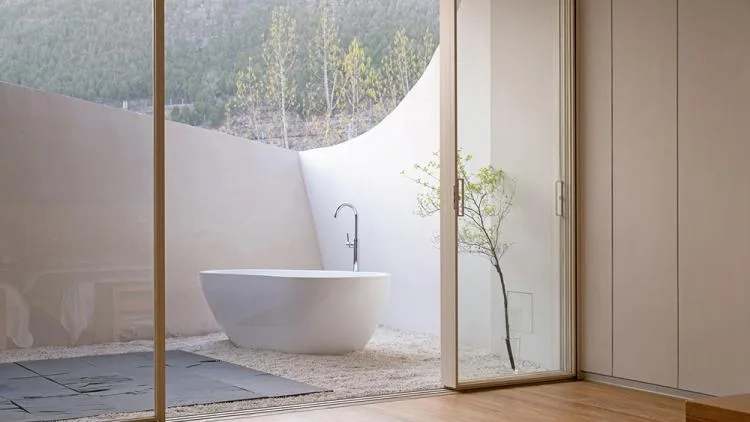
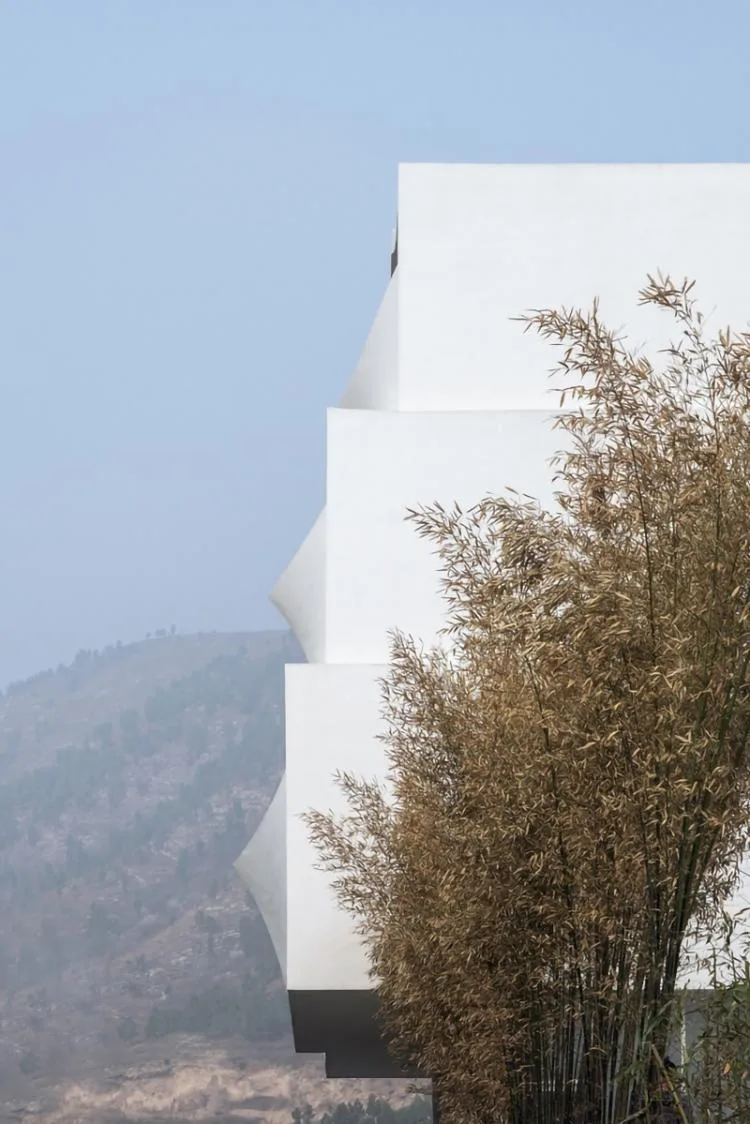
The Sky Courtyard employs unconventional design techniques to craft a miniature courtyard room layout that offers an irreplaceable and captivating experience. Rather than merely referencing traditional Chinese visual elements, the design skillfully utilizes garden design principles such as “hiding” and “revealing,” as well as borrowing and framing scenic views.
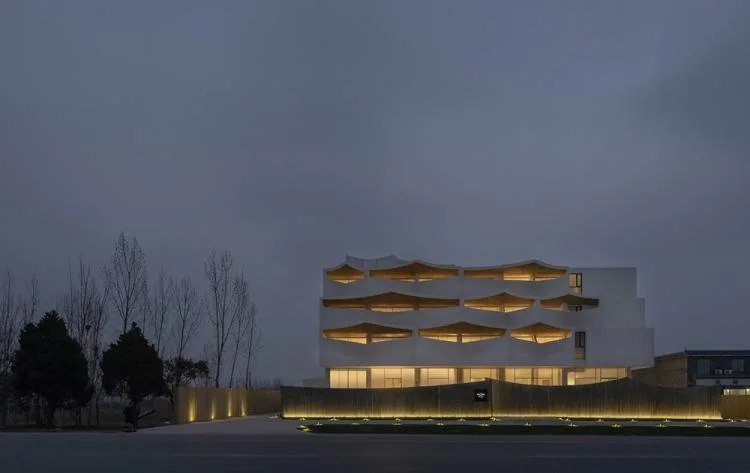
Design Drawings
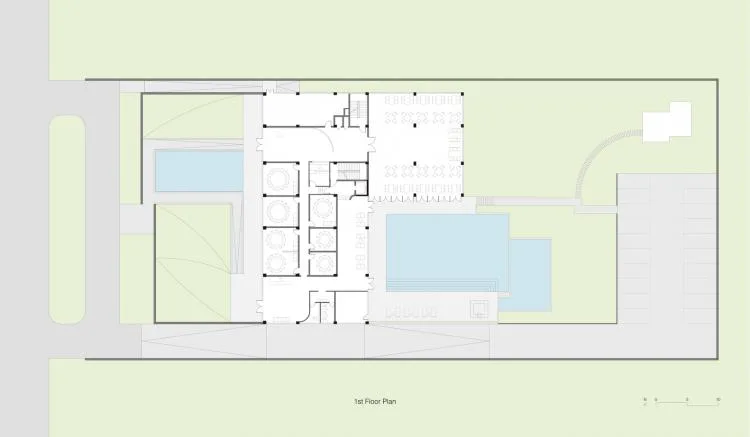
△ First floor plan
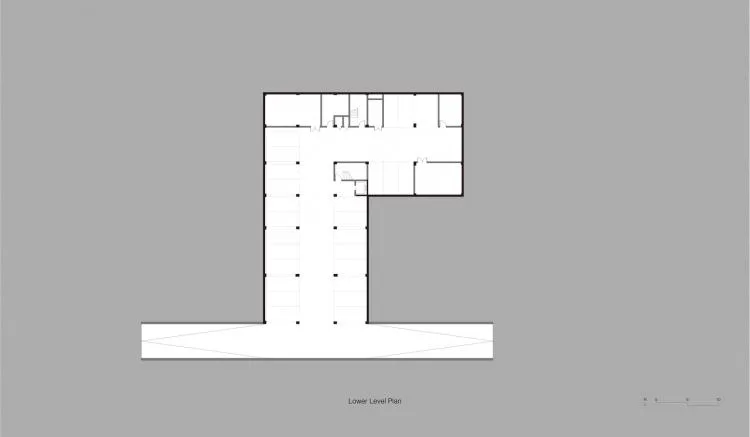
△ Underground floor plan
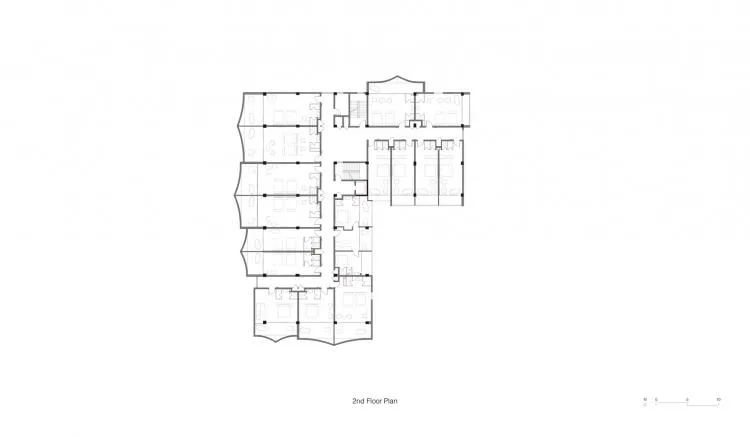
△ Second floor plan
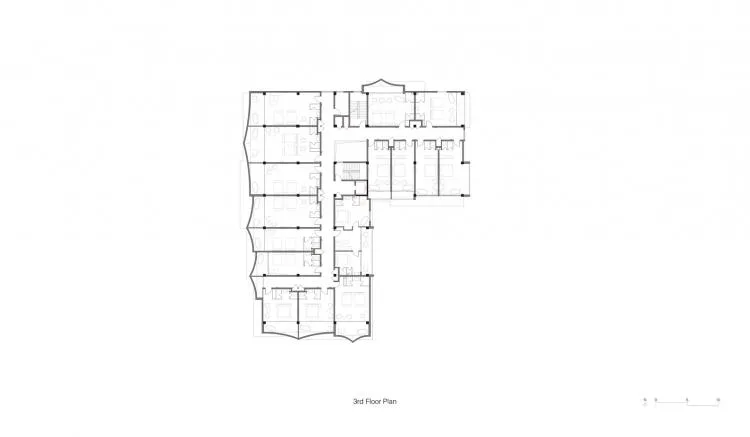
△ Third floor plan
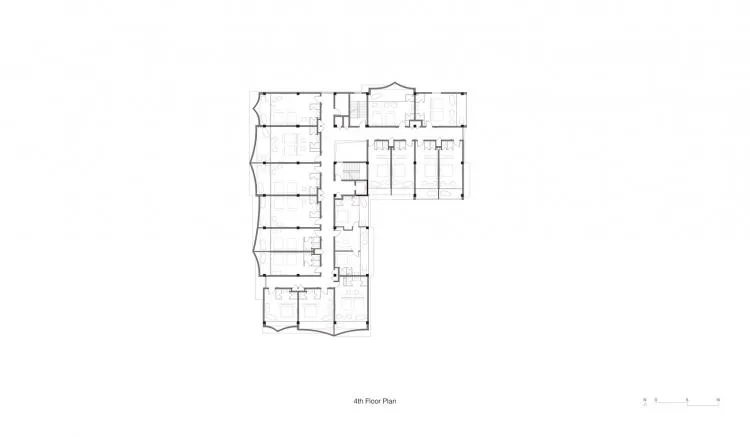
△ Fourth floor plan
Project Information
Project Type: Hotel
Location: Jiaozuo, China
Architectural Design: Ten Domain Architecture
Area: 4900 m²
Project Year: 2020
Design Team: Xu Xiaomeng, Wang Chun
Interior Design: Xu Xiaomeng, Hannah Wang
Landscape Design: Xu Xiaomeng
Graphic Design: Xu Xiaomeng, Hannah Wang
Structural Consulting: Hezuo Structural Architecture Research Institute
Construction Drawing Design: Henan Urban and Rural Planning and Design Research Institute
Civil Construction: Dufuyong Team, Xiuwu County
Interior Decoration Construction: Henan Jutailong Decoration Engineering Co., Ltd.
Photographer: Zhang Chao













Must log in before commenting!
Sign Up