
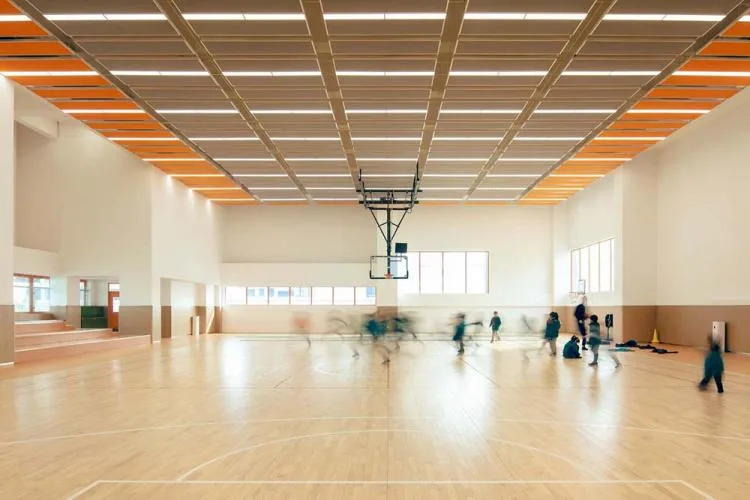
This project combines a primary school and kindergarten on a shared campus. While both serve educational purposes, they cater to distinct user groups. The facility must accommodate 12 kindergarten classes with their activity areas, 36 primary school classes, as well as a sports stadium and an indoor sheltered playground. The challenge lies in effectively allocating resources to support the coexistence of these two institutions.
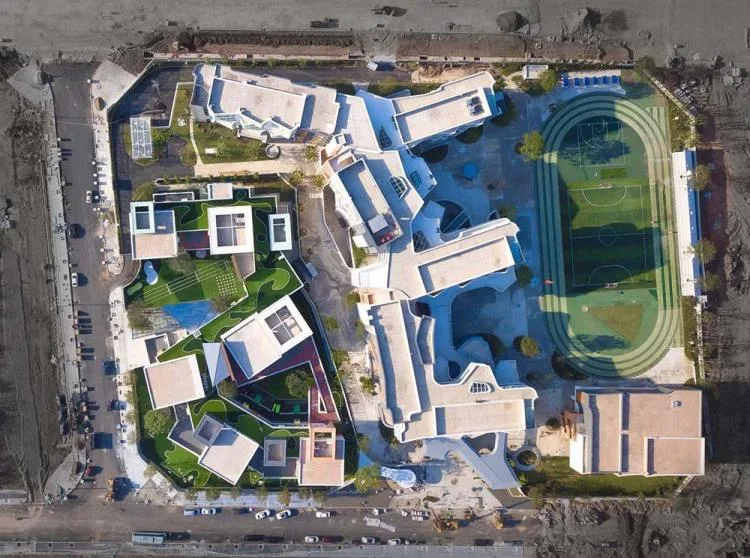
After establishing a balanced allocation of resources, the next step was to develop a unified design concept for both the kindergarten and primary school. The two guiding principles for this design are vitality and order. Harmonizing these seemingly opposing qualities has shaped the overall spatial organization of the campus.
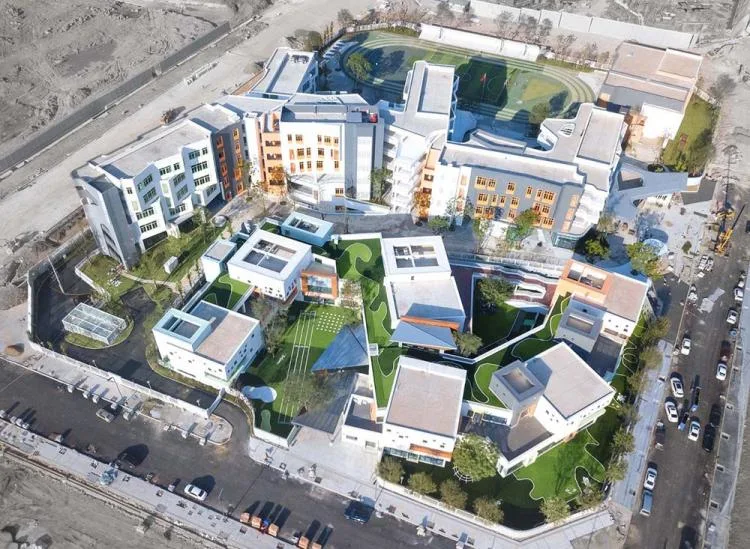
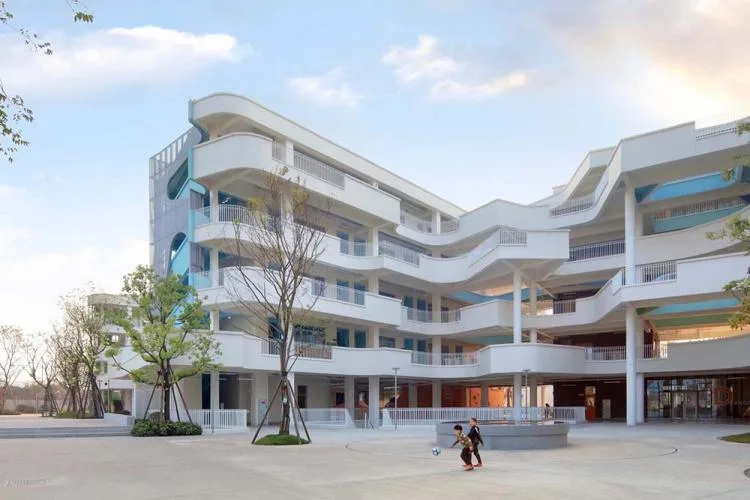
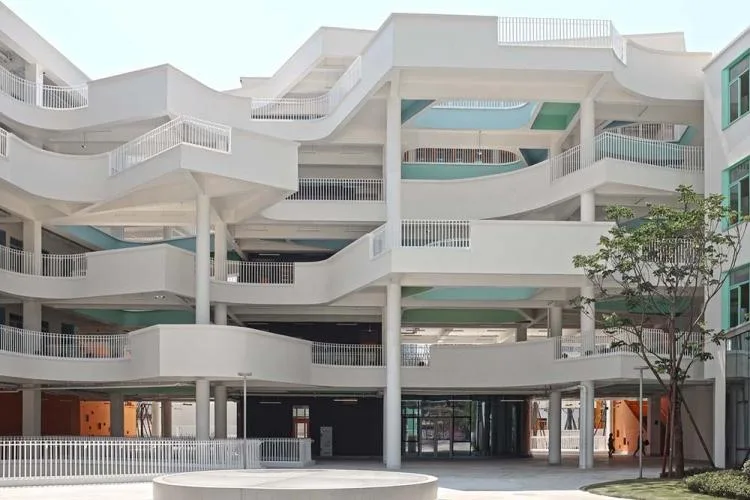
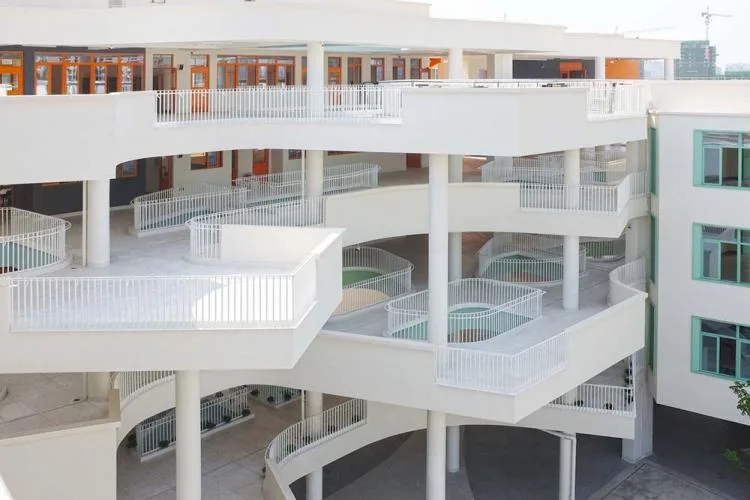
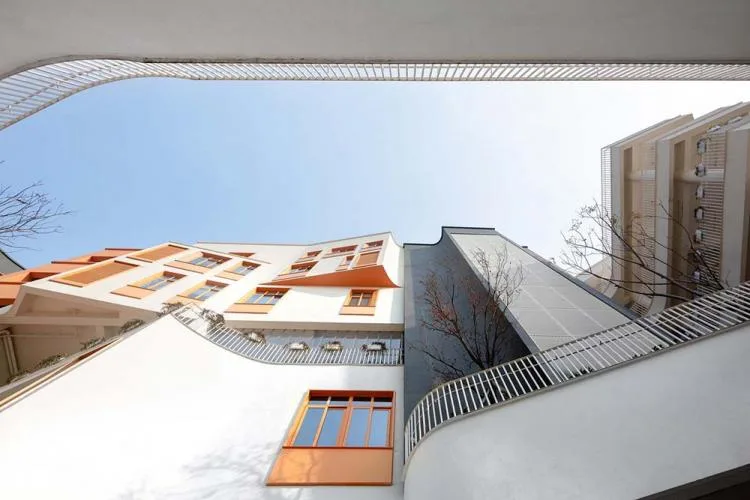
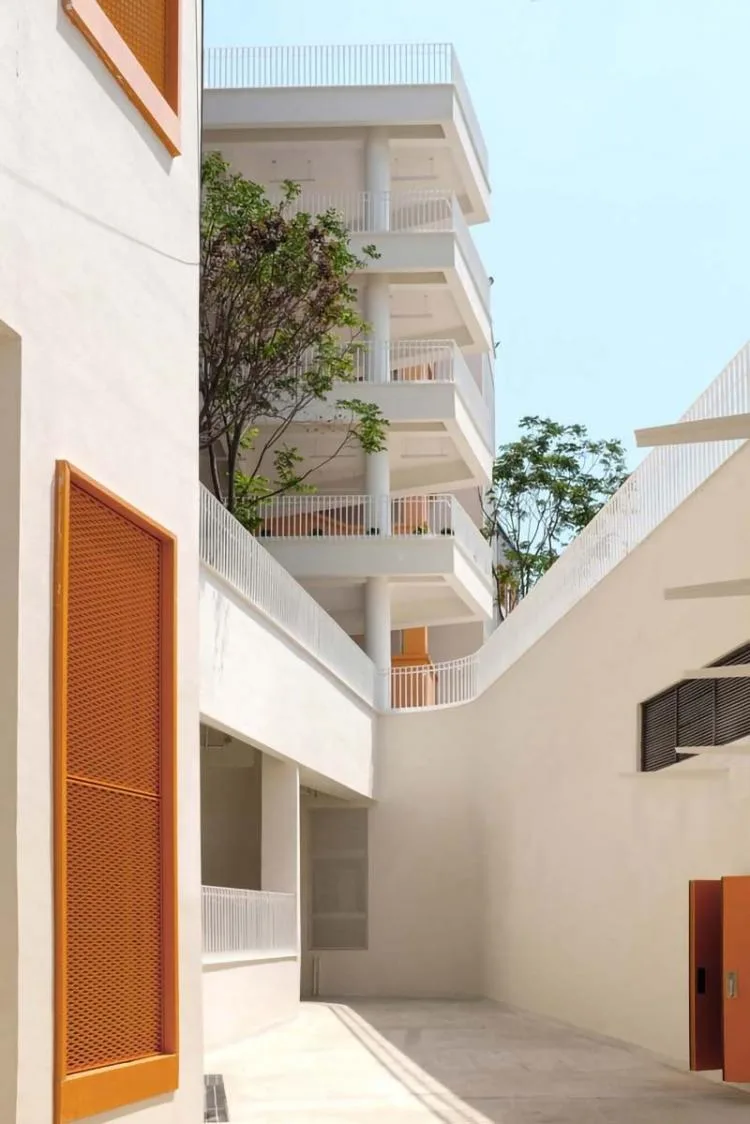
The vitality aspect is reflected by integrating dynamic, strip-like buildings throughout the site boundaries. These structures create a series of emerging courtyard spaces that encourage students to explore their surroundings independently, discovering engaging corners across the campus beyond classroom hours. These informal spaces also foster interaction between teachers and students. This design aims to cultivate a lively, stimulating learning environment that complies with national standards by redefining interactive spaces alongside functional requirements.
Order refers to the guiding principles behind all activities. Educational values such as enthusiasm, seriousness, dedication, and innovation are all facets of this broader concept of order. Society itself is founded on order, and education serves as its initial stage. Therefore, a sense of order is the core element that governs the architectural layout and spatial experience throughout the campus.
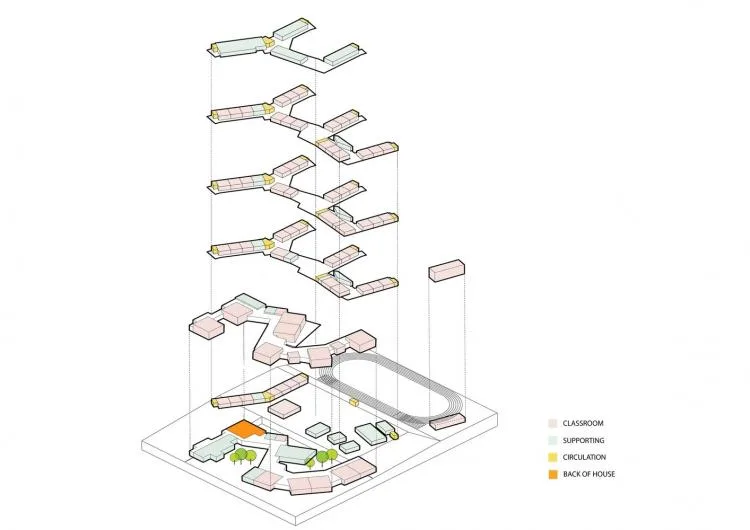
△ Functional analysis
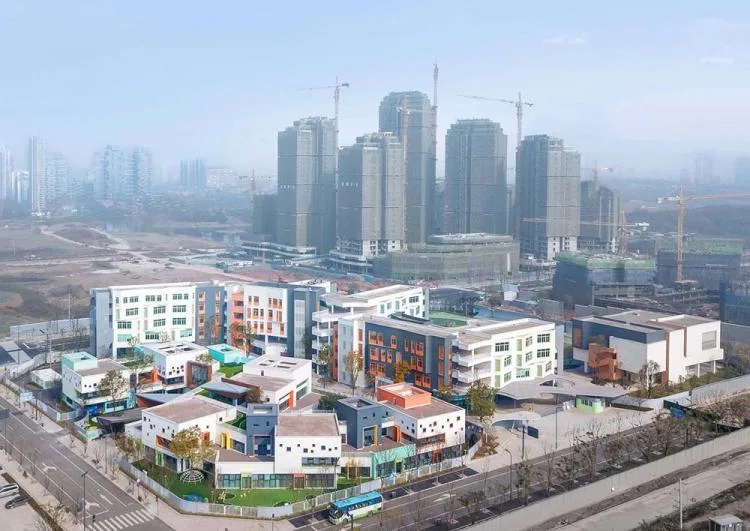
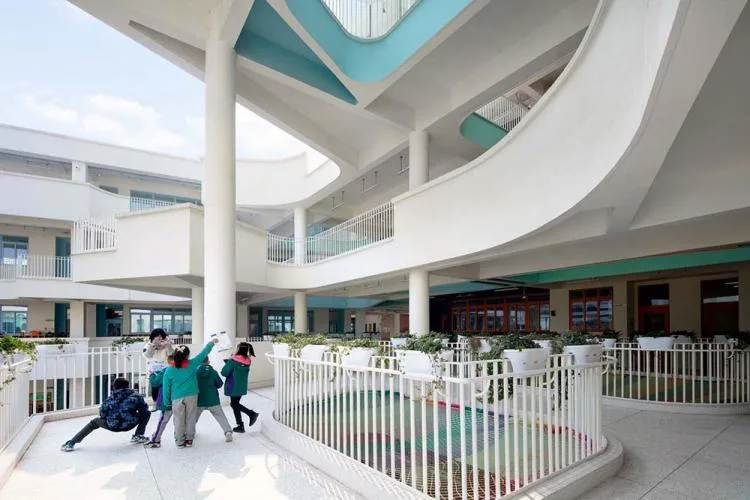
The kindergarten’s spatial logic encourages free-form, unstructured play while ensuring safety. The building’s S-shaped layout complies with national standards for educational facilities and naturally encloses front and rear courtyards. These courtyards serve as a sports area for physical activities and an interactive space for performing arts, respectively. Corridors connecting classrooms are widened and enhanced as transitional zones, offering expansive views and linking indoor classrooms with outdoor courtyards and stairways. This creates a seamless play area for children. Inside the classrooms, physical partitions are minimized, and modular furniture is employed to create flexible play and rest zones.
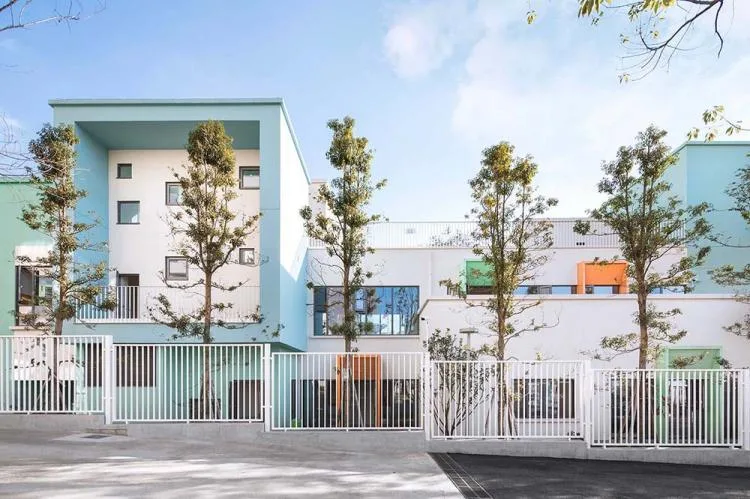
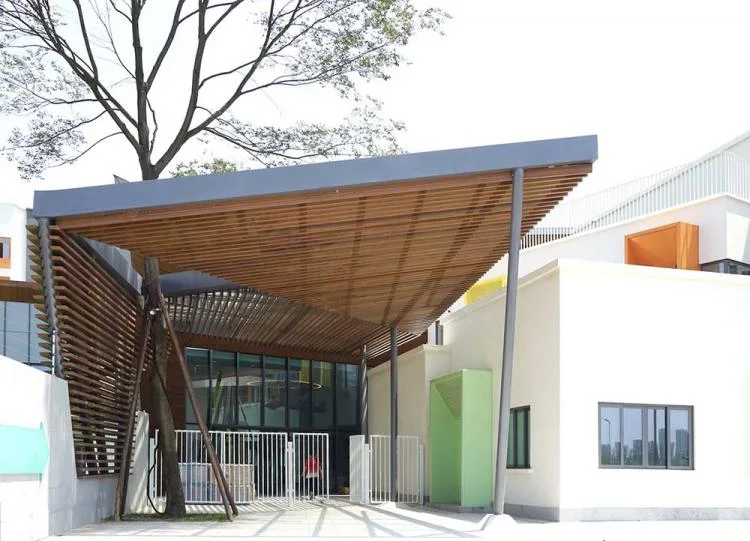
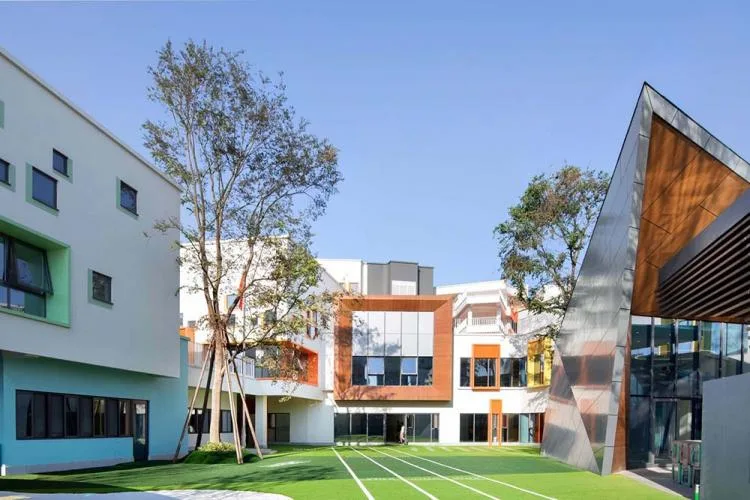
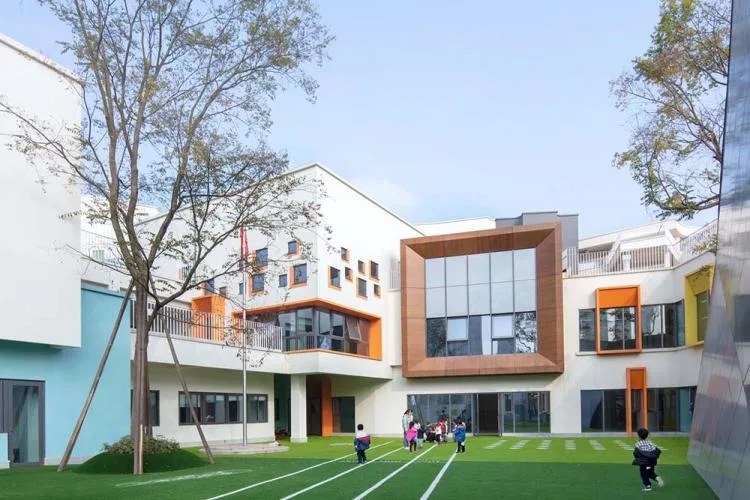
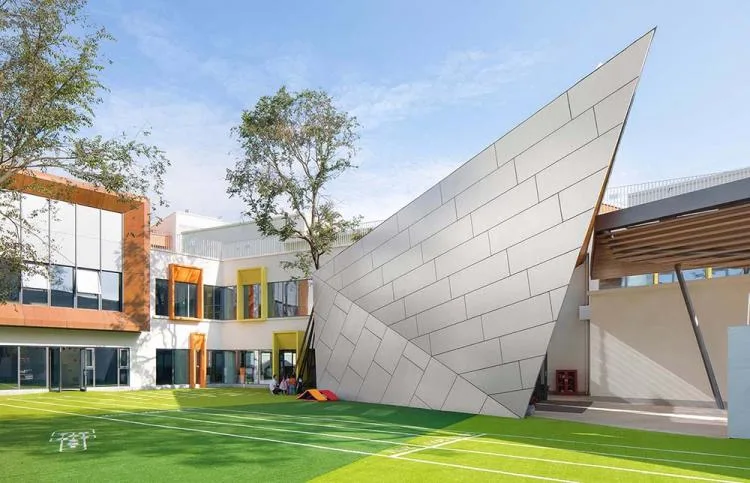
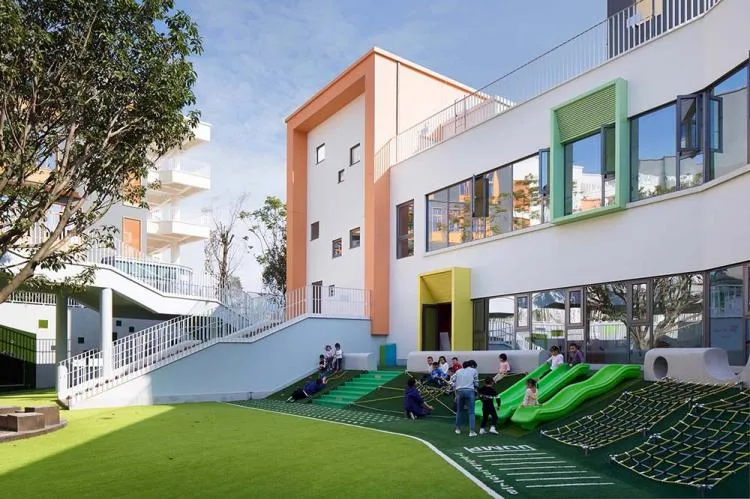
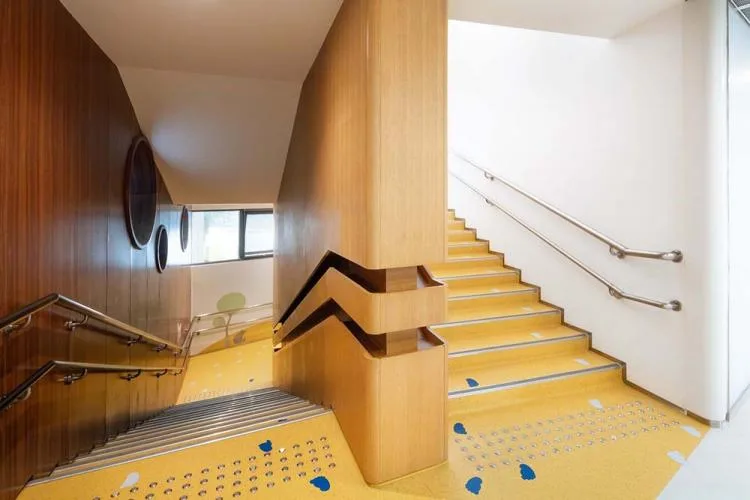
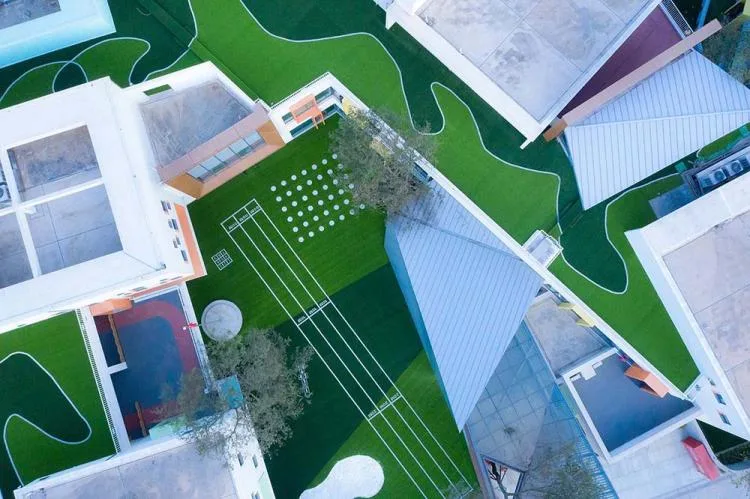
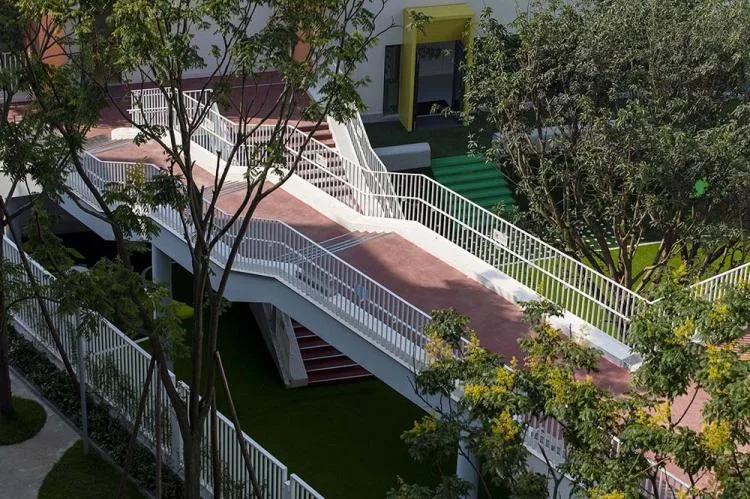
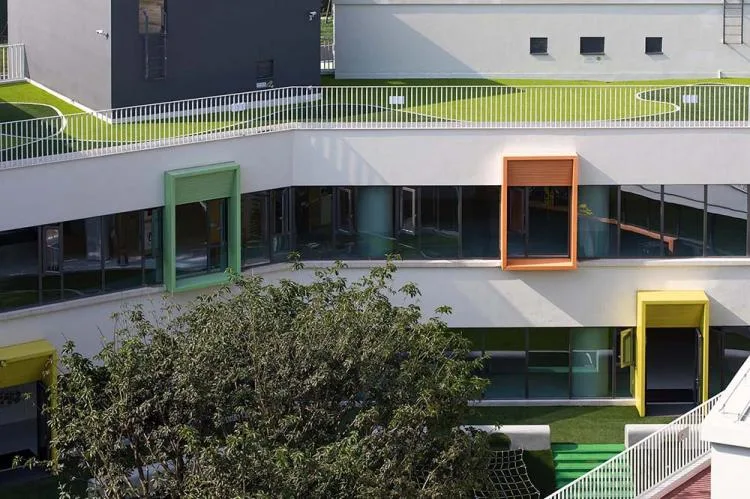
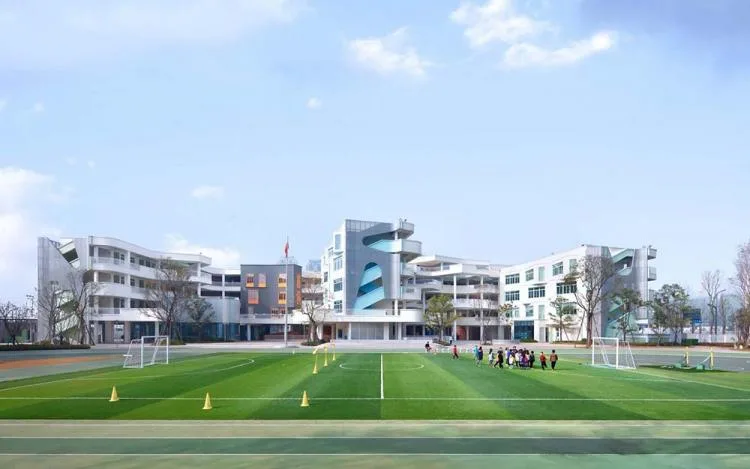
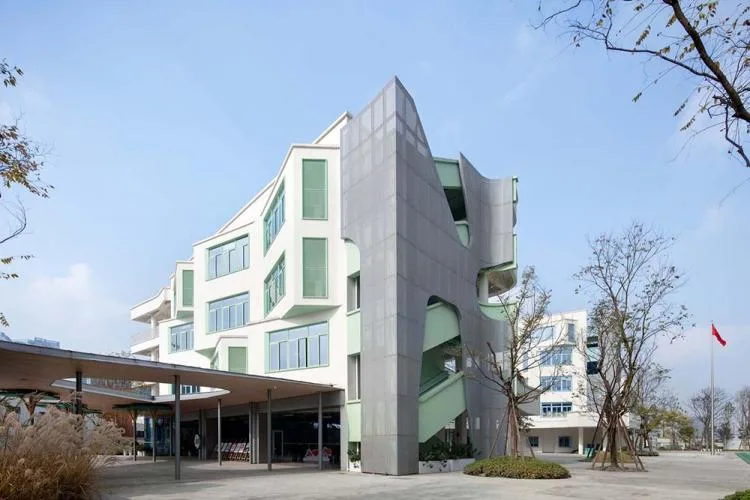
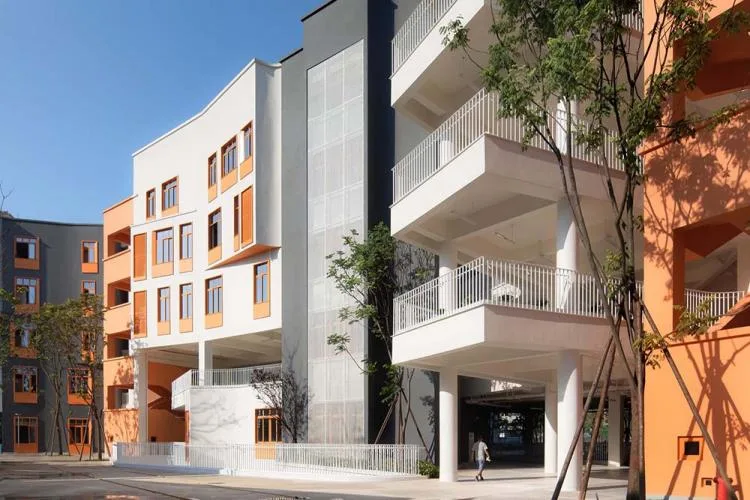
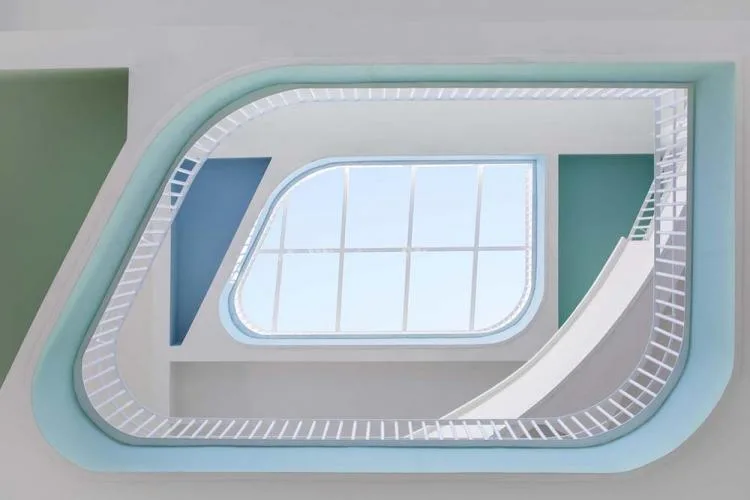
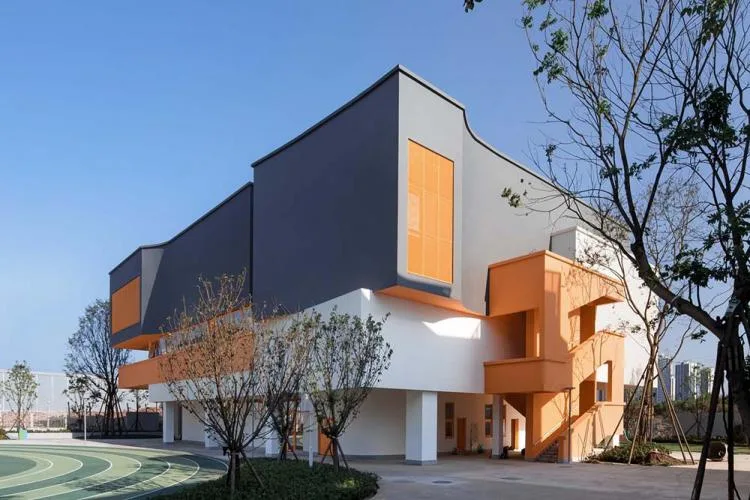
In contrast, the primary school’s spatial logic emphasizes orderly teaching activities while maintaining students’ vitality. The educational and living spaces are arranged to reflect a clear progression and hierarchy between grades. To maximize sunlight exposure, most ground-floor spaces are elevated. A grey corridor starting from the main entrance connects all activity areas within the primary school, complementing a large vertical activity platform suspended above the exercise field. This elevated platform provides ample space for student activities, ensuring that “vitality” is preserved even under extensive coverage. Above the second floor, this structure forms a garden-like terrace with climbing vines, linking classrooms across floors and offering spacious green areas for extracurricular engagement.
Design Drawings
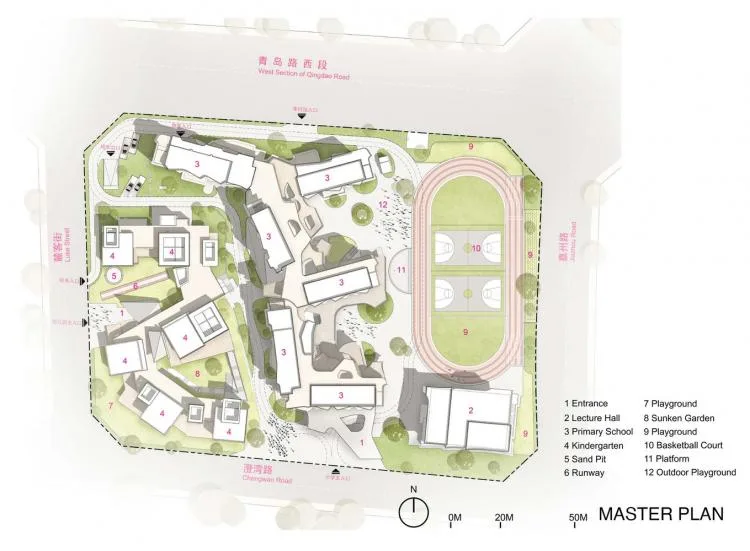
△ General layout plan
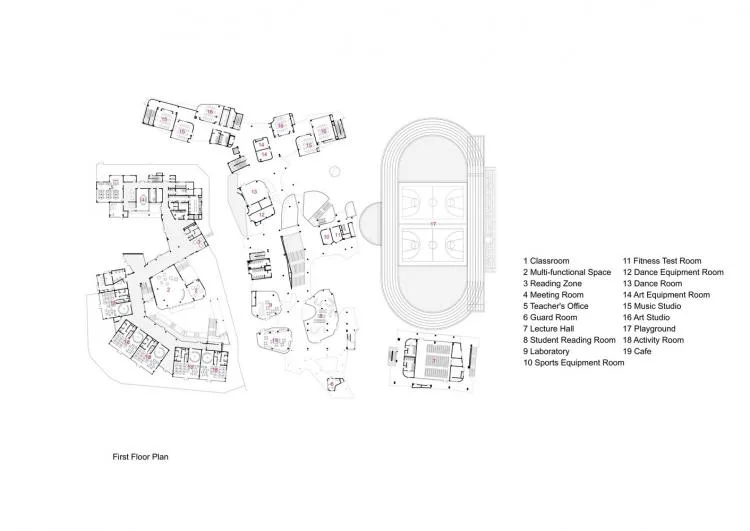
△ First floor plan
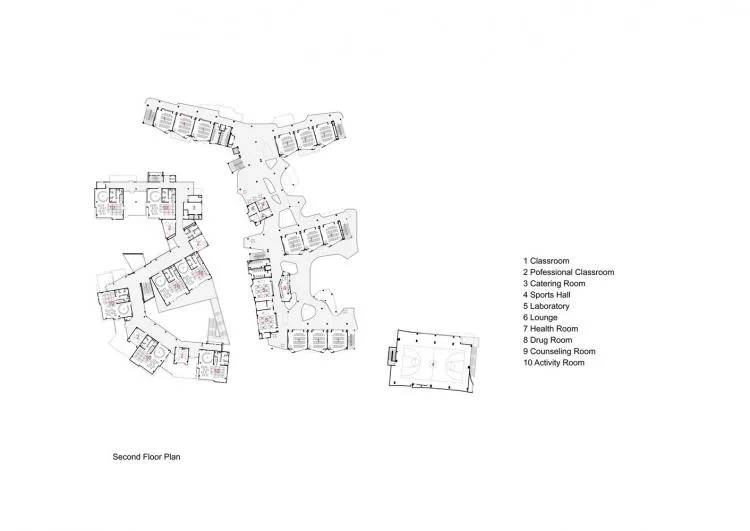
△ Second floor plan
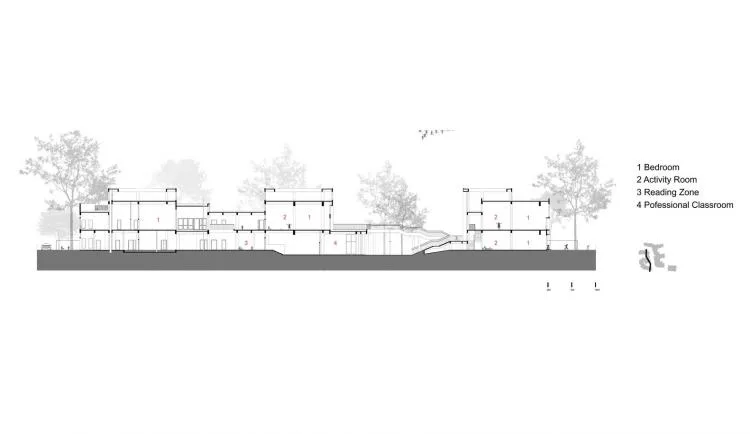
△ Section diagram
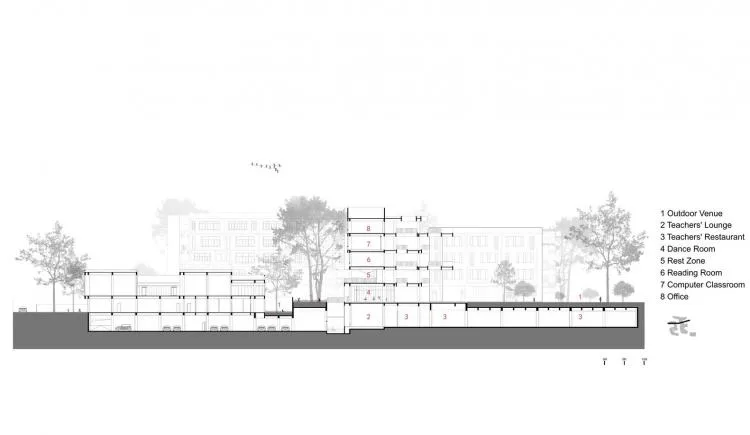
△ Section diagram
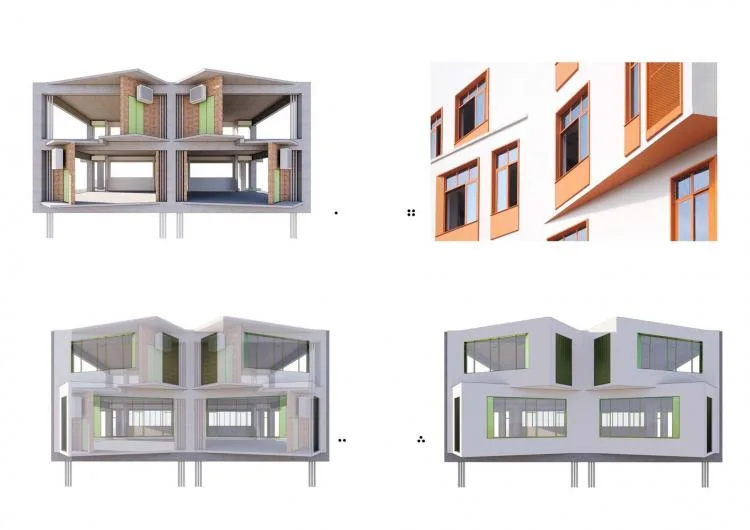
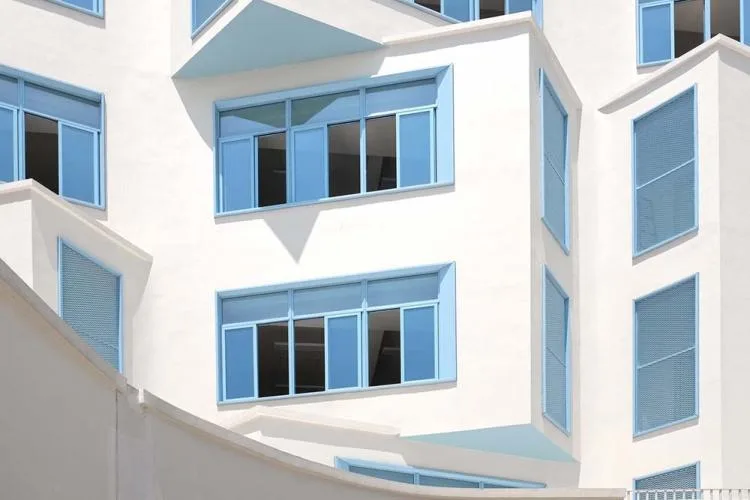
△ Facade analysis
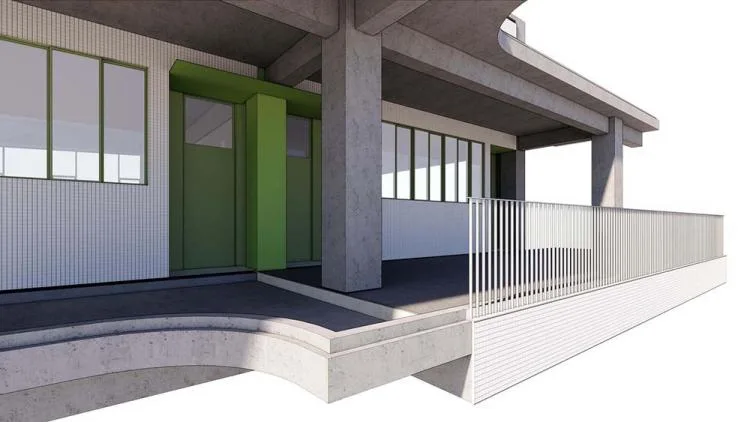
△ Facade rendering
Project Information
Project type: Kindergarten, Primary School
Location: Chengdu, China
Architectural Design: Non Search Architecture
Area: 32,821 m²
Project Year: 2019
Lead Architects: Gu Zheng, Feng Shuo, Tian Cheng, Liu Cheng
Design Team: Yan Mingjia, Shen Dong, Wang Jin, He Qin, Gong Xue, Lu Ye
Interior Design: Sandra Mitchell, Chen Siyan, Tang Wei, Zhang Yi
Client: Chengdu Wanhua New City Development Co., Ltd
Landscape Design: Chongqing Weitu Design
Photography: There are buildings, Holi
















Must log in before commenting!
Sign Up