
1. Knowledge points of traditional wooden arch bridges
2. How the author applied the traditional weaving technique of wooden arch bridges in building construction.
Competition Theme
Urban Waterfront Art Space
Contestants are invited to select a waterfront site in any city worldwide. The chosen area must include water bodies and waterfront landscapes. The architectural design and landscaping should be unified and considered as an integrated whole. The site must be real, and the design should reflect the historical, cultural, and climatic context of the location.
The art spaces should cater to the daily cultural needs of local residents. Possible functions include indoor exhibition halls, cafes, food centers, cinemas, outdoor exhibition spaces, and more. The recommended building area is no less than 8,000 square meters, but participants may adjust the size based on the actual conditions of the city and site.
Designs should express local cultural characteristics, align with residents’ lifestyles, and highlight the unique identity of the city.
– Award-winning works and authors
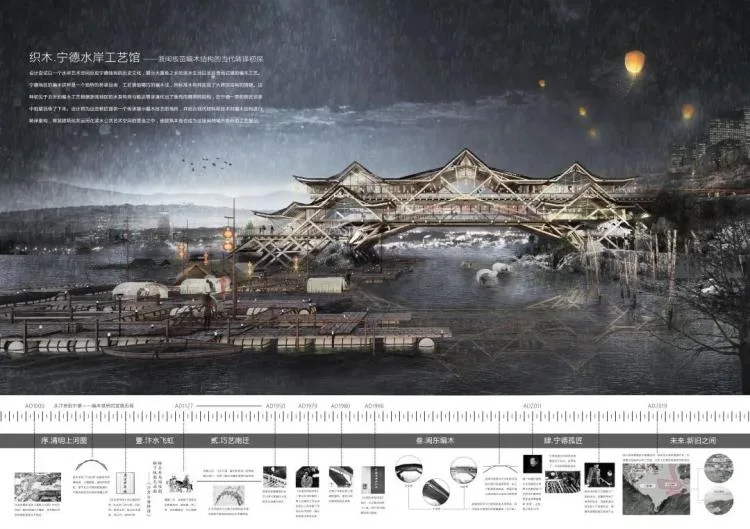
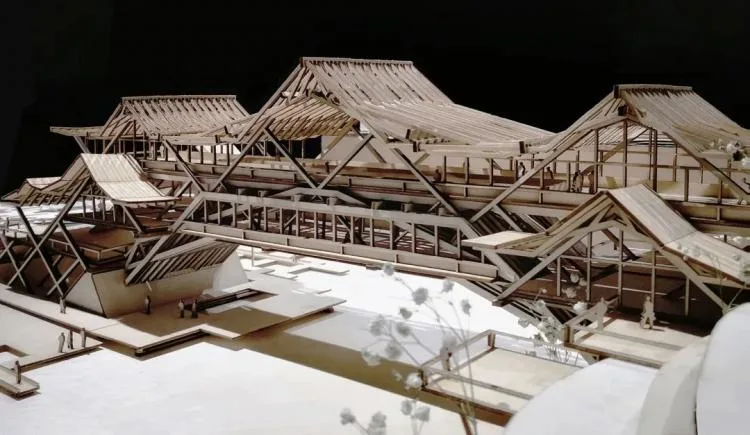
△ Solid model photos and schematic drawings © Kang Shanzhi

Design Proposal
01. Inspiration and Site Selection
The inspiration behind this project originated from my internship experience. During the summer break of my junior year, I worked under Professor Cui Tong and participated in designing a cultural building in Hangzhou. During the initial brainstorming phase, our team explored traditional Chinese architectural spaces extensively. We studied Song dynasty paintings like “A Thousand Miles of Rivers and Mountains,” and the Bianshui Hongqiao depicted in “Along the River During Qingming Festival” attracted particular attention.
Guided by my professors, I began to research and learned about wooden arch bridges for the first time. My first course design after the internship focused on architectural history, offering different research directions. My group allowed students to select their own sites, and I proposed translating the form and structural principles of wooden arch bridges into architectural design. Professor Cui Tong encouraged this exploration, and Professor Zhang Xingguo, the course leader, supported my somewhat unconventional approach. Thus, a two-month exploration began.
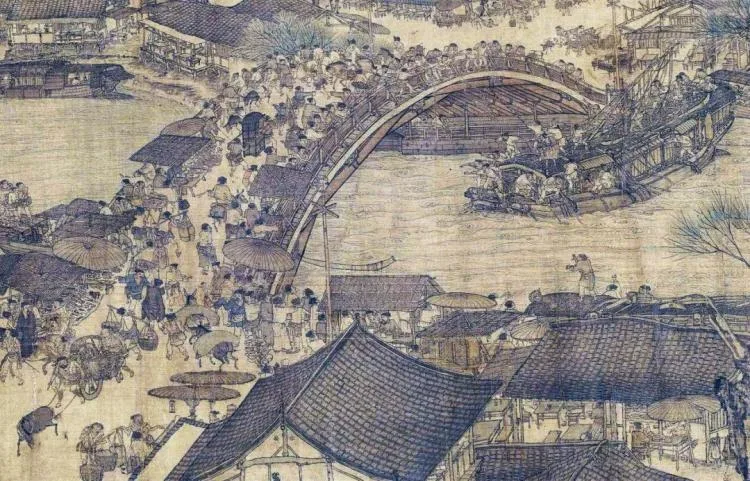
Source image of Bianshui Hongqiao painting from Along the River During Qingming Festival
Wooden Arch Bridge
This is a unique type of bridge from ancient China, combining both functionality and artistry. Skilled craftsmen developed an ingenious weaving technique using wooden poles to create large-span arch structures. This weaving method dates back to the Northern Song Dynasty, though no northern examples remain after the dynasty’s fall. In the 1970s, experts found a cluster of bridges with similar construction logic in southern Fujian and Zhejiang provinces.
These bridges evolved into diverse structural forms adapted to the geological and navigation needs of the Zhejiang-Fujian region. Their craftsmanship has been passed down through generations of southern bridge-building families.
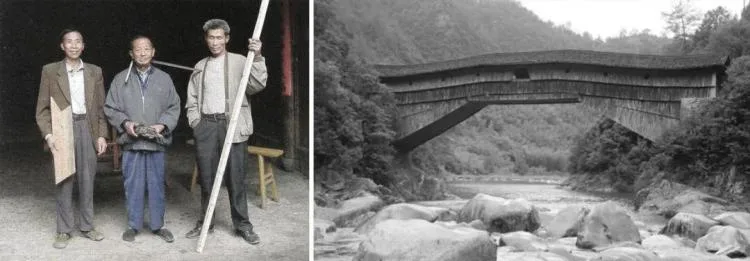
△ Craftsmanship transmission and map of existing wooden arch bridges in Zhejiang and Fujian regions

△ Timeline overview
Ningde, Fujian, is home to over 50 existing wooden arch bridges. For my project, I selected the Sandu’ao Scenic Area in Ningde to integrate a series of waterfront activity spaces through architectural interventions, creating a venue for local craftsmen to preserve and showcase their skills.
My goal was to replicate the woven structure of wooden arch bridges and apply it to waterfront art spaces, thereby
creating a composite craft museum that combines the fishing, hunting, and tourism industries of the “Hometown of Yellow Croaker.”
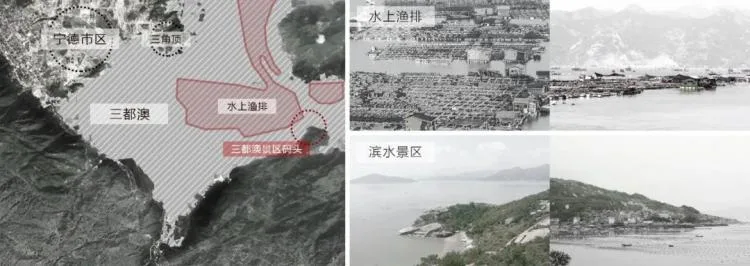
△ Surrounding environment of the site
02. Initial Exploration of Wooden Arch Bridge Craftsmanship
At the early design stage, I developed a preliminary understanding of the bridge’s principles through extensive literature review (references attached at the end) and by constructing physical models. Limited personal knowledge posed challenges, but fortunately, during my senior year’s first semester, I took a “Building Construction (2)” course.
I consulted Professor Qin Lin with specific questions, and he patiently provided detailed answers and valuable suggestions based on sketches. Reflecting on the entire process—internship, course design, construction course, and competition—it feels like many fortunate coincidences occurred.
Ancient craftsmen
woven and assembled wooden components to form the arched bridge body,
whose
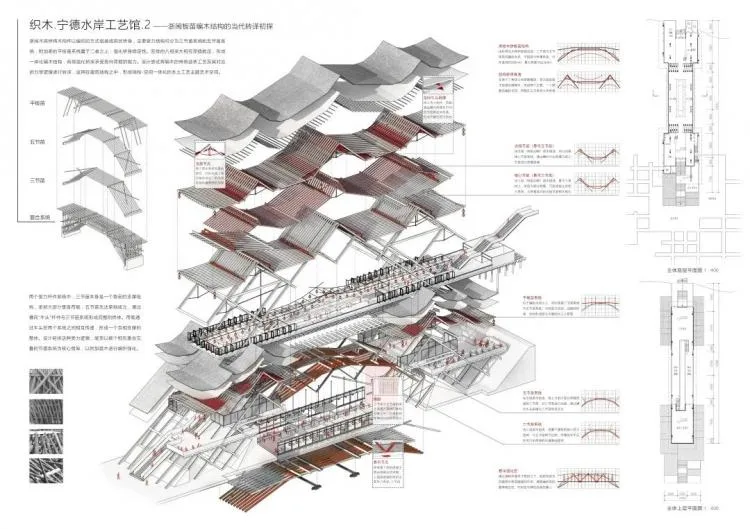
main load-bearing structures are categorized into three-section and five-section seedling systems.
Flat seedlings of the additional corridor are placed atop these to enhance the bridge’s stability.
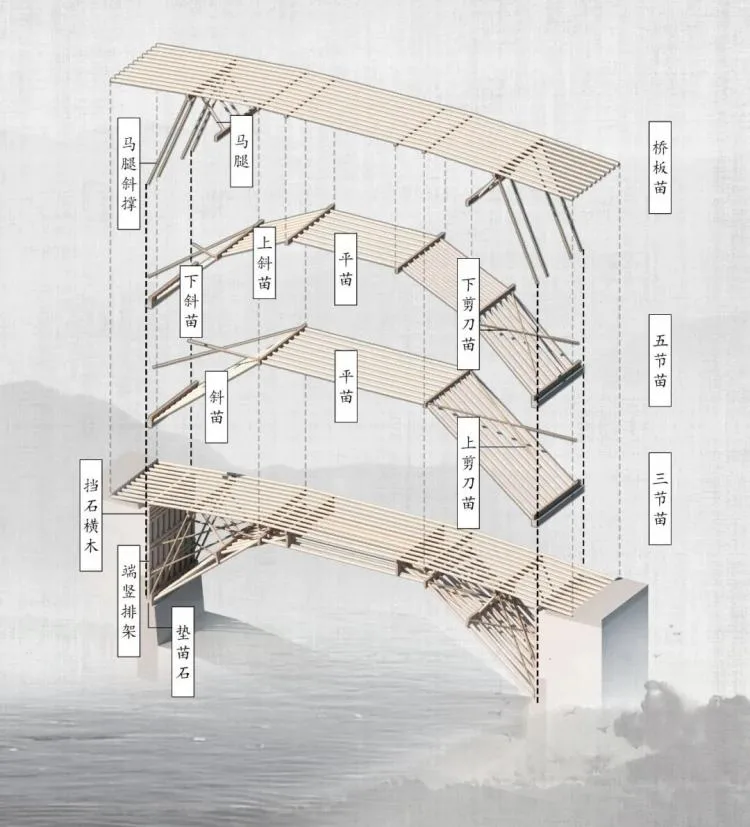
Disassembled wooden arch bridge structure
Eight sets of beams and wood are closely arranged and “woven” using a horizontal rod known as the cow head. Although individual three-section and five-section seedlings are fragile, the load is distributed among multiple wooden poles through transverse members. These interlocked arrays push against each other, forming a stable overall structure.
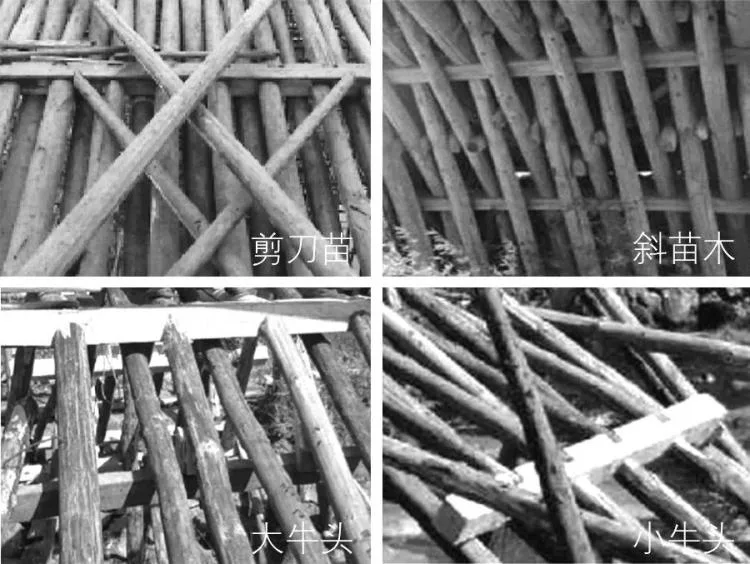
Detailed bottom drawing of an existing wooden arch bridge (source: internet and relevant references)
Similar to the bridge body’s weaving method, the craft hall’s roof comprises multiple groups of wooden poles. These poles form mutual pressure states through transverse components, transmitting load similarly to the bridge body. The load is ultimately transferred to the bridge’s transverse components (known as “Niutou”) via slant supports, then down to the stone piers through the bridge body.
This closely nested system creates a
stable and architecturally distinctive space.
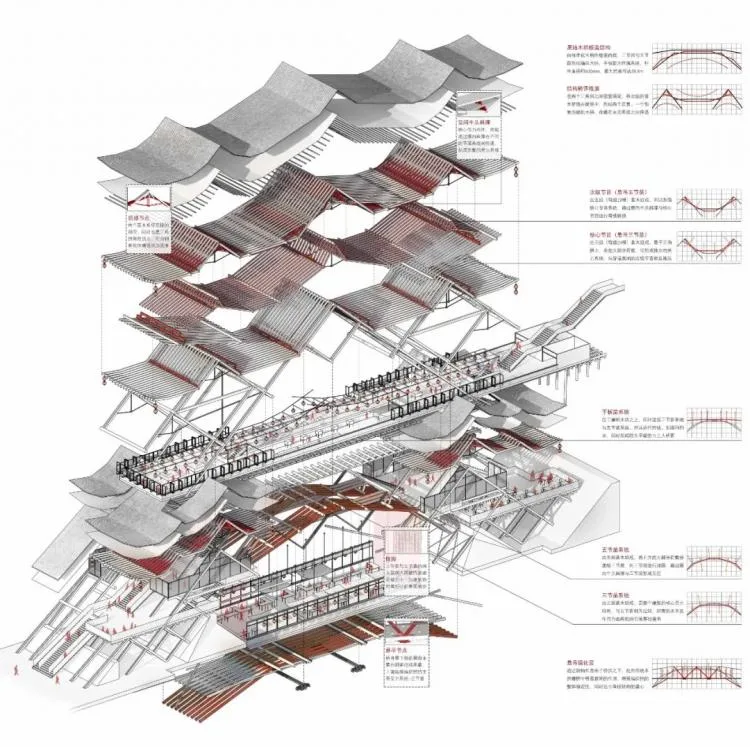
Schematic diagram of the craft museum’s structural disassembly
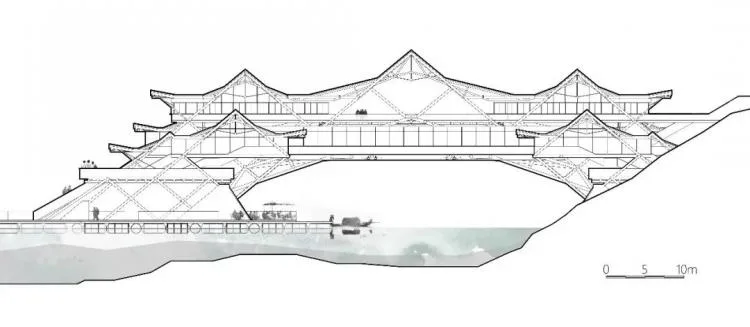
Southwest elevation of the craft museum
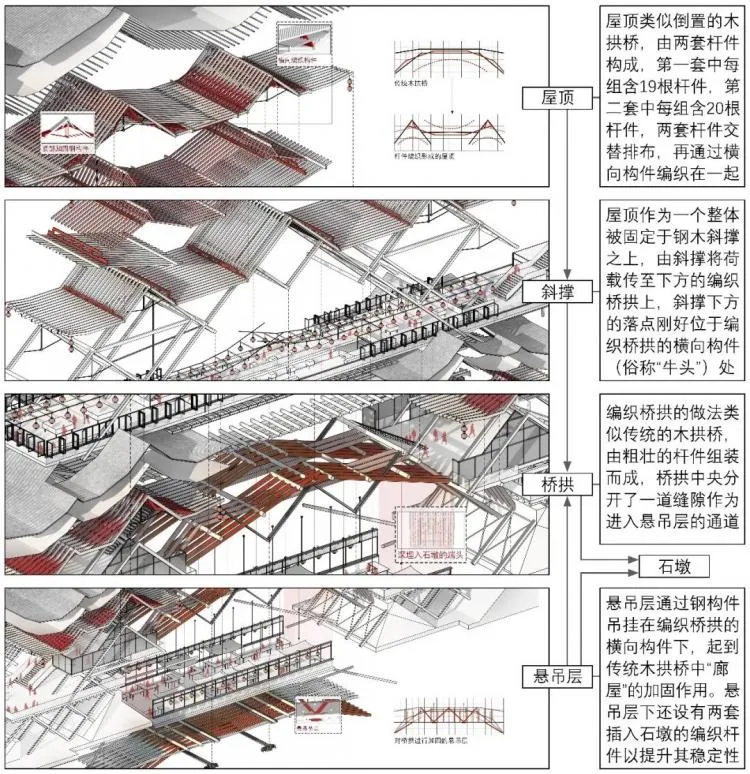
△ Disassembly instructions
Beyond the upper structure, special attention was given to the suspended layer beneath the bridge arch. Traditional wooden arch bridges often include a raised beam-style gallery that provides shelter from wind and rain, while stabilizing the bridge by applying pressure.
For the craft museum, this concept was “inverted” by reinforcing the bridge with a space suspended by steel components. This design not only serves as structural reinforcement similar to the gallery but also lowers the overall center of gravity.
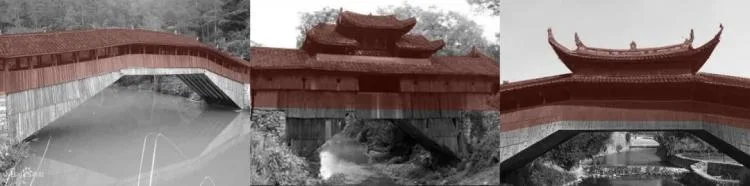
Image of a traditional wooden arch bridge gallery (source: internet)
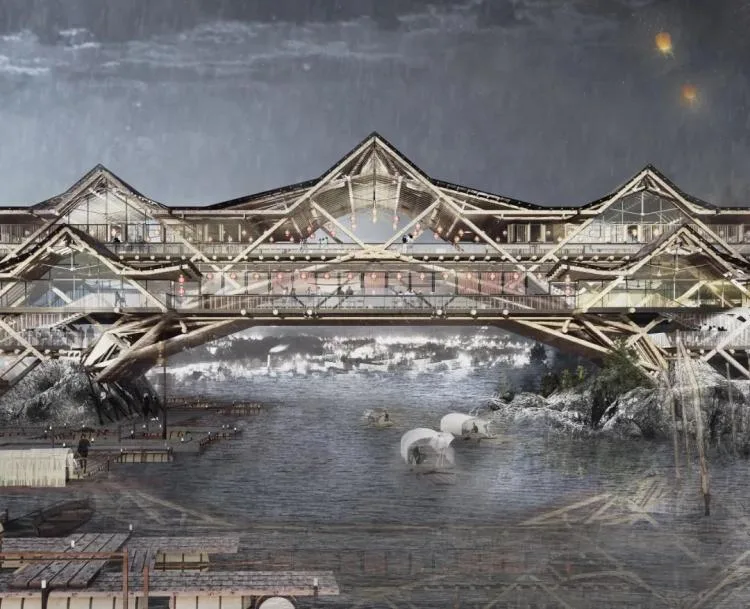
The suspended layer beneath the craft hall
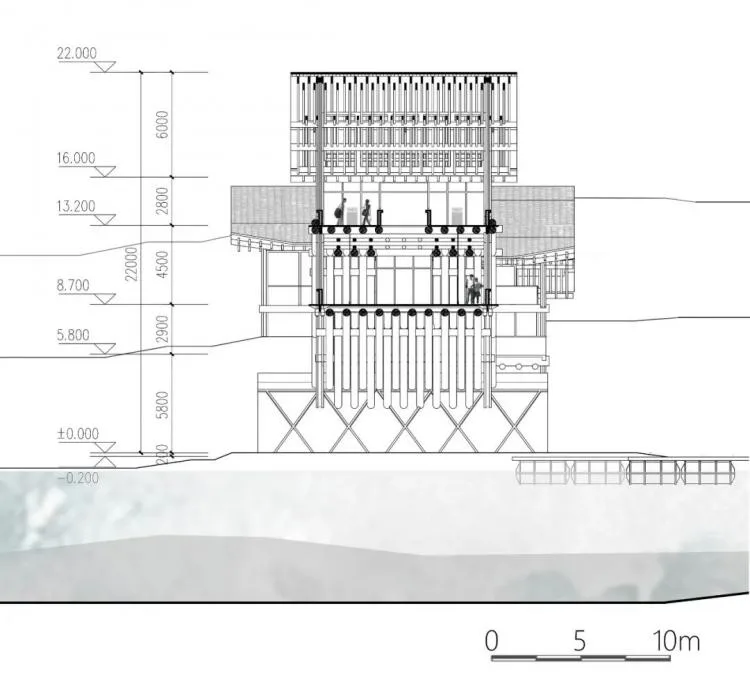
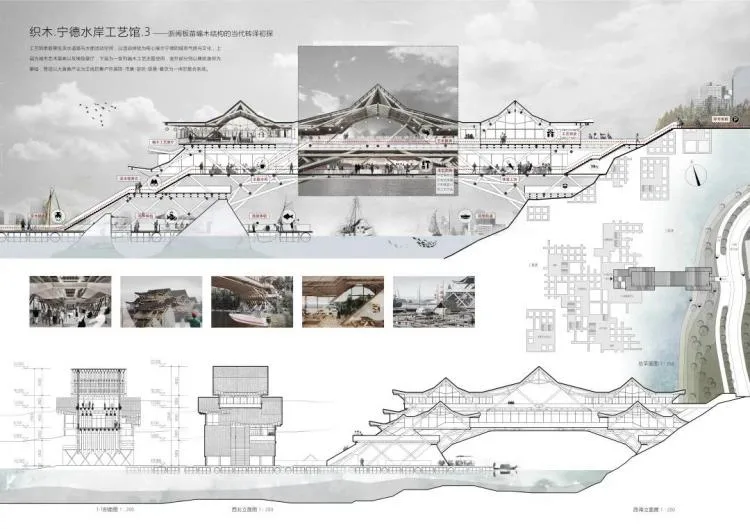
Section 1-1 of the craft museum
This “under the bridge” space offers visitors a unique experience, enabling close interaction with the woven bridge structure. It has become a vital exhibition area within the craft museum.
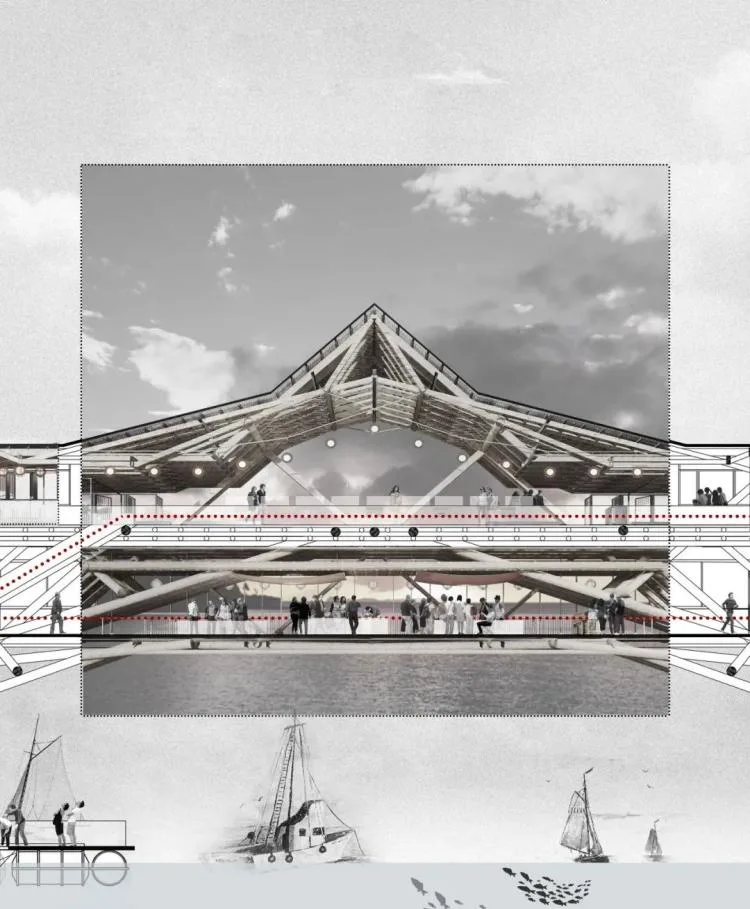
△ Sectional display of the “Under the Bridge” space
03. Overview of Architectural Space and Activities
The main building of the Wooden Arch Bridge Craft Museum faces the waterfront, providing views of the city skyline and connecting to the scenic area’s waterfront roads and water activity zones.
Surrounding the main building is a grid-like arrangement of rubber fishing rafts, themed around the local fishing and hunting industries. These rafts host temporary boat docks, outdoor exhibition spaces, seafood markets, tasting areas, seafood restaurants, and other functions, allowing visitors to fully immerse themselves in the local culture.
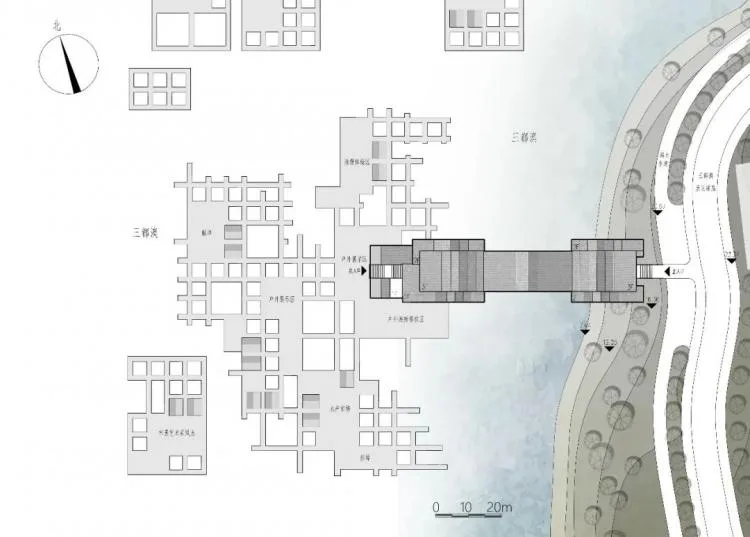
△ General site layout plan
Compared to the fixed main structure, the fishing area offers flexibility. Constructed on the water surface using net cages, this approach is environmentally friendly, easy to assemble and disassemble, reflects local fishing and hunting culture, and enhances adaptability to changing waterfront conditions.
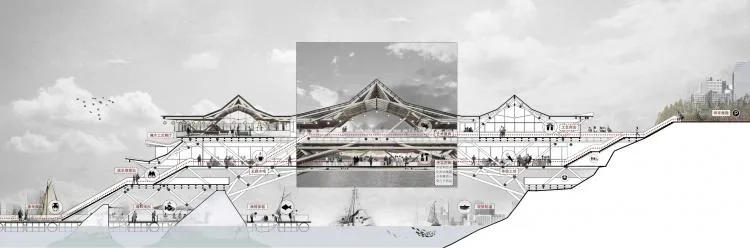
△ Architectural space and functional zoning schematic
The craft museum’s interior is divided into two main levels:
– Upper level: Includes an urban art gallery, woodworking exhibition hall, and craft shop. Access is provided via stairs on the east side leading to the waterfront road.
– Lower level: Comprises the space on the bridge pier and the suspended layer, featuring a handicraft street, woodworking workshop, teaching area, water bar, observation deck, and restrooms. The west staircase connects to the waterfront fishing area.
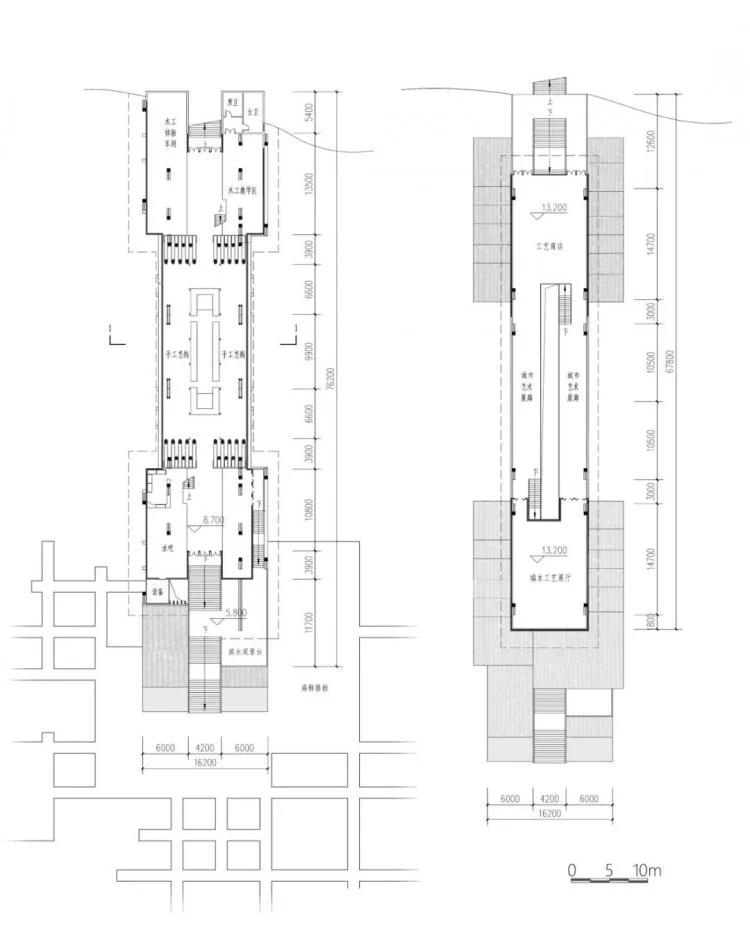
△ Elevation plans: left at 8.7m, right at 13.2m
Overall,
the design seeks to celebrate wooden arch bridge craftsmanship while integrating the local fishing and hunting culture. It combines craft exhibitions, cultural markets, entertainment, sightseeing, and specialty dining to offer visitors an unforgettable cultural experience.
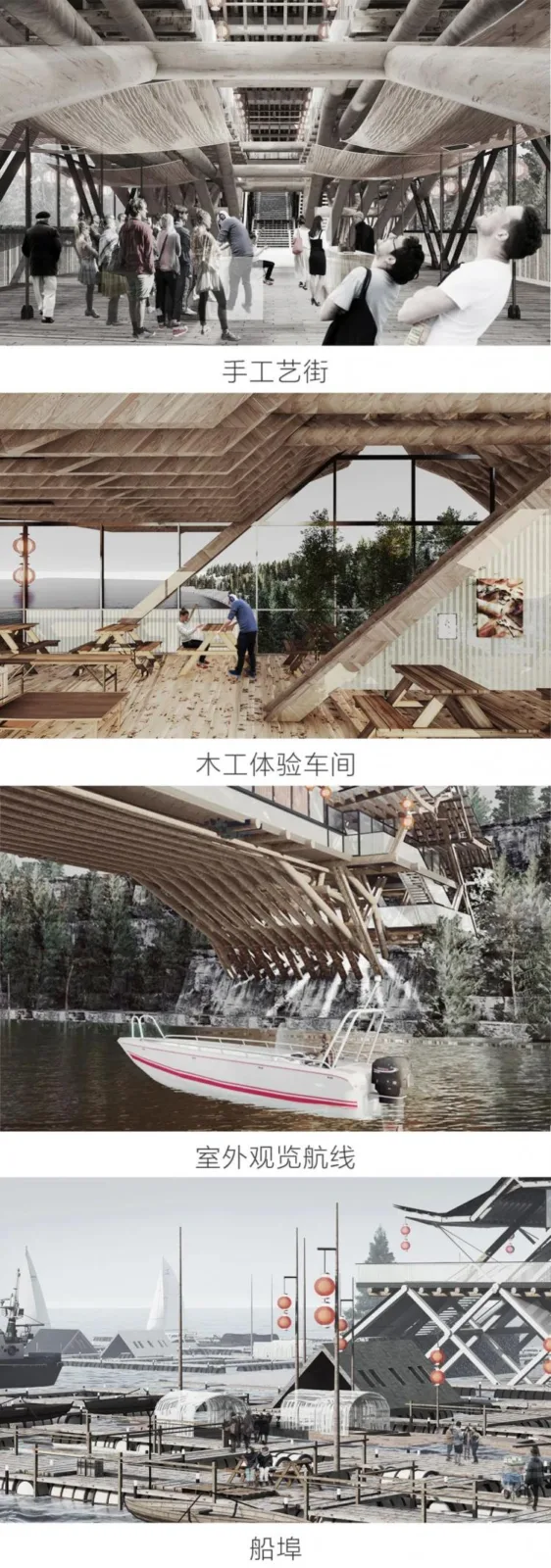
Various activity spaces
04. Reflection and Summary
From researching literature and refining models to producing drawings and presentation models, each stage posed challenges but was deeply rewarding. Looking back, there are areas for improvement. For instance, during structural translation, a quantitative force analysis using professional software should have been conducted concurrently with design. However, due to time constraints, this was not feasible. Instead, I purchased materials and built multiple trial models using small grass molds. This is a notable shortcoming and a source of regret.
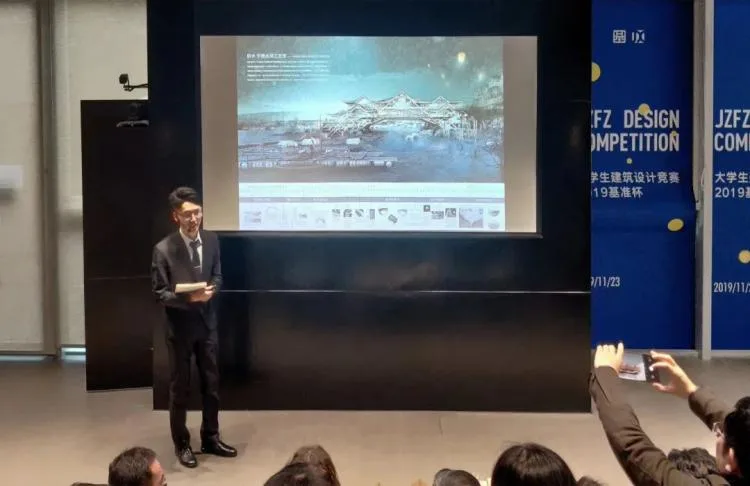
△ Project defense
Although this was an individual endeavor, I received invaluable support throughout. I am grateful to Professor Cui Tong and Professor Zhang Xingguo for their inspiration and guidance, and to Professor Qin Lin for clarifying structural questions.
During the competition stage, Professors Xu Weiguo and Zhang Xinnan offered strategies for optimizing roof and bridge structures, while Professor Tang Peng highlighted urban integration improvements. Professors Zhou Yang, Yu Hui, and Zhuang Ziyu provided encouragement and constructive feedback, from which I learned a great deal.
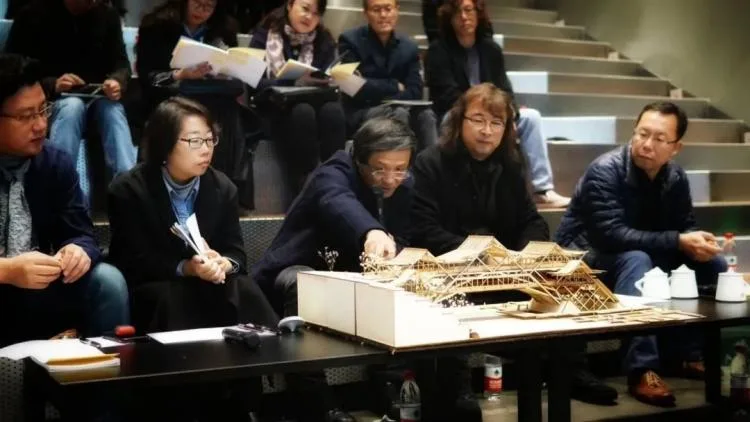
△ Project defense
In two months, I delved into a fascinating topic and conducted preliminary explorations. The experience was unforgettable. This design helped me appreciate the wisdom of Chinese craftsmen and the beauty of traditional crafts, broadening my perspective.
Winning an award was unexpected, and I warmly welcome feedback from seniors and classmates on areas for further improvement.
Q & A Session
(Design Coordinates)
Editor:
Kang completed this extensive course design alone in just two months. Could you share your learning experience and how you managed stress?
Kang Shanzhi:
I believe balancing life and study is crucial. As deadlines increased in senior years, I realized that staying up late and harming my health wasn’t productive or sustainable. Therefore, I explored ways to improve efficiency, maintain well-being, and make time for hobbies. Here are some of my approaches:
1. Using an app to plan daily tasks precisely reduces mental clutter. When overwhelmed, I break tasks down further.
2. Setting clear milestones and goals for each design phase prevents unnecessary changes and scheduling issues.
3. Maintaining frequent and efficient communication with instructors streamlines progress.
4. Staying curious and actively learning in each design class keeps the process engaging.
Everyone has their own methods to relieve stress. During my senior year’s first semester, I often visited interesting places around Chongqing (also practicing photography). When facing challenges, I’d take a shower, run on the playground, browse library books, or enjoy good food outdoors. Fortunately, my dorm had a lively and supportive atmosphere, making drawing enjoyable and less stressful.
References
[1] Yan Yang, Shozo Nakamura, Baochun Chen, Takafumi Nishikawa. Mechanical behavior of Chinese woven timber arch bridges. Engineering Structures, 2019, 195.
[2] Min Tianyi. From Bianshui Hongqiao to Zhejiang Fujian Corridor Bridge – Illustrated Construction Method of Wooden Arch Bridge. Architecture and Culture, 2017(12): 113-115.
[3] Zhang Ying. Analysis of Construction Techniques for Fujian Zhejiang Wooden Arch Bridges. Journal of Fuzhou University (Natural Science Edition), 2011, 39(06): 917-922.
[4] Li Xiaowu, Song Guoxiao, Wang Jiansheng, Xiao Dong. Secondary System Study on Local Components of Wooden Arch Bridges in Pingnan Area. Journal of North China University of Technology, 2011, 23(01): 89-94.
[5] Jiang Ye. Research on Chinese Covered Bridge Architecture and Culture. Central South University, 2010.
[6] Yao Hongfeng, Gong Difa. The construction technology of Fujian Guanmu Arch Bridge. Ancient Architecture and Landscape Technology, 2007(04): 11-14, 66-67.
[7] Tang Liuxiong, Hu Jifang. Value analysis, protection, and development of the “World Heritage” ancient corridor bridge in southern Zhejiang. Zhejiang Journal, 2005(05): 218-221.
[8] Bi Sheng, Zhao Chen. The special significance of the human settlement culture of the Zhejiang Fujian Wooden Arch Bridge. Southeast Culture, 2003(07): 52-56.
[9] Fang Hongqiao Exam. Journal of Architecture, 1995(11): 55-60.












Must log in before commenting!
Sign Up