
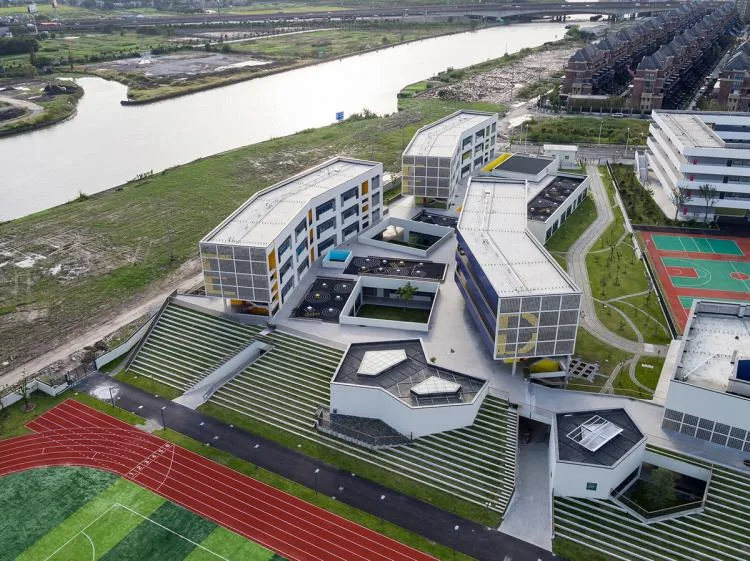
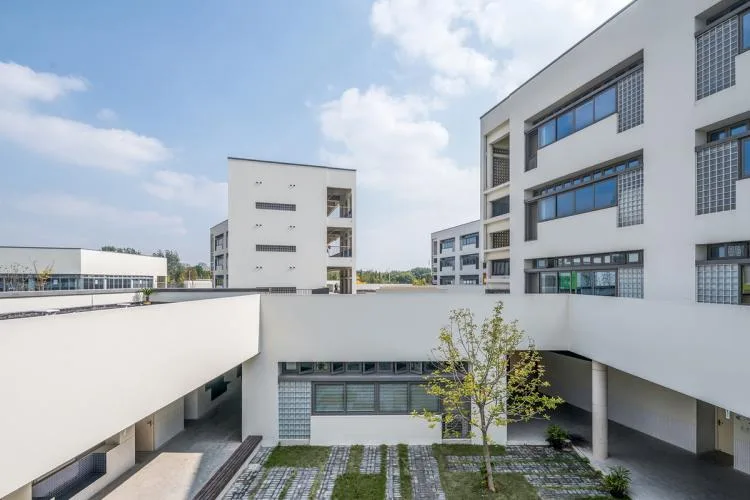
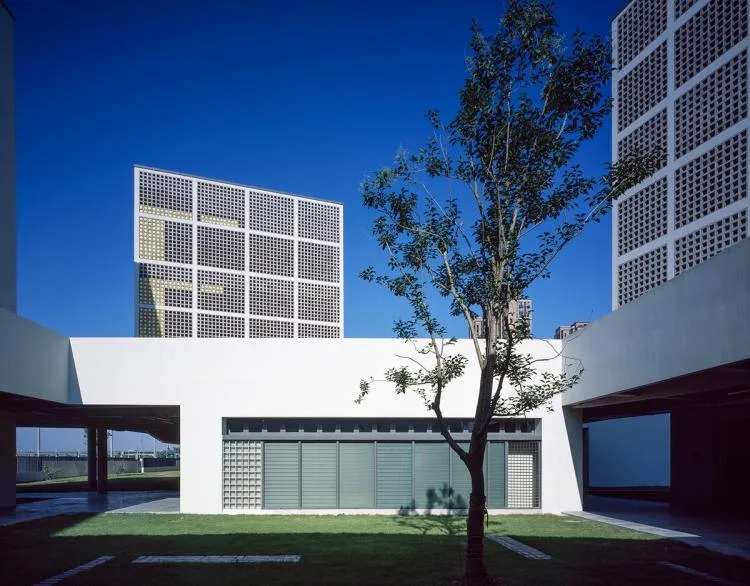
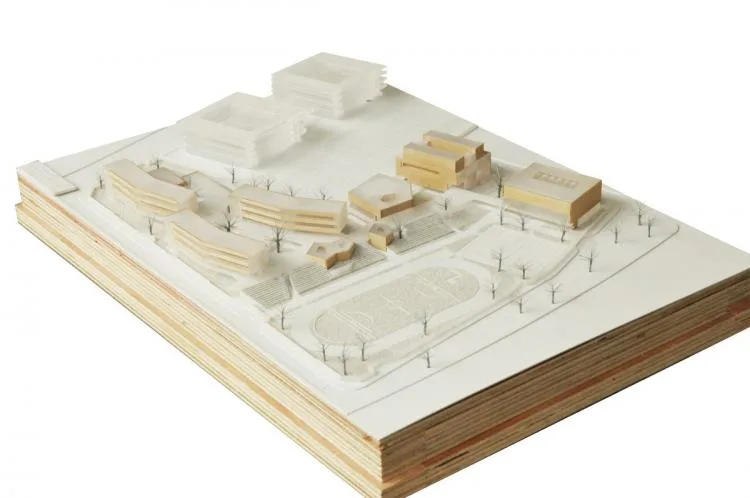
Tongji University Affiliated Experimental Primary School is situated in Anting New Town, Jiading District, Shanghai. The main building complex comprises teaching buildings, a comprehensive building, dining facilities, a sports hall, and elevated corridors. The design honors the architectural character of the original site and carefully connects teaching, office, and sports spaces through courtyards, corridors, and sports fields of varying scales and openness, responding to the dynamic and static needs of the school. The architectural form and exterior spaces emphasize harmonious integration with the urban environment.
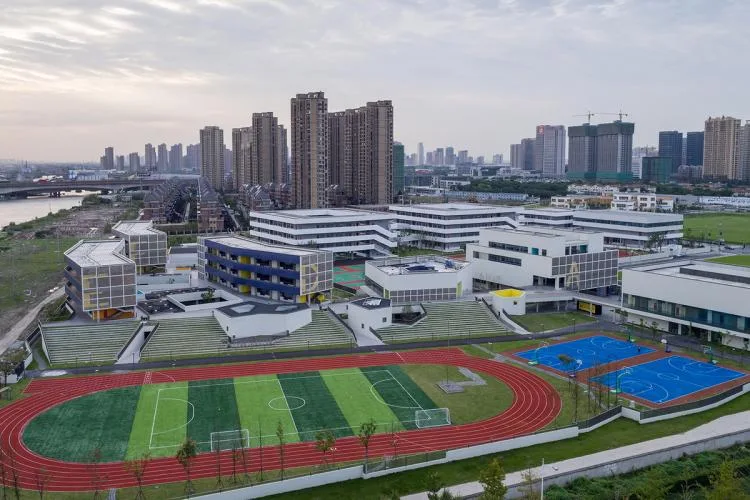
New Urban and Jiangnan Context
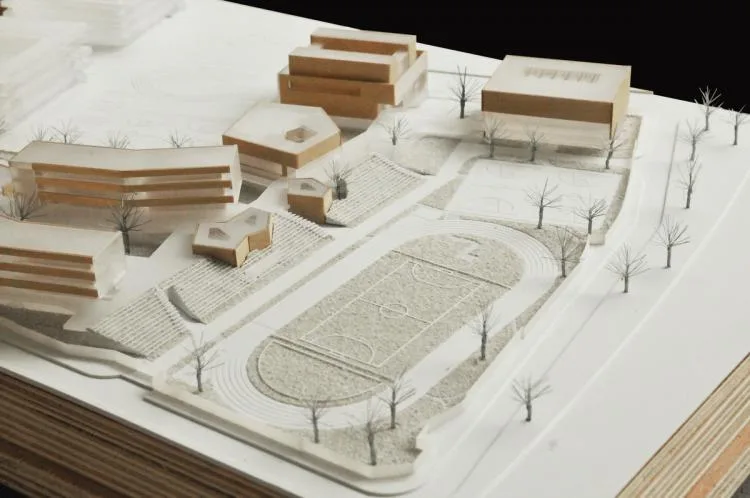
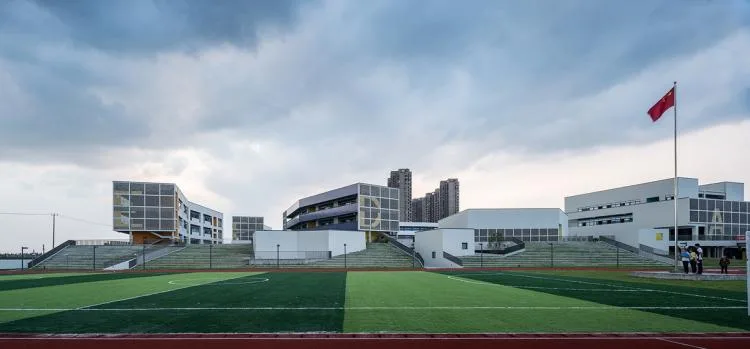
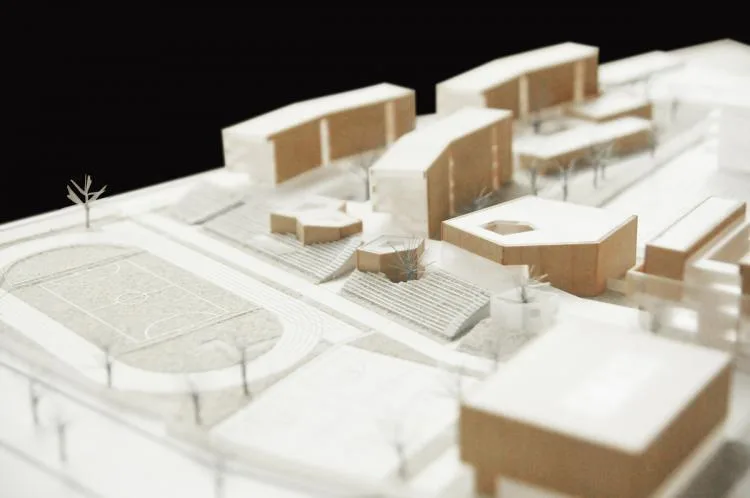
Located at the entrance to Anting New City, the primary school adapts to heavy urban traffic by positioning the playground on the east side adjacent to the main road, serving as a transitional buffer. This open sports field also enhances the city’s landscape.
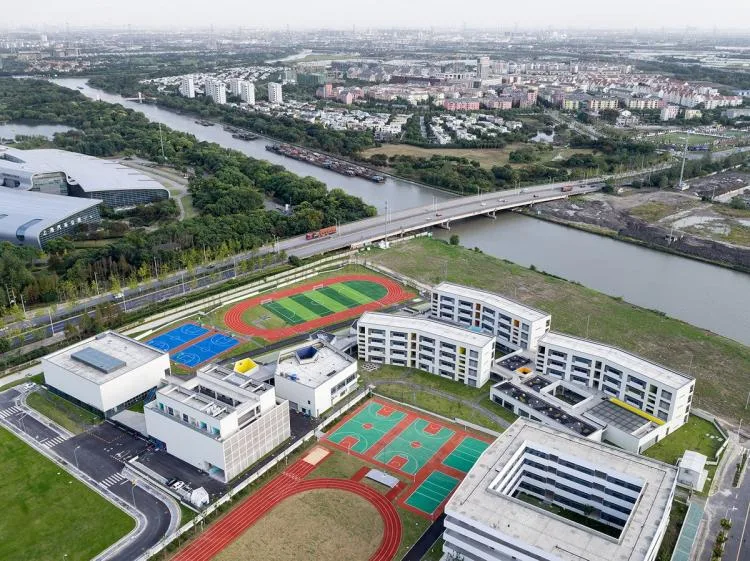
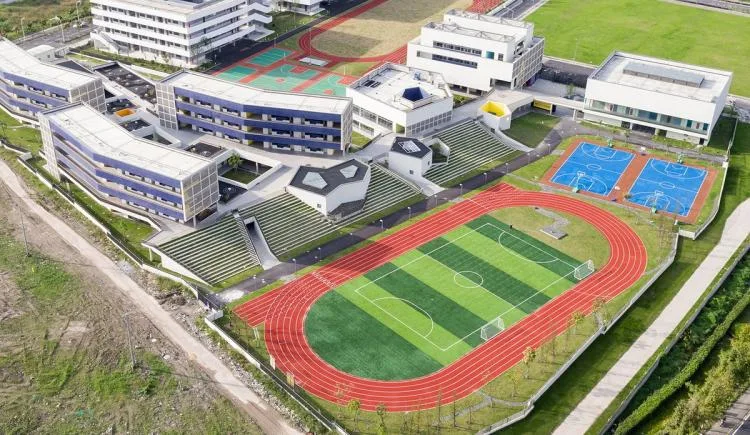
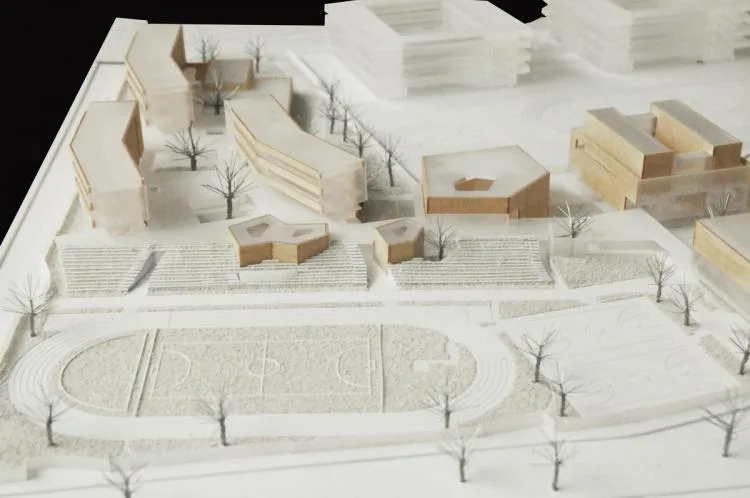
The grassy slope platform adjacent to the playground evolved from an initial “slope” concept into a stepped design, incorporating grass-covered steps framed by concrete edges. This approach preserves the slope’s form while serving as a grandstand for the sports field, creating a landscape-style structure.
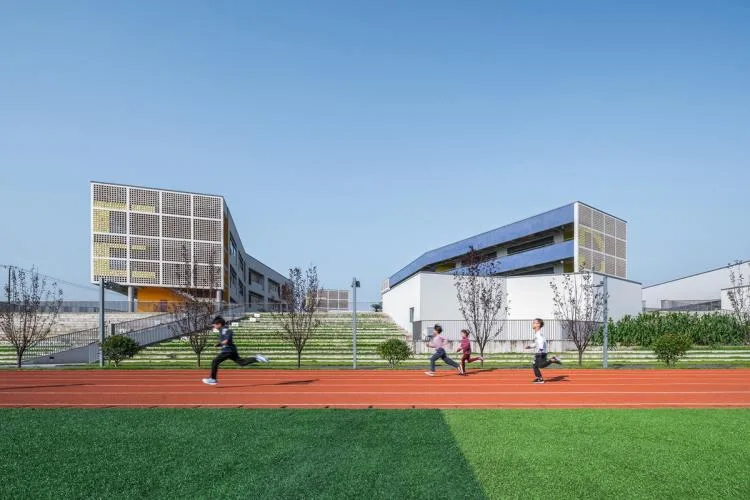
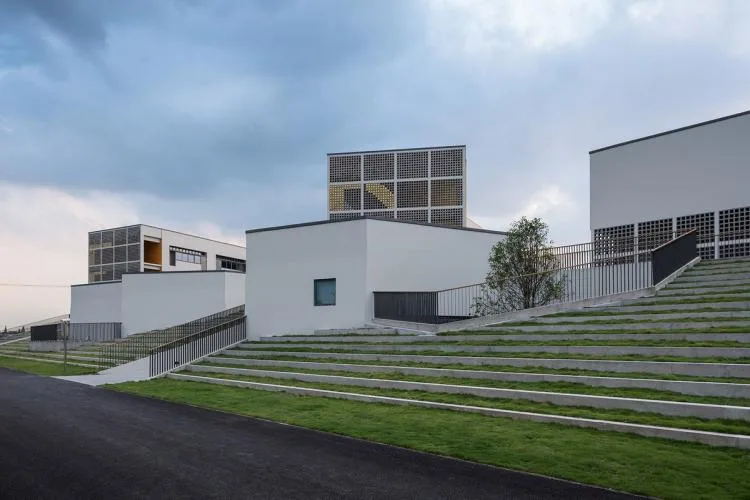
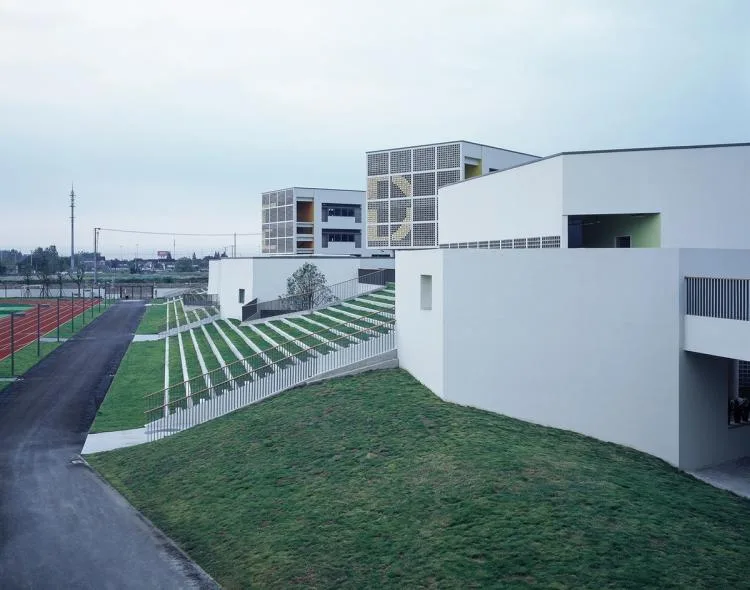
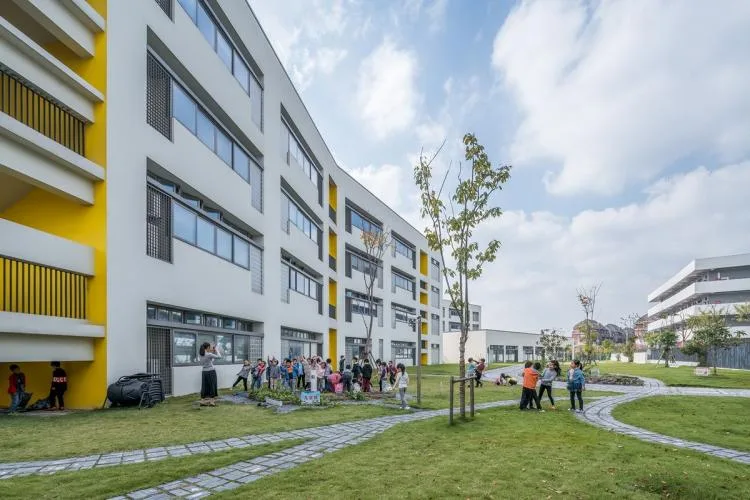
Positioned at the border of Shanghai and Jiangsu, the school’s design draws inspiration from the traditional geography of the Jiangnan water town. The spatial organization of courtyards preserves the area’s inherent characteristics. Architectural volumes retreat and release naturally, terrain transitions smoothly, and elevation changes mimic natural landscapes. This approach also reveals the spatial hierarchy of the city. During breaks, children freely explore spaces such as sports fields, sloping lawns, platforms, and south-facing corridors.
Varied Spaces and Themed Courtyards
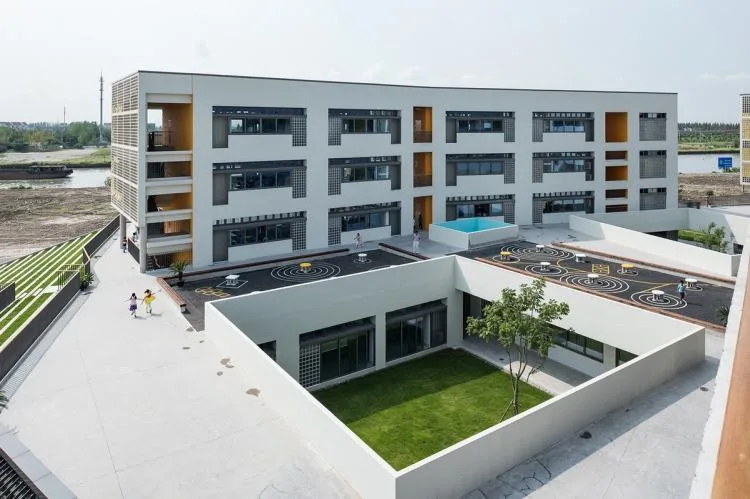
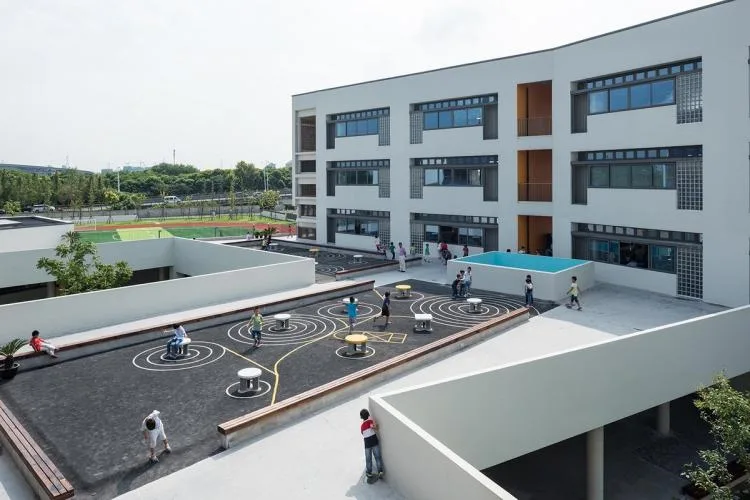
The school’s functional spaces cater to differing needs for activity and calm, with design emphasizing spatial relationships that change and offer possibilities. The team carefully considered the psychological comfort of teachers and students, focusing on spatial expansion and contraction. Courtyards, corridors, and sports fields with varied openness combine organically, enriching outdoor spaces with hierarchy and playfulness.
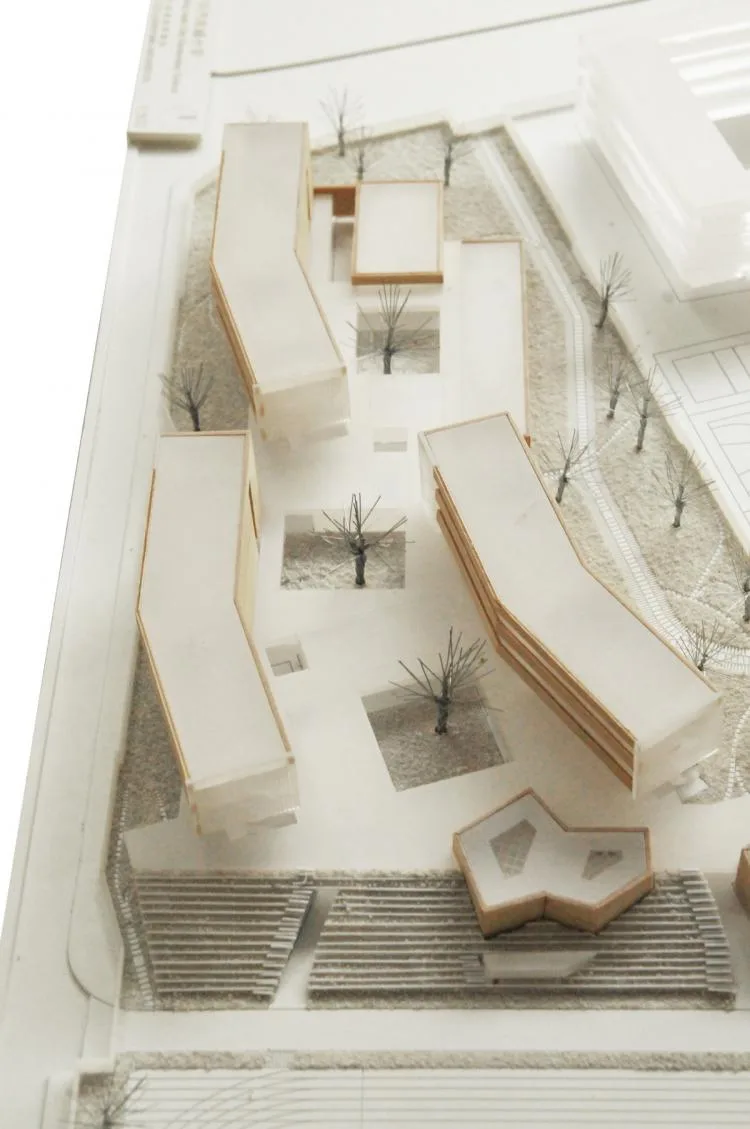
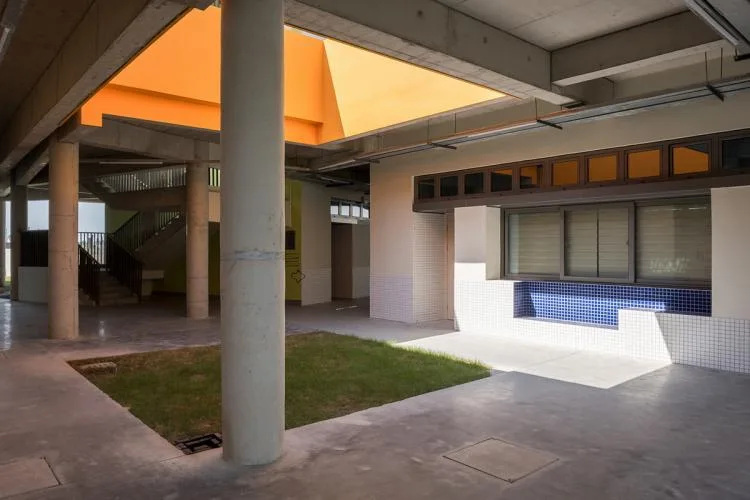
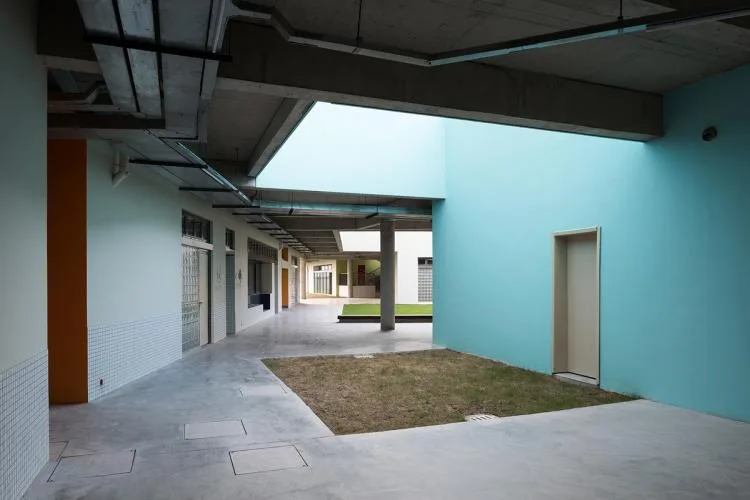
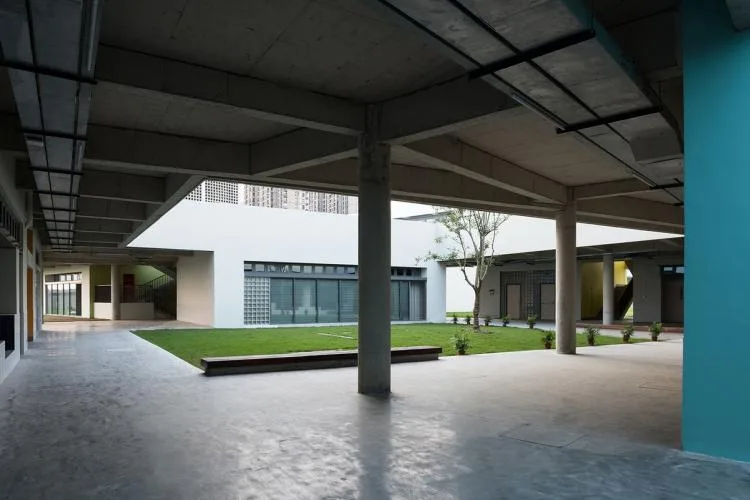
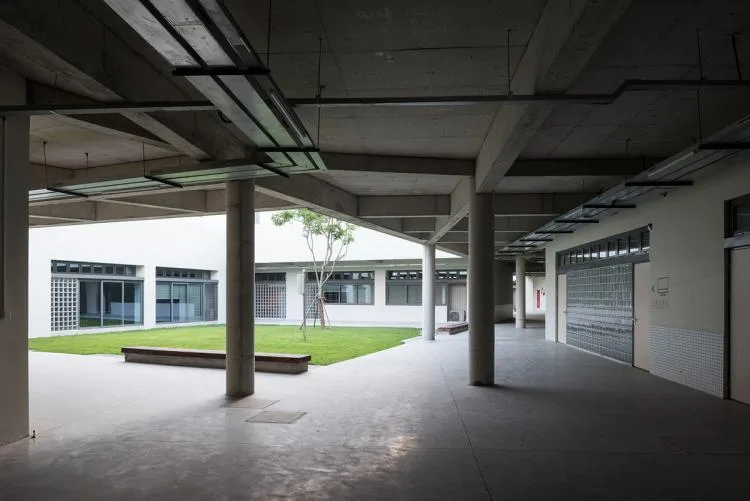
Multiple spaces invite children to explore. Upon entering, visitors pass through a corridor connecting the entire campus, followed by three pentagonal courtyards unfolding sequentially.
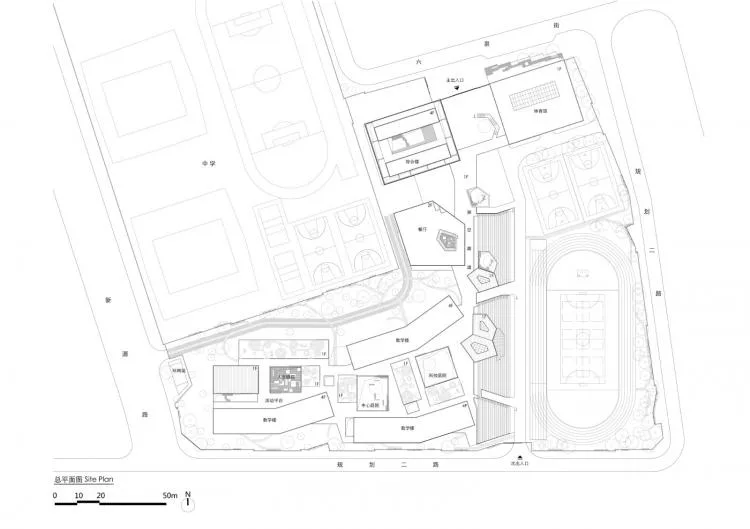
△ General layout plan
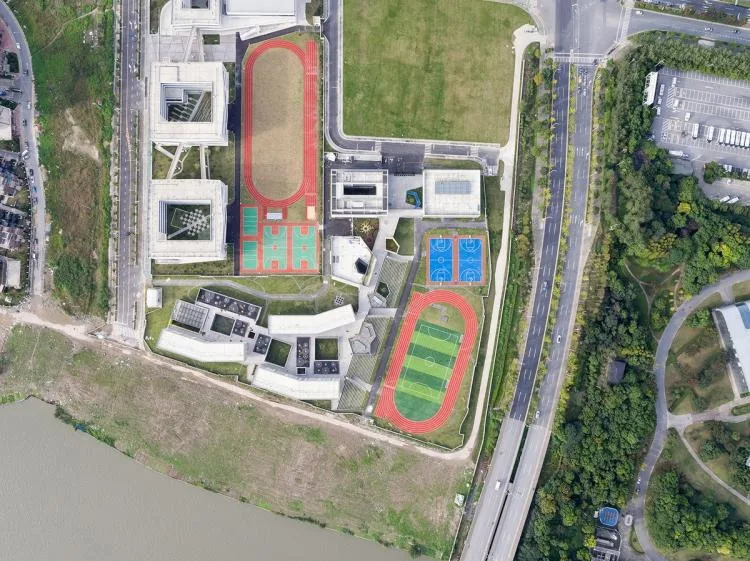
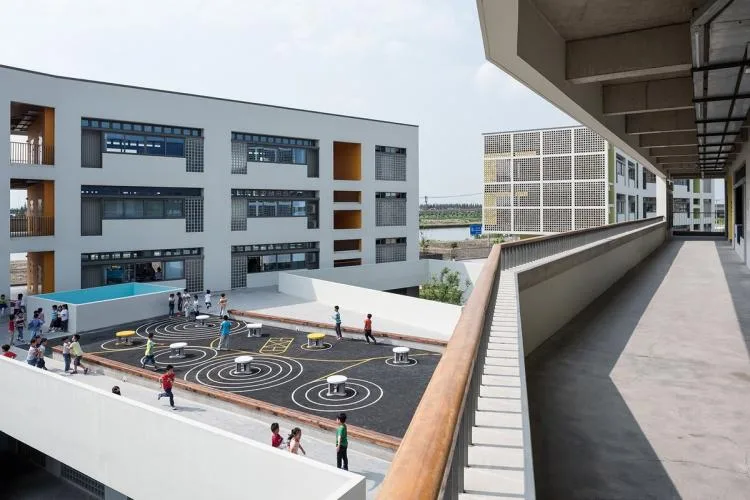
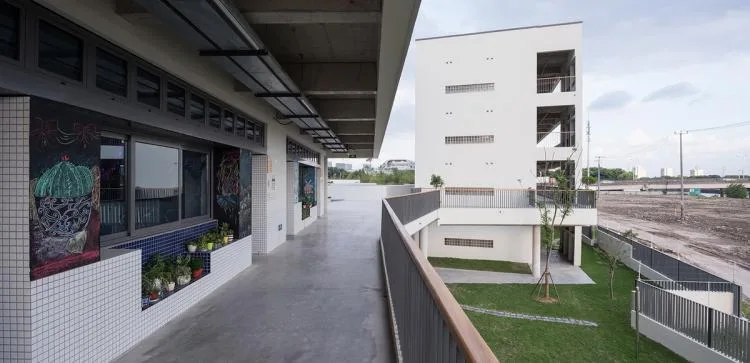
The semi-open corridor functions as a double-layered circulation space and serves as an important area for recess activities.
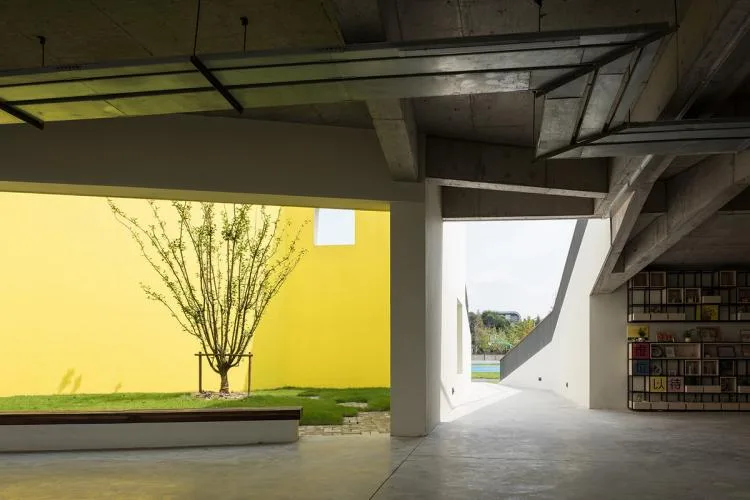
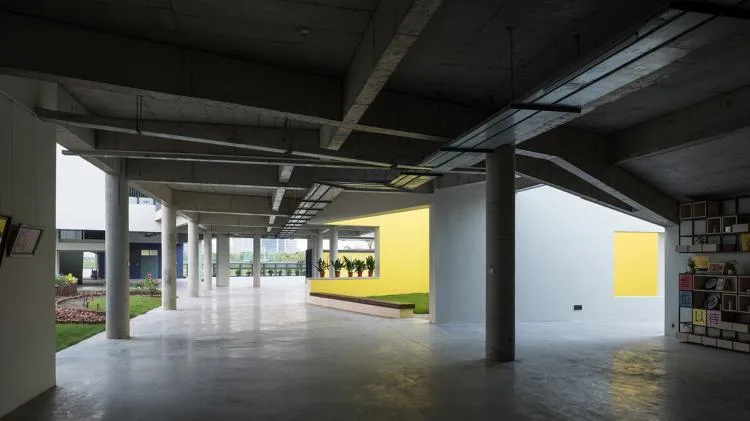
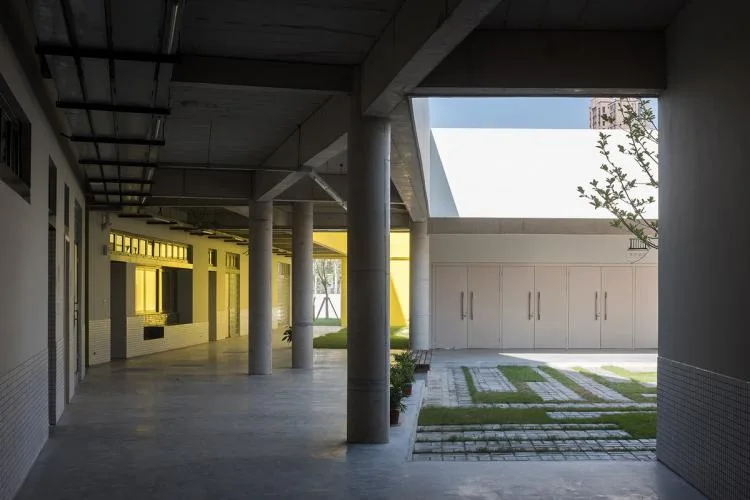
The teaching area features three themed courtyards dedicated to humanities, technology, and art. Each group of specialized classrooms, which require relatively low spacing and sunlight, surrounds these courtyards. The dining hall and comprehensive building also incorporate courtyard designs, allowing natural light to enter.
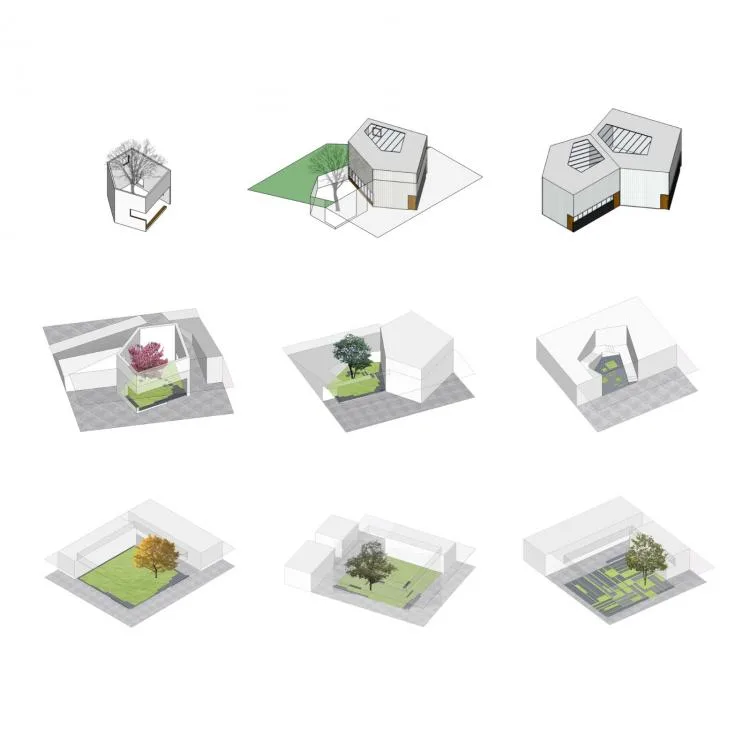
△ Courtyard design
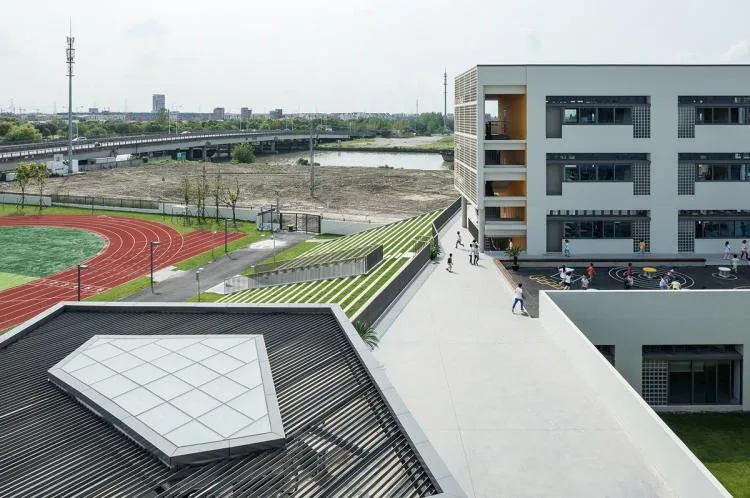
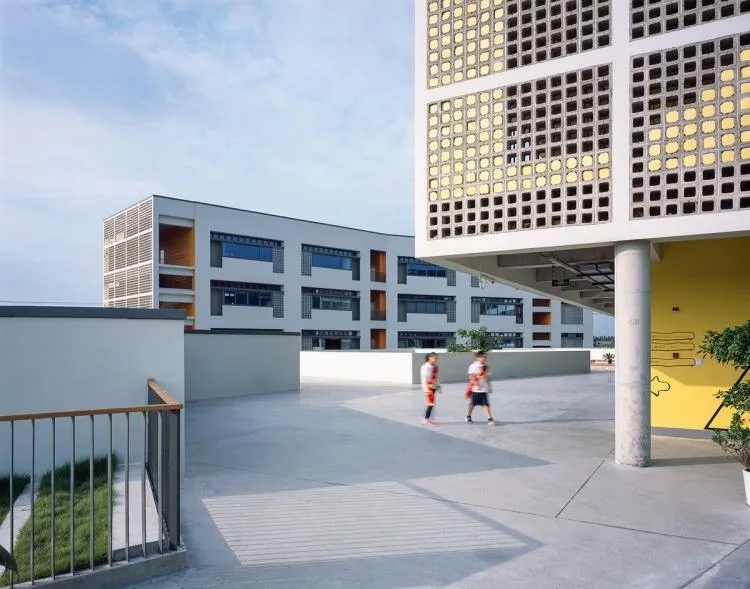
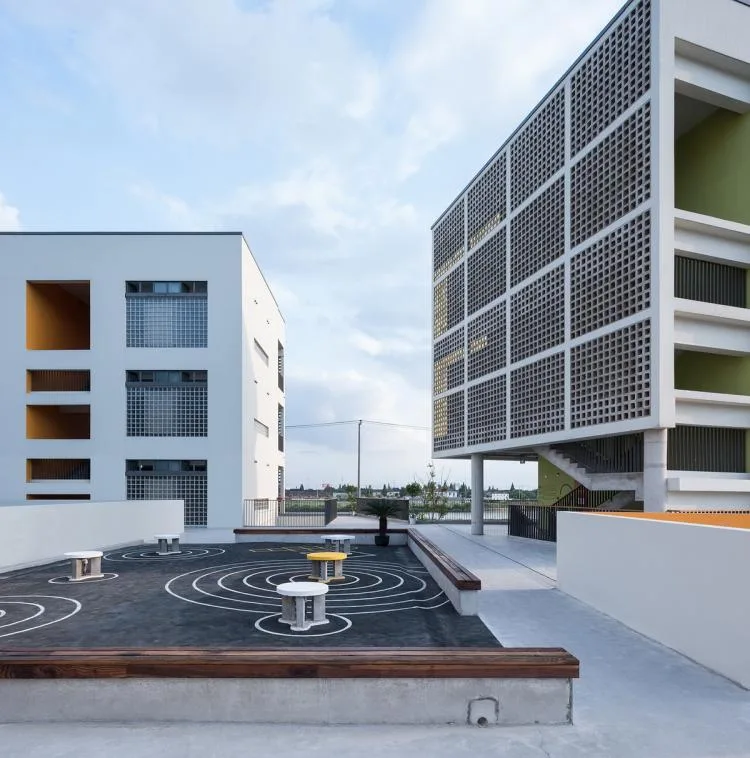
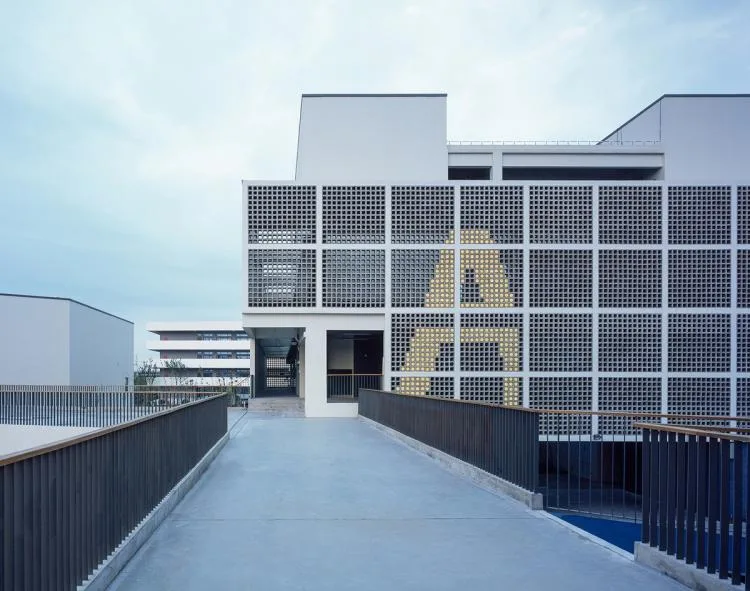
On the second floor, the corridor expands into a large platform equipped with several plastic play areas, allowing students from the third and fourth floors to engage directly with activities on this level. The plastic play zones align with functional classrooms on the ground floor, where roof exhaust vents double as child seating. The platform’s east side connects seamlessly to the grassy slope and naturally extends toward the playground.
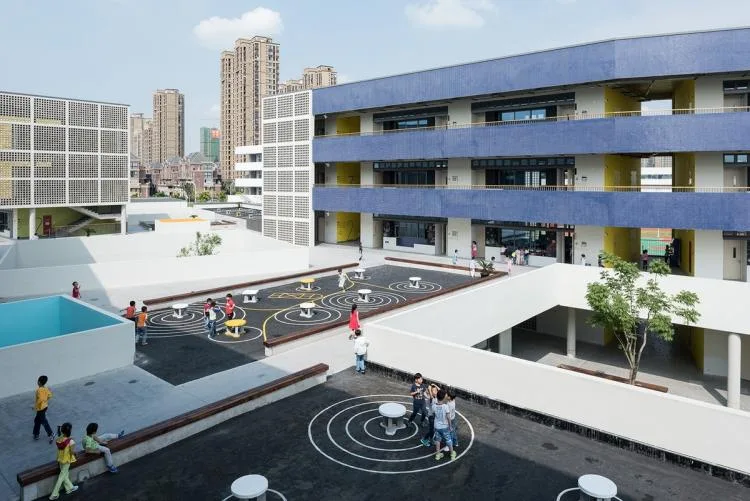
The landscape paths use traditional green bricks combined with geometric patterns chosen to reflect the characteristics of each space, creating playful contrasts of stillness and movement. Themed courtyards predominantly feature straight lines, with Ting Bu elements extending from corridor boundaries into the courtyards.
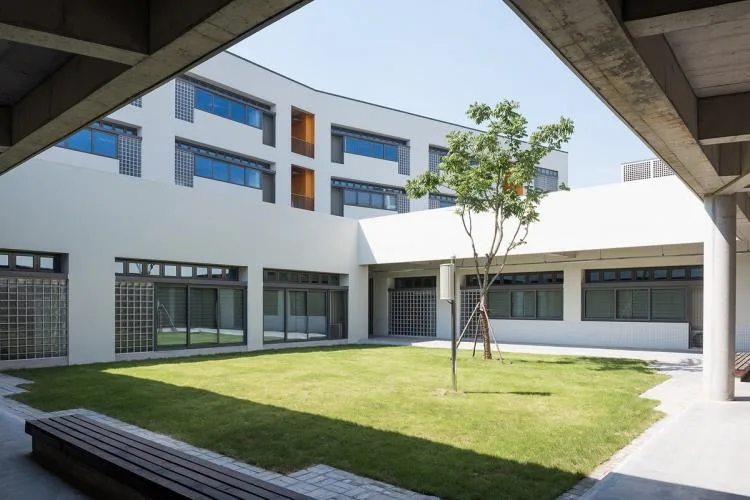
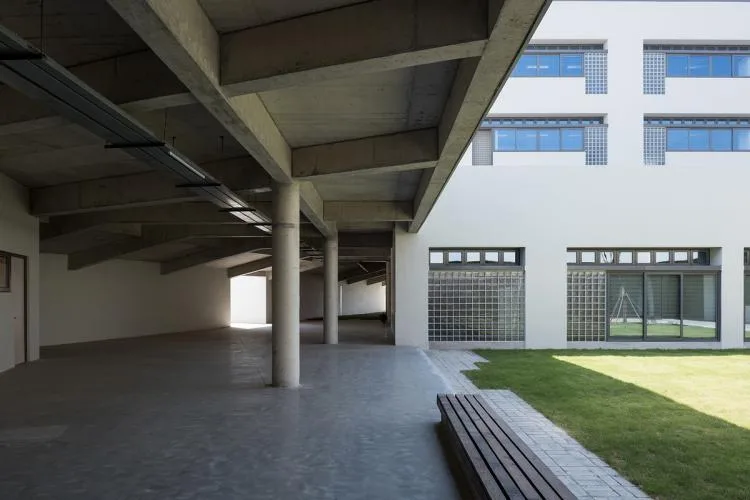
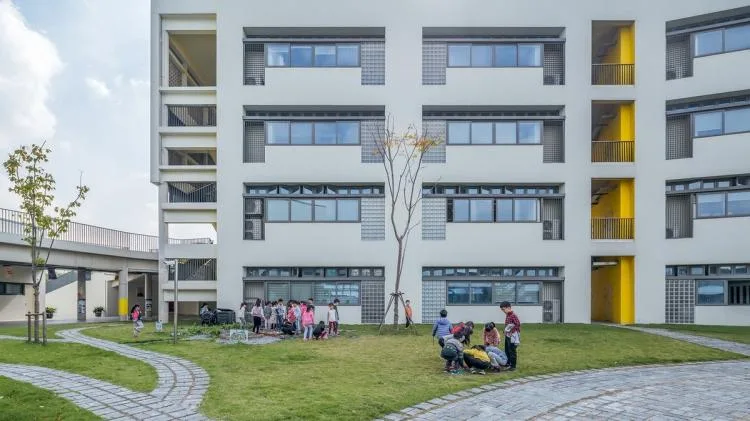
The peripheral greenery features mostly curved walkways. The fire lanes in the ecological park north of the teaching building are integrated using the same brick pattern, resembling vines extending from branches. Various tree species in the entrance square and courtyards provide seasonal memories for teachers and students.
Individual Buildings and Architectural Details
Teaching Building
The design of the teaching building emphasizes immersion and the reflective qualities of the riverside facade. Each building’s volume has been adjusted to meet regulatory requirements and site boundaries.
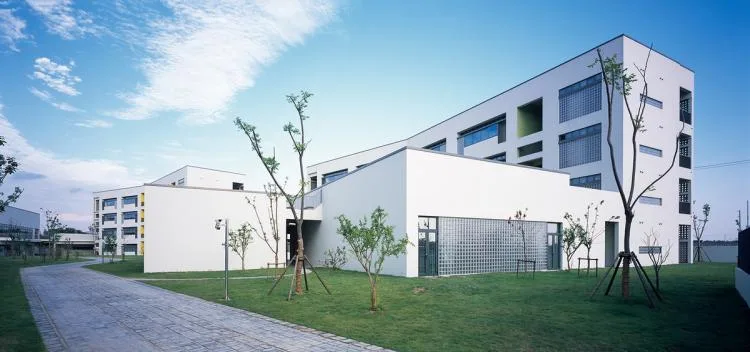
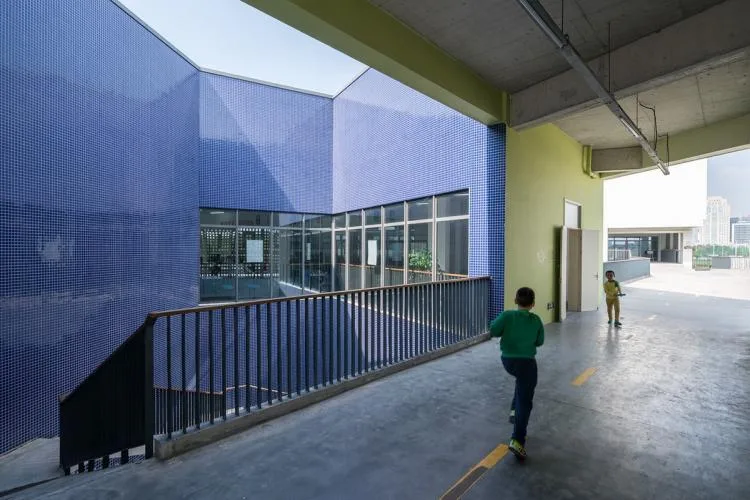
The south facade features sapphire blue glazed mosaics that produce a rich, delicate visual effect in sunlight and subtly vary the volume of this large-scale urban gateway.
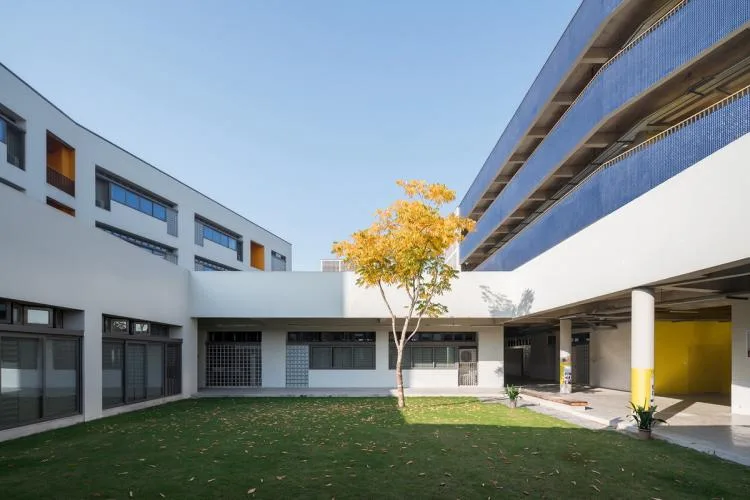
The building consists of three elongated volumes, each standard floor containing four classrooms arranged in pairs. At a turning point, the building opens to connect with a south-facing outdoor corridor, expanding the corridor space and offering views to the north.
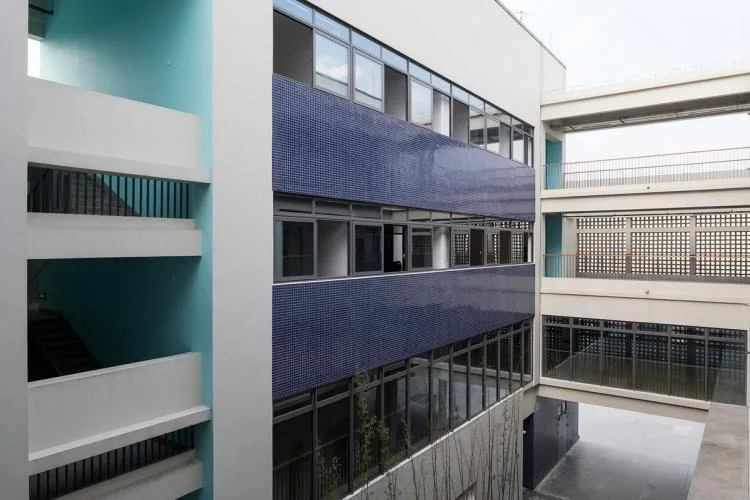
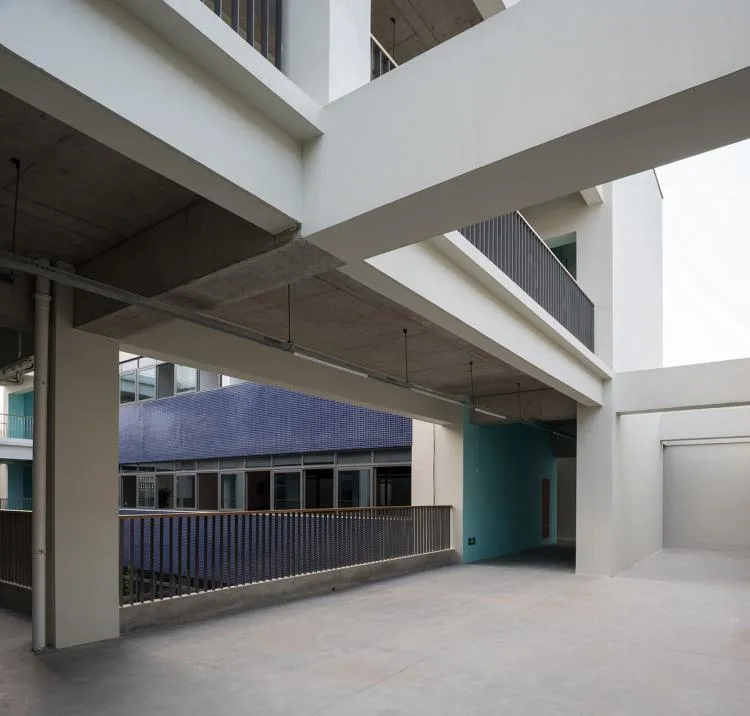
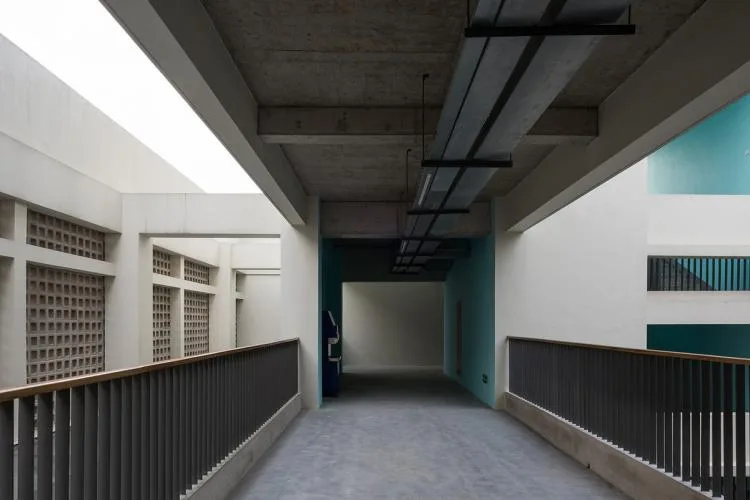
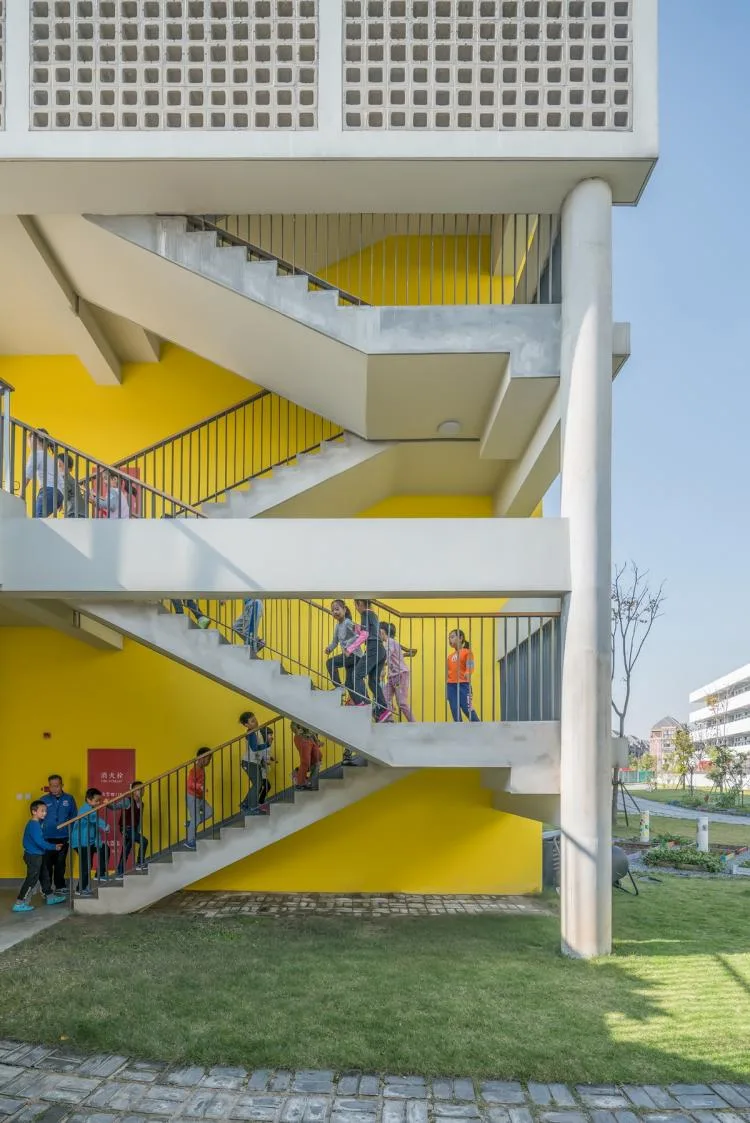
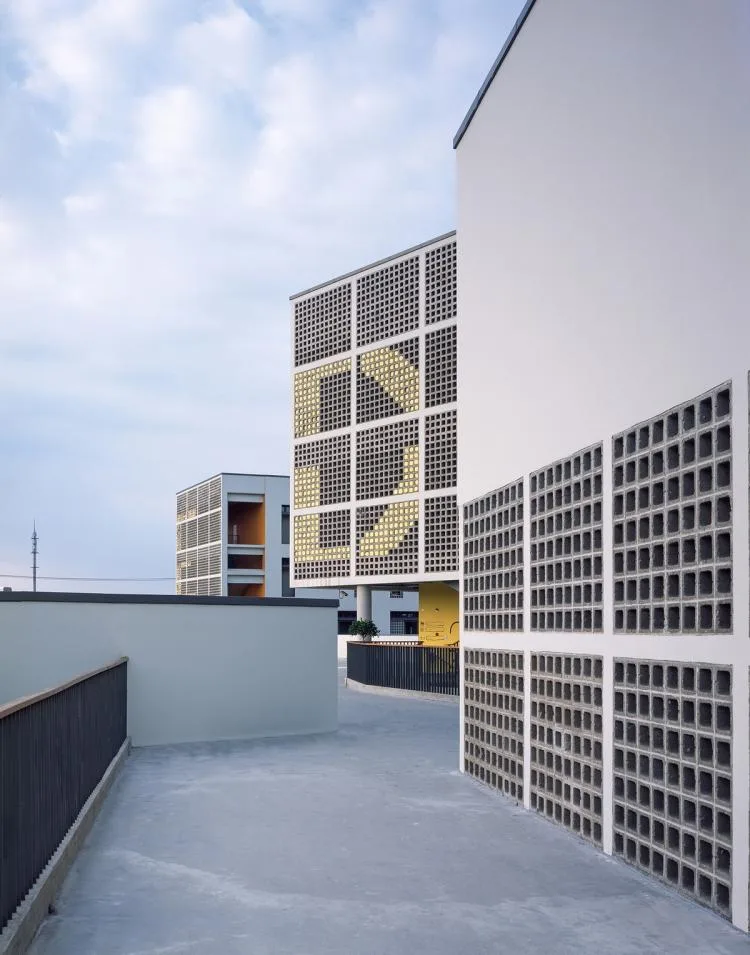
The east-side staircase offers varied spatial experiences: the ground floor integrates with the courtyard beneath the platform, opening views toward the second-floor platform. On the third and fourth floors, the stairs are enclosed by concrete block flower-grid mountain walls, creating a semi-enclosed atmosphere.
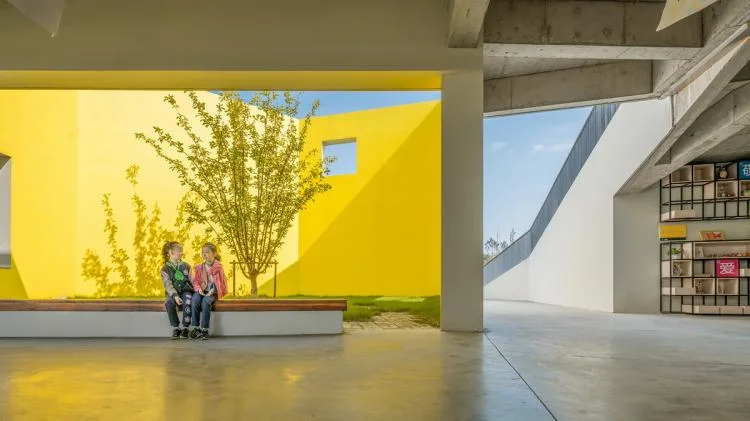
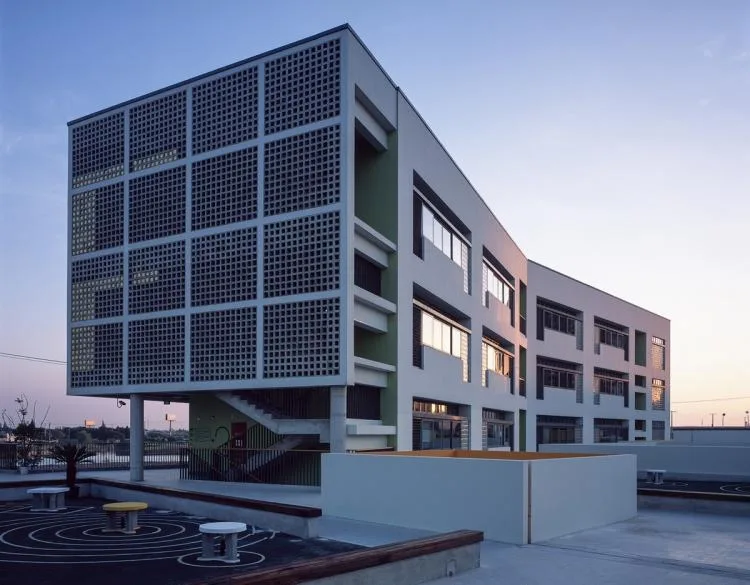
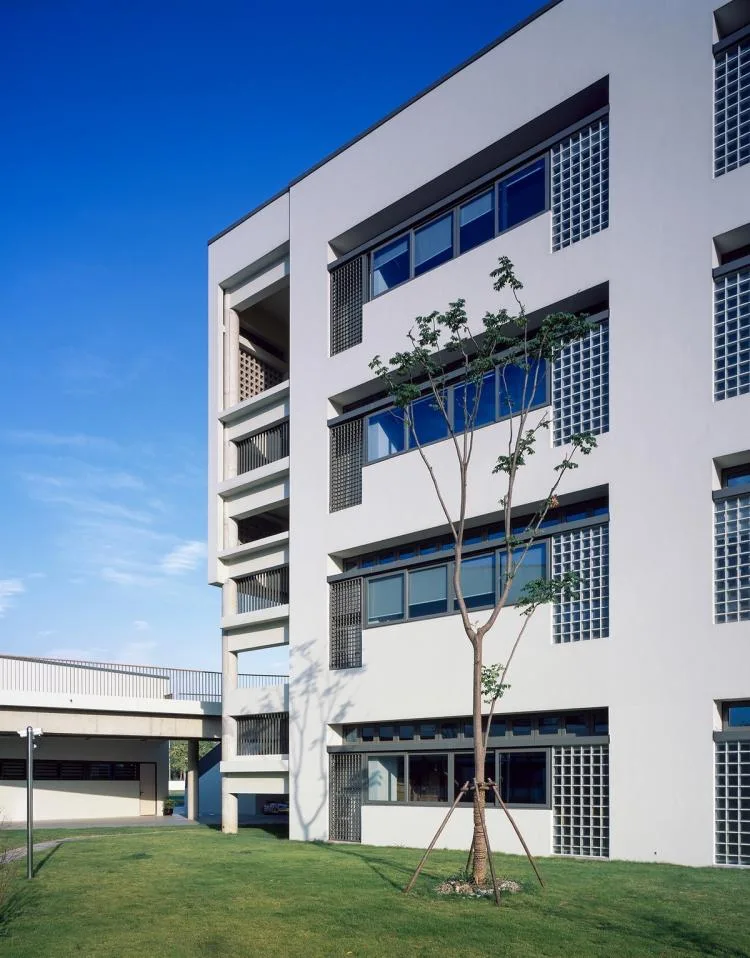
Along the south classroom wall, a 600mm thick wall incorporates seating surfaces at heights of 300mm and 600mm. The outdoor air conditioner units are concealed behind aluminum grilles on the north facade, balanced by glass bricks placed symmetrically to enhance facade composition and indoor lighting.
Music Classroom and Moral Education Exhibition Hall
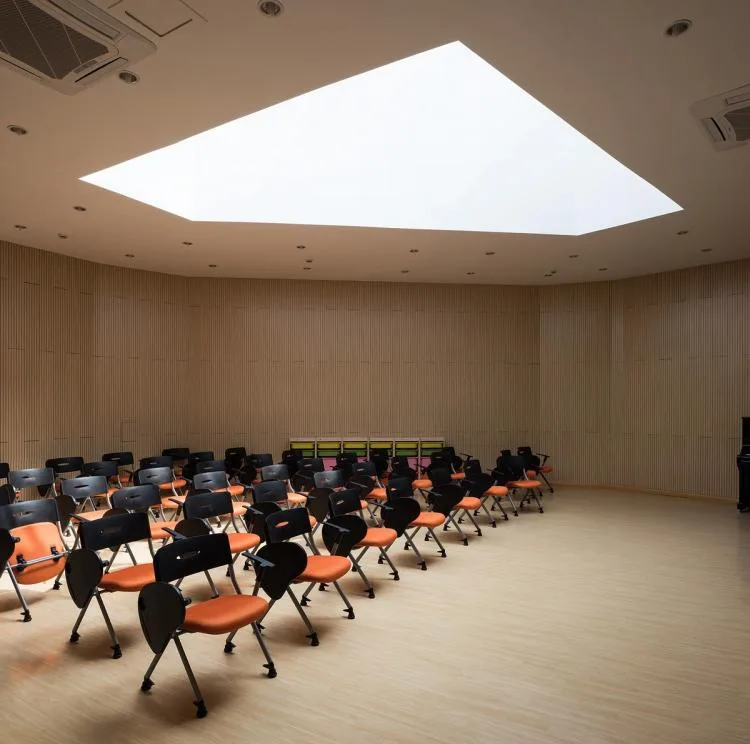
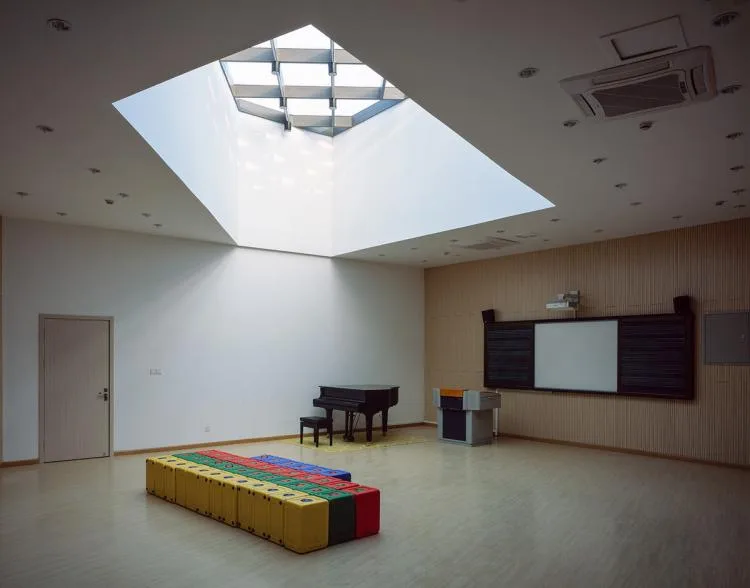
The pentagonal music classroom and moral education exhibition hall are specialized teaching spaces featuring higher ceilings and skylights. The music classroom combines two pentagonal rooms, while the moral education hall integrates pentagonal classrooms and courtyards.
Dining Hall
The dining hall follows a pentagonal floor plan, with the first floor housing the kitchen and teachers’ dining area. The south and west sides on the second floor feature continuous French windows, offering open, transparent views facing the ecological garden and the middle school playground respectively. Corridors on the first and second floors connect the dining hall to the administrative building (north) and teaching building (south).
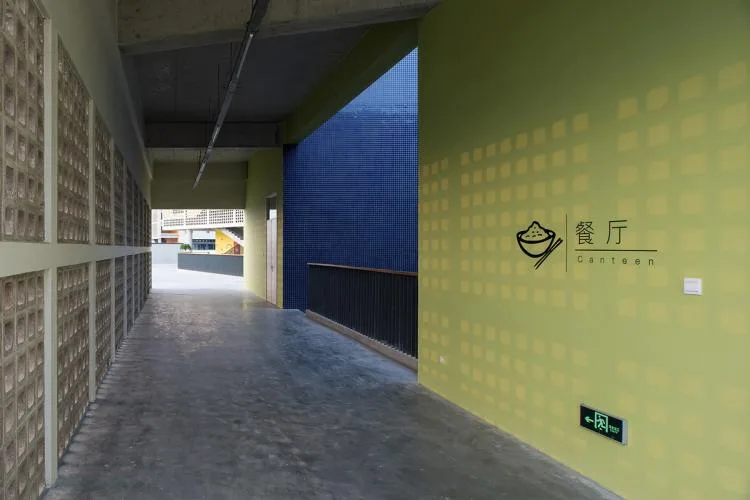
A concrete lattice wall on the east side of the second-floor corridor creates a semi-enclosed space, adding a subtle sense of enclosure. The pentagonal courtyard enclosed by the dining hall introduces sunlight and aligns sequentially with other pentagonal courtyards along the corridor. The same sapphire blue glazed mosaics as on the teaching building are applied here, and a zigzag staircase leads to the second floor.
Inside, the ceiling utilizes beam and slab spaces to form a curved sloping top aligned with the building’s axis, creating a unique ceiling shape that maximizes indoor height.
Administration Building
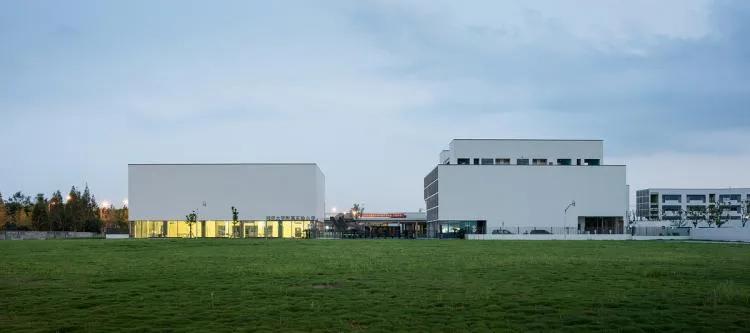
The north and south rows of administrative buildings are enclosed by corridors forming a rectangular courtyard. The white solid walls on the north and south facades contrast with the concrete lattice walls on the east and west facades, creating a strong play between solid and void. The lattice wall on the east facade and the white wall of the sports hall define the main entrance square, featuring one solid and one virtual enclosure.
The west-facing grid wall provides shading and forms a prominent architectural interface facing the middle school. The courtyard’s interior facade is clad in sapphire blue glazed mosaic, while the west side of the first floor uses glass bricks facing the courtyard entrance.
Sports Ground
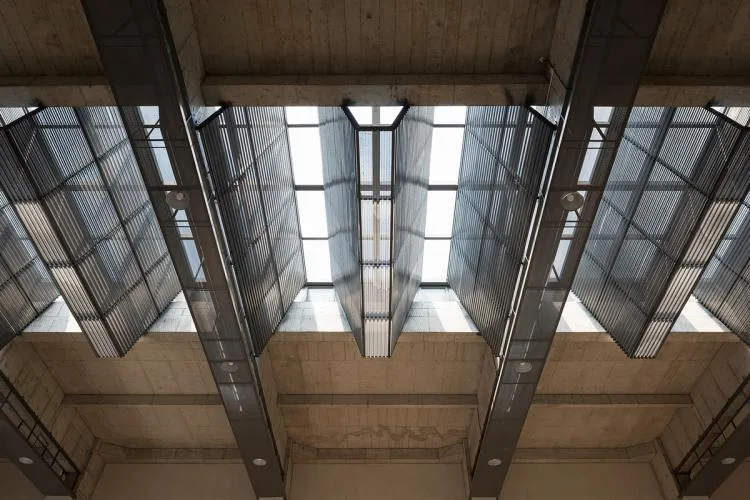
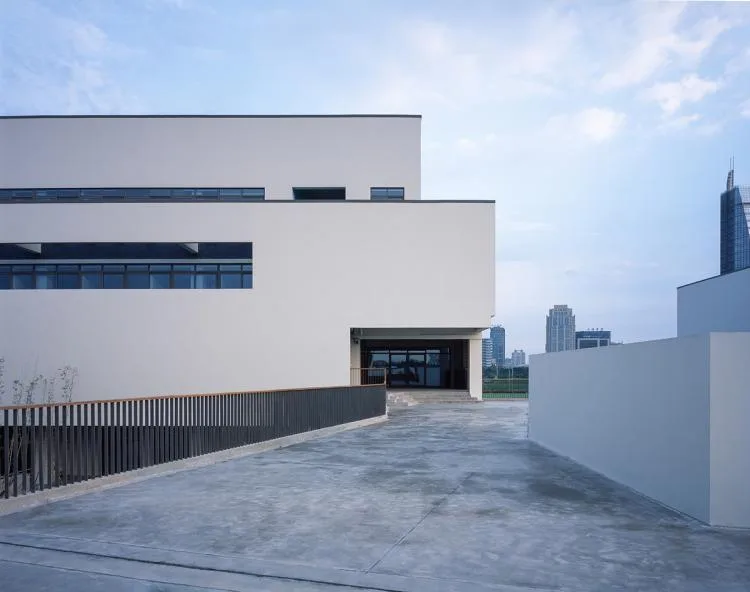
The covered playground is a spacious, deep sports area. Thoughtful sunlight analysis and design have led to the installation of extensive floor-to-ceiling glass below three meters on the facade for lighting and ventilation. A large skylight, three meters high and situated above ten meters, allows natural light from above, complemented by an operable ventilation fan.
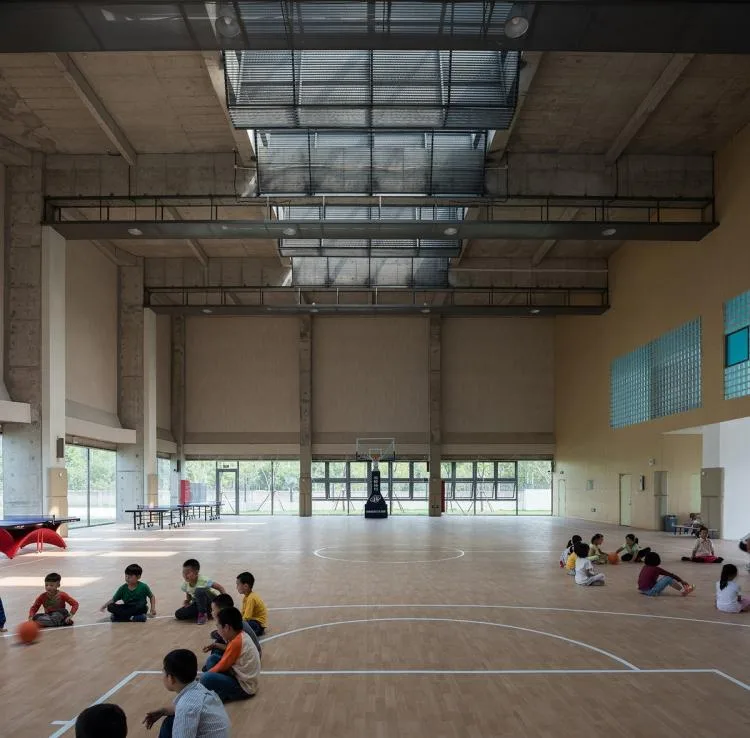
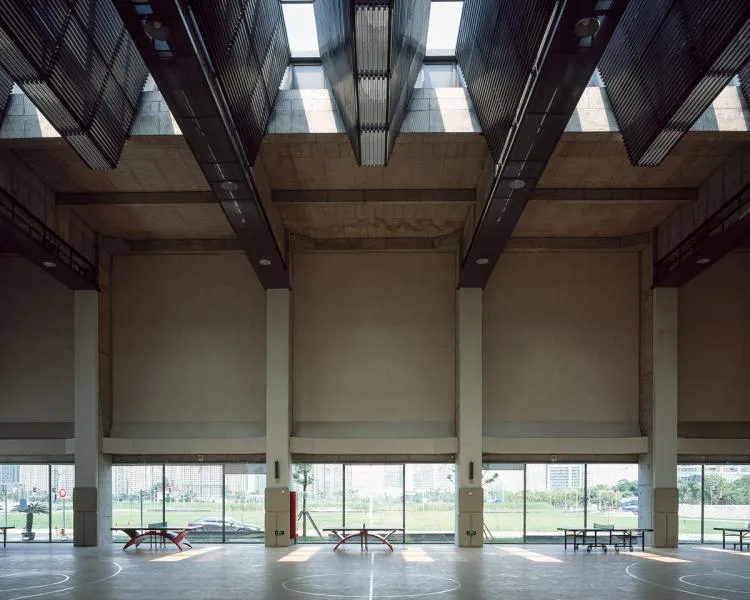
The perforated metal sunshade beneath the skylight is a low-tech but effective integration of structure, pipelines, lighting, and curtain wall. This passive design enhances natural lighting and ventilation, making the sports ground one of the most comfortable and popular spaces on campus.
What is a Double Experiment?
Educational architecture, especially for public schools, emphasizes universality and standardization, making its design priorities different from other cultural or landmark buildings. Throughout the planning, design, construction, and evaluation of this project, the design team focused not only on the building itself but also on how campus spaces could shape and inspire students’ learning, behavior, physical perception, and emotional development.
Education here transcends knowledge acquisition, aiming to support holistic physical and mental growth. In this regard, Tongji Experimental Primary School represents a dual experiment in both educational space and educational philosophy.
Model
Drawings
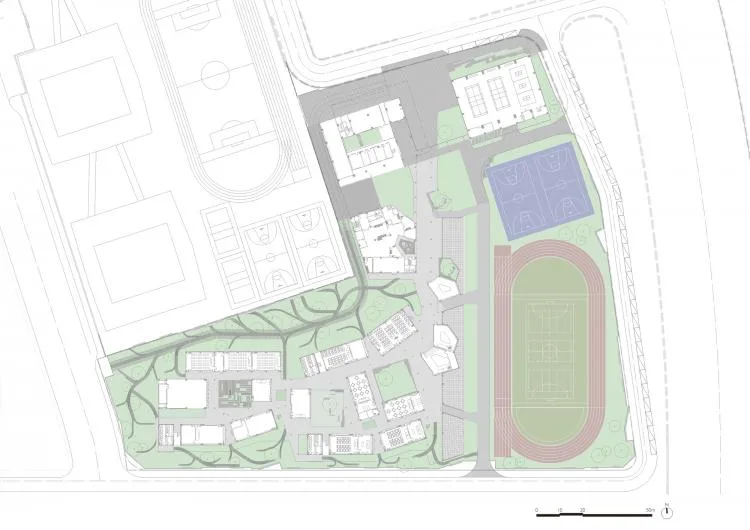
△ First floor plan
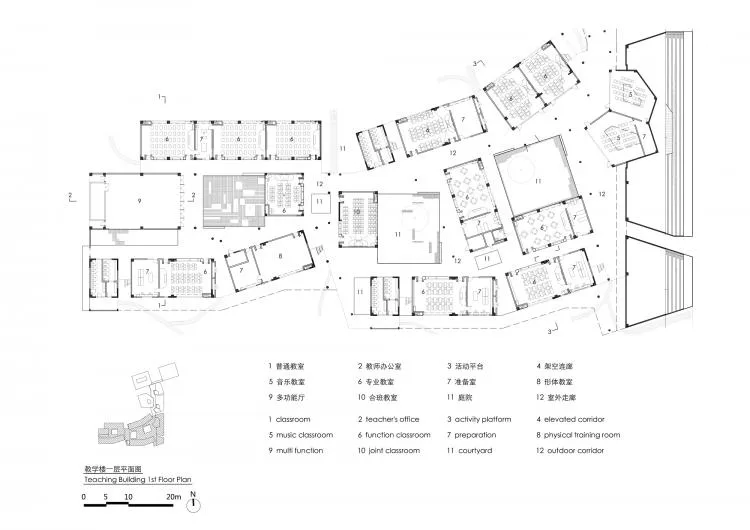
Plan of the first floor of the teaching area
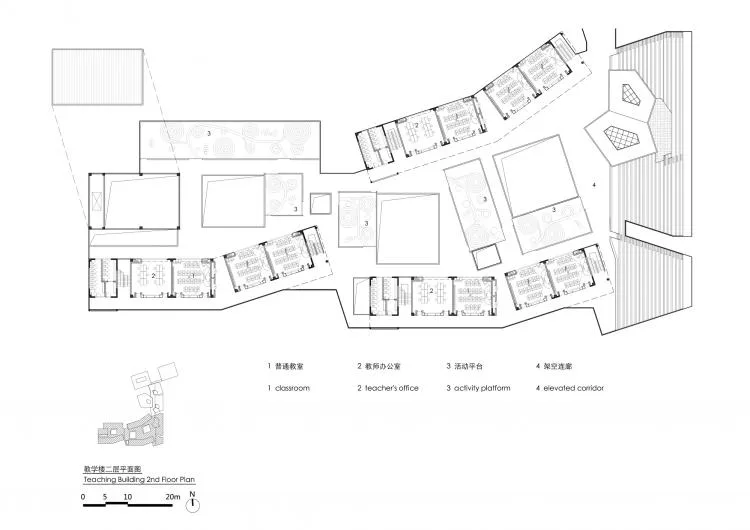
△ Plan of the second floor of the teaching area
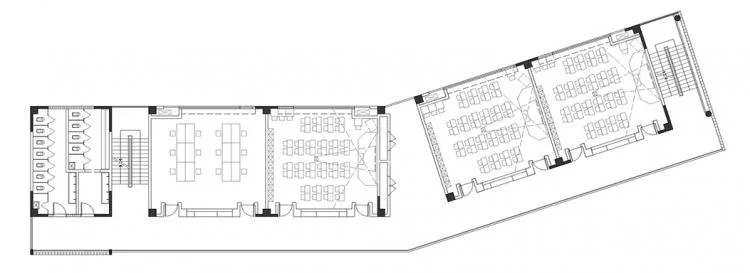
△ Standard floor plan of teaching building
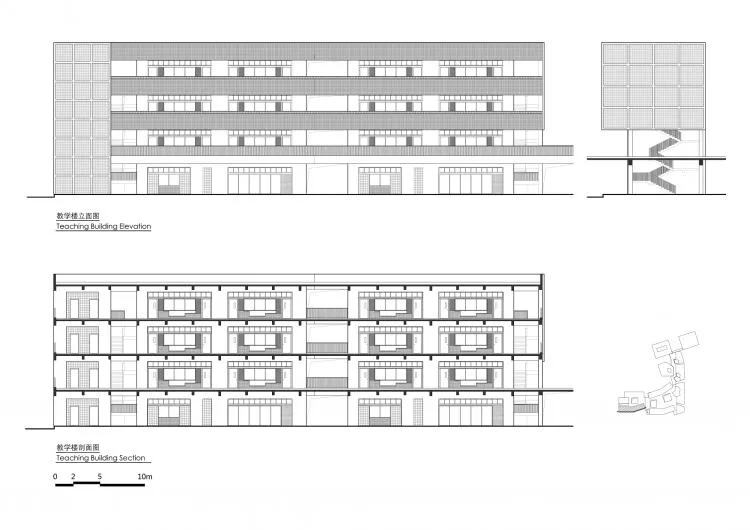
△ Elevation and section of the teaching building
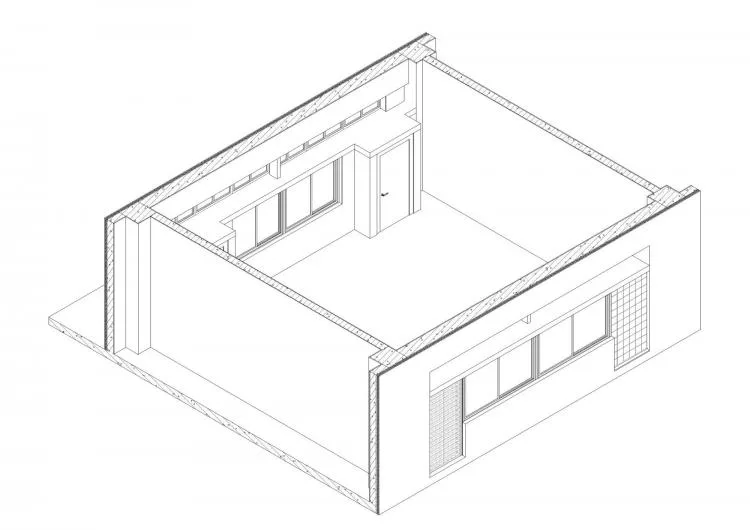
△ Classroom axis measurement
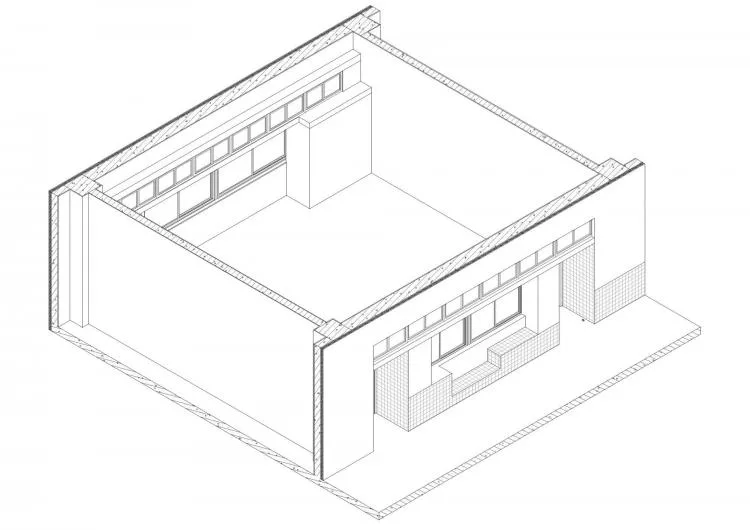
△ Classroom axis measurement
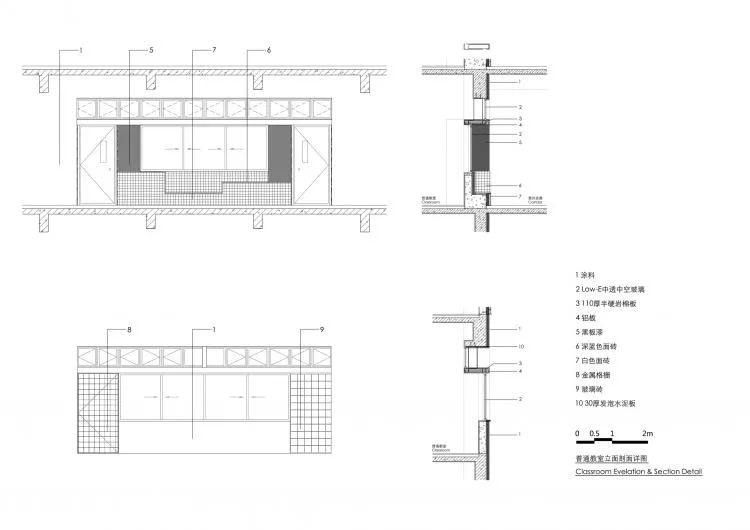
△ Typical classroom vertical section
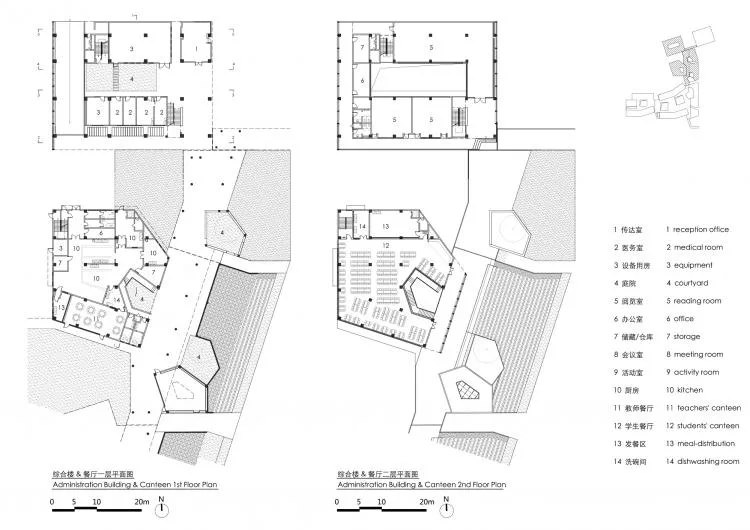
△ Floor plan of the comprehensive building and dining hall
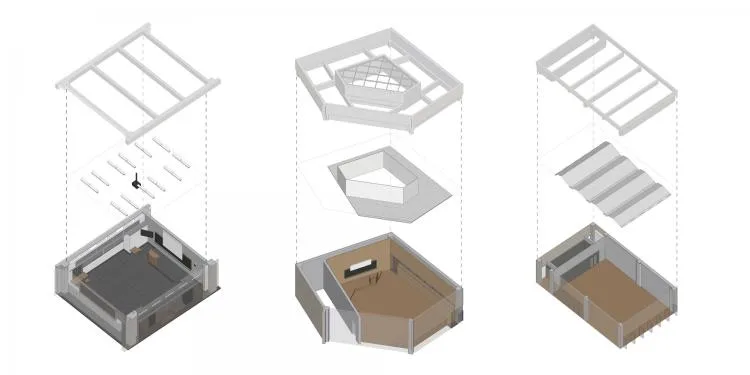
△ Axonometric views of standard classrooms, music classrooms, and multifunctional halls
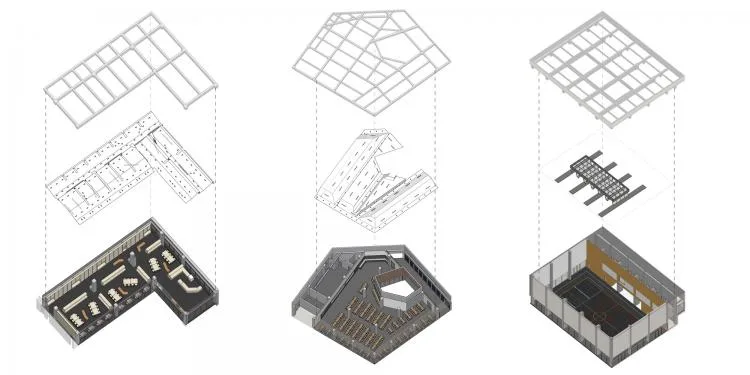
△ Axonometric view of the library, student cafeteria, and covered playground
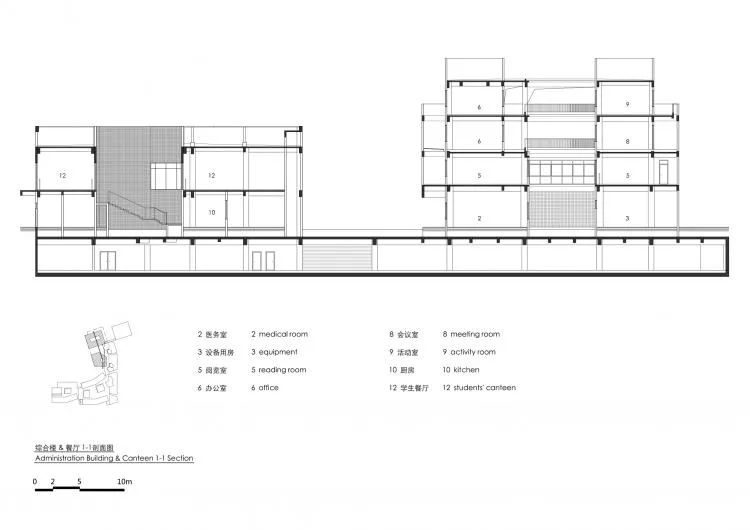
Section of restaurant and administrative building
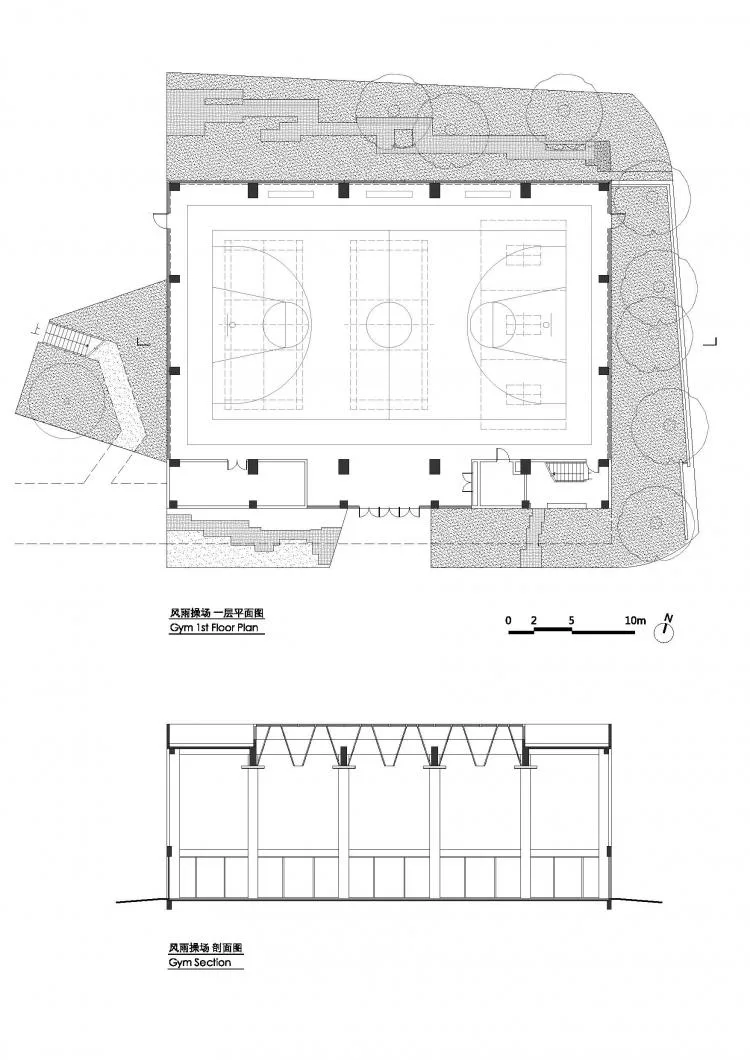
△ Covered playground plan and section
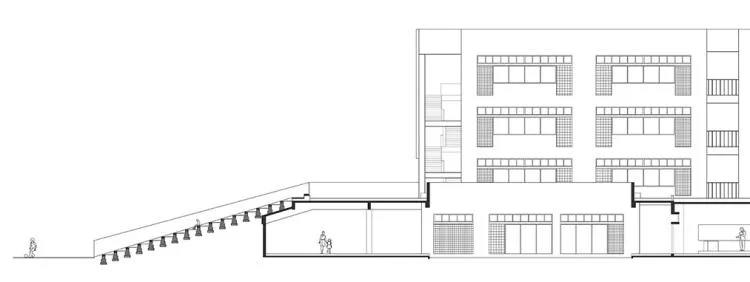
△ Profile: Platform connecting grassy slope and playground
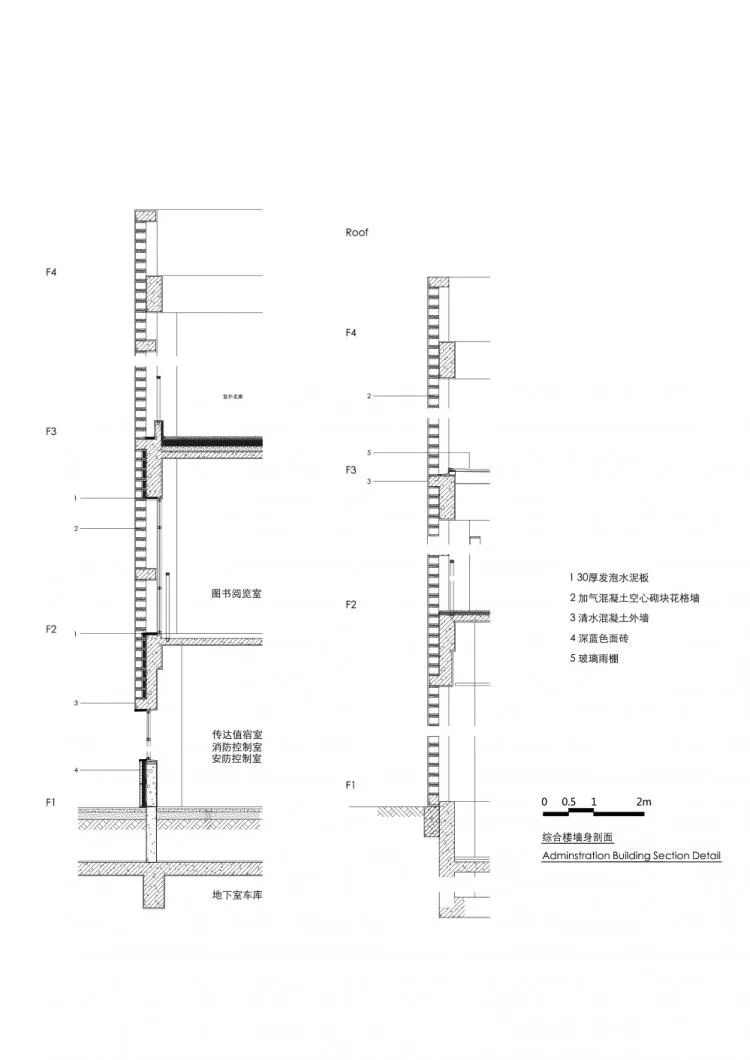
△ Detail of new policy building wall
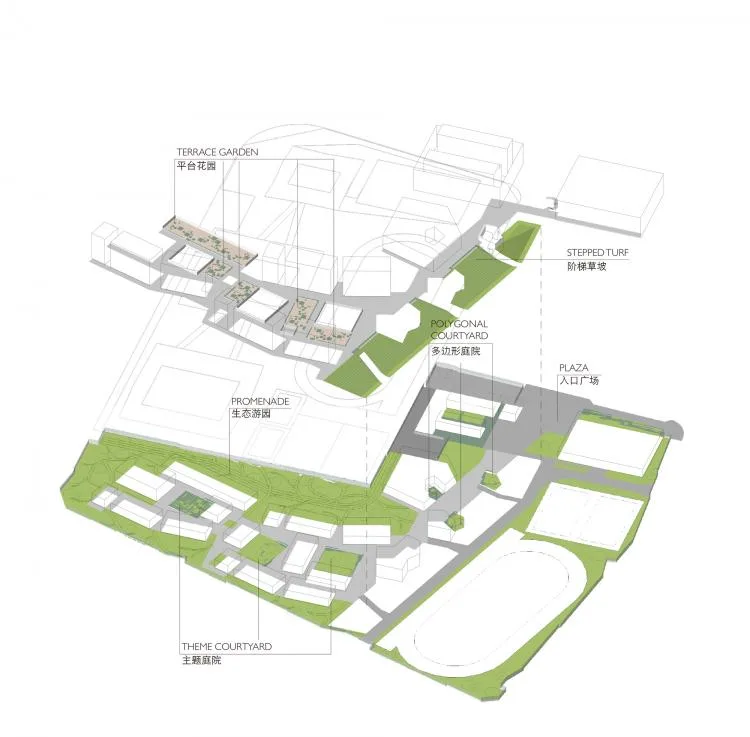
Overall Landscape Strategy
Project Information
Project Type: Primary and Junior High School
Location: Anting Zhen, China
Design Team: Liu Yuyang Architectural Firm
Area: 26,200 m²
Year: 2016
Photographers: CreatAR Images, Chen Hao
Client/Construction Unit: Shanghai International Automobile City (Group) Co., Ltd
Collaborating Design Institute: Shanghai Jiangnan Architectural Design Institute Co., Ltd
Construction Company: Shanghai Bolan Construction Development Co., Ltd
Lead Architect: Liu Yuyang
Project Architect: Wu Congbao
Resident Architect: Lin Yihong
Design Team Members: Li Ning, Yang Kai, Cao Feile, Wang Jue, Wang Keyi, Yang Mingxi, Ding Chen, Wu Ji, Cao Xiaoyu, Li Fengyan, Guo Dingfan, Ma Teng, Wang Jun













Must log in before commenting!
Sign Up