
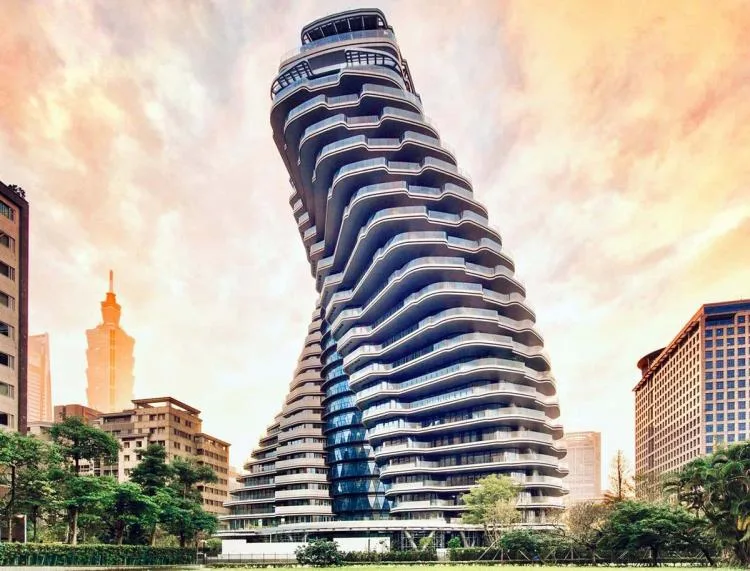
Design Concept
The primary objective of this project is to promote and facilitate the creation of buildings that actively absorb carbon, aiming to slow or even reverse the accelerating rise in global temperatures. In response to the escalating issue of global warming, all industries, especially those related to manufacturing and transportation, bear the responsibility to support and engage in government-led initiatives to reduce carbon emissions.
Named after Taozhu Gong (Fan Li) from China’s Spring and Autumn Period, the Taozhu Hidden Garden residential complex embodies his philosophy of self-interest aligned with benefits to neighbors and the wider world.
The architect designed an energy-efficient apartment building using ecological principles, harnessing electricity, heat, and energy generated through the building’s own circulation. The building’s form is inspired by the double helix structure of DNA, symbolizing life, vitality, and connection. Each double helix corresponds to a single floor comprising two apartments. Over its 20-story height, the building twists a total of 90 degrees, reflecting the balance the project aims to achieve.
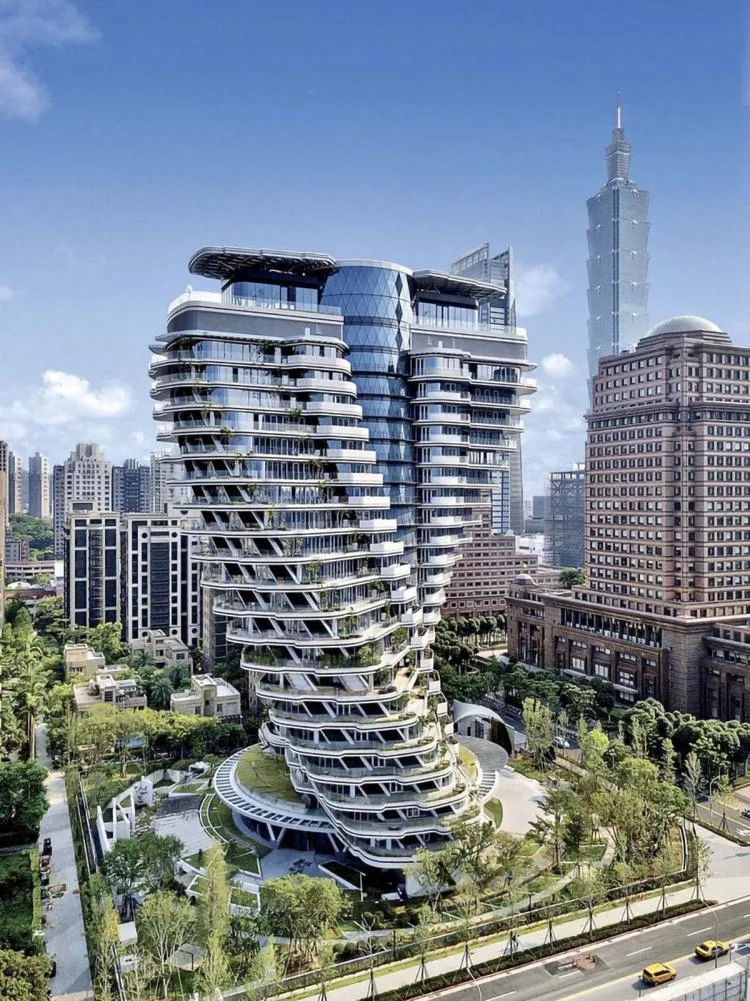
Each floor rotates clockwise by 4.5 degrees, creating a dynamic exterior that presents various shapes—V, X, elliptical, and conical—when viewed from different angles.
The architect’s vision for the distinctive 90-degree twist includes four key goals:
- Integrate cone-shaped spaces on both sides of the building to meet Taipei City Government’s urban style standards.
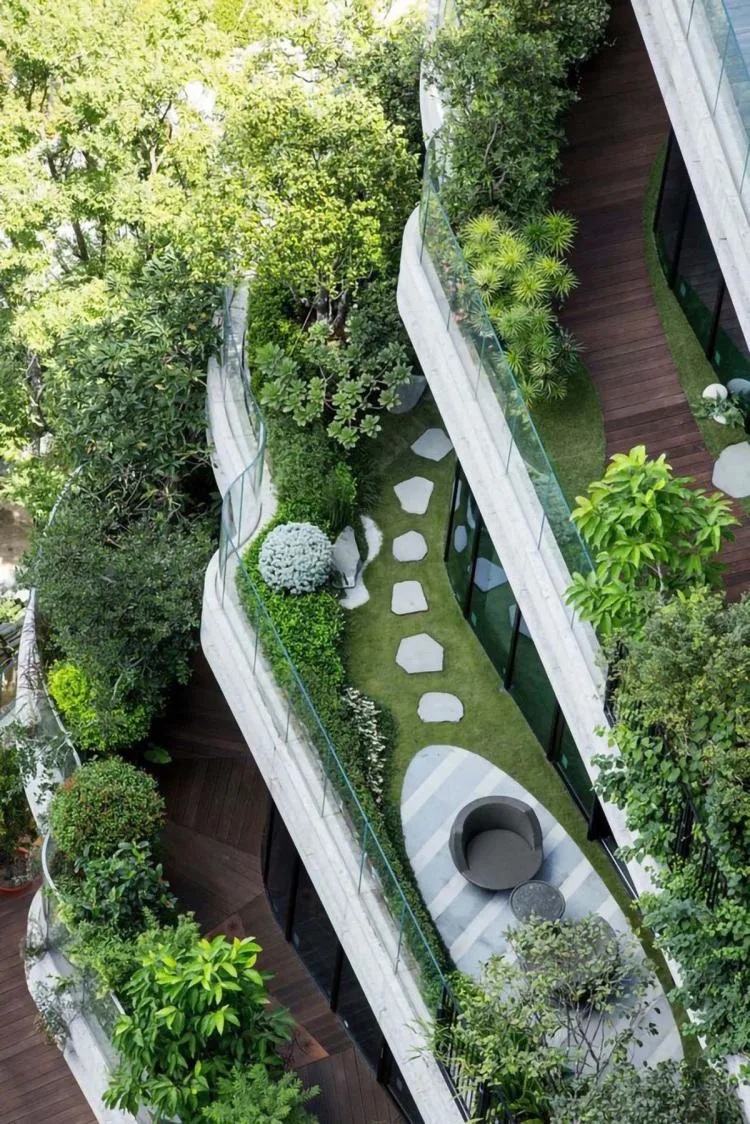
- Maximize open-air sky gardens within the allowed plot ratio, ensuring terrace greenery far exceeds the minimum 10% requirement.
- Offer residents the broadest possible views, especially of Taipei 101 Tower and the central business district.
- Use the twisted form to create visual barriers that ensure privacy and comfort for residents.
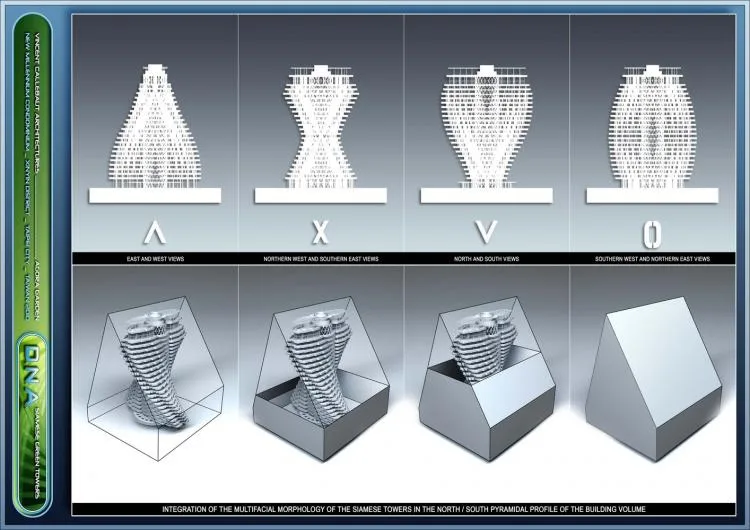
△ Morphological analysis
Anti-Global Warming & Low-Carbon Ecosystem
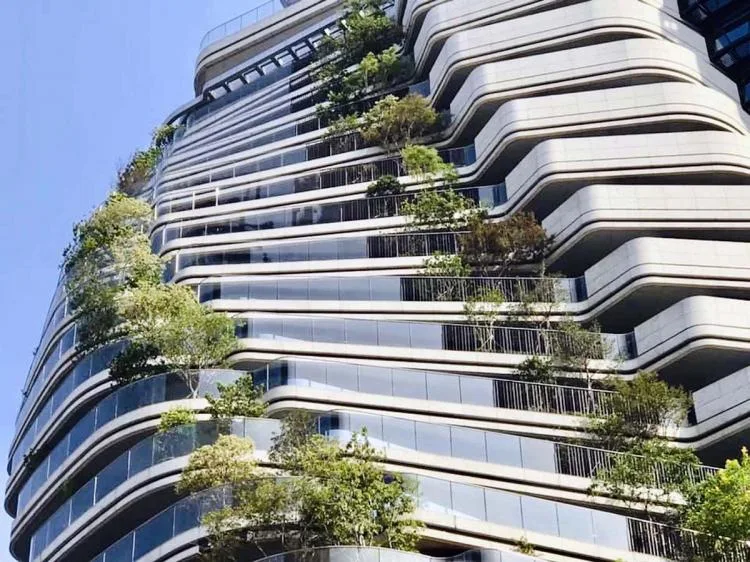
To embody a true symbiosis between architecture and nature, the project features over 23,000 trees and shrubs, achieving an extraordinary green coverage rate of 246%, and an annual carbon absorption of 130 tons—five times the local government’s incentive target. This lush planting brings diverse natural colors throughout the seasons, creating a genuine vertical forest.
Extensive consultations with botanical experts helped finalize the species and planting arrangements to optimize carbon absorption. The greenery on balconies not only supplies oxygen and moisture but also effectively reduces environmental noise. The vertical forest design moderates the building’s microclimate, keeping it warm in winter and cool in summer.
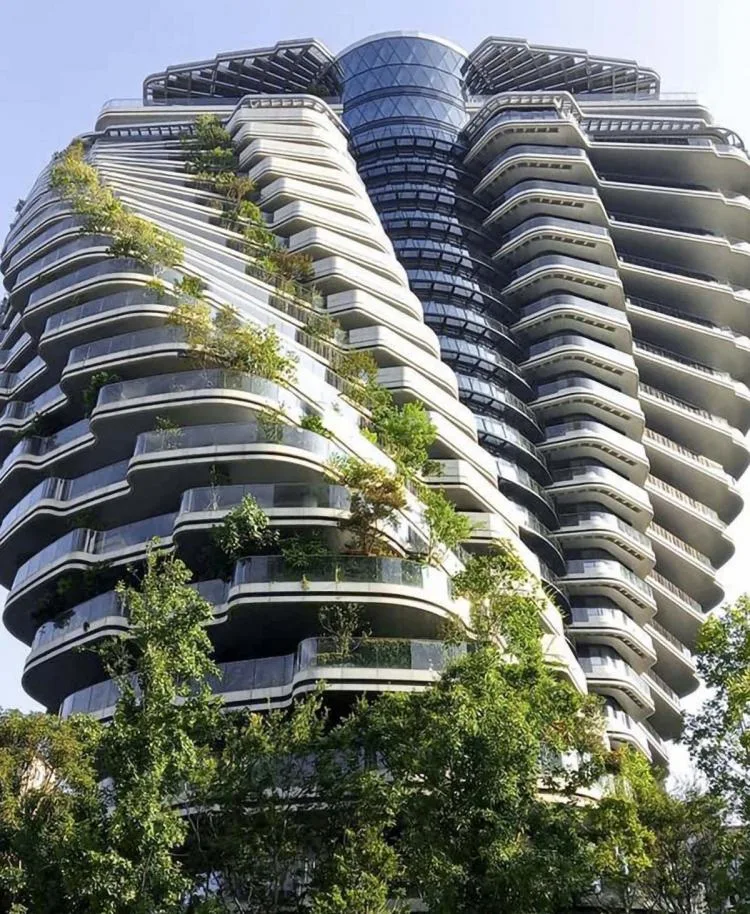
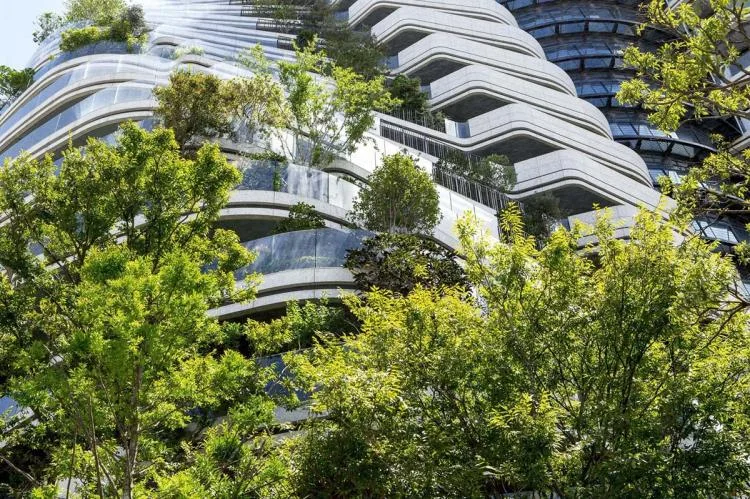
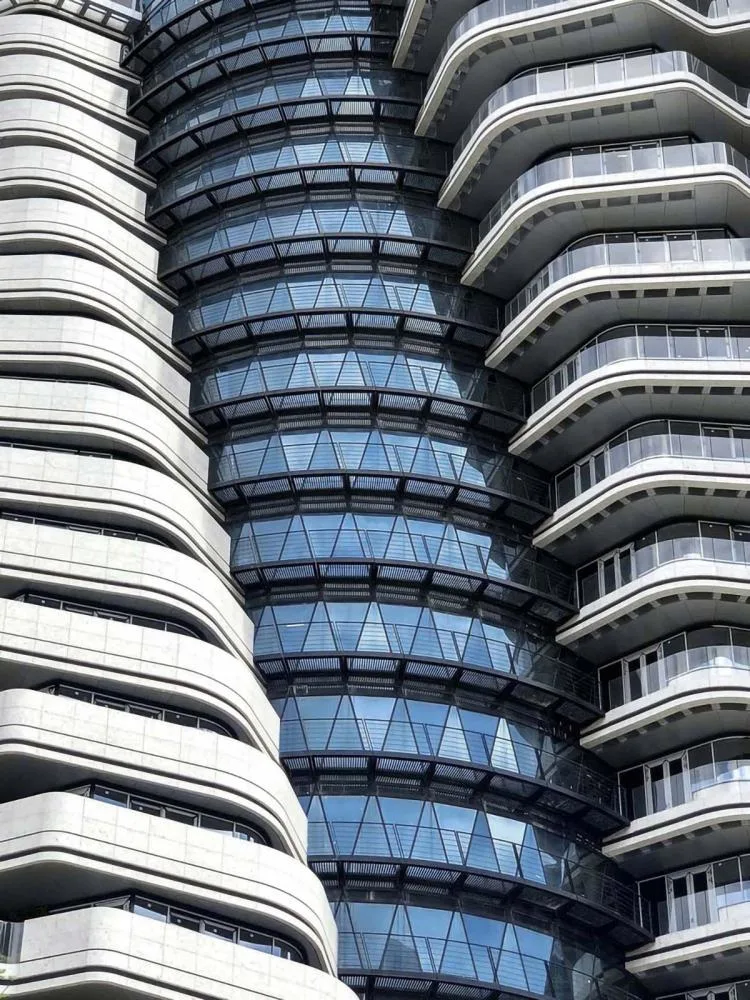
The building incorporates naturally ventilated chimney ducts to purify air within its central core. Additional sustainable features include rainwater recycling, wireless monitoring of LED lighting, fiber optic networks, and renewable energy sources like solar and wind power to support energy conservation and reduce emissions.
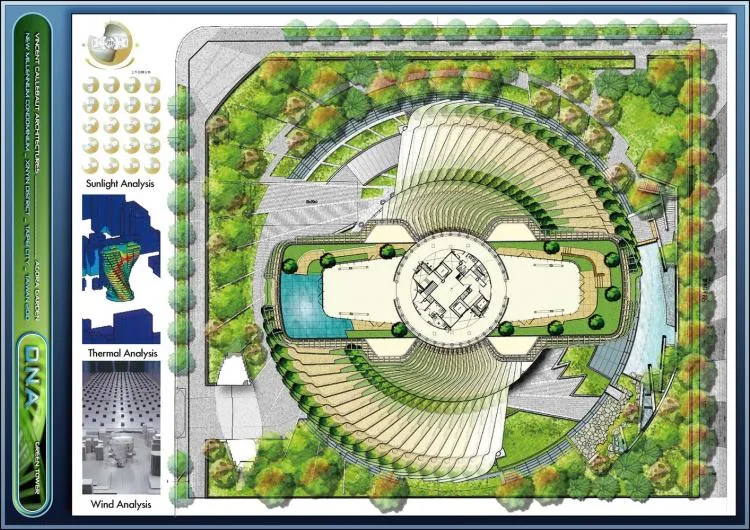
Environmental Analysis: sunlight, thermal energy, and wind energy
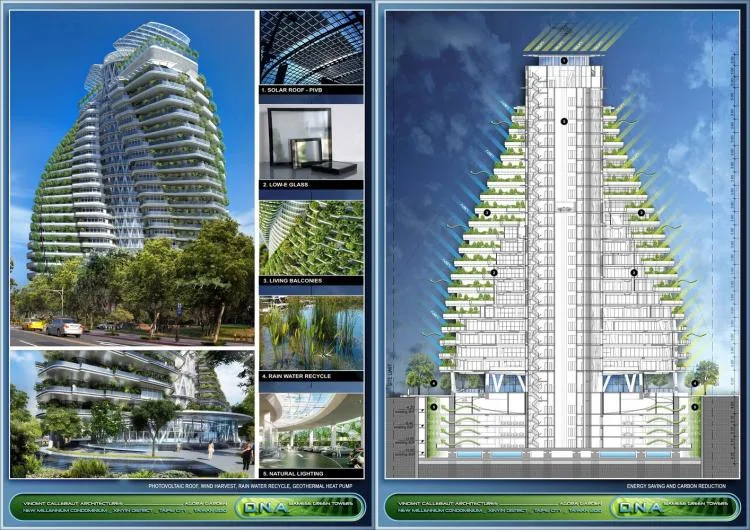
Environmental Analysis: solar roof, wind energy utilization, rainwater recycling, ground-source heat pump
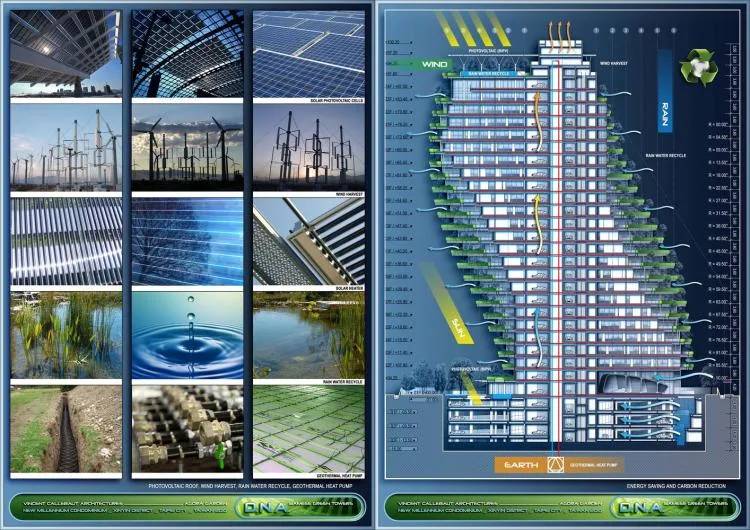
Environmental Analysis: solar roof, wind energy utilization, rainwater recycling, ground-source heat pump
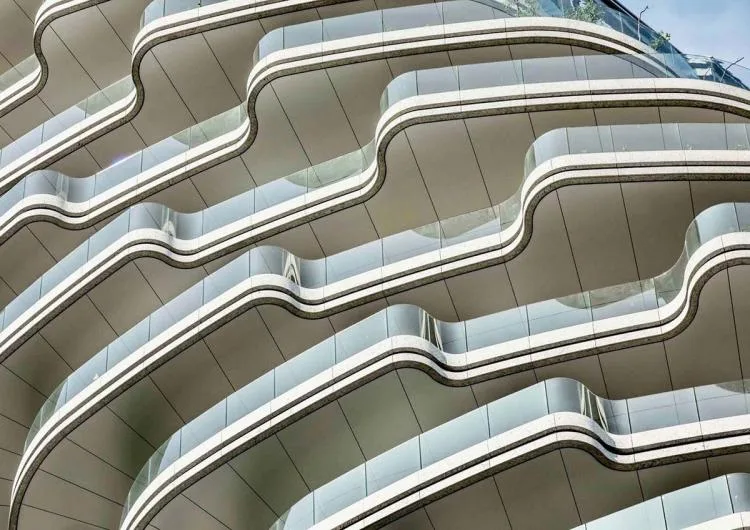
Taozhu Hidden Garden exemplifies the seamless integration of innovative science, bioclimatic passive systems, and active technology. Its iconic balconies serve as micro-ecosystems of greenery, offering residents 165 square meters of sky gardens per unit, 270-degree panoramic views, 14 large trees planted per floor, and a 6,600 square meter ground-level art park.
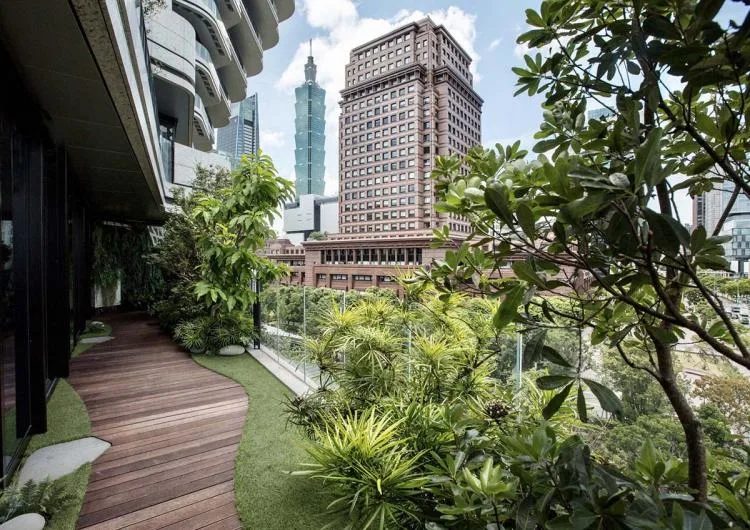
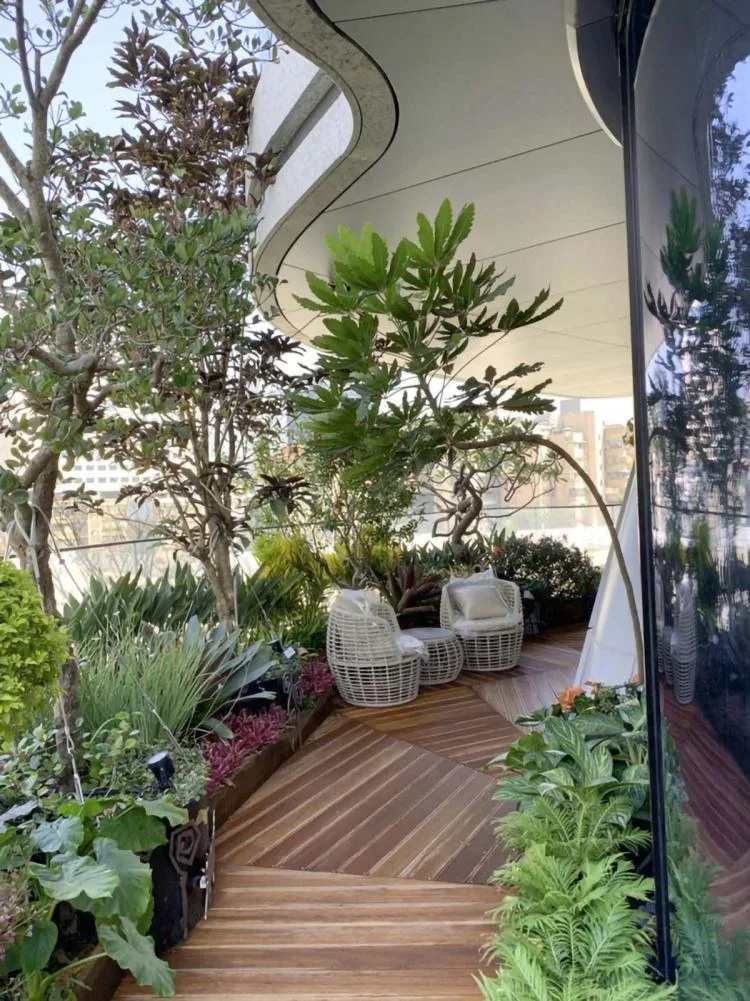
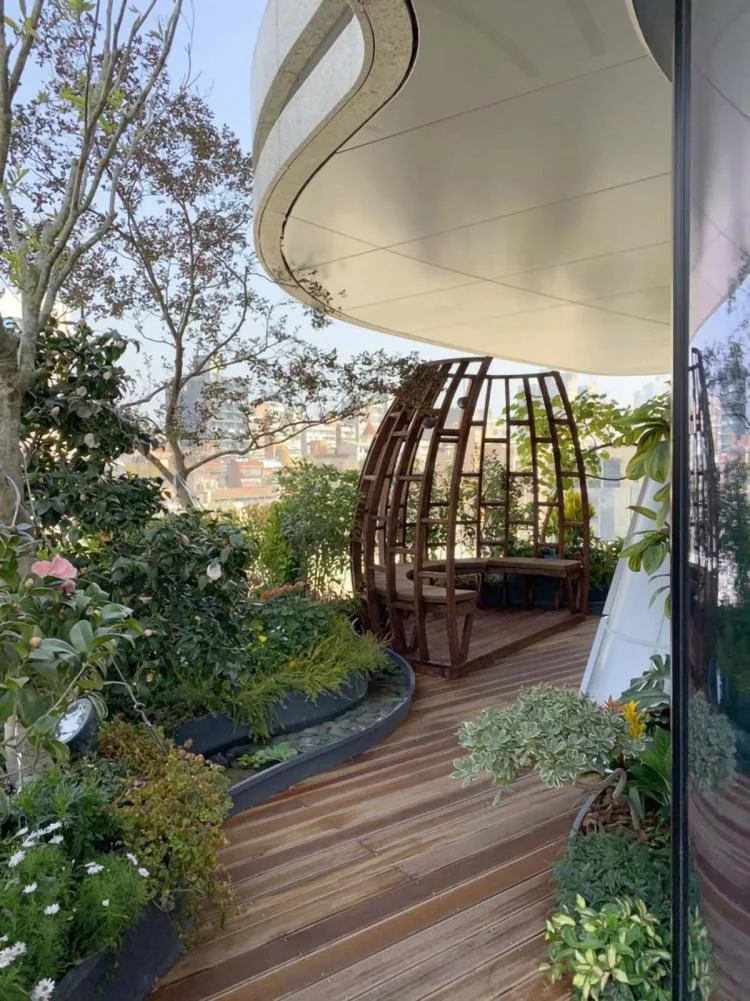
The ground-level art park is densely planted with over 100 trees and hedgerows, creating a forest-like atmosphere within the urban environment.
Furthermore, the architect reduced the building footprint beyond the red line, freeing 5 to 6.5 meters of pedestrian public space enhanced with landscaped park areas.
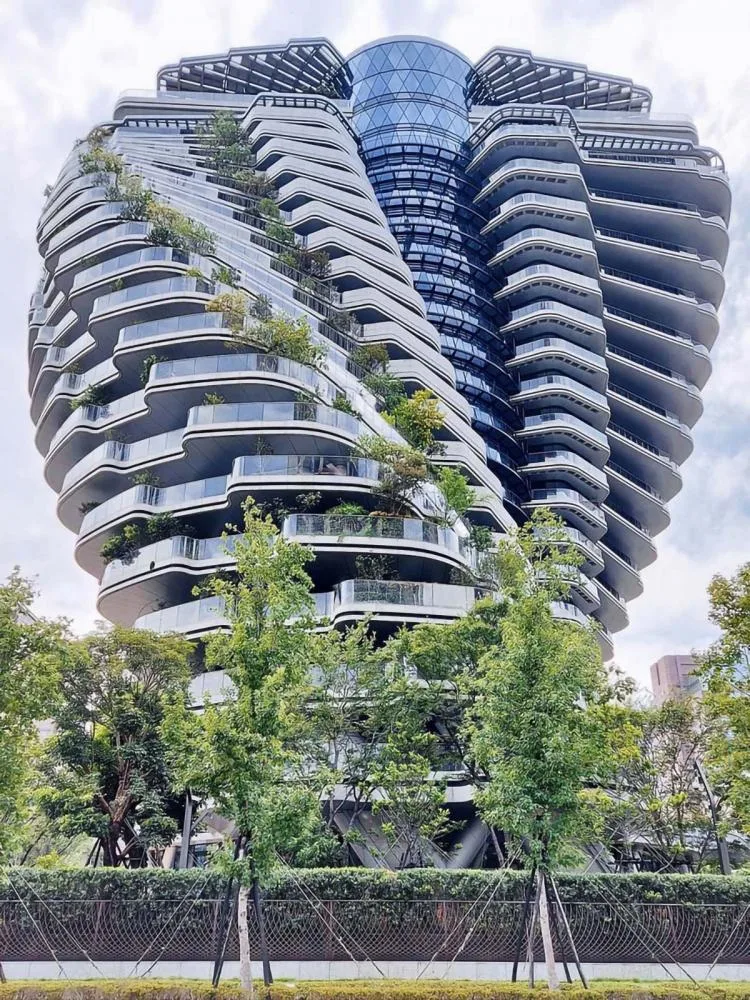
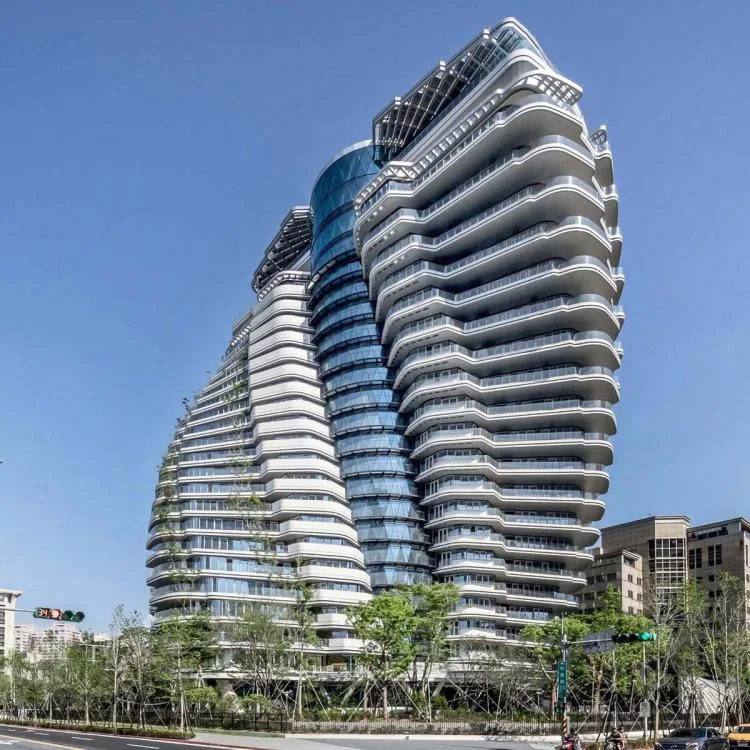
A City Forest That Purifies the Air
Taozhu Hidden Garden aims to minimize residents’ ecological footprint by fostering a harmonious relationship between humans and nature, establishing a truly low-energy vertical landscape. Residents enjoy a lifestyle attuned to natural and climatic conditions through a vertical urban farm, embodying coexistence with nature.
To address air pollution, the building features naturally ventilated chimney ducts that filter air in its central core. Special equipment at the base extracts ground air, heats it, and filters it before releasing clean air to upper levels. This system is powered by solar energy.
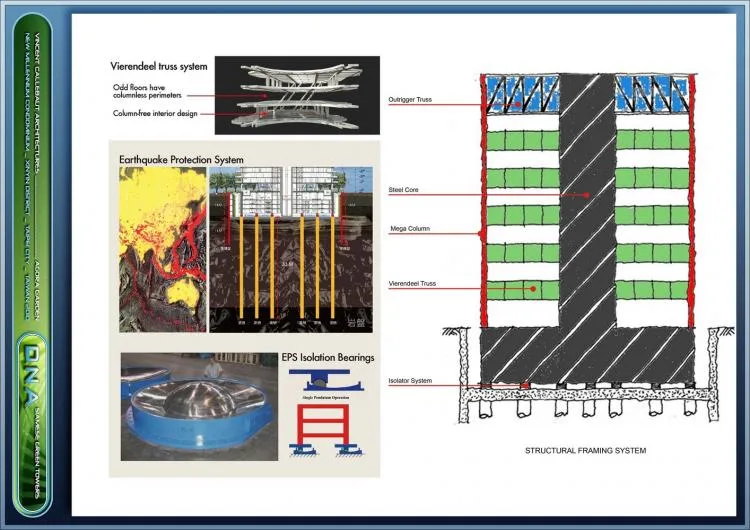
△ Structural analysis
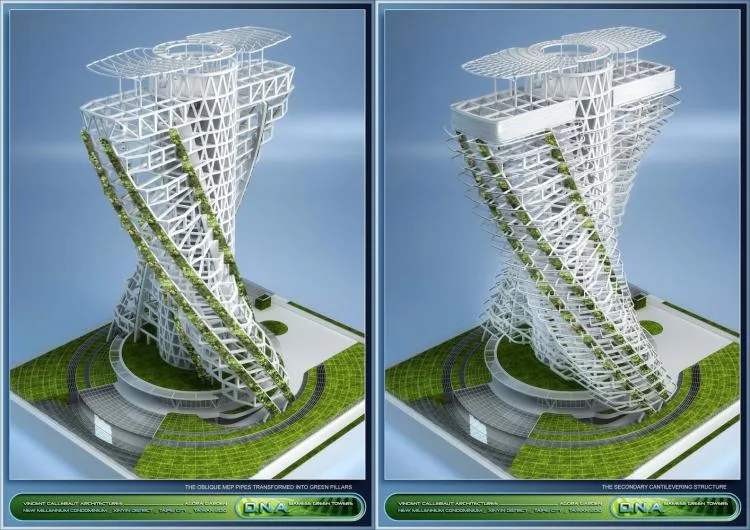
The inclined ducts transform into green pillars, supported by a secondary cantilever structure.
High-Strength Seismic Resistance and Column-Free Structure
The main structural columns are crafted from high-strength steel, equivalent to that used in the Japanese Skytree. The building’s truss structure resembles human arms, with giant columns on each side acting as ski poles. The innovative Vierendeel Truss design effectively transfers the building’s weight to deep foundation piles, combining functionality with aesthetic appeal.
The building boasts exceptional seismic resilience, designed to withstand peak ground acceleration of 400 gal, comparable to nuclear power plant standards. Its foundation uses EPS Inc.’s seismic system, capable of enduring earthquakes up to magnitude 7 without damage or ductile failure. This surpasses the seismic design code requirements for a 2500-year earthquake return period set by Taiwan’s Ministry of the Interior.
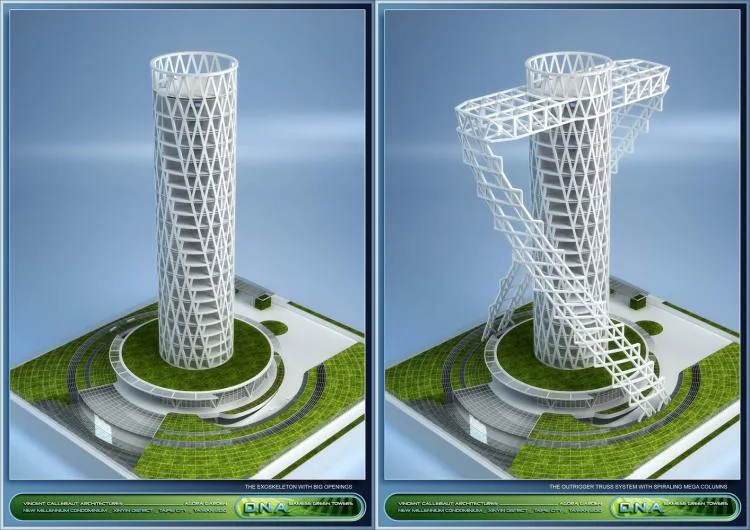
△ Structural skeleton and cantilever truss system analysis
The building’s 90-degree twist also draws inspiration from Tai Chi philosophy. Each floor rotates 4.5 degrees, granting residents 270-degree panoramic views. Thanks to the unique structural design, every unit is column-free, allowing unobstructed indoor spaces and seamless connection to the outdoor terraces filled with vegetation.
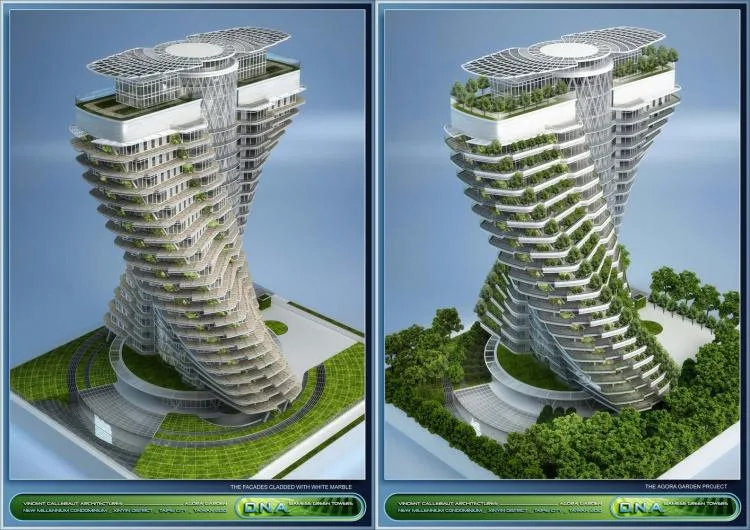
△ White marble facade and party garden
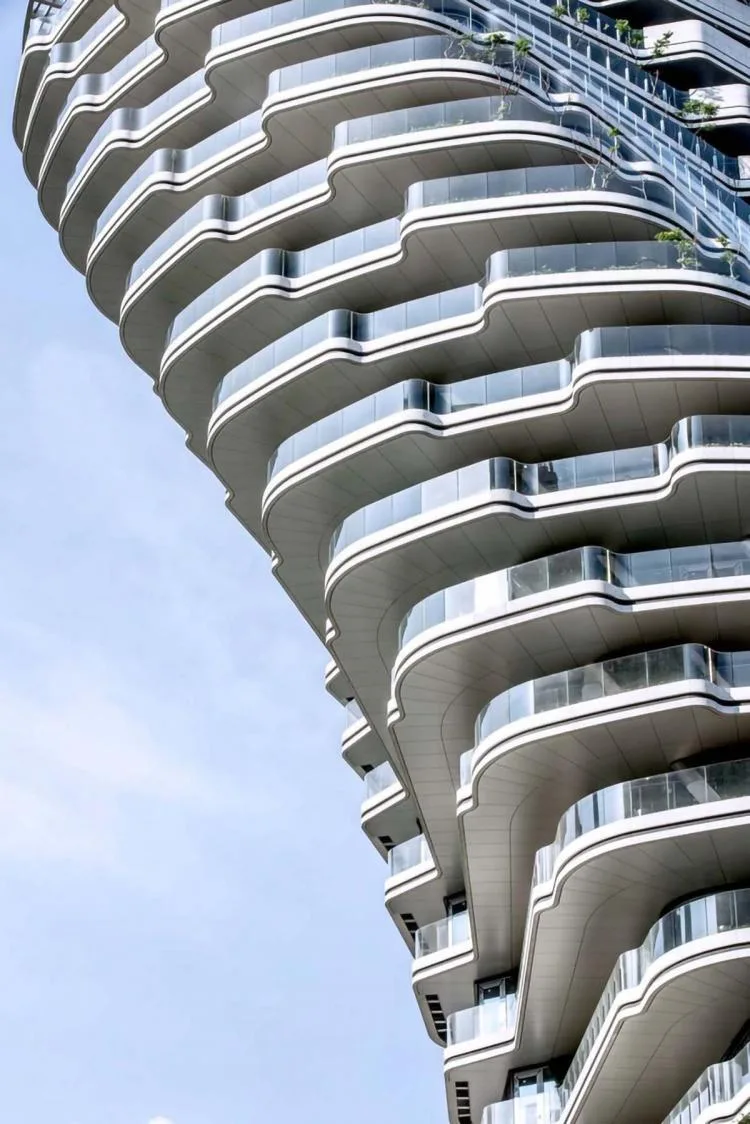
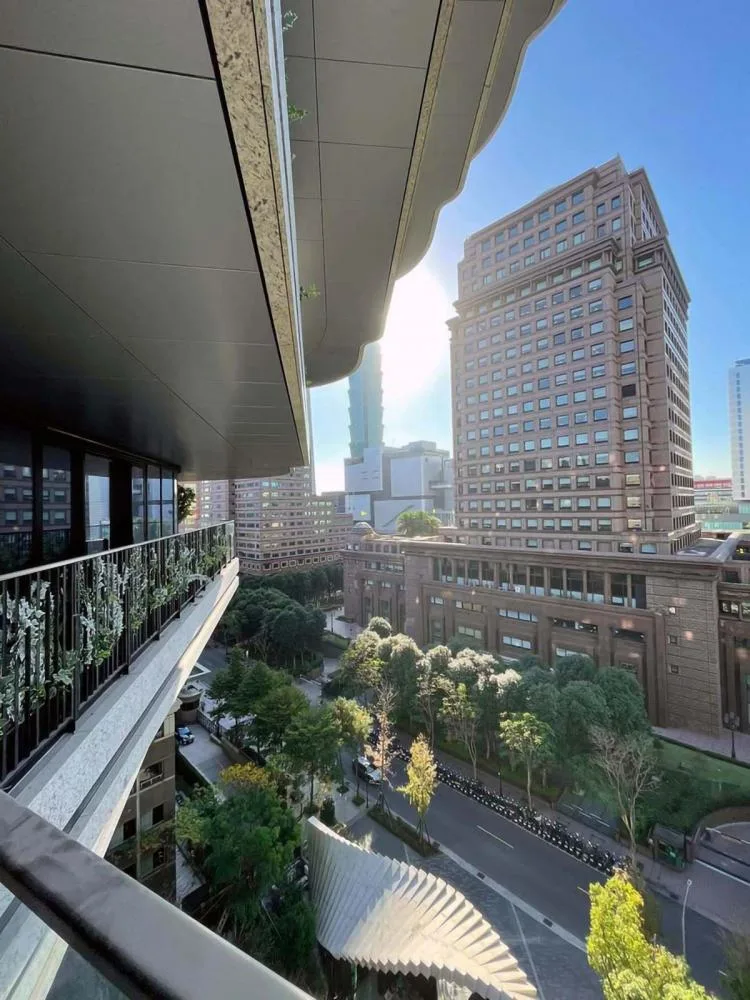
During construction, shrinkage waste was minimized by backfilling and reusing original mud walls. Seismic isolation joints surround the basement, while a double-layer glass skin around the central core creates naturally ventilated and daylight-filled interiors.
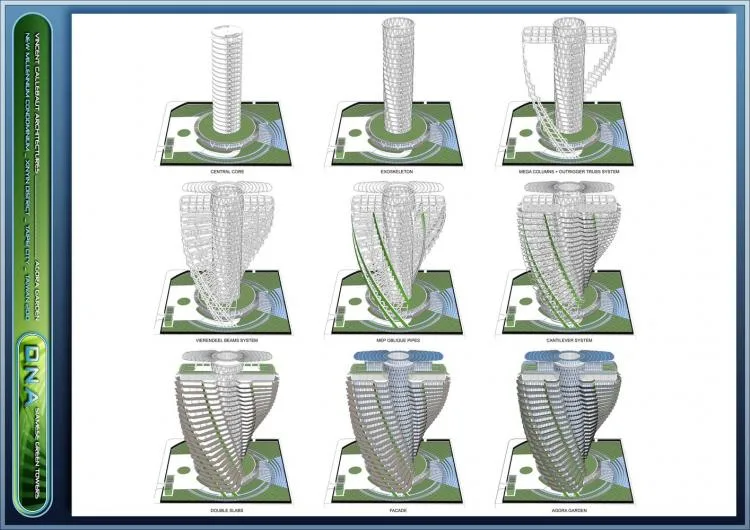
△ Structural analysis
Urban Vertical Forest
To ensure the long-term health and resilience of plants on balconies and rooftop gardens, the project employed light and thermal analyses during plant selection. Tests simulating Taiwan’s typhoons and heavy rains confirmed plant tolerance to weather extremes.
Dr. Zhang Fong Chun from Japan rigorously evaluated the selected trees and shrubs to guarantee their vitality in urban conditions. Emphasizing microclimatic factors, the building’s design pre-allocated space for planting loads and depths, integrating drainage systems and stainless steel flower boxes seamlessly into the structure.
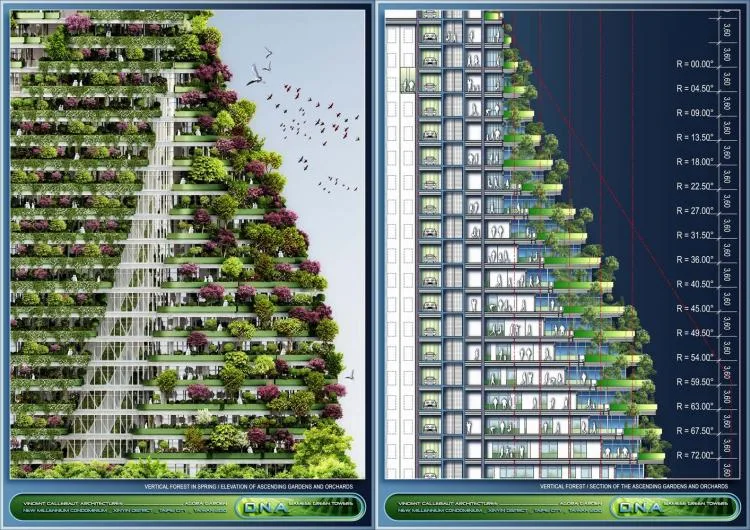
Vertical Forest in Spring: Elevations and sections of sky gardens and orchards
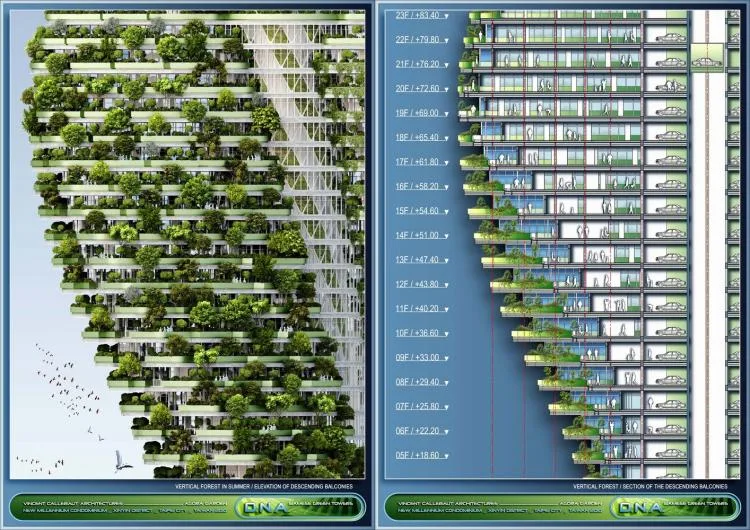
Vertical Forest in Summer: Receding balcony facades and cross-sections
Breathable Ecological Architecture
The construction prioritizes a comfortable, healthy living environment. Interior finishes predominantly use bio-based and recyclable materials, reflecting environmental consciousness and circular economy principles.
Seismic isolation joints and window designs on the ground floor facilitate fresh air circulation through the four underground parking levels, creating a naturally ventilated underground space. Double wall isolation joints and basement design enhance natural lighting and air quality, improving the parking experience.
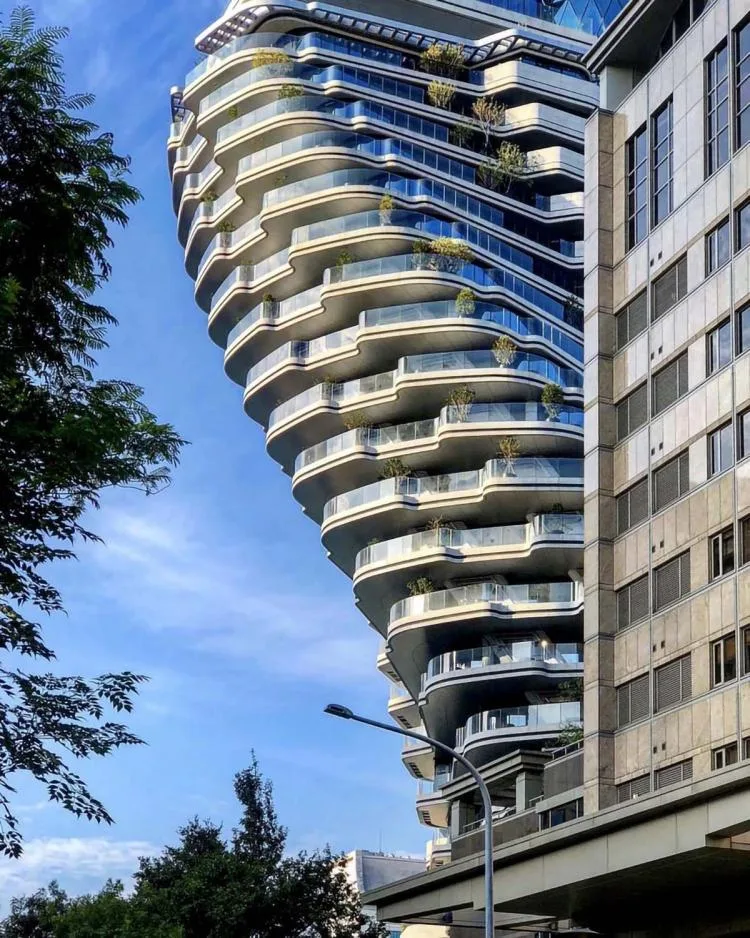
Sustainability
The central core’s double-layer glass curtain wall promotes natural ventilation while reducing air conditioning energy use by lowering indoor temperatures. The double-floor design allows residents to customize kitchen, bathroom, and bedroom layouts, and minimizes noise from maintenance or renovations.
The project reduces excavation demands by reusing existing mud walls around the basement. Solar and wind energy systems aim to cut annual CO₂ emissions by 35 tons. Energy efficiency is further achieved through regenerative elevators, high-efficiency HVAC, LED lighting, and water-saving fixtures. A reversible heat pump heats the swimming pool, while rainwater harvesting supports garden irrigation.
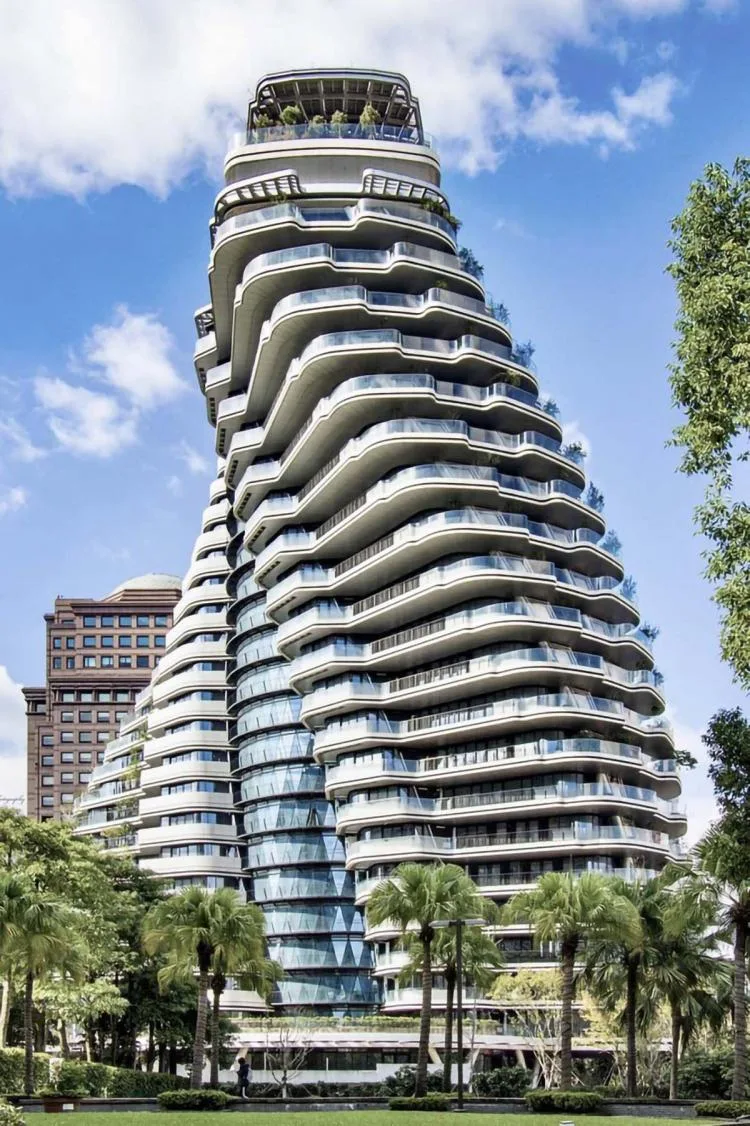
Overall, Taozhu Hidden Garden is a prime example of harmonious coexistence between humanity and nature. As a vertical urban forest with carbon-absorbing capabilities, it represents a forward-thinking model for urban development. The project responds practically to global warming concerns, reflecting a deep commitment to greenery and sustainable growth. It seeks to raise public awareness of climate change and carbon absorption, contributing to a greener future for Taiwan and the world.
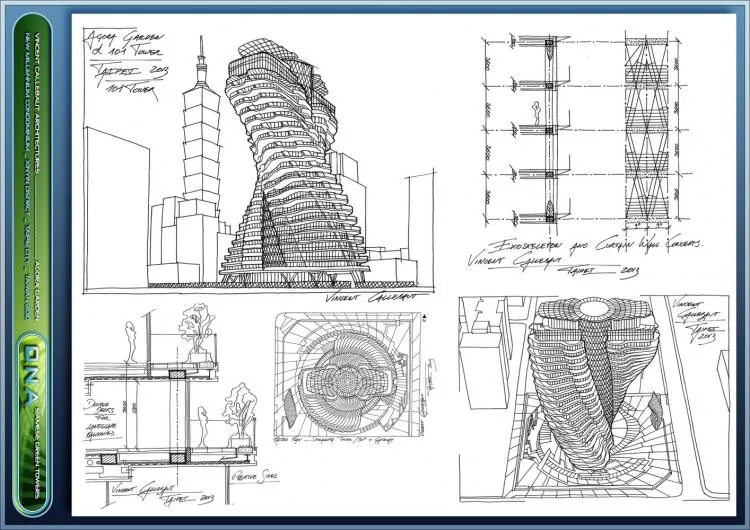
△ Sketch
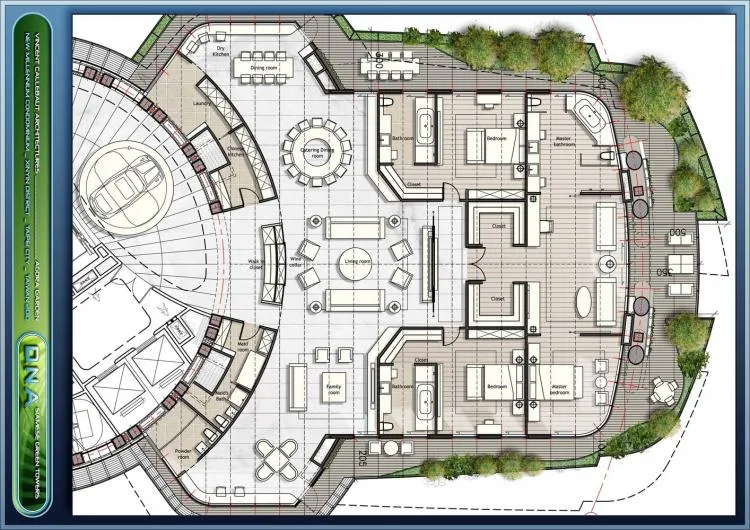
△ Floor Plan
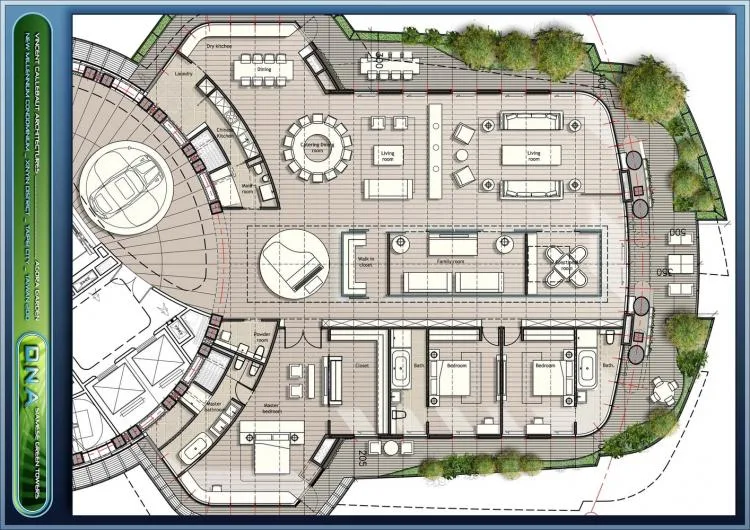
△ Floor Plan
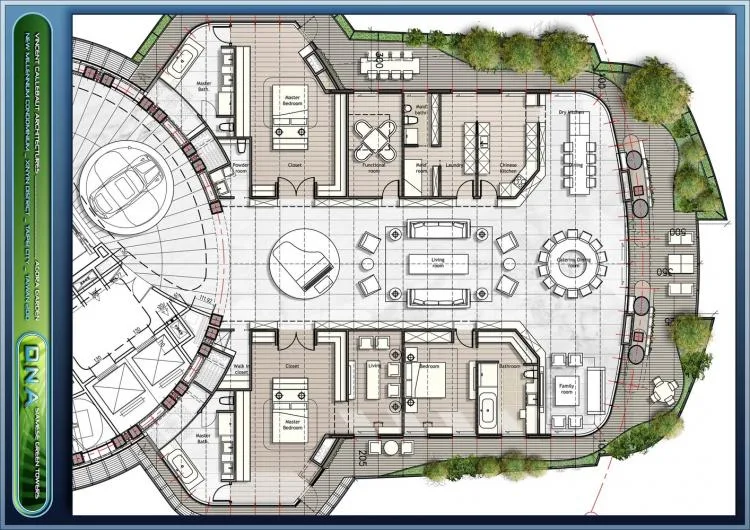
△ Floor Plan
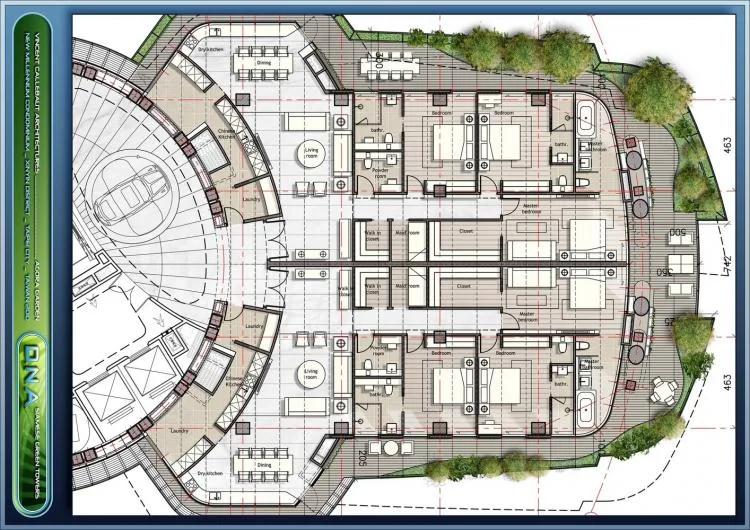
△ Floor Plan
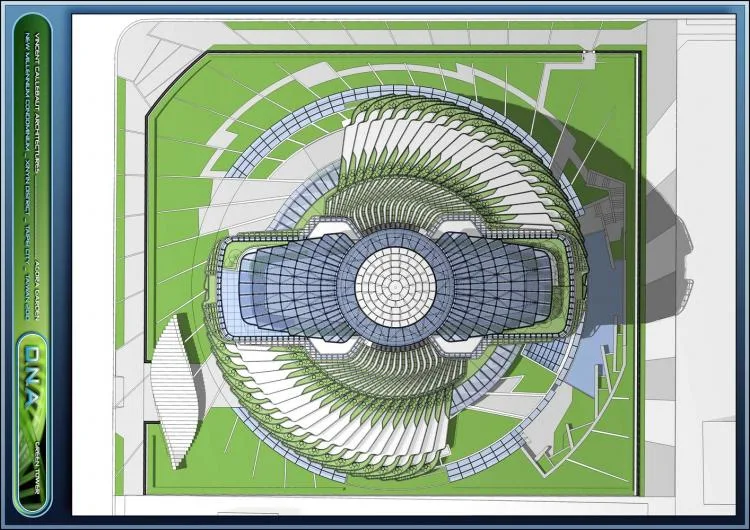
△ Roof Plan
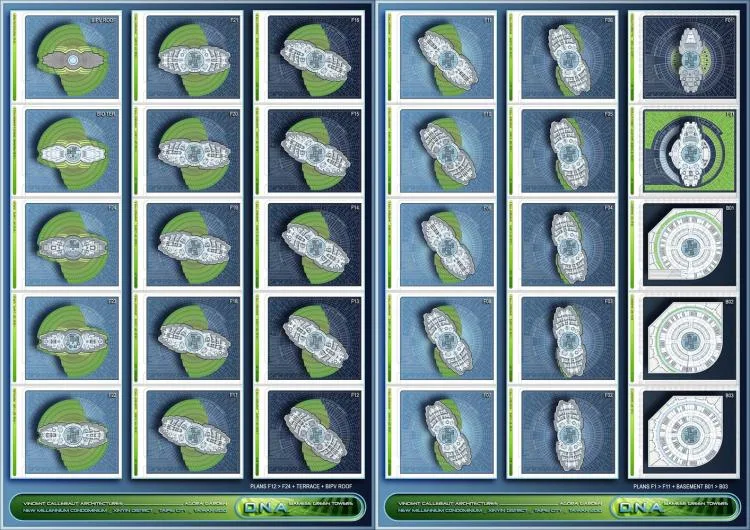
△ Plan View
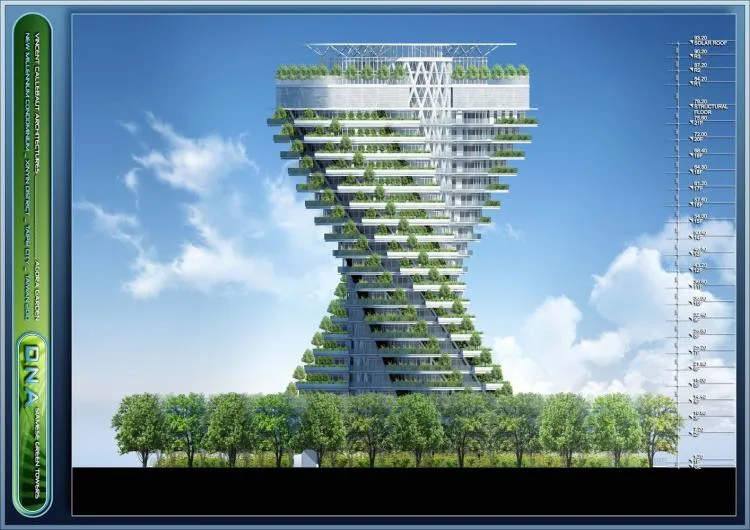
△ Elevation Drawing
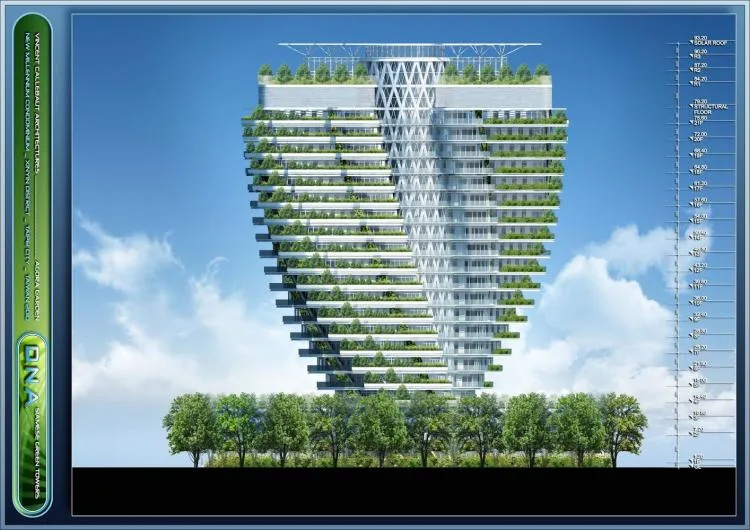
△ Elevation Drawing
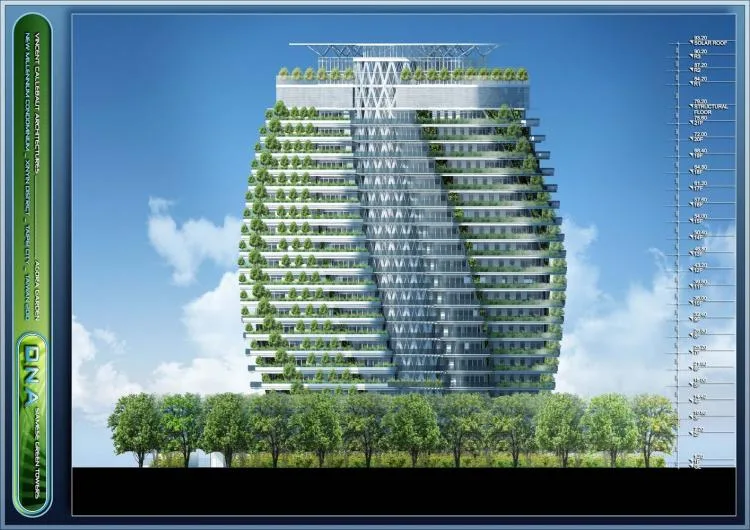
△ Elevation Drawing
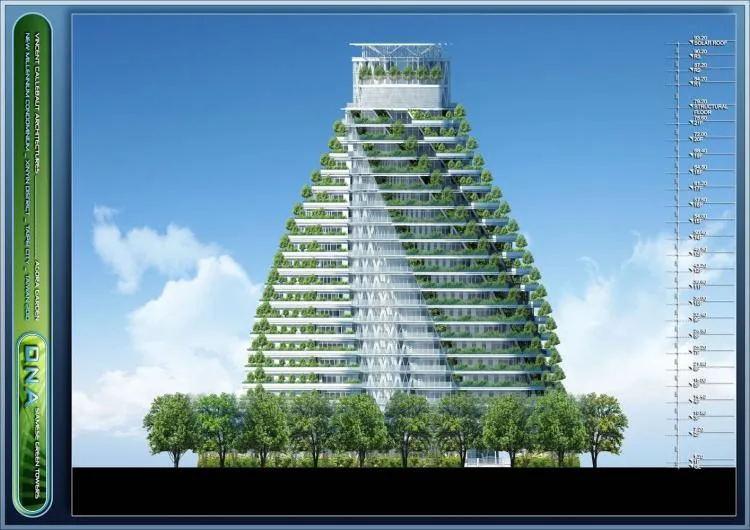
△ Elevation Drawing
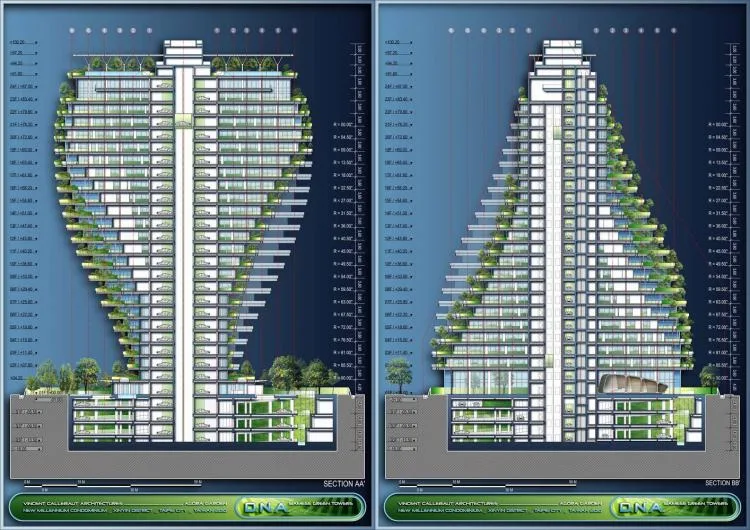
△ Section Drawing AA; Surface Drawing BB
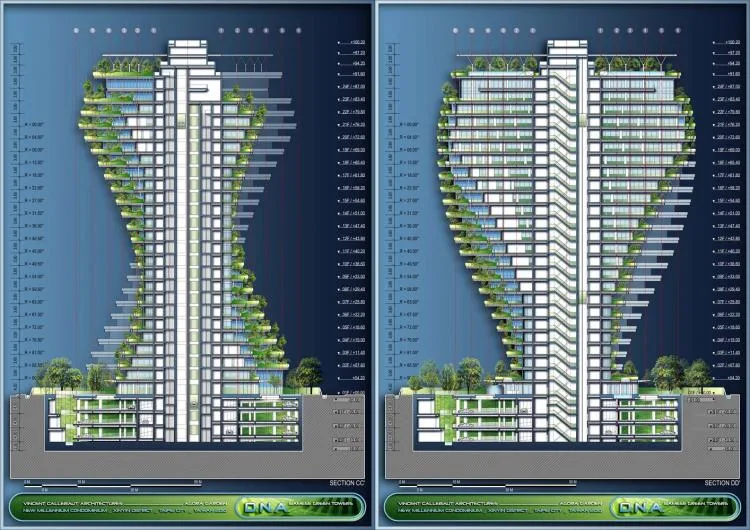
△ Section CC; Section DD
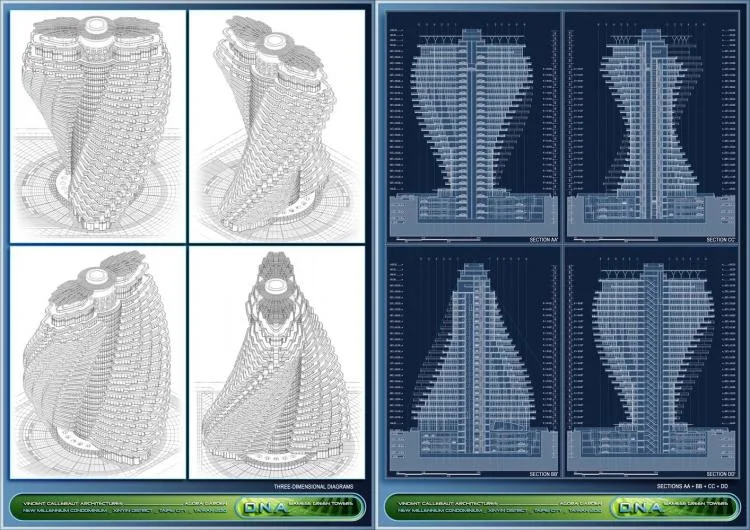
△ 3D Analysis and Sectional Drawing
Project Information
Project Type: Apartment
Location: Taipei, Taiwan, China
Designer: Vincent Callebaut Architects
Area: 42,705 m²
Year: 2020















Must log in before commenting!
Sign Up