
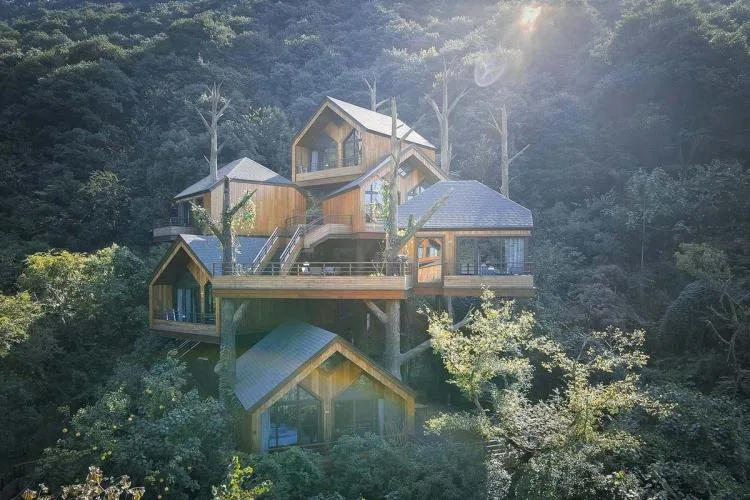
Tree House bathed in sunlight © Liu Xiaoli
Living in a Nest
The Hangzhou Kaiyuan Senbo Resort Hotel is situated in the Xiaoshan Xianghu Resort, where the “Tree House” is part of the vacation home section. The concept of the treehouse may arise from a yearning to return to the ‘nest.’ As recorded in the “Han Feizi,” “In ancient times, humans were few and animals many. People were unfamiliar with animals, insects, and snakes. Sages built wooden nests to protect themselves from harm. These primitive nests became metaphors for solitude and retreat.” Furthermore, Ming dynasty garden designer Ji Cheng wrote in “Yuanye,” “Conquering the city and hiding is still better than nest dwelling.” Upon receiving the essay on “tree house,” we carefully reflected and concluded that the defining feature of nest dwelling is not isolation but rather communal living among the trees — “a cluster of small houses nestled between treetops” — which became the initial design inspiration.
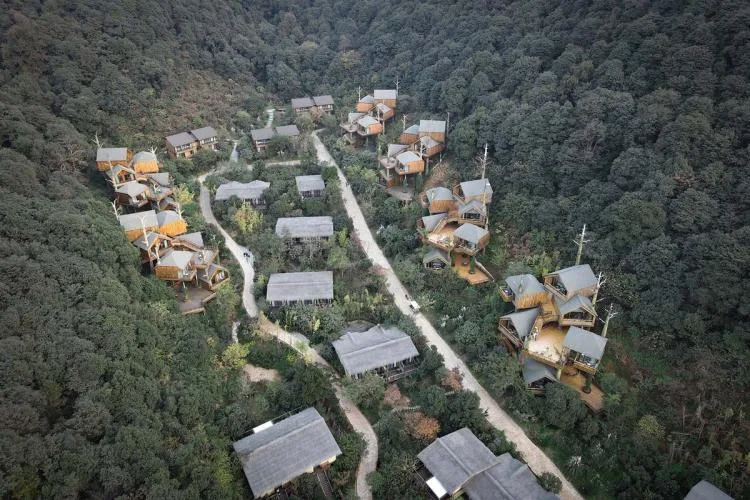
Bird’s-eye view of the entire complex © Liu Xiaoli
Balancing Geometry and Nature
Stacking abstract residential prototypes is a design approach seen in Europe and Japan, but these often emphasize geometric manipulation with spatial experiences confined indoors. Considering the commercial nature of this project and its mountainous setting, we prioritized a harmonious balance between abstraction and imagery, interior and exterior, geometry and nature.
This principle of “duality and balance” is reflected throughout the design. The simulated withered tree trunk evokes the natural nest image while avoiding overly realistic branches and leaves. The sloping roofs feature minimal eaves, maintaining simple geometric forms, while each room includes balconies with convex and concave shapes that echo the surrounding lush trees. Individual rooms nestle against natural trees, while the interplay of forms retains a deliberate artificiality.
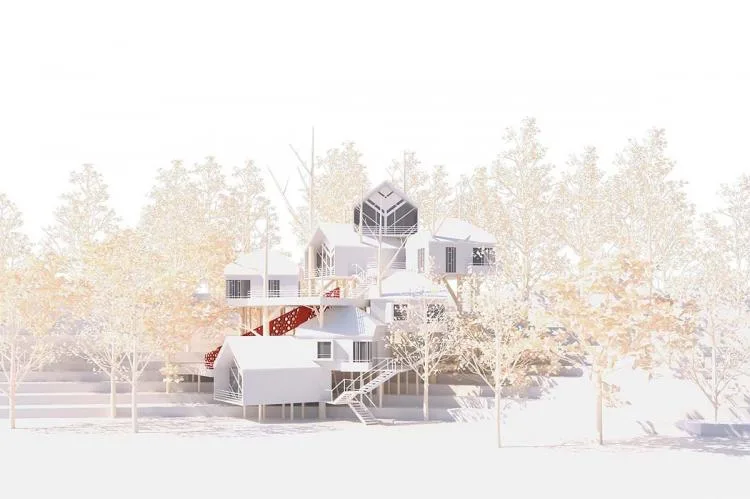
△ Hand-rendered models of the treehouses © WH studio
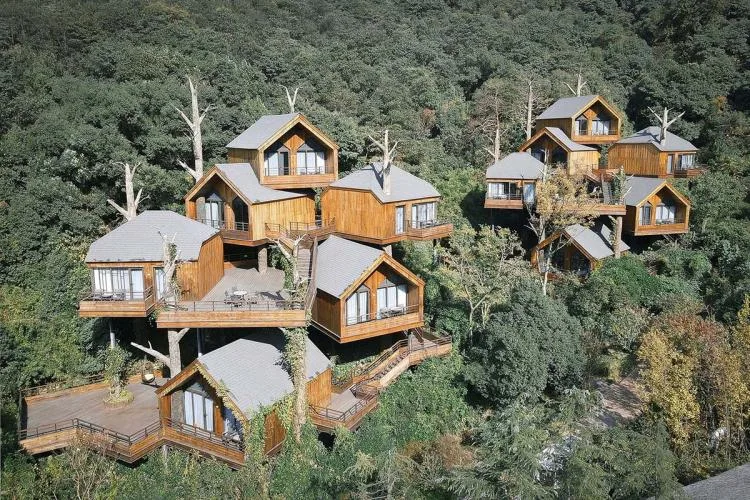
Treehouses nestled in mountainous wilderness © Liu Xiaoli
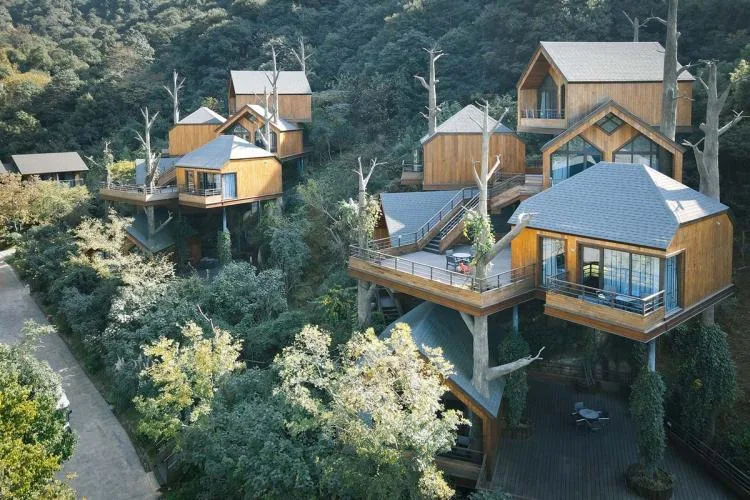
△ Exterior view of the treehouse © Liu Xiaoli
The Interplay of Path, Platform, and House
The treehouse experience begins with “climbing the trees,” so outdoor paths and experiences are central. The winding climbing path mimics the act of ascending, while terraces at various heights serve as resting “branches,” and the living rooms represent the “fruit” of the tree.
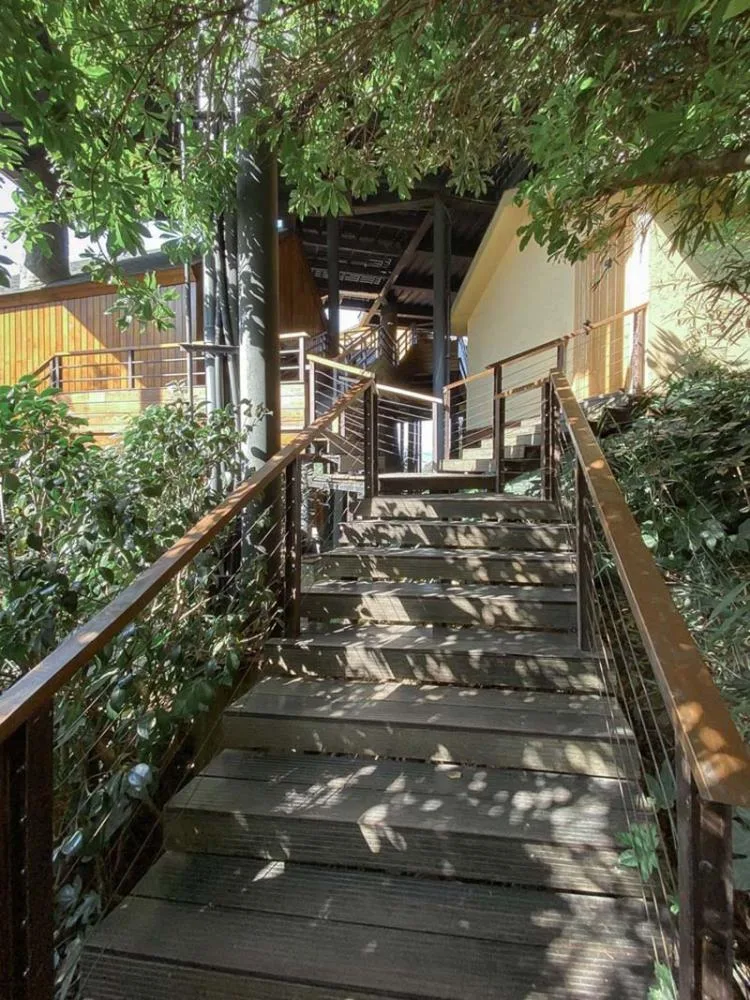
△ Climbing path © Liu Xiaoli
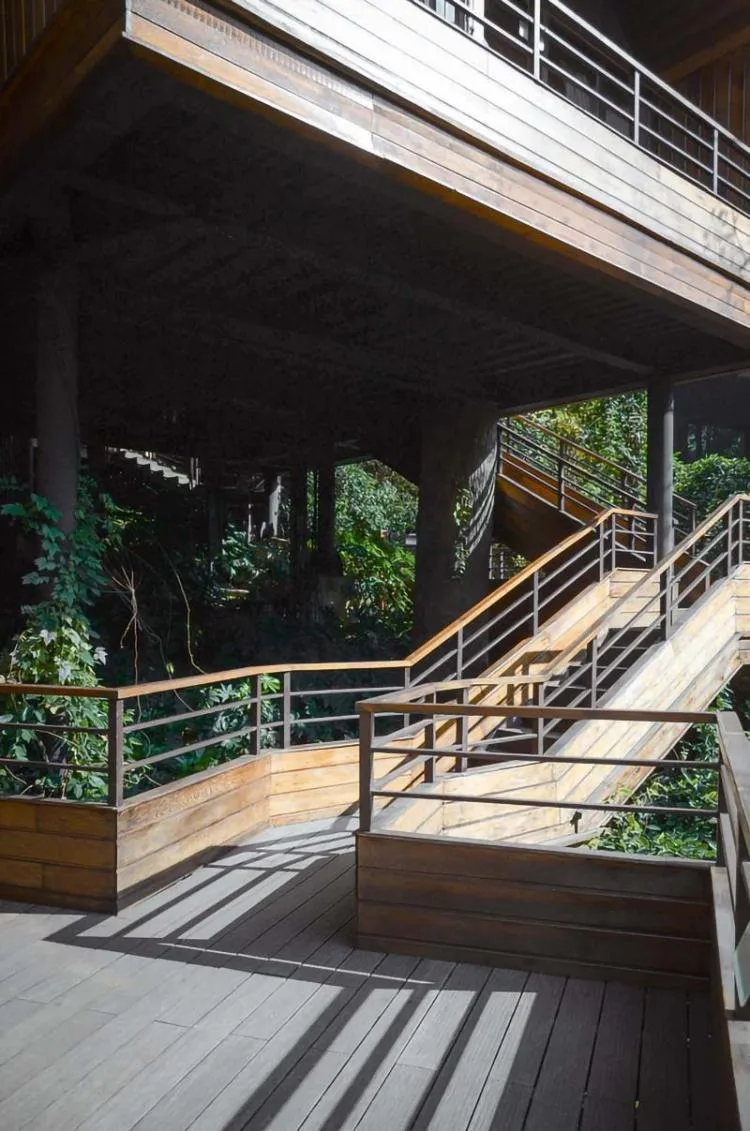
△ Climbing path © Liu Xiaoli
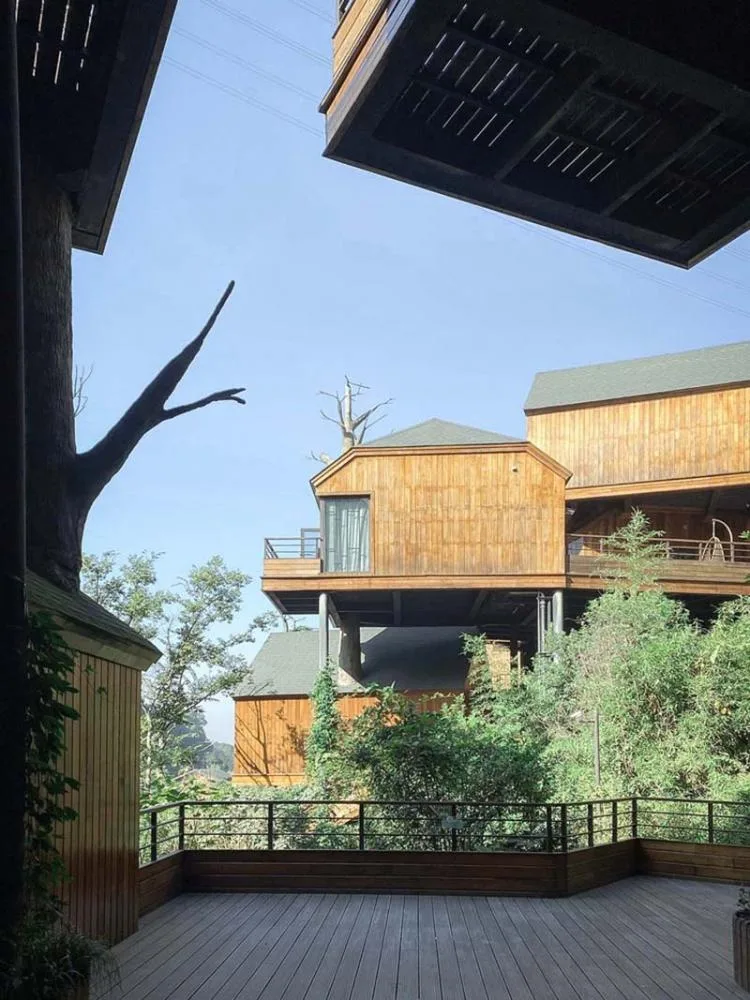
△ Treehouse platform © Liu Xiaoli
The pathway offers a dynamic spatial experience filled with twists and turns, while terraces provide inviting outdoor activity areas. Despite each treehouse incorporating several structural simulated trees, the concept represents one “big tree” composed of three elements: path, platform, and house.
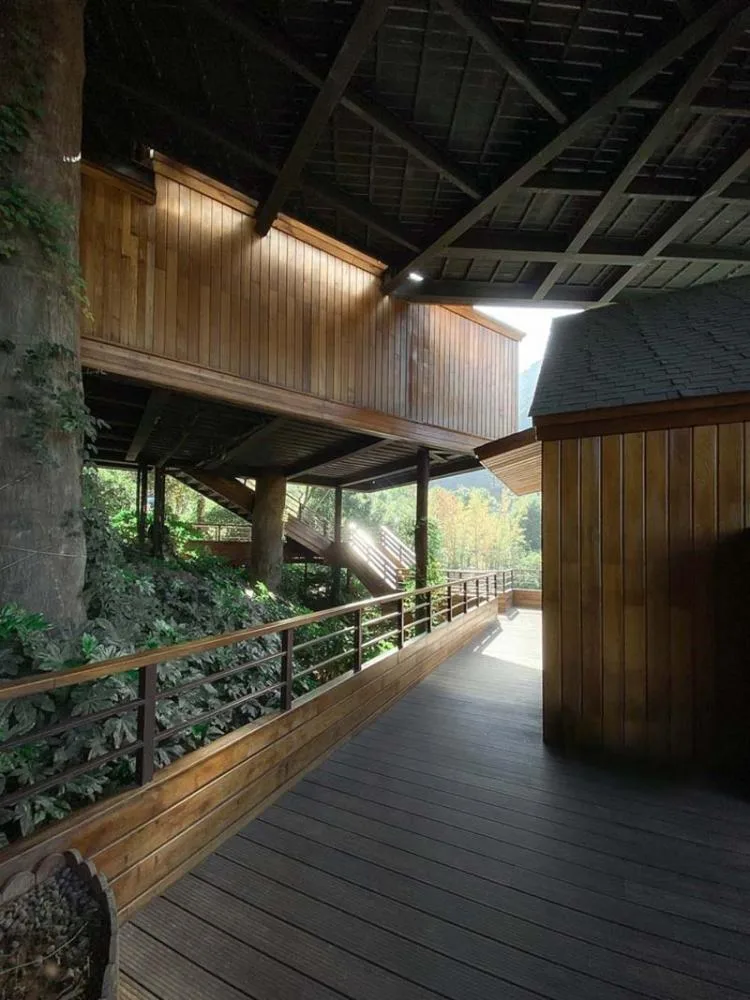
△ Path and spatial layout © Liu Xiaoli
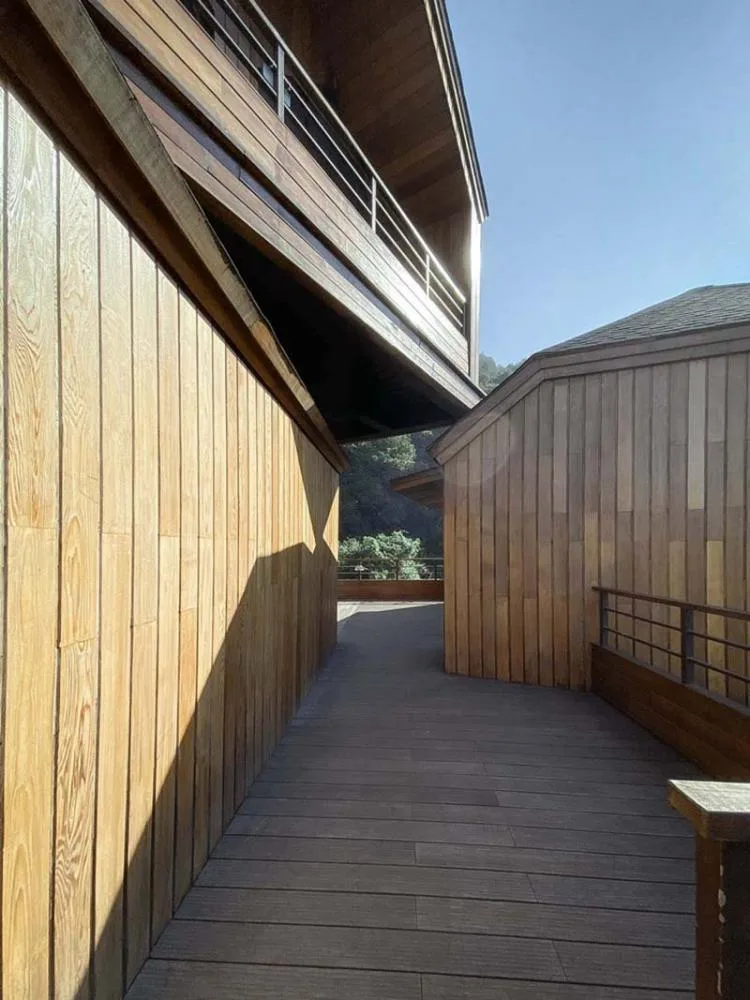
△ Path and spatial layout © Liu Xiaoli
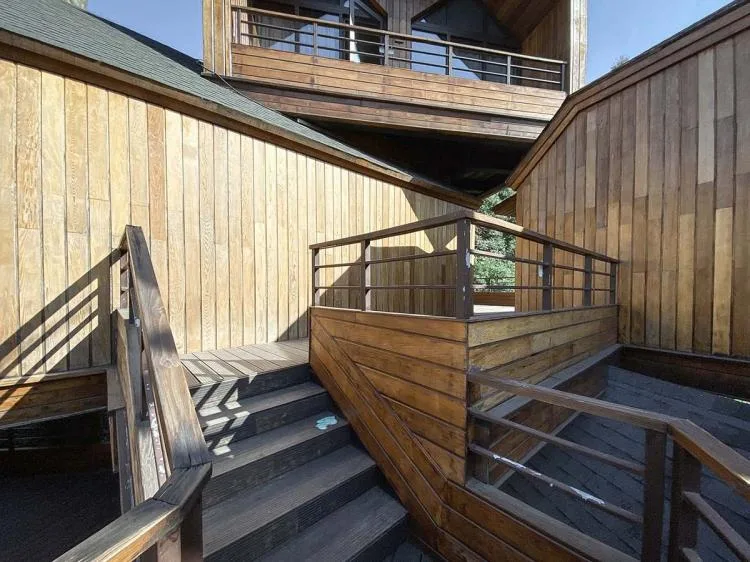
△ Path and spatial layout © Liu Xiaoli
A Touch of Fairy Tale
Since the primary audience for the treehouses includes families with children and young visitors, the six rooms feature two distinct styles: a double-sloping roof with concave balconies and a chamfered four-sloping roof with convex balconies. The latter style enhances a whimsical, fairy-tale-like atmosphere.
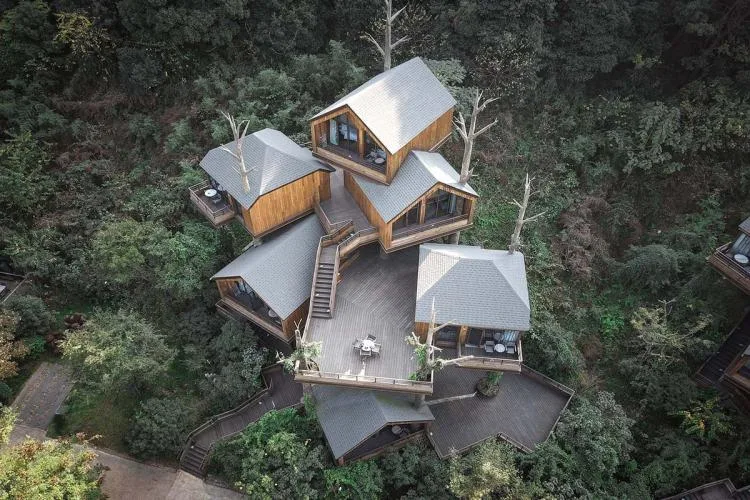
Bird’s-eye view of a single treehouse © Liu Xiaoli
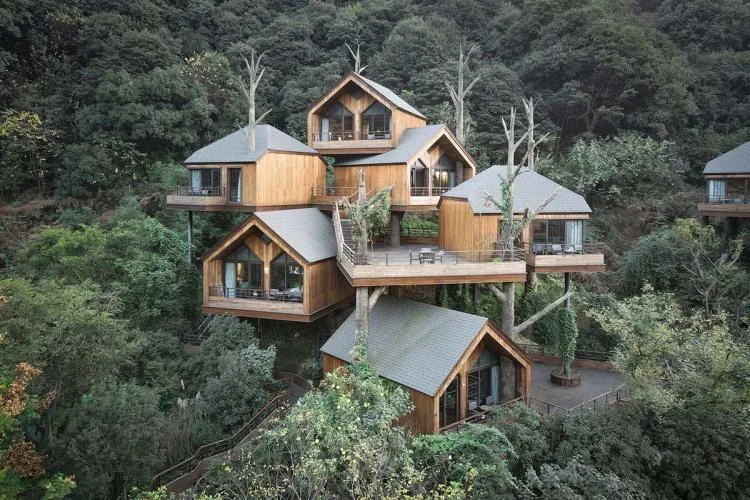
△ Exterior appearance of the treehouse © Liu Xiaoli
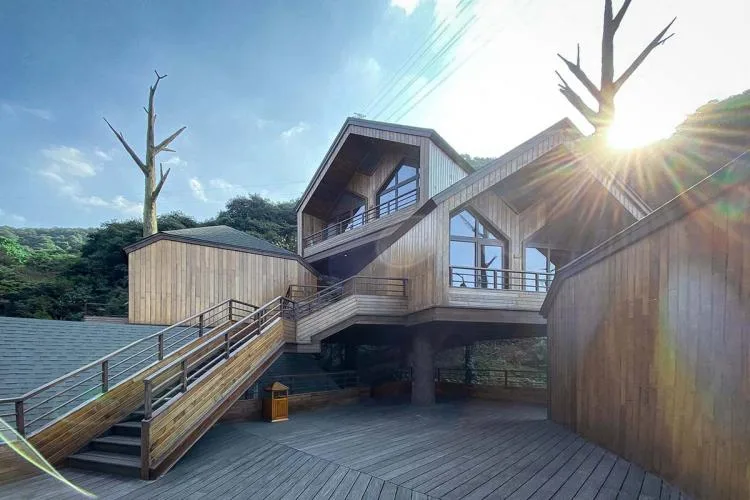
△ Treehouse platform © Liu Xiaoli
The original design included a slide from the platform to the ground, adding playful fun for children. When night falls and lights illuminate the treetops, the scene evokes the storybook world of the “Seven Dwarfs.”
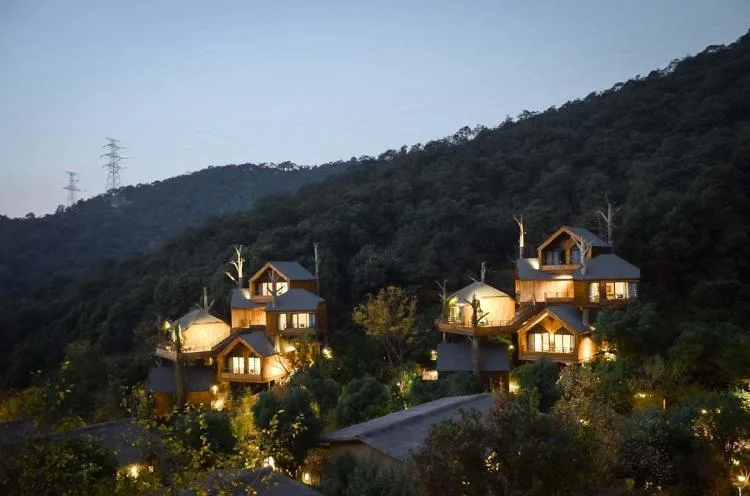
△ Night view of the treehouse © Liu Xiaoli
Unfinished Vision
The six treehouses that were completed quickly became highly sought-after attractions and popular social media check-in spots. They were even featured in the opening credits of Wang Fei’s 2021 advertisement. Yet, from the creators’ perspective, there remain regrets. Simplifications to some facades, changes in window designs, and the removal of slides during construction have all diminished the original vision.
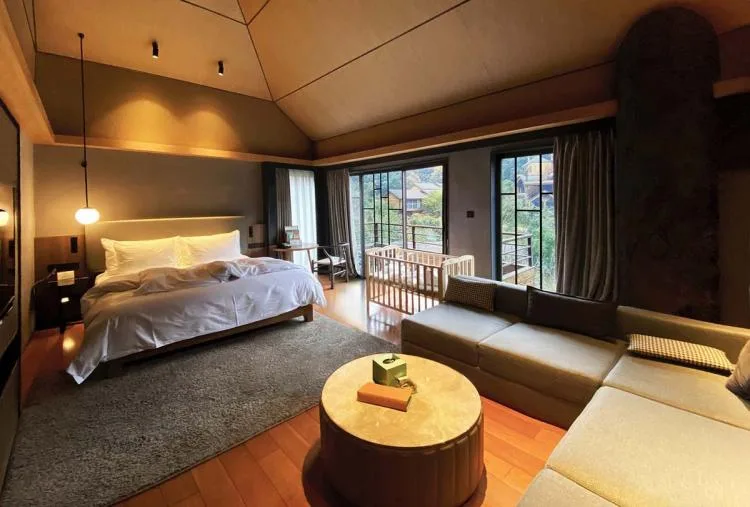
△ Interior of a treehouse © CC
The treehouse concept remains straightforward, yet it attracts visitors worldwide because it maintains a form close to nature, albeit abstracted, fulfilling a deep-seated desire for simplicity. As Rem Koolhaas expressed in his book “Content”: “How old what was modern looks. How fresh what is ancient.”
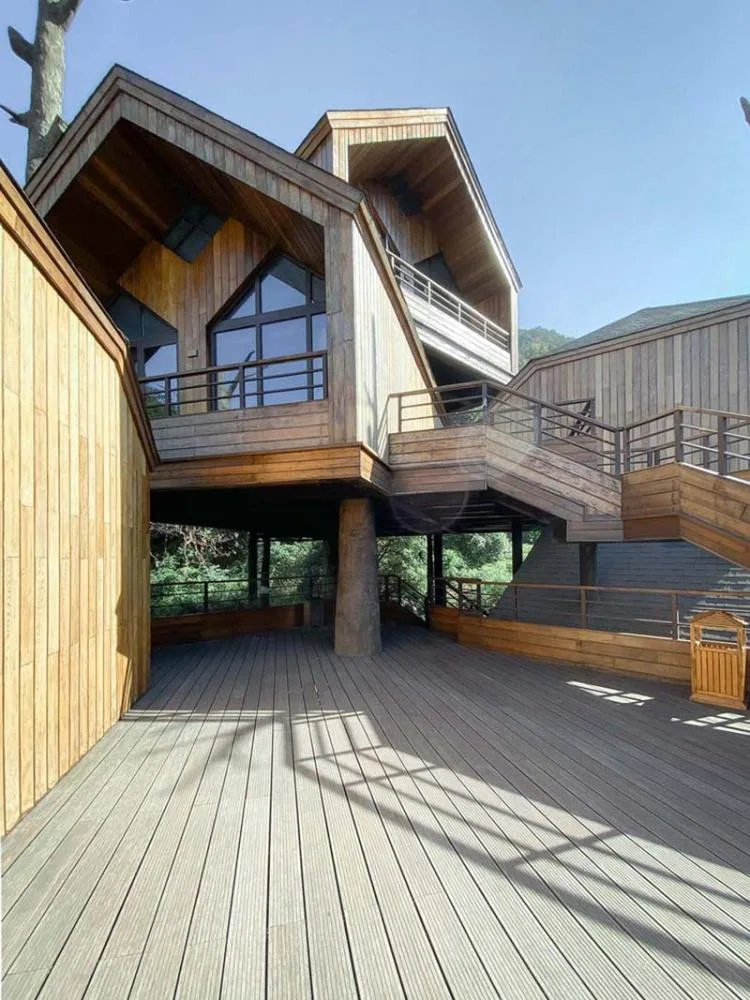
△ Treehouse platform © Liu Xiaoli
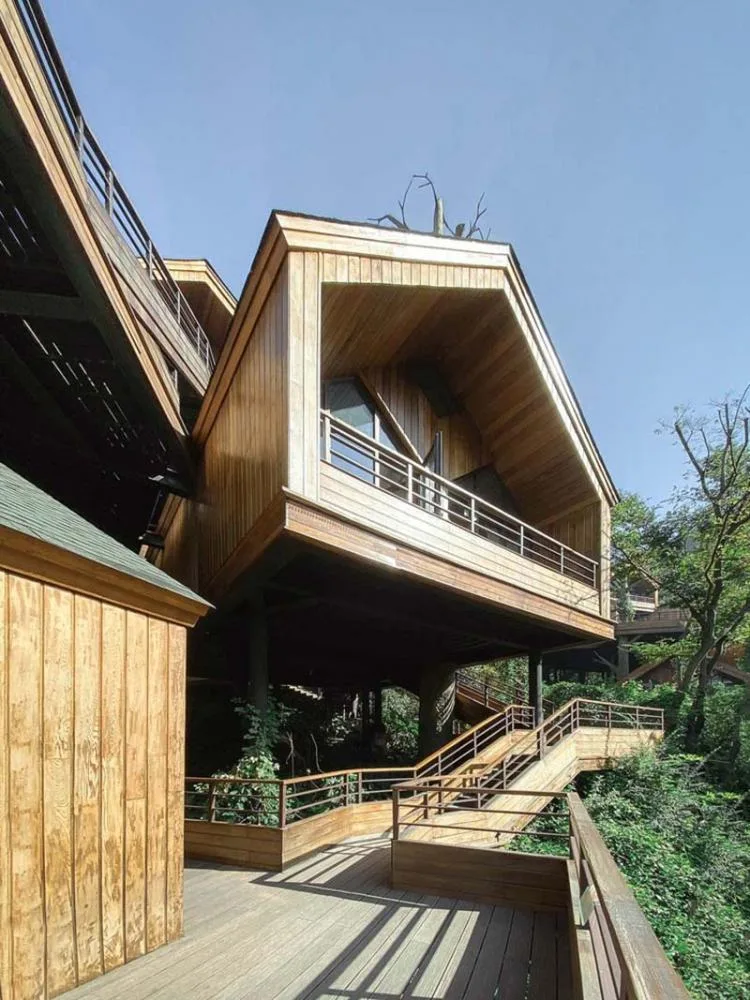
△ Close-up of the treehouse © Liu Xiaoli
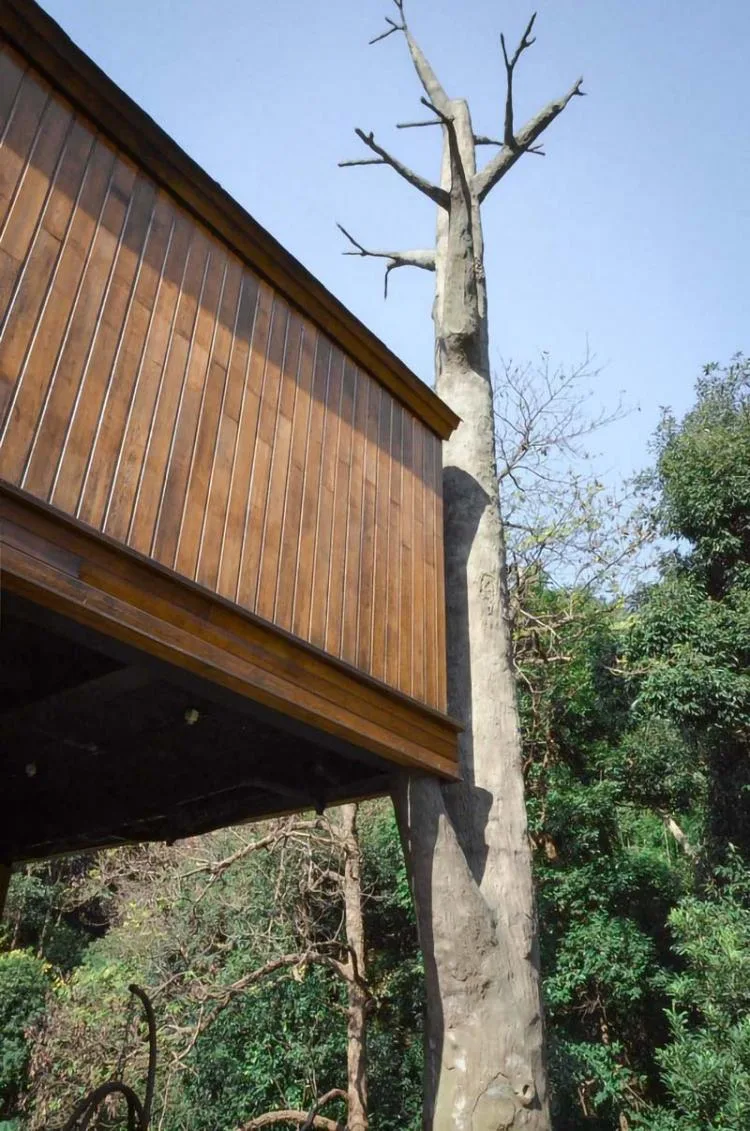
△ Close-up of the treehouse © Liu Xiaoli
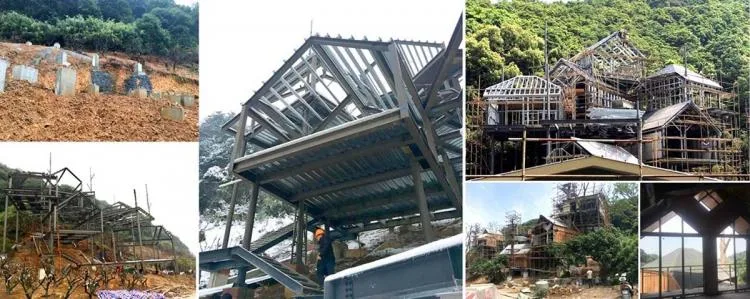
△ Construction process of the treehouse © WCTG
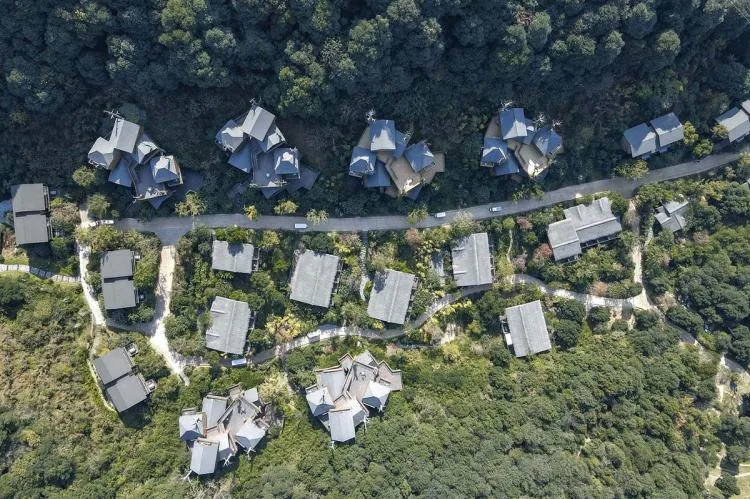
Overall bird’s-eye view © Liu Xiaoli
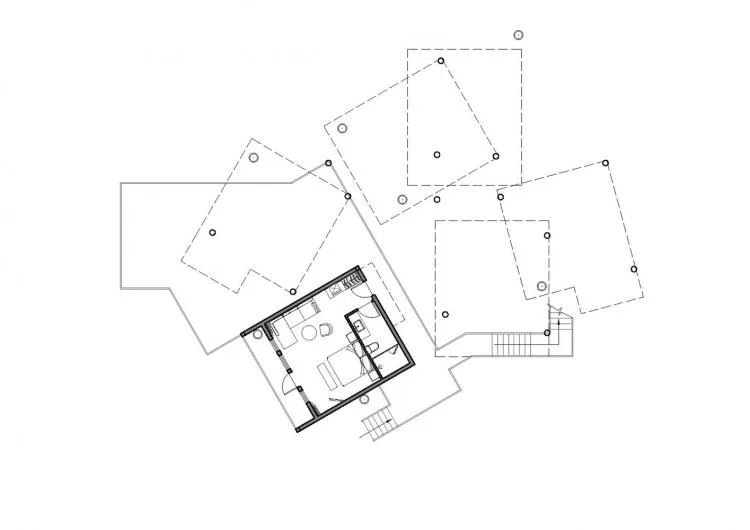
△ Plan 1
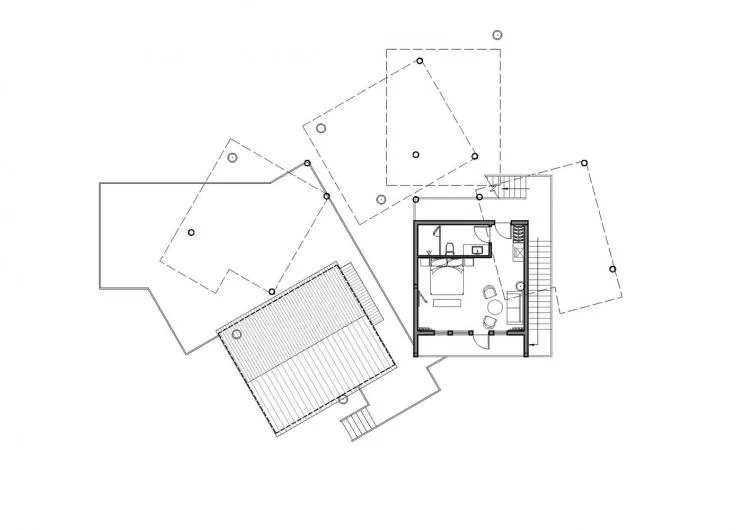
△ Plan 2
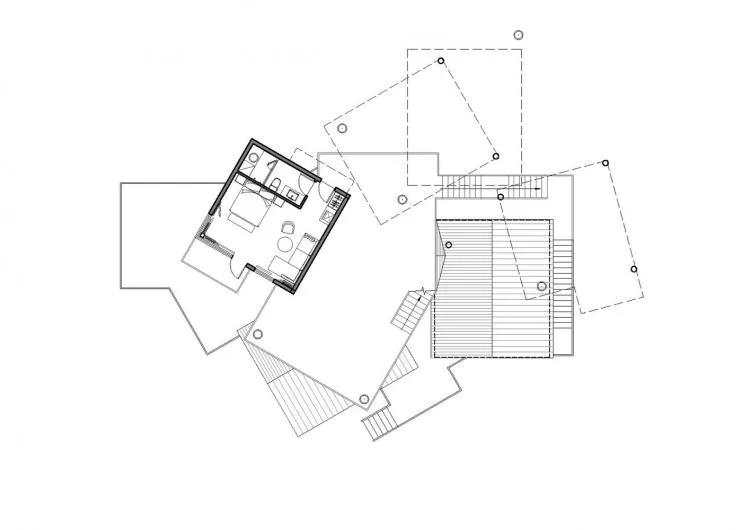
△ Plan 3
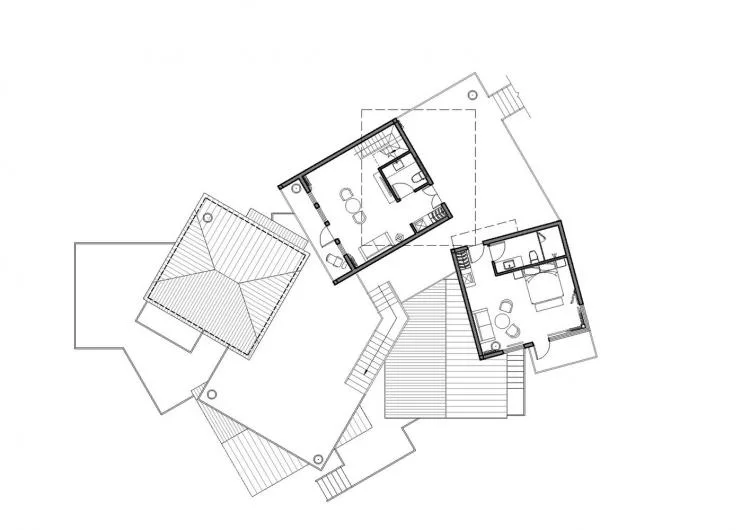
△ Plan 4
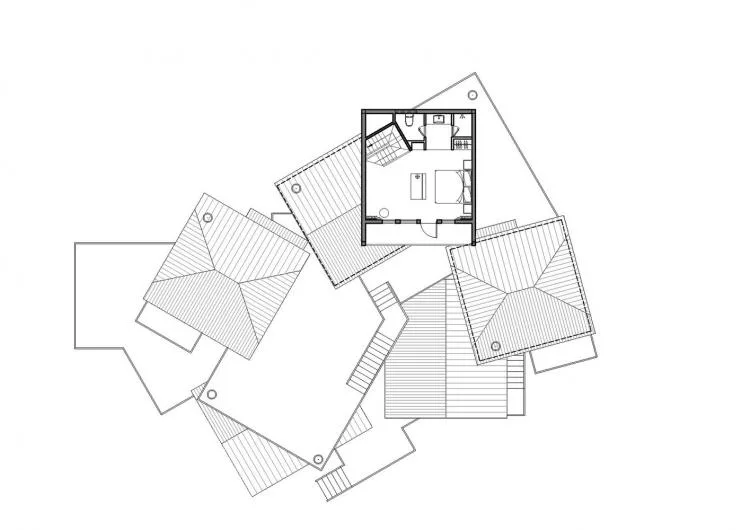
△ Plan 5
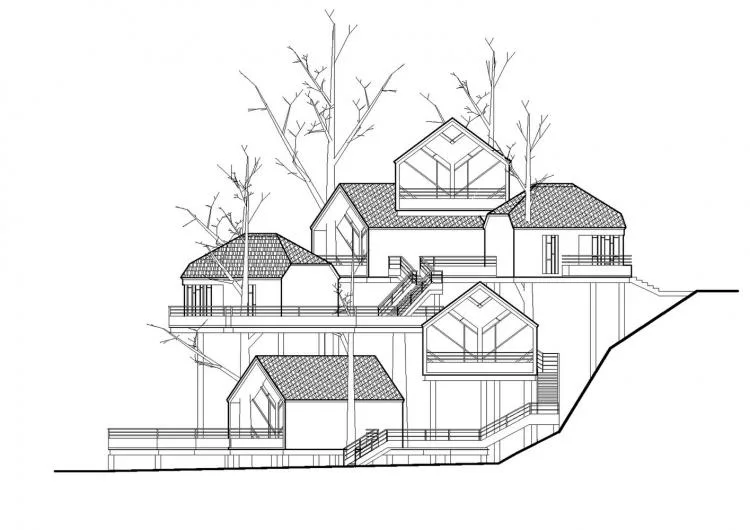
△ Elevation drawing
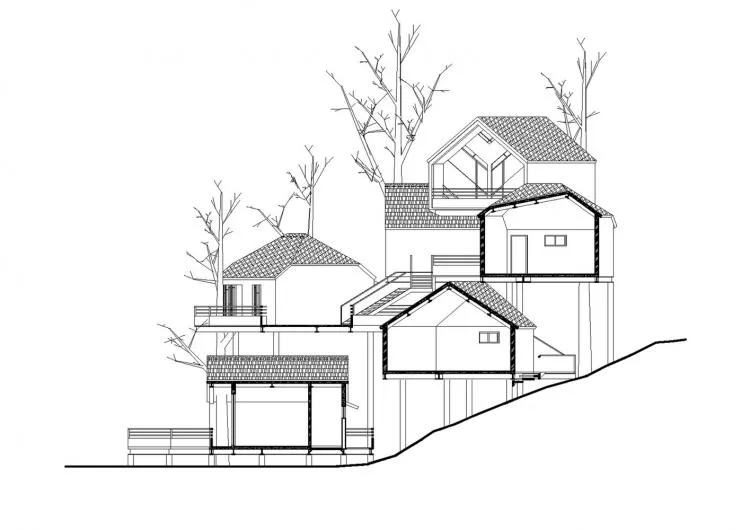
△ Section diagram
Project Information
Project Type: Hotel
Location: Hangzhou, China
Designer: Wang Hui Architecture Studio
Area: 1,750 m²
Year: 2019
Photographers: CC, WCTG
Design Team: Hui Wang, Rongrong Wang, Tianyi Qin
Construction Team: Wanzhang Cultural Tourism Group, Jianbo Guan, Min Huang, Xinfeng Xu, Huaqiang He
Owner: Senbo Resort














Must log in before commenting!
Sign Up