
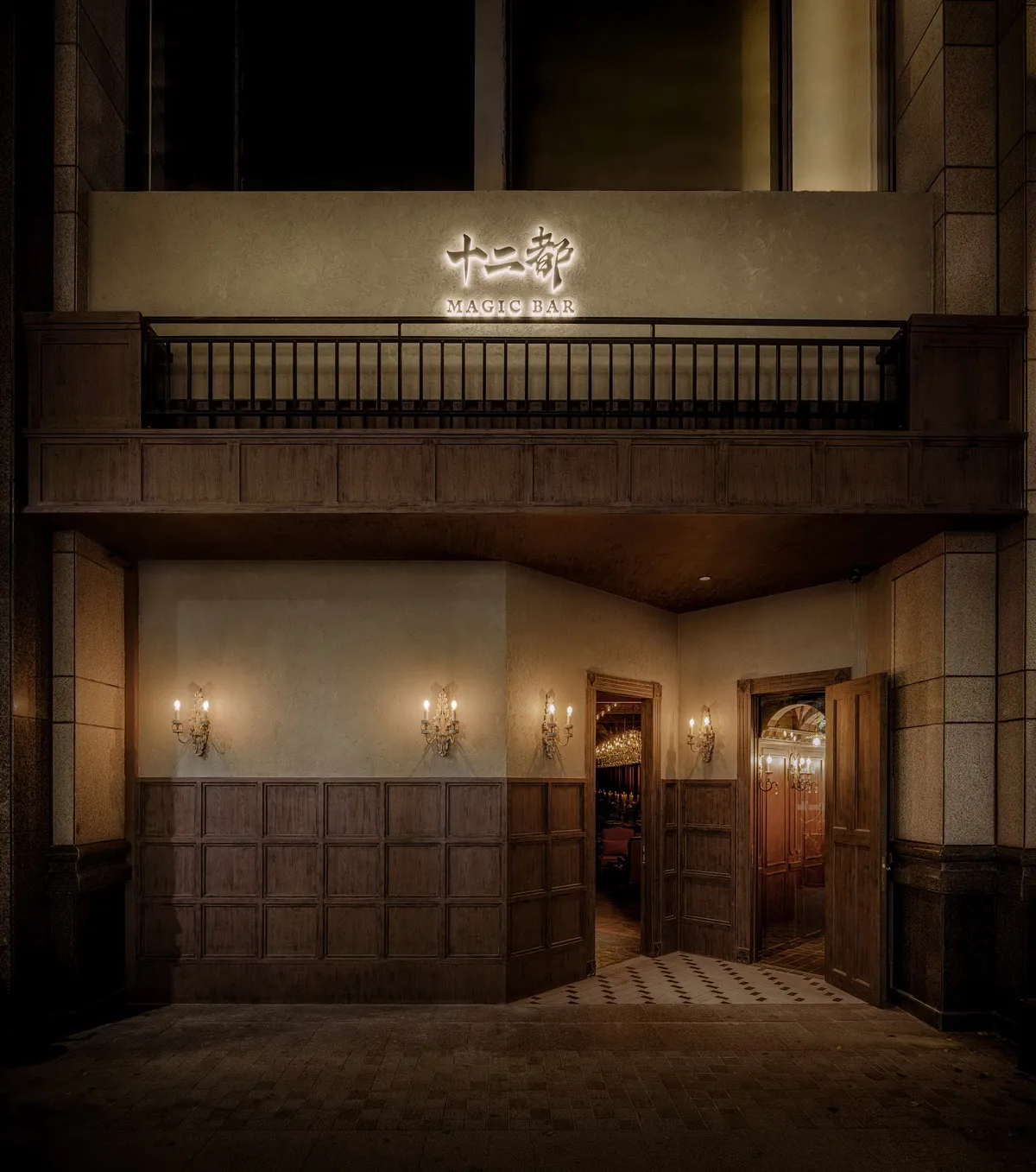
The Twelve Cities MAGIC BAR, designed by GB SPACE (High White Space Design Firm), offers a unique experience centered around close-up magic performances. Located at E158, Block E, Zhongjun World City, Jinhui Road, Chaoyang District, Beijing, this project covers an area of approximately 103 square meters.
Inspired by immersive theater and integrated landscape design, the designer divided the space into several indoor living scenes, crafting a retro medieval “magician’s home.” This design invites visitors to fully engage with the life of a medieval magician, immersing them in an atmosphere completely distinct from the outside world.
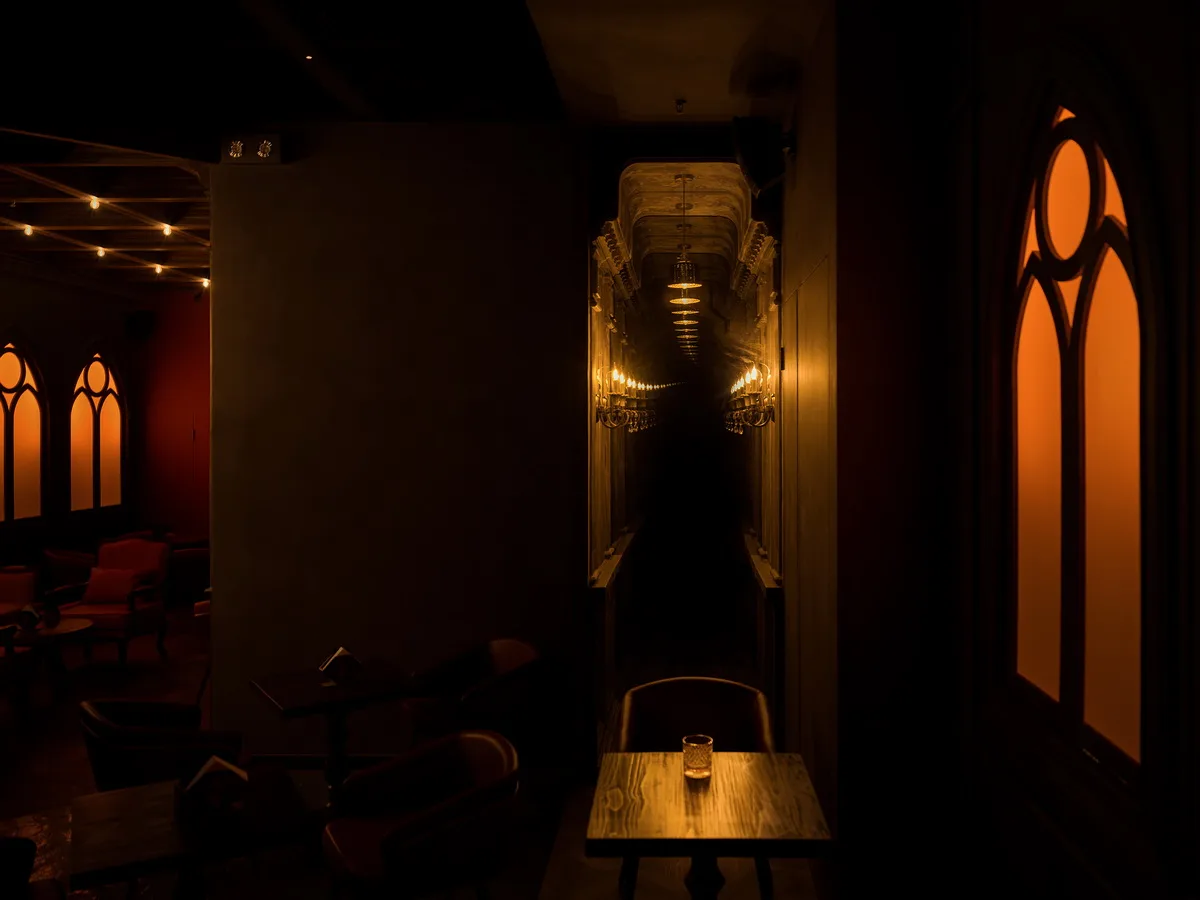
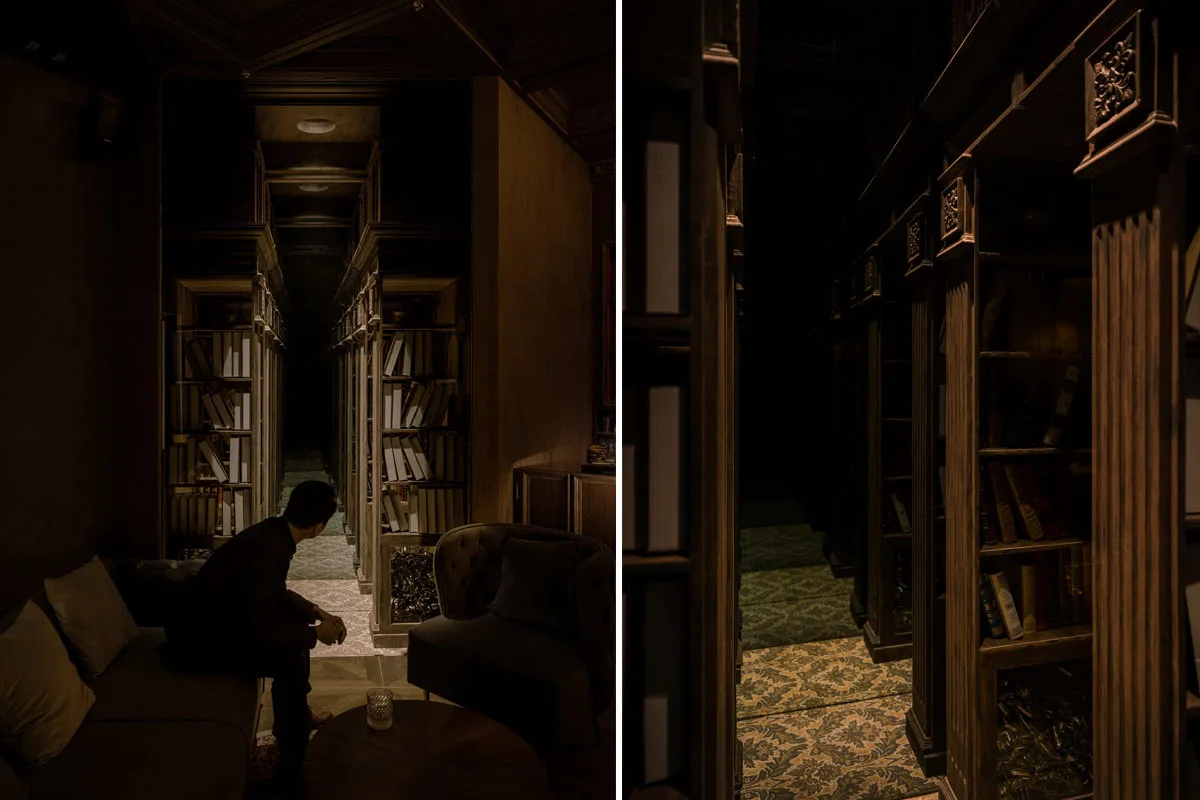
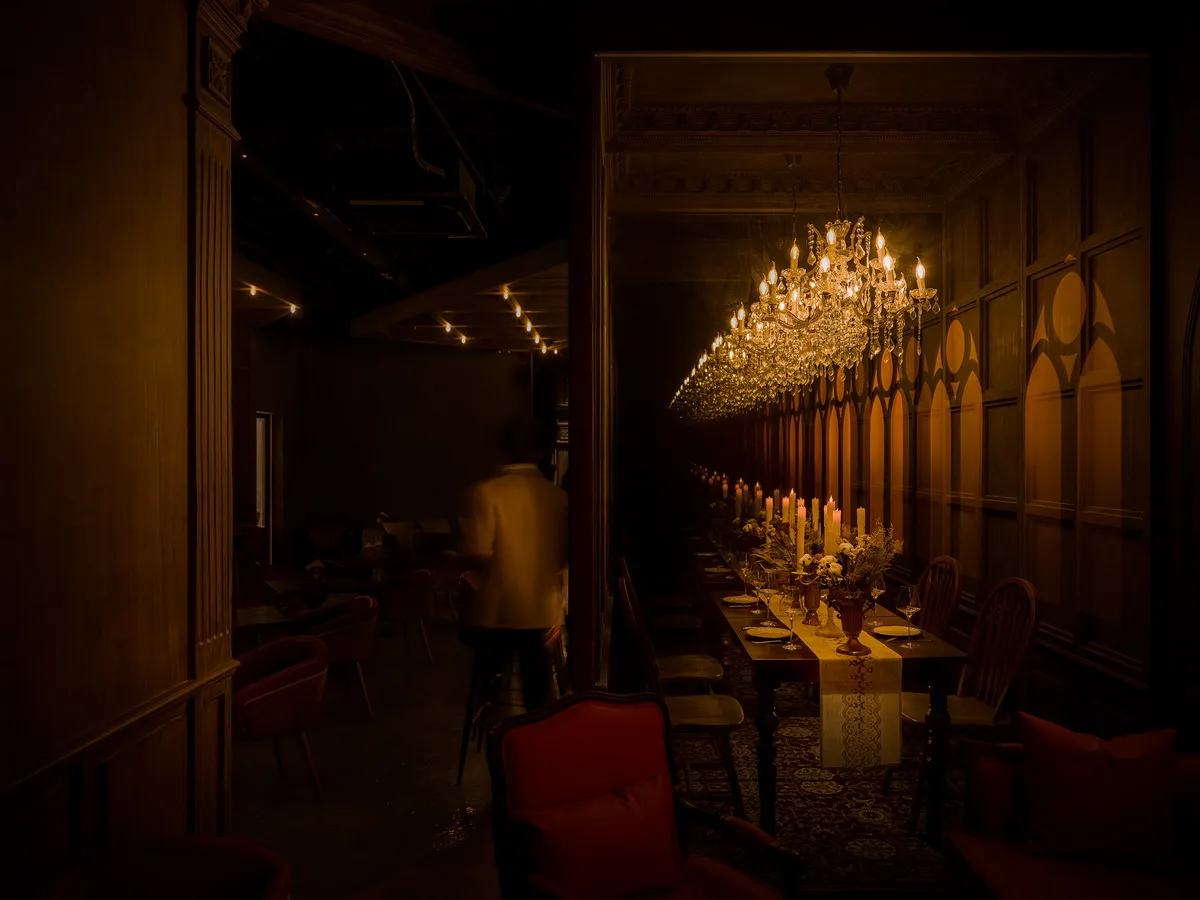
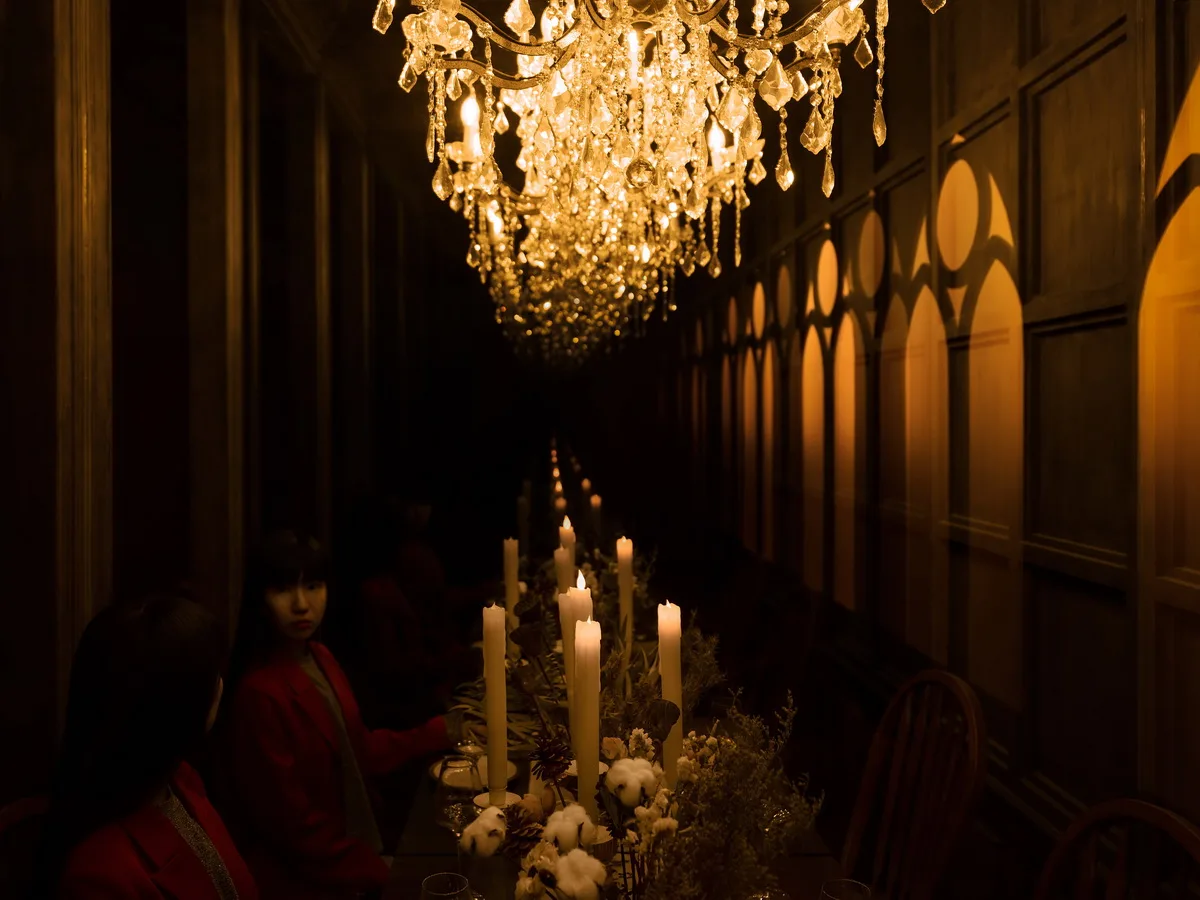
The space is divided into several distinct scenes: the corridor along the exterior facade, the restaurant area at the entrance, the living room at the bar counter, and the study in the performance area. Reflective devices are incorporated into each scene, using mirrors and DSLR lenses to create infinite extension effects that enhance the restaurant, study, and corridor settings. These reflections not only increase the functionality of each space but also deepen the magical atmosphere.
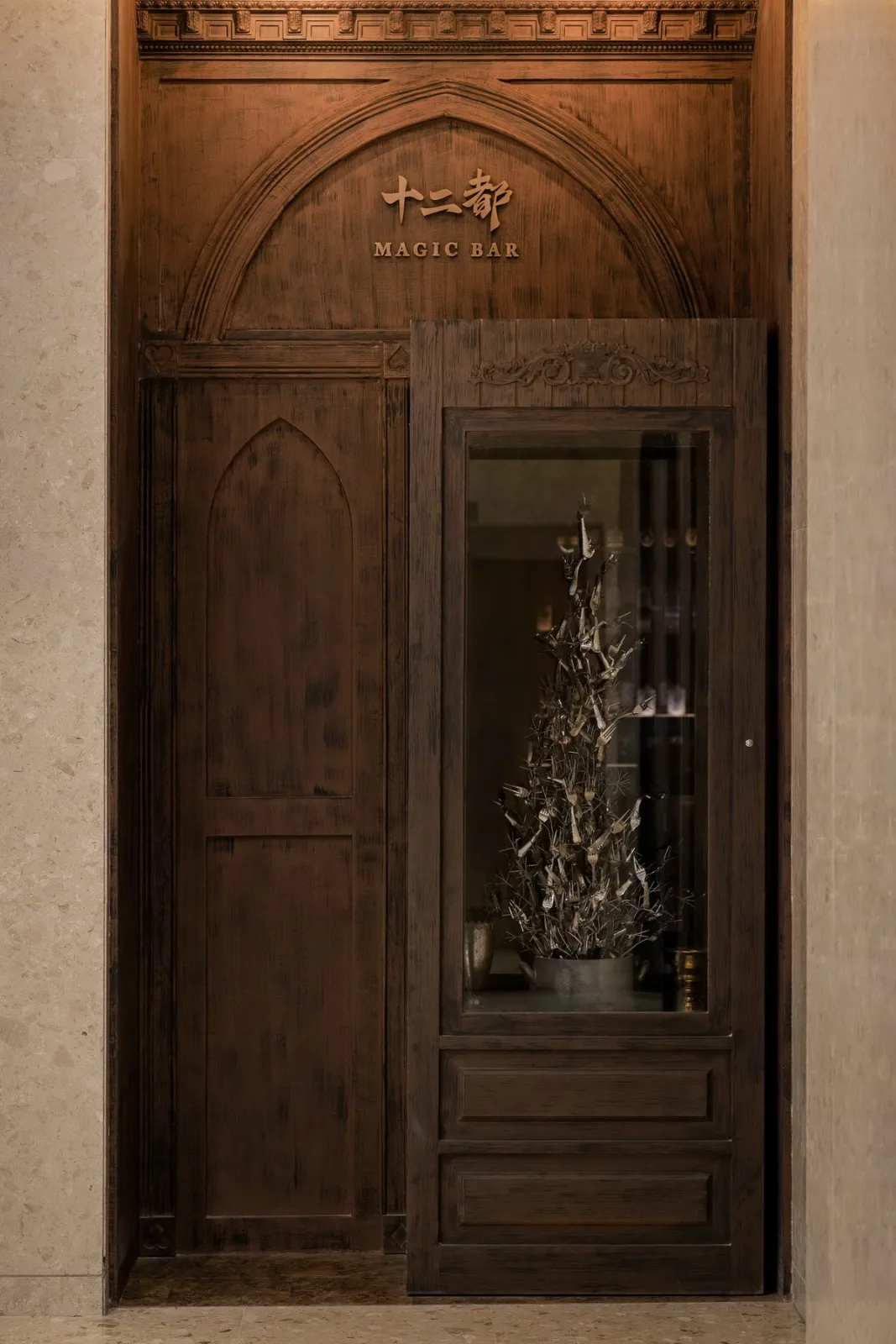
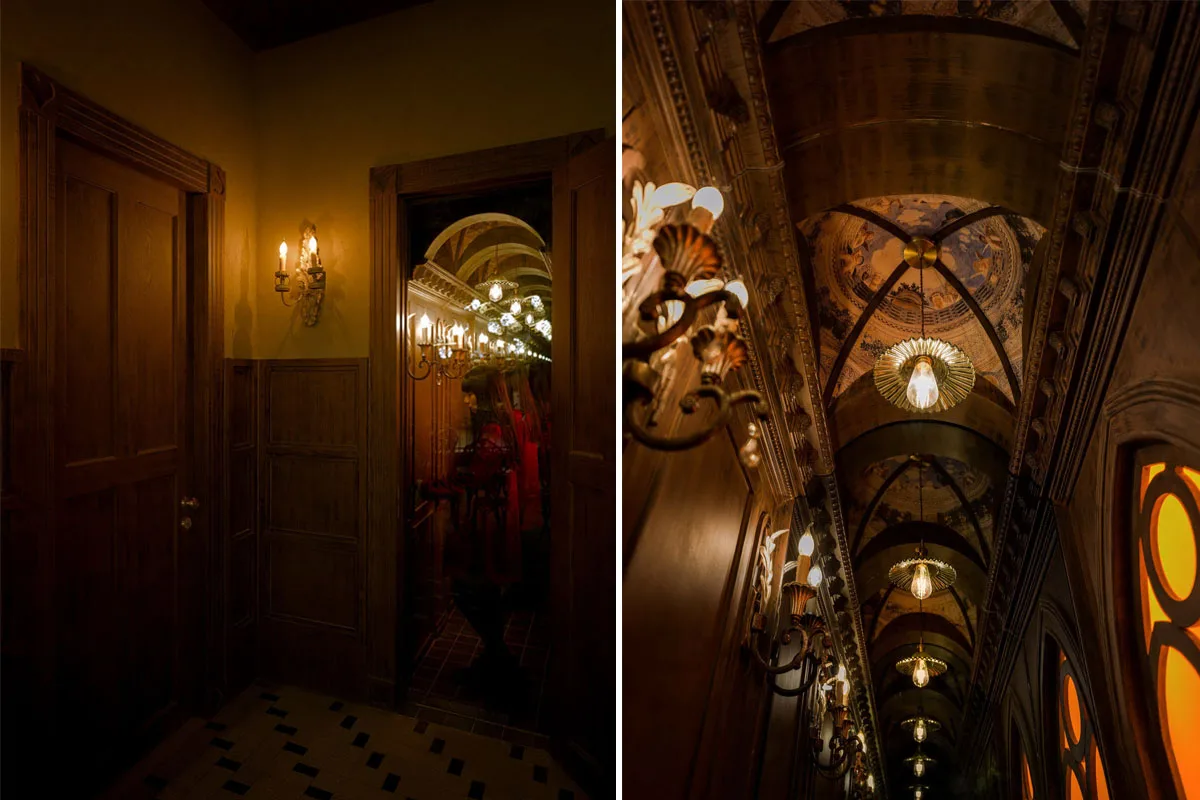
The bar features two entrances: the main entrance on the exterior of the ground floor commercial building and a secondary entrance leading into the shopping mall’s interior. The exterior entrance brings the indoor corridor scene outside, giving visitors the sensation of arriving at a wizard’s doorstep. This main entry is designed as a double door — one door opens to the real entrance, while the other reveals the endless corridor scene. Within this corridor, one side features a door and the other a window that can be opened from inside, inviting guests into the installation. This double door design enhances interaction between people and space, adding to the location’s mystery.
The secondary entrance is more concealed, consisting of a fake door and a movable cabinet displaying a device made of fork props, inspired by the magician’s recent ‘transformable forks’ trick.
Upon entering the main door, visitors encounter the reflection device that extends the restaurant scene infinitely. The dining table arrangement can be adjusted via the open window to suit various festivals or story themes, making the space adaptable and immersive.
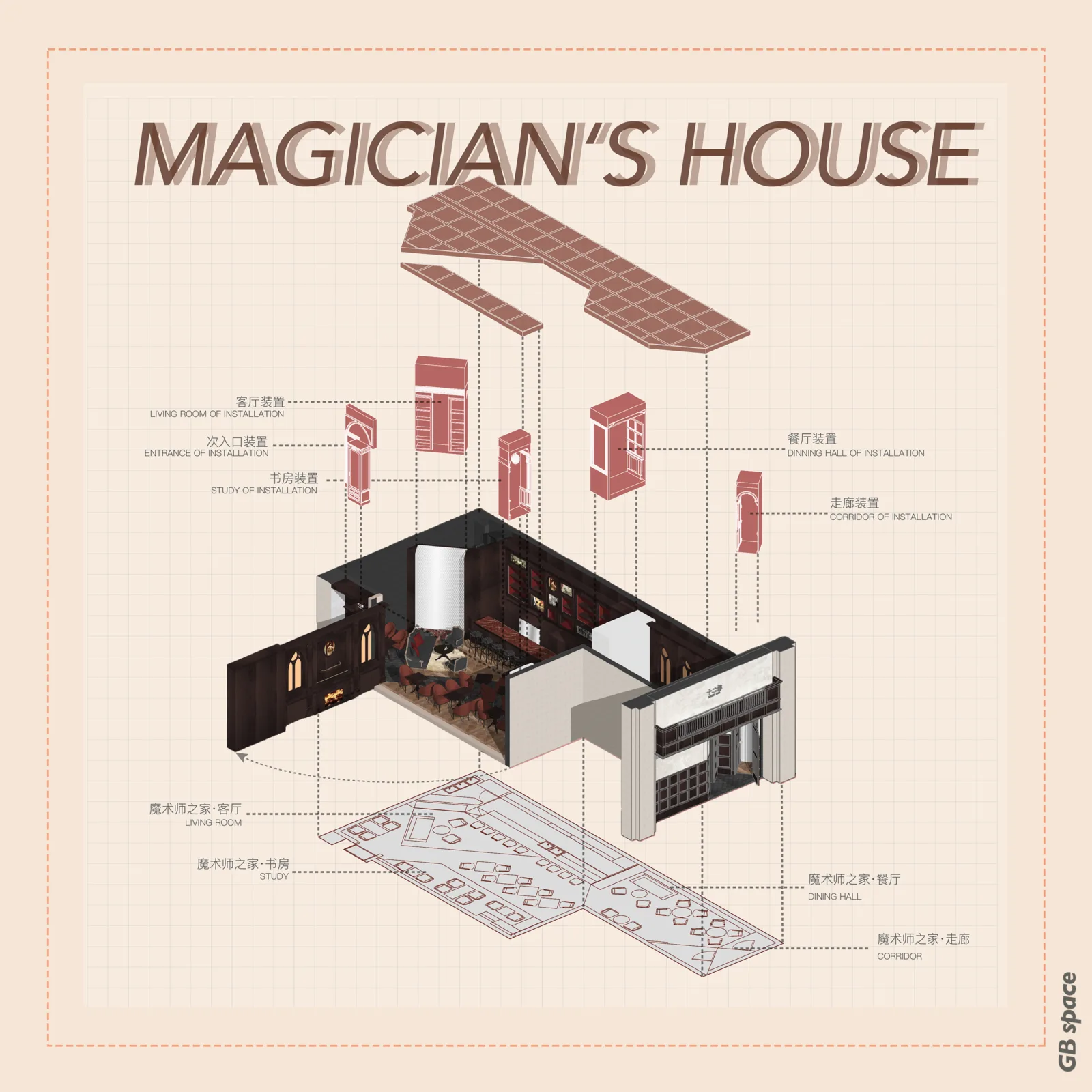
△ Analysis chart
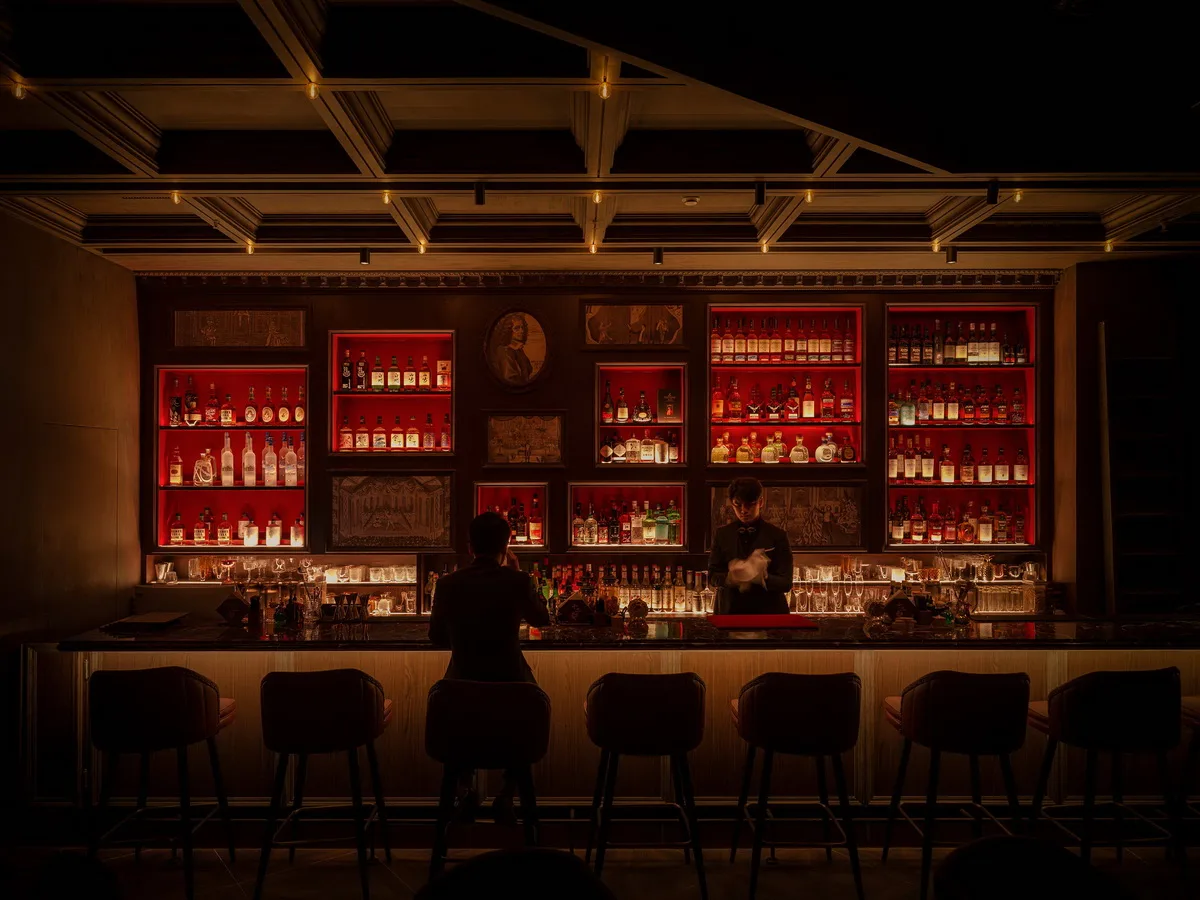
The dining area connects seamlessly to the living room scene, which incorporates a bar counter. The back wall of the bar is designed as a hanging wall for the living room, combining a wine rack and paintings into a unified framed element. The paintings depict iconic magic performances and historical scenes featured in the book History of Magic.
Given the close-up magic performances typical in bars, the designer expanded the bar counter’s width to accommodate the magician’s act, rather than creating a traditional performance platform. The reflective device adjacent to the bar counter simulates a library scene, with rows of bookshelves filled with the medieval magician’s collection of books and magical props, further illustrating the character’s lifestyle.
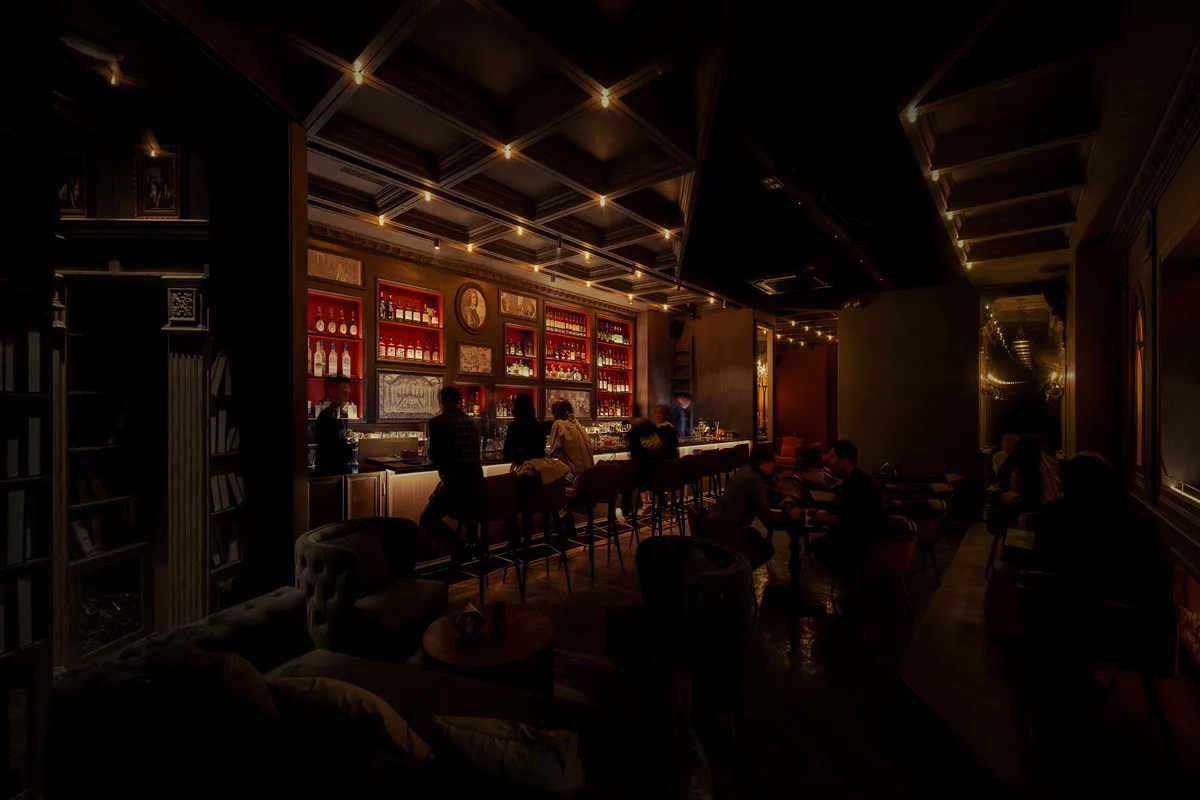
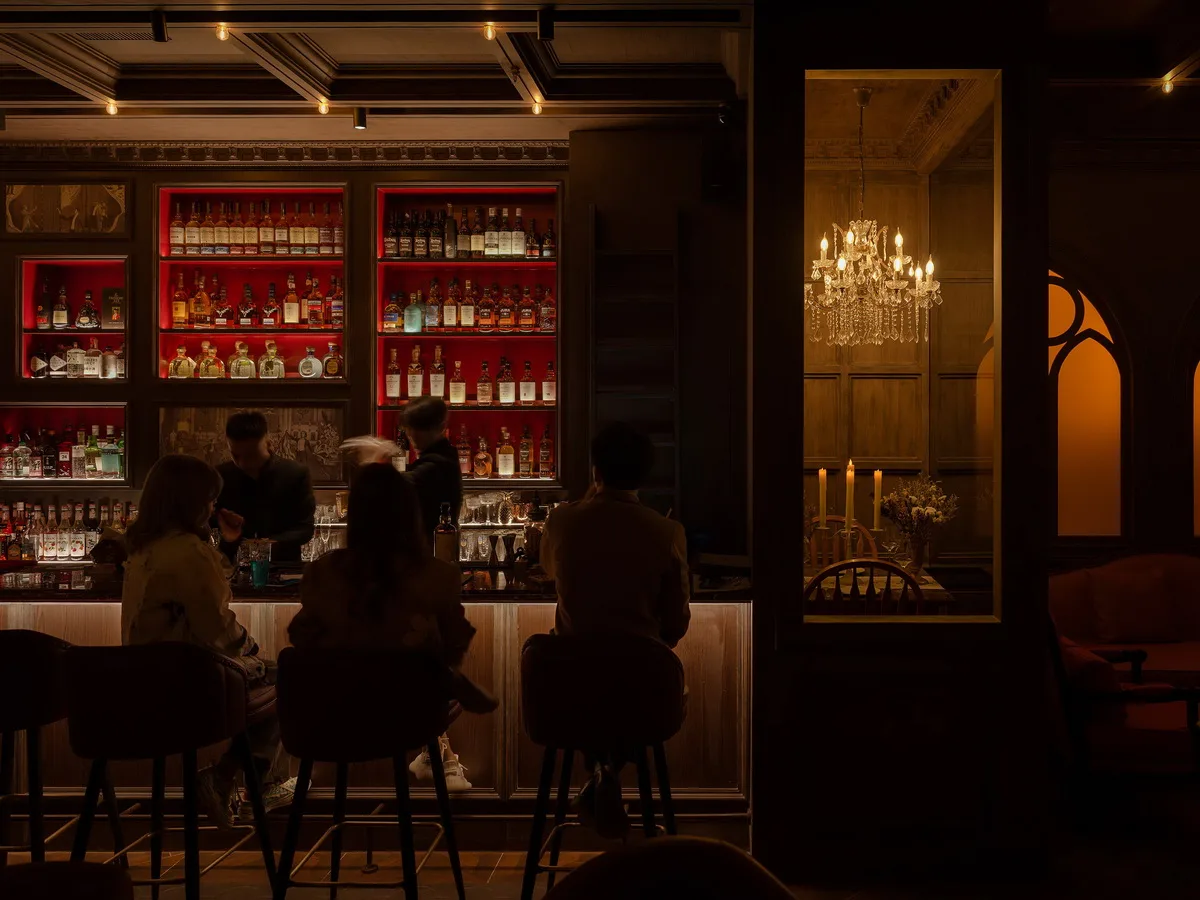
Opposite the bar counter is a study scene with steps, designed to accommodate mid-performance magic acts. This space includes a fireplace, a wine storage area, and a corridor reflection device leading into the study.
The ceiling and floor are segmented according to the different scenes, allowing each area to function independently as a complete space. The overall indoor lighting is very dim, with focused key lighting only on the reflective devices and the magic performance area at the bar counter. The lighting around the performance area is remotely controlled, allowing for intensity adjustments as needed.
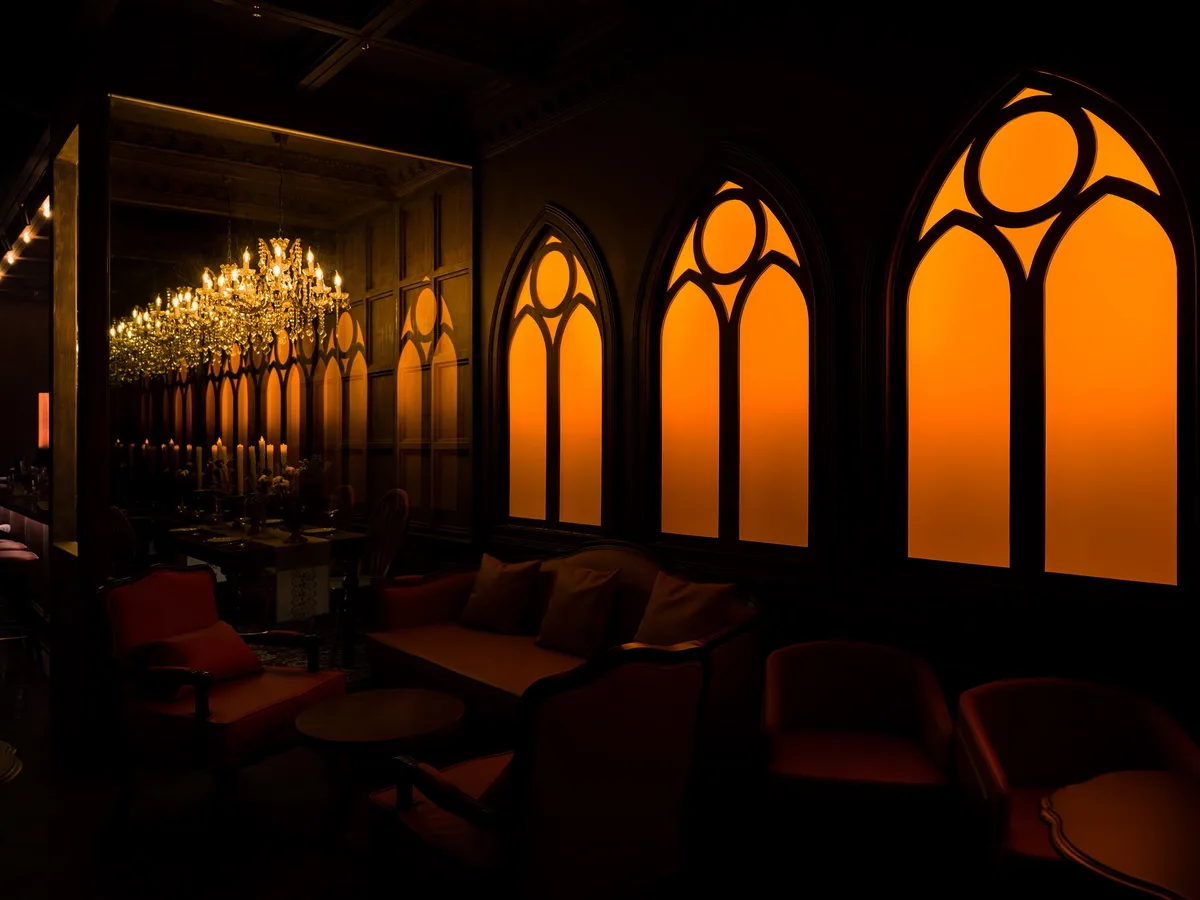
To enhance the home-like ambiance, the designer created window shapes on interior walls that lack natural light. These windows are illuminated by light strips simulating dusk light, enriching the spatial atmosphere.
Much of the furniture and styling were achieved through on-site construction using finished gypsum, significantly reducing build time. The walls are painted with wood grain paint to create a vintage texture, while the furniture primarily features leather and velvet materials, reflecting the wizard’s quality of life and the cozy home environment.
The color palette centers on dark reds and oranges, complemented by dark walnut wood throughout the space, adding a nostalgic, retro tone. Door frames are detailed with playing card color motifs, symbolically introducing visitors to the Magician’s House theme upon entry.
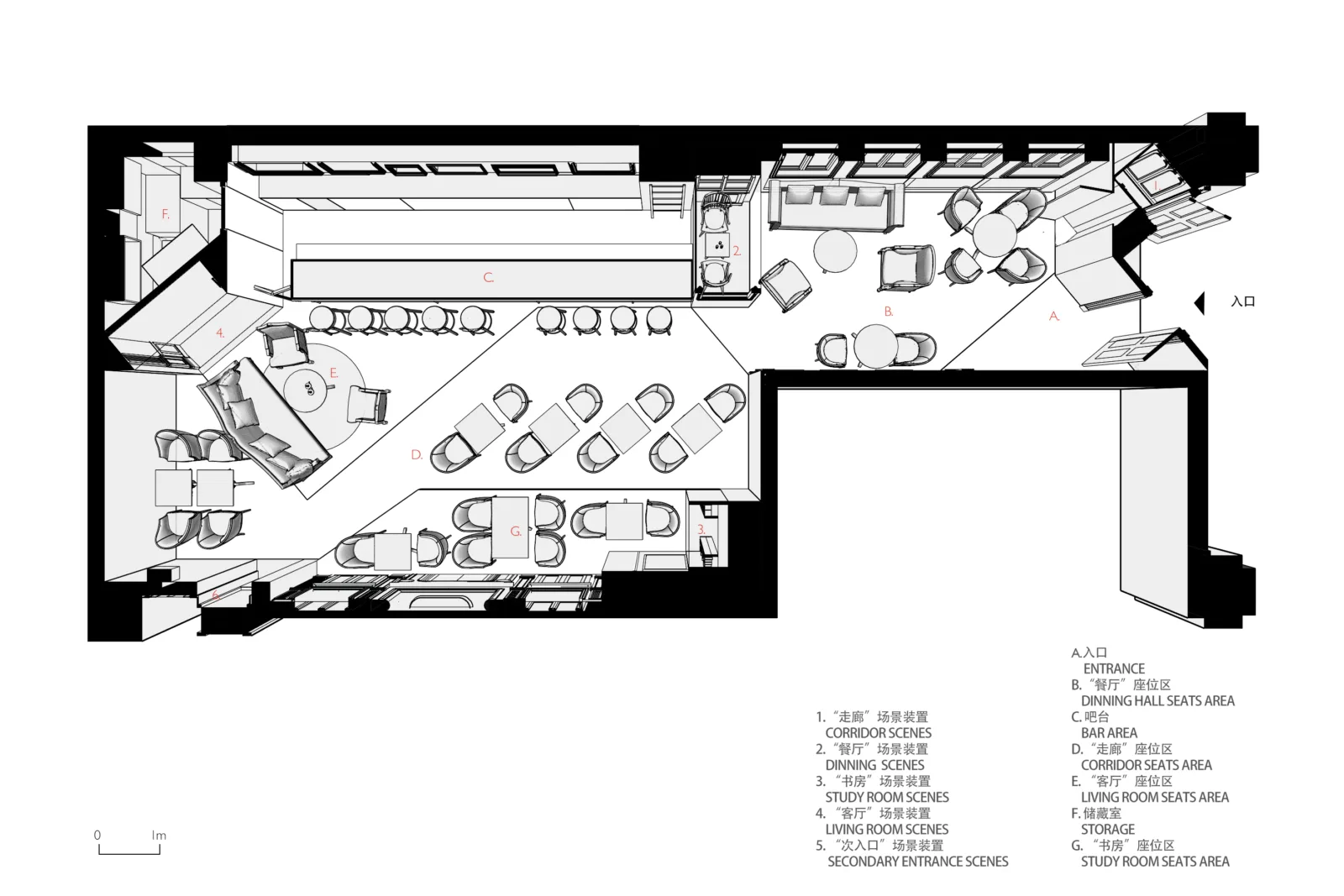
△ Overall layout plan
Project Information
Project Name: Twelve Cities MAGIC BAR
Location: E158, Block E, Zhongjun World City, Jinhui Road, Chaoyang District, Beijing
Completion Date: October 2020
Project Area: 103 m²
Design Company: GB SPACE High White Space Design Firm
Designers: Gao Wenyu, Baiyang, Gao Yuan
Materials Used: Walnut wood, wood grain paint, wood grain brick, mirror, one-way reflective mirror
Photographer: Wang Ning












Must log in before commenting!
Sign Up