
The project is situated in Jizhou District, Tianjin, originally an independent farmhouse. The owner is inspired by the spiritual essence of Tao Yuanming, particularly his renowned work “Returning to the Garden and Living in the Fields.” At the start of the small courtyard renovation, they named it “Qiushan Residence,” drawn from the phrase meaning “less suited to local customs, with a natural affinity for hills and mountains.”
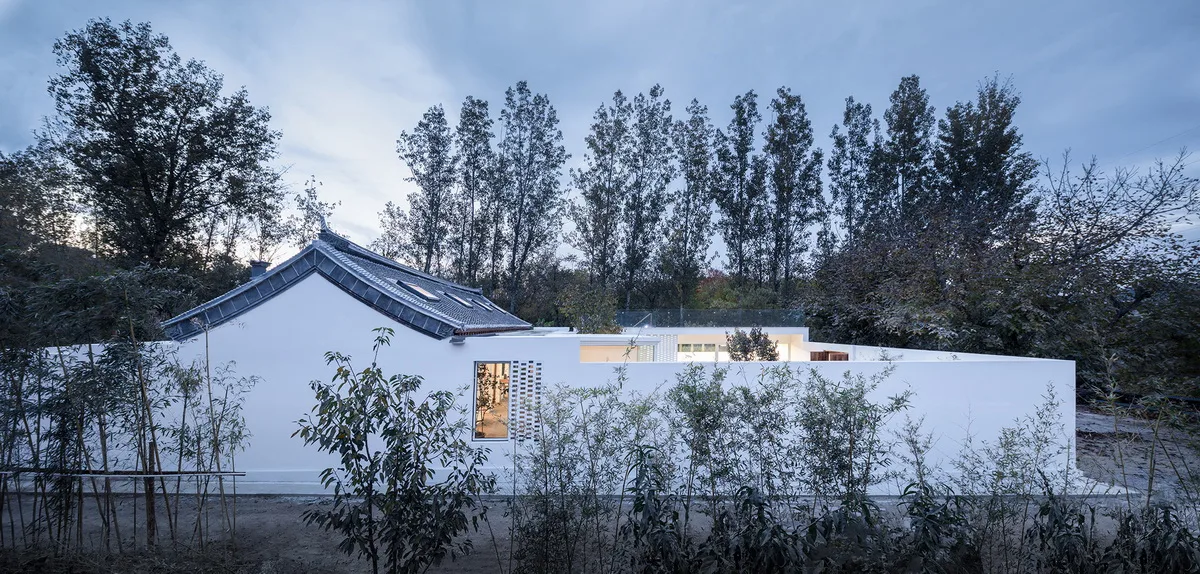
Qiushan Village lies on the southern side of the famous Panshan Scenic Area, surrounded by mountains and boasting beautiful scenery. The Jinji Expressway cuts through the village east to west, dividing it into northern and southern parts. Qiushanju is located in the northern section, with its southern courtyard wall less than 30 meters from the expressway. To the east of the site stands a tall poplar forest, to the west a small bamboo grove, and to the north, a vegetable field. The white walls of the buildings and courtyards appear from a distance like clouds drifting over the hillside.
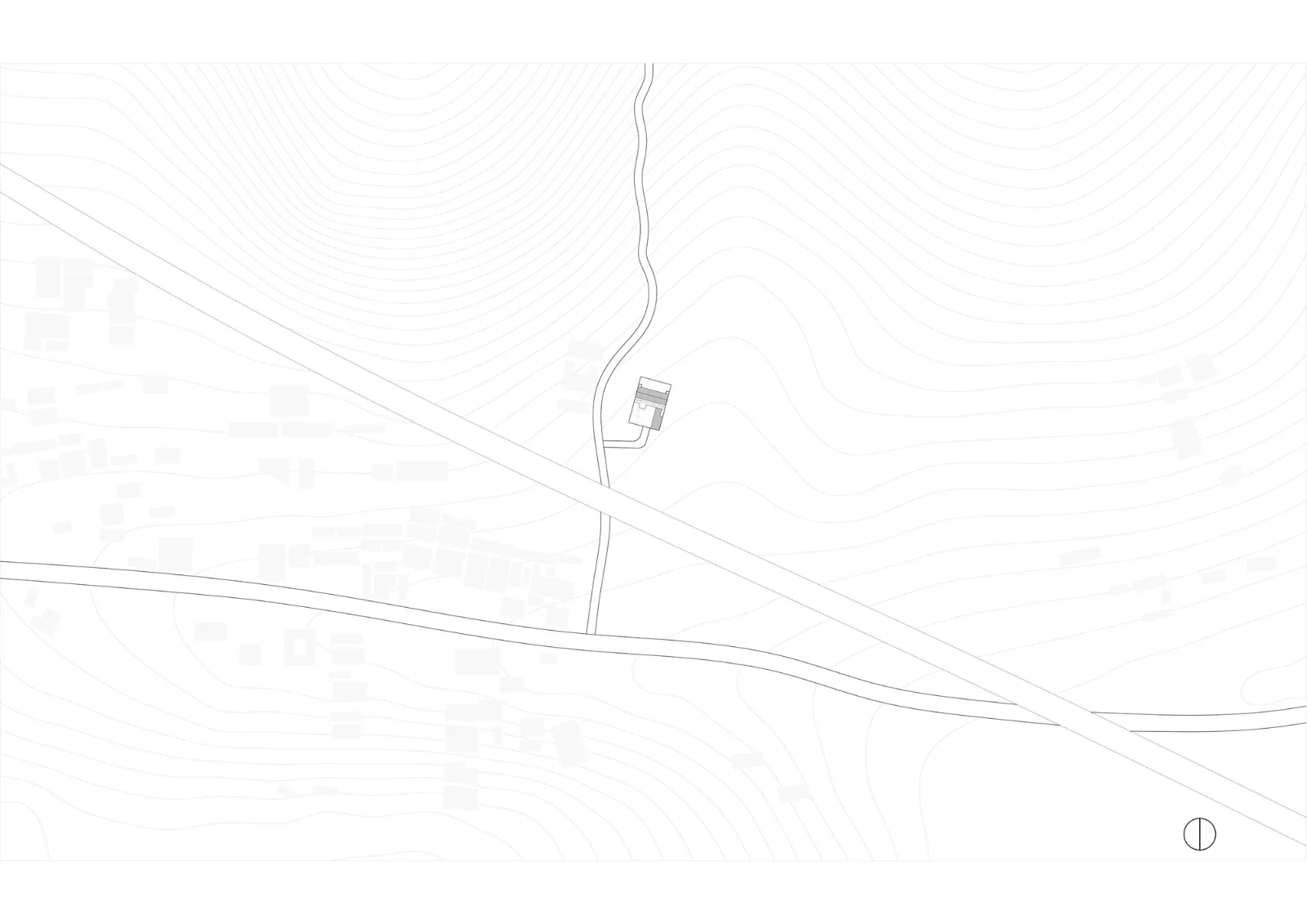
△ General layout plan
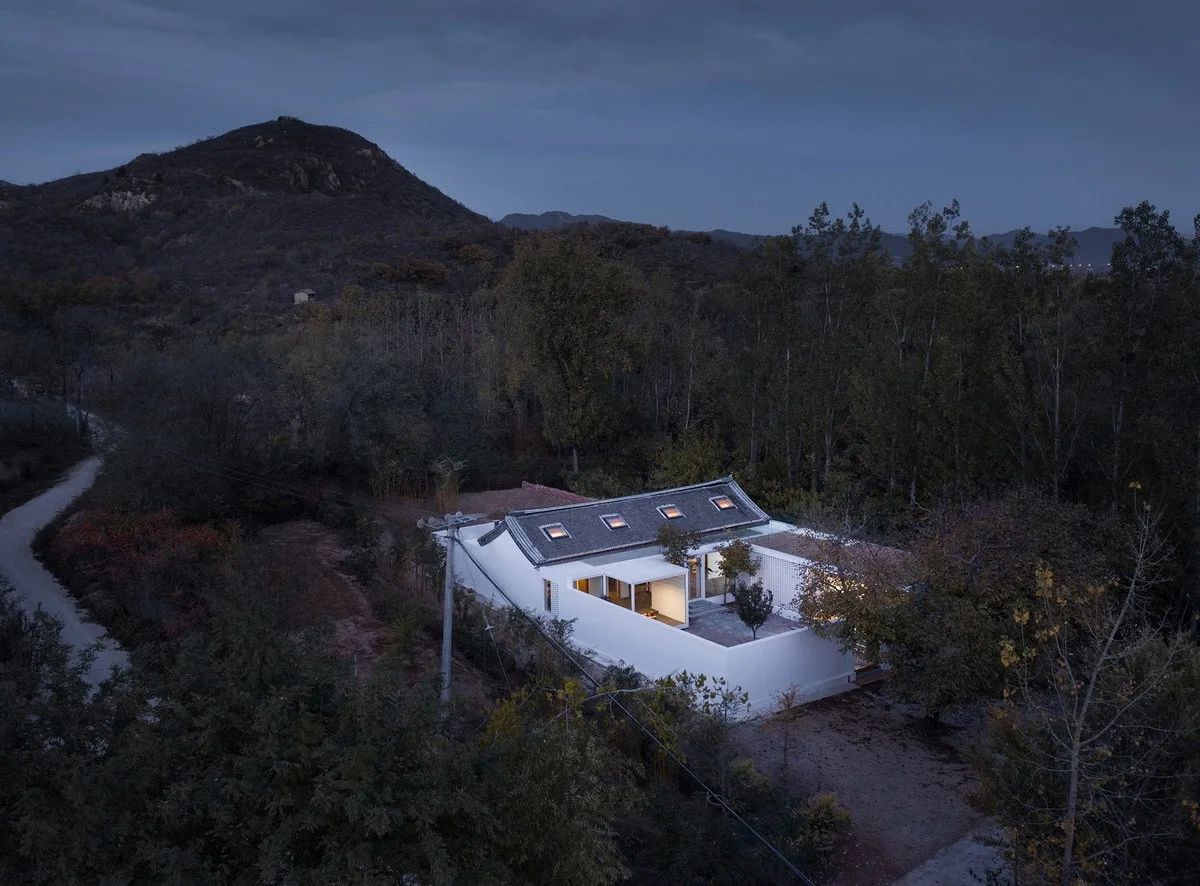
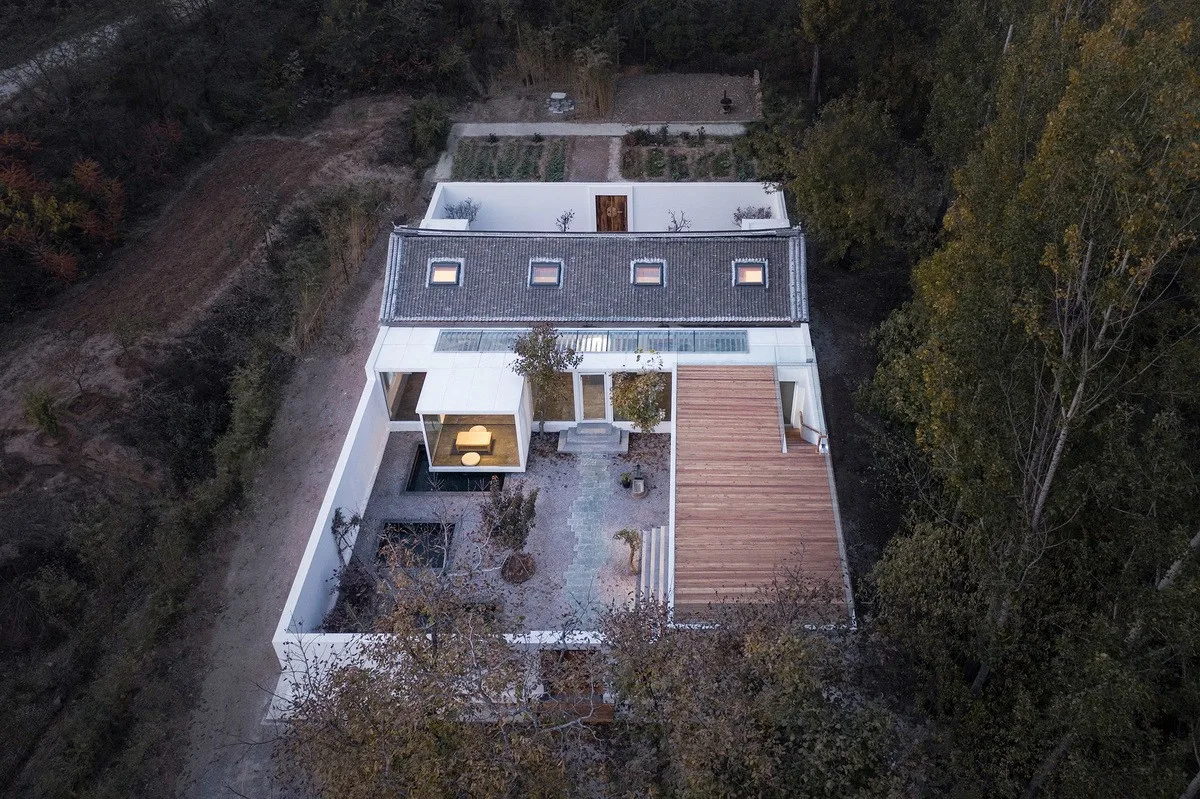
△ Night view bird’s-eye perspective
Transformation and Growth
This residence belongs to the owner’s family homestead. Since the first house was built in the 1960s, it has been rebuilt or renovated three times by ancestors, gradually forming an L-shaped home enclosing a rectangular courtyard. The previous house had fallen into disrepair, its appearance dilapidated and living conditions affected by highway noise. The owner, who grew up here, now lives and works in the city but has never forgotten their childhood home. Their goal is to create a “paradise” for both parents and children.
Though located in a rural area, the government imposes strict regulations. Construction must remain within the original building footprint, with a height limit of one floor. This constraint presents a challenge and an opportunity: while the external boundaries and environment cannot be altered, the interior spaces can grow and adapt intelligently to coexist harmoniously with the surroundings.
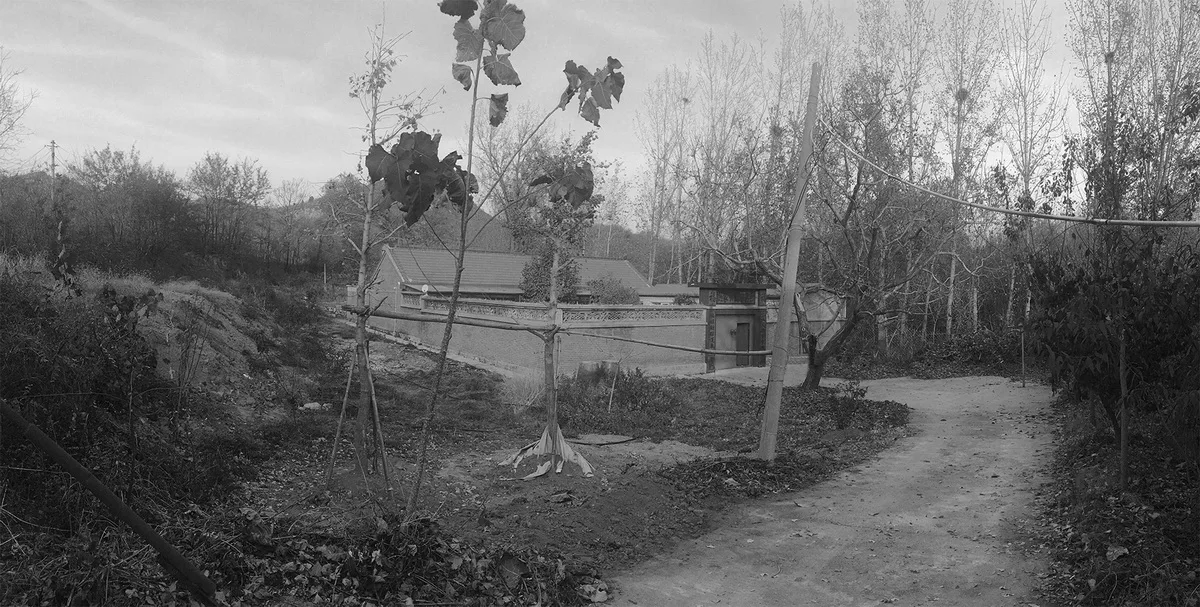
Before the renovation
Sunroom: The Heart of the Space
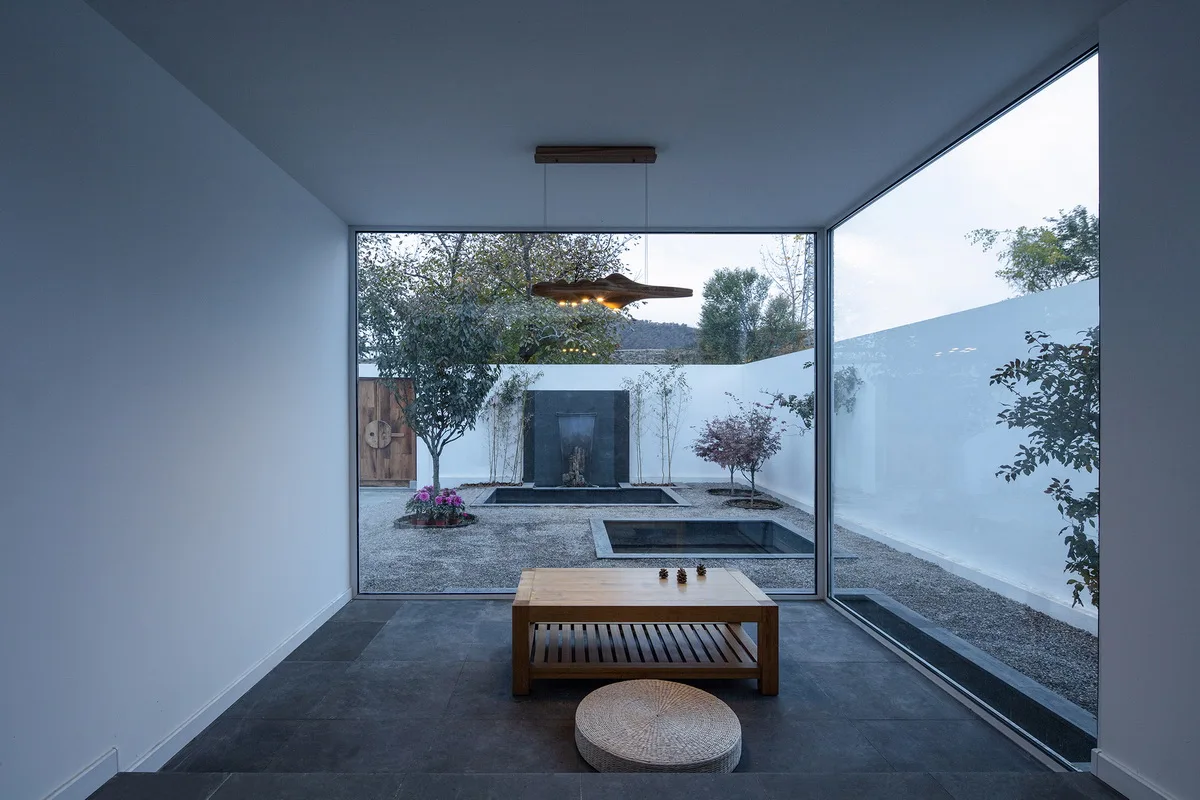
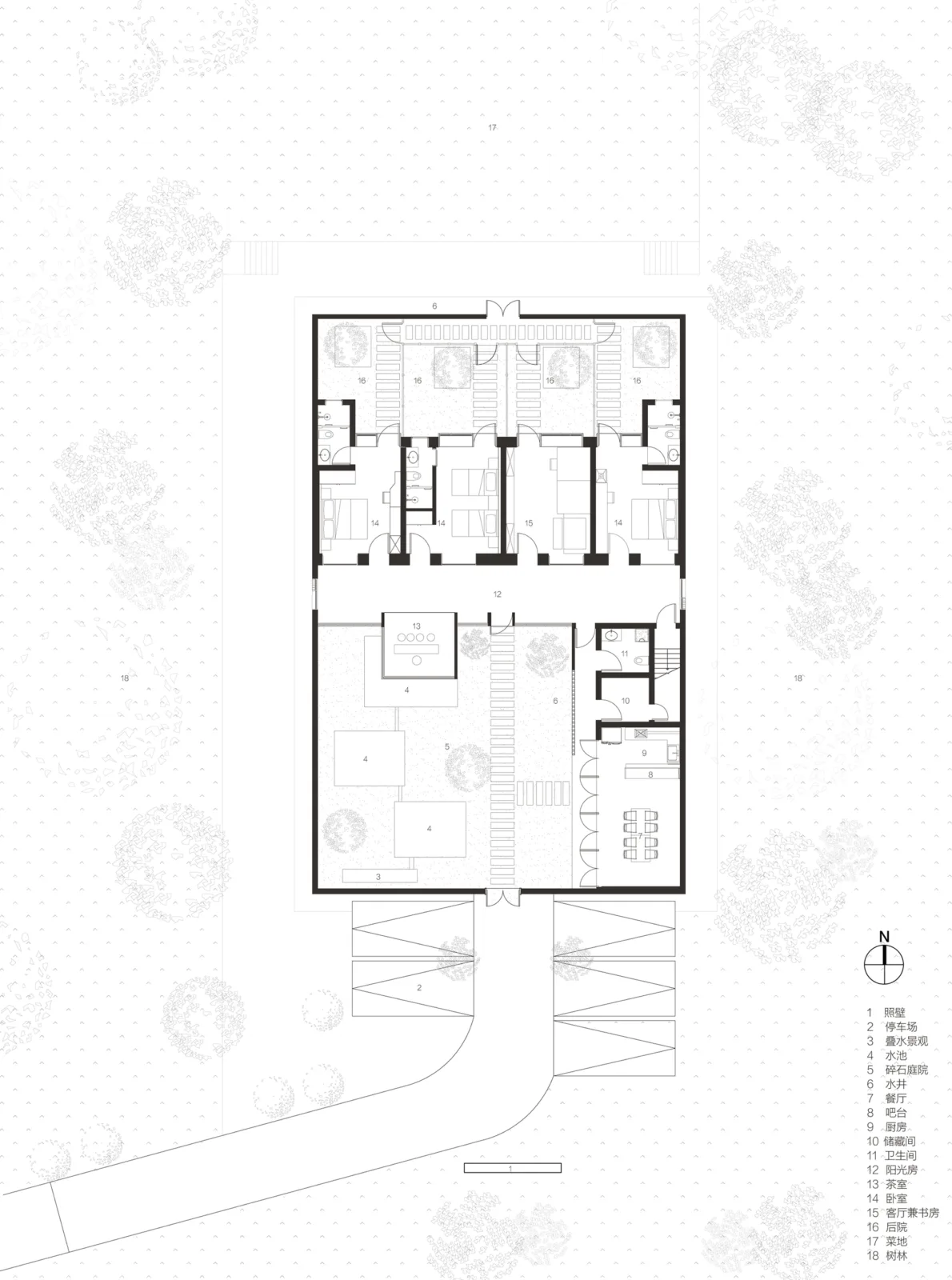
The building’s layout remains the same post-renovation but with reconfigured functions. Three bedrooms and a study are aligned east-west, while the kitchen, dining room, and utility areas run north-south. These two volumes are connected by a strip-shaped sunroom. This arrangement redefines the relationship between building and courtyard and better addresses climatic and noise challenges. Part of the sunroom was enlarged to create a tea room, adding an enjoyable social space.
Previously, the main hall dominated the space, typical of traditional Chinese homes. After renovation, the sunroom takes center stage—not just a passageway but a shared family area. Adults gather here for tea, children play freely along the corridor, sunlight pours through skylights, and large French windows frame the scenic views. The sunroom seamlessly integrates architecture with nature.
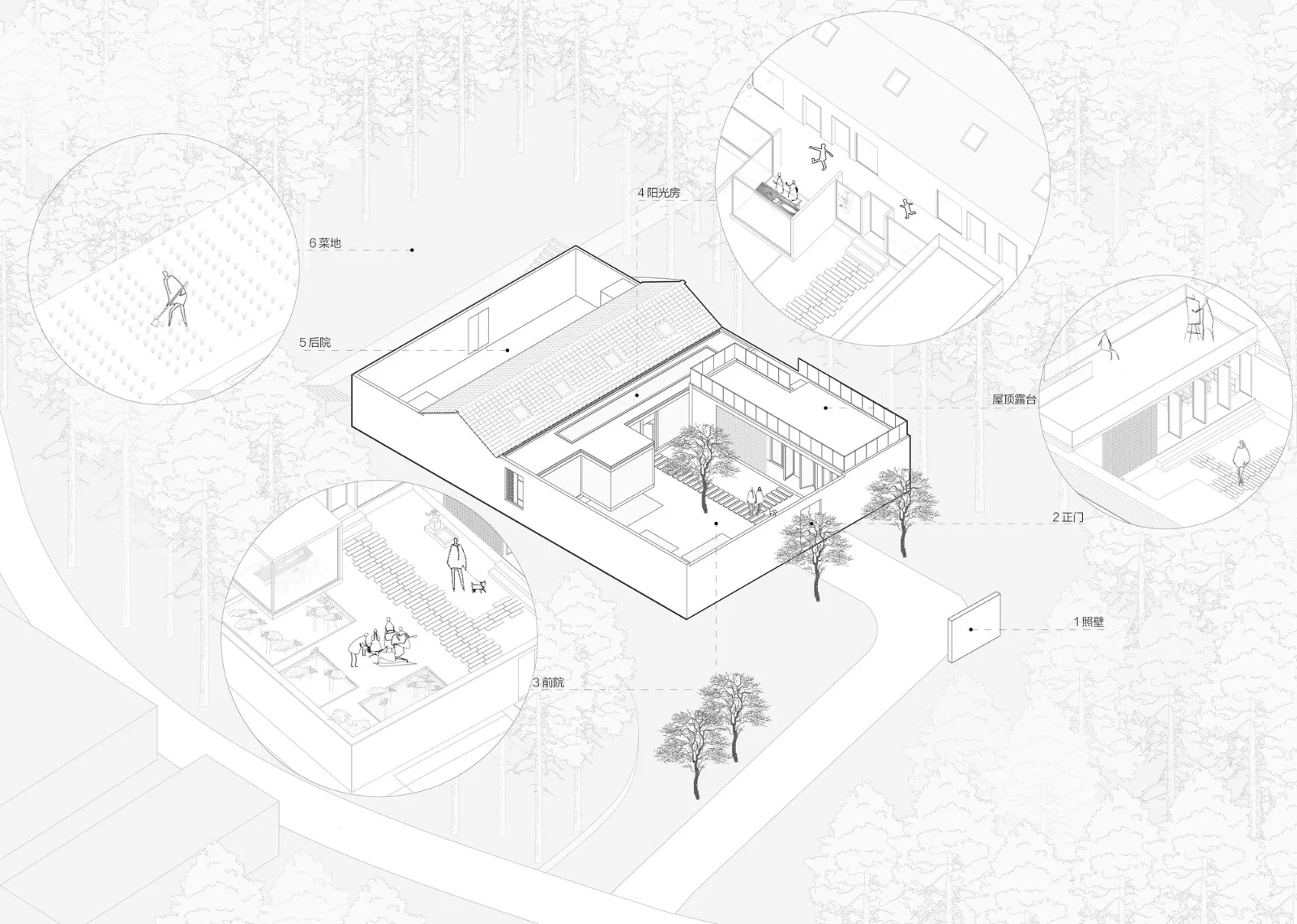
△ Path activity analysis
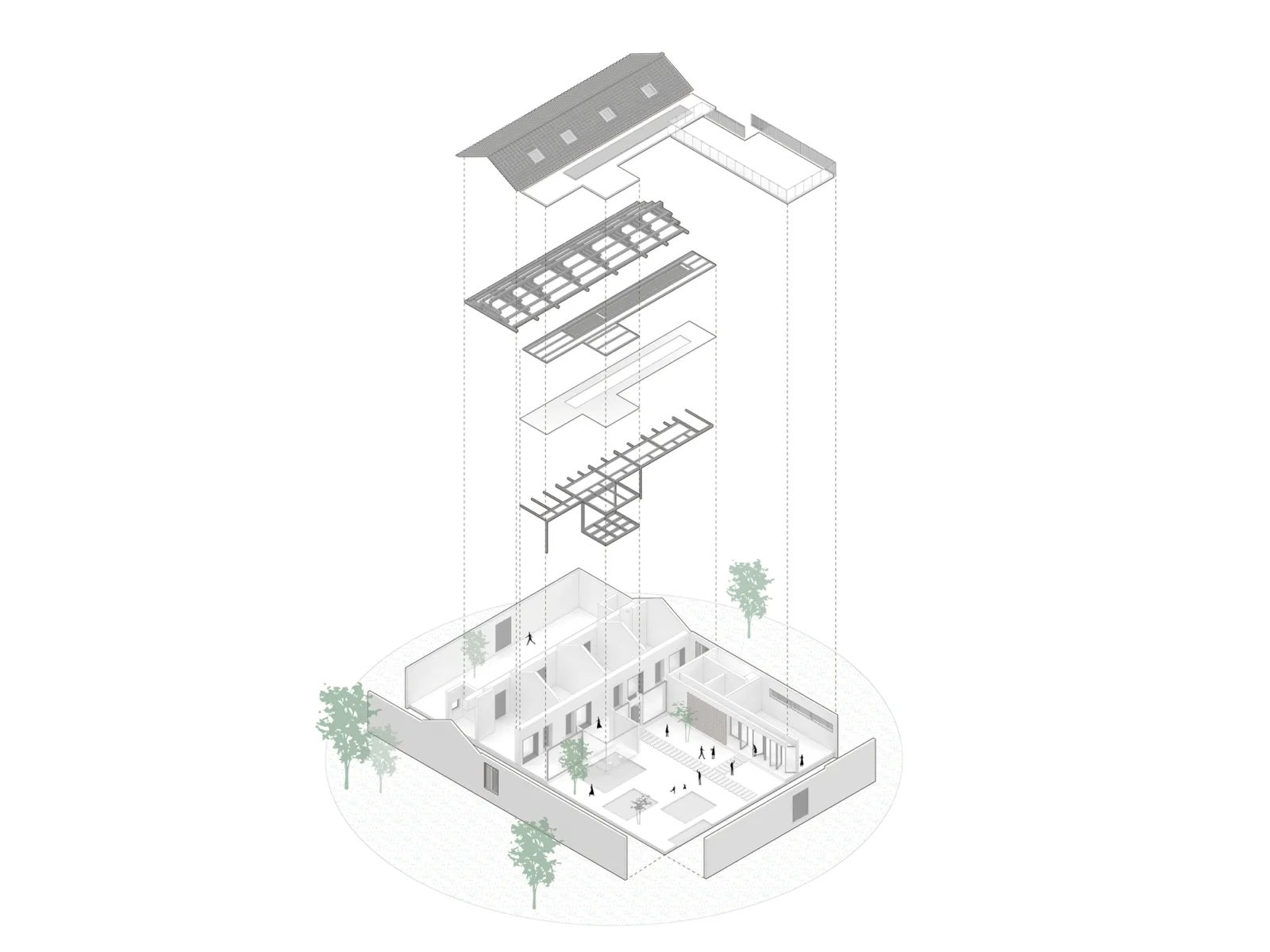
△ Construction analysis
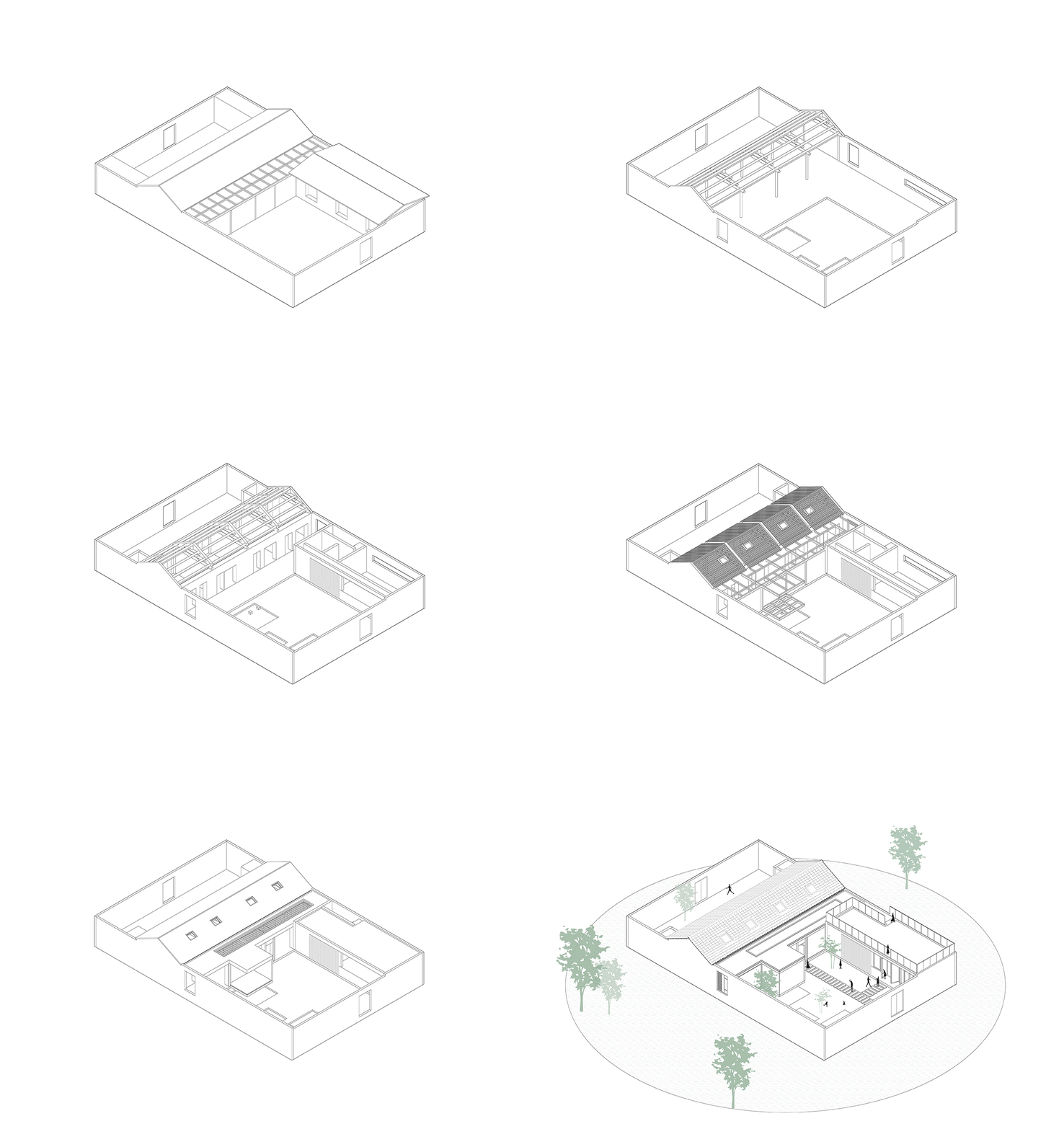
△ Construction process
△ After renovation
Courtyard: An Extension of the Architecture
The building and courtyard form a unified whole. In the square front yard, a water feature has been added. Water flows from a fountain set in the south courtyard wall, passes through three sequential pools, and reaches beneath the tea room—symbolizing “curved water flowing from the cup.” The backyard is a narrow strip accessible from every room. Both courtyards are covered with crushed stone, and small paths are paved with bluestone slabs. Existing trees have been preserved, maintaining the historical memory of the courtyard.
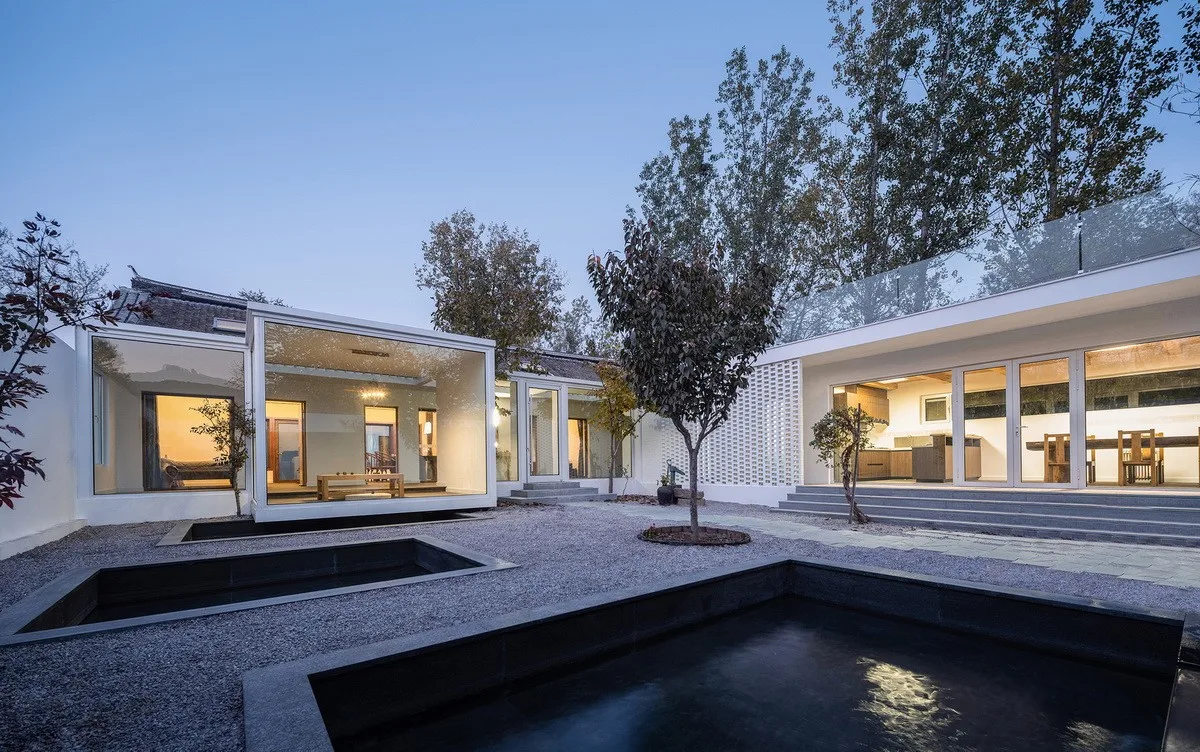
△ Courtyard pool
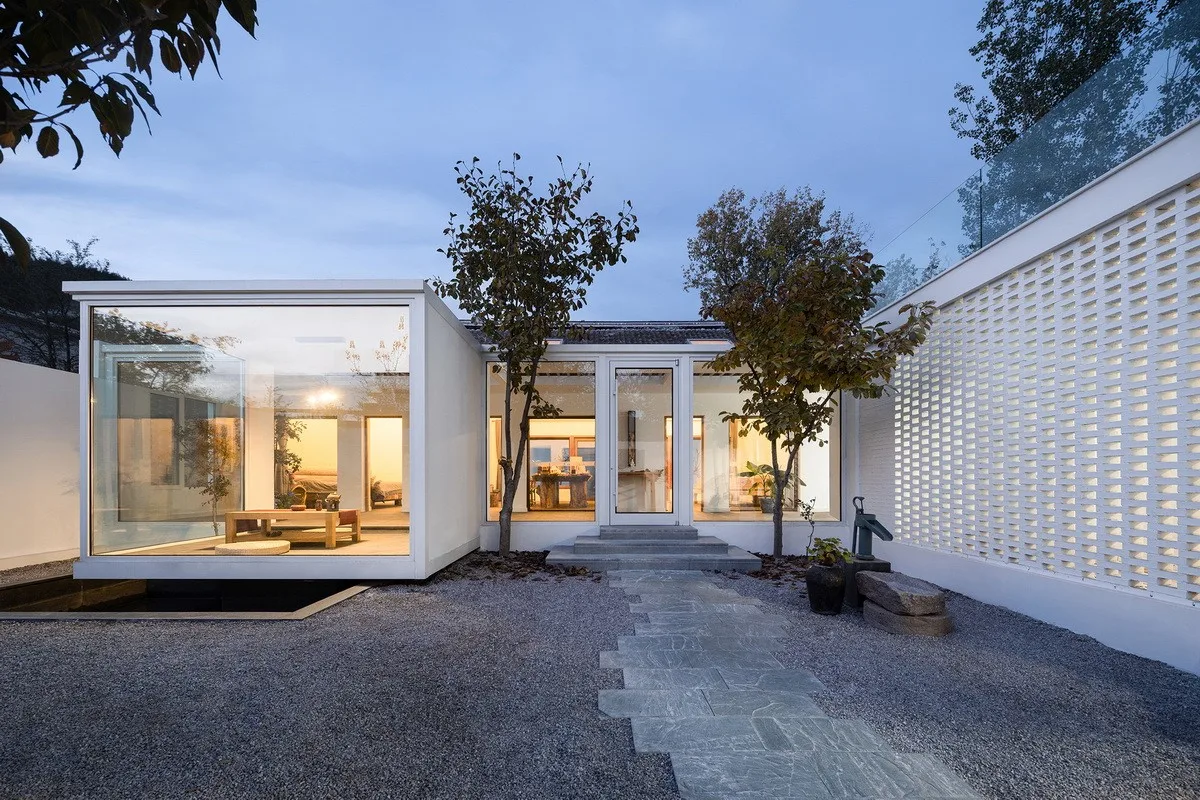
△ Sunroom facade
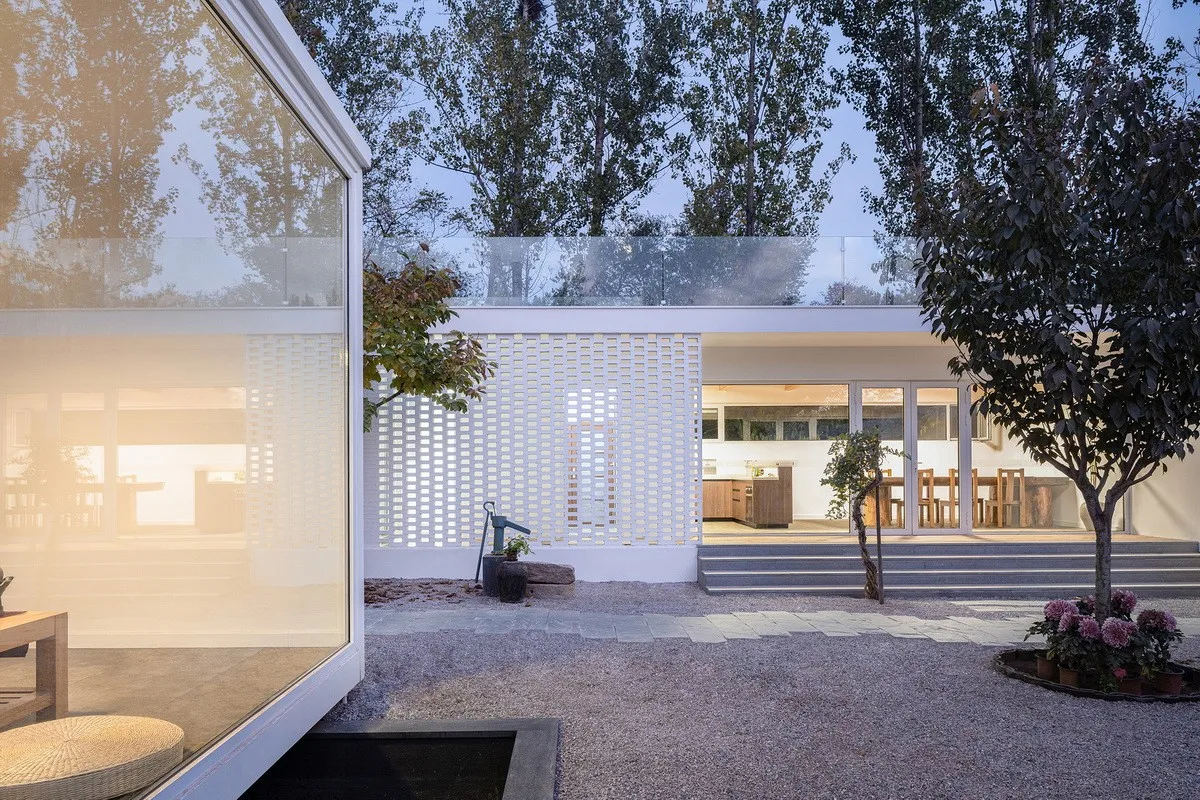
△ Borrowed scenery
At the eastern end of the sunroom, stairs lead to a rooftop terrace surrounded by a poplar forest, offering a tranquil spot to connect with nature. From the terrace, you can admire the mountains to the north as well as the courtyard below, basking in sunlight and fresh air. This terrace adds vertical dimension to the courtyard, enriching the overall landscape experience.
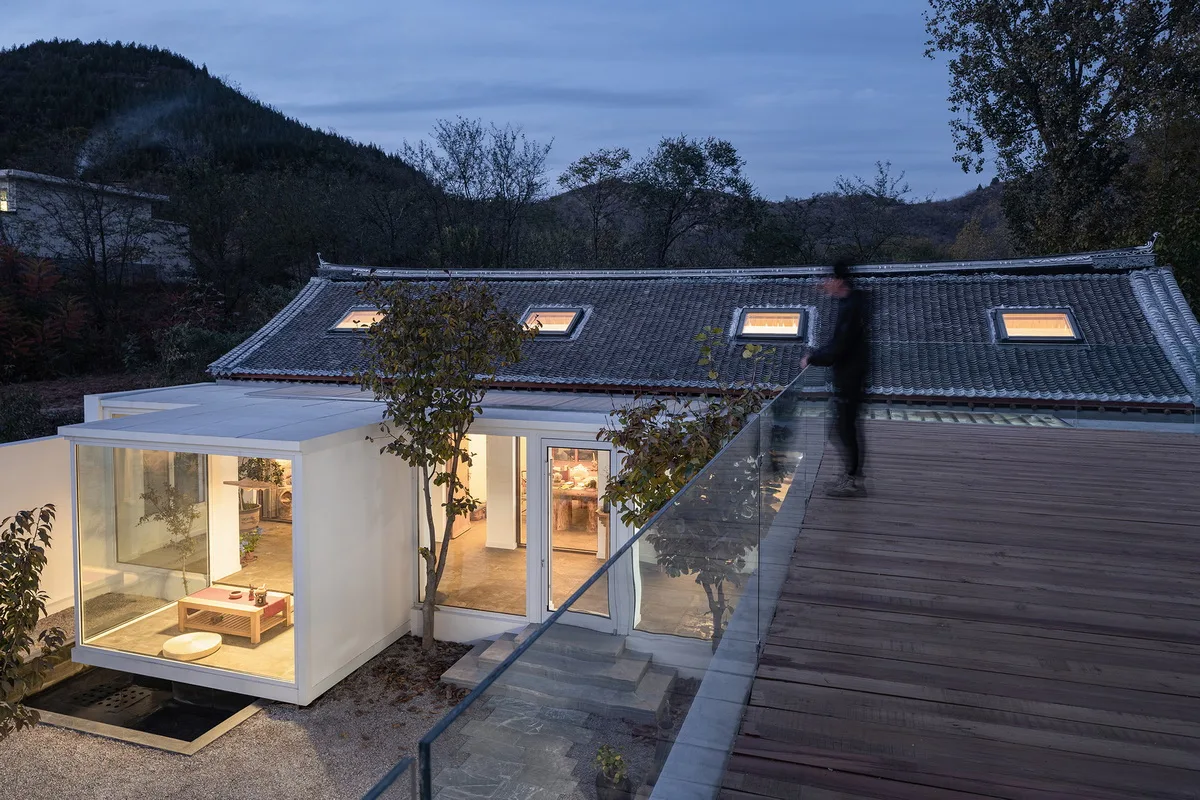
△ Courtyard scenery
Construction Approach
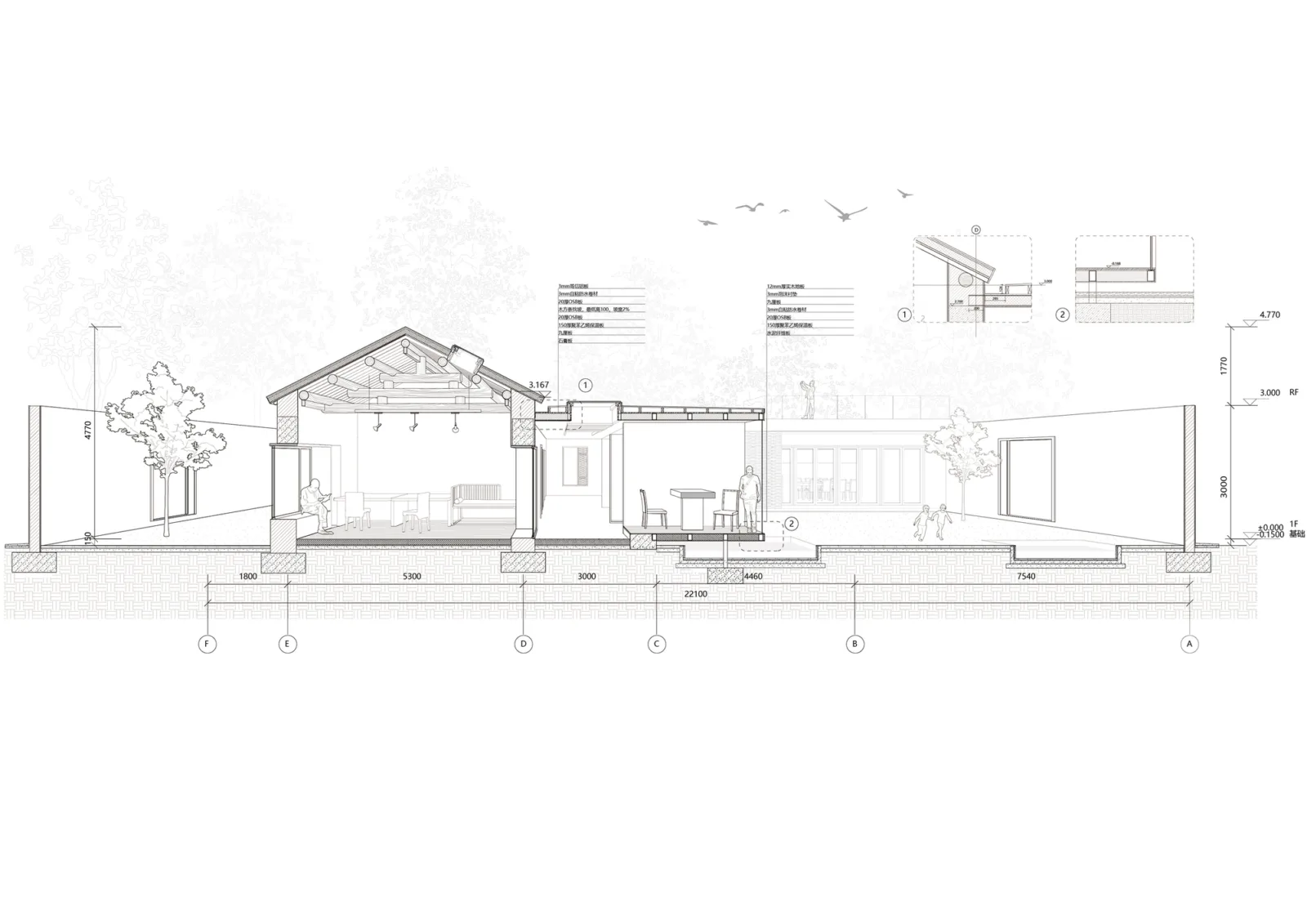
The renovation embraced a respectful dialogue with history, known as “associated construction.” To manage costs and use local materials, the main structure retained a mixed brick and wood construction. The east-west section combines brick walls with wooden frames supported by lifting beams. A 70-year-old village carpenter was invited to reconstruct the wooden frame using traditional mortise and tenon joints. The sloped roof was restored to local style, with skylights added. The sunroom features a steel structure with a cantilevered tea room below, emphasizing the steel’s lightness in contrast to the main building’s solidity.
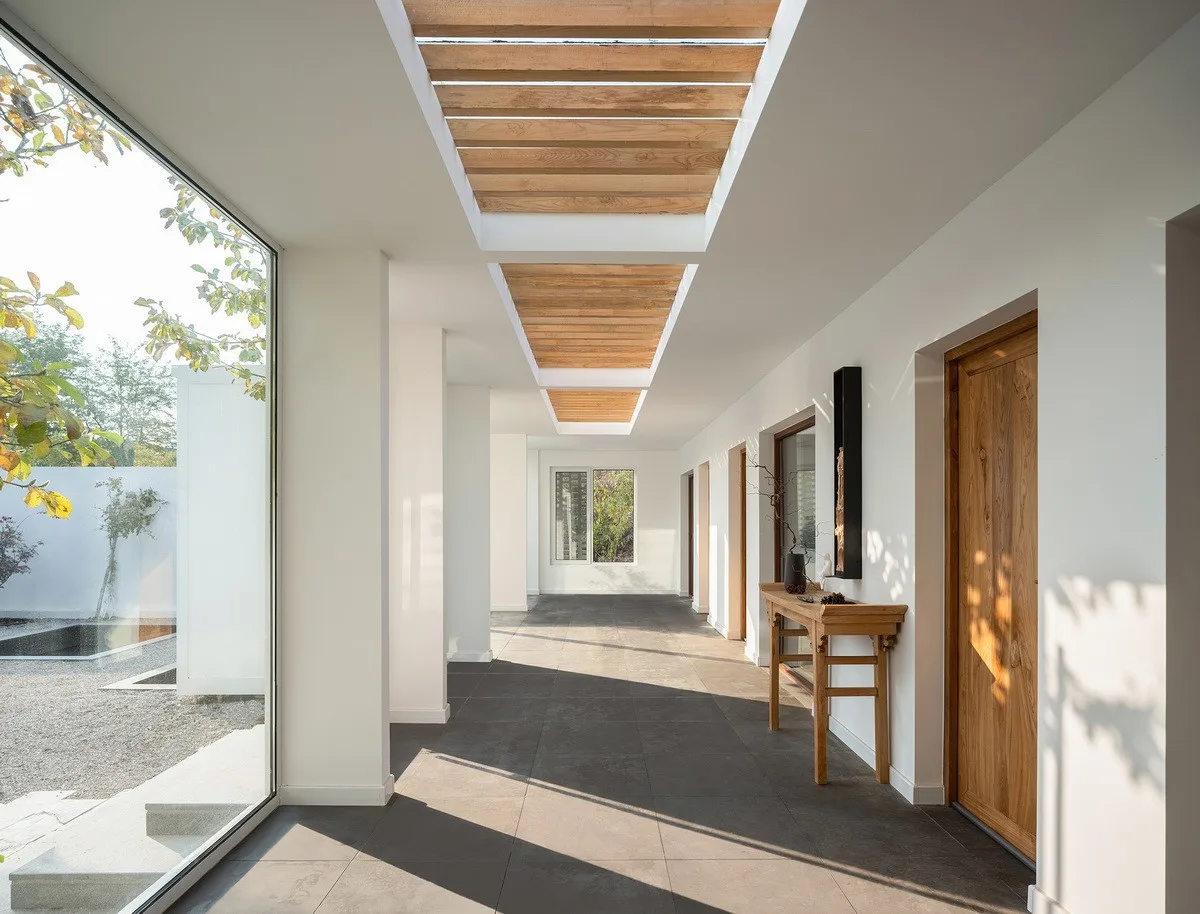
△ Sunroom corridor
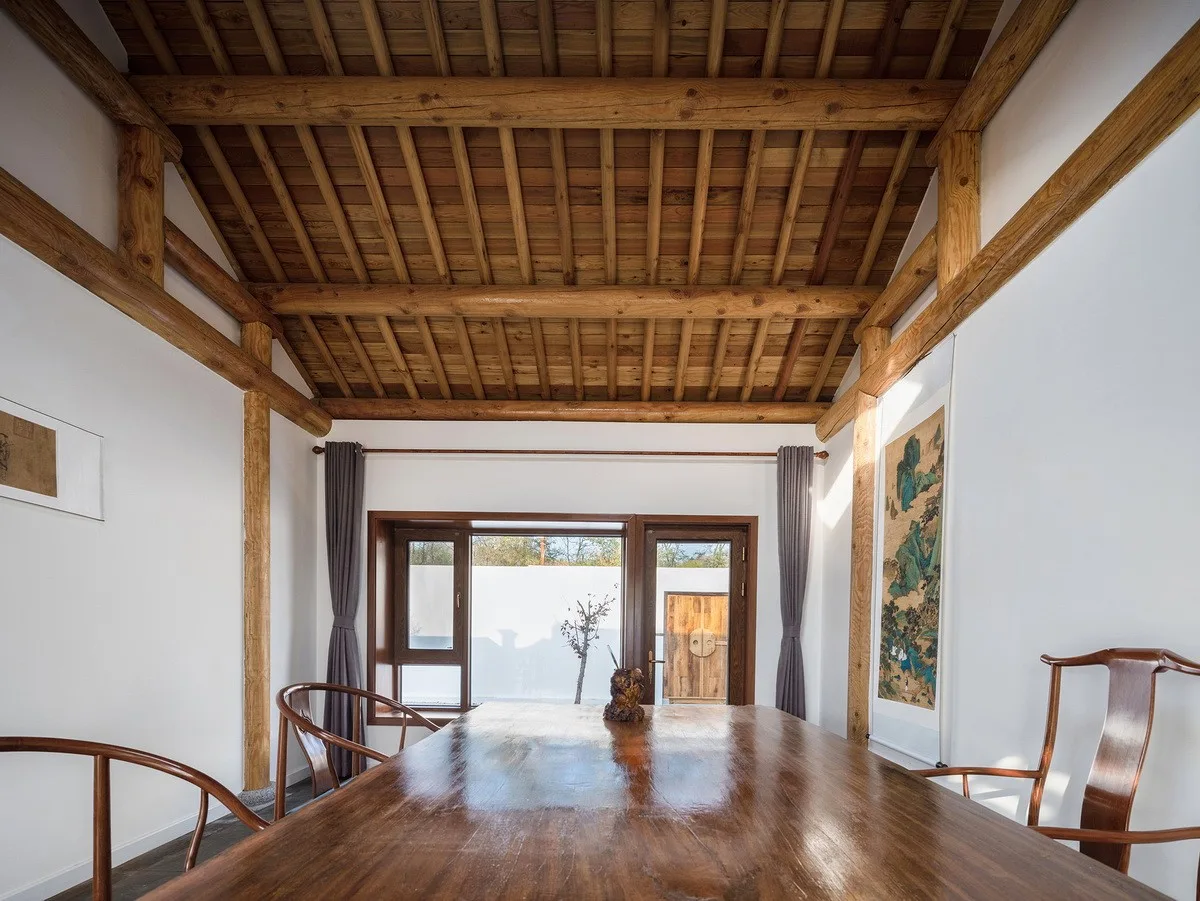
△ Study room interior
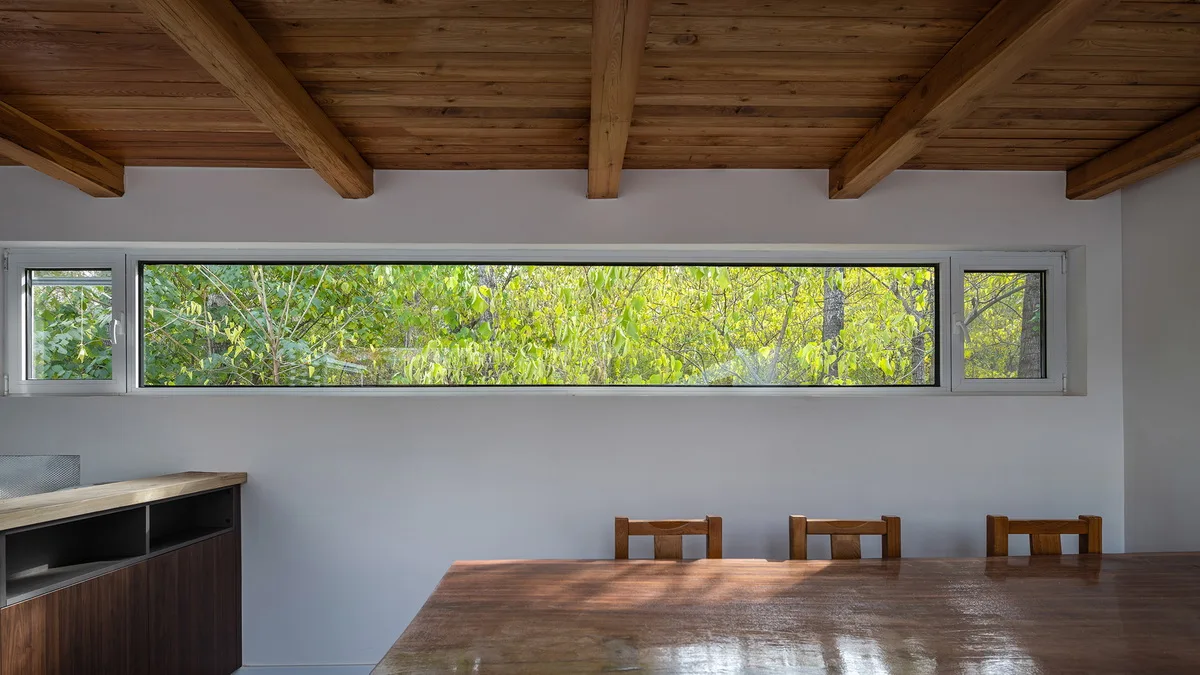
△ Indoor dining area
We employed a “recycling” strategy for materials. The stone foundation, eastern and western mountain walls, and courtyard walls of the original house were preserved. Demolished red bricks were repurposed to rebuild walls, and original glass was reused as skylights in the sunroom. Tiles, wood, and other materials were incorporated into landscaping and furniture. Retaining these materials preserves the owner’s emotional connection and memories, carried forward into the new home.
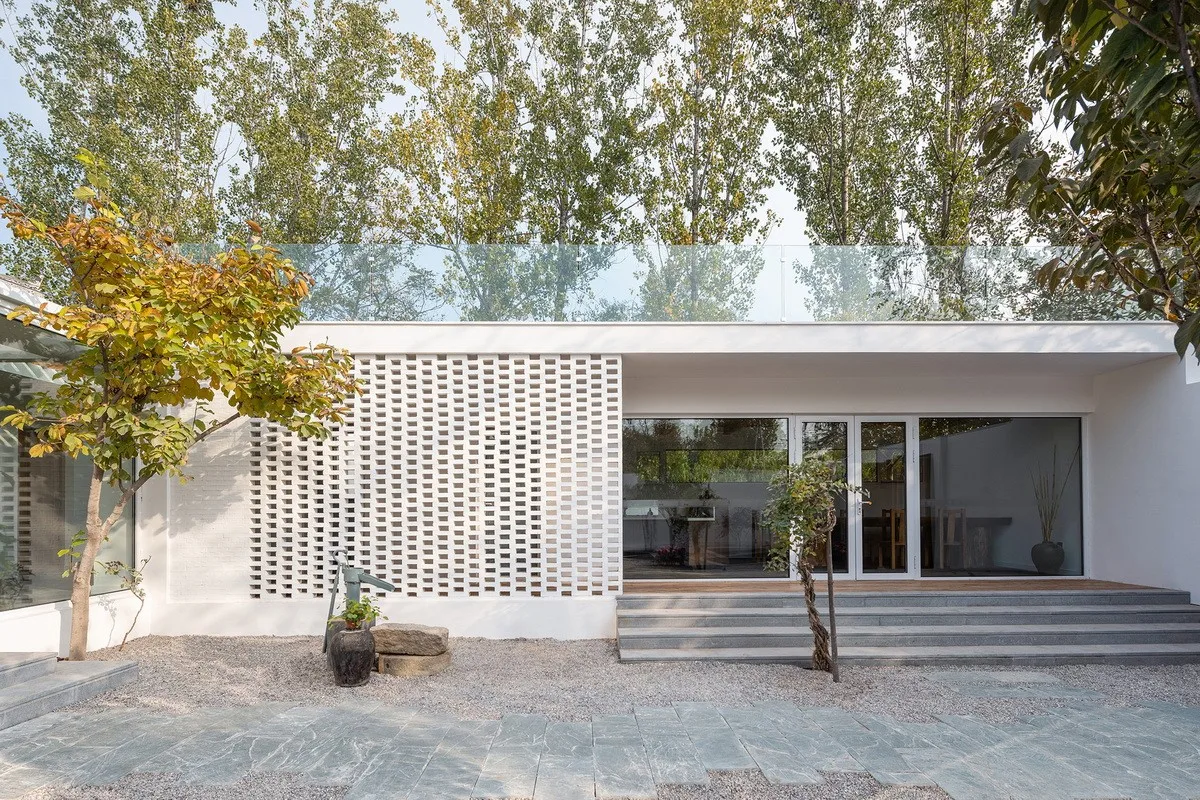
△ Dining area facade
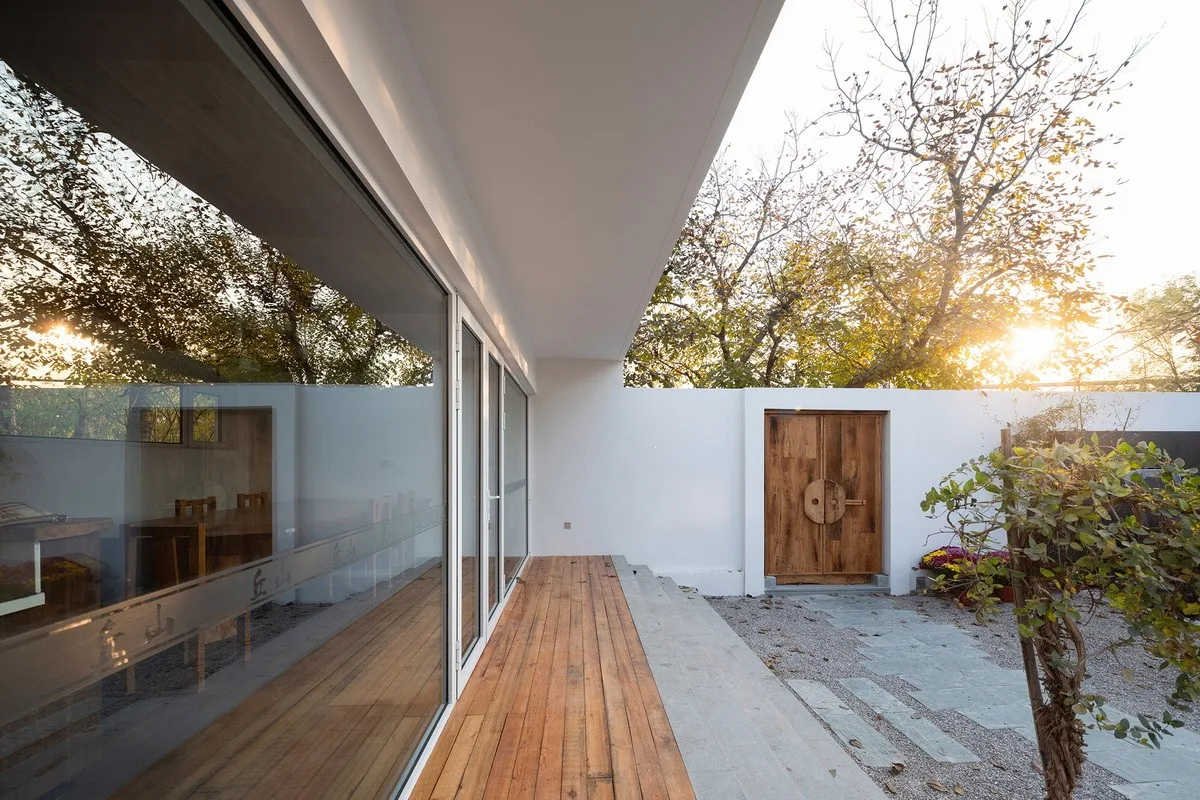
△ Restaurant eaves corridor
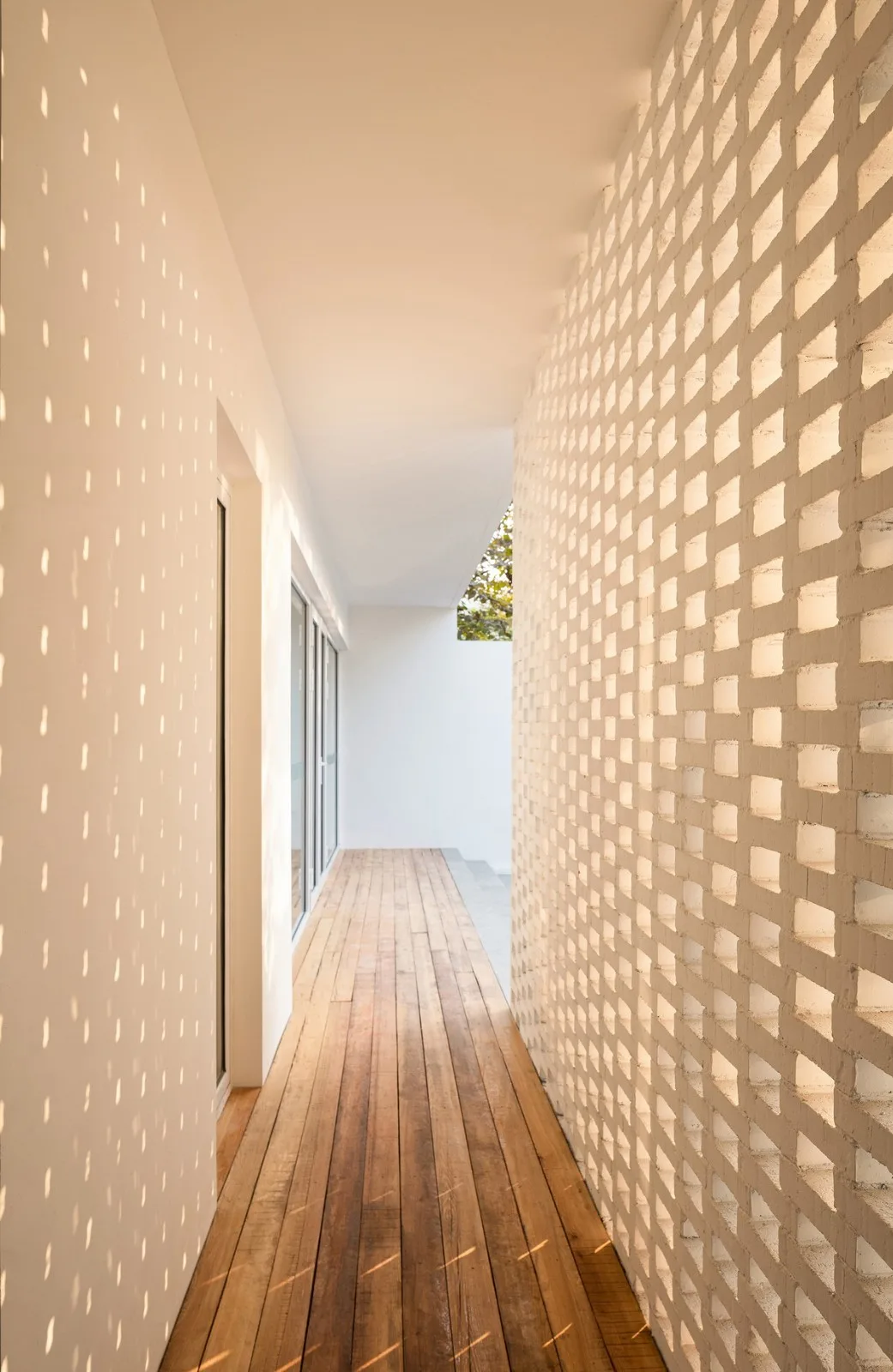
△ Play of light and shadow
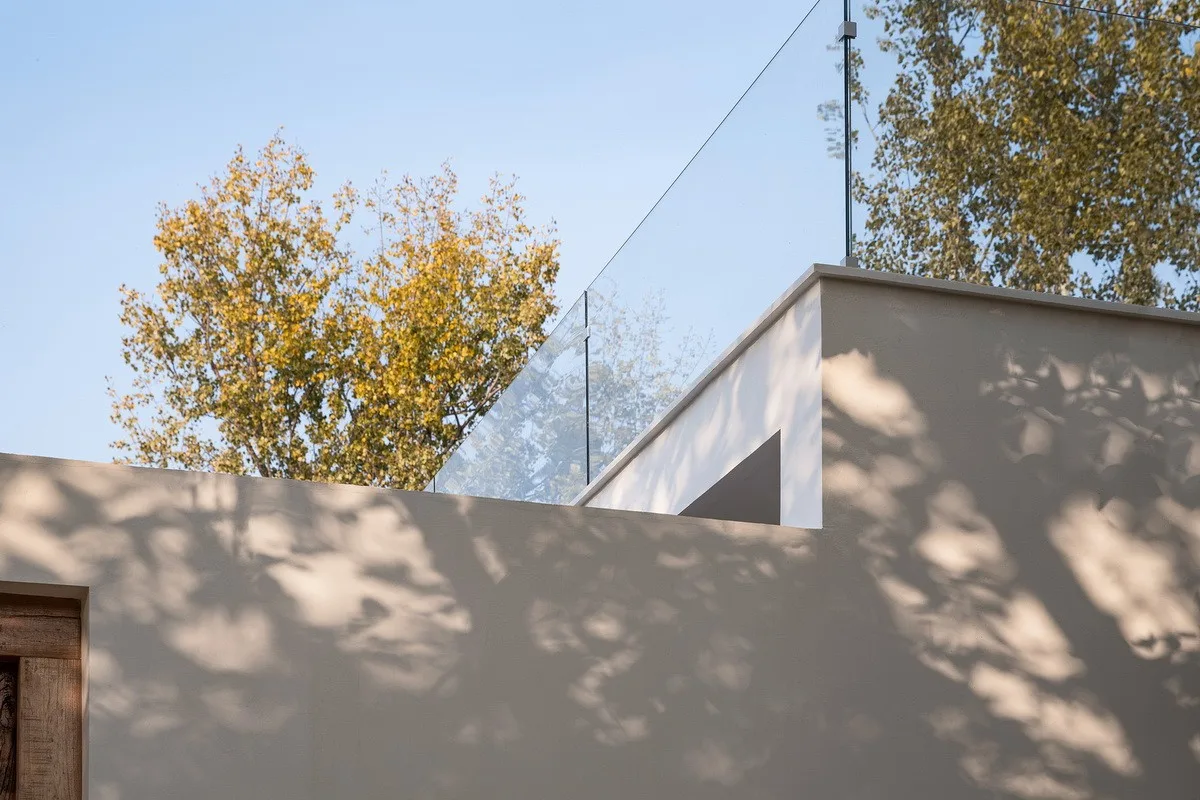
View looking up at the terrace
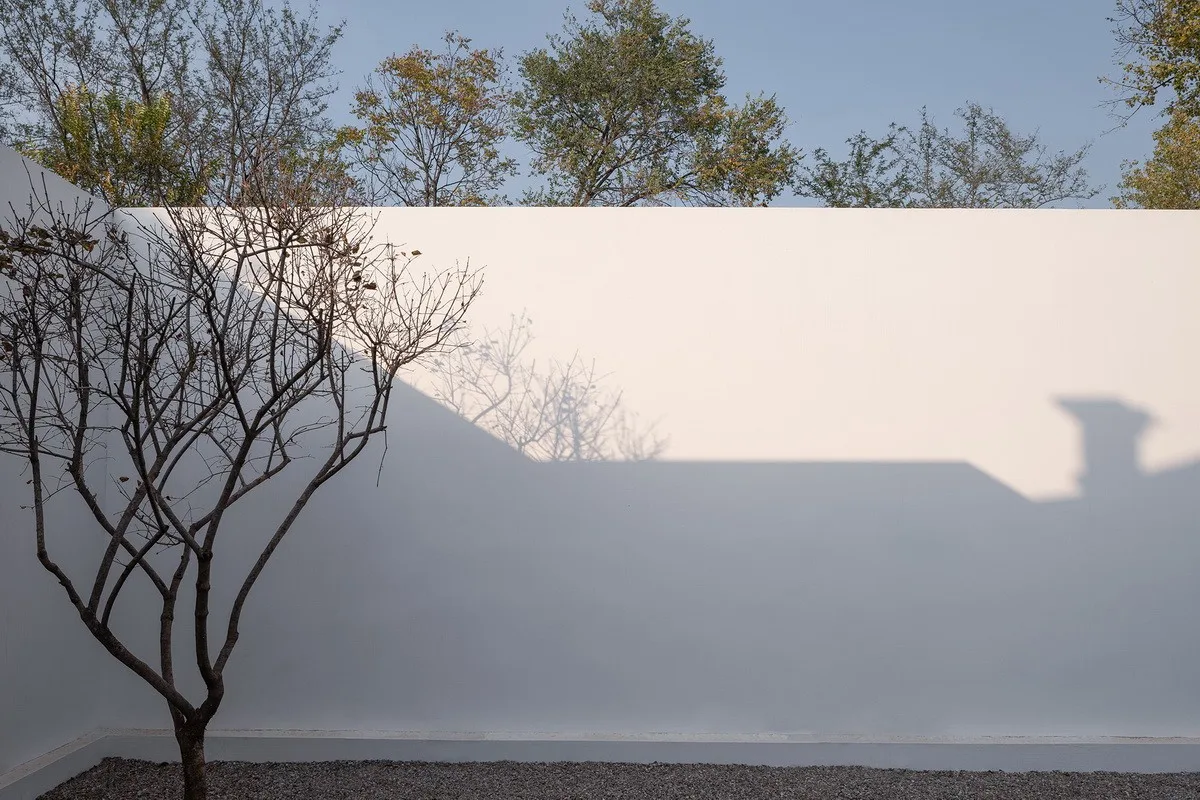
△ Courtyard wall
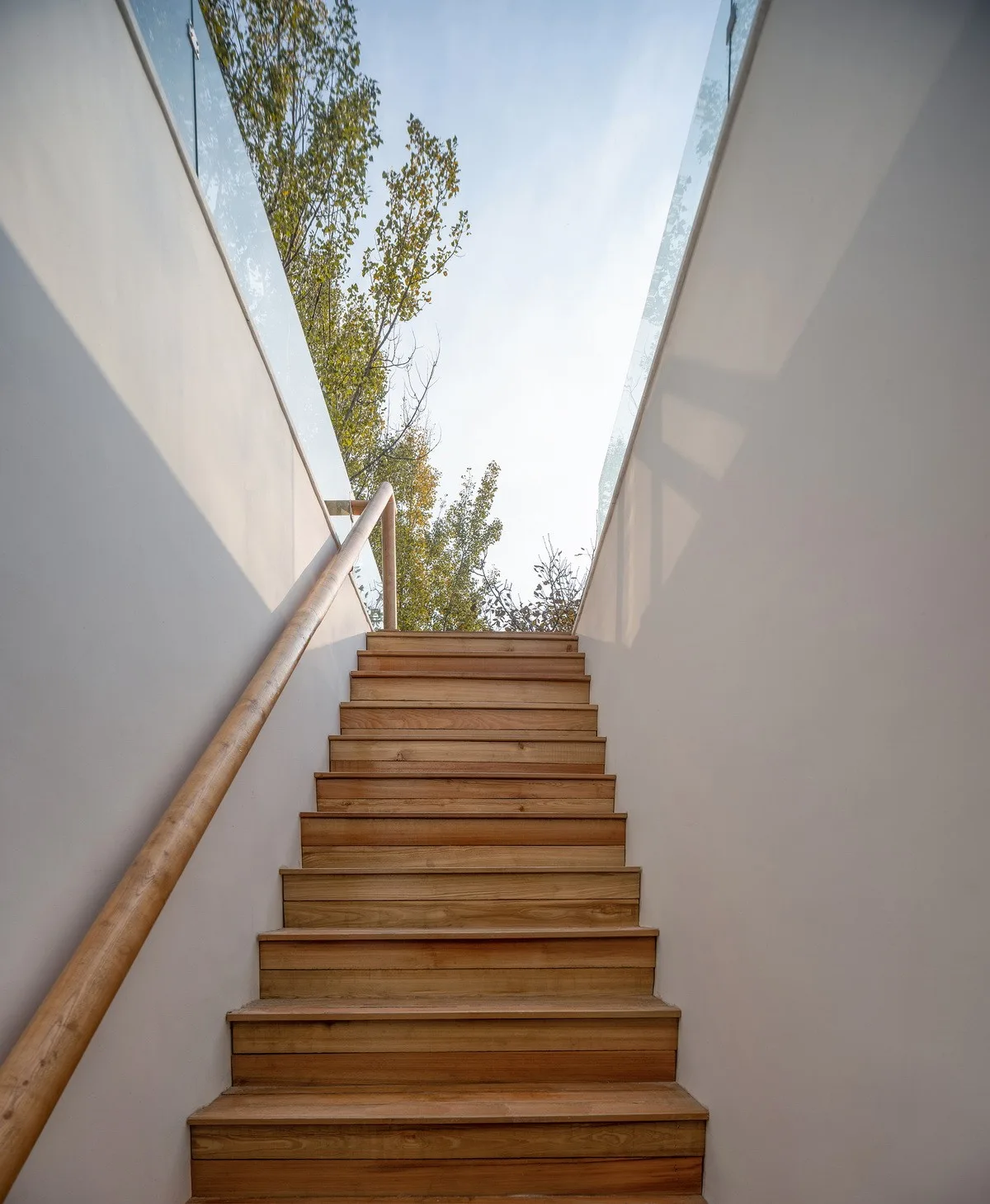
△ Climbing high
Peace Amidst the Noise
Highway noise posed a significant challenge for this project. To enhance living quality, noise reduction was essential. We implemented a two-pronged approach. First, a triple-layered noise barrier was constructed to block sound: a sequence of trees and courtyard walls, sunrooms, and bedroom and study walls—all fitted with double-glazed insulated glass for soundproofing. Post-renovation, this multi-layered barrier effectively reduces noise to meet living standards day and night.
△ Dense trees
Second, we used sound masking. Inspired by Tadao Ando’s design for the Kyoto Ceramic Board Painting Studio, where waterfall sounds isolate city noise, we installed a small fountain on the south courtyard wall. The sound of flowing water drowns out highway noise, creating a peaceful atmosphere within Qiushan Residence and reflecting the owner’s open-minded attitude toward the external environment.
△ Tea room
Design Drawings
△ Plan view
△ Sectional perspective
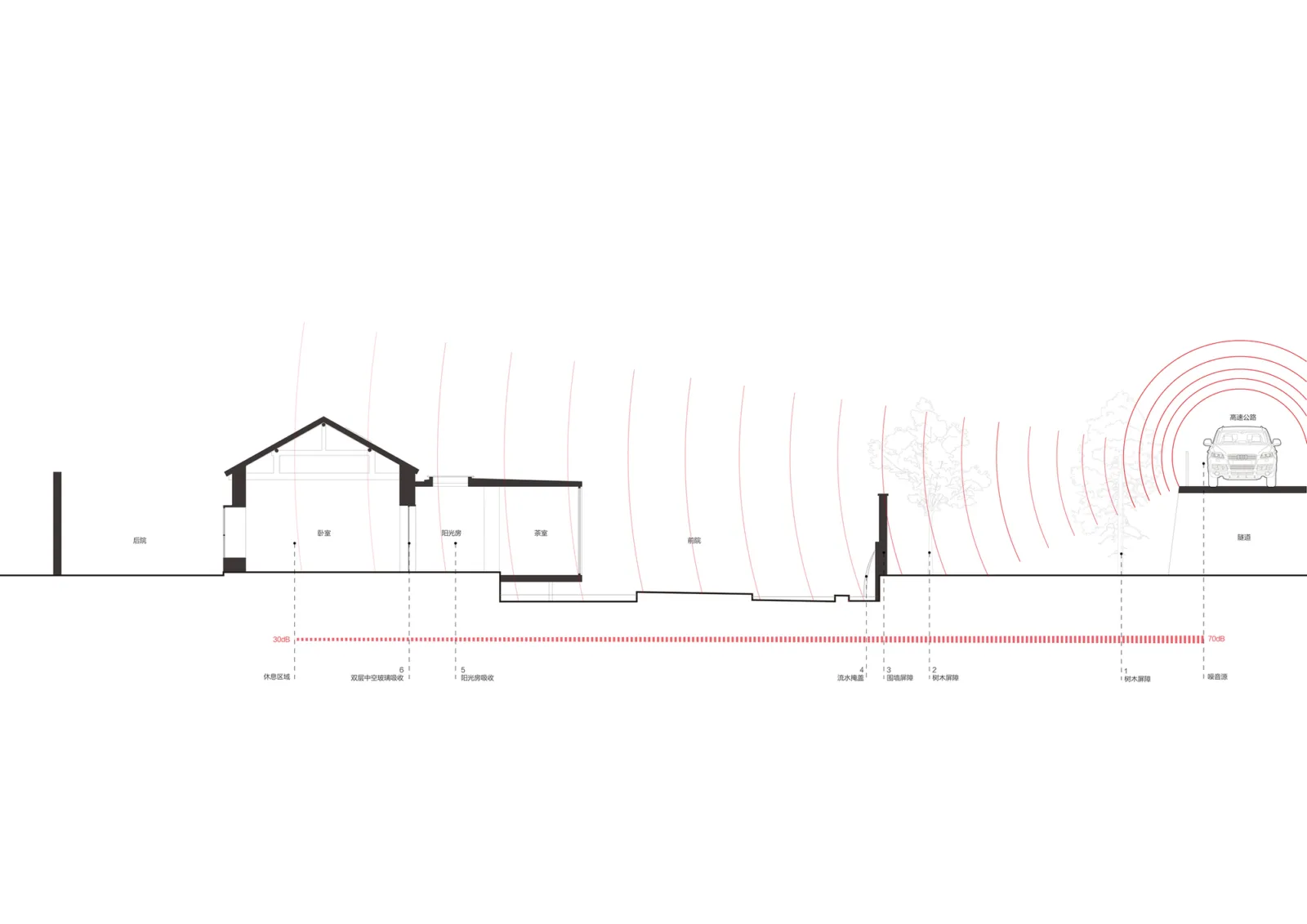
△ Noise treatment diagram
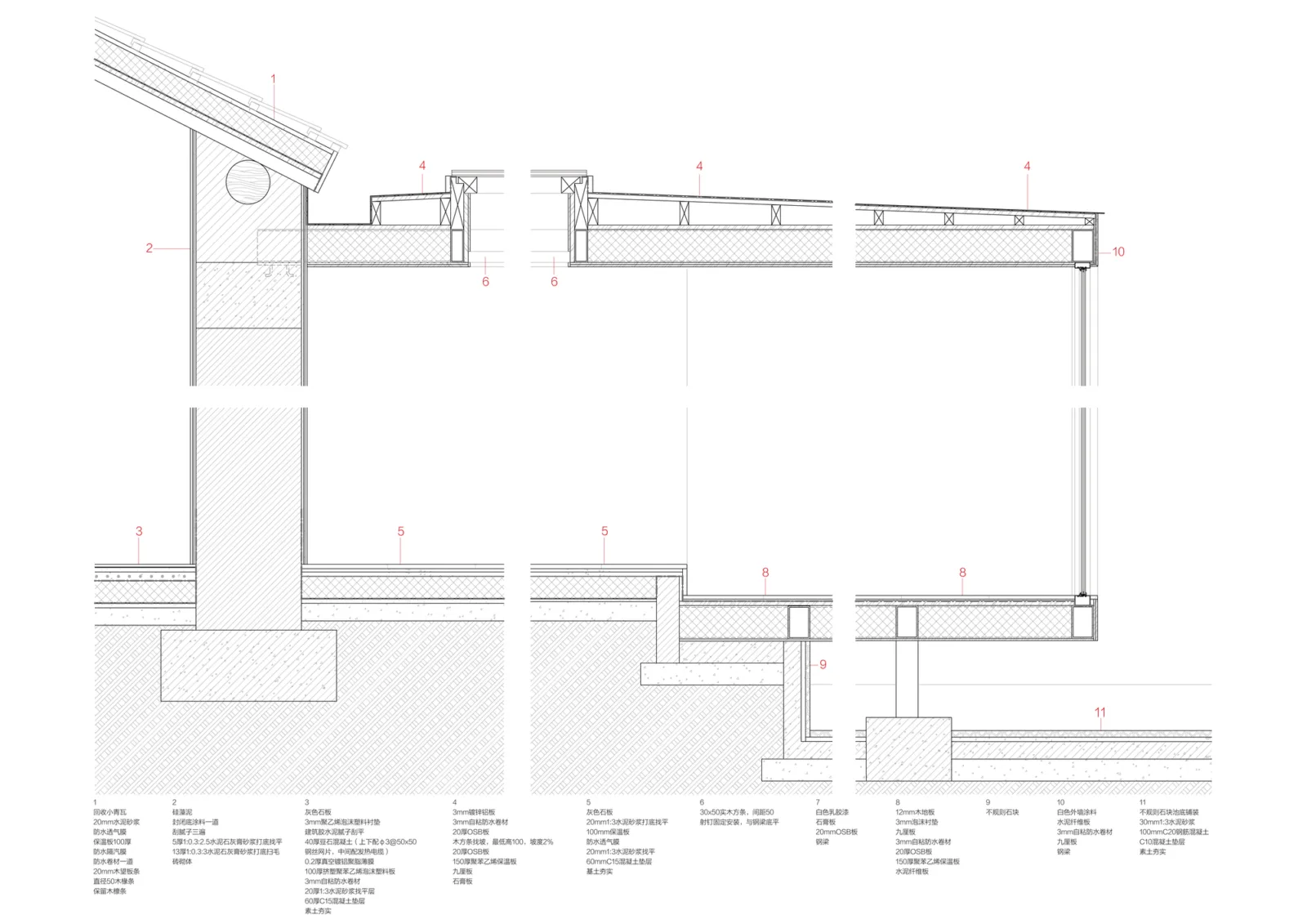
△ Wall detail drawing
Project Information
Project Type: Independent Residential Renewal
Location: Tianjin, China
Designer: Original Architecture
Area: 320 m²
Year: 2020
Lead Architect: Zhou Chao
Design Team: Deng Kechao, Cen Zixin, Mei Wei (Interns)
Structural Engineer: Yang Peng
Photographer: He Lian












Must log in before commenting!
Sign Up