
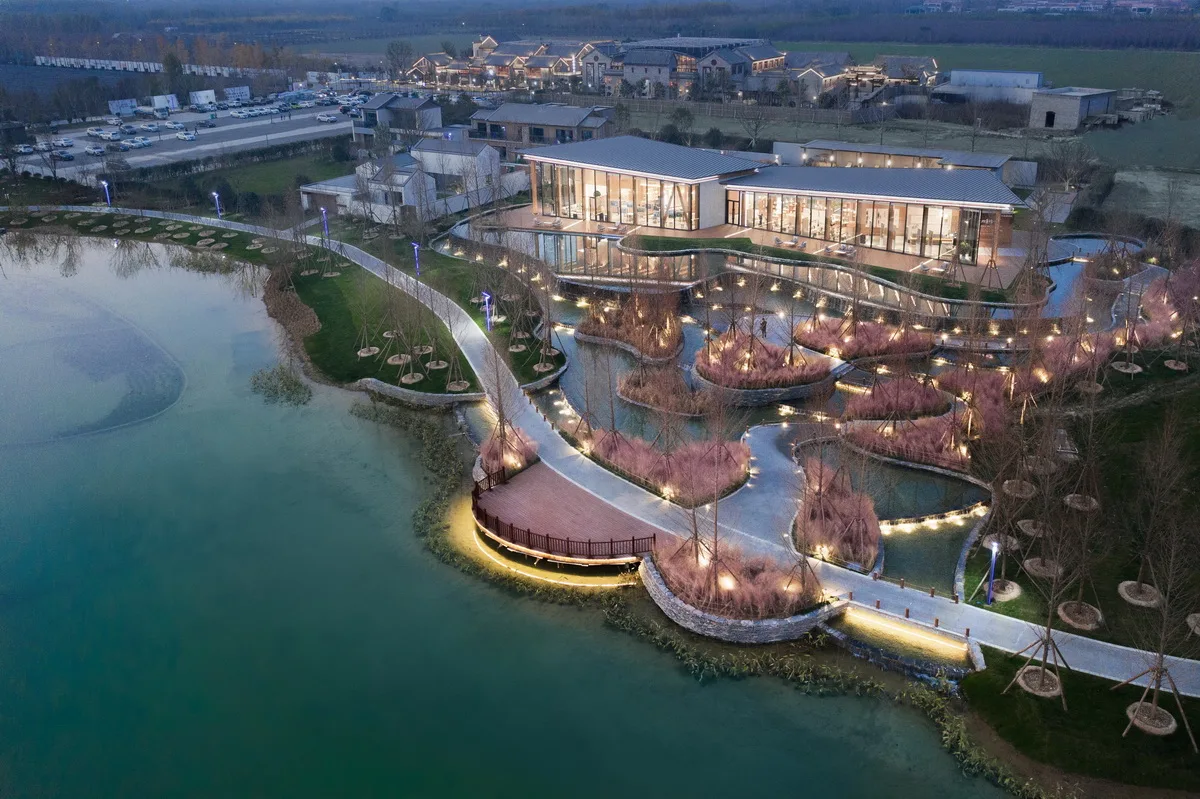
In the face of climate change and global warming, conventional concrete and steel-reinforced buildings have increasingly contributed to environmental pollution. Architects today are challenged to meet the growing demand for sustainable, green design.
Wooden architecture is gaining popularity as a more lightweight and eco-friendly alternative to traditional steel and concrete structures. Chengzhi Design and the Junzhi Technology team are leveraging the advantages of wooden architecture to explore and innovate in this field through their latest project.
Origin: Living as Neighbors, Sharing the Countryside
The project is set within a lush green base in Yanling County, Xuchang City. Surrounded by natural beauty, the site boasts vibrant bamboo groves and plum gardens shimmering in the rain, reflecting both natural and human activity.
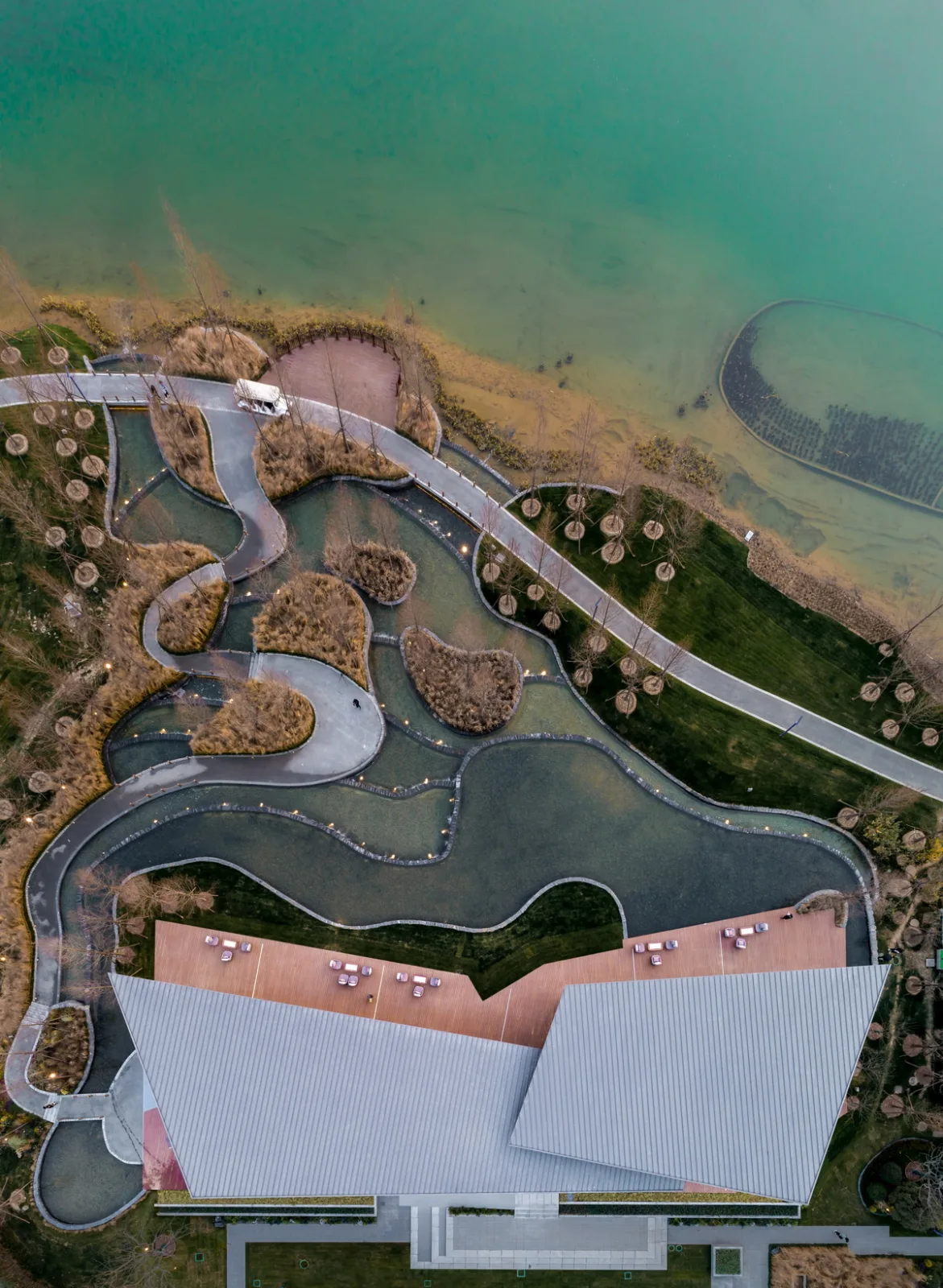
Although situated outside the urban residential area, the project enjoys complete surrounding facilities and is well connected to Yanling Jianye Junlin Farm, Jianye Canteen, and several ecological exhibition halls.
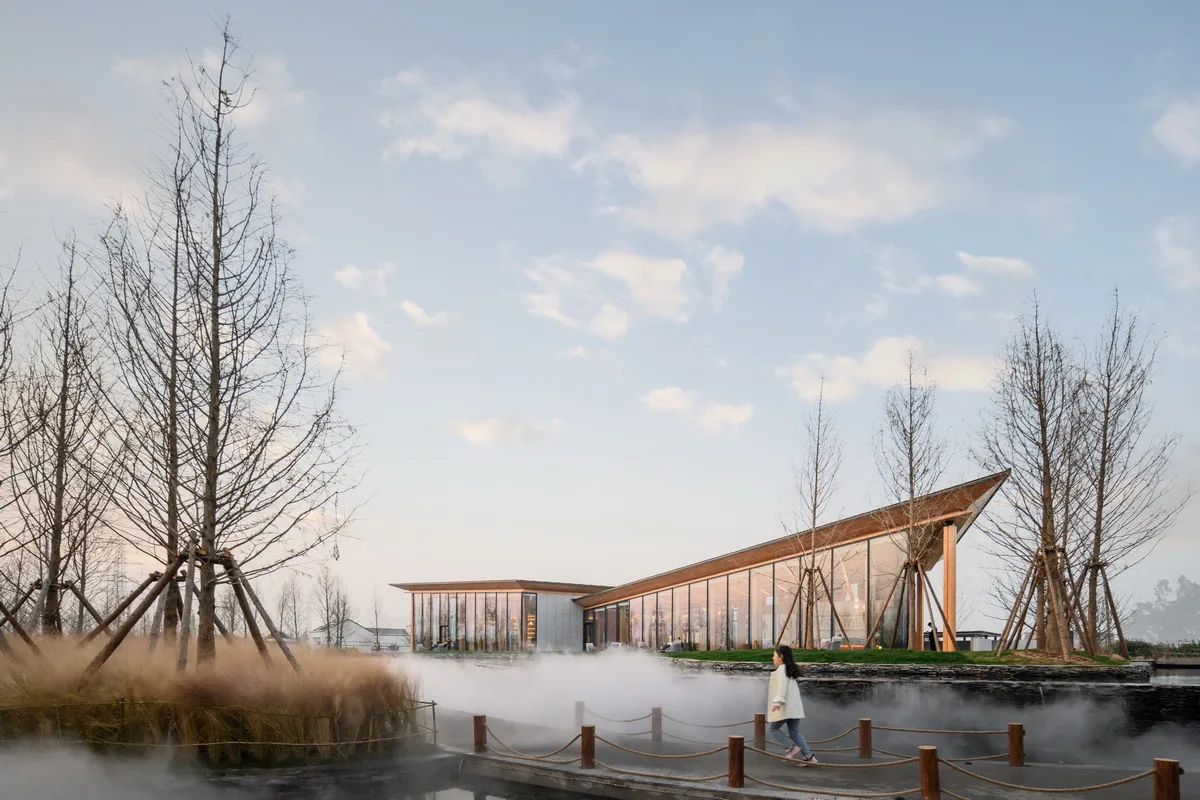
The building is designed to serve multiple functions, including local community gatherings, performances, and entertainment events. It will host concerts, cultural performances, conferences, art exhibitions, and expos.
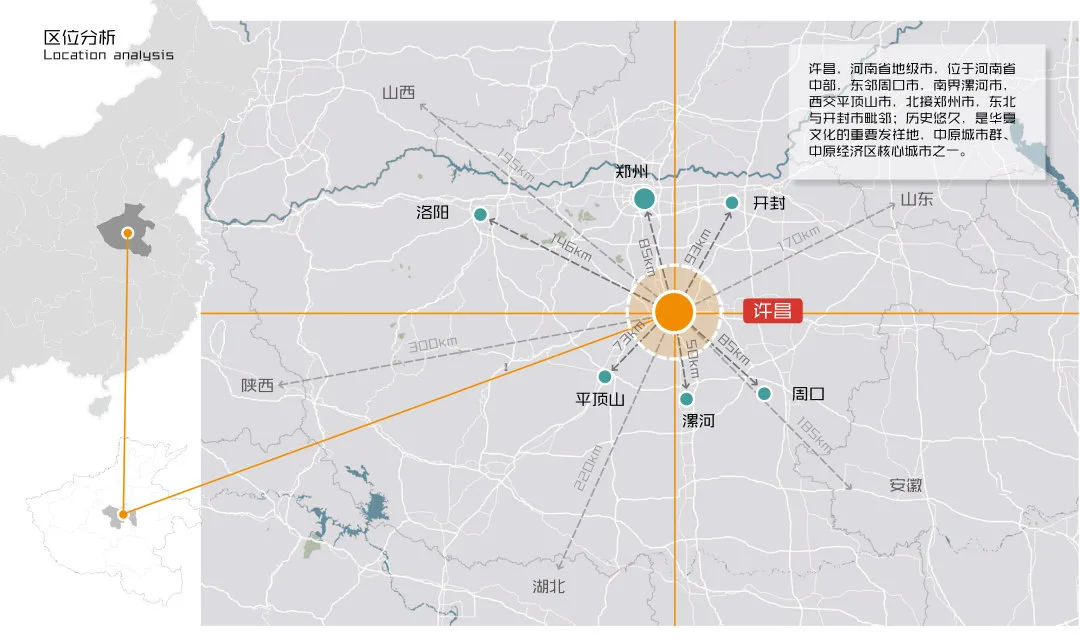
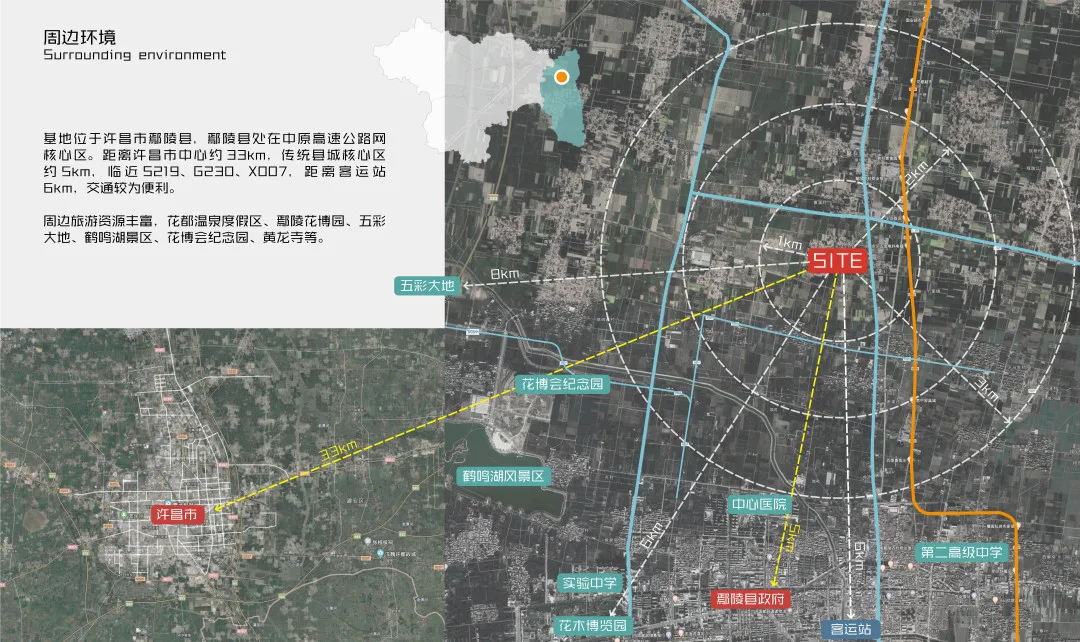
△ Location analysis and surrounding environment
Concept: A Wooden Structure in Harmony with Nature
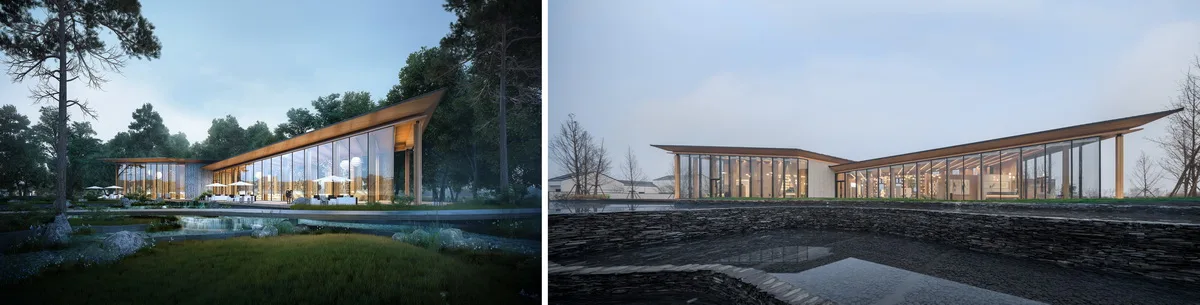
This project aims to evoke a natural, pastoral, and comfortable spatial atmosphere. It highlights the integrity of wooden spatial structures and the rhythm of beams and columns. The open layout seamlessly integrates space and architecture, reflecting both the tension of wooden structural elements and the beauty of nature.
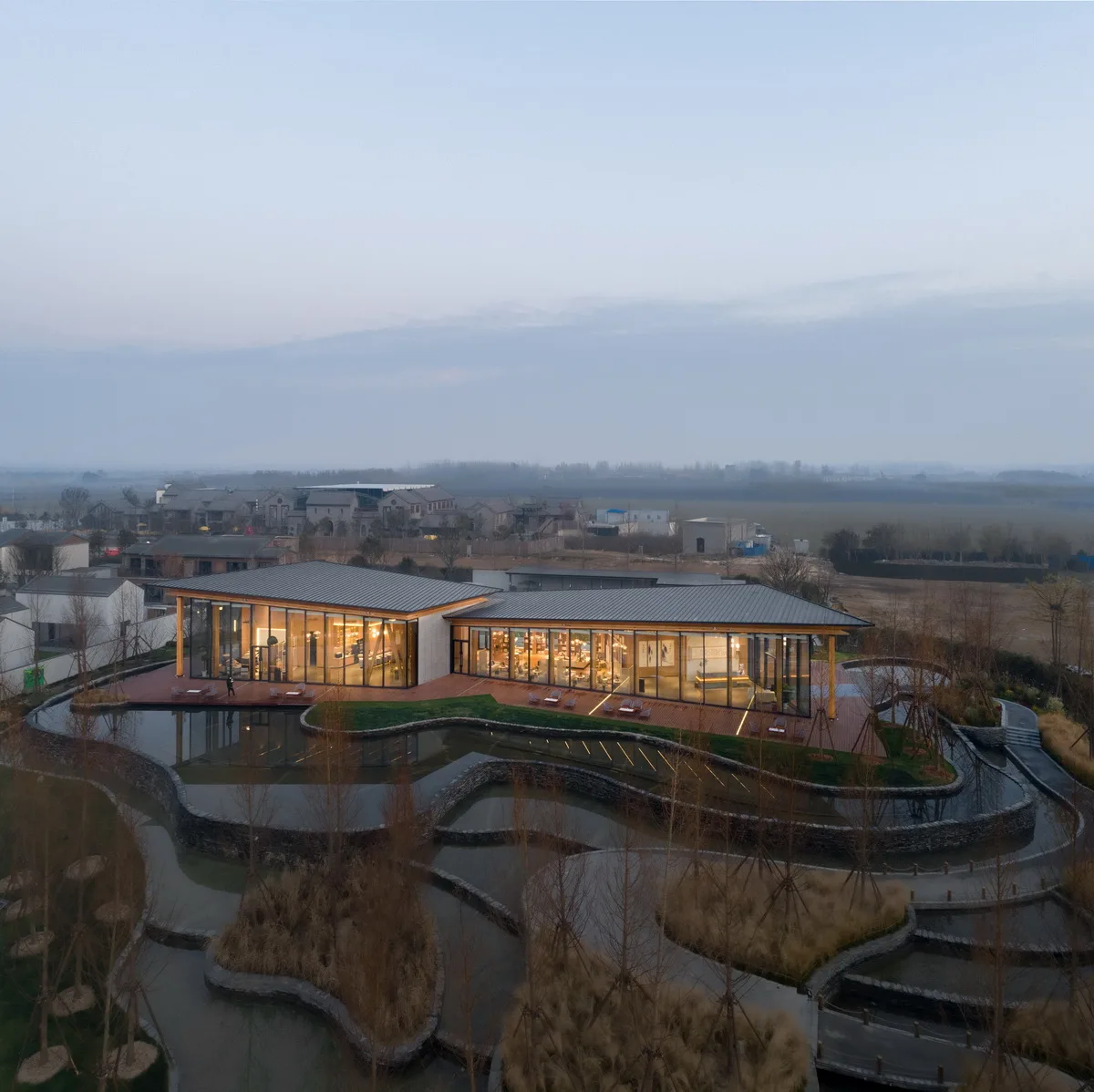
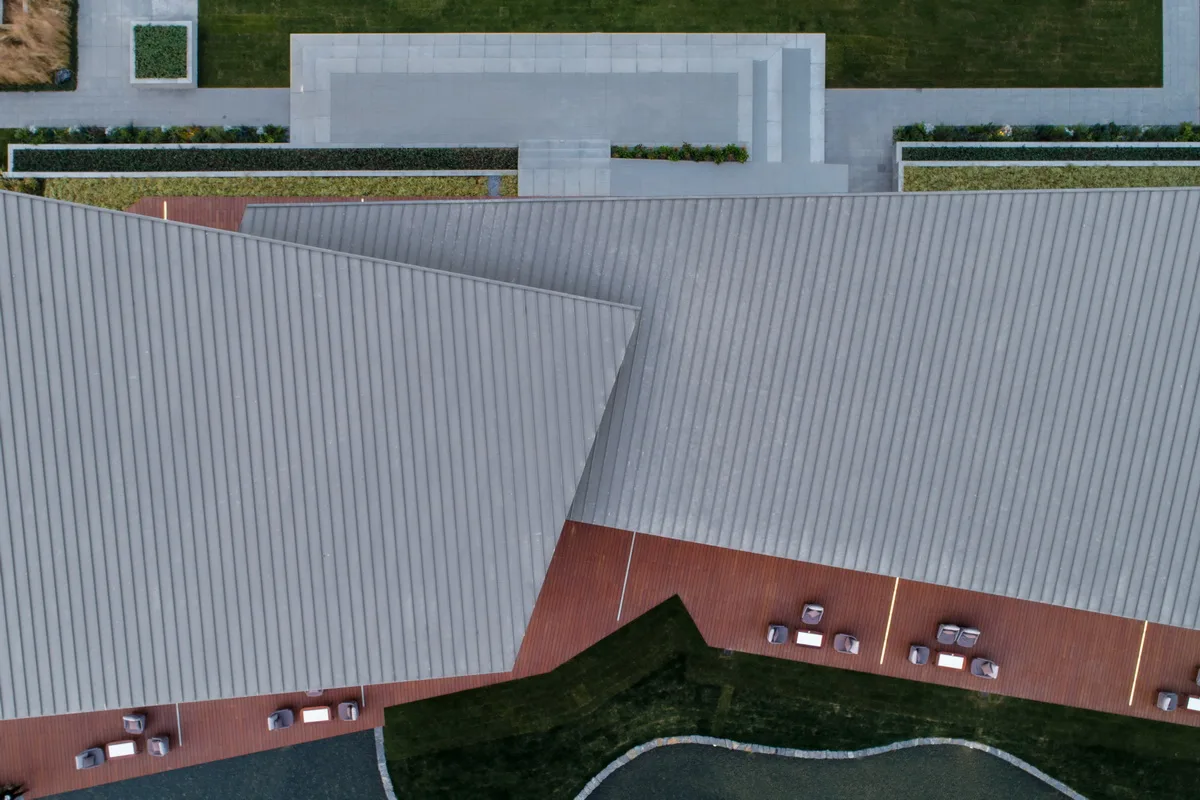
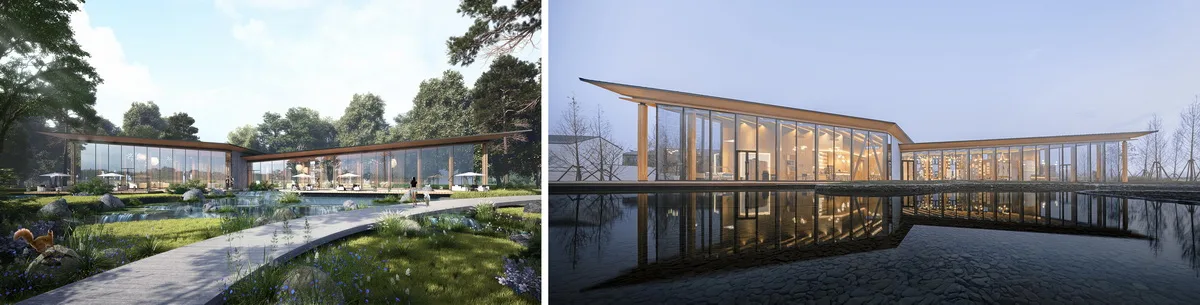
The building’s most distinctive feature is its centrally sloping roof, which creates a striking landmark visible from south to north.
Integration: Architecture, Structure, and Interior
To ensure a harmonious blend of wooden structure and glass curtain walls, the architectural, structural, and interior designs were developed simultaneously. This integrated approach guarantees coordination and unity throughout the building.
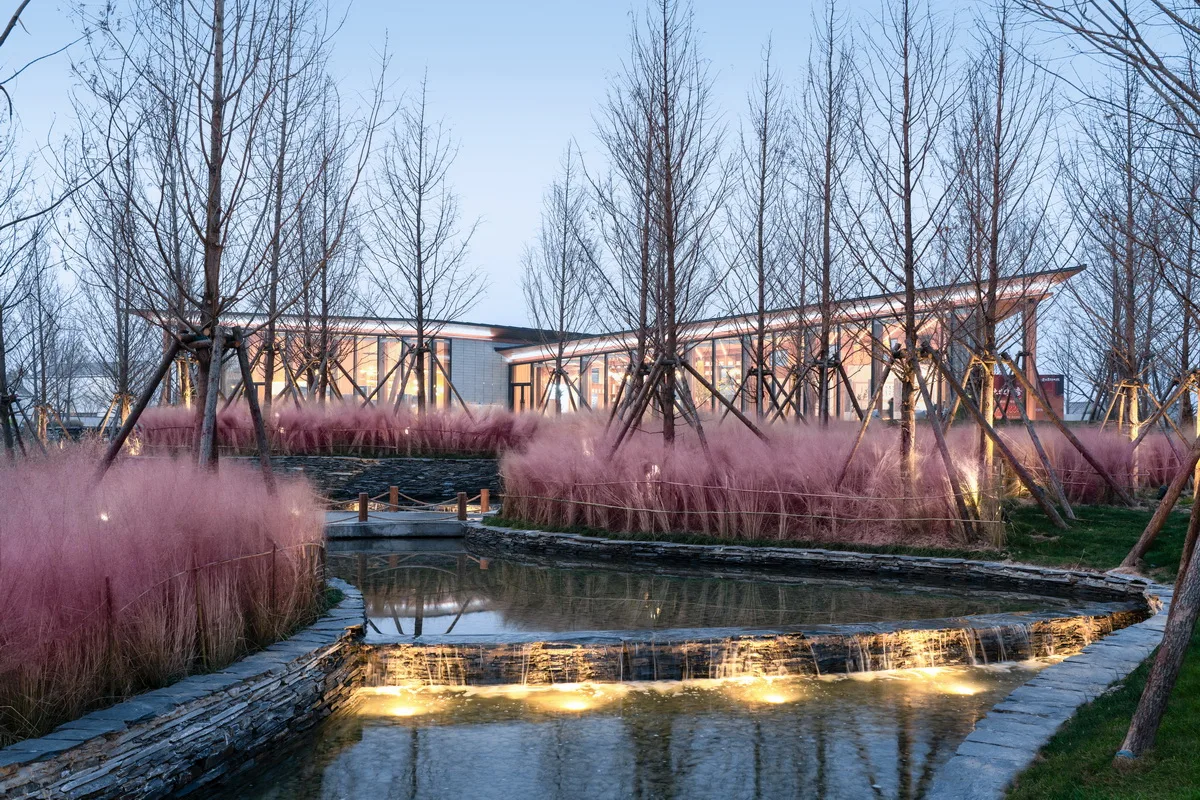
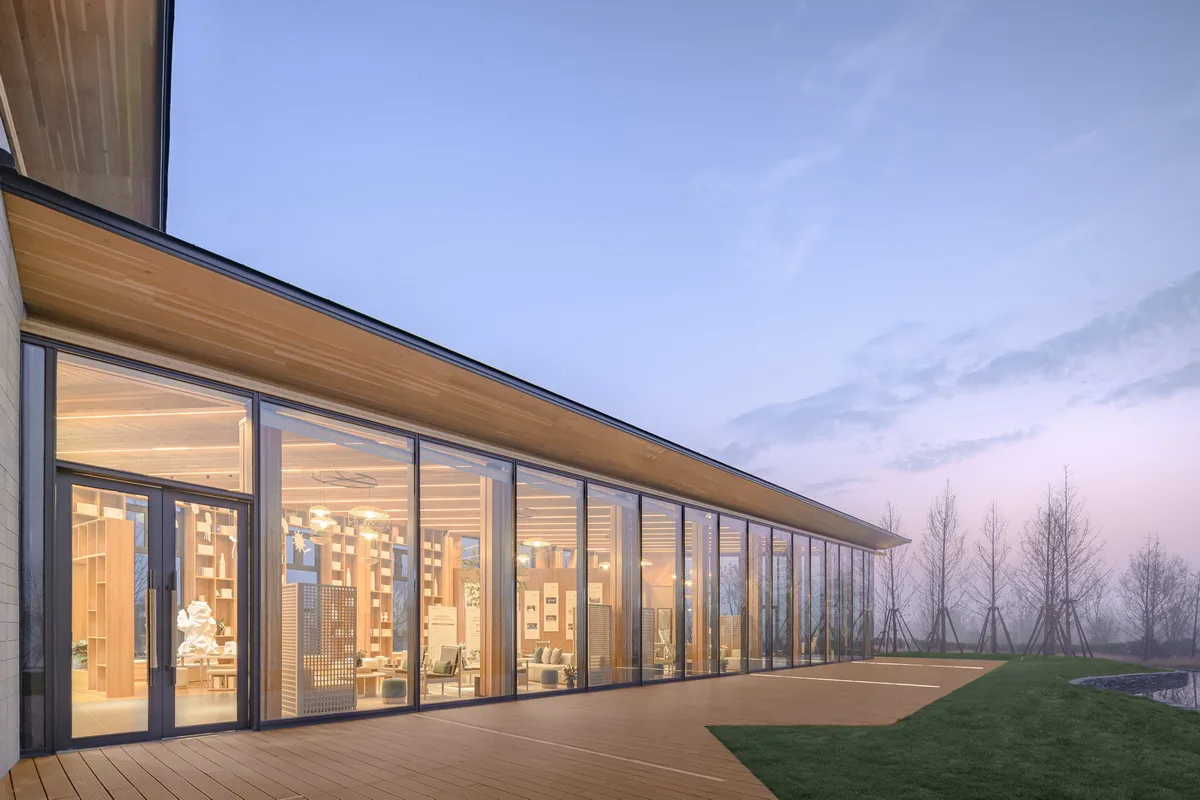
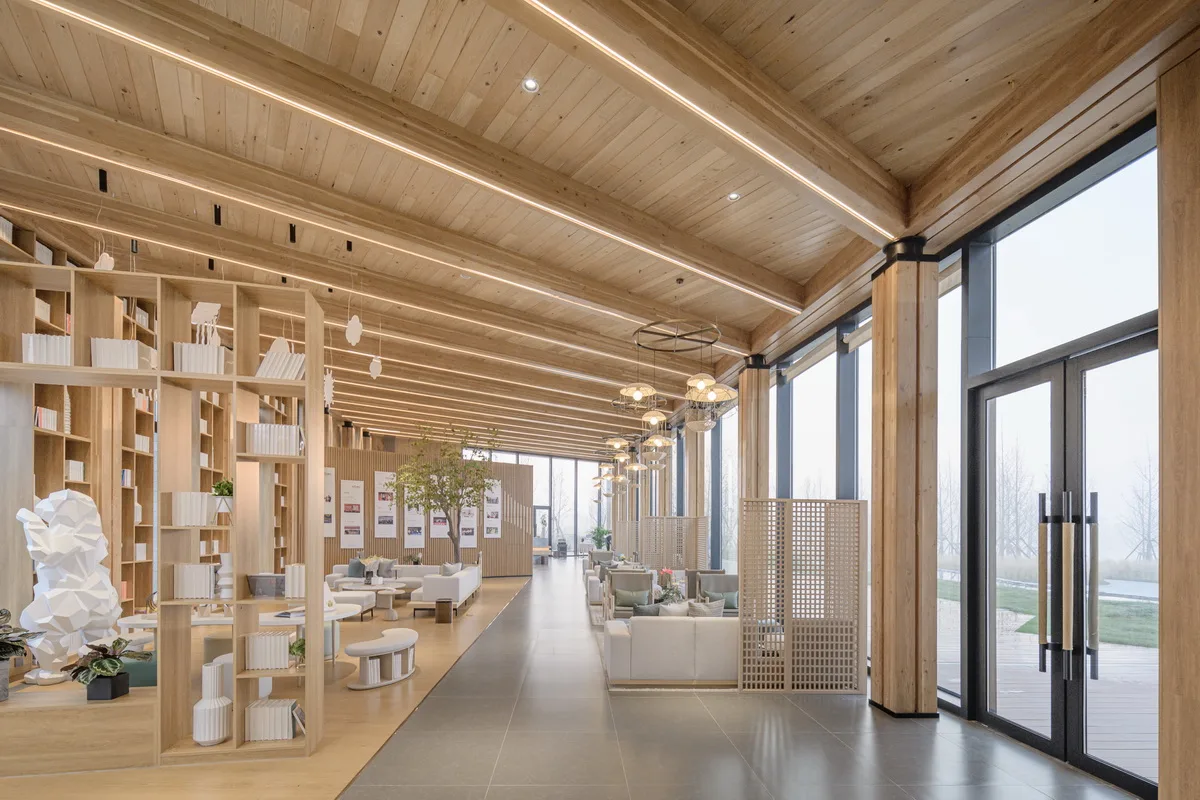
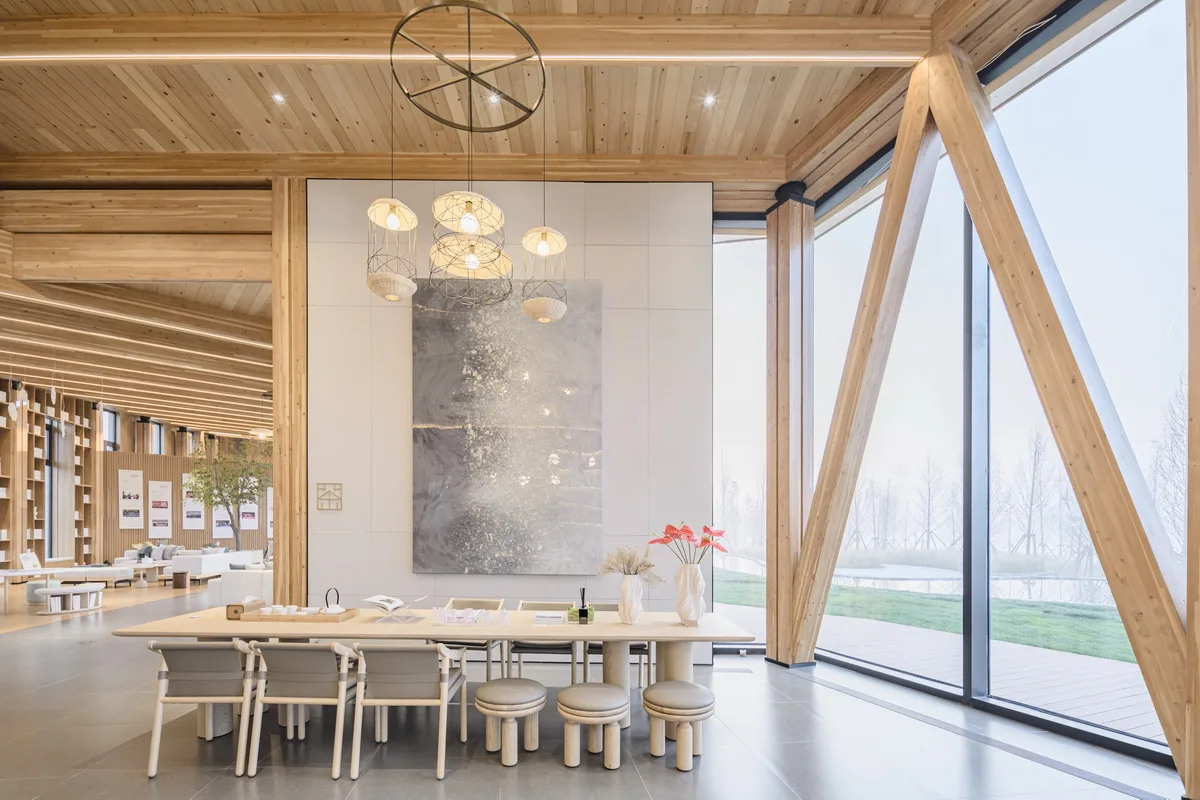
The design elements and techniques work in harmony to create an inviting and warm interior space, highlighting the artistic potential of fully exposed wooden structures without additional decorative materials.
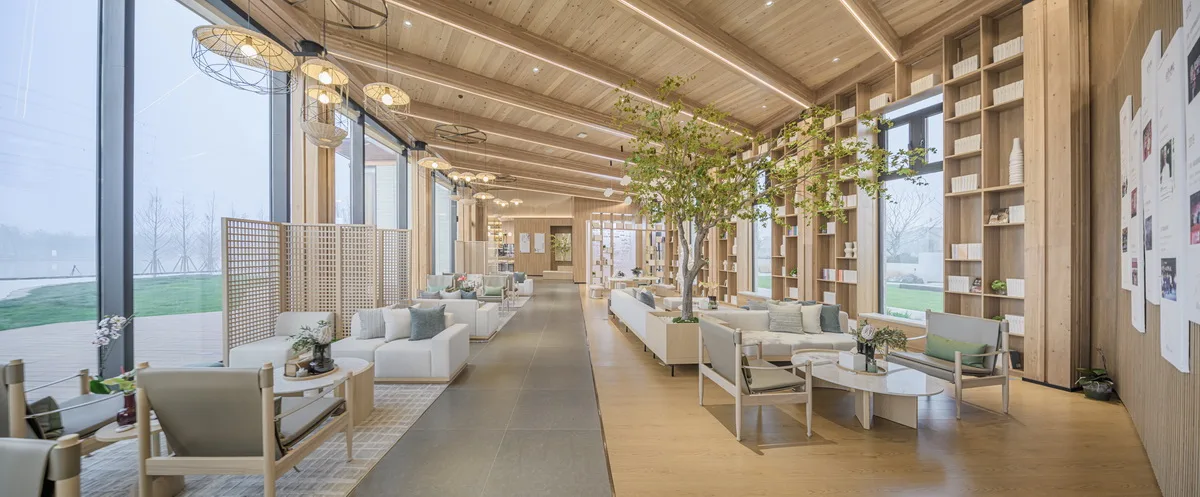
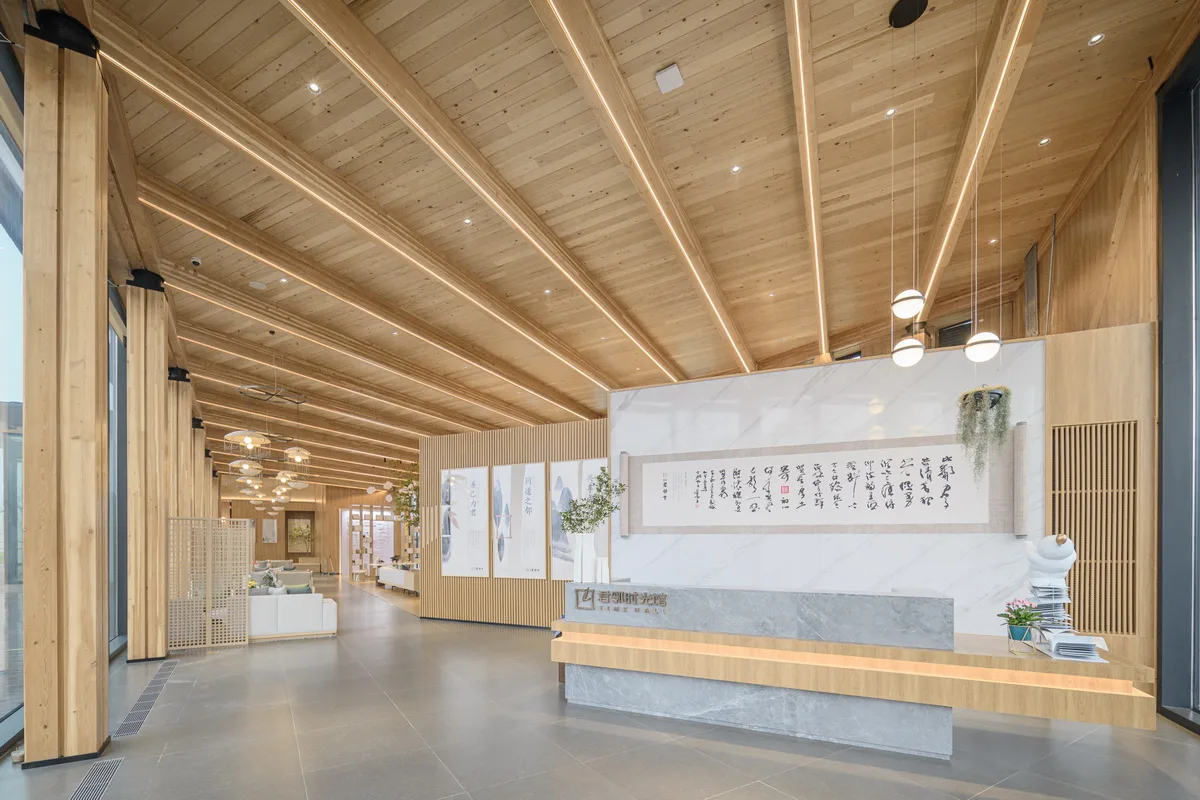
The functional layout maximizes the site’s strengths and considers both indoor and outdoor conditions, with key display areas showcasing the most beautiful exhibition spaces.
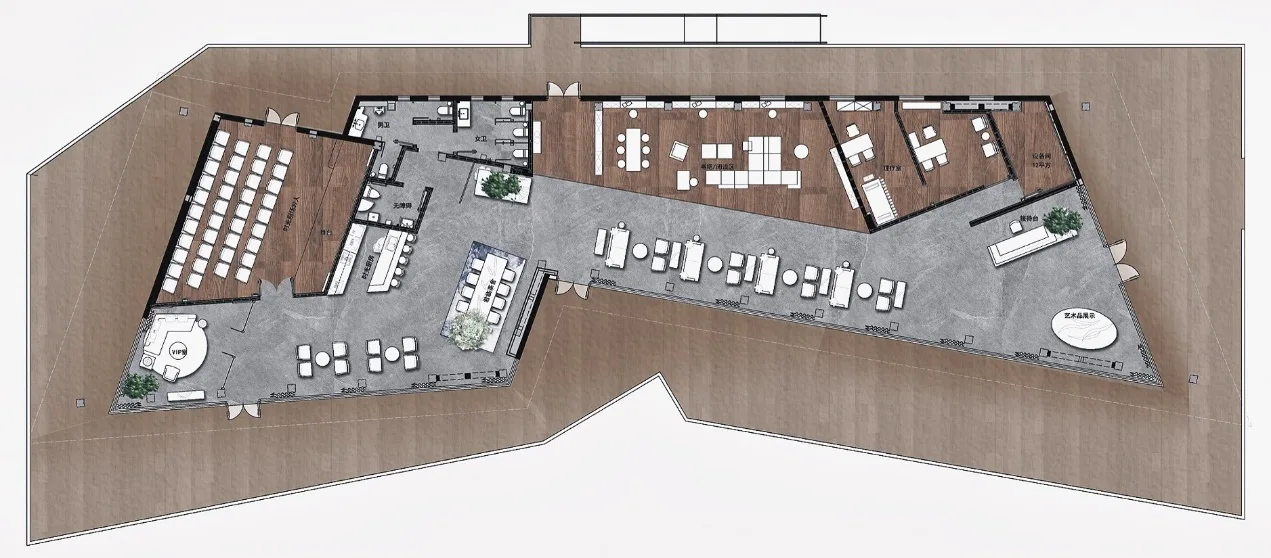
△ First floor plan
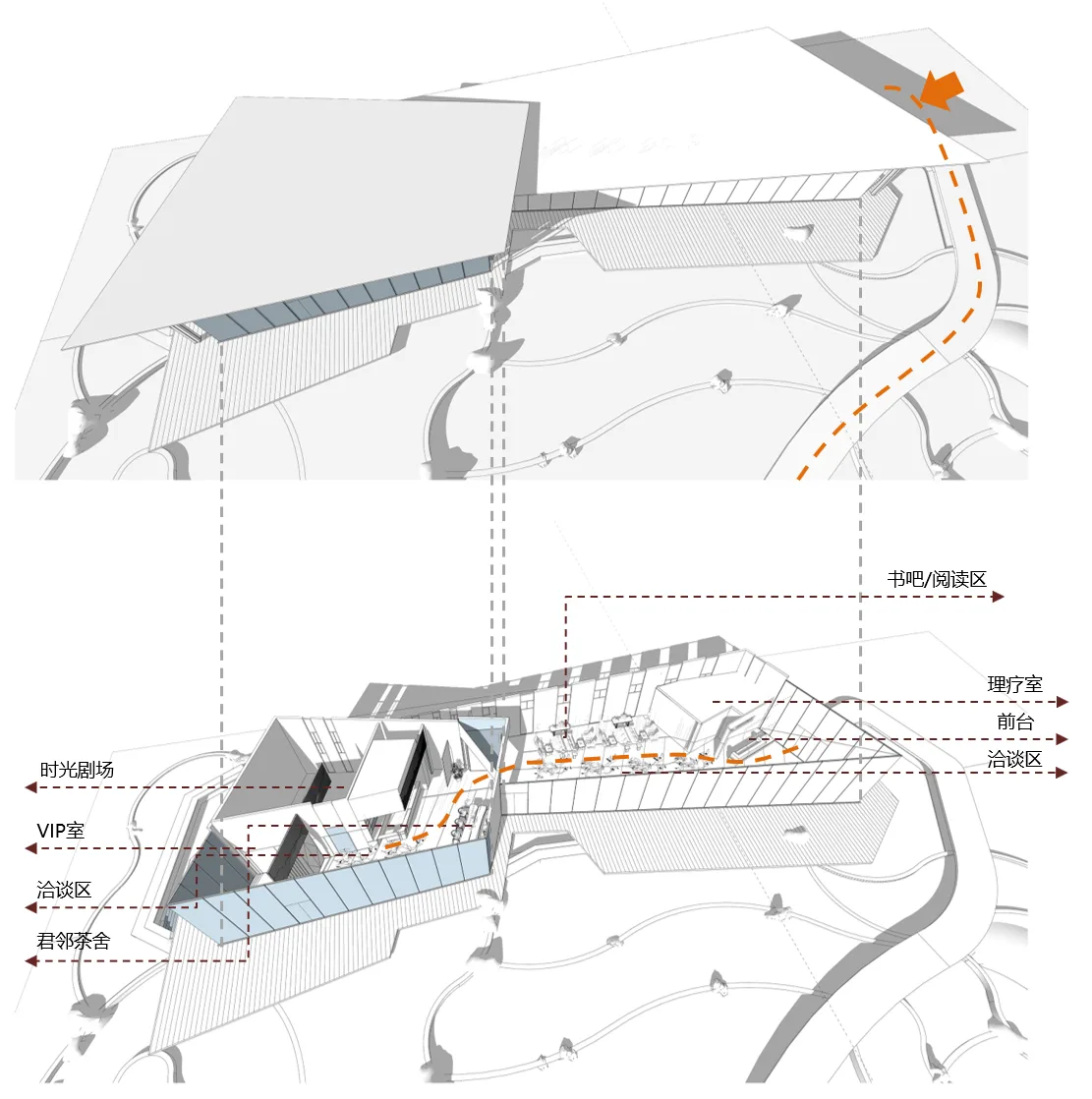
△ Flowline and functional analysis
Construction: Seamless Integration of Interior and Exterior Spaces
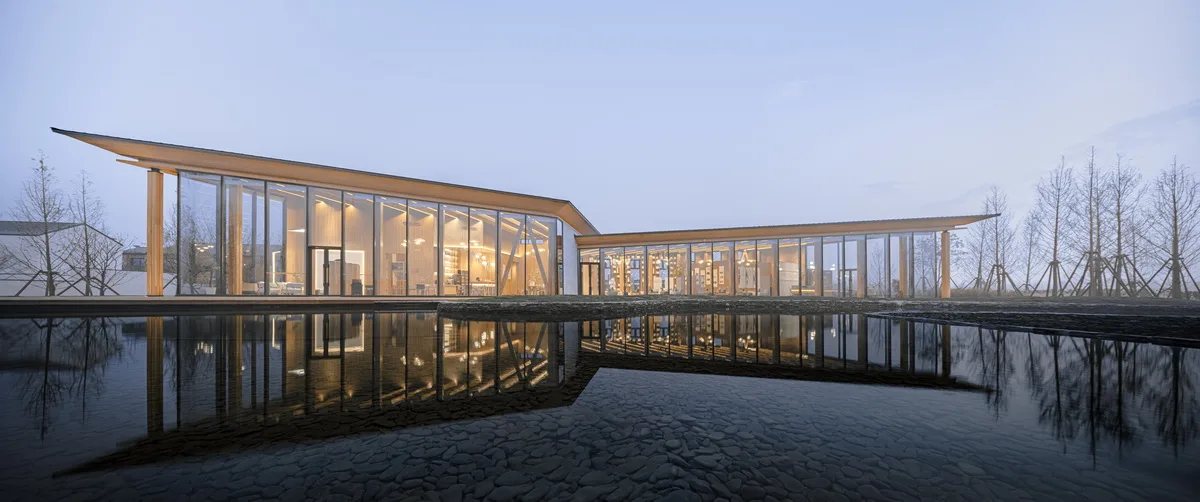
The building consists of two connected sections—a larger and a smaller volume—creating a spatial hierarchy through their combination. The south facade features a glass curtain wall facing the lake, offering stunning views from the main hall. In contrast, the north facade combines closed stone walls with vertical French windows, providing a more private and tranquil environment.
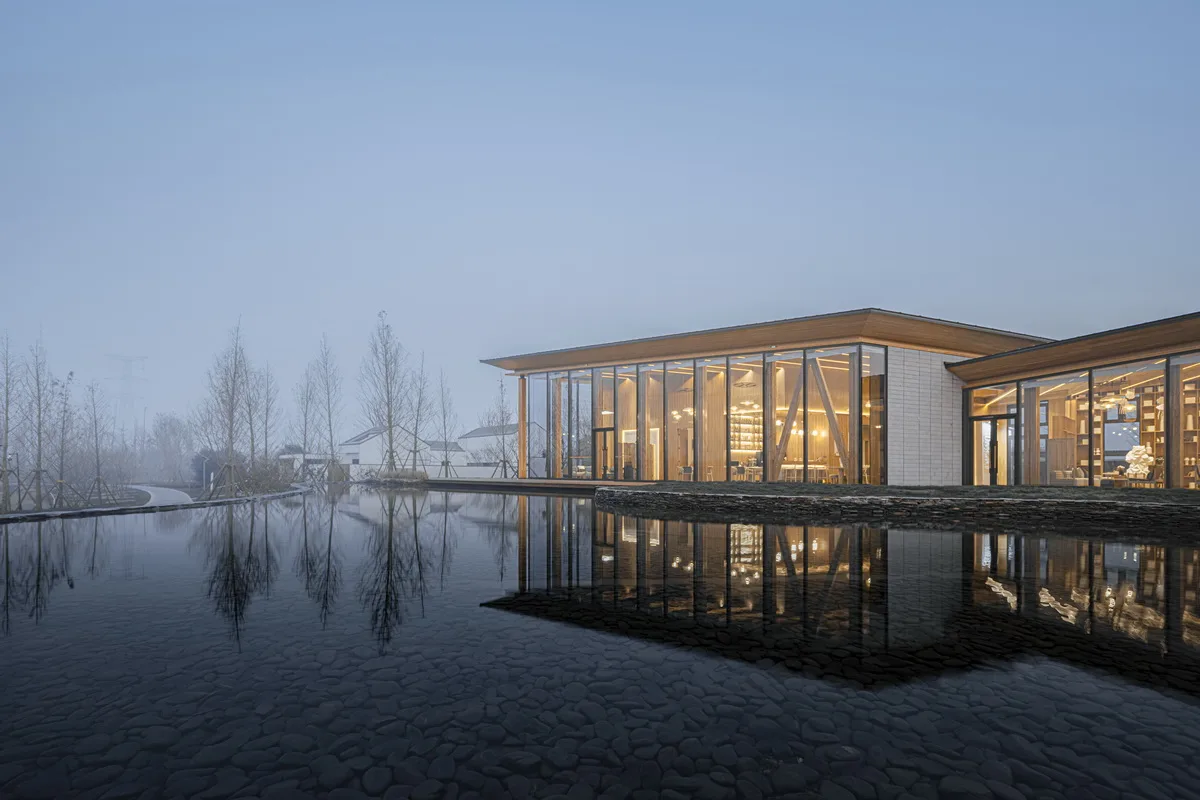
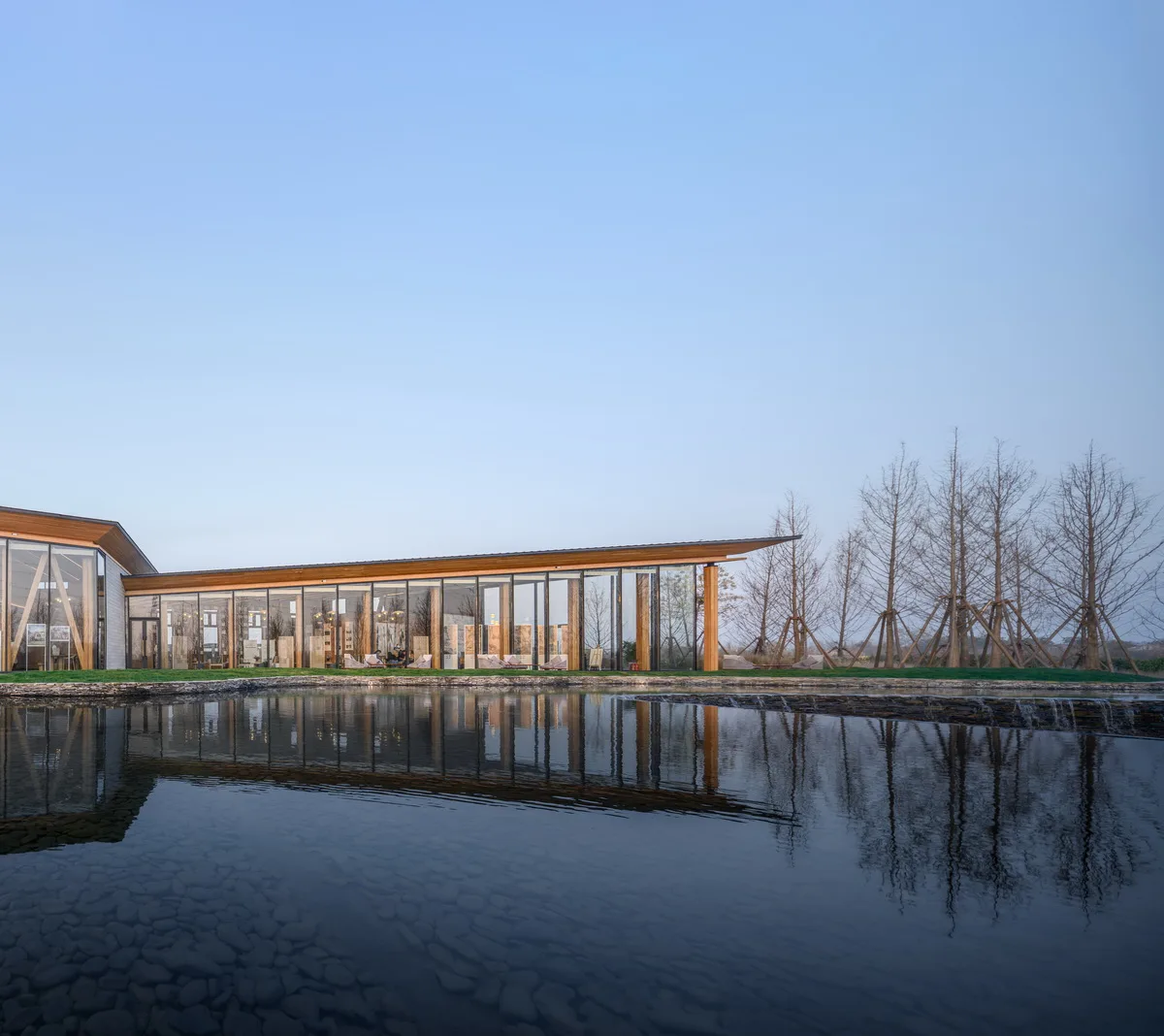
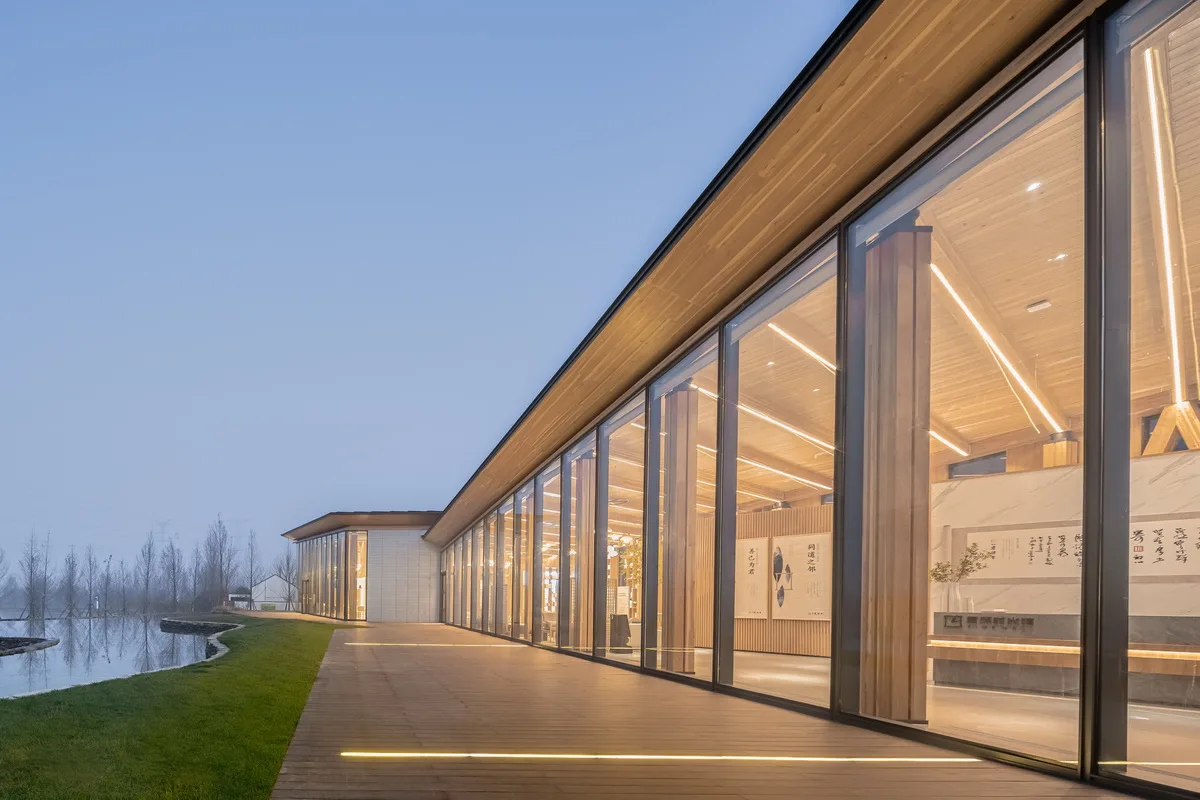
The overhanging eaves above the glass curtain wall protect the entrance and wooden structure from weather conditions. In summer, they shield the main hall from direct sunlight, while in winter, they allow sunlight to warm the interior, reducing cooling, heating, and ventilation costs.
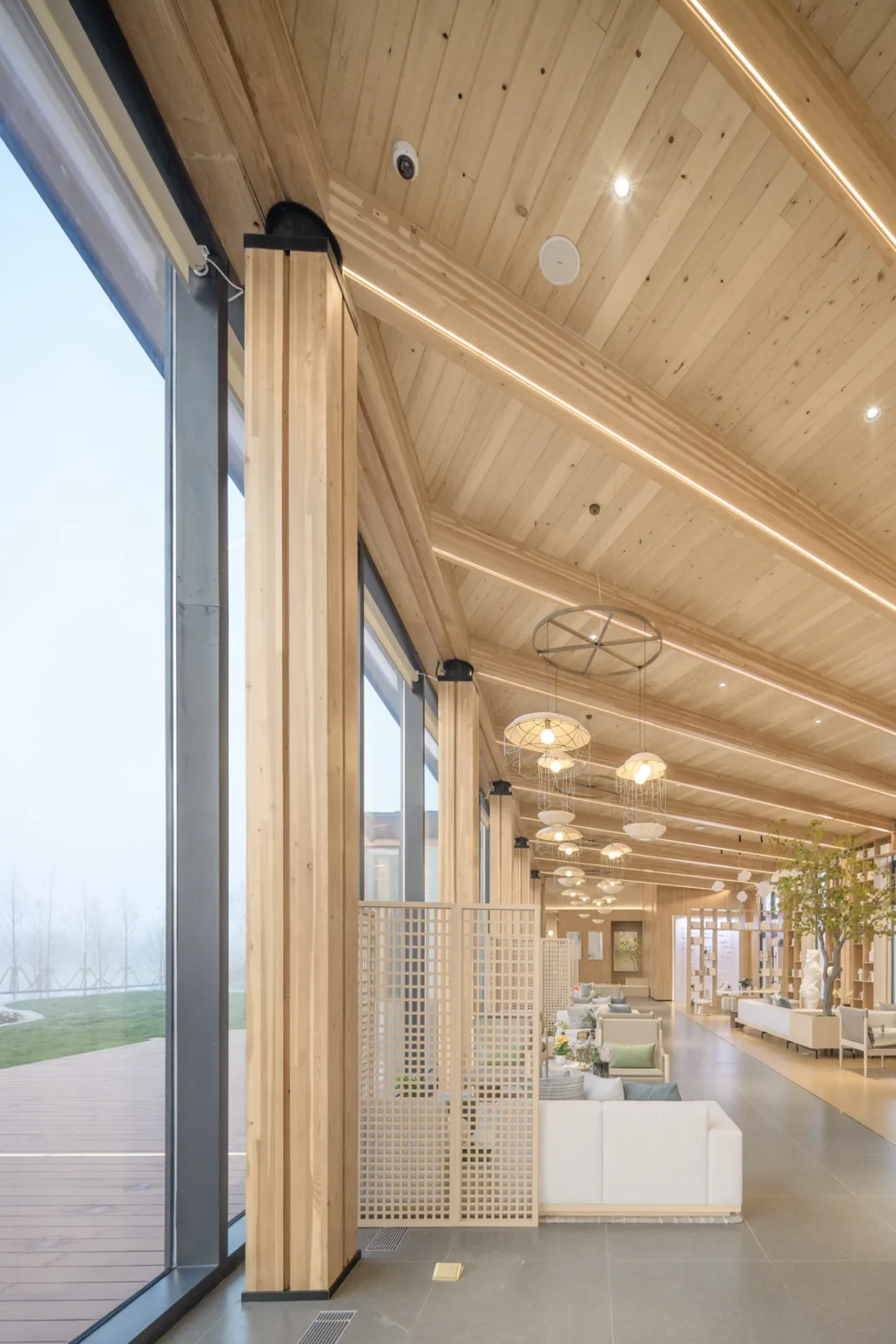
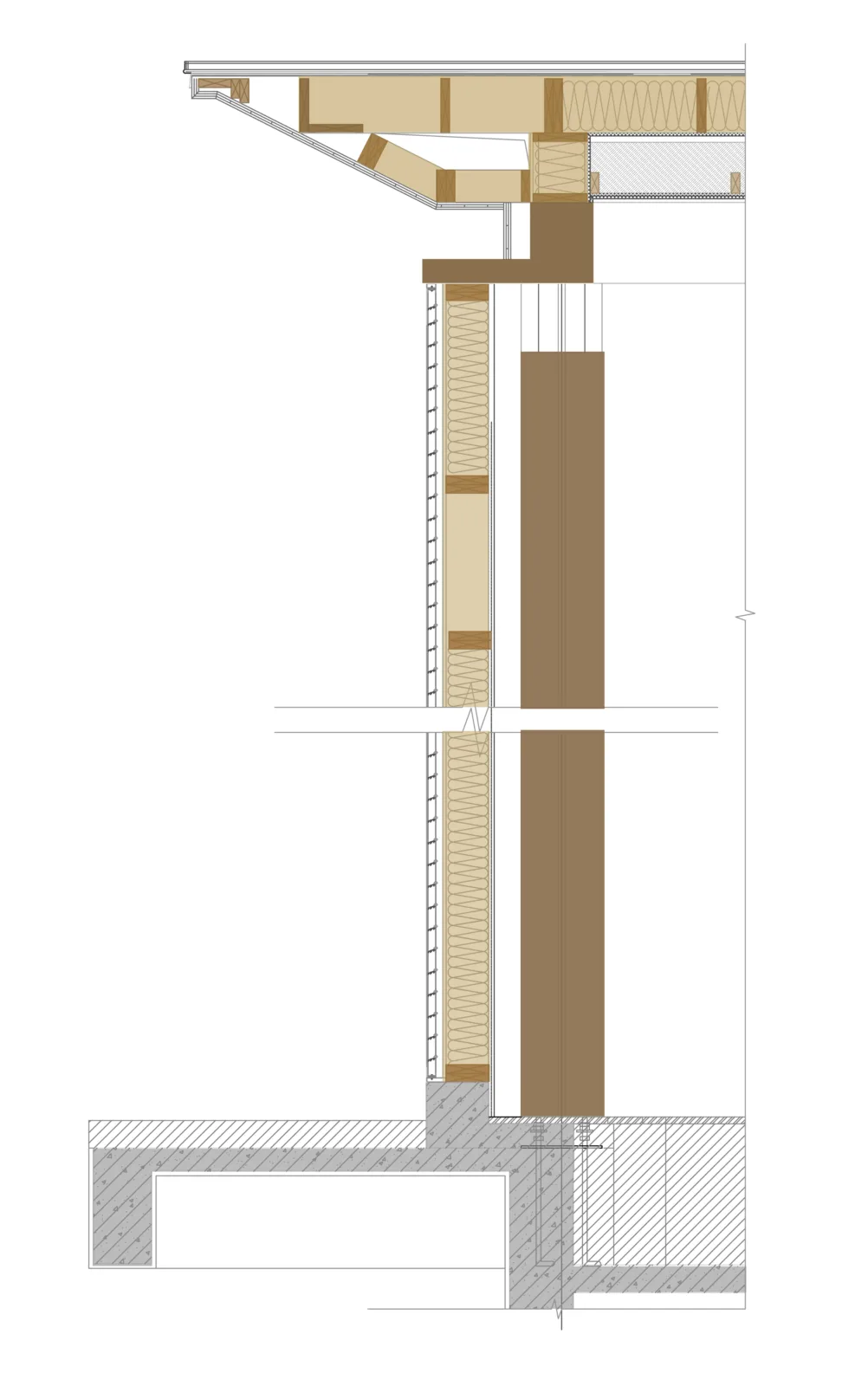
Due to the unique nature of the wooden structure, the curtain wall cannot be welded directly to it. Instead, threaded screws are used, requiring precise installation to align the reinforced steel plates, insert cores, and wooden board holes. After extensive testing, the technical team developed a method to connect the curtain wall core with screws, enabling strong on-site operability. The curtain wall is supported at the bottom, and the upper end withstands horizontal shear forces from wind and earthquakes, aligning well with the wood’s strength and ensuring safety.
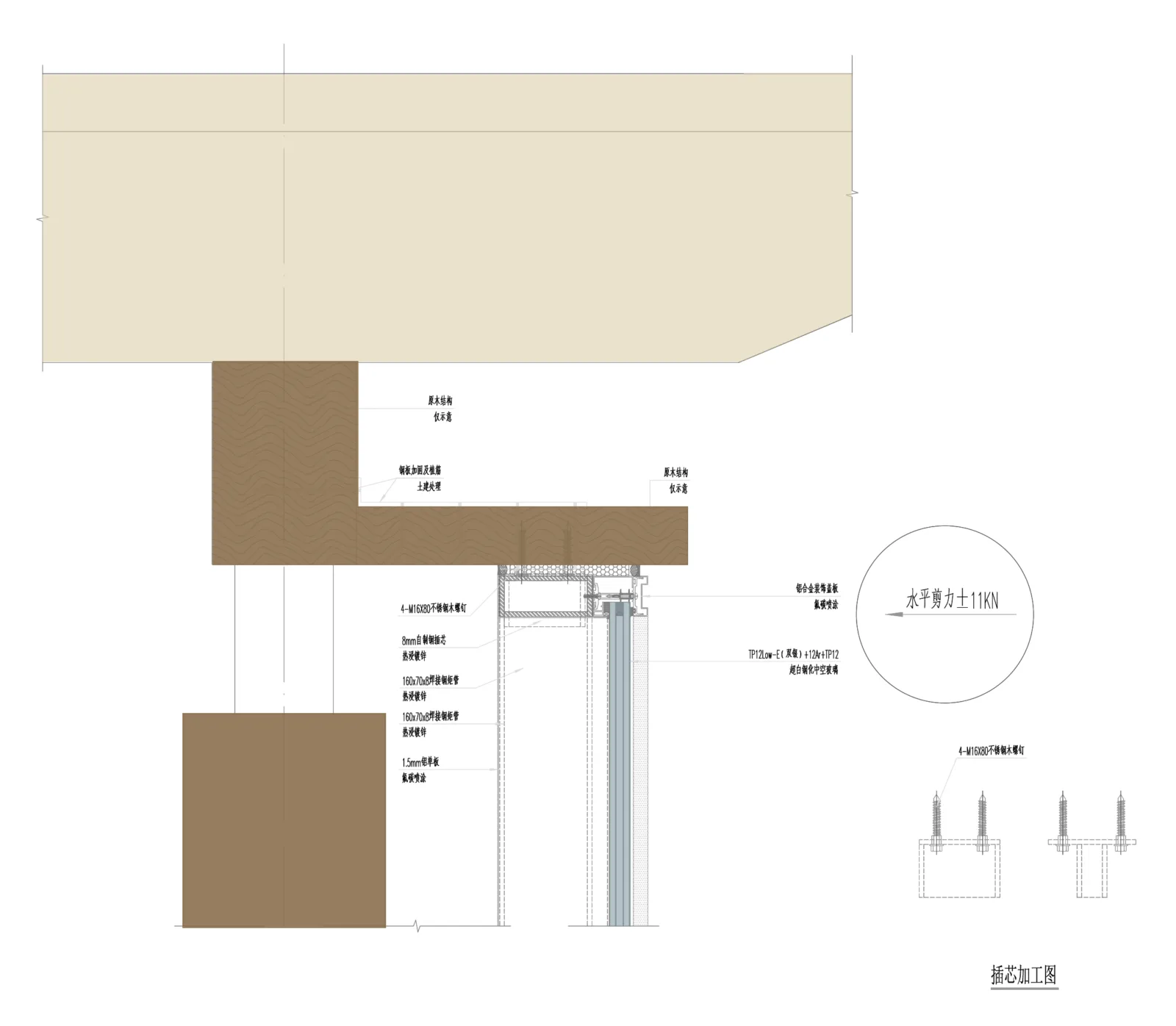
△ Connection node detail between curtain wall and wooden structure
Balancing facade aesthetics and structural strength, the team innovatively used a thin sloping CLT roof eave to integrate the roof, curtain wall, and solid wall. This solution addresses eave decoration, curtain wall closure, and incorporates light strips in structural grooves to enhance nighttime building illumination.
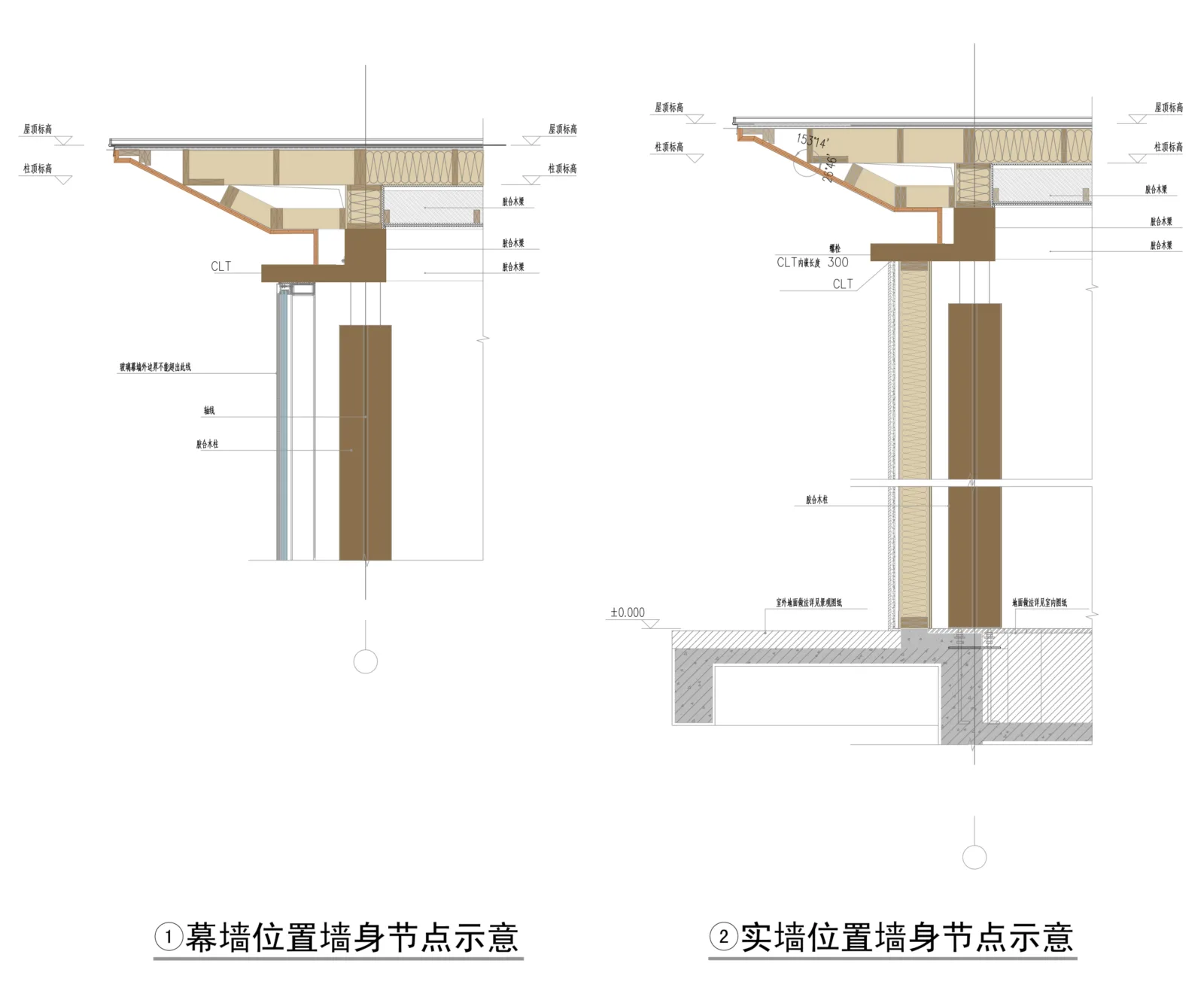
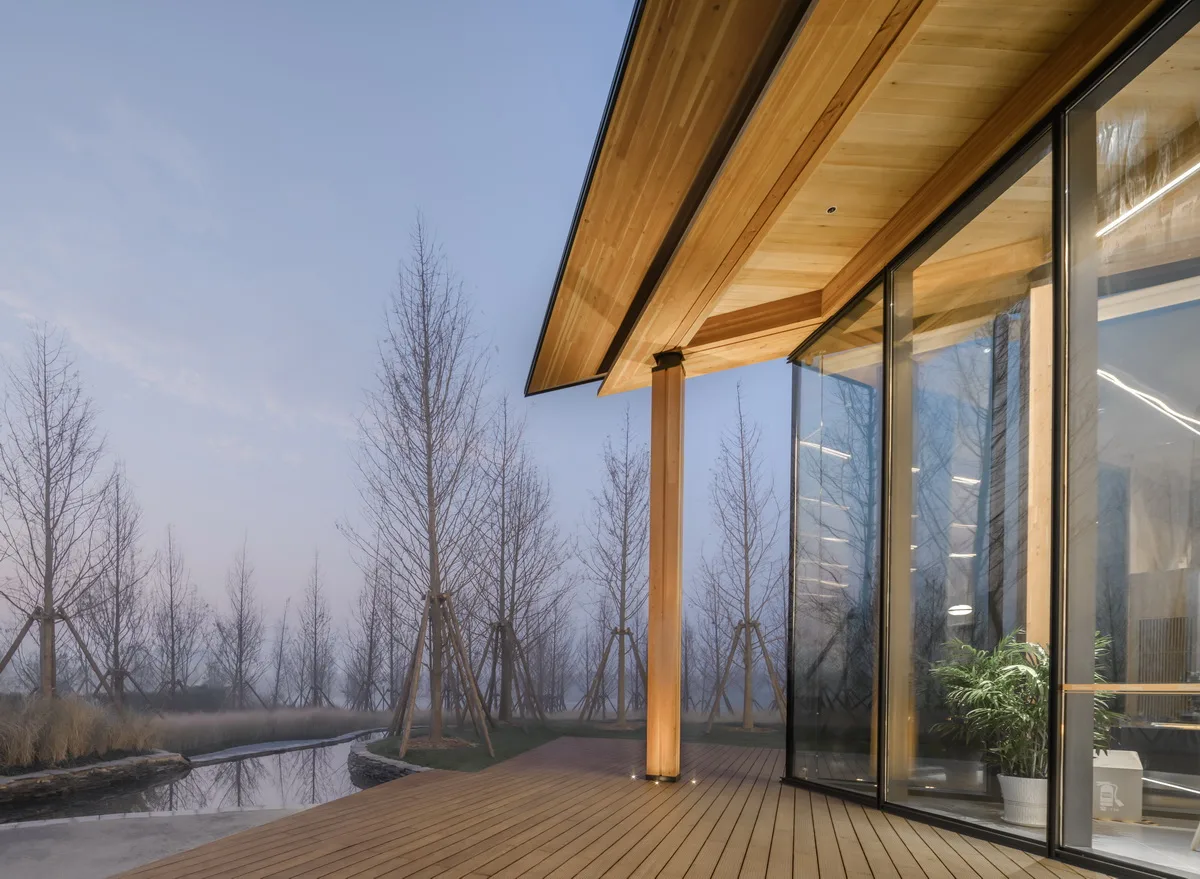
The glass curtain walls and wooden sloping roofs are the defining architectural elements, creating lightweight interior spaces and highly recognizable exterior forms.
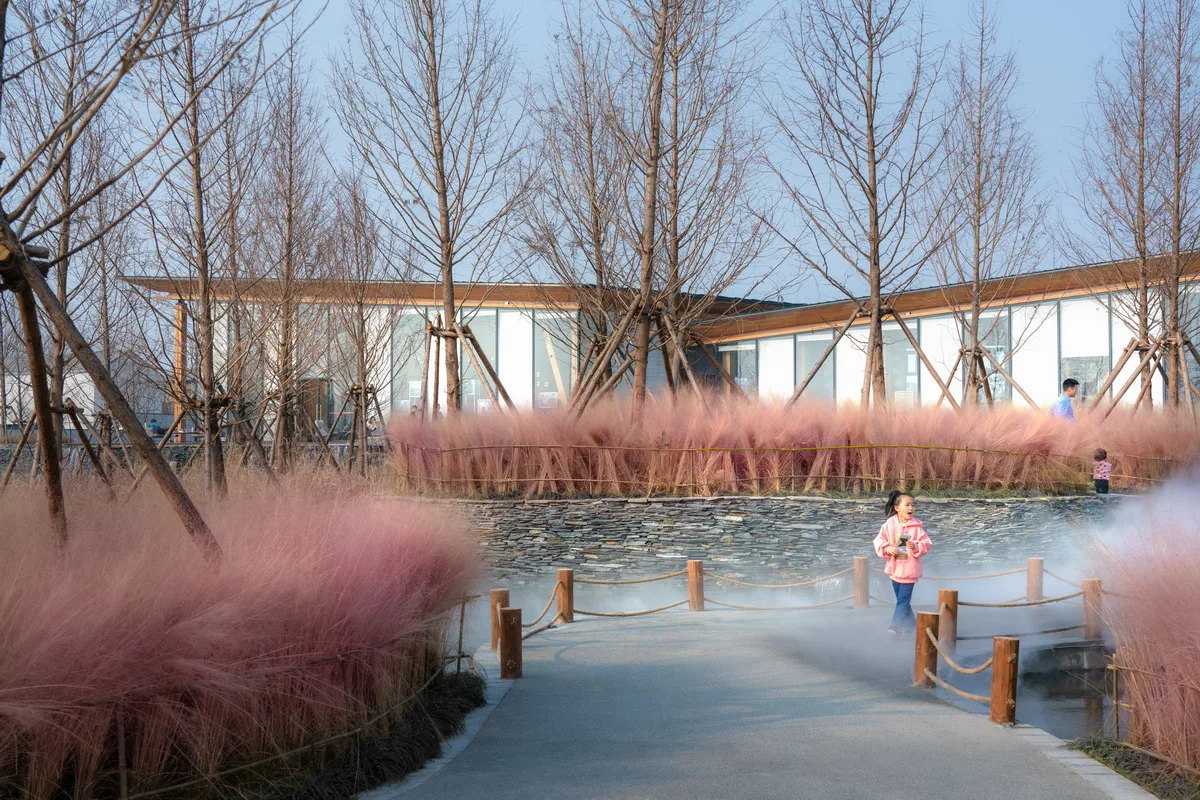
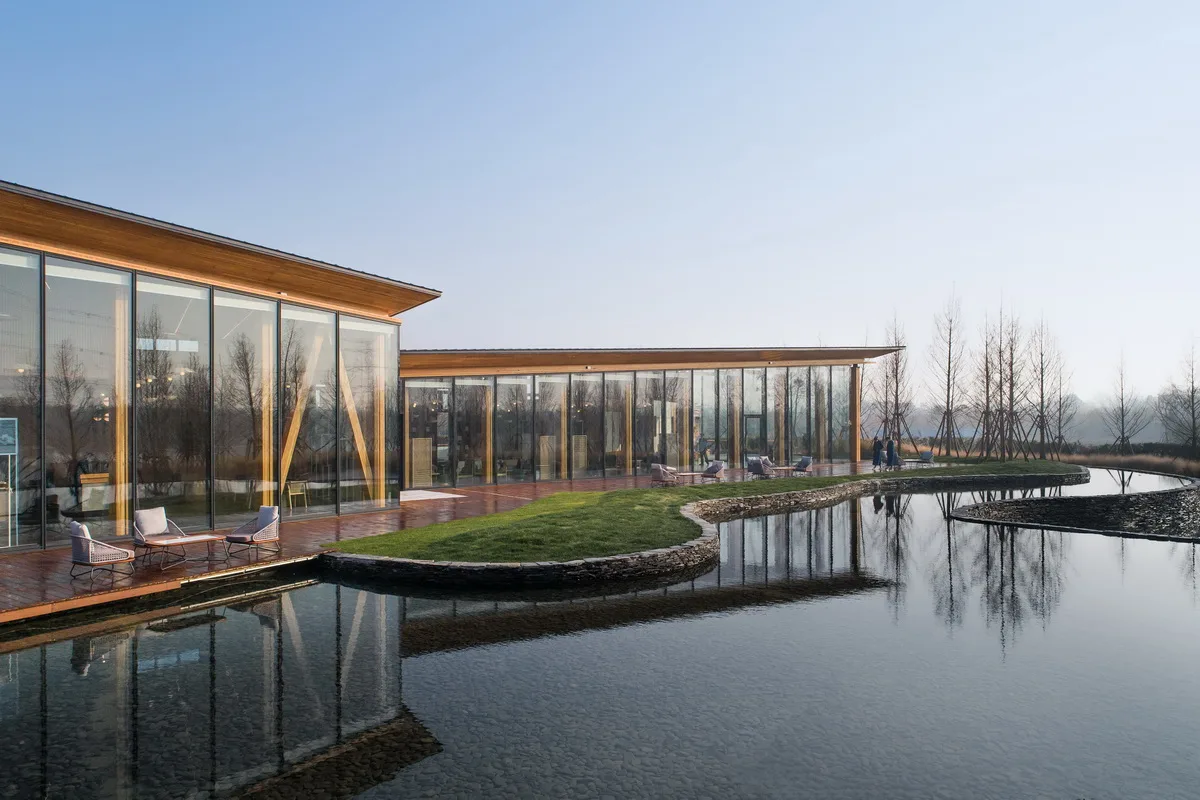
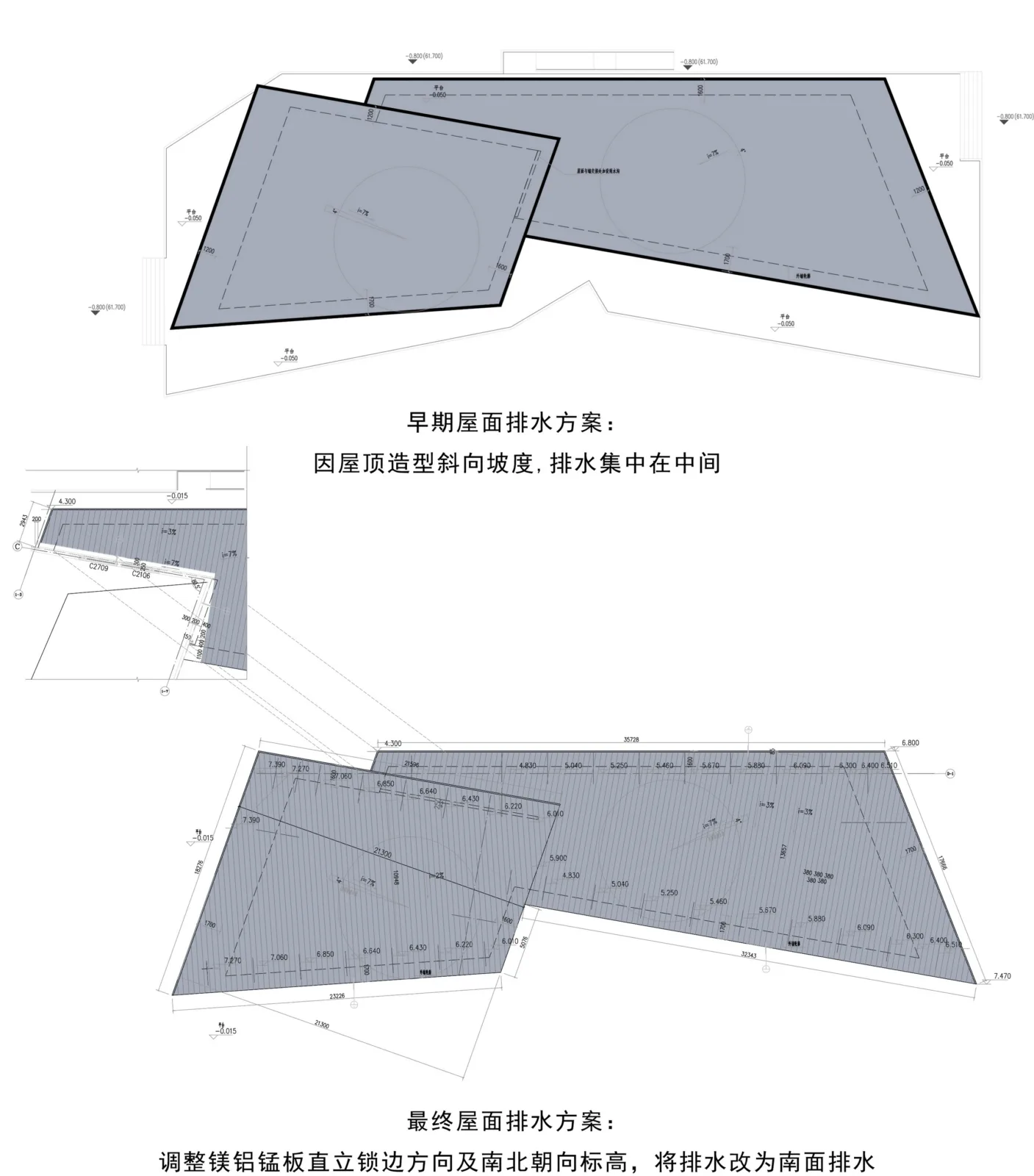
Initially, roof drainage was focused centrally due to the sloping design. However, to prevent water flow from interfering with foot traffic at entrances during heavy rain, the team adjusted the vertical locking direction and elevation of magnesium aluminum manganese panels. This change enabled a south-facing distributed drainage system that maintains facade aesthetics while ensuring safe passage during extreme weather.
Quality: Precise Facade Restoration
The wooden construction team collaborated closely with interior designers to ensure the wooden structural beams meet both aesthetic goals and practical requirements. This approach achieved minimal beam cross-sections while balancing cost and appearance.
The north facade features a combination of wet-laid stone and vertical French windows. The design team optimized the horizontal and vertical proportions of the stonework and refined the aluminum alloy edge finishing to achieve a stable, elegant, and visually pleasing composition.
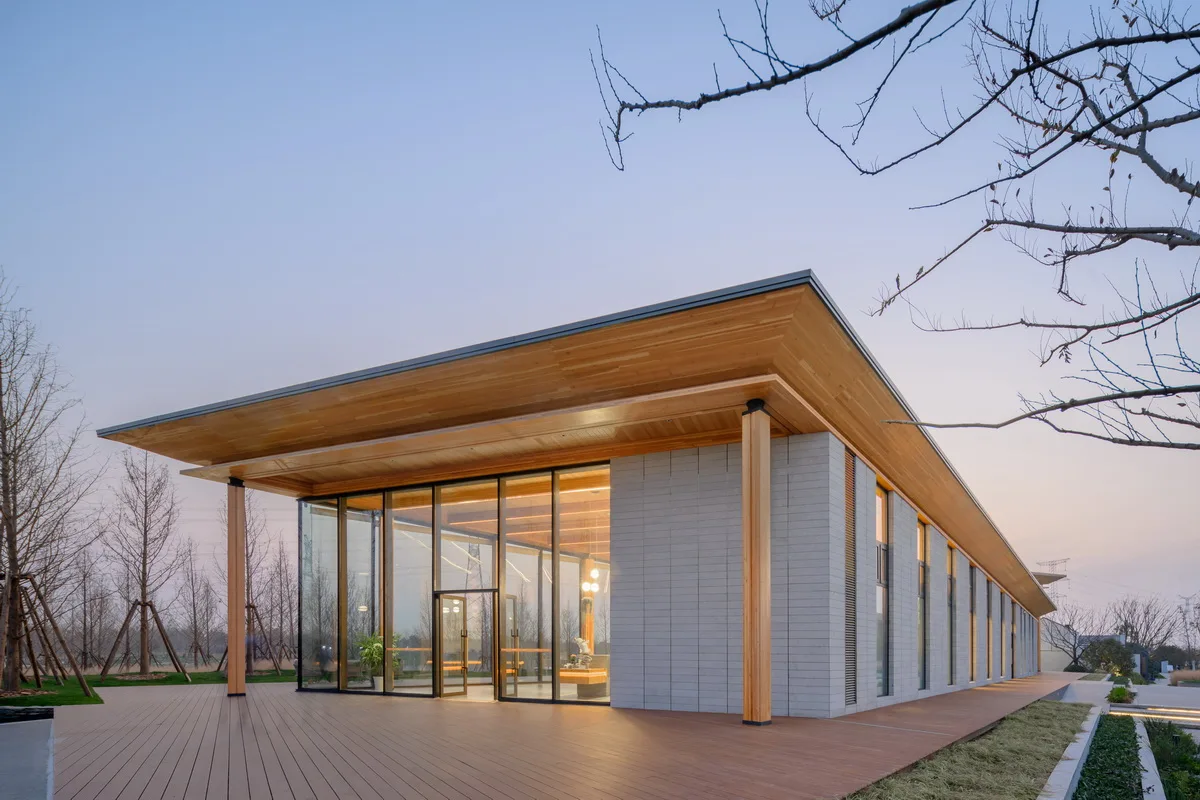
Metal short columns above each column head are clad with aluminum plate outsourcing technology, which ensures fire protection compliance while enhancing the facade’s visual impact.
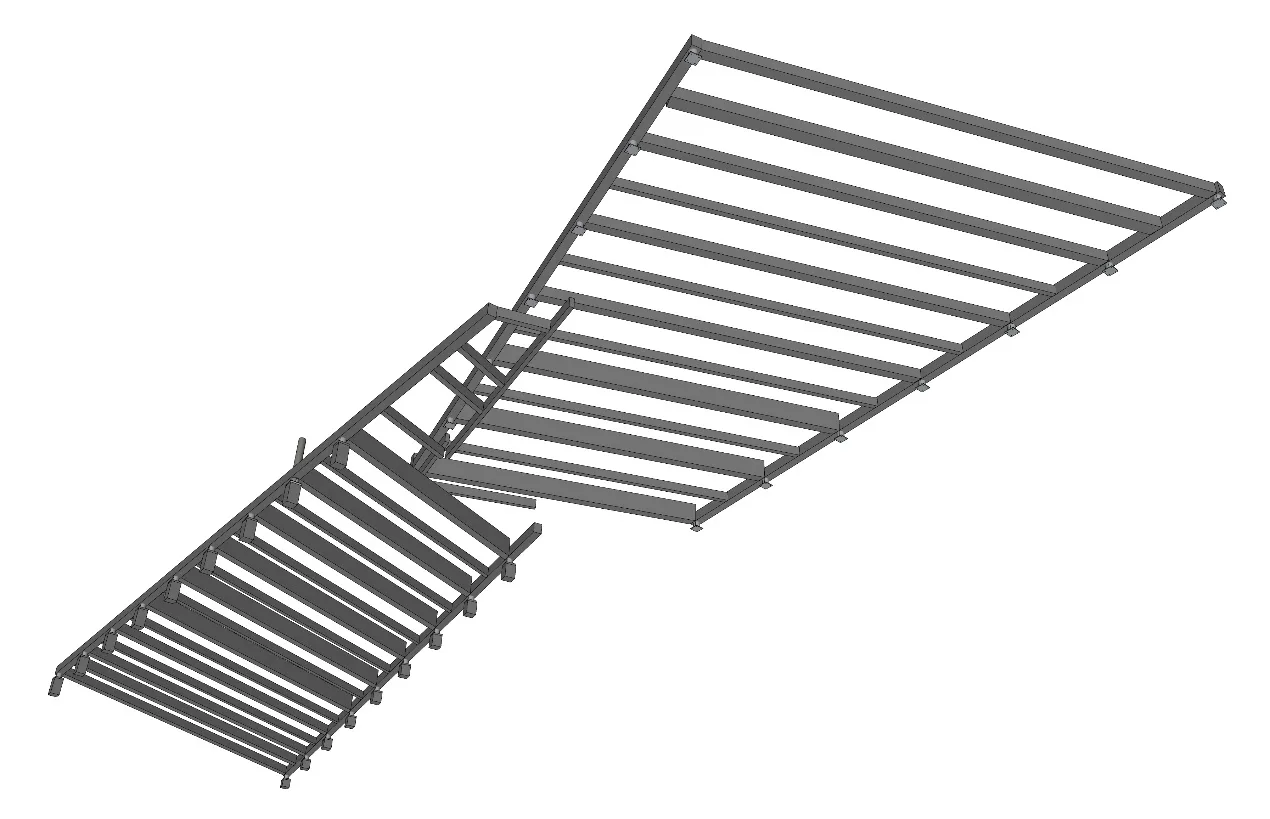
△ Detailed drawing and model of column head node
The stone facade combines elegant gray matte stone walls with strip glass windows. To seamlessly integrate the building’s HVAC system into the facade, the design and HVAC teams coordinated to relocate HVAC piping to one end of the building, which is concealed behind louver panels that blend with the stone joints.
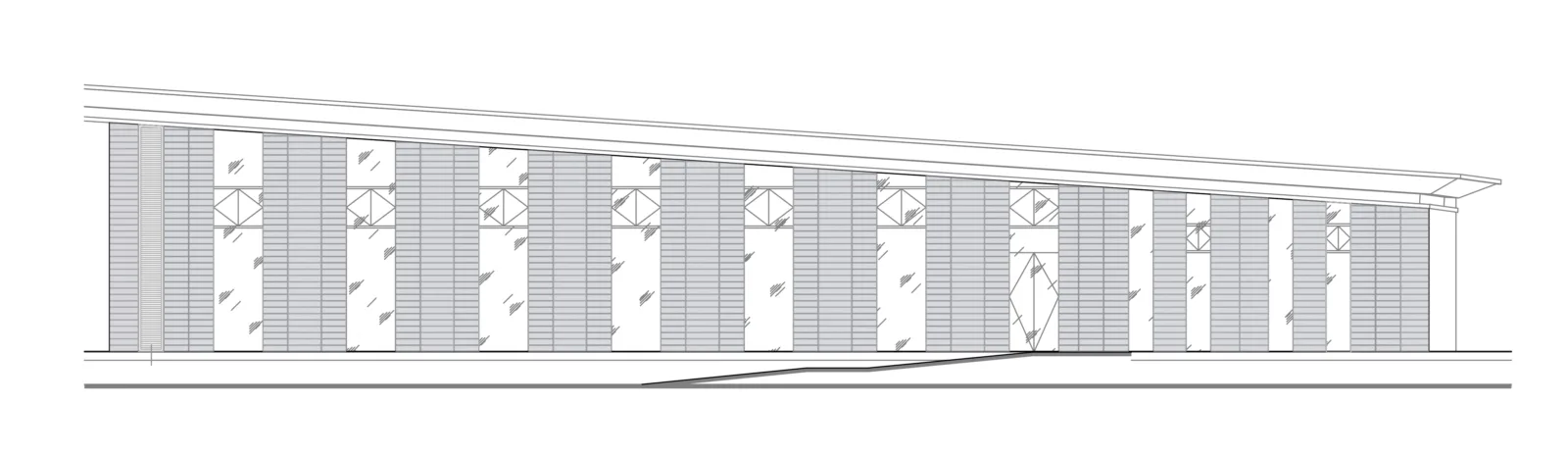
△ Stone surface HVAC louver and window wall system
Interior: Wooden Structures as the Aesthetic Focus
The design concept highlights wooden structure decoration by emphasizing distinctive node construction and the uniqueness of modern wooden elements. The goal is to create a natural, comfortable ambiance that showcases the continuity and sequence of wooden beams and columns.
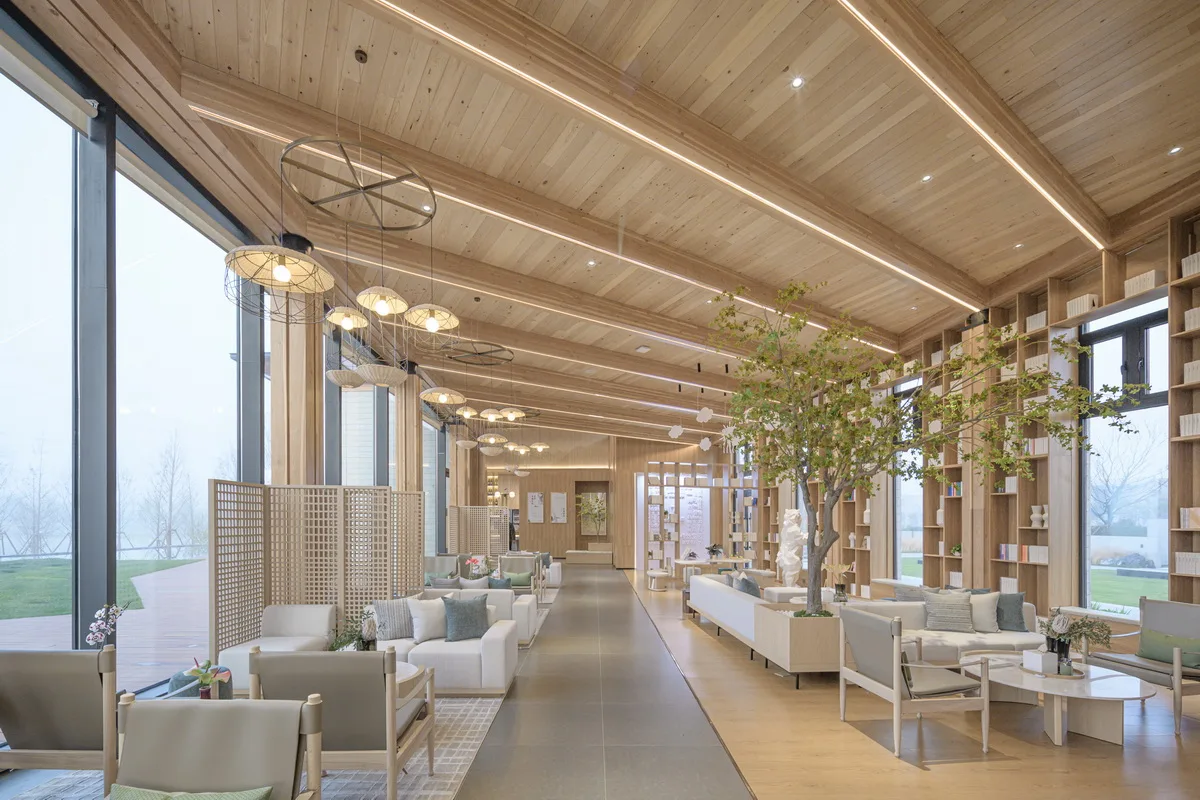
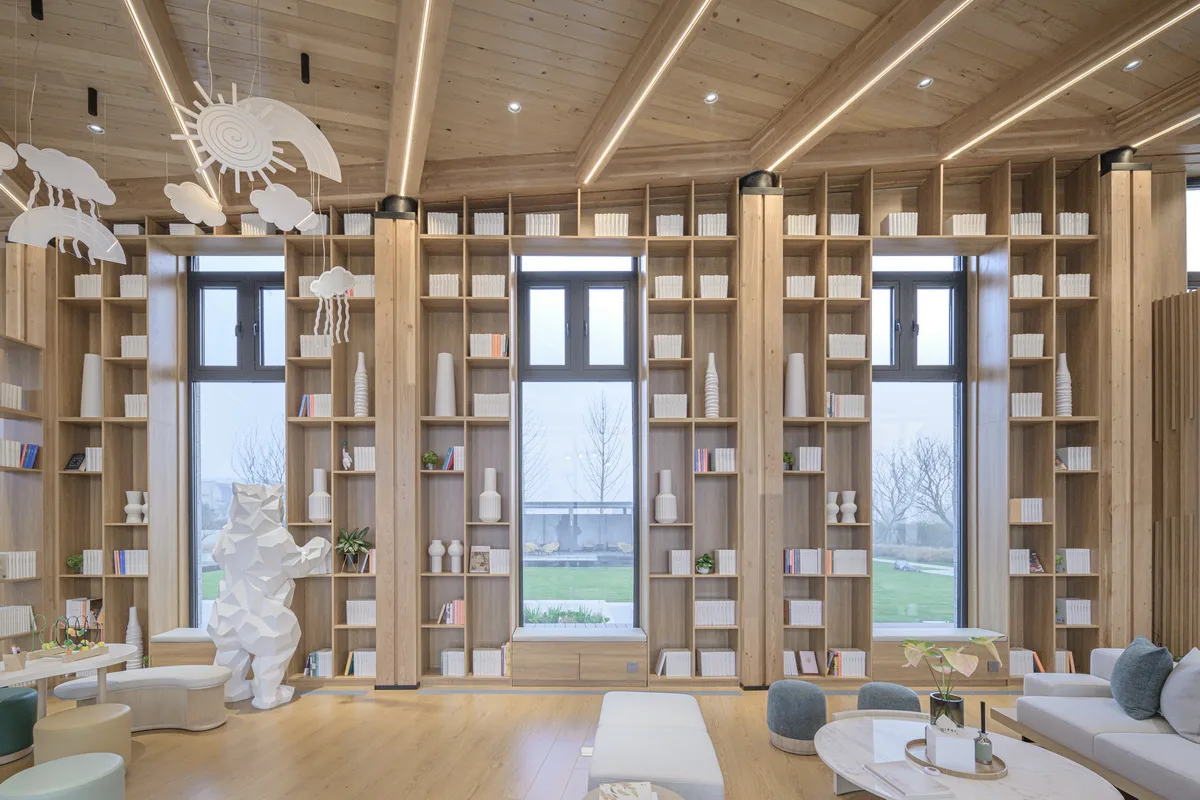
The exposed wooden components serve not only as structural elements but also as aesthetic features imbued with symbolic meaning.
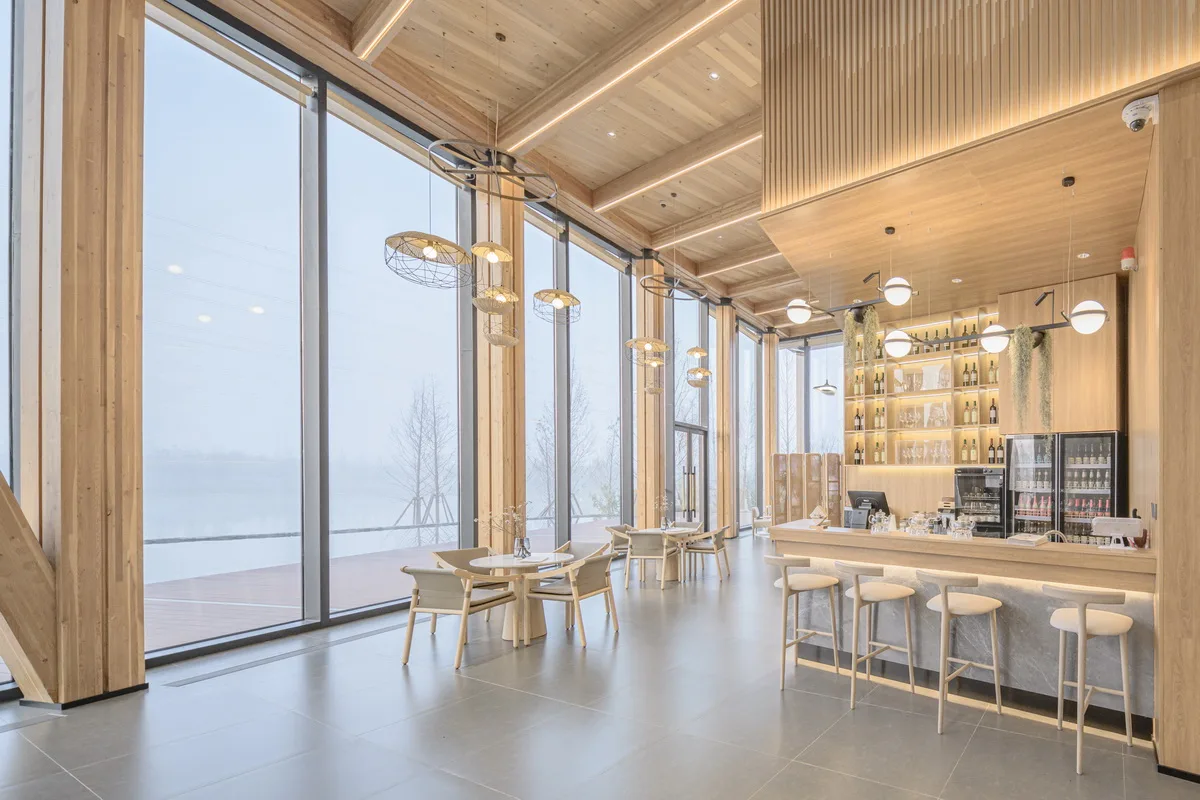
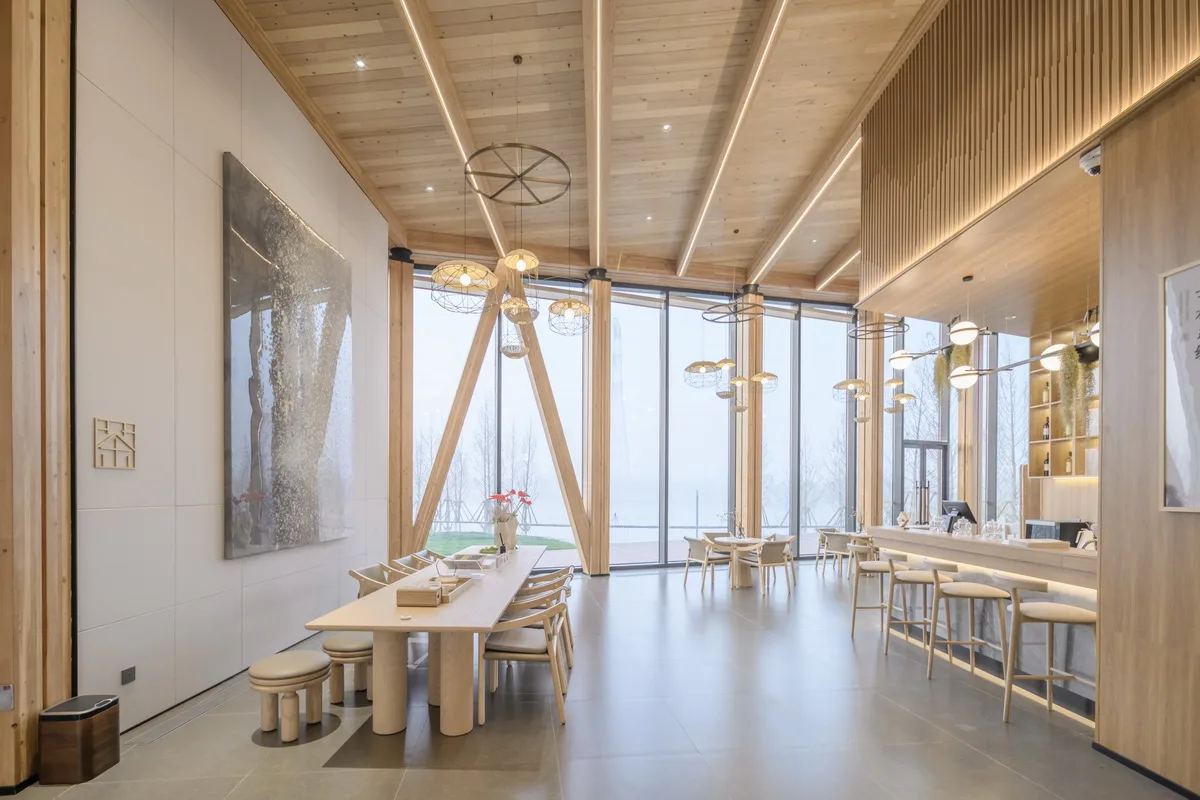
The ceiling features primary and secondary beams with no suspended ceiling beneath, inspired by traditional Chinese architecture’s fully exposed roof style. This design allows visitors anywhere indoors to clearly perceive the structural logic of the entire building.
Conclusion: Balancing Cost, Functionality, and Aesthetics
Early structural designs included extensive embedded steel, driving up costs. However, precise calculations by the wood structure team demonstrated that using wooden diagonal supports and interior walls created a more rational and cost-effective structure. This significantly reduced steel usage while maintaining comfort and strength.
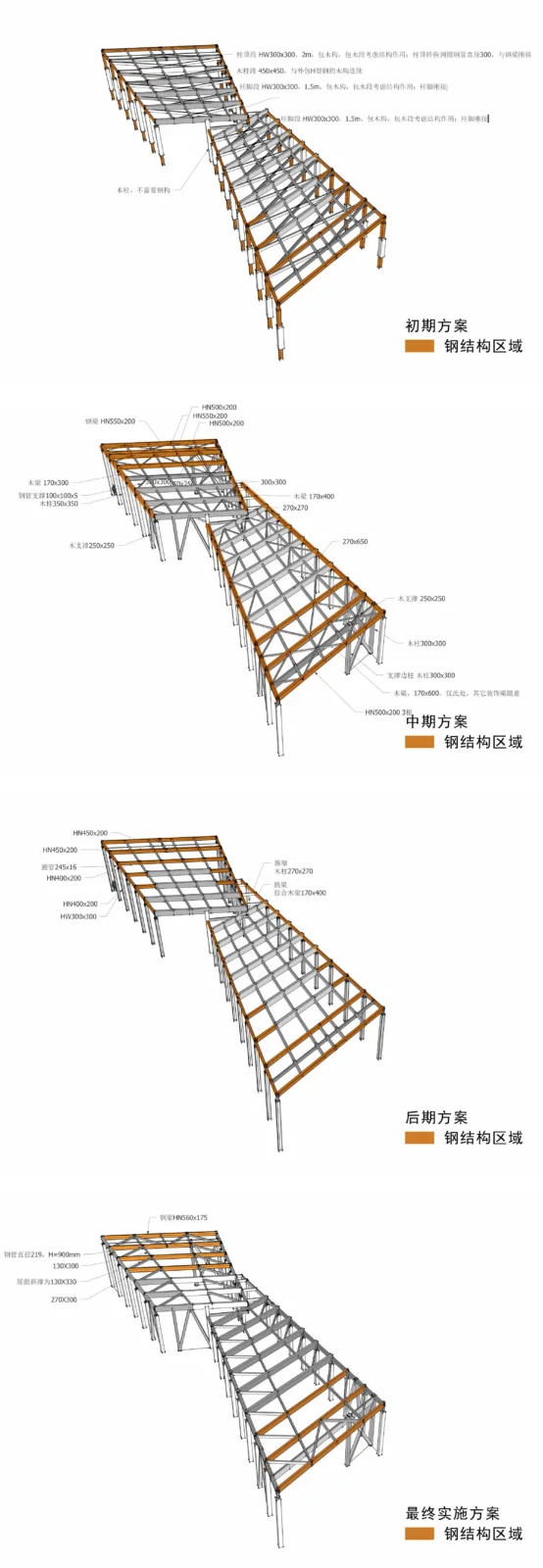
△ Use of wooden diagonal supports and interior walls to reduce steel content
This project employs a fully assembled wooden structure. In heavy-duty timber construction, exposed wood serves as both structure and decoration, eliminating the need for costly interior finishes that can account for up to 30% of total real estate development costs. Although wooden structures may initially cost more than concrete, savings from reduced interior finish expenses offset this, making the overall project highly cost-competitive.
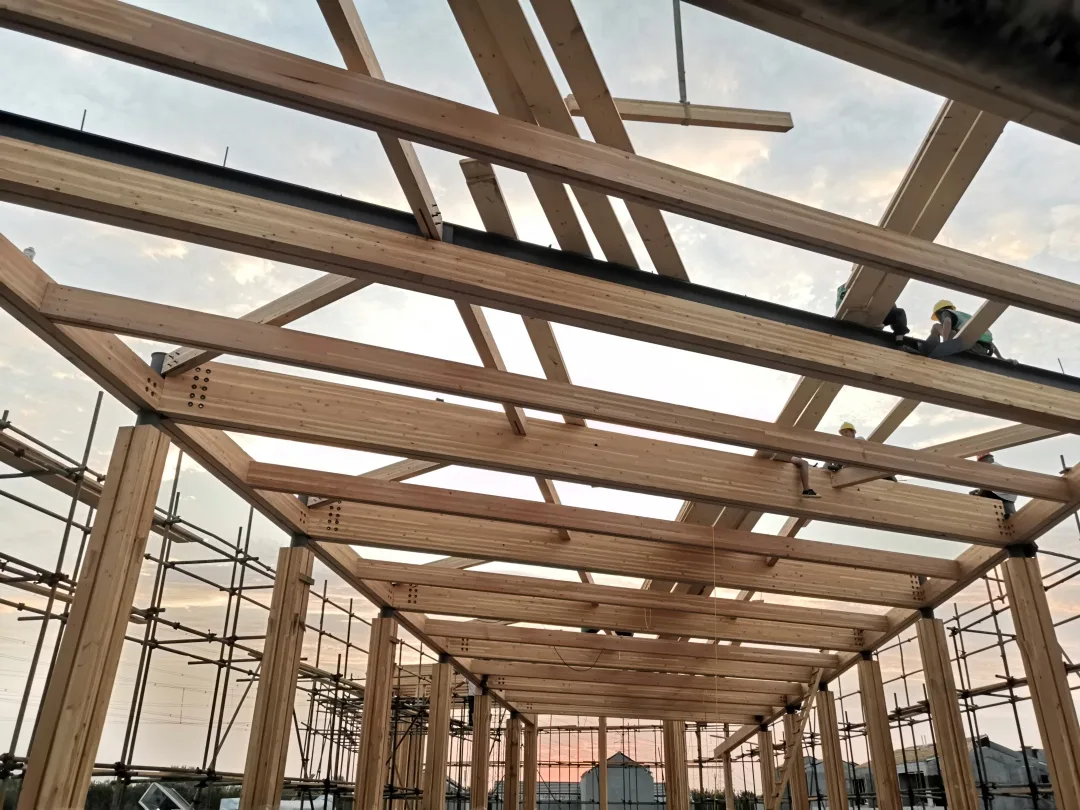
△ Project site hoisting
Modern wooden structures benefit from prefabrication, enabling a construction timeline roughly one-third that of typical concrete buildings. This reduces labor costs and allows for faster project completion. Chengzhi Design and Junzhi Technology teams have adapted efficiently to market demands, emphasizing rigorous process control and scientific management to ensure smooth project delivery.
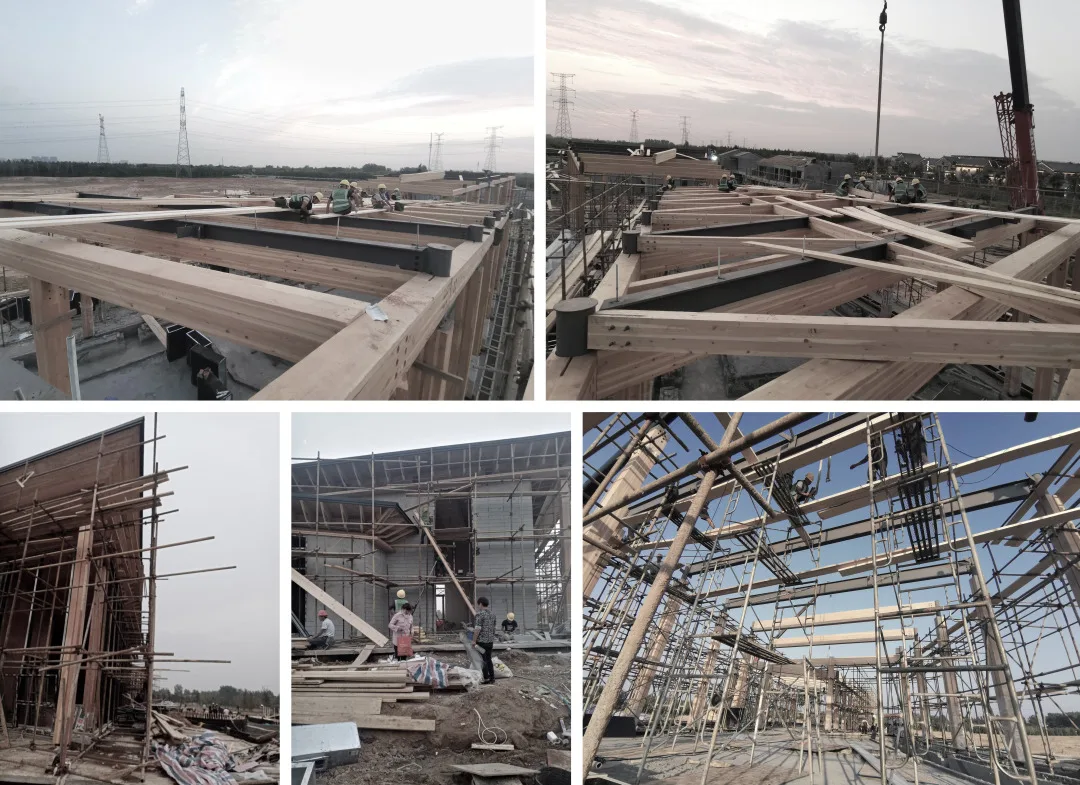
△ Construction process photos
Project Information
Project Name: Yanling Jianye Junlin Courtyard Time Museum
Location: South of Zuogang Village Road, Yanling County, Henan Province
Project Owner: Jianye Group
Function: Exhibition Hall
Building Area: 512.64 square meters
Architectural Design: Shanghai Chengzhi Architectural Design Co., Ltd
Interior Design: Shanghai Chengzhi Architectural Design Co., Ltd
Interior Decoration: Shanghai Binzhan Architectural Design Consulting Co., Ltd
Chief Architect: Li Jie
Conceptual Design: Chen Fengfeng
Design Team: Zhu Liang, Liu Zhimin, Hu Yun, Haiyang, Renli, Gong Lei, Chen Lang
Technical Consultant: Shanghai Junzhi Construction Technology Co., Ltd
Construction Unit: Shanghai Junzhi Construction Technology Co., Ltd
Technical Team: Li Juan, Liu Gang
Construction Managers: Chen Jingpei, Huang Limin
Landscape Design: Yiya Yuanjing
Design Date: July 2020
Completion Date: October 2020
Graphic Arrangement: Chengzhi Brand
Project Photography: Xingzhi Imaging, Qiu Wen Architecture Photography












Must log in before commenting!
Sign Up