
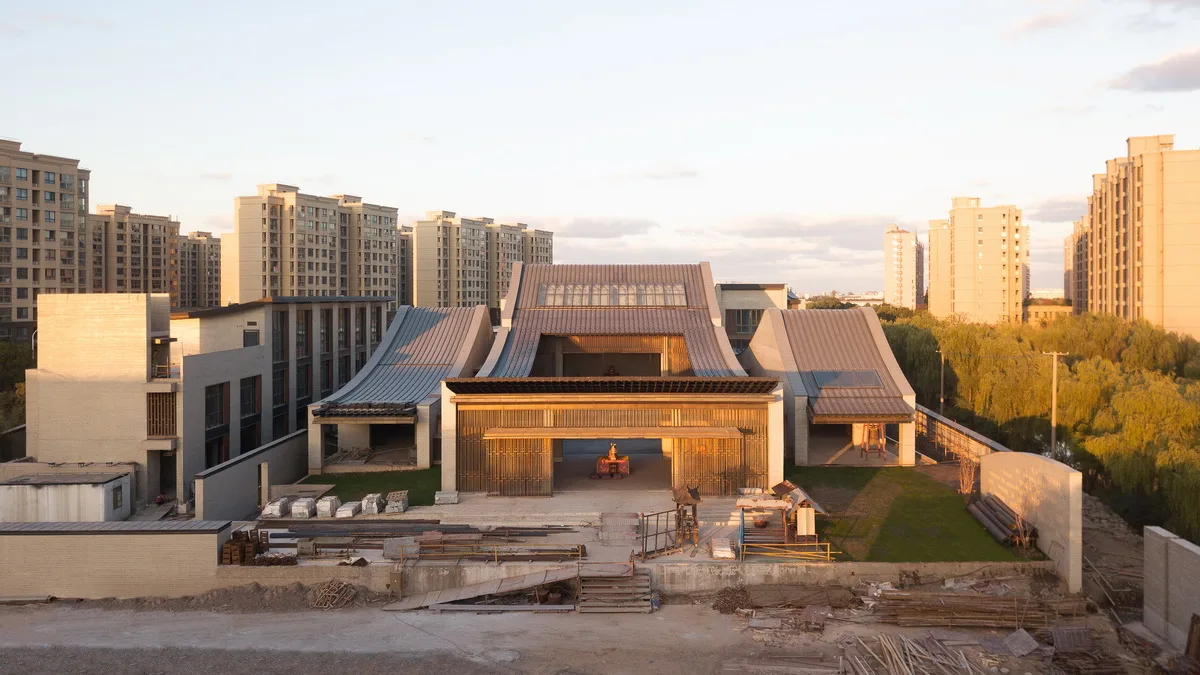
△ Aerial view of the front of the main hall area (unfinished)
The Guoqing Temple, located in Tangzhen, Pudong, Shanghai, is a Ming Dynasty temple. Originally, the site was home to the “Yu Gong Temple,” dedicated to the renowned Ming Dynasty anti-Japanese general Yu Dayou. Six years ago, a new design project was initiated, and the first phase of the building has now been essentially completed.
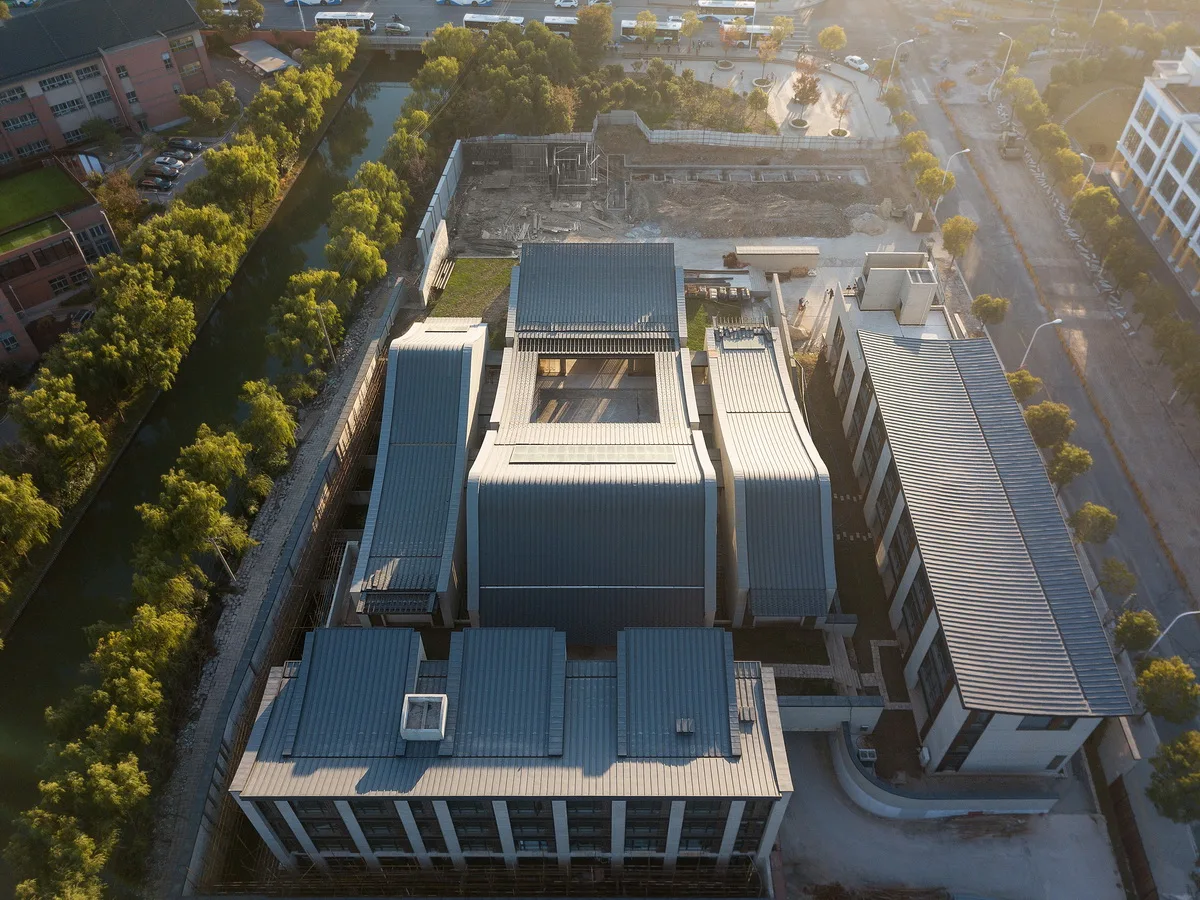
△ North side aerial view (unfinished)
At the end of 2014, a friend invited me to design this project. The temple is modest in size, and the young abbot, Dharma name Yanyin, expressed a clear vision. I told him, “If you want a traditional antique temple, I may not be the right fit. But if you want a modern temple, I’m very interested.” Yanyin replied enthusiastically, “I’m looking forward to it!” I sensed he would be a great client.
My concept of “modernity” included two layers: material aspects such as form, space, and materials, and conceptual ones like openness to the public. In contemporary China, temples are often limited to incense burning and kowtowing, while core functions like preaching and meditation are fading. Traditional Buddhist architecture did not emphasize axial symmetry. Chinese Buddhism adopted palace-style layouts for temples—historically, “temple” referred to government offices—resulting in temples resembling government buildings, unlike Tibetan, Theravada, or Japanese counterparts. Could we design a temple more open and connected to the city? Could religious architecture express its spiritual core? Could the visitor’s journey into the temple become an enlightening experience of Buddhism?
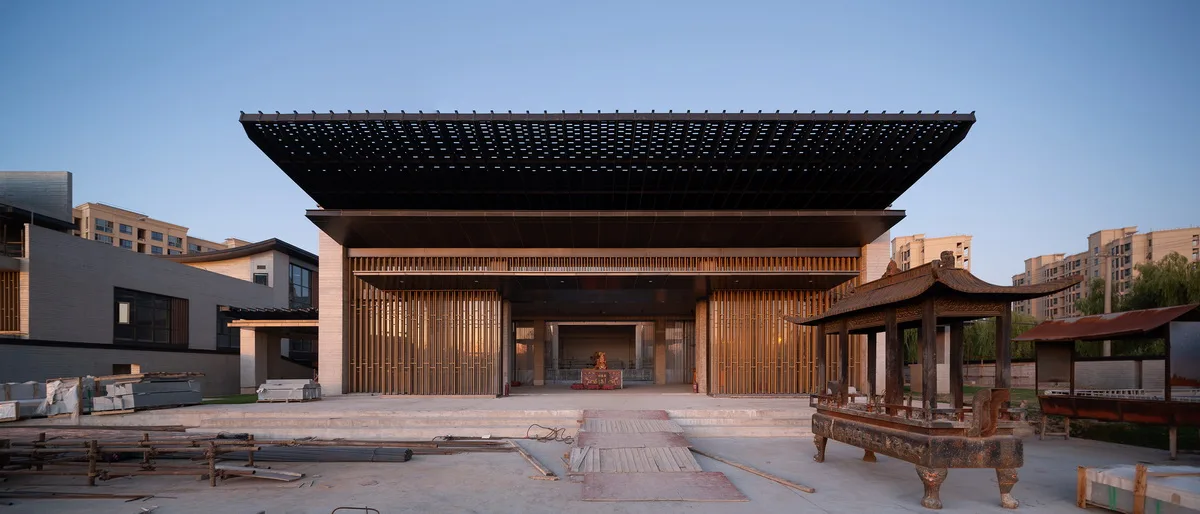
△ Realistic view of the Heavenly King Hall (unfinished)
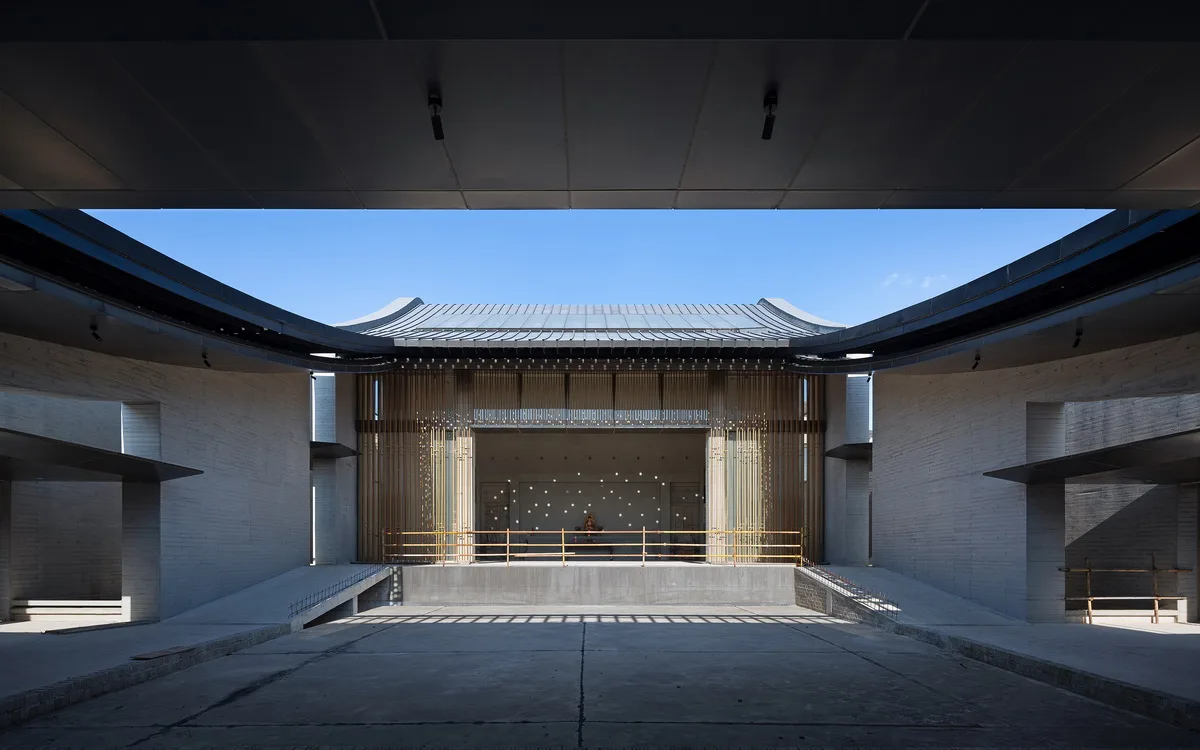
△ Realistic view of the atrium in the main hall area (unfinished)
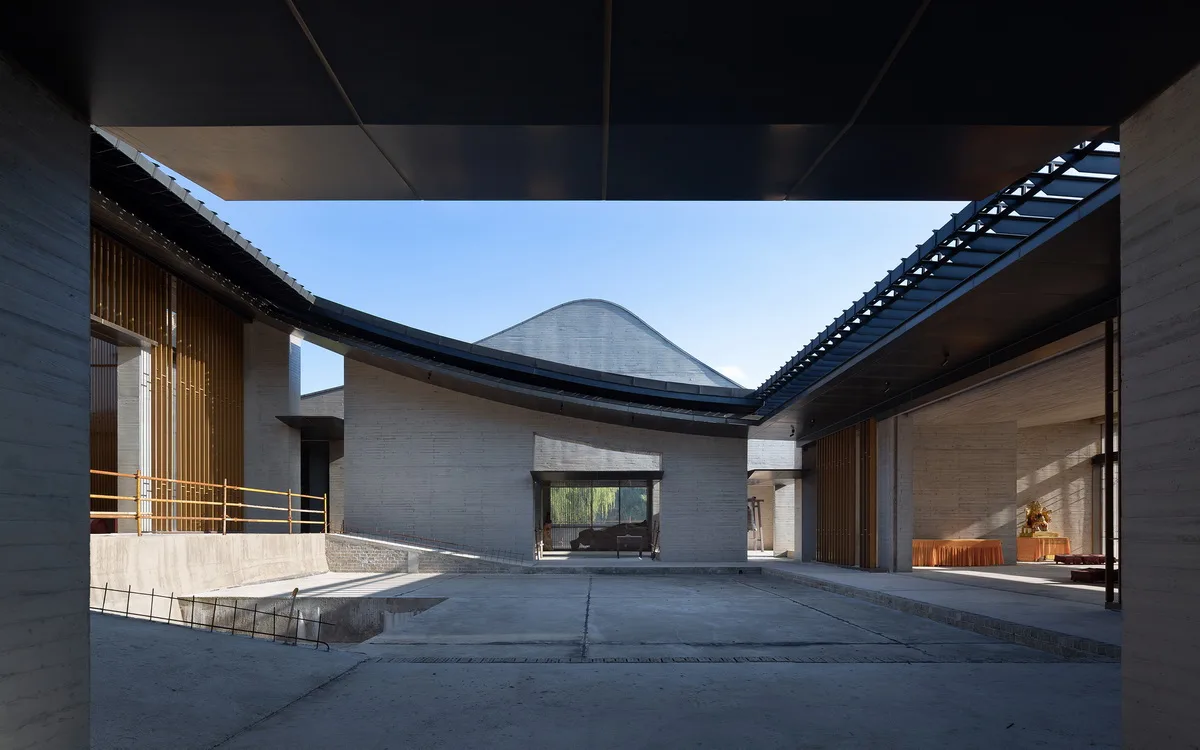
△ Realistic view of the atrium in the main hall area (unfinished)
The temple sits within the city, adjacent to a small urban green space. We negotiated with local authorities to reorient the temple, connecting it directly to this green space, and designed both areas as an integrated environment. The park remains open 24/7, making the temple part of the public realm. I named the combined space the “Zen Monastery for All Living Beings.”
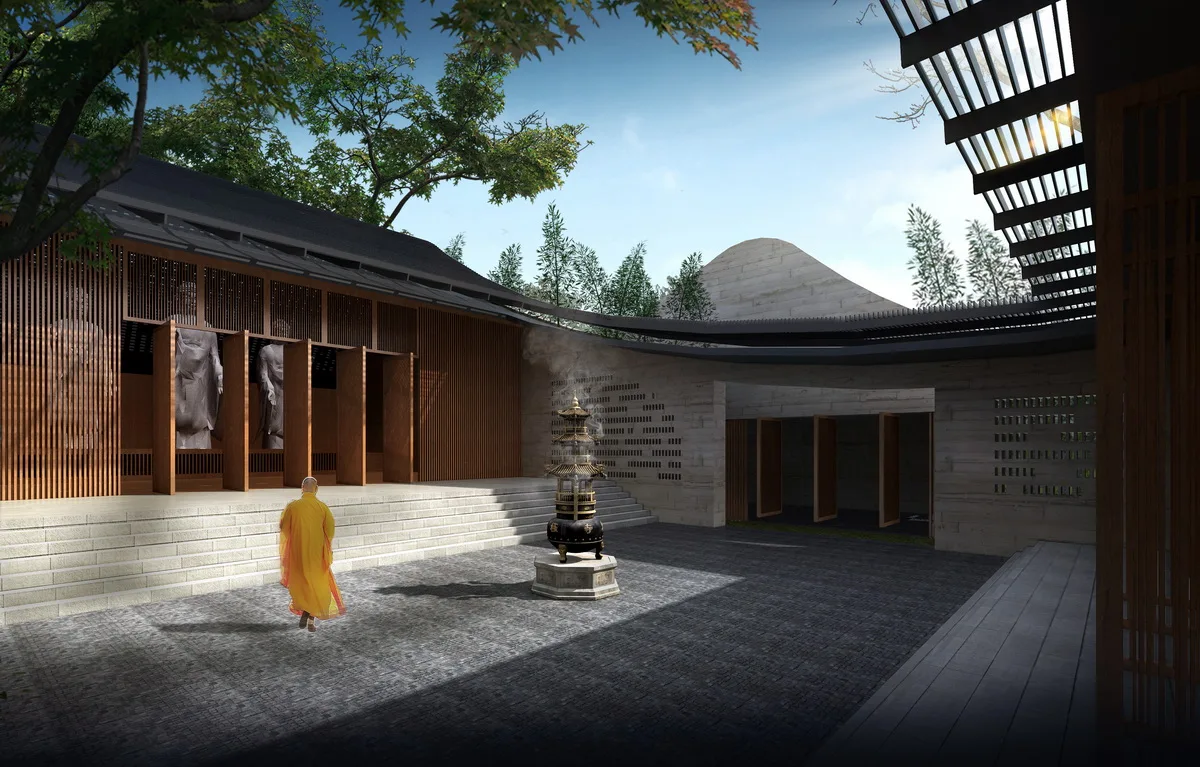
△ Rendering of the atrium in the main hall area
Our goal is to design contemporary architecture that harmonizes nature and tradition, and the Guoqing Temple project in Shanghai offers a unique opportunity. By carefully modulating openings and courtyard scale, the design avoids ostentation. The building is flat and simple, with relaxed and natural spaces, allowing the temple to feel secluded and tranquil within the urban fabric.
Construction materials include plain concrete, bamboo steel, and titanium zinc plates, using cedar formwork to blend traditional charm with modern architectural language. Master Yan Yin noted that even before completion, many lay residents had joined the temple community—about half born in the 1980s and 1990s—a demographic shift compared to the usual middle-aged and elderly visitors.
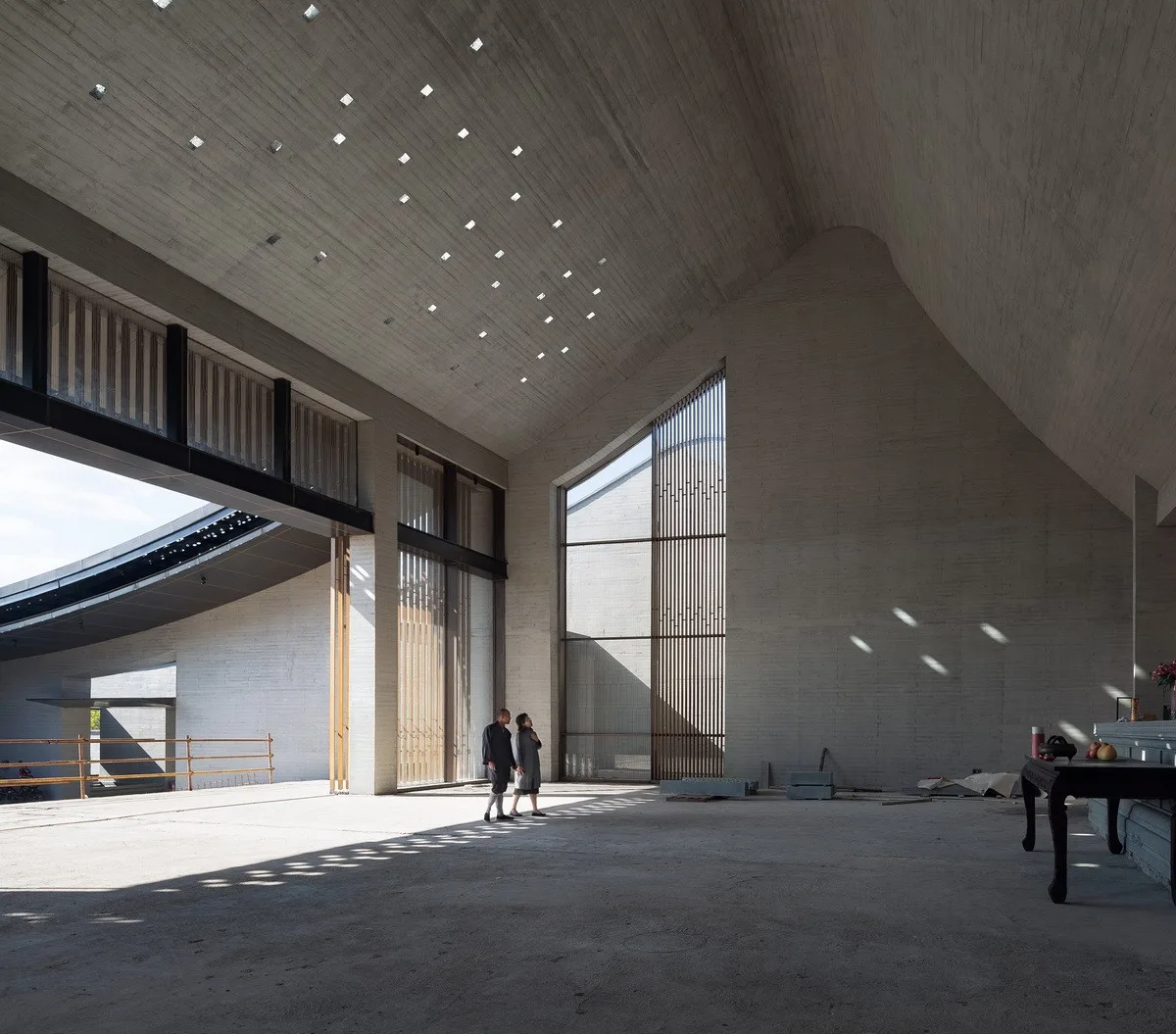
△ Indoor scene of the Shakya Mani Hall (unfinished)
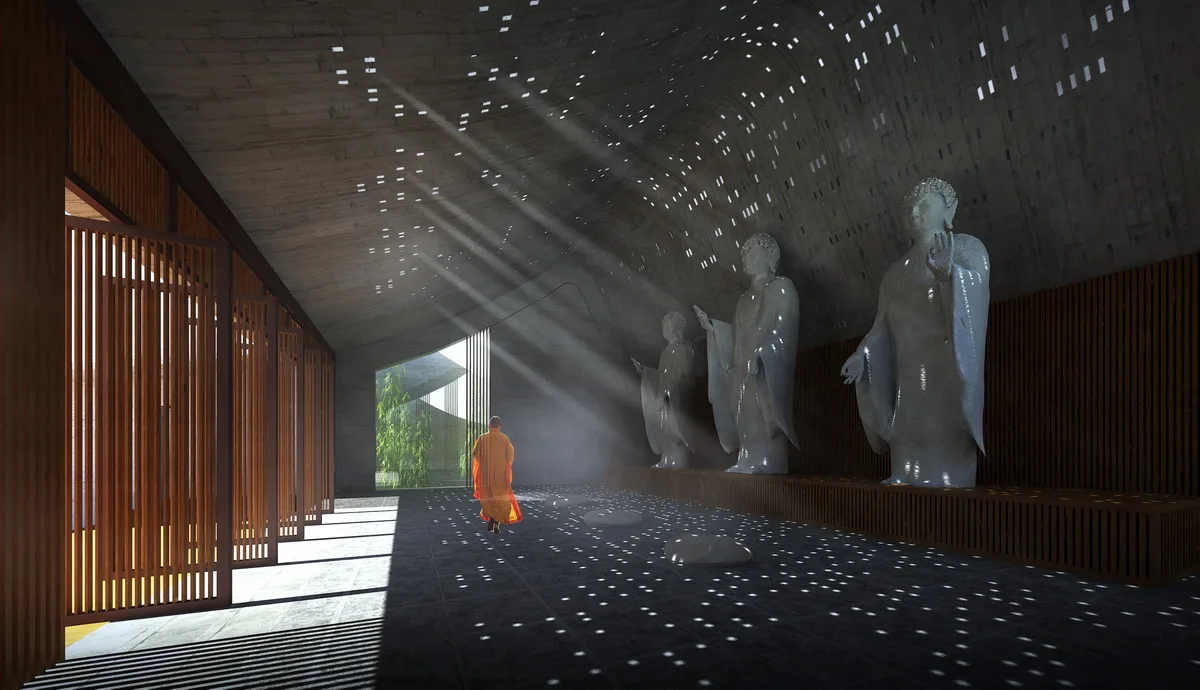
△ Interior design sketch of the Shakya Mani Hall
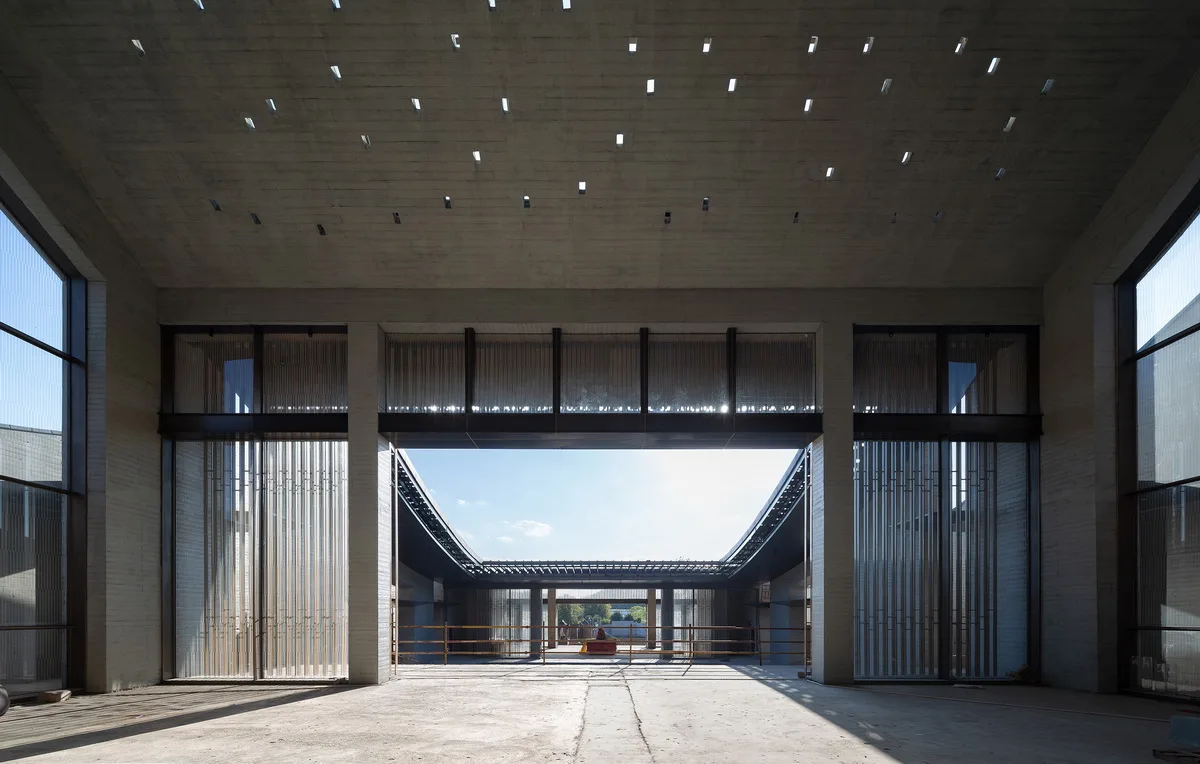
△ Indoor view of the Shakya Mani Hall (unfinished)
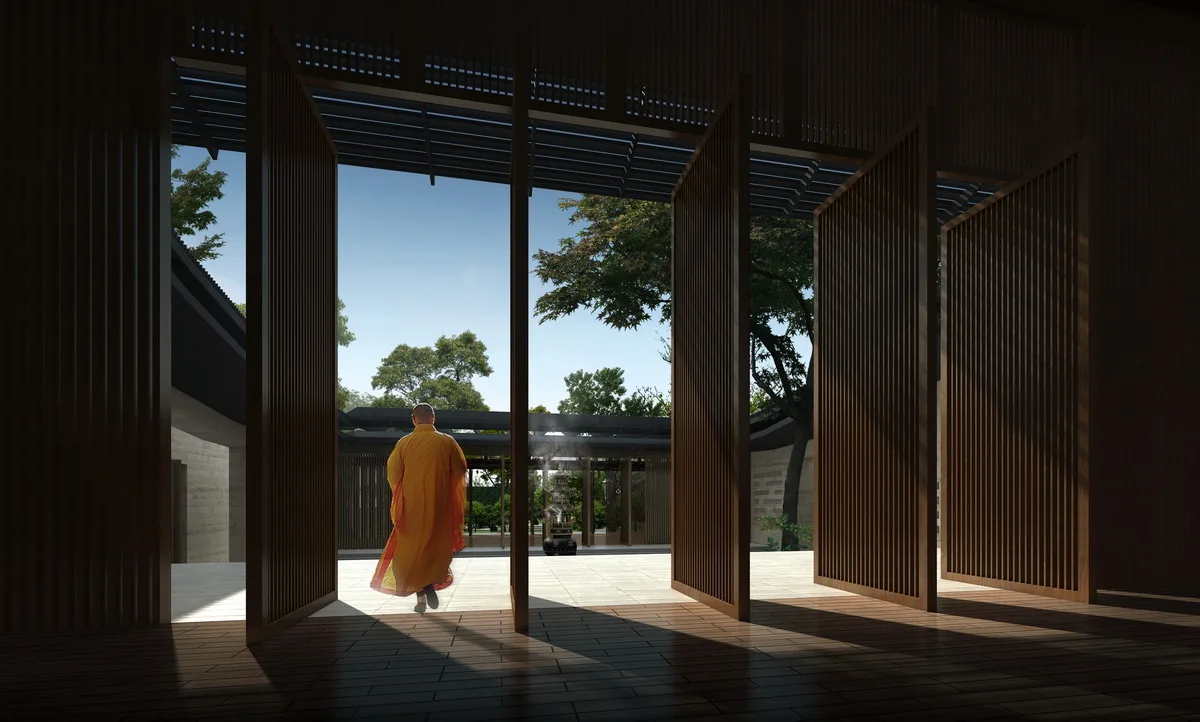
△ Interior view looking back in the Shakya Mani Hall
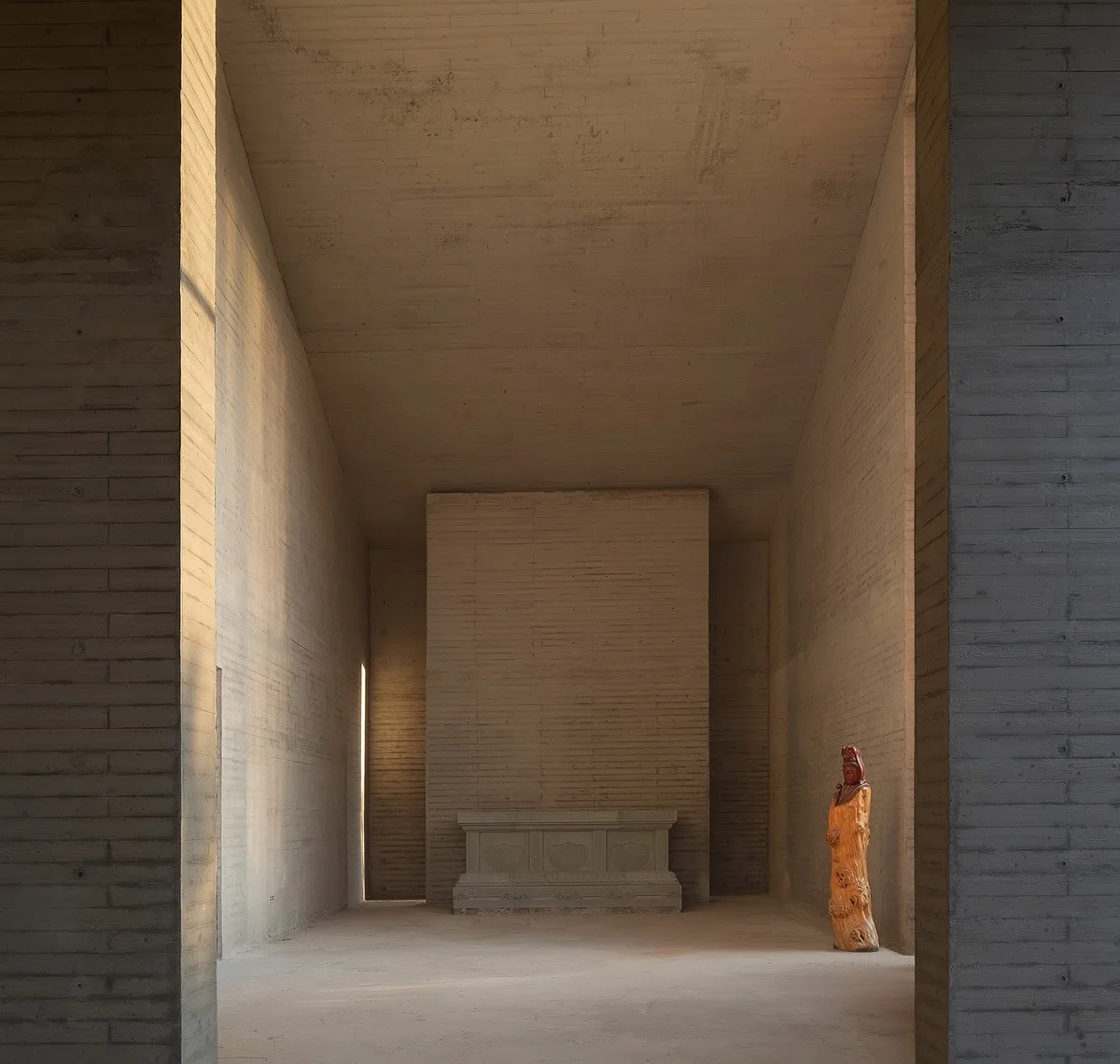
△ Indoor view of the attached hall (unfinished)
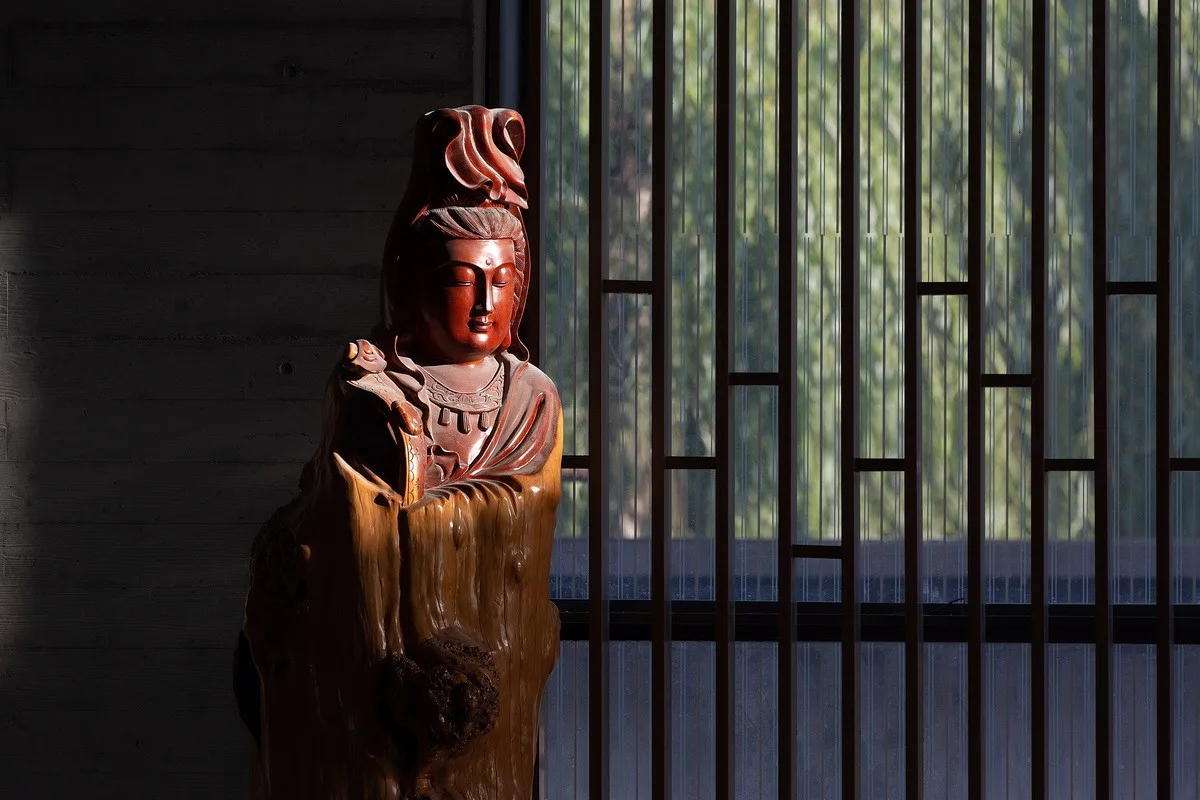
Partial real scene of Guanyin Hall (unfinished)
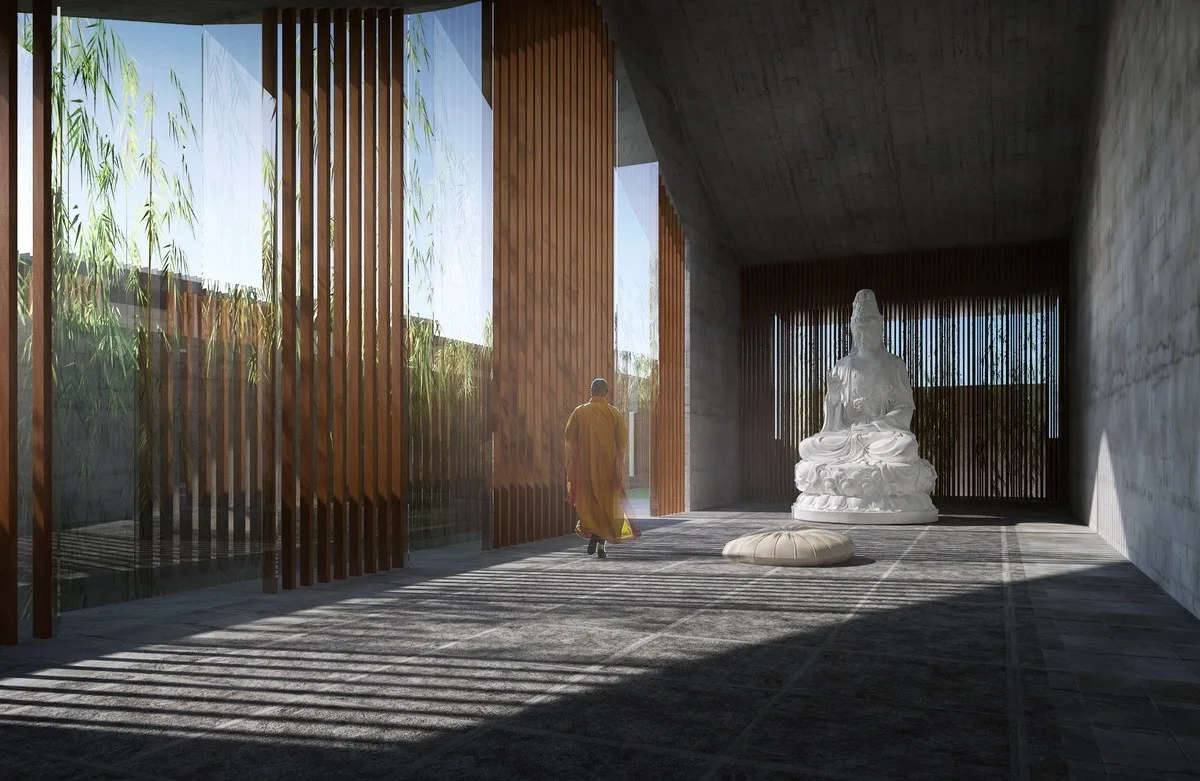
△ Interior rendering of Guanyin Hall
The project has been in design for six years. Due to various factors, only half of the civil construction is complete. Garden landscaping and interiors have not yet started, and many items are temporarily stored in the temple, placing it in a semi-functional state. It is uncertain how long this simultaneous use and construction phase will last. Designing temples is like a practice in patience and resilience for architects.
Two auxiliary buildings next to the main hall were redesigned from two to three floors due to the abbot’s request for more space. A supplier’s withdrawal forced some bamboo steel grating replacements with aluminum alloy. Generous laypeople donated many items, but some clashed with the architectural harmony, catching the architect’s attention.
Regarding the wooden formwork concrete walls, despite providing detailed construction instructions, the construction team initially struggled and had to explore their own methods, resulting in many imperfections that were frustrating. However, I told the abbot, “If it’s broken, accept it and don’t repair it. Leaving these flaws is more honest and natural than artificial fixes.” Starting from the main hall, the pouring quality improved, and the most exquisite part of the building unexpectedly became the walls themselves.
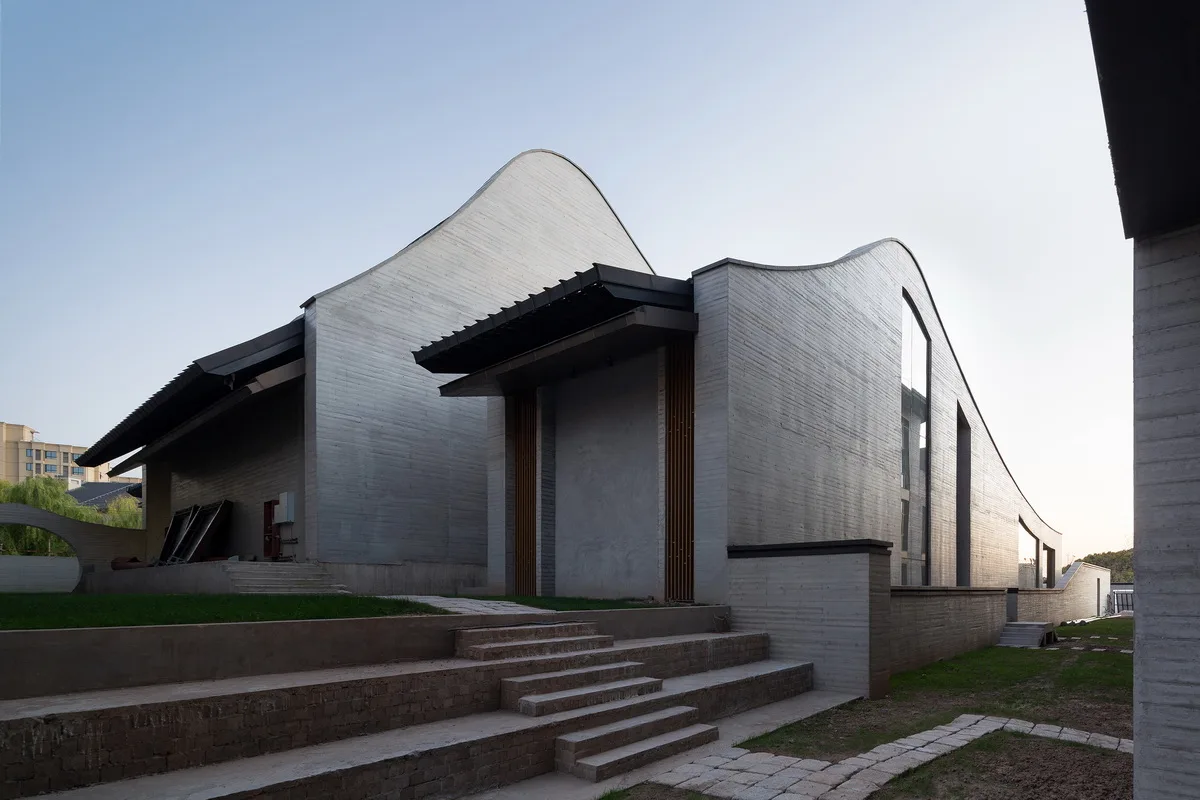
△ Realistic appearance of the north side of the main hall area (unfinished)
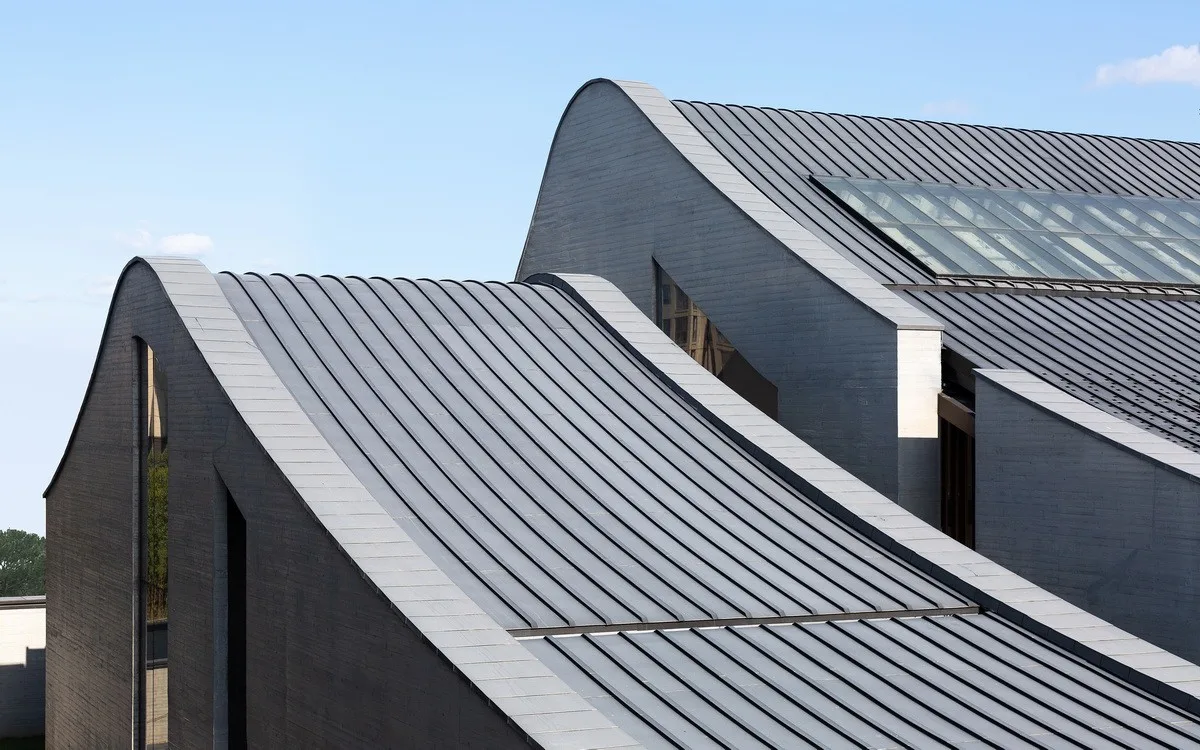
△ Realistic view of the roof in the main hall area (unfinished)
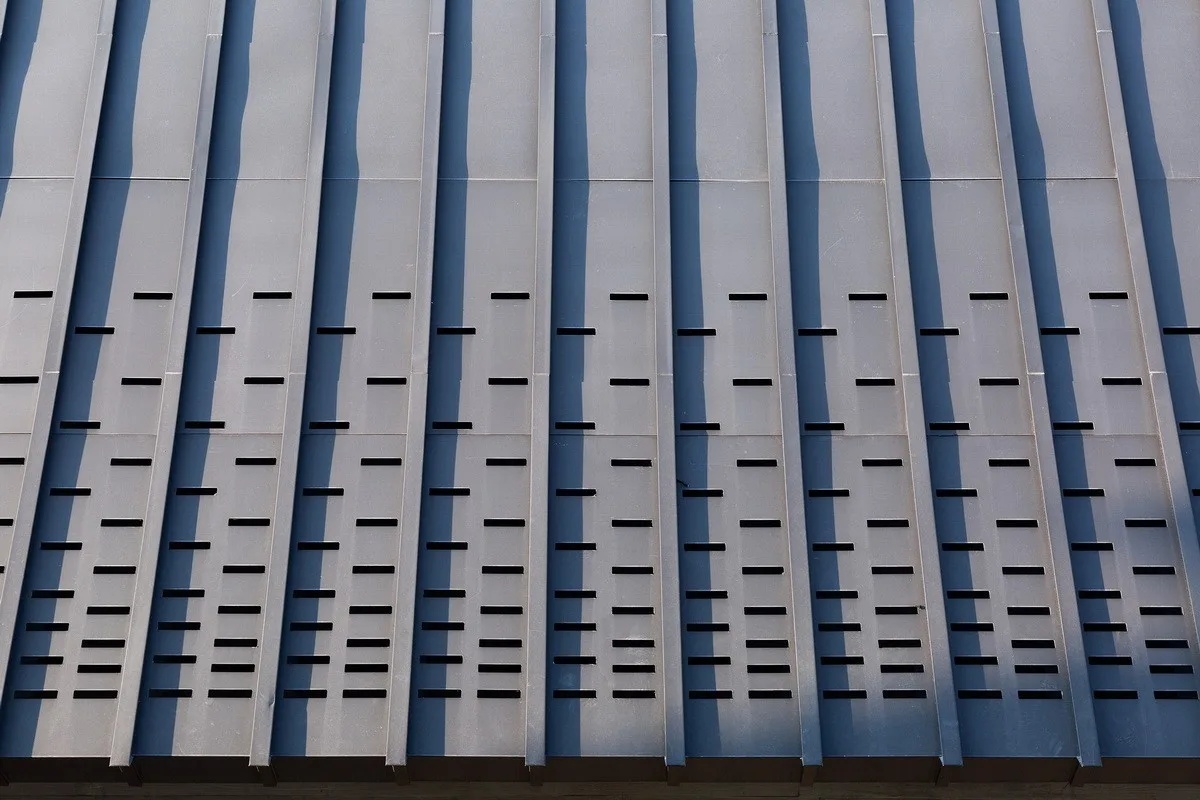
Partial real scene of the roof in the main hall area (unfinished)
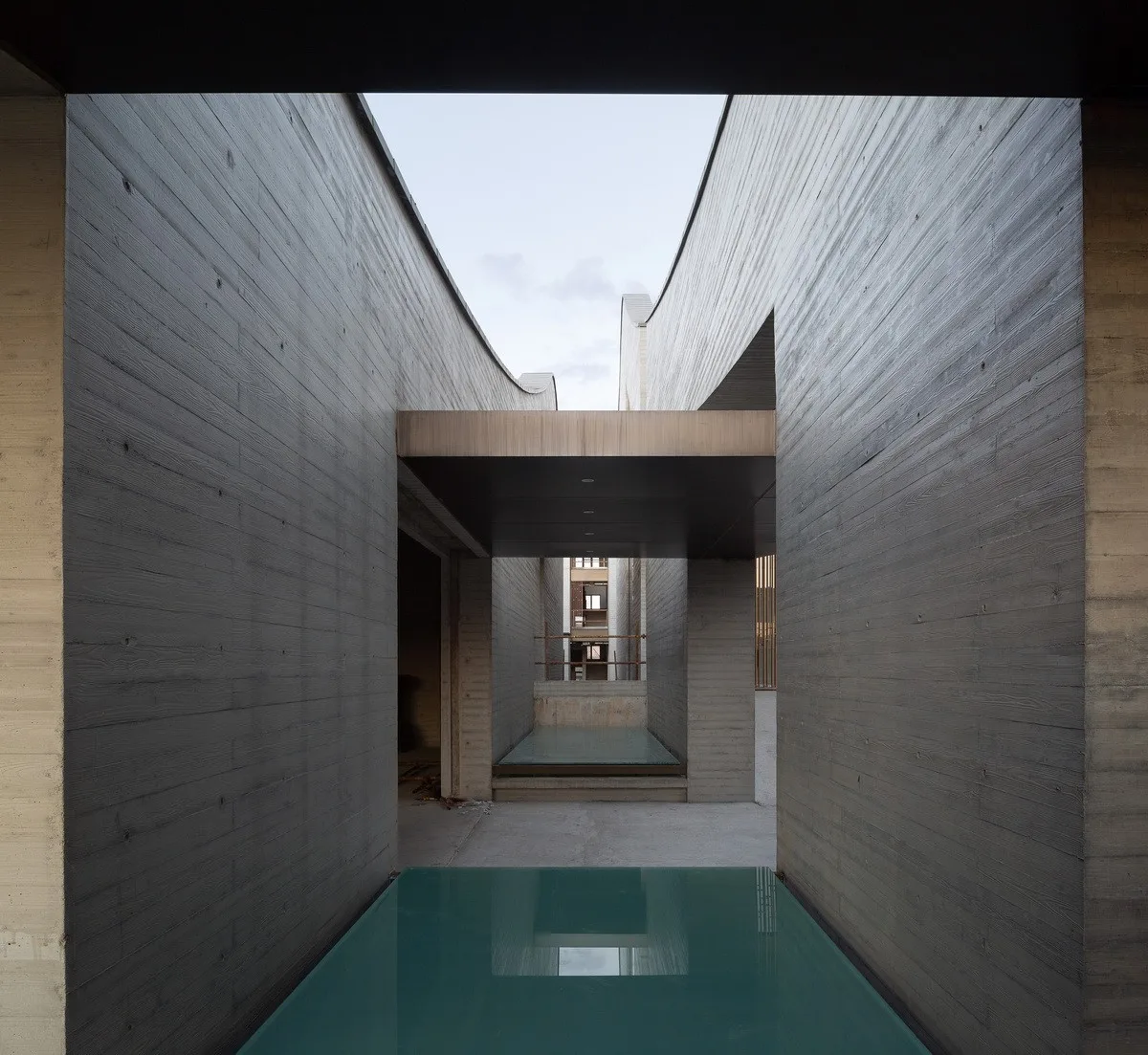
△ Realistic scene of narrow courtyard in the main hall area (unfinished)
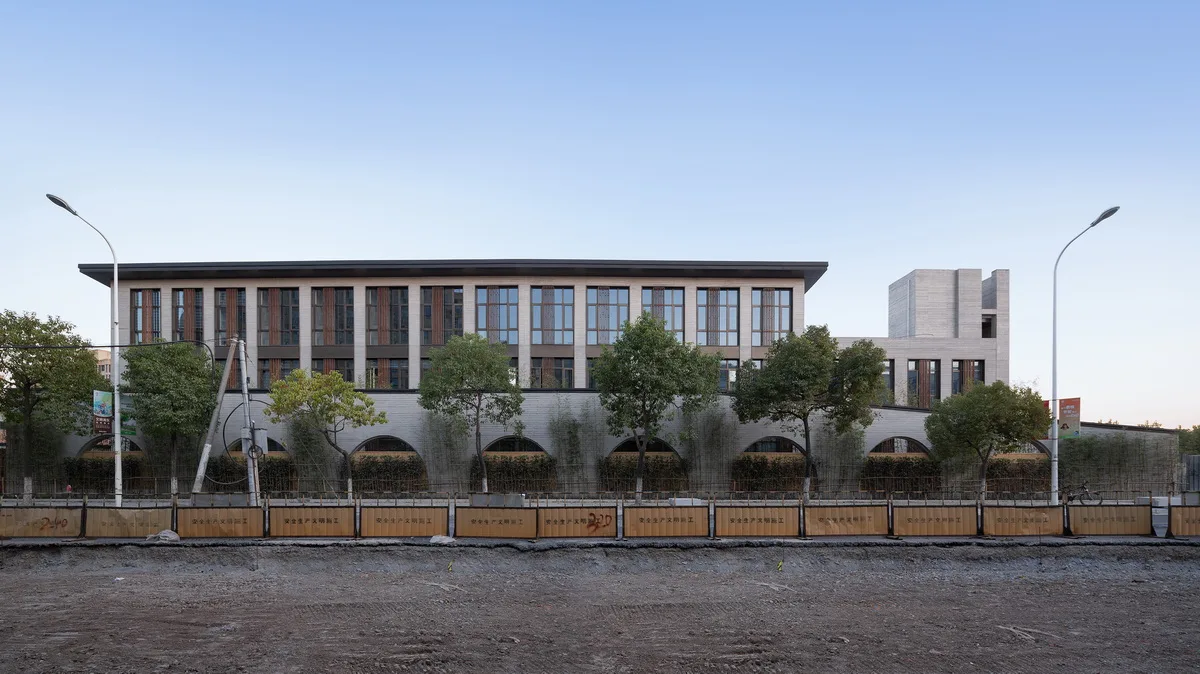
△ Real scene of the attached building along the street (unfinished)
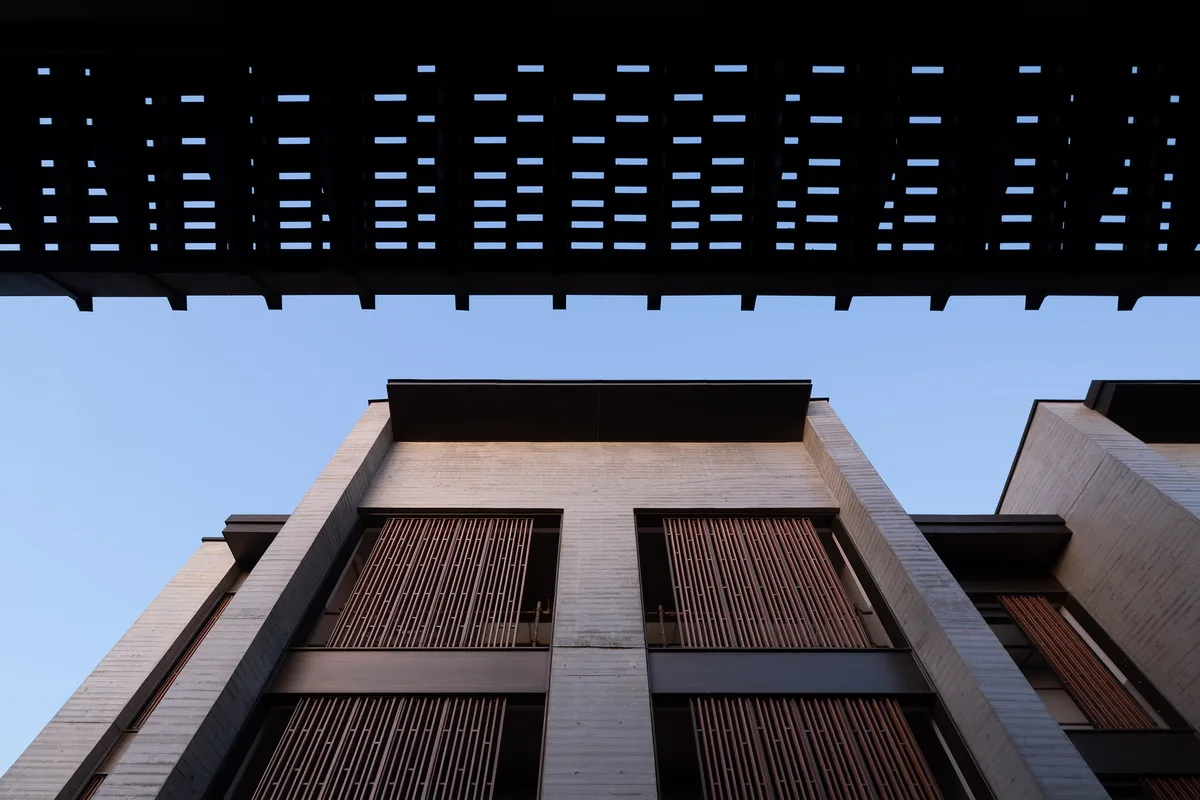
△ Realistic appearance of Annex 2 (unfinished)
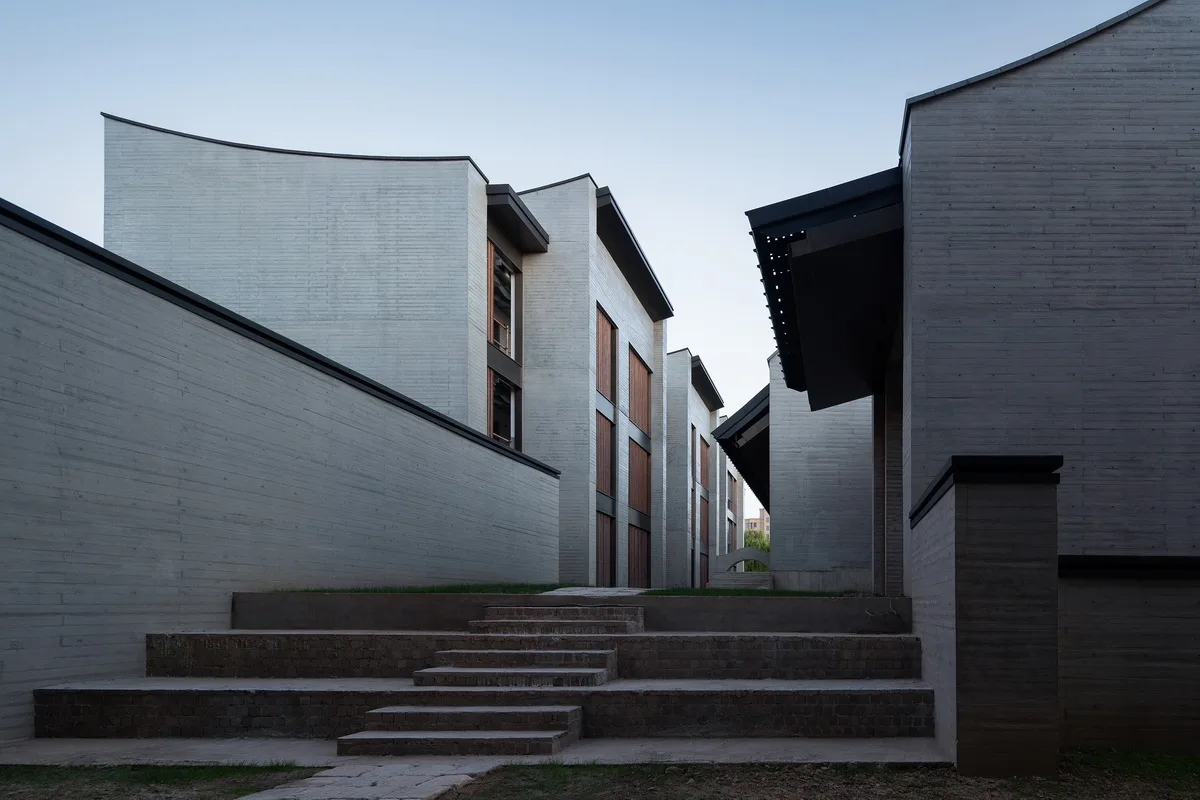
△ Realistic appearance of Annex 2 (unfinished)
Master Yan Yin lives on the construction site daily, documenting progress through photos shared on social media. His initial skepticism transformed into a deep appreciation for the design. Recently, during a site meeting with me and the landscape designer, I realized that Master Yan Yin’s spatial concepts are even more modern and bold than mine. He has also given the wooden concrete walls a Zen-inspired name—“Rongsu.”
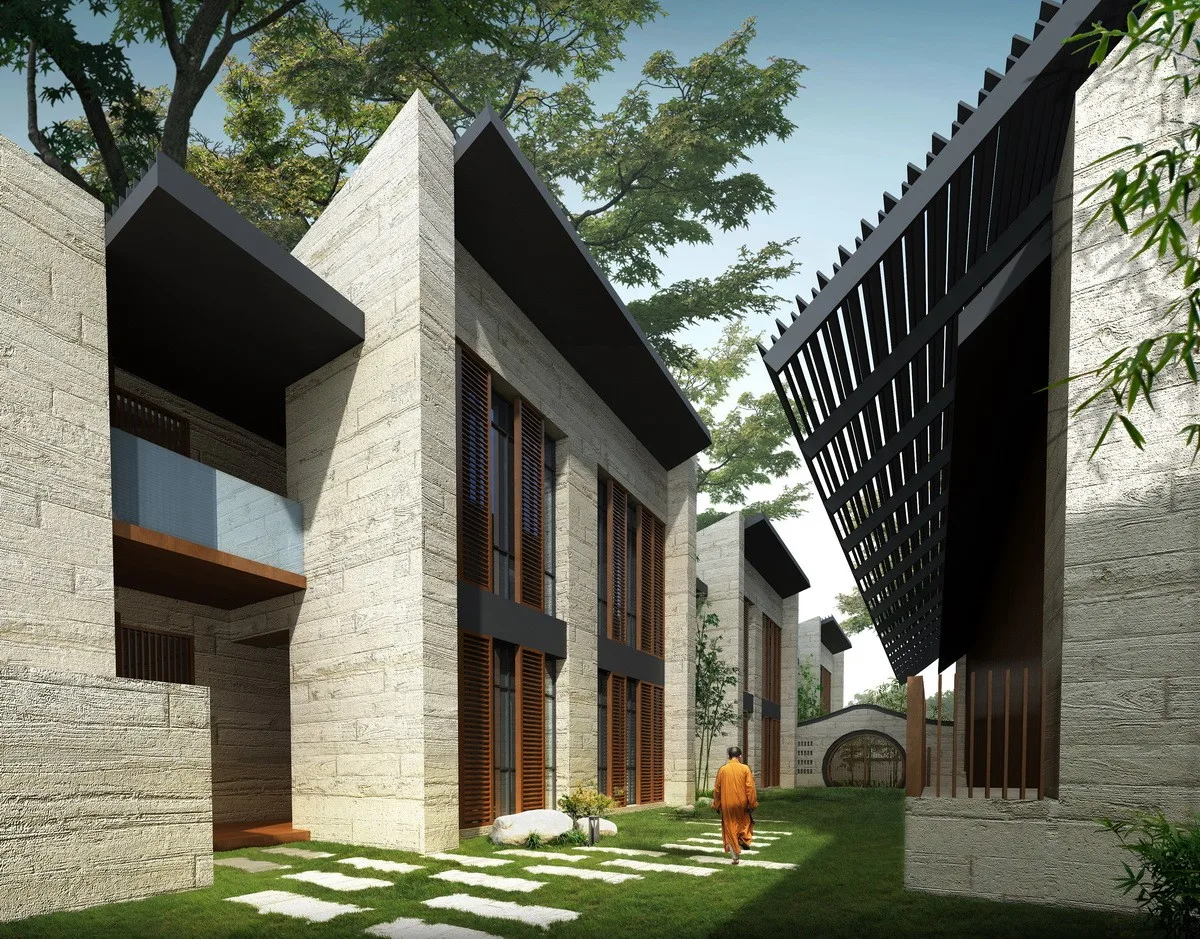
△ Exterior rendering of Annex 2
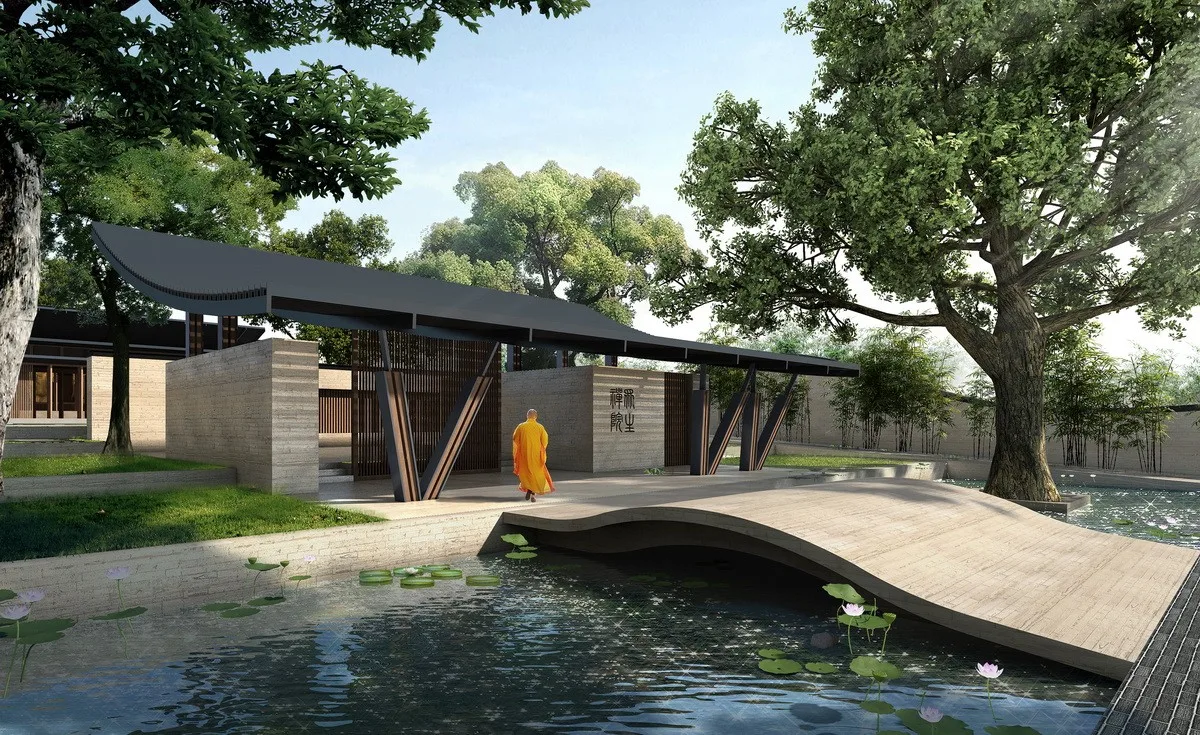
△ Shanmen rendering
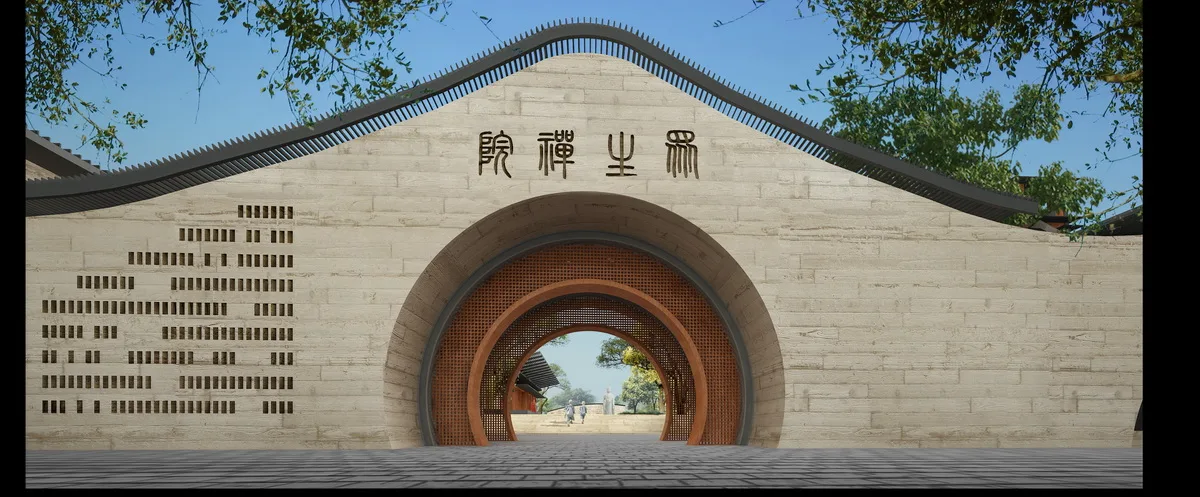
△ Ximen rendering
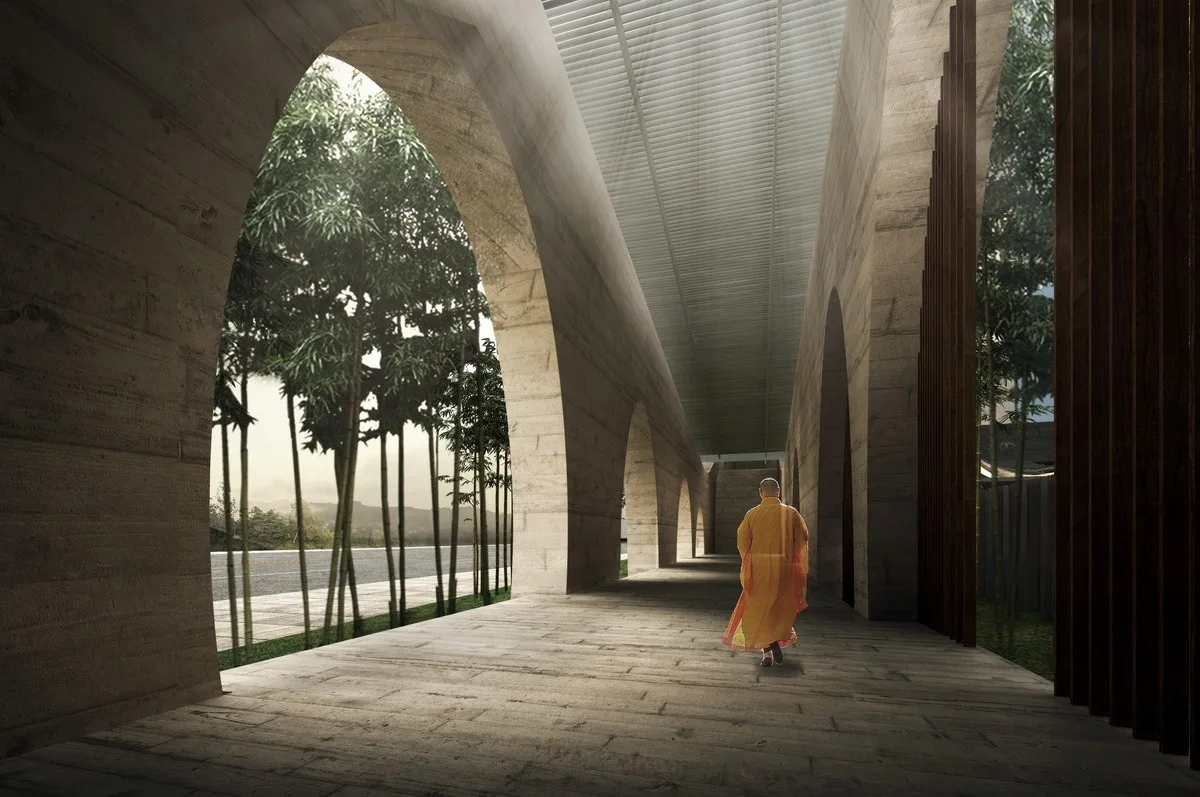
△ Arcade rendering
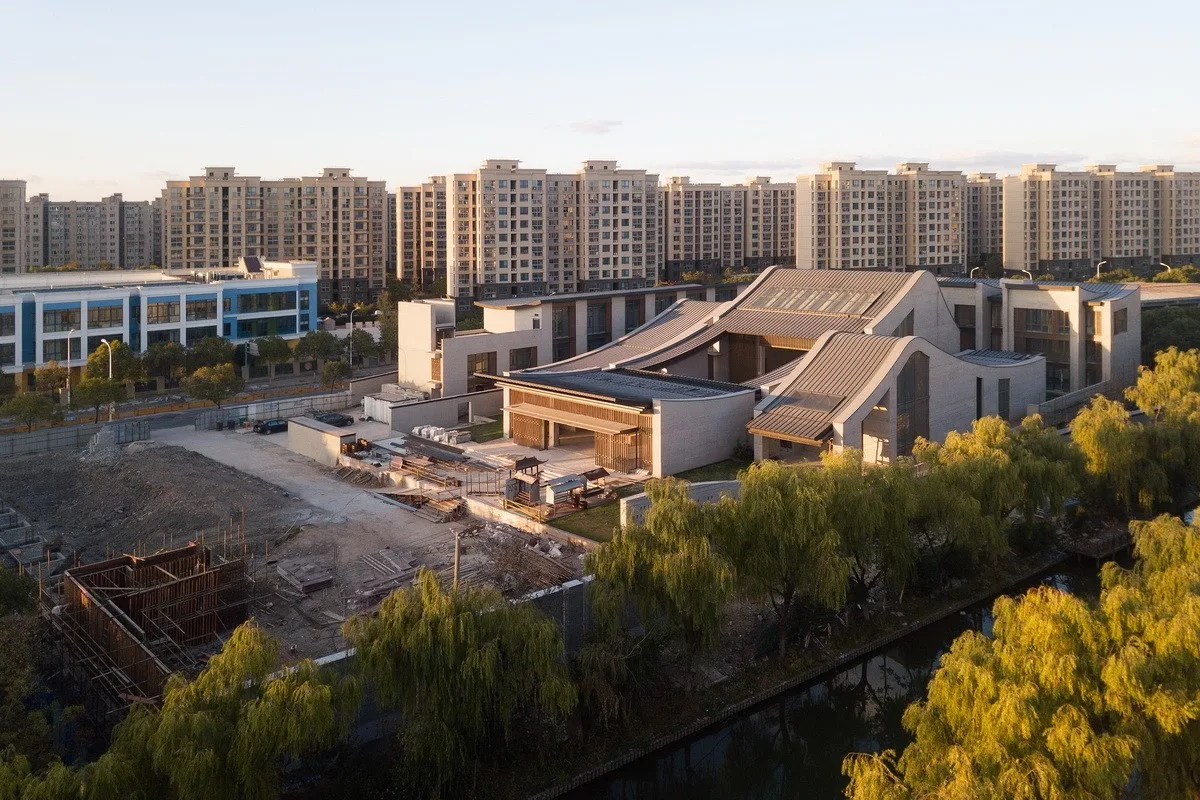
△ South side aerial view (unfinished)
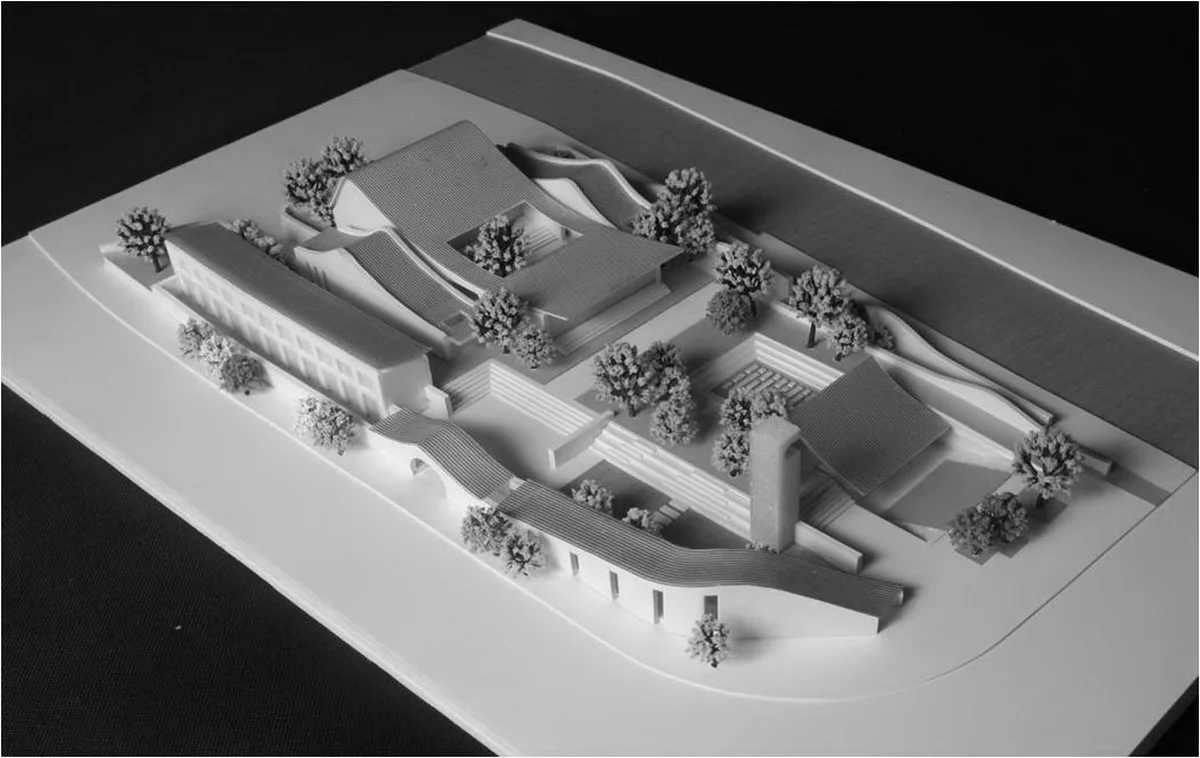
△ Model 1
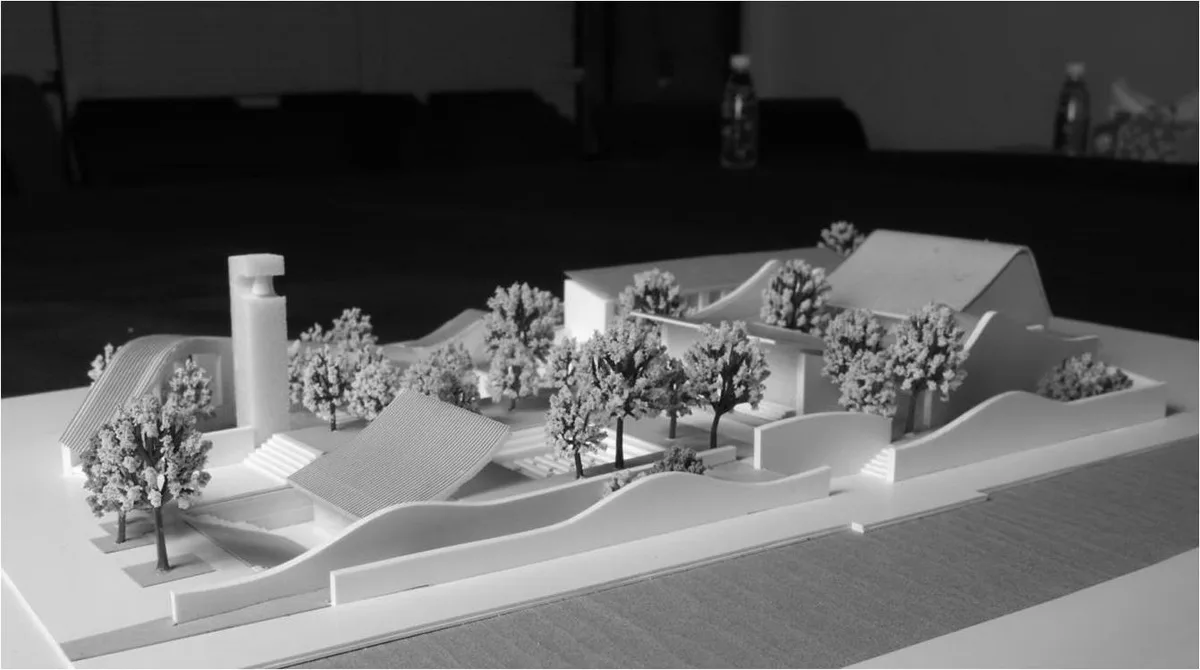
△ Model 2
Click on the video to learn more
Design Drawings
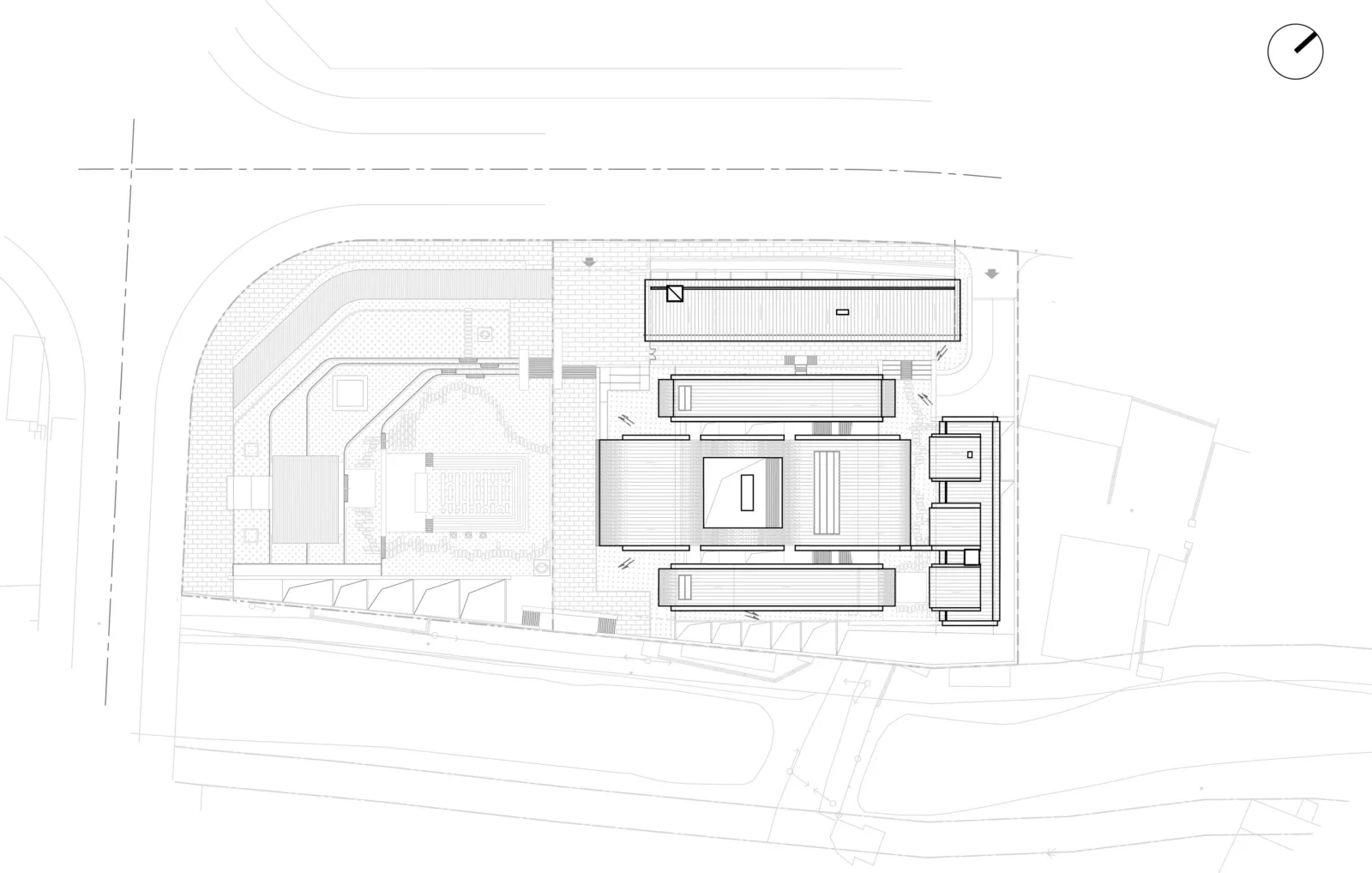
△ General layout plan
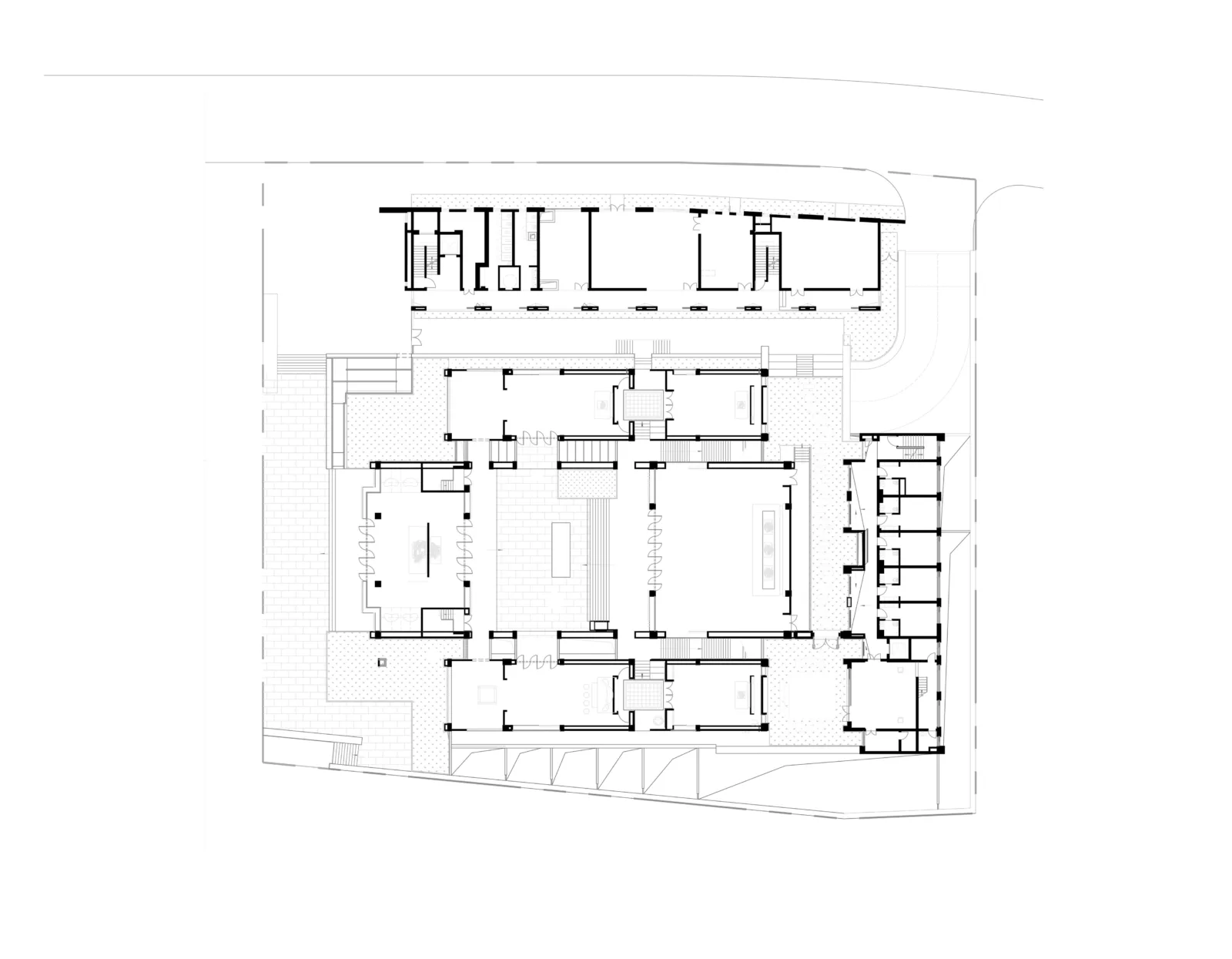
△ First floor plan of the first phase
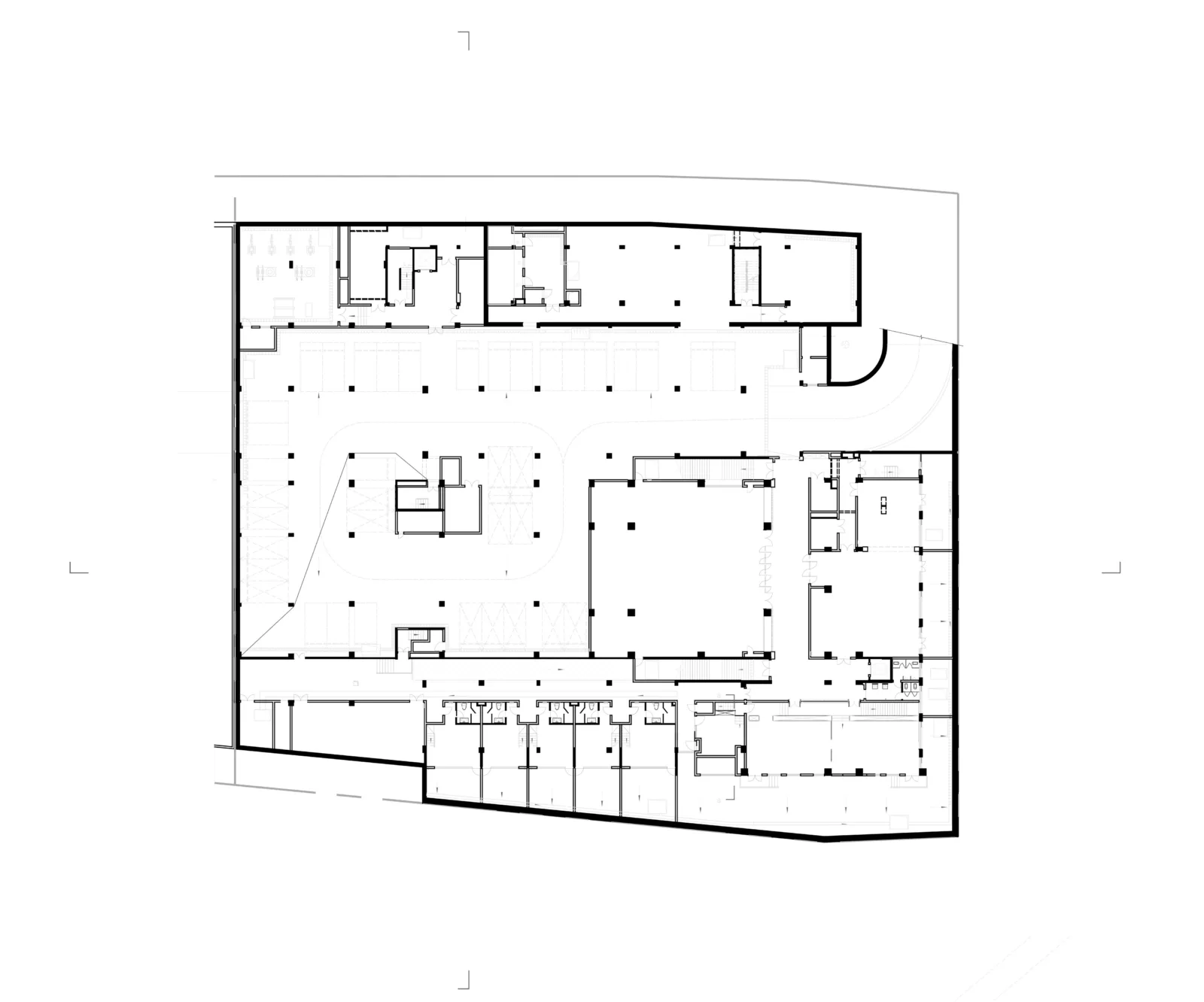
△ First basement floor plan
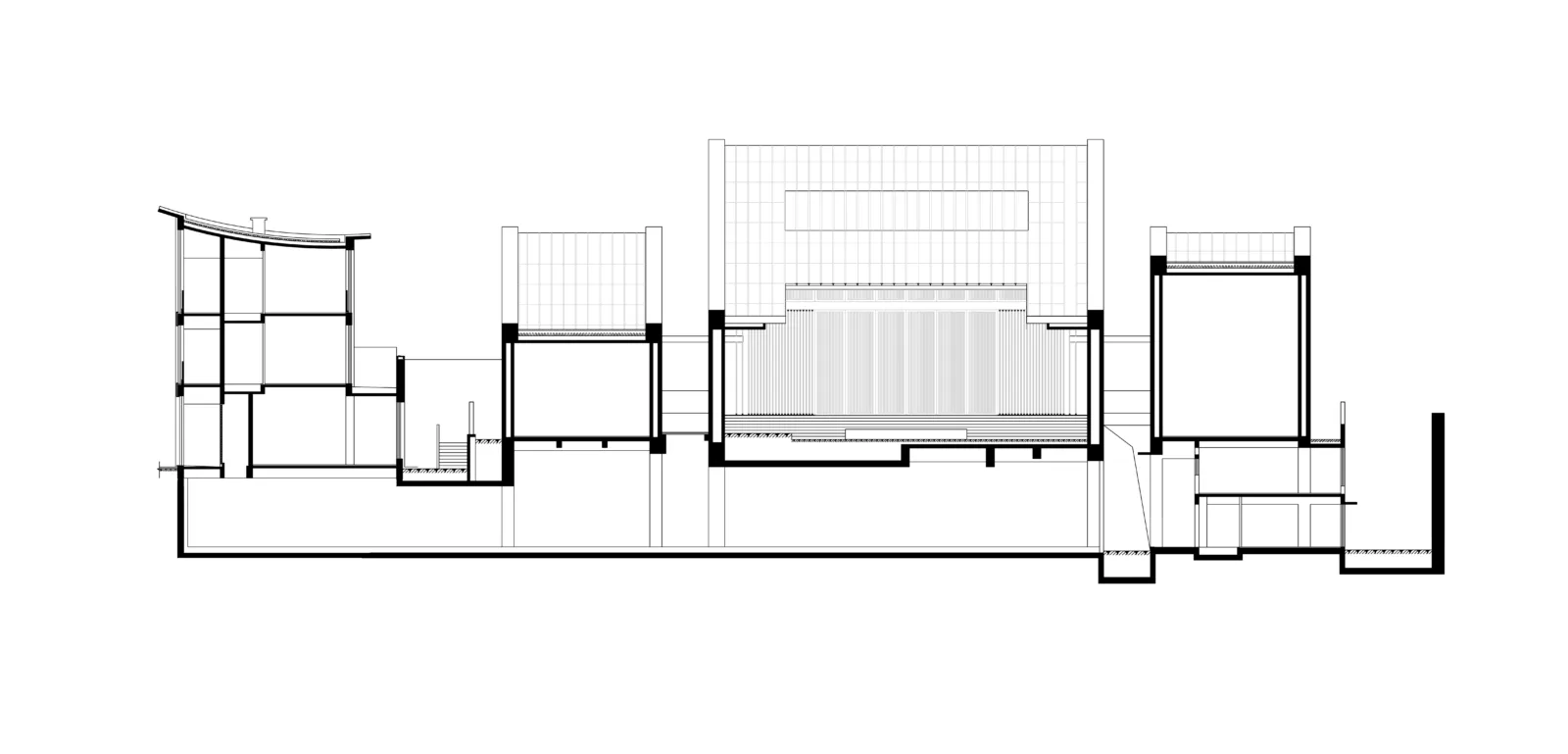
△ Section 1
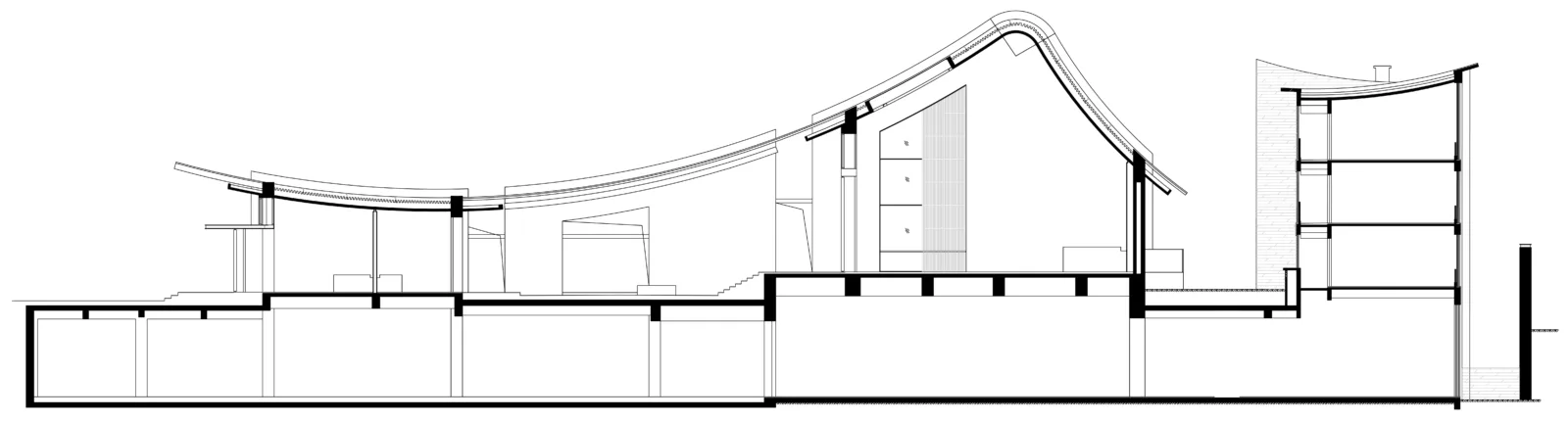
△ Section 2
Project Information
Project Name: Shanghai Pudong Guoqing Temple
Location: Tangzhen, Pudong, Shanghai
Design Period: 2014–2016
Construction Status: First phase of civil construction completed; full completion expected by 2022
Design Firm: Shenzhen Motai Architectural Design and Consulting Co., Ltd.
Scope: Full architectural scheme design and construction drawings, including interior design
Lead Architect: Shen Chi
Architecture Team: Wang Song, Feng Wenqing, Liu Weixia, Zhu Wei, Liu Yuyong, Wu Yucong, Yang Jing, Chen Jing’er, Luo Qiong, Wang Chunyan, Ge Tiechang
Structural Engineers: Cen Huiyuan, Huang Mingxing, Chen Huiming, Gan Kai, Zhu Anan
Electrical Engineers: Sun Jianyou, Lv Zhendi, Li Feng, Pan Zhijian, Gao Yang
Water Supply & Drainage: Li He, Huang Jie, Wen Zhijun, Li Lingling, Zhang Zhihua
HVAC: Peng Tianhui, Dai Xiaoshan, Zhang Zixing, Tang Lihua
Interior Design: Ruan Bin, Tang Yunshan, Hu Junbo, Cheng Xiang, Huang Libo
Photography: Zeng Tianpei
Author: Shen Chi
Video Editor: Xu Liangrun
Video Sources: Motai Architecture, Zeng Tianpei, Shenzhen TV, Phoenix TV, My Short Video












Must log in before commenting!
Sign Up