
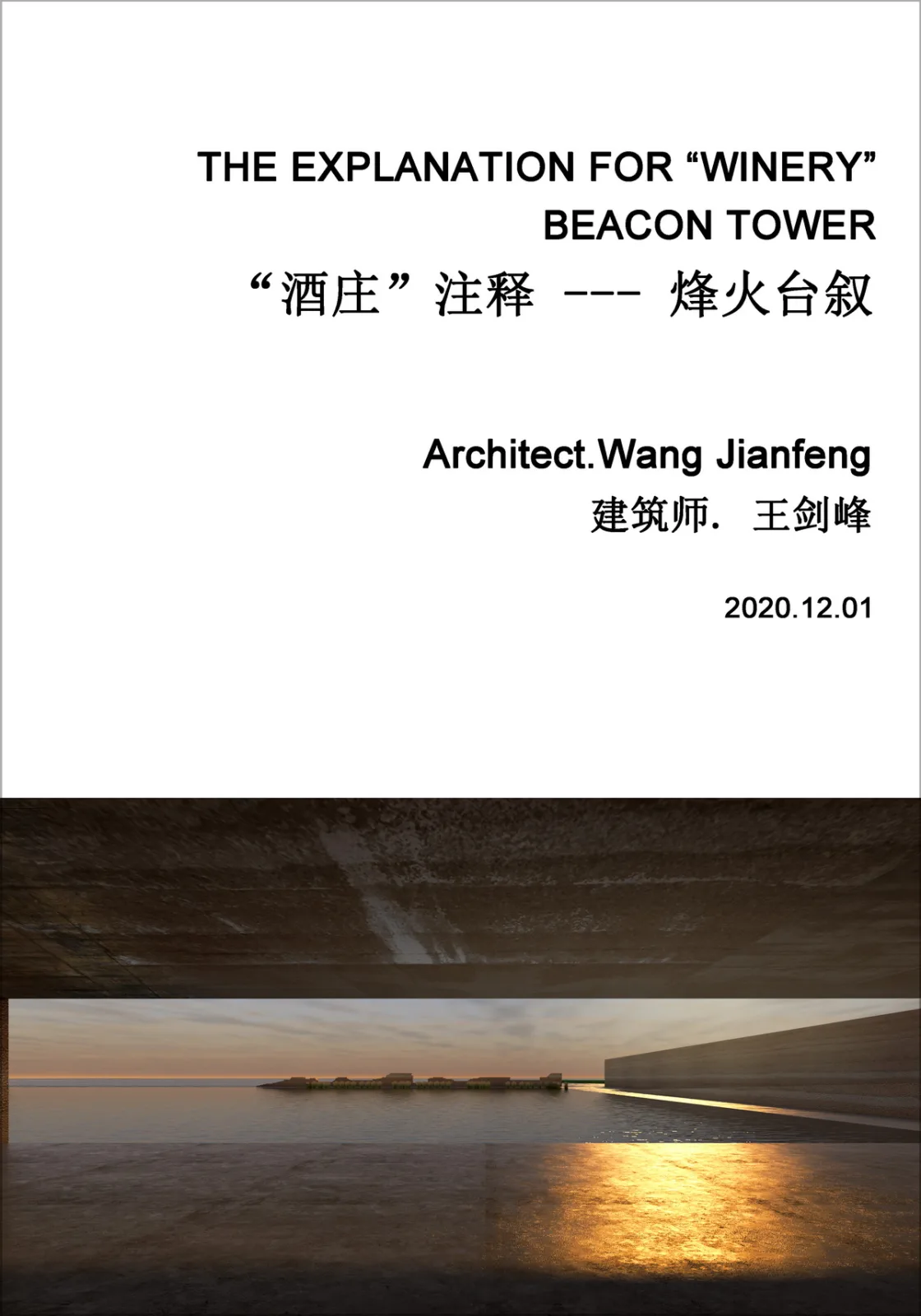
© PL-T Architecture Firm
Guest Introduction

Wang Jianfeng
Wang Jianfeng is a founding partner of PL-T Architecture Firm and leads the design of a local winery studio. A leading architect in Italy, he holds a Master’s degree in Architecture from the University of Venice (IUAV). His research primarily focuses on urban architecture and Aldo Rossi-related theories. During his time in Italy, he worked at Ferlenga Architetti Associates in Milan and participated in the Venice Biennale.
Whenever I try to write specifically about this project, I feel like I’m exaggerating or stretching things beyond reality.
In truth, the most valuable aspects of this project lie in the practical challenges faced throughout the process and the everyday details that accompany my design work. Though these elements may seem mundane, they provide a deeper understanding of architecture. I believe that meaningful design emerges precisely from these insights.
From this perspective, I have increasingly rejected the promotion of “design concepts” or “design creativity” in recent years, considering them somewhat baseless.
Therefore, rather than promoting architecture itself, I prefer to focus honestly on life. Perhaps this grounded approach allows design to develop a more authentic “texture.”
How to define this texture? I find it difficult to explain.
To me, the texture of a house is like that of a person: not fearless, often cautious and restrained, yet persistently moving forward.
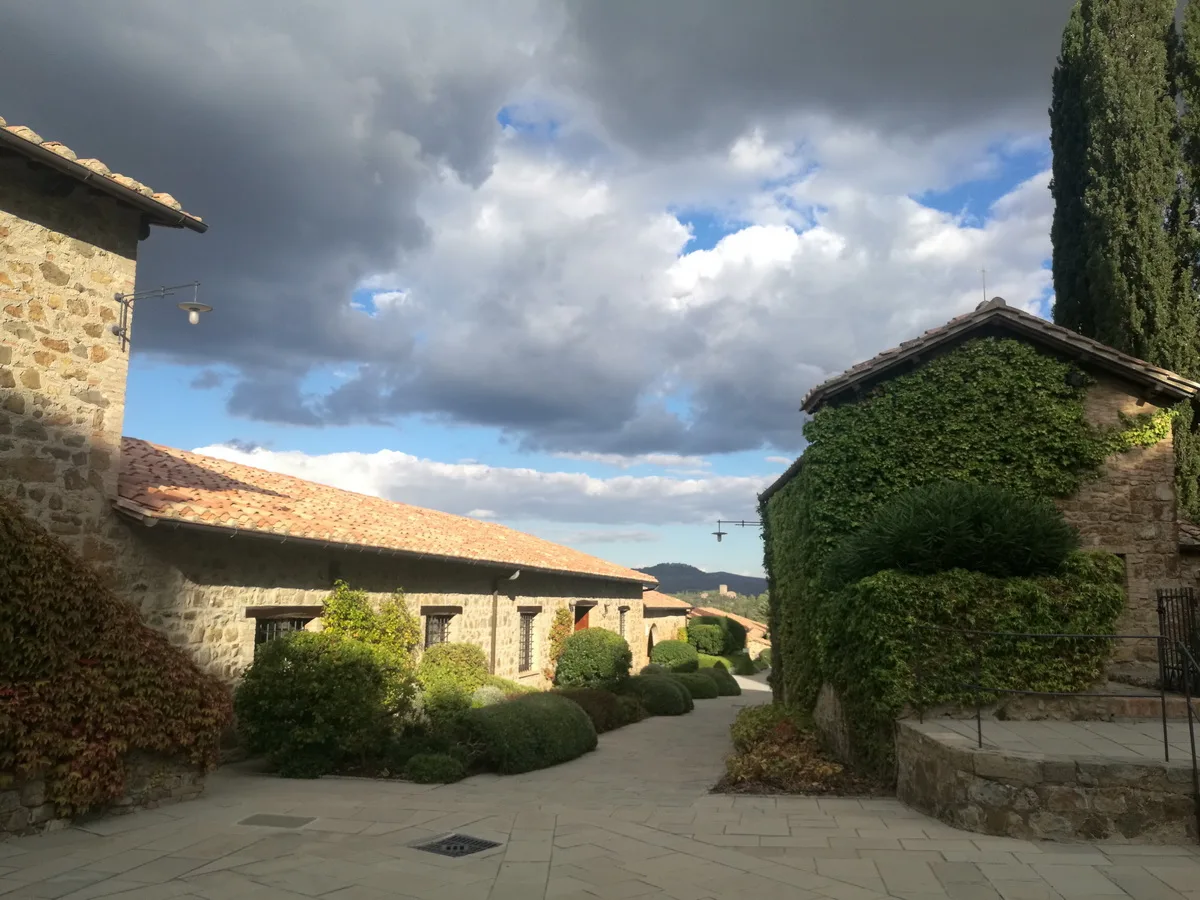
The street outside my workplace, near Guangxiao Temple © Wang Jianfeng
When some winery plans were proposed, colleagues, friends, and even the studio gave strong conceptual and formal definitions — but this is not the case here. I want to take this opportunity to clarify the design and share my thoughts.
If categorized based on the building’s function, it is certainly a winery. So, let me first share my understanding of wineries so far:
Thanks to the domestic market positioning, government policy guidance, and winery development, I have been fortunate never to consider winery architecture as simply a “winery.” More often, it has been just a synonym. That’s why I often put “winery” in quotation marks.
I believe wineries, regardless of size, should be humanistic complexes — a fusion of three to four building types:
- 1. Process plant
- 2. Small museums or exhibition halls
- 3. Local landscape (architecture itself becomes landscape, and landscape itself is architecture. Due to their nature, most wineries are located in natural, mountainous outskirts rather than cities)
In short, a winery can be summarized as a factory building + museum + local landscape.
Therefore, I see the process of creating a “winery” as an opportunity to explore the issues, contradictions, debates, and attitudes present in contemporary architectural design. I have always viewed winery projects as places full of change and potential — mixed research zones with blurred boundaries. This is why winery design personally interests me.
For example, the winery I am currently building in Quzika, Tibet (under construction), reflects these ideas. It is essentially a “scene.”
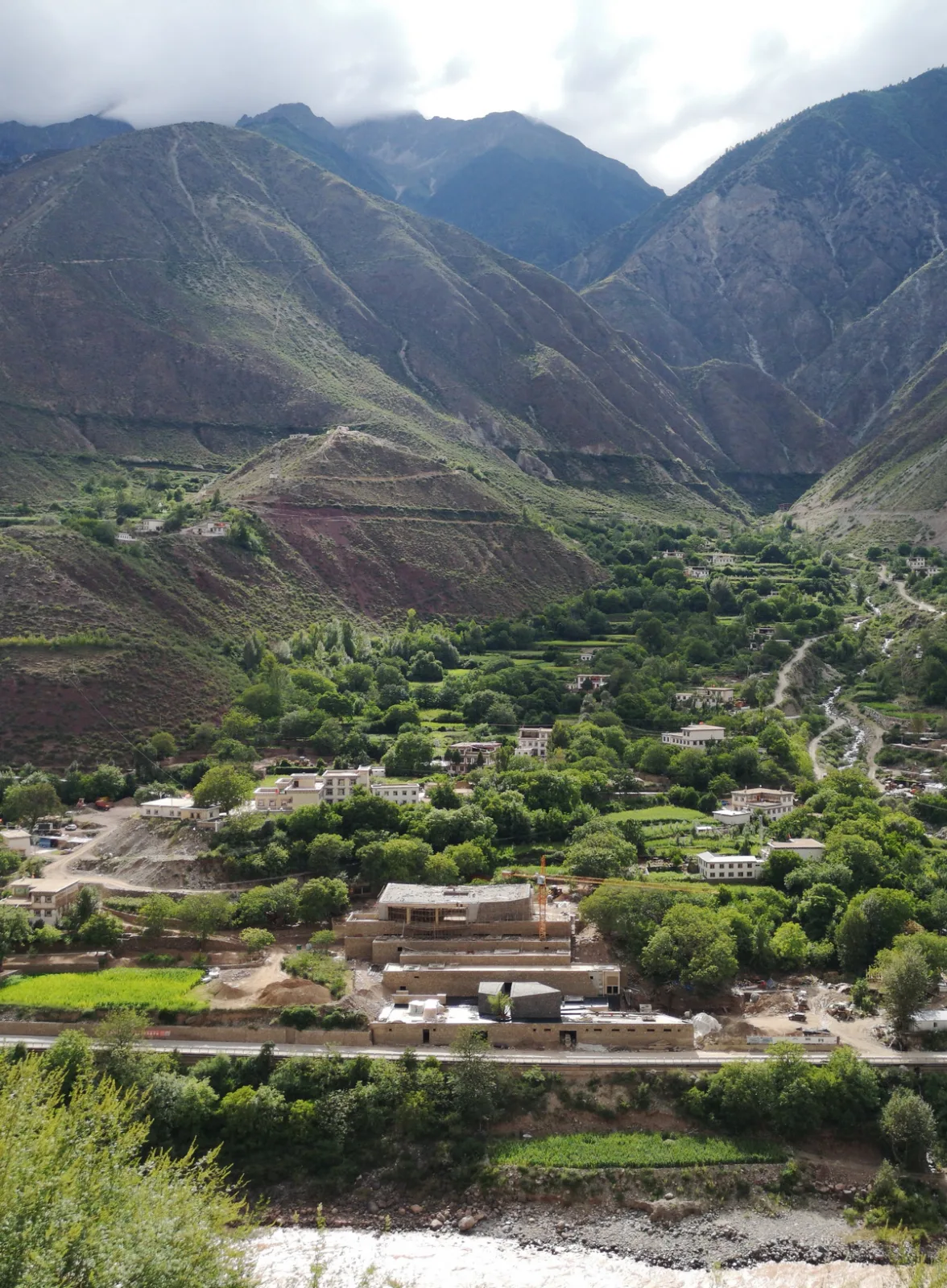
△ Quzika Distillery, Tibet (construction site) / Architectural Design by Wang Jianfeng © PL-T Architecture Firm
Several years ago, I visited wineries in Italy again. I found them quite similar to domestic wineries in terms of their site characteristics: mostly located in suburban areas with strong natural surroundings. After all, factories naturally follow the grapevines. So, upon reflection, what’s truly important? Grapes are key. Grapes are the source of everything.
Speaking of which, I recall Nina In Kaplan’s book The Wandering Vine, which states:
“Wine is alive, constantly maturing and changing. It can be said to have overcome death — grapes, originally destined to rot, instead ferment and escape death. Both humans and grapes are resilient, but grapes have an advantage: wine is an inseparable and vital part of European culture, dominating much of the Western world.”
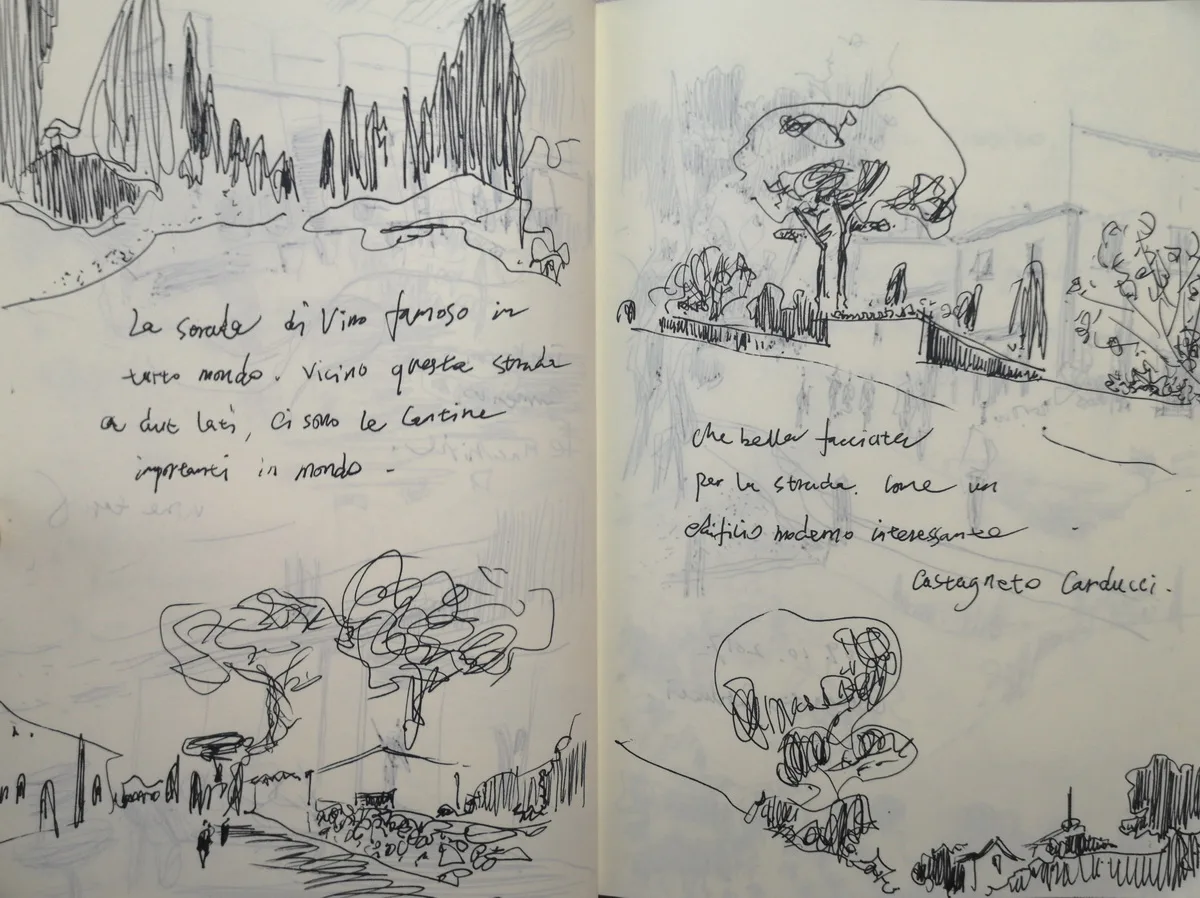
△ LE MACCHIONE Winery Sketches, Italy © Wang Jianfeng
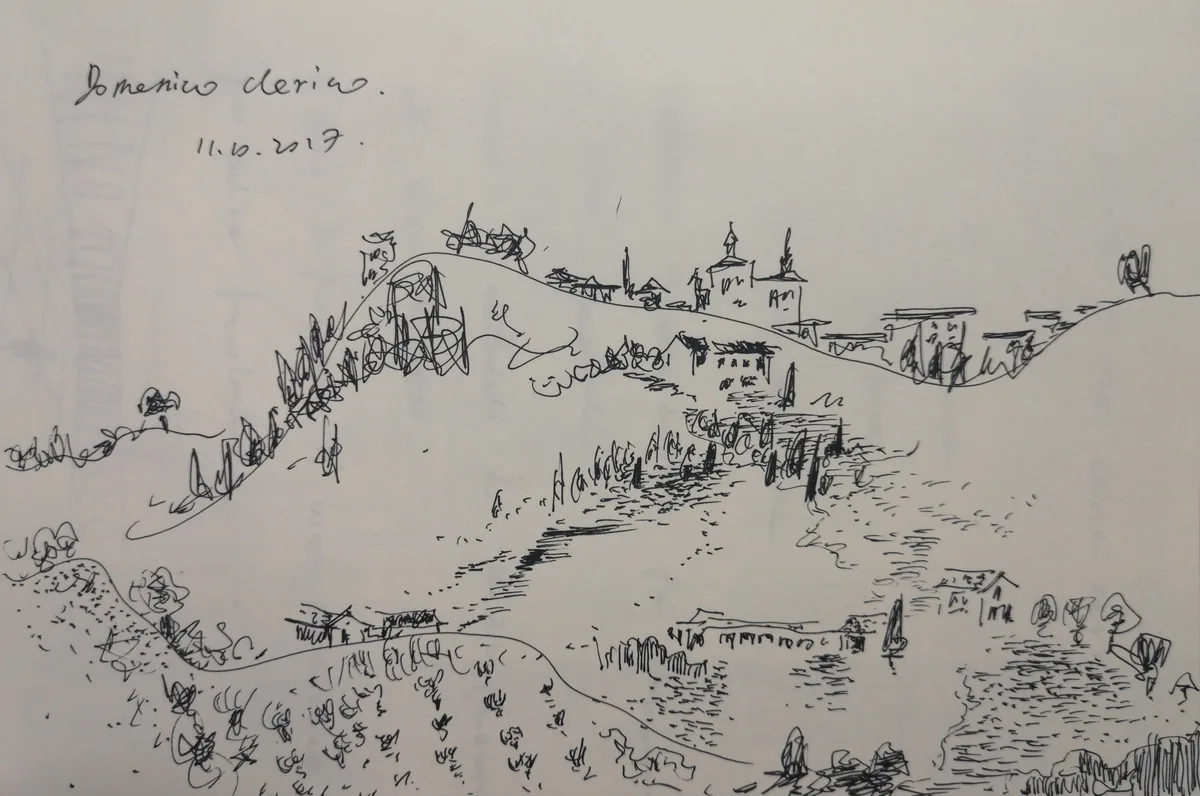
Sketches from DOMENICO CLERICO Winery, Italy © Wang Jianfeng
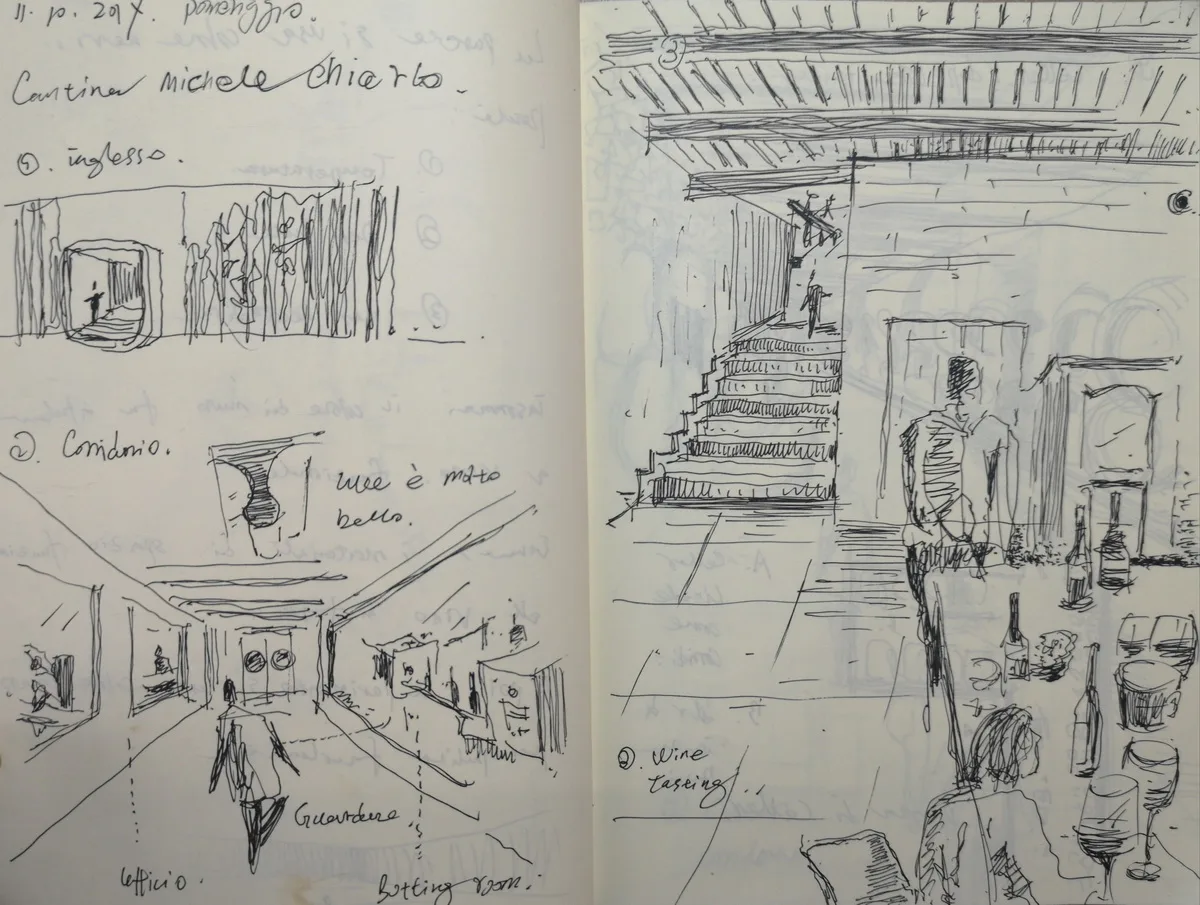
MICHELE CHIARLO Winery Sketches, Italy © Wang Jianfeng
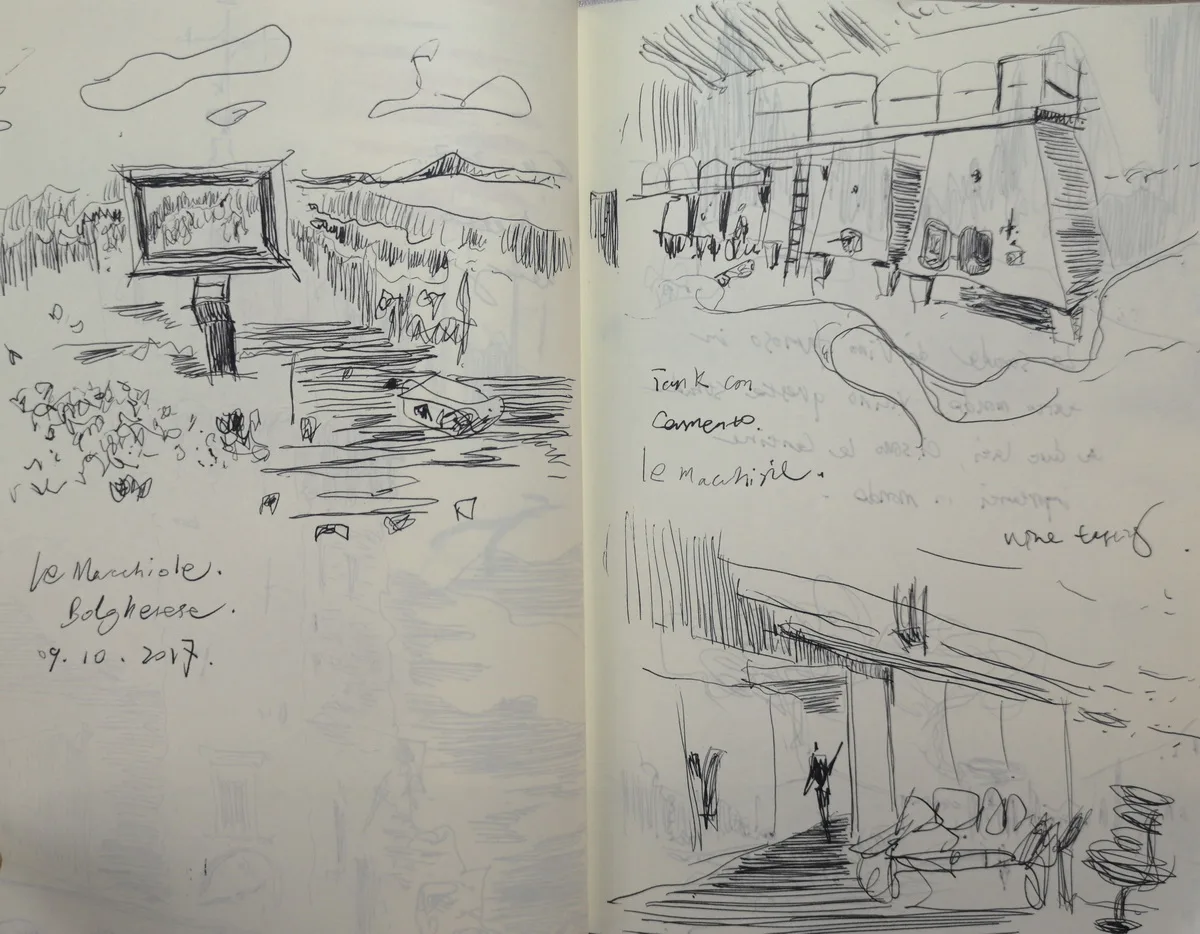
△ LE MACCHIONE Winery Sketches, Italy © Wang Jianfeng
However, grapes must be planted in soil and nurtured with water — terroir is even more critical.
Understanding the land is the root of all demands.
The unique qualities of the land mean that buildings cannot be placed arbitrarily in open, unconstrained spaces. In fact, such “empty spaces” rarely exist for designers.
Two years ago, I filmed this video in Tibet capturing the most touching grape pruning I have seen — a beautiful representation of the symbiotic relationship between land, grapes, and people.
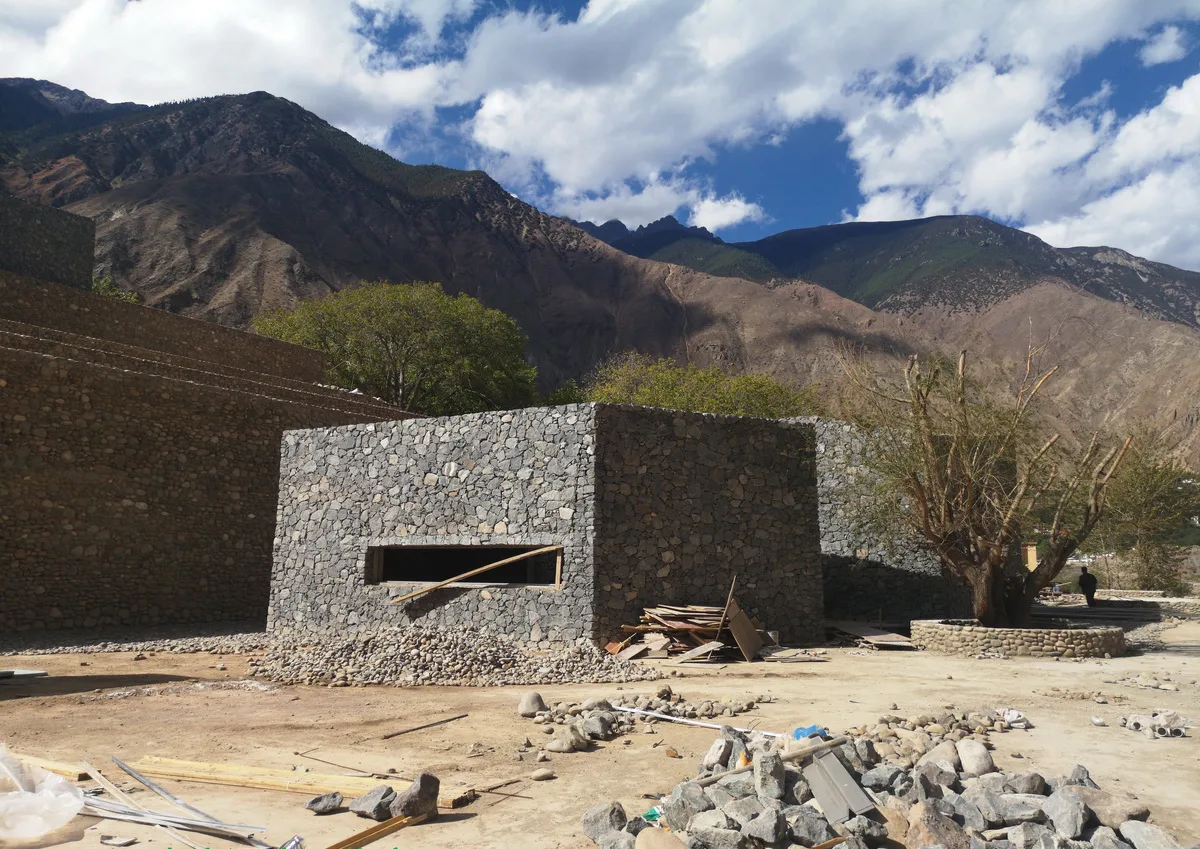
△ Quzika Distillery, Tibet (construction site) / Architectural Design by Wang Jianfeng © PL-T Architecture Firm
Based on these reflections, and despite many practical challenges, I have gradually developed a habit of “seeing the big picture through the small details” and striving to create designs that can only grow in this specific time and place — designs that are unique and non-replicable.
“Small” means uniqueness and differentiation, humility and self-awareness. “Big” refers to the masses, essence, and energy.
I’ve discussed this idea with several construction teams. While their concerns about high investment costs and public acceptance are understandable, they should also trust the public — because construction workers and clients are part of that public. Isn’t the evolution of our own consciousness based on shifts in popular consciousness?
I try not to take myself too seriously, and I believe the construction teams have yet to fully grasp the public’s psychology. The rapid pace of social change and the unpredictability of the future make architecture a field full of drama.
Yet, I firmly believe that “locality” will always remain a profound and timeless classic within this drama.
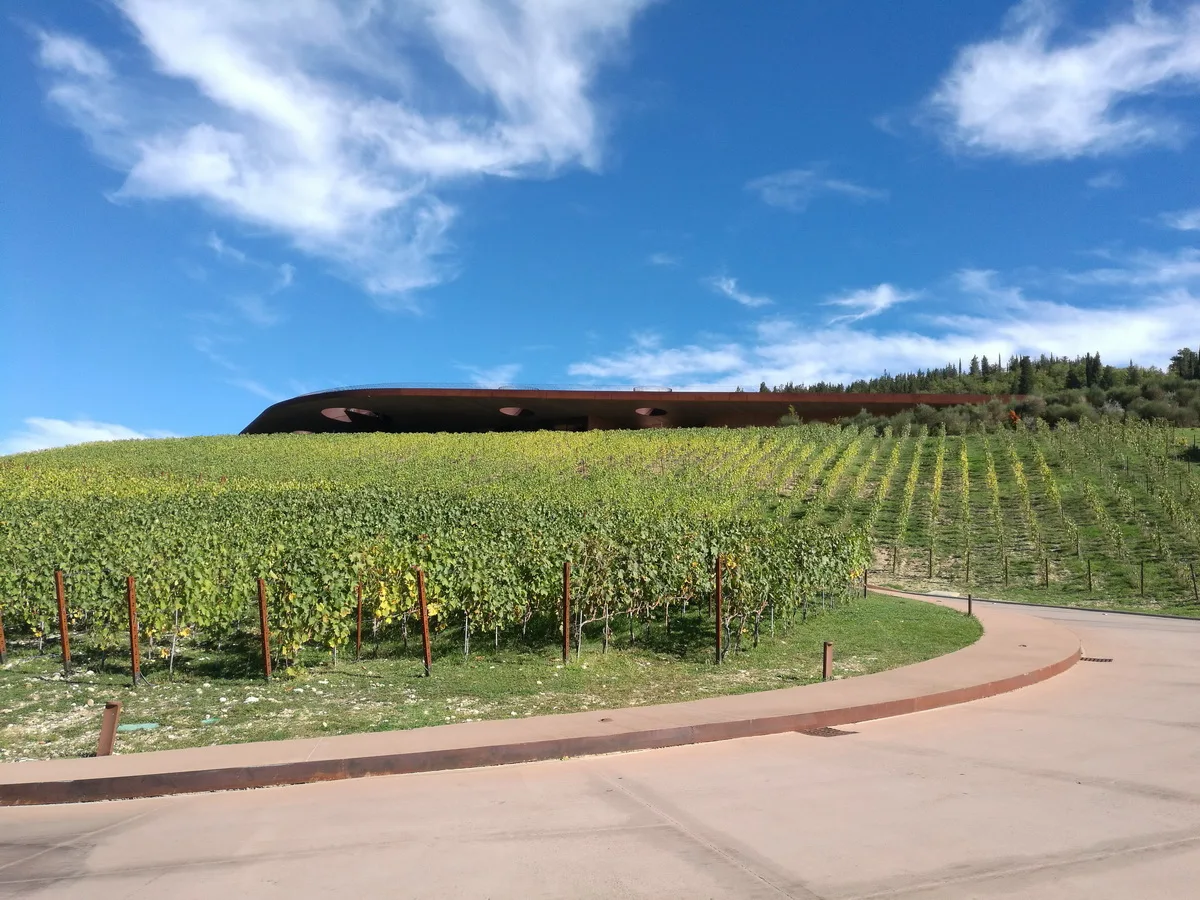
Antinori Winery, Italy © Photo by Wang Jianfeng
BANFI Winery, Italy © Photo by Wang Jianfeng
However, in many real projects, conflicts of interest rooted in complex social relationships create a lot of superficial elements and very little authenticity. I believe that only genuine things can sustainably serve the public.
Serving the public also means serving the client. There is no inherent contradiction between “local culture” and “commercial demands.”
My proposal for Guchengzi Winery (which I prefer to call a complex) aims to express this philosophy.
The site is near the Tengger Desert. Driving there, you pass stretches of road lined with ruins of the Great Wall and beacon towers on both sides of the Gobi Desert — or a solitary small earthen house. This landscape is sometimes hazy, sometimes clear, reminiscent of the seaside churches of Venice. The difference is Venice is foggy in winter, while here it is windy and sandy in spring.
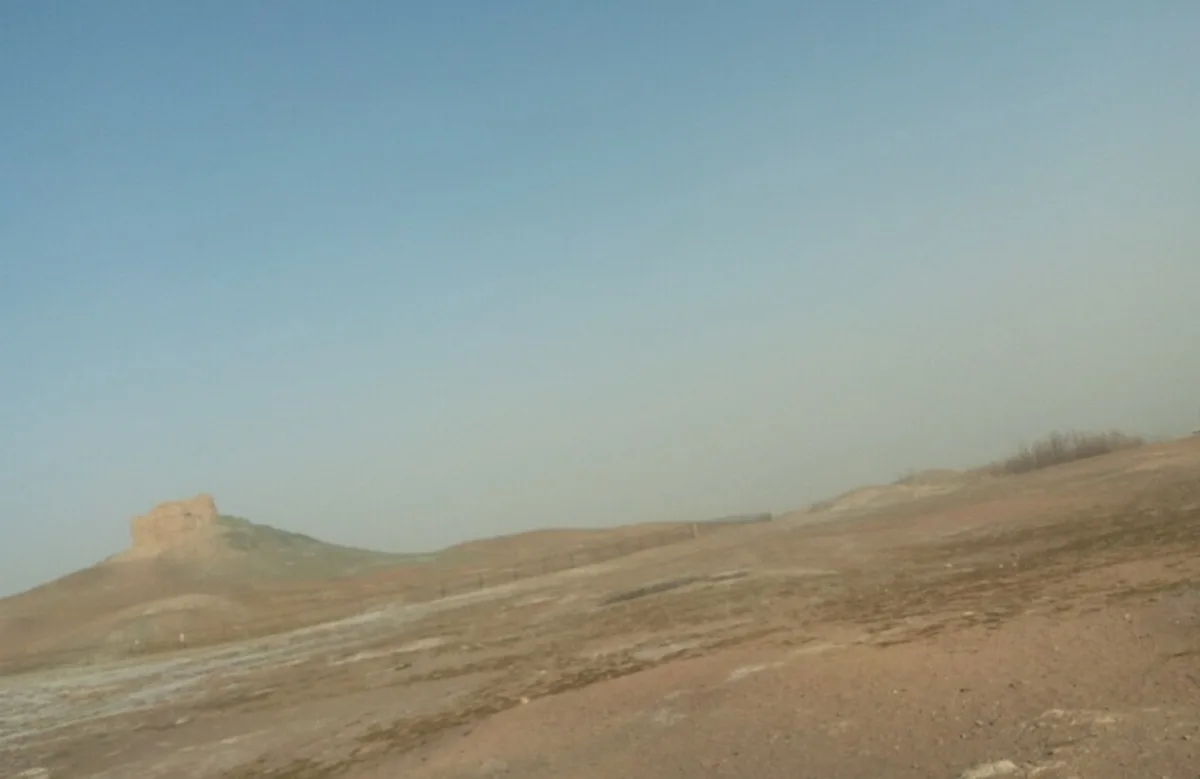
Yangguan Beacon Tower © Image sourced from the internet
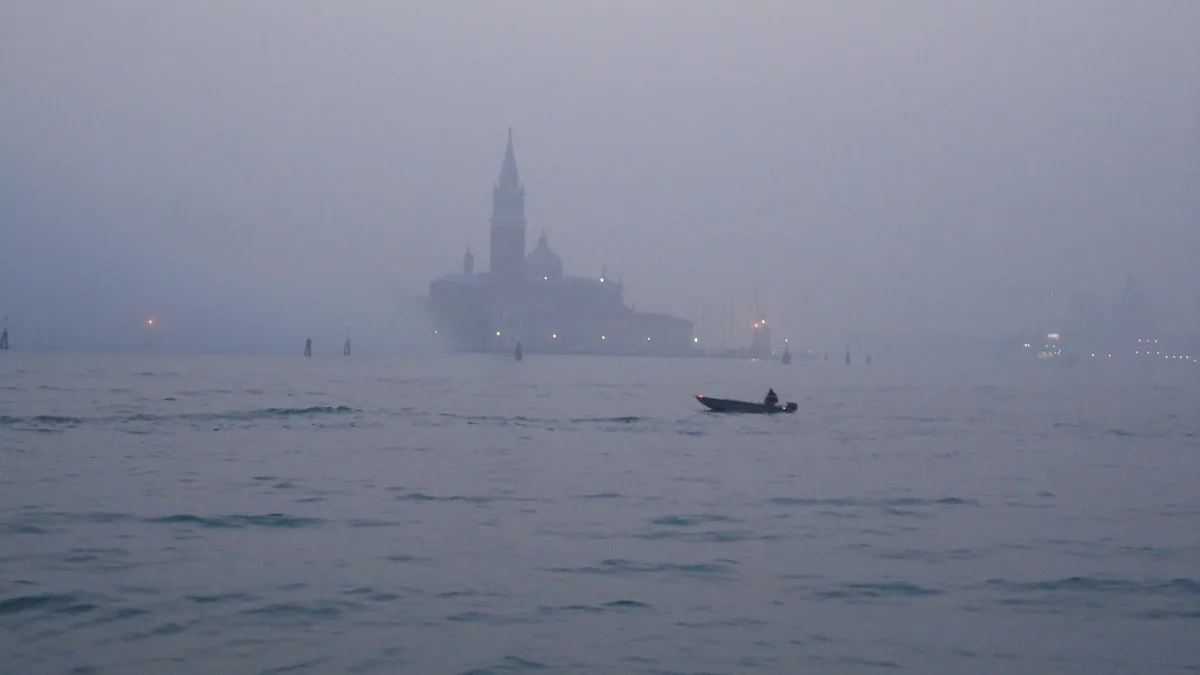
SAN-GIORGIO Church on the Sea in Winter, Venice © Photo by Wang Jianfeng
I believe such scenes along the route to the site are crucial to influencing the final architectural expression.
The site is not limited to the boundaries marked by the developer. The venue begins long before the construction site. The ruins of earthen cities, beacon towers, and small houses along the Gobi Desert form a continuous sequence of landscapes. The new buildings we create are a continuation of this sequence — not in form, but in spirit.
Though buildings inevitably present themselves in some visible form, what truly matters is that they emerge naturally from the design process — driven by rational analysis of the place and the creation of human behavior patterns. Ultimately, this is how architecture should be.
I prefer to design a scene or state that integrates with the place rather than just a building — if form still matters as a criterion for defining and evaluating architecture today.
1. Scenario:
Guchengzi Winery, together with the ruins of earthen cities and beacon towers scattered across the Gobi Desert, forms a complete and continuous scenic sequence.
Visitors may naturally associate these structures from different eras as part of a shared story.
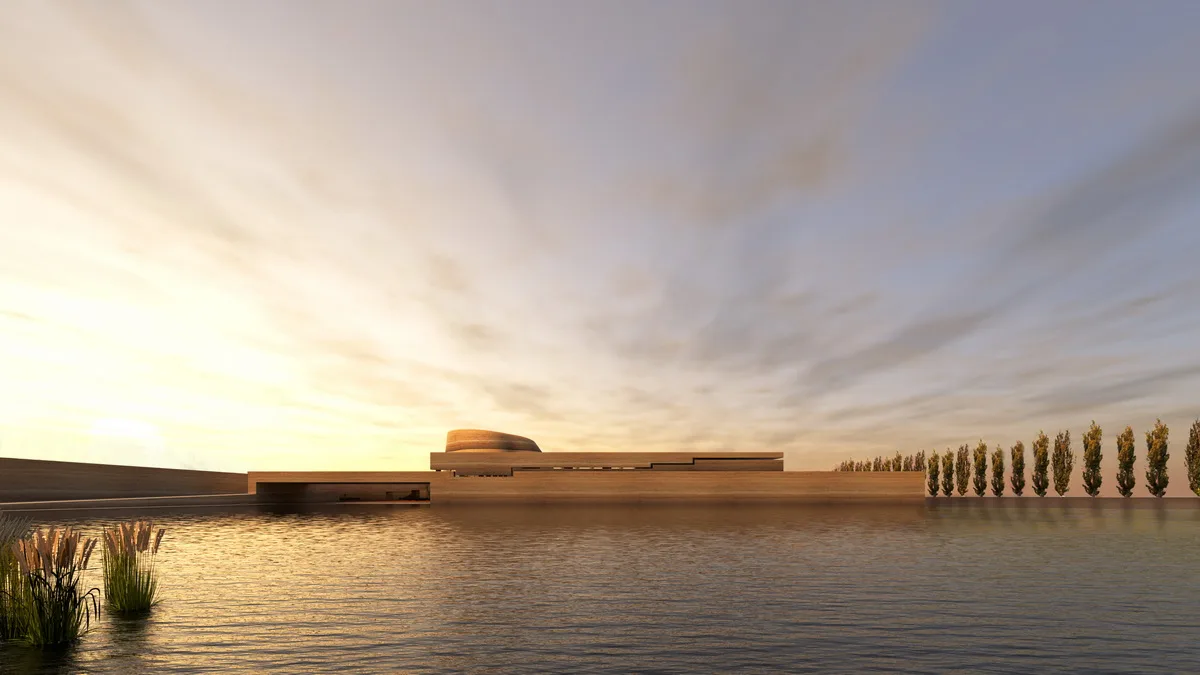
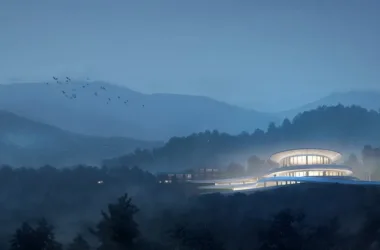
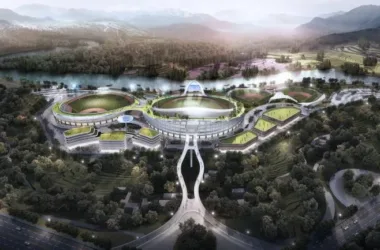
Guchengzi Winery Plan, Ningxia / Lead Designer Wang Jianfeng © PL-T Architecture Firm
The new building looks back across the ruins on the opposite bank, merging old and new.
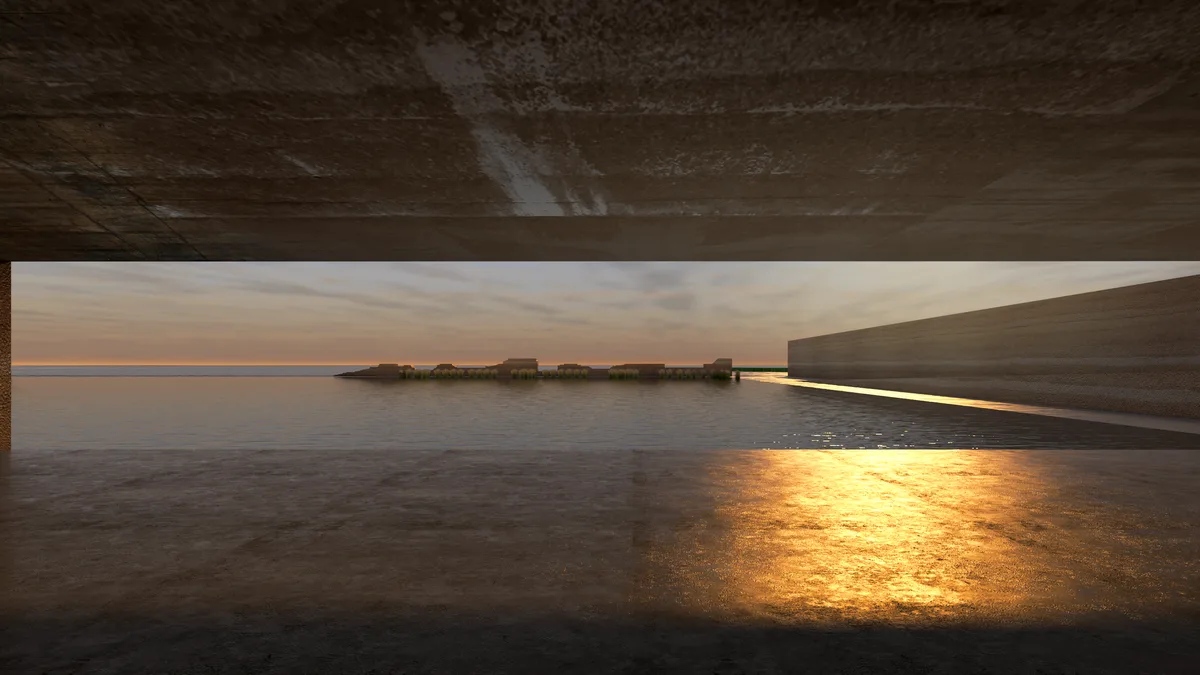
Guchengzi Winery Plan, Ningxia / Lead Designer Wang Jianfeng © PL-T Architecture Firm
2. Method
Due to the winery’s top-down gravity filling process, the spatial organization requires distinct upper and lower layers. The processing area is placed on the first floor for operational convenience, and its roof serves as a foundation platform for an activity plaza. Non-processing spaces are scattered across this rooftop platform, evoking a local settlement pattern.
Visitors first ascend from the ground to the rooftop plaza, then enter the winery’s interior to tour from top to bottom. This intentionally lengthened route increases elevation changes.
From a distance, the winery appears unified, but upon entering, it feels more dispersed, reminiscent of a Western-style settlement.
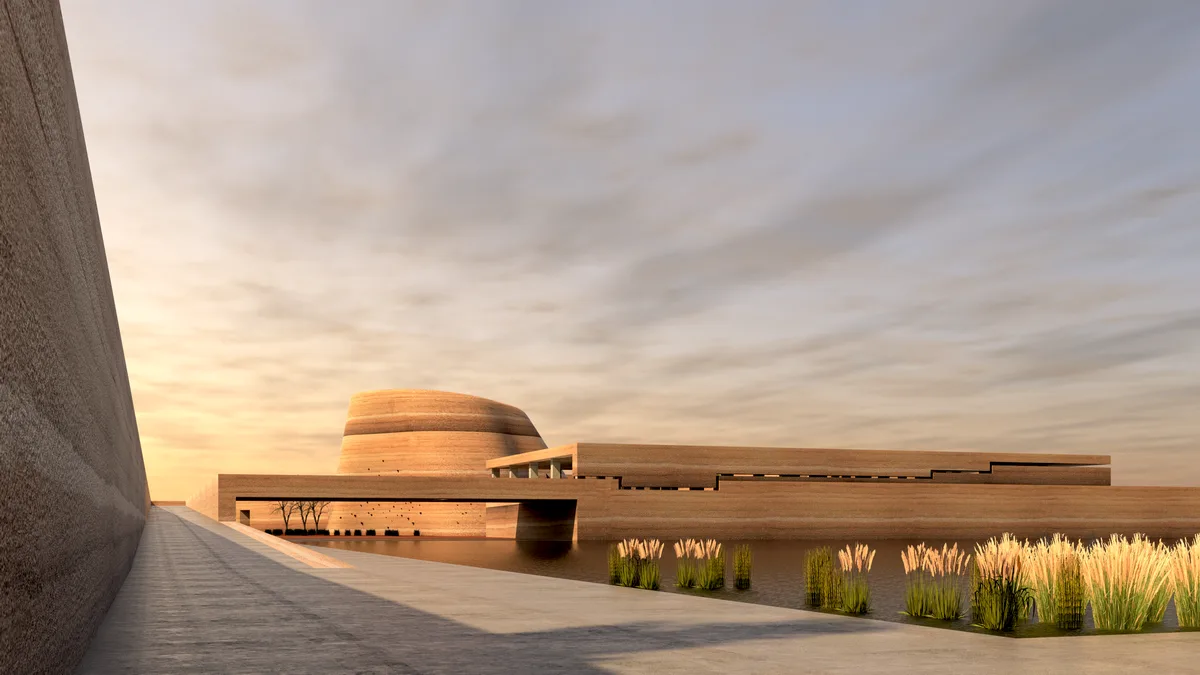
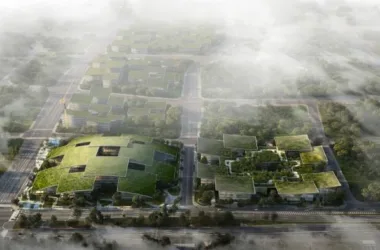
Guchengzi Winery Plan, Ningxia / Lead Designer Wang Jianfeng © PL-T Architecture Firm
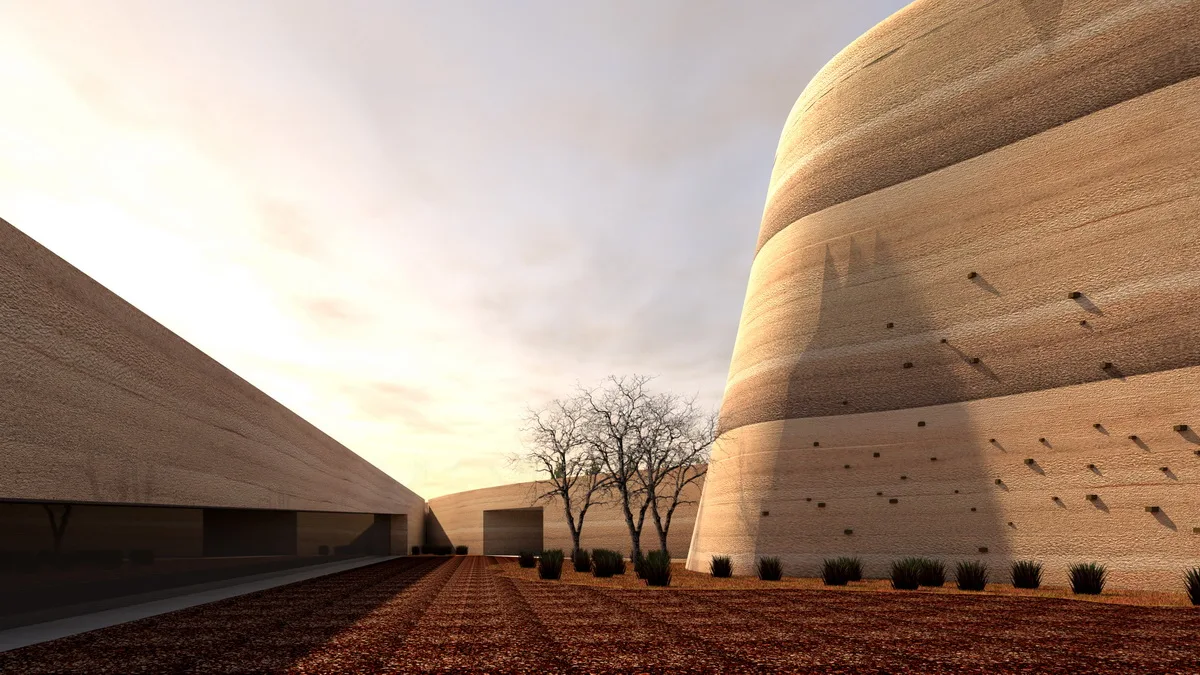
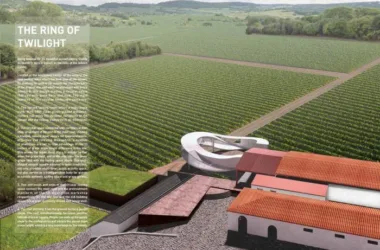
Guchengzi Winery Plan, Ningxia / Lead Designer Wang Jianfeng © PL-T Architecture Firm
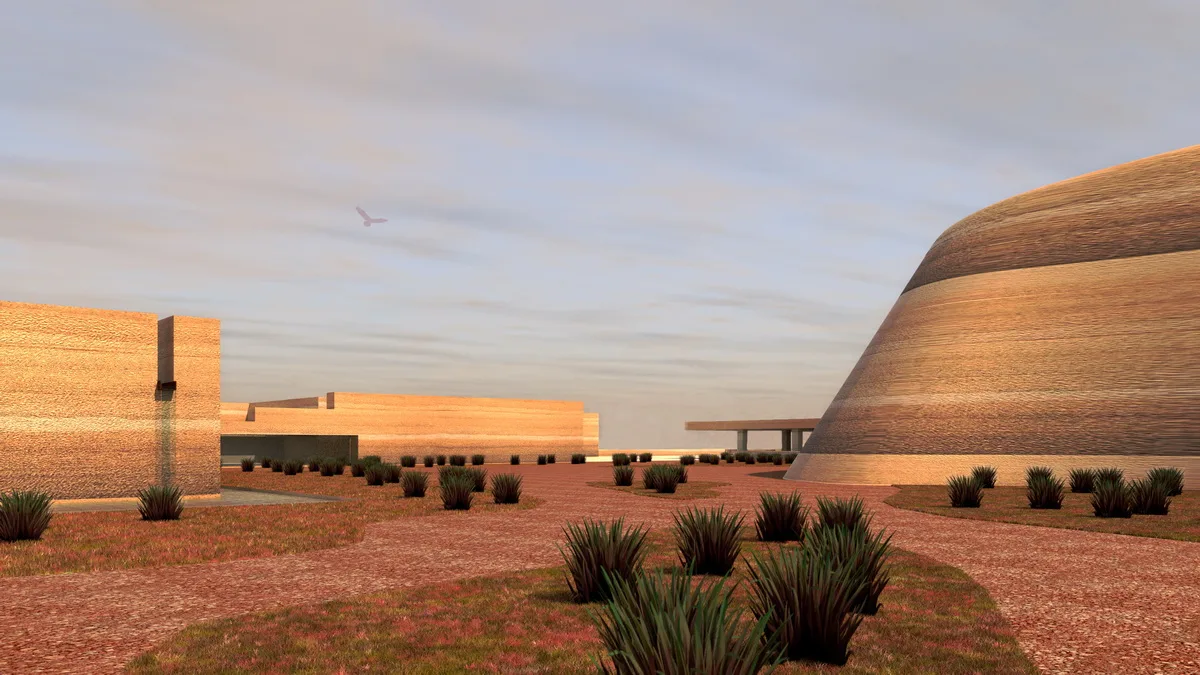
Guchengzi Winery Plan, Ningxia / Lead Designer Wang Jianfeng © PL-T Architecture Firm
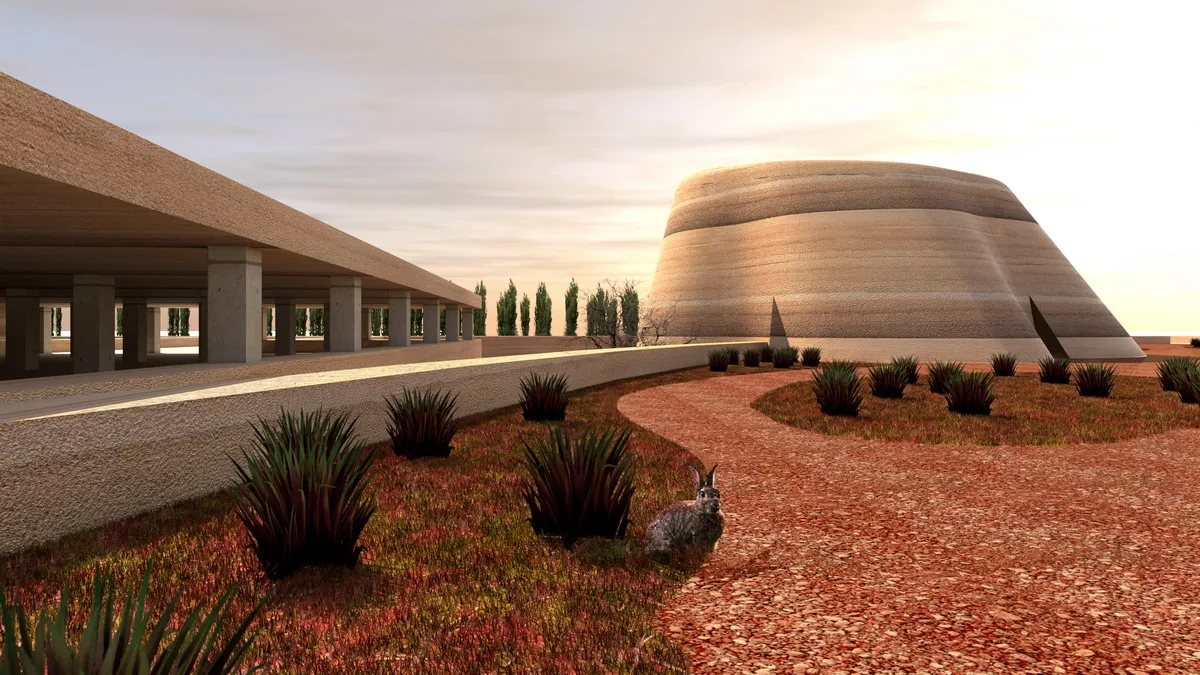
Guchengzi Winery Plan, Ningxia / Lead Designer Wang Jianfeng © PL-T Architecture Firm
3. Behavior
The visitor entrance features a large, open space with a spacious ramp that winds along rammed earth walls down to the oak barrel wine cellar on the ground floor — reminiscent of Frank Lloyd Wright’s Guggenheim Museum.
This ramp serves multiple functions: as a transportation hub, a linear exhibition gallery, an open reception hall, a wine tasting area, and more. Its open-ended design allows visitors to use the space flexibly.
I once had an unorthodox idea: if future expansion is needed, oak barrels could be placed along both sides of this ramp, transforming it into a linear wine cellar.
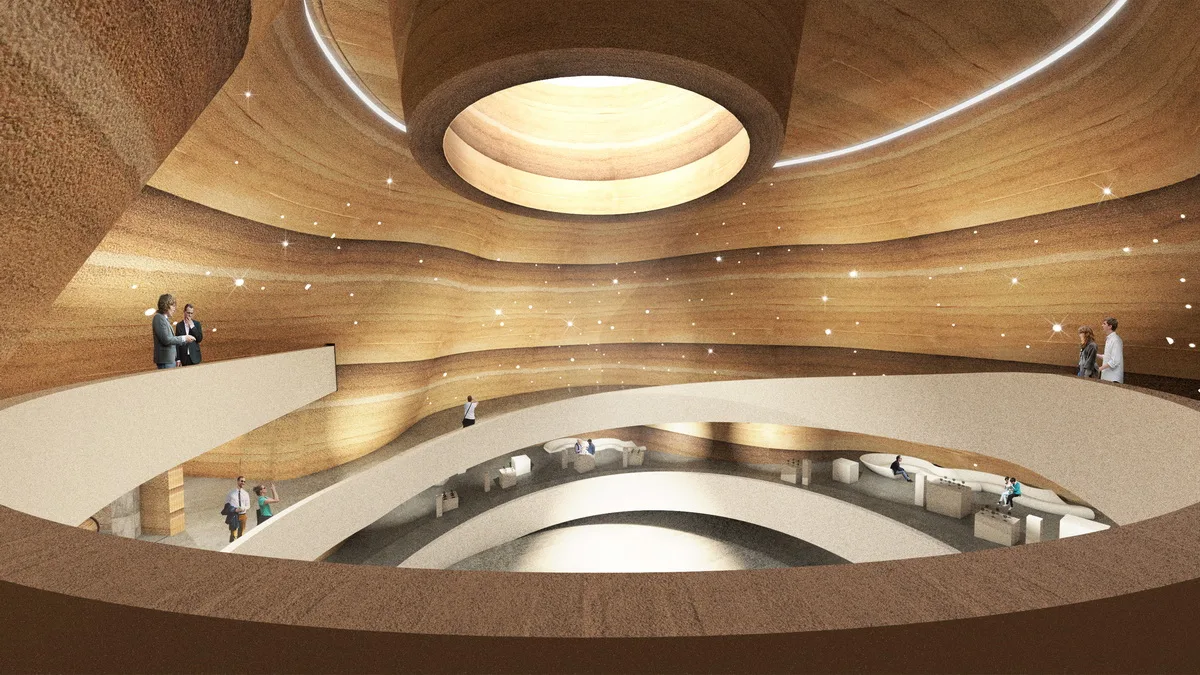
Guchengzi Winery Plan, Ningxia / Lead Designer Wang Jianfeng © PL-T Architecture Firm
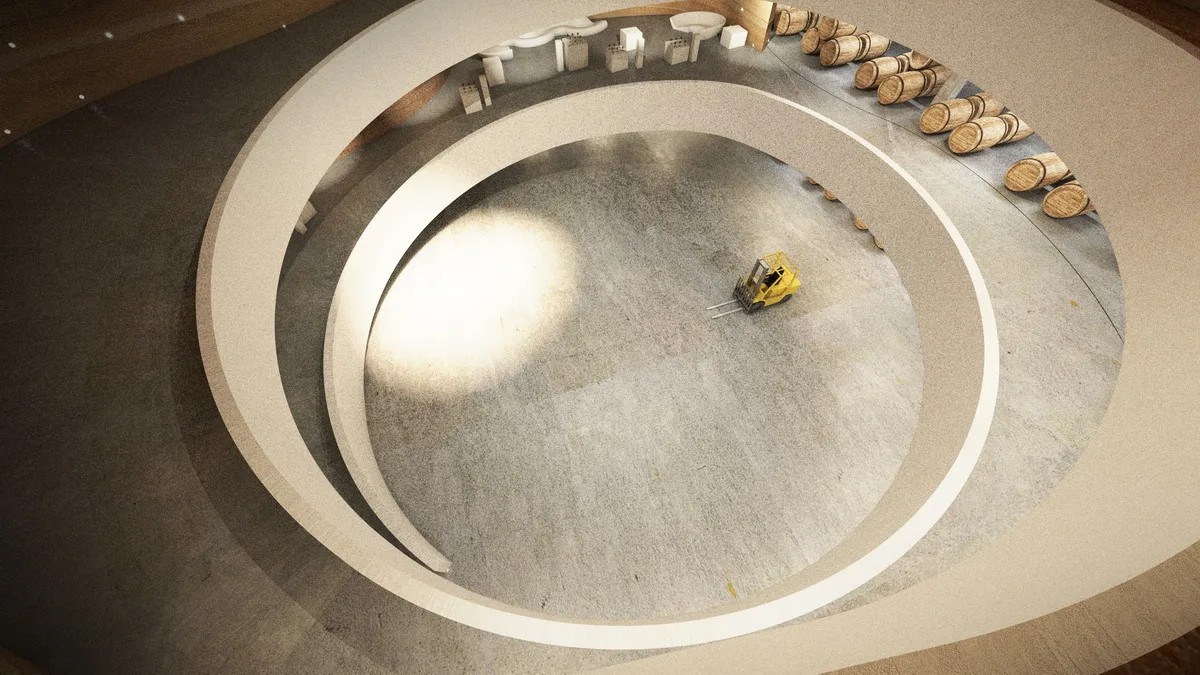
Guchengzi Winery Plan, Ningxia / Lead Designer Wang Jianfeng © PL-T Architecture Firm
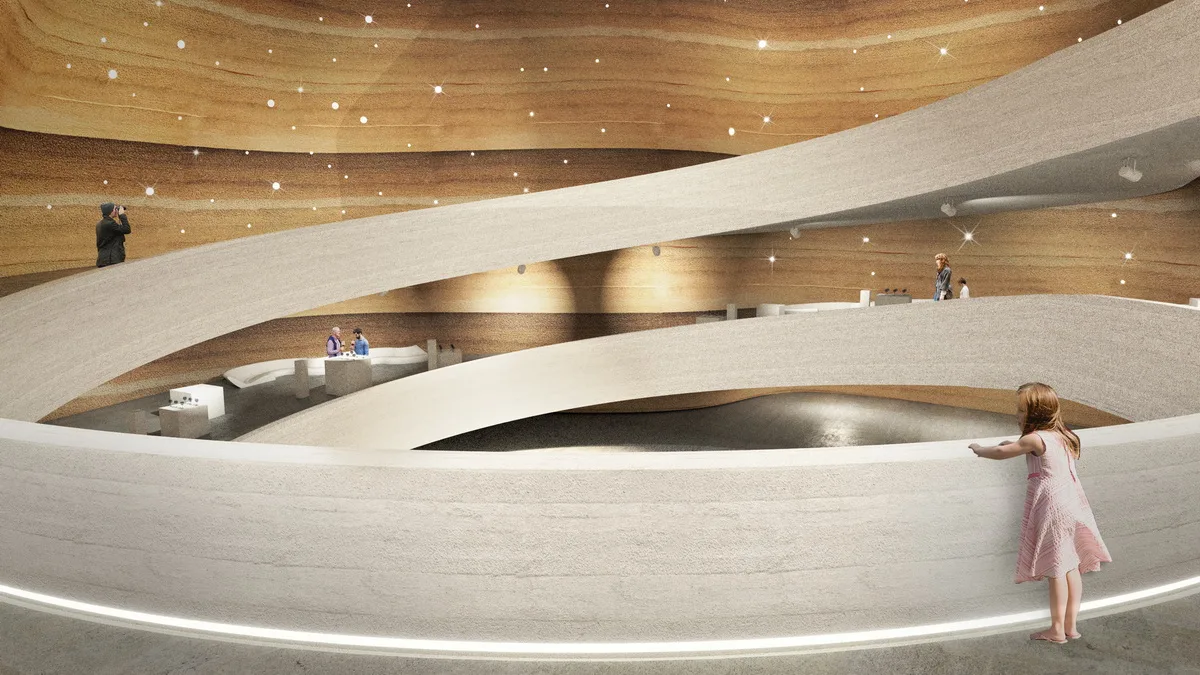
Guchengzi Winery Plan, Ningxia / Lead Designer Wang Jianfeng © PL-T Architecture Firm
4. Physical Experience
Unlike my previous winery designs, the entrance hall and wine cellar in this project are connected. Visitors entering the hall can feel the temperature, humidity, and aging aroma of the cellar, creating a multi-sensory spatial experience.
I believe that understanding architecture is not limited to visual and material aspects — the physical and tactile sensations are equally essential.
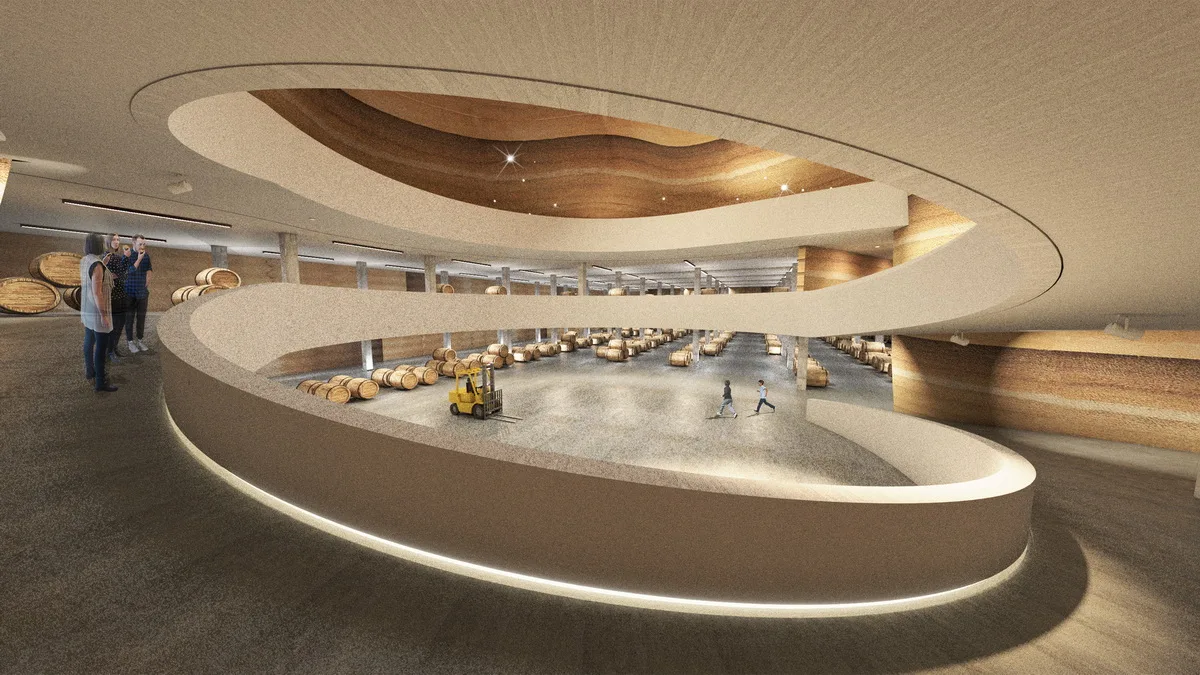
Guchengzi Winery Plan, Ningxia / Lead Designer Wang Jianfeng © PL-T Architecture Firm
5. Transformation
At the bottom of the ramp, the circular space transitions into a regular rectangular cellar. Rectangular rooms are more practical for storing oak barrels.
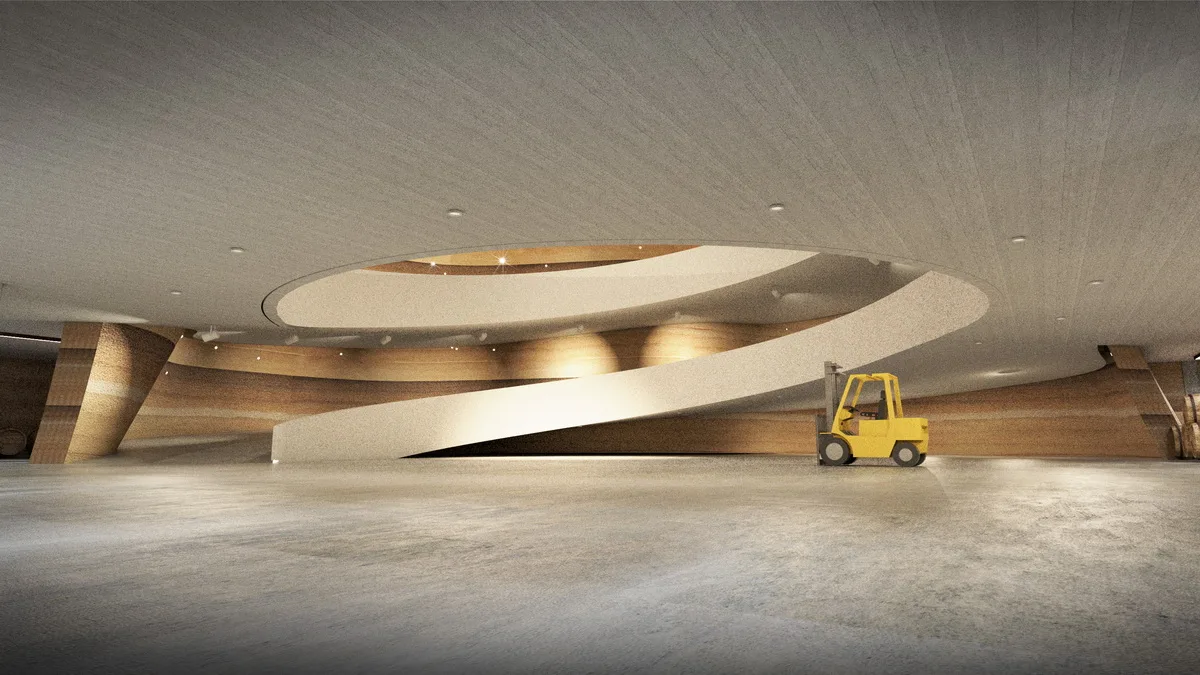
Guchengzi Winery Plan, Ningxia / Lead Designer Wang Jianfeng © PL-T Architecture Firm
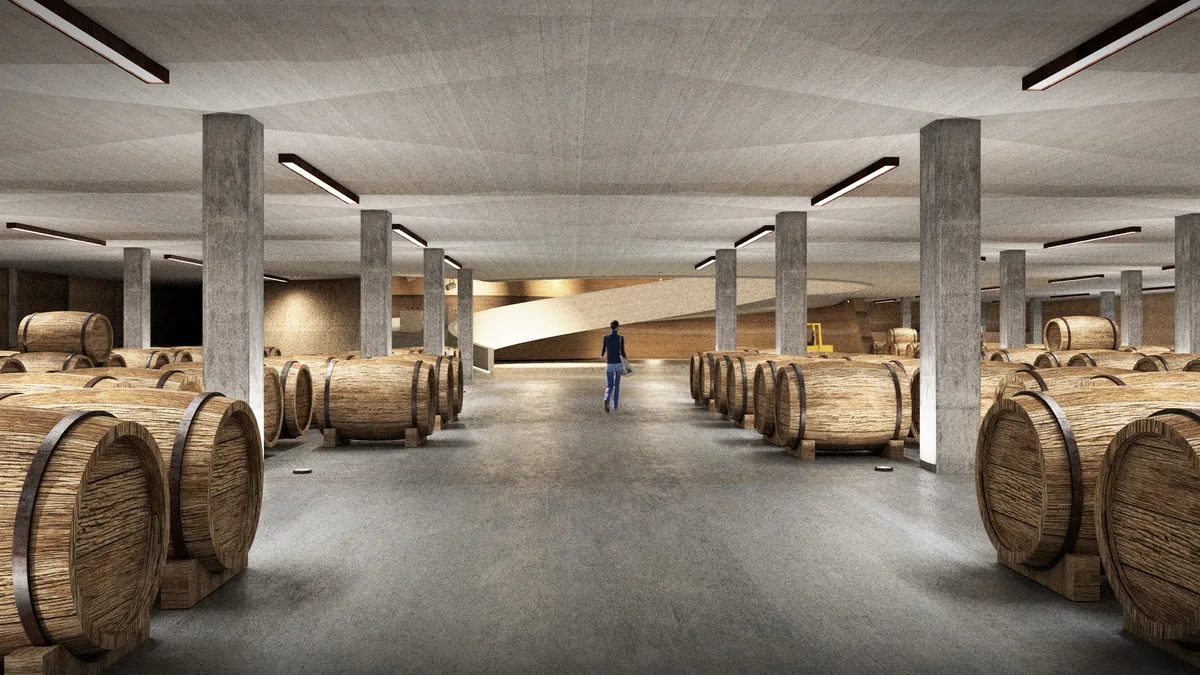
Guchengzi Winery Plan, Ningxia / Lead Designer Wang Jianfeng © PL-T Architecture Firm
6. Looking Up
Standing at the bottom and looking up, a circular skylight opens at the top. My original intention was to use this design to highlight the texture variations of the rammed earth walls, while enhancing the overall space’s sense of ceremony and mystery — like a cave mouth opening, fitting for a wine storage area.
Sometimes, I think of the ancient Roman Pantheon’s entrance. The nearly two-thousand-year-old cave-like opening is truly exquisite and continues to profoundly influence contemporary architecture.
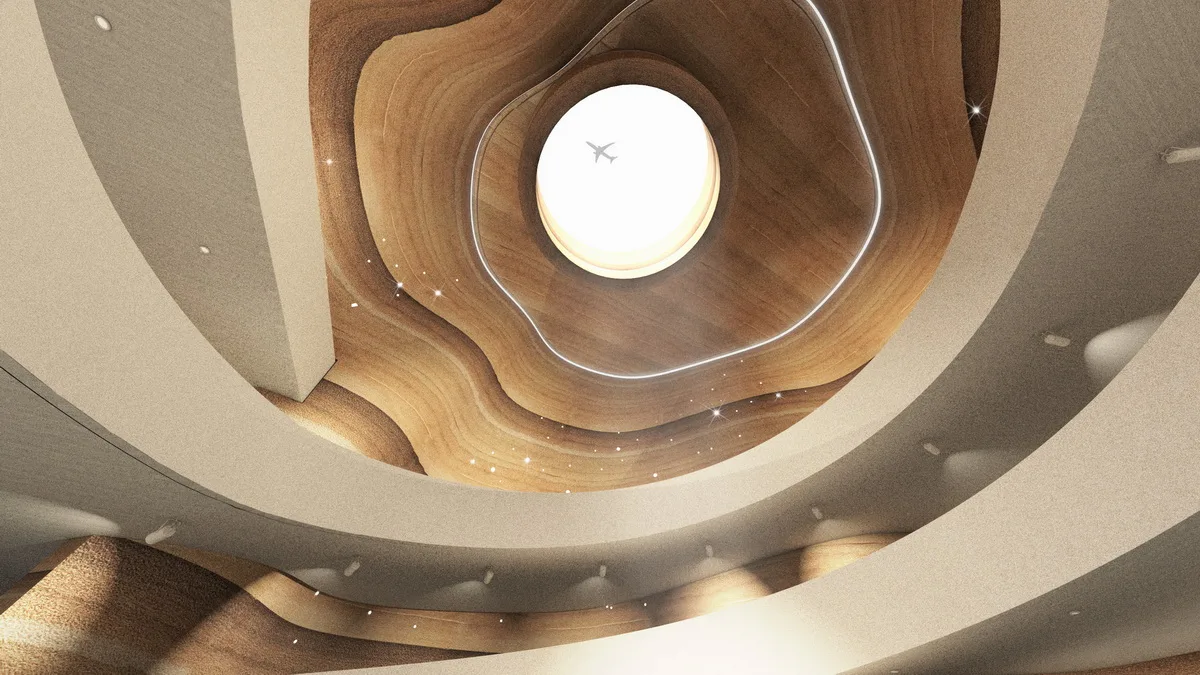
Guchengzi Winery Plan, Ningxia / Lead Designer Wang Jianfeng © PL-T Architecture Firm
PL-T Official Account: ParallelStudy Parallel Architecture
PL-T Official Website: __AI_ST_URL_0__
Contact Email: __AI_S_SC0__
Contact Phone: 13059166269
Studio Address: No. 2 Fudong Lane, Panfu Road, Yuexiu District, Guangzhou












Must log in before commenting!
Sign Up