
In 2020, as a Gemini, I designed two contrasting spaces at Sinan Mansion—one dynamic and one static—forming a pair of complementary environments. These designs also connect subtly to my previous project, Sinan Book Company. I call these projects Gemini’s Alpha & Beta. (Alpha is adjacent to the Sinan Bookstore space, while Beta serves as a reading area with similar content.)
Alpha
Onmyoji Theme Store Shanghai Flagship
Guide to Demons in the Magic City: Experience a Day as a Demon in the Mirage Tower
The illusion of Sinan Mansion transforms into
Monster’s Paradise · Onmyoji Shanghai Flagship Store
ONMYOJI CAFE & SHOP
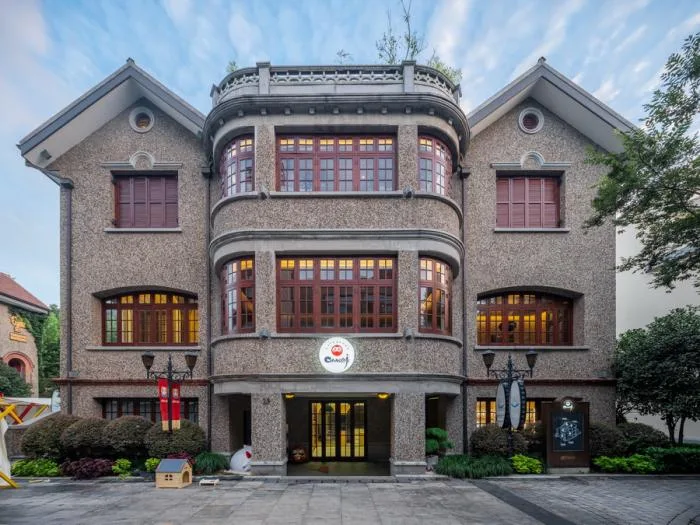
No. 23, Sinan Mansion
Step into the Mirage Tower, a demon’s paradise—worth being a demon for a day.
—— Yin Yang Master: Bai Wen Pai
Wutopia Lab’s Mills was commissioned by NetEase to create the Onmyoji Shanghai flagship store, a demon paradise, located in Building 23 of Sinan Mansion. In mythology, demons are often considered gods, emerging from humanity’s reverence for nature. The Classic of Mountains and Seas depicts demons hidden within mountains and seas, while Hayao Miyazaki’s works portray them as “elves on the city’s edge.” Today, this urban demon uses familiar images to reshape both familiar and unfamiliar scenes, breaking the conventional sense of place limited by time and space.
When we designed the Sinan Bookstore (Building 25), we envisioned a system for acquiring knowledge and self-discovery, akin to human experience. Upon seeing Building 23, covered in dense ivy, we felt compelled to create a city demon to complement the space.
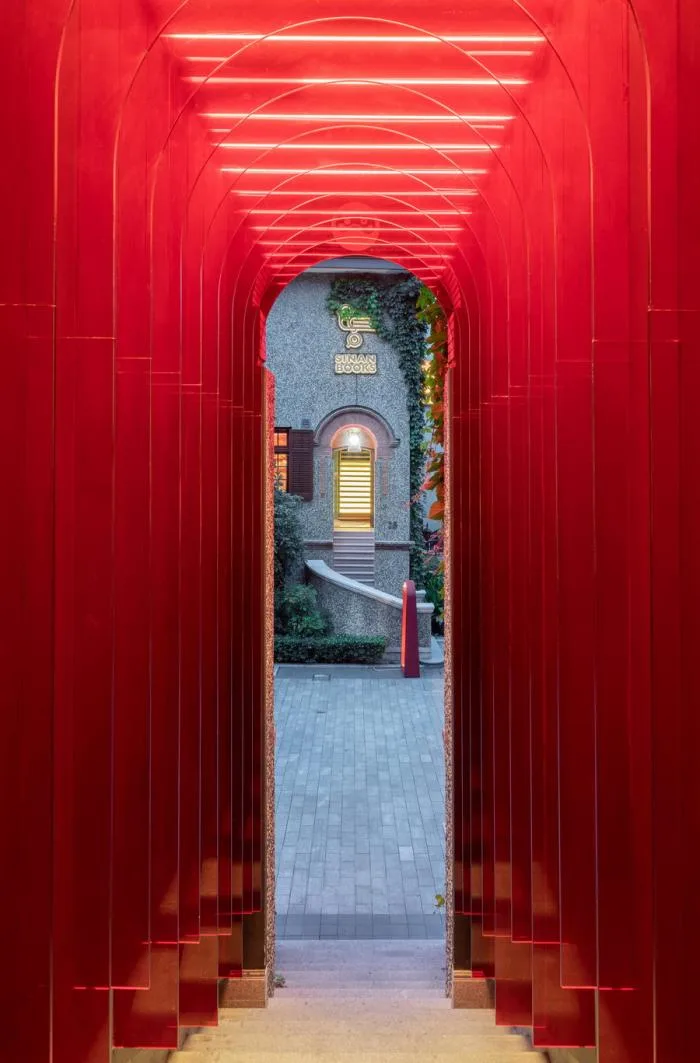
Yin Yang Master Shanghai Flagship Store – Sinan Bookstore
Mirage
A mirage forms when the breath deflects light over the ocean, creating an illusion.
—— Yin Yang Master: Mirage of Qi Tower
The Mirage Tower occupies No. 23 Sinan Mansion, a four-story detached western-style house with a pebble façade, red wall waistline, a slightly protruding entrance staircase, and a tall chimney. Within this familiar Shanghai building, a city demon quietly resides—The Mirage Tower.
Visitors can obtain game-inspired objects brought into reality, socialize, and dine. Entering here feels like stepping into a dream of monsters, linking virtual game events with real-world experiences. No. 23 Sinan Mansion thus serves as a bridge between digital fantasy and reality, engaging both players and passersby.
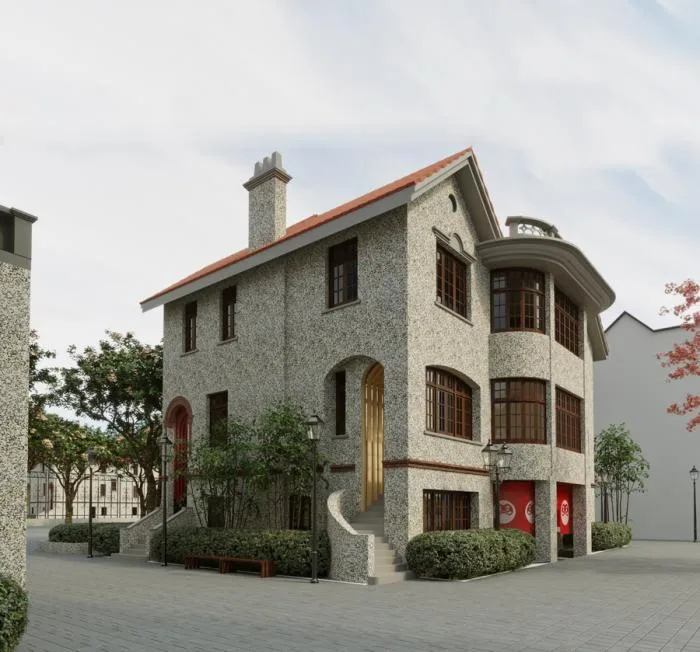
No. 23, Sinan Mansion
Three Entrances
The Mirage Tower has three distinct entrances, guiding different visitors—players, passersby, and shikigami (demons)—into separate experiences.
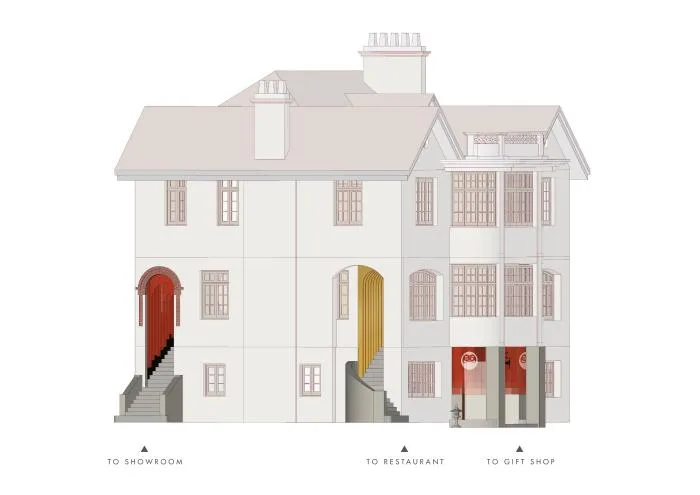
△ Three Entrances
The most concealed entrance is at the bottom level, hiding the player’s treasure and sparking exploration. On the left is the Monster House, on the right the Handmade Wall, and in the courtyard stands an egg-twisting machine. Dolls named Damo and Cimuqiu guide players into the sunken courtyard and the Onmyoji marketplace. This hidden entrance requires visitors to detour around the building, encouraging interaction as players navigate the Sinan Mansion, sometimes entering bookstores by mistake and asking for directions—a dynamic and engaging experience.
In contrast, the golden entrance on the ground floor leads to the second floor and attracts passersby seeking a delightful visit. Originally a popular check-in spot, its curved outdoor steps serve as a selfie location and a welcoming gateway to the world of Yin Yang masters, featuring safe food offerings as an introduction.
The entrance facing Fuxing Middle Road is the core showcase for Yin Yang Master’s Shi Shen characters. As night falls, a semi-transparent red arch with black walls winds up the stairs like a bird’s nest, leading to the third-floor demon world. Cosplayers bring game characters to life here, creating an immersive cross-dimensional scene. This entrance bridges two worlds, inviting visitors to cross over.
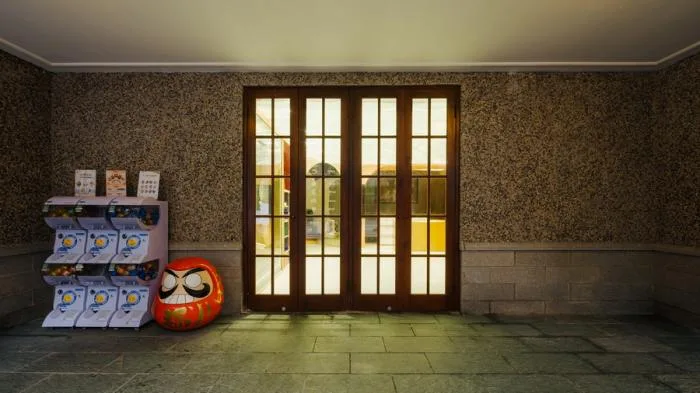
△ Market Entrance
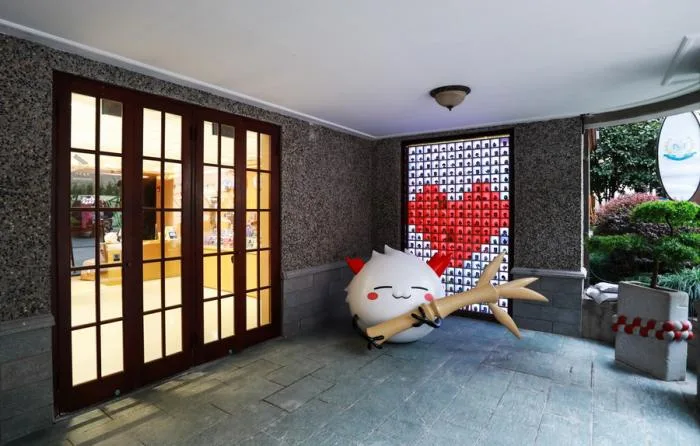
△ Handmade Wall in the Market
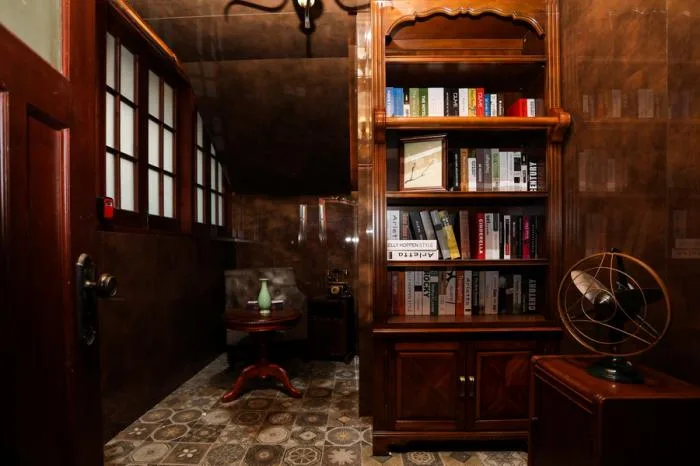
△ Monster House
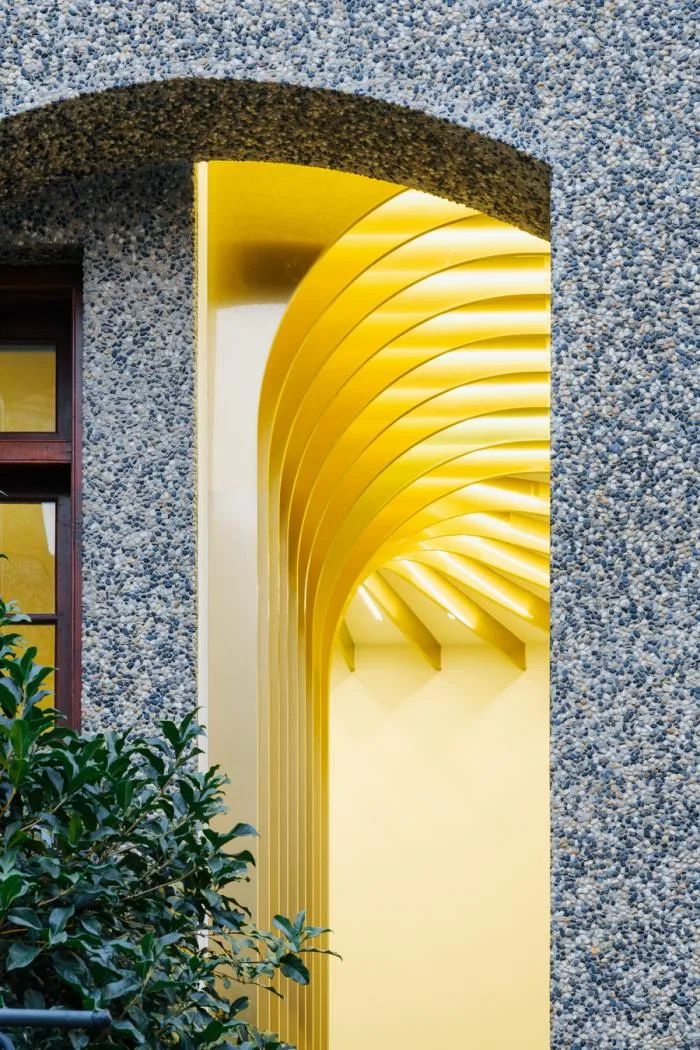
△ Golden Entrance
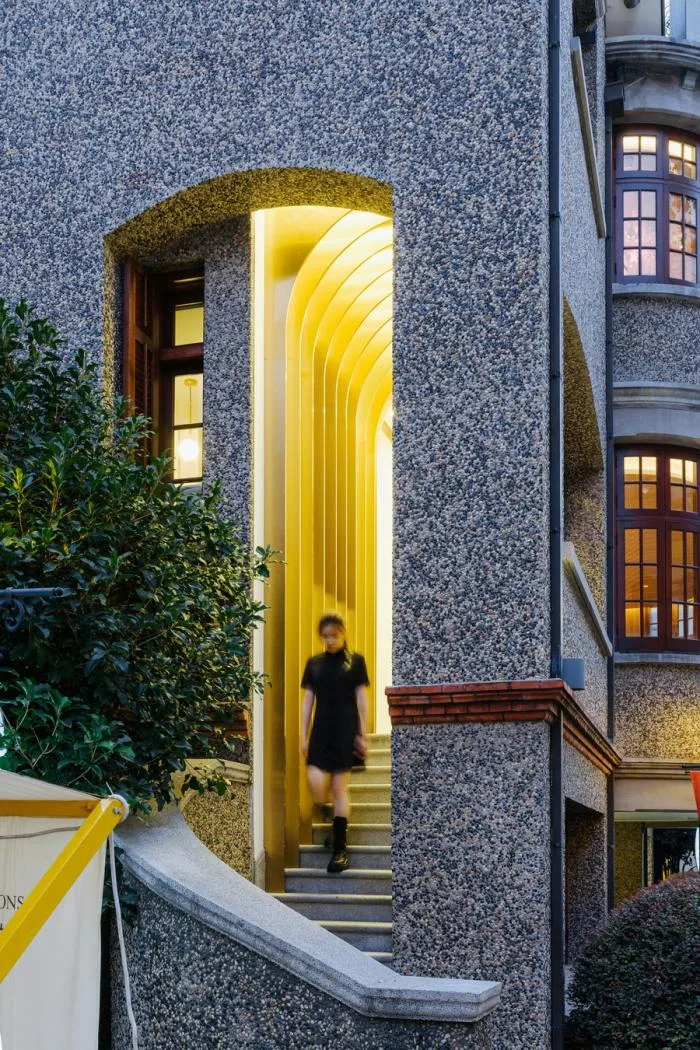
△ Golden Entrance
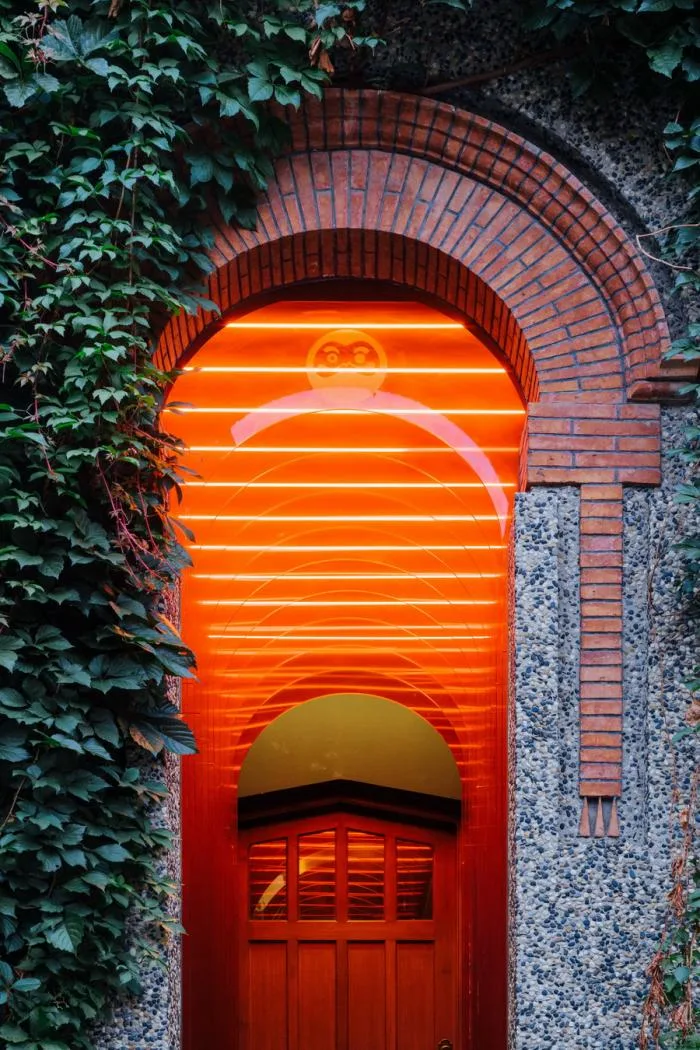
△ Red Entrance
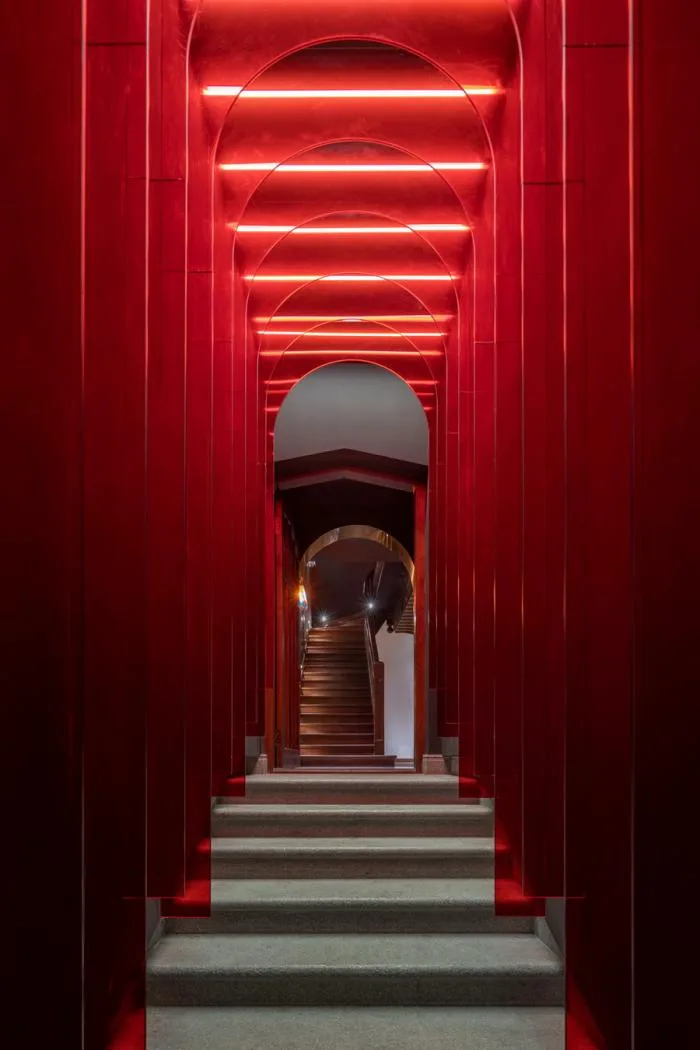
△ Red Entrance
Demon’s Paradise
The passages connecting the different entrances lead visitors through a series of paradises, forming the city walls carefully carved by the Mirage Tower in the dream.
—— Yin Yang Master: Mirage of Qi Tower
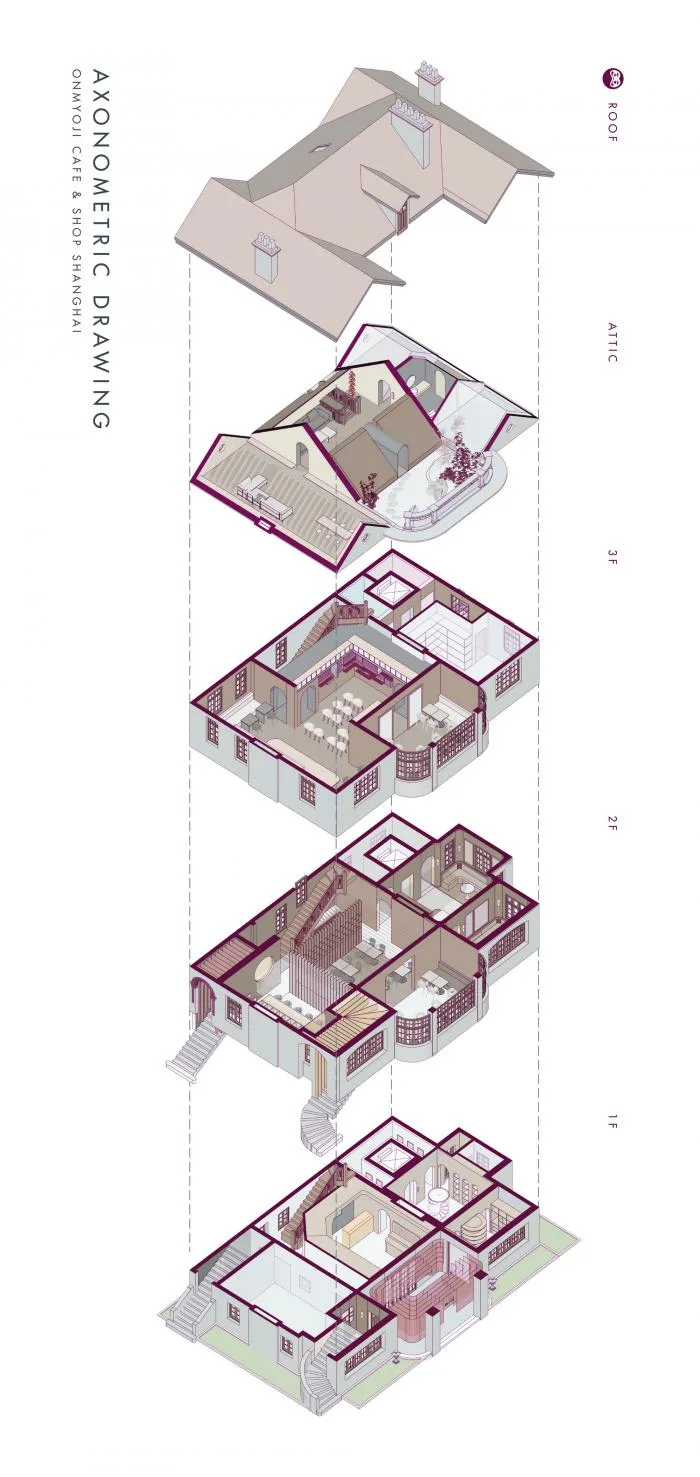
△ Axonometric Diagram
Baigui Market
The Hundred Ghosts Market is a player’s paradise, comprising five parts: seasonal exhibition halls, display windows, vortex display cabinets, Ping An Gallery, and monster houses. The Onmyoji Shanghai flagship store gathers all peripheral products of “Onmyoji.” The stories behind hundreds of game characters inspire the design of these products. As they transition from screen to reality, an uncanny sense of unreality emerges.
Mirrors absorb the cat at the door, nearby shelves, and passing players, distorting and overlapping the story scenes within. The market exists physically through display cabinets, and simultaneously in an alternate form within mirrors. Mirror channels traverse the market, creating a complete mirage tower and ghost market. At the center, the vortex display cabinet resembles a sealed scroll containing numerous large monster figurines, its dreamlike effect enhanced by a rippling ceiling.
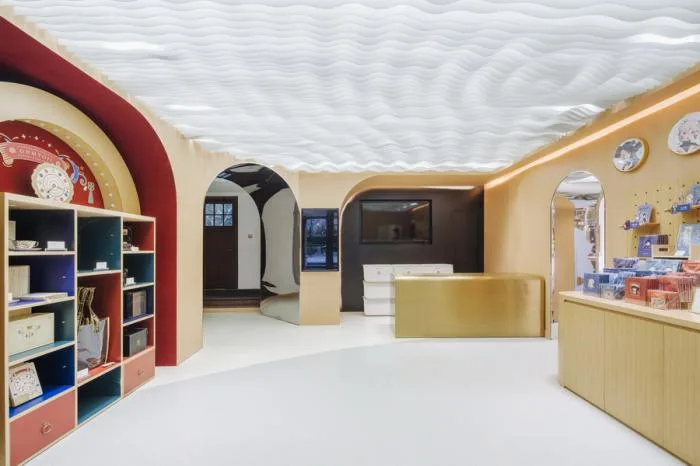
Seasonal Display Cabinets
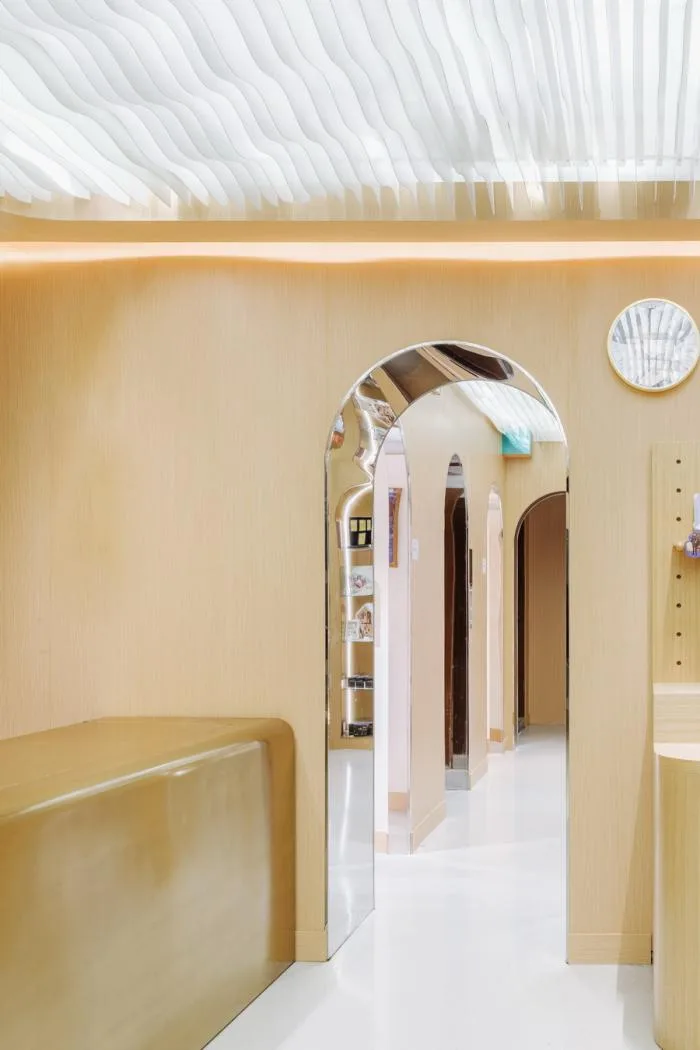
Mirror Arch
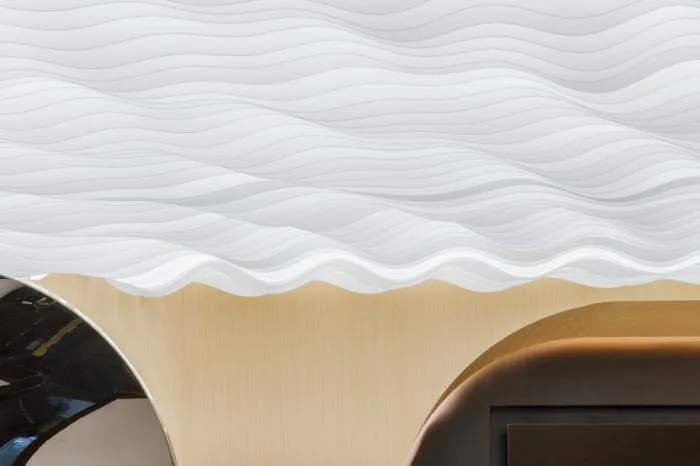
△ Water Pattern
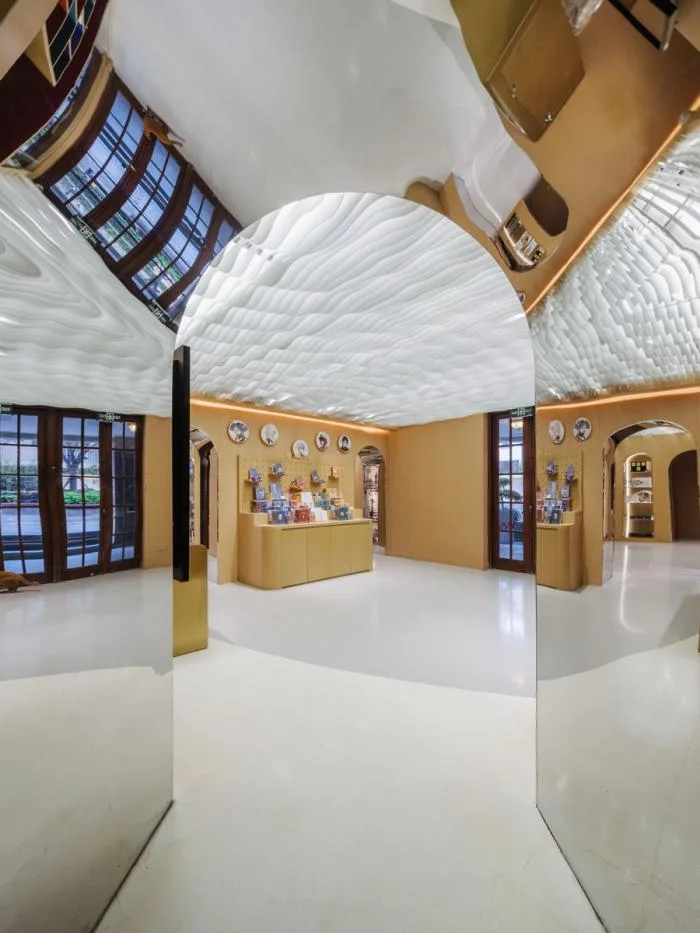
△ Mirror World
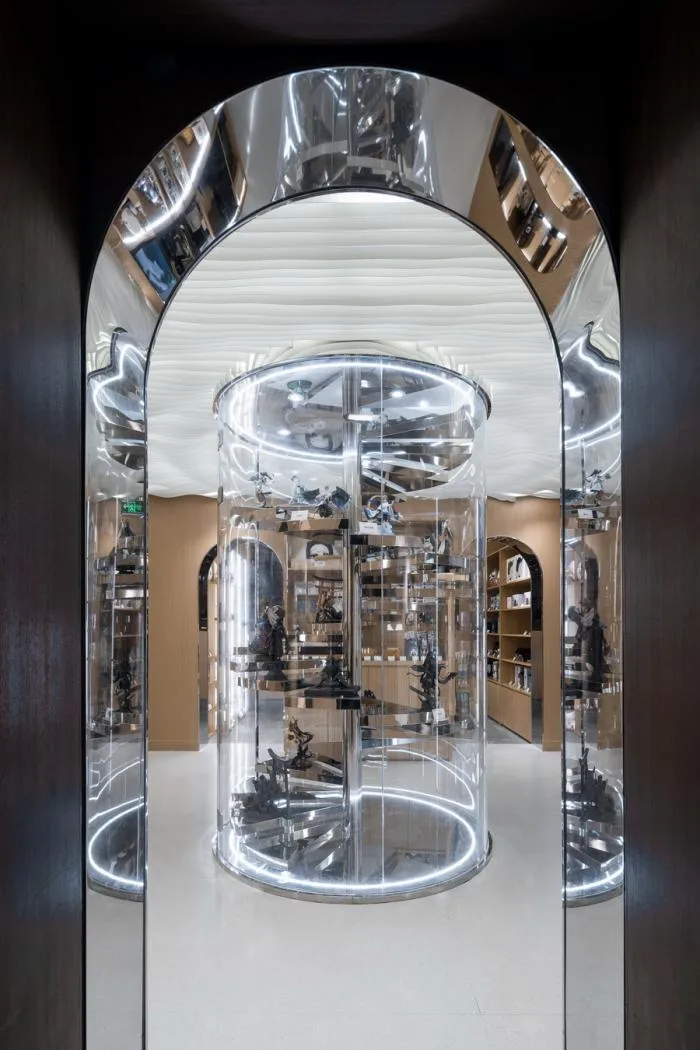
The Arch of the Mirror
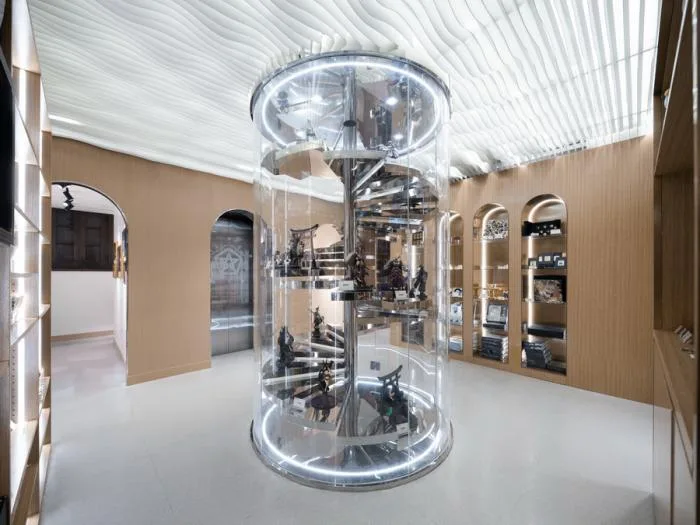
△ Vortex
Monster Canteen
Entering the Mirage Tower through the golden entrance, visitors pass through a luminous corridor to reach the Monster Canteen food park. This culinary space introduces the Onmyoji IP to those unfamiliar with the game. The daytime cafeteria and nighttime bar include a bar counter, lobby, and themed private rooms, each symbolizing different monsters.
Subtle design elements such as wine cabinets, grids, and tableware incorporate motifs related to yin-yang masters, serving as Easter eggs for players and gateways for newcomers.
A bamboo grid separates the passage from the main hall, where bamboo chandeliers hang beneath a wood-grain wave ceiling. The main hall is framed by four interfaces: the bar counter, bamboo forest, corridor, and wooden doors, creating a fully enclosed, immersive space.
Themed private rooms maintain monster motifs in a restrained manner. The ghost-cutting room features lightweight soft partitions with embedded Genji symbols, visible only to attentive players. The Big Sky Dog room, surrounded by booths, offers a sunny, intimate atmosphere for unexpected encounters with beloved shikigami.
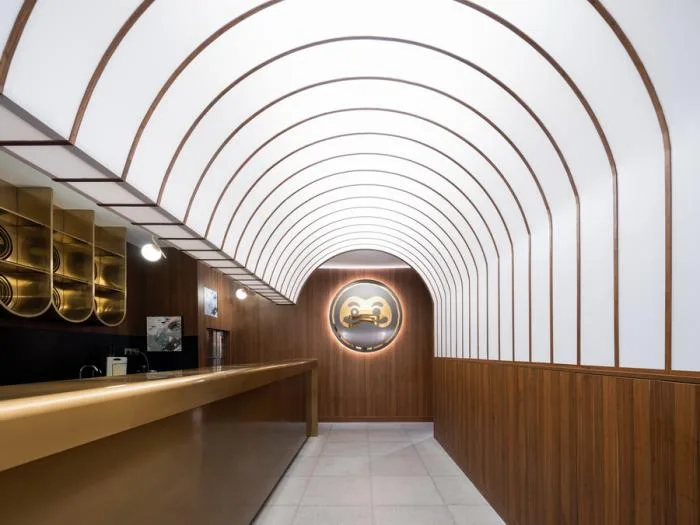
△ Brass Damo
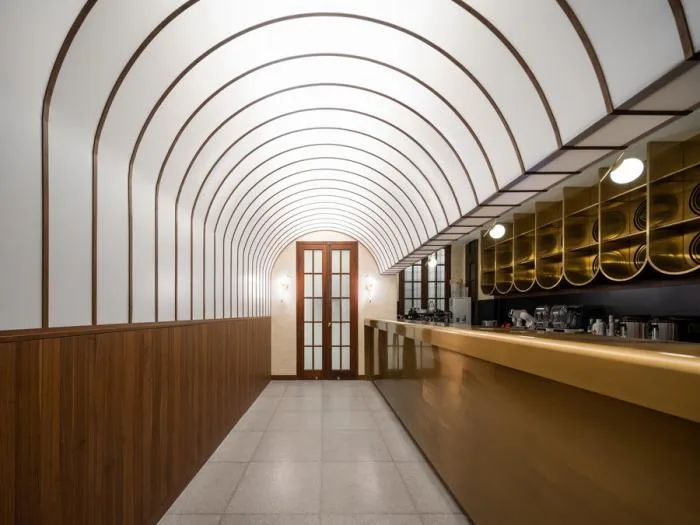
△ Channel of Light
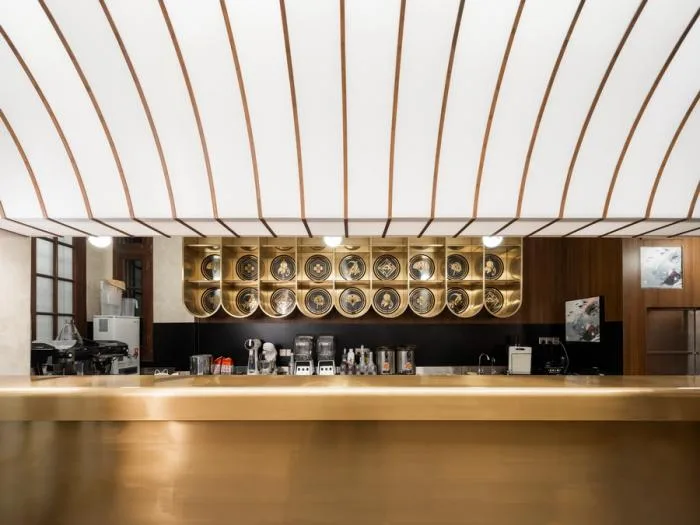
△ Onmyoji Bar
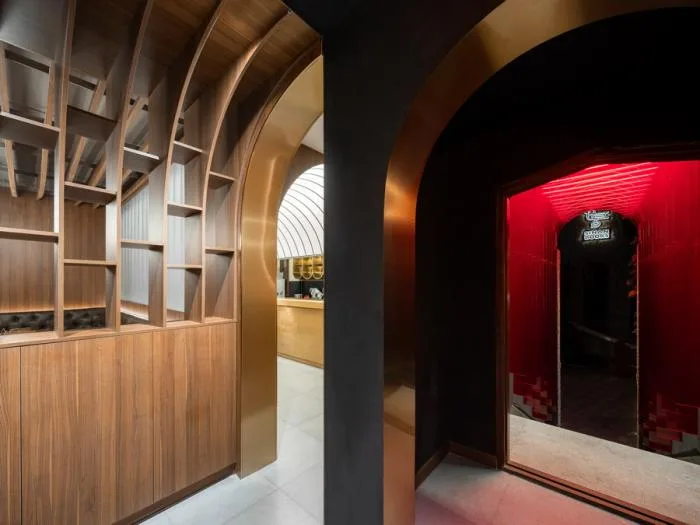
△ Entrance Connectivity
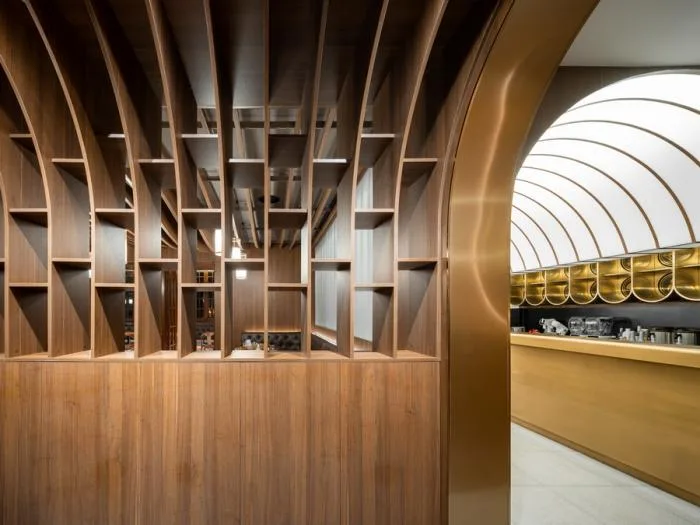
△ Bamboo Forest Grille
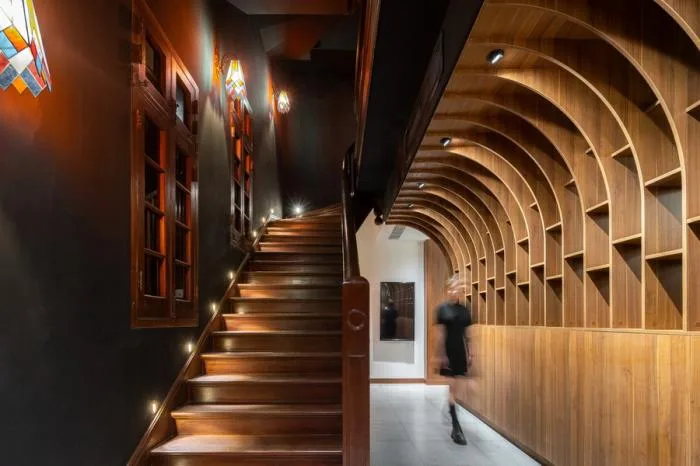
△ Bamboo Forest Passage
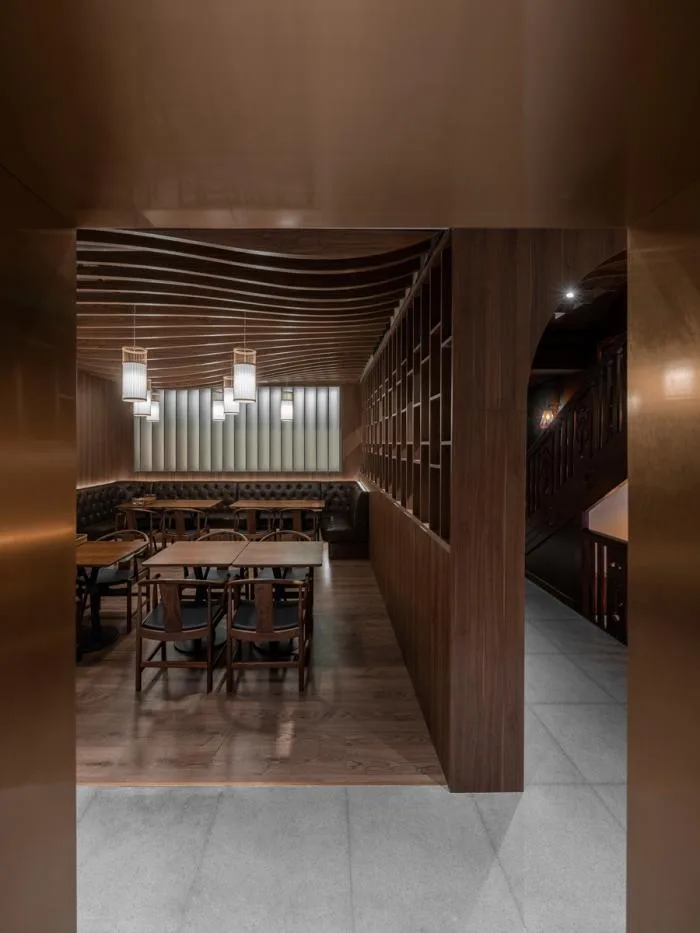
△ Canteen Main Hall
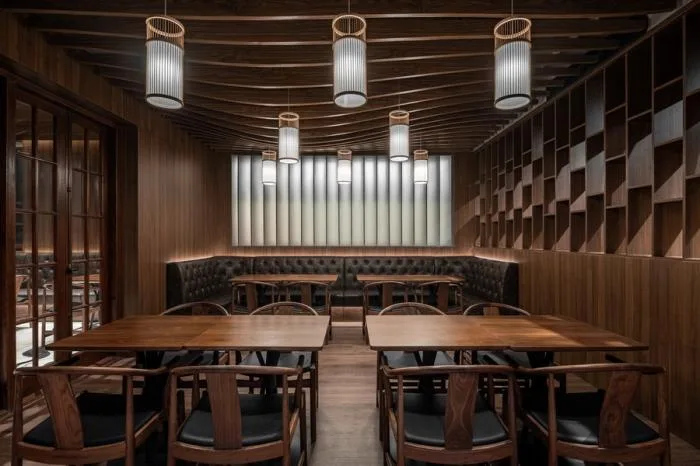
△ Canteen Main Hall
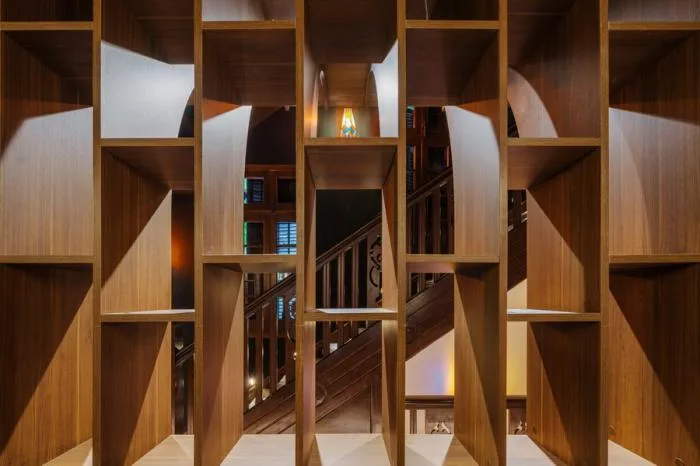
△ Peek
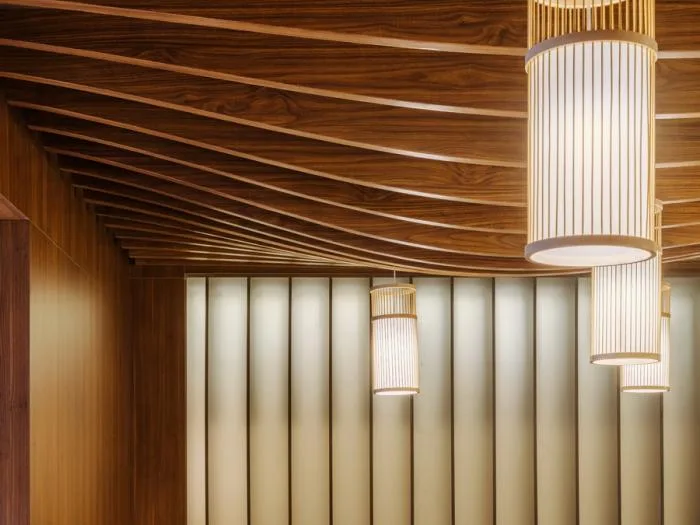
△ Wood Grain
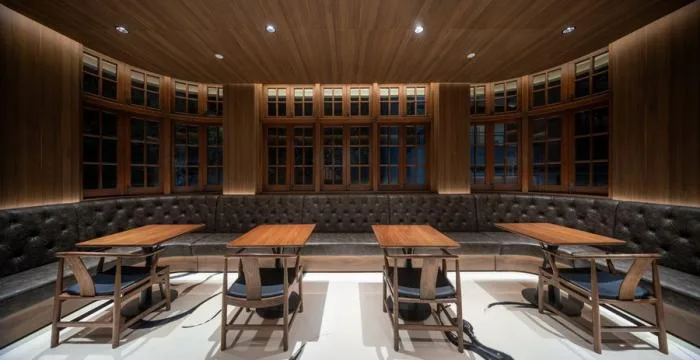
Judge’s Private Room
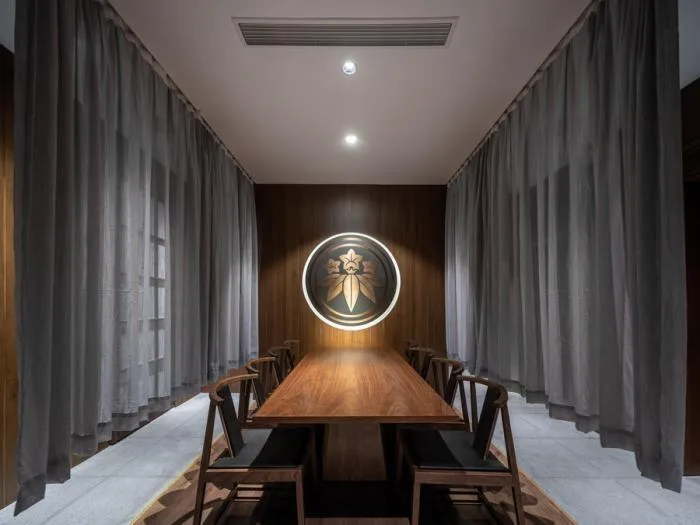
△ Ghost Cutting Room
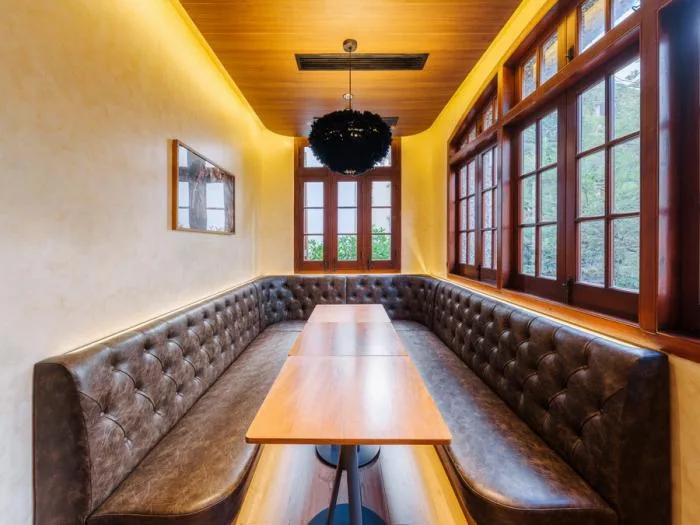
△ Big Sky Dog Private Room
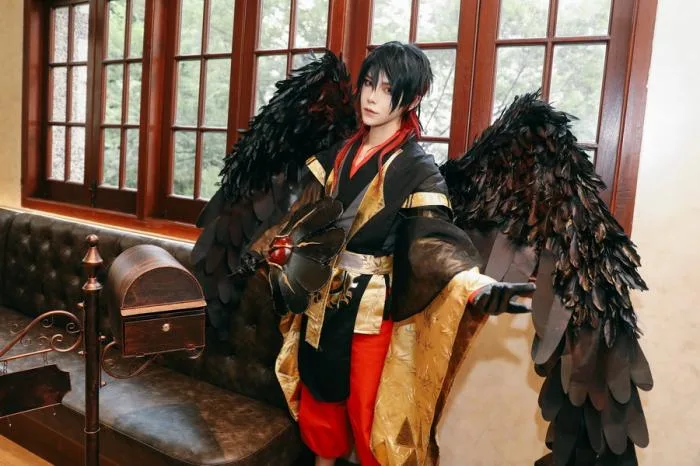
△ Big Sky Dog
Infinite Peace Capital
The third floor of Infinite Peace Palace is a celebration venue for Onmyoji players. Visitors can reserve invitations through a mini program to attend special events. As NetEase nurtures the IP, “Onmyoji” has evolved beyond a simple game into a multifaceted cultural experience.
Besides serving as a restaurant during weekdays, the space accommodates art exhibitions, e-sports matches, stage performances, product launches, movie premieres, small theaters, and craft workshops.
The design balances narrow corridors with open, bright activity areas, forming a compact, infinite city enclosed by black passageways. Each shrine along the walls tells a story, while the inverted hut at the top features ukiyo-e art depicting the nocturnal wandering of ghosts beneath eaves. Reflections from the mirrored ceiling create a surreal, upside-down environment where distinctions between humans and demons fade, immersing visitors in the mirage’s small world.
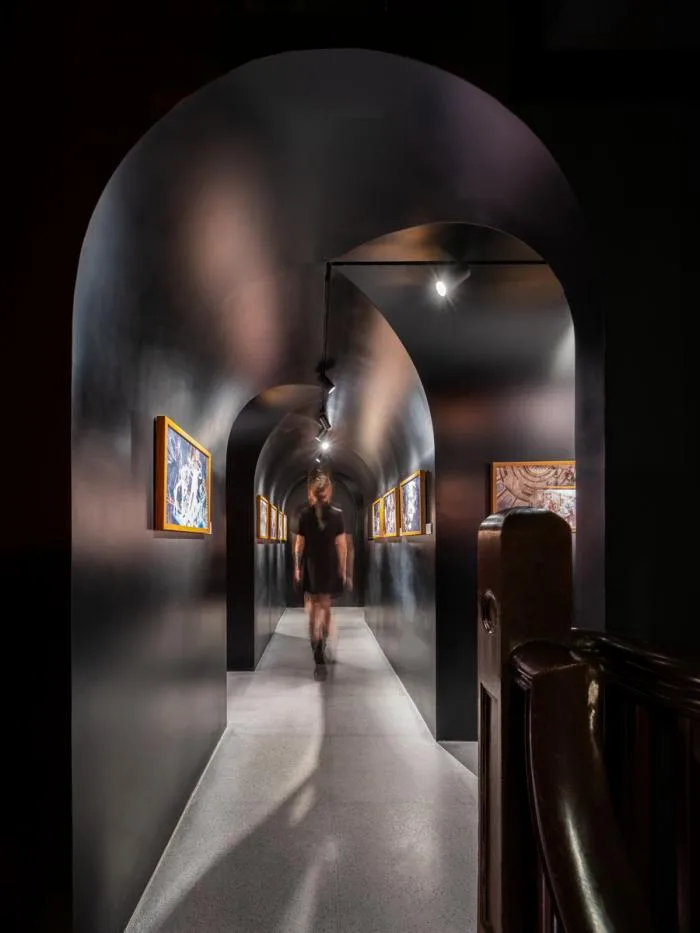
△ Black Channel
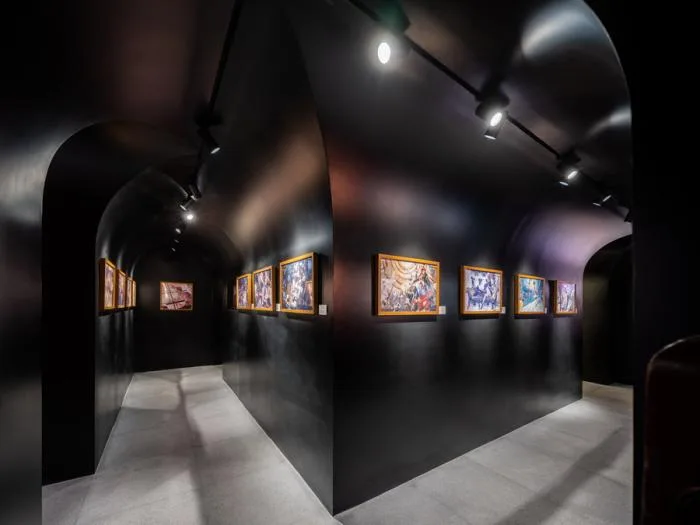
△ Channel Gallery
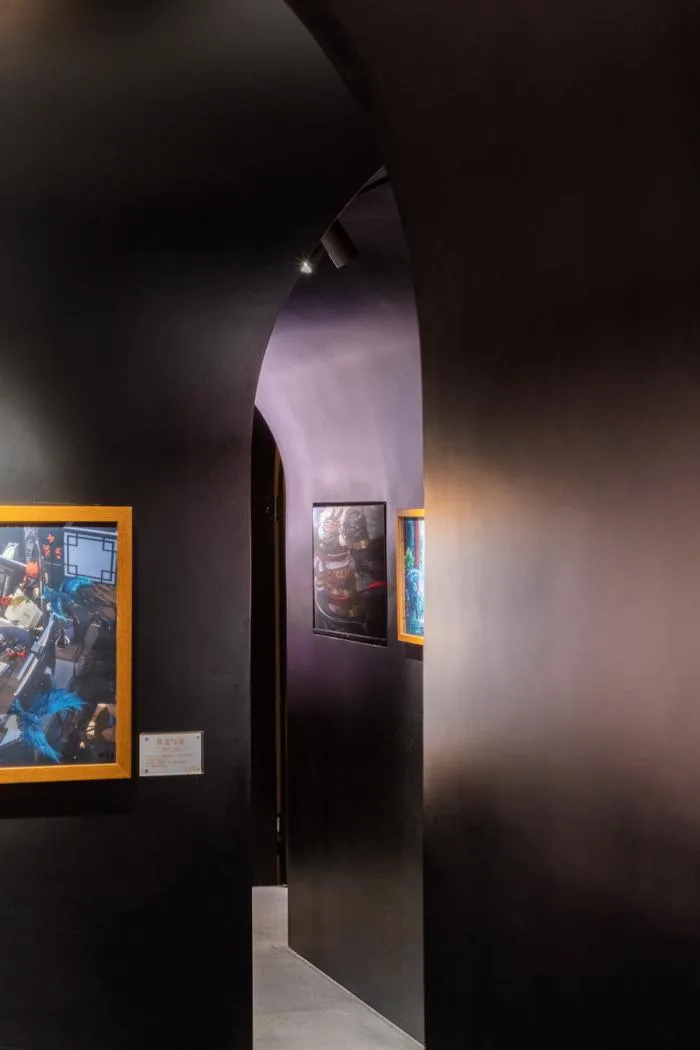
△ Channel Exit
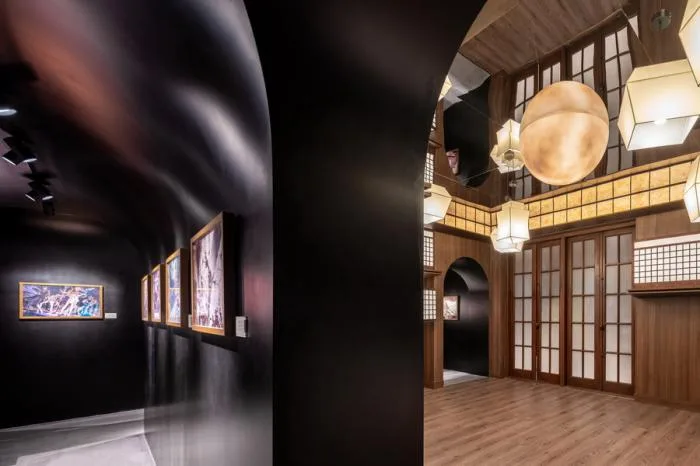
△ Leading to Infinite City
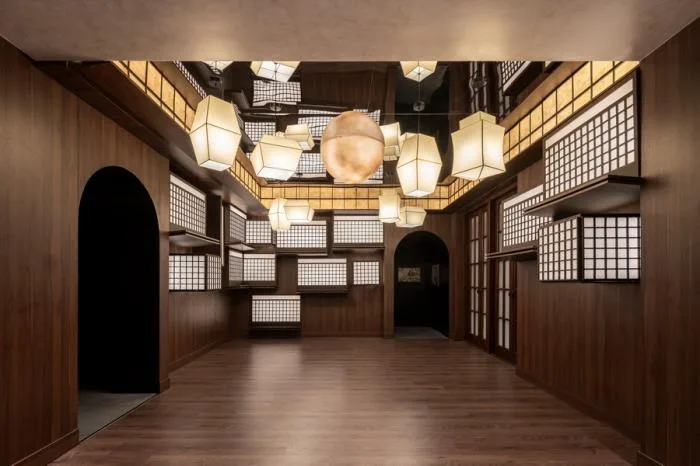
△ Yin Yang Master Infinite City
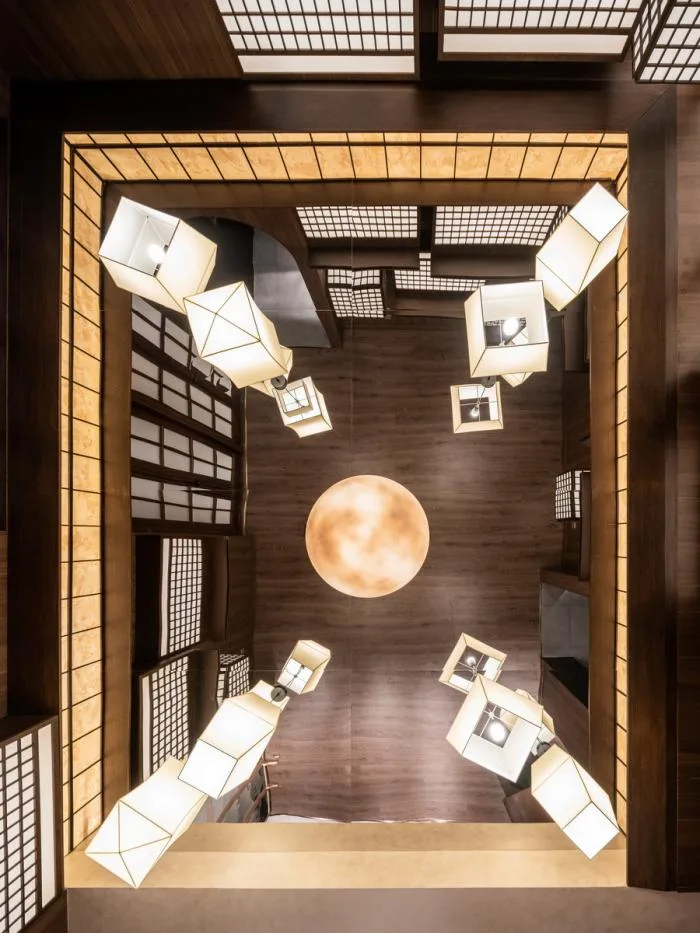
△ Yin Yang Master Infinite City
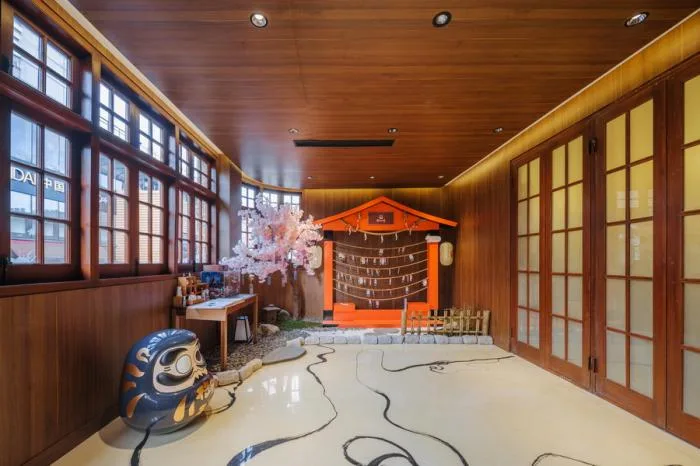
△ Painted Horse Bag Room
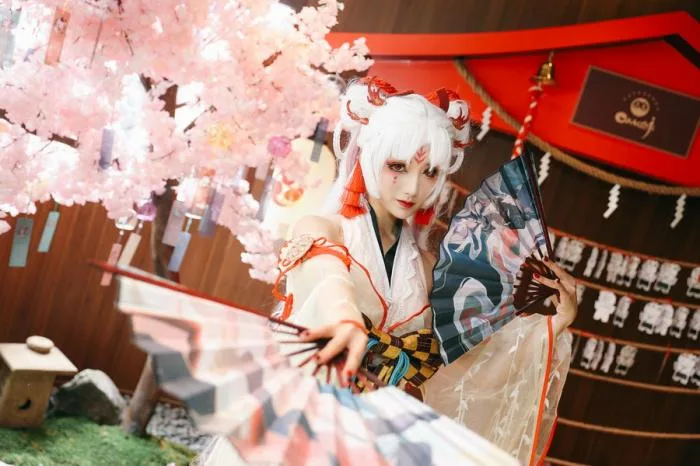
△ I Don’t Know About Fire
Attic Chamber
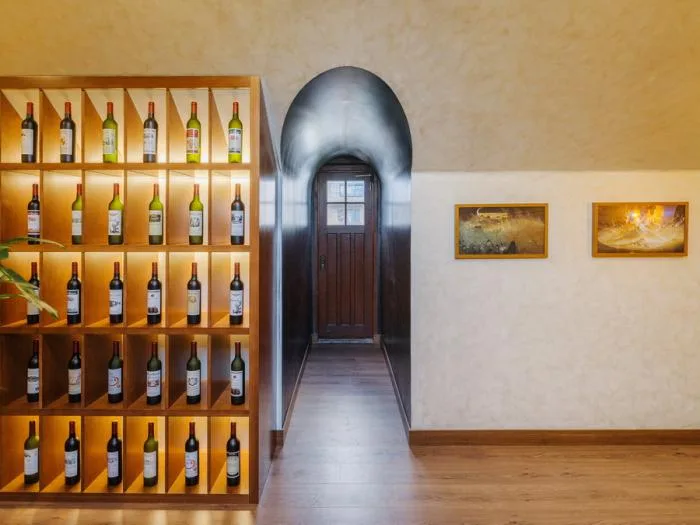
The attic of the Western-style house hides a secret corner of the Mirage Tower—a sanctuary where demons gather. The entrance is concealed within a black passage wall, providing a quiet retreat illuminated by a skylight that softens time.
From this secret room, a passage leads to the terrace and courtyard. The courtyard features sculptures of Bodhisattva Ksitigarbha, Bodhidharma, bamboo groves, and dry landscape elements. In the Onmyoji game, this courtyard is the first main scene and represents the story’s origin and conclusion—a fourth entrance to the Mirage Tower. The narratives flow from this courtyard, through the tower’s intricate passages, and into the real world.
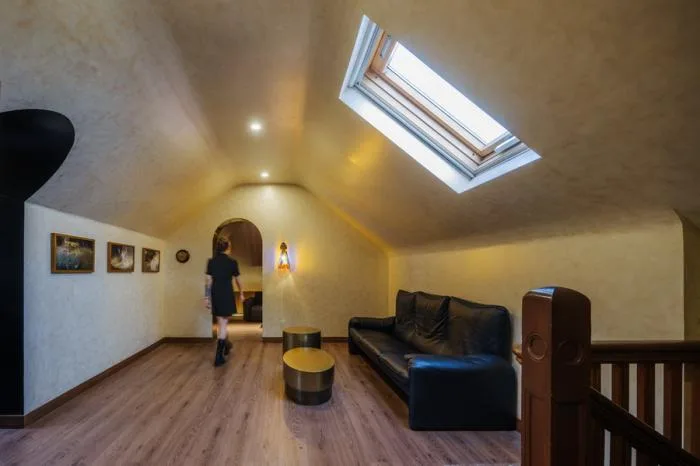
△ Chamber Entrance Hall
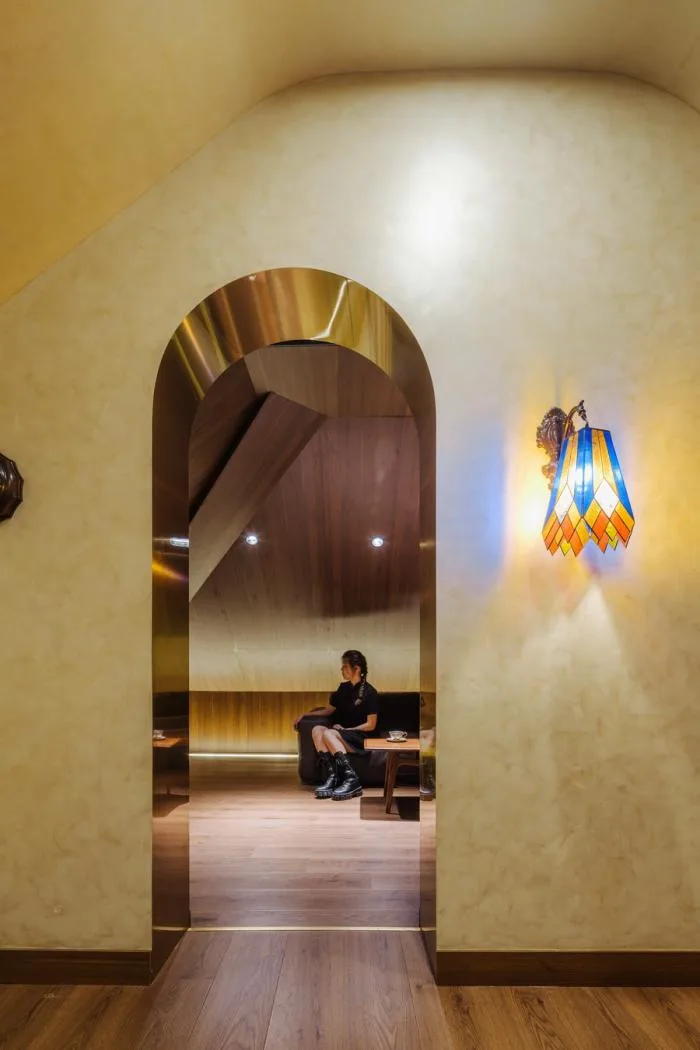
△ Secret Room Private Room
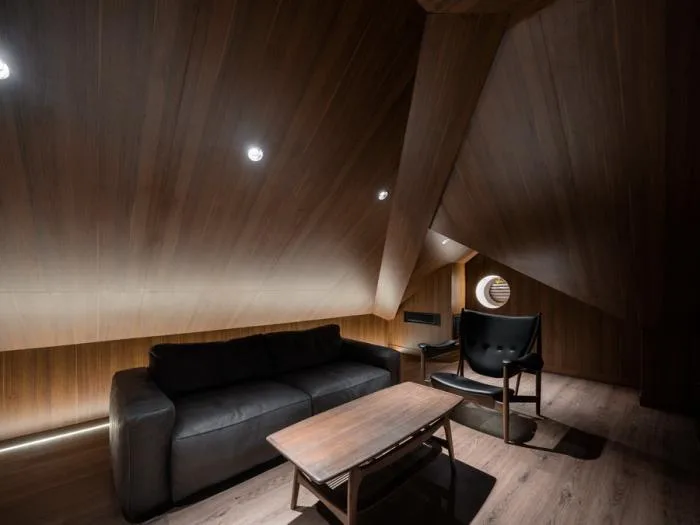
△ Secret Room Private Room
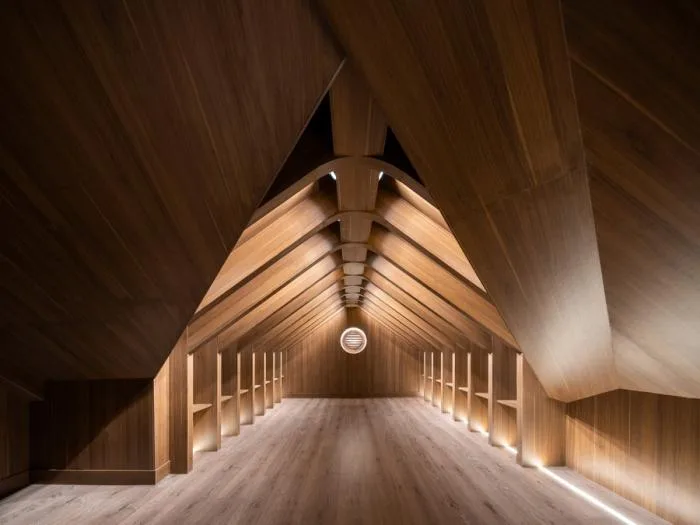
△ Attic Scene
△ Leading to the Courtyard
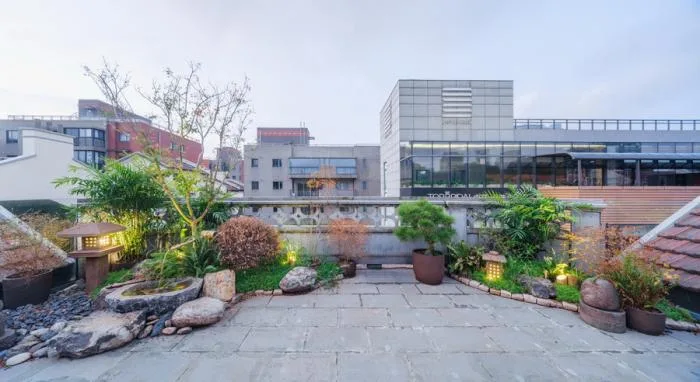
△ Roof Courtyard
Beyond the Mirage Tower
The emotions and events within this amusement park fuel the growth of the Mirage Tower. From the courtyard, one can see the inner streets of Sinan Mansion, where temple fair tents are set up and crowds gather to participate. The influence of the Mirage Tower quietly expands beyond its walls.
Blurring the line between online and offline, the unconventional approach of “Yin Yang Shi” ushers in a new wave of cultural expression. Architects face the challenge of integrating the game world into reality, embracing the allure of magical realism. The Mirage is one such expression—its dreams have materialized into our world. With the gates to the demon realm now open, a new era begins. Welcome to Mirage, where truth awaits your exploration.
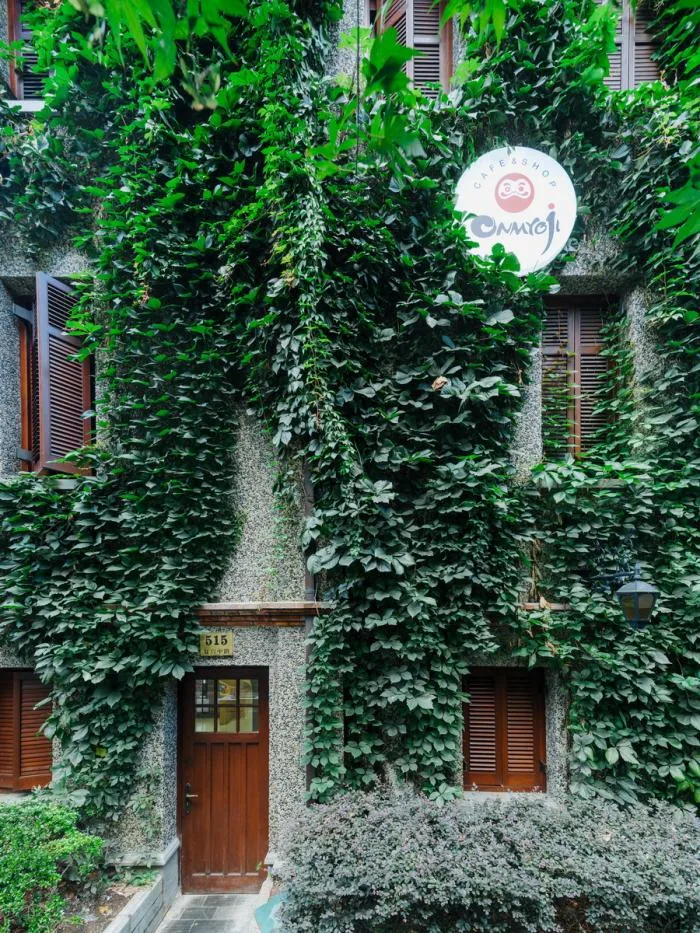
515 Fuxing Middle Road
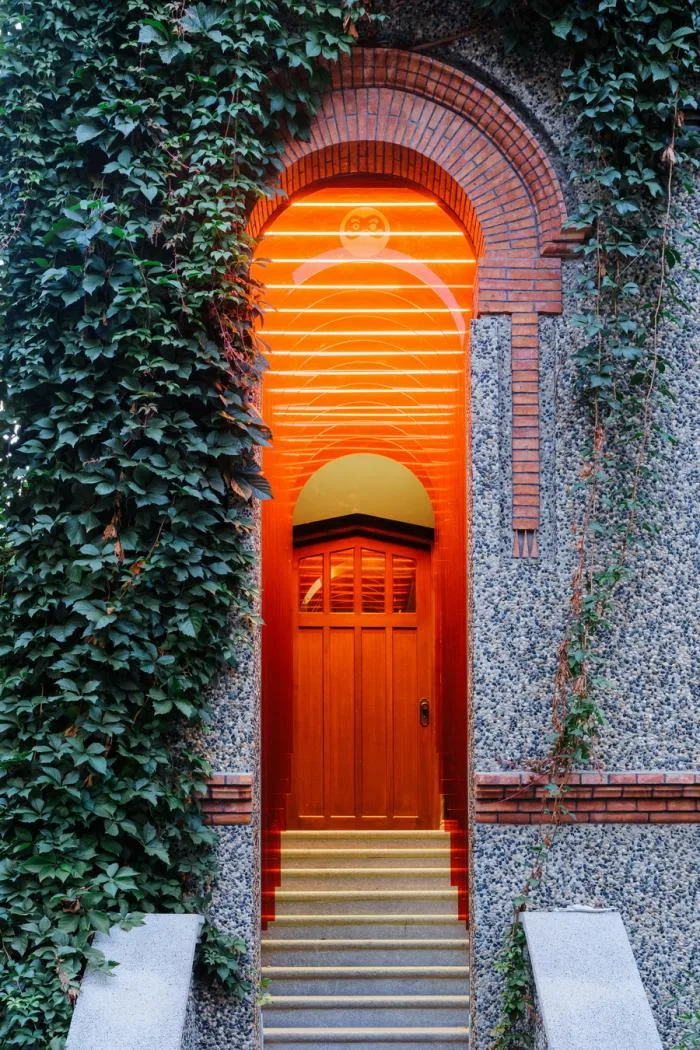
△ ONMYOJI CAFÉ & SHOP
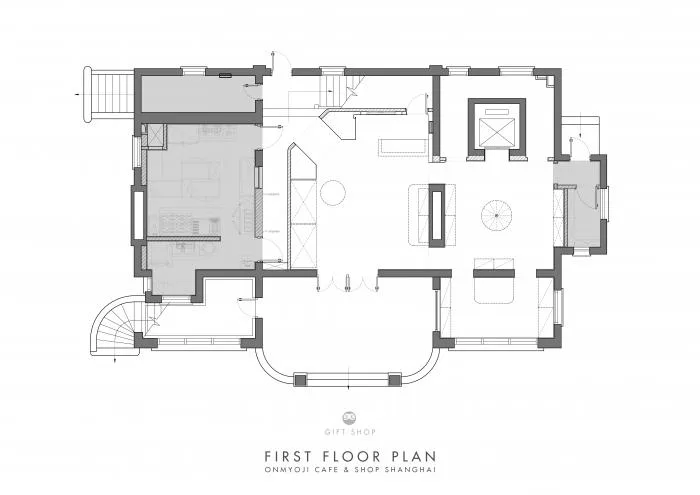
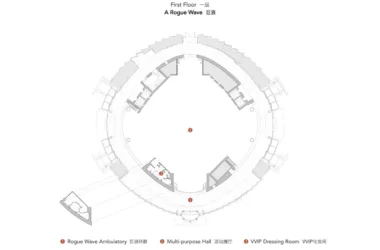
△ First Floor Plan
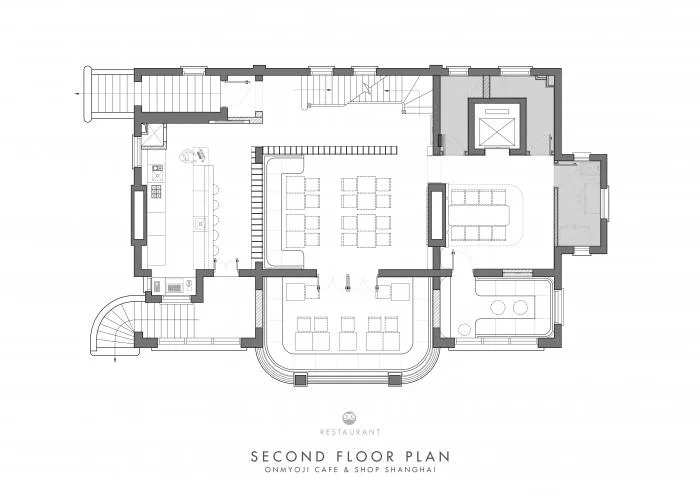
△ Second Floor Plan
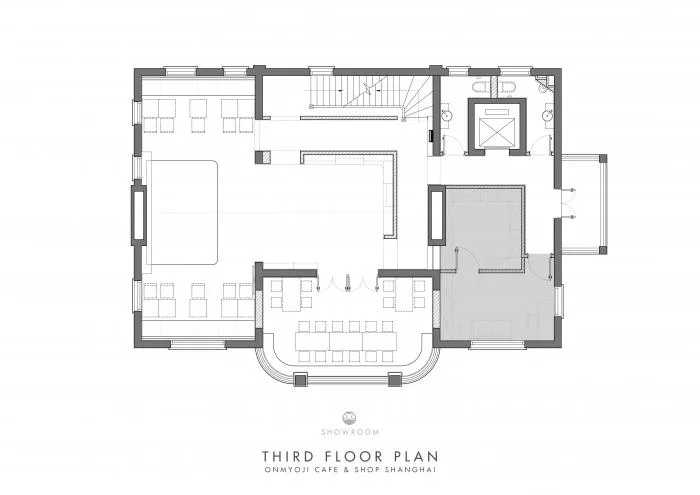
△ Third Floor Plan
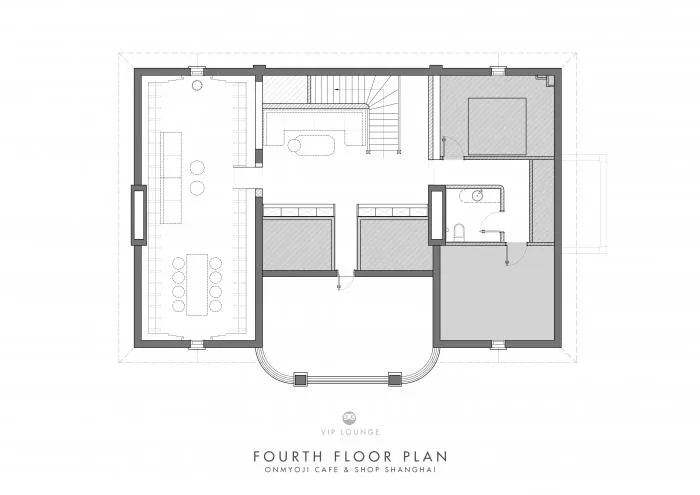
△ Fourth Floor Plan
Project Information
Project Name: Onmyoji Theme Store Shanghai Flagship Store
Design Company: Mills from Wutopia Lab
Lead Architect: Yu Ting
Responsible Architect: Atu
Design Team: Kuang Zhou, Li Ziheng, Xu Nan (Intern)
Lighting Consultant: Zhang Chenlu
Construction Drawing Team: Shanghai Chengyu Space Design Co., Ltd
Construction Unit: Jiangsu Anlai Building Decoration Engineering Co., Ltd
Set Unit: Shanghai Xingzhiye Public Relations Consulting Co., Ltd
Architectural Photography: CreatAR Images
Owner: NetEase
Project Address: 515 Fuxing Middle Road, Shanghai, China
Building Area: 606.6 m²
Design Period: January 2020
Construction Period: July 2020
Beta
Sinan Literature House
Shanghai Literature Guide: Be a Passionate Literary Youth
In summer 2013, 505 Fuxing Middle Road became a key venue for the Shanghai Book Fair and Shanghai International Literature Week. On August 12, a plaque inscribed by Nobel laureate Mo Yan reading “Home of Sinan Literature” was installed at the entrance.
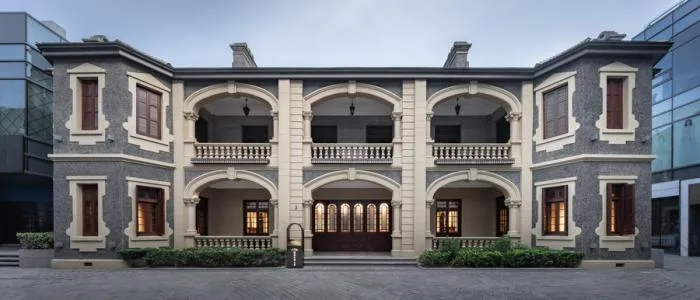
Sinan Literature House
Though the vibrant week of “Literature Week” concluded quickly, the mission of this historic Western-style house continued. On February 15, 2014, the “Sinan Reading Club” and “Sinan Book Collection” were officially founded. Subsequently, cultural brands such as “Sinan Documentary Space DocuSinan,” “Sinan Art Appreciation Club,” and “Modern Sinan” emerged here, offering diverse cultural programs and establishing a Shanghai urban cultural platform. Today, Sinan Literature House stands as a cultural landmark and a cherished hub for book lovers in Shanghai’s urban cultural landscape.
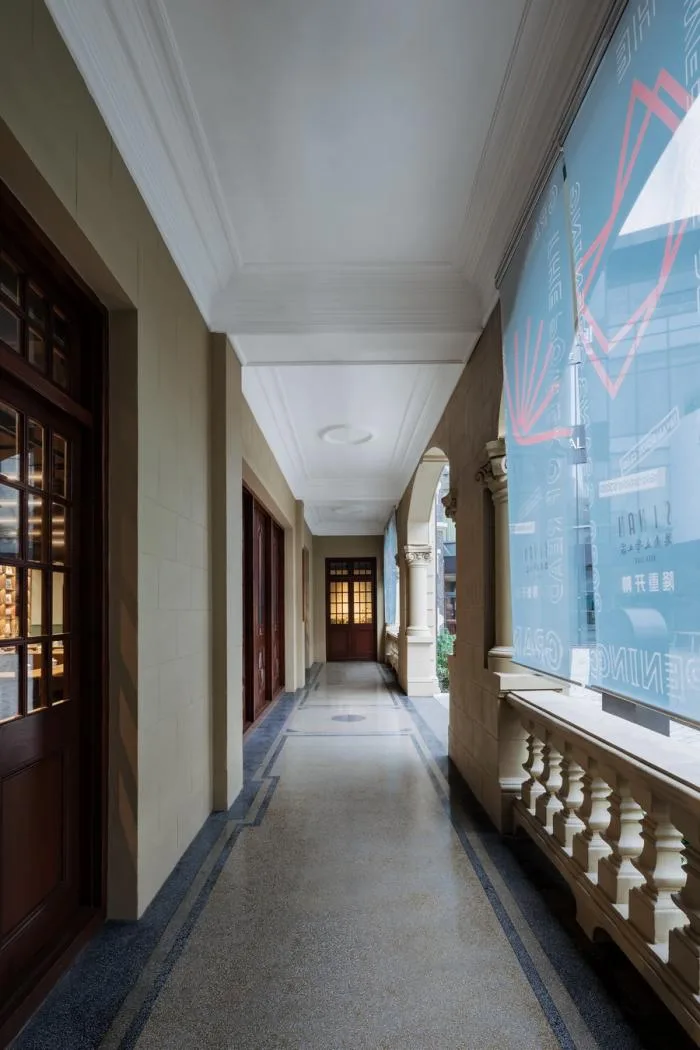
△ Outer Gallery of Sinan Literature House
Currently, Mills from Wutopia Lab has been invited to upgrade the first floor of Building 2 at 505 Fuxing Middle Road. When approached to design the Sinan Literature House, I reflected on how home is the ultimate physical and spiritual refuge. Thus, Sinan Literature House serves not only as a spiritual home to Shanghai’s literary community but also as a welcoming living room for literature lovers worldwide.
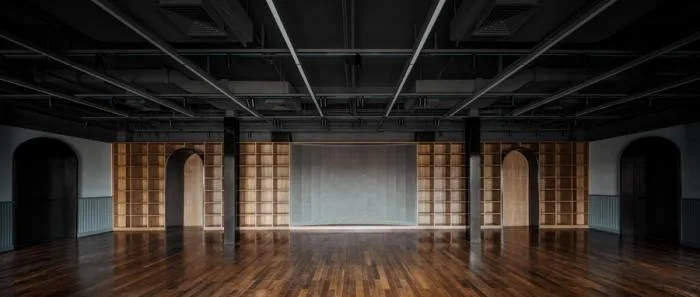
The Living Room for Literary Enthusiasts
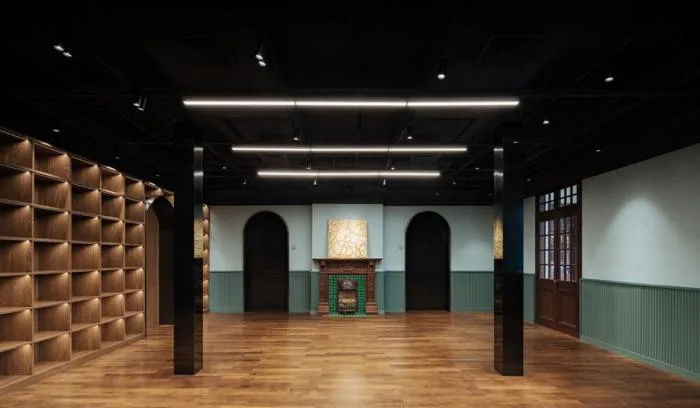
The Living Room for Literary Enthusiasts
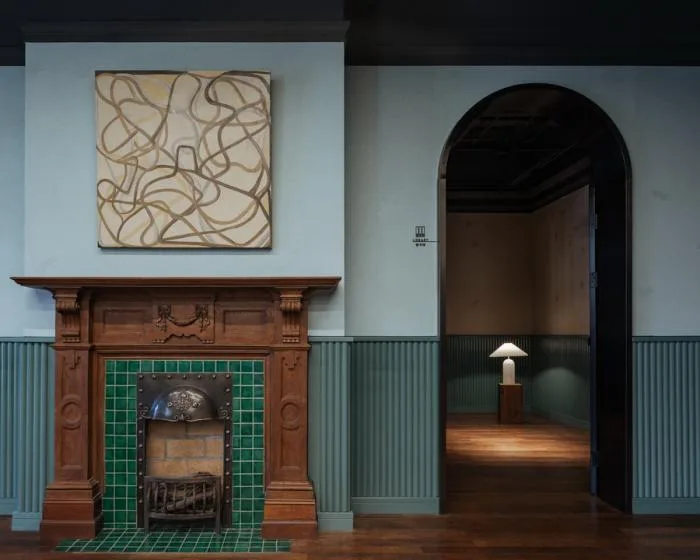
Living Room Fireplace
The entrance to Sinan Literature House is on the right side of the porch, leading into an art hall showcasing paintings. Beyond the art hall lies the living room—a flexible public space designed for book clubs, symposiums, and salons. To the left is the library area, providing space for book signings, guest receptions, and private meetings.
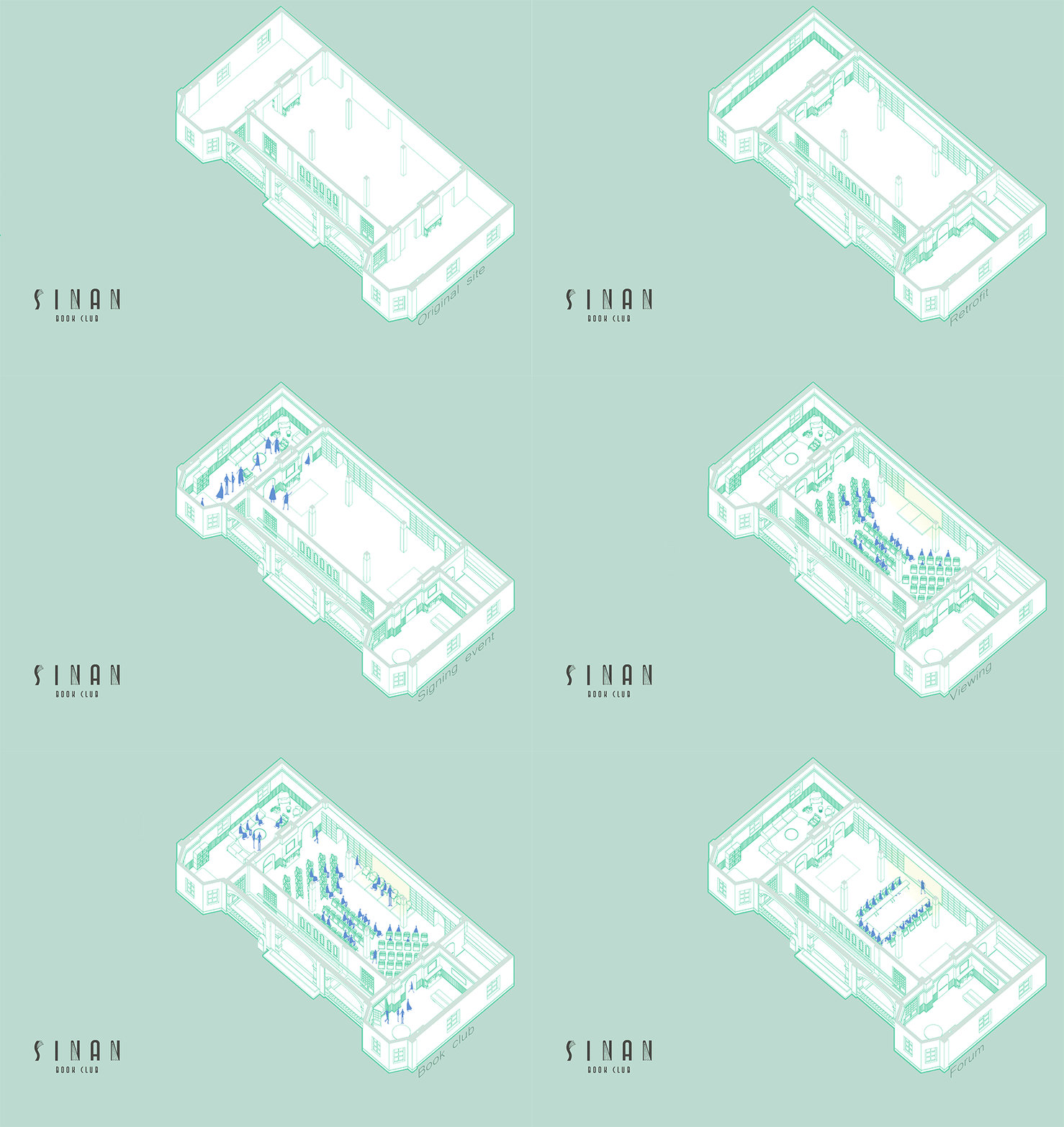
△ Axonometric Diagram
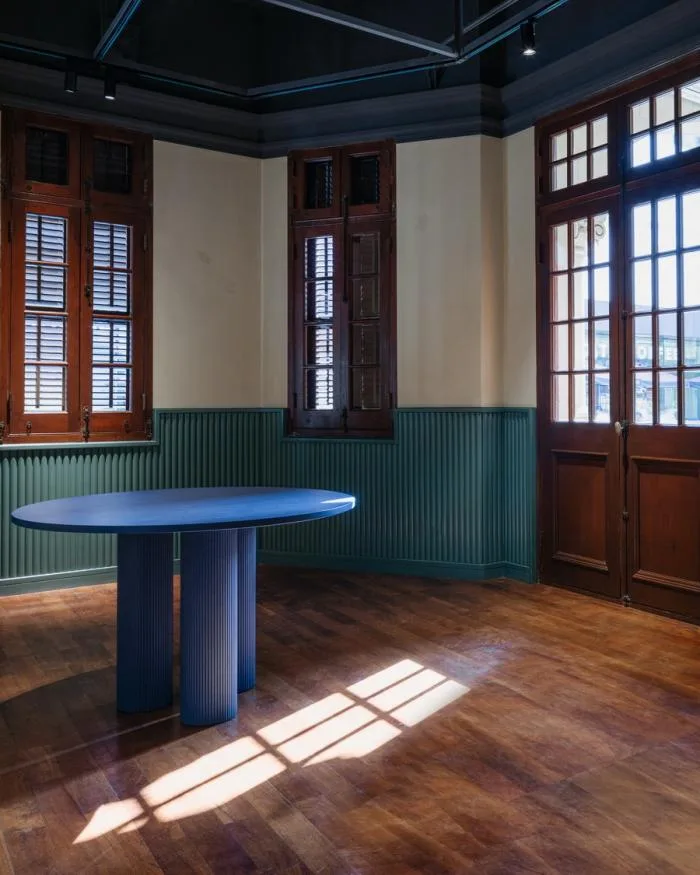
△ Art Hall
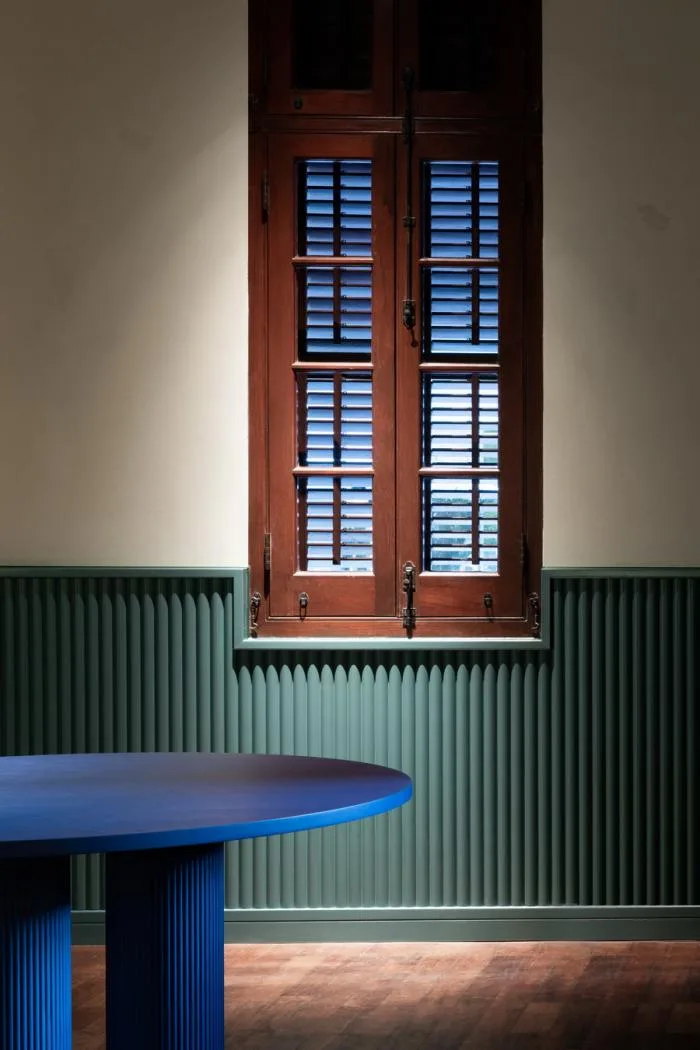
△ Art Hall
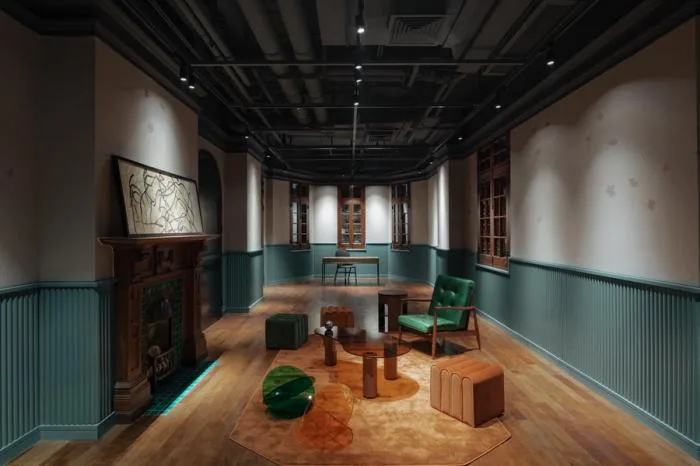
△ Library
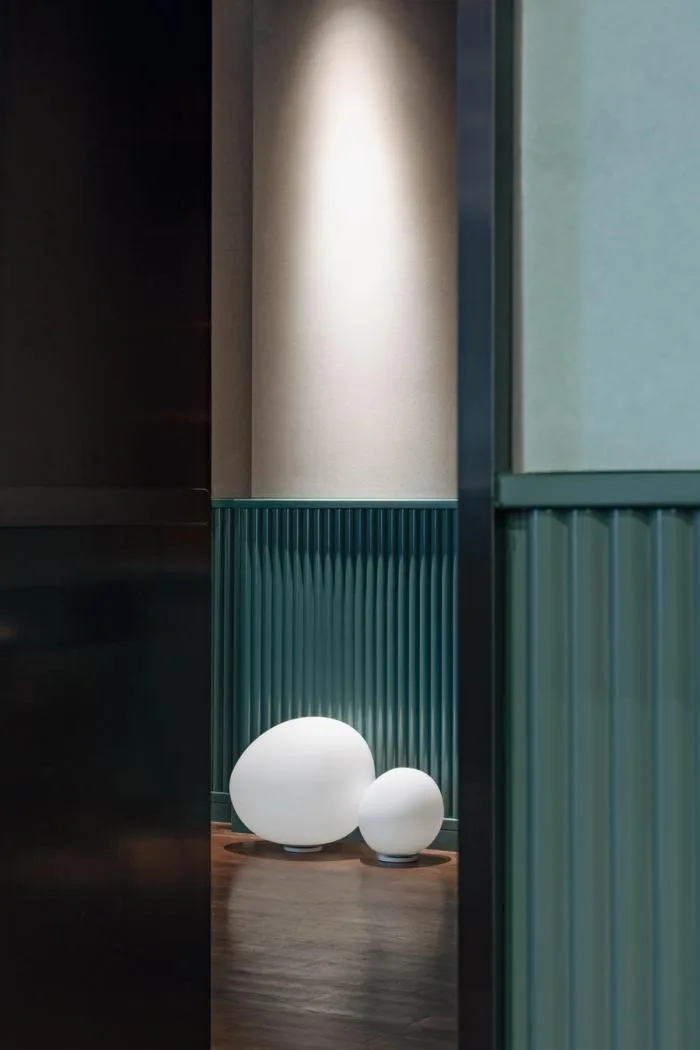
△ A Corner of the Library
The wutong leaves pattern on the walls connects Shanghai’s history with Sinan Mansion. Visitors walking through the space create an ever-changing tapestry of falling leaves. The porch entrance features blue stained glass, adding color to the interior and reflecting the outdoor sky when sunlight streams in.
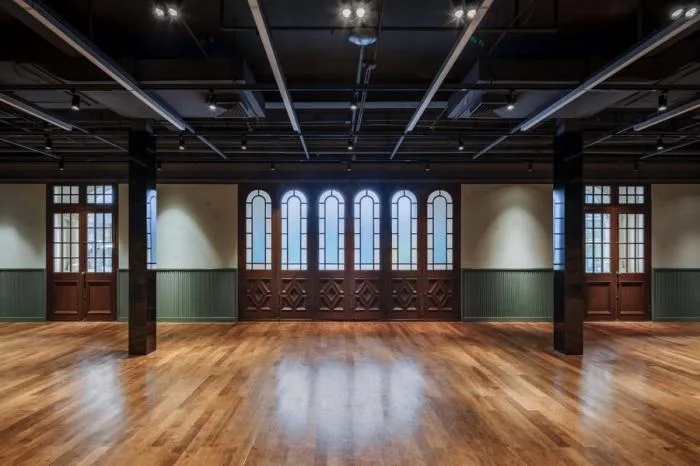
△ Blue Glass
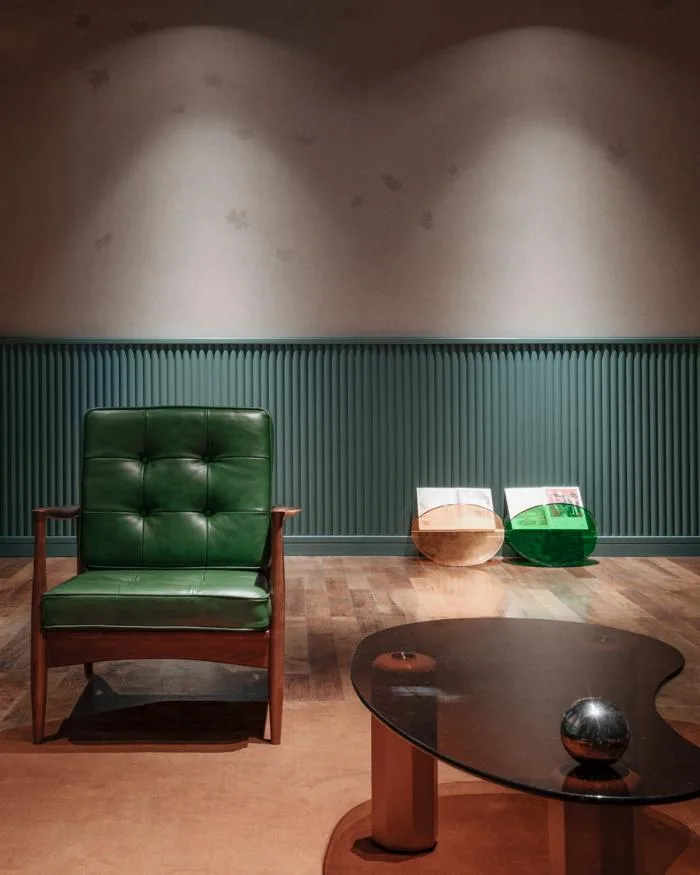
△ Falling Wutong Leaves
Inspired by the concept of “home,” I chose lake green—the iconic home color of a certain era in Shanghai—to evoke emotion. Literature, regardless of social status, helps us understand complexity, enriches life, enhances humanity, expands intellect, and offers comfort.
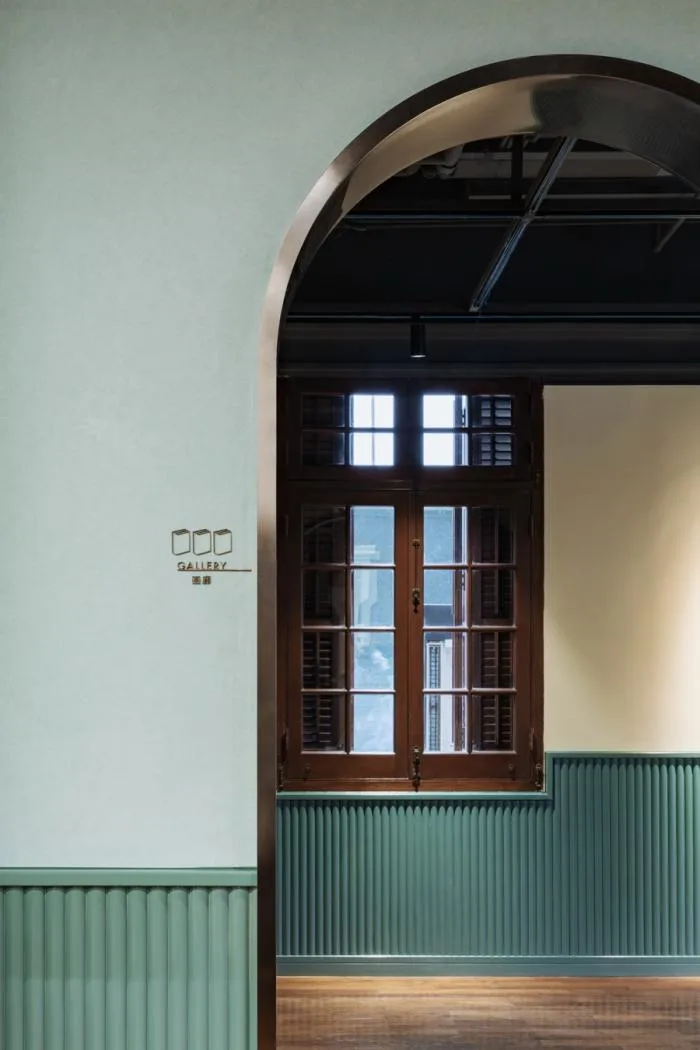
△ Lake Green
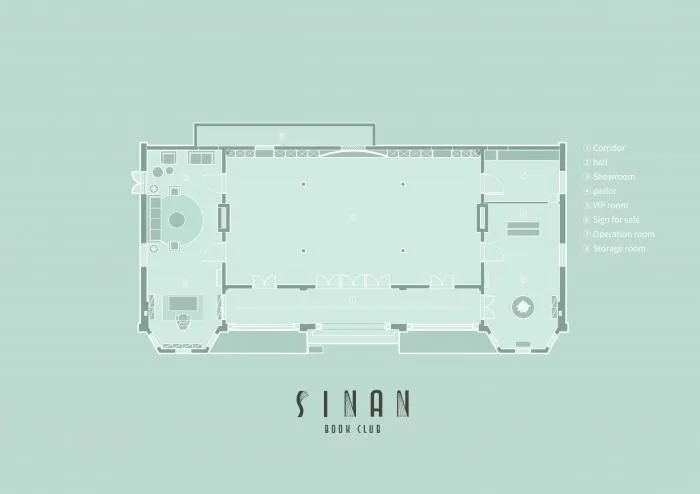
△ Plan View
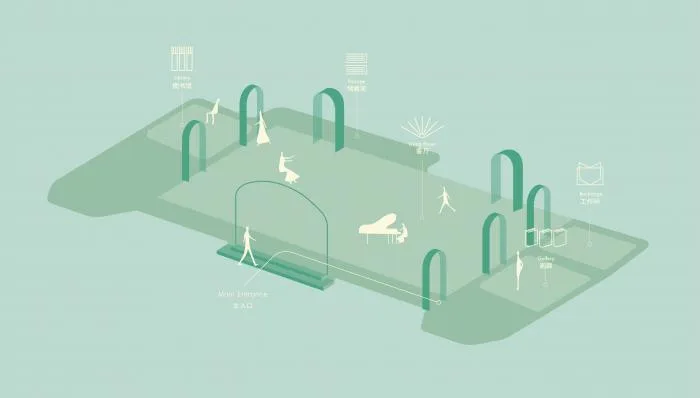
Visual Design

Visual Design
Project Information
Project Name: Sinan Literature House
Design Company: Mills from Wutopia Lab
Lead Architect: Yu Ting
Project Architect: Lin Chen
Project Manager: Pu Shengrui
Design Team: Wang Lei, Feng Zixiang
Design Consultation: TOPOS Design
Visual Design: SHUN DESIGN (Xiuzi, Chen Siyu)
Lighting Consultants: Zhang Chenlu, Fan Wanying
Architectural Photography: CreatAR Images
Owner: Shanghai Sinan Mansion Business Management Co., Ltd
Construction Unit: Shanghai Housing Group
Building Area: 280 m²
Project Address: Shanghai, China
Design Period: July to August 2020
Construction Period: August to September 2020













Must log in before commenting!
Sign Up