
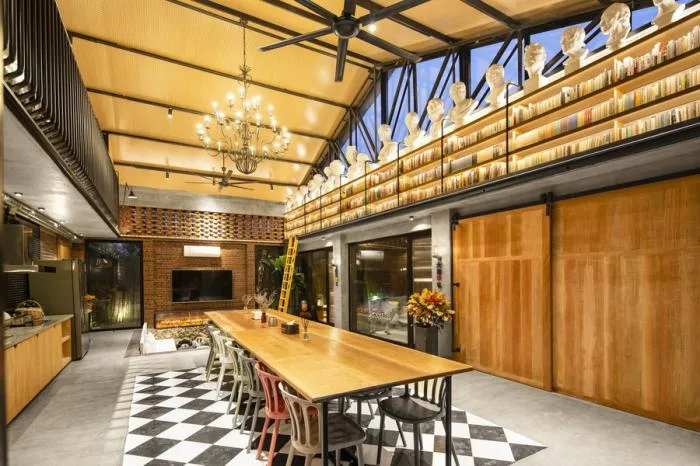
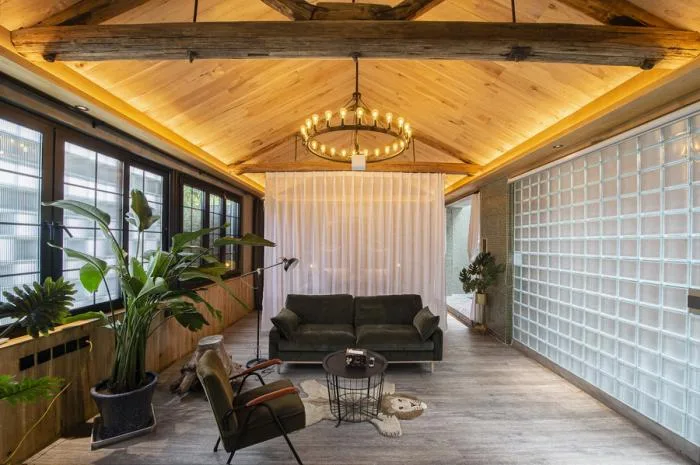
△ Castle living room
Originally a furniture factory located in the suburbs of Beijing, this project faced abandonment for many years amidst the evacuation of non-capital functions. The site was left unused and cluttered with lathe debris. Recently, influenced by rural revitalization initiatives and after consultations with multiple parties, the factory has been transformed into a boutique homestay while preserving the original building’s external appearance.
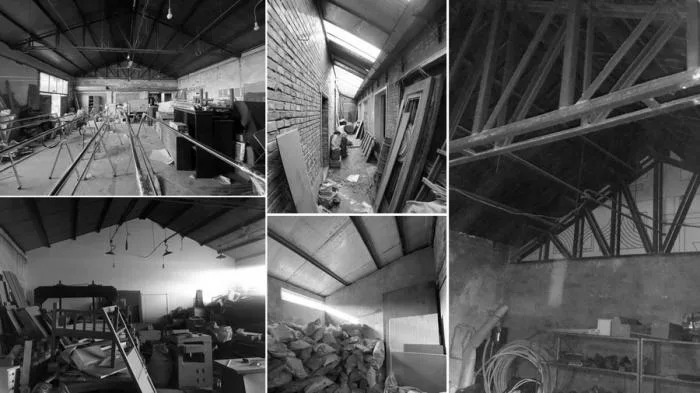
View of the site prior to the factory warehouse renovation
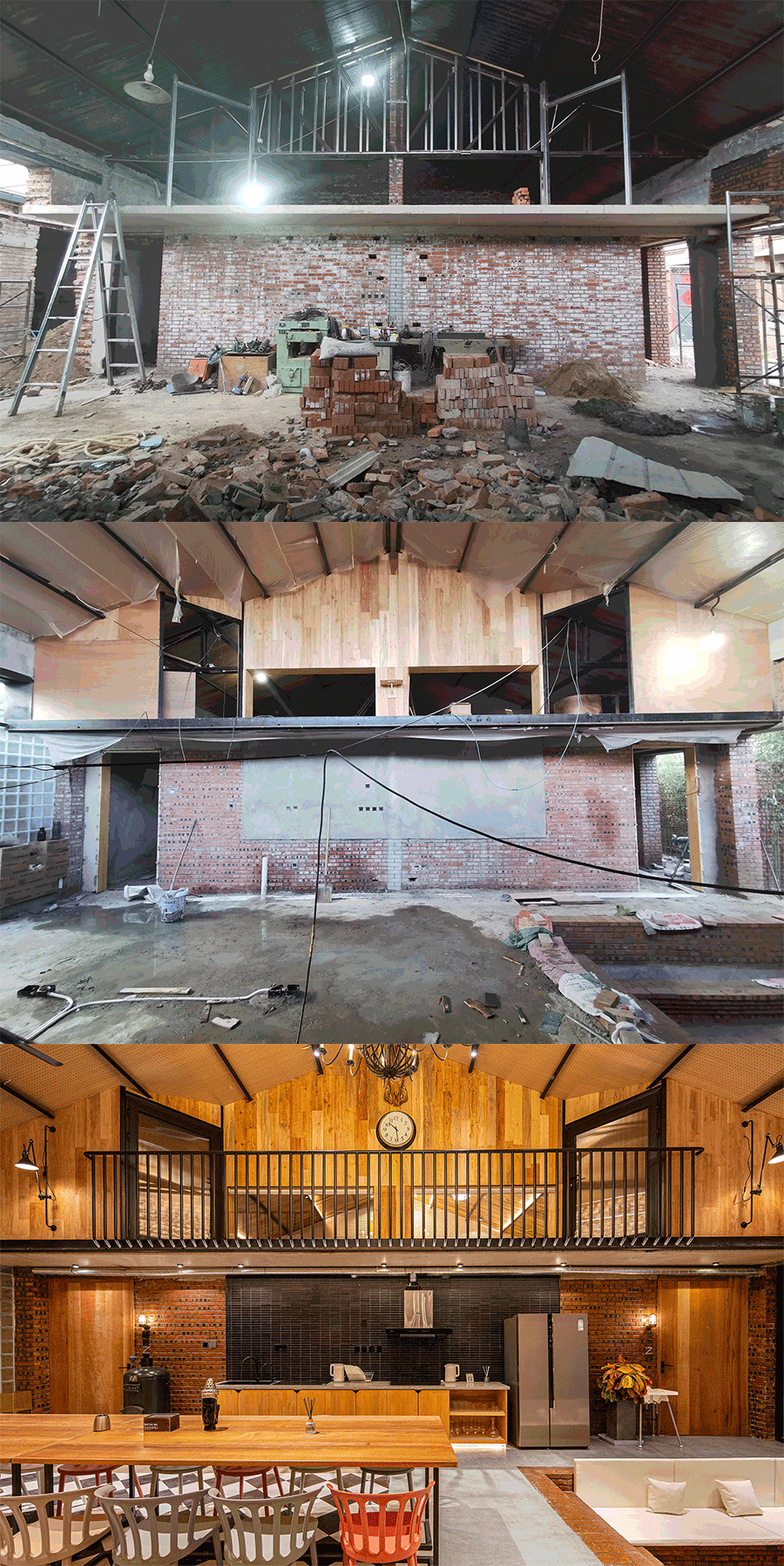
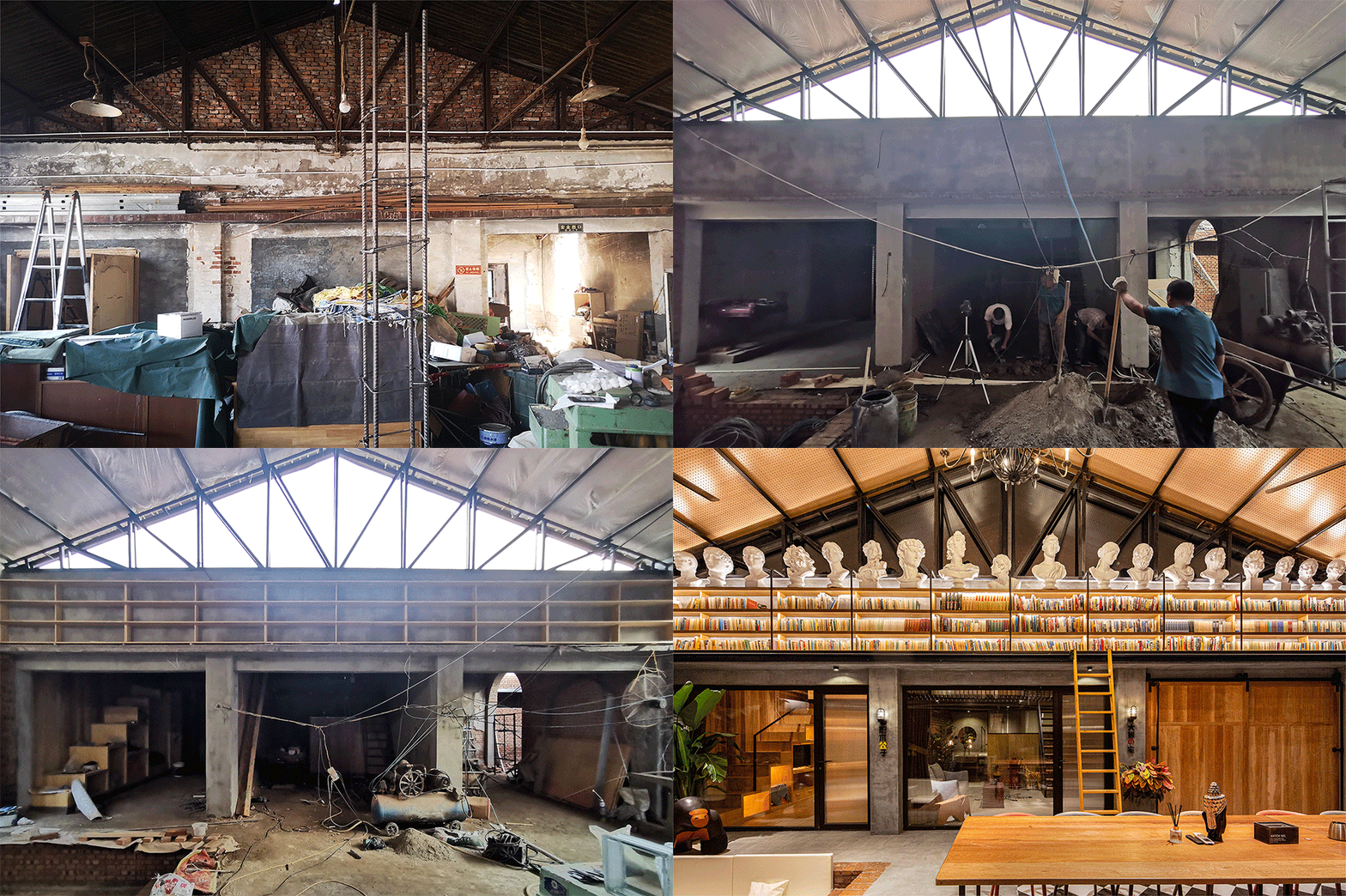
△ Before and after renovation comparison
With the change in functional concepts, this renovation of an abandoned factory aims to serve as a model for transforming unused rural industrial spaces in the imperial city’s suburbs, aligning with the broader rural function transformation.
01 Remembering
Preserving the Roof and Building Outline
The original factory stands to the west of Houbaihujian Village, near the foothills of the Yanshan Mountains. From the courtyard’s exterior, one can glimpse the white stone forest visible from above. Inside the courtyard, the mountains are directly visible—a rare sight in the urban core.

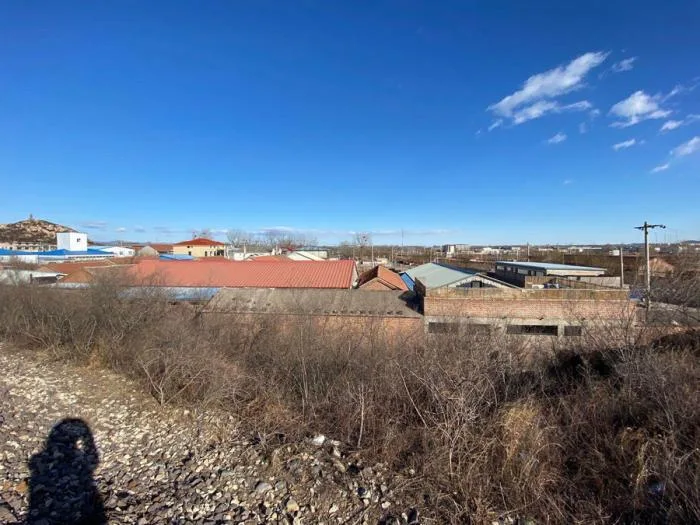
△ Surrounding environment
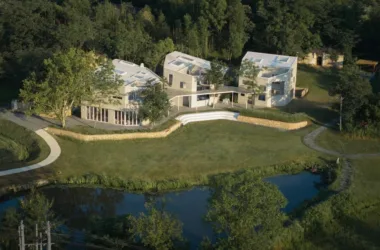
The factory complex, a small cluster in the village’s west, comprises several independent workshops adjacent to residential areas. Despite decades of isolation, the factory’s structure remains intact without cracks. Its proximity to the west-side railway slope leaves no room for expansion, effectively enclosing it as a hidden “base.”
Given the constraints imposed by neighboring buildings, the building’s red line and boundaries are fixed. Renovation efforts focus on the core interior, as altering the exterior shell is prohibited. The design leverages the original roof’s slope and orientation to guide the interior layout, shifting emphasis from the “fixed” exterior to a “dynamic” and “rich” interior.
From Factory to Warehouse
The transformation from a factory to a warehouse, reflecting abundant storage, inspired the name “Factory Warehouse.”
02 Freshman
Focusing on Aesthetic Scenes and Enhancing Spatial Narratives
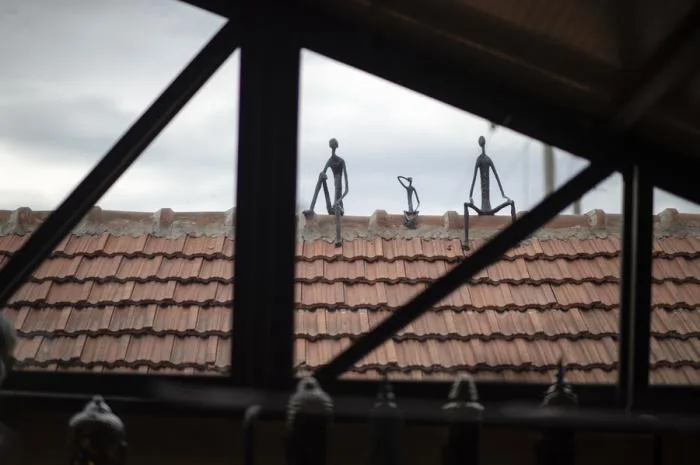
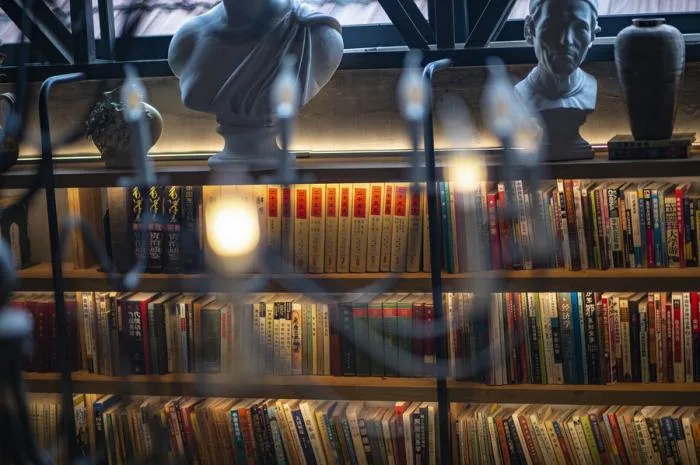
△ Factory Warehouse Art Roof | Living Room Art Bookshelf
We conceptualize “scenscapes” as the theatrical presentation of human activities within a space. With the evolving cultural context of Chinese cities, the New Chicago School defines “scene” as the overall cultural style or aesthetic traits of a place. Coupled with consumer culture, this approach lends urban life meaning, experience, and emotional depth.
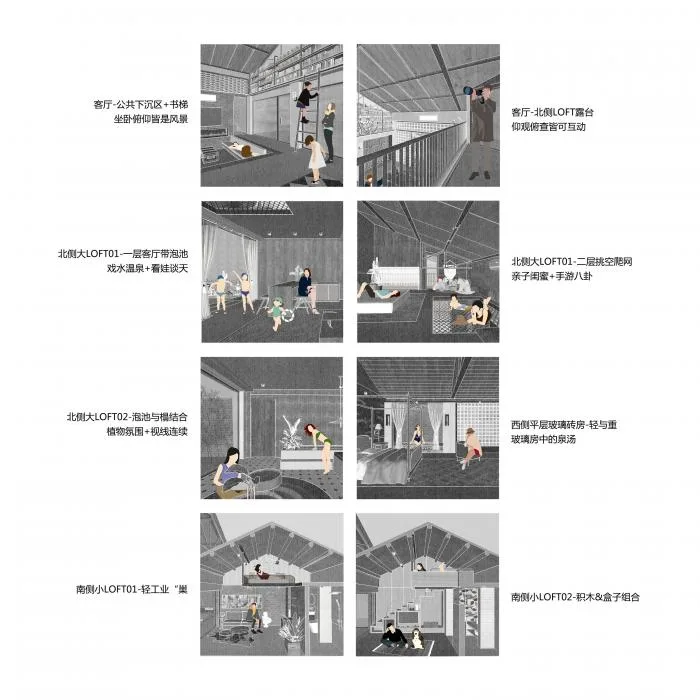
The spatial hierarchy of the Factory Warehouse homestay begins with human behavior within the spatial sequence.
By defining functions according to scenes, we aim to enrich the homestay experience beyond residential use. This amplifies the multidimensionality of the core factory warehouse space, achieving social and aesthetic significance through spatial transformation.
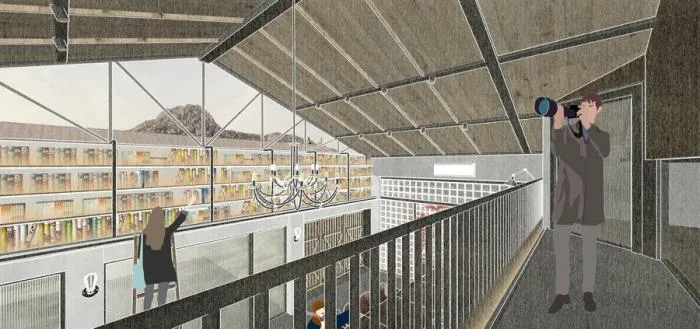
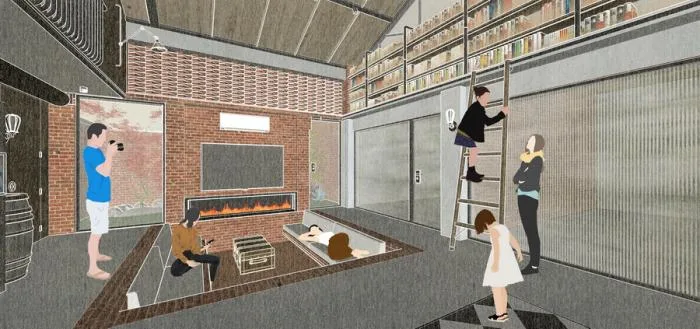
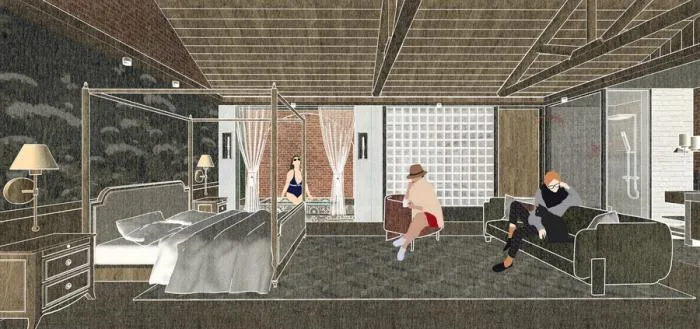
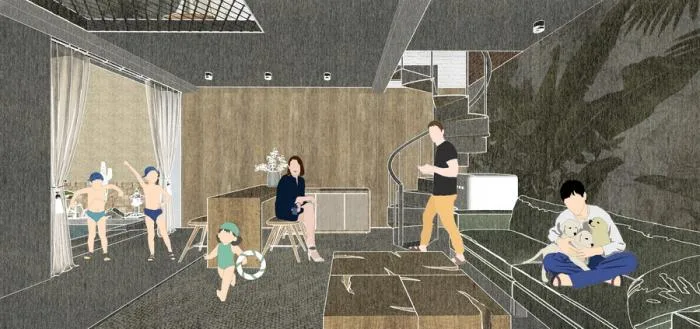
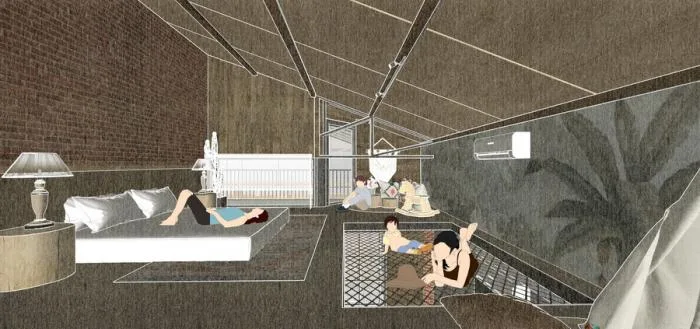
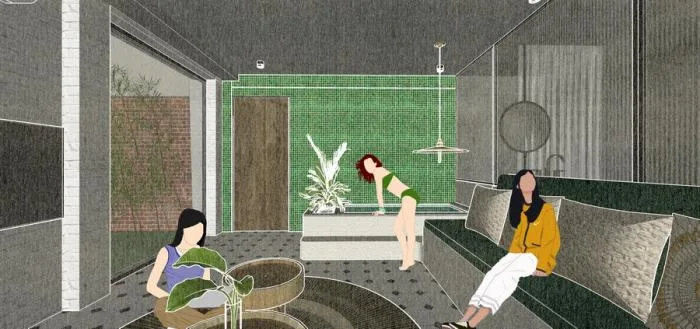
△ Scene Collection – “scenscapes”
03 Growth
Core Expansion and Layered Functions
Following the principle of core continuity, the original architectural form is preserved. To accommodate human activities, the large factory space is divided into distinct zones such as public living rooms, entertainment areas, and residential quarters, each revitalized through functional upgrades.
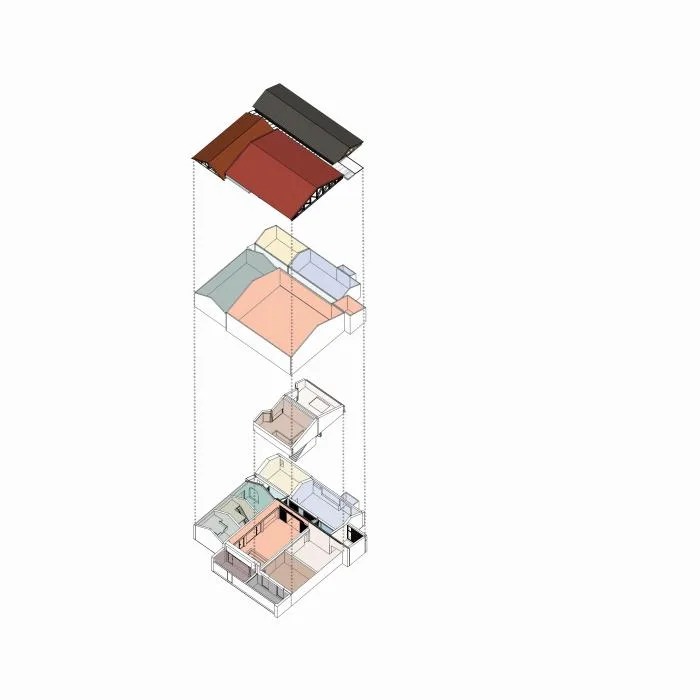
△ Roof – Original Space – Separated Space Form
The original factory sits at the highest point of a nearly 7-meter sloping site. This height offers extensive freedom for renovation, although the sloped roof results in some wasted space.
Due to the east-west sloping roof, the design aligns with the building’s original orientation to create various room types. Spaces are divided into loft and flat rooms according to height, resulting in a layout consisting of a porch with a public living room, two large lofts on the north side, two small lofts on the south side, a flat roof on the west, and a public bathroom with an entertainment room.
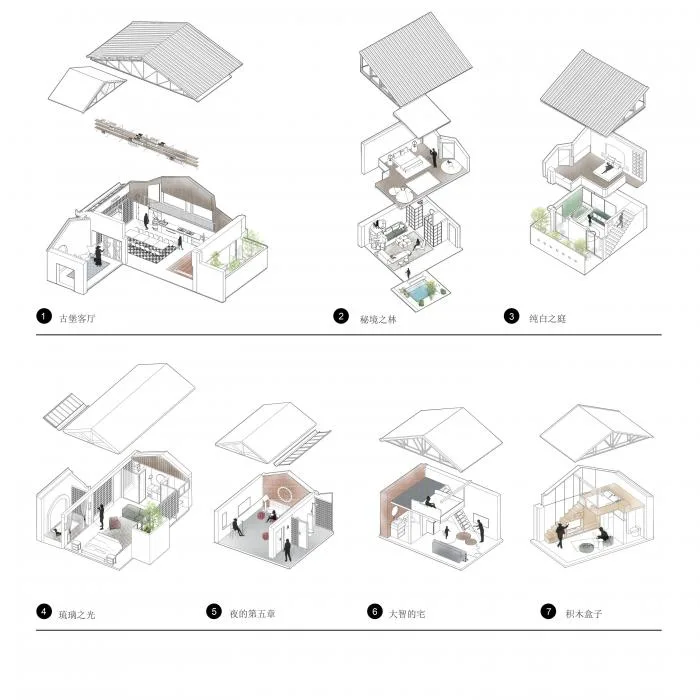
Diagram of spatial composition after division
Access to the homestay is through the porch. The main factory building houses the living room and two large lofts. The living room features a sunken area, multifunctional enclosed beds, and original sealed triangular windows that were removed to allow natural light from the south.
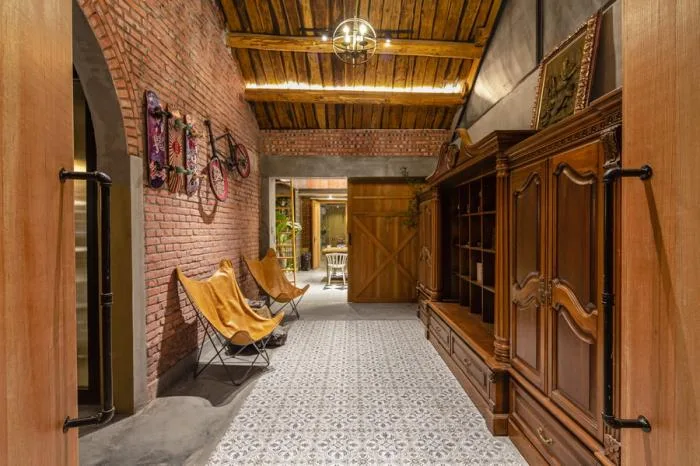
△ Entrance porch
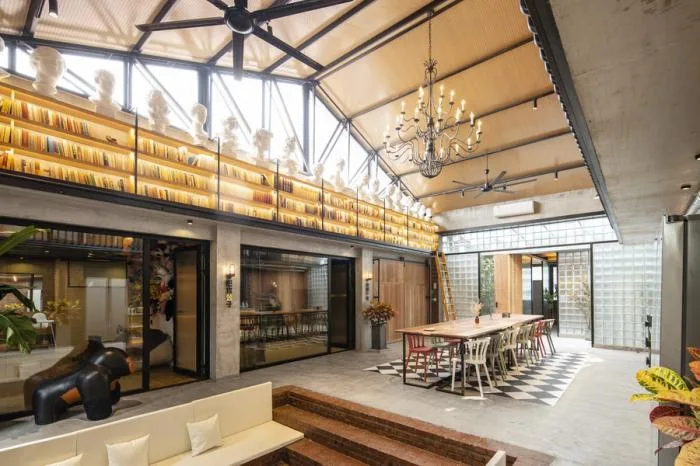
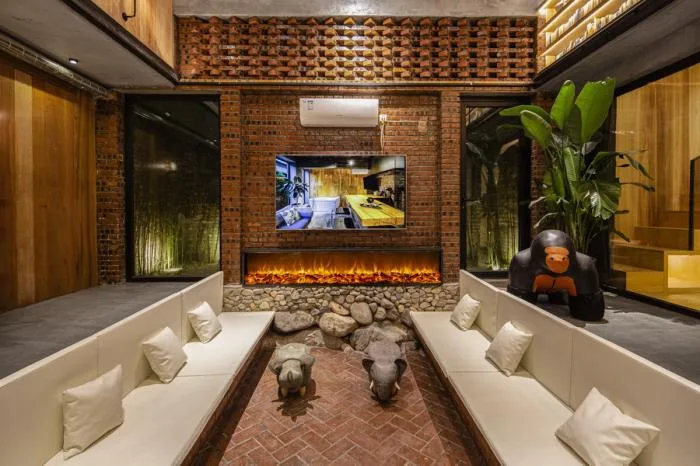
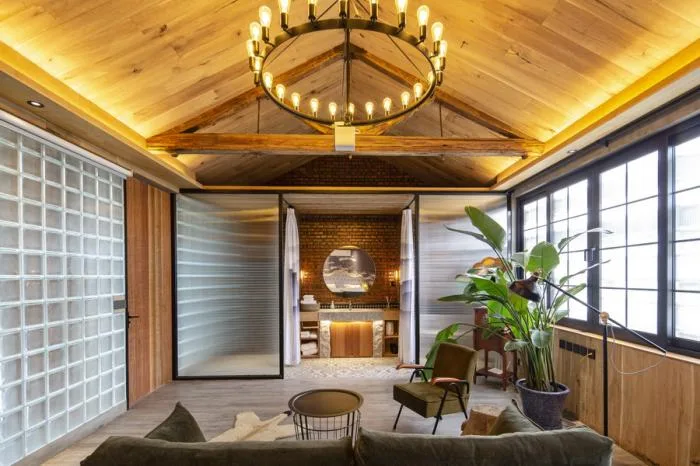
△ Panoramic view of the living room
The two large north-side lofts exploit the high ceilings by adding mezzanines. A terrace connects these lofts to the living room. A bookshelf wall facing the terrace leverages the building’s original height, enhancing interaction and enriching activity possibilities within the space.
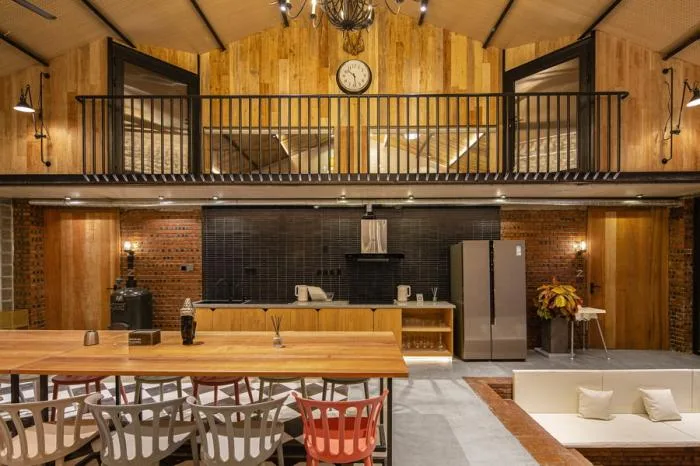
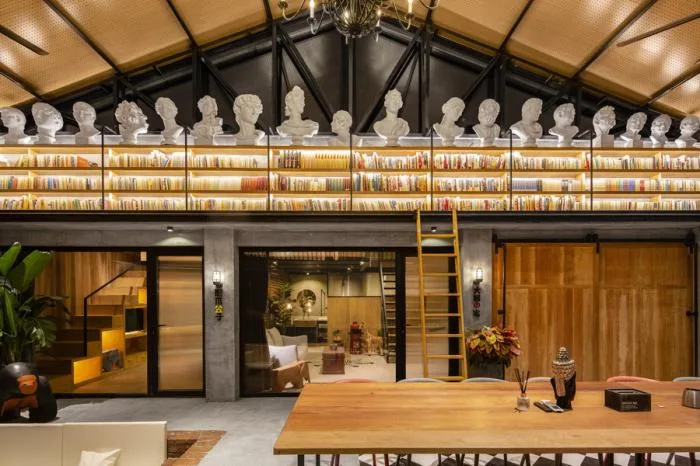
△ North mezzanine terrace | South side book wall
To enhance the atmosphere, various lighting designs including concealed light strips, spotlights, and point lights have been installed at multiple ceiling heights, allowing the living room to shift ambiance between day and night.
The two large north-side lofts connected by the terrace benefit from the east-west sunrise light, creating two distinct lighting themes. The eastern loft features pure white sunlight, while the western loft incorporates rainforest elements and soaking pools.
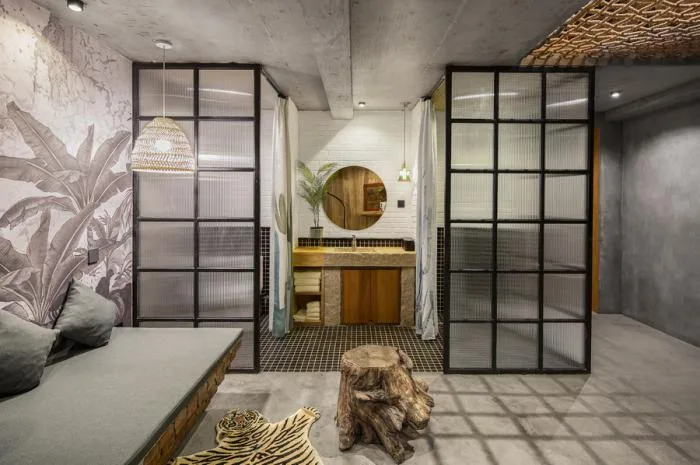
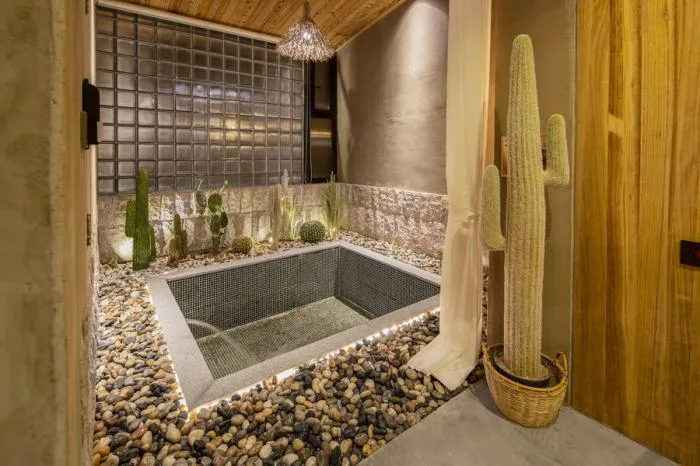
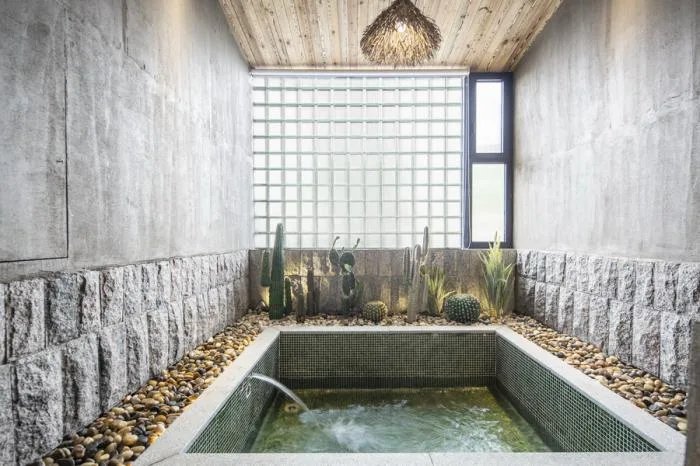
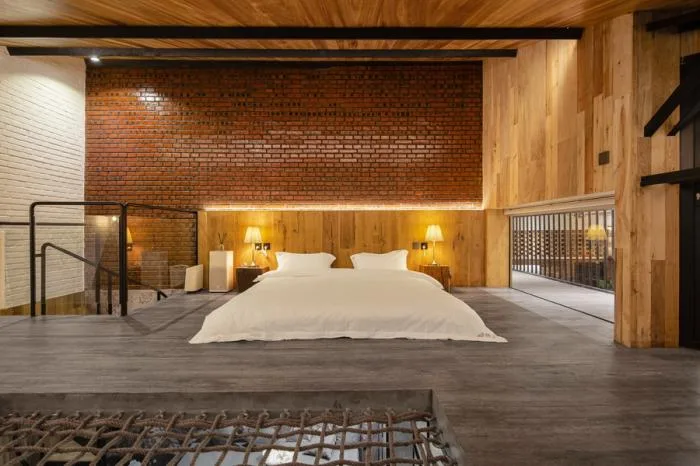
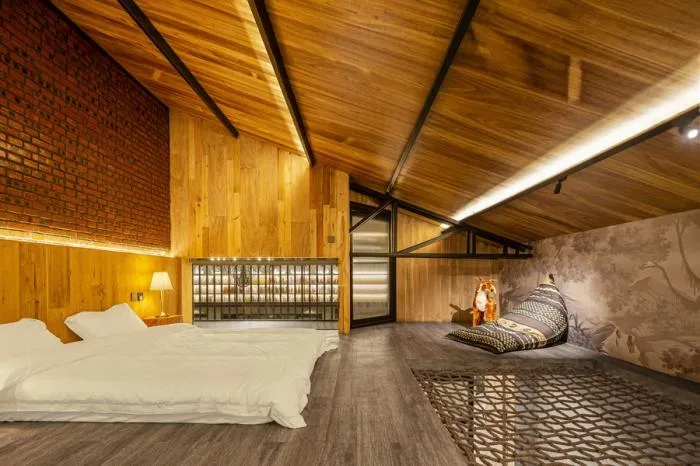
△ North side LOFT-01 – Rainforest and bubble pool elements in a dark environment
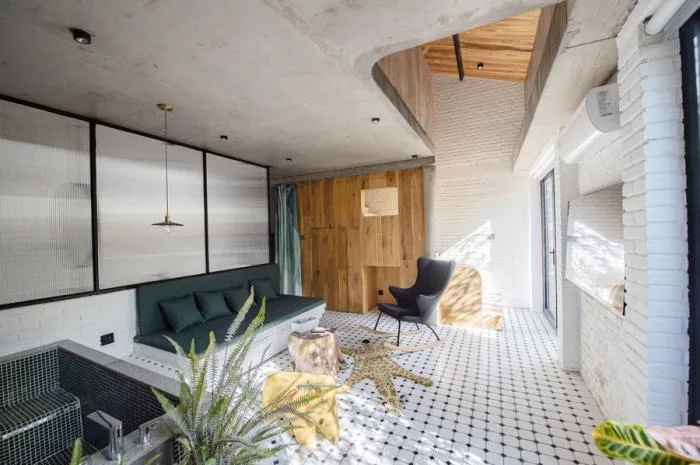
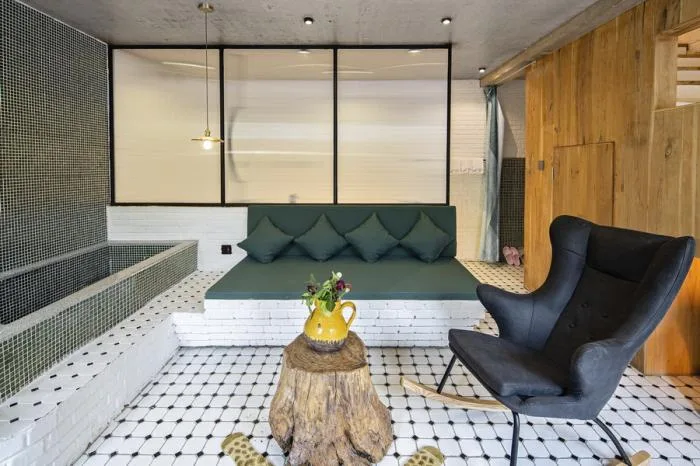
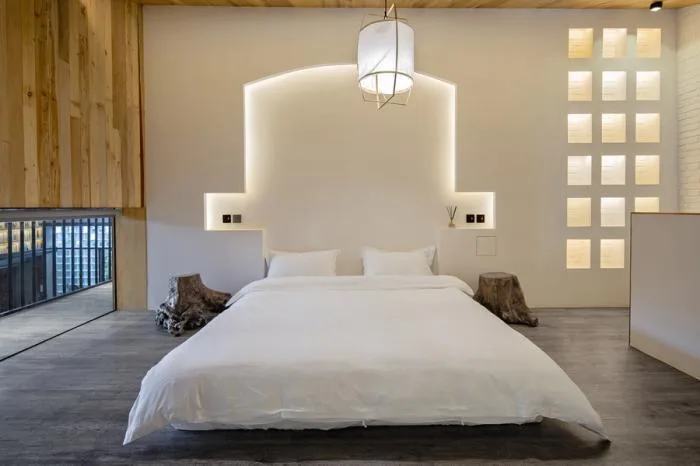
△ North side LOFT-02 – Utilizing east-facing sunlight to emphasize white elements
To address the sloping roof’s height limitations, the two smaller south-side lofts were optimized with strategic openings. The living core abandons layered design and rises directly as a “nest,” combining essential functions within a compact space, thus reducing daily functional demand.
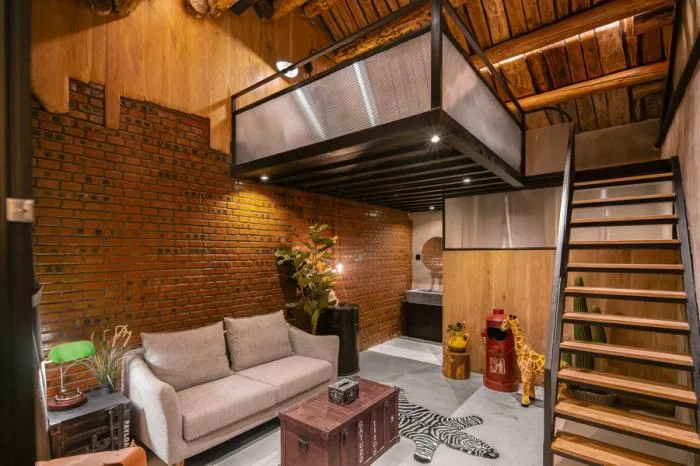
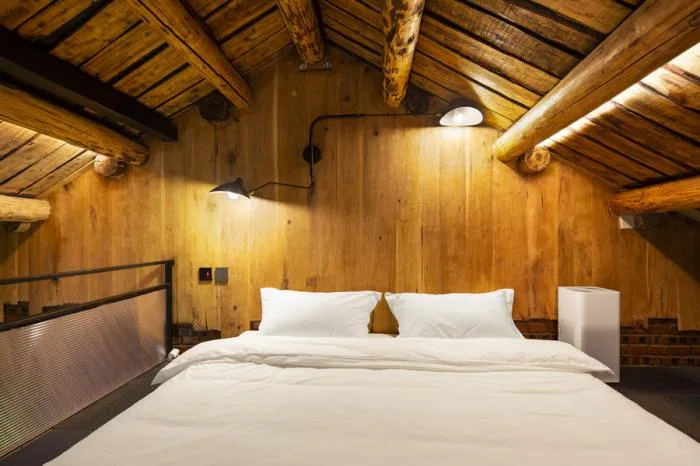
△ South side small LOFT-01 – Light industrial style
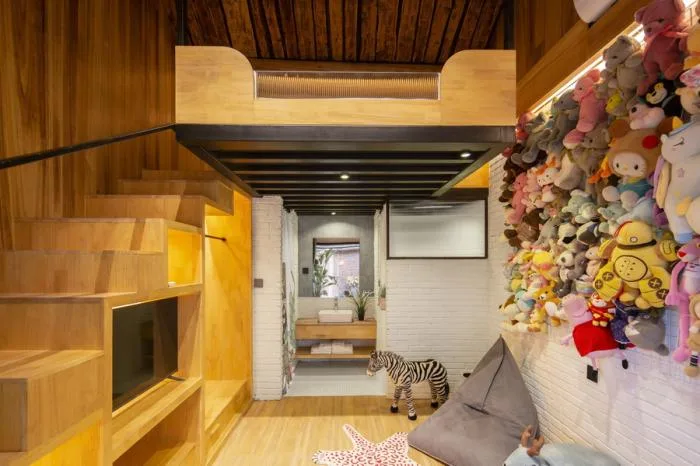
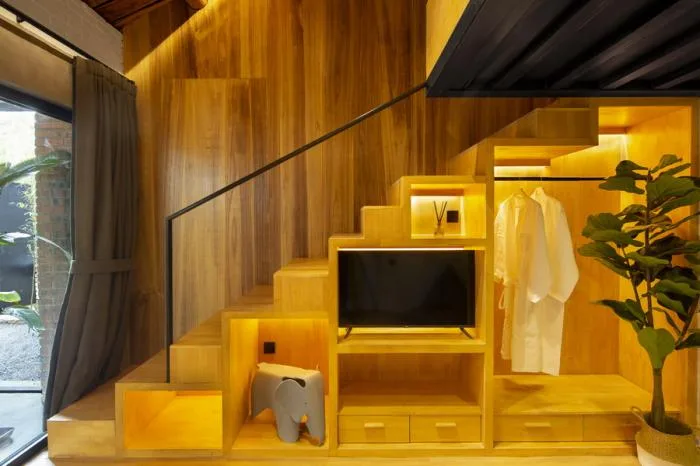
△ South side small LOFT-02 – Wooden box design
The westernmost factory building, originally a woodworking furniture painting workshop, features high ceilings. The living room and its connecting glass corridor were preserved to maintain the west-side light flow.
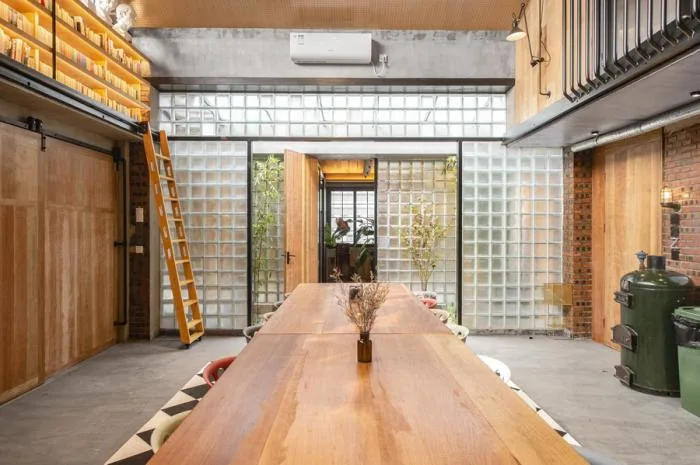
The textured glass bricks create a transparent entrance illuminated by sunlight, compensating for limited natural light on the west side.
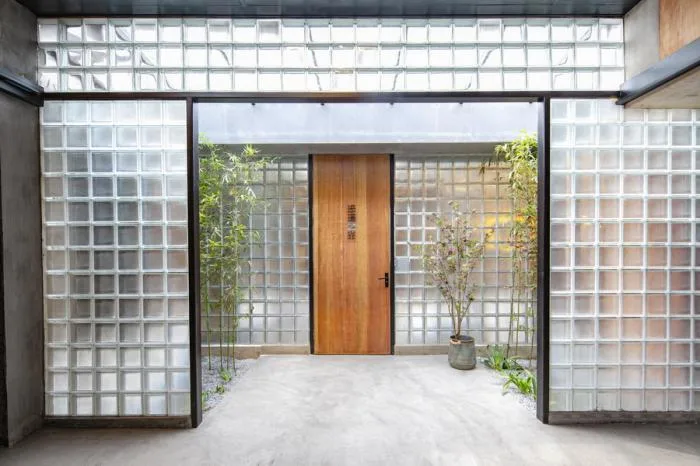
△ Entrance to the west-level guest room
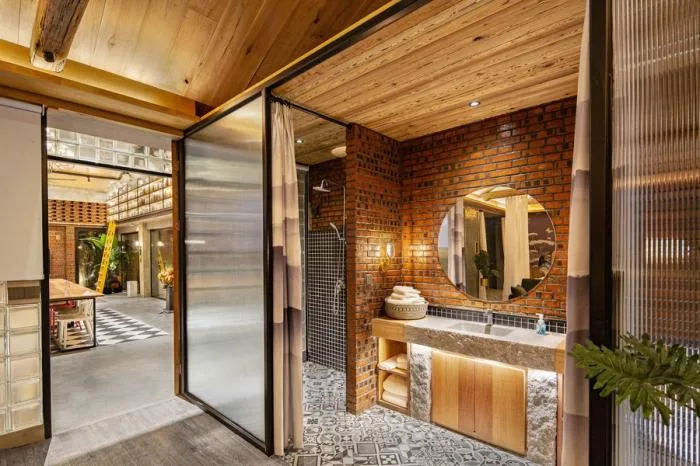
△ West-level guest room
The designer preserved the building’s wooden beam framework and converted the external exhaust shaft into a green plant-filled window well. This shields noise from the western railway while maintaining ventilation.
Inside, the western wall serves as a natural light source during sunset. The interplay of window openings and closures creates a sense of openness and authenticity, enhancing the spatial experience.
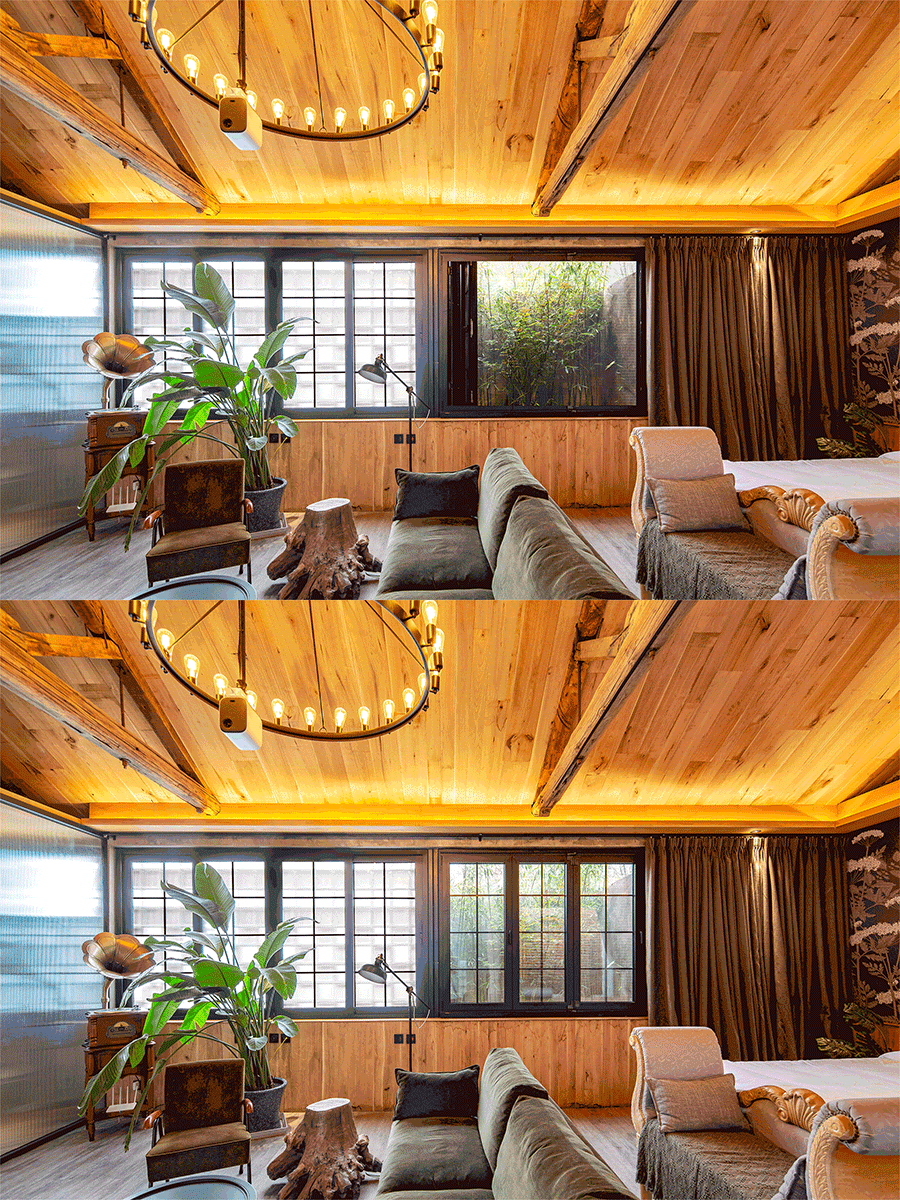
△ Green-infused operable “window well” – formerly the factory exhaust shaft
The design emphasizes the role of light in shaping comfort. Balancing light within the space creates a welcoming atmosphere. Despite preserving the original roof shape, internal functional adjustments achieve this balance.
Throughout the factory warehouse, light plays a special role, varying with the three living areas around the living room. During the day, natural light streams through the sloping roof facing north and south and the glass corridor, illuminating the entire space.
04 Continuation
Materials as the Defining Theme of Each Space
Red brick, a hallmark of northern residential architecture, is the primary material used throughout the factory warehouse, maintaining the original factory’s spacious texture. The living room and public porch prominently feature this material to enhance the sensory experience.
The designer selected materials and colors that reflect each space’s theme, stripping away unnecessary decoration to highlight the representative materials as the defining vocabulary of each room.
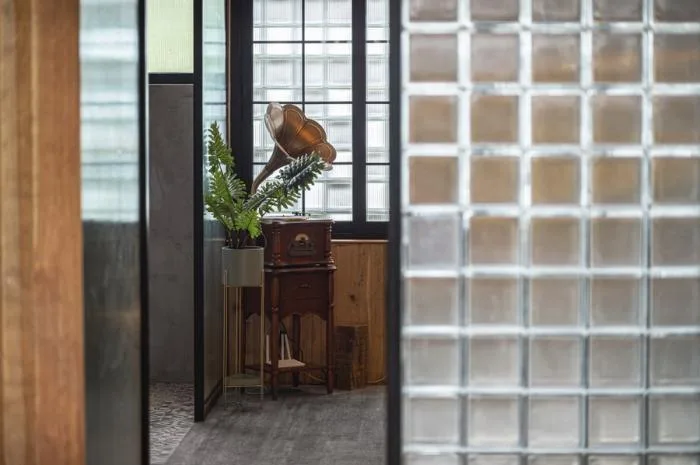
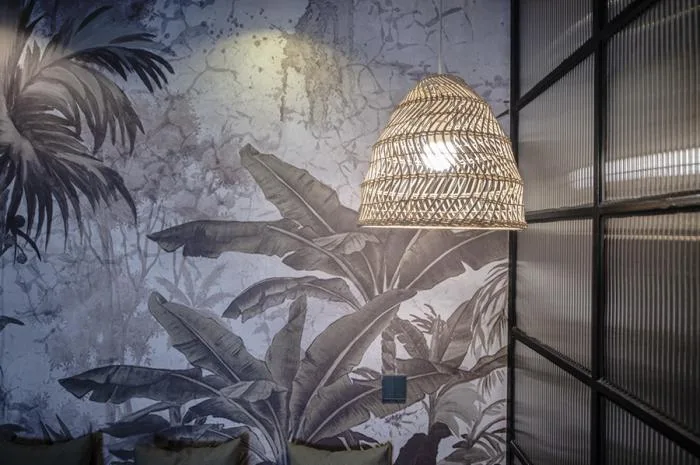
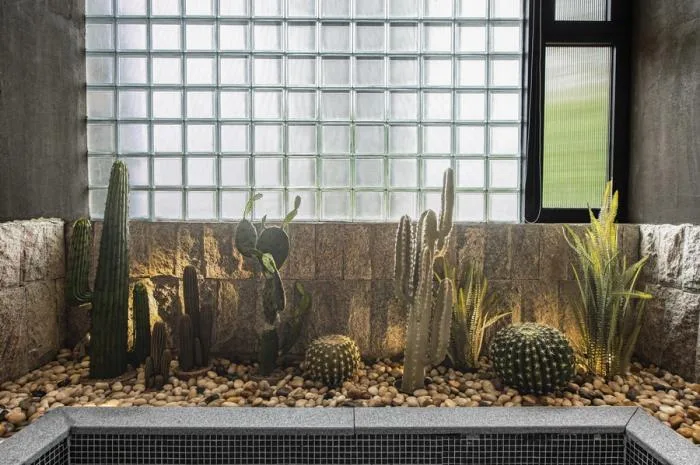
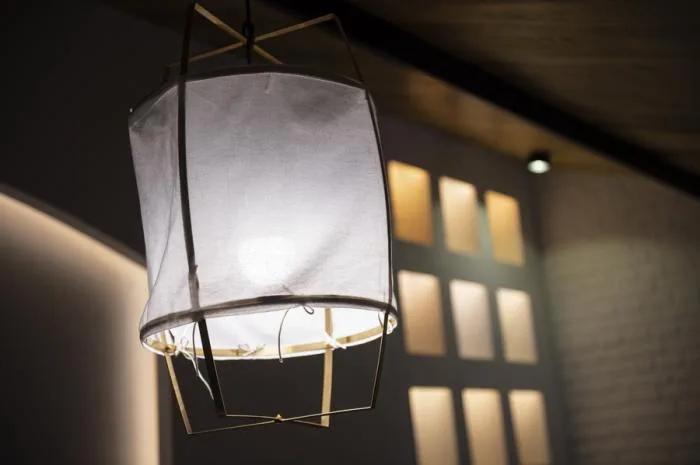
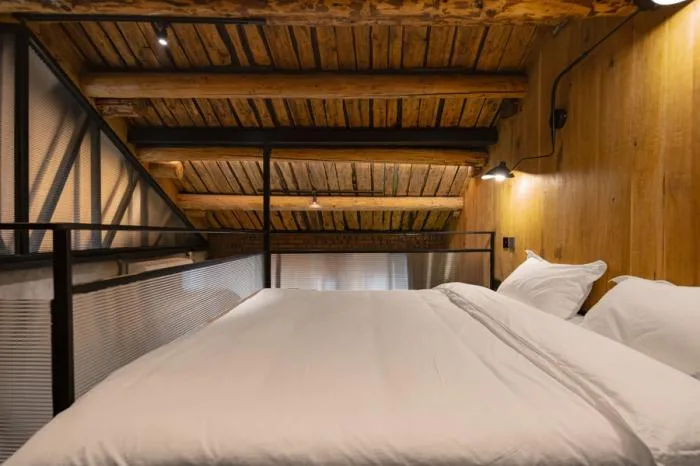
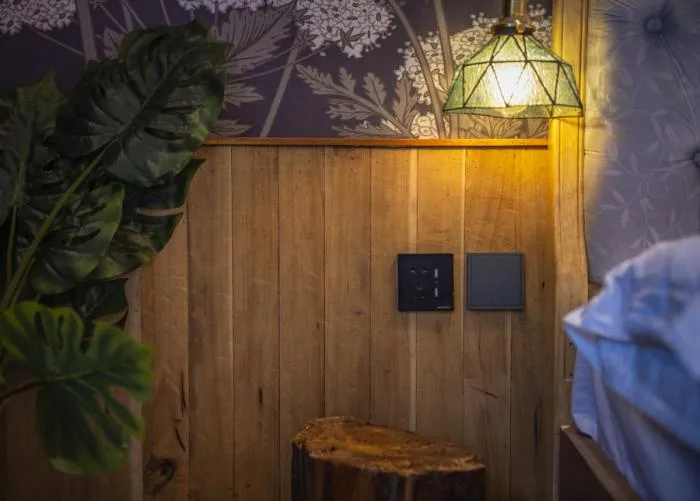

△ Material language defining the spatial themes
As an evolution of the backyard homestay concept, the Factory Warehouse renovation respects the building’s history by preserving the roof and partitioning. The renovation expresses design tension within constraints, drawing from local environmental elements and extending through cultural, artistic, and humanistic perspectives.
This project exemplifies the social value of repurposing old factories in the context of urban renewal and rural development.
Project Information
Project Name: Factory Warehouse Homestay Renovation
Design Firm: CCDI International Beijing Interior Design Center
Company Website: www.ccdi.com.cn
Contact Email: __AI_S_SC0__
Design Period: December 2019 to August 2020
Lead Designer: Li Zhiyu
Design Team: Wang Xiaoxia, Zeng Huifan, Zhang Ying, Li Xia, Li Tiantian, Gong Lei, Qi Changliang
Operations Team: Backyard Inn Boutique Homestay
Project Location: Changping District, Beijing
Building Area: 380 square meters
Photography Credits: Lu Fei, Ren Enbin
Main Materials: Red brick, wood veneer, green mosaic, retro mosaic tiles, woven carpets, stone plastic flooring, Habit board
Article Author: Wang Xiaoxia












Must log in before commenting!
Sign Up