
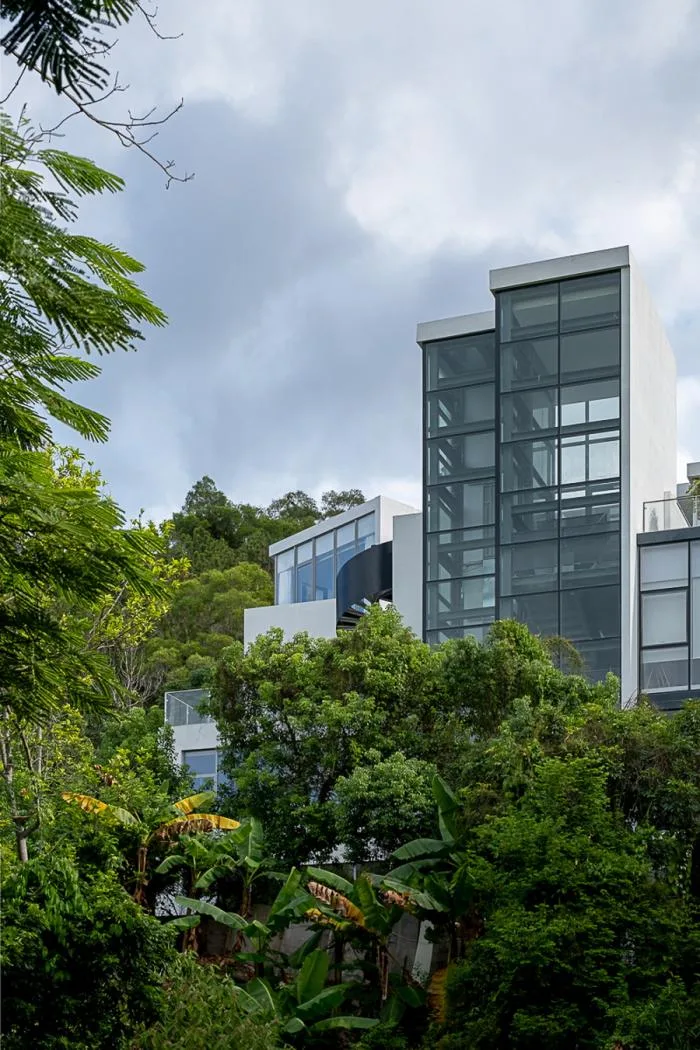
The relationship between the setback of the renovated building façade and its symbiotic connection with nature © Zhang Chao
By focusing on overlooked places, we uncover rich expressions of their origins and character, gaining a fresh perspective on the cities we inhabit.
Chen Neixiu Xin’s “Spatial Anthropology in Tokyo”
01
Opportunity: Creating in Nature and Tranquility
Situated in the mountains of Yanhan, this site is close to the city yet immersed in nature. The buildings are named according to their geographic context. The house nestles beside Yanhan Mountain, resembling a large hand holding a smaller one. The mountain acts as a unifying element, connecting the entire OCT building complex and public spaces, both large and small.
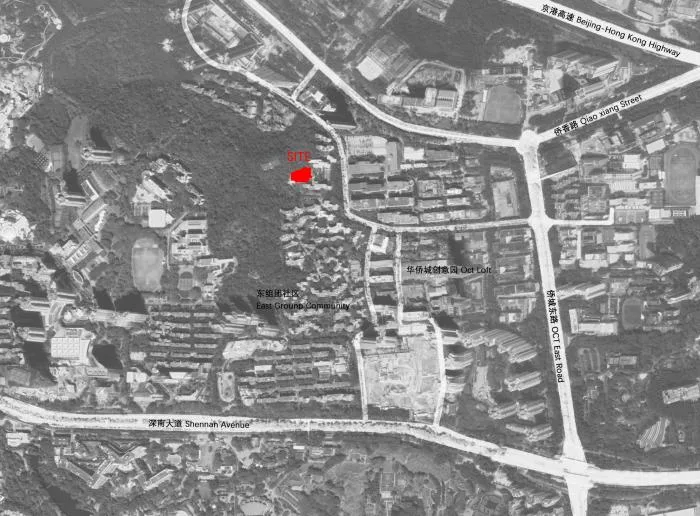
△ Project location © One ride building
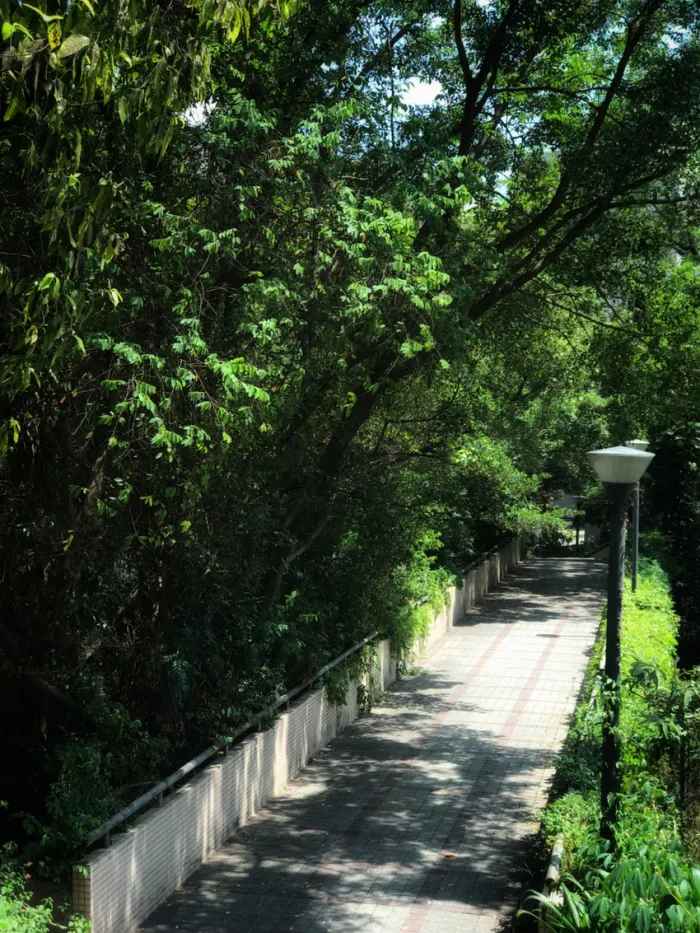
A bridge leading to the Yanhan Plateau © One ride building
The environment sparks imagination and hope, alleviating concerns about challenges. Faced with a neglected mountain building, left to decay over years under poor conditions, the architect recognized the need to carefully sort and revise the project amid many uncertainties.
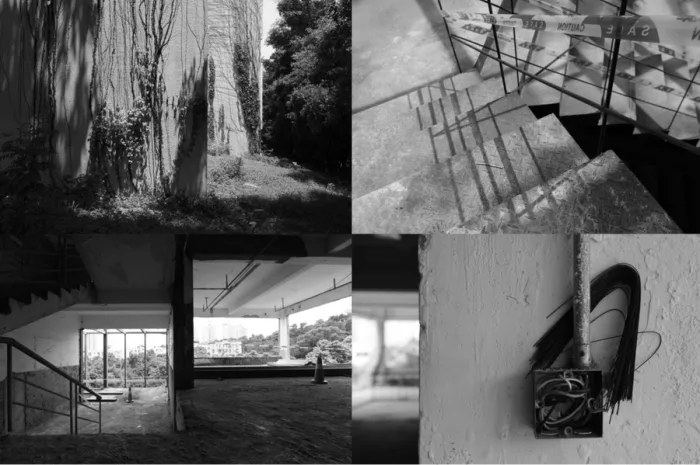
△ Initial on-site documentation showing the building and space hidden in a serene atmosphere © One ride building
02
Intervention: Architecture Embracing Nature
In the midst of vibrant urban complexes, nature is precious. As urban life increasingly loses its authenticity, people seek sincerity and release. The unchecked growth of nature contrasts yet harmonizes with the decay of buildings. Architects aim to thoughtfully intervene, allowing the building to gently detach from nature, rediscover dialogue points, and invite people back to life experiences deeply connected with their surroundings.
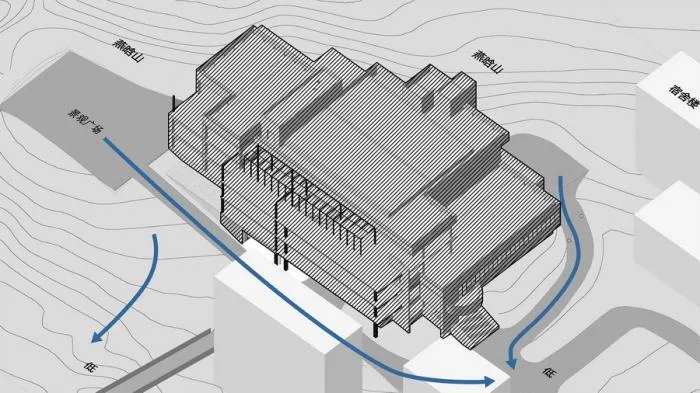
△ Original terrain analysis © One ride building
The building has four floors, with employee dormitories and a sports field located on the southeast exterior, and Yanhan Mountain bordering the northwest side. Prior to renovation, only the first floor was in use; upper floors were dilapidated and severely leaking.
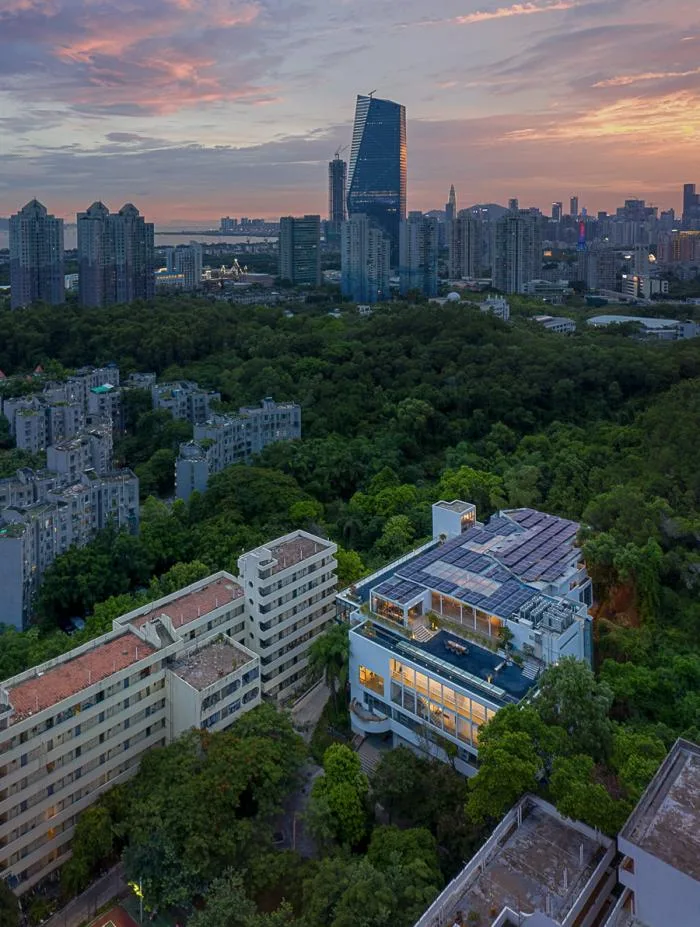
△ Comparison between the renovated building and the urban skyline © Zhang Chao
The owner and architects share a vision: “Through architecture, we hope to revive this once thriving house and let people experience the unique beauty of nature.”
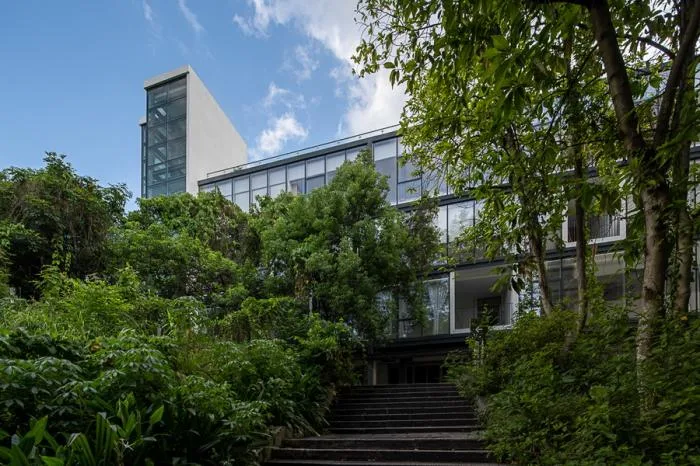
△ Renovated south façade of the building © Zhang Chao
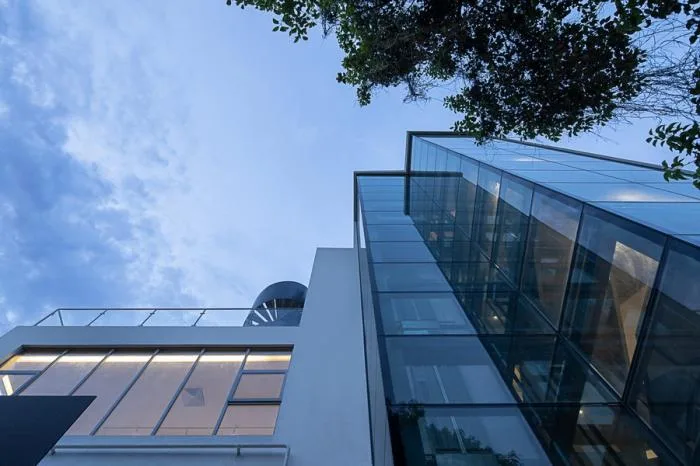
Partial main building entrance © Zhang Chao
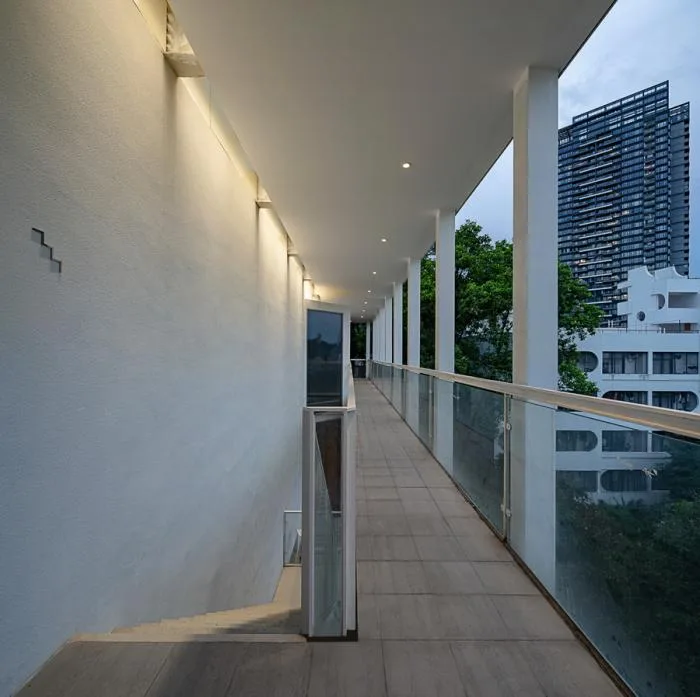
After renovation, the east façade corridor offers sweeping views over the entire OCT Creative Park © Zhang Chao
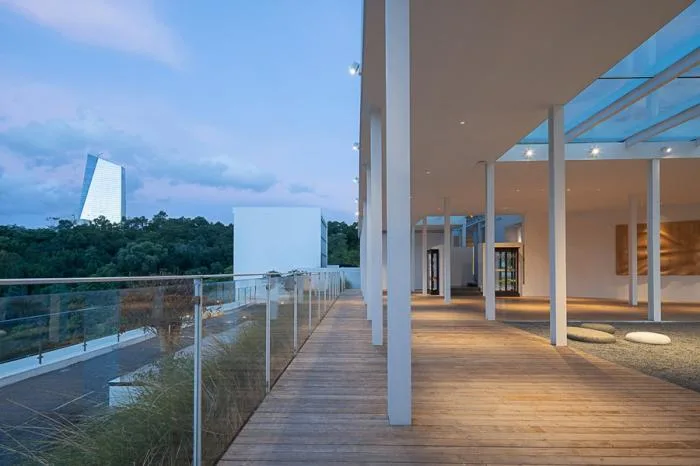
The renovated rooftop garden integrates nature as an essential part of the space © Zhang Chao
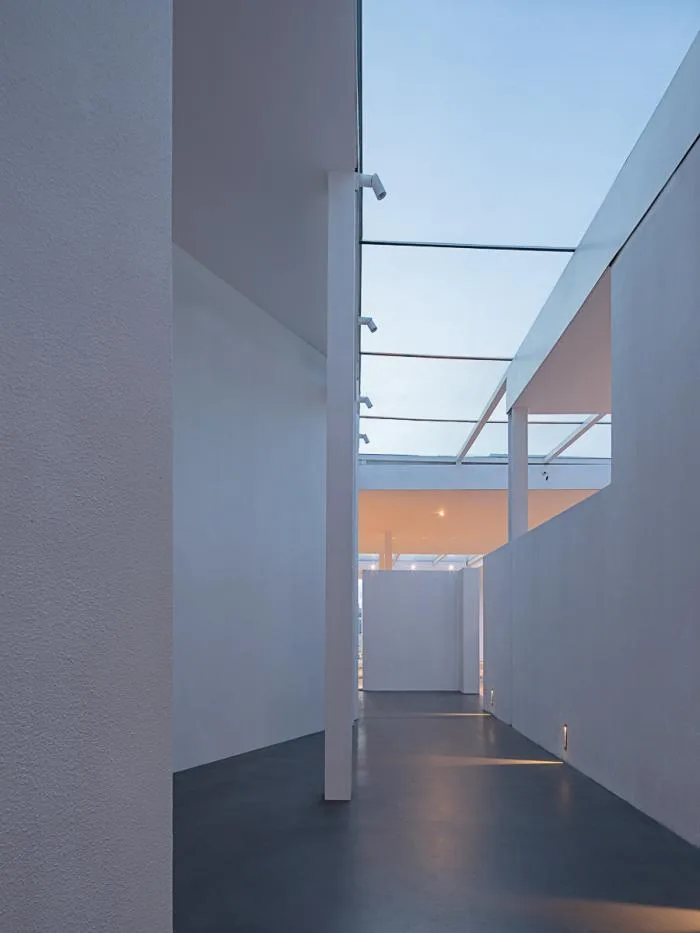
△ Upgraded public rooftop passage © Zhang Chao
03
Clue: Merging Art and Commerce
The OCT Creative Park, with years of development, hosts abundant cultural resources. Building on the existing business environment, the client aims to emphasize nature, integration, rarity, and complementarity in content management. Yicheng proposes a threefold approach: blending art with commerce, complementing dining and creative offices, and operating branded spaces.
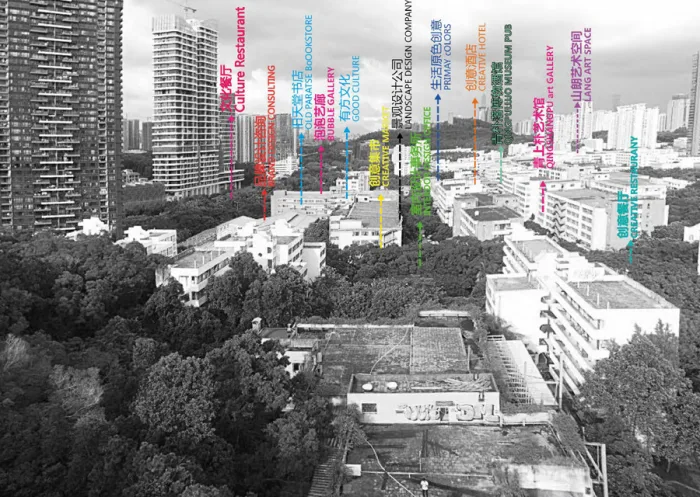
△ Analysis of surrounding business formats © One ride building
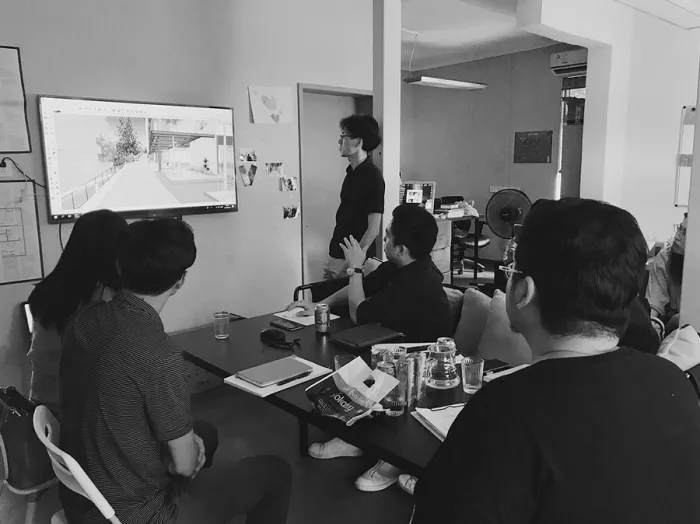
△ Project discussion © One ride building
The design transforms the site into a distinctive “cultural complex” featuring specialty retail, upscale dining, galleries, theaters, offices, and creative markets. New behavioral economic models are introduced within the old structure, revitalizing the property, harmonizing with its surroundings, and providing a vibrant artistic hub for the city.
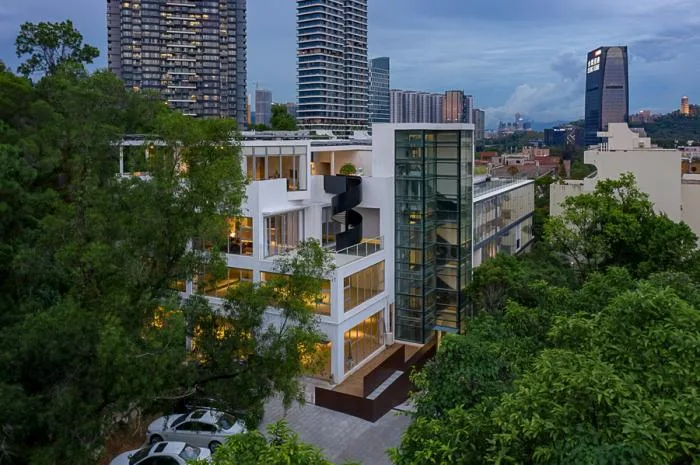
Half bird’s-eye view of the west façade © Zhang Chao
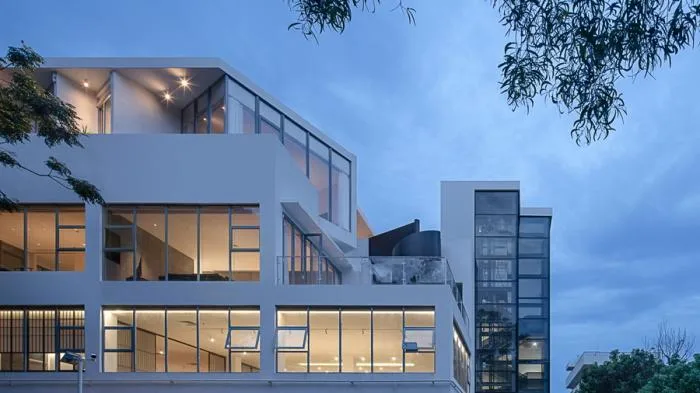
△ Night view of the renovated west façade © Zhang Chao
04
Façade Strategy: Experiencing Nature’s Journey and Redefining the Building’s Identity
The façade strategy reflects the natural expression of spatial content through thoughtful filling and stitching. Blank spaces and staggered openings on the façade are designed around human experience, optimizing entry sequences and views that connect interior and exterior environments. As visitors approach, the intention is to immerse them in nature, fostering a harmonious blend between architecture and landscape.
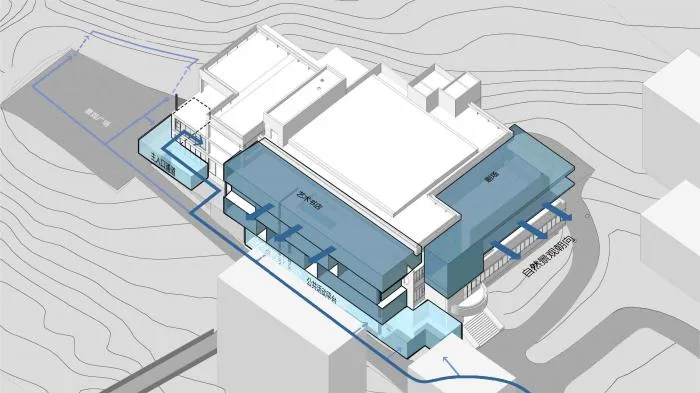
Façade generation strategy © One ride building
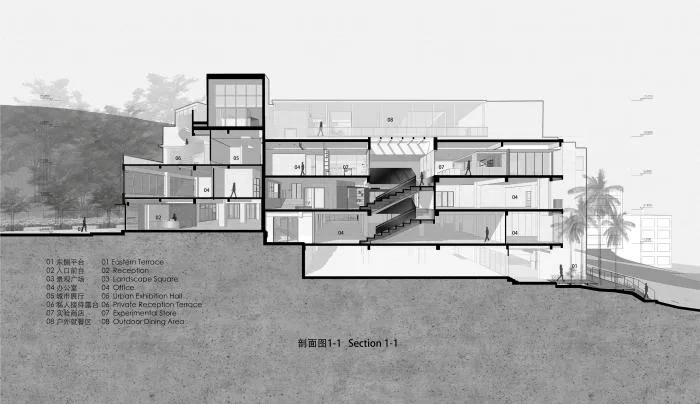
△ Architectural section diagram © One ride building
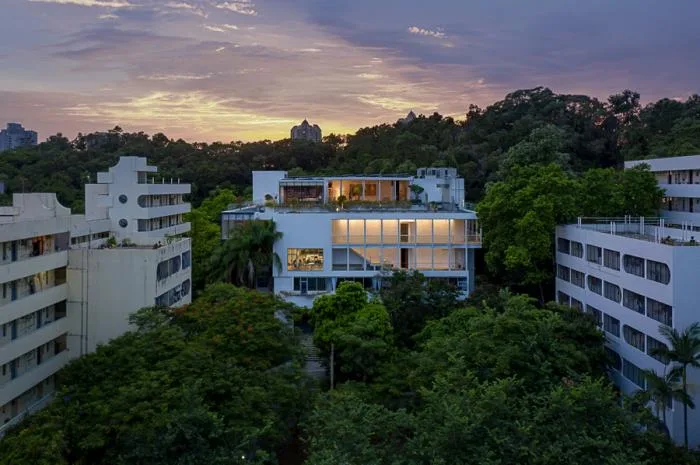
The east façade at sunset with Yanhan Mountain in the background © Zhang Chao
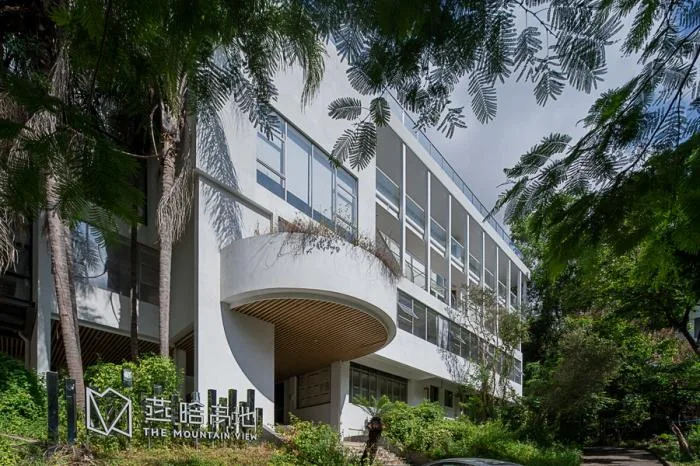
△ East façade of the building © Zhang Chao
The east façade blends subtly into the natural surroundings. Due to the cafeteria lease expiring, the original first-floor entrance is temporarily closed. Instead, the architect utilized the building’s existing elevation differences to position the main entrance at the west side square on the second floor, accessible via a gentle ascent from the southern slope by pedestrians and vehicles.
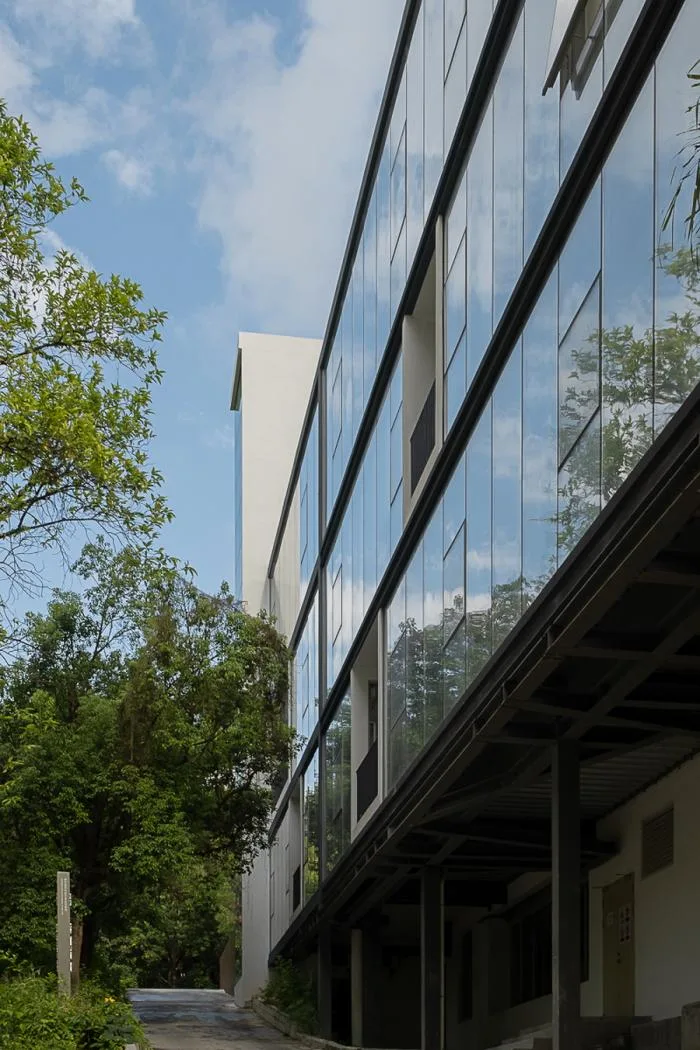
△ Ramp leading to the main entrance and building square on the second floor © Zhang Chao
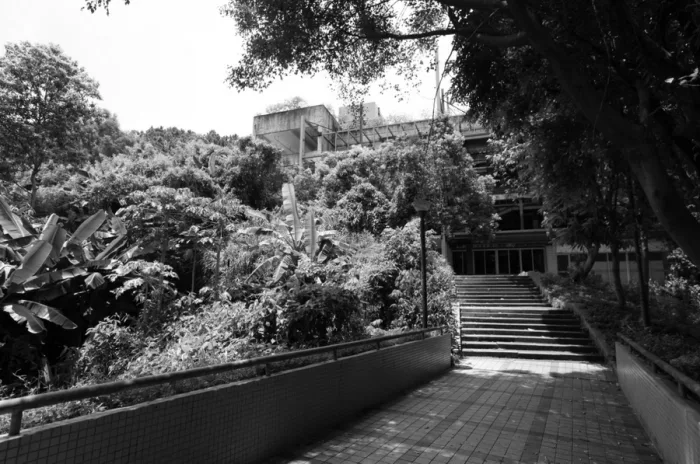
Pre-renovation view of the south façade from the bridge © One ride building
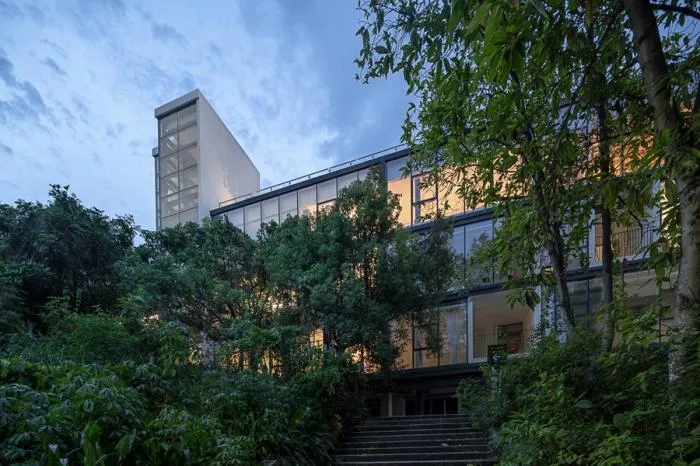
△ Post-renovation view of the south façade from the bridge © Zhang Chao
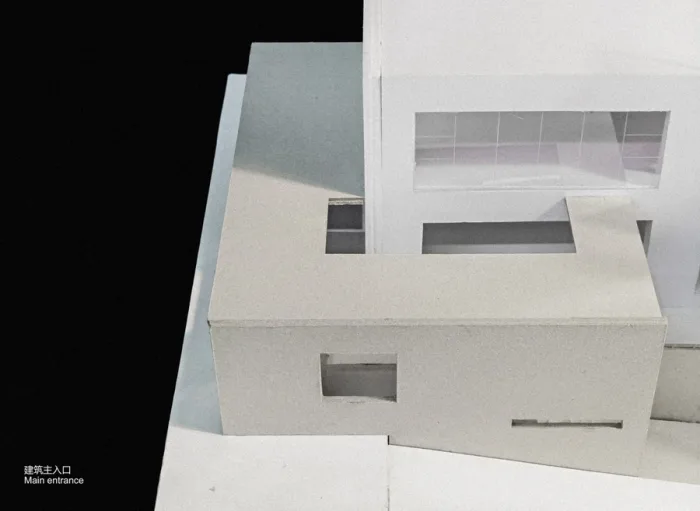
△ Original main entrance model © One ride building
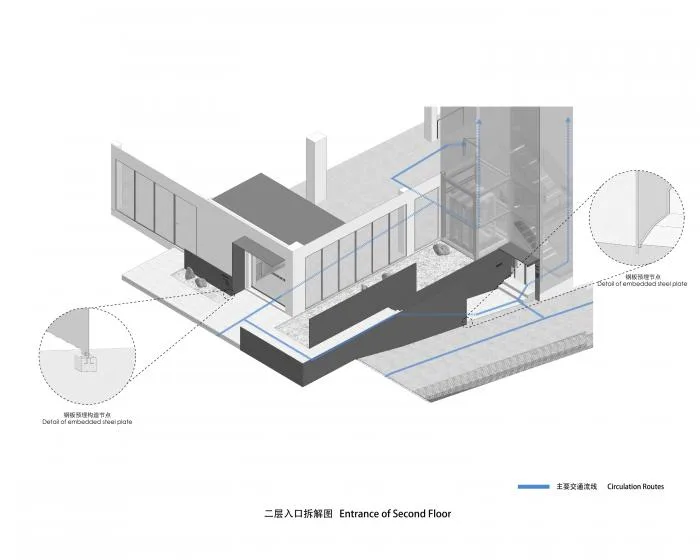
Entrance flow analysis diagram in the implemented main entrance design © One ride building
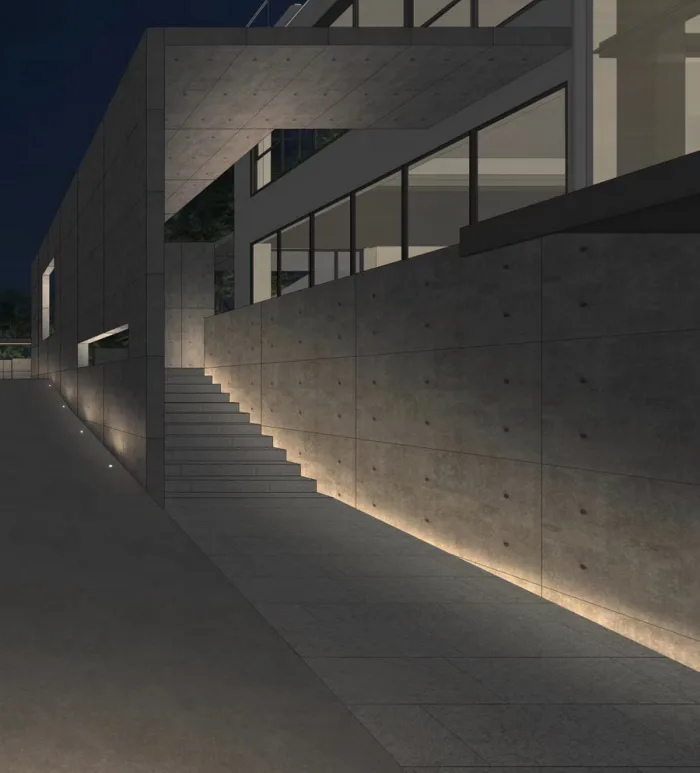
△ Rendering of the original main entrance plan © One ride building
After emerging from the shade of trees and ascending the slope, visitors encounter a weather-resistant steel fence that blends naturally with the environment. This feature subtly guides guests towards the main entrance from the slope.
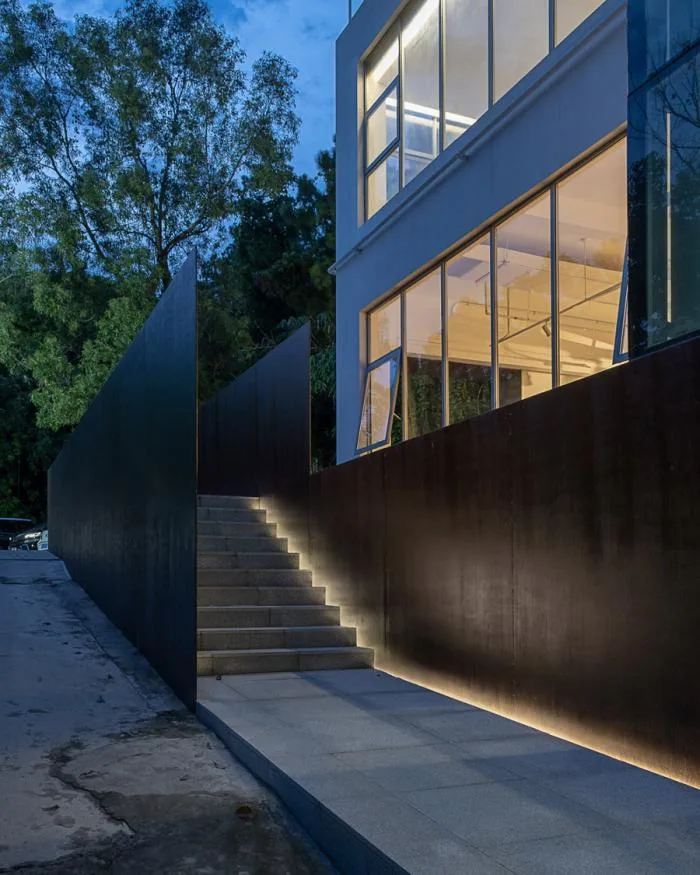
△ Realistic view of the building’s main entrance © Zhang Chao
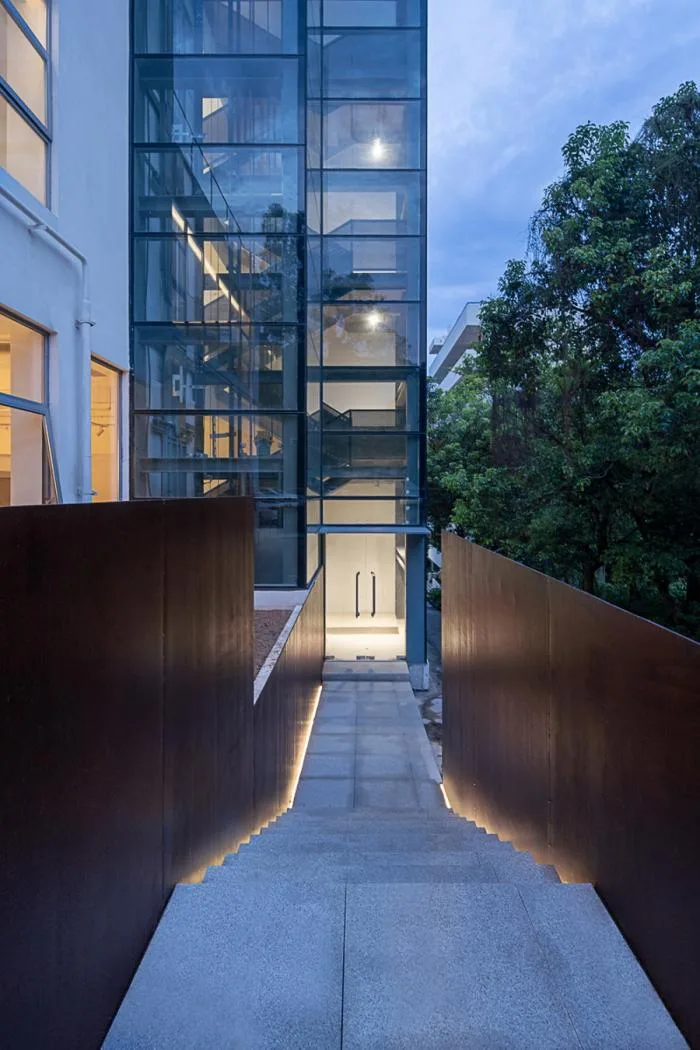
△ Main entrance lighting details © Zhang Chao
The open plaza before the west entrance offers panoramic views of the building’s west and south faces. The design aims to create a cohesive façade here, with the building mimicking the mountain’s layered volumes ascending skyward.
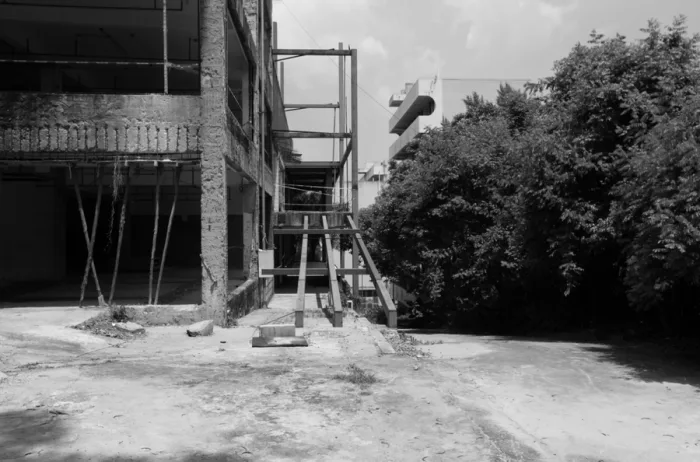
Pre-renovation view of the main entrance and façade © One ride building
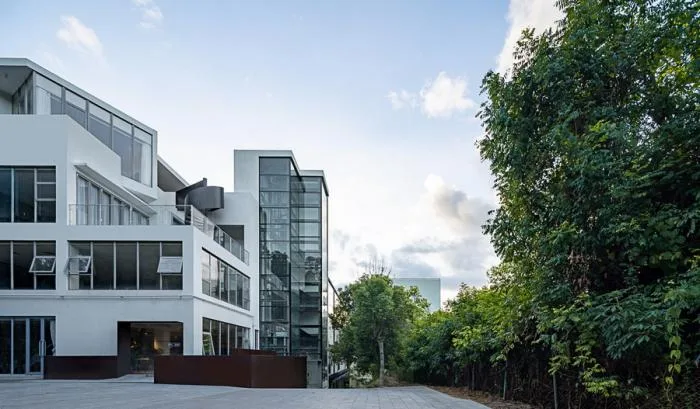
△ Post-renovation view of the main entrance and façade © Zhang Chao
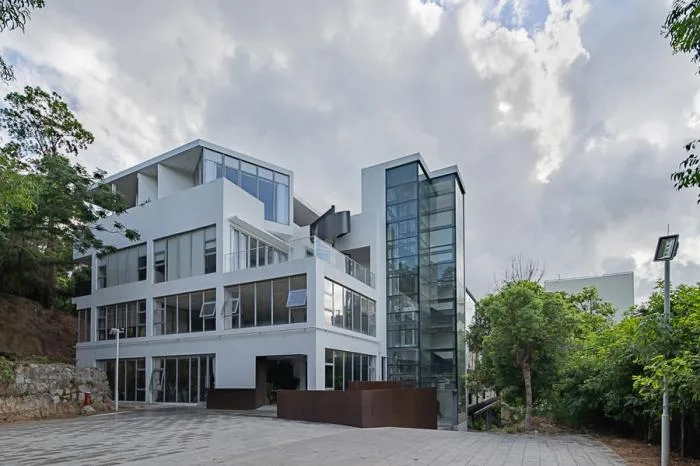
Looking into each other © Zhang Chao
The terrace above the main entrance, connected by black staircases spanning the 4th and 5th floors, features varied volumes and materials, creating a distinctive architectural highlight.
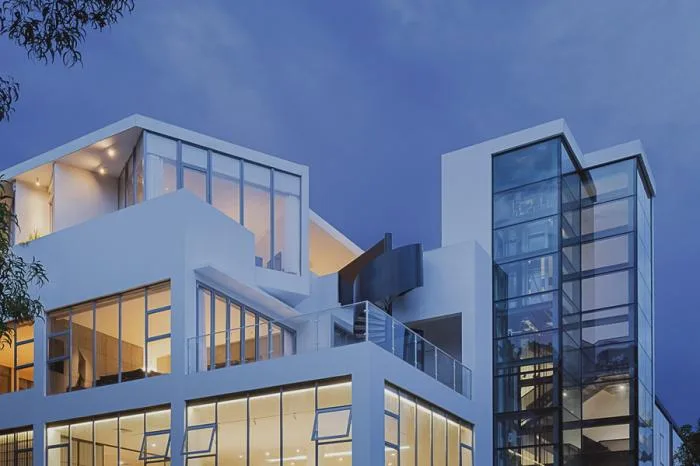
△ Night view of the west façade © Zhang Chao
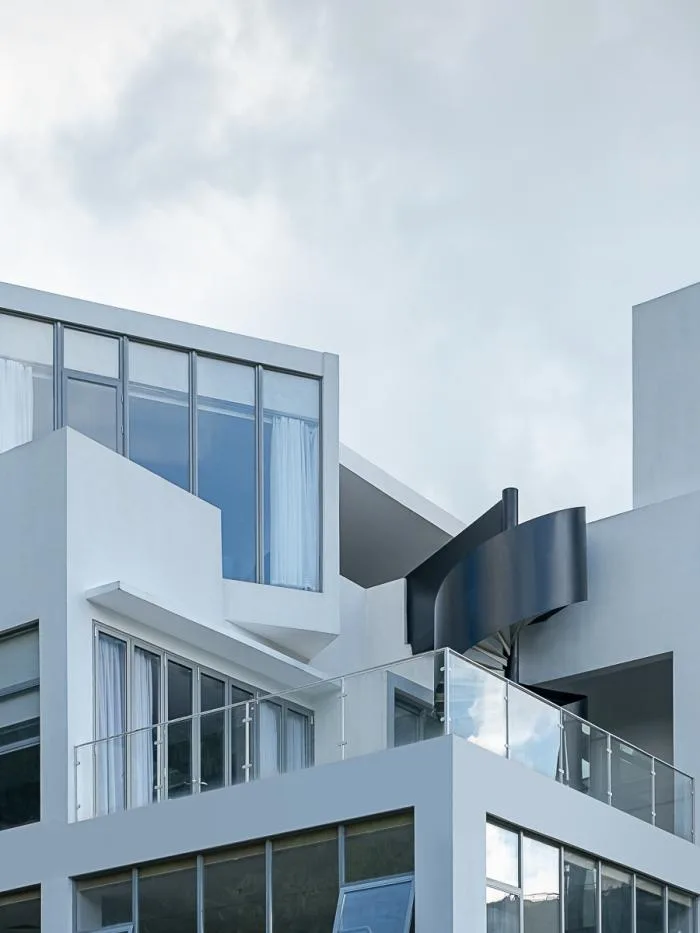
Partial main entrance façade © Zhang Chao
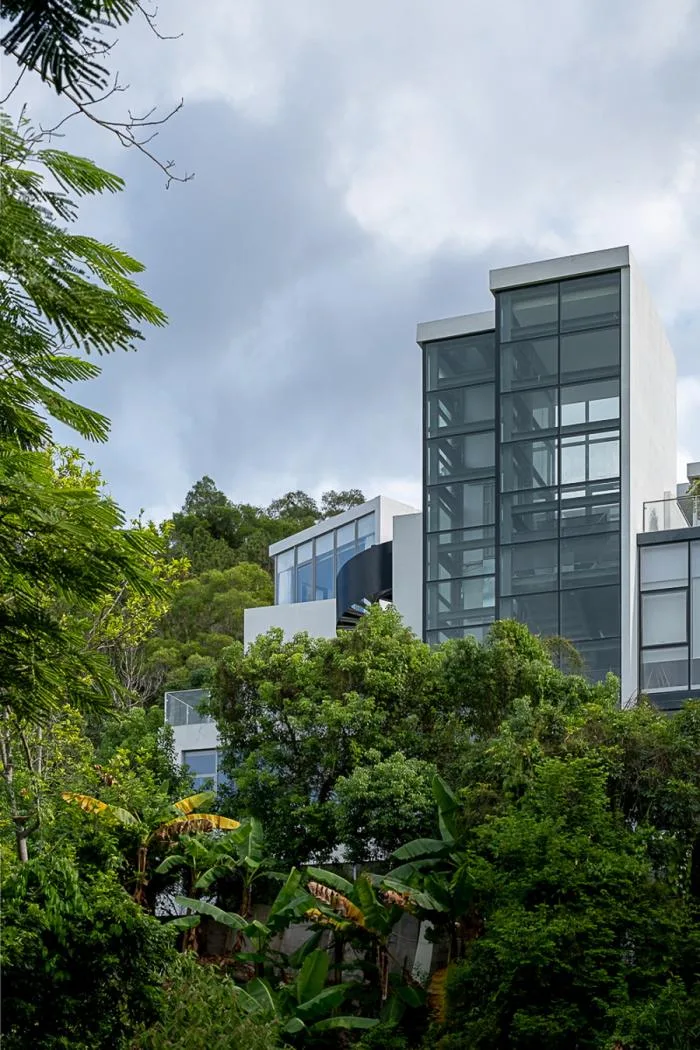
Partial setback detail on the south façade © Zhang Chao
05
Experience: Diverse Functions and Rich Spatial Quality
Organizing and allocating the project’s varied functions effectively, while allowing space for future business adaptations, was a primary focus. The second floor hosts vibrant specialty retail, markets, and exhibitions; the third floor is dedicated to creative office spaces. Key features like private kitchens, galleries, and theaters occupy the fourth and fifth floors. The four multifunctional floors accommodate city exhibition halls, art stores (bookstores), galleries, and theater entrances.
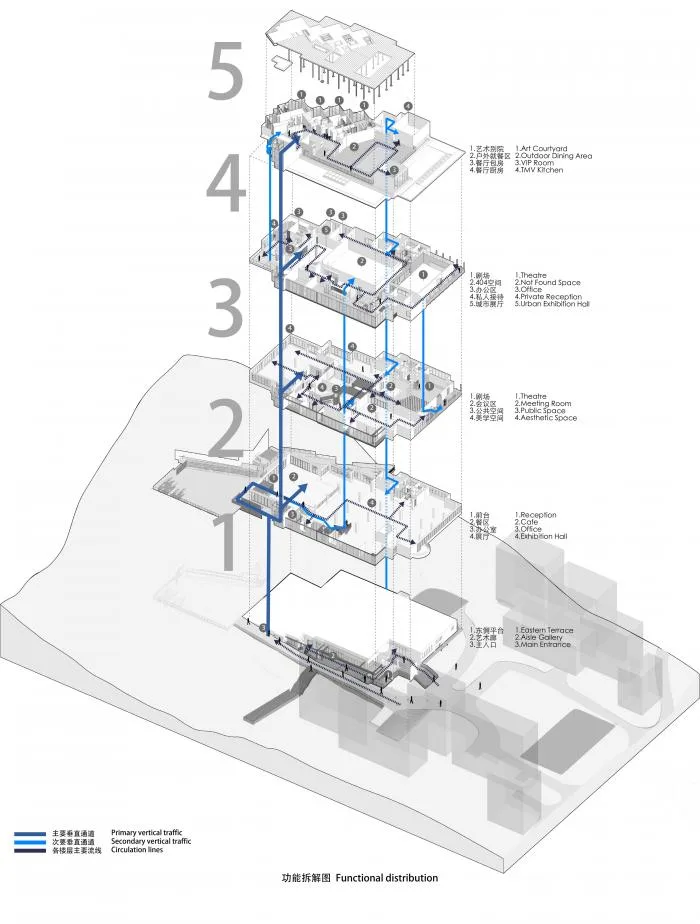
△ Overall function and movement flow analysis © One ride building
4F City Exhibition Hall
Visitors arriving by elevator on the fourth floor enter the city exhibition hall, designed to exploit the building’s 1.2-meter internal height difference, creating an immersive, exploratory exhibition space.
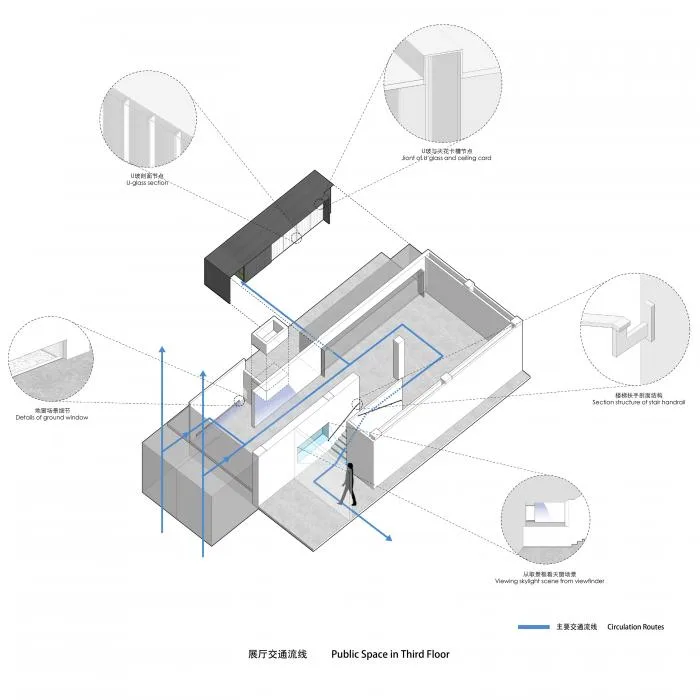
Analysis diagram of the fourth-floor city exhibition hall layout © One ride building
Following completion, the first exhibition phase titled “The Concept of Dialogue x1” was held here, documenting the project’s design discussions and construction process in detail.
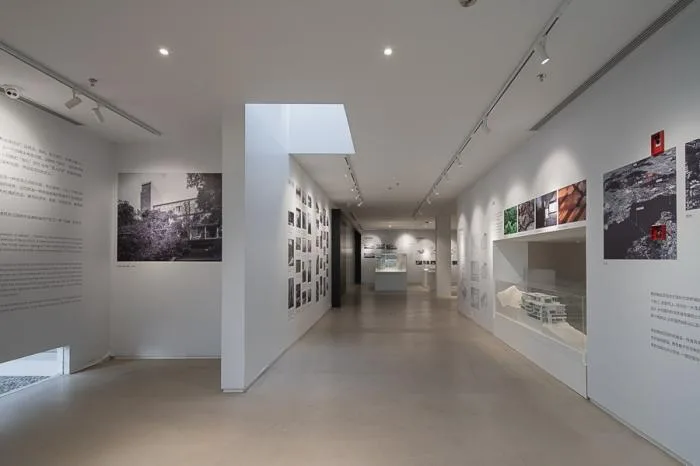
△ 4F City Exhibition Hall “Concept of Dialogue” architectural theme exhibition © Zhang Chao
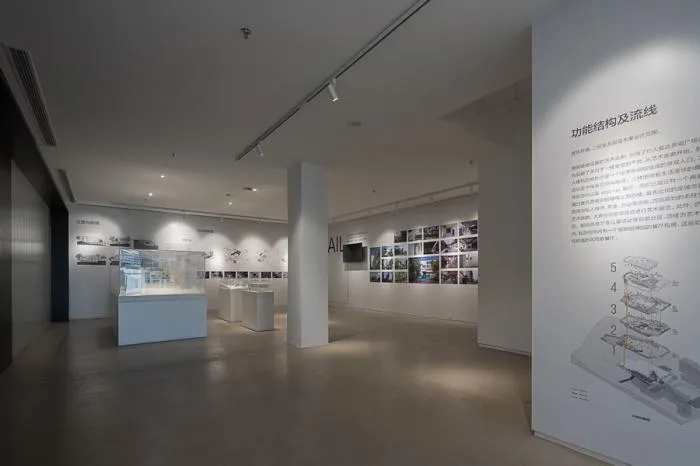
△ 4F City Exhibition Hall “Concept of Dialogue” architectural theme exhibition © Zhang Chao
2-4F Staircase Renovation
Visitors heading to the art store are greeted by light and shadows cast through a rooftop skylight. Beneath it, a staircase spans the 2nd to 4th floors, serving as the main circulation hub and a space for gatherings or rest.
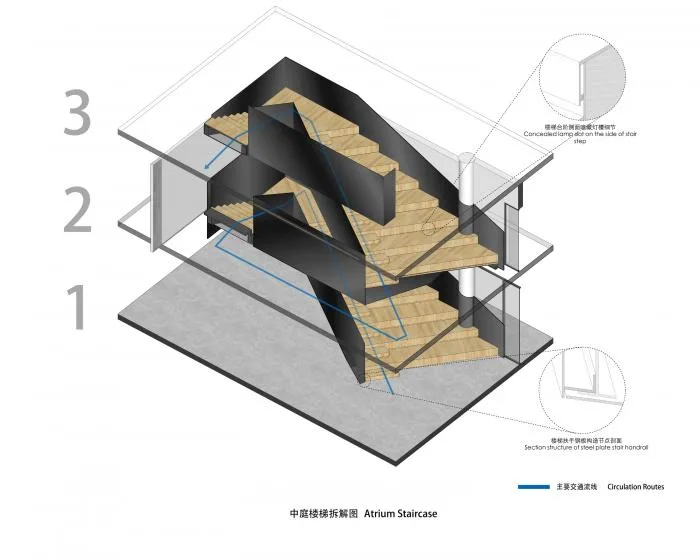
Disassembly diagram of staircase design © One ride building
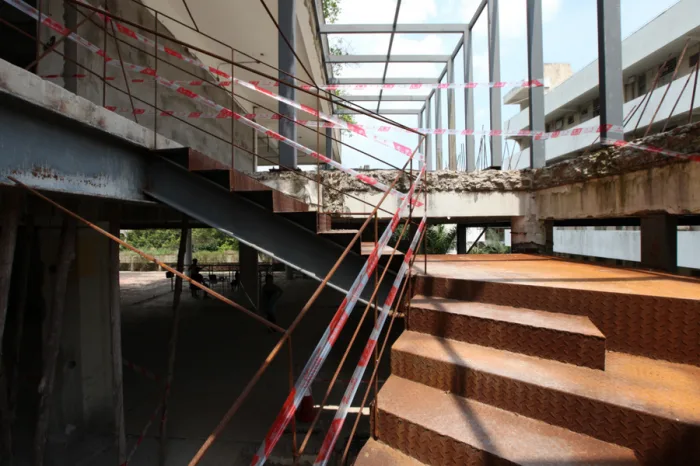
△ Staircase condition before renovation © One ride building
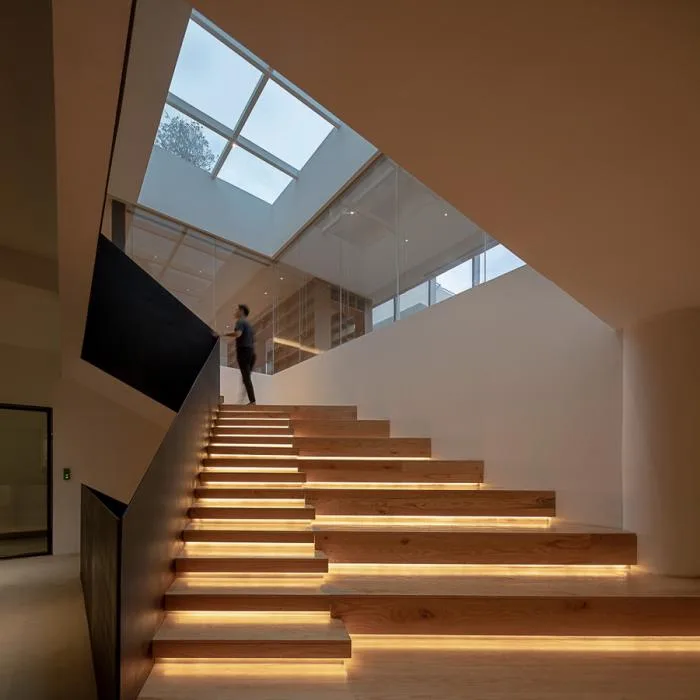
△ Looking up at the skylight from the renovated stairs © Zhang Chao
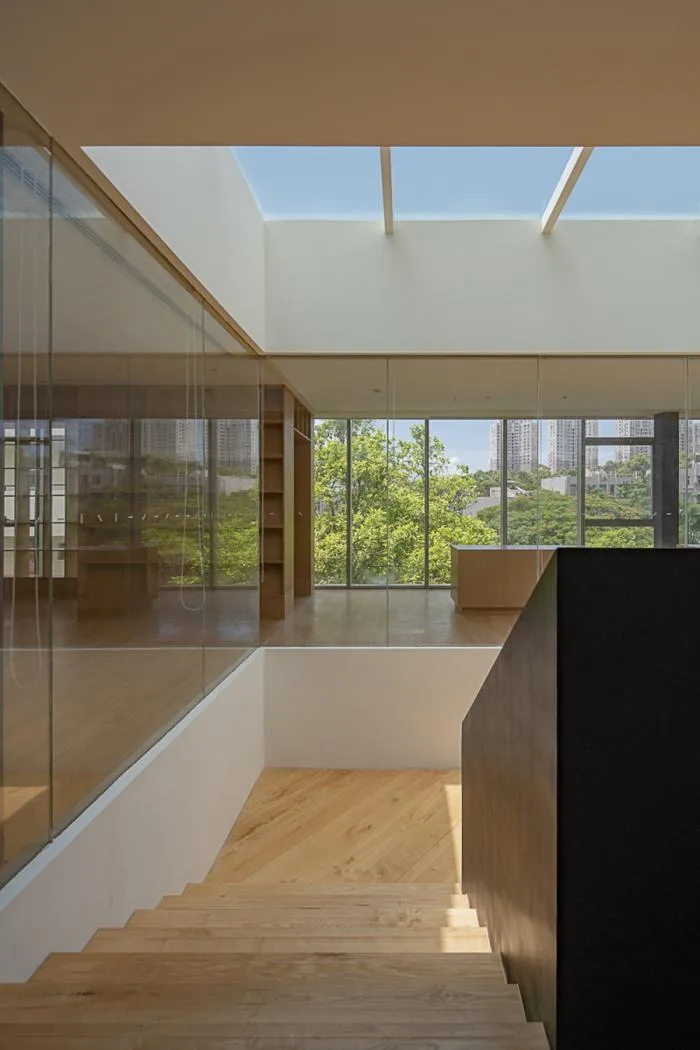
Approaching the art store (bookshop) via the stairs © Zhang Chao
4F Art Store
The art store centers on skylights and staircases, with expansive glass inviting the sky and distant greenery inside, fostering a continuous dialogue between interior and exterior spaces.
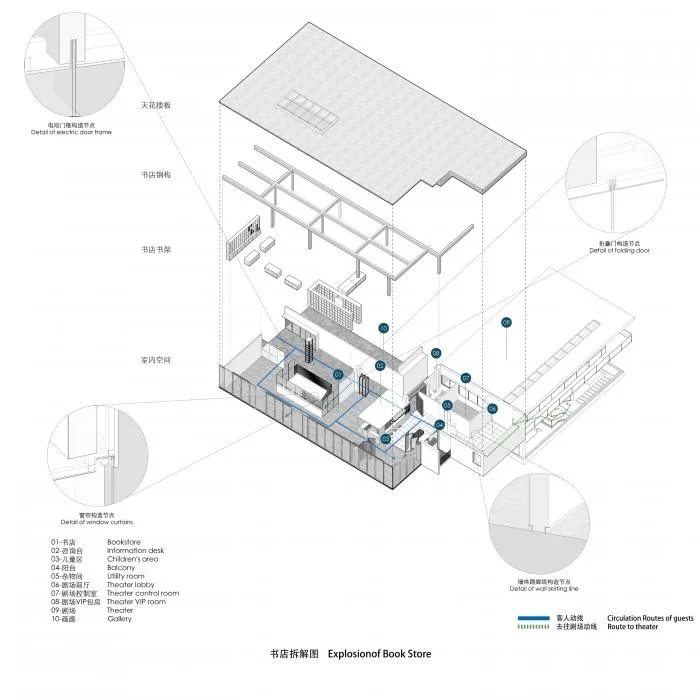
Analysis of the dismantled fourth-floor art store © One ride building
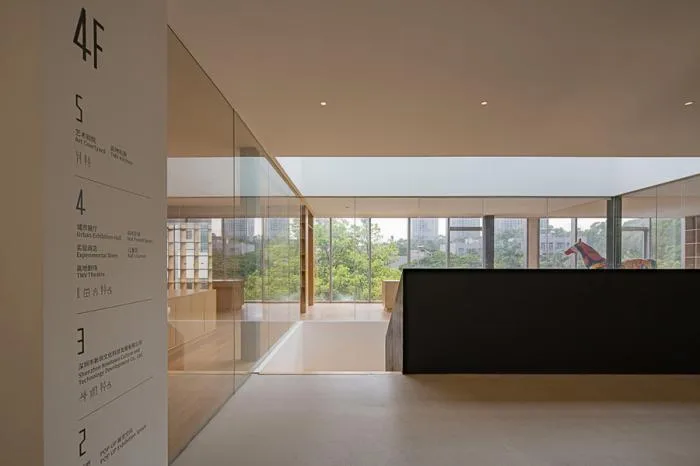
Natural light and vertical glass create a translucent façade effect in the art store (bookstore) © Zhang Chao
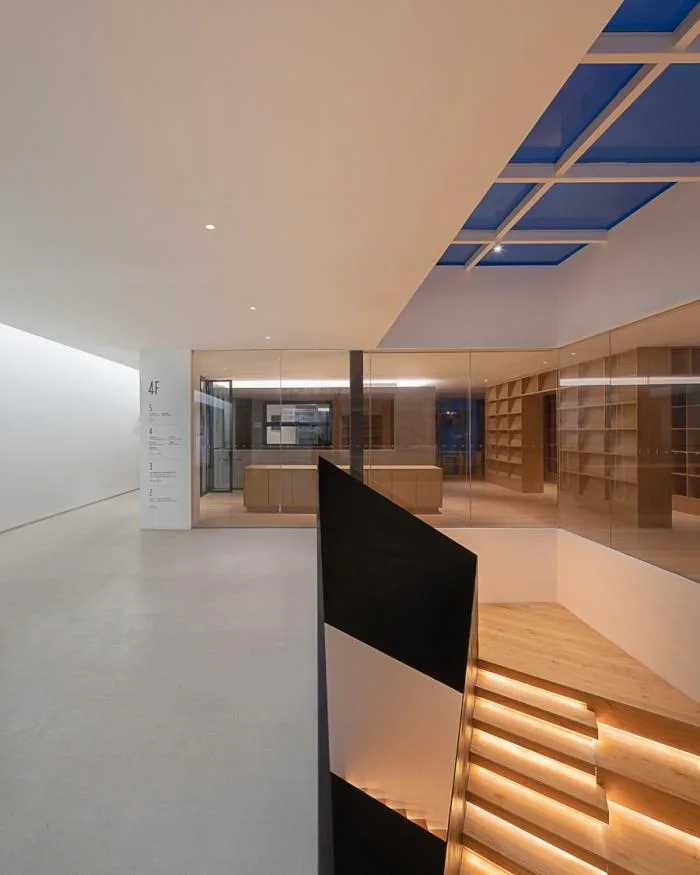
Relationship between the art store and skylights on the fourth floor plan © Zhang Chao
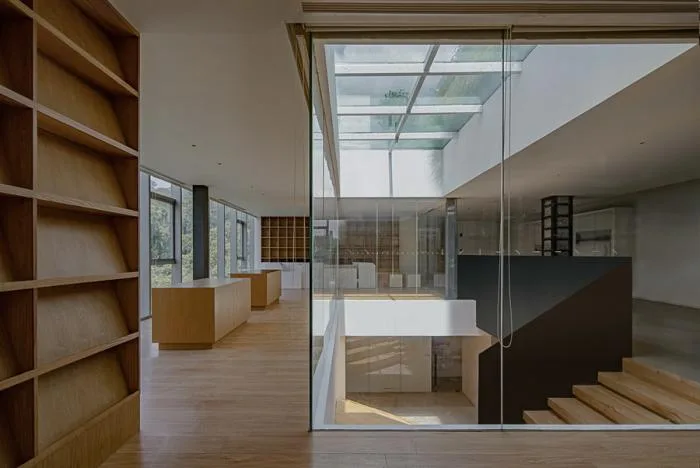
△ View of the skylight courtyard from the store © Zhang Chao
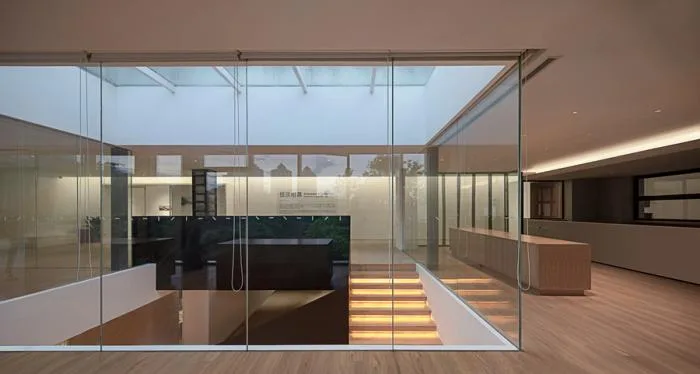
△ View of the skylight courtyard from the store © Zhang Chao
4F Gallery
Opposite the art store is the gallery space, where the designer preserved the building’s original structural columns. The exposed reinforced concrete beams and columns create a dialogue between old and new, contrasting with the smooth new walls, while hinting at the next functional space—a gallery that retains the original building framework.
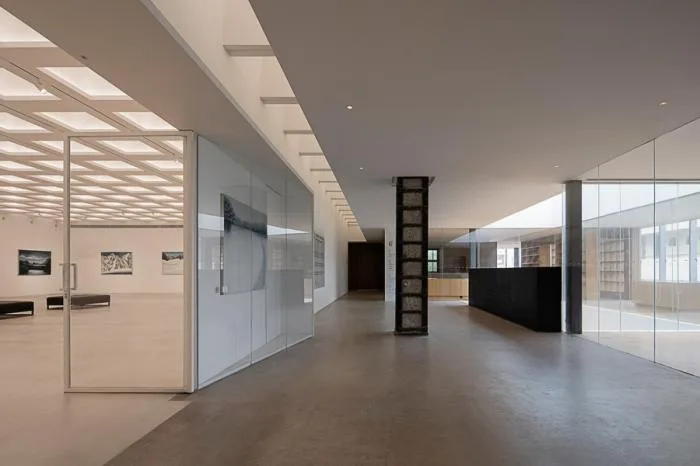
△ Gallery entrance with preserved structural reinforcement traces © Zhang Chao
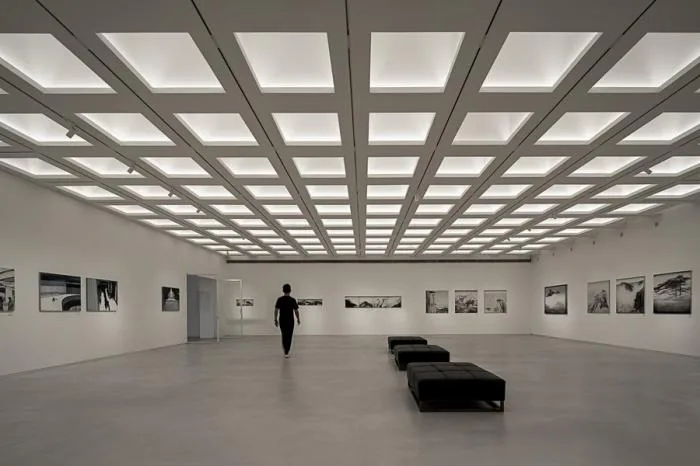
Inside the gallery © Zhang Chao
The column-free space created by the original cross-shaped beams provides strong spatial order. Added lighting enhances this aesthetic while creating a bright, comfortable environment.
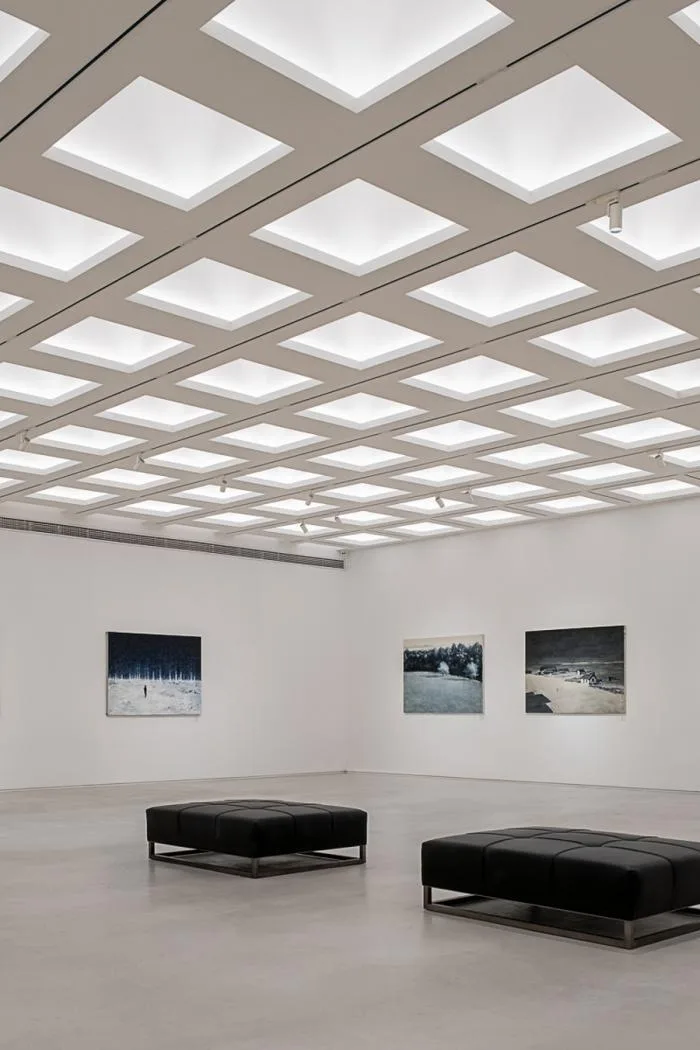
Inside the gallery © Zhang Chao
3-4F Theater
The theater occupies the 3rd and 4th floors on the east side. The architect recessed the space outside, forming a double-layered grey corridor that invites visitors to experience the environment—plants, wind, rain, and sunlight—while moving between interior and exterior. This corridor softens the boundary between building and nature. The steel columns connecting the floors contrast with the wild plants around. Accessibility is provided via the third floor.
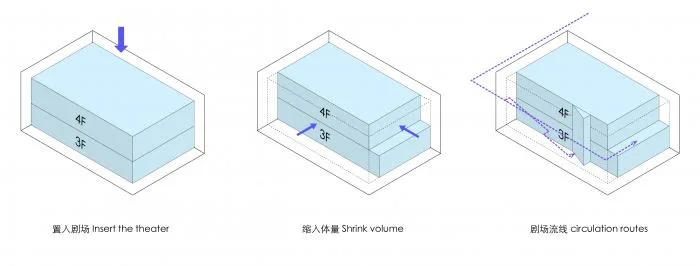
△ Theater space generation strategy © One ride building
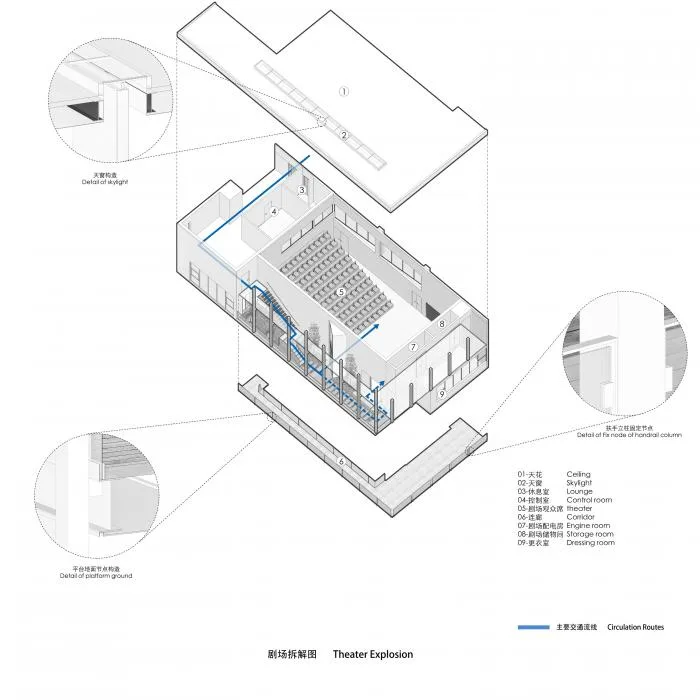
△ Theater spatial flow and detailed breakdown © One ride building
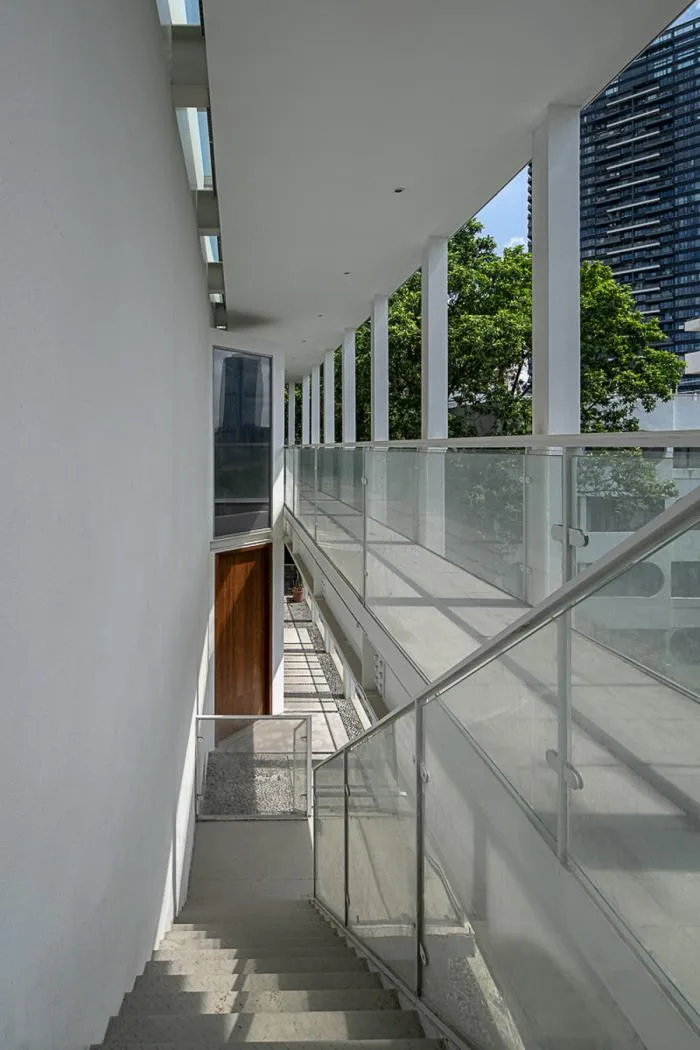
△ Two-story grey space and environment outside the theater © Zhang Chao
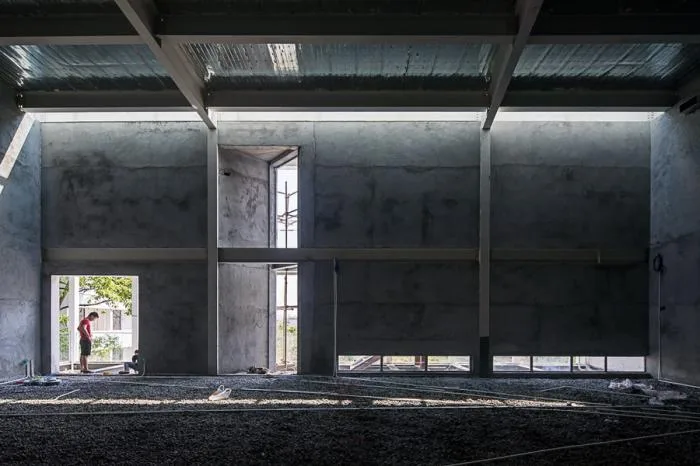
△ Theater interior during construction © Zhang Chao
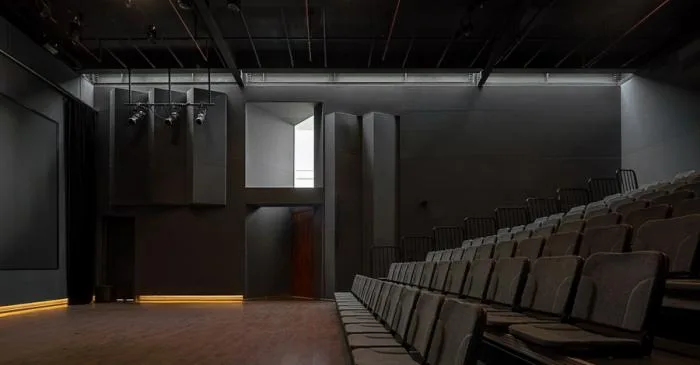
△ Theater interior after completion © Zhang Chao
5F Restaurant
The top-floor restaurant is organized around a central courtyard, with dining rooms and kitchens arranged in clusters. The architect rotated these blocks and introduced roof openings, fostering a close connection with nature. Triangular balconies enrich the natural experience, allowing guests to savor plant fragrances and dappled tree shadows.
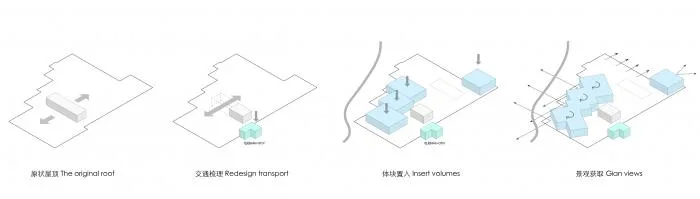
△ Roof building generation strategy © One ride building
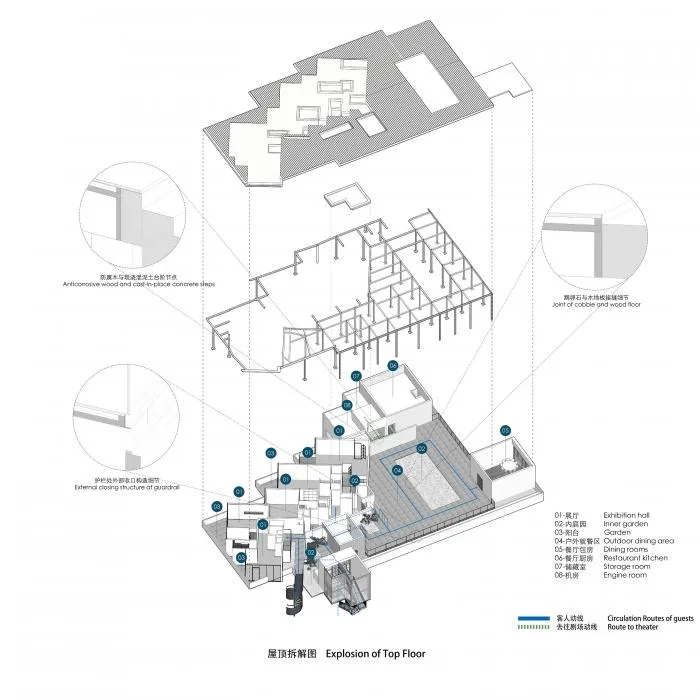
△ Roof layout and detailed disassembly diagram © One ride building
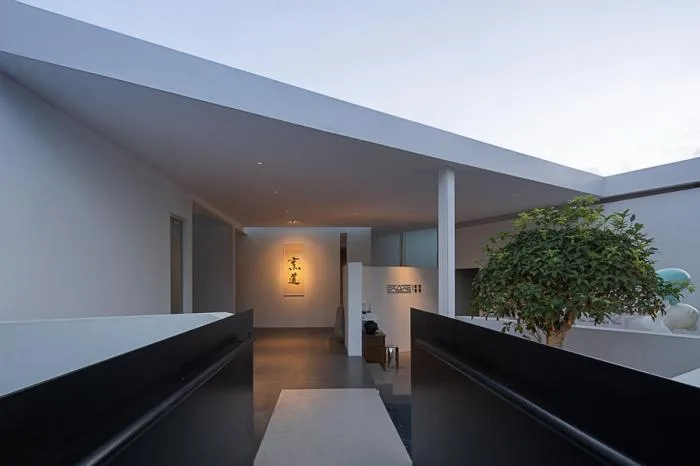
△ Restaurant entrance © Zhang Chao
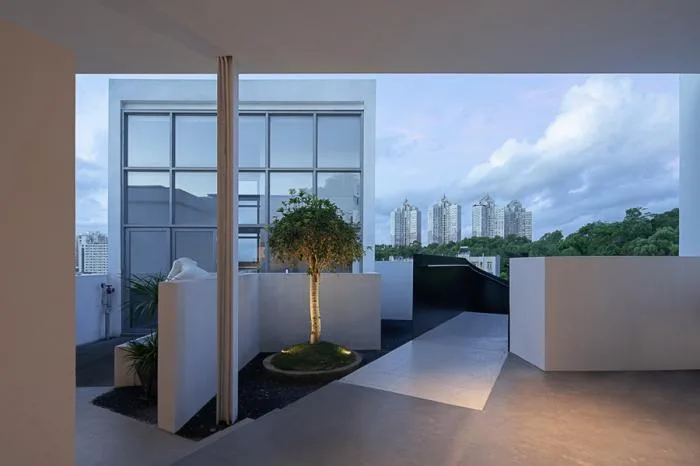
△ View of the surrounding environment from the restaurant entrance © Zhang Chao
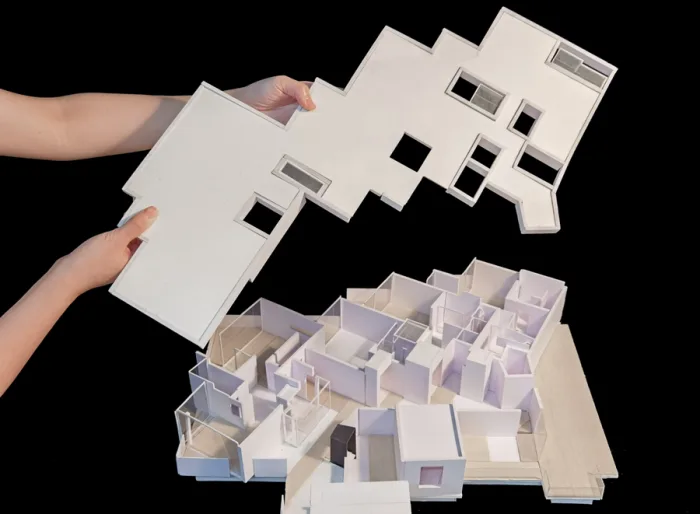
△ Model detail: roof openings create favorable lighting conditions indoors © One ride building
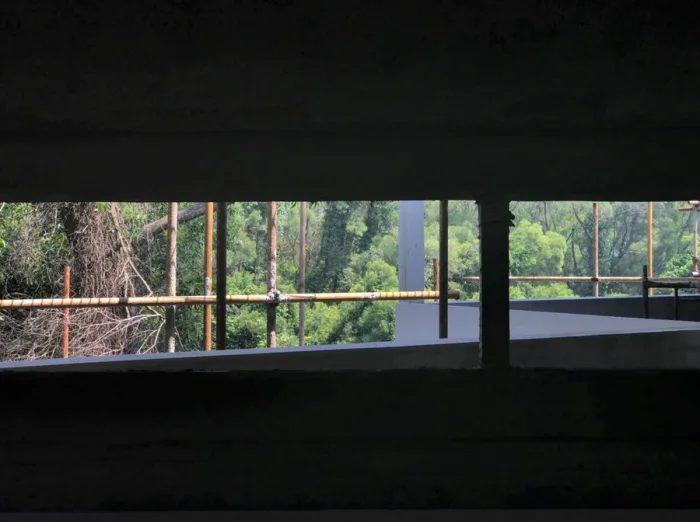
Indoor space merging with nature during construction © One ride building
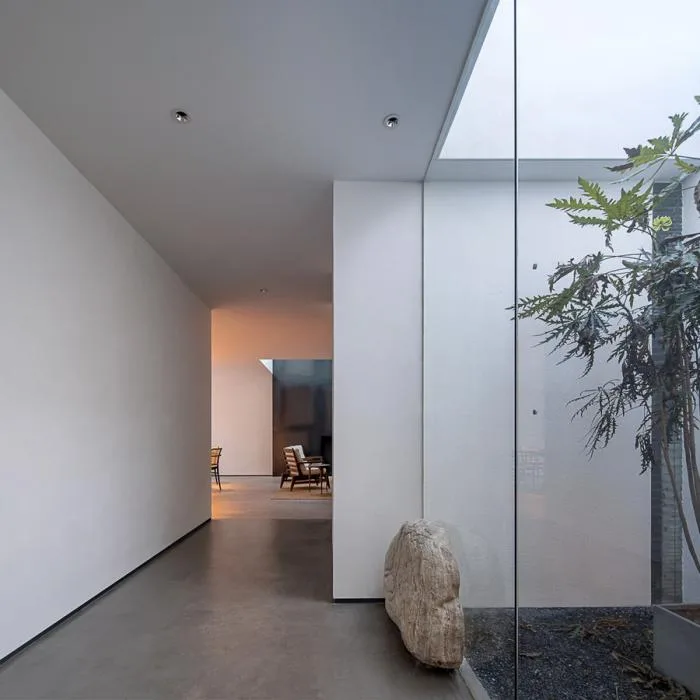
Creating space and light © Zhang Chao
The elevated circular corridor at the restaurant’s center, supported by a 150×150 I-beam matrix, adds lightness and order. The floor is segmented with materials like greenery, pebbles, weather-resistant wood, and concrete. Immersed in this setting, with views of the distant city skyline, the dialogue between architecture and nature forms a unique local spirit, inviting lingering.
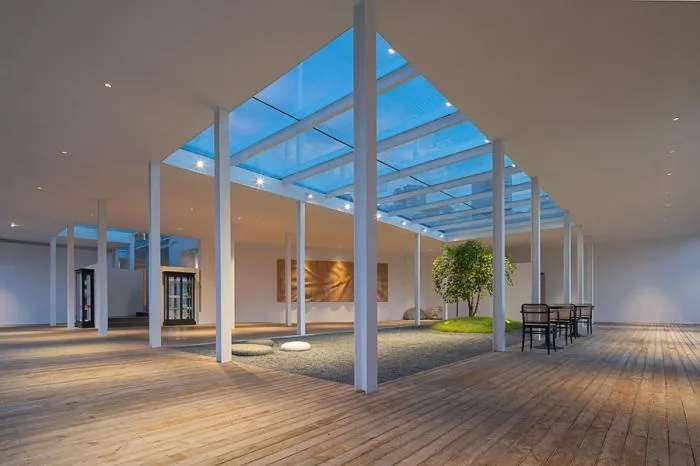
△ Roof terrace © Zhang Chao
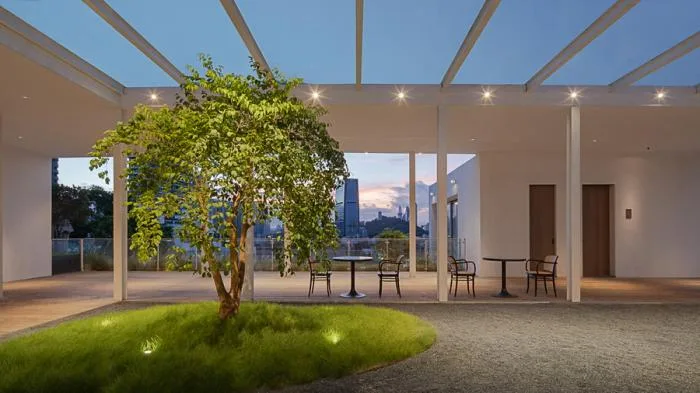
△ Terrace courtyard © Zhang Chao
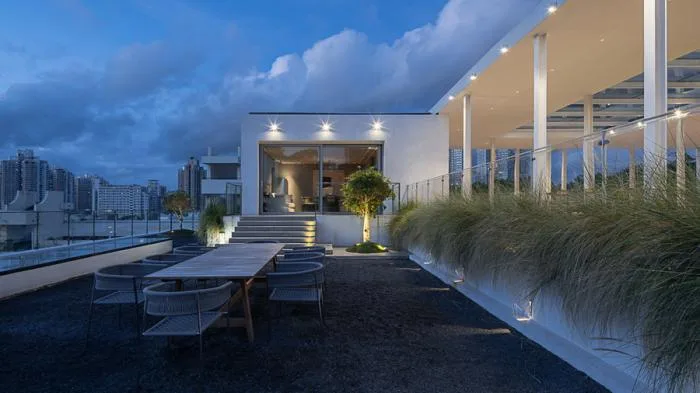
Outdoor dining area on the terrace © Zhang Chao
06
Afterword: Rebirth is Growth
Following a year of construction at Yanhan Highland, the Yicheng Architecture team relocated their studio here. If every architect has a project reflecting their growth, Yanhan Highland stands out as a milestone for Yicheng Architecture.
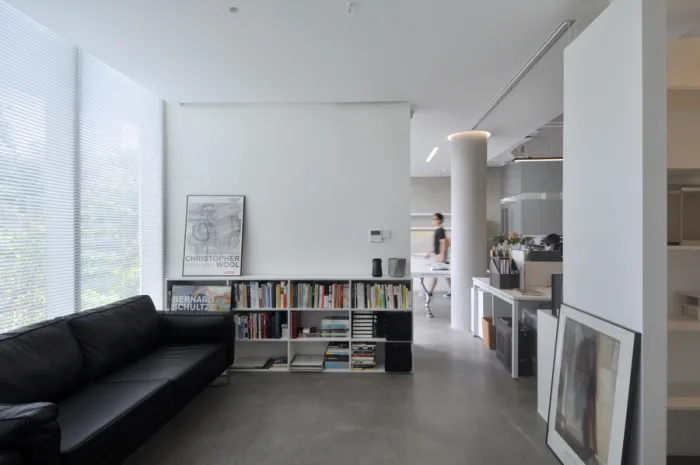
Daily life in the studio after moving to Yanhan Highland © Luo Qi
Since the project’s inception before 2017, the Yicheng team faced many challenges—from initial planning to construction and supporting the owner in investment attraction. Despite difficulties and setbacks, the team remains grateful for the opportunity to explore and expand possibilities.
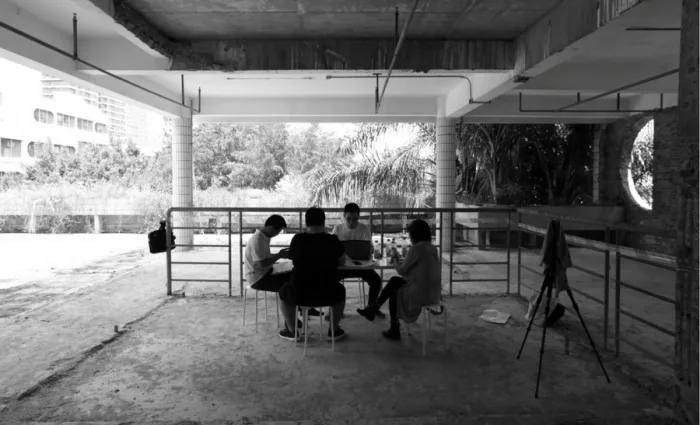
△ Reflecting on complex site conditions, the design team conducted on-site measurements and modeling © One ride building
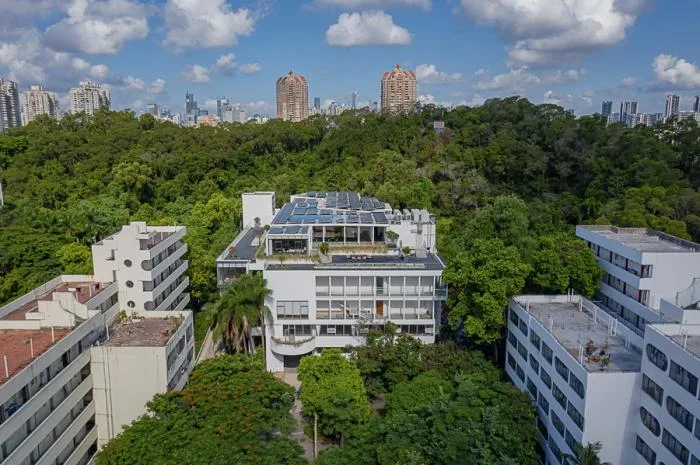
△ Aerial view of the building’s east façade © Zhang Chao
Previously, we pursued perfection and experimented with every project. However, the Yanhan Highland project taught us the value of close collaboration with the client, truly understanding their challenges. This sincere cooperation and relentless exploration represent the growth this project has brought us. The rebirth of an old building is also a new journey of growth—for both architecture and people.
Design Drawings
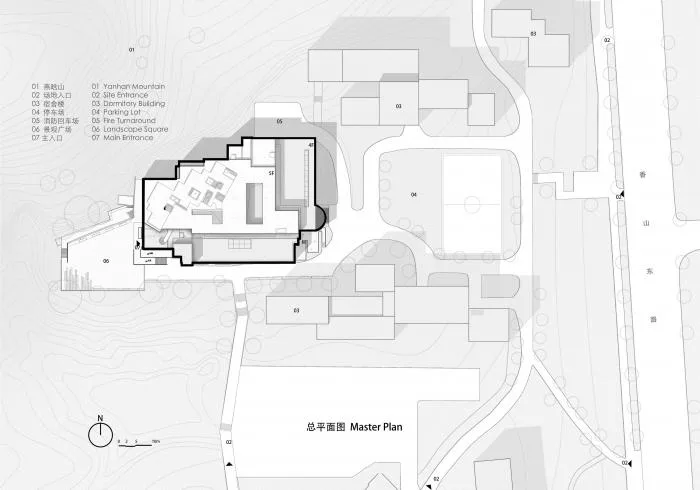
△ General layout plan © One ride building
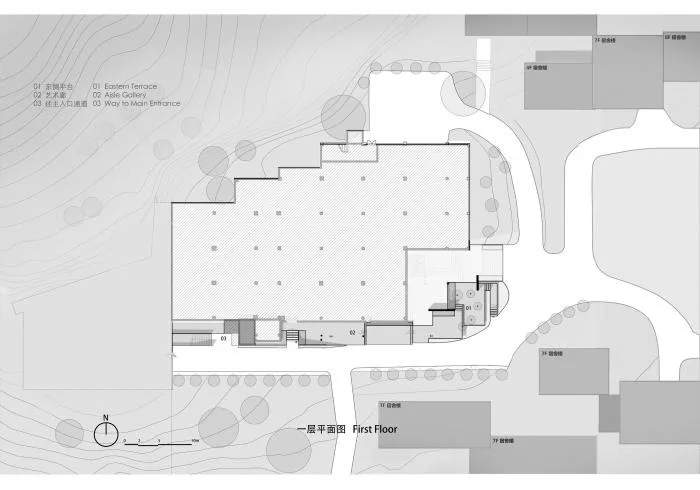
△ First floor plan © One ride building
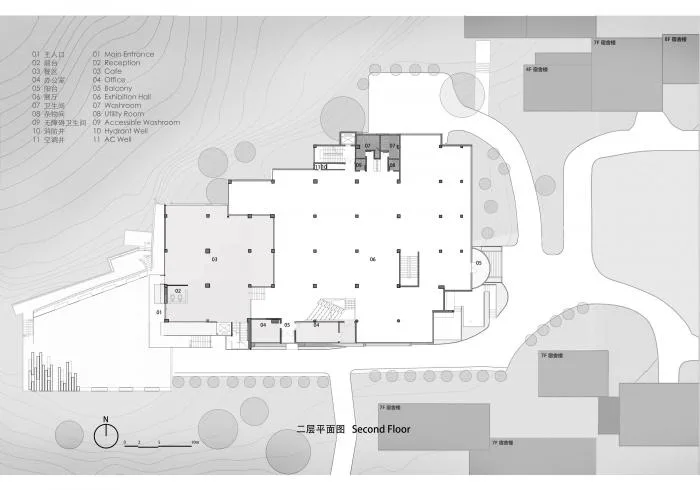
△ Second floor plan © One ride building
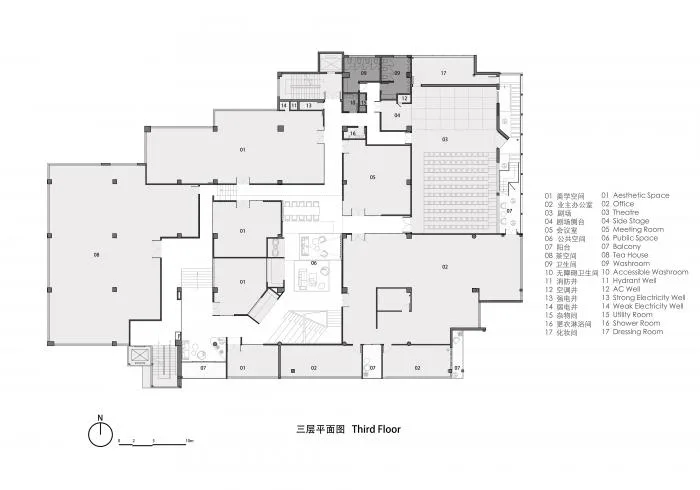
△ Third floor plan © One ride building
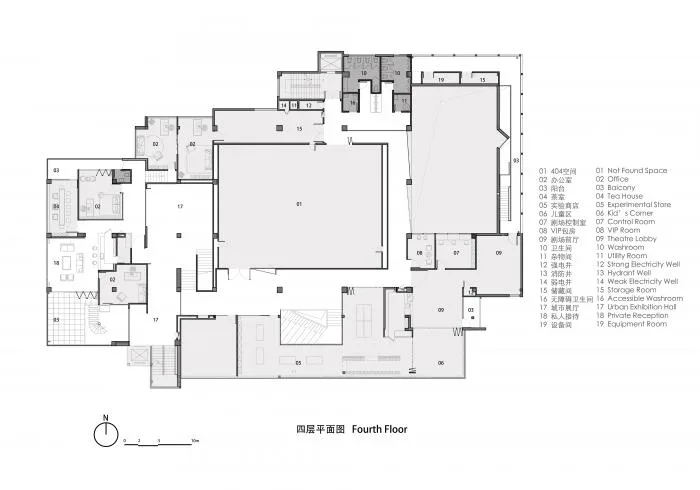
△ Fourth floor plan © One ride building
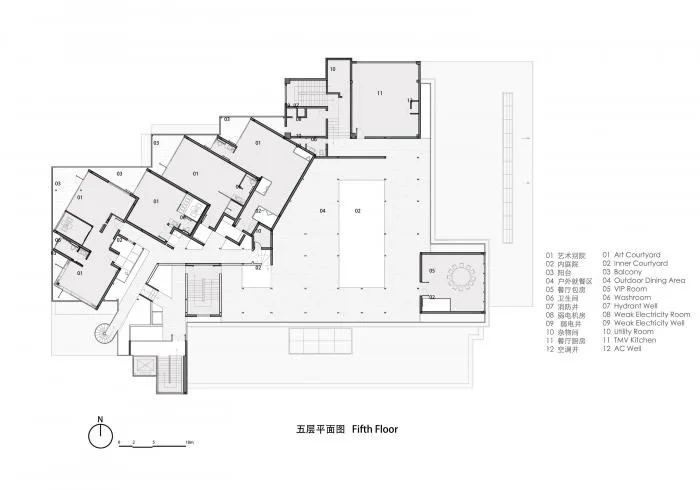
△ Fifth floor plan © One ride building
Project Information
Project Name: Yanhan Highland
Location: Building 6, Xiangshan Village, Xiangshan Street Community, Shahe Street, Nanshan District, Shenzhen
Design Team: Yicheng Architecture
Office Website: www.onexn.com
Lead Architects: Zhang Bo, Wang Jingjing
Team Members: An Bingxiang, Fu Yanli, Qiu Jianhai, Zeng Ming, Wang Wanyue, Yuan Jingjing, Cai Ziying (intern), Jiang Peichun (intern)
Construction Drawings: Chen Ming
Interior Construction Drawings: Li Nanfang, Li Wenkui
Structural Consultant: Tang Citizen
Structural Reinforcement Method: Externally bonded steel with anchor-type hoop plates
Materials: Cement self-leveling, weather-resistant steel, bamboo steel, ultra-white glass, glass bricks, white latex paint
Lighting: PUDI Lighting
Scale: 6,000 square meters
Design Period: 07/2017–12/2017
Construction Period: 02/2018–09/2019
Photographer: Zhang Chao












Must log in before commenting!
Sign Up