
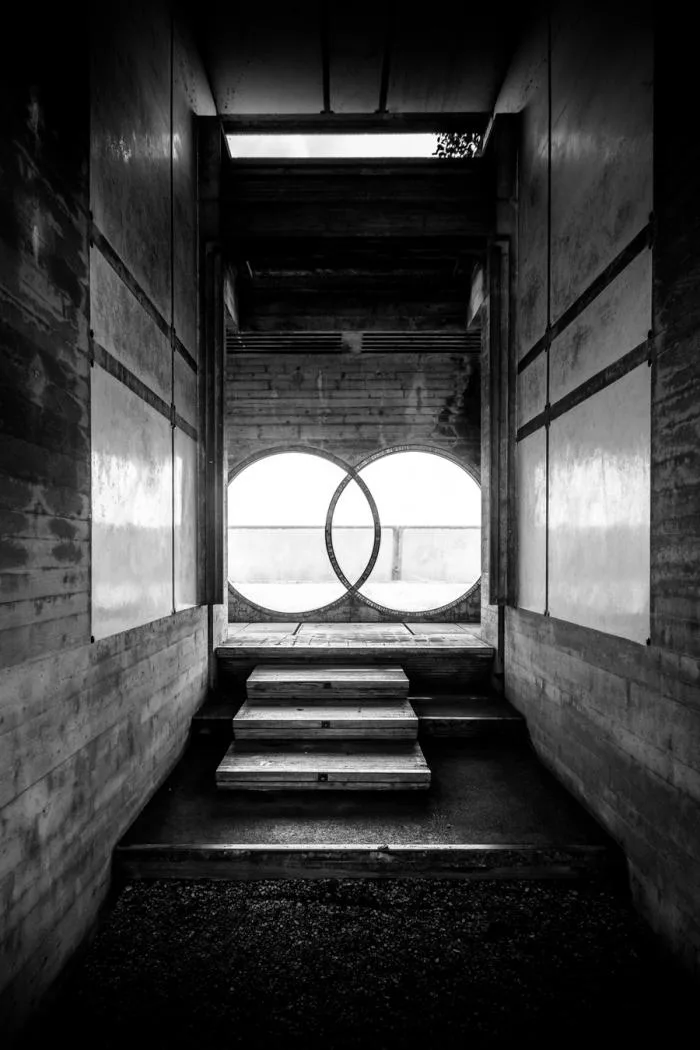
△ Image source: Online
“I tried to give him (Brion) some poetic imagination, not to create poetry, but to give him a formal poetic feeling.” — Carlo Scarpa
△ Project video
Brand Story
SigMann represents Debo Sickman, inspired by the names Sig and Manna. “Sig” stands for the brand’s appeal, derived from the English term “Special Interest Group,” referring to people sharing unique perspectives or needs. It extends to represent successful individuals with refined culture, quality, and aspirations. “Manna,” originating from the Bible, symbolizes spiritual nourishment.
Over time, SigMann has developed a profound brand identity. It offers essential home products while promoting a distinctive lifestyle through timeless classics, embedding the concept of a better life into countless families.
Design Innovation
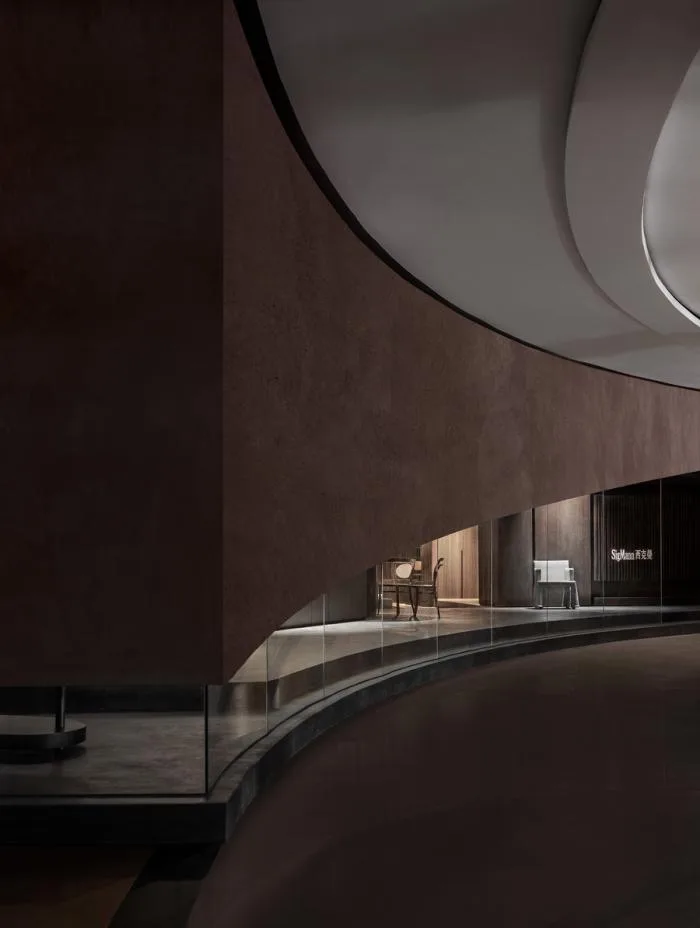
As consumer standards and awareness evolve, a quiet revolution in kitchen design is underway in China. More families now prioritize the quality and design of kitchens, bathrooms, and home furnishings. In this context, SigMann’s offline exhibition hall plays a vital role, providing immersive scenes that inspire visitors’ imagination about future living.
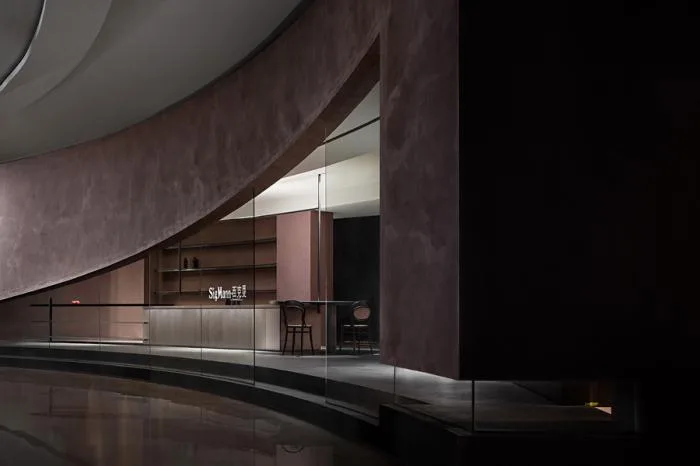
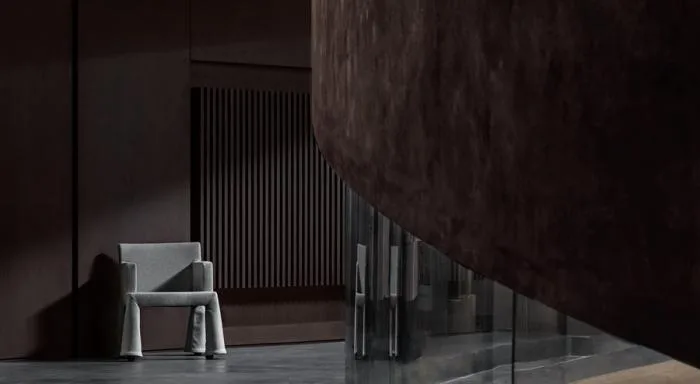
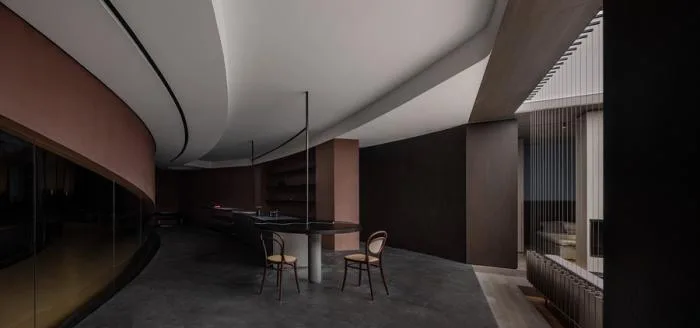
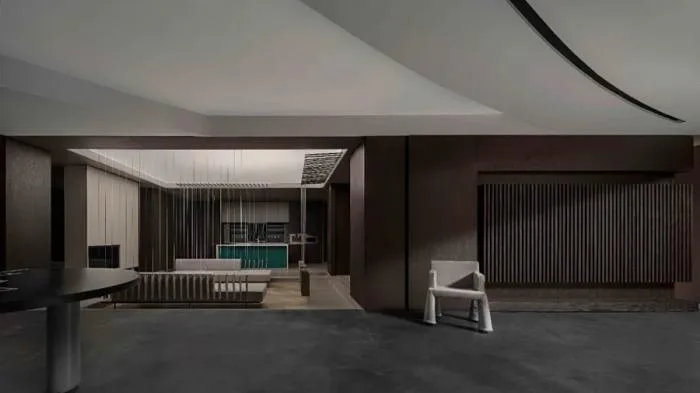
The original SigMann site is located within Guangzhou Jockey Club Home Furnishings. The designer deconstructed the rigid structure by replacing some glass curtain walls in the atrium with continuous new ones. This design allows people and scenery to flow together, dispersing natural light and organically creating a narrative spatial experience. The streamlined dome, weaving through interior and exterior spaces, unfolds like a curtain.
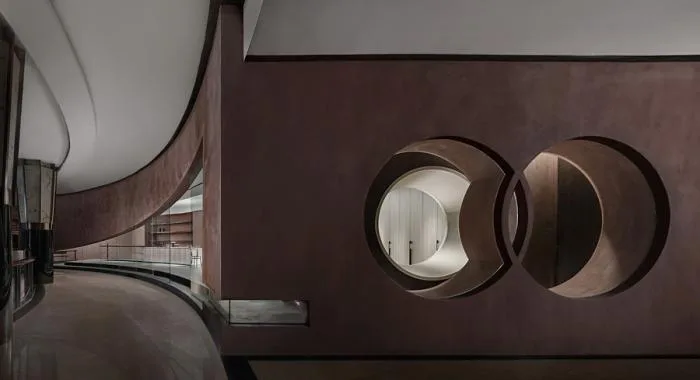
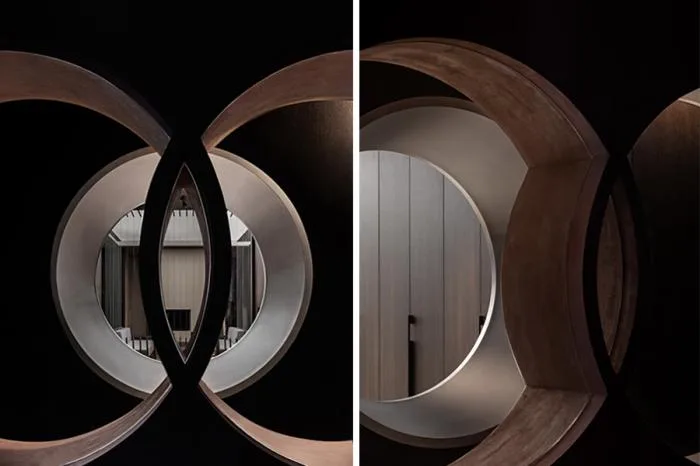
Inspired by the “borrowed scenery” technique from traditional Chinese gardens, the design enhances visual depth. The nesting, interlocking, and echoing of circular forms create a dynamic interplay of light and shadow, with rhythmic twists and turns. This symmetry and balance of circles is a key design element of the project.
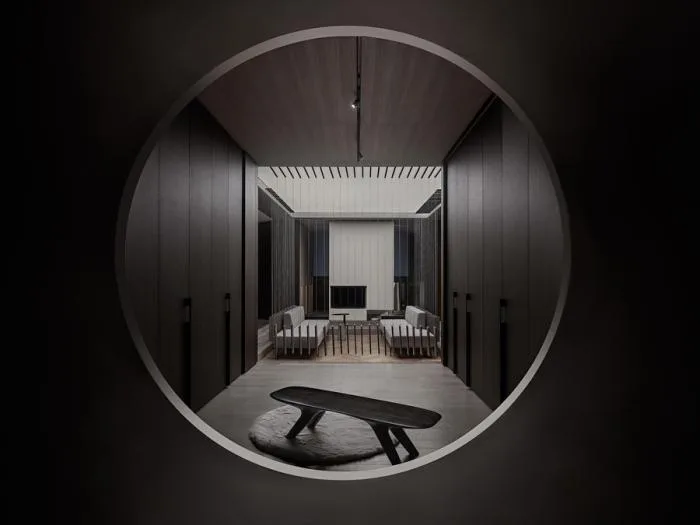
01 Manufacturing From Scratch
Modern design often relies heavily on cement and concrete, but materials and textures should not be so monotonous or barren.
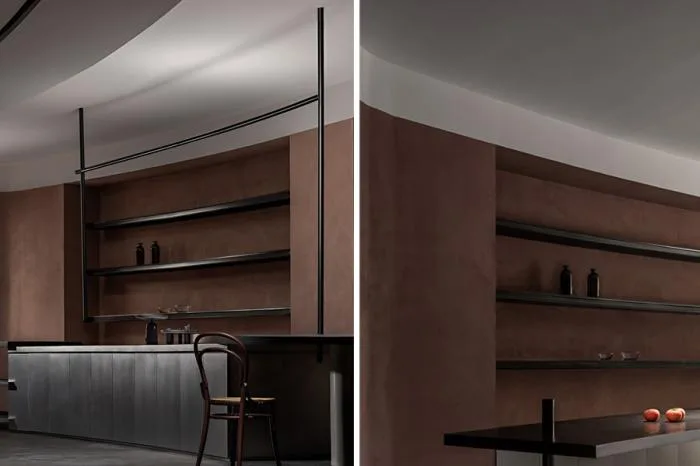
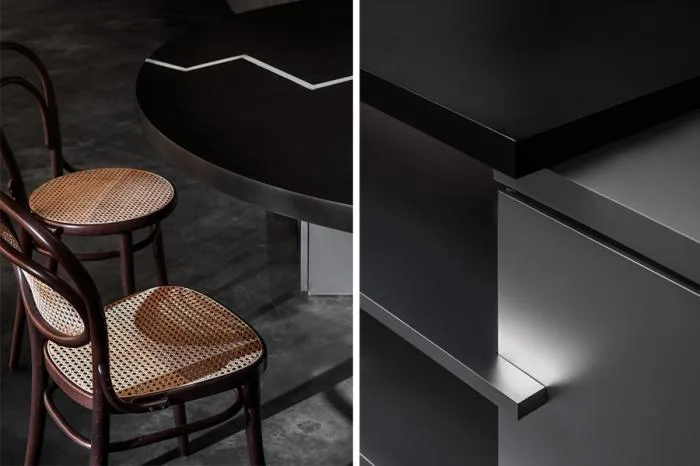
The design features a large, custom-made system guide platform with strong visual contrasts. Stainless steel materials bring an industrial feel, while cabinet walls are coated with a textured finish evoking the rugged, earthy “red soil” of plateaus—rough, rustic, and primitively embracing.
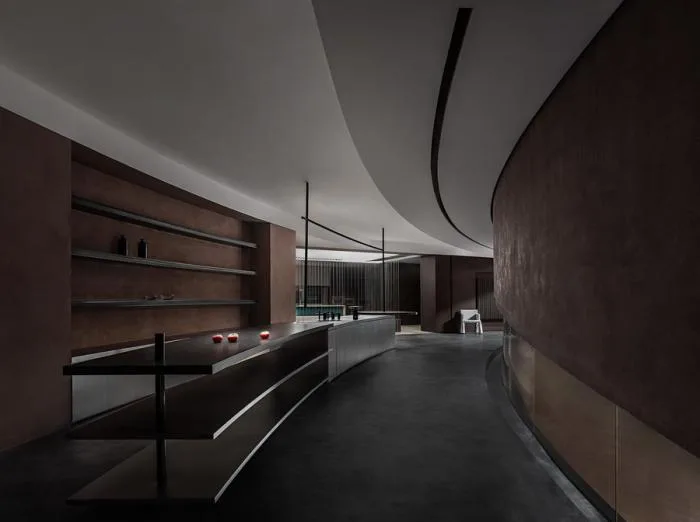
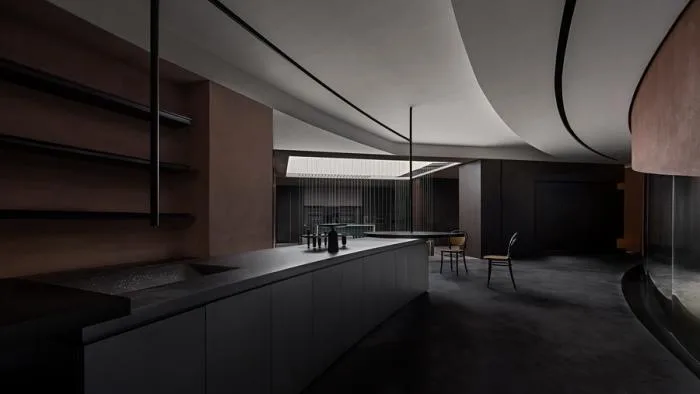
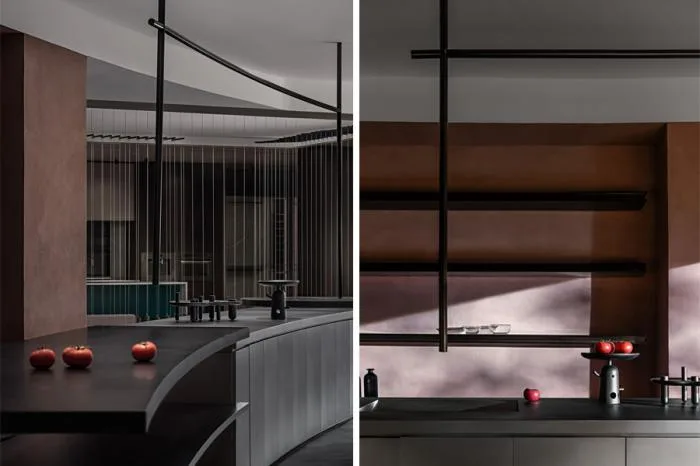
This approach liberates material by condensing and storing internal energy, reflecting what may be Kengo Kuma’s method of reclaiming freedom and awakening the dignity and pride of materials.
The upper and lower sections of the system guide serve kitchen and storage functions, with a clear, visible structure infused with a sense of everyday life.
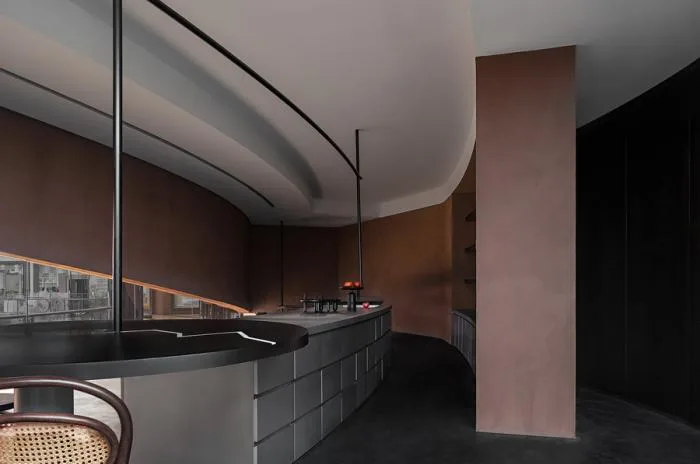
02 Surprise: Hidden Silence Amidst Chaos
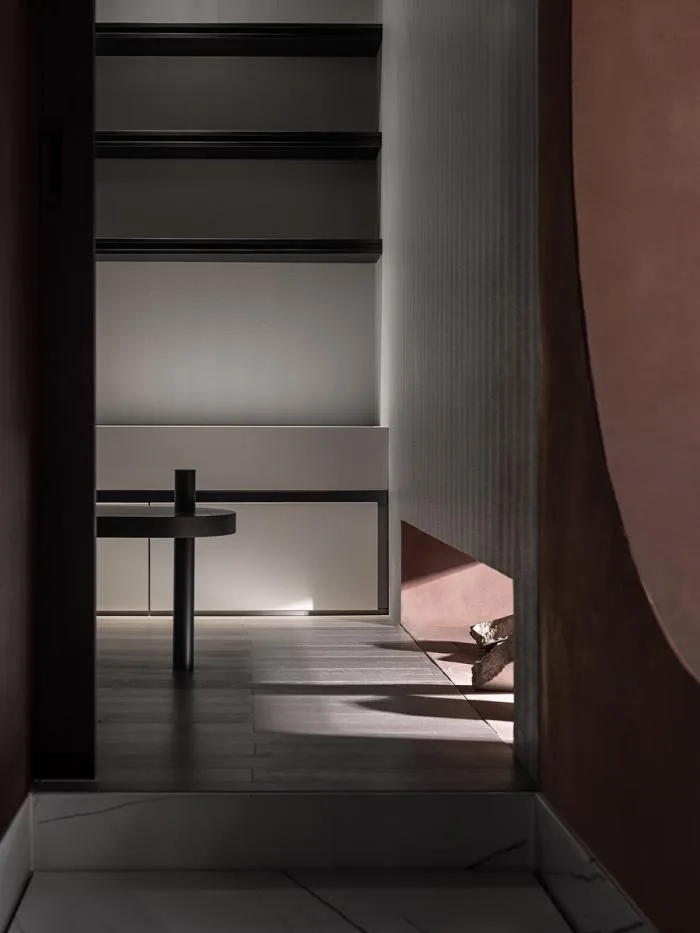
The corridor measures only 80 centimeters in width; it is the narrowness that connects people intimately. This winding path leads to a secluded space that exudes a ceremonial atmosphere. The contrasting walls blend modern and primitive elements, while windows invite natural light and breeze. Lamps hang like a solitary moon, enhancing the ambiance.


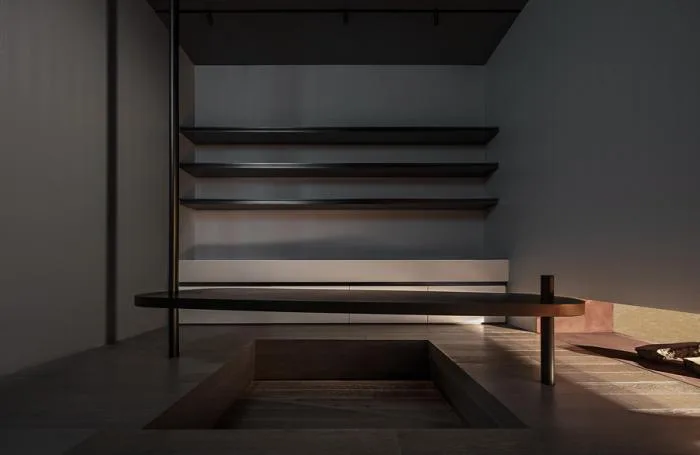
Inside the tea room, the integrated tea table extends over the sunken tatami mat, featuring simple, clean lines. Its intentional emptiness creates a space that carries meaning and function.
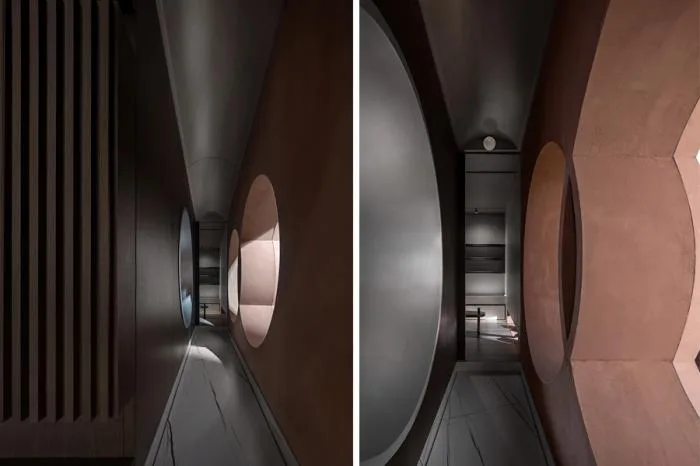
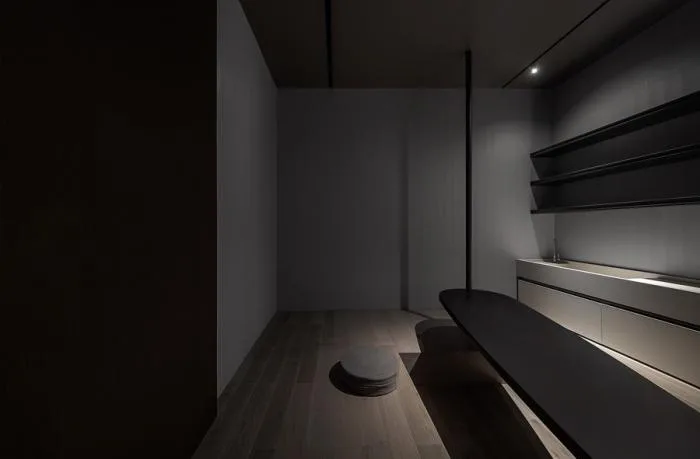
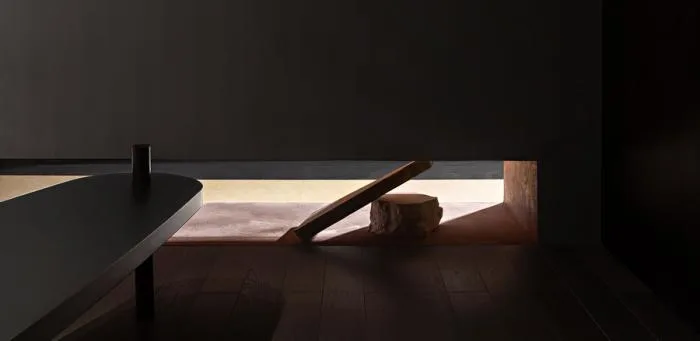
A partially enclosed wall creates a dynamic interplay of footsteps, light, and shadow. This subtle intersection between inside and outside spaces creates an unpredictable yet harmonious flow.

03 Preface: A Square of Heaven and Earth
The living room, located to the left of the staircase, becomes a focal point where movement and sightlines converge. A box-shaped structure suspended outside the main circular form adds a distinctive social element to the building.
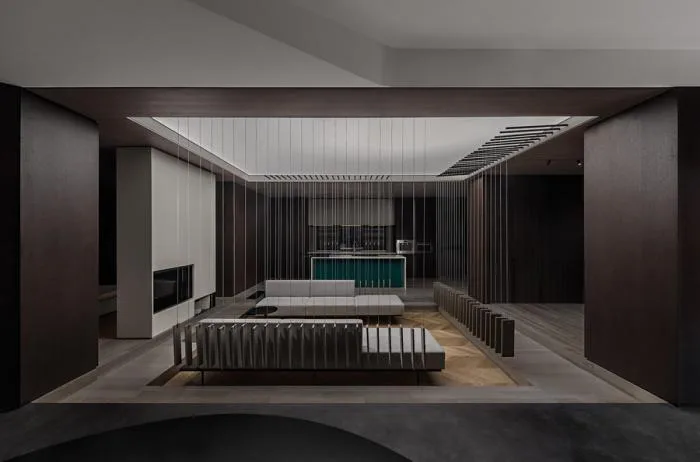
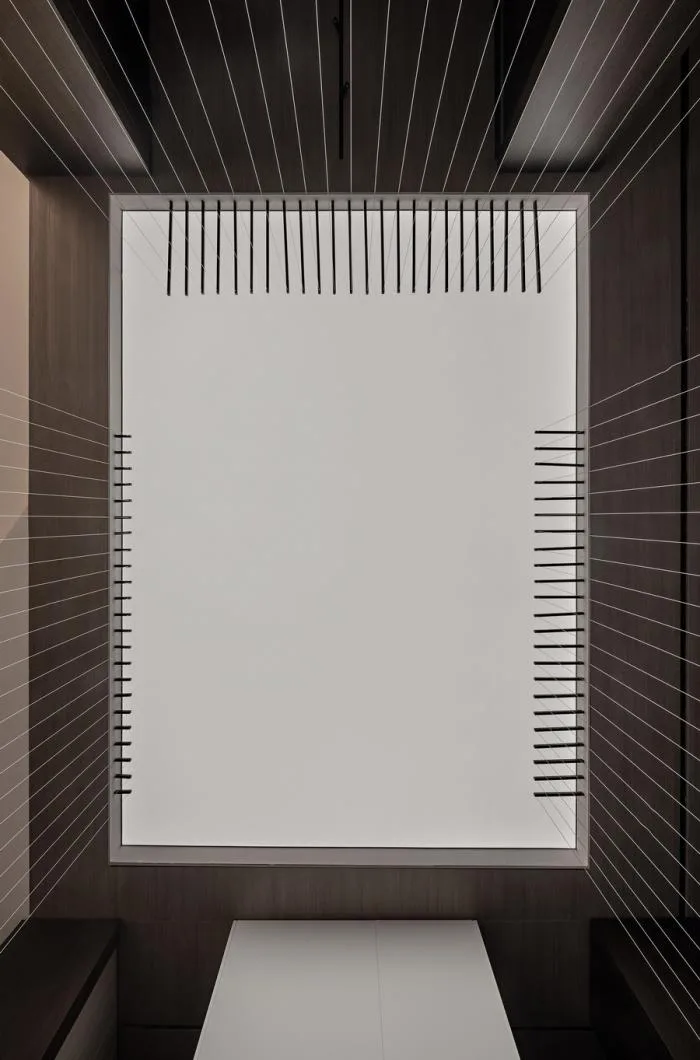
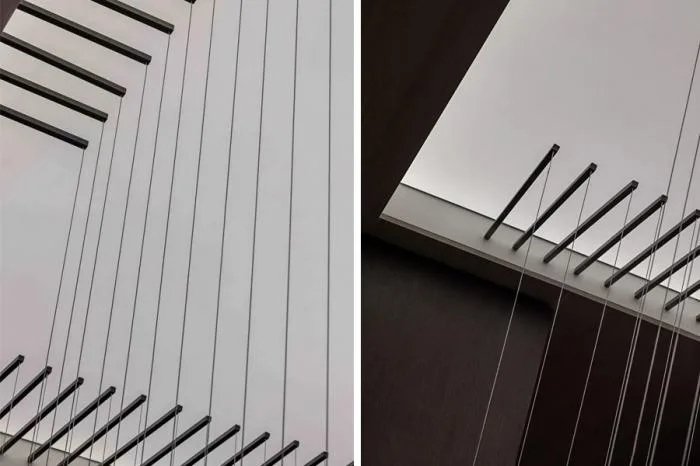
The sunken design creates a corner that feels like its own world—both inviting and exclusive. A “wall” composed of linear surfaces suggests separation without isolation, formed by hanging steel lines that act as a visual barrier and define psychological boundaries.
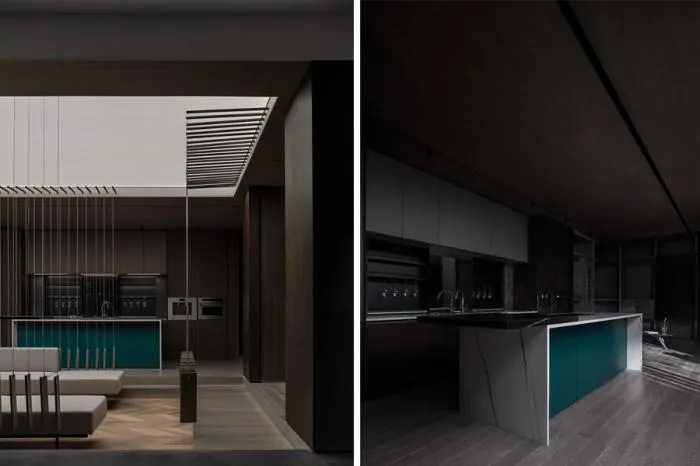
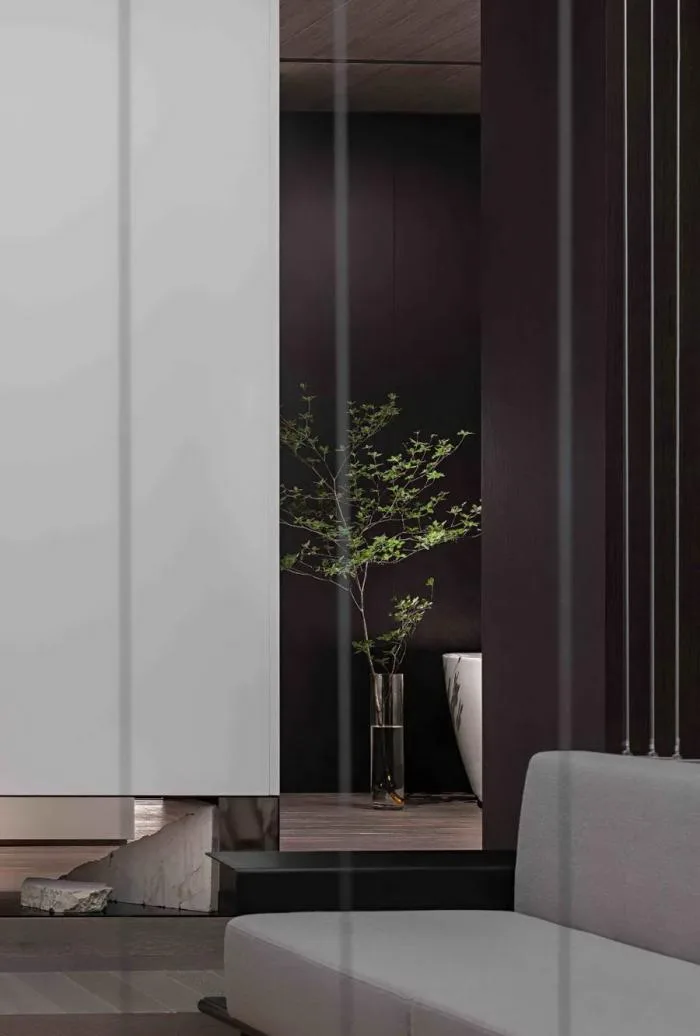
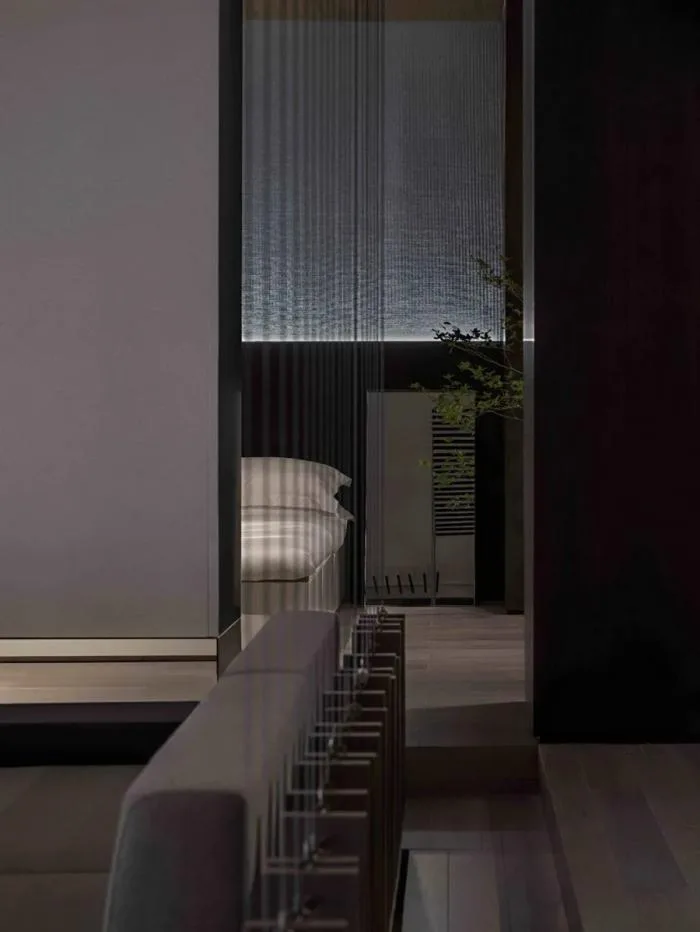
Inside the hall, visitors experience a comforting enclosure, while those outside sense an intuitive pause. This exemplifies the wisdom of spatial language and the inherent order in human interactions.
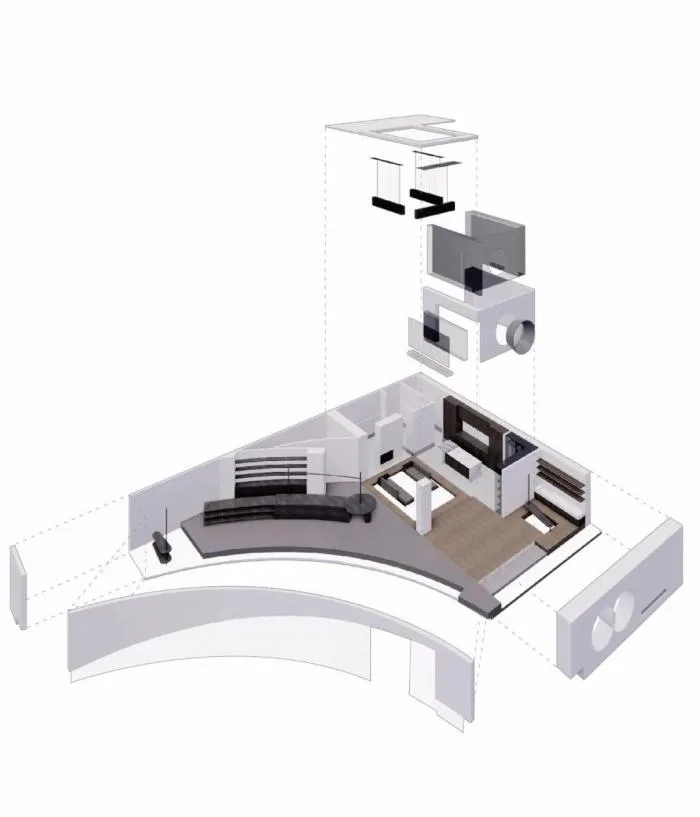
△ Spatial Model
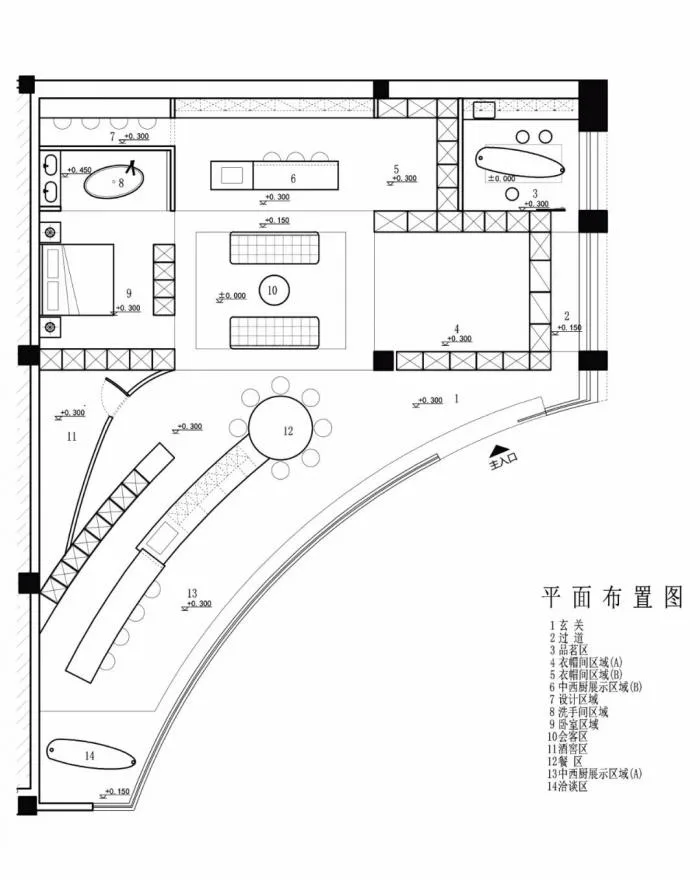
△ Floor Plan
Project Overview
Project Name: SigMann Customized Exhibition Hall
Location: Guangzhou, China (Jockey Club Home Furnishings)
Design Agency: Spring Plan Studio
Lead Designer: Wu Jiachun
Photography: Yanming, Benmotang
Project Area: 170 square meters
Design Period: October 2019
Completion Date: April 2020
Official Company Account: Spring Plan Studio
Special Thanks To: Da Huang Feng Metal (Guangzhou), Yiju Life (Guangzhou)












Must log in before commenting!
Sign Up