
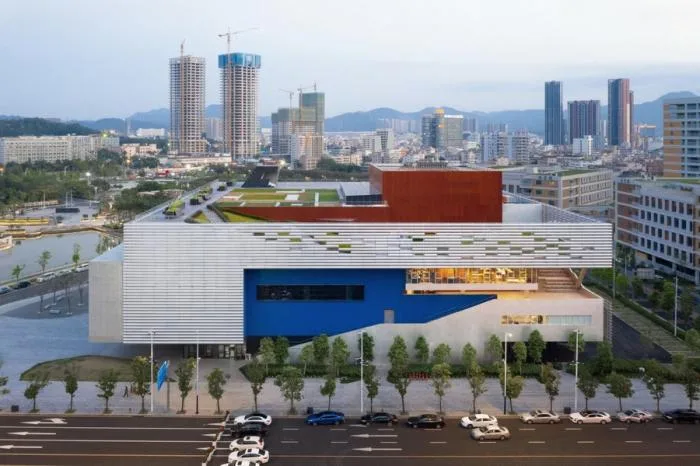
Project Overview
Over the past decade, China’s rapid economic growth and urbanization have led to a surge in new theaters. However, many of these structures feature exaggerated designs, serve a single function, and remain distant from the public, failing to integrate meaningfully into urban life and resulting in significant public resource wastage.
Through a competition, OPEN was awarded the design project for the Pingshan New District Theater in Shenzhen. This opportunity allowed us to critically examine the evolution of theaters in China and explore new possibilities for performing arts architecture.
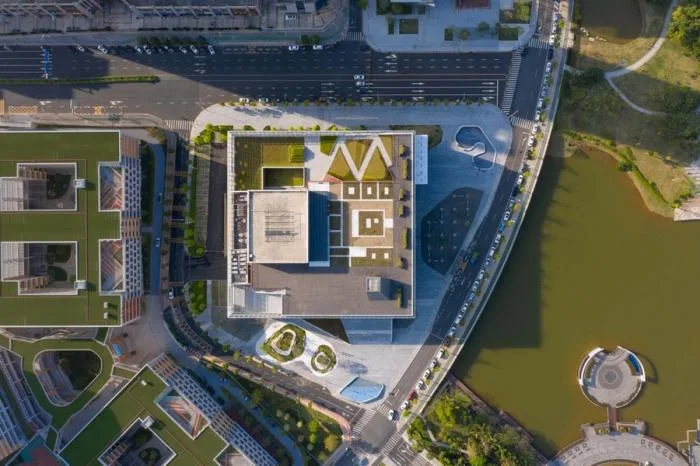
△ Aerial view © Zeng Tianpei
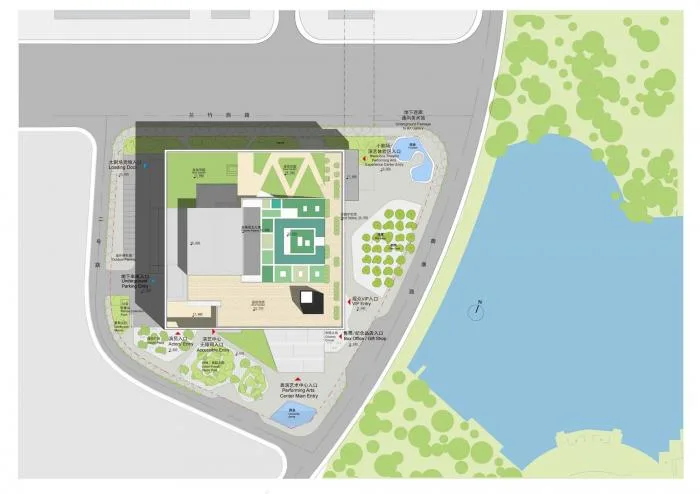
△ General layout plan
With strong support from the client, we revised the project brief to include more civic cultural and educational spaces related to the performing arts, as well as operational areas such as restaurants and cafés, expanding beyond the original single-theater function.
A public walkway connects a series of gardens accessible to everyone, closely integrated with the architecture. By moving away from the conventional “landmark” theater design, we aim to create a multifunctional performing arts center that is sustainable, truly public, and offers a unique urban space welcoming all visitors—not just ticket holders.
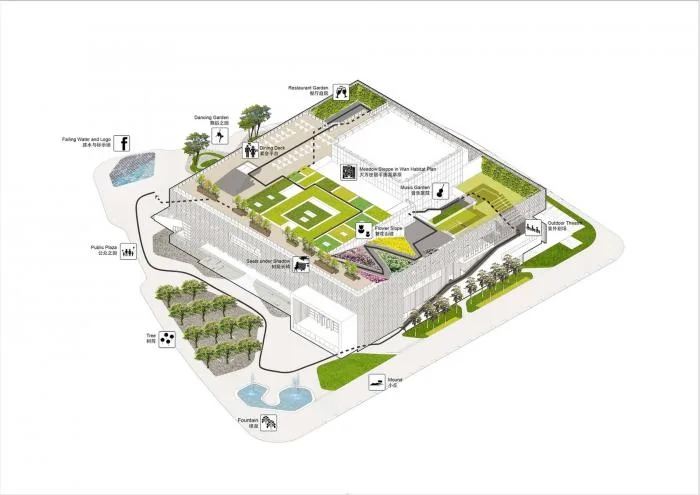
△ Streamline analysis
The grand theater doesn’t require an ostentatious exterior. OPEN designed a “theater box” that houses diverse functions within a simple, clean form. At its core is a 1,200-seat professional song and dance theater, clad in reddish-brown wooden panels that distinguish it both inside and out. The stage tower extends above the roof, serving as the backdrop for the rooftop garden.
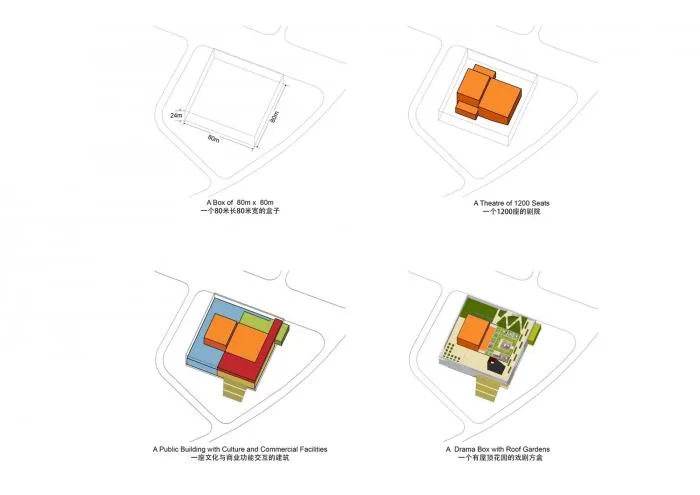
△ Shape analysis
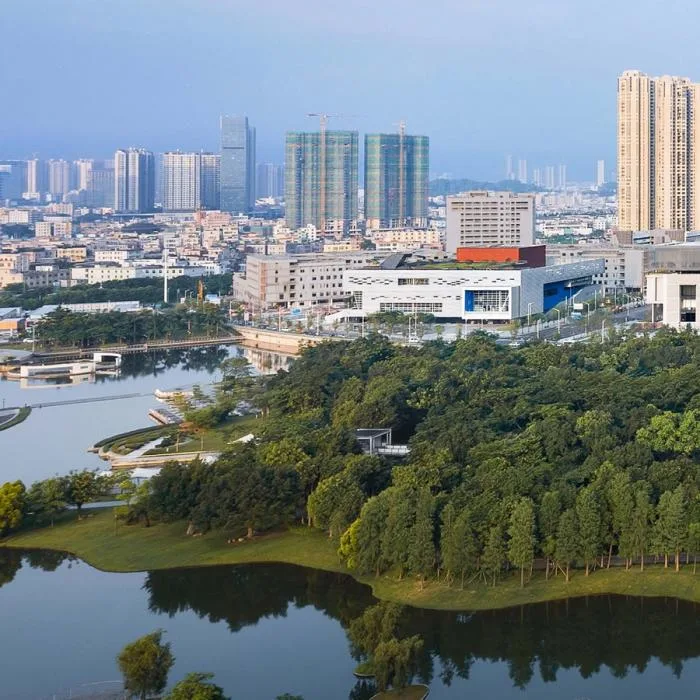
△ Vision © Zeng Tianpei
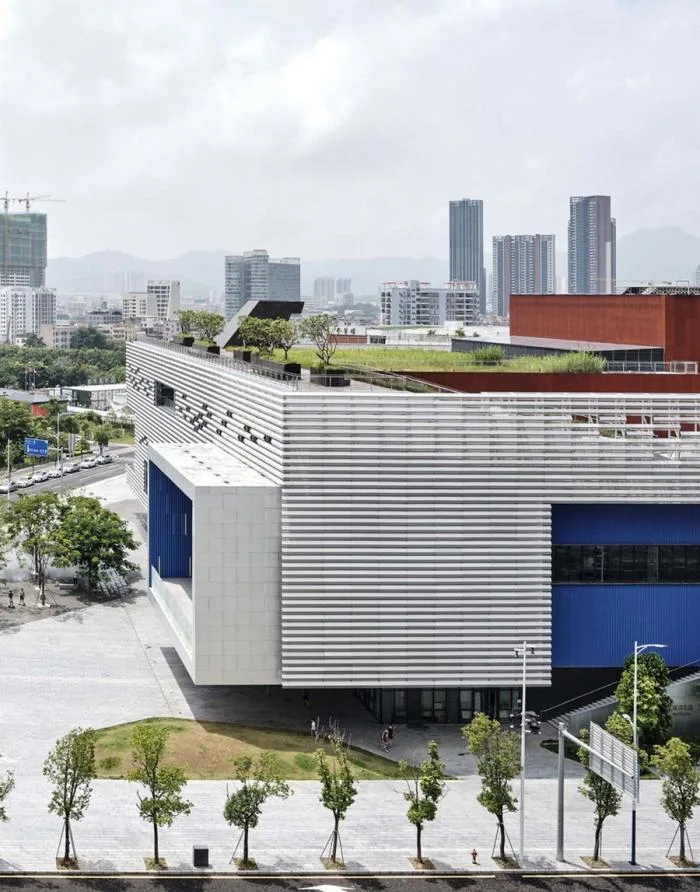
△ From public walkways to rooftop gardens © Lei Tan Tan Tan
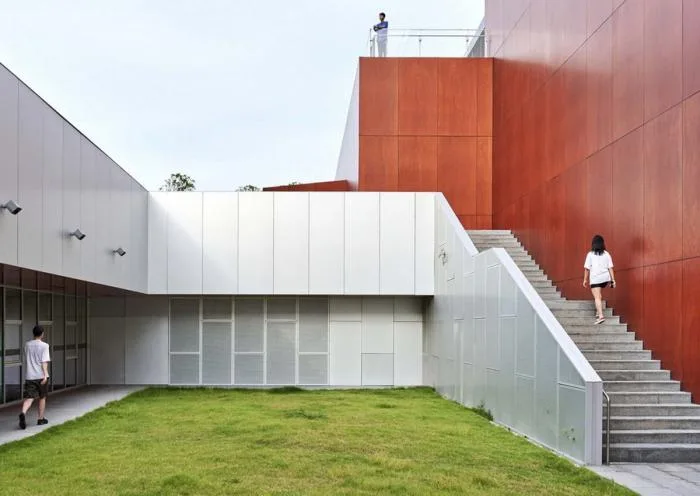
△ Theater platform © Lei Tan Tan Tan
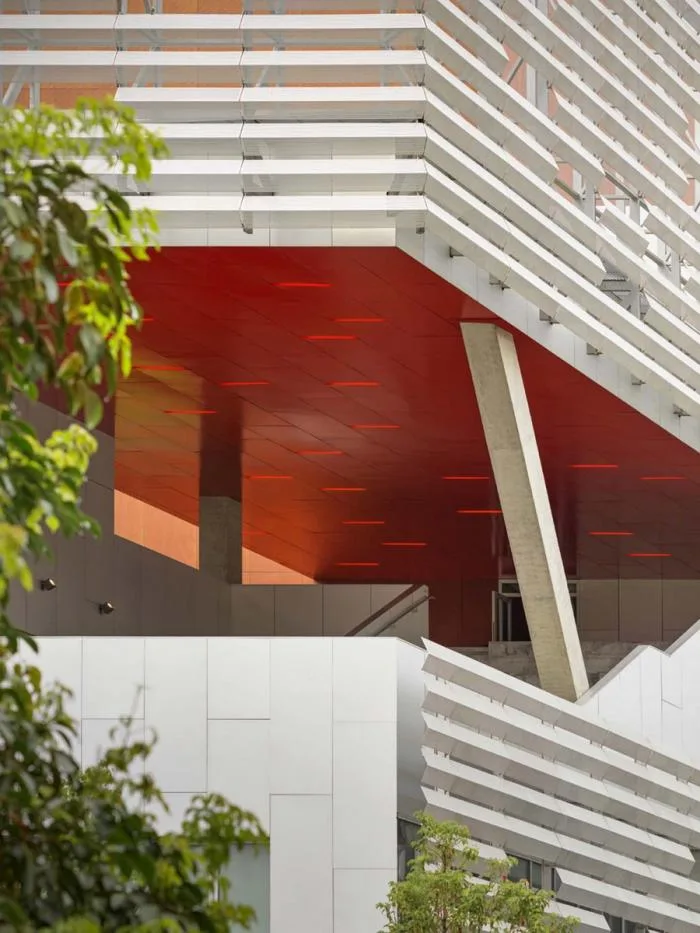
Half-outdoor space in the northeast corner © Lei Tan Tan Tan
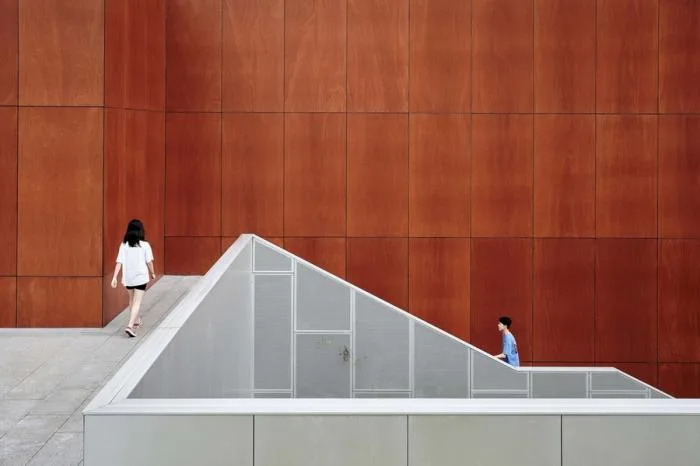
Tower wrapped in reddish-brown wooden panels © Lei Tan Tan Tan
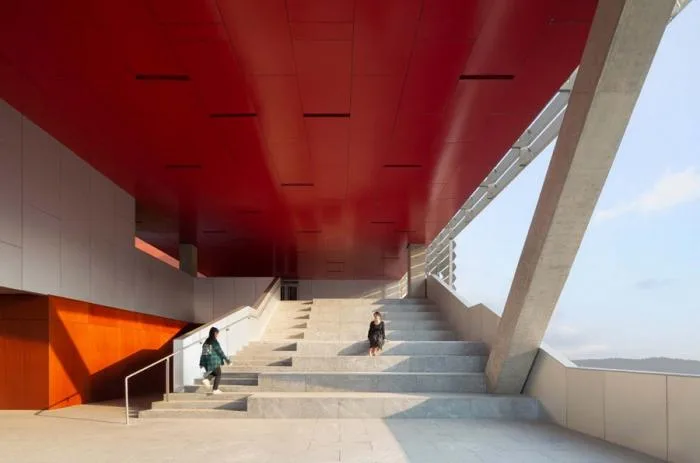
△ Semi-outdoor space © Zeng Tianpei
Surrounding the theater core, a winding public promenade slices through the “theater box,” inviting visitors to explore a variety of rich public spaces. These include professional black box theaters, rehearsal rooms, public performance training areas, outdoor stages, cafés, and gardens on each floor.
Even on non-performance days, the public can stroll from the ground-level plaza all the way up to the open rooftop garden. The interplay of spaces and nature reveals surprises and vibrant experiences with every step.
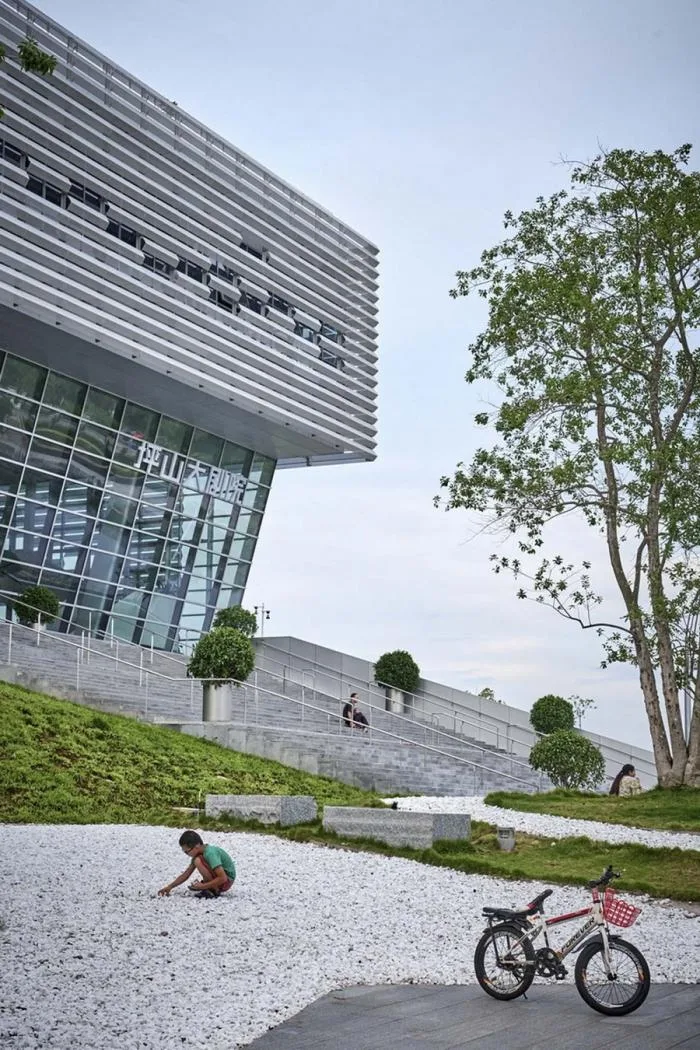
△ Main entrance © Lei Tan Tan Tan
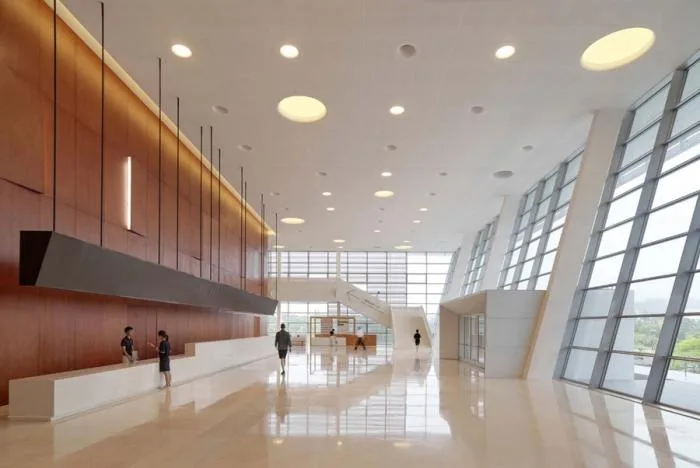
△ Entrance hall © Lei Tan Tan Tan
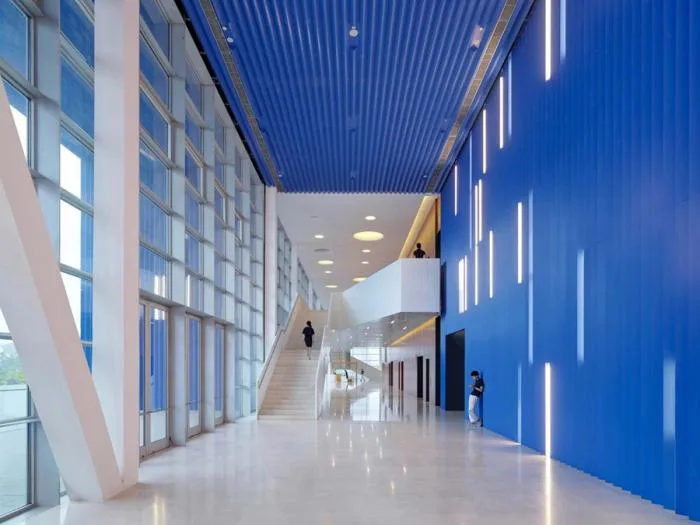
△ Black box small theater outdoor rest hall © Lei Tan Tan Tan
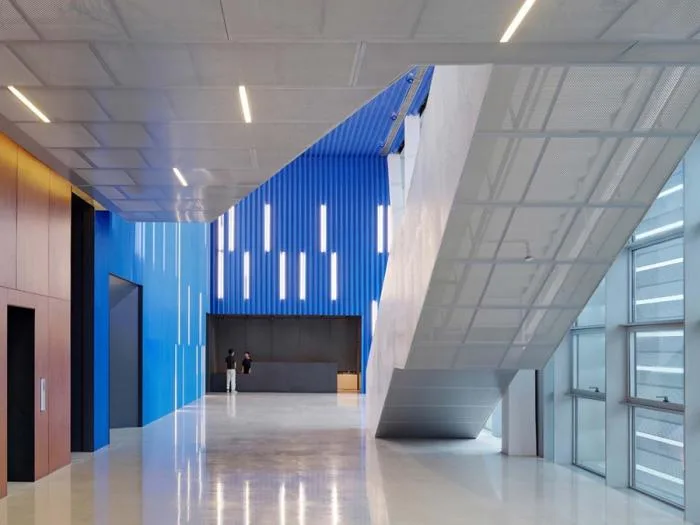
△ Black box theater outdoor bar © Lei Tan Tan Tan
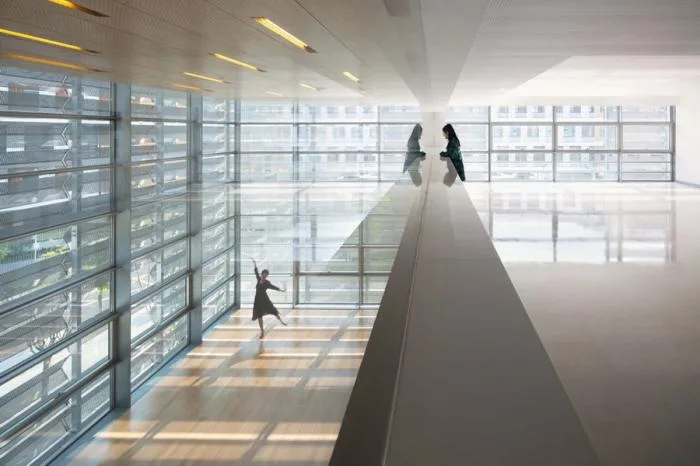
△ Dance studio © Zeng Tianpei
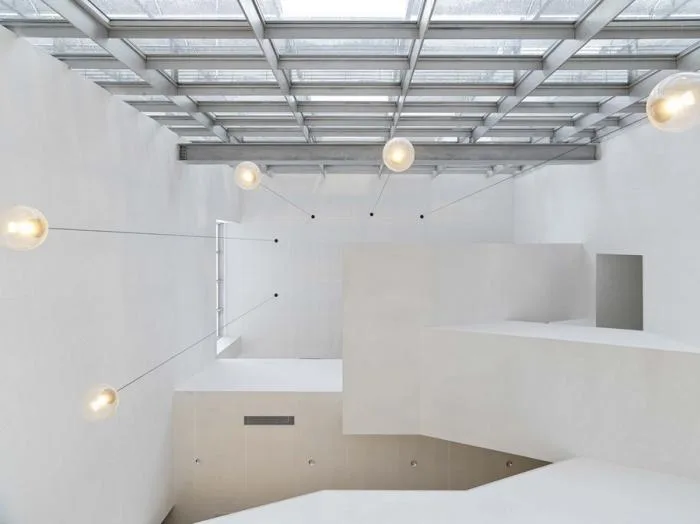
△ Experience center stairs © Lei Tan Tan Tan
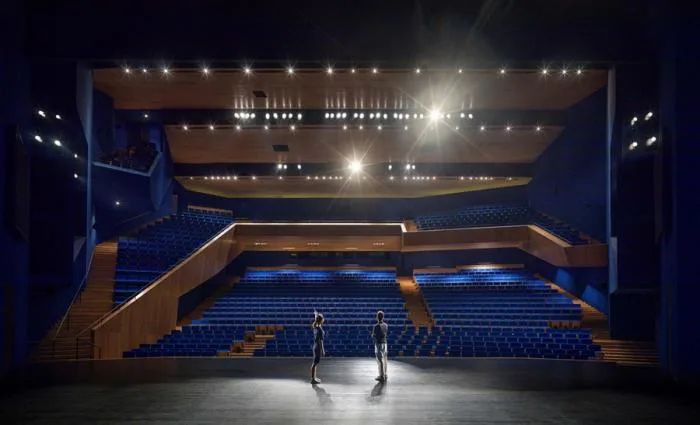
△ Grand theater © Lei Tan Tan Tan
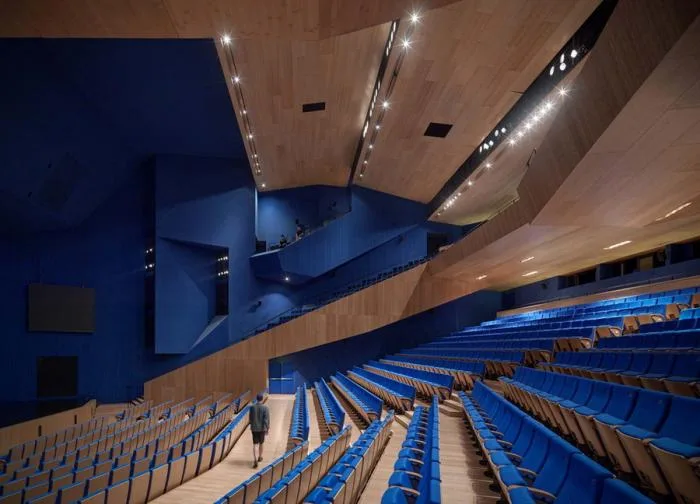
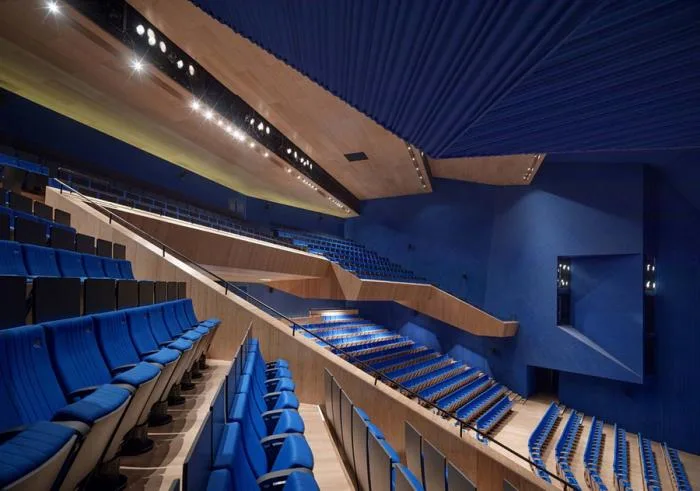
△ Audience seating in the grand theater © Lei Tan Tan Tan
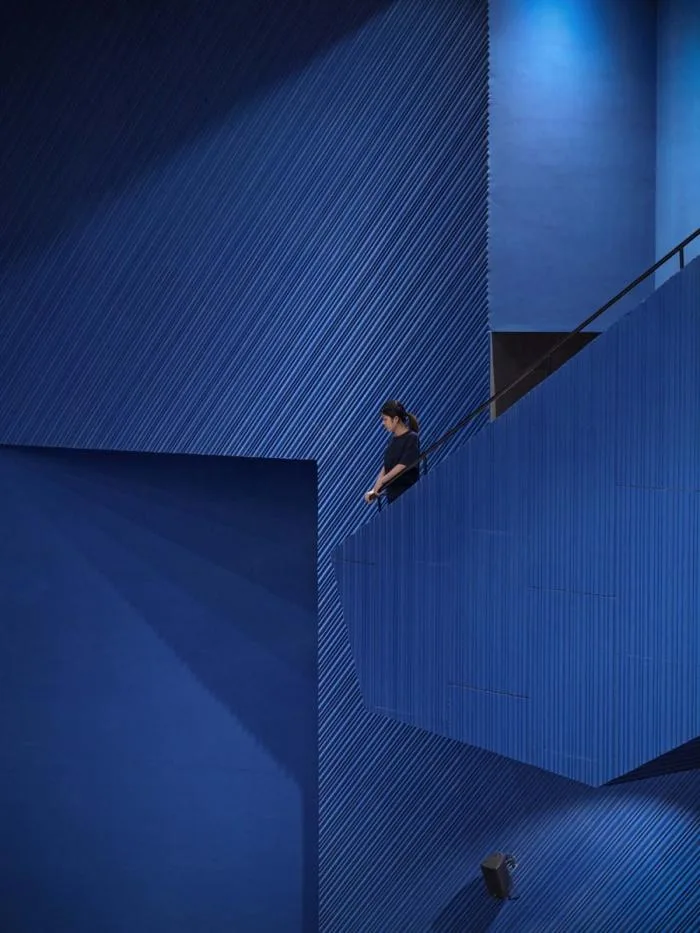
△ Terrace adjacent to the grand theater © Lei Tan Tan Tan
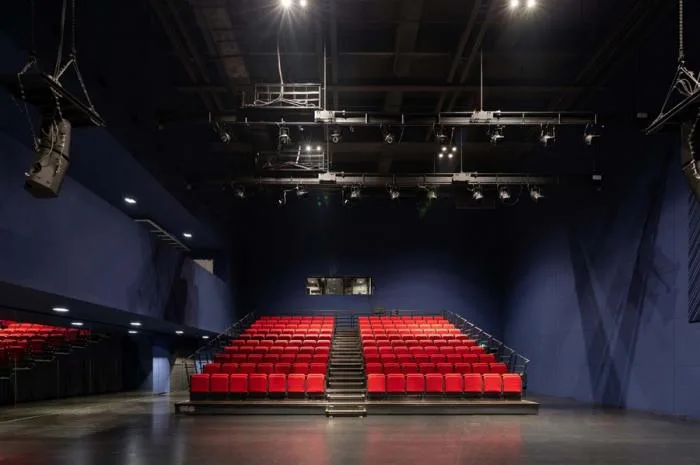
△ Black box theater © Zeng Tianpei
This comprehensive performing arts center seamlessly blends contrasting elements—formal and casual, high-end and popular, traditional and avant-garde. These components can be combined or separated, enriching the experience both spatially and culturally.
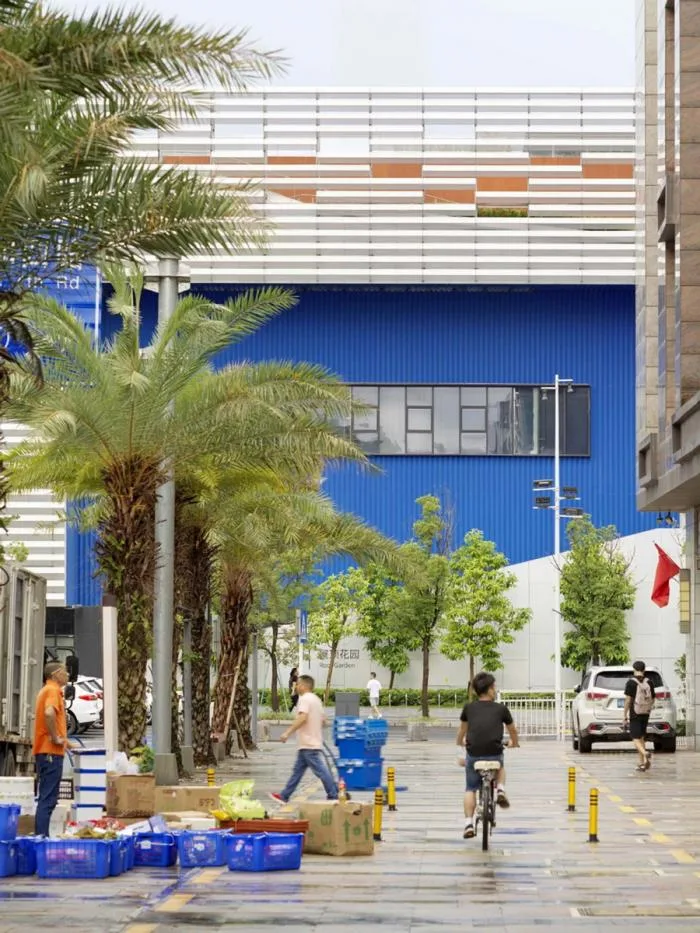
△ View of public walkways from the block © Lei Tan Tan Tan
The building itself is a porous, flexible box embedded deeply within outdoor gardens and platforms at various levels. This integration of greenery enhances indoor and outdoor environments, while green roofs reduce heat gain significantly.
The exterior features a double-layer ecological skin tailored for Shenzhen’s climate. The outer layer consists of perforated aluminum panels in a V-shaped unit, which effectively blocks summer sun while maintaining visual transparency and natural ventilation.
Through these energy-saving and sustainable design measures, we aim to challenge the stereotype of theaters as energy-intensive buildings.
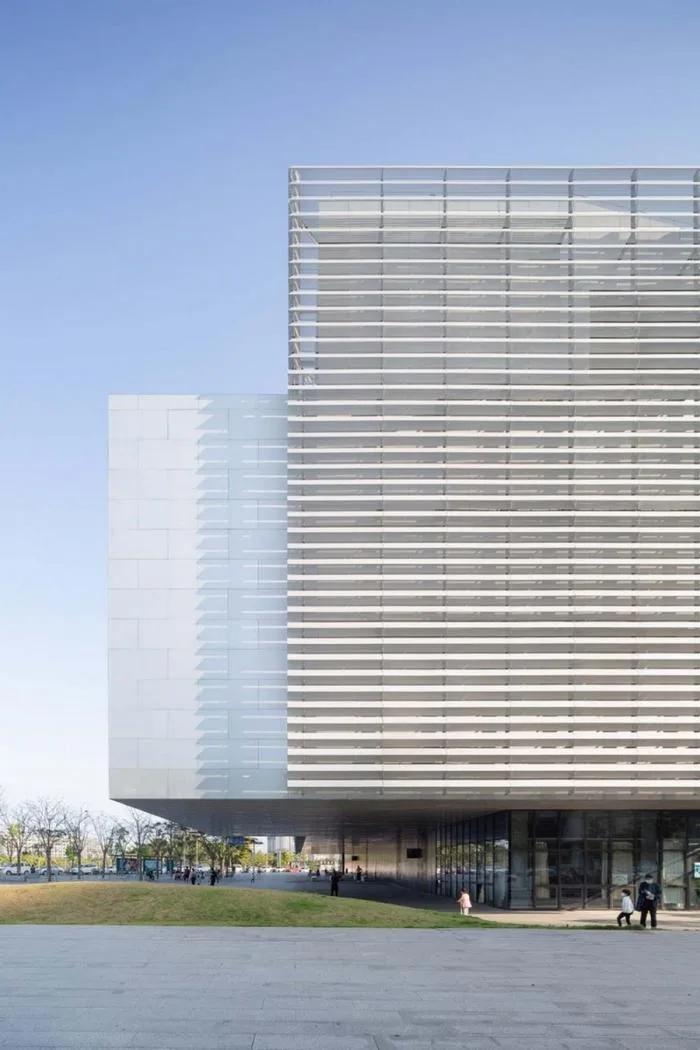
The overhanging volumes provide shade for urban squares © Zeng Tianpei
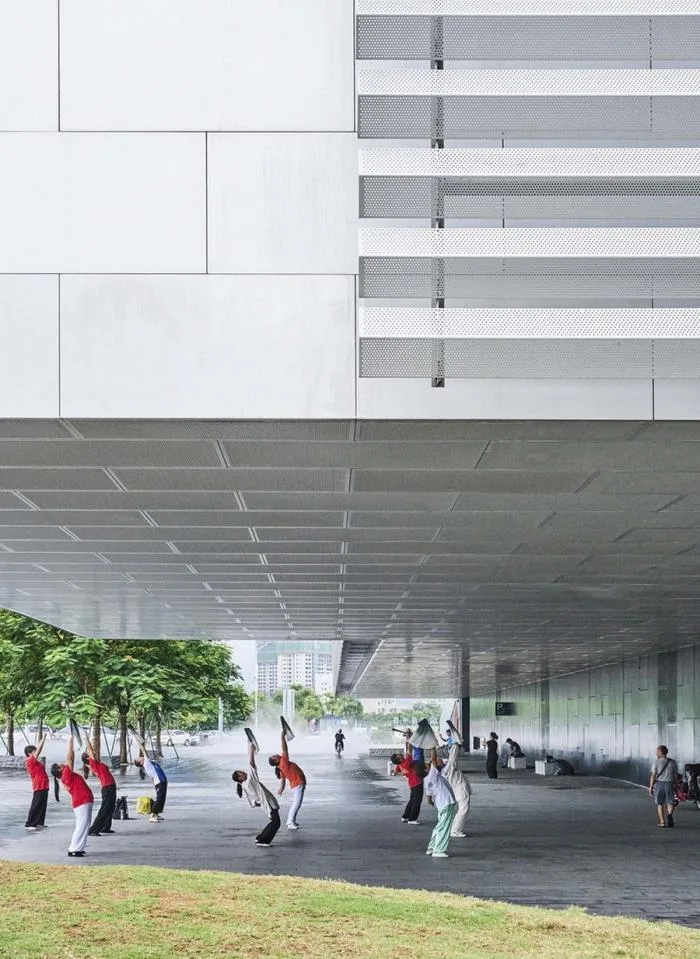
Citizens gather beneath the suspended structures © Zeng Tianpei
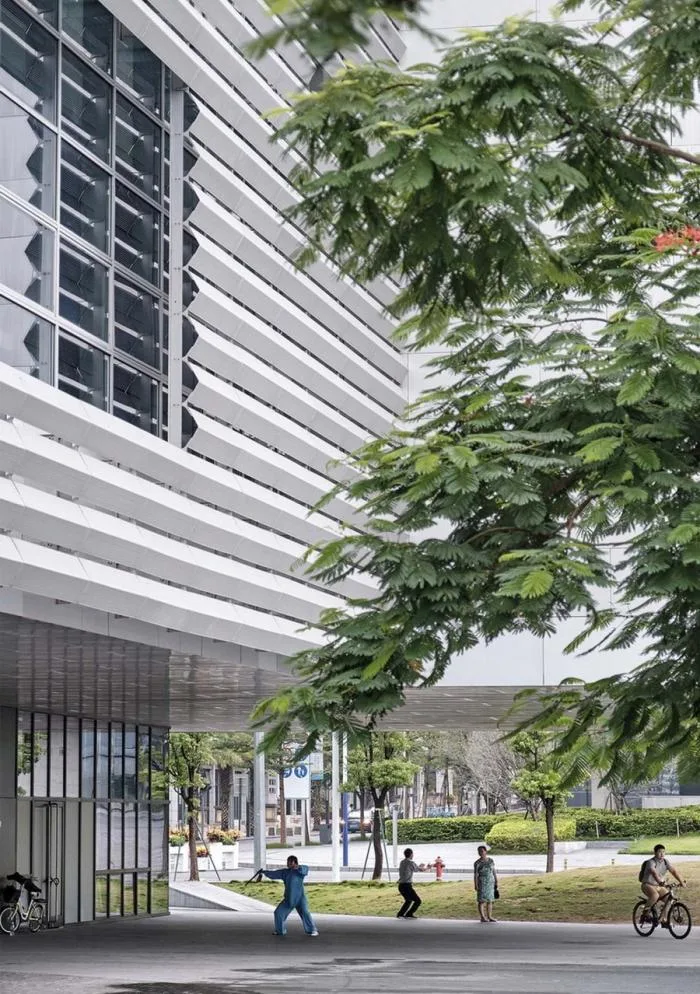
△ City square © Lei Tan Tan Tan
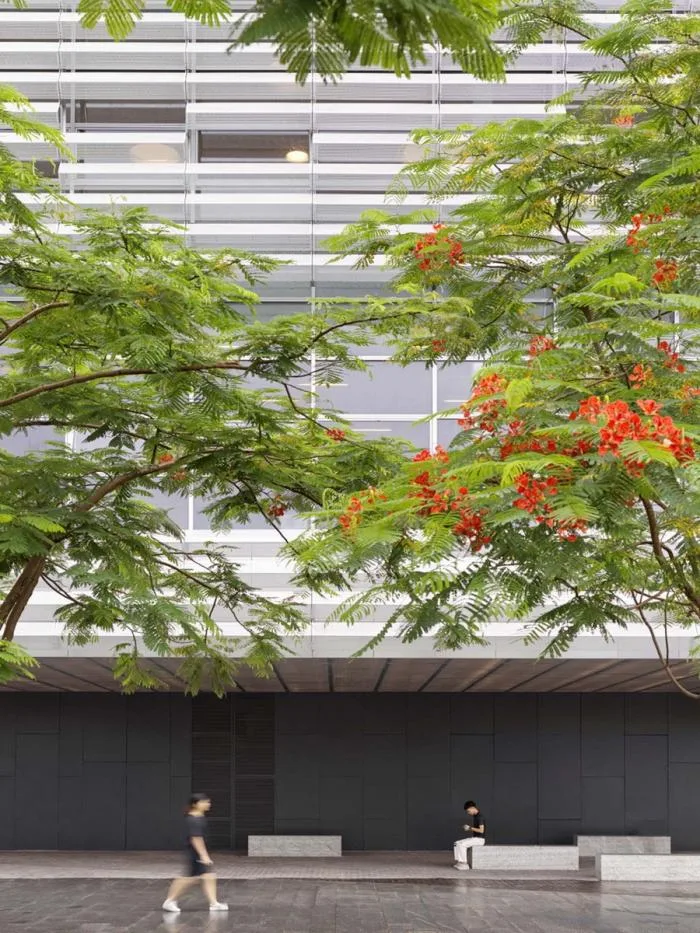
△ City square © Lei Tan Tan Tan
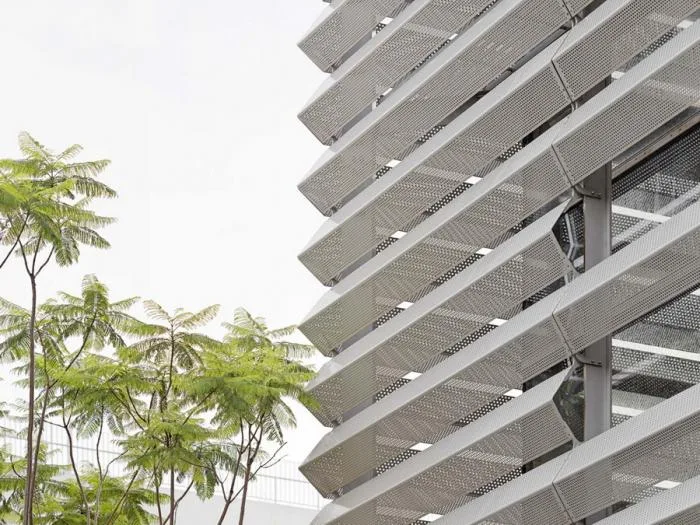
△ Perforated aluminum panel facade details © Lei Tan Tan Tan
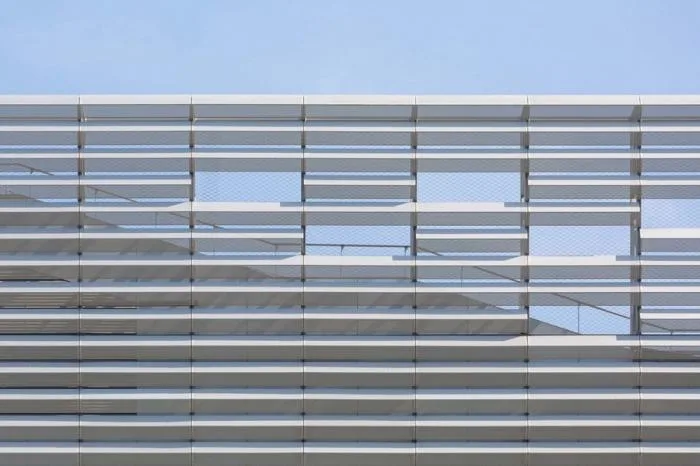
△ Double-layer aluminum panel facade details © Zeng Tianpei
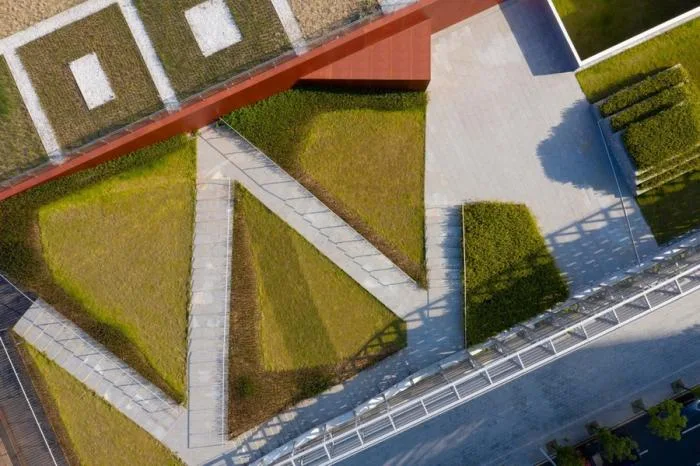
△ Aerial view of rooftop garden © Zeng Tianpei
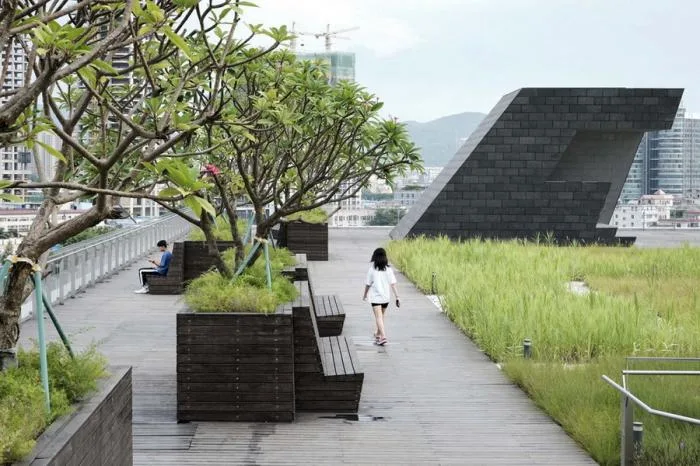
△ Roof garden © Lei Tan Tan Tan
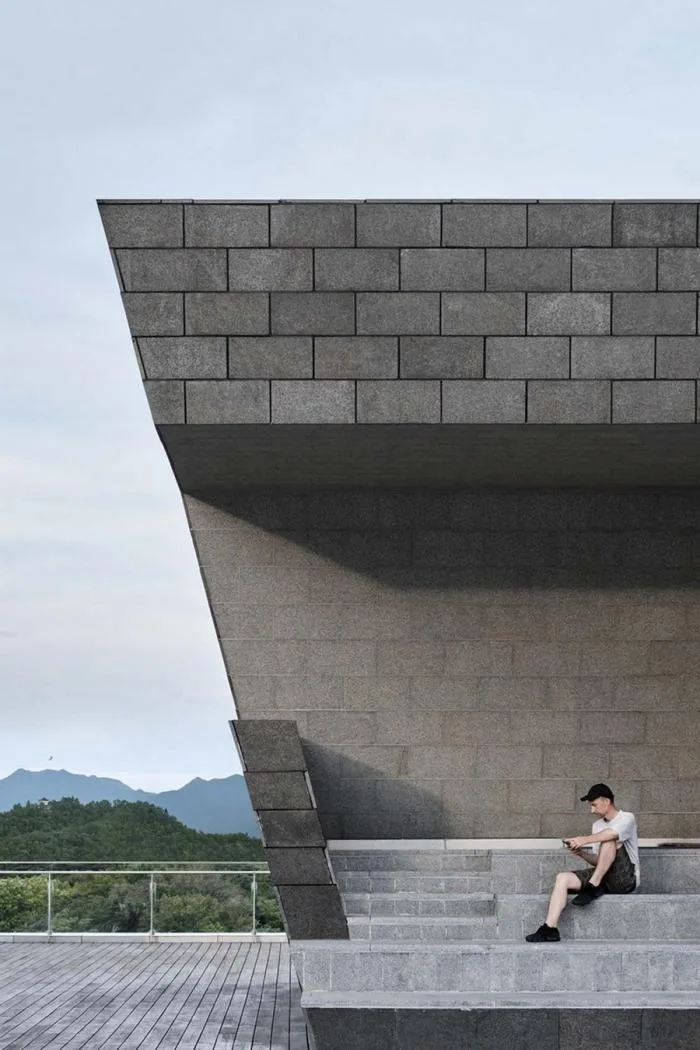
△ Small chapel © Lei Tan Tan Tan
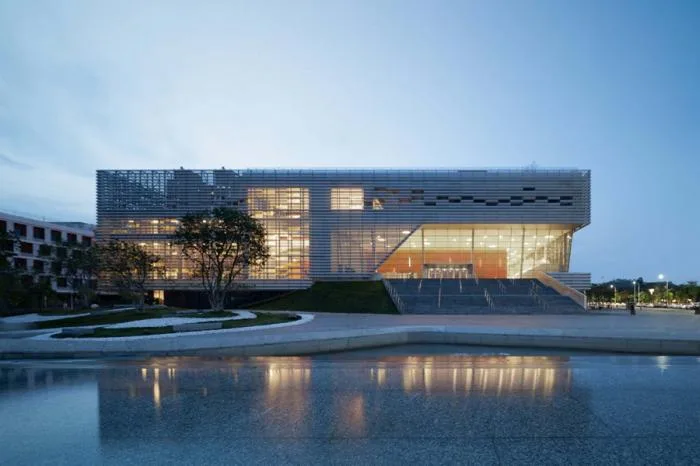
△ South main entrance © Zeng Tianpei
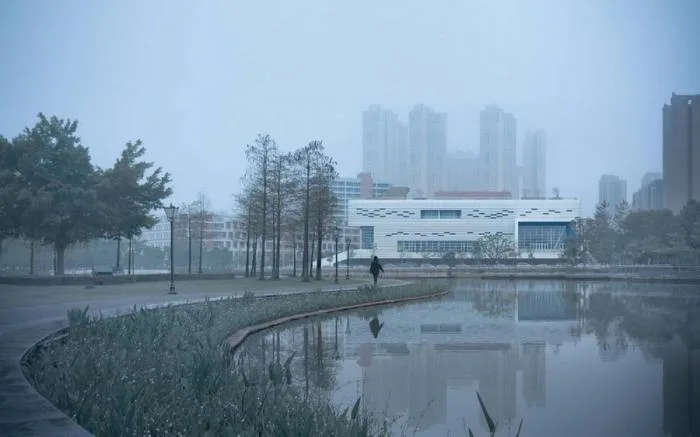
East facade in the morning mist © Zeng Tianpei
Design Drawings
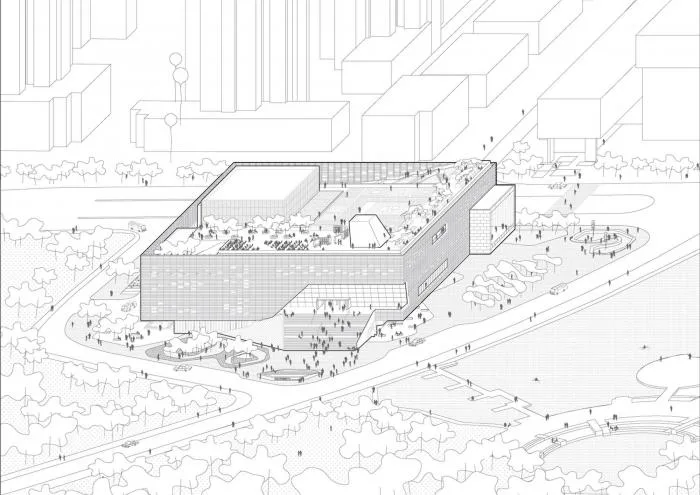
△ Axonometric diagram
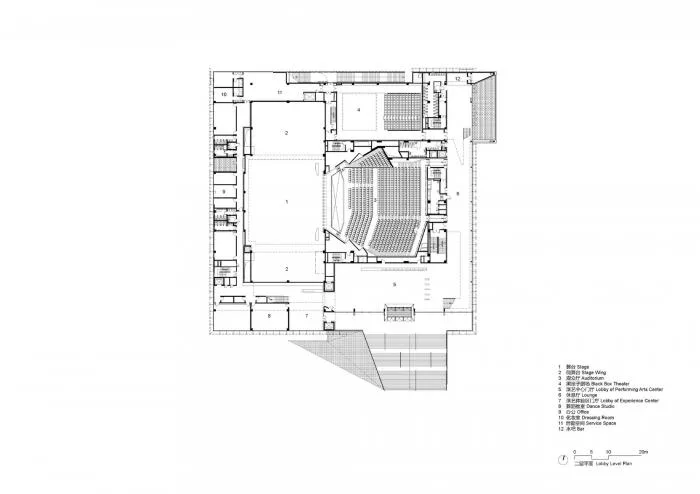
△ Second floor plan
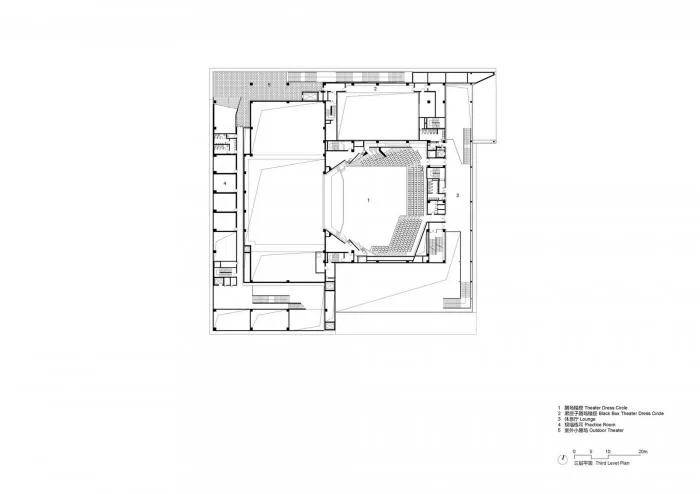
△ Third floor plan
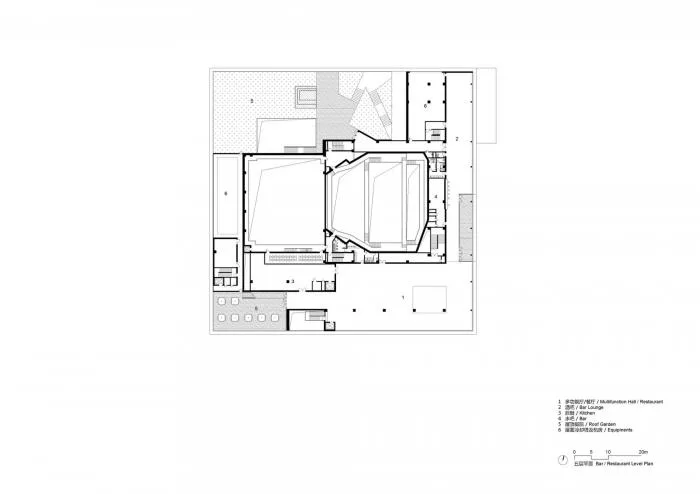
△ Fifth floor plan
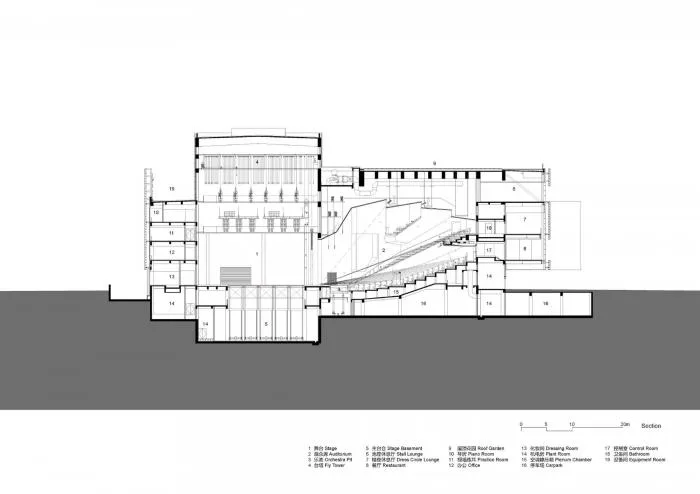
△ Section diagram
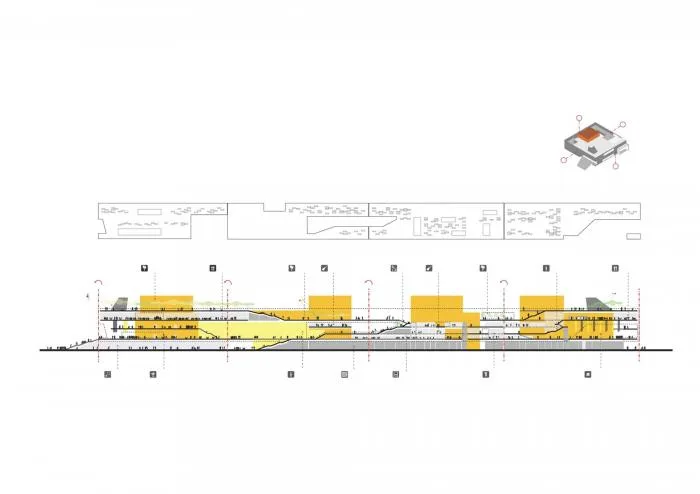
△ Expanded sectional view
Project Information
Project Type: Cultural Architecture
Location: Shenzhen, China
Architectural Design: OPEN Architecture Firm
Area: 23,542 m²
Year: 2019
Photographers: Zeng Tianpei, Lei Tantan
Lead Architects: Li Hu, Huang Wenjing
Project Architects: Ye Qing, Zhou Tingting
Design Team: Zhang Hanyang, Han Ruyi, Xing Shu, Luo Ren, Andrea Antonucci, Sun Xinying, Zhang Chang, Jia Han, Wu Nanpeng, Zhang Hao, Cui Yurou, Angela Nodari
Collaborative Design Institute: Shenzhen Obo Engineering Design Consulting Co., Ltd. (Project Leaders: Ding Rong, Liu Zhenfeng)
Curtain Wall Consultant: Shanghai Xumilin Curtain Wall Co., Ltd
Theater and Acoustic Consultant: Huang Zhanchun Theater Architectural Design Consultant (Beijing) Co., Ltd
Stage Machinery Consultant: Zhejiang Dafeng Building Decoration Engineering Co., Ltd
Lighting Consultant: Beijing Uyashi Lighting Design Co., Ltd
Construction Agent: China Merchants Real Estate
Owner: Pingshan District People’s Government, Shenzhen












Must log in before commenting!
Sign Up