
Chongqing is a striking blend of chaos and beauty, heaviness and openness, where majestic mountains and rivers converge to form a unique regional character. Yet, it is only by living in Chongqing that one truly experiences the dynamic fusion of natural growth and urban order. As urbanization enters a new phase, the city grapples with tensions between emerging residential concepts and the original urban fabric. In this context, Lanyuan—a residential design project by Gad in Chongqing—seeks to harmonize housing and city life through a distinct and thoughtful approach.
City | The Chaotic and Diverse Urban Environment
Anyone who has lived in Chongqing for an extended period knows its summer heat, lack of wind, and intense sunlight, placing it among China’s “three major furnaces.” Winters are cold, rainy, and sunless. The local saying, “The sky is never clear for three days, and the ground is not three feet flat,” captures the city’s unique climate and terrain.
In local residential design, the relationship with the terrain takes precedence, making Chongqing one of the few cities where sunlight and orientation are not primary concerns in housing design—an unusual case in architectural circles.
The project is situated in Ranjiaba, a well-established urban area of Chongqing. To the south lies the Maternal and Child Health Care Hospital. Surrounding the site on the west, east, and north sides are older residential communities across the roads, featuring buildings of various ages, heights, and functions arranged in a seemingly disorderly fashion.
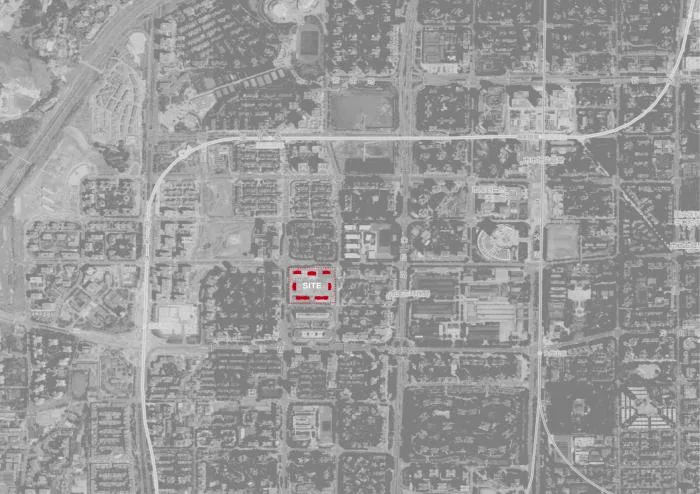
Location Map
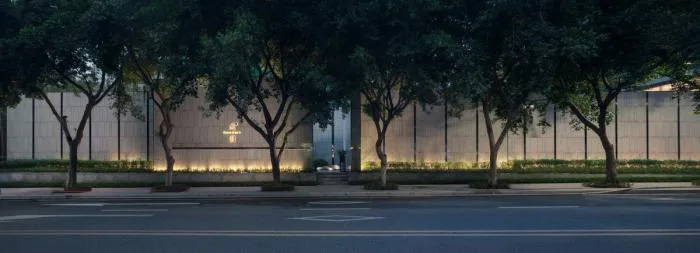
Although the Lan Yuan site itself is regular and square in shape, architects faced the challenge of creating tranquility amidst the surrounding chaos and disorder. As part of an urban renewal effort, Lanyuan aims not only to elevate the style and quality of the neighborhood blocks but also to blend harmoniously with the vibrant, lively atmosphere around it, creating a complementary relationship.
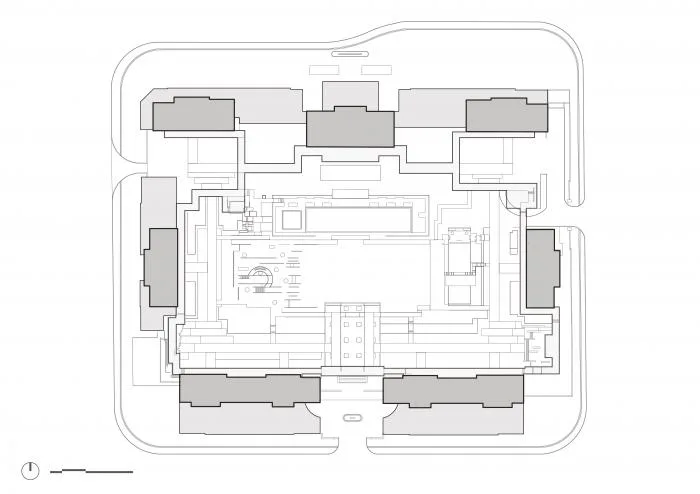
△ Overall Site Plan
Courtyard | A Hidden Order within the City
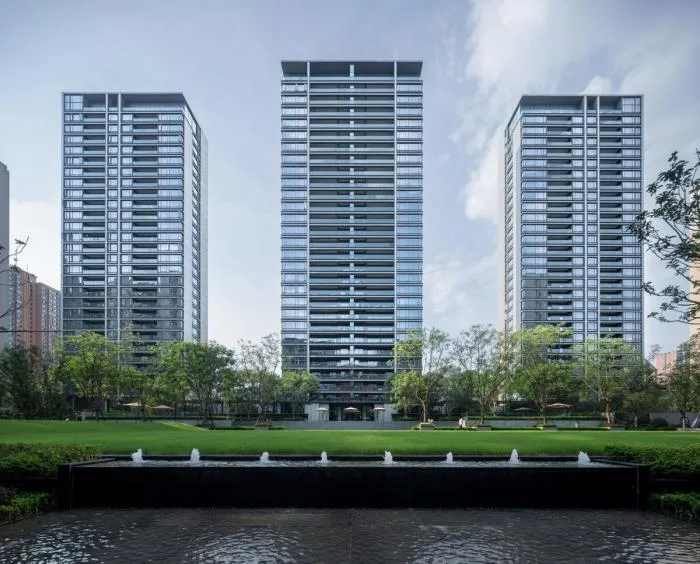
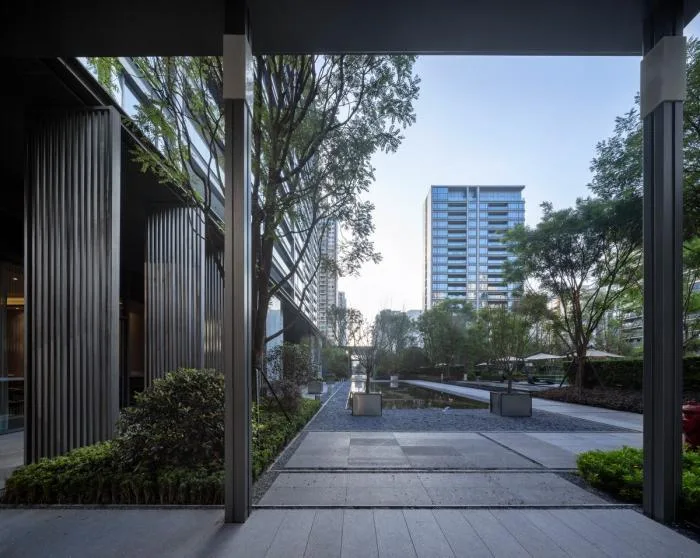
The courtyard serves as a transitional buffer from the city’s hustle to a peaceful retreat. Embracing the local “landscape first” residential tradition, Lanyuan centers around a large courtyard enclosed on all sides. The design adopts a courtyard settlement style with generous openings and closures, balancing the transparency of daily living with a continuous urban interface.
The site is enclosed by seven high-rise buildings: five residential towers positioned north and south, and two on the east and west sides. Their heights gradually rise from south to north, effectively shielding the noisy urban surroundings. This layout encloses a spacious 15,000 square meter central courtyard.
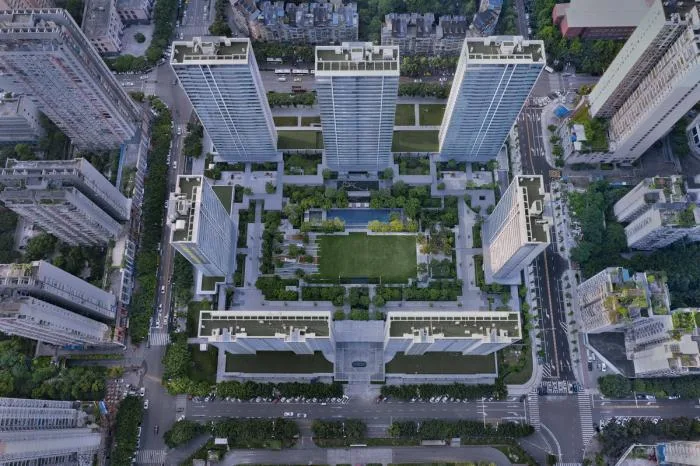
© Huang Jinrong
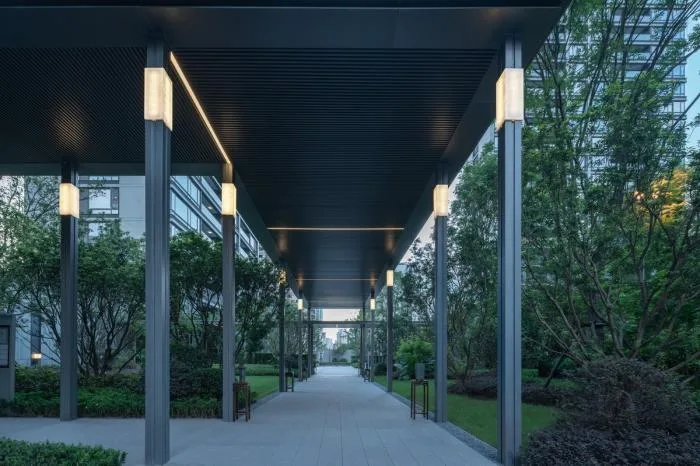
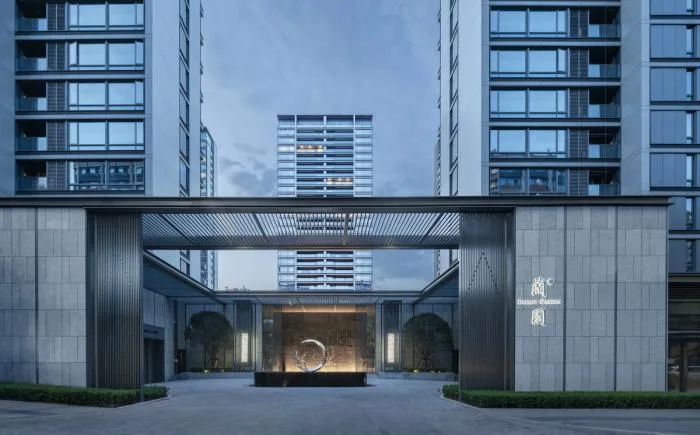
The courtyard’s design emphasizes axial symmetry, setting a ceremonial tone for the entrance sequence. A central water feature softens the formality of the symmetrical space and helps regulate the microclimate. Inspired by resort hotel public areas, the first floor is elevated to 5.5 meters and connected to the entrance canopy via a 500-meter wind and rain corridor. This design creates multiple interaction points with the courtyard, allowing a gradual transition from public to private spaces. The tranquil and spacious courtyard contrasts with the bustling city outside, defining a layered, “hidden in the city” living experience.
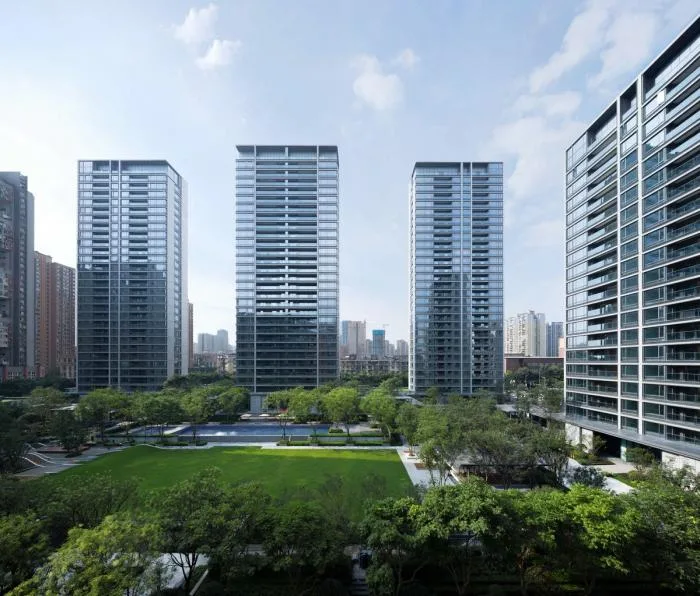
© Huang Jinrong
© Huang Jinrong
© Greentown China
© Huang Jinrong
Balancing Residential, Commercial, and Urban Needs
To strike a balance between residential comfort, market demands, and urban values, the architects state, “We have always believed that design and innovation are the greatest sources of value. Our approach to balancing residential and commercial interests is to drive renewal and iteration through high-quality design, creating and exploring new value.”
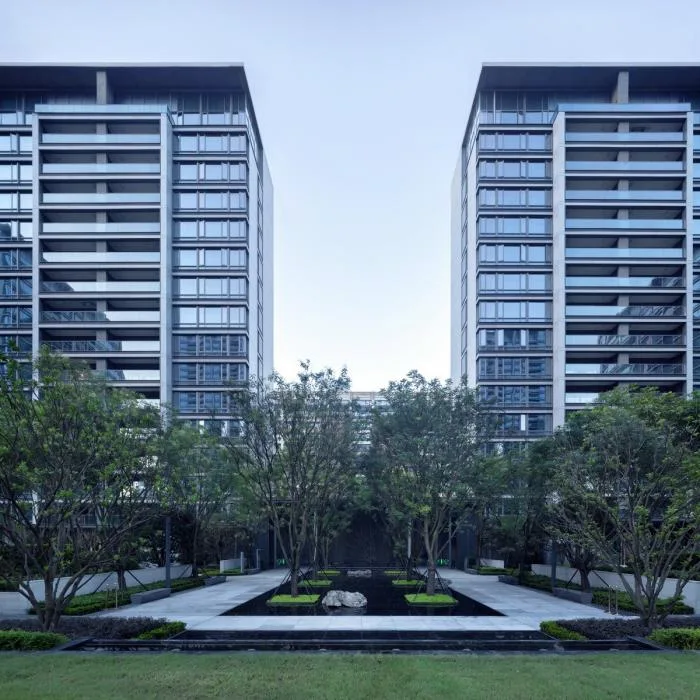
After thorough iterations and data analysis, seven high-rise buildings with wide, shallow floor plans were selected for Lanyuan. Each building’s primary facade faces the central courtyard, offering a simple and continuous urban frontage. This arrangement ensures every unit enjoys a balanced and maximized landscape view.
Unit layouts were meticulously designed, incorporating features such as expansive bay balconies, private elevator entrances, and integrated living-dining-kitchen (LDK) systems. The separation of active and quiet areas is carefully planned to meet the aesthetic and functional needs of modern living. Commercial spaces occupy the lower floors along the street, activating the urban edge.
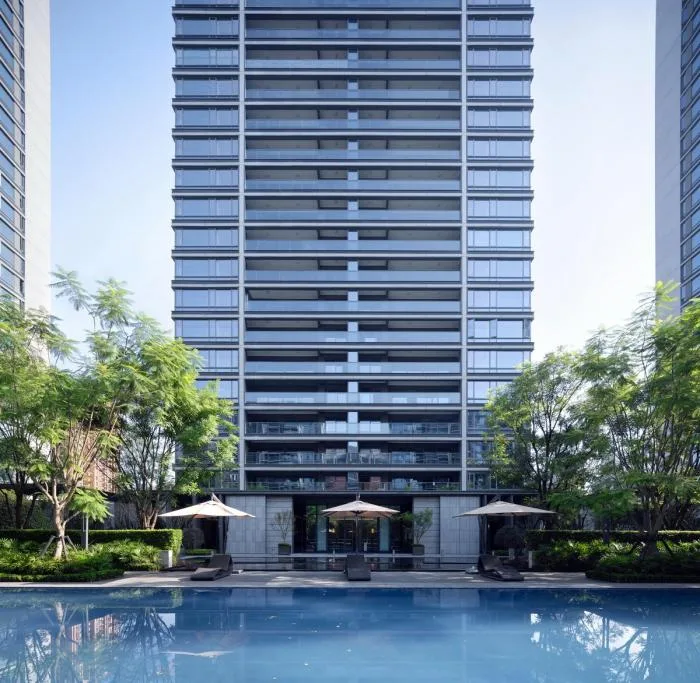
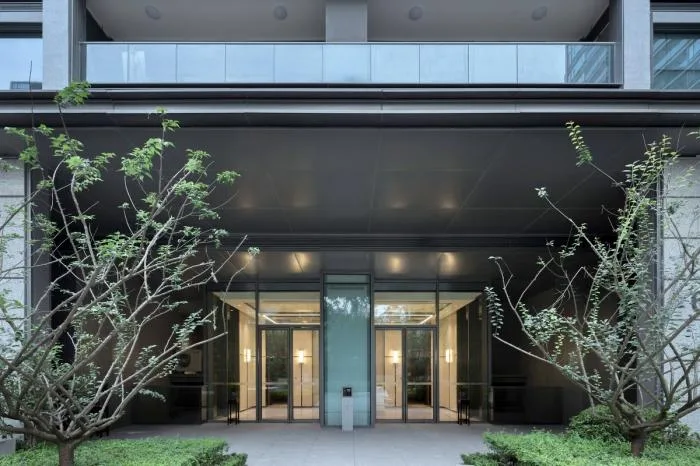
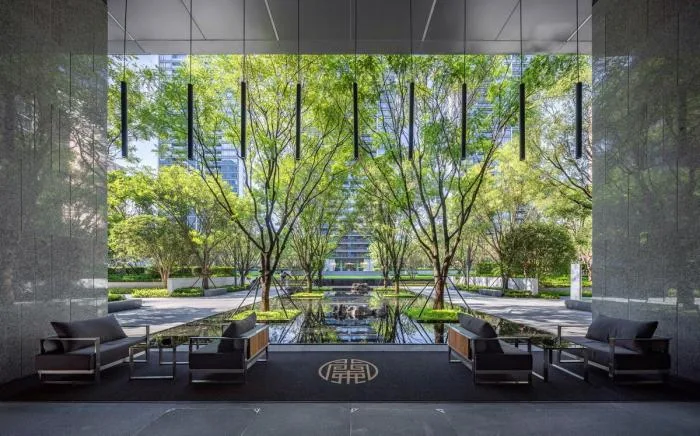
© Huang Jinrong
Quality | Harmonizing Interior and Exterior Facades
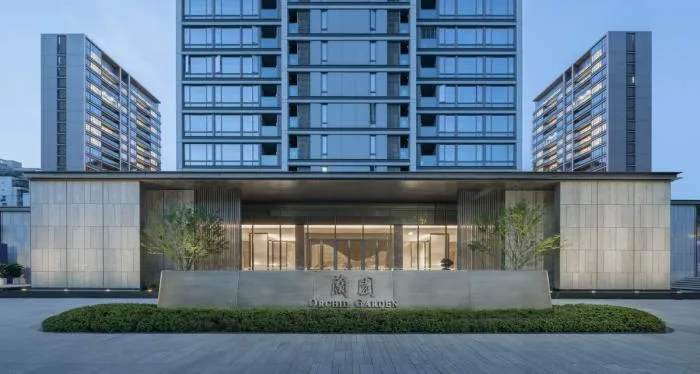
Rejecting overly ornate decoration, the residential facades embrace simplicity and elegance. The design philosophy of “less is more” is evident in the flat, clean lines of the facade, which blend modern order with classic sophistication through subtle innovation.
The facade materials include pearl blue paint, stone, silver-gray metal, and blue-gray Low-E glass. Complex decorative elements and moldings are deliberately omitted. The bay windows feature a consistent window system on both upper and lower sections, using smoothly transitioning aluminum profiles to create a seamless appearance. This refined design approach ensures the building’s outer silhouette remains smooth and cohesive.
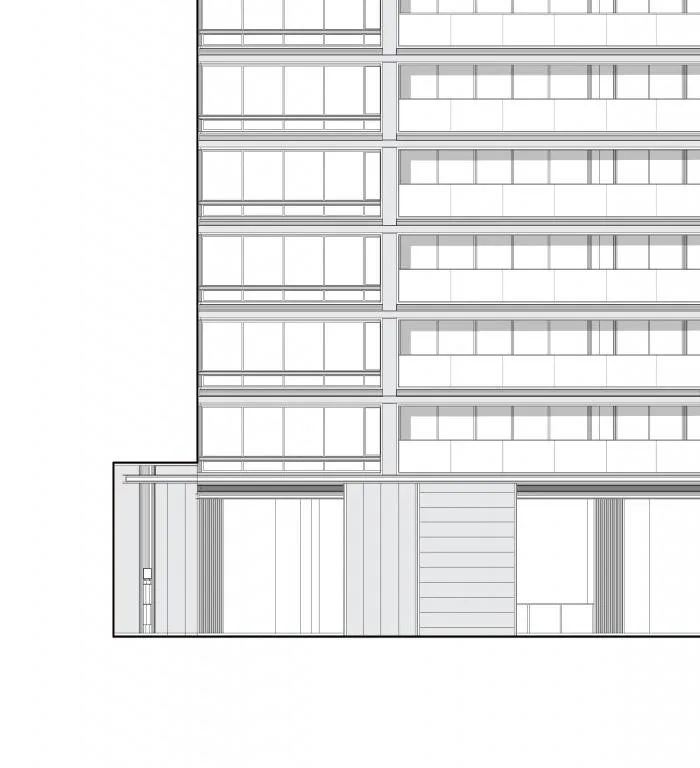
△ Facade
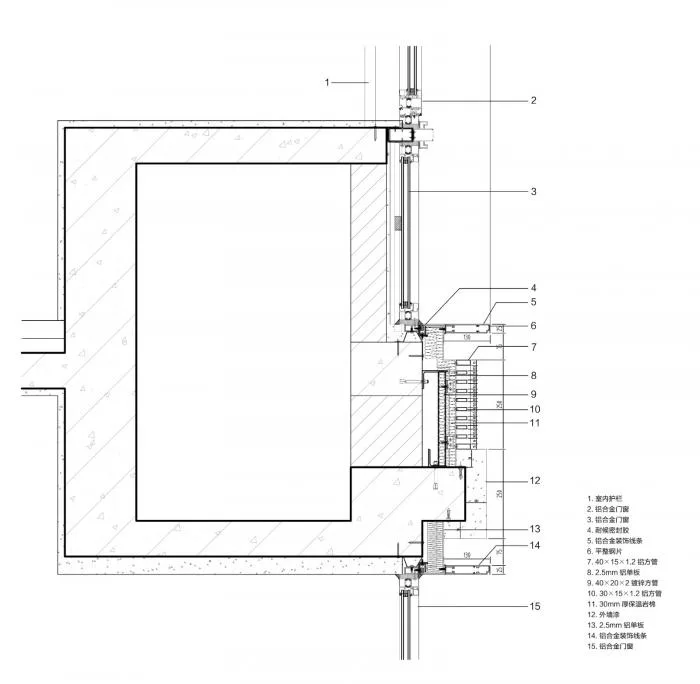
△ Detail of Bay Window Node
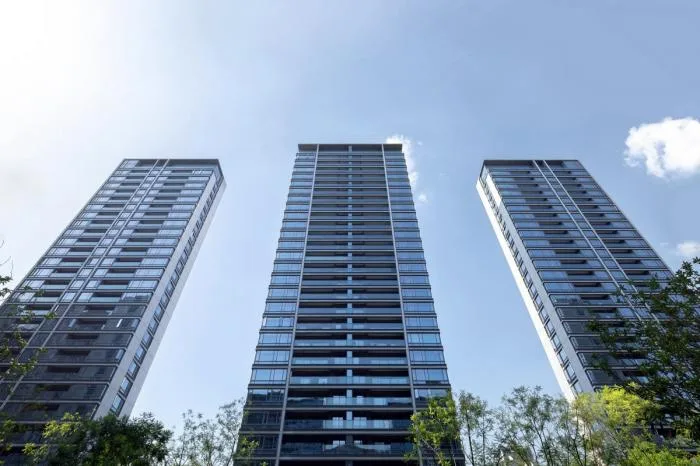
© Huang Jinrong
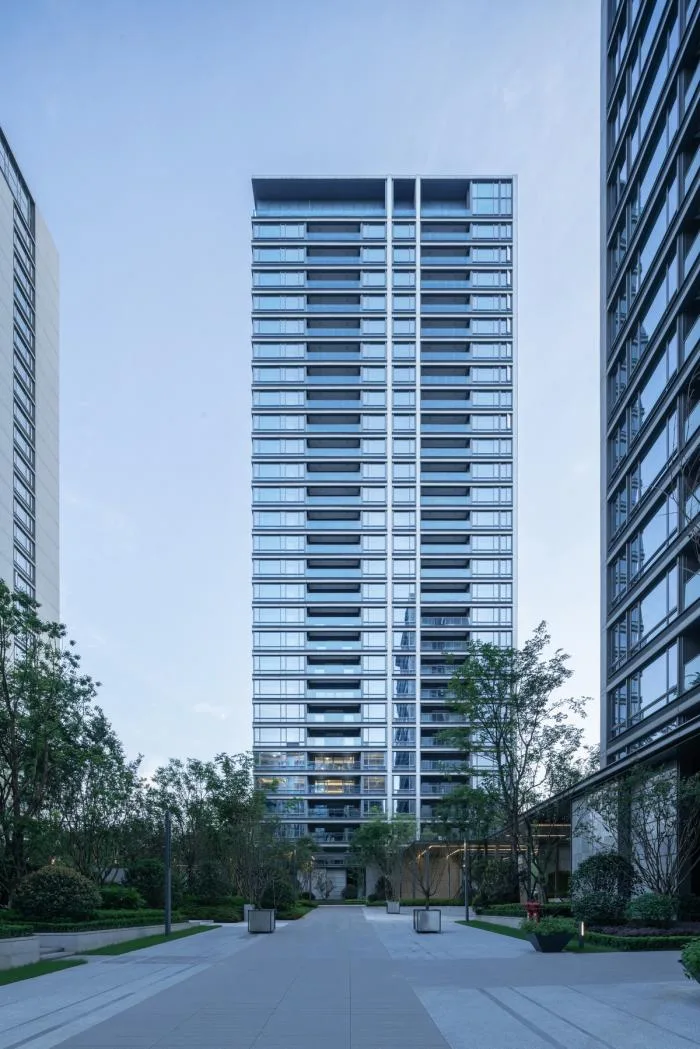
© Greentown China
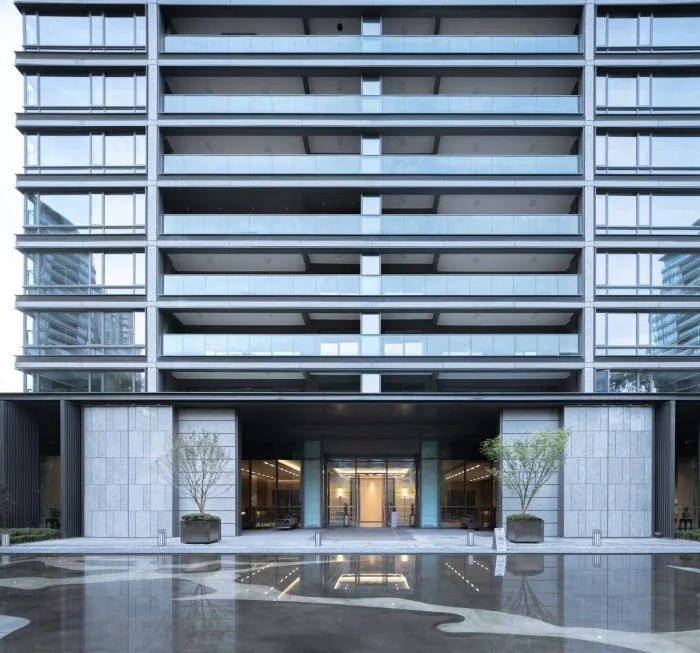
© Huang Jinrong
In Lanyuan, even the rear facades—typically considered secondary—are treated as primary. Despite functional and budget constraints that often lead to less appealing rear facades in residential buildings, this project integrates stairwells, equipment platforms, and balconies with meticulous detail. This approach ensures that the outward-facing facades maintain a seamless and refined appearance that rivals the main facades.
© Greentown China
Conclusion
In today’s competitive real estate market with low profit margins, standardized housing systems no longer provide the best solutions. Innovative and differentiated thinking is essential to unlocking new residential, commercial, and urban values. Ultimately, the goal remains to foster deeper harmony and dialogue between people, the city, nature, and self.
© Greentown China
Project Information
Project Name: Chongqing Greentown Orchid Garden
Location: Chongqing
Address: No. 77, Long Road, Ranjiaba Banner, Yubei District
Project Type: High-rise Residential Buildings
Design Year: 2017
Completion Year: 2019
Project Area: 102,000 square meters
Design Firms: Gad (Concept Design), Tianhua (Construction Drawings)
Project Directors: Zhu Qiulong, Wu Han
Design Team: Zhu Qiulong, Wu Han, Li Dong
Architecture: Wu Han, Li Dong, Jiang Dong, Xiang Zhihong, Zeng Siyuan
Structure: Huang Jia, Guo Junjie
Water Supply & Drainage: Zhou Fengyuan, Zhao Dan
HVAC: Xia Jidong
Electrical: Zhou Xingyue
Other Contributors:
Interior Design: CCD, Chen Tao Studio
Landscape Design: Jialian Landscape
Owner: Greentown China
Photographers: Huang Jinrong, with some images provided by Greentown China
Structural System: Shear Wall Structure
Materials: Stone, Aluminum Panels, Real Stone Paint, Glass













Must log in before commenting!
Sign Up