
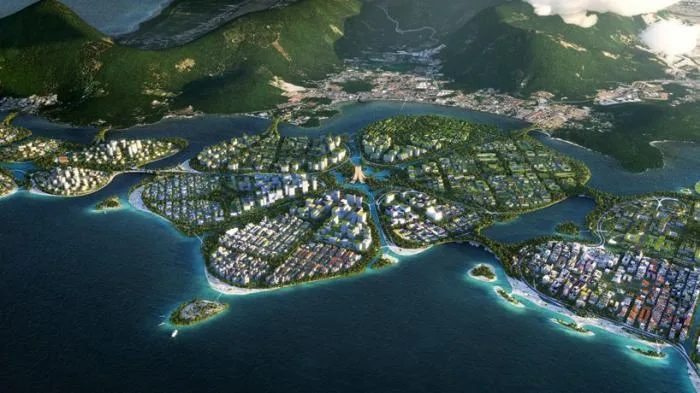
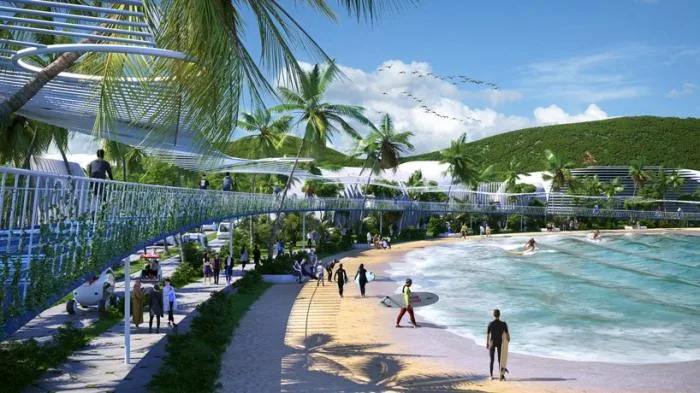
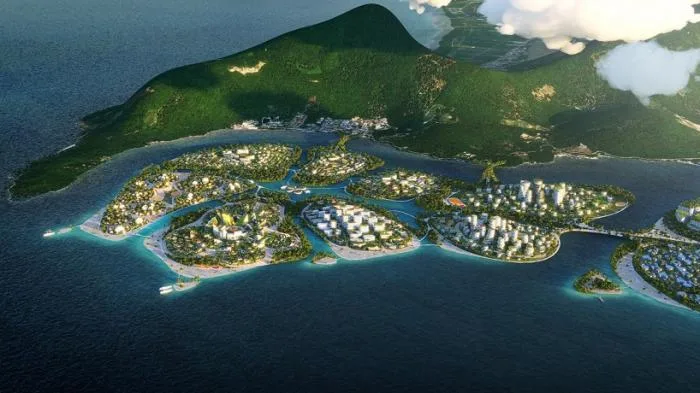
BIG, Hijjas, and Ramboll have won the international competition to plan and design Penang South Island in Malaysia. Their winning proposal, titled “Biodiversity,” promises residents approximately 4.6 km of public beaches, 600 acres of parks, and a 25 km waterfront promenade. The project envisions a mosaic of three distinct islands, focusing on livability, environmental sustainability, and social and economic inclusiveness.
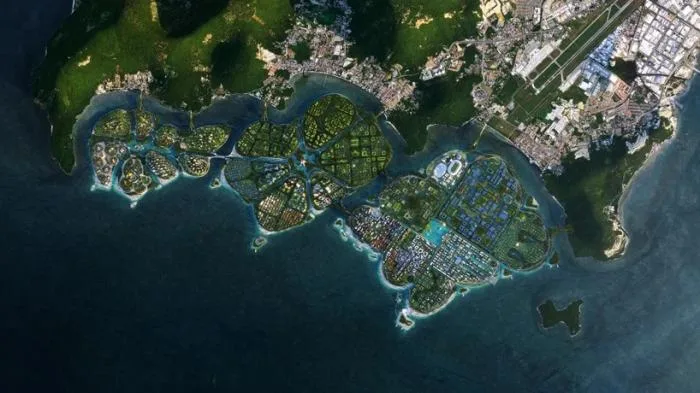
Selected as winners of an international competition organized by the Penang State Government, BIG, Hijjas, and Ramboll were tasked with transforming Penang South Island into a sustainable global tourism destination. Launched in January 2020, the competition aimed to create a “City of Biodiversity” — three ecologically and economically secure islands where humans and nature coexist harmoniously.
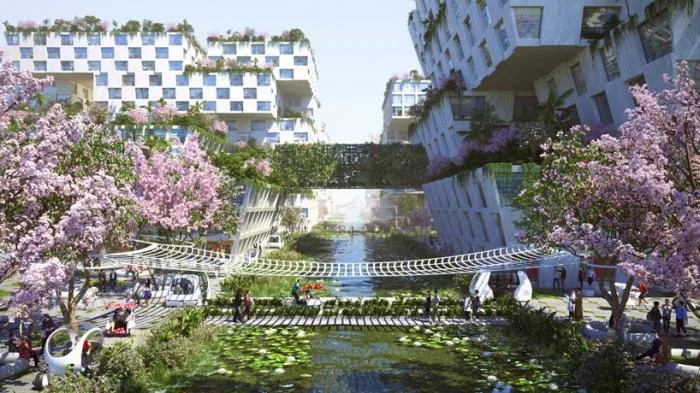
The southern coast of Penang Island is renowned for its rich biodiversity. The three islands will connect multifunctional areas ranging from 50 to 500 acres, supporting communities of 15,000 to 18,000 residents. A continuous buffer zone of approximately 50 to 100 meters will surround each area, linking habitats and promoting ecological protection along protected areas, parks, corridors, and city squares.
“It is a great honor for us to be chosen to develop a new planning concept for the Malaysian archipelago,” said Bjarke Ingels, founder and creative director of BIG. “The core of architectural design is to depict the art and science of the future. Here, this is even more evident as we embark on a journey to create greater happiness for future generations in Malaysia. By planning new islands with unprecedented cultural and biological diversity, we aim to set the highest possible standards within the human realm.”
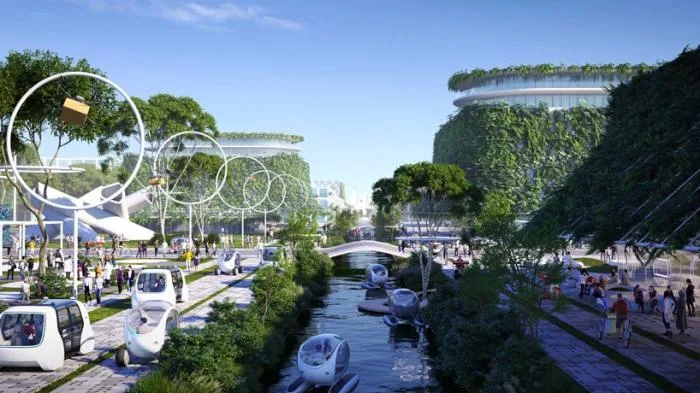
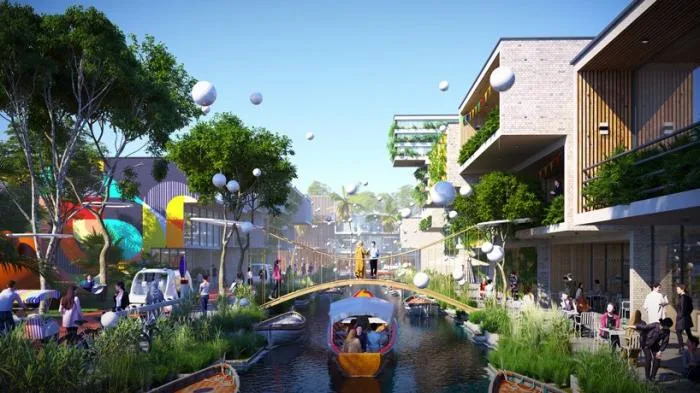
Ingels added, “The ‘City of Biodiversity’ will feature an integrated system encompassing local water resources, renewable energy, and waste management, all closely linked to artificial ecosystems. This is not a car-centric city but a biodiversity city that harmonizes waterways, railways, and various modes of private mobility, creating a multimodal transport environment. The resulting urban landscape will position Penang as a true global hub economically, ecologically, and socially.”
The ‘City of Biodiversity’ is designed as a mosaic composed of three unique islands: the ‘Strait,’ the ‘Mangrove Forest,’ and the ‘Small Lake.’ The development of the first island will occur in three complementary phases. The initial phase will feature active destinations such as wave pools and technology parks. The second phase will establish the Citizen Center, hosting governance and research institutions. Finally, the third phase will create a cultural coastline inspired by Penang’s traditions and vibrant creative energy, establishing a regional and international attraction. The 500-acre digital park at the island’s center will offer spaces dedicated to research, development, and local business opportunities.
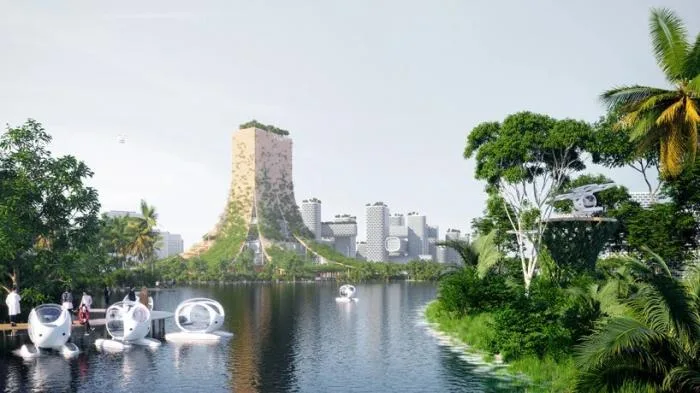
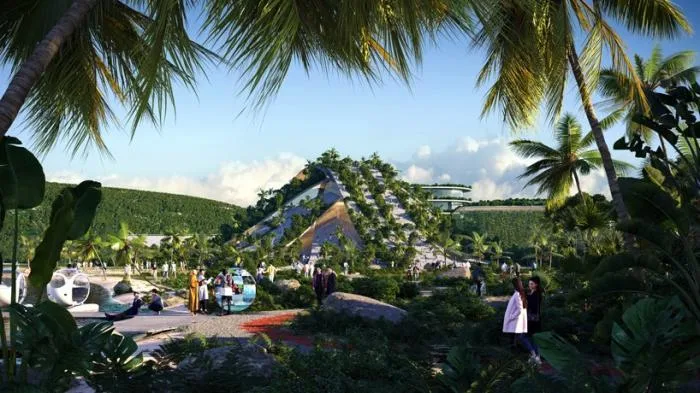
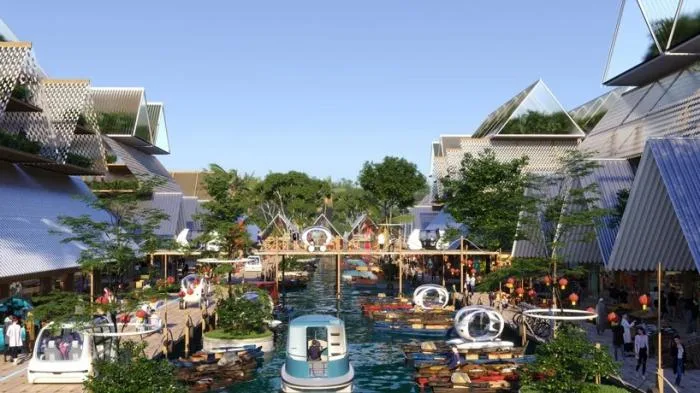
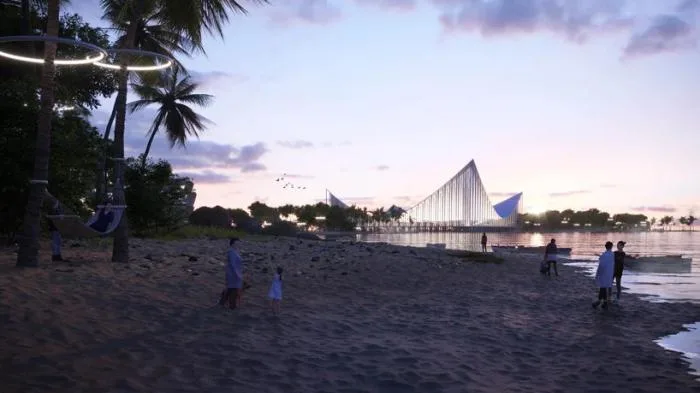
The second island, the “Mangrove Forest,” is centered around a protected urban wetland network and serves as the commercial hub. It supports mangroves — a resilient tree species capable of storing more than four times the carbon of typical forests — fostering a sustainable environment. At the heart of the mangrove forest stands the “Bamboo Lighthouse,” designed for gatherings, conferences, and large-scale events to share knowledge developed from the ‘City of Biodiversity’ with the world. All buildings in this master plan by BIG, Hijjas, and Ramboll are designed as high-performance structures, largely constructed using low-carbon materials such as bamboo and Malaysian wood.
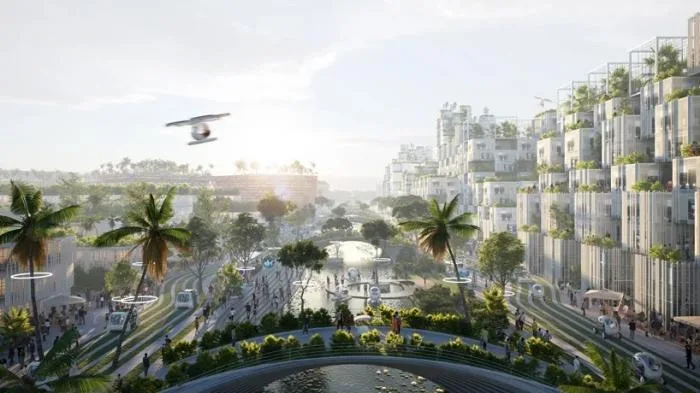
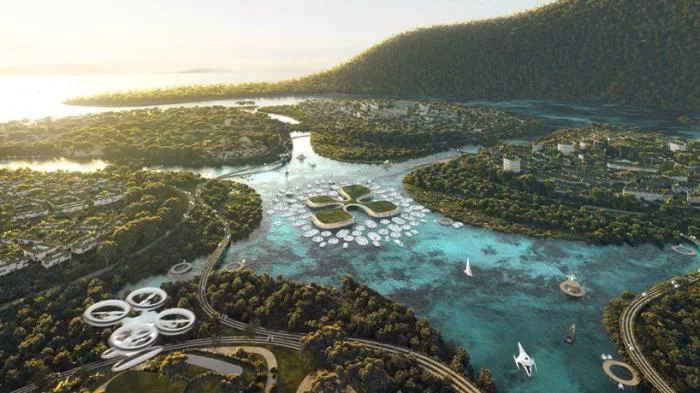
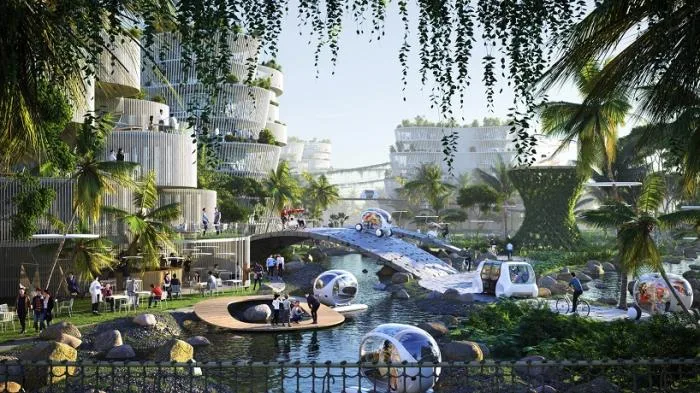
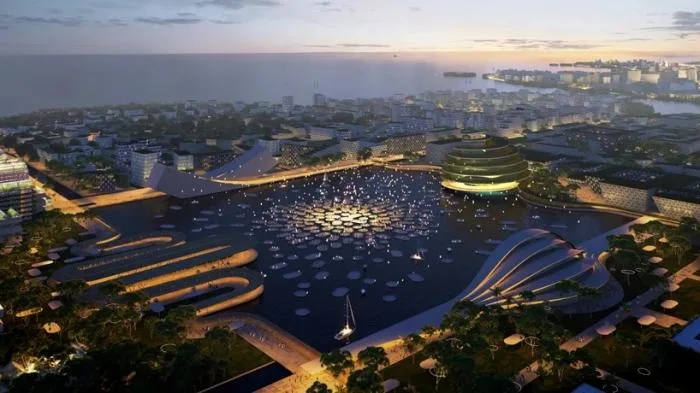
The ‘Small Lake’ occupies the westernmost part of the plan, organized around a central dock to create an ecological living oasis. Eight small islands form a miniature archipelago, with terrace residences elevated on stilts to maximize the natural surroundings. A newly established marine habitat enriches underwater biodiversity by providing spawning grounds for local species. Entertainment venues and incubators energize local communities along Penang’s southern coast. Ecological corridors connect forest reserves with coastal beaches, allowing animals to safely traverse continuous canopies and waterways, while people enjoy elevated wooden walkways through natural habitats.
Project Information:
Project Name: Penang Biodiversity City
Architect: BIG Bjarke Ingels Group
Partners: Bjarke Ingels, Daniel Sundlin, Kai Uwe Bergmann
Project Assistant: Jeremy Alain Siegel
Project Leaders: Shane Dalke, Autumn Visconti, Veronica Acosta
Project Team: Jeffrey Shumaker, Jamie Maslyn Larson, Stephanie Mauer, Mike Munoz English, Max Moriyama, Thomas McMurtrie, Mateo Fernandez, Lingyi Xu, Yao Tong, Yanan Ding, Won Ryu, Alan Fan, Sangha Jung, Christian Cueva, Jordan Felber, Bernardo Schumaker, Terrence Chew, Chris Pin, Tracey Sodder
Local Architect and Planner: Hijjas
Project Manager and Engineer: Ramboll
Collaborators: Web Structures (geotechnical and structural engineering); Web EM (sustainability); Ernst & Young (economic advisor); Knight Frank (real estate); KPK (quantity surveyor); Green Growth Asia Foundation (ecology and conservation); Universiti Teknologi Mara (marine engineering)
Owner: Penang State Government, Malaysia
Project Location: Penang, Malaysia
Area: 4,500 acres












Must log in before commenting!
Sign Up