
Six years ago, architect Gao Dong invited Yu Ting from Wutopia Lab to design a private courtyard in central Shanghai. Conceived as a “collector’s home,” this intimate space combines living, socializing, performance, and gathering functions to showcase an impressive art collection. After many challenges, the project was completed in July this year and named Yimizang.
One
Creating a Personal Sanctuary Amidst the City’s Hustle
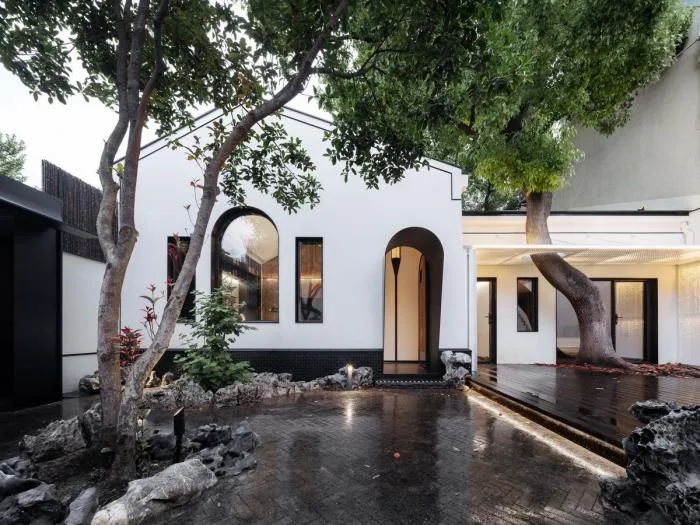
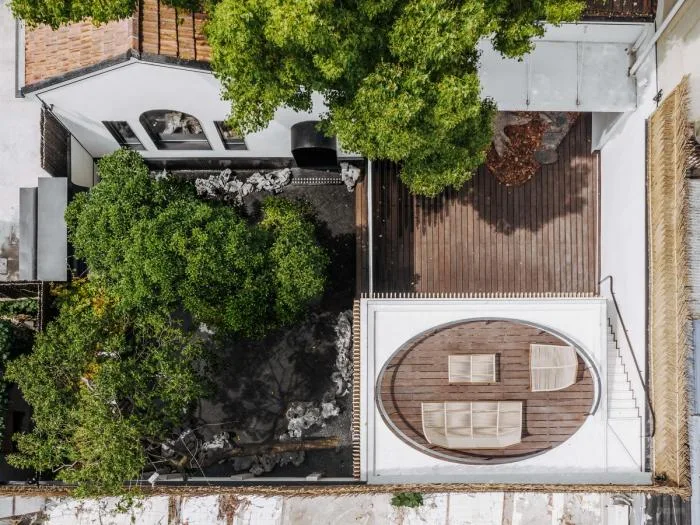
One Meter Old House sits quietly beneath Shanghai’s towering skyscrapers in a tranquil neighborhood. The site is square, featuring a traditional layout with a house to the north and an open courtyard to the south. The design was a collaborative effort between Wutopia Lab and Sanyi. Yu Ting has crafted a space brimming with dramatic tension, a concept detailed in the article “Yu Ting and Gao Donghua’s 6-Year Polishing Small Courtyard: A Collectors’ Home.” The Sanyi design team approached the project like master artisans, refining the spatial tension with ingenuity, technology, and creativity.
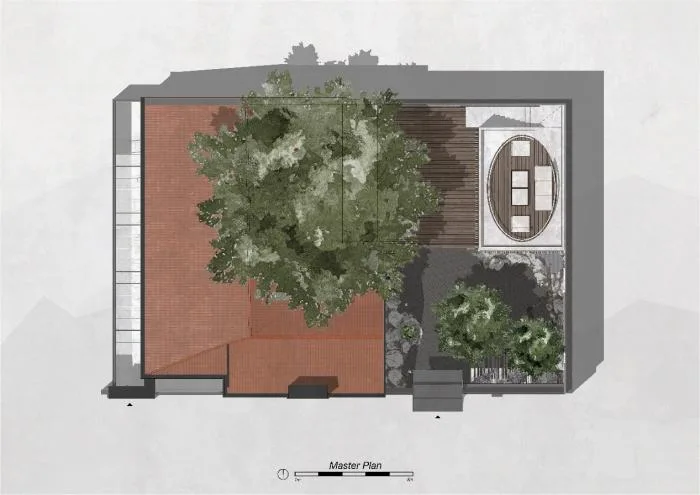
△ One Meter Tibetan General Plan
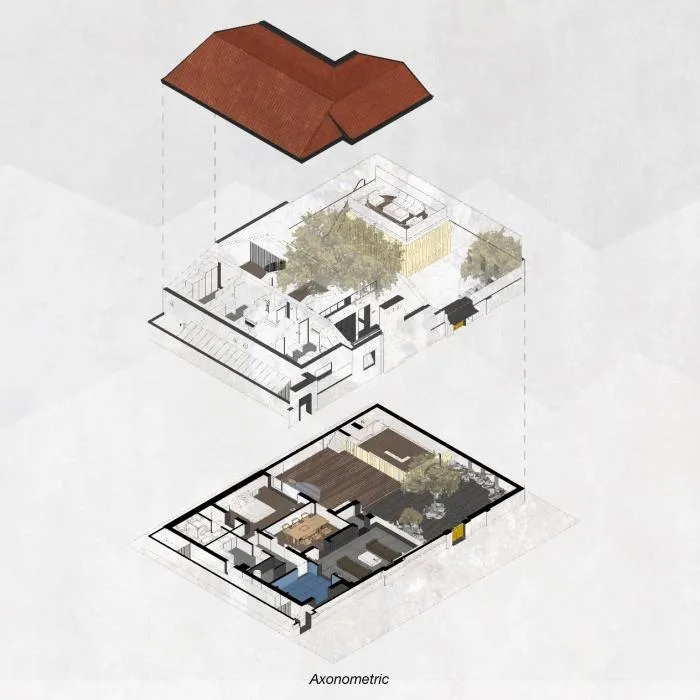
△ One Meter Tibetan Axonometric Map
This straightforward project, with its favorable location and layout, encountered Shanghai’s most skilled architect and a homeowner with a visionary perspective. The two architects, both perfectionists, posed numerous challenges. Designers from Sanyi, accustomed to large urban projects, had to shift from broad strokes to meticulous craftsmanship in this compact 100-square-meter home.
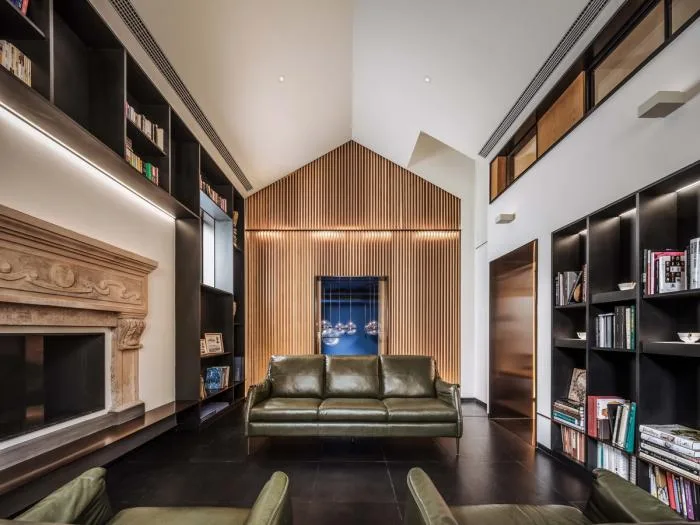
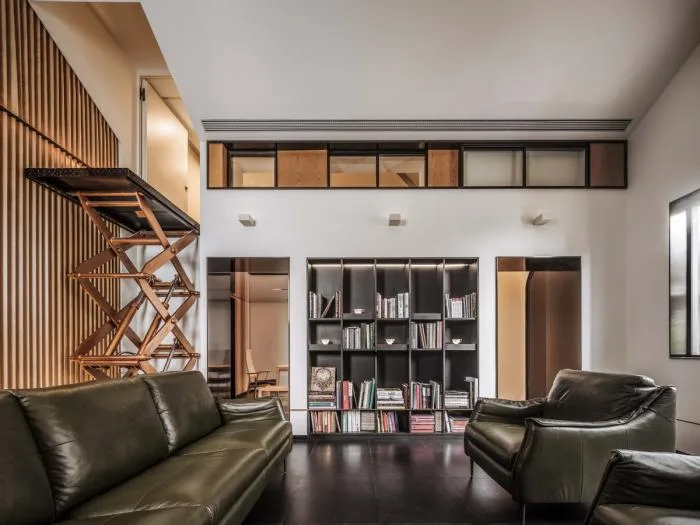
The corner tea room is pillar-free, featuring an ultra-thin canopy, suspended stairs, concealed equipment, and a complex, hidden pipeline system. Industrial elevators were repurposed, curtains are invisible, and lighting is discreetly integrated. These subtle yet sophisticated designs highlight the expertise and collaboration between architects and engineers. Every element was refined to perfection, allowing many creative ideas to be realized flawlessly.
Two
The Hidden Strength Behind the Design
Designers focus on creating drama and tension, but structural engineers face the challenge of making it safe and compliant. They must realize the design in a sophisticated, cost-effective way that satisfies knowledgeable homeowners, all while keeping the structural elements discreet.
Pillarless Tea Room: Reducing Overhang from 5m to 1m
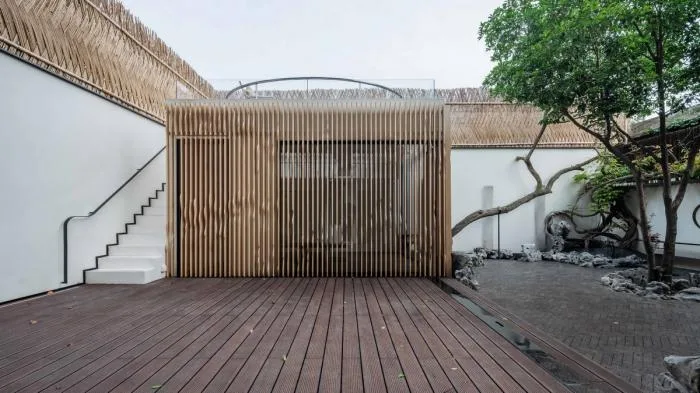
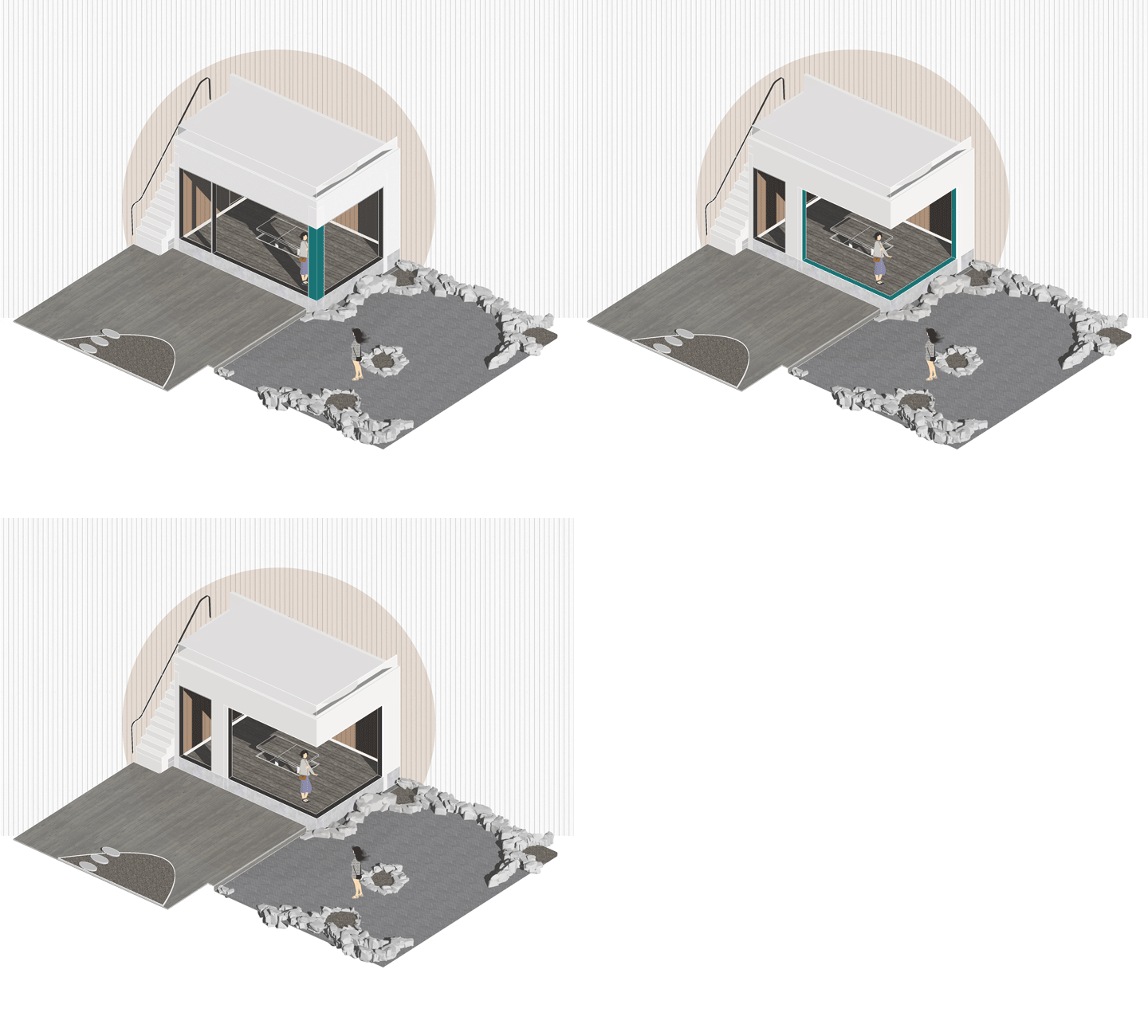
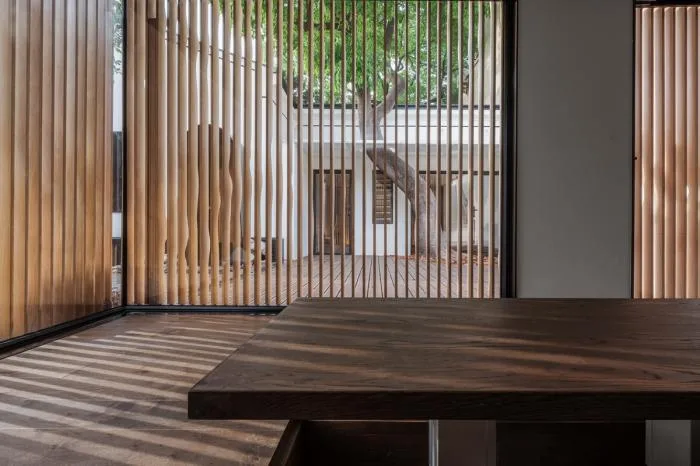
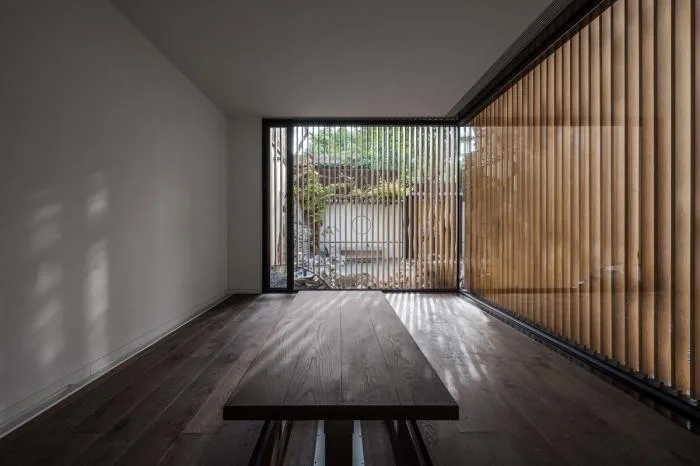
The corner tea room offers an unobstructed view of the courtyard. The designers desired a clear, continuous sightline without corner pillars.
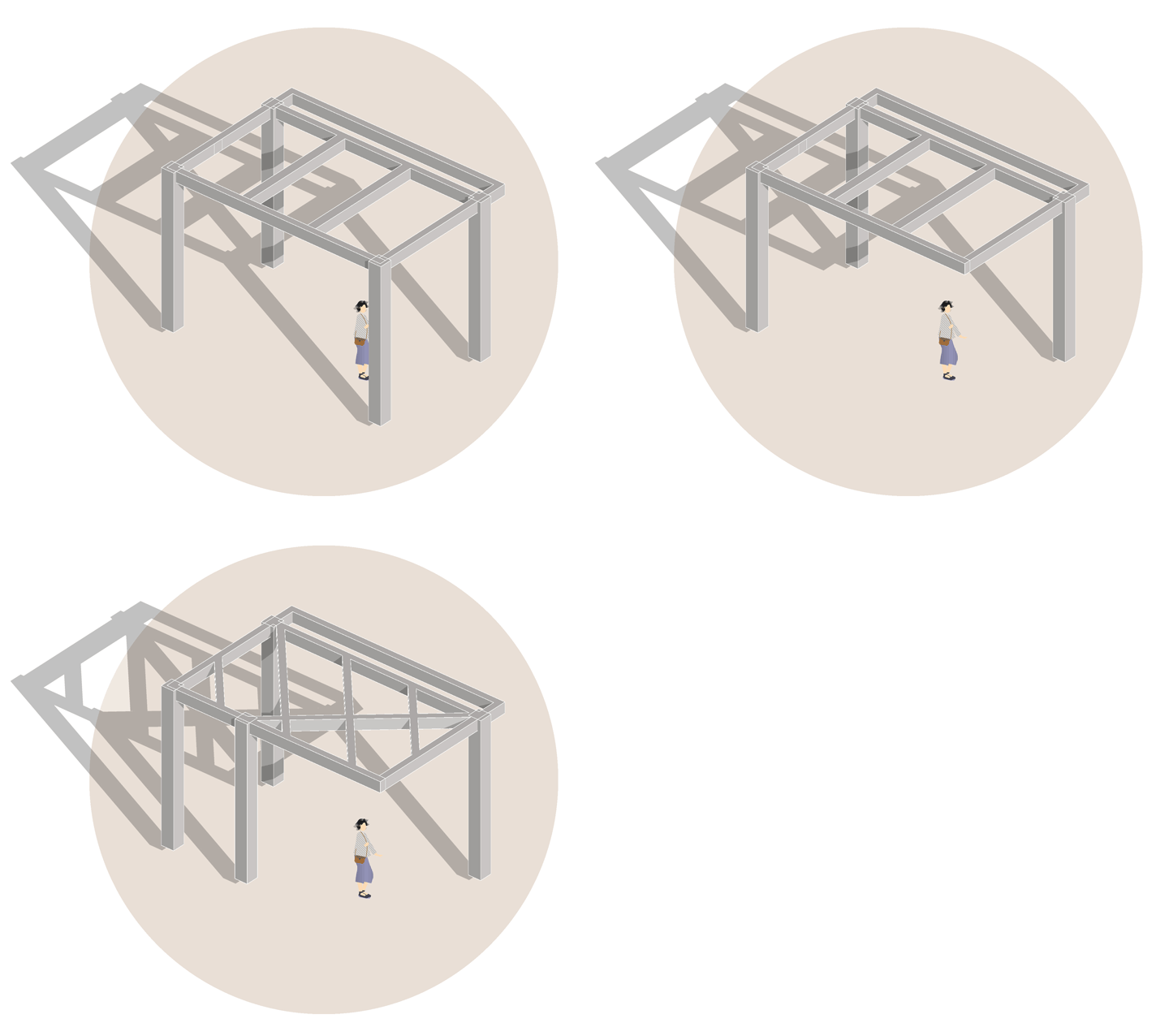
Measuring 5 meters long and 3.5 meters wide, the tea room’s pillar absence meant a 5-meter roof overhang supporting human weight — a significant structural challenge. Sanyi’s structural expert innovated by adding columns at the door frame positions, forming a four-sided framework. By shifting the support 1 meter inward, the overhang reduced significantly, allowing components to stay within reasonable dimensions.
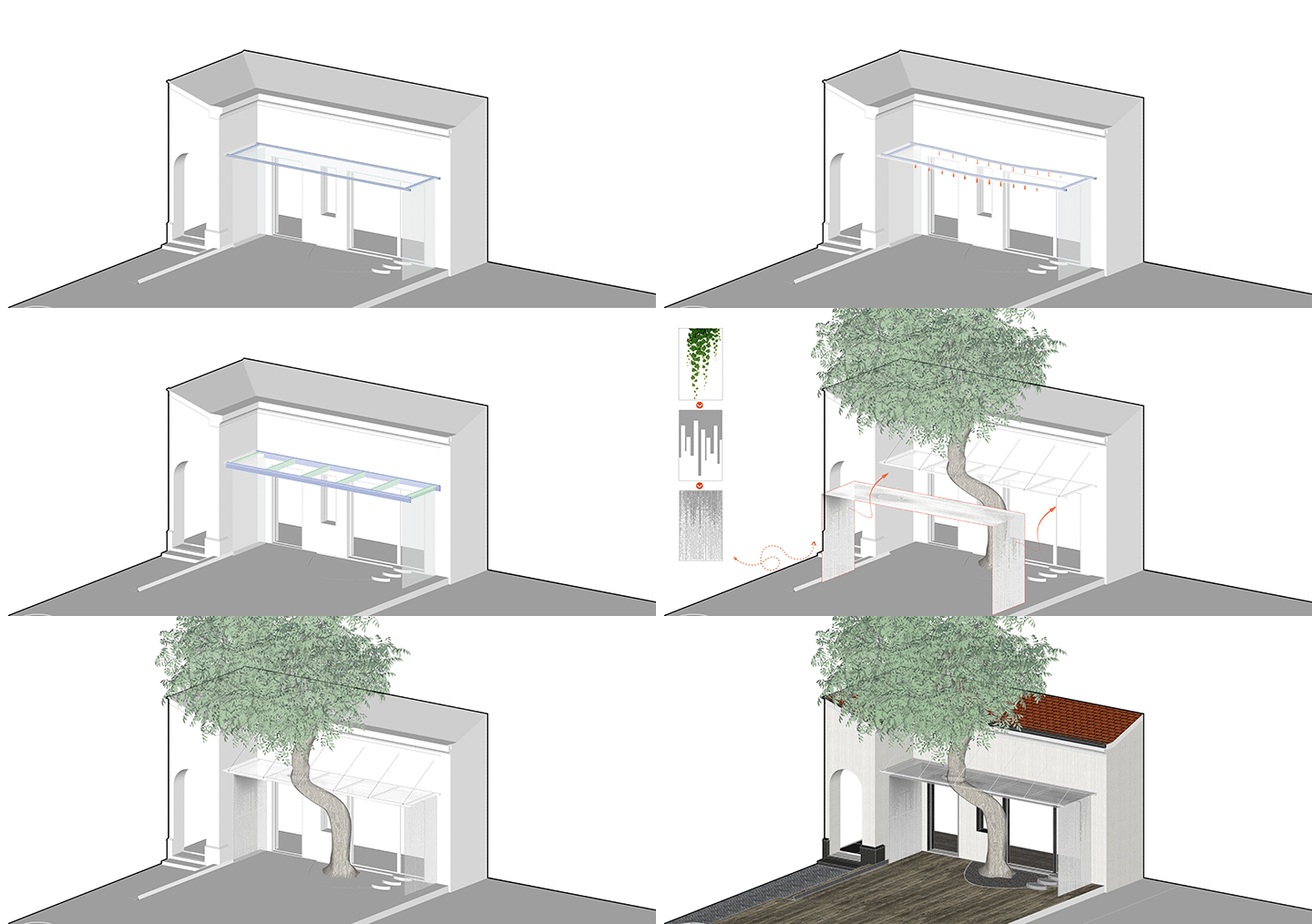
Lightweight Canopy: Slimming from 120mm to 50mm
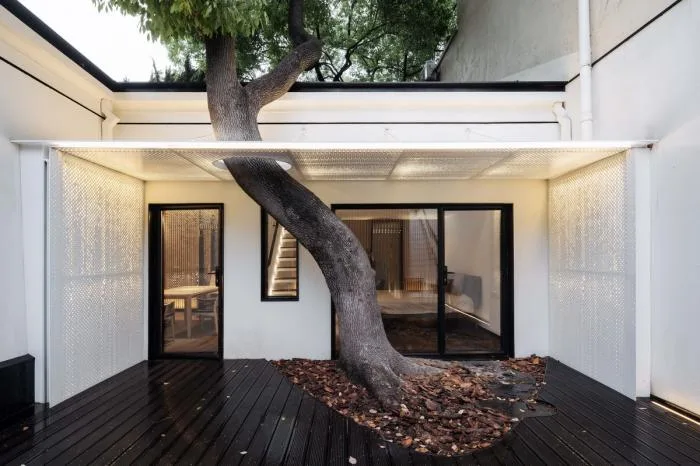
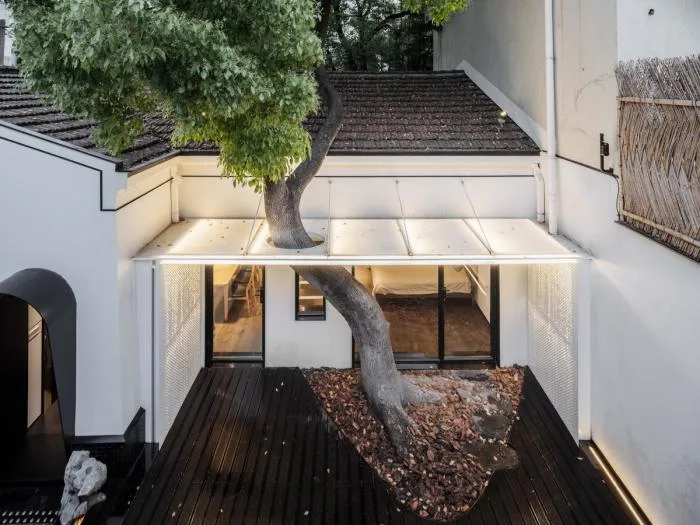
The canopy facing the stage directly adjoins the renovated bedroom’s exterior, where the designer added a slim canopy.
Structural engineers explored all options to achieve the desired thinness. A 6-meter span supported at both ends would cause excessive deflection, while a 1.5-meter cantilever beam would require a thick 120mm beam. To maintain slimness and strength, diagonal braces were added above the canopy.
The designer approved the braces as they remain invisible from the courtyard’s perspective. Five diagonal braces support horizontal steel pipes along the canopy’s edge, with solid square steel adding weight to balance wind loads. This allowed the canopy thickness to shrink to just 50mm.
Suspended Staircase: 120mm Old Wall with 800mm Steps
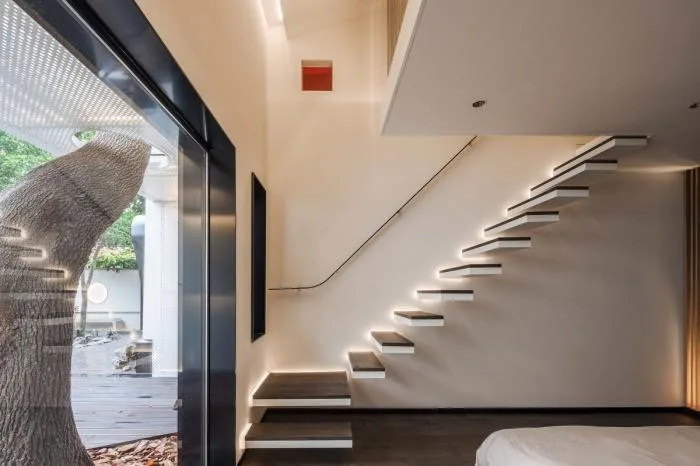
A cantilevered staircase leads up to the mezzanine in the bedroom, appearing to float with the aid of lighting.
Creating this effect in a new build is complex, especially when stepping 800mm out of a weathered 120mm thick brick wall. Both owner and designer insisted that structural beams remain hidden.
Structural engineers, experienced in urban renewal, adopted a “grafting wood” method: hollowing out the existing wall along the staircase and reinforcing it with a new reinforced concrete beam. Due to the wall’s thinness, the beam was poured in five sections—first three, then two after sufficient curing. Steel plates were embedded and welded to reinforce the beam.
To enhance the floating illusion, a 24mm thick solid wood layer covers the steel plate. A 30mm recessed wall-washing light with a white acrylic diffuser softens the lighting. Behind the striking effect lies meticulous design and craftsmanship.
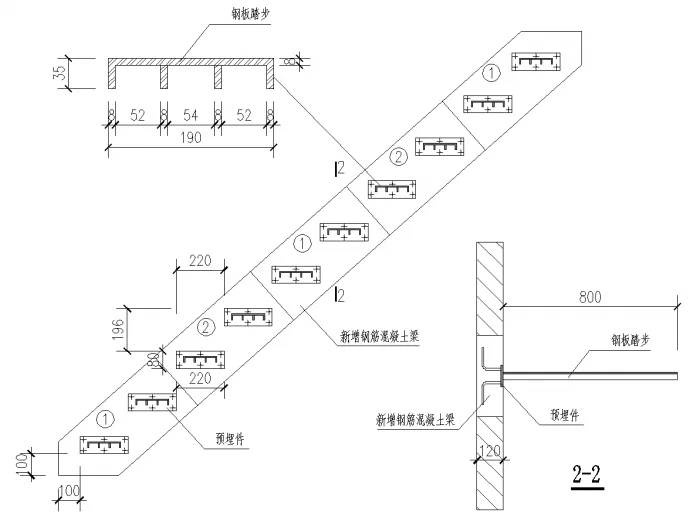
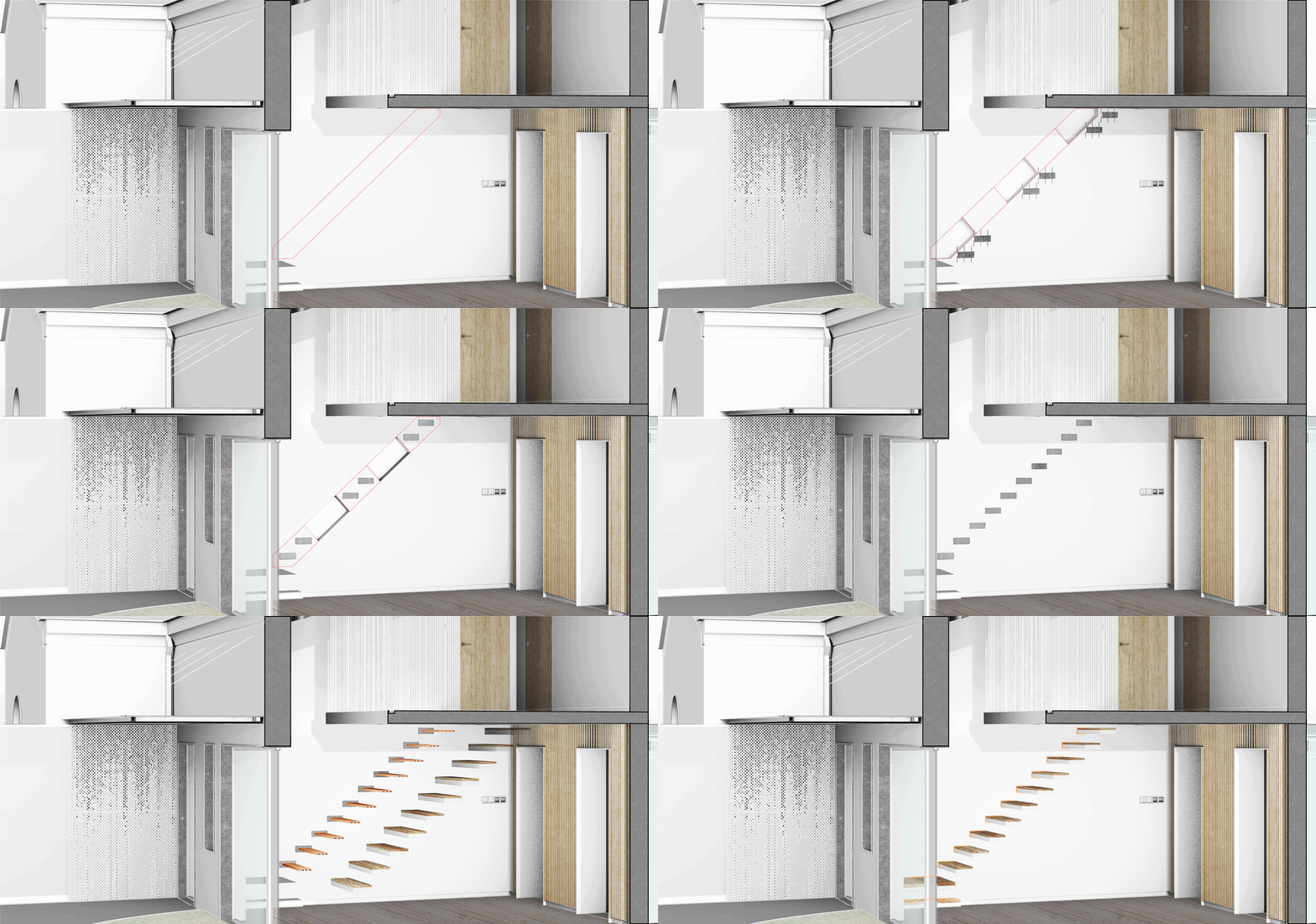
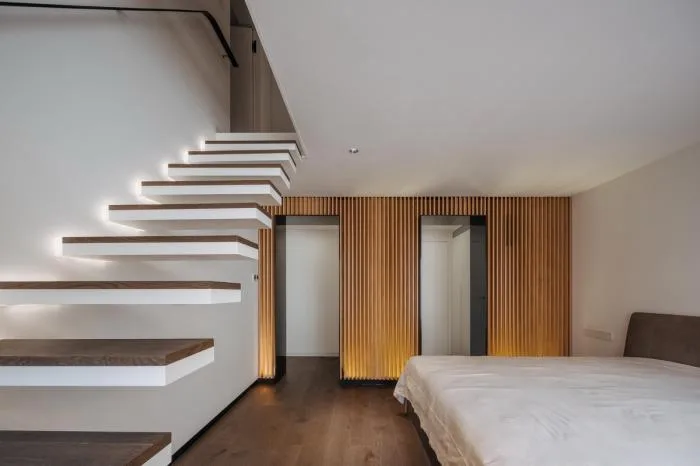
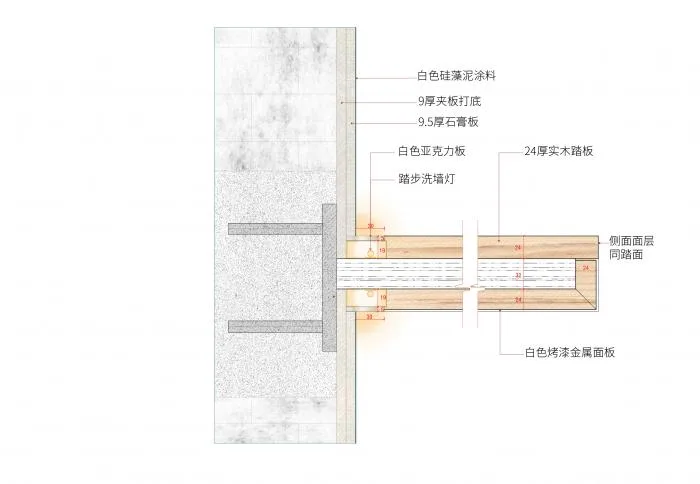
Mottled Old Wall: Reinforcing a Fragile 3.2m High Fence
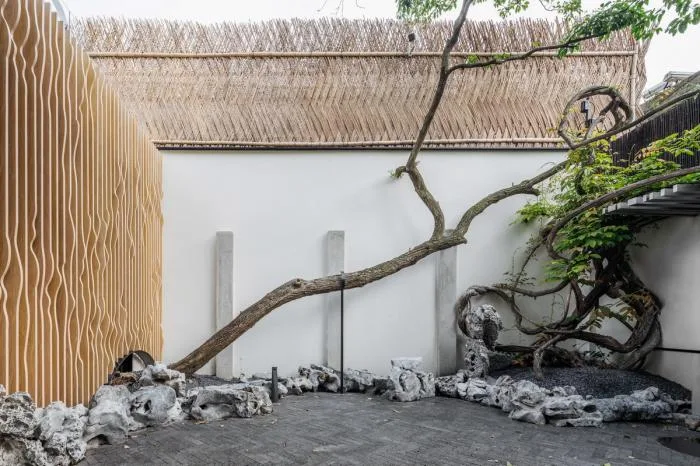
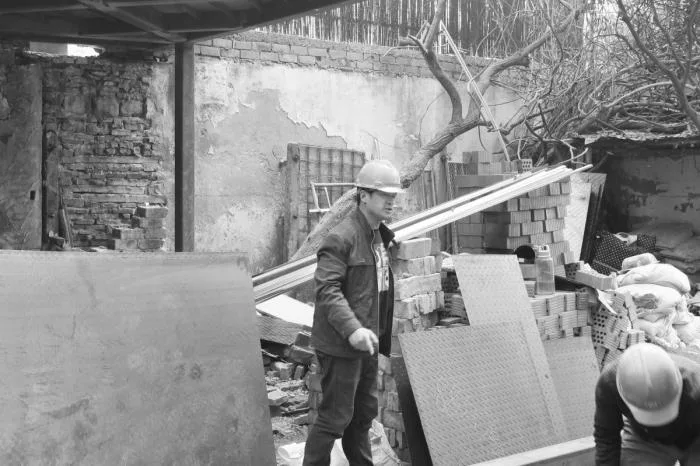
During construction, the south courtyard wall was found to be severely weathered, with peeling surface and brittleness. The 3.2-meter-high, 240mm-thick wall exhibited a high slenderness ratio, threatening its stability.
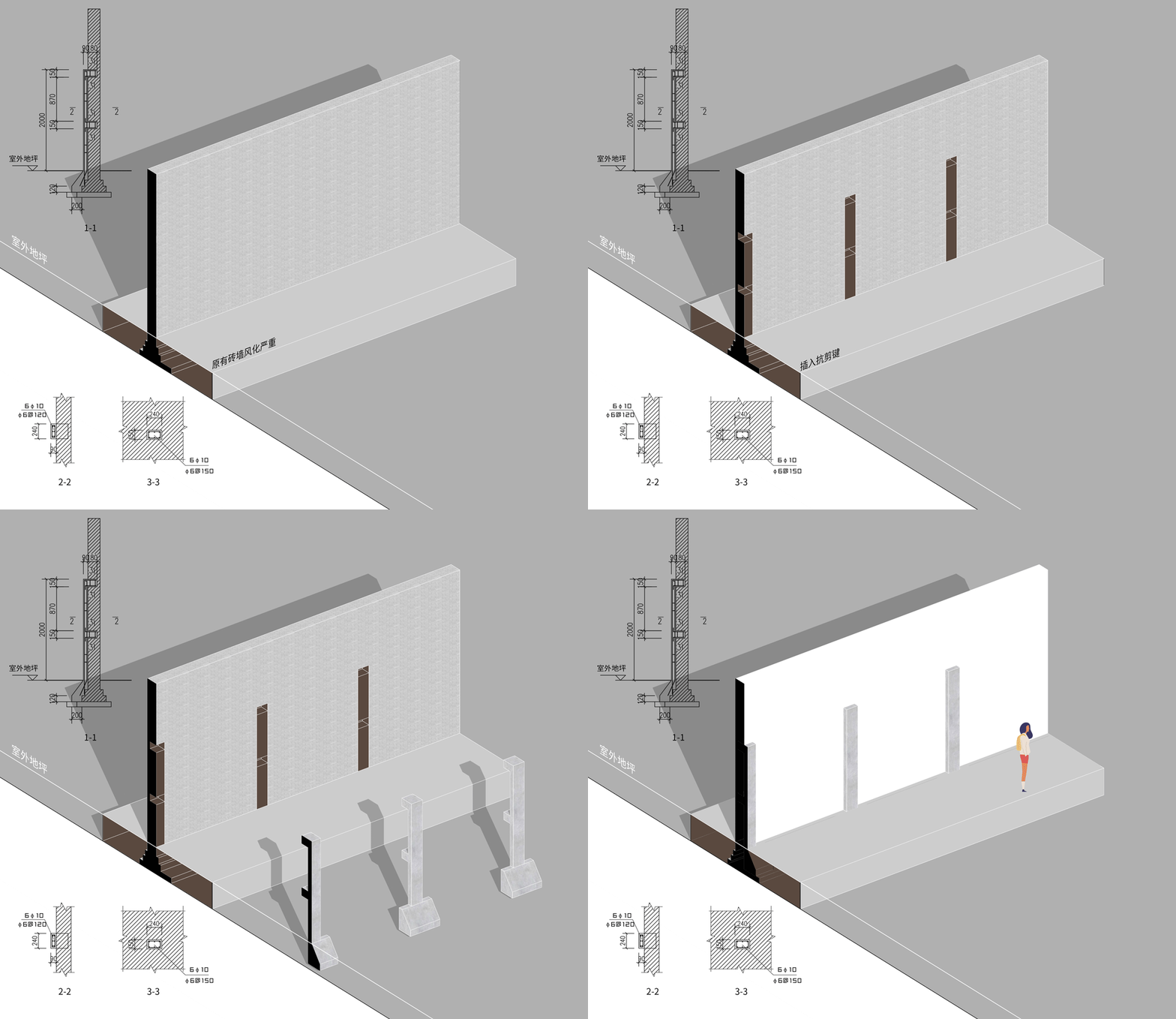
Since the wall could not be dismantled, the structural engineer chose to reinforce it with new reinforced concrete wall columns. These 240mm wide columns were attached to the original wall at 2-meter horizontal intervals, reaching two-thirds of the wall height. Shear members were inserted into the brick wall at each column to ensure joint action between the new columns and the original structure. This solution was both economical and effective.
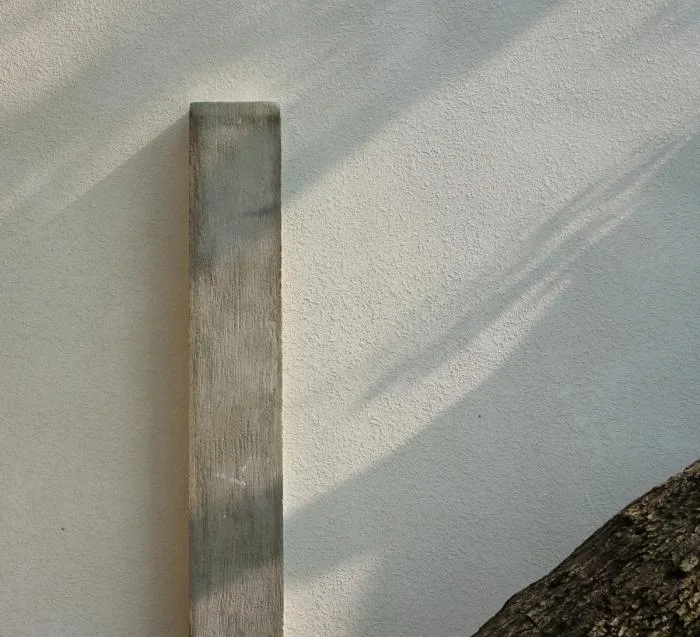
The wall was finally painted white, with the reinforced pilasters left exposed in raw concrete, featuring surface chiseling that aligned with the design concept.
Three
Smart Equipment Integration
A courtyard home typically requires many equipment and pipelines, but neither owner nor designer would allow them to take up unnecessary space. Despite the compact area and strict conditions, the designers embraced the challenge with determination.
Outdoor Equipment Unit: 4 Cubic Meters to House the Base Camp
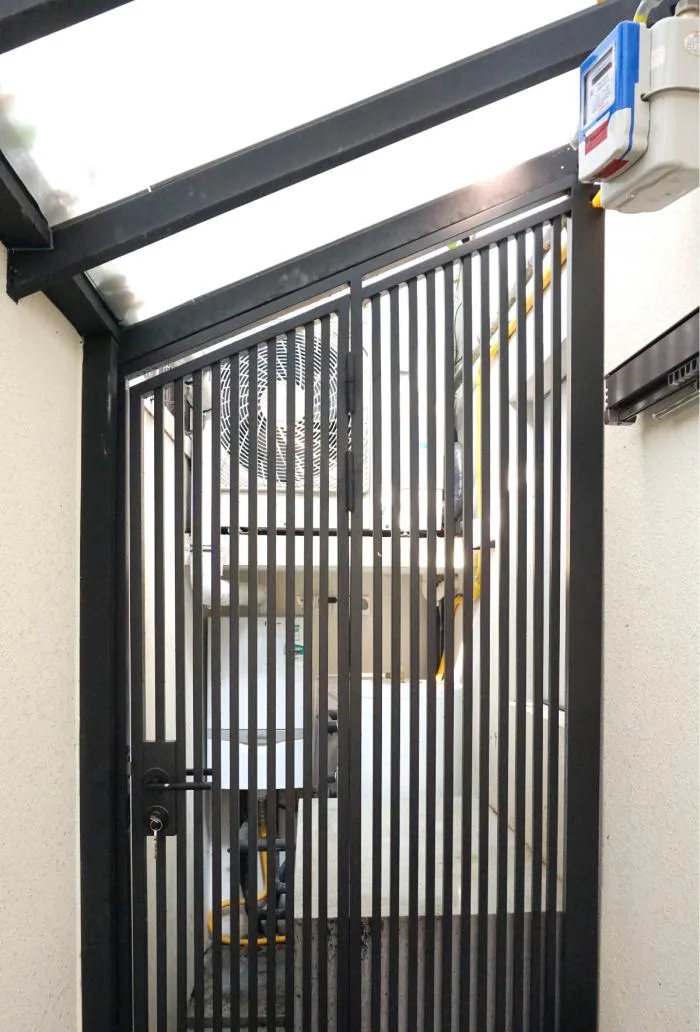
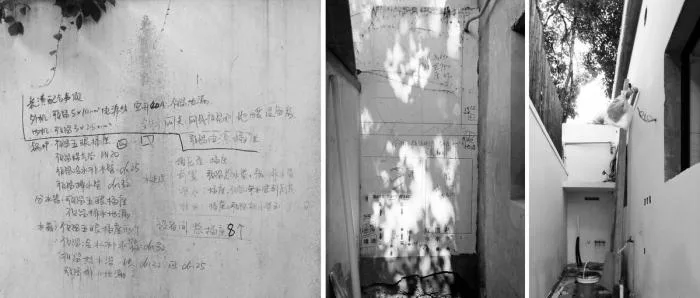
Since this is a renovated old house, the original layout lacked designated spaces for modern residential equipment.
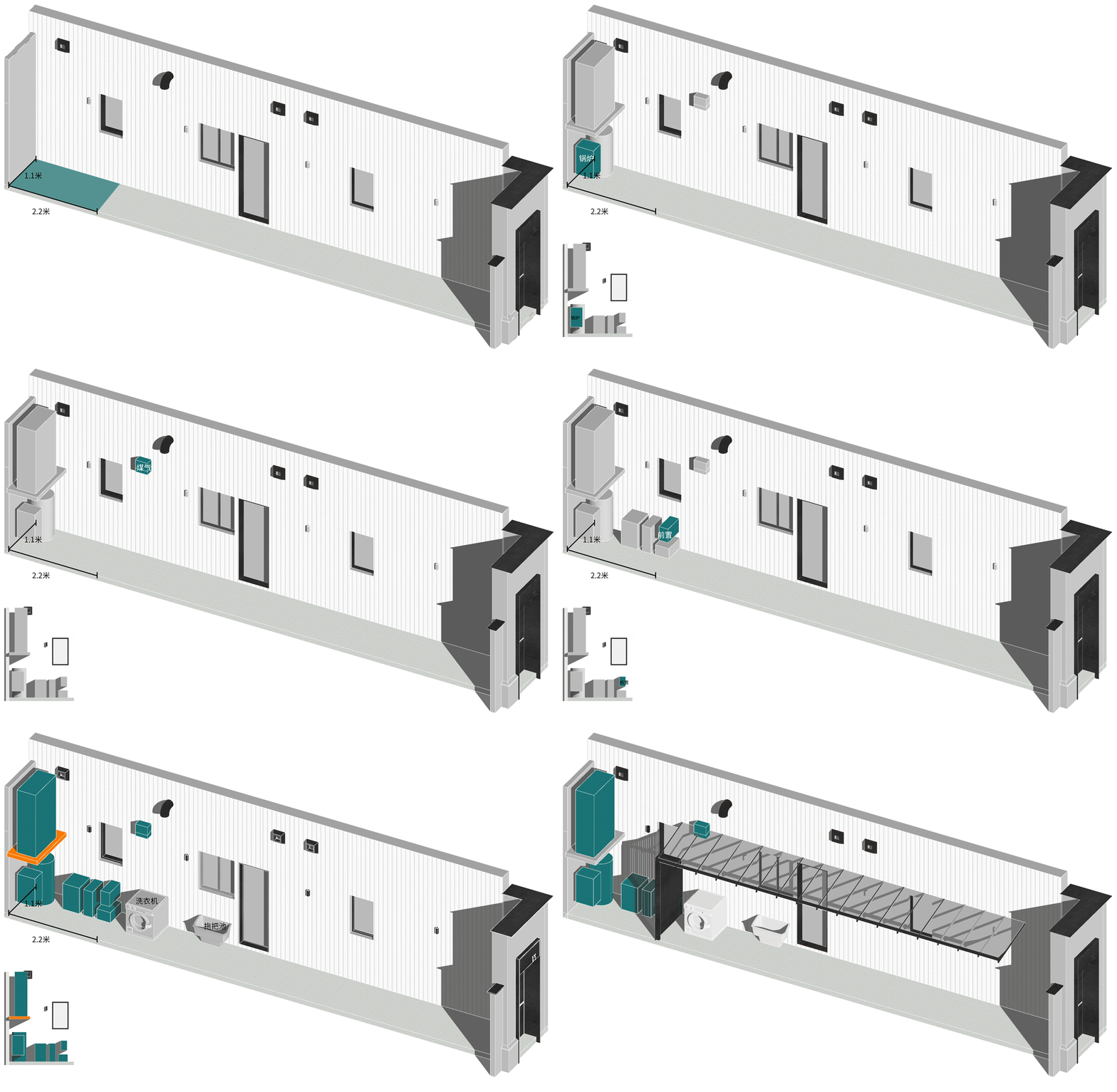
To preserve the courtyard and building aesthetics, all external devices were confined to a small 1.1m by 2.2m backyard space, minimizing pipeline length and energy use near the house.
The heating boiler, 150L hot water tank, booster pump, central pre-filter, water purification, soft water equipment, and air conditioning outdoor unit—all these large machines were skillfully arranged within this tight corner. A concrete slab with a 750mm overhang at about 1.7m height was constructed to support the air conditioning unit, solving the biggest installation challenge.
Mechanical & Electrical Pipelines: Borrowing 300mm from the Wardrobe
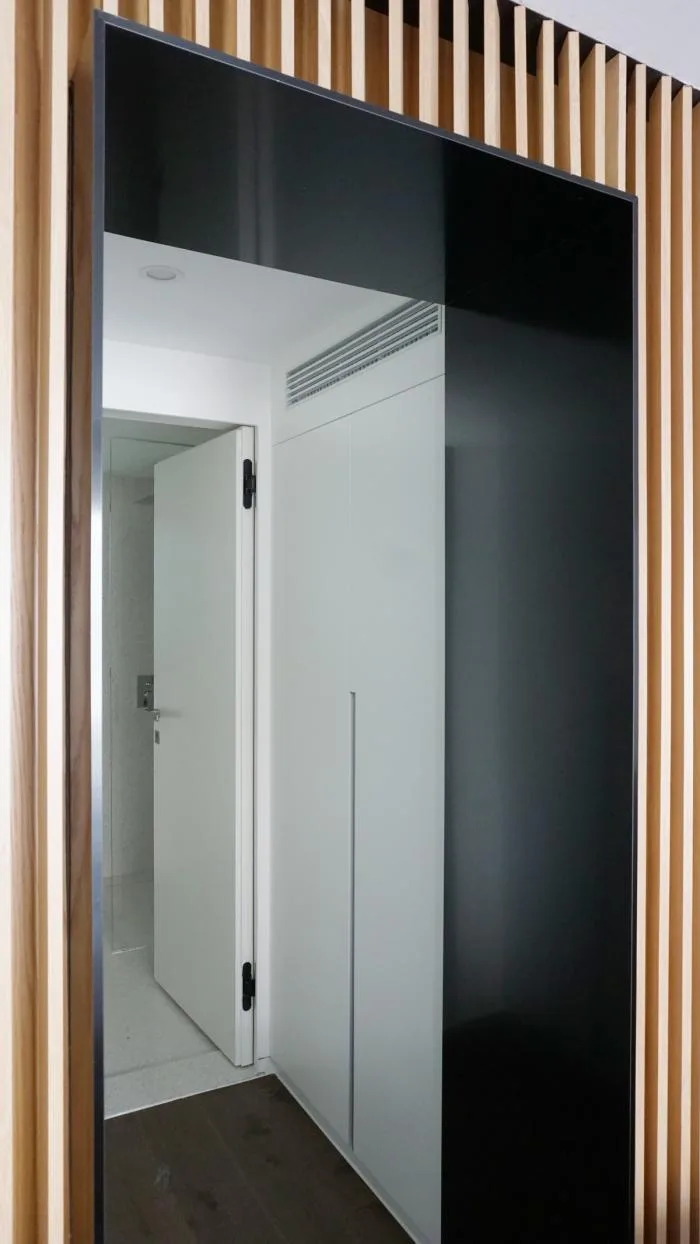
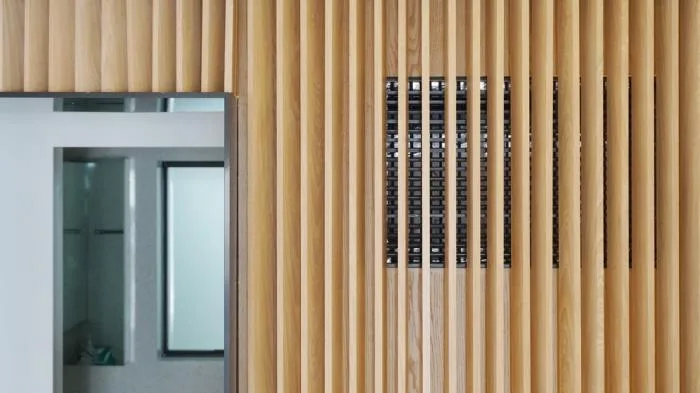
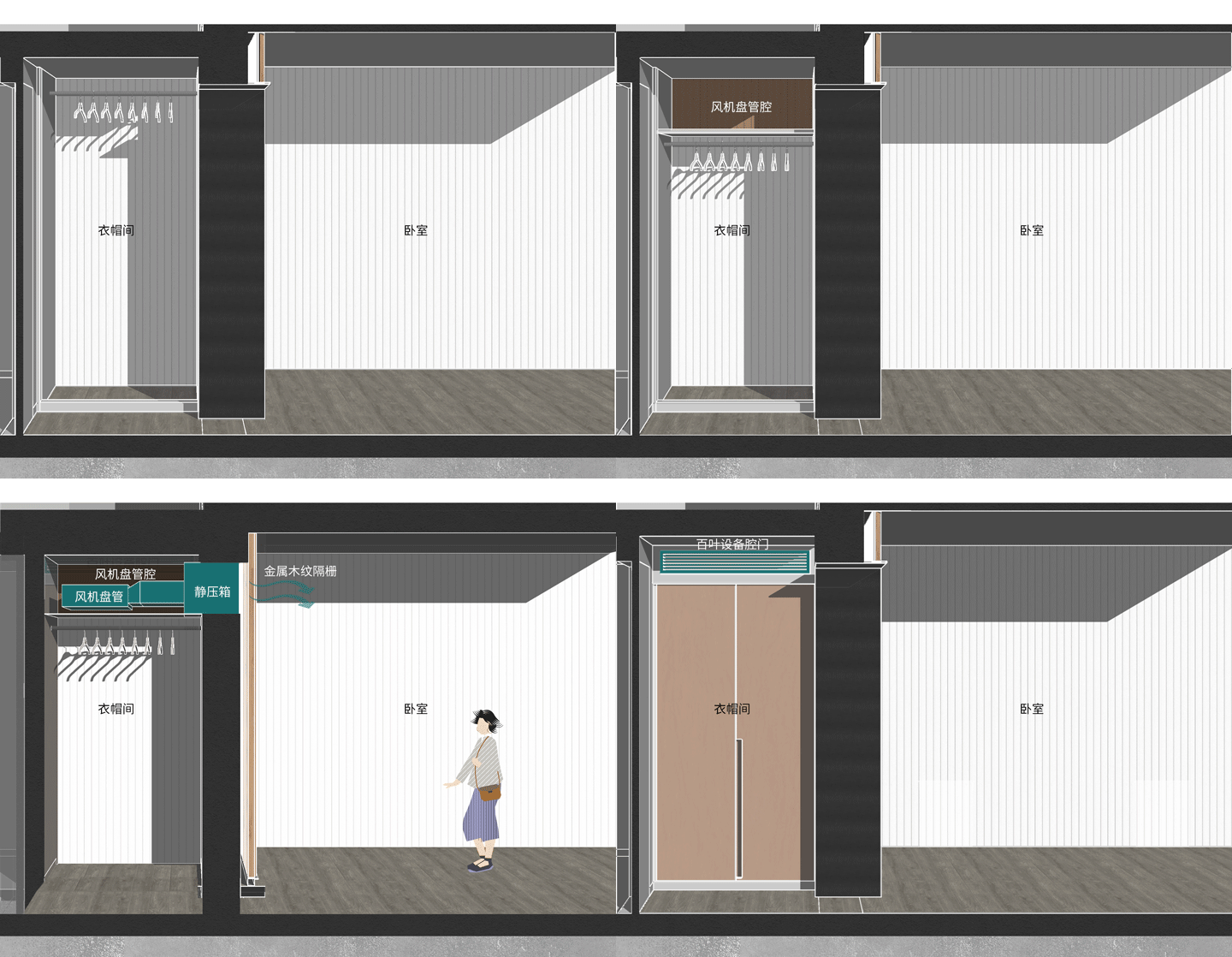
Due to original height constraints, there was no extra room above the ceiling to conceal equipment. This posed a new challenge for hiding devices and pipelines.
For example, the bedroom air conditioning unit would typically disrupt the visual aesthetic if placed in the bedroom or hallway ceiling. Sanyi’s engineers cleverly utilized the adjacent dressing room’s upper space to house a fan coil unit, directly supplying air to the bedroom. The air vent blends with the metal wood-grain grille and directs airflow sideways, avoiding the head of the bed.
The equipment compartment door in the cloakroom is made of louvers, serving as a return air outlet and allowing easy maintenance.
Living Room Fan: 650mm Slit Coil
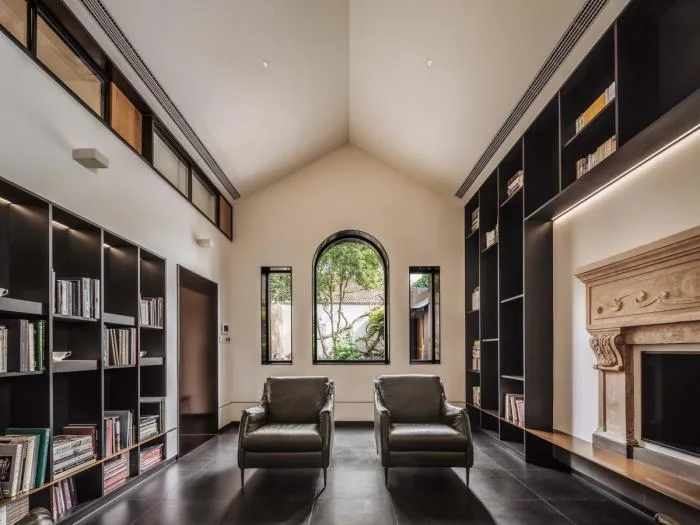
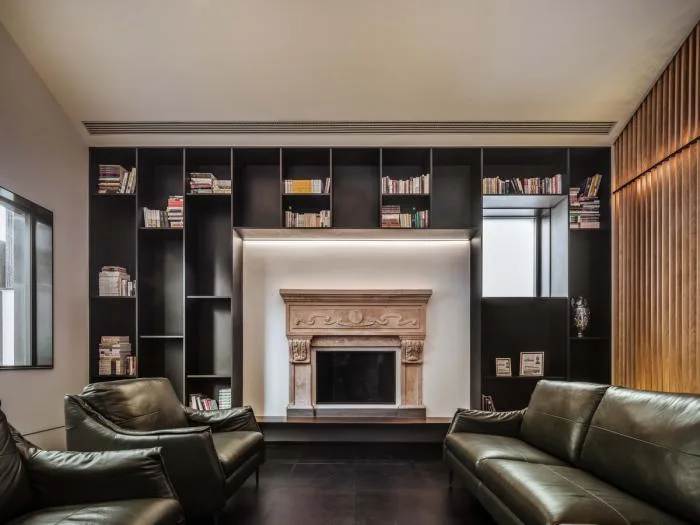
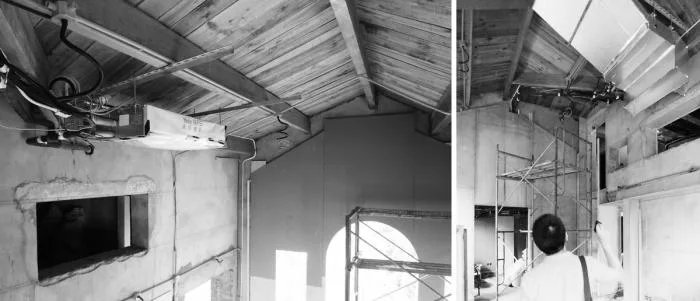
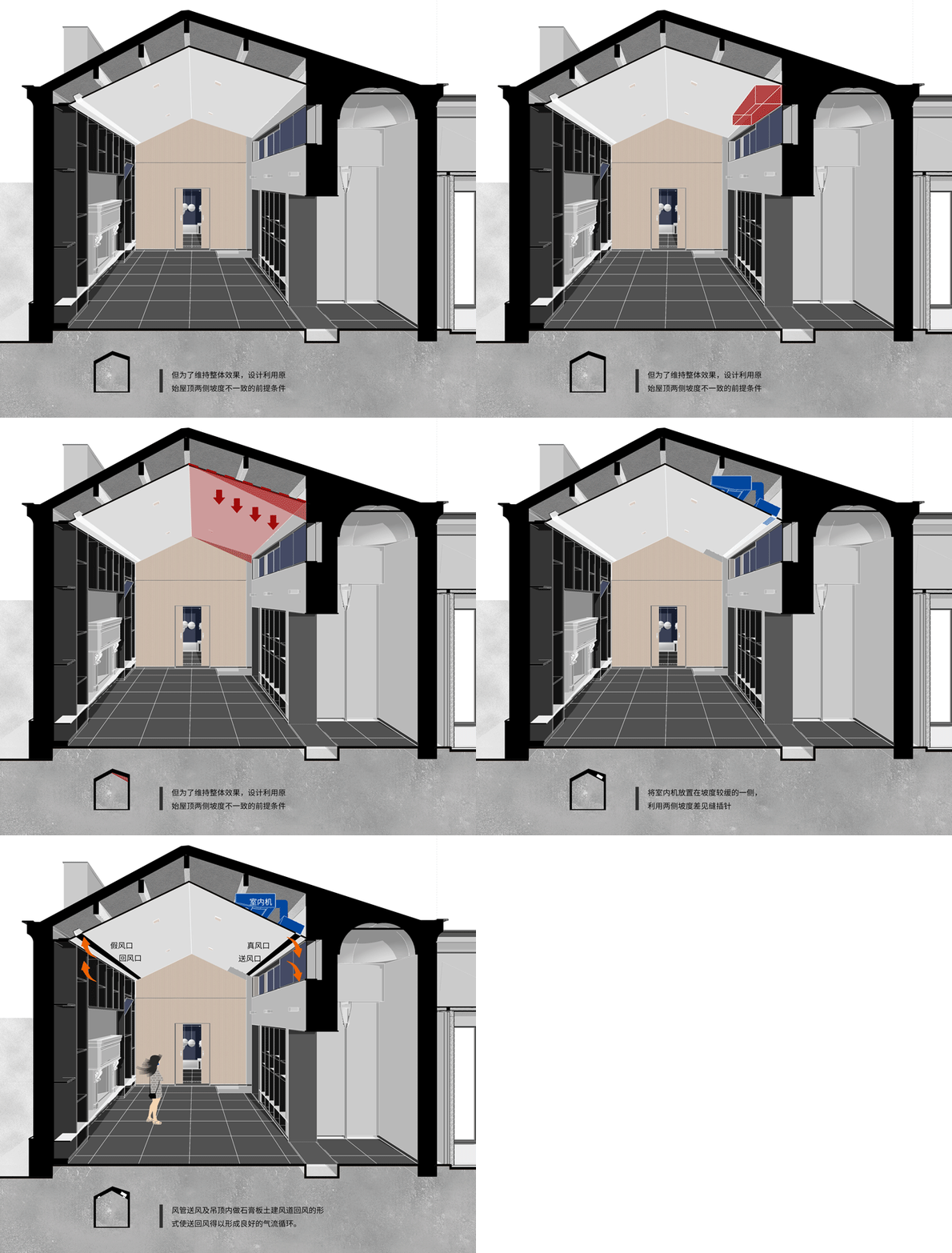
The owners and designers preferred to retain the spatial tension under the sloping roof rather than flattening the ceiling. This limited the space available for mechanical and electrical equipment, requiring indoor units to fit horizontally within the sloped ceiling.
The engineer positioned the unit on the gentler slope side and carefully adjusted its angle to fit a narrow space perfectly. This created a symmetrical triangular gable with a balanced ceiling. The supply air duct and gypsum board return air duct enabled efficient airflow circulation. Air vents were placed discreetly at the lower ceiling edge, cleverly hiding real and fake vents within two interconnected slit openings.
Four
The Team Behind the Seamless Experience
While dreamers focus on scenes and narratives, the creators manage the bigger picture. Every subtle design choice involves complex coordination and can have far-reaching effects.
Drainage Challenges Caused by a Curtain
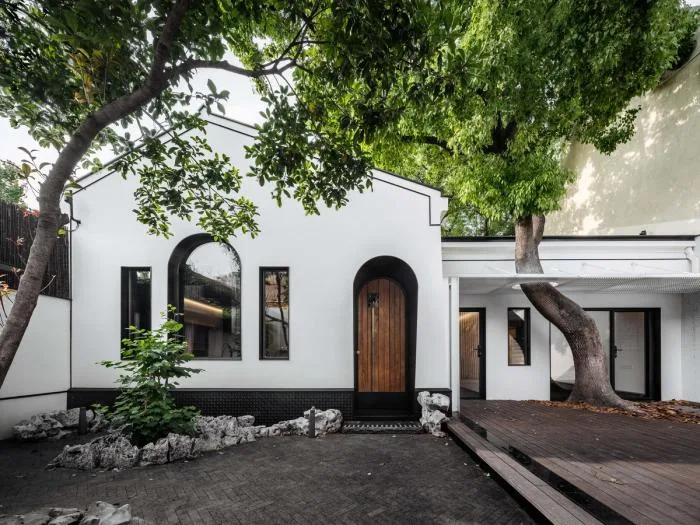
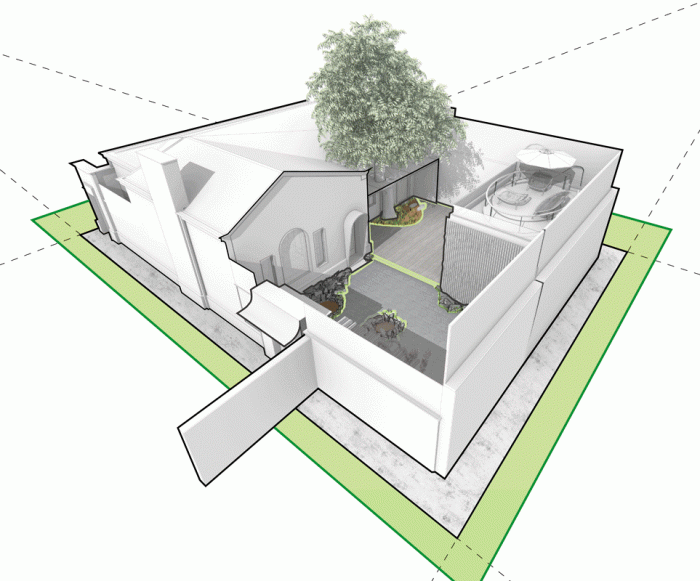
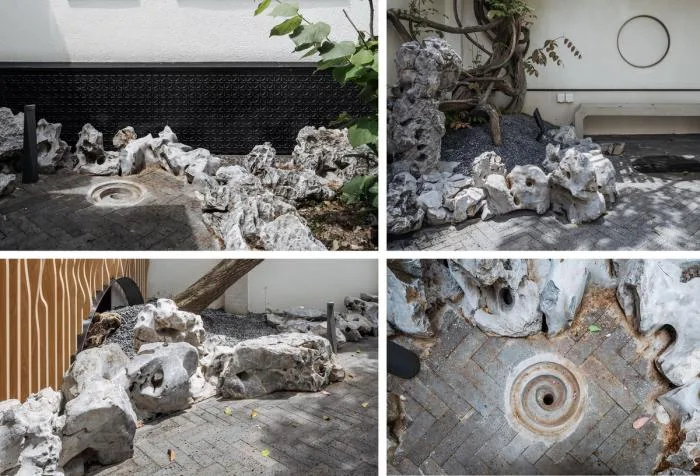
The courtyard is the designer’s masterpiece, and open drainage ditches were avoided to maintain its poetic appearance. However, a robust water and electrical support system was essential.
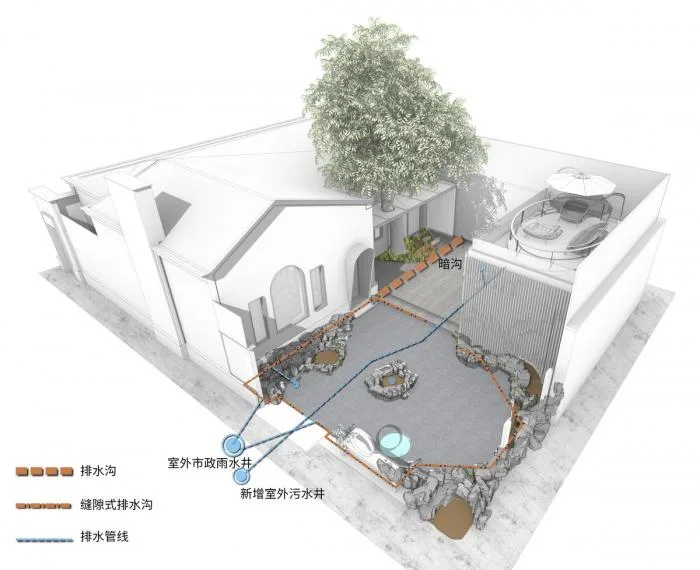
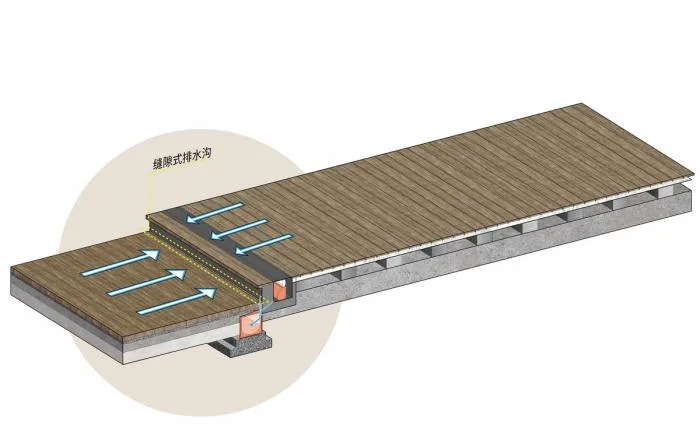
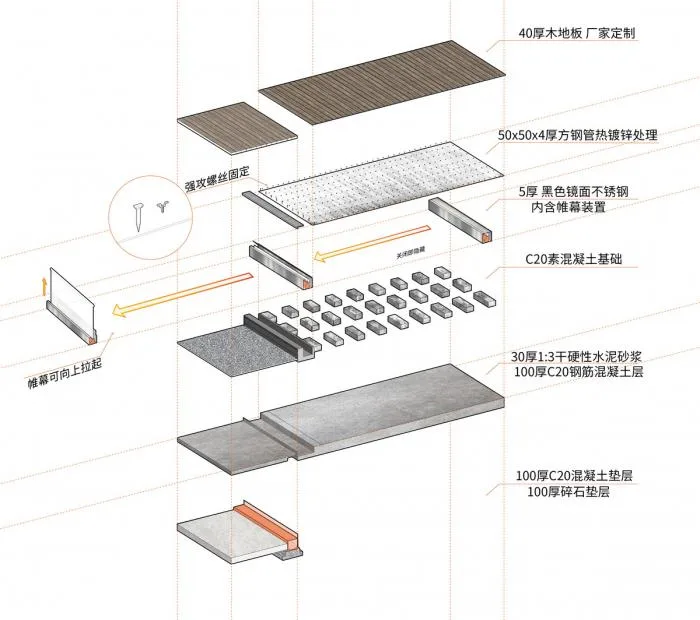
Drainage was integrated naturally through tree pits and strategically placed ditches at building corners, step edges, and hidden areas, leveraging the site’s slope. The inner stage uses pipe trench drainage, with steel keel and wooden platforms mounted on concrete piers to prevent corrosion and ensure proper drainage. For technical controllers, the unseen ground work is a true showcase of expertise.
The most complex drainage issue arose from a curtain separating the garden and stage. Originally, rainwater and sewage pipelines could flow freely outside the site, but the curtain disrupted these buried pipelines, causing system intersections.
To address this, Sanyi’s water supply and drainage engineers collaborated closely with equipment manufacturers to finalize equipment groove sizes and burial depths, ensuring pipelines do not interfere and meet all requirements.
Essential but Balanced Lighting
The homeowner and designers demanded lighting that was neither lacking nor excessive. This small courtyard, rich with meaning, required a unique and subtle lighting atmosphere.
Fortunately, lighting consultant Zhang Chenlu expertly enhanced the environment with varied lighting tuned to site textures.
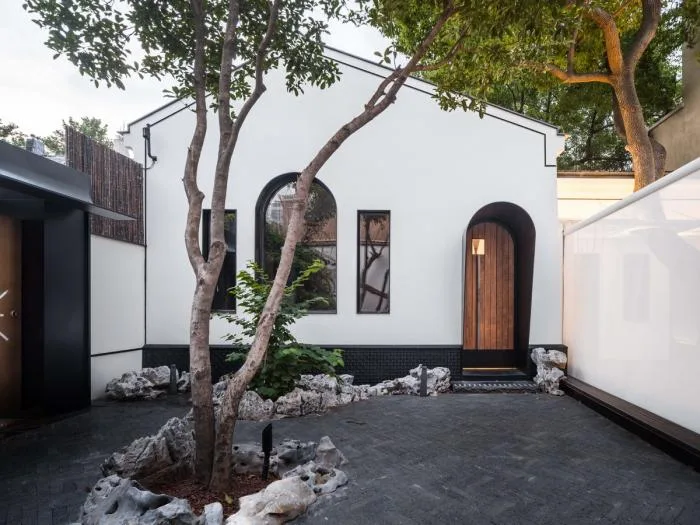
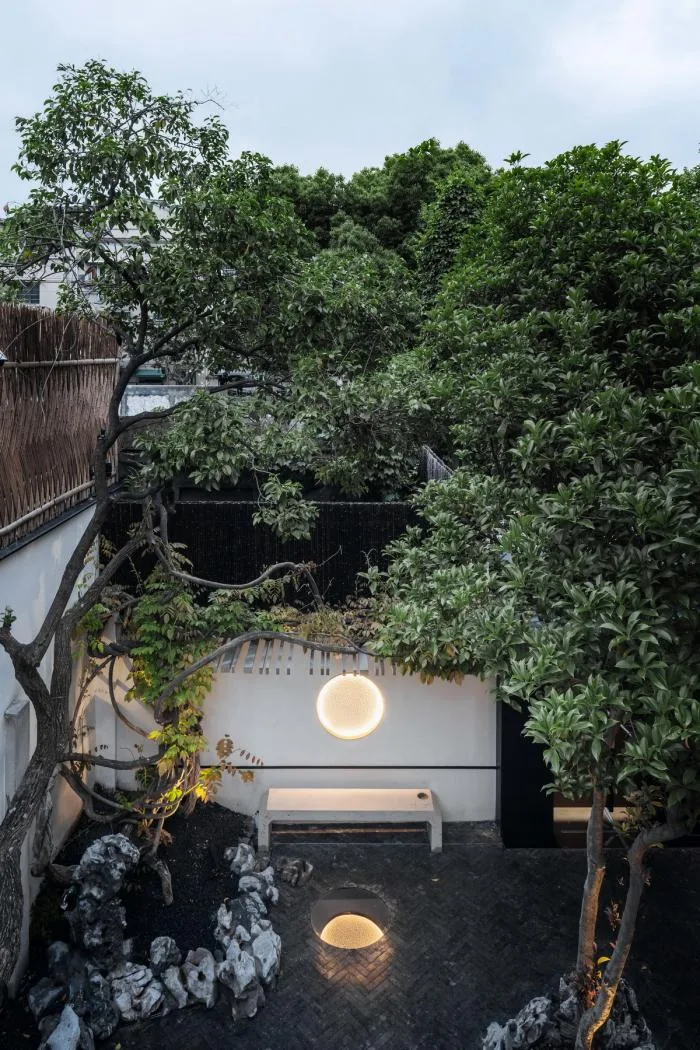
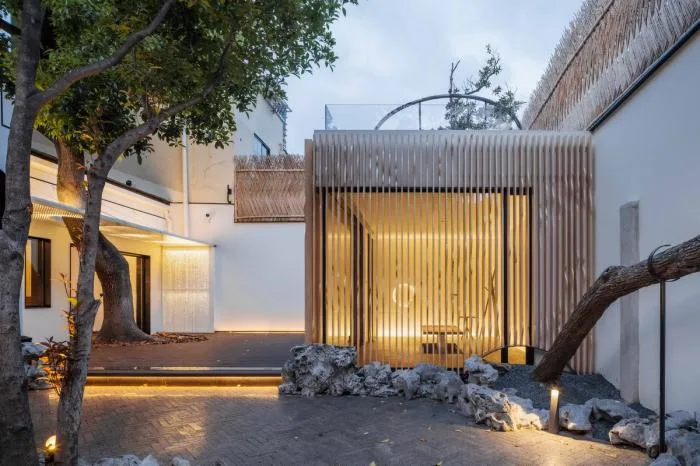
The front yard retains the wild charm of the original courtyard, with wisteria, Bauhinia, and osmanthus trees preserving Eastern classical elegance. Three lawn and tree lights illuminate the area, while a soft light strip embedded along the copper decoration’s circular edge on the Mirror Flower Water Moon Wall casts a glowing reflection on the ground water plate.
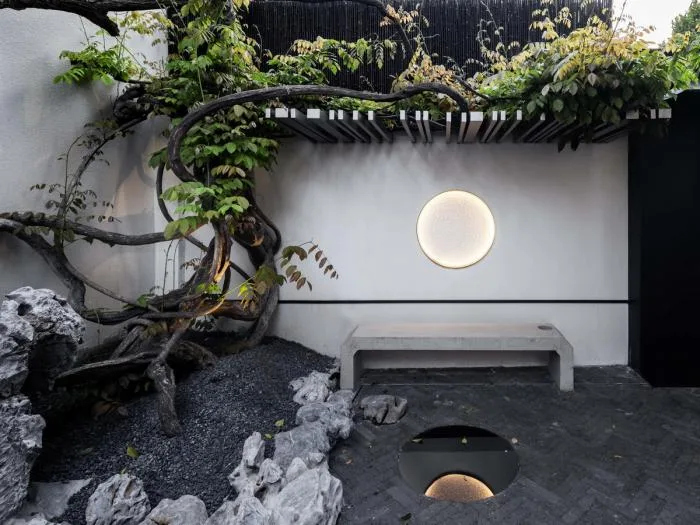
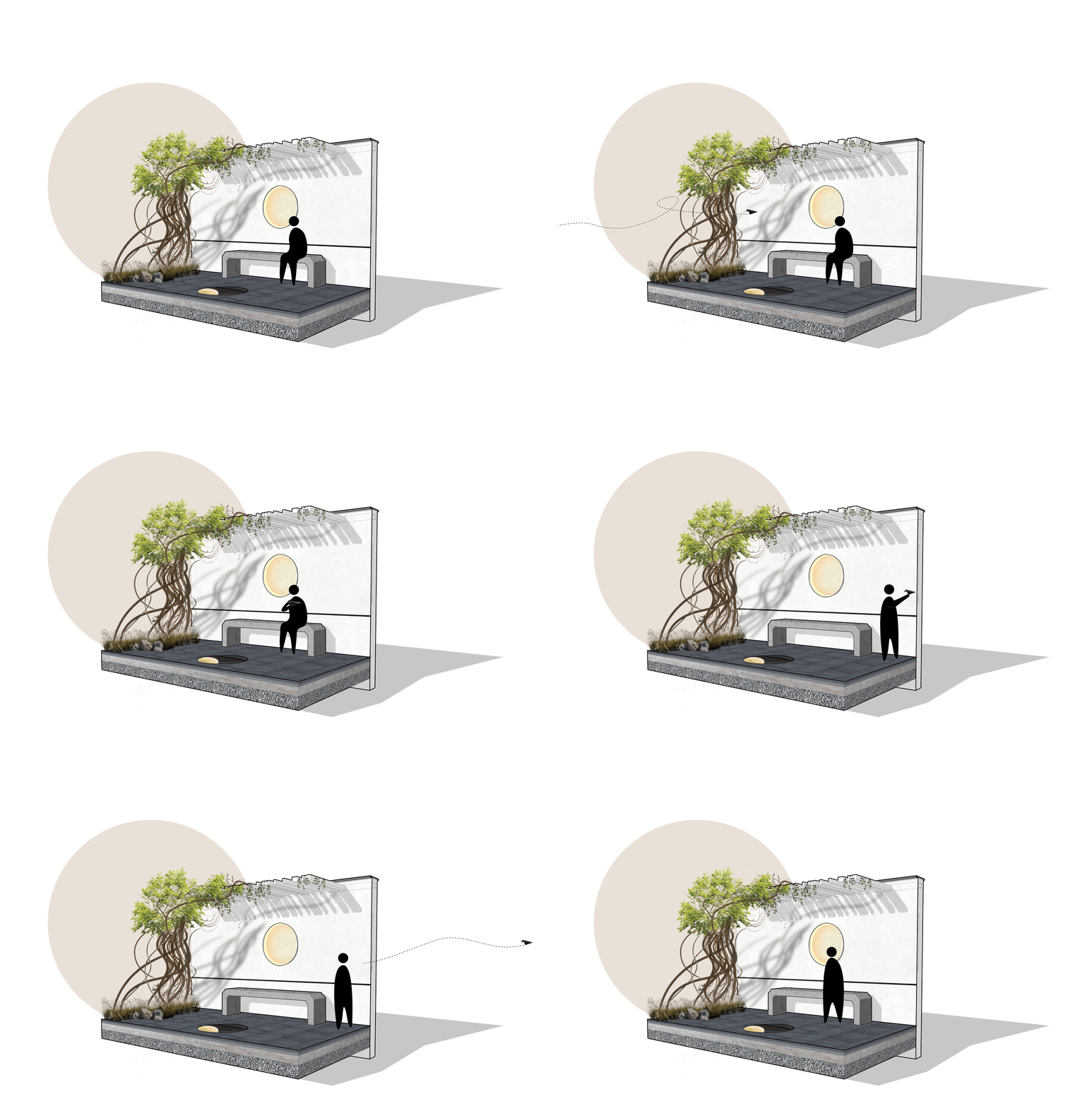
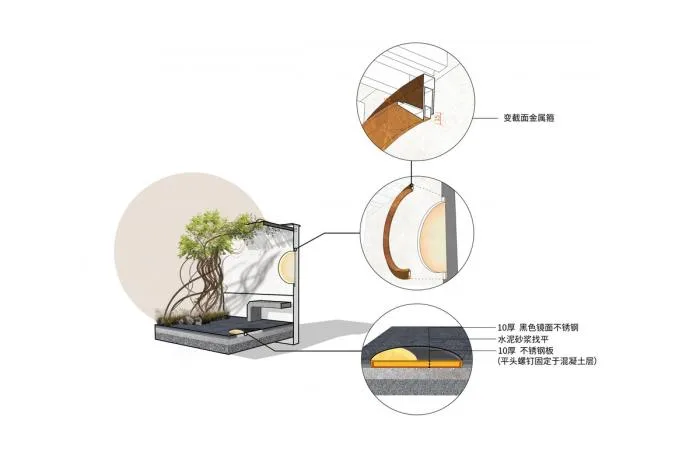
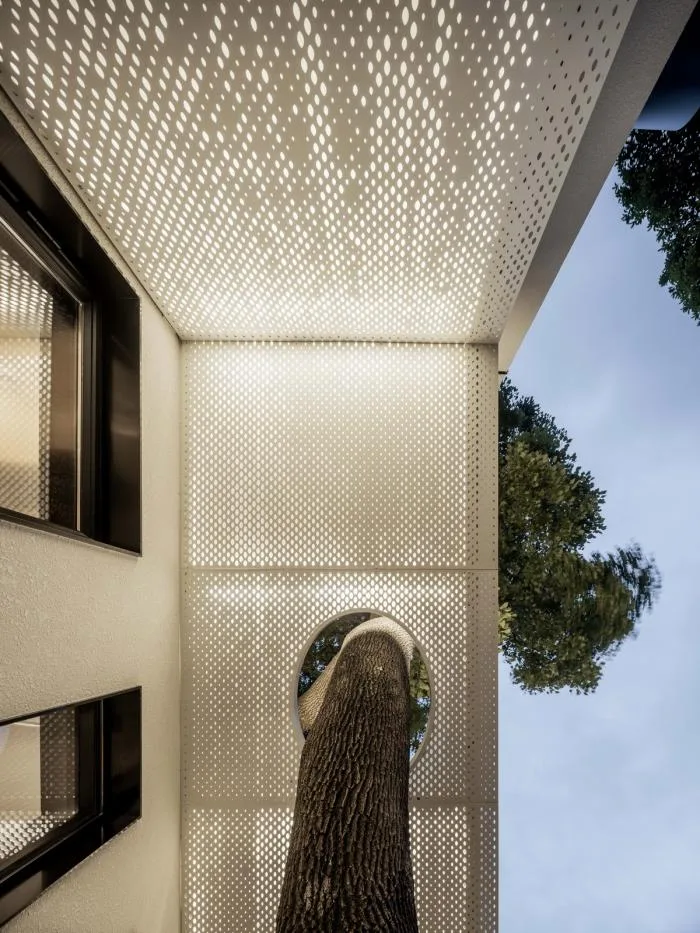
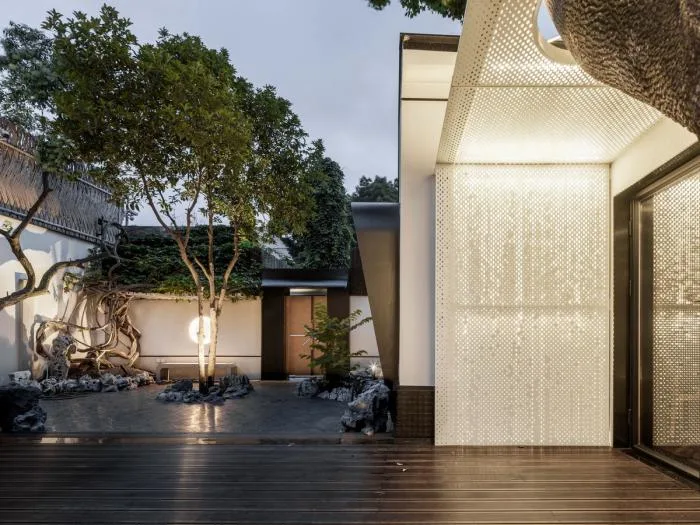
The inner courtyard features a minimalist, modern design. A high-gloss white perforated aluminum panel with a wisteria flower pattern forms the canopy. Ambient lighting centered on the canopy sets the courtyard’s mood, with all light sources provided by linear lighting. Strip lights along structural connections illuminate the canopy, while edge linear lights enhance brightness and drama during gatherings.
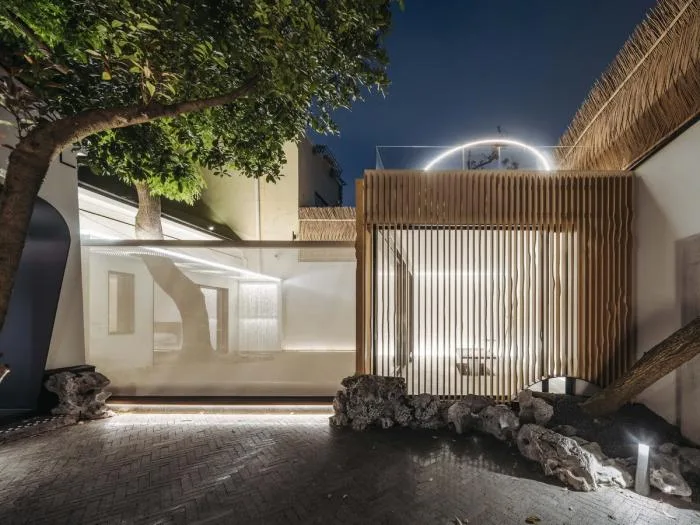
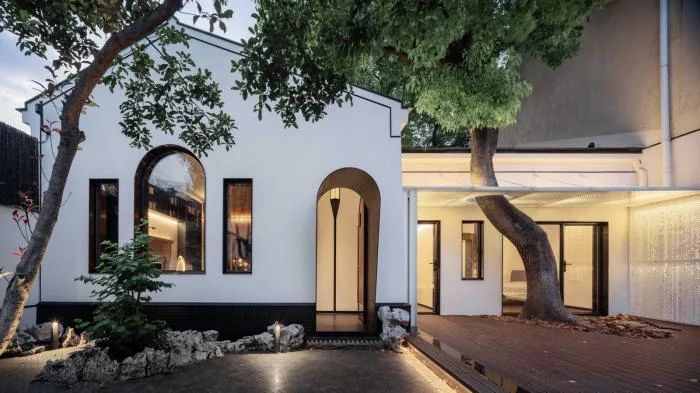
The corner tea room glows at night, creating a nearly seamless connection between the front and inner courtyards. This captivating view greets visitors at the gate, while a winding path in the front yard leads to a secluded retreat.
Five
Enabling Beauty to Flourish Freely
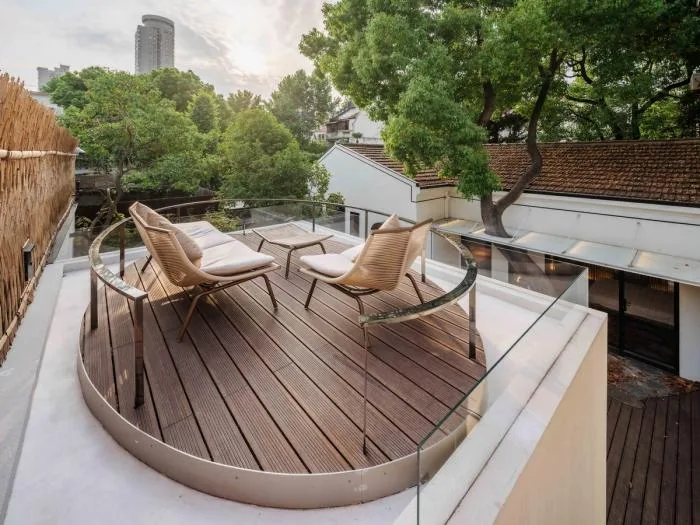
The One Meter Cang project is small, but Sanyi’s technology, typically used for large urban projects, was adapted with fine precision to handle this intricate case effortlessly. For seasoned designers, technical implementation is straightforward. The real challenge is solving problems invisibly under constraints to realize the envisioned scenarios with flawless execution.
Continuous on-site refinement and improvements culminated in an exceptional finish. While scale and complexity were reduced, these delicate projects reveal the subtle emotions and dedication of architects and engineers rarely seen.
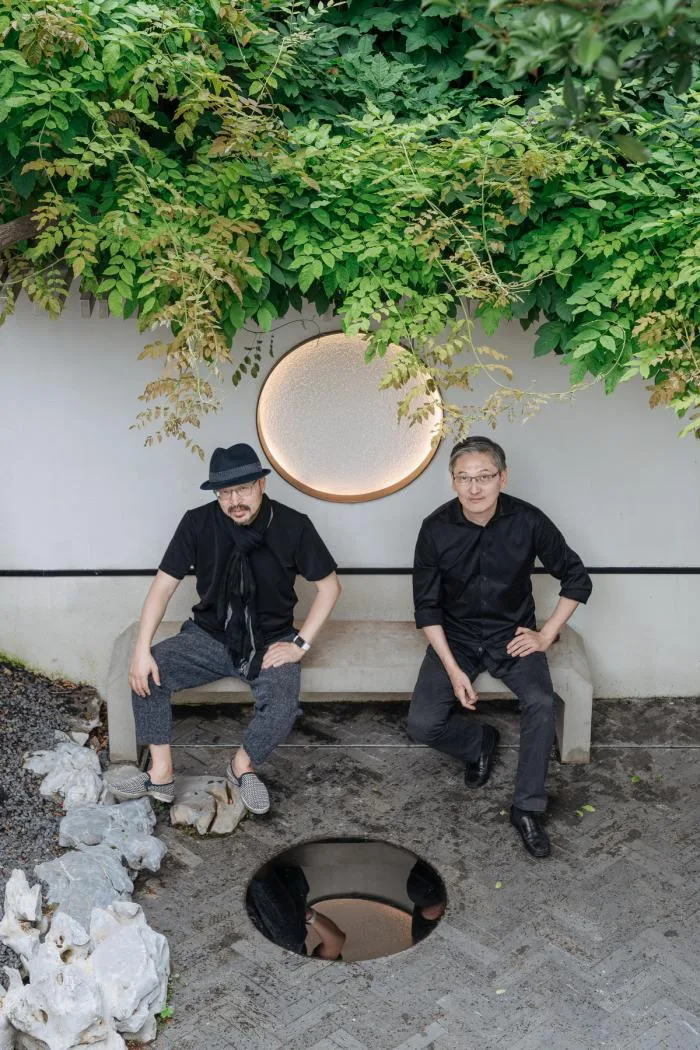
This project showcases the pride of professionals who respect and inspire each other. It is the result of two architects with different identities challenging one another. When creativity is freed from technical limits, and technology becomes the foundation of creation, beauty can truly flourish.

Project Information
Project Name: One Meter Storage
Location: Shanghai, China
Area: 139 square meters building area, 105 square meters courtyard
Materials: volcanic rock, Taihu Lake stone, perforated aluminum plate, glass, steel plate, diatom mud, wood, white cement
Construction Period: May 2014 to July 2020
Design Team: Wutopia Lab + Sanyi China
Planners: Gao Dong, Yu Ting
Lead Architect: Yu Ting
Design Team: Wutopia Lab
Project Architects: Li Zongze, Mu Zhilin
Designers: Pan Dali, Sun Wutian, Dai Xinyang, Lin Chen, Ge Jun, Ge Yufei, Huanghe
Detail Design Team: Shanghai Sanyi Architectural Design Co., Ltd.
Design Director: Zhu Yumei
Architectural Design: Zhu Yumei, Ye Xia
Interior Design: Yu Bing, Zhou Yixiang, Gao Kefan, Ge Hongyuan
Landscape Design: Wang Can, Zheng Zhicheng, Jing Ziyue
Structural Reinforcement & Design: Hu Wenxiao
Mechanical & Electrical Design: Jiang Hong, Mao Yaqian, Mao Yun, Xu Weidong, Yu Xiaohui, Xin Jieying, Cheng Xiaohu
Panoramic Rendering: Wei Yinjun, Gao Haiyuan
Drawing Coordination: Hu Zheyu, Xiang Wenwei, Wang Ying
Other Collaborators:
Lighting Consultant: Zhang Chenlu
Home and Art Consultant: Wang Fang
Identification Consultant: Zhang Qi
Photography: CreatAR Images
Project Manager & General Coordinator: Zhang Hao
Construction Manager: Chen Yuwen
</section













Must log in before commenting!
Sign Up