
My Love “Cultural Space”
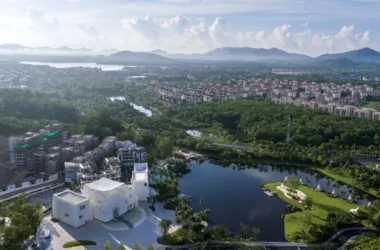
This project began with the dream of a girl from a rural area. She wished to one day return to her hometown and establish a cultural and artistic center that would bring hope and joy to the community. Forty years later, with the support of her husband, her dream came true. “Mon Amour,” which means “my love” in French, was envisioned by a father as a gift for his artist wife and their two daughters, who are music students. Spanning 15,000 square meters, the architects designed an art museum, a multifunctional space for performances and ceremonies, as well as restaurants and cafés.
Architect Q&A
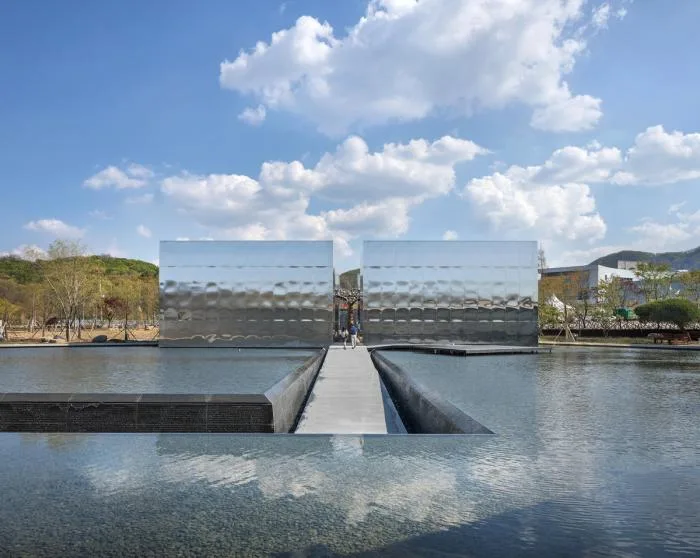
The project site was formerly a farm used for planting and cultivating pine seedlings, surrounded mostly by farmland with several motels scattered on gentle slopes. The only natural view from the site is the mountain ridge. The client requested a four-story building that would include a café, restaurant, ceremony venue, and gallery. However, such a building would resemble a large motel, differing only by its isolated flat location. To avoid this, we proposed a design inspired by the traditional residential buildings of Yashan City, incorporating local water features and granite stone walls.
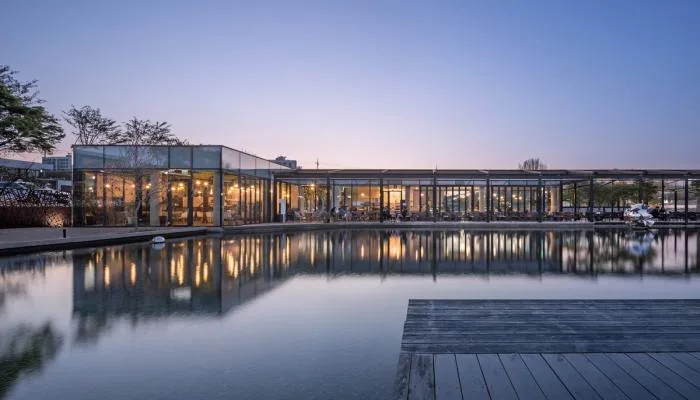
First, we created an expansive water area on the site, with single-story structures dispersed throughout. Concrete and stone walls were built surrounding the water, intentionally limiting circulation around them. At the initial presentation, the client was shocked by this unconventional idea but, after several days of reflection, ultimately embraced our concept.
Architecture and Nature
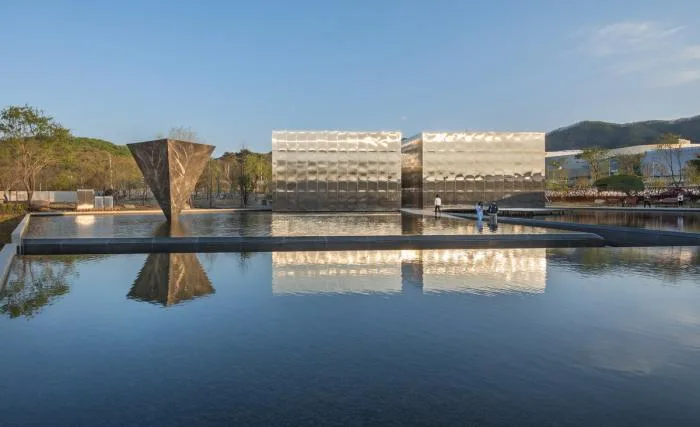
The primary focus of this project is the integration of architecture with nature. No matter how eco-friendly a building is, it remains an artificial creation that imitates nature. We believe that by emphasizing the geometric lines of architecture in contrast with the organic forms of nature, a harmonious coexistence is possible. Rather than choosing one over the other, we pursued coexistence.
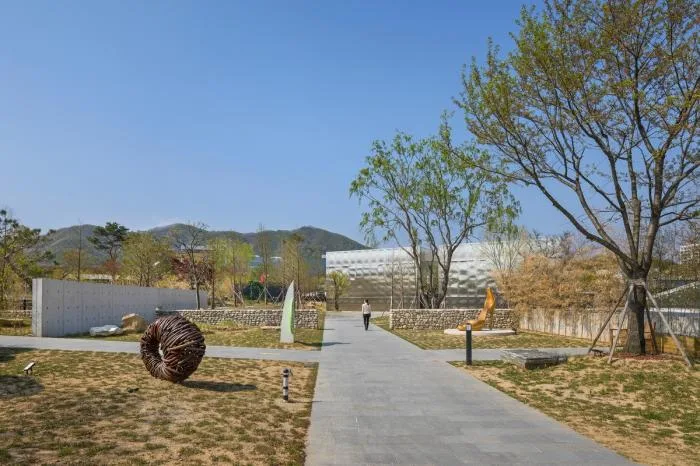
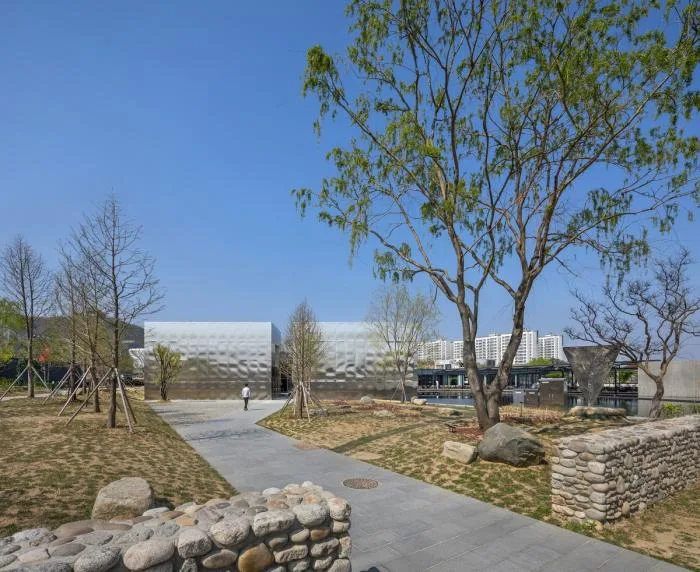
Since natural elements from outside the site were limited, we introduced nature within the venue itself. This approach allows visitors to experience the architect’s carefully crafted landscape throughout their journey. The landscape design is guided by the sequence of emotions visitors will feel as they move through the space.
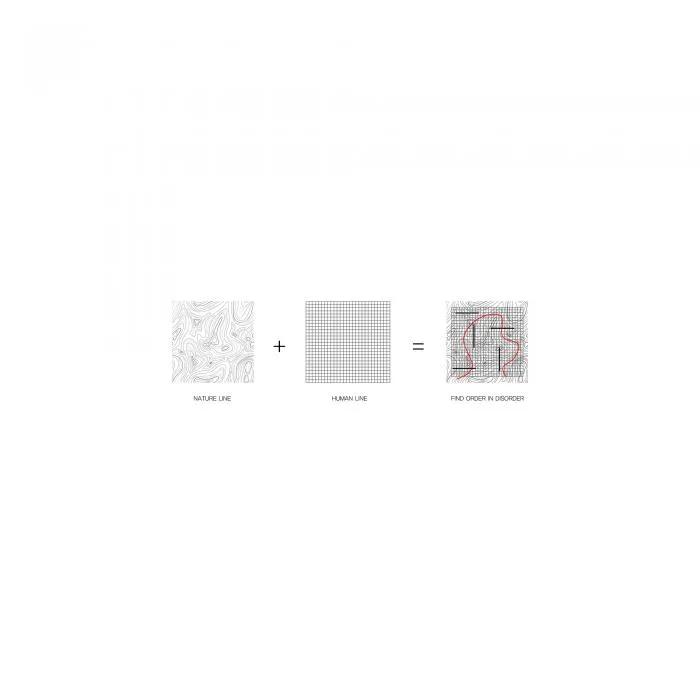
△ Design Concept
Height Variation and Internal-External Boundaries
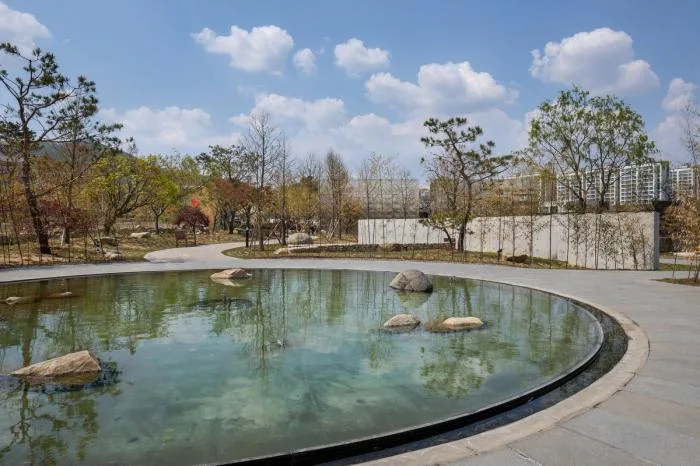
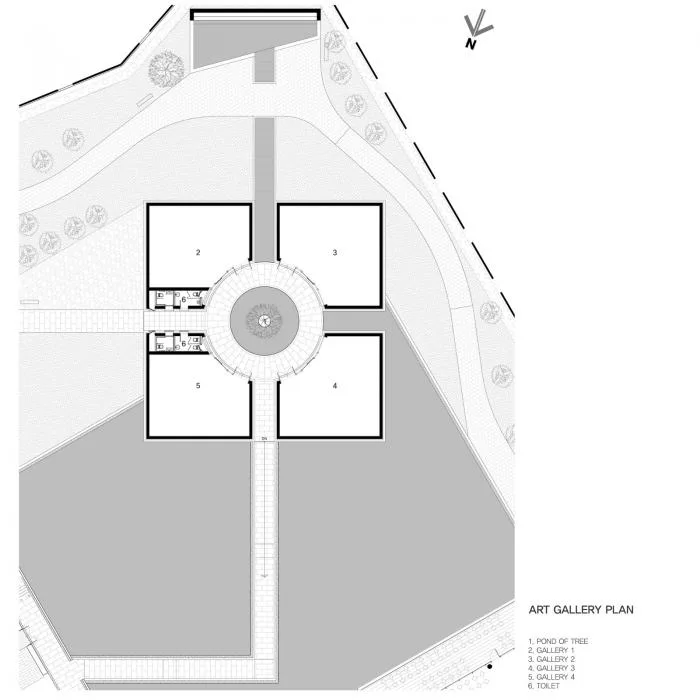
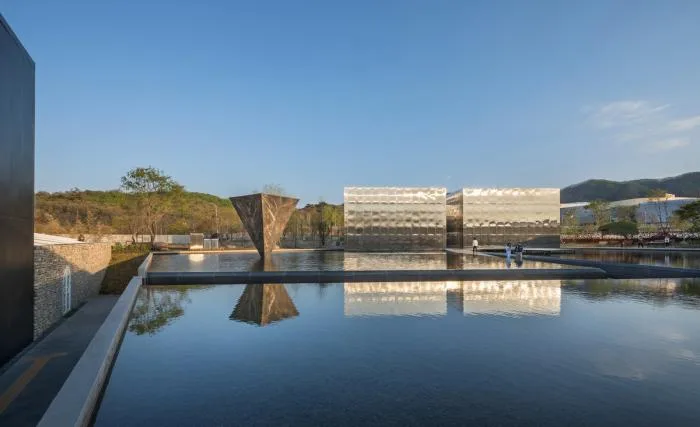
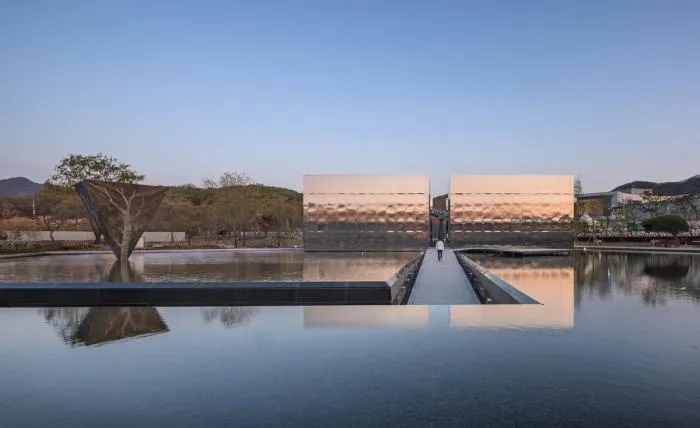
The complex consists of four blocks located on different parts of the site, each with an elevation difference of about 2.3 meters. To bridge these differences, we designed a 45-meter-long external ramp that crosses the water surface. Through the interplay of light and the water walls, visitors experience vertical spatial changes as they gradually discover hidden spaces.
This dramatic experience is achieved through shifts in sightlines — from walls taller than human height to walls just a foot above the water’s edge. Each building block features an outdoor area serving as a lobby and corridor, enabling visitors to engage with the architecture in an open-air setting. This blurs the boundary between the structure and nature.
△ Plan View
Harmonious Material Selection
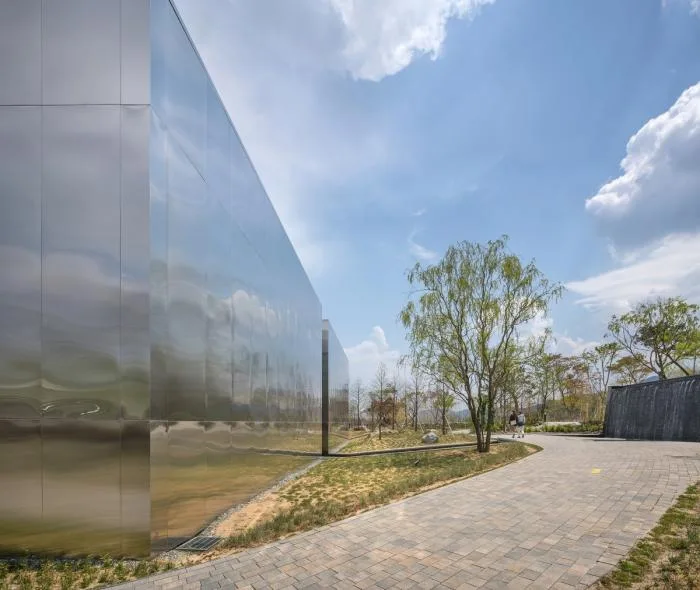
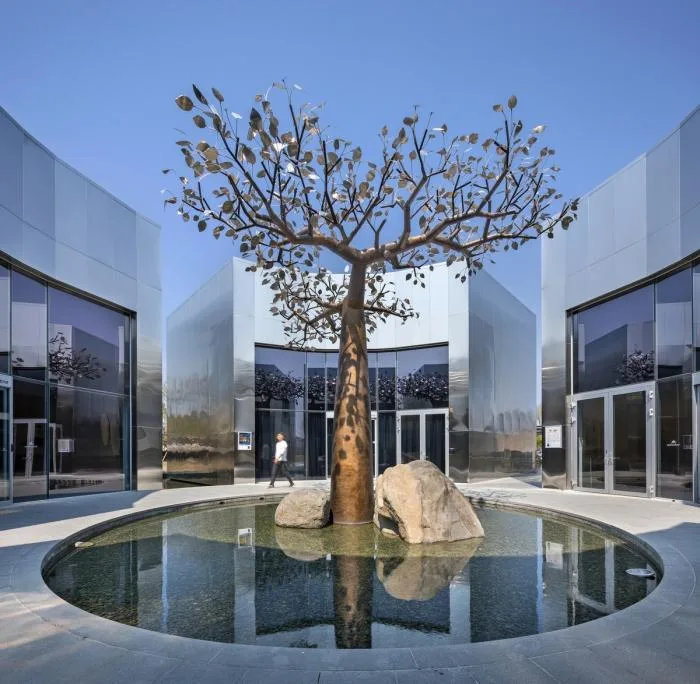
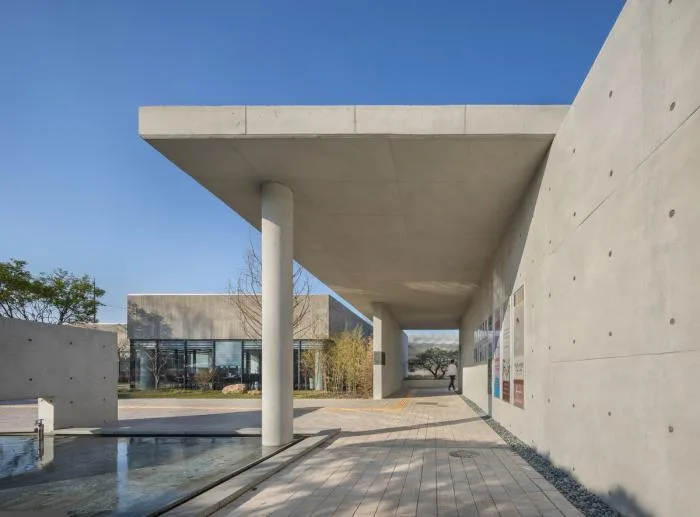
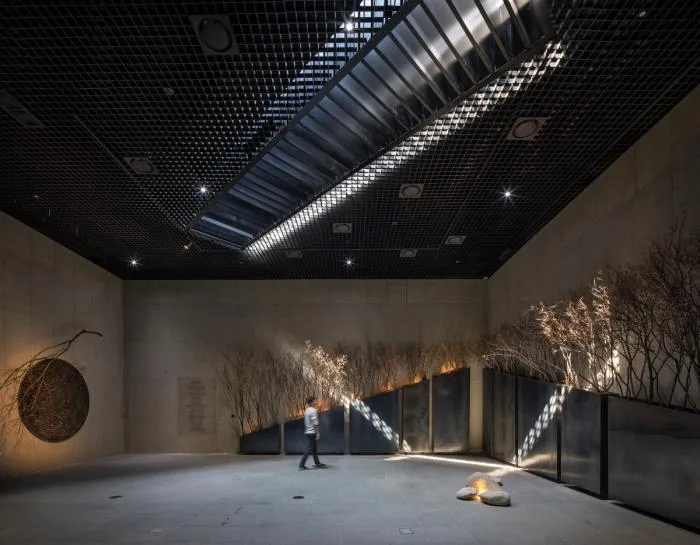
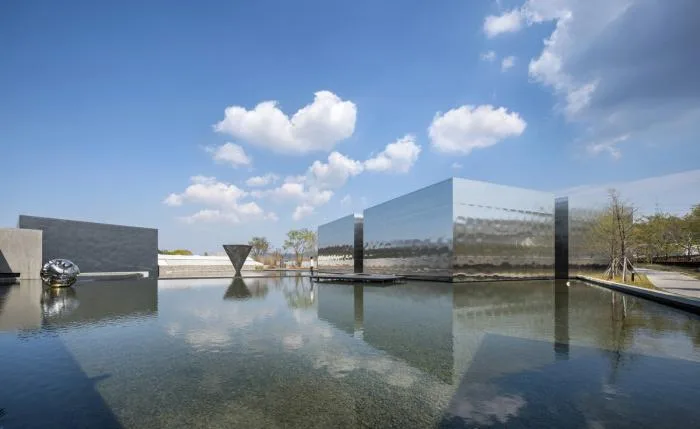
The primary building material is exposed concrete. This choice was made to create a natural atmosphere by minimizing decorative finishes on the structural concrete, allowing visitors to focus on the spatial qualities of the architecture itself. The art museum’s exterior facade uses stainless steel panels, which reflect the sky, water, and surrounding landscape, softening the building’s strong geometric form.
Due to the challenge of producing perfectly smooth stainless steel, the panels were finished with a brushed texture, leaving the surface slightly uneven and projecting an intentionally incomplete appearance. This choice was meant to harmonize the building’s form with the water while embracing an imperfect artistic expression.
Scene and Sequence
Upon entering the space, visitors encounter two elongated concrete walls facing each other. Walking forward leads to an open area connecting to the outside world. Turning back into the building, visitors find a stream of water flowing from the lobby, which hints at the larger water features ahead.
Following a narrow path bordered by buildings and concrete walls, visitors come upon lush greenery at the path’s end. Looking back to the right, there is a ramp enclosed by water walls. Walking up this slope, visitors feel enclosed by water walls acting as fences, separating them from the expansive open water. At the slope’s end stands a seven-meter-high building that reflects light, merging with the sky and water.
The ramp leads to a gap in the building, revealing a circular water body surrounded by four exhibition halls. A sculpture at the center of this water surface underscores the building’s identity as an art exhibition space. Between the halls are entrances and exits, guiding visitors to open spaces featuring varied landscapes and winding paths.
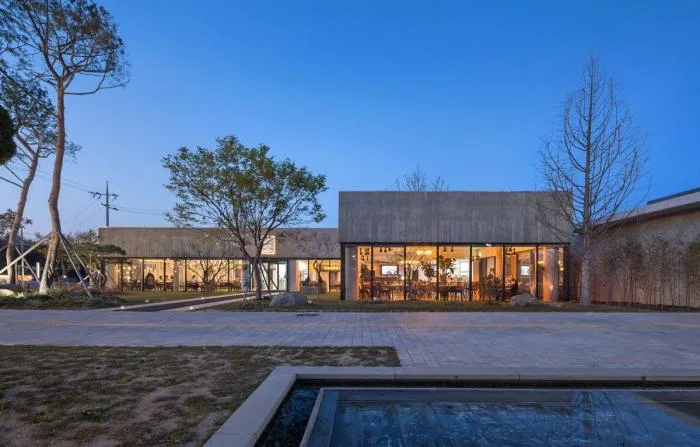
Along a long corridor, visitors encounter a rough stone wall linking back to the water path they first encountered. The full extent of the water area becomes visible only at the path’s conclusion. There, a glass-decorated café offers an outdoor terrace with panoramic views of the journey through the site.
The architecture employs a vocabulary of open and enclosed spaces, walls and openings, building blocks and courtyards, natural and man-made elements. The designers combine these elements to craft the intended experience.
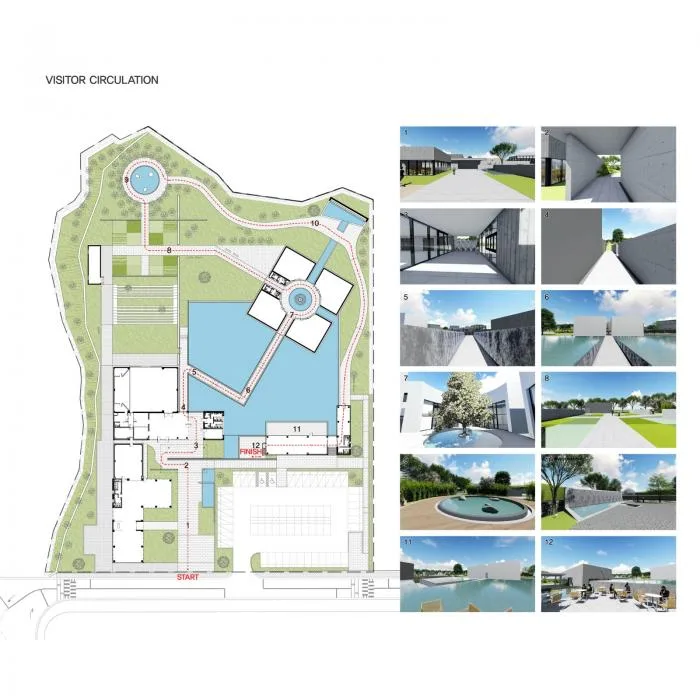
△ Visitor Flow
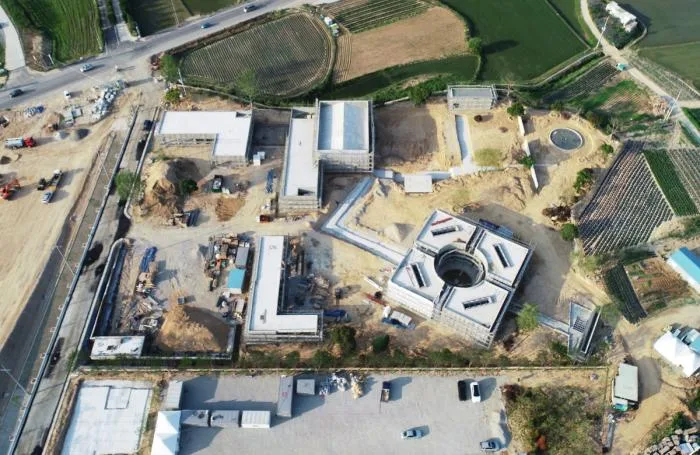
△ Construction Process
Design Drawings
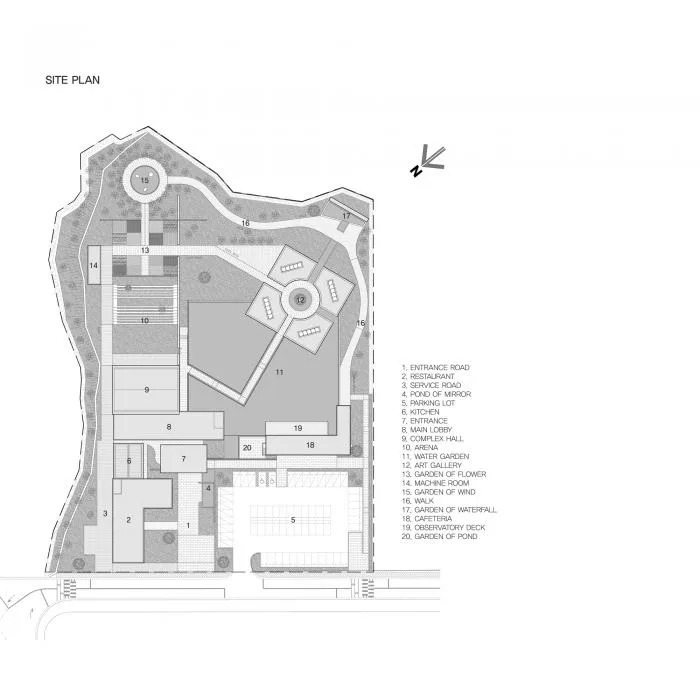
△ General Layout Plan
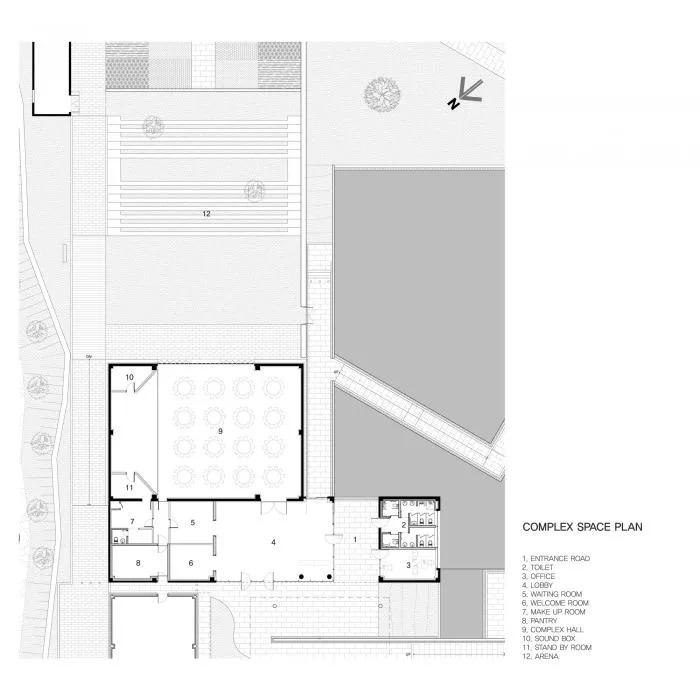
△ Comprehensive Spatial Plan
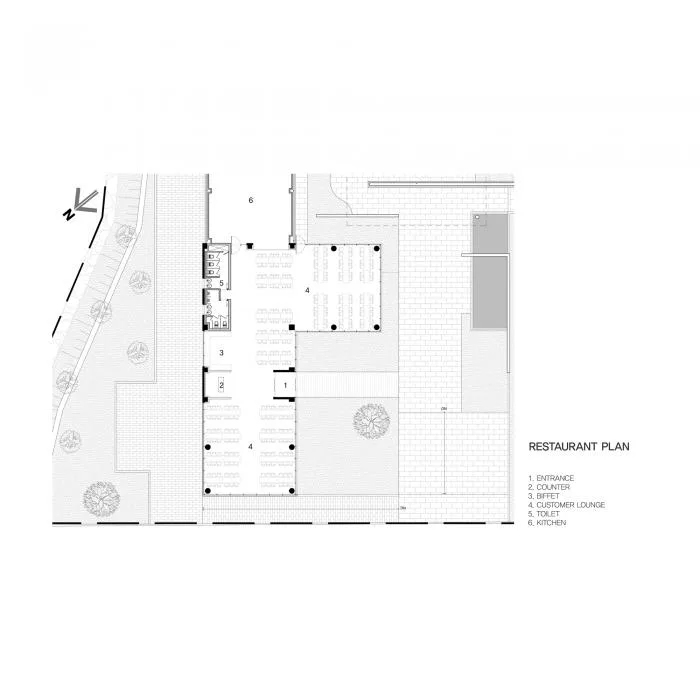
△ Restaurant Floor Plan
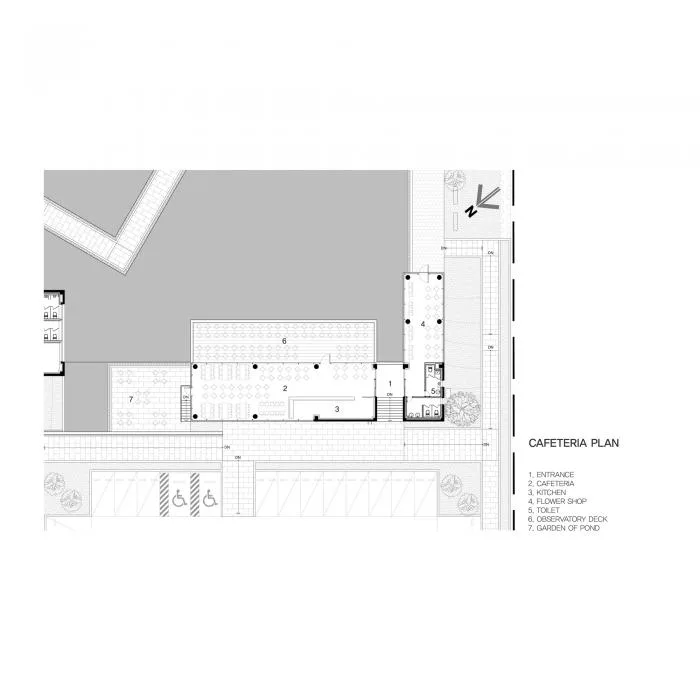
△ Coffee Shop Floor Plan
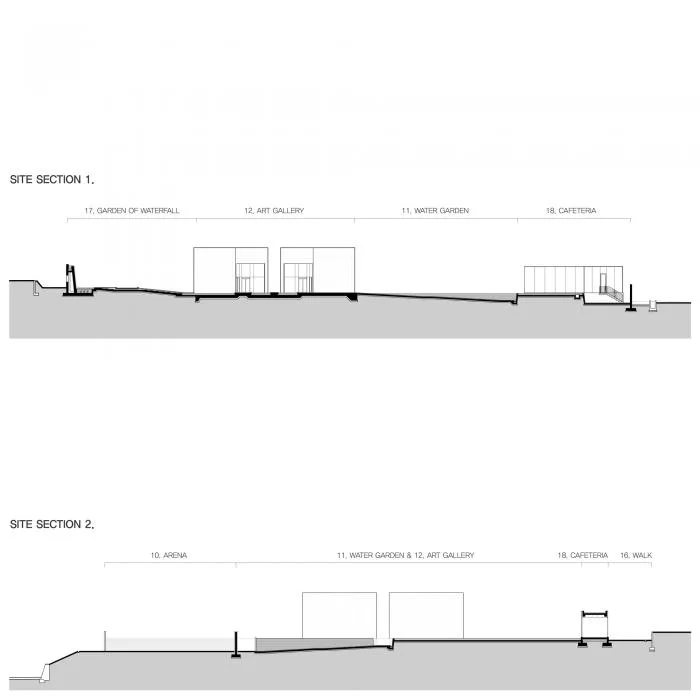
△ Section Diagram
Project Information
Project Type: Cultural Center
Location: Asan-si, South Korea
Architectural Firm: HBA Architects
Area: 2,230 m²
Year: 2019
Photographer: Joonhwan Yoon
Manufacturers: AutoDesk, C&S, Duzon Systems, Eazy Panel, J.K LOUVER SYSTEM COMPANY, Lumion, MIDAS, Sunnie International, Trimble Navigation, Yoochang
Lead Architect: Hyobin Jung
Design Team: Hyobin Jung
Client: Mon Amour Company
Engineer: Line Engineering
Landscape Designer: Kyungsook Yoon












Must log in before commenting!
Sign Up