
Introduction
Addressing the challenge of “heavy objects over people” in urban development, future community centers will follow a “people-oriented” approach. This shift moves away from solely material construction towards prioritizing the “urbanization of people.” The focus is not only on creating modern urban spaces with quality buildings but also on fulfilling people’s desire for beauty and returning to the essence of urban life.
A Life Experience Hall Open to the City
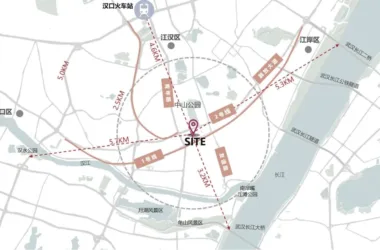
Located in Chenghua District, Chengdu City, Sichuan Province, this project sits at the northeast corner of the intersection between Zhaojuesi South Road and Zhonghuan Road Zhaojuesi Cross Road, facing the city at a street corner. It neighbors the urban green lung area of Zhaojuesi, boasting a green coverage of 88.41%, and is near the largest urban park in the main city, Seaside Park. The design intent is to create a new luxury center in Chengdu that continues the commercial vibrancy and embodies the refined texture of luxury retail, enhancing the city’s aesthetic context and promoting an elevated lifestyle concept.
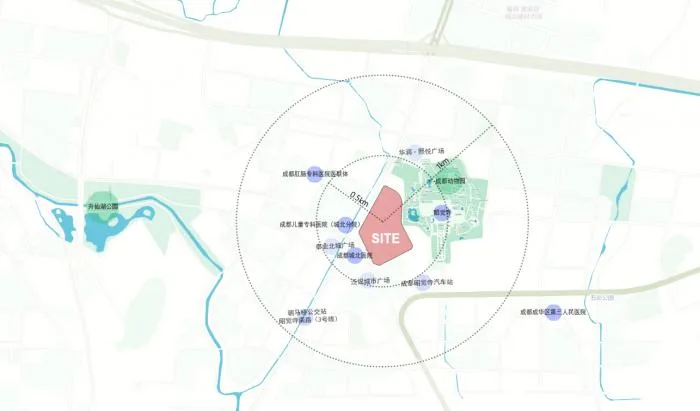
△ Location Analysis
This project provides internal support services for commercial and residential developments, establishing an open urban community center. It aims to build new urban functional units with a focus on human-centric design, transforming community centers into experiential living spaces that bring warmth to the city.
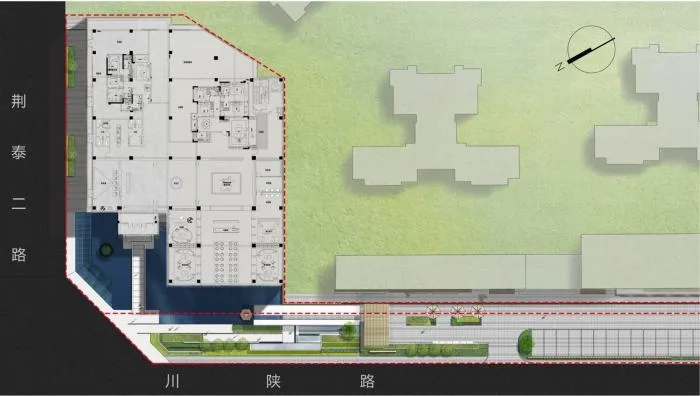
△ General Layout Plan
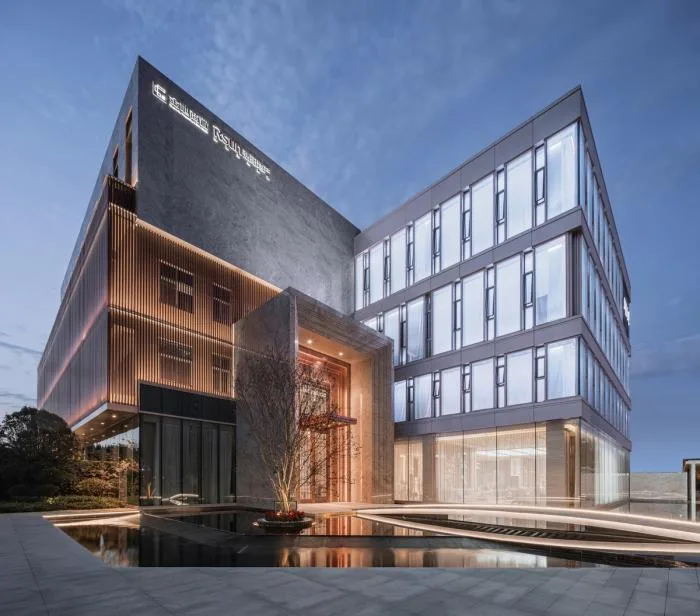
Creating Vibrant Subcultural Spaces
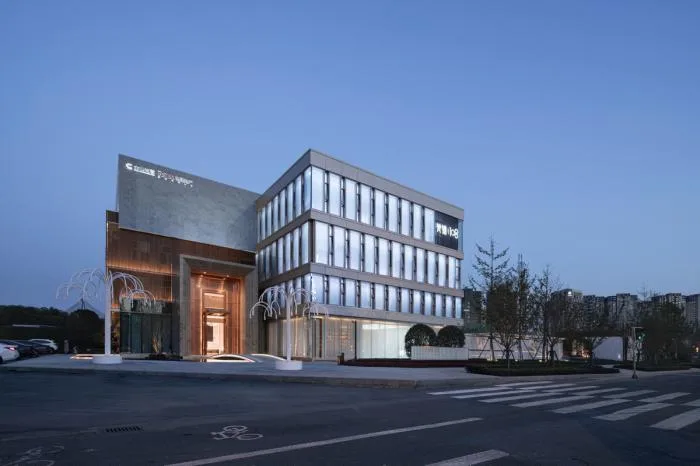
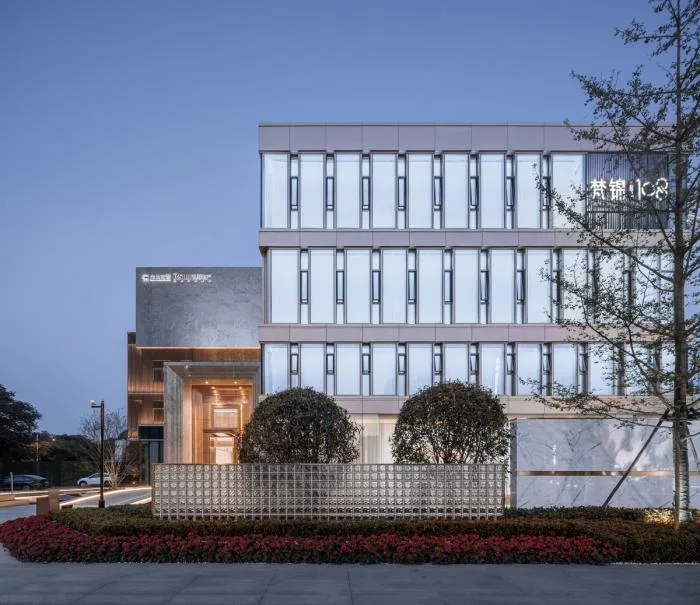
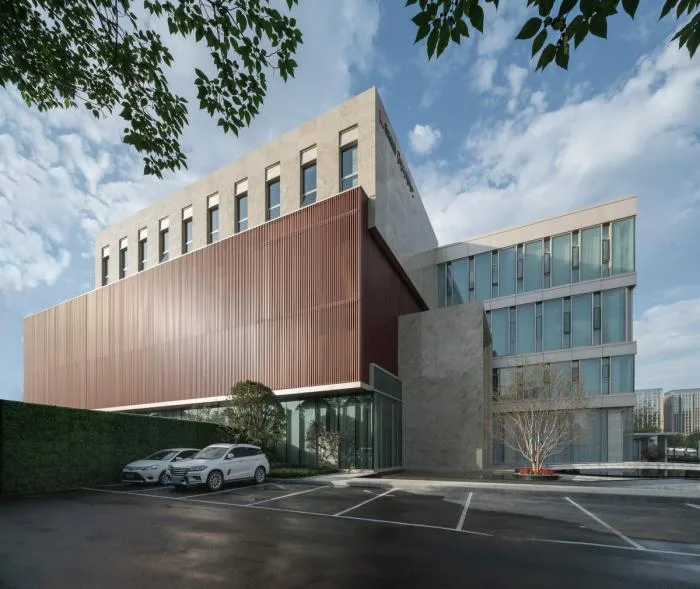
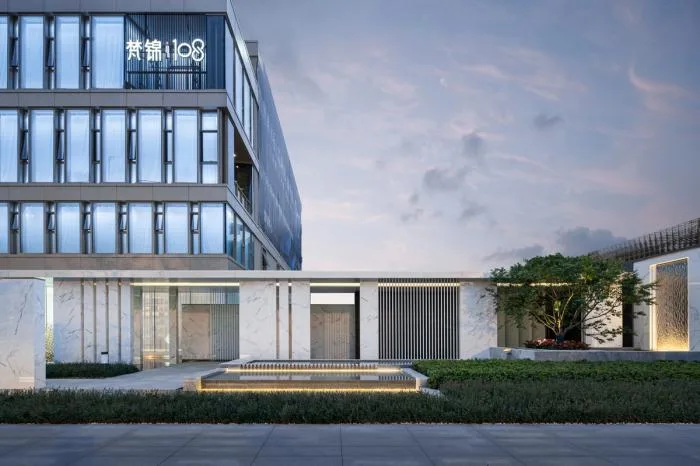
The design consists of five differently sized boxes stacked together, forming an interlocking block structure that enhances the visual depth. Each block appears autonomous yet maintains strong connections with others. This approach alleviates the heaviness and oppressive feel often caused by large-scale buildings, emphasizing an effective blend of form and internal function. The entrance is highlighted by a recessed corner at the street intersection, creating a harmonious balance with the surrounding environment and maximizing the use of building space to provide additional outdoor public areas.
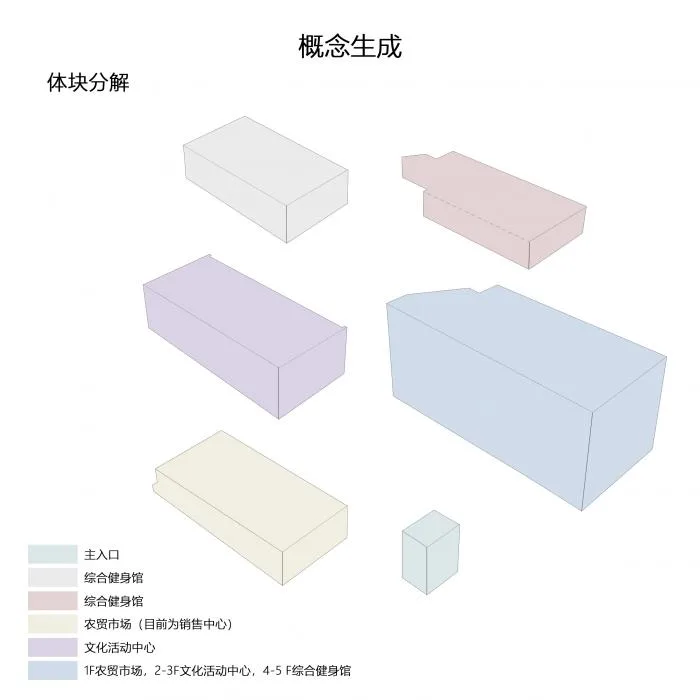
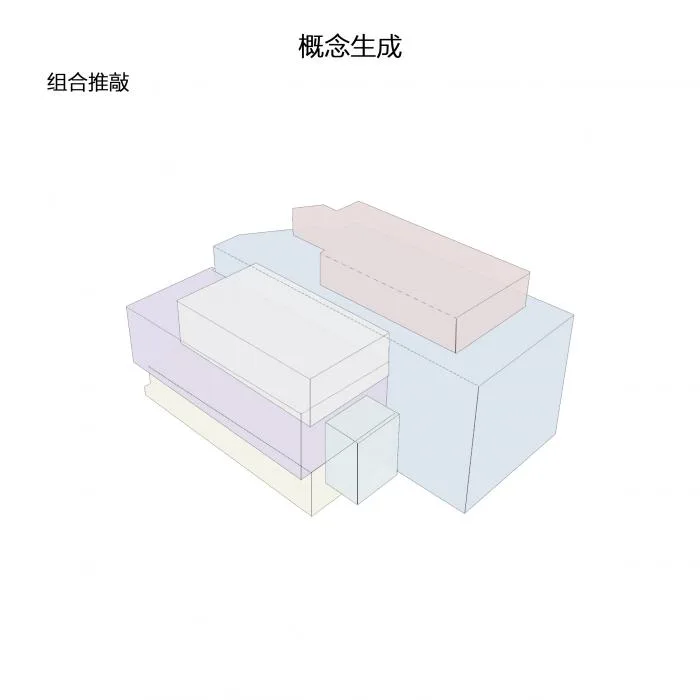
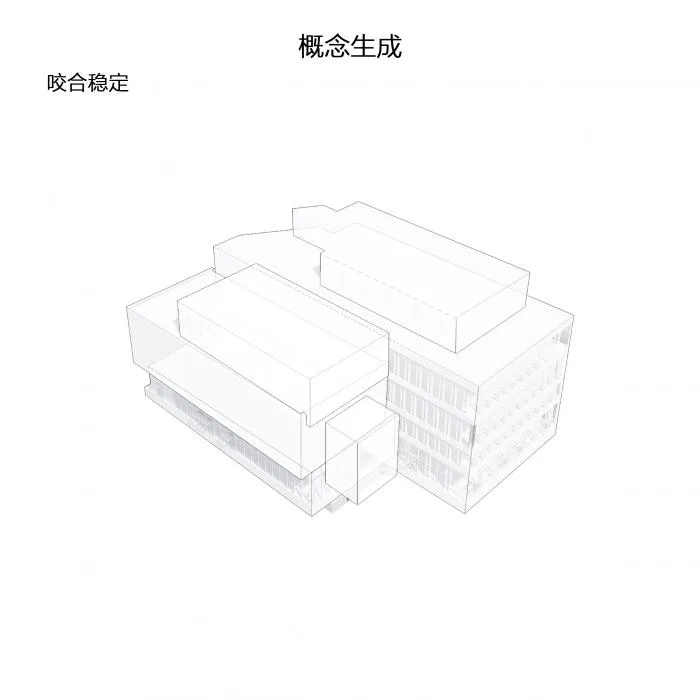
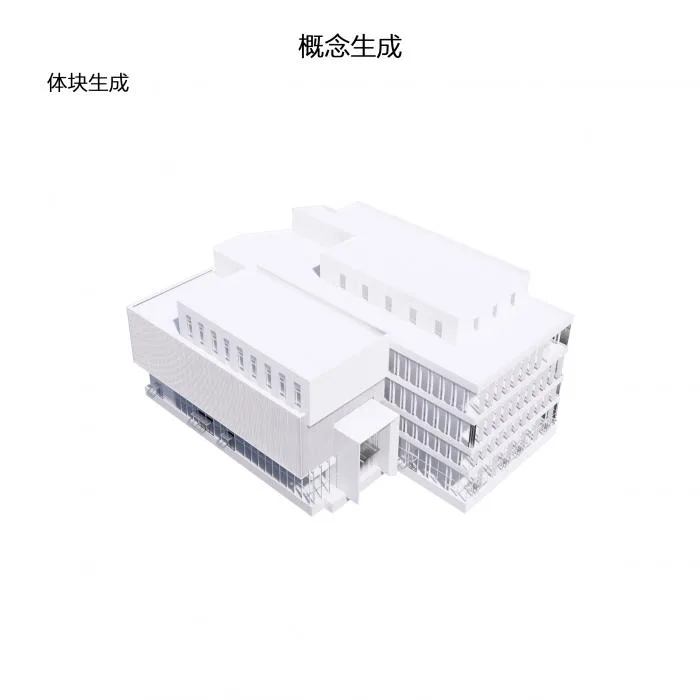
△ Shape Generation Diagram
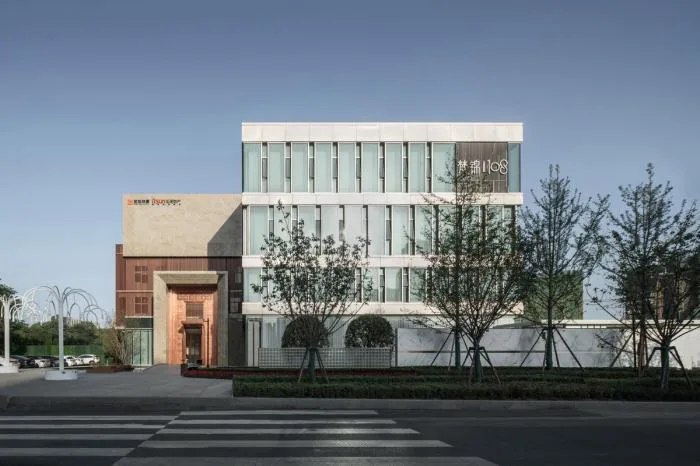
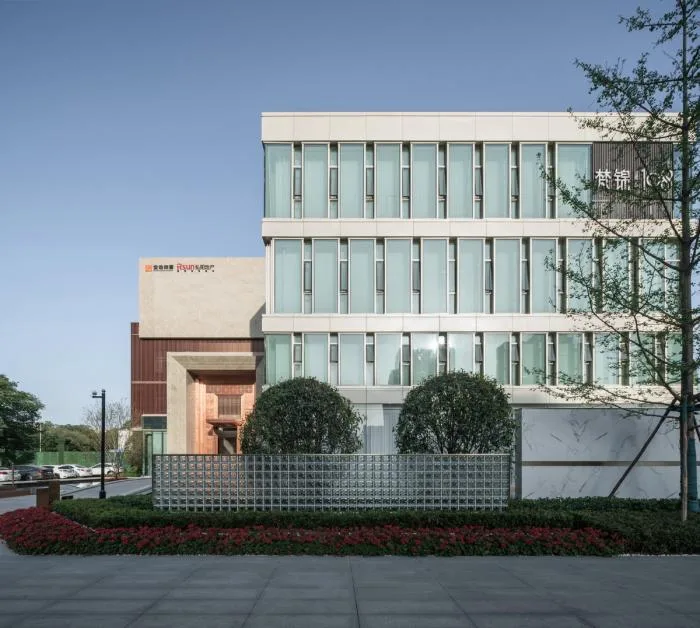
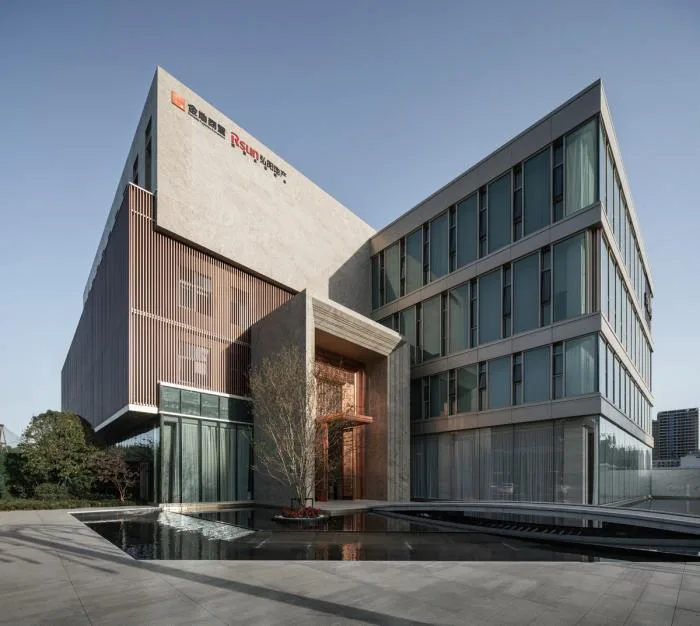
Creating lively subcultural spaces in architecture requires openness, interaction, permeability, participation, and cross-boundary diversity to foster creativity and community focus. The building’s spatial layout fully reflects these principles, supporting the community center’s practical function.
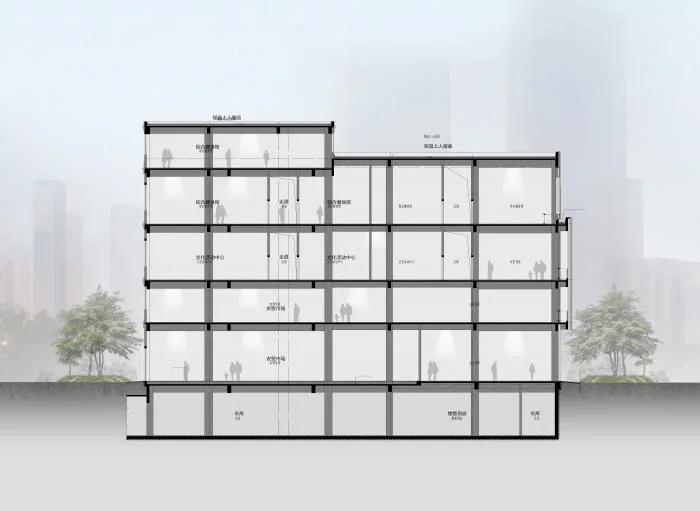
△ Section Diagram
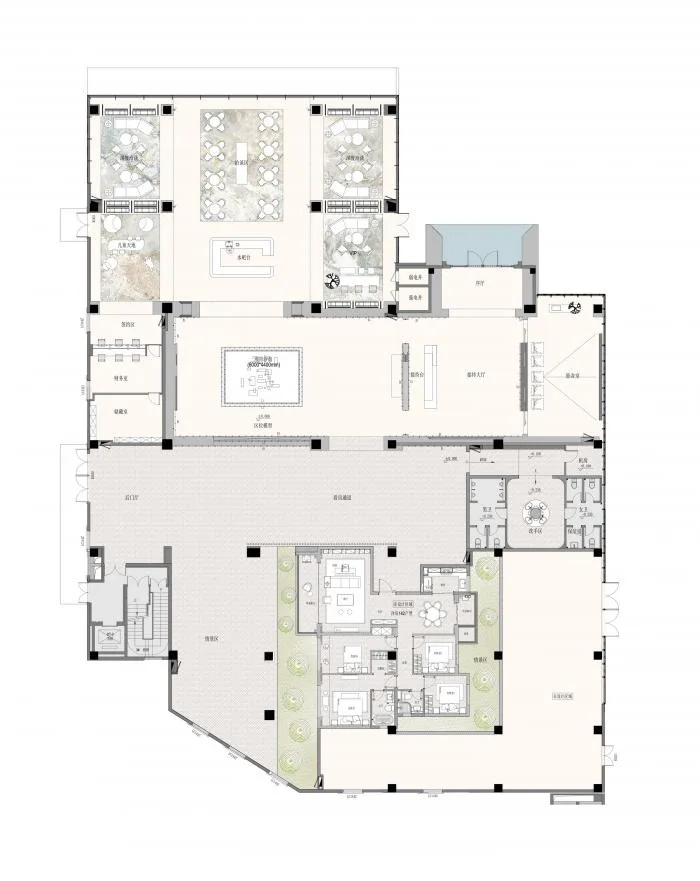
△ First Floor Plan
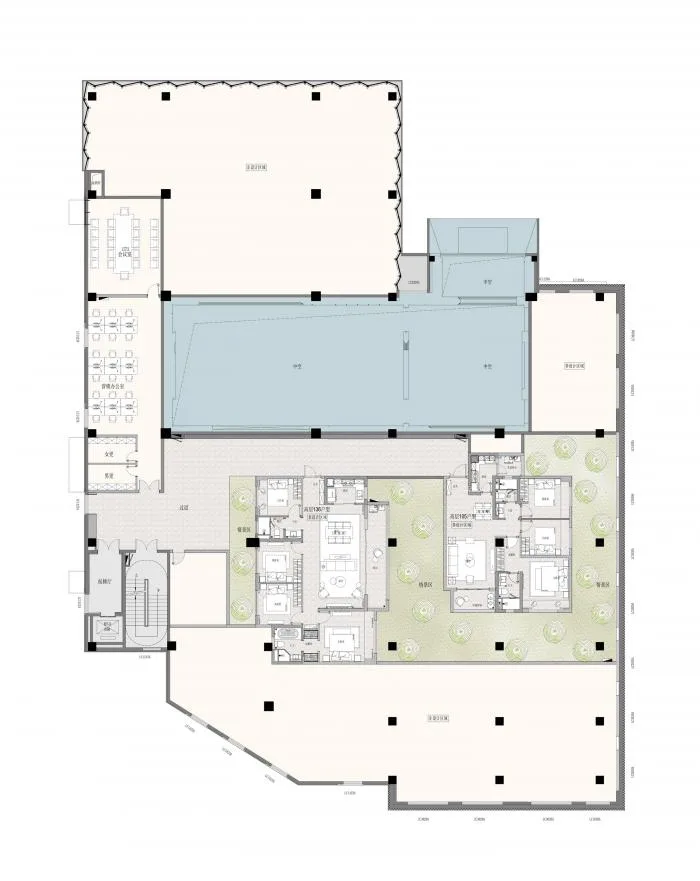
△ Second Floor Plan
A Rhythmic Surface Language
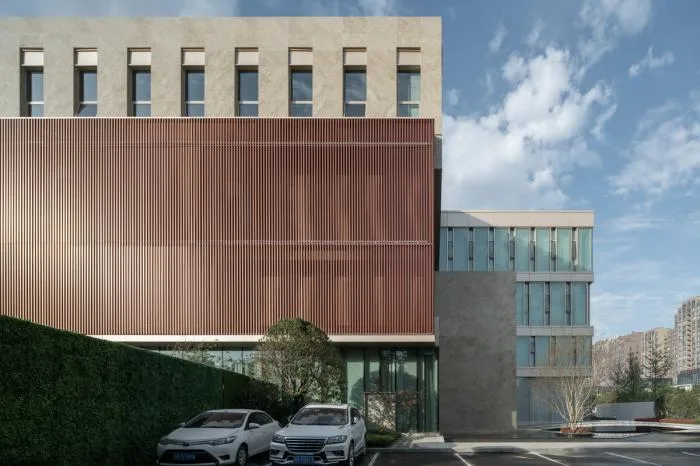
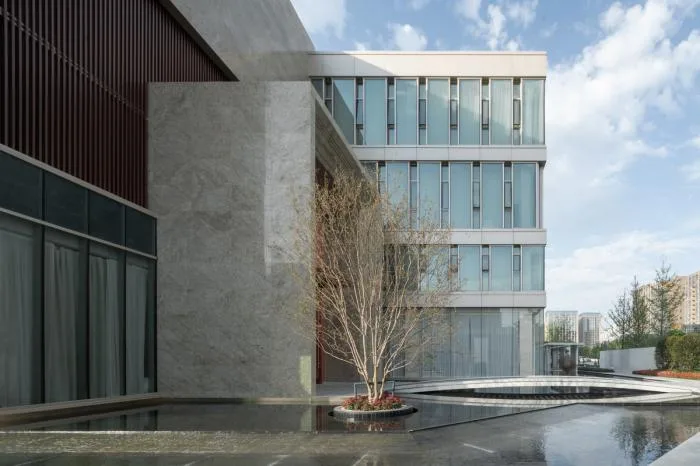
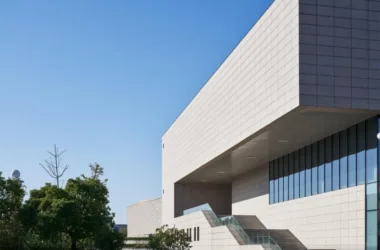
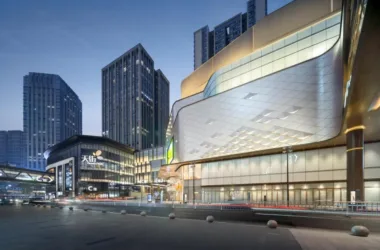
The facade features two primary materials. At the entrance, beige stone interlaces with an aluminum alloy grille curtain wall, achieving harmonious color coordination. The alternating pattern of solid walls and semi-transparent materials creates a rhythmic surface. This unified yet varied skin delivers a strong visual impact, resulting in a clean, elegant, and subtly luxurious exterior.
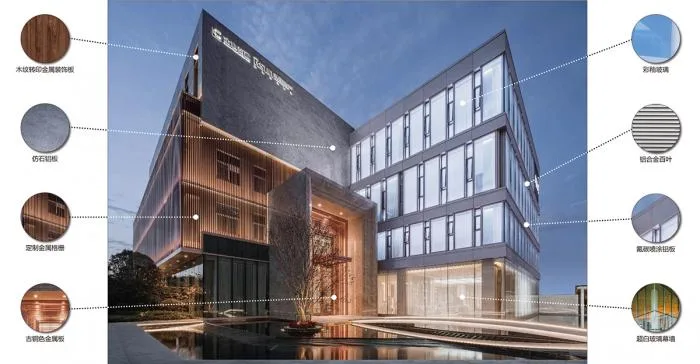
△ Skin Material
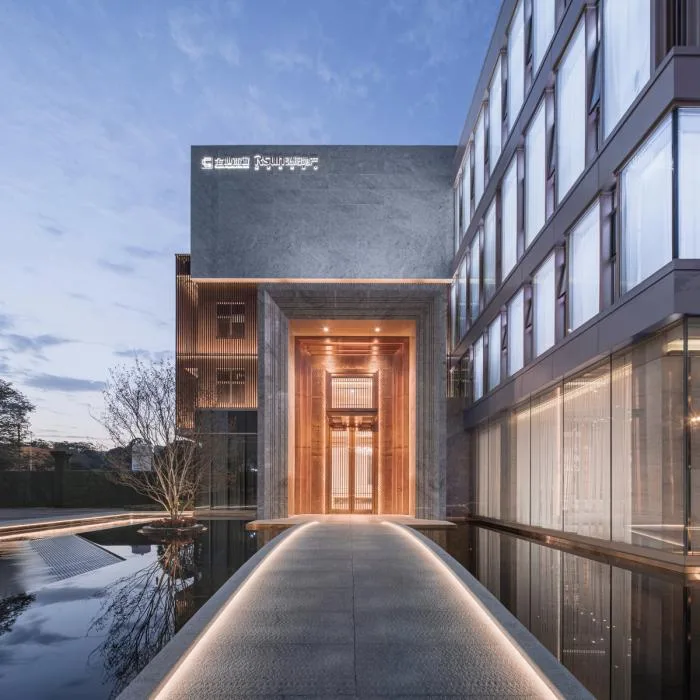
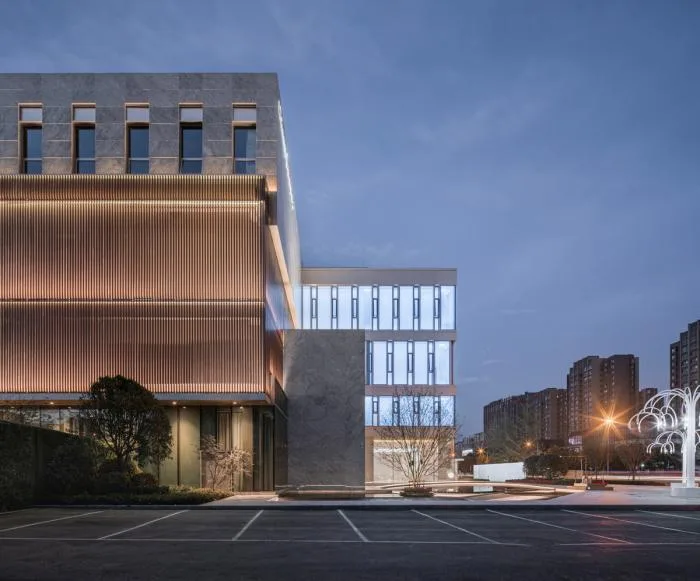
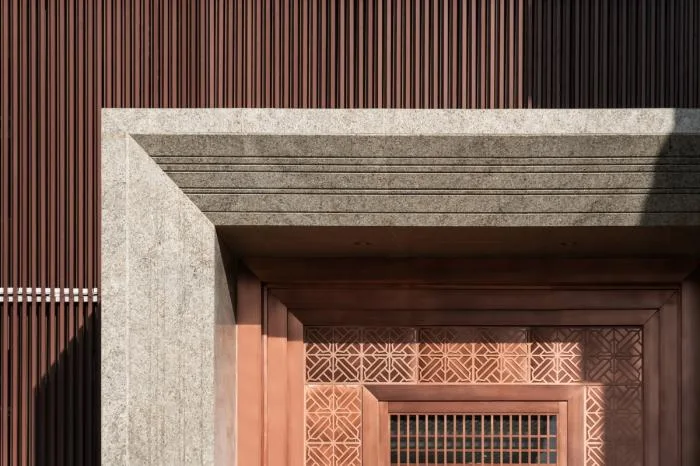
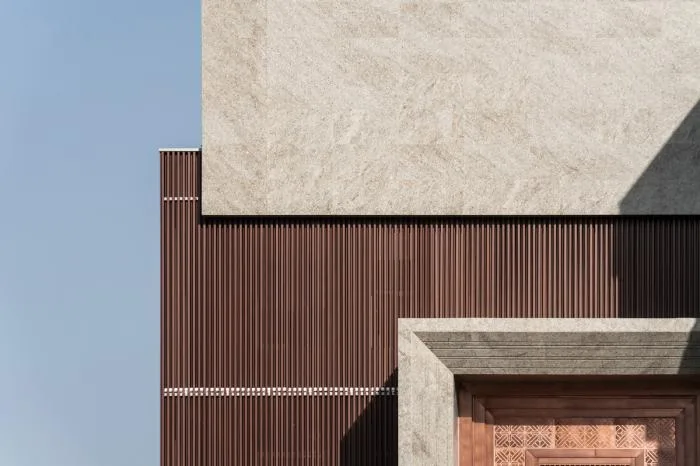
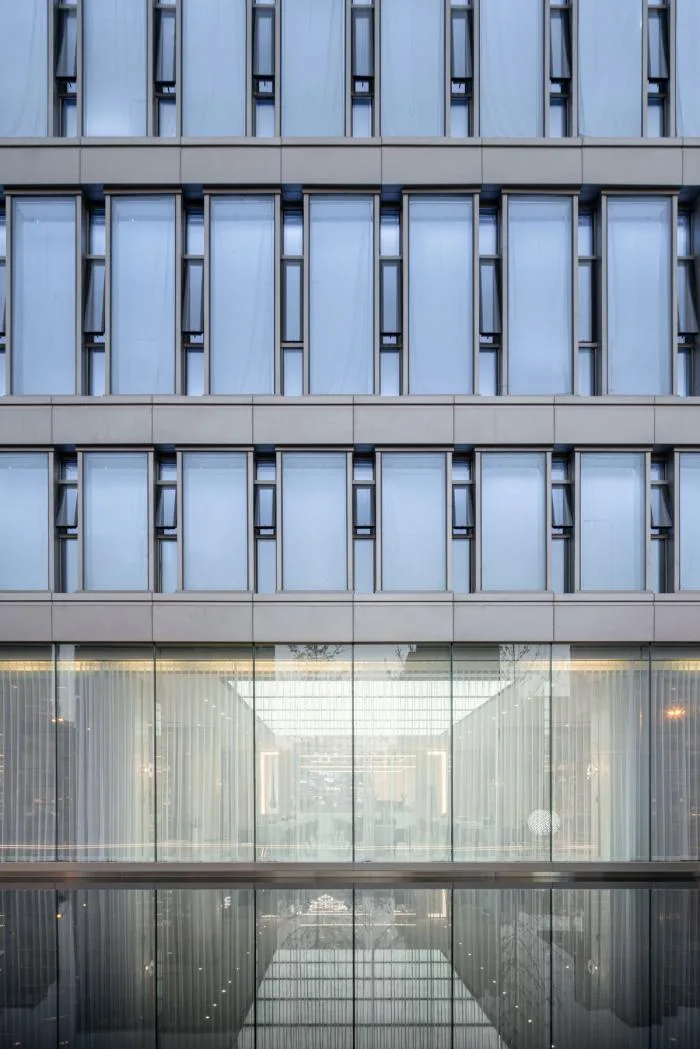
The north facade uses a glass curtain wall that reflects natural light from the exterior and skylights into the interior space, creating a dynamic and rhythmic effect. Breaking free from conventional constraints, the facade employs innovative techniques as decorative elements rather than straightforward commercial displays, deviating from traditional expressive architectural approaches.
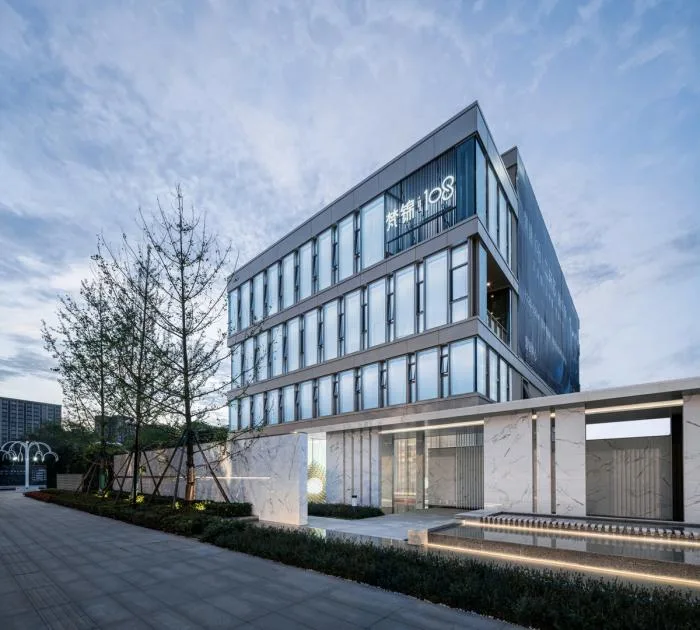
From Bustling to Tranquil Corridor Spaces
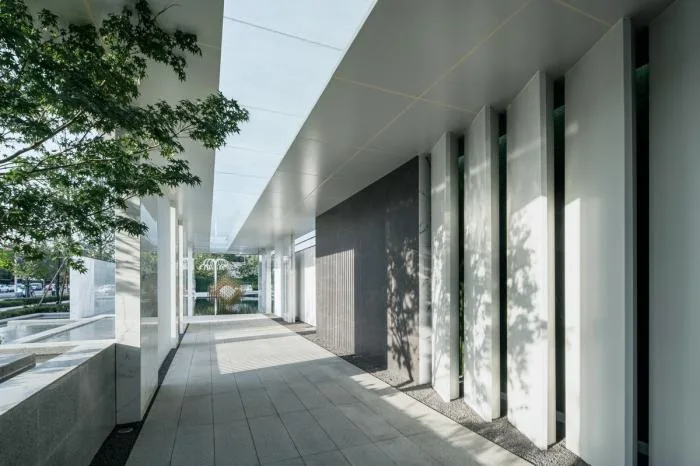
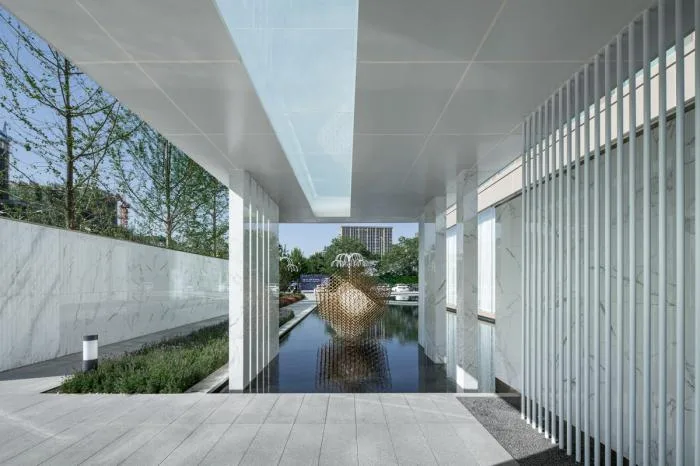
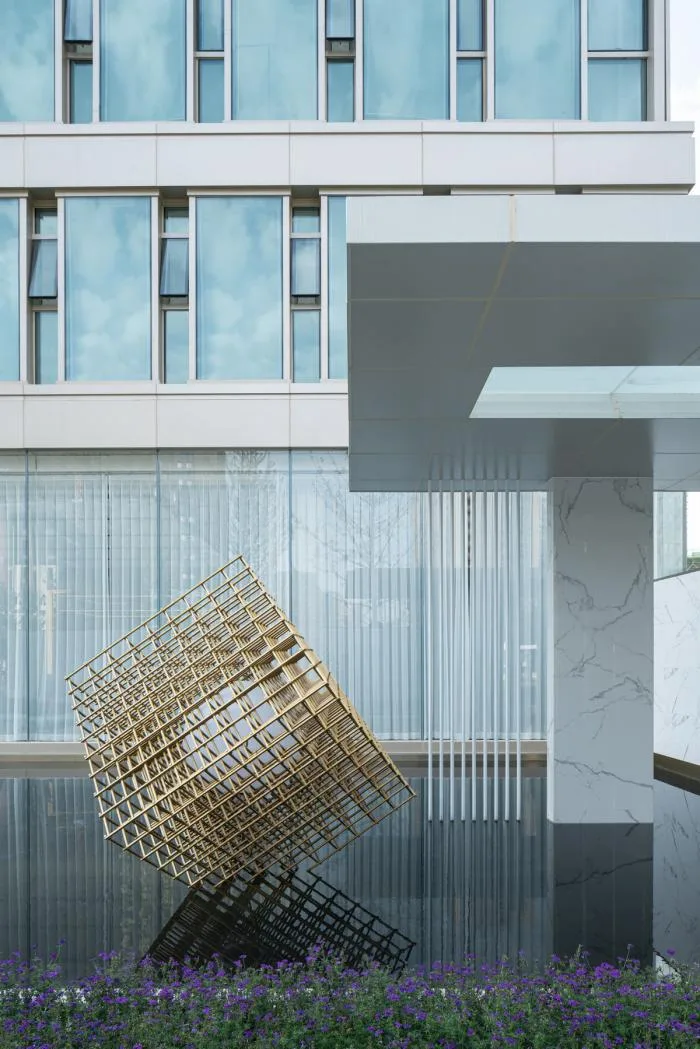
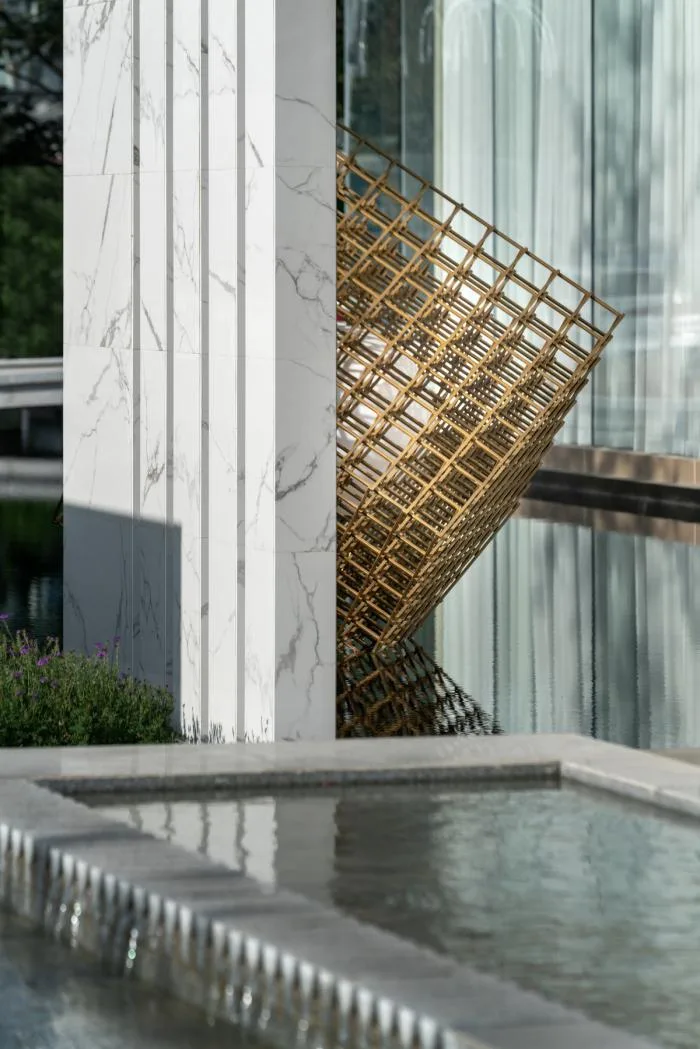
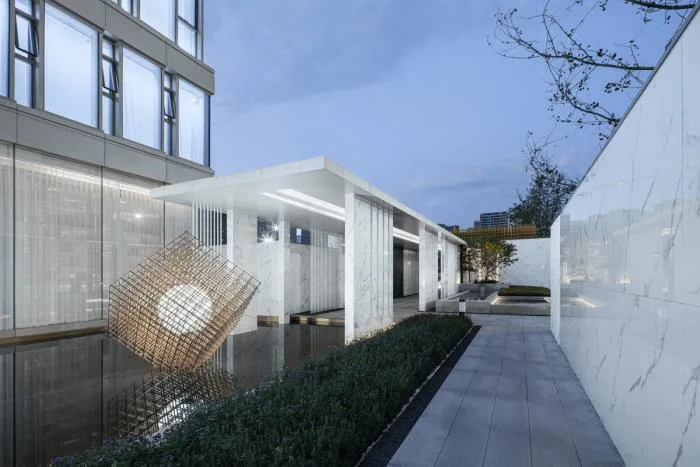
The landscape design features modern, minimalist techniques with diamond-shaped sculptures interwoven with chrome rods, creating a chic, contemporary look. This installation art highlights the unique charm of the space and interprets the transition from lively urban environments to serene corridors—a fresh perspective on urban architectural culture that seamlessly connects the city.
Conclusion
Designing personalized community living spaces that feature high-quality and inviting public areas encourages residents to stay, engage, and create memorable experiences. The goal is to develop a new type of urban functional unit that harmonizes with people’s needs and fulfills their aspirations for a better life—achieving the “urbanization of people” and making modern cities warmer and more welcoming.
Project Information
Project Name: Chengdu Fanjin 108 Project Demonstration Zone
Location: Intersection of Zhaojuesi South Road and Chuanshan Road, Chenghua District, Chengdu City
Project Owner: Jindi Shangzhi & Hongyang Real Estate
Function: Community Center
Building Area: 6,828.9 square meters
Architectural Design: Shanghai Chengzhi Architectural Design Co., Ltd
Design Directors: Jiang Chao, Liu Wei
Design Team: Xia Pingping, Xie Houmin, Yu Song, Peng Chaofei
Architectural Construction Drawing: Zhubo Design Co., Ltd., Chengdu Branch
Landscape Design: LAURENT Laurent Landscape
Floodlight Design: Shanghai Huizhidu Lighting Technology Co., Ltd
Design Period: June 2019
Completion Date: April 2020
Project Photography: Prism Architecture Landscape Photography












Must log in before commenting!
Sign Up