
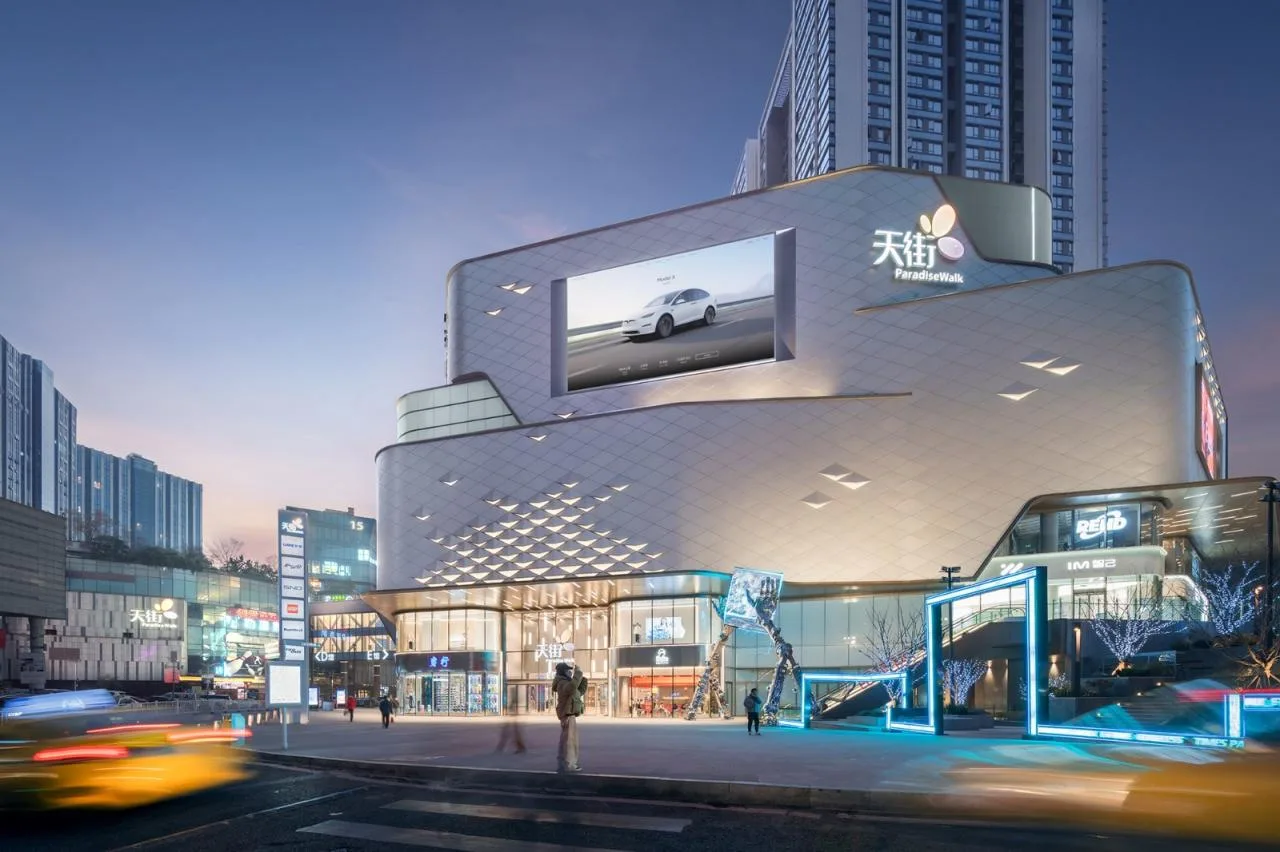
E Hall
The Culmination of a Decade in One City
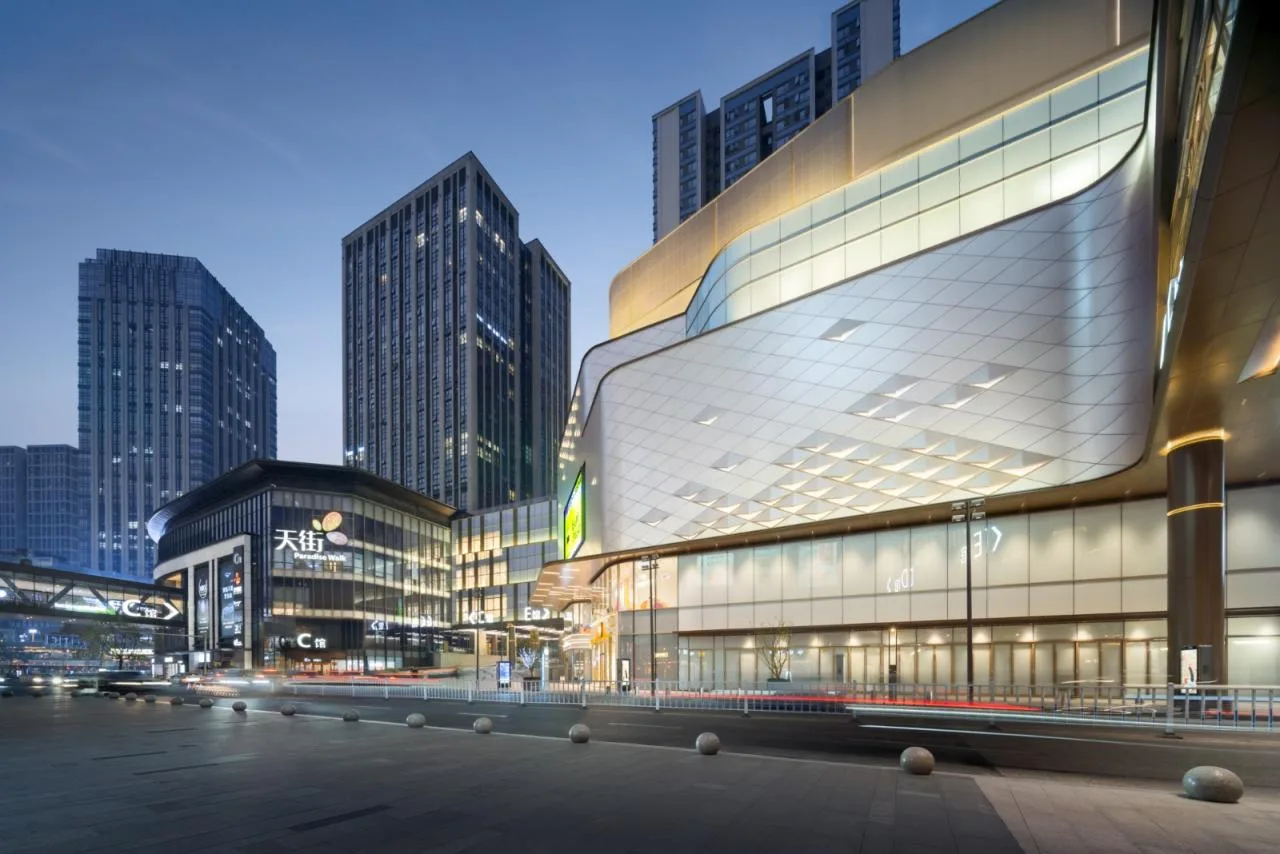
The thriving commercial growth is deeply intertwined with the dynamic progress of urban renewal. Times Square functions as a city within a city, evolving alongside Chongqing’s core area and continuously upgrading through innovative exploration.
Self-built Core, Multi-party Connectivity
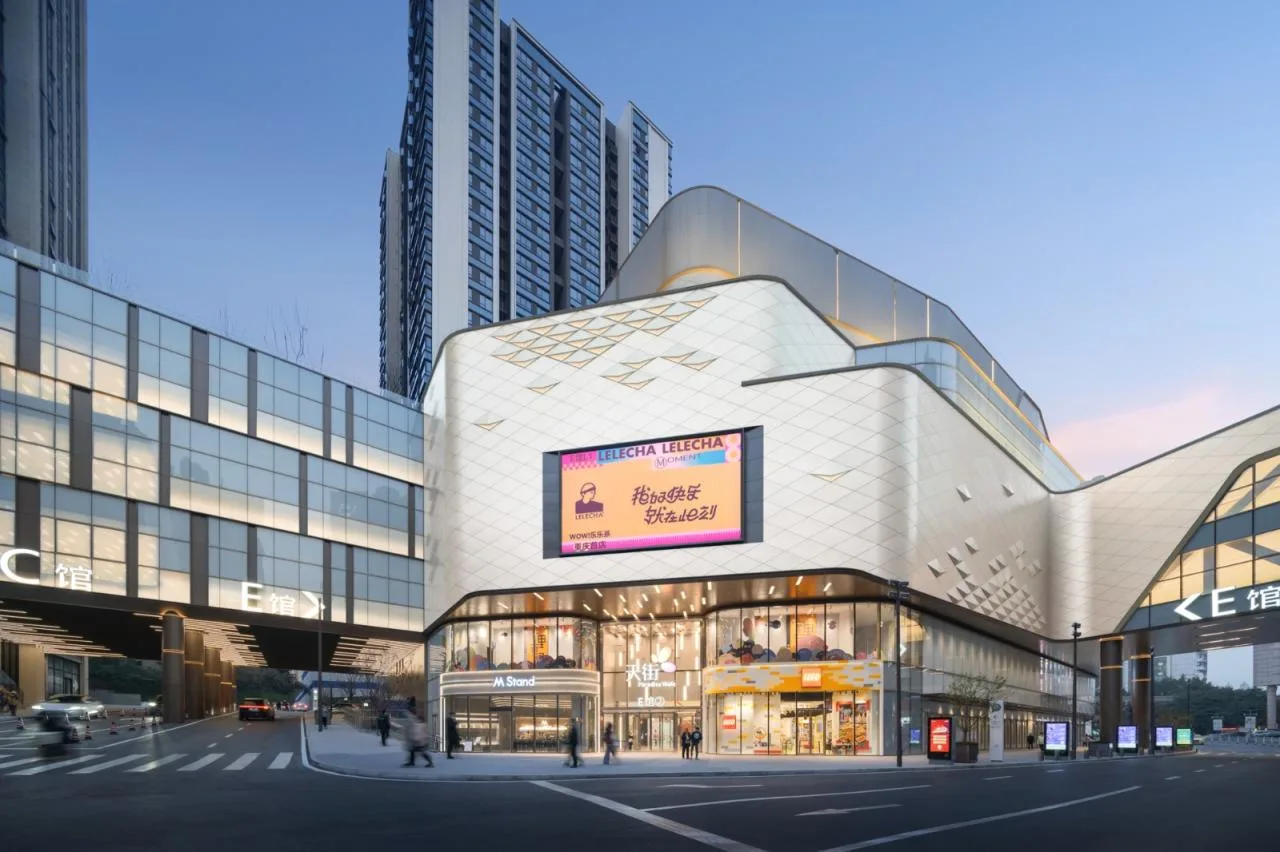
As the final masterpiece, the E Pavilion marks both the conclusion of an era and the dawn of a new chapter.
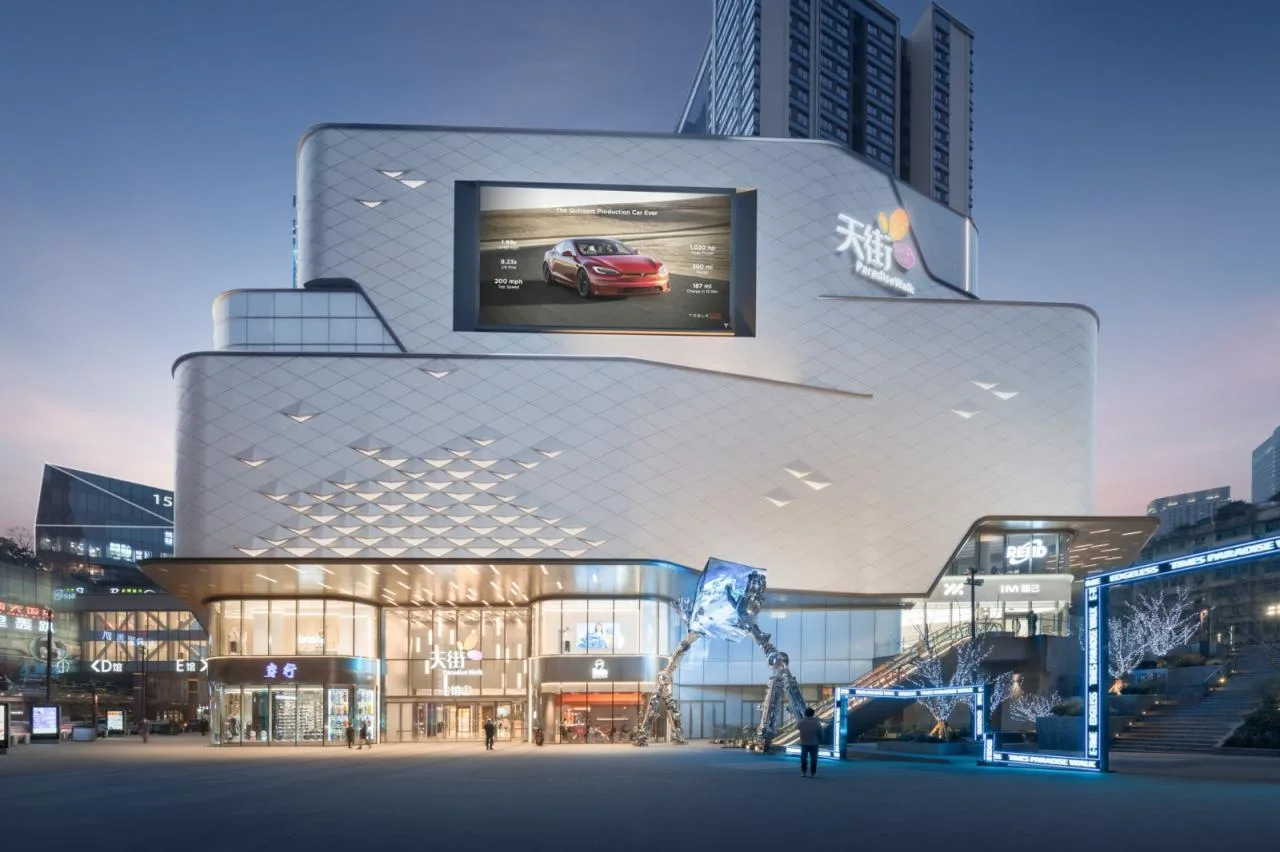
Urban Renewal
Transforming the Gateway to Yuzhong Peninsula
Where two rivers converge at the edge of the Yuzhong Peninsula, the essence of this mountainous city is captured. Yuzhong District, rich in history, nurtures the “roots” and “sources” of Chongqing. As the birthplace of Ba Yu culture, it carries a deep historical legacy.
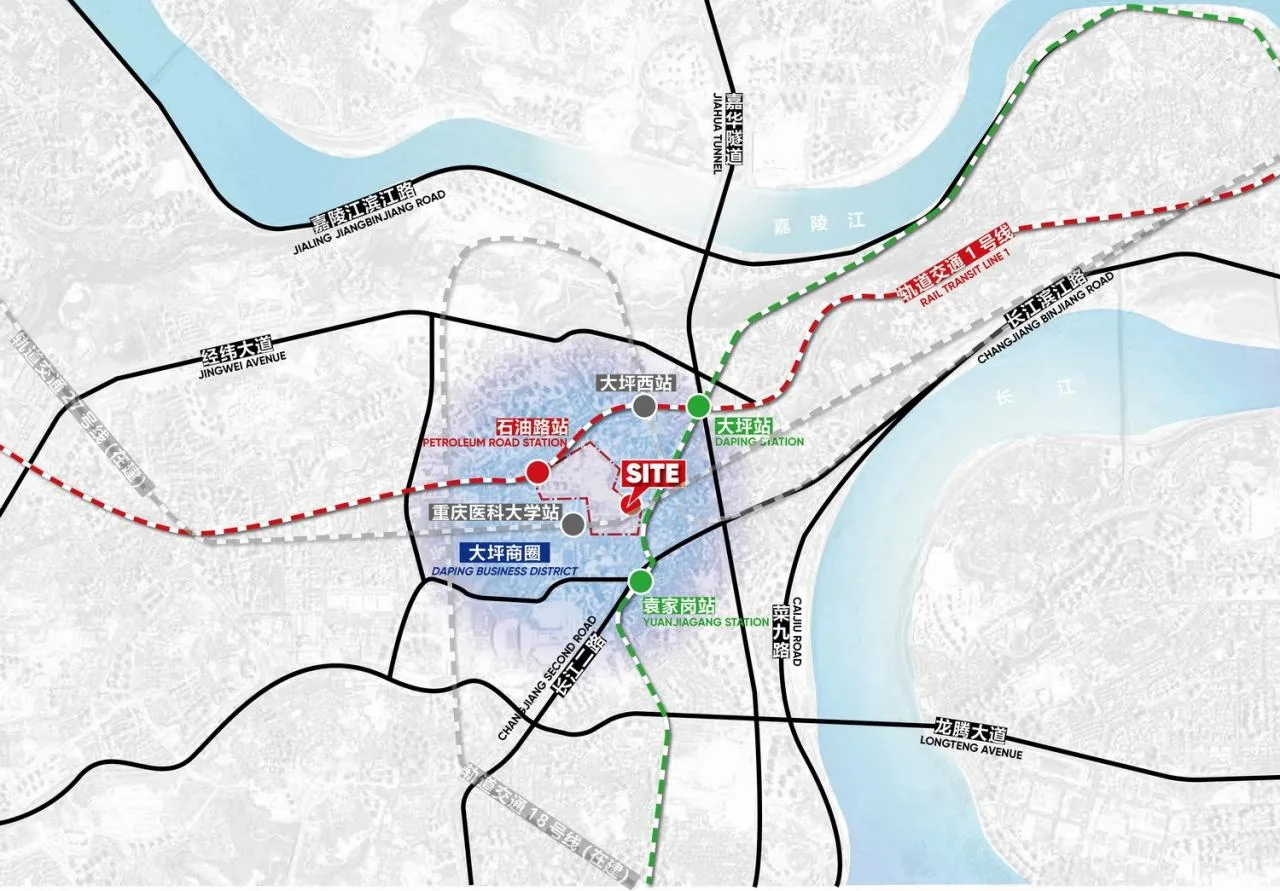
Daping Street, the location of this project, was an ancient post road dating back to the Ming Dynasty. Crossing the steep Futuguan Cliff, it served as a resting point. Thus, Daping not only functioned as the transportation hub of old Chongqing but also became the geometric center of modern Chongqing. Here, longtime residents thrive while travelers pause on their journeys. Since the Zhou Dynasty, this area has witnessed over a millennium of Bashan and Shushui history.
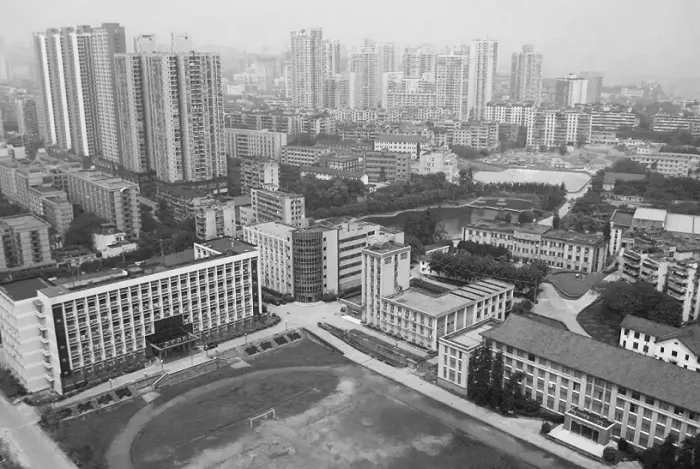
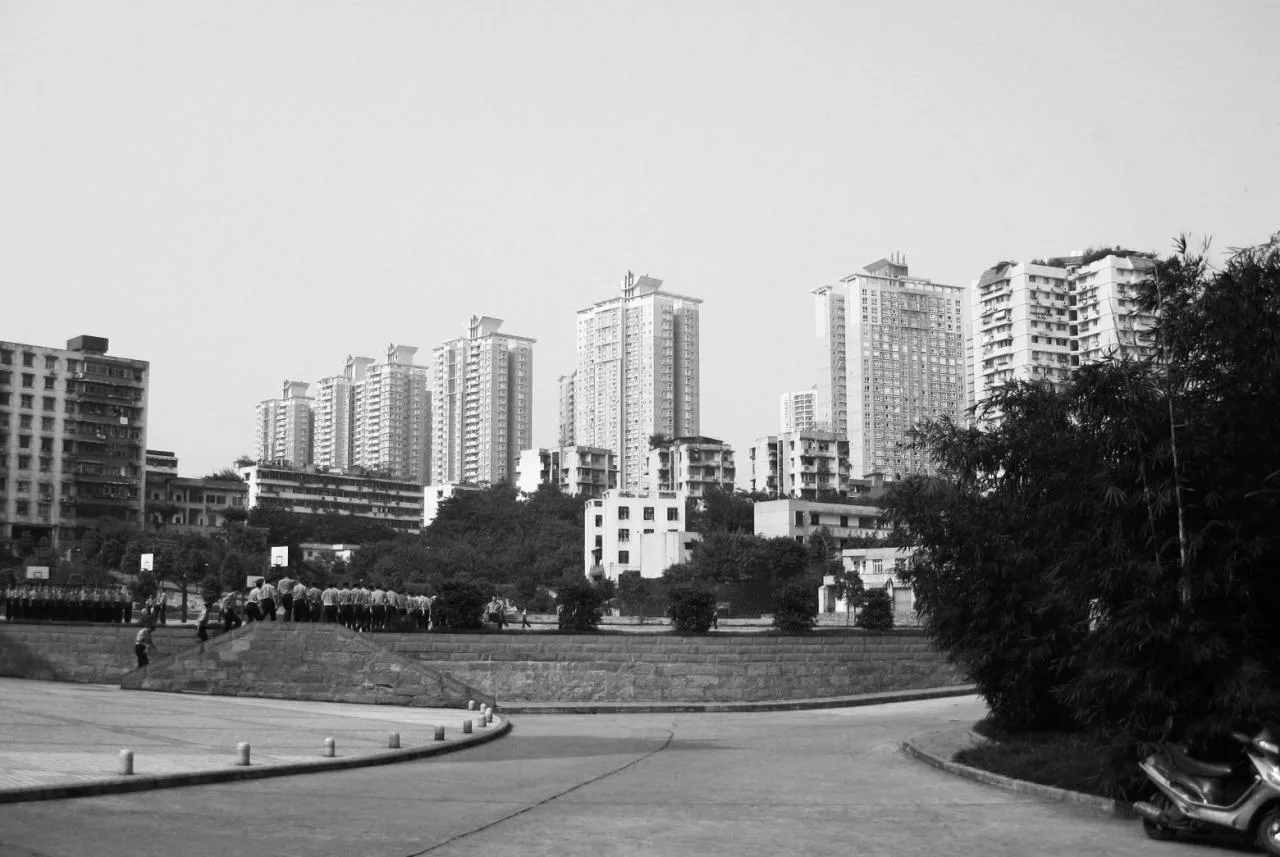
Despite its geographical advantage, Daping was once seen as a transient stopover lacking a vibrant commercial environment. The PLA Logistics Engineering College previously occupied this site before relocating to Chongqing University City. In 2009, the old campus was demolished to make way for Times Sky Street. This marked the beginning of Daping’s prosperous transformation.
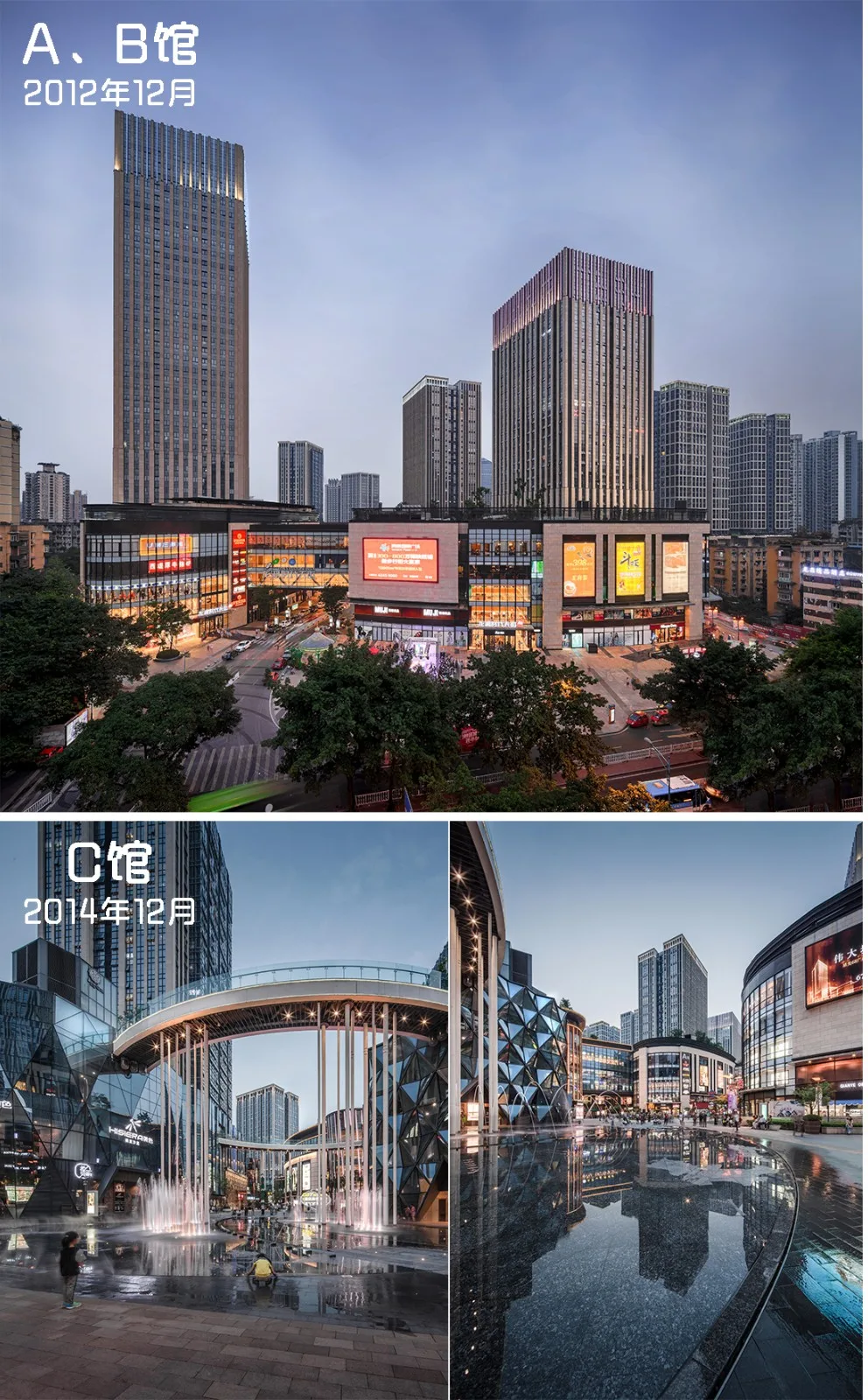
Over the past decade, a convenient transportation network has expanded steadily. In late 2012, Phase 1 of Times Avenue (Buildings A and B) opened, ushering in a new commercial era for the Oil Road area. Early 2014 saw the launch of Phase 2 (Hall C), which became a central hub for community life alongside Halls A and B. In 2016, Phase 3 (Hall D) introduced trendy experiential formats, redefining traditional shopping. By 2022, Hall E was completed, finalizing Times Square’s ambitious ten-year development plan.
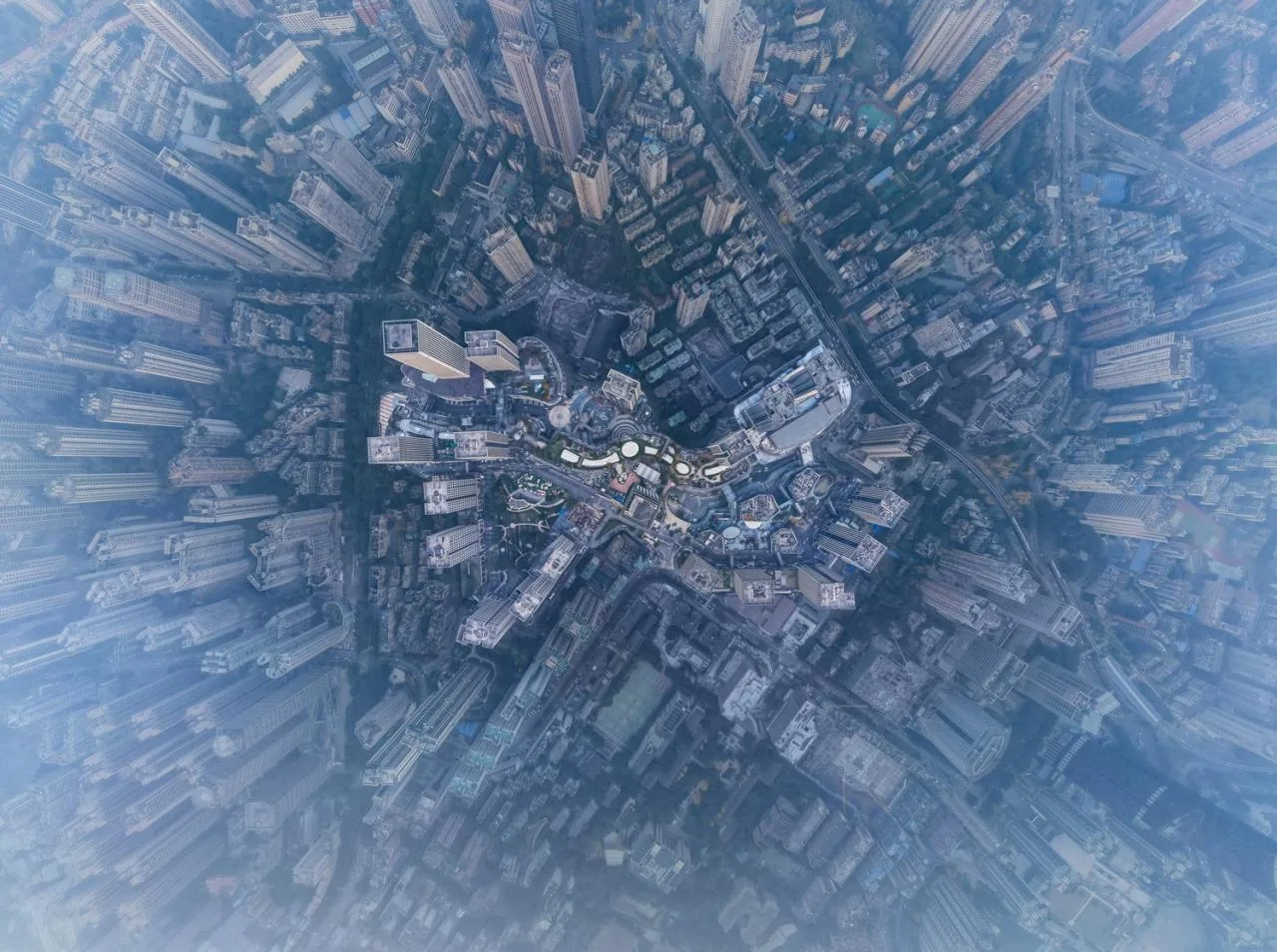
The Chongqing Longhu Times Tianjie project is the driving force behind Daping’s commercial district, spanning 1.5 million square meters. It integrates dining, accommodation, transportation, tourism, shopping, and entertainment into a mega Asian shopping complex. This comprehensive development seamlessly combines leisure shopping, administrative offices, star-rated hotels, luxury residential spaces, transport hubs, dining, entertainment, creative industries, urban plazas, and cultural facilities.
The commercial boom is closely tied to the success of urban renewal. Times Square acts as a city within a city, evolving with the urban core’s development trends. It has transformed Daping and the Oil Road area from a typical transit zone into a vibrant destination with city-wide appeal, reshaping local residents’ lifestyles.
Effective urban renewal requires fostering an environment conducive to business, living, entertainment, and tourism. Times Sky Street’s powerful and inclusive urban complex impacts its immediate locale, radiates throughout the city, and spearheads Daping’s renewal.
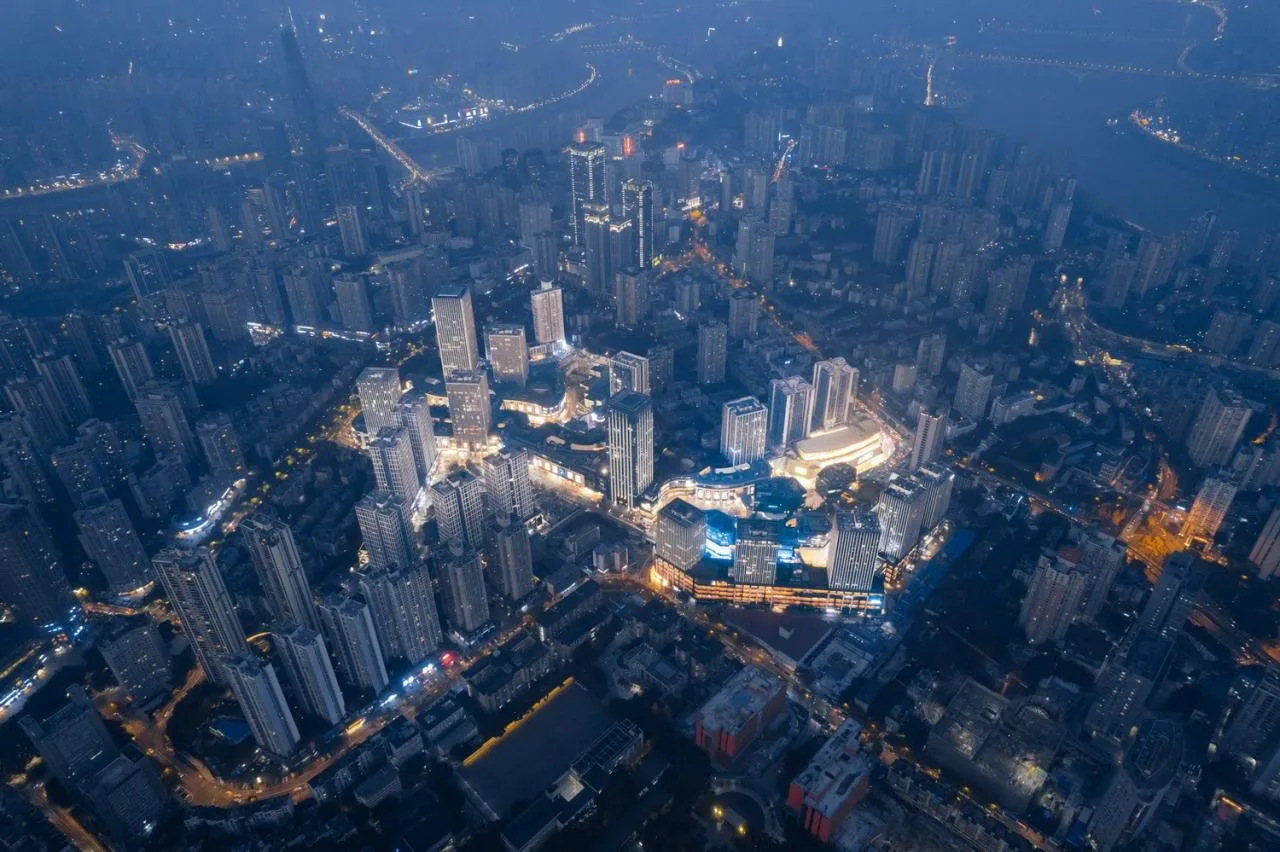
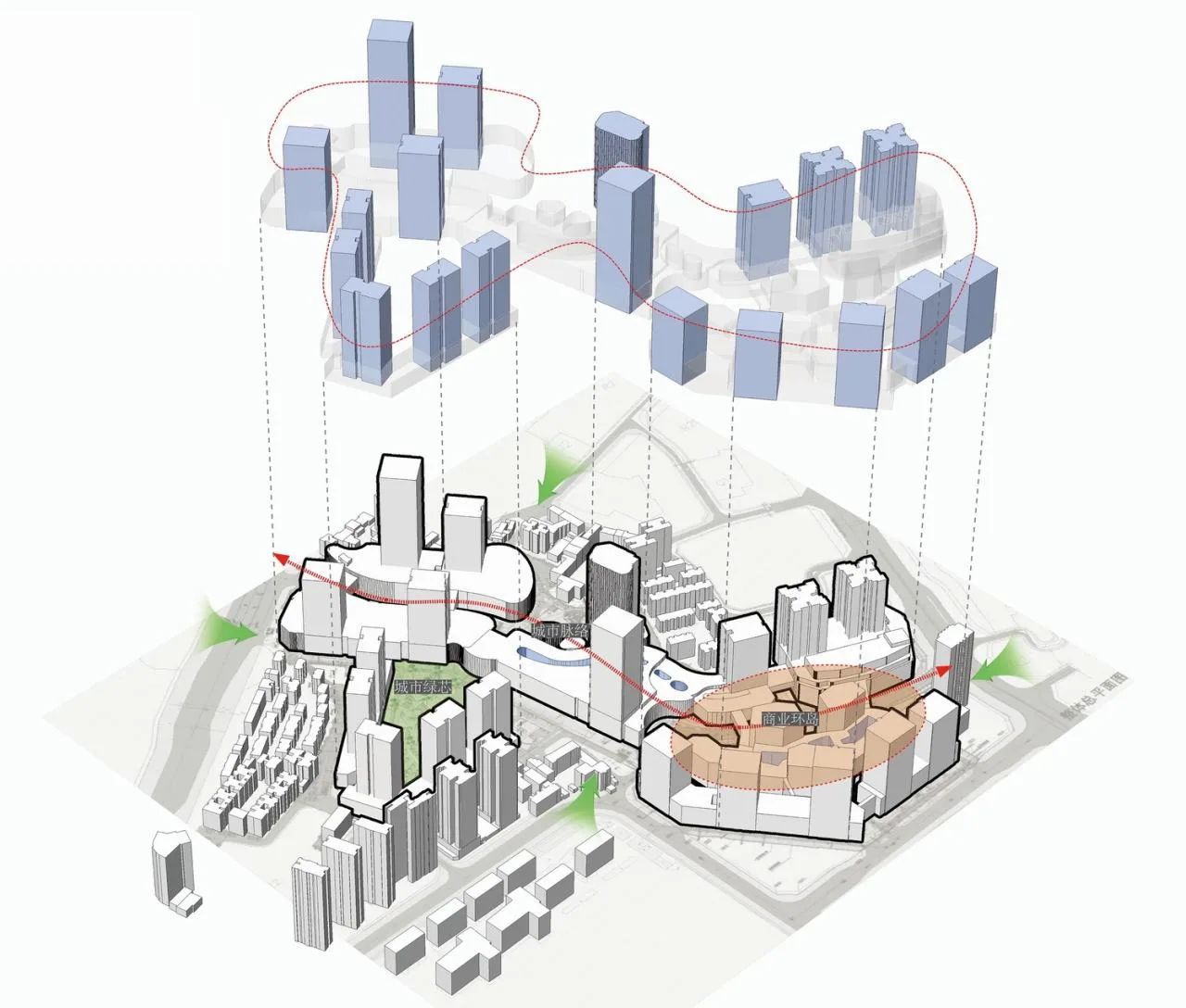
As the flagship commercial centerpiece of Phases Four and Five, Times Avenue connects and expands urban public spaces through interconnected commercial islands, enriching visitors’ experiences and engagement. Its fluid, undulating design and intricate details create continuous visual intrigue.
These commercial islands are aligned along main roads, with corridors weaving through them to form a linear connection between different levels and points. This creates a richly interwoven public space, allowing visitors to move freely from the ground floor to upper levels.
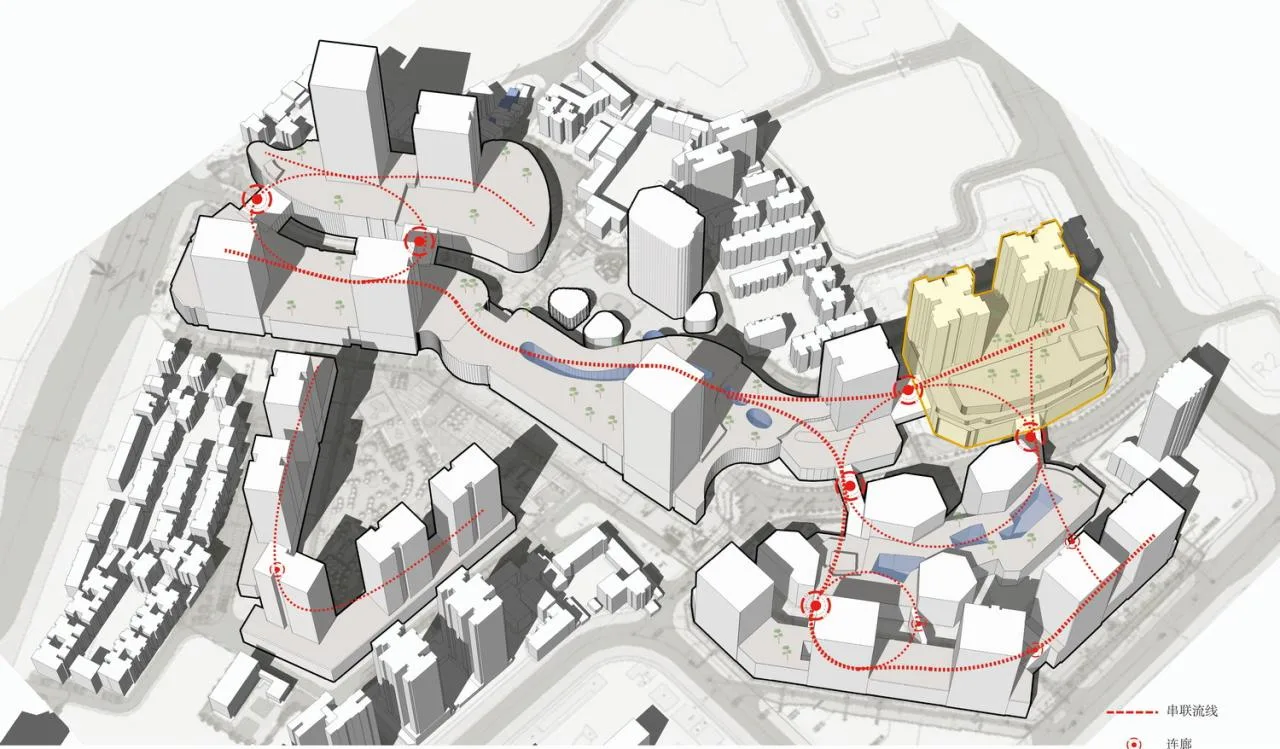
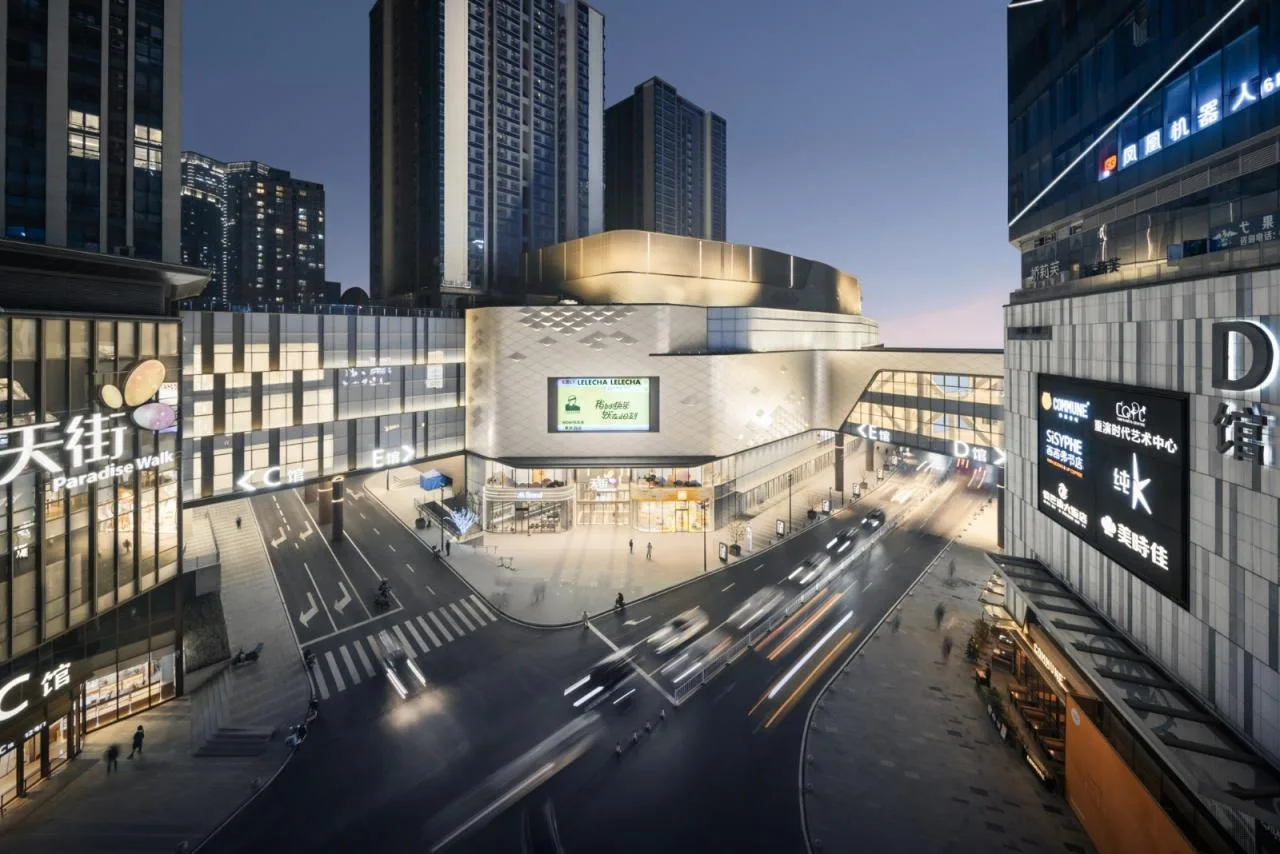
The corridor bridges the interior with the rooftop, creating a dynamic circular flow that eliminates barriers between the C, D, and E pavilions to achieve seamless commercial integration.
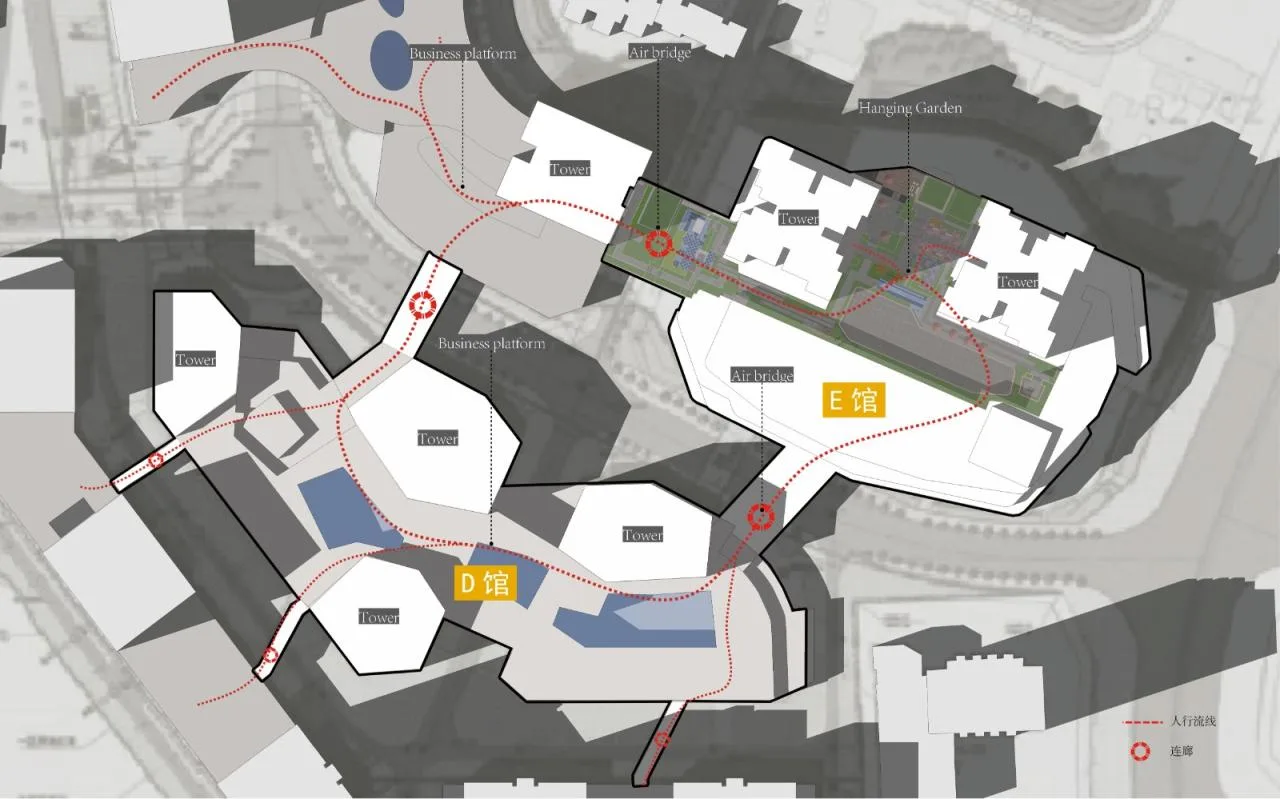
The tower forms an enclosed three-dimensional urban space, creating layered urban dimensions. This multi-faceted presence draws magnetic attention to the surrounding area. As the southern gateway to Times Square, the tower’s height in Building E mirrors that of Building B at the northern entrance, maintaining a harmonious project scale.
The initial phases, Buildings A and B, serve as urban family fashion centers with elegant, timeless architecture symbolizing the city’s classic renewal. Phase II, Hall C, focuses on open street commerce with central gardens, landscaping, and cultural elements, shaping a vibrant family entertainment and shopping hub.
Phase III, Hall D, is positioned as a “trendy youth center,” featuring various experiential formats, events, and activities that encourage around-the-clock participation. Its design, reminiscent of floating ice crystals, offers a dynamic, intriguing, and diverse aesthetic.
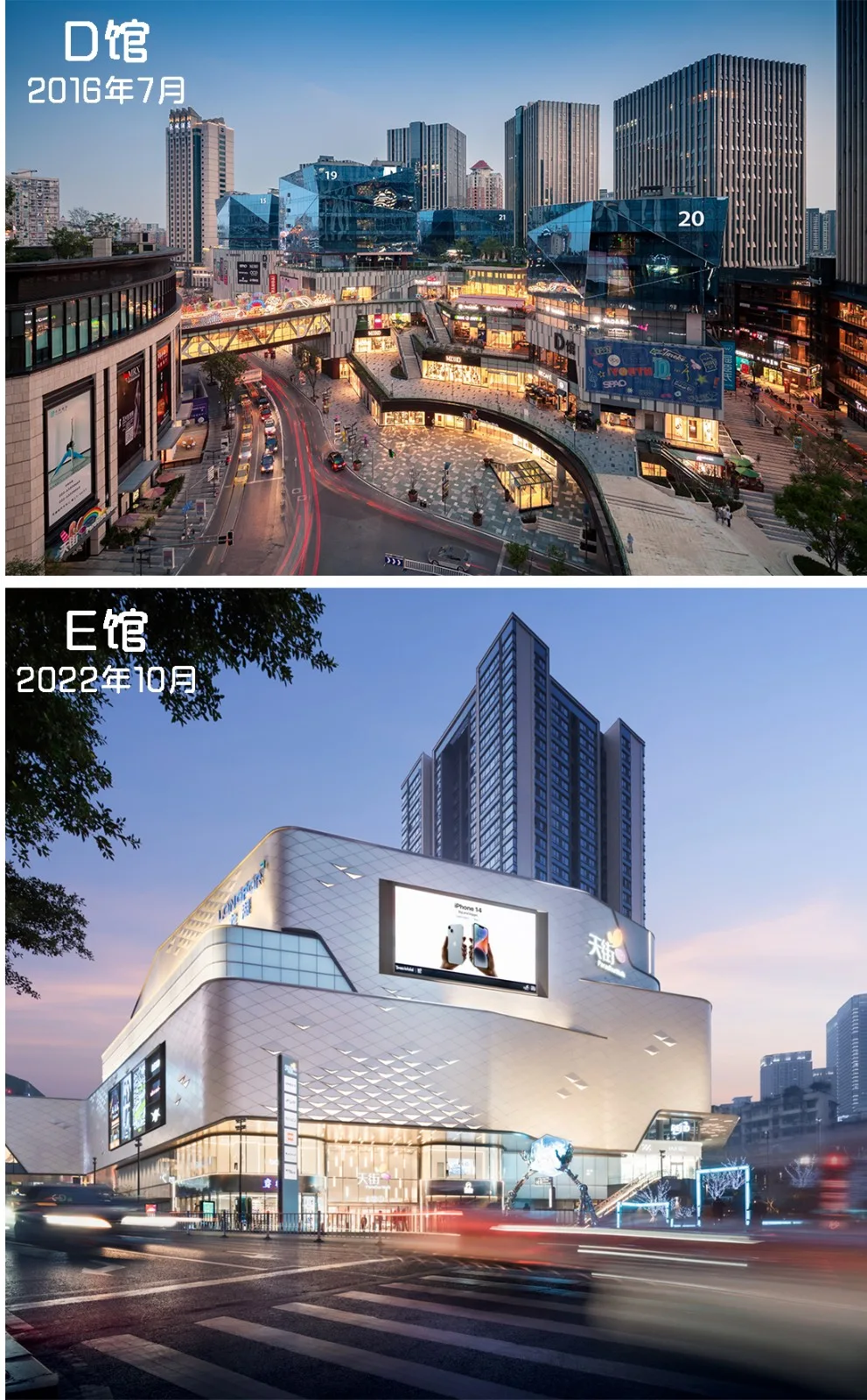
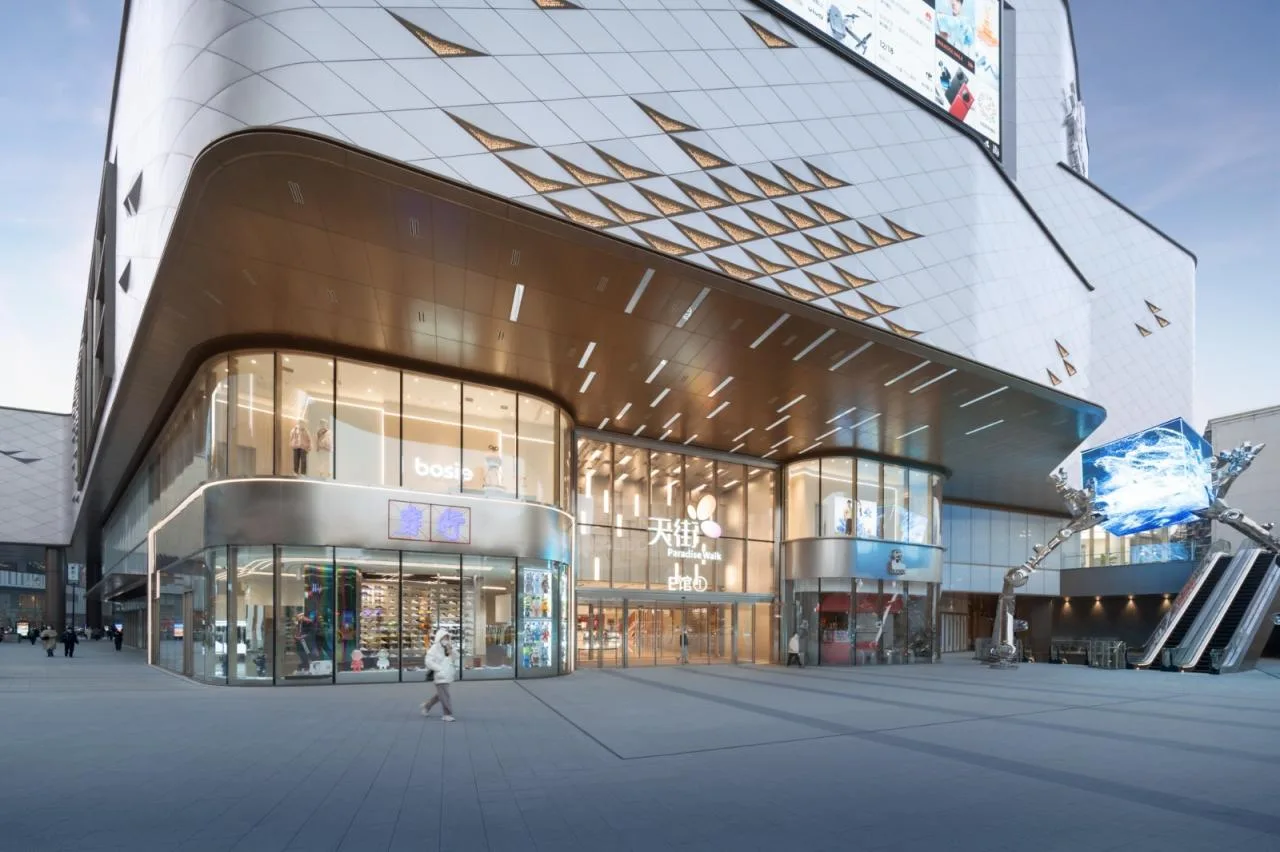
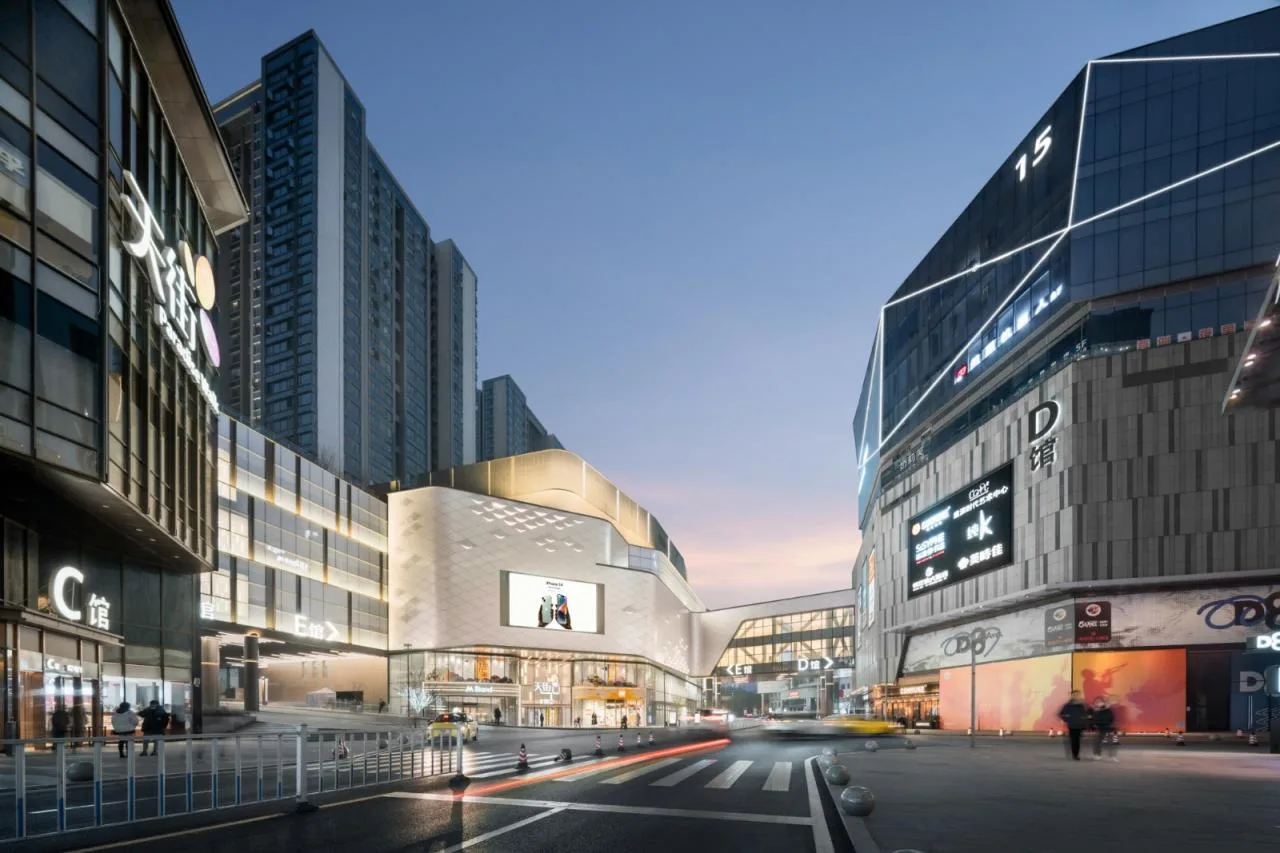
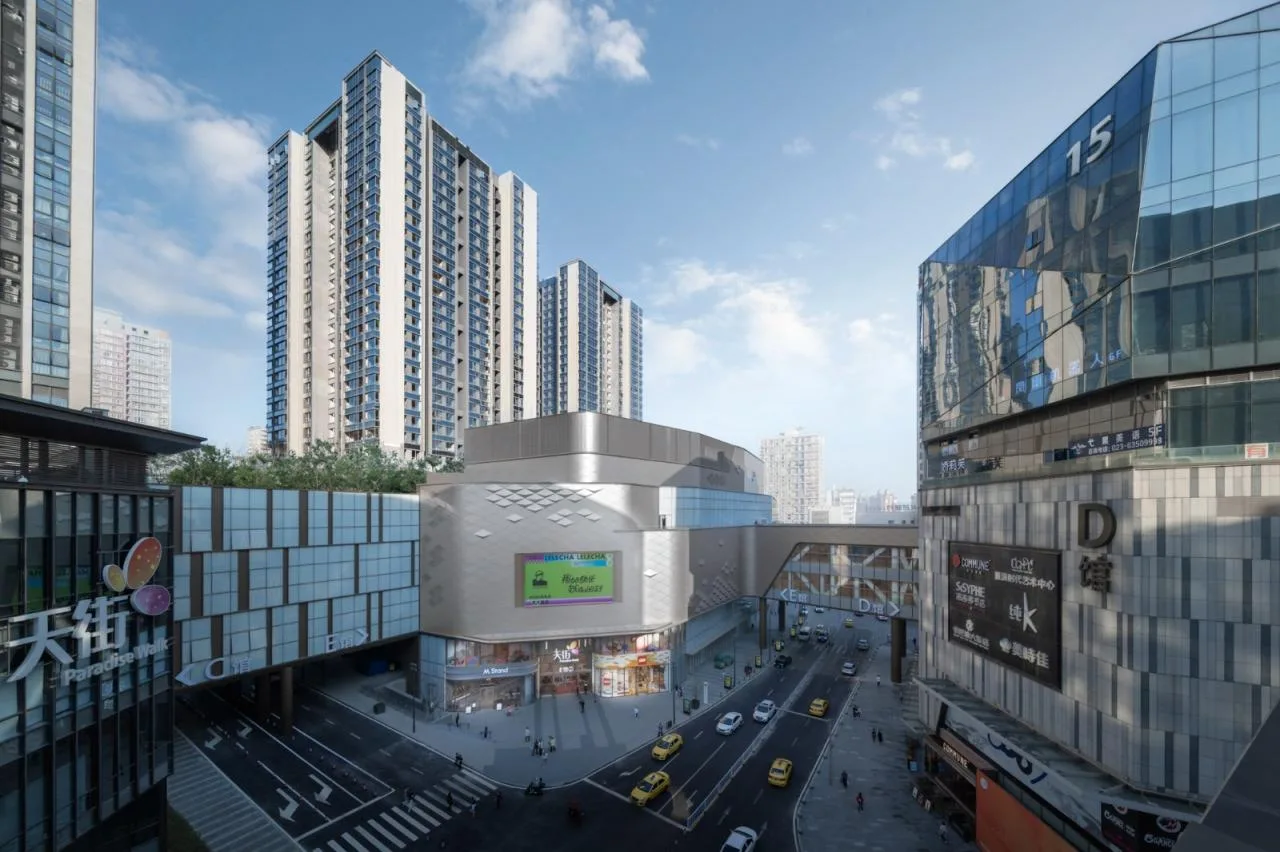
Completed in October 2022, the Times Avenue E-building is both the final piece of this decade-long development and a gateway to a new era. Serving as the eastern entrance to the Daping commercial district, it completes the district’s spatial framework.
E-Hall Planning and Layout
Self-Formed Core with Multi-Party Connectivity
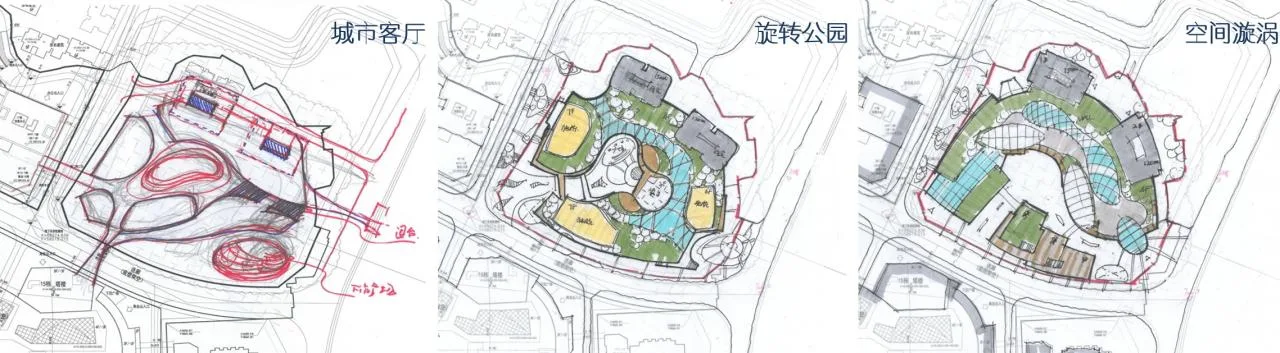
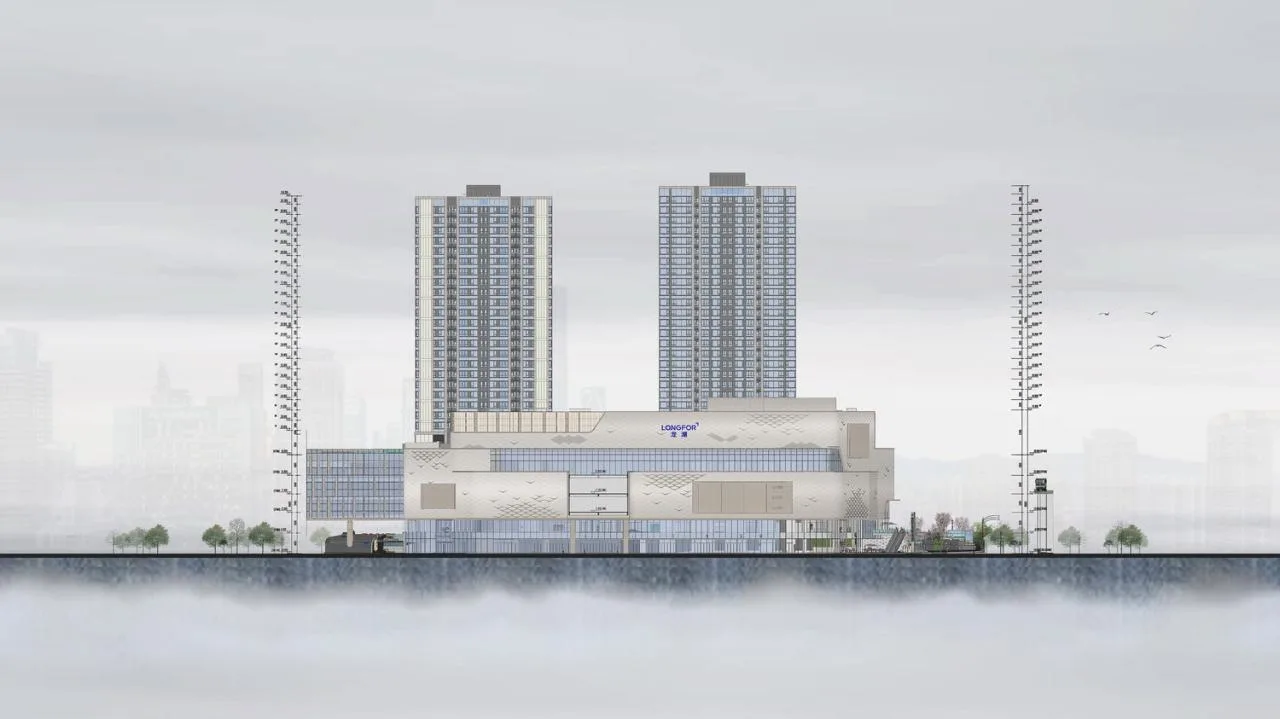
The E-building complex includes a shopping center and two 100-meter residential towers, aligned with the overall Times Square master plan. The residential towers frame the site’s perimeter, creating a “basin” spatial configuration. The central roof and outdoor areas connect seamlessly, providing ample high-quality public spaces.
The eastern edge, facing roads and subway access, attracts urban visitors. The west and south sides connect directly to the C and D pavilions, enabling smooth transitions between Dapingzheng Street and Changjiang Second Road.
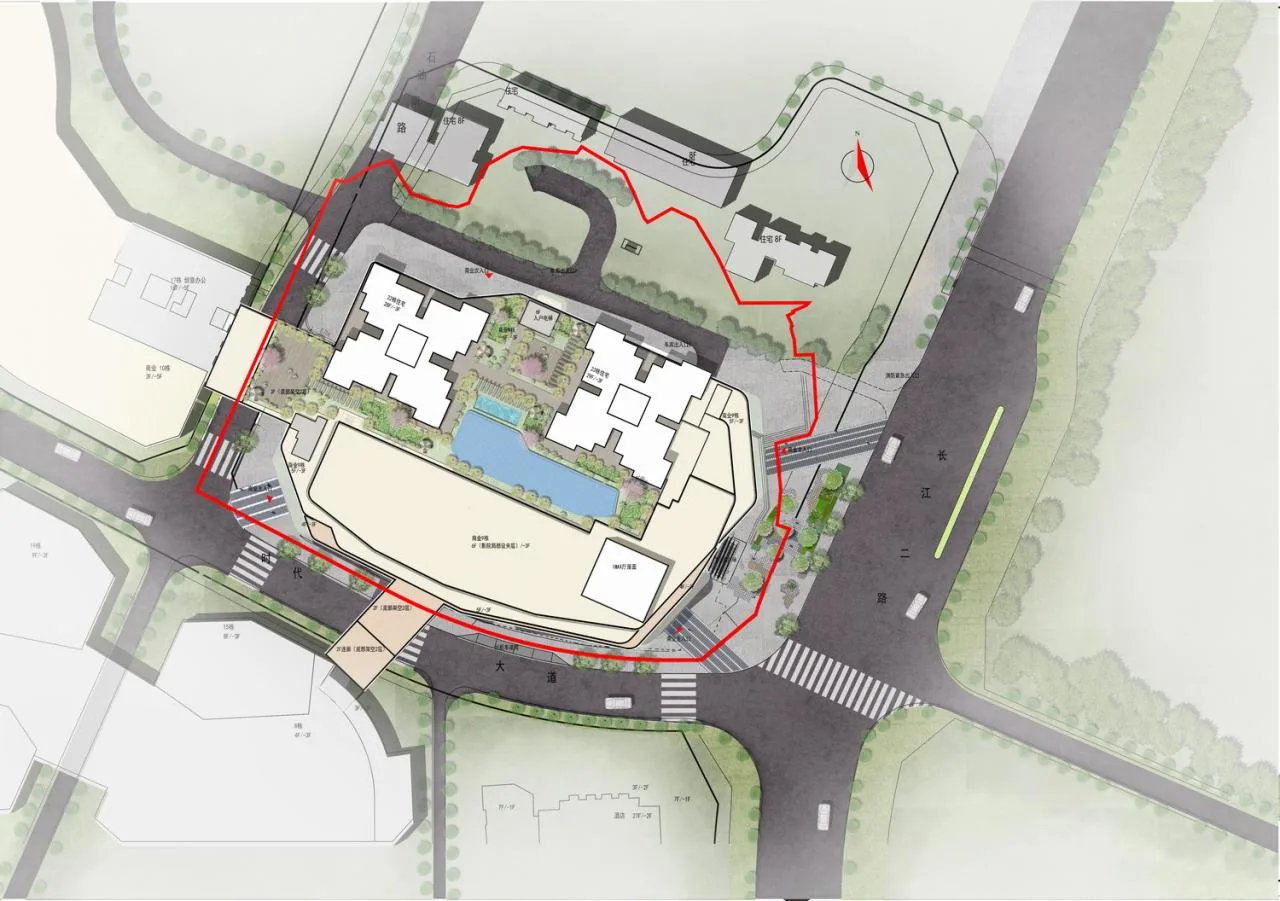
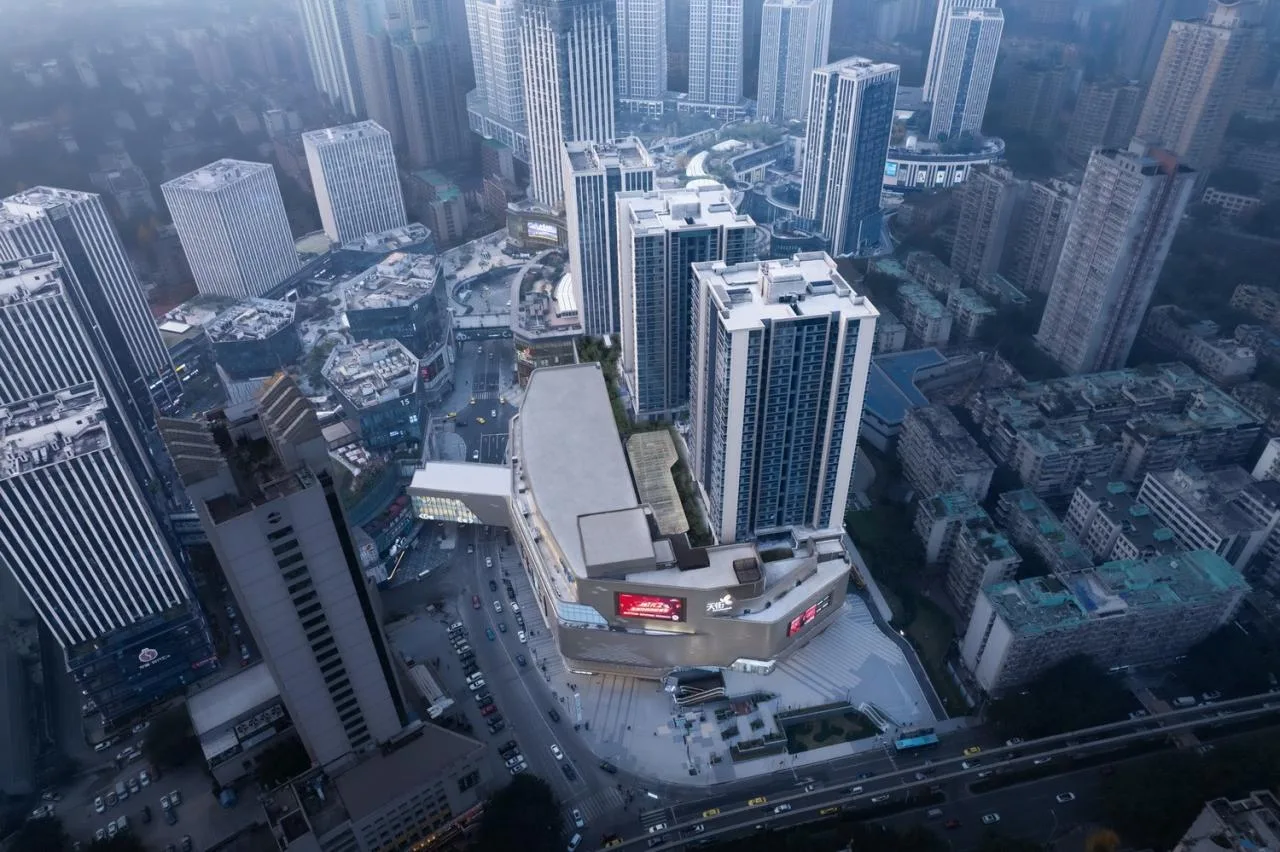
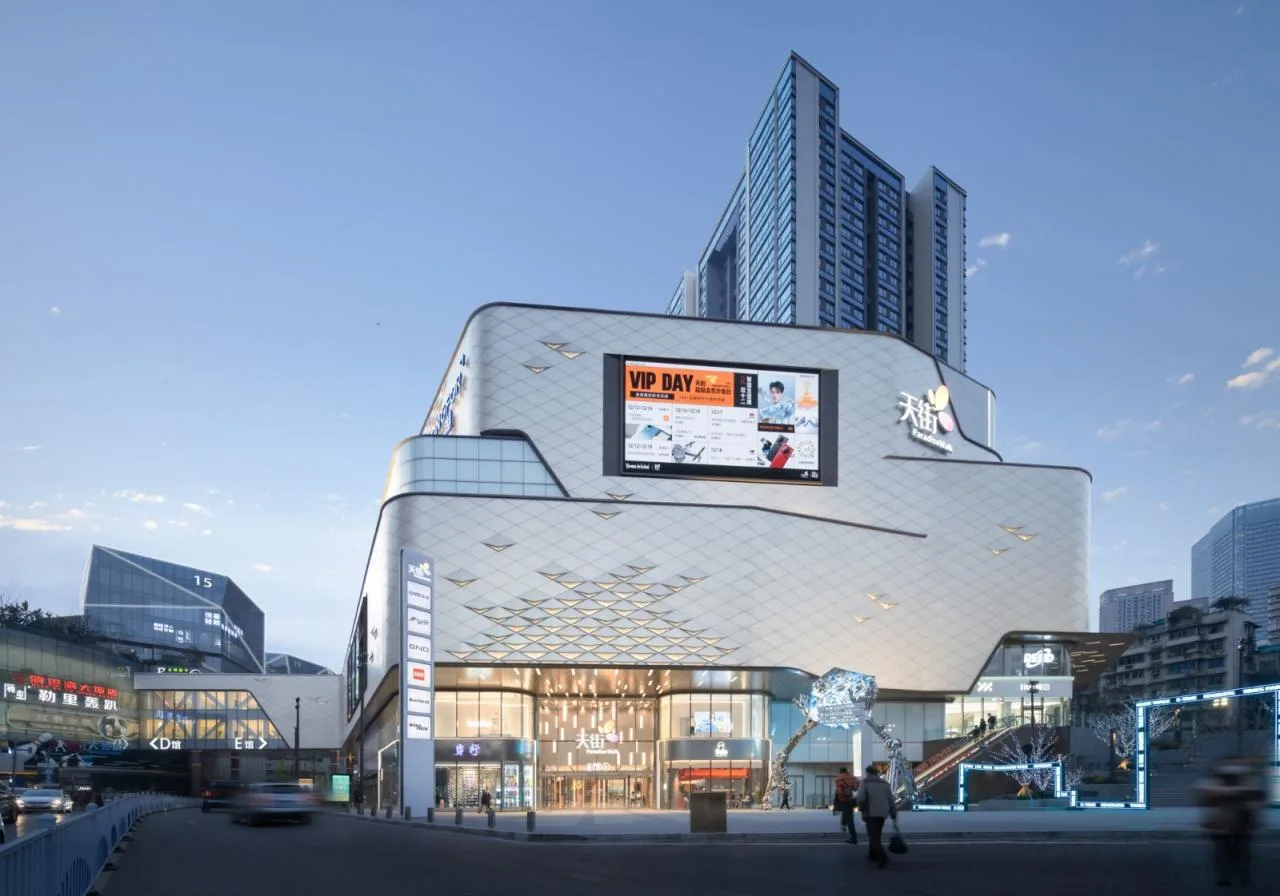
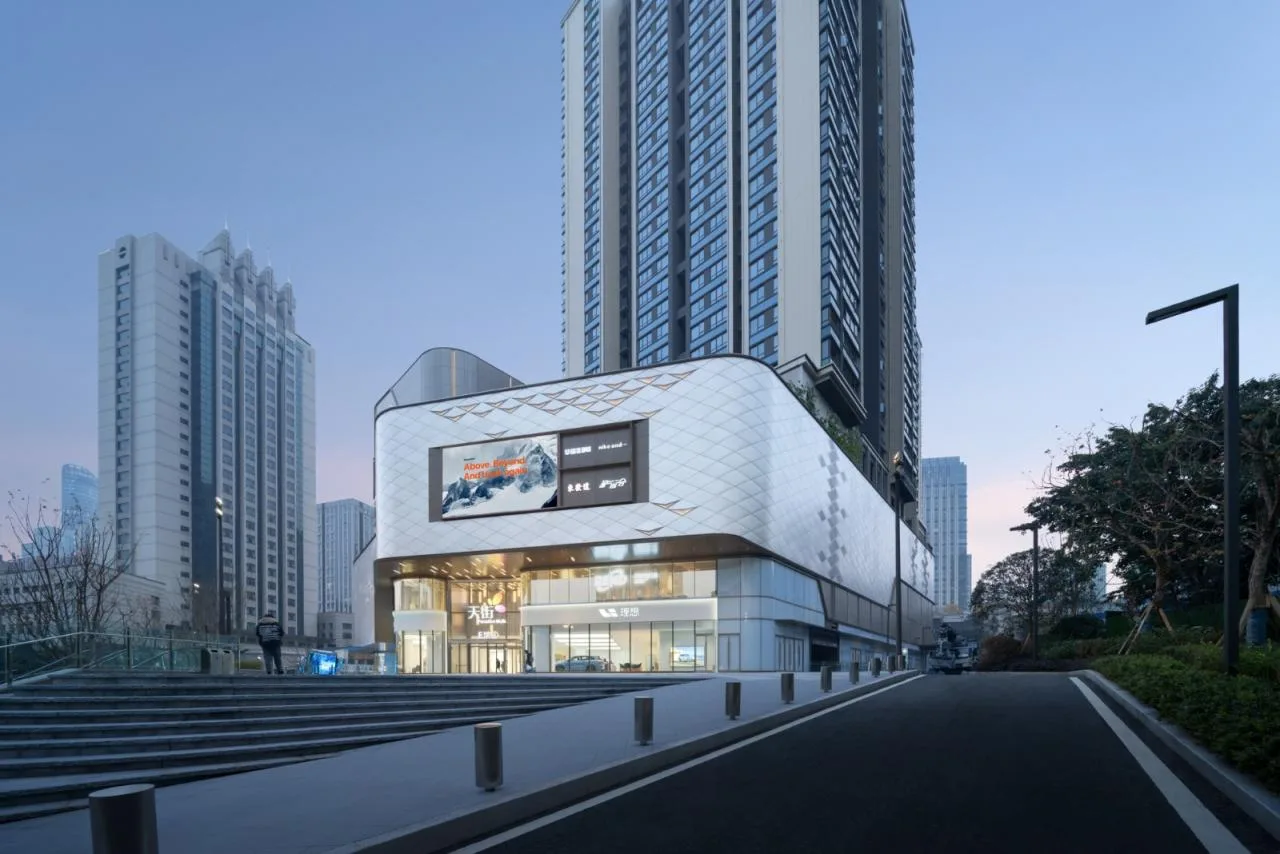
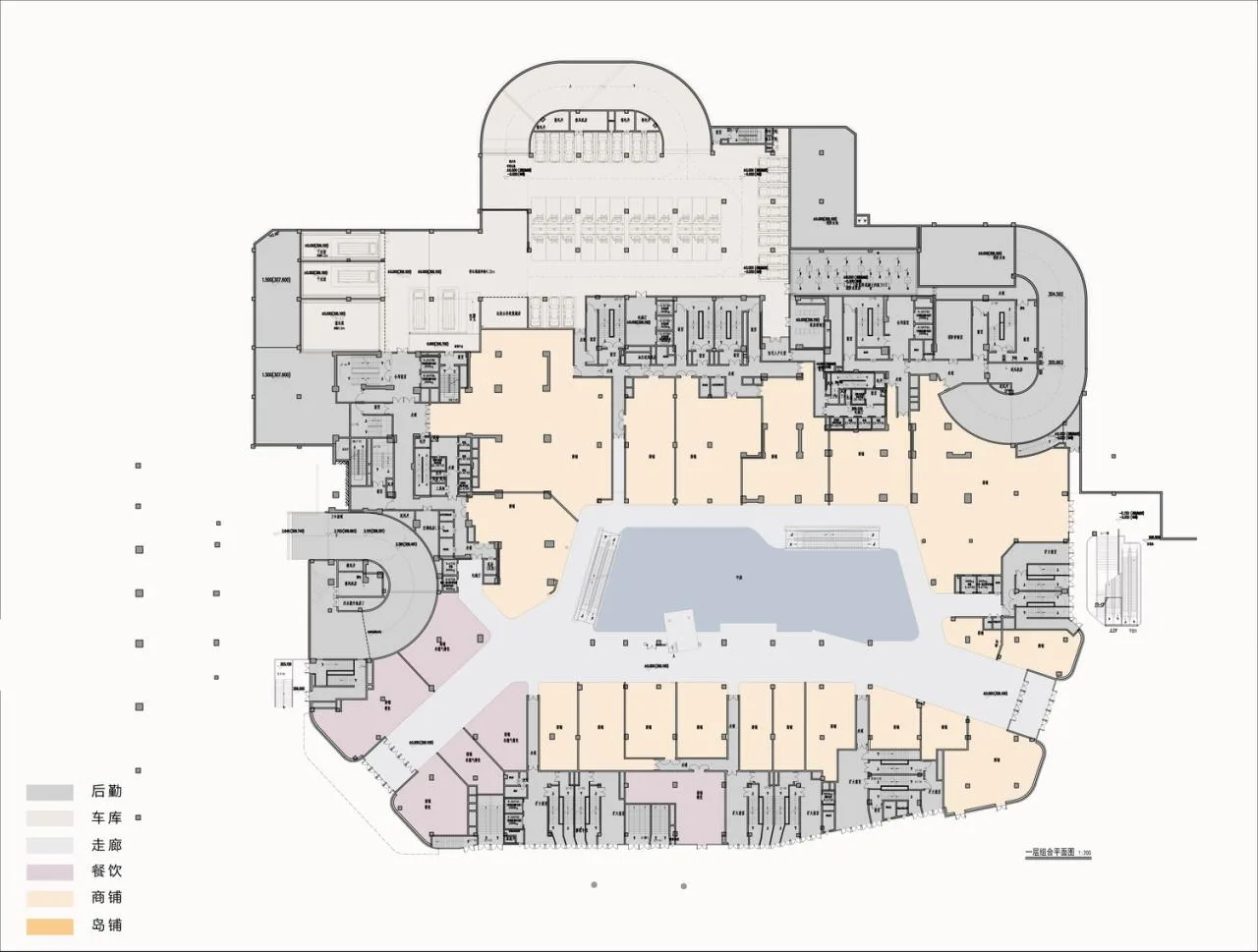
The shopping center prioritizes accessibility, featuring entrances on the east, west, and south sides that align with major pedestrian flows. This forms a “self-contained core with multi-party interconnection” layout, integrating above-ground and underground levels as well as connections to Halls C and D. Residential rooftops are transformed into entrance gardens, creating private living spaces and maximizing the value of this mixed-use complex.
E Hall’s design embraces the concept of “interconnectivity and integrated construction,” linking directly to adjacent C and D Halls via skybridges and underground passages, ensuring seamless commercial circulation within the complex.
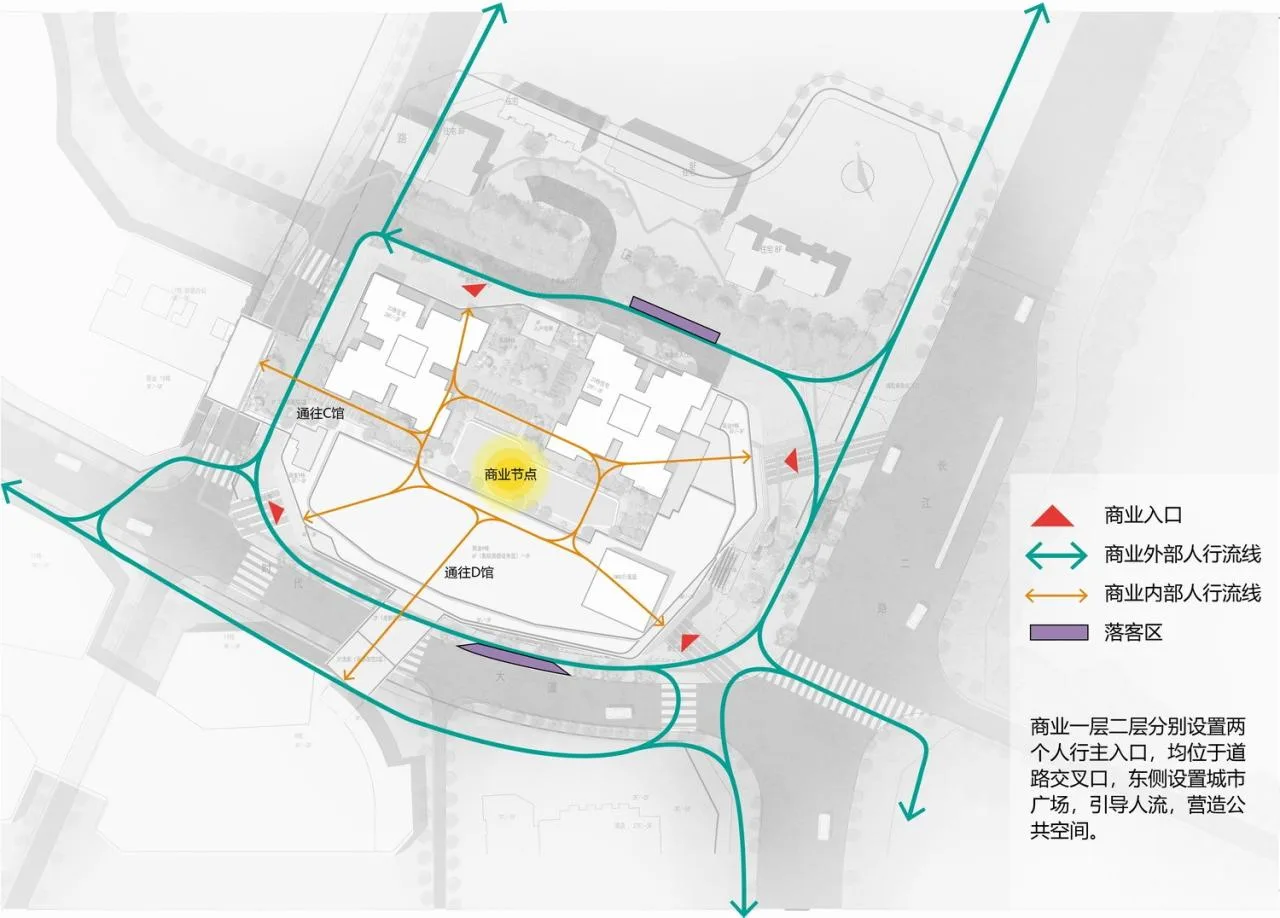
E-Building Design Concept
Geek Ark: A Trendy Space
During the design of Building E, the team sought a theme that would redefine and enhance the regional character for the final urban interface of the Chongqing Tianjie series. The Times Tianjie project has evolved alongside changing times and needs. Addressing the limited entertainment and experiential offerings, E Hall aims to become a vibrant experiential commercial hub centered on entertainment and fashion, building upon the foundations of Halls C and D.
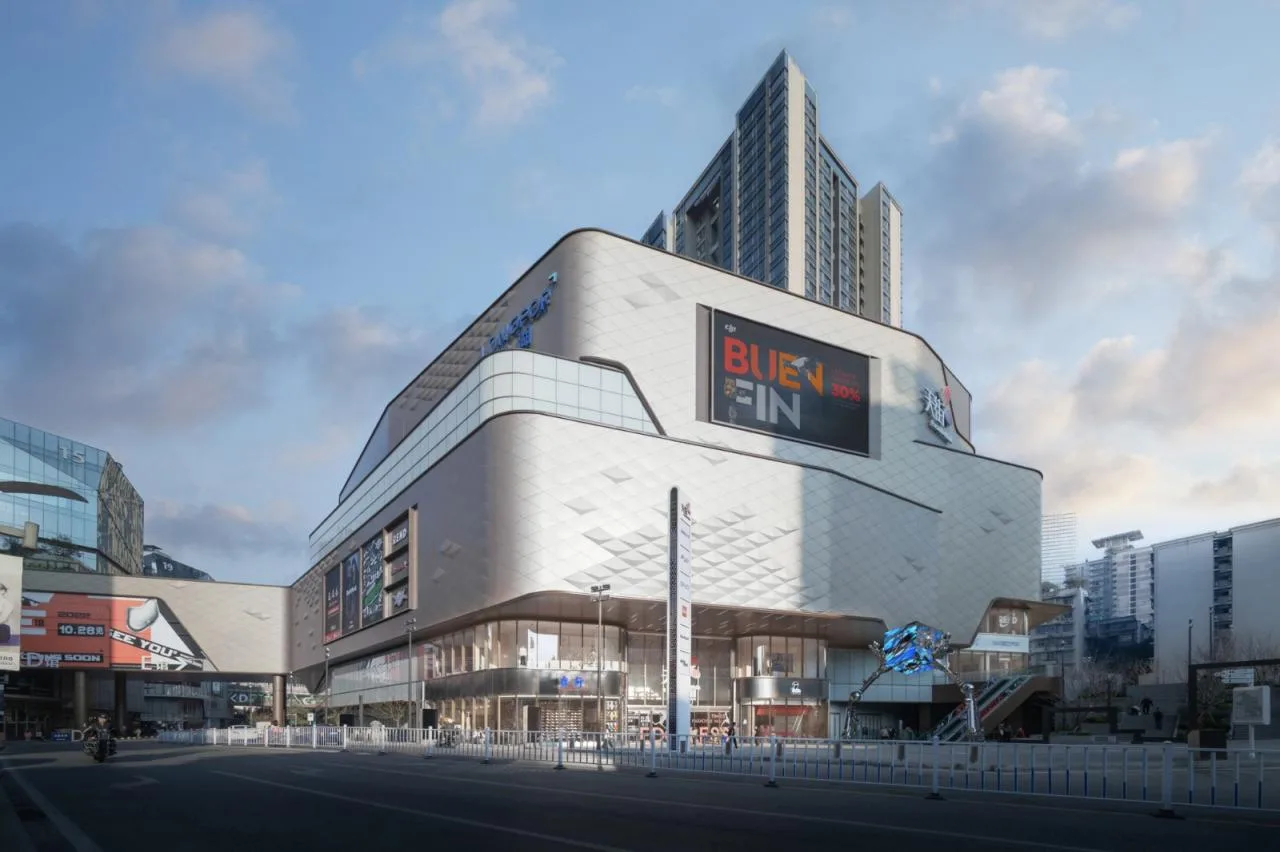
As a bridge to the future and the entire project, the designer envisioned a cloud-like, flowing form featuring soft curves and futuristic diamond grid patterns, creating a “geek ark” aesthetic.
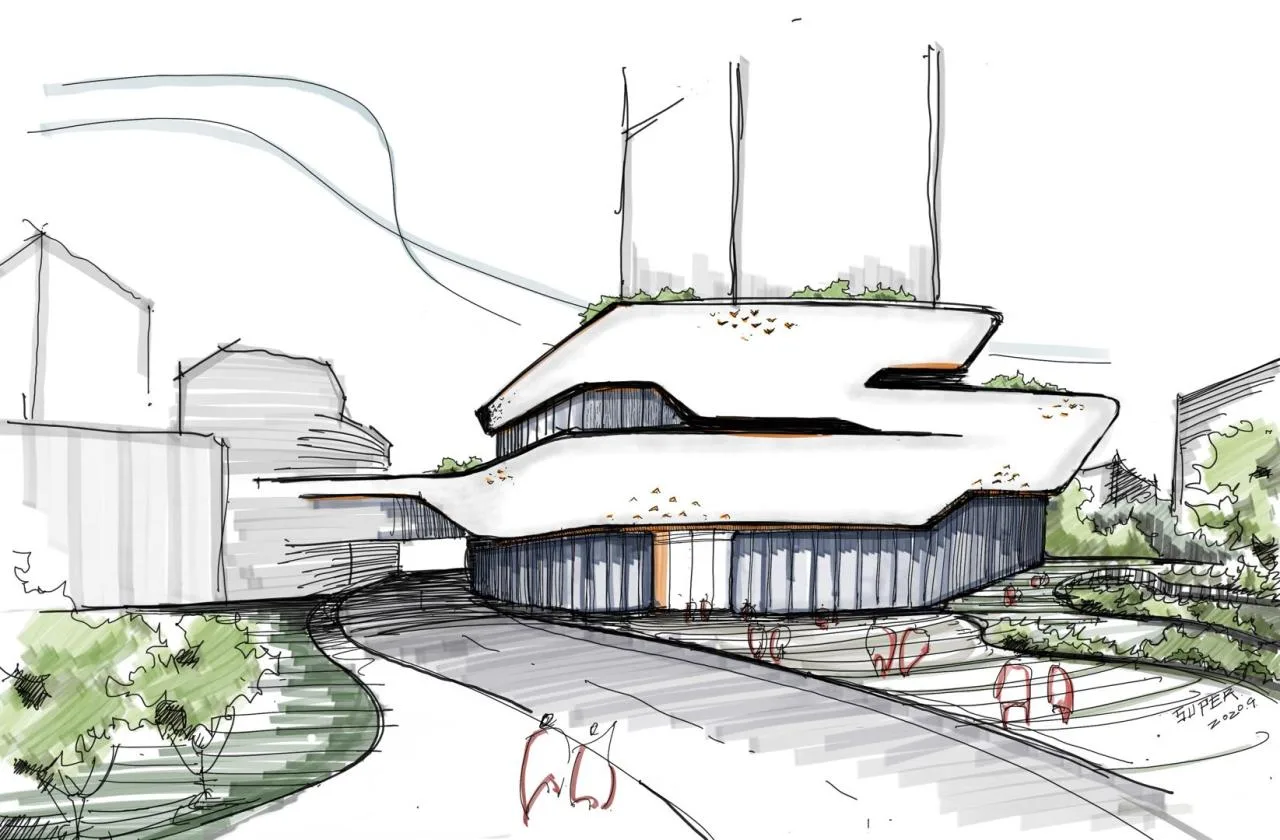
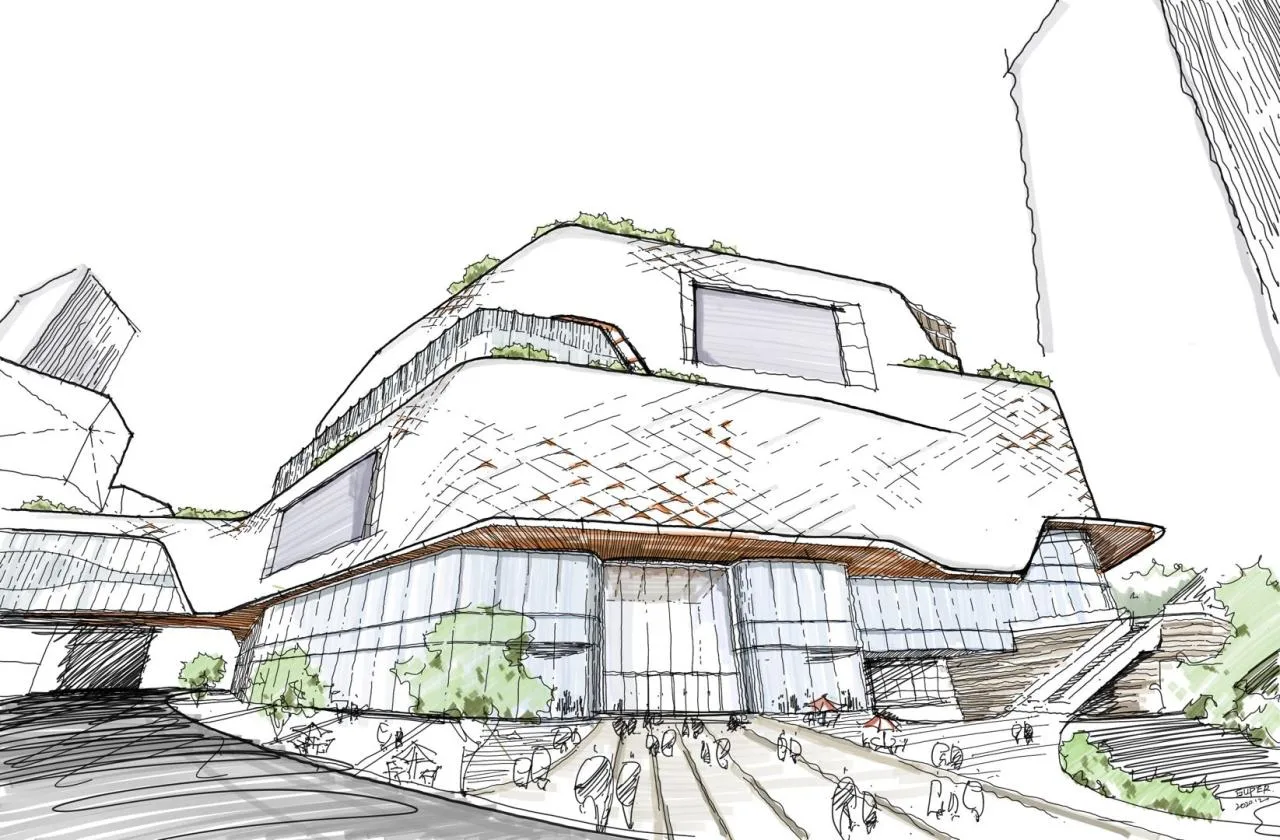
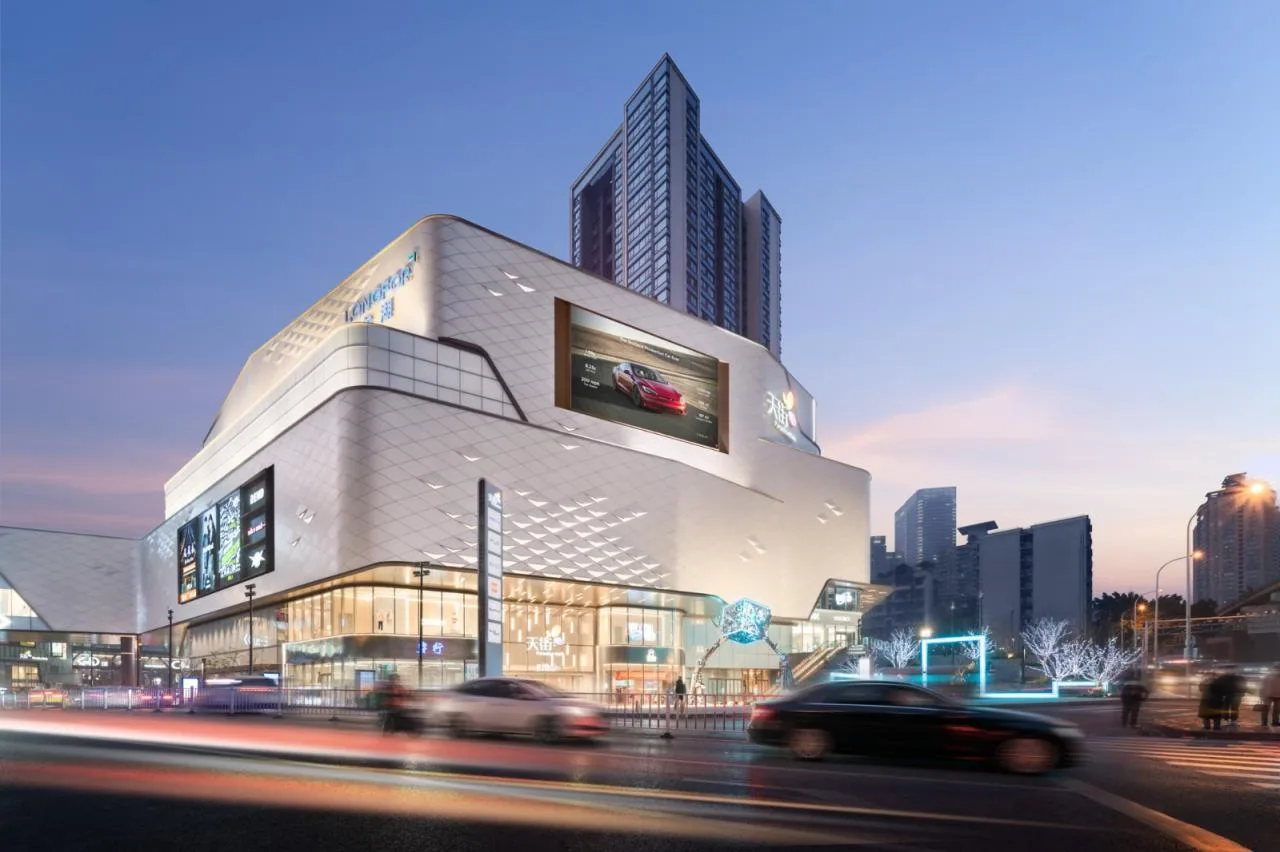
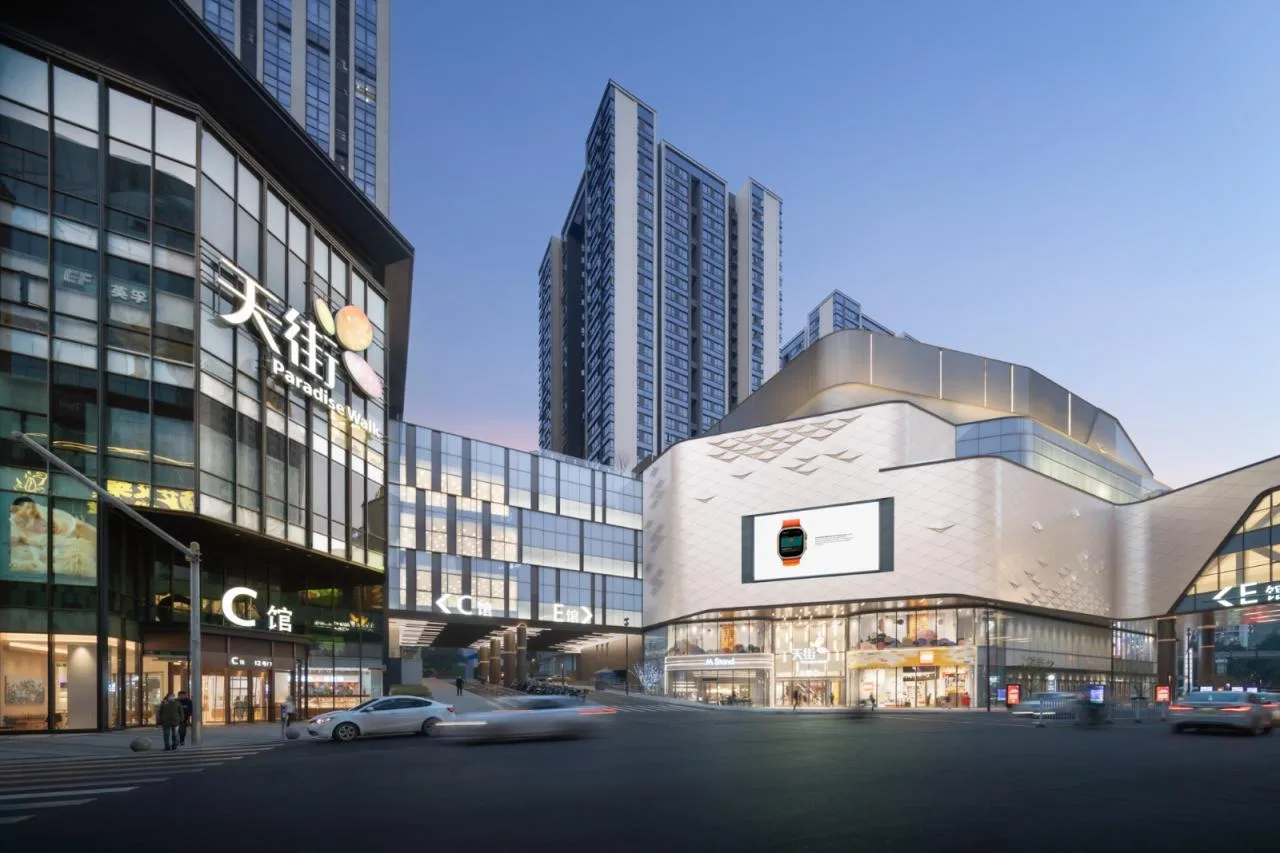
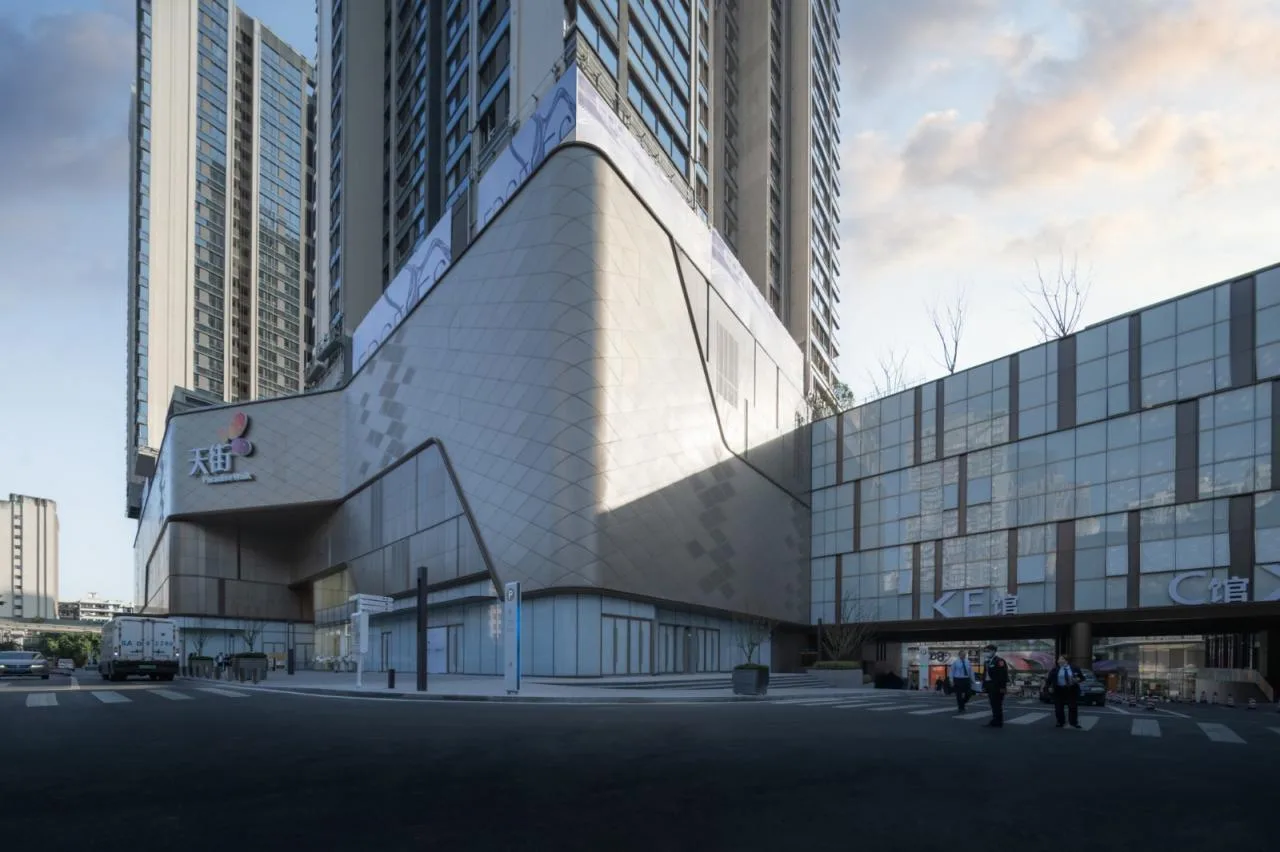
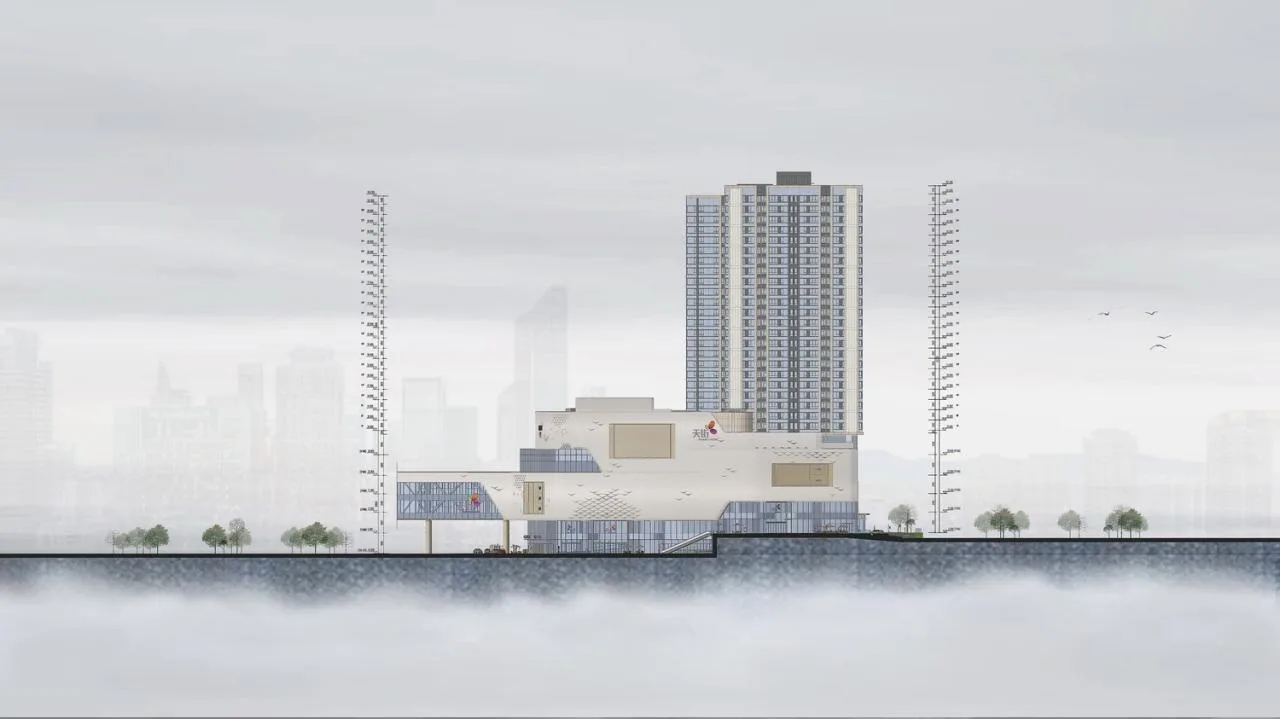
The design uses a “layered cake” approach that gradually steps back the middle and upper volumes, allowing the building to blend harmoniously into the urban fabric. This approach meets regulatory setbacks and reduces the visual bulk from the street.
The site’s natural slope descends about 6 meters from north to south. This elevation difference is embraced in the design by creating dual-level entrances, facilitating access from surrounding streets and injecting vitality across multiple floors.
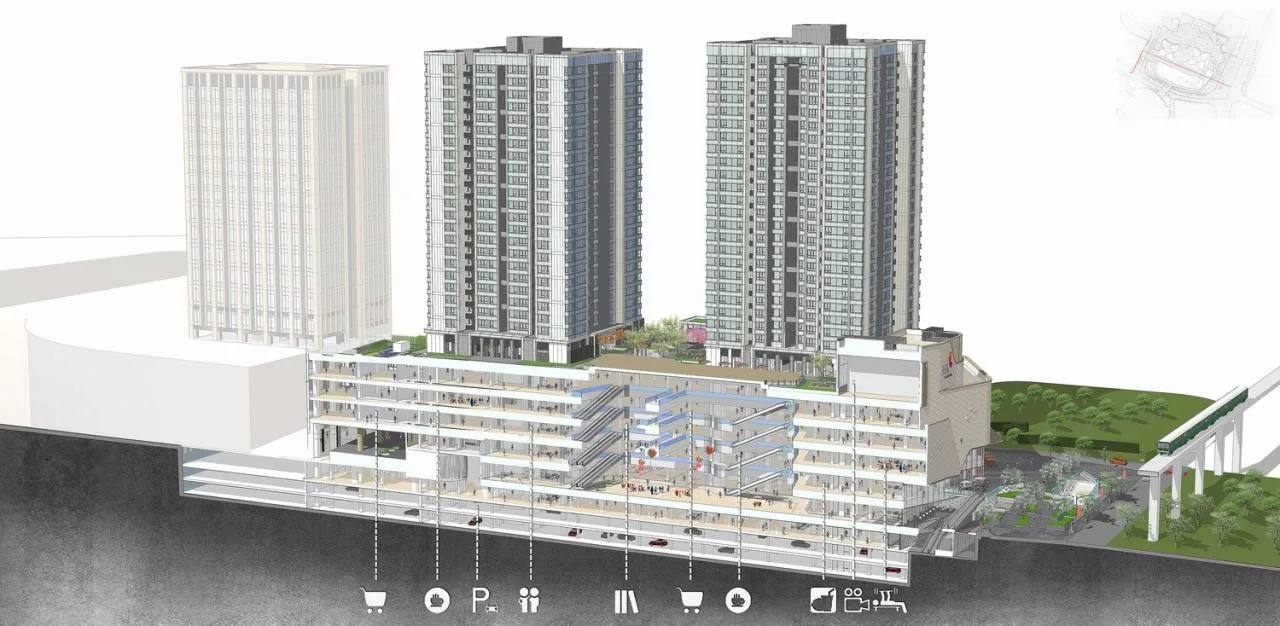
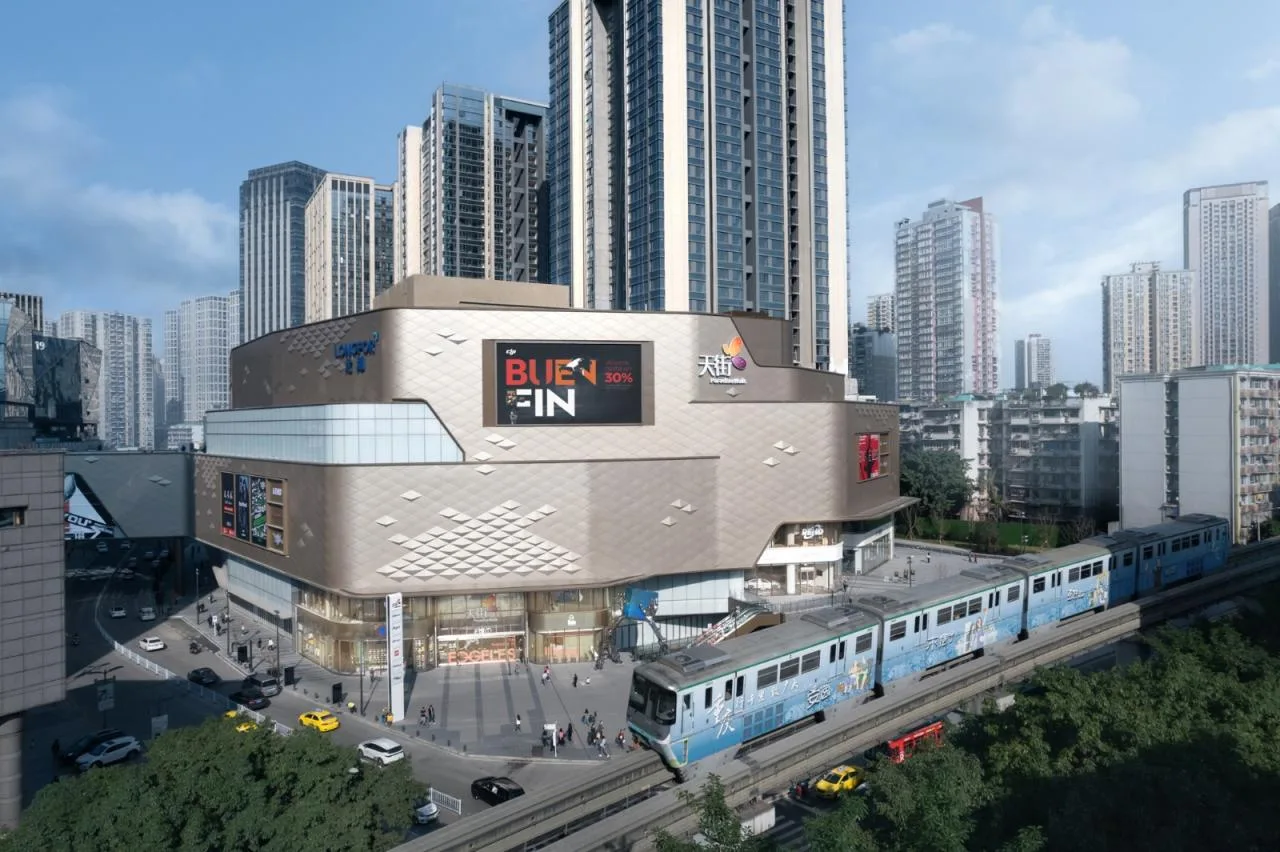
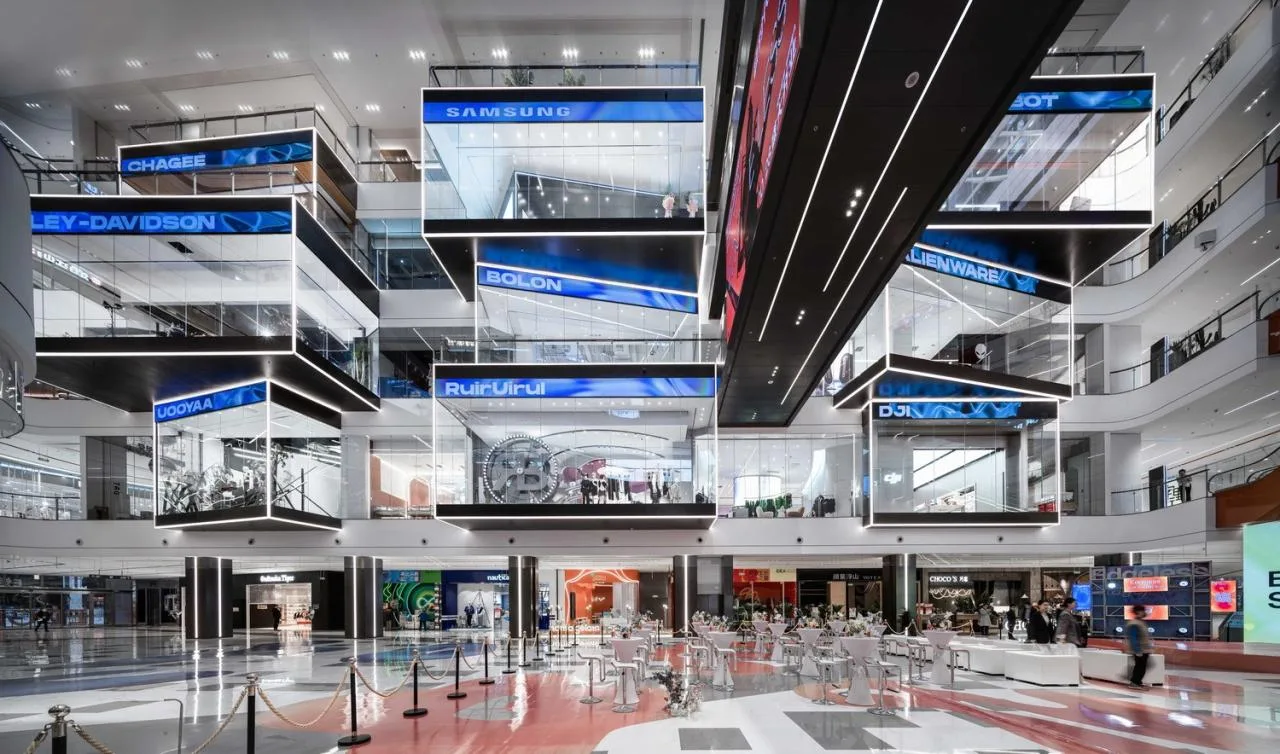
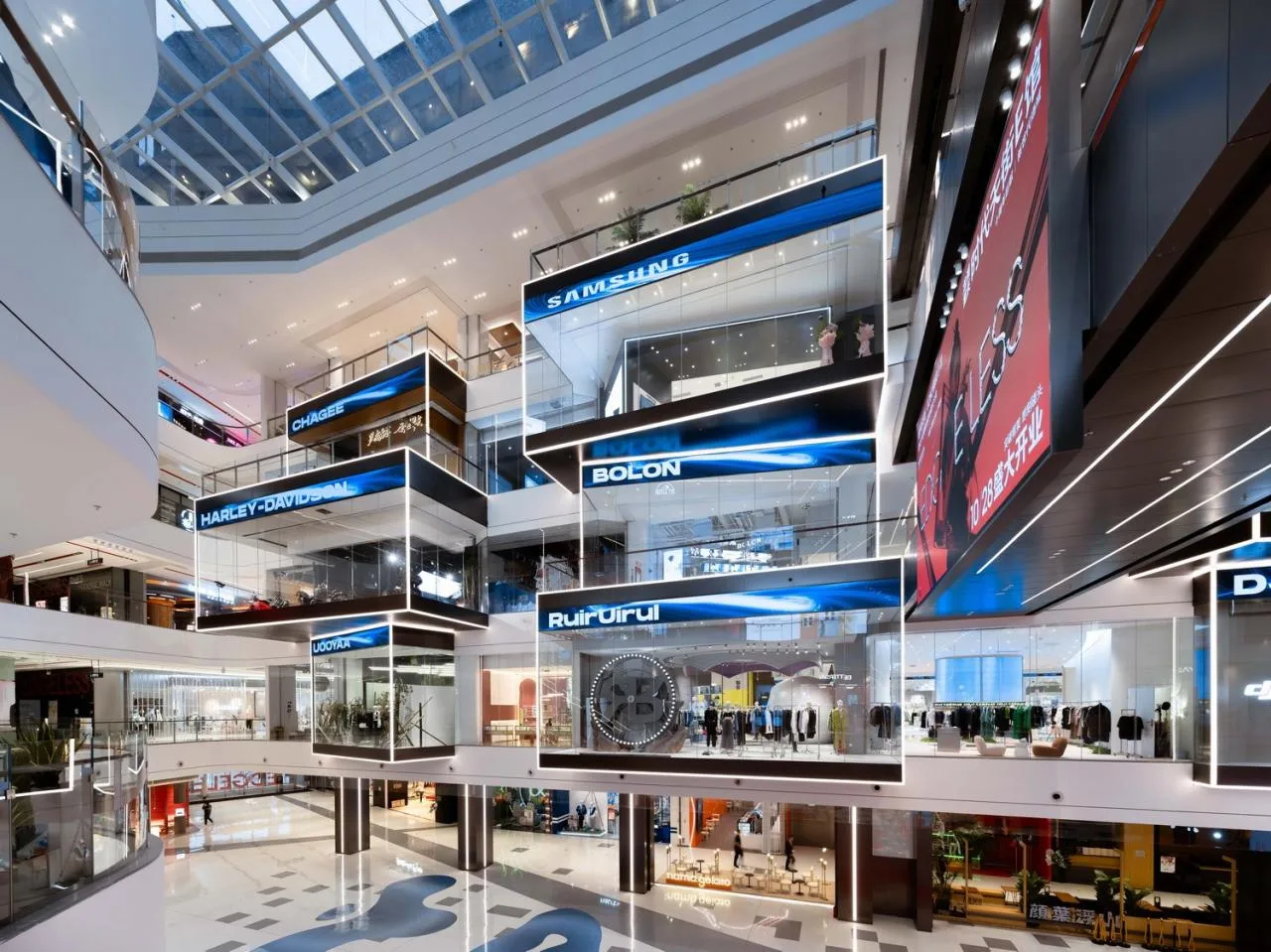
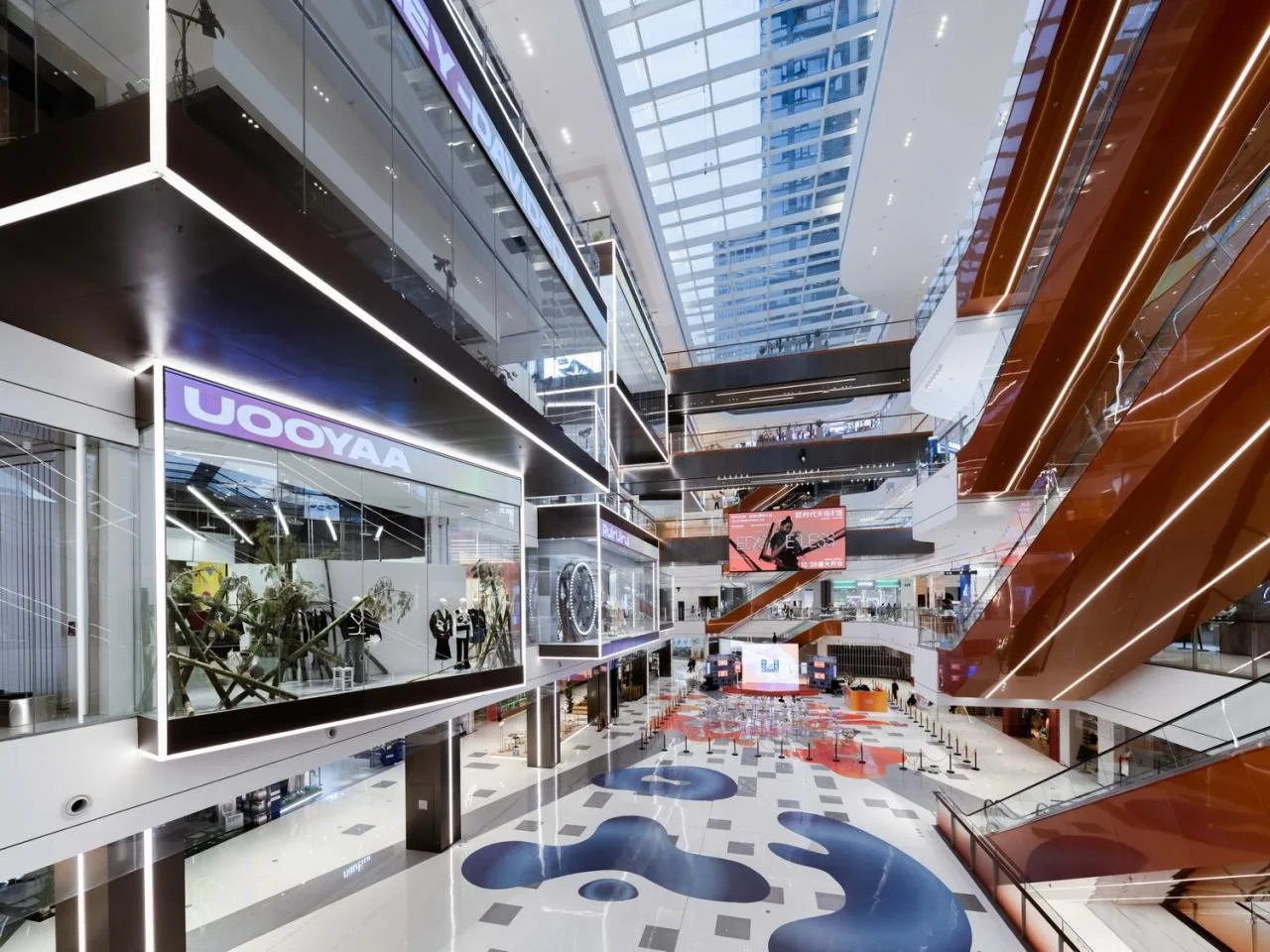
The interior spatial design diverges from typical circular shopping center flows, instead featuring a sci-fi inspired space node combining a single atrium and an “urban magic box.” This transparent, focal “magic box” serves as a striking display area while maintaining visual connectivity from the southern back street to the atrium.
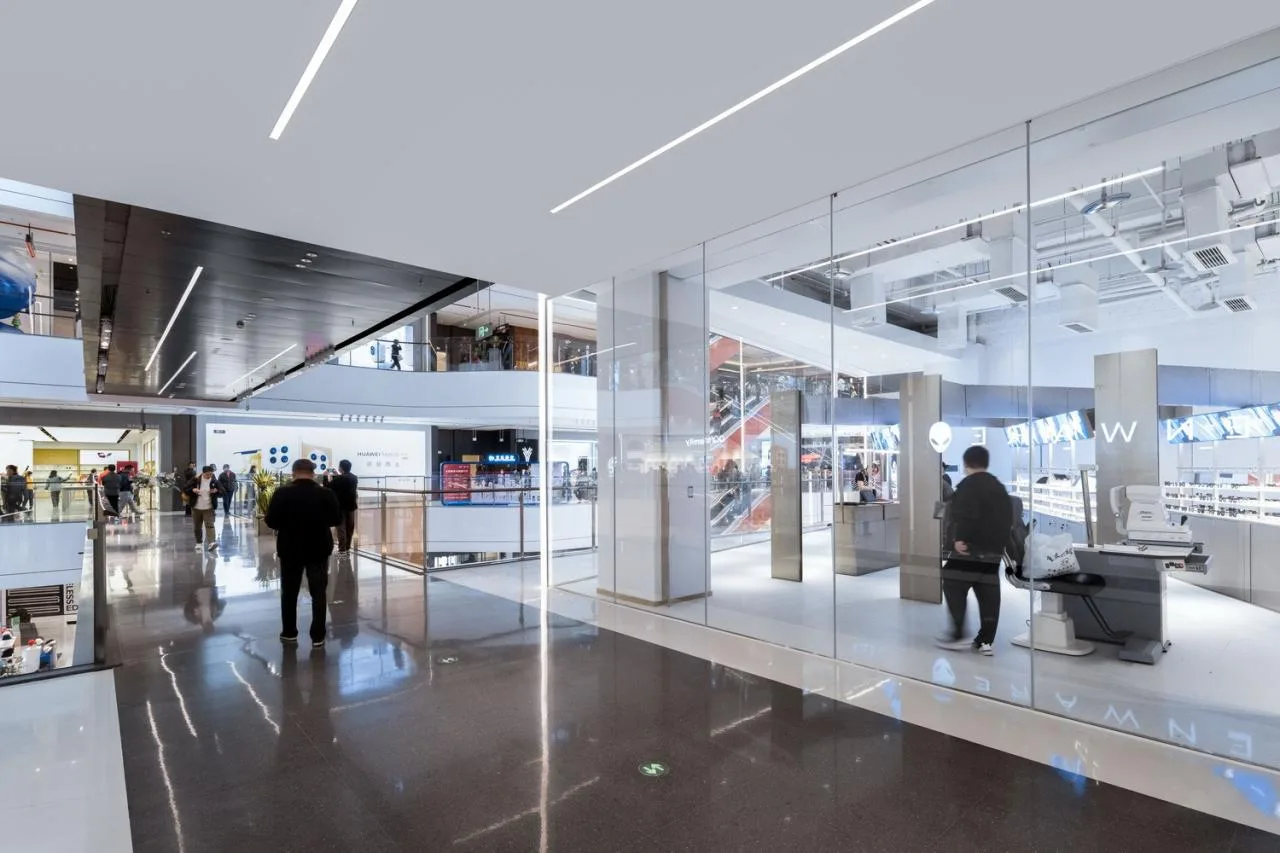
The commercial circulation revolves around this thematic space, where transparency and vivid color contrasts immerse visitors in a futuristic, cybernetic atmosphere, evoking a sense of stepping into the future. The main atrium stands as the focal centerpiece, blending digital aesthetics with Chongqing’s historic terrain in a stylish, cyberpunk interpretation.
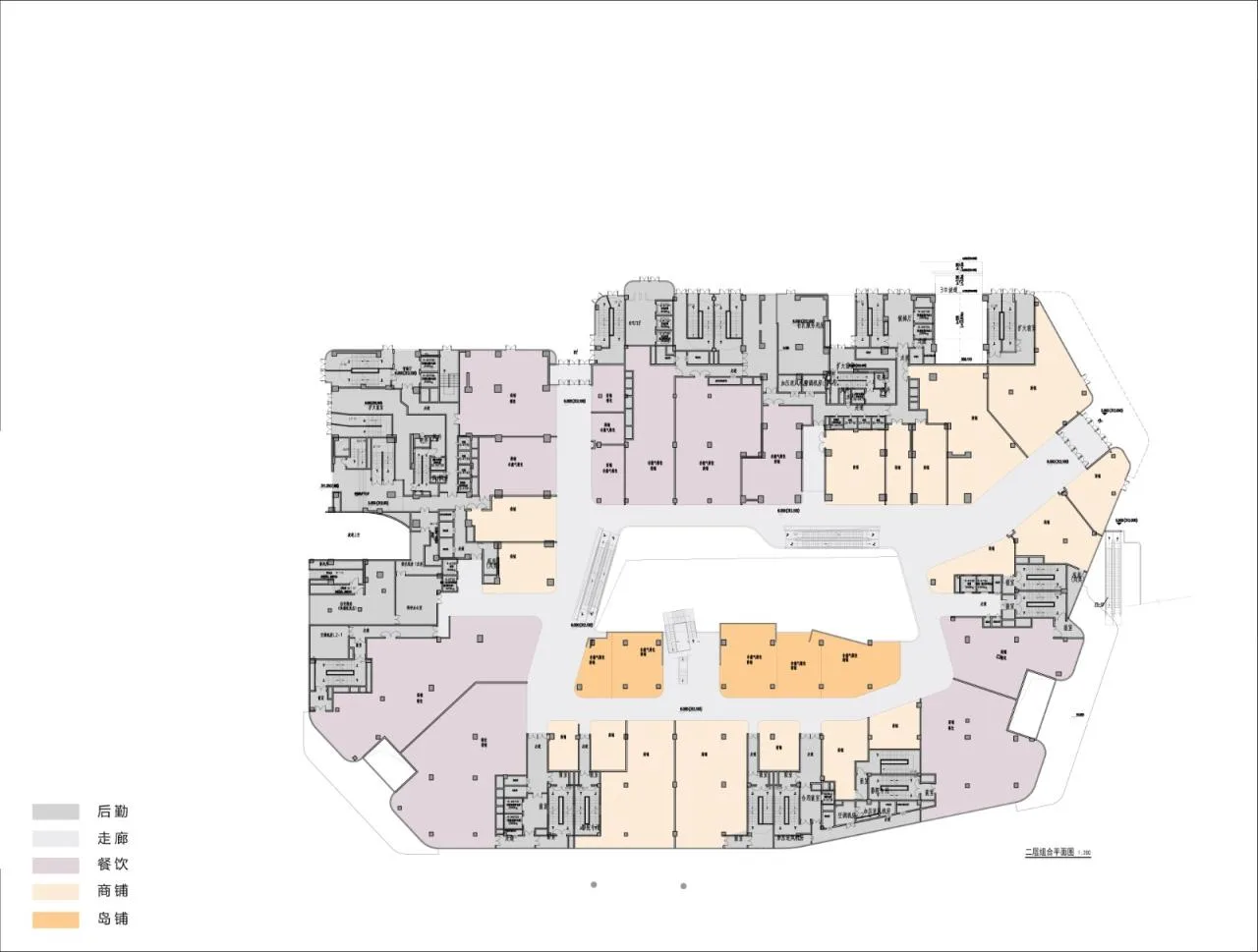
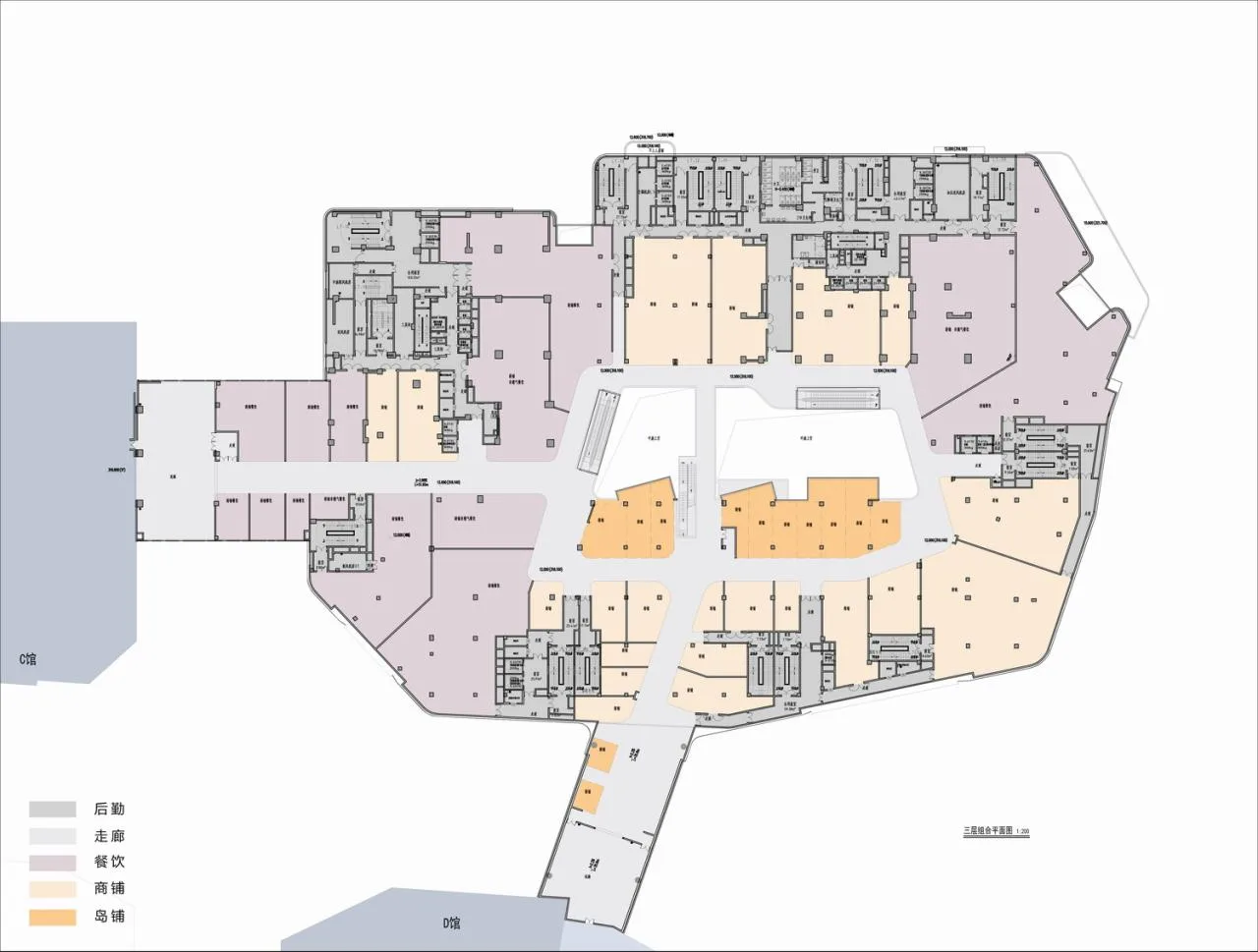
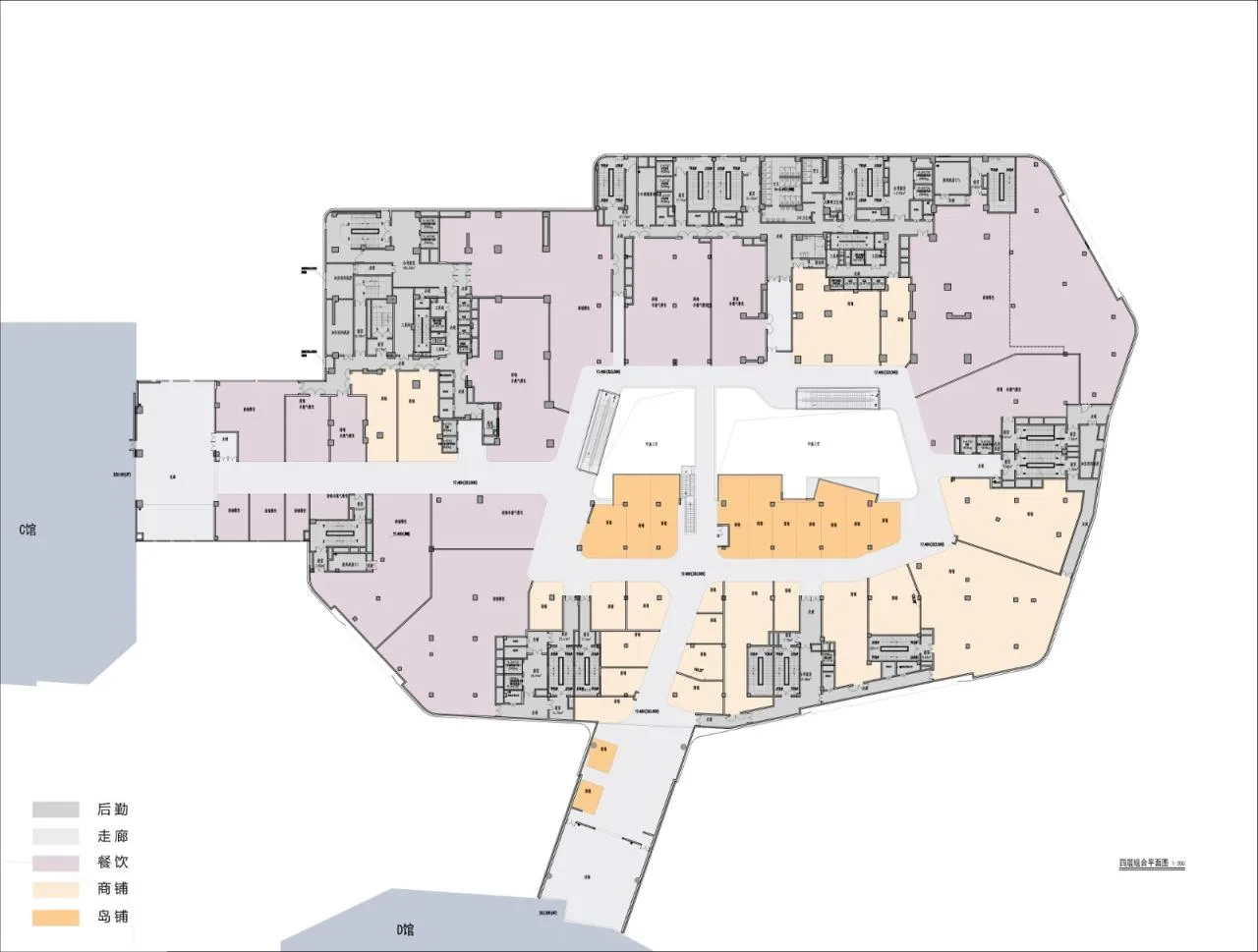
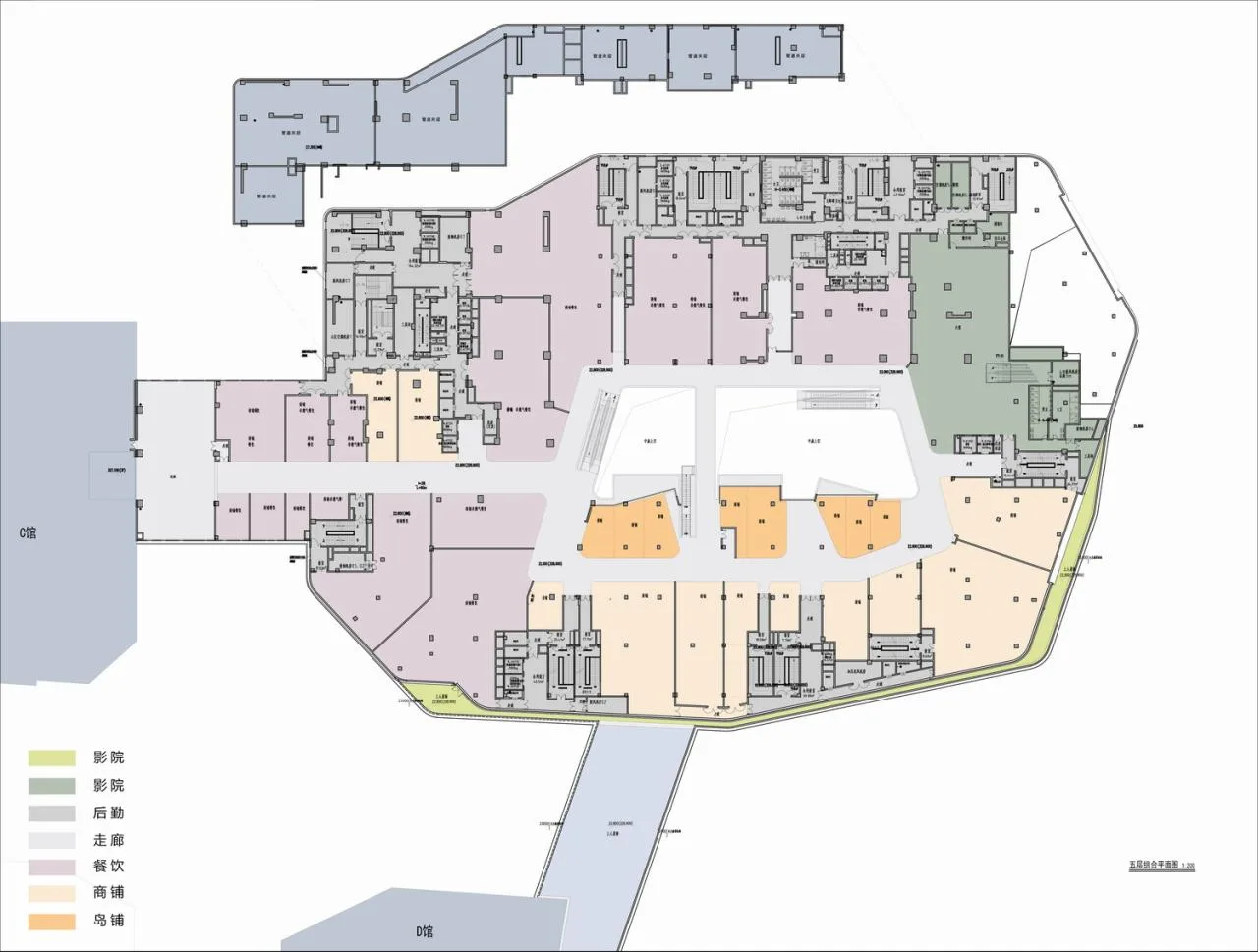
E-Hall Exterior Design
Layered Lines Reflecting a Futuristic Aesthetic
Architecture is a dynamic expression of human culture, evolving through history. Reflecting on 14 years of design, Times Square’s facades have transitioned from modern reinterpretations of classical proportions in Buildings A and B, to incorporating numerous contemporary elements in Building C, and finally to pure modernist design language in Building D.
In the digital era, where Building E stands, there is a collective curiosity and imagination towards the unknown. Consequently, the facade integrates futuristic aesthetics.
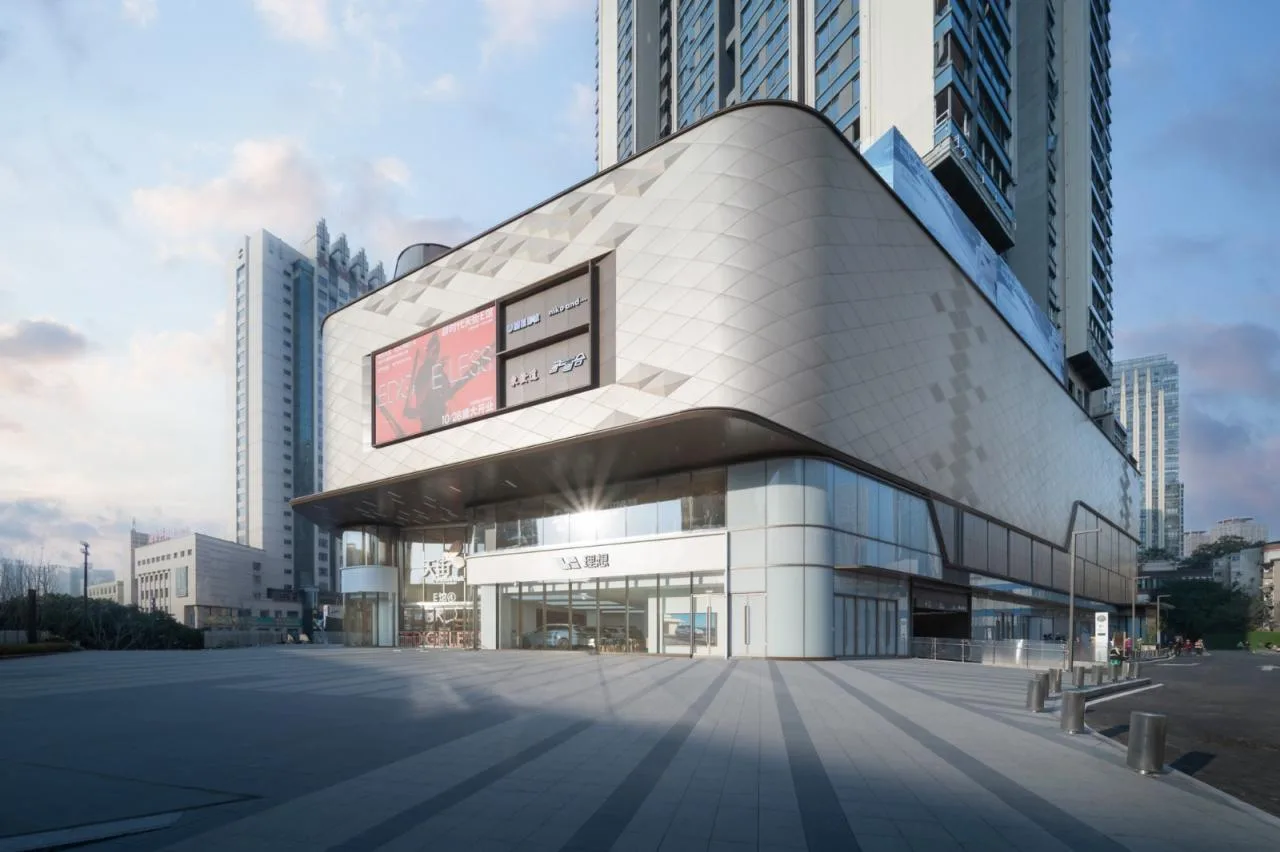
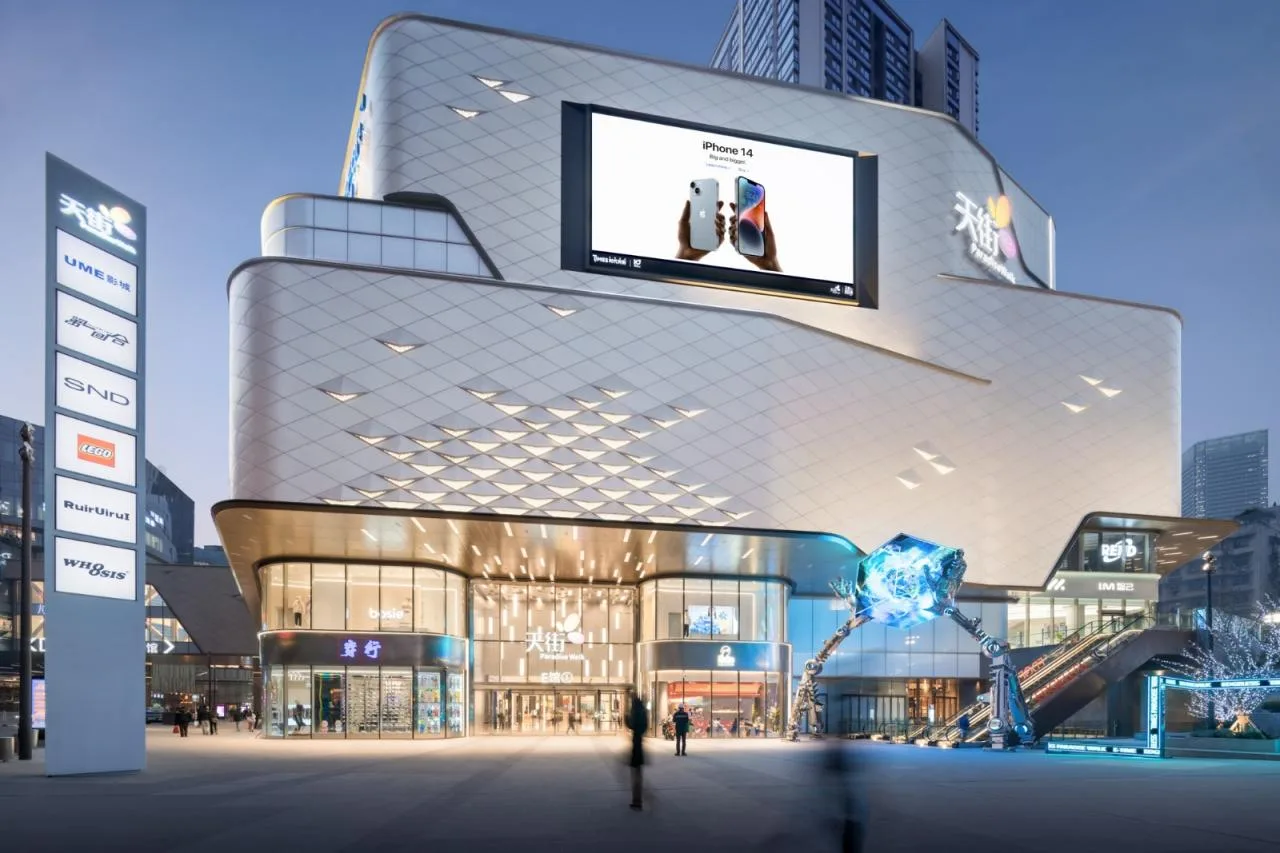
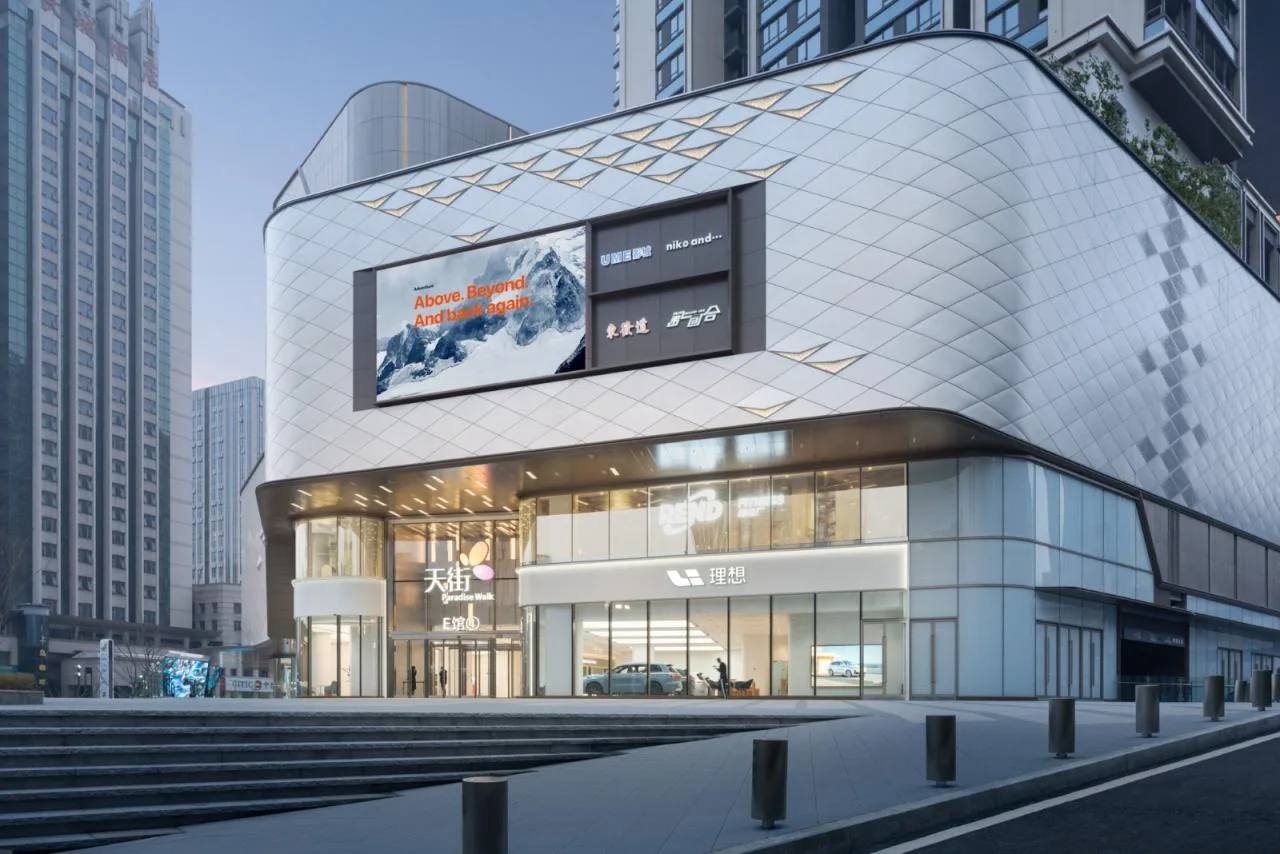
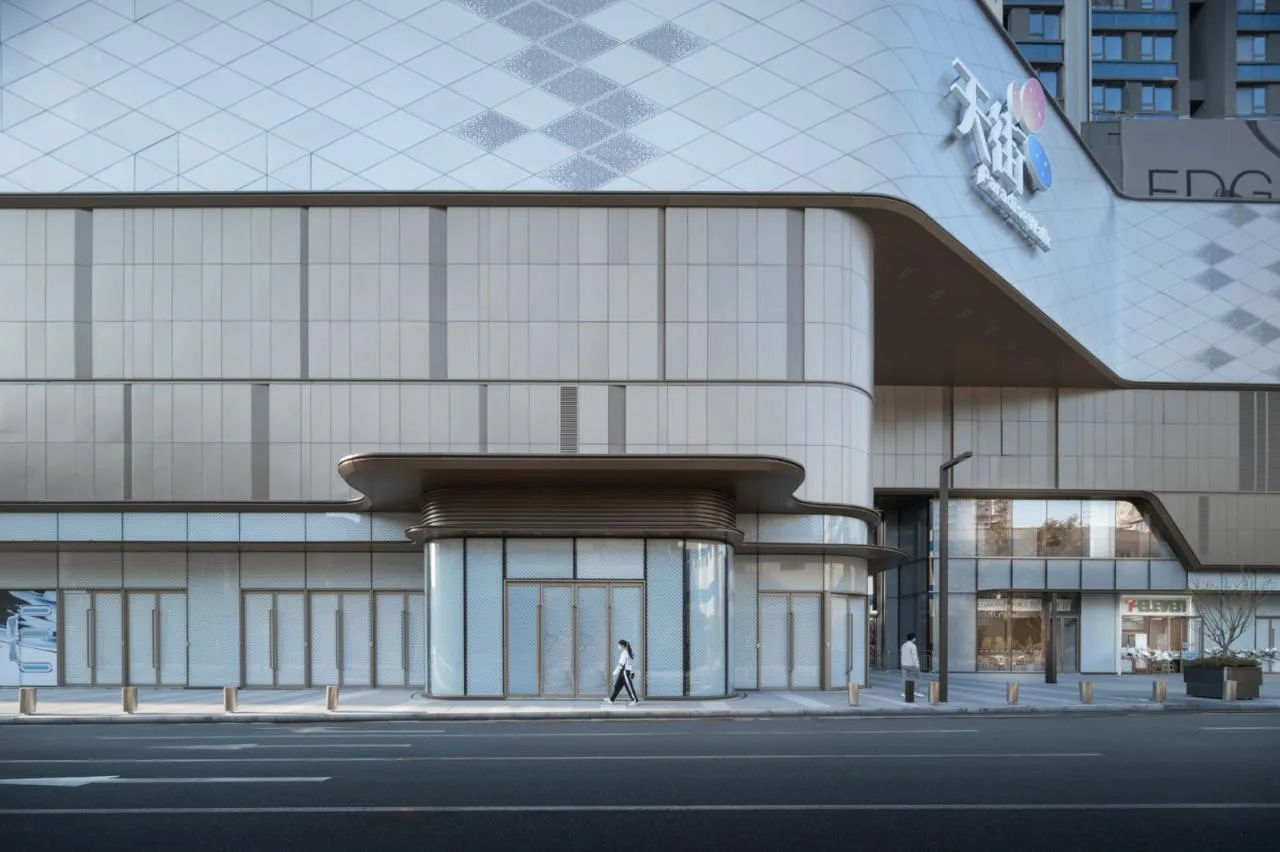
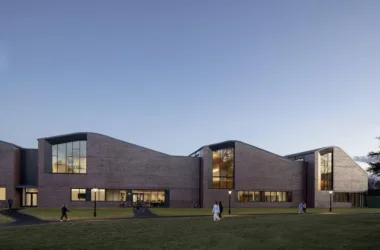
The E-building facade retreats layer by layer and unfolds horizontally with smooth, tension-filled lines. The main aluminum panel cladding features diamond grid patterns, enhanced by localized three-dimensional effects, perforations, and dynamic lighting to evoke a strong technological vibe.
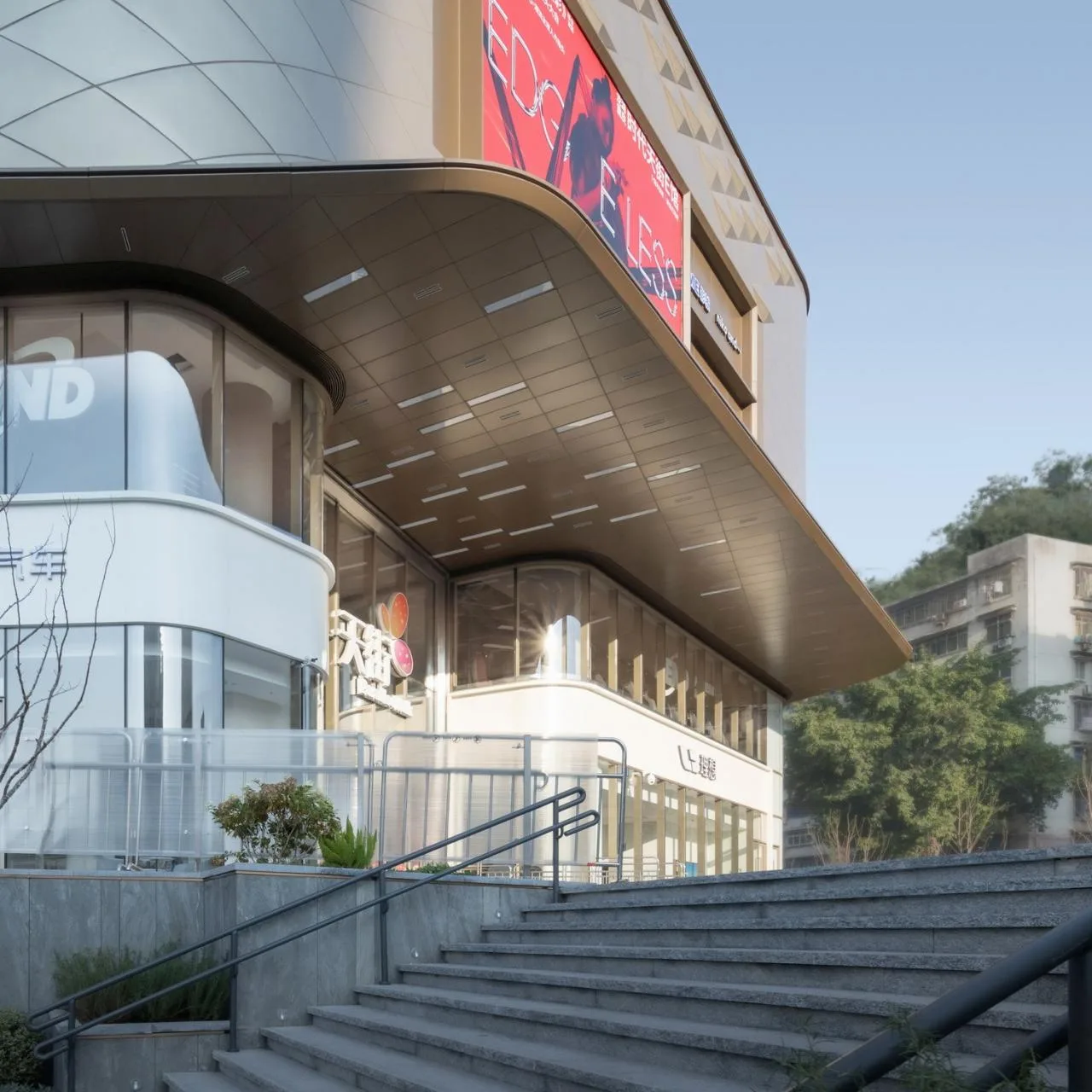
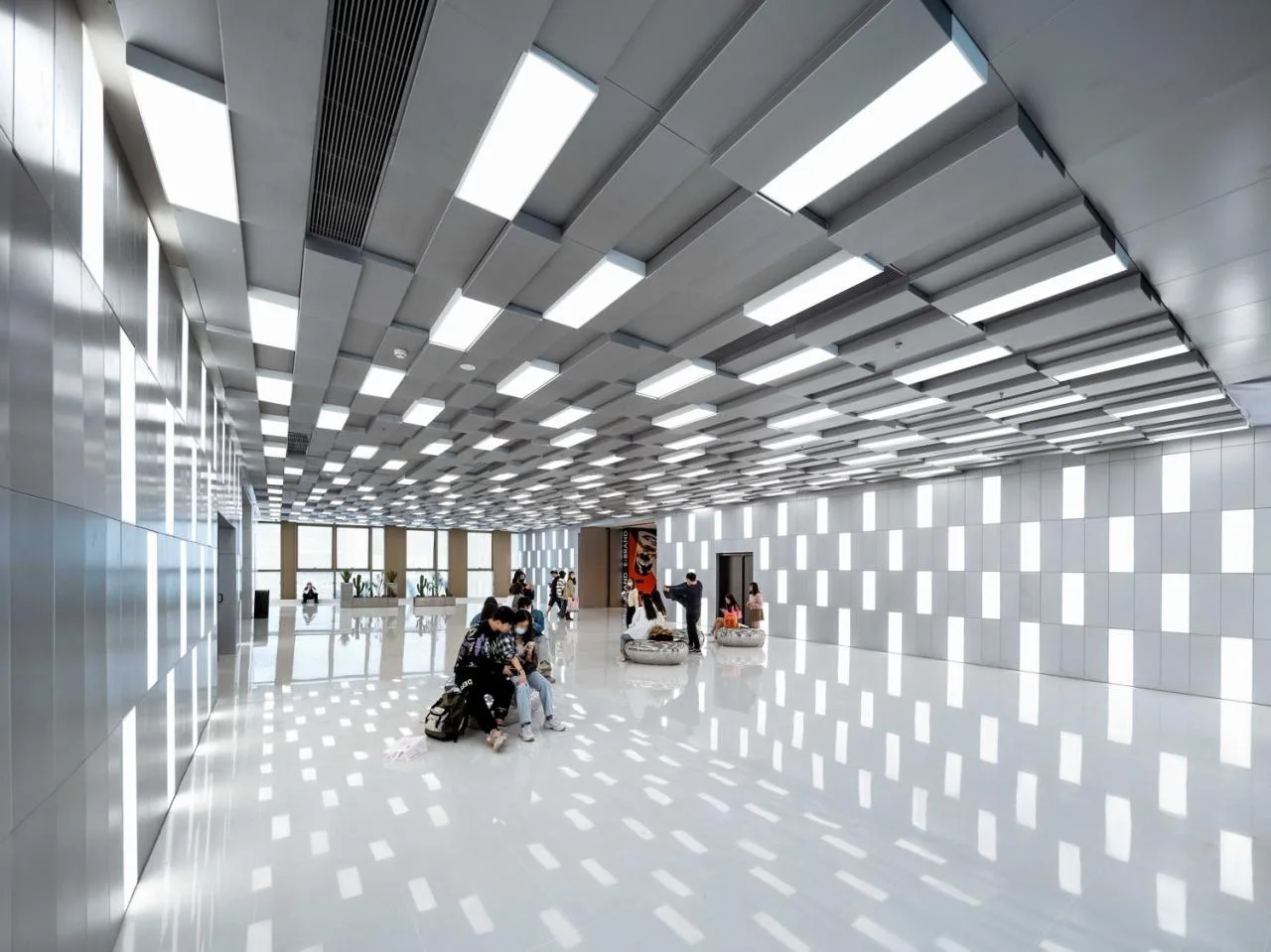
Inside, the design emphasizes the “urban magic box” concept, incorporating box-shaped textured elements in rest areas and entrances. The main entrance canopy extends this pattern with rectangular light strips flowing seamlessly from the exterior indoors, creating a strong visual guide.
The main entrance and key storefronts feature ultra-clear, high-transparency glass, showcasing interior lighting and displays vividly at night to attract visitors.
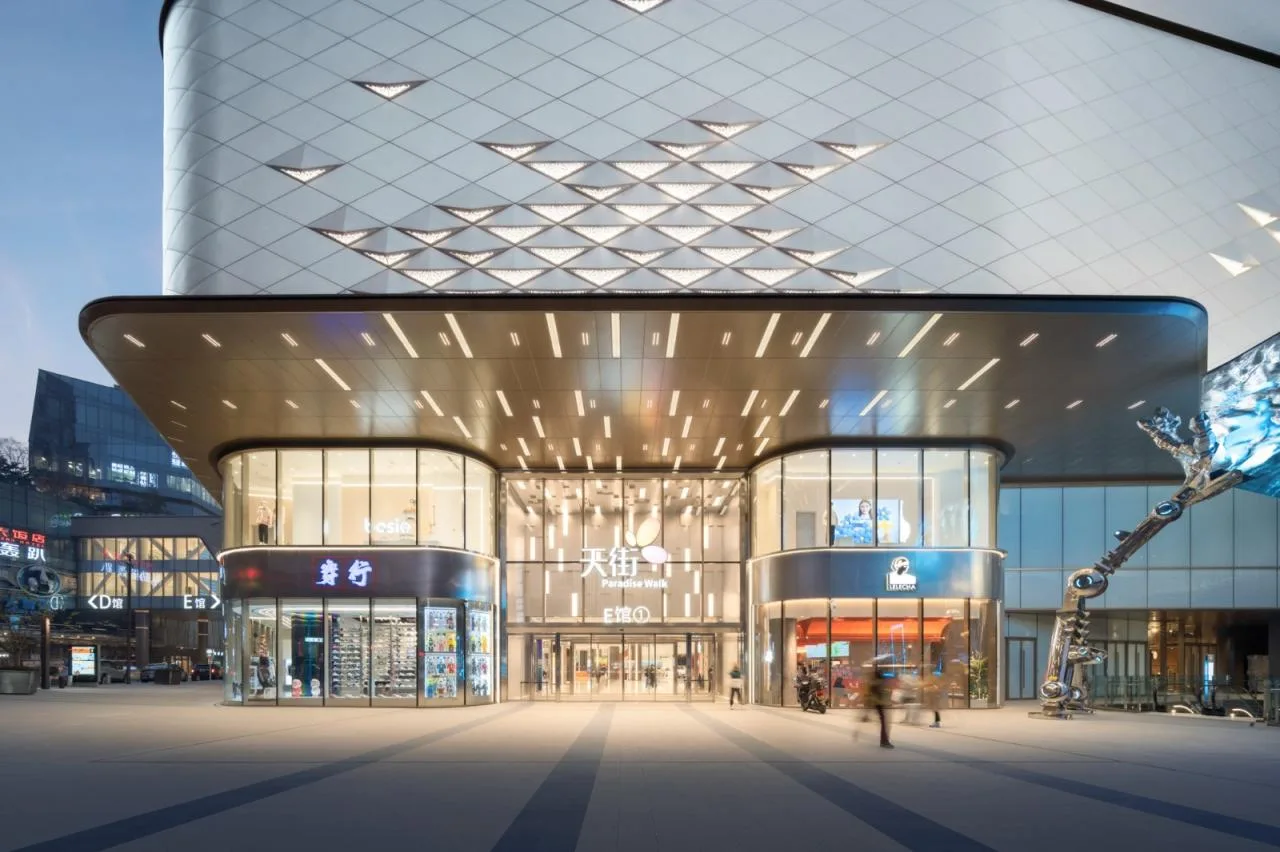
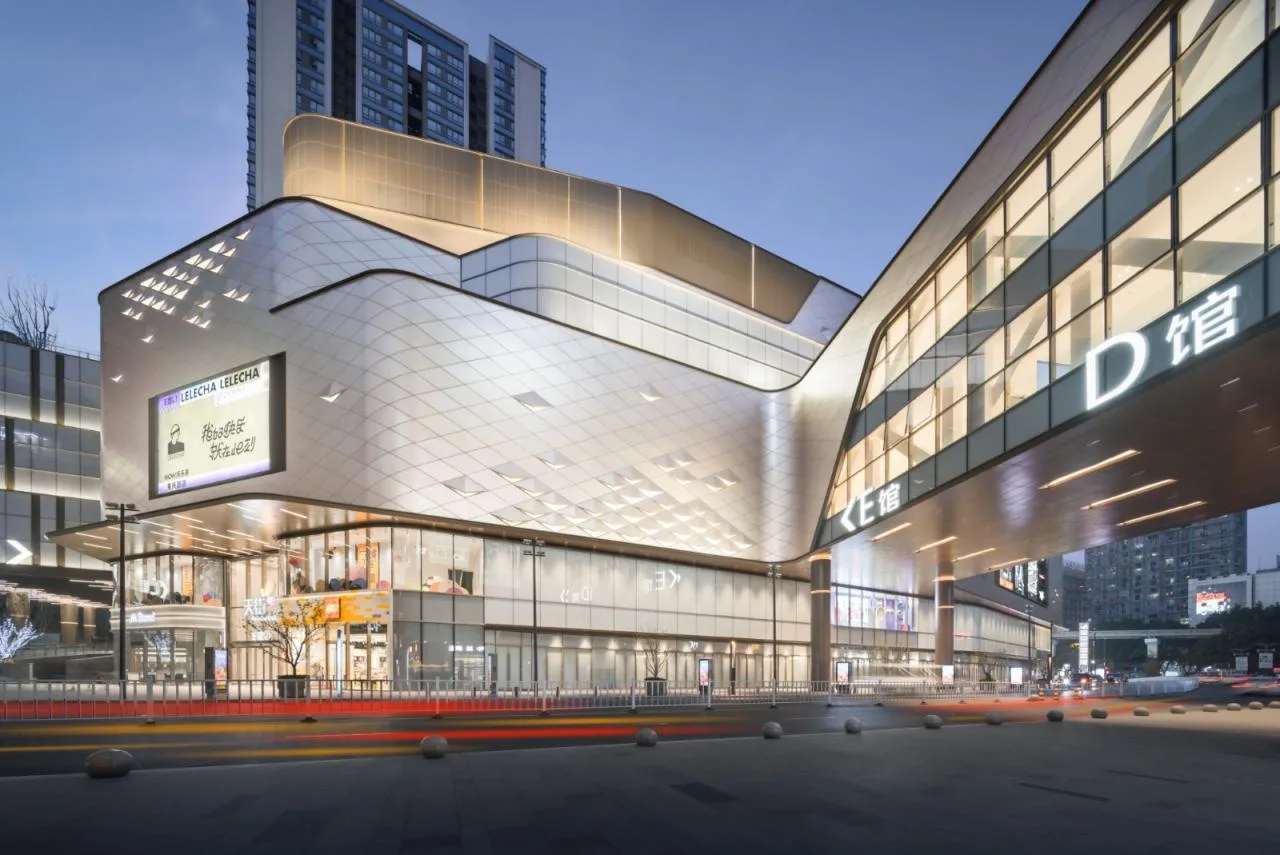
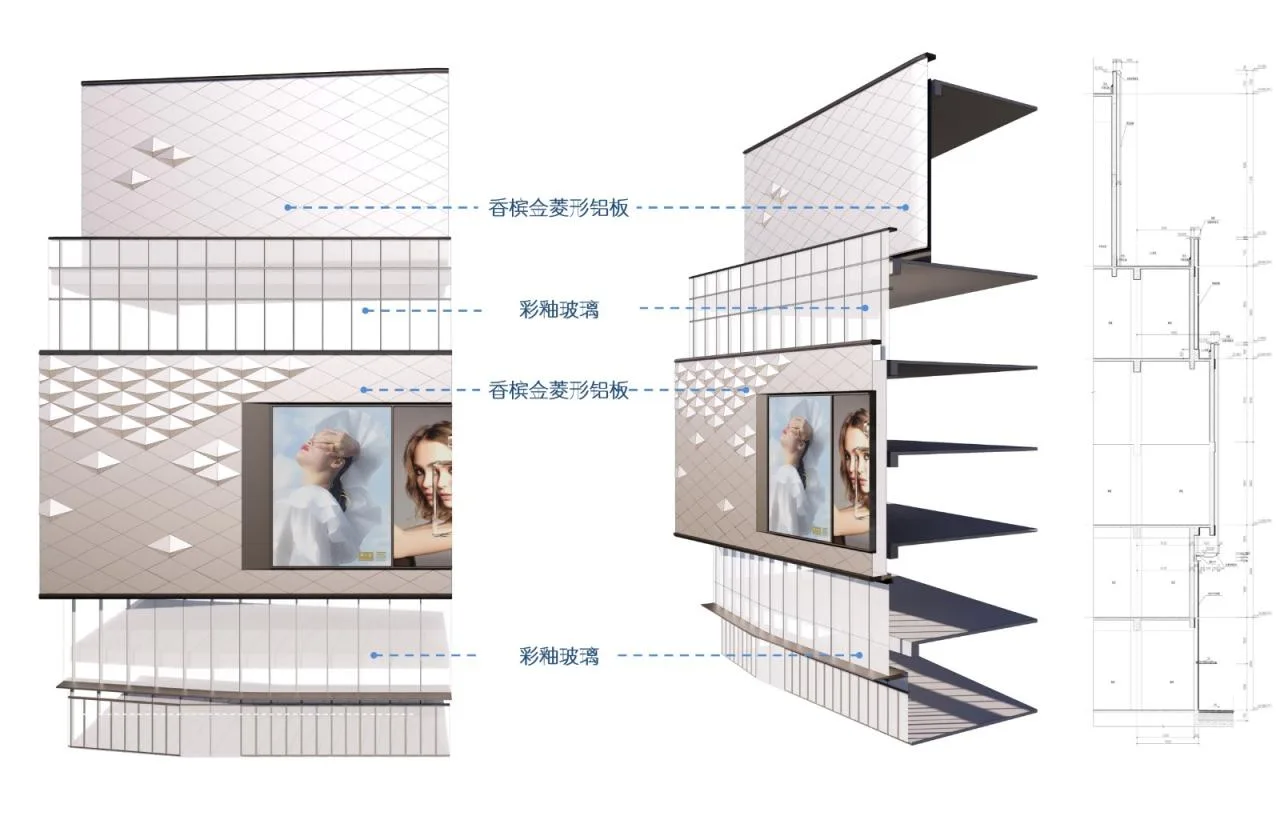
The champagne gold, diamond-shaped aluminum panels resemble concave and convex scales, enhanced by integrated lighting to highlight the building’s identity. Their soft color blends naturally with the city under sunlight, mitigating the visual mass of the large structure.
The logistics area uses tinted glazed glass to complement the main facade elements. This colored glass offers significant sun shading while visually separating the logistics zone from the commercial frontage, maintaining a refined and unified appearance.
Conclusion
As the final phase of the Times Tianjie series, Chongqing Longhu Times Tianjie E Hall builds on a mature commercial foundation while embracing contemporary urban dynamics. It creates a “geek ark” of cyber-inspired beauty with fluid lines, futuristic diamond grids, and captivating dynamic lighting, establishing a new urban landmark.
Project Information
Project Name: Chongqing Longhu Times Tianjie E Hall
Location: Intersection of Changjiang 2nd Road and Times Avenue, Yuzhong District, Chongqing City
Owner: Longfor Group
Function: Commercial Complex
Land Area: 21,695.3 m²
Building Area: 189,845.78 m²
Architectural Design: Chengzhi Design
Chief Architects: Li Jie, Zeng Qinghua
Public Building Design Director: Jiang Chao
Business Design Team: Shao Weilong, Zhang Yanan, Han Shuhai, Yang Huan, Zhang Jiancheng, Xia Yun, Zhang Zhimin, Zhang Jingling, Song Sen, Zheng Yuanwu
Residential Design Director: Xu Peng
Residential Design Team: Chen Capital, Liu Zeyu, Li Jianfei, Deng Wenkai, Xu Ziang, Peng Siming, Yu Kuai
Construction Drawing: Chongqing Design Institute Co., Ltd.
Landscape Design: Chongqing Blues City Landscape Planning and Design Co., Ltd.
Interior Design: ECE Europa Bau und Projektmanagement G.m.b.H
Design Period: September 2018 – October 2020
Completion: October 2022
Photography: PrismImage DID STUDIO
Video Source: Chongqing Chengshi















Must log in before commenting!
Sign Up